Blog

  • New Rules on Religion in Xinjiang: Comparing State Council and Provincial Congress Regulations

    New Rules on Religion in Xinjiang: Comparing State Council and Provincial Congress Regulations

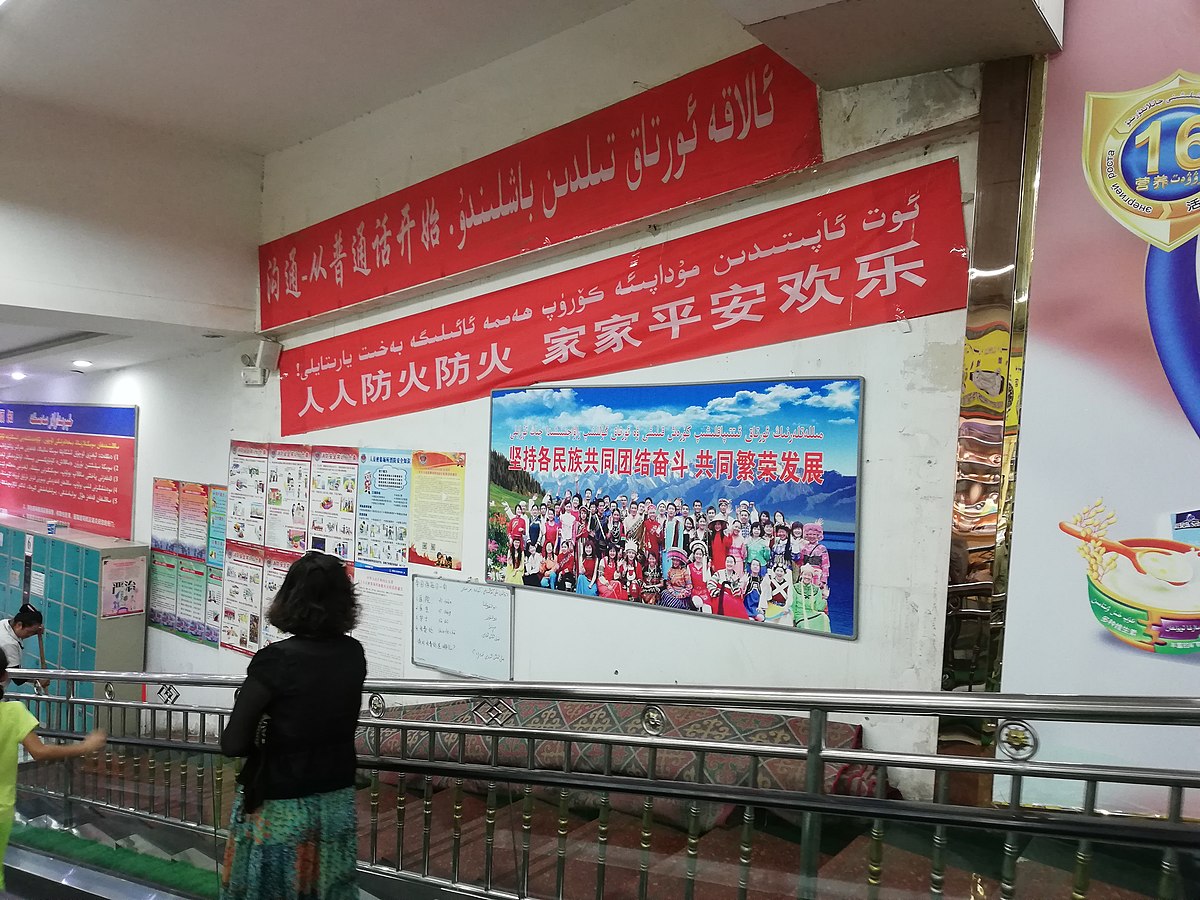
    The entrance to Ihlas Supermarket in the Kashgar city center in August 2018. Various banners and posters bearing political slogans in Mandarin and Uyghur, with slogans promoting speaking Mandarin and ethnic unity. Image credit: Kubilayaxun / CC BY-SA 4.0

    Near the end of 2023, the Xinjiang Uyghur Autonomous Region (XUAR) issued new regulations on administrating religious affairs in the region. The restive province remains a source of international controversy — Western nations have decried widespread surveillance and religious repression while China has refuted these as politically motivated criticisms and pointed to its support from Muslim-majority nations to validate its policies. The Office of the UN High Commissioner for Human Rights (OHCHR) 2022 report concluded that “serious human rights violations” that may constitute crimes against humanity have been committed in the region, and the new regulations passed more than a year after that report and China’s rejection of its findings.

    The fourteenth XUAR People’s Congress passed the Religious Affairs Regulation on December 22, 2023, at its seventh session. The new regulations will take effect on February 1, 2024, a week after its human rights record was examined in the United Nations Universal Periodic Review in Geneva. Xinjiang was notably a recurring issue during this review, which took place on January 23, 2024.

    The regional regulations are based in large part on the 2018 National Religious Affairs Regulation issued by the State Council. The Xinjiang regulations introduce several provisions “in consideration of [the] actual circumstances in the autonomous region.” (XJ Article 1)

    Using translations done by the China Law Translation, Dui Hua has put together a side-by-side comparison (link) of the XUAR Religious Affairs Regulations (2024), hereafter referred to as XJ regulations, and the State Council Religious Affairs Regulations (2018), hereafter SC regulations.

    In the XJ regulations, some provisions from the SC regulations are re-arranged and combined. They also omit details of some provisions included in the SC version by simply referring to them as “in accordance with the national laws, regulations, and rules.”

    Such regulations and rules include the Measures for Administration of Religious Venues introduced by the State Religious Affairs Bureau, which went into effect on September 1, 2023. Some of the notable differences between the XJ and SC versions are highlighted below.

    Battling Against Endangering State Security, Extremism, & Ethnic Hatred 

    The stated goal of the XJ regulations is to protect citizens’ freedom of religious worship and to maintain religious and social harmony. Both the XJ regulations and the SC regulations highlight the responsibility of religious groups and believers to fight criminal activities carried out in the name of religion.

    Both regulations reference the need to battle extremism (SC Article 3. XJ Article 4) and activities that might endanger state security (SC Article 4, 63, 64. XJ Article 5), especially splittism (SC Article 4, 63, 73(1). XJ Article 5, 49(2)). While both versions strongly emphasize the importance of promoting and maintaining “ethnic harmony” the XJ regulations also reference “inciting ethnic hatred” in its text (XJ Article 5, 49(2)), which is not mentioned in the SC text.

    XJ expands on the emphasis against religious extremism and includes specific behavior in Article 47:

    • …must not use appearances, apparel, signs, symbols, and so forth to play up religious fanaticism;
    • [must] not coerce or force others to wear religious extremist clothing or wear religious extremist symbols or signs.
    Publishing & Personal Consumption of Religious Materials 
    While SC Article 45 permits religious groups, religious schools, and churches and temples to print materials for internal use (“in accordance with relevant laws on publishing”), XJ Article 48 requires such publications to be reviewed and approved by the regional religious affairs bureau. A printing permit issued by the regional news and press department is required and distribution can only be within the approved scope.
    De-extremization propaganda paintings. Image credit People.com.cn
    SC Article 45 stipulates religious materials cannot contain content:
    1. that undermines harmonious co-existence between religious and non-religious citizens;
    2. that undermines the harmony between different religions or within a religion;
    3. that discriminates against or insults religious or non-religious citizens;
    4. that advocates religious extremism;
    5. that contravenes the principle of religions’ independence and self-governance.
    XJ Article 49 expands on this by prohibiting five more types of illegal content:
    (1) that undermines national unity, social stability, economic development, and scientific and technological progress;
    (2) that incites ethnic hatred, ethnic discrimination, and undermines ethnic unity;
    (3) that promotes ethnic separatism, religious extremism, and violent terrorism;
    (7) that endangers social morality or the traditional culture of China; and
    (8) Other content prohibited by laws, regulations, and state provisions.
    XJ Article 50 further restricts individual consumption of contents that are deemed illegal (as defined by Article 49) on the internet or other digital formats, including mobile phones and portable data storage. The article adds that “Organizations and individuals must not illegally listen to, watch, or transmit overseas religious radio and television programs.”
    However, the XJ version omits SC Article 46 which regulates importing religious materials from overseas for personal use.
    A photo of the Urumqi bazaar taken in 2005. Image credit: 29cm via Wikimedia Commons / CC BY-SA 2.0
    Religious School Appointments & Sinicization 
    The XJ regulations largely follow the SC regulations in “Chapter II: Religious Groups” (on rules for personnel appointments) and “Chapter III: Religious Schools” (on religious training), but it adds the requirement that religious schools and religious training should contribute to social harmony and Chinese culture by incorporating “Chinese characteristics.”
    XJ Article 11(3) stipulates that research on religious culture and texts should:
    “… thoroughly uncover content in religious teachings and rules that are conducive to social harmony, modern progress, and health and civilization; and make interpretations of religious teachings and rules in line with contemporary China’s requirements for development and improvement, and in line with the outstanding traditional Chinese culture.”
    XJ Article 14 also asks religious schools to:
    “…follow the path of school operations with Chinese characteristics, running the school in accordance with law, advancing educational and teaching reforms, and increasing the quality of school operations.”

    Sinicization reappears in “Chapter IV: Religious Activity Sites” which regulates building, renovation, and expansion of religious sites and venues. XJ Article 26 adds that sites that are newly built or renovated, expanded, or rebuilt shall “reflect Chinese characteristics and style in areas such as their architecture, sculptures, paintings, and decorations.”

    Conduct of Religious Professionals 

    While the SC regulations includes brief, generalized provisions regulating the conduct of religious professionals, including the requirement to follow relevant laws and rules and to protect their rites, the XJ regulations call on personnel to also follow orthodoxy and anti-extremism measures.

    XJ Article 38 further defines specific acts that are not permitted, including:

    1. Making “edicts” [DH: Idhn—permission, promise], appointing religious presiding officiants, and restoring or indirectly restoring feudal privileges;
    2. Accepting canonization, appointments, or honorary titles from overseas organizations or individuals;
    3. Accepting instruction on engaging in religious and educational activities from overseas organizations or individuals;
    4. Setting up private meeting places and establishing illegal religious organizations;
    5. Conducting unauthorized “living Buddha reincarnation” activities.

    Of these, (1) is a common practice among Chinese Hui Muslims, and (5) is specific to Tibetan Buddhism.

    A roadside sign in Turpan, Xinjiang Uygur Autonomous Region, written in both Uyghur and Chinese with the phrase “I liken the party to my mother.” Image credit: Kubilayaxun / CC BY-SA 4.0 

    An Expansion of Past Regulations 

    It is important to note that the XJ regulations are an expansion of the SC regulations. On the surface, it appears that the XJ regulations include fewer mentions of the phrase “extremism.” However, the regional version refers in places to being “in accordance with the relevant national laws and regulations,” which is a clear reference to the SC regulations. The regional regulations also made combating splittism and extremism a top priority, including allocating these responsibilities to religious schools and religious professionals. Additionally, the XUAR previously passed de-extremification regulations in 2017.

    The XJ regulations build on the SC ones to further dictate how individuals and institutions can engage with state-sanctioned religions. Beyond the restrictions and obligations outlined above, both regulations also place restrictions on adhering to specific pillars of Islam. For example, going abroad for the Hajj is permitted only when organized by a national Islamic group (in this case the Islamic Association of China), and both regulations include rules against accepting overseas funds (SC Article 57; XJ Article 45) with a few exceptions, which may impinge on the third pillar of Islam known as Zakat, or almsgiving).

    Similarly, other regions like Qinghai and the Tibet Autonomous Region have their own religious affairs regulations. Qinghai’s went into effect on October 1, 2021 and Tibet’s a month later on November 1, 2021. The Tibetan regulations also include some provisions specific to Tibetan Buddhist tradition and beliefs, such as reincarnation. The Chinese government’s insistence on controlling all aspects of religious practice, from what materials adherents can possess to transnational processes, reflect how national security and social stability concerns drive policies that demand adherence to the state above all.

    Dui Hua has compiled a side-by-side comparison of the XJ and SC regulations and provided comments where appropriate: Comparison of XJ and SC Regulations
  • The 2024 UPR: China’s Human Rights Report Card at the UN

    The 2024 UPR: China’s Human Rights Report Card at the UN

    JKR: Encounters with China | S01E07 January 18, 2024

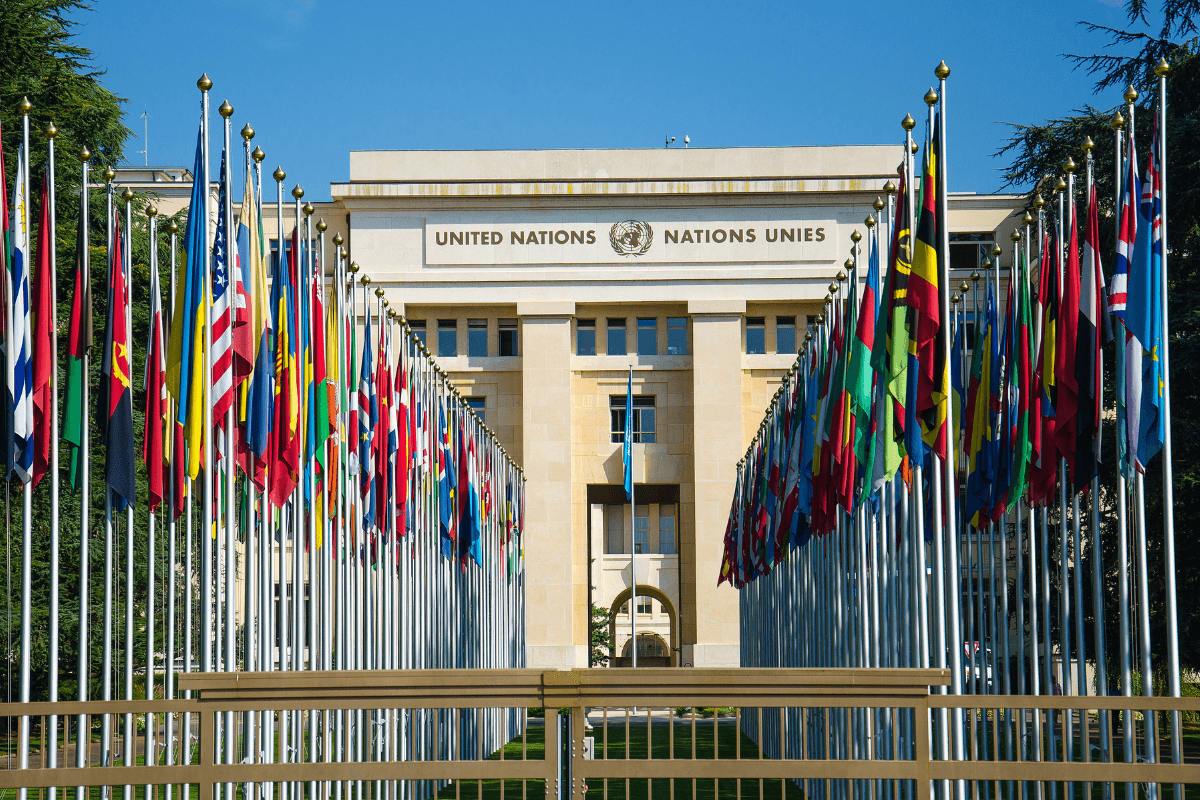
    In the lead-up to China’s human rights review at the United Nations on January 23, host Samy Amanatullah speaks with Dui Hua executive director John Kamm about Dui Hua’s work at the United Nations, the Universal Periodic Review of human rights, and how an NGO like Dui Hua can advocate for political and religious prisoners at the United Nations.

    This far-reaching conversation also dissects how the Universal Periodic Review works, the international treaties that underpin human rights norms, and how the United States and China compare when it comes to adhering to human rights treaties.

    Related for this episode:

    Image credit: The Dui Hua Foundation 2024

    Listen to the latest episodes of JKR: Encounters with China


    You can listen to our podcast on our website and RSS.com or on your favorite app. You can find us on Apple Podcasts, Spotify, Amazon Music, YouTube, or any podcast directory. Search for “JKR: Encounters with China.”

  • The Surprise Success in Bridging the US & China is a Dialogue on Juvenile Justice

    The Surprise Success in Bridging the US & China is a Dialogue on Juvenile Justice

    US-China relations are thought to be all-time low since the two countries resumed engagement in the 1970s. But in one surprising area, the United State and China are benefiting from open, cordial, and productive dialogue: improving juvenile justice.
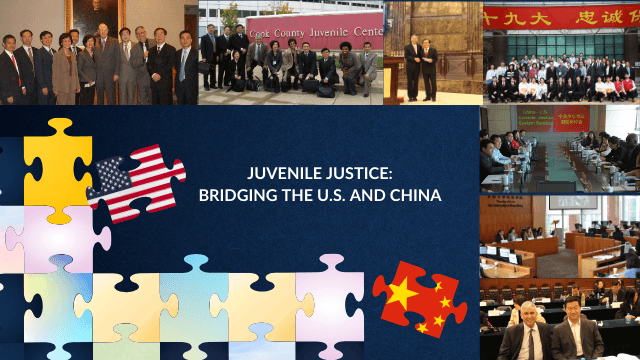
    In an article for Civic Research Insititute’s Juvenile Justice Update Winter 2024 edition, Dui Hua executive director John Kamm details the Dui Hua Foundation’s work on juvenile justice with representatives from China’s Supreme People’s Court (SPC). In 2007, Kamm and a Chinese legal expert visited with San Francisco Bay Area legal practitioners. Following this, Kamm, with the MacArthur foundation, organized an official exchange between a Chinese delegation to the United States. At each stop, Chinese legal experts gave presentations on juvenile justice in China and engaged in discussions with US experts about best practices and work to be done.
    The 2008 exchange marked the beginning of Dui Hua’s cooperation with the SPC. In the 15 years since, Dui Hua has facilitated eight other programs, most recently in April 2023. In the journal, Kamm describes some of the key changes that have occurred since these exchanges began. These include:
    • There has been a continuous drop in juvenile convictions, which have fallen by more than 50 percent since 2013, according to statistics released by the SPC and Supreme People’s Procuratorate (SPP) in 2022.
    • In 2022, the number of juvenile convictions reached a record low, with only 27,757 juveniles tried nationwide.
    • Following the first Dui Hua-facilitated Chinese-U.S. exchange, juvenile convictions continued to decrease year-by-year. Convictions fell below 5 percent for the first time in 2013.
    • The Chinese have incorporated restorative practices into its justice operations, reducing the number of juvenile arrests and prosecutions.
      • Of particular significance is the wider use of conditional non-prosecution, known in the United States as diversion. In 2022, 26,161 juvenile cases were diverted. In 2013, diversion was incorporated into the Criminal Procedure Law. Since 2014, the number of juveniles offered conditional non-prosecution increased eightfold.
      • Record sealing was incorporated into the Criminal Procedure Law in 2013. A total of 92,694 juveniles had their records sealed from 2020-2022. In 2022, 33,021 juvenile records were sealed, an increase from 28,163 in 2020 and 31,510 in 2021.

    Read the full article [PDF].

  • Prisoner Updates 2024 #1

    Independent investigative journalist sentenced for multiple charges

    Independent investigative journalist Shangguan Yunkai (上官云开) was convicted on multiple charges and sentenced to a combined imprisonment of 15 years by the Hubei Ezhou Echeng District People’s Court on January 5, 2024.

    Shangguang was a reporter for Legal Daily stationed in Hubei. The paper is an official publication focused on legal news under the direction of Central Political and Legal Affairs Commission. During his tenure, his exposure of corrupt officials made him well known and a target. He later turned to independent investigative reporting and continued to focus on corruption in the Wuhan region.

    Shangguan was initially detained for selling counterfeit medicines on April 21, 2023. The crime of picking quarrels and provoking trouble (PQPT) was added when he was formally arrested on May 17.

    According to a screenshot of a partial judgment posted online, Shangguan was convicted of multiple crimes, including PQPT, illegal confinement, selling counterfeit medicines, and bigamy. The sentence will expire on April 19, 2038.


    Li Qiaochu trial commenced & suspended

    On December 19, the inciting subversion trial of feminist labor rights activist Li Qiaochu (李翘楚) resumed at the Linyi Economic and Technological Development Zone People’s Court since it commenced in June. The trial was closed and the family was again denied entry to the courtroom.

    On December 21, the trial was suspended again after the authorities fired her defense team. One of her lawyers refused to submit to being searched before entering the courtroom. Another lawyer already inside left the courtroom in protest after his requests to summon defense witnesses and to access the prosecution’s evidence were denied. He asked Li to dismiss him because of his inability to perform his duties as defense counsel.

    Li was detained in 2021 after posting to social media torture allegations made by her partner Xu Zhiyong, who is serving his 14-year jail term for subversion. Li is known to suffer from serious symptoms of depression and auditory hallucinations.


    Shanxi lawyer briefly taken by police without cause

    A Weibo post by Beijing lawyer Wang Xing on January 8 alarmed many, particularly those in legal circles, when Wang claimed that the Shanxi lawyer Yan Suying (闫素英) was taken from her home by Taiyuan police. Yan specializes in duty crimes and has written many online posts highlighting her experiences when defending corruption cases, including being unable to visit a defendant who was under liuzhi (留置, a type of detention often used to extract confessions), interference with discipline commissions, and the inability to introduce evidence).

    Yan is currently working on a case that is very personal to her. She is co-defense counsel with Wang Xing, in the case of Han Jianzhong, Yan’s husband. Han, the former party secretary of the Taiyuan Water Conservancy and Construction Institute, was accused of embezzlement and serious violation of rules. He was placed under investigation in December 2020.

    It is not uncommon in China for family members of defendants in corruption cases to face harassment from police. Nor is it uncommon for lawyers working on these cases to receive pressure from authorities attempting to ensure conviction of the case.

    In his earlier Weibo post, Wang speculated that Yan’s summons originated from her dual roles as defense counsel and wife of Han. Yan’s sister was also summoned by police at the same time.

    Han updated her status on Weibo on January 10, saying that she was released late at night and able to return home. Her mobile phone is still confiscated.


    A member of Church of Almighty God in Guangdong released after receiving clemency

    Shi Dongfang (石栋方), a member of the Church of Almighty God (CAG), was granted a one-month sentence reduction, thus completing her sentence on December 9, 2023.

    This was the second reduction granted to Shi, now in her late 50s. She previously received a seven-month reduction in 2022. Shi, a resident of Fengkai County, was convicted of using a cult to undermine the implementation of the law by the Zhongshan Number One People’s Court in 2018 and sentenced to seven years. Her appeal was rejected by the Zhongshan Intermediate People’s Court in 2019. In the judgment, Shi was accused of actively being involved in the spread of CAG gospel and storing a large amount of propaganda materials at her home.

    After learning about Shi’s case, Dui Hua made four inquiries to its interlocutors in China during 2023. The latest clemency decision claims that Shi demonstrated remorse for her crime, vigorously participated in reform through labor, and accepted ideological rehabilitation.


    Preacher of Chengdu Early Rain Church detained and released on bail

    After more than one year in detention, Dai Zhichao (戴志超), a pastor of the Early Rain Covenant Church in Chengdu, was reportedly released on bail on January 9, 2024. This is the third time he has been detained in the past four years.

    House churches in China face pressure from authorities to comply and join the patriotic three-self-love churches. Leaders of house churches are routinely harassed or even face legal repression. Wang Yi (王怡), founding pastor of the Early Rain Church, was convicted of inciting subversion—an endangering state security crime—and illegal business activities in 2019 and sentenced to nine years of imprisonment with three years of deprivation of political rights.

    Dai was placed under criminal detention for PQPT in December 2018, when the church was first raided. He was released on bail in March 2019. In August 2021, the authority placed Dai under administrative detention for 14 days for holding a Sunday gathering at his home. The latest trouble began in September 2022, when Dai was taken into custody. He was formally placed in criminal detention for PQPT in December 2022. However, he was never indicted or brought to trial.


    Inciting subversion sentence for human rights lawyer upheld

    On December 29, 2023, the Guangxi High People’s Court upheld the five-year prison sentence for Qin Yongpei (覃永沛). Qin was convicted in March 2023 of inciting subversion, a crime stemming from his legal career spanning more than a decade as a human rights lawyer. He founded the Guangxi Baijuming Law Firm and took up cases involving unlawful administrative detention, forced demolition, and wrongful convictions. Qin was a legal counsel to other rights lawyers during the 2015 “7.09” crack down, including Chen Taihe. Despite having his lawyer’s license revoked in May 2018, Qin founded a “Post-Lawyer Club” to provide support and aid to other rights lawyers who had their licenses revoked.

    Qin is scheduled for release on October 30, 2024.

  • From “Vineyard” to Prison: The House of Joseph

    From “Vineyard” to Prison: The House of Joseph

    A photo of Kunshan, Suzhou, where the House of Joseph has been known to operate. Image credit: Song Sangroov / CC BY 3.0 DEED

    Dui Hua continues to uncover information on Chinese religious groups following the release of its report “The Persecution of Unorthodox Religious Groups in China” in March 2022. Three new groups have been identified including the House of Joseph, or yuesejia (约瑟家) in Mandarin Chinese, Xinling Famen (心灵法门), and Corporate Christ (团体基督).

    The House of Joseph is an indigenous Christian group whose members are at risk of arrest and imprisonment. Founded in 1992 by Wei Zhuxiang (魏柱祥) as an offshoot of the Spirit Church, or linglingjiao (灵灵教), the House of Joseph is sometimes called “the third generation” of the True Jesus Church (真耶稣教会) from which the Spirit Church was splintered in 1986. According to Chinese government sources, Wei predicted an apocalypse in 2000 and said that conversion to the House of Joseph was the only way to salvation. He allegedly “distorted” the Bible by proclaiming himself Joseph, son of Jesus. He claimed that the holy spirit had descended on him and his wife, and the couple became the new god after they united as one. He also stated that he was reincarnated as a shepherd in the earthly world in search of “another flock of sheep.” His goal is to launch an evangelizing mission which he calls “the 6,000-Year Project of the God.”

    Unorthodox religious groups often stand accused of illegally amassing a fortune from superstitious believers through “indoctrination” and “mind control.” The House of Joseph is no exception. The church allegedly asks adherents for donations to repent their sins, and it arranges marriages for male adherents who pay a fee from 5,000-20,000 yuan. Following Wei’s unfulfilled apocalyptic prophecy in 2000, Wei started calling on believers to join settlements or communities that he termed “vineyards” and described as swathes of paradise on earth. Believers were admitted after they paid a fee of 2,000 yuan. Chinese government sources reveal that he used the money to create economic entities in garment processing, engineering construction, planting and breeding, catering services, and trading. Violators of his church rules would be ordered to fast, suspended from employment, and even dismissed from his “vineyards.”

    Wei once claimed that his church had as many as 100,000 members. However, Chinese government sources suggest that the group only has a limited reach in China, with over 1,000 devoted members mostly in Huai’an and Kunshan (in Jiangsu Province), and Shanghai. It is unclear when the Chinese government started labelling the House of Joseph an “evil cult,” but a court judgment Dui Hua uncovered states that Wei was among the 12 leading members detained amid a crackdown in 2005. In 2006, the Kunshan City People’s Court convicted Wei of fraud and sentenced him to 10 years and six months in prison. Wei was released from prison in April 2014. His wife was also sentenced in the same case, but information about the criminal punishment she received is not available.

    Footage of a baptism conducted by the True Jesus Church, which the House of Joseph is thought to have splintered from. Image credit: True Jesus Church live stream
    Re-Indicted in 2020 
    Wei continued to develop his church after he was released from prison. In May 2020, Wei was re-arrested in Suqian, Jiangsu, alongside another leading member Wang Shoucai (王守财) for “organizing a cult to undermine implementation of the law.” Six months later, Wei and Wang were among the 17 House of Joseph members who were indicted for violating Article 300. The procuratorate accused them of “disseminating propaganda materials all over the country to promote the cultic ideology of the House of Joseph, collecting donations from believers, and illegally amassing a fortune” since 2017.
    Dui Hua has not been unable to find a court judgment concerning this case. However, given China’s high conviction rates and that Wei reoffended, it is highly likely that Wei received a lengthy prison sentence and is serving a second prison stint in Jiangsu.
    Suqian, Jiangsu, where the House of Joseph leader Wei was arrested after serving his prison sentence. Image credit: Invercargill City Council
    Other Convictions 
     
        I.    Zhang X 
     
    Besides Wei, Dui Hua found that two other House of Joseph members were convicted prior to his re-indictment in 2020. In the first case, Wei’s nephew surnamed Zhang received a three-year suspended sentence for violating Article 300 in December 2015. Zhang, a farmer, was initially placed under residential surveillance in March 2012. That same month, he was released on bail pending further investigation. He was indicted three years later, in April 2015. The following month, he was released on bail again until the Huaiyin District People’s Court resumed the trial on September 17, 2015.
    Zhang converted to the House of Joseph in 2001 and was appointed by Wei as the head of a Kunshan-based “vineyard” in 2011 while Wei was serving his 10 years and six months’ prison sentence. The court judgment states that Zhang “actively obeyed and earnestly carried out Wei’s orders through letters and verbal messages from prison.” Wei made another prediction of cataclysm which would take place on November 16, 2011 following a nuclear war. Adherents were told that they must seek refuge from three arks (like those used by Noah in religious texts), one of which was in Tibet. Individuals would be denied refuge unless they had been baptized by the House of Joseph by September 12, 2011. Zhang disseminated Wei’s prophecy and continued to help Wei to exert indirect control of church members.
    In preparation for the impending cataclysm, Zhang sold his Jiangsu vineyards and arranged for over a thousand church members to relocate to Xinjiang and Tibet where he intended to re-establish his organizational branch. In Xinjiang, Zhang organized about 60 missionaries to conduct overseas evangelization in Iran and Thailand. Zhang ordered one of the teams to travel to Iran for a religious exchange and requested that church members print 4,000 leaflets with Farsi translations of the church doctrines. In Tibet, Zhang formed four other teams of missionaries to preach domestically. All their activities were funded directly by the House of Joseph.
    In November 2011, one of the missionaries Zhang dispatched to China’s northeast was detained. Foreseeing an imminent risk of police investigation, Zhang deleted all correspondences with the missionary and dismissed all church members who had relocated to Xinjiang and Tibet. Before Zhang was able to transfer out the church funds, police seized over 54 million yuan, 2,100 grams of gold, and an apartment owned by the church in Jiangsu.
    Zhang’s punishment was lenient  because he turned himself in and disbanded his organizational branch in 2011. During the court trial, he claimed to have recanted his religious beliefs by questioning Wei’s unfulfilled prophecy concerning the nuclear war. He also pledged to not join any cult activities. Zhang’s three-year suspended sentence ended in December 2018.
    An image of Huai’an, one of the locations where the House of Joseph has been based. Image credit: Huai’an Economic and Technological Development Zone

        II.    Chen X 

    The House of Joseph continued to operate despite suffering a major blow after Zhang shuttered his Tibet and Xinjiang organizational branches. A court judgment Dui Hua acquired indicated another Jiangsu farmer surnamed Chen was sentenced to three years in prison on October 15, 2015, also for violating Article 300. Chen organized home gatherings with 15 other members despite “knowing full well that the church had been banned by relevant authorities” since February 10, 2010.

    Unlike Zhang, Chen does not appear to have been in close contact with Wei. Chen said all the 16 church members who took part in the home gatherings were God’s descendants and possessed powers to cure sicknesses and cast out demons. The judgment made no mention of Wei’s apocalyptic prediction in 2011. Chen was accused of printing 2,000 leaflets to spread claims that he possessed healing powers and had successfully cured more than 500 patients. Chen is believed to have been released from prison on December 10, 2017, assuming that he did not receive either sentence reduction or sentence extension.

    Dui Hua has been unable to find additional information about the House of Joseph beyond what is stated in the 2020 indictment and the two aforementioned court judgments. China’s Anti-Cult Association, which disseminates propaganda about the harmful nature of evil cults, is not known to have published a single article about the church. The House of Joseph has officially been designated as harmful on the grounds that it is both fraudulent and superstitious. However, as with many of the non-violent unorthodox religious groups in China, it is unclear if this opposition to the group is meant to protect the Chinese people from harmful superstition, or if it is another way to protect the Chinese government from a grassroots group with organizational capacity.

  • Dui Hua Digest, November/December 2023

    Dui Hua Digest, November/December 2023

    EVENTS

    Xi-Biden Summit Yields No Movement on Human Rights

    An aerial view of APEC’s Economic Leaders Week, taken on November 17, 2023. Image credit: Ben Solomon / US Department of State

    The Asia Pacific Economic Conference (APEC) is a grouping of 21 countries that border the Pacific Ocean, accounting for 40 percent of the world’s population and more than half of global trade. The 2023 APEC Summit took place in San Francisco from November 11-17, 2023, the first time an important international event has taken place in the city since the signing of the UN Charter in 1948. That founding document was finalized and signed at the Fairmont Hotel, which is where President Joe Biden lodged during the APEC 2023. 

    The event that drew worldwide attention to the gathering was the meeting between Chinese President Xi Jinping’s and US President Joe Biden on November 15 at a country estate south of the county line. It was the first time in a year fraught with tension that the two men spoke face to face. Shrouded in secrecy, the media nevertheless found out the when’s and the where’s. Protesters, both pro-Chinese government and anti-Chinese government, lined the road in a few locations to let their opinions be known.

    No Joint Statement

    As at APEC 2022 held in Indonesia, there was no joint statement at the conclusion of the two men’s four-hour meeting – which included a luncheon and a short walk in the rain through estate gardens. Also, as in Bali, each side issued its own statement.

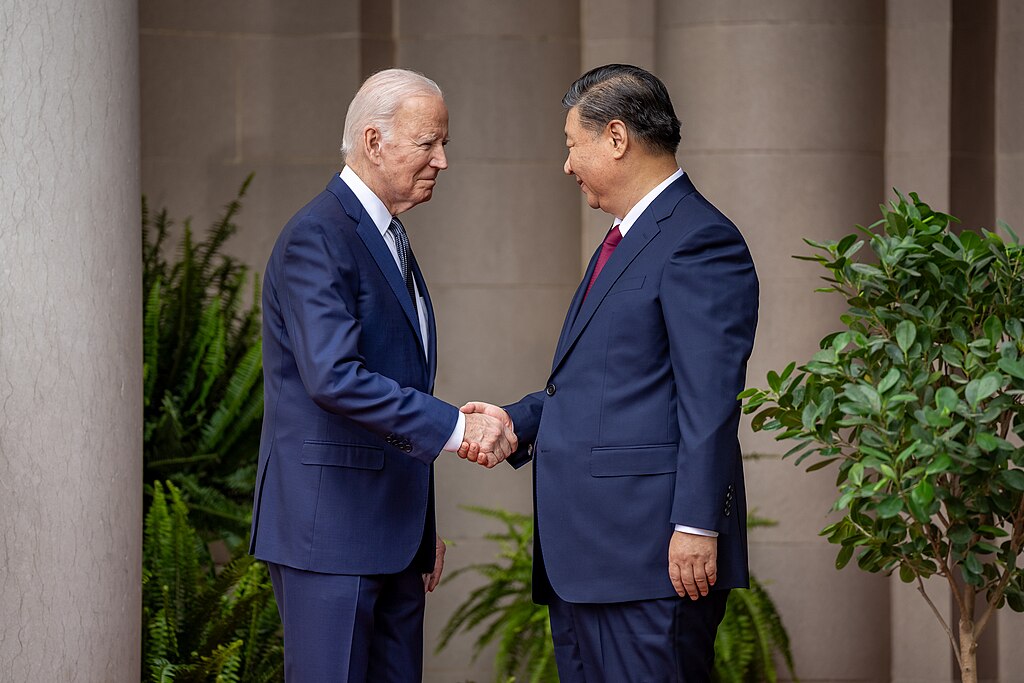
    Presidents Biden and XI meet on the sidelines of the 2023 APEC Summit on November 15, 2023. Image credit: Office of the President of the United States

    The United States claims that understandings were reached in several areas, listed below. These claims have not been contradicted by the Chinese government, and several have been confirmed if not using identical language. They include:

    1. Resumption of military communications, suspended since the “spy balloon incident” in February 2023;
    2. Steps by China to reduce the flow of narcotics including precursors for fentanyl, to the United States;
    3. An agreement to reduce carbon emissions and increase use of renewables, reached prior to the summit;
    4. Also prior to the summit, an understanding to control the use of artificial intelligence in military operations.

    A possible major commercial transaction involving Boeing jets and a possible gift of pandas to the United States were rumored to be in the cards.

    Neither government spoke of progress on human rights. A resumption of the bilateral human rights dialogue, suspended since 2016, was not announced. The United States’ claims that Hong Kong, Xinjiang, and Tibet were raised have been met with stony silence. In July 2022, President Biden claimed that he raised genocide and forced labor concerns in Xinjiang in a phone call with President Xi. China’s foreign ministry angrily denied that President Biden had done so, labeling the White House claim “disinformation.”

    Claims Undermined

    The claim that the two countries reached an understanding on fentanyl was called into question when an article in Politico reported that the understanding was reached in return for a US commitment to remove a police body allegedly involved in the persecution of Muslims in Xinjiang. Neither government responded to requests for confirmation. The claim that the two countries agreed to resume military-to-military communication was undermined by the fact that China’s does not currently have a defense minister, so there is no one for Secretary Austin to talk with. Ten days after the summit there was a serious confrontation between warships of the two countries in the Taiwan Strait. The newly restored channel for communications between the two countries was apparently not activated.

    President Xi at the APEC Economic Leaders’ Retreat on Interconnectedness and Building Inclusive and Resilient Economies on November 17, 2023. Image credit: Mike Lawrence / US Department of State

    The failure to discuss human rights in the meeting does not mean that human rights was not raised outside the meeting. There were loud protests by Tibetans, Falun Gong practitioners, Uyghurs, and Hong Kong people outside the hotel where the Chinese delegation stayed, outside the Chinese consulate, and outside the venue for the banquet where Mr. Xi was feted by two pro-China organizations. (The banquet turned out to be controversial as Xi received a standing ovation. That prompted condemnation from multiple parties and calls for a congressional investigation.) Some of the protests are said to have turned violent, though San Francisco Police told Voice of America that no one had been arrested and that only one protester had filed a police report.

    The failure to discuss human rights was not for want of trying. The State Department managed to hand over a list of prisoners to Chinese Foreign Minister Wang Yi the week before the summit. Lists were also publicized by congressional bodies like the Select Committee on the Chinese Communist Party and the Congressional Executive Commission on China, all to no avail. Dui Hua managed to give the Chinese government a short list in the form of an article that was eventually published on its website. In addition to writing about expectations leading up to the Summit in the Human Rights Journal, Dui Hua also dissected the aftermath of APEC in an episode for the Encounters with China podcast.

    Cordial, Not Warm

    There were no known prisoner releases or other acts of clemency prior to, during, or in the aftermath of the Biden-Xi meeting.

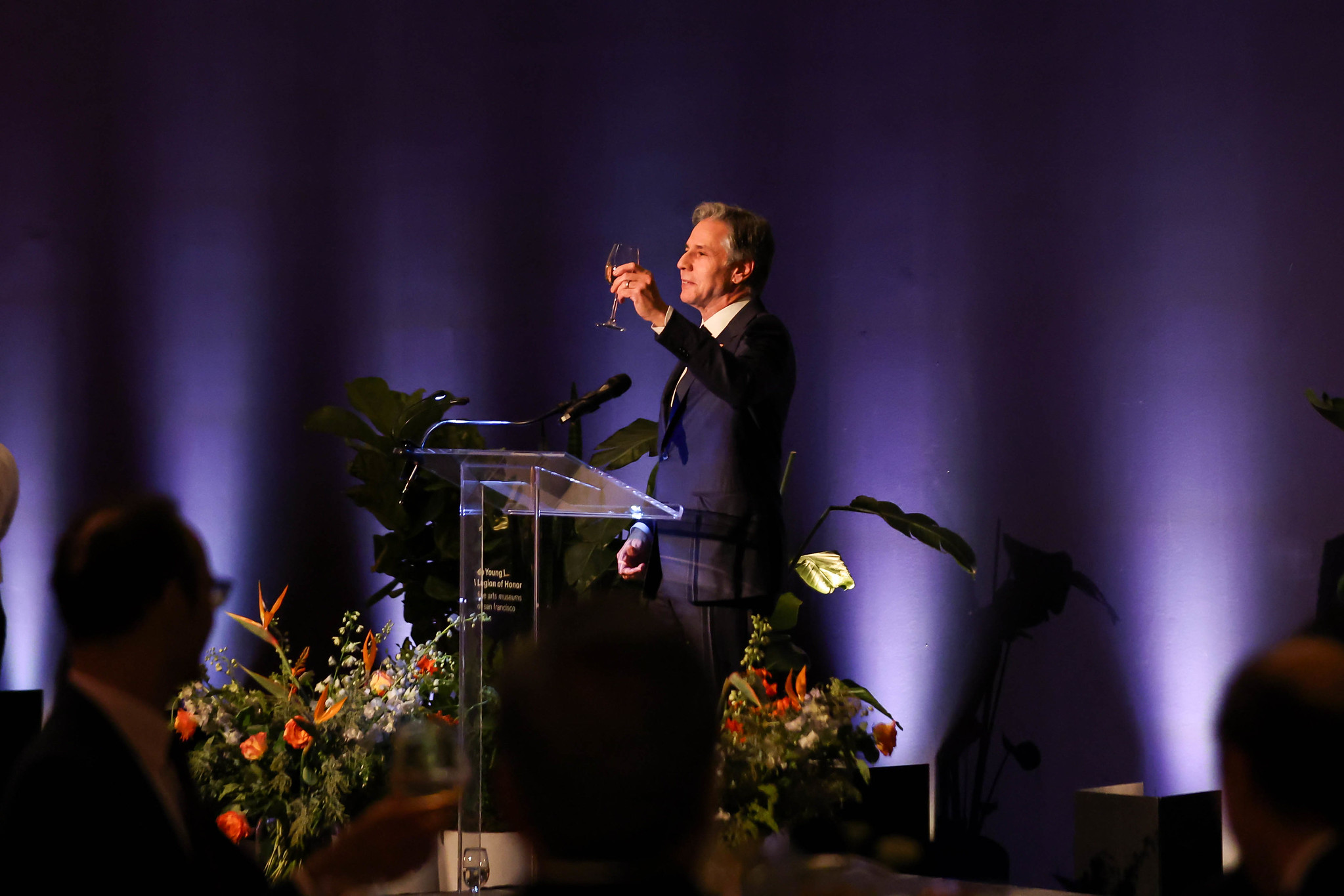
    US Secretary of State Antony Blinken raising a glass during the APEC Ministerial Meeting Dinner on November 14, 2023. Image credit: Justin Tafoya / US Department of State

    The tone of the meeting between Xi and Biden was cordial, if not warm. A reporter asked President Xi if he trusted President Biden. Xi did not respond. Xi called Biden an old friend. Biden declined to return the compliment. At a brief press conference held shortly after the meeting, Biden called Xi a dictator, repeating an assessment first deployed at a fundraiser a few months earlier, evincing a look of dismay by Secretary of State Antony Blinken.

    The two leaders committed each other to staying in touch, but no dates were suggested for a future get-together.

    Listen to Dui Hua’s podcast episode “APEC 2023: Xi & Biden Meet”


    PUBLICATIONS HIGHLIGHTS

    The Liberation of Ngawang Choephel (December 4, 2023)

    From John Kamm Remembers, a series written by Dui Hua’s founder recounting his advocacy for prisoners in China.

    Ngawang Choephel (left) with traditional Tibetan dancers during the making of Tibet in Song. Image credit: Imagine Peace

    In September 1995, a 29-year-old Tibetan ethnomusicologist named Ngawang Choephel was detained by Chinese authorities. Choephel was accused of spying for the Dalai Lama, but it was his documentary work that ran afoul of authorities. In 1997, John Kamm took up Choephel’s case, sending him on a journey through the Chinese legal system, the US senate, multiple embassies, and human rights NGOs that would help form the template for his later human rights work.

    Read more


    Turning over a New Leaf: Juvenile Offenders Benefit from Reform (October 23, 2023)

    From the Human Rights Journal, a blog offering original analysis and translations related to human rights and rule of law developments in China. 

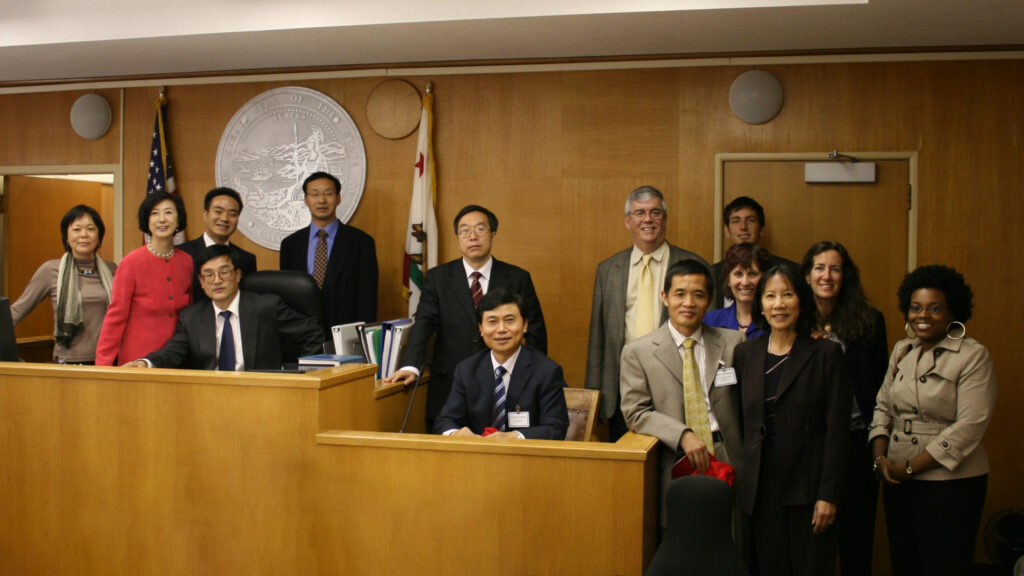
    The delegation from China’s Supreme People’s Court visiting the Juvenile Court of the City and County of San Francisco during Dui Hua’s first expert exchange in 2008. Image credit: Dui Hua

    This year marks the 15th anniversary of Dui Hua’s first expert exchange with the Supreme People’s Court (SPC) on juvenile justice. Beginning in 2008, these exchanges have addressed issues related to juvenile justice, women in prison, girls in conflict with the law, and child welfare. Statistics released by the SPC and Supreme People’s Procuratorate in 2022 reveal a continuous drop in juvenile convictions, falling by more than 50 percent since 2013. The Human Rights Journal looks at these statistics and what they say about the progress of juvenile justice reform in China.

    Read more


    ENCOUNTERS WITH CHINA PODCAST

    The Encounters with China podcast was launched this August to celebrate Dui Hua entering its 25th year.  This podcast series looks at aspects of Dui Hua’s unique form of advocacy as well as issues affecting US-China relations. Six episodes have been released: Lists & Dialogues: the Prisoner Information Project (ep 1), No Longer Favored: China’s Trade Status in Jeopardy (ep 2), Forging New Parths for US China Dialogue: Juvenile Justice (ep 3), Kamm’s List: Two Good Priests (ep 4), Sealing Juvenile Records: The Importance of a Clean Slate (ep 5), and a special podcast focused on APEC (ep 6).

    #5 Sealing Juvenile Records: The Importance of a Clean Slate (November 13, 2023)

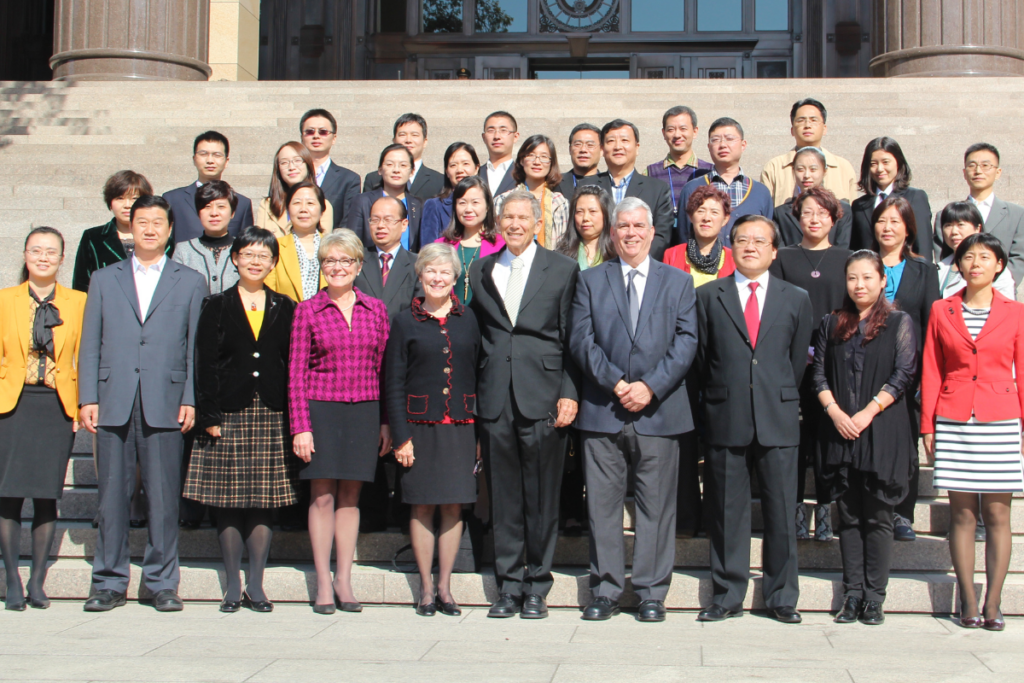
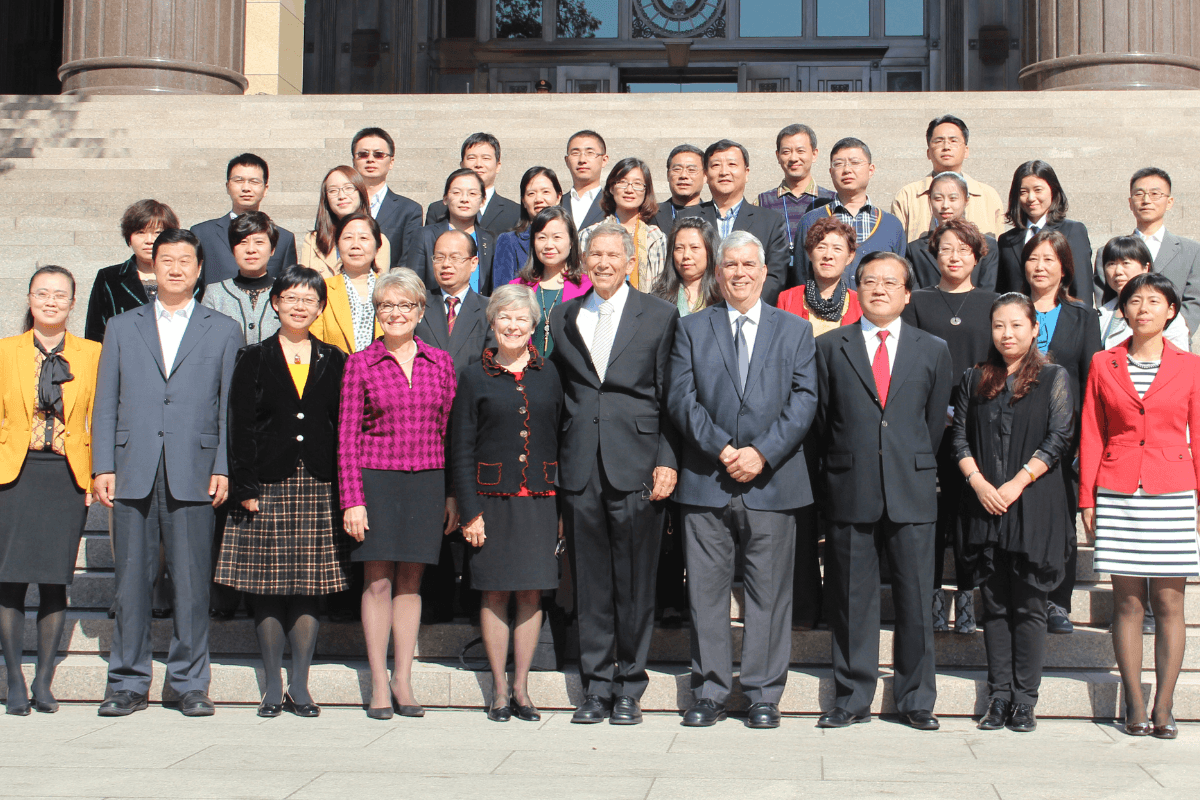
    Participants of the 2014 juvenile justice exchange. Image credit: Dui Hua

    In this episode, host Rebekah Enoch talks with Dui Hua founder John Kamm and retired Judge Leonard Edwards about the expert exchanges Dui Hua has facilitated between juvenile justice practitioners from the United States and China’s Supreme People’s Court, both in China and in the United States.

    Listen to this episode & more


    PRISONER UPDATES

    Dui Hua’s Prisoner Updates provide the latest information staff researchers have uncovered through online and library research and through direct dialogue with the Chinese government.

    Appeals from legal activist Xu Zhiyong (许志永) and lawyer Ding Jiaxi (丁家喜) rejected by the Shandong High People’s Court on November 24; elderly women lawyer Li Yuhan (李昱函) sentenced to 6.5 years in Liaoning, after six years since detained.

    Read more


    DUI HUA IN THE NEWS

    Over the past two months, Dui Hua’s work has attracted attention in the media as Executive Director John Kamm continues to raise the issue of Americans detained in China. This season, this advocacy has appeared in Politico and in the Wall Street Journal’s article “China Resists Efforts to Free ‘Wrongfully Detained’ Americans.”

    For more information, please visit our Dui Hua in News page.


    Subscribe to receive Dui Hua’s publications by email

  • The Liberation of Ngawang Choephel

    The Liberation of Ngawang Choephel

    << Read all John Kamm Remembers stories

    Download this story as a PDF

    Ngawang Choephel (left) with traditional Tibetan dancers during the making of Tibet in Song. Image credit: Imagine Peace

    I

    n 1992, Ngawang Choephel, a 26-year-old Tibetan ethnomusicologist born in a small village in Tibet and educated in India, accepted a Fulbright Scholarship to study music and film at Middlebury College in Vermont, thereby establishing a strong personal connection with the people of the Green Mountain State. The connection was to prove crucial in winning his freedom from captivity 10 years later, in 2002.

    After getting his diploma, Ngawang traveled to Tibet Autonomous Region (TAR), accompanied by an American photographer, in the summer of 1995. They recorded 16 hours of traditional Tibetan song and dance. Not long after the American photographer departed in mid-September 1995, Ngawang was detained by officers from the state security bureau in Xigatse on September 5, 1995. Fortunately, he had given the tapes to a western tourist before he was detained, thereby saving these valuable materials from confiscation and destruction.

    After detention, Mr. Choephel was placed in Nyari Detention Center in Xigatse, Tibet, where he was mistreated. Not long after Ngawang Choephel was formally arrested, Vermont Senator Jim Jeffords wrote, in October 1996, to the Chinese Embassy in Washington seeking information on Ngawang Choephel, beginning a years-long effort to secure his freedom. China’s ambassador to the United States, Li Zhaoqing, responded to Senator Jeffords’ letter with information on Ngawang’s health. Ambassador Li acknowledged that the prisoner had contracted bronchitis, pulmonary infection, and hepatitis around October 1998. (Another source in the Chinese government told me that Ngawang had developed a urinary infection.)

    Senator Jim Jeffords addressing Congress in 1996. Image credit: C-Span

    In the letter, Ambassador Li accused Ngawang of spying for the Dalai Lama (the “Dalai Clique” in his words). Two months later, Ngawang Choephel was tried and convicted for espionage and counterrevolutionary propaganda and incitement and sentenced to 18 years in prison with four years deprivation of political rights. Ngawang appealed the sentence, but on September 24, 1997, the TAR Higher People’s Court rejected his appeal and upheld the intermediate court’s judgment. He was first admitted to the infamous Drapchi Prison and then transferred to the Powo Tramo Prison, where he was treated somewhat better.

    I began my work on Ngawang Choephel’s case in 1997, placing his name on a list of political prisoners handed over to the Ministry of Justice (MOJ) in Beijing. The following year I submitted another list to the ministry. The ministry confirmed details of his conviction and sentencing. I raised his case in meetings with the justice ministry and the Ministry of Foreign Affairs (MFA) in both 1997 and 1998. At the same time, I researched Chinese law to see what I could find that might be useful in lobbying for the young Tibetan’s release.

    I came up with this article from the Measures for Carrying Out Medical Parole for Prisoners issued by the MOJ in 1990: “Prisoners who have contracted serious and chronic illnesses that have not been successfully treated for a long period of time…and who have served at least one-third of their fixed-term sentence” are eligible for medical parole. These measures were to provide the legal justification for Ngawang Choephel’s liberation and flight to the United States.

    On April 19, 1999, a group of friends and I registered the Dui Hua Foundation as a 501c3 charity with the State of California Secretary of State. One week later, on April 26, 1999, the United States introduced a resolution critical of China at the Human Rights Commission’s meeting in Geneva. China mobilized its allies who together introduced a “no action” motion. This motion passed handily, prompting celebrations by Chinese officials and their allies. I received a fax from the MOJ advising me that, “for reasons known to all,” it would no longer provide responses to my requests for information on prisoners.

    On May 7, 1999, NATO warplanes launched five US guided bombs at the Chinese embassy in Belgrade, Yugoslavia. The attack, organized and directed by the US Central Intelligence Agency, did extensive damage to the building, killed three Chinese journalists and wounded at least 20 other embassy staff. China was furious. Large crowds attacked and damaged the US embassy in Beijing, as well as other US diplomat posts in the country. A friend of mine who worked at the US consulate in Guangzhou was hit in the head with a brick.

    I wrote to the Chinese embassy in Washington, expressing my regrets and enclosing a small donation for the families of those who were killed in the bombing. I received a letter from Li Zhaoqing thanking me. I was subsequently told that I was the only American who donated money to the families.

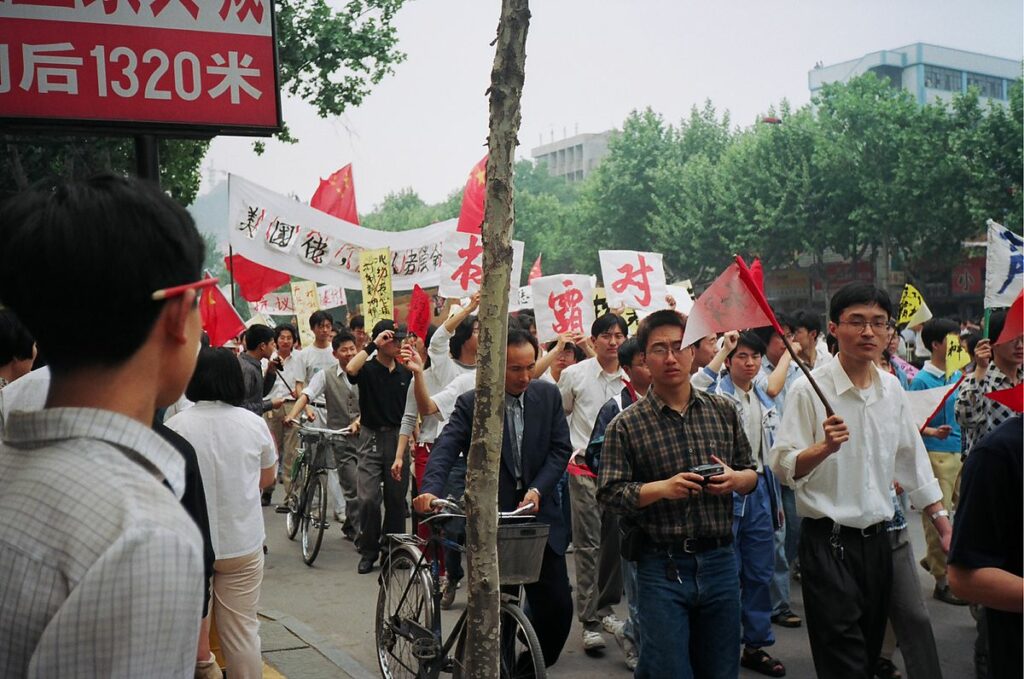
    Anti-American protests in Nanjing following US bombing of the Chinese embassy in Belgrade, 1999. Image credit: Ray_LAC / CC BY 2.0

    China cancelled virtually all programs with the United States, including the human rights dialogue. However, since Dui Hua’s dialogue had already been suspended, we were not affected. This enabled me to quickly resume talks with the Chinese government on prisoners. I flew to Beijing from Hong Kong in early September 1999, where I met with both the MOJ and the MFA as well as the China Society for Human Rights Studies. I handed over a list and received written information on several political prisoners. This was the first time Dui Hua submitted lists to the Chinese government.

    In Washington, Senator Jeffords and members of the Vermont congressional delegation, including Congressman Bernie Sanders, continued to press Ambassador Li Zhaoxing to release Ngawang Choephel, or to at least treat him better. Their efforts began to pay off. In July 2000, Ngawang Choephel was moved from Powo Tramo Prison (aka Bomi Prison) in Tibet to Deyang Prison, a model prison in Chengdu, Sichuan Province. The next month, Ngawang was permitted two one-hour visits by his mother, Sonam Dekyi, and his uncle. The meetings were very emotional.

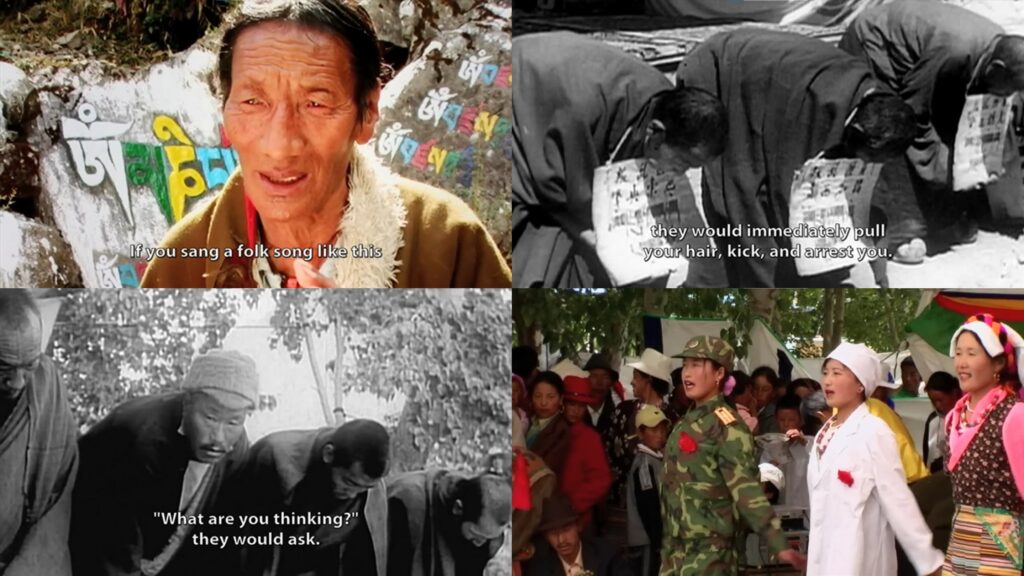
    Screenshots from Tibet in Song. Image credit: Tibet in Song movie trailer

    This gesture was likely related to an impending vote in Congress on granting China permanent Most Favored Nation, which had been renamed Permanent Normal Trade Relations (PNTR). If that was the intent, the effort failed. On September 9, 2000, Senator Jeffords, a pro-trade Republican, voted no on the resolution to grant China PNTR. The motion passed 85-15. Jeffords’s vote made a big impression on Ambassador Li.

    On September 11, 2001, planes hijacked by terrorists flew into the Twin Towers of the World Trade Center in lower Manhattan and the Pentagon in Washington. A fourth attack, on the White House, was thwarted by passengers, forcing it to crash into a field in Pennsylvania. Chinese President Jiang Zemin went against the advice of advisors to distance China from the United States, and decided to do the opposite, He would use the terror attacks to bring China closer to the United States. But how to do so?

    He summoned Li Zhaoqing, who had recently returned from Washington to become China’s foreign minister, for advice. Li advised Jiang that China should release high profile prisoners convicted of political crimes, starting with Ngawang Choephel.

    A few weeks before the 9/11 terror attacks, I received a phone call from New York Times journalist Tina Rosenberg. Ms. Rosenberg was – and is – one of America’s most accomplished journalists having won a Pulitzer Prize, a National Book Award, and a MacArthur Fellowship. Ms. Rosenberg told me that she had begun writing a story on how businesses dealt with human rights abuses in countries where they did business. She wanted to tell my story as part of this article. (The story evolved into a cover story in the Times’ Sunday Magazine, Kamm’s List, that run in early March 2002.)

    Tina began interviewing me over the phone and in person. The Times requested a visa for Ms. Rosenberg to visit Beijing to watch me at work. To my surprise she was granted one. A Chinese official told me “We don’t expect her to write a story like one that would appear in the Peking Review, but we hope she’ll be fair.”

    Ms. Rosenberg and I took different flights to Beijing, where we met for dinner on December 17, 2001. In the following days she attended my meetings with the MFA and the Supreme Court, accompanied by a photographer. (The MOJ refused to allow Tina to attend our meeting. Nor was she allowed to accompany me on my visit to Beijing Number Two Prison on December 18.) The journalist did however attend a breakfast meeting with the American Chamber of Commerce. There she witnessed the chamber’s blunt rejection of my request for help.

    The meetings with the MFA on December 18 and 19 took place at a critical time for my effort to help Ngawang Choephel. Writing of the December 18, 2021, meeting with the MFA. Ms. Rosenberg writes: “Kamm was nervous as we sat in the reception room of the enormous foreign ministry. Then, with a great flourish, in walked Li Zhaoxing, who had written the letter (to Senator Jeffords). He stayed only a minute and exchanged pleasantries, but Kamm had received the signal he was hoping for. Li Zhaoxing’s welcoming presence, if only for a moment, meant that Kamm’s concerns had been heard and that the release had been approved.”

    After Zhao left, Director General Li Baodong agreed to a code name – “Mr. X. from Xanadu” – which facilitated my discussion about Choephel with Li Baodong on December 19, 2001. At that meeting we reached agreement on key points: Choephel would fly from Beijing to the United States, the US government would pay for his flight, and Ngawang Choephel was free to speak to the media on his time in Tibet and in prison in both the TAR and Sichuan.

    One month later, on January 20, 2002, Ngawang Choephel, accompanied by an officer of the US Embassy, boarded Northwest Airlines flight NW88 to Detroit, arriving the same day. The MFA authorized me to release a statement on the release, which I did. According to the Dui Hua statement, “After receiving a medical examination and appropriate medical treatment in the United States, it is expected that Ngawang Choephel will return to India to be with his mother and other members of his family.”

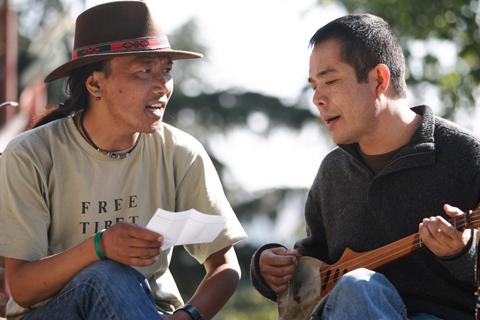
    Ngawang Choephel (right) and a friend, prepare a traditional song for the documentary Tibet in Song in October 2010. Image credit: David Huang / Public Domain

    The release of Ngawang Choephel marked the first time that China released a Tibetan political prisoner in response to foreign pressure. In the months after his release, other Tibetan prisoners were released, including Jigme Sangpo and the Drapchi nuns Ngawang Sangdrol and Phuntsong Nyidron. Sadly, Beijing no longer grants clemency to Tibetan political prisoners.

    The lessons I learned during my work on the Choephel case formed a template for my human rights activism. These included:

    • Close work with the US embassy in Beijing, and the Department of State in Washington. My partners were Ambassador Clark Randt and Assistant Secretary for Democracy, Human Rights, and Labor Lorne Craner.
    • Close work with members of Congress, including Senator Jeffords. Senator Craig Thomas and others, including their staff.
    • Coordination with human rights NGOs, including those working on Tibet. We insured that Ngawang’s name was on prisoner lists used in bilateral human rights dialogues, notably the dialogue between the United States and China that took place a few weeks before the release.
    • Joint efforts with other governments, including Australia, which placed Ngawang Choephel’s name at the top of the short list of names submitted for their rights dialogue with China.
    • Research into Chinese law. The “one-third” rule was deployed not only in the Choephel release, but in the releases of other dissidents.
    • Outreach to audiences and media outlets.
    Posters of Choephel’s films Tibet in Song and Ganden: A Joyful Land. Image credit: Fair use

    Since his release in early 2002, Ngawang Choephel has continued his documentary filmmaking. His first film, Tibet in Song, was a Sundance Festival Jury Award Winner. Most recently, his movie, Ganden: A Joyful Land, debuted at the International Buddhist Film Festival in San Rafael, California, on April 30, 2023. Ngawang’s work has made an important contribution to preserving Tibetan culture and telling the story of the struggle for freedom of the Tibetan people.


  • Prisoner Updates 2023 #12

    Activists’ appeals rejected in Shandong

    Shandong High People’s Court on November 24 rejected appeals from legal activist Xu Zhiyong (许志永) and lawyer Ding Jiaxi (丁家喜). The High Court upheld their convictions and sentences. The second instance trials were once again held at the Lishu County People’s Court.

    Xu and Ding were founders of the New Citizens Movement. They were convicted of subversion by the Linyi Intermediate People’s Court on April 10, 2023. Xu was sentenced to 14 years of imprisonment with four years of deprivation of political rights (DPR); Ding was sentenced to 12 years in prison with three years of DPR.


    Trial of veteran democracy activist postponed for eleventh time

    Xu Qin (徐秦)’s trial for inciting subversion has been postponed again for three months. It is reportedly the eleventh postponement. The Yangzhou Intermediate People’s Court issued a notice on November 2, 2023, and the trial is slated to resume on February 3, 2024. The postponement was approved by the Supreme People’s Court.

    Xu, reportedly in poor health, is a veteran democracy activist. She co-founded Human Rights in China 中国人权观察 with Qin Yongming. She was detained on February 9, 2018, for picking quarrels and provoking trouble (PQPT), with the incitement charge added in March 2018. Xu was released on bail in August 2018, but was again placed in custody in November 2021.


    Teacher in Hainan arrested for inciting subversion

    Wu Kongda (吴孔大), a teacher of Hainan Anding County, was reportedly arrested for inciting subversion in Haikou. Wu was placed under administrative detention in June 2023 when he posted messages on WeChat expressing concern and support for former lawyers Wang Quanzhang and Li Heping, who were both facing evictions from their Beijing homes. Wu was reportedly arrested on October 10, 2023. However, the reason for his latest legal trouble is not clear.


    Shanghai activist completes incitement sentence

    Chen Jianfang (陈建芳), an activist in Shanghai, completed her four-and-a-half-year prison sentence on October 21, 2023. She was arrested in May 2019 and convicted in 2020 of inciting subversion. The Shanghai Number One Intermediate People’s Court found Chen guilty of receiving training and funds from overseas to smear China, gathering crowds to disrupt public space, and posting photos of protests on overseas websites. Her appeal was rejected by the Shanghai High People’s Court in August 2023.

    Although Chen has been released, it is reported that she has been restricted from leaving home. Chen’s sentence also includes four years of DPR, which places her in the category of “targeted population” under the surveillance of police.


  • APEC 2023: Xi and Biden Meet (JKR Podcast)

    APEC 2023: Xi and Biden Meet (JKR Podcast)

    JKR: Encounters with China | S01 E06 November 21, 2023

    In this special podcast, host Sze Wah Leong speaks with Executive Director John Kamm on the recently concluded APEC Summit in San Francisco, with a focus on the meeting between President Joe Biden and President Xi Jinping, the first time the two men have seen each other in a year. Topics explored include what was achieved and what wasn’t achieved, the tone of the meeting, the controversial banquet for President Xi hosted by two organizations after the meeting between the two presidents, the likelihood that commitments made will be realized, and how the meeting gave Dui Hua an opportunity to add its voice to the dialogue.

    Related for this episode:

    Image credit: The Dui Hua Foundation 2023

    Listen to the latest episodes of JKR: Encounters with China


    You can listen to our podcast on our website and RSS.com or on your favorite app. You can find us on Apple Podcasts, Spotify, Amazon Music, YouTube, or any podcast directory. Search for “JKR: Encounters with China.”

  • APEC Summit Highlights Need for Stable Relations

    APEC Summit Highlights Need for Stable Relations

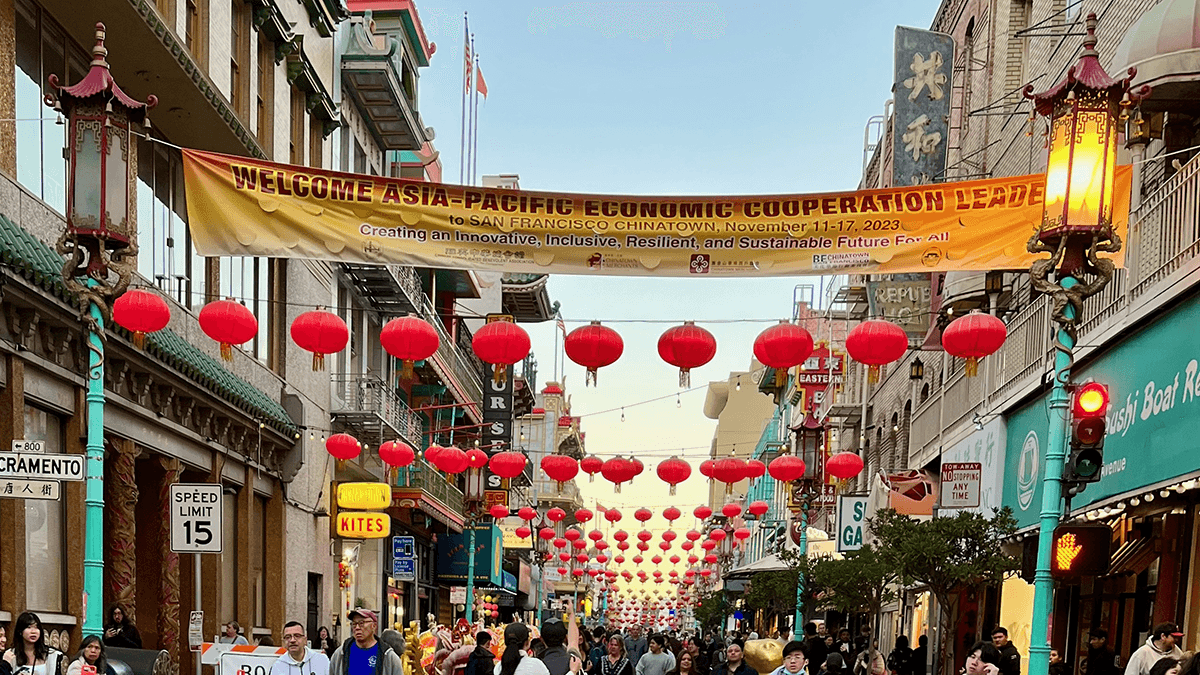
    An APEC banner promoting the San Francisco summit. Image credit: APEC press kit
    When US President Joe Biden and Chinese President Xi Jinping meet at the Asia-Pacific Economic Cooperation (APEC) summit in San Francisco this week, they will have lots to talk about.
    As at every meeting between Chinese and US leaders in recent years, Taiwan tops the agenda. Wars in Ukraine and the Middle East will not be far behind.
    China has objected to the sale of weapons to Taiwan – a recent headline in a BBC story read “The US is quietly arming Taiwan to the teeth” – as well as multiple visits to the island by US officials touched off by then-Speaker Pelosi’s August 2022 visit. There have been numerous close encounters between US and Chinese warplanes and naval vessels in the South China and East China Seas in recent months.
    Issues relating to trade – market access, intellectual property protection, export and import restrictions imposed by both countries on products ranging from semiconductors to rare earths – will come up as will narcotics, especially the trafficking of deadly fentanyl. China’s anti-espionage law is causing considerable disquiet in the foreign business community in China.
    The United States wants to talk about the situations in Hong Kong, Tibet, and Xinjiang, but China does not. The United States considers Hong Kong, Tibet, and Xinjiang legitimate topics for discussion, but China will push back, stating that what goes on in those three places are China’s internal affairs and as such are none of the United States’ business.
    Human Rights 
    Human rights will come up, though they are likely not high on the agenda. Here too the presidents have plenty to discuss.
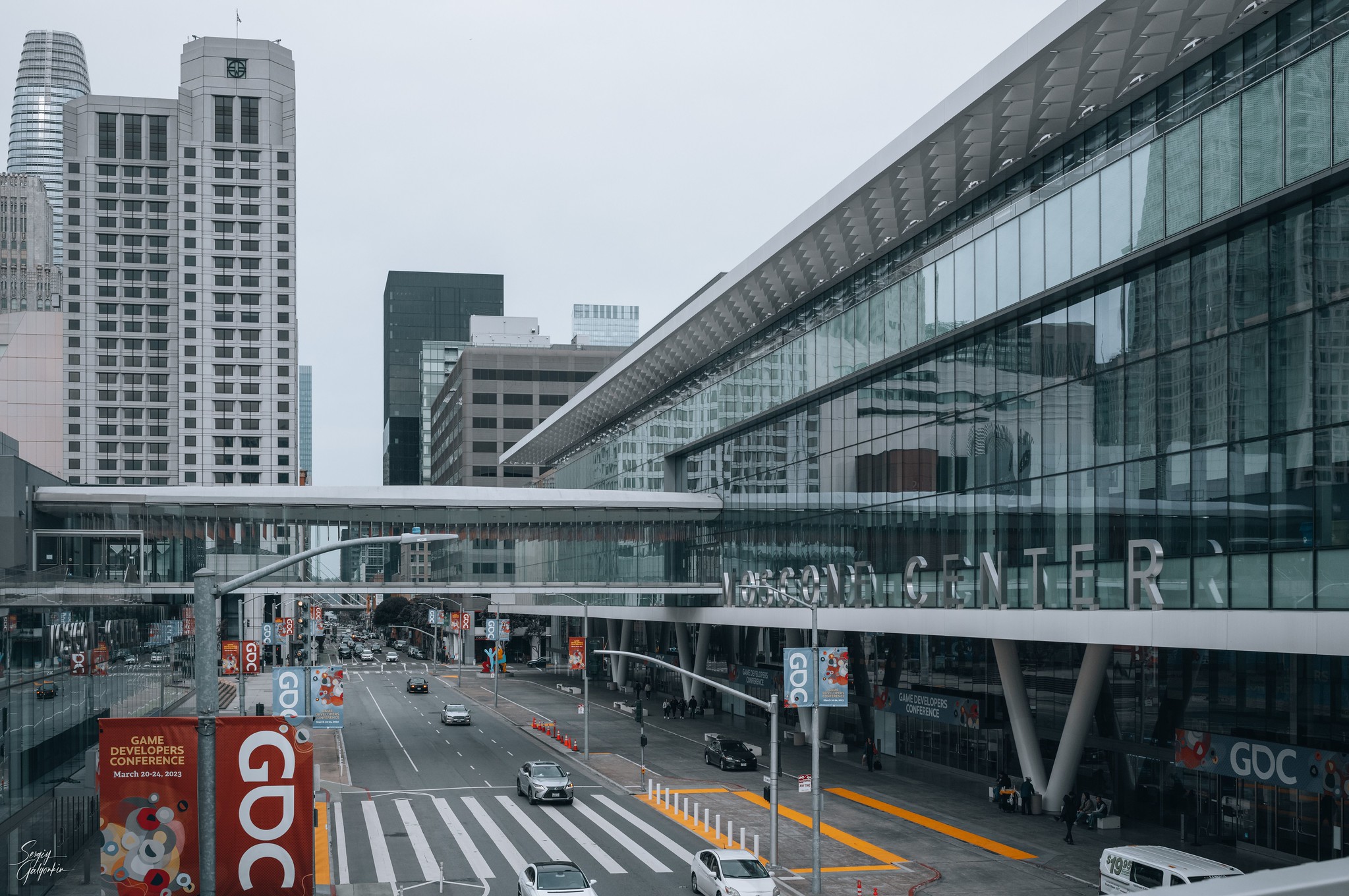
    The Moscone Center, where APEC events will be held. Image credit: Sergiy Galyonkin / CC BY-SA 2.0
    Dui Hua estimates that there are around 200 Americans undergoing coercive measures in China, but the State Department refuses to release the actual number or even an estimate. The US State Department considers three Americans – Mark Swidan, Pastor David Lin, and Li Kai, all businessmen – to be “unjustly imprisoned” in China.
    The meeting between Biden and Xi will take place 11 years after Mark Swidan was detained in Guangdong Province. He has been sentenced to death with two-year reprieve. Multiple senators and representatives have called for his release. If Mark Swidan is released on medical parole and allowed to return to his mother in Texas, this will be viewed positively by the American people.
    The Chinese government also believes that Chinese citizens have been persecuted in the United States, but it has not publicly released their names.
    In addition to citizens thought by the Department of State to be unjustly detained, there is the nettlesome problem of exit bans. Dui Hua estimates there are more than 20 Americans under exit bans, including businessman Henry Cai, who has been forbidden to leave China for nearly seven years.
    The US government raises the names of relatives of US citizens who have been imprisoned in China, including Uyghurs. High priorities are Dr. Gulshan Abbas, Professor Rahile Dawut. and entrepreneur Ekpar Asat.
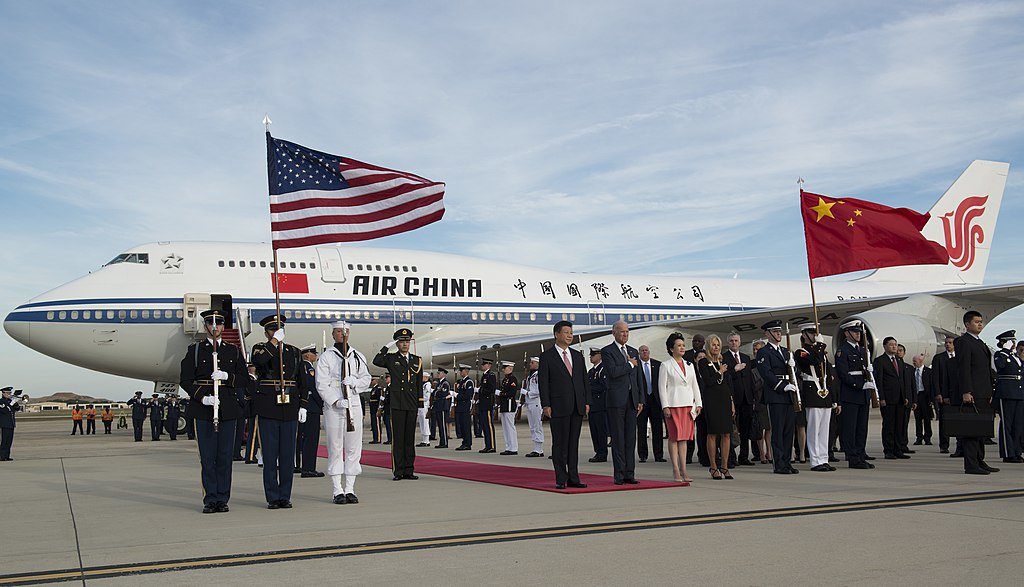
    On September 24, 2015, President Xi and then-Vice President Joe Biden stand during the US national anthem on Xi’s state visit. Image credit: Airman 1st Class Philip Bryant / US Air Force photo
    While the fate of prisoners is high on the list of human rights issues, it is also possible that the two leaders will talk about areas where the two countries can cooperate. These include the rights of juveniles, women in prison, and the disabled. Dui Hua has worked closely with China’s Supreme People’s Court (SPC) on juvenile justice reform and the rights of incarcerated women and girls in both countries. The foundation has partnered with the SPC on nine programs in this area since 2008, most recently in April 2023. In the past the United States and China have held a dialogue on the rights of the disabled. These programs have made a difference for those at risk in both countries.
    Number of Dialogues Declines Sharply 
    When President Trump took office there were more than 100 dialogues between the United States and China covering a wide range of subjects. Now only a handful remain, including the dialogue on consular affairs where the fates of detained citizens are raised.
    The last human rights dialogue between China and the United States took place in 2016. The dialogue has been suspended since. Meanwhile, China is less interested in holding human rights dialogues with Western countries. There were once as many 10 such dialogues, and many consultations. Now they are few and far between. Instead, China is focused on dialogues and consultations with like-minded countries like Mexico, the United Arab Emirates, and Egypt. Several such events have taken place in 2023.
    Years ago, Dui Hua executive director John Kamm was told by a Chinese official that “When relations are good, your work benefits. When relations are bad, your work suffers.” This is as true today as it was those years ago.
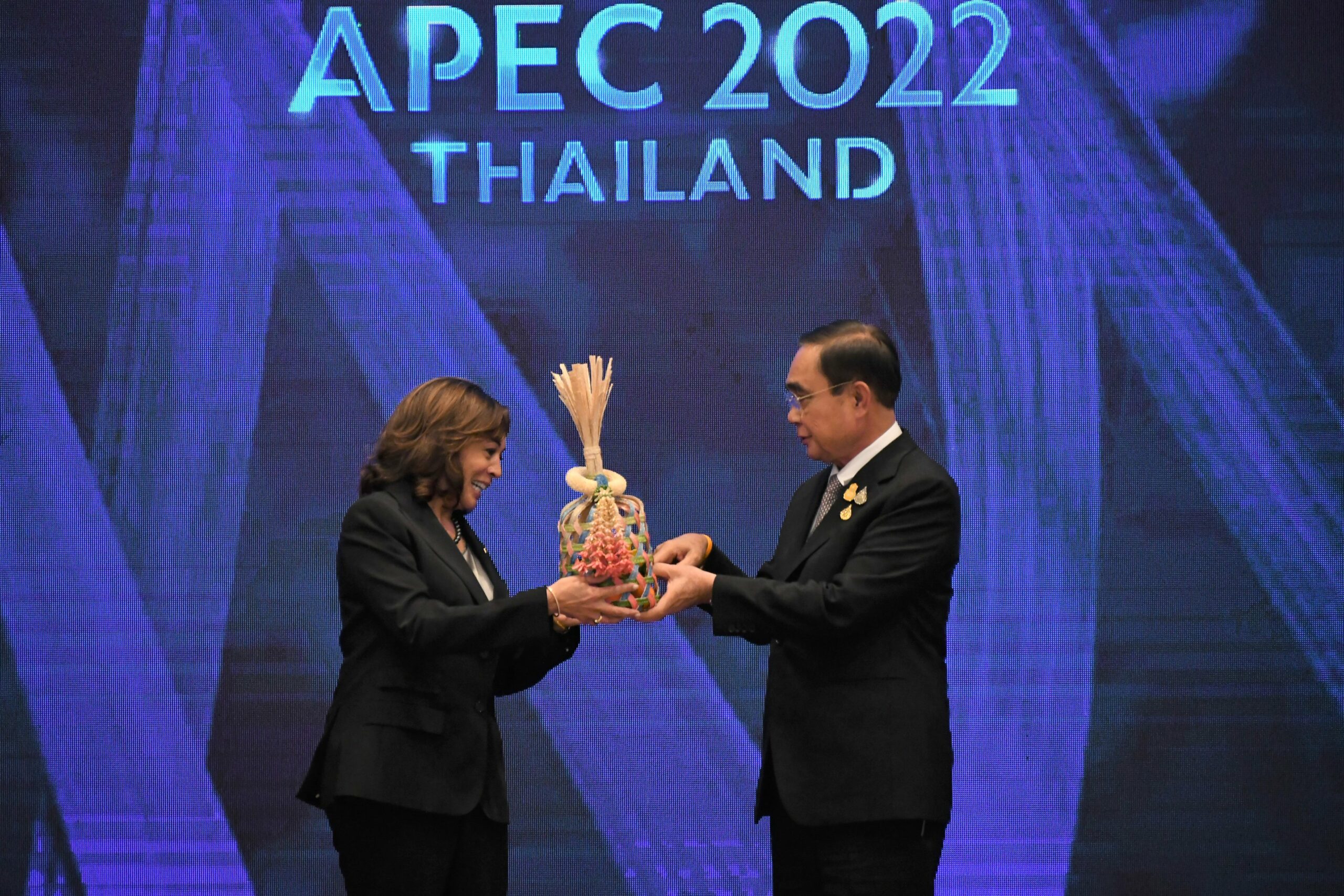
    At APEC2022, Thailand passes the baton—a bamboo basket decorated in three colors symbolizing the values of openness, connection, and balance—to the United States as the next host of APEC2023. Image credit: APEC Thailand X account
    The drop in the number of dialogues between China and the United States has fueled a lack of trust between the two countries, and contributed to a situation where leaders are forced to discuss a long list of issues, some of which are complicated and contentious.
    It is quite possible that a result of APEC summit will be the resumption of suspended dialogues between the United States and China, including the human rights dialogue. If the rights dialogue is resumed, preparations need to begin as soon as possible, including agreement on guidelines. Washington is expected to insist on the right to submit prisoner lists and get responses in return. Hopefully Beijing will agree.
  • Sealing Juvenile Records (JKR Podcast)

    Sealing Juvenile Records (JKR Podcast)

    JKR: Encounters with China | S01 E05 November 13, 2023

    In this episode, host Rebekah Enoch talks with Dui Hua founder John Kamm and retired Judge Leonard Edwards about the expert exchanges Dui Hua has facilitated between juvenile justice practitioners from the United States and China’s Supreme People’s Court, both in China and in the United States. Exploring questions like, “What does it mean to seal juvenile records?”, “Why is it important?” and “What does it have to do with China?”, the interview unpacks some of the impressions and the impact of these exchanges on juvenile justice in the United States and China, as well as what it means in the context of Dui Hua’s decision to expand the mission to include women in prison and juvenile justice, in addition to political and religious prisoners.

    Judge Leonard Edwards is a distinguished retired Superior Court Judge who has been a key contributor in multiple US-China exchanges on juvenile justice. With a remarkable 26-year tenure in Santa Clara County, California, he served as both a domestic relations judge and a juvenile court judge. His extensive contributions include founding the Juvenile Court Judges of California, leading the National Council of Juvenile and Family Court Judges, and establishing key organizations like the Santa Clara County Domestic Violence Council, Kids in Common and the Child Advocates of Santa Clara County. He has shared his expertise and insights through numerous writings as well as judicial training in 48 states and 13 foreign countries.

    Related for this episode:

    Image credit: 2014 Juveniles Justice Exchange. The Dui Hua Foundation

    Listen to the latest episodes of JKR: Encounters with China


    You can listen to our podcast on our website and RSS.com or on your favorite app. You can find us on Apple Podcasts, Spotify, Amazon Music, YouTube, or any podcast directory. Search for “JKR: Encounters with China.”

  • Prisoner Updates 2023 #11

    Li Yuhan sentenced

    After spending more than six years in detention, rights lawyer Li Yuhan (李昱函), now in her 70s, was sentenced by the Heping District People’s Court to six years and six months in prison for “fraud” and “picking quarrels and provoking trouble” (PQPT) on October 25, 2023. According to reports, she has staged a hunger strike at the Shenyang No.1 Detention Center. She was hospitalized at least twice and her applications for medical parole have all been denied because she refused to confess and admit guilt.

    The prolonged pretrial detention has taken a toll on Li’s physical and mental state. Li was targeted for handling sensitive cases, particularly her defense of prominent rights lawyer Wang Yu, who was among the first group of people to be detained in a nationwide operation against lawyers and activists in July 2015.

    Li said she would appeal the sentence. There are six months remaining in her sentence. She should be released in April 2024.


    Cheng Lei released & deported; Yang Hengjun remains in detention

    Chinese-born Australian national Cheng Lei (成蕾) was deported to Melbourne on October 11 after spending more than three years in custody in Beijing. She worked as an English-language news presenter for Chinese state television before being placed under residential surveillance at a designated location (RSDL) in August 2020. Cheng described the first six months under RSDL as the hardest of her years in jail. She was only given 15 minutes of fresh air a day from a small window at the top of the room with the curtains still drawn, and the lights were on 24 hours a day.

    Her detention came at the height of tensions between Australia and China over COVID-19, trade, and human rights disputes between the two countries. The reasons for her detention were unclear until Cheng spoke about her ordeal after she regained her freedom. Her detention stemmed from her breaking a media embargo on a Chinese government briefing by just a few minutes, even though she did not reveal the details of the government briefing document she had reported on. In March 2022, she was tried in secret and subsequently sentenced to two years and 11 month in prison for “illegally procuring/trafficking in state secrets for foreign entities.”

    Yet, another Chinese-born Australian national Yang Hengjun (杨恒均) remains in a detention center, waiting for the outcome of his trial for espionage—an endangering state security crime. The trial commenced in May 2021 behind closed doors. In a letter he sent to his sons, Yang described the dire conditions in the detention center and his rapidly declining health due to a kidney illness. Yang has been in custody since January 2019. Family and supporters are urging Australian Premier Minister Anthony Albanese to raise the case during his state visit to China, which begins on November 4.


    Lu Siwei released on bail

    On October 28, rights lawyer Lu Siwei (卢思位) was released on bail pending investigation one month after he was repatriated to China from Laos. Lu was arrested by Laotian police in late July while boarding a train for Thailand. He was en route to Bangkok to catch a flight to the United States where he was to reunite with his wife and daughter. The US State Department has condemned his forced repatriation at the request of China.

    After being deported to China, Lu is being held in Xindu District Detention Center, Chengdu.


    Ji Xiaolong sentenced

    On October 27, rights activist Ji Xiaolong (季孝龙) was sentenced to four years and six months in prison for PQPT. He was detained in August 2022 for criticizing the grueling COVID-19 lockdown in Shanghai and making online posts that allegedly were “insulting” to Chinese leaders. Ji also called on then-Shanghai ruling Chinese Communist Party secretary Li Qiang, who replaced the recently deceased Li Keqiang as premier in March 2023, to resign for “blindly following orders from the central government.”

    Ji previously completed a 42-month prison sentence in February 2022 for the same crime over “down with the CCP” graffiti he wrote in a public toilet. 


    Li Qiaochu’s trial remains in limbo

    Since her trial for inciting subversion commenced in late June 2023 in Linyi, Shandong, no news about labor activist Li Qiaochu (李翘楚) has been reported. Li was first placed under RSDL in February 2020 after she exposed the treatment of Xu Zhiyong, her fiancé, in detention center. Supporters say Li’s health is worrisome as she suffers from chronic depression, but repeated requests for bail from her lawyer and mother had been denied.


    Zeng Yuxuan repatriated to mainland

    Zeng Yuxuan (曾雨璇), a PhD student from the mainland at the Chinese University of Hong Kong, completed her six-month prison sentence for sedition on October 12 after having served nearly all of her time in pre-trial detention. The conviction, handed down by the West Kowloon Magistrate’s Court, stemmed from a poster she possessed about the “Pillar of Shame” monument commemorating the 1989 Tiananmen protests. Upon release, she was immediately repatriated to China and has been incommunicado since then.


    Hong Kong student sentenced for online posts made in Japan

    Yuen Ching-ting (袁静婷), a student from Hong Kong attending university in Japan, was sentenced to two months in prison on November 3 for “doing acts with seditious intent” by the West Kowloon Magistrate’s Court. She pleaded guilty in an October 26 hearing. Yuen made a string of pro-Hong Kong independence posts on social media while she was studying in Japan from September 2018 to March 2023. She was arrested for inciting secession in March after returning to Hong Kong to update her identification card. Yuen was released on bail in June while waiting for sentencing. The verdict sets a precedent for similar cases in the future involving speech made on overseas social media platforms.