Blog

  • Dui Hua Digest, January/February 2023

    Dui Hua Digest, January/February 2023

    EVENTS

    Dui Hua Kicks Off New Year with Public Event

    The exterior of the University Club of San Francisco, and Kamm delivering his remarks at the club on January 12. Image credits: Booking.com; The Dui Hua Foundation


    In what has become an annual event, Executive Director John Kamm addressed an enthusiastic, sold-out crowd at the University Club of San Francisco on the evening of January 12, 2023. As in the four previous addresses, Kamm focused on US-China relations, and the impact of domestic politics in the United States on the country’s policies towards China.

    Kamm pointed out that Speaker McCarthy has prioritized China policy since winning the speakership after 15 rounds of voting in the House of Representatives. In his first speech, delivered in the early morning of January 7, 2023, McCarthy laid out the priorities of the new Republican majority, including restricting abortion rights, securing the southern border, and launching multiple investigations into Biden administration policies. Not surprisingly, Republican members applauded as McCarthy went through the list of priorities, while Democrats “sat on their hands.”

    There was an exception. When McCarthy said that a priority of the new Congress is “standing up to the Chinese Communist Party,” the entire House stood up and loudly applauded. In the ensuing days, the House passed legislation establishing a select committee on China and banning sales of crude oil to companies tied to the PRC. The votes were bipartisan, reflecting what Kamm called “the one thing Republicans and Democrats agree on – hitting back at China’s alleged malign activities.”
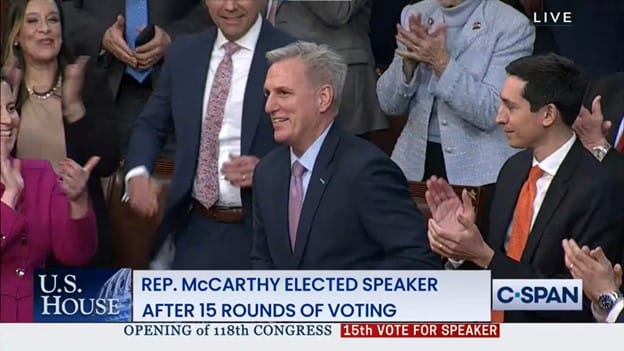
    House Majority Leader McCarthy upon securing the speaker position. Image credit: C-Span

    Taiwan

    Kamm agreed with National Security Advisor Jake Sullivan that conflict between the United States and China over Taiwan is not inevitable, but he went one step further. Conflict over Taiwan is unlikely.

    He cited the immense logistical challenges involved in coordinating and executing an air and sea invasion across 100 miles of heavily defended ocean against a determined foe fighting to preserve their democracy, and aided by militaries of the United States, Japan, and others. “It’s simply too risky,” Kamm opined. He recounted a conversation with a senior Chinese official several years ago. A failed invasion with heavy losses, the official said, would be the end of the Communist Party. That logic still holds, Kamm said. On top of multiple domestic failures including mishandling the Covid epidemic, the economy, and foreign affairs (e.g., supporting Russia in the Ukraine war) a failed invasion attempt would represent an existential threat to Communist Party rule.

    Semiconductors & Other Topics

    Kamm’s remarks lasted 40 minutes. They were followed by 50 minutes of Q&A, a lively exchange that covered multiple topics. The most time was spent on the Biden administration’s recently announced restrictions on transferring technology for manufacturing semiconductor chips, and the most advanced chips themselves to China. Chinese leaders are now convinced that the United States is determined to contain its growth in 21st century technologies.

    Sign for semiconductor SMIC’s corporate office in Shenzhen. Image credit: Lhzss8 / CC BY-SA 4.0

    In addition to Taiwan and the trade in semiconductors, Kamm rattled off a long list of other areas where the two countries are facing off. These included:

    Confrontations in the South China and East China Seas – a recent near-collision between fighter jets of China and the United States is a matter of deep concern to the Pentagon.

    Hong Kong – the United States, the United Kingdom, and allies claim that China is violating commitments made in the Joint Declaration. China accuses them of interfering in the city’s internal affairs.

    Human rights in Xinjiang and Tibet – the United States accuses China of committing espionage and is enforcing the Xinjiang Forced Labor Act.

    Detention of US citizens in China, and Chinese citizens in the United States, including the use of exit bans.

    Economic espionage by Chinese agents bent on stealing American technology; the FBI opens a new investigation of Chinese economic espionage every 12 hours.

    Mishandling of Covid – many in the United States continue to believe that China is responsible for the global pandemic, and has recently reimposed travel restrictions on Chinese travelers, a move roundly condemned by China.
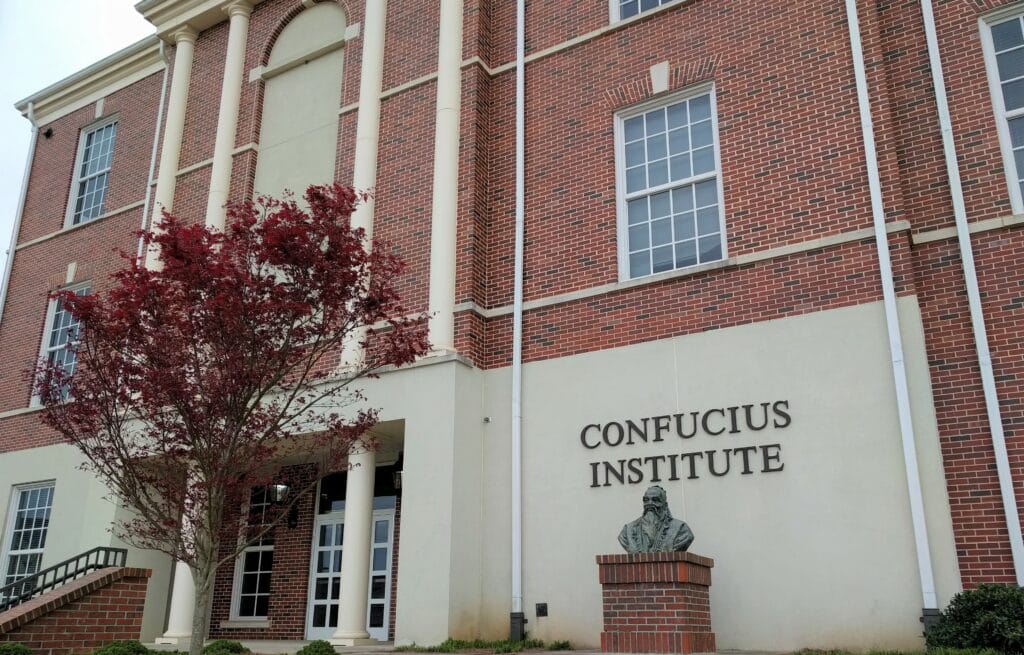
    A 2018 photo of the Confucius Institute building on the Troy University campus in Alabama. Image credit: Kreeder13 via Wikimedia Commons / CC BY-SA 4.0

    Kamm concluded his remarks by asking whether decoupling of the United States and China’s economies and societies is possible. He cast doubt that decoupling is possible given the links between the two countries, forged over more than 50 years. “That’s not to say, however that efforts to do so won’t be made.” An example is the closure of Confucius Institutes on American campuses. “Two years ago, there were around 110 institutes in the United States. After legislation was passed restricting access to US government funding, that number has fallen to seven.”


    PUBLICATIONS ROUND UP

    Featured: Prisoner Updates 2023 #1, January 23, 2023

    Situation of anti-COVID control protesters worrisome

    During his meeting with European Council President Charles Michel on December 1, 2022, President Xi Jinping tried to explain away the widespread protests against China’s “zero- Covid” policy by blaming the unrest on a few “frustrated” students. Soon after, China abruptly reversed course and relaxed all Covid controls without warning or preparation. Despite Xi’s tone of understanding towards the protestors when speaking in public, many participants of the protests have been subjected to coercive measures. Read more.


    Sedition Cases in Hong Kong

    The United Nations has expressed concerns about the Hong Kong government’s use of colonial-era sedition charges to suppress criticism or dissent. Despite not being covered by the Beijing-imposed national security law, the conditions for obtaining bail are difficult in sedition cases. Individuals convicted under this law face a maximum penalty of two years in prison. Read more.


    Featured: Prisoner Updates 2023 #2, January 30, 2022

    Elderly counterrevolutionaries continue serving their sentences

    Dui Hua uncovered another case of an elderly counterrevolutionary who is still serving a prison sentence. Read more.


    New Details Learned of in “Three Grades of Servants Sect” Case in Yunnan

    From Yunnan, Dui Hua has uncovered new information on a case involving the “Three Grades of Servants Sect (三班仆人).” Read more.


    Two Dissidents Sentenced for Inciting Subversion in December 2022

    Prominent activist Guo Quan (郭泉) was handed a four-year prison sentence for inciting subversion in Nanjing on December 20, 2022, the second time he was convicted of the same crime. Guo, a longtime advocate of multiparty democracy, was detained on January 31, 2020, over a dozen articles he published criticizing officials who covered up the initial coronavirus outbreak in Wuhan. Some observers believe that Guo’s conviction was meant as a warning to those who took part in the recent blank paper protests against COVID restrictions, even as China lifted those controls virtually overnight. Read more.


    Rights lawyer Tang Jitian Regains His Freedom

    Tang Jilian (唐吉田) updated his social media with a photo and a message on January 14, 2023. Letting friends and supporters know that he has regained his freedom. Tang disappeared on December 10, 2021, when he was on the way to attend the International Human Rights Day event hosted by the EU in Beijing. Read more.


    JOHN KAMM REMEMBERS

    John Kamm Remembers is a feature that explores Kamm’s human rights advocacy prior to and since Dui Hua’s establishment in 1999. Learn about Kamm’s decades-long work in China here.

    Operation Yellow Bird

    Images from a video of Representatives Jones, Miller, and Pelosi in Tiananmen Square in 1991. Image credit: Nancy Pelosi Facebook account


    Speaker of the House Nancy Pelosi’s trip to Taiwan in early August 2022 was praised and criticized in equal measure. It resulted in massive Chinese military drills as well as a surge in foreign delegations to the island. China’s President Xi Jinping asked US President Joe Biden to intervene to stop Pelosi, but Mr. Biden declined to do so. The Biden administration did, however, take steps to discourage the speaker from making the trip.

    After Speaker Pelosi’s visit, China canceled or suspended cooperation with the United States on a range of issues, including military talks, climate change, and law enforcement, notably involving narcotics.

    Her Taiwan visit was not Mrs. Pelosi’s first foray to Greater China to promote democracy and human rights.

    In September 1991, Pelosi and two other members of Congress, Ben Jones and John Miller, traveled to Beijing accompanied by staff and representatives of NGOs, including the AFL-CIO. While there, they slipped out of their hotel, unbeknownst to their host, and went to Tiananmen Square where they unfurled a banner that read “To Those who Died for Democracy in China.” The police quickly moved in, and Pelosi tried to run away in high heels. The Representatives were questioned and let go.

    “It was my first experience with Pelosi’s penchant for high-profile gestures designed to poke China’s communist rulers in the eye – regardless of the consequences” wrote Mike Chinoy, CNN’s bureau chief in Beijing. Chinoy, who had not been forewarned of Mrs. Pelosi’s plans, and his cameraman were roughed up by the police and placed under arrest. Journalists from two other networks, ABC and CBC, were similarly treated. Officials at Pelosi’s host organization were punished. American ambassador Stapleton Roy was furious and confronted Pelosi in the lobby of the hotel. Congresswoman Pelosi did not care about any of this. Her mission had been accomplished; her profile had been lifted.
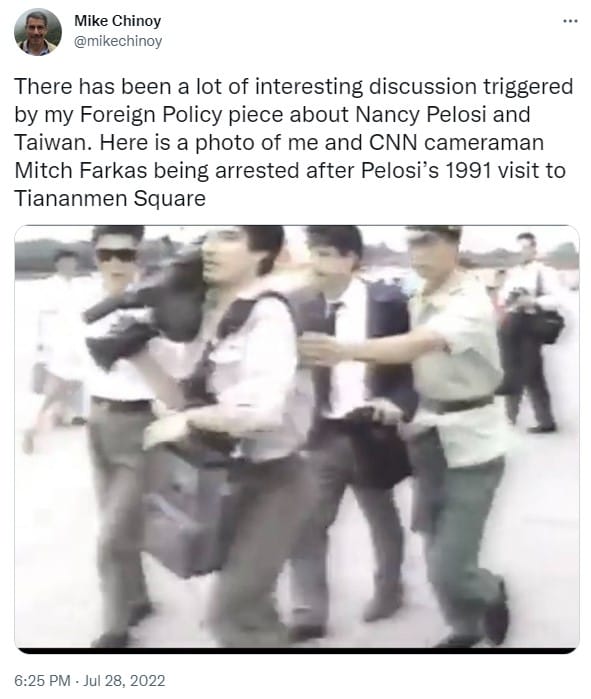
    Screenshot of Mike Chinoy’s post on Twitter with an image of the arrest after unfurling the banner. Image credit: Mike Chinoy Twitter account

    In fact, I am grateful to Congresswoman Pelosi for what she did in Tiananmen Square that day in September 1991. Though she has no idea why I’m grateful, in fact her protest led directly to some of my early successes, including the release of Hong Kong Trade Development Council representative Lo Hoi-sing, son of a senior journalist at a Hong Kong left-wing paper.

    Operation Yellow Bird

    In the aftermath of the killings in Chinese cities in June 1989, loosely coordinated efforts began to spirit protesters out of China to safe havens outside of the mainland, notably Hong Kong, then a British crown colony. These efforts involved more than 40 people, some of whom were members of triads, others of whom were local Chinese officials. The efforts were dubbed “Operation Yellow Bird 黄雀行动,” and they led to the saving of more than 130 of China’s leading dissident students and intellectuals, including Wu’er Kaixi, Yan Jiaqi, and Su Xiaokang.

    These efforts were risky, and some operatives were caught and punished. Lo Hoi-sing (pinyin: Luo Haixing, simple: 罗海星, traditional: 羅海星), a Hong Kong businessman, was detained on October 14, 1989, and formally arrested on December 18 the same year. He was tried with two “co-conspirators,” Hong Kong residents surnamed Li Peicheng (黎沛成) and Li Longqing (李龙庆), on March 4, 1991. After Lo was released, he told me that he didn’t know either Li; he had met them for the first time at trial.

    For the crimes of harboring criminals and belonging to a counterrevolutionary group, Lo was sentenced to five years in prison, with three years deprivation of political rights (DPR). Lo was accused of trying to help Chen Ziming and Wang Juntao escape China. He was shipped off to Huaiji Prison in western Guangdong Province. He occupied a cell next to that of Wang Xizhe of “Li Yi Zhe” fame. Li Yi Zhe referred to a group of Guangzhou dissidents who put up posters calling for democracy in the mid-1970s.
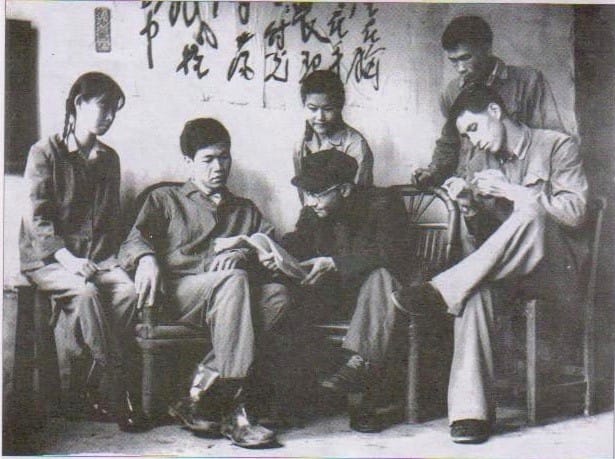
    Members of the Liyizhe group. Image credit: Duping.net via MLCL Resource Center at Ohio State University

    Shortly after Lo Hoi-sing’s trial, his wife, Zhou Mimi (Chow Mat-mat), came to see me at my office in Hopewell Center, a high-rise office building in Hong Kong’s Wanchai District. Ms. Zhou, an author of children’s books, asked me to try to secure her husband’s release. I agreed and began putting Lo’s name on prisoner lists submitted to the Chinese government.

    Flight to Beijing

    On June 10, 1991, I flew to Beijing for a two-day visit. I was determined to seek clemency for Lo Hoi-sing and the Li Brothers (Li Lin and Li Zhi), two young Hunan labor activists who had escaped China after June 4, but who had returned to Hunan where they were detained. On June 11, at 2:00 PM, I met Supreme People’s Court Vice President Lin Zhen and State Council Deputy Secretary General He Chunlin. I had met He a few weeks earlier in Hong Kong. At that meeting I raised the cases of Lo Hoi-sing and the Li Brothers.

    I asked Vice President Lin if Lo Hoi-sing could be considered for early release. His response was hopeful: Lo could be considered for early release under certain conditions. I then asked, in English, about Li Peicheng and Li Longing. Vice President Lin misunderstood me and thought I was referring to the Li Brothers. “In accordance with policy, if they have not committed new crimes after returning to China, they will be released from detention,” the vice president intoned. The next month, the Li Brothers arrived in Hong Kong. They were granted political asylum in the United States. It was my first major success.

    North-South Strategy

    I returned to Beijing in August 1991. By then, I had garnered a great deal of positive media attention that resulted from my AmCham initiatives, my three congressional testimonies, and the release of the Li Brothers. I had been awarded “Communicator of the Year” by the International Association of Business Communicators. I was considered a media “guru.”

    A screenshot of the video of Representatives Jones, Miller, and Pelosi unfurling the banner saying “To Those Who Died for Democracy in China” in Tiananmen Square in 1991. Image credit: Nancy Pelosi Facebook account

    In my meetings with Chinese officials, I made a bold prediction. It was already known that Nancy Pelosi would visit Beijing. I predicted that she would do something “that would make the Chinese government unhappy.” Following the principle that the best way to counter bad news is to release good news, I suggested a “North-South Strategy.” To counter bad news in the north, release good news in the south.” I recommended that Hong Kong resident Lo Hoi-sing be released from prison on medical parole and sent back to Hong Kong with as much fanfare as possible. My interlocutors paid attention and took careful notes.

    When Nancy Pelosi unfurled her banner on September 4, 1991, the Chinese government acted quickly. A call was made to the Guangdong government which ordered the immediate release of Lo Hoi-sing. A car was sent to Huaiji Prison from Guangzhou to pick up Lo, but the officers forgot to take Lo’s travel documents with them. The car returned to Huaji before going back to Guangzhou, but Lo Hoi-sing’s release had to be delayed.
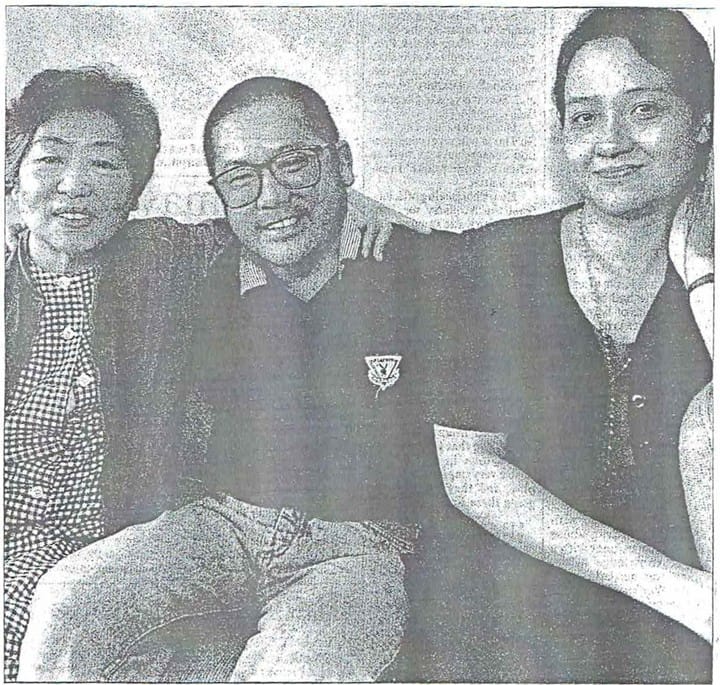
    A scan of a photo that appeared in the South China Morning Post after Lo’s release. Lo (center) with his mother and wife (left and right, respectively). Image credit: South China Morning Post via Dui Hua archives.

    Lo was granted medical parole and he arrived in Hong Kong on September 9, 1991, met with banner headlines and photographs of beaming family members reunited with their loved one. Lo never served his DPR sentence.

    British Prime Minister John Major had been in Beijing at the same time as Nancy Pelosi. He flew to Hong Kong’s Kai Tak Airport where he learned of Lo’s release. He immediately set about claiming credit, advancing the preposterous notion that Beijing was grateful for the prime minister being the first Western leader to visit China’s capital since the events of June 1989. I said nothing to contradict Major’s claims, relying on an adage that Ronald Reagan was fond of: “There is no limit to what a man can achieve if he doesn’t care who gets credit for it.”

    Visit Dui Hua’s “John Kamm Remembers” portal to read more stories like this, view photos from this period in history, watch videos about the origins of modern US-China engagement, and learn how the decisions of the past are shaping our future.
     

    Subscribe to receive Dui Hua publications by email.

  • Prisoner Updates 2023 #2

    Elderly counterrevolutionaries continue serving their sentences

    Dui Hua has uncovered another case of an elderly counterrevolutionary who is still serving a prison sentence.

    Xie Wenlong (谢文龙), a 67-year-old man from Lufeng, Guangdong, is serving his sentence at Conghua Prison. In May 2019, the Conghua District Court convicted Xie of escape from prison. Combining his remaining sentence with his previous crimes, the court sentenced him to a total of 10 years in prison. Xie was originally convicted and sentenced for counterrevolutionary incitement and fraud. The year of his original conviction is not known. He received three sentence reductions in 1998, 1991, and 1993. It appears that he might have escaped from incarceration after 1993 and was caught much later. For his latest sentence, Xie was granted a four-month reduction at the end of 2022. He will be released in July 2028.

    Counterrevolutionary crimes were removed from the criminal law when the amended criminal law was promulgated in 1997. However, China continues to imprison and even convict people for this crime. For instance, Chan Yu Lam (aka Chen Yulin 陈瑜琳) was convicted by the Guangzhou Intermediate Court for counterrevolutionary espionage in 2004. He was released in August 2020 but is serving a sentence for deprivation of political rights.


    New details learned of in “Three Grades of Servants Sect” case in Yunnan

    From Yunnan, Dui Hua has uncovered new information on a case involving the “Three Grades of Servants Sect (三班仆人).”

    Liu Wei (刘巍) and six other key members from a local branch were detained in 2016 for “using a cult to sabotage implementation of the law.” They were accused of holding house worship services that were reportedly attended by dozens of people. While the case received international attention at the time, little has been revealed about the outcome. A newly discovered document shows that the seven defendants were sentenced in May 2018 by the Chuxioing People’s District Court, and the judgment was then upheld by the Chuxiong Yi Autonomous Prefecture Intermediate People’s Court in August.

    Liu was sentenced to eight years in prison. The others’ sentences remain unknown. Liu was admitted to Yunnan First Women’s Prison in the same year and was granted her first sentence reduction, of eight months, in October 2020. The prison submitted another reduction request in 2022, of six months, citing Liu’s good behavior and the fact that she had completed half of her sentence in October 2020. The decision by the Kunming Intermediate People’s Court has not yet been made public. If the reduction was approved, Liu will complete her sentence sometime in 2023.


    Two dissidents sentenced for inciting subversion in December 2022

    Prominent activist Guo Quan (郭泉) was handed a four-year prison sentence for inciting subversion in Nanjing on December 20, 2022, the second time he was convicted of the same crime. Guo, a longtime advocate of multiparty democracy, was detained on January 31, 2020 over a dozen articles he published criticizing officials who covered up the initial coronavirus outbreak in Wuhan. Some observers believe that Guo’s conviction was meant as a warning to those who took part in the recent blank paper protests against COVID restrictions, even as China lifted those controls virtually overnight.

    Guo completed his prior 10-year sentence without a sentence reduction on November 12, 2018. He was detained during his three-year deprivation of political rights period. Guo still has one year to serve and is scheduled for release in January 2024.

    In the same month, Ou Biaofeng (欧彪峰) received a prison sentence of three years and six months for inciting subversion in Zhuzhou, Hunan. Ou was originally detained for “picking quarrels and provoking trouble” for retweeting a video of “ink girl” Dong Yaoqiong. Dong claimed that she was on the verge of mental collapse because of intense restrictions and surveillance after she live-streamed a video of herself splashing ink on a poster of Xi Jinping. Ou was later placed under residential surveillance at a designated location and formally charged with inciting subversion. The court found that Ou made “an illegal income” from the critical articles he wrote for Hong Kong’s Ming Pao newspaper and the now-defunct Apple Daily.


    Rights lawyer Tang Jitian regains his freedom

    Tang Jitian (唐吉田) updated his social media with a photo and a message on January 14, 2023, letting friends and supporters know that he has regained his freedom.

    Tang disappeared on December 10, 2021, while he was on the way to attend the International Human Rights Day event hosted by the EU in Beijing. His whereabouts since then were unknown until June 2022, when activist and artist Xiang Li posted on her Twitter account that Tang suffered some injuries while in custody of the state security bureau in Jilin Province, where Tang’s residency registration is.

    Unlike many other activists’ disappearances, in which they were eventually charged with a crime and subjected to residential surveillance at a designed location, Tang was never accused of any crime during his 398-day long disappearance. Tang said he was sent back to Dunhua City, his hometown, upon release.

    Tang is a well-known rights lawyer who has suffered numerous disappearances and administrative punishments in the past for his legal activism and advocacy work, including having his practicing license revoked in 2010. He has made several attempts to leave the country. He was prevented from leaving to seek medical treatment abroad on November 11, 2017. Customs at Shenzhou Luohu prevented him from leaving China on the grounds that “he might endanger state security.” Tang again was prevented from leaving in June 2021, when he desperately wanted to visit his daughter who was seriously ill at the time in Japan. Customs at Fuzhou Airport told Tang that Beijing Public Security, which issued the restriction, also cited the same “endangering state security” reason.

  • Prisoner Updates 2023 #1

    Situation of anti-COVID control protesters worrisome

    During his meeting with European Council President Charles Michel on December 1, 2022, President Xi Jinping tried to explain away the widespread protests against China’s “zero- Covid” policy by blaming the unrest on a few “frustrated” students. Soon after, China abruptly reversed course and relaxed all Covid controls without warning or preparation. Signs for Covid testing booths and public awareness posters were quickly removed without a trace. The app used to produce a green health code for individuals to enter shops, commute or travel, and to track close Covid contacts based on their phone signals was discontinued.

    Despite Xi’s tone of understanding towards the protestors when speaking in public, many participants of the protests, including young students and professionals frustrated with the Covid restrictions, were subjected to coercive measures.

    Reports of some protestors have been released or were released on bail (pending investigation 取保候审) emerged before the weekend of January 21, 2023, the eve of the Lunar New Year. However, many of these protesters are believed to still be in custody, and their whereabouts are unknown.

    The whereabouts of Wu Yanan (吴亚楠), an associate professor of Philosophy at Tianjin Nankai University, remain unknown. Wu showed support for her students for expressing anger over the fatal Urumqi apartment fire. The university first tried to compel her to delete the messages she posted on social media. They then attempted to take her to a medical facility on December 13 to be diagnosed with mental health issues. Wu made her situation known by live-posting during the incident, but she soon lost all contact. Her posts on WeChat were removed except for a message posted on December 14 which claims she was overly paranoid and felt better after treatment. There have been no credible updates on her current status. Wu’s profile page remains on the university’s website.

    Huang Hao (黄颢) and his wife, who is only identified by her online name “Pang Hu 胖虎”, were both taken on November 28, after participating in a gathering the night before in Chengdu, Sichuan. The couple were reportedly charged with “gathering a crowd to disturb the social order.” Although the families were able to obtain lawyers, visitation rights were reportedly denied and their whereabouts are unknown.

    A young man named Cao Yuan (曹原 or 曹源) was reportedly taken from Shanghai by Beijing police on January 6.

    Young protesters have also called for help online. Cao Zhixin (曹芷馨), an editor at the Peking University Press, pre-recorded a video after four of her friends were detained. Afraid that she too might disappear without a trace, Cao asked trusted people to post the video in the event of her arrest. Her fear became a reality at the end of 2022. Like many young Chinese who were saddened by the Urumqi fire and angered by the “zero-Covid” policy, Cao and some friends attended a vigil in Beijing at the bank of Liangma River on the evening of November 27. According to Cao’s video, she and five her friends were initially summoned by police on November 30 but released 24 hours later after they were “educated by police but deemed to have not committed crimes.” However, the police began taking her friends into criminal detention after December 18. Cao claims her friends were asked to sign detention notice forms, on which the crime and dates were left blank. The police also refused to disclose the locations of their detention to the families. On December 24, Cao was also placed under criminal detention. The whereabouts of Cao, Li Yuanjing (李元婧), Zhai Dengrui (翟登瑞 or 翟登蕊 ), and Li Siqi (李思琪) are unknown. On January 15, 2023, a YouTube account was created, and a slightly edited version of Cao’s video was uploaded; Yang Liu (杨柳) was reportedly released on bail. The sixth person might have been Lin Qian (林倩), who didn’t attend the vigil but was taken with Li Yuanjing because the two are roommates. Lin was reportedly released on bail for the second time before January 21. She was initially released on December 18 when she tested positive for Covid.

    More information emerged concerning another young woman named Li Chaorang (李超然), who help Lin Qian post bail after her first detainment and took her home until Lin was placed in custody for the second time. Friends of Li said she lost contact with them on January 6, 2023, and is likely to have been arrested.

    Yang Zijing (杨紫荆), nicknamed “Dim Sum,” is a young woman living in Guangzhou who participated in a gathering on the night of November 27, 2022. The gathering started as a vigil for the Urumqi fire victims. During the gathering, someone in the crowd raised a piece of white paper, a protest symbol of inexpressible sorrow and silent anger. Yang was taken away from her home on December 4 and reportedly placed in Guangzhou Yuexiu District Detention Center for “picking quarrels and provoking trouble.” Yang was reportedly released on bail on January 3, 2023.

    Two other young men were also reportedly detained at the Yuexiu District Detention Center in Guangzhou. Wang Xiaoyu (王晓宇) was taken on the same day as Yang and was later reportedly released on bail on January 3, 2023. However, friends of Chen Dali (陈大栗, former name Chen Sizhi 陈思冶) claimed he is still missing since being detained in December. In an online missing person’s post, friends said that Wang was taken from his home by Guangzhou police on December 4 to the Beijing Road police station, where he was first given seven days of administrative detention for “picking quarrels and provoking trouble.” However, on December 12, the night of when Chen was to be released, he was suddenly transferred to another location. His whereabouts are unknown.

    Qin Ziyi (秦梓奕), a Beijing resident and former reporter for Caixin, has been disappeared since Christmas 2022. Qin is an alumna of the University of Chicago, where she received a master’s degree in social sciences in 2017, according to a statement released by the university’s Center for East Asian Studies. Reports have emerged she likely was also released on bail before January 21.

    Crackdowns on the protestors – including identification, surveillance, intimidation, and detention – continue across China. Reporters from NPR and DW have claimed to confirm detentions of eight and six people over the past month, respectively. The DW reporter has said that all six people she interviewed are in Beijing and are members of the same Telegram group.


    Sedition cases in Hong Kong

    The United Nations has expressed concerns about the Hong Kong government’s use of colonial-era sedition charges to suppress criticism or dissent. Despite not being covered by the Beijing-imposed national security law, the conditions for obtaining bail are difficult in sedition cases. Individuals convicted under this law face a maximum penalty of two years in prison.

    Three notable sedition cases occurred during the reporting period. On October 15, 2022,. a mainland Chinese man surnamed Shi was found to have put up three “seditious” posters on a noticeboard at the Legislative Council’s public protest zone. His act of defiance took place two days after a Beijing protester dubbed “bridge man” hung two banners off an overpass against China’s stringent COVID restrictions. Shi wrote in support of the “bridge man” and urged the Chinese dictator to step down. Shi was detained on October 24. He was released on bail as of the time of reporting.

    On November 7, the Portuguese Ministry of Foreign Affairs released a statement concerning the detention of a Portuguese citizen in Hong Kong. The statement came after Hong Kong police arrested Wong Kinchung (黄煡聪) on November 1 for “seditious” posts on his social media accounts. Wong is from Hong Kong and holds Portuguese citizenship. He allegedly posted offensive statements and pictures on the website of the Hong Kong Independence Party. News media sources reported that Wong taught at the Royal College of Music in the United Kingdom and returned to Hong Kong to take care of his mother who is suffering from dementia. Wong’s bail application has been rejected, and he remains in custody.

    On November 21, Wong Chun-kit (王俊杰) was arrested for sharing a video in which he thanks South Korea for erroneously playing the protest song “Glory to Hong Kong” instead of China’s national anthem at an international rugby game earlier in the same month. Additionally, Wong was accused of publishing and making available 113 seditious messages on Facebook, Instagram, and Twitter since January 31, 2021. On January 5, 2023, Wong received a prison sentence of eight months.

  • A Very Special Status

    A Very Special Status

    << Read all John Kamm Remembers stories

    Download & read this story as a PDF.

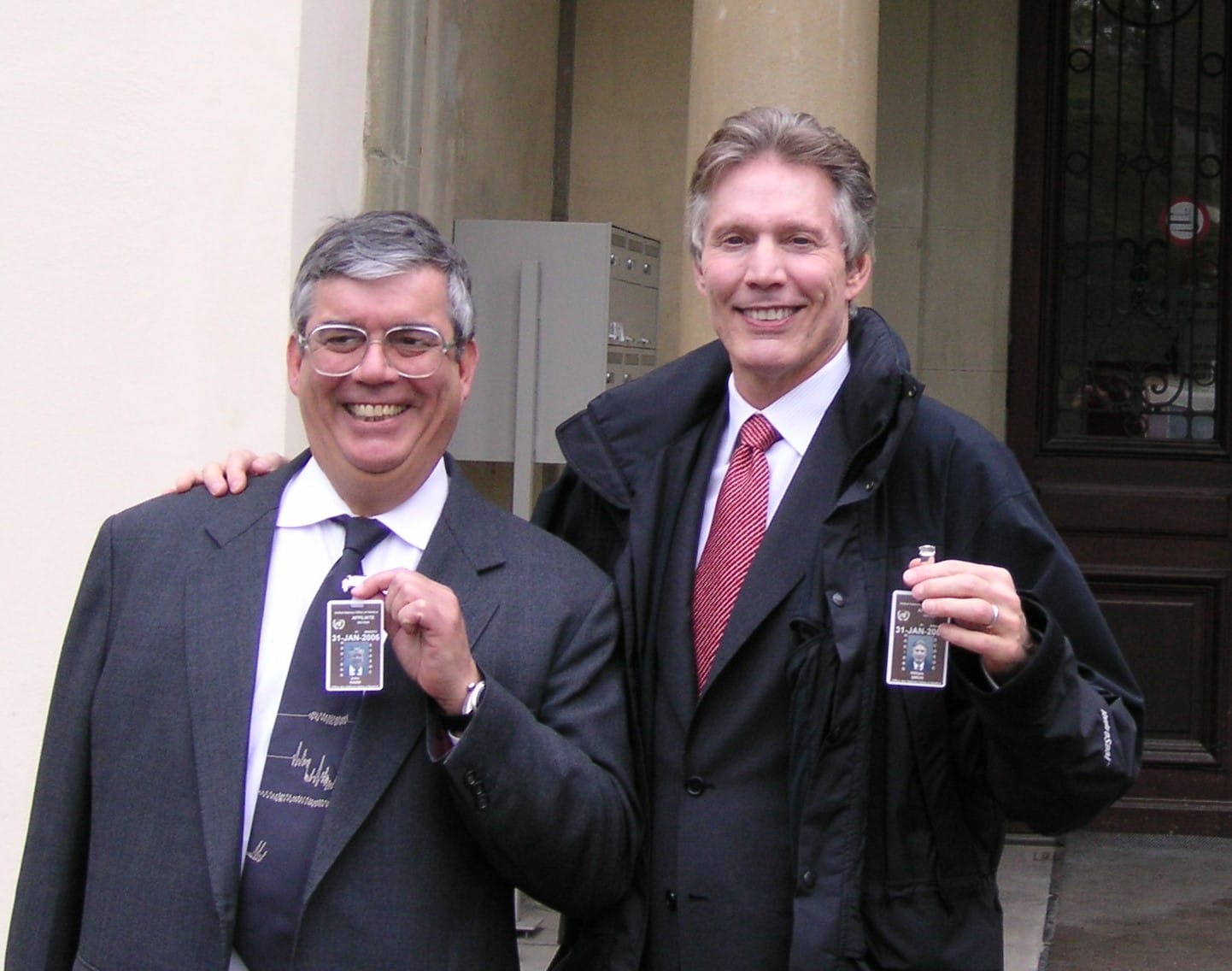
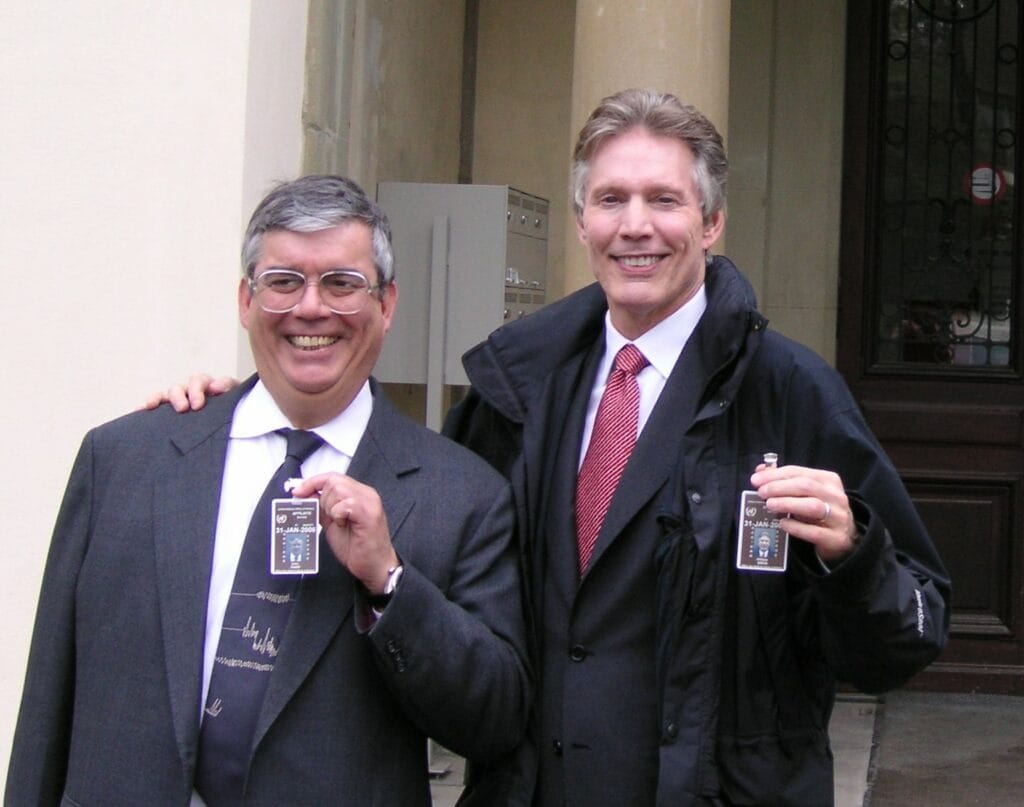
    Kamm and Dui Hua director William Simon holding up their United Nations grounds passes in Geneva in 2005. Image credit: The Dui Hua Foundation

    Three months after the 9/11 terror attacks, I resumed my travels. My first trip was to Washington DC, where I accepted the Eleanor Roosevelt Human Rights Award at the State Department on December 13, 2001. I was joined at the ceremony by two other awardees – Congressman Frank Wolf, a lion of human rights advocacy, and Barbara Elliott, a fierce advocate for refugees fleeing communism – and members of my family.

    For the next two-and-a-half years. I kept to a grueling schedule of domestic and international travel. I made frequent trips to Washington DC, where I met with members of Congress and the Bush Administration, including Lorne Craner, Assistant Secretary of State for Human Rights, for whom Dui Hua crafted numerous prisoner lists for use at the annual human rights dialogues between the United States and China. (The dialogue has been suspended since 2016.) A highlight was my testimony to the Congressional Executive Commission on China (CECC), a body I lobbied to establish in the aftermath of President Clinton’s decision to extend China’s Most Favored Nation status without conditions. My testimony – An Arsenal of Human Rights – was delivered on April 11, 2002.

    I traveled to other cities in the United States as well, visiting with NGO representatives and supporters, as well as speaking at universities around the country. I also traveled to Australia where I met with government officials and spoke at gatherings at universities and elsewhere.

    Kamm being awarded the Eleanor Roosevelt Human Rights Award by then-Deputy Secretary of State Richard Armitage. Image credit: The Dui Hua Foundation

    On my many trips to China during this period I focused on helping secure the release of long-serving counterrevolutionaries, including the ethno-musicologist Ngawang Choephel. I logged two trips to Lhasa where I helped gain freedom for the elderly teacher Jigme Sangpo and the young nun Ngawang Sangdrol. In Beijing I worked with officials of the Ministry of Justice and Ministry of Foreign Affairs to secure the early release of Democracy Party activists Xu Wenli and Wang Youcai. Of special importance was the early release of American citizen Fong Fuming, a businessman, convicted of state secrets violations. This was the first case of an American citizen imprisoned in China that I worked on. It would not be the last.

    On my trips to Europe, I focused on securing support from European governments, including those of Switzerland and Scandinavian countries. These efforts were successful and helped ensure the financial viability of Dui Hua for years to come.

    June 2004: Washington and New York

    On June 5, 2004, I flew to Washington DC for five days of meetings and events. I briefed staff of the CECC on Dui Hua’s work, and addressed a gathering organized by a grantor where I updated the group on developments in Hong Kong, notably the debate over Article 23 in which I had played a role.

    Meetings were held with State Department officials in charge of China and human rights, members of Congress, including Senator Chuck Hagel (R-Nebraska), Congressman Doug Bereuter (R-Nebraska), and Congressman Frank Wolf (R-Virginia), as well as senior staff of committees dealing with China. I met with Minister Lan of the Chinese Embassy and staff of human rights groups including Amnesty International.

    The day I arrived in Washington, former president Ronald Reagan passed away. I followed news of his death closely, watching unfolding events on my hotel room television. I have painful memories of doing so, not least because I was suffering from a bout of kidney stones, two of which I passed with considerable discomfort.

    At Ronald Reagan’s funeral, then-President George W. Bush, Laura Bush, then-Vice-President Richard Cheney, Lynne Cheney, Bill Clinton, and Hillary Clinton watch as the casket is carried into the cathedral. Image credit: Public domain

    On June 10, I took a morning train to New York. The same day I met with Wang Guangya, China’s ambassador to the United Nations. We met at the Chinese Mission. Before meeting me, Ambassador Wang had signed the book of condolences for President Reagan at the US Mission.

    Our meeting was an exceptionally friendly one. I mentioned that I was interested in applying for Special Consultative Status with the Economic and Social Committee (ECOSOC) of the United Nations, the body that oversaw the Human Rights Commission, now the Human Rights Council, in Geneva. Ambassador Wang replied: “I will support you, and if any of my colleagues give you a hard time, let me know.” In the meeting were other diplomats assigned to the mission, including Li Xiaomei, then China’s representative on the NGO Committee, now Special Representative for Human Rights of the Ministry of Foreign Affairs in Beijing.

    I left the mission and headed to my sister-in-law’s brownstone in the city for dinner. Pat worked at the United Nations, and she offered to introduce me to the person in charge of NGO accreditation the next day, June 11, 2004. The person in charge was a French woman, a longtime UN employee.

    The lady was getting ready for her long summer vacation in France and had little time for me. She asked what I wanted, and I told her that I’d like to apply for ECOSOC consultative status. She handed me the application form and asked, “Which country do you work on?” “China,” I replied. “Forget it,” she remarked, with a wave of the hand. China and its allies had blocked applications of virtually all human rights groups, like Human Rights in China, that worked exclusively on China.

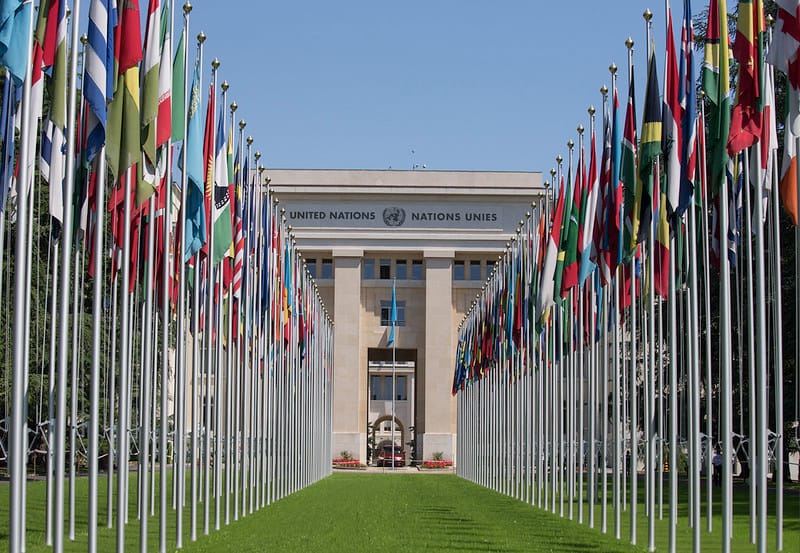
    The Palais des Nations in Geneva, Switzerland. Image credit: Eric Bridiers, US Mission Geneva / CC BY-ND 2.0

    I straightened her out. “I met with Chinese Ambassador Wang Guangya yesterday, and he told me that he would personally support Dui Hua’s application.” You could have knocked her over with a feather.

    At the next meeting of the NGO committee, applications by NGOs for consultative status were considered. One by one, the committee chairperson read out the names of the applicants. It was a lengthy list. Typically, if a country objects to an NGO’s application, the committee registers its objection, and the chairperson moves on. “The Dui Hua Foundation,” the chairperson intoned. Waiting to object were Chinese allies Pakistan and Cuba who looked for a signal from the Chinese representative. Li Xiaomei sat motionless as other representatives shifted in their seats.

    After the chairperson finished ticking off the names of NGO applicants, he or she returned to Dui Hua. “I ask again. Are there any objections to The Dui Hua Foundation’s application for Special Consultative Status.” Li Xiaomei told me later: “I was very embarrassed, but I registered no objection.” Dui Hua was granted the much-coveted status, becoming the only independent human rights group focused on China to be given this status. That remains the case to this day.

    Making Use of our UN Status

    Early in 2005, a fellow Dui Hua director, Bill Simon, traveled to Geneva with me to obtain our badges that granted us privileges at the Palais des Nations, home of the Human Rights Commission. Since 2005, I traveled to Geneva at least once a year before the Covid-19 pandemic made international travel impossible.

    In Geneva I stayed at the Hotel Ambassador through the generous support of the hotel’s owner, Madame Rossotto. I fell in love with the city, and took long walks along the lake to Palais Wilson, site of the Office of the High Commissioner for Human Rights and many of the special procedures of the Human Rights Council. I particularly enjoyed spending time in the Old City, dining at its restaurants with an old friend, Christophe Swinarski, a distinguished human rights scholar who had served for many years with the International Committee of the Red Cross, also headquartered in Geneva.

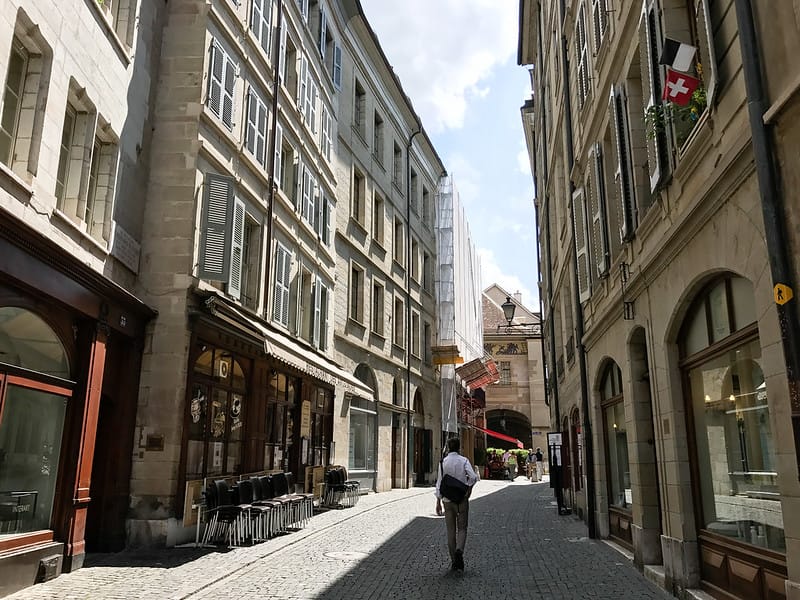
    The Grand Rue in Geneva’s old city. Image credit: Terekhova / CC BY-NC-ND 2.0

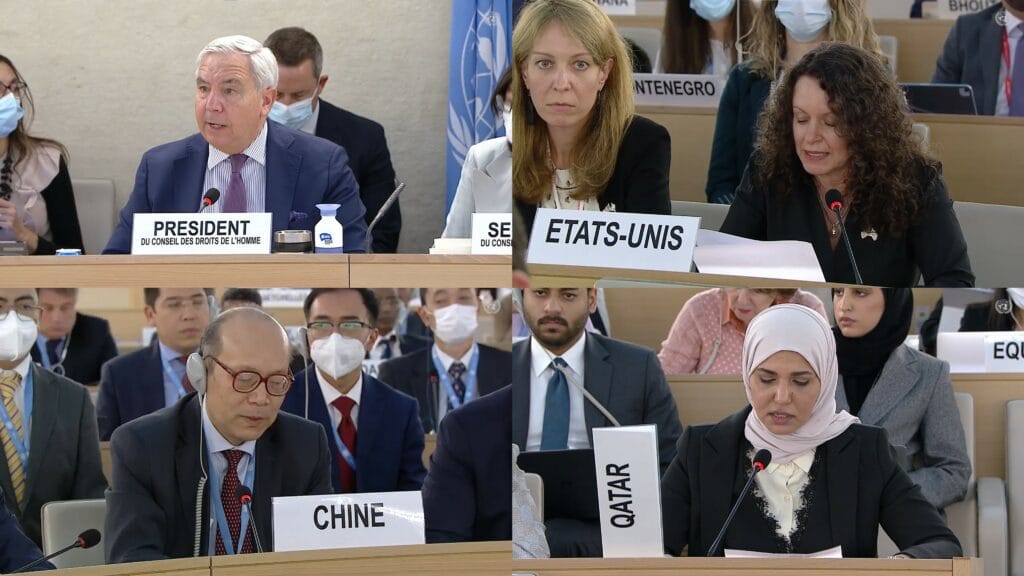
    Dui Hua has made good use of its special consultative status. The foundation has made submissions to all of China’s and the United States’ Universal Periodic Reviews (UPR), a process whereby every member of the United Nations’ human rights record is scrutinized every 4-5 years. Our submission to China’s third UPR in 2018 was of special importance. We focused on judicial transparency, examining the decision to post judgments on the Supreme People’s Court’s China Judgments Online (CJO), which we hailed (attached to our statement were prisoner lists of names found on CJO). Unfortunately, in 2021 the court purged the website of judgments involving cases of endangering state security and other sensitive crimes, dealing a blow to Dui Hua’s work compiling prisoner lists for submission to the Chinese government. For both the Chinese and US UPRs we examined capital punishment; when it comes to the death penalty, both countries are outliers.

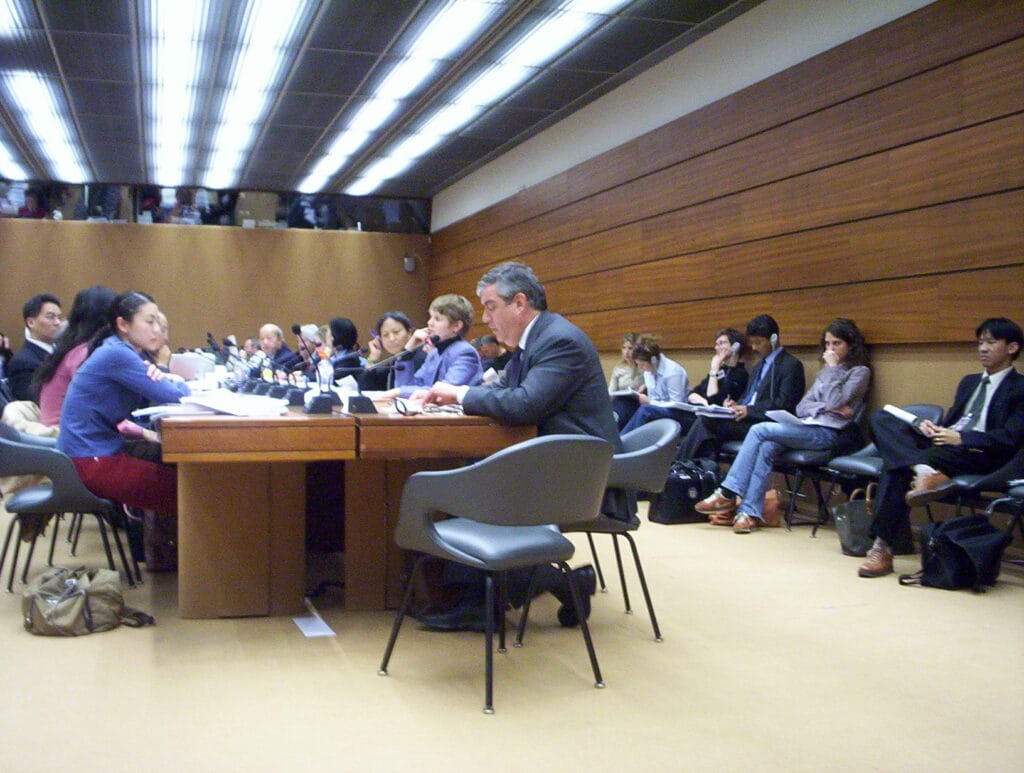
    Kamm making a statement on China’s Initial Report under the International Covenant on Economic, Social and Cultural Rights, to the UN Committee on Economic, Social, and Cultural Rights, April 25, 2005. Image credit: The Dui Hua Foundation

    In addition to its work on UPRs, Dui Hua has worked on issues related to women prisoners and arbitrary detention. We lobbied for China to invite a delegation from the newly established Working Group on Discrimination Against Women in Law and Practice. The group visited China in December 2013, not long after China’s UPR.

    Dui Hua has worked closely with the Working Group on Arbitrary Detention to secure favorable opinions on the cases of American citizens judged to have been arbitrarily detained by Chinese authorities: US businesswoman Sandy Phan-Gillis and US businessmen Mark Swidan and Li Kai, both of whom remain imprisoned as of this writing.


    Listen to the Encounters with China podcast.

    Subscribe to receive notifications about new episodes. 

    Read all John Kamm Remembers stories.


  • Dui Hua Digest, November/December 2022

    Dui Hua Digest, November/December 2022

    EVENTS

    Republican-led House Poised to Ramp Up Scrutiny on China

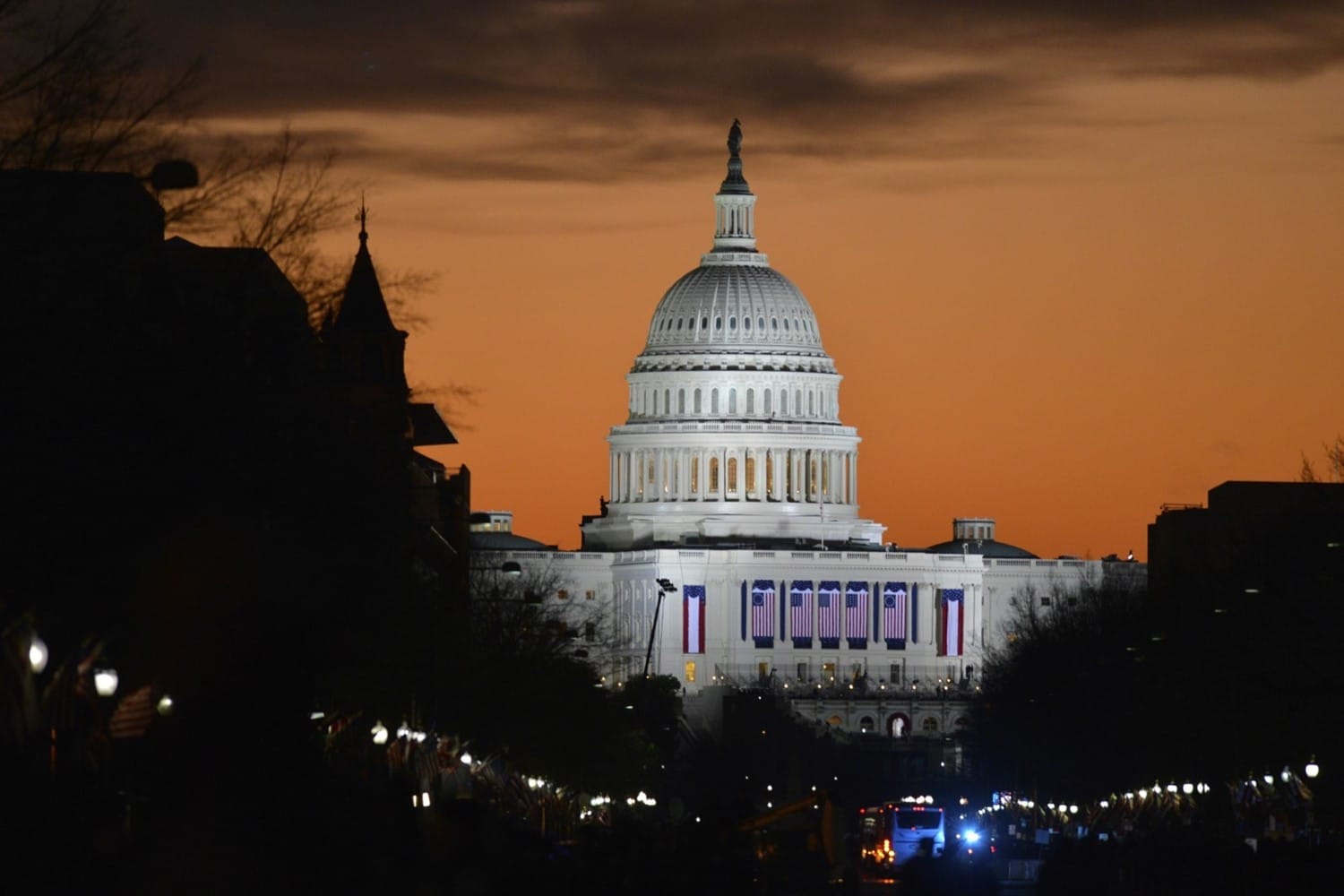
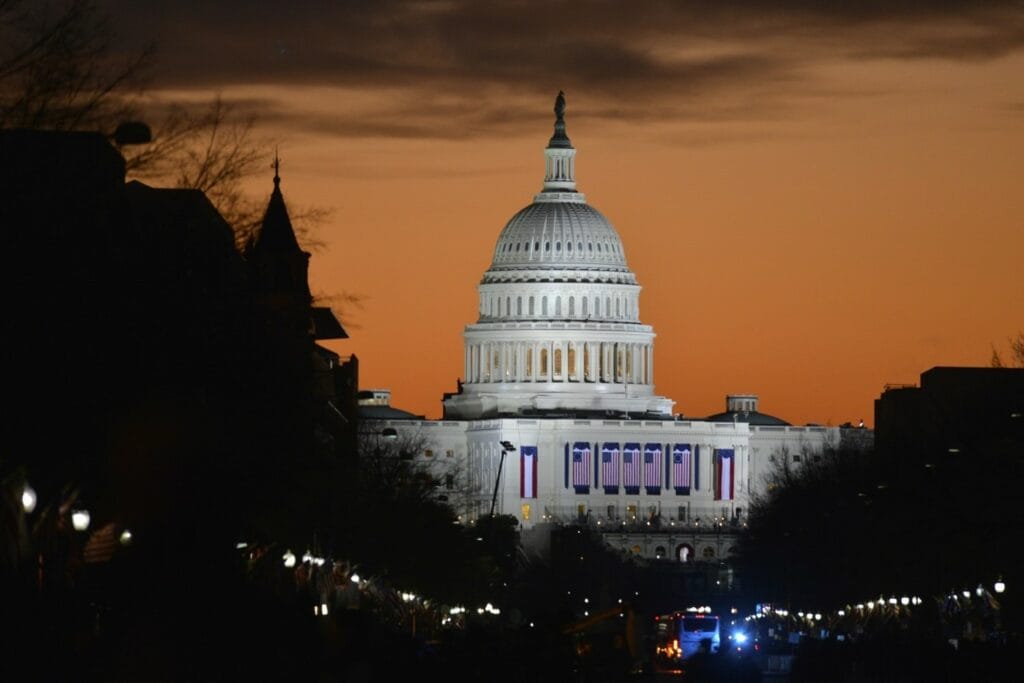
    The capitol dome at sunrise. Image credit: US government image / CC0 1.0

    Although by a much slimmer margin than many pollsters predicted, the Republican party regained control of the US House of Representatives in the midterm elections that took place on November 8, 2022. The consequences for President Joe Biden’s legislative agenda in the last two years of his first term in office will be big. Equally big will be the implications for US-China relations, which will almost certainly worsen during the 118th Congress that ends in January 2025.

    As a result of the election results, Nancy Pelosi (D-Ca) will no longer hold the position of Speaker of the House. On November 17, Ms. Pelosi announced she would stay on as member of the Democratic caucus but would not seek a leadership position. Pelosi, shocked by the hammer attack on her husband at their home in San Francisco, has been a burr in the saddle of the Chinese government since she became a member of Congress in 1988. Beijing will doubtless celebrate her departure from leadership positions.

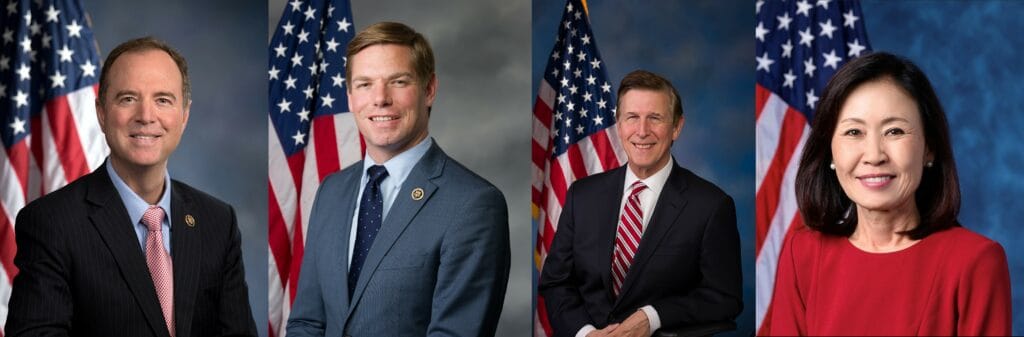
    Other California House representatives, Adam Schiff and Eric Swalwell could well be removed from their coveted committee positions. Swalwell is alleged to have had a romantic relationship with a young woman accused of being a Chinese spy. Another Democrat Congressman, Don Beyer (D-Va) has faced scrutiny over his scheduler’s ties with Chinese embassy diplomats, but these ties had no impact on his reelection prospects. He won handily.

    (Left to right) California Representatives Schiff, Swalwell, Beyer, and Steel. Image credit: House of Representatives / Public Domain

    In another race where the issue of China played a role, Michelle Steel (R-Ca) won reelection, defeating Jay Chen (D-Ca). During the campaign, Ms. Steel attacked Mr. Chen for his support for “Communist” Confucius Institutes.

    An exit poll of 100,000 voters conducted by Fox News found that voters disapproved of President Biden’s approach to China by a margin of 59 to 41 percent.

    Select Committee on China

    The Republican-led House is expected to establish a select committee that focuses exclusively on the “China Threat.” China is immensely unpopular with both Democrat and Republican lawmakers, making it possible that the composition of this committee will include lawmakers from both parties. (Republicans will move swiftly to disband and renounce the findings of the January 6 Select Committee, four of whose members will not be returning to the House when the 118th Congress convenes in January).

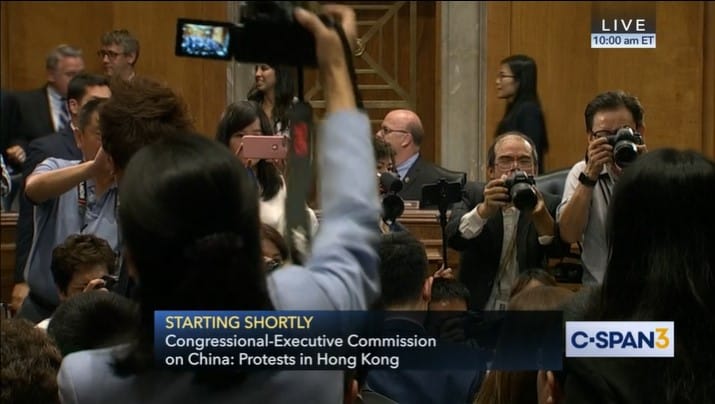
    The bipartisan, bicameral Congressional Executive Commission on China CECC) will be led by a Republican member of the House, likely Chris Smith (R-NJ). Mr. Smith, a devout Catholic, will make religious liberty a top priority of the commission. A distinguished Democrat member of the CECC, Tom Malinowski (D-NJ), lost his bid for reelection on November 8. Mr. Malinowski served as Assistant Secretary of State for Democracy, Rights, and Labor during the Obama administration.

    A CECC hearing from 2019 on the protests in Hong Kong. Image credit: C-Span

    The Republican takeover will result in subpoenas, hearings, investigations, and new pieces of legislation with a China focus (there were more than 800 China-related bills introduced in the 117th Congress). According to Phelim Kine of Politico, China-related topics that Republicans will focus on include:

    • House Committee on Homeland Security: Cyber-attacks, supply chains (cutting dependence on China and enforcement of Uyghur Forced Labor Act), and fentanyl;
    • House Committee on Energy and Commerce: Supply chains, radical environmentalists, and Tik-Tok;
    • House Committee on Science. Space, and Technology: Competition with China in outer space;
    • House Select Committee on Intelligence: Cyber-attacks, malign influence, bioweapons, competition in space, nuclear weapons, and surveillance;
    • House Foreign Affairs Committee: Export controls, Taiwan defense, and Hunter Biden’s laptop.

    Multiple committees will look into the origins of Covid-19 with the goal of tying origins of the pandemic to a Chinese lab leak.

    Focus on Hunter Biden

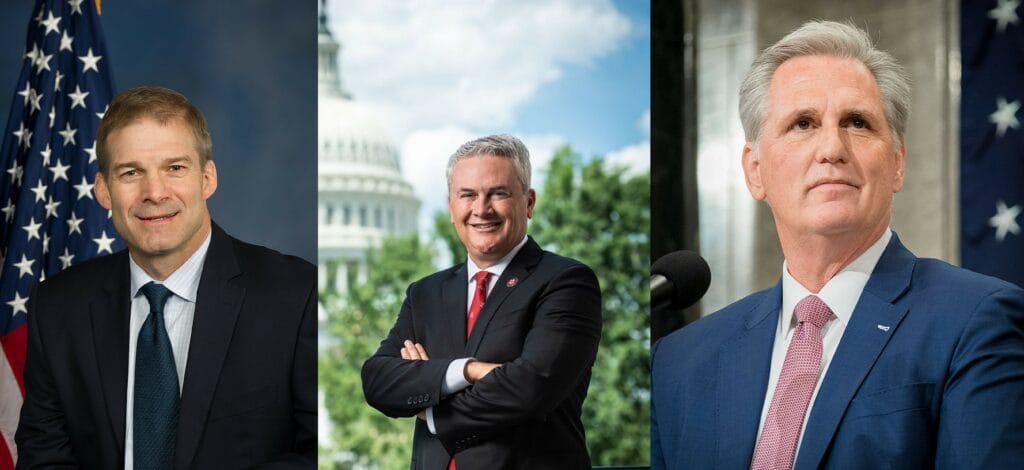
    The House Judiciary Committee under Jim Jordan (R-Ohio) and the House Oversight Committee under Jim Comer (R-Kentucky) will doubtless focus on Hunter Biden’s laptop, with a special emphasis on what the laptop contains about deals with China that could show President Biden’s knowledge of his son’s business dealings with China.

    (Left to right) Representatives Jordan, Comer, and McCarthy. Image credit: House of Representatives / Public Domain

    Another topic that Republicans under Kevin McCarthy will explore are ties between the business community and China. McCarthy is angry at the US Chamber of Commerce for their backing of Democrat candidates in 2020 and has threatened to cut off access to the chamber and other business associations unless changes are made to leadership and positions.


    PUBLICATIONS ROUND UP

    Featured: Prisoner Updates #7, November 1, 2022:

    Part I: Husband-and-wife activists remain in legal limbo; Independent author & activist sentenced for picking quarrels; Notable sentence reductions

    Part II: Beijing “Bridge Man” protest; Using economic crimes against house churches


    See Also: Publication Review 2022

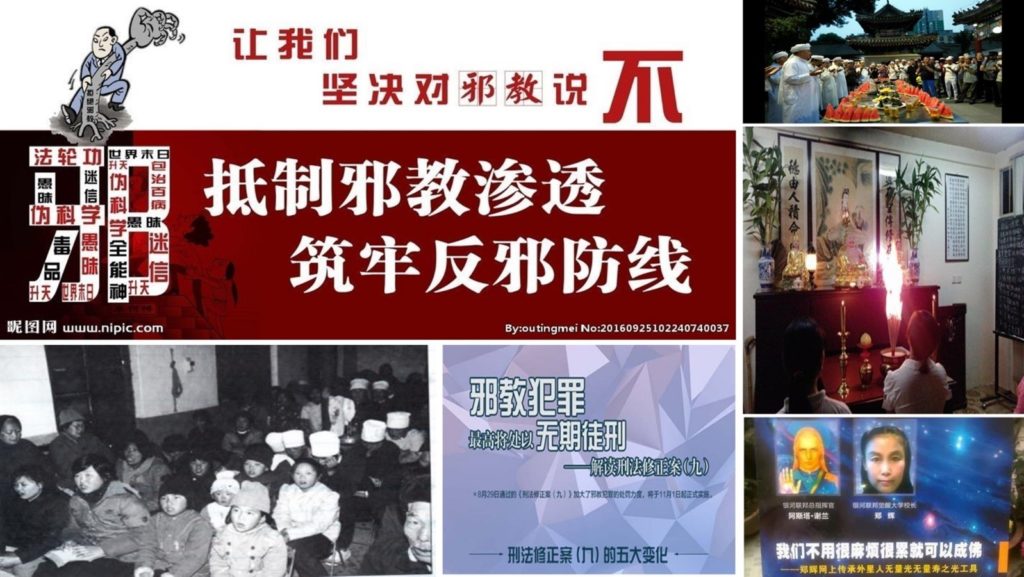
    Images of the religious groups and CCP messaging referenced in Dui Hua’s report on unorthodox religious groups in China.

    In 2022, Dui Hua released more than 30 publications including its Digest, Human Rights Journal, press statements, Prisoner Updates, and other research. Chief among these was Dui Hua’s landmark report The Persecution of Unorthodox Religious Groups in China, which was released last March. Below, Dui Hua recounts other select publications from this past year.

    Press Statements

    Printer of Falun Gong Material Released from Prison (March 23, 2022)

    Dui Hua, China’s Supreme People’s Court Hold Joint Program on Child Welfare Laws (April 11, 2022)

    Kamm Awarded Harvard GSAS Centennial Medal for “Contributions to Society” (May 25, 2022)

    Will the Bell Toll for Shadeed Abdulmateen? (September 26, 2022)


    Human Rights Journal


    Decoding State Security Trials, Part I: ESS Cases in Tibet Rose Sharply in 2020 (January 25, 2022) & Part II, “Other” Trials & Other Provinces (February 15, 2022)

    Crimes of endangering state security in China achieved international attention in 2021 with high-profile cases related to hostage diplomacy, even as available information about individual trials decreased. Read more here.

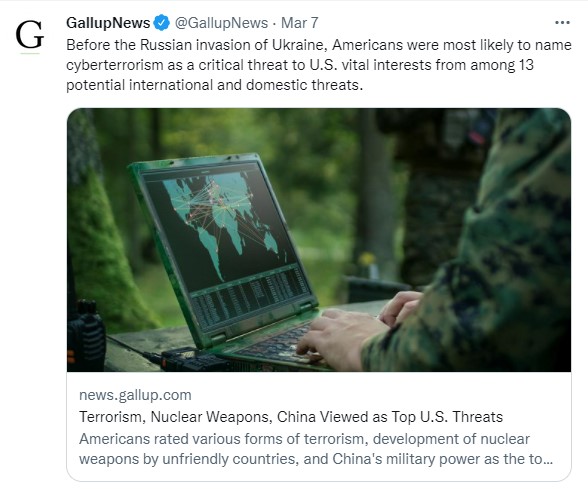
    Views of China Remain at Record Low, More See China’s Military as “Critical” Threat (March 31, 2022)

    In Gallup’s annual World Affairs poll, conducted from February 1-17, the American public’s opinion of China remains at a historic low. The poll found that 79 percent of respondents have an unfavorable view of China, with 41 percent answering “very unfavorable.” Read more here.

    Crimes of Extremism, Part I: Observations on Use and Sentencing (May 12, 2022) & Part II: Harsh Sentences, Low Transparency in Xinjiang (May 18, 2022)

    Extremism, officially defined in Chinese law as the “ideological basis of terrorism,” has long been integral to China’s security policy against the “three evil forces” (i.e terrorism, splittism, and religious extremism). However, it was not a precisely defined legal term until 2015. Read more here.

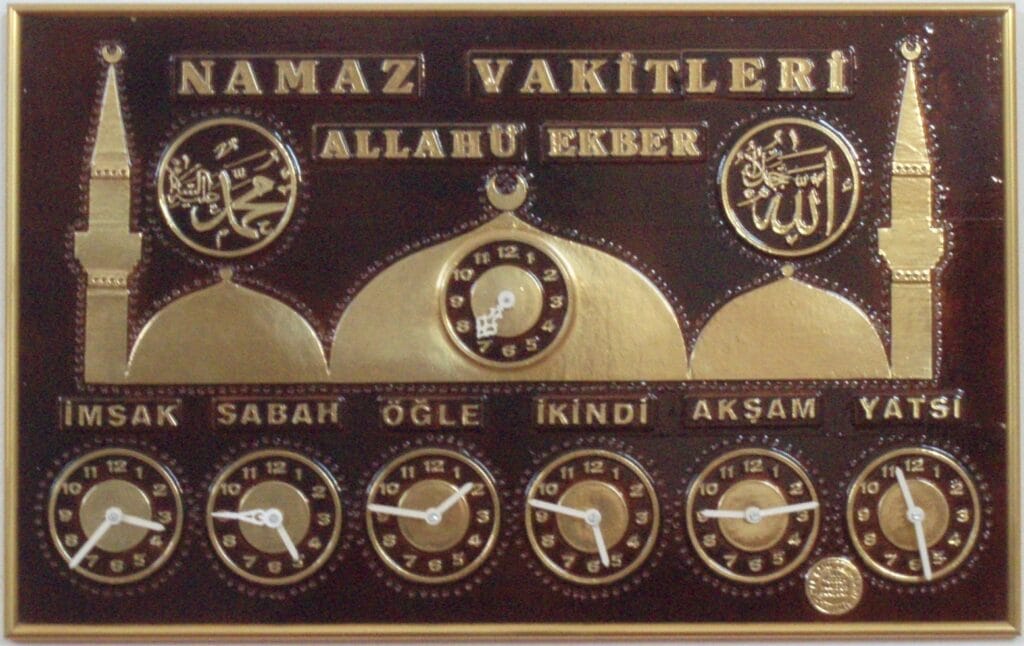
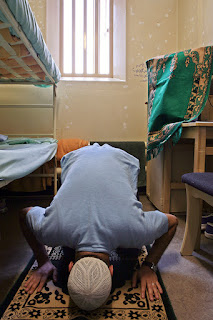
    Punishing Namāz Prayer in Prison, Part I: “Sabotaging Prison Supervision” (October 4, 2022) & Part II: “Illegal Religious Activity” (October 11, 2022)

    Muslims around the world are obliged to perform five daily prayers. The ritual is often called namazi (CN: 乃玛孜) in China. Within China’s carceral system, all forms of religious worship, including namāz, are forbidden. Prisoners who covertly perform namāz are at risk of receiving harsh punishment. Read more here.


    JOHN KAMM REMEMBERS

    John Kamm Remembers is a feature that explores Kamm’s human rights advocacy prior to and since Dui Hua’s establishment in 1999. Learn about Kamm’s first experiences in China in the 1970s with our timeline.

    A Very Special Status

    Kamm and Dui Hua director William Simon holding up their United Nations grounds passes in Geneva in 2005. Image credit: The Dui Hua Foundation

    Three months after the 9/11 terror attacks, I resumed my travels. My first trip was to Washington DC, where I accepted the Eleanor Roosevelt Human Rights Award at the State Department on December 13, 2001. I was joined at the ceremony by two other awardees – Congressman Frank Wolf, a lion of human rights advocacy, and Barbara Elliott, a fierce advocate for refugees fleeing communism – and members of my family.

    For the next two-and-a-half years. I kept to a grueling schedule of domestic and international travel. I made frequent trips to Washington DC, where I met with members of Congress and the Bush Administration, including Lorne Craner, Assistant Secretary of State for Human Rights, for whom Dui Hua crafted numerous prisoner lists for use at the annual human rights dialogues between the United States and China. (The dialogue has been suspended since 2016.) A highlight was my testimony to the Congressional Executive Commission on China (CECC), a body I lobbied to establish in the aftermath of President Clinton’s decision to extend China’s Most Favored Nation status without conditions. My testimony – An Arsenal of Human Rights – was delivered on April 11, 2002.

    I traveled to other cities in the United States as well, visiting with NGO representatives and supporters, as well as speaking at universities around the country. I also traveled to Australia where I met with government officials and spoke at gatherings at universities and elsewhere.

    Kamm being awarded the Eleanor Roosevelt Human Rights Award by then-Deputy Secretary of State Richard Armitage. Image credit: The Dui Hua Foundation

    On my many trips to China during this period I focused on helping secure the release of long-serving counterrevolutionaries, including the ethno-musicologist Ngawang Choephel. I logged two trips to Lhasa where I helped gain freedom for the elderly teacher Jigme Sangpo and the young nun Ngawang Sangdrol. In Beijing I worked with officials of the Ministry of Justice and Ministry of Foreign Affairs to secure the early release of Democracy Party activists Xu Wenli and Wang Youcai. Of special importance was the early release of American citizen Fong Fuming, a businessman, convicted of state secrets violations. This was the first case of an American citizen imprisoned in China that I worked on. It would not be the last.

    On my trips to Europe, I focused on securing support from European governments, including those of Switzerland and Scandinavian countries. These efforts were successful and helped ensure the financial viability of Dui Hua for years to come.

    June 2004: Washington and New York

    On June 5, 2004, I flew to Washington DC for five days of meetings and events. I briefed staff of the CECC on Dui Hua’s work, and addressed a gathering organized by a grantor where I updated the group on developments in Hong Kong, notably the debate over Article 23 in which I had played a role.

    Meetings were held with State Department officials in charge of China and human rights, members of Congress, including Senator Chuck Hagel (R-Nebraska), Congressman Doug Bereuter (R-Nebraska), and Congressman Frank Wolf (R-Virginia), as well as senior staff of committees dealing with China. I met with Minister Lan of the Chinese Embassy and staff of human rights groups including Amnesty International.

    The day I arrived in Washington, former president Ronald Reagan passed away. I followed news of his death closely, watching unfolding events on my hotel room television. I have painful memories of doing so, not least because I was suffering from a bout of kidney stones, two of which I passed with considerable discomfort.

    At Ronald Reagan’s funeral, then-President George W. Bush, Laura Bush, then-Vice-President Richard Cheney, Lynne Cheney, Bill Clinton, and Hillary Clinton watch as the casket is carried into the cathedral. Image credit: Public domain

    On June 10, I took a morning train to New York. The same day I met with Wang Guangya, China’s ambassador to the United Nations. We met at the Chinese Mission. Before meeting me, Ambassador Wang had signed the book of condolences for President Reagan at the US Mission.

    Our meeting was an exceptionally friendly one. I mentioned that I was interested in applying for Special Consultative Status with the Economic and Social Committee (ECOSOC) of the United Nations, the body that oversaw the Human Rights Commission, now the Human Rights Council, in Geneva. Ambassador Wang replied: “I will support you, and if any of my colleagues give you a hard time, let me know.” In the meeting were other diplomats assigned to the mission, including Li Xiaomei, then China’s representative on the NGO Committee, now Special Representative for Human Rights of the Ministry of Foreign Affairs in Beijing.

    I left the mission and headed to my sister-in-law’s brownstone in the city for dinner. Pat worked at the United Nations, and she offered to introduce me to the person in charge of NGO accreditation the next day, June 11, 2004. The person in charge was a French woman, a longtime UN employee.

    The lady was getting ready for her long summer vacation in France and had little time for me. She asked what I wanted, and I told her that I’d like to apply for ECOSOC consultative status. She handed me the application form and asked, “Which country do you work on?” “China,” I replied. “Forget it,” she remarked, with a wave of the hand. China and its allies had blocked applications of virtually all human rights groups, like Human Rights in China, that worked exclusively on China.

    The Palais des Nations in Geneva, Switzerland. Image credit: Eric Bridiers, US Mission Geneva / CC BY-ND 2.0

    I straightened her out. “I met with Chinese Ambassador Wang Guangya yesterday, and he told me that he would personally support Dui Hua’s application.” You could have knocked her over with a feather.

    At the next meeting of the NGO committee, applications by NGOs for consultative status were considered. One by one, the committee chairperson read out the names of the applicants. It was a lengthy list. Typically, if a country objects to an NGO’s application, the committee registers its objection, and the chairperson moves on. “The Dui Hua Foundation,” the chairperson intoned. Waiting to object were Chinese allies Pakistan and Cuba who looked for a signal from the Chinese representative. Li Xiaomei sat motionless as other representatives shifted in their seats.

    After the chairperson finished ticking off the names of NGO applicants, he or she returned to Dui Hua. “I ask again. Are there any objections to The Dui Hua Foundation’s application for Special Consultative Status.” Li Xiaomei told me later: “I was very embarrassed, but I registered no objection.” Dui Hua was granted the much-coveted status, becoming the only independent human rights group focused on China to be given this status. That remains the case to this day.

    Making Use of our UN Status

    Early in 2005, a fellow Dui Hua director, Bill Simon, traveled to Geneva with me to obtain our badges that granted us privileges at the Palais des Nations, home of the Human Rights Commission. Since 2005, I traveled to Geneva at least once a year before the Covid-19 pandemic made international travel impossible.

    In Geneva I stayed at the Hotel Ambassador through the generous support of the hotel’s owner, Madame Rossotto. I fell in love with the city, and took long walks along the lake to Palais Wilson, site of the Office of the High Commissioner for Human Rights and many of the special procedures of the Human Rights Council. I particularly enjoyed spending time in the Old City, dining at its restaurants with an old friend, Christophe Swinarski, a distinguished human rights scholar who had served for many years with the International Committee of the Red Cross, also headquartered in Geneva.

    The Grand Rue in Geneva’s old city. Image credit: Terekhova / CC BY-NC-ND 2.0

    Dui Hua has made good use of its special consultative status. The foundation has made submissions to all of China’s and the United States’ Universal Periodic Reviews (UPR), a process whereby every member of the United Nations’ human rights record is scrutinized every 4-5 years. Our submission to China’s third UPR in 2018 was of special importance. We focused on judicial transparency, examining the decision to post judgments on the Supreme People’s Court’s China Judgments Online (CJO), which we hailed (attached to our statement were prisoner lists of names found on CJO). Unfortunately, in 2021 the court purged the website of judgments involving cases of endangering state security and other sensitive crimes, dealing a blow to Dui Hua’s work compiling prisoner lists for submission to the Chinese government. For both the Chinese and US UPRs we examined capital punishment; when it comes to the death penalty, both countries are outliers.

    Kamm making a statement on China’s Initial Report under the International Covenant on Economic, Social and Cultural Rights, to the UN Committee on Economic, Social, and Cultural Rights, April 25, 2005. Image credit: The Dui Hua Foundation

    In addition to its work on UPRs, Dui Hua has worked on issues related to women prisoners and arbitrary detention. We lobbied for China to invite a delegation from the newly established Working Group on Discrimination Against Women in Law and Practice. The group visited China in December 2013, not long after China’s UPR.

    Dui Hua has worked closely with the Working Group on Arbitrary Detention to secure favorable opinions on the cases of American citizens judged to have been arbitrarily detained by Chinese authorities: US businesswoman Sandy Phan-Gillis and US businessmen Mark Swidan and Li Kai, both of whom remain imprisoned as of this writing.


    Visit Dui Hua’s timeline “John Kamm Remembers: Fifty Years in China” to read more stories like this, view photos from this period in history, watch videos about the origins of modern US-China engagement, and learn how the decisions of the past are shaping our future.

     

    Subscribe here to receive Dui Hua publications by email.

  • Prisoner Updates 2022 #7, Part II

    Beijing “Bridge Man” protest

    A rare public protest was staged on October 13 in Beijing’s Haidian District by a man later identified as Peng Lifa (彭立发, aka online alias Peng Zaizhou 彭载舟). Peng burned tires, thereby setting off black smoke, and unfurled banners on a busy traffic overpass. Video and images on social media showed one banner calling Xi Jinping a dictator as well as calling for him to be removed. Another banner had slogans protesting the zero-Covid policy, lockdowns, and mass testing while calling for nationwide labor and school strikes. The incident occurred just days before the 20th National People’s Congress where Xi retained his position as China’s paramount leader for another five years.

    Peng’s current whereabouts are unclear after he was seen being taken into a police car in a video circulating on Twitter. Following the incident, “emergency bridge watchers” were hastily dispatched to guard highway and pedestrian overpasses around Beijing to prevent similar protests.

    Peng’s actions quickly inspired other acts of protest in the capital and other parts of the country. Posters made with Peng’s messages were found in a film museum in Beijing. In the northern city of Xi’an, graffiti in a public restroom called on Xi to step down. Photos posted on social media show numerous images of graffiti, slogans on walls, and messages in other public places against zero-COVID. Some overseas students also took inspiration from the protest, putting up posters and voicing support for the “bridge warrior.” Such acts have reportedly led to police pressuring the students’ families. A student studying in the United States claimed that his family was visited by police in Beijing, and they were told to silence him after he criticized the government. Hong Kong police detained a man from the mainland, surname Shi 石, for incitement, accusing him posting three A4 size posters with subversive messages at a public protest area outside of Legco.

    Police acted swiftly to suppress the circulation of news about Peng and similar acts of defiance. In Kunming, dissident Xu Kun (徐昆) was summoned for questioning. He was accused of “picking quarrels and provoking trouble” on October 14 after publishing blog posts in which he called the “Beijing Bridge Man” a true hero. A state security officer issued warnings to Xu not to repeat the same offense. Since October 16, retired teacher Gu Guoping (顾国平) has been held incommunicado after Shanghai police detained him for retweeting photos and videos about Peng and posters in Xi’an. Wang Wei (王威), who completed his prison sentence in Guangdong in July was reportedly held in a form of secret detention known as “liuzhi 留置” in his home province Henan on October 16 after posting information about Peng. Liuzhi is a coercive measure typically used by procuratorate or disciplinary commission when investigating corruption or dereliction of duty.

    China’s censoring organs have gone into overdrive in attempts to erase all signs of Peng and his messages. Obscure characters and phrases are censored online. Thousands of WeChat and Weibo accounts and groups were reportedly suspended for unwittingly sharing the images of banners. Printing shops near universities were told to suspend all self-service, and staff must check the content of all copy orders.


    Using economic crimes against house churches

    The government is increasingly charging members of house churches, which operate outside of state control, with fraud and other economic crimes.

    Following several incidents Dui Hua reported in August 2022, websites such as Wei Quan Wang (维权网) recorded that similar actions have been taken against house churches around the country since early 2021.

    In addition to previous reports on Liang Changnian and his son Liang Xuliang in Xi’an, Shaanxi, and Li Jie and Hang Xiaodong in Linfen, Shanxi, ten other pastors and clergy members from three house churches were arrested by authorities between March and November 2021:

    • Zhang Chunlei (张春雷) of the Guiyang Renai Guizhen Church in Guizhou Province has been in custody since March 2021;
    • Pastor Wang Xiaoguan (王晓光) and his wife Yang Rongli (杨荣丽) of the Linfen Golden Lampstand Church in Shanxi Province have been in custody since August 2021; five other church members Li Shuangping (李双平), Dong Yongyong (董勇勇), Zhao Guoai (赵国爱), Huo Zhuangping (霍壮平), and Wu Ling’e (吴玲娥) were also detained;
    • Hao Ming (郝鸣) and Wu Jiannan (武见男) of the Deyang Qingcaodi Church in Sichuan Province have been in custody since November 2021.

    All fourteen people have reportedly been investigated for fraud. Authorities often accuse house churches’ fundraising activities — such as venue leasing, carrying out repairs, and running youth camps — of violating rules and laws.

    Illegal business activity is another common economic crime used against individuals of house churches. In October 2022, media sources reported that pastor Yang Jianxin (杨建新), a member of a house church in Henan, was sentenced to five and a half years in prison in the summer of 2021 by the Lingbao City People’s Court. Yang was accused of purchasing Bibles and other Christian books from a printing shop that operated without appropriate licenses. Yang lodged an appeal to the Sanmenxia Intermediate People’s Court to no avail. Yang is scheduled for release from Lingbao Prison in July 2026.

  • Prisoner Updates 2022 #7, Part I

    Husband-and-wife activists remain in legal limbo

    Freelance artist Wang Yuwen (王玉文), better known by his online alias “Wang Zang 王藏,” and his wife, Wang Liqin (王利芹), were detained in the summer of 2020 and reportedly tried together for inciting subversion at the end of 2021. However, the outcome of the trial remains unclear.

    Wang Zang had a prior brush with the law in 2014. He was detained in October 2014 for vocally expressing support for the “Occupy Central” movement in Hong Kong, though the procuratorate in Beijing Tongzhou District decided not to file an indictment in July 2015. Wang continued to protest restrictions of freedom of speech after moving to Yunnan.

    In the 18-page indictment filed by the Chuxiong Prefecture Public Security Bureau in Yunnan in September 2020, Wang was accused of giving interviews to foreign media in 2019 and 2020. Wang shared his opinions on the escalating censorship and pessimism over Hong Kong’s “one country, two system” status. The summary also accused Wang of spreading false information on Twitter to attack China’s socialist system and leaders. Wang was detained on May 30, 2020 and arrested on July 3, 2020 for inciting subversion.

    Wang’s wife, Wang Liqin, was accused of the same crime. However, according to the indictment, her main crime appeared to be supporting her husband. She allegedly helped him record and spread the messages, advocated for his release following his detention, and broke the promise she made to the police not to discuss the case on Twitter. She was detained on June 17, 2020 and arrested on July 24, 2020.

    The couple was to be tried in April 2021 by the Chuxiong Prefecture Intermediate People’s Court, but the trial was postponed and reportedly took place in December. The court has yet to announce the judgment or sentencing. In China, the criminal conviction rate is nearly 100 percent. Both Wangs remain at the Chuxiong Detention Center, leaving their four young children under the care of elderly grandparents.


    Independent author & activist sentenced for picking quarrels

    “Picking quarrels and provoking trouble” (PQPT) is the most common “pocket crime” favored by authorities to punish activists on vague or trumped-up charges.

    Huang Xiaoming (黄晓敏), a former teacher at a Xinjiang Party School turned independent author and activist, was reportedly sentenced to four years for PQPT by a court in Chengdu, Sichuan, in early October 2022. He is due for release in May 2025.

    The acts leading to his imprisonment are unknown. Huang has conducted and shared interviews with petitioners and is a vocal advocate for the Sichuan activist Huang Qi (黄琦, not related).

    Huang Xiaoming has been imprisoned twice before for the same offense in 2010 and 2018, first for his support of Huang Qi, and later for supporting Zi Su (子肃) and the call for a general election within the Communist Party of China (CPC).


    Notable sentence reductions

    Information uncovered by Dui Hua’s research continues to corroborate its view that for endangering state security crimes, individuals convicted of espionage or illegally trafficking in state secrets for foreign entities are more likely to receive clemency than people convicted of non-violent speech and association such as subversion, splittism, and inciting subversion or splittism.

    Wang Ruiquan (王瑞泉), sentenced to life imprisonment for Taiwan-related espionage in February 2010, received his third sentence reduction of four months in July 2021. Scheduled for release from Guangdong’s Beijiang Prison in March 2031, Wang was accused of photographing secret documents including those discussing preparations by the People’s Liberation Army to curb Taiwanese independence.

    In another case, Chen Xinghu (陈兴湖) was granted a five-month sentence reduction in April 2022, two years after the four-month reduction he received in 2020. The specifics of his case remain unclear. Available official sources only state that Chen was sentenced to 11 years in prison in May 2017 for illegally trafficking in state secrets for a foreign entity. At the time of writing, he has four more years to serve in Guangdong’s Yangchun Prison.

  • Names Embedded in Truth, Spoken to Power

    Names Embedded in Truth, Spoken to Power

    << Read all John Kamm Remembers stories

    Download & read this story as a PDF.

    This “John Kamm Remembers” entry was originally published as part of the Dui Hua’s
    September/October Digest (Issue 90), published October 19, 2022.

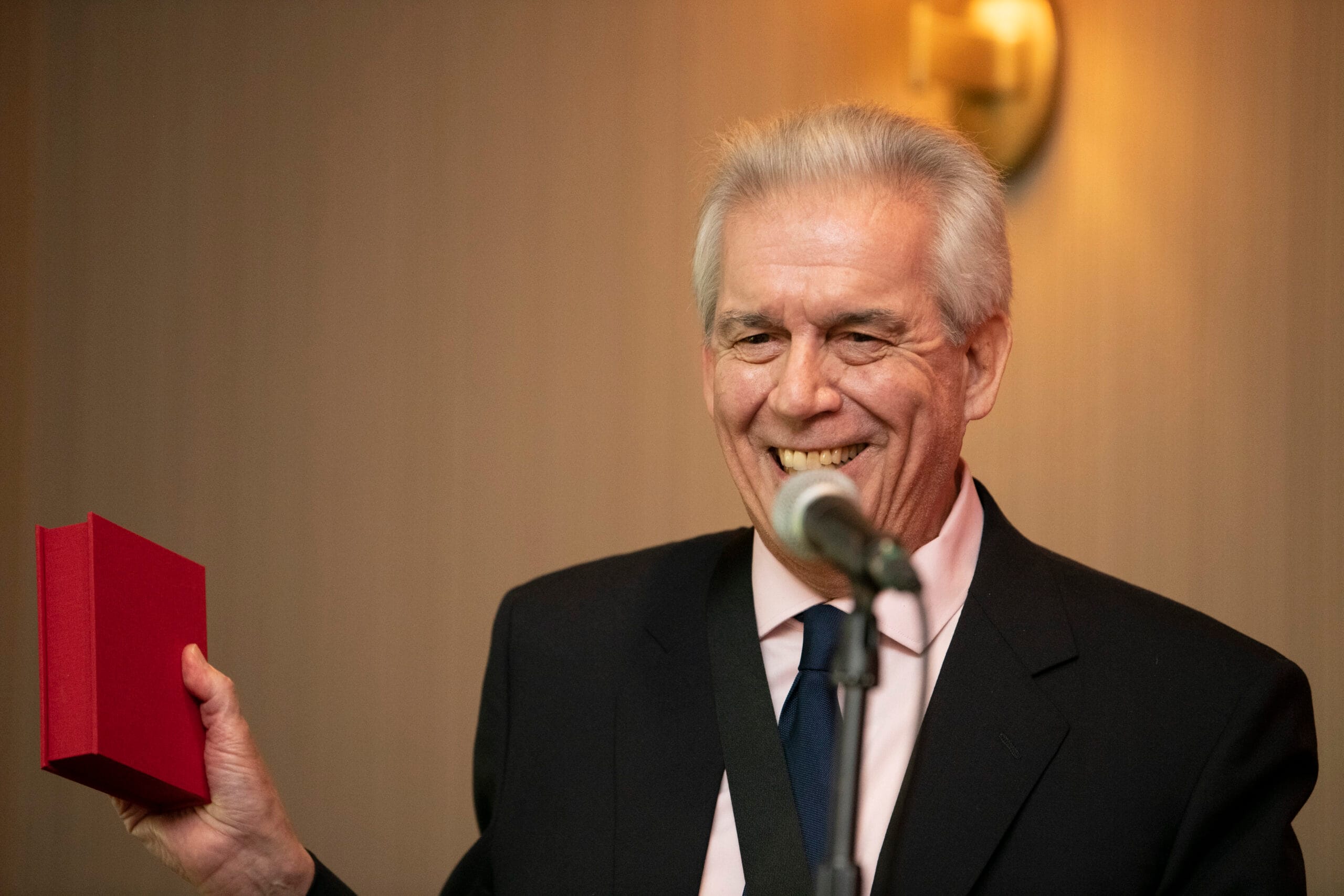
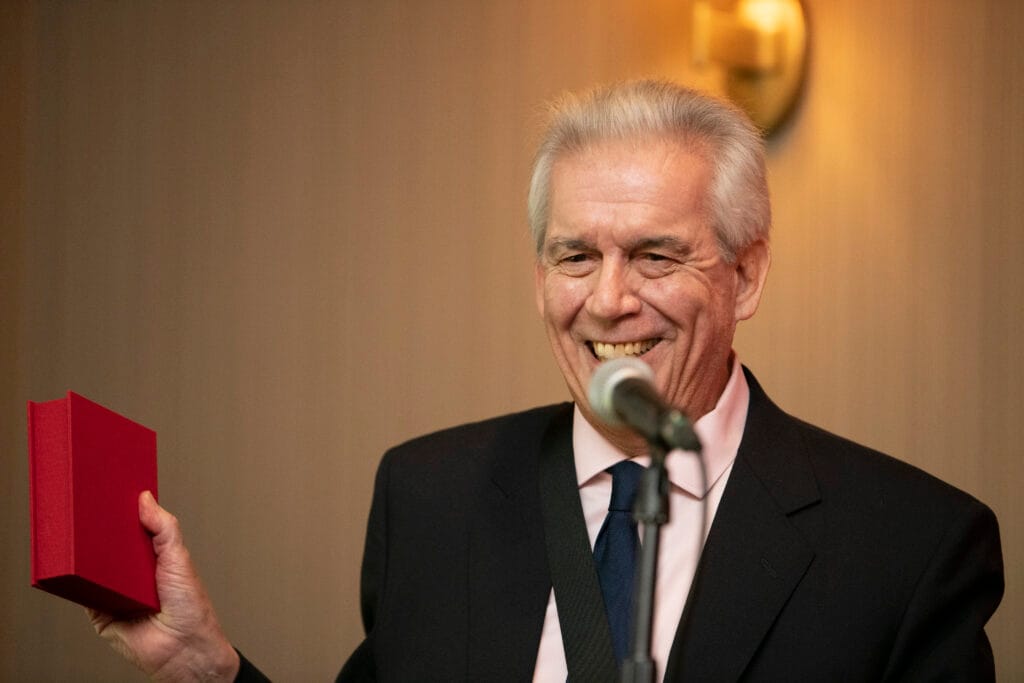
    Kamm accepting the Centennial Medal. Image credit: Tony Rinaldo via GSAS

    On February 11, 2022, I received an email from the Director of Alumni Services and Events at Harvard Graduate School of Arts and Sciences (GSAS). I was told that I had been nominated to receive the GSAS Centennial Medal, the highest honor bestowed on an alumnus of GSAS, given for significant contributions to society. First bestowed in 1989, the Centennial Medal had been given to around 140 GSAS alumni, including the essayist Susan Sontag and the political scientists Joseph Nye and Francis Fukuyama. I felt humbled and elated to join such a distinguished group of previous awardees. To me, this award was not only a personal honor, but a culmination of Harvard University’s enduring influence on my life and mission.

    I enrolled in Harvard for my master’s degree at the age of 23. Though I had only spent two semesters there from 1974-75, they were among the happiest days of my life for both personal and academic reasons. In those two semesters, I learned to read classical Chinese by working through materials I gathered in Kam Tin in Hong Kong’s New Territories with Professor Yang Liensheng, wrote a paper on Chinese foreign trade corporations for Professor Dwight Perkins, and met my first Chinese counterrevolutionary in Professor Jerry Cohen’s seminar on Chinese law, laying the foundation of my human rights activism that began 15 years later. 

    The Role of Harvard’s Libraries in Prisoner Advocacy

    When I was invited to attend the ceremony for the conferring of the GSAS Centennial Medal, I was informed that each of the honorands were allowed to invite a limited number of members of the Harvard community. I focused on inviting librarians who had helped me over the years. 

    As a human rights organization whose work is founded on its open-source research and advocacy for political and religious prisoners, Dui Hua’s researchers have managed to glean the names of hundreds of political and religious prisoners from the libraries in Harvard. Many of these prisoners were still serving sentences at the time their names were uncovered. Dui Hua placed their names on lists submitted to the Chinese government, after which several received clemency. 

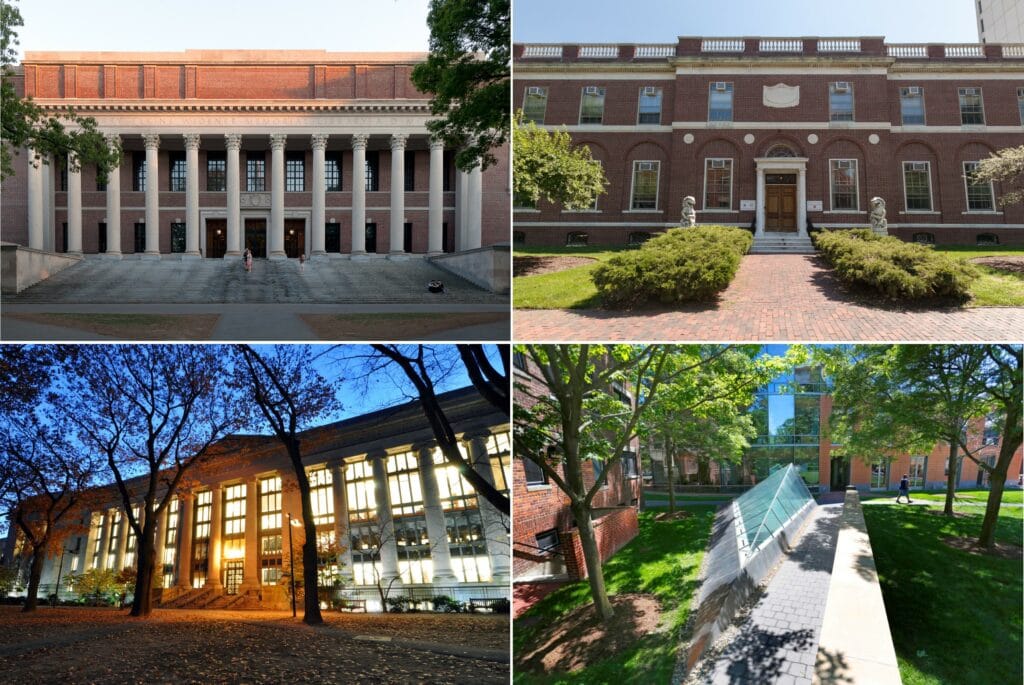
    There are four libraries at Harvard holding materials with information on political crime in China: the H.C. Fung Library at the Fairbank Center for Chinese Studies, the Harvard Law School Library, the Harvard Yenqing Library, and the Widener Library, the university’s largest library. 

    The four libraries at Harvard that hold materials with information on political crime in China: (clockwise from top) the Widener Library, the university’s largest library; the Harvard Yenqing Library; the H.C. Fung Library at the Fairbank Center for Chinese Studies; the Harvard Law School Library. Image credits: Caroline Culler; Shelley Zatsky; Fairbank Center; Chensiyuan / CC BY-SA 4.0

    These libraries contain publications such as local gazettes, records, and yearbooks published by state security bureaus, public security bureaus, procuratorates, courts, and justice bureaus. They provide information on and insights into how China deals with political crimes through case examples, regulations, accounts of events (e.g., June 4, 1989), and statistics.

    For a time, Dui Hua found useful materials in libraries in mainland China, but that is no longer possible as a result of Covid and political surveillance and harassment of our researchers. Such data is becoming harder to come by even in Hong Kong libraries, including Hong Kong University’s Fung Ping Shan Library and the Universities Services Centre at the Chinese University of Hong Kong. In the years after Dui Hua’s founding in 1999, most of the names were found by the foundation’s researchers, including me, at these two libraries. However, as China has increasingly asserted its control over the former colony, especially in the runup to the imposition of the National Security Law in 2020, materials deemed “sensitive” have been removed from the libraries, and no new ones have been ordered. The collections have been “harmonized.” 

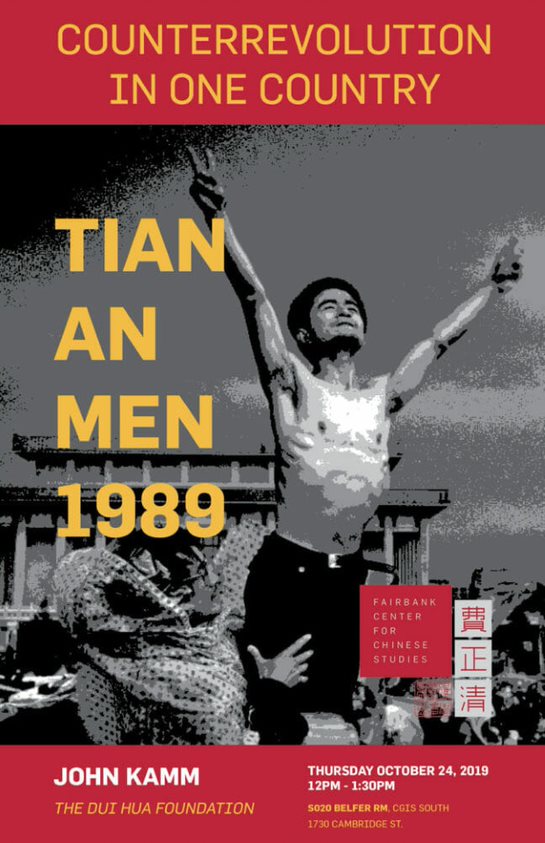
    Poster for Speech by John Kamm, Fairbank Center for Chinese Studies, October 24, 2019

    The libraries at Harvard are today one of the biggest repositories of names used by Dui Hua in its research and advocacy work and have filled the void left by their Chinese counterparts, but even these libraries are finding it more difficult to acquire volumes on political crime in China.  

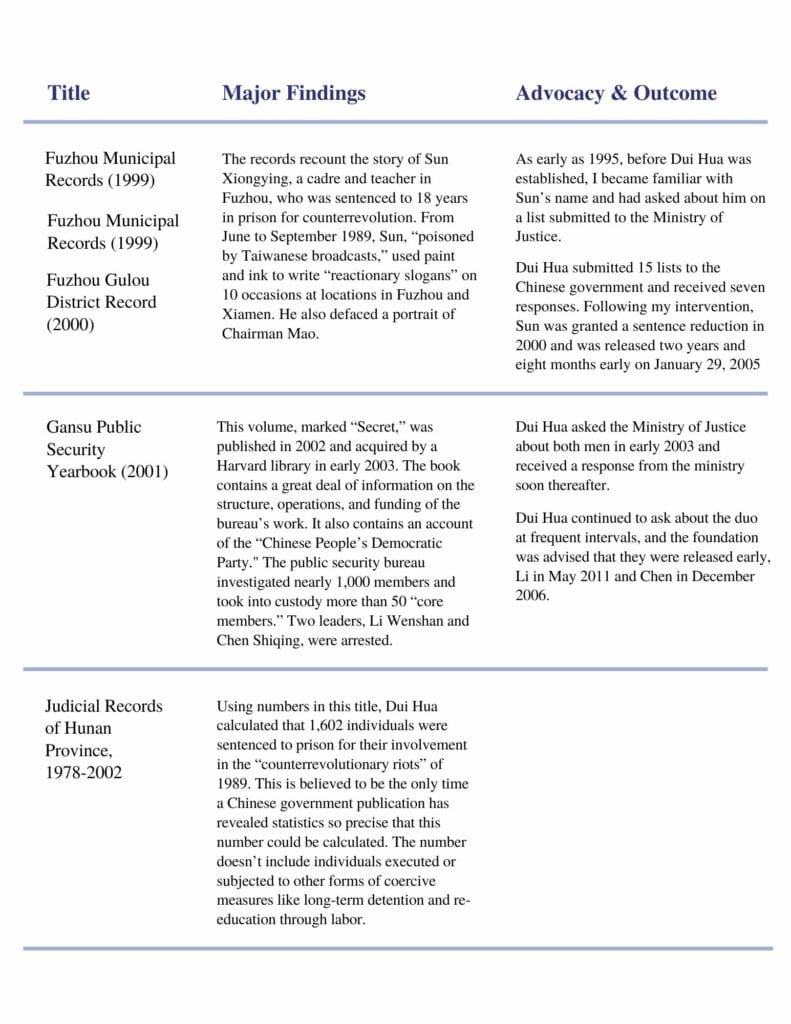
    Some of our most notable findings from Harvard Libraries are listed at the end of this article.

    Glorious May at Harvard 

    During the four days spent at Harvard in May 2022 as the awardee of the GSAS Centennial Medal, I attended several functions, including the medal ceremony on May 25. I also met with professors, including Professor Tian Xiaofei, who nominated me for the medal, Dwight Perkins – under whom I had studied in 1975 – and professors Mark Elliot, Michael Szonyi, and Bill Alford, before whose law school classes I had delivered remarks on several occasions. Of course, colleagues and I spent many fruitful hours in Harvard’s libraries.

    The highlight of the visit was the May 25 medal ceremony held at the Faculty Club. It was the first time I had stepped foot in the club. The time came to accept the Centennial Medal. I stepped to the podium where GSAS Dean and classicist Emma Dench, niece of famed British actress Judi Dench, read the citation and handed me the medal.  

    The Harvard GSAS Centennial Medal award to Kamm. Image credits: The Dui Hua Foundation

    I was honored to stand alongside three other 2022 Centennial Medalists. They are:

    • Neil Harris, PhD ’65, History, for his “pioneering work in shaping the field of cultural history”
    • Vicki Sato, AB ’69, AM ’72, PhD ’72, Cellular and Developmental Biology, for her “visionary leadership and life-changing breakthroughs in the biopharmaceutical industry”
    • Robert Zimmer, AM ’71, PhD ’75, Mathematics, for his “superlative leadership of [University of Chicago],” and his “principled advocacy for the core mission and values of higher education on the national and global stage”

    More about the event:
    My award acceptance speech

    GSAS Centennial Medal Citation

    The 2022 Centennial Medalists

    Given Harvard GSAS’s pivotal role in shaping and aiding Dui Hua’s mission, the award is more than a personal honor. I am grateful to the GSAS, not only for myself but on behalf of the prisoner whose names were unknown but to God until they were found at Harvard — names embedded in truth, spoken to power.

    Notable Findings from Harvard Libraries in May 2022 

    Baoshan Prefecture Public Security Records (2019) 

    • In late 2021, Dui Hua published Persecution of Unorthodox Religions in China, an exhaustive treatment of a rarely examined subject. Dui Hua identified 41 so-called cults operating in China in recent years. As many as 40 percent of “cult” prisoners in Dui Hua’s political prisoner database are women (women account for 8.5 percent of prisoners in China). Unorthodox religious groups often have extensive international links, and they are for the most part nonviolent. 
    • Baoshan Prefecture in Yunnan Province has a population of 2.5 million people with a substantial number of ethnic minorities. The Baoshan Prefecture Public Security Records identifies 10 unorthodox religious groups operating in the prefecture in recent years and gives the names of 79 adherents subjected to coercive measures, though few have been sentenced to prison. The four largest groups in terms of adherents subjected to coercive measures are Yi Guan Dao, Falun Gong, the Shouters, and Mentu Hui. 

    Records of Trials in Gansu Province (2018) 

    • It is not unusual to find statistics on crime in volumes found at Harvard University libraries. These statistics, when coupled with the set of Supreme People’s Court statistics, help fine-tune our knowledge of how political and religious crimes are handled in China. 

    Records of Trials in Gansu Province

    • Contains tables of cases of endangering state security (ESS) and “using an evil cult to sabotage implementation of the law” (Article 300 of the Criminal Law) tried in Gansu from 1990 to 2015. We learned from the Supreme People’s Court statistics that the vast majority of splittism and inciting splittism cases are tried in provinces with large ethnic minority populations – Xinjiang, Tibet, Sichuan, Yunnan, and Gansu. From the Gansu volume we now know how many such trials took place in Gansu, which sports a large Tibetan population. 
    • In 1999, the Chinese government banned Falun Gong. The impact of this decision is evident in the table covering Article 300 trials in Gansu. From 1999 to 2015, 486 Article 300 trials took place in Gansu, with more than 40 percent taking place in the four-year period of 2012-2015. The Gansu table on trials of endangering state security uses the term “counterrevolution” to enumerate ESS trials for the entire period. In 1997 China removed the crime of counterrevolution from the criminal law and inserted the crime of endangering state security. The Gansu table confirms what has long been suspected: in the eyes of China’s judiciary, ESS is the same as counterrevolution, a crime defined by motive that is not based on “scientific forensics.”  

    Jiangsu Province Public Security Records (2010) 

    • It is widely believed that the Spring 1989 protests were confined to Beijing and a few other large cities. In fact, demonstrations and strikes took place in more than 300 cities and counties across China. The Jiangsu Province Public Security Records chronicles what took place in Nanchang, Jiangxi’s capital, from April 15 to June 25, 1989, including the dates and times of protests and transport disruptions and the names of organizations – chiefly autonomous student federations and independent worker’s unions – that were declared illegal and disbanded.  
    • Numbers of students and worker leaders and key members of the organizations are given, though no individual names are provided. Ten members of the Nanchang United Worker’s Union were “secretly arrested” but the term “secretly arrested” is not defined. 
    • The Nanchang account of the spring 1989 protests is but one of many found in Harvard libraries since Dui Hua began its research in 2000. Books published over the last few years rarely mention the events of 1989 as China’s leadership seeks to erase memory of the largest political protests to take place in the country since 1949. 

    Earlier Findings from Harvard Libraries & Their Contribution to Advocacy

    Image credit: The Dui Hua Foundation

    Listen to the Encounters with China podcast.

    Subscribe to receive notifications about new episodes. 

    Read all John Kamm Remembers stories.


  • Dui Hua Digest, September/October 2022

    Dui Hua Digest, September/October 2022

    EVENTS

    Xinjiang Vote Fails at UN HRC

    (Left) The Human Rights Council in the Human Rights and Alliance of Civilizations Room as voting begins. (Right) The voting board after the procedural motion’s defeat. Image credit: UN Web TV

    On October 6, 2022, the United Nations Human Rights Council (HRC) voted against holding a debate on China’s human rights violations in Xinjiang, which would have been held at the first HRC session in 2023. The procedural motion failed with 17 countries supporting and 19 opposing. Eleven countries serving on the 47-member body abstained.

    The vote came at the first HRC session since the release of the Office of the UN High Commissioner for Human Rights (OHCHR)’s report that said that the Chinese government is likely committing crimes against humanity against the Uyghurs and other ethnic minorities. The vote was a culmination of years of efforts to hold China to account for its actions in Xinjiang, including dueling joint statements, the first UN visit to China since 2005, and intense lobbying over the report, which High Commissioner Michelle Bachelet published 12 minutes before her term ended. The report made an impact, but, going into the session, many wondered if it would be enough.

    Potemkin Visit

    Despite being completed in late 2021, the OHCHR’s report on Xinjiang was delayed repeatedly. The announcement that Bachelet would visit China in May 2022 shifted focus and resulted in a further delay of issuing the report. Activists warned of a “Potemkin visit,” by which China would co-opt the authority of the UN to whitewash its policies. Prior to the visit, China ratified two International Labor Organization (ILO) treaties on forced labor.

    Bachelet visited China from May 23-28. Both Bachelet and the Chinese government framed the visit as a success, but activists and the international community criticized it harshly as a dent to the OHCHR’s integrity. More than 200 human rights groups called for Bachelet’s resignation. Dui Hua previously listed some of the failings of Bachelet’s visit, noting her limited time in the XUAR (48 hours total) and her parroting of Chinese government narratives. In her press conference, Bachelet said that detainees’ families “were heard” but later acknowledged that she failed to meet with detained Uyghurs or their families. The OHCHR requested “unfettered, meaningful, credible access,” but Bachelet’s team confirmed that Chinese officials accompanied her at almost every meeting.

    CGTN reporting on Bachelet’s visit to China in May. Image credit: CGTN

    At the opening of the 50th session of the HRC this past June, Bachelet announced that she would not seek a second term, saying that she wanted to spend time with family, and that she would release the report before stepping down.

    A Long-Delayed Report

    Heavy lobbying to bury the report continued. China reportedly sent the OHCHR a letter signed by 40 nations urging the council not to release the report. Shortly before midnight on August 31, the report was released.

    The report found that “serious human rights violations” were committed in Xinjiang that are “characterized by a discriminatory component” that resulted in the “large-scale arbitrary deprivation of liberty” of Uyghur and ethnic minority residents. It concluded that China’s actions may constitute international crimes including “crimes against humanity” due to the “extent of arbitrary and discriminatory detention” conducted “pursuant to law and policy” and occurring amidst “restrictions and deprivation” of fundamental rights; more so, the report emphasizes that “conditions remain in place for serious violations to continue and recur.”

    The report found credible proof of human rights violations including arbitrary detention, torture, ill treatment, non-consensual medical treatment, and sexual and gender-based violence against those detained or imprisoned. Rights violations faced by Uyghurs who are currently detained include prohibitions on cultural expression, extensive surveillance, non-consensual biometric data collection, forced labor conditions, and forced birth control and possible forced sterilizations.

    The report notably did not use the term “genocide,” a fact that was criticized by Uyghur activists and Bachelet’s predecessor as high commissioner Zeid Ra’ad Al-Hussein.

    The Vote

    Activists and the US-led bloc sought to leverage the momentum of the report and the fallout from Bachelet’s visit into a vote at the HRC. The vote was to approve a procedural motion to hold a debate in 2023 on China’s policies in the XUAR at the next HRC session. The 47 members of the HRC voted on October 6.

    Image credit: The Dui Hua Foundation

    As with many of the joint statements and special events at the UN over the past few years, this vote was decided after intense lobbying. The resolution’s narrow defeat by 2-3 votes was a source of suspense in the chamber, even as some experts predicted that it would fall short of the vote. Indonesia, Malaysia, and Qatar were reportedly pressured by China to vote no; only Malaysia elected to abstain. Representatives from both Indonesia and Qatar later said that their votes against the motion were because the discussion “will not yield meaningful progress” unless China consented to a vote. China ties aid to how a country votes on resolutions and motions at the HRC. The United States and its allies don’t.

    Prior to the establishment of the HRC in 2005, individual countries could sponsor so-called country resolutions at the Commission on Human Rights. Twelve such resolutions were introduced over many years. China defeated all of them with “no action motions.” China famously threatened Denmark for introducing a China resolution, promising to squash the Nordic country like a sparrow.

    The United States refused to link aid and assistance to how a country voted on these actions at the Commission on Human Rights. China, on the other hand, made aid and assistance contingent on how a country voted. Geraldine Ferraro, the US representative on the commission, once quipped that many countries in Africa had football stadiums built with Chinese aid, thanks to the US “China resolutions” introduced at the commission.

    At the resolution vote on October 6, (clockwise, top left) the HRC president and representatives from the United States, Qatar, and China make remarks. Image credit: UN Web TV

    The US policy of not tying aid to how a country votes at the HRC explains why Ukraine, which receives billions of dollars from the United States, felt free to abstain on the procedural motion to hold a debate at HRC 52. (The day after the vote, Ukraine tried to change its vote from abstain to yes but the president of the Council, Argentina, refused to allow it.) Ukraine clearly felt that it would gain leverage with China that Beijing could use to deter Russian aggression against the country. It should also be noted that Ukraine is a part of China’s Belt and Road Initiative. As Politico reported, 20 of the countries that voted no or abstained, like Ukraine, are part of the Belt and Road Initiative.

    The ongoing support of Organization of Islamic Cooperation (OIC) member countries for China’s policies toward ethnic Muslims continues to frustrate activists, reflecting the extent to which China’s lobbying and messaging successfully deflect criticisms. Of the 47 countries on the HRC, Somalia was the only OIC member and the only African country to support the motion.

    This UN session was problematic as the Western bloc of nations lobbied for votes on two fronts: for the HRC motion on China and for another resolution at the HRC to appoint an independent expert on human rights abuses in Russia. The HRC motion on Xinjiang was thought to be the weakest possible form of rebuking China, only calling for a debate rather than a monitoring mission or a special rapporteur. Had the motion passed, it would have been the first time that China’s human rights record was addressed as a specific agenda item at the HRC.

    The other lobbying effort appeared to pay off not only at the HRC but also at the General Assembly on October 12, when 143 of the 183 Assembly members voted to condemn Russia’s annexation of Ukrainian territory. Five countries including Russia voted no, the others being Belarus, Nicaragua, North Korea, and Syria. China, despite its “no limits” alliance with Russia, was one of 35 countries that abstained.


    PUBLICATIONS ROUND UP

    Featured: Human Rights Journal, Punishing Namaz Prayer in Prison, Part I: “Sabotaging Prison Supervision” (October 4, 2022) & Part II: “Illegal Religious Activity” (October 11, 2022)  

    A clock hanging in a Turkish mosque showing Muslim prayer times. Image credit: LooiNL

    Muslims around the world are obliged to perform five daily prayers at dawn, midday, afternoon, sunset, and night. The ritual, commonly known as salah, is often called namazi (CN: 乃玛孜) in China, a Persian transliteration of namāz. Within China’s carceral system, all forms of religious worship, including namāz, are forbidden. Prisoners who covertly perform namāz are at risk of receiving harsh punishment, with the most serious penalty being a sentence extension.

    Read more here.


    See Also: 2021 Annual Report

    Dui Hua’s 2021 Annual Report recounts a year of achievements across a challenging landscape, where dialogue and clemency are in decline, but opportunities to improve relations and human rights remain.

    Read the report in English.

    Read the report in Chinese.


    See Also: Press Statement: Will the Bell Toll for Shadeed Abdulmateen?

    Abdulmateen when his death sentence was announced on April 21, 2022. Image credit: Ningbo Intermediate People’s Court

    SAN FRANCISCO (September 26, 2022) — Shadeed Abdulmateen, a US citizen, was sentenced to death by the Ningbo Intermediate People’s Court on April 21, 2022. He was convicted of murdering a young Chinese woman, Chen Shijun, with whom he had had a romantic relationship.

    Read more here.


    See Also: Human Rights Journal, September 20, 2022: Rare Sentence Reduction for Falun Gong Follower

    Shaoguan Intermediate People’s Court, which granted Yu a seven-month sentence reduction. Image credit: Baidu Maps

    Acts of clemency for Chinese religious and political prisoners have become increasingly rare in recent years. This decrease is the result of Xi Jinping’s hardline approach to both dissent and unorthodox religions, coupled with a sharp drop in judicial transparency. An exception took place in the summer of 2022 when Yu Rongxin (余荣新), a long-time Falun Gong practitioner in Guangdong, was granted a seven-month sentence reduction by the Shaoguan Intermediate People’s Court in June.

    Read more here.


    See Also: Prisoner Updates 2022 #6: House churches facing continuous crackdown; Hong Kong woman released to Hong Kong, then re-arrested; Activist Long Kehai detained again; Shenzhen activist release


    JOHN KAMM REMEMBERS

    John Kamm Remembers is a feature that explores Kamm’s human rights advocacy prior to and since Dui Hua’s establishment in 1999. Learn about Kamm’s first experiences in China in the 1970s with our timeline.

    Names Embedded in Truth, Spoken to Power

    Kamm accepting the Centennial Medal. Image credit: Tony Rinaldo via GSAS

    On February 11, 2022, I received an email from the Director of Alumni Services and Events at Harvard Graduate School of Arts and Sciences (GSAS). I was told that I had been nominated to receive the GSAS Centennial Medal, the highest honor bestowed on an alumnus of GSAS, given for significant contributions to society. First bestowed in 1989, the Centennial Medal had been given to around 140 GSAS alumni, including the essayist Susan Sontag and the political scientists Joseph Nye and Francis Fukuyama. I felt humbled and elated to join such a distinguished group of previous awardees. To me, this award was not only a personal honor, but a culmination of Harvard University’s enduring influence on my life and mission.

    I enrolled in Harvard for my master’s degree at the age of 23. Though I had only spent two semesters there from 1974-75, they were among the happiest days of my life for both personal and academic reasons. In those two semesters, I learned to read classical Chinese by working through materials I gathered in Kam Tin in Hong Kong’s New Territories with Professor Yang Liensheng, wrote a paper on Chinese foreign trade corporations for Professor Dwight Perkins, and met my first Chinese counterrevolutionary in Professor Jerry Cohen’s seminar on Chinese law, laying the foundation of my human rights activism that began 15 years later. 

    The Role of Harvard’s Libraries in Prisoner Advocacy

    When I was invited to attend the ceremony for the conferring of the GSAS Centennial Medal, I was informed that each of the honorands were allowed to invite a limited number of members of the Harvard community. I focused on inviting librarians who had helped me over the years. 

    As a human rights organization whose work is founded on its open-source research and advocacy for political and religious prisoners, Dui Hua’s researchers have managed to glean the names of hundreds of political and religious prisoners from the libraries in Harvard. Many of these prisoners were still serving sentences at the time their names were uncovered. Dui Hua placed their names on lists submitted to the Chinese government, after which several received clemency. 

    There are four libraries at Harvard holding materials with information on political crime in China: the H.C. Fung Library at the Fairbank Center for Chinese Studies, the Harvard Law School Library, the Harvard Yenqing Library, and the Widener Library, the university’s largest library. 

    The four libraries at Harvard that hold materials with information on political crime in China: (clockwise from top) the Widener Library, the university’s largest library; the Harvard Yenqing Library; the H.C. Fung Library at the Fairbank Center for Chinese Studies; the Harvard Law School Library. Image credits: Caroline Culler; Shelley Zatsky; Fairbank Center; Chensiyuan / CC BY-SA 4.0

    These libraries contain publications such as local gazettes, records, and yearbooks published by state security bureaus, public security bureaus, procuratorates, courts, and justice bureaus. They provide information on and insights into how China deals with political crimes through case examples, regulations, accounts of events (e.g., June 4, 1989), and statistics.

    For a time, Dui Hua found useful materials in libraries in mainland China, but that is no longer possible as a result of Covid and political surveillance and harassment of our researchers. Such data is becoming harder to come by even in Hong Kong libraries, including Hong Kong University’s Fung Ping Shan Library and the Universities Services Centre at the Chinese University of Hong Kong. In the years after Dui Hua’s founding in 1999, most of the names were found by the foundation’s researchers, including me, at these two libraries. However, as China has increasingly asserted its control over the former colony, especially in the runup to the imposition of the National Security Law in 2020, materials deemed “sensitive” have been removed from the libraries, and no new ones have been ordered. The collections have been “harmonized.” 

    A poster publicizing Kamm’s 2019 speaking event at the Fairbank Center for Chinese Studies. Image credit: Fairbank Center for Chinese Studies

    The libraries at Harvard are today one of the biggest repositories of names used by Dui Hua in its research and advocacy work and have filled the void left by their Chinese counterparts, but even these libraries are finding it more difficult to acquire volumes on political crime in China.  

    Some of our most notable findings from Harvard Libraries are listed at the end of this article.

    Glorious May at Harvard 

    During the four days spent at Harvard in May 2022 as the awardee of the GSAS Centennial Medal, I attended several functions, including the medal ceremony on May 25. I also met with professors, including Professor Tian Xiaofei, who nominated me for the medal, Dwight Perkins – under whom I had studied in 1975 – and professors Mark Elliot, Michael Szonyi, and Bill Alford, before whose law school classes I had delivered remarks on several occasions. Of course, colleagues and I spent many fruitful hours in Harvard’s libraries.

    The highlight of the visit was the May 25 medal ceremony held at the Faculty Club. It was the first time I had stepped foot in the club. The time came to accept the Centennial Medal. I stepped to the podium where GSAS Dean and classicist Emma Dench, niece of famed British actress Judi Dench, read the citation and handed me the medal.  

    The Harvard GSAS Centennial Medal award to Kamm. Image credits: The Dui Hua Foundation

    I was honored to stand alongside three other 2022 Centennial Medalists. They are:

    • Neil Harris, PhD ’65, History, for his “pioneering work in shaping the field of cultural history”
    • Vicki Sato, AB ’69, AM ’72, PhD ’72, Cellular and Developmental Biology, for her “visionary leadership and life-changing breakthroughs in the biopharmaceutical industry”
    • Robert Zimmer, AM ’71, PhD ’75, Mathematics, for his “superlative leadership of [University of Chicago],” and his “principled advocacy for the core mission and values of higher education on the national and global stage”

    More about the event:
    My award acceptance speech

    GSAS Centennial Medal Citation

    The 2022 Centennial Medalists

    Given Harvard GSAS’s pivotal role in shaping and aiding Dui Hua’s mission, the award is more than a personal honor. I am grateful to the GSAS, not only for myself but on behalf of the prisoner whose names were unknown but to God until they were found at Harvard — names embedded in truth, spoken to power.

    Notable Findings from Harvard Libraries in May 2022 

    Baoshan Prefecture Public Security Records (2019) 

    • In late 2021, Dui Hua published Persecution of Unorthodox Religions in China, an exhaustive treatment of a rarely examined subject. Dui Hua identified 41 so-called cults operating in China in recent years. As many as 40 percent of “cult” prisoners in Dui Hua’s political prisoner database are women (women account for 8.5 percent of prisoners in China). Unorthodox religious groups often have extensive international links, and they are for the most part nonviolent. 
    • Baoshan Prefecture in Yunnan Province has a population of 2.5 million people with a substantial number of ethnic minorities. The Baoshan Prefecture Public Security Records identifies 10 unorthodox religious groups operating in the prefecture in recent years and gives the names of 79 adherents subjected to coercive measures, though few have been sentenced to prison. The four largest groups in terms of adherents subjected to coercive measures are Yi Guan Dao, Falun Gong, the Shouters, and Mentu Hui. 

    Records of Trials in Gansu Province (2018) 

    • It is not unusual to find statistics on crime in volumes found at Harvard University libraries. These statistics, when coupled with the set of Supreme People’s Court statistics, help fine-tune our knowledge of how political and religious crimes are handled in China. 

    Records of Trials in Gansu Province

    • Contains tables of cases of endangering state security (ESS) and “using an evil cult to sabotage implementation of the law” (Article 300 of the Criminal Law) tried in Gansu from 1990 to 2015. We learned from the Supreme People’s Court statistics that the vast majority of splittism and inciting splittism cases are tried in provinces with large ethnic minority populations – Xinjiang, Tibet, Sichuan, Yunnan, and Gansu. From the Gansu volume we now know how many such trials took place in Gansu, which sports a large Tibetan population. 
    • In 1999, the Chinese government banned Falun Gong. The impact of this decision is evident in the table covering Article 300 trials in Gansu. From 1999 to 2015, 486 Article 300 trials took place in Gansu, with more than 40 percent taking place in the four-year period of 2012-2015. The Gansu table on trials of endangering state security uses the term “counterrevolution” to enumerate ESS trials for the entire period. In 1997 China removed the crime of counterrevolution from the criminal law and inserted the crime of endangering state security. The Gansu table confirms what has long been suspected: in the eyes of China’s judiciary, ESS is the same as counterrevolution, a crime defined by motive that is not based on “scientific forensics.”  

    Jiangsu Province Public Security Records (2010) 

    • It is widely believed that the Spring 1989 protests were confined to Beijing and a few other large cities. In fact, demonstrations and strikes took place in more than 300 cities and counties across China. The Jiangsu Province Public Security Records chronicles what took place in Nanchang, Jiangxi’s capital, from April 15 to June 25, 1989, including the dates and times of protests and transport disruptions and the names of organizations – chiefly autonomous student federations and independent worker’s unions – that were declared illegal and disbanded.  
    • Numbers of students and worker leaders and key members of the organizations are given, though no individual names are provided. Ten members of the Nanchang United Worker’s Union were “secretly arrested” but the term “secretly arrested” is not defined. 
    • The Nanchang account of the spring 1989 protests is but one of many found in Harvard libraries since Dui Hua began its research in 2000. Books published over the last few years rarely mention the events of 1989 as China’s leadership seeks to erase memory of the largest political protests to take place in the country since 1949. 

    Earlier Findings from Harvard Libraries & Their Contribution to Advocacy

    Visit Dui Hua’s timeline “John Kamm Remembers: Fifty Years in China” to read more stories like this, view photos from this period in history, watch videos about the origins of modern US-China engagement, and learn how the decisions of the past are shaping our future.

    Subscribe here to receive Dui Hua publications by email.

  • Punishing Namāz Prayer in Prison, Part II: “Illegal Religious Activity”

    Punishing Namāz Prayer in Prison, Part II: “Illegal Religious Activity”

    A photo of the Id Kah Mosque, the largest in China, in Kashgar, Xinjiang, taken in 2017. The photographer noted that worshippers had their ID cards recorded. Image credit: David Stanley / CC By 2.0

    Part I of this article discussed existing laws and regulations limiting religious expression in China, and it explored the case of Ismayil Sidiq, a Uyghur farmer serving a 10-year prison sentence for “promoting extremism” whose sentence was doubled after he “used a disguised and simplified method to perform namāz in the prison dormitory.” Namāz, commonly known as salah, refers to the pillar of the Islamic faith that obliges believers to pray five times a day.

    Dui Hua’s research into court judgments, however, found a similar case where a Uyghur prisoner was sentenced in December 2019 to 18 months for Article 315 for conducting “illegal religious activity” on four occasions in Xinjiang’s Shihezi Prison. Prior to this, the Uyghur prisoner was serving his 20 years prison sentence for terrorism and promoting extremism. Despite being accused of conducting “illegal religious activity” on one more occasion, he was given an 18-month prison sentence for Article 315—half the length of Ismayil’s sentence. The judgment did not state whether namāz was involved.
    Ismayil’s case is by no means an isolated incident, although what happened to him might have portended the worst possible outcome for performing namāz in prison. Dui Hua found cases where other Uyghur prisoners, while already serving lengthy prison sentences, were criminally prosecuted for Article 315 because of namāz. In the first case, a Uyghur serving his 10-year sentence for participating in a terrorist organization in Xinjiang’s Bayingolin Prison was found to have performed namāz on four occasions during the week of March 14, 2017. On each occasion, he awoke other cellmates, including those serving their sentences for endangering state security, to join his morning prayer. On May 21, he was put under 15 days of solitary confinement, during which he insisted on performing namāz five times a day and called on other cellmates to join his prayer.

    A picture of Bayingolin Prison. Image credit: Shahit.biz 

    It would be a mistake to assume that prosecution against namāz only targets Uyghurs convicted of endangering state security, terrorism, or religious extremism offenses. In the second case, a Uyghur serving his seven-year sentence for “gathering a crowd to disturb social order,” a public order offense, in Korla Prison was indicted for Article 315 on June 13, 2017. The indictment stated that he refused to repent and that he insisted on performing namāz every day. Originally due for release on July 17, 2021, this Uyghur prisoner is likely to remain incarcerated until at least 2024.

    In these two cases, the trial outcome is unclear. However, given what happened to Ismayil, they are highly likely to have been convicted and sentenced to additional prison terms under Article 315.

    Besides Uyghurs, Muslim prisoners from other ethnic minority groups outside of Xinjiang also receive punishment for performing namāz. However, Dui Hua found that none of them were sentenced or criminally prosecuted like the abovementioned Uyghurs. These cases involved one Hui and two ethnic Dongxiang Muslims who were convicted of theft or drug-related crimes in Linxia, Gansu. The Hui and Dongxiang Muslims were only given warnings by prison authorities in July 2018. The duo allegedly showed remorse by stopping their prayers completely after they were warned.

    Nevertheless, not all prisoners are as obedient. Ma Mene (马么呢), an ethnic Dongxiang Muslim, displayed a “bad attitude” and confronted prison guards after he was found praying in prison. Ma was placed under yanguan jixun (严管集训) for 15 days, a form of strict control for collective discipline training. During this period, he was unable to accrue clemency points to obtain early release.

    A Muslim prisoner in the United States prays on his rug inside his cell at prison. Image credit: Andy Aitchison, PrisonImage / Creative Commons

    China is not alone in denying Muslims their right to pray or worship meaningfully in prison. From reading the Quran to growing beards and restricting daily group prayers, Muslim prisoners in other countries have their religious rights deprived to varying degrees. In the United States, Muslims are overrepresented in state prisons, making up 9 percent of the prison population despite being 1 percent of the general population according to a 2019 report by Muslim Advocates. The report found that prisons in multiple states fail to accommodate Muslim dietary requirements, force male prisoners to shave their beards, and restrict group prayer.

    As recently as April 2022, Muslim prisoners in the United States faced obstacles in accessing halal food, adequate dietary accommodations during Ramadan, and religious materials such as prayer mats and Qurans even as equivalent requirements are met for other faiths. Some progress has been made after civil society organizations filed lawsuits challenging religious restrictions in prison. For instance, federal prisons in the United States changed the national guideline in 2019 to accommodate Muslim congregational prayer services, which was previously restricted to three people, unless there is a security concern.

    The use of “security concerns” to justify restrictions on religious expressions is an oft-used tool of governments. China, too, often cites security concerns to justify its religious crackdowns in- and outside of its carceral system. In a country which adheres so closely to the notion of “stability above all else,” it is unlikely that religious restrictions on namāz in prison will abate. Similarly, the right to free assembly through group prayer, a practice valued by Muslims and only recently permissible in US prisons, is likely to continue amongst China’s repression of religious expression and assembly.

  • Punishing Namāz Prayer in Prison, Part II: “Illegal Religious Activity”

    Punishing Namāz Prayer in Prison, Part II: “Illegal Religious Activity”

    A photo of the Id Kah Mosque, the largest in China, in Kashgar, Xinjiang, taken in 2017. The photographer noted that worshippers had their ID cards recorded. Image credit: David Stanley / CC By 2.0 

    Part I of this article discussed existing laws and regulations limiting religious expression in China, and it explored the case of Ismayil Sidiq, a Uyghur farmer serving a 10-year prison sentence for “promoting extremism” whose sentence was doubled after he “used a disguised and simplified method to perform namāz in the prison dormitory.” Namāz, commonly known as salah, refers to the pillar of the Islamic faith that obliges believers to pray five times a day. 

    Dui Hua’s research into court judgments, however, found a similar case where a Uyghur prisoner was sentenced in December 2019 to 18 months for Article 315 for conducting “illegal religious activity” on four occasions in Xinjiang’s Shihezi Prison. Prior to this, the Uyghur prisoner was serving his 20 years prison sentence for terrorism and promoting extremism. Despite being accused of conducting “illegal religious activity” on one more occasion, he was given an 18-month prison sentence for Article 315—half the length of Ismayil’s sentence. The judgment did not state whether namāz was involved. 

    Ismayil’s case is by no means an isolated incident, although what happened to him might have portended the worst possible outcome for performing namāz in prison. Dui Hua found cases where other Uyghur prisoners, while already serving lengthy prison sentences, were criminally prosecuted for Article 315 because of namāz. In the first case, a Uyghur serving his 10-year sentence for participating in a terrorist organization in Xinjiang’s Bayingolin Prison was found to have performed namāz on four occasions during the week of March 14, 2017. On each occasion, he awoke other cellmates, including those serving their sentences for endangering state security, to join his morning prayer. On May 21, he was put under 15 days of solitary confinement, during which he insisted on performing namāz five times a day and called on other cellmates to join his prayer. 

    A picture of Bayingolin Prison. Image credit: Shahit.biz 

    It would be a mistake to assume that prosecution against namāz only targets Uyghurs convicted of endangering state security, terrorism, or religious extremism offenses. In the second case, a Uyghur serving his seven-year sentence for “gathering a crowd to disturb social order,” a public order offense, in Korla Prison was indicted for Article 315 on June 13, 2017. The indictment stated that he refused to repent and that he insisted on performing namāz every day. Originally due for release on July 17, 2021, this Uyghur prisoner is likely to remain incarcerated until at least 2024. 

    In these two cases, the trial outcome is unclear. However, given what happened to Ismayil, they are highly likely to have been convicted and sentenced to additional prison terms under Article 315. 

    Besides Uyghurs, Muslim prisoners from other ethnic minority groups outside of Xinjiang also receive punishment for performing namāz. However, Dui Hua found that none of them were sentenced or criminally prosecuted like the abovementioned Uyghurs. These cases involved one Hui and two ethnic Dongxiang Muslims who were convicted of theft or drug-related crimes in Linxia, Gansu. The Hui and Dongxiang Muslims were only given warnings by prison authorities in July 2018. The duo allegedly showed remorse by stopping their prayers completely after they were warned. 

    Nevertheless, not all prisoners are as obedient. Ma Mene (马么呢), an ethnic Dongxiang Muslim, displayed a “bad attitude” and confronted prison guards after he was found praying in prison. Ma was placed under yanguan jixun (严管集训) for 15 days, a form of strict control for collective discipline training. During this period, he was unable to accrue clemency points to obtain early release. 

    A Muslim prisoner in the United States prays on his rug inside his cell at prison. Image credit: Andy Aitchison, PrisonImage / Creative Commons 

    China is not alone in denying Muslims their right to pray or worship meaningfully in prison. From reading the Quran to growing beards and restricting daily group prayers, Muslim prisoners in other countries have their religious rights deprived to varying degrees. In the United States, Muslims are overrepresented in state prisons, making up 9 percent of the prison population despite being 1 percent of the general population according to a 2019 report by Muslim Advocates. The report found that prisons in multiple states fail to accommodate Muslim dietary requirements, force male prisoners to shave their beards, and restrict group prayer.  

    As recently as April 2022, Muslim prisoners in the United States faced obstacles in accessing halal food, adequate dietary accommodations during Ramadan, and religious materials such as prayer mats and Qurans even as equivalent requirements are met for other faiths. Some progress has been made after civil society organizations filed lawsuits challenging religious restrictions in prison. For instance, federal prisons in the United States changed the national guideline in 2019 to accommodate Muslim congregational prayer services, which was previously restricted to three people, unless there is a security concern.  

    The use of “security concerns” to justify restrictions on religious expressions is an oft-used tool of governments. China, too, often cites security concerns to justify its religious crackdowns in- and outside of its carceral system. In a country which adheres so closely to the notion of “stability above all else,” it is unlikely that religious restrictions on namāz in prison will abate. Similarly, the right to free assembly through group prayer, a practice valued by Muslims and only recently permissible in US prisons, is likely to continue amongst China’s repression of religious expression and assembly. 

  • Punishing Namāz Prayer in Prison, Part I: “Sabotaging Prison Supervision”

    Punishing Namāz Prayer in Prison, Part I: “Sabotaging Prison Supervision”

    A clock hanging in a Turkish mosque showing Muslim prayer times. Image credit: LooiNL 

    Muslims around the world are obliged to perform five daily prayers at dawn, midday, afternoon, sunset, and night. The ritual, commonly known as salah, is often called namazi (CN: 乃玛孜) in China, a Persian transliteration of namāz. Within China’s carceral system, all forms of religious worship, including namāz, are forbidden. Prisoners who covertly perform namāz are at risk of receiving harsh punishment, with the most serious penalty being a sentence extension.

    This risk is well demonstrated in the case of Ismayil Sidiq. In May 2021, the BBC reported that the now-57-year-old Uyghur farmer was serving a 10-year prison sentence for “promoting extremism” in Kuitun Prison in the Xinjiang Production and Construction Corps when he had his sentence doubled after he “used a disguised and simplified method to perform namāz in the prison dormitory.” On May 29, 2018, the Kuitun Reclamation Area People’s Court convicted him of “sabotaging prison supervision” and “provoking ethnic hatred,” and handed down an additional prison term of 13 years. Ismayil has 16 more years to serve before completing his sentence on May 28, 2038. He will be 74 years old.

    The four-page judgment gave a detailed account of what happened in Kuitun Prison. First searchable on China Judgements Online, the judgment is among the tens of thousands of sensitive cases taken offline in mid-2021. The judgment has since been archived and translated into English by the Xinjiang Victims Database.

    A translation of the judgment against Ismayil. Image credit: Xinjiang Victims Database Twitter account

    According to the judgment, Ismayil performed namāz on three occasions in the prison dormitory in early 2018. The first two took place on January 25 and February 17 after he realized that the time displayed on the television was the time for his final daily namāz. On March 3, on the pretext of needing to urinate, he secretly performed wudu, the washing ritual that Muslims perform before praying. After being discovered and stopped by his Uyghur cellmates, he became outraged and shouted at them asking, “Are you Uyghurs? Do Uyghurs enjoy reporting other Uyghurs like this?”

    The court found clear and sufficient evidence of Ismayil sabotaging prison supervision because he “repeatedly engaged in covert religious activities in prison.” This crime alone afforded him a prison sentence of three years – the maximum penalty stipulated in Article 315 of the Criminal Law. Furthermore, he was found guilty of “provoking ethnic hatred” because the remarks he made to other Uyghur cellmates “sowed discord among the ethnic groups and created ethnic antagonism.” This crime also landed him the maximum prison sentence of 10 years as stipulated by Article 249.

    An excerpt taken from academic journal Crime and Corrections reveals that namāz is among the religious activities explicitly banned in prisons and re-education-through-labor facilities through Xinjiang. Image credit: Crime and Corrections, (2001) Issue 4

    While prisoners are allowed to retain their religious faith, prison authorities across China proscribe all forms of religious activities but allow prisoners to read religious books or silently chant scriptures. Article 2 of a provisional regulation issued by the Xinjiang Department of Justice explicitly prohibits all forms of religious activity such as participating in Ramadan, namāz, other forms of worship, or sermons in prisons and reeducation-through-labor facilities. However, many Muslim detainees and prisoners defied this prison rule and “shared a propensity to organize gangs when they perform namāz in groups,” according to an article published in Crime and Corrections in 2001. Congregational prayer, referred to as Salat al-Jama’ah, is highly valued among Muslims and is thought to be more spiritually enriching than solo prayer.

    In Xinjiang, namāz is a matter of concern for managing prisoners serving their sentences for endangering state security. A 2008 policy document examining the challenges faced by Xinjiang prison authorities states that these prisoners not only distort the history of Xinjiang, spread rumors, and incite ethnic hatred, but they also “use acts such as hunger strikes, suicide, namāz and feigned illness to disobey management and refuse reform.”

    Existing laws and regulations, however, have not clearly explained the criminal liabilities for performing namāz in prison. The crime of “sabotaging prison supervision,” defined in Article 315 of the Criminal Law, makes no mention of namāz or any other forms religious activity. It only stipulates that the following acts fall under the crime’s purview: (1) beating supervising personnel; (2) organizing other people under detention to sabotage supervision order; (3) assembling a crowd to make trouble, thereby disturbing normal supervision order; (4) beating, carrying out corporal punishment on or instigating other people to beat, carry out corporal punishment on other people under detention.

    It is not immediately clear whether performing namāz fulfills the criteria of stipulation 2 as stated above. Assuming it does, Ismayil’s case might suggest that the three instances of namāz he performed on January 25, February 17, and March 3 of 2018 were already sufficient to reach the threshold for the maximum prison sentence of three years.

    Read Part II.