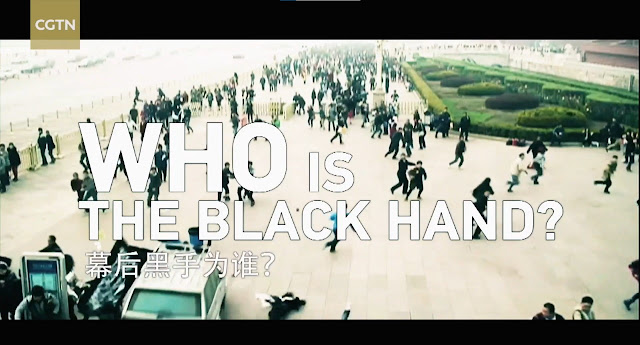
A screenshot from a video about the “All People Act Together” campaign. Image credit: 一平論政 Youtube page
“All People Act Together” (APAT), or quanmin gongzhen (全民共振), is a social media campaign launched in early 2018 by Chinese dissidents overseas. The campaign calls on rights defenders to collectively seek redress and make their voices heard by staging street protests across Chinese cities on occasions of special historical, social, or political importance such as International Workers’ Day (May 1), the anniversary of the founding of the Chinese Communist Party (July 1), and National Day (October 1).
Proponents of APAT believe that resistance movements can “reverberate” or “resonate” around the country and overwhelm the stability maintenance regime if the outbreaks are simultaneous and sustained. They predict CCP’s eventual demise when it runs short of resources to keep up its increasingly expensive operations.
The CCP’s zeal in crushing dissent to maintain stability has created a domestic security system so costly that it is sapping funds required elsewhere to support the country’s economic health. APAT emerged against the backdrop of China’s spending on internal security, which has exceeded the national defense budget since 2010. The rise in spending on domestic security is most evident in western regions of Xinjiang and Tibet, but a sizable portion is spent in Han-majority regions keeping potential troublemakers in residential surveillance, running “black jails,” or forcing dissenters to “travel” elsewhere — all part of the longstanding scheme designed to muzzle protestors during sensitive occasions.
Part I of this post focuses on APAT’s reach and cases in which supporters were charged with “picking quarrels and provoking trouble (PQPT).” Part II will look at cases involving charges of disrupting public services and preparing for a terrorist activity.
The nature of APAT is similar to the online calls for the 2011 Tunisia-inspired “Jasmine Revolution” manifested in the form of “strolling” protests around McDonald’s on Wangfujing shopping streets and spots in other cities. Chinese state media have been largely silent on the planned protests, but social media accounts recounted major shows of police force to disperse small crowds of seemingly curious onlookers that had gathered in Beijing and Shanghai.
APAT appears to have limited reach in China. No visible protests linked to APAT have been reported. However, prominent dissidents including Hu Jia were reportedly warned by police not to take part in or publicly discuss APAT. There was scant media coverage and the fate of those who openly espouse APAT in China has gone largely unnoticed. Dui Hua’s Political Prisoner Database has information on six individuals who were given coercive measures for heeding the calls of APAT. Of them, four received prison sentences for a variety of crimes ranging from PQPT and disrupting public services to preparing for terrorist activities.
Picking Quarrels & Provoking Trouble
Xue Renyi, an advocate of Greenleaf Action, who was arrested on May 1, 2018 for walking in Jiefangbei Square in Chongqing while wearing a green leaf. Image credit: Twitter via RFA
The first APAT supporter known to have been imprisoned is Xue Renyi (薛仁义). He was taken into custody on May 1, 2018 after posting a photograph of himself “strolling” in Chongqing People’s Liberation Monument Square while carrying a green leaf in his shirt pocket. Some other people were seized on the same day; they were warned off speaking out online or giving interviews with foreign media after being released from custody.
Xue is the founder of Green Leaf Action, an environmental group which promoted food safety, clean air, and clean water. The group stood accused by police of being “controlled” and “manipulated” by foreign forces. Xue’s three-year sentence became known to the outside world only when his fiancée received his letter from prison one year after he was detained. Xue completed his sentence for PQPT in Dianjiang Prison without receiving a sentence reduction. He was released on April 30, 2021.
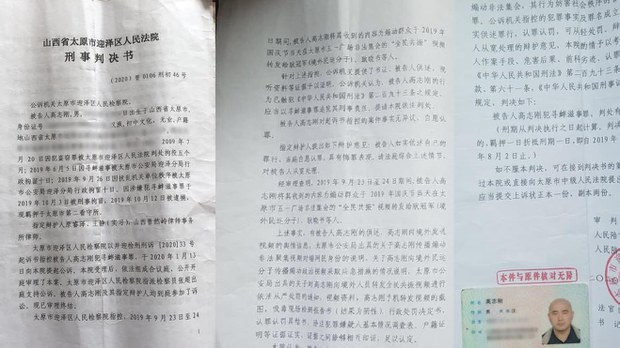
In a separate case, Gao Zhigang (高志刚) was sentenced to 10 months in prison for PQPT in 2020 even without showing up at any APAT protest spot. Gao was accused of forwarding a video which called on people to join a rally in Taiyuan’s Wuyi Square on the 2019 National Day. Additionally, Gao sent the video to an “overseas democracy activist” known by the name of Geng Guanjun (耿冠军). Geng fled to the United States in 2018 and has been a target of attack by patriotic internet users for his “reactionary” views and anti-China remarks. After completing his sentence in August 2020, Gao spoke to Radio Free Asia claiming that he never expected the conviction would be based entirely on his private conversations from his social media account which he had deleted prior to his detainment in October 2019.
Changle government building. Image credit: Google images
Chinese prosecutors have the discretion not to indict an accused when the evidence is insufficient or when his/her perceived threat to society is minimal. However, these are not necessarily the most important reasons. Dui Hua’s research found that criminal suspects deemed patriotic can also avoid prosecution in mainland China.
China’s long-time conviction rate of over 99.9 percent often overshadows the judicial progress it has made in other areas. While the acquittal rate dipped to its lowest point at 0.052 percent in 2021, Chinese prosecutors have approved fewer arrests and indicted fewer suspects in recent years. Statistics released by the Supreme People’s Procuratorate in March 2022 indicated that the country’s non-prosecution rate increased from 9.9 percent in 2019 to 16.6 percent in 2021.
Non-prosecution embodies the lenient aspect of China’s largely punitive criminal justice system. Among the major beneficiaries of non-prosecution are juvenile delinquents, the elderly, severely ill, first-time offenders, and pregnant and breastfeeding women. Prosecutors can also exercise discretion and choose to not indict suspects if they have made “major contributions to the state or society” or performed “meritorious deeds.” Existing laws and regulations leave undefined what acts are considered “major contributions,” but the following case Dui Hua discovered concerning a Hong Kong “patriot” provides insight into this term.
On October 21, 2019, the Public Security Bureau of Changle District, Fuzhou, decided not to prosecute a Hong Kong resident surnamed Chan. The bureau carried out criminal detention in December 2013 and listed Chan as a wanted criminal online on June 18, 2014. Chan was suspected of “organizing an illegal border crossing,” for allegedly forging identity documents for a group of 11 Chinese nationals in their applications for tourist visas at the US Consulate in Guangzhou. Their application was unsuccessful because the documents were found to be counterfeit by the consulate staffers.
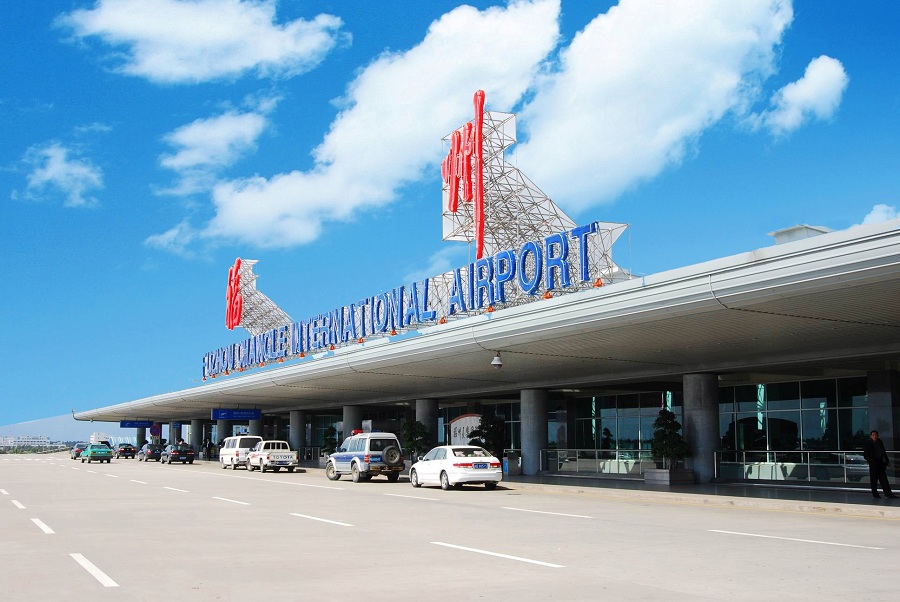
Chan flew back to Fuzhou from Hong Kong and turned himself in on October 14, 2019, six years after his alleged offense took place. That same day, Chan was released on bail pending further investigation. About a week later, the procuratorate issued a non-prosecution decision, citing the various patriotic acts he had performed in Hong Kong.
Fuzhou Changle International Airport. Chan flew here from Hong Kong before turning himself in, six years after his alleged crime. Image credit: Fuzhou Changle International Airport
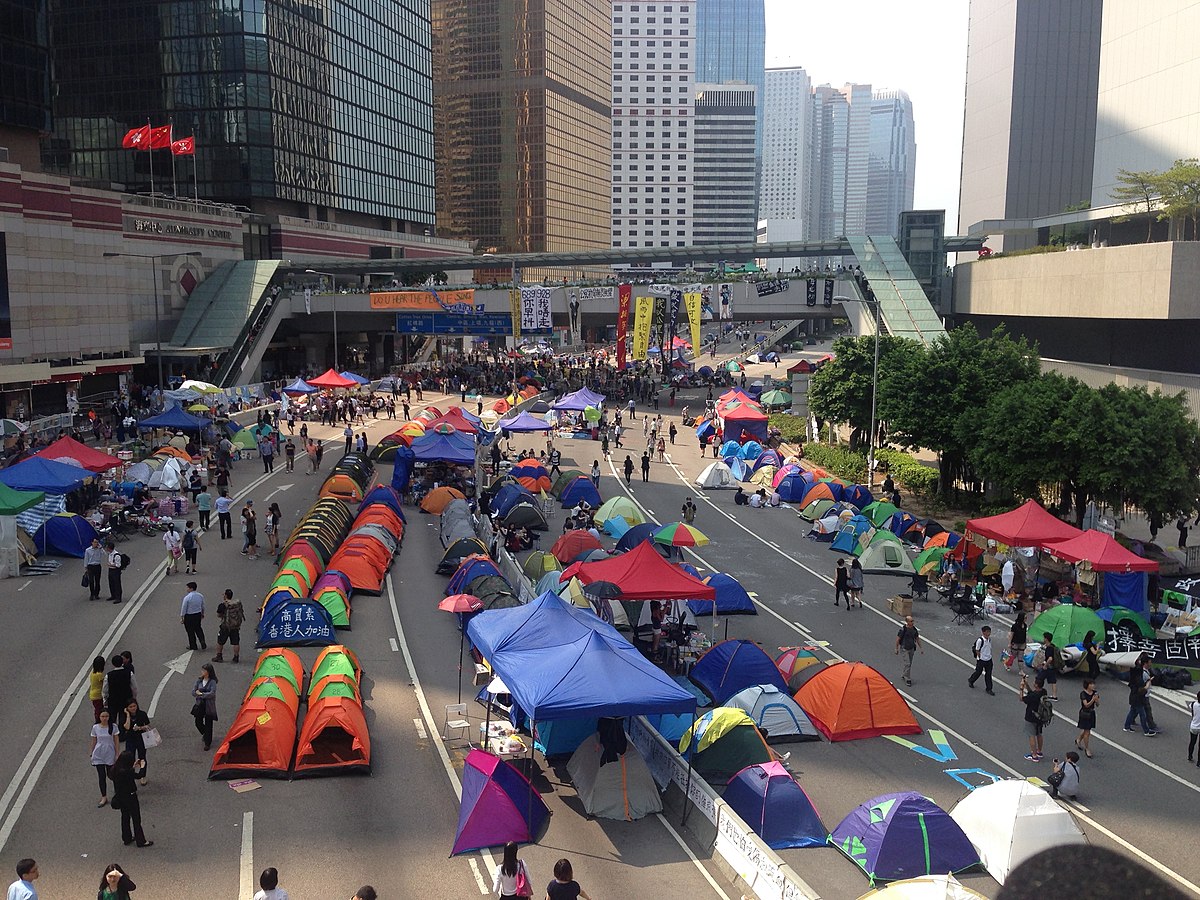
First among these acts, Chan served as the then-incumbent executive vice president of the Hong Kong Family Union (New Territories West Branch), a pro-China non-governmental organization which helps mainland residents to emigrate to Hong Kong. During his tenure, Chan allegedly organized and participated in multiple activities to promote love for the motherland and Hong Kong. Chan was given credit for carrying out stability maintenance and secret investigation work for the Hong Kong Liaison Office during “Occupy Central,” the civil disobedience movement which paralyzed parts of Hong Kong for 79 days in late 2014.
On October 13, 2014, protestors camp out in the streets of Hong Kong as part of the Occupy Central movement. Image credit: L-BBE / CC BY 3.0
Furthermore, Chan was commended for performing security work for the official celebrations marking the 20th anniversary of Hong Kong’s handover to Chinese rule in 2017, the only year Xi Jinping attended the handover celebrations in the former British colony as Chinese president, as of this writing. More notably, Chan was cited for his “fearless” and “tenacious struggle” against the “radical opposition forces” during the recent 2019 protests, as well as his unified actions in supporting the Hong Kong government. The decision not to prosecute Chan came as Hong Kong protesters fought citywide pitched battles with police in an eruption of public anger against an already suspended extradition bill that critics saw as a fundamental threat to the former British colony’s civic freedoms and rule of law.
Prosecutors also outlined other reasons for not indicting Chan, but the arguments are not without flaws. For example, one reason for not indicting Chan is because he turned himself in even though he did so six years after the public security bureau carried out criminal detention. Additionally, it was argued that the seriousness of Chan’s crime was mitigated because his attempt to organize illegal crossings failed. Chan did not complete the crime; he only attempted to commit it, argued the prosecutors. Even with this reasoning, it is unclear why the prosecutors did not charge Chan with forgery, covered by Article 280 of the Criminal Law, since the non-prosecution decision found that Chan did indeed forge identity documents for 11 Chinese nationals.
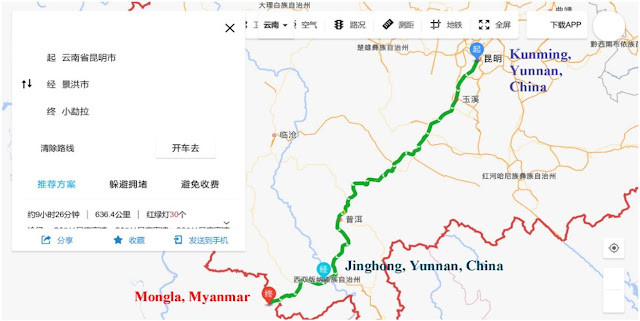
The crime of organizing illegal border crossings is known to incur serious penalties. Dui Hua previously reported that the crime resulted in Korean missionary Cho Young-joo getting a seven-year prison sentence. Cho was not given lenient punishment for the humanitarian mission he conducted across the Yunnan-Myanmar border. Prominent house church leader Cao Sanqiang (曹三强) has more than a year to serve before completing his seven-year prison sentence in Yunnan for the same crime. Also convicted of the same crime are two Hong Kong anti-extradition bill protesters who attempted to flee to Taiwan by speedboat but were intercepted by mainland coastguards in August 2020. The duo is still serving their sentences in Guangdong.
Map showing the route (in green) from Kunming to Jinghong, from where Cho intended to travel to Mongla. Source: Gaode Map
The treatment given to Chan was vastly different to that of Cho, Cao, and two of the Hong Kong 12, despite all of them being accused of organizing illegal border crossings. Chan’s preferential treatment calls into question whether “patriots” enjoy impunity for the criminal offenses they committed in mainland China. This raises speculation that Chan is not the only case of prosecutors dropping criminal charges against the so-called “patriots” because of meritorious services rendered in Hong Kong, China, or elsewhere.
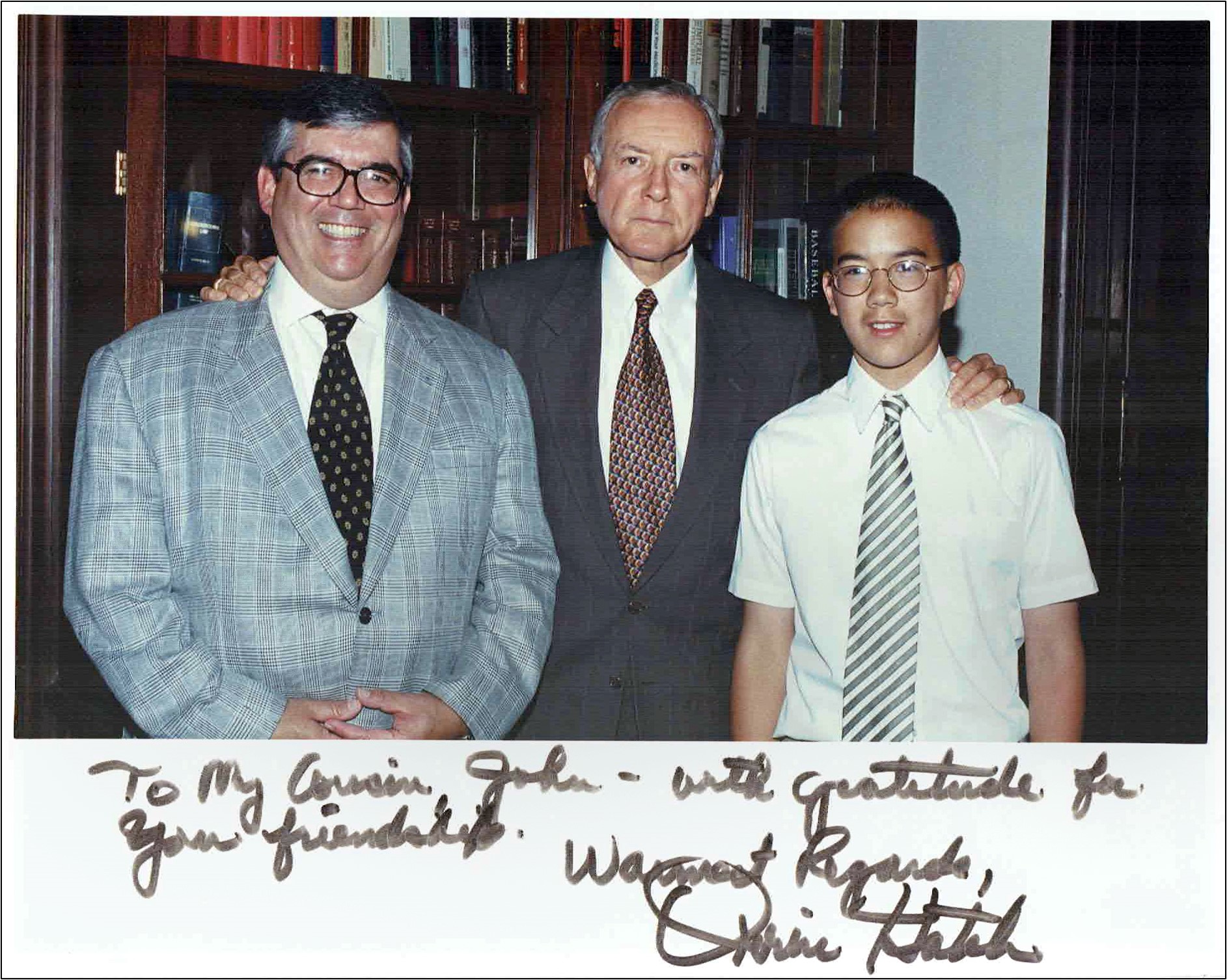
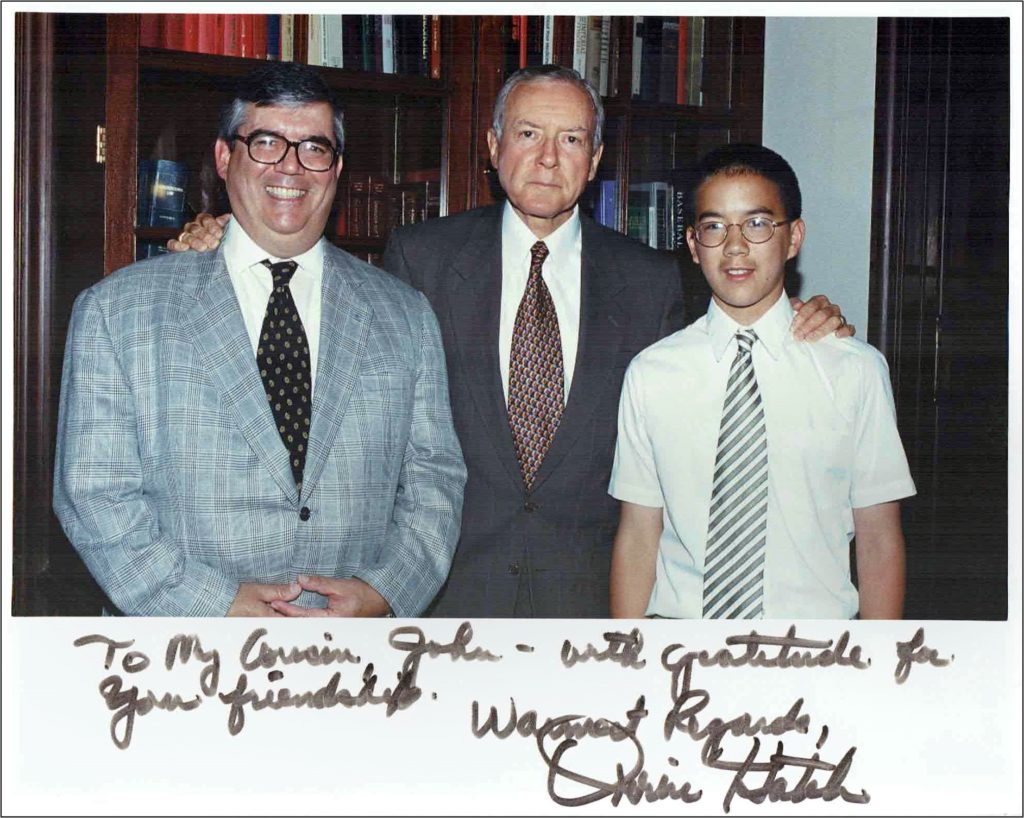
(Left to right) John Kamm, Orrin Hatch, and Kamm’s son during a visit to Hatch’s office in the summer of 2000. Image credit: Office of Senator Hatch courtesy of the Kamm family
Orrin G. Hatch, the longest serving Republican senator and longest serving Utah senator, passed away on April 23, 2022, in Salt Lake City, Utah. He was 88 years old. He served six terms in the United States Senate and chaired the Senate Judiciary Committee for a total of eight years.
Senator Hatch was born in Pennsylvania to Jesse Hatch and Helen Kamm, both of whom grew up in Utah. His grandfather was John Kamm, a fabled man of the Old West. Orrin Hatch was a bishop of the Church of Latter Day Saints and a staunch supporter of religious freedom.
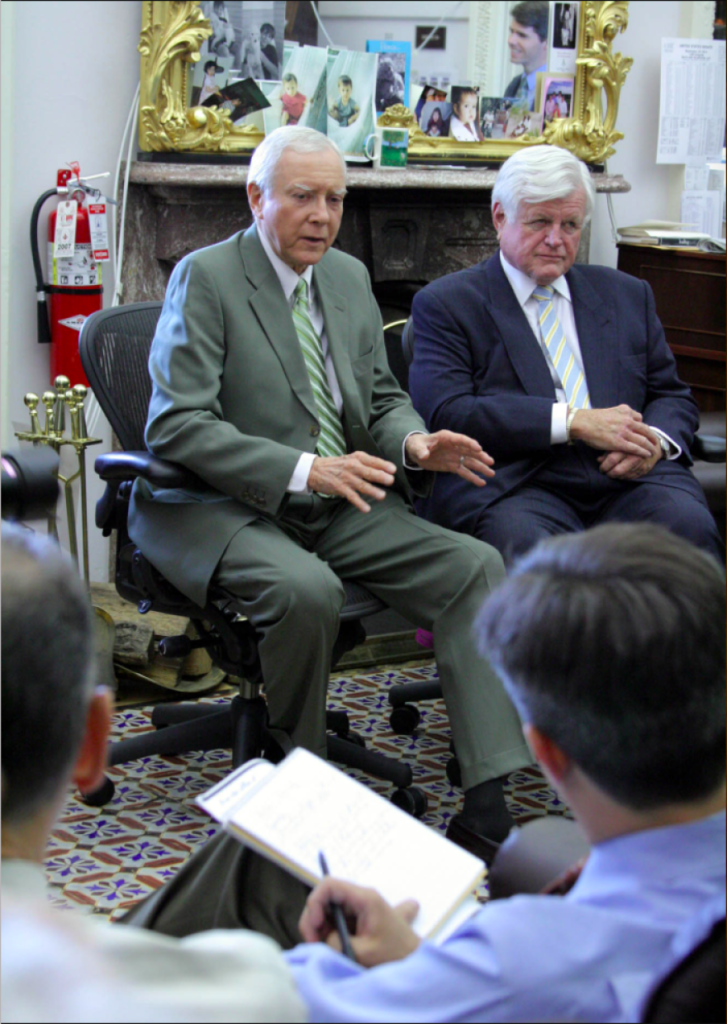
Sens. Orrin Hatch and Ted Kennedy, sometimes called “the odd couple.” Image credit: Office of Senator Hatch via Wikimedia Commons
Senator Orrin Hatch was an original. Although he was a rock-solid conservative, he reached across the aisle to work on legislation with Democratic leaders. One of his best friends was liberal icon Senator Edward Kennedy. A talented musician and songwriter, Senator Hatch appeared in cameo roles in several movies. He generally supported good ties with China and favored renewing China’s trade status in the United States and admitting the country into the World Trade Organization.
Senator Hatch was a friend, strong supporter of my work, and a relative who wrote 11 letters to senior Chinese and American officials, including President Bill Clinton, urging cooperation with my work on Chinese political and religious prisoners. He welcomed me to his office on every trip I made to Washington, including one I made with my oldest son Jack in the summer of 2000. In December 2018, weeks before he stepped down as a senator, Senator Hatch nominated me for the Nobel Peace Prize.
Trip to China
I met Orrin Hatch and his wife Elaine in Beijing in October 1997, shortly before Chinese President Jiang Zemin made his final state visit to the United States. The trip had been arranged by an American foundation specializing in making grants to support work on international relations. Upon seeing me for the first time, Senator Hatch remarked to his wife that I resembled his grandfather. I gave Senator Hatch a prisoner list with 37 names from 20 provinces, and he in turn handed the list to Minister Xiao Yang, then Minister of Justice and President Jiang Zemin. For more details on Senator Hatch’s visit to China, see “Cousin Orrin.”
The prisoner list Kamm gave to Senator Hatch. Hatch then submitted the list Minister Xiao Yang. Image credit: The Dui Hua Foundation
Not long after Senator Hatch gave the list to Minister Xiao Yang, several of the prisoners whose names were on the list were released from prison, some with months and years of time left to serve. Clemency began within weeks of Minister Xiao’s accepting the letter. Eventually as many as one-third of the prisoners on the Hatch List were granted commutations, sentence reductions leading to release, and medical parole. Those who benefited included long-serving counterrevolutionaries, June 4 prisoners, and the Tibetan ethnomusicologist Ngawang Choephel.
Letters to Chinese and American Leaders
In early 1998, Senator Hatch began writing letters to senior Chinese and American officials including Minister Xiao Yang, his successor Gao Changli, and President Bill Clinton.
On February 25, 1998, the senator wrote to Minister of Justice Xiao Yang to thank him for recently providing me with information on prisoners. He stressed that the prisoner information project between me and the ministry was heralded as one of the accomplishments of the previous autumn’s Jiang-Clinton summit.
On May 22, 1998, Senator Hatch wrote to Xiao Yang’s successor as Minister of Justice, Gao Changli, reminding the minister that he had had several positive exchanges with his predecessor regarding John Kamm’s prisoner information project. “I hope that we can continue to discuss this valuable project which has garnered the attention of many leaders and citizens in this country.”
Hatch, then Chairman of the Senate Committee on Finance meeting with Chinese Vice Premier Liu He on May 16, 2018. Image credit: United States Senate Committee on Finance
In a letter sent to President Bill Clinton on September 28, 1998, Senator Hatch advised the president that he had taken a strong personal interest in my work and asked him to raise the recent lack of progress on the project with visiting Chinese Foreign Minister Tang Jiaxuan.
On October 28, 1998, President Clinton responded. “We are in complete agreement about the importance of promoting Mr. Kamm’s project.” He went on: “In her meeting with Foreign Minister Tang, Secretary Albright urged the Chinese to resume cooperation with Mr. Kamm. In my meeting with Tang, I urged release of prisoners detained under laws that have been repealed, a reference to the Law on Counterrevolution that is no longer on the books. Mr. Kamm has been very active raising Chinese consciousness on this issue.”
Senator Hatch’s interest in my work had a direct impact on my work to free Chinese prisoners. For this, and for many other kindnesses, I will always be grateful to my “Cousin Orrin.”
Bachelet Won’t Seek Second Term After Failed China Visit
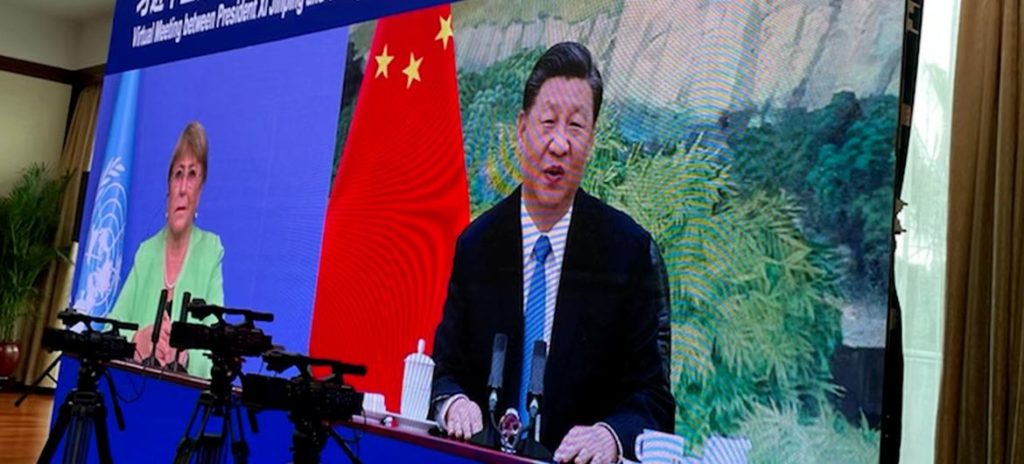
UN High Commissioner for Human Rights Michelle Bachelet attends a virtual meeting with Chinese President Xi Jinping on her visit to Guangzhou, China. Image credit: UN News
Three years of preparation culminated in a visit to China by the United Nations High Commissioner for Human Rights Michelle Bachelet in May 2022. She arrived in Guangzhou on May 23 and flew to Xinjiang on May 26. She spent two days in the Xinjiang Uyghur Autonomous Region (XUAR), visiting Kashgar and Urumqi, and returned to Guangzhou on May 28 where she gave a press conference.
Bachelet’s visit to China has been roundly criticized by several countries including the United States and Germany, homes to many members of the Uyghur diaspora. It has been condemned by human rights groups (including virtually all Uyghur groups), academics, relatives of detainees, and officials like Nikki Haley, former American Ambassador to the United Nations. Haley and others have called for her resignation. As of June 9, 2022, more than 230 human rights groups have called for Bachelet’s resignation.
Here are a few of the reasons for the harsh criticism and calls for Bachelet’s resignation.
Bachelet in Urumqi during her visit to China. Image credit: UN News
When taking time spent traveling into account, Bachelet spent less than 48 hours on the ground in the two XUAR cities.
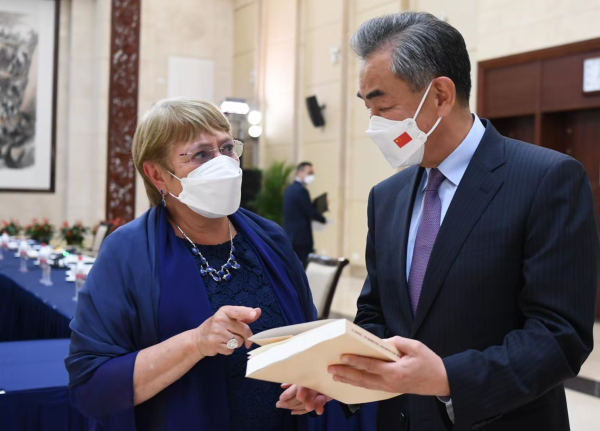
Bachelet agreed with the Chinese demand that the visit was not an investigation, simply an opportunity to exchange views, essentially a “get to know you” opportunity. She fawned over her video session with Chinese president Xi Jinping, calling it a “valuable opportunity.” Xi boasted of China’s achievements in human rights and told Bachelet that “China has no need for preachers.” The day before this virtual meeting, Chinese Foreign Minister Wang Yi presented Bachelet with a book of Xi Jinping’s quotations on human rights.
In her press conference, Bachelet took 10 questions, evenly divided between international and Chinese state journalists. She spent as much time talking about Texas gun violence as she did about Xinjiang. She may have known in advance what the Chinese questions would be. Bachelet’s unusual criticism of the United States while on a trip to China – the United States is one of the UN Security Council’s Permanent Five countries and provides the largest share of the Office of the United Nations High Commissioner for Human Right’s (OHCHR) budget – may reflect her longstanding animus towards the United States, thought to arise from her and her family’s treatment at the hands of the Pinochet regime which was supported by Washington.
Before saying anything about China’s violations of civil and political rights, Bachelet heaped praise on China’s achievements alleviating poverty and advancing gender rights, thereby buying into China’s position that the right to development trumps all other rights, violating the principle of indivisibility of rights: all rights are equally important.
In the press conference, Bachelet stated that the voices of family members of detainees “were heard.” To date, it is not known whether lists were handed over or names raised. Family members are skeptical. Children of Uyghur prisoners contacted by Dui Hua claim they have heard nothing from the OHCHR. On June 16, as this issue of Digest went to press, Bachelet acknowledged that she failed to meet “with any Uyghurs currently detained or their families” on her visit to Xinjiang.
Bachelet apparently visited a prison with very few, if any, political prisoners in Kashgar and a former “VETC,” or “vocational education and training center,” that was either empty or repurposed, supporting China’s claim that all such facilities have been closed. Male prisoners convicted by Kashgar courts for state security and terrorism offences are typically placed in Xinjiang Number One Prison in Urumqi.
Bachelet’s stress on the need to “review” anti-terrorism measures implicitly acknowledges the Chinese claim that many Xinjiang Muslim ethnic minority prisoners are actually terrorists. She claimed to have raised “residential surveillance in a designated location” as a form of arbitrary detention without mentioning that UN experts consider it a form of enforced and involuntary disappearance as well.
After stating that the OHCHR wanted “unfettered, meaningful, credible access,” Bachelet’s spokesman confirmed that access was restricted due to Covid and that Chinese officials accompanied her at every meeting except those with foreign diplomats and NGOs
In 2021, the OHCHR completed a report on China’s violations in Xinjiang. Bachelet said she’d release it in a matter of weeks. She failed to do so, apparently at the request of her “old friend” Xi Jinping. Now it is said that the report will be updated with information obtained on the visit to China. The report will be shared with the Chinese government prior to release. The whole process will likely take weeks. At the June 13, 2022, opening session of the Human Rights Council, Bachelet revealed the report would be issued before her term comes to a close in September.
(Left) A tweet from the Chinese Embassy in Iraq on Bachelet’s visit. (Right) A tweet from Uyghur activist Rushan Abbas about Bachelet’s visit. Image credits: Twitter accounts of China Embassy in Iraq and Rushan Abbas
Bachelet has stated that an agreement had been reached to set up a working group to further pursue issues discussed during her visit, but no details have been provided on what the group will do, how it will be composed, or when and how often it will meet. It is unlikely to supplant Special Procedures, several of whom deal with issues related to prisoners. Bachelet also said there would be enhanced technical cooperation. Again, no details were provided.
Bachelet’s team is said to be pleased with the visit. They are not responding to criticism that she has diminished the credibility of her office, nor have they responded to calls for Bachelet to resign.
At the opening session of the 50th session of the Human Rights Council, Bachelet announced that she would not seek a second term when her present term expires in September 2022. Given her performance, her reappointment would have been unlikely. Her cherished dream of becoming Secretary General of the United Nations will never be realized as she returns to Chile to spend time with her family.
Names Embedded in Truth, Spoken to Power: Kamm Honored with Harvard GSAS Medal
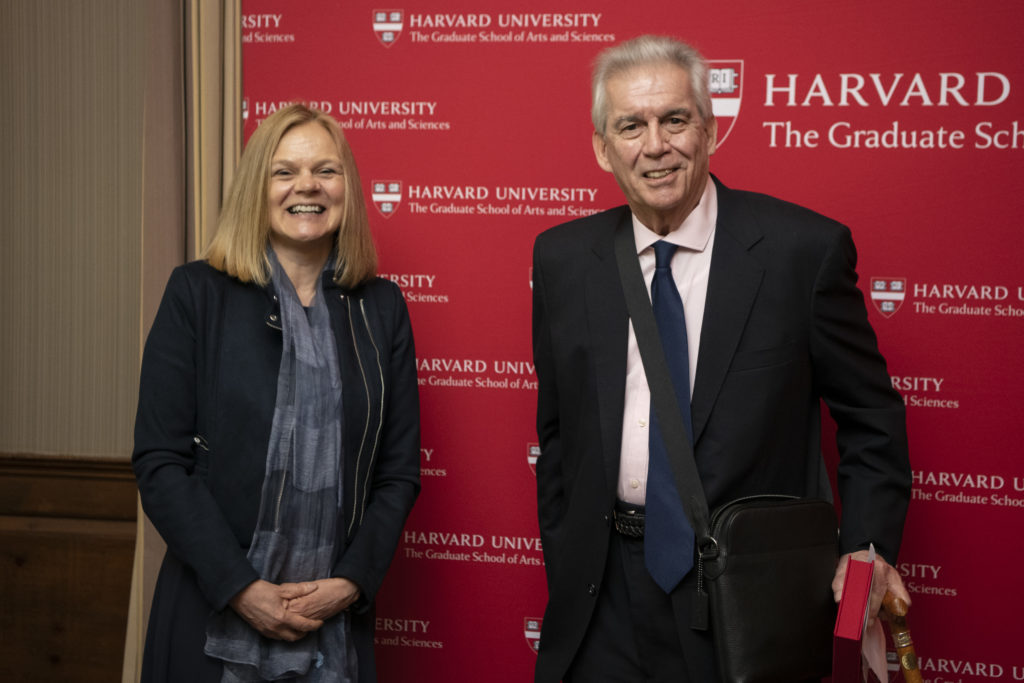
On May 25, Kamm receives the GSAS medal from GSAS Dean Emma Dench. Image credit: Tony Rinaldo via GSAS
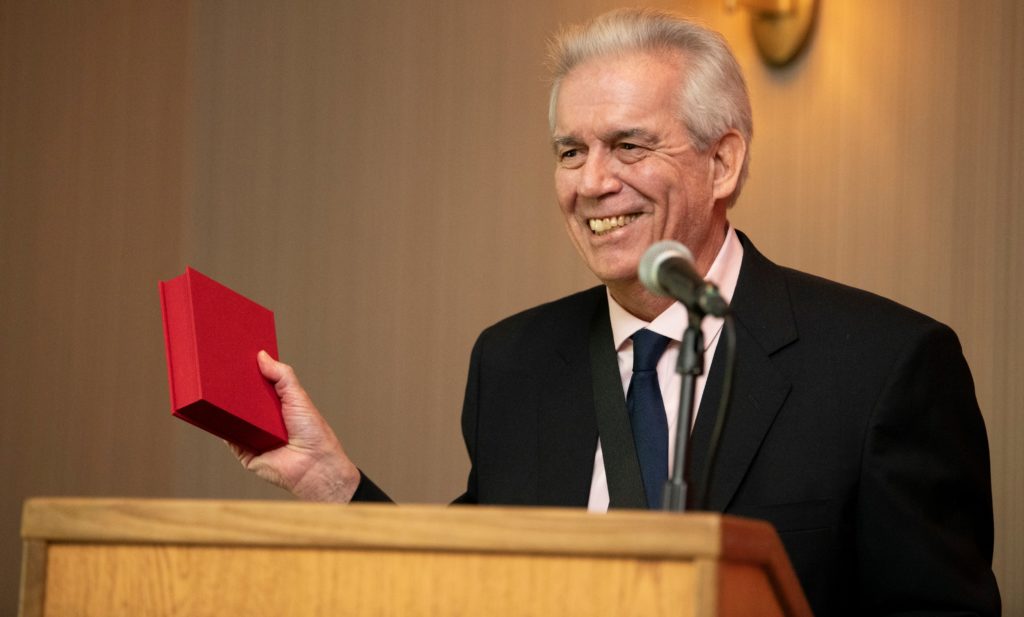
This past May, Dui Hua Executive Director John Kamm traveled to Cambridge, Massachusetts, where he received the Centennial Medal, the highest honor bestowed by Harvard University’s Graduate School of Arts and Sciences (GSAS). Presenting him with the medal, the GSAS cited Kamm’s “tireless, personal commitment to opening mutually respectful dialogues with Chinese officials about at-risk prisoners, an innovative approach that has spared and improved the lives of so many.”
Since its founding, Harvard GSAS has conferred degrees on more than 34,000 individuals. Since it was first awarded in 1989 to commemorate the GSAS 100th anniversary, the medal has been awarded to around 140 GSAS degree-holders. Notable previous recipients include author Margaret Atwood, political scientist Francis Fukuyama, essayist Susan Sontag, and sociologist Ezra Vogel. Each year, the medal recognizes alumni who have made contributions to society, “the roots of which are based in their graduate education.” The other 2022 Centennial Medalists are:
Neil Harris, PhD ’65, History, for his “pioneering work in shaping the field of cultural history”
Vicki Sato, AB ’69, AM ’72, PhD ’72, Cellular and Developmental Biology, for her “visionary leadership and life-changing breakthroughs in the biopharmaceutical industry”
Robert Zimmer, AM ’71, PhD ’75, Mathematics, for his “superlative leadership of [University of Chicago],” and his “principled advocacy for the core mission and values of higher education on the national and global stage”
(Left to right) The 2022 Harvard GSAS Centennial Medalists: Robert Zimmer, Neil Harris, Vicki Sato, and John Kamm. Image credit: Tony Rinaldo via Harvard GSAS
Kamm’s remarks upon receiving the Centennial Medal
In 1975, I graduated with a master’s degree in Regional Studies from Harvard GSAS, where I studied under and continue to learn from the leading Sinologists of our time. I returned to Hong Kong, where I did business in China then in the final days of the Cultural Revolution, closed, then opened, now closing again.
In 1990, I intervened on behalf of a prisoner at a banquet hosted by a senior Chinese official, and, in 1999, upon my return to the United States, I founded Dui Hua. Since then, I have returned to Harvard on many occasions, meeting with Sinologists, speaking to students, and conducting research in the university’s unsurpassed collections.
In Harvard’s libraries I have found the names of hundreds of prisoners, names that I subsequently raised with the Chinese government. I found more of them on this trip. I thank Harvard GSAS, not only for myself but on behalf of those names, unknown but to God until they were found at Harvard — names embedded in truth, spoken to power.
Kamm accepting the Centennial Medal. Image credit: Tony Rinaldo via GSAS
Remarks from Harvard faculty honoring Kamm
“John Kamm as an individual has had a greater impact on seeking justice for political prisoners and those of conscience than anyone else that I know.”
– Anthony Saich, director of the Ash Center for Democratic Governance and Innovation and Daewoo Professor of International Affairs at Harvard Kennedy School.
“If you understand people’s cultural values, the traditions they hold dear to their hearts, you can speak to them, and that’s the foundation of John Kamm’s work.”
– Xiaofei Tian, professor of Chinese Literature and former chair of the Committee on Regional Studies–East Asia
“John’s modus operandi is singular…He has devoted countless, thousands of hours not only to the research and negotiation themselves but also to patiently comforting the families of those imprisoned.”
-William P. Alford, Jerome A. and Joan L. Cohen Professor and director of East Asian Legal Studies at Harvard Law School
“John Kamm’s persistence and high moral code have placed him on the right side of history. As both a businessman and human rights activist, he understands how to engage, and, where necessary, confront a changing China.”
– William Kirby, T.M. Chang Professor of China Studies in the Faculty of Arts and Sciences, Spangler Family Professor of Business Administration at Harvard Business School, and chairman of the Harvard China Fund.
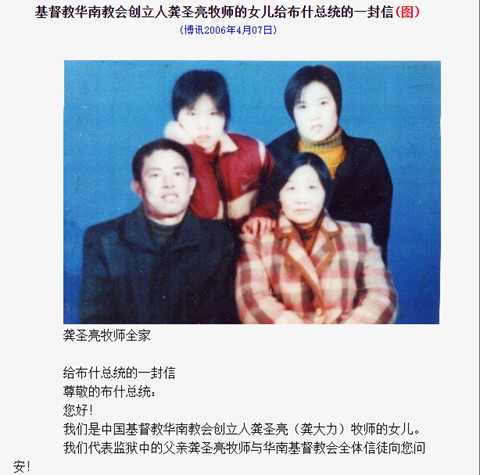
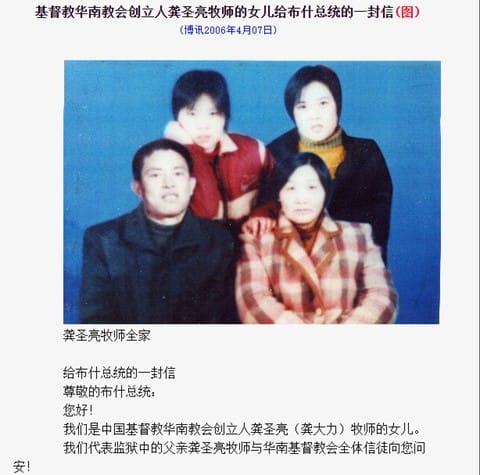
An open letter from the daughters of Pastor Gong Shengliang to then-President George W. Bush. The letter includes a picture of the Gong family (Gong Shengliang seated bottom left). Image credit: Boxun News
The lack of recent information about South China Church has led to questions about its continued existence. Dui Hua’s research, including a criminal judgment issued in 2016 involving its members, suggests, however, that the group continues to operate even as its founder remains incarcerated.
John Kamm Remembers is a feature that explores Kamm’s human rights advocacy prior to and since Dui Hua’s establishment in 1999.
Remembering Orrin Hatch
(Left to right) John Kamm, Orrin Hatch, and Kamm’s son during a visit to Hatch’s office in the summer of 2000. Image credit: Office of Senator Hatch courtesy of the Kamm family
Orrin G. Hatch, the longest serving Republican senator and longest serving Utah senator, passed away on April 23, 2022, in Salt Lake City, Utah. He was 88 years old. He served six terms in the United States Senate and chaired the Senate Judiciary Committee for a total of eight years.
Senator Hatch was born in Pennsylvania to Jesse Hatch and Helen Kamm, both of whom grew up in Utah. His grandfather was John Kamm, a fabled man of the Old West. Orrin Hatch was a bishop of the Church of Latter Day Saints and a staunch supporter of religious freedom.
Sens. Orrin Hatch and Ted Kennedy, sometimes called “the odd couple,” had a decades-long friendship and history of bipartisanship. Image credit: Office of Senator Hatch via Wikimedia Commons
Senator Orrin Hatch was an original. Although he was a rock-solid conservative, he reached across the aisle to work on legislation with Democratic leaders. One of his best friends was liberal icon Senator Edward Kennedy. A talented musician and songwriter, Senator Hatch appeared in cameo roles in several movies. He generally supported good ties with China and favored renewing China’s trade status in the United States and admitting the country into the World Trade Organization.
Senator Hatch was a friend, strong supporter of my work, and a relative who wrote 11 letters to senior Chinese and American officials, including President Bill Clinton, urging cooperation with my work on Chinese political and religious prisoners. He welcomed me to his office on every trip I made to Washington, including one I made with my oldest son Jack in the summer of 2000. In December 2018, weeks before he stepped down as a senator, Senator Hatch nominated me for the Nobel Peace Prize.
Trip to China
I met Orrin Hatch and his wife Elaine in Beijing in October 1997, shortly before Chinese President Jiang Zemin made his final state visit to the United States. The trip had been arranged by an American foundation specializing in making grants to support work on international relations. Upon seeing me for the first time, Senator Hatch remarked to his wife that I resembled his grandfather. I gave Senator Hatch a prisoner list with 37 names from 20 provinces, and he in turn handed the list to Minister Xiao Yang, then Minister of Justice and President Jiang Zemin. For more details on Senator Hatch’s visit to China, see “Cousin Orrin.”
The prisoner list Kamm gave to Senator Hatch. Hatch then submitted the list Minister Xiao Yang. Image credit: The Dui Hua Foundation
Not long after Senator Hatch gave the list to Minister Xiao Yang, several of the prisoners whose names were on the list were released from prison, some with months and years of time left to serve. Clemency began within weeks of Minister Xiao’s accepting the letter. Eventually as many as one-third of the prisoners on the Hatch List were granted commutations, sentence reductions leading to release, and medical parole. Those who benefited included long-serving counterrevolutionaries, June 4 prisoners, and the Tibetan ethnomusicologist Ngawang Choephel.
Letters to Chinese and American Leaders
In early 1998, Senator Hatch began writing letters to senior Chinese and American officials including Minister Xiao Yang, his successor Gao Changli, and President Bill Clinton.
On February 25, 1998, the senator wrote to Minister of Justice Xiao Yang to thank him for recently providing me with information on prisoners. He stressed that the prisoner information project between me and the ministry was heralded as one of the accomplishments of the previous autumn’s Jiang-Clinton summit.
On May 22, 1998, Senator Hatch wrote to Xiao Yang’s successor as Minister of Justice, Gao Changli, reminding the minister that he had had several positive exchanges with his predecessor regarding John Kamm’s prisoner information project. “I hope that we can continue to discuss this valuable project which has garnered the attention of many leaders and citizens in this country.”
Hatch, then Chairman of the Senate Committee on Finance meeting with Chinese Vice Premier Liu He on May 16, 2018. Image credit: United States Senate Committee on Finance
In a letter sent to President Bill Clinton on September 28, 1998, Senator Hatch advised the president that he had taken a strong personal interest in my work and asked him to raise the recent lack of progress on the project with visiting Chinese Foreign Minister Tang Jiaxuan.
On October 28, 1998, President Clinton responded. “We are in complete agreement about the importance of promoting Mr. Kamm’s project.” He went on: “In her meeting with Foreign Minister Tang, Secretary Albright urged the Chinese to resume cooperation with Mr. Kamm. In my meeting with Tang, I urged release of prisoners detained under laws that have been repealed, a reference to the Law on Counterrevolution that is no longer on the books. Mr. Kamm has been very active raising Chinese consciousness on this issue.”
Senator Hatch’s interest in my work had a direct impact on my work to free Chinese prisoners. For this, and for many other kindnesses, I will always be grateful to my “Cousin Orrin.”
Subscribe here to receive Dui Hua publications by email.
CAMBRIDGE (MAY 25, 2022)— Dui Hua founder and executive director John Kamm was awarded the Harvard GSAS Centennial Medal on Wednesday, May 25 at a ceremony in Cambridge, Massachusetts. The award is the highest honor bestowed by the Harvard Graduate School of Arts and Sciences (GSAS), recognizing alumni who have “made outstanding contributions to society.”
The Centennial Medal was presented to Kamm for his work advocating and seeking clemency for political and religious prisoners in China.
Kamm attended Harvard GSAS from 1974-1975, graduating in 1975 with an AM in Regional Studies East Asia. Before attending Harvard, Kamm lived and worked in Macau and Hong Kong for two years. Following completion of his graduate studies, Kamm returned to China, settling in Hong Kong and working as vice president of Occidental Chemical Company and president of the American Chamber of Commerce.
In the wake of the 1989 political unrest in Beijing’s Tiananmen Square on June Fourth, Kamm broke ranks with the business community, publicly calling on the Chinese government to release detained protestors. He began advocating for political and religious prisoners shortly thereafter and founded the Dui Hua Foundation in 1999.
The Harvard Centennial Medal. Image credit: Harvard Graduate School of Arts and Sciences
Led by Kamm, Dui Hua has raised the names of thousands of political prisoners with the Chinese government and contributed to the release and/or better treatment of hundreds of them. In a 2002 cover story on Kamm’s work, The New York Times Magazine Sunday Magazine wrote, “No other person or organization in the world, including the State Department, has helped more Chinese prisoners.”
Kamm’s previous awards include the Department of Commerce’s Best Global Practices Award by President Bill Clinton in 1997 and the Eleanor Roosevelt Award for Human Rights by President George W. Bush in 2001. In September 2004, Kamm received a MacArthur Fellowship for “designing and implementing an original approach to freeing prisoners of conscience in China.”
Since its founding, Harvard GSAS has conferred degrees on more than 34,000 individuals. The Centennial Medal was first awarded in 1989 to commemorate the GSAS’ 100th anniversary. Each year, the medal recognizes between three and five alumni who have made contributions to society, “the roots of which are based in their graduate education.” Thus far, the medal has been awarded to around 140 GSAS degree-holders.
Past recipients have included political scientists Francis Fukuyama and Joseph Nye, journalists Caroll Bogert and Marvin Kalb, educator Peggy McIntosh, author Margaret Atwood, philosopher and essayist Susan Sontag, and sociologist Ezra Vogel.
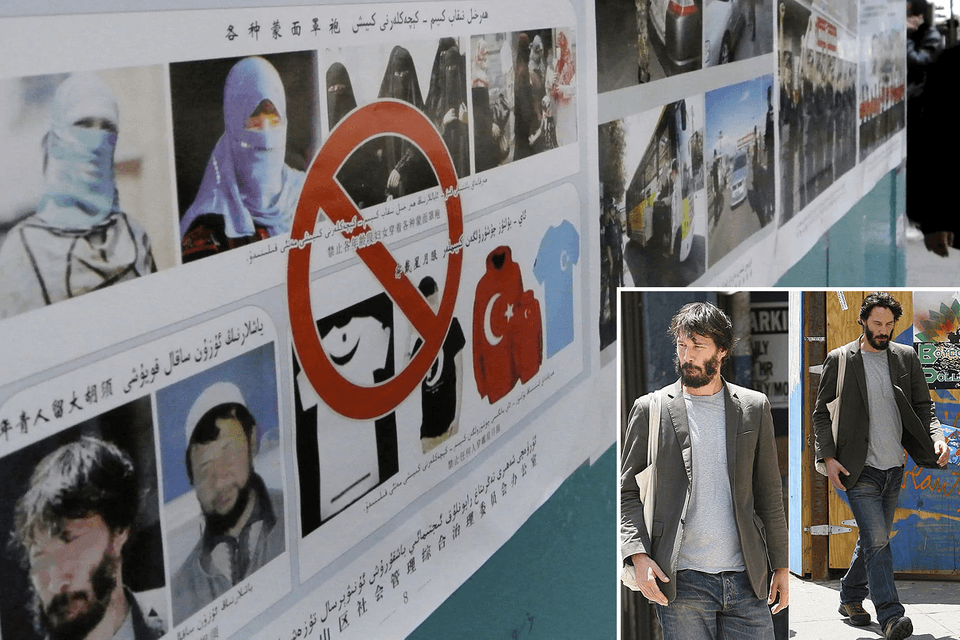
A Chinese propaganda poster denouncing extremism. In 2018, the poster went viral after a social media user noticed that one of the poster’s images condemning Islamic facial hair featured actor Keanu Reeves, who does not identify as Muslim. Image credit: Reddit via Taiwan News
Although ethnic minorities make up the majority of the extremism cases, there is a dearth of publicly available information about them, particularly those of the Islamic faith. Court judgments and judicial decisions like this in Xinjiang are deemed to be highly sensitive; they were almost never posted online even before the purge on China Judgements Online started in June 2021. Overseas news media sources have reported on a few cases, but it is impossible to grasp the whole picture due to the tight control on information flows in the region. In most cases, media reports did not explicitly state which specific extremism crimes were invoked.
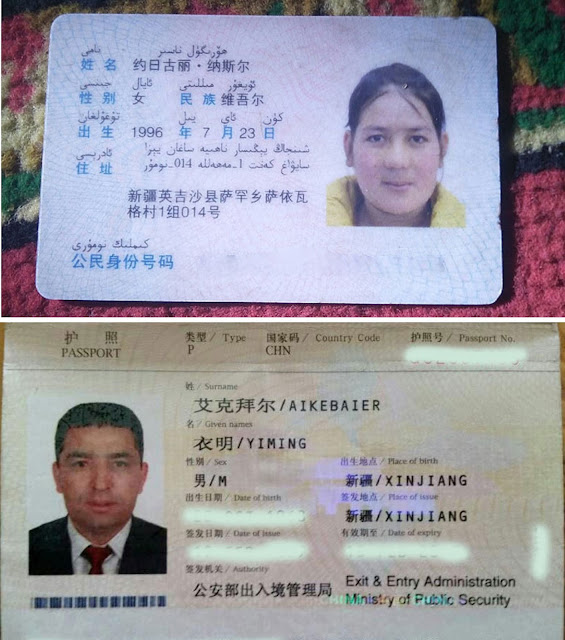
Radio Free Asia (RFA) is among the overseas news media groups which have occasionally covered extremism cases over the years. In September 2017, a Uyghur woman named Horigul Nasir was reportedly sentenced to 10 years in prison in Kashgar, presumably for extremism because she allegedly told one of her friends that not wearing a headscarf is sinful. The allegation, however, has been disputed by her brother, who claimed that his sister does not even wear a headscarf or pray five times a day.
In another case also reported by RFA, a Uyghur businessman named Ekber Imin is serving a 25-year prison sentence for an unspecified extremism crime alongside two of his brothers. They were reportedly convicted for having foreign contacts and spreading extremism by incorporating ethnic and religious elements in the buildings they developed.
In March 2022, RFA reported that Abdureshid Obul died in 2020 while serving his eight-year prison sentence for an extremism crime. The Uyghur farmer was reportedly jailed for having a fourth child and relocating his pregnant wife to avoid a forced abortion. Ethnic minority families living in rural areas are limited to two children. Authorities considered Abdureshid’s violation of the family planning policy to be an act of extremism.
(Top) Horigul Nasir’s identification card. (Bottom) A photo of Ekber Imin’s passport page. Image credits: RFA listeners via RFA
The harsh punishments given to the aforementioned Uyghurs are by no means isolated incidents. Dui Hua’s research into Chinese government sources found evidence of Muslim minorities receiving excessive punishment for committing extremism crimes in Xinjiang. For instance, Dui Hua discovered a case in which a Uyghur prisoner had his prison sentence extended by 15 years in July 2017 for violating Article 120(3). He was already serving his seven-year prison sentence for Article 300 “organizing or using a cult to undermine implementation of the law.” It is unclear which “cult organization” he had joined leading to his initial conviction. The court ordered him to serve a total prison sentence of 19 years and 8 months, which included the 56-month sentence for Article 300 he had yet to complete. After his prison sentence expires in 2036, he must still serve a supplemental deprivation of political rights sentence of five years.
It would be a mistake to assume that only Uyghurs are singled out for excessive criminal punishment. An ethnic Dongxiang surnamed Chen received a 10-year prison sentence for Article 120(3) with a deprivation of political rights sentence of three years in Nilka County in July 2018. As with almost all other cases of a similar nature, there is no information about the acts that led to his harsh prison sentence.
Two Rare Judgments
Despite being unable to find an extremism judgment in Xinjiang, where the majority of extremism cases are tried and heavy sentences are meted out, Dui Hua found two rare judgments in other provinces. Dongxiang are among the Muslim communities who have faced restrictions in and outside of Xinjiang, but very little information is known about the crackdown on this ethnic group. The case of Ma Yinglong (马英龙) in Beijing indicates that besides growing beards, conducting regular prayer or unauthorized religious classes, or fasting for Ramadan, Islamic booksellers are another target of China’s crackdown on extremism.
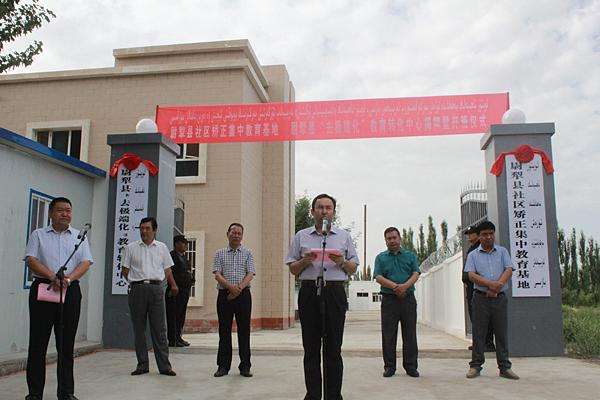
A picture of the opening ceremony of a Xinjiang re-education camp, posted online by the government in Korla, Xinjiang in June 2018. The partially obscured sign on the left reads “Transformation Through Education Center” (教育转化中心 jiàoyù zhuǎnhuà zhōngxīn). Image credit Korla government via SupChina
The court judgment focused on one title he sold: Milestones: Ma’alim Fi’l Tariq. This book was written by Egyptian Islamic author Sayyid Qutb, who calls for the re-creation of the Muslim world on strictly Quranic grounds to counter western influence. Qutb is seen by some observers as one of the formative, leading theorists of violent jihad. Unbeknownst to Ma, the Chinese version of this book had been classified in China as an illegal publication about terrorism and extremism. Ma stated in his defense that he had not read the book; he only procured a total of six copies of Milestones at the request of his customers. The court rejected Ma’s defense because “he should have known about the extremely harmful nature of the book” considering he had many years of experience selling Islamic books.
In another case, Dui Hua found that Uyghur businessman Erkin Balat was sentenced to 22 months in prison for Article 120(6) in Shandong. Erkin moved to Qufu from Xinjiang to start his jade business in 2007. In early 2017, he was found in possession of 50 Uyghur-language books, one Uyghur-Arabic dictionary and one Arabic-language Quran, which became evidence of him possessing articles to promote extremism. Some of the Uyghur titles touched on topics such as the history of Islam. Other evidence included two Japanese sabres and one Arabian scimitar he displayed in one of his shops. Erkin completed his prison sentence on March 8, 2021.
Same Acts, Different Outcomes
In Part I, Dui Hua discussed how Han come into conflict with the law for extremism, including by possessing or circulating videos with scenes of violence in connection to the “East Turkestan Independence Movement,” ISIS, or the Taliban. Chinese law criminalizes such behavior regardless of ethnicity, but in practice there is a clear ethnic bias in sentencing. The same acts committed by Uyghurs or other Muslim minority groups are more likely to result in harsher criminal punishments. Precedents indicated that the same audio-visual evidence is almost certainly construed by prosecutors and judges to contain messages about “jihad” and “hijrat” (i.e. migration to another place for the sake of Allah) where the defendants practice Islam. In such cases, other crimes such as splittism, inciting splittism, and/or organizing or participating in a terrorist organization are often tacked on to the allegations of extremism.
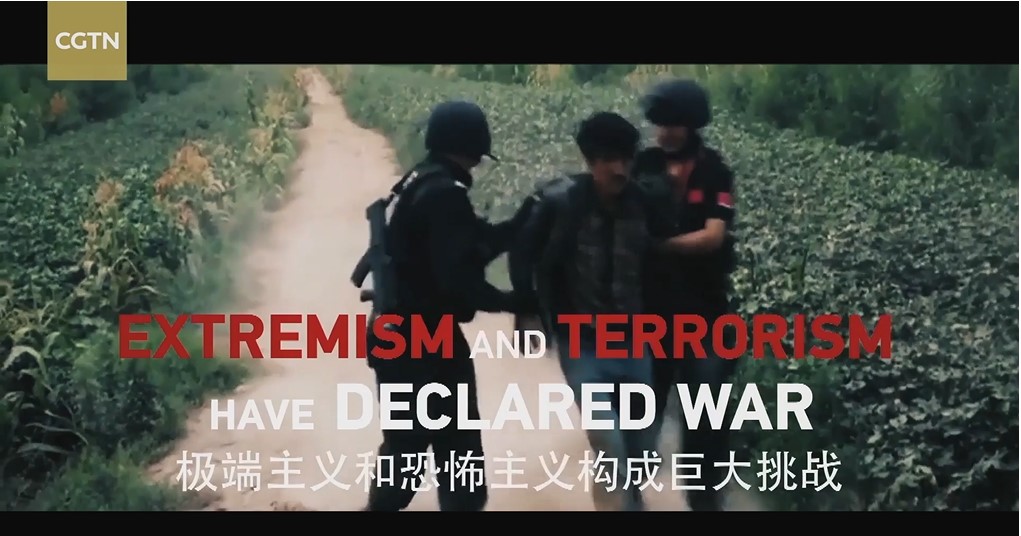
Screenshot from a 2019 CGTN program titled Fighting Terrorism in Xinjiang. Image credit: CGTN
While Muslims in Western countries have been given prison sentences for viewing, disseminating, or producing films containing extremist material, these cases have typically been handled with greater transparency to hold law enforcements accountable for their decisions and ensure that their counterterrorism measures are non-arbitrary and impartial. In cases where this might not be possible, such as the CIA’s use of black sites to interrogate suspected terrorist actors or other “enemy combatants,” civil society organizations and independent journalism efforts can provide a degree of scrutiny.
By contrast, cases in China are selectively transparent at best, as in many publicized cases of Han. The vast majority of ethnic minority cases remain shrouded in secrecy. Limited available evidence on Uyghurs and other ethnic groups suggests that the acts are more diverse, but they all resolve around the expression of Islam. Muslims are also much more likely to receive disproportionately severe sentences for the same crimes than the Han counterparts.
This is the first installment in a two-part series which discusses Dui Hua’s observations on extremism, with a focus on Article 120(3) and (6). Part I discusses the extent of the crimes’ application and sentencing trends, drawing on the 2016 statistics released by the Supreme People’s Court. Individuals charged with and convicted of extremism crimes are not exclusively members of ethnic minority groups, despite their accounting for most of the cases. Extremism cases are selectively published in Chinese government sources. Those involving Han are notably well documented, and only rarely do they receive lengthy prison sentences. Part II focuses on cases involving Muslim minorities. Hefty punishments appear commonplace in Xinjiang, but information on prisoners pre- and post-sentencing is extremely limited.
Court Statistics One Year After Expansion
According to the 12-volume Records of People’s Courts Historical Judicial Statistics: 1949-2016, China tried 1,403 extremism cases involving 2,463 defendants in 2016. Of them, 2,031, or 82 percent, were ethnic minorities. Additionally, 85 percent of the defendants were farmers. As Xinjiang has been cast as a key battlefield in the fight against extremism, it would be natural to assume that the charges are predominantly leveled against Muslim minorities.
Table 1. Court statistics on extremism crimes for 2016
Source: Records of People’s Courts Historical Judicial Statistics: 1949-2016
Two-thirds of the defendants violated Article 120(3) “promoting terrorism, or extremism or instigating terrorist activities.” Slightly over one quarter were tried for Article 120(6) “illegally possessing articles to promote terrorism or extremism.” About five percent, or 124 people, were tried for Article 120(4) “using extremism to undermine implantation of the law.” Only 18 people were tried in 17 cases of Article 120(5) “coercing other people into wearing costumes or symbols to promote terrorism or extremism” in 2016.
Of the four extremism crimes, Article 120(3) is most likely to result in lengthy prison sentences. Among the 1,669 people who received criminal punishment for this crime, 1,109, or 66 percent, received prison sentences of five years or more. By contrast, a much bigger portion of people who are tried for Article 120 (4), (5) and (6) received prison sentences below five years. The use of non-custodial punishment in all extremism cases was rare. Only 70 people convicted of the four extremism crimes were given suspended sentences or control (guanzhi).
Members of China’s largest ethnic group, Han, are not immune to the crackdown on extremism. The court statistics indicated that 422, or 17 percent, of the 2,463 people tried for the new extremism crimes in 2016 were Han. Of them, 198 were tried for Article 120(3) “promoting terrorism, or extremism or instigating terrorist activities,” 172 for Article 120(6) “illegally possessing articles to promote terrorism or extremism,” 59 for Article 120(4) “using extremism to undermine implantation of the law,” and two for Article 120(5) “coercing other people into wearing costumes or symbols to promote terrorism or extremism.”
Han Cases
Han extremism cases are easily searchable in Chinese government and media sources. Their cases rarely result in lengthy prison sentences. Dui Hua found 18 cases tried in Beijing which invoked Article 120(3) or (6) from 2017-2021. There were 19 defendants, of whom 11 were Han, one ethnic Manchu, and one Dongxiang. Ethnicity is not always specified in the judgments. None of the Han defendants in Beijing received prison sentences of more than one year, and the lengthiest sentence of two years was given to a duo whose ethnicity is not specified.
The circumstances of the publicly disclosed extremism cases in other Han-majority provinces are almost identical: they are accused of disseminating violent and terrorist videos they downloaded from overseas websites with the use of a VPN. The videos, typically filmed in the Middle East, contain scenes of violence with prisoners of war beheaded or executed, footage of Islamic State or sometimes Taliban attacks, training, and fighting. The defendants unwittingly commit Article 120(3) when they share the videos with their friends, post them on social media, or put them in cloud storage.
A screenshot of a 2015 tweet from Mashable on Chinese-language ISIS propaganda. Image credit: Mashable Twitter account
Most Han defendants are not religious, and they are depicted to have been driven by curiosity to download or share the violent videos. In some cases, they are convicted for simply poking fun at terrorist organizations or figures. In December 2019, news media sources reported that a man surnamed Zhang was sentenced to nine months in prison in Beijing for Article 120(3) for sending out a six-word joke in Chinese which can be translated as “follow me and believe in Islam, join the ISIS” to a WeChat group with over 300 people. He also used a photo of Bin Laden as his profile portrait.
A portion of Han defendants were convicted of Article 120(6) “illegally possessing articles to promote terrorism or extremism” for keeping violent footage on their personal electronic or mobile devices, despite them not having shared anything with other people. None of the Han defendants convicted of this crime in Beijing received prison sentences exceeding one year.
Targeting Han Dissidents
While most Han defendants in extremism cases are portrayed as thrill seekers who inadvertently violate the law, precedents also show that extremism easily becomes a catch-all offense to be used in politically motivated prosecutions targeting political and religious dissenters. In such cases, prison sentences can be excessive. For instance, Huang Yunmin (黄云敏) is serving his 10-year prison sentence for Article 120(6), one of the longest prison sentences given to a Han dissenter for an extremism crime. Huang was initially detained for provoking ethnic hatred in March 2017 for accompanying farmers and ex-soldiers to Beijing to petition during the “Two Sessions.” Additionally, prosecutors accused Huang of downloading a large number of anti-China footage from overseas websites and audiovisual materials related to the July 5 Urumqi riots. Huang is scheduled for release in 2027.
In a separate case, Hu Xincheng (胡新城) was arrested for Article 120(3) in Taiyuan, Shanxi, in January 2022 because of his journalistic work. Hu became a thorn in the side of local governments after he published hundreds of articles and reports about corruption. Additionally, Hu reportedly gave advice to petitioners on how to find redress for grievances within the petitioning system.
Extremism is also used to target Christians unwilling to join the state sanctioned Three Self Patriotic Church. In July 2020, police in Taiyuan arrested Zhao Weikai (赵维凯) for Article 120(6). Zhao, a leader of the Xuncheng Reformed Church, repeatedly faces harassment by the authorities because of his insistence on educating his three children at home instead of sending them to a state school to receive atheist education. Zhao was formally arrested in the same month, being accused of possessing extremism materials.
Shao Minliang (邵明亮), a disabled activist, was sentenced to four years by the Nanjing Pukou District Court in July 2019. The judgment was upheld by the Nanjing Intermediate Court in January 2020.
Shao lost mobility after a 2014 traffic accident. He has been a vocal activist with a strong anti-communist message, resulting in multiple administrative and criminal detentions between 2016 and 2018.
It is reported that the judgment accused Shao of posting content to WeChat and Twitter that violated the law.
Shao is in his mid-50’s. His sentence expires in March 2023.
Hangzhou arrests IT professional for endangering state security
Screenshot of the initial notifications about Ma. Image credit: CareerEngine.us
On the morning of May 3, several major news apps pushed out notifications that the Hangzhou State Secure had placed a person surnamed Ma in custody, accusing the person of colluding with foreign forces to incite splittism and incite subversion.
The vagueness of the initial report had some unintended consequences. Speculation that the notification referred to Jack Ma (Ma Yun) caused Alibaba’s stock to drop by more than 9 percent on the Hong Kong exchange in the early trading hours.
Global Times quickly made an attempt to dispel the unfounded rumor, including on its English-language site, clarifying that the person’s name has three characters. More details have been disclosed by the Legal Daily.
Ma is a man born in 1985 in Wenzhou, Zhejiang. He worked as a research development manager at a technology company. The relevant organs accused him of attempting to establish an illegal organization to overthrow the government, hosting online forums to spread rumors and false news, releasing a manifesto to declare independence, and calling for a new government. They also accused Ma of acting as an agent for foreign forces and inciting students to “smear China.”
The identity of Ma is still unknown at the time of writing. Although some speculated that a Twitter account @yaya20221010 could be related to the case. An image of “declaration of independence,” written in Chinese, is pinned at the top of the profile.
Online posts by Chinese citizens, especially those posted on overseas social networks, have been increasingly cited and used by authorities as evidence of endangering state security activities.
Screenshot of the pinned tweet of @yaya20201010. Image credit: yaya20201010 Twitter account
Xing Wangli sentenced
Following his January 2022 indictment, Xing Wangli has reportedly been convicted of defamation and sentenced to two years and 11 months by the Xi County People’s Court, just one month short of the maximum sentence for the crime. The sentence expires on April 11, 2024. In the 24-page long judgment, the court deemed Xing to be a recidivist and decided to give him a more severe penalty.
Guangxi lawyer released
Lawyer Chen Jiahong (陈家鸿) was reportedly released in Guangxi on April 28. Chen was convicted by the Yulin Intermediate Court of inciting subversion and sentenced to three years. He served the full sentence.
Chen was a lawyer at the Baijuming Law Firm, which is known for representing socially and politically sensitive cases. The firm was ordered to dissolve by the Guangxi authority in 2018. Chen’s colleague Qin Yongpei (覃永沛) was also detained in 2019 and indicted for inciting subversion in 2020. Qin’s trial only had its first hearing on December 31, 2021.
Hong Kong’s national security trial
Hong Kong Polytechnic University student Lui Sai-yu (吕世瑜) became the fourth person imprisoned for violating the newly enacted national security law which punishes subversion, secession, collusion with foreign forces, and terrorism with up to life imprisonment. Lui was accused of circulating online messages calling for “acts to be taken to unlawfully change the regime” in Hong Kong. Lui has already spent about 19 months in custody since his arrest in September 2020, when police found a pepper ball gun, protective gear, and weapons used by demonstrators during the 2019 anti-extradition protests.
The judge initially handed down a prison sentence of three years and eight months, after reducing the prison term by one-third because Lui admitted guilt. However, the prosecution objected to the original sentence, arguing that Liu’s crime was of a serious nature. The prosecution further argued that the reduced sentence must not fall below the minimum sentence of five years stipulated by the national security law. The judge overturned the original decision, handing Liu a five-year prison term with no sentence reduction.
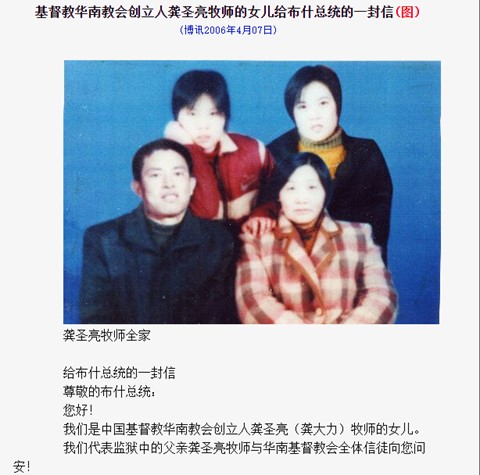
An open letter from the daughters of Pastor Gong Shengliang to then-President George W. Bush. The letter includes a picture of the Gong family (Gong Shengliang seated bottom left). Image credit: Boxun News
The lack of recent information about South China Church has led to questions about its continued existence. Dui Hua’s research, including a criminal judgment issued in 2016 involving its members, suggests, however, that the group continues to operate even as its founder remains incarcerated.
Founded in Hubei Province in 1991 as an offshoot of Full Scope Church, South China Church (华南教会) was designated as an “evil cult” by the Chinese government in 1995. At the time, the church was thought to have 50,000 followers across central China (some sources reported nearly 100,000 members). In 2001, the trial of 17 leaders of this Protestant house church sparked an international outcry. Church members submitted sworn statements to the United Nations Working Group on Arbitrary Detention claiming that the church leaders had been tortured into confessing and making false statements prior to and during the trial.
Among those sentenced was church founder Gong Shengliang (龚圣亮), who initially received a death sentence for “organizing a cult to undermine implementation of the law,” aggravated assault, and rape. Responding to international pressure, the Hubei High People’s Court dropped the death sentence and ordered a retrial. Gong was granted a two-year reprieve from his death sentence in September 2002 after making a successful appeal.
Reporting on Gong Shengliang’s two-year reprieve from the death penalty: (left) A reprinted Baltimore Sun article from 2002 on Gong; (right) a BBC article mentioning Gong’s case from November 9, 2004. Image credits: The Tech; BBC News
Gong’s sentence was commuted to life in prison in 2006. Gong was granted a six-month sentence reduction in 2008. As he has been held behind bars for twenty years, updates about him and his church have been sparse. An exception came in December 2012, when his family members spoke to foreign press about Gong’s deteriorating health in prison. Gong was reportedly paralyzed by stroke. He was unable to speak or move the left side of his body and kept drooling from his mouth. However, prison officials have not conceded to his family’s request to release him on medical parole.
Compared to Falun Gong and Almighty God, South China Church has not been a prime target of attacks by China’s anti-cult propaganda since its 17 church leaders were put on trial in the early 2000s. As recently as March 2020, a county government in Gansu mentioned South China Church only in passing alongside other seemingly inactive unorthodox Christian sects such as Anointed King, New Testament Church, Dami Mission, World Elijah Evangelical Mission, and Buddhist sect Yuandun Famen.
Partly because of a lack of recent information about South China Church since Gong’s imprisonment, questions have arisen as to whether the group still exists. Some leaders left the church after 2002, while other members have continued to meet and have accepted the teachings of orthodox pastors. In the early 2010s, www.kaiwind.com, a so-called non-governmental website claiming to reveal facts about Falun Gong, ran at least four reports covering South China Church. The interviewees were allegedly abused by South China Church members. The series appears to be a response to the brief foreign media exposure in 2012 resulting from Gong’s family members speaking out about his deteriorating health.
A screenshot of a search on Kaiwind.com showing reports on South China Church, including alleged abuses. Image credit: Kaiwind.com
South China Church is a subject of research in at least two academic journals published after 2015. Their findings affirmed the church’s continuing operation. Huang Jianbo, anthropology professor at East China Normal University, wrote in Chinese Journal of Theology in 2015 that South China Church members continued to proselytize and that they administered the now-defunct website www.huananchurch.org. The journal was published by Institute of Sino-Christian Studies in Hong Kong.
As recently as 2018, Beijing-based Christian Times (基督时报), which claimed to be independent of house churches or other religious organizations, also provided updates about South China Church. The in-depth article, authored by prolific Christian researcher Liu Yanyue, stated that Gong continued to decree that church members must read John Calvin’s seminal work of Institutes of the Christian Religion. The church might soon become marginalized, wrote Liu, but he also cited a church member he had interviewed as saying that many of its members are still longing for Gong’ release.
(Left) The cover of a 1995 translation of John Calvin’s Institutes of the Christian Religion, said to be required reading for South China Church members; (right) the first page of the book’s first printing, from 1536. Image credits: The Book Depository; Public domain
Dui Hua’s research into court websites also uncovered a judgment involving seven South China Church members who made an unsuccessful appeal in Jiangxi to overturn their conviction in December 2016. They were sentenced to 20-36 months in prison for “gathering a crowd to disturb social order,” instead of Article 300. One of the defendants was previously sentenced to a 10-year prison sentence in October 2002 for aggravated assault, the same year when Gong’s death sentence was reduced to death with two-year reprieve.
In May 2015, the defendants organized over 40 church members to travel from their home province Hubei to Gao’an City, Jiangxi, to protest the police’s handling of a traffic accident that had left one of their church members dead. The judgment stated that they chanted slogans, unfurled banners, placed wreathes, and held photos of the deceased while protesting and blocking traffic for four hours. Forty-one protesters were taken away at the scene.
All the defendants have been released from prison at the time of writing. Two other court rulings Dui Hua uncovered indicated that Ding Zhicheng (丁志成) and Zhang Chengqin (张成勤) completed their sentences about four months early in January-February 2018 after being granted a sentence reduction. Ding and Zhang received the longest prison sentences, consisting of three years each, among the defendants in the case. Another recently uncovered official document from 2015 helped Dui Hua identify another defendant named Mei Yuqing (梅宇清) who received a two-year sentence while defendants Dong Hualing (董华玲), Dong Nengjun (董能军), and Wang Tiantian (万甜甜) both received sentences of one year and eight months in prison.
Gong is believed to be the only South China Church leader still imprisoned. He has been a source of controversy due to questions concerning the orthodoxy of his teachings and his personal conduct. In 2007, reports by rights monitoring groups overseas found some evidence corroborating accusations against Gong, including that he molested female church members and that he encouraged the use of violence against the church’s perceived enemies. Yet, Dui Hua’s recent research on unorthodox religious groups and their treatment by the CCP suggests that the great majority of unorthodox religious prisoners are nonviolent.
Like many other unorthodox religious groups suppressed by the Chinese government, South China Church has not been rendered extinct. Many of its activities appear to have been driven underground. With two more years to serve in prison, Gong is scheduled for release in April 2024.
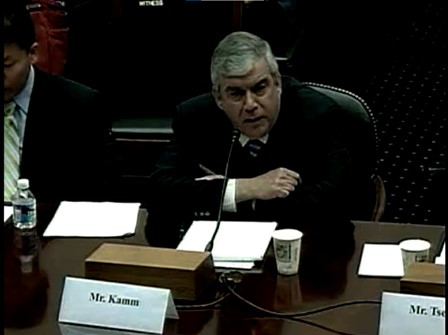
John Kamm testifying to the House Foreign Affairs Committee on November 4, 2011. Image credit: The Dui Hua Foundation
Beginning in 1990, I testified on a dozen occasions to Congressional committees in Washington DC. My last testimony was delivered in 2011. On different occasions, I appeared before the House Ways and Means Committee, the House Foreign Affairs Committee, the Senate Finance Committee, and the Congressional Executive Commission on China (CECC), a body whose establishment I had called for in the wake of President Bill Clinton’s decision to unconditionally renew China’s Most Favored Nation trade status in May 1994.
A screenshot of the CECC’s political prisoner database taken on November 24, 2004. Image credit: The Wayback Machine
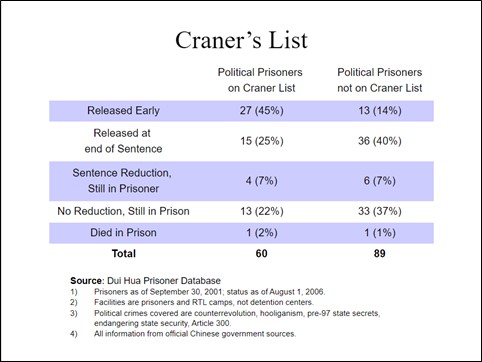
Of special importance was my testimony delivered to the CECC on September 20, 2006. In this testimony I described what had happened to 75 political prisoners whose names were on a list of prisoners handed to China’s Ministry of Foreign Affairs by Assistant Secretary of State for Democracy, Rights, and Labor Lorne Craner in the summer of 2001. I concluded that “If you were on the list, you had a better than 50 percent chance of being released or given a sentence reduction in the ensuing five years. That’s three times better than the rate of early release for political prisoners that we know of who were serving sentences in September 2001 but who weren’t on Craner’s list.”
On March 4, 2022, Craner spoke to reporters about Country Reports on Human Rights Practices for 2001, the annual review of the status of human rights around the world. Image credit: C-Span
I based my conclusion that being on a prisoner list significantly increased the chance of early release both on my analysis of the Craner list and on interactions with the Chinese government in the 15 years prior to my testimony, including communications with the State Council Information Office (SCIO) from 1991 to 1994. During this period, I asked about and was provided information on more than 70 prisoners, including Democracy Wall prisoner Xu Wenli (徐文立); the information I was given specified the hour and the day he would be released. I was given information on several elderly Catholic priests, as well as many other political prisoners.
A slide of statistics about the Craner list that Kamm presented during his testimony to the CECC in 2006. Image credit: The Dui Hua Foundation
Of special significance was a fax received from the SCIO in December 1994. For the first time, I was given written responses to a prisoner list I had submitted earlier that year to the Ministry of Justice. A number of the prisoners on the list received early releases from prison after I had given it to the Ministry of Justice, including:
Ge Hu (葛湖): A teacher in Taiyuan, Shanxi Province, was 35 years old at the time of his arrest in 1989. He was sentenced to seven years in prison in November 1989 for committing counterrevolutionary offences during the 1989 pro-democracy protests. He developed multiple health issues, but the prison refused to grant him medical parole. Seven days after I requested information on him from the MOJ, he was granted medical release. He returned home to be with his wife and young child.
Hao Fuyuan (郝付元): A farmer from Shandong Province, a hotbed of counterrevolution, Hao was active in the 1989 protests. He circulated a tape condemning Deng Xiaoping and pushed students to boycott classes and listen to Voice of America. He was sentenced to 10 years in prison. I asked the MOJ about Hao, after which he was granted early release, probably in 1996.
Zhang Chengjian (张成俭): Another farmer from Shandong Province, Zhang claimed to be Mao Zedong’s son. He was sentenced to 20 years in prison in 1984 for committing counterrevolutionary offenses. The sentence was extended by seven years in 1988 for killing a fellow inmate. I had put his name on the same list as Ge Hu, handed to the Ministry of Justice on October 31, 1994. In 1995, his sentence was reduced, followed by two more sentence reductions in 1998 and 2001, respectively. Dui Hua learned of his release in December 2001.
Although early releases of political and religious prisoners on Dui Hua lists have become fewer in recent years, especially after the Covid pandemic when prisons adopted the unofficial “entry only, no exit” policy, notable acts of clemency still in take place. Among the most noteworthy is the early release of Liang Jiantian (梁鉴添), a printer of Falun Gong literature, announced by Dui Hua in March 2022.
I began asking about him shortly after he was sentenced to life in prison in 2000, not long after Falun Gong was banned. I put his name on 20 lists submitted to the Guangdong Government. In 2007 his life sentence was commuted to 20 years in prison. Multiple sentence reductions were granted until the final six-month reduction in October 2021.
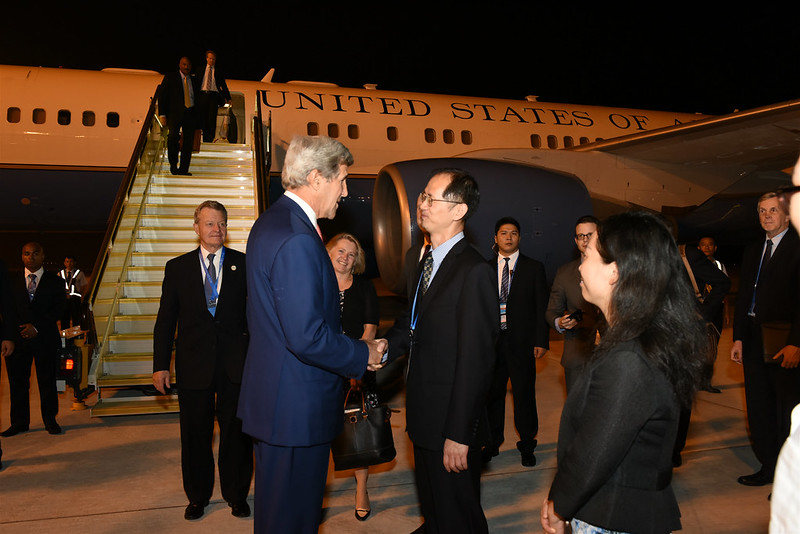
On September 3, 2016, then-Secretary of State Kerry arrived in Hangzhou, China, where he was greeted by Shi Yuanqiang, Counselor of Chinese Ministry of Foreign Affairs. The bilateral human rights dialogue was discontinued shortly after. Image credit: US government work
Despite strong evidence to the contrary, policy makers in Washington generally dismiss the importance of submitting prisoner lists to the Chinese government. A principal venue for submitting lists and discussing cases used to be the bilateral human rights dialogue. This was suspended by the Obama administration in late 2016 and has not been resumed, even though Beijing has signaled a willingness to hold another session.
Dui Hua and Supreme People’s Court Hold Dialogue on Child Welfare Laws
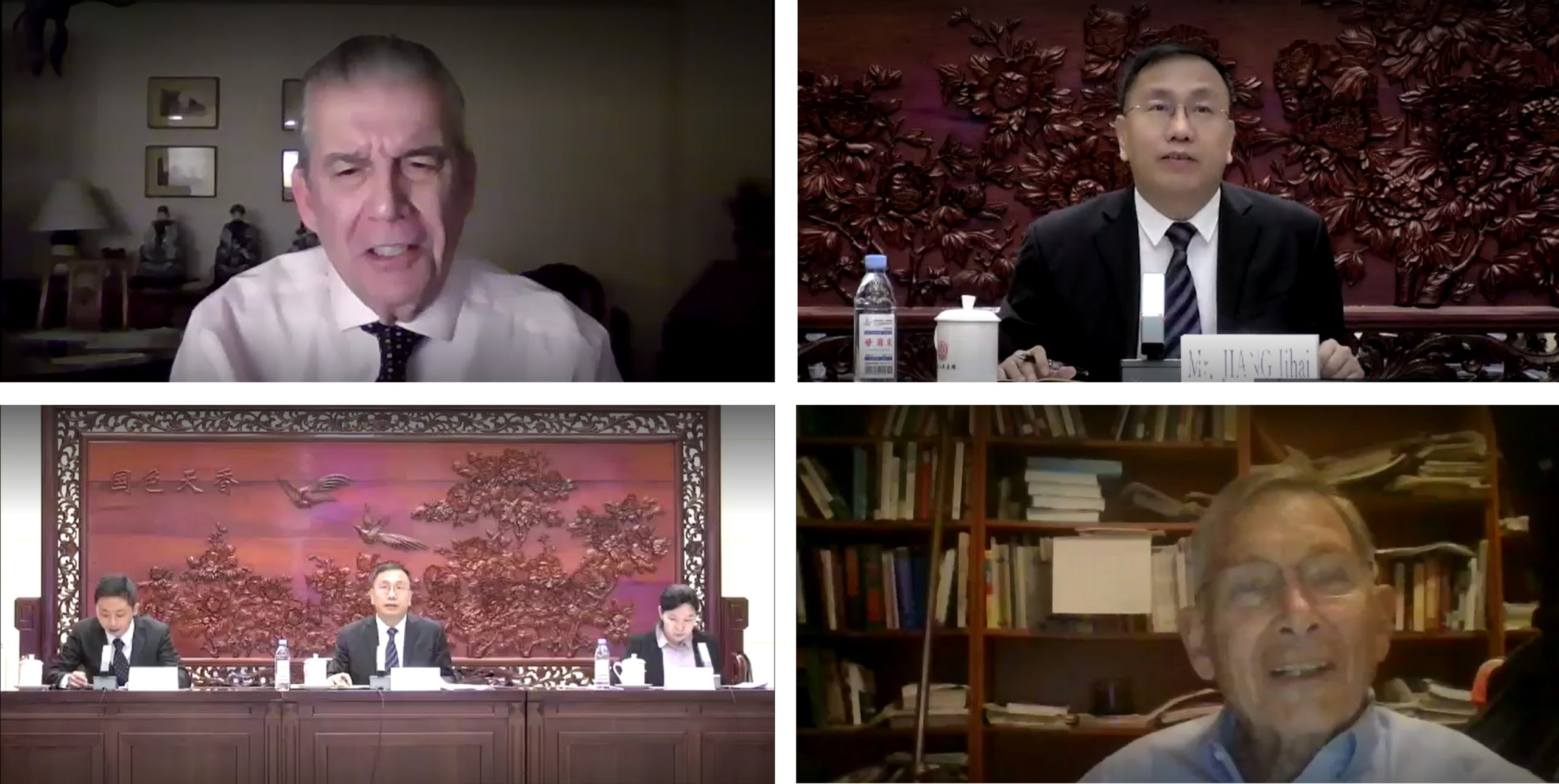
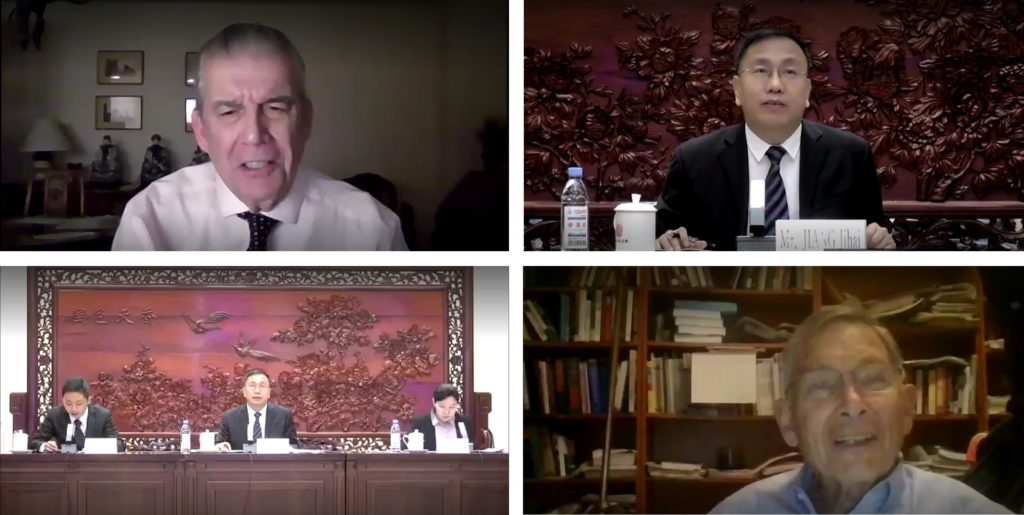
Screenshots from the April 7 expert exchange. (Clockwise top left) Host John Kamm, moderator Dr. Jiang Jihai, moderator Judge Len Edwards, Dr. Jiang with members of his panel. Image credit: The Dui Hua Foundation
On Thursday, April 7, 2022 (in San Francisco), Friday April 8, 2022 (in Beijing), Dui Hua hosted a virtual expert exchange on child welfare laws with China’s Supreme People’s Court (SPC). The event, believed to be the first exchange on child welfare laws in the two countries, marks the eighth juvenile justice collaboration between Dui Hua and the SPC.
During the event, which was hosted by Dui Hua Executive Director John Kamm, legal experts from the United States and China shared best practices and policies on legal protections for children in their respective countries. Retired Judge Len Edwards moderated the US-focused segment of the event; Dr. Jiang Jihai, Director of the Juvenile Office of the Research Department of SPC, moderated the China-focused segment.
In his opening remarks, Dr. Jiang spoke about recent changes to China’s juvenile justice laws. He introduced the recently revised “Law of the People’s Republic of China on the Protection of Minors,” which focuses on protection across six areas: family, school, social, cyber, government, and judicial. Dr. Jiang then went over “The Law of the People’s Republic of China on Family Education Promotion,” which stipulates that parents are responsible for family education and “bear the corresponding legal responsibility” if they fail or do so incorrectly. Dr. Jiang ended his opening remarks by noting these developments:
In this context, it is timely and significant for us to take the Child Welfare Act as the theme of this forum. We are pleased to brief our American colleagues on the latest developments in the field of juvenile justice in China, and we look forward to learning about your experiences and practices as well…so that we can join hands to contribute wisdom to the further innovation and development of juvenile justice in China and the United States.
Both panels emphasized the importance of cohesive policies that clearly delegate responsibilities at all levels of the judicial system. Chinese panelist presentations focused on guardian revocation, judicial processes for cases of domestic violence involving children, recent developments in child protection legislation, and the need for comprehensive protection including social support systems and joint protective mechanisms. The panelists presenting on China were:
Chen Haiyi, Standing Member of the Adjudication Committee, Guangzhou Intermediate People’s Court, Guangdong;
Li Chen, Deputy Director, Division of Supervision of Minors’ Protection, Child Welfare Department, Ministry of Civil Affairs;
Judge Song Ying, Deputy Chief Judge, Juvenile Division, Beijing High People’s Court;
Judge Wang Wei, Deputy Chief Judge, First Criminal Division, Jiangsu High People’s Court.
The China panel: (Clockwise top left) Judge Wang, Deputy Director Li, Judge Song, and Committee Member Chen. Image credit: The Dui Hua Foundation
The US panel addressed issues affecting children’s welfare including mandatory reporting, the role of the child protection worker, the right to counsel for both guardians and children in child welfare cases, and the importance of child placement and reunification with parents when feasible. Moderator Judge Edwards has written at length about the value of relative placement for children in foster care. The panelists presenting on the United States were:
Judge Jerilyn Borack, Presiding Judge, Sacramento County Juvenile Court;
Judge Roger Chan, San Francisco County Juvenile Court and Chairperson, Juvenile Court Judges of California;
Judge Marian Gaston, Assistant Presiding Judge, San Diego County Juvenile Court;
Howard Himes, Consultant and Former Director of Social Services in Napa County, California.
The US panel: (Clockwise top left) Judge Chan, social services consultant Howard Himes, Judge Borack, and Judge Gaston. Image credit: The Dui Hua Foundation
A uniting ethos across both panels was the need for laws and courts to act within the best interests of the child, minimizing harm to the extent possible in every situation and taking severe measures, like child-family separation, only when unavoidable. After the presentation portion of the event, panelists answered questions from the other country’s representatives on specific aspects of juvenile justice. Kamm and Dr. Jiang made closing remarks.
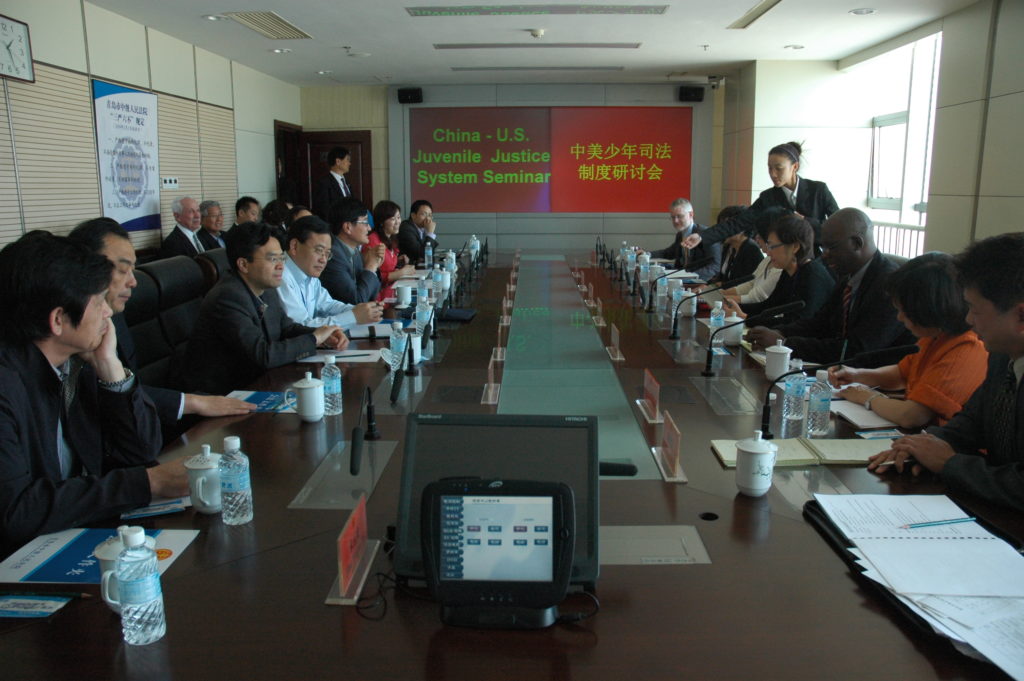
Participants during Dui Hua’s 2010 expert exchange in Qingdao. Image credit: The Dui Hua Foundation
Kamm’s closing remarks thanked Judge Edwards, who came to Dui Hua with the idea for this webinar in 2021, and “the outstanding team he put together on the US side.” Kamm also thanked Dr. Jiang and “his equally outstanding and accomplished” team. Referencing Dr. Jiang’s opening remarks, Kamm acknowledged his deep friendship with Dr. Jiang.
US-China relations have been defined in recent years by open hostility and adversarial posturing, including talk of decoupling. Legal exchanges, particularly on juvenile justice reform, are a rare area of collaboration. Organizations in the United Kingdom and Germany have done pioneering work in the area of juvenile justice with Chinese counterparts and,on April 8, SPC representatives held a virtual meeting with officials from the European Court of Justice. In the United States, Dui Hua’s engagement with the SPC is in the forefront of exchanges in this crucial area.
“We have done eight programs together, six entirely [together] and two jointly with others. That’s eight programs, and I’m looking forward to cooperating more with you Dr. Jiang and your office in the future,” Kamm said in his closing remarks.
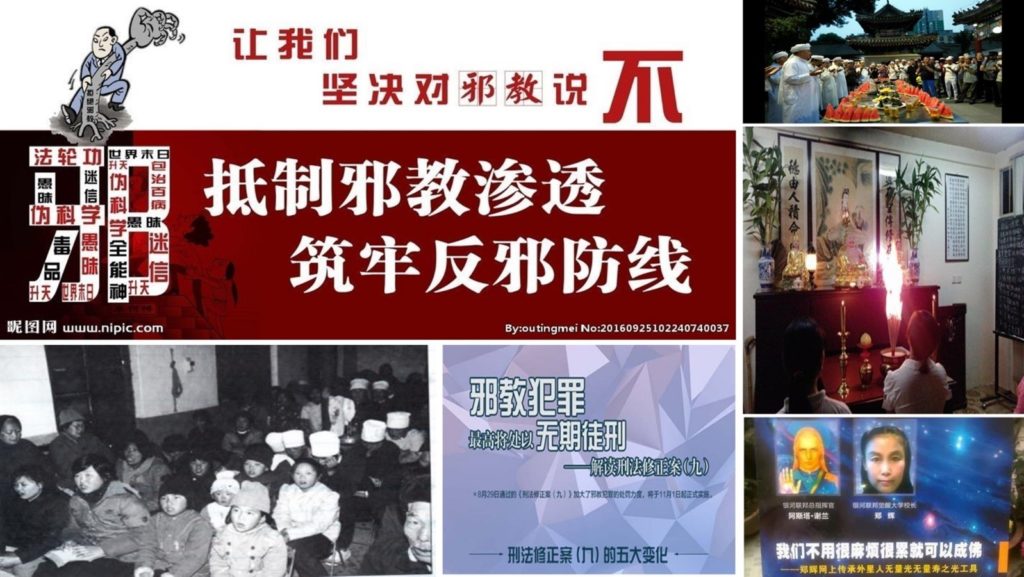
(Clockwise from top left) Chinese government anti-cult propaganda; Tablighi Jamaat members with Hui Muslims at a mosque; practitioners of Yi Guan Dao; promotion for Milky Way Federation; a notice expanding the penalties under Article 300; the Jesus Family. Image credits: The Paper; Umal Al-Dawa Youtube Account; Jin De Fo Tang’s Facebook account; Sohu; Liaoning Pindao; Bridge Magazine
Dui Hua’s new report “The Persecution of Unorthodox Religious Groups in China” [PDF, 1.4 MB] details and analyzes the Chinese government’s treatment of unorthodox religious groups, listing known banned groups and the actions taken against them. The report, compiled over several months in 2021, offers a view into a substantial and largely unrecognized aspect of the Chinese population.
“The Persecution of Unorthodox Religious Groups in China” is based on legal documents, media reports, case studies, official publications, Chinese government responses to requests for information on persecuted prisoners, court statistics, and Dui Hua’s Political Prisoner Database (PPDB). It provides a comprehensive view of how non-state sanctioned religious practitioners come into conflict with the law, how officials at different levels of government criminalize unorthodox worship, and how past trends can inform future advocacy for those undergoing coercive measures for the non-violent expression of their beliefs.
Read more here. Download the report [PDF 1.4 MB] Read about the report and other publications about unorthodox religious groups here.
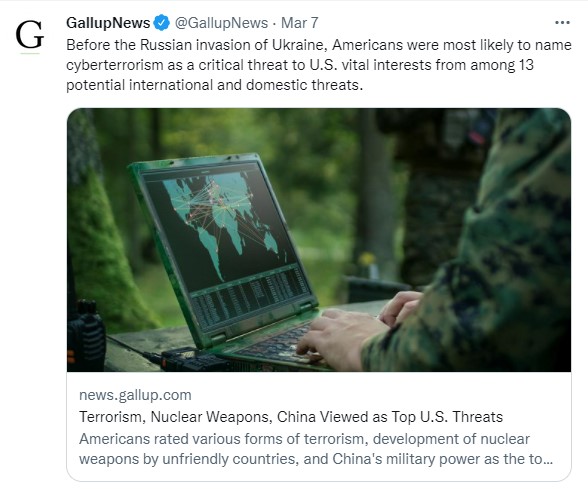
A post on Gallup News’ Twitter account releasing their study on threats to the United States. Image credit: Gallup News Twitter account
In Gallup’s latest annual World Affairs poll, conducted from February 1-17, the American public’s opinion of China remains at a historic low. The poll, conducted partly during the 2022 Winter Olympics, found that 79 percent of respondents have an unfavorable view of China, with 41 percent answering “very unfavorable.” Only 20 percent of respondents have a “favorable” view of China. The numbers remain largely unchanged from the 2021 poll.
China’s favorability rating is at its lowest since Gallup started to poll American attitudes towards the country in 1979. The Gallup poll also found that Americans view China as a “critical” threat to US security.
John Kamm Remembers is a feature that explores Kamm’s human rights advocacy prior to and since Dui Hua’s establishment in 1999.
Prisoner Lists, Past and Present
John Kamm testifying to the House Foreign Affairs Committee on November 4, 2011. Image credit: The Dui Hua Foundation
Beginning in 1990, I testified on a dozen occasions to Congressional committees in Washington DC. My last testimony was delivered in 2011. On different occasions, I appeared before the House Ways and Means Committee, the House Foreign Affairs Committee, the Senate Finance Committee, and the Congressional Executive Commission on China (CECC), a body whose establishment I had called for in the wake of President Bill Clinton’s decision to unconditionally renew China’s Most Favored Nation trade status in May 1994.
A screenshot of the CECC’s political prisoner database taken on November 24, 2004. Image credit: The Wayback Machine
Of special importance was my testimony delivered to the CECC on September 20, 2006. In this testimony I described what had happened to 75 political prisoners whose names were on a list of prisoners handed to China’s Ministry of Foreign Affairs by Assistant Secretary of State for Democracy, Rights, and Labor Lorne Craner in the summer of 2001. I concluded that “If you were on the list, you had a better than 50 percent chance of being released or given a sentence reduction in the ensuing five years. That’s three times better than the rate of early release for political prisoners that we know of who were serving sentences in September 2001 but who weren’t on Craner’s list.”
On March 4, 2022, Craner spoke to reporters about Country Reports on Human Rights Practices for 2001, the annual review of the status of human rights around the world. Image credit: C-Span
I based my conclusion that being on a prisoner list significantly increased the chance of early release both on my analysis of the Craner list and on interactions with the Chinese government in the 15 years prior to my testimony, including communications with the State Council Information Office (SCIO) from 1991 to 1994. During this period, I asked about and was provided information on more than 70 prisoners, including Democracy Wall prisoner Xu Wenli (徐文立); the information I was given specified the hour and the day he would be released. I was given information on several elderly Catholic priests, as well as many other political prisoners.
A slide of statistics about the Craner list that Kamm presented during his testimony to the CECC in 2006. Image credit: The Dui Hua Foundation
Of special significance was a fax received from the SCIO in December 1994. For the first time, I was given written responses to a prisoner list I had submitted earlier that year to the Ministry of Justice. A number of the prisoners on the list received early releases from prison after I had given it to the Ministry of Justice, including:
Ge Hu (葛湖): A teacher in Taiyuan, Shanxi Province, was 35 years old at the time of his arrest in 1989. He was sentenced to seven years in prison in November 1989 for committing counterrevolutionary offences during the 1989 pro-democracy protests. He developed multiple health issues, but the prison refused to grant him medical parole. Seven days after I requested information on him from the MOJ, he was granted medical release. He returned home to be with his wife and young child.
Hao Fuyuan (郝付元): A farmer from Shandong Province, a hotbed of counterrevolution, Hao was active in the 1989 protests. He circulated a tape condemning Deng Xiaoping and pushed students to boycott classes and listen to Voice of America. He was sentenced to 10 years in prison. I asked the MOJ about Hao, after which he was granted early release, probably in 1996.
Zhang Chengjian (张成俭): Another farmer from Shandong Province, Zhang claimed to be Mao Zedong’s son. He was sentenced to 20 years in prison in 1984 for committing counterrevolutionary offenses. The sentence was extended by seven years in 1988 for killing a fellow inmate. I had put his name on the same list as Ge Hu, handed to the Ministry of Justice on October 31, 1994. In 1995, his sentence was reduced, followed by two more sentence reductions in 1998 and 2001, respectively. Dui Hua learned of his release in December 2001.
Although early releases of political and religious prisoners on Dui Hua lists have become fewer in recent years, especially after the Covid pandemic when prisons adopted the unofficial “entry only, no exit” policy, notable acts of clemency still in take place. Among the most noteworthy is the early release of Liang Jiantian (梁鉴添), a printer of Falun Gong literature, announced by Dui Hua in March 2022.
I began asking about him shortly after he was sentenced to life in prison in 2000, not long after Falun Gong was banned. I put his name on 20 lists submitted to the Guangdong Government. In 2007 his life sentence was commuted to 20 years in prison. Multiple sentence reductions were granted until the final six-month reduction in October 2021.
On September 3, 2016, then-Secretary of State Kerry arrived in Hangzhou, China, where he was greeted by Shi Yuanqiang, Counselor of Chinese Ministry of Foreign Affairs. The bilateral human rights dialogue was discontinued shortly after. Image credit: US government work
Despite strong evidence to the contrary, policy makers in Washington generally dismiss the importance of submitting prisoner lists to the Chinese government. A principal venue for submitting lists and discussing cases used to be the bilateral human rights dialogue. This was suspended by the Obama administration in late 2016 and has not been resumed, even though Beijing has signaled a willingness to hold another session.
Subscribe here to receive Dui Hua publications by email.
SAN FRANCISCO (April 11, 2022) — The Dui Hua Foundation is pleased to announce the completion of an expert exchange on child welfare laws with China’s Supreme People’s Court (SPC). The event, which took place on April 7, sought to increase understanding of children’s rights and best practices in the application of law in China and the United States.
This was the eighth collaboration between Dui Hua and the SPC on juvenile justice. It is believed to be the first exchange on child welfare laws in the two countries.
Judges, social workers, and legal experts from both countries shared current protocols for involving children in the legal system with the goal of ensuring their protection. Eight legal experts, four each from the United States and China, delivered presentations on child welfare laws in the two countries. John Kamm, Executive Director of Dui Hua, hosted the event. Retired Judge Len Edwards from Santa Clara, California, moderated the US-focused segment of the event and Dr. Jiang Jihai moderated the China-focused segment.
In his opening remarks, Dr. Jiang Jihai, Director of the Juvenile Office of the Research Department of SPC, gave an overview of the development of child welfare legislation in China and cited Dui Hua’s unique relationship with the Chinese court:
Since 2008, we have maintained close exchanges in the field of juvenile justice. In the past decade, we have held seven rounds of seminars and discussions, which served as a crucial platform where the courts of both countries shared their experience and learned from each other.
Panelists presenting for China included: Li Chen, Deputy Director, Division of Supervision of Minors’ Protection, Child Welfare Department, Ministry of Civil Affairs; Chen Haiyi, Standing Member of the Adjudication Committee, Guangzhou Intermediate People’s Court, Guangdong; Judge Song Ying, Deputy Chief Judge, Juvenile Division, Beijing High People’s Court; and Judge Wang Wei, Deputy Chief Judge, First Criminal Division, Jiangsu High People’s Court.
Panelists presenting for the United States included: Howard Himes, Consultant and Former Director of Social Services in Napa County, California; Judge Roger Chan, San Francisco County Juvenile Court and Chairperson, Juvenile Court Judges of California; Judge Marian Gaston, Assistant Presiding Judge, San Diego County Juvenile Court; and Judge Jerilyn Borack, Presiding Judge, Sacramento County Juvenile Court.
Panelists from both countries emphasized key concepts for protecting the rights of the child, such as requiring mandatory reporting of abuse for individuals who work closely with minors and employing state removal of a child from family guardianship only as a last resort.
Beyond general principles, Chinese experts provided details on the country’s child social service programs, which expanded through the 2019 creation of the Child Welfare Department of the Ministry of Civil Affairs. Other key topics included the application of domestic violence laws and the history of juvenile courts in China.
US experts shared insights into the procedures for bringing child abuse cases to court, the rights of children and parents to legal counsel, and the importance of the goal of reunification in juvenile dependency cases.
Despite fraught US-China relations, and the suspension of the US-China human rights dialogue in 2016, Dui Hua’s exchanges with the SPC represent one of the few channels for discussing human rights, including the rights of the child. The two sides are committed to continuing their cooperation.