Category: John Kamm Remembers

John Kamm Remembers are stories written by Dui Hua’s founder recounting Kamm’s advocacy for prisoners in China. In addition to these stories, the 50 Years in China timeline visualizes Kamm’s human rights work alongside the history of US-China relations.

  • Enemy Station (敌台)

    Image source: AI-generated image

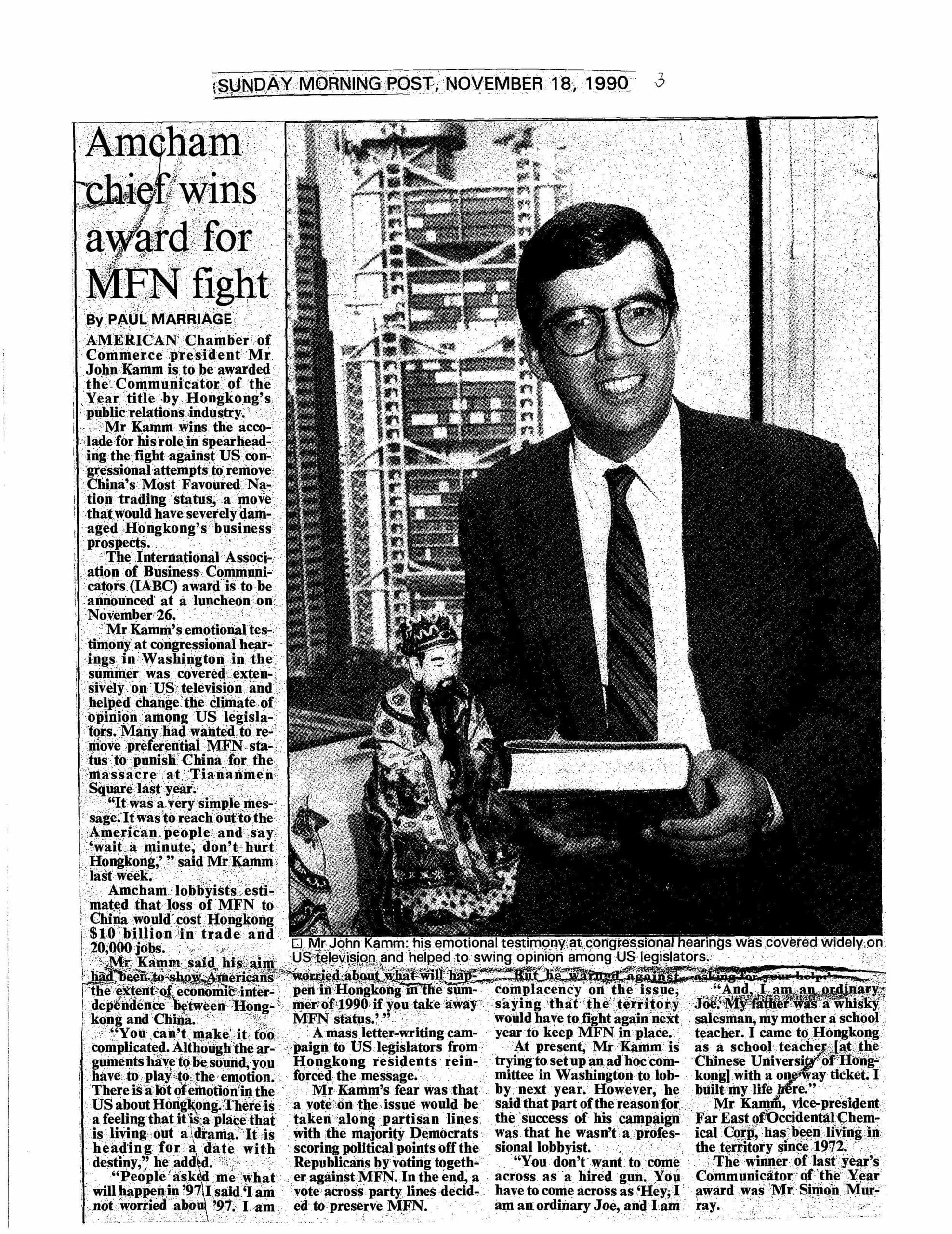
    Sunday Morning Post, November 18, 1990: “AmCham chief wins award for MFN fight.”

    Media coverage was extensive. It wasn’t long before I was asked to host a radio talk show on Hong Kong’s newest station, Metro, but I didn’t like the format. Sometimes no one would call in, so I had to resort to calling friends in the early evening, around cocktail hour.

    Nevertheless, I was able to use my show to advocate for releasing prisoners. In May 1991, I announced the release of the Li Brothers on Metro Radio.

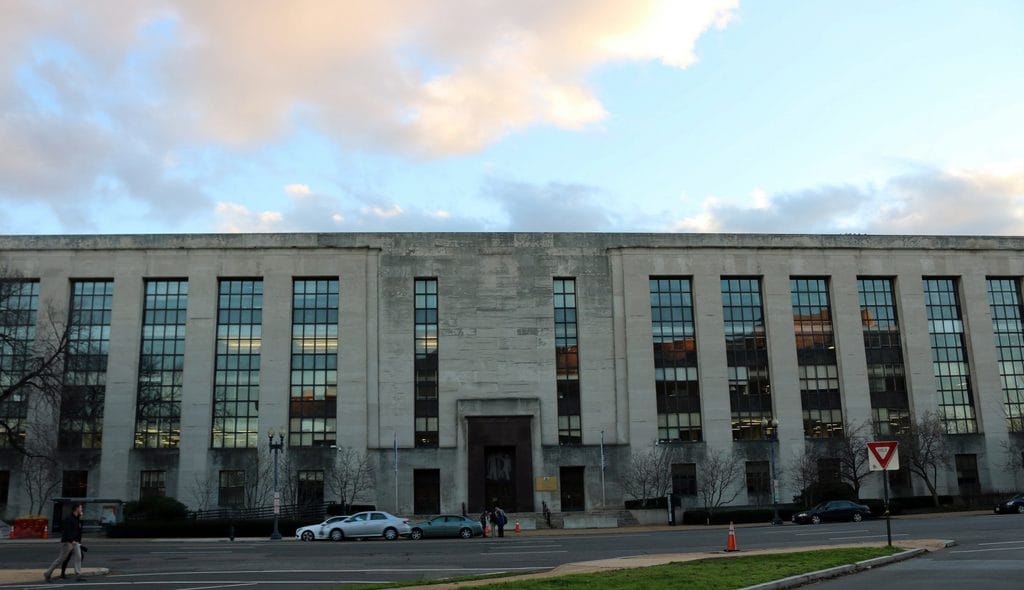
    Voice of America headquarters, Washington, DC, 2016. Image source: Persian Dutch Network

    In September 2001 I was in Hong Kong taping shows for my program. After I returned to my room following dinner with Chinese officials, there was a voice message on the phone. It was my producer in Washington. “Turn on your TV.” I did so and watched the second plane crash into the World Trade Center. The date was September 11. I lost a family member in the attack.

    I traveled to Beijing the day after the attack. I met with Chinese officials to obtain information on political prisoners but came away empty-handed. I returned to Hong Kong and shortly after, I received a call from the hotel lobby. One of the officials I had met in Beijing had flown to Hong Kong to give me information on Takna Jigme Sangpo, an elderly Tibetan teacher serving a long sentence for counterrevolution. Jigme Sangpo was released and flown to the United States in 2002.
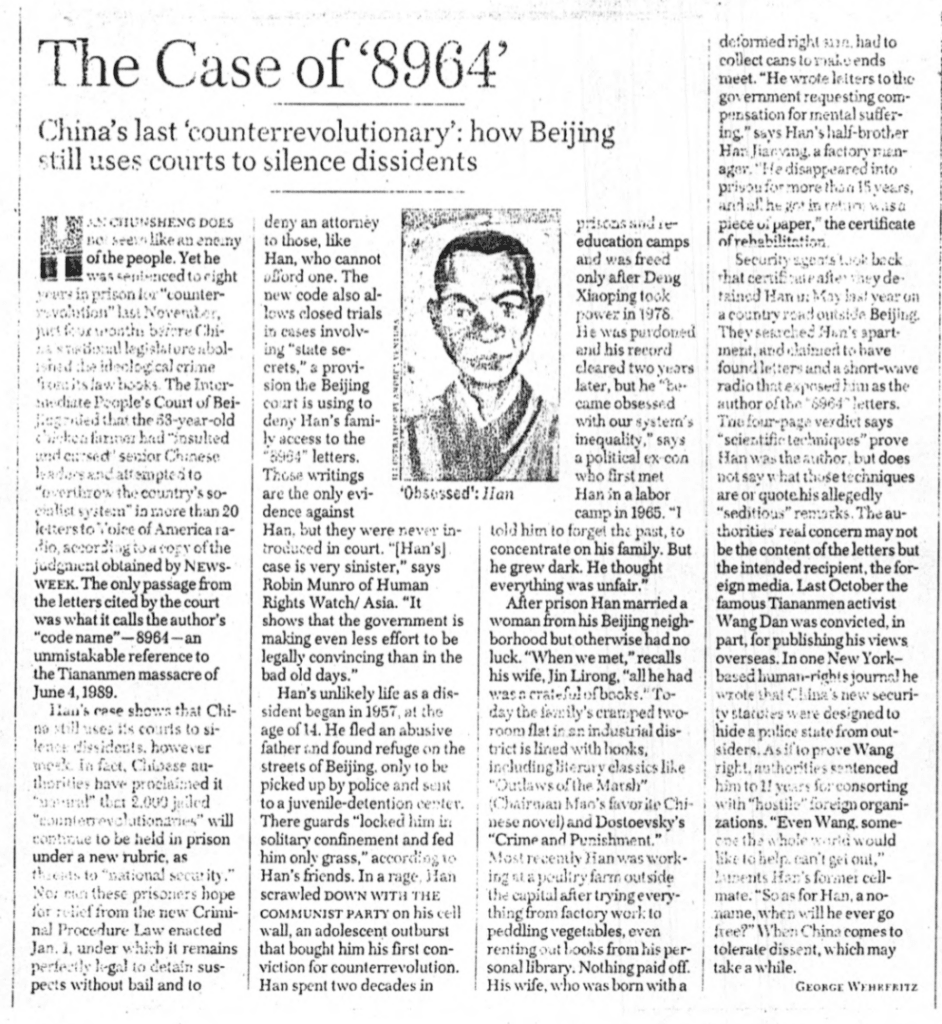
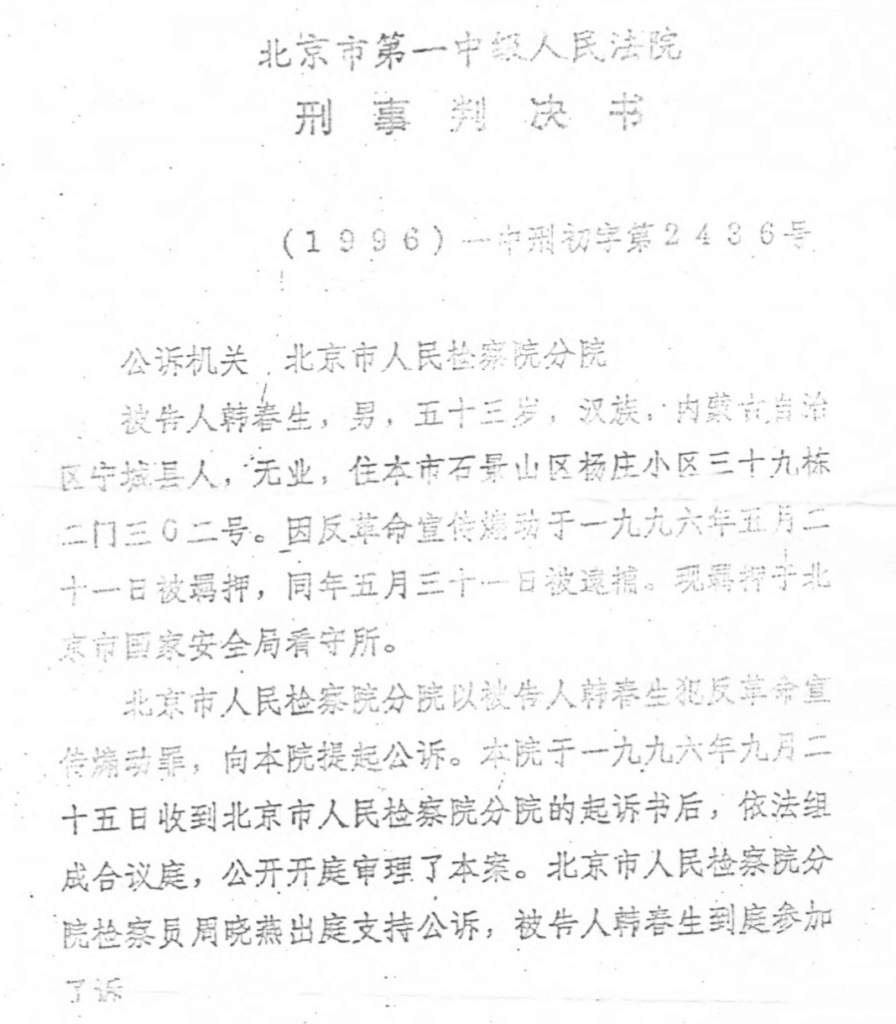
    Han Chunsheng

    Left, article about The Case of ‘8964’ in Newsweek, September 29, 1997. Right, Criminal Judgement of Han Chunsheng

    Han was one of the last people convicted of counterrevolution before it was removed from the criminal law in 1997. He spent his internment in Beijing Number Two Prison, used to house many political and religious prisoners including Xu Wenli and American citizen Pastor David Lin

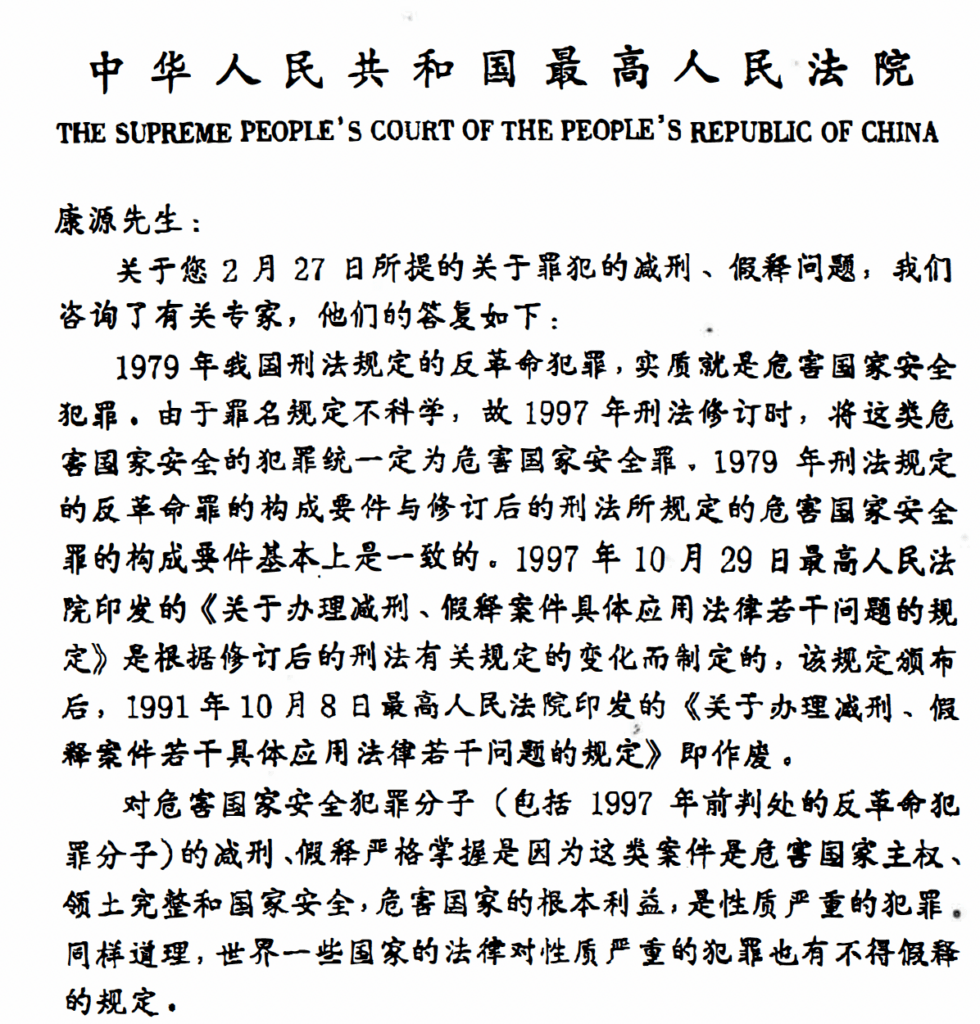
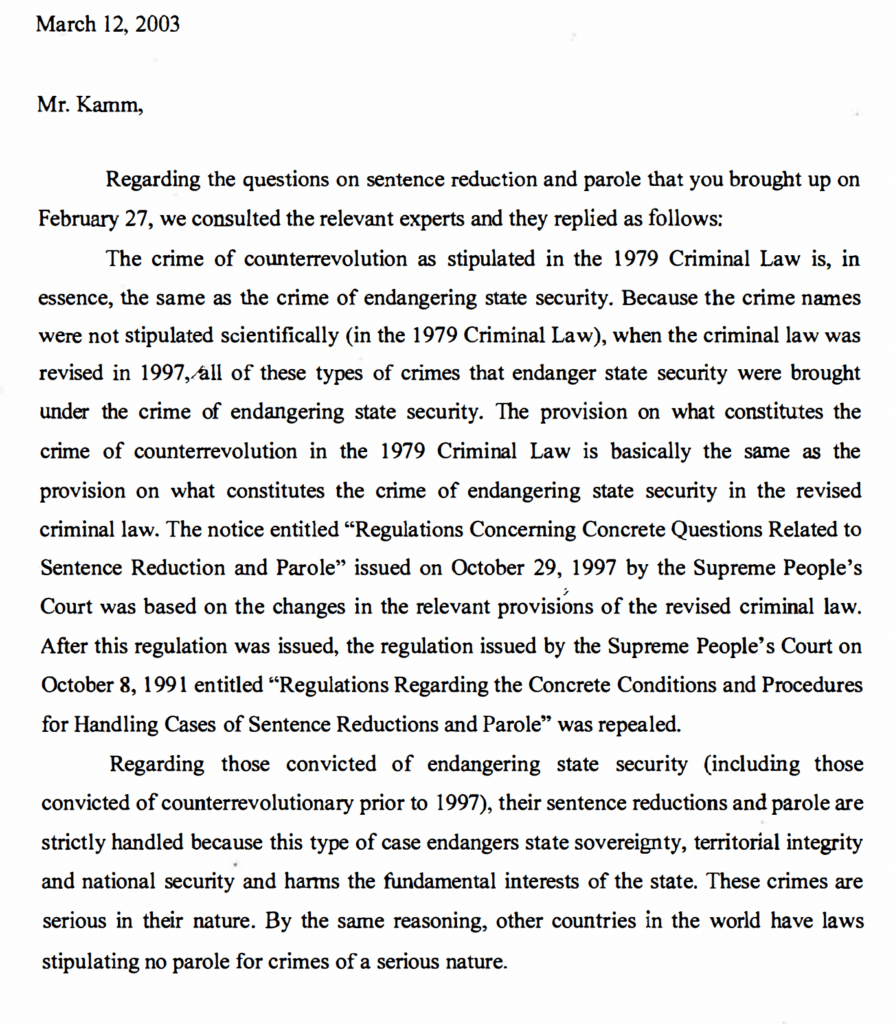
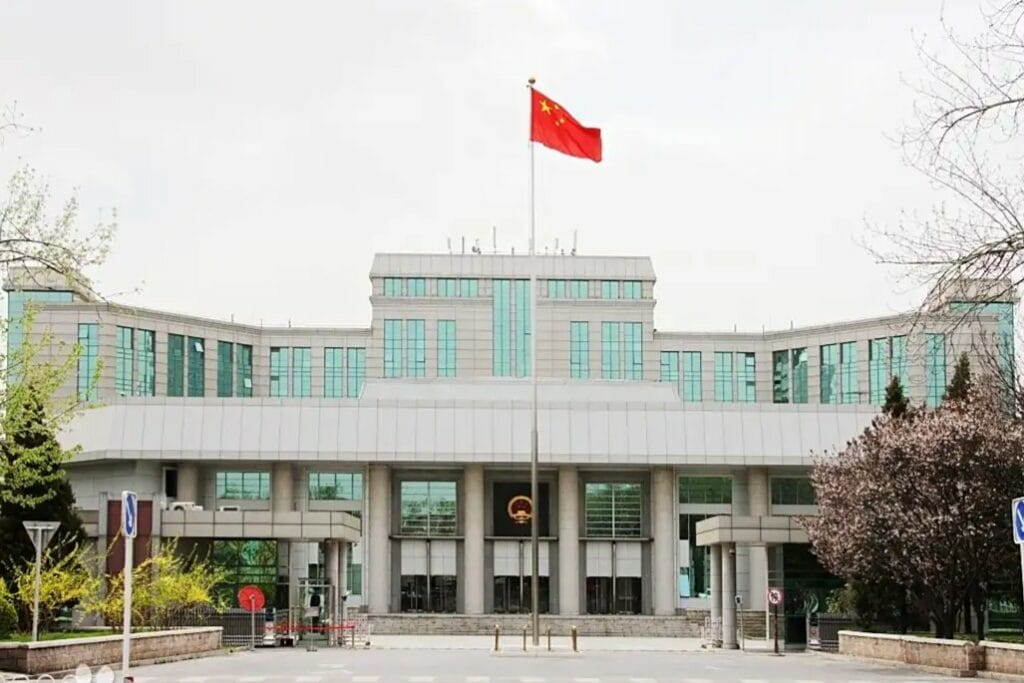
    Letter to the Executive Director John Kamm from the Supreme People’s Court, March 12, 2003,
    in response to Kamm’s written query about Han Chunsheng’s counterrevolution sentencing,
    a crime removed from China’s Criminal Law in 1997.

    VOA Today

  • Clinton’s Choice: Elections have Consequences 

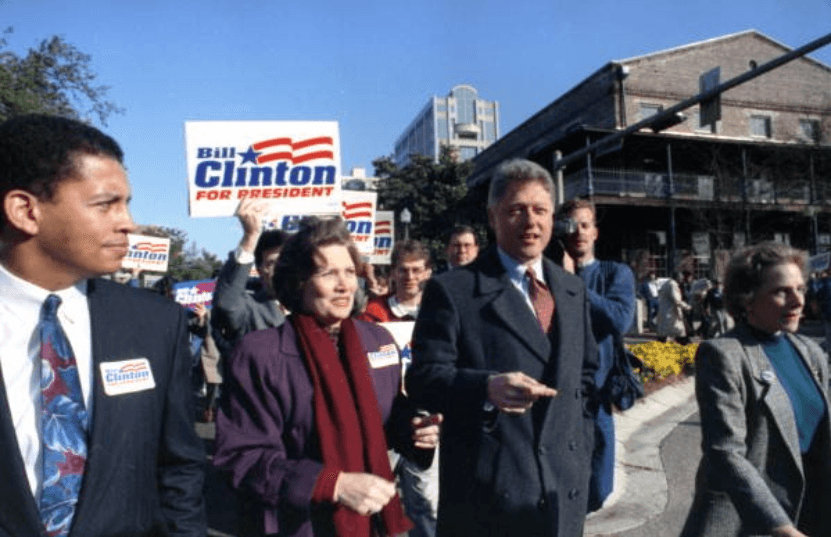
    Clinton campaigning in Tallahassee during the 1992 presidential election. Source: Wikipedia 

    In the 1992 United States’ presidential campaign, Democratic candidate Bill Clinton excoriated then-president George W. Bush for being soft on China on human rights and trade, accusing the incumbent of coddling “the butchers of Beijing.” He aligned himself with Democrats in Congress, notably Democratic Majority Leader George Mitchell (D-ME) and Congresswoman Nancy Peloisi (D-CA), who had introduced legislation to place conditions on China’s Most Favored Nation (MFN) trading status. Bills placing conditions on China’s MFN had passed in both 1991 and 1992, but Bush vetoed both. Efforts to override his veto failed in both years. With Clinton as president, it was widely assumed that Clinton would sign the legislation after he took office. 

    Bills placing conditions on China’s MFN were framed as reasonable alternatives to a resolution of disapproval introduced by Congressman Gerald Solomon (R-NY) in the early 1990s. If passed into law, these resolutions would have resulted in revocation of China’s trade status. 

    In the event, Clinton decided not to sign legislation conditioning China’s MFN and instead renewed China’s MFN in 1993 by means of an executive order which mandated “significant progress” on human rights including releasing and accounting for political prisoners, allowing international media broadcasts to be listened to in China, and granting access by international humanitarian and human rights organizations to China’s prisons. (Executive orders are less constraining on a president than legislation passed by Congress and signed into law.) Under the Executive Order, Clinton was required to confirm that China had made significant progress on human rights when MFN came up for renewal in 1994.  

    Bound by the Trade Act of 1974, Clinton needed to make his decision no later than June 3, 1993 (June 4 in Beijing). By June 1993, I had testified six times to Congress on MFN and human rights. Maintaining access to the US market was crucial to achieving paramount leader Deng Xiaoping’s economic policies. 

    Southern Tour 

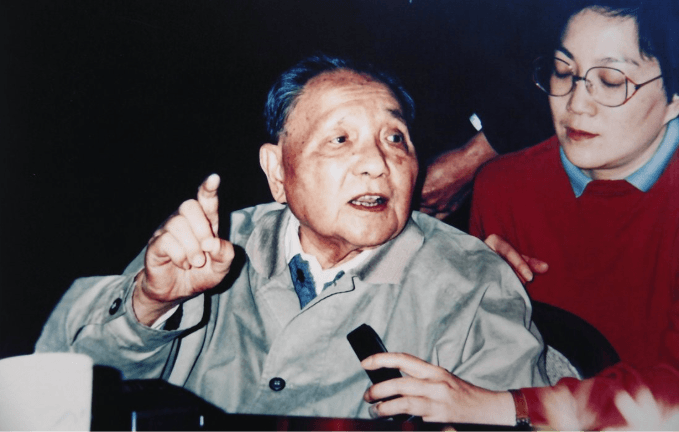
    In the spring of 1992, Deng Xiaoping makes his famous southern tour. Source: Global Times 

    Deng revitalized his “reform and opening” policies (sometimes referred to as China’s economic miracle) with his “Southern Tour” in 1992. The policies had been initiated at the Third Plenary Session of the 11th Central Committee in December 1978, but momentum had slowed after the Tiananmen Square killings of June 1989.

    To a large extent, the economic miracle needed access to the US market and the dollars it generated. Loss of MFN would cripple that access. At the time, Chinese exports to the US were small, hit by boycotts and sanctions, but Deng, who had personally seen the vibrancy of the consumer market when he toured the US in 1979, was convinced Chinese exports were poised for growth.
    As the June 1993 deadline to renew MFN neared, I began planning a visit to Beijing to see what human rights concessions might be possible. I reached out to individuals and families and friends of those persecuted in China for their political and religious beliefs.  

    I met with American journalist Todd Carell in San Francisco and Father Politi in Hong Kong, as well as a retired academic well-versed in the situation in Tibet; he provided information on Tibetan political prisoners. I spoke by phone with Bao Pu, son of Bao Tong, Zhao Ziyang’s private secretary, and met with dissidents sheltering at Princeton University, my alma mater, under the college’s “China Initiative.” I communicated with human rights NGOs in the United States, Europe, and Asia, to find out what they knew about the prisoners I intended asking about. 

    Prior to my visit to Beijing in May 1993, I sent prisoner lists to the Ministry of Justice, the Ministry of Public Security, the Ministry of Foreign Affairs, and the State Council Information Office. 

    Todd Carrel 

    Todd Carrel was Bureau Chief of ABC News in Beijing when, in June 1992, he went to Tiananmen Square, site of the 1989 killings of protesters, to record protests that were expected to take place on the anniversary of the killings. Carrel was seized by the police, bundled into a car, and savagely beaten. (Other foreign correspondents were likewise treated roughly). The year before, in May 1991, three members of Congress had mounted a protest in Tiananmen Square. Journalists had been roughed up. Fearing a repeat, China’s police were on high alert in 1992. 

    Carrel suffered serious injuries when he went to the square in June 1992, necessitating his return to San Francisco, where I had purchased an apartment. I met with Todd at a pastry shop in San Francisco’s Little Italy on April 18, 1993. He described the assault in graphic detail; he had been beaten with steel ball bearings wrapped in thick socks, the purpose being to hide bruises. Mr. Carrel walked with difficulty, often stopping to get his footing before carrying on. 

    There is no record of the Chinese government apologizing to Todd Carrel for the assault he endured in Tiananmen Square in June 1992, much less compensating him for the injuries he suffered there. 

    There is a long history of Chinese police targeting foreign journalists doing their jobs in Beijing. During the late 1960s, when the Cultural Revolution was underway, Reuters correspondent Anthony Grey, was placed under house arrest for 27 months by the Red Guards; they killed his house cat. In 2005, Wall Street Journal correspondent Matt Pottinger was physically assaulted at a Starbucks in Beijing. Mr. Pottinger went on to serve as Deputy National Security Advisor in the first Trump administration where he became known as an influential “China hawk.” 

    Xu Wenli (徐文立) and June 4 Activists 

    On the mid-May 1993 visit to Beijing, I was informed that veteran activist and leader of the Democracy Wall movement, Xu Wenli, would be released on May 26, 1993, in anticipation of the MFN decisions. Dui Hua prepared a press statement for distribution upon his release. The statement was heavily covered in international media. He was again detained, arrested, and sentenced for endangering state security in November 1998 and released in December 2002, after which he travelled to the US to be reunited with his wife and daughter. 

    Wang Xizhe. Source: Internet 

    I brought up Wang Xizhe (王希哲), a Guangdong-based member of the Liyizhe group (1974) and, later, Democracy Wall activist, with the Supreme People’s Court. He had been sentenced to 14 years in prison in 1982 but was released early. He fled to the US via Hong Kong in 1996. 

    Courts in Shandong Province had imposed the harshest sentences on those involved in the June 1989 protests.  I requested information on Chen Lantao (陈兰涛) and Hao Fuyuan (郝付元). Both were released years before their sentences expired. 

    I raised the situation of June 4 activist Liu Gang (刘刚) with the Ministry of Justice (MOJ). A Liaoning-based June 4 activist who was the sixth name on the Chinese government’s “most wanted list,” he was sentenced to six years in prison, and never granted clemency. He left China for the US in 1996. 

    Catholics 

    Father Politi. Source: Internet 

    I worked closely with Father Politi, a Catholic priest based in Hong Kong, in the early 1990s. On the May 1993 visit to Beijing, I raised the cases of Zhang Dapeng (张大鹏), a Catholic lay leader based in Baoding, Hebei Province, an area with a large Catholic population. I also inquired about Catholic priest Zhang Youshen (张有申). Both had been detained in 1990 and released early in 1992. I announced both releases in late May 1993. 

    I had placed Bishop Wang Milu (王弥禄), called the “Black Bishop of Gansu” for ordaining priests without the Vatican’s approval, on my lists sent in advance of the trip to Beijing. He was released early on April 30, 1993. 

    Tibetans

    For the first time, I put the names of Tibetan counterrevolutionaries on a list to the MOJ: Yulo Dawa Tsering, Ngawang Phulchung, and Tseten Norgye. All had been given long sentences for counterrevolution. Yulo Dawa Tsering was paroled in 1994, around three years early. Ngawang Phultsong was given a six-month sentence reduction. Tseten Norgyue is believed to have served his full sentence.   

    I brought up Tibetan teacher Takna Jigme Sangpo with the MOJ. He was thought to be, at the time, the longest serving Tibetan political prisoner. He was granted early release and flown to Switzerland via the US in 2002. 

    Counterrevolutionaries and Those Sentenced to Death 

    On the May visit I met with senior officials – Zheng Hongye of the China Council for International Trade, which served as my host on visits to Beijing; Chen Mingming of the Ministry of Foreign Affairs (MFA); Zhu Entao of the Ministry of Public Security; Wang Genliang of the Supreme People’s Court; Wang Mingdi of the MOJ; and Minister Zeng Jianhui of the State Council Information Office – to discuss prisoners and issues. With respect to issues, I was given information on the number of prisoners serving sentences for counterrevolution but failed to get information on the number of people executed in China. 

    I was interested in finding out what had happened to Zheng Qiuwu (郑酋午), an academic who had advocated economic reform, including the establishment of stock markets. He was sentenced to 14 years in prison for counterrevolutionary incitement and propaganda, to be served in Hainan Province. His sentence was reduced to 13 years on appeal. 

    China’s 007 

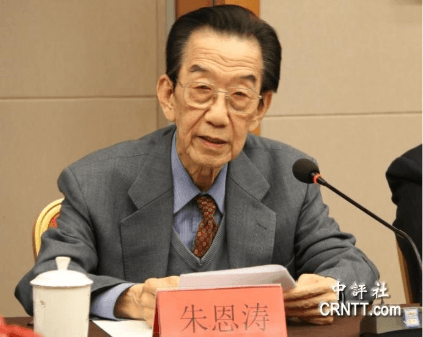
    Zhu Entao. Source: CRNTT.com  

    While the cases of all those persecuted who were on my lists or who I had raised verbally in my Beijing meetings, I placed special emphasis on that of Todd Carell. I suggested that the Chinese government apologize to Todd Carrel and pay compensation for the injuries suffered at the hands of the police. I got push-back or, in the case of Zhu Entao (China’s 007), stunned silence. I brought up Mr. Carrel at a banquet hosted by Zhu at the Kunlun Hotel, owned by the Public Security Ministry. Zhu and colleagues were not happy. I also raised Mr. Carrel’s assault with the MFA’s Chen Mingming. 

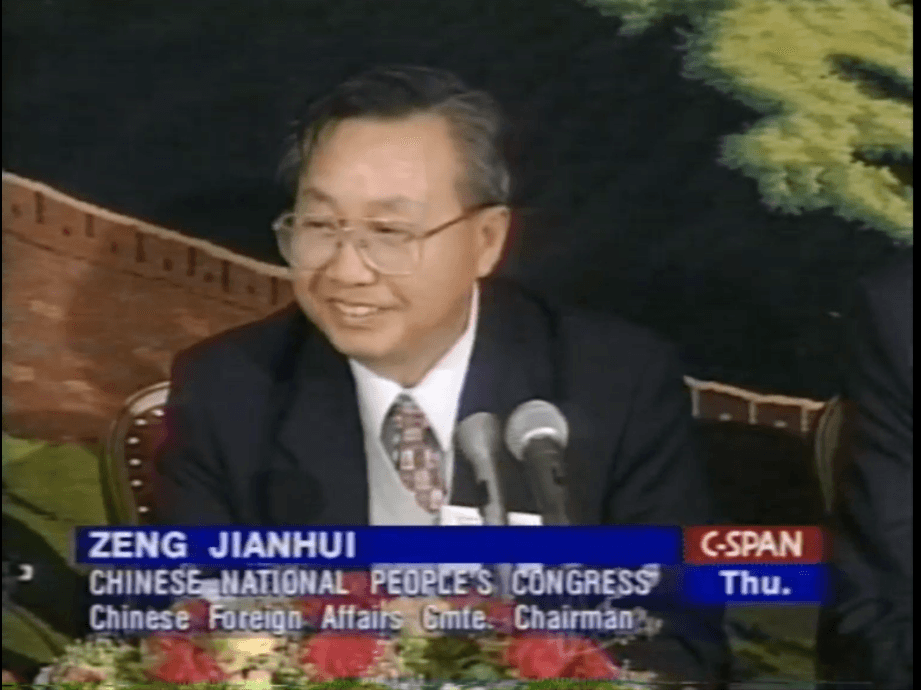
    Zeng Jianhui, October 14, 1990. Zeng talked to US reporters after meeting with members of the US Congress. Image: C-Span 

    The most consequential session was with Minister Zeng Jianhui of the State Council Information Office. He oversaw China’s external propaganda efforts and realized the impact on US public opinion of an assault on an American journalist by the Chinese police. China was already thinking of applying to host the Olympic Games, and he realized that this kind of publicity, as well as reports of how China treated Catholics, was not good for China’s chances of securing the games. 

    In June 1993, journalists covering activities in Tiananmen Square were treated relatively well. I heard that the police were courteous and wore white gloves. Since I wasn’t present, I cannot say for sure. 

    Of the 20 people I asked about in May 1993, either in person or by list, nine are known to have received a form of clemency (parole, medical parole, sentence reduction) including two Tibetans and three Catholics. 

  • Lists and Prisons 

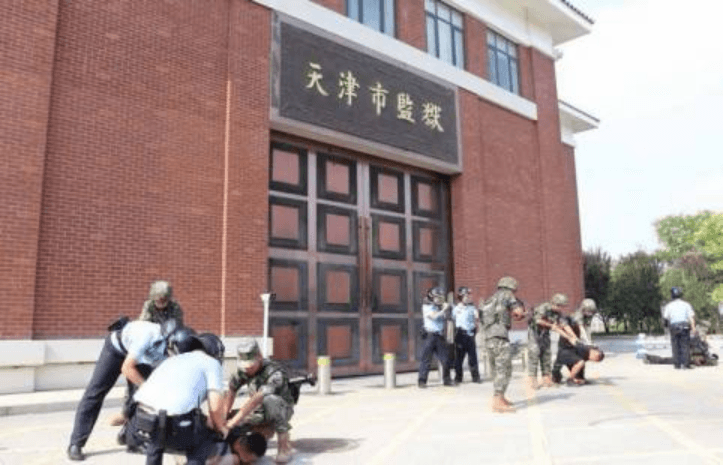
    Tianjin Prison. Image source: Baidu

    Baker List, Craner List 

    In the wake of the suppression of nation-wide protests that took place in the late spring of 1989, countries around the world imposed sanctions on the Chinese government. For the most part, the sanctions were imposed as a result of decisions by the executive branch, but in the United States, where trade and tariffs are the responsibility of the legislative branch under the constitution, sanctions took the form of bills introduced first in Congress, and then, if passed, by the Senate. The bill would then be sent to the president’s desk and then, if signed, become law. If vetoed, the bill would be sent back to Congress to face “veto-override” votes. 

    By law, the president was required to waive the requirement of the Trade Act of 1974 that non-market economies – a group that included Cuba, North Korea, and China – practice free emigration, known as the Jackson-Vanik Amendment before renewing the countries’ most favored nation (MFN) status. Once the waiver was issued, Congress had its say. 


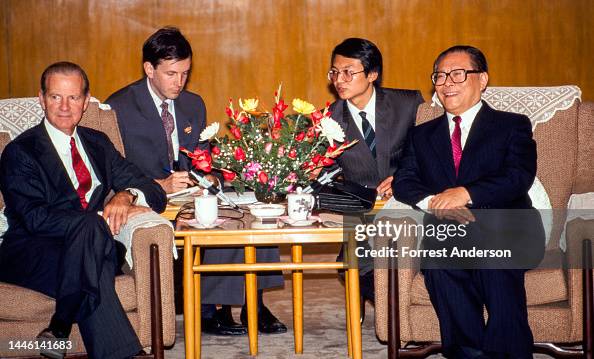
    U.S. Secretary of State James Baker and Chinese Party Secretery Jiang Zemin, Beijing, China, November 1991. (Photo by Forrest Anderson/Getty Images)

    In November 1991, James Baker, George H. W. Bush’s Secretary of State, visited Beijing. In advance of his visit, Baker had sent a list of more than 800 prisoners (it was a flawed list: partial names were listed, no Chinese characters were provided.) China’s Ministry of Foreign Affairs (MoFA) provided a response to the list during the meeting with Baker. (Years later, I met Mr. Baker at a private gathering at the American Consul General’s residence in Hong Kong. He told me his success in getting a response to the list was the greatest achievement of his visit to Beijing.) 

    Although I was not consulted in drawing up the list, I was much involved in analyzing the response. 

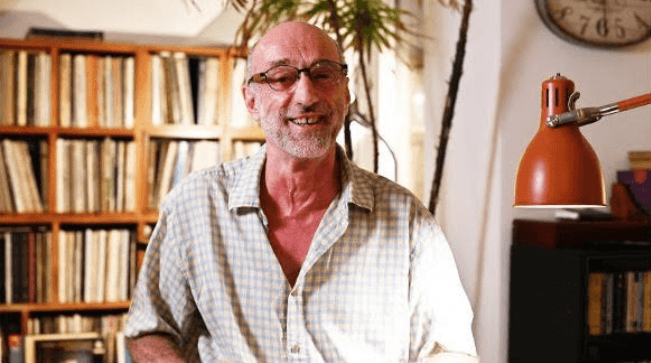
    Robin Munro. Photo by David Frazier

    Working with Robin Munro of Human Rights Watch Asia, I deciphered the list. Names were presented left to right with no breaks. Names were divided into “sentenced” and “not sentenced” (a group that included those who had been detained but not charged, and those sentenced to reeducation through labor). Names were listed, again with no breaks, by province, starting with Beijing and followed by Shanghai and Guangdong, and then others but, in all only, 17 provinces were covered. 

    Despite these limitations, the response proved useful. Individuals thought to have been executed, including a group of workers in Shanghai, were listed as “sentenced,” suggesting they had been spared from the executioner’s bullet. And names were included in the response that were not on the list itself. 

    Robin Munro took a special interest in one of the names in the response: a friend by the name of Yang Lianzi (杨连子). Yang was a troubadour who sang protest songs for the students and workers in Tiananmen Square. He was arrested and subsequently sentenced to 15 years in prison by the Beijing authorities but then transferred to a prison in Gansu Province. He was released three years early. (Prior to his release, I had put Yang’s name on nine lists, receiving two responses). 

    In 1992, Congress passed a law that required China to meet certain conditions before MFN could be renewed. Conditions included respecting the bilateral agreement to stop the export of product made by prisoners and, most importantly for me, the accounting and freeing of prisoners jailed for their participation in the 1989 protests and the earlier Democracy Wall movement. 

    Later in 1992, Bill Clinton won the general election. During the campaign, Clinton pledged to get tough on China and endorsed the conditions on renewing China’s MFN included in congressional legislation. Once elected, Clinton released an executive order in May 1993 that mirrored the China MFN legislation. But then, President Clinton renewed China’s MFN in May 1994, without human rights conditions, delinking China’s trade status from its human rights record. 

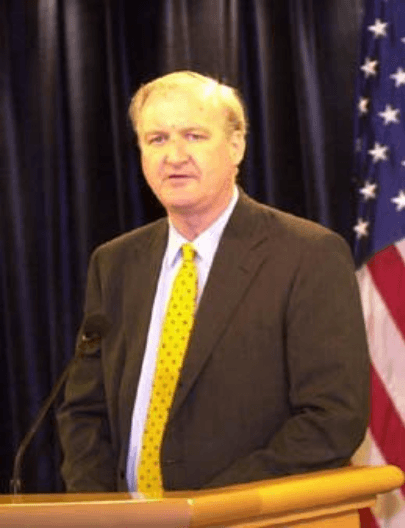
    Lorne Craner. Image source: Archive of U.S. Department of State 

    In November 2000, George H.W. Bush’s son, George W. Bush, was elected president. After taking office in January 2001, he appointed Lorne Craner to be the Assistant Secretary of State for Democracy, Rights, and Labor (DRL). I had gotten to know Lorne while he was President of the International Republican Institute. In anticipation of an upcoming human rights dialogue with China, Craner asked me to suggest names for a prisoner list to be submitted to his Chinese counterpart in the Ministry of Foreign Affairs. Dui Hua, which was established in 1999, provided 50 names of counterrevolutionaries believed to be undergoing coercive measures. China responded, providing information on more than 90 percent of the names. 

    In subsequent testimony to Congress, I estimated that being on a prisoner list tripled the chance of clemency.

    In the period from April 1999 to December 2025, Dui Hua submitted over 550 lists with more than 2,000 prisoner names. Lists were mostly submitted directly to the Chinese government, but the foundation also helped other countries – including the European Union, Switzerland, Norway and others – in compiling lists. More than 500 people on our lists received clemency in the form of sentence reductions and parole (medical and good behavior). 

    Potemkin Prison 

    A few months after Bush was inaugurated in 2001, I traveled to Beijing in March to meet with Chinese government ministries to discuss prison visits. I met with both MoFA and the Ministry of Justice (MoJ) to review prisons I had visited. We agreed that the next prison I would visit would be a “model prison” in nearby Tianjin. (Before I was banned from visiting Chinese prisons in 2005, I was taken to see prisons or detention centers in Beijing, Shanghai, Fujian, Guangdong, Hubei, and Tianjin. I later visited two prisons in Hong Kong.)

    My visit to Tianjin Prison took place on March 6, 2001, the day after I met with the MoJ’s Wang Lixian.

     I was picked up at my hotel in Beijing at 8 AM by officers Zhang Qing and Bai Ping. We left promptly for Tianjin where we were met by Mr. Guo Wei of the Tianjin Prison Administration Bureau, Tianjin Prison Warden Mr. Kang and his deputy Ms. Wang. After a short drive, we arrived at the gate of Tianjin Prison, a massive, multi-story structure covered from top to bottom with red tiles. 

    Tianjin Prison was a Potemkin Prison, no prisoners in sight (they were “working in the fields,” I was told.) We would be taken on a “tour of prison architecture,” a phrase I learned from Swiss officials who had visited many Chinese prisons. Everything in Tianjin Prison was clean and orderly. The cells, each housing six to eight prisoners, were relatively spacious with plenty of sunshine. The prisoners’ clothes were neatly folded and placed on the bunk beds

    There was a television in the common area. Inmates were allowed to watch government stations presenting China’s version of the news.

    I was taken to the prison hospital and classrooms, one of which was used to teach computer skills. The computers had been donated by a European company. I asked my hosts for information on a couple of people thought to be incarcerated in Tianjin Prison. My questions drew silence.

    It was a short, two-hour visit. We headed to a restaurant where the prison bureau hosted us to a banquet. Alcohol was liberally consumed. Soon the Tianjin officials were tipsy. They made jokes at the expense of the female officers and played drinking games with me. After lunch, we scurried back to Beijing where I was deposited at my hotel.  

    In the evening, I was joined by officers from the U.S. embassy. Over dinner, I debriefed them on my disappointing visit to Tianjin Prison. 

  • A Prison for Women

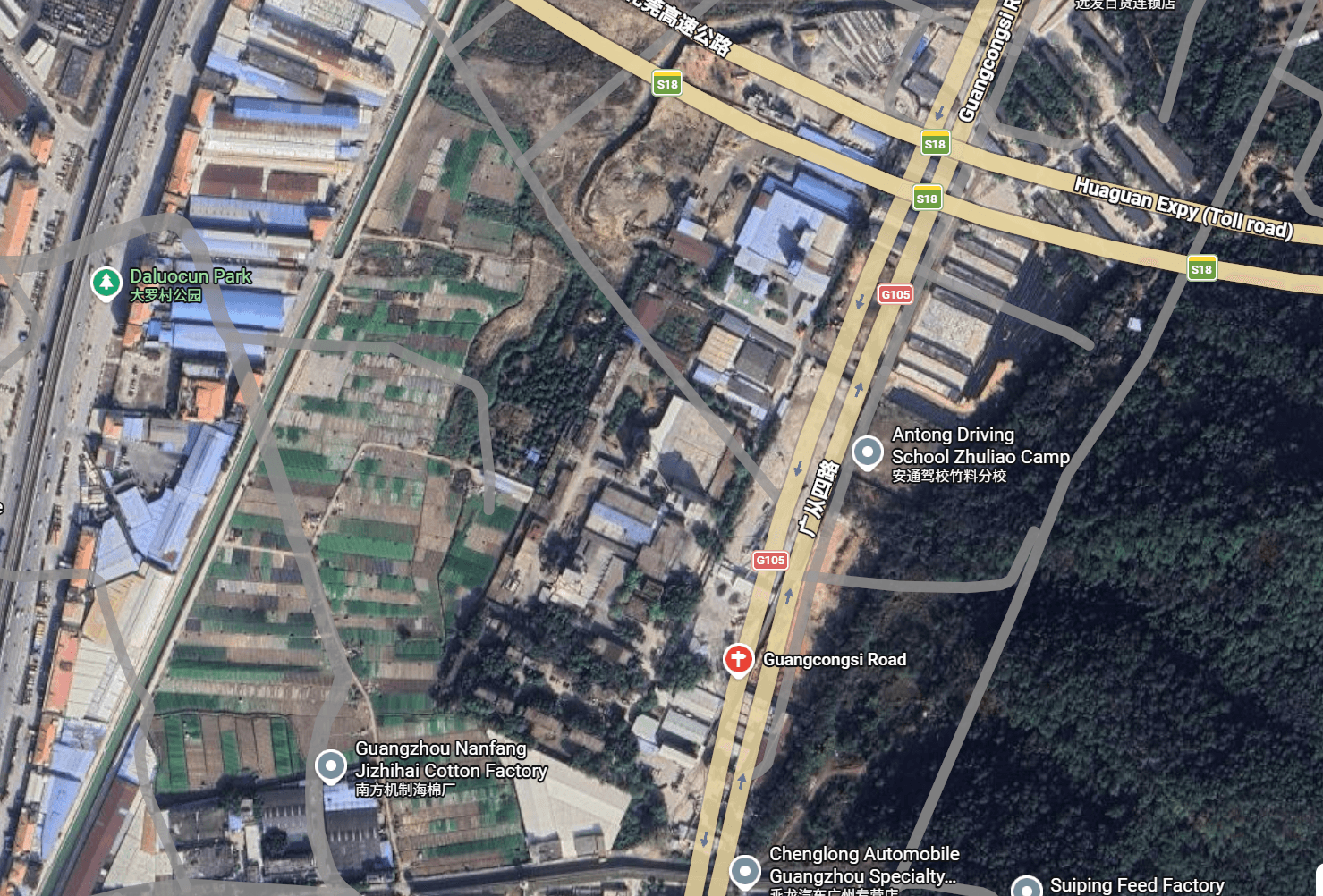
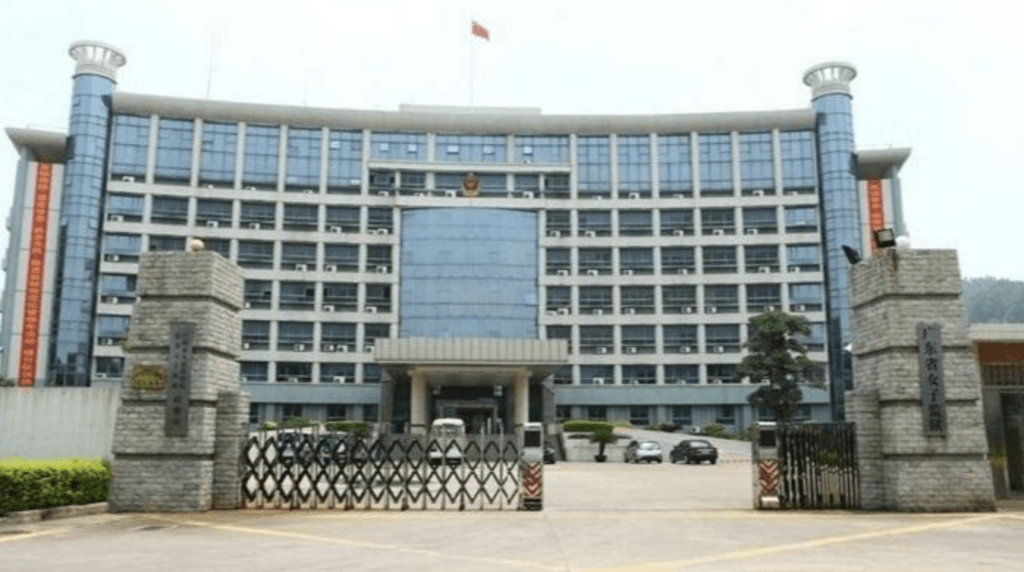
    The Guangdong Women’s Prison on Guangcong Si Road, Guangzhou. Image source: Google Map

    On December 22, 2010, the United Nations General Assembly, prodded by Princess Bajrakitiyabha of Thailand, adopted the United Nations Rules for the Treatment Women in Prison and Non-Custodial Measures for Women in Prison, also known as the Bangkok Rules. The document sets out 70 rules that constitute the first roadmap for the treatment of women prisoners.  

    International Symposium 

    After more than a year of preparation, Dui Hua, under my leadership, held an international symposium on women in prison in Hong Kong in February 2014. The symposium examined the relevance of the Bangkok Rules to female prisoners incarcerated in custodial facilities in different countries. It was jointly organized by Dui Hua and three partners (Penal Reform International, Renmin University, and the University of Hong Kong) and funded with grants from the governments of Denmark, the Netherlands, and Norway, as well as the Office of the High Commissioner for Human Rights and the Ford Foundation.  

    The symposium brought together 23 presenters and 27 guests from 14 countries and regions and consisted of two days of presentations, one day of interactive dialogue, and a field visit to Hong Kong’s largest women’s prison. 

    Prior to the symposium, Professor Cheng Lei of Renmin University of China Law School, one of Dui Hua’s partners, conducted independent fieldwork in five Chinese women’s prisons and detention centers. His presentation was a highlight of the symposium that also featured research on violence against women, children of incarcerated women, healthcare, women correctional officers, and female juvenile offenders.  

    Dui Hua held a symposium on Girls in Conflict with the Law from October 2020 to March 2021. It was held virtually as a series of podcasts due to restrictions imposed by the Covid pandemic. 

    In addition to introducing the Bangkok Rules to decision makers in China, the 2014 symposium played a role in the decision by Hong Kong’s Correctional Services Department to implement the rules in Hong Kong’s women’s prisons. It also contributed to the landmark Supreme People’s Court (SPC) decision to overturn the death sentence of Li Yan, a domestic violence survivor who killed her abusive husband. 

    Papers presented at the symposium provided the basis for Dui Hua’s submission on China’s women prisoners at the 59th session of the United Nations Committee on the Elimination of Discrimination against Women in Geneva in October 2014. 

    During the same month, I was received at the Great Hall of the People by Wang Shengming, Vice Chairman of the National People’s Congress Judicial Committee, the organ that writes China’s laws. Wang told me that China had been studying the Bangkok Rules and recognized that women required different treatment than men in the use of custodial and non-custodial measures. He stated that China was considering enacting legislation to implement the Bangkok Rules. Unfortunately, there has been little change in the way women are treated in Chinese prisoners since my meeting with Mr. Wang. 

    During the 2014 symposium, Hong Kong Correctional Services organized a visit by delegates to the Lo Wu Correctional facility, a medium security prison used to incarcerate women prisoners, nearly all of whom were either sex workers or drug offenders. At the time, there were 1,613 women in Hong Kong prisons, representing 19.5 percent of the total prison population, one of the highest rates of female incarceration in the world. 

    We visited multiple locations in the Lo Wu prison including cellblocks, the cafeteria, exercise yard, and the holding area for female prisoners and their children. What we saw was so depressing that one of our delegates fainted. 

    Five years after our symposium, the Hong Kong government enacted national security legislation that resulted in the arrest of nearly 2000 activists, including hundreds of women. 

    Guangdong Women’s Prison 

    Guangdong Women’s Prisoner. Image source: Internet

    With an estimated population of 5,000 inmates, Guangdong Women’s Prison is one of the largest women’s prisons in China, if not the world. Established in 2003, it is considered a medium security prison. 

    Although Dui Hua had asked about a handful of women prisoners in Guangdong Women’s Prison prior to the symposium, the foundation stepped up its inquiries after the event. Beginning in 2015, Dui Hua submitted 56 lists to its Chinese interlocutors; the lists asked for information on 82 individuals. It received 35 responses on 59 women inmates. Fifty of these prisoners benefited from 88 acts of clemency, including sentence reductions, parole, medical parole, and bail. 

    One of the prisoners released early was Xie Qing, who, together with her husband, was responsible for managing the Jiangmen Station of Falun Gong. She was released five months early in late 2014. 

    Taken together, the information on prisoners in Guangdong Women’s Prison obtained by Dui Hua represents the most comprehensive picture of female prisoners in a Chinese carceral facility. The number of women granted clemency speaks to the efficacy of submitting lists and raising prisoner names. 

    Dui Hua maintains one of the largest databases of political prisoners in the world. At present, the database records information on 212 inmates in Guangdong Women’s Prison. 

    But gauging the number of women in prison in China is difficult. The Chinese government no longer publishes information on the number of female prisoners. Moreover, prisons are not the only facility to hold women. Others include public security detention centers and legal education centers. Liang Shaolin (梁少琳), a Falun Gong practitioner, served two terms in a Guangdong legal education center. She is now serving a sentence in Guangdong Women’s Prison. 

    Many female prisoners in Guangdong Women’s Prison are serving sentences for using a cult to undermine implementation of the law. “Evil cults” is a term applied to the dozens of unorthodox religious groups known to exist in China. The two best known of these groups are Falun Gong and the Church of Almighty God. In November 2024, Yao Jingjiao (姚静娇), an elderly Falun Gong practitioner, died after allegedly being mistreated by prison officers. (Dui Hua has documented more than 40 unorthodox religious groups operating in today’s China.) 

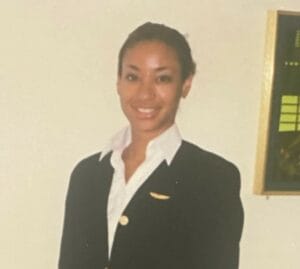
    One of the prisoners serving a sentence in Guangdong Women’s Prison for a drug-related offense is Dawn Michelle Hunt, a U.S. citizen and daughter of a recently deceased Chicago police officer, her father. Her mother and brother are also retired Chicago police officers. Dui Hua has placed Ms. Hunt on eight prisoner lists and received three responses, including a detailed written response from the Chinese government. 

    Dawn Michelle Hunt in a flight attendant uniform. Image provided by the Hunt family.

    Dawn Michelle Hunt has no record of being in trouble with the law and no history of drug use. She claims to have been tricked into carrying drugs. She is very ill and has been badly treated while in prison. U.S. lawmakers have appealed to the Chinese government to release her on humanitarian grounds. 

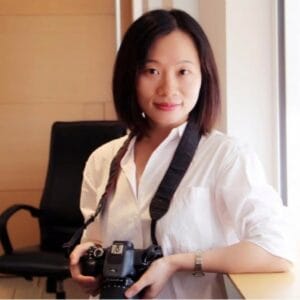
    Dui Hua is also aware of one female prisoner in the prison who is serving a sentence for subversion, a crime of endangering state security: Huang Xueqin (黄雪琴), a founder of China’s Me Too movement. She is gravely ill, but the authorities refuse to grant her medical parole. 

    Huang Xueqin. Image source: Huang Xueqing

    Hong Kong’s Female Political Prisoners 

    The SAR’s female political prisoners are placed in two facilities: the medium security Lo Wu prison, used to incarcerate women, and the high security Siu Lam Psychiatric Center, used to house both male and female prisoners with a capacity of 248 prisoners. 

    As referenced by the University of London, Birbeck’s Institute for Crime & Policy Research’s World Prison Brief, ably overseen by Roy Walmsley, there were 1,985 women in Hong Kong prisons, accounting for 21.5 percent of the total prison population in the SAR in mid-2024. Both numbers are doubtless greater in 2026, reflecting the addition of hundreds of women convicted for national security violations. The Committee for Freedom in Hong Kong has documented how male and female political prisoners are treated in Hong Kong prisons.


  • A Single Spark

    Soon after Dui Hua registered as a non-profit in April 1999, I and my colleagues began visiting the University Services Center (USC) on the campus of the Chinese University of Hong Kong in Shatin. We focused on finding the names of political prisoners in Chinese books and magazines; many of the prisoners had escaped the attention of researchers and activists outside of China.  

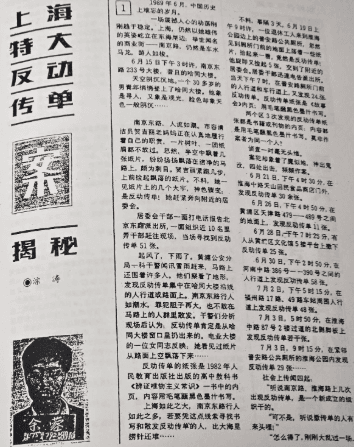
    An early find was two issues of People’s Police, a publication that extolled the work of Shanghai’s public security bureau in breathless accounts of their heroism. The issues told the story of Yu Rong (余蓉), then 35, whose father died in prison after being sentenced for counterrevolution. A recidivist who had served sentences for minor crimes, Yu had a penchant for dropping leaflets and other objects from tall buildings in multiple locations in Shanghai.  

    Copy of People’s Police 1990, Issue One, “A major reactionary pamphlets case in Shanghai”.
    Image source: Dui Hua

    In all, Yu disbursed 1,450 leaflets by dropping them from tall buildings or leaving them in public toilets over a 108-day period that began with the suppression of protests in Beijing and other cities in the Spring of 1989. The magazine claimed that Yu Rong’s actions constituted the biggest crime of its kind in Shanghai since 1949. 

    All of the leaflets had been written on the pages of elementary and high school textbooks published in the early 1980s. All had been written by the same hand using a black-ink brush. 

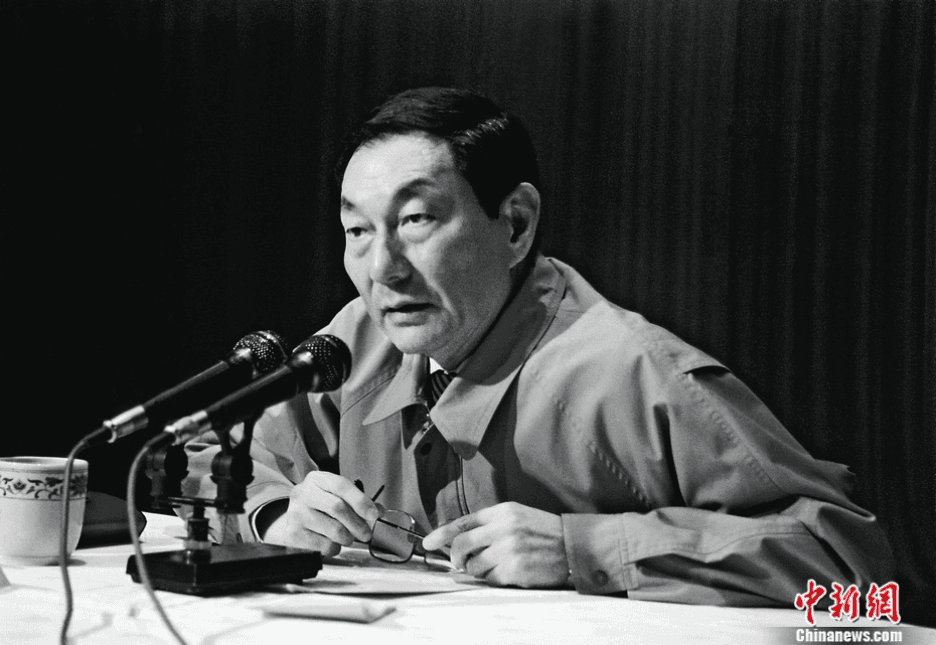
    Then Shanghai Mayor and Party Secretary Zhu Rongji. Image Source: Sohu.com

    At a time of social tensions when crimes were soaring, Shanghai’s mayor, Zhu Rongji, took charge of efforts to capture Yu. He ordered the police to solve the case immediately and deployed hundreds of policemen to accomplish the task.  

    Zhu had gained a reputation as a calming, moderate voice. After the June 4 protests – which eventually resulted in the execution of four individuals in Shanghai who had attacked a train – Zhu went on local television, removed his glasses and claimed to have lost his speech. He appealed for calm. Zhu went on to build a reputation as an economic reformer and was the architect of China’s effort to join the World Trade Organization. But he was also a brutal reformer who ordered the executions of individuals involved in a big car smuggling scandal in Hainan. 

    Flooding the Zone 

    In those days, the police did not have access to forensic tools like fingerprints and DNA testing. Nor did they have surveillance cameras which today can be found by the thousands in major Chinese cities. The way the case was solved was to catch Yu in the act. When leaflets were dropped, the police would rush to the scene and time how long it took for pieces of paper to fall to the ground. They would then flood the neighborhood to interview witnesses. This approach led to the identification of many suspects, none of which panned out. 

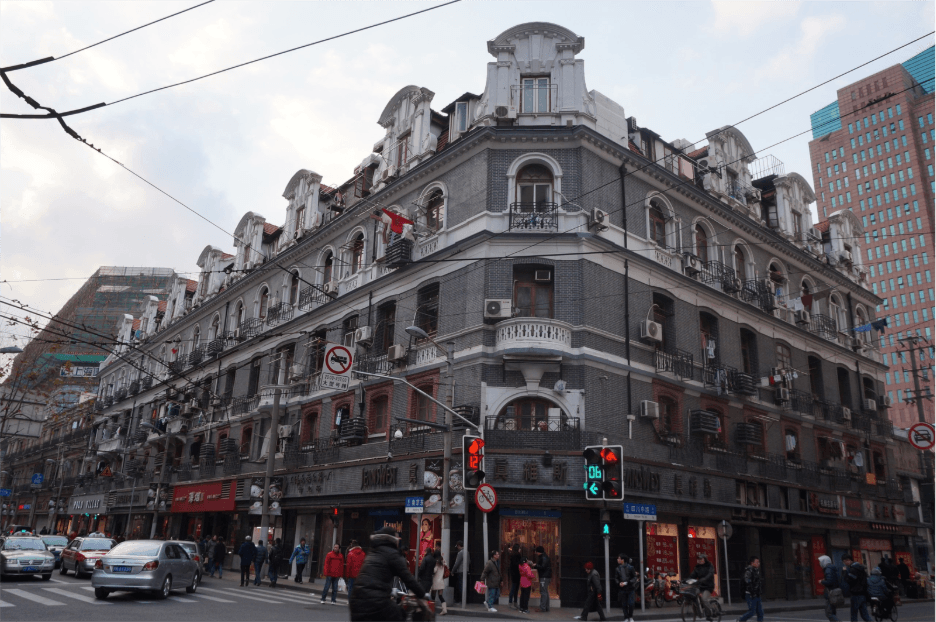
    Yu picked busy commercial streets to disburse pamphlets, such as Nanjing Road East. The old art-deco building was part
    of the former Hardoon estate. Nanjing Road East was once known as Shanghai’s Fifth Avenue. Image source: Wikicommons 

    On the 108th day of the manhunt, Yu Rong was apprehended in the vicinity of his apartment building. Police noticed a nervous young man, sweating profusely. Yu was taken to his room where incriminating evidence was found (textbooks with torn pages and an ink slab and brush). The interrogation began but before long he was brought to a police station where the interrogation continued. Yu Rong eventually confessed. 

    Tilanqiao  

    My first opportunity to raise Yu Rong’s case came in late 2000, the same year we found the issues of People’s Police in Hong Kong. I had flown to Beijing expecting to be granted a visit to Beijing Number Two Prison, but my request was denied. I was instead offered the chance to visit a prison in Shanghai, where the Ministry of Justice oversaw ten prisons. I returned to Hong Kong where we put together a list of more than 30 names of inmates in Shanghai facilities. 

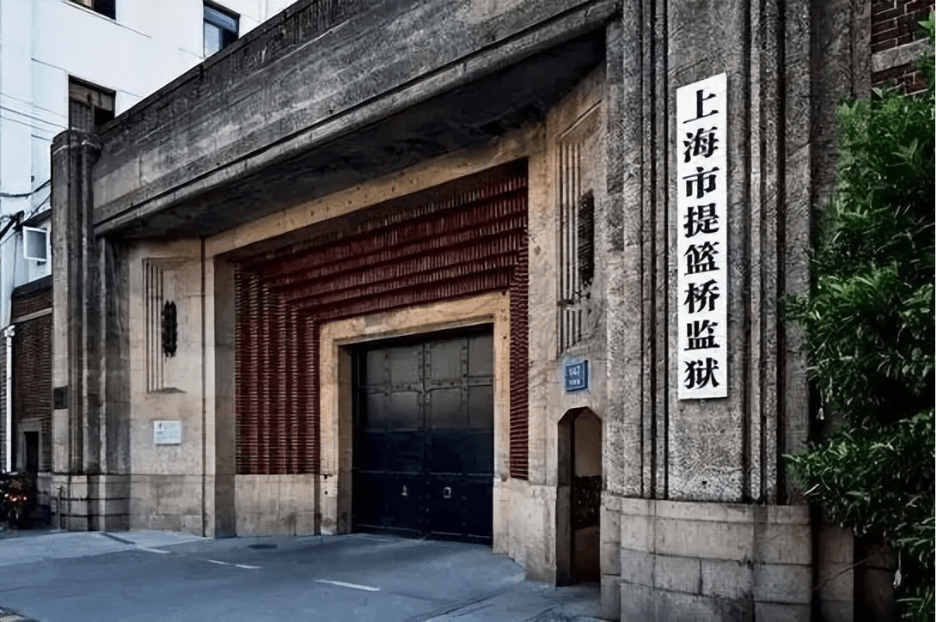
    Tilanqiao Prison, at its former location. Part of the facility has been converted to the
    Shanghai Prison History Museum. Image source: wenxiaobai.com

    Only after my arrival in Shanghai on December 4, 2000, did I know that a visit to Tilanqiao would take place. After arriving, I asked the warden for information on the people on the list, including Yu Rong. (Other names on the list included Jiang Cunde, a labor organizer, and Li Junmin, an alleged Taiwan spy.) The warden, who was accompanied by officers of the Shanghai Prison Bureau, didn’t recognize Yu Rong’s name, but my request for information was noted and passed along to higher authorities.  

    Supreme People’s Court 

    When the attacks of September 11, 2001, took place, I was in Hong Kong. Flights out of Hong Kong were not cancelled, so I flew up to Beijing where I was able to meet with officials of several entities, including the Supreme People’s Court (SPC). I asked officers of the court to find information on Yu Rong. 

    Three months later, I returned to Beijing in the company of New York Times journalist Tina Rosenberg. Ms. Rosenberg was writing a story about my work for the publication’s Sunday Magazine (It would eventually be published as John Kamm’s Third Way in March 2002.) We secured a meeting with the SPC. One of the participants in the meeting was an official I had met at the September meeting. She had been unable to find any information on Yu Rong, leading Ms. Rosenberg to wonder if Yu Rong was still alive. 

    Ankang 

    I continued to make inquiries. In late 2005, I asked an interlocutor for help in getting information on three Shanghai detainees. In April 2006, I received a reply. Yu Yong had been diagnosed with schizophrenia and placed in an AnKang hospital. Ankang hospitals are psychiatric hospitals managed by public security bureaus. Detention in such facilities is open-ended and does not require the approval of a court.  

    Response received in a 2006 communication to Dui Hua. “According to multiple sources, Yu never served a sentence in Tilanqiao Prison. He was diagnosed with schizophrenia in 1990 and was sent to receive treatment in an Ankang. He was not sentenced to imprisonment. 

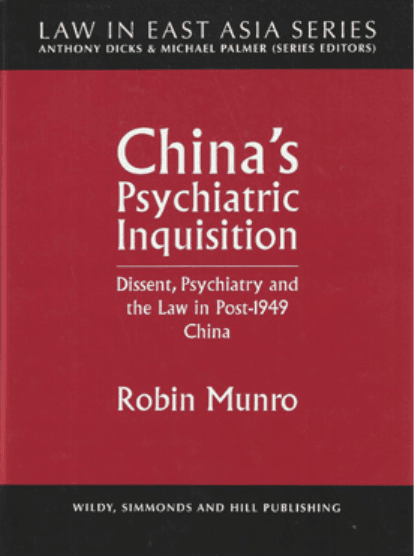
    The foremost authority on psychiatric detention in China was the scholar and human rights activist Dr. Robin Munro, whose book China’s Psychiatric Inquisition, is the most comprehensive description of this cruel form of arbitrary detention. Dr. Munro used accounts in medical journals found in Mainland libraries, as well as interviews with experts and testimonies of those subjected to mistreatment in Ankang hospitals, and who lived to tell their stories.  

    China’s Psychiatric Inquisition, by Robin Munro. Image Source: wildy.com

    Creative Dissent 

    Yu Rong found a way to express his opposition to government policies with a minimum chance of being discovered. Other dissidents have tried to do the same, while others are more brazen, unafraid of being discovered. 

    n a case similar to that of Yu Rong, a June 4 protester by the name of Li Huanming served a sentence for counterrevolution in Shaanxi Province after which he traveled south to Guangdong Province. He settled in Shenzhen, the booming city on the border with Hong Kong. There he planned to distribute thousands of photocopied leaflets by dropping them from tall buildings. He also placed stacks of the leaflets under bridges of the highway to Guangzhou, thinking that passing trucks would blow them into city streets and fields. 

    Another persecuted group, Falun Gong adherents, wrote messages on Chinese currency which it left lying about city parks. Dissident artists like Ai Weiwei and the Gao Brothers used artwork to express their views. 

    More recently, several instances of those dissatisfied with the state of life in China publicly denounced President Xi Jing Ping and the Chinese Communist Party (CCP) or expressed support for public disobedience, such as the “white paper” movement. All were quickly seized by the police. The fates of many remain unknown.  

    The CCP and the government it controls have tried to suppress opposing views among the Chinese people. Results are mixed. Dissenters have held to the belief that, as Mao Zedong put it, “A single spark can start a prairie fire.” 

    Ankang

    Ankang (安康), literally, “peace and health” are psychiatric treatment facilities under the direction of the Ministry of Public Security. They are not prison hospitals, as they are sometimes misidentified by Western media. Article 18 of the Criminal Law provides the substantive legal basis for compulsory psychiatric treatment of mentally ill offenders. Through a series of internal meeting minutes in the late 1980’s, the MPS quickly established and asserted its control over the administration of the facilities such as the Ankang hospitals. The system then expanded its functions to include forensic diagnostics in criminal investigations, under procedures further regulated by the Criminal Procedure Law, the People’s Police Law, mental health law, and public security regulations.

    Officially established in 1985, there are more than 24 such facilities in the country. These facilities are assigned by police to provide psychiatric evaluation in criminal cases, making the independence and neutrality of the evaluation problematic.


    Members of civil society often question the effectiveness of treatment carried out in Ankang, and the lack of transparency.  


  • Home for Christmas

    Embed from Getty Images
    Chinese dissident and pro-democracy activist Xu Wenli prepares to speak to reporters before a press conference, 27 January 2003, in Washington DC, with his daughter Xu Jin (C) and Wife He Xintong (L). Photo by JOYCE NALTCHAYAN/AFP via Getty Images

    It is not uncommon for China’s judicial authorities to exercise clemency on the occasion of holidays and festivals. Mark Swidan, Kai Li, and John Leung were released on Thanksgiving Day, 2024. American citizen Jude Shao was released two days before American Independence Day, 2008. Prisoners, political and religious as well as others, are often shown clemency in the run-up to China’s Spring Festival. Amnesties have been called to commemorate important dates.

    For me, the most poignant holiday release was that of veteran activist Xu Wenli (徐文立).

    On the way to the U.S.

    At 1:15 AM on December 24, 2002, I received a phone call from an official who worked for China’s Ministry of Foreign Affairs (MFA). It was the early hours of Christmas Eve. Xu Wenli, leader of the China Democracy Party, had been released and was on his way to the United States.

    I was asleep on the couch of my office in San Francisco. I had been expecting the call. The State Council Information Office (SCIO) was hoping to make the morning editions of American newspapers. This release, together with the release of the Tibetan filmmaker Ngawang Choephel and the Tibetan teacher Takna Jigme Sangpo earlier in 2002, was part of the charm offensive launched by Chinese President Jiang Zemin to cozy up to the United States in the immediate aftermath of the 9/11 attacks on New York and Washington.

    As soon as the conversation with the MFA official ended, I called two people: Xu Wenli’s daughter in the U.S., Xu Jin, and Mark Lambert at the American Embassy in Beijing. Mark was the human rights officer at the embassy. He would go on the play a leading role in shaping U.S. policy towards China in the Biden administration.

    Xu Wenli served two terms in prison for his political activism. The first imprisonment took place between April 1981 and May 1993 (he was released on parole in late May). The second jailing took place between November 1998 and December 2002 (he was released on medical parole on Christmas Eve.)

    Xu’s release in 1993 was widely covered by international media.

    Xu, with Wei Jingsheng, were leaders of the Democracy Wall Movement that erupted in major Chinese cities in 1979. Both men wound up serving more than 10 years in prison beginning in 1981. Xu in a Beijing prison, Wei in a specialized facility in neighboring Hebei Province. An account of Xu’s first imprisonment, written by me, can be found in “Prisoner 001.”

    Xu and Wei were detained around the same time and sentenced for the same crime, counterrevolution. After their release, Wei went to the U.S., where he lives today, while Xu elected to stay in China.  

    The two men are very different. Wei is brash. He enjoys the limelight and especially likes the attention he gets from testifying at congressional hearings. Wei had excellent relations with Beijing-based foreign journalists in the early 1990s. 

    Xu, by contrast, is quiet and reserved. He is a serious intellectual who has authored books on political science. He has never testified before Congress. Reflecting his intellect and speaking abilities, Xu was invited to teach at Brown University upon his arrival in the U.S. after his second imprisonment ended in 2002. 

    Second Imprisonment

    In 1997, China’s National People’s Congress (NPC) amended the country’s Criminal Law and Criminal Procedure Law. The crime of counterrevolution was removed from the Criminal Law and the crimes of endangering state security and using a cult to undermine implementation of the law were added. Judicial reform seemed to be underway.

    In June 1998, U.S. President Bill Clinton traveled to China, visiting Beijing, Shanghai, and Hong Kong. President Clinton and President Jiang held a joint news conference in which Clinton told Jiang he should meet the Dalai Lama. He also referenced the removal of counterrevolution from the Criminal Law and recommended releasing those who were in prison serving sentences for this crime, a proposal I had put forward to the White House before his departure for China. The joint press conference received a great deal of attention from the Western media.

    Unfortunately for the reform movement, conservative members of China’s Politburo as well as senior military leaders paid close attention to what was said by the two leaders and were furious that Jiang didn’t push back, especially on the suggestion that Jiang would enjoy the company of the Dalai Lama.

    Right after Clinton left China to attend to domestic problems (notably the Monica Lewinsky scandal), a Hangzhou activist by the name of Wang Youcai tried to establish the Zhejiang Branch of the China Democracy Party (CDP), His application got nowhere, but Beijing soon caught wind of what was going on. Jiang Zemin ordered the authorities to nip the nascent democracy movement in the bud. Wang Youcai was detained on October 8, 1998, and subsequently sentenced to 11 years in prison for the crime of subversion.

    Three days before Wang was detained, China signed the United Nations Convention on Civil and Political Rights (ICCPR). The convention establishes the right to form political parties. (Although it signed the ICCPR in 1998, China’s NPC has yet to ratify it.)

    On November 9, 1998, Xu Wenli and fellow activists, including He Depu (何德普), Gao Hongming (高洪明), Liu Shizhun (刘世遵), and Zha Jianguo (查建国), announced the establishment of the CDP Beijing-Tianjin Branch. Three weeks later, on November 30, Xu was detained. Around the same time, the fellow activists who joined him in the attempt to register the party were also detained. Xu was subsequently sentenced to 13 years in prison and three years deprivation of political rights. He was sent to Yanqing Prison to serve his sentence.

    Beijing Number One Intermediate People’s Court convicted Xu of Subversion in December 1998. Image source: Baidu Baike.

    As he did during Xu’s first term in prison, Hong Kong-based human rights champion Robin Munro encouraged me to seek clemency for Xu. Munro, who passed away in Taiwan in 2021, was Human Rights Watch’s China researcher in Hong Kong. He had gotten to know Xu in Beijing well before his arrest in 1981. They became fast friends.

    By the time I took up Xu’s case, for the second time, in 1998, I had been intervening on behalf of Chinese political and religious prisoners for more than eight years. I had developed a modus operandi of interactions and dialogues used to work with different parties in an intervention. In the coming years I was to deploy this M.O. in hundreds of cases.

    Interactions with Family Members

    Gaining the trust of the prisoner’s family is vital. The trust I gained during Xu’s first imprisonment carried over to the second imprisonment.

    Especially valuable was the help I received from Xu’s daughter, Xu Jin, who had relocated to the U.S. In July 2001, Xu Jin sent me the results of her father’s medical tests. The information informed the application for Xu Wenli’s medical parole, which was eventually granted.

    Dialogue with the Chinese Government

    What distinguishes my work—and, after 1999, the work of Dui Hua—is the ability to engage the Chinese government in a dialogue on human rights and the treatment of prisoners. This work entails both face-to-face meetings and submission of lists to Chinese government ministries. Lists are submitted directly and through governments with whom we work. During the term of Xu’s second imprisonment, we submitted eight lists and received seven responses from the Chinese government.

    In reviewing notes from my meetings with my Chinese interlocutors, I am struck by the references to Xu’s bad attitude and, resulting from that, the unlikeliness of his early release from prison. They denied that Xu was in poor health. “He’s quite healthy,” they claimed.

    I usually was the one to seek in-person meetings, but on at least one occasion, an official unexpectedly asked to see me. On the evening of November 1, 2002, a senior official came to my hotel in Beijing. He was dressed casually and wanted to discuss real estate opportunities. We eventually got around to discussing Xu Wenli. He advised me that Xu’s release, already agreed to internally, had hit a roadblock, mostly for domestic political reasons having to do with the selection of Hu Jintao as Secretary General of the Chinese Communist Party. Some conservatives were pressing Hu not to release any more political prisoners. Their opposition was eventually overcome.

    Dialogue with the U.S. Government

    The administration of George W. Bush, who took office in January 2001, actively worked to secure the release of two activists: Uyghur entrepreneur and humanitarian Rebiya Kadeer and Xu Wenli. President Bush relied on two American officials, his old friend Ambassador to China Clark “Sandy” Randt, and Assistant Secretary of State for Democracy, Rights and Labor Lorne Craner. Both men asked for my assistance.

    Dialogues with Other Governments

    In an effort to ward off sanctions, Beijing began holding human rights dialogues with other governments in the 1990s. In addition to the U.S., China was discussing human rights with seven other countries at the time of Xu Wenli’s and Wang Youcai’s arrest in 1998. Dui Hua assisted several of these by composing prisoner lists and proposing topics for discussion. Xu figured prominently in both.

    Interactions with NGOs

    On the whole, my interactions on the Xu Wenli case with the human rights and dissident communities were good. By far the most helpful was Robin Munro. He headed the Human Rights Watch office in Hong Kong from 1990 to 1999. Our offices were within a hundred yards of each other, and we met frequently. He introduced me to the case, and pressed me to intervene with my Chinese interlocutors.

    While Munro supported my work, our collaboration on the Xu case and many others outraged both the human rights community and the business community, members of which toyed with the idea of denouncing me. As the saying goes,”If both sides condemn you, you must be doing something right!”

    Cooperation with Amnesty International was enhanced by my strong relationship with the Norwegian government. Amnesty’s Norwegian branch chronicled Xu’s case and my role in assisting him during his first and second imprisonments in an account published in 2003.

    Media Coverage

    Dui Hua announced Xu’s Christmas Eve release in a press statement issued immediately after calling Xu Jin and the American Embassy in Beijing. Media coverage was extensive. China’s actions against the CDP and its leaders, Xu Wenli and Wang Youcai, had garnered much media attention, so journalists had plenty of material to work with. 

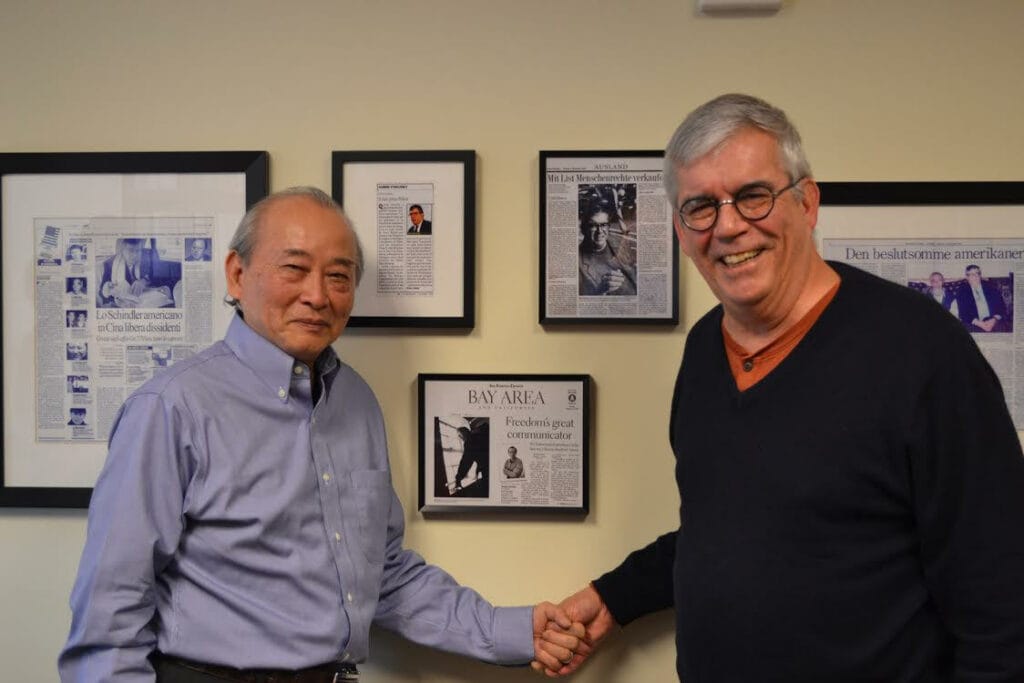
    Xu‘s visit to Dui Hua’s San Francisco office in 2015. Image source: Dui Hua

    Aftermath

    After his release, Xu came to San Francisco to see me at my office. He visited three times. We posed for photographs and enjoyed lunches. Xu was accompanied, on occasion, by his wife, He Xintong, and former political prisoners including Wang Xizhe and Wang Dan.

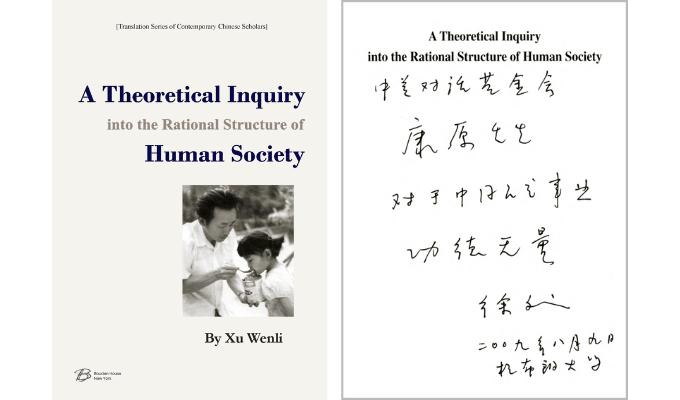
    Inscription by Xu Wenli to Kamm, in his book, “A Theoretical Inquiry into the Rational Structure of Human Society”, thanking Dui Hua’s and Kamm’s contribution to China’s democracy movement.

    Now 82 years old, Xu remains active. He lives with his family in Providence, Rhode Island and is a senior research fellow emeritus at Brown University. In January 2024, he donated his papers to Stanford University’s Hoover Institution. His legacy as a champion of human rights and democracy is secure. 


     Listen to the Encounters with China podcast.

    Subscribe to receive notifications about new episodes. 

    Read all John Kamm Remembers stories.


  • On the Road in Guangdong Province

    Ten years before I began travelling to Guangdong Province to sell provincial authorities on the virtues of releasing political and religious prisoners, I was traveling the length and breadth of the province selling something different: agricultural and industrial chemicals, pharmaceuticals, and chemical technology.

    Even before travelling around the province selling chemicals, I was attending the biannual trade fairs in Guangzhou, the Chinese Export Commodities Fair. I attended 10 fairs, from 1976 to 1980. At these events, the trade fair authorities would lay on trips to locations in the Guangzhou suburbs. I joined as many of these trips as possible, visiting a commune that grew tea in Hua County, fireworks factories in Dongguan County, and the Birds’ Paradise outside of Jiangmen.

    Fort Bayard

    At the end of the nineteenth century, European powers set about carving up China in what came to be known as “The Scramble for Concessions.” The United Kingdom leased Weihaiwei in Shandong Province and much of Baoan County in Guangdong Province, Germany grabbed Qingdao, Russia acquired Port Arthur (now Dalian), and France leased Kwangchowwan. The capital of the territory was Fort Bayard, now Zhanjiang. Kwangchowwan was administered as a part of French Indochina from 1898 to 1943.

    Zhanjiang Prefecture is one of China’s biggest producers of peanuts. In the late 1970s and well into the1980s, Zhanjiang’s peanut crop was badly affected by fungal diseases. I had secured the China agency of Diamond Shamrock Chemical in July,1979. Diamond Shamrock Chemical produced Daconil, a highly effective fungicide.

    In May 1980, I gathered a team of experts to travel to Guangzhou to promote the use of Daconil. We gave a technical seminar, conducted a field trial on peanuts at a commune in the Guangzhou area, and met with representatives of foreign trade corporations and users, including the provincial State Farm Bureau and the Overseas Chinese State Farm Bureau (华侨农场). The Overseas Chinese Farms were established to resettle Chinese refugees and migrants from Southeast Asia, starting in the 1950s. After the discussion, we selected an Overseas Chinese state farm in Zhanjiang and set out in a minibus (called a “bread car 面包车” by the locals because they were shaped like a loaf of bread and minibus sounds like mian-bao in Cantonese) on the morning of Saturday, May 31, 1980.

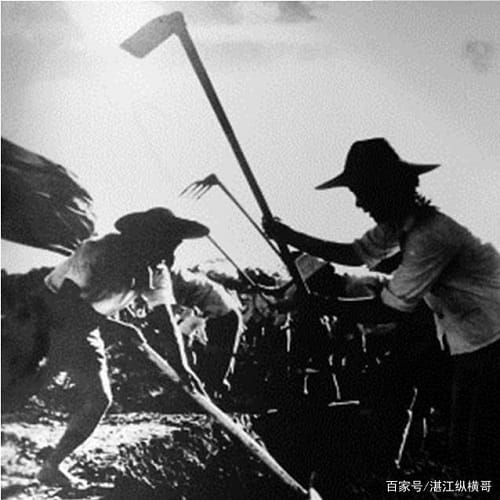
    Farmers working on an overseas Chinese farm in Guangdong. Many similar farms were setup during the late 1950s to resettle the overseas Chinese forced to return from Southeast Asian countries where they were sometimes persecuted. Image source: China State Farms & Tropical Agriculture

    Traveling by road in Guangdong Province was hazardous. Drivers made liberal use of their horns, especially when overtaking other cars. Approaching cars would turn on their high beams at night, blinding the driver and occupants of the oncoming vehicles. The solution was turning on your own beams to blind the other driver, or pulling over to the side of the road till the other car passed. The latter maneuver resulted in more time on the road. I lost two good friends to accidents caused by reckless drivers whose sole qualification for a driver’s license was passing a vision test.

    The distance by road between Guangzhou, where Diamond Shamrock had an office, and Zhanjiang is 420 kilometers. Today, traveling the distance by car takes four and a half hours. In 1980, it took much longer and involved several crossings of the West River by ferry.

    John Kamm crossing the Pearl River in the early 1980s. Pictured with him is James Sweitzer, Vice President of Manufacturers’ Hanover Trust. Like Kamm, Sweitzer served a one-year terms at the helm of the American Chamber of Commerce in Hong Kong. Image source: John Kamm

    After finding the bureau and calling the state farm to get directions, we arrived at the state farm in the early hours of June 1, 1980, and settled into where we’d be staying for the week. It was not a welcoming environment. Our housing had been used as a refuse dump.

    Not long after we settled down to sleep, we were awakened by revolutionary songs to march and perform calisthenics to. Breakfast consisted of steamed buns and congee. As soon as we could, we left for the city to have a look at the old French concession.

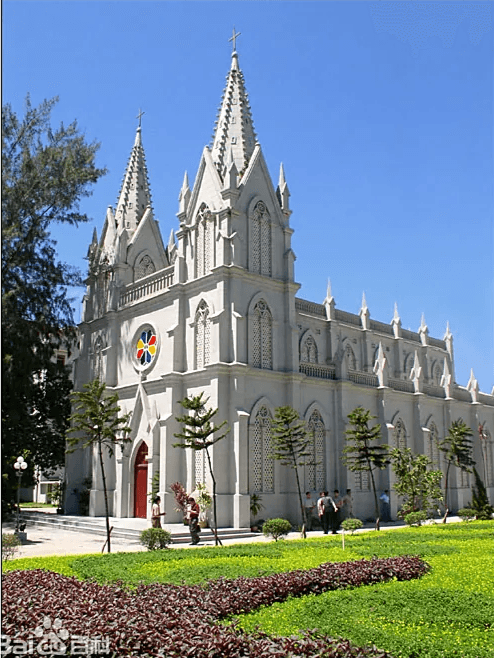
    What we saw were the dilapidated remains of a small colonial settlement. Border posts, once manned by the French Foreign Legion, were choked with weeds. Offices of French officials were falling apart. The windows of the Cathedral of Saint Victor were bricked over. I managed to have a look inside. The pews had been taken out and replaced by rusting machine tools.

    The priests of St. Victor’s acquiesced in the decision of the revolutionary committee to transform the church into a factory. The priests at another Catholic Church in the area refused to do so, believing that the committee’s order was sacrilegious. That church was then torn down by zealous Red Guards.

    St. Victor’s Cathedral in 1980. Image credit: John Kamm
    St. Victor’s Cathedral Today. It serves the local Catholic community. Image credit: Baidui Baike

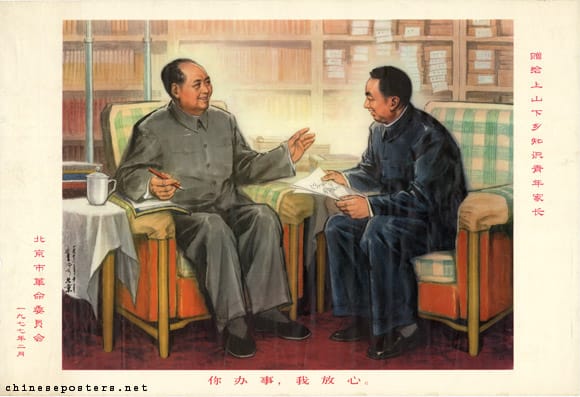
    The Overseas Chinese State Farm where we conducted the Daconil trial abutted old Fort Bayard. A customs station, manned by French legionnaires had been erected (Fort Bayard had been used to smuggle opium and other contraband into China). In 1980, the exterior of the station was taken up by a private market where farmers sold what they grew or raised on their private plots. Looming over the market was a large brick and concrete hoarding with a poster of Chairman Mao speaking to Hua Guofeng: “With you in charge, I am at ease. 你办事,我放心。”

    A 1977 propaganda poster produced by the Beijing Revolutionary Committee, depicting a meeting between Mao and Hua. Image source: Chineseposters.net

    We expected that the farm workers would help us spray the peanuts with our fungicide. They helped but we wound up doing much of the work ourselves. We paid a hefty fee for the pleasure of working with their workers and using the state farm soil.

    We handed out samples of shirts and hats. Fortunately, our hats were blue. (Another agricultural chemical company handed out green hats but was mystified by the farmers’ refusal to wear them. Wearing a green hat carries a very negative connation. It means your wife or girlfriend is cheating on you.)

    Later we tried spraying Daconil on rubber trees at a state farm in Hainan. The trials failed. The fungicide was no good on old rubber trees.

    Although we eventually sold small quantities of Daconil to Chinese foreign trade corporations, we never hit pay dirt. Unbeknownst to us at the time, Chinese scientists worked hard to reverse engineer Daconil and produce China’s own Daconil. Unfortunately, the manufacturing process they used was highly carcinogenic. Workers died.

    Finding Arsenic Trioxide

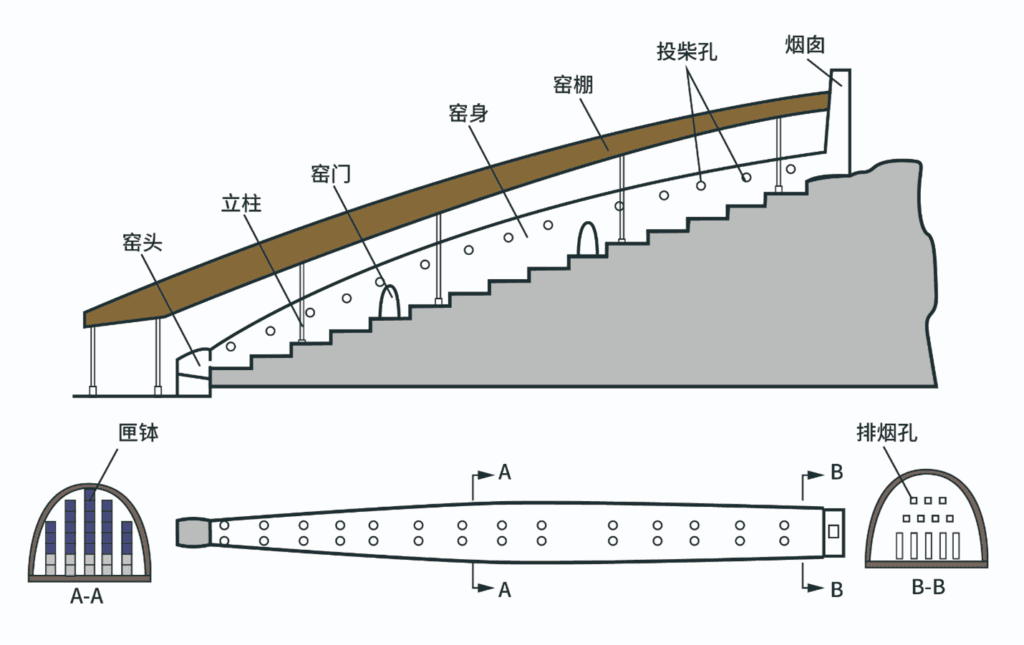
    My team and I were tasked by Diamond Shamrock to find sources of arsenic trioxide, a deadly powder used to manufacture weed killers. We ventured to two remote locations in Guangdong Province, Yunfu County in the western part of the province, and Yangshan County in the northern part. In these places we witnessed arsenic being refined in so-called “dragon kilns,” a technology developed in the Tang Dynasty (618-907 AD.)

    A diagram of “dragon kilns”. Although ”dragon kilns” are mainly used for baking pottery, they can also be used for roasting rocks to extract arsenic trioxide. Image source: lab-x

    On the trip to Yunfu, I travelled with Bill Mulligan, a mining engineer who worked for a large New York bank. We drove over rough roads. In striking contrast, the next county to the west was Loding, a national model in road building. At a later date I traveled on those roads: wide, paved, with barriers on the side and signage in good sight.

    Accompanied by county officials, we hiked up a steep hill until we reached a ridge, where we could peer down at the countryside below, dotted with abandoned mines where arsenic-laden rocks had been mined, tailings leaching out from the mouths of the mine.

    We stopped for a cup of tea. The county boss remarked that the tea plants were the only thing that could grow in the arsenic-laden soil. We immediately spat out the tea, but Mulligan asked for a bag of what we called “arsenic tea,” which he was given. Turning to me, he said, in a low and joking voice, “I’ll bring this home and give it to an in-law!

    We moved closer to the dragon kiln. Village women were hauling buckets of arsenic trioxide down the trail back to town. No special protection gear was worn, no special procedures were followed. I took short breaths but nevertheless felt a tightening of my windpipe in my upper chest.

    Selling Vaccines to Pigeon Farms

    One of the companies we represented was a European manufacturer of vaccines for animals, especially poultry, flocks of which were frequently ravaged by avian diseases. We ventured to Zhongshan County north of Macau, there to conduct a technical exchange on vaccines for pigeons. Zhongshan is famous for its “Shekki Pigeons,” named after Zhongshan County’s seat, Shiqi (Shekki in Cantonese). These birds, roasted in a time-honored way that results in succulent meat and crispy skin, fetch high prices in Hong Kong and Macau.

    On the same trip we introduced a Swiss product to counter swine flu, a perennial problem in South China.

    The pigeon exchange was a complete success. County officials, who had their own stash of US dollars, wanted to buy the vaccines from us, but wanted to do so quickly rather than going through the provincial foreign trade corporation.

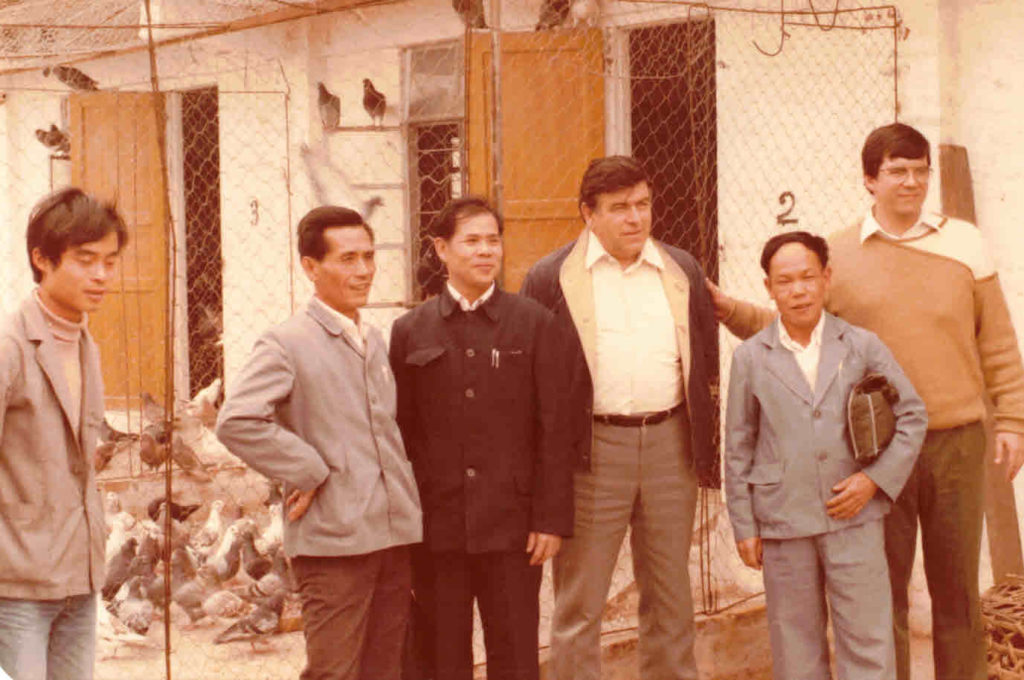
    Kamm (far right) visiting the Shekki pigeon farm in Zhongshan County. Source: The Dui Hua Foundation

    We decided to use their standard Chinese-language contract used to buy things from mainland companies. Things moved quickly. We signed the contract, the county corporation opened the letter of credit for US$ 30,000, and we arranged the shipment in refrigerated containers. This transaction is believed to be the first sale to a county foreign trade company (known as “sub-branches”) during the reform and opening period.

    My experiences doing business, particularly in Guangdong Province, prepared me for my human rights work. I re-learned what my father taught me about selling: Know your customer well, know what your customer wants, and know what your customer is willing to pay. This holds true whether it’s selling chemicals or selling ideas like the benefit of releasing prisoners.

    I also learned that, while the outcome of major political cases is determined at the highest level in Beijing, many cases are handled by local government and party officials including those in prison bureaus, courts, and procuratorates. Today, most of the information on political prisoners that Dui Hua obtains is provided by local entities, bypassing Beijing. Sentence reductions and other acts of clemency are frequently decided at the local level … just like business transactions.


     Listen to the Encounters with China podcast.

    Subscribe to receive notifications about new episodes. 

    Read all John Kamm Remembers stories.


  • Pastor David Lin—Servant of the Lord

    Pastor David Lin—Servant of the Lord

    Lin and Kamm
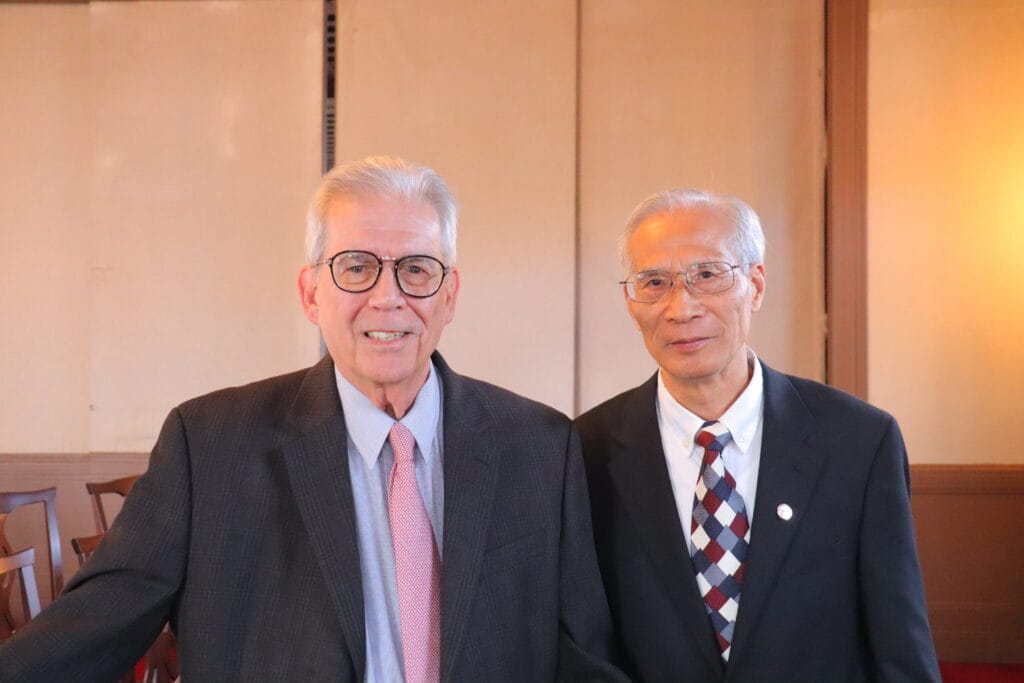
    Dui Hua Executive Director John Kamm and Pastor David Lin (right) at the University Club San Francisco, June 5, 2025. Image source: Dui Hua Foundation 

    I began working on a press statement. I sent her a draft so that she could review it on arrival in San Antonio, and before Dui Hua published it. She approved the draft, and we released a statement.

    Special Presidential Envoy for Hostage Affairs (SPEHA)

    To counter the growing trend of adversaries seizing American citizens for use as bargaining chips, U.S. President Barack Obama established the office of the Special Presidential Envoy for Hostage Affairs (SPEHA) in October 2015. The office was buttressed by passage of the Levinson Act by the Senate in July 2020.  

    In September 2020, because of advocacy work by his son Harrison Li, Kai Li was designated by the State Department as wrongfully detained. He was serving a 10-year sentence in Shanghai’s Qingpu Prison for espionage.

    Not long thereafter, Texas resident Mark Swidan and California resident David Lin were designated as wrongfully detained. At the time they were designated, both Lin and Swidan were serving long prison sentences, Lin in Beijing Number Two Prison and Swidan in Jiangmen Detention Center. 

    Prior to September 2020, no American citizen had been designated as “wrongfully detained,” reflecting a decision not to take on China. 

    Roger Carstens (right), October 6, 2024. Image source: U.S. Embassy Jerusalem

    At the time of their releases—Lin in September 2024, Swidan and Li in November 2024—SPEHA was headed by Roger Carstens, a former Marine known for his no-nonsense approach to dealing with adversarial states. Carstens was appointed Special Presidential Envoy during the first Trump term, He remained in that position throughout Joe Biden’s term in office but was not reappointed at the beginning of the second Trump term that began in 2025. During his tenure, Carstens helped secure the release of nearly 70 Americans held as hostages in foreign prisons.  

    The releases of Lin, Swidan, and Li—as well as three Uyghurs—were a part of the first-ever prisoner exchange between China and the U.S. Hopes were raised that more exchanges were in the works. Thus far, none have happened. 

    Pastor David Lin‘s Story 

    David Lin was born in Taiwan in 1955. He emigrated to the U.S. as a young man and became a citizen. He converted to Christianity and began a lucrative career as a businessman and as an economic advisor to state governments. He began traveling to China on business in the early 1990s and got to know many Christians in the house church movement. 

    Lin
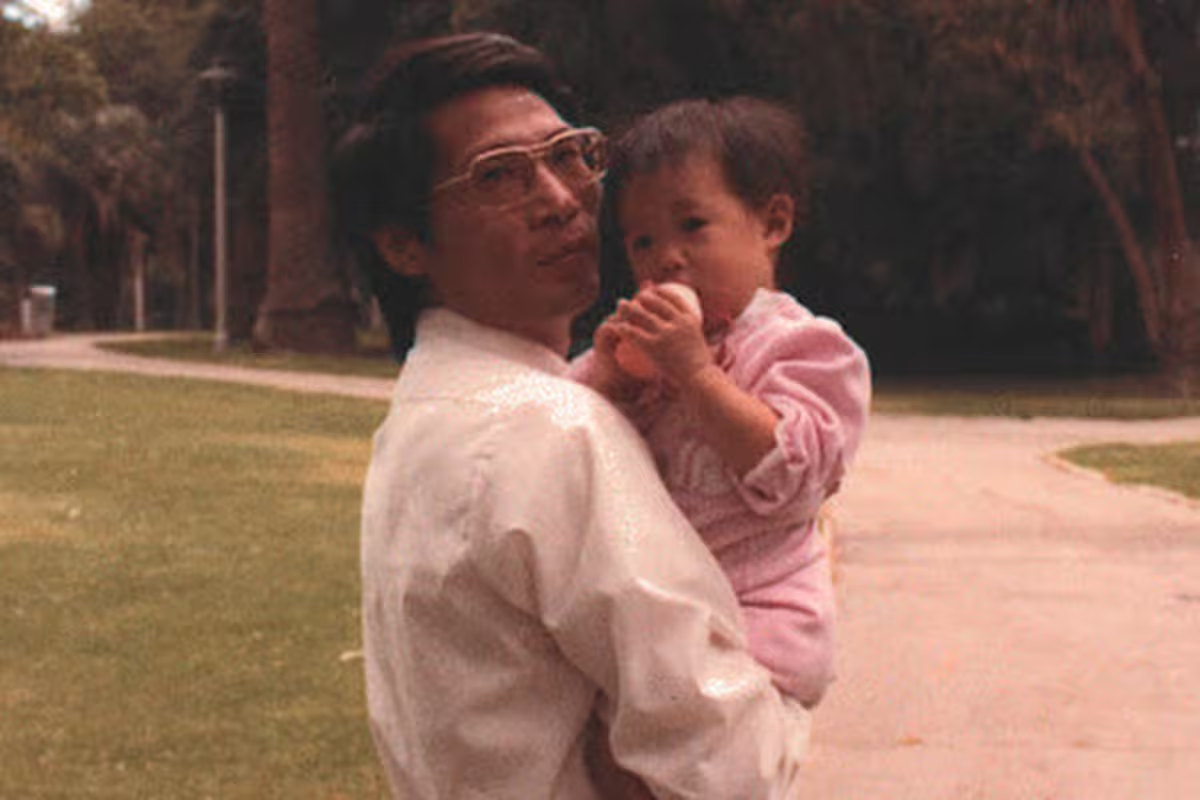
    Pastor Lin and daughter Alice in 1984. Image source: Lin’s family 

    David Lin went to China in 2006 to establish a Christian missionary training center in Beijing. He had hoped to register his ministry with the Chinese government and received positive signals that this would be possible when he next visited Beijing. It was a trap. 

    He was detained and placed under residential surveillance in a designated location, a coercive measure determined by the United Nations to constitute arbitrary detention, then transferred to Beijing Number One Detention Center. He was formally arrested, tried, and convicted in 2009 for contract fraud, an economic crime. He was sentenced to life in prison. Fraud and illegal fund raising are crimes often used against house church leaders as well as leaders of unorthodox religions. 

    After conviction, Pastor Lin was placed in Beijing Number Two Prison, a maximum-security facility that houses violent offenders serving long sentences as well as foreign prisoners and political prisoners, including religious prisoners like David Lin. Lin also qualified for placement in Beijing Number Two because he is a foreign national. In 2010, while Pastor Lin was serving his sentence, there were five other Americans in Beijing prisons. 

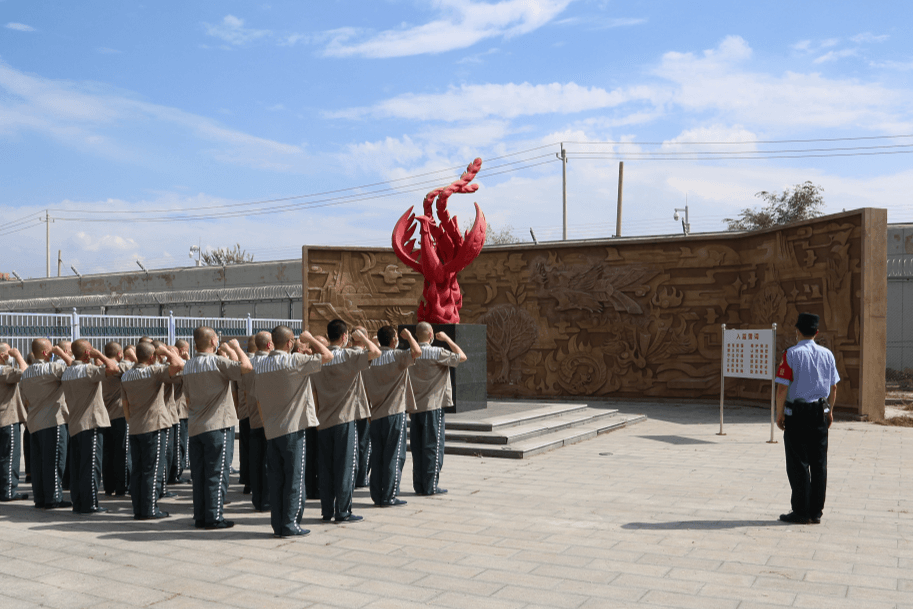
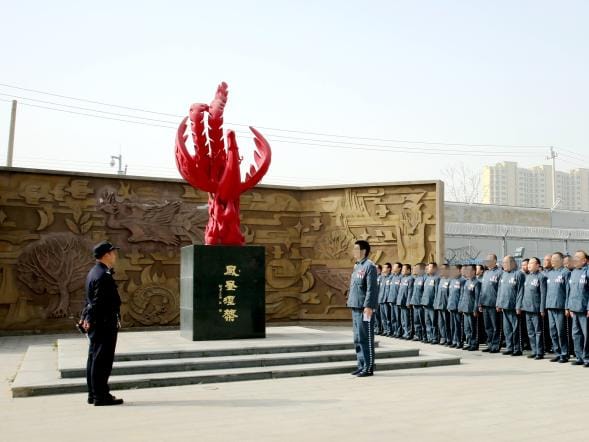
    New inmates at the Beijing Number Two Prison pledge to obey laws and prison rules.  Image source: Beijing Daily, 2022. 

    While in prison, Lin set up prayer groups and worked on translating the Bible. He claims he was not mistreated in Beijing Number Two but didn’t receive enough to eat. The prison authorities took away his Bible on three occasions but eventually returned it. On one occasion the Bible was mailed to his family in the U.S. The prison authorities came up with other ways to punish David Lin for spreading the gospel: denying mail and telephone privileges (at least two care packages never arrived from Alice) and restricting access to the prison commissary.  

    Dui Hua’s Role

    For ten years, David Lin told his daughter he didn’t want help in getting his sentence reduced, believing that his imprisonment was part of God’s plan. When he realized his health was failing—he was quickly losing his teeth—he asked Alice to help. One of her first steps was reaching out to me at the recommendation of Jeff Gillis, whose wife, Sandy Phan-Gillis, was released from prison in 2017. I had helped Jeff and Sandy secure her early release. 

    I received an email from Alice on March 27, 2019, requesting that we speak by phone. We did so the next day. I asked her to draw up a fact sheet, with a photograph of her father.  

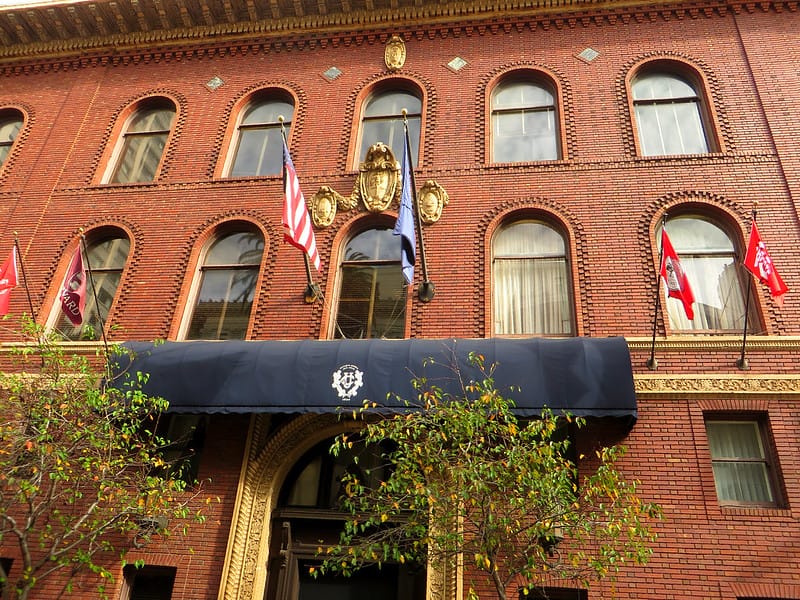
    University Club of San Francisco. Image source: Ken Lund, Flickr. Copyrights License: Creative Commons 

    In recent years, I have frequently spoken at San Francisco’s historic University Club. I was asked to deliver remarks on May 28, 2019, and called Alice to see if she and her husband David would like to attend the event. She replied in the affirmative. 

    While speaking, I glimpsed at Alice. When I brought up her father, her eyes filled with tears, her face reflecting deep anguish. After my speech, we returned, with a colleague, to Dui Hua’s office on Sutter Street.  

    Alice feared that she would never see her father again and wondered aloud what to do. I asked how sure she was that her father was serving a life sentence and offered to confirm his sentence. My colleague stepped out of the conference room and had a look at a judgment website we used to track actions by Chinese courts. He found a sentence reduction granted to David Lin in November 2014. The decision revealed that the life sentence had been commuted to 19.5 years by the Beijing Number Two Intermediate Court in 2012, followed by a 10-month reduction in 2013. The November 2014 decision granted a one-year reduction. Three reductions in the space of two years are rare and often reflect good behavior in prison. 

    All these changes were unknown to Alice, and presumably the Department of State, which rarely looks at court websites in China. She was, at turns, surprised, happy, and hopeful. 

    I called the National Security Council and the State Department to let them know what Dui Hua had discovered. Like Alice, they were surprised. They promised to pay more attention to judgment websites. 

    Momentum was building. On April 9, 2019, the Commission on International Religious Freedom adopted Lin through their Religious Prisoners of Conscience Project. On June 4, 2019, I met with the Chinese Consulate General in San Francisco. I raised Pastor Lin’s case verbally and then handed over the fact sheet. After looking it over, the consul remarked that Lin deserved another reduction. Later that month, I travelled to Geneva to attend the Human Rights Council meeting, taking advantage of the Special Consultative Status Dui Hua enjoys with ECOSOC. 

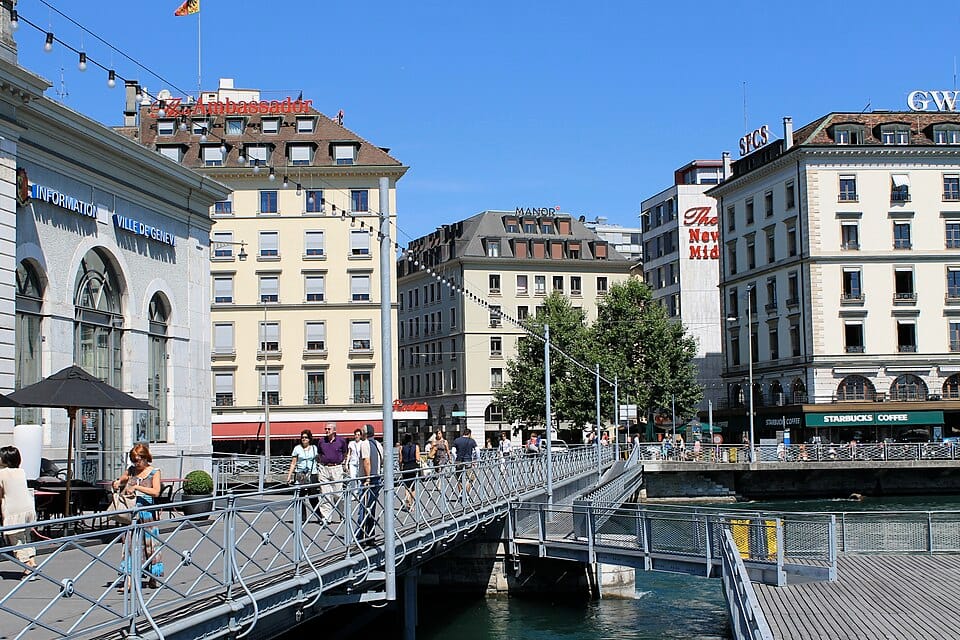
    The Ambassador Hotel, looking from Pont des Machines. Image source: Wiki Commons 

    I hosted a small dinner at Geneva’s The Ambassador Hotel for China’s Special Representative for Human Rights Dialogues and her colleague, on June 24, 2019. I handed over the fact sheet and the official promised to look into it. The official remarked that, if she found good news, she hoped I’d give it positive publicity for the sake of better U.S.-China relations. Four months later, in October 2019, Lin was granted a four-month reduction. Taken together, the reductions meant that Lin would be released in 2029. That’s where things stood prior to Lin’s release on September 15, 2024. 

    In all, Dui Hua raised Lin’s case with the Chinese government 28 times after learning of his plight in 2019 and received four responses. Dui Hua covered David Lin’s case in eight publications, including press statements.

    In October 2023, California Governor Gavin Newsom visited China to drum up business for businesses located in the state and discuss climate change. Phelim Kine coauthored an article in Politico to mark the occasion. Alice Lin told Phelim that she wanted Newsom to raise her father’s name with the Chinese government. I weighed in to say his failure to do so would be “shameful and disqualifying.” At the time, Newsom was toying with the idea of running for President in 2024. At a speech at the Hong Kong University after this trip to the Mainland, Newsom said he had raised human rights issues with Minister of Foreign Affairs Wang Yi in Beijing but did not offer specifics on what was said.  

    When the news of Lin’s release finally came, it represented the culmination of a multifaceted approach—persistence, close consultation with family and governments, solid media work, and good relationships with NGOs. All came together to achieve a good result. 


     Listen to the Encounters with China podcast.

    Subscribe to receive notifications about new episodes. 

    Read all John Kamm Remembers stories.


  • No Way Out

    << Read all John Kamm Remembers stories

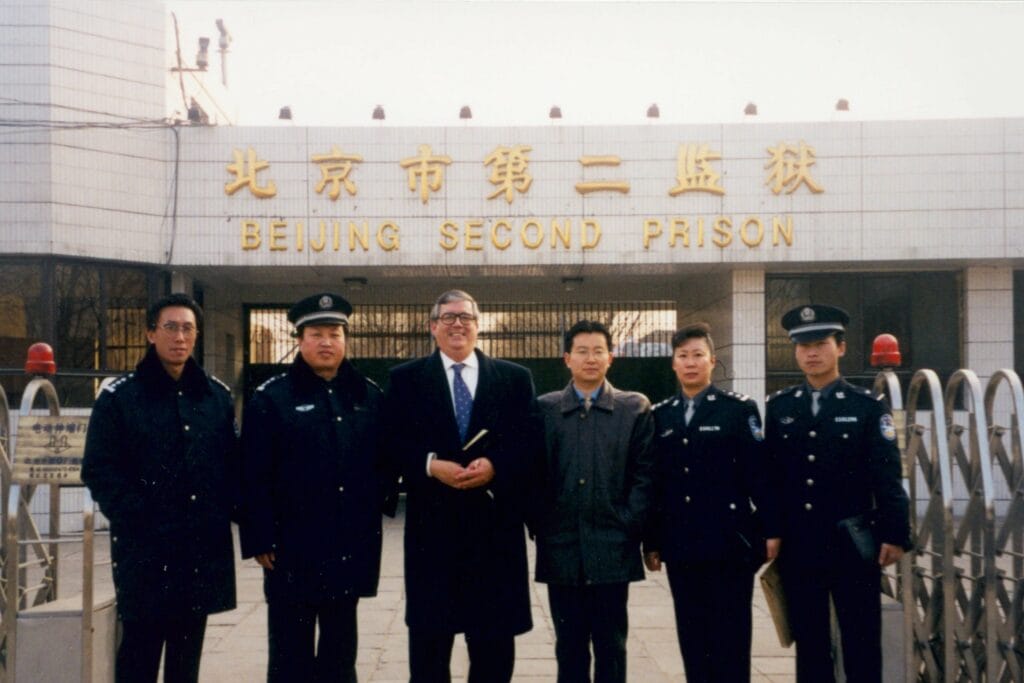
    Kamm (third from left) with officials from the Ministry of Justice and the Beijing Prison Administration Bureau and prison wardens in front of the Beijing Number Two Prison, December 18, 2001.

    In August 2001, I was contacted by a New York Times journalist, Tina Rosenberg, to ascertain if I was willing to be featured in an article examining the nexus between business and human rights. Among the companies to be featured were an oil company operating in Africa and a sporting goods company sourcing products from an Asian country.  

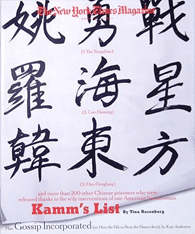
    Cover of the New York Times Magazine, March 3, 2002

    Not long afterward, and following a trip to Washington, Ms. Rosenberg informed me that her editor had decided to focus on my work to the exclusion of others. The article would eventually be published in the New York Times Magazine March 2002 issue as “John Kamm’s Third Way,” but, because it was a cover story, it would also be titled “Kamm’s List” on the cover.

    Reflecting China’s desire to improve its relationship with the United States in the aftermath of the September 11, 2001, attacks on New York and Washington, the Chinese government agreed to let Ms. Rosenberg and a photographer, Zeng Nian, enter the country to observe me in action.

    I arrived in Beijing a day before The New York Times team to finalize arrangements. It was an aggressive schedule. Meetings were arranged with Chinese officials from the Ministry of Foreign Affairs and the Supreme People’s Court, the US Embassy, including Ambassador Clark Randt, foreign diplomats, and American business leaders. We spent a day traveling around the city photographing locations that I frequented – the Beijing Train Station, the Procuratorate bookstore, and shopping districts. I asked whether the New York Times team could accompany me on a visit to a prison, but the Ministry of Justice flatly denied this request, claiming that my visits to prisons were “personal” matters between me and the ministry.  

    Visit to a Maximum Security Prion in Beijing

    And so, on December 18, 2001, I visited Beijing Municipality Number Two Prison, accompanied by officials of the Ministry of Justice and the Beijing Municipality Prison Administration Bureau. The visit lasted approximately two hours.

    Beijing Number Two Prison is a maximum-security facility housing, in 2001, approximately 2000 male prisoners. It is located just off the Beijing-Shenyang Expressway in east Beijing (now part of Beijing-Harbin Expressway). A large percentage of the prisoners have committed violent crimes. It was designated a maximum-security prison—one in which most of the prisoners serve sentences of at least 15 years in length in 1990. For 40 years before 1990, Beijing Number Two Prison was an agricultural prison brigade housing prisoners with light sentences. 

    Beijing Number Two Prison was, and still is, a maximum-security facility. Unlike other prisons I had visited in China, including Tianjin Prison earlier in 2001, Beijing Number Two Prison has not been designated a model prison by the Ministry of Justice. Its facilities, including its clinic, are less extensive and more poorly equipped, and the cellblocks are more crowded and less well-appointed than those of model prisons. Its 18 wards are housed in six three-storied cell blocks. The tour revealed a physical plant badly in need of repair and better maintenance. Foreigners were rarely taken to the prison; I was the only foreign visitor to have visited in the previous 12 months. 

    Prisoners are under strict control at the facililty. No contact of any kind was permitted between me and the prison population. The wardens stated that there had been no escapes, riots, or suspicious deaths in the prison since 1995. 

    The Prisoner Distribution Center of the Beijing Prison Administration decides where to incarcerate people sentenced to prison by Beijing courts. I knew that, although Beijing Number Two is designated a facility for housing violent offenders with long sentences (including several sentenced to life imprisonment), many of the prisoners convicted of counterrevolution and endangering state security by Beijing courts — including several with sentences ranging from four to eight years — were sent there.  

    Prisoners who have served their sentences at Beijing Number Two Prison include Xu Wenli (徐文立), Zha Jianguo (查建国), and numerous practitioners of unorthodox religions. More recently, American religious prisoner Pastor David Lin (林大卫) spent most of the time in carceral facilities in Beijing Number Two Prison. He encountered prisoners from 39 countries of whom around were 15 American citizens. 

    Prisoners of the Beijing Number Two Prison making a pledge to obey prison regulations and rules, in front of a statue that symbolizes rebirth. Image source: Beijing Prison Administration Bureau, April 2018.

    Of the 40 Beijing prisoners on Dui Hua’s list of “important prisoners” in 2001, 26 were believed to be incarcerated in Beijing Number Two Prison. The wardens admitted that there was a “small number” of prisoners with light sentences — including those convicted of counterrevolution and endangering state security—in Beijing Number Two. I asked questions about several of them, but the wardens were not in a position to provide information. 

    Liu Jingsheng 

    One of the prisoners I wanted to find information about was Liu Jingsheng (刘京生), a labor leader from the Democracy Wall period who co-edited an underground magazine, Tansuo 探索, with Wei Jingsheng. He was detained in May 1992 and subsequently sentenced to 15 years in prison. Since the wardens would not provide information about prisoners, I tried a tactic to at least bring up Liu’s name. As we were walking by the prison basketball court, I remarked that Liu Jingsheng was a good basketball player. If a foreigner mentions a Chinese prisoner to a prison official, the official must inform senior levels. 

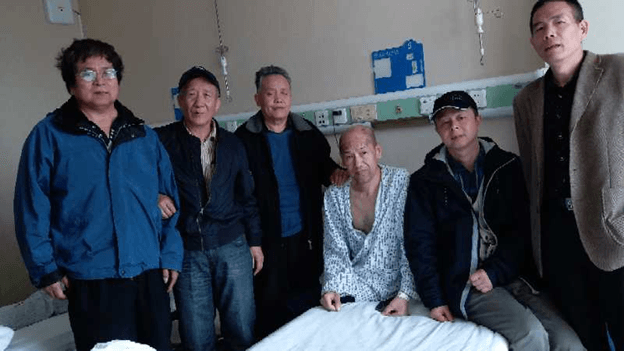
    Dui Hua put Liu’s name on 17 lists submitted to the Chinese government and received 16 responses. After several sentence reductions, Liu was released in November 2004. He remained active for a few years – accepting an award from Wei Jingsheng, giving interviews, contributing articles to pro–democracy websites. He visited June 4 prisoner Zhang Yansheng in April 2019. Nothing has been heard of him and his work since the visit. 

    Liu Jingsheng (second from left) and other activists visited Zhang Yansheng in April 2019. Image source: Sun Liyong, Twitter @sunliyong8964.

    I asked whether or not the prison had considered adopting the fen lei gai zao (分类改造) system being used in Tilanqiao. In this system, prisoners convicted of a certain crime are housed together and kept apart from prisoners convicted of other crimes. The wardens replied that Beijing Number Two Prison was in fact practicing a kind of fen lei gai zao: prisoners are grouped into four broad categories – 1) violent criminals, 2) sexual offenders, 3) those convicted of economic crimes and 4) others. Those convicted of counterrevolution and endangering state security are considered category 4 prisoners. 

    A detailed account of the point system used to reward prisoners with sentence reductions, good behavior parole and other benefits (e.g., more frequent family visits, conjugal visits, use of two outside telephone lines to receive calls from family members) was given. Points are assigned according to how well a prisoner performs with respect to following regulations, “accepting re-education,” and performing physical labor. The prisoners make handicraft items and undertake unspecified “value adding” work for light industrial products. The wardens claimed that the prison’s combined rate of sentence reduction and parole exceeded 25 percent per year; that is, more than one in four prisoners receive either a reduction or parole every year. 

    No Way Out 

    The warden did not know the sentence reduction or parole rate for counterrevolutionaries and those convicted of endangering state security. I brought up an October 1997 Notice issued by the Supreme People’s Court that states “Sentence reduction and parole for prisoners convicted of seriously endangering state security…should be strictly controlled.” In practice, what does this mean? Do such prisoners receive parole and sentence reductions at a rate less than the rate of the prisoner population as a whole? The wardens did not deny that prisoners convicted of political offenses benefit from fewer paroles and sentence reductions but maintained that there was no discrimination among prisoners in the point system itself. “Strict control” is exercised by the courts, which examine and rule on applications for sentence reduction and parole (but not medical parole, which is decided by prison authorities). 

    To better understand how the parole and sentence reduction system works, I asked if a prisoner like Han Chunsheng (韩春生) – an avid listener of VOA broadcasts who had always maintained his innocence and refused to acknowledge guilt – can ever qualify for parole or sentence reduction. The warden replied that prisoners who continue to maintain their innocence can file petitions with the courts for release and/or retrial.

    And if those petitions are rejected?  

    “Then the prisoner has no way out.” 


     Listen to the Encounters with China podcast.

    Subscribe to receive notifications about new episodes. 

    Read all John Kamm Remembers stories.


  • Lost but not Forgotten: Wuhan’s Democracy Wall Movement

    Lost but not Forgotten: Wuhan’s Democracy Wall Movement

    << Read all John Kamm Remembers stories

    Democracy Wall in Beijing, August 20, 1979. Source: Internet

    I was nearing the end of my one-year term as president of the American Chamber of Commerce in Hong Kong in 1990 when an article appeared in The New York Times about an obscure Democracy Wall activist by the name of Zhu Jianbin (朱建斌). The author of the piece, which appeared on December 5, 1990, was Nicholas Kristof, the paper’s Beijing bureau chief, who had traveled to Zhu’s hometown of Wuhan to seek information on Zhu. Kristof and his wife, Sheryl WuDunn, were to win the 1990 Pulitzer Prize for International Reporting for their coverage of the 1989 Tiananmen Square protests. 

    Zhu Jianbin had organized workers at the Wuhan Steel Works and edited an underground journal on worker grievances and worker rights, a samizdat known as The Bell Tolls. Zhu, a keen analyst of social and political trends, had authored an important article that argued that China was an anomalous society caught between feudalism, capitalism, and socialism. Only workers could resolve the contradictions arising from the realities of life in contemporary China. 

    In the Times article, Kristof had written: “[Zhu’s] very existence has been virtually obliterated, for most democracy advocates here and abroad have never heard of him, and even in this city where he worked and dreamed of democracy, people shake their heads and say they have never heard his name.” 

    New York-based human rights activist Sharon Lee followed up the Kristof article by recounting what she had learned about Zhu from a mutual friend in Wuhan. The friend was a teacher who had heard that Zhu was in prison. He set about trying to get more information and eventually went to the security department of the factory to ask them what had happened to Zhu. 

    Not such a good idea. The teacher was suspected of being a member of a counterrevolutionary group under the control of a foreign power. He was placed under round the clock surveillance and turned down for a scholarship to study in the United States.  

    The writings of Kristof and Lee led, in part, to my focus on obscure political and religious prisoners, the “disappeared.” I resolved to find out what had happened to Zhu Jianbin by directly approaching the Chinese government. 

    What little was known about Zhu came from media and NGO accounts from the early 1980s. Born in 1957, he was one of more than 100,000 workers employed at Wuhan Steel Works, China’s first giant steel factory. He edited a journal about democracy, “The Bell Tolls,” and in the summer of 1980, attempted to form the All-China Association of the Democratic Press. He signed a petition calling for the release of Liu Qing, an editor of the April Fifth Forum, who was to go on to serve as chairman of Human Rights in China, soon after his arrival in the United States in 1992. 

    Police detained Zhu in April 1981, then tried and sentenced him to prison for counterrevolutionary crimes. He wound up serving 11 years in prison. 

    John Kamm meets with Li Ruihuan at the Great Hall of the People in 1991.

    I didn’t get a chance to ask about Zhu Jianbin until May 1992, after I had met with Politburo Standing Committee Member Li Ruihuan in November 1991 and Vice Minister of Justice Jin Jian in April 1992. I added Zhu’s name to a prisoner list and asked about him in face-to-face meetings with senior officials of the State Council Information Office and the Ministry of Justice (MOJ). These officials agreed to look into the case. 

    I returned to Beijing three months later and was again received by Deputy Director Wang at the MOJ headquarters on a lane off the highway to the airport. Zhu had been sentenced to six years in prison in 1981 but had had his sentence extended by five years for getting into a fight with another inmate. Zhu “had changed his attitude,” and had recently been released prior to my trip to Beijing in September. I was told that Zhu had gone back to Wuhan where he got a job and had resumed working. Deputy Director Wang said Zhu had not been sent to a re-education through labor camp. 

    I asked Deputy Director Wang where Zhu lived and where he worked. With a dismissive wave of the hand he replied that he didn’t know: “My fingers do not extend that far.” 

    Zhu’s case was the first of several Democracy Wall dissidents and labor leaders whose cases I worked on in the 1980s and 1990s after the events of June 4, 1989. One by one, the most prominent Democracy Wall prisoners were granted early release, including Wang Xizhe in February 1993, Xu Wenli in May 1993, and finally Wei Jingsheng in September 1993. I helped secure the release of and safe passage to Hong Kong of Tiananmen Square worker leader Han Dongfang in 1992. He has continued his work while based in Hong Kong. 

    In 2007, I traveled to Hubei Province with a colleague. We visited Wuhan and Yichang. One of our goals was to obtain information on imprisoned dissident Qin Yongmin (秦永敏). Like Zhu Jianbin, Qin was active in the Democracy Wall movement in Wuhan. He was convicted of counterrevolution and served eight years in prison. My colleague and I were unable to get basic information on Qin. Our interlocutors refused to answer our questions, nor would they accept a list with Qin’s name on it. Like Zhu Jianbin, Qin, it seemed, had been disappeared. 

    We later learned that Qin was released at the end of his sentence in 2010. There is no record of his being granted clemency. He was put back in prison to serve a 13-year sentence for subversion in 2015. He is currently serving his fourth sentence in Guanghua Prison in Hubei. Qin’s wife, Zhao Suli, a member of a house church, was reported missing alongside him. She was later released in 2018 and able to return to her home in Wuhan but under strict surveillance.

    Dui Hua’s advocacy on behalf of Qin has continued. To date, the foundation has placed his name on 22 lists submitted to the Chinese government. We have received 25 responses. 


     Listen to the Encounters with China podcast.

    Subscribe to receive notifications about new episodes. 

    Read all John Kamm Remembers stories.


  • 1999, The Beginning

    << Read all John Kamm Remembers stories

    In early 1999, a group of like-minded businesspeople who believed that promoting respect for human rights is good for business, came together to establish a human rights group to advance this idea. We decided to name the new foundation “Dui Hua”—对话, Chinese for dialogue—as our preferred approach to advocating for human rights reforms and the release of prisoners, in contrast to “naming and shaming,” the preferred approach of other human rights groups. 

    Based on the results of my China advocacy that began in 1990, we would focus on securing the release and better treatment of political and religious prisoners. Later, the foundation broadened its mission to include advocacy for three other groups of people at risk of detention in China: juvenile offenders, women in prison, and individuals sentenced to death. 

    Dui Hua Established  

    The Dui Hua Foundation was officially established in San Francisco on April 16, 1999. In anticipation of the foundation’s birthday, I look back at what I was up to in the weeks before Dui Hua’s establishment. 

    Elaine Chao, Former U.S Secretary of Labor, meets with C.H. Tung, Former Chief Executive of Hong Kong, 2005. Image source: US National Archives Catalogue

    On January 21, 1999, I met with officers and members of the World Affairs Council (WAC) of San Francisco to plan a trip to Hong Kong later that year. The trip was to feature meetings at Government House and the first meeting granted by Mr. C. H. Tung since his appointment as the Chief Executive-designate of the Hong Kong Special Administrative Region in 1997. The trip would feature meetings with Hong Kong politicians, business leaders, academics and journalists, as well as sight-seeing and meals at the city’s famed restaurants. 

    In early February, I worked on finalizing an application to secure funding from an American foundation. It was then that I learned that I would need to use a “pass-through” if the grant was approved. Initially, I approached a university in California but decided against trying to use them when I was told the university would take a hefty percentage of the grant simply to handle administration. After discussions with friends who would together make up the fledgling foundation’s first board of directors, a decision was made to establish Dui Hua. 

    In 1999, I was still actively involved in business with China. In February, I traveled to Beijing to oversee a technical exchange I had arranged for a client, a manufacturer of PVC building materials. 

    Mixing business with human rights, I met with officials of the Ministry of Foreign Affairs, the Ministry of Justice, and the Religious Affairs Bureau (RAB). For my meeting with the RAB, I raised cases of imprisoned Catholics. According to my notes, it was a difficult meeting. When I asked Director Ye Xiaowen why he agreed to meet me, he replied: “Because I was told that I had to meet you.” 

    Ye Xiaowen, seen in May 2012. Images source: ifeng.com. Kamm’s meeting with Ye in 1999 was frosty and difficult. 

    From Beijing I flew to Qingdao, a city in Shandong Province that I knew well from discussions to establish a joint venture. There, I met with the local branch of the China Council for International Trade. In anticipation of this meeting, I had forwarded lists of political and religious prisoners detained in the aftermath of the June 4, 1989, killings in Beijing. I was given information on five prisoners, all of whom were subsequently released from prison early. I agreed to serve as an honorary advisor to the council. 

    Events in Washington  

    For the rest of March, and in the first two weeks of April, I spent time in Washington. On March 30, 1999, I attended a dinner for China’s Minister of Labor, Li Boyong, at Blair House in Washington. Later, on April 8, 1989, I attended a lunch for Chinese premier Zhu Rongji, at the State Department.  Zhu had come to Washington to secure Washington’s support for China’s application to join the World Trade Organization. He was to leave Washington empty-handed. Fearing opposition from Congress, President Bill Clinton had balked. 

    Chinese Premier Zhu Rongji gives a speech in the joint press conference with then US President Bill Clinton in Washington, the United States on April 8, 1999. Zhu had hoped to gain Clinton’s support for China’s application to join the WTO. He left Washington empty-handed. Image source: Xinhua.

    In reviewing Dui Hua archives, I was struck how some things have not changed, while others have changed a great deal. I continue to focus on advocacy for prisoners, raising names and submitting lists. Since Dui Hua’s establishment, we have submitted more than 500 lists of names with more than 2,000 names on them. We have learned of around 520 acts of clemency and better treatment. Patience and persistence remain hallmark modes of operation. 

    On the other hand, I am no longer active in business. I no longer serve on corporate boards of directors. No longer do I sell or invest in Asia.  I used to travel to China and Hong Kong several times a year. I no longer do so. 

     What has changed the most is that US-China relations have sharply deteriorated, in sharp contrast to the state of relations in 1999. 


     Listen to the Encounters with China podcast.

    Subscribe to receive notifications about new episodes. 

    Read all John Kamm Remembers stories.


  • Roads to Rome 

    Roads to Rome 

    << Read all John Kamm Remembers stories

    St. Peters Basilica in Vatican City, Rome. Image source: Kelly Lacy, pexels.com.

    On many visits to Beijing, I came to know ambassadors from several countries in addition to the U.S. ambassador. Among the best friends I made were Norwegian Ambassador Svein Sæther, Swedish Ambassador Börje Ljunggren, and Italian Ambassador Massimo Iannucci. 

    I first met Massimo Iannucci in the early 1990s when he was Minister Counselor at the Italian Embassy in Beijing and I was working on the cases of imprisoned Catholic clergy. He and his wife hosted me for dinner at his residence, the home of a Qing Dynasty official on the outskirts of Beijing. They hired a chef who could prepare both Chinese and Italian cuisine. His wine cellar was well stocked. 

    Embed from Getty Images

    Italian Ambassador to the People’s Republic of China Attilio Massimo Iannucci speaks during the China-Italy Design And Innovation Center unveiling ceremony at Tongji University on April 21, 2011 in Shanghai, China. Image source: Getty Image

    After his stint as Minister Counselor in Beijing, Massimo Iannucci returned to Rome where he took up the position of Director General of the Asia Department of the Ministry of Foreign Affairs and International Cooperation (MFA). While serving as director general, he also held the position of Italy’s Special Envoy to Afghanistan and Pakistan.   

    As Director General of the Asia Department, Massimo Iannucci hosted me on two visits to Rome in 2008 and 2009, respectively. If the trip to Hubei was a low point of my human rights work, the visits to Italy’s capital were high points, involving interactions between me and the MFA, parliament, the Holy See, and the Chinese Embassy. 

    Rome, 2008 

    I arrived in Rome on a flight from Zurich on the evening of October 4, 2008. I took a cab to the Rome Marriott Grand Hotel Flora, which boasted an exceptional restaurant, among other amenities. The hotel is near the Villa Borghese Gardens, enabling me to take morning walks. 

    The next day, I attended mass at the Basilica of Saint Paul. That evening, I dined with Iannucci and his wife, Carla, at their home. 

    Italy’s Ministry of Foreign Affairs and International Cooperation. Image source: Wikimedia Commons.

    At 9 AM on October 6, I was picked up at my hotel by an MFA official. Together we drove to the ministry’s headquarters, housed in the grand Palazzo della Farnesina. The building was constructed during the years Benito Mussolini ran Italy as a fascist dictator. Meetings took place with Director General (DG) Iannucci and senior colleagues, the ministry’s Chief of Cabinet, and the Vice Chairman of the Parliamentary Foreign Affairs Committee. Lunch was hosted by DG Iannucci at the ministry’s club. 

    In the late afternoon, I met with Monsignors Pietro Parolin and Rota Graziosi of the Holy See’s office of the Secretary of State in Vatican City. 

    Archbishop Pietro Parolin in 2009. Image source: Catholic Press Photo
    President Obama meets Secretary of State, Pietro Cardinal Parolin in 2014. Image source: Wikimedia Commons

    Rome was the last stop on a five-week trip around the world. I flew back to the United States on October 7. Upon my return, I hosted Dui Hua’s first juvenile justice delegation from China’s Supreme People’s Court. Together we traveled across the country, visiting juvenile courts and detention facilities, as well as meeting with key figures involved in juvenile justice reform in the United States, including Justice Arthur Kennedy. 

    Rome, 2009 

    The purpose of the 2008 visit to Rome was to prepare for a talk there the following year. At my meetings with the MFA, and in subsequent communications, agreement was reached for me to make a presentation to an audience of Italian diplomats, think-tank representatives, and Italian scholars.  The focus of the presentation would be human rights dialogues with China. A representative of the Chinese government would be invited to attend. As part of this agreement, the Italian government committed to giving Dui Hua a small grant to defray expenses. 

    On December 10, I was driven to the MFA’s headquarters. The program began with remarks by DG Iannucci followed by a statement by the Chinese ambassador to Italy, Sun Yuxi. Ambassador Sun’s remarks marked one of a few times that a Chinese official has spoken about Dui Hua’s dialogue with the Chinese government at a public meeting. 

    Here is what he said: “Under the leadership of Chairman Kamm, the Dui Hua Foundation has made great achievements in the field of international human rights promotion in just 10 years. It cooperated closely with the Chinese government and relevant institutions. And has established an unobstructed channel for exchanges between China and the West in the legal field. The Chinese government is committed to promotion and protection of human rights and is open to dialogue and exchanges with non-governmental organizations. It is hoped that the Foundation will achieve new results in 2010.”

    Immediately after, Ambassador Sun left the meeting. He had been sent a copy of my presentation beforehand and was taking no chances on being in the room when I voiced criticisms of the human rights dialogues. 

    In my presentation to the audience of diplomats and others, I reviewed the status of human rights dialogues between China and foreign governments. At the time, there were seven such dialogues. (Canada, the eighth dialogue, was suspended by Ottawa in 2005. Japan claimed to have a human rights dialogue, but this claim was disputed by Beijing.) In 2024, only one dialogue took place, that of the European Union (EU) in Chongqing. Immediately prior to the dialogue, diplomats were permitted to travel to Tibet. Aside from a brief statement, the EU has been silent on what took place during the discussions. It is believed that the EU raised the names of individuals subjected to coercive measures. It is not known whether a list was handed over. The latest human rights dialogue between China and a foreign country – Switzerland — took place in Beijing in February 2025. 

    Meetings at the Vatican 

    During my visits to Rome in 2008 and 2009, I met with senior Roman Catholic clergy charged with handling relations between the Holy See and China, including Under Secretary of State for Relations with States Pietro Parolin, his successor Ettore Pietro Balestrero, and Archbishop Claudio Maria Celli. Archbishop Celli, was, for more than two decades, charged with overseeing negotiations between China and the Holy See. Those negotiations bore fruit in 2018 when, on September 22, a provisional agreement was reached governing the appointment of bishops. This so-called “secret agreement” has been renewed twice, most recently in 2024 for a four-year period. 

    On December 11, 2009, I set out from my hotel for the long walk to Vatican City. On my way to Saint Peter’s Square, I passed by the Embassy of the Republic of China (ROC) to the Holy See. Then, as now, this embassy was the ROC’s only embassy in Europe. (The office occupies the top floor in the same building as the embassies of Canada and Malaysia.) It is staffed by diplomats who handle interactions between the republic and European countries. Meetings with the Italian MFA are frequent. 

    ROC Embassy to the Holy See. It occupies the same building with Canada and Malaysia. Image source: ROC Embassy to the Holy See.

    I arrived at the Porta Sant’ Anna where I presented my credentials to the Swiss Guards guarding the gate. In short order, a priest came down to escort me to the meeting with Archbishop Celli. Joining us was an officer from the MFA. 

    My meetings with Celli and other senior prelates focused on the situations of imprisoned Catholics in China. As mentioned above, my work on these cases began in the early 1990s and was well known to the Holy See. 

    I was especially concerned with the plight of Bishop James Su Zhimin (苏志民), the head of the underground Bishops Conference, who had been taken into custody in 1997 after he met with a visiting U.S. congressman. He had been “disappeared,” apparently into an “Old People’s Home” in Baoding that was run by the local Religious Affairs Bureau. 

    Bishop James Su Zhimin, unknown dates. Image source: internet archives.

    I wondered if the Holy See had compiled a list of imprisoned clergy and lay leaders in China but was told that such a list was not kept. A prelate half-jokingly said that the Holy See didn’t want to interfere with their decision, including the decision to embrace martyrdom. (In fact, over the years, many Catholic priests have chosen death rather than renounce their faith.) Eventually, while gazing down on Saint Peter’s Square, a young priest unexpectedly slipped me a list of names. It was virtually identical to the lists I had worked on with Father Politi in Hong Kong. 

    Pope Francis and Pope Benedict. Image source: Wikimedia Commons.

    My trips to Rome in 2008 and 2009 took place during the papacy of Benedict XVI. Both had been facilitated by the Vatican’s office in Hong Kong. Benedict was succeeded by Pope Francis upon the abdication of Benedict in 2013. Pope Benedict was more critical of China’s policy towards Catholics than Pope Francis under whose papacy an agreement with China on the appointment of bishops was negotiated. That agreement is said to have been criticized by Pope Benedict as well as Hong Kong Bishop Joseph Zen Ze-kiun (陈日君). Zen’s criticisms of the Holy See’s engagement with China came up during my visits to the Holy See, when senior clerics voiced frustration at his stance.  

    To show his backing for Zen, Pope Benedict insisted that Zen be invited to his funeral in 2023. Now a cardinal, Zen was detained in May 2022 due to his support for democracy in Hong Kong. Accused of colluding with foreign forces, Zen was later released on bail and has yet to be charged. Authorities confiscated his passport, but Zen was allowed to attend Pope Benedict’s funeral.

    Pope Francis (right) with Cardinal Joseph Zen Ze-kiun, after Pope Benedict’s funeral in January 2023. The meeting was their first since 2018. Cardinal Zen traveled with permission from a Hong Kong court. Image source: Vatican Media

    On my visits to Rome, I took the opportunity to do some sightseeing and Christmas shopping. I was given a private tour of the Vatican’s Sistine Chapel, the Raphael Rooms and the Gallery of Maps which features a detailed map of Italy by Dante. To my surprise, those who lived in the Vatican apartments rarely ventured out to dine in restaurants nearby. They lived a cloistered life. I was under no such self-imposed culinary restriction. I dined at some of the best restaurants in the city before returning to the United States. 


    Listen to the Encounters with China podcast.

    Subscribe to receive notifications about new episodes. 

    Read all John Kamm Remembers stories.