On December 22, 2010, the United Nations General Assembly, prodded by Princess Bajrakitiyabha of Thailand, adopted the United Nations Rules for the Treatment Women in Prison and Non-Custodial Measures for Women in Prison, also known as the Bangkok Rules. The document sets out 70 rules that constitute the first roadmap for the treatment of women prisoners.
International Symposium
After more than a year of preparation, Dui Hua, under my leadership, held an international symposium on women in prison in Hong Kong in February 2014. The symposium examined the relevance of the Bangkok Rules to female prisoners incarcerated in custodial facilities in different countries. It was jointly organized by Dui Hua and three partners (Penal Reform International, Renmin University, and the University of Hong Kong) and funded with grants from the governments of Denmark, the Netherlands, and Norway, as well as the Office of the High Commissioner for Human Rights and the Ford Foundation.
The symposium brought together 23 presenters and 27 guests from 14 countries and regions and consisted of two days of presentations, one day of interactive dialogue, and a field visit to Hong Kong’s largest women’s prison.
Prior to the symposium, Professor Cheng Lei of Renmin University of China Law School, one of Dui Hua’s partners, conducted independent fieldwork in five Chinese women’s prisons and detention centers. His presentation was a highlight of the symposium that also featured research on violence against women, children of incarcerated women, healthcare, women correctional officers, and female juvenile offenders.
Dui Hua held a symposium on Girls in Conflict with the Law from October 2020 to March 2021. It was held virtually as a series of podcasts due to restrictions imposed by the Covid pandemic.
In addition to introducing the Bangkok Rules to decision makers in China, the 2014 symposium played a role in the decision by Hong Kong’s Correctional Services Department to implement the rules in Hong Kong’s women’s prisons. It also contributed to the landmark Supreme People’s Court (SPC) decision to overturn the death sentence of Li Yan, a domestic violence survivor who killed her abusive husband.
Papers presented at the symposium provided the basis for Dui Hua’s submission on China’s women prisoners at the 59th session of the United Nations Committee on the Elimination of Discrimination against Women in Geneva in October 2014.
During the same month, I was received at the Great Hall of the People by Wang Shengming, Vice Chairman of the National People’s Congress Judicial Committee, the organ that writes China’s laws. Wang told me that China had been studying the Bangkok Rules and recognized that women required different treatment than men in the use of custodial and non-custodial measures. He stated that China was considering enacting legislation to implement the Bangkok Rules. Unfortunately, there has been little change in the way women are treated in Chinese prisoners since my meeting with Mr. Wang.
During the 2014 symposium, Hong Kong Correctional Services organized a visit by delegates to the Lo Wu Correctional facility, a medium security prison used to incarcerate women prisoners, nearly all of whom were either sex workers or drug offenders. At the time, there were 1,613 women in Hong Kong prisons, representing 19.5 percent of the total prison population, one of the highest rates of female incarceration in the world.
We visited multiple locations in the Lo Wu prison including cellblocks, the cafeteria, exercise yard, and the holding area for female prisoners and their children. What we saw was so depressing that one of our delegates fainted.
Five years after our symposium, the Hong Kong government enacted national security legislation that resulted in the arrest of nearly 2000 activists, including hundreds of women.
Guangdong Women’s Prison
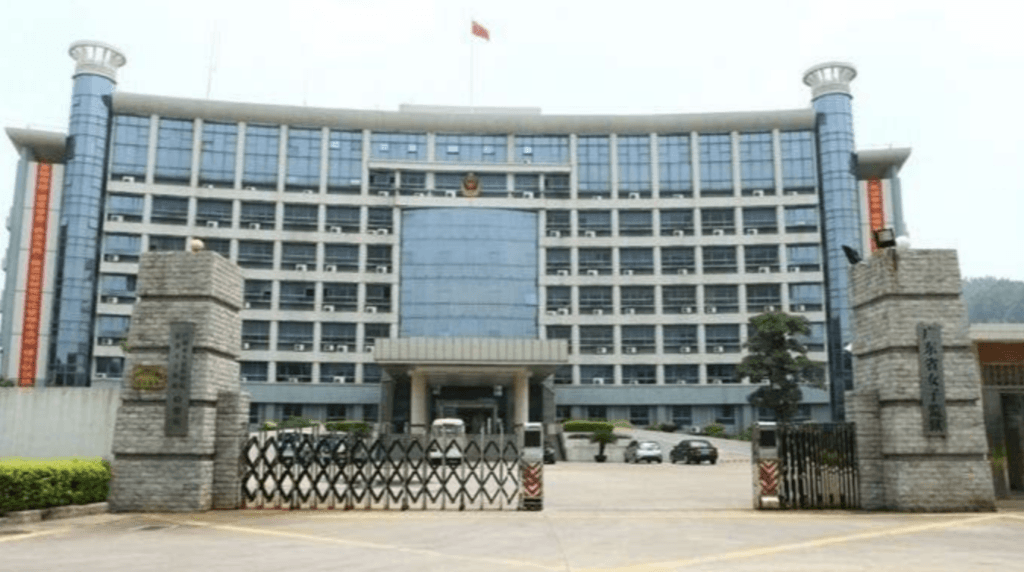
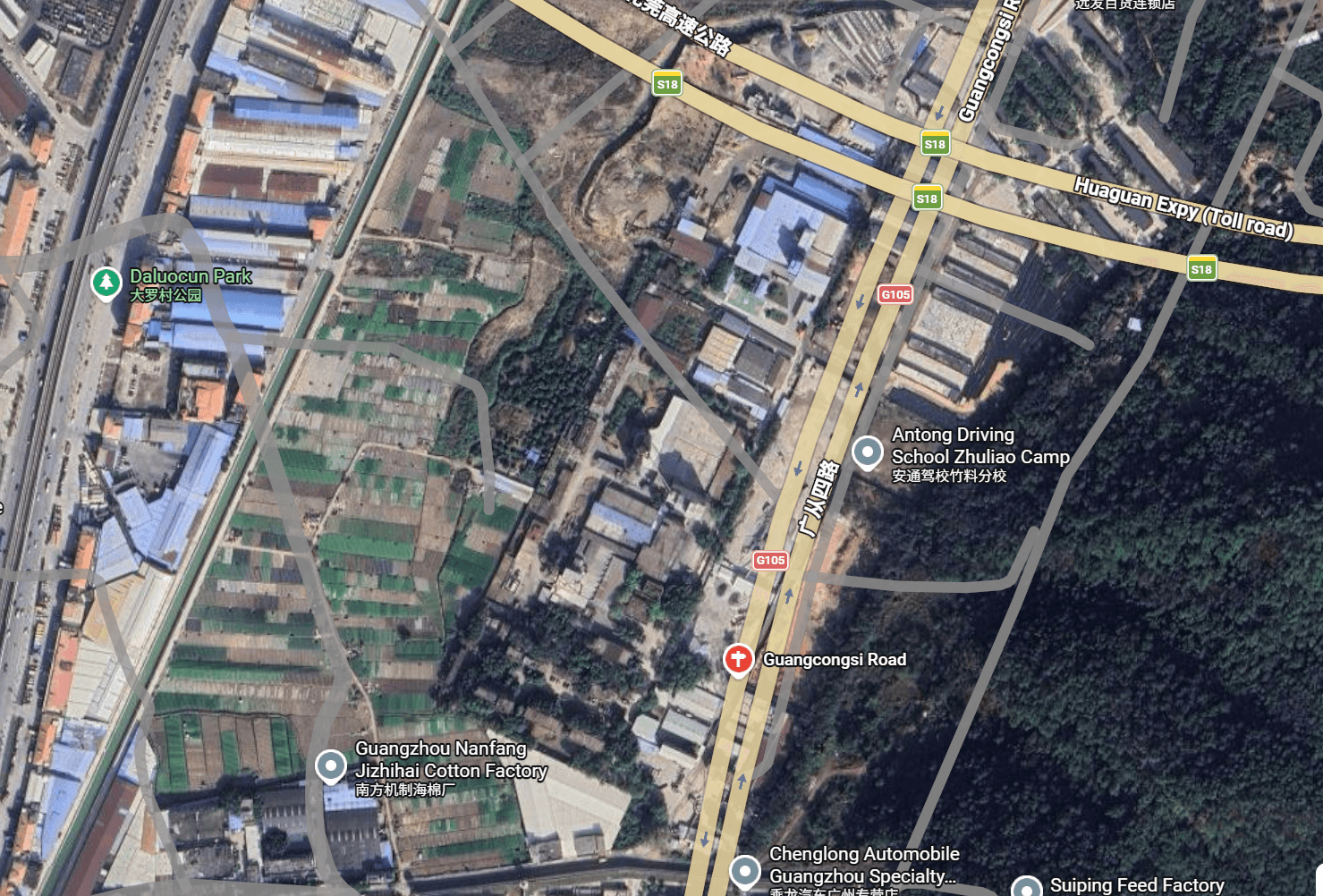
With an estimated population of 5,000 inmates, Guangdong Women’s Prison is one of the largest women’s prisons in China, if not the world. Established in 2003, it is considered a medium security prison.
Although Dui Hua had asked about a handful of women prisoners in Guangdong Women’s Prison prior to the symposium, the foundation stepped up its inquiries after the event. Beginning in 2015, Dui Hua submitted 56 lists to its Chinese interlocutors; the lists asked for information on 82 individuals. It received 35 responses on 59 women inmates. Fifty of these prisoners benefited from 88 acts of clemency, including sentence reductions, parole, medical parole, and bail.
One of the prisoners released early was Xie Qing, who, together with her husband, was responsible for managing the Jiangmen Station of Falun Gong. She was released five months early in late 2014.
Taken together, the information on prisoners in Guangdong Women’s Prison obtained by Dui Hua represents the most comprehensive picture of female prisoners in a Chinese carceral facility. The number of women granted clemency speaks to the efficacy of submitting lists and raising prisoner names.
Dui Hua maintains one of the largest databases of political prisoners in the world. At present, the database records information on 212 inmates in Guangdong Women’s Prison.
But gauging the number of women in prison in China is difficult. The Chinese government no longer publishes information on the number of female prisoners. Moreover, prisons are not the only facility to hold women. Others include public security detention centers and legal education centers. Liang Shaolin (梁少琳), a Falun Gong practitioner, served two terms in a Guangdong legal education center. She is now serving a sentence in Guangdong Women’s Prison.
Many female prisoners in Guangdong Women’s Prison are serving sentences for using a cult to undermine implementation of the law. “Evil cults” is a term applied to the dozens of unorthodox religious groups known to exist in China. The two best known of these groups are Falun Gong and the Church of Almighty God. In November 2024, Yao Jingjiao (姚静娇), an elderly Falun Gong practitioner, died after allegedly being mistreated by prison officers. (Dui Hua has documented more than 40 unorthodox religious groups operating in today’s China.)
One of the prisoners serving a sentence in Guangdong Women’s Prison for a drug-related offense is Dawn Michelle Hunt, a U.S. citizen and daughter of a recently deceased Chicago police officer, her father. Her mother and brother are also retired Chicago police officers. Dui Hua has placed Ms. Hunt on eight prisoner lists and received three responses, including a detailed written response from the Chinese government.
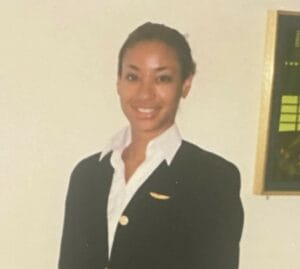
Dawn Michelle Hunt has no record of being in trouble with the law and no history of drug use. She claims to have been tricked into carrying drugs. She is very ill and has been badly treated while in prison. U.S. lawmakers have appealed to the Chinese government to release her on humanitarian grounds.
Dui Hua is also aware of one female prisoner in the prison who is serving a sentence for subversion, a crime of endangering state security: Huang Xueqin (黄雪琴), a founder of China’s Me Too movement. She is gravely ill, but the authorities refuse to grant her medical parole.
Hong Kong’s Female Political Prisoners
The SAR’s female political prisoners are placed in two facilities: the medium security Lo Wu prison, used to incarcerate women, and the high security Siu Lam Psychiatric Center, used to house both male and female prisoners with a capacity of 248 prisoners.
As referenced by the University of London, Birbeck’s Institute for Crime & Policy Research’s World Prison Brief, ably overseen by Roy Walmsley, there were 1,985 women in Hong Kong prisons, accounting for 21.5 percent of the total prison population in the SAR in mid-2024. Both numbers are doubtless greater in 2026, reflecting the addition of hundreds of women convicted for national security violations. The Committee for Freedom in Hong Kong has documented how male and female political prisoners are treated in Hong Kong prisons.