SAN FRANCISCO (NOVEMBER 27, 2024) — The Dui Hua Foundation welcomes the release of US citizens by China including Mark Swidan and Kai Li.
This is a great relief for their families, members of whom have advocated forcefully on their behalf for years. It is a testimony to the efforts of American diplomats, and to sympathetic Chinese officials who have met with them.
Dui Hua has put Mark Swidan’s name on 54 lists submitted to the Chinese government and received ten written responses and has put Kai Li’s name on 45 lists and received three written responses.
Dui Hua estimates that there are more than 200 Americans under coercive measures in China.
When it came to media coverage of the 1989 protests in China, the protests in Beijing received the most attention. This was largely because of the presence of international media outlets in China’s capital. Their ranks were bolstered by journalists from around the world who were in Beijing for a Sino-Soviet Summit that featured Mikhail Gorbachev.
Leaders of the June 4 protests in Beijing became household names. But Beijing was by no means the only city that experienced mass protests. According to one estimate, as many as 300 medium and large cities across China experienced large protests. Any city with a college or university was the site of protests.
I was in Zhuhai, Guangdong Province, one of the 300 cities where protests took place, when the killings in Tiananmen Square happened. Sitting with a group of Chinese officials, we watched events unfold on a Hong Kong television network. I was horrified by what I saw, as was one of the Chinese officials. (The others were silent, with the exception of a party member who admonished the official who expressed anger at what was broadcast from Beijing.) The next day, as my colleagues and I drove back to Macau, we passed signs of the unrest that had taken place the night before, with placards strewn across the roads and sidewalks, and graffiti condemning China’s leaders. In Macau we passed long lines of people withdrawing money from the Bank of China.
Bengbu Port in 1989. Image source: 163.com
Bengbu, a city in northern Anhui Province with nearly a million urban residents at the time, was among the locations where protests erupted. This important transportation and trade hub, home to a medical school, saw tens of thousands of students and citizens march in response to the bloodshed in Beijing. As I was to discover, the protests were organized and led by a charismatic graduate of Tsinghua University–Zhang Lin (张林).
The Green Bible and Zhang Lin
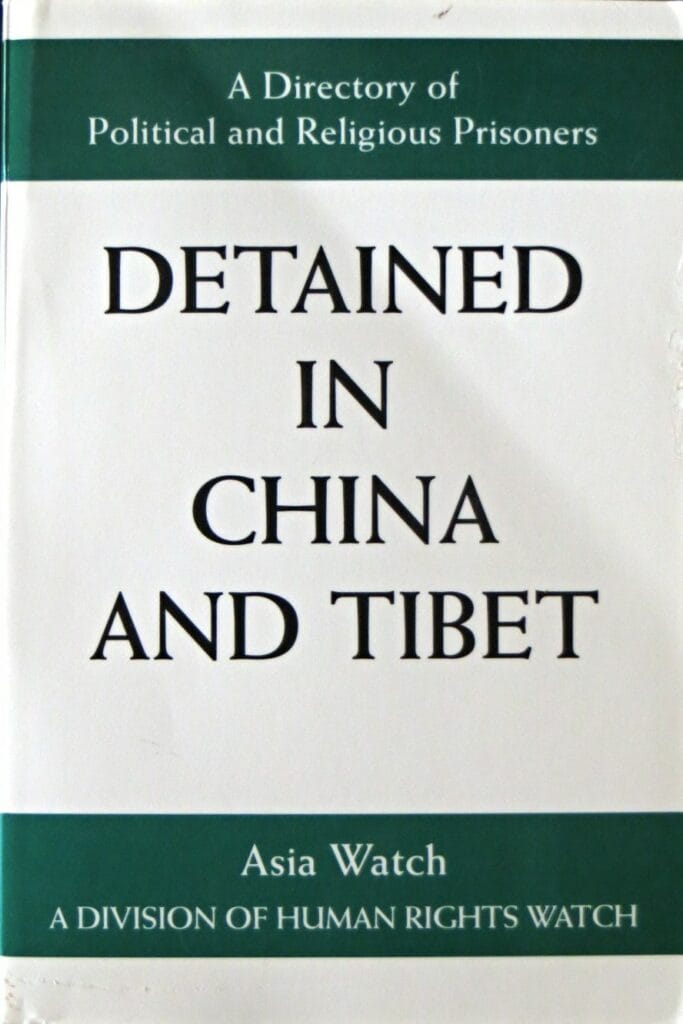
In February 1994, Human Rights Watch published Detained in China and Tibet (DICAT). Robin Munro, a co-author, came to my office in Hong Kong to deliver an inscribed copy of the book. Because DICAT had a green stripe that adorned the front and back covers, my inner circle dubbed it “The Green Bible.” I used DICAT to populate my prisoner lists submitted to the Chinese government throughout the 1990s and well into the 2000s.
Cover of DICAT
DICAT is a 632-page tome that documents the treatment of 1,700 hundred political prisoners in China, including hundreds detained in the aftermath of the spring 1989 protests in Beijing and other cities. One section in particular drew my attention: “Status Unclear.”
The first entry was for an activist from Anhui Province by the name of Zhang Lin, the head of the Bengbu Autonomous Student Union. The account of Zhang’s activities in Bengbu in May and June 1989 was based on a broadcast program on Anhui Radio that took place on June 14, 1989.
Not long afterward, I went to the Universities Service Centre (USC) in Hong Kong which had an extensive collection of provincial newspapers that included the Anhui Daily. I scoured the editions printed in May and June 1989 and found two articles that mentioned Zhang Lin. One article, published on June 15, 1989, ran with a headline “Zhang Lin Detained According to Law by the Public Security Bureau.” Another article concerned Zhao Fengrong (赵凤荣), an elderly farmer who had requested pamphlets and asked for advice from Zhang Lin.
This method of cross-referencing DICAT’s transcribed radio broadcasts with contemporary newspaper articles proved invaluable in my work identifying and inquiring about political prisoners in China. I used this technique in other cases as well, such as uncovering the correct spelling of three leading members of the Preparatory Committee for the Northeast China People’s Autonomous Republic, a shadowy group that operated in Jilin Province in the early 1980s.
In writing this John Kamm Remembers about Zhang Lin, I interviewed and asked him if he remembered Zhao Fengrong. He replied that he did; in fact, as the leader of the protests, Zhang had interacted with hundreds of people providing them with support and guidance.
Unbeknownst to the outside world at the time of my initial research in 1994, Zhang had actually been released in 1991 after serving his sentence over his role in the 1989 protests. By the time I came across his name in DICAT, Zhang had been sent to a reeducation through labor (RTL) camp for hooliganism in 1994, when he tried to organize independent labor unions in Anhui.
Portrait of Zhang Lin’s Activism
Put together, the Anhui Radio broadcast and the Anhui Daily articles found at Hong Kong’s USC, paint a picture of Zhang Lin’s activism during April, May, and June 1989. He comes across as a dedicated and innovative leader with strong organizational and oratory skills. He inspired others to protest the events that unfolded in Beijing in the spring of 1989.
An avid listener to Voice of America broadcasts, Zhang established the Bengpu Student Autonomous Union on May 19, 1989, and subsequently set up two political parties; he organized a large protest march, blocked roads, staged sit-ins, and led a hunger strike outside the city’s party headquarters. He encouraged students to travel to Beijing to take part in the Tiananmen protests and he formed a “Dare-to-Die Corps” against Bengpu’s party committee and government. The purpose of these corps, formed in many cities, was to block roads and otherwise disrupt traffic, in an attempt to delay armed police from entering the cities. Zhang himself traveled to Beijing in an unsuccessful attempt to meet Fang Lizhi, the dissident astrophysicist. He established a Democracy Center and Human Rights Office at Bengbu Medical School. All of these activities were non-violent.
The June 1989 protests were not the first time Zhang Lin had caught the attention of the Chinese police. In 1980, while a student, he traveled to Beijing to copy posters on Xidan’s Democracy Wall, and to purchase books and magazines on democracy. He shared them with fellow students at school who promptly informed on him. He was designated as a member of “targeted people (zhongdian renkou 重点人口),” a group including politically unreliable people subjected to strict surveillance.
First imprisonment
After he was detained and arrested in 1989, Zhang Lin was put in the Bengbu Detention Center, where he was mistreated. He would have been sentenced to a longer period behind bars, or even sentenced to death for allegedly having committed five different crimes, but he negotiated a deal with the authorities. In exchange for not appealing, he received a two-year prison sentence with the understanding that he would be granted a three-month early release. He served 21 months at the detention center until he was granted medical parole. While inside, Zhang learned of the visit of United States (US) National Security Advisor Brent Scowcroft to Beijing in July 1989. Thereafter, the harsh interrogations ended.
Thanks to a sympathetic party leader, protests in Anhui were dealt with a relatively light hand. Aside from Zhang Lin, one other protester was sentenced to prison: Wei Hui (魏辉). He was sentenced to one year in prison and became a businessman after release. Treatment of June 4 protesters varied widely from province to province. In Shandong Province, for example, protesters were treated harshly – at least two were sentenced to 18 years in prison–while in Guangdong, like Anhui, protesters received relatively light sentences.
Hitting a Roadblock
By the end of 1994 I had pulled together all available information on Zhang Lin. I moved to the next stage of advocacy: compiling prisoner lists for submission to the Chinese government. I resolved to do so in 1995.
In February 1995, I flew to Beijing for a meeting with the State Council Information Office and the Ministry of Justice (MOJ). I suggested that for the year, I would submit quarterly lists of 25 names each. They agreed, whereupon I handed over my first list of 25 names. I returned to Beijing in April and was given a response. Then I handed over the next list. My plan was to add Zhang Lin’s name in the third quarter. (Eventually, I resorted to sending this list by fax.)
But in May of the same year, my advocacy effort on behalf of Chinese prisoners came to an abrupt halt. On May 22, the US Department of State announced that a visa would be granted to Taiwan president Lee Teng-hui so that he could attend his reunion at Cornell University. Beijing was furious, threatened retaliation, and began firing missiles over and near Taiwan. The US sent two carrier groups to the sea around the island. US-China relations went into a deep freeze.
On May 29, I returned to Beijing. I was questioned by immigration officers and ordered to wait in a small room before being cleared. When they were told to let me through, an officer threw my passport at me.
At the hotel, I found that my reservation had been cancelled. I was under surveillance the entire time in Beijing and unable to meet with anyone other than officials of the Ministry of Foreign Affairs, who lectured me on the bad behavior and broken promises of the Clinton administration.
It wasn’t until early 1998 that I received a response on Zhang Lin from the MOJ. Soon after he was released from a labor camp, completing his second imprisonment.
Founding a Political Party in New York, Illegally Crossing the Border to China
In early 1998, Zhang Lin traveled to the US. There he met with prominent activist and broadcast journalist Ann Noonan (now Executive Director of the Committee for US International Broadcasting) and veteran pro-democracy leader Wang Bingzhang, a Chinese citizen and US permanent resident. Together, Wang and Zhang established the China Democracy Justice Party, a forerunner of the China Democracy Party.
In October, Zhang attempted to return to China via Hong Kong. He rented a boat in the former British colony and tried to enter Guangdong Province, but he was apprehended in Guangzhou where he was detained and subsequently arrested for illegal border crossing, a crime used to imprison Protestant missionaries who sought to enter China to proselytize. Many have suffered this fate in recent years.
Zhang was sentenced to three years of RTL which he served in a labor camp in Guangzhou. In our conversation, he recalled that particular experience to be the worst out of all his incarcerations.
Then, in 2004, Zhang joined with Yang Tongyan (杨同彦, aka Yang Tianshui 杨天水) to establish the Anhui-Jiangsu chapter of the CDP. Zhang’s fate mirrored his previous experiences: in 2005, he was incarcerated for the fourth time, charged with inciting subversion. The sentence carried five years imprisonment with four years deprivation of political rights.
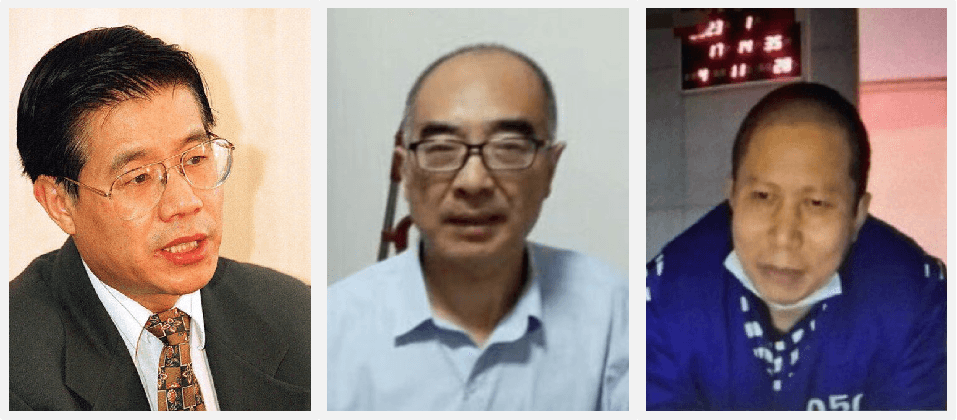
(left to right) Wang Bingzhang, Yang Tongyan, Xu Zhiyong, and many more activists and dissidents shared the same fate as Zhang Lin. (Image source: Wang, archived photo. Yang, before his death. Xu in prison, photo taken by lawyer in 2023)
Zhang’s fellow activists suffered similar outcomes. Wang disappeared while traveling in Vietnam and was convicted of espionage and for organizing a terrorist organization in 2003. He is now serving a life sentence in Shaoguan Prison in Guangdong Province. Yang was charged with subversion in 2005. He served three prison terms, a total of 22 years in Chinese prisons and died of cancer shortly after he was released on medical parole in 2017.
Exploring different channels
In 1999, after his arrest for illegal border crossing, I switched tactics and began asking about Zhang Lin through a different interlocutor, a party-controlled policy research association. In 2006, following his arrest for inciting subversion, I switched tactics again, filing inquiries through governments including the US, the European Union, and the United Kingdom. Altogether Dui Hua submitted 10 lists with Zhang Lin’s name and received written responses to five of them.
Zhang Lin’s case was taken up by four United Nations (UN) Special Procedures on three occasions – in 2005, 2011, and 2014. (Dui Hua was granted Special Consultative Status with ECOSOC, the committee that oversees the UNs’ human rights mechanisms, in 2005.) The Special Procedures brought to the Chinese government’s attention “the alleged detention and conviction of Mr. Zhang Lin and the harassment of family members.” Aside from responding to the first UN inquiry in 2005, Beijing took no other action and declined to respond to the 2011 and 2014 requests.
Anni and Ruli Zhang
The 2014 UN inquiry was related to events in February 2013, when Zhang Lin and his youngest daughter Anni moved to be with his eldest daughter Ruli who was in college in Hefei, capital of Anhui Province.
On February 27, Zhang Lin was taken into custody by the local police, and, on the same day, Anni was taken from the school where she had recently been enrolled by guobao, the national security police operating under the public security bureau. Both Zhang Lin and Anni were taken back to Bengpu where Anni was placed in a police station. She was held there for 20 hours unaccompanied by female officers, in violation of the recently passed Criminal Procedure Law. The next day, Anni was released. Both she and her father stayed in Bengbu.
On April 7, lawyers Xu Zhiyong, Zhao Yonglin, Tang Jianhao, and others arrived in Bengbu to start a coordinated protest. The next day, Zhang Lin, Anni, and his supporters returned to Hefei. Another attempt to enroll Anni in school failed, prompting a 24-hour hunger strike by Xu Zhiyong and others outside the school. Anni, assisted by Zhang Lin’s supporters, penned an open letter to Peng Liyuan, wife of Xi Jinping, pleading for her assistance in enrolling at school.
Police moved in and cleared the protesters, several of whom were taken into custody. Some were given short sentences of administrative detention while others were sent back to their homes. Zhang and Anni were sent back to Bengbu, where Zhang was detained in July for “gathering a crowd to disrupt traffic and public order.” He was tried and sentenced a year later to three and a half years in prison, his fifth imprisonment.
Fearing for the safety of Zhang’s children, supporters in and out of the country worked to bring them abroad. In September 2013, Yao Cheng, a friend of Zhang Lin’s, took Ruli, Anni, and their mother to the US consulate in Shanghai to apply for a visa so that the children could study in the US. On September 3, 2013, Yao Cheng was detained and subsequently sentenced, in December 2014, to one year and 10 months in prison for gathering a crowd to disrupt public order. He was released in June 2015.
Around the same time, activists in the US also went to work. Ann Noonan introduced Reggie Littlejohn, a fierce advocate for the rights of women and children in China, to me. Together we coordinated frequent exchanges with the Department of State in Washington DC, the embassy in Beijing, and the Shanghai consulate. Being informed, the consulate was prepared for the girls’ visit. The visa was issued and on September 7, 2013, Zhang Lin’s daughters boarded a flight to San Francisco. They were greeted on arrival by Reggie and her husband Robert. Both Ruli and Anni have been granted political asylum in the US.
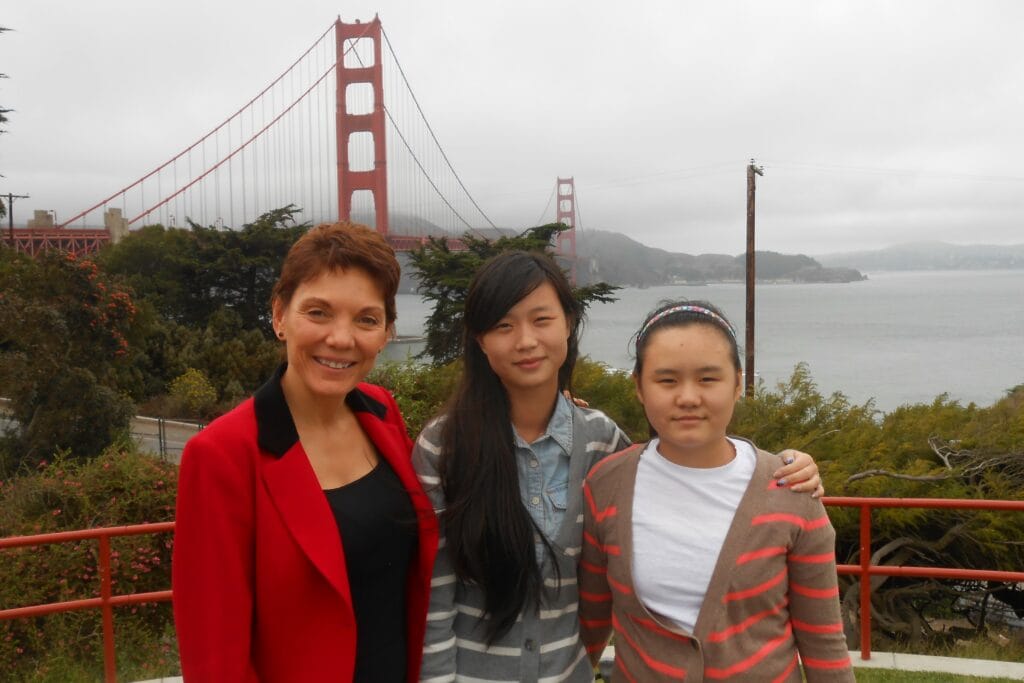
A short while later, Reggie, Robert, Ruli, and Anni came to visit me in San Francisco where we enjoyed lunch at a Japanese restaurant near the office. Reggie and Robert provided a safe and caring home for the girls in the ensuing years, all the while continuing to advocate for Zhang Lin in China.
Reggie Littlejohn with Ruli and Anni at the Golden Gate Bridge, 2013. Image credit: Littlejohn
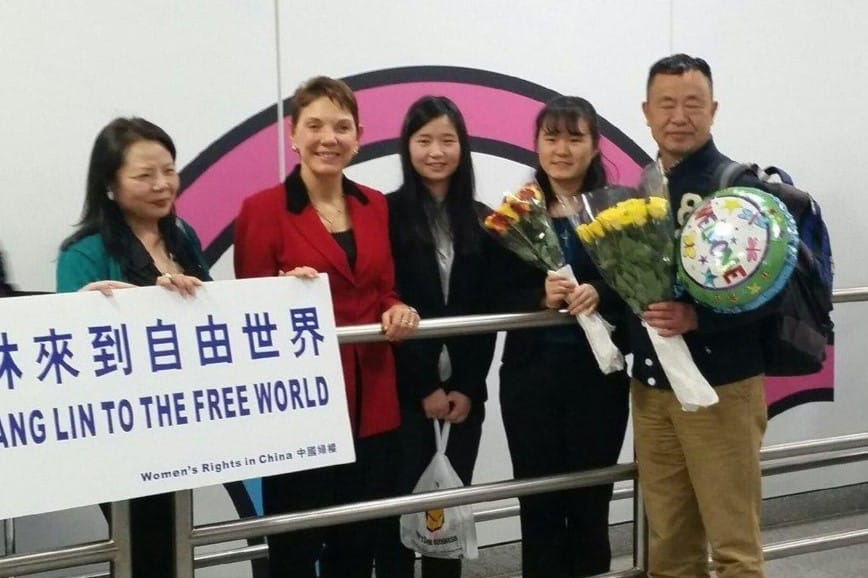
Reggie and I, along with Jing Zhang, President of Women’s Rights in China, continued to work closely together to get the Chinese government to allow Zhang to leave China and to secure a visa for his travel to the US.
Heart of an Activist
Zhang Lin (right most) arrived in New York on January 5, 2018, reuniting with his two daughters. Image source: RFA
Since his arrival in the US in January 2018, Zhang Lin has been at the forefront of criticizing the Chinese Communist Party (CCP). He has spoken at public events in New York, Washington DC, Seattle and elsewhere. He has organized protests and been a columnist at two newspapers. He established his own YouTube channel, Zhang Lin’s Vision, with more than 100,000 subscribers. It garners about one million views every month.
Zhang Lin is pessimistic about the future of democracy in China. He has no plans to return to the country where he was born and where he toiled for decades, in and out of prison, to realize the dream of democracy and respect for human rights.
The Significance of Zhang Lin’s Case
Of the hundreds of cases I’ve worked on for more than three decades, Zhang Lin’s case stands out:
He has been under surveillance by agents of the CCP and the government it controls for nearly his entire adult life, from the time he was placed on the list of “targeted people” in 1980 to the present day in the US;
It marked one of the first instances of my using “open sources” — radio broadcasts and provincial newspapers – to identify political prisoners;
Zhang witnessed and participated in three of the major pro-democracy movements in China since the end of the Cultural Revolution in 1976 – Democracy Wall, the June 4th protests, and the China Democracy Party. Members of the New Citizens Movement joined protests over the refusal of authorities to allow Zhang Lin’s daughter to attend school;
He was incarcerated in the major carceral facilities used to house political prisoners: police stations where administrative detention is served, detention centers, designated locations for residential surveillance, and prisons;
He was deprived of his political rights on multiple occasions;
He was convicted of five offenses used to incarcerate political and religious prisoners: counterrevolution, hooliganism (counterrevolution and hooliganism were removed from the Criminal Law in 1997), illegal border crossing, inciting subversion, and gathering a crowd to disrupt traffic or public order;
Despite obstacles, Zhang Lin was able to escape China, with the assistance of Reggie Littlejohn, American officials, and me, to reunite with his daughters in the US.
Time Spent in Detention
When I interviewed Zhang Lin for this JKR, we discussed many topics, including his experiences of incarceration. In addition to time spent in police stations, locations used for residential surveillance and prisons, Zhang Lin spent more than five years in 10 different detention centers.
“Cruelest jails in the world”
Based on his experience, Chinese detention centers are the cruelest jails in the world. The Chinese prison authorities studied all four of the detention models – traditional Chinese, Russian, Japanese, and British – and incorporated features of each into China’s current detention model.
“…I was severely mistreated in detention and reform through labor centers. The worst was the Guangzhou labor camp where the guards acted like wild beasts. I was subjected to electric shocks and beaten mercilessly in Chinese detention centers. I was kicked in the back, which contributed to cervical stenosis, a condition that plagues me to the present day. I have to move my neck every 30 minutes, or it will become very stiff. I developed a bad tooth ache in Tongling Prison but was denied medical treatment.”
In detention and reform though labor centers, Zhang Lin encountered at- risk detainees including Christian missionaries, Falun Gong practitioners, and those awaiting execution.
“…I tried to help the missionaries and unorthodox religion practitioners, even challenging a guard to a fight to dissuade him from hurting an elderly Protestant.”
(Members of Zhang Lin’s family were Christian for several generations. He converted to Christianity in 2020, after his arrival in the US.)
Zhang had less opportunity to interact with at-risk prisoners in prisons. Such prisoners would meet occasionally in the prison yard, but they were not grouped together in cell blocks devoted to political prisoners as is the case in some Chinese prisons.
Those awaiting execution
Knowing that China keeps those convicted of death penalty in detention centers while pending appeals or waiting for executions, I asked Zhang if he had seen any of those inmates.
He recalls being part of a group of 20 inmates assigned while at the Bengbu Detention Center to keep watch over those awaiting execution.
“…After an inmate received a death sentence, he was immediately shackled and handcuffed and then transferred to a new cell. The “watch” group was divided into five smaller groups of four inmates who monitored the death row inmates to insure they didn’t assault other inmates or commit suicide or otherwise hurt themselves.”
According to Zhang, a possible reason for the surveillance was to make sure that their organs could be harvested, if necessary, for use in organ transplants.
Shaanxi dissident likely received second sentence reduction
Dui Hua uncovered information that the founder of the Xinya Party (兴亚党) Guo Ran (果然) might have received his second sentence reduction. In late August 2024, Weinan Prison in Shaanxi Province submitted a sentence reduction request for five months on behalf of Guo. This request came nearly six years after his first five-month sentence reduction was approved in October 2019.
The decision by the Weinan Intermediate People’s Court has not been made public. Similar requests were rejected in September 2018 and January 2019. The latest request, if approved, will shorten his prison sentence to expire in February 2025.
Dui Hua first covered his case in its Human Rights Journal in June 2024. Guo was sentenced to 14 years’ imprisonment for subversion in a closed-door trial alongside Kou Ji (寇稽). They were accused of publishing posts online and recruiting people online to join their underground party. Members were to become citizens of the “Chinese Federal Republic.” Guo allegedly called on online recruits to carry out violent activities.
Activist of the online anti-censorship movement sentenced in Hunan
Yang Zewei (杨泽伟), better known by his screen name Qiao Xinxin (乔鑫鑫), has been sentenced to five years in Hengyang for inciting subversion.
Yang is an independent journalist who fled China in 2013 and later resided in Laos. Alongside a group of activists living in Southeast Asia, the US, Canada, and the Netherlands, he launched a movement known as “Ban the Great Firewall” (Chinese: 拆墙运动). The activists shared online tutorials to Chinese netizens on how to circumvent the firewall and censorship.
Yang went missing shortly before June 4, 2023. It was later confirmed that he had been taken by Chinese police from Vientiane. His detention and repatriation sparked international outcry over China’s cross-border law enforcement operations.
Yang was indicted by the Hengyang People’s Procuratorate in July 2023 for inciting subversion of state power, an Endangering State Security crime.
Yang’s sentence is expected to expire in June 2028.
Lawyer Lu Siwei formally arrested in Chengdu
On October 10, human rights lawyer Lu Siwei (卢思位) was formally arrested by Chengdu police for illegal border crossing. His arrest came two weeks before the expiration of his release on bail pending further investigation (取保候审), which started on October 28, 2023.
Lu was detained in Laos in July 2023 while en route to Thailand. He was planning to fly from Thailand to reunite with his family in the US. Lu was later repatriated to China despite holding a valid Laotian visa.
Lu provided legal defense in many high profile, politically sensitive cases, including the cases against Yu Wensheng (余文生) and Qin Yongpei (覃永沛), lawyers who were charged with inciting subversion. In 2020, Lu took on the case of the “Hong Kong 12”—twelve Hong Kong activists caught fleeing on a boat to Taiwan by China’s coastguards. He was later forced to withdraw after authorities appointed legal aid counsels. The Sichuan Justice Bureau revoked Lu’s license in January 2021 for “posting inappropriate remarks online.”
Falun Gong practitioner in Guangdong released after receiving second sentence reduction
Information obtained by Dui Hua confirmed Falun Gong practitioner Shi Xuemei (石雪梅) was released from the Guangdong Women’s Prison at the end of June 2024 after receiving her second sentence reduction of seven months.
Shi was one of the three Falun Gong practitioners from Huizhou who were detained in 2016 for using a cult to undermine implementation of the law. They were accused of possessing propaganda publications and spreading cult messages. The trio was convicted by the Huidong County People’s Court in March 2018. The judgment was upheld by the Huizhou Intermediate People’s Court in September of the same year. Shi and Zhou Yuqing (周育琴) received heavy prison sentences of nine years and ten years, respectively. Liu Qingqiang (刘庆强), a man in his mid-30s at the time of the arrest, was sentenced to four years and released in 2020.
Shi received her first sentence reduction of eight months in 2021 for good behavior.
Zhou received one reduction of seven months in September 2022. She is incarcerated in the Guangdong Women’s Prison and is due for release in February 2026.
Ruan Xiaohuan appeal trial postponed again
The appellate trial for Ruan Xiaohuan (阮晓寰) has been postponed again, according to information posted online by his wife. Ruan is the author behind the well-known blog “Program Think 编程随想” covering topics on internet security, tools to bypass China’s firewall, and his political commentaries.
Ruan was convicted of inciting subversion in February 2023 by the Shanghai No.2 Intermediate People’s Court. He was sentenced to seven years’ imprisonment with two years deprivation of political rights.
Ruan filed an appeal to the Shanghai High People’s Court in the same month. However, the previous presiding judge insisted that Ruan be represented by a lawyer from the court’s legal aid program, despite repeated objections by Ruan and his family. Ruan finally obtained his own legal counsel at the end of August following the appointment of a new presiding judge and started to receive visits from the lawyers. He is now represented by the renowned rights lawyer Mo Shaoping and lawyer Zhang Dongshuo.
Ruan’s appellate trial has been postponed several times and is now scheduled to take place at the end of December 2024. His lawyers have filed a motion for an open trial. However, cases deemed “sensitive” are usually held in closed trials.
With the 2024 US Presidential Election less than five weeks away, polls show a tight race between the two candidates. Dui Hua examines their stances on Beijing and what awaits Sino-US relations after the US House of Representatives passed over two dozen bills aimed at safeguarding US interests against China. Among these, the “Hong Kong Economic and Trade Office Certification Act,” likely will put the HKETO status at risk.
On September 10, Harris and Trump had their first and possibly only debate of the 2024 presidential election race on ABC in Philadelphia, Pennsylvania. Image credit: SAUL LOEB/AFP via Getty Images
Upcoming Event
Executive Director John Kamm will speak at the University Club of San Francisco on Thursday, October 17. He’ll explore who China’s leader, Xi Jinping, prefers to win the November 2024 election, Donald Trump or Kamala Harris. See our website for the details.
US Election
A story making the rounds in Hong Kong in early 2017 went something like this: Shortly after Donald Trump won the United States (US) presidential election in November 2016, a senior Chinese official visited Hong Kong, where, during a meeting with business leaders, he asked for their impressions of the newly elected US leader. One individual, who had had dealings with Trump, gave this simple assessment: “He’s crazy.”
Not long afterward, President Xi Jinping experienced firsthand Trump’s unpredictability when he visited the US president at his Mar-a-Lago estate in Florida. Trump left the room during dinner. When he returned, Trump told President Xi that he had just ordered a missile-strike on Syria.
Trump and Xi at Mar-a-Lago on April 6, 2017. Image credit: JIM WATSON/AFP via Getty Images
Trump’s unpredictability also extended to his own team. In May 2018, Trump angrily denied knowing the name of Matt Pottinger, his top China advisor on the National Security Council who had met with President Xi in 2017. “He doesn’t exist,” said Trump in response to a New York Times article about a summit with North Korea’s leader. And then on September 12, 2017, President Trump used his position as chairperson of the UN Security Council to accuse China of meddling in the US’ mid-term congressional elections. His accusation reportedly took his advisors by surprise.
Since becoming the Republican party’s nominee for the third time in 2024, Trump has been bolstered by a GOP platform that calls for revoking China’s Most Favored Nation (MFN)Trading status, reducing reliance on China for critical imports, and forbidding China’s acquisition of American farmland and companies in critical industries. As discussed in our last Digest, Americans see President Biden as weak on China; they view Trump as far tougher. A Pew Research poll in our lead story showed that eight in 10 Americans have an unfavorable opinion of China, the highest number since Pew began recording this metric five years ago. Whereas 40 percent of all Americans polled by Pew consider China an enemy, 59 percent of Republicans view China that way, compared to only 28 percent of Democrats who consider the PRC as an enemy. When Trump attacks China, he plays to his base.
Trump spoke at the 2024 Republican National Convention (RNC) as the GOP presidential nominee. Image credit: Alex Wong/Getty Images
Revocation of China’s MFN, banning Chinese purchases of American farmland, and reducing reliance on China’s imports are not the only challenges to US-China relations. Some in Congress also want to decertify Hong Kong’s Economic and Trade Offices (see below) in the US and slap more sanctions on Chinese officials.
Reflecting the high Chinese American population of California and her San Francisco hometown, Vice President Kamala Harris – who met Chinese President Xi Jinping on one occasion for 45 minutes – has adopted a more moderate stance than Trump. In effect, she has aligned herself with President Biden’s China policy. She sees China as a competitor, not an enemy. She has co-sponsored bills in the Senate decrying China’s treatment of Uyghurs and the loss of freedoms in Hong Kong, but she has been joined by many other Senators in co-sponsoring these bills.
Harris’ pick for vice president, Minnesota Governor Tim Walz, has had a long relationship with China, having taught there in 1989, and later spending his honeymoon there. He visited China 30 times before 2003 and organized trips to the country for high school students. So deep is his relationship with China that the GOP’s House Oversight Committee has launched an investigation into it.
Harris and Walz nominated as the presidential and vice presidential candidates, respectively, at the 2024 Democratic National Convention. Image credit: Victor J. Blue/Bloomberg via Getty Images
Walz’s experiences in China have made him sympathetic to the Chinese people but also critical of the government. During his stint on the Congressional-Executive Commission on China (CECC), he has testified and lent vocal support for activists such as Huang Qi, Tan Zuoren, the blind lawyer Chen Guangcheng, and Nobel Peace Prize laureate Liu Xiaobo.
Harris did not mention China in her remarks on economic policy delivered on August 16, 2024. The Democratic Party’s platform adopted by the Platform Committee prior to the convention in Chicago that opened on August 19, 2024, commits to “outcompeting China” while seeking to “derisk” but not decouple. It mentions cooperation with China on climate change and fentanyl trafficking. It seeks to maintain the status quo with respect to Taiwan. No mention is made of revoking MFN or other policies favored by Republicans.
A presidential debate watch party in DC. Image credit: Alex Wong/Getty Images.
The debate between Harris and Trump on September 10 mentioned tariffs imposed on Chinese goods by Trump and maintained by the Biden administration. Both candidates decried the deaths of Americans caused by the illegal smuggling of fentanyl. Harris slammed Trump for praising Xi Jinping.
Who Does China Favor?
Views are mixed among Western China experts on who China prefers to win the presidential sweepstakes in November, Kamala Harris or Donald Trump.
One camp thinks China prefers Trump as he would alienate allies, threaten support for Ukraine, and reduce support for Taiwan in its standoff with China. The other camp thinks that China prefers Harris, as Trump would revoke China’s MFN and take other steps that would damage China’s economy.
In the Economist/YouGov poll released on September 11, of the 1,626 American adults polled 37 percent think China prefers Harris as the winner of the November election, while 26 percent think China prefers Trump. Thirteen percent think China doesn’t have a preference. The margin of error was 3.3 percent.
With under two months to go before election day in the US, we’ll find out soon enough who will steer America’s relations with China in the critical years ahead.
“China Week”
The United States House of representatives debated and passed more than two dozen bills aimed squarely at China during the week of September 9, dubbed “China Week”. Notable bills that passed included legislation that could decide the fates of the US-China Science and Technology Agreement (STA) and the Hong Kong Economic and Trade Offices (HKETO) in Washington, New York, and San Francisco.
The House on September 10 passed the STA Enhanced Congressional Notification, a bill that requires the US Department of State to notify Congress at least 30 days ahead of any science and technology agreements with China. After the current version of the agreement (extended for five years in 2018) expired in 2023, it was quietly extended twice for six months, in August 2023 and in February 2024. In August, 2024, Dui Hua learned form a US Official that the negotiation for a new STA agreement had started and was making positive progress. The passing of the notification act, however, could hinder the negotiation, if not completely derail it.
HKETO Status At Risk
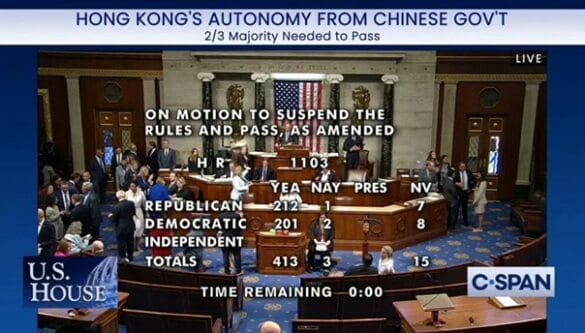
US House voted on the HKETO Certification Act. Image credit: C-SPAN
The US House of Representative passed the HKETO Certification Act on September 10, with a lopsided vote of 413 to 3. The act requires the US President to annually certify whether HKETOs should continue to have diplomatic privileges and immunities now that Hong Kong’s special autonomous status has been decertified.
HKETOs in the US were established pursuant to the Hong Kong Policy Act, enacted by Congress in 1992, to treat Hong Kong separately from China for matters of trade and economic relations.
On May 30, 2024, subversion convictions of Hong Kong pro-democracy activists renewed calls by members of Congress to decertify and strip HKETO in the US of diplomatic immunity, a move that could force the closure of the offices and likely sale of the buildings where the offices are housed.
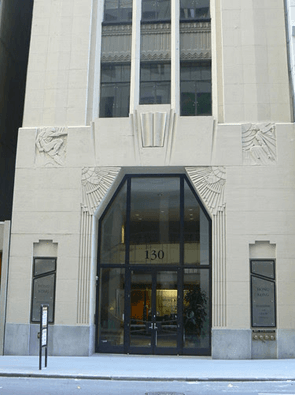
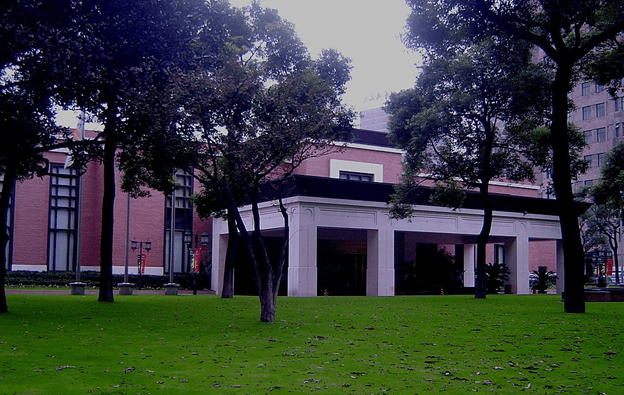
HKETO San Francisco, located in an Art Deco building with Historic Landmark status on Montgomery Street. The building was acquired in 1995 and opened in January 1998. Image credit: Art Deco Buildings
In early 2023, Congressman Chris Smith (R-New Jersey) and Congressman McGovern Jim McGovern (D-Massachusetts) introduced the HKETO Certification Act which, in the unlikely event that it becomes law, would force the closure of the HKETO offices.
It’s not the first time the New Jersey Congressman has targeted the HKETO. A few weeks before the act that was passed by the House on September 10 was introduced, Smith teamed with Tom Suozzi (D-New York) to propose legislation that would rename the street in Washington where the HKETO is located, to “Jimmy Lai Way”, to honor the democracy activist and publisher currently imprisoned in solitary confinement at Hong Kong’s Stanley Prison. Like the HKETO Certification Act, this bill has a companion bill in the Senate. Unlike the HKETO Certification Act, it is likely to pass both chambers of Congress with veto-proof majorities and be signed by the president.
Echoing congressional concerns over the convictions of the Hong Kong activists, the US State Department announced, on May 31, 2024, that it would impose visa restrictions on Hong Kong and Mainland officials involved in the convictions. In a press statement that same day, the State Department said that the US was “deeply concerned by the guilty verdicts” and that its new sanctions would target individuals who are responsible for implementing the National Security Law, pursuant to Section 212(a)(3)(C) of the Immigration and Nationality Act. The State Department updated its Hong Kong Business Advisory on September 6, 2024, following HKSARS announcement that “undesirable” individuals will be denied from boarding flights to Hong Kong.
PUBLICATION HIGHLIGHTS
Dragon Years: Remembrance of Times Past (2000)
The latest episode of Dui Hua’s limited podcast series, Dragon Years: Remembrance of Times Past journeys back to 2000, the year of the Metal Dragon. The year marked the beginning of a new millennium and Dui Hua’s debut as an official NGO. In this episode, John Kamm and China trade pioneer-turned-Dui Hua board member Bill Simon had a lively discussion of how China has changed and how it has stayed the same. The duo reflects on their work with Dui Hua and what US officials got wrong about increased trade with China while finding reasons to be optimistic for the future of US-China relations.
Thirty-four years ago, shortly after Mongolia began its transition to democracy following decades under Soviet influence, John Kamm led the first US trade delegation to the landlocked nation in September 1990, embarking on a memorable four-day trip to the capital Ulaanbaatar. Read more
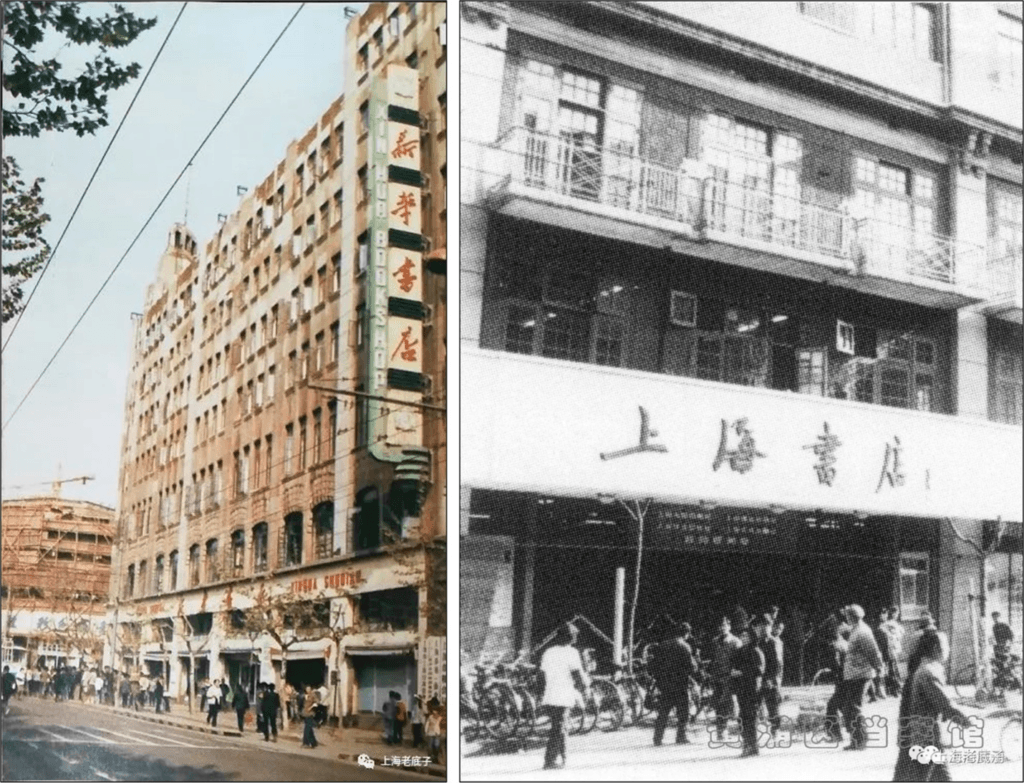
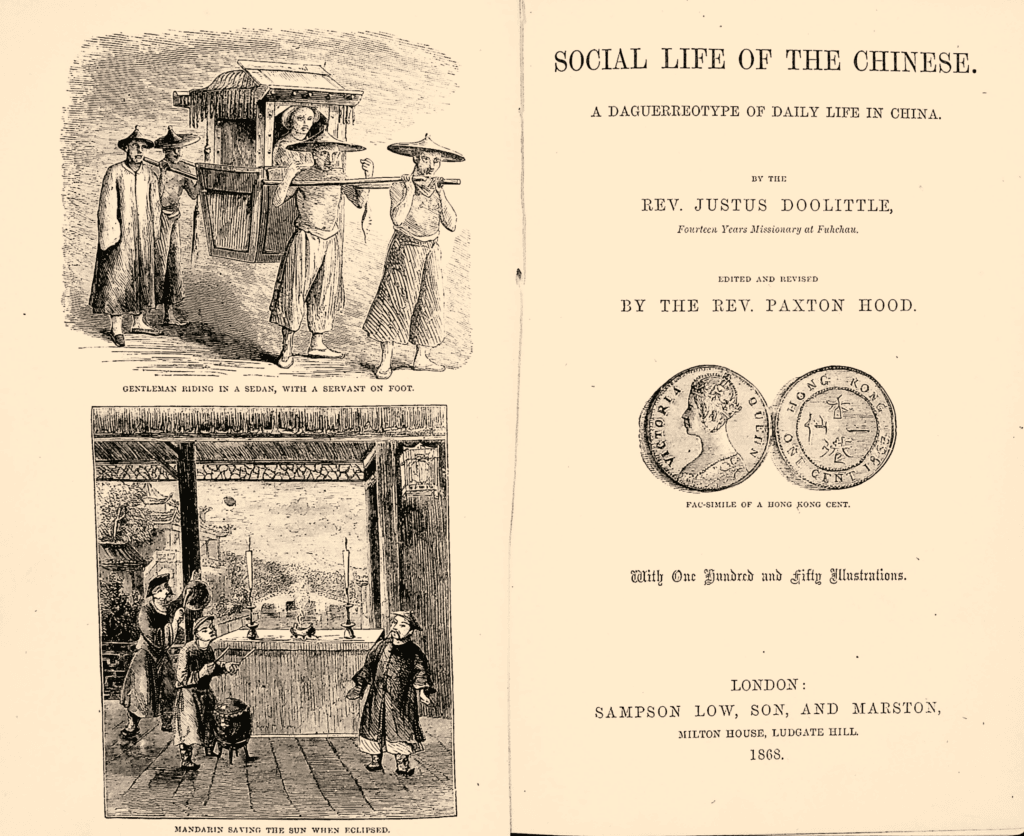
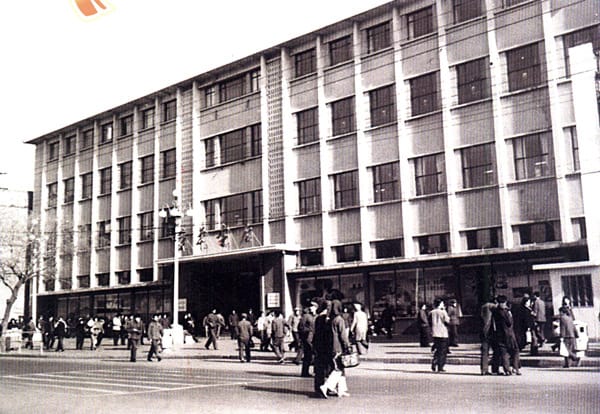
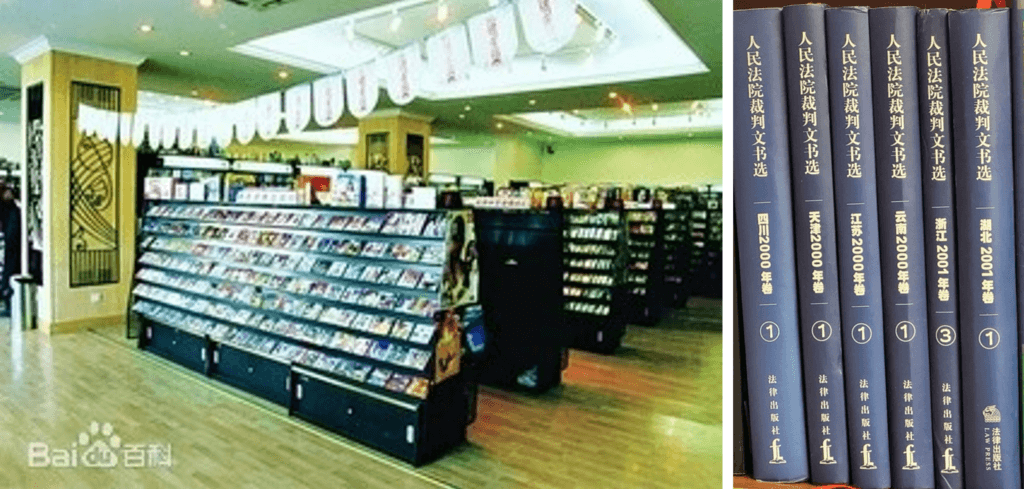
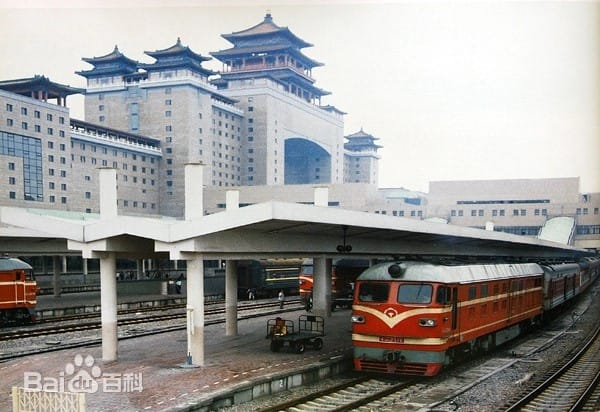
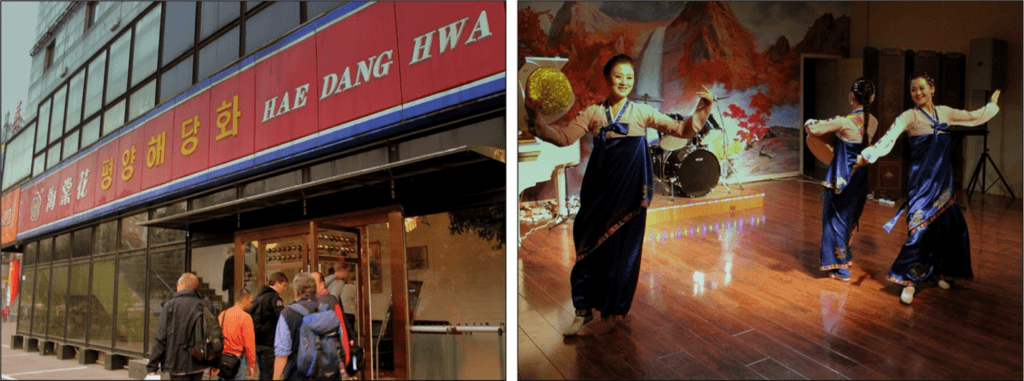
John Kamm frequented China’s state-run bookstores during his trips and discovered publications that reflected socio-political trends in the Mainland and contained political cases for his advocacy work. One bookstore search led him to a North Korean restaurant in Beijing. Read more
We revisit the Beijing Olympics that took place 16 years ago, an important milestone for China. But in the end, the Games did not improve its international image as Beijing had hoped. Read more
HUMAN RIGHTS JOURNAL
From the Human Rights Journal, a blog offering original analysis and translations related to human rights and rule of law developments in China.
The Mainland China has been the top destination for Taiwanese working or living long-term overseas since the ‘90s. However, the number of Taiwanese visiting China has dropped over the past five years, as the Island finds itself caught up in complicated international relationships and the Mainland uses increasingly hostile rhetoric. This post highlights the recent cases of six Taiwanese who were arbitrarily detained under the guise of “endangering state security.” Read more
This two-parts journal explores the Supreme People’s Court’s recent disclosures of death penalty decisions made shortly after China’s human rights review in Geneva in January 2024. It looks at the demographics of those sentenced to death, trends in types of crime and decision review times, the reasons why some decisions were disapproved, the presence of counsel during rulings, and inconsistencies in the information provided by the disclosures.
US citizen David Lin (林大卫) was released from Beijing Number Two Prison on September 15, 2024. Pastor Lin was on the priority list of three Americans considered by the US Department of State to be wrongfully detained. Read press statement
Dui Hua research found Li Yan, a victim of domestic abuse who was convicted of murdering her abusive husband, has received her first sentence reduction in 2023. Read press statement
PRISONER UPDATES
Dui Hua’s Prisoner Updates provide the latest information uncovered through research and direct dialogue with the Chinese government.
In these updates: Pastor Bao Guohua and wife Xing Wenxiang might have been granted clemency since their imprisonments; Activists Huang Xueqing and Wang Jianbing’s appeal concluded without trial in Guangdong. Read more
Christians from Guiyang and Jiangxi sentenced for inciting subversion; Yang Chih-yuan became the first Taiwanese to be convicted of splittism on mainland China. Read more
Clemency granted to Falun Gong practitioners; Women’s rights activist Li Qiaochu release after completed her sentence of 3 years and 8 months on August 3; Pastor and member of Shanxi house churches sentenced for organizing illegal border crossings. Read more
Subscribe here to receive Dui Hua publications by email.
On July 24, 2024, elder Zhang Chunlei (张春雷) of Guiyang Ren’ai Reformed Church was convicted of inciting subversion—an ESS crime—and fraud and sentenced to five years in prison.
Zhang was detained on March 16, 2021, after going to a local police station to inquire about Christians who had been in custody for holding a retreat on a privately rented property, following a police raid.
Zhang was initially detained on suspicion of fraud. However, the authorities levied an additional charge of inciting subversion against him in January 2022. Despite being diagnosed with liver cirrhosis, Zhang has been denied release on medical grounds. He has one and a half years to serve before completing his sentence in March 2026.
Not long after Zhang was sentenced, unofficial news media sources reported that another Christian in Jiangxi had been sentenced to four years and six months in prison for inciting subversion. Detained by Interpol in Malaysia at the behest of the Chinese government on June 17, 2020, Shi Junwei (⽯俊伟) was repatriated to China on September 23 of the same year. Shi is currently held in Ji’an Prison and is due for release on March 22, 2025.
After disassociating himself with the state-sanctioned Three Self-Patriotic Church in 2010, Shi began proselytizing and wrote online articles about Christianity, many of which are critical of the Chinese Communist Party. In 2019, Shi met with Christians from Taiwan, Hong Kong, Japan, the United Kingdom, and the United States in Malaysia, where he was detained and subsequently repatriated.
Hubei independent journalist sentence revised upon appeal
The Ezhou Intermediate People’s Court reduced the sentence for independent investigative journalist Shangguan Yunkai (上官云开) to 11 years’ imprisonment, down from 15 years, in the appellate trial concluded in September.
Shangguan was convicted of multiple charges and sentenced to a combined imprisonment of 15 years by the Echeng District People’s Court on January 5, 2024. He was accused of PQPT, illegal confinement, selling counterfeit medicines, and bigamy.
Shangguan made his name known for exposing corrupt officials when he worked for a state newspaper and continued his investigative work as an independent journalist, focusing on corruption in the Wuhan region.
Shangguan is reportedly serving his sentence in Huangshi Prison.
Taiwanese political activist sentenced in Zhejiang
Yang Chih-yuan (杨智渊)is the first Taiwanese resident to have been convicted of splittism on mainland China. On September 5, Yang was sentenced to nine years in prison by the Wenzhou Intermediate People’s Court.
The sentence came a few months after the Supreme People’s Court, Supreme People’s Procuratorate, Ministry of Public Security, Ministry of State Security, and Ministry of Justice jointly issued a legal opinion to severely punish “die-hard” Taiwan splittists in May.
Yang founded a small political party—the Taiwan Nationalist Party 台湾民族党—in 2011. He was also once affiliated with the now defunct pro-independence Taiwan Action Party Alliance. But his acquaintances said Yang’s political views have changed. In 2018, he established a citizen alliance to reach out to pan-blue (pro-unification) groups in Taiwan. He traveled to the Mainland in January 2022 to explore business opportunities and was detained by the Wenzhou State Security in August 2022 for splittism and inciting splittism. State media also accuses Yang of supporting Hong Kong protesters in 2019.
Artist detained for insulating martyr and hero
Well-known modem artist Gao Zhen (高兟) was reportedly detained on August 26, 2024, by Hebei police and charged under the Heroes and Martyrs Protection Law. The police also raided his art studio in Yanjiao, a Hebei town near Beijing, on August 30 and confiscated some art projects.
Gao created satirical sculptures. His brother and artistic collaborator Gao Qiang speculated that his detention stemmed from a project in 2009, when he created artworks critical of Mao Zedong and the Cultural Revolution.
Gao, now in his 60s, is a permanent resident of the US and has lived in New York since 2022. He went back to China to visit family and friends. In 2018, China passed a law prohibiting the defamation of martyrs and heroes. China amended the Criminal Law in the revision in 2020. Maximum punishment can be imprisonment for less than three years.
Gao is in custody at the Sanhe Detention Center in Hebei. His wife, despite not having been detained, has been prevented from leaving China on the grounds of “endangering state security.”
Possible clemency granted to Zhejiang pastor and wife
Information uncovered by Dui Hua indicates that Pastor Bao Guohua (包国华) and his wife Xing Wenxiang (邢文香) might have been granted sentence reductions.
The couple are clergy of the Jinhua Chengqu Christian Church (金华城区基督教会). Alongside ten other members, they were accused of committing multiple financial crimes including illegal business operation, embezzlement, and concealment of accounting vouchers during a 2015 city-wide financial audit of religious venues. The police also accused the couple of gathering a crowd to disturb social order.
The couple has practiced Falun Gong since the 1990s. Yu had been responsible for coordinating and training Jiangmen practitioners. The couple were accused of disseminating and stamping banknotes with “cult” messages. The police also found large quantities of Falun Gong publications and digital materials at their home.
Critics believe the charges are trumped-up. They think the couple and other church members were targeted for refusing to comply with the government’s order to remove rooftop crosses from the churches. Church members had also gathered to protest the forced demolition.
Between 2014 and 2016, the Zhejiang government removed crosses from an estimated 1,200-1,700 churches in the province, according to a 2016 report by New York Times.
Bao and Xing were convicted of all four crimes on February 25, 2016, by the Wucheng District People’s Court and sentenced to 14 years and 12 years of imprisonment, respectively. The other ten members, including Bao and Xing’s son, Bao Chenxing, received suspended sentences.
Bao is serving his sentence at Qiaosi Prison while Xing is serving her sentence at the Zhejiang Women’s Prison. Little has been heard about them following their imprisonment.
Dui Hua found that the Qiaosi Prison submitted a request for a seven-month sentence reduction for Bao in November 2019 and another request for a six-month reduction in March 2024. Dui Hua also found that in October 2023, the Zhejiang Women’s Prison submitted a request for seven months reduction for Xing.
At the time of writing, Dui Hua has not determined whether the sentence reduction requests have been approved.
American pastor released after 18 years of imprisonment
Pastor David Lin (林大卫) was released from Beijing Number Two Prison on September 15, 2024. Lin is a US citizen and was on the priority list of three US citizens considered by the US Department of State to be wrongfully detained.
Pastor Lin has safely returned to the States. For details, please read Dui Hua’s press statement.
Activists appeal concluded in Guangdong without trial, says lawyer
Lawyer Xu Kai posted an emergency appeal on his social media account on September 13, saying he had just learned that The Guangdong High Court had already issued the judgment on Huang Xueqin (黄雪琴) and Wang Jianbing’s appeal on the 10th without a trial. The judgment affirmed the convictions and sentences. A copy of the judgment was sent to Huang on the 12th.
Xu says he had just submitted new evidence, testimonies, and a list of new witnesses to the High Court the week before. He had requested a hearing to be held on Huang’s appeal in accordance with the law. Xu also says he was misled during a phone call on the afternoon of the 12th. The presiding judge of the case, while acknowledging the receipt of the new evidence, did not notify Xu that the judgment had already been issued.
Huang, an activist for women’s rights, was tried together with labor activist Wang Jianbing (王建兵) for inciting subversion by the Guangzhou Intermediate People’s Court in a closed trial on June 14, 2024. Huang was sentenced to five years and declared that she would appeal.
For cases considered to be politically sensitive, other than conducting a closed-door trial, courts in China sometimes conclude the appeal trial by means of “document review 书面审理”.
Qingdao lawyer’s license suspended for calling for the abolition of PQPT
In July, the Qingdao Justice Bureau issued administrative penalty decisions to suspend the practice license of lawyer Yu Kai (余凯) for one year and the operation of his law firm for six months.
Yu is one of five lawyers who submitted an opinion to the Legal Affairs Standing Commission of the National People’s Congress calling for the abolition of the crime of picking quarrel and provoking trouble (PQPT).
PQPT has been called a “pocket crime” (口袋罪) used by Chinese authorities against human rights activists and dissidents for a wide range of behavior, from minor social disturbances to posting provocative online messages.
Rights lawyer and wife tried for Subversion
Rights lawyer Yu Wensheng (余文生) and his wife Xu Yan (许燕) are standing trial for inciting subversion, a crime of Endangering State Security (ESS).
Yu and Xu were detained in April 2023, while they were en route to an event hosted by the European Union (EU) Mission in Beijing. The couple were initially detained for PQPT, but the procuratorate added the crime of inciting subversion when they were formally arrested in May 2023. The case was then transferred to Suzhou in February 2024.
The trial, held by the Suzhou Intermediate People’s Court on August 28, was closed to the public. Representatives from the EU Mission were blocked from attending the hearing.
Yu completed his last imprisonment in March 2022. He was convicted and sentenced to four years for inciting subversion in June 2020 by the Xuzhou Intermediate People’s Court.
SAN FRANCISCO (SEPTEMBER 15, 2024) – US citizen David Lin (林大卫) was released from Beijing Number Two Prison on September 15, 2024.
Pastor Lin, now 68 years old, entered China to preach the Gospel in 2006. He was convicted of contract fraud, a crime frequently used against house church leaders who raise funds to support their work, by the Beijing Number Two Intermediate People’s Court in December 2009. He was sentenced to life in prison.
The sentence was reduced to nineteen and a half years in 2012. He later received three sentence reductions.
Prior to the most recent reduction, Pastor Lin was scheduled for release in December 2029.
Pastor Lin was on the priority list of three Americans considered by the US Department of State to be wrongfully detained. The other two are Mark Swidan and Kai Li.
Dui Hua estimates that there are more than 200 Americans under coercive measures in China. More than 30 are under exit bans. In addition to Mark Swidan and Kai Li, Dui Hua considers Nelson Wells Jr. and Dawn Michelle Hunt to be wrongfully imprisoned in China.
Dui Hua submitted 30 lists seeking clemency for Pastor Lin to the Chinese Government. It received several written responses.
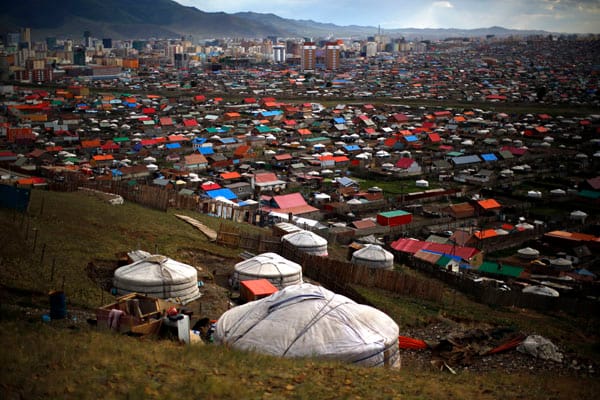
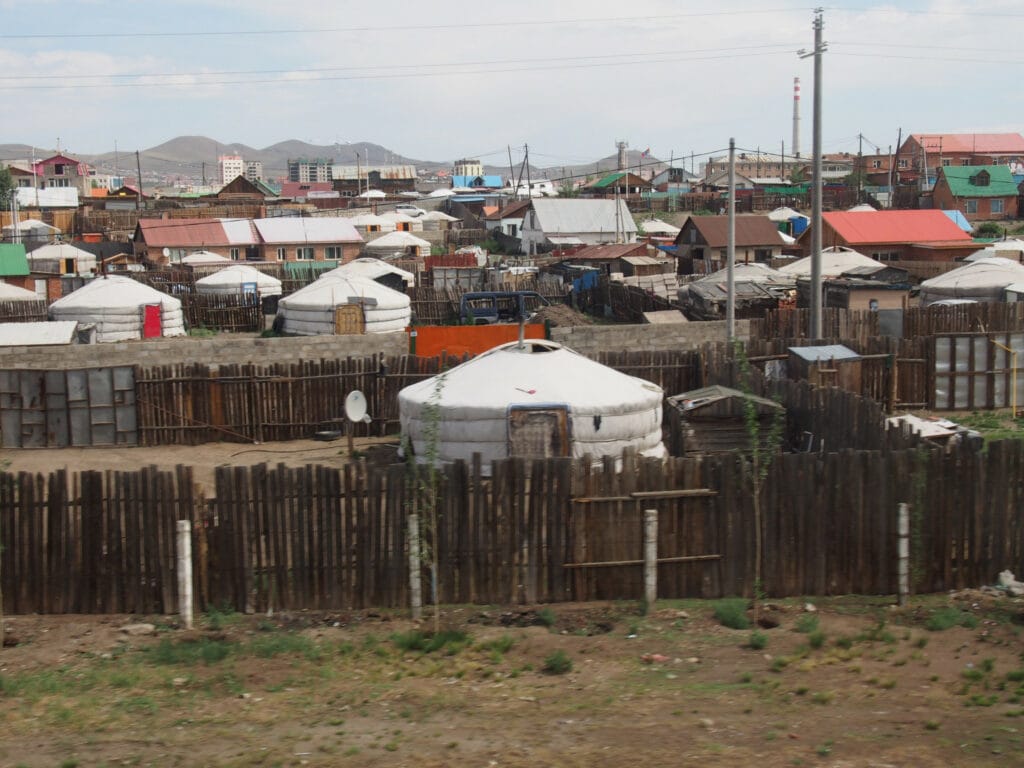
A photo of gers, traditional Mongolian lodging, on a hill in Ulaanbaatar’s Ger District taken June 22, 2013. Image credit: Passegio
In my two years in leadership positions at the American Chamber of Commerce in Hong Kong (AmCham HK) – 1989 when I was First Vice President and 1990 when I was President – I focused on maintaining and expanding trade with Communist countries. I led the fight to maintain China’s Most Favored Nation (MFN) trading status, testifying to Congress three times when I was president, and many more times in ensuing years. I coupled my support for China’s MFN with advocacy on behalf of political prisoners.
In June 1989, two weeks after the killings in Tiananmen Square, I led a small AmCham HK delegation to Laos, then firmly in Vietnam’s orbit. Then in September 1990, I led another small delegation to Mongolia, which had just begun the transition to democracy after decades in the Soviet Union’s orbit. According to Joseph Lake, the first resident US ambassador to Mongolia, ours was the first US trade mission to that landlocked nation. Although AmCham HK was invited to Myanmar (formerly known as Burma) by the ruling junta that had seized power in a coup, the visit didn’t take place due to government bureaucratic incompetence, and because of the junta’s hostility towards the US ambassador, Burt Levin, a former consul general in Hong Kong and friend of AmCham.
Despite setbacks, I still hoped to visit Myanmar before the end of my tenure as AmCham president. I also hoped to visit Vietnam. Neither trip came to pass.
Beijing
Prior to travelling to Mongolia, I spent five days in Beijing, from September 6 to10, 1990, to work on joint venture opportunities, especially one in Qingdao to produce sodium silicate. This was to be the first 50:50 venture between the United States and China in the chemical industry. At the last minute, however, my employer walked away from the opportunity. Not long after this decision, I resigned from the company.
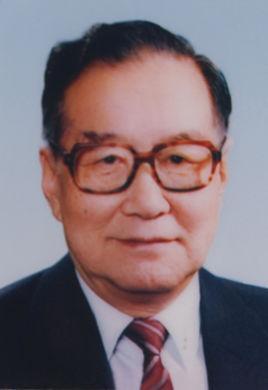
On September 7, I met with Li Hou, Secretary General and Deputy Director-General of the Hong Kong and Macau Affairs Office under the State Council. Li had participated in both the Sino-British negotiations on the transfer of Hong Kong to China and the Sino-Portuguese negotiations on the transfer of Macau to China. As such, Li was the most experienced and knowledgeable Chinese official dealing with the two territories.
Li Hou, Secretary General and Deputy Director-General of the Hong Kong and Macau Affairs Office, with whom Kamm had a meeting during his September 1990 trip to China. Image credit: Douyin Baike
Our discussions centered around developments in Congress on China’s MFN and other matters, notably a bill that would offer protection to Chinese students in the United States. Li listened intently and took copious notes on what I said. As he didn’t seem so interested in the legislation offering visa protection to Chinese students, I took as a sign that he did not particularly care about the subject. After the meeting, AmCham issued a press statement on our meeting saying Li wasn’t opposed to the bill Li took exception to that interpretation and sent me a letter after I returned to Hong Kong clarifying his position.
With what time I had, I went book shopping, had breakfast with the American Chamber of Commerce in Beijing, attended an American embassy reception in our honor, and spent time with the China Council for the Promotion of International Trade, AmCham’s longtime hosts in China. On September 9, 1990, I had dinner with members of the delegation at a well-regarded Japanese restaurant in Beijing.
Flight to Ulaanbaatar
On September 10, 1990, I was joined at Beijing airport by six AmCham members and the American Consul General in Hong Kong, Richard Williams, for the 90-minute flight to Ulaanbaatar, the capital of Mongolia. Ambassador Williams had served as the first American ambassador to Mongolia but unlike his successor he was never resident in the country.
We were greeted at the airport by our hosts, the Ministry of Trade and Cooperation, the Mongolian Chamber of Commerce and Industry, and the US Embassy. We were taken to the guest house on the grounds of the presidential palace, where we’d be staying for our four-day visit to the country,
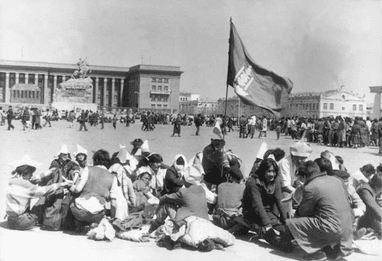
We glimpsed a small group of individuals in traditional Mongolian dress sitting by the gate. I learned that they were the remnants of a group of hunger strikers that had gathered to protest the former pro-Soviet Mongolian government.
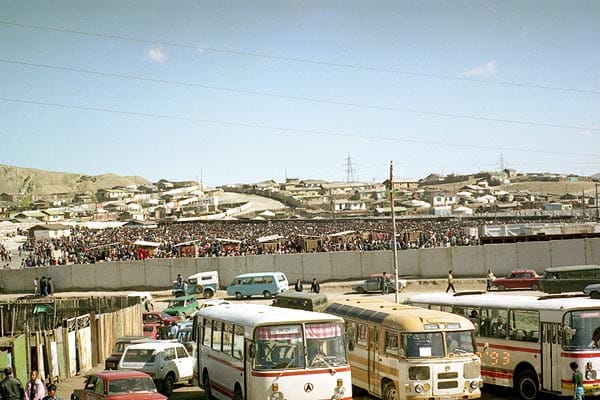
A photograph of Ulaanbaatar’s Sunday market taken in 1993. Image credits: Tabisite
We ventured out to see the sites, returning for dinner at the guest house. Some of us wanted to try local fish, but were told that Mongolians don’t eat fish, believing that fish embodied spirits. I resolved to try to order fish at a future meal. In the meantime, we would enjoy dishes of mutton served in a variety of ways.
We had an opportunity to discuss Mongolia’s economy with staff and management of the guest house. The Soviet Union had stopped assisting Mongolia, resulting in a serious economic crisis. A member of the staff remarked that the principal indicator of the economy’s strength was the size of the coal reserves. At the time of our visit, Ulaanbaatar had sufficient supplies of coal to run its power plant for just two days.
Sites of Ulaanbaatar
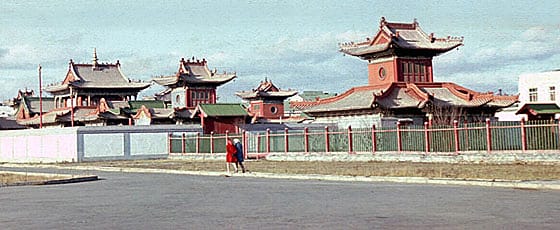
Choijin Lama Temple
Our first stop was the Temple of the Choijin Lama. Our guide, a lively young woman with excellent English, told us that this lama was the third ranking lama in the hierarchy of Lamaist Buddhism after the Dalai Lama and the Panchen Lama.
We were unable to enter the palace. Buddhism had been repressed in Mongolia beginning in the 1930s; hundreds of temples were destroyed, thousands of monks subjected to forced labor, and thousands were sentenced to death. No one was home to receive us.
With the advent of democracy in 1990, the year of our visit to Ulaanbaatar, Buddhism gradually returned to Mongolia, where an estimated 50 percent of the population today are Buddhists.
Monument to the Revolutionary Tank Division
Nearby the palace was another reminder of Soviet influence. Mounted atop a striking pedestal was a Soviet T-34 tank used by the 112th Revolutionary Mongolian Tank Division in its battle against German troops during World War Two. The refurbished structure is now known as the Zaisan Memorial.
The 112th Revolutionary Mongolian Tank Division suffered huge casualties but ultimately scored victories against the Nazi invaders, notably at the Battle of Moscow. It was among the most decorated units that fought the Wehrmacht.
Toys Exhibition
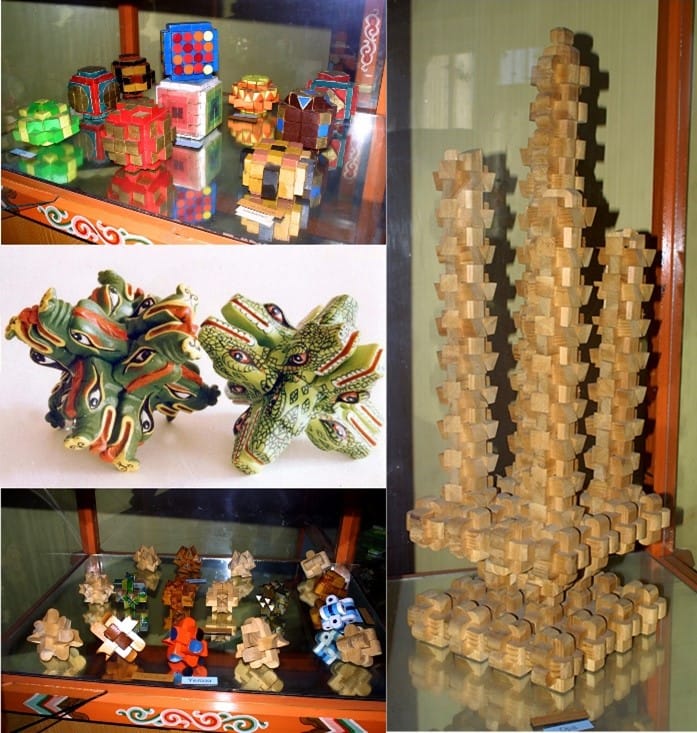
On September 11, we visited an exhibition of Mongolian toys and puzzles, now known as International Intellectual and Puzzle Museum. The Mongolian people are renowned for puzzle creation and solution. The exhibition featured thousands of puzzles and toys, some of which had never been solved.
A selection of traditional Mongolian puzzle games from the International Intellectual and Puzzle Museum’s collection. Image credits: IQ Museum
Meetings
Briefing by Ambassador Lake
The delegation’s meetings kicked off with a briefing at the guest house by Ambassador Joseph Lake on September 11, 1990. Ambassador Lake went over the history of the Mongolian Revolution from early demonstrations, hunger strikes, and protests that began in late 1989 with a few hundred demonstrators and eventually swelled to a crowd of 100,000. A milestone in the transition to democracy took place two days before our visit when the Prime Minister, his deputies, cabinet members, and members of parliament were elected.
Hunger strikers near the government palace in Ulaanbaatar, 1990. Image credit: Democratic Union Archives / Fair Use
Mongolian Chamber of Commerce and Industry
We spent most of the day with our host, the Mongolian Chamber of Commerce and Industry (MCCI). We started with a round-table discussion before a large audience of businesspeople and officials. I delivered prepared remarks in which I urged Mongolians to have courage as they embarked on the path of reform.
After lunch we met with the State Bank, the Union of Cooperatives, and Mongolimpex, the largest foreign trade corporation in Mongolia. We finished the day with a reception and dinner hosted by MCCI.
State Commission for Technology
We started September 12with a meeting with the State Commission of Technology. At that meeting we were introduced to Mongolia’s traditional drink: fermented mare’s milk, also known as airag. I did not like the taste, but Dick Williams quaffed a full glass without hesitation.
The delegation was hosted to lunch in a ger—called a yurt in Central Asia and Russia— by the Deputy Minister of Trade after which we headed to the presidential palace.
Dashin Byambasiin
Our hour-long meeting with Prime Minister Byambasiin centered on plans to reform the economy, the goal of which was to sharply reduce dependence on the Soviet Union. The key features of the reform were the privatization of state enterprises, establishment of a stock exchange, full convertibility of the tugrik (Mongolia’s currency), price reform to achieve all prices set by the market, private land ownership, and an open-door policy to attract foreign investment.
(Pictured, from left) Amb. Richard Williams, AmCham HK President John Kamm, Prime Minister Byambasiin, Amb. Joseph Lake. Image credit: AmCham Magazine.
The prime minister disclosed that talks were underway with the Soviet Union to value the debt that Mongolia owed to the communist country. The Soviets wanted to use a rate of two rubles to the tugrik, while the Mongolians wanted to use 10 rubles to the tugrik. Despite this sizable difference, the two sides had agreed to delay payments until 1995.
Business meetings
After the meeting with the prime minister, the delegation broke up for discussions with Mongolian government bodies and corporations to discuss business opportunities. I had convinced my employer to underwrite the cost of my trip to Ulaanbaatar to explore what trade and investment might be done in this new market.
I met with the Chemical Institute. I was told that there was not a single chemical plant in the country. I wondered if there was interest in importing technology for producing caustic soda but encountered resistance due to concern over pollution. I was told that the United Nations had concluded that Mongolia was the only country in the world where one could dip a cup into a river and drink the water without fear of contamination from pollutants.
I met with representatives of Arimpex to gauge interest in purchasing chrome chemicals for the tanning industry. Sodim bichromate was purchased in small quantities from Japanese trading companies. Transport costs were prohibitive and made selling chrome chemicals from American plants impossible.
Farewell Reception and Dinner
Our trip ended with a reception and dinner at the guest house. We were served mutton and salmon, which I finally had a chance to eat. It was delicious.
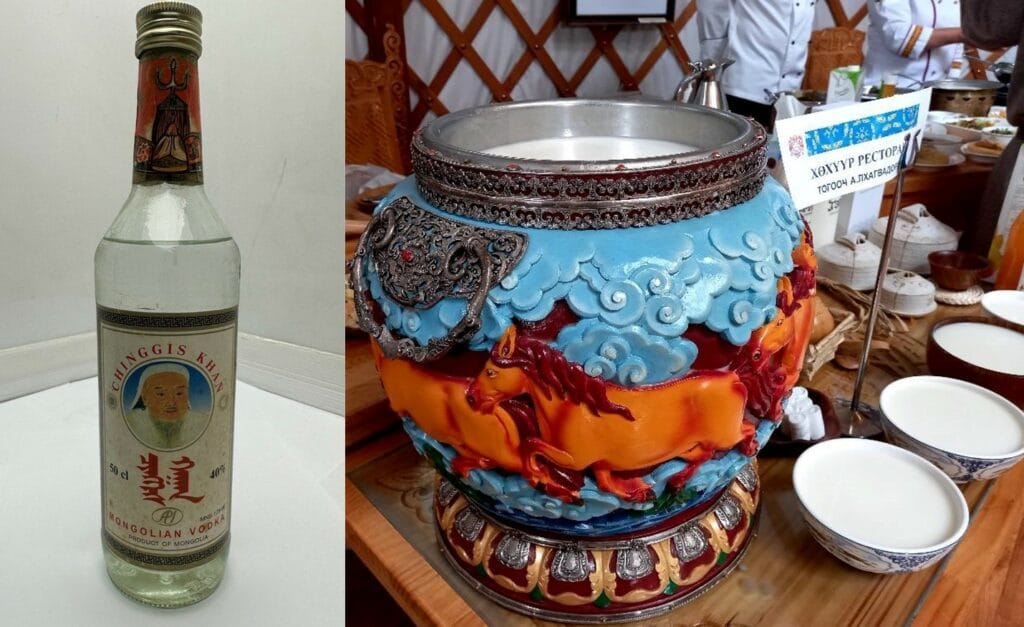
We also were able to sample Mongolian drinks, including Chinggis Khan vodka and suutei tsai, the Mongolian milk tea.
(Left) A bottle of Chinggis Khan vodka; (right) an urn of Mongolian milk tea. Image credits: Carousell / Visit Ulaanbaatar
By Train to Beijing
We arrived at the train station early on September 13 to secure our cabins for the long train ride back to Beijing. While the once-weekly flight to Ulaanbaatar took 90 minutes, the overnight train ride back to Beijing would take 30 hours. The train departed promptly at 9:30 AM.
Our delegation took two cabins and shared one of them with a rough-looking Japanese explorer who had been trekking around Mongolia for several weeks. He sustained himself with a leg of cured mutton. He took out a knife and offered us slices.
We ate all the meals on the train. Nothing special, standard railway fare.
On our way out of Ulaanbaatar, we passed the Ger District. As far as the eye could see, ger populated the landscape. It was mid-September, but the air had turned cold. Smoke from coal burning stoves filled the sky. Although there was no water pollution in Mongolia, air pollution was a different matter.
One of Ulaanbaatar’s ger districts. Image credit: Dornogovi
Heading south, the train stopped in Choyr and Sainshand, both provincial capitals, before arriving at Zamyn-Uud, a town on the border with Inner Mongolia. At the railway towns of Choyr and Sainshand we got off the train to check out the environs. We were mobbed by local children, curious to see foreigners traveling by rail in Mongolia. The daily arrival of the train of the Trans Mongolian Railway was a big event in those parts.
At Zamyn-Uud, we got off the train with our valuables and went into the reception room at the station. There we went had our passports stamped before we walked to Erinhot on the Chinese side of the border. Our passports were checked and stamped with exit and entry chops, respectively. AmCham delegates all had Chinese visas.
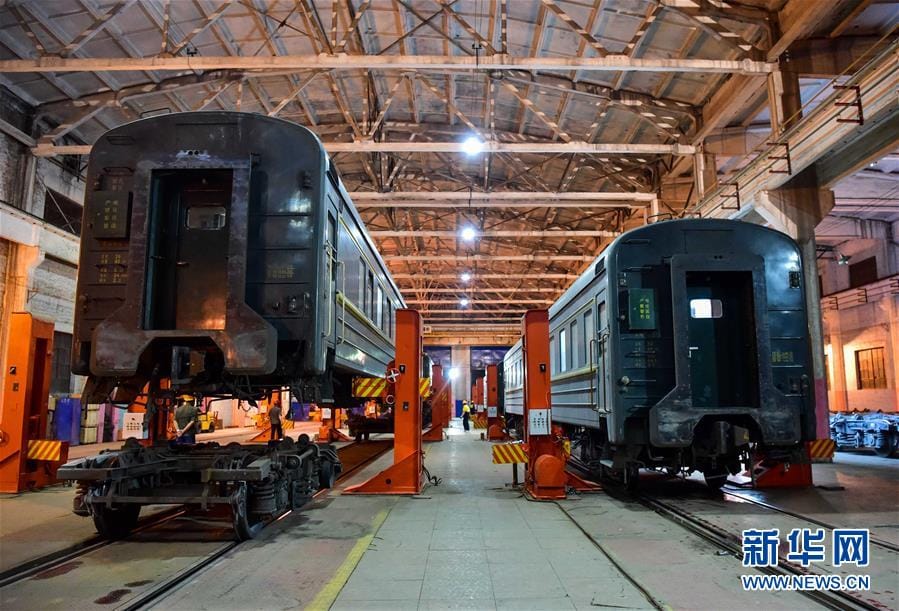
While we underwent exit and entry formalities, the Mongolian railcars were lifted off their bogies by huge cranes and moved to the Chinese side of the border, where they were placed on new bogies. Railroads operated on different gauges in Mongolia and China, a move designed to forestall invasion from the Soviet Union.
Changing train wheels at the Erenhot Port in Inner Mongolia in 2020. Image credit: Xinhua
The train passed by eight cities in Inner Mongolia and Hebei before arriving in Beijing at 3:30 PM on September 14. Some of us returned to Hong Kong on Cathay flight 329 the next day.
Inner Mongolia
Aside from taking steps to forestall a Soviet invasion, the difference in rail gauges served another purpose. Inability to travel between Mongolia and Inner Mongolia reduced interaction between Mongolians on both sides of the border. This in turn engendered resentment against China among Mongolians.
Over time, the Chinese government began encountering an indigenous independence movement in Inner Mongolia. This movement arose as a response to measures to seize grazing pastures and discourage the use of the Mongolian language as well as the practice of Mongolian customs, much as language and customs have been curtailed in Tibet and Xinjiang.
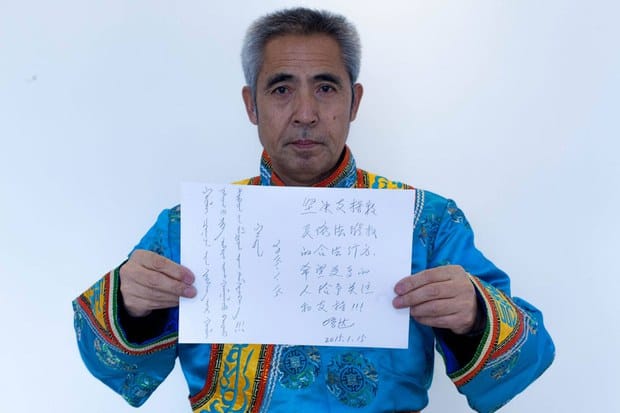
Mongolian dissident Hada with a sign in Mongolian and Chinese expressing support for herders on January 15, 2015. Image credit: RFA
Dissidents were arrested and sentenced to long terms. The most famous was Hada, a Mongolian entrepreneur and member of the Southern Mongolian Democracy Alliance who was detained in December 1995 and subsequently sentenced to 15 years in prison and four years deprivation of political rights for the crime of counterrevolution. During the latter period Hada could not receive visitors. I placed his names on 36 lists and received 32 responses, a high list-to-response ratio, but my advocacy was for nought. He served his entire sentence without reduction or parole.
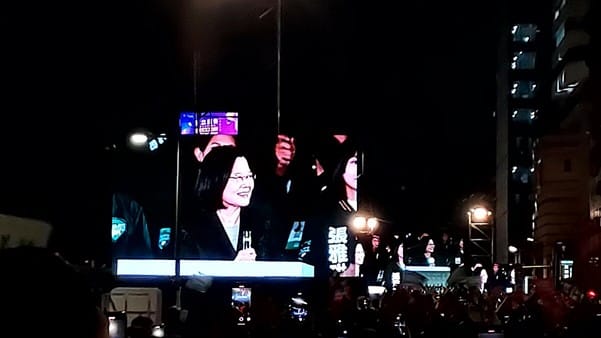
The campaign headquarters of non-party legislator candidate Wang Xingzhi
at the north entrance of Taiwan Railways Keelung Station in Keelung City
Image credit: Solomon203
/ CC0 1.0 Universal
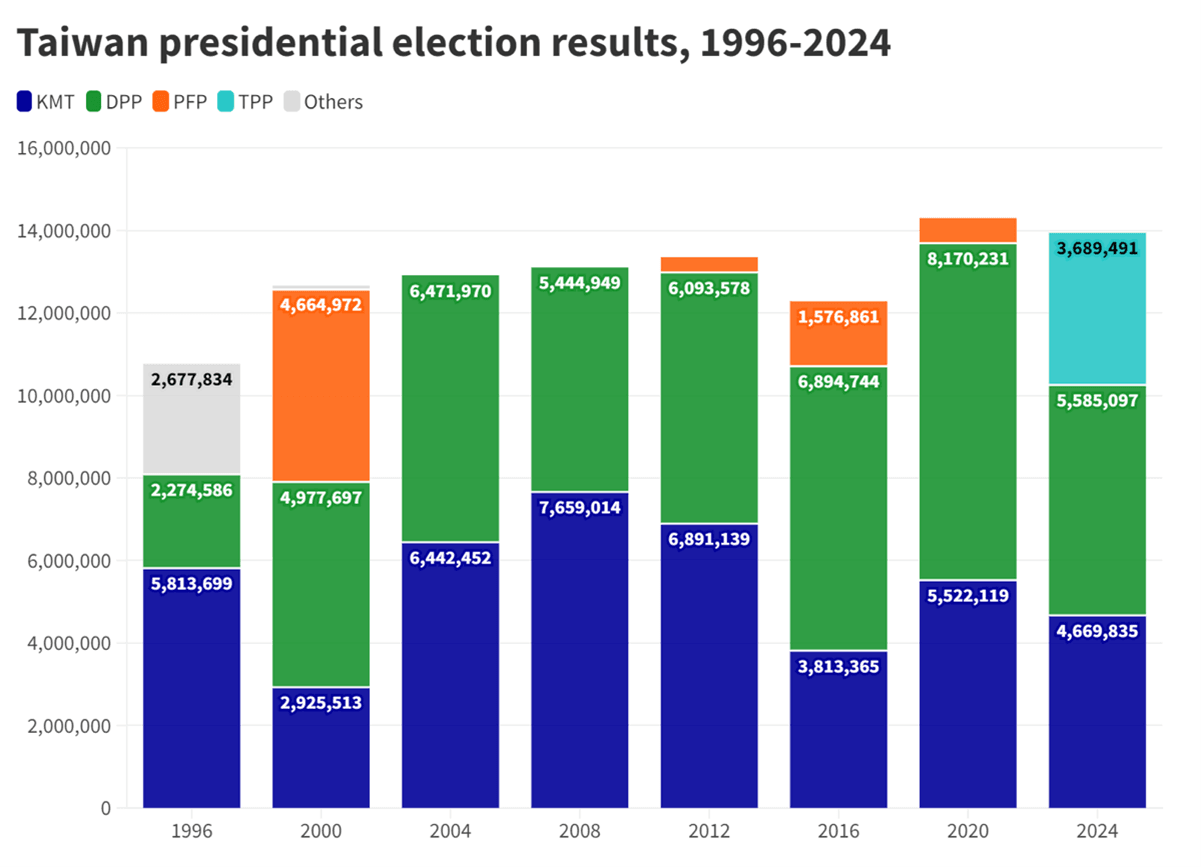
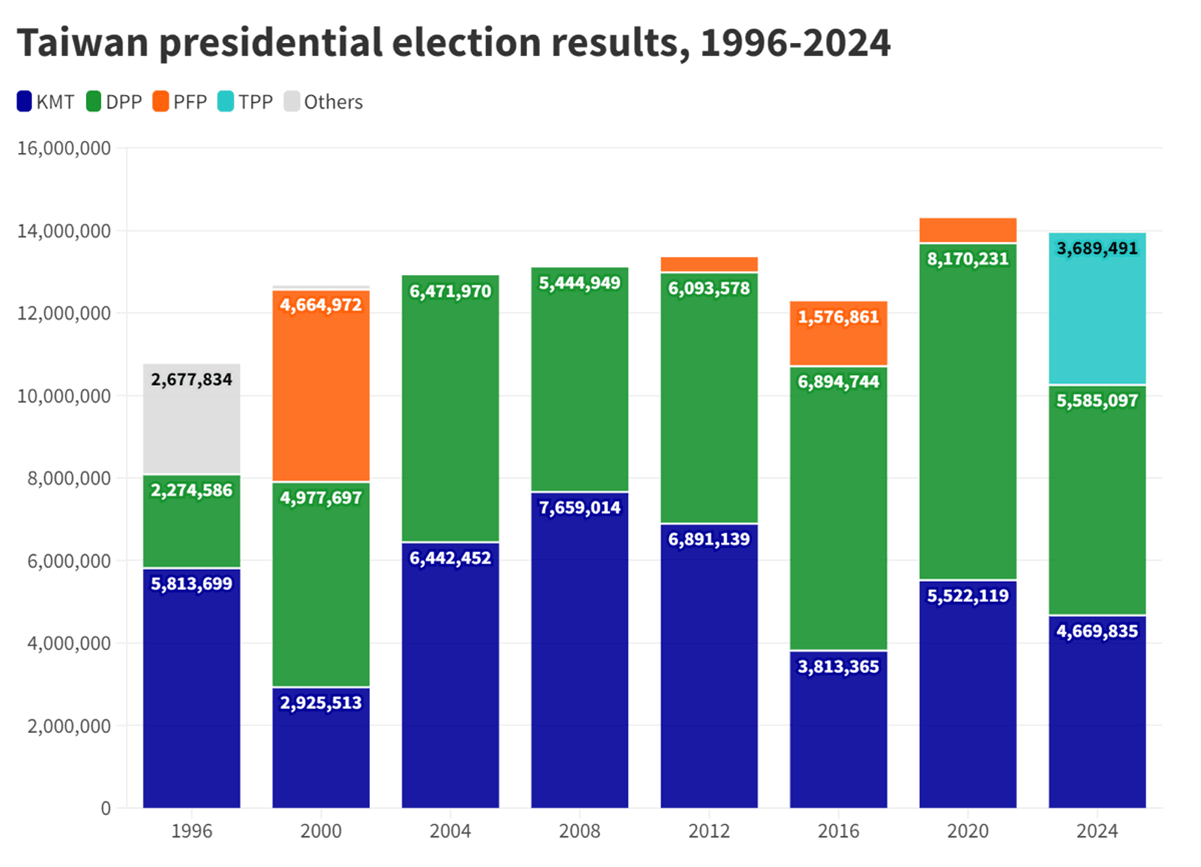
On January 13, 2024, Lai Ching-te of the ruling Democratic Progressive Party
(DPP) won Taiwan’s presidential election in a three-way race against two
rivals who sought warmer ties with China. Reviled by Beijing for rejecting
China’s sovereignty over Taiwan, the DPP will hold onto the presidency for an
unprecedented third consecutive term following eight years under Tsai Ing-wen.
Under Lai, Taiwan will face diplomatic isolation, trade coercion, and military
threats from President Xi Jinping as China is expected to ramp up its pressure
on the island by arbitrarily arresting more people from Taiwan on the
Mainland.
Taiwan began allowing its residents to visit the Mainland in 1987. According
to The Straits Exchange Foundation, 594 Taiwanese went missing in China from 1991-2020. In 2019, Taiwan’s Mainland Affairs Council
said that 149 Taiwanese had disappeared since 2016, the year when Tsai began
her first term. While some of these people may have suffered accidents, been
detained, or died, 67 cases were unaccounted for due to insufficient
information or the Chinese government’s withholding of information. A number
of them are believed to be held on political charges. Months after Tsai began
her second term in 2020, China announced that its Thunder-2020 campaign
had uncovered hundreds of cases orchestrated by Taiwan’s intelligence forces
to “infiltrate and sabotage” and to set up a network of spies.
One of the early cases Dui Hua worked on was that of Li Junmin (李俊敏), a Taiwan “spy”
who was sentenced to death with reprieve for the now-defunct crime of
counterrevolution. Li was granted early release in 2006 despite being once
called “defiant and resistant to reform” by the Chinese government.
This post examines the cases of seven Taiwanese arbitrarily detained in China,
on charges of endangering state security, since the DPP took power in 2016.
Two of the detainees have returned to Taiwan after completing their full
prison sentences whereas the others remain in custody, either awaiting hefty
jail terms or with their fate unclear.
Deprivation of Political Rights, Arbitrarily Applied
China’s Criminal Law stipulates that deprivation of political rights (DPR)
sentences be applied to individuals convicted of endangering state security
and other serious crimes. People serving DPR sentences lose their rights to
freedom of speech, press, assembly, association, procession, and
demonstration. While foreign nationals are typically deported immediately upon
completing their sentences, the situation remains murky for people from
Taiwan, Hong Kong, and Macau.
Lee Ming-che (李明哲) was among the first Taiwanese arbitrarily
detained in China in 2017 when Tsai began her first term as president. Lee, a
rights activist, community college administrator, and former member of the
DPP, was convicted of subversion in the same year and sentenced to five years
in prison with a supplemental two-year DPR sentence. His ordeal stemmed from
group discussions he hosted on WeChat about Taiwan democracy. Additionally, he
provided financial help to Chinese political prisoners and their families
because their stories reminded him of Taiwan under martial law (1949-1987).
When his sentence expired on April 14, 2022, he was allowed to return to
Taiwan by plane the following day without having to serve his DPR sentence.
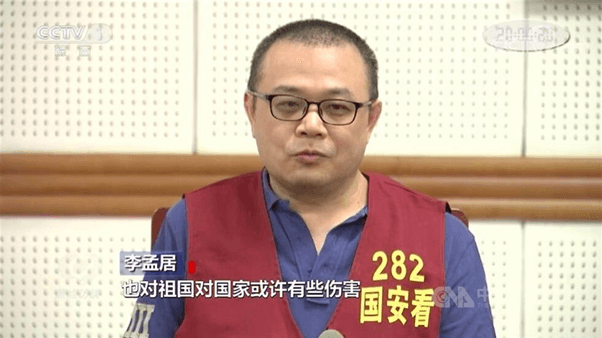
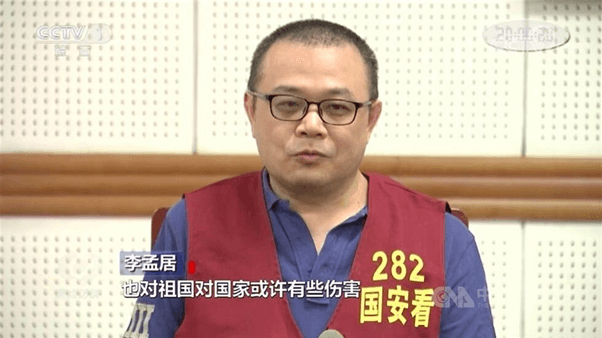
Lee’s treatment is in stark contrast to that of another Taiwanese businessman, Lee Meng-chu (李孟居), who completed his 22-month prison sentence for
“illegally trafficking in and gathering state secrets/intelligence for
foreigners” on July 24, 2021. Lee Ming-chu had been banned from leaving China
in order to serve his two years’ DPR sentence. Nonetheless, Lee was allowed to
move around China and he used the opportunity to travel to more than 100
cities and meeting dissidents. When his DPR sentence ended on July 24, 2023,
Lee left for Japan on the condition that he not return to Taiwan until after
the 2024 presidential elections. However, after spending five weeks in Japan,
Lee flew back to Taiwan.
Lee gave confession in a national news program in October 2020. Image
source: Focus Report, CCTV
Lee Meng-chu was detained in Shenzhen in August 2019 at the height of the
anti-extradition bill protests in Hong Kong for possessing a card that read
“Go Hong Kong!” — at the time a common protest slogan — and snapping pictures
from his hotel of armed police gathering nearby. These actions and their
accompanying media coverage were deemed to be evidence of him acting as a
“Taiwan independence activist” attempting to foment a color revolution in Hong
Kong. Lee took the position that he was a political hostage because China was
outraged over Tsai Ing-wen’s vocal support for the Hong Kong protesters. His
case shows that Taiwanese prisoners can be subjected to exit bans when the
Chinese authorities decide to make a political point amid escalating tensions.
Still in Custody
Yang Chih-yuan (杨智渊)
While the two Lees have safely returned to Taiwan, more cases of arbitrary
detention have emerged as cross-strait relations have worsened. On August 3,
2022, Yang Chih-yuan
was detained in Wenzhou for splittism, the first case where a Taiwanese
resident was charged with this crime. His detention came hours after Tsai
Ing-wen met with then-US House of Representatives Speaker Nancy Pelosi. China
called the visit a “provocation” and condemned the United States for
“seriously infringing on China’s sovereignty.”
A screenshot of Yang being detained by police in Wenzhou. Image credit:
CCTV
China’s state news media claimed that Yang was appointed as the head of the
DPP youth league in Taichung and became a member of the splittist forces on
the island. In 2019, he became the vice chairman of the now defunct Taiwan National Party, which advocated for “Taiwan independence” through a referendum. Also in
2019, he was allegedly invited by then-DPP president Chen Shui-bian to run for
a seat in the island’s legislature, albeit unsuccessfully. Yang was similarly
accused of colluding with splittist forces to support Hong Kong protesters
amid the citywide civil unrest the same year.
Li Yanhe (李延贺)
On March 23, 2023, Taiwan-based publisher Li Yanhe was placed under
residential surveillance at a designated location (RSDL) for inciting
splittism in Shanghai. RSDL is a coercive measure condemned by the United Nations Special Procedures
as a form of enforced and involuntary disappearance. Under RSDL, a suspect can
be held for up to six months incommunicado while being denied legal counsel or
family visits.
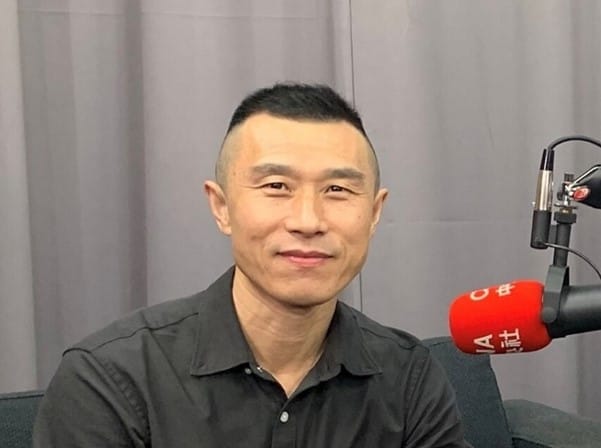
Gusa Press publisher Li Yanhe. Image credit: CNA
via Taiwan News
Li was born in China but settled in Taiwan in 2009 after marrying a Taiwanese
woman. He is the founder and editor-in-chief of Gusa Publishing, which is
known for publishing books on history and politics that are critical of the
Chinese Communist Party (CCP). Some critical titles focused on subjects like
CCP corruption and infiltration of global media. In March 2023, he visited
Shanghai to revoke his mainland residence registration and to visit relatives.
He had applied for citizenship in Taiwan, but to do so he was required by
Taiwan law to relinquish his mainland household registration.
Cheng Yu-chin (郑宇钦)
One day after China Central Television (CCTV) aired the confession of Lee
Meng-chu in October 2020, Cheng Yu-chin appeared in another televised
confession in which he admitted to using his academic post in the Czech
Republic to carry out espionage against China. State news media sources
accused Cheng of infiltrating Chinese mainland organizations in Europe and
damaging China’s diplomatic ties with other countries. Cheng was placed under
criminal detention in Zhengzhou, Fujian, for espionage in April 2019. On April
15, 2024, China’s National Security Education Day, the Ministry of State Security
reported that Cheng had been sentenced to seven years’ imprisonment. He has
two more years to serve before completing his sentence in April 2026.
Cheng claimed to be a member of the DPP and to have worked as an assistant to
former DPP chairman Cho Jung-tai, but Cho rejected this claim and denied that
he knew Cheng. Taiwan senior officials also came forward to rebuke false
claims about Cheng’s case, adding that a Taiwanese associate said to have
worked with Cheng did not even exist. Taiwan’s Mainland Affairs Council blamed
Beijing for making up the spy case. A Taiwanese professor familiar with Cheng
also expressed disbelief
that Cheng was a spy because Cheng had set up a company to help Chinese
students gain admission to post-graduate programs in the Czech Republic. He
had worked to promote China’s Belt and Road Initiative during his stay in
Europe.
Chen Shu-kai (陈树楷)
Dui Hua’s research discovered the case of Chen Shu-kai, who was detained for espionage in January 2017 and sentenced to 12 years
and six months’ imprisonment with three years’ DPR in August 2020 in Xiamen.
Chen was the chairman of the board of Bioil International Limited (Taiwan).
While an official document stated that he received NTD700,000 from the Taiwan
Military Intelligence Bureau to obtain 29 classified documents in China, Dui
Hua could not find other sources to verify this official account in order to
determine whether this is one of the many cases of arbitrary detention in
China. He is currently incarcerated in a prison in Fujian. In 2023, the prison
recommended a sentence reduction of four months be granted to Chen because he
had demonstrated remorse. The sentence reduction, if approved, would shorten
his release date to February 2029.
Pan-Blue Camp Also Targeted
In Taiwan, pan-blue refers to a political stance espoused by Kuomintang (KMT)
supporters who favor a dual Taiwanese Chinese identity as well as friendly
relations with China. However, people subscribing to the pan-blue view can
still face arrest in China on charges of endangering state security. At least
two pan-blue academics from Taiwan have been imprisoned in China in recent
years.
Results from presidential elections for the past eight Taiwanese
elections, showing changes in support for the Pan-Blue KMT and the DPP.
Image credit: Emanuelamianstrolski
/ CC BY 4.0
Shih Cheng-ping (施正屏) is a retired professor at National Taiwan Normal
University. Shih wrote op-eds critical of Tsai Ing-wen in the Taiwanese press.
In August 2022, he completed his four-year sentence for espionage in Anhui. It
is not known whether Shih has returned to Taiwan or is obliged to stay in
China to serve his two-year DPR sentence, which will end in August 2024.
Shih disappeared after traveling to China in August 2018. His case came to
light 15 months after his disappearance, when he appeared in a CCTV television
program in October 2020 confessing to spying for Taiwan. In the recording, he
admitted to passing information to Taiwan authorities from a mainland think
tank in exchange for money. As with many other televised confessions, his was
aired before he was found guilty by the court. This practice has been
condemned by human rights groups as forced confessions under duress.
Pro-unification Taiwanese scholar Tsai Chin-shu (蔡金树) was convicted of
Taiwanese espionage in July 2020, Tsai is a KMT member and has worked in
multiple capacities to promote cross-strait exchanges. He served as director
of the Kaohsiung Cross-Strait Exchanges Research Association and chaired the
Southern Taiwan Union of Cross-Strait Relations Associations, which advocated
for the Ma Ying-jeou administration’s policies of forging ties with China.
On January 13, 2024, Taiwan Democratic Progressive Party supporters
watching the election results. Image credit: Cypp0847 / CC BY-SA 4.0
He was released from a prison in Fujian in May 2022. Like Lee Meng-chu, Tsai
has been barred from returning to Taiwan because of the four-year DPR sentence
that was imposed on him. In June 2023, Taiwanese news media sources reported
that Tsai was placed under house arrest in Gulangyu Island of Xiamen.
China has a track record of making politically motivated arrests that
observers call “hostage diplomacy.” Since the DPP won the 2016 presidential
election, China and Taiwan have exchanged fiery rhetoric and denounced each
other as threats to national security and social stability. Days after the DPP
won the 2024 presidential election, China’s Ministry of State Security claimed
it would intensify efforts
to crack down on “subversion, espionage and splittist struggles” related to
Taiwan. In June, judicial bodies and Ministry of State Security jointly issued
a 22-point legal opinion against “Taiwan splittism” which threatens “trial in
absentia” or even to impose the death penalty
for “diehard” Taiwan independence splittists in extreme cases, and in August
the Taiwan Affairs Office of the State Council added 10 Taiwanese to the list of die-hard splittists
(nearly all are members of the DPP). At the time of writing, Taiwanese
officials have confirmed to the media that 15 Taiwanese residents
are currently held in China for various crimes, “including violations of the
anti-secession law.” As cross-strait tensions escalate, more cases of
arbitrary detention are likely to emerge, leaving citizens to pay the price
for geopolitical hostility.
The campaign headquarters of non-party legislator candidate Wang Xingzhi
at the north entrance of Taiwan Railways Keelung Station in Keelung City
Image credit: Solomon203
/ CC0 1.0 Universal
On January 13, 2024, Lai Ching-te of the ruling Democratic Progressive Party (DPP) won Taiwan’s presidential election in a three-way race against two rivals who sought warmer ties with China. Reviled by Beijing for rejecting China’s sovereignty over Taiwan, the DPP will hold onto the presidency for an unprecedented third consecutive term following eight years under Tsai Ing-wen.
Under Lai, Taiwan will face diplomatic isolation, trade coercion, and military threats from President Xi Jinping as China is expected to ramp up its pressure on the island by arbitrarily arresting more people from Taiwan on the Mainland.
Taiwan began allowing its residents to visit the Mainland in 1987. According to The Straits Exchange Foundation, 594 Taiwanese went missing in China from 1991-2020. In 2019, Taiwan’s Mainland Affairs Council said that 149 Taiwanese had disappeared since 2016, the year when Tsai began her first term. While some of these people may have suffered accidents, been detained, or died, 67 cases were unaccounted for due to insufficient information or the Chinese government’s withholding of information. A number of them are believed to be held on political charges. Months after Tsai began her second term in 2020, China announced that its Thunder-2020 campaign had uncovered hundreds of cases orchestrated by Taiwan’s intelligence forces to “infiltrate and sabotage” and to set up a network of spies.
One of the early cases Dui Hua worked on was that of Li Junmin (李俊敏), a Taiwan “spy” who was sentenced to death with reprieve for the now-defunct crime of counterrevolution. Li was granted early release in 2006 despite being once called “defiant and resistant to reform” by the Chinese government. This post examines the cases of seven Taiwanese arbitrarily detained in China, on charges of endangering state security, since the DPP took power in 2016. Two of the detainees have returned to Taiwan after completing their full prison sentences whereas the others remain in custody, either awaiting hefty jail terms or with their fate unclear.
Deprivation of Political Rights, Arbitrarily Applied
China’s Criminal Law stipulates that deprivation of political rights (DPR) sentences be applied to individuals convicted of endangering state security and other serious crimes. People serving DPR sentences lose their rights to freedom of speech, press, assembly, association, procession, and demonstration. While foreign nationals are typically deported immediately upon completing their sentences, the situation remains murky for people from Taiwan, Hong Kong, and Macau.
Lee Ming-che (李明哲) was among the first Taiwanese arbitrarily detained in China in 2017 when Tsai began her first term as president. Lee, a rights activist, community college administrator, and former member of the DPP, was convicted of subversion in the same year and sentenced to five years in prison with a supplemental two-year DPR sentence. His ordeal stemmed from group discussions he hosted on WeChat about Taiwan democracy. Additionally, he provided financial help to Chinese political prisoners and their families because their stories reminded him of Taiwan under martial law (1949-1987). When his sentence expired on April 14, 2022, he was allowed to return to Taiwan by plane the following day without having to serve his DPR sentence.
Lee’s treatment is in stark contrast to that of another Taiwanese businessman, Lee Meng-chu (李孟居), who completed his 22-month prison sentence for “illegally trafficking in and gathering state secrets/intelligence for foreigners” on July 24, 2021. Lee Ming-chu had been banned from leaving China in order to serve his two years’ DPR sentence. Nonetheless, Lee was allowed to
move around China and he used the opportunity to travel to more than 100 cities and meeting dissidents. When his DPR sentence ended on July 24, 2023, Lee left for Japan on the condition that he not return to Taiwan until after the 2024 presidential elections. However, after spending five weeks in Japan, Lee flew back to Taiwan.
Lee gave confession in a national news program in October 2020. Image
source: Focus Report, CCTV
Lee Meng-chu was detained in Shenzhen in August 2019 at the height of the anti-extradition bill protests in Hong Kong for possessing a card that read “Go Hong Kong!” — at the time a common protest slogan — and snapping pictures from his hotel of armed police gathering nearby. These actions and their accompanying media coverage were deemed to be evidence of him acting as a “Taiwan independence activist” attempting to foment a color revolution in Hong Kong. Lee took the position that he was a political hostage because China was outraged over Tsai Ing-wen’s vocal support for the Hong Kong protesters. His case shows that Taiwanese prisoners can be subjected to exit bans when the Chinese authorities decide to make a political point amid escalating tensions.
Still in Custody
Yang Chih-yuan (杨智渊)
While the two Lees have safely returned to Taiwan, more cases of arbitrary detention have emerged as cross-strait relations have worsened. On August 3, 2022, Yang Chih-yuan was detained in Wenzhou for splittism, the first case where a Taiwanese resident was charged with this crime. His detention came hours after Tsai Ing-wen met with then-US House of Representatives Speaker Nancy Pelosi. China called the visit a “provocation” and condemned the United States for “seriously infringing on China’s sovereignty.”
A screenshot of Yang being detained by police in Wenzhou. Image credit:
CCTV
China’s state news media claimed that Yang was appointed as the head of the DPP youth league in Taichung and became a member of the splittist forces on the island. In 2019, he became the vice chairman of the now defunct Taiwan National Party, which advocated for “Taiwan independence” through a referendum. Also in 2019, he was allegedly invited by then-DPP president Chen Shui-bian to run for a seat in the island’s legislature, albeit unsuccessfully. Yang was similarly accused of colluding with splittist forces to support Hong Kong protesters amid the citywide civil unrest the same year.
Li Yanhe (李延贺)
On March 23, 2023, Taiwan-based publisher Li Yanhe was placed under residential surveillance at a designated location (RSDL) for inciting splittism in Shanghai. RSDL is a coercive measure condemned by the United Nations Special Procedures as a form of enforced and involuntary disappearance. Under RSDL, a suspect can be held for up to six months incommunicado while being denied legal counsel or family visits.
Gusa Press publisher Li Yanhe. Image credit: CNA
via Taiwan News
Li was born in China but settled in Taiwan in 2009 after marrying a Taiwanese woman. He is the founder and editor-in-chief of Gusa Publishing, which is known for publishing books on history and politics that are critical of the Chinese Communist Party (CCP). Some critical titles focused on subjects like CCP corruption and infiltration of global media. In March 2023, he visited
Shanghai to revoke his mainland residence registration and to visit relatives. He had applied for citizenship in Taiwan, but to do so he was required by Taiwan law to relinquish his mainland household registration.
Cheng Yu-chin (郑宇钦)
One day after China Central Television (CCTV) aired the confession of Lee Meng-chu in October 2020, Cheng Yu-chin appeared in another televised confession in which he admitted to using his academic post in the Czech Republic to carry out espionage against China. State news media sources accused Cheng of infiltrating Chinese mainland organizations in Europe and damaging China’s diplomatic ties with other countries. Cheng was placed under criminal detention in Zhengzhou, Fujian, for espionage in April 2019. On April 15, 2024, China’s National Security Education Day, the Ministry of State Security reported that Cheng had been sentenced to seven years’ imprisonment. He has two more years to serve before completing his sentence in April 2026.
Cheng claimed to be a member of the DPP and to have worked as an assistant to former DPP chairman Cho Jung-tai, but Cho rejected this claim and denied that he knew Cheng. Taiwan senior officials also came forward to rebuke false claims about Cheng’s case, adding that a Taiwanese associate said to have worked with Cheng did not even exist. Taiwan’s Mainland Affairs Council blamed Beijing for making up the spy case. A Taiwanese professor familiar with Cheng also expressed disbelief that Cheng was a spy because Cheng had set up a company to help Chinese students gain admission to post-graduate programs in the Czech Republic. He had worked to promote China’s Belt and Road Initiative during his stay in Europe.
Chen Shu-kai (陈树楷)
Dui Hua’s research discovered the case of Chen Shu-kai, who was detained for espionage in January 2017 and sentenced to 12 years and six months’ imprisonment with three years’ DPR in August 2020 in Xiamen. Chen was the chairman of the board of Bioil International Limited (Taiwan). While an official document stated that he received NTD700,000 from the Taiwan Military Intelligence Bureau to obtain 29 classified documents in China, Dui Hua could not find other sources to verify this official account in order to determine whether this is one of the many cases of arbitrary detention in China. He is currently incarcerated in a prison in Fujian. In 2023, the prison recommended a sentence reduction of four months be granted to Chen because he had demonstrated remorse. The sentence reduction, if approved, would shorten his release date to February 2029.
Pan-Blue Camp Also Targeted
In Taiwan, pan-blue refers to a political stance espoused by Kuomintang (KMT) supporters who favor a dual Taiwanese Chinese identity as well as friendly relations with China. However, people subscribing to the pan-blue view can still face arrest in China on charges of endangering state security. At least two pan-blue academics from Taiwan have been imprisoned in China in recent
years.
Results from presidential elections for the past eight Taiwanese
elections, showing changes in support for the Pan-Blue KMT and the DPP.
Image credit: Emanuelamianstrolski
/ CC BY 4.0
Shih Cheng-ping (施正屏) is a retired professor at National Taiwan Normal University. Shih wrote op-eds critical of Tsai Ing-wen in the Taiwanese press. In August 2022, he completed his four-year sentence for espionage in Anhui. It is not known whether Shih has returned to Taiwan or is obliged to stay in China to serve his two-year DPR sentence, which will end in August 2024.
Shih disappeared after traveling to China in August 2018. His case came to light 15 months after his disappearance, when he appeared in a CCTV television program in October 2020 confessing to spying for Taiwan. In the recording, he admitted to passing information to Taiwan authorities from a mainland think tank in exchange for money. As with many other televised confessions, his was aired before he was found guilty by the court. This practice has been condemned by human rights groups as forced confessions under duress.
Pro-unification Taiwanese scholar Tsai Chin-shu (蔡金树) was convicted of Taiwanese espionage in July 2020, Tsai is a KMT member and has worked in multiple capacities to promote cross-strait exchanges. He served as director of the Kaohsiung Cross-Strait Exchanges Research Association and chaired the Southern Taiwan Union of Cross-Strait Relations Associations, which advocated for the Ma Ying-jeou administration’s policies of forging ties with China.
On January 13, 2024, Taiwan Democratic Progressive Party supporters
watching the election results. Image credit: Cypp0847 / CC BY-SA 4.0
He was released from a prison in Fujian in May 2022. Like Lee Meng-chu, Tsai has been barred from returning to Taiwan because of the four-year DPR sentence that was imposed on him. In June 2023, Taiwanese news media sources reported that Tsai was placed under house arrest in Gulangyu Island of Xiamen.
China has a track record of making politically motivated arrests that observers call “hostage diplomacy.” Since the DPP won the 2016 presidential election, China and Taiwan have exchanged fiery rhetoric and denounced each other as threats to national security and social stability. Days after the DPP won the 2024 presidential election, China’s Ministry of State Security claimed it would intensify efforts to crack down on “subversion, espionage and splittist struggles” related to Taiwan. In June, judicial bodies and Ministry of State Security jointly issued a 22-point legal opinion against “Taiwan splittism” which threatens “trial in absentia” or even to impose the death penalty for “diehard” Taiwan independence splittists in extreme cases, and in August the Taiwan Affairs Office of the State Council added 10 Taiwanese to the list of die-hard splittists (nearly all are members of the DPP). At the time of writing, Taiwanese officials have confirmed to the media that 15 Taiwanese residents are currently held in China for various crimes, “including violations of the anti-secession law.” As cross-strait tensions escalate, more cases of arbitrary detention are likely to emerge, leaving citizens to pay the price for geopolitical hostility.
Bookstores in Shanghai: (left) Xinhua Bookstore on Nanjing Road in 1981; (right) Shanghai Bookstore on Fuzhou Road in the 1970’s. Image source: The Paper)
Even before my first trips to China in early 1976, I frequented state-run bookstores. It was at the Commercial Press outlet in Hong Kong that I found On Exercising All-Round Dictatorship over the Bourgeoisie, the 1975 treatise by Zhang Chunqiao, theoretician of the Gang of Four. That booklet formed the basis for the purge of Deng Xiaoping and persecution of countless “bourgeois counterrevolutionaries.” Its removal from the Commercial Press bookstore in October 1976 was a sign that Zhang, Jiang Qing (Madame Mao), Yao Wenyuan, and Wang Hongwen, collectively known as the Gang of Four, had fallen from power.
For decades I visited bookstores in China, first to identify political and social trends, later to find cases to enter into Dui Hua databases from which prisoner lists were crafted.
Shanghai
Hall at Jinjiang Hotel, site of the signing of the Shanghai Communiqué in February 1972. Image source: Wikipedia
The morning after my arrival in Shanghai in January 1976, I walked to the Xinhua bookstore on Nanjing Road. It was a bitterly cold day, and the store was insulated from the weather by thick canvas curtains at the front door. I walked up the stairs to the second floor where I tried to enter the area where internal (neibu 内部) books were on display. I was told to leave. Later, upon my return, I was blocked from going upstairs.
On future visits to Shanghai, I visited the Shanghai Bookstore on Fuzhou Road that sells secondhand books. I found a special bookstore on the grounds of the Jinjiang Hotel. There I found a trove of English-language books that had been taken from the libraries of European residents of Shanghai who had fled the city in 1949. I spirited more than 50 such books out of China, including Social Life of the Chinese by Justus Doolittle, first published in 1865. Such books are no longer available for sale in Shanghai.
The opening pages of Social Life of the Chinese by Justus Doolittle. Image credit: Dui Hua
Beijing
After attending the Feather and Down Fair in Shanghai, I flew to Beijing to attend the Fur Products Fair. I stayed at the Beijing (Peking) Hotel. Across the street from the hotel, on Wangfujing Avenue, stood a large Xinhua bookstore. Upon entering the store, one confronted an expansive display of Quotations from Chairman Mao, the Little Red Book, a staple of Cultural Revolution China.
The Xinhua Bookstore at Wangfujing (after expansion in the 1970’s). The bookstore is now commonly called Wangfujing Bookstore. Source: CCDI.gov
On every trip to Beijing over the next two years, I paid a visit to the Xinhua bookstore. The display grew in size until 1978 when it was replaced by a display of books about Chinese law. Deng Xiaoping had been rehabilitated and Mao was in decline.
Further up Wangfujing, there was a Foreign Language Bookstore. It featured books by socialist writers who loved China, including New Zealand writer Rewi Alley. I purchased his Travels in China that covered the Cultural Revolution years of 1966 to 1971.
The cover of Rewi Alley’s Travels in China 1966-1971, published in 1973. Image credit: Book Grocer
Further still was a second-hand bookstore in a market. It featured hard to find books published before the Cultural Revolution.
On my visits to the Supreme People’s Court, I passed by a bookstore that featured books published by the Supreme People’s Procuratorate. I found a volume entitled Selection of Criminal Cases: Counterrevolution. One of the cases covered in that volume was that of Zhang Chengjian (张成俭), a disgruntled farmer from Shandong Province who tried to set up an opposition party to oppose the Chinese Communist Party. He had been sentenced to death. I promptly added him to prisoner lists submitted to the Ministry of Justice. His sentence was commuted, and he received sentence reductions that resulted in his release from prison in April 2005.
The most valuable bookstore for finding important volumes on political crime was the Law Press Bookstore, operated by the Ministry of Justice, an hour’s drive from my hotel. Among the volumes I found was a series of books that covered a selection of crimes, including endangering state security and so-called “cult” crimes, covered by Article 300 of the Criminal Law. Cases in those volumes included those of Yue Zhengzhong (岳正中), convicted of espionage by a Tianjin court; Lobsang Tenzin and Zege, two Tibetans convicted of splittism by a Sichuan court; Wang Meiping (王梅平), convicted of robbery and espionage by a Zhejiang court; and Kong Junlin (孔峻凌), convicted of subversion by a Hubei court.
Inside the Law Press Bookstore (left. Image source: Baidu Baidke). Volumes of Judicial Documents Selections of the People’s Court, books that Kamm acquired at the Law Press Bookstore (right).
It did not take long before volumes that interested me in Beijing bookstores were taken off the shelves. In recent years I had found nothing that would inform my work advocating for political and religious prisoners. I continued to find books on such topics as juvenile crime, the treatment of juvenile offenders, and how to apply for medical parole.
I grew concerned about what I would say to Chinese Customs if, upon exit from China, they found books marked neibu. I asked an interlocutor in the Chinese government. Her advice? Save the receipts!
My concern proved to be prescient. Shortly after this conversation, a buyer of used books marked neibu, a retired provincial archivist by the name of Jin Zhangqin (金章嵚), was arrested for trafficking in state secrets. Jin had purchased used and discarded books from two vendors in China and resold them to a research center in Hong Jong. He was tried, convicted, and sentenced to 10 years in prison. Dui Hua worked on his case. He was granted two sentence reductions and was released before the end of his sentence. More recently, the Ministry of State Security (MSS) announced in June 2024 that it had been tipped off by a collector of military books and documents that he had found more than 200 documents some of which were marked top secret in two bags outside a recycling center. The collector called the local MSS bureau which in turn arrested two men surnamed Guo and Li for violating China’s Law on Guarding State Secrets.
Tianjin
I attended the Carpet Fair in Tianjin in February 1976. The “Campaign to Beat Back the Right Deviationist Wind,” a thinly veiled attack on Deng Xiaoping and other “right deviationists,’” had begun. I was curious to see if I could find volumes that reflected the nascent campaign, so I hired a taxi and headed for the biggest Xinhua bookstore I could find.
As the taxi turned onto the street, it was as if an electric current had passed up the street. People began to assemble. Finally, the taxi arrived at the location. It was mobbed, faces pressed up against the glass. I struggled to exit the cab. The crowd followed me into the bookstore where they surrounded me. I left as quickly as I could, not having found anything of interest.
Even though Tianjin was and remains one the three most important ports in China, the crowd behaved as if it had never seen a foreigner. This was in sharp contrast to the people of Shanghai and Guangzhou who went about their business paying no mind to foreigners in their midst.
Guangzhou
I found little of interest in bookstores in Guangzhou. The Foreign Languages Bookstore carried a complete set of the works of Enver Hoxha, the Albanian dictator who was, for many years, China’s best friend in Europe. The works of Enver Hoxha had few buyers. They gathered dust until they were taken down.
As in the Foreign Language bookstore in Beijing, Enver Hoxha was not accompanied by the Works of Kim Il-Sung, the North Korean leader. This was another sign that Mr. Kim was not a favorite of Chinese officials based in or visiting Guangzhou for the bi-annual trade fairs.
Pyongyang Jiegenghua Restaurant
In the early summer of 2013, as I went looking for a bookstore near the Beijing West Railway Station, I spied a Korean restaurant – Pyongyang Jiegenghua 平壤桔梗花 – with the windows papered over and large burly men guarding the door. I did some research and found out it was one of several North Korean restaurants in Beijing. (Many are now closed, including Jiegenghua.)
While they were operating, North Korean restaurants were a major source of foreign currency for the Democratic People’s Republic of Korea (DPRK). According to North Korea Confidential, a revealing book by Damiel Pearson and James Pearson. At one time there were 40 North Korean restaurants in China, including many in Beijing.
While they were operating, North Korean restaurants were a major source of foreign currency for the Democratic People’s Republic of Korea (DPRK). According to North Korea Confidential, a revealing book by Damiel Pearson and James Pearson. At one time there were 40 North Korean restaurants in China, including many in Beijing.
Beijing West Railway Station, shortly after it opened in 1996. Source: Baidu Baike
Mindful that American citizens were forbidden from spending money that might benefit Pyongyang, I asked a local Chinese friend to accompany me to Jiegenghua, promising to reimburse him after the visit.
What we found upon entering was a space from a different world. Dark and forbidding, with young Korean women serving tables. Propaganda posters adorned the walls.
I wondered aloud who the waitresses were. My friend, who understood and spoke English perfectly, overheard me and offered an answer. It turned out he was familiar with North Korean restaurants and had frequented them over the years. He was an afficionado of Korean food and Korean alcoholic beverages.
“The young women are the daughters of high-ranking government and party officials who live in Pyongyang,” he replied. “They spend a year in this place and are not allowed to walk around outside.”
Photographs of a North Korea restaurant in Beijing taken in October 2012: (left) the front of Hae Dang Hwa restaurant in Beijing’s Chaoyang District; (right) waitresses at the restaurant perform for diners. Image credit: Calflier001 / CC BY-SA 2.0
He continued: “It is considered a great honor to be selected to serve tables at North Korean restaurants in Beijing. All the money earned – including tips – goes straight to the government in Pyongyang. It sometimes happens that the women form close relationships with Chinese officials and businessmen in Beijing. They give the women expensive gifts – watches and gold bars. These too must be surrendered upon their return to Pyongyang.”
We sat at a table with a group of Chinese businessmen who had just gotten back to Beijing from Pyongyang. They were clearly happy to be back home. One of them had drunk far too much North Korean fiery liquor. His head sank until it landed in a bowl of kimchi.
As we sat at the table, my friend saw a People’s Liberation Army officer come in with an aide carrying his briefcase. My friend recognized him and muttered, “This man is a corrupt officer.”
I was invited to go to the second floor to meet the ladies who were entertaining guests. I passed on the opportunity. Sometimes, discretion is truly the better part of valor.
Jiangmen Falun Gong Practitioner received her first clemency
Information provided by a Dui Hua interlocutor confirmed that Falun Gong practitioner Xie Qing (谢清), a Jiangmen resident in her late 50s, received her first sentence reduction of five months in June 2024.
Xie was born in Nanning, Guangxi and lived in Jiangmen with her husband Yu Rongxin (余荣新). The couple were convicted of using a cult to undermine implementation of the law in December 2018 and their appeals were rejected by the Jiangmen Intermediate People’s Court in March 2019. Xie and Yu were sentenced to seven and a half years in prison and eight and a half years in prison, respectively.
The couple has practiced Falun Gong since the 1990s. Yu had been responsible for coordinating and training Jiangmen practitioners. The couple were accused of disseminating and stamping banknotes with “cult” messages. The police also found large quantities of Falun Gong publications and digital materials at their home.
Yu was granted his first sentence reduction of seven months in June 2022. According to Chinese government sources, Yu has behaved well in Beijiang Prison. He and his wife exchanged letters of encouragement with each other.
Xie is serving her sentence at Guangdong Women’s Prison. Although the prison recommended a seven-month reduction, the court decided to apply restrictions of leniency due to the crime. Xie will be released in October 2024.
Elderly Falun Gong Partitioners to receive clemency in Fujian
Tang Lianzhi (唐莲芝), a 79-year-old Falun Gong practitioner, will receive a seven-month reduction. Originally from Qiqihar, Heilongjiang Province, Tang has taken temporary residence in Fujian where she is currently held.
She was accused of, during 2018, using robot call Apps on a mobile device to make over five thousand calls to random numbers and broadcasting Falun Gong audio messages. The police found books and audio recordings of Falun Gong materials.
Tang was convicted of using a cult to undermine the implementation of the law on November 9, 2018, by the Siming District People’s Court in Xiamen. The Xiamen Intermediate People’s Court rejected her appeal a month later and upheld the conviction and the sentence of seven years in prison. Tang is scheduled for release in February 2025.
Fujian Women’s Prison submitted a recommendation of a seven-month sentence reduction for Tang in June 2024. If granted, this will be the first clemency she will receive.
Activist appeal rejected in Shandong, completed sentence for incitement
Activist Li Qiaochu (李翘楚) completed her three years and eight months’ prison sentence and was released from Linyi Detention Center on August 3, just a week after her appeal was rejected by the Shandong High People’s Court on July 26. Since being taken into custody in February 2021, her trial was repeatedly postponed until the Linyin Economic and Technological Development Zone People’s Court convicted Li of inciting subversion in February 2024.
Supporters and activists have expressed concerns that Li will continue to face strict surveillance as she began to serve her two years of deprivation of political rights supplemental sentence.
Pastor, member of Shanxi House Churches serving sentences for organizing illegal border crossings
Du Liangming (杜亮明), the 76 years old pastor of a house church in Xinzhou, Shanxi has been convicted of organizing illegal border crossings and sentenced to five years in prison. He is imprisoned at Yangquan Prison.
Li Yanping (李艳萍), a member of the Baode House Church in Xinzhou, was sentenced to seven years for the same crime. Li is 61 years old and imprisoned at Shanxi Women’s Prison.
Du and Li were both detained on March 15, 2021, and tried in 2022. The specific acts leading to their prison sentences remain unknown.
The authorities have used similar illegal border crossing charges against house churches in the region and elsewhere in China.
In 2020, preacher An Yankui (安彦魁) and several members of a house church in Taiyuan, Shanxi attended a Christian conference in Malaysia. Although they traveled with valid passports, An and another church member Zhang Shenghao (张乘豪) were detained in November 2021 for illegal border crossing. In November 2022, both were convicted and given a one-year suspended sentence by the Fenyang People’s Court.