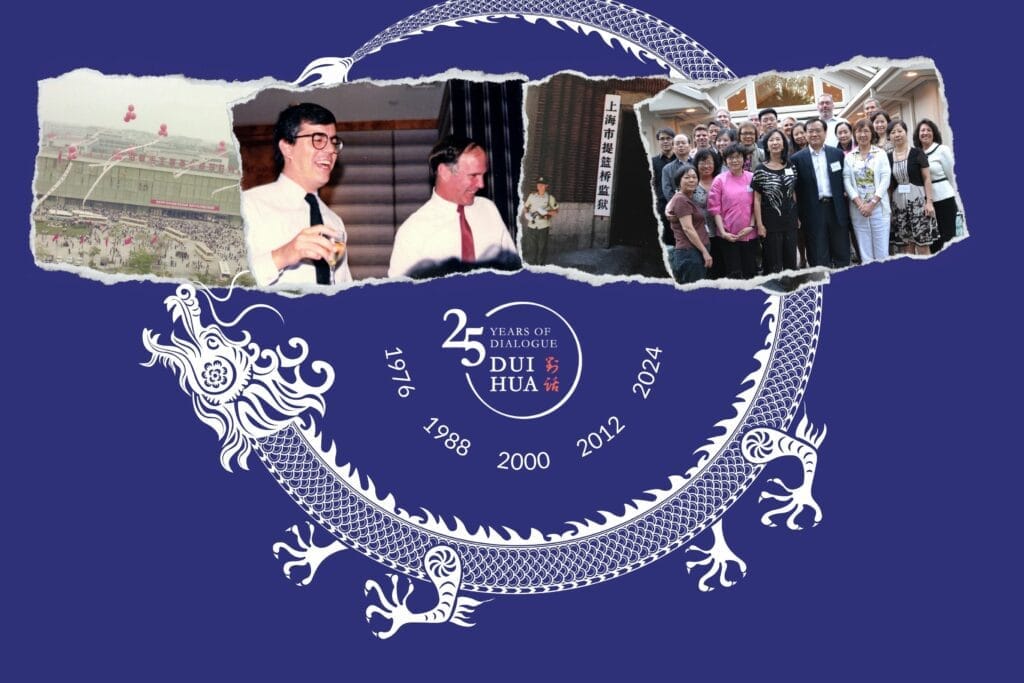
From NATO’s bombing of the Chinese Embassy in Belgrade to the return of the Panama Canal to Panama by the US, 1999 was a year of defining world events and Millennium angst. Amid these global changes, Dui Hua began its own endeavor from an office in San Francisco.
In early 1999, a group of like-minded businesspeople who believed that promoting respect for human rights is good for business, came together to establish a human rights group to advance this idea. We decided to name the new foundation “Dui Hua”—对话, Chinese for dialogue—as our preferred approach to advocating for human rights reforms and the release of prisoners, in contrast to “naming and shaming,” the preferred approach of other human rights groups.
Based on the results of my China advocacy that began in 1990, we would focus on securing the release and better treatment of political and religious prisoners. Later, the foundation broadened its mission to include advocacy for three other groups of people at risk of detention in China: juvenile offenders, women in prison, and individuals sentenced to death.
Dui Hua Established
The Dui Hua Foundation was officially established in San Francisco on April 16, 1999. In anticipation of the foundation’s birthday, I look back at what I was up to in the weeks before Dui Hua’s establishment.
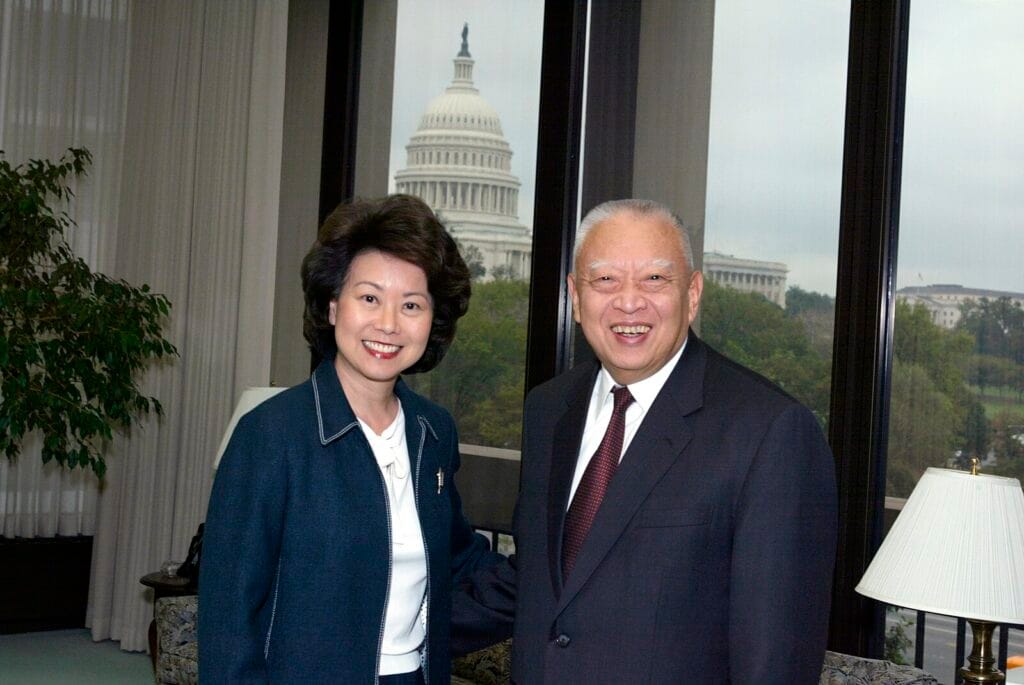
Elaine Chao, Former U.S Secretary of Labor, meets with C.H. Tung, Former Chief Executive of Hong Kong, 2005. Image source: US National Archives Catalogue
On January 21, 1999, I met with officers and members of the World Affairs Council (WAC) of San Francisco to plan a trip to Hong Kong later that year. The trip was to feature meetings at Government House and the first meeting granted by Mr. C. H. Tung since his appointment as the Chief Executive-designate of the Hong Kong Special Administrative Region in 1997. The trip would feature meetings with Hong Kong politicians, business leaders, academics and journalists, as well as sight-seeing and meals at the city’s famed restaurants.
In early February, I worked on finalizing an application to secure funding from an American foundation. It was then that I learned that I would need to use a “pass-through” if the grant was approved. Initially, I approached a university in California but decided against trying to use them when I was told the university would take a hefty percentage of the grant simply to handle administration. After discussions with friends who would together make up the fledgling foundation’s first board of directors, a decision was made to establish Dui Hua.
In 1999, I was still actively involved in business with China. In February, I traveled to Beijing to oversee a technical exchange I had arranged for a client, a manufacturer of PVC building materials.
Mixing business with human rights, I met with officials of the Ministry of Foreign Affairs, the Ministry of Justice, and the Religious Affairs Bureau (RAB). For my meeting with the RAB, I raised cases of imprisoned Catholics. According to my notes, it was a difficult meeting. When I asked Director Ye Xiaowen why he agreed to meet me, he replied: “Because I was told that I had to meet you.”
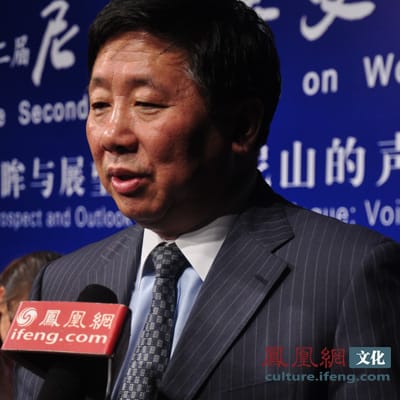
Ye Xiaowen, seen in May 2012. Images source: ifeng.com. Kamm’s meeting with Ye in 1999 was frosty and difficult.
From Beijing I flew to Qingdao, a city in Shandong Province that I knew well from discussions to establish a joint venture. There, I met with the local branch of the China Council for International Trade. In anticipation of this meeting, I had forwarded lists of political and religious prisoners detained in the aftermath of the June 4, 1989, killings in Beijing. I was given information on five prisoners, all of whom were subsequently released from prison early. I agreed to serve as an honorary advisor to the council.
Events in Washington
For the rest of March, and in the first two weeks of April, I spent time in Washington. On March 30, 1999, I attended a dinner for China’s Minister of Labor, Li Boyong, at Blair House in Washington. Later, on April 8, 1989, I attended a lunch for Chinese premier Zhu Rongji, at the State Department. Zhu had come to Washington to secure Washington’s support for China’s application to join the World Trade Organization. He was to leave Washington empty-handed. Fearing opposition from Congress, President Bill Clinton had balked.
Chinese Premier Zhu Rongji gives a speech in the joint press conference with then US President Bill Clinton in Washington, the United States on April 8, 1999. Zhu had hoped to gain Clinton’s support for China’s application to join the WTO. He left Washington empty-handed. Image source: Xinhua.
In reviewing Dui Hua archives, I was struck how some things have not changed, while others have changed a great deal. I continue to focus on advocacy for prisoners, raising names and submitting lists. Since Dui Hua’s establishment, we have submitted more than 500 lists of names with more than 2,000 names on them. We have learned of around 520 acts of clemency and better treatment. Patience and persistence remain hallmark modes of operation.
On the other hand, I am no longer active in business. I no longer serve on corporate boards of directors. No longer do I sell or invest in Asia. I used to travel to China and Hong Kong several times a year. I no longer do so.
What has changed the most is that US-China relations have sharply deteriorated, in sharp contrast to the state of relations in 1999.
Taiwanese publisher sentenced for inciting splittism by a Shanghai court
In a written response to media, the State Council Taiwan Affairs Office (TAO) confirmed that Li Yanhe (李延贺, aka Fuchsia) was convicted of inciting splittism on February 17 by the Shanghai Number One Intermediate People’s Court. A month later, TAO revealed that Li was sentenced to three years’ imprisonment with one year’s deprivation of political rights.
The news came nearly two years after Li’s disappearance in March 2023. In April of the same year, TAO confirmed that Li was under investigation for endangering state security (ESS) activities.
Li, an ethnic Manchu from China, married a Taiwanese woman and settled in Taiwan in 2009. He is the editor-in-chief of Gusa Publishing, which has published books on politics and history critical of the Chinese Communist Party. He went to Shanghai to revoke his mainland residence registration (hukou) in addition to visiting relatives. Despite obtaining his Taiwan ID card, Li was mandated by Taiwanese law to revoke his mainland hukou to obtain the right of abode on the island.
Li’s case was cited during a press conference on security and stability given by China’s Supreme People’s Procuratorate (SPP) on February 26, 2025. It was termed a “Taiwan independence” case that “seriously endangered state security”.
SPP also mentioned another “serious” ESS case involving Yang Zhiyuan (Yang Chih-yuan 杨智渊), a Taiwanese political activist and businessman who was convicted of splittism in August 2024. Yang was sentenced to nine years’ imprisonment with three years of deprivation of political rights.
Missing professor returned to Japan
In a strange turn of events, Chinese scholar Hu Shiyun (胡士云), who became incommunicado following his visit to China in 2023, returned to Japan in January 2025. The Kobe Gakuin University, where Hu works, confirmed his return.
Professor Hu was born in Jiangsu and is said to have served as a policy advisor to the Chinese Consul General in Osaka. The reason for his disappearance remains unclear.
In an interview with the media, the university said Hu had reached out about resuming work prior to his return to Japan. However, when the school asked him about his time in China, Hu was not forthcoming with his answers.
Hu is not the only China-born academic living in Japan to have gone missing after visiting China.
In February 2023, Fan Yuntao (范云涛), a professor at Japan’s Asia University, could not be contacted after going back to China. The reasons and whereabouts of his disappearance are also unknown.
Former professor at the Hokkaido University of Education Yuan Keqin (袁克勤) was reportedly sentenced to six years’ imprisonment for espionage in Changchun, Jilin, on January 31, 2024. His conviction came more than four years after he went missing in May 2019 while visiting China.
Elderly women convicted of cult-related offenses received clemency in 2024
Dui Hua’s research found that three elderly women, all Falun Gong practitioners in Anhui, might have received clemency between September and December 2024. They were all convicted of using a cult to undermine the implementation of the law.
Wang Lanying (王兰英), a woman in her early 60’s, should have been released in the Fall of 2024 after receiving a seven-month sentence reduction. Wang was convicted in October 2021 and sentenced to four years and ten months of imprisonment.
Pan Yunxia (潘云侠), a woman around 68 years old, likely received a six-month sentence reduction. Pan was convicted in July 2021 and sentenced to six years of imprisonment. She should be released at the end of 2026.
Lü Wenfen (吕文芬), a woman in her early 60’s, likely received a seven-month sentence reduction. Lü was arrested with her two sons, who are also FLG practitioners, in September 2019. She was convicted and sentenced to seven and a half years in November 2020. Lü should be released in the Fall of 2026.
The sentences for Lü’s two sons, Yue Cangsheng (岳苍生) and Yue Pengcheng (岳鹏程), are unknown. Dui Hua later found that Yue Cangsheng likely received a seven-month sentence reduction in 2023.
Bishop of Wenzhou in custody again
Mgr. Peter Shao Zhumin (邵祝敏), Bishop of Wenzhou, Zhejiang, was reportedly taken into custody in March 2025 for hosting illegal religious ceremonies.
Shao was appointed by Pope Benedict XVI in 2007 as coadjutor bishop and successor to Mgr. Vincent Zhu Weifang, who passed away in September 2016. However, the appointment was not accepted by the Chinese government, and it recognized the “Three-Self Church” bishop for the Diocese of Yongji instead.
Bishop Shao refuseds to participate in the Three-Self Patriotic Movement and had been placed under restrictions several times in 2017 and 2024 respectively.
The latest incident was related to a public Holy Year Mass on December 27, 2024, celebrated by Bishop Shao, which was attended by 200 of the faithful. The event was deemed a “serious violation” of the Religious Affairs Regulations by authorities. The police intervened and later imposed a fine of 200,000 yuan, which Bishop Shao refused to pay.
In recent years, China has continued to assert control over Christians and other religions, pushing for Sinicization and compliance with “socialist core values.” Those who refuse to comply could face fines or even charges of economic crimes, such as fraud or illegal business activities.
St. Peters Basilica in Vatican City, Rome. Image source: Kelly Lacy, pexels.com.
On many visits to Beijing, I came to know ambassadors from several countries in addition to the U.S. ambassador. Among the best friends I made were Norwegian Ambassador Svein Sæther, Swedish Ambassador Börje Ljunggren, and Italian Ambassador Massimo Iannucci.
I first met Massimo Iannucci in the early 1990s when he was Minister Counselor at the Italian Embassy in Beijing and I was working on the cases of imprisoned Catholic clergy. He and his wife hosted me for dinner at his residence, the home of a Qing Dynasty official on the outskirts of Beijing. They hired a chef who could prepare both Chinese and Italian cuisine. His wine cellar was well stocked.
Italian Ambassador to the People’s Republic of China Attilio Massimo Iannucci speaks during the China-Italy Design And Innovation Center unveiling ceremony at Tongji University on April 21, 2011 in Shanghai, China. Image source: Getty Image
After his stint as Minister Counselor in Beijing, Massimo Iannucci returned to Rome where he took up the position of Director General of the Asia Department of the Ministry of Foreign Affairs and International Cooperation (MFA). While serving as director general, he also held the position of Italy’s Special Envoy to Afghanistan and Pakistan.
As Director General of the Asia Department, Massimo Iannucci hosted me on two visits to Rome in 2008 and 2009, respectively. If the trip to Hubei was a low point of my human rights work, the visits to Italy’s capital were high points, involving interactions between me and the MFA, parliament, the Holy See, and the Chinese Embassy.
Rome, 2008
I arrived in Rome on a flight from Zurich on the evening of October 4, 2008. I took a cab to the Rome Marriott Grand Hotel Flora, which boasted an exceptional restaurant, among other amenities. The hotel is near the Villa Borghese Gardens, enabling me to take morning walks.
The next day, I attended mass at the Basilica of Saint Paul. That evening, I dined with Iannucci and his wife, Carla, at their home.
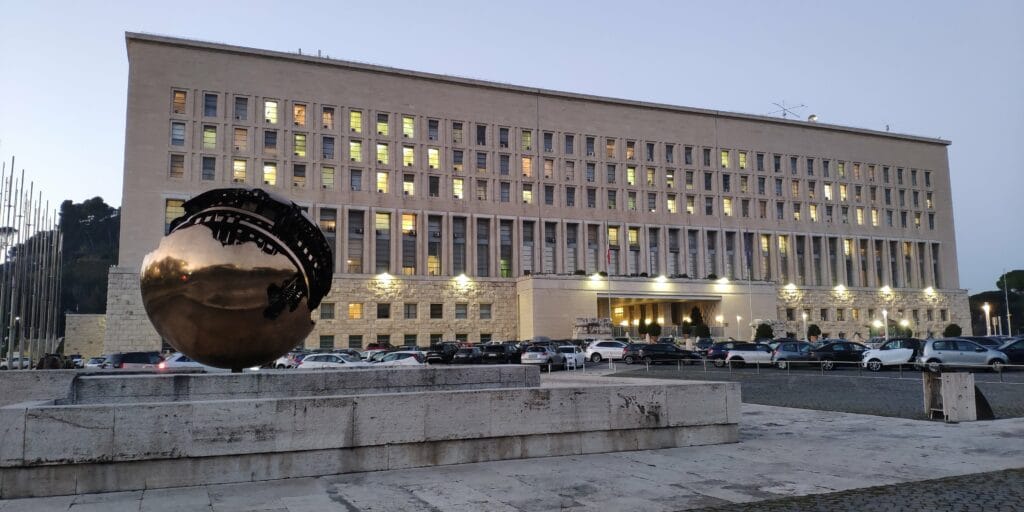
Italy’s Ministry of Foreign Affairs and International Cooperation. Image source: Wikimedia Commons.
At 9 AM on October 6, I was picked up at my hotel by an MFA official. Together we drove to the ministry’s headquarters, housed in the grand Palazzo della Farnesina. The building was constructed during the years Benito Mussolini ran Italy as a fascist dictator. Meetings took place with Director General (DG) Iannucci and senior colleagues, the ministry’s Chief of Cabinet, and the Vice Chairman of the Parliamentary Foreign Affairs Committee. Lunch was hosted by DG Iannucci at the ministry’s club.
In the late afternoon, I met with Monsignors Pietro Parolin and Rota Graziosi of the Holy See’s office of the Secretary of State in Vatican City.
Archbishop Pietro Parolin in 2009. Image source: Catholic Press Photo
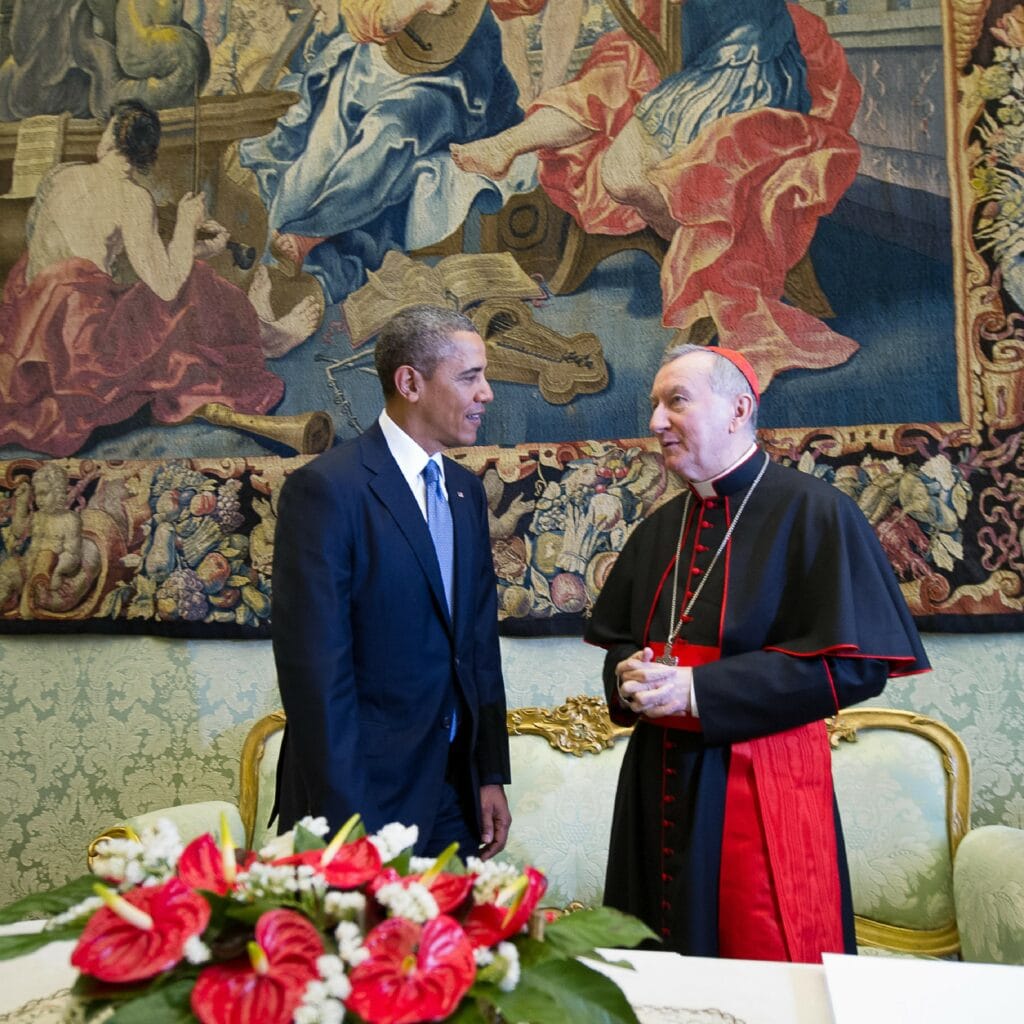
President Obama meets Secretary of State, Pietro Cardinal Parolin in 2014. Image source: Wikimedia Commons
Rome was the last stop on a five-week trip around the world. I flew back to the United States on October 7. Upon my return, I hosted Dui Hua’s first juvenile justice delegation from China’s Supreme People’s Court. Together we traveled across the country, visiting juvenile courts and detention facilities, as well as meeting with key figures involved in juvenile justice reform in the United States, including Justice Arthur Kennedy.
Rome, 2009
The purpose of the 2008 visit to Rome was to prepare for a talk there the following year. At my meetings with the MFA, and in subsequent communications, agreement was reached for me to make a presentation to an audience of Italian diplomats, think-tank representatives, and Italian scholars. The focus of the presentation would be human rights dialogues with China. A representative of the Chinese government would be invited to attend. As part of this agreement, the Italian government committed to giving Dui Hua a small grant to defray expenses.
On December 10, I was driven to the MFA’s headquarters. The program began with remarks by DG Iannucci followed by a statement by the Chinese ambassador to Italy, Sun Yuxi. Ambassador Sun’s remarks marked one of a few times that a Chinese official has spoken about Dui Hua’s dialogue with the Chinese government at a public meeting.
Here is what he said: “Under the leadership of Chairman Kamm, the Dui Hua Foundation has made great achievements in the field of international human rights promotion in just 10 years. It cooperated closely with the Chinese government and relevant institutions. And has established an unobstructed channel for exchanges between China and the West in the legal field. The Chinese government is committed to promotion and protection of human rights and is open to dialogue and exchanges with non-governmental organizations. It is hoped that the Foundation will achieve new results in 2010.”
Immediately after, Ambassador Sun left the meeting. He had been sent a copy of my presentation beforehand and was taking no chances on being in the room when I voiced criticisms of the human rights dialogues.
Human Rights Dialogues between China and Foreign Governments. Compiled by Dui Hua, 2025.
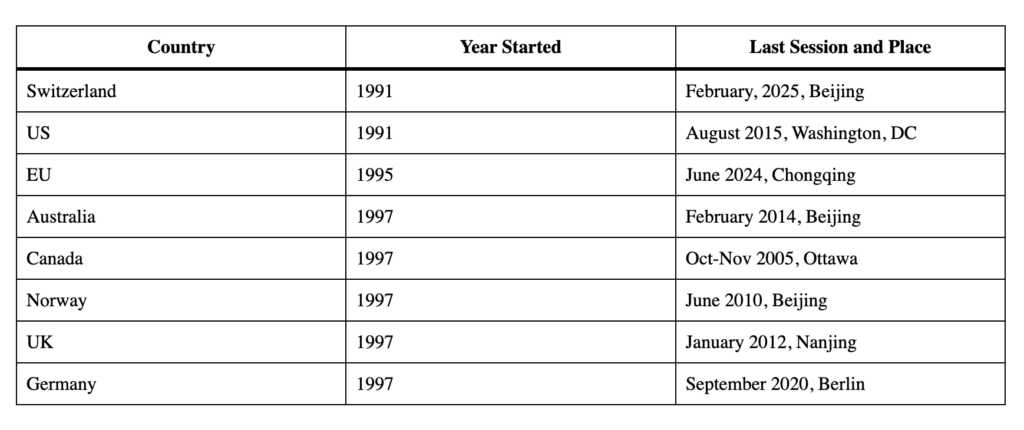
In my presentation to the audience of diplomats and others, I reviewed the status of human rights dialogues between China and foreign governments. At the time, there were seven such dialogues. (Canada, the eighth dialogue, was suspended by Ottawa in 2005. Japan claimed to have a human rights dialogue, but this claim was disputed by Beijing.) In 2024, only one dialogue took place, that of the European Union (EU) in Chongqing. Immediately prior to the dialogue, diplomats were permitted to travel to Tibet. Aside from a brief statement, the EU has been silent on what took place during the discussions. It is believed that the EU raised the names of individuals subjected to coercive measures. It is not known whether a list was handed over. The latest human rights dialogue between China and a foreign country – Switzerland — took place in Beijing in February 2025.
Meetings at the Vatican
During my visits to Rome in 2008 and 2009, I met with senior Roman Catholic clergy charged with handling relations between the Holy See and China, including Under Secretary of State for Relations with States Pietro Parolin, his successor Ettore Pietro Balestrero, and Archbishop Claudio Maria Celli. Archbishop Celli, was, for more than two decades, charged with overseeing negotiations between China and the Holy See. Those negotiations bore fruit in 2018 when, on September 22, a provisional agreement was reached governing the appointment of bishops. This so-called “secret agreement” has been renewed twice, most recently in 2024 for a four-year period.
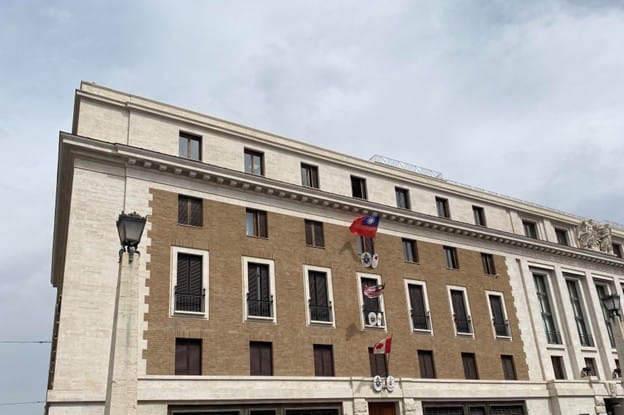
On December 11, 2009, I set out from my hotel for the long walk to Vatican City. On my way to Saint Peter’s Square, I passed by the Embassy of the Republic of China (ROC) to the Holy See. Then, as now, this embassy was the ROC’s only embassy in Europe. (The office occupies the top floor in the same building as the embassies of Canada and Malaysia.) It is staffed by diplomats who handle interactions between the republic and European countries. Meetings with the Italian MFA are frequent.
ROC Embassy to the Holy See. It occupies the same building with Canada and Malaysia. Image source: ROC Embassy to the Holy See.
I arrived at the Porta Sant’ Anna where I presented my credentials to the Swiss Guards guarding the gate. In short order, a priest came down to escort me to the meeting with Archbishop Celli. Joining us was an officer from the MFA.
My meetings with Celli and other senior prelates focused on the situations of imprisoned Catholics in China. As mentioned above, my work on these cases began in the early 1990s and was well known to the Holy See.
I was especially concerned with the plight of Bishop James Su Zhimin (苏志民), the head of the underground Bishops Conference, who had been taken into custody in 1997 after he met with a visiting U.S. congressman. He had been “disappeared,” apparently into an “Old People’s Home” in Baoding that was run by the local Religious Affairs Bureau.
Bishop James Su Zhimin, unknown dates. Image source: internet archives.
I wondered if the Holy See had compiled a list of imprisoned clergy and lay leaders in China but was told that such a list was not kept. A prelate half-jokingly said that the Holy See didn’t want to interfere with their decision, including the decision to embrace martyrdom. (In fact, over the years, many Catholic priests have chosen death rather than renounce their faith.) Eventually, while gazing down on Saint Peter’s Square, a young priest unexpectedly slipped me a list of names. It was virtually identical to the lists I had worked on with Father Politi in Hong Kong.
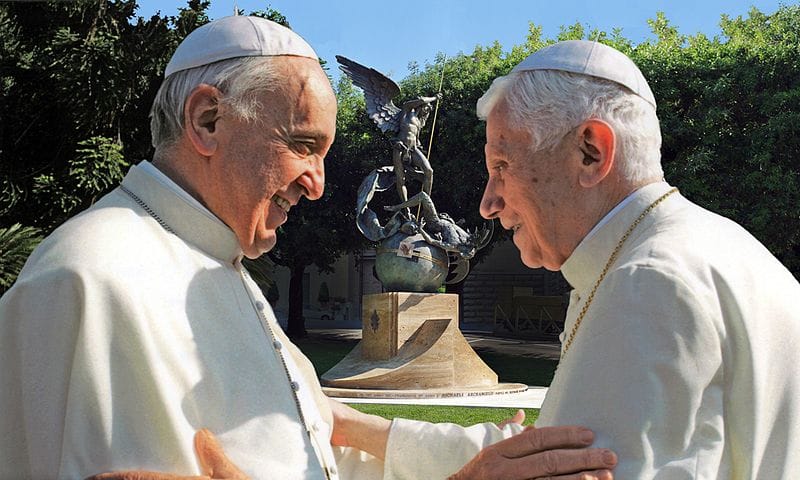
Pope Francis and Pope Benedict. Image source: Wikimedia Commons.
My trips to Rome in 2008 and 2009 took place during the papacy of Benedict XVI. Both had been facilitated by the Vatican’s office in Hong Kong. Benedict was succeeded by Pope Francis upon the abdication of Benedict in 2013. Pope Benedict was more critical of China’s policy towards Catholics than Pope Francis under whose papacy an agreement with China on the appointment of bishops was negotiated. That agreement is said to have been criticized by Pope Benedict as well as Hong Kong Bishop Joseph Zen Ze-kiun (陈日君). Zen’s criticisms of the Holy See’s engagement with China came up during my visits to the Holy See, when senior clerics voiced frustration at his stance.
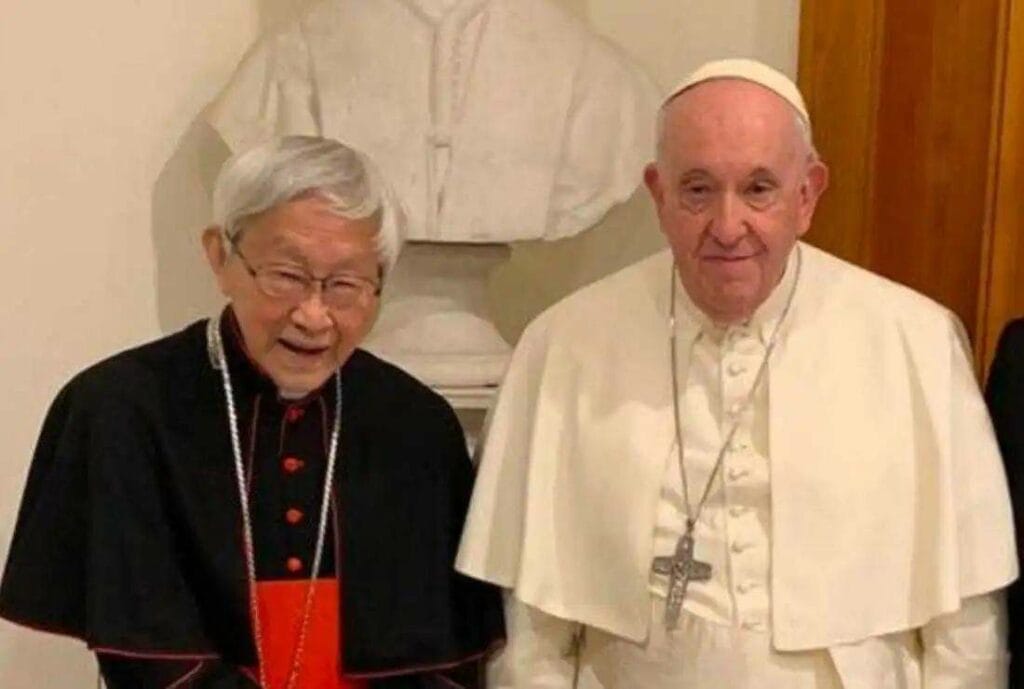
To show his backing for Zen, Pope Benedict insisted that Zen be invited to his funeral in 2023. Now a cardinal, Zen was detained in May 2022 due to his support for democracy in Hong Kong. Accused of colluding with foreign forces, Zen was later released on bail and has yet to be charged. Authorities confiscated his passport, but Zen was allowed to attend Pope Benedict’s funeral.
Pope Francis (right) with Cardinal Joseph Zen Ze-kiun, after Pope Benedict’s funeral in January 2023. The meeting was their first since 2018. Cardinal Zen traveled with permission from a Hong Kong court. Image source: Vatican Media
On my visits to Rome, I took the opportunity to do some sightseeing and Christmas shopping. I was given a private tour of the Vatican’s Sistine Chapel, the Raphael Rooms and the Gallery of Maps which features a detailed map of Italy by Dante. To my surprise, those who lived in the Vatican apartments rarely ventured out to dine in restaurants nearby. They lived a cloistered life. I was under no such self-imposed culinary restriction. I dined at some of the best restaurants in the city before returning to the United States.
2025 has witnessed fundamental shifts in U.S. foreign policy – Ukraine, tariffs on allies, withdrawal from the World Health Organization and the United Nations Human Rights Commission. As the U.S. changes its position, China holds its two annual plenary sessions – the National People’s Congress and People’s Political Consultative Conference. But what about human rights?
EVENTS
Unsettling News for Uyghurs
U.S. Secretary Marco Rubio Holds Meet and Greet with U.S. Embassy Panama City on February 2, 2025. Image Source: U.S. Department of State
The U.S. Department of State issued a statement on February 27, strongly condemning Thailand for returning at least 40 Uyghurs to China. Some of those Uyghurs had been living in Thailand for years, seeking refugee status. The presence of Uyghurs in Thailand was one of a few human rights related issues that were mentioned during Secretary of State Marco Rubio’s confirmation hearing. Then, nominee Rubio said the U.S. would seek a solution with Thailand, which has close cooperation with the U.S. in the region.
Human Rights: Still a Red Line?
On November 16, 2024, Chinese President Xi Jinping met U.S. President Joe Biden on the sidelines of the 31st APEC Economic Leaders’ Summit in Lima, Peru. It would be the last time the two men would be face-to-face during the Biden presidency. On November 5, 2024, Donald Trump had been elected president, slated for inauguration on January 20, 2025.
During the meeting, President Xi spelled out China’s four “Red Lines” which must not be challenged or crossed:
The Taiwan Question;
Democracy and Human Rights;
China’s Path and System, and;
China’s Development Rights.
Not long after the Lima meeting, President Xi authorized the release of at least six U.S. citizens and one relative of a U.S. citizen. They were released on November 26, 2024, Thanksgiving Eve, and returned to the U.S. the same day.
The Chinese government has long considered pressing for the release of prisoners, especially political prisoners, as interference in its judicial system. Yet, for many years, it has accepted lists of prisoners that foreign governments want to see released, or at least better treated. In the case of Dui Hua, it has accepted lists with more than 2,000 names and granted clemency to more than 500 prisoners.
Two of the Americans released on Thanksgiving Day were political prisoners. They had been convicted of endangering state security.
Perhaps it’s not so much a firm red line as a dotted red line.
Trump 45 and 47: Does He Care about Human Rights in China?
A widely held view is that Mr. Trump does not care about human rights in China, or elsewhere for that matter. Like in his first presidency, he’s withdrawn the U.S. from the UN Human Rights Council (the U.S. government didn’t run for another term in October 2024). While this view is, for the most part, correct, it ignores a few points.
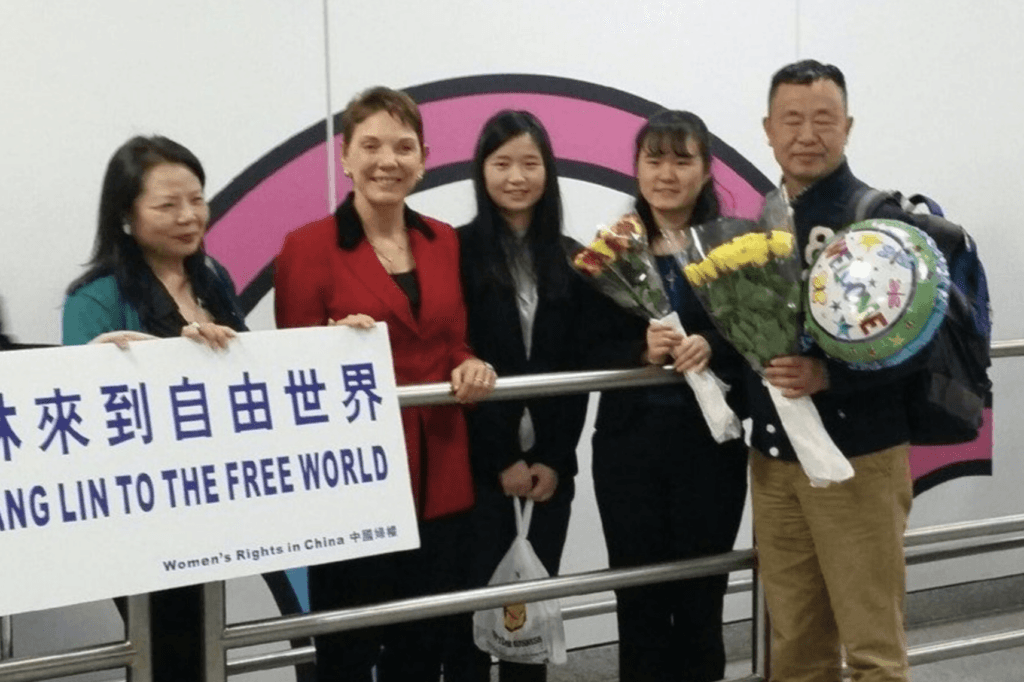
During his first term, Trump dispatched then-Secretary of State Rex Tillerson to Beijing to press for the release of U.S. citizen Sandy Phan-Gillis, a Texas businesswoman who was accused of espionage and detained in Guangxi since March 2015. The mission was a success. Ms. Phan-Gillis was released in April 2017 [after conviction] and returned to the U.S.
While campaigning for president, Trump declared, in October 2024, “We’ll get Jimmy Lai out of jail.” This elicited howls of protest from Hong Kong Chief Executive John Lee. In January 2025, on a visit to Hong Kong, Mike Pence, Trump’s first term vice president, stated in a closed door meeting that Hong Kong should release Lai. China’s Ministry of Foreign Affairs commissioner in Hong Kong denounced his intervention.
Trump views human rights in China as a cudgel to slam Beijing when it suits his purpose. He is a transactional president, ever seeking a “big deal” with China that covers a multitude of subjects including trade and national security. Why not include human rights as part of the “big deal?”
Polls Show that Americans Continue to Have a Low Opinion of China
Americans continue to hold a low opinion of China, according to a recent YouGov poll (“Friend or Enemy”). America’s view of China plunged at the end of 2017 and has never recovered since, with COVID exacerbating negative opinions. Another poll shows the U.S. values human rights, although less than before, even if it affects prospects for business and trade. In a March Gallup poll, Americans across the political spectrum felt that promoting and defending human rights abroad was less of a foreign policy priority for the U.S. While that is the case, the State Department’s China fact sheet says it will still “promote accountability for China’s violations of human rights within China and around the globe.”
Despite low ratings, here is a tantalizing prospect: data suggests that opinion on China might have received a boost, albeit temporary, from the release of U.S. prisoners from Chinese prisons in September and November. Dui Hua has long held that releasing prisoners can lead to better opinions on China and has argued as much in meetings with Chinese officials.
Kamm Discusses Prisoner Advocacy and Juvenile Justice at Asia Society Conference in San Francisco
John Kamm speaks at the Asia Society US-China conference, January 16, 2025. Image source: Asia Society Northern California and Whitehorse Productions
Dui Hua Executive Director John Kamm joined experts in various fields at a roundtable discussion at the annual Asia Society’s annual US-China conference in San Francisco on January 16, 2025. The theme of the conference was the future of “US-China Relations — Under Renewed Pressure.”
The focus of Kamm’s presentation was Dui Hua’s work on prisoner advocacy and juvenile justice reform, and how they bridge US-China relations and foster people-to-people dialogue. The panelists acknowledged the challenges and difficulties but remained hopeful, and highlighted the importance of continuing dialogues and exchanges.
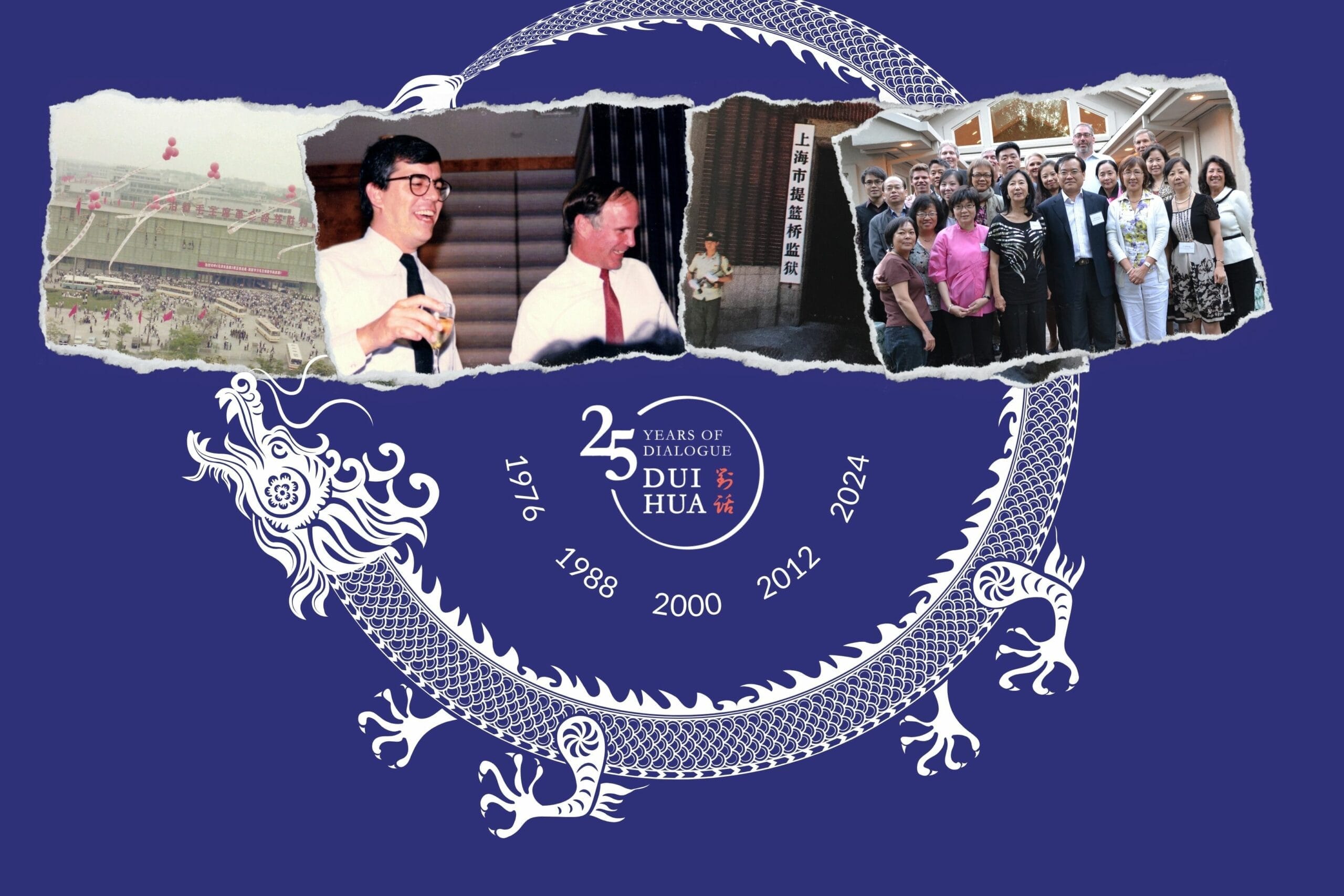
Dragon Years: Remembrance of Times Past is a limited series about founder John Kamm’s work from 1976 to Dui Hua’s founding in 2000, culminating in the Foundation’s 25th Anniversary in 2024.
It’s the Year of the Wood Dragon and Trump wins the presidency just as US-China tensions ease following the release of several U.S. citizens from prisons in China. In this final episode of Dragon Years: Remembrance of Times Past, John Kamm and Dui Hua board member and seasoned diplomat Bill McCahill discuss the events that shaped US-China ties in 2024 and their impact on Dui Hua’s work. Listen now
2012 sees Xi Jinping’s historic ascension as China’s paramount leader. It’s also the year Dui Hua holds its third juvenile justice exchange with China’s Supreme Peoples’ Court. John Kamm, Judge Len Edwards and Dui Hua Director Maggie Yum take you behind the scenes of the exchange and discuss its impact within China. Listen now
Kamm (left) and Rosenzweig (right) with an official from the Hubei Procuratorate in Wuhan, November 16, 2007. Image source: Dui Hua.
Kamm visits Hubei with colleague Joshua Rosenzweig. There, they meet Ma Kechang, a defense counsel in the trial of the Gang of Four, visit a detention center for corrupt officials and sit on the banks of the Yangtze. Read more
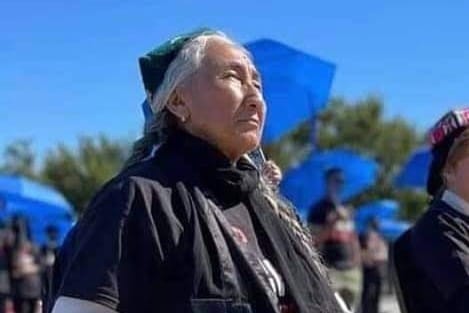
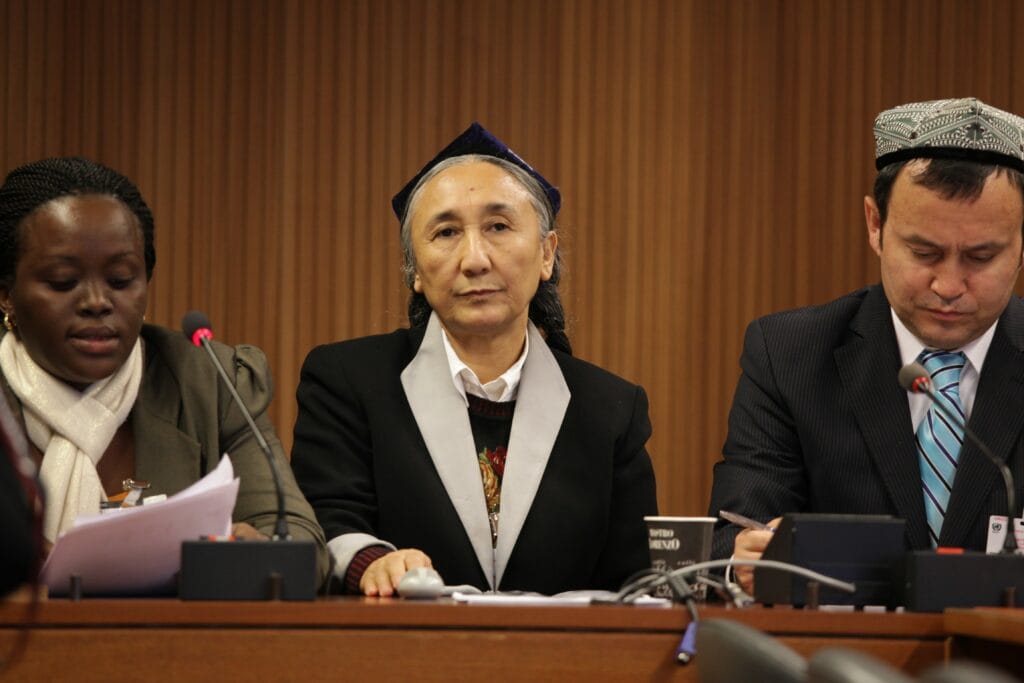
Rebiya Kadeer, seen at a 2021 rally in Washington, DC. Image source: Twitter @KadeerRebiya
In 2005, Rebiya Kadeer – Uyghur entrepreneur and activist – had been given a rapturous welcome on her arrival in the United States. John Kamm recounts his contribution to Rebiya’s release, following her fall from grace from Chinese politics and subsequent arrest and imprisonment. Read more
U.S. citizen and Texas native Justin Garcia was released on January 17, 2025 from a prison in Qingdao, China and returned to the United States on the same day. Read press statement
Dui Hua’s Prisoner Updates provide the latest information uncovered through research and direct dialogue with the Chinese government.
Five members of a Twitter group known as “推墙大联盟” (lit. a league to tear down the firewall) were convicted and sentenced for subversion in Chongqing in March 2023. Read more
More than a year after his arrest, filmmaker Chen Pinlin (陈品霖) was convicted of picking quarrels and provoking trouble and sentenced to three and a half years by the Baoshan District People’s Court in Shanghai on January 6, 2025. Read more
A group of six people were sentenced to between three and 12 years by the Luzhou Intermediate People’s Court in April 2024. In December 2024, their sentences were upheld by the Sichuan High People’s Court. Read more
A key member of the “Mainland China Administrative Deacon Station” (MCADS 中华大陆行政执事站) might have been released early after receiving clemency. Read more
Subscribe here to receive Dui Hua publications by email.
The Year of the Wood Dragon sees Trump’s return to the presidency and the easing of US-China tensions following the release of several U.S. citizens from prisons in China. In this final episode of Dragon Years: Remembrance of Times Past, John Kamm and Dui Hua board member and seasoned diplomat Bill McCahill discuss the events that shaped US-China ties in 2024 and their impact on Dui Hua’s work.
Related for this episode:
Dragon Years: Remembrance of Times Past – 1976, 1988, 2000, & 2012
Six people sentenced for subversion in Sichuan Province
A copy of the judgment posted online by an overseas group provided details of how the Chinese government uses the offense of subversion to crack down on dissidents who organized an opposition political party. A group of six people were sentenced to between three and 12 years by the Luzhou Intermediate People’s Court in April 2024. In December 2024, their sentences were upheld by the Sichuan High People’s Court.
Allegedly dissatisfied with China’s socialist system, party leader Tang Gaofeng (唐高峰) formed the idea of establishing an opposition political party, which he called “China Democracy Victory Party 中国民主胜利党 (CDVP)” while abroad in 2008. Tang also drafted the party platform and constitution. In 2009, he came into contact with Wang Yifei (王一飞), Wang Wei (王威), Liu Zhengang (刘振刚), as well as Zhou Dan (周丹) online. Another defendant, Dai Lu (代露), joined the party in 2014.
According to the judgment, Tang initially funded much of the party’s initial operations. The party convened its first meeting in Chengdu in 2011. In the judgment, members are accused of using overseas social media to recruit members online from 2011 to-2015 to vigorously spread anti-CCP ideology and CDVP programs with the goal to incite the overthrow of state power and the socialist system.
While focusing primarily on the party’s online activities, the judgment only cited one incident of the party’s offline activity as evidence of subversion. In 2013, Wang Yifei posted reactionary slogans in Qianjiang, Hubei and took photos for the party’s overseas website.
According to the judgment, Tang later ceased contacts with other party members and stopped funding the party in 2016. Zhou Dan took the leading role to recruit members in China after travelling abroad and enrolling in training programs hosted by “hostile organizations.”
The defendants were initially placed under residential surveillance at a designated location in May 2022 and arrested in September 2022. The first-instance trial wasn’t concluded until April 24, 2024.
Of all the defendants, Tang received the heaviest sentence of 12 years’ imprisonment and four years deprivation of political rights (DPR). The court sentenced Wang Wei to eight years imprisonment and three years of DPR, Wang Yifei to seven and a half years imprisonment and three years of DPR, Zhou to six years imprisonment and three years of DPR, Liu to five and a half years imprisonment and two years of DRP, and Dai to three years imprisonment and one year of DPR.
This is not the first opposition political party formed online. In a 2022 post, Dui Hua covered similar cases in its Human Rights Journal, “People’s Parties & ‘Picking Quarrels’.”
Member of “Mainland China Administrative Deacon Station” received clemency in Anhui Province
Information unearthed by Dui Hua revealed that a key member of the “Mainland China Administrative Deacon Station” (MCADS 中华大陆行政执事站) might have been released early after receiving clemency.
Li Yuhong (李玉红), a farmer now in his sixty’s, was convicted of organizing, using a cult undermining implementation of the law and sentenced to seven years of imprisonment by a county court in Anhui in December 2019. Li was one of six people who were tried and convicted.
Li was accused of being a key follower of Wang Yongmin (王永民), the founder of the MCADS. In 1996, Wang was sentenced to twenty years for disturbing social order and fraud and was released in 2012 on parole.
The 2019 judgment accused Wang, together with Li and five other people, of attempting to revive MCADS following Wang’s 2012 release. They purchased printers to produce propaganda materials and attempted to contact overseas religious groups in the hope of gaining official recognition.
Dui Hua found that Li likely received a sentence reduction of nine months in April 2024 and should have been released from the Chaohu Prison in the summer of that year. This was Li’s first and only reduction during his incarceration. The document states Li had demonstrated “sincere remorse and vigorous reform.”
Of the convicted, Wang received a ten-year prison sentence, while the others received three years in prison or suspended sentences, respectively. Following Li’s release, Wang is believed to be the only person who remains in prison until March 2028. No information was found whether he also received clemency.
Three members of Church of Almighty God received clemencies in Anhui Province
Dui Hua’s research found that three members of the Church of Almighty God (CAG 全能神) might have received their first sentence reductions between April and August 2024. They were convicted of using a cult to undermine implementation of the law.
Zheng Shaofu (郑绍甫), a man nearly 50 years old, likely received an eight-month sentence reduction in April 2024. He was sentenced to eight years and eight months imprisonment in March 2020. He is scheduled for release from the Chaohu Prison in June 2026 after the reduction.
Gen Surong (耿素荣), a 52-year-old women, likely received an eight-month sentence reduction in June 2024. She was sentenced to seven and a half years imprisonment in February 2021. She is scheduled for release from the Anhui Women’s Prison in May 2026 after the reduction.
Li Mingguang (李明厂), a man in his late sixty’s, received an eight-month sentence reduction in August 2024. He was sentenced to seven and a half years imprisonment in February 2021. A second document stated that in November 2024, the Chaohu Prison approved Li to serve outside the prison because he was “critically ill.”
CAG, also a spin-off of the “Shouters”, is designated as an “evil cult.” Its members remain active in many regions of China. A trial of a CAG case typically involves multiple defendants.
Retired Xinhua journalist sentenced for picking quarrel and provoking trouble in Shanghai
Gu Wanming (顾万明), a retired Xinhua journalist, was sentenced to one-year imprisonment for picking quarrel and provoking trouble by a district court in Shanghai in November 2024.
His sentence was disclosed in an internal notice issued by the Xinhua News Agency on December 10, 2024. The notice states that Gu’s retirement benefit has been revoked, in accordance with regulations on State employees.
Though the exact reasons are unknown, some friends and colleagues speculate Gu’s conviction stemmed from his 2023 public letter calling for a thorough investigation into the sudden death of former Premier Li Keqiang.
In 2007, Kamm journeyed to China’s Hubei province with a colleague to see how different judicial bodies interacted at the provincial level. Despite a promising start, the itinerary didn’t go as planned, perhaps an early indicator of a fraying relationship between Dui Hua and China’s Ministry of Justice.
Kamm (left) and Rosenzweig (right) with an official from the Hubei Procuratorate in Wuhan, November 16, 2007. Image source: Dui Hua.
In 2007, I toured Hubei Province with a colleague. The visit did not go well and was an early indicator of a fraying relationship between Dui Hua and China’s Ministry of Justice (MOJ). It represented a low point in my dialogue on human rights with the Chinese government.
Earlier on in the year, I had began discussions with a senior official who worked for the Supreme People’s Procuratorate. I had met him in Europe, and then, later, on a visit to the United States.
For a long time, I had wanted to visit a Chinese province other than Guangdong to look at how different judicial bodies interacted at the provincial level. We settled on Hubei in central China. The official with whom I was holding discussions had good connections there.
My idea was to visit a prison, a detention center, and a court, where we could attend a trial. Prisons are under the provincial prison bureau which in turn reports to the prison administration bureau of the Ministry of Justice. Detention centers report to the provincial public security bureau under the Public Security Ministry, while intermediate people’s courts are under the provincial high court. We also wanted to meet with officials to ask about political prisoners and interact with students and professors at a law school. I was especially interested in getting information about Qin Yongmin (秦永敏), one of the founders of the Democracy Party of China. Qin was released at the end of his sentence in 2010. There is no record of his being granted clemency. He was put back in prison to serve a 13-year sentence for subversion in 2015. He is currently serving his fourth sentence in Guanghua Prison in Hubei. Qin’s wife, Zhao Suli, is reported missing. Dui Hua’s advocacy on behalf of Qin Yongmin has continued. To date, the foundation has placed his name on 22 lists submitted to the Chinese government. We have received 25 responses.
I suggested that Joshua Rosenzweig, my colleague at Dui Hua, and I make presentations on, respectively, application of the death penalty in the United States, with a focus on lethal injection, and citizen oversight of police forces in the San Francisco Bay Area. My suggestion was accepted.
The official assured me that my requests would be met, so we moved to the next stage: logistics – dates, transportation, and lodging.
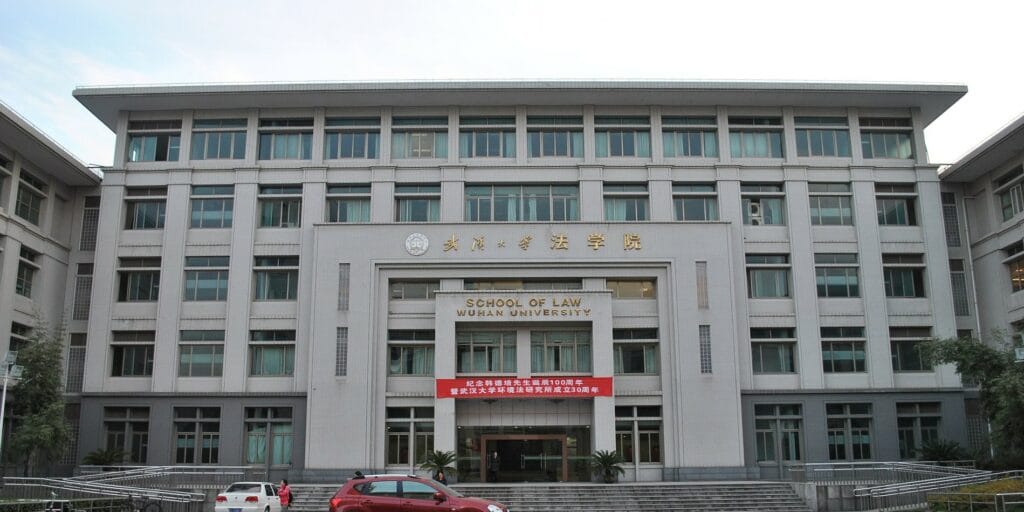
Wuhan University School of Law
Josh and I departed Hong Kong at 8:30 AM on November 14, 2007, aboard a Dragon Air flight, arriving in Wuhan two hours later. It was a cool and misty day. After landing, we went by car to Wuhan University School of Law. There we were met by Dean Ma Kechang. Dean Ma was known for his work as a defense counsel in the trial of the Gang of Four, the group of radicals blamed for many of the excesses of the Cultural Revolution. Ma had represented followers of the disgraced leftist premier Lin Biao, who had reportedly died in a plane crash as he was attempting to flee to the Soviet Union.
Wuhan University School of Law. Image source: Wikimedia Commons
Josh made his presentation on lethal injection, in flawless Chinese. It was well received and prompted many questions. I spoke, in English, on Dui Hua’s work on behalf of Chinese political and religious prisoners. Despite the sensitivity of the topic, my remarks were also well received by an enthusiastic audience of students and professors.
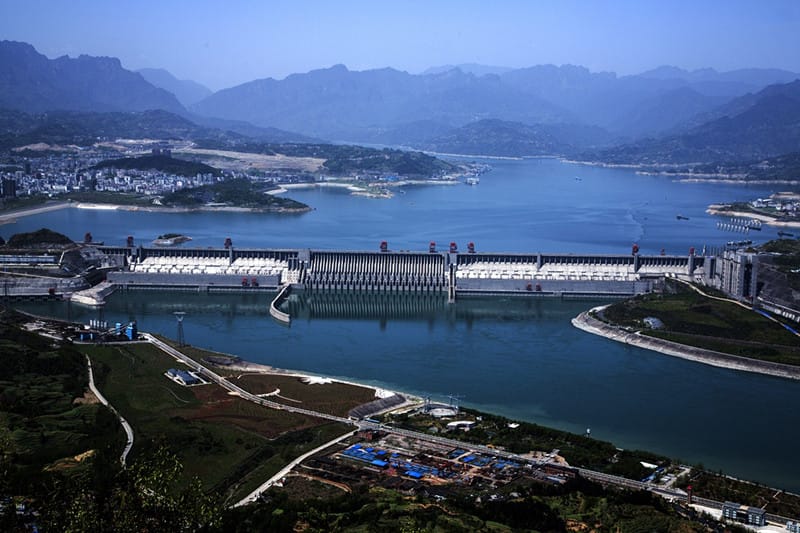
After our presentations at the law school, Josh and I left by car for the four-hour drive to Yichang, a city of more than three million residents most famous for its proximity to the Three Gorges Dam. Upon arrival, we were taken to a banquet room in the hotel at which we would make our presentations the next day. During dinner, I remarked how much Josh and I were looking forward to our visits to a prison and a detention center. Our hosts started to fidget in their seats and stare off into space.
The Three Gorges Dam. Image source: hubei.gov.cn
After dinner, the officials came to my room. There they told Josh and me that there would not be a visit to the Yichang Prison. Nor would there be a visit to a detention center. We could not attend a trial. I registered my disappointment. I told them that I would have to consider returning to Wuhan and flying back to Hong Kong. They asked me not to do so. Eventually, I relented, and the show went on as planned.
Citizen Oversight of Police Forces
The next day, November 15, 2007, I began what was to be a three-hour presentation on citizen oversight of police forces. This being a seldom-explored topic in China, where civilian oversight of the police (not to mention state security agents) does not exist, there was considerable interest in my remarks. We were told that this was the first-ever presentation to Chinese officials on the subject.
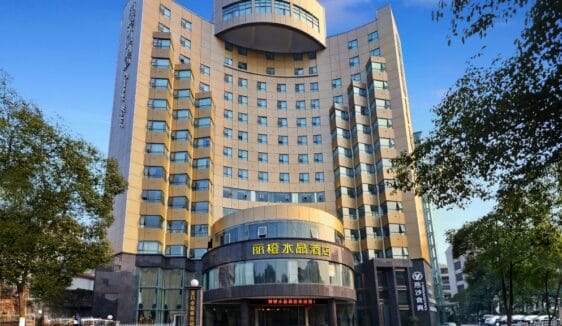
The presentation took place in the main hall of the Bailong Hotel, site of the Yichang Procuratorate Training Center. The audience consisted of more than 100 officials from the procuratorate and public security bureaus, as well as other judicial bodies in Yichang. It was taped for rebroadcast on closed-circuit television to procuratorates throughout the province. The interpretation was not the best, so Josh jumped in to help. I fielded questions from the audience, after which we went to lunch in the hotel.
Bailong Hotel (later renamed to Licheng Shuijing Hotel in 2011) is the site of the Yichang procuratorate training center. Image source: c-ctrip.com
Our hosts made one more effort to visit Yichang Prison. The effort failed, and they were reproached for defying instructions. We decided to leave Yichang right away, and we returned to Wuhan. That night we were hosted at a banquet by the Hanjiang Municipal Procuratorate.
A Waste of Time with the “No” Official
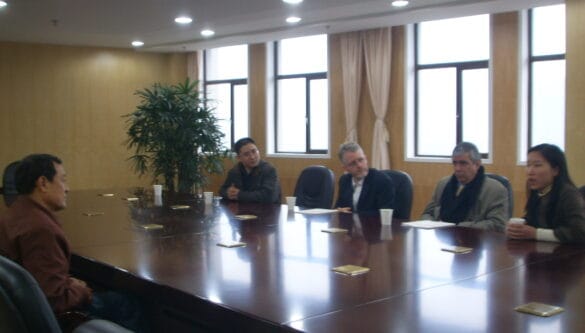
Meeting with officials from Hubei Procuratorate and Prison Bureau. Image source: Dui Hua.
We began November 16 with a meeting with officials of the Hubei Procuratorate and the Hubei Prison Bureau. It was a frustrating waste of time. The prison bureau official showed up in his uniform bedecked with ribbons and medals. He arrogantly refused to answer the most basic questions, including how many prisons the bureau administered in Hubei. We pointed out that this information was freely available on-line, and we showed him the Wikipedia entry. He refused to answer questions on prisoners, and he refused to accept a prisoner list from us.
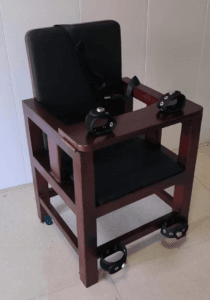
A wooden interrogation chair, with straps. Image source: internet
We then went to a detention center, run by the procuratorate, for detained corrupt officials. It was fitted out with video equipment to record the interrogation. Video recording was a new tool integrated to combat coerced confession during interrogation, something our hosts clearly wanted to show off. On the wall was a clock with markings for 24 hours, the time given to the procuratorate to question suspects before handing them over to the police or party inspection committee. Suspects were strapped to a solid wooden chair where they would sit for 24 hours without a break.
Although we were not able to attend a trial, we were invited to meet with judges of the Jiangnan Intermediate People’s Court. We held an interesting discussion on access to court documents and access to trials by foreign observers.
The Hankou Foreign Concession
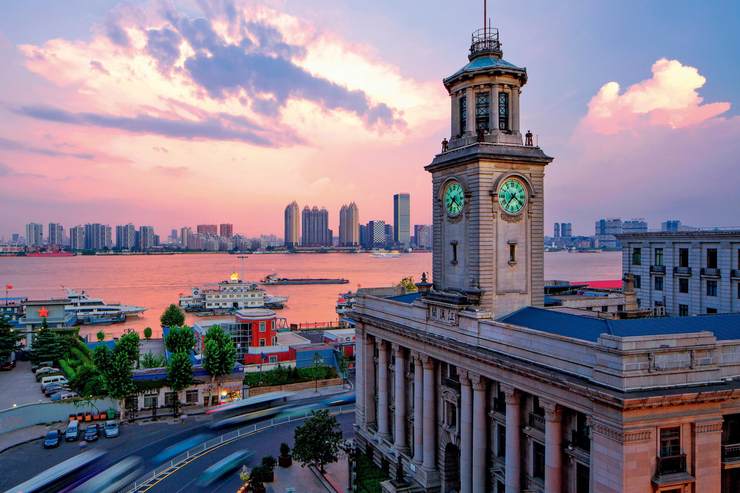
Hankou Concession District. Image source: Chinese National Geographic, dili360
Saturday, November 17, was given over to sightseeing. We walked around the Old Hankou Concession District. At one point, Hankou was the sight of five foreign concessions: British, French, German, Russian, and Japanese. We sat for a while on an embankment of the Yangzi River. I was reminded by an accompanying official that, in July 1966, Chairman Mao swam the Yangzi near this spot, a seminal incident in the early days of the Cultural Revolution. After our tour, we passed by a souvenir shop and a bookstore. There, I purchased RMB 150 worth of books.
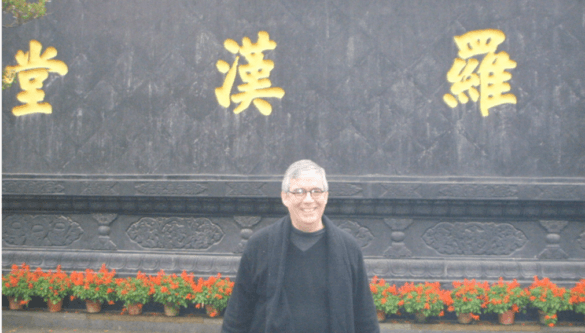
Kamm at Luohan Temple. Image source: Dui Hua
Finally, we visited a Buddhist temple after which we returned to the hotel for an early turn-in. Our flight to Hong Kong, KA851, would leave early on November 18.
Wu Aiying, Enemy of Dialogue
I eventually found out why our visit to Yichang Prison was scrapped. Wu Aiying became Minister of Justice in 2005, and she set about dismantling what had been a good working relationship between the Ministry of Justice and Dui Hua. Wu was widely seen as an ignoramus who knew nothing about the law or policy. She preferred talking about cooking. On foreign trips she accepted expensive gifts, which eventually contributed to her downfall. What finally did her in was her promotion of a conman to a senior position in the ministry. Both this fellow and Wu were expelled from the Communist Party, and the conman was tried. It is not known what happened to Wu Aiying, but many judicial officials fervently hoped she would receive her just desserts – a term of imprisonment in a women’s prison.
SAN FRANCISCO (JANUARY 27, 2025) – U.S. citizen and Texas native Justin Garcia was released on January 17, 2025 from a prison in Qingdao, China and returned to the United States on the same day.
Mr. Garcia, a 38-year-old English teacher in the city, was taken into custody in May 2022 on suspicion of selling small quantities of marijuana to two foreign nationals. Neither foreign national was charged with a crime.
After spending a week in administrative detention during which he was interrogated, Garcia was formally detained and placed in a detention center. Later he was arrested and tried and sentenced to three years in prison in December 2022.
Garcia was moved to a prison in Qingdao after his conviction. Garcia says there were more than 100 prisoners in his cellblock of whom seven were foreigners, including himself and one other American teacher. Both have been released and returned to the U.S.
Garcia says he worked on the prison factory’s assembly line manufacturing clothes. He worked long hours for little pay, but he garnered enough points for a four-month sentence reduction. Garcia was not physically abused while in the detention center or in prison.
Garcia received consular visits. Officers gave news from the outside world and delivered books and reading material. Consular visits are afforded to U.S. citizens, a benefit not enjoyed by citizens of many other countries.
Dui Hua wishes Justin Garcia good health and success in rebuilding his life.
2012, the Year of the Water Dragon, sees Xi Jinping’s historic ascension as China’s paramount leader. It’s also the year Dui Hua holds its third juvenile justice exchange with China’s Supreme Peoples’ Court. In this episode of Dragon Years: Remembrance of Times Past 2012, John Kamm, Judge Len Edwards and Dui Hua Director Maggie Yum take you behind the scenes of the exchange and discuss its impact within China.
Related for this episode:
Dragon Years: Remembrance of Times Past – 1976, 1988, & 2000
In 2005, Rebiya Kadeer – Uyghur entrepreneur and activist – had been given a rapturous welcome on her arrival in the United States. John Kamm recounts his contribution to Rebiya’s release, following her fall from grace from Chinese politics and subsequent arrest and imprisonment.
Rebiya Kadeer, seen at a 2021 rally in Washington, DC. Image source: Twitter @KadeerRebiya
The senior Chinese diplomat and I agreed to meet at the usual time and place: breakfast at 8:00 AM at the historic Mayflower Hotel, not far from the White House in Washington D.C. The date was May 19, 2005. It was a cool and cloudy day.
The Mayflower was the site of China’s first diplomatic presence in the United States after the two countries resumed contact in the early 1970s following many years of not talking to each other. For several months in 1973, the hotel housed China’s Liaison Office, the forerunner of its embassy. The establishment of the Liaison Office was the result of the Nixon-Kissinger foray into China in 1972.
While the Mayflower had a historic significance for Chinese officials, my interest in dining there was more prosaic. It offered outstanding breakfasts, including, among my favorites, eggs benedict and corned beef hash and eggs.
My guest arrived in a poorly tailored western suit, adorned with a scowl on his face. He sat down, and we exchanged pleasantries. The source of his displeasure soon became apparent: the March arrival in Washington of the Uyghur entrepreneur and activist Rebiya Kadeer. She had been given a rapturous welcome at Dulles Airport by members of her family, the Uyghur diaspora, and officials of the U.S. government. The welcoming ceremony featured a victory dance.
I had met with Rebiya and her family the day before my breakfast with the diplomat.
As was the custom when I met Chinese officials, I intended handing over a prisoner list. The official raised his hand as if to signal “Not now,” saying, “Before we get to that, you and I need to talk.”
The embassy official claimed that the reception given to Rebiya Kadeer violated an understanding between Washington and Beijing not to “hype” her arrival in the U.S. Specifically, it went against the tacit agreement between the U.S. ambassador Clark Randt to keep Rebiya quiet. There would be consequences, the diplomat threatened.
I said that I was confident that the State Department could take care of itself. “But what about you, Mr. Kamm? You have business in China. Can you take care of yourself?”
“What do you mean by that?”
His response was a sloppy smile and silence. The threat was clear.
I was not able to hand over my list.
A few days after this breakfast, I flew to Dallas Texas and resigned from the board of directors of an U.S. telecommunications company. Such was the end of my business career.
August 1999
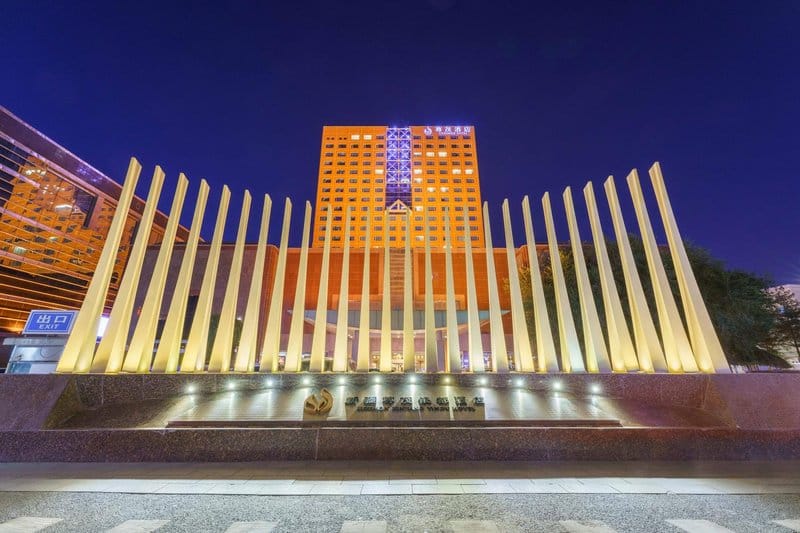
On August 11, 1999, Rebiya Kadeer, a son, and her secretary, were taken into custody in Urumqi on the way to meet a U.S. congressional staff delegation at the Yindu Hotel, a luxury business hotel in the center of the city. She was carrying newspaper clippings that she hoped the delegation would give to her husband, Rouzi Sidik, in Washington D.C. Rebiya had earlier mailed him clippings from Urumqi, Kashgar, and Ili newspapers, as well as clippings from the Xinjiang Legal News. These newspapers were freely available and sold on the streets of Xinjiang’s cities.
The Yindu Hotel at night. Image source: Luxemon Xinjiang Yindu
In addition to the newspaper clippings, Rebiya was planning to hand over a list of Uyghur political prisoners, and a list of the victims of the killings in Ghuljia, the capital of Ili Kazakh Autonomous Prefecture, in 1997.
Rebiya was formally detained two days later and placed in the Liudaowan Detention Center where she would stay for more than 12 months. She later revealed, in an interview with American media, that, although she herself was not tortured, she could hear other detainees screaming from torture.
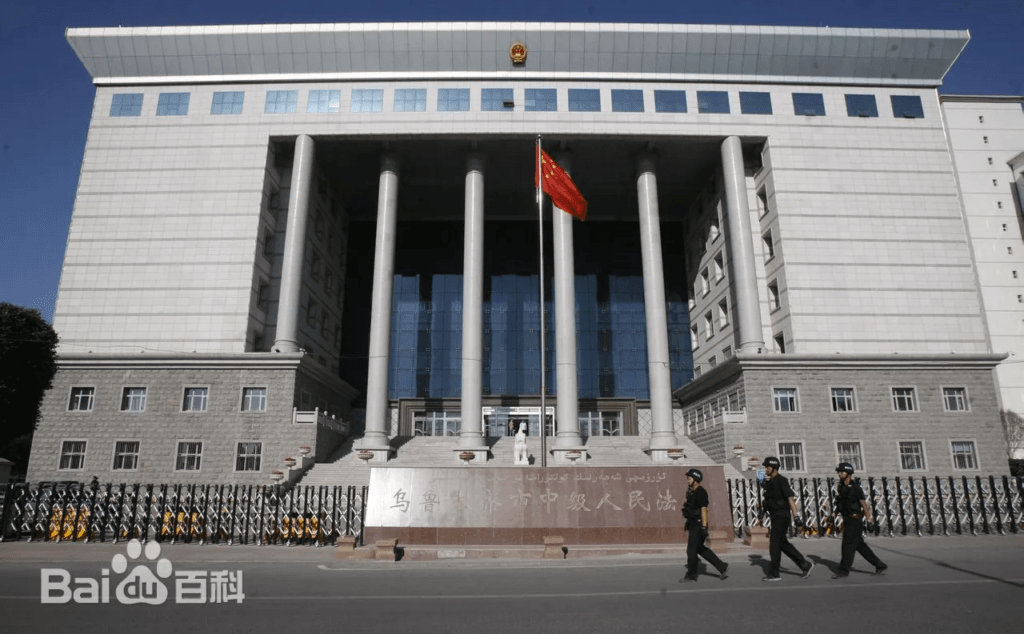
Rebiya was formally arrested on September 2, 1999, and subsequently tried and convicted by the Urumqi Intermediate People’s Court of illegally providing state secrets abroad, a crime of endangering state security. She was sentenced on March 10, 2000, to eight years in prison, and was given a supplemental sentence of two years deprivation of political rights. Rebiya appealed her eight-year sentence but in November 2000, the Xinjiang High People’s Court rejected her appeal and upheld the intermediate court’s sentence. She was sent to Xinjiang Women’s Prison to serve her sentence. Her sentence was due to expire on August 12, 2007.
When she was detained, the international media referred to Rebiya as a successful businesswoman. That was certainly the case. Starting as a seamstress sewing undergarments, she went on to build a vast business empire consisting of department stores and real estate in China and central Asia. She was to become one of the richest people in China, said to be the richest businesswoman in the country with assets worth hundreds of million renminbi. She served in high positions in industrial and commercial bodies in the Xinjiang Uyghur Autonomous Region.
In addition to her business acumen, Rebiya was a philanthropist who invested in schools throughout Xinjiang. She was a political leader who served as a delegate to the Chinese People’s Political Consultative Conference (the top advisory body to the Communist Party) and a delegate to the National People’s Congress (NPC). She would criticize Chinese government policies and was an outspoken advocate for greater Uyghur autonomy. She founded the “Thousand Mother’s Movement” to promote job training and employment opportunities for Uyghur women.
In September 1995, Rebiya attended the United Nation’s Fourth World Conference on Women, held in Beijing. At that conference, Hilary Clinton delivered a speech titled “Women’s Rights are Human Rights.” Beijing was not happy with her remarks.
A year later, her husband Rouzi Sidik left China and applied for political asylum in the U.S., which was promptly granted (he had served time in prison for his political activities). At the same time Rebiya delivered a speech on the plight of Uyghurs to the NPC. She had torn up her approved speech and in response to these events, the Chinese government cancelled her official positions and seized her passport.
Dui Hua Gets Involved
In early 2000, I was asked by a member of the congressional delegation that went to Urumqi to help Rebiya get early release and better treatment.
The first thing I did was to seek out a trusted source of information and advice in the Chinese government. How is it possible, I asked, for clippings from freely available publications to be considered state secrets?
The answer: it is not the content of the clippings, but their choice. Why those clippings? Why those newspapers on those dates? What is the hidden message? These were grounds for suspicion in the eyes of the Chinese government.
I began raising Rebiya’s name in meetings with party and state officials. Dui Hua started including her name on prisoner lists submitted to Chinese government ministries. In all, Dui Hua submitted eight prisoner lists before 2004 and received more than 20 responses.
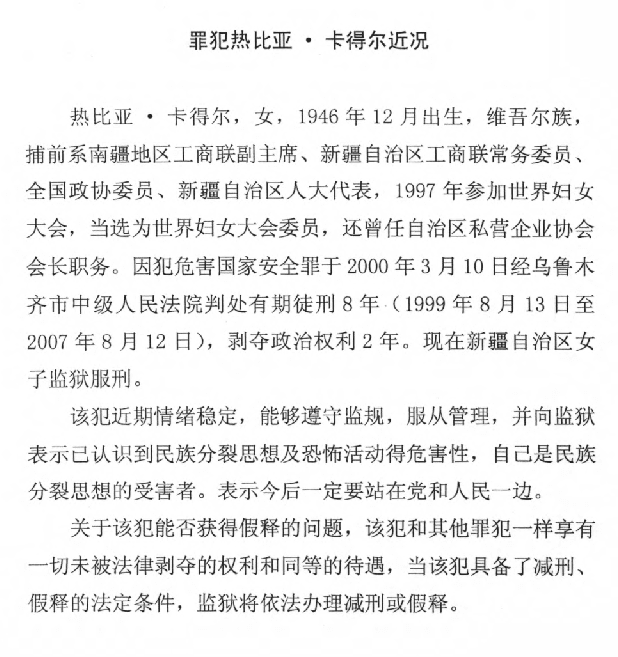
One response was especially significant. On September 10, 2003, while in Beijing, I met with Gong Xiaobing, the newly appointed Director General of the Ministry of Justice’s Bureau of International Cooperation. (I had faxed a request for information on Rebiya to the ministry two weeks earlier.) Mr. Gong gave me a detailed account of Rebiya behavior in Xinjiang Women’s Prison. The response stated that “the prisoner recognized the harmful nature of minority splittist ideology and terrorist activities” and went on to say that “from now on she would definitely stand on the side of the Party and the people.” This was a strong indication that Rebiya could be considered for clemency.
Image of the original document received at the September 10, 2003, meeting with MOJ. Image source: Dui Hua
Response to Dui Hui by the Chinese government, September 2003 (translation)
Rebiya Kadeer, female, born in December 1946, Uyghur ethnicity, prior to arrest was vice-chairperson of the Xinjiang Uyghur Autonomous Region’s Nanjiang District Industry and Commerce Association, a standing committee member of the Xinjiang Autonomous Region Industry and Commerce Association, a member of the C.P.P.C.C., and a representative from Xinjiang of the National People’s Congress. In 1997, she attended the World Conference on Women and was elected to be a committee member of the World Conference on Women. She has also held the position of president of the Autonomous Region Private Business and Industry Association. Sentenced on March 10, 2000, to eight years’ imprisonment (sentence to run from August 13, 1999, to August 12, 2007) with two years’ subsequent deprivation of political rights by the Urumqi Municipality Intermediate People’s Court for committing the crime of endangering state security. Currently serving her sentence in the Xinjiang Autonomous Region Women’s Prison.
Recently, this prisoner’s emotions have been stable, and she is able to respect prison regulations and obey supervision. She has expressed to prison officials that she recognizes the harmful nature of minority splittist ideology and terrorist activities, and that she herself is a victim of minority splittist ideology. She also said that from now on, she would definitely stand on the side of the Party and the people.
As for the question of whether or not this prisoner will be granted parole, this prisoner enjoys all the rights not otherwise deprived by law and exactly the same treatment as other prisoners. When this prisoner meets the legal requirements for sentence reduction or parole, the prison will handle these matters according to law.
On December 11, 2001, the United Nations Working Group on Arbitrary Detention ruled that Rebiya had been arbitrarily detained. In December 2002, the U.S. Department of State’s Assistant Secretary of State for Democracy, Rights, and Labor, Lorne Craner, went to Xinjiang to press for her release. On October 3, 2003, the U.S. Senate passed SR 230 calling on China to immediately and unconditionally release the Uyghur political prisoner Rebiya Kadeer.
At the same time, senior Chinese foreign affairs officials traveled to Urumqi to press local leaders to release Rebiya. They encountered resistance. It took a decision by the Standing Committee of the Politburo to order her release.
In September 2004, Rebiya was awarded the Rafto Prize in Bergen, Norway. Around the same time, she was nominated for the 2005 Nobel Peace Prize. Ultimately, the prize was jointly awarded to the International Atomic Energy Agency and its Director General Mohamed ElBaradei.
In response to intense media attention and international pressure, Rebiya was granted a one-year sentence reduction in March 2004. I was told that the original plan had been to release her immediately and allow her to join her family in the U.S. However, the U.S. sponsored a resolution criticizing China at the United Nations Human Rights Commission in Geneva and the plan was put on hold.
The U.S., citing progress on human rights in China, decided not to sponsor what China called an “anti-China resolution” in Geneva. Rebiya was granted medical parole. Accompanied by a U.S. diplomat, she boarded a flight to Chicago, thence to Washington D.C.
In March 2005, I was at Notre Dame University in South Bend, Indiana to deliver the third annual O’Grady Lecture. On March 16, I was enjoying a farewell dinner when I received a message from China: Rebiya Kadeer had been released and was flying to Chicago. Dui Hua released a press statement that attracted considerable media attention.
Prior to leaving China, Rebiya was warned: If you step out of line, your businesses will be ruined and your family will suffer. After her rapturous reception at Dulles International Airport and her interviews with foreign journalists, reaction by the Chinese government was swift. By mid-2006, her sons and other relatives and friends had been detained, and the process of seizing her assets begun. Initially, she was fined the equivalent of US$ 2.8 million. Eventually, the sum would amount to several hundred million dollars. (Levying massive fines and seizing assets has become a favorite technique of the central and local governments. It serves two purposes: bankrupt the opposition, including house churches, and funding local governments).
On January 6, 2006, the car in which Rebiya was travelling was rammed by a truck outside Washington D.C. The truck backed up and rammed her again. The license plates were traced to the Chinese embassy.
In early 2006, Rebiya went to Stanford University to deliver remarks to a small crowd in a seminar room. My son Jack was in the audience. She recognized him and expressed gratitude for what I had done to help her.
Developments Infuriate Beijing, Lead to Accusations
Dui Hua was by no means the only entity that worked hard to secure the release of Rebiya Kadeer. The U.S. government, other governments, and the United Nations all weighed in, in different ways at different times. Especially impactful were the written responses received by the U.S. Department of State. One response claimed that special dining and living arrangements had been made for the prisoner and that she was allowed a one-hour family visit once a month, extended upon request. It detailed a family visit from her nephew. The response said that she would be allowed to join her husband after her release.
What set Dui Hua’s interventions apart were its ability to wrest written responses from both the Ministry of Foreign Affairs and the Ministry of Justice, and its being immediately notified of acts of clemency, which allowed Dui Hua to release its press statements.
On November 27, 2006, Rebiya Kadeer was elected President of the World Uyghur Congress (WUC). She was to serve until November 12, 2017.
The position gave her greater stature and more access to senior U.S. officials, notably President George W. Bush who met the WUC president in Prague on June 7, 2007. Bush welcomed Rebiya to the White House on July 20, 2008. Beijing lodged “strong representations” and registered “strong objections” to this interference in the internal affairs of China.
Neither President Barack Obama nor President Donald Trump ever met Rebiya . President Joe Biden, perhaps careful not to damage already strained US-China relations, has never met her either.
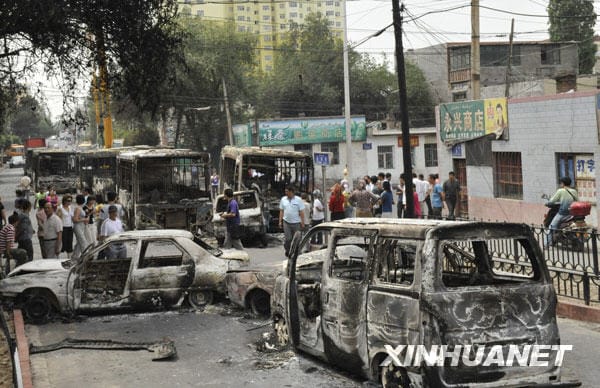
On the evening of June 26, 2009, Han Chinese men, enraged by the alleged rape of a Han Chinese woman by a Uyghur man, set upon Uyghur workers in Shaoguan, Guangdong Province, killing at least two of them. Days later, rioting broke out in Urumqi as Uyghurs attacked Han Chinese, killing around 200 and wounding many more. Despite offering no evidence to support its claim, Beijing blamed Rebiya and the WUC for instigating the riots. The Chinese government launched a campaign to label the WUC president a terrorist, and to further limit her international travel.
A street in Urumqi, aftermath of the “7.5 Riot.” Image source: Xinhua.net
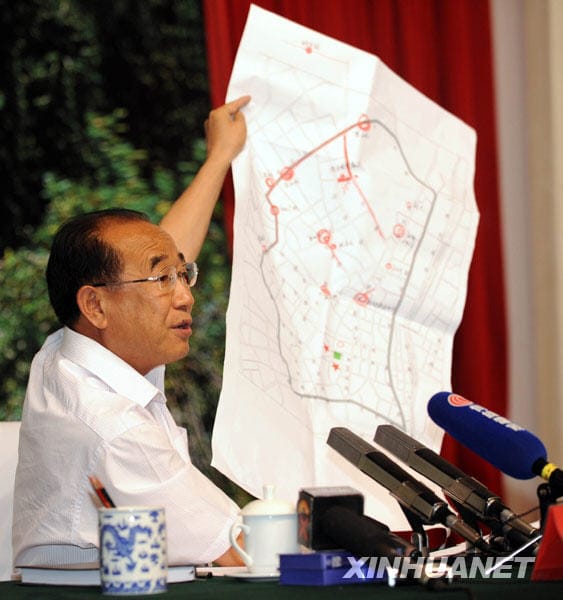
Li Zhi, then Party Secretary of Urumqi holding up a map at the July 6 press conference, marked where the incidents occurred. Image source: Xinhua.net
In July 2009, the Chinese Consulate in Melbourne Australia wrote to the organizers of the Melbourne International Film Festival, demanding that they cancel the showing of “The 10 Conditions of Love,” a documentary about Rebiya and the struggle of the Uyghur people against Chinese oppression. When the organizers refused, China pulled all seven Chinese films, including those from Hong Kong, from the festival. In Xinjiang, seven Uyghurs were arrested in December 2011 for possessing DVDs of the Rebiya documentary.
Over Chinese objections, Rebiya delivered remarks at the Fourth Session of the United Nations Forum on Minority Issues at the Human Rights Council in Geneva in November 2011.
Rebiya Kadeer attending the Panel discussion “Guaranteeing the Rights of Minority Women” at the Forum on Minority Issues, United Nations at Geneva. U.S. Mission Photo by Eric Bridiers. Image source: Wikimedia Common. Copyright CC BY 2.0
Like the U.S., Japan issued visas to Rebiya in 2009, 2015, and 2019. She met with government officials, parliamentarians, and civic society leaders, and spoke at universities. Tokyo brushed off China’s protests. Surprisingly, Taiwan barred Rebiya from visiting the island in July 2010.
Although retired, Rebiya has remained active. In June 2024, she criticized the visit to Xinjiang of Hakan Fidan, Turkey’s foreign minister, claiming that he failed to condemn China’s treatment of the Uyghurs, who are a Turkic people. There is a large Uyghur exile community in Turkey.
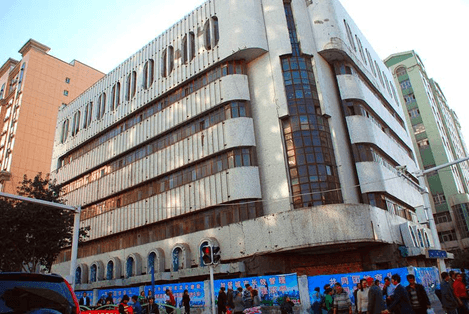
The Rebiya Trade Center. A symbol of Rebiya’s contribution to the economic improvement of the Uyghur minority. Most of its tenants were Uyghur small business owners. Image source: Internet
In late 2024, the Urumqi city authorities razed the Rebiya Kadeer Trade Center, demolishing one of the last remaining reminders of her work in the city. What they haven’t been able to demolish are the memories and deep affection the Uyghur people have for Rebiya Kadeer.
Members of Twitter Group sentenced for political posts in Chongqing
Five members of a Twitter group known as “推墙大联盟” (lit. a league to tear down the firewall) were convicted and sentenced for subversion in Chongqing in March 2023. Conducted behind closed doors at the Chongqing Number One Intermediate People’s Court, the trial lasted for two years and three months. A judgment that was recently disclosed online by an overseas group provides specifics about this obscure political case.
The procuratorate initially accused Ren Jianping (任建平), Yao Xirui (姚锡锐), Lin Yangpeng (林杨鹏), Gu Haiying (顾海英), and Peng Haiming (彭海明) of inciting subversion, a crime of endangering state security. They allegedly colluded with overseas forces to spread harmful speeches, attack the socialist system, and incite subversion of state power.
According to the judgment, a Canadian citizen named Liu Xiaoyan (aka Lucy 刘小燕) was implicated in the case as a founding member of the online subversion group. It is believed that Liu had left the China before the investigation started and the case against her remains open in Chongqing.
The court stated that Ren, Peng, and Liu founded the Twitter Group and recruited Yao, Lin and over 200 others to join. Ren and Liu drafted the group charter, oversaw the group’s operations, and assigned tasks to other members, including collecting sensitive news from Chinese social media, translating the contents into English, and reposting tens of thousands of messages on Twitter.
The court determined that the activities carried out by Ren et al. constituted the offense of subversion instead of inciting subversion.
Of the five defendants, only two remain in prison. Ren, deemed to be the principal offender, was sentenced to ten years’ imprisonment with four years’ deprivation of political rights (DPR). He is due for release in April 2029. Yao was sentenced to six years with three years’ DPR and will be released in April 2025.
The remainders have completed their prison sentences following the prolonged delays of the judgment. Gu and Peng were both sentenced to four years with two years’ DPR and were released at the end of March 2023. Lin was sentenced to five years’ imprisonment with three years’ DPR. He was released in March 2024. Lin has been mistakenly identified as “Yang Linpeng 杨林鹏” in some online reports.
Independent filmmaker sentenced in Shanghai
More than a year after his arrest, filmmaker Chen Pinlin (陈品霖) was convicted of picking quarrels and provoking trouble and sentenced to three and a half years by the Baoshan District People’s Court in Shanghai on January 6, 2025.
Chen uploaded a short film to his YouTube channel to commemorate the one-year anniversary of the “White Paper” movement which took place at the end of 2022. The indictment accused Chen of knowingly spreading false information on the internet to incite disruptions of public order.
Chen’s former defense lawyer Fang Xiangui commented on Twitter following the sentence. He says that Chen had signed a confession with the procuratorate and admitted guilt. Fang claims that the procuratorate then suggested a two-year sentence.
But during the closed trial, the court decided to discard the pre-trial agreement and handed down a harsher sentence. Chen’s sentence is expected to expire at the end of May 2027
Independent journalist released after serving full sentence in Jiangsu
Independent investigative journalist Wang Ganlin (王甘霖) was released on December 12, 2024, after completing his sentence in Jiangsu.
Wang, a journalist from Sichuan, is well-known for his exposé of corrupt officials. He was accused by the Pizhou police in 2020 of taking money in exchange for deleting a post attacking a business in Taierzhuang, Shandong with false information. Wang denied the allegation.
The Pizhou City Procuratorate also accused Wang of disseminating false information about cases involving organized crimes in Shanxi, Guizhou, and Guangdong, and accused him of “tarnishing the image of local governments.”
During the trial in June 2022, Wang claimed he was tortured while in residential surveillance at a designated location and was coerced into admitting wrongdoings. The Pizhou City People’s Court convicted Wang of illegal business operation and sentenced him to four years’ imprisonment.
Two employees from the Sun Dawu case received reductions in Hebei
Zhang Ping (张平) and Lu Zhiying (卢志英), two employees of outspoken billionaire Sun Dawu (孙大午), received sentence reductions in 2024.
Dui Hua found that Zhang was granted a six-month reduction in August 2024 and Lu was granted a five-month reduction in October 2024.
Sun, an army veteran, is known for his vocal comments on social political issues and his public support of constitutional democracy and rights lawyers during the “709” crack down. His case attracted international attention in 2021 when he was sentenced to 18 years in prison for eight crimes, including gathering a crowd to attack state agencies, obstruction of official business, picking quarrels and provoking trouble, sabotaging operations and production, engaging in forced business transactions, illegal mining, illegally occupying farmland, and illegally attracting public deposits. [“Engaging in forced business transactions” is an economic crime of using force or coercing someone or entity to buy goods or services.] One of Sun’s sons and two brothers were given sentences of nine to twelve years’ imprisonment.
Sixteen employees were also convicted. Zhang was sentenced to four and a half years for gathering a crowd to attack state agencies, illegally occupying farmland, picking quarrels and provoking trouble, and illegal mining.
Lu was sentenced to four years and five months for gathering a crowd to attack state agencies and illegally attracting public deposits.
While Zhang and Lu are expected to complete their sentences between November 2024 and early 2025. Dui Hua is unable to confirm whether clemency has been granted to Sun or other co-defendants.
Hebei Falun Gong practitioner facing trial second time in Beijing
Liu Dongmei (刘冬梅), a woman from Baoding, Hebei, is being tried at the Miyun District People’s Court in Beijing for “organizing/using a cult to undermine implementation of the law.” The first hearing commenced in December 2024. The trial has not been concluded at the time of writing.
This is her second time facing the same charge. Liu was convicted in 2017 and sentenced to three years in prison by a court in Baoding, Hebei. She completed her sentence in March 2020.
Elderly Falun Gong practitioners receive clemency in Henan and Jilin
Su Jinling (苏锦玲), an elderly woman in her 70s, was granted medical parole in November 2024. Su is one of ten Falun Gong practitioners from Zhengzhou, Henan who were detained between the end of 2021 and January 2022 and sentenced in July 2023.
Su received a sentence of eight years’ imprisonment. Her sentence will expire in November 2029. Nine others were sentenced to one to eight years. Besides Su, no clemency is known to have been granted to the six who remain imprisoned.
Shi Xuwang (石绪旺), another Falun Gong practitioner in his early 70s, was granted medical parole in Jilin in April 2024. He was serving his nine-year imprisonment in the Gongzhuling Prison. Shi received a five-month sentence reduction in 2023. A notice posted by the prison stated that Shi is seriously ill. His sentence will expire in August 2027.
Since our last Digest in the fall, the United States has elected Donald Trump for a second term and China has released three US citizens who were wrongfully imprisoned as part of a prisoner swap. Dui Hua had called for clemency for Mark Swidan and Kai Li for many years.
EVENTS
Something to be Thankful For
Three US citizens, Mark Swidan, Kai Li, and John Leung, all deemed unjustly imprisoned by China by the US government, were released on Thanksgiving Eve. They were reportedly part of a prisoner swap deal that the Biden administration had been working on for months.
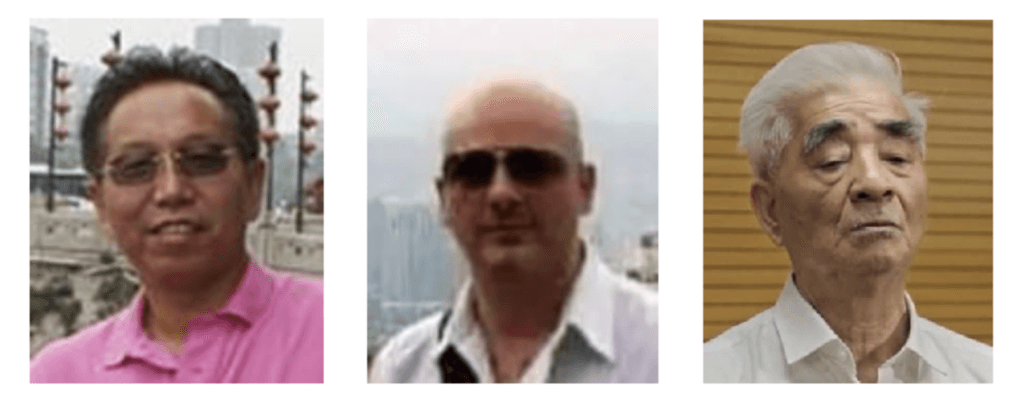
(From left) Kai Li, Mark Swidan, and John Leung. Image sources: Li family, Swidan family, and Ministry of State Security Weixin.
Such a prisoner swap is unprecedented for China. In return, the US released three Chinese nationals, two of whom were convicted of espionage. Although details of what the US offered in return remain murky, the US Department of State on November 27 lowered the China travel advisory to Level 2: “Exercise increased caution.” China has seen a sharp drop in visits by foreigners in recent years and is eager for a revival. In 2024, China started to unitarily offer visa-free entry for several western countries and its Asian neighbors.
Dui Hua had tirelessly advocated for Swidan and Li and raised their cases to the Chinese government directly as well as through interlocutors. Dui Hua had put Swidan on 54 lists since 2016 and Li on 45 lists since 2017.
A US National Security Council spokesperson told media on November 28 that “… all of the wrongfully detained Americans in the PRC are home.” However, Dui Hua estimates that more than 200 Americans are under coercive measures in China and very few details are known. There are also many more under exit bans, such as American businessman Henry Cai, who has been prevented from returning to the US since 2017.
The swap did not appear to have hit a pause on the continued downward spiral for Sino-US relationship. Just on December 2, the US added another 140 companies to a trade restriction list, including Chinese semiconductor toolmaking and software firms. The next day, China banned exports of key minerals to the US.
A Kettle of Hawks
A flock of hawks, called a “kettle,” flying along the Blue Ridge Mountains. Image source: Richard Crossly | Smoky Mountain News.
Donald Trump’s sweeping victory on November 5, 2024—he won the electoral college, the popular vote, flipped the Senate, and maintained the GOP’s slim majority in the House of Representatives—has earned him the nickname “The Disruptor.” The name is apt for foreign relations in general, and for US ties with China in particular. Relations between the two countries will be dangerously tense in 2025, the first full year of Trump’s second presidency.
During the 2024 campaign, Trump and his allies laid out their approach to dealing with China. Taken together, the policies the Trump administration intends pursuing portend a period of confrontation and unbridled rivalry between the world’s two largest economies, both of whom are nuclear states with large standing armies.
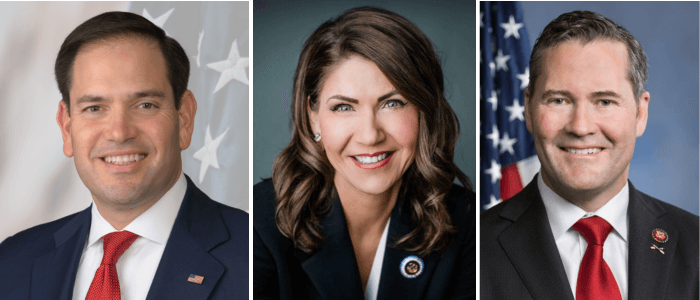
(From left) Marco Rubio, Kristi Noem, Mike Waltz. Image sources: Wikimedia Commons.
To carry out this confrontational policy, Trump is assembling a kettle of hawks. Marco Rubio, his choice for Secretary of State, has been sharply critical of Xi Jinping’s China, especially its record on human rights and rule of law (Senator Rubio’s family fled Cuba and he is irreconcilably anti-Communism.) Rubio would be the first Secretary of State to be subject to travel restrictions in China.
Governor Kristi Noem, Trump’s choice for Secretary of Homeland Security, has been strongly opposed to Chinese purchases of farmland and investments in key industries in the US, deeming them threats to national security.
Representative Mike Waltz, Trump’s pick for National Security Advisor, despises Iran and opposes China’s backing of Iran and its proxies. He supports a US push back against Chinese aggression in the South China Sea.
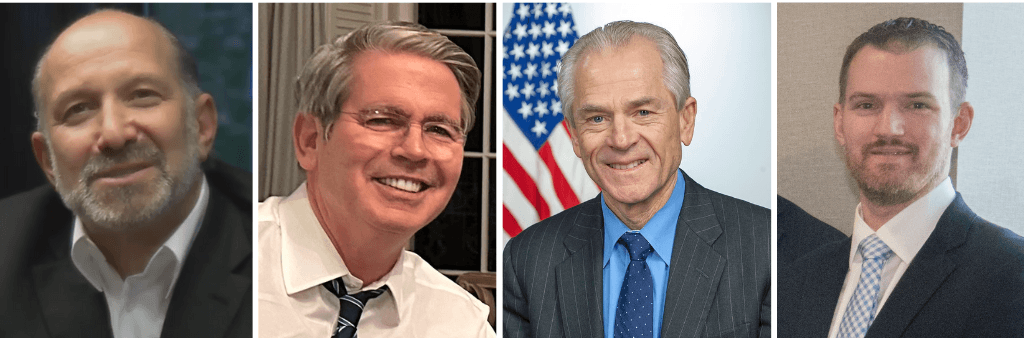
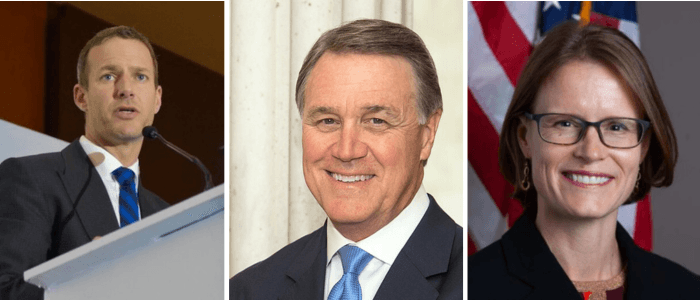
Trump’s picks for his trade team are a mix of wall street veterans and hardline loyalists. (From left) Lutnick, Bessent, Navarro, and Greer. Image sources: Wikimedia Commons.
Howard Lutnick, Trump’s pick for Commerce Secretary is a big believer in using tariffs to address trade misbehavior by China. He will oversee the Office of US Trade Representative which, in Trump’s first term, launched and oversaw the trade war with China. Lutnick, as CEO of the Wall Street firm Cantor Fitzerald, has a history of promoting investments in China.
Scott Bessent, Trump’s choice for Treasury Secretary, is another believer in tariffs to replenish the treasury and reinforce negotiating positions. His nomination is welcomed by Wall Street, but as with Lutnick, some have expressed concerns about their investment connections with China.
Another Trump loyalist, Peter Navarro, has been tapped as senior counselor for trade and manufacturing to the White House, a role that largely reprises his former position as the Director of US Office Trade and Manufacturing during Trump’s first term. Navarro is infamous for his staunch views on trade with China, advocating for national security tariffs on aluminum and steel.
Trump rounded out his new trade team with the nomination of Jamieson Greer as the US Trade Representative (USTR). Greer is a trade lawyer and served as the chief of staff to USTR during Trump’s first term. His appointment is largely interpreted as the sweeping tariff agenda against foes and allies alike will be carried out as promised.
A possible counterweight to the China hawks is Elon Musk, Trump’s billionaire supporter. He has been tapped to head the Department of Government Efficiency which will reduce regulations and cut budgets by two trillion dollars. Musk manufactures half of his Tesla EVs in China and has met with Xi Jinping on several occasions.
Elon Musk. Image source: Wikimedia Commons.
Another nomination is Adam Boehler as the Special Presidential Envoy for Hostage Affairs, to replace Roger Carstens. The announcement came as a shock to many, since Carstens was appointed by Trump and has been credited for the successful return of Americans imprisoned overseas. Boehler, a healthcare investment firm executive, is another veteran from Trump’s first term and is given credit by Trump for negotiating the Abraham Accords. Will US citizens under coercive measures in China remain a priority for the incoming administration? Will Boehler’s close friendship with Kushner, Trump’s son-in-law, make him more effective in negotiating the releases of Americans wrongfully detained overseas? Time will tell.
(From left) Boehler, Purdue, Beran. Image sources: US Embassy Guatemala and Wikimedia Commons.
Trump has enlisted a former businessman with experience dealing with China for the incoming administration’s key diplomatic post. Former Republican Senator David Perdue has been nominated as the US ambassador to China. Trump highlighted Perdue’s years of experience conducting business in Asia as key to implementing his “strategy to maintain peace in the region, and a productive working relationship with China’s leaders.”
Before turning to politics, Perdue worked in the textile industry in the 1990’s, sourcing supplies and cheap labor in Hong Kong and China for US firms. During Trump’s first trade war, then Senator Perdue offered an olive branch to then China’s chief trade negotiator, Vice Premier Liu He, writing in an opinion piece that “cooperation is our ultimate goal” and that US and China should “[avoid] future hostility.” Perdue might not be another obvious counterweight to the hawks, however. During his later tenure in the Senate, he took on a tougher position on threats posed by Russia and China and visited Taiwan in 2018. The nomination was cautiously welcomed by the business community, which hopes that the future ambassador will provide much-needed balance to the president-elect’s unpredictability.
While Perdue’s nomination awaits Senate approval, the post of ambassador might be vacant for a period of time. Typically, the deputy chief of mission (DCM) takes over as the main diplomat. Sarah Beran, a Senior Director on the National Security Council (China), will take office as DCM in Beijing prior to Ambassador Nicholas Burns’ departure. Beran is a career foreign service officer and once served as the Director of the Office of Chinese and Mongolian Affairs at the State Department’s Bureau of East Asian and Pacific Affairs.
Here are some things to watch for:
Trade:Trump has repeatedly threatened to revoke China’s Permanent Trade Relations (PNTR, formerly known as Most Favored Nation trade status). He has also advocated further hiking tariffs on Chinese goods up to as much as 100 percent. He will discourage US investment in China, contributing to what has been already a sharp drop in foreign direct investment in 2024 YTD.
Technology and Supply Chain:Trump will keep curbs put in place during the Biden administration and will likely expand them. He will continue the Biden policy of discouraging countries from selling advanced technology, especially chip making technology, to China. He will push forward with efforts to protect intellectual property.
TSMC Fab 21 under construction in Phoenix, Arizona in November 2023. Image: Wikimedia Commons.
A priority for the new administration will be reducing reliance on China by shortening the supply chain by means of manufacturing and mining critical materials like rare earths closer to home.
MP Materials recently began operating a rare-earth processing facility at its Mountain Pass mine, in the Mojave Desert in California. Image: MP Materials.
The Trump administration will also slow-walk approval of the Science and Technology Agreement (STA), which expired in August 2024. Both PNTR and STA were mutually granted in 1979 and together form the foundation of US-China relations.
Fentanyl: The Biden administration made some progress on getting Beijing’s cooperation in shutting down the manufacture of fentanyl precursors. The incoming Trump administration will seek to continue and deepen cooperation with China in this area.
Sanctions: More than 300 Chinese entities and individuals, including those in Hong Kong, have been sanctioned for different reasons. On November 25, the Biden administration sanctioned more than two dozen Chinese companies that allegedly use forced labor in Xinjiang, the largest ever expansion of the ban.
This list will be expanded during the Trump administration.
Border Security:During the last year of the Biden administration, the US deported three plane loads of Chinese nationals to China. The number of those sent back will likely surge during the early months of the Trump administration. The administration will focus on men of military service age. They are viewed as potential threats to national security.
Covid: Trump will continue to blame China for “releasing” Covid to the world thereby causing the deaths of over a million Americans. On December 3, the House Oversight Committee released a 520-page report on the origins of the Covid pandemic. The report blamed the virus on a leak from a Wuhan bio lab.
Hong Kong: Reflecting Trump’s long-standing enmity towards Hong Kong businesspeople, Trump will no longer criticize China’s treatment of Hong Kong. He will not likely intervene on behalf of Hong Kong political prisoners, although during the campaign, he singled out Jimmy Lai as a candidate for release.
In line with lowering the travel advisory for China, the Biden administration also lowered the travel advisory for Hong Kong. It kept the travel advisory for Macau at Level 3, “Reconsider Travel”, because consular access to US citizens in custody remains difficult.
Taiwan: Trump has complained that Taiwan is not paying for the weapons sent to Taiwan – in fact they are – and has implied that the US won’t defend Taiwan if China attacks. Trump has announced that he will not put Mike Pompeo – one of Taiwan’s strongest supporters – in his cabinet.
Human Rights: An early casualty of Elon Musk’s cost cutting measures might be the Department of State’s Department of Human Rights, Democracy, and Labor (DRL). The bureau’s influence has declined markedly in recent years. The Biden administration didn’t even name an assistant secretary to lead the DRL until the summer of 2024. The annual report on China’s human rights practices will be trimmed to a much shorter document. In Trump’s first term of office, the US quit the United Nations Human Rights Council. Mr. Biden’s State Department decided not to seek re-election to the council in September 2024. Trump is unlikely to seek re-election until 2028, if at all.
Zhang Lin (right most) arrived in New York on January 5, 2018, reuniting with his two daughters. Image source: RFA
The latest JKR looks back on how John Kamm first encountered Zhang Lin’s case and provides a portrait of Zhang Lin’s steadfast fight for political reform in China – a struggle sparked during the protests of 1989. Read more
Listen to Dragon Years, our limited podcast series exploring key periods of US-China relations and Executive Director John Kamm’s advocacy work. Dragon Years is part of our Encounters with China podcast where John shares stories from his experience working with China and discusses current events with distinguished guests.
This is a great relief for their families, members of whom have advocated forcefully on their behalf for years. It is a testimony to the efforts of American diplomats, and to sympathetic Chinese officials who have met with them. Read press statement
In 2023, Dui Hua saw both the challenges and significant achievements in our mission to advocate for at-risk detainees in China and engage in well-informed, mutually respectful dialogue. Read the report
Dui Hua’s Prisoner Updates provide the latest information uncovered through research and direct dialogue with the Chinese government.
Dui Hua uncovered information that Guo Ran, the co-founder of a political party in Shaanxi, likely has received his second sentence reduction.
Activist Yang Zewei has been sentenced to five years in Hengyang for inciting subversion.
Human rights lawyer Lu Siwei was formally arrested by Chengdu police for illegal border crossing, more than a year after he was repatriated from Laos to China.
A Falun Gong practitioner in Guangdong received a second sentence reduction.
The appeal trial for Ruan Xiaohuan, the author behind the well-known blog who was convicted of incitement, has been postponed again.