Tag: human rights

  • Curious Timing: SPC Death Penalty Reviews Posted after Universal Periodic Review (Part I)

    Curious Timing: SPC Death Penalty Reviews Posted after Universal Periodic Review (Part I)

    This Human Rights Journal entry is the first in a two-part series that explores the Supreme People’s Court’s recent disclosures of death penalty decisions made shortly after its human rights review in Geneva in January 2024. This post, Part I, looks at the demographics of those sentenced to death as well as trends in types of crime and decision review times. Part II explores reasons for disapprovals, the presence of counsel, and inconsistencies in the disclosures.  

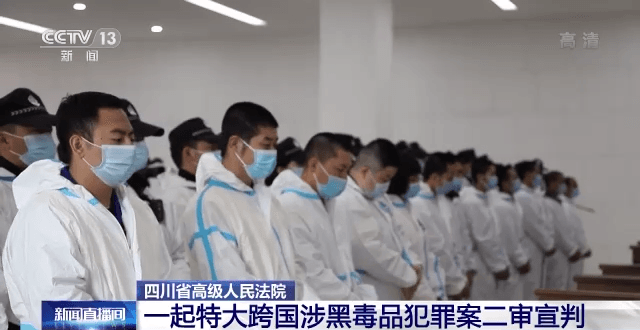
    The Sichuan High People’s Court upheld the judgments for a case of organized crime group and drug trafficking with 12 defendants in June 2022. Three principal defendants were sentenced to death. Image credit: Sichuan High People’s Court, CCTV13

    Three years after a large number of judgments and judicial decisions involving the use of the death penalty were removed from China Judgements Online (CJO) in 2021, the Supreme People’s Court (SPC) added a new batch of death penalty review decisions in February 2024. The posting of these death penalty reviews occurred one month after China’s human rights record was reviewed by the United Nations Human Rights Council’s Universal Periodic Review (UPR) in January 2024.

    CJO & Review Decisions

    The posting of judgments and judicial decisions on CJO began in 2013. The effort to boost transparency was applauded by legal scholars and professionals inside and outside of the country. CJO judgments and decisions were not confined to ordinary civil and criminal cases, but also cases considered to be sensitive. Hundreds of endangering state security (ESS) cases and thousands of cult-related cases were made available on CJO.

    Significant media attention from Western countries and NGOs like Dui Hua may have contributed to the Chinese government’s decision to purge documents related to ESS and cult cases in July 2021. Around the same time, CJO also removed SPC review decisions on the application of the death penalty.
    Death penalty review decisions re-surfaced on CJO in 2022. In July 2022, Dui Hua found that decisions taken offline a year ago had been reuploaded to CJO. However, CJO did not post new information until the submission of China’s report at the country’s fourth UPR in January 2024. The new information came from a batch of 86 newly uploaded review decisions issued from 2022 to 2023 concerning 93 individuals. Dui Hua also found that decisions originally posted in July 2022 had been reposted, with CJO showing December 1, 2022 as the new posting date.
    At the time of publication, CJO has not published any new death penalty reviews after March 2024. Also noteworthy is that seven months into 2024 no review decisions issued within the year 2024 have been published. This article reviews the batch of death penalty documents posted in February 2024. While the documents present some insights into an increasingly opaque system, there are omissions and inconsistencies that raise questions about the timing of the documents’ release.
    Source: CJO
    China’s trial system follows a two-hearing system in the trial process. The SPC’s decisions on the first- and second-hearing cases are final and must be enforced once promulgated. Cases that may result in a death penalty are first tried by an intermediate people’s court, and appellate trials are conducted by the relevant high people’s court. If the sentence is upheld, the judgment is submitted to the SPC for review. In death penalty cases, appeal is not an automatic process. In the batch of judgments examined in this post, all but one of the 93 convicted filed for appeal. All appeals were rejected by the high courts before they were submitted to the SPC for final review.
     
    Demographics of Those Sentenced to Death 
    Individuals in death penalty cases are mostly male and of Han ethnicity (see below). Notably absent from the newly posted death penalty reviews are cases involving Uyghurs, who are often accused of terrorism and ESS crimes, both of which carry the maximum penalty of death.
    Another group for whom no information was given is foreign nationals, despite such executions being reported during the period. For example, in 2023, the Chinese government executed a South Korean citizen who was convicted of drug trafficking.
    Table 1. Sex of those sentenced
    Table 2. Ethnicity of those sentenced
    The majority of individuals sentenced to death are aged between 30 to 59.
    Table 3. Age of those sentenced
    While the Criminal Law stipulates lighter punishments for elderly offenders, two individuals over 70 years old were given death sentences. The SPC approved the sentence for a man from Changchun who committed robbery. That man was 69 years old at the time of the crime, and the SPC took 268 days to complete the review.
    The SPC disapproved the death sentence for another man who murdered his neighbor on the grounds that the crime started as a civil dispute between two neighbors. Additionally, the offender surrendered to police. The case was sent back for retrial at the Jilin High People’s Court. The offender, an ethnic Mongolian, was 68 years old at the time of the crime. The SPC took 798 days to complete the review.
    In all, the SPC approved 77 death sentences and disapproved 16 of them.
    Crime
    The death penalty in China is typically invoked when the offender commits a violent crime resulting in the death of the victim. In the new batch of decisions, murder accounted for more than half of those sentenced while robbery made up a fifth of the documents. Drug-related crimes—trafficking, selling, transporting, and manufacturing—accounted for another fifth of those sentenced.
    When an individual was convicted of multiple crimes, the court typically applied the sentence of death to the crime considered to be the most severe. Life or fixed-term sentences were applied to the other crimes.

    Table 4. Crime type

    Dui Hua keeps track of the number of executions in China. The crimes committed in death penalty cases are similar to what we see in CJO. Of the 153 executions recorded by Dui Hua in 2023, 94 were of individuals convicted of murder, 13 of robbery, and 29 of drug crimes. In 2022, Dui Hua recorded 120 executions: 61 for murder, 11 for robbery, and 42 for drug crimes.
    Review Time 
    Review time refers to the number of days between the final high court trial and the SPC review decision. In instances where no appeal is filed, the first-instance trial is considered the final trial.
    In May 2020, Dui Hua examined a sample of 261 review decisions issued between 2015 and 2019 and made observations on the length of time between trial and the review decision. The SPC took an average of 190 days to issue a decision after the final trial by the court of second instance, with a median of 169 days. The longest review time was 573 days while the shortest was 20 days.
    In the newly published death penalty reviews, the SPC took an average of 461 days to issue the decisions, with a median of 390 days. The lengthiest review concerns a drug manufacturing case with five offenders. All of them were first-time offenders who manufactured hundreds of kilos of methamphetamine. The first-instance trial was concluded in Changde, Hunan, on January 25, 2019. The high court upheld the sentences on December 27, 2019. All five had been convicted of manufacturing drugs and had been sentenced to death by the lower courts. The SPC completed its review 1,079 days (almost three years) on November 28, 2022. In its decision, the SPC approved the death sentences for three of them and disapproved the sentences for two. One of the disapproved sentences was revised to death with two-year reprieve and the other was revised to a life sentence.
    The shortest SPC review took 93 days. The case involved drug trafficking, in which the convict was a recidivist who has been sentenced twice to short prison sentences for selling drugs. In his latest trial, Mr. Xiao was convicted of organizing and funding the trafficking of a large quantity of drugs obtained in Yunnan. He was sentenced to death by an intermediate court at the first-instance trial on February 15, 2022. The sentence was upheld by the high court on July 28, 2022. On October 29 of the same year, the SPC completed the review and approved the death sentence.
    Table 5. Review time
    Given the small (and selective) sample size, it is difficult to conclude with certainty that longer review times would necessarily result in disapproval. That said, the probability of disapproval rises when the Court takes longer to review. On the surface, the SPC appears to be more judicious. More reviews took a year or longer to complete compared to those completed within nine months.  

    Read Part II

  • Gray Matters: China’s Aging Prisoners

    Gray Matters: China’s Aging Prisoners

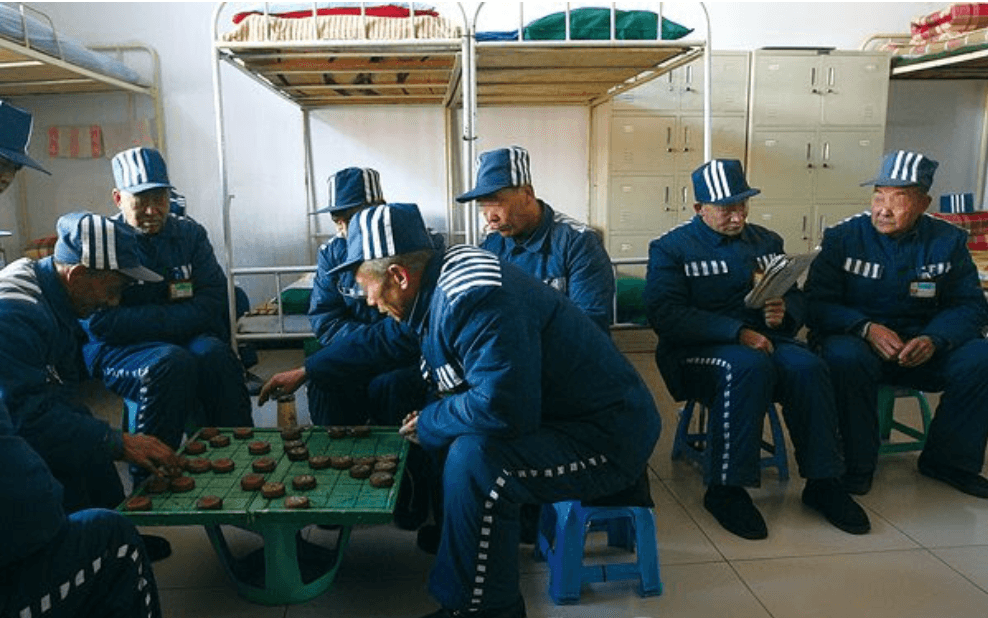
    Men play chess inside the “elderly” prisoner cell block of Henan No. 3 Prison. Image credit: Pan Xiaoling / Southern Weekly

    Decades of falling birth rates and rising life expectancy have made China one of the fastest aging countries. In 2023, its population aged 60 and above reached 297 million, or 21.1 percent of the population. While the aging population puts pressure on the already strained pension system and economic growth, elderly prisoners represent another pressing issue that requires more attention.  

    Unlike juvenile justice, there is a dearth of information about elderly prisoners. They don’t seem to be an area of concern prevalent or pervasive enough to warrant careful consideration. Even the Ministry of Justice acknowledged the lack of relevant statistical data and academic research, and that judicial organs and law enforcement have yet to develop sensitivity with regard to the conviction, sentencing, rehabilitation, and management of elderly offenders. 

    A Rising Estimate 

    The World Prison Brief indicated that that there were 1.69 million prisoners in China in 2017, the latest year for which statistics are available. According to Chinese sources, the number increased to two million in 2022 although it has not been officially verified. While publicly available sources have not disaggregated the prison population by age, a 2021 article by the China Prison Association estimated that elderly prisoners accounted for about 5.2 percent of the prison population, and of them 65 percent were male and 35 percent were female. If we extrapolate the estimate from the prison population, an estimated 88,000-104,000 elderly people are in jail today. 

    Chinese legal experts generally agree that the number of elderly prisoners has been surging. First, a substantial portion have aged naturally after serving long prison sentences. Following the 2011 eighth amendment to the Criminal Law, more people who were already serving lengthy terms have had to spend more time in jail. The amendment also increased the mandatory minimum time served for life sentences before their sentences can be commuted to fixed terms. In 2015, China introduced the sentence of life without the possibility of parole for people convicted of corruption and bribery. 

    Elderly crime has also soared over the years. Statistics provided by the Supreme People Court indicated that the number of defendants aged 60 or above increased fourfold from 5,759 in 1998 to 23,817 in 2016 (See Table 1). However, not all of those tried and convicted ended up in jail. The 2011 Criminal Law amendment allows courts to grant offenders aged 75 or older lighter punishments, such as suspended sentences, because they are seen to pose a smaller risk to society. 

    Table 1. Elderly Defendants from 1998-2016
    Source: Dui Hua, Records of People’s Courts Historical Judicial Statistics: 1949-2016 

    Types of Elderly Crime 

    In 2012, China Court Website published its findings on this under-researched topic and summarized the types of elderly crime: 

    1. Most crimes were committed solitarily and could be classified into two distinct categories:  
      • (i) crimes reflecting lower-level needs for survival or safety;  
      • (ii) crimes committed for obtaining economic benefits, venting negative emotions, or satisfying physiological needs; 
    2. The crimes of bribery, abetting, deception, and harboring tended to be perpetrated by elderly people with good education, social status, and work experience attained from their careers; 
    3. Violent crimes such as homicide, aggravated assault, and robbery were rare. Perpetrators typically had poor education and targeted vulnerable groups such as women and children as victims; 
    4. Elderly males committed crimes such as molestation, rape, fraud, theft and harboring while women tended to commit crimes of disrupting social order; 
    5. An increasing number of elderly people were involved in Article 300 “organizing/using a cult to undermine implementation of the law.” 

    Although the 2012 article did not provide relevant figures, Dui Hua’s research into court statistics released by the Supreme People’s Court showed a clear upward trend in “cult,” or unorthodox religion, cases involving elderly prisoners from 1998-2016. In 2016, the last year for which statistics are available, 523 defendants aged 60 or above were tried for Article 300, or 2.2 percent of all elderly defendants. In 1998, when Article 300 was in force for the first year, only three elderly people were tried. The number rose to 103 in 2003 when the crackdown on Falun Gong was in full swing.  

    Table 2. Elderly Defendants Tried for Article 300, 1998-2016
    Source: Dui Hua, Records of People’s Courts Historical Judicial Statistics: 1949-2016 

    Endangering State Security 
    Elderly offenders are not prominently represented in cases of endangering state security (ESS), China’s most serious political crimes. Statistics released by the Supreme People’s Court indicated that only 63 defendants aged over 60 or above were tried for ESS from 1998-2016. No elderly people were tried in ESS cases in 2013, 2014, and 2016. 
    Table 3. Elderly defendants in ESS cases, 1998-2016 
    Source: Dui Hua, Records of People’s Courts Historical Judicial Statistics: 1949-2016 

    Dui Hua previously reported the case of Chen Zhaolu (陈兆祿), one of the China’s oldest ESS prisoners. Born on December 9, 1917, in Guangzhou, Chen became a Hong Kong resident in 1968 when he started working for Xinhua News Agency – then China’s de facto consulate in Hong Kong. Eighteen years after his retirement, on November 25, 2003, Chen was detained in Guangzhou on suspicion of espionage. On January 19, 2004, the Guangzhou Intermediate People’s Court sentenced Chen to 13 years’ imprisonment. At age 86, he was incarcerated in the elderly prisoner cell block of Guangzhou Prison, Guangdong’s “model prison.” Chen was given a nine-month sentence reduction in 2006 and a 16-month sentence reduction in 2008. He was granted medical parole for a period of three years on September 2, 2009. His sentence expired in October 2014. 
    More recently, US citizen and Hong Kong resident Leung Shing-wan (梁成运, aka John Leung) was convicted of espionage and sentenced to life imprisonment in 2023 in Suzhou at the age of 78. Such heavy terms are rare for elderly offenders and for foreign nationals in China. Leung was the chairman of the Association for the Promotion of the Peaceful Reunification of China in Texas. The association is believed to be connected to the Chinese Communist Party’s United Front Work Department tasked with promoting Beijing’s claim over Taiwan. His case was showcased on the 10th National Security Education Day on April 15, 2024. 
    The Intermediate People’s Court of Suzhou, Jiangsu. (Inset) Leung Shing-wan, who was 78 years old when the court convicted him. Image credit: Cantonese Group Cartography / Radio Free Asia

    Leniency & Clemency 
    While individuals aged 60 or above are generally considered elderly, leniency is now granted at a higher age threshold. The Public Security Administration Punishments Law grants public security the discretion to not impose administrative detention on elderly people over 70 years old, even in cases of serious violations of public security management.  
    Additionally, the Criminal Law stipulates lighter punishments for individuals over age 75. Following the 2011 amendment, they cannot be subjected to the death penalty unless the offender has committed an act of particular cruelty. As an indication of the impact this has had, the number of Chinese capital cases involving people over 70 is fewer than 10 cases per year in the early 2010s, compared to the estimated 4,000 people executed in China in 2011. 
    The amendment also expanded the scope of leniency by encouraging the use of lighter punishment and suspended sentences to those who commit an intentional crime at the age of 75 or greater. Some critics have similarly argued that this age is too high to have any real impact. 
    Provincial authorities have also taken it upon themselves to expound on how elderly offenders are treated with more leniency. In 2014, the Sichuan High People’s Court issued a guiding opinion on the sentencing of elderly prisoners. Offenders of intentional crimes aged 65-74 can have their sentences mitigated by 30 percent. The mitigation length increases to 40 percent for those aged 75 or above. Elderly offenders who commit crimes of negligence can also have their penalty mitigated by 50 percent. The extent of leniency is also determined by the motive, time, method, severity of the crime, truthfulness of their confessions, and willingness to repent. 
    In 1991, businessman John Kamm, now executive director of Dui Hua, visited a prison in Guangdong Province. He went to the prison to ask about two members of the Shouters, an “unorthodox religious group.” Upon arrival, Kamm was told that both men had been granted medical parole shortly before he arrived at the prison. The warden claimed that the prison authorities had the discretion to grant medical parole to prisoners over the age of 70. Dui Hua was unable to verify this claim.  
    In January 2011, provincial authorities in Anhui grant parole or sentence reductions to 151 elderly or disabled prisoners. Image credit: Legal Daily 

    Since Xi Jinping became President in 2012, he has issued two special pardons benefitting specific groups of elderly prisoners (Xi was the first leader to use his power to grant special pardons since Mao Zedong. No special pardons were issued between 1975 and 2015).  
    1. Of the 31,527 people pardoned in 2015, fifty were veterans of the War of Resistance Against Japan (World War II) and the War of Liberation (the Chinese Civil War), 1,428 were veterans of foreign wars who were not convicted of serious crimes, and 122 were over 75 years old “with serious physical difficulties” and “unable to take care of themselves.”  
    2. In 2019, Xi announced the second special pardon to mark the 70th founding anniversary of the People’s Republic of China. This resulted in 15,858 people receiving clemency. It remains to be seen whether Xi will announce a third pardon in 2025 to celebrate the 80th anniversary of the end of World War II. 
    Besides the special pardons, releases of elderly prisoners have been rare. An exception was in 2009, when Chinese news media reported that approximately 2,000 elderly, sick, and disabled prisoners were given parole or allowed to temporarily serve sentences outside prison in part to alleviate prison overcrowding. At the time, 5,000 elderly, sick, and disabled prisoners were reportedly held in Sichuan prisons. Another mass release, albeit on a lesser scale, took place in Ningxia also in 2009. Nearly 100 elderly prisoners were granted parole. This clemency took place following a study which revealed that 117 or almost half of the elderly, sick, and handicapped prisoners in Yingchuan Prison and Ningxia Women’s Prison had not received any clemency from 2007-2009. 
    On December 15, 2008, a 54-year-old female prisoner returns home after receiving parole and being released from Chengdu Women’s Prison. Her sentence was set to expire in March 2010. Image credit: Sina News 

    In carceral facilities, restraint devices are prohibited on elderly prisoners under normal circumstances. Alongside the weak, ill, and handicapped, elderly prisoners are also exempt from prison labor. While Chinese government sources confirmed that around 10 percent of the prison population in 1990 were exempt from physical labor, recent figures have not been made publicly available. Instead, elderly prisoners are assessed by their willingness to express remorse and their performance in education rehabilitation.  
    Health Issues 
    Prisons are designed to prevent criminals from escaping, not to cater to the elderly. They often have poor lighting, steep stairs, and dim corridors unsuited for elderly prisoners. While these prisoners are typically held in special prison wards along with the ill, weak, and disabled, high bunk beds and pit-style urinals are commonplace and can be physically challenging for elderly prisoners.  
    An article published in an academic journal in 2021 examined the health problems of elderly prisoners. The author cited a survey conducted in an elderly ward in Hebei. Of them, over half suffered from cardiovascular diseases, followed by 7.3 percent from tuberculosis, 6.7 percent from diabetes, 2.8 percent from hepatitis, 2.3 percent from asthma, and 2.2 percent from spondylitis. Citing research published in 2018, the study revealed that 57 percent of the elderly in an unnamed Shanghai prison were on daily or regular medication. 
    The cost of incarcerating elderly prisoners has surged because of their medical needs. Hospitalization expenses for elderly prisoners in an unnamed prison in a western province rose 77 percent in three years to 15,900 yuan in 2016. Hospitalization alone exceeded 76 percent of the budget allocated for medical care. In a women’s prison also in the western province, the government’s financial allocation for inmates’ medical costs in 2015 could only meet one-sixth of its actual medical expenses. In most provinces, actual medical expenses for inmates similarly exceeded the standard financial allocation by more than 50 percent. Elderly prisoners are said to be the leading cause of the surge in medical costs, according to the author. 
    Discriminatory Treatment 
    Many elderly political prisoners are known to be ailing, but they have been denied sufficient care in prison. Prominent journalist Gao Yu (高瑜) began serving her five-year prison sentence for illegally trafficking in state secrets for a foreign entity at age 71. The crime stemmed from her leaking “Document No.9,” an internal notice by the Chinese government warning members against promoting “universal values” such as human rights. While incarcerated, she suffered from chronic heart pain, high blood pressure, a form of inner ear disorder called Ménière’s disease, and an undiagnosed chronic skin allergy. She was denied medications she took when living at home and access to specialists to assess and treat her. Gao had to wait two full years before she was admitted to a Beijing hospital to receive treatment. 
     
    Journalist Gao Yu in the Beijing’s Anzhen Hospital after her garden and office were demolished, April 5, 2016. Image credit: Su Yutong / Radio Free Asia

    Despite their failing health, clemency is not guaranteed for prisoners convicted of politically motivated crimes. Wang Bingzhang (王炳章), born in 1947, continues to serve his life sentence in Guangdong’s Shaoguan Prison 22 years into his sentence. Wang is a veteran dissident who founded the China Democracy & Justice Party. In 2003, he was sentenced to life imprisonment for espionage and organizing a terrorist organization. Information given to Dui Hua by a Chinese government interlocutor confirmed that Wang suffered from thrombophlebitis, varicose veins, “sudden” bradycardia, tinea, and allergic rhinitis. He had suffered a mild stroke. Wang was in prolonged solitary confinement and subjected to daily “political study” meant to get him to write confessions and admit his crimes. Updates provided by his family in March 2023 revealed that Wang had contracted Covid-19 earlier that year, and that he was in constant dental pain and needed dental implants after eight of his teeth had fallen out. However, such dental care is not available in Shaoguan Prison. 
    China has a track record in depriving political prisoners of medical care. Nobel Peace Prize Laureate Liu Xiaobo died from liver cancer in 2017 at age 61. Medical parole was granted only when his cancer had advanced. Wang Bingzhang, aged 77 this year, has yet to have his life sentence commuted despite repeated applications for medical parole and clemency over the past two decades. Such discriminatory treatment strengthens the fear that the Chinese government will simply let ailing elderly political prisoners die behind bars. 
    Wang Bingzhang, aged 77 this year, has yet to have his life sentence commuted despite repeated applications for medical parole. Image credit: Raoul Wallenberg Centre 

    Prisons are responsible for the well-being of all prisoners regardless of their crimes. They should ensure that everyone has immediate access to the specialist care they need. If such care is unavailable in prison, prisoners should be transferred to a hospital before their conditions worsen. Rule 27 of the UN Standard Minimum Rules for the Treatment of Prisoners states that “All prisons shall ensure prompt access to medical attention in urgent cases. Prisoners who require specialized treatment or surgery shall be transferred to specialized institutions or civil hospitals. Where a prison service has its own hospital facilities, they shall be adequately staffed and equipped to provide prisoners transferred to them with appropriate treatment and care.” 

  • Gray Matters: China’s Aging Prisoners

    Gray Matters: China’s Aging Prisoners

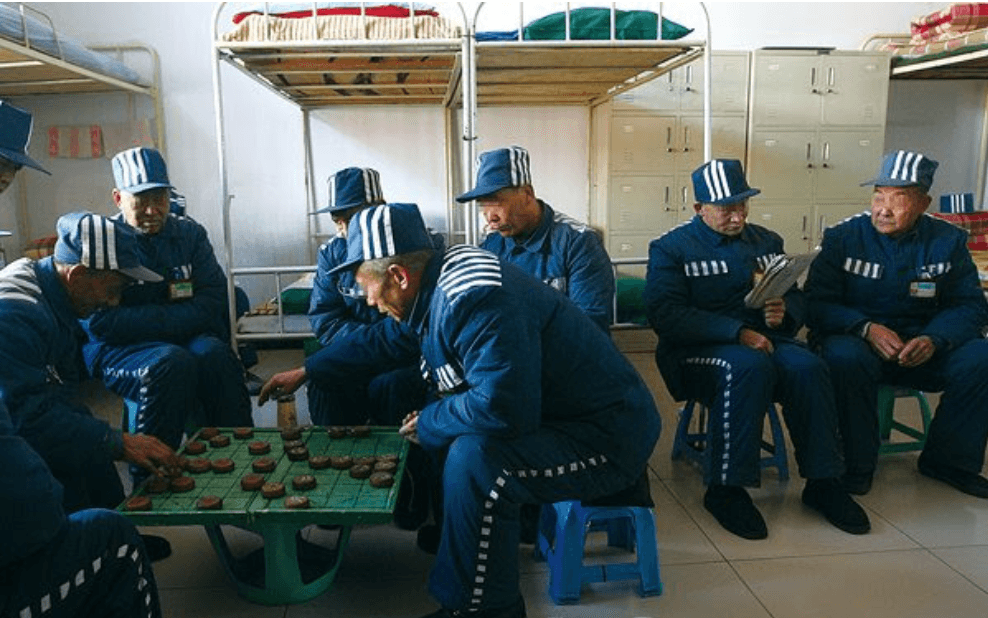
    Men play chess inside the “elderly” prisoner cell block of Henan No. 3 Prison. Image credit: Pan Xiaoling / Southern Weekly

    Decades of falling birth rates and rising life expectancy have made China one of the fastest aging countries. In 2023, its population aged 60 and above reached 297 million, or 21.1 percent of the population. While the aging population puts pressure on the already strained pension system and economic growth, elderly prisoners represent another pressing issue that requires more attention.

    Unlike juvenile justice, there is a dearth of information about elderly prisoners. They don’t seem to be an area of concern prevalent or pervasive enough to warrant careful consideration. Even the Ministry of Justice acknowledged the lack of relevant statistical data and academic research, and that judicial organs and law enforcement have yet to develop sensitivity with regard to the conviction, sentencing, rehabilitation, and management of elderly offenders.

    A Rising Estimate 

    The World Prison Brief indicated that that there were 1.69 million prisoners in China in 2017, the latest year for which statistics are available. According to Chinese sources, the number increased to two million in 2022 although it has not been officially verified. While publicly available sources have not disaggregated the prison population by age, a 2021 article by the China Prison Association estimated that elderly prisoners accounted for about 5.2 percent of the prison population, and of them 65 percent were male and 35 percent were female. If we extrapolate the estimate from the prison population, an estimated 88,000-104,000 elderly people are in jail today.

    Chinese legal experts generally agree that the number of elderly prisoners has been surging. First, a substantial portion have aged naturally after serving long prison sentences. Following the 2011 eighth amendment to the Criminal Law, more people who were already serving lengthy terms have had to spend more time in jail. The amendment also increased the mandatory minimum time served for life sentences before their sentences can be commuted to fixed terms. In 2015, China introduced the sentence of life without the possibility of parole for people convicted of corruption and bribery.

    Elderly crime has also soared over the years. Statistics provided by the Supreme People Court indicated that the number of defendants aged 60 or above increased fourfold from 5,759 in 1998 to 23,817 in 2016 (See Table 1). However, not all of those tried and convicted ended up in jail. The 2011 Criminal Law amendment allows courts to grant offenders aged 75 or older lighter punishments, such as suspended sentences, because they are seen to pose a smaller risk to society.

    Table 1. Elderly Defendants from 1998-2016
    Source: Dui Hua, Records of People’s Courts Historical Judicial Statistics: 1949-2016

    Types of Elderly Crime 

    In 2012, China Court Website published its findings on this under-researched topic and summarized the types of elderly crime:

    1. Most crimes were committed solitarily and could be classified into two distinct categories:
      • (i) crimes reflecting lower-level needs for survival or safety;
      • (ii) crimes committed for obtaining economic benefits, venting negative emotions, or satisfying physiological needs;
    2. The crimes of bribery, abetting, deception, and harboring tended to be perpetrated by elderly people with good education, social status, and work experience attained from their careers;
    3. Violent crimes such as homicide, aggravated assault, and robbery were rare. Perpetrators typically had poor education and targeted vulnerable groups such as women and children as victims;
    4. Elderly males committed crimes such as molestation, rape, fraud, theft and harboring while women tended to commit crimes of disrupting social order;
    5. An increasing number of elderly people were involved in Article 300 “organizing/using a cult to undermine implementation of the law.”

    Although the 2012 article did not provide relevant figures, Dui Hua’s research into court statistics released by the Supreme People’s Court showed a clear upward trend in “cult,” or unorthodox religion, cases involving elderly prisoners from 1998-2016. In 2016, the last year for which statistics are available, 523 defendants aged 60 or above were tried for Article 300, or 2.2 percent of all elderly defendants. In 1998, when Article 300 was in force for the first year, only three elderly people were tried. The number rose to 103 in 2003 when the crackdown on Falun Gong was in full swing.

    Table 2. Elderly Defendants Tried for Article 300, 1998-2016
    Source: Dui Hua, Records of People’s Courts Historical Judicial Statistics: 1949-2016
    Endangering State Security 
    Elderly offenders are not prominently represented in cases of endangering state security (ESS), China’s most serious political crimes. Statistics released by the Supreme People’s Court indicated that only 63 defendants aged over 60 or above were tried for ESS from 1998-2016. No elderly people were tried in ESS cases in 2013, 2014, and 2016.
    Table 3. Elderly defendants in ESS cases, 1998-2016
    Source: Dui Hua, Records of People’s Courts Historical Judicial Statistics: 1949-2016
    Dui Hua previously reported the case of Chen Zhaolu (陈兆祿), one of the China’s oldest ESS prisoners. Born on December 9, 1917, in Guangzhou, Chen became a Hong Kong resident in 1968 when he started working for Xinhua News Agency – then China’s de facto consulate in Hong Kong. Eighteen years after his retirement, on November 25, 2003, Chen was detained in Guangzhou on suspicion of espionage. On January 19, 2004, the Guangzhou Intermediate People’s Court sentenced Chen to 13 years’ imprisonment. At age 86, he was incarcerated in the elderly prisoner cell block of Guangzhou Prison, Guangdong’s “model prison.” Chen was given a nine-month sentence reduction in 2006 and a 16-month sentence reduction in 2008. He was granted medical parole for a period of three years on September 2, 2009. His sentence expired in October 2014.
    More recently, US citizen and Hong Kong resident Leung Shing-wan (梁成运, aka John Leung) was convicted of espionage and sentenced to life imprisonment in 2023 in Suzhou at the age of 78. Such heavy terms are rare for elderly offenders and for foreign nationals in China. Leung was the chairman of the Association for the Promotion of the Peaceful Reunification of China in Texas. The association is believed to be connected to the Chinese Communist Party’s United Front Work Department tasked with promoting Beijing’s claim over Taiwan. His case was showcased on the 10th National Security Education Day on April 15, 2024.
    The Intermediate People’s Court of Suzhou, Jiangsu. (Inset) Leung Shing-wan, who was 78 years old when the court convicted him. Image credit: Cantonese Group Cartography / Radio Free Asia
    Leniency & Clemency 
    While individuals aged 60 or above are generally considered elderly, leniency is now granted at a higher age threshold. The Public Security Administration Punishments Law grants public security the discretion to not impose administrative detention on elderly people over 70 years old, even in cases of serious violations of public security management.
    Additionally, the Criminal Law stipulates lighter punishments for individuals over age 75. Following the 2011 amendment, they cannot be subjected to the death penalty unless the offender has committed an act of particular cruelty. As an indication of the impact this has had, the number of Chinese capital cases involving people over 70 is fewer than 10 cases per year in the early 2010s, compared to the estimated 4,000 people executed in China in 2011.
    The amendment also expanded the scope of leniency by encouraging the use of lighter punishment and suspended sentences to those who commit an intentional crime at the age of 75 or greater. Some critics have similarly argued that this age is too high to have any real impact.
    Provincial authorities have also taken it upon themselves to expound on how elderly offenders are treated with more leniency. In 2014, the Sichuan High People’s Court issued a guiding opinion on the sentencing of elderly prisoners. Offenders of intentional crimes aged 65-74 can have their sentences mitigated by 30 percent. The mitigation length increases to 40 percent for those aged 75 or above. Elderly offenders who commit crimes of negligence can also have their penalty mitigated by 50 percent. The extent of leniency is also determined by the motive, time, method, severity of the crime, truthfulness of their confessions, and willingness to repent.
    In 1991, businessman John Kamm, now executive director of Dui Hua, visited a prison in Guangdong Province. He went to the prison to ask about two members of the Shouters, an “unorthodox religious group.” Upon arrival, Kamm was told that both men had been granted medical parole shortly before he arrived at the prison. The warden claimed that the prison authorities had the discretion to grant medical parole to prisoners over the age of 70. Dui Hua was unable to verify this claim.
    In January 2011, provincial authorities in Anhui grant parole or sentence reductions to 151 elderly or disabled prisoners. Image credit: Legal Daily
    Since Xi Jinping became President in 2012, he has issued two special pardons benefitting specific groups of elderly prisoners (Xi was the first leader to use his power to grant special pardons since Mao Zedong. No special pardons were issued between 1975 and 2015).
    1. Of the 31,527 people pardoned in 2015, fifty were veterans of the War of Resistance Against Japan (World War II) and the War of Liberation (the Chinese Civil War), 1,428 were veterans of foreign wars who were not convicted of serious crimes, and 122 were over 75 years old “with serious physical difficulties” and “unable to take care of themselves.”
    2. In 2019, Xi announced the second special pardon to mark the 70th founding anniversary of the People’s Republic of China. This resulted in 15,858 people receiving clemency. It remains to be seen whether Xi will announce a third pardon in 2025 to celebrate the 80th anniversary of the end of World War II.
    Besides the special pardons, releases of elderly prisoners have been rare. An exception was in 2009, when Chinese news media reported that approximately 2,000 elderly, sick, and disabled prisoners were given parole or allowed to temporarily serve sentences outside prison in part to alleviate prison overcrowding. At the time, 5,000 elderly, sick, and disabled prisoners were reportedly held in Sichuan prisons. Another mass release, albeit on a lesser scale, took place in Ningxia also in 2009. Nearly 100 elderly prisoners were granted parole. This clemency took place following a study which revealed that 117 or almost half of the elderly, sick, and handicapped prisoners in Yingchuan Prison and Ningxia Women’s Prison had not received any clemency from 2007-2009.
    On December 15, 2008, a 54-year-old female prisoner returns home after receiving parole and being released from Chengdu Women’s Prison. Her sentence was set to expire in March 2010. Image credit: Sina News
    In carceral facilities, restraint devices are prohibited on elderly prisoners under normal circumstances. Alongside the weak, ill, and handicapped, elderly prisoners are also exempt from prison labor. While Chinese government sources confirmed that around 10 percent of the prison population in 1990 were exempt from physical labor, recent figures have not been made publicly available. Instead, elderly prisoners are assessed by their willingness to express remorse and their performance in education rehabilitation.
    Health Issues 
    Prisons are designed to prevent criminals from escaping, not to cater to the elderly. They often have poor lighting, steep stairs, and dim corridors unsuited for elderly prisoners. While these prisoners are typically held in special prison wards along with the ill, weak, and disabled, high bunk beds and pit-style urinals are commonplace and can be physically challenging for elderly prisoners.
    An article published in an academic journal in 2021 examined the health problems of elderly prisoners. The author cited a survey conducted in an elderly ward in Hebei. Of them, over half suffered from cardiovascular diseases, followed by 7.3 percent from tuberculosis, 6.7 percent from diabetes, 2.8 percent from hepatitis, 2.3 percent from asthma, and 2.2 percent from spondylitis. Citing research published in 2018, the study revealed that 57 percent of the elderly in an unnamed Shanghai prison were on daily or regular medication.
    The cost of incarcerating elderly prisoners has surged because of their medical needs. Hospitalization expenses for elderly prisoners in an unnamed prison in a western province rose 77 percent in three years to 15,900 yuan in 2016. Hospitalization alone exceeded 76 percent of the budget allocated for medical care. In a women’s prison also in the western province, the government’s financial allocation for inmates’ medical costs in 2015 could only meet one-sixth of its actual medical expenses. In most provinces, actual medical expenses for inmates similarly exceeded the standard financial allocation by more than 50 percent. Elderly prisoners are said to be the leading cause of the surge in medical costs, according to the author.
    Discriminatory Treatment 
    Many elderly political prisoners are known to be ailing, but they have been denied sufficient care in prison. Prominent journalist Gao Yu (高瑜) began serving her five-year prison sentence for illegally trafficking in state secrets for a foreign entity at age 71. The crime stemmed from her leaking “Document No.9,” an internal notice by the Chinese government warning members against promoting “universal values” such as human rights. While incarcerated, she suffered from chronic heart pain, high blood pressure, a form of inner ear disorder called Ménière’s disease, and an undiagnosed chronic skin allergy. She was denied medications she took when living at home and access to specialists to assess and treat her. Gao had to wait two full years before she was admitted to a Beijing hospital to receive treatment.
    Journalist Gao Yu in the Beijing’s Anzhen Hospital after her garden and office were demolished, April 5, 2016. Image credit: Su Yutong / Radio Free Asia
    Despite their failing health, clemency is not guaranteed for prisoners convicted of politically motivated crimes. Wang Bingzhang (王炳章), born in 1947, continues to serve his life sentence in Guangdong’s Shaoguan Prison 22 years into his sentence. Wang is a veteran dissident who founded the China Democracy & Justice Party. In 2003, he was sentenced to life imprisonment for espionage and organizing a terrorist organization. Information given to Dui Hua by a Chinese government interlocutor confirmed that Wang suffered from thrombophlebitis, varicose veins, “sudden” bradycardia, tinea, and allergic rhinitis. He had suffered a mild stroke. Wang was in prolonged solitary confinement and subjected to daily “political study” meant to get him to write confessions and admit his crimes. Updates provided by his family in March 2023 revealed that Wang had contracted Covid-19 earlier that year, and that he was in constant dental pain and needed dental implants after eight of his teeth had fallen out. However, such dental care is not available in Shaoguan Prison.
    China has a track record in depriving political prisoners of medical care. Nobel Peace Prize Laureate Liu Xiaobo died from liver cancer in 2017 at age 61. Medical parole was granted only when his cancer had advanced. Wang Bingzhang, aged 77 this year, has yet to have his life sentence commuted despite repeated applications for medical parole and clemency over the past two decades. Such discriminatory treatment strengthens the fear that the Chinese government will simply let ailing elderly political prisoners die behind bars.
    Wang Bingzhang, aged 77 this year, has yet to have his life sentence commuted despite repeated applications for medical parole. Image credit: Raoul Wallenberg Centre

    Prisons are responsible for the well-being of all prisoners regardless of their crimes. They should ensure that everyone has immediate access to the specialist care they need. If such care is unavailable in prison, prisoners should be transferred to a hospital before their conditions worsen. Rule 27 of the UN Standard Minimum Rules for the Treatment of Prisoners states that “All prisons shall ensure prompt access to medical attention in urgent cases. Prisoners who require specialized treatment or surgery shall be transferred to specialized institutions or civil hospitals. Where a prison service has its own hospital facilities, they shall be adequately staffed and equipped to provide prisoners transferred to them with appropriate treatment and care.”

  • Dui Hua Hits Important Milestone

    Dui Hua Hits Important Milestone

    Image credit: Dui Hua

    Since the Dui Hua Foundation was established in 1999, it has composed and handed over 500 written requests for information on prisoners to the Chinese government. The Chinese government has never refused to accept a list from Dui Hua.

    In the past 25 years, Dui Hua has asked about 2,210 prisoners, of whom 396 were females and 1,316 were males (gender is not known in all cases). The foundation received responses on 1,070 prisoners, of whom 235 were females and 726 were male (gender is not known in all cases). Dui Hua has learned of 454 acts of clemency and better treatment afforded to 294 prisoners on its lists.

    Dui Hua’s Political Prisoner Database, used to generate prisoner lists, has grown from a few hundred names on notecards in 1999 to 48,699 names at the end of 2023.

    Individuals in the PPDB from 2004-2023. Image credit: Dui Hua

    Prior to Dui Hua’s establishment in 1999, founder John Kamm actively engaged the Chinese government in a dialogue focused on prisoners, submitting hundreds of lists and receiving responses on more than a thousand prisoners. Unfortunately, good records were not kept.

    Dui Hua advocates for at-risk detainees — political and religious prisoners and other individuals facing coercive measures. Individuals have been subjected to coercive measures including detention, arrest, imprisonment, and residential surveillance in a designated location, among others. Most names raised by Dui Hua are largely unknown outside of China.

    Recipients of Dui Hua lists have included the State Council Information Office, Ministry of Justice, Ministry of Foreign Affairs, Supreme People’s Court, State Administration for Religious Affairs, provincial and municipal governments, and government backed policy thinktanks.

    As judicial transparency deteriorated, the number of prisoners about whom information has been provided has decreased but has nevertheless continued. In 2024, nine lists have thus far been accepted and two responses on eight prisoners have been received.

    Sample of prisoner lists from August 1999 (left) and June 2000 (right). Image credit: Dui Hua

    Important acts of clemency that Dui Hua has learned of through active interventions include:

    Xu Wenli (徐文立). Xu was a prominent political dissident who was dubbed “China’s special prisoner number one.” Xu co-founded the China Democracy Party (CDP) and organized activities during the 1979 Democracy Wall Movement leading to his sentence of 15 years in prison in 1982. Kamm’s intervention contributed to parole in 1993. Xu was subsequently convicted of subversion and sentenced to 13 years in prison and three years DPR in 1998. This was Xu’s second imprisonment. Dui Hua inquired about his case eight times during 2000 and 2002. China provided eight responses. Those efforts contributed to Xu being granted medical parole in 2002 and receiving permission to seek medical treatment abroad. Kamm and Dui Hua also successfully advocated for other June 4 protesters and members of the CDP, including Wang Youcai (王有才).

    Zhang Lin (张林). A veteran activist, Zhang was tried and convicted in five separate trials between 1991 and 2014. Kamm and Dui Hua raised his name on ten lists and received eight responses. Dui Hua assisted a women’s rights activist to bring Zhang’s daughters to the United States, then with stakeholders to secure his passage to the United States in 2018.

    Jigme Sangpo (晋美桑布). Takna Jigme Sangpo was a Tibetan school teacher and advocate for Tibetan independence. He was believed to be the longest serving prisoner convicted of counterrevolution. Dui Hua assisted in negotiations, one of which took place in Lhasa. Jigme Sangpo was released in 2002 on medical parole and allowed to come to the United States for medical treatment before taking up residence outside Zurich, Switzerland. Dui Hua submitted eight inquiries between 1999 and 2003, and Kamm submitted at least two in 1995 before the foundation’s establishment. He received six responses. Takna Jigme Sangpo passed away on October 17, 2020, at the age of 91.

    Ngawang Sangdrol (阿旺桑珍). At the age of 13, Ngawang Sangdrol was convicted of counterrevolutionary propaganda and incitement and sentenced to three years of imprisonment with one year deprivation of political rights (DPR) in 1992. Her sentence was then extended three times to 23 years. Ngawang was the youngest of 13 women known as the “singing nuns of Drapchi.” They secretly recorded and smuggled protest songs out of prison. Ngawang was granted a sentence reduction in 2001 and parole in 2002. John Kamm visited Lhasa in early 2003 and met with Ngawang. Dui Hua helped secure her departure to the United States for medical treatment that same year. Dui Hua made 11 inquiries between 2001 and 2003, either directly to the Chinese government or through governments that held human rights dialogues with China. The Chinese government provided ten responses. Dui Hua also assisted in efforts to secure the early release of another “singing nun,” Phuntsog Nyidron, in 2004.

    Xu Zerong (徐泽荣). Xu, a Hong Kong resident and respected expert on China’s military history, was detained in 2000 and accused of stealing state secrets and illegal business activity. He received a combined sentence of 13 years, with three years of DPR. From 2002 to 2011, Dui Hua raised Xu’s case on 28 lists, directly or through stakeholders, and received 26 responses. Those efforts contributed to three sentence reductions, totaling 24 months. Kamm visited the prison where Xu was first incarcerated and pressed the warden to provide better treatment. Xu was transferred to a “model prison” and released in 2011.

    Rebiya Kadeer (热比亚•卡德尔). A prominent Uyghur businesswoman and representative to the Chinese People’s Political Consultative Conference, Rebiya was placed in custody in August 1999 after attempting to meet with staff of a US congressional delegation that was visiting Urumqi. She was convicted of illegally providing state secrets to an overseas entity in 2000 and sentenced to eight years in prison and two years of DPR. Dui Hua submitted eight inquiries between 2002 and 2004 to the Chinese government and received more than 20 responses. Dui Hua’s efforts contributed to a one-year sentence reduction in 2004 and medical parole in 2005. She was allowed to seek medical treatment aboard.

    Liang Jiantian (梁鉴添). Owner of a small printing shop in Guangzhou, Liang was convicted of illegal business activities, including publishing Falun Gong materials, and sentenced to life in prison in 2000. Dui Hua put Liang’s name on 20 lists and received 18 responses contributing to seven sentence reductions. Liang was released in October 2021.

    Tenzin Delek Rinpoche (丹增德勒仁波切, 阿安扎西). An influential Tibetan monk from Ganzi, Sichuan. An outspoken advocate for local Tibetan autonomy, he led efforts to provide education to poor children and orphans in the region. The authorities accused Tenzin Delek of involvement in several explosions in Chengdu and Ganzi. He was convicted of inciting splittism and setting off explosions and given a sentence of death with two-year reprieve in 2002. The sentence was later commuted to life in 2005. Dui Hua raised the case directly and through governments on 31 lists and received 31 responses during 2002 and 2015. Despite being in poor health, the prison authorities refused to grant him medical parole. Tenzin Delek Rinpoche passed away in July 2015 at the age of 65. The authorities refused to release the body back to the family for a proper burial, fearing potential social unrest. Dui Hua found and provided the family with government regulations that required the body to be treated with respect for ethnic traditions. The government relented.

    Shi Tao (师涛). Shi was an editor of a provincial newspaper in Hunan. In 2005, he received an internal notice instructing reporters not to cover the upcoming 15th anniversary of the June 4th crackdown, Shi described the post on an overseas website. He was detained in 2004 and sentenced to ten years for providing state secrets to an overseas entity. Dui Hua uncovered the connection between a US internet company and the case and attended a congressional hearing on the case. Shi was released in 2013.

    Yao Wentian (姚文田). Publisher and bookstore owner based in Hong Kong. (He is the father of Yao Yongzhan, John Kamm’s first intervention that took place in 1990.) He was convicted for smuggling common goods and sentenced to ten years in 2013. He received a short sentence reduction in 2019. Although the prison authorities refused to consider medical parole for Yao, he was placed in the medical ward of the prison for most of his sentence, exempted from physical labor, and allowed to receive monthly visits from his wife. Yao returned to Hong Kong on February 27, 2023.

    Li Yan (李彦). A woman from Anyue County in Sichuan was sentenced to death for murdering her abusive husband in 2012. The Supreme People’s Court affirmed the judgment in January 2013. In February 2014, Dui Hua convened an international conference on women in prison in which judges from the Supreme People’s Court took part. Topics of domestic violence were discussed. A judge and another official from the court told Dui Hua that what they heard was helpful in reversing the lower court’s decision. In June 2014, the SPC issued a decision to the Sichuan High Court to hold a retrial. The sentence was changed to death with two-year reprieve in April 2015.

    Chen Taihe (陈泰和). A lawyer in Guilin, Guangxi, an associate professor at Guilin Electronic Technology University Law School, and an advocate of adopting the jury system, Chen was one of more than 300 lawyers and activists interrogated or detained in the “709” a national-wide police action in 2015, later known as the “7.09” crackdown. Dui Hua worked closely with Chinese officials and diplomats from China and the United States to secure a passport and permission for Chen’s departure for the United States in 2016.

  • APEC Summit Highlights Need for Stable Relations

    APEC Summit Highlights Need for Stable Relations

    An APEC banner promoting the San Francisco summit. Image credit: APEC press kit
    When US President Joe Biden and Chinese President Xi Jinping meet at the Asia-Pacific Economic Cooperation (APEC) summit in San Francisco this week, they will have lots to talk about.
    As at every meeting between Chinese and US leaders in recent years, Taiwan tops the agenda. Wars in Ukraine and the Middle East will not be far behind.
    China has objected to the sale of weapons to Taiwan – a recent headline in a BBC story read “The US is quietly arming Taiwan to the teeth” – as well as multiple visits to the island by US officials touched off by then-Speaker Pelosi’s August 2022 visit. There have been numerous close encounters between US and Chinese warplanes and naval vessels in the South China and East China Seas in recent months.
    Issues relating to trade – market access, intellectual property protection, export and import restrictions imposed by both countries on products ranging from semiconductors to rare earths – will come up as will narcotics, especially the trafficking of deadly fentanyl. China’s anti-espionage law is causing considerable disquiet in the foreign business community in China.
    The United States wants to talk about the situations in Hong Kong, Tibet, and Xinjiang, but China does not. The United States considers Hong Kong, Tibet, and Xinjiang legitimate topics for discussion, but China will push back, stating that what goes on in those three places are China’s internal affairs and as such are none of the United States’ business.
    Human Rights 
    Human rights will come up, though they are likely not high on the agenda. Here too the presidents have plenty to discuss.
    The Moscone Center, where APEC events will be held. Image credit: Sergiy Galyonkin / CC BY-SA 2.0
    Dui Hua estimates that there are around 200 Americans undergoing coercive measures in China, but the State Department refuses to release the actual number or even an estimate. The US State Department considers three Americans – Mark Swidan, Pastor David Lin, and Li Kai, all businessmen – to be “unjustly imprisoned” in China.
    The meeting between Biden and Xi will take place 11 years after Mark Swidan was detained in Guangdong Province. He has been sentenced to death with two-year reprieve. Multiple senators and representatives have called for his release. If Mark Swidan is released on medical parole and allowed to return to his mother in Texas, this will be viewed positively by the American people.
    The Chinese government also believes that Chinese citizens have been persecuted in the United States, but it has not publicly released their names.
    In addition to citizens thought by the Department of State to be unjustly detained, there is the nettlesome problem of exit bans. Dui Hua estimates there are more than 20 Americans under exit bans, including businessman Henry Cai, who has been forbidden to leave China for nearly seven years.
    The US government raises the names of relatives of US citizens who have been imprisoned in China, including Uyghurs. High priorities are Dr. Gulshan Abbas, Professor Rahile Dawut. and entrepreneur Ekpar Asat.
    On September 24, 2015, President Xi and then-Vice President Joe Biden stand during the US national anthem on Xi’s state visit. Image credit: Airman 1st Class Philip Bryant / US Air Force photo
    While the fate of prisoners is high on the list of human rights issues, it is also possible that the two leaders will talk about areas where the two countries can cooperate. These include the rights of juveniles, women in prison, and the disabled. Dui Hua has worked closely with China’s Supreme People’s Court (SPC) on juvenile justice reform and the rights of incarcerated women and girls in both countries. The foundation has partnered with the SPC on nine programs in this area since 2008, most recently in April 2023. In the past the United States and China have held a dialogue on the rights of the disabled. These programs have made a difference for those at risk in both countries.
    Number of Dialogues Declines Sharply 
    When President Trump took office there were more than 100 dialogues between the United States and China covering a wide range of subjects. Now only a handful remain, including the dialogue on consular affairs where the fates of detained citizens are raised.
    The last human rights dialogue between China and the United States took place in 2016. The dialogue has been suspended since. Meanwhile, China is less interested in holding human rights dialogues with Western countries. There were once as many 10 such dialogues, and many consultations. Now they are few and far between. Instead, China is focused on dialogues and consultations with like-minded countries like Mexico, the United Arab Emirates, and Egypt. Several such events have taken place in 2023.
    Years ago, Dui Hua executive director John Kamm was told by a Chinese official that “When relations are good, your work benefits. When relations are bad, your work suffers.” This is as true today as it was those years ago.
    At APEC2022, Thailand passes the baton—a bamboo basket decorated in three colors symbolizing the values of openness, connection, and balance—to the United States as the next host of APEC2023. Image credit: APEC Thailand X account
    The drop in the number of dialogues between China and the United States has fueled a lack of trust between the two countries, and contributed to a situation where leaders are forced to discuss a long list of issues, some of which are complicated and contentious.
    It is quite possible that a result of APEC summit will be the resumption of suspended dialogues between the United States and China, including the human rights dialogue. If the rights dialogue is resumed, preparations need to begin as soon as possible, including agreement on guidelines. Washington is expected to insist on the right to submit prisoner lists and get responses in return. Hopefully Beijing will agree.
  • UN Submission Focuses on Persecution of Women in Unorthodox Religions

    UN Submission Focuses on Persecution of Women in Unorthodox Religions

    The logo for the Committee on the Elimination of Discrimination against Women, which monitors compliance with the Convention, both of which are abbreviated as CEDAW. Image credit: UN Office of the High Commission for Human Rights

    The number of women incarcerated in Chinese prisons has grown faster than the population of incarcerated men over the past decade, and women are disproportionately represented in criminal cases involving unorthodox religious groups. These are the main points highlighted by Dui Hua in its submission to the Committee on the Elimination of All Forms of Discrimination against Women (CEDAW)’s review of China.

    CEDAW, which also stands for the Convention on the Elimination of All Forms of Discrimination against Women and is sometimes described as an “international bill of rights for women,” is the treaty and human rights instrument adopted by the United Nations that provides guidance for nations to combat discrimination faced by women. Nations that have signed and ratified CEDAW – which includes all but six UN member states – are required to submit reports to the Committee on their compliance with the Convention every four years. NGOs are invited to make submissions informing country reports, which Dui Hua did for China’s, considered during CEDAW’s 85th session in the week of May 8, 2023.

    Dui Hua’s statement largely focused on female prisoners charged under Article 300, “organizing or using a cult to undermine implementation of the law.” The statement noted that women account for 8 percent of the prison population in China – a figure similar to that of the United States – but are thought to make up more than 40 percent of prisoners incarcerated for violating Article 300 from 1998-2016. More so, court records suggest that sentencing for these cases is comparatively harsh and that instances of clemency are rare. (The statement notes that there may have been an increase in clemency over the last two years but the lack of consistent data and transparency in legal processes makes this difficult to confirm.)

    Charts 1 and 2: Gender breakdown of unorthodox religious prisoners accused of violating Article 300 in the PPDB as of March 31, 2023.*

    *Gender is not known for all cases. Image credit: The Dui Hua Foundation

    The submission builds on the research Dui Hua initially published in its report “The Persecution of Unorthodox Religious Groups in China,” which identified a gender imbalance in sentencing under Article 300. Dui Hua’s Political Prisoner Database (PPDB) holds records on 11,400 women who have been subject to coercive measures for violating Article 300 due to their participation in unorthodox religious groups, which the Chinese Communist Party regards as cult organizations practicing non-state sanctioned faiths.

    The statement also noted that women are the main target of negative stereotypes in China’s anti-cult propaganda. This messaging often relies on stereotypes of middle-aged, rural women being “weak-willed and psychologically vulnerable” and more vulnerable to “coercion or monetary enticements from cult organizations.” Such messaging, which comes from both national and regional organizations, itself seems to violate Article 5 of CEDAW which mandates that state parties take all appropriate measures to eliminate “prejudices and customary and all other practices which are based on the idea of inferiority or the superiority of either of the sexes or on stereotyped roles for men and women.”

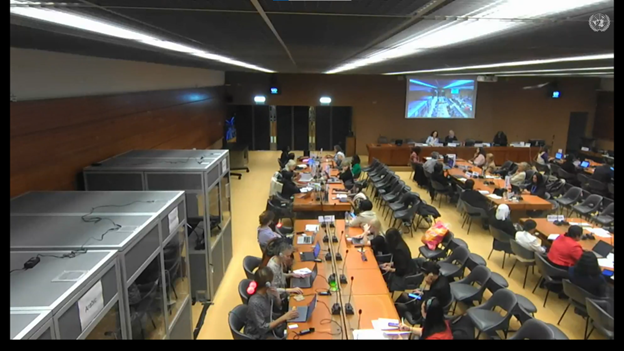
    An image from the opening session of CEDAW’s 85th session on May 8, 2023. Image credit: UN Web TV

    Another focus of Dui Hua’s submission to China’s state report was the decline in judicial transparency. Dui Hua ended its submissions by recommending that the Chinese government increase the use of non-custodial measures and clemency for women prisoners and improve judicial transparency, writing:

    Dui Hua urges the Chinese government to resume providing meaningful access for the public to judicial documents, including indictments, court judgments, and decisions of all cases, regardless of the criminal offense involved. Transparency is particularly lacking in provinces with high populations of ethnic minorities. It also helps the public understand the reasons why women are placed in custody for peacefully pursuing their religious faith and other criminal offenses.   

    This is not the first time Dui Hua has made a statement to a UN body concerning China’s treatment of female prisoners. Dui Hua previously made submissions to CEDAW during China’s previous review in 2014 and, more recently, to the Working Group on Discrimination Against Women in Law and Practice in June 2019.

    Of the 193 UN member states, 189 have ratified CEDAW, binding them to the treaty and mandating that they participate in regular review every four years. The United States has not ratified CEDAW, placing it among a small group of countries – Iran, Somalia, Sudan, Tonga, Palau – and the Holy See that have yet to bind themselves to the treaty.

    Read the full statement 

    Read the report “The Persecution of Unorthodox Religious Groups in China” 

  • Of Dialogues and Prisoner Lists

     This essay, written by Dui Hua Executive Director John Kamm, was originally published in the US-Asia Law Institute’s journal USALI Perspectives, Volume 3, Number 16 on February 13, 2023. You can view the original posting here. 

    As China prepares to resume bilateral human rights dialogues, a human rights advocate reflects on their record.

    In August 1989, just weeks after the Chinese army opened fire on peaceful protesters in Tiananmen Square, the UN Human Rights Commission’s Subcommission on the Prevention of Discrimination and Protection of Minorities passed a resolution censoring China. It was the first and last time that China lost a vote at a UN forum over its human rights record.
    Since then, Beijing has strenuously lobbied and spent significant resources to make sure nothing like this ever happened again. Instead of multilateral discussions about its treatment of dissidents and minorities in open UN fora, the Chinese government persuaded Western countries to present their criticisms in closed-door, bilateral human rights dialogues. One of the main features of such dialogues was the presentation by the foreign party (and acceptance by the Chinese side) of prisoner lists. As China prepares now to revive its dialogues with some Western governments, it’s worth reflecting on the role that dialogues and prisoner lists have played.
    Switzerland and the United States were the first two countries that China invited to launch these dialogues, which began in 1991. Geneva was home to the Human Rights Commission (now the Human Rights Council), and China hoped to discourage future critical resolutions by lobbying Swiss officials in Geneva and Berne. Geneva also was home to the International Committee of the Red Cross (ICRC). Access to Chinese prisons by the ICRC has been a key demand of Western governments for decades.
    As for the United States, China was not fazed by the sanctions put in place by the George H.W. Bush administration after Tiananmen, but it was deeply worried by the prospect of Congress revoking its trade privileges, notably its MFN status. To avoid this outcome, Beijing made many concessions to prevent the loss of its trade status, including releasing dozens of political prisoners, agreeing to a memorandum on prison labor in 1992, and initiating numerous bilateral human rights dialogues.
    Throughout the early 1990s, other governments agreed to hold their own bilateral human rights dialogues with China. These included the European Union, the United Kingdom, Germany, Norway, Canada, Australia, and Japan. In addition to periodic human rights dialogues, the United States and China held seven sessions of a legal experts’ dialogue, focusing on rule of law issues. China also held human rights consultations with the Netherlands, New Zealand, and developing countries such as Brazil.
    In addition to the submission of prisoner lists, bilateral human rights dialogues featured visits to Chinese and American courts and prisons, and, in rare instances, meetings with representatives of civil society groups. All told, more than 120 sessions of human rights dialogues took place between China and foreign countries between 1991 and 2019, according to my count.
    As time went by, China held fewer and fewer dialogues with foreign governments. It also downgraded the status of officials leading the dialogues, from vice-minister to assistant minister, then to director general, and finally to deputy director general or special representative. According to a senior Chinese official, once China achieved its goals of lifting post-1989 economic sanctions and entering the World Trade Organization, it no longer felt the need to hold human rights dialogues or otherwise make human rights concessions.
    The last governmental dialogue, a session with the European Union, took place in 2019. China  cited various reasons for suspending or cancelling dialogues: with Norway, it was the 2010 award of the Nobel Peace Prize to Liu Xiaobo; with Japan, it was visits to the Yasukuni Shrine by senior Japanese officials.
    However, alarmed by the deterioration of China’s image in the West, Beijing decided in late 2022 to resume human rights dialogues with Western governments. On February 11, Hong Kong’s South China Morning Post reported that the EU and China would hold the 38th session of their human rights dialogue in Brussels at the end of the week of February 13. Beijing has hinted that it is willing to resume its dialogue with Australia.
    China suspended the dialogue with the United States on at least three occasions, most recently in 2016 after then-President Barack Obama met with the Dalai Lama. Then-assistant secretary of state for democracy, human rights, and labor, Tom Malinowski, declared that the dialogue with China had been a waste of time anyway. No efforts have been made to revive it.
    The suspension of both the human rights dialogue and the legal experts’ dialogue that same year were but two of the official US-China dialogues in various issue areas that were done away with immediately before or during the Trump administration. More recently, dialogues with the Biden administration on climate change and narcotics were frozen in the wake of then-House Speaker Nancy Pelosi’s visit to Taiwan in August 2022.
    The submission of prisoner lists to the Chinese government was always the most valuable part of rights dialogues. Some of these lists have been very long, containing hundreds of names of individuals subjected to coercive measures in virtually every province and autonomous region. Lists promote transparency and force the Chinese government to focus on specific individuals whose rights have been violated, drawing in ministries and courts responsible for the violations. In response to prisoner lists, over the years the government released information about the location and status of hundreds of political and religious prisoners who had simply dropped into a black hole.
    The lists also have played a role in gaining clemency for political and religious prisoners. According to a survey submitted by the Dui Hua Foundation to Congress in 2005, presence on a prisoner list tripled the chance that a prisoner would be granted clemency. Even when the Chinese government declines to respond to a list, evidence suggests that the inquiry is passed along to ministries and courts, where, occasionally, action is taken.
    For the same reasons that it downgraded human rights dialogues, China’s Ministry of Foreign Affairs increasingly resisted accepting prisoner lists. In one instance, a list was left on the table while the Chinese official leading the dialogue played video games on a cell phone. No written responses to prisoner lists submitted by governments have been recorded since 2012.
    Matters came to a head at the 18th session of the US-China dialogue in Kunming in July 2013. The leader of the Chinese side refused to accept the US list. Only after intense pressure from the US side was the list begrudgingly accepted. The director general who led the Chinese side made clear that this would be the last time the Ministry of Foreign Affairs accepted a prisoner list from a foreign government.
    While governments have been unable to hand over lists, my organization, the Dui Hua Foundation (whose name means “dialogue” in Chinese), has been able to submit lists continuously since it was established in 1999. By the end of December 2022, Dui Hua had handed over 463 lists containing altogether more than 2000 “unique” names of prisoners (“unique” means names are only counted once; it is not uncommon for a name to appear on dozens of Dui Hua lists). Interlocutors responded on 282 occasions, providing information on more than 1,000 unique names. In 2022, Dui Hua submitted 21 lists, received 27 responses, and learned of instances of clemency or better treatment for 22 names on its lists.
    The degradation of human rights dialogues that intensified after Xi Jinping assumed power in 2012 is not the only blow to judicial transparency during the strongman’s reign. In June 2021, China’s Supreme People’s Court purged all cases involving state security, “cults,” and death sentences from its judgment website. Crafting prisoner lists has become increasingly difficult for Dui Hua, but it has found new sources and new channels to continue submitting lists and getting responses.
    Experience tells us that dialogues cannot immediately solve China’s human rights problems, but they can increase transparency. Prisoner lists in particular have benefited prisoners and their families, and should be part of any resumed dialogues.  Dui Hua, which remains committed to a mutually respectful dialogue with the Chinese government, plans to continue submitting lists for as long as it is able to do so.
  • “All People Act Together” Supporters Imprisoned, Part II: Public Disruption, Limited Reach

    “All People Act Together” Supporters Imprisoned, Part II: Public Disruption, Limited Reach

    A logo used by the APAT. Image credit: 時事能見度 YouTube page 
    The “All People Act Together” (APAT), or quanmin gongzhen (全民共振) social media campaign was launched in early 2018 by Chinese dissidents overseas. The campaign encourages rights defenders to engage in collective action and protests on days of importance to China and the Chinese Communist Party.  
    Part I of this article focused on how the charge of “picking quarrels and provoking trouble” is used against APAT supporters. In such cases, supporters were imprisoned for their behavior on social media, including deleted private conversations. Part II looks at cases where supporters were charged with disrupting public services and preparing for a terrorist activity. 
    Disrupting Public Services 
    Dui Hua’s research into court judgments revealed that Li Yunzhu (李韫竹) was found guilty of injuring stability maintenance officers and sentenced to eight months in prison in Yinchuan, Ningxia, in August 2019. On February 24, 2019, the officers were sent by guobao, China’s domestic security police, to Li’s home to give her “thought reform” after she circulated footage with an APAT thumbnail tag of “Down with the CCP.” The video allegedly incited the Chinese people to defend their rights and take to the streets every day at 3 PM during the “Two Sessions,” China’s biggest annual gathering of its rubber stamp parliament and political advisory body which discuss plans for national priorities. 
    It is unclear what prompted Li to circulate the video or why she was drawn to APAT. The judgment only stated that Li was planning to lodge an appeal in Beijing in December 2018 over a consumer lawsuit but was persuaded by police to stay in her home province Ningxia. The police arranged for her appellate trial to begin the following March. Li refused the arrangement. She expressed concerns about being unable to travel to Beijing during the Two Sessions, despite knowing full well that transport disruptions are commonplace in order to allow for senior government and party leaders to travel to Beijing during the Two Sessions.  
    Li was angry upon discovering that the appellate trial date was decided without her consent. She allegedly insulted the stability maintenance officers and asked them to leave her home. She ended up throwing a kitchen knife which left one of them injured. Li completed her eight-month prison sentence for disrupting public services on October 25, 2019. 
    Preparing for a Terrorist Activity  
    Ethnic Korean Jin Bo (金波) was released from a Heilongjiang prison on April 26, 2022 for plotting what prosecutors called a “violent APAT activity” on May 1, 2018. He was found guilty of preparing for a terrorist activity, one of the terrorism/extremism offenses added to the Criminal Law in 2015. The charge stemmed from him possessing explosive devices and Molotov cocktails which prosecutors believed Jin would use on the Labor Day holiday in connection with APAT. 
    Jin admitted to making the explosives primarily to seek revenge for his 444-day wrongful imprisonment. In August 2014, Jin was taken into custody on suspicion of extortion. He was later acquitted and given state compensation. Jin’s father and father-in-law passed away while he was incarcerated. Jin felt guilty for not being able to arrange for their funerals and blamed his business partners for framing him. He also expressed disillusionment with petition bureau officials who repeatedly ignored his complaints. Jin scaled China’s Great Firewall to learn about APAT and took part in online discussions after his unsuccessful attempts to seek redress.  
    Jin’s case indicates that some people who lose trust in China’s justice system find APAT appealing. A substantial portion of the prosecutor’s arguments focused on the “reactionary,” “anti-party,” and “anti-China” comments Jin made online. In April 2018, he wrote “What is APAT for? For revolution! What is Revolution? As the name suggests, it aims to overthrow the old and establish the new.” Days before he was criminally detained on April 27, 2018, he claimed to have lost confidence in China and expressed desires to begin retaliation. He ordered materials to make explosives via WeChat, claiming that he might set himself ablaze and throw bombs at his business partners. Although Jin confessed to posting radical comments online, he stated in his defense that he did not personally know any “overseas pro-democracy activists” nor did he join any overseas terrorist organizations. 
    In this case, prosecutors characterized the whole APAT campaign as a “violent political activity” organized by overseas forces because of Jin’s way of expressing grievances. However, there is insufficient evidence that other APAT supporters in China or overseas call for violent political resistance. 
    Members of San Francisco’s Chinese community participating in the “May 1st National Resonance” event in front of the Chinese Consulate. Image credit: CK via RFA 

    APAT fell flat. Fewer netizens in China have answered the APAT appeal than during 2011 “Jasmine Revolution.” Overseas APAT supporters in the United States, Canada, and Australia reportedly organized small rallies outside of the Chinese consulates in 2018-2019, but these had  limited reach in China due in part to pervasive internet censorship and surveillance. Additionally, APAT was hotly disputed even within Chinese dissident circles, with some saying that it was an entrapment attempt devised by the Ministry of State Security to round up political dissenters in one fell swoop. Regardless of the controversy, Dui Hua believes that the four people discussed in this post represent a small portion of criminal cases and more people could have been sentenced for espousing support for APAT. More research is needed to uncover the fate and the acts of other APAT supporters, as well as their motivations for sympathizing with the campaign.  
  • “All People Act Together” Supporters Imprisoned, Part II: Public Disruption, Limited Reach

    “All People Act Together” Supporters Imprisoned, Part II: Public Disruption, Limited Reach

    A logo used by the APAT. Image credit: 時事能見度 YouTube page
    The “All People Act Together” (APAT), or quanmin gongzhen (全民共振) social media campaign was launched in early 2018 by Chinese dissidents overseas. The campaign encourages rights defenders to engage in collective action and protests on days of importance to China and the Chinese Communist Party.
    Part I of this article focused on how the charge of “picking quarrels and provoking trouble” is used against APAT supporters. In such cases, supporters were imprisoned for their behavior on social media, including deleted private conversations. Part II looks at cases where supporters were charged with disrupting public services and preparing for a terrorist activity.
    Disrupting Public Services 
    Dui Hua’s research into court judgments revealed that Li Yunzhu (李韫竹) was found guilty of injuring stability maintenance officers and sentenced to eight months in prison in Yinchuan, Ningxia, in August 2019. On February 24, 2019, the officers were sent by guobao, China’s domestic security police, to Li’s home to give her “thought reform” after she circulated footage with an APAT thumbnail tag of “Down with the CCP.” The video allegedly incited the Chinese people to defend their rights and take to the streets every day at 3 PM during the “Two Sessions,” China’s biggest annual gathering of its rubber stamp parliament and political advisory body which discuss plans for national priorities.
    It is unclear what prompted Li to circulate the video or why she was drawn to APAT. The judgment only stated that Li was planning to lodge an appeal in Beijing in December 2018 over a consumer lawsuit but was persuaded by police to stay in her home province Ningxia. The police arranged for her appellate trial to begin the following March. Li refused the arrangement. She expressed concerns about being unable to travel to Beijing during the Two Sessions, despite knowing full well that transport disruptions are commonplace in order to allow for senior government and party leaders to travel to Beijing during the Two Sessions.
    Li was angry upon discovering that the appellate trial date was decided without her consent. She allegedly insulted the stability maintenance officers and asked them to leave her home. She ended up throwing a kitchen knife which left one of them injured. Li completed her eight-month prison sentence for disrupting public services on October 25, 2019.
    Preparing for a Terrorist Activity  
    Ethnic Korean Jin Bo (金波) was released from a Heilongjiang prison on April 26, 2022 for plotting what prosecutors called a “violent APAT activity” on May 1, 2018. He was found guilty of preparing for a terrorist activity, one of the terrorism/extremism offenses added to the Criminal Law in 2015. The charge stemmed from him possessing explosive devices and Molotov cocktails which prosecutors believed Jin would use on the Labor Day holiday in connection with APAT.
    Jin admitted to making the explosives primarily to seek revenge for his 444-day wrongful imprisonment. In August 2014, Jin was taken into custody on suspicion of extortion. He was later acquitted and given state compensation. Jin’s father and father-in-law passed away while he was incarcerated. Jin felt guilty for not being able to arrange for their funerals and blamed his business partners for framing him. He also expressed disillusionment with petition bureau officials who repeatedly ignored his complaints. Jin scaled China’s Great Firewall to learn about APAT and took part in online discussions after his unsuccessful attempts to seek redress.
    Jin’s case indicates that some people who lose trust in China’s justice system find APAT appealing. A substantial portion of the prosecutor’s arguments focused on the “reactionary,” “anti-party,” and “anti-China” comments Jin made online. In April 2018, he wrote “What is APAT for? For revolution! What is Revolution? As the name suggests, it aims to overthrow the old and establish the new.” Days before he was criminally detained on April 27, 2018, he claimed to have lost confidence in China and expressed desires to begin retaliation. He ordered materials to make explosives via WeChat, claiming that he might set himself ablaze and throw bombs at his business partners. Although Jin confessed to posting radical comments online, he stated in his defense that he did not personally know any “overseas pro-democracy activists” nor did he join any overseas terrorist organizations.
    In this case, prosecutors characterized the whole APAT campaign as a “violent political activity” organized by overseas forces because of Jin’s way of expressing grievances. However, there is insufficient evidence that other APAT supporters in China or overseas call for violent political resistance.
    Members of San Francisco’s Chinese community participating in the “May 1st National Resonance” event in front of the Chinese Consulate. Image credit: CK via RFA 
    APAT fell flat. Fewer netizens in China have answered the APAT appeal than during 2011 “Jasmine Revolution.” Overseas APAT supporters in the United States, Canada, and Australia reportedly organized small rallies outside of the Chinese consulates in 2018-2019, but these had  limited reach in China due in part to pervasive internet censorship and surveillance. Additionally, APAT was hotly disputed even within Chinese dissident circles, with some saying that it was an entrapment attempt devised by the Ministry of State Security to round up political dissenters in one fell swoop. Regardless of the controversy, Dui Hua believes that the four people discussed in this post represent a small portion of criminal cases and more people could have been sentenced for espousing support for APAT. More research is needed to uncover the fate and the acts of other APAT supporters, as well as their motivations for sympathizing with the campaign.
  • Crimes of Extremism, Part II: Harsh Sentences, Low Transparency in Xinjiang

    Crimes of Extremism, Part II: Harsh Sentences, Low Transparency in Xinjiang

    A Chinese propaganda poster denouncing extremism. In 2018, the poster went viral after a social media user noticed that one of the poster’s images condemning Islamic facial hair featured actor Keanu Reeves, who does not identify as Muslim. Image credit: Reddit via Taiwan News

    Read Part I here.

    Although ethnic minorities make up the majority of the extremism cases, there is a dearth of publicly available information about them, particularly those of the Islamic faith. Court judgments and judicial decisions like this in Xinjiang are deemed to be highly sensitive; they were almost never posted online even before the purge on China Judgements Online started in June 2021. Overseas news media sources have reported on a few cases, but it is impossible to grasp the whole picture due to the tight control on information flows in the region. In most cases, media reports did not explicitly state which specific extremism crimes were invoked.

    Radio Free Asia (RFA) is among the overseas news media groups which have occasionally covered extremism cases over the years. In September 2017, a Uyghur woman named Horigul Nasir was reportedly sentenced to 10 years in prison in Kashgar, presumably for extremism because she allegedly told one of her friends that not wearing a headscarf is sinful. The allegation, however, has been disputed by her brother, who claimed that his sister does not even wear a headscarf or pray five times a day.

    In another case also reported by RFA, a Uyghur businessman named Ekber Imin is serving a 25-year prison sentence for an unspecified extremism crime alongside two of his brothers. They were reportedly convicted for having foreign contacts and spreading extremism by incorporating ethnic and religious elements in the buildings they developed.

    In March 2022, RFA reported that Abdureshid Obul died in 2020 while serving his eight-year prison sentence for an extremism crime. The Uyghur farmer was reportedly jailed for having a fourth child and relocating his pregnant wife to avoid a forced abortion. Ethnic minority families living in rural areas are limited to two children. Authorities considered Abdureshid’s violation of the family planning policy to be an act of extremism.

    (Top) Horigul Nasir’s identification card. (Bottom) A photo of Ekber Imin’s passport page. Image credits: RFA listeners via RFA 
    The harsh punishments given to the aforementioned Uyghurs are by no means isolated incidents. Dui Hua’s research into Chinese government sources found evidence of Muslim minorities receiving excessive punishment for committing extremism crimes in Xinjiang. For instance, Dui Hua discovered a case in which a Uyghur prisoner had his prison sentence extended by 15 years in July 2017 for violating Article 120(3). He was already serving his seven-year prison sentence for Article 300 “organizing or using a cult to undermine implementation of the law.” It is unclear which “cult organization” he had joined leading to his initial conviction. The court ordered him to serve a total prison sentence of 19 years and 8 months, which included the 56-month sentence for Article 300 he had yet to complete. After his prison sentence expires in 2036, he must still serve a supplemental deprivation of political rights sentence of five years.

    It would be a mistake to assume that only Uyghurs are singled out for excessive criminal punishment. An ethnic Dongxiang surnamed Chen received a 10-year prison sentence for Article 120(3) with a deprivation of political rights sentence of three years in Nilka County in July 2018. As with almost all other cases of a similar nature, there is no information about the acts that led to his harsh prison sentence.

    Two Rare Judgments 

    Despite being unable to find an extremism judgment in Xinjiang, where the majority of extremism cases are tried and heavy sentences are meted out, Dui Hua found two rare judgments in other provinces. Dongxiang are among the Muslim communities who have faced restrictions in and outside of Xinjiang, but very little information is known about the crackdown on this ethnic group. The case of Ma Yinglong (马英龙) in Beijing indicates that besides growing beards, conducting regular prayer or unauthorized religious classes, or fasting for Ramadan, Islamic booksellers are another target of China’s crackdown on extremism.

    A picture of the opening ceremony of a Xinjiang re-education camp, posted online by the government in Korla, Xinjiang in June 2018. The partially obscured sign on the left reads “Transformation Through Education Center” (教育转化中心 jiàoyù zhuǎnhuà zhōngxīn). Image credit Korla government via SupChina

    Ma is a native from Xinjiang’s Yining County. He was convicted of Article 120(3) and sentenced to 13 months in prison by Beijing’s Haidian District People’s Court in September 2017. The crime stemmed from him running an Islamic bookstore which sold books about Islam and related topics. Additionally, he administered his IslamBook.net website, which offered a number of Islamic religious items including Malaysian-made hijabs and other clothing, Islamic arts and crafts, and halal food items, according to reporting from unofficial news media sources.

    The court judgment focused on one title he sold: Milestones: Ma’alim Fi’l Tariq. This book was written by Egyptian Islamic author Sayyid Qutb, who calls for the re-creation of the Muslim world on strictly Quranic grounds to counter western influence. Qutb is seen by some observers as one of the formative, leading theorists of violent jihad. Unbeknownst to Ma, the Chinese version of this book had been classified in China as an illegal publication about terrorism and extremism. Ma stated in his defense that he had not read the book; he only procured a total of six copies of Milestones at the request of his customers. The court rejected Ma’s defense because “he should have known about the extremely harmful nature of the book” considering he had many years of experience selling Islamic books.

    In another case, Dui Hua found that Uyghur businessman Erkin Balat was sentenced to 22 months in prison for Article 120(6) in Shandong. Erkin moved to Qufu from Xinjiang to start his jade business in 2007. In early 2017, he was found in possession of 50 Uyghur-language books, one Uyghur-Arabic dictionary and one Arabic-language Quran, which became evidence of him possessing articles to promote extremism. Some of the Uyghur titles touched on topics such as the history of Islam. Other evidence included two Japanese sabres and one Arabian scimitar he displayed in one of his shops. Erkin completed his prison sentence on March 8, 2021.

    Same Acts, Different Outcomes

     
    In Part I, Dui Hua discussed how Han come into conflict with the law for extremism, including by possessing or circulating videos with scenes of violence in connection to the “East Turkestan Independence Movement,” ISIS, or the Taliban. Chinese law criminalizes such behavior regardless of ethnicity, but in practice there is a clear ethnic bias in sentencing. The same acts committed by Uyghurs or other Muslim minority groups are more likely to result in harsher criminal punishments. Precedents indicated that the same audio-visual evidence is almost certainly construed by prosecutors and judges to contain messages about “jihad” and “hijrat” (i.e. migration to another place for the sake of Allah) where the defendants practice Islam. In such cases, other crimes such as splittism, inciting splittism, and/or organizing or participating in a terrorist organization are often tacked on to the allegations of extremism.
    Screenshot from a 2019 CGTN program titled Fighting Terrorism in Xinjiang. Image credit: CGTN
    While Muslims in Western countries have been given prison sentences for viewing, disseminating, or producing films containing extremist material, these cases have typically been handled with greater transparency to hold law enforcements accountable for their decisions and ensure that their counterterrorism measures are non-arbitrary and impartial. In cases where this might not be possible, such as the CIA’s use of black sites to interrogate suspected terrorist actors or other “enemy combatants,” civil society organizations and independent journalism efforts can provide a degree of scrutiny.
    By contrast, cases in China are selectively transparent at best, as in many publicized cases of Han. The vast majority of ethnic minority cases remain shrouded in secrecy. Limited available evidence on Uyghurs and other ethnic groups suggests that the acts are more diverse, but they all resolve around the expression of Islam. Muslims are also much more likely to receive disproportionately severe sentences for the same crimes than the Han counterparts.
  • Chinese Asylum Seekers in Bangkok, Part II

    Chinese Asylum Seekers in Bangkok, Part II

    At the Thailand-Laos crossing checkpoint at Sop Ruak, people queue to travel between Thailand and the Golden Triangle Special Economic Zone in Laos. Image credit: Slleong / CCO via Wikimedia Commons

    This is the second installment in a two-part series. Read Part I here.

    Thailand does not recognize the status of refugees because it has not acceded to the 1951 Refugee Convention or its 1967 Protocol. Refugees who overstay their visas or enter Thailand without proper documents are regarded as illegal immigrants. They have no legal right to work or adequate access to health care; nor can their children attend local schools. They are dependent on charitable groups, religious organizations, other refugees in their community, or they simply subsist on meagre savings. Because of budget cuts and a global tightening of national immigration policies, the UNHCR has reportedly axed financial aid for refugees.

    Consequently, many Chinese asylum seekers and refugees enter Bangkok’s labor black market to make a living. Once arrested, they are typically held in immigration detention centers, many of which are “severely overcrowded, provide inadequate food, have poor ventilation and lack medical service and other basic necessities,” according to Human Rights Watch.

    In January 2015, Uyghur refugees also complained to a visiting Istanbul-based journalist about health problems in the detention facilities in Thailand. Prior to this incident, three Uyghurs died despite efforts of charitable groups to provide relief. In September 2018, a Chinese observer claimed that dozens of refugees and asylum seekers of different nationalities were crammed into an area of approximately 12 square meters of floor space.

    Because of the cramped and unhygienic conditions at the immigration centers, seven Uyghurs made a failed attempt at a jail break in February 2019. A Thai NGO, which has worked to assist these Uyghurs since their detention, is compiling evidence about the alleged reports of physical abuse by Thai police officers.

    The long wait time for resettlement is another major source of frustration among refugees. Zhang Shufeng (张淑凤), who obtained refugee status in 2017, said the UNHCR prioritizes applications of refugees from armed conflicts such as Syrians and Myanmar’s Rohingya Muslims over Chinese applicants. In 2016, another asylum seeker Cai Yuliang (蔡欲亮) was finally accepted for resettlement in the United States after spending a total of 17 years in Thailand. Cai fled China in 1999, seven years after he completed his 20 years’ imprisonment for the now-defunct criminal offense of counterrevolution.

    No Safe Haven

    Jiang Yefei holds a placard with a criminal charge at a Thai immigration detention center prior to repatriation in 2015. Image credit: Apple Daily (Taiwan)
    Since the coup of 2014, the Thai military regime has been tilting away from the United States toward China. Refugees or asylum seekers are believed to be facing imminent risk of repatriation at the behest of China — Thailand’s largest trade partner and major country of origin for tourists.

    Repatriation

    Four months after over 100 Uyghurs were repatriated to China, Thailand deported Dong Guangping (董广平) and Jiang Yefei (姜野飞) in November 2015, allegedly for breaking immigration rules. A political cartoonist, Jiang left China in 2008 after he was detained and allegedly tortured over his work critical of the government’s handling of the Sichuan earthquake. Dong fled to Thailand in 2015, having served a three-year jail term for subversion from 2001-2004 and “disappeared” for eight months in secret detention in 2014.

    Following their repatriation, Jiang and Dong were sentenced in Chongqing to 78-month and 42-month imprisonment sentences, respectively, for subversion and illegal border crossing in July 2018. Thailand’s decision to repatriate the duo drew condemnation from the UN, United States, and others because both men had been awaiting resettlement in Canada after they obtained their refugee status. Dong completed his prison sentence on August 2, 2019, whereas Jiang still has one year to serve before release in August 2022.

    Cross-Border Law Enforcement

    The disappearance of Chinese-born Swedish citizen Gui Minghai in Pattaya in October 2015 raised fear of cross-border operations of Chinese security forces. A similar case that did not garner much attention concerns former editor of the Southern Metropolitan Daily Li Xin (李新). In November 2015, Li fled to New Delhi after he was coerced by Chinese state security to work as an informant. He disappeared while riding a Laos-bound train in north Thailand in January 2016 in a bid to renew his Thai visa. A month later, Li reappeared in China claiming that he had returned to China “voluntarily” to assist with a police investigation. When asked about the case by The New York Times, the Thai Foreign Ministry responded that there was no “record as yet as to whether he has left the country.” Li’s wife and supporters speculated that Li had been abducted by Chinese security forces and clandestinely transported across the border.

    Turning a Blind Eye

    Xing Jian (邢鉴) arrived in New Zealand as a refugee in January 2020, more than three years after the UNHCR recognized his refugee status in the summer of 2016. Xing criticized the Thai government for providing insufficient care and protection for UN-recognized refugees. While in Thailand, Chinese public security officers apprehended him alongside Bangkok police because he overstayed his visa on November 25.

    Before fleeing China, Xing volunteered for prominent dissident Huang Qi (黄琦) and was accused of “rumour-mongering” for exposing corruption in his home county in Jiangsu. His father Xing Wangli (邢望力), who remains in China, was sentenced to two years and three months’ imprisonment in October 2018 for “picking quarrels and provoking troubles.” Xing Wangli was re-arrested in June 2021 for defamation after visiting prominent rights lawyer Jiang Tianyong.

    Wu Yuhua and Yang Chong (see part 1) were originally scheduled to depart for Canada from Bangkok on June 25, 2019. However, they were barred from leaving Thailand. Yang may be required to complete his one-year suspended sentence there for overstaying, according to a Chinese activist familiar with Thai laws. However, another Radio Free Asia report cited the Chinese embassy as saying that the Thai authorities “do not rule out the possibility of repatriating the duo to China.”

    Fleeing Again

    Risky Voyage

    In view of a potentially indefinite waiting period for resettlement, the threat of repatriation, and abduction by Chinese security forces overseas, some asylum seekers and refugees are determined to flee once more. Prior to the scheduled interview with the UNHCR in 2017, Falun Gong practitioner Dong Junming (董俊明) undertook a risky voyage to New Zealand, some 6,000 miles away from Pattaya, on February 29, 2016. Dong was joined by six like-minded asylum seekers and two children.

    In early March, a few days into their voyage, the yacht capsized off the Thai coast. In an interview with overseas media, Dong said that “[i]t’s highly risky out there on the ocean, but we are so fearful here in Thailand that I thought I should take the risk.” All travellers who boarded the yacht, including China Democracy Party member Li Xiaolong (黎小龙), were returned to Thailand after the failed escape. Some were placed in immigration detention centers while at least one of them stood trial for illegal entry into Thailand in January 2017.

    To Taiwan

    In a bid to evade the extending reach of China in Thailand, some dissidents have chosen to flee once more to Taiwan. Huang Yan (黄燕)  fled to Thailand in 2016 after years of harassment, repeated incarceration, and alleged torture for speaking out in support of Gao Zhisheng. In May 2018, she flew to Jakarta, then to Taiwan, where she was granted temporary leave to remain until the United States granted her political asylum in January 2019.

    Following in Huang’s footsteps, China Democracy Party members Yan Bojun (颜伯钧) and Liu Xinglian (刘兴联) left Bangkok four months after Huang’s arrival in Taiwan. They were granted entry in February 2019 on the basis of “professional exchanges” after 125 days at Taipei Taoyuan airport. At the time of writing, both men have been granted asylum protection in Canada.

    On September 29, 2016, Taiwan’s Mainland Affairs Council Deputy Minister Chiu Chui-cheng expresses concerns over the situation in Hong Kong but says Taiwan will not intervene. Image credit: Voice of America via Wikimedia Commons

    It would be a mistake to assume that Taiwan welcomes individuals fleeing violence and persecution in China. While the island has promised assistance to Hong Kong anti-extradition bill protesters, Taiwan’s Mainland Affairs Council (MAC) maintained that Taiwan policy toward mainland asylum seekers remained unchanged. Should Taiwan openly admit mainland asylum seekers and refugees, it will likely trigger a flood of applications and further antagonize China, putting hundreds of thousands of China-based Taiwanese residents, workers, and investors at risk of arbitrary detention. Additionally, Taiwan fears what it calls “infiltration” from mainland agents. There have been recent arrivals of mainland Chinese who managed to cross the Taiwan Straits despite it being one of the world’s most heavily policed waterways.

    Taiwan is not a member of the UN and does not have legislation to protect refugees. The island only vows to deal with applications from mainland Chinese on a case-by-case basis, according to the MAC.

    Non-Refoulement

    It must be noted that around the globe, not all Chinese asylum applicants are found to have a legitimate fear for persecution. In Australia, for instance, the number of Chinese nationals applying for refugee asylum rose by 311 percent in just one year from 2017. Despite this surge, the Australian Department of Home Affairs only recognized 10 percent of such claims as being genuine. Most claims found to be bogus have been used by applicants to overstay their visas. The United States has also cracked down on “asylum mills,” which have helped thousands of Chinese immigrants to fraudulently win asylum status. Over 13,500 immigrants, mostly Chinese, who were granted asylum status are reportedly facing possible deportation.

    A poster from the Australian government’s 2013 “No Way” campaign aimed at dissuading attempts by non-citizens to enter Australia. Image credit: Australian Customs and Border Protection Service / CC BY-SA 3.0
    However, many of those in Bangkok have been determined by the UNHCR to have a well-founded fear for persecution, a fear not imaginary but very much real, as being detained, arrested, and sentenced should they be returned to China. The fact that Thailand is not a signatory state of the 1951 Refugee Convention or its 1967 Protocol does not absolve the country from its duty to protect refugees inside its borders. The UNHCR has also called on all states, including non-signatory states, to observe non-refoulement, an international principle that prevents all countries from expelling or returning an individual to a country where he or she is at genuine risk of persecution.

    Thai officials have reiterated their commitment to protecting the rights of refugees and asylum seekers. They have also vowed to adopt anti-torture legislation to strengthen implementation of the principle of non-refoulement. However, insufficient protection for asylum seekers and refugees has left them stranded in Thailand, vulnerable to detention, arrest, and repatriation. Some of them have even been compelled to flee Thailand as well to evade arrests, deportation, and Chinese security forces overseas.

  • Chinese Asylum Seekers in Bangkok, Part I

    Chinese Asylum Seekers in Bangkok, Part I

    The United Nations building in Bangkok, Thailand. Image credit: dsin_travel / CC BY 2.0 

    China has consistently ranked among the top 20 refugee producing countries every year since 2003, according to statistics published by the United Nations High Commission for Refugees (UNHCR). The latest statistics published in June 2021 indicated that China was 18th on the UNHCR’s list at the end of 2020. The number of UNHCR-registered refugees originally from China reached 175,585. Additionally, there were 107,864 Chinese asylum seekers around the globe with pending claims. The number of asylum seekers increased nine-fold from just 11,375 in 2011, the year before paramount leader Xi Jinping assumed power.  

    Table 1. UNHCR’s Forced Displacement Statistics (Country of Origin: China)

    Source: UNHCR, Refugee Data Finder, 2003-2020 
    Many UNHCR-recognized refugees from China consider the West a destination of choice for resettlement. After taking the first step in the long journey to asylum, many refugees from China sojourn in Thailand where they await refugee status determination. It is an administrative process by which the Bangkok-based regional office of UNHCR for Southeast Asia determines whether a person seeking protection qualifies as a refugee under international law. Bangkok is home to an estimated 8,000 urban refugees—hailing from Asia, the Middle East, and Africa.  

    Dui Hua is not aware of any official statistics about Chinese asylum seekers in Thailand. However, Bei Ling, founder of “Home of Refugees” in Thailand in 2015, estimated that more than 300 Chinese asylum seekers were in the country as of October 2018.  

    This is the first entry in a two-part series examining issues facing Chinese asylum seekers in Thailand. This entry explores who they are and why they have fled China. The second entry will look at how and why Thailand falls short of being a safe haven. Prospective refugees with or without valid passports risk criminal detention for overstaying in Thailand. Their predicaments also include indefinite wait times for third country resettlement. The fact that Thailand fails to abide by the principle of non-refoulement also places a heightened risk of repatriation for those seeking protection from persecution at home. 

    Why Thailand?

    Thailand started to become a popular place of transit for Chinese refugees about two decades ago. Prior to that, those with a well-founded fear of persecution decamped to colonial Hong Kong to flee political persecution thanks to the lax border controls at the time. Since China resumed sovereignty over the former British colony in 1997, Hong Kong has ceased to be a popular destination for asylum protection.  

    For decades, Hong Kong has been a magnet for refugees. It is troubling to see a spiked increase in asylum seekers from Hong Kong since civil unrest triggered first by the now-rescinded extradition bill, and then by the sweeping arrests made under the National Security Law. The law criminalizes secession, subversion, terrorism, and collusion with foreign forces. At the end of 2020, there were 487 registered asylum seekers from Hong Kong, up from 22 in 2018 before mass protests erupted in June 2019. 

    While a portion of those who fled China could be considered “economic migrants” in search of sustenance and a livelihood, China’s much-lauded economic success has fallen short of stopping people from fleeing abroad. Critics of one-party rule, adherents of banned religious groups, civil rights activists, petitioners, and ethnic minority groups are continuing to seek asylum protection abroad via Thailand.  

    Chinese nationals find entry to Thailand easier than other neighboring countries or regions including South Korea, Japan, and Taiwan, mainly because they benefit from the 15-day visas on arrival available to them (Thailand has suspended this arrangement due to the outbreak of coronavirus). Entry to elsewhere requires obtaining a pre-arranged visa. 

    The Thailand-Laos overland crossing checkpoint at Sop Ruak. Image credit: Slleong / CC0 via Wikimedia Commons 

    Because of geographical proximity, those without proper legal documents can resort to traveling illicitly overland from Yunnan with the help of smugglers. Chiang Mai, for instance, is reachable by land transport from Yunnan’s border in nine hours. From Chiang Mai, it is another half-day journey to Bangkok, where asylum seekers file their refugee claims at the UNHCR office. 

    Why Flee?

    Political Prisoners

    Geng He (耿和), wife of human rights lawyer Gao Zhisheng, is arguably the most notable example of a family member of a Chinese political prisoner fleeing political persecution via Thailand. She left for Bangkok with her children in January 2009 while her husband was serving his suspended sentence for inciting subversion. Gao’s entire family faced reprisal because Gao took on controversial cases and publicly called for an end to the persecution of Falun Gong. While in China, Gao’s children were prevented from attending school. Geng and her children stayed in Bangkok for two months before resettling in the United States. However, it must be noted that such speedy granting of asylum by the United States was only expedited by international attention. As will be discussed in Part II, the wait time for third country resettlement is often indefinite. Today, Gao remains under house arrest even after his sentence expired in August 2014. 

    Another asylum application involved Hua Yong (华涌), who arrived in Canada in April 2021. Hua is a well-known painter from Beijing who posted videos documenting forced evictions and demolitions in poor neighborhoods. He was placed under residential surveillance at a designated location for three months after meeting with the father of Dong Yaoqiong, a girl who was admitted to a psychiatric facility after she live-streamed a video of herself accusing the Chinese Communist Party of “thought control.” Hua escaped to Thailand in September 2019. 

    Dui Hua previously assisted former political prisoner Li Huangming (李焕明) with verifying his claim for political asylum. Before being granted political asylum in Finland in May 2013, Li fled to Bangkok after he completed his nine years’ sentence for inciting subversion in September 2010. The conviction stemmed from him distributing or planning to distribute tens of thousands of “reactionary” flyers in Shenzhen. While awaiting refugee resettlement, Li wrote stories about other Chinese asylum seekers in Bangkok for Boxun and other NGOs. In an article published by Human Rights in China in November 2012, Li wrote that Bangkok’s UNHCR office had a special team of interpreters and officials to handle the surge of applications from Chinese dissidents.  

    Li wrote about changing demographics of Chinese asylum seekers. A significant number of applications were submitted by petitioners contrary to the popular belief that most Chinese refugees are supporters of China’s democracy movement, violators of the one-child policy, and adherents of banned religious groups such as Falun Gong and house churches. 

    Petitioners

    Li’s observation is in line with what has been reported in unofficial news sources in recent years. Petitioners fled to Bangkok because they face reprisal in China after lodging futile complaints about land expropriation or forced demolition in their home cities.  

    Petitioner Zhang Shufeng protests at UNHCR’s Bangkok office while holding a bilingual slogan that says “Request UNHCR help.” Image credit: Mirror Media 

    Zhang Shufeng (张淑凤), a native of Beijing, fled to Bangkok in 2014 and obtained refugee status three years later. Taiwan-based Mirror Media reported that Zhang’s family was subjected to house arrest, beatings, and constant surveillance by government-hired thugs in China. Surveillance intensified during the “Two Sessions” (the National People’s Congress and the Chinese People’s Political Consultative Conference) and other political events. In Bangkok, Zhang protested at the UNHCR office while holding a bilingual slogan saying “Request UNHCR help,” in the hope that the UNHCR would expedite her resettlement process.  

    In January 2017, unofficial news media reported that Beijing evictee Wang Ling (王玲) joined her son who had arrived in Bangkok in December 2016 to maximize the chance of them both getting through Chinese immigration checks. Wang claimed that she had received death threats from police after pursuing complaints about the forced demolition of her home. In 2008, she was sentenced to 15 months of re-education through labor and had been detained a total of 11 times. The news of abnormal deaths in police custody made Wang fear for her life.

    Religious Persecution

    Falun Gong practitioners still make up a large portion of asylum seekers in Bangkok. Many of them have fled persecution after the suppression of the spiritual sect began in 1999. One widely publicized case concerns Song Zhiyu (宋志宇), who escaped to Thailand in early 2014 via Myanmar after completing his three-and-a-half-year sentence for “organizing a cult to undermine implementation of the law.” In a Reuters interview in 2016, Song recounted how he “was spirited across a river into Thailand and hidden in the luggage hold of a Bangkok-bound bus.” Song claimed that Thailand had about 160 Falun Gong refugees and asylum seekers. The Thai authorities have taken an interest in them owing to the close bond between the military junta and Chinese government since 2014. More than 29 practitioners had been arrested on immigration charges under the military junta, said Song. 

    Members of the Early Rain Covenant Church in Chengdu have also made their escapes via Thailand and joined the ranks of asylum seekers before pastor Wang Yi (王怡) was sentenced to nine years in prison for subversion and illegal business activity in December 2019. The crackdown on this prominent house church prompted Liao Qiang (廖强) to travel to Thailand with five of his family members in July 2019. They stayed in Thailand only for three days before transiting to Taiwan. However, their stay in Taiwan was only temporary because Taiwan does not have a refugee law. Liao and his family left for the United States on June 29, 2021 after receiving political asylum there. 

    Civil Activism

    New groups of asylum seekers have emerged following Xi Jinping’s sweeping crackdown on civil society since he took power in 2012. Some were participants of the “Southern Street Movement,” a series of small-scale street banner protests that occurred in southern cities such as Guangzhou and Shenzhen from 2012-2013. The movement called for democratic reform and government officials to disclose assets.  

    Among the “Southern Street Movement” asylum seekers were Wu Yuhua (吴玉华) and her husband Yang Chong (杨崇). They fled China in early 2015 after being targeted by police for supporting the protests in Guangzhou. Two years later, the couple was granted refugee status in Bangkok.  

    Yang Chong holding up a banner calling for human rights and elections in 2015. Image credit: Bnn.co
    Supporters of the New Citizens’ Movement have also sought political asylum. The movement was promoted by prominent legal scholar and civil rights lawyer Xu Zhiyong, who was formally arrested for subversion in January 2021 after calling on Xi Jinping to step down. Sharing similar aspirations with Xu, Yan Bojun (颜伯钧) arrived in Bangkok in early 2015 after several futile attempts to leave China. In 2016, Yan published a book in Japan recounting the suppression he faced after helping Xu provide legal assistance to victims of social injustice. He had been placed under criminal detention several times in China; the longest one lasted 30 days. 
    Liu Xinglian (刘兴联), another UNHCR-recognized refugee, was arrested in Hubei for inciting subversion in June 2015 due to his involvement in Qin Yongmin’s “China Human Rights Watch.” The group promoted the idea of a peaceful transformation to a democracy and circulated Qin’s articles about the inevitable demise of China’s autocratic rule. After Liu was released on bail in April 2016, he managed to escape to Bangkok in 2017.  

    Uyghurs & Kazakhs

    Pakistan, which borders Xinjiang, was once a popular escape route for Uyghurs seeking to escape Chinese state repression, but its growing economic reliance on China has made Uyghurs fear for their future. Pakistani Prime Minister Imran Khan said as recently as July 2021 that, “What they [China] say about the programs in Xinjiang, we accept it.”  In the mid-2010s, a large group of Uyghurs made a long detour south to Bangkok before human rights abuses associated with the “re-education camps” made international headlines. However, Uyghurs are typically not interested in registering in Thailand as asylum seekers, according to a UNHCR statement in 2015. They were only looking for ways to get to Turkey, a destination of choice with an estimated 50,000 Uyghur residents.  
    Thai authorities have confirmed a staggering number of Uyghur escapees in Thailand. In 2014, a group of 424 Uyghurs were detained in Thailand. In July 2015, over 170 Uyghurs were released to start new lives in Turkey, but a week later the Thai government repatriated 109 refugees to China. In July 2017, Thai immigration police said about 60 Uyghurs remained in detention centers across the country. As recently as 2020, their number was down to about 50. They were remnants of the Uyghurs who fled to Thailand in 2014. 

    Evidence also suggests that ethnic Kazakhs have fled Xinjiang’s massive surveillance and detention campaign. A recent case involved Qalymbek Shahman, who Uzbek authorities sent back to Thailand after being denied entry to Kazakhstan in January 2019. He was subjected to intense racial profiling in China, making it impossible for him to make a living. “I would have my ID checked every 50 to 100 meters when I was in Xinjiang…Whether it was getting on a plane, on a train or other public transportation, they would spend half an hour checking me out every time.” His clients became concerned as to why he was routinely monitored and consequently stopped doing businesses with him. 

    Chinese asylum seekers in Thailand face a number of problems beyond finding safe haven, including the lack of legal recognition. The second instalment will explore why and how Thailand falls short in protecting asylum seekers, and the challenges asylum seekers encounter once in Thailand. 

    Read Part II here.