Tag: human rights

  • Chinese Asylum Seekers in Bangkok, Part I

    Chinese Asylum Seekers in Bangkok, Part I

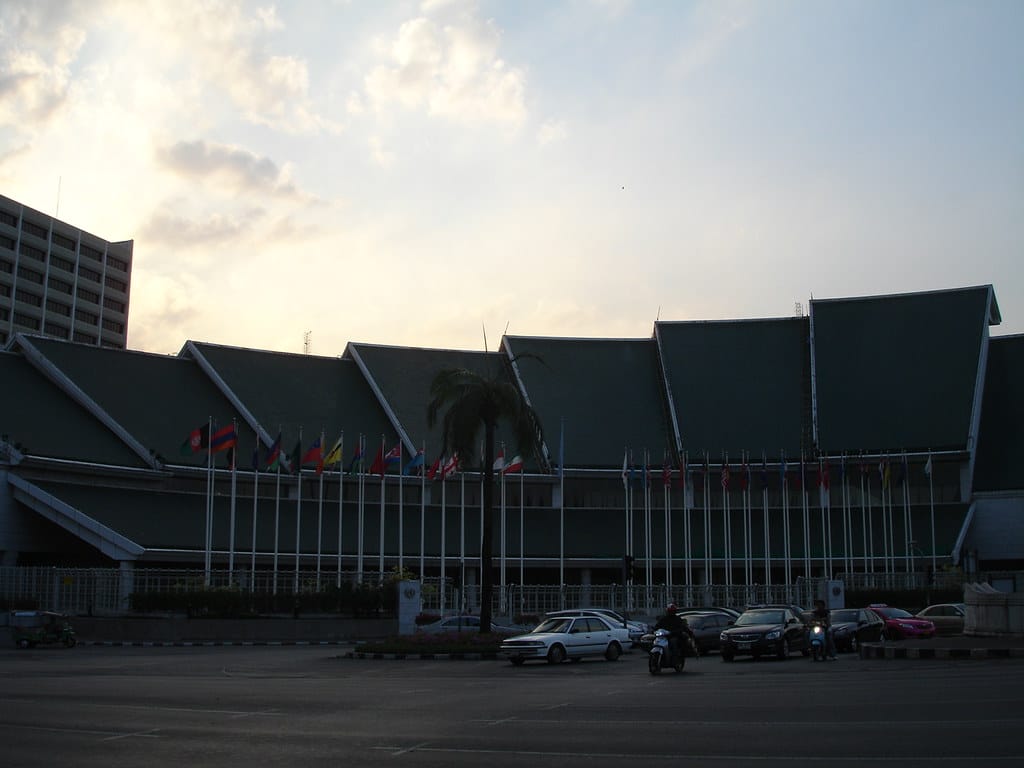
    The United Nations building in Bangkok, Thailand. Image credit: dsin_travel / CC BY 2.0

    China has consistently ranked among the top 20 refugee producing countries every year since 2003, according to statistics published by the United Nations High Commission for Refugees (UNHCR). The latest statistics published in June 2021 indicated that China was 18th on the UNHCR’s list at the end of 2020. The number of UNHCR-registered refugees originally from China reached 175,585. Additionally, there were 107,864 Chinese asylum seekers around the globe with pending claims. The number of asylum seekers increased nine-fold from just 11,375 in 2011, the year before paramount leader Xi Jinping assumed power.

    Table 1. UNHCR’s Forced Displacement Statistics (Country of Origin: China)

    Source: UNHCR, Refugee Data Finder, 2003-2020
    Many UNHCR-recognized refugees from China consider the West a destination of choice for resettlement. After taking the first step in the long journey to asylum, many refugees from China sojourn in Thailand where they await refugee status determination. It is an administrative process by which the Bangkok-based regional office of UNHCR for Southeast Asia determines whether a person seeking protection qualifies as a refugee under international law. Bangkok is home to an estimated 8,000 urban refugees—hailing from Asia, the Middle East, and Africa.

    Dui Hua is not aware of any official statistics about Chinese asylum seekers in Thailand. However, Bei Ling, founder of “Home of Refugees” in Thailand in 2015, estimated that more than 300 Chinese asylum seekers were in the country as of October 2018.

    This is the first entry in a two-part series examining issues facing Chinese asylum seekers in Thailand. This entry explores who they are and why they have fled China. The second entry will look at how and why Thailand falls short of being a safe haven. Prospective refugees with or without valid passports risk criminal detention for overstaying in Thailand. Their predicaments also include indefinite wait times for third country resettlement. The fact that Thailand fails to abide by the principle of non-refoulement also places a heightened risk of repatriation for those seeking protection from persecution at home.

    Why Thailand?

    Thailand started to become a popular place of transit for Chinese refugees about two decades ago. Prior to that, those with a well-founded fear of persecution decamped to colonial Hong Kong to flee political persecution thanks to the lax border controls at the time. Since China resumed sovereignty over the former British colony in 1997, Hong Kong has ceased to be a popular destination for asylum protection.

    For decades, Hong Kong has been a magnet for refugees. It is troubling to see a spiked increase in asylum seekers from Hong Kong since civil unrest triggered first by the now-rescinded extradition bill, and then by the sweeping arrests made under the National Security Law. The law criminalizes secession, subversion, terrorism, and collusion with foreign forces. At the end of 2020, there were 487 registered asylum seekers from Hong Kong, up from 22 in 2018 before mass protests erupted in June 2019.

    While a portion of those who fled China could be considered “economic migrants” in search of sustenance and a livelihood, China’s much-lauded economic success has fallen short of stopping people from fleeing abroad. Critics of one-party rule, adherents of banned religious groups, civil rights activists, petitioners, and ethnic minority groups are continuing to seek asylum protection abroad via Thailand.

    Chinese nationals find entry to Thailand easier than other neighboring countries or regions including South Korea, Japan, and Taiwan, mainly because they benefit from the 15-day visas on arrival available to them (Thailand has suspended this arrangement due to the outbreak of coronavirus). Entry to elsewhere requires obtaining a pre-arranged visa.

    The Thailand-Laos overland crossing checkpoint at Sop Ruak. Image credit: Slleong / CC0 via Wikimedia Commons
    Because of geographical proximity, those without proper legal documents can resort to traveling illicitly overland from Yunnan with the help of smugglers. Chiang Mai, for instance, is reachable by land transport from Yunnan’s border in nine hours. From Chiang Mai, it is another half-day journey to Bangkok, where asylum seekers file their refugee claims at the UNHCR office.

    Why Flee?

    Political Prisoners

    Geng He (耿和), wife of human rights lawyer Gao Zhisheng, is arguably the most notable example of a family member of a Chinese political prisoner fleeing political persecution via Thailand. She left for Bangkok with her children in January 2009 while her husband was serving his suspended sentence for inciting subversion. Gao’s entire family faced reprisal because Gao took on controversial cases and publicly called for an end to the persecution of Falun Gong. While in China, Gao’s children were prevented from attending school. Geng and her children stayed in Bangkok for two months before resettling in the United States. However, it must be noted that such speedy granting of asylum by the United States was only expedited by international attention. As will be discussed in Part II, the wait time for third country resettlement is often indefinite. Today, Gao remains under house arrest even after his sentence expired in August 2014.

    Another asylum application involved Hua Yong (华涌), who arrived in Canada in April 2021. Hua is a well-known painter from Beijing who posted videos documenting forced evictions and demolitions in poor neighborhoods. He was placed under residential surveillance at a designated location for three months after meeting with the father of Dong Yaoqiong, a girl who was admitted to a psychiatric facility after she live-streamed a video of herself accusing the Chinese Communist Party of “thought control.” Hua escaped to Thailand in September 2019.

    Dui Hua previously assisted former political prisoner Li Huangming (李焕明) with verifying his claim for political asylum. Before being granted political asylum in Finland in May 2013, Li fled to Bangkok after he completed his nine years’ sentence for inciting subversion in September 2010. The conviction stemmed from him distributing or planning to distribute tens of thousands of “reactionary” flyers in Shenzhen. While awaiting refugee resettlement, Li wrote stories about other Chinese asylum seekers in Bangkok for Boxun and other NGOs. In an article published by Human Rights in China in November 2012, Li wrote that Bangkok’s UNHCR office had a special team of interpreters and officials to handle the surge of applications from Chinese dissidents.

    Li wrote about changing demographics of Chinese asylum seekers. A significant number of applications were submitted by petitioners contrary to the popular belief that most Chinese refugees are supporters of China’s democracy movement, violators of the one-child policy, and adherents of banned religious groups such as Falun Gong and house churches.

    Petitioners

    Li’s observation is in line with what has been reported in unofficial news sources in recent years. Petitioners fled to Bangkok because they face reprisal in China after lodging futile complaints about land expropriation or forced demolition in their home cities.

    Petitioner Zhang Shufeng protests at UNHCR’s Bangkok office while holding a bilingual slogan that says “Request UNHCR help.” Image credit: Mirror Media

    Zhang Shufeng (张淑凤), a native of Beijing, fled to Bangkok in 2014 and obtained refugee status three years later. Taiwan-based Mirror Media reported that Zhang’s family was subjected to house arrest, beatings, and constant surveillance by government-hired thugs in China. Surveillance intensified during the “Two Sessions” (the National People’s Congress and the Chinese People’s Political Consultative Conference) and other political events. In Bangkok, Zhang protested at the UNHCR office while holding a bilingual slogan saying “Request UNHCR help,” in the hope that the UNHCR would expedite her resettlement process.

    In January 2017, unofficial news media reported that Beijing evictee Wang Ling (王玲) joined her son who had arrived in Bangkok in December 2016 to maximize the chance of them both getting through Chinese immigration checks. Wang claimed that she had received death threats from police after pursuing complaints about the forced demolition of her home. In 2008, she was sentenced to 15 months of re-education through labor and had been detained a total of 11 times. The news of abnormal deaths in police custody made Wang fear for her life.

    Religious Persecution

    Falun Gong practitioners still make up a large portion of asylum seekers in Bangkok. Many of them have fled persecution after the suppression of the spiritual sect began in 1999. One widely publicized case concerns Song Zhiyu (宋志宇), who escaped to Thailand in early 2014 via Myanmar after completing his three-and-a-half-year sentence for “organizing a cult to undermine implementation of the law.” In a Reuters interview in 2016, Song recounted how he “was spirited across a river into Thailand and hidden in the luggage hold of a Bangkok-bound bus.” Song claimed that Thailand had about 160 Falun Gong refugees and asylum seekers. The Thai authorities have taken an interest in them owing to the close bond between the military junta and Chinese government since 2014. More than 29 practitioners had been arrested on immigration charges under the military junta, said Song.

    Members of the Early Rain Covenant Church in Chengdu have also made their escapes via Thailand and joined the ranks of asylum seekers before pastor Wang Yi (王怡) was sentenced to nine years in prison for subversion and illegal business activity in December 2019. The crackdown on this prominent house church prompted Liao Qiang (廖强) to travel to Thailand with five of his family members in July 2019. They stayed in Thailand only for three days before transiting to Taiwan. However, their stay in Taiwan was only temporary because Taiwan does not have a refugee law. Liao and his family left for the United States on June 29, 2021 after receiving political asylum there.

    Civil Activism

    New groups of asylum seekers have emerged following Xi Jinping’s sweeping crackdown on civil society since he took power in 2012. Some were participants of the “Southern Street Movement,” a series of small-scale street banner protests that occurred in southern cities such as Guangzhou and Shenzhen from 2012-2013. The movement called for democratic reform and government officials to disclose assets.

    Among the “Southern Street Movement” asylum seekers were Wu Yuhua (吴玉华) and her husband Yang Chong (杨崇). They fled China in early 2015 after being targeted by police for supporting the protests in Guangzhou. Two years later, the couple was granted refugee status in Bangkok.

    Yang Chong holding up a banner calling for human rights and elections in 2015. Image credit: Bnn.co
    Supporters of the New Citizens’ Movement have also sought political asylum. The movement was promoted by prominent legal scholar and civil rights lawyer Xu Zhiyong, who was formally arrested for subversion in January 2021 after calling on Xi Jinping to step down. Sharing similar aspirations with Xu, Yan Bojun (颜伯钧) arrived in Bangkok in early 2015 after several futile attempts to leave China. In 2016, Yan published a book in Japan recounting the suppression he faced after helping Xu provide legal assistance to victims of social injustice. He had been placed under criminal detention several times in China; the longest one lasted 30 days.
    Liu Xinglian (刘兴联), another UNHCR-recognized refugee, was arrested in Hubei for inciting subversion in June 2015 due to his involvement in Qin Yongmin’s “China Human Rights Watch.” The group promoted the idea of a peaceful transformation to a democracy and circulated Qin’s articles about the inevitable demise of China’s autocratic rule. After Liu was released on bail in April 2016, he managed to escape to Bangkok in 2017.

    Uyghurs & Kazakhs

    Pakistan, which borders Xinjiang, was once a popular escape route for Uyghurs seeking to escape Chinese state repression, but its growing economic reliance on China has made Uyghurs fear for their future. Pakistani Prime Minister Imran Khan said as recently as July 2021 that, “What they [China] say about the programs in Xinjiang, we accept it.”  In the mid-2010s, a large group of Uyghurs made a long detour south to Bangkok before human rights abuses associated with the “re-education camps” made international headlines. However, Uyghurs are typically not interested in registering in Thailand as asylum seekers, according to a UNHCR statement in 2015. They were only looking for ways to get to Turkey, a destination of choice with an estimated 50,000 Uyghur residents.

    Thai authorities have confirmed a staggering number of Uyghur escapees in Thailand. In 2014, a group of 424 Uyghurs were detained in Thailand. In July 2015, over 170 Uyghurs were released to start new lives in Turkey, but a week later the Thai government repatriated 109 refugees to China. In July 2017, Thai immigration police said about 60 Uyghurs remained in detention centers across the country. As recently as 2020, their number was down to about 50. They were remnants of the Uyghurs who fled to Thailand in 2014.

    Evidence also suggests that ethnic Kazakhs have fled Xinjiang’s massive surveillance and detention campaign. A recent case involved Qalymbek Shahman, who Uzbek authorities sent back to Thailand after being denied entry to Kazakhstan in January 2019. He was subjected to intense racial profiling in China, making it impossible for him to make a living. “I would have my ID checked every 50 to 100 meters when I was in Xinjiang…Whether it was getting on a plane, on a train or other public transportation, they would spend half an hour checking me out every time.” His clients became concerned as to why he was routinely monitored and consequently stopped doing businesses with him.

    Chinese asylum seekers in Thailand face a number of problems beyond finding safe haven, including the lack of legal recognition. The second instalment will explore why and how Thailand falls short in protecting asylum seekers, and the challenges asylum seekers encounter once in Thailand.
    Read Part II here.

  • Dueling Statements, and Visions, at UN Human Rights Council

    Dueling Statements, and Visions, at UN Human Rights Council

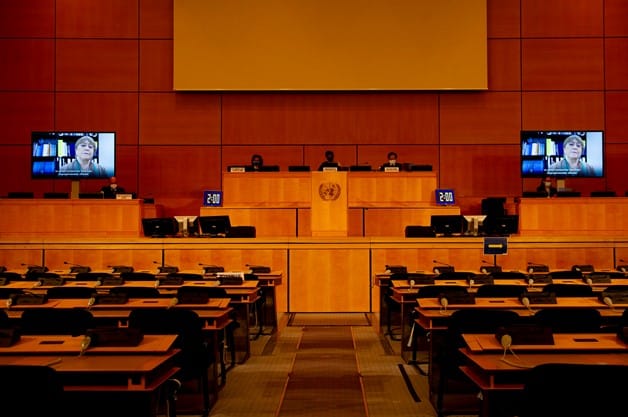
    United Nations High Commissioner for Human Rights Michelle Bachelet makes remarks during the annual high-level panel discussion on human rights mainstreaming at the 46th session of the Human Rights Council on February 22, 2021. Image credit: UN photo by Violaine Martin

    The United Nations Human Rights Council is an ideological battleground between China and its allies and the United States and its allies. Its 47th regular session (hereafter HRC 47) took place from June 21 to July 14, 2021 in Geneva. At the start of the session, Permanent Representative of Canada to the United Nations (UN) in Geneva Leslie E. Norton delivered the Joint Statement on the Human Rights Situation in Xinjiang on behalf of 44 countries. In response, Belarus delivered a joint statement from 69 countries refuting criticisms against China and urging non-interference.

    In recent years, HRCs and other UN sessions have seen dueling statements expressing concern over China’s human rights record on the one hand and lauding it on the other. Two blocs have emerged since a joint letter at HRC 41 in 2019. While each of the UN’s 193 member states has its own motivations, some factors offer insights into how countries are negotiating the US-China relationship and the current human rights climate.

    Dueling Statements

    The Canada statement at HRC 47 expressed concerns about the human rights situation in Xinjiang Uyghur Autonomous Region (XUAR), Hong Kong Special Administrative Region (SAR), and Tibet Autonomous Region (TAR) citing “credible reports” of rights abuses including widespread arbitrary detention, surveillance, restrictions on fundamental freedoms, torture, and gender-based violence by authorities. It urges China to allow “immediate, meaningful, and unfettered access” to the region and to implement the concluding observations of the UN Committee on the Elimination of Racial Discrimination (CERD).

    The signatories to the Canadian statement are predominantly developed democracies in North America, Europe, and Asia-Pacific. European states make up the majority. Most of the signatories have been outspoken against China’s human rights record and, as with Asia-Pacific signatories, have geopolitical concerns about China. Ukraine allegedly backed out of signing the statement when China threatened to halt sending vaccines. Israel was reportedly pressured to join by the United States.
    All of the G7 – Canada, France, Germany, Italy, Japan, the United Kingdom, and the United States – signed the Canadian statement. In 2020, the G7 countries made up at least a third of China’s foreign trade revenue. Except for Japan and the United States, the G7 countries are also members of the China-launched Asia Infrastructure Investment Bank. The countries that signed the Canadian statement likely account for at least 50 percent of China’s export revenue. Trade between the United States and China, meanwhile, has surged to record levels, with some reports writing that it is “as if the protracted tariff war and pandemic never happened.”
    Belarus’ counter statement emphasized the importance of “sovereignty, independence and territorial integrity of states and non-interference in internal affairs.” It implies that the Canadian statement is politically motivated and based on disinformation and double standards. The statement originally had 65 signatories with four nations joining later, and has broad support among the Organization of the Islamic Cooperation (OIC). Twenty-three of the OIC’s 57 members did not sign the Belarus statement, nor did most of China’s major trading partners.
    Table 1. HRC 47 Statement Signatories
    There were notable omissions. Both Turkey and Kazakhstan have not signed either statement despite cultural links to persecuted groups in China. Multiple ASEAN nations, particularly those that are Muslim-majority and/or have concerns about the South China Sea, have not aligned with either bloc. Several of the world’s largest economies have also been absent, including India and Brazil. South Korea, which enjoys strong economic ties with both but is politically aligned with the United States, refrained from signing, as did Singapore. Finally, four members of the EU have not signed either statement: Cyprus, Greece, Hungary, and Malta.
    As mentioned, HRC 47 was not the first instance of dueling statements on China’s human rights record. At HRC 41 in 2019, 25 nations signed a letter criticizing China while a counter letter garnered 50 signatories. At HRC 44, the UK issued a joint statement signed by 27 nations; in turn, two statements supported China—one on Xinjiang issued by Belarus signed by 53 states and another on Hong Kong issued by Cuba signed by 46 states. At HRC 46, Belarus and Cuba switched: Belarus offered a statement on Hong Kong for 69 states while Cuba’s statement on Xinjiang garnered 64 signatories. There was no joint measure critical of China; instead, 21 member states made 34 separate remarks criticizing China’s human rights record.
    Similarly, in the 74th session of the General Assembly, the UK issued a statement on behalf of 23 states, which was met by a counter statement from 54 member states. In the 75th session, Germany issued a joint statement on behalf of 39 states. Cuba supported Xinjiang policy on behalf of 45 states and Pakistan supported Hong Kong policy on behalf of 55 states.
    Statements critical of China have been issued by the UK, Germany, and Canada while joint actions supporting China have been issued by Belarus, Cuba, and Pakistan. Both Belarus and Cuba are among the last communist dictatorships in their regions, and both have faced political turmoil and threat of regime change in recent months. Should political instability in Cuba result in the fall of the regime, China could lose one of its key supporters.
    Table 2. Selected Actions at the UN
    The joint statements have consistent messaging. Statements critical of China have expressed concern over human rights, noted China’s obligations under international law, recommended that China implement the CERD observations, and urged China to allow meaningful, unfettered access to independent observers. Statements in support of China consistently accuse the other bloc of being politically motivated, commend China’s actions in Xinjiang as human rights achievements through the right to development and, because there have been no terrorist attacks in Xinjiang in three consecutive years, the right to life.
    Regions Beyond the Rhetoric
     
    The most obvious bloc is that of the developed democratic economies of North America, Europe, and Asia-Pacific that express concern over human rights in China. Canada’s HRC 47 statement was the most supported statement yet: 44 states signed on, 23 from the EU and 32 in Europe. This corresponds to recent polling in which publics in 17 advanced economies said China does not respect the personal freedoms of its citizens. Of the nations surveyed—all in North America, Europe, and Asia-Pacific—13 signed the HRC 47 statement. Several of these nations have designated China’s actions in Xinjiang as genocide in their domestic political bodies. Of the remainder, South Korea, Greece, and Singapore have not signed any statement; the latter two reported favorable views of China, and Singapore was the only public to prefer close economic ties with China and to express confidence in Xi Jinping. However, the United States induces uncertainty. Of the 16 other nations, a third said that the United States considered their foreign policy interests. While most described the United States as a “somewhat reliable partner,” most believe that it is no longer a good model of democracy.
    Much has been made of the Islamic world’s support for China’s actions in Xinjiang. Belarus’ HRC 47 statement was signed by 13 MENA countries and the majority of OIC countries. Only one OIC member, Albania, signed Canada’s statement. Muslim populations’ support for alleged genocide against a Muslim population has been explained as a byproduct of strong-man rule because many MENA, OIC, and Central Asian nations have authoritarian features. However, polling has found consistently positive views of China and Xi Jinping even when support for the United States increased among seven MENA countries. Arab publics consistently view the United States as a larger economic threat than China. Across 13 Arab countries, 58 percent viewed US policy towards the region negatively while a majority held positive views on China’s foreign policy. These views persist even though respondents view China as a less desirable employer and a source of inferior goods, and they express broad support for democracy, which suggests that China’s argument for sovereignty is attractive. Dismissing the Muslim world’s support of China as a product of illiberalism may validate China’s narrative that human rights are individualistic western ideals used to infiltrate and subjugate otherwise sovereign states.
    Among ASEAN countries, seven of its 10 members did not sign either statement. The Philippines stopped supporting China after HRC 41. While sharing the Philippines’ concerns over the South China Sea, Indonesia and Malaysia are also facing pressure, both external and internal, over the situation of the Uyghurs in their country. A 2021 survey of government and civil society experts in ASEAN nations found that support for the United States has increased in recent years. A 2020 poll found 79 percent identified China as the most influential power in the region, with 72 percent expressing wariness over this: “China’s economic influence is deeply felt but not very well received in the country.” Still, China is favored in many ASEAN countries with the United States being the overwhelming preference in the Philippines and Vietnam.
    Africa has been a consistent source of support for China at the UN, even as some of the continent’s largest economies avoid statements. (In a surprise development, Côte d’Ivoire issued a statement expressing concern over actions in Xinjiang, Hong Kong, and Tibet despite not signing either statement.) A survey of 18 African countries found that while the United States is still the preferred development model, in countries where China had invested mainly in infrastructure, perceptions have held steady or improved. Less than half of those polled said they were aware of Chinese loans or financial assistance to their country but among those who were, 77 percent were concerned about loan repayment and a majority (58 percent) said that their governments had overborrowed. This might indicate that narratives about debt traps and asset seizures are having an effect.
    Like Africa, the region consisting of Latin America and the Caribbean (LAC) has seen hefty Chinese investment. According to the Congressional Research Service, 19 LAC countries have Belt and Road Initiative (BRI) projects in the region and total trade between China and the region reached $316 billion in 2019. Accumulated loans from 2005 to 2020 totaled $137 billion, with top recipients being Venezuela, Brazil, Ecuador, and Argentina—only one of which signed the Cuba statement. Public polling in Brazil, Argentina, and Mexico suggests that people have more positive views of China than negative, and these ratings have improved since 2014; these publics were more likely to name the United States as the top threat but say that they have good economic relations with both countries.
    Trading Onwards
     
    A look at China’s top trading partners suggests that any battle for hearts and minds is occurring separate from trade deals. China’s top 10 countries for imports and exports are dominated by Canada statement signatories—the United States, Germany—and non-signers—Brazil, South Korea. While supporters like Russia and the odd MENA state factor in at lower levels, China’s economy is still supported by the countries it accuses of weaponizing human rights. Amongst ongoing calls for decoupling and an economic reality that suggests the opposite, there are several issues to consider moving forward.
    Investment and attention seem to matter. In public polls, countries that receive investments tend to have more favorable opinions of a country, which sometimes translates into UN support or at least the absence of opposition. The United States and Europe have recently announced initiatives to compete with China’s BRI, and vaccine diplomacy, as seen by the Ukraine case, remains a crucial issue for international engagement.
    Narratives can create opportunities. Narratives on predatory investment may have sway in regions lacking a power monopoly; China-led narratives about sovereignty at the very least provide effective cover for post-colonial societies, some of whom may be truly weary of invasion. Similarly, China’s human rights whataboutism can deflect attention from criticism. It has highlighted the United States’ history of genocide and aggression in the MENA region. At the same time that Canada issued its statement, reports of mass graves at its relocation schools revealed its own human rights abuses. China even issued its own joint statement expressing “deep concerns” on human rights in the United Kingdom largely due to severe systemic racism.
    China’s accusations of political bias might seem contrived to western audiences, but the United States has at times taken a similar approach. The Bush administration declined to join the HRC in 2006 when the HRC replaced the Human Rights Commission, which was widely seen as ineffective and even counterproductive. The Bush presidency also cited anti-Israel bias as a reason for non-involvement, and the United States was one of four nations—with Israel, the Marshall Islands, and Palau—to vote against the HRC’s formation. Belarus, Iran, and Venezuela abstained. During the Obama administration, the United States joined and was elected to the HRC. In 2018, the Trump administration withdrew from the HRC, again citing anti-Israel bias as the reason.
    On June 19, 2018, then-Ambassador to the United Nations announced the US withdrawal from the HRC. Image credit: C-Span
    Similarly, China has used the US-led war on terror to justify its actions. Many Western countries have expressed indignation at China’s actions without acknowledging parallels to US programs of extraordinary rendition, extrajudicial drone killings, and the “off-shoring” of refugees by developed democracy economies. This helps reinforce China’s narrative that human rights are culturally biased, politicized devices. Ignoring these aspects may reinforce China’s notion that the choice between the US and China-led narratives on human rights is a political one, as opposed to one rooted in international law and morality.
    The Biden administration seems to be progressing on some of these fronts. The administration’s statement on key outputs from HRC 47 listed achievements such as co-sponsoring resolutions in human rights in Syria and the human rights of migrants, leading events on Hong Kong’s National Security Law and business and human rights, and cooperating on a new mechanism to combat systemic racism. It also confirmed that the United States will seek election to the HRC leadership for 2022-2024.
  • Tablighi Jamaat and Hui Muslims

    Tablighi Jamaat and Hui Muslims

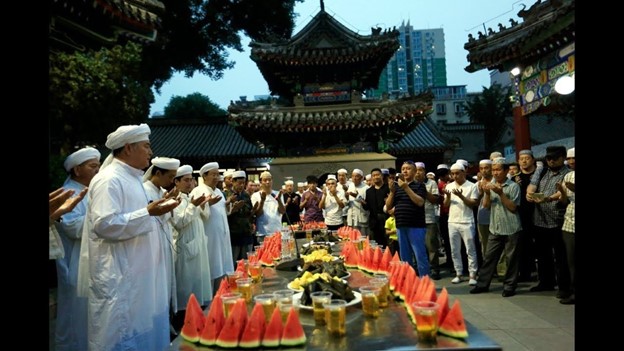
    Footage posted in 2015 shows Chinese Muslims, who appear to be members of Tablighi Jamaat (in white robes), holding a prayer in a Chinese-style mosque. The skullcapped worshippers to the right are believed to be Hui Muslims. Image credit: Umal Al-Dawa Youtube Account
    Literally translated as “society for spreading faith,” Tablighi Jamaat (TJ) is a transnational movement closely tied to the Deobandi interpretation of the Sunni Islamic teachings. It is often seen as an ultraorthodox sect, and some media outlets have erroneously reported that TJ calls on Muslims to travel the world to convert non-believers. Founded in India in 1926, TJ encourages all members to form small groups to proselytize both in- and outside of mosques.

    TJ’s proselytizing method differs from the mainstream practice in that it is revivalist and insular. Rather than focus on non-Muslims, TJ adherents encourage other Muslims to adopt more orthodox lifestyles akin to those of Muhammad and the first Muslim adherents, and to focus proselytizing on current believers and Muslims of lapsed faith. Branding itself as a pietistic movement that eschews politics, TJ is active in over 150 countries, according to a study published in 2010 by Pew Research Center. TJ has an estimated 25 to 80 million participants around the globe, with the majority living in South Asia.

    Although TJ openly rejects violence as a means for evangelism, it is banned by Russia and a number of Middle East nations due to its suspected connections to militancy and terrorism. TJ, however, continues to operate legally in much of Europe. While a French intelligence official remarked that TJ provided “fertile ground for breeding terrorism,” other European anti-terrorism officials said there is insufficient proof to substantiate the claim. The United Kingdom has become a center of TJ activities with the arrival of South Asian immigrants since the 1960s. In the United States, officials have been unable to prove that TJ is a terrorist group although the then-assistant director of the FBI said in 2003 that “al-Qaida used them for recruiting.” Since the attacks of September 11, 2001, the United States has placed the 50,000 TJ participants in the country under close surveillance.

    The Chinese government sees TJ as a matter of serious concern and employs similar rhetoric to discredit the sect. That said, because of its diffuse nature and scarcity of public information, little is known about how TJ operates and the extent of its influence in China. Researching this subject is also difficult because varying transliterations are in use, including taibilike (台比力克), zhema’erti (哲麻尔体), zhemati (哲麻提), and chuzhemati (出哲麻提). In government sources, TJ is also called Da’wah Preaching Society (dawa xuanjiaotuan 达瓦宣教团). The name is occasionally shortened as Da’wah (达瓦), dawaer (达瓦尔), or dawa (达洼), all of which stem from an Arabic word used in the Quran to describe Allah’s call to proselytize. Some scholars have also said that in China and elsewhere, Da’wah refers to a range of educational and social welfare activities catering to Muslims in need.

    The participation of Hui Muslims in TJ has attracted some scholarly interest. Among the first English literature on this topic is “Hui Muslims: The Milieu of Radicalization and Extremism,” a chapter of Ethnic Identity and National Conflict in China, but it only mentions in passing that TJ increases the risk of radicalization among Hui. There are also a few Chinese-language studies about TJ, but none of them go beyond providing basic facts about its history, practices, and overseas activities.

    Alexander Stewart

    Anthropology scholar Alexander Stewart conducted an in-depth study on this little-known subject. His 2018 article titled “Tabligh Jama’at in China: Sacred self, worldly nation, transnational imaginary” focuses on Hui participation in TJ in Xining, Qinghai. Stewart pointed out the sensitivity of the subject matter, citing anecdotal remarks from a graduate student who was told by mainland professors to avoid touching on it. Stewart indicated that many TJ participants in Xining “wear the loose, white, South Asian-style clothing common to the movement…” Unlike TJ participants outside of China, they do not gather in exclusively dedicated mosques or institutes. They have distinctive ritualized behaviour and proselytizing methods: they lead study sessions and travel occasionally in groups of four to ten people to preach all over China. “Instead of violently opposing the Han-dominated atheist state like some extremists among Uyghur splittists in Xinjiang,” TJ stresses the unity of all Muslims, transcending the many Islamic sectarian divides. Another reason why TJ appeals to Hui is because the sect provides an escape for those dissatisfied with state-appointed imams who prioritize patriotism over religious orthodoxy.

    Stewart noted that the legal status of TJ in China is ambiguous. In his article, Stewart cites one criminal case which strongly suggests that TJ participants are at risk of imprisonment in Xinjiang. The case was concluded in Gulja County in September 2013 and involved a Hui farmer sentenced to two years’ imprisonment for “gathering a crowd to disturb social order.” The charge stemmed from his participation in TJ and illegally proselytizing in Xinjiang, Gansu, Ningxia, and Qinghai. In the judgment, the court designated Da’wah as an “overseas religious infiltration organization… unanimously boycotted by China’s traditional Islamic groups.”

    Dui Hua’s Research

    The Hui farmer case cited by Stewart was not an isolated instance. Politically driven accusations against TJ are dominant in official narratives. In 1999, Kashgar Yearbook recounted finding “reactionary propaganda” from hostile forces that included TJ. In that year, police broke up 11 secret TJ gatherings and confiscated about 2,000 copies of “reactionary” books, 80,000 copies of illegal religious publications, and thousands of reactionary and religious cassette tapes. Kashgar and other Xinjiang localities have also branded TJ as a source of “sabotage and infiltration” and religious extremism despite a lack of evidence to substantiate the claims. In Xinjiang, TJ is also categorized as one of the sanfei (三非, i.e. three illegal) cases, which include people who take part in illegal religious activities, produce illegal religious publications, and propagate illegal religion online.

    Government gazettes sometimes give piecemeal figures of police raids that hint at the extent of influence of TJ. In 2004, Kashgar police reportedly investigated 220 participants in the whole prefecture. In 2010, police outlawed five gatherings involving 76 people. The sources, however, did not state whether the TJ participants were Uyghurs, Hui, or members of other Muslim minorities.

    Dui Hua’s research into court judgments uncovered several criminal cases in connection to TJ, all of which involved Hui Muslims. None of them were accused of terrorism or convicted of terrorism-related crimes. Allegations against them all centered on “illegally proselyting” or “illegally teaching illegal Islamic classes.” For instance, Ma Decang (马德仓) was sentenced to six years’ imprisonment on December 12, 2014, in Turpan City, for the same offense of “gathering a crowd to disturb social order” because he was not authorized by the state to teach the Quran in mosques and his home. As a leader of a local TJ group, he received non-local TJ visitors in his home, where he held prayers and arranged proselytizing missions to Xinjiang, Gansu, Shaanxi, Ningxia, and Sichuan.

    Available sources also suggest that some TJ participants travelled abroad to preach. As recently as April 2020, news media reported that six Chinese nationals were among the 960 TJ members who were blacklisted and their tourist visas cancelled by India’s Union Home Ministry as the deepening coronavirus sparked border closures and strict lockdowns.

    In China, even making arrangements for TJ participants to travel overseas can be seen as a criminal act. On May 19, 2015, Jin Dehuai (金德怀) received an even lengthier seven years’ prison sentence in Xinjiang, again for “gathering a crowd to disturb social order.” The judgment stated that Jin arranged Bangladesh visas for other TJ participants. In 2013, Jin himself paid a 40-day visit to Bangladesh, where he met with other TJ participants from China. Additionally, Jin was accused of organizing multiple “jamaat’” gatherings and Islamic classes in his home in Changji Hui Autonomous Prefecture.

    Another reason for the severity of Jin’s sentence is that he reoffended. In 2009, Jin was sentenced to one year and six months for the same offense as he was found guilty of teaching the Quran to over two dozen Hui and Uyghur children aged three to 16. The religious classes Jin provided were said to have inflicted harm on the children’s health because they were confined in several small apartments that “restricted their free movement,” according to the judgment.

    From “reactionary” to “infiltration, extremism and terrorism,” the different accusations put forward by the Chinese government against TJ appear to suggest that local officials in Xinjiang do not share the same understanding on how to pursue the sect. There were also cases where TJ participants were instead charged with Article 300 of the Criminal Law “organizing/using a cult to undermine implementation of the law.” The application of this offense is unusual because TJ is not an officially recognized cult organization such as Falun Gong or Almighty God.

    Riyad as-Salihin Hadiths, once available for sale in online bookstores, was said to be an illegal religious publication in the case of Ma Sheng in 2013. The image was originally from www.kongfz.com but is no longer on the site.

    In one case concluded in October 2010, the Gulja County People’s Court sentenced seven Hui TJ participants to three-four years’ imprisonment for “cult.” One of them is Ma Sheng (马胜), who was similarly accused of conducting illegal religious classes. Available sources stated that he taught several banned books, including Islamic Six Virtues and Riyad as-Salihin Hadiths. Publications of the same titles are downloadable free of charge from various online file sharing services.

    Beyond Xinjiang

    The crackdown on Muslims that began with the Uyghurs in Xinjiang has spread to other regions. Dui Hua has also found criminal cases involving TJ participants in other provinces. Ningxia, home to a large concentration of Hui Muslims, is another center of Hui TJ participants. In 2014, public security in Litong District launched a district-wide crackdown on “cults”, breaking up five different Da’Wah gatherings and “dismissing” 48 participants. In 2015, Ningxia raided 48 instances of “Da’wah Work” involving 355 individuals throughout the province. In 2016, in Tongxin County alone, also in Ningxia, authorities reportedly stopped 125 Da’Wah participants from “illegally proselytizing.”

    An online judgment unearthed by Dui Hua indicated that a local court in Ningxia found Ma Zongcheng (马宗成) guilty of “gathering a crowd to disrupt a public place and traffic order” for taking part in TJ activities from 2009-2018 and gathering TJ members in his home from other parts of Ningxia, Gansu, and Henan. Ma was sentenced to two years’ imprisonment and was released on December 23, 2019.

    A document issued by the Hohhot Islamic Association in August 2019 asks all mosques to deny entry of Da’wah imams in order to comply with the state policy to Sinicize religion. Initially posted on QQ, a web portal developed by Chinese tech giant Tencent, the image has been deleted.

    How TJ is officially designated in China remains ambiguous—does it really share a propensity towards extremism and terrorism, or is it another a peaceful group banned in China because of its effort to preach and conduct classes outside the state system? Instead of violent or other terrorism-related crimes, TJ members of Hui descent were mostly convicted of public order offenses, or sometimes “cult,” for illegally proselytizing or conducting Islamic classes.

    Media attention to Hui Muslims began relatively recently around 2018 when authorities across China started demolishing mosques perceived to be “un-Chinese,” shuttered Arabic language schools, and launched “anti-halal” crackdowns which affected tens of thousands of Hui entrepreneurs and restaurant owners. However, the cases demonstrated in this post show that a portion of Hui Muslims, particularly participants of TJ, faced repression even before Chinese president Xi Jinping announced his plan to Sinicize religion. First mentioned at the Central United Front Work Conference in May 2015, Sinicization brought about major bureaucratic restructuring that put state organs in charge of religious affairs directly under the CCP’s United Front Work Department, with the primary objective to safeguard CCP’s power. At a Central Religious Work Conference in April 2016, Xi directed his Sinicization remark in part at Hui Muslims for their troubling extension of “Islamization” of Chinese society.

    Today, the clampdown on Islam has become more widespread, and some Hui Muslims are known to have been swept into re-education camps alongside Uyghurs. More research is needed to evaluate how Sinicization has accelerated the clampdown on Hui participants of TJ, whose beliefs, practices, and overseas connections are at odds with increasingly xenophobic body politic under Xi.

    In addition to Uyghurs and Hui, the Sinicization of Islam has taken aim at additional minority groups. In September 2020, reports of a crackdown on the Utsul Muslims, a population of around 10,000 living in Hainan, emerged. New restrictions ban traditional Islamic dress, including the hijab and a traditional long skirt worn by female practitioners, from schools in Utsul neighborhoods. The ban is allegedly part of a wider prohibition against any traditional ethnic garments in schools, even though it only affects the Utsuls. In addition to the ban on traditional dress, other measures to be implemented include increased surveillance of residents in Muslim neighborhoods, restrictions on the sizes of mosques, and the removal of Arabic script and architectural features from mosques and other buildings.

  • Complaints with Retribution: China’s Muffling of Gaoyangzhuang

    Hong Kong-based pro-Beijing newspaper Wen Wei Po accuses democratic legislators and organizers of Occupy Central, including Joshua Wong, of making complaints overseas about internal affairs of China and Hong Kong. Photo credit: Wen Wei Po
    China celebrates National Youth Day every year on May 4th, a holiday commemorating the patriotic May Fourth Movement in 1919. On this day exactly a century ago, thousands of university students assembled at Beijing’s Tiananmen Square, urging the Chinese delegation at the Paris Peace Conference not to sign the Versailles Treaty because the Allied Powers had conceded to Japan’s demand to take over the German concessions in Shandong. The procession proceeded to foreign embassies in the Legation Quarter to demand nullification of special foreign privileges, such as extraterritoriality. This was a privilege by which China was forced to yield control of sovereign powers, one of many losses as part of a series of “unequal treaties” in force since the First Opium War. Student protesters hoped that the United States would side with China over the “Shandong question,” because the U.S. was a key proponent of national self-determination and the U.S. embassy was the only foreign embassy willing to meet with their representatives and accept their petition.

    A century later, the patriotic act of petitioning westerners known as gaoyangzhuang (告洋状) carries a negative connotation. Petitioning refers to the administrative system for receiving complaints from people with grievances, mostly concerning corrupt officials. While China guarantees the right to complain so long as petitioners do not bypass local authorities, the government does not tolerate the act of complaining to foreigners, in part due to the traditional notion of “not exposing family scandals.” Recent usage of gaoyangzhuang is often associated with Taiwanese president, Tsai Ing-wen, when she speaks to foreign diplomats and journalists about her rejection of Xi’s offer of the “one country, two systems” framework for reunification with the mainland. Li Jing-yu, wife of imprisoned Taiwanese activist Lee Ming-che (李明哲), has also been accused of gaoyangzhuang for criticizing China from overseas because she was prevented from visiting her husband, who is serving a five-year sentence in Hunan for subversion. The term is no less frequently used against Hong Kong democratic legislators, supporters and localists if they tell foreigners about Beijing’s tightening control over the former British colony.

    In Taiwan and Hong Kong, complaining about the Chinese government does not land individuals in legal trouble because both regions are independent jurisdictions. By contrast, critics on the mainland face imminent threat of loss of personal liberty. In August 2013, Global Times stated that petitioners, alongside exiled democracy activists and “splittist forces overseas” headed by the Dalai Lama and Rebiya Kadeer, were the major users of gaoyangzhuang. Petitioners were accused of taking part in a number of “illegal behaviours” such as wearing clothing traditionally associated with petitioning. These included, for example, signs hanging both down the petitioner’s front and back, waving banners, and chanting slogans at Beijing-based international organizations, such as offices of the United Nations and foreign embassies, with the intention to “create international influence” (zaocheng guoji yingxiang 造成 国际 影响). Unlike those in Hong Kong and Taiwan, petitioners on the mainland with assorted grievances, from forced demolitions to land disputes, are most likely to face reprisals for complaining to foreigners.

    Hu-Wen Era

    It is unclear when the term of gaoyangzhuang entered the official lexicon. An article originally published by Phoenix Weekly in January 2009 stated that the term began to come into vogue during the Hu Jintao and Wen Jiabao administration. China’s effort to improve its global image prior to the Beijing 2008 Olympics incentivized provincial governments to track gaoyangzhuang petitioners in Beijing. In 2005, a total of 37 people from Hubei were reported to have travelled to Beijing to make complaints to foreigners, compared to 77 people from Liaoning, which was ranked as the top fourth province nationwide. In the 19 months since July 2004, over 540 people in 50 different groups had filed complaints to the Beijing offices of UNHCR and UN Development Programme, according to statistics from the Sanlitun police station. A Liaoning official was quoted as saying that gaoyangzhuang “seriously damages the country’s reputation and external image” and “creates pressure on the capital’s social security and stability.” Another Shanghai official called gaoyangzhuang “despicable,” an act tantamount to “blackmailing the Chinese people.”

    A Hebei government directive in 2007 states that gaoyangzhuang petitioners adversely affect Beijing’s social stability and vilify the national image. Underlining added by Dui Hua Foundation. Photo credit: Boxun
    Public censure achieved little to deter petitioners from complaining about local governments to foreigners. In view of this, provincial public security, procuratorial offices, and courts started to jointly push for punitive measures. Anhui was among the first to release an opinion in 2006, listing foreign embassies and international organizations as “key areas” for stability maintenance alongside the central organs of the Chinese Communist Party, and subjecting anyone who disturbed social order to punishment in accordance to the Public Security Administration Punishments Law.

    Government officials are keen to suppress gaoyangzhuang because they use low rates of gaoyangzhuang as an indicator of good governance. A performance appraisal document in Shihu Township, Jiangsu, in 2011 categorized the prevention of gaoyangzhuang under the section appraising “critical stability control” (zhongdien weiwen 重点维稳) during “sensitive days” (such as certain national holidays and anniversaries of events that are likely to inspire protests and other forms of public political expression); the section carries two evaluation points. Each occurrence of gaoyangzhuang leads to a deduction of half a point. Similar assessment mechanisms likely existed before 2011, since the 2009 Phoenix Weekly article mentions that local public security bureaus in Henan, Shanghai and Liaoning had publicized cases of petitioners apprehended or detained for gaoyangzhuang.

    In the run-up to the 2008 Olympics, both official usage of the term gaoyangzhuang and punitive measures proliferated. In June 2007, an official in Heilongjiang’s Datong District called for “detaining or giving re-education through labor (RTL)” to gaoyangzhuang petitioners before resolving their problems. Petitioners would have to pay for all expenses the government incurred for handling their petitions if deemed “unreasonable.” In January 2008, an opinion from Hebei called gaoyangzhuang an “irregular form of petitioning to Beijing” (feizhengchang jinjing shangfang非正常进京上访) and a “serious breach” of the petition regulations. The opinion recommended that public security directly detain or give RTL to gaoyangzhuang petitioners without the need to give prior admonishment or warning. In March, Liaoning followed suit and issued a similar opinion to crack down on gaoyangzhuang petitioners.

    Nor did the crackdown on gaoyangzhuang relax in the wake of the Beijing Olympics. A local government directive issued in 2009 continued to blame gaoyangzhuang petitioners for “complicating simple issues, internationalizing and politicizing domestic problems” by means of “creating international influence.” Throughout the year, a total of 2,862 gaoyangzhuang petitioners were caught in Chaoyang District, Beijing, and, of these petitioners, 1,118 were detained. In February of that year, then-Secretary of State Hillary Clinton visited China. Zhao Chunhong (赵春红) led a group of petitioners to put up a banner welcoming Clinton and called on Nancy Pelosi (scheduled for a separate visit in May of 2009) to put pressure on China over its human rights records. Zhang was subsequently sentenced to three years’ imprisonment for “picking quarrels and provoking troubles.”

    About half a year before Xi’s rise to power in 2012, blind activist Chen Guangcheng (陈光诚) made a daring escape from house arrest to the U.S. embassy. In May, Chen and his family left China for New York. Some mainland observers opined that the episode had emboldened petitioners to make complaints to foreigners in the belief that the Chinese government would ultimately address their problems. On May 8, 2012, elderly petitioner Nie Muni (聂木妮) and his wife attempted to “barge into” the U.S. embassy, but were intercepted by the embassy guards and taken to the Jiujingzhuang Reception Center in Beijing, an unofficial detention center where petitioners are held. In an interview with Voice of America (VOA), the couple said they wanted to “beat drums and cry injustice” (jigu mingyuan击鼓鸣冤) at the U.S. embassy because the U.S. “gives people a sense of trust and respect for human rights and dignity.” They claimed to have been inspired by Chen, who received medical treatment from the Chinese government after he escaped to the U.S. embassy.

    Xi’s Regime

    Despite the abolition of RTL in 2013, many gaoyangzhuang petitioners have not fared any better. They are now more likely to be convicted of “picking quarrels and provoking troubles,” which carries a maximum sentence of ten years. In 2013, over a dozen petitioners from Fuzhou, Fujian, started a series of gaoyangzhuang petitions in the hope that then-U.S. Ambassador Gary Locke would respond to their plight. In April of that year, they even planned to intercept John Kerry’s vehicle during his Beijing visit on the 13th. Upon learning that the Fuzhou government had dispatched large numbers of interceptors to Beijing, the group proceeded instead to Ambassador Locke’s residence, where they threw stacks of leaflets and some of them chained themselves to the front gate. The group of petitioners grew to over two dozen in July, but many were removed and collectively charged with “picking quarrels and provoking troubles.” Some of them were released on bail after several months in custody.

    Some of the Fuzhou gaoyangzhuang petitioners who attempted to complain about corruption and rights abuses in China to then-U.S. Ambassador Gary Locke in 2013. Photo credit: RFA
    Lin Yingqiang (林应强) continued his effort to petition Locke alongside a dozen of the Fuzhou petitioners into early November. After 15 months in criminal detention, Lin was sentenced to three years’ imprisonment in February 2015. The judgment stated that Lin circulated 68 blog posts about the “Fuzhou victims” to satisfy his greed in the name of “anti-corruption” and “whistleblowing.” Among these posts, two recounted his stories of “barging into” the American embassy, which were viewed over 9,000 times in 2013. A day after his November petition, he and other Fuzhou petitioners put up another blog post, entitled “Please Follow Fuzhou Petitioners Who Complained to Foreigners,” which was viewed 51,159 times within one month of posting. At least four other individuals surnamed Tang, Chen, Shi and He were sentenced to two and a half years for the same offense of “picking quarrels and provoking troubles.” According to a Fuzhou activist, the above-mentioned five Fuzhou petitioners were sentenced at three different locations on purpose, because putting all of them on the same trial would have attracted unwanted publicity to this significant gaoyangzhuang case.

    In February 2016, unofficial news media reported that the Ministry of Public Security would establish a “national petitioner database” as a preventive measure of stability maintenance. The database would not only track mainland petitioners, but also those who petitioned in Hong Kong, Macao, and Taiwan. An exit ban might be placed on the mainland petitioners, who also faced restrictions from entering various municipalities and cities. Public security would liaise with Chinese embassies to track and monitor petitioners who made complaints overseas.

    The petitioner database was created with the intention of curbing the rising number of petitioners who traveled abroad to voice complaints about the Chinese government, according to Bowen Press, citing an informed source. On September 25, 2015, dozens of petitioners attempted to intercept Xi’s motorcade at the end of the Obama-Xi meeting in Washington, D.C. One of them, a petitioner from Jilin, managed to stop Xi’s wife Peng Lijuan’s vehicle. Bowen reported that the incident had “frightened” Peng and made Xi “lose face.” The petitioner was taken away by police and his petition materials were subsequently received by officials from the Chinese embassy. In March 2016, another group of 50 gaoyangzhuang petitioners from 10 different provinces and municipalities were accused of “creating a nuisance” when Xi attended the Fourth Nuclear Security Summit, again in Washington, D.C. At the time of writing, Dui Hua is not aware whether the petitioner database has come into operation.

    Communicating with Foreign Media

    While petitioning is not the only channel for Chinese citizens seeking to publicize or change policies that they deem unfair, anyone who makes negative remarks about China to foreign media can face accusations of gaoyangzhuang. In May 2014, journalist Xiang Nanfu (向南夫) was detained for the offense of picking quarrels and provoking trouble, a charge stemming from his use of Boxun, a U.S.-based Chinese language news website, to “fabricate” news about organ harvesting and violent land grabs in China in exchange for article fees. It is worth noting that although Xiang was not a petitioner, Xinhua News called his act of “smearing” China in front of foreigners gaoyangzhuang.

    Lawyers, too, have been affected by Chinese government responses to communicating with foreign sources. There has been a growing trend of using administrative penalties against lawyers following the nationwide crackdown on Chinese lawyers and human rights activists that began on July 9, 2015. During the “Two Meetings” in March 2018, the Ministry of Justice (MOJ) warned lawyers not to give dissenting views on China’s constitutional amendment that removed Xi’s presidential term limit. A notice issued by a local justice bureau indicated that violators would have his/her license to practice revoked and be barred from resuming work for five years. The MOJ also explicitly warned lawyers not to give interviews to foreign media, including BBC, Voice of Russia, and American media outlets such as NBC, CBS, VOA, and Radio Free Asia (RFA). When asked by RFA about the health condition of his client Huang Qi, the webmaster of the legal rights website 64 Tianwang, in August 2018, defence attorney Liu Zhengqing apologized for not being able to give an interview because he was under a lot of pressure with regard to talking to foreign media. On December 25, 2018, Liu’s license to practice law was revoked.

    Critics in- and outside of academia frequently face harassment for speaking out to foreign media. On August 2, 2018, Shandong police broke into the home of retired professor Sun Wenguang (孙文广) while he was giving a phone interview to VOA. In the interview, Sun criticized Xi’s One Belt One Road initiative, urging Xi to spend more money in China instead of wasting money overseas on aid, loans and investments. Sun was put under house arrest for over 10 days.

    A recent case involving prison sentences for who spoke out to foreign media involved Tibetan language activist Tashi Wangchuk, who was sentenced to five years’ imprisonment for inciting splittism in May 2018. In 2015, Tashi Wangchuk gave interviews to The New York Times, in which he expressed worries about the disappearance of the Tibetan language, as the Chinese authorities have been prohibiting the use of Tibetan in spheres ranging from schools to commerce even on the Tibetan plateau. Tashi Wangchuk described China’s ethnic policy as a “systematic slaughter” of Tibetan culture. Speaking to foreign media was his last resort, because government bureaus had refused to lodge a petition for him. He had also been turned down by domestic media, nor could he bring a lawsuit against the language policy. Knowing full well of the risk of speaking to foreign media, Tashi Wangchuk stressed that he was not advocating for independence. He insisted that language rights are human rights protected by China’s constitution. However, the nine-minute film made by The New York Times was cited as evidence that landed Tashi in jail. Tashi is scheduled for release from a prison in Qinghai in January 2021.

    The frustration of those who apparently feel driven to complain to foreigners is succinctly described by a Caixin columnist who witnessed a gaoyangzhuang incident at the U.S. embassy in March 2014: a middle-aged petitioner holding two crutches, along with three people who appeared to have come from the countryside, were intercepted by a plainclothes officer after they ignored the warning that they would be arrested. Speaking from his own petitioning experience, the columnist wrote that the only response he received from the petition bureau was a receipt acknowledgement of his complaint, and despite an indefinite wait, his petition was never addressed. He guessed that gaoyangzhuang petitioners did not genuinely think they could succeed in obtaining redress from foreigners; they were simply trying their luck because they believed they had nothing more to lose by “speaking out against injustice” in front of foreigners.

    Many gaoyangzhuang petitioners who made this or similar assumptions, however, have been mistaken. The cases explored in this article demonstrate how those who complain about China to foreigners, including foreign embassies, visiting diplomats and leaders, and journalists, could very well face several forms of retribution. Not only are they stigmatized for “badmouthing” China, but they also face the risk of imprisonment for picking quarrels and provoking troubles, and even for the very serious crime of endangering state security in cases involving ethnic minorities.

    For more on petitioning in China, see also Dui Hua’s earlier reporting on the Beijing city government’s efforts to prohibit the use of “black security firms” and “black jails” to prevent petitioners from outside Beijing from coming to the capital to petition the central government, and, potentially, foreign actors.
  • Complaints with Retribution: China’s Muffling of Gaoyangzhuang

    Hong Kong-based pro-Beijing newspaper Wen Wei Po accuses democratic legislators and organizers of Occupy Central, including Joshua Wong, of making complaints overseas about internal affairs of China and Hong Kong. Photo credit: Wen Wei Po
    China celebrates National Youth Day every year on May 4th, a holiday commemorating the patriotic May Fourth Movement in 1919. On this day exactly a century ago, thousands of university students assembled at Beijing’s Tiananmen Square, urging the Chinese delegation at the Paris Peace Conference not to sign the Versailles Treaty because the Allied Powers had conceded to Japan’s demand to take over the German concessions in Shandong. The procession proceeded to foreign embassies in the Legation Quarter to demand nullification of special foreign privileges, such as extraterritoriality. This was a privilege by which China was forced to yield control of sovereign powers, one of many losses as part of a series of “unequal treaties” in force since the First Opium War. Student protesters hoped that the United States would side with China over the “Shandong question,” because the U.S. was a key proponent of national self-determination and the U.S. embassy was the only foreign embassy willing to meet with their representatives and accept their petition.
    A century later, the patriotic act of petitioning westerners known as gaoyangzhuang (告洋状) carries a negative connotation. Petitioning refers to the administrative system for receiving complaints from people with grievances, mostly concerning corrupt officials. While China guarantees the right to complain so long as petitioners do not bypass local authorities, the government does not tolerate the act of complaining to foreigners, in part due to the traditional notion of “not exposing family scandals.” Recent usage of gaoyangzhuang is often associated with Taiwanese president, Tsai Ing-wen, when she speaks to foreign diplomats and journalists about her rejection of Xi’s offer of the “one country, two systems” framework for reunification with the mainland. Li Jing-yu, wife of imprisoned Taiwanese activist Lee Ming-che (李明哲), has also been accused of gaoyangzhuang for criticizing China from overseas because she was prevented from visiting her husband, who is serving a five-year sentence in Hunan for subversion. The term is no less frequently used against Hong Kong democratic legislators, supporters and localists if they tell foreigners about Beijing’s tightening control over the former British colony.
    In Taiwan and Hong Kong, complaining about the Chinese government does not land individuals in legal trouble because both regions are independent jurisdictions. By contrast, critics on the mainland face imminent threat of loss of personal liberty. In August 2013, Global Times stated that petitioners, alongside exiled democracy activists and “splittist forces overseas” headed by the Dalai Lama and Rebiya Kadeer, were the major users of gaoyangzhuang. Petitioners were accused of taking part in a number of “illegal behaviours” such as wearing clothing traditionally associated with petitioning. These included, for example, signs hanging both down the petitioner’s front and back, waving banners, and chanting slogans at Beijing-based international organizations, such as offices of the United Nations and foreign embassies, with the intention to “create international influence” (zaocheng guoji yingxiang 造成 国际 影响). Unlike those in Hong Kong and Taiwan, petitioners on the mainland with assorted grievances, from forced demolitions to land disputes, are most likely to face reprisals for complaining to foreigners.
    Hu-Wen Era
    It is unclear when the term of gaoyangzhuang entered the official lexicon. An article originally published by Phoenix Weekly in January 2009 stated that the term began to come into vogue during the Hu Jintao and Wen Jiabao administration. China’s effort to improve its global image prior to the Beijing 2008 Olympics incentivized provincial governments to track gaoyangzhuang petitioners in Beijing. In 2005, a total of 37 people from Hubei were reported to have travelled to Beijing to make complaints to foreigners, compared to 77 people from Liaoning, which was ranked as the top fourth province nationwide. In the 19 months since July 2004, over 540 people in 50 different groups had filed complaints to the Beijing offices of UNHCR and UN Development Programme, according to statistics from the Sanlitun police station. A Liaoning official was quoted as saying that gaoyangzhuang “seriously damages the country’s reputation and external image” and “creates pressure on the capital’s social security and stability.” Another Shanghai official called gaoyangzhuang “despicable,” an act tantamount to “blackmailing the Chinese people.”
    A Hebei government directive in 2007 states that gaoyangzhuang petitioners adversely affect Beijing’s social stability and vilify the national image. Underlining added by Dui Hua Foundation. Photo credit: Boxun
    Public censure achieved little to deter petitioners from complaining about local governments to foreigners. In view of this, provincial public security, procuratorial offices, and courts started to jointly push for punitive measures. Anhui was among the first to release an opinion in 2006, listing foreign embassies and international organizations as “key areas” for stability maintenance alongside the central organs of the Chinese Communist Party, and subjecting anyone who disturbed social order to punishment in accordance to the Public Security Administration Punishments Law.
    Government officials are keen to suppress gaoyangzhuang because they use low rates of gaoyangzhuang as an indicator of good governance. A performance appraisal document in Shihu Township, Jiangsu, in 2011 categorized the prevention of gaoyangzhuang under the section appraising “critical stability control” (zhongdien weiwen 重点维稳) during “sensitive days” (such as certain national holidays and anniversaries of events that are likely to inspire protests and other forms of public political expression); the section carries two evaluation points. Each occurrence of gaoyangzhuang leads to a deduction of half a point. Similar assessment mechanisms likely existed before 2011, since the 2009 Phoenix Weekly article mentions that local public security bureaus in Henan, Shanghai and Liaoning had publicized cases of petitioners apprehended or detained for gaoyangzhuang.
    In the run-up to the 2008 Olympics, both official usage of the term gaoyangzhuang and punitive measures proliferated. In June 2007, an official in Heilongjiang’s Datong District called for “detaining or giving re-education through labor (RTL)” to gaoyangzhuang petitioners before resolving their problems. Petitioners would have to pay for all expenses the government incurred for handling their petitions if deemed “unreasonable.” In January 2008, an opinion from Hebei called gaoyangzhuang an “irregular form of petitioning to Beijing” (feizhengchang jinjing shangfang非正常进京上访) and a “serious breach” of the petition regulations. The opinion recommended that public security directly detain or give RTL to gaoyangzhuang petitioners without the need to give prior admonishment or warning. In March, Liaoning followed suit and issued a similar opinion to crack down on gaoyangzhuang petitioners.
    Nor did the crackdown on gaoyangzhuang relax in the wake of the Beijing Olympics. A local government directive issued in 2009 continued to blame gaoyangzhuang petitioners for “complicating simple issues, internationalizing and politicizing domestic problems” by means of “creating international influence.” Throughout the year, a total of 2,862 gaoyangzhuang petitioners were caught in Chaoyang District, Beijing, and, of these petitioners, 1,118 were detained. In February of that year, then-Secretary of State Hillary Clinton visited China. Zhao Chunhong (赵春红) led a group of petitioners to put up a banner welcoming Clinton and called on Nancy Pelosi (scheduled for a separate visit in May of 2009) to put pressure on China over its human rights records. Zhang was subsequently sentenced to three years’ imprisonment for “picking quarrels and provoking troubles.”
    About half a year before Xi’s rise to power in 2012, blind activist Chen Guangcheng (陈光诚) made a daring escape from house arrest to the U.S. embassy. In May, Chen and his family left China for New York. Some mainland observers opined that the episode had emboldened petitioners to make complaints to foreigners in the belief that the Chinese government would ultimately address their problems. On May 8, 2012, elderly petitioner Nie Muni (聂木妮) and his wife attempted to “barge into” the U.S. embassy, but were intercepted by the embassy guards and taken to the Jiujingzhuang Reception Center in Beijing, an unofficial detention center where petitioners are held. In an interview with Voice of America (VOA), the couple said they wanted to “beat drums and cry injustice” (jigu mingyuan击鼓鸣冤) at the U.S. embassy because the U.S. “gives people a sense of trust and respect for human rights and dignity.” They claimed to have been inspired by Chen, who received medical treatment from the Chinese government after he escaped to the U.S. embassy.
    Xi’s Regime
    Despite the abolition of RTL in 2013, many gaoyangzhuang petitioners have not fared any better. They are now more likely to be convicted of “picking quarrels and provoking troubles,” which carries a maximum sentence of ten years. In 2013, over a dozen petitioners from Fuzhou, Fujian, started a series of gaoyangzhuang petitions in the hope that then-U.S. Ambassador Gary Locke would respond to their plight. In April of that year, they even planned to intercept John Kerry’s vehicle during his Beijing visit on the 13th. Upon learning that the Fuzhou government had dispatched large numbers of interceptors to Beijing, the group proceeded instead to Ambassador Locke’s residence, where they threw stacks of leaflets and some of them chained themselves to the front gate. The group of petitioners grew to over two dozen in July, but many were removed and collectively charged with “picking quarrels and provoking troubles.” Some of them were released on bail after several months in custody.
    Some of the Fuzhou gaoyangzhuang petitioners who attempted to complain about corruption and rights abuses in China to then-U.S. Ambassador Gary Locke in 2013. Photo credit: RFA
    Lin Yingqiang (林应强) continued his effort to petition Locke alongside a dozen of the Fuzhou petitioners into early November. After 15 months in criminal detention, Lin was sentenced to three years’ imprisonment in February 2015. The judgment stated that Lin circulated 68 blog posts about the “Fuzhou victims” to satisfy his greed in the name of “anti-corruption” and “whistleblowing.” Among these posts, two recounted his stories of “barging into” the American embassy, which were viewed over 9,000 times in 2013. A day after his November petition, he and other Fuzhou petitioners put up another blog post, entitled “Please Follow Fuzhou Petitioners Who Complained to Foreigners,” which was viewed 51,159 times within one month of posting. At least four other individuals surnamed Tang, Chen, Shi and He were sentenced to two and a half years for the same offense of “picking quarrels and provoking troubles.” According to a Fuzhou activist, the above-mentioned five Fuzhou petitioners were sentenced at three different locations on purpose, because putting all of them on the same trial would have attracted unwanted publicity to this significant gaoyangzhuang case.
    In February 2016, unofficial news media reported that the Ministry of Public Security would establish a “national petitioner database” as a preventive measure of stability maintenance. The database would not only track mainland petitioners, but also those who petitioned in Hong Kong, Macao, and Taiwan. An exit ban might be placed on the mainland petitioners, who also faced restrictions from entering various municipalities and cities. Public security would liaise with Chinese embassies to track and monitor petitioners who made complaints overseas.
    The petitioner database was created with the intention of curbing the rising number of petitioners who traveled abroad to voice complaints about the Chinese government, according to Bowen Press, citing an informed source. On September 25, 2015, dozens of petitioners attempted to intercept Xi’s motorcade at the end of the Obama-Xi meeting in Washington, D.C. One of them, a petitioner from Jilin, managed to stop Xi’s wife Peng Lijuan’s vehicle. Bowen reported that the incident had “frightened” Peng and made Xi “lose face.” The petitioner was taken away by police and his petition materials were subsequently received by officials from the Chinese embassy. In March 2016, another group of 50 gaoyangzhuang petitioners from 10 different provinces and municipalities were accused of “creating a nuisance” when Xi attended the Fourth Nuclear Security Summit, again in Washington, D.C. At the time of writing, Dui Hua is not aware whether the petitioner database has come into operation.

    Communicating with Foreign Media

    While petitioning is not the only channel for Chinese citizens seeking to publicize or change policies that they deem unfair, anyone who makes negative remarks about China to foreign media can face accusations of gaoyangzhuang. In May 2014, journalist Xiang Nanfu (向南夫) was detained for the offense of picking quarrels and provoking trouble, a charge stemming from his use of Boxun, a U.S.-based Chinese language news website, to “fabricate” news about organ harvesting and violent land grabs in China in exchange for article fees. It is worth noting that although Xiang was not a petitioner, Xinhua News called his act of “smearing” China in front of foreigners gaoyangzhuang.
    Lawyers, too, have been affected by Chinese government responses to communicating with foreign sources. There has been a growing trend of using administrative penalties against lawyers following the nationwide crackdown on Chinese lawyers and human rights activists that began on July 9, 2015. During the “Two Meetings” in March 2018, the Ministry of Justice (MOJ) warned lawyers not to give dissenting views on China’s constitutional amendment that removed Xi’s presidential term limit. A notice issued by a local justice bureau indicated that violators would have his/her license to practice revoked and be barred from resuming work for five years. The MOJ also explicitly warned lawyers not to give interviews to foreign media, including BBC, Voice of Russia, and American media outlets such as NBC, CBS, VOA, and Radio Free Asia (RFA). When asked by RFA about the health condition of his client Huang Qi, the webmaster of the legal rights website 64 Tianwang, in August 2018, defence attorney Liu Zhengqing apologized for not being able to give an interview because he was under a lot of pressure with regard to talking to foreign media. On December 25, 2018, Liu’s license to practice law was revoked.
    Critics in- and outside of academia frequently face harassment for speaking out to foreign media. On August 2, 2018, Shandong police broke into the home of retired professor Sun Wenguang (孙文广) while he was giving a phone interview to VOA. In the interview, Sun criticized Xi’s One Belt One Road initiative, urging Xi to spend more money in China instead of wasting money overseas on aid, loans and investments. Sun was put under house arrest for over 10 days.
    A recent case involving prison sentences for who spoke out to foreign media involved Tibetan language activist Tashi Wangchuk, who was sentenced to five years’ imprisonment for inciting splittism in May 2018. In 2015, Tashi Wangchuk gave interviews to The New York Times, in which he expressed worries about the disappearance of the Tibetan language, as the Chinese authorities have been prohibiting the use of Tibetan in spheres ranging from schools to commerce even on the Tibetan plateau. Tashi Wangchuk described China’s ethnic policy as a “systematic slaughter” of Tibetan culture. Speaking to foreign media was his last resort, because government bureaus had refused to lodge a petition for him. He had also been turned down by domestic media, nor could he bring a lawsuit against the language policy. Knowing full well of the risk of speaking to foreign media, Tashi Wangchuk stressed that he was not advocating for independence. He insisted that language rights are human rights protected by China’s constitution. However, the nine-minute film made by The New York Times was cited as evidence that landed Tashi in jail. Tashi is scheduled for release from a prison in Qinghai in January 2021.
    The frustration of those who apparently feel driven to complain to foreigners is succinctly described by a Caixin columnist who witnessed a gaoyangzhuang incident at the U.S. embassy in March 2014: a middle-aged petitioner holding two crutches, along with three people who appeared to have come from the countryside, were intercepted by a plainclothes officer after they ignored the warning that they would be arrested. Speaking from his own petitioning experience, the columnist wrote that the only response he received from the petition bureau was a receipt acknowledgement of his complaint, and despite an indefinite wait, his petition was never addressed. He guessed that gaoyangzhuang petitioners did not genuinely think they could succeed in obtaining redress from foreigners; they were simply trying their luck because they believed they had nothing more to lose by “speaking out against injustice” in front of foreigners.
    Many gaoyangzhuang petitioners who made this or similar assumptions, however, have been mistaken. The cases explored in this article demonstrate how those who complain about China to foreigners, including foreign embassies, visiting diplomats and leaders, and journalists, could very well face several forms of retribution. Not only are they stigmatized for “badmouthing” China, but they also face the risk of imprisonment for picking quarrels and provoking troubles, and even for the very serious crime of endangering state security in cases involving ethnic minorities.
    For more on petitioning in China, see also Dui Hua’s earlier reporting on the Beijing city government’s efforts to prohibit the use of “black security firms” and “black jails” to prevent petitioners from outside Beijing from coming to the capital to petition the central government, and, potentially, foreign actors.
  • Three Years On: The Anti-Domestic Violence Law

    It’s been more than three years since China’s Anti-Domestic Violence Law came into effect on March 1, 2016. The law was celebrated as an achievement for women’s rights activists who spent decades fighting for legislative reform. The law introduced safety mechanisms for domestic violence victims through the introduction of protection orders and warning systems that involve employers, local governments, social workers, and law enforcement in the effort to better protect women from the scourge of domestic violence. However, three years since the law’s passage, its shortcomings are troublingly evident.

    On November 25, 2018, International Day for the Elimination of Violence Against Women, People’s Daily reported several shocking statistics: of a sample of 270 million families, 30% of women suffer domestic violence; domestic violence is a cause of 60% of female suicide deaths annually; of women who die from homicide, more than 40% experienced domestic violence; and that women report domestic violence to police only after suffering an average of 35 incidents. Domestic violence is certainly not unique to China – one in three women suffer domestic violence globally. A study conducted by the All-China Women’s Federation and National Statistical Bureau in 2010 found that 24.7 percent of the population experiences domestic violence in their lifetime.

    “Cooling off Period” in Divorce Cases

    In June 2018, a Sichuanese woman by the name of Dong Fang (pseudonym) filed for divorce to a Chengdu court after suffering repeated domestic abuse from her husband. Dong applied for a personal safety protection order to the court after unsuccessfully filing for divorce. After three trials, the court finally permitted Dong’s request. After the initial hearing, Judge Zhang Yinbin claimed that it was necessary to give the parties a “cooling-off period” before he approved their divorce. Zhang claimed that because the abuse was not “chronic” it could not be considered domestic violence, even though the Anti-Domestic Violence Law does not require that abuse be chronic in order to constitute domestic violence and the Marriage Law mandates that domestic violence is grounds for divorce. Dong’s case received heavy media attention after she released a video describing her experience and called for “the rule of law to provide reasonable protections for vulnerable groups.” Dong’s video garnered more than ten thousand messages from supporters. The concept of a “cooling-off period” was originally designed to prevent “flash divorces” (闪离), divorces that were thought to be impulsive because of their swiftness. The fact that the concept has been applied to divorce cases involving domestic violence is a worrying sign. It reinforces the idea that victims’ testimonies are untrustworthy and that disputes should be resolved privately in the home, a dangerous message for judicial authorities to be sending to the public.

    Female Incarceration

    Although a number of Chinese courts have released guiding opinions that call for lighter sentences and sentence reductions for women who “fight violence with violence,” nationwide, most women who fight back still receive severe punishments including up to 10 years’ imprisonment, life sentences, death with reprieve, and, death sentences, as in the case of Li Yan (李彦) whose death sentence was eventually overturned. These harsh sentences do not take seriously the realities of domestic violence and do not account for the fact that women who have committed offenses while defending themselves against a family member tend not to pose a threat to society. They also fail to recognize the equal status of women by accepting domestic violence as a private affair for which the victim deserves at least some blame.

    On September 14, 2017, after suffering more than 31 years of domestic abuse, 52-year-old Li Fang (pseudonym) killed her husband. In the early morning of that day, Li’s husband beat and kicked her. When Li’s husband fell asleep, she cut his feet with a knife. When Li’s husband awoke in shock, he attempted to chase her and died shortly after from blood loss. The Changshou Hanshou County Procuratorate charged Li with intentional assault and sentenced her to eight years in prison.

    Li’s daughter later told reporters that said she understood why her mother reacted the way she did. Reporters discovered that Li had gone to the county women’s federation for help in the past and that she had visited the People’s Mediation Committee in October 2016 to apply for mediation for a divorce. On September 11, 2017 Li reported the abuse to police to no avail. The next day, Li visited her husband’s workplace community service hall to confront him in front of his colleagues. The next afternoon, two days before the incident, the community service hall leader, instead of taking Li’s complaints seriously, gave her three hours of “ideological education.”

    Domestic Violence Against Children

    The issue of domestic violence against children presents unique complications for reformers and those seeking to use the Anti-Domestic Violence Law to protect child victims. The case of fifth grader Wenwen (pseudonym) from Hangzhong, Shaanxi province who died at the hands of her abusive father illustrates the difficulty in protecting children from domestic violence.

    Wenwen was eleven years old when she died on April 4, 2016. Neighbors and teachers of Wenwen’s were interviewed by media following her death; all of them were aware of the abuse against Wenwen and had confronted her father in the past on multiple occasions pleading him to stop his behavior. In one instance, the property manager of the housing compound in which Wenwen resided, confronted her father about the abuse. One neighbor, a woman surnamed Zhang, recounted a time when she found Wenwen kicked out of her home by her father and forced to stand on the street in the pouring rain without shoes and little clothes on. While neighbors and teachers were concerned for Wenwen’s well-being, the interviews suggest that they excused her father’s behavior due to his “high expectations” of Wenwen and his time spent in the military.

    Wenwen’s case is not unique – violence against children inflicted by parents is often excused as “discipline” or as an effect of one’s parenting style. Violence takes many forms and is not always physical; neglect, abandonment, threats of intimidation, restrictions of personal freedom, witnessing violence, and mental abuse are all forms of domestic violence.

    Verbal and mental abuse can be difficult for victims and outsiders to identify. In Wenwen’s case there was no question that she was being abused; her suffering was visible and her father admitted his actions. It was Wenwen’s community and school that failed to advocate for her. Underlying the silence of those who fail to advocate on behalf of domestic violence victims, particularly child victims, is the outdated belief that domestic violence is a “family matter” to be resolved privately and that children are in effect their parent’s property.

    Media analysis by Huike News found 216 media reports about domestic violence cases involving children from September 2014 to September 2018. Of the 216 cases:

    Dating Violence

    In November 2018, Japanese model Haruka Nakaura released photos on social media revealing that her boyfriend, Jiang Jinfu, a Chinese model and actor, had been physically abusing her. Jiang admitted to beating her.

    The reaction to the story on social media in China was unexpected – netizens applauded Jiang for his honesty and bravery. Lu Pin, a prominent Chinese feminist activist criticized the reaction stating, “People are always trying to find many reasons to justify violence and one reason they’ve found is ‘This woman is not one of us,’” alluding to Nakaura’s Japanese ethnicity.

    China’s Anti-Domestic Violence Law is not limited to marriages, it also includes “persons living together other than family members.” However, in practice police are less likely to register cases where the victim and perpetrators are seen as “just dating.” In such cases, the violence inflicted is treated as a form of regular personal assault, which carries a lighter penalty. Harassment within relationships is often dismissed by authorities as simply an “emotional entanglement” (情感纠纷) and when they are brought to court, judges often treat the cases as no different from a form of intentional assault, ignoring the familial and domestic context within which the abuse occurred.

    Social Credit System

    Lü Xiaoquan, a Chinese lawyer who has represented victims in several high-profile domestic violence cases, proposes that “dating violence” should be included in the personal social credit system. Lü cites progress made in Shandong’s provincial Anti-Domestic Violence Regulations to implement this practice.

    The social credit system is a state-run national reputation management project that is due to come into full effect in the summer of 2020. The system rewards and punishes citizens depending on certain behaviors. For example, citizens can earn points for volunteering, donating blood, or practicing “family virtues” which they can exchange for benefits like discounts on public tolls or priority enrollment to schools for their children. On the other hand, citizens can lose points for tax evasion, failure to pay bills, and in some cities for domestic violence. A loss of points bars citizens from benefits like staying at luxury hotels or buying real estate. Whether including domestic violence in the social credit system will be a more effective deterrent than criminal punishment has yet to be determined. Given the obstacles that victims face in obtaining evidence of domestic abuse and in applying for protection safety orders, the social credit system – which is very controversial as it can be seen as infringing on personal freedoms – may prove to be a more accessible method for victims to report abuse.

    Progressive Reforms Underway in Yunnan

    On January 3, 2019 Yunnan province became the first province to implement a “mandatory domestic violence reporting system.” This is a significant development because under Article 260 of the Criminal Law, courts can only accept domestic violence cases under procedures for private prosecution (自诉) of criminal cases. By implicating government authorities as responsible parties in collecting and reporting evidence of domestic violence, the reporting system brings greater protection to individuals who face difficulty in filing private prosecutions such as the elderly, children, people with disabilities, or people in financially dependent relationships with their abusers.

    The reporting system was the result of Measures promulgated by the Yunnan Provincial Women’s Federation, the Provincial Department of Education, the Provincial Public Security Department, the Provincial Civil Affairs Department, and the Provincial Health Committee. The Measures stipulate that “schools, kindergartens, medical institutions, residents’ committees, village committees, social work agencies, rescue management agencies, welfare agencies and their staff” are all responsible parties in the mandatory reporting system for domestic violence. A highlight of the implementation method includes defining domestic violence to include an array of actions such as sexual violence, neglect, abandonment, forced marriage, forced begging, forced drug use, drug trafficking, and theft. The measure also includes the establishment of a risk assessment tool for victims and states that the Women’s Federation should be involved in informing the courts’ decision-making.

    The implementation of the measures has been spearheaded by the Kunming Wuhua District Mingxin Social Work Service Center. In an interview, the Center’s Director Liu Ping stated “according to the experience of our institutional services, more than 70% of women who have suffered domestic violence have experienced sexual violence, and this is difficult for them to express. The Provincial Women’s Federation is seeing the harm and prevalence of sexual violence, so it is included [in the measures].” Liu reiterated the importance of including rarer cases such as forced marriages, where domestic violence is prevalent, into the measures. Liu stressed that police should be better trained in identifying and collecting evidence and issuing warning letters and handing down administrative punishments in the many cases where the actions of perpetrators do not constitute a legal violation.

    The Yunnan implementation measures suggest incremental progress in bolstering the Anti-Domestic Violence Law and addressing the barriers victims face in reporting incidents. But simply having measures on paper is not enough. Public education that tackles the deep-rooted assumptions that normalize domestic violence must be addressed. Given that most victims of domestic violence suffer in silence, local actors must actively educate community members about how to identify signs of domestic violence, connect survivors with resources, and increase public awareness about domestic violence.

    In Shanghai, the Shanghai West Road Police Station in Jinfeng District established a complaint station for domestic violence cases however from 2016 to 2017, the station received only 63 complaints of domestic violence, which resulted in 61 criticism and education cases, one administrative detention and fine, and one warning. In 2016, the Yuzhong District Court in Chongqing received 53 cases of family disputes involving domestic violence. Of the cases, 41 were dismissed for lack of evidence and of the remaining 12 cases that provided evidence of domestic violence in the form of photographs, police records, witness testimonies or medical records, six cases were dismissed. The fact that two cities with populations as large as Shanghai and Chongqing have recorded such low numbers points to the growing need for reformers to focus on the forceful implementation of the Anti-Domestic Violence Law.

  • United States and Chinese National Security Policies Raise Memories of World War II

    Photo by Crystal K. Huie, Courtesy of the Fred T. Korematsu Institute.

    In 2018 the international community rebuked both China and the United States (U.S.) for controversial policies affecting Muslim populations. This summer it was reported that China has detained more than a million of its own citizens — Uyghurs in the Xinjiang Autonomous Region suspected of dissident sentiments — in re-education camps. Meanwhile, the U.S. instituted a travel restriction on citizens from eight Muslim majority countries in what was widely viewed as an attempt to prevent Muslims from entering the country. Despite the many differences in these two policies, China and the U.S. offer strikingly similar justifications for their actions. Both countries point to overriding national security concerns and insist that these extreme practices are permissible by law. Although extremist violence is portrayed as a new threat that requires new responses, the legal battle over the U.S. travel ban and the outcry over detention of Muslims in China resurface discussion of a similar policy from a bygone era: the internment of Japanese citizens in the U.S. during World War II.

    This summer the U.S. Supreme Court ruled that the Trump administration’s travel ban is constitutional. In the same decision, the court finally overturned its ruling in United States v. Korematsu, a 1944 case holding it permissible for the military to detain Japanese Americans in internment camps as a preventative safety measure. Although the internment camps were widely condemned in the decades since that decision, the practice officially remained “good law” until this year. The fact that such a flagrant human rights abuse could be found legally permissible—and remain so for so long—offers an important lesson: Although a policy that directly or indirectly targets an ethnic group may be judged lawful in a contemporary court, it may still be overruled in the court of history.

    The Internment of Japanese Americans and the Korematsu Decision

    More than a half-century ago the U.S. and China united in war against a common enemy: Japan. After years of imperial expansion in Asia, Japan’s incursion into Manchuria led to the formal declaration of war with China in 1937. In 1941 Japan attacked Pearl Harbor, prompting the U.S. to enter the conflict as well. The next year President Roosevelt signed Executive Order 9066, which authorized the military to exclude people from geographic areas in the U.S. at their discretion.

    Following the executive order, more than 112,000 people in the U.S., primarily people of Japanese ancestry living on the west coast, were relocated from their homes and interned in concentration camps. At least 70,000 of these people were American citizens. Despite a lack of empirical evidence that Japanese-Americans posed a threat to national security, citizens were held against their will for years because of their ethnic background.

    Fred Korematsu, an American of Japanese descent who was born in Oakland, California, refused to obey the exclusion order. He was arrested, convicted of violating the order, and sent to a camp in Utah. Korematsu appealed the conviction, arguing that the exclusion order was discriminatory and violated his constitutional rights.

    In 1944 the U.S. Supreme Court considered Korematsu’s case. A divided court ultimately upheld the exclusion order and Korematsu’s conviction. Justice Hugo Black, writing for the majority, argued that while restrictions on the civil rights of a racial group are legally suspect, Roosevelt was justified in his order for reasons of national security. Black opined that “exclusion of those of Japanese origin was deemed necessary because of the presence of an unascertained number of disloyal members of the group.”

    Even at the time of the ruling, some members of the Court condemned the exclusion. In a published dissent, Justice Frank Murphy called the order a “legalization of racism.” In the decades following the end of World War II, the U.S. reached a similar national consensus that the internment was a mistake and an injustice. In 1976 President Gerald Ford issued a formal apology, stating that “[w]e now know what we should have known then—not only was that evacuation wrong but Japanese-Americans were and are loyal Americans.” President Jimmy Carter established a commission that debunked the argument that the internment was necessary for national security. Following the recommendations of the commission, the U.S. government subsequently made reparation payments to people who had been interned.

    But, despite the widespread recognition by both the public and the U.S. government that the internment was unjust, the Supreme Court’s 1944 Korematsu decision remained the unchallenged law of the land for more than 70 years.

    Supreme Court Decision Invokes America’s Past Missteps in Travel Ban Decision

    The Supreme Court reconsidered Korematsu this year in light of a contemporary presidential directive. Immediately after assuming office in 2017 President Donald Trump issued an executive order temporarily restricting entry to the U.S. for citizens from seven Muslim-majority countries. Although the Trump administration insisted that the restrictions were intended to prevent terrorist attacks, critics of the proposal pointed to numerous campaign statements by the president that seemed to indicate the order was intended to bar Muslims from entering the country.

    The travel restriction order immediately came under judicial scrutiny. Following a series of legal actions and modifications to the order, in April 2018 the U.S. Supreme Court heard opinions in the question of whether the ban violated the establishment clause of the First Amendment, which forms the basis of the constitutional right to freedom of religion. In June the court issued its decision. Justice John Roberts, writing for a narrow majority, <a href=”The Korematsu decision reminds us that while a discriminatory policy may enjoy a veneer of legality, that legality is ultimately no match for the judgment of history. The internment of Japanese Americans was wrong during WWII, despite Supreme Court reasoning to the contrary. China’s efforts to criminalize Muslim expressions of faith today are no less abhorrent, whether or not they find basis in statute. As Justice Murphy wrote in his dissent in Korematsu in 1944, “[s]uch exclusion goes over ‘the very brink of constitutional power,’ and falls into the ugly abyss of racism” Justice John Roberts, writing for a narrow majority, upheld the constitutionality of the Trump order, finding that the president has broad authority over issues of national security.

    In two dissents, four of the Supreme Court’s nine justices disagreed with the majority opinion upholding the travel ban. Justice Sonia Sotomayor, joined by Justice Ruth Bader Ginsburg, wrote that the majority “leaves undisturbed a policy first advertised openly and unequivocally as a ‘total and complete shutdown of Muslims entering the United States’ because the policy now masquerades behind a façade of national-security concerns.”

    The ghost of the court’s previous decision in Korematsu haunts both the majority decision and the dissent response to the travel restrictions. In the majority opinion Justice Roberts seemed to finally overturn the 1944 decision, stating that the contemporary debate “affords this Court the opportunity to express what is already obvious: Korematsu was gravely wrong on the day it was decided, has been overruled in the court of history, and—to be clear— ‘has no place in law under the constitution’.” Meanwhile, Justice Sotomayor wrote that while “[i]n the intervening since Korematsu, our Nation has done much to leave its sordid legacy behind,” in upholding the executive order and sanctioning a discriminatory policy in the name of national security, “the court replaces one ‘gravely wrong decision’ with another.”

    The debate over Korematsu shows that even in a country such as the U.S. with a hearty tradition of strong and independent courts, when it comes to questions of national security and minority groups, what is lawful is not always what is right.

    Korematsu and Lessons for China

    China ought to take note of the legacy of the Korematsu decision. International news outlets reported this year that China has detained as many as a million Chinese Muslims—particularly ethnic minority Uyghurs and Kazakhs in the western autonomous region of Xinjiang—out of national security concerns. In August the United Nations Committee on the Elimination of Racial Discrimination issued a report expressing concern that these Muslims were being “held incommunicado and often for long periods, without being charged or tried, under the pretext of countering terrorism and religious extremism” and are “forced to spend varying periods in political ‘re-education camps’ for even nonthreatening expressions of Muslim ethno-religious culture like daily greetings.” In November numerous nations raised concerns about China’s treatment of Muslims at the Universal Periodic Review of China’s human rights record at the United Nations. Dui Hua’s submission to the Review highlights the Foundation’s research uncovering discrimination against Muslims in Xinjiang.

    China disputes reports on its policies towards Muslims in Xinjiang. At the same time, the government passed a series of laws and regulations purportedly providing a legal basis for targeting Muslims in response to national security concerns. These new legal measures include a 2015 Counterterrorism Law that criminalized a broad range of conduct and expression, including clothes and symbols. And Xinjiang introduced regulations authorizing re-education facilities to combat “religious extremism.” Dui Hua found the first judgment involving the use of “educational placement,” a new coercive measure imposed on prisoners who are considered a danger to society even after completing their sentences for terrorism or extremism offenses. The Foundation also discovered judgments involving violators of the Islamic clothing ban in force throughout Xinjiang. Individuals can be sentenced for “illegal business activity” for selling clothing with the Islamic star and crescent symbol. In one case, a Muslim man, Gong Xiaojun, was sentenced to two years’ imprisonment for “disrupting official business” after arguing with cadres over his “abnormal” beard and a black robe his wife was wearing at home. The case indicates that Xinjiang authorities have extended the reach of the ban to peoples’ homes. Across the board, China appears to be using the veil of national security law to justify openly discriminatory practice.

    The Korematsu decision reminds us that while a discriminatory policy may enjoy a veneer of legality, that legality is ultimately no match for the judgment of history. The internment of Japanese Americans was wrong during WWII, despite Supreme Court reasoning to the contrary. China’s efforts to criminalize Muslim expressions of faith today are no less abhorrent, whether or not they find basis in statute. As Justice Murphy wrote in his dissent in Korematsu in 1944, “[s]uch exclusion goes over ‘the very brink of constitutional power,’ and falls into the ugly abyss of racism.”

  • Uncovering the Obscurity of “Educational Placement”

    The public sentencing of 55 people in a stadium in Yining, northern Xinjiang province. Image Credit: AP.

    Dui Hua’s research into online judgments has uncovered the first known case of “educational placement” (安置教育, anzhi jiaoyu), a measure imposed on prisoners who are considered “a danger to society” even after they have completed their sentences for terrorism or extremism offenses. Educational placement is a new measure included in the Counterterrorism Law which took effect on January 1, 2016. The measure is classified as a subcategory of a criminal case – carrying its own legal codes and procedures, standardized and stipulated by the Supreme People’s Court.

    The uncovered judgment states that the Urumqi Intermediate People’s Court approved a recommendation from Xinjiang No. 5 Prison to order a Uyghur prisoner from Shache County to be placed in educational placement on August 30, 2017, 18 days before his 10-year prison sentence for inciting splittism was due to expire. The court believed that the prisoner, Ismaili Rozi (伊斯马伊力·如则), continued to pose a threat to society because he “refused to admit guilt during imprisonment, refused to accept education and reform, and was deeply influenced by extreme religious thoughts.” The judgment did not state the length of his educational placement. However, it did indicate that Ismaili had the right to lodge a review of the court order to the Xinjiang High People’s Court within 10 days of receiving it.

    At present, information about educational placement exists mostly on paper and how it has been implemented remains largely unclear. Article 30 of the Counterterrorism Law states that it is organized and carried out by provincial-level people’s governments. The measure remains effective until the individual is no longer considered a risk to society by the educational placement institute. The implementation measures issued in Xinjiang on August 1, 2016, provide some details about what the “at-risk” prisoners are obliged to learn once they are committed to the institutes. These include “laws and regulations, ideology and morality, psychological health, modern culture, scientific education, religious orthodoxy and vocational trainings.” The implementation measures also state that prisons and detention centers shall submit recommendations for educational placement to the intermediate people’s courts six months prior to the scheduled release of the prisoners sentenced for terrorism or extremism offenses.

    A few Chinese scholars have spoken out on the custodial nature of educational placement. In an article published in the Jilin Province Law Society Journal in May 2017, legal scholar Xu Chi described the measure as both a coercive and custodial measure aimed to prevent released prisoners from re-offending, and as the most severe existing form of post-imprisonment security punishment. Another legal scholar, Zhou Zhenjie, described educational placement as an extension of a criminal sentence and as a security measure independent of the Criminal Law.

    Despite scarcely available information, the first-known judgment about educational placement raises several alarming issues. First, the measure was applied beyond the legal scope stipulated by the Counterterrorism Law. The Counterterrorism Law stipulates that educational placement is applicable only to prisoners sentenced to fixed-term imprisonment for terrorism or extremism offenses. However, Ismaili was sentenced for neither of these offenses, but for inciting splittism, which is a crime of endangering state security. When he was sentenced in 2010, the offenses of extremism did not even exist until five years later when they were codified during the ninth amendment to the Criminal Law. The judgment suggests that the scope of offenses for those serving educational placement is likely much greater than the Counterterrorism Law mandates. Educational placement also creates more risks for the arbitrary denial of rights for political prisoners who have already completed their sentences. Ethnic minorities in Xinjiang, who comprise the majority of the country’s endangering state security prison population, are particularly vulnerable to falling prey to this measure.

    Another troubling aspect is that it is unclear when Ismaili’s educational placement will end, if ever. The Counterterrorism Law provides no time limit for how long someone can be held in educational placement, meaning that the length of punishment can be indefinite. Xu described it as having “the same punitive effect as fixed-term or life imprisonment.” Zhou does not share Xu’s optimism that an indeterminate punishment could be effective in combating terrorism and extremism. Rather, he expressed concerns that it leaves open the possibility of de facto life imprisonment – an individual can be deprived of their lifelong freedom so long as the educational placement facility considers him or her a risk to society.

    Another cause for concern is how prisons and detention centers evaluate the risk levels of soon-to-be released prisoners when they make their initial recommendations to the courts for educational placement. Zhou criticized the procedure for being opaque and opening up risk to the notion that all prisoners convicted of terrorism or extremism offenses are predisposed to being perpetually “at risk.” Although the Counterterrorism Law mandates prisons to “hear opinions from grassroots organizations and organs that initially handled the case,” they have never made public how these opinions are accepted, or even considered, when forming their recommendations. Zhou also questioned how they assessed the impact of prisoner releases on the wider community. Do they conduct interviews and surveys? The evaluation process prisons use to decide whether prisoners should be held in educational placement after serving their sentences is highly subjective, wrote Zhou, and how decisions are reached likely depends more on the current political atmosphere and fears surrounding terrorism in a particular region at a given time than on any real indication of potential threat posed by an individual prisoner.

    While Ismaili can appeal the educational placement order to the Xinjiang High People’s Court in theory, it remains to be seen how he can go about exercising this right. Zhou wrote that it is unclear whether the appellant is allowed under the current law to entrust a third party to challenge the evaluation conducted by the prisons or detention centers.

    Zhou questions what the likelihood is of overturning recommendations made by the educational placement bodies to keep an individual incarcerated. Once admitted, an individual will be released only when the institute no longer considers him or her a threat to society, or when their application to lift the educational placement order has been approved by the court. Zhou remarked that the current law does not provide a clear review procedure. Should the application be submitted directly to the court, or indirectly through the educational placement institute? If it is the latter, the institute may censor applications submitted by those it considers a threat to society.

    Two years since its formal introduction, educational placement remains a measure shrouded in secrecy. Whether the measure is applied beyond its legal limits, and whether the evaluation mechanisms and review procedures are fair and transparent are not the only issues emanating from the discovered judgment. As Uyghurs in Xinjiang are disproportionately incarcerated for splittism, terrorism and extremism offenses, they are more likely than Han Chinese and other ethnic groups to bear the brunt of this post-imprisonment measure that could put their personal liberty at risk for life. China should promote judicial transparency by making judgments about its use more readily available on its online platforms.

  • Dui Hua Book Review: The People’s Republic of the Disappeared

    Michael Caster’s The People’s Republic of the Disappeared: Stories from Inside China’s System for Enforced Disappearances. Image Credit: RSDLMonitor.Com


    Dui Hua examines the stories of dissidents held under the coercive measure “residential surveillance in a designated location” in Michael Caster’s The People’s Republic of the Disappeared: Stories from Inside China’s System for Enforced Disappearances (Safeguard Defenders, 2017).

    As the waves of repression in China have intensified over the past decade, one encounters the strange phrase “residential surveillance in a designated location” (RSDL) with greater frequency.

    It was memorably employed (though by no means for the first time) against the late Nobel Peace Prize laureate Liu Xiaobo, after the publication of “Charter 08” in December 2008. Later, it was used in the crackdown against the so-called “Jasmine Revolution” in the spring of 2011. Most recently, it has been a prominent feature of the ongoing crackdown against rights lawyers and activists that began in July 2015.

    This measure, with its relatively benign-sounding name, has been examined critically before, both inside and outside China. The new book The People’s Republic of the Disappeared makes an important contribution to this critique by collecting vivid accounts from those who have been subjected to the measure. Together, these accounts paint a damning portrait of how Chinese law enforcement agents are using the power they have been given under the law to violate human rights with impunity in the name of safeguarding state security.

    ***

    What exactly is RSDL? At first glance, it looks like it might be a form of house arrest, although “designated location” suggests that it might involve something other than being confined in one’s own home. “Surveillance” only adds to the mystery, suggesting some sort of monitoring without making exactly clear how intrusive it might be.

    In China’s Criminal Procedure Law (CPL), RSDL is what’s known as a “coercive measure.” Simply put, coercive measures authorize law enforcement agents to restrict a person’s liberty in the course of a criminal investigation. The degree and duration of that restriction depends on a variety of factors, but coercive measures are meant to serve a rather limited set of aims: preventing suspects from posing further threats to society or obstructing the investigation process and ensuring their availability to face questioning or stand trial. Coercive measures are not meant to be punitive or to be used as tools of investigation in their own right.

    In Chinese criminal procedure, “residential surveillance” exists alongside other coercive measures such as custodial detention (seen as the most restrictive measure) and “release on guarantee pending further investigation” (qubao houshen, which is much less restrictive). The ordinary form of residential surveillance—which, as the name suggests, permits suspects to remain in their homes under certain restrictions—is a relatively lenient, non-custodial measure. For that reason, the CPL allows it to be imposed for up to six months.

    Six months spent under house arrest is no picnic, but it is likely to be a more comfortable experience than being sent to a detention center. For this reason, reformers have promoted the greater use of non-custodial measures like residential surveillance as a way of reducing overuse of custodial detention.

    ***

    The book features eleven accounts, all but one of them presented in the first-person, from lawyers and political activists who were subjected to RSDL or similar measures between 2011 and 2016. These include well-known human rights lawyers, such as Tang Jitian, Liu Shihui, Sui Muqing, and Wang Yu. It also includes an account by Peter Dahlin, a Swedish human rights activist detained in 2016 for his connection with some of these lawyers and activists. Though each account is distinct, the victims’ experiences under RSDL share some key features. It is difficult to ignore how the measure of RSDL has become an integral part of a systematic regime used by authorities to target particular individuals.

    Though regulations require that the locations used for RSDL “possess conditions for ordinary living and rest,” it is clear from these accounts that disruption of routine daily activities is key to how the system operates. Sleep deprivation and the withholding of food and personal hygiene products are common practice. Detainees are cut off from communication with family, friends, and lawyers. Guards and interrogators use humiliation, enforced discipline, physical and verbal abuse, and threats to friends and family members. Family members of victims are also subject to varying degrees of surveillance, including house arrest, such as in the case of Wang Yu’s family. International law recognizes family members of victims of enforced disappearances as full victims.

    The victims’ accounts of confinement and interrogation becomes at times indistinguishable, since most detainees are subjected to questioning in the same place they are held—contrary to the provisions of RSDL. Invisible, alone, and at the mercy of guards and investigators who act with impunity, it is unsurprising that, in almost every case included in this book, involuntary confession is what brings the ordeal to an end.

    Lawyer Liu Shihui, who describes his 2011 confinement under RSDL, calls the measure “a system designed for prisoners of conscience [and] a place designed for torture.” Time and torment essentially ensure that any resistance gives way to capitulation. However, some accounts reveal that even in their acts of forced “confessions”, victims attempt to resist the abuse of state power. For example, lawyer Sui Muqing recounts the importance he placed in maintaining a degree of personal integrity and dignity by refusing to incriminate others in his confession.

    In reading these accounts one cannot escape the recurring sense that authorities use the brutal conditions of confinement in RSDL for the purpose of obtaining these confessions—the veracity and voluntariness of which does not necessarily matter. In this sense, one can certainly see how useful investigators would find RSDL—especially as a tool in sweeping crackdowns with multiple, linked suspects. Even if, as in most of the cases in this book, confessions do not lead to direct criminal prosecution, the authorities can still use them against other suspects. And by recording and broadcasting these forced confessions, the authorities can attempt to bring public discredit on both the individuals and the causes they promoted.

    Beyond confessions, the brutal confinement of RSDL constitutes a form of punishment in itself, especially when stretched to its six-month limit. Even the mere existence of RSDL seems designed to spread fear, and threat of its use can be enough, in some cases, to achieve the desired outcome.

    ***

    Of course, no matter how well RSDL might serve the aims of the Chinese authorities in terms of maintaining stability and political control, it doesn’t justify the use of torture and many other violations of individual human rights that it enables. Liu Shihui’s judgment that RSDL is a “place where law doesn’t exist” is amply backed up by the other accounts in this book.

    The similarities in these accounts unquestionably demonstrate a pattern of abuse. Yet, there may still be some who will claim that these stories are exceptional and do not represent the entirety of RSDL. For every instance of abuse under RSDL, there are sure to be examples in which the measure is being used in more benign ways. Even if these cases are exceptional, this is precisely why RSDL is so insidious. By labeling these acts a form of “residential surveillance,” Chinese authorities are engaged in a deliberate effort to obscure their use of torture and enforced disappearance. Through publishing these accounts, The People’s Republic of the Disappeared is attempting to shatter the veneer behind which these severe violations have tried to hide and expose them for the world to see. And given that the accounts are diverse in both the time frames and geographical regions they represent, it is unlikely that they are simply exceptional cases. The accounts come from two separate sweeps, one carried out in 2011 and the other in 2015-2016 and they take place across four distinct locations: Beijing, Guangzhou, Tianjin, and Changsha.

    Of all the people who should read this book, which has also recently been released in Chinese, it can only be hoped that it will be read by all of the Chinese academic legal experts who have been so instrumental in directing the reform of China’s criminal justice system. In the past, many of these experts had publicly criticized the ways Chinese investigators used residential surveillance. Yet these same experts stood by and even defended the inclusion of RSDL measures in the most recent revision to the CPL, rejecting predictions that the measure would be abused. In a perfect world, this book would prod their consciences and, in the name of human rights and rule of law, lead these influential experts to turn their efforts to stopping the outrageous abuses exercised under RSDL.

  • “Mandarin Only” Visitation Rules

    Bilingual education class offered in a juvenile reformatory in Kashgar, Xinjiang. Image: Baidu.cn.

    The promotion of Mandarin as China’s lingua franca, commonly referred to as “tuipu,” has been one of the most sweeping initiatives implemented by the Chinese government. Tuipu serves the dual purpose of forging a sense of national identity based on Han culture and weakening regional and ethnic loyalties. Some regional dialects and ethnic minority languages have largely died out in China because of tuipu propaganda that portrays them as “uncivilized” and “barbaric.” The use of regional dialects and ethnic minority languages (e.g. Mongolian, Tibetan, Uyghur) is banned in many government offices and schools, and on television programs. According to the latest official statistics, the literacy rate of Mandarin in urban China has reached 90 percent, however in rural areas it remains around 40 percent.

    Within the carceral system, prisoners are not required to speak Mandarin among their peers, but the use of dialects and minority languages are subject to varying degrees of restrictions when it comes to family visitation rules. It should be noted that at the national level neither the Prison Law nor the visitation and correspondence regulations issued by the Ministry of Justice (MOJ) on December 5, 2016, contain provisions restricting the use of dialects or minority languages. However, in practice many local prisons have taken it upon themselves to mandate the use of Mandarin during family visitations, with varying degrees of enforcement. As many of those who come into conflict with the law are from rural areas, it comes as little surprise that many of those subject to prison surveillance have limited economic means and educational opportunities to learn Mandarin. Prisoners and their family members, especially older generations, who can only speak their regional dialects or their minority languages are consequently deprived of their visitation rights. Dui Hua’s research has found that those who fail the “Mandarin only” visitation requirement also have slimmer prospects for obtaining clemency.

    Domestic news media in China occasionally report stories about the use of regional dialects during prison visitations to showcase the more “human” side of prison management. A news article in 2004 reported a story from Shanghai’s Tilanqiao Prison where well-behaved prisoners were allowed to speak in their local dialects when making phone calls to family members. A Xinhua article in 2014 covered a story about a prisoner serving time in Guangdong’s Jieyang Prison who spoke in a local dialect during a video call with his mother in Guangxi, who he had not seen in three years.

    In Sichuan’s Jinjiang Prison, visitation rules state that prisoners and their family visitors can speak in Mandarin or Sichuanese during visitations. However, such leniency is not extended to many other prisons around the country. In Guangdong, Zhuang Songkun (庄松坤) is one of the Wukan villagers who was sentenced in December 2016 for allegedly instigating protests against local government corruption. When Zhuang’s wife tried to visit him at Guangdong’s Wujiang Prison on February 23, 2017, she was not allowed to speak in her Chaozhou dialect. As she was unable to speak Mandarin, the prison officers confiscated her microphone, which had been attached to a video recording device, cutting short the whole visit to a mere five minutes. Henan-based lawyer Ren Quanniu publicly remarked that such a policy is an abuse of power, especially given that there is no written provision prohibiting the use of regional dialects. The MOJ regulation entitles prisoners to up to one monthly visit from family members or guardians in the form of telephone calls, face-to-face meetings, or video calls. (In some parts of China, visits from family members take place less frequently.) Meetings are not supposed to exceed 30 minutes, though sometimes more time is given as a reward for good behavior. Even during court proceedings, defendants, police, prosecutors, and judges often communicate in regional dialects. It is unlawful to deprive prisoners such as Zhuang of their visitation rights just because prison staff cannot understand them, says Ren.

    Wujiang Prison is not alone in prohibiting regional dialects; similar visitation restrictions are commonplace across China. A guide issued by Guangdong’s Gaoming Prison in December 2015 states that a family visit will be cancelled unless both prisoners and visitors speak Mandarin. The same policy is enforced in Fujian’s Qingliu Prison as part of the campaign to “cultivate civilization.” In the same province, an exception is made at Putian Prison, but only for elderly prisoners who cannot speak Mandarin and who are meeting with a relative who can provide translation for the supervising guard.

    Despite the generally lower Mandarin proficiency among many ethnic minority groups in China, there are still language restrictions in prisons located in provinces with large ethnic minority populations. In Guizhou province, where one-third of the population is non-Han Chinese, minority languages spoken in prisons are strictly regulated. A provincial visitation guide issued in 2015 bans ethnic minority languages and the use of any “secret languages” during visitations to the provincial judicial police hospital that caters to prisoners in need of medical treatment. The restriction aims to cultivate “linguistic civilization” and maintain “one’s dignified demeanor.” The same restrictions apply to Wenshan Prison and Yiliang Prison in Yunnan province, which has an ethnic minority population of over 15 million. Yiliang Prison does not explicitly forbid the use of Yunnanese among local prisoners, but all other regional dialects and minority languages are prohibited. Violators of the rule can have their family visitation rights taken away for six months and in serious circumstances a case can be filed to investigate the matter.

    Sichuan appears to be one of the few exceptions. Given that Sichuan has a non-Han population of approximately five million, the Sichuan Prison Administrative Bureau permits the use of minority languages like Tibetan in prisons throughout the province. Shandong province, although not nearly as ethnically diverse as Sichuan, permits minority language use during visitations, albeit with some restrictions. For instance, Shandong’s Luning Prison only allows the use of minority languages when prisoners have obtained prior police approval.

    In China’s autonomous regions of Tibet and Xinjiang, regulations on prison visitation rules could not be found by Dui Hua researchers. However anecdotal evidence from formerly incarcerated individuals suggests that these regions are not unlike the rest of China when it comes to enforcing Mandarin during prison visitations. Circumstantial factors such as the particular prison, the language ability of the guards on duty, and the political climate at the time can impact whether and how language and dialect restrictions are enforced.

    Dui Hua’s research into clemency judgments found that the practice of speaking regional dialects also has a significant impact on a prisoner’s chances of gaining sentence reductions and parole. The judgments reveal that speaking dialects can be considered evidence of not “showing remorse,” a prerequisite for obtaining early release. Sentence reductions and parole are granted to those who have accrued a certain number of points for good behavior. Between 2013-2016, prisoners in Fujian and Shanghai received point deductions ranging from 0.5 to 2 points for each instance of speaking regional dialects during family visitations. In December 2016, the Fujian Bureau of Justice implemented new measures for assessing clemency points, drastically increasing the penalty for speaking dialects to a deduction of 30-100 points. In accordance with the new provincial directive, Wuyishan Prison deducted 30 points from a prisoner because he did not speak Mandarin on just one occasion during a family visit in March 2017.

    The impact these rules have on prisoners who are ethnic minorities or who come from rural areas with limited opportunities to learn Mandarin, or those who come from both backgrounds is significant. The rules not only deny these groups precious contact with their families and opportunities to gain early release but they also function to further stigmatize and criminalize these groups because of their ethnicity and limited economic means.

    It is not uncommon for prisons to impose restrictions on communication within prisons for security purposes, such as to guard against distribution of printed materials that can be used to plan escapes or other crimes. However, language restrictions on visitations are now widely uncommon. (In the United States, Utah was the last state to drop the “English only” visitation requirement in August 2013.) While the promotion of Mandarin has been crucial to China’s development, punishments in the form of denying visitation rights and equal opportunities for clemency due to language ability deprive prisoners of their constitutional rights (Article 4 “All nationalities have the freedom to use and develop their own spoken and written languages.”)

    Dui Hua has found some cases where prisoners earn points towards clemency as a result of learning Mandarin. In some rare cases, rewards are given to those who learn minority languages and contribute to “bilingual education classes” offered to prisoners to learn both Mandarin and ethnic minority languages in autonomous regions. However, these cases are rare and resources for Mandarin education in prisons are by no means comprehensive.

    The suppression of regional dialects and ethnic minority languages that has accompanied tuipu has long been a source of social and ethnic tension, sparking incidents of unrest across China. Learning Mandarin can better equip prisoners with skills for post-release integration and opportunities for clemency provide prisoners with a strong incentive to learn and a chance at earlier reintegration. Rather than directing resources to support prisoner’s education and rehabilitation, the punitive “Mandarin only” visitation rules serve instead to undermine inter-ethnic relationships and run counter to the ideal of the “harmonious society” that the Chinese Communist Party and the Chinese government strive to achieve.

  • Five Years and Counting

    Five Years and Counting

    Guangdong Jiangmen Detention Center. It is divided into 79 cells and the buildings form a large enclosed space in the middle. In 2013, the facility held about 1,600 detainees. One of them was Mark Swidan. Image: nandu.com.

    A troubling feature of China’s criminal justice system is that a judgment in a criminal trial can be postponed indefinitely after the trial concludes. American citizen Mark Swidan was formally detained on drug charges on November 14, 2012. He was tried in 2013 by the Guangdong Jiangmen Intermediate People’s Court. The court has yet to announce its judgment; the Supreme People’s Court in Beijing has extended the deadline for the court to render a judgment at least a dozen times. The most recent extension was granted on October 14, 2017. This extension, as with the others, is for three months. A judgment must be announced or another extension must be applied for by January 14, 2018. January 14 is Mark Swidan’s birthday.

    In the meantime, Mark Swidan remains held in the Jiangmen Detention Center run by the Jiangmen Public Security Bureau. He receives monthly visits from an officer at the American Consulate in Guangzhou.

    Mark Swidan in happier days. With mother, Katherine, in Houston, 1991. Image credit: Katherine Swidan

    Mark Swidan was taken into custody during a police raid on his hotel room on November 12, 2012. He was on a business trip. Two individuals – an interpreter and a driver – had come to his room. Police reportedly found drugs on their persons. No drugs were found on Mr. Swidan or in his room. Drugs were found in the room of another suspect. No forensic evidence has been produced – no drugs in his system, no DNA on the packages, no fingerprints on the packages or drug paraphernalia – tying Mr. Swidan to the drugs. No emails, letters, or phone calls have been found that link Mr. Swidan to any drug transaction. The indictment states that Mr. Swidan played a secondary role in the alleged crime. Prosecutors recommended a lesser sentence. Mr. Swidan has no history of criminal behavior, including using or trafficking in drugs.

    The alleged crime involved 11 people, including, in addition to American citizen Mark Swidan, four Mexicans, one Canadian, one Hong Kong resident, and four Chinese citizens. It is believed that some of defendants have pointed the finger at Mr. Swidan, who comes from a Texas family of limited means. He is unable to hire good legal counsel. Mr. Swidan refuses to admit guilt. He is said to rather die than admit to a crime he didn’t commit.

    Reports given to the family over the years suggest that Mr. Swidan has suffered during his five years in the detention center. He has had his art supplies seized. He has been shackled, bullied, and denied medical treatment. His mother is often unable to have her letters delivered. He has threatened suicide. Detention centers are often accused of being carceral facilities where torture is common place.

    According to a human rights officer working for the United Nations in Geneva, the way Mr. Swidan’s case has been handled is a “cut and dry case of arbitrary detention.” In perhaps the best known case of someone determined by the Working Group on Arbitrary Detention to have been arbitrarily detained in part because of a long delay in announcing a verdict, the WGAD found that the failure to announce a verdict in the case of American journalist Jason Rezaian, detained in Iran in 2014 and tried in the summer of 2015, was a violation of Article 14 of the International Covenant on Civil and Political Rights.

    It is not unheard of for Chinese defendants to have their judgments delayed for a period of several months. Prominent dissidents like Gao Yu, Guo Feixiong, and Pu Zhiqiang all had their judgments delayed for many months. But holding a foreigner for five years without adjudication is unheard of. No Chinese official has given an explanation for this interminable delay, merely stating that the case is “complicated.”

    Article 202 of China’s Criminal Procedure Law (CPL) states that a people’s court should announce judgment within two months of the completion of the trial, and no more than three months can pass without a judgment being announced. If the crime can result in a death sentence or if there are complicating factors, then the higher court can extend the time for rendering a judgment by three months. “If there are special circumstances requiring additional extensions, the court must apply to the Supreme People’s Court for approval.” There is no statutory limit for the number of times a judgment can be extended.

    Complicating factors leading to an extension of the judgment include 1) if the offense involves both criminal and civil penalties (Article 202); 2) if the case is an important or complicated one in rural areas with inconvenient transportation; 3) if the case involves large criminal organizations; 4) if it is an important case involving crimes committed in multiple locations; and 5) if collecting evidence is difficult (2-5 are covered by Article 156.) In short, there are many reasons why a Chinese court can extend a judgment for as long as it wants, and there are no means to force a decision.

    “Justice delayed is justice denied” is a legal maxim, widely ascribed to the British jurist William Gladstone, that is the basis of a fundamental due process right, the right to a speedy trial and judgment. Another legal maxim is that a suspect is innocent until proven guilty. In the eyes of the law, Mark Swidan is an innocent man.

    Justice has been denied to Mark Swidan and he and his family have suffered greatly. But China’s reputation as a country that respects the letter and spirit of law and protects fundamental rights has also suffered. The Jiangmen Court needs to announce its judgment, a judgment which will hopefully result in Mark Swidan going home without further delay.

  • The United States and European Union Hammer China at the Human Rights Council

    Statements delivered at the Human Rights Council 36th Session; clockwise from top left: the US, China, Germany, and Estonia (representing the EU). Image Credit: UN Web TV.

    At the 35th session of the Human Rights Council (HRC) in Geneva in June 2017, the European Union (EU) was unable to make a statement criticizing China’s human rights record under Item 4 of the Council agenda, “Human Rights Situations that Require the Council’s Attention.” The EU works under the consensus principle, meaning that all 28 member countries must agree on important foreign policy statements, and Greece, which has received massive investments and aid from China (China Cosco Shipping owns a controlling stake in the Greek port of Piraeus), refused to endorse the EU’s statement, effectively killing the initiative.

    Diplomats and representatives of human rights groups were outraged. Rubbing salt into the wound, China thanked Greece. The German foreign minister accused China of trying to undermine “One Europe.”

    Media coverage was intense. In one of many articles in American and European media that covered the debacle, The Washington Post, in an article entitled “Europe divided, China gratified, as Greece blocks EU statement over human rights,” wrote that “Money really can buy love, and in China’s case, it appears to be helping to keep the EU divided and ineffective.”

    In a stunning reversal, the EU made an Item 4 statement at the 36th session of the HRC that ended in Geneva on September 29. The EU statement was accompanied by Item 4 statements by Germany, the United Kingdom, and the Czech Republic. (Switzerland, which is not a member state of the EU, made a statement on Liu Xia, the widow of Nobel Peace Prize laureate Liu Xiaobo, under Item 2 of the agenda.) The EU regretted the death in prison of Liu Xiaobo and called on Beijing to lift restrictions on Liu Xia. It expressed concern over the lack of transparency and respect for due process in the cases of detained human rights lawyers and called on China to ensure fair trials for individuals detained for their human rights activities, including Jiang Tianyong, Wang Quanzhang, Tashi Wangchuk, and Wu Gan. It also called on China to respect cultural diversity and freedom of religion in Tibet and Xinjiang.

    Germany expressed deep worries over widespread human rights abuses in China, especially in Tibet and Xinjiang. It cited infringements on the freedom of religion witnessed at the Larung Gar monastery in Sichuan Province, and urged China to immediately release all human rights defenders, including Jiang Tianyong, Wang Quanzhang, Wu Gan, Liu Feiyue, Huang Qi, Li Tingyu, Lu Yuyu, and Tashi Wangchuk. It asked China to allow visits of the UN Special Procedures.

    The United Kingdom (UK) registered sadness over the death of Liu Xiaobo, and concern over the handling of his case. It too called for the lifting of all restrictions on Liu Xia.

    Dui Hua has failed to find a single media article on the EU’s about-face. Nor has the foundation received an explanation of how it came about. The final decision was said to have been reached by foreign ministers in New York for the United Nations General Assembly meeting. It was also claimed that the final decision was reached in Brussels hours before the statement was delivered. One European diplomat said that Germany in particular was incensed by the Greek scuttling of the EU statement at the 35th session of the HRC, and let Greece know “which side of their bread was being buttered by whom,” a reference to the bailout of cash-strapped Greece by the European Commission and EU member states. Another official cited widespread disappointment with the bilateral human rights dialogue held between China and the EU on June 22-23, 2017. Despite questions by the EU on Liu Xiaobo, the Chinese side said nothing in reply, even though it has emerged that the Chinese side was aware at the time that Liu was gravely ill.

    The statements under Item 4 by the EU, Germany, and the UK could impact the holding of future bilateral human rights dialogues between the countries and China. Prior to the June 22-23, 2017 dialogue, China warned the EU that the dialogue would be cancelled if it made an Item 4 statement at the 35th session of the HRC. Now that the EU, Germany, and the UK have defied China, it may well turn out that sessions of human rights dialogues expected to be held in 2018 will not take place, dealing a fatal blow to the practice of holding human rights dialogues with China.

    The United States Issues Sharp Criticisms at HRC 36

    As if to challenge the narrative, advanced by critics, that the Trump administration does not care about human rights abuses in China, the US Mission in Geneva made three statements that sharply criticized aspects of China’s human rights behavior. Statements were made under Items 3 (“disappearances”), 4 (“situations requiring attention”), and 5 (“human rights bodies and mechanisms.”) No other country made three critical statements.

    The Item 4 statement accuses China of arbitrary detentions, torture, and forced confessions on state media of lawyers and activists. Both Item 4 and Item 5 cite retaliations against family members and others who cooperate with UN Special Procedures. Item 4 says that conditions in Tibet and Xinjiang are akin to martial law.

    Of particular note is language on Hong Kong in the U.S. Item 4 statement: “We are concerned by the decision of the Hong Kong authorities to seek tougher sentences for activists after they served their original sentences.” This is a rare instance of U.S. criticism of Hong Kong at a session of the HRC.

    Another first for the U.S. was the issuance of a statement under Item 3 of the agenda. The statement criticized China for detaining the Hong Kong Causeway Bay booksellers in 2015, and the alleged kidnapping by Chinese security agents of billionaire businessman Xiao Jianhua in a Hong Kong hotel earlier this year. The US Item 3 statement registered concern over enforced disappearances in only two countries, China and Syria, in that order.

    China Reacts

    China’s mission in Geneva issued furious rebuttals to the US and EU Item 4 statements, accusing the countries of widespread and serious human rights abuses. It singled out racism and white supremacism in the United States and the rise of neo-Nazis and xenophobia in Germany. The UK was called out for “the phenomenon of modern slavery in which tens of thousands of migrant household workers suffer ill treatment.”

    China was especially angered by the US statement under Item 3. Not only did the Americans criticize Chinese actions involving Hong Kong, the Chinese side was given only 20 minutes to craft a reply. In one respect, however, the Chinese government was relieved by the action in Geneva. It had been rumored that another joint statement like the one made by the United States and 11 “like-minded countries” under Item 2 at the 31st session of the Human Rights Council would be delivered at the 36th session. It appears that the strategy by Western countries has shifted from making joint statements to making individual statements. Whether this strategy holds going forward remains to be seen.