Tag: criminal detention

  • Dui Hua Hits Important Milestone

    Dui Hua Hits Important Milestone

    Image credit: Dui Hua

    Since the Dui Hua Foundation was established in 1999, it has composed and handed over 500 written requests for information on prisoners to the Chinese government. The Chinese government has never refused to accept a list from Dui Hua.

    In the past 25 years, Dui Hua has asked about 2,210 prisoners, of whom 396 were females and 1,316 were males (gender is not known in all cases). The foundation received responses on 1,070 prisoners, of whom 235 were females and 726 were male (gender is not known in all cases). Dui Hua has learned of 454 acts of clemency and better treatment afforded to 294 prisoners on its lists.

    Dui Hua’s Political Prisoner Database, used to generate prisoner lists, has grown from a few hundred names on notecards in 1999 to 48,699 names at the end of 2023.

    Individuals in the PPDB from 2004-2023. Image credit: Dui Hua

    Prior to Dui Hua’s establishment in 1999, founder John Kamm actively engaged the Chinese government in a dialogue focused on prisoners, submitting hundreds of lists and receiving responses on more than a thousand prisoners. Unfortunately, good records were not kept.

    Dui Hua advocates for at-risk detainees — political and religious prisoners and other individuals facing coercive measures. Individuals have been subjected to coercive measures including detention, arrest, imprisonment, and residential surveillance in a designated location, among others. Most names raised by Dui Hua are largely unknown outside of China.

    Recipients of Dui Hua lists have included the State Council Information Office, Ministry of Justice, Ministry of Foreign Affairs, Supreme People’s Court, State Administration for Religious Affairs, provincial and municipal governments, and government backed policy thinktanks.

    As judicial transparency deteriorated, the number of prisoners about whom information has been provided has decreased but has nevertheless continued. In 2024, nine lists have thus far been accepted and two responses on eight prisoners have been received.

    Sample of prisoner lists from August 1999 (left) and June 2000 (right). Image credit: Dui Hua

    Important acts of clemency that Dui Hua has learned of through active interventions include:

    Xu Wenli (徐文立). Xu was a prominent political dissident who was dubbed “China’s special prisoner number one.” Xu co-founded the China Democracy Party (CDP) and organized activities during the 1979 Democracy Wall Movement leading to his sentence of 15 years in prison in 1982. Kamm’s intervention contributed to parole in 1993. Xu was subsequently convicted of subversion and sentenced to 13 years in prison and three years DPR in 1998. This was Xu’s second imprisonment. Dui Hua inquired about his case eight times during 2000 and 2002. China provided eight responses. Those efforts contributed to Xu being granted medical parole in 2002 and receiving permission to seek medical treatment abroad. Kamm and Dui Hua also successfully advocated for other June 4 protesters and members of the CDP, including Wang Youcai (王有才).

    Zhang Lin (张林). A veteran activist, Zhang was tried and convicted in five separate trials between 1991 and 2014. Kamm and Dui Hua raised his name on ten lists and received eight responses. Dui Hua assisted a women’s rights activist to bring Zhang’s daughters to the United States, then with stakeholders to secure his passage to the United States in 2018.

    Jigme Sangpo (晋美桑布). Takna Jigme Sangpo was a Tibetan school teacher and advocate for Tibetan independence. He was believed to be the longest serving prisoner convicted of counterrevolution. Dui Hua assisted in negotiations, one of which took place in Lhasa. Jigme Sangpo was released in 2002 on medical parole and allowed to come to the United States for medical treatment before taking up residence outside Zurich, Switzerland. Dui Hua submitted eight inquiries between 1999 and 2003, and Kamm submitted at least two in 1995 before the foundation’s establishment. He received six responses. Takna Jigme Sangpo passed away on October 17, 2020, at the age of 91.

    Ngawang Sangdrol (阿旺桑珍). At the age of 13, Ngawang Sangdrol was convicted of counterrevolutionary propaganda and incitement and sentenced to three years of imprisonment with one year deprivation of political rights (DPR) in 1992. Her sentence was then extended three times to 23 years. Ngawang was the youngest of 13 women known as the “singing nuns of Drapchi.” They secretly recorded and smuggled protest songs out of prison. Ngawang was granted a sentence reduction in 2001 and parole in 2002. John Kamm visited Lhasa in early 2003 and met with Ngawang. Dui Hua helped secure her departure to the United States for medical treatment that same year. Dui Hua made 11 inquiries between 2001 and 2003, either directly to the Chinese government or through governments that held human rights dialogues with China. The Chinese government provided ten responses. Dui Hua also assisted in efforts to secure the early release of another “singing nun,” Phuntsog Nyidron, in 2004.

    Xu Zerong (徐泽荣). Xu, a Hong Kong resident and respected expert on China’s military history, was detained in 2000 and accused of stealing state secrets and illegal business activity. He received a combined sentence of 13 years, with three years of DPR. From 2002 to 2011, Dui Hua raised Xu’s case on 28 lists, directly or through stakeholders, and received 26 responses. Those efforts contributed to three sentence reductions, totaling 24 months. Kamm visited the prison where Xu was first incarcerated and pressed the warden to provide better treatment. Xu was transferred to a “model prison” and released in 2011.

    Rebiya Kadeer (热比亚•卡德尔). A prominent Uyghur businesswoman and representative to the Chinese People’s Political Consultative Conference, Rebiya was placed in custody in August 1999 after attempting to meet with staff of a US congressional delegation that was visiting Urumqi. She was convicted of illegally providing state secrets to an overseas entity in 2000 and sentenced to eight years in prison and two years of DPR. Dui Hua submitted eight inquiries between 2002 and 2004 to the Chinese government and received more than 20 responses. Dui Hua’s efforts contributed to a one-year sentence reduction in 2004 and medical parole in 2005. She was allowed to seek medical treatment aboard.

    Liang Jiantian (梁鉴添). Owner of a small printing shop in Guangzhou, Liang was convicted of illegal business activities, including publishing Falun Gong materials, and sentenced to life in prison in 2000. Dui Hua put Liang’s name on 20 lists and received 18 responses contributing to seven sentence reductions. Liang was released in October 2021.

    Tenzin Delek Rinpoche (丹增德勒仁波切, 阿安扎西). An influential Tibetan monk from Ganzi, Sichuan. An outspoken advocate for local Tibetan autonomy, he led efforts to provide education to poor children and orphans in the region. The authorities accused Tenzin Delek of involvement in several explosions in Chengdu and Ganzi. He was convicted of inciting splittism and setting off explosions and given a sentence of death with two-year reprieve in 2002. The sentence was later commuted to life in 2005. Dui Hua raised the case directly and through governments on 31 lists and received 31 responses during 2002 and 2015. Despite being in poor health, the prison authorities refused to grant him medical parole. Tenzin Delek Rinpoche passed away in July 2015 at the age of 65. The authorities refused to release the body back to the family for a proper burial, fearing potential social unrest. Dui Hua found and provided the family with government regulations that required the body to be treated with respect for ethnic traditions. The government relented.

    Shi Tao (师涛). Shi was an editor of a provincial newspaper in Hunan. In 2005, he received an internal notice instructing reporters not to cover the upcoming 15th anniversary of the June 4th crackdown, Shi described the post on an overseas website. He was detained in 2004 and sentenced to ten years for providing state secrets to an overseas entity. Dui Hua uncovered the connection between a US internet company and the case and attended a congressional hearing on the case. Shi was released in 2013.

    Yao Wentian (姚文田). Publisher and bookstore owner based in Hong Kong. (He is the father of Yao Yongzhan, John Kamm’s first intervention that took place in 1990.) He was convicted for smuggling common goods and sentenced to ten years in 2013. He received a short sentence reduction in 2019. Although the prison authorities refused to consider medical parole for Yao, he was placed in the medical ward of the prison for most of his sentence, exempted from physical labor, and allowed to receive monthly visits from his wife. Yao returned to Hong Kong on February 27, 2023.

    Li Yan (李彦). A woman from Anyue County in Sichuan was sentenced to death for murdering her abusive husband in 2012. The Supreme People’s Court affirmed the judgment in January 2013. In February 2014, Dui Hua convened an international conference on women in prison in which judges from the Supreme People’s Court took part. Topics of domestic violence were discussed. A judge and another official from the court told Dui Hua that what they heard was helpful in reversing the lower court’s decision. In June 2014, the SPC issued a decision to the Sichuan High Court to hold a retrial. The sentence was changed to death with two-year reprieve in April 2015.

    Chen Taihe (陈泰和). A lawyer in Guilin, Guangxi, an associate professor at Guilin Electronic Technology University Law School, and an advocate of adopting the jury system, Chen was one of more than 300 lawyers and activists interrogated or detained in the “709” a national-wide police action in 2015, later known as the “7.09” crackdown. Dui Hua worked closely with Chinese officials and diplomats from China and the United States to secure a passport and permission for Chen’s departure for the United States in 2016.
  • Punishing Namāz Prayer in Prison, Part II: “Illegal Religious Activity”

    Punishing Namāz Prayer in Prison, Part II: “Illegal Religious Activity”

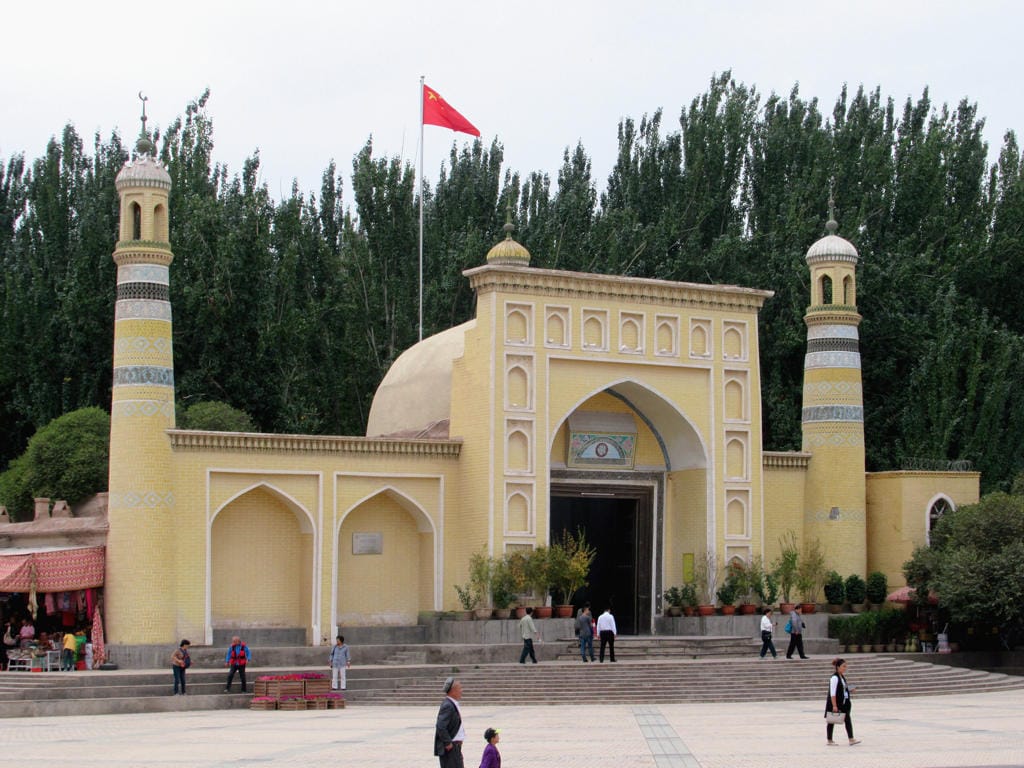
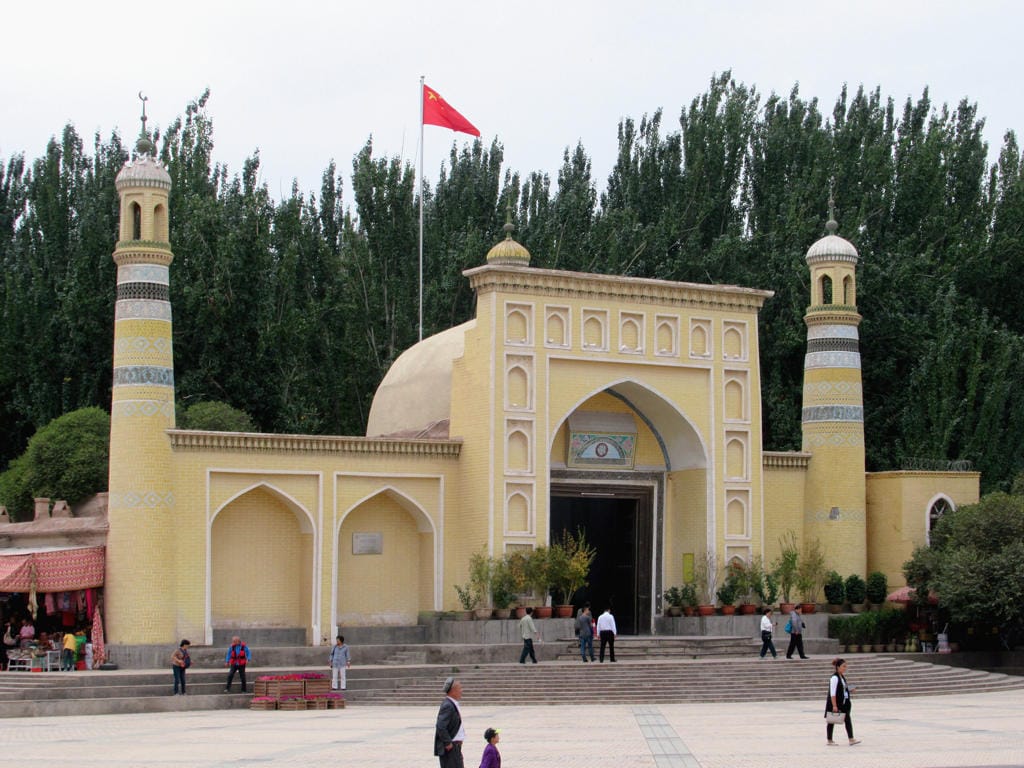
    A photo of the Id Kah Mosque, the largest in China, in Kashgar, Xinjiang, taken in 2017. The photographer noted that worshippers had their ID cards recorded. Image credit: David Stanley / CC By 2.0 

    Part I of this article discussed existing laws and regulations limiting religious expression in China, and it explored the case of Ismayil Sidiq, a Uyghur farmer serving a 10-year prison sentence for “promoting extremism” whose sentence was doubled after he “used a disguised and simplified method to perform namāz in the prison dormitory.” Namāz, commonly known as salah, refers to the pillar of the Islamic faith that obliges believers to pray five times a day. 

    Dui Hua’s research into court judgments, however, found a similar case where a Uyghur prisoner was sentenced in December 2019 to 18 months for Article 315 for conducting “illegal religious activity” on four occasions in Xinjiang’s Shihezi Prison. Prior to this, the Uyghur prisoner was serving his 20 years prison sentence for terrorism and promoting extremism. Despite being accused of conducting “illegal religious activity” on one more occasion, he was given an 18-month prison sentence for Article 315—half the length of Ismayil’s sentence. The judgment did not state whether namāz was involved. 

    Ismayil’s case is by no means an isolated incident, although what happened to him might have portended the worst possible outcome for performing namāz in prison. Dui Hua found cases where other Uyghur prisoners, while already serving lengthy prison sentences, were criminally prosecuted for Article 315 because of namāz. In the first case, a Uyghur serving his 10-year sentence for participating in a terrorist organization in Xinjiang’s Bayingolin Prison was found to have performed namāz on four occasions during the week of March 14, 2017. On each occasion, he awoke other cellmates, including those serving their sentences for endangering state security, to join his morning prayer. On May 21, he was put under 15 days of solitary confinement, during which he insisted on performing namāz five times a day and called on other cellmates to join his prayer. 

    A picture of Bayingolin Prison. Image credit: Shahit.biz 

    It would be a mistake to assume that prosecution against namāz only targets Uyghurs convicted of endangering state security, terrorism, or religious extremism offenses. In the second case, a Uyghur serving his seven-year sentence for “gathering a crowd to disturb social order,” a public order offense, in Korla Prison was indicted for Article 315 on June 13, 2017. The indictment stated that he refused to repent and that he insisted on performing namāz every day. Originally due for release on July 17, 2021, this Uyghur prisoner is likely to remain incarcerated until at least 2024. 

    In these two cases, the trial outcome is unclear. However, given what happened to Ismayil, they are highly likely to have been convicted and sentenced to additional prison terms under Article 315. 

    Besides Uyghurs, Muslim prisoners from other ethnic minority groups outside of Xinjiang also receive punishment for performing namāz. However, Dui Hua found that none of them were sentenced or criminally prosecuted like the abovementioned Uyghurs. These cases involved one Hui and two ethnic Dongxiang Muslims who were convicted of theft or drug-related crimes in Linxia, Gansu. The Hui and Dongxiang Muslims were only given warnings by prison authorities in July 2018. The duo allegedly showed remorse by stopping their prayers completely after they were warned. 

    Nevertheless, not all prisoners are as obedient. Ma Mene (马么呢), an ethnic Dongxiang Muslim, displayed a “bad attitude” and confronted prison guards after he was found praying in prison. Ma was placed under yanguan jixun (严管集训) for 15 days, a form of strict control for collective discipline training. During this period, he was unable to accrue clemency points to obtain early release. 

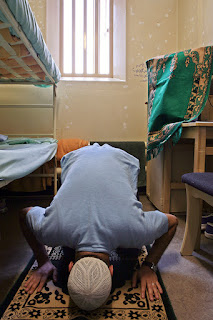
    A Muslim prisoner in the United States prays on his rug inside his cell at prison. Image credit: Andy Aitchison, PrisonImage / Creative Commons 

    China is not alone in denying Muslims their right to pray or worship meaningfully in prison. From reading the Quran to growing beards and restricting daily group prayers, Muslim prisoners in other countries have their religious rights deprived to varying degrees. In the United States, Muslims are overrepresented in state prisons, making up 9 percent of the prison population despite being 1 percent of the general population according to a 2019 report by Muslim Advocates. The report found that prisons in multiple states fail to accommodate Muslim dietary requirements, force male prisoners to shave their beards, and restrict group prayer.  

    As recently as April 2022, Muslim prisoners in the United States faced obstacles in accessing halal food, adequate dietary accommodations during Ramadan, and religious materials such as prayer mats and Qurans even as equivalent requirements are met for other faiths. Some progress has been made after civil society organizations filed lawsuits challenging religious restrictions in prison. For instance, federal prisons in the United States changed the national guideline in 2019 to accommodate Muslim congregational prayer services, which was previously restricted to three people, unless there is a security concern.  

    The use of “security concerns” to justify restrictions on religious expressions is an oft-used tool of governments. China, too, often cites security concerns to justify its religious crackdowns in- and outside of its carceral system. In a country which adheres so closely to the notion of “stability above all else,” it is unlikely that religious restrictions on namāz in prison will abate. Similarly, the right to free assembly through group prayer, a practice valued by Muslims and only recently permissible in US prisons, is likely to continue amongst China’s repression of religious expression and assembly. 

  • Punishing Namāz Prayer in Prison, Part II: “Illegal Religious Activity”

    Punishing Namāz Prayer in Prison, Part II: “Illegal Religious Activity”

    A photo of the Id Kah Mosque, the largest in China, in Kashgar, Xinjiang, taken in 2017. The photographer noted that worshippers had their ID cards recorded. Image credit: David Stanley / CC By 2.0

    Part I of this article discussed existing laws and regulations limiting religious expression in China, and it explored the case of Ismayil Sidiq, a Uyghur farmer serving a 10-year prison sentence for “promoting extremism” whose sentence was doubled after he “used a disguised and simplified method to perform namāz in the prison dormitory.” Namāz, commonly known as salah, refers to the pillar of the Islamic faith that obliges believers to pray five times a day.

    Dui Hua’s research into court judgments, however, found a similar case where a Uyghur prisoner was sentenced in December 2019 to 18 months for Article 315 for conducting “illegal religious activity” on four occasions in Xinjiang’s Shihezi Prison. Prior to this, the Uyghur prisoner was serving his 20 years prison sentence for terrorism and promoting extremism. Despite being accused of conducting “illegal religious activity” on one more occasion, he was given an 18-month prison sentence for Article 315—half the length of Ismayil’s sentence. The judgment did not state whether namāz was involved.

    Ismayil’s case is by no means an isolated incident, although what happened to him might have portended the worst possible outcome for performing namāz in prison. Dui Hua found cases where other Uyghur prisoners, while already serving lengthy prison sentences, were criminally prosecuted for Article 315 because of namāz. In the first case, a Uyghur serving his 10-year sentence for participating in a terrorist organization in Xinjiang’s Bayingolin Prison was found to have performed namāz on four occasions during the week of March 14, 2017. On each occasion, he awoke other cellmates, including those serving their sentences for endangering state security, to join his morning prayer. On May 21, he was put under 15 days of solitary confinement, during which he insisted on performing namāz five times a day and called on other cellmates to join his prayer.

    A picture of Bayingolin Prison. Image credit: Shahit.biz 

    It would be a mistake to assume that prosecution against namāz only targets Uyghurs convicted of endangering state security, terrorism, or religious extremism offenses. In the second case, a Uyghur serving his seven-year sentence for “gathering a crowd to disturb social order,” a public order offense, in Korla Prison was indicted for Article 315 on June 13, 2017. The indictment stated that he refused to repent and that he insisted on performing namāz every day. Originally due for release on July 17, 2021, this Uyghur prisoner is likely to remain incarcerated until at least 2024.

    In these two cases, the trial outcome is unclear. However, given what happened to Ismayil, they are highly likely to have been convicted and sentenced to additional prison terms under Article 315.

    Besides Uyghurs, Muslim prisoners from other ethnic minority groups outside of Xinjiang also receive punishment for performing namāz. However, Dui Hua found that none of them were sentenced or criminally prosecuted like the abovementioned Uyghurs. These cases involved one Hui and two ethnic Dongxiang Muslims who were convicted of theft or drug-related crimes in Linxia, Gansu. The Hui and Dongxiang Muslims were only given warnings by prison authorities in July 2018. The duo allegedly showed remorse by stopping their prayers completely after they were warned.

    Nevertheless, not all prisoners are as obedient. Ma Mene (马么呢), an ethnic Dongxiang Muslim, displayed a “bad attitude” and confronted prison guards after he was found praying in prison. Ma was placed under yanguan jixun (严管集训) for 15 days, a form of strict control for collective discipline training. During this period, he was unable to accrue clemency points to obtain early release.

    A Muslim prisoner in the United States prays on his rug inside his cell at prison. Image credit: Andy Aitchison, PrisonImage / Creative Commons

    China is not alone in denying Muslims their right to pray or worship meaningfully in prison. From reading the Quran to growing beards and restricting daily group prayers, Muslim prisoners in other countries have their religious rights deprived to varying degrees. In the United States, Muslims are overrepresented in state prisons, making up 9 percent of the prison population despite being 1 percent of the general population according to a 2019 report by Muslim Advocates. The report found that prisons in multiple states fail to accommodate Muslim dietary requirements, force male prisoners to shave their beards, and restrict group prayer.

    As recently as April 2022, Muslim prisoners in the United States faced obstacles in accessing halal food, adequate dietary accommodations during Ramadan, and religious materials such as prayer mats and Qurans even as equivalent requirements are met for other faiths. Some progress has been made after civil society organizations filed lawsuits challenging religious restrictions in prison. For instance, federal prisons in the United States changed the national guideline in 2019 to accommodate Muslim congregational prayer services, which was previously restricted to three people, unless there is a security concern.

    The use of “security concerns” to justify restrictions on religious expressions is an oft-used tool of governments. China, too, often cites security concerns to justify its religious crackdowns in- and outside of its carceral system. In a country which adheres so closely to the notion of “stability above all else,” it is unlikely that religious restrictions on namāz in prison will abate. Similarly, the right to free assembly through group prayer, a practice valued by Muslims and only recently permissible in US prisons, is likely to continue amongst China’s repression of religious expression and assembly.

  • Rare Sentence Reduction for Falun Gong Follower

    Rare Sentence Reduction for Falun Gong Follower

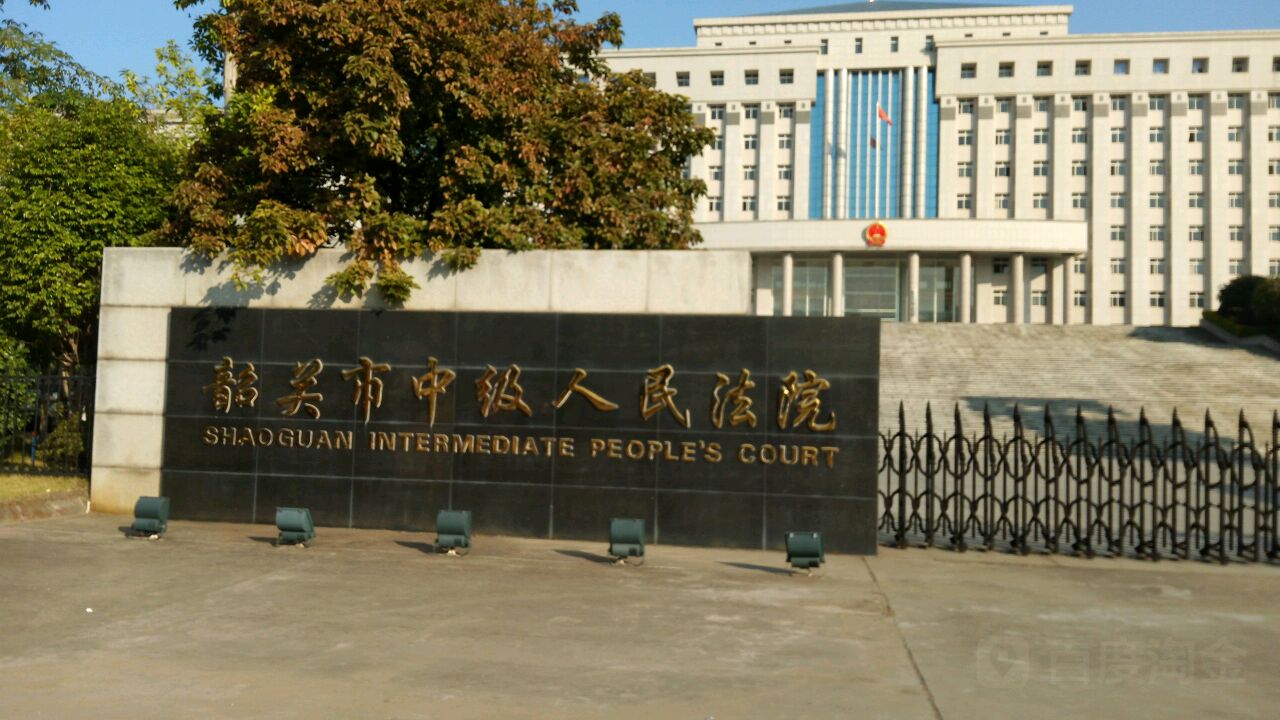
    Shaoguan Intermediate People’s Court, which granted Yu a seven-month sentence reduction. Image credit: Baidu Maps
    Acts of clemency for Chinese religious and political prisoners have become increasingly rare in recent years. This decrease is the result of Xi Jinping’s hardline approach to both dissent and unorthodox religions, coupled with a sharp drop in judicial transparency. An exception took place in the summer of 2022 when Yu Rongxin (余荣新), a long-time Falun Gong practitioner in Guangdong, was granted a seven-month sentence reduction by the Shaoguan Intermediate People’s Court in June.
    Yu, born 1972, and wife Xie Qing (谢清), born 1966, were both residents of Jiangmen, Guangdong Province, and Falun Gong practitioners. Their case was highlighted on the Guangdong Province Anti-Cult website as a homepage news item in April 2019.
    The couple were summoned by police on September 18, 2017 and detained the next day for violating Article 300 of the Criminal Law, “organizing or using a cult to undermine implementation of the law.” They were subsequently arrested on October 26 of the same year.
    The Yuan bills with propaganda messages. Image credit: sohu.com
    The anti-cult website reported that Yu and Xie were both long-time Falun Gong practitioners, starting in 1993 and 1997, respectively. Yu was the Falun Gong guidance counselor for the Jiangmen branch during the mid-1990s. For this, he received administrative punishment in 1999.
    The couple’s 2017 legal ordeal started when police searched their residence and found numerous materials with Falun Gong messages. Those included: 3,834 Yuan bills printed with propaganda messages, 425 copies of pamphlets, 68 optical discs, two USB flash drives, two SD cards, one each of an MP3 player and MP4 player pre-loaded with Falun Gong content, and computers and printers.
    According to Falun Gong media, the couple was first tried by the Jiangmen Pengjiang District Court. On December 28, 2018, Yu was sentenced to eight and a half years and Xie to seven and a half years. Both appealed.
    The anti-cult website reported that on March 12, 2019, the Jiangmen Intermediate Court rejected their appeals and upheld the original sentences. The court found that the couple had been spreading cult messages by spending the message-laden Yuan while shopping as well as gathering others to practice Falun Gong. The court deemed those offenses to be “extremely severe.”
     
    Yu, according to the Falun Gong media, was sent to the Beijiang Prison in Shaoguang City; while Xie was sent to the Provincial Women’s Prison. 
    Beijiang Prison. Image credit: Southern Metropolis Daily

    Dui Hua has raised the two names in recent years, pressing for updates.

    According to sources, Yu has behaved well in prison. He and his wife exchanged letters of encouragement with each other. The Beijiang prison looked upon those exchanges favorably and submitted a sentence reduction request for Yu. The women’s prison apparently did not submit a request for a sentence reduction for Xie. Yu will be released in August 2025, while Xie will be released in March 2025.
    Dui Hua’s research into Shaoguan Intermediate Court’s sentence reduction and parole decisions released in 2021 and 2022 revealed that clemency granted to “cult” practitioners is uncommon. There were more sentence reduction approvals for prisoners who committed drug-related crimes and violent crimes than there were for “cult” prisoners, even though those offenses were mostly non-violent. When approvals were given, the courts granted shorter periods of reduction than those recommended by the prisons.
  • People’s Parties & “Picking Quarrels,” Part I: Mysterious Party Founder Charged amid Pandemic

    People’s Parties & “Picking Quarrels,” Part I: Mysterious Party Founder Charged amid Pandemic

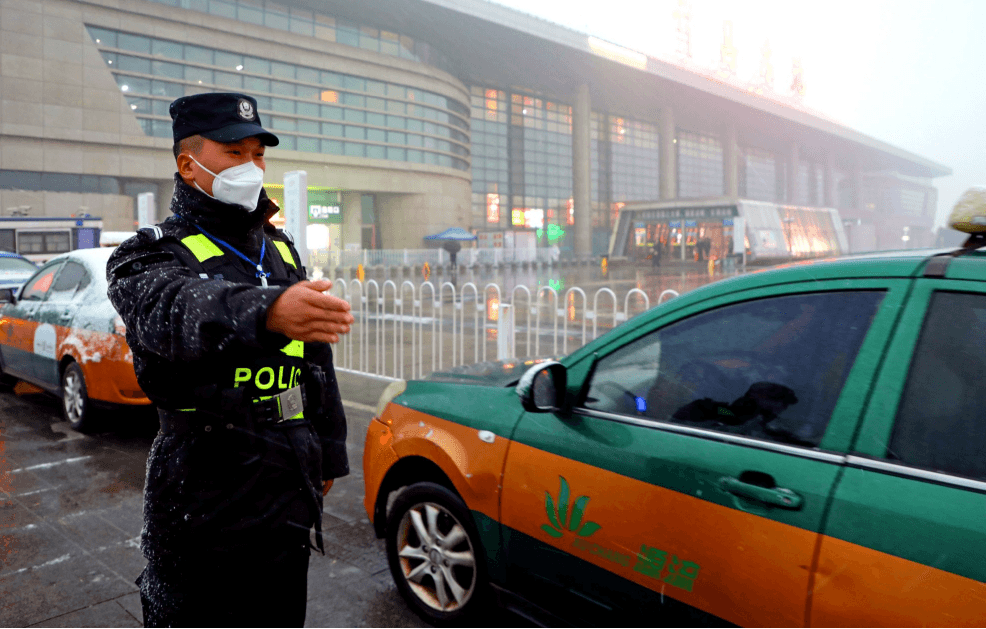
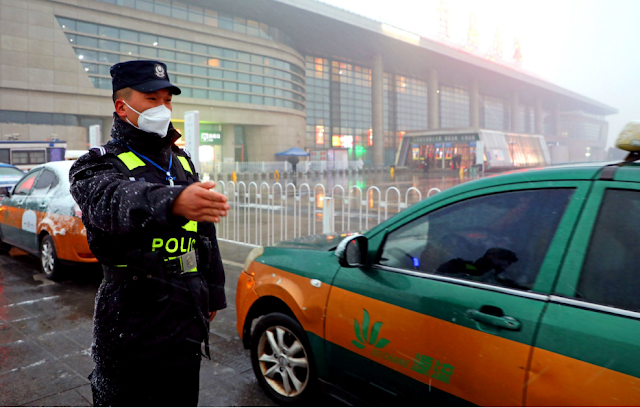
    On January 4, 2022, a police officer from the Dongcheng Branch of the Xuchang Public Security Bureau managing the taxi rank in front of Xuchang East Station following the closure of the city. Image credit: Xuchang government 

    Dissent has fast become a victim of the coronavirus as China tightens controls on acceptable forms of speech during the pandemic. Citizen journalists who give first-hand accounts that contradict the official version of events are at risk of arrest for “picking quarrels and provoking trouble,” with a notable example being Zhang Zhan (张展).  

    The crime of “picking quarrels and provoking trouble” also targets those who take to the streets during lockdowns. China’s persistence with the zero-COVID policy, often imposing total lockdowns alongside mandatory testing programs in major cities or across entire neighborhoods, has sparked protests over overpriced groceries and poor-quality food supplies. As recently as January 2022, mass incidents broke out in Shenzhen, Tianjin, and Xi’an.

    This entry in the Human Rights Journal, the first of two installments, looks at the application of “picking quarrels and provoking trouble,” through the case of a one prisoner whose political engagement was born out of frustration with pandemic restrictions. Part II looks at how this and similar cases reflect shifts in the use of different crimes to stifle dissent.

    Images from Radio Free Asia’s reporting on mass protests in Tianjin, Shenzhen, and Xian against COVID-19 restrictions. Image credit: Radio Free Asia

    Unbeknownst to many people is that China’s heavy-handed approach to handling COVID-19 led a dissenter to form an opposition party to challenge the Chinese Communist Party. Dui Hua’s research found that a young man surnamed Li founded the “People’s Party” (人民党) in Weihui City, Henan, in March 2020, two months after the initial outbreak occurred in neighboring Hubei province.

    A document filed to the Weihui City People’s Court stated that Li became “anti-social” and resented the current political system after his sources of income were cut off as a result of pandemic containment measures. Following in the footsteps of Wuhan, the site of the first lockdown, cities and counties across Henan were soon placed under strict lockdowns with measures such as banning non-essential travel between villages and communities. Li allegedly recruited leftist supporters to join his People’s Party with a goal to save the world.

    Li’s People’s Party might have existed only in name and only in the virtual space. Li used the internet to comment on current issues, disseminate his political views, and seek members. Li founded Oriental Voice, an online journal he irregularly posted in his QQ chatgroups. In Oriental Voice, Li published his party constitution and discussed historical nihilism (i.e. the questioning of the Chinese Communist Party’s official version of Chinese history). Additionally, he collected articles on how to “drink tea,” a euphemism for being summoned or interrogated by public and state security police. His articles, published over a total of 36 issues, garnered over 150,000 views.

    Prosecutors alleged that the articles contained slanderous remarks about the socialist system and senior leaders. His personal QQ document folders also contained content described as “reactionary articles” with titles such as “Discussing Our Future during the Trough of the Communist Movement,” “A Letter to All Chinese Socialist Leftist Comrades,” “The Constitution of the People’s Party,” and “The Confidentiality Code of the People’s Party.”

    According to the document, Li was suspected of “picking quarrels and provoking trouble,” and the Weihui City Public Security Bureau decided to carry out criminal detention on March 21, 2021 after he was apprehended in a staff dormitory in Guangzhou a day earlier. The Weihui City Procuratorate approved his arrest on April 2. Li was charged with the crime of “picking quarrels and provoking trouble.” On June 2, Li was formally indicted for this crime, which has been increasingly used against peaceful protests and those who express dissent.

    The procuratorate claimed that Li had “promoted and disseminated reactionary speech in online public space and seriously disturbed social order” in violation of Article 293 of the Criminal Law. The prosecutor recommended that the court give Li a short prison sentence of 12 to 18 months in part because he was a first-time offender, admitted his guilt, and “showed repentance.”

    It is notable that Li’s crime was “picking quarrels and provoking trouble.” In the past, similar behavior—starting a political party in opposition to the CCP, publishing materials political in nature, and seeking to recruit others—would be more likely to face charges of endangering state security, mainly subversion or inciting subversion.

    Read Part II here.

    Subscribe to Dui Hua publications here.

  • Chinese Asylum Seekers in Bangkok, Part II

    Chinese Asylum Seekers in Bangkok, Part II

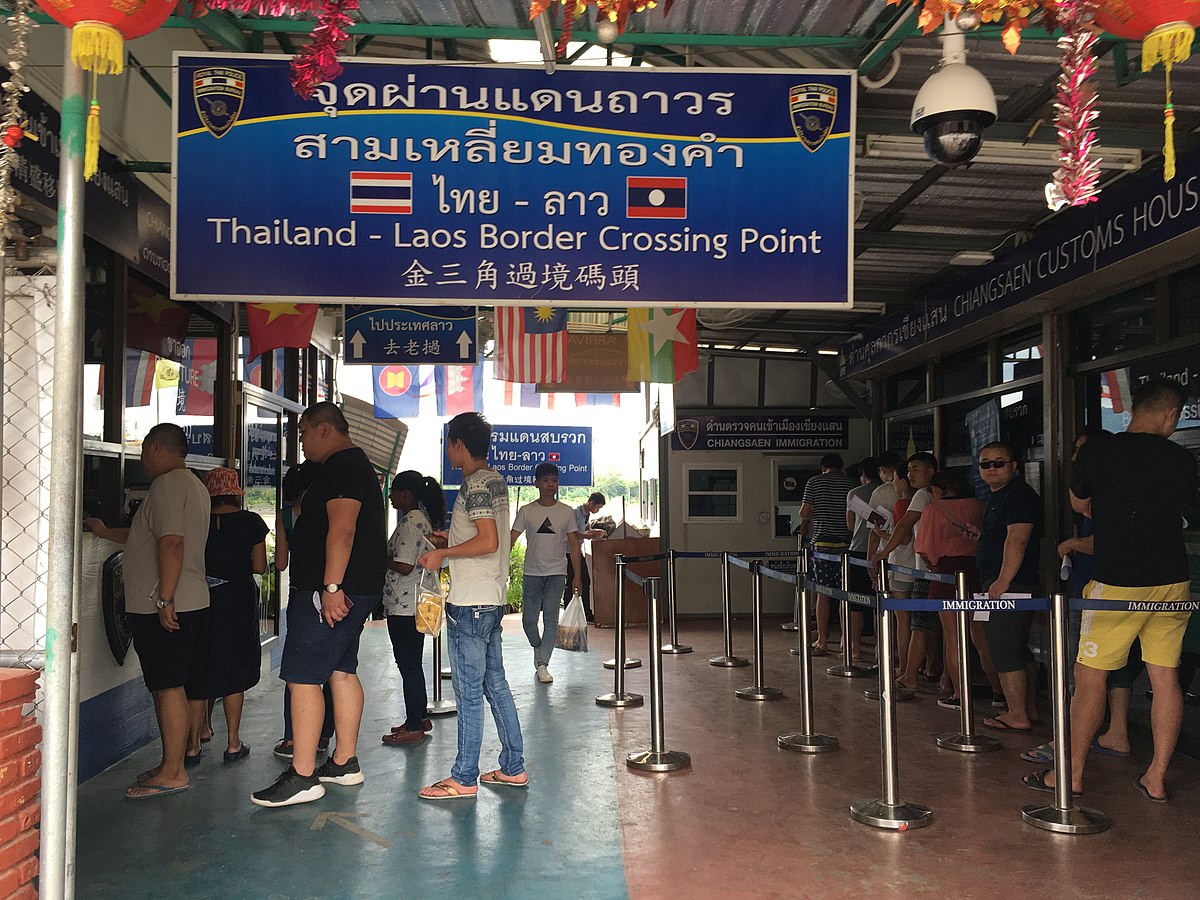
    At the Thailand-Laos crossing checkpoint at Sop Ruak, people queue to travel between Thailand and the Golden Triangle Special Economic Zone in Laos. Image credit: Slleong / CCO via Wikimedia Commons

    This is the second installment in a two-part series. Read Part I here.

    Thailand does not recognize the status of refugees because it has not acceded to the 1951 Refugee Convention or its 1967 Protocol. Refugees who overstay their visas or enter Thailand without proper documents are regarded as illegal immigrants. They have no legal right to work or adequate access to health care; nor can their children attend local schools. They are dependent on charitable groups, religious organizations, other refugees in their community, or they simply subsist on meagre savings. Because of budget cuts and a global tightening of national immigration policies, the UNHCR has reportedly axed financial aid for refugees.

    Consequently, many Chinese asylum seekers and refugees enter Bangkok’s labor black market to make a living. Once arrested, they are typically held in immigration detention centers, many of which are “severely overcrowded, provide inadequate food, have poor ventilation and lack medical service and other basic necessities,” according to Human Rights Watch.

    In January 2015, Uyghur refugees also complained to a visiting Istanbul-based journalist about health problems in the detention facilities in Thailand. Prior to this incident, three Uyghurs died despite efforts of charitable groups to provide relief. In September 2018, a Chinese observer claimed that dozens of refugees and asylum seekers of different nationalities were crammed into an area of approximately 12 square meters of floor space.

    Because of the cramped and unhygienic conditions at the immigration centers, seven Uyghurs made a failed attempt at a jail break in February 2019. A Thai NGO, which has worked to assist these Uyghurs since their detention, is compiling evidence about the alleged reports of physical abuse by Thai police officers.

    The long wait time for resettlement is another major source of frustration among refugees. Zhang Shufeng (张淑凤), who obtained refugee status in 2017, said the UNHCR prioritizes applications of refugees from armed conflicts such as Syrians and Myanmar’s Rohingya Muslims over Chinese applicants. In 2016, another asylum seeker Cai Yuliang (蔡欲亮) was finally accepted for resettlement in the United States after spending a total of 17 years in Thailand. Cai fled China in 1999, seven years after he completed his 20 years’ imprisonment for the now-defunct criminal offense of counterrevolution.

    No Safe Haven

    Jiang Yefei holds a placard with a criminal charge at a Thai immigration detention center prior to repatriation in 2015. Image credit: Apple Daily (Taiwan)
    Since the coup of 2014, the Thai military regime has been tilting away from the United States toward China. Refugees or asylum seekers are believed to be facing imminent risk of repatriation at the behest of China — Thailand’s largest trade partner and major country of origin for tourists.

    Repatriation

    Four months after over 100 Uyghurs were repatriated to China, Thailand deported Dong Guangping (董广平) and Jiang Yefei (姜野飞) in November 2015, allegedly for breaking immigration rules. A political cartoonist, Jiang left China in 2008 after he was detained and allegedly tortured over his work critical of the government’s handling of the Sichuan earthquake. Dong fled to Thailand in 2015, having served a three-year jail term for subversion from 2001-2004 and “disappeared” for eight months in secret detention in 2014.

    Following their repatriation, Jiang and Dong were sentenced in Chongqing to 78-month and 42-month imprisonment sentences, respectively, for subversion and illegal border crossing in July 2018. Thailand’s decision to repatriate the duo drew condemnation from the UN, United States, and others because both men had been awaiting resettlement in Canada after they obtained their refugee status. Dong completed his prison sentence on August 2, 2019, whereas Jiang still has one year to serve before release in August 2022.

    Cross-Border Law Enforcement

    The disappearance of Chinese-born Swedish citizen Gui Minghai in Pattaya in October 2015 raised fear of cross-border operations of Chinese security forces. A similar case that did not garner much attention concerns former editor of the Southern Metropolitan Daily Li Xin (李新). In November 2015, Li fled to New Delhi after he was coerced by Chinese state security to work as an informant. He disappeared while riding a Laos-bound train in north Thailand in January 2016 in a bid to renew his Thai visa. A month later, Li reappeared in China claiming that he had returned to China “voluntarily” to assist with a police investigation. When asked about the case by The New York Times, the Thai Foreign Ministry responded that there was no “record as yet as to whether he has left the country.” Li’s wife and supporters speculated that Li had been abducted by Chinese security forces and clandestinely transported across the border.

    Turning a Blind Eye

    Xing Jian (邢鉴) arrived in New Zealand as a refugee in January 2020, more than three years after the UNHCR recognized his refugee status in the summer of 2016. Xing criticized the Thai government for providing insufficient care and protection for UN-recognized refugees. While in Thailand, Chinese public security officers apprehended him alongside Bangkok police because he overstayed his visa on November 25.

    Before fleeing China, Xing volunteered for prominent dissident Huang Qi (黄琦) and was accused of “rumour-mongering” for exposing corruption in his home county in Jiangsu. His father Xing Wangli (邢望力), who remains in China, was sentenced to two years and three months’ imprisonment in October 2018 for “picking quarrels and provoking troubles.” Xing Wangli was re-arrested in June 2021 for defamation after visiting prominent rights lawyer Jiang Tianyong.

    Wu Yuhua and Yang Chong (see part 1) were originally scheduled to depart for Canada from Bangkok on June 25, 2019. However, they were barred from leaving Thailand. Yang may be required to complete his one-year suspended sentence there for overstaying, according to a Chinese activist familiar with Thai laws. However, another Radio Free Asia report cited the Chinese embassy as saying that the Thai authorities “do not rule out the possibility of repatriating the duo to China.”

    Fleeing Again

    Risky Voyage

    In view of a potentially indefinite waiting period for resettlement, the threat of repatriation, and abduction by Chinese security forces overseas, some asylum seekers and refugees are determined to flee once more. Prior to the scheduled interview with the UNHCR in 2017, Falun Gong practitioner Dong Junming (董俊明) undertook a risky voyage to New Zealand, some 6,000 miles away from Pattaya, on February 29, 2016. Dong was joined by six like-minded asylum seekers and two children.

    In early March, a few days into their voyage, the yacht capsized off the Thai coast. In an interview with overseas media, Dong said that “[i]t’s highly risky out there on the ocean, but we are so fearful here in Thailand that I thought I should take the risk.” All travellers who boarded the yacht, including China Democracy Party member Li Xiaolong (黎小龙), were returned to Thailand after the failed escape. Some were placed in immigration detention centers while at least one of them stood trial for illegal entry into Thailand in January 2017.

    To Taiwan

    In a bid to evade the extending reach of China in Thailand, some dissidents have chosen to flee once more to Taiwan. Huang Yan (黄燕)  fled to Thailand in 2016 after years of harassment, repeated incarceration, and alleged torture for speaking out in support of Gao Zhisheng. In May 2018, she flew to Jakarta, then to Taiwan, where she was granted temporary leave to remain until the United States granted her political asylum in January 2019.

    Following in Huang’s footsteps, China Democracy Party members Yan Bojun (颜伯钧) and Liu Xinglian (刘兴联) left Bangkok four months after Huang’s arrival in Taiwan. They were granted entry in February 2019 on the basis of “professional exchanges” after 125 days at Taipei Taoyuan airport. At the time of writing, both men have been granted asylum protection in Canada.

    On September 29, 2016, Taiwan’s Mainland Affairs Council Deputy Minister Chiu Chui-cheng expresses concerns over the situation in Hong Kong but says Taiwan will not intervene. Image credit: Voice of America via Wikimedia Commons

    It would be a mistake to assume that Taiwan welcomes individuals fleeing violence and persecution in China. While the island has promised assistance to Hong Kong anti-extradition bill protesters, Taiwan’s Mainland Affairs Council (MAC) maintained that Taiwan policy toward mainland asylum seekers remained unchanged. Should Taiwan openly admit mainland asylum seekers and refugees, it will likely trigger a flood of applications and further antagonize China, putting hundreds of thousands of China-based Taiwanese residents, workers, and investors at risk of arbitrary detention. Additionally, Taiwan fears what it calls “infiltration” from mainland agents. There have been recent arrivals of mainland Chinese who managed to cross the Taiwan Straits despite it being one of the world’s most heavily policed waterways.

    Taiwan is not a member of the UN and does not have legislation to protect refugees. The island only vows to deal with applications from mainland Chinese on a case-by-case basis, according to the MAC.

    Non-Refoulement

    It must be noted that around the globe, not all Chinese asylum applicants are found to have a legitimate fear for persecution. In Australia, for instance, the number of Chinese nationals applying for refugee asylum rose by 311 percent in just one year from 2017. Despite this surge, the Australian Department of Home Affairs only recognized 10 percent of such claims as being genuine. Most claims found to be bogus have been used by applicants to overstay their visas. The United States has also cracked down on “asylum mills,” which have helped thousands of Chinese immigrants to fraudulently win asylum status. Over 13,500 immigrants, mostly Chinese, who were granted asylum status are reportedly facing possible deportation.

    A poster from the Australian government’s 2013 “No Way” campaign aimed at dissuading attempts by non-citizens to enter Australia. Image credit: Australian Customs and Border Protection Service / CC BY-SA 3.0
    However, many of those in Bangkok have been determined by the UNHCR to have a well-founded fear for persecution, a fear not imaginary but very much real, as being detained, arrested, and sentenced should they be returned to China. The fact that Thailand is not a signatory state of the 1951 Refugee Convention or its 1967 Protocol does not absolve the country from its duty to protect refugees inside its borders. The UNHCR has also called on all states, including non-signatory states, to observe non-refoulement, an international principle that prevents all countries from expelling or returning an individual to a country where he or she is at genuine risk of persecution.

    Thai officials have reiterated their commitment to protecting the rights of refugees and asylum seekers. They have also vowed to adopt anti-torture legislation to strengthen implementation of the principle of non-refoulement. However, insufficient protection for asylum seekers and refugees has left them stranded in Thailand, vulnerable to detention, arrest, and repatriation. Some of them have even been compelled to flee Thailand as well to evade arrests, deportation, and Chinese security forces overseas.

  • Big Increase in Women Behind Bars in China

    Big Increase in Women Behind Bars in China

    Female inmates in political and education reform classes. Image credit: Hubei Prison Administrative Bureau 2019
    Statistics released by China’s Ministry of Justice (MOJ) and recently published by the World Prison Brief have revealed a significant increase in the number of women prisoners incarcerated in MOJ prisons since 2015, the last year for which a number was made available prior to 2019. The numbers were provided in a statement by an MOJ official to the Asia Pacific Conference of Correctional Administrators (APCCA) meeting in Mongolia. The number of women prisoners in MOJ prisons in 2019 has yet to be made available.
    As of mid-2015, there were 107,131 female prisoners in MOJ prisons, accounting for 6.5 percent of China’s population of prisoners held in all MOJ-administered prisons and juvenile reformatories. The number rose to approximately 143,000 as of mid-2018, equivalent to 8.4 percent of that population. This represents an increase of approximately 34 percent over a three-year period, or an average growth rate of more than 10 percent per year.
    The numbers exclude women prisoners in Qincheng Prison, which is managed by the Ministry of Public Security (MPS). More significantly, the numbers do not include women held in pre-trial detention centers operated by the MPS and the State Security Ministry. Nor do they include women held in other carceral facilities like “legal education centers,” often used to hold female petitioners and practitioners of unorthodox religious groups like Falun Gong and Almighty God. A large but unknown number of Uyghur and Kazakh women in Xinjiang who are involuntarily held in a network of internment facilities known as “vocational training centers” are also omitted in the MOJ statistics. Finally, it should be borne in mind that the numbers are for adult females and do not include juvenile females incarcerated in juvenile reformatories run by the MOJ.
    † Figures only available as of the middle of the year.
    ‡ This is an approximate figure. Dui Hua estimates suggest that the actual figure may be higher.
    Sources: For 2003-2015 figures: Dui Hua, China Statistical Yearbook 2005-2013, APCCA Conference Report 2013-2015; For 2018 figure: World Prison Brief
    In February 2014, Dui Hua, together with partners, held an International Symposium on Women in Prison in Hong Kong. The symposium, which aimed to introduce the United Nations Rules for the Treatment of Women Prisoners (the Bangkok Rules), was well attended by officials from China. In October of the same year, Dui Hua Executive Director John Kamm traveled to Beijing where he and Judge Leonard Edwards met with Mr. Wang Shengming, Vice Chairman of the Internal and Judicial Affairs Committee of the National People’s Congress. Wang advised the two Americans that China was considering incorporating the Bangkok Rules into Chinese legislation, but to date little appears to have been done. Rather than adopt policies that slow the influx of women prisoners, China seems to have opted to build more women’s prisons.
    To cope with the rising number of women sentenced to prison, China has built 10 new women’s prisons since 2015. There were 31 women’s prisons in mid-2015, 38 in mid-2017, and by mid-2018 there were 41.i In the past, most provinces had only one prison for women. Now, ten provinces have two, and Yunnan has three. Noticeably, the Tibetan Autonomous Region does not have a women’s prison. By building more prisons, China has managed to keep the average number of prisoners per prison stable at around 3,500 per prison, high by international standards. Overcrowding of Chinese women’s prisons remains a serious problem.
    Sources: China Statistical Yearbook 2013, APCCA Annual Report 2015, World Prison Brief
    In its 2019 submission to the thematic session of the United Nations Working Group on Discrimination Against Women in Law and Practice held in June 2019, Dui Hua urged the MOJ to release the current number of women held in its prisons. Several months after Dui Hua made this recommendation, the MOJ released the mid-2018 figure to the APCCA at its September 2019 meeting in Mongolia.
    Hong Kong’s Correctional Services department has also released numbers that are published in World Prison Brief. They reveal that, in 2019, more than 20 percent of the territory’s prison population were women, one of the highest such percentages in the world. Nearly half are non-local and convicted of non-violent crimes, including drug trafficking and immigration violations.
    According to the Prison Policy Initiative, there were 130,000 women in American prisons and 101,000 in local jails in 2019. The number of women in Chinese pre-trial detention centers is not known. It nevertheless appears to be the case that the number of women in Chinese prisons now exceeds the number of women in American prisons, as Dui Hua predicted in its Human Rights Journal entries published in June 2015 and February 2016.

    i A list of the 41 women’s prisons administrated by the MoJ is below.

  • China’s Supreme People’s Court Releases Detailed Statistics on Trials, 1949-2016

    China’s Supreme People’s Court Releases Detailed Statistics on Trials, 1949-2016

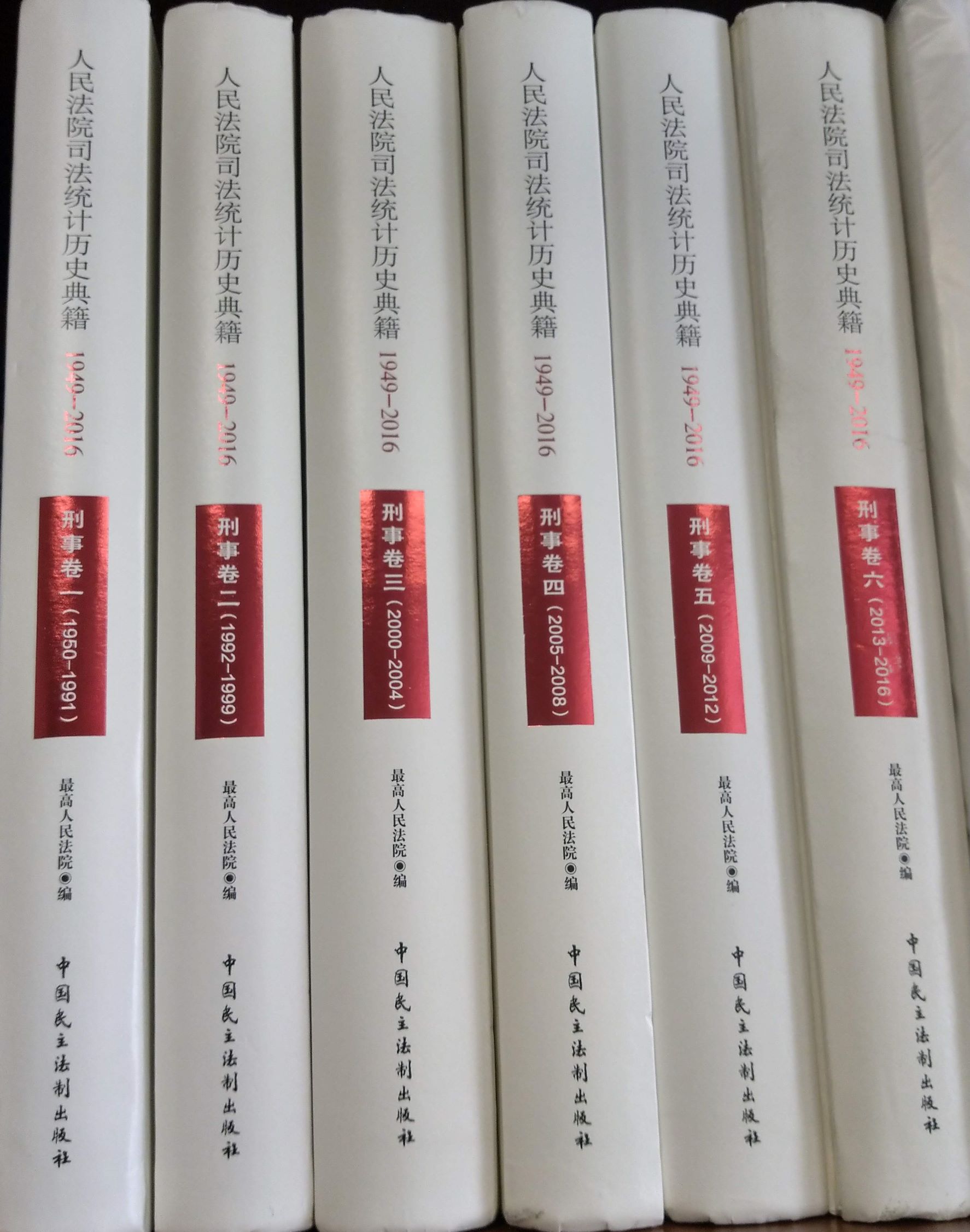
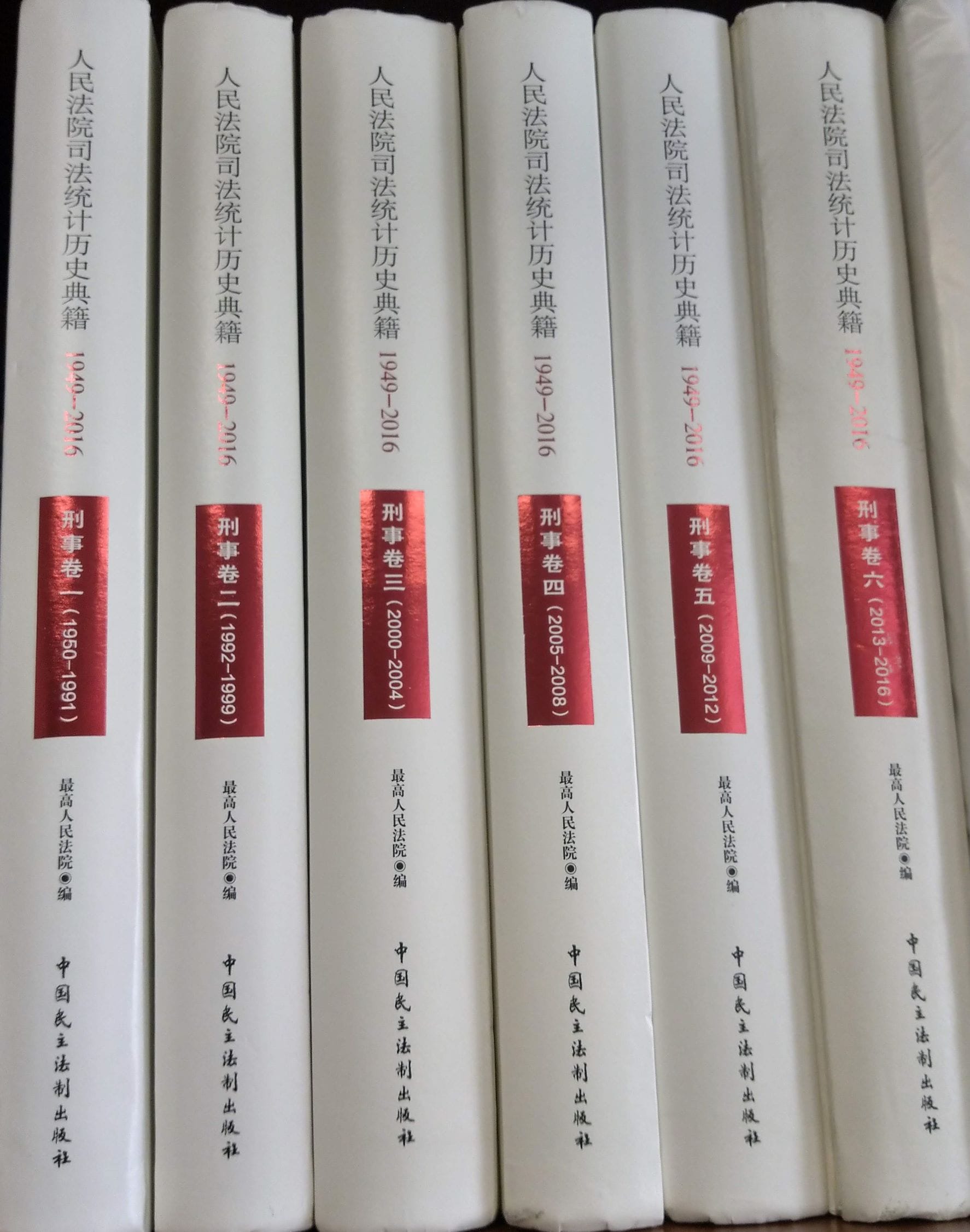
    China’s Supreme People’s Court (SPC) has compiled and released detailed statistics covering the adjudication work of China’s courts from 1949 to 2016, inclusive. The first six volumes are devoted to criminal trials of the first and second instance as well as retrials. They include breakdowns of cases and individuals in trials accepted, concluded, and held over for each article of the Criminal Law, as well as information on sentences, supplemental sentences (e.g. deprivation of political rights), age, occupation, gender, and, in recent years, ethnicity of defendants.

    Records of People’s Courts Historical Judicial Statistics: 1949-2016 (Renmin fayuan sifa tongji lishi dianji 人民法院司法统计历史典籍) was compiled and edited by the SPC. It was published in September 2018 by the China Democracy and Legal System Press under the National People’s Congress. It became available in March 2019, but thus far the 12-volume set, priced at RMB 1,980, has attracted few readers and received little attention from scholars. Information is not provided on the number of volumes published.

    The sets are marked “for internal release” (neibu faxing 内部发行). A small market in second-hand volumes has emerged. Dui Hua has purchased a set. All 12 volumes are available at the H.C. Fung Library of the Fairbank Center for Chinese Studies at Harvard University.

    The publication of these volumes is a major step forward for judicial transparency in China and is a boon to scholars studying China’s justice system.

    In the coming months, Dui Hua will release reports in its Reference Materials series which will draw on topics derived from the statistics published in the 12-volume set. Topics will include use of Article 300 to suppress unorthodox religious groups; trials of Hong Kong, Macau, and Taiwan residents as well as foreigners; splittism and inciting splittism; espionage and trafficking in state secrets; Cultural Revolution court trials; and treatment of juveniles, including girls, in the criminal justice system.

    Counterrevolution in One Country: China, 1989

    Drawing on data in Volume Two of the Records, Dui Hua Executive Director John Kamm made a presentation at the Fairbank Center of Harvard University on October 24, 2019. Entitled “Counterrevolution in One Country: China, 1989,” the presentation covered trials for counterrevolution during the years 1989-1991. This period coincided with the political unrest in Beijing and other cities that took place in the spring of 1989 and its aftermath.

    Before beginning the presentation based on the data in the Records, Kamm made a few points about the crime of counterrevolution. Counterrevolution is a crime defined by motive. According to the 1979 Criminal Law, “All acts endangering the People’s Republic of China committed with the goal of overthrowing the dictatorship of the proletariat and the socialist system are crimes of counterrevolution.” In the tables in the Records there is a line for “other” counterrevolutionary crimes. Kamm related a story of a worker convicted of counterrevolutionary rape in the late 1970s. He was sentenced to death for sexually assaulting the wife of a foreign diplomat.

    Although the crime of counterrevolution was removed from the Criminal Law in 1997, there are still prisoners serving sentences for counterrevolution in China. It is commonly thought that counterrevolution was replaced by the crime of endangering state security in 1997. It was not. Crimes that were included in the articles on counterrevolution, like organizing a prison break or using a cult to commit crimes of counterrevolution, found their way into different parts of the Criminal Law.

    Not all individuals detained for offences committed during the protests were tried (some were placed in re-education-through-labor camps, for instance) and, of those tried, not all were tried for counterrevolution. According to Judicial and Administrative Records of Hunan Province, 1978-2002, 33 people were sentenced to prison for counterrevolutionary propaganda and incitement, 43 for robbery, and 57 for hooliganism or sabotaging transportation equipment in Hunan Province for June 4 related offenses.

    More than 1,700 people were tried for counterrevolution during the 1989-1991 period, the majority of whom are believed to have been detained and subsequently tried for their involvement in the political protests that took place in Beijing and approximately 300 other cities.

    Of those tried for counterrevolution during the 1989-1991 period, roughly half were convicted and sentenced for counterrevolutionary propaganda and incitement. Seventy-three counterrevolutionary groups were brought to court and 257 of their members were convicted and sentenced. In all, 75 percent of trials were for non-violent offenses – counterrevolutionary propaganda and incitement, organizing or leading a counterrevolutionary group, and using a cult to commit counterrevolutionary crimes.

    Nearly all tried for counterrevolution were male and most were 25 or older. In a surprise finding, the biggest group of tried counterrevolutionaries were farmers, accounting for 35 percent of defendants. Fifteen percent of those tried were workers, followed by government cadres and unemployed people. Students made up a relatively small number of those tried, accounting for seven percent.

    Although most of those tried were found guilty, 93 were acquitted in the first instance trial during the three-year period; 131 were exempted from criminal punishment, including the labor leader Han Dongfang. In 1991, nearly 19 percent of those tried for counterrevolution were either acquitted or exempted from criminal punishment. (In recent years, less than 0.1 percent of trials have resulted in acquittal). Eleven were acquitted on appeal, and 36 had their sentences reduced on appeal. Roughly half of counterrevolutionaries sentenced during the three-year period received sentences of at least five years in prison.

    As time passed, the sentences handed down for counterrevolution by courts grew shorter. The longest sentences were given before the end of 1989. According to materials collected by Dui Hua, the longest sentences were handed down in Shandong, where a student leader and a farmer were each given 18-year sentences.

    Most of the names of those tried for counterrevolution in the three-year period are not known. Despite strenuous efforts by Dui Hua and other human rights groups over the past 30 years, the foundation has found only 15 percent of their names.

    Look for future installments on these statistics on our Reference Materials site.
  • China’s Supreme People’s Court Releases Detailed Statistics on Trials, 1949-2016

    China’s Supreme People’s Court Releases Detailed Statistics on Trials, 1949-2016

    China’s Supreme People’s Court (SPC) has compiled and released detailed statistics covering the adjudication work of China’s courts from 1949 to 2016, inclusive. The first six volumes are devoted to criminal trials of the first and second instance as well as retrials. They include breakdowns of cases and individuals in trials accepted, concluded, and held over for each article of the Criminal Law, as well as information on sentences, supplemental sentences (e.g. deprivation of political rights), age, occupation, gender, and, in recent years, ethnicity of defendants.

    Records of People’s Courts Historical Judicial Statistics: 1949-2016 (Renmin fayuan sifa tongji lishi dianji 人民法院司法统计历史典籍) was compiled and edited by the SPC. It was published in September 2018 by the China Democracy and Legal System Press under the National People’s Congress. It became available in March 2019, but thus far the 12-volume set, priced at RMB 1,980, has attracted few readers and received little attention from scholars. Information is not provided on the number of volumes published.
    The sets are marked “for internal release” (neibu faxing 内部发行). A small market in second-hand volumes has emerged. Dui Hua has purchased a set. All 12 volumes are available at the H.C. Fung Library of the Fairbank Center for Chinese Studies at Harvard University.
    The publication of these volumes is a major step forward for judicial transparency in China and is a boon to scholars studying China’s justice system.
    In the coming months, Dui Hua will release reports in its Reference Materials series which will draw on topics derived from the statistics published in the 12-volume set. Topics will include use of Article 300 to suppress unorthodox religious groups; trials of Hong Kong, Macau, and Taiwan residents as well as foreigners; splittism and inciting splittism; espionage and trafficking in state secrets; Cultural Revolution court trials; and treatment of juveniles, including girls, in the criminal justice system.
    Counterrevolution in One Country: China, 1989
    Drawing on data in Volume Two of the Records, Dui Hua Executive Director John Kamm made a presentation at the Fairbank Center of Harvard University on October 24, 2019. Entitled “Counterrevolution in One Country: China, 1989,” the presentation covered trials for counterrevolution during the years 1989-1991. This period coincided with the political unrest in Beijing and other cities that took place in the spring of 1989 and its aftermath.
    Before beginning the presentation based on the data in the Records, Kamm made a few points about the crime of counterrevolution. Counterrevolution is a crime defined by motive. According to the 1979 Criminal Law, “All acts endangering the People’s Republic of China committed with the goal of overthrowing the dictatorship of the proletariat and the socialist system are crimes of counterrevolution.” In the tables in the Records there is a line for “other” counterrevolutionary crimes. Kamm related a story of a worker convicted of counterrevolutionary rape in the late 1970s. He was sentenced to death for sexually assaulting the wife of a foreign diplomat.
    Although the crime of counterrevolution was removed from the Criminal Law in 1997, there are still prisoners serving sentences for counterrevolution in China. It is commonly thought that counterrevolution was replaced by the crime of endangering state security in 1997. It was not. Crimes that were included in the articles on counterrevolution, like organizing a prison break or using a cult to commit crimes of counterrevolution, found their way into different parts of the Criminal Law.
    Not all individuals detained for offences committed during the protests were tried (some were placed in re-education-through-labor camps, for instance) and, of those tried, not all were tried for counterrevolution. According to Judicial and Administrative Records of Hunan Province, 1978-2002, 33 people were sentenced to prison for counterrevolutionary propaganda and incitement, 43 for robbery, and 57 for hooliganism or sabotaging transportation equipment in Hunan Province for June 4 related offenses.
    More than 1,700 people were tried for counterrevolution during the 1989-1991 period, the majority of whom are believed to have been detained and subsequently tried for their involvement in the political protests that took place in Beijing and approximately 300 other cities.
    Of those tried for counterrevolution during the 1989-1991 period, roughly half were convicted and sentenced for counterrevolutionary propaganda and incitement. Seventy-three counterrevolutionary groups were brought to court and 257 of their members were convicted and sentenced. In all, 75 percent of trials were for non-violent offenses – counterrevolutionary propaganda and incitement, organizing or leading a counterrevolutionary group, and using a cult to commit counterrevolutionary crimes.
    Nearly all tried for counterrevolution were male and most were 25 or older. In a surprise finding, the biggest group of tried counterrevolutionaries were farmers, accounting for 35 percent of defendants. Fifteen percent of those tried were workers, followed by government cadres and unemployed people. Students made up a relatively small number of those tried, accounting for seven percent.

    Although most of those tried were found guilty, 93 were acquitted in the first instance trial during the three-year period; 131 were exempted from criminal punishment, including the labor leader Han Dongfang. In 1991, nearly 19 percent of those tried for counterrevolution were either acquitted or exempted from criminal punishment. (In recent years, less than 0.1 percent of trials have resulted in acquittal). Eleven were acquitted on appeal, and 36 had their sentences reduced on appeal. Roughly half of counterrevolutionaries sentenced during the three-year period received sentences of at least five years in prison.
    As time passed, the sentences handed down for counterrevolution by courts grew shorter. The longest sentences were given before the end of 1989. According to materials collected by Dui Hua, the longest sentences were handed down in Shandong, where a student leader and a farmer were each given 18-year sentences.
    Most of the names of those tried for counterrevolution in the three-year period are not known. Despite strenuous efforts by Dui Hua and other human rights groups over the past 30 years, the foundation has found only 15 percent of their names.

    Look for future installments on these statistics on our Reference Materials site.
  • Leftist Dissent Under Xi: The Old Leftists, Part II


    In “Leftist Dissent Under Xi: The Old Leftists,” Part I, Dui Hua discussed the phenomenon of neo-Maoism among a number of social groups, including veterans and laid-off workers. In this post, we look at attempts to form political parties intended to resurrect the ideology, culture, and legacy of the Mao era, and the government’s reactions to these efforts.


    Political Parties

    Despite faltering public trust in local officials, the central government still earns the approval of many patriotic workers and veterans, especially since the launch of Xi’s anti-corruption campaign, which appears to have won the hearts and minds of the majority of Chinese. However, there exists a small segment of aggrieved leftists who believe their plight cannot be addressed without an ideological overhaul within the CCP. They believe that the CCP must revert to pre-reform era socialism, restore the people’s communes, re-collectivize, and provide employment, education, healthcare, and housing for all throughout China. They also think that the alternative communist parties they created are the true vanguard of socialism, a path from which the CCP has been straying for over 40 years since Deng Xiaoping’s economic reforms began.
    Dui Hua has previously reported cases of leftist subversion from 1980-2012, where individuals received harsh prison sentences for founding political groups with the aim of overthrowing the CCP, which some on the far left believe has morphed into totalitarian capitalism. A year before Xi came to power, Dong Zhanyi (董占义), founder of the New Era Communist Party of China, was sentenced to life imprisonment for subversion and contract fraud. The party was established around 2008 with the mission to fight rampant government corruption.
    Under Xi, new political associations created by the Old Leftists continue to emerge. Instead of promoting regime change like Dong Zhanyi, some of these newly formed groups call for mutual coexistence with the CCP. One such case involves Wang Shiji (王士吉), who calls himself Mao Jidong (毛继东, literally “Mao’s Successor”). Wang had attempted to set up the “China Communist Party Revolution Commission” in 1999, but was arrested on September 8, 1999. Wang completed his three-year sentence for inciting subversion in August 2002. In August 2016, at the age of 72, apparently undeterred, he founded a new party, the “Defend Mao Zedong People’s Party.” This Hebei-based party, which he claimed had about 40 members from across China, aimed to promote love for Mao and the concept of popular sovereignty. Casting it as a “fraternal” party that sounds less radical than the programs of his leftist counterparts, Wang said that his party would co-exist and enjoy equal status with the CCP, and that privatization must be stopped in order to solve China’s current problems of corruption and a widening gap between rich and poor. However, after being summoned and warned by officials in Shijiazhuang, Hebei, Wang dissolved the party, one day before he was scheduled to convene the first “national congress,” which he had claimed would be attended by representatives from a number of major cities. He is not known to have received any criminal punishment thereafter.
    Wang Zheng founded the Supreme Constitution Party
    at the age of 48 in 2013. She commended former Chongqing Party Secretary Bo
    Xilai for being a genuine socialist, because, she believes, he improved the
    lives of ordinary people in Chongqing. Image Credit:
    VOA
    It would be mistaken to assume that Maoism enjoys only grassroots popularity. Leftist ideologies are no less appealing among certain educated professionals looking for solutions to present-day China’s social ills. Wang Zheng (王铮), a former associate professor at Beijing Institute of Economics and Management, set up the “Supreme Constitution Party” in November 2013, two months after Bo Xilai was sentenced to life in prison for bribe-taking, embezzlement, and abuse of power. Bo, who won national renown with his “sing red, strike black” campaign while serving as Chongqing Party Secretary from 2007-2012, was hailed as a hero by many leftists. Wang is a vocal supporter of Bo, calling the former rising star in the Politburo a genuine socialist who spent money in Chongqing on public housing to improve lives of ordinary people. In a New York Times interview in 2013, Wang claimed that her party aimed to promote “common prosperity,” a core socialist value that the CCP has largely ignored, mostly through its failure to address widening income disparity. Although Wang never met Bo, she said Bo’s stated egalitarian views and his self-defense in court had inspired her. Wang believes that Bo was a victim of a power struggle within the CCP and her party is an answer to what she sees as serious political problems. When asked whether her party was legal, Wang retorted that “even the CCP didn’t register when it was set up… it was a revolutionary party!” Wang and other members elected Bo as the “Chairman for Life” before the party was banned by Beijing’s Bureau of Civil Affairs in December 2013.
    In 2013, the Shandong High People’s Court upheld the life imprisonment sentence of Bo Xilai, the former Party Secretary of Chongqing, who tried to revive Mao-era culture by encouraging locals to sing revolutionary songs. Image Credit: CCTV

    Since Xi put Bo and other big “tigers” behind bars on corruption charges, the threat posed by Wang’s political party to the CCP was negligible at best. Nevertheless, Wang remained a target of police surveillance because of her high-profile support for Bo. In 2016, Wang organized a protest against the demolition of Xinghai Square in Dalian, an iconic landmark built by Bo when he served as the mayor from 1993-2000; the demolition is part of a drive by the new leaders in the north-eastern port city to wipe out the lingering “poisonous” legacy left by Bo. In the same year, Wang published articles calling county- and township-level elections a “black-box operation” and Xi the “most unruly leader.” Wang’s insistent demands for Bo’s political rehabilitation led to her detention in Beijing in March 2017, this time for “picking quarrels and provoking troubles.” Hefei, provincial capital of Anhui, was later instructed by the Supreme People’s Procuratorate to investigate this “important and sensitive” case in December 2017. In July 2018, she was sentenced to five years’ imprisonment. Wang is currently scheduled for release in March 2022.


    The “Genuine Communist Party”

    A small group of leftists continue to seek regime change by forming political parties which they believe represent genuine vehicles for Mao Zedong Thought. Dui Hua discovered several names of prisoners belonging to the so-called “Genuine Communist Party,” a virtual party founded in 2010 by a Jiangsu worker naned Chen Jianmin (陈剑敏). Chen, who was born in 1962 and is also known by his internet nickname Zhou Qun (周群), founded and led a party entitled “The Central Committee of the Chinese Proletarian Revolution.” Unlike Wang Shiji and Wang Zheng, Chen, through his party, openly calls for the overthrow of the ruling CCP and condemns Chinese leaders from Deng Xiaoping to Xi Jinping as “fake communists” and “capitalist bureaucrats.” Although the party claims to convene weekly online meetings, the minutes posted on its party website indicate that the meetings have been sparsely attended by a mere handful of netizens.
    Chen has now been placed “under supervision,” (beikongzhi 被控制), according to information posted in May 2019. The wording suggests that his personal liberty is restricted with an unknown coercive measure being placed on him. Information from the party’s online forum also reveals that since 2013 seven members of this party from Fujian, Hubei, Hunan, Guangdong, Gansu, and Jiangsu have been beaten, received administrative detentions, or have even been committed to psychiatric hospitals.
    Dui Hua’s research also found that some “young leftists,” believers in Marxism or Maoism born after Mao’s death in 1976, have joined the Genuine Communist Party. One of the known members was Ye Dongdong (叶东东), a sophomore in Chongqing Vocational College of Media in 2013. In February of that year, Ye was detained for ten days after putting up public notices in Chongqing and his home province, Gansu, that claimed China is a capitalist, not a socialist, country and promoted the Genuine Communist Party. Four years later, in November 2017, Ye was re-detained and later indicted in Longnan, Gansu, for inciting subversion. Ye stood trial in the Longnan Intermediate People’s Court in 2018, but the trial outcome is unknown.
    In a separate case, another Genuine Communist Party member, Zhou Liangliang (周亮亮), completed his three years’ sentence for subversion in Beijing in 2016. Dui Hua unearthed this case from a civil judgment handed down by the Chaoyang District People’s Court in December 2016. In this civil case, Zhou, born in 1983, was the plaintiff, seeking compensation because he had been dismissed by a power consulting company in 2013 on the grounds that Zhou was a member of the “illegal” Genuine Communist Party. Zhou was also accused of using the company’s Internet connection to plan and publicize activities aimed to “overthrow the government and party and subvert state power.” Unsurprisingly, the court found that Zhou had been lawfully dismissed. The company was not required to pay compensation to Zhou.
    Read the other installments in this series to find out more about contemporary China’s young leftists and their activism.
  • Leftist Dissent Under Xi: The Old Leftists, Part I

                                   Souvenir plates with images of Xi Jinping and Mao Zedong. The “Great Helmsman” is among the series of honorifics given to Mao. Image Credit: RFA

    In the West, Mao Zedong gained notoriety as a totalitarian dictator responsible for the deaths of millions of people. His promotion of an extreme cult of personality and two political movements in particular, the Great Leap Forward, resulting in the Great Famine, and the Cultural Revolution, which Mao masterminded to crush his political foes, were among the most destructive aspects of his leadership. Although by some estimates Mao Zedong caused more deaths in peacetime than either Adolf Hitler or Joseph Stalin, the portrait of the man who “brought calamity to an entire nation still hangs in Tiananmen Square and is still found on the banknotes we use every day,” wrote Mao Yushi in a critical essay in 2011. (Mao Yushi, who is not related to Mao Zedong, is a prominent economist who won the Cato Institute’s 2012 Milton Friedman Prize for Advancing Liberty.)

    China has allowed some room for the public to question the officially sanctioned reputation of Mao since the “Great Helmsman” died in 1976. Nonetheless, scholars, journalists, and other public figures can stand accused of “historical nihilism” if they reject Mao’s legacy of liberating China from Japanese occupation and Western imperialism, and critics may risk ruining their careers for holding “hostile” views on Chairman Mao. Because of his critical essay, Mao Yushi has even received death threats and has been widely vilified by Mao Zedong’s supporters. Criticism of Mao Zedong in the public space continues to be considered politically incorrect today, because Mao Zedong Thought, or Maoism, is enshrined in China’s constitution and represents the ideological orthodoxy of the Chinese Communist Party (CCP). Mao’s ideology provides justification for the CCP to prevent the spread of destabilizing western values, such as multiparty democracy, and maintain its “perennial ruling party” status.

    After Xi Jinping rose to power in 2012, his policies and rhetoric have often evoked memories of the Mao era. Just ahead of Mao’s 120th birthday on December 26, 2013, Xi Jinping said, during a visit to Wuhan in July 2013, “We must turn Chairman Mao’s old residence into a base for patriotism and revolutionary education.” Xi’s promotion of the singing of “red (revolutionary) songs” in official settings as diverse as government offices, schools, television stations, and even prisons strikes a chord with adherents of Mao Zedong Thought. Some observers believe that Xi manipulates Maoism to cultivate a sense of pride and consolidate support from the powerful group known as the princelings (i.e., sons and daughters of prominent CCP officials). He does so, not just to bolster ideological support for himself, but also to foster an aura of respectability on behalf of their “revolutionary” parents, who contributed to or even sacrificed for Mao’s socialist cause, according to veteran China analyst Willy Wo-Lap Lam, author of Chinese Politics in the Era of Xi Jinping: Renaissance, Reform, or Retrogression?. In 2015, one Maoist observer even lauded the Xi era as “a golden period” for the leftists, as Xi “has ushered in fundamental change to the status quo, shattering the sky.”

    But despite this leftist revival, many adherents of Mao who are nostalgic for his egalitarian ideals continue to find themselves disillusioned with Xi’s “new era of socialism with Chinese characteristics,” largely due to pervasive corruption and social inequality. They make up a large pool of leftist dissenters who refuse to acknowledge the achievements made by the CCP over the 40 years of economic reform. Leftist dissent, however, is far from being monolithic. The dissenters are from diverse backgrounds, have assorted motives, and use different means to channel discontent. There is also a generational divide within this group.

    This post defines “old leftists” as the generations who either lived through the Mao era as adults or adolescents, or have only vague but fond childhood memories of Mao before his death in 1976. Many of them are veterans and employees laid off by state-owned enterprises; both groups believe that pervasive corruption is the root cause of their problems. As many of them grew up during the Mao era with limited means and educational opportunities, they do not necessarily understand what Mao’s ideology or legacy entail. They may uphold the simple belief that Maoism is a panacea for their livelihood problems, due in part to state propaganda campaigns to deify Mao since 1949. Many old leftists take part in tens of thousands of mass incidents across China every year in the form of protests and collective petitions, whenever public policies put their material benefits at risk. A small fraction of these “old leftists” even proclaim themselves the real descendants of Communism, in the belief that China’s problems must be solved by a reversion to pre-reform era socialism, which would amount to a complete ideological overhaul of the current core philosophy of the Chinese government. They resort to forming political associations in order to challenge the CCP as the legitimate leader of the one-party state.


    State-Owned Enterprise Workers


    Leftist ideologies appeal to many grassroots workers, especially employees of state-owned enterprises. As of 2013, state-owned enterprises employed around 37 million people. Once the pillar of Mao’s planned economy, they are nostalgic for Mao’s promise of an “iron rice bowl” (i.e., guaranteed lifetime employment). The generation of the urban “sent-down youth” born in the 1940s and 1950s was ordered by Mao to “receive education from living in rural poverty” and many were consequently deprived of the opportunity to receive higher education when Mao suspended university entrance exams in 1966. Members of the generation of Mao’s sent-down youth have been less competitive in the job market than younger generations. They see economic reform and marketization as anathema because the state-owned enterprises provided a livelihood for most of them. From 1993-2003, the restructuring of state-owned enterprises resulted in around 28 million redundancies. Despite Xi’s 2018 remark that “state-owned enterprises would grow stronger, better, and larger,” labor protests against the privatization of state-owned enterprises show few signs of abating in the Xi era.

    Since 2014, China Labor Bulletin has documented hundreds of protests joined each year by state-owned enterprise workers across China. In these protests, workers sometimes employ Maoist rhetoric to advance their claims in defence of their rights. One such protest over labor retrenchment rocked Nanyang, Henan, on September 9, 2014. Hundreds of workers laid off by a state-owned pharmaceutical factory took to the streets to commemorate the 38th anniversary of Mao’s death. They chanted slogans against privatization, corruption, and capitalism, and “Only Mao Zedong Thought Can Save China!” A middle-aged female protester interviewed by the prominent Maoist website Utopia described her life during Mao’s era as “heaven” because workers enjoyed free or low-cost medical services, education, housing, and retirement benefits. She likened the plight of workers in present-day China to “having fallen through the eighteen levels of hell.”

    Laid-off workers join a spontaneous parade in Nanyang to commemorate Mao Zedong on the 38th anniversary of his death, carrying his portraits and banners, and demanding unpaid pensions from a privatized pharmaceutical factory.                    Image Credit: Utopia

    Today, many of Mao’s supporters continue to converge on Hunan, Mao’s birth province, to pay tribute to the Great Helmsman they have long revered. On April 23, 2018, around three hundred retired workers, many of whom were former state-owned enterprise workers, protested against the policies of the Shaoyang City government in Hunan. They demanded punishment for police officers who fired tear gas at them when they petitioned against cutbacks in post-retirement medical benefits. The protesters, whom unofficial media reports called “Mao’s fans,” gathered to sing red songs to express their discontent.


    Veterans


    Official statistics released in 2018 indicated that China had 57 million veterans, and the number has been increasing by several hundred thousand each year. Those who answered the party’s call to fight in the 1979 Sino-Vietnam War or other earlier wars especially feel that they are not afforded the dignity they deserve from the state. Since being demobilized, they have been assigned low-end jobs, subsequently laid off, or granted only limited medical care and other benefits. Many demobilized soldiers believed their material benefits were squeezed by corrupt officials and consequently joined the ranks of leftist protesters to defend their rights. Disaffected veterans typically wear camouflage uniforms to convey pride in their past military service. To show allegiance to the CCP, they also wave national flags, sing red songs, and carry photos of Mao. Xi’s attempts to pacify veterans, however, appear to have achieved little. The Ministry of Veterans Affairs, created in March 2018 with the goal of streamlining bureaucracy concerning veterans’ benefits, has become another site frequented by protesting veterans who feel that local officials have ignored their complaints.

    Expressions of discontent by veterans often become flashpoints across China. On September 20, 2018, a group of veterans converged on the Ministry of Veterans’ Affairs. In attendance was a 91-year old veteran who complained about local governments’ failure to comply with the CCP’s veterans’ benefits policy. Hundreds of veterans sang “Unity is Strength,” a patriotic song about the People’s Liberation Army popularized by Mao. They were soon drowned out by plainclothes police loudspeakers ordering the veterans to stop singing. A veteran petitioner reported that none of them were allowed to meet with a ministry representative. Some were sent back to the Jiujingzhuang reception center. While most were subsequently sent back to their original residences, some were sent from the reception center to the network of infamous “black jails.”

    In an undated photo, Hubei veteran petitioners hold a banner that reads, “Firmly Support Xi Jinping, Follow the Party Forever.” Image Credit: RFA

    Perhaps the most notable incident over the years was the veterans’ protest in Zhenjiang, Jiangsu, in June 2018. A group of veteran petitioners were assaulted by government-paid thugs. The incident crystalized the broader anger of veterans who came from across the nation to Zhenjiang to express solidarity with their comrades. Video footage from witnesses showed that around 100 veterans gathered outside a hospital with banners that read, “We are CCP members, not criminals.” Another online video even shows a protester shouting over a loudspeaker, “Perish together with the reactionary government.” Checkpoints were set up to prevent other veterans from entering the city. Police dispersed the protesters on June 23, injuring dozens of them, and sent many back to their home cities.

    At the time of writing, at least nine veteran protesters in the Zhenjiang protests are known to have been sentenced on April 19, 2019 to two to four years’ imprisonment on charges of “gathering a crowd to disturb social order” or aggravated assault. On the same day, the Weicheng District People’s in Shandong sentenced another group of nine veterans to three to six years’ imprisonment for similar offenses.

    Read about the old leftists attempts to actively promote neo-Maoism in Part II.
  • “Two Restraints, One Leniency”: Part II, The Legacy of a Controversial Policy

    “Two Restraints, One Leniency”: Part II, The Legacy of a Controversial Policy

     
    In “Two Restraints, One Leniency”: Part I, Dui Hua looked at the origins of, and controversies over, this policy. It originated in a criminal policy pushed through the Central Committee as a part of Document Number Five by then-General Secretary Hu Yaobang in 1984. The policy called on law enforcement to be lenient towards criminal offenders from ethnic minority groups, by making fewer arrests and handing down fewer executions and lighter sentences to ethnic minority offenders. In Part II, Dui Hua looks at its legacy in Han-minority relations today and its current, still unsettled status.
    The execution of Wo Weihan, an ethnic Daur accused of spying for Taiwan, indicated that members of ethnic minorities do not necessarily benefit from leniency in accordance with China’s policy of liangshao yikuan. Wo’s execution received widespread state media coverage in late 2008.  Image Credit: dahe.cn (大河网)


    Liangshao Yikuan: The Current Status

    There has been ongoing debate concerning the current status of Two Restraints One Leniency, or liangshao yikuan, since the Publicity Department, the State Ethnic Affairs Commission, and the United Front Work Department jointly issued a statement on policies toward minorities in 2010. Some observers believe that the policy has been abolished by virtue of this statement, which maintains that “everyone should be equal before the law, and all criminals should be punished regardless of ethnicity.” In 2014, the Fourth Plenary Session of the Eighteenth Central Committee of the Chinese Communist Party reiterated the principle of equality irrespective of ethnicity and incorporated equality as a core socialist value. Nevertheless, liangshao yikuan remains formally in effect because the joint statement cannot override an earlier national policy apparently promulgated by a superior authority, the Standing Committee of the Central Committee. Thus, while the actual hierarchy of authority regarding the policy initiated by then-General Secretary Hu Yaobang in the 1984 criminal policy document Number 5 remains somewhat obscure, liangshao yikuan has not yet been repealed.
    Academics cannot reach a consensus concerning how liangshao yikuan is being implemented across China. Prior to his imprisonment, prominent Uyghur scholar Ilham Tohti expressed support for repeal in an interview in 2012. He claimed that abolition would be easy because the policy itself was not being enforced in ethnic regions. Another opinion published by legal scholar Chen Lanxin on the social media website Douban states that the policy is implemented only “to some extent.” His argument highlights the ambiguity about how liangshao yikuan is being enforced, or even fundamentally understood. Such a status is also underpinned in the findings of a doctoral thesis by a Uyghur scholar, Erken Shumamshak, who points out in a 2013 article that judicial personnel in minority regions may not be cognizant of liangshao yikuan despite over 30 years of its existence. The author found that a number of judicial personnel in the cities of Urumqi, Kashgar, Hotan, and Tacheng in Xinjiang had “never heard” about the policy. Another study conducted among judicial officials in Gansu’s Tianzhu Tibetan Autonomous County indicated that ethnicity played no role in law enforcement because the officials claimed there were no marked political, economic, or cultural differences between Han and ethnic minorities in the county.


    Beyond Liangshao Yikuan: Security Trumps Leniency

    Policy makers in the 1980s might not have foreseen the complex problems brought about by the increase in inter-ethnic contact in the subsequent decades, resulting from the mass migration of Han Chinese to traditionally minority regions in China’s interior. Eastward migration to traditionally Han Chinese cities by ethnic minorities on the lookout for better job opportunities, albeit on a smaller scale, has also contributed to the surge of inter-ethnic conflicts. Although the arguments against liangshao yikuan are not entirely without grounds, recent public discussions reveal the rise of Han chauvinism in both physical and virtual spaces. While stressing that preferential policies for ethnic minorities violate the right to equality, many critics fail to realize that ethnic minorities today face discrimination in many other respects. For instance, Tibetans and Uyghurs are placed on a security blacklist when they seek accommodations in major cities. Their right to travel both internationally and abroad is severely restricted because their passports have been seized in a bid to tighten control over their movements.
    While Han Chinese widely believe that liangshao yikuan has contributed to an increase in petty crimes by ethnic minorities, some critics believe that the policy’s negative effect has been exaggerated. A 2010 article originally posted on a website founded by Ilham Tohti, www.uighur.biz.net (no longer valid), claimed that the problem of Uyghur petty thieves is chiefly caused both by the lack of social mobility among Uyghurs and the criminal policy that exempts children under the age of 14 from criminal liability, rather than liangshao yikuan. The age of criminal responsibility has likewise benefited many Han Chinese juvenile offenders. Prominent Tibetan blogger Woeser has written that the policy of restraints and leniency has virtually no effect on political cases.
    Woeser’s argument is in line with Dui Hua’s observation that ethnic minorities receive excessive punishment in endangering state security cases. The offenses of splittism and inciting splittism are almost exclusively used to punish Uyghurs, Tibetans, and, to a lesser extent, ethnic Mongolians. Dui Hua’s Political Prisoner Database (PPDB) indicates that, since 2000, over 180 ethnic minority prisoners were sentenced to ten years’ imprisonment or more severe sentences, including life imprisonment, death with reprieve, and death, for these two offenses. Two-thirds of them are Uyghurs, while the remainder are mostly Tibetans. In regard to death sentences specifically, Dui Hua’s research found that five Uyghurs were sentenced to death for splittism alone, and five Uyghurs for splittism combined with terrorism or other charges. The number of ethnic minority offenders receiving harsh sentences for splittism or inciting splittism is strikingly high compared to Han Chinese democracy activists sentenced for subversion and inciting subversion, which are also categorized under endangering state security. Dui Hua’s PPDB showed that about 50 prisoners, 37 Han and 13 others with unclear ethnicity, have received prison sentences of ten years or more since 2000 for subversion and inciting subversion.
    The principle of restraints and leniency has been largely superseded by the “War on Terror,” after China employed similar rhetoric from the U.S. to justify the anti-terrorism campaign following the September 11 attacks in 2001. After 2009, propaganda offensives against the “three evil forces” of terrorism, ethnic separatism, and religious extremism have intensified. China’s 2019 white paper on national defense reported that Xinjiang’s armed police forces have broken up 1,588 terrorist gangs and captured 12,995 terrorists since 2014.
    Based on information selectively publicized by Chinese government sources, many of these terrorists are believed to be Uyghurs. Of the over two dozen people sentenced to death in connection with the 2009 Urumqi Riots, at least two were Han Chinese, whereas the remainder are thought to be Uyghurs. A decade on, those who are continuing to serve their lengthy sentences for splittism or inciting splittism are almost exclusively Uyghurs, including Gulmire Imin and Gheyret Niyaz. None of them are known to have received any sentence reductions or other forms of clemency.
    There are additional coercive measures targeting Xinjiang’s Muslim minorities. Dui Hua previously reported on educational placement (anzhi jiaoyu 安置教育), a coercive measure which targets prisoners considered “a danger to society,” even when they have completed their sentences for terrorism or extremism offenses. The measure provides no time limit for how long someone can be held under the measure, leaving open the possibility of de facto life imprisonment. It has been used exclusively against Uyghurs and ethnic Kazakhs. Today, these two Muslim minority groups are facing repression unprecedented in China, as exemplified by the massive internment camps which are said to house over one million people across the autonomous region, as well as intensive surveillance, enabled by artificial intelligence, of those not, or no longer, confined to camps.
    There is little evidence to suggest that liangshao yikuan serves to mitigate criminal sentencing when members of other ethnic groups are accused of endangering state security, even outside of restive Xinjiang and Tibet. Tong Daning (佟达宁), an ethnic Manchu, and Wo Weihan (沃维汉), an ethnic Daur, were sentenced to death in 2005 and 2007, respectively, for spying for Taiwan amid the strained cross-strait relations during Chen Shui-bian’s presidency. Tong, who spent many years working at the Ministry of Foreign Affairs before taking a senior position at the National Council for the Social Security Fund, was one of the top Chinese officials to have been executed for providing top military secrets about China’s military preparations against Taiwan. As part of the anti-spy propaganda in China, videotapes of Tong’s trial were distributed as a deterrent to civil servants. Wo, an entrepreneur and medical scientist, was convicted of providing photocopies of a missile defense system and information on a senior leader’s health to a Taiwanese intelligence agency. Wo’s execution in 2008 was strongly condemned by the European Union and U.S., which had sought a stay of execution.
    Example of reporting on the execution of Wo Weihan. In the photo accompanying this article, which takes up four columns, he is shown in happier days at his daughter’s wedding.
    Image Credit: dahe.cn (大河网)
    Other discriminatory rules and practices against ethnic minorities prevailing in the carceral system are much in evidence. For example, Dui Hua has reported that clemency provided to prisoners convicted of the now-defunct offense of hooliganism has a clear ethnic bias against non-Han. Unlike Han Chinese who were considered for clemency a few years into their sentences, the same opportunity was not given to Uyghurs possibly (based on the date, as no precise reason is given in the judgment) sentenced for their involvement in the 1997 Ghulja Incident—demonstrations in the Xinjiang city of Ghulja, or Yining in Mandarin Chinese, which ended with repression by the Chinese military—until they had served many more years of their sentences. Finally, prisoners from ethnic minorities who fail to comply with the Mandarin-language-only visitation rules also have slimmer prospects for obtaining clemency than Han Chinese.


    Whither Liangshao Yikuan?

    The policy of liangshao yikuan might have saved the lives of many ethnic minorities from execution during the Strike Hard campaign in the 1980s, when the party deemed it necessary to preserve interethnic harmony as it countered the surge in criminal offenses across Han Chinese cities following the economic reforms. Nevertheless, as we have seen, the need to safeguard state security trumps liangshao yikuan, especially in Xinjiang and Tibet, where the majority of China’s endangering state security cases are believed to take place today. The role of liangshao yikuan in restraining harsh punishments and enabling lenient treatment for ethnic minority offenders has virtually disappeared in cases deemed to endanger state security. The same state security rationale has produced a spate of prejudicial rules, measures, and harsh sentences intended to suppress separatist sentiments. It is likely, in fact, that these policies are responsible for negative outcomes instead: higher levels of interethnic tensions, more grievances, the desire for greater autonomy or even independence by ethnic minority groups, and more efforts to flee the country by minorities who fear for their lives and safety.
    There is no easy way to strike a balance between tolerating ethno-cultural diversity and promoting interethnic harmony. Hu Jintao’s rhetoric of building a “harmonious society” contrasted sharply with the incidents of ethnic unrest that began to occur towards the end of the first decade of the 21st century. The continuing incidents of interethnic violence into the Xi Jinping era have been widely seen as proof of the failure of the liangshao yikuan policy by both Han and other ethnic groups. The fact that Xi continues to blame “hostile foreign forces” for instigating ethnic problems demonstrates Beijing’s reluctance to change the status quo. The controversy surrounding “Two Restraints, One Leniency” is only the tip of the iceberg of China’s ethnic relations challenges. Even if Xi accepts the mainstream desire to have liangshao yikuan repealed, China’s ethnic policies will still fall far short of the principle of equality before the law, as long as China’s overall domestic strategy is to maintain stability by indiscriminately suppressing ethnic minorities.