Tag: criminal detention

  • Uncovering the Obscurity of “Educational Placement”

    The public sentencing of 55 people in a stadium in Yining, northern Xinjiang province. Image Credit: AP.

    Dui Hua’s research into online judgments has uncovered the first known case of “educational placement” (安置教育, anzhi jiaoyu), a measure imposed on prisoners who are considered “a danger to society” even after they have completed their sentences for terrorism or extremism offenses. Educational placement is a new measure included in the Counterterrorism Law which took effect on January 1, 2016. The measure is classified as a subcategory of a criminal case – carrying its own legal codes and procedures, standardized and stipulated by the Supreme People’s Court.

    The uncovered judgment states that the Urumqi Intermediate People’s Court approved a recommendation from Xinjiang No. 5 Prison to order a Uyghur prisoner from Shache County to be placed in educational placement on August 30, 2017, 18 days before his 10-year prison sentence for inciting splittism was due to expire. The court believed that the prisoner, Ismaili Rozi (伊斯马伊力·如则), continued to pose a threat to society because he “refused to admit guilt during imprisonment, refused to accept education and reform, and was deeply influenced by extreme religious thoughts.” The judgment did not state the length of his educational placement. However, it did indicate that Ismaili had the right to lodge a review of the court order to the Xinjiang High People’s Court within 10 days of receiving it.

    At present, information about educational placement exists mostly on paper and how it has been implemented remains largely unclear. Article 30 of the Counterterrorism Law states that it is organized and carried out by provincial-level people’s governments. The measure remains effective until the individual is no longer considered a risk to society by the educational placement institute. The implementation measures issued in Xinjiang on August 1, 2016, provide some details about what the “at-risk” prisoners are obliged to learn once they are committed to the institutes. These include “laws and regulations, ideology and morality, psychological health, modern culture, scientific education, religious orthodoxy and vocational trainings.” The implementation measures also state that prisons and detention centers shall submit recommendations for educational placement to the intermediate people’s courts six months prior to the scheduled release of the prisoners sentenced for terrorism or extremism offenses.

    A few Chinese scholars have spoken out on the custodial nature of educational placement. In an article published in the Jilin Province Law Society Journal in May 2017, legal scholar Xu Chi described the measure as both a coercive and custodial measure aimed to prevent released prisoners from re-offending, and as the most severe existing form of post-imprisonment security punishment. Another legal scholar, Zhou Zhenjie, described educational placement as an extension of a criminal sentence and as a security measure independent of the Criminal Law.

    Despite scarcely available information, the first-known judgment about educational placement raises several alarming issues. First, the measure was applied beyond the legal scope stipulated by the Counterterrorism Law. The Counterterrorism Law stipulates that educational placement is applicable only to prisoners sentenced to fixed-term imprisonment for terrorism or extremism offenses. However, Ismaili was sentenced for neither of these offenses, but for inciting splittism, which is a crime of endangering state security. When he was sentenced in 2010, the offenses of extremism did not even exist until five years later when they were codified during the ninth amendment to the Criminal Law. The judgment suggests that the scope of offenses for those serving educational placement is likely much greater than the Counterterrorism Law mandates. Educational placement also creates more risks for the arbitrary denial of rights for political prisoners who have already completed their sentences. Ethnic minorities in Xinjiang, who comprise the majority of the country’s endangering state security prison population, are particularly vulnerable to falling prey to this measure.

    Another troubling aspect is that it is unclear when Ismaili’s educational placement will end, if ever. The Counterterrorism Law provides no time limit for how long someone can be held in educational placement, meaning that the length of punishment can be indefinite. Xu described it as having “the same punitive effect as fixed-term or life imprisonment.” Zhou does not share Xu’s optimism that an indeterminate punishment could be effective in combating terrorism and extremism. Rather, he expressed concerns that it leaves open the possibility of de facto life imprisonment – an individual can be deprived of their lifelong freedom so long as the educational placement facility considers him or her a risk to society.

    Another cause for concern is how prisons and detention centers evaluate the risk levels of soon-to-be released prisoners when they make their initial recommendations to the courts for educational placement. Zhou criticized the procedure for being opaque and opening up risk to the notion that all prisoners convicted of terrorism or extremism offenses are predisposed to being perpetually “at risk.” Although the Counterterrorism Law mandates prisons to “hear opinions from grassroots organizations and organs that initially handled the case,” they have never made public how these opinions are accepted, or even considered, when forming their recommendations. Zhou also questioned how they assessed the impact of prisoner releases on the wider community. Do they conduct interviews and surveys? The evaluation process prisons use to decide whether prisoners should be held in educational placement after serving their sentences is highly subjective, wrote Zhou, and how decisions are reached likely depends more on the current political atmosphere and fears surrounding terrorism in a particular region at a given time than on any real indication of potential threat posed by an individual prisoner.

    While Ismaili can appeal the educational placement order to the Xinjiang High People’s Court in theory, it remains to be seen how he can go about exercising this right. Zhou wrote that it is unclear whether the appellant is allowed under the current law to entrust a third party to challenge the evaluation conducted by the prisons or detention centers.

    Zhou questions what the likelihood is of overturning recommendations made by the educational placement bodies to keep an individual incarcerated. Once admitted, an individual will be released only when the institute no longer considers him or her a threat to society, or when their application to lift the educational placement order has been approved by the court. Zhou remarked that the current law does not provide a clear review procedure. Should the application be submitted directly to the court, or indirectly through the educational placement institute? If it is the latter, the institute may censor applications submitted by those it considers a threat to society.

    Two years since its formal introduction, educational placement remains a measure shrouded in secrecy. Whether the measure is applied beyond its legal limits, and whether the evaluation mechanisms and review procedures are fair and transparent are not the only issues emanating from the discovered judgment. As Uyghurs in Xinjiang are disproportionately incarcerated for splittism, terrorism and extremism offenses, they are more likely than Han Chinese and other ethnic groups to bear the brunt of this post-imprisonment measure that could put their personal liberty at risk for life. China should promote judicial transparency by making judgments about its use more readily available on its online platforms.

  • Dui Hua Book Review: The People’s Republic of the Disappeared

    Michael Caster’s The People’s Republic of the Disappeared: Stories from Inside China’s System for Enforced Disappearances. Image Credit: RSDLMonitor.Com


    Dui Hua examines the stories of dissidents held under the coercive measure “residential surveillance in a designated location” in Michael Caster’s The People’s Republic of the Disappeared: Stories from Inside China’s System for Enforced Disappearances (Safeguard Defenders, 2017).

    As the waves of repression in China have intensified over the past decade, one encounters the strange phrase “residential surveillance in a designated location” (RSDL) with greater frequency.

    It was memorably employed (though by no means for the first time) against the late Nobel Peace Prize laureate Liu Xiaobo, after the publication of “Charter 08” in December 2008. Later, it was used in the crackdown against the so-called “Jasmine Revolution” in the spring of 2011. Most recently, it has been a prominent feature of the ongoing crackdown against rights lawyers and activists that began in July 2015.

    This measure, with its relatively benign-sounding name, has been examined critically before, both inside and outside China. The new book The People’s Republic of the Disappeared makes an important contribution to this critique by collecting vivid accounts from those who have been subjected to the measure. Together, these accounts paint a damning portrait of how Chinese law enforcement agents are using the power they have been given under the law to violate human rights with impunity in the name of safeguarding state security.

    ***

    What exactly is RSDL? At first glance, it looks like it might be a form of house arrest, although “designated location” suggests that it might involve something other than being confined in one’s own home. “Surveillance” only adds to the mystery, suggesting some sort of monitoring without making exactly clear how intrusive it might be.

    In China’s Criminal Procedure Law (CPL), RSDL is what’s known as a “coercive measure.” Simply put, coercive measures authorize law enforcement agents to restrict a person’s liberty in the course of a criminal investigation. The degree and duration of that restriction depends on a variety of factors, but coercive measures are meant to serve a rather limited set of aims: preventing suspects from posing further threats to society or obstructing the investigation process and ensuring their availability to face questioning or stand trial. Coercive measures are not meant to be punitive or to be used as tools of investigation in their own right.

    In Chinese criminal procedure, “residential surveillance” exists alongside other coercive measures such as custodial detention (seen as the most restrictive measure) and “release on guarantee pending further investigation” (qubao houshen, which is much less restrictive). The ordinary form of residential surveillance—which, as the name suggests, permits suspects to remain in their homes under certain restrictions—is a relatively lenient, non-custodial measure. For that reason, the CPL allows it to be imposed for up to six months.

    Six months spent under house arrest is no picnic, but it is likely to be a more comfortable experience than being sent to a detention center. For this reason, reformers have promoted the greater use of non-custodial measures like residential surveillance as a way of reducing overuse of custodial detention.

    ***

    The book features eleven accounts, all but one of them presented in the first-person, from lawyers and political activists who were subjected to RSDL or similar measures between 2011 and 2016. These include well-known human rights lawyers, such as Tang Jitian, Liu Shihui, Sui Muqing, and Wang Yu. It also includes an account by Peter Dahlin, a Swedish human rights activist detained in 2016 for his connection with some of these lawyers and activists. Though each account is distinct, the victims’ experiences under RSDL share some key features. It is difficult to ignore how the measure of RSDL has become an integral part of a systematic regime used by authorities to target particular individuals.

    Though regulations require that the locations used for RSDL “possess conditions for ordinary living and rest,” it is clear from these accounts that disruption of routine daily activities is key to how the system operates. Sleep deprivation and the withholding of food and personal hygiene products are common practice. Detainees are cut off from communication with family, friends, and lawyers. Guards and interrogators use humiliation, enforced discipline, physical and verbal abuse, and threats to friends and family members. Family members of victims are also subject to varying degrees of surveillance, including house arrest, such as in the case of Wang Yu’s family. International law recognizes family members of victims of enforced disappearances as full victims.

    The victims’ accounts of confinement and interrogation becomes at times indistinguishable, since most detainees are subjected to questioning in the same place they are held—contrary to the provisions of RSDL. Invisible, alone, and at the mercy of guards and investigators who act with impunity, it is unsurprising that, in almost every case included in this book, involuntary confession is what brings the ordeal to an end.

    Lawyer Liu Shihui, who describes his 2011 confinement under RSDL, calls the measure “a system designed for prisoners of conscience [and] a place designed for torture.” Time and torment essentially ensure that any resistance gives way to capitulation. However, some accounts reveal that even in their acts of forced “confessions”, victims attempt to resist the abuse of state power. For example, lawyer Sui Muqing recounts the importance he placed in maintaining a degree of personal integrity and dignity by refusing to incriminate others in his confession.

    In reading these accounts one cannot escape the recurring sense that authorities use the brutal conditions of confinement in RSDL for the purpose of obtaining these confessions—the veracity and voluntariness of which does not necessarily matter. In this sense, one can certainly see how useful investigators would find RSDL—especially as a tool in sweeping crackdowns with multiple, linked suspects. Even if, as in most of the cases in this book, confessions do not lead to direct criminal prosecution, the authorities can still use them against other suspects. And by recording and broadcasting these forced confessions, the authorities can attempt to bring public discredit on both the individuals and the causes they promoted.

    Beyond confessions, the brutal confinement of RSDL constitutes a form of punishment in itself, especially when stretched to its six-month limit. Even the mere existence of RSDL seems designed to spread fear, and threat of its use can be enough, in some cases, to achieve the desired outcome.

    ***

    Of course, no matter how well RSDL might serve the aims of the Chinese authorities in terms of maintaining stability and political control, it doesn’t justify the use of torture and many other violations of individual human rights that it enables. Liu Shihui’s judgment that RSDL is a “place where law doesn’t exist” is amply backed up by the other accounts in this book.

    The similarities in these accounts unquestionably demonstrate a pattern of abuse. Yet, there may still be some who will claim that these stories are exceptional and do not represent the entirety of RSDL. For every instance of abuse under RSDL, there are sure to be examples in which the measure is being used in more benign ways. Even if these cases are exceptional, this is precisely why RSDL is so insidious. By labeling these acts a form of “residential surveillance,” Chinese authorities are engaged in a deliberate effort to obscure their use of torture and enforced disappearance. Through publishing these accounts, The People’s Republic of the Disappeared is attempting to shatter the veneer behind which these severe violations have tried to hide and expose them for the world to see. And given that the accounts are diverse in both the time frames and geographical regions they represent, it is unlikely that they are simply exceptional cases. The accounts come from two separate sweeps, one carried out in 2011 and the other in 2015-2016 and they take place across four distinct locations: Beijing, Guangzhou, Tianjin, and Changsha.

    Of all the people who should read this book, which has also recently been released in Chinese, it can only be hoped that it will be read by all of the Chinese academic legal experts who have been so instrumental in directing the reform of China’s criminal justice system. In the past, many of these experts had publicly criticized the ways Chinese investigators used residential surveillance. Yet these same experts stood by and even defended the inclusion of RSDL measures in the most recent revision to the CPL, rejecting predictions that the measure would be abused. In a perfect world, this book would prod their consciences and, in the name of human rights and rule of law, lead these influential experts to turn their efforts to stopping the outrageous abuses exercised under RSDL.

  • Five Years and Counting

    Five Years and Counting

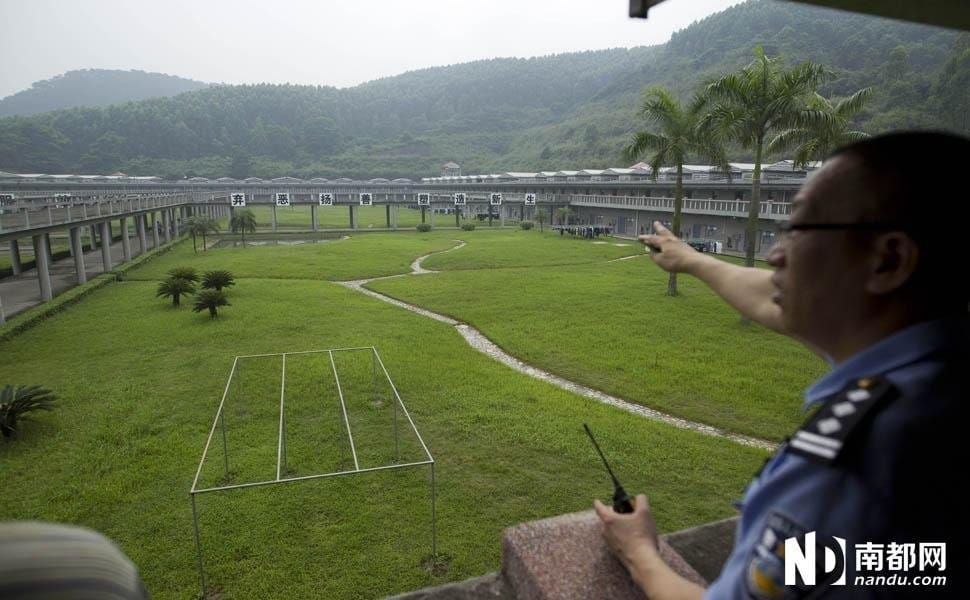
    Guangdong Jiangmen Detention Center. It is divided into 79 cells and the buildings form a large enclosed space in the middle. In 2013, the facility held about 1,600 detainees. One of them was Mark Swidan. Image: nandu.com.

    A troubling feature of China’s criminal justice system is that a judgment in a criminal trial can be postponed indefinitely after the trial concludes. American citizen Mark Swidan was formally detained on drug charges on November 14, 2012. He was tried in 2013 by the Guangdong Jiangmen Intermediate People’s Court. The court has yet to announce its judgment; the Supreme People’s Court in Beijing has extended the deadline for the court to render a judgment at least a dozen times. The most recent extension was granted on October 14, 2017. This extension, as with the others, is for three months. A judgment must be announced or another extension must be applied for by January 14, 2018. January 14 is Mark Swidan’s birthday.

    In the meantime, Mark Swidan remains held in the Jiangmen Detention Center run by the Jiangmen Public Security Bureau. He receives monthly visits from an officer at the American Consulate in Guangzhou.

    Mark Swidan in happier days. With mother, Katherine, in Houston, 1991. Image credit: Katherine Swidan

    Mark Swidan was taken into custody during a police raid on his hotel room on November 12, 2012. He was on a business trip. Two individuals – an interpreter and a driver – had come to his room. Police reportedly found drugs on their persons. No drugs were found on Mr. Swidan or in his room. Drugs were found in the room of another suspect. No forensic evidence has been produced – no drugs in his system, no DNA on the packages, no fingerprints on the packages or drug paraphernalia – tying Mr. Swidan to the drugs. No emails, letters, or phone calls have been found that link Mr. Swidan to any drug transaction. The indictment states that Mr. Swidan played a secondary role in the alleged crime. Prosecutors recommended a lesser sentence. Mr. Swidan has no history of criminal behavior, including using or trafficking in drugs.

    The alleged crime involved 11 people, including, in addition to American citizen Mark Swidan, four Mexicans, one Canadian, one Hong Kong resident, and four Chinese citizens. It is believed that some of defendants have pointed the finger at Mr. Swidan, who comes from a Texas family of limited means. He is unable to hire good legal counsel. Mr. Swidan refuses to admit guilt. He is said to rather die than admit to a crime he didn’t commit.

    Reports given to the family over the years suggest that Mr. Swidan has suffered during his five years in the detention center. He has had his art supplies seized. He has been shackled, bullied, and denied medical treatment. His mother is often unable to have her letters delivered. He has threatened suicide. Detention centers are often accused of being carceral facilities where torture is common place.

    According to a human rights officer working for the United Nations in Geneva, the way Mr. Swidan’s case has been handled is a “cut and dry case of arbitrary detention.” In perhaps the best known case of someone determined by the Working Group on Arbitrary Detention to have been arbitrarily detained in part because of a long delay in announcing a verdict, the WGAD found that the failure to announce a verdict in the case of American journalist Jason Rezaian, detained in Iran in 2014 and tried in the summer of 2015, was a violation of Article 14 of the International Covenant on Civil and Political Rights.

    It is not unheard of for Chinese defendants to have their judgments delayed for a period of several months. Prominent dissidents like Gao Yu, Guo Feixiong, and Pu Zhiqiang all had their judgments delayed for many months. But holding a foreigner for five years without adjudication is unheard of. No Chinese official has given an explanation for this interminable delay, merely stating that the case is “complicated.”

    Article 202 of China’s Criminal Procedure Law (CPL) states that a people’s court should announce judgment within two months of the completion of the trial, and no more than three months can pass without a judgment being announced. If the crime can result in a death sentence or if there are complicating factors, then the higher court can extend the time for rendering a judgment by three months. “If there are special circumstances requiring additional extensions, the court must apply to the Supreme People’s Court for approval.” There is no statutory limit for the number of times a judgment can be extended.

    Complicating factors leading to an extension of the judgment include 1) if the offense involves both criminal and civil penalties (Article 202); 2) if the case is an important or complicated one in rural areas with inconvenient transportation; 3) if the case involves large criminal organizations; 4) if it is an important case involving crimes committed in multiple locations; and 5) if collecting evidence is difficult (2-5 are covered by Article 156.) In short, there are many reasons why a Chinese court can extend a judgment for as long as it wants, and there are no means to force a decision.

    “Justice delayed is justice denied” is a legal maxim, widely ascribed to the British jurist William Gladstone, that is the basis of a fundamental due process right, the right to a speedy trial and judgment. Another legal maxim is that a suspect is innocent until proven guilty. In the eyes of the law, Mark Swidan is an innocent man.

    Justice has been denied to Mark Swidan and he and his family have suffered greatly. But China’s reputation as a country that respects the letter and spirit of law and protects fundamental rights has also suffered. The Jiangmen Court needs to announce its judgment, a judgment which will hopefully result in Mark Swidan going home without further delay.

  • The Importance of Mental Health Evaluations in Juvenile Cases (Part I of II)

    Girls detained at a Santa Clarita detention facility in Los Angeles. Image Credit: LA Times.
    According to a National Conference of State Legislatures report, approximately 70 percent—or 2 million—juveniles arrested each year in the United States suffer from a mental health disorder. One in five “suffer from a mental illness so severe as to impair their ability to function,” and in addition, juvenile offenders often suffer multiple disorders at once, substance abuse being the most common co-occurrence with mental illness. Dui Hua has previously pointed out that girls in conflict with the law are more likely than boys to attempt suicide and to self-mutilate. And the disproportionately high rate of girls who are also victims of sexual abuse places them at even greater risk of suffering from multiple mental health illnesses.
    Perhaps the most famous recent criminal case in the United States involving mental health concerns and very young female defendants is the “Slender Man” incident in Wisconsin, in which two 12-year-old female defendants stabbed a classmate repeatedly and were charged with attempted homicide. This unusual case reflects the complex intersection between mental health, crime, and juvenile justice policy and suggests that the growing trend toward juvenile competency statutes in certain US states might be a path towards more humane and sensible treatment of juvenile offenders.
    This article is another installment in Dui Hua’s investigation of how different states approach high profile felonies committed by juveniles 15 and younger. In a similar vein to earlier installments, two case studies involve female juvenile defendants and two involve males, and the states chosen represent a variety of juvenile incarceration rates and juvenile policies. See here for a broad survey of each state’s rate of juvenile confinement. State juvenile policy works best when the lowest possible proportion of the juvenile population is confined in a detention facility. Selecting states with varying juvenile incarceration rates and juvenile justice policies is instructive for analyzing juvenile justice trends in the United States.
    This article compares different state-level policy on juvenile competency hearings and applies these policies to the specific facts of each case, inquiring whether the defendants in each case were provided a psychological or mental health exam before adjudication and sentencing. Competency refers to the minor’s ability to understand the proceeding against them and to assist in his or her own defense. Competency evaluations can uncover not just mental health issues facing defendants, but also substance abuse and developmental problems that often co-occur among adolescents.
    This section presents serious crimes committed by juveniles in four states. Part 1 investigates the states of Massachusetts and Wisconsin representing states with relatively low juvenile incarceration rates. Part 2 examines the states of California and South Dakota, representing states with higher juvenile incarceration rates.
    Massachusetts: Low Incarceration Rate (46-109.5 per 100,000 juveniles)
     
    Facts: Mathew Borges is accused of stabbing Viloria Paulino, his Lawrence High School classmate on November 18, 2016, decapitating him and mutilating his body. Borges was 15 at the time of the crime.
    Massachusetts on Juvenile Mental Health/Competency: A Massachusetts bill that would create a juvenile-specific competence law in Massachusetts has been pending in the legislature for years. In general, juvenile defendants should be briefly evaluated by a court clinician; a more comprehensive evaluation may be conducted in an inpatient setting, but many of juveniles cannot easily be seen in the short same-day time frame created by the initial triage stage.
    Defendants Evaluated for Mental Health Before Conviction? The defendant does not appear to have been evaluated for mental illness since his arrest, despite mental health concerns noted in media reports. Classmates described Borges as a quiet teenager with anger issues, with one classmate saying “He was scary,” and that “He was negative to be around. He seemed mad at the world.” Another classmate stated that Borges was frequently involved in fights.
    Wisconsin: Mid-Low Incarceration Rate (109.5-173 per 100,000)
     
    Facts: In May 2014, two 12-year-old girls stabbed another girl of the same age 19 times to impress the fictional “Slender Man” horror character; the case has received extensive media attention and separate trials for the two defendants are currently pending. One of the girls, now 15-years-old, pleaded guilty but claimed that she could not be held responsible for her actions on grounds of insanity; she will be placed in a mental hospital for three years. The trial for the second girl is scheduled to begin on October 9.
    Wisconsin on Juvenile Mental Health/Competency: Wisconsin appears to be among a minority of US states that have passed laws providing for mental health screening of juvenile offenders via competency hearings, which occur before juvenile defendants can be sentenced to confinement. Wisconsin has had this provision on its books since 1995; under Wis. Stat. 938.295(2)(a), in cases where “there is probable cause to believe that the juvenile has committed the alleged offense and if there is reason to doubt the juvenile’s competency to proceed, the court is required to order the juvenile to be examined by a psychiatrist or licensed psychologist.
    Defendants Evaluated for Mental Health Before Conviction? Both defendants in the Slender Man case were assessed in 2014 for their competence to stand trial. Since then, one defendant was diagnosed with schizophrenia and both defendants have pled not guilty by reason of mental disease.
  • The Importance of Mental Health Evaluations in Juvenile Cases (Part II of II)

    Juvenile Justice Information Exchange Illustration by Kathy McCarthy.
    Continuing from Part I, Part II of “The Importance of Mental Health Evaluations in Juvenile Cases” explores how the states of California and South Dakota apply or fail to apply juvenile competency laws when it comes to violent crimes committed by young juveniles.
    California: Mid-High Incarceration Rate (173-366.5 per 100,000)

    Facts: A female defendant, Sarah Weeden, who was 14 at the time of the crime, was arrested, convicted, and sentenced for the killing of Navnil Chand, who was killed by gunshot in a robbery by 23-year-old Sertice Melonson. The crime occurred in August 2005 and Weeden’s trial was in 2008. In April 2017, the 9th US Circuit Court of appeals reversed Weeden’s conviction and remanded for a new trial, finding that Weeden’s trial attorney provided ineffective assistance of counsel for failing to have Weeden evaluated by a psychologist to determine Weeden’s capacity to form criminal intent. Weeden might be re-tried in juvenile court.
    California on Juvenile Mental Health/Competency: According to the Youth Law Center based in San Francisco, California case law has held, since 1978, that children must be competent to stand trial, but the California legislature only passed a juvenile competence statute in 2010 (i.e., after Weeden’s trial). Since then, the legislative framework provides that if a juvenile case presents evidence that the defendant might not be competent to stand trial, the courts have a variety of informal and formal options to determine competency.
    Defendants Evaluated for Mental Health/Competency Before Conviction? Weeden was never evaluated for competency by the Sacramento District Attorney’s Office, and Weeden’s attorney did not request a psychological evaluation, forming the basis for the reversal of Weeden’s conviction. In reversing the conviction, the 9th Circuit opinion criticized Weeden’s trial attorney “for not seeking a psychological evaluation on Weeden to determine the effect of her youth on her mental state and whether she could form the intent to rob.”

    South Dakota: High Rate of Juvenile Incarceration (366.5-560 per 100,000)

    Facts: In 2000, a jury convicted Daniel Charles of first-degree murder in 2000 in the sniper killing of his stepfather, Duane Ingalls. Charles was 14 at the time of the crime. Charles was sentenced to life in prison without the possibility of parole (LWOP), but such sentences were largely ruled unconstitutional by the US Supreme Court in 2012. Charles was resentenced to a 92-year sentence, a decision that was upheld by the South Dakota Supreme Court in March 2017.
    South Dakota on Juvenile Mental Health/Competency: The South Dakota legislature passed a juvenile competency statute in 2013, giving trial courts wide latitude to order psychological evaluations to determine a juvenile defendant’s competency to stand trial, with the evaluation to occur within 30 days of the court’s order. This law was passed well after Charles was convicted and sentenced for killing his stepfather.
    Defendants Evaluated for Mental Health Before Conviction? Extant accounts of the killing and the trial give no indication that mental health of Charles was considered, as the defense theory was based purely on the claim that Charles accidently shot the victim.

    Why mental health evaluations are critical for juvenile justice

    Among the four violent criminal cases examined, the only one in which the defendant was given a psychological evaluation before adjudication was in Wisconsin, a state that had an existing statute covering juvenile competency hearings. Juvenile incarceration rate was not associated with a greater tendency to conduct mental health evaluations— in the Massachusetts case, the defendant was not evaluated despite presenting significant mental health concerns. These findings support appeals by proponents to implement juvenile competency legislation so that courts follow clear procedures regarding when and how juvenile defendants should receive mental health evaluations. This growing trend is especially important given the complicated mental health issues facing adolescents and questions about criminal culpability that arise from scientific findings about the juvenile brain. Although these cases are a small sample, they suggest that if state legislatures provide statutory guidance on juvenile competency, it becomes more likely that juvenile defendants will receive a professional evaluation before they are sentenced to a lengthy term of confinement. With a mental health evaluation, youth in conflict with the law have a better chance of accessing the necessary mental healthcare and community services that they need to recover and live a better life.

    If the mental health problems of more juveniles are identified and early intervention is prioritized in case handling, more juveniles and communities would also benefit from the policy advances being made in juvenile mental healthcare programs. A 2016 NCBI/NIH study on mental health and juvenile crime examined the effectiveness of various intervention and treatment programs/approaches, finding that treatment models including Cognitive-Behavioral Interventions (CBI) and Functional Family Therapy (FFT) are effective treatment frameworks for juvenile offenders. These models share two major features: integrated systems of care (education, child protection, family participation, and mental healthcare) that intervene in juvenile cases in a collaborative manner to meet the interrelated needs of each individual youth; and an approach to rehabilitation that emphasizes an effective screening and assessment process.

    If we don’t identify mental health issues in juveniles prior to conviction, we run the risk of allowing the carceral system to be the site where juvenile mental health disorders are identified and treated, or worse yet further ignored. Prisons have repeatedly proven to worsen inmate’s mental health and contribute to their recidivism. According to the National Center for Mental Health and Juvenile Justice, the timing of mental health intervention is critical:
    “Youths who immediately receive a mental health screening are more likely to have their problems identified and treated. Often, however, screening and assessment take place only after a juvenile has been adjudicated and placed in a correctional facility. A prompt mental assessment of juveniles at initial court intake allows the information gained to be used in making diversion or other dispositional decisions.”
    Reforms in Nevada are consistent with these findings, as they have appropriated funding and mandated the implementation of mental health evaluations and programs before a youth is convicted and punished. At Mendota Juvenile Facility in Madison, Wisconsin, results from a program to treat psychopathology among violent juvenile offenders are promising. The study finds that even among violent juvenile offenders who exhibit psychopathological traits, interventions focused on positive reinforcement and constant staff presence produced much lower rates of general and violent recidivism 4.5 years after offenders were released compared to recidivism rates among juveniles released from ordinary (non-psychopathology specialist) detention centers.

    Despite the tragic circumstances behind these cases, hopefully they can buoy a growing trend towards juvenile competency statutes in the United States that grant better treatment for juvenile offenders and an overall reduction in juvenile incarceration.
  • The “Hidden Rules” of China’s Criminal Justice System

    Rule of Law was a centerpiece of the Fourth Plenum meeting of the Central Committee of the CCP in October 2014. Image Credit: Getty Images.

    Xi Jinping made judicial reform a priority item on his agenda after fully taking power in 2013. He promised to “construct a rule-of-law country” and repeatedly emphasized the need for governing with respect to Chinese law and the constitution. Legal institutions were the focus of the “Fourth Plenum” meeting of the Central Committee of the Chinese Communist Party in October 2014, which pledged to “strive to let the popular masses feel justice in every court case.” Since then, efforts have been undertaken to “deepen” reform of the country’s legal institutions and officials have been served notice to achieve their reform targets before the upcoming 19th Party Congress later this year.

    In the run up to the 19th Party Congress, we should expect to hear more talk of the great achievements and successful reforms of China’s judicial system. In February, the Supreme People’s Court released a white paper on judicial reform describing its progress in improving the efficiency, accountability, and transparency of the judicial system and declaring that 63 of the 65 reform goals it had set for itself to achieve by 2018 had already been basically accomplished by the end of 2016.

    The reform of China’s law-enforcement and judicial institutions has certainly made some progress in recent years, but are there problems in the country’s legal system that remain untouched by these reforms and continue to undermine the ability of those institutions to deliver justice?

    According to Professor Chen Ruihua, an expert on criminal procedure law at Peking University Law School, the answer is a resounding yes. In a recent blog post, widely circulated online, Chen observes that there are 17 “hidden rules” that govern how the Chinese criminal justice system “really” operates. These rules describe a system of collusion between institutions intended to check each other’s powers, courts that are fundamentally biased against defendants, and a coordinated effort to limit the impact of defense lawyers.

    A list like this is clearly not meant to be analytical, though Chen has spoken and written quite frankly and at length on the flaws he observes in China’s criminal justice system. At a time of renewed ideological attacks against judicial independence and separation of powers, it takes courage to even raise the possibility that the progress of Chinese legal reform is not everything it’s made out to be.

    *

    17 “Hidden Rules” of China’s Criminal Justice System

    In the Chinese criminal justice system, the “gong-jian-fa” institutions (public security, procuratorate, and courts) follow a set of “hidden rules” outside of the formal legal system. These “hidden rules” have great vitality and have operated over a long period of time, making it difficult to change them despite revisions to the criminal procedure law or even judicial reforms. Professor Chen Ruihua sums up these “hidden rules” as follows:

    1. The investigative organs will only file a case for investigation when that case has already been solved.
    2. Most of the public security organ’s criminal investigation activity is completed before issuing the decision to arrest.
    3. The vast majority of cases are only solved after obtaining a confession of guilt by the suspect.
    4. If it were not for the purposeful restriction of the rights of defense lawyers and the extralegal detention measures against suspects, solving criminal cases would be extremely difficult for the majority of investigative organs.
    5. Compared to plaintiffs in civil trials, the public prosecutor in a criminal trial has a far stronger appetite for “winning”.
    6. When a case lacks clear facts or evidence, the procuratorate would rather withdraw the prosecution than allow the court to acquit the defendant.
    7. Almost all police and procurators treat defense lawyers with a certain degree of hostility.
    8. When a case lacks clear facts or evidence, courts will generally issue decisions that “give lenient punishment when there is doubt” or “remand for retrial;” the “presumption of innocence” is an extremely rare exception.
    9. Nearly all first-instance trials proceed by reading the record of criminal investigation aloud.
    10. In cases where the defendant hasn’t put forward enough exculpatory evidence, the court’s judgement is basically a kind of process to affirm the conclusions of the investigators and prosecutors.
    11. The vast majority of criminal judges lean toward the side of prosecution and will do everything they can to avoid allowing a “guilty” defendant to escape justice.
    12. Judgments in the vast majority of cases are reached outside of the trial process.
    13. The vast majority of judges turn a blind eye to procedural violations of law made by police, procurators, and first-instance trial judges.
    14. When a defendant refuses to admit guilt during the investigation or trial phases, it becomes a significant basis for the court to impose a more severe punishment.
    15. In the vast majority of cases it is a “responsible” judge that makes the judgement decision.
    16. Judges would rather write extremely detailed “trial conclusion reports” than provide detailed reasoning for their judgments.
    17. Whether it is the individual police, procurator, judge, or the “gong-jian-fa” organs, each has a direct interest in how criminal cases are decided.
  • The “Hidden Rules” of China’s Criminal Justice System

    Rule of Law was a centerpiece of the Fourth Plenum meeting of the Central Committee of the CCP in October 2014. Image Credit: Getty Images.

    Xi Jinping made judicial reform a priority item on his agenda after fully taking power in 2013. He promised to “construct a rule-of-law country” and repeatedly emphasized the need for governing with respect to Chinese law and the constitution. Legal institutions were the focus of the “Fourth Plenum” meeting of the Central Committee of the Chinese Communist Party in October 2014, which pledged to “strive to let the popular masses feel justice in every court case.” Since then, efforts have been undertaken to “deepen” reform of the country’s legal institutions and officials have been served notice to achieve their reform targets before the upcoming 19th Party Congress later this year.

    In the run up to the 19th Party Congress, we should expect to hear more talk of the great achievements and successful reforms of China’s judicial system. In February, the Supreme People’s Court released a white paper on judicial reform describing its progress in improving the efficiency, accountability, and transparency of the judicial system and declaring that 63 of the 65 reform goals it had set for itself to achieve by 2018 had already been basically accomplished by the end of 2016.

    The reform of China’s law-enforcement and judicial institutions has certainly made some progress in recent years, but are there problems in the country’s legal system that remain untouched by these reforms and continue to undermine the ability of those institutions to deliver justice?

    According to Professor Chen Ruihua, an expert on criminal procedure law at Peking University Law School, the answer is a resounding yes. In a recent blog post, widely circulated online, Chen observes that there are 17 “hidden rules” that govern how the Chinese criminal justice system “really” operates. These rules describe a system of collusion between institutions intended to check each other’s powers, courts that are fundamentally biased against defendants, and a coordinated effort to limit the impact of defense lawyers.

    A list like this is clearly not meant to be analytical, though Chen has spoken and written quite frankly and at length on the flaws he observes in China’s criminal justice system. At a time of renewed ideological attacks against judicial independence and separation of powers, it takes courage to even raise the possibility that the progress of Chinese legal reform is not everything it’s made out to be.

    *

    17 “Hidden Rules” of China’s Criminal Justice System

    In the Chinese criminal justice system, the “gong-jian-fa” institutions (public security, procuratorate, and courts) follow a set of “hidden rules” outside of the formal legal system. These “hidden rules” have great vitality and have operated over a long period of time, making it difficult to change them despite revisions to the criminal procedure law or even judicial reforms. Professor Chen Ruihua sums up these “hidden rules” as follows:

    • The investigative organs will only file a case for investigation when that case has already been solved.

    • Most of the public security organ’s criminal investigation activity is completed before issuing the decision to arrest.

    • The vast majority of cases are only solved after obtaining a confession of guilt by the suspect.

    • If it were not for the purposeful restriction of the rights of defense lawyers and the extralegal detention measures against suspects, solving criminal cases would be extremely difficult for the majority of investigative organs.

    • Compared to plaintiffs in civil trials, the public prosecutor in a criminal trial has a far stronger appetite for “winning”.

    • When a case lacks clear facts or evidence, the procuratorate would rather withdraw the prosecution than allow the court to acquit the defendant.

    • Almost all police and procurators treat defense lawyers with a certain degree of hostility.

    • When a case lacks clear facts or evidence, courts will generally issue decisions that “give lenient punishment when there is doubt” or “remand for retrial;” the “presumption of innocence” is an extremely rare exception.

    • Nearly all first-instance trials proceed by reading the record of criminal investigation aloud.

    • In cases where the defendant hasn’t put forward enough exculpatory evidence, the court’s judgement is basically a kind of process to affirm the conclusions of the investigators and prosecutors.

    • The vast majority of criminal judges lean toward the side of prosecution and will do everything they can to avoid allowing a “guilty” defendant to escape justice.

    • Judgments in the vast majority of cases are reached outside of the trial process.

    • The vast majority of judges turn a blind eye to procedural violations of law made by police, procurators, and first-instance trial judges.

    • When a defendant refuses to admit guilt during the investigation or trial phases, it becomes a significant basis for the court to impose a more severe punishment.

    • In the vast majority of cases it is a “responsible” judge that makes the judgement decision.

    • Judges would rather write extremely detailed “trial conclusion reports” than provide detailed reasoning for their judgments.

    • Whether it is the individual police, procurator, judge, or the “gong-jian-fa” organs, each has a direct interest in how criminal cases are decided.
  • Chinese Officials Struggle to Counter Juvenile Crime Without Relying on Harsh Punishment

    A juvenile judge in Anhui speaks with young offenders. Photo Credit: Guoyang County Court

    At a press conference in May, the Supreme People’s Procuratorate (SPP) announced that nearly 30 percent of juvenile arrests and over eight percent of juvenile indictments in China were not approved in 2015, compared with 18 percent and five percent in 2012 (see chart below). Between 2003-2015, 14.8% of 1.08 million individual juvenile arrests were rejected, as were 4.4% of the 1.13 million individual indictments.

    Avoiding harsh measures against juveniles reflects a changing legal framework since a separate juvenile justice section was included in the amended Criminal Procedure Law (CPL), effective since 2013. In the years following the CPL amendments, Chinese courts have emphasized the importance of an independent and standardized juvenile justice system, with an “education first” approach that features practices like mentoring and criminal record sealing.

    In addition to lower rates of arrest and indictment, non-custodial measures are a major part of this approach. In 2015, Chinese courts handed down non-custodial (fei jianjin xing) or punishment exemption (mianyu xingshi chufa) measures to 48 percent of juvenile defendants. These non-custodial figures compare to 41.75 percent of defendants in 2012, as reported by the Supreme People’s Court Research Office, and 35.56 percent of defendants in 2010, according to the official compendium China Juvenile Justice (Zhongguo shaonian sifa). SPP measures on juveniles claim that this approach is designed to embody an “educational, corrective, and protective” approach.

    Prosecution of Juveniles in China, 2012-2015

    Sources: SPP; Dui Hua

    Rising Violence Among China’s Youth

    The use of non-custodial juvenile justice measures is not without its obstacles. Although it appears that juvenile crime in China has fallen overall during the past 10 years, violent crime committed by juveniles has continued to rise, offenders are getting younger, and gangs are more prevalent. According to Wang Wei, Deputy Chief of the Shanxi Province People’s Procuratorate Juvenile Division, juvenile offenders younger than 15 are increasingly common. Many procurators and scholars, Wang Wei among them, also believe that family troubles, especially social problems of “left behind children” and migrant youth, contribute substantially to these new trends in juvenile crime. Data from China’s most recent (2010) census show that over 60 million children were left behind in their rural hometowns as their parents became migrant workers in more urban areas. These children represent just under two-fifths of China’s rural child population and over one-fifth of the total child population. A report sponsored by Beijing Normal University and UNICEF concluded that left behind children are over 70% more likely to offend than other children with similar characteristics.

    In July and August of 2016, provinces including Hubei and Shanxi introduced legislation and other changes to the judicial system intended to protect this at-risk population, and provinces with similarly high populations of migrants and left-behind children may well follow suit. Although increased attention towards providing more social services and monitoring to these young offenders is commendable, the disproportionate conviction rates and other persistent inequities faced by migrants and their children could indicate difficulty finding long-term, sustainable solutions for the increasing proportion of juvenile crime that is young, violent, and gang-related.

    Juvenile Offenders and Media Control

    Included among the responses of Chinese authorities to these broader trends in juvenile crime and justice administration are new requirements that limit the scope of juvenile crime reporting. In mid-2015, the State Internet Information Office (SIIO) promulgated a “Notice on Further Strengthening Management of Online Reporting of Juvenile Crime and Bullying Incidents,” which had followed sensationalist online reporting on upticks in serious juvenile crime. The notice lists several requirements, including that “websites shall not place reporting of juvenile crimes […] on their homepages or news channel headlines and shall not suggest related content in blogs, microblogs, forums, postings, pop-ups, navigation bars, search engines, or other such positions.” Non-compliant outlets face “formal censure meetings, warnings, fines and other disposition methods, including revocation of website news service credentials, [which] may be imposed, according to the law[.]”

    Unsurprisingly, major news outlets such as Xinhua and Legal Daily seem to have largely complied with the notice, removing their customary, “related content” sidebars for reports on juvenile delinquency, and they have also deleted many suggested search terms related to juvenile offending from drop-down menus. When the notice was introduced a year ago, commentators noted that its intent was to stem public fears of a juvenile violence epidemic, emphasizing that the protection of children’s privacy and dignity is paramount; however, the rules might have a pernicious side effect–silencing productive discussion on juvenile crime and infringing the public’s right to know.

    A year later, the unintended effects seem to have dominated. Judging from aggregate data, the notice has had no discernable effects on either media mentions or public interest in juvenile crime, whereas it has limited access to objective reporting on the topic. Given that procuratorial officials like Wang Wei have recognized juvenile crime as a social and a legal problem, the SIIO’s restrictions go too far in limiting the discussion of potential solutions to the complex difficulties facing youth in conflict with the law.

  • Cross-Province Wage Dispute Leads to Protests, Detentions

    A protesting worker holds a sign demanding the payment of wages. Source: news.jstv.com

    As China’s economic boom has waned, the longstanding problem of non-payment, delayed payment, or partial payment of wages has intensified. The resulting labor disputes increase social instability, demands on government, and pressures on judicial authorities. A recent dispute concerning back pay to rural miners offers a cautionary lesson that can inform the responses of Chinese authorities to this challenge.

    Iron Miners in Hebei Protest, Demand Backpay

    In October 2012, labor contractors Chen Shouyan and Wei Luntian arranged for more than 100 rural laborers from Lan’gao County, Shaanxi Province, to travel over 2,000 km to work in an iron mine run by Jiangcheng Mining Company in Qinglong County, Hebei Province. By June 2013, however, the mining company had reportedly stopped paying the workers, an apparent violation of their labor contracts.

    Chen and Wei were forced to borrow money just to pay workers a basic monthly living wage, approximately 1,000 yuan ($150 USD). In May 2015, money ran out entirely, and angry miners attacked Chen and Wei, trashing their office.

    On June 28, 2015, Chen and Wei led more than 180 miners, many from Lan’gao County, to deliver a petition outside the Qinglong County government offices. County officials met with representatives of the miners and the mining company and calculated that the workers were owed nearly 15 million yuan ($2.3 million USD) in back wages. The mining company responded that the miners had not been paid because they failed to deliver according to the contract. Discussions ended in stalemate.

    On July 3, 2015, Chen and Wei again led more than 100 miners to demonstrate outside Qinglong County government offices and demand that the county head step in to resolve the wage dispute. Police dispatched to the scene reportedly used tear gas and detained approximately 20 protesters. Of these, Chen, Wei, and four others were placed under criminal detention for gathering a crowd to disrupt social order.

    For reasons that are not entirely clear, prosecutors tried the six defendants in two separate trials. In January 2016, Chen and another defendant were sentenced by the Qinglong County People’s Court to four years and 3-1/2 years in prison, respectively, while two other defendants received suspended sentences. Three of the four defendants appealed, resulting in a trial of second instance in May 2016. At it happened, the trial of Wei and a co-defendant was also getting underway at this time.

    Tensions Arise Between County Officials in Hebei and Shaanxi

    Meanwhile, officials back in Lan’gao County had become aware of the dispute, believed that the miners’ claims were reasonable, and formed a special work team of county officials to look into the case. As a poor county located in a region that “exports” more than a third of its labor force, officials in Lan’gao were familiar with receiving petitions about wage arrears and other labor disputes. Led by Nie Bin, an official from the judicial administration bureau, the team traveled to Qinglong County five times in attempts to sit down with Qinglong officials to discuss the case. Each time, however, their mission was rebuffed.

    Finally, the Lan’gao work team returned to Qinglong in May to observe the two trials. They brought four witnesses whose testimony had been used by the prosecution in Chen’s trial, despite the fact that their testimony had been given under the watchful eye of a Jiangcheng Mining official. Two of the witnesses appeared at Wei’s trial to recant their testimony. They were then taken into custody and charged with making false statements, preventing them from appearing in court to recant a second time in Chen’s appeal. This act compounded the tension between officials from the two counties, escalating the dispute.

    Details of the case were first reported in the Chinese media in early June, around the time that the appeals court vacated the verdict against Chen and the others and remanded the case for retrial. Media attention and public outcry over the handling of the case pushed the Lan’gao and Qinglong officials to work towards paying the miners years of delinquent back wages.

    Prospects for these miners, however, remain unclear. Construction booms used to mean high demand for steel and heavy investment in the iron mines of Qinglong County. Now many of these mines are shuttered and a large number of companies have been unable to pay miners their wages.

    Perhaps in recognition that similar disputes will likely proliferate, Beijing Times columnist “Binglin” recently warned local government officials against too hastily resorting to criminal measures in dealing with protesting workers.

    *

    “Use Caution with Criminal Measures against Wage Arrears Protests” (translated excerpt)

    *

    Beijing Times, June 16, 2016

    …

    Rule by law is an important path for modern governance, but rule by law is not the same as criminal justice, and its methods do not entail the indiscriminate use of criminal measures. Local governments must realize that it is difficult to avoid some radical behavior on the part of rural laborers who are owed many years of back wages. The reasonable way to deal with them is to carry out proactive communication and negotiation in accordance with the law and come to some kind of agreement. If protesting workers engage in unlawful behavior, this must be dealt with appropriately within the scope of rule by law. But you cannot simply treat the situation as a criminal matter and be so cavalier about using the “means of last resort” to handle things.

    When rural laborers seeking payment of back wages make petitions outside government offices, it is quite possible that they might block the entrance to those offices, tie up traffic, or have a negative effect on work. For those who violate the law, it may thus be necessary to use appropriate coercive measures or punishments in accordance with the law. However, before deciding that this sort of unlawful behavior constitutes the criminal offense of “gathering a crowd to disrupt social order,” you must first consider the criminal law principle of proportionality and make a careful judgment. In applying the law, you must pay particular attention to the distinction between criminal behavior and violations of public order management, giving consideration to the subjective intent of the person who has committed the unlawful act. If the circumstances are not grave and no serious damage has been done, the act should be treated as a public-order offense and be punished accordingly.

    …

    Please click here to read the full article in Mandarin.

  • Could China’s New Oversight Rules Have Avoided Arbitrary Detention of American Citizen?

    The United Nations Palais des Nations. On June 29, the UN Working Group on Arbitrary Detention recommended the release of American Sandy Phan-Gillis, who has been detained for over a year without having charges brought against her in court. Photo: www.unog.ch

    Dui Hua recently found a copy of Supreme People’s Procuratorate (SPP) regulations that govern oversight of “designated-location residential surveillance” (DLRS), a form of incommunicado detention that the Chinese government frequently uses in sensitive cases involving endangering state security, terrorism, and corruption (known as “three type offenses”). Dui Hua has translated the regulations into English below (Chinese source text available here).

    The SPP adopted the regulations on October 13, 2015 with the apparent intention of curtailing abuse of DLRS. During public comment periods leading up to the 2013 revisions to the Criminal Procedure Law (CPL) that established DLRS powers, many commentators heavily criticized DLRS for effectively legalizing the secret, incommunicado detentions that had existed for years in China due to ambiguities and blank spots in the law. In November 2011, the United Nations Working Group on Enforced or Involuntary Disappearances had also objected to the proposed CPL revisions, arguing that they would amount to the legalization of enforced disappearances.

    Oversight Regulations Aim to Limit Arbitrary Detention Through On-Site Inspections

    Given the importance of DLRS oversight, it is tempting to speculate whether these rules, had they been in place just a few months earlier, might have helped mitigate if not avert the arbitrary detention of American citizen Phan (Sandy) Phan-Gillis—the only American currently in a Chinese detention facility on state secrets charges. On June 29, the UN Working Group on Arbitrary Detention (WGAD) published an Opinion holding that Phan-Gillis’ detention is “arbitrary”, with US State Department officials urging China to consider the WGAD’s recommendation to release Phan-Gillis. Indicating the heightened US-China tensions resulting from the case, Chinese Foreign Ministry spokesman Hong Lei issued a swift reply, referring to the WGAD findings as “irresponsible” and calling for greater respect of China’s “judicial sovereignty”.

    Phan-Gillis (pictured left) was initially taken into custody by agents of the Guangxi Zhuang Autonomous Region’s state security bureau on suspicion of espionage on March 19, 2015. She was placed under DLRS until September 2015, when the six-month time limit on this coercive measure expired, and was then transferred to a detention center in Nanning and placed in solitary confinement. In March 2016, Newsweek reported on the one-year anniversary of her detention.

    Phan-Gillis has not received access to effective assistance of legal counsel and continues to be held in detention in Nanning, having never had charges brought against her in court. Had the SPP’s new oversight regulations been in place when Phan-Gillis was initially detained, procurators would have possessed clear authority under Article 19 to carry out on-site inspection of Phan-Gillis’ DLRS conditions and to conduct return inspection visits once per week.

    Other provisions of the oversight regulations raise the question whether procurators might also have been able to request her release or to otherwise curtail police powers. Article 20 of the regulations, for example, provides local procurators with authority to issue “rectification opinions” on procedural irregularities, several of which apply to the Phan-Gillis case: state security officials failed to notify Phan-Gillis’ family of her placement in a DLRS facility; probably failed to place her in a facility that meets the statutory requirements for DLRS (no one, including the American consular officials who conducted monthly visits, were allowed to visit Phan-Gillis in the detention facility where she is actually housed); and failed to allow her reasonable visits and correspondence with legal counsel and family as provided for under the relevant sections of the CPL, which grant discretion for the detaining authority to allow family and lawyer visits even in so-called “three type offenses.”

    Unfortunately, even these minimal oversight mechanisms were not in place at the time of Phan-Gillis’ DLRS confinement. The new rules came into force weeks after the end of her transfer to a detention facility. As it stands, the abuses of discretion that marked the first case of legalized disappearance after passage of CPL revisions in 2013 are eerily similar to those apparent in ongoing cases like Phan-Gillis’. It remains to be seen whether the oversight rules translated below will yield discernible changes in future police application of DLRS procedures.

    *

    Regulations on Oversight of Residential Surveillance in a Designated Location by People’s Procuratorates

    *

    Adopted at the 41st meeting of the 12th Procuratorial Committee of the Supreme People’s Procuratorate on October 13, 2015

    Chapter 1: General Principles

    Article 1: In order to strengthen and standardize how people’s procuratorates carry out oversight regarding imposition and implementation of designated-location residential surveillance (DLRS), these regulations are hereby enacted in accordance with the relevant provisions of the Criminal Procedure Law of the People’s Republic of China (CPL) and in consideration of the realities of procuratorial work.

    Article 2: When DLRS is used against criminal suspects or defendants by public security organs, people’s procuratorates, or people’s courts, people’s procuratorates shall carry out oversight in accordance with law as to the legality of imposition and implementation of DLRS.

    Article 3: Oversight of decisions to impose DLRS shall be the responsibility of the investigation-oversight and prosecutorial units of people’s procuratorates; responsibility for oversight of implementation of DLRS shall reside with the criminal enforcement inspectorate units of people’s procuratorates.

    Article 4: Designated locations shall possess the conditions for ordinary daily life and rest and shall be separate from places of interrogation; they shall be equipped with surveillance equipment to facilitate monitoring and management; and they shall possess security measures to ensure the security of case handling.

    Chapter 2: Oversight of Decisions to Impose Designated-Location Residential Surveillance

    Article 5: When a public security organ decides to impose DLRS on a criminal suspect who has no fixed residence, the investigation-oversight unit of the people’s procuratorate at the same administrative level [as the public security organ] shall conduct oversight to determine whether that decision has been made lawfully.

    When a public security organ at a higher administrative level has approved a decision to place an individual suspected of endangering state security or terrorist activity under DLRS, the investigation-oversight unit of the people’s procuratorate at the same administrative level as the public security organ that issued approval shall conduct oversight as to whether that decision has been made lawfully.

    Article 6: When a people’s procuratorate decides to place a criminal suspect who has no fixed residence under DLRS, the investigation-oversight unit of the people’s procuratorate immediately above shall conduct oversight as to whether that decision has been made lawfully.

    When a people’s procuratorate at a higher administrative level has approved a decision to place an individual suspected of serious corruption under DLRS, the investigation-oversight unit of the people’s procuratorate that gave that approval shall conduct oversight as to whether that decision has been made lawfully.

    Article 7: When any of the following conditions apply, the people’s procuratorate shall initiate oversight into whether a decision to impose DLRS is lawful:

    (i) A criminal suspect or his/her legal representatives, close relatives, or defense counsel believe that the decision to impose DLRS is in violation of the law and file a complaint, report, or petition with the people’s procuratorate;

    (ii) When, in the course of its involvement in investigation, review of arrest or indictment requests, review of criminal enforcement, or filing review, the people’s procuratorate discovers that the investigating organ (unit) may have issued a decision to impose DLRS in violation of the law;

    (iii) A people’s supervisor believes that a decision to impose DLRS is in violation of the law and files an oversight opinion with the people’s procuratorate;

    (iv) Other circumstances requiring initiation of oversight.

    Article 8: When initiating oversight of a decision by a people’s procuratorate to place a criminal suspect who has no fixed residence under DLRS, the investigating unit shall furnish the investigation-oversight unit of the people’s procuratorate at the administrative level immediately superior with copies of the case-filing decision, the decision to impose DLRS, and main pieces of evidence within three days.

    When initiating oversight of a decision to place an individual suspected of serious corruption under DLRS, the investigation unit of the people’s procuratorate that approved the decision shall furnish the aforementioned documents to its own investigation-oversight unit within three days.

    When the people’s procuratorate initiates oversight into a decision to impose DLRS by a public security organ, it may request that the public security organ provide the aforementioned documents.

    Article 9: Oversight into decisions to impose DLRS may be carried out in one of the following ways:

    (i) Review of the relevant case documents;

    (ii) Listening to the investigating organ (unit) present its reasons and factual basis for issuing the decision to impose DLRS;

    (iii) Listening to the opinions of the criminal suspect or his/her legal representatives, close relatives, or defense counsel;

    (iv) Other ways.

    Article 10: In reviewing the legality of a decision to impose DLRS, the people’s procuratorate shall check to see whether the decision satisfies the conditions set out in Articles 72 and 69(3) of the CPL, and further review whether the decision meets the following conditions:

    (i) The criminal suspect has no fixed residence in the city or county where the case-handling organ is located;

    (ii) The public security organ or people’s procuratorate at the administrative level immediately superior has approved the decision to impose DLRS on an individual suspected of endangering state security, terrorist activity, or serious corruption for whom implementation of residential surveillance in his/her own residence would impede the investigation.

    Article 11: The investigation-oversight unit of the people’s procuratorate should issue a decision within seven days of initiating oversight into whether a decision to impose DLRS was lawful.

    Article 12: When, having carried out its review, the people’s procuratorate finds that the public security organ’s decision to impose DLRS does not meet the conditions set out by the law, it shall report those findings to the head of the procuratorate and, upon his or her approval, issue a rectification notice to the public security organ and recommend that the public security organ revoke its decision to impose DLRS.

    When the procuratorate finds that a decision to impose DLRS issued by itself or the procuratorate at the next lower administrative level does not meet the conditions set out by the law, the investigation-oversight unit of the people’s procuratorate shall report to the head of the people’s procuratorate and, upon his or her decision, notify its own investigating unit or the people’s procuratorate at the next lower administrative level to revoke the decision to impose DLRS. When notifying the people’s procuratorate at the next lower administrative level to revoke the decision to impose DLRS, the procuratorate shall also circulate a notice to its own investigating unit.

    Article 13: Upon receiving a rectification opinion from the people’s procuratorate at the immediately superior administrative level, the people’s procuratorate shall immediately carry out the recommendation and report on the steps taken to the investigation-oversight unit of the immediately superior people’s procuratorate.

    If the people’s procuratorate believes that the rectification opinion from the immediately superior people’s procuratorate regarding its decision to impose DLRS is in error, it may request a new review by [that same superior] people’s procuratorate within three days of receiving the rectification opinion. The superior people’s procuratorate shall appoint a new procurator to review the case and issue a decision whether to amend its original opinion within five days.

    Article 14: Oversight of decisions by the people’s procuratorate to impose DLRS during the indictment phase shall be carried out in accordance with these provisions by the investigation-oversight unit of the same people’s procuratorate.

    Oversight of decisions by the people’s court to impose DLRS shall be carried out in accordance with these provisions by the prosecutorial unit of the people’s procuratorate at the same administrative level as the court.

    Chapter 3: Oversight of Implementation of Designated-Location Residential Surveillance

    Article 15: Oversight of implementation of DLRS is the responsibility of the criminal enforcement inspectorate unit of the people’s procuratorate at the same administrative level as the public security organ that implements the DLRS.

    Article 16: Oversight by people’s procuratorates as to implementation of DLRS shall include the following:

    (i) Whether legal paperwork, such as the DLRS decision or enforcement notice, is complete;

    (ii) Whether the place, term, and personnel are in accordance with regulation;

    (iii) Whether the lawful rights of the person under residential surveillance are being protected;

    (iv) Whether there is any unlawful behavior, such as interrogation in the designated location, corporal punishment, or abuse of the person under residential surveillance;

    (v) Other things that should be monitored in accordance with the law.

    Article 17: When carrying out oversight into the implementation of DLRS, the people’s procuratorate may employ the following measures:

    (i) Review of relevant legal documents; records of any meetings, correspondence, or outgoings by the person under residential surveillance; and physical examination records;

    (ii) On-site inspection of whether the designated location meets the legal conditions;

    (iii) Review of relevant surveillance video footage and, if necessary, physical examination of the person under residential surveillance;

    (iv) Interviews with the person under residential surveillance, enforcement personnel, investigators, or other relevant personnel in order to ascertain and understand relevant circumstances.

    Article 18: Within 24 hours of receiving a copy of a decision to impose DLRS from a public security organ or people’s court, the people’s procuratorate case management unit shall forward the decision to its criminal enforcement inspectorate unit.

    When the investigation unit or prosecution unit of a people’s procuratorate issues a DLRS decision in the name of the procuratorate, it shall send a copy of the DLRS decision to its criminal enforcement inspectorate unit within 24 hours and notify it of the address of the designated location.

    Article 19: Within 24 hours after receiving a copy of the DLRS decision, the criminal enforcement inspectorate unit of the people’s procuratorate shall appoint procurators to carry out on-site inspection and complete a record of oversight inspection. Monitoring of DLRS implementation should include return inspection visits by roving teams of no fewer than two procurators at least once per week. Inspection of the implementation of DLRS must not interfere with the ordinary work of criminal investigation.

    Article 20: When oversight of DLRS implementation by the people’s procuratorate uncovers one of the following, the people’s procuratorate shall issue a rectification opinion to the enforcement or investigating organ in accordance with the law:

    (i) Failure of the enforcement organ to appoint enforcement personnel or failure to appoint enforcement personnel in a timely manner upon receipt of the DLRS decision and implementation notice;

    (ii) Except when it is impossible to provide notice, failure to notify the family of the person under residential surveillance within 24 hours of implementing DLRS;

    (iii) Implementation of residential surveillance in a detention center, administrative jail, prison, holding cell, case-handling area, or other location not meeting the statutory conditions for a designated location;

    (iv) Arranging meetings or correspondence between defense lawyers and the person under residential surveillance in ways that violate regulations or illegally restricting the person under residential surveillance from meeting or corresponding with a defense lawyer;

    (v) Failure by a new case-handing organ to issue a new DLRS decision in a timely manner when there is a change in the phase of the criminal process;

    (vi) Failure of the enforcement organ to lift residential surveillance in a timely manner and notify the person under residential surveillance in a timely manner when the case-handling unit issues a decision to lift or change the DLRS conditions and notifies the enforcing organ of such;

    (vii) Demands for payment by the person under residential surveillance or his or her family;

    (viii) Other illegality.

    When the criminal enforcement inspectorate unit of the people’s procuratorate discovers that the investigation or prosecutorial unit of its own procuratorate has violated one of the above conditions, it shall seek approval from the head of the procuratorate to issue a rectification opinion.

    Article 21: When the criminal enforcement inspectorate unit of the people’s procuratorate finds irregularities in enforcement or security risks in the implementation of DLRS, it shall seek approval from the head of the procuratorate to issue a procuratorial recommendation to the enforcement organ or case-handling organ.

    Article 22: When a rectification notice or procuratorial opinion has been issued, a copy shall be sent to the procuratorate at the administrative level immediately superior as well as to the unit immediately superior to the enforcement unit or case-handling unit.

    Article 23: When a person under residential surveillance dies while under DLRS, the case shall be handled with reference to the Supreme People’s Procuratorate procuratorial procedures for death of a person in custody in a detention facility.

    Article 24: When a people’s court or people’s procuratorate assigns judicial police officers to assist the public security organ with implementation of DLRS, the criminal enforcement inspectorate unit of the people’s procuratorate shall carry out oversight of those officers’ assistance with implementation.

    Chapter 4: Additional Provisions

    Article 25: The people’s procuratorate shall process and provide responses in a timely manner to complaints, reports, or petitions regarding imposition or implementation of DLRS from criminal suspects or their legal representatives, close relatives, or defense counsel.

    Article 26: When the investigation-oversight or prosecutorial unit of the people’s procuratorate discovers the possibility of illegality in the implementation of DLRS, they shall report their findings in a timely manner to the criminal enforcement inspectorate unit. When the criminal enforcement inspectorate unit discovers the possibility of illegality in imposing a DLRS decision, it shall report its findings in a timely manner to the investigation-oversight or prosecutorial unit.

    Article 27: If, in the course of its oversight of imposition or implementation of DLRS, the people’s procuratorate discovers violations of disciplinary rules or the law by case-handling personnel or enforcement personnel, it shall seek a decision from the head of the procuratorate to send the case in a timely manner to be handled by the appropriate unit; if the wrongdoing constitutes a criminal offense, it shall pursue criminal responsibility in accordance with the law.

    Article 28: If there are violations of disciplinary rules or violations of the law by procuratorial personnel overseeing imposition or implementation of DLRS, responsibility shall be pursued in accordance with the relevant provisions; if the wrongdoing constitutes a criminal offense, responsibility shall be pursued in accordance with the law.

    Article 29: Oversight of imposition or implementation of DLRS by the people’s procuratorate shall be handled as part of the unified system of duties of the people’s procuratorate. The case-management unit of the people’s procuratorate shall conduct periodic statistical analysis and quality assessment and report results in a timely manner to the relevant units.

    Article 30: These measures take effect from the date of promulgation.

  • Waiting for Relief: Obstacles to Righting Wrongful Convictions in China

    Chen Man (center) served 21 years in prison for a crime he did not commit. Photo credit: SCMP

    Increased attention to wrongful convictions in recent years has caused Chinese judicial authorities to retry more criminal cases and exonerate greater numbers of long-serving prisoners. What these trends mask, however, are the formidable obstacles of getting a criminal case reopened in China.

    Whether one looks at the case of Chen Man—released earlier this year after serving 21 years for a murder he didn’t commit—or the posthumous exoneration of Huugjilt in 2014—18 years after his execution—it is clear that it takes many years of petitioning just to get authorities to consider reopening a case. After a petition is accepted, it can still take years to decide whether it meets the criteria for retrial, as demonstrated by the ongoing effort to secure posthumous exoneration for Nie Shubin.

    Critics point out that the protracted and arbitrary manner in which these post-conviction appeals are handled is almost as damaging to the credibility of the judicial system as wrongful convictions themselves. Late last month, a group of lawyers and legal experts met in Beijing to discuss ways to address this problem, indicating that reform may be on the horizon.

    Conditions for Relief

    China’s criminal procedure gives both defense and prosecution the right to appeal the verdict of a trial heard in the first instance. If either side exercises this right, the court one level above holds a second-instance proceeding. The outcome of this proceeding is considered final (unless it results in a decision to send the case back for retrial). Defendants who lose their appeals at this stage are required to begin serving their sentences, with the exception of those sentenced to death, who go through another stage of review by the Supreme People’s Court.

    After appeals are exhausted and a verdict becomes final, the only way a case can be reopened is by initiating the process known under the Criminal Procedure Law (CPL) as “adjudication supervision.” The law gives convicted persons, as well as their legal representatives and close family members, the right to petition either the court or the procuratorate to seek retrial. The law specifies five conditions under which the court ought to provide relief:

    1. New evidence demonstrates errors in the factual basis of the original decision that could have an impact on conviction or sentencing;
    2. Evidence used to convict or sentence was unreliable, insufficient, or should have been excluded, or contradictions exist between major pieces of evidence used to determine the facts;
    3. The law was applied erroneously;
    4. Procedure was violated in a way that affects the fairness of the adjudication; or
    5. Judicial personnel were corrupt, showed favoritism, or perverted the law.

    The adjudication supervision process also empowers higher courts to order lower courts to reopen cases and permits higher level procuratorates to file post-conviction appeals if they “discover” errors in cases that have already been decided. In practice, this means that individuals (or their advocates) have an incentive to employ a variety of means—such as petitioning through the “letters and visits” (xinfang) system or attempting to get media attention—to make higher level judicial officials aware of their cases. The effort necessary to garner enough attention to initiate a post-conviction appeal is one major reason why the process tends to take so long.

    Lack of Incentives and Clarity

    Experts point to a number of other factors that contribute to the arbitrary and slow nature of this process. First is the simple fact that getting a case reopened relies to a considerable degree on getting judicial authorities to acknowledge the possibility that they made a mistake. Human nature makes this difficult enough, but recent personal accountability measures imposing “lifetime responsibility” for errors in the judicial process may make police and judicial authorities more resistant. This is why lawyer Mao Lixin, who has handled a number of wrongful conviction cases, thinks that such measures need to be calibrated to incentivize individuals and institutions to admit and remedy past mistakes.

    Another factor contributing to the difficulty of initiating the post-conviction relief process is the absence of clear procedures. Though the CPL sets out the criteria under which cases should be reopened and procedures for how new trials should be carried out, there are no procedures for the initiation or review of petitions for post-conviction relief. There is also a lack of clear, formal differentiation in the evidentiary standards used to review petitions for post-conviction relief and those used to overturn convictions. In practice, many courts will only provide new trials in cases where evidence for exoneration is overwhelming—such as when a supposed murder victim turns out to be alive or another person credibly confesses to the crime. Because of the way the current system is designed, courts that decide to retry a case often become the focus of public attention and scrutiny. This creates an expectation for courts to reverse their verdicts that undermines the impartiality of adjudication.

    Calls for Law, Transparency, Oversight

    The way to resolve these problems, legal experts argue, is to formalize the process of post-conviction appeals and define each stage more clearly under the CPL. They point to recent docketing reforms that have simplified individuals’ ability to file lawsuits of all types and suggest that courts also be required to accept petitions for post-conviction relief as long as they meet basic criteria. As for the review process, Renmin University Law School Professor Chen Weidong argues that a formal procedure needs to be introduced that would increase transparency and give petitioners a more meaningful opportunity to participate and air their positions.

    Chen Guangzhong, one of China’s leading procedural law experts, has even proposed setting up an independent body to review petitions for post-conviction relief that would be made up of people’s congress delegates and members of the public. This, he argues, would help overcome the challenges arising from asking courts to find fault with themselves. Though it is hard to imagine such a body playing a direct role in what others are hoping will become a more formal judicial process, some have suggested that a non-judicial body could at least serve to exercise a welcome degree of independent oversight.

    Fear of Retaliation

    Formalizing a judicial process for post-conviction relief could help to greatly reduce the amount of time and effort spent trying to remedy wrongful convictions, but it may not lead to more exonerations. Individuals convicted of endangering state security and other political crimes will likely continue to find it nearly impossible to have their cases retried, even if reforms reduce court discretion over docketing decisions and make review proceedings more transparent.

    In fact, many who are currently serving prison sentences choose not to exercise their right to petition for post-conviction relief because they fear retaliation or negative impacts on their eligibility for sentence reduction or parole. When journalist Gao Yingpu was serving his three-year sentence in connection with critical comments made online about former Chongqing Party Secretary Bo Xilai, his wife reportedly declined to pursue post-conviction appeal for fear that he might be penalized for “refusing to admit guilt.” She changed her mind after Bo Xilai was removed from power. She filed a petition with the Chongqing High People’s Court in January 2013, shortly before Gao was given a sentence reduction and released from prison. As far as anyone knows, that petition—like so many others throughout China—is stuck in bureaucratic limbo.

  • China Issues Oversight Rules for “Non-residential” Residential Surveillance

    The Supreme People’s Procuratorate building in Beijing.

    Not long after the draft of the amended Criminal Procedure Law (CPL) was released by China’s National People’s Congress (NPC) for public comment in August 2011, the United Nations Working Group on Enforced or Involuntary Disappearances expressed concern that the provisions relating to the coercive measure known as “designated-location residential surveillance” (zhiding jusuo jianshi juzhu) would legalize enforced disappearances. In late 2015, the United Nations Committee against Torture (CAT) went further and called on China to abolish the measure.

    The Supreme People’s Procuratorate (SPP) subsequently issued trial rules for determining the necessity of detention and rules to govern oversight of “designated-location residential surveillance” (DLRS), which had leapt back into the headlines in 2015 as part of a police crackdown against Chinese rights lawyers that intensified in July.

    A Coercive Measure

    Custodial detention or arrest takes place in detention centers, ordinary residential surveillance in one’s residence. DLRS happens someplace else, perhaps in a hotel or guesthouse, where law enforcement agents hold criminal suspects or defendants for up to six months while they investigate alleged crimes or prepare a case for trial.

    Authorities justify the lengthy six-month period by stating that residential surveillance is relatively lenient—not depriving people of their liberty, but merely restricting it. Nonetheless, individuals held under DLRS face an environment ripe with potential abuse and rights violations.

    When law enforcement uses the practice against people charged with endangering state security (ESS), terrorist activity, or serious corruption, the outcome is hard to distinguish from enforced disappearance or incommunicado detention. In these types of cases, investigators may use the law to deny families the knowledge of where their loved ones are being held and to deny detainees’ access to a lawyer. Within 24 hours of carrying out DLRS, investigators are only required to provide families with notice of detention and of the alleged offense.

    What a Difference Two Years Makes

    Faced with public opposition to the practice, legislators granted oversight powers to the procuratorate, but it has taken nearly two years for the SPP to define its role. In the meantime, as predicted, DLRS has become a routine part of handling politically sensitive cases. Though its high costs of facilities and manpower are somewhat prohibitive, DLRS is unparalleled in its long duration, ability to isolate detainees, option to delay intervention by legal counsel, and general capacity to exert psychological (and, in some cases, physical) pressure on suspects.

    Unfortunately, the new rules will do little to diminish these serious violations of due process. Procurators are concerned with whether DLRS is carried out lawfully, yet the most concerning aspects of the practice are themselves spelled out in the law.

    Focus on Decisions, Implementation

    The SPP has yet to publish their oversight regulations, but highly controlled media reporting sheds some light on their content. One thing is clear: the intention of the rules is bureaucratic oversight, not judicial oversight. Procurators will likely focus on examining paperwork, making the occasional inspection, and issuing instructions in case anything is out of the ordinary. People held under DLRS may initiate the oversight process by filing complaints independently or through their advocates. What appear to be missing are mechanisms for hearings to allow for the presentation of evidence or for appeals to challenge procuratorial decisions.

    Monitoring by the procuratorate will focus on two areas: (1) whether the decision to impose DLRS was lawful and (2) whether DLRS has been lawfully implemented. The former chiefly concerns whether the case involves a person who either (a) lacks a fixed residence in the county or city where the criminal investigation is taking place, or (b) is suspected of ESS, terrorism-related offenses, or serious corruption. In case of (b), the law requires investigators to substantiate a claim that ordinary residential surveillance would impede their investigation and obtain approval for DLRS from their immediately superior law-enforcement unit.

    The second area of focus involves ensuring that all paperwork is in order; necessary notices have been delivered; and the appropriate location, duration, and personnel are employed. Procurators would also ensure that detainees’ lawful rights are being protected, interrogations are held in separate locations, and no “physical punishment or abuse” is inflicted.

    Adding Inspections

    Oversight activities require procurators to make an on-scene inspection within 24 hours of receiving a copy of a decision to carry out DLRS. This inspection presumably enables inspectors to interview detainees and establish whether they have any allegations to make. It should also allow them to ascertain whether the designated location meets the lawful conditions for “ordinary living and rest” and to ensure that surveillance cameras and safety equipment are installed.

    The rules also appear to require procurators to visit the location at least once a week for the duration of DLRS. Periodic inspections should offer minimal guarantees against physical torture or ill treatment. They are inadequate, however, in preventing mental suffering and the use of other cruel and degrading treatment.

    Also troubling is the requirement that inspections be carried out in ways that do not interfere with investigations. This prioritizes the needs of investigators over the rights of detainees and may give investigators broad discretion to delay access to facilities.

    Missing the Mark

    This type of oversight, with its emphasis on ensuring adherence to applicable laws and regulations, will no doubt help to limit certain kinds of arbitrary and abusive behaviors. Other arbitrary practices and violations of due process will remain unaffected because they are legally sanctioned. For example, procurators are very unlikely to challenge investigators’ decisions to deny access to legal counsel to individuals charged with ESS or terrorism. The CPL empowers investigators to deny such access if they believe it might interfere with their investigation.

    In their attention to the legality of decision and implementation, procurators may also fail to scrutinize the legitimacy of charges made against detainees. Investigators can use flimsy evidence to initiate ESS investigations—thereby justifying the use of DLRS and exclusion of legal counsel—only to modify the charges when requesting approval of formal arrest after expiry of the six-month time limit.

    Ultimately, however well intentioned it might be, this kind of bureaucratic review cannot address the risks of DLRS. The measure grants law-enforcement investigators too much power over individuals, and the procuratorate lacks both power and incentive to challenge DLRS decisions, especially in the kinds of politically sensitive cases where abuse is most likely.

    The best solution would be for China to abolish DLRS, or at the very least, to restore detainees’ rights to full access to legal counsel and to communicate with the outside world. Anything less, and China is sanctioning enforced disappearances.