Tag: criminal detention

  • Fortifying the Great Firewall: The Criminalization of VPNs, Part II


    In “Fortifying the Great Firewall: The Criminalization of VPNs, Part I,” Dui Hua looked at the various cases where internet users were criminally punished for using unauthorized VPNs. In Part II, Dui Hua examines the crackdown on providers of VPNs.

    An individual surnamed Zhang (张) is given a two-day administration detention by cybersecurity police in 2018 for selling software that speeds up connections to overseas websites. His profits were also confiscated.
    Image Credit: Jiangsu Cybersecurity Police

    In 2017, a series of criminal cases against VPN providers and users began to surface after the Ministry of Industry and Information instituted VPN restrictions earlier that year by issuing the Notice on Cleaning Up and Regulating the Internet Access Service Market. In these cases, authorities invoked the offense of “illegally providing a tool for intruding into a computer information system.” In a legal opinion column published in October 2018, China University of Political Science and Law Professor Luo Xiang likened the offense to the now-abolished crime of “hooliganism” (liumangzui 流氓罪), calling it “cyber hooliganism” (jisuanjiliumangzui 计算机流氓罪), because it is increasingly being misused by law enforcement, as hooliganism once was, and is raising what Luo sees as “similar challenges.” Prior to its abolition in the 1997 Criminal Law, “hooliganism” was used as a catch-all offense based on weak legal logic that gave authorities discretion to punish a broad range of vaguely defined crimes. Luo uses the term cyber hooliganism as an analogy to imply that the offense of illegally providing a tool to intrude into computers has become a new “pocket crime” (kou daizui 口袋罪). Such ill-defined offenses can all too easily be used, especially by police, to criminalize cyber activities, even those which “no explicit stipulations of law deems (sic) a crime,” and for which, according to Article 3 of the Criminal Law, they should not “be convicted or given punishment.”

    An additional reason for concern is that the offence of using VPNs, which is now incorporated as Article 285 of the Criminal Law, is applicable in a broad range of circumstances, when an offender violates a decision or law formulated by the National People’s Congress (NPC) and its Standing Committee (SC), or even an administrative regulation, measure, or order issued by the State Council. In addition, the offense has been widely used even when an individual does not engage in any of the aforementioned cybercrimes: VPN providers are prosecuted simply for violating the 2017 VPN ban, an administrative notice by the Ministry of Industry and Information. As the VPN ban was not formulated by the State Council, however, violating this administrative measure should not incur criminal liability under Article 96 of the Criminal Law.


    Hooliganism in the Cyber Age: What counts as a serious crime?

    Available information shows that most offenders of cyber hooliganism were born in the 1980s to 1990s. Deng Jiewei (邓杰威) is one of the young VPN sellers known to have been convicted and sentenced to nine months’ imprisonment in Dongguan, Guangdong, in March 2017. The judgment stated that in October 2015 Deng began selling software on his website that allowed users to “visit foreign websites that could not be accessed by a mainland IP address” and “made an illegal profit of RMB 13,957.57.” Although Deng turned himself in and pleaded guilty during the trial, the court refused to mete out a lenient sentence on the grounds that Deng had been “committing the crime for a long time” and his actions “caused relatively great social harm.” Professor Luo disputed Deng’s conviction and sentencing in his column, because violating an administrative notice issued by the Ministry of Industry and Information should not have constituted a criminal offense.

    In a separate case, news media sources widely reported that an individual surnamed Dai was sentenced to three years (with a three-year suspension), in Baoshan District, Shanghai, in September 2018. Dui Hua’s research revealed that his full name is Dai Guimao (戴贵茂). Dai, a software developer for a securities management company, was accused of renting multiple servers from overseas internet service providers and providing VPN services for hundreds of mainland users from April 2016 to October 2017. The transaction records of Dai’s Wechat and Alipay accounts were cited as criminal evidence against him. Dai was also given a fine of RMB 10,000, equivalent to all the revenue he made from selling VPNs.

    Dui Hua also unearthed five other cases, in which a total of 17 individuals were sentenced for selling VPNs from 2017 to 2019 for crimes stemming from the concept of cyber hooliganism. Article 285 of the Criminal Law subjects offenders to no more than three years’ imprisonment in cases where the circumstances are “serious,” and three to seven years’ imprisonment if the circumstances are “especially serious.” In 2011, the Supreme People’s Court issued an interpretation defining both serious and especially serious circumstances. A case is considered serious if an offender provides a special program or tool that can be used for intruding into or illegally controlling a computer information system that reaches more than 20 people, or makes an illegal income of RMB 5,000. Once either the number of users or the amount reaches five times this standard, the circumstances become especially serious.

    Although the court judgments stated that all five cases were “especially serious,” their sentences varied from suspended sentences to 39 months’ imprisonment. Lu Bo (卢勃), who received the longest sentence among the 11 offenders in Henan, was accused of setting up a company that provided VPN services to 2,499 internet users and making an income of RMB 375,332 between April 1, 2015 and September 23, 2017. Lu and six other company employees, who were sentenced to 14-15 months’ imprisonment, lodged an appeal, but the Sanxiamen Intermediate People’s Court upheld the judgment on December 17, 2018.

    In a separate case, also in Henan, Liu Bingyang (刘冰洋 ) was only given a three-year sentence with a five-year suspension, even though he had earned roughly the same amount as Lu by providing VPN services to over 4,000 internet users. Another two people, surnamed Sang (桑), were also given two to three years’ imprisonment (with suspensions of two to three years) in Kunming, Yunnan, for amassing a profit of RMB 300,000. They claimed to have served 20,000 users. In another case concluded on January 29, 2019, in Hubei, Liu Xiaokang (刘小康) was also given a three-year sentence (with a suspension of four years) for making an illegal profit of RMB 2,662,280, seven times more than Lu and all his employees had made. The prosecutors found that 486,830 online users had registered for Liu’s VPNs. Of these, 37,077 were paying users. In the most recent case, concluded on April 22, 2019, six defendants who had made a profit totalling RMB 263,669 were given three-year suspended sentences. The judgment did not state how many users had purchased their VPN services.

    Evidence also suggests that promoting the use of VPNs even without an intent to profit can result in prosecution. On March 25, 2019, Sun Dongyang (孙东洋) was indicted for “illegally providing a tool for intruding into a computer information system.” Sun founded doubibackup.com, a website that provides free-of-charge instructions for online users, not only about VPNs but also about other circumvention software, such as Telegram and Shadowsocks. At the time of writing, Sun remains incarcerated in Henan’s Xinmi City Detention Center.


    Illegal Business

    Internet users who sell VPNs unapproved by the state are can also fall victim to the “illegal business activity” charge. The most severe sentence known to have been given involved Wu Xiangyang (吴向洋), a network engineer who was sentenced to five years and six months’ imprisonment in Guangxi in December 2017. Since 2013, Wu had operated an online store on his own website, popular e-shopping site Taobao, and social networking sites, where he made an “illegal profit” totalling RMB 500,000 from leasing or selling VPN software and hardware devices without applying for a business permit. Wu’s VPN service, which aimed to provide better access to overseas audio and video programs, claimed to have served 8,000 foreign clients and 5,000 businesses. Wu is expected to complete his sentence in December 2022. Dui Hua’s research recently revealed that the Guigang Intermediate People’s Court ordered the Pingnan County People’s Court to retry the case due to insufficient evidence on September 25, 2018. The outcome of the retried case remains unknown at the time of writing.

    Dui Hua’s research also discovered four similar cases involving eight defendants who were also sentenced in 2018. Their sentences ranged from suspension to nine months’ imprisonment. In one of these cases, a defendant surnamed Liao (廖) was given a prison sentence in Anhui for allegedly making revenue of about RMB 1.2 million in the 16 months from May 2016 to September 2017 from selling VPNs and EVO boosters, a software application that speeds up connections to overseas game servers, without a business license.

    The amount of proceeds made from selling VPNs and other software applications, again, does not appear to be an important factor in determining sentencing. For instance, both Wu and Liao, who received prison sentences, made substantially lower revenues, while three other people whose revenues were much higher were only given suspended sentences. The three, surnamed Chen (陈), Cao (曹) and Zeng (曾), sold VPNs for around RMB 8.8 million and made profits of RMB 250,000 each. Despite the scale of their businesses across China, the court in Hunan gave them suspended sentences, because the judgment stated that they each had surrendered RMB 500,000 before they were indicted.

    Dui Hua has previously reported that the offense of illegal business activity is also commonly used against Christian book sellers. The offense, which contains a vague clause of “other activities” in Article 225(3) of the 1997 Criminal Law, has allowed the Supreme People’s Court to issue judicial interpretations that extend the scope of criminal liabilities to violators of administrative regulations under the guise of “disrupting market order.” In the cases discussed above, VPN sellers were likewise found guilty of disrupting the market order governed by the Ministry of Industry and Information.


    The Costs of China’s Criminalization of VPNs

    China pays a high price for enforcing high-stakes and arbitrary control over the internet. Externally, it is an important irritant in U.S.-China relations. In 2016, the U.S. for the first time began calling China’s online censorship a trade barrier. According to the American Chamber of Commerce in China’s 2016 American Business in China White Paper, among the severe challenges faced by its members was the fact that “China is extending this restrictive regulatory framework beyond traditional telecommunications services into any IT sector that utilizes Internet connectivity, including…. technical standards that often diverge from global standards, Internet content restrictions, and privacy and cross-border data flow restrictions.”

    Domestically, internet users forced to spend money on VPNs to access overseas information are additionally often subjected to slow and low-capacity internet connections. The Great Firewall is detrimental to creativity and innovation, because mechanisms that block access to the web leave entrepreneurs, artists, scientists, and inventors unfamiliar with global trends and practices, and unable to communicate with peers abroad. In 2017, The Guardian, which appears intermittently on the list of blocked foreign websites, wrote that the ban on VPNs also harms academics, software developers, and foreign businesses: “For years Chinese researchers have complained they lack adequate access to overseas journals and methods to communicate with universities around the world, while developers rely on code hosted on websites based outside China.”

    While online information is not necessarily easy to access even in democratic societies, netizens there face no legal risk for using or selling VPNs. China under Xi has made the pursuit of internet freedom even more costly than under his predecessors. Since 2017, providers and users of VPNs have faced criminalization as part of Xi’s bid to fortify the Great Firewall against any ideas or information that Xi deems threatening. VPN providers can easily fall prey to charges of “illegally providing a tool for intruding into a computer information system” or illegal business activity, since, as we have seen, both “pocket crimes” effectively extend criminal liabilities to violators of administrative regulations. More research is needed to understand the rationale behind sentencing. Despite an announcement by the Beijing city government on August 15 of a three-year plan to expand openness in some areas in internet content service, it is doubtful that the trend towards increasingly strict government control over the distribution and sharing of content in cyber space that could be interpreted as political will see meaningful change. What is crystal-clear, however, is that Xi has magnified his internet control by punishing online users who access or post information that is deemed sensitive or subversive by the state, or enable others to do so, outside of China’s government-approved domestic networks.
  • Fortifying the Great Firewall: The Criminalization of VPNs, Part II


    In “Fortifying the Great Firewall: The Criminalization of VPNs, Part I,” Dui Hua looked at the various cases where internet users were criminally punished for using unauthorized VPNs. In Part II, Dui Hua examines the crackdown on providers of VPNs.

    An individual surnamed Zhang (张) is given a two-day administration detention by cybersecurity police in 2018 for selling software that speeds up connections to overseas websites. His profits were also confiscated.
    Image Credit: Jiangsu Cybersecurity Police

    In 2017, a series of criminal cases against VPN providers and users began to surface after the Ministry of Industry and Information instituted VPN restrictions earlier that year by issuing the Notice on Cleaning Up and Regulating the Internet Access Service Market. In these cases, authorities invoked the offense of “illegally providing a tool for intruding into a computer information system.” In a legal opinion column published in October 2018, China University of Political Science and Law Professor Luo Xiang likened the offense to the now-abolished crime of “hooliganism” (liumangzui 流氓罪), calling it “cyber hooliganism” (jisuanjiliumangzui 计算机流氓罪), because it is increasingly being misused by law enforcement, as hooliganism once was, and is raising what Luo sees as “similar challenges.” Prior to its abolition in the 1997 Criminal Law, “hooliganism” was used as a catch-all offense based on weak legal logic that gave authorities discretion to punish a broad range of vaguely defined crimes. Luo uses the term cyber hooliganism as an analogy to imply that the offense of illegally providing a tool to intrude into computers has become a new “pocket crime” (kou daizui 口袋罪). Such ill-defined offenses can all too easily be used, especially by police, to criminalize cyber activities, even those which “no explicit stipulations of law deems (sic) a crime,” and for which, according to Article 3 of the Criminal Law, they should not “be convicted or given punishment.”
    An additional reason for concern is that the offence of using VPNs, which is now incorporated as Article 285 of the Criminal Law, is applicable in a broad range of circumstances, when an offender violates a decision or law formulated by the National People’s Congress (NPC) and its Standing Committee (SC), or even an administrative regulation, measure, or order issued by the State Council. In addition, the offense has been widely used even when an individual does not engage in any of the aforementioned cybercrimes: VPN providers are prosecuted simply for violating the 2017 VPN ban, an administrative notice by the Ministry of Industry and Information. As the VPN ban was not formulated by the State Council, however, violating this administrative measure should not incur criminal liability under Article 96 of the Criminal Law.


    Hooliganism in the Cyber Age: What counts as a serious crime?

    Available information shows that most offenders of cyber hooliganism were born in the 1980s to 1990s. Deng Jiewei (邓杰威) is one of the young VPN sellers known to have been convicted and sentenced to nine months’ imprisonment in Dongguan, Guangdong, in March 2017. The judgment stated that in October 2015 Deng began selling software on his website that allowed users to “visit foreign websites that could not be accessed by a mainland IP address” and “made an illegal profit of RMB 13,957.57.” Although Deng turned himself in and pleaded guilty during the trial, the court refused to mete out a lenient sentence on the grounds that Deng had been “committing the crime for a long time” and his actions “caused relatively great social harm.” Professor Luo disputed Deng’s conviction and sentencing in his column, because violating an administrative notice issued by the Ministry of Industry and Information should not have constituted a criminal offense.
    In a separate case, news media sources widely reported that an individual surnamed Dai was sentenced to three years (with a three-year suspension), in Baoshan District, Shanghai, in September 2018. Dui Hua’s research revealed that his full name is Dai Guimao (戴贵茂). Dai, a software developer for a securities management company, was accused of renting multiple servers from overseas internet service providers and providing VPN services for hundreds of mainland users from April 2016 to October 2017. The transaction records of Dai’s Wechat and Alipay accounts were cited as criminal evidence against him. Dai was also given a fine of RMB 10,000, equivalent to all the revenue he made from selling VPNs.
    Dui Hua also unearthed five other cases, in which a total of 17 individuals were sentenced for selling VPNs from 2017 to 2019 for crimes stemming from the concept of cyber hooliganism. Article 285 of the Criminal Law subjects offenders to no more than three years’ imprisonment in cases where the circumstances are “serious,” and three to seven years’ imprisonment if the circumstances are “especially serious.” In 2011, the Supreme People’s Court issued an interpretation defining both serious and especially serious circumstances. A case is considered serious if an offender provides a special program or tool that can be used for intruding into or illegally controlling a computer information system that reaches more than 20 people, or makes an illegal income of RMB 5,000. Once either the number of users or the amount reaches five times this standard, the circumstances become especially serious.
    Although the court judgments stated that all five cases were “especially serious,” their sentences varied from suspended sentences to 39 months’ imprisonment. Lu Bo (卢勃), who received the longest sentence among the 11 offenders in Henan, was accused of setting up a company that provided VPN services to 2,499 internet users and making an income of RMB 375,332 between April 1, 2015 and September 23, 2017. Lu and six other company employees, who were sentenced to 14-15 months’ imprisonment, lodged an appeal, but the Sanxiamen Intermediate People’s Court upheld the judgment on December 17, 2018.
    In a separate case, also in Henan, Liu Bingyang (刘冰洋 ) was only given a three-year sentence with a five-year suspension, even though he had earned roughly the same amount as Lu by providing VPN services to over 4,000 internet users. Another two people, surnamed Sang (桑), were also given two to three years’ imprisonment (with suspensions of two to three years) in Kunming, Yunnan, for amassing a profit of RMB 300,000. They claimed to have served 20,000 users. In another case concluded on January 29, 2019, in Hubei, Liu Xiaokang (刘小康) was also given a three-year sentence (with a suspension of four years) for making an illegal profit of RMB 2,662,280, seven times more than Lu and all his employees had made. The prosecutors found that 486,830 online users had registered for Liu’s VPNs. Of these, 37,077 were paying users. In the most recent case, concluded on April 22, 2019, six defendants who had made a profit totalling RMB 263,669 were given three-year suspended sentences. The judgment did not state how many users had purchased their VPN services.
    Evidence also suggests that promoting the use of VPNs even without an intent to profit can result in prosecution. On March 25, 2019, Sun Dongyang (孙东洋) was indicted for “illegally providing a tool for intruding into a computer information system.” Sun founded doubibackup.com, a website that provides free-of-charge instructions for online users, not only about VPNs but also about other circumvention software, such as Telegram and Shadowsocks. At the time of writing, Sun remains incarcerated in Henan’s Xinmi City Detention Center.


    Illegal Business

    Internet users who sell VPNs unapproved by the state are can also fall victim to the “illegal business activity” charge. The most severe sentence known to have been given involved Wu Xiangyang (吴向洋), a network engineer who was sentenced to five years and six months’ imprisonment in Guangxi in December 2017. Since 2013, Wu had operated an online store on his own website, popular e-shopping site Taobao, and social networking sites, where he made an “illegal profit” totalling RMB 500,000 from leasing or selling VPN software and hardware devices without applying for a business permit. Wu’s VPN service, which aimed to provide better access to overseas audio and video programs, claimed to have served 8,000 foreign clients and 5,000 businesses. Wu is expected to complete his sentence in December 2022. Dui Hua’s research recently revealed that the Guigang Intermediate People’s Court ordered the Pingnan County People’s Court to retry the case due to insufficient evidence on September 25, 2018. The outcome of the retried case remains unknown at the time of writing.
    Dui Hua’s research also discovered four similar cases involving eight defendants who were also sentenced in 2018. Their sentences ranged from suspension to nine months’ imprisonment. In one of these cases, a defendant surnamed Liao (廖) was given a prison sentence in Anhui for allegedly making revenue of about RMB 1.2 million in the 16 months from May 2016 to September 2017 from selling VPNs and EVO boosters, a software application that speeds up connections to overseas game servers, without a business license.
    The amount of proceeds made from selling VPNs and other software applications, again, does not appear to be an important factor in determining sentencing. For instance, both Wu and Liao, who received prison sentences, made substantially lower revenues, while three other people whose revenues were much higher were only given suspended sentences. The three, surnamed Chen (陈), Cao (曹) and Zeng (曾), sold VPNs for around RMB 8.8 million and made profits of RMB 250,000 each. Despite the scale of their businesses across China, the court in Hunan gave them suspended sentences, because the judgment stated that they each had surrendered RMB 500,000 before they were indicted.
    Dui Hua has previously reported that the offense of illegal business activity is also commonly used against Christian book sellers. The offense, which contains a vague clause of “other activities” in Article 225(3) of the 1997 Criminal Law, has allowed the Supreme People’s Court to issue judicial interpretations that extend the scope of criminal liabilities to violators of administrative regulations under the guise of “disrupting market order.” In the cases discussed above, VPN sellers were likewise found guilty of disrupting the market order governed by the Ministry of Industry and Information.


    The Costs of China’s Criminalization of VPNs

    China pays a high price for enforcing high-stakes and arbitrary control over the internet. Externally, it is an important irritant in U.S.-China relations. In 2016, the U.S. for the first time began calling China’s online censorship a trade barrier. According to the American Chamber of Commerce in China’s 2016 American Business in China White Paper, among the severe challenges faced by its members was the fact that “China is extending this restrictive regulatory framework beyond traditional telecommunications services into any IT sector that utilizes Internet connectivity, including…. technical standards that often diverge from global standards, Internet content restrictions, and privacy and cross-border data flow restrictions.”
    Domestically, internet users forced to spend money on VPNs to access overseas information are additionally often subjected to slow and low-capacity internet connections. The Great Firewall is detrimental to creativity and innovation, because mechanisms that block access to the web leave entrepreneurs, artists, scientists, and inventors unfamiliar with global trends and practices, and unable to communicate with peers abroad. In 2017, The Guardian, which appears intermittently on the list of blocked foreign websites, wrote that the ban on VPNs also harms academics, software developers, and foreign businesses: “For years Chinese researchers have complained they lack adequate access to overseas journals and methods to communicate with universities around the world, while developers rely on code hosted on websites based outside China.”
    While online information is not necessarily easy to access even in democratic societies, netizens there face no legal risk for using or selling VPNs. China under Xi has made the pursuit of internet freedom even more costly than under his predecessors. Since 2017, providers and users of VPNs have faced criminalization as part of Xi’s bid to fortify the Great Firewall against any ideas or information that Xi deems threatening. VPN providers can easily fall prey to charges of “illegally providing a tool for intruding into a computer information system” or illegal business activity, since, as we have seen, both “pocket crimes” effectively extend criminal liabilities to violators of administrative regulations. More research is needed to understand the rationale behind sentencing. Despite an announcement by the Beijing city government on August 15 of a three-year plan to expand openness in some areas in internet content service, it is doubtful that the trend towards increasingly strict government control over the distribution and sharing of content in cyber space that could be interpreted as political will see meaningful change. What is crystal-clear, however, is that Xi has magnified his internet control by punishing online users who access or post information that is deemed sensitive or subversive by the state, or enable others to do so, outside of China’s government-approved domestic networks.
  • Fortifying the Great Firewall: The Criminalization of VPNs, Part I

    China’s Great Firewall keeps people inside the country from accessing thousands of overseas websites, 
    including Twitter, YouTube, and Facebook. Image credit: Megan Pendergrass
    With a netizen population of 829 million at the end of 2018, China is arguably the world’s most sophisticated surveillance state: with increasing effectiveness, China blocks information deemed sensitive or harmful by the party from entering its domestic network. Its notorious censorship scheme, widely known as the “Great Firewall,” came into operation not long after the internet arrived in China in 1994. The Chinese government realized the need to protect the regime from “flies” once “the window is open for fresh air,” a famous quote from Deng Xiaoping, who sought to keep the nation away from western influence, despite a commitment to economic reform.
    The Great Firewall has blocked around 10,000 domain names, including Dui Hua’s, according to Greatfire.org, a non-profit group that monitors the status of online censorship in China. Almost all popular social media websites and mobile apps are censored, including Google, Facebook, YouTube, Instagram, and Twitter. The New York Times, The Wall Street Journal, Reuters, Bloomberg, and the BBC are among the best-known foreign media outlets blocked by China’s domestic network. Just ahead of the 30th anniversary of the events of June Fourth, 1989, all versions of Wikipedia, in all languages, joined the long list of foreign websites blocked by the Chinese government. Even academic, cultural, and scientific sites can be blocked: current examples include Google Scholar, The China Quarterly, Northwestern University Medical School, and Shutterstock.
    Driven by their desire for information filtered out by the domestic network, an estimated 20-30 million internet users rely on virtual private networks (VPNs) to get unfettered access to overseas websites (commonly referred to as “scaling the wall”). They typically do so by paying a small subscription fee. The academic sector relies on VPNs for research data and to connect to libraries worldwide. VPNs are also a necessity for both Chinese companies that conduct business overseas and foreign companies that conduct business in China.
    Xi Jinping expresses his views on cybersecurity: “There is no national security without cyber security.” Image Credit: Xinhuanet

    In view of the growing number of internet users accessing overseas information, Beijing has not hesitated to target VPN providers and cripple their services. VPN service providers describe the battle against online censorship as a game of cat-and-mouse, in which they play mice trying to evade a giant cat—the Chinese government—by continuing to modify or develop new tools to skirt the increasingly fortified Firewall. The mice, however, have been playing a tougher game ever since Xi, in early 2017, called on other countries to respect different models of regulating the web space and extolled his concept of “cyber sovereignty.” A hallmark of how Xi exercises his cyber sovereignty is the launching of clean-up campaigns that periodically shut down websites and online accounts containing or propagating “harmful” online information. China’s state-owned internet service providers China Mobile, China Unicom, and China Telecom were ordered to completely block VPNs by February 2018. Green VPN, one of the most reputable China-based VPN companies, ceased service on July 1, 2017. In the same year, Apple defended its decision to remove 674 VPN apps from its China app store because they violated Chinese laws. All companies and individuals must seek government approval to use and install VPNs, effective March 31, 2018.

    In addition to expanding the list of blocked foreign IP addresses and shutting down unofficial VPN services, Xi has recently shifted to targeting individual users and providers of VPNs. Those who attempt to escape the tight leash on internet control, or those who enable others to do so, not only face fines, but also criminal detention and imprisonment for varying offenses.


    Before & Now

    China started regulating the use of VPNs with the enactment of the Regulations of the Administration of International Networking of Computer Information in 1996. Article 6 of the regulation states that “[c]omputer information networks within the territory of China, when connected with international networks, must use international inward and outward channels (guojichurukouxindao 国际出入口信道) provided by the national public telecommunication network of the Ministry of Posts and Telecommunications.” Violators shall be ordered to terminate their networking activities and are subject to a maximum fine of RMB 15,000. But in over two decades of existence, the regulation was not enforced until 2017, when Xi began tightening control over the VPN market, according to Lee Jyh-An, at the Chinese University of Hong Kong, who publishes extensively on Chinese internet law.
    An early case concerning the criminalization of internet users who bypass the Great Firewall, however, predated the VPN ban in 2017. In May 2015, Chen Lefu (陈乐福) was detained for 28 days in Shanghai on suspicion of sabotaging a computer information system. Chen promoted the use of Twister, an open source peer-to-peer (P2P) microblogging network whose decentralized platform prevents sent messages from being blocked or deleted after they are published. The tool also protects publishers’ identities from being tracked, since the posts’ IP addresses are not recorded. Exiled activist Wen Yunchao speculated that another reason for detention was that Chen helped other dissidents to circumvent the Great Firewall. Chen also published a list of Shanghai and Chongqing netizens he suspected of being the 50 Cent Army, a colloquial term referring to state-backed online commentators. Human rights lawyer Liu Xiaoyuan said that several other individuals were detained alongside Chen, but their identities are not known.
    In December 2018, news media sources began reporting more cases concerning VPN users. Zhu Yunfeng (朱云枫) was given a warning and a fine of RMB 1,000 by public security in Shaoguan, Guangdong, for “establishing or using an unauthorized channel to access the international internet” via Lantern, a globally recognized circumvention tool. The administrative punishment decision stated that Zhu had logged into the VPN 487 times in one week prior to the warning. A similar case occurred in Chongqing on January 4, 2019. Police summoned Huang Chengcheng (黄成成), on suspicion of the same offense. Huang was previously sentenced to two years’ re-education through labor in March 2011, after circulating online messages calling on netizens to “go for a stroll” to support China’s pro-democracy protests that year, known as the Chinese “Jasmine Revolution” and inspired by the Arab Spring in Tunisia.
    In addition to individual VPN users, police have also targeted unauthorized use by trading corporations. In June 2019, a news media source reported that an overseas trading company in Haining City, Zhejiang, received an administrative punishment for installing an unauthorized circumvention application. Police alleged that the use of such applications from an unidentified developer exposed the risk of privacy leakage. Nothing else is known about the administrative punishment.
    It must be noted, however, that using VPNs does not necessarily incur a penalty, nor is it necessarily criminal. Global Times editor-in-chief Hu Xijin, an active user of Twitter, is known to use a mobile circumvention tool frequently to tweet while defending China against international criticism, including over Xinjiang’s political re-education camps, which hold or have held over one million Muslims. China’s state media outlets China Daily and Xinhua, as well as Chinese telecommunications companies, rely on foreign social networking sites that are blocked in China to launch soft-power, marketing, and advertising campaigns. For example, Xinhua has accounts on both Facebook and Twitter, although these sites are blocked for most Chinese users. Similarly, despite being widely mocked online for tweeting “Happy #2019” on New Year’s Day with a “Twitter for iPhone” stamp clearly visible due to a VPN issue, Huawei continues to actively use Twitter and Facebook to rebut accusations that the telecom giant poses a threat to U.S. national security.


    “Politically harmful content”: The categories of offenses

    While the Chinese government justified its internet clean-up campaigns to combat economic crimes, online gambling, and pornography, the crackdown is also conspicuously aimed at eradicating “politically harmful content.” Within one month after the Cyberspace Administration of China launched a campaign on October 20, 2018, about 9,800 social media accounts had been scrubbed for posting sensational or vulgar content, or “spreading politically harmful information, maliciously falsifying the party history, slandering heroes and defaming the nation’s image.” As part of the internet clean-up, the crackdown has extended its reach to online users who post or circulate online messages unwanted by the party, or sometimes even local officials, beyond the Great Firewall.

    “Picking quarrels and provoking troubles”

    The offense of picking quarrels and provoking troubles is typically invoked to punish such VPN users. In November 2018, Radio Free Asia (RFA) reported that Liu Jichun (刘继春) was formally arrested in Chongqing because he refused to delete a large number of his tweets attacking social ills. Available sources, however, have not revealed the exact content of his tweets. Another case, also reported by RFA, sheds light on the political nature of offenses that resulted in imprisonment: in December 2018, Jiangsu netizen Liu Hongbo (刘红波) received a six-month sentence for picking quarrels and provoking troubles. The judgment stated that Liu Hongbo posted 72 tweets between August 2017 and August 2018 that “defamed the party and national leaders” and 329 tweets that harmed the image of the party and government. Liu Hongbo stated in his defence that the tweets were not composed by himself; he only liked and retweeted Guo Wengui’s tweets. Guo is an exiled billionaire tycoon wanted by China for a variety of crimes. He is currently seeking asylum in the U.S.
    An indictment statement recently circulated online stated that Shi Genyuan (施根源) was indicted for the same offense as Liu Hongbo in March 2019, because he used Twitter and Facebook to post 383 messages that “attacked the party and Chinese leaders, and exaggerated and distorted certain sensitive cases and incidents.” His messages, which have been discussed, forwarded, and liked 2,316 times, were said to have “caused a serious disturbance in a public place.” Since the Supreme People’s Court issued a judicial interpretation in 2015, the crime of picking quarrels and provoking troubles has extended its reach into virtual space, even though, ironically, most citizens do not have access to much of the space without VPNs.
    Dui Hua’s research into online judgments uncovered several cases that have not been reported by news media sources. A day prior to detention on October 7, 2018, Xu Nailai (许乃来) staged a solo protest on Beijing’s Wangfujing Street with a banner that read, “End the Chinese communist dictatorship; no more sexual assaults and faulty vaccines; taxpayers are in dire straits.” On March 25, 2019, Xu was sentenced to three years and six months’ imprisonment in Tianjin for picking quarrels and provoking troubles. The allegations against him also included posting a large number of tweets that “vilified the Communist Party and political system, slandered Chinese leaders, and hurled insults at public security.”
    The criminalization of VPN users also extends to critics of local officials. In a separate case also concluded in Tianjin in September 2018, Mu Zhixiang (穆志祥) was sentenced to 22 months’ imprisonment and convicted of the same offense as Xu Nailai, in addition to illegal business activity. Apart from using his personal blog and domestic online forums that required no circumvention, Mu was accused of posting multiple messages on Facebook and Twitter that allegedly attacked Tianjin public security officials and smeared the government.

    “Offenses related to defamation”

    VPN users can also stand accused of defamation. Initially detained and arrested for picking quarrels and provoking troubles in the second half of 2017, Yin Zhenglin (殷正林) was sentenced to 11 months’ imprisonment for defamation in Chongqing in July 2018. The prosecution accused Yin of obtaining a large amount of information that defamed the party and Chinese leaders concerning four issues: the Malaysian aircraft MH370 that went missing on March 8, 2014, with 153 Chinese nationals on board; the wrongful conviction and execution of Nie Shubin; the abnormal death of Lei Yang in police custody; and Guo Wengui, the tycoon mentioned above, now living in the U.S. Yin was said to have spread this negative information using three different Twitter accounts, “seriously harming the image of the party and nation, endangering state security, and disrupting social and public order.”
    Also convicted of defamation, Wang Zhiqiang (汪志强) was sentenced to one and a half years’ imprisonment in Benxi, Liaoning. Wang was found guilty of composing 412 tweets that defamed the Chinese leaders, with 637,610 views between June 2016 and September 2018. The judgment stated that his tweets “harmed the nation’s image and seriously endangered state interests.”

    Disseminating terrorist, subversive, divisive, and reactionary information

    VPN users who share dissenting versions of narratives about Xinjiang could be charged with a different set of offenses. For instance, Shandong netizen Wang Mingde (王明德) was sentenced in 2018 to 15 months’ imprisonment for “fabricating or intentionally disseminating false terrorist information,” a charge stemming from, among other things, his posting messages on Twitter and Facebook about “East Turkestan.” The Chinese government calls “East Turkestan” a terrorist group advocating both violence and Uyghur independence. In another case, Xinjiang resident Tian Weiguo (田卫国) was accused of tweeting two “fake” messages from his account, which has 98 followers. One of his tweets concerned the deadly incident in Shache, Xinjiang, that left 96 dead (including 59 terrorists) on July 28, 2014, according to official accounts. Tian called the incident the “Shache Massacre,” and claimed thousands of people were killed, many of whom were Uyghur women. Tian also called on the UN to look into the incident. In March 2016, Tian was sentenced to three years’ imprisonment for “inciting racial hatred” in Xinjiang’s Ili Autonomous Prefecture.
    More recently, Zhou Yongjun (周勇军) has been charged in Dongxing City, Guangxi, with picking quarrels and provoking troubles on the grounds of using overseas social networking media, presumably with the help of a VPN, to disseminate “reactionary information.” This is the fourth time Zhou has been taken into custody since he took part in the Tiananmen Square protests of 1989. Before he was charged with picking quarrels and provoking troubles, Zhou was initially detained for “using a cult to undermine implementation of the law” and then indicted for inciting subversion. Both charges stemmed from his alleged possession of Falun Gong materials, and his critical tweets about the Communist Party.
    Read Part II to find out about the crackdown on VPN providers.
  • From Hu to Xi: China’s Grip on Environmental Activism: PART II: Environmental Activism from Above and Below

    Environmental Activism from Above and Below
     

    In Part 1 of this series,  Dui Hua analyzed a decade of environmental activism, both mass protests and individual actions, and the price paid by those trying to protect the environment. In Part 2, Dui Hua looks at civil society engagement in activism to protect the environment, and China’s shrinking space for the work of environmental NGOs.

    Civil Society

    The concept of environmental non-governmental organizations (ENGOs) was entirely foreign to China until, in the nation’s first bid for the Olympic Games in 1993, its delegation was asked by the International Olympic Committee whether China had ENGOs. A year later, China’s first ENGO, Friends of Nature, formerly known as The Academy for Green Culture, was formally incorporated. Both grassroots and foreign-funded ENGOs thereafter emerged, and provided help for victims stricken by environmental disasters.The most famous of these
    were the deadly floods along the Yangtze River in 1998, caused by deforestation, and
    the Nu River hydropower project, which would have flooded a natural UNESCO site
    on the lower reaches of the river in Yunnan, had then-prime minister Wen Jiabo
    not put a dam-building moratorium on the river due to ecological concerns.

    An early criminal case involving six villagers, all surnamed Ye, who joined an environmental non-profit organization did not garner the attention it deserves. The leading members were sentenced in 2010 to 6-18 years’ imprisonment for multiple violent offenses, including organizing/leading an organization of a gangland nature. The case took place in Guangdong’s Huangshawei Township, not far from another township well-known for ceramics, where a clay quarry began operation in 2008. Southern Farmer’s Daily reported that half of the quarry sites were illegal and over 300 haul trucks without mechanical covers passed through Huangshawei Township every day, causing both safety hazards and considerable dust pollution. As government officials refused to take measures to protect the villagers, the villagers set up The Huangshawei Education Foundation in July 2009 to defend their environmental rights. The foundation used its funds to provide subsidies to affected villagers and hired armed road guards to intercept haul trucks. Within two months of its founding, the foundation successfully pressed the local government and quarry operation for compensation over pollution. In October 2009, a verbal argument turned into a group brawl after the foundation members intercepted a haul trucker who refused to use a mechanical cover. The foundation was then labelled a “gangland” organization and the compensation it had received from the government was cited as evidence of extortion. In 2017, a Chinese government response provided to Dui Hua confirmed that one of the foundation members, Ye Bailian (叶百练), received three sentence reductions, 32 months in total between 2013 and 2017. Ye is now scheduled for release on May 6, 2025.
    According to Southern Farmer’s Daily, similar environmental rights groups emerged in four nearby villages after The Huangshawei Foundation was founded in 2009. While it is unclear whether they all suffered the same fate, the fact that all of them targeted the same clay mining operations reflected a growing trend in grassroots environmental consciousness. Over the two decades since 1994, there was an exponential growth in ENGOs nationwide. The number had grown from just nine in 1994 to 8,000 in 2017, according to Gulf News, citing the French Embassy in Beijing. ENGOs were said to have enjoyed an unusual degree of freedom – many, in fact, were co-funded by local governments to evaluate the environmental impact of factories and even to critique public policy.
    Nonetheless, Xi Jinping has tightened his grip on environmental activism, particularly since the Foreign NGO Law came into effect in 2017. The law requires all foreign NGOs to abide by strict requirements related to funding sources and registration procedures, which has sharply limited their ability to support or collaborate with Chinese NGOs, including ENGOs. Police can also question foreign NGO employees and seal off their assets and offices. While in 2016 there had been about 7,000 foreign NGOs active in China, according to former vice foreign minister Fu Ying, in January 2019 ChinaFile reported that the number of new foreign NGOs registering to work in China dropped from 303 in 2017 to only 133 in 2018. Of these, the number of ENGOs dropped from 36 to 13 (although the number of ENGOs applying for temporary registration increased from 39 to 71, very likely indicating efforts to work around the difficulties of registering to operate permanently in China.) While exact numbers vary according to different reports, the drop in registration from the beginning of 2017, when the law went into effect, is consistent across sources. An ENGO from the U.S. said of its work in China that “[w]e chose to stop all activities to avoid putting ourselves and partners at risk… it’s not like the law allows any wriggle room.”
    A poster of Green Leaf Action, an
    environmental group founded by Xue Renyi,
    calls on the Chinese government to improve
    food safety and air and water quality.
    Image Credit: Boxun
    Members of Green Leaf Action, a Chongqing-based environmental group that promoted food safety, clean air, and clean water, were among the first to face suppression for having “foreign connections.” In December 2016, founder Xue Renyi (薛仁义) was warned by police that his group was “controlled” and “manipulated” by overseas forces. Xue was later detained for picking quarrels and provoking troubles in May 2018, and in January 2019, Xue’s fiancée claimed that she had not been allowed to visit him in custody. Another active member of Green Leaf Action, Pan Bin (潘斌), was sentenced in December 2018 to four years’ imprisonment for the same offense.
    The case of Liu Shu (刘曙) indicates that environmental surveying can also be considered a state secret. In 2013, the Ministry of Environmental Protection called soil pollution information a state secret in a reply to a Beijing lawyer’s request to make the information public. Liu, founder of ENGO Shuguang Green, was accused of revealing China’s state secrets related to counterespionage work in October 2016. Liu collected soil and paddy samples to examine the level of heavy metal pollution in the waters of Lake Dongting, a shallow lake in northeast Hunan. One of her samples indicated that heavy metal pollution exceeded the national limits by 715 times. In January 2016, Liu wrote that the degree of freedom in the realm of environmental protection had significantly declined because she had faced repeated harassment in the three years since her ENGO came into operation in 2013. Liu was given a ten-day administrative detention by the Changsha state security bureau.
    Whistleblowers

    China appears to have encouraged the public to monitor environmental affairs in the “war on pollution” that began in early 2013. The initiative has the intended goal to hold local governments accountable by encouraging informers to report environmental violations. In 2015, substantive amendments were made to the Environmental Protection Law, which imposes harsher penalties against polluters and requires that enterprises disclose information about discharged pollutants and that authorities keep reports filed by whistleblowers confidential.
    But disclosing information concerning an imminent danger to public health, safety, or the natural environment remains a highly risky proposition. In March 2018, Lei Ping (雷萍) was accused of rumor mongering after she made complaints online about illegal quarrying and disposal facilities near a national-level conservation area in her hometown of Xinyi City, Guangdong. Lei volunteered for the government-funded non-profit China Biodiversity Conservation and Green Development Foundation. Lei Ping spent ten days in detention and she was released in part due to public outcry; the foundation had issued a public letter to police calling for her release. Sixth Tone, a sister publication of The Paper (澎湃), cited a Beijing-based lawyer specializing in environmental cases as saying that the handling of Lei’s case by police gave a bad impression to the public that informers were being punished to cover up private business violations.
    A group of protesters from Funing, Jiangsu, assemble in support of environmental whistleblower Ji Shulong. The banner says: “Xi Jinping, release environmental rights defender Ji Shulong. We want blue mountains and green waters, not mountains of gold and silver. Ji Shulong is innocent.”
    Image Credit: RFA 
    Independent whistleblowers without support from government-funded environmental groups are not as fortunate. Ji Shulong (嵇书龙) tipped off the environmental authorities in Beijing that a local government in Yangcheng, Jiangsu, planned to reintroduce Aoyang Industrial Park (Yancheng is the same prefecture-level city where the plant explosion mentioned in Part I occurred in March 2019). Aoyang is a chemical enterprise widely discredited even by domestic news media for causing severe pollution, and has previously been ordered to suspend production for environmental violations. Ji led a group of villagers to petition Beijing to request intervention from the central government after Aoyang seized and converted approximately 130,000 square meters (32 acres) of farmland into a landfill. Ji continued her efforts to expose Aoyang’s environmental violations after completing her two-year sentence for picking quarrels in 2014. In October 2017, Ji was re-detained for the same offense, and remains incarcerated after spending 21 months in custody at the time of writing.
    Zhang Wenqi (张文奇) is yet another case highlighting how people who expose wrongdoing on
    environmental issues are given insufficient protection and subjected to
    retaliation
     . In July 2018, Zhang was sentenced to 17 months’ imprisonment for damaging business reputations and causing financial losses to three companies in his home province of Henan, even though the environmental authorities had verified Zhang’s complaints. Having worked for a Shanghai-based biochemical technology company, Zhang is well-informed about the environmental impact caused by crystal violet lactone (CVL), a dye used in carbonless copying paper. In 2014, Zhang found pollutants such as ammonia and heavy metals in the gases and solid waste discharged by the two manufacturers of CVL in Henan, and witnessed the companies illegally dumping waste near the industrial zone. Both manufacturers were connected to the same parent paper company, a major taxpayer in Wuzhi County. Unconvinced by the Ministry of Environmental Protection’s 2015 investigation that rebutted Zhang’s complaints that the companies were manufacturing CVL, Zhang continued to file anonymous reports against environmental violations. A year later, the Henan provincial environmental bureau confirmed Zhang’s allegations and ordered the companies to terminate CVL production. In March 2017, however, Zhang was detained for using a fake identity to fabricate the accusations against the companies over the past three years for personal gain. In a document submitted to the court, the parent company claimed that Zhang’s allegations had cost them a financial loss of 800,000 yuan, even though the defence lawyer claimed that the amount had not been independently verified by auditors.
    Despite the positive publicity Xi has received for his stated commitment to “ecological civilization,” the term is in fact not Xi’s own creation. It was first coined by Hu Jintao in 2007 as a guiding principle to cure environmental woes associated with China’s biggest and fastest industrial revolution in the world. From Hu to Xi, both regimes have made commitments to climate change targets and rolled out a number of corresponding measures to curb pollution. However, an article from The National Bureau of Asian Research (NBR) in 2014 argued that there was an apparent gap between rhetoric and reality in China’s air pollution control, due to an absence of a robust legal system, a free press, and an active civil society.
    After years of government-driven environmental efforts, China remains the world’s biggest polluter. It emits more carbon dioxide than the U.S. and EU combined. NBR explained that historical precedents have demonstrated that people who bore the direct consequences of pollution provided the driving forces of environmental reform. A top-down approach to environmental governance could not succeed in bringing about substantive changes without active assistance from below.
    Factors impeding the progress of grassroots environmental protection persist, or have even increased, in Xi’s “new era.” Xi shows few signs of tolerating individual rights to protest about environmental problems. His state security and NGO legislation have created an unfavourable atmosphere for environmental civil society, making activists who join independent groups more likely than ever to fall victim to state security charges. The cases discussed in this article also indicate that mechanisms intended to guarantee the safety of environmental whistleblowers are insufficient. To make meaningful progress in environmental protection both domestically and internationally, the Chinese government must reconsider its approach to environmental governance. It must respect human rights, because freedom of expression, assembly, and association are indispensable to the protection of public health and the environment.
  • From Hu to Xi: China’s Grip on Environmental Activism PART I: Mass Protests and the Threat to Activists

    Threats to China’s natural environment, and the resulting negative impact on public health and well-being, have galvanized an impressive range of individuals and groups across Chinese society. Whatever the diversity of the groups, they all face risks of official harassment, including detention and prison sentences. For example, in November 2018, a group of Buddhist monks from Sansheng Temple in Changzhou, Jiangsu, attempted to stop the construction of an underground rainwater pipe in front of a chemical plant across from the temple. While authorities claimed that the construction was intended to repair a road and improve traffic for local residents, the monks believed that the pipes would be used to dump industrial waste from the plant. This striking case of religious involvement in environmental activism did not surface until Chinese news media sources reported in July 2019 that three monks had been indicted for “disrupting public services.” This case not only demonstrates the range of Chinese groups involved in environmental protection, but also the growing mistrust of official narratives concerning environmental matters, and the risk of action against infrastructure projects that threaten to damage the environment.
    Having catapulted through the ranks of developing countries during the four decades of economic reform, China is now the world’s second largest economy. Its breakneck GDP growth, however, comes at the cost of egregious environmental degradation. Smog continues to blanket major cities surrounding heavy-industry hubs, while riverfront, lakeside, and coastal localities are hit hard by water contamination. Over the years, China has vowed to combat pollution and take a global lead in fighting climate change. In November 2016, Xi Jinping spoke to President Donald Trump about China’s commitment to combat climate change “whatever the circumstances,” in stark contrast to Trump’s climate change scepticism and subsequent withdrawal from the Paris climate accord.
    Domestically, China is making efforts to keep its environmental promises, although its carbon inventory for 2014, submitted to the UN in June 2019, revealed a surge of 53.5% over the 10-year period from 2004-2014. During the “Two Sessions” meetings in 2017, Li Keqiang pledged to make the nation’s smoggy skies “blue again” and curb pollution caused by burning coal for heat and electricity. Xi echoed the same sentiment by calling for constructing a system of an “ecological civilization” (shengtai wenming 生态文明) to bring back “clear waters and green mountains” for his “New Era of Socialism with Chinese Characteristics.” To redress the damages done to skies, water, and soil, authorities prosecuted 42,195 individuals nationwide for environmental offenses in 2018, including deforestation and illegal mining and fishing activities, a one-fifth increase in prosecutions compared to 2017.
    Algae Bloom on Lake Tai Image Credit Global Citizen.com

    Despite sharing the same green agenda with the central leadership, local governments have not steered away from their pursuit of GDP growth. They continue to cooperate with police, prosecutors, and judges to maintain social order. Two significant cases during the Hu Jintao administration indicated that environmental activists face reprisals from officials or businesses. The first case involved Wu Lihong (吴立红), who was sentenced in 2007 to three years’ imprisonment for extortion for bringing attention to the environmental plight of Lake Tai, China’s third largest freshwater body in the coastal province of Jiangsu. Once an agricultural heartland, the surrounding region of the lake is now home to thousands of chemical plants that are continuing to dump effluent straight into the lake. Liu Futang (刘福堂), another activist who, like Wu Lihong, had earned the nickname “Eco-Warrior”(huanbaoweishi 环保卫士), was named the Person of the Year 2007 for his environmental work by South Reviews, a subsidiary of Guangzhou Daily News Group, and named the Person of the Year 2011 by the Hainan Channel of People.cn. Despite his fame, Liu was given a three-year suspended sentence for illegal business activity, a charge stemming from his self-publishing of books that exposed pollution scandals in the southernmost province of Hainan.

    The impetus unleashed by the army of green activists continues to be deemed a destabilizing force under Xi, who has put the utmost emphasis on the longstanding policy of “stability above all else” to ensure the party’s “perennial ruling status,” as well as his permanent role as the leadership core. Despite nationwide government-driven initiatives to strengthen environmental protection, Beijing often construes criticisms “from below” — ie, from individuals and grassroots organizations — about environmental policies as endangering the foundations of China’s economic miracle. Space for environmental activism has shrunk, as a result of the slate of legislation Xi introduced against perceived threats to state security between 2014 and 2016, including the National Security Law, the Counterespionage Law, and the Cybersecurity Law. Since Xi’s rise to power in 2012, Dui Hua’s political prisoner database has recorded over 50 individuals who have been detained, arrested, or imprisoned for participating in environmental protests, joining environmental civil society organizations that promote environmental awareness, or whistleblowing.

    Environmental protests

    The Chinese Academy of Social Sciences estimated that half the large-scale protests between 2000 and 2013 were triggered by concerns over pollution and lack of transparency on environmental issues. Such protests were linked to land expropriation and forcible relocation. China’s Ministry of Environmental Protection claimed that major environmental protests surged by 120 percent a year before Xi’s rise to power, after which the Chinese government stopped releasing official statistics. At that time, violent protests initiated by parents of children suffering from lead poisoning due to heavy metal pollution from smelting and chemical plants frequently made domestic and international headlines.
    Observers continue to believe that environmental concerns are a prime cause for mass incidents during Xi’s administration. Some estimates suggest that there were as many as 30,000 or even 50,000 anti-pollution demonstrations over the four-year period from 2013 to 2017. When Xi began his first term as president, grassroots protests organized by residents of “cancer villages” were a flashpoint for mass incidents. “Cancer villages” refer to communities near chemical, pharmaceutical, or power plants where cancer rates far exceed the national average. In 2013, it was estimated that 459 cancer villages were spread across every province except Qinghai and Tibet. A peaceful protest occurred in Shantou’s Guiyu Township in March 2016. Over 10,000 residents assembled to demand that the township government terminate the construction of a waste incineration plant. Once the world’s largest e-waste dumping site, Guiyu is called Guangdong’s No.1 cancer village, as villagers have reported a suspiciously high number of deaths from cancer. As a result of the four-day protest, the township government gave in and shelved the incinerator proposal.
    There are signs that local governments were willing to yield to protesters’ demands to scrap or even terminate infrastructure projects during the Hu years, and even the early years of Xi’s era. From 2011-2016, official proposals to build or expand Para-Xylene (PX) factories triggered mass demonstrations every year across China, including in Dalian, Ningbo, Kunming, Maoming, Shanghai, and Longkou. PX is a chemical necessary for producing clothes and plastic bottles. Residents feared that the chemicals from the nearby PX factories would cause air pollution and even cancers. These anti-PX plant protests successfully pressured local governments to compromise, at least temporarily, in an attempt to pacify local discontent. The protest in Dalian, for instance, was caused by fears about PX leakage after a typhoon struck the city and breached the factory’s dyke. Although the government promised to suspend production and relocate the factory, Chinese news media reported in the following year that the factory had clandestinely resumed operation of the the PX plant.
    In November 2017, Michael Standaert wrote in Yale Environment 360 that fewer environmental protests were taking place in China. This argument is in line with Dui Hua’s observation that unofficial news media sources have been reporting noticeably fewer protests in recent years, in part because demonstrations, as Standaert noted, tended to be quickly broken up by police. The pesticide factory blast in Yancheng, Jiangsu, in March 2018 that caused nearly 80 deaths and dozens injured reportedly did not trigger any mass incidents. Authorities were swift to suppress signs of social instability by detaining family members of the deceased and injured who questioned the government’s handling of the man-made disaster. Zhang Wenbin (张文斌), a volunteer from a local environmental group, was summoned by police for “picking quarrels and provoking troubles” after he criticized local authorities for refusing to evacuate nearby residents after the blast and warned about the possible risks of contamination. Another individual, Cao Jianshan (曹建山) was criminally detained for “defamation” in April, after he called on the government to disclose information about the deceased victims. The authorities had previously rejected Cao’s request on the grounds that publicizing such information would cause “great harm to their family members.”
    Since June 2019, mass protests against official plans to build waste incinerator plants have become the latest type of environmental protest to take place in China. One week after hundreds of thousands of residents filled the streets in Yu’nan County, Guangdong, another large protest erupted in Wuhan, Hubei, on June 28, 2019. In mid-June, Wuhan protesters first learned of the government’s plan to build an incinerator plant on an existing landfill in a densely populated residential area. While the landfill is already causing severe land and ground water pollution, protesters are even more alarmed by the incinerator proposal, which had been previously shelved. The protests underscored the mounting discontent not just about public health, but also over the lack of public consultation and transparency of the projects. RFA reported that around 20 protesters were detained, many of whom were WeChat users who posted or forwarded information about the protests. The government quickly blocked mobile phone signals and possible contacts with Hong Kong, where the controversial extradition bill in the former British colony set in motion successive rallies and clashes in June 2019.
    Dui Hua’s research into Chinese-language judgment websites has uncovered approximately 20 criminal cases involving criminalization of anti-pollution protests since 2014. Some of them involved violence and did not receive any media coverage. While the offense of picking quarrels and provoking troubles is commonly used against protesters, other offenses include gathering a crowd to disturb social order, gathering a crowd to attack an organ of the state, and holding an illegal assembly. Among the protests recorded in the judgment websites, one broke out in July 2017 in Xiangtan, Hunan, where hundreds of villagers protested the Huashi township government’s plan to construct an animal carcass disposal plant, which would specialize in disposing of piles of pigs that had died of swine fever. The protesters used WeChat and blogs to discuss their fear of pollution and raised funds to print leaflets and produce banners. At its peak on August 3, over a thousand villagers took to the streets. (On the exact same day a year later, China reported its first case of African swine fever in Shenyang, Liaoning.) The Huashi township government refused to back down. Four leading protesters were sentenced from nine months’ to one year’s imprisonment for gathering a crowd to disrupt an organ of the state.
    Lawyer-turned-environmental activist Chen Wuquan initiates the “War to Protect the Sea” against illegal reclamation and destruction of marine resources in his home village in Zhanjiang, Guangdong, in 2017. Photo Credit: RFA
    The case of Chen Wuquan (陈武权) indicates that even peaceful protesters can receive severe sentences. In 2012, Chen Wuquan represented Chen Kegui, nephew of prominent dissident Chen Guangcheng, before his law license was rescinded in the same year for taking the sensitive case. Chen Wuquan (no relation to either Chen Guangcheng or his nephew Chen Kegui) returned to his home village in Zhanjiang, Guangdong, and initiated a campaign to protect the tidal flats and natural abundance that has provided a livelihood for the villagers for centuries. Chen Wuquan argued that the destruction of marine life in his village was caused by forced demolition, land reclamation, and mangrove logging—all conducted without the villagers’ consent. Prior to detention in February 2018, Chen Wuquan staged a seaside protest with over a dozen villagers, calling on the government to terminate the reclamation project. In January 2019, Chen Wuquan was sentenced to five years’ imprisonment for picking quarrels and provoking troubles, and six other villagers were each sentenced to 12-18 months for the same offense.
    Read Part II to learn about civil society activism and the shrinking space for environmental NGOs.
  • Hurry Up and Wait: The Robert Schellenberg Case

    Robert Schellenberg, Dalian Intermediate Court, Jan 14, 2019. Image Credit: cdn.hk01.com
    As US-China relations sink ever lower, the list of urgent criminal cases involving Western citizens in China has increased. In just the last few weeks Canadians Michael Kovrig and Michael Spavor were formally arrested on espionage charges and American Mark Swidan was given a suspended death sentence for drug trafficking.

    Amid so many arrests and sentences, a May 9 appeal hearing in the case of Robert Schellenberg, a Canadian sentenced to death for drug trafficking, went largely unnoticed. Although Schellenberg’s appeal hearing concluded without pronouncement of a sentence, the timing of the hearing—the day after a hearing in Vancouver for Huawei CFO Meng Wanzhou—points to the continuing role of international politics in the outcome of his case.

    Schellenberg’s case is part of a larger emerging dynamic of tit-for-tat detention diplomacy, but it is also unique because it is both overtly political and carries a death sentence. No other case is so inextricably bound up with that of a Chinese national being held in the West. Schellenberg’s fate has unfolded in parallel to that of Meng, a Chinese citizen who is currently detained in Canada pending extradition to the United States. After her detention Chinese state media representatives ominously warned there would be retaliation. Schellenberg’s sudden, unusual retrial and capital sentence followed shortly thereafter, leading many to conclude that it is Canada, as well as Schellenberg, that is being punished in this case. The fact that Schellenberg’s most recent hearing in Dalian took place the day after Meng appeared in court in Vancouver suggests that the two cases remain linked. As Huawei has moved to the center of a global struggle over China’s role in technology markets in the last few weeks, the political stakes in the two cases have increased as well.

    Mark Swidan with his mother, Katherine Swidan, in 1991.
    Image Credit: Katherine Swidan
    Schellenberg’s case stands out not just because it is one of a prominent set of political cases involving foreigners, but also because it is the only overtly political verdict carrying a sentence likely to result in death. (Swidan, an American detained on drug charges in 2012, received a suspended death sentence on April 30, which, in accordance with Article 50 of the Criminal Law, will be reduced to a prison sentence so long as he does not commit a new crime in the next two years). Western citizens have been executed in China before, but such cases typically become international causes of concern because of China’s use of capital punishment in general, rather than doubts about the intention behind the ruling. For example, another Canadian citizen, Fan Wei, was also recently sentenced to death for drug trafficking, but so far there have been no accusations that his sentence was intended to punish Canada; in Schellenberg’s case, by contrast, it seems that the death sentence is politically motivated. While Chinese authorities insist that the punishment conforms to the rule of law, state spokespeople have also provided not-so-subtle indications that the death sentence should be understood as retaliation for Meng’s detention. Canadian Prime Minister Justin Trudeau has accused China of “arbitrarily” applying the death penalty in the case. For better or worse, Schellenberg stands out as the capital test case in a new dynamic that one legal commentator has dubbed “death-threat diplomacy.”

    What has happened in the case to date, and what might we expect in the future? So far, the case has unfolded in two phases. In the first phase, which stretched from arrest in 2014 to an initial sentence of 15 years in November 2018, the case was not overtly political, and the judicial process was slow and low-profile, perhaps because the evidence against Schellenberg was weak and central authorities were called in to deliberate. In the second phase of the case, which began with an appeal court remand for retrial immediately following Meng’s detention in December 2018, the case took on a new political valence. The judicial process was fast and well-publicized. The court operated with perverse procedural formalism, meeting legal deadlines and adhering to the letter, if not the spirit, of the Criminal Procedure Law.

    Following the hearing this month it is likely that the pace of proceedings will again slow to a crawl. Formal deadlines for the next legal phases of the case are minimal. The Liaoning High People’s Court may draw out announcement of the sentence. If the appeals court does come down with a death sentence, the case will be sent to the Supreme People’s Court (SPC) for final review. There are no procedural deadlines in that process; the judiciary can hold up the case indefinitely, or wait until an opportune political moment in the Meng case to announce a decision.

    The Background of the Schellenberg Case

    Robert Schellenberg, a Canadian citizen, was arrested in the city of Dalian in 2014. (According to Canadian officials, nearly 200 Canadians are currently detained or imprisoned in China.) He stood accused of participating in a scheme to smuggle about 500 pounds of methamphetamine from China to Australia inside car tires. He was tried in 2016. In November 2018, two years after his trial, Schellenberg and his co-defendants were sentenced by the Dalian Intermediate People’s Court. He was found guilty of drug smuggling and sentenced to 15 years in prison, along with a hefty fine and expulsion from China following completion of the prison term. No one involved in the case was initially sentenced to execution, though two of Schellenberg’s co-defendants—both Chinese nationals—were given stiffer sentences: a suspended death sentence and an indeterminate life sentence (wuqi tuxing 无期徒刑). (In contrast to the U.S. parole system, China’s sentence reduction policy entails the reduction of sentences based on a system of points for good behavior, and generally means that prisoners with indeterminate life sentences are not usually imprisoned until death). The harsher punishments for the co-defendants reflect the court’s initial judgment that Schellenberg did not carry principal culpability in the case.

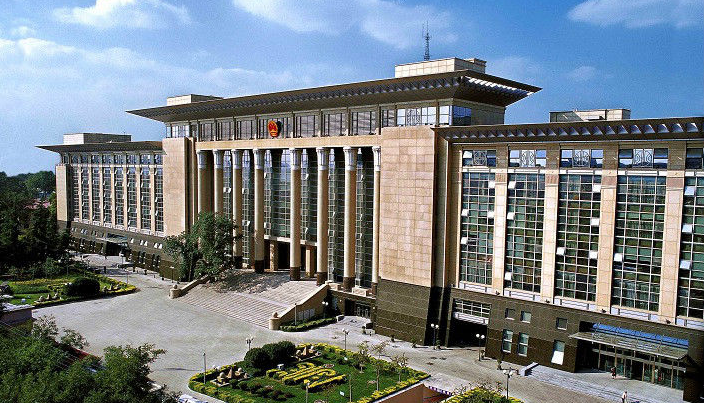
    Dalian Intermediate People’s Court. Image Credit: chinaplus.cri.com

    Following the initial verdict Schellenberg appealed his sentence, indicating he considered the punishment too severe. If a defendant appeals a verdict, a second-instance court may not increase the sentence on review. The prosecution may also choose to appeal a sentence in order to increase the punishment, but they did not do so, suggesting they considered the penalty appropriate at the time.

    Typically defendants face no risk in filing an appeal, but the Liaoning High People’s Court took an unusual approach to the case: rather than rule on it, the high court returned the case to the lower court for retrial. The retrial gave prosecutors the power to amend the charges and seek a harsher sentence, something the appeal court could not do. Prosecutors quickly amended the charges, ostensibly introducing new evidence that increased Schellenberg’s culpability. (Schellenberg’s lawyer claims no new evidence was introduced.) The lower court retried the case in January 2019 and sentenced Schellenberg to death, a significant increase in punishment from the previous trial verdict. Schellenberg appealed his verdict to the Liaoning People’s High Court a second time. On May 9, 2019—days before the four month procedural deadline for a hearing—the appeal court heard the case. However, the court declined to issue a judgment, indicating it would do so at an unspecified later date.

    Liaoning Province High People’s Court. Image Credit: Zhonglan Xinwen

    A Tale of Two Cases

    What sentence should Schellenberg receive? A defendant’s criminal culpability and punishment ought to be determined in light of his or her own crimes. But whatever chance Robert Schellenberg may have once had of having his case interpreted in isolation ended last year. Today his case is indelibly wedded to another defendant: Meng Wanzhou, the CFO of Huawei, the world’s second largest cellphone manufacturer and one of China’s flagship companies.

    Meng Wanzhou, Huawei CFO. Image Credit: Mingbao

    In December 2018 Meng was arrested in Vancouver during a layover flight between Hong Kong and Mexico. Canadian officials arrested Meng based on a warrant issued by the United States Eastern District of New York, which named Meng as part of an alleged conspiracy violating sanctions with Iran. Meng is currently free on bail in Vancouver. The United States has requested that Meng be extradited to the U.S.

    Meng’s arrest precipitated a diplomatic crisis in China-Canada relations. China has demanded Meng’s immediate release, alleging that the arrest is part of a Western effort to obstruct Huawei’s entry into Western markets. A representative of China’s Ministry of Foreign Affairs stated that Canada would face “grave consequences” over Meng’s continued detention. Immediately after Meng’s arrest in December, China detained two Canadians, Michael Spavor and Michael Kovrig, on accusations of endangering state security. Shortly thereafter the editor in chief of state media outlet the Global Times made a statement in English that “if Canada extradites Meng to the U.S., China’s revenge will be far worse than detaining a Canadian.”

    It is in this context that Chinese and Western commentators interpret Schellenberg’s situation. When Schellenberg appealed his 15-year sentence in November 2018—just before Meng’s arrest—he had every reason to think that the re-consideration of his case at a trial of the second instance could only work in his favor. A defendant who appeals a verdict is not supposed to face a more severe sentence on retrial. And the prosecution did not file an appeal raising concerns about the severity of the sentence.

    But circumstances changed between Schellenberg’s appeal in November 2018 and the Liaoning High People’s Court review in December. Meng’s case became an international flashpoint and China vowed to respond. The Liaoning High People’s Court took the unusual step of inviting foreign media to the second-instance trial. Western journalists who were present noted the ways in which the event appeared staged to send signals to the audience. Rather than reach a verdict on the case, the court took the unorthodox step of sending the case back to the lower court.

    The remand to the lower court allowed the prosecution to amend the charges against Schellenberg, claiming new evidence in the case. This procedural move provided the trial court with a legal justification for resentencing Schellenberg to death. Numerous Chinese legal experts have noted irregularities in these proceedings. It is striking, for example, that although it took four years to initially sentence Schellenberg to a 15-year sentence, the justice system managed to re-sentence him to death in less than a month. His lawyers also contend the amended indictment in fact does not provide any new evidence of Schellenberg’s culpability.

    What Are We Waiting For?

    What comes next? Schellenberg’s case has so far proceeded in two phases with very different timelines. In the first phase, which ran from arrest in 2014 through Schellenberg’s initial sentence of 15 years in November 2018, there were no public announcements indicating the case carried political significance. The court moved extremely slowly, taking four years to deliver the initial sentence. Four years is an unusually long stretch for a criminal case in China. In waiting so long to produce a verdict, the Dalian trial court surely consulted higher authorities on the appropriate course of action. Why did this process take so long? The protracted wait might be the result of weak evidence in the case. Since China’s trials virtually never produce acquittals (as Dui Hua has recently noted), cases with shaky facts are likely to be sent to an adjudication committee for deliberation on appropriate sentencing. When a case involves a foreigner, the considerations may take even longer.

    The second phase of the began after Schellenberg appealed his 15-year sentence in November 2018. In contrast to the first phase of the case, the second phase was fast, high-profile, and politically fraught. Following Meng’s arrest on December 1, 2018, Schellenberg’s case went through second instance trial and retrial of the first instance in six weeks. The second instance trial court announced its decision the day of the trial, rather than deliberating on the evidence, as usually takes place. And after the high court remanded the case for retrial, prosecutors amended the complaint with new evidence in a mere four days. The lightning speed of proceedings and state media comments about retaliation for Meng send signals about how Schellenberg’s death sentence should be interpreted. And yet Chinese authorities and media figures also strenuously insist that the court’s judgment was “beyond reproach” and rooted in the rule of law. China’s insistence on adherence to criminal procedure in the case fits with a general trend towards legal formalism in China, despite a larger turn away from rule of law. (China’s recent Supervision Law, for example, introduces a formal legal basis for the longstanding unaccountable, extrajudicial detention powers of the National Supervisory Committee, the Chinese Communist Party watchdog.).

    We are now entering a third phase in the Schellenberg case, one in which Schellenberg’s fate hangs like a sword of Damocles over Canada. A cynical reading of the situation suggests that Schellenberg must continue to dangle there until Meng has either been extradited to the U.S. or returned to China. Meng’s most recent hearing took place on May 8. Schellenberg’s appeal hearing notably took place the following day. The timing of Schellenberg’s hearing carried a two-fold significance. The court heard the case within four months of accepting it, as required by law. But in doing so the day after Meng’s hearing, the court also pointed to the ongoing connection between the two defendants (a signal that did not, however, get much Western media coverage).

    When will the Liaoning High People’s Court issue a sentence for Schellenberg? The Criminal Procedure Law indicates that the court may announce the sentence at a set time after the hearing, but does not stipulate any procedural constraints on that announcement (Articles 202 and 242). Indeed, Mark Swidan waited more than half a decade for announcement of a verdict following conclusion of his trial.

    Although the court may delay indefinitely, Schellenberg’s procedural experience suggests that a verdict may be announced as a response to a development in Meng’s case. She is scheduled to next appear in court for an extradition hearing on September 23, so a sentence may be forthcoming at that time. If the high court upholds Schellenberg’s death sentence, the case will be sent to the Supreme People’s Court (SPC) for final review. There is no fixed statutory period for completion of this review. Although limited data suggests that many death penalty reviews are completed in a matter of months, anecdotal evidence also indicates that some cases are under review for years. Overall, however, the outcome is extremely consistent: the SPC eventually affirms the overwhelming majority of death sentences, although precise data on this is lacking. In 2007, around 15% of death sentences were not approved, but the percentage is believed to be lower now.

    Once the SPC affirms the verdict, an execution order is issued and the execution usually takes place as soon as within a week, although there are exceptions: Li Yan, a woman from Sichuan, was sentenced to death for killing her husband in 2010 in self-defense, after enduring years of horrific domestic abuse at his hands, by each court that heard the case (local city/intermediate, provincial Sichuan High People’s Court, and finally, in January 2013, the SPC.) The case provoked broad condemnation and expressions of concern both inside and outside China, including by the Dui Hua Foundation. China’s 2016 anti-domestic violence law was invoked in wide-spread calls to take seriously the situation of domestically abused Chinese women who receive harsh sentences ranging from ten years to death sentences when they act in self-defense. On April 24, 2015, Li Yan’s death sentence was commuted to death with two years reprieve, and on September 8, 2017, the intermediate court commuted the 2015 sentence and sentenced Li Yan to life in prison.

    Post settings Labels Criminal Justice, Law Enforcement Published on 5/30/19, 12:13 PM Pacific Daylight Time Permalink Location Options

  • China Releases Detailed Statistics on Trials

    China Releases Detailed Statistics on Trials

    Supreme People’s Court of China Photo Credit: People’s Supreme Court of China Website
    In an important development in judicial transparency, China has released detailed statistics on sentencing and convictions by Chinese courts in 2017. The statistics are broken down by crime, length of sentences, and age and gender of defendants. The statistics, compiled by the Supreme People’s Court, are provided in two tables in the China Law Yearbook, 2018 Edition, available for purchase in China but not overseas. The yearbook also provides, for the first time, the number of cases that have been accepted by courts for trials of the first instance that have not yet been concluded.

    Tables presenting the data can be found below.

    Key findings for 2017 include:
    • Trials rarely result in acquittal. More than 99.9 percent of criminal trials resulted in guilty judgments. Although the acquittal rate of 0.091 percent in 2017 is extremely low, it is actually the highest rate since 2010, when it was 0.099 percent.
    • Forty-four percent of criminal judgments did not result in time spent in prison.
    • More than 86 percent of trials in China resulted in sentences of less than five years in prison in 2017.
    • A surprisingly high percentage of trials – 27 percent – resulted in suspended sentences in 2017.
    • Deprivation of Political Rights and Deportation were rarely used as a stand-alone sentence in 2017.
    • More than 83 percent of individuals convicted of crimes were between the ages of 25 and 60 in 2017. Only two percent of those convicted were over the age of 60.
    • Women made up 9.3 percent of defendants convicted in criminal trials in 2017. This is a relatively high number and suggests that the number of women in prison continues to rise. The Ministry of Justice no longer publishes statistics on the number of female prisoners in China.
    • 32,778 juveniles (defined as individuals between the ages of 14 and 18) were convicted by Chinese courts in 2017. Of these, 217 were girls. It is not known how many juveniles were placed under coercive measures. In 2010, Chinese police arrested 80,000 juveniles, of whom 64 percent or 51,200 were placed under coercive measures.

    In addition, statistics on trials reveal that trials of the first instance for endangering state security (ESS) and dereliction of military duty accepted by courts totaled 441 cases in 2017; 448 cases were concluded. The great majority of these two crimes, grouped together as “other,” were for ESS. These numbers are consistent with previous years. Of cases accepted by courts, 86 cases had not been concluded by year’s end.
    Although the Supreme People’s Court has taken the lead in advancing judicial transparency, the same cannot be said of other judicial organs. As noted above, the Ministry of Justice has, since 2015, declined to provide statistics on the number of juveniles and women in prison. In its 2019 work report for the National People’s Congress, the Supreme People’s Procuratorate groups the ten categories of crimes into six segments, putting endangering state security in with graft and bribery, endangering national defense, dereliction of duty, and dereliction of military duty. “By grouping endangering state security – the most serious political crime in the criminal law – with five other crimes,” Dui Hua’s executive director John Kamm pointed out, “it is virtually impossible to ascertain how many people were indicted for subversion, splittism, and other national security crimes by Chinese prosecutors in 2017.”
  • Jailhouse Informants and Wrongful Convictions

    Zhang Hui (right) and his uncle Zhang Gaoping (left) were acquitted in March 2013 after spending a decade in jail due to false testimony given by a jailhouse informant. Photo credit: news.ifeng.com.

    A controversial issue facing criminal justice reformers around the world is the use of jailhouse informant testimony, which has been discredited as being unreliable and a leading cause of wrongful convictions. Jailhouse informants are detained or incarcerated individuals tasked with obtaining inculpatory information about criminal suspects. Informants are often pressured into becoming informants in exchange for financial rewards and sentence reductions.

    Authorities in China acknowledge the practice of using jailhouse informants to gather information for investigations. Detention centers receive funding from the Ministry of Public Security (MPS) to help deploy a network of informants. The MPS Working Rules of 1986 classify informants into two groups: one group collects intelligence about criminal suspects to maintain jailhouse security and the other group assists police in the investigation of difficult cases.

    Prisoners with at least three months remaining on their terms typically serve their sentences in prisons, however an exemption is made for long-serving prisoners to be placed in detention centers where they can act as the prison guards’ watchful eyes and ears. While the exact figures are unknown, a study revealed that of the 480 detainees in Xinjiang’s Yining Detention Center in 1990, 14 were informants. In the early 2000s, Xinjiang’s Yopurga County Detention Center used a total of 18 informants – 14 security informants and 4 “special case” informants. A recent estimate indicated that three to five percent of the entire prison population in China are informants in detention centers.

    There has been widespread public criticism over the use of jailhouse informant testimonies in cases resulting in wrongful convictions. Below are three examples of cases where informant testimony was used to push forward on investigations when evidence against the accused was weak or non-existent.

    Yuan Lianfang – “The Jailhouse Snitch”

    Ma Tingxin

    Yuan Lianfang (袁连芳) is a former jailhouse informant known to have produced false testimonies leading to two wrongful conviction cases involving three victims. In February 2003, Yuan was transferred to the Hebei Detention Center to collect information for a homicide case, which the county public security bureau had pledged to solve within three months. Ma Tingxin (马廷新) was mistakenly identified as a criminal suspect after failing a polygraph test. Investigators were unable to find sufficient evidence to use against Ma and ended up coercing six witnesses into providing false testimony. It was later discovered that Yuan was assigned to be the informant responsible for extracting Ma’s confession.

    In an interview, Yuan admitted that he would take any opportunity to complete his six-year sentence early. At the time of Ma’s detention, his wife and father had been taken into custody for investigation. Using his position as a “cellblock boss,” Yuan did not allow Ma to sleep if he failed to memorize the confession script Yuan had composed for him. Yuan later threatened the safety of Ma’s family, prompting Ma to write a five-page long statement in which he admitted to committing the murder. After Ma’s “confession,” Yuan was transferred back to Hangzhou’s Gongshu District Detention Center on April 8, and one month later, he earned a sentence reduction of 18 months.

    In July 2004, Ma was acquitted in the trial of first instance, but the prosecution appealed the judgment insisting that evidence for conviction was sufficient. The appeal was not withdrawn until April 2008. Ma spent five years in a detention center for a crime he did not commit.

    Two Zhangs

    Yuan Lianfang’s name did not garner media attention until a case involving a rape and murder conviction overturned by the Zhejiang High People’s Court in March 2013 came to light. Zhang Hui (张辉) and his uncle Zhang Gaoping (张高平) were sentenced to death with reprieve and 15 years’ imprisonment, respectively, in the appellate trial in October 2004.

    Initial investigations against the duo produced no substantive evidence of their guilt. The victim was last known to have hitchhiked by truck from Anhui to Hangzhou before her corpse was found in a ditch. The DNA found on the victim belonged to neither of the Zhangs, but to another individual who could not be identified by police at the time. As the investigation dragged on, Yuan was transferred to Gongshu District Detention Center where he collected testimony from Zhang Hui. Yuan alleged that Zhang Hui had voluntarily confessed to strangling the victim to death after raping her. Zhang did not appear in court to testify. As in Ma’s case, Yuan used his position as the “cellblock boss” to coerce Zhang into writing a confession letter. The court ignored accusations against Yuan and convicted the two Zhangs for rape and murder.

    In the appellate trial, the Zhejiang High People’s Court held that the facts in the two Zhang’s case were “clearly established.” In the judgment, the court only mentioned in passing that Zhang Hui “is not a criminal who requires immediate execution due to the special circumstances of the case” without explaining what constituted the “special circumstances.” In the absence of admissible circumstantial evidence, their conviction was yet another violation of the presumption of innocence – a principle established in the Criminal Procedure Law.

    Both Zhangs were released in 2013 after they had been in prison for almost a decade. While serving his sentence in a Xinjiang prison in March 2008, Zhang Hui read about Ma Tingxin’s acquittal in a newspaper and learned that Yuan had given false testimony leading to Ma’s wrongful conviction. The prosecution accepted Zhangs’ request to re-examine the admissibility of Yuan’s testimony. Yuan admitted to perjury in both Ma and Zhangs’ cases. It was later found that the DNA on the victim belonged to another criminal who had been executed. An interview with Yuan in 2013 revealed that he had suffered a stroke while in prison, leaving him with permanent health issues. At the time of the interview Yuan was living in a small rented apartment in Hangzhou with limited means and fearful for his safety due to the reputation he had garnered as a jailhouse informant.

    Jailhouse Bullies

    In May 2018, Caixin Media’s coverage of the case of Wang Baiyu (王柏玉) brought much discredit to both law enforcement and jailhouse informants in China. Wang, a native in Jilin province, was sentenced to death with reprieve in 2004 after “confessing” to the murder of his fiancée. The investigation failed to uncover sufficient evidence that Wang was to blame for the murder and basic facts of the case were not disclosed to the defence, such as the victim’s time of death. Wang might have been able to provide a credible alibi had these details been disclosed. There was no witness testimony or forensic evidence linking Wang to the murder scene. The only evidence used to substantiate the conviction was Wang’s confession, which had been extracted by jailhouse informants.

    Wang’s confession was full of inconsistencies. He gave three different accounts detailing how he committed the murder. It was later discovered that Wang’s confession was coerced in the detention center by investigating officers who also instructed several informants to inflict torture on Wang, including “banging Wang’s head against the wall, kicking him in his chest, suffocating him with plastic bags, depriving him of water, food, and sleep for consecutive days.” On May 31, 2002, Wang delivered his first written confession to his informants. In mid-August, the informants tortured Wang again, leaving him with a nasal fracture and bruises all over his body. Wang signed another fabricated confession statement. One of the informants received a sentence reduction of two years in January 2005 as a reward for his “meritorious service” in eliciting Wang’s confession.

    In the appeal statement published in February 2017, Wang stated that at least four detainees witnessed the abuse and torture he suffered and that he knew of at least one other detainee, surnamed Song, who also fell victim to the same informants in June 2002. For the past 15 years, Wang has been lodging a post-conviction appeal. On August 26, 2016, the Jilin People’s Procuratorate refused to re-examine the admissibility of Wang’s testimony and determined that there were insufficient grounds to lodge an appeal. At the time of writing, Wang has 12 years left on his sentence.

    Reform in United States

    In the U.S., there is ongoing legislative debate concerning the use of jailhouse informant testimony. In response to Texas legislation that would end the use of incentivized jailhouse informants in death penalty cases, a Washington Post op-ed in May 2015 criticized that “[M]ost jailhouse snitches are lying. Informant testimony has become such a critical tool for prosecutors precisely because it allows them to put on testimony that is a) damning, b) easy to manufacture and c) allows b) to happen while giving them plausible deniability.” The Texas bill that was later passed in 2017 has been widely applauded. In California, Florida, Washington, New York, and Pennsylvania, legislatures have also sought to restrict the use of informant testimony. In November 2018, Illinois passed a bill making it mandatory for prosecutors to disclose their use of jailhouse informant testimony at least 30 days before trial. The bill gives defence attorneys time to examine informant testimony and forces prosecutors to prove that informant testimony is admissible and to disclose what rewards will be given to informants in exchange for testimony.

    In China, reformers widely agree that the use of jailhouse informant testimony is problematic. Informants are deployed by police in detention centers administered by the Ministry of Public Security. Police play both a custodial role and an investigatory role and they routinely use informants to boost crime clearance rates for their own career advancement. In 2015, Secretary of the Central Political and Legal Affairs Commission Meng Jianzhu announced the removal of crime clearance rates as a performance indicator for police officers. The arbitrary power of police could be more easily restrained if the Ministry of Justice (MOJ) administered detention centers, since it has little direct interest in the outcome of criminal investigations.

    Wrongful convictions reduce public confidence in the criminal justice system. The consequences are severe when miscarriages of justice result from the use of forced testimony obtained by torture. Legislative restrictions are needed to curb the arbitrary use of testimony. China can draw on the U.S. experience by improving transparency in how informant testimony is collected, and by restricting and banning its use in certain cases such as cases involving the death penalty.

  • United States and Chinese National Security Policies Raise Memories of World War II

    Photo by Crystal K. Huie, Courtesy of the Fred T. Korematsu Institute.

    In 2018 the international community rebuked both China and the United States (U.S.) for controversial policies affecting Muslim populations. This summer it was reported that China has detained more than a million of its own citizens — Uyghurs in the Xinjiang Autonomous Region suspected of dissident sentiments — in re-education camps. Meanwhile, the U.S. instituted a travel restriction on citizens from eight Muslim majority countries in what was widely viewed as an attempt to prevent Muslims from entering the country. Despite the many differences in these two policies, China and the U.S. offer strikingly similar justifications for their actions. Both countries point to overriding national security concerns and insist that these extreme practices are permissible by law. Although extremist violence is portrayed as a new threat that requires new responses, the legal battle over the U.S. travel ban and the outcry over detention of Muslims in China resurface discussion of a similar policy from a bygone era: the internment of Japanese citizens in the U.S. during World War II.

    This summer the U.S. Supreme Court ruled that the Trump administration’s travel ban is constitutional. In the same decision, the court finally overturned its ruling in United States v. Korematsu, a 1944 case holding it permissible for the military to detain Japanese Americans in internment camps as a preventative safety measure. Although the internment camps were widely condemned in the decades since that decision, the practice officially remained “good law” until this year. The fact that such a flagrant human rights abuse could be found legally permissible—and remain so for so long—offers an important lesson: Although a policy that directly or indirectly targets an ethnic group may be judged lawful in a contemporary court, it may still be overruled in the court of history.

    The Internment of Japanese Americans and the Korematsu Decision

    More than a half-century ago the U.S. and China united in war against a common enemy: Japan. After years of imperial expansion in Asia, Japan’s incursion into Manchuria led to the formal declaration of war with China in 1937. In 1941 Japan attacked Pearl Harbor, prompting the U.S. to enter the conflict as well. The next year President Roosevelt signed Executive Order 9066, which authorized the military to exclude people from geographic areas in the U.S. at their discretion.

    Following the executive order, more than 112,000 people in the U.S., primarily people of Japanese ancestry living on the west coast, were relocated from their homes and interned in concentration camps. At least 70,000 of these people were American citizens. Despite a lack of empirical evidence that Japanese-Americans posed a threat to national security, citizens were held against their will for years because of their ethnic background.

    Fred Korematsu, an American of Japanese descent who was born in Oakland, California, refused to obey the exclusion order. He was arrested, convicted of violating the order, and sent to a camp in Utah. Korematsu appealed the conviction, arguing that the exclusion order was discriminatory and violated his constitutional rights.

    In 1944 the U.S. Supreme Court considered Korematsu’s case. A divided court ultimately upheld the exclusion order and Korematsu’s conviction. Justice Hugo Black, writing for the majority, argued that while restrictions on the civil rights of a racial group are legally suspect, Roosevelt was justified in his order for reasons of national security. Black opined that “exclusion of those of Japanese origin was deemed necessary because of the presence of an unascertained number of disloyal members of the group.”

    Even at the time of the ruling, some members of the Court condemned the exclusion. In a published dissent, Justice Frank Murphy called the order a “legalization of racism.” In the decades following the end of World War II, the U.S. reached a similar national consensus that the internment was a mistake and an injustice. In 1976 President Gerald Ford issued a formal apology, stating that “[w]e now know what we should have known then—not only was that evacuation wrong but Japanese-Americans were and are loyal Americans.” President Jimmy Carter established a commission that debunked the argument that the internment was necessary for national security. Following the recommendations of the commission, the U.S. government subsequently made reparation payments to people who had been interned.

    But, despite the widespread recognition by both the public and the U.S. government that the internment was unjust, the Supreme Court’s 1944 Korematsu decision remained the unchallenged law of the land for more than 70 years.

    Supreme Court Decision Invokes America’s Past Missteps in Travel Ban Decision

    The Supreme Court reconsidered Korematsu this year in light of a contemporary presidential directive. Immediately after assuming office in 2017 President Donald Trump issued an executive order temporarily restricting entry to the U.S. for citizens from seven Muslim-majority countries. Although the Trump administration insisted that the restrictions were intended to prevent terrorist attacks, critics of the proposal pointed to numerous campaign statements by the president that seemed to indicate the order was intended to bar Muslims from entering the country.

    The travel restriction order immediately came under judicial scrutiny. Following a series of legal actions and modifications to the order, in April 2018 the U.S. Supreme Court heard opinions in the question of whether the ban violated the establishment clause of the First Amendment, which forms the basis of the constitutional right to freedom of religion. In June the court issued its decision. Justice John Roberts, writing for a narrow majority, <a href=”The Korematsu decision reminds us that while a discriminatory policy may enjoy a veneer of legality, that legality is ultimately no match for the judgment of history. The internment of Japanese Americans was wrong during WWII, despite Supreme Court reasoning to the contrary. China’s efforts to criminalize Muslim expressions of faith today are no less abhorrent, whether or not they find basis in statute. As Justice Murphy wrote in his dissent in Korematsu in 1944, “[s]uch exclusion goes over ‘the very brink of constitutional power,’ and falls into the ugly abyss of racism” Justice John Roberts, writing for a narrow majority, upheld the constitutionality of the Trump order, finding that the president has broad authority over issues of national security.

    In two dissents, four of the Supreme Court’s nine justices disagreed with the majority opinion upholding the travel ban. Justice Sonia Sotomayor, joined by Justice Ruth Bader Ginsburg, wrote that the majority “leaves undisturbed a policy first advertised openly and unequivocally as a ‘total and complete shutdown of Muslims entering the United States’ because the policy now masquerades behind a façade of national-security concerns.”

    The ghost of the court’s previous decision in Korematsu haunts both the majority decision and the dissent response to the travel restrictions. In the majority opinion Justice Roberts seemed to finally overturn the 1944 decision, stating that the contemporary debate “affords this Court the opportunity to express what is already obvious: Korematsu was gravely wrong on the day it was decided, has been overruled in the court of history, and—to be clear— ‘has no place in law under the constitution’.” Meanwhile, Justice Sotomayor wrote that while “[i]n the intervening since Korematsu, our Nation has done much to leave its sordid legacy behind,” in upholding the executive order and sanctioning a discriminatory policy in the name of national security, “the court replaces one ‘gravely wrong decision’ with another.”

    The debate over Korematsu shows that even in a country such as the U.S. with a hearty tradition of strong and independent courts, when it comes to questions of national security and minority groups, what is lawful is not always what is right.

    Korematsu and Lessons for China

    China ought to take note of the legacy of the Korematsu decision. International news outlets reported this year that China has detained as many as a million Chinese Muslims—particularly ethnic minority Uyghurs and Kazakhs in the western autonomous region of Xinjiang—out of national security concerns. In August the United Nations Committee on the Elimination of Racial Discrimination issued a report expressing concern that these Muslims were being “held incommunicado and often for long periods, without being charged or tried, under the pretext of countering terrorism and religious extremism” and are “forced to spend varying periods in political ‘re-education camps’ for even nonthreatening expressions of Muslim ethno-religious culture like daily greetings.” In November numerous nations raised concerns about China’s treatment of Muslims at the Universal Periodic Review of China’s human rights record at the United Nations. Dui Hua’s submission to the Review highlights the Foundation’s research uncovering discrimination against Muslims in Xinjiang.

    China disputes reports on its policies towards Muslims in Xinjiang. At the same time, the government passed a series of laws and regulations purportedly providing a legal basis for targeting Muslims in response to national security concerns. These new legal measures include a 2015 Counterterrorism Law that criminalized a broad range of conduct and expression, including clothes and symbols. And Xinjiang introduced regulations authorizing re-education facilities to combat “religious extremism.” Dui Hua found the first judgment involving the use of “educational placement,” a new coercive measure imposed on prisoners who are considered a danger to society even after completing their sentences for terrorism or extremism offenses. The Foundation also discovered judgments involving violators of the Islamic clothing ban in force throughout Xinjiang. Individuals can be sentenced for “illegal business activity” for selling clothing with the Islamic star and crescent symbol. In one case, a Muslim man, Gong Xiaojun, was sentenced to two years’ imprisonment for “disrupting official business” after arguing with cadres over his “abnormal” beard and a black robe his wife was wearing at home. The case indicates that Xinjiang authorities have extended the reach of the ban to peoples’ homes. Across the board, China appears to be using the veil of national security law to justify openly discriminatory practice.

    The Korematsu decision reminds us that while a discriminatory policy may enjoy a veneer of legality, that legality is ultimately no match for the judgment of history. The internment of Japanese Americans was wrong during WWII, despite Supreme Court reasoning to the contrary. China’s efforts to criminalize Muslim expressions of faith today are no less abhorrent, whether or not they find basis in statute. As Justice Murphy wrote in his dissent in Korematsu in 1944, “[s]uch exclusion goes over ‘the very brink of constitutional power,’ and falls into the ugly abyss of racism.”

  • Stalemate on Detention Center Law

    Reformers widely agree that changes are needed to the management of detention centers, which are currently governed by a set of administrative regulations issued in 1990. Image credit: Sixth Tone.

    It has been more than a year since the Ministry of Public Security circulated a draft of the new Detention Center Law for a one-month period of public comment. The consultation period served as an opportunity for Chinese legal scholars and lawyers to reiterate their strong criticism of the current system of detention and express their visions for reform—positions which have been relatively consistent for many years.

    It is difficult to say where the process stands now. As is common in the process of Chinese law-making, there is little transparency about how public comments are incorporated into the legislative process. No new drafts have been made public, and the only news from China’s legislative body, the National People’s Congress (NPC), is that work on the Detention Center Law will continue under a new legislative plan.

    Things appear to be in a stalemate. Reformers widely agree that changes are needed to a system that is currently governed by a set of administrative regulations issued in 1990. There is widespread consensus among critics that the key to reforming China’s detention centers is shifting administrative responsibility from the Ministry of Public Security (MPS) to the Ministry of Justice (MOJ). But the draft legislation put forward by the MPS proposes strengthening legal provisions without touching the current institutional arrangement.

    The argument for moving detention centers away from MPS control is based on a critique of the overlapping and conflicting functions that detention centers are currently used for. At present, Chinese detention centers play both a custodial role and an investigatory role. In addition to housing suspects and defendants, detention centers are expected to enhance criminal investigation and uncover additional evidence of crimes. According to critics like Professor Chen Ruihua of Peking University, some places have even based performance criteria for detention centers on their role in solving criminal cases. There is estimated to be at least 3,000 detention centers in China housing more than one million individuals.

    One consequence of using detention centers to further criminal investigations is the widespread use of “jailhouse bullies” and informants to obtain evidence or confessions from suspects. This clearly violates evidence rules and leads to false confessions and wrongful convictions. It has also been blamed for a number of deaths in detention under mysterious circumstances.

    This blurring of functions in Chinese detention centers is made possible because the public security system is responsible for both criminal investigation and detention—with the former being given higher priority in the interest of social stability and national security. Shifting responsibility for detention to the MOJ would put detention facilities in the hands of an institution with no direct interest in the outcome of a criminal investigation. This would, in principle, make detention centers more neutral sites that can focus on the protection of detainees’ rights.

    Advocates of such reform believe that putting detention centers under the MOJ would not only help to reduce jailhouse abuses but also facilitate the rights of suspects and defendants to meet with legal counsel. It will lead, they also believe, to a much stronger presumption of innocence throughout the pre-trial phase of the criminal process. The current regulations governing detention centers still refer to detainees as “criminals” (renfan), as opposed to “suspects” (xianyiren) or “defendants” (beigaoren)—terms that have already been well-established in China’s Criminal Law and Criminal Procedure Law. Notably, the draft MPS legislation did propose making these changes in terminology, but critics doubt that changing the wording will lead to changing the mindset and practices that presume all detainees to be guilty. Another benefit to placing detention centers under the MOJ is that it would allow detainees to use points earned for good behavior towards future applications for sentence reductions.

    The current stalemate may be hard to overcome given the institutional interests at stake in preserving the practice of using detention as a tool of criminal investigation. The fact that the MPS draft has not been enacted by the NPC suggests that there may be relatively strong support for deeper reform. But the battles and negotiations over Chinese legislation mostly take place behind closed doors, far from the public eye. The next opportunity for insight into the content of the law might well be after it’s passed by the NPC Standing Committee—at which point, the debate will have been settled one way or another.

  • The Resurgence of Big-Character Posters and Switching Tactics of Criminalization

    Big character posters were found on Peking University’s campus calling for action on sexual assault cases. The posters were removed by authorities. Image credit: Radio Free Asia.

    The iconic big-character posters (dazibao) of the 1970s and 1980s are often thought to have lost their purpose in a China now dominated by smartphones and WeChat. Popularized during the Cultural Revolution, big-character posters were used by competing political factions to instigate “mass mobilization.” In the revision to the 1982 Constitution, the right to use big-character posters was removed. During the June Fourth protests of 1989, the posters became ubiquitous when protesters used them to criticize the path of economic reform. In official narratives, authorities used the word fandong (reactionary), implying a hindrance to progress and reform, to describe cases involving big-character posters.

    Today, these wall-mounted posters, often handwritten and on a few sheets of paper are used by activists and petitioners seeking to air grievances and direct attention on a range of issues from forced evictions, to government corruption, to wage theft. In some cases, big-character posters allow the disgruntled to circumvent the extensive surveillance and censorship of the internet.

    In December 2017, Tianjin dissident Zhang Changhong (张长虹) was sentenced for using big-character posters to call for the rehabilitation of the June Fourth protests. In June 2013, Zhang put up posters at various bus stops and subway stations and in December 2016, he filmed videos of himself in front of his posters, one of which read “Do you know about the Tiananmen Massacre?” He published videos and articles calling on the public not to forget about the bloody suppression. The court accused Zhang of provoking a serious public disturbance for disseminating “fabricated” information and sentenced him to three years and three months’ imprisonment. Zhang is scheduled for release in 2019.

    In April 2018, big-character posters appeared on the campus of Peking University. The posters were put up in support for Yue Xin, a female student who sought information from the university about an alleged rape case in the 1990s involving a former professor. Yue wrote online that she had been warned by the school to stop requesting information about the rape case, or risk facing “treason” charges. The posters were promptly removed by the school security personnel.

    The following month, during the 120th anniversary of the university, 24 big-character posters briefly appeared on Peking University’s campus. Written by alumnus Fan Liqin, the posters stated that Mao Zedong’s promotion of a personality cult was disastrous for China. Fan warned the Chinese people to be vigilant of history repeating itself under Xi Jinping’s reign, following the removal of presidential term limits and the insertion of “Xi Jinping Thought” into the party constitution. Fan was reportedly escorted away by police officers and campus security personnel; he is not known to have received any coercive measures.

    Switching Tactics of Criminalization

    As big-character posters continue to be used for political purposes, Dui Hua has noticed an increasingly prevalent tactic of criminalization – a shift from charging “reactionaries” caught with big-character posters with inciting subversion to charging them with “picking quarrels and provoking troubles.” When “endangering state security” was introduced into the 1997 Criminal Law, inciting subversion was frequently used against “reactionaries” who used big-character posters to “vilify” party and senior leaders. In recent years, the term “reactionary” has disappeared from official narratives about petitioners. Instead, petitioners are more likely to be charged with the crime of “picking quarrels and provoking troubles.” At first glance, this shift seems like a welcome reform as inciting subversion is a more serious crime carrying a harsher sentence than picking quarrels and provoking troubles. However, Dui Hua’s research shows that in cases involving big-character posters, those charged with picking quarrels and provoking troubles can still find themselves serving as harsh of a sentence as those charged with incitement for committing similar acts. The reason behind this shift is unclear, but given the similarity in the harshness of sentencing, perhaps there is an attempt to obscure cases of a political nature that attract scrutiny by putting them into a pocket crime like picking quarrels and provoking troubles. In 2016 alone, China’s public security bureau filed more than 77,000 cases involving picking quarrels and provoking troubles; the scope of acts that count under this crime is indeed obscure, ranging from criticizing local officials on Weibo to drunken assaults.

    Incitement Cases involving Big-character Posters

    Dui Hua’s library research into government gazettes has uncovered several previously unknown incitement cases involving big-character posters. One of the earliest cases concerns Ding Qingyun (丁青云), a man from Zhenjiang, Jiangsu, who was caught putting up “reactionary” big-character posters on three separate occasions. In October 1997, he put up a poster titled “New Tongmenghui Propaganda” at a farmer’s market, signed by the “New Tongmenghui Dantu Township Branch.” Tongmenghui bore the same name as the secret society and underground revolutionary movement founded by Sun Yatsen in 1905 against the Qing Dynasty. Available sources did not provide further information about Ding’s Tongmenghui.

    Ding went on to write more “reactionary” slogans in April and May of 1998. In a restroom of the Dantu Township government building, Ding hung up big-characters posters reading: “Down with the Communist Party,” “Down with Socialism,” and “Down with the proletarian dictatorship.” In May 1998, Ding was taken into custody on suspicion of inciting subversion. Although the gazette record did not reveal Ding’s fate, a government response subsequently provided to Dui Hua confirmed that Ding completed his two-year sentence for inciting subversion in May 2000.

    Dui Hua previously reported on an incitement case involving Chen Shifu (陈世富), a coffin seller from Hunan who used big-character posters to call on residents to oppose local government policies on property demolition and forced evictions. The prosecution statement claimed that Chen’s big-character posters that called on people to overthrow the CCP and reestablish Kuomintang rule posed a threat to state security. The statement also described the books Chen possessed about Kuomintang leader Chiang Kai-shek as “reactionary.”

    The Switch to Picking Quarrels and Provoking Troubles

    Today, those who use big-character posters to criticize the government and party are likely to face the charge of “picking quarrels and provoking troubles.” Dui Hua uncovered a judgment involving a farmer from Shaanxi surnamed Zhang, who was sentenced to two years’ imprisonment in December 2017. On July 1, 2017, the 96th anniversary of the founding of the CCP, Zhang stood in front of a series of big-character posters, which the court judgment later described as “distorting history,” and proceeded to deliver a three-hour long speech that “insulted the party and Chinese leaders.” Zhang had hired someone to film his speech while he delivered it on a busy street in a village in Shaanxi. The court deemed Zhang’s actions as leading to “social disorder” as crowds of onlookers gathered and vehicles stopped in the middle of the street to listen to his speech.

    In his speech, Zhang criticized a court decision to side with the township government over a longstanding property dispute. After futile attempts at petitioning, Zhang began pointing fingers at the central government. In 2000, he put up big-character posters calling past and present Chinese leaders, including Jiang Zemin, “traitors” and their rule “a disaster for the country and ruinous for the Chinese people.” Zhang accused local officials of colluding with mafia groups. His big-character posters made references to the “Tiananmen Massacre” and ridiculed Deng Xiaoping’s “black cat, white cat theory.” In 2005, Zhang was sentenced to one years’ re-education through labor for “insulting” the party and various leaders. After repeated detention and time under re-education through labor, Zhang allegedly refused to repent and continued to put up big-character posters. In December 2017, the court decided that Zhang had persistently refused to show remorse and that his slanderous remarks against the party, senior leaders, and other cadres qualified as a public disturbance. Zhang is scheduled for release in June 2019.

    In this case, the court described Zhang’s remarks about the party and leaders as “improper.” The same act would have been tantamount to a “vicious attack on the people’s government,” a phrase commonly used in official narratives about counterrevolution propaganda and former incitement cases such as that of Ding Qingyun’s and Chen Shifu’s. Although Zhang’s big-character posters were as politically charged as that of Ding and Chen’s, the political nature of Zhang’s case was obscured by its categorization under the crime of picking quarrels and provoking troubles, most telling is that the sentence he received was as harsh as Ding’s.

    Obscuring Political Cases

    The latest available statistics from China Law Yearbook shows that 576 individuals were arrested for endangering state security in 2016, a significant drop from 1,105 in 2012. However, this decline is no cause for celebration. As the big-character poster cases show, individuals previously charged with inciting subversion are now more likely to be prosecuted for picking quarrels and provoking troubles. The number of endangering state security cases alone does not give a comprehensive picture of the scale of suppression of dissent in China.

    The crime of picking quarrels and provoking troubles has long been decried as a pocket crime, meaning that because of its vague definition “anything can be stuffed into it,” after all 77,451 such cases were filed in 2016. Given the enormous variety of acts that can be prosecuted under this charge, it is no easy task to identify which ones are of a political nature. Dui Hua researchers continue to delve into government sources to uncover the names of political prisoners incarcerated for this charge.

  • Call for Constitutional Review of Custody and Education

    Zhu Zhengfu, Vice President of the All-China Lawyers Association and member of the Chinese People’s Political Consultative Conference. Image Credit: Weibo.

    In the lead up to this year’s session of the National People’s Congress (NPC), prominent Chinese lawyer, Zhu Zhengfu, called on the NPC to review the constitutionality of the system of custody and education (收容教育). Zhu is the Vice President of the All-China Lawyers Association and a member of the Chinese People’s Political Consultative Conference. Custody and education is a form of administrative detention designed to punish both sex workers and their clients.

    Those who find themselves in one of these centers can be detained for up to two years without judicial process. Similar to previous debates over the system of “re-education through labor,” which was abolished in 2013, calls for the abolition of custody and education have been made ahead of the annual NPC meeting. The detention of well-known Chinese actor Huang Haibo in 2014 for soliciting a sex worker also helped put a spotlight on the coercive measure.

    During the 2016 NPC session, Taiwanese delegate Zhang Xiaodong proposed to the NPC, on similar grounds as Zhu, that custody and education be abolished. In this years’ proposal, Zhu emphasized the weak legal basis of the system, specifically citing its inconsistency with the Constitution and the Legislation Law.

    As a form of administrative detention, custody and education is exclusively overseen and carried out by public security organs and is beyond the supervision of procuratorates and courts. Public security organs have comprehensive control over the investigation and incarceration process as well as the operation of the custody and education centers, an environment in which abuse of power thrives. The centers were originally created with the goal of educating and rehabilitating sex workers and treating sexually transmitted diseases (STD). The education detainees receive is intended to direct them towards other occupations upon release and treatment of STDs is designed to help contain ongoing public health issues such as the prevalence of HIV/AIDS.

    Instead, the centers are often riddled with stories of arbitrary arrests, forced and unpaid labor, and charging detainees fees for their living and medical expenses as well as their rehabilitation treatments. Detainees undergo compulsory testing and treatment for STDs, which they must bear the costs of; many are not informed about the results of their tests or provided adequate counselling. The centers not only violate detainees’ right to health and privacy, but critics argue that they have also been counterproductive at achieving their goal. Detainees frequently return to sex work upon release, having failed to obtain an education, new professional skills, or the health services and counselling needed to protect themselves as they reenter the sex work industry.

    Experts estimate that somewhere between 18,000 to 28,000 individuals are sent to custody and education centers each year. From 1987 to 2000, more than 300,000 people had been housed in custody and education centers across China and as of 2014 there were more than 116 custody and education centers in the country.

    *

    Discussing the System of Custody and Education

    Restricting the Personal Freedoms of Individuals Through Administrative Regulations Goes Against the Spirit of the Constitution

    Beijing News (BJ News): Why does your proposal focus on custody and education? What are the current problems with this system?

    Zhu Zhengfu (Zhu): The system of custody and education has many facets, including legislation passed at the 1991 National People’s Congress (NPC) Decision on the Strict Prohibition Against Prostitution, the State Council’s Measures on the Custody and Education of Prostitutes and Clients of Prostitutes, and the Ministry of Public Security’s regulations governing the sites of custody and education centers. The thrust of the legislations targets sex workers and their clients. Around the time of 1991, societal conditions were decadent and sex work was on the cusp of spreading. In hindsight, we cannot say that those who hired sex workers were right or wrong. However, following constitutional amendments and the passage of the Legislation Law, problems underlying custody and education’s legislative process, its legislative jurisdiction, and its enforcement began to gradually surface. The main problem is that as an administrative penalty, custody and education can restrict the personal freedoms of an individual from six months up to two years prior to trial and without judicial process before the punishments take effect. In other words, there is no legal defense and no cross-examination of evidence. Long periods of restricting personal freedoms under administrative penalties, without corresponding procedural safeguards, clearly demonstrates that the measure violates [the principle] of procedural fairness.

    BJ News: In other words, when you punish by limiting the personal freedoms of an individual, it should not be governed by administrative regulations.

    Zhu: Yes, Article 8(5) of the Legislation Law clearly stipulates that coercive measures and penalties that restrict personal freedoms must be governed by law. Article 9 of the Legislation Law also stipulates that if laws have not been formulated regarding this matter [Article 8(5)], the NPC or its Standing Committee can authorize the State Council to formulate administrative regulations, except for when it involves regulations that restrict personal freedoms. However, the 1991 NPC Decision on the Strict Prohibition Against Prostitution authorized the State Council to formulate specific measures for custody and education, which is legally at odds with the Legislation Law.

    Besides its inconsistency with the Legislation Law, custody and education also touches on the issue of the inconsistency of legislative jurisdiction. Custody and education is now regarded as a measure carried out by public security organs. Administrative penalties can be appealed and litigated on. The Law on Administrative Penalties covers different types of administrative penalties, however it does not include custody and education. Even as the most serious form of an administrative penalty, the system of custody and education is inconsistent with the Law on Administrative Penalties.

    Furthermore, the Criminal Law provides exemption from criminal punishment in cases where there is a sentence of less than two years’ imprisonment; in cases involving six-months [or less] criminal detention or control; and in cases where the circumstances are minor, even though the action constitutes a criminal offence. The Criminal Law targets and punishes those who commit criminal offences, however sex work is merely an administrative offence, yet it carries a punishment that is more severe than a criminal offence. In doing so, [custody and education] has disrupted the order set forth by the various measures stipulated in the Criminal Law.

    BJ News: You have repeatedly proposed abolishing the system of custody and education at the time of the Two Meetings, why are you so closely committed to ridding this system?

    Zhu: In 2003, I joined several members of the Guangdong People’s Consultative Conference and proposed to abolish the system of Re-education Through Labor (RTL); through many calls for action, media spotlight, and several important RTL cases, RTL was finally abolished in 2013. Custody and education and RTL are similar, on a legislative basis they have clear flaws and they both work through administrative organs that enforce punishments to restrict personal freedoms. Thus in 2014, [I proposed to] abolish custody and education, and again in 2016 and 2017.

    Prior proposals have all tackled the issue from an abolitionist perspective, this year’s proposal takes a constitutional review angle. In the 19th Party Congress work report, it clearly states the importance of “strengthening the implementation and supervision of the constitution, advancing constitutional review, and maintaining the authority of the constitution.” Because the work report has such a focus on this area and because I believe that the era of conducting constitutional reviews and establishing constitutional authority has come, I made the proposal to conduct a constitutional review of custody and education.

    BJ News: There are many vocal supporters of abolishing custody and education. At present, what do you regard as the hardest part in abolishing this system?

    Zhu: The hardest part is that [custody and education] has already become an established system that is well-embedded into mutually beneficial relationships; law enforcement organs may believe that the existing system could aid in problem solving – once you get rid of it, you are also removing a tool of law enforcement.