Tag: criminal detention

  • China: State Security Indictments Hit Record High in 2014

    Sources: Dui Hua; China Law Yearbook (various years)

    China indicted more people for endangering state security (ESS) crimes in 2014 than in any year since China Law Yearbook began reporting the figure in 1999. The number of people indicted rose to 1,411, up 2 percent from 1,384 in 2013. These indictments spanned 663 cases, compared with 608 cases in the previous year.

    With the uptick in indictments, the number of trials in the category that includes ESS jumped 20 percent. China Law Yearbook reports ESS trials in aggregate along with trials for dereliction of military duty and possibly other crimes. The number of trials in this category hit 1,074 in 2014, compared with 893 in 2013. Based on indictment statistics from previous years, Dui Hua has assumed that the number of trials attributed to dereliction of military duty and other crimes was negligible. Trial numbers are limited to trials of first instance that courts concluded during the year.

    The ESS trial that received the most international attention in 2014 was that of Uyghur activist and scholar Ilham Tohti. He was convicted of splittism in September 2014 and sentenced to life in prison for operating a Uyghur news website. Including Ilham Tohti, Dui Hua’s Political Prisoner Database has information on 18 people tried for ESS in 2014, down from 32 in 2013 and 26 in 2012. Thus far in 2015, Dui Hua has information on nine people tried for endangering state security.

    Chinese courts invariably convict and sentence those tried for ESS. Although acquittals are extremely rare, relatively light sentences are sometimes imposed. In 2014, at least three of those tried—Gu Yimin, Liang Haiyi, and Liu Benqi—were released by year end. All three were convicted of inciting subversion. Gu and Liu were tried for online posts that were critical of the Chinese government. Gu was sentenced to 1.5 years in prison and Liu to three years, but both were released due to time served in detention. Liang was likely tried for online posts and her involvement in public protests. Detained in 2011, Liang was released after a court sentenced her to a suspended sentence of two years.

    ESS covers a range of political crimes including subversion, inciting subversion, splittism, inciting splittism, espionage, and state secrets violations. While it is considered the most serious category of political crimes—and is the only category that carries a mandatory supplemental sentence of deprivation of political rights—ESS crimes are not the only legal avenue used to punish activists. In recent years, authorities have also used “disturbing social order” crimes like “picking quarrels and provoking troubles” and economic crimes like fraud and operating an illegal business to put away critics.

    “The number of individuals indicted for ESS crimes reached an all time high in 2014, a striking and troubling development,” said Dui Hua Executive Director John Kamm. “Given ongoing campaigns against protest and dissent, especially in the western region of Xinjiang, the number of ESS indictments and trials are unlikely to fall in 2015.”

  • Guangdong High Court Asks Why So Few Are Found Innocent

    A recently freed, wrongfully accused man becomes emotional during a 2014 interview. Credit: Nandu.com

    Since 2012, Chinese legal authorities have overturned a series of high-profile convictions and taken steps to prevent miscarriages of justice, but one question is still being asked: why do Chinese courts acquit so few defendants? (In 2013, the acquittal rate rose for the first time since 2000, growing annually from six acquittals per 10,000 adjudications to seven.) Some argue that institutional support for conviction stands in the way of systemic change.

    Researchers at Guangdong High People’s Court wanted to find out for themselves, conducting interviews, holding seminars, and analyzing court documents related to acquittals throughout the province. The results, which were published as a report last year, offer a fascinating view into how those within the judiciary interpret the institutional, legal, political, and social factors that shape the way Chinese courts operate.

    The researchers report that, for the five years between 2008 and 2012, Guangdong courts acquitted only 198 individuals in 180 cases. This represents a mere 0.04 percent of all individuals subject to criminal decisions that took effect during the period. The great majority (86 percent) of acquittals were on grounds of insufficient evidence, with a handful of others issued for things like self-defense, mental incompetence, or defendants who were under the age of 16. Acquittals occurred in a wide variety of cases—though not in any involving state-security offenses—but were most frequent in cases of assault. The trial process typically took longer than average when it resulted in acquittal, extended in accordance with the law by both courts and prosecutors. The average length of a trial that ended in acquittal was 169 days, or about five months, with the longest stretching to 504 days and the shortest at 55.

    These quantitative results are not the most interesting part of the report, in part because there are so few cases to study. Much more interesting are the authors’ observations on the factors contributing to the dearth of acquittals, the impact this has on the legal system and society at large, and what might be done to remedy the situation.

    Acquittal Averse Strategies

    The extremely low number of acquittals doesn’t mean that criminal prosecutions in Guangdong are rock-solid. The report points out that, when the facts of the case are unclear and evidence is insufficient, judges use a number of strategies other than acquittal. In relatively minor cases, for example, courts might work out an informal “plea bargain,” promising to hand down a non-custodial penalty (like a suspended sentence) in exchange for a defendant’s promise not to appeal. In death-penalty cases, on the other hand, a court might issue judgments “with room to maneuver” (liu you yudi caipan)—imposing a more lenient suspended death sentence that gets commuted to life imprisonment (and then, later, a fixed-term sentence) almost automatically. Appeals courts are in an even better position to shift responsibility, as they can always send cases back to a lower court for retrial rather than rule to acquit.

    Another common way courts avoid acquittals is to allow the prosecution to withdraw its indictment, which it may do at any point before a verdict is announced. In some cases, this has the effect of ending the case against the defendant, but in others, the prosecution can decide to submit a new indictment or send the case back to police for additional investigation. This amounts to a waste of resources, the report says, and results in individuals being locked up for far longer than they ought to be.

    The report argues that prosecutors, with the help of the courts, are abusing this provision of the Criminal Procedure Law (CPL) and that the practice needs to be more strictly regulated. For example, it recommends that prosecutors generally not be allowed to withdraw indictments for unclear facts or insufficient evidence. This is because the CPL already gives prosecutors two opportunities to request trial adjournment for additional investigation. If this is not enough, the report concludes, then the court should exercise its power to issue an acquittal. The report also suggests prohibiting prosecutors from withdrawing an indictment once investigation of the facts and evidence has begun at trial and, when withdrawal is approved, limiting prosecutors to one re-indictment.

    Inside the Pressure Cooker

    Why is it necessary to go through so much effort to avoid issuing acquittals? A recurring theme throughout the report is pressure. Stability-first governance campaigns and a whole system of associated performance measurements create pressures for conviction throughout the criminal justice system. Written and unwritten rules place a premium on rates of case-solving, arrest approval, and conviction as factors used to measure police or procuratorate effectiveness and can be tied to individual promotion or ranking. Since acquittals have the effect of lowering these statistics, police and prosecutors are incentivized to seek conviction and mobilize all manner of available resources to influence courts not to acquit.

    As the final stop in the criminal process, courts bear the brunt of the pressure to convict that’s built into the system. As the report puts it: “The public security bureau is responsible for cooking the meal and the procuratorate for serving it. Last to come, the court has only two choices as it faces this meal—either eat up or reject all the work that the first two institutions have already put into the case.” Acquittal, in other words, puts courts in potential conflict with other local law-enforcement bodies that are expecting conviction.

    In major cases, especially homicides, police often face considerable political and social pressure to bring a culprit to justice. When they do make arrests, it can lead to merit citations being publicly issued to the investigation team even before indictment, let alone conviction. If the court later acquits, not only must these citations be withdrawn, there will likely be compensation claims made against the police for wrongful detention. In some cases, the same individuals who had been rewarded for solving the case might end up facing investigation for misconduct or even criminal liability.

    Prioritizing Public and Process

    There are many negative consequences arising from courts’ failure to issue acquittals, according to the report. The most obvious effect is on the credibility of the courts. On this point, the report is particularly frank, warning: “the public is already deeply suspicious and dissatisfied with the [level of] fairness in our criminal justice system, and wrongful convictions are adding fuel to the fire.” They continue, stating: “Convictions based on protecting face and reducing pressure only bring momentary peace and tranquility. When and if the bomb will explode all becomes a matter of luck. But what’s certain is that, the moment the bomb goes off, the courts will suffer the heaviest casualties.”

    In order to prevent calamity, the report recognizes that courts must exercise their judicial powers more independently, but it provides little advice on how to do so, apart from improving awareness and understanding of the law and legal principles like the presumption of innocence. There is no mention of the “coordination” between police, procuratorates, and courts by the party’s politico-legal committees and little on the role of adjudication committees, where senior court officials get an opportunity to weigh in on how to rule in complex or important cases they have not personally heard.

    In fact, the authors appear to believe that increased communication between investigators, prosecutors, and judges can help judicial authorities make their case about resolving problematic prosecutions through acquittal. They recommend, for example, having police and prosecutors sit in on adjudication committee meetings in cases where problems arise. The assumption is that this will enable the courts to exert influence over the other law-enforcement bodies as opposed to the other way around.

    One thing that seems to be on the minds of the report’s authors is a responsibility system for wrongful convictions. They make the case that mistakes are inevitable within any legal system and that neither wrongful convictions nor acquittals should automatically be thought of as “mistakes” for which someone must be punished. That is what happens, they suggest, when too much emphasis is placed on outcomes without giving due weight to process.

    This is especially important for judges, they argue, and requires transforming the way that judges are evaluated and how data is used. They believe that judicial statistics like conviction rates have no place in deciding promotion or professional ranking. They do, however, see value in continuing to collect statistics and conduct ongoing research in order to evaluate the performance of the criminal justice system as a whole and to boost its credibility with the public.

  • China Adds Life Without Parole to Anti-Corruption Arsenal

    The National People’s Congress passes the ninth amendment to the Criminal Law in August. Credit: Chinanews.com

    Just before passing the ninth amendment to the Criminal Law late last month, the Standing Committee of China’s National People’s Congress inserted a new provision. Unlike many other new provisions, including those regarding defense lawyers and capital punishment, “cults,” and protestors, this provision was not subject to public consultation. In China’s non-democratic political system, public consultation is one of the few chances for citizens to provide input into the legislative and policymaking processes. It is intended, at least in part, to reinforce popular support for the outcome.

    This last-minute provision altered Article 383, which covers the offenses of corruption and taking bribes. Effective November 1, the provision authorizes courts, in certain cases, to add a condition at the time of sentencing to require an individual to spend life in prison without possibility of sentence reduction or parole. The condition may only be applied in corruption cases where the defendant received a suspended death sentence and had that sentence commuted to life imprisonment after the two-year period of reprieve. If such a condition is imposed, the convicted individual will not be eligible for clemency that is ordinarily available under law—meaning that he or she will truly be required to spend the rest of his or her life in prison.

    Paving the Way to Abolition

    Chinese media has emphasized the significance of this provision as part of the sweeping anti-corruption campaign that has become a signature policy of Xi Jinping. Legal experts and commentators have widely praised the move for sending a strong signal that corruption will continue to be punished severely.

    Others have noted that the introduction of life without possibility of release may have wider implications for abolishing the death penalty in China. Public attitudes toward the death penalty are complex and context-dependent, but continued popular support for capital punishment is one factor underlying the cautious and gradual approach that China’s leaders have adopted in reducing its use. Longstanding anger over rampant corruption has helped fuel public support and contributed to anxiety over efforts to strip the death penalty from many economic and non-violent offenses.

    Part of this anxiety is rooted in the belief that the death penalty is the only punishment severe enough to deter the most serious crimes. However, in recent years, policies aimed at gradual abolition have led to fewer and fewer death sentences in corruption cases, making suspended death sentences the de facto maximum penalty. Through commutation and sentence reduction, individuals given suspended death sentences can potentially leave prison after serving terms not much longer than the maximum sentence of fixed-term imprisonment, or about 18 years. Some members of the public also worry that corrupt officials might be able to use connections or bribes to buy prison stays that are even shorter.

    Given these factors, the introduction of life without parole in serious corruption cases has the potential to mitigate some of the public doubts about lenient punishment for corrupt officials. In so doing, it could also clear the way for China to eventually eliminate the death penalty for corruption. Advocates of death penalty reform anticipate that imprisoning corrupt officials for the rest of their lives would satisfy the public’s expectation of severe punishment. They also believe that in the future life without parole could be extended to other types of crime—including violent offenses.

    Following a reform model often seen in China, legal reformers thus appear to have taken advantage of the current anti-corruption environment to experiment with a new kind of punishment and assess the prospects for further refinement and expansion based on practical experience.

    A number of issues remain to be addressed. Zhuang Deshui, an anti-corruption expert at Peking University, points out that in order for the new measure to have its desired deterrent effect, courts must “dare” to use it. To this end, Professor Zhao Bingzhi of Beijing Normal University Law School notes that it is necessary for the Supreme People’s Court to issue a judicial interpretation setting clear guidelines for when to apply the new condition. How fairly the condition is applied will play an important role in whether the public can accept life without parole as a substitute for the death penalty.

    Choosing Retribution over Rehabilitation

    By choosing to deprive certain prisoners of any possibility for early release, China is giving more weight to the retributive and deterrent functions of criminal punishment than to its longstanding emphasis on rehabilitation and reform. If things continue to develop in this direction, what impact might this have on China’s criminal justice system?

    Other than the United States, where in the 1980s an abrupt departure from reformative justice helped make life without possibility of commutation or parole a common sentence, very few other jurisdictions impose such categorical penalties. Elsewhere, in fact, it is more common to make possible some form of conditional release after ensuring that an individual has been imprisoned long enough to reflect the seriousness of his or her offense. This is in keeping with the United Nations Standard Minimum Rules for the Treatment of Prisoners. The rules state that the protection of society through imprisonment, and other deprivations of liberty, “can be achieved only if the period of imprisonment is used to ensure, so far as possible, the reintegration of such persons into society upon release so that they can lead a law-abiding and self-supporting life.”

    In an article published just last year, Professor Zhao Bingzhi criticized life imprisonment without the possibility of sentence reduction or parole as inhumane and a violation of human dignity comparable to the death penalty itself. In a forum on death penalty reform in 2008, Zhao and other Chinese legal experts presented arguments on why life without parole was unreasonable and ill suited to China’s justice system. Now, however, these same experts appear to be embracing more stringent penalties in the interest of making it possible to do more to reduce the death penalty. Life without the possibility of release for corrupt officials may be popular with the public, but the American experience ought to serve as a warning to China that failure to strike the right balance between punishment and reform can lead to many new and serious challenges to human rights.

  • Article 293: Deeming Free Speech Disorder in Internet Space

    Article 293: Deeming Free Speech Disorder in Internet Space

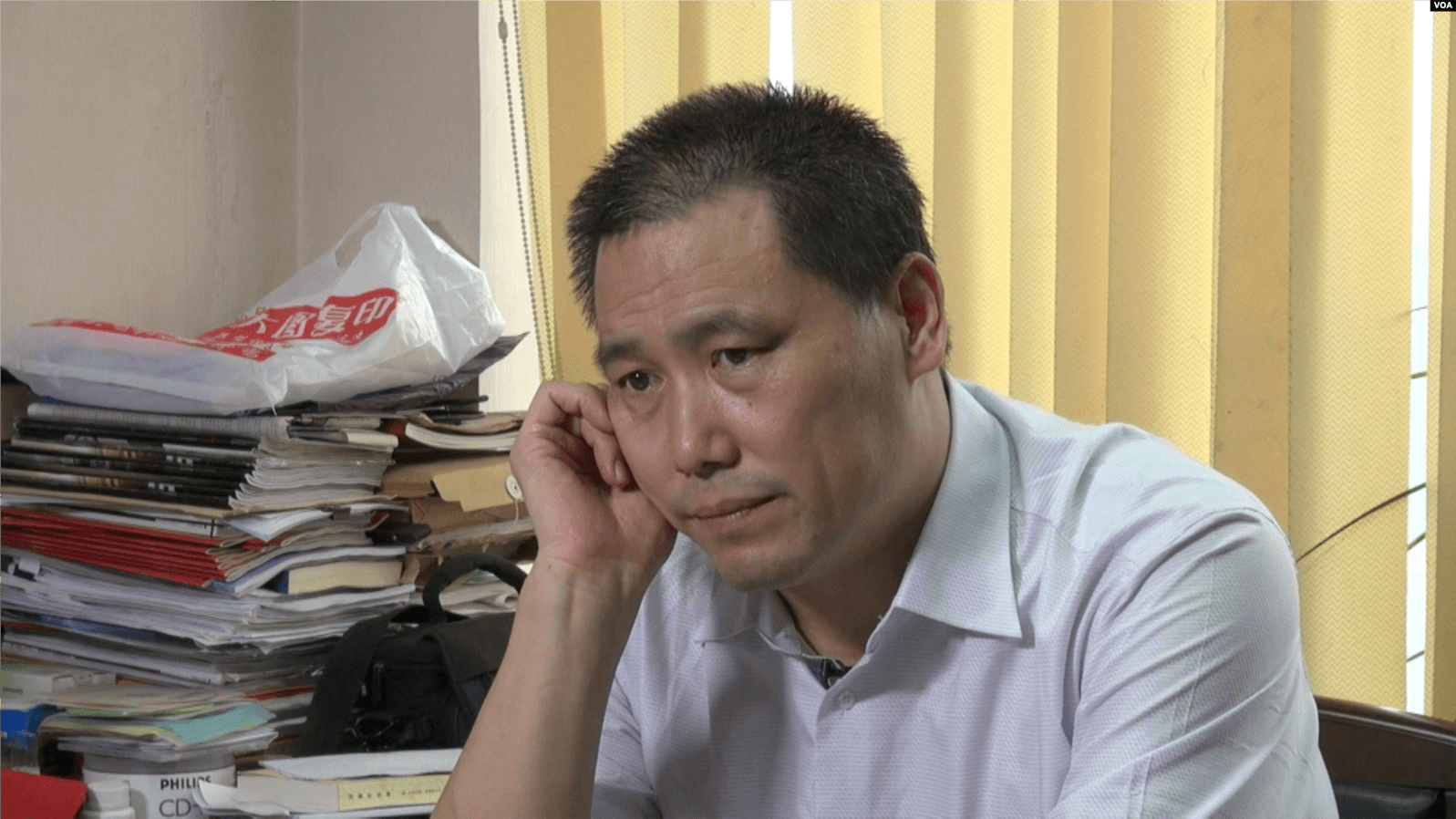
    Pu Zhiqiang, who was arrested for “creating a serious disturbance.” Image credit: VOA / Public domain
    In September 2013, the Supreme People’s Court (SPC) and Supreme People’s Procuratorate (SPP) jointly issued a judicial interpretation addressing a number of issues related to criminal speech online. That interpretation held that use of information networks “to berate or intimidate others,” “to disseminate false information . . . that one has either invented or clearly knows to be fabricated,” and “to organize or incite others to disseminate [such information]” should be punished under Article 293 of the Criminal Law, “creating a serious disturbance.”

    This marked a major elaboration of Article 293, which is also known by its literal translation, “picking quarrels and provoking trouble.” Prior to the interpretation, the offense had targeted a variety of behaviors deemed to be disruptions to social order, such as fighting, looting, throwing rocks or refuse at vehicles or buildings, or otherwise stirring up trouble in public spaces. Now, the interpretation seems to have expanded the definition of “public space” to include online space, treating it not only as a platform through which to incite others to disrupt social order but as a kind of public space itself that can be thrown into disorder by certain kinds of acts.

    Since September 2013, a growing list of Chinese people have been detained or charged for speech-related incidents under the provisions of Article 293. Perhaps the most well-known is the crusading rights lawyer Pu Zhiqiang, whose initial detention for “creating a serious disturbance” appeared to be connected to a private meeting to discuss issues related to June Fourth. According to recent reports, however, it appears that the authorities may also be trying to prosecute Pu under Article 293 (in addition to even more serious speech-related charges, including “inciting subversion” and “inciting splittism”) for a series of items he posted on social media.

    Prosecutors in Zhengzhou, Henan, also recently presented an indictment for “creating a serious disturbance” against Yu Shiwen, a former student leader during the 1989 democracy movement who was arrested last year in connection with a public memorial commemorating former leaders Zhao Ziyang and Hu Yaobang and those who died in the June Fourth crackdown. The authorities appear to have been unaware that the memorial had taken place until Yu and other participants posted photographs online and gave interviews to overseas media.

    Critics have argued that the judicial interpretation by the SPC and SPP is improper because by significantly expanding the scope under which Article 293 can be applied, it has ventured into the jurisdiction of China’s legislature. Peking University’s Zhang Qianfan recently took up the argument from a position defending the freedom of expression. In a blog post that has been widely republished on numerous Chinese-language websites, the liberal constitutional law scholar warns that overemphasis on preventing disorder in virtual space risks undermining what is not only a fundamental human right but also an essential component of ensuring proper governance. He describes Article 293 as a “pocket crime”—an offense so vaguely defined that nearly anything can be stuffed into it—and warns that, unless the boundaries are tightened up, even more Chinese citizens are likely to fall victim to arbitrary and abusive uses of offenses like these.

    *
    Don’t Let “Creating a Serious Disturbance” Become a “Pocket Crime”

    Zhang Qianfan
    February 5, 2015

    Over the past year, the offense of “creating a serious disturbance” (Article 293 of the Criminal Law) has been applied more and more often in cases involving speech by citizens. Legal scholars are widely concerned that this offense has already become a “pocket crime” whose borders can be extended at will. This not only violates the principles of “governing the country in accordance with the law” and “governing the country in accordance with the constitution” that were promoted at the Fourth Plenum of the Eighth Chinese Communist Party Conference; it will also inevitably lead to serious abuses of state power and an extreme restriction of citizens’ freedom of expression that is protected under Article 35 of China’s constitution.

    In a certain respect, we can consider the state as a supremely powerful Hobbesian “Leviathan,” but this Leviathan does not have a will of its own. On the contrary, it is a product of human reason. We establish the state and invest it with such huge powers so that it may control the irrationality of private individuals and prevent their using violence to harm others. At its most basic, the function of the state is to use its monopoly of lawful violence to control the unlawful violence committed by private individuals. The criminal law is the main means by which the state carries out this basic function, and police are the specific force through which the criminal law is enforced. You could say that it is a limb of the Leviathan. For rational people, limbs must be controlled by the brain. If the brain loses control, then the limbs can move wildly on their own in a dangerous manner. The same is true with the state.

    What is the “brain” of the state? The “brain” of the state is the public reason expressed through its laws. In a healthy state under ordinary conditions, law exists to serve the common interests of all people. But what exactly is the “common interest”? What sort of policies, laws, or institutions bring the greatest happiness to people? There can be no single answer to these questions, and since each person has freedom of thought and expression, no person can claim that he alone possesses the truth. So-called public reason is a social consensus that is formed in the course of free discussion, meaning that free expression is an institutional precondition for the production of public reason. Of course, total consensus is impossible, because no viewpoint can secure the agreement of every single person in society. We must be able to cast votes to determine the majority position at any time and use this as the basis for the laws that govern us. Only such laws can be considered “good laws” that express public reason. Public reason of this kind is bound to be flawed and can only attain perfection through practice. But it is inevitably far superior to any private individual reason—because humans are rationally self-interested, individual reason can only serve particular individuals. Only public reason formed in the context of free expression can serve the entire society.

    We can only live in a reasonable state if we enforce good laws, implement the rule of law, and allow our public reason “brain” to control the limbs of the state. On the other hand, if the limbs take control of the brain and prevent the brain from thinking in a normal way—or if individual reason is allowed to replace public reason and the machinery of the state is used to suppress and “manage” speech—then the “arms control the brain” and the state cannot operate normally. Arms can only control arms. State violence can only be used to control violence by private individuals and not to govern speech.

    Of course, if speech truly threatens to incite an immediate, obvious, and serious danger—for example, if a person spreads panic in a crowded place and causes a stampede—then that sort of speech should be liable for criminal responsibility. But so long as there is no such “clear and present danger” and there is still time to clarify the truth through additional discussion, free speech should be allowed to continue without state power intervening to impose silence.

    As long as the state’s “brain” is still capable of ordinary thought, the “arms” must not be allowed to control the “head.” The reason is simple: arms can never be as good at thinking as the head. Likewise, police are no more capable than ordinary people of correct judgments about matters of right or wrong or expertise. When the arms control the head, coercive power is substituted for public reason.

    If a criminal offense becomes a “pocket crime” that can be expanded or contracted at will such that it becomes a way of punishing citizens’ speech, then the “arms are controlling the head.” The fourth clause of the offense of “creating a serious disturbance” refers to “stirring up trouble in a public place that creates serious disorder in [that] public place.” Since the Supreme People’s Court and Supreme People’s Procuratorate have expanded the meaning of “public place” to include online space, this clause has often been applied in cases involving citizens’ speech. Looking purely at the text of the statute, there’s no big problem with this offense. Whether it’s speech or acts, if there truly is “serious disorder in a public place,” then the person(s) responsible should be held criminally liable. The problem is how to define “serious disorder in a public place” and, particularly, disorder as applied to the “public space” of the Internet. The Internet is a platform for free expression and it is normal for there to be different opinions expressed there. “Order” in this kind of space connotes a kind of place where one person has all the say. In the “public space” of the Internet, it’s practically impossible for there to be “serious disorder” in the sense of the criminal law. Does crude, acrimonious, and radical online speech that leads to widespread arguments or even abuse constitute “creating a serious disturbance”? Even if you believe in the idea that there is “verbal violence” online, you should not use physical violence to counter verbal violence.

    Under ordinary circumstances, the criminal law should only apply to actual violence that takes place in the real world, not virtual “violence” that takes place in the online world—with the exception of online speech that can actually cause “serious disorder in a public place” in the real world. If online speech that does not satisfy this condition is treated as “creating a serious disturbance,” then it is another case of the arms controlling the head.

    The analysis above does not simply apply to “creating a serious disturbance” and can be applied to all other “pocket crimes” as well. The unlimited expandability of “pocket crimes” not only restricts citizens’ right to free expression but also can easily lead to abuses of power by local authorities. In China, no matter whether it’s the constitution, laws, or central policies like the Fourth Plenum decision, all are used by central authorities to regulate the behavior of local authorities at all levels. But if the constitution is not implemented fully and laws become pocket crimes to be interpreted arbitrarily by local authorities, then not only is the law unable to serve any normative function but it can actually become a powerful weapon with which local authorities can abuse their power.

    For example, in Henan a rights defender named Jia Lingmin provided free legal advice for many years to families who had been forcibly evicted from their homes. She was warmly welcomed by people all over for spreading legal information concerning land seizures and forced evictions. But because she was a thorn in the side of the local authorities, she was framed on charges of “creating a serious disturbance.” However, not only did Jia’s speech not cause any “serious disorder in a public place,” it played an extremely positive role by protecting the lawful rights and interests of evicted households, upholding social stability, and preventing predatory behavior by those with power. Such an abuse of power by local authorities seriously undermines the rule of law and shows flagrant contempt for central authority.

    To prevent “creating a serious disturbance” from becoming a “pocket crime,” we must strictly define key legal criteria like “serious disorder in a public place.” The crime should only be constituted in cases where expression has truly caused serious disruption to the order of an actual public place. And in order to constitute “serious disorder,” the speech in question must cause harm that is clear and imminent. If “serious disorder” is simply determined by the subjective conjecture and imagination of those in charge of the case or based on fear of some unpredictable or uncertain outcome, it naturally cannot be considered “serious.”

    A classic example is the case of Yu Shiwen and others from Henan who publicly mourned Zhao Ziyang. Zhao Ziyang was originally from Henan, and there is nothing out of the ordinary for people from Henan to mourn other people from Henan. There was no disorder on the scene, and the mourning took place without any interference. It was only when Yu Shiwen and others put a video of the mourning online that they were detained by Henan police. But there is no evidence to prove that these videos caused any disorder in a public place. When investigators make such accusations, they must provide the national public with a convincing explanation in order to prevent the impression that the machinery of state power is being operated by a few arms in order to control 1.4 billion heads.

  • Torture in Harbin Drug Cases Met with Little Punishment

    Seven defendants stand trial for torture at the appellate court, Harbin Intermediate People’s Court, in August. Image credit: dbw.cn

    A recent court case in the northeastern city of Harbin is shining new light on some of the extremes to which police investigators occassionally go to get criminal suspects to confess in China. It also raises new questions about whether the Chinese criminal justice system punishes the perpetrators of torture severely enough to act as a deterrent.

    Last May, a court in Harbin convicted seven defendants of coercing confessions through torture in connection with seven separate incidents, all committed in March 2013. The court imposed sentences ranging from a suspended one-year prison sentence to two-and-a-half years in prison. At least one of the defendants appealed the verdict, landing the case at the Harbin Intermediate People’s Court for an appellate hearing at the end of August.

    The court found evidence of what appeared to be routine use of electric shock and other physical torture in the investigation of drug cases by officers at the Daowai District Branch Public Security Bureau. One suspect recalled being handcuffed to a metal chair and shocked with electric batons. Mustard oil was poured up his nose. When he refused to tell police where he got his drugs, they took off his shoe and applied wires to one of his toes. The wires were then connected to an old-fashioned military crank telephone, which sent a current of 120 volts through his body as they cranked it, causing his entire body to convulse.

    The same technique was used during another drug investigation that same month. Again, a drug suspect surnamed Liang was handcuffed to a chair. When he began to shout, a towel was stuffed in his mouth. One interrogator began beating Liang in the face with the sole of a shoe. During this ordeal, Liang lost consciousness. By the time they realized that something was wrong, he was dead.

    One of the unusual things about this case is that only three of the defendants were police officers. Most of the defendants, including the ones responsible for carrying out most of the actual physical torture, were what is commonly known as “special informants” (teqing, or teshu qingbao renyuan). Police investigators often rely on these informants to provide information or leads that can help them crack cases. In this instance, however, it seems that police were also delegating some of their authority to carry out interrogations—or at least using special informants to do some of their dirty work for them.

    Another thing that has attracted attention about the case is the relatively light sentences, especially considering that one victim of torture apparently died during interrogation. As legal scholar Wang Gangqiao pointed out in an opinion piece published in The Beijing News on September 23, the maximum penalty for coercing confessions through torture is three years’ imprisonment, but torture resulting in serious injury or death should be punished according to the more serious offenses of intentional injury or homicide. He questions the court’s failure to hand down more serious penalties in this case, even hinting at the possibility of collusion between law-enforcement authorities to prevent torturers from being held fully accountable.

    According to reports, however, local prosecutors lacked evidence to bring homicide charges because police cremated the body of the deceased as the incident was under investigation. As a consequence, a deputy chief at the Daowai Public Security Bureau who ordered the cremation has since been put on trial for abuse of power.

    Use of torture to extract confessions is a problem in many countries, especially in situations where investigators lack the skill or experience to build a case through other means. But acceptance of torture can also become part of an institutional mindset, especially when there are expectations of impunity. In this case, the highly politicized nature of China’s “People’s War on Drugs” and the criminal justice system’s long-standing reliance on confession to secure convictions appear to have been contributing factors.

    *
    Don’t Let Harbin Torture Trial Serve as Negative Model

    Wang Gangqiao
    The Beijing News, 23 September 2014

    Recently, the trial of Wu Yan and others charged with extracting confessions through torture entered the second-instance appellate phase in Harbin. Earlier, the court of first instance found evidence of seven instances of torture, all occurring in March 2013. Official reporting on the case said “the methods used to extract confessions were extremely vile.” [One defendant,] Wu Yan, was sentenced to two-and-a-half years’ imprisonment. [Another,] Zhao Xiaoguang, received a one-year sentence, suspended for a year. All of the other defendants in the first-instance trial received sentences of between one and two years in prison.

    A maximum sentence of two-and-a-half years doesn’t seem all that severe. Looking at the statute, the Criminal Law provision on coercing confessions through torture states: “Any law-enforcement officer who extorts confession from a criminal suspect or defendant by torture or extorts testimony from a witness by violence shall be sentenced to fixed-term imprisonment of not more than three years or penal servitude. If he causes injury, disability, or death [to the victim], he shall be convicted and given a heavier punishment based on the provisions covering the crimes of intentional injury or intentional homicide.” According to the Xinhua News Agency’s report on the case yesterday, on March 24 of last year, Wu Yan accused Chen Xiaowei, Pan Yongquan, and Li Yingbin of using an old-fashioned military crank telephone to electrocute a [suspect] surnamed Liang; Cheng Xiaowei was in the process of beating Liang in the face with the sole of a shoe when Liang suddenly died.

    This is probably the reason why the Harbin torture case has been described as involving “extremely vile” methods. The law says that when torture leads to death, it should be “given a heavier punishment based on the provisions covering the crimes of intentional injury or intentional homicide.” Looking at the less serious of these two offenses, intentional injury resulting in death, the penalty should be “fixed-term imprisonment of 10 years or more, life imprisonment, or the death penalty.” This is worlds apart from the sentences handed down in the present case. The reason for this case being tried in second instance is apparently because the defendants appealed. It’s unclear whether the prosecution also appealed the verdict acording to the provisions of the Criminal Law on the grounds that the sentences were abnormally light. It’s really nonsense to think that a one- or two-year sentence—especially a suspended sentence—could help to contain the coercion of confessions through torture, a practice which previous prohibitions have failed to stop.

    It’s even more noteworthy that, of the defendants in this case, only Wu Yan, Zhang Siliang, and Zhao Xiaoguang were police officers. Defendants Cheng Xiaowei, Pan Yongquan, Li Chunlong, and Li Yingbin, who also took part in torturing suspects, were not police at all, but rather, “special informants.”

    Investigative power is a power specially designated by the state that only specialized units and personnel are authorized to exercise. The interrogation of criminal suspects is the most important part of the investigative process, an activity that is to be carried out only by qualified investigative personnel. “Special informants,” also known as xianren, are individuals whose status is defined by their ability to provide needed information for use by investigators during the investigative process and help them to solve cases. According to the law, “special informants” are still ordinary citizens. They play an auxilliary role in investigations and come under the responsibility of investigative units, but they do not have any investigative power themselves.

    Everyone understands the evils of coercing confessions through torture. Police are law-enforcement personnel who have a personal responsibility to maintain law and discipline and safeguard human rights. So when some law-enforcers instead knowingly violate the law and treat torture as an ordinary investigative tool, they ought to be severely punished in accordance with the law. In this case, however, if the prosecution never appealed the verdict, then under the principle of “no heavier penalty on appeal,” the court of second instance cannot increase the penalties given to the defendants in the first-instance verdict. This perhaps demonstrates that, in some locations, police, prosecutors, and courts have come to a kind of “consensus” about lenient punishment for the use of torture to extract confessions.

    “Incidents” in the criminal process like this Harbin torture case are a portent of things to come. Behind this incident are the sprouts of many other incidents. For example, the extreme chaos surrounding the system of “special informants,” the extremely casual way that investigative powers are delegated, etc. Open violations like this involve “sprouts of accidents” that should have been extremely obvious to see. While we are pursuing criminal responsibility for coercion of confessions through torture, those units and officials who are responsible for oversight should undertake some serious reflection: As the “safety officials” of the criminal process, what have you done to contain and eradicate this kind of mishap? Oversight requires the establishment of rules and measures that prevent law enforcers from doing things they’re not supposed to do. These are preventative measures for which we can no longer wait!

  • Criminal Detention as Punishment in Post-RTL Era

    Abuse of criminal detention in duration and scope made headlines when it befell (clockwise from top left) Xue Manzi, Wang Gongquan, Wang Peng, and Wu Hongfei. Photo credits: CCTV, Southern People, China.com, and Xinhua

    One of the big uncertainties facing China’s legal system at present is how matters formerly handled with reeducation through labor (RTL) will be dealt with once RTL has been abolished. Police and local authorities have grown accustomed to the quick and flexible manner in which threats to public order and social stability could be neutralized with extended incarceration without formal judicial process. While some fear that police will cope by simply taking advantage of other kinds of extra-legal measures, such as “custody and education” and “legal education classes,” there are also good reasons to worry about the abuse of measures that are, strictly speaking, legal.

    One such measure that has recently been put under the spotlight is “criminal detention” (xingshi juliu). As reporter Ye Zhusheng explained recently in the magazine South Reviews, the routine practice of locking up criminal suspects for up to 30 days before seeking approval for arrest is quite far removed from the “emergency measure” originally envisioned in China’s Criminal Procedure Law. Though the letter of the law sets limits on both the duration and conditions under which the measure may be employed, both have been expanded broadly in practice thanks to a lack of rigorous institutional oversight or significant consequences for improper application.

    Criminal detention has been used on dissidents and activists such as Wang Gongquan, a billionaire who is a founder of the New Citizens Movement alongside Xu Zhiyong. It was announced today that Wang, who has been under criminal detention since September 13, 2013, has signed a confession and been released on bail. His admission could have implications for Xu who had his final defense hearing in court yesterday.

    It is under similar circumstances that the measure known as “residential surveillance” (jianshi juzhu) has been able to evolve into a measure encompassing two almost completely different types of measures—one lenient and non-custodial and the other arguably the most severe and restrictive measure possible under China’s Criminal Procedure Law. In both cases, the tendency has been to use compulsory measures instrumentally to further investigators’ goals of obtaining confessions, and this instrumental orientation has enabled the use of compulsory measures as leverage in non-criminal disputes or even as a form of punishment itself.

    Ye’s article ends on an optimistic note, however, suggesting that police discretion to abuse such measures without consequence is slowly being reformed. For one thing, the abolition of RTL is seen as a clear signal of Chinese society’s demand that police operate under rule of law. This will involve continued oversight of all types—institutional oversight by the procuratorate, external pressure by the media and public opinion, and the checks associated with more robust approval procedures and channels for appeal. In this respect, the ability of lawyers to intervene earlier in criminal cases—something granted on paper by the revised Criminal Procedure Law that took effect a year ago—has the potential to play an important role in reducing police use of detention and ensuring that when detention is used, it is used properly.

    *
    Criminal Detention in the “Post-RTL Era”

    Ye Zhusheng, South Reviews
    December 8, 2013

    In the “post-RTL era,” public security units will be increasingly expected to combat unlawful and criminal activity under rule of law. Criminal detention, standing at the front lines of the criminal procedure, will bear the brunt of these expectations.

    At the end of June of this year, the Hunan Politico-Legal Committee and all of the provincial legal authorities jointly issued Several Rules Concerning All-Province Politico-Legal Organs Serving Enterprises and Optimizing the Development Environment, calling on local [authorities] to “use discretion in detaining.” For legal representatives or senior management of enterprises suspected of criminal activities, non-custodial compulsory measures are to be employed as often as possible except when it is truly necessary to do otherwise. For those already under criminal detention or arrest, when it is necessary for the enterprise’s production or operations and the facts of the case have already basically been investigated, they may, in light of the circumstances, be transferred to non-custodial compulsory measures in accordance with the law.

    Criminal detention is the most commonly employed custodial measure used by public security organs against criminal suspects. In news reports, the phrase “case was uncovered” is typically accompanied by word that a criminal suspect has been placed under criminal detention.

    The reform program of the Third Plenum of the 18th Party Central Committee calls for construction of a rule-of-law business environment, improved operating mechanisms for judicial powers, and perfection of the system of human rights and legal protections. Abolition of re-education through labor (RTL) is a major step in this reform direction. In the “post-RTL era,” public security units will be increasingly expected to combat unlawful and criminal activity under rule of law. Criminal detention, standing at the front lines of the criminal procedure, will bear the brunt of these expectations.

    Broad Standards

    Just what sort of procedure is criminal detention? Though “criminal detention” is already a hot topic, ordinary members of the public don’t necessarily have a clear understanding of it and even possess many misunderstandings.

    According to the law, public security organs may “initially detain an active criminal or major suspect” under one of seven conditions, such as when he or she is “preparing to commit a crime, is in the process of committing a crime, or is discovered immediately after committing a crime,” or “if there is likelihood of his or her destroying or falsifying evidence or coordinating confessions [with other suspects].”

    A procurator in the criminal investigation supervision office of a procuratorate in a Guangdong county told South Reviews that a considerable portion of the criminal suspects placed under criminal detention do not understand the measure: “They have no idea what criminal detention is, so even those who have been improperly detained have no understanding of how to protect their own rights and interests.”

    According to the prevailing interpretation among legal scholars, criminal detention ought to be applied in emergency situations and is not a compulsory measure for routine use. According to a report by Fei Zhiguo and Hu Junce, two procurators from the Xiacheng District Procuratorate in Hangzhou who analyzed problems in the use of criminal detention, “in actual implementation many local investigators are under the mistaken impression that, as long as a criminal case is involved, they may place criminal suspects under criminal detention no matter whether it is necessary or whether they meet the criteria.”

    Li Xiujiao, a criminal defense lawyer who previously worked for many years as a procurator, told South Reviews that, despite the existence of threshold standards in theory, in practice these standards are extremely flexible. Basically, so long as the police believe that a crime may be demonstrated [to have taken place], they may use criminal detention. Inside public security bureaus, criminal detention is typically approved by the legal affairs office. A police officer in the legal affairs office of a public security bureau in a district of Guangzhou told South Reviews that the standards for approval are quite broad and only a minority of criminal detentions fail to be approved.

    This situation can be demonstrated empirically. South Reviews obtained a copy of a report prepared by a procuratorate in a coastal city that had conducted a special monitoring of the use of criminal detention by units under its jurisdiction. According to the report, from 2009 to the first half of 2011, public security units in that area apprehended 11,393 criminal suspects. Of these, 8,551 were placed under criminal detention, or 75.1 percent. According to Zhang Chao, a researcher at the Henan Police and Rule of Law Research Center who collected statistics from 10 public security bureaus in 2010, nearly 90 percent of criminal suspects had been placed under criminal detention.

    Obviously, the over-application of criminal detention is rarely ever called into question. Besides the gaps in public understanding, there are legislative roots as well. The seven circumstances set out under the law are extremely broad and difficult to narrow down in practice, so it is extraordinarily easy for them to be distorted.

    Scholars who have investigated the historical development of the statutory conditions for criminal detention have found that two situations in which the now-abolished practice of “shelter and investigation” was once used—“refusal to tell his or her true name and address and his or her identity is unknown” and “strong suspicion of committing crimes from one place to another, repeatedly, or in a gang”—became “grafted” onto the criminal detention system. Fei Zhiguo and Hu Junce report that, in practice, these standards are often given expansive interpretation by police, who, for example, “consider those from other areas suspected of committing crimes while in a place to work, study, or visit friends and family as cases of ‘committing crimes from one place to another.’”

    Another reason contributing to the over-broad interpretation of the standards for criminal detention is the lack of oversight mechanisms over the police process for approving detentions. In theory, the procuratorate oversees the criminal process, including criminal detention, but the law provides for no specific way or manner for oversight of criminal detention. The county-level procurator from the criminal investigation oversight office quoted above told South Reviews that, aside from cases involving confessions extracted through torture, there is “basically no oversight” by the procuratorate over criminal detention. In Li Xiujiao’s view, even though the procuratorate oversees case-filing by police, the focus of that work is on cases “not filed that should be filed” with “much less attention paid” to determining whether criminal detention has been used in cases “filed that ought not have been filed.”

    Detention as Punishment

    Besides the extremely high rate of criminal detention, detention in excess of statutory time limits is also a common problem. According to the law, under ordinary circumstances the period of criminal detention should last from one to three days. If the case is extremely complex, that can be extended to one week, and in special circumstances defined by statute the period may be extended up to 30 days. Extension approval is handled within the public security organ. In Zhang Chao’s view, there are two types of extended detention. The first is when the period of detention is extended arbitrarily without meeting statutory criteria; the other is criminal detention beyond the maximum time limit allowed by law. In the 10 public security bureaus for which he collected statistics, as many as 44.47 percent of detainees were detained beyond the time limit, with the longest time a suspect was detained reaching three years and 155 days.

    In countries with developed rule of law, police can generally only detain criminal suspects for one or two days before a court needs to formally approve arrest. Usually, a complex approval process is required before the detention period may be extended. For example, in the United Kingdom, the Home Secretary’s personal approval is necessary before extending detention to five days.

    According to the procurator quoted earlier, there are two main circumstances in which the period of criminal detention gets extended beyond its limits. The first is when police repeatedly impose new criminal detention measures on the same person every time a new piece of evidence or new detail is discovered. The second probably involves detention in a location different from the place of initial apprehension, because it is currently unclear when the criminal detention period begins under those circumstances. Police might have a criminal suspect apprehended in a different location “hosted” in that location’s detention center for a long period, and there is often a lot of debate over whether that time should be counted toward the criminal detention time limit. The procurator revealed a case involving a criminal suspect apprehended in a different location who was “forgotten about” by the police officer handling the case and was only released after half a year had passed.

    The police officer in the legal affairs office quoted above told South Reviews that, other than individuals who commit solo crimes, the majority of those under criminal detention have their time limits extended, with a considerable number of those detained for the full 30 days. In the past, this sort of thing was particularly common. According to an investigation by the Nanchong procuratorate into use of criminal detention by public security organs there, between 2001 and 2003, three-quarters of all persons arrested had been detained for the full 30 days prior to arrest. The procurator quoted above told South Reviews that, in practice, the percentage of cases meeting the standard for extending the period of criminal detention is not really that high.

    According to the law, “for major suspects involved in crimes committed from one place to another, repeatedly, or in a gang, the time limit for submitting a request for examination and approval of arrest may be extended to 30 days with approval of the responsible person from a public security organ at the county level or above.” But according to the research by Fei Zhiguo and Hu Junce, this standard is also easy to interpret loosely. According to the observation of these two procurators, police can in practice use non-statutory reasons such as “the need to investigate and verify other suspected cases,” “complex case circumstances,” or “the need to travel to other places to obtain evidence” in order to extend the period of criminal detention.

    Why is it so common to expand both the scope and duration of criminal detention? There are many interpretations. Li Xiujiao told South Reviews that, in the past, confession was the main form of investigation in the public security system. Currently, that idea of investigation has not completely changed: “Locking someone up is the best way to get them to confess. Police often wait for a confession before going out to collect other evidence to support it.”

    In terms of getting a confession before arrest, there is also the measure known as criminal summons, but the maximum duration for that is 24 hours. In the view of legal scholars, the original intent of criminal detention was to prevent the effects of a crime from spreading and to avoid obstruction of the investigation. But for all sorts of reasons, the emergency measure of criminal detention has come to replace criminal summons and has, contrary to the original intent, become the routine investigative measure used in practice.

    In Li Xiujiao’s view, suspects under criminal detention are held in the detention center, where the special environment imposes a serious kind of mental pressure on them. According to his understanding, people are packed more tightly together and the facilities and conditions are worse in detention centers than in prisons. After being held in a detention center for a while, one of Li’s clients began to display serious mental problems. The endless stream of incidents like the “death by ‘blind man’s bluff’” and “death by showering” confirm this point. Under these circumstances, in Li Xiujiao’s view, many criminal suspects would rather “confess” early and be convicted sooner so that they might serve their sentence in a prison “where the conditions are better.”

    It is precisely because of the detention center’s “special effectiveness” that release on guarantee pending further investigation and residential surveillance—functionally similar to criminal detention but involving lower degrees of restriction on personal liberty—are used infrequently by police.

    Within the [criminal procedure] system, criminal detention is not a punishment but only an emergency measure used in the course of investigation. But because it can be easily extended to 30 days, even longer than the administrative detention measure used for public-order punishment (which generally is limited to 15 days), criminal detention also has the potential to be abused as a purely punitive measure. Paradoxically, even though the period of criminal detention is twice as long as that for administrative detention, the approval process and standards for the former are much simpler than those for the latter. Additionally, a person wrongly placed under criminal detention may pursue remedies through administrative reconsideration or litigation, but interviewees from different agencies all told South Reviews that it is very difficult for persons under criminal detention to get a remedy. According to Fei Zhiguo and Hu Junce, “some investigators, not wanting the trouble [of getting approval for an administrative punishment], use the compulsory measure of criminal detention instead of administrative punishment in cases where there is no need for criminal detention.”

    Researchers have discovered that police also use criminal detention as a tool and employ it to intervene in civil disputes: “In some cases involving minor injuries or traffic accidents, investigators use criminal detention against the party at fault to encourage quick civil mediation or payment of compensation to the victim. When a mediated settlement has been reached or compensation has been paid, they revoke [the detention decision] on grounds of ‘no criminal liability should be pursued.’”

    Li Xiujiao told South Reviews that he once had a client who ran a business who got in a dispute over an unpaid debt. He was placed under criminal detention for “contract fraud” and, upon release, police only paid state compensation of slightly more than 100 yuan per day. In fact, this was a case of someone using criminal detention to interfere in ordinary economic interactions.

    Perhaps it is precisely because of the indiscriminate use of criminal detention that Hunan issued the regulations mentioned above emphasizing the need to “use discretion in detaining.” In fact, similar documents have been issued in Guangdong, Jiangxi, and other locations.

    Reform

    One consequence of the expanded use of criminal detention is that a large number of criminal detention cases do not meet the standards for arrest approval, so they have to be “digested” inside the public security organ. According to the special report on criminal detention issued by the procuratorate in that coastal city that was cited above, nearly half of the individuals placed under criminal detention in that city never made it to the arrest approval process, meaning that these cases clearly did not constitute crimes or meet the conditions for prosecution. But this does not mean that the remaining half smoothly passed through the procuratorate for arrest approval. According to the statistics collected in 2010 by Zhang Chao, of the cases sent by the 10 public security bureaus to the procuratorate for review, not even 40 percent were ultimately approved for arrest.

    Considering these two sets of data together, this means that a relatively small proportion of criminal suspects placed under criminal investigation by police are ultimately approved for arrest. According to statistics obtained by South Reviews showing the percentage of those arrested but not prosecuted by procuratorates in the districts of Shenzhen during the first three quarters of this year, the rate of non-prosecution after arrest in each district in Shenzhen varied between 1 and 10 percent. Considering that, after a case is sent to the court for trial, there remains the possibility that the court will ultimately acquit, the proportion of cases involving criminal detention that do not result in conviction is even higher.

    In the view of Li Xiujiao, even though public security bureaus have accountability systems to deal with improperly handled cases, police set a relatively high standard for finding that a case has been handled improperly, generally only involving cases involving “human error or serious mistakes.” Moreover, the law places only loose limits on criminal detention. According to Article 15 of the State Compensation Law, a person wrongly detained can be compensated for “wrongful detention of a person without incriminating facts or proof substantiating a strong suspicion of the commission of a crime.” The standard for state compensation is generally calculated according to the average salary in a given location; in practice, even such minor compensation can often be easily circumvented. According to the report from the coastal procuratorate cited above, not quite 15 percent of those for whom the police chose not to pursue arrest were released directly; the rest were shifted to other measures such as administrative detention, guaranteed release pending investigation, or even RTL.

    Looking at all of the data, police currently still have a relatively great degree of freedom and room for discretion when it comes to criminal detention, but there are signs of reform. This reporter learned from procuratorates in different locations that some procuratorates have begun exercising more oversight in practice. For example, beginning in 2004 Nanchong, Sichuan Province, launched a “Special Procuratorial Oversight of Public Security Criminal Detention.” According to statistics, in 2001 the number of criminal detentions and arrests approved in Nanchong was 3,726 cases and 1,802 cases, respectively—a difference of nearly one half. In 2006, the numbers were 2,207 and 1,571, respectively, representing a significant decrease in the gap between the two.

    Looking at it from a professional perspective, Li Xiujiao sees signs of progress. In his analysis, after the new Criminal Procedure Law passed, the role of lawyers was enhanced during the detention phase, enabling them to represent suspects in petitions and allegations regarding all of the potential problems related to criminal detention and to submit defense opinions at the time the procuratorate approves arrest. Li Xiujiao told South Reviews that currently many lawyers are still not accustomed to engaging in active defense during the detention period, but he has already handled cases in which successful defense during the detention phase led to release. He therefore believes that active defense by lawyers during the detention phase will help to improve the state of criminal detention.

  • Official Fear: Inside a Shuanggui Investigation Facility

    Official Fear: Inside a Shuanggui Investigation Facility

    There is a strong sense among many Chinese that corrupt officials must die. Recently, there were reports of public cheering for the death sentences of the deputy mayors of Suzhou and Hangzhou, and the executions of the head of the State Food and Drug Administration and the director of the Chongqing Municipal Justice Bureau. News of the number of corrupt high officials spared the death penalty also garnered much attention. 
     
    Translated below, a recent post by Chinese blogger Chu Zhaoxian (储昭贤) reveals a lesser-known, and arguably equally ruthless, tactic primarily used for dealing with Party members accused of corruption: shuanggui (双规). People facing shuanggui, which can be translated as “dual designation” and refers to a designated time and place of inquiry, are usually apprehended at their places of work or summoned for “voluntary visits” with investigators. They are then held in an undisclosed location, often a specially designed hotel or office building. There have been reports of psychological manipulation and physical torture during detention and interrogation, such as sleep deprivation, simulated drowning, burning the detainee’s skin with cigarettes, and beating. Since shuanggui is rooted in Party regulations instead of formal legislation, it is a form of extra-legal detention. Because such regulations lack the transparency afforded by a legal system, the extent to which human rights violations are committed during shuanggui is not well documented.
     
    Despite its susceptibility to human rights violations, shuanggui gained the unashamed support of Chu, who assumes the same disposition of his readers. In the post, Chu describes his rare visit to a shuanggui investigation facility. The circumstances that led to the visit are unexplained; however, the trip does result in the publication of what Dui Hua believes to be the first photographic exposé of the inside of a shuanggui investigation facility. 
     
    Throughout his cold description of the rooms and instruments used for detention and interrogation, Chu drops menacing words of caution for the corrupt. He states that corrupt officials tremble with fear at the mention of shuanggui and do not make it three days before confessing. Chu ends the post with another warning: “Do not be invited here. If you come here, your days will seem like years. There is no rank before the law.” 
     
    Chu may be correct that “days will seem like years.” Shuanggui usually lasts several months and can extend to more than one year. Some shuanggui cases, particularly high-profile ones, are converted into criminal cases and adjudicated through the formal judicial process. The typical sentence is death or life imprisonment, with all property confiscated and official positions revoked. The following table summarizes some recent cases:

    Name

    Position held prior to shuanggui

    Alleged offenses

    Start of shuanggui

    Criminal sentence, date of sentence
    Chen ShaojiChairman, Chinese People’s Political Consultative Conference, Guangdong ProvinceAccepting bribes, embezzlementApr 2009Death sentence, suspended two years, Jul 2010
    Huang YaoChairperson, Chinese People’s Political Consultative Conference, Guizhou ProvinceAccepting bribes, facilitating an illegal mining enterpriseOct 2009Death sentence, suspended two years, Dec 2010
    Kang RixinParty Secretary and General Manager, China National Nuclear Corporation; former member, Committee for Discipline InspectionAccepting bribes, embezzling shareholder equityAug 2009Life imprisonment, Nov 2010
    Li TangtangVice Chairman, Ningxia Hui Autonomous RegionAccepting bribesOct 2010Life imprisonment, Apr 2011
    Liu ZhijunParty Secretary, National Railway Ministry“Severe violations of discipline,” manipulating competitive biddingFeb 2011Pending
    Lü JiangboVillage Director, Keren Village, Jinjiang City, Fujian Province“Obstructing official business” (organizing village protests of land seizure)Feb 201011 years’ imprisonment, Oct 2010
    Pi QianshengDirector, Special Economic Zone, Tianjin MunicipalityIllegal receipt of property, “seeking and facilitating benefits for others”Jun 2009Death sentence, suspended two years, Dec 2010
    Song YongDeputy Director, Liaoning Provincial People’s CongressAccepting bribes, embezzlementOct 2009Death sentence, suspended two years, Jan 2011
    Wang HuayuanMember, Party Committee for Discipline Inspection, Zhejiang ProvinceAccepting bribesApr 2009Death sentence, suspended two years, Sep 2010
    Xu ZhonghengMayor, ShenzhenAccepting bribesJun 2009Death sentence, suspended two years, May 2011
    Zhang MeifangDeputy Director, Department of Finance, Jiangsu ProvinceAccepting bribesNov 2010Pending
    Zheng ShaodongAssistant Department Head, Ministry of Public Security; member, Party CommitteeAccepting bribesJan 2009Death sentence, suspended two years, Sep 2010
    Zhu ZhigangDirector, Commission for Budget Affairs of the Standing Committee of the National People’s CongressAccepting bribes, abusing position to advantage others financially, manipulating real estate pricesOct 2008Life imprisonment, May 2010


    Despite possible human rights abuses, or perhaps because of them, shuanggui is likely to remain a common anti-corruption measure for years to come. As the number of officials found guilty of corruption rises, it stands to reason that shuanggui, which can often be a path to harsh criminal sentences, would have some popular support. (As an indication of interest, Chu’s article spread virally with numerous re-postings by various blogs and news media.) Two reasons likely contribute to such support. First, shuanggui detainees are commonly accused of unpopular acts of corruption and graft. Second, shuanggui is almost exclusively used against Party members, who are part of an elevated socioeconomic group that comprises only 6 percent of Chinese citizens.Sadly, acceptance of shuanggui seems to have seeped into international human rights circles and resulted in a dearth of relevant research and advocacy. While stamping out corruption is a worthy cause, it by no means warrants extra-legal detention, torture, or lack of transparency and rule of law.

    Endnote: Days after publication, Chu’s article was deleted along with all but one of its re-postings. The remaining post contained none of the original photos and has since been deleted.


    *


    Where Corrupt Officials Fear Most: Exploring a Shuanggui Investigation Facility
    Chu Zhaoxian
    April 28, 2011

    A popular saying among Chinese government officials goes: “Fear not the heavens or the earth, but fear the summons of the Central Commission for Discipline Inspection’s Anti-Corruption Office.”

    I had a rare opportunity to visit a shuanggui anti-corruption investigation facility. There was no advance notice that I would be brought to this place. When the car reached the highway exit of another city, a police car appeared in front of us and led the way. We were driven through rugged and muddy mountain roads, until we were well within remote mountains. Getting out of the car, I looked around and saw nothing but the desolate mountains. We entered an ordinary-looking courtyard and stopped before a small building, where People’s Armed Police were standing guard.

    On the other side, a leader led us into the building and through the security check machines. Not until we passed the security check could we start to move about normally.

    Shuanggui stems from Article 28, Section 3 of the Investigations Regulations of the Ministry of Supervision of the Communist Party of China, which “demands a person relevant to a case to appear at a designated time and place to provide explanations regarding all aspects of the case.”

    This is the hallway of the investigation facility.

     
    Behind this door is the interrogation room of the facility, where investigators interrogate corrupt officials. Please note the term “interrogation room.” When a person enters this room, it is evident that the [Party] organization has already obtained conclusive evidence that the person is a corrupt official.

    These are the investigators’ seats in the interrogation room. Note the presence of video cameras.


    The lower podium across [from the investigators’ seats] is the seat for the corrupt official. Regardless of your past brilliance or elevated status, once you are invited to this place, your height [in the lower podium] is the same.


    The walls are made of special materials. They are soft to touch, soundproof, and prevent accidents.


    Protective fences are installed on the windows. Outside, there are only mountains, remote and uninhabited, leaving one with a desolate feeling. 

     
    The Central Committee for Discipline Inspection’s shuanggui system makes all problem officials tremble with fear. It is also known as “the sharp sword for punishing corrupt officials.”
     

    This is the inquiry room, which is substantially different from the interrogation room.

     
    The inquiry room also has installed a series of equipment [capable of performing] synchronous audio recording, synchronous video recording, synchronous broadcast, and synchronous backup [so that] the entire process of investigation and inquiry is simultaneously supervised. Note the arrangement of the table and chairs, which differs from that of the interrogation room.
     

    This is the psychological examination room.


    The psychological examination room has many advanced instruments. Lies are immediately detected. [The instruments] are very sensitive.

     
    [This is the] investigations command room.
    I am especially fascinated by this big monitor, which I had only heard of but never seen before. This is the investigations command room’s monitor of the investigation status in every room. Using [a big monitor to provide] a clear picture at a glance is very appropriate.
    I heard that all corrupt officials who are summoned to the investigation facility have their contemptuous behavior exposed. Living under shuanggui is what they fear most. Within three days, they will confess.
    Due to special reasons, some photographs and descriptions have been left out. [Here is] a warning for government officials to bear in mind: The power in your hands is given by the people for seeking the benefit of the people. Do not betray the people’s trust. Be a good official with both competence and integrity. Do not be invited here. If you come here, your days will seem like years. There is no rank before the law.
  • Official Fear: Inside a Shuanggui Investigation Facility

    Official Fear: Inside a Shuanggui Investigation Facility

    There is a strong sense among many Chinese that corrupt officials must die. Recently, there were reports of public cheering for the death sentences of the deputy mayors of Suzhou and Hangzhou, and the executions of the head of the State Food and Drug Administration and the director of the Chongqing Municipal Justice Bureau. News of the number of corrupt high officials spared the death penalty also garnered much attention. 

    Translated below, a recent post by Chinese blogger Chu Zhaoxian (储昭贤) reveals a lesser-known, and arguably equally ruthless, tactic primarily used for dealing with Party members accused of corruption: shuanggui (双规). People facing shuanggui, which can be translated as “dual designation” and refers to a designated time and place of inquiry, are usually apprehended at their places of work or summoned for “voluntary visits” with investigators. They are then held in an undisclosed location, often a specially designed hotel or office building. There have been reports of psychological manipulation and physical torture during detention and interrogation, such as sleep deprivation, simulated drowning, burning the detainee’s skin with cigarettes, and beating. Since shuanggui is rooted in Party regulations instead of formal legislation, it is a form of extra-legal detention. Because such regulations lack the transparency afforded by a legal system, the extent to which human rights violations are committed during shuanggui is not well documented.

    Despite its susceptibility to human rights violations, shuanggui gained the unashamed support of Chu, who assumes the same disposition of his readers. In the post, Chu describes his rare visit to a shuanggui investigation facility. The circumstances that led to the visit are unexplained; however, the trip does result in the publication of what Dui Hua believes to be the first photographic exposé of the inside of a shuanggui investigation facility. 

    Throughout his cold description of the rooms and instruments used for detention and interrogation, Chu drops menacing words of caution for the corrupt. He states that corrupt officials tremble with fear at the mention of shuanggui and do not make it three days before confessing. Chu ends the post with another warning: “Do not be invited here. If you come here, your days will seem like years. There is no rank before the law.” 

    Chu may be correct that “days will seem like years.” Shuanggui usually lasts several months and can extend to more than one year. Some shuanggui cases, particularly high-profile ones, are converted into criminal cases and adjudicated through the formal judicial process. The typical sentence is death or life imprisonment, with all property confiscated and official positions revoked. The following table summarizes some recent cases:

    Name

    Position held prior to shuanggui

    Alleged offenses

    Start of shuanggui

    Criminal sentence, date of sentence
    Chen Shaoji Chairman, Chinese People’s Political Consultative Conference, Guangdong Province Accepting bribes, embezzlement Apr 2009 Death sentence, suspended two years, Jul 2010
    Huang Yao Chairperson, Chinese People’s Political Consultative Conference, Guizhou Province Accepting bribes, facilitating an illegal mining enterprise Oct 2009 Death sentence, suspended two years, Dec 2010
    Kang Rixin Party Secretary and General Manager, China National Nuclear Corporation; former member, Committee for Discipline Inspection Accepting bribes, embezzling shareholder equity Aug 2009 Life imprisonment, Nov 2010
    Li Tangtang Vice Chairman, Ningxia Hui Autonomous Region Accepting bribes Oct 2010 Life imprisonment, Apr 2011
    Liu Zhijun Party Secretary, National Railway Ministry “Severe violations of discipline,” manipulating competitive bidding Feb 2011 Pending
    Lü Jiangbo Village Director, Keren Village, Jinjiang City, Fujian Province “Obstructing official business” (organizing village protests of land seizure) Feb 2010 11 years’ imprisonment, Oct 2010
    Pi Qiansheng Director, Special Economic Zone, Tianjin Municipality Illegal receipt of property, “seeking and facilitating benefits for others” Jun 2009 Death sentence, suspended two years, Dec 2010
    Song Yong Deputy Director, Liaoning Provincial People’s Congress Accepting bribes, embezzlement Oct 2009 Death sentence, suspended two years, Jan 2011
    Wang Huayuan Member, Party Committee for Discipline Inspection, Zhejiang Province Accepting bribes Apr 2009 Death sentence, suspended two years, Sep 2010
    Xu Zhongheng Mayor, Shenzhen Accepting bribes Jun 2009 Death sentence, suspended two years, May 2011
    Zhang Meifang Deputy Director, Department of Finance, Jiangsu Province Accepting bribes Nov 2010 Pending
    Zheng Shaodong Assistant Department Head, Ministry of Public Security; member, Party Committee Accepting bribes Jan 2009 Death sentence, suspended two years, Sep 2010
    Zhu Zhigang Director, Commission for Budget Affairs of the Standing Committee of the National People’s Congress Accepting bribes, abusing position to advantage others financially, manipulating real estate prices Oct 2008 Life imprisonment, May 2010


    Despite possible human rights abuses, or perhaps because of them, shuanggui is likely to remain a common anti-corruption measure for years to come. As the number of officials found guilty of corruption rises, it stands to reason that shuanggui, which can often be a path to harsh criminal sentences, would have some popular support. (As an indication of interest, Chu’s article spread virally with numerous re-postings by various blogs and news media.) Two reasons likely contribute to such support. First, shuanggui detainees are commonly accused of unpopular acts of corruption and graft. Second, shuanggui is almost exclusively used against Party members, who are part of an elevated socioeconomic group that comprises only 6 percent of Chinese citizens.

    Sadly, acceptance of shuanggui seems to have seeped into international human rights circles and resulted in a dearth of relevant research and advocacy. While stamping out corruption is a worthy cause, it by no means warrants extra-legal detention, torture, or lack of transparency and rule of law.

    Endnote: Days after publication, Chu’s article was deleted along with all but one of its re-postings. The remaining post contained none of the original photos and has since been deleted.


    *


    Where Corrupt Officials Fear Most: Exploring a Shuanggui Investigation Facility
    Chu Zhaoxian
    April 28, 2011

    A popular saying among Chinese government officials goes: “Fear not the heavens or the earth, but fear the summons of the Central Commission for Discipline Inspection’s Anti-Corruption Office.”

    I had a rare opportunity to visit a shuanggui anti-corruption investigation facility. There was no advance notice that I would be brought to this place. When the car reached the highway exit of another city, a police car appeared in front of us and led the way. We were driven through rugged and muddy mountain roads, until we were well within remote mountains. Getting out of the car, I looked around and saw nothing but the desolate mountains. We entered an ordinary-looking courtyard and stopped before a small building, where People’s Armed Police were standing guard.

    On the other side, a leader led us into the building and through the security check machines. Not until we passed the security check could we start to move about normally.

    Shuanggui stems from Article 28, Section 3 of the Investigations Regulations of the Ministry of Supervision of the Communist Party of China, which “demands a person relevant to a case to appear at a designated time and place to provide explanations regarding all aspects of the case.”

    This is the hallway of the investigation facility.


    Behind this door is the interrogation room of the facility, where investigators interrogate corrupt officials. Please note the term “interrogation room.” When a person enters this room, it is evident that the [Party] organization has already obtained conclusive evidence that the person is a corrupt official.

    These are the investigators’ seats in the interrogation room. Note the presence of video cameras.


    The lower podium across [from the investigators’ seats] is the seat for the corrupt official. Regardless of your past brilliance or elevated status, once you are invited to this place, your height [in the lower podium] is the same.


    The walls are made of special materials. They are soft to touch, soundproof, and prevent accidents.


    Protective fences are installed on the windows. Outside, there are only mountains, remote and uninhabited, leaving one with a desolate feeling. 


    The Central Committee for Discipline Inspection’s shuanggui system makes all problem officials tremble with fear. It is also known as “the sharp sword for punishing corrupt officials.”

    This is the inquiry room, which is substantially different from the interrogation room.


    The inquiry room also has installed a series of equipment [capable of performing] synchronous audio recording, synchronous video recording, synchronous broadcast, and synchronous backup [so that] the entire process of investigation and inquiry is simultaneously supervised. Note the arrangement of the table and chairs, which differs from that of the interrogation room.

    This is the psychological examination room.


    The psychological examination room has many advanced instruments. Lies are immediately detected. [The instruments] are very sensitive.


    [This is the] investigations command room.

    I am especially fascinated by this big monitor, which I had only heard of but never seen before. This is the investigations command room’s monitor of the investigation status in every room. Using [a big monitor to provide] a clear picture at a glance is very appropriate. 
    I heard that all corrupt officials who are summoned to the investigation facility have their contemptuous behavior exposed. Living under shuanggui is what they fear most. Within three days, they will confess. 
    Due to special reasons, some photographs and descriptions have been left out. [Here is] a warning for government officials to bear in mind: The power in your hands is given by the people for seeking the benefit of the people. Do not betray the people’s trust. Be a good official with both competence and integrity. Do not be invited here. If you come here, your days will seem like years. There is no rank before the law.