Hundreds of Hunan workers petitioned the Shenzhen government in Guangdong demanding compensation for medical costs associated with contracting silicosis, an incurable lung disease caused by prolonged inhalation of airborne silica dust. Workers contracted the disease while working on construction sites in the metropolis during the 1990s and 2000s.
On November 5, Hunan workers organized a sit-in protest outside the Shenzhen Social Security Bureau. The protestors’ called on authorities to address their demands for medical compensation. Protestors marched to the municipal government offices, demanding to meet with the mayor. Conflict broke out at night when a female worker tried to stop police from collecting video footage of the protestors. Officers used batons and pepper-stray to disperse the crowds, leaving several injured. After protestors threatened to jump off a bridge in response to the heavy policing, government representatives agreed to meet with the workers and discuss their demands on November 9.
Over the years, 720,000 workers in China have been diagnosed with silicosis. Experts estimate that the total number of people impacted by the disease likely stands at six million, with most sufferers being migrant workers from the central and western regions of China. Workers without an employment contract face significant challenges in successfully claiming compensation for occupational illnesses. It is estimated that only 9.5% of silicosis sufferers had employment contracts at the time of contracting the disease.
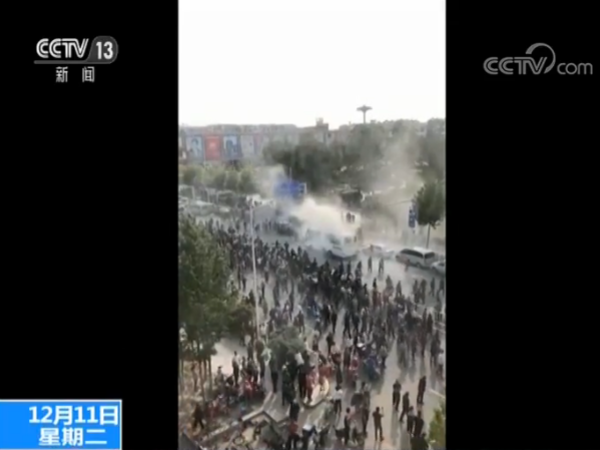
In October 2018, hundreds of veterans protested in Pingdu, Shandong over reports of police brutality against veterans who petitioned the government for welfare benefits. The protest in Shandong was sparked when a group of 38 elderly veterans traveled to Beijing to petition the government. The petitioners clashed with police, with some sustaining injuries. The petitioners were forcibly sent back to Pingdu by authorities. After the story broke, more than 300 veterans from across China gathered in Pingdu to protest. The protest was cordoned off on October 8; police placed roadblocks at dozens of intersections around the protests and a city-wide lockdown was enforced. Local residents were directed away from the protest site where protestors were kettled by police. Police clashed with protestors, but no serious incidents were reported. The protestors were either escorted back home, taken on “forced vacations,” and some were reportedly detained.
In early December, CCTV, China’s state media, finally reported on the October 4 – 7 protests in Shandong. They described the protests as a “serious violent criminal case” organized under the guise of concerned “military veterans.” Ten veterans have been reportedly detained since the protests.
In recent years, veterans across China have been protesting for better access to welfare benefits and other forms of government assistance. The Ministry of Veterans Affairs was established in March 2018 in response to widespread grievances. Fair access to military pensions and other forms of social insurance is an issue impacting many people in China.
A conference organized by the Supreme People’s Court and the Ministry of Justice on expanding coverage of defense lawyers in criminal cases. November 29, 2018, Hefei, Anhui province. Image credit: court.gov.cn.
The recent license suspensions of two lawyers in Yunnan have come under public scrutiny for the strange circumstances that led to the suspensions: the lawyers were making legal arguments based on government regulations and criminal statutes, with citation to relevant parts of the national constitution, on behalf of their clients. Their plaintiffs were Falun Gong practitioners accused of “using a cult to undermine the implementation of the law.” The case sheds light on a pattern emerging in the legal profession in China – the penalization of criminal defense attorneys, who represent clients in sensitive cases, with legally dubious accusations of professional misconduct.
“Disorder in the Courtroom”
On November 2, 2018 the Hunan Changsha Ministry of Justice issued administrative penalty decisions against defense lawyers Hu Linzheng and Zeng Wu, claiming that both lawyers “denied the nationally recognized nature of a cult organization.” In December 2017, the two lawyers appeared at the Yunnan Honghe Prefecture Kaiyuan City Court to defend their clients. Hu argued there was no evidence that Falun Gong is a cult and that Article 36 of the Constitution grants Chinese citizens freedom of religion, which at least theoretically limits the government from restricting the practice of Falun Gong. Zeng was faulted for arguing in court that there are “no direct legal regulations that determine Falun Gong is a cult,” and that his client “believed that Falun Gong is protected by the freedom of religion provided in Article 36 of the Constitution.”
The administrative penalty decisions concluded that Hu and Zeng’s conduct violated Article 49, Section 8 of the Lawyers Law of the People’s Republic of China, which states that lawyers can be penalized for speech that severely “disrupts courtroom order.” The decision also cited Articles 2, 39, and 53 of the Measures on the Administration of Lawyers’ Practice, which states that lawyers must support the Communist Party and the socialist rule of law, that lawyers’ conduct cannot disrupt the normal handling of legal cases, and that violations of these measures are punishable by Article 49 of the Lawyers Law.
The Changsha Justice Bureau suspended each of the lawyers’ licenses for six months, without providing evidence that Hu and Zeng had in fact caused disorder in the courtroom. Perhaps as an indication of how baseless the decision was, the Changsha Justice Bureau indicated that leniency was provided to the two lawyers when determining the penalty because both were “sincerely remorseful and cooperated with the investigation.”
A Catch 22 for Defense Lawyers
Defense lawyers in China assigned to politically sensitive cases are faced with a dilemma: either they deny representation to accused defendants (which contradicts the spirit of the central government’s goal to have “all criminal defendants in China represented by counsel”), or they take these cases and risk their careers.
Hu and Zeng’s clients’ alleged crime is an apparent reference to Article 300 of the Criminal Law, which criminalizes “using a cult to undermine the implementation of the law.” A defense lawyer would need to point out, as Hu did, whether the government provided any evidence establishing Falun Gong’s legal classification as a cult. Zeng’s argument similarly cast doubt on the premise that there is a law that categorizes Falun Gong as a cult. Although Falun Gong has been categorized as a cult by the China Anti-Cult Association, neither the State Council nor the Ministry of Public Security has recognized Falun Gong as a cult in their public notices.
In the penalty decisions, the Changsha Justice Bureau did not challenge the lawyers’ arguments, nor did it attempt to establish Falun Gong as a “cult” under Article 300. Hu and Zeng’s claims before the court were relevant legal arguments that a defense attorney would make in the course of representing a client. As such, it is difficult to see why a lawyer would be punished for bringing these arguments in a court of law and citing the country’s own constitution and the relevant legal facts surrounding the issue.
Contradictions with China’s New Criminal Defense Counsel Policy
The license suspensions of Hu and Zeng will likely discourage other criminal defense lawyers from pursuing perfectly legal and effective defense strategies. The Changsha Justice Bureau’s interpretation of the Administrative Penalty Act is well on its way to becoming another legal tool used to threaten defense lawyers. Experts on the legal profession in China have also criticized Article 306 of the Criminal Law (aka the “Big Stick 306”) which states that any defense lawyer who assists in a client’s false testimony, or “encourages perjury,” can be sentenced to three to seven years in prison. “Big Stick 306” has been abused by the police and the procuracy to “take revenge on those defense lawyers who dare to vigorously challenge the prosecution in court.”
In the wake of the “709” crackdown on rights lawyers in 2015 and without a better explanation for the Changsha Justice Bureau’s decision, the penalties against Hu and Zeng contradict the central government’s goal to advance the level of professional expertise in the legal system and to guarantee that criminal suspects in all cases have meaningful access to defense counsel. What’s more, on December 22, 2018 the Fujian Provincial Lawyers Association issued a set of rules that require defense lawyers in certain criminal cases to report their defense strategies prior to trial for approval by the provincial level justice bureau. Lawyers in China have spoken out against the rules arguing that it violates both the Criminal Procedure Law and the Lawyers Law. Without even a bare minimum of professional autonomy for criminal defense attorneys in China, there is significant danger that local officials will continue to categorize the reasonable efforts of criminal attorneys to defend their clients in court as “disruptive behavior.”
Dui Hua’s research into online judgments revealed that Jin Andi (金安迪) completed his eight-year sentence in July 2018 following his first sentence reduction of six months that was granted by a Shaanxi court in May 2018. The sentence reduction was granted a few days after he was deemed ineligible for parole by the Beijing High People’s Court. Jin was accused of publishing articles on overseas websites such as Boxun and New Century News with Lü Jiaping (吕加平) from 2000-2010. The articles were critical of Jiang Zemin, calling him a traitor for ceding a vast territory in the northeastern province of Heilongjiang in the early 2000s. Jin completed his sentence in Weinan Prison. His first sentence reduction application was rejected last year as he refused to show remorse. Since his incarceration in 2012, Dui Hua has included Jin on nine prisoner lists to the Chinese government.
People’s Election Party and China New Democracy Party Members Convicted of Subversion
In October, Dui Hua received a response from an official source on twelve prisoners in Guangdong province. The response revealed that Zhang Junwei (张珺玮) is due to complete his five-year sentence for subversion on August 26, 2021. Zhang is one of the individuals who was sentenced for joining the “People’s Election Party” in Guangdong with the alleged intention of overthrowing the party in a violent revolution. Other individuals known to be sentenced in the same case include Xiang Fengxuan (项逢选), Ma Ji (马骥), and Yang Wanben (杨万本).
In November, Guo Quan (郭泉) was released from Pukou Prison in Jiangsu province. Guo was convicted of subversion in 2009 for founding the China New Democracy Party which called for the end of one-party leadership under the Chinese Communist Party. The former Nanjing Normal University scholar served his full 10-year sentence without any sentence reductions. Guo refused to “demonstrate remorse,” a prerequisite for prisoners seeking clemency. In an interview given to Radio Free Asia, Guo expressed that he was “fortunate” not to have died in prison as had been the fate of many of his activist friends and that he is still in fairly good health. Although his wife and son emigrated to the United States in 2012, Guo stated that he has no plans to leave China.
June Fourth Student Leader Arrested
Unofficial news sources reported that former June Fourth student leader Zhou Yongjun (周勇军) was re-arrested in September 2018, this time for “organizing/using a cult to undermine implementation of the law”. Zhou was found to have Falun Gong materials in his possession and was detained on August 20 in Fangchenggang, Guangxi. Prior to his arrest, Zhou completed his nine-year sentence for fraud in December 2015 following at least two sentence reductions granted to him.
Religious Prisoners
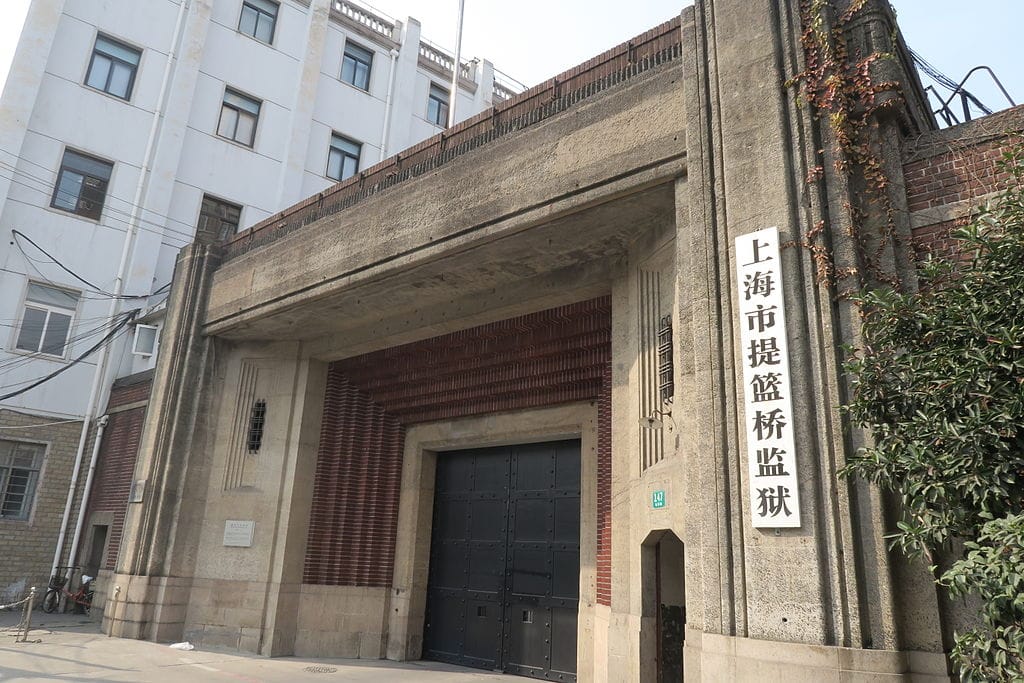
In December 2018, Dui Hua received a response from Chinese interlocutors on seven prisoners in Shanghai. The response confirmed the whereabouts of two Falun Gong practitioners convicted of “organizing/using a cult to undermine implementation of the law”. Wu Xiaocun (吴啸村), who is currently serving in Tilanqiao Prison, will complete his four-year sentence on May 12, 2021. Female Falun Gong practitioner Zhong Yijun (钟怡君) is due for release from Nanhui Prison on January 2, 2021.
Italy-based advocacy group Bitter Winter reported that Almighty God leaders Bao Shuguang (包曙光), Jiang Xingmei (蒋兴梅), Bai Lanxiang (白兰香), Chen Hong (陈红) and Gu Liya (顾丽娅) were sentenced to 11-13 years in Shandong in October. The judgment also indicated that an unnamed member was sentenced to five years. Per Article 300 of the Criminal Law, leading members of a cult group face imprisonment sentences of at least seven years if the circumstances of a case are deemed particularly serious. The five leaders in this case received the lengthiest sentences known to have been given to Almighty God members convicted of Article 300. Dui Hua’s Political Prisoner Database indicated that sentences received by Almighty God members averaged 3.5 years.
Counterrevolution
Dui Hua received a response indicating that Jiang Cunde (蒋存德) remains incarcerated for counterrevolution, a crime that was removed from the Criminal Law over 20 years ago. Jiang has not received any form of clemency since his life sentence was commuted to 20 years’ imprisonment in 2004.
Han Judge Sentenced to Splittism
Huang Yunmin (黄云敏), a retired Han Chinese judge from Xinjiang, is serving his ten-year sentence for splittism – a charge that is more commonly applied to Uyghurs and Tibetans advocating for independence. Huang was initially indicted for terrorism after downloading a large number of videos about the Urumqi Riots in July 2009. One of them was sent to a friend via WeChat. Critics believe that the conviction was a form of retaliation against Huang for his criticisms of government policies in Xinjiang and efforts to help veterans, workers, and farmers pursue their legal complaints. Huang’s brother Huang Xiaomin (黄晓敏) is currently detained for “picking quarrels and provoking troubles” in Sichuan for supporting Zi Su (子肃). Zi is a former professor who was sentenced to subversion for penning an open letter in which he criticized Xi Jinping.
Lee Ming-che’s Mysterious Co-Defendant
In September 2018, a government response provided to Dui Hua confirmed that Peng Yuhua(彭宇华) is serving his seven years’ imprisonment sentence for subversion in Hunan’s Chishan Prison. The response stated that Peng is in good condition and that his behavior is very good. Peng has not applied for a sentence reduction; he was detained 18 months ago and may not be eligible for a reduction yet. Peng was a co-defendant with Lee Ming-che (李明哲); both were sentenced in the same trial by the Yueyang Intermediate People’s Court on November 28, 2017. The court claimed that Peng was the ringleader and Lee was an active participant in setting up a number of online groups to attack the Chinese socialist system and advocate for a western political model. The indictment indicated that the duo intended to recruit a million members in 2017 to overthrow the Chinese government. Despite having received a two-year lengthier sentence for the same charge, Peng did not receive the same extent of media coverage as Lee. Many democracy activists in China have questioned Peng’s identity as they had not heard of his name prior to the hearing. Hsiao Yi-ming, Executive Secretary of the Taipei-based Judicial Reform Foundation, speculated that Peng was being used by authorities to strengthen the allegations against Lee. Hsiao stated that none of Lee’s friends in China were aware of any connection between Lee and Peng.
“A Reactionary Secret Society”, a communist propaganda film produced in 1952 that depicts the harmful acts committed by Yi Guan Dao members prior to the founding of the People’s Republic of China in 1949. Image credit: Baidu.cn
At the end of China’s civil war nearly seven decades ago, Yi Guan Dao (一贯道) was proscribed by the Chinese government as an “illegal secret society” and a “heretical sect.” Yi Guan Dao (YGD), which translates to “the Way of Pervading Unity” in English, is a religious group that combines elements of Daoism, Buddhism, and folklore. It first gained popularity in northeast China during World War II – at one point the group had more than ten million followers in the Japanese-occupied regions. While its apocalyptic teachings appealed to those living under Japanese occupation, YGD has long been at odds with the Chinese government.
As with many Qigong, Buddhist, and Christian groups labelled as “cults” by the Chinese government, YGD is banned largely due to the government’s fear of the popularity of a mass spiritual movement. As such YGD continues to be stigmatized in official narratives as “anti-science, anti-humanity, anti-society.” YGD followers are active in Taiwan, Hong Kong, and among diaspora Chinese communities in Southeast Asia, Australia, North America, and Europe. In Taiwan, YGD had more than 1.2 million followers by a 2010 estimate and the group has been lauded by the Executive Yuan for its charity work on behalf of disadvantaged communities.
Crackdown in 1950
In December 1950, a nationwide crackdown on YGD began after a People’s Daily editorial branded YGD as a “counterrevolutionary tool… utilized by the bandit gangs of imperialism and Kuomintang” and a “retroactive, feudalistic and superstitious” organization deceiving the masses who “do not know the truth.” The editorial labelled YGD followers as “traitors” and accused them of serving as secret agents of Japanese forces. In 1951, tens of thousands of YGD leaders were either executed or imprisoned and an even greater number of followers were forced to undergo intense thought reform in carceral facilities.
YGD has largely been driven underground since the crackdown in 1950, with some branches operating clandestinely under different names including Tian Dao (i.e. Way of Heaven). The sect attempted to re-establish itself in the late 1970s towards the end of the Cultural Revolution, but it quickly became a target of China’s first strike hard campaign in 1983. Many followers were sentenced to death for “organizing/using a sect or feudal superstition to carry out counterrevolutionary activities” in Yunnan and the northern provinces of Gansu, Shaanxi, and Shanxi. Dui Hua’s Political Prisoner Database has information on over 300 YGD followers. Of them, over 80 percent are known or believed to have been incarcerated in the 1980s.
Testimony gathered from former YGD prisoners in the 1990s exposed the harsh prison conditions, the abuse YGD prisoners faced by guards and other inmates, and the fact that several hundred YGD members imprisoned in the 1950s remained locked up in Shaanxi’s Fuping Prison or have perished due to old age or ill-treatment.
Underground Reestablishment – Signs of Tolerance?
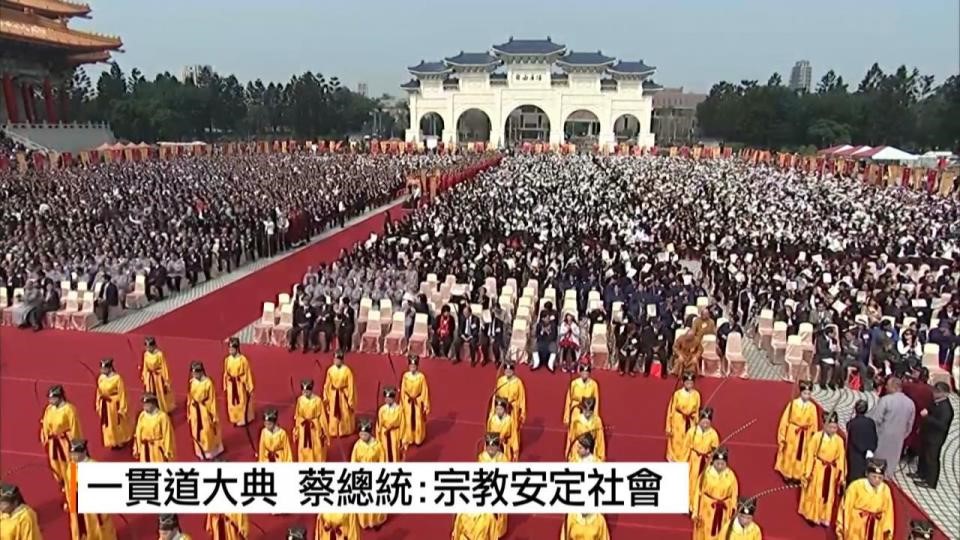
Taiwanese President Tsai Ing-wen delivers a speech at a YGD prayer ceremony joined by 15,000 followers at the National Chiang Kai-shek Memorial Hall, Taipei, on March 5, 2017, expressing gratitude to the sect and commending religion for stabilizing society. Image credit: Baidu.cn
Although YGD has been dubbed a “universal villain” in official media and is often cited by human rights groups and governments concerned about religious freedom in China, the lack of recent reporting on YGD in China has led some experts to believe that the religion has gained tacit acceptance by authorities. Some are skeptical about the extent of the group’s persecution or even its existence in China today, claiming that “it is unlikely that [the sect] still exist[s].” Others speculate that even if YGD still has followers in China they are likely concentrated in Guangdong and Fujian where there are more practicing Taiwanese YGD members, following the religion’s legalization in Taiwan in 1987.
In May 2009, an official from China’s State Administration for Religious Affairs visited a YGD monastery in Taipei. The Chinese Religious Studies Yearbook also stated that China Academy of Social Sciences (CASS) researchers have attended academic conferences organized by Taiwanese YGD groups beginning in 2009. In 2017, CASS researchers joined overseas YGD leaders on a visit to the Zu Lai Temple in Brazil.
Recent Crackdown
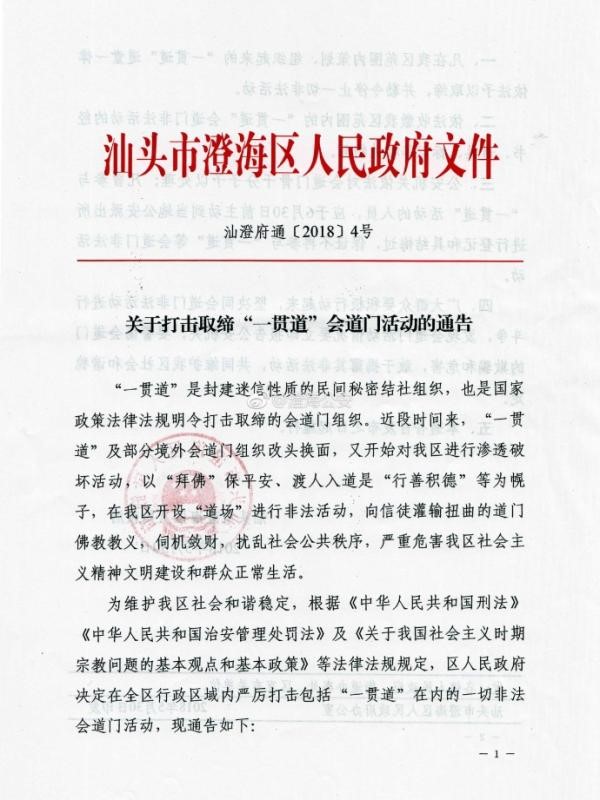
A district government in Shantou, Guangdong, issued a public notice concerning the ban on YGD activities on May 30, 2018.Image credit: Baidu.cn
Dui Hua continues to find evidence of a crackdown on YGD activities as recently as 2018. On February 9, 2018, a couple from Jiangsu was given suspended sentences for printing illegal religious books, including over 3,000 copies used by YGD adherents at a private gathering. A year earlier, police had detained the couple for printing nearly 8,000 copies of unlicensed Buddhist titles. The couple was convicted of illegal business activity, a charge frequently used against religious groups and private individuals operating outside the state’s control.
More recently, the Chenghai District government in Shantou, Guangdong, issued a notice on May 30, 2018, concerning the ban of YGD. Labelling it a “superstitious secret society”, the ban states that YGD carries out “infiltration and sabotage” in the name of “prostrating to Buddha” and “doing good deeds” when in fact they are “seriously and adversely affecting the socialist construction of spiritual civilization… and normal life of the people.” YGD followers were called to register with local police, write a statement of repentance, and vow not to re-join YGD.
Dui Hua has found instances of cracking down on YGD followers in local government gazettes and annals.
In 1994, six Taiwanese YGD members were interrogated and “educated” by police in Quanzhou for setting up pulpits, delivering sermons and recruiting more than 400 followers “under the cover of making investments and running factories.”
In June 1998, Dehong Prefecture, Yunnan, authorities carried out a local strike hard initiative against YGD. Over 70 policemen were deployed to raid two gatherings, detaining seven core leaders and investigating 38 members.
In September 2000, Yunnan police clamped down on a YGD gathering in Weishan County, Dali. Three key members were detained, and 304 volumes of “reactionary” scriptures, 148 cassette tapes, 218 hanging portraits, 66 draperies and other items were confiscated. Also in Dali, about 10 YGD members were given administrative detention in 2005 in two townships in Midu County.
In May 2004, Tieling police sent key leaders to re-education through labor camps after raiding a YGD meeting in Longhua Temple in Changtu County, Liaoning. The Buddhist Association of China subsequently sent religious personnel to Tieling to “purify” their practice of Buddhism.
In 2006, Changsha Public Security started “Project 308” to curb YGD infiltration from Taiwan. After a year of investigation, guobao discovered 29 YGD altars in Hunan led by a couple who had previously traveled to Taiwan. The couple recruited several hundred followers from Hunan, Beijing, Shanghai, Jiangxi, and Anhui. On November 25, six places of worship in Ningxiang were raided. Five members were placed in administrative detention and two members were deported a few days later.
In most cases, it is unclear whether YGD members were criminally charged. Dui Hua has discovered a case in 2000 in Hongta District, Yunnan where two leaders were sentenced to three years’ imprisonment for “organizing a cult to undermine implementation of the law.” Miao Huimin (缪惠民) and Zhang Laixian (张来仙) shared the teachings of YGD at Zhang’s home with around twenty villagers. At the time of sentencing, Miao was aged 75. The same government record revealed that two public sentencing rallies were held in October in Hongta District to condemn followers of YGD and the Full Scope Church, a Christian sect. Three people were given fixed-term sentences, four were sent to re-education through labor camps and twenty received administrative punishments.
Asylum Seekers
Since 2000, both the Canadian and Australian governments have reported receiving asylum applications from Chinese nationals on the grounds of religious persecution of YGD. In 2003, an applicant surnamed Li from Fujian sought asylum based on fear of persecution for his perceived affiliation with YGD. Li left China for Toronto with the help of smugglers. Although not a YGD follower himself, he was perceived as one because his fishing farm had been used for YGD religious purposes by two of his business partners, who were each sentenced to five years’ imprisonment.
In Australia, the Refugee Review Tribunal determined that two Chinese nationals had well-founded fear of persecution for returning to China due to their affiliation with YGD. The first applicant was a business owner in China and learned about YGD through a neighbour. He was converted to YGD and believed the religion could save China from the prevalence of corruption. He distributed leaflets and provided a secret place of worship for YGD followers. After escaping a police raid on YGD followers, he left China for Australia using a fake passport. He was initially denied a protection visa by the Australian immigration authorities but in November 2007, the Tribunal declared itself satisfied that he would be at risk if he returned to China.
The second applicant was also from Fujian. He converted to YGD two years after he arrived in Australia. In 2012, his brother-in-law invited a Taiwanese YGD preacher to the family shrine in Fujian to deliver lectures. The shrine hosted exchanges and visitors from YGD organizations based in Taiwan, Hong Kong, and Macau on a regular basis. Chinese authorities in the applicant’s hometown began to take an interest as the family shrine grew. The applicant obtained a video showing a violent clash in September 2013 between police officers and YGD followers, including the applicant’s wife and two children. The applicant’s mother, wife, and son suffered injuries by police and the son eventually went into hiding. The applicant’s brother-in-law, sister-in-law, and other YGD followers were all charged, with some receiving suspended sentences. The police continued to harass the applicant’s wife in order to coerce her husband to return to China. In August 2015, the Tribunal held that despite a “distinct lack of information regarding the Chinese authorities’ current attitude towards YGD practice,” there were substantial grounds for believing that the applicant faced a real risk of significant harm if he was to return to China.
Overseas Yi Guan Dao Groups
Official narratives have labelled Myanmar and Hong Kong YGD groups as “overseas hostile forces” and accused them of “infiltrating” and “sabotaging.” In 2016, Hangzhou police lauded the success of “preventing infiltration in a timely manner” from a Hong Kong YGD group, which had set up a Buddhist shrine in Beixin Village, Puyang Township. In 2007, another YGD crackdown connected to Myanmar took place. Sichuan’s Binchuan County public security stopped a group of YGD members from attending a training course in Burma, destroying 475 volumes of publications and 159 items.
A government record Dui Hua uncovered provided a detailed account about the government crackdown in 1992 against YGD in multiple border townships in Yunnan’s Dehong Prefecture. A YGD elder who resided in Myanmar after escaping persecution in the 1950s was accused of inciting members in the prefecture to take up “reactionary” tasks and “spying” missions in China. They were invited to attend a religious ceremony in the newly built Wangfo Palace (i.e. Palace of Ten Thousand Buddha) in the Myanmar township of Namhkan as well as the elder’s birthday celebration. In order to halt the more than one hundred Chinese nationals from traveling to Myanmar, a two-day military blockade was imposed at the immigration port requiring nearly two hundred police officers’ presence. Anti-YGD materials were broadcasted and distributed in the neighbouring Ruli City to expose the “evil deeds” of YGD members.
YGD continues to face suppression by the government and police. The cases Dui Hua has uncovered show continuity in the official narratives about YGD and the tactics used by authorities to suppress the group’s activities. With the increasing restrictions placed on religious groups in China today, followers of YGD and their family members will continue to face restrictions and persecution.
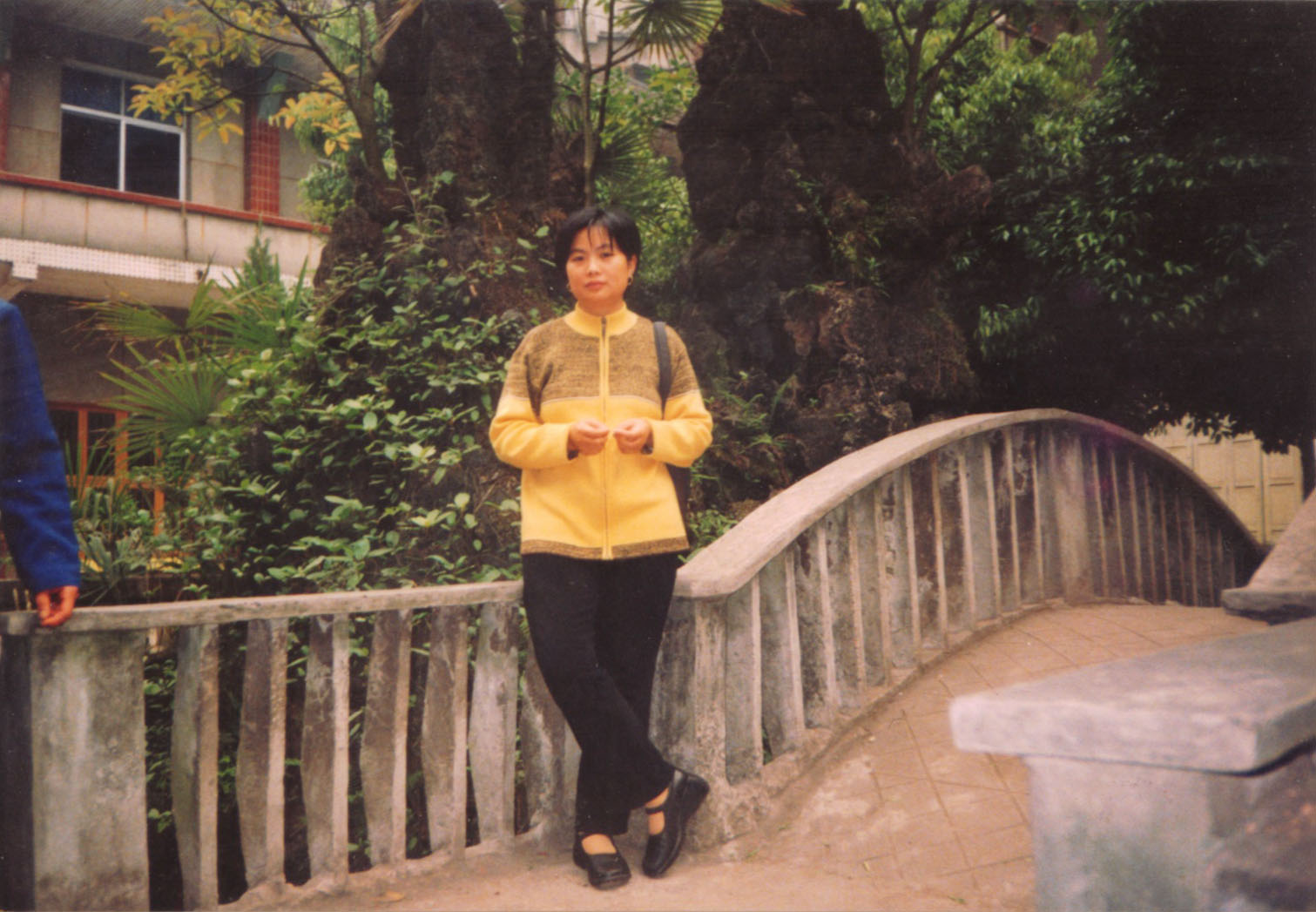
Li Yan In Happier Times. Image Credit: Li Yan’s family
The events of June 4, 1989 in Beijing – known in the West as the Tiananmen Massacre – had a catastrophic impact on China’s image around the world, especially in the United States, China’s largest trading partner. By one measure, Gallup’s annual poll of attitudes among Americans to foreign countries, China’s favorability rating among Americans fell by 50 percent between early 1989 and the summer of that year. China went from being the “cuddly Communist” to an international pariah virtually overnight.
Seizing on China’s bad image as a violator of human rights, in 1990 the United States Congress began considering legislation that would strip China of its Most Favored Nation trading status. In May of that year I made my first intervention on behalf of a political prisoner. In the ensuing months and years, I intervened on behalf of hundreds of political prisoners, often with good results. A principal weapon in my arsenal was the argument that by releasing prisoners China’s image in the United States would improve.
After the attacks on New York and Washington on September 11, 2001, President George W. Bush declared a War on Terror. In carrying out that war, the United States took a series of actions that affected its global image. It incarcerated scores of captured Islamic militants without trial at the naval base in Guantanamo, Cuba. It built an extraordinary rendition program under which detainees captured in a foreign country would be transferred to the United States or another jurisdiction, without due process.
In March 2003, the United States invaded Iraq, overthrowing the regime of Saddam Hussein. The United States military, with its new Iraqi allies, undertook “enhanced interrogation techniques” like waterboarding, viewed by many as torture, at the Abu Ghraib Prison in Baghdad. As evidence of these abuses began to become public, many were outraged, and America’s image took another hit.
By the mid-2000s, polling data suggested that China’s image around the world was better than that of the United States. The argument that China should release political prisoners to improve its image lost much of its potency. Beijing had little incentive to deal with me and Dui Hua.
Expanded Mission: Juvenile Justice
Faced with this situation, I decided to find other reasons for the Chinese government to engage with me on human rights. I hit upon the idea that Dui Hua should expand its mission beyond advocating for political prisoners to advocating for other groups of prisoners at risk. One group in particular caught my attention: juvenile offenders. In its third reform plan covering 2004-2008. China’s Supreme People’s Court (SPC) prioritized the reform of the country’s juvenile justice system. Maybe Dui Hua could help by engaging in expert exchanges with the court’s Office of Juvenile Courts.
In June 2007, I traveled to Beijing to explore the idea of holding expert exchanges on juvenile justice. I had a meeting at the SPC on June 13. Present were three judges from the Office of Juvenile Courts under the SPC’s Research Department. After a review of where things stood insofar as the reform plan was concerned, the Chinese judges said that they would be open to discussing a delegation to the United States to study the American juvenile justice system.
On August 27, 2007, Dui Hua held its annual meeting in Tiburon, California. During my executive director report, I proposed that Dui Hua undertake a new program on juvenile justice. Directors expressed concern that the new program would sow confusion amongst supporters who might see it as diluting Dui Hua’s core mission of helping political prisoners.
According to the minutes of the meeting: “Kamm responded to the concerns, assuring directors that the new initiative would in fact be supportive of the core mission by opening up new relationships, demonstrating to the Chinese government that we’re willing to help in an area identified as a high priority for legal reform.” A consensus was reached that the initiative should only be undertaken if financial support could be secured, and if the initiative did not detract from Dui Hua’s ongoing work identifying and assisting individuals detained in political cases, some of whom, including Tibetan nun Ngawang Sangdrol, were juveniles.
Working with colleagues and partners in Chicago, Washington D.C., and San Francisco, preparations began for hosting a delegation from the SPC in the spring of 2008. Unfortunately, the devastating Sichuan earthquake put paid to those plans, but the visit was rearranged to take place in the autumn. The delegation was a success, and it was followed by a delegation of American experts to China in 2010 and another Chinese delegation to the United States in September 2012.
A few months before the September 2012 delegation, China’s National People’s Congress adopted the amended Criminal Procedure Law. For the first time, the law contained a chapter on the handling of juvenile cases. Many of the ideas explored in Dui Hua’s exchanges with the SPC were included in the chapter, including diversion (referred to as “postponed prosecution” in the law) and sealing of juvenile records.
Women Prisoners and the Bangkok Rules
Chen Min, one of China’s leading experts on domestic violence at the China Institute of Applied Jurisprudence under the Supreme People’s Court delivers a presentation.
Audience members at the International Symposium on the Bangkok Rules held in Hong Kong in February 2014.
In December 2010, the United Nations General Assembly had adopted the United Nations “Rules for the Treatment of Women Prisoners and Non-Custodial Measures for Women Offenders.” Reflecting the strong support of the Thai royal family, the rules became popularly known as the Bangkok Rules.
And in early 2011, Dui Hua began covering the plight of Chinese women in prison in its publications. At its annual meeting, held in San Diego in October 2011. Dui Hua’s board endorsed my proposal to expand our work from juvenile offenders to female prisoners in the framework of promoting adoption of the Bangkok Rules in China. We decided that I should explore the idea of holding an international symposium on the Bangkok Rules in Beijing.
Unfortunately, while China’s Ministry of Foreign Affairs supported the idea, China’s Ministry of Justice didn’t. The Justice Minister, Wu Aiying, herself a woman, was dead-set against any form of cooperation with Dui Hua or for that matter other governments and NGOs on issues related to the rights of prisoners. I decided to explore other partners and other venues.
In March 2012, I traveled to Geneva with my colleague Daisy Yau. We were invited to attend a side event on the Bangkok Rules organized by the Thai Mission to the United Nations. After the side event, which was sparsely attended (no one from either the Chinese Mission or the US Mission attended), Ms. Yau and I huddled with Rachel Brett of the Quakers’ Office in Geneva and Andrea Huber of Penal Reform International in London. Both women had played important roles in developing and promoting the Bangkok Rules. We agreed to work together on an international symposium.
It took nearly two years of preparation until the International Symposium on the Bangkok Rules took place in Hong Kong at the end of February 2014. There were four partners: The Centre for Comparative and Public Law at the Faculty of Law, University of Hong Kong (CCPL); Dui Hua; Penal Reform International; and the Center for Criminal Procedure and Reform (CCPR) at Renmin University of China Law School. The CCPL oversaw logistics, including securing the Law School’s new conference room and arranging rooms for participants. The CCPR undertook field research at five places of detention for women on the mainland and presented its findings at the symposium. PRI lent its expertise in the Bangkok Rules to selecting topics and making suggestions for expert presenters.
Dui Hua was in charge of fundraising and retaining interpreters. In addition to securing support from several individuals, the foundation received grants from the governments of Denmark, the Netherlands, Norway, the United Nations Office of the High Commissioner for Human Rights, and the Ford Foundation.
Experts from countries in Europe, Asia, and North America attended and made presentations and interventions. Especially gratifying was the high turnout from Mainland China. More than a dozen judges, judicial officials, and scholars came to the symposium. Unfortunately, the Ministry of Justice declined to attend, even though they had been invited a year in advance. The ministry claimed it was too busy. Not only did it refuse to attend, the ministry actively tried to sabotage the symposium by pressuring a presenter from China’s Prison Society to withdraw at the last minute, claiming illness.
After two days of listening to presenters and engaging in lively exchanges on a wide range of issues, the participants toured Hong Kong’s women’s prison at Lo Wu. Hong Kong turned out to be a good choice for the symposium. The territory has one of the highest percentages of women in its prisoner population of any country or territory in the world. The symposium, attended by officers of the Hong Kong Correctional Services, raised questions as to why this was so, and what could be done about it.
Domestic Violence: Li Yan
One of the topics explored at the symposium was violence against women. On the first morning, two experts – Elizabeth Brundige, Executive Director of the Avon Global Center for Women and Justice in the United States, and Chen Min, one of China’s leading experts on domestic violence at the China Institute of Applied Jurisprudence under the Supreme People’s Court – made presentations.
Using national and provincial statistics, Chen Min outlined the stark realities of violence against women in China: in China as a whole, nearly 25 percent of women experience domestic violence during their marriages, and in Shaanxi Province, 171 women were serving time in the provincial women’s prison for violent crimes, more than 90 percent of them had killed their spouse due to prolonged domestic violence.
While there were no national statistics on the reasons for women’s incarceration, Chen Min, drawing on local data, concluded that the main reason for women’s incarceration was their experience of domestic violence and for their fighting that violence with violence.
Chen Min’s presentation was timely. China’s NPC was considering the country’s first domestic violence law. Legislators finished drafting the law in November 2014, and it was passed by lawmakers in July 2015. It took effect on March 1, 2016. Although flawed (the law has been criticized for failing to address violence in relationships other than marriage), the law was an important step in addressing the pandemic of domestic violence in China.
There was another reason why Chen Min’s presentation was timely. In November 2010, a woman by the name of Li Yan, a then 41-year-old resident of Anyue County in Sichuan Province. murdered her husband Tan Yong. The couple, who ran a noodle shop, had married the year before. It was Tan’s fourth marriage. He boasted of abusing his previous wives, and it wasn’t long after his marriage to Li Yan that he began subjecting her to horrific violence, beating her, sexually assaulting her, stubbing cigarettes out on her face, and locking her outside on cold winter nights.
On November 3, 2010, Tan was at home, drunkenly playing with an air rifle. When Li tried to stop Tan, he kicked her and threatened her with the rifle. Li seized the gun and struck Tan in the head twice, killing him. She dismembered his body, boiled the parts, and spread them around the village. She was arrested and sentenced to death by the Ziyang City Intermediate People’s Court. The judgment was upheld by the Sichuan High People’s Court after which it was sent to the Supreme People’s Court (SPC) in Beijing. The SPC confirmed the judgment in January 2013. Tan’s family successfully filed a civil suit against Li Yan’s family to pay 58,212 RMB in compensation – a large sum of money for Li’s working-class family.
Death sentences reviewed and confirmed by the SPC typically take place within days of SPC approval. By the time of our Hong Kong symposium, more than 13 months after the SPC decision, Li Yan had not yet been executed. Her plight had drawn domestic attention as Chinese feminists lobbied the government to stay its hand arguing it had not taken into consideration the violence Li had suffered. More than 400 Chinese lawyers and legal scholars had signed a letter to the SPC pleading for Li Yan’s life to be spared. The case was beginning to draw international attention too. Amnesty International initiated a global signature campaign calling for Li Yan not to be executed.
One of the SPC judges attending the symposium sat on an SPC panel reviewing death sentences, and it emerged that she was one of the judges considering whether to carry out the execution of Li Yan. At the end of the symposium, she thanked me for inviting her to the event, and told me that she had learned a lot from the discussion on domestic violence. “It has changed the way I think about it,” she told me. I stayed in touch with the Chinese participants, and on June 23, 2014, a Chinese official who had been at the symposium and was deeply concerned with Li’s case sent me a short email: “She has survived.” At the same time, Li Yan’s brother was advised that his sister’s death sentence had been overturned by the SPC. A retrial by the Ziyang City Intermediate People’s Court was ordered.
Dui Hua issued a press statement and sent it to journalists covering human rights in China, including many who were based in Beijing. Coverage in the international media was widespread, and the United Nations Office of the High Commissioner for Human Rights in Geneva issued a statement applauding the decision.
One of the journalists I sent Dui Hua’s statement to was Didi Kirsten Tatlow, a New York Times journalist based in Beijing. Ms. Tatlow had been reporting on the Li Yan case since late 2012 and decided to travel to Chengdu and thence to Ziyang with photographer Gilles Sabrié to attend the retrial in November 2014. Outside the courthouse, she encountered an angry and threatening mob of Tan Yong’s family and friends. In a telephone call to me, Ms. Tatlow remarked that she had rarely welcomed the presence of Chinese police in her work, but she did on this occasion!
During the retrial, more evidence of domestic violence and testimonies from neighbors and witnesses emerged. Witness protection systems had to be set up to protect witnesses from Tan’s family. Inside the courtroom, the mob hurled insults and papers at Ms. Li and her lawyer. Five months later, on April 24, 2015, the court announced it had changed the judgment to death with two years reprieve, a unique Chinese sentence that almost always results in commutation after two years. On September 8, 2017, the intermediate court commuted the sentence and sentenced Li Yan to life in prison. Under Supreme People’s Court regulations that came into effect on January 1, 2017, Li Yan can be considered for a sentence reduction no earlier than September 2020. Her total time served after commutation cannot be less than 15 years, meaning that she will remain in prison until at least 2032, when she will be 62 years old.
Tan Yong’s family confront journalists outside of the Ziyang Intermediate Court. Image Credit: Gilles Sabrié
Relatives of Tan Yong called on the court to reaffirm Li Yan’s death sentence. Image Credit: Gilles Sabrié
“To Ziyang for Li Yan”
Didi Kirsten Tatlow
The reporting trip I made to Ziyang to attend Li Yan’s retrial was one of the most instructive, and frightening, moments of my 14 years reporting in China from 2003 until my departure for Berlin, Germany, in 2017. I had been reporting on women’s and feminist issues including gendered violence for years by the time the retrial was announced, including one heart-breaking magazine story for the South China Morning Post, my employer for the first seven years in China, about Sun Village, a home for children from abuse-filled families whose parents were both dead (often the father killed by the mother with rat poison after years of abuse by him), run by a former correctional officer from Xi’an. Strangely heartbreaking for me was the small fact that the children’s favorite TV show, SpongeBob SquarePants, was moved to late night viewing not long after my visit around 2006, on the grounds that it was an American show and would sully Chinese children’s minds. The kids had lost the cute little sponge and his pink friend Patrick Starfish, who made their often-harsh lives that bit more fun.
I applied to attend Li Yan’s retrial with low hopes – never had I been allowed to enter a Chinese courtroom and this was sensitive stuff. And initially I was put off by the Sichuan authorities, but always with the curious suggestion that I should try again later. I did, and on my third or fourth attempt I was given permission.
The experience was tough. In the small town of Ziyang Mr. Tan’s family seemed to be everywhere; the night before the hearing I met with members of Li Yan’s family in a restaurant, but we had to be careful not to speak loudly and her brother, Li Deshuai, though friendly and hospitable, was anxious. The next morning, I understood why. After handing over my reporter ID to the court front gate in order to enter the grounds, I went to talk to a large group of Mr. Tan’s family members that had gathered outside. They quickly grew hostile and began to pull at my clothes and arm, voices rising. His father waved his crutches at me; his sisters wagged their fingers in my face. Somehow, I was to blame, it seemed. Sensing things were slipping out of hand I moved into the court grounds and called for the police as the atmosphere deteriorated. They however were slow to react, and I wondered – if I, a foreign reporter with the backing of the court authorities to be present that day, could not get timely help from the dozens of court police standing around, how bad must it be for a Chinese, especially one with a grievance with the court?
Eventually the police did intervene. But Tan’s family persisted in their verbal and physical aggression, clearly hoping to influence the judges and the decision. I was shocked, too, that court officials did not order them out of the courtroom for contempt, as they sat there shouting and abusing Li Yan, telling her they hoped she would be raped for her crimes (her former husband had already done that, before she killed him.)
As a journalist, one rarely knows if or how one might have helped someone, though to me this was by far the most important aspect of the job. When John Kamm told me that he thought my work had helped I felt a deep sense of happiness. Li Yan was a petite woman standing alone in the courtroom between the panel of judges and shouting opponents, and I felt sorry for her, knowing also details of the appalling abuse she and her family had endured that had not been publicized out of consideration for the dignity and privacy of other family members (I also agreed not to publicize them, following their wishes.) It was a moment when I knew being a journalist was worth it, despite the strain, and regular fear, of reporting deeply not just on politics but also sensitive social issues like gender, in a complex, repressive and trigger-happy place like China.
Directors and staff cut cake in celebration of Dui Hua’s 20th anniversary
Dui Hua’s San Francisco Directors and Staff
In April 1999, The Dui Hua Foundation was registered as a non-profit organization with the California Secretary of State. On December 6, 2018, more than 70 friends, directors, and staff of Dui Hua gathered at a private club in San Francisco to celebrate the foundation’s 20th birthday.
Executive Director John Kamm kicked off the celebration by reviewing Dui Hua’s challenges and achievements in 2018. He cited two major challenges: 1) US-China tensions, and 2) the increasingly problematic situation with respect to political and civil rights in China. US-China tensions are frequently referred to as a trade war, but in fact confrontation between the two countries takes many forms. “It’s a new Cold War being waged on many fronts: economic, technological, security, and ideological,” he pointed out. Moreover, the Trump administration’s policy towards China enjoys wide bipartisan support; it may be the only Trump policy that enjoys such support, meaning it is unlikely to change when the new Congress takes over in January 2019.
As for human rights in China, Kamm focused on the serious situation in Xinjiang, where hundreds of thousands of Uyghur and other minorities are said to be interned in camps – or, as the Chinese government calls them, “vocational training centers.” The autonomous region is experiencing state surveillance on a scale never seen anywhere in the world, and there is speculation that the system will be exported to other parts of the country.
Kamm pointed out that the internment of large numbers of people in camps – clearly a coercive measure – is not in accordance with Chinese law, specifically Article Eight of the Legislative Law, which requires that citizens can only be subject to the loss of personal freedom if a law passed by the National People’s Congress provides for it.
Faced with these obstacles, Dui Hua nevertheless had a year marked by achievements. It held 23 meetings with Chinese officials, handed over 49 lists with 180 prisoner names, received written responses on 68 prisoners, and learned of 55 acts of clemency or better treatment for prisoners on its lists. Considerable progress was made on arranging an international symposium on girls in conflict with the law to be held in Hong Kong in April 2020.
The highlight of the evening was a panel discussion moderated by Dui Hua director Michael McCune. Four Dui Hua directors – John Kamm, William Simon, Magdalen Yum, and William McCahill – were asked what the biggest change they had seen in China in the last 20 years. Before they spoke McCune read a note from Director Tom Gorman who was in Hong Kong and unable to attend the celebration.
Director Michael McCune moderates a panel discussion on 20 years of Dui Hua and US-China relations
Directors were asked what the biggest changes they had witnessed since 1999 in China were.
Director Gorman pointed out that 1999, the year of Dui Hua’s founding, was a year of many historic milestones: the 70th anniversary of the founding of the People’s Republic of China, the 40th anniversary of the normalization of US-China relations, the centenary of the May 4th Movement, the 30th anniversary of the tragedy of Tiananmen, and also the end point of the colonial era in Asia with Macau’s return to China.
“On a lighter note,” Mr. Gorman remarked, “1999 marked the opening of the first Starbucks in China.”
McCune then turned to the four panelists. What, he asked, were the biggest changes they had witnessed since 1999.
One by one the directors pointed out that:
Civil and political rights in China have retrogressed, especially in the six years Xi Jinping has been in power. Xi has achieved a degree of power unseen since Deng Xiaoping and possibly Mao Zedong himself, and he has used that power to stifle dissent and calls for greater minority rights.
It is too early to say whether the 90-day truce in the tariff war announced between President Xi and President Trump will result in a resolution of the current state of tense Sino-American economic relations. In Director McCahill’s words, “I have very modest expectations.”
The breath and scope of the Chinese surveillance state, built in a short period of time, is impressive. Citizens can now be identified by their face, their voice, and their gait. “Surveillance is taking place on a grand scale and Xinjiang is the laboratory,” said Kamm. He remarked that, 20 years ago, many dissidents were able to exit China without detection. That is rarely the case now. He also mentioned that Beijing is building a vast DNA database and is set to launch a social credit system that will rank citizens by their behavior.
China is wealthier and stronger, but its citizens are also very materialistic. Yet in this atmosphere, religion is making a comeback. “I still come across young people asking me how to become a Catholic, but it is materialism that drives them,” said Director Yum.
The young people of Hong Kong are increasingly unhappy with the cost of housing, health care, and education. Restrictions on expression, academic freedom, and the media are of great concern.
While much has changed, one thing hasn’t: China is still governed by the Communist Party. “The most unanticipated change is that there hasn’t been much change in some respects,” said Director Simon. “There is tremendous prosperity and incredible commercial vitality, but governance has not changed. I thought, along with many, that once someone achieved a good standard of living, people would spread their elbows and say we want freedom, but that hasn’t happened.”
PRISONER UPDATE
In November, Guo Quan (郭泉) was released from Pukou Prison in Jiangsu province. Guo was convicted of subversion in 2009 for founding the China New Democracy Party which called for the end of one-party leadership under the Chinese Communist Party. The former Nanjing Normal University scholar served his full 10-year sentence without any sentence reductions. Guo refused to “demonstrate remorse,” a prerequisite for prisoners seeking clemency. In an interview given to Radio Free Asia, Guo expressed that he was “fortunate” not to have died in prison as had been the fate of many of his activist friends and that he is still in fairly good health. Although his wife and son emigrated to the United States in 2012, Guo stated that he has no plans to leave China.
Huang Yunmin (黄云敏), a retired Han Chinese judge from Xinjiang, is serving his ten-year sentence for splittism – a charge that is more commonly applied to Uyghurs and Tibetans advocating for independence. Huang was initially indicted for terrorism after downloading a large number of videos about the Urumqi Riots in July 2009. One of them was sent to a friend via WeChat. Critics believe that the conviction was a form of retaliation against Huang for his criticisms of government policies in Xinjiang and efforts to help veterans, workers, and farmers pursue their legal complaints. Huang’s brother Huang Xiaomin (黄晓敏) is currently detained for “picking quarrels and provoking troubles” in Sichuan for supporting Zi Su (子肃). Zi is a former professor who was sentenced to subversion for penning an open letter in which he criticized Xi Jinping.
Italy-based advocacy group Bitter Winter reported that Almighty God leaders Bao Shuguang (包曙光), Jiang Xingmei (蒋兴梅), Bai Lanxiang (白兰香), Chen Hong (陈红) and Gu Liya (顾丽娅) were sentenced to 11-13 years in Shandong in October. The judgment also indicated that an unnamed member was sentenced to five years. Per Article 300 of the Criminal Law, leading members of a cult group face imprisonment sentences of at least seven years if the circumstances of a case are deemed particularly serious. The five leaders in this case received the lengthiest sentences known to have been given to Almighty God members convicted of Article 300. Dui Hua’s Political Prisoner Database indicated that sentences received by Almighty God members averaged 3.5 years.
Dui Hua’s research into online judgments revealed that Jin Andi (金安迪) completed his eight-year sentence in July following his first sentence reduction of six months that was granted by a Shaanxi court in May. The sentence reduction was granted a few days after he was deemed ineligible for parole by the Beijing High People’s Court. Jin was accused of publishing articles on overseas websites such as Boxun and New Century News with Lü Jiaping’s (吕加平) from 2000-2010. The articles were particularly critical of Jiang Zemin, calling him a traitor for ceding a vast territory in the northeastern province of Heilongjiang in the early 2000s. Jin completed his sentence in Weinan Prison. His first sentence reduction application was rejected last year as he refused to show remorse. Since his incarceration in 2012, Dui Hua has included Jin on nine prisoner lists to the Chinese government.
DUI HUA IN THE NEWS
On November 13, 2018 the Chongqing Number One Intermediate Court rendered its judgment in the appeal of American citizen Wendell Brown against his June 28 conviction by the Chongqing Yubei District Court for the crime of assault with intent. The Chongqing Court reduced Mr. Brown’s sentence from four years to three years in prison, the lowest sentence for the crime of intentional assault under Chinese law. Dui Hua played a role in bringing about the reduction of the prison sentence, lobbying both governments and calling attention to the case in American media. It served as an advisor to Mr. Brown’s family and team of supporters.
In November, Executive Director Kamm spoke to The Atlanticahead of President Trump and President Xi Jinping’s meeting at the G20 summit in Buenos Aires. In response to a question about whether Xinjiang and the rhetoric of human rights was being instrumentalized by senior U.S. officials as part of a broader anti-Beijing offensive, Kamm stated “If this is just a negotiation tool, then it can be dropped as a negotiation tool at any time. If Trump and Xi get together in Buenos Aires [for the G20], and they patch things up and there’s a big trade deal and the relationship is back on track, if as part of that … it turns out that this was just a negotiating tool, of course I’ll be very disappointed.”
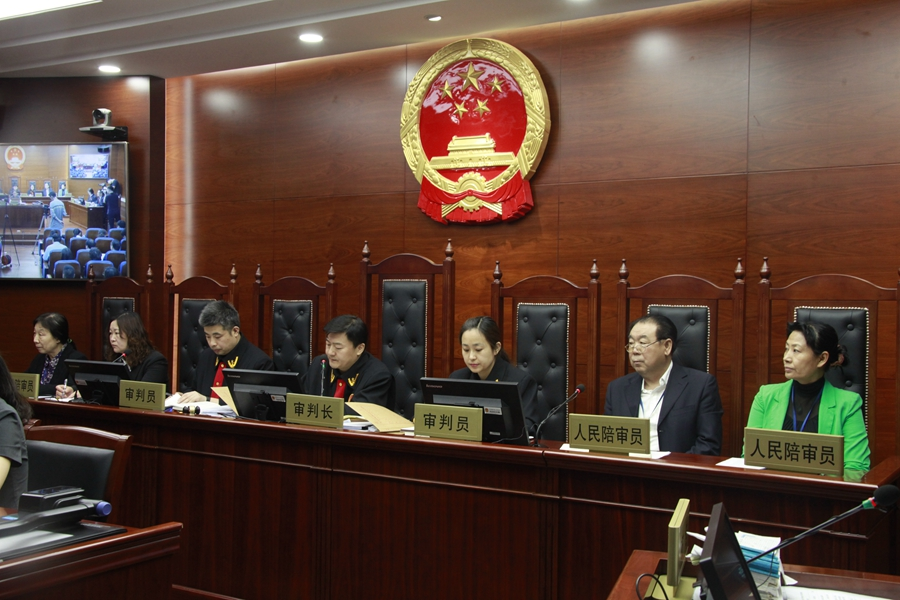
Lay assessors sitting in court alongside judges in China. Image Credit: China Daily.
In April, the National People’s Congress (NPC), China’s national legislature, passed a revised Lay People’s Assessor’s Law (renmin peishenyuan fa), substantially affecting the role that ordinary citizens play on adjudicatory panels in criminal cases in China. Revisions to the law had been contemplated since at least 2015, when a series of pilot projects were launched to determine the feasibility of enacting nationwide reforms. Whether the law’s revisions will affect criminal trials and sentences involving the death penalty is a major question especially in light of China’s efforts in recent decades to limit the number of executions.
John Kamm Remembers is a feature that explores Kamm’s human rights advocacy prior to and since Dui Hua’s establishment in 1999.
Li Yan Has Survived! (Part 1 of 2)
The events of June 4, 1989 in Beijing – known in the West as the Tiananmen Massacre – had a catastrophic impact on China’s image around the world, especially in the United States, China’s largest trading partner. By one measure, Gallup’s annual poll of attitudes among Americans to foreign countries, China’s favorability rating among Americans fell by 50 percent between early 1989 and the summer of that year. China went from being the “cuddly Communist” to an international pariah virtually overnight.
Seizing on China’s bad image as a violator of human rights, in 1990 the United States Congress began considering legislation that would strip China of its Most Favored Nation trading status. In May of that year I made my first intervention on behalf of a political prisoner. In the ensuing months and years, I intervened on behalf of hundreds of political prisoners, often with good results. A principal weapon in my arsenal was the argument that by releasing prisoners China’s image in the United States would improve.
After the attacks on New York and Washington on September 11, 2001, President George W. Bush declared a War on Terror. In carrying out that war, the United States took a series of actions that affected its global image. It incarcerated scores of captured Islamic militants without trial at the naval base in Guantanamo, Cuba. It built an extraordinary rendition program under which detainees captured in a foreign country would be transferred to the United States or another jurisdiction, without due process.
In March 2003, the United States invaded Iraq, overthrowing the regime of Saddam Hussein. The United States military, with its new Iraqi allies, undertook “enhanced interrogation techniques” like waterboarding, viewed by many as torture, at the Abu Ghraib Prison in Baghdad. As evidence of these abuses began to become public, many were outraged, and America’s image took another hit.
By the mid-2000s, polling data suggested that China’s image around the world was better than that of the United States. The argument that China should release political prisoners to improve its image lost much of its potency. Beijing had little incentive to deal with me and Dui Hua.
Expanded Mission: Juvenile Justice
Faced with this situation, I decided to find other reasons for the Chinese government to engage with me on human rights. I hit upon the idea that Dui Hua should expand its mission beyond advocating for political prisoners to advocating for other groups of prisoners at risk. One group in particular caught my attention: juvenile offenders. In its third reform plan covering 2004-2008. China’s Supreme People’s Court (SPC) prioritized the reform of the country’s juvenile justice system. Maybe Dui Hua could help by engaging in expert exchanges with the court’s Office of Juvenile Courts.
In June 2007, I traveled to Beijing to explore the idea of holding expert exchanges on juvenile justice. I had a meeting at the SPC on June 13. Present were three judges from the Office of Juvenile Courts under the SPC’s Research Department. After a review of where things stood insofar as the reform plan was concerned, the Chinese judges said that they would be open to discussing a delegation to the United States to study the American juvenile justice system.
On August 27, 2007, Dui Hua held its annual meeting in Tiburon, California. During my executive director report, I proposed that Dui Hua undertake a new program on juvenile justice. Directors expressed concern that the new program would sow confusion amongst supporters who might see it as diluting Dui Hua’s core mission of helping political prisoners.
According to the minutes of the meeting: “Kamm responded to the concerns, assuring directors that the new initiative would in fact be supportive of the core mission by opening up new relationships, demonstrating to the Chinese government that we’re willing to help in an area identified as a high priority for legal reform.” A consensus was reached that the initiative should only be undertaken if financial support could be secured, and if the initiative did not detract from Dui Hua’s ongoing work identifying and assisting individuals detained in political cases, some of whom, including Tibetan nun Ngawang Sangdrol, were juveniles.
Working with colleagues and partners in Chicago, Washington D.C., and San Francisco, preparations began for hosting a delegation from the SPC in the spring of 2008. Unfortunately, the devastating Sichuan earthquake put paid to those plans, but the visit was rearranged to take place in the autumn. The delegation was a success, and it was followed by a delegation of American experts to China in 2010 and another Chinese delegation to the United States in September 2012.
A few months before the September 2012 delegation, China’s National People’s Congress adopted the amended Criminal Procedure Law. For the first time, the law contained a chapter on the handling of juvenile cases. Many of the ideas explored in Dui Hua’s exchanges with the SPC were included in the chapter, including diversion (referred to as “postponed prosecution” in the law) and sealing of juvenile records.
Women Prisoners and the Bangkok Rules
Chen Min, one of China’s leading experts on domestic violence at the China Institute of Applied Jurisprudence under the Supreme People’s Court delivers a presentation.
Audience members at the International Symposium on the Bangkok Rules held in Hong Kong in February 2014.
In December 2010, the United Nations General Assembly had adopted the United Nations “Rules for the Treatment of Women Prisoners and Non-Custodial Measures for Women Offenders.” Reflecting the strong support of the Thai royal family, the rules became popularly known as the Bangkok Rules.
And in early 2011, Dui Hua began covering the plight of Chinese women in prison in its publications. At its annual meeting, held in San Diego in October 2011. Dui Hua’s board endorsed my proposal to expand our work from juvenile offenders to female prisoners in the framework of promoting adoption of the Bangkok Rules in China. We decided that I should explore the idea of holding an international symposium on the Bangkok Rules in Beijing.
Unfortunately, while China’s Ministry of Foreign Affairs supported the idea, China’s Ministry of Justice didn’t. The Justice Minister, Wu Aiying, herself a woman, was dead-set against any form of cooperation with Dui Hua or for that matter other governments and NGOs on issues related to the rights of prisoners. I decided to explore other partners and other venues.
In March 2012, I traveled to Geneva with my colleague Daisy Yau. We were invited to attend a side event on the Bangkok Rules organized by the Thai Mission to the United Nations. After the side event, which was sparsely attended (no one from either the Chinese Mission or the US Mission attended), Ms. Yau and I huddled with Rachel Brett of the Quakers’ Office in Geneva and Andrea Huber of Penal Reform International in London. Both women had played important roles in developing and promoting the Bangkok Rules. We agreed to work together on an international symposium.
It took nearly two years of preparation until the International Symposium on the Bangkok Rules took place in Hong Kong at the end of February 2014. There were four partners: The Centre for Comparative and Public Law at the Faculty of Law, University of Hong Kong (CCPL); Dui Hua; Penal Reform International; and the Center for Criminal Procedure and Reform (CCPR) at Renmin University of China Law School. The CCPL oversaw logistics, including securing the Law School’s new conference room and arranging rooms for participants. The CCPR undertook field research at five places of detention for women on the mainland and presented its findings at the symposium. PRI lent its expertise in the Bangkok Rules to selecting topics and making suggestions for expert presenters.
Dui Hua was in charge of fundraising and retaining interpreters. In addition to securing support from several individuals, the foundation received grants from the governments of Denmark, the Netherlands, Norway, the United Nations Office of the High Commissioner for Human Rights, and the Ford Foundation.
Experts from countries in Europe, Asia, and North America attended and made presentations and interventions. Especially gratifying was the high turnout from Mainland China. More than a dozen judges, judicial officials, and scholars came to the symposium. Unfortunately, the Ministry of Justice declined to attend, even though they had been invited a year in advance. The ministry claimed it was too busy. Not only did it refuse to attend, the ministry actively tried to sabotage the symposium by pressuring a presenter from China’s Prison Society to withdraw at the last minute, claiming illness.
After two days of listening to presenters and engaging in lively exchanges on a wide range of issues, the participants toured Hong Kong’s women’s prison at Lo Wu. Hong Kong turned out to be a good choice for the symposium. The territory has one of the highest percentages of women in its prisoner population of any country or territory in the world. The symposium, attended by officers of the Hong Kong Correctional Services, raised questions as to why this was so, and what could be done about it.
Domestic Violence: Li Yan
One of the topics explored at the symposium was violence against women. On the first morning, two experts – Elizabeth Brundige, Executive Director of the Avon Global Center for Women and Justice in the United States, and Chen Min, one of China’s leading experts on domestic violence at the China Institute of Applied Jurisprudence under the Supreme People’s Court – made presentations.
Using national and provincial statistics, Chen Min outlined the stark realities of violence against women in China: in China as a whole, nearly 25 percent of women experience domestic violence during their marriages, and in Shaanxi Province, 171 women were serving time in the provincial women’s prison for violent crimes, more than 90 percent of them had killed their spouse due to prolonged domestic violence.
While there were no national statistics on the reasons for women’s incarceration, Chen Min, drawing on local data, concluded that the main reason for women’s incarceration was their experience of domestic violence and for their fighting that violence with violence.
Chen Min’s presentation was timely. China’s NPC was considering the country’s first domestic violence law. Legislators finished drafting the law in November 2014, and it was passed by lawmakers in July 2015. It took effect on March 1, 2016. Although flawed (the law has been criticized for failing to address violence in relationships other than marriage), the law was an important step in addressing the pandemic of domestic violence in China.
There was another reason why Chen Min’s presentation was timely. In November 2010, a woman by the name of Li Yan, a then 41-year-old resident of Anyue County in Sichuan Province. murdered her husband Tan Yong. The couple, who ran a noodle shop, had married the year before. It was Tan’s fourth marriage. He boasted of abusing his previous wives, and it wasn’t long after his marriage to Li Yan that he began subjecting her to horrific violence, beating her, sexually assaulting her, stubbing cigarettes out on her face, and locking her outside on cold winter nights.
Lay assessors sitting in court alongside judges in China. Image Credit: China Daily.
In April, the National People’s Congress (NPC), China’s national legislature, passed a revised Lay People’s Assessor’s Law (renmin peishenyuan fa), substantially affecting the role that ordinary citizens play on adjudicatory panels in criminal cases in China. Revisions to the law had been contemplated since at least 2015, when a series of pilot projects were launched to determine the feasibility of enacting nationwide reforms. Whether the law’s revisions will affect criminal trials and sentences involving the death penalty is a major question especially in light of China’s efforts in recent decades to limit the number of executions.
Though some might see an expansion of the role of lay assessors in Chinese courts as an imported legal idea, a robust role for lay assessors is arguably a revival of practices from China’s own not-so-distant past. Traces of China’s lay assessor system can be found as early as the 19th century in the late Qing Era, and in Communist-controlled territories before and after the founding of the PRC, lay assessors were granted authority in adjudication practice rivaling that of judges. It was not until the more radical periods following the Great Leap Forward and Cultural Revolution that the lay assessor system was discontinued as part of the larger dismantling of legal institutions countrywide.
The lay assessors’ system was revived along with other aspects of the legal system at the conclusion of the Cultural Revolution, first as part of the 1978 Constitution and subsequently in several pieces of relevant legislation including the Law on Organization of Courts and the Criminal Procedure Law. In 2004, The NPC Standing Committee decided to reform the lay assessor system, and the effort to revamp the adjudicatory function of lay assessors eventually led to a pilot program in 10 provincial-level regions starting in 2015.
The Role of Lay Assessors Expands to Include Death Penalty Cases
In April, a second draft of a law on lay assessors was passed by the NPC, which expanded the role of lay assessors in participating in judgments in many types of disputes, including sentencing in criminal cases that involve the death penalty. A draft law on lay assessors was initially submitted to the NPC Standing Committee in December 2017, and recognized that the lay assessors “‘have equal rights’ as professional judges in trials, unless the law specifically provides otherwise.” According to the law, high-school educated citizens of the PRC who are 28 years of age or older can serve as lay assessors, with some exceptions; once in court, an assessor can exercise power equivalent to that of a judge but cannot hear cases independently or serve as chief judge of a collegial panel (heyi ting). In a report on lay assessors’ pilot projects conducted across China since 2015, Supreme People’s Court President Zhou Qiang reported that a total of 13,740 assessors in the ten pilot locations participated in 30,659 criminal cases, 178,749 civil cases and 11,846 administrative cases.
More specifically, when the Lay Assessors’ Law came into effect in April, assessors were granted authority to serve on seven-person judicial panels that pass judgment on death penalty cases. Although observers, researchers, and human rights advocates will need a much longer period of time to examine whether the expanded role of assessors can help continue the decrease in the number of executions in China, developments in the early days after the passing of the revised law indicate that the law is being followed in local courts even in potentially sensitive, high-profile cases. In April, Zhao Zewei killed nine classmates and injured several others in a school in Mizhi County, Shaanxi province in one of the most violent mass murders in China in recent times. In the trial presiding over Zhao’s eventual conviction and death sentence, media outlets reported that four lay assessors and three judges sat on the seven-member panel ruling on Zhao’s guilt and death sentence, indicating that plans to include lay assessors on judicial panels even in high profile death penalty cases with potentially “severe social impact” continues to move forward.
Lessons from Reforms in a Neighboring Country
Allowing lay assessors to participate more actively in death penalty cases would mark an important opportunity for human rights advocates and researchers to examine whether changes to the lay assessor system will continue to influence efforts to limit the number of executions. According to the new law, lay assessors who serve on seven-person benches will have more weight when questioning lawyers and defendants and examining physical evidence.
Based on research from other legal systems, China’s reforms of its criminal legal system toward incorporating greater input from lay actors – away from the unquestioning authority and deference given to the criminal judges – is a step in the right direction. As noted, a robust role for lay assessors is consistent with legal practice at various periods in China’s Communist and non-Communist past. Expansions of the role of jurors in the neighboring country of South Korea also indicates that concerns that expansions in the authority of assessors, and even the adoption of a full jury system, were overblown. Although many in Korea criticized the implementation of a jury system as being against cultural norms, the recent jury reforms in Korea beginning in 2007 have shown that culture is not a deterrent to the effectiveness of a jury system; in fact, the adoption of jurors seems to have raised the quality of the legal profession, a shared goal of the Korean and Chinese governments. The need to persuade a jury has been cited as a factor in raising the quality of oral advocacy of criminal lawyers and improving the quality of evidentiary rules and discovery processes.
An expanded role for lay assessors in China appears to be a positive step in the careful adjudication of serious criminal cases, and for human rights in China more broadly. The next step is to ensure that assessors are given more than simply a passive role in the criminal justice system, and strong enforcement of elements of the law on lay assessors designed to guard against retaliation for criminal verdicts is critical in this regard.
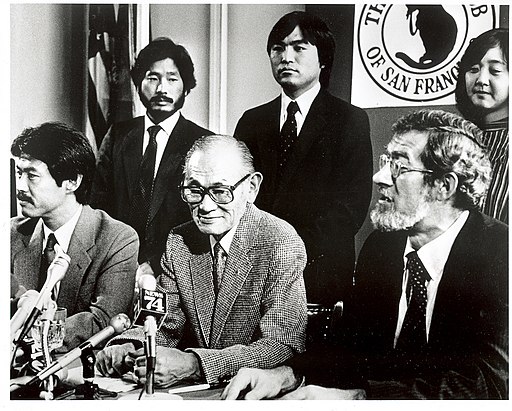
Photo by Crystal K. Huie, Courtesy of the Fred T. Korematsu Institute.
In 2018 the international community rebuked both China and the United States (U.S.) for controversial policies affecting Muslim populations. This summer it was reported that China has detained more than a million of its own citizens — Uyghurs in the Xinjiang Autonomous Region suspected of dissident sentiments — in re-education camps. Meanwhile, the U.S. instituted a travel restriction on citizens from eight Muslim majority countries in what was widely viewed as an attempt to prevent Muslims from entering the country. Despite the many differences in these two policies, China and the U.S. offer strikingly similar justifications for their actions. Both countries point to overriding national security concerns and insist that these extreme practices are permissible by law. Although extremist violence is portrayed as a new threat that requires new responses, the legal battle over the U.S. travel ban and the outcry over detention of Muslims in China resurface discussion of a similar policy from a bygone era: the internment of Japanese citizens in the U.S. during World War II.
This summer the U.S. Supreme Court ruled that the Trump administration’s travel ban is constitutional. In the same decision, the court finally overturned its ruling in United States v. Korematsu, a 1944 case holding it permissible for the military to detain Japanese Americans in internment camps as a preventative safety measure. Although the internment camps were widely condemned in the decades since that decision, the practice officially remained “good law” until this year. The fact that such a flagrant human rights abuse could be found legally permissible—and remain so for so long—offers an important lesson: Although a policy that directly or indirectly targets an ethnic group may be judged lawful in a contemporary court, it may still be overruled in the court of history.
The Internment of Japanese Americans and the Korematsu Decision
More than a half-century ago the U.S. and China united in war against a common enemy: Japan. After years of imperial expansion in Asia, Japan’s incursion into Manchuria led to the formal declaration of war with China in 1937. In 1941 Japan attacked Pearl Harbor, prompting the U.S. to enter the conflict as well. The next year President Roosevelt signed Executive Order 9066, which authorized the military to exclude people from geographic areas in the U.S. at their discretion.
Following the executive order, more than 112,000 people in the U.S., primarily people of Japanese ancestry living on the west coast, were relocated from their homes and interned in concentration camps. At least 70,000 of these people were American citizens. Despite a lack of empirical evidence that Japanese-Americans posed a threat to national security, citizens were held against their will for years because of their ethnic background.
Fred Korematsu, an American of Japanese descent who was born in Oakland, California, refused to obey the exclusion order. He was arrested, convicted of violating the order, and sent to a camp in Utah. Korematsu appealed the conviction, arguing that the exclusion order was discriminatory and violated his constitutional rights.
In 1944 the U.S. Supreme Court considered Korematsu’s case. A divided court ultimately upheld the exclusion order and Korematsu’s conviction. Justice Hugo Black, writing for the majority, argued that while restrictions on the civil rights of a racial group are legally suspect, Roosevelt was justified in his order for reasons of national security. Black opined that “exclusion of those of Japanese origin was deemed necessary because of the presence of an unascertained number of disloyal members of the group.”
Even at the time of the ruling, some members of the Court condemned the exclusion. In a published dissent, Justice Frank Murphy called the order a “legalization of racism.” In the decades following the end of World War II, the U.S. reached a similar national consensus that the internment was a mistake and an injustice. In 1976 President Gerald Ford issued a formal apology, stating that “[w]e now know what we should have known then—not only was that evacuation wrong but Japanese-Americans were and are loyal Americans.” President Jimmy Carter established a commission that debunked the argument that the internment was necessary for national security. Following the recommendations of the commission, the U.S. government subsequently made reparation payments to people who had been interned.
But, despite the widespread recognition by both the public and the U.S. government that the internment was unjust, the Supreme Court’s 1944 Korematsu decision remained the unchallenged law of the land for more than 70 years.
Supreme Court Decision Invokes America’s Past Missteps in Travel Ban Decision
The Supreme Court reconsidered Korematsu this year in light of a contemporary presidential directive. Immediately after assuming office in 2017 President Donald Trump issued an executive order temporarily restricting entry to the U.S. for citizens from seven Muslim-majority countries. Although the Trump administration insisted that the restrictions were intended to prevent terrorist attacks, critics of the proposal pointed to numerous campaign statements by the president that seemed to indicate the order was intended to bar Muslims from entering the country.
The travel restriction order immediately came under judicial scrutiny. Following a series of legal actions and modifications to the order, in April 2018 the U.S. Supreme Court heard opinions in the question of whether the ban violated the establishment clause of the First Amendment, which forms the basis of the constitutional right to freedom of religion. In June the court issued its decision. Justice John Roberts, writing for a narrow majority, <a href=”The Korematsu decision reminds us that while a discriminatory policy may enjoy a veneer of legality, that legality is ultimately no match for the judgment of history. The internment of Japanese Americans was wrong during WWII, despite Supreme Court reasoning to the contrary. China’s efforts to criminalize Muslim expressions of faith today are no less abhorrent, whether or not they find basis in statute. As Justice Murphy wrote in his dissent in Korematsu in 1944, “[s]uch exclusion goes over ‘the very brink of constitutional power,’ and falls into the ugly abyss of racism” Justice John Roberts, writing for a narrow majority, upheld the constitutionality of the Trump order, finding that the president has broad authority over issues of national security.
In two dissents, four of the Supreme Court’s nine justices disagreed with the majority opinion upholding the travel ban. Justice Sonia Sotomayor, joined by Justice Ruth Bader Ginsburg, wrote that the majority “leaves undisturbed a policy first advertised openly and unequivocally as a ‘total and complete shutdown of Muslims entering the United States’ because the policy now masquerades behind a façade of national-security concerns.”
The ghost of the court’s previous decision in Korematsu haunts both the majority decision and the dissent response to the travel restrictions. In the majority opinion Justice Roberts seemed to finally overturn the 1944 decision, stating that the contemporary debate “affords this Court the opportunity to express what is already obvious: Korematsu was gravely wrong on the day it was decided, has been overruled in the court of history, and—to be clear— ‘has no place in law under the constitution’.” Meanwhile, Justice Sotomayor wrote that while “[i]n the intervening since Korematsu, our Nation has done much to leave its sordid legacy behind,” in upholding the executive order and sanctioning a discriminatory policy in the name of national security, “the court replaces one ‘gravely wrong decision’ with another.”
The debate over Korematsu shows that even in a country such as the U.S. with a hearty tradition of strong and independent courts, when it comes to questions of national security and minority groups, what is lawful is not always what is right.
Korematsu and Lessons for China
China ought to take note of the legacy of the Korematsu decision. International news outlets reported this year that China has detained as many as a million Chinese Muslims—particularly ethnic minority Uyghurs and Kazakhs in the western autonomous region of Xinjiang—out of national security concerns. In August the United Nations Committee on the Elimination of Racial Discrimination issued a report expressing concern that these Muslims were being “held incommunicado and often for long periods, without being charged or tried, under the pretext of countering terrorism and religious extremism” and are “forced to spend varying periods in political ‘re-education camps’ for even nonthreatening expressions of Muslim ethno-religious culture like daily greetings.” In November numerous nations raised concerns about China’s treatment of Muslims at the Universal Periodic Review of China’s human rights record at the United Nations. Dui Hua’s submission to the Review highlights the Foundation’s research uncovering discrimination against Muslims in Xinjiang.
China disputes reports on its policies towards Muslims in Xinjiang. At the same time, the government passed a series of laws and regulations purportedly providing a legal basis for targeting Muslims in response to national security concerns. These new legal measures include a 2015 Counterterrorism Law that criminalized a broad range of conduct and expression, including clothes and symbols. And Xinjiang introduced regulations authorizing re-education facilities to combat “religious extremism.” Dui Hua found the first judgment involving the use of “educational placement,” a new coercive measure imposed on prisoners who are considered a danger to society even after completing their sentences for terrorism or extremism offenses. The Foundation also discovered judgments involving violators of the Islamic clothing ban in force throughout Xinjiang. Individuals can be sentenced for “illegal business activity” for selling clothing with the Islamic star and crescent symbol. In one case, a Muslim man, Gong Xiaojun, was sentenced to two years’ imprisonment for “disrupting official business” after arguing with cadres over his “abnormal” beard and a black robe his wife was wearing at home. The case indicates that Xinjiang authorities have extended the reach of the ban to peoples’ homes. Across the board, China appears to be using the veil of national security law to justify openly discriminatory practice.
The Korematsu decision reminds us that while a discriminatory policy may enjoy a veneer of legality, that legality is ultimately no match for the judgment of history. The internment of Japanese Americans was wrong during WWII, despite Supreme Court reasoning to the contrary. China’s efforts to criminalize Muslim expressions of faith today are no less abhorrent, whether or not they find basis in statute. As Justice Murphy wrote in his dissent in Korematsu in 1944, “[s]uch exclusion goes over ‘the very brink of constitutional power,’ and falls into the ugly abyss of racism.”
SAN FRANCISCO (November 27, 2018) – On November 13, 2018 the Chongqing Number One Intermediate Court rendered its judgment in the appeal of American citizen Wendell Brown against his June 28 conviction by the Chongqing Yubei District Court for the crime of assault with intent. The Chongqing Court reduced Mr. Brown’s sentence from four years to three years in prison, the lowest sentence for the crime of intentional assault under Chinese law.
Dui Hua estimates that fewer than 15 percent of appeals in criminal cases result in a reduction of the prison sentence.
Mr. Brown is scheduled for release on September 24, 2019. After his release he will be deported back to the United States. Mr. Brown is an African-American resident of Detroit, Michigan. He is an outstanding scholar athlete who went on to play professional football in Canada and Europe after graduating from Ball State University. He had no prior criminal conviction. He was in Chongqing teaching English and coaching football. He is a loving son to his mother and the father of an 11-year-old son.
Mr. Brown’s conviction arose from an altercation in a Chongqing bar on September 25, 2016. The Chongqing Court, for the first time, confirmed that Mr. Yu Peitian, initiated the altercation by jostling Mr. Brown while Mr. Brown was standing on a flight of stairs. Mr. Yu escalated the situation by throwing a bottle at Mr. Brown. A friend of Mr. Yu wrestled with Mr. Brown, after which Mr. Brown charged Mr. Yu. While finding that Mr. Yu was in part responsible for the fight, the court concluded that Mr. Yu’s actions did not rise to the level of criminal activity.
Mr. Brown was the only person punished for what happened in the bar. The court rejected his claim of self-defense and concluded he didn’t do enough to de-escalate the situation. The court gave as its reason for reducing the sentence the fact that Mr. Brown had apologized to Mr. Yu, that Mr. Yu had forgiven Mr. Brown, and that Mr. Brown had paid compensation of RMB 200,000 to Mr. Yu.
Mr. Brown’s family, his legal team, and his friends had hoped that the Chongqing Court would order Wendell Brown’s immediate deportation, a remedy provided for under Chinese law. It chose not to do so.
Mr. Brown will now be transferred from the Chongqing Jiangbei District Detention Center, where he has been held for more than two years, to a prison. Once in prison he can apply for early release.
In a gesture much appreciated by Mr. Brown and his family, Mr. Brown was allowed to make a 15-minute video call to his mother in Detroit. He was in characteristic good spirits and appeared healthy.
Dui Hua played a role in bringing about the reduction of the prison sentence, lobbying both governments and calling attention to the case in American media. It served as an advisor to Mr. Brown’s family and team of supporters.
Dui Hua Executive Director John Kamm commented that “While this is not the result we hoped for it is nevertheless the best that could be achieved. I salute the team of legal advisors and friends who have worked tirelessly to bring Wendell home. Dui Hua acknowledges the sympathetic handling of the case by the appellate judges in Chongqing.”
City and state officials had lobbied the Chinese government on Mr. Brown’s behalf. (Chongqing and Detroit are sister cities.) The US consulate in Chengdu visited Mr. Brown every month in the detention center and an officer attended both the trial of the first instance and the trial of the second instance. Its work was backed by the American embassy in Beijing and the State Department in Washington D.C. Hundreds of people, including football fans and residents of Detroit, most of whom did not know Mr. Brown, donated to a GoFundMe account to assist Mr. Brown and his family in their ordeal.
450 Sutter, the site of the San Francisco office. Image credit: The Dui Hua Foundation
When Senator Orrin Hatch visited China in 1997, he was accompanied by a leading scholar of contemporary China Michel Oksenberg, and a former senior staff member of Senator Hatch who had recently joined a private foundation, based on the East Coast, that supported both domestic and international projects with grants. A few months after the senator’s visit, I was contacted by the foundation to see if I’d be interested in applying for a grant.
The experience of working on the Northeast China Autonomous People’s Republic – in which I had uncovered the names of three hitherto unknown political prisoners in a provincial newspaper – convinced me that one could find names of political and religious prisoners whose names were not known outside China by scouring “open sources:” official publications – in particular – provincial newspapers. I submitted a proposal for a research grant to find these names.
At the time, my work on political and religious prisoners was supported entirely by the profits of my consulting business. I had never received a grant from either a government or private group and I had no idea how to go about winning one. I did a bit of research and learned that to receive a grant from a non-profit foundation I would need to use a “pass through” organization that was also a non-profit. I discussed the situation with my wife and a close friend. We looked into what it would take to create our own “pass through,” our own private foundation. We settled on a name – Dui Hua, which means dialogue 对话 in Mandarin Chinese – and applied to the State of California to begin operations as a non-profit foundation. Our application was accepted, and Dui Hua was incorporated in April 1999. After that we applied to the Internal Revenue Service for 501(c)(3) status which would enable us to operate as a non-profit exempt from federal taxes. This application was accepted in July 1999.
The Centre’s current office at Tin Ka Ping Building, CUHK. Image Credit: CUHK.
After the East Coast foundation received Dui Hua’s proposal, it forwarded it to three Sinologists for peer reviews. The responses were not very encouraging. Aside from being an unknown quantity insofar as research into contemporary China was concerned, there was skepticism that my research would find anything. As one reviewer put it, “The Chinese government does not make the names of political prisoners available in publications available to the public.” I was asked how many names of prisoners I expected to find. I answered I’d be satisfied if I could find 100 hitherto unknown names. The foundation decided to take a chance, and Dui Hua received the grant and began operations in August 1999.
With Dui Hua established and our first grant in hand, I headed for Hong Kong. I hired a couple of research assistants and together we went to the University Services Centre (USC) at the Chinese University of Hong Kong, one of the world’s premier repositories of materials on contemporary China. The USC has three floors of newspapers, journals, and books. The newspapers were held in the basement, in stacks arranged by province. I started by looking at newspapers published around the time of the Spring 1989 protests that culminated in the killings in Tiananmen Square. I focused on the newspapers of cities most affected by what the Chinese government referred to as a “counterrevolutionary uprising” – Beijing, Changsha, Shanghai, and Guangzhou.
After four hours of eye-straining research, I had turned up virtually nothing. Not a single story, even those that reported on the protests, yielded the name of a detainee. Maybe the critics were right – the Chinese government didn’t publish such information. Maybe the Jilin newspaper report was a fluke. Discouraged, I took the elevator to the eighth floor.
The eighth floor is where books are held in open stacks. I headed for the section that held judicial books. There I found several hundred yearbooks and records (multi-year collections) put out by public security bureaus, courts, procuratorates, and prisons. I had struck gold. In four hours of work I unearthed more than a hundred names of individuals detained for political crimes.
Two of my most important finds were found in publications put out by the Shanghai Public Security Bureau.
The December 1997 issue of Shanghai Public Security Journal revealed details of the case of Jiang Cunde. Jiang was a worker at a tool repair factory who plotted with other workers to set up an organization – “China Human Rights Committee” – modeled on Poland’s Solidarity Trade Union. Their activities took place in 1985 and 1986, and they were arrested and charged with counterrevolution in 1987. Jiang was sentenced to life in prison.
After discovering Jiang’s name, I began putting him on prisoner lists submitted to the Chinese government and have continued doing so up to the present day. I have been told that Jiang was diagnosed with schizophrenia in 1993 and released on medical parole. He returned to political activities and was put back in prison in 1999. In 2004 his sentence was commuted to 20 years. Despite being awarded several citations for good behavior, Jiang has yet to receive another sentence reduction. He is imprisoned in Tilanqiao Prison and is said to suffer from severe mental illness characterized by psychotic episodes. He is due for release in 2024, by which time he will have served 31 years in prison.
The other case I found on my first foray into the holdings at USC was that of a disaffected young man by the name of Yu Rong. According to the 1990 Shanghai Public Security Yearbook and the popular magazine China Police, Yu Rong was responsible for printing and distributing 1,450 reactionary leaflets in Shanghai over a four-month period beginning in June 1989, not long after the suppression of the democracy protests in Beijing. Then-Mayor Zhu Rongji declared Yu’s action the biggest case of counterrevolutionary incitement in the history of Shanghai. He ordered the mobilization of hundreds of police officers to catch the culprit.
Most of Yu’s leaflets were dropped from tall buildings in Shanghai. By the time the leaflets reached the ground and had been collected and read, Yu had left the top of the buildings from where he had dropped the leaflets. After Yu was finally captured, the police accused him of committing 20 acts of arson and of dropping bricks from tall buildings, causing serious injuries and three deaths.
Since discovering Yu’s name in 1999, I have put him on 14 prisoner lists, but I have only received one written response. In April 2006 I was told that Yu was in a psychiatric detention center, also known as Ankang. If he is alive he is likely to still be there.
As China’s influence in Hong Kong has grown, the usefulness of the University Services Centre’s holdings has diminished. Recent publications with information on sensitive political crimes are rarely found on the centre’s shelves. The centre has been “harmonized.” For several years however the centre was an unrivaled source of the names of mostly unknown political prisoners about whom Dui Hua submits inquiries to the Chinese government. The USC’s role as a resource for our work has largely been taken over by Internet research, including surveying judgments in criminal cases posted on the Supreme People’s Court judgment websites.