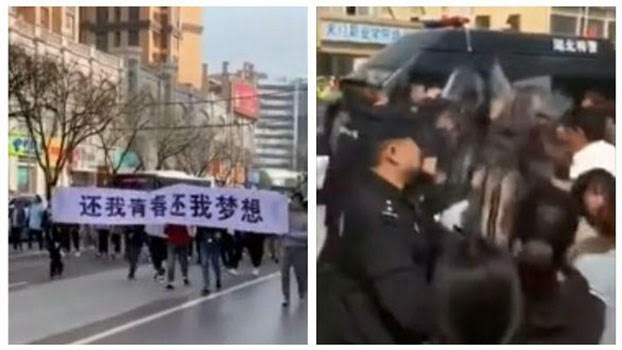
Calls for lowering the age of criminal responsibility in China have emerged again after a recent spate of violent acts committed by adolescents. Because these acts were committed by children under the age of 14, the offenders cannot be criminally punished under Chinese law, leading to societal pressure for greater criminalization of juvenile violence. Legal experts are among those calling for lowering the age of criminal responsibility.
Violence committed by very young offenders is a serious social problem and needs fresh approaches in China and elsewhere. It should be noted initially that violence represents a small percentage of overall instances of youth in conflict with the law, and that some attention should be paid to whether the media is sensationalizing the coverage of these cases. Regarding juvenile justice policy specifically, China could strengthen its non-custodial, preventive, and community institutions to address violent acts committed by children under 14. Furthermore, the role of parents, schools, and social workers in making interventions and referrals to programs for youth in conflict with the law could be reassessed. In China, juvenile cases are often dominated by the police and procuracy, and the role for others with juvenile expertise is frequently understated. On the bright side, juvenile justice reform is a top priority in China, and later sections of this article describe several international initiatives sponsored by the World Health Organization and others that could help integrate evidence-based community solutions into these reforms.
Lowering the Age of Criminal Responsibility?
Juvenile justice reform need not be over-simplified and framed around a polarizing issue like the minimum age of criminal responsibility. Rather, recent events can spark a discussion regarding non-custodial and preventive measures, the proper role of police in juvenile cases, and lessons that can be learned from other legal systems about evidence-based policies to help combat violence committed by young offenders.
There is no disputing that there have recently been disturbing cases of young people committing violent acts in China. In March, a 13-year-old Jiangsu boy killed his mother over a quarrel about money; a 13-year old Hunan boy brutally killed his parents in December 2018; and, in a case in Guangxi, a 12-year old girl killed a classmate, after which the girl did not receive punishment (financial compensation between families was arranged instead).
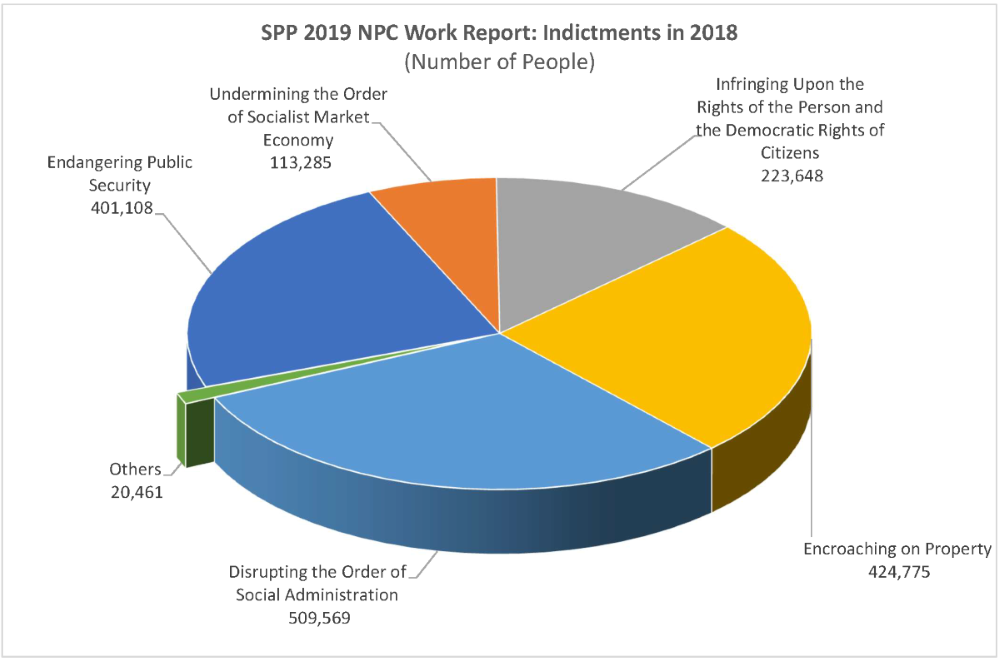
Although these are tragic events, policy need not be based on a small number of cases removed from the larger context of overall juvenile criminal justice trends. According to statistics reported by Caixin, general patterns in juvenile crime do not indicate a crisis in juvenile crime: although the number of arrests of juveniles increased to 29,350 in 2018, the number of indictments of juveniles based on these arrests decreased at a much higher rate. Additionally, Professor Zhang Hongwei of Jinan University’s Juvenile and Family Law Research Center conducted a statistical analysis (Figure 1) of juvenile offenders in China, which shows that the number of offenders younger than 18 remained flat between the years of 1991-2014, even though the overall number of offenders increased dramatically over the same period.
Figure 1. Professor Zhang Hongwei’s Multi-year Analysis of Juvenile Crime
Nonetheless, some legal experts have called for China’s age of criminal responsibility to be lowered to 12. For example, Li Chunsheng, of the Hubei Lawyers Association, who specializes in minor protection law, said in July 2018 that the age of criminal responsibility should be lowered because “children’s mental maturity was becoming accelerated and many juvenile offenders were showing similar cognitive ability to adults.” However, Li provided no evidence, scientific or otherwise, for her assertion that children’s “maturity” is “accelerated,” and her suggestion is directly contradicted by a variety of studies indicating not only that adolescent brains in fact mature several years after the age of 14 but also that adult penalties for younger offenders produce more teen recidivism–factors which have led many U.S. states to raise the age for “adult” criminal prosecution to 18.
Non-Custodial and Preventive Measures
Other experts have suggested that, instead of over-criminalizing and incarcerating the youth of a nation, the proper emphasis belongs on non-custodial and preventive measures for reducing juvenile violence. These are not only more grounded in scientific evidence but are also more fiscally responsible. Non-custodial measures emphasize rehabilitation over punishment, and often include programs involving community support and mental health counseling. Social workers can be trained in providing youth psychological examinations in cooperation with schools and parents to capture a fuller picture of the conditions that lead to violence.
In China, the Supreme People’s Procuratorate (SPP) is moving in this direction by pushing for renewed juvenile justice reform, hoping to implement preventive laws to reduce juvenile recidivism. The 2018-2022 SPP reform plan aims to reduce juvenile crime through family education, procedural adjustments, and preventive measures. In an interview, the president of the ninth procuratorate division (which is dedicated to juvenile cases) acknowledged that current law lacks effective correctional measures to address serious juvenile crime. The proposed solution: a “ladder” of different procedural levels to “realize individualized and effective correction.”
Although China’s current juvenile system lacks effective correctional measures, there are a few non-custodial programs already in place. In 2017, Dui Hua held an expert exchange with juvenile judges from mainland China who discussed China’s community-based alternatives to confinement. These include: “help and educate” (bangjiao 帮教) measures, which are based on Confucian doctrines of caring for the young and involve efforts to reintegrate juvenile offenders into the community as a means of crime prevention; diversion (fenliu分流), similar to US programs that redirect juveniles to short-term community interventions; restorative justice, in which offenders learn of the consequences of their actions for the victims, with the larger aim of developing a sense of responsibility; and work-study schools (gongduxuexiao工读学校), which have been proposed as a way to deal with juvenile delinquency “for students who engage in repeated acts of bullying or violence and fail to respond to other disciplinary measures.” Work-study schools receive students who have been referred to the school. The Juvenile Delinquency Prevention Law states that juveniles can only be sent to a work-study school upon application by their parents, guardians, or schools, but work-study has also been criticized for disproportionately targeting “left-behind” (liushouertong 留守儿童, rural children whose parents have gone to other regions to work and have left them in the care of family members, often grandparents) and migrant children.
Policy discussions indicate that clear alternatives to juvenile confinement exist, but that proper implementation determines outcomes. In a recent school bullying case that involved battery, none of the above interventions was attempted, and instead, a superficial “criticism and education” (piping jiaoyu批评教育) session was employed. In 2018, a 12-year old Hunan boy killed his mother, and the boy was released and later sent to a specialty school in Changsha to receive three years of “restrained education” (guanshujiaoyu管束教育). Instead of these ambiguous policies, there could be a more systematic implementation of evidence-based interventions.
Regarding preventive measures, counselors and educators in school could be trained to identify certain behaviors and provide counseling. What kind of behaviors can raise red flags? How are they empirically determined? Can civil society organizations work in cooperation with schools and the judicial system to identify solutions early on? In looking for red flags, Chinese policymakers might find it useful to reference a comprehensive, detailed mental health intervention guide published by the World Health Organization (WHO) in 2016 that is recommended for use with adolescents. Intervention guides could be used as a reference by a variety of interested parties, including parents, school teachers, judges, and law enforcement officials. The guides might also help circumscribe the undue focus on juveniles who commit violent crimes, which ignores the fact that the overwhelming majority of juvenile offenses are non-violent.
In the spring of 1989 I was Far East Vice President of Occidental Chemical (Oxychem), a subsidiary of Occidental Petroleum, a large American corporation. I lived in Hong Kong where I was also First Vice President of the American Chamber of Commerce in Hong Kong. AMCHAM, as it was known, was the largest American chamber of commerce outside of North America. As First Vice President, I was in line to become president of the chamber in 1990.
Under my direction, Oxychem had concluded a letter of intent with a chemical factory in Qingdao to form a joint venture to produce sodium silicate, a chemical used to manufacture, among other things, detergents. Oxychem was a leader in producing this chemical and held a proprietary license that we would contribute as a part of our equity. This was to be a groundbreaking venture, the first 50:50 jointly owned company between an American company and a Chinese state-owned enterprise.
The time had come to conclude a detailed agreement, and I formed a team of technical, financial, and marketing executives to travel with me to China. Where should we meet with our Chinese counterparts?
Starting in mid-April 1989, China was in turmoil. Violent riots had broken out in Xi’an and Changsha, and in Beijing more than 100,000 students were occupying Tiananmen Square. On May 20, Chinese Premier Li Peng ordered martial law in parts of Beijing. Several hundred thousand troops were mobilized and took up positions surrounding Beijing.
Oxychem and Qingdao decided to hold the negotiations in Zhuhai, a special economic zone that bordered Macau, a Portuguese-ruled territory across the Pearl River from Hong Kong. I took the high-speed ferry that departed Hong Kong for Macau at 9:30 AM on May 31.
Ruins of St. Paul’s Church, Macau Image Credit Flickr/Razlan
I decided to take care of AMCHAM business before my Oxychem colleagues arrived. On May 31, I had a luncheon meeting with the American business community in Macau. The conversation focused on the gathering storm in Beijing. Attendees were split between an optimistic assessment – there would be no violence, and economic and political reform would eventually take place – and a pessimistic assessment – the Chinese Communist Party would not give up without a fight, a fight that would likely involve bloodshed.
After lunch I met with Portuguese officials in charge of running Macau’s economy. These meetings spilled over into the next day, June 1, when the Oxychem team was due to arrive in Macau. They arrived on schedule and we set off for Zhuhai at 12:30 PM. After settling into our hotel, negotiations with the Qingdao Chemical Bureau and the Chinese factory that was to be our partner began at 3:00 PM.
Negotiations continued on June 2 and lasted from 9:00 AM to 6:00 PM. They were followed by a dinner hosted by Qingdao.
The next day, June 3, negotiations continued. The focus was on Oxychem’s technology and the terms and conditions of the license. They wrapped up for the day at 6:00 PM, after which the two sides gathered for a dinner hosted by Oxychem in the hotel’s restaurant.
The private room where we dined had a television that was tuned to Hong Kong’s Jade TV station. There was live coverage of events in Beijing where martial law troops were closing in on Tiananmen Square. One could hear the sounds of shots and see plumes of smoke from barricades and vehicles set alight by Beijing citizens trying to stop the advance of the troops.
Our Chinese guests were clearly upset. One of them, an engineer known for his progressive views on reform, shouted in protest: “My government has gone crazy!” He was admonished by the senior party member present to be silent in the presence of foreigners. The dinner broke up shortly thereafter.
The next day, June 4, was a Sunday. The Oxychem team decided to take the day off and tour Macau. As we headed for the border, we encountered an eerie silence. There were signs of turmoil the night before. Posters denouncing the Communist party and the government were plastered in conspicuous locations including bus stops. Guards at the border were few in number. Many had deserted their posts. The Zhuhai border crossing was to become a favored exit point for dissidents fleeing post-Tiananmen China.
In Macau I showed my crew around the city and its two islands. I knew Macau well, having lived there in 1972. While touring the sights, we came across large protests outside of China’s Xinhua News Agency in the city center, not far from the Leal Senado. The protesters were raucous but peaceful. There were long lines outside the Macau branch of the Bank of China. People were removing their deposits in a flight from danger, but also in deliberate attempt to bankrupt China’s largest state-owned bank. The Oxychem team decided to return to Zhuhai.
The final negotiation took place on Monday morning, June 5. Talks were suspended by mutual agreement. A sense of dread filled the room. No one had any idea where China was heading. The live feed from Beijing had been cut. We packed our belongings and voluminous files and prepared to leave the hotel. Social order was breaking down. I went to find a young colleague whose room had been entered by two women seeking his company. I shooed them away, and they left after they cleaned out the minibar.
We arrived in Hong Kong to find a city in turmoil. Before the events of June 4 in Beijing and other Chinese cities, including Guangzhou where protesters had blockaded the Pearl River bridge, Hong Kong was primarily a commercial city. Protests of any sort rarely attracted more than a few hundred people. That changed after June 4, 1989. Hundreds of thousands of protesters filled the streets chanting anti-China slogans, condemning the Communist Party. Hong Kong had become a political city. It has remained so to this day.
An emergency meeting of AMCHAM’s Board of Governors was convened on June 7. I pressed for a strong statement condemning what had already become known as the Tiananmen Massacre, but which also endorsed the limited sanctions imposed on China by the administration of President George W. Bush. Most of those sanctions have been lifted, though an arms embargo remains in place. Over the objection of governors representing large corporations, the board endorsed the statement I drafted. AMCHAM subsequently placed the statement in leading English and Chinese language newspapers.
Later on June 7, I received a call from an American parent of a young man who was teaching in China in the Princeton-in-Asia program. His father lived in Kentucky and worked for a subsidiary of Occidental Petroleum. He asked me to help evacuate his son from China. I agreed to do so, and word quickly spread that the office of Occidental Chemical Far East would provide a haven for Princeton students who were able to make it out of the Chinese cities where they were teaching. One by one they showed up in my conference room where I and my staff made arrangements for food and lodging, and for tickets back home.
We coordinated our work with that of the American Consulate General, where an emergency meeting of the American community in Hong Kong took place on Friday morning June 9. More meetings were held at AMCHAM the following week. Later that week the last of the Princeton students left my office and returned to the United States.
I stayed in Hong Kong for another six years before returning to the United States. I served my one-year term as president of the chamber, and made my first intervention on behalf of a political prisoner in May 1990, immediately before traveling to Washington D.C. to testify on China’s Most-Favored-Relations trading status. I resigned from Oxychem in 1991 and began traveling to Beijing and other Chinese cities to hand over prisoner lists and visit places of detention. I moved my family to San Francisco in July 1995, and have lived there since, though I keep an apartment and an office in Hong Kong, my second home.
Kamm Visits
Copenhagen, Stockholm, and Oslo to Review Cooperation
John Kamm with Swedish Ambassador-at-Large for Human Rights, Democracy and the Rule of Law Annika Ben David,May 2019 Image Credit Amb. Annika Ben David
Dui Hua
Executive Director John Kamm paid visits to the capitals of three Scandinavian
countries – Copenhagen (Denmark), Stockholm (Sweden) and Oslo (Norway) – from
May 5 to May 14, 2019. He met with government officials and senior staff of
non-governmental and international humanitarian organizations involved in
handling relations with China.
In
Copenhagen, Kamm met with the Ministry of Foreign Affairs, the Danish Institute
for Human Rights, and a group of labor and Christian activists. In Stockholm,
Kamm held several meetings with senior ministers and state secretaries as well
as the Swedish International Development Cooperation Agency (Sida). Finally, in
Oslo, Kamm met with the Secretary of the Norwegian Nobel Institute, the
Secretary of the Storting’s International Committee, and several officials in
the human rights and East Asia sections of the Ministry of Foreign Affairs.
The three
countries have provided financial support to Dui Hua for more than 10 years.
The meetings provided Kamm an opportunity to review the progress in meeting the
goals of the grants.
On May 5, the day Kamm arrived in Copenhagen, President Donald Trump unleashed a twitter storm accusing China of reneging on commitments it allegedly made in the long-running talks to resolve trade differences between the two countries. Tensions in U.S.-China relations were a topic in virtually every discussion between Kamm and his interlocutors. Dui Hua’s executive director stressed that the “trade war” was but one of many conflicts between China and the U.S. Of equal importance is the technology war, something very much on the minds of Scandinavian officials who are grappling with the question of whether and to what extent China telecom giant Huawei should participate in the building of the countries’ 5G networks.
Other
dimensions of the conflict between the two countries were ideological
disagreements that had led to the closure of several Confucius Institutes in
the United States, the drop in people-to-people exchanges—the so-called “visa
war”—sharp difference over human rights, notably over China’s treatment of
Muslims in Xinjiang, and strategic flashpoints, including Taiwan, the South
China Sea, and Hong Kong.
Time was spent discussing the current situation in Hong Kong, where the government’s plan to enact an extradition law would allow for the transfer of people wanted in China back to the mainland. Tens of thousands of people had taken to the streets in the former British colony on April 28 to protest the proposed legislation. On May 1, a brawl erupted between opposing groups of legislators in the Legislative Council chamber. The proposed law had drawn criticism from foreign governments, human rights groups, and foreign chambers of commerce.
Although the three countries enjoy generally good relations with China, all have disagreements of varying intensity. China is displeased with the decision to reopen the investigation by the Danish government into the police handling of Tibetan protests in 2012, as well as the Danish government’s move to block Chinese participation in an airport project in Greenland. The most nettlesome issue in Sino-Swedish relations remains the treatment of Swedish citizen Gui Minhai. Since Gui was seized by Chinese law enforcement officers on board a train, in the company of Swedish diplomats, in January 2018, Sweden has not been granted consular access.
By
comparison, Norway’s relations have been sound since normalization of relations
in 2016. Ties with China had been icy for six years following the awarding of
the 2010 Nobel Peace Prize to Chinese dissident Liu Xiaobo.
Shortly
after Kamm departed Oslo to return to the United States, Norway’s parliament, the
Storting, hosted a four-day visit to Norway by Li Zhanshu, Chairman of China’s
National People’s Congress and the third most powerful man in China after
President and Communist Party General Secretary Xi Jinping and Premier Li
Keqiang. In addition to discussing Huawei’s possible participation in Norway’s
5G network, talks took place on energy cooperation. After sessions in Oslo, Li
and his delegation travelled to Stavenger, the center of Norway’s oil industry.
Kamm Speaks at San
Francisco’s University Club
On May 28, 2019, Dui Hua Executive Director John Kamm addressed a sold-out audience at San Francisco’s University Club, one of the city’s oldest clubs, and one steeped in history. The topic of his speech was “How Tiananmen Changed China – and Me.” Kamm, who was in China when the tragic events of June 4, 1989 took place, surveyed developments in China’s economy, society, and politics over the last three decades. He answered numerous questions in a lively Q&A at the end of his remarks.
Although she was unable to attend the event, Speaker of the House of Representatives Nancy Pelosi sent Kamm a message: “I take this opportunity to remember the human rights abuses which befell the Chinese people. Your remarks regarding Tiananmen preserve the legacy of heroes.”
PRISONER UPDATES
In May, Dui Hua received a
government response on 17 prisoners in Hebei. Most of them concerned Falun Gong
practitioners or adherents of other religious sects labelled “cults” by the
Chinese government. It is worth noting that none of them had received any
clemency. The only exception was Zhao Lirong (赵丽荣), a petitioner serving her
four-year sentence for picking quarrels and provoking troubles. In 2008, her
farmland was expropriated by the government and a glass manufacturing company
was granted the right to use her land. She received 100,000 yuan compensation, but
was subsequently sentenced to 18 months’ imprisonment for destruction of
property because she demolished the walls of the company in 2009. Upon release,
she petitioned township, county, and city governments against the expropriation
and demanded additional compensation. In 2015 alone, she petitioned eight times
in Beijing, including six times at Zhongnanhai, the headquarters of the Chinese
Communist Party and State Council. She was convicted in June 2016, and two
months later, the Pingquan County People’s Court upheld the original sentence.
Zhao is scheduled for release in December 2019, three months earlier than the
expected release date.
Another government response Dui Hua received in April provided new information concerning four prisoners sentenced for subversion of state power in Guangdong due to their affiliation with the so-called Shadow Corps (Yingzibintuan 影子兵团), which allegedly aimed to overthrow the Communist Party of China in a violent revolution, according to official accounts. Dui Hua has previously reported that Xiang Fengxuan (项逢选) was sentenced to 11 years’ imprisonment. The response revealed that Ma Ji (马骥) is now serving his five-year sentence in Heyuan Prison and will be due for release in August 2020. Also serving in Guangdong’s Heyuan Prison, Yang Wanben (杨万本) is expected to complete his four-year sentence on August 16, 2019. Another corps member Su Dongliang (苏东亮) has already been released from prison on an unspecified date.
The same response also stated that prominent activist Chen Qitang (陈启棠) in Guangdong had not been granted clemency during his four years and six months’ imprisonment for inciting subversion. Chen was released from Sihui Prison on May 24, 2019. When the Occupy Central Movement broke out in Hong Kong in September 2014, Chen was in the former British colony. After he returned to Guangdong, he disseminated articles in support of the civil disobedience campaign that called for genuine universal suffrage. Chen was not sentenced until March 2017, after spending more than two years in custody. Chen had previously been imprisoned for more than two years in 2008 for swindling by false pretenses, apparently in reprisal for helping villagers over farmland expropriation in Guangdong.
Dui Hua’s research into court websites has recently discovered several cases of illegal business activities in 2016 related to the publication of religious booklets. Wang Xiaoyan (王小燕), Xia Songzhi (夏松芝), and Li Kehua (栗克华) were convicted of printing and selling booklets that promoted Xinling Famen (心灵法门), a Buddhist-sounding religious sect also known as Guanyin Citta Dharma Door. Wang will remain in prison in Shanghai until January 2021, while Li and Xia are now serving their suspended sentences in Henan until December 2019 and December 2020, respectively.
Robert Schellenberg, Dalian Intermediate Court, Jan 14, 2019. Image Credit: cdn.hk01.com
As U.S.-China relations sink ever lower, the list of urgent criminal cases involving Western citizens in China has increased. In just the last few weeks Canadians Michael Kovrig and Michael Spavor were formally arrested on espionage charges and American Mark Swidan was given a suspended death sentence for drug trafficking.
Amid so many arrests and sentences, a May 9 appeal
hearing in the case of Robert Schellenberg, a Canadian sentenced to death for
drug trafficking, went largely unnoticed. Although Schellenberg’s appeal
hearing concluded without pronouncement of a sentence, the timing of the
hearing—the day after a hearing in Vancouver for Huawei CFO Meng Wanzhou—points
to the continuing role of international politics in the outcome of his case.
Schellenberg’s case is part of a larger emerging dynamic of tit-for-tat detention diplomacy, but it is also unique because it is both overtly political and carries a death sentence. No other case is so inextricably bound up with that of a Chinese national being held in the West. Schellenberg’s fate has unfolded in parallel to that of Meng, a Chinese citizen who is currently detained in Canada pending extradition to the United States. After her detention Chinese state media representatives ominously warned there would be retaliation. Schellenberg’s sudden, unusual retrial and capital sentence followed shortly thereafter, leading many to conclude that it is Canada, as well as Schellenberg, that is being punished in this case. The fact that Schellenberg’s most recent hearing in Dalian took place the day after Meng appeared in court in Vancouver suggests that the two cases remain linked. As Huawei has moved to the center of a global struggle over China’s role in technology markets in the last few weeks, the political stakes in the two cases have increased as well.
Dui Hua Welcomes New Staff in San Francisco and Hong Kong
A measure of an organization’s sustainability
is its ability to attract new talent committed to carrying out the
organization’s mission. Dui Hua has been fortunate over the years in bringing
in veterans and young professionals alike to serve in its San Francisco headquarters
and Hong Kong branch office.
Recent additions to the ranks of the
foundation are:
Elizabeth (“Lili”) Cole is Dui Hua’s Senior
Manager based in San Francisco overseeing publications and program
development. Lili spent 10 years at the United States Institute for Peace
in Washington D.C. before joining Dui Hua. She has years of experience working
in/on China and has a lifelong interest in human rights and US-China relations.
Also based in San Francisco, Joshua Nederhood is Dui Hua’s new Development and Operations Associate. Joshua spent a year in Wuhan and Beijing researching policy and markets for a senior care company and a development consultancy.
Joining our Hong Kong research team are
Kenneth Yung and Ray Yuen. Kenneth holds a Ph.D. in modern Chinese
history from the University of Sydney and has taught in Hong Kong’s higher
education sector for five years. Ray holds a Master of Laws in Human Rights
from the University of Hong Kong.
JOHN KAMM REMEMBERS
John Kamm Remembers is a feature that explores Kamm’s human rights advocacy prior to and since Dui Hua’s establishment in 1999.
June 4, 1989 in Zhuhai and Macau
In the spring of 1989 I was Far East Vice President of
Occidental Chemical (Oxychem), a subsidiary of Occidental Petroleum, a large
American corporation. I lived in Hong Kong where I was also First Vice
President of the American Chamber of Commerce in Hong Kong. AMCHAM, as it was
known, was the largest American chamber of commerce outside of North America.
As First Vice President, I was in line to become president of the chamber in
1990.
Under my direction, Oxychem had concluded a letter of intent with a chemical factory in Qingdao to form a joint venture to produce sodium silicate, a chemical used to manufacture, among other things, detergents. Oxychem was a leader in producing this chemical and held a proprietary license that we would contribute as a part of our equity. This was to be a groundbreaking venture, the first 50:50 jointly owned company between an American company and a Chinese state-owned enterprise.
The time had come to conclude a detailed agreement, and I formed a team of technical, financial, and marketing executives to travel with me to China. Where should we meet with our Chinese counterparts?
Starting in mid-April 1989, China was in turmoil. Violent riots had broken out in Xi’an and Changsha, and in Beijing more than 100,000 students were occupying Tiananmen Square. On May 20, Chinese Premier Li Peng ordered martial law in parts of Beijing. Several hundred thousand troops were mobilized and took up positions surrounding Beijing.
Oxychem and Qingdao decided to hold the negotiations in Zhuhai, a special economic zone that bordered Macau, a Portuguese-ruled territory across the Pearl River from Hong Kong. I took the high-speed ferry that departed Hong Kong for Macau at 9:30 AM on May 31.
Ruins of St. Paul’s Church, Macau Image Credit Flickr/Razlan
I decided to take care of AMCHAM business before my
Oxychem colleagues arrived. On May 31, I
had a luncheon meeting with the American business community in Macau. The
conversation focused on the gathering storm in Beijing. Attendees were split
between an optimistic assessment – there would be no violence, and economic and
political reform would eventually take place – and a pessimistic assessment –
the Chinese Communist Party would not give up without a fight, a fight that
would likely involve bloodshed.
After lunch I met with Portuguese officials in charge
of running Macau’s economy. These meetings spilled over into the next day, June
1, when the Oxychem team was due to arrive in Macau. They arrived on schedule
and we set off for Zhuhai at 12:30 PM. After settling into our hotel,
negotiations with the Qingdao Chemical Bureau and the Chinese factory that was
to be our partner began at 3:00 PM.
Negotiations continued on June 2 and lasted from 9:00
AM to 6:00 PM. They were followed by a dinner hosted by Qingdao.
The next day, June 3, negotiations continued. The
focus was on Oxychem’s technology and the terms and conditions of the license.
They wrapped up for the day at 6:00 PM, after which the two sides gathered for
a dinner hosted by Oxychem in the hotel’s restaurant.
The private room where we dined had a television that
was tuned to Hong Kong’s Jade TV station. There was live coverage of events in
Beijing where martial law troops were closing in on Tiananmen Square. One could
hear the sounds of shots and see plumes of smoke from barricades and vehicles
set alight by Beijing citizens trying to stop the advance of the troops.
Our Chinese guests were clearly upset. One of them, an
engineer known for his progressive views on reform, shouted in protest: “My
government has gone crazy!” He was admonished by the senior party member
present to be silent in the presence of foreigners. The dinner broke up shortly
thereafter.
The next day, June 4, was a Sunday. The Oxychem team
decided to take the day off and tour Macau. As we headed for the border, we
encountered an eerie silence. There were signs of turmoil the night before.
Posters denouncing the Communist party and the government were plastered in
conspicuous locations including bus stops. Guards at the border were few in
number. Many had deserted their posts. The Zhuhai border crossing was to become
a favored exit point for dissidents fleeing post-Tiananmen China.
In Macau I showed my crew around the city and its two islands. I knew Macau well, having lived there in 1972. While touring the sights, we came across large protests outside of China’s Xinhua News Agency in the city center, not far from the Leal Senado. The protesters were raucous but peaceful. There were long lines outside the Macau branch of the Bank of China. People were removing their deposits in a flight from danger, but also in deliberate attempt to bankrupt China’s largest state-owned bank. The Oxychem team decided to return to Zhuhai.
The final negotiation took place on Monday morning,
June 5. Talks were suspended by mutual agreement. A sense of dread filled the
room. No one had any idea where China was heading. The live feed from Beijing
had been cut. We packed our belongings and voluminous files and prepared to
leave the hotel. Social order was breaking down. I went to find a young
colleague whose room had been entered by two women seeking his company. I
shooed them away, and they left after they cleaned out the minibar.
We arrived in Hong Kong to find a city in turmoil.
Before the events of June 4 in Beijing and other Chinese cities, including
Guangzhou where protesters had blockaded the Pearl River bridge, Hong Kong was
primarily a commercial city. Protests of any sort rarely attracted more than a
few hundred people. That changed after June 4, 1989. Hundreds of thousands of
protesters filled the streets chanting anti-China slogans, condemning the Communist
Party. Hong Kong had become a political city. It has remained so to this day.
An emergency meeting of AMCHAM’s Board of Governors was convened on June 7. I pressed for a strong statement condemning what had already become known as the Tiananmen Massacre, but which also endorsed the limited sanctions imposed on China by the administration of President George W. Bush. Most of those sanctions have been lifted, though an arms embargo remains in place. Over the objection of governors representing large corporations, the board endorsed the statement I drafted. AMCHAM subsequently placed the statement in leading English and Chinese language newspapers.
Later on June 7, I received a call from an American parent of a young man who was teaching in China in the Princeton-in-Asia program. His father lived in Kentucky and worked for a subsidiary of Occidental Petroleum. He asked me to help evacuate his son from China. I agreed to do so, and word quickly spread that the office of Occidental Chemical Far East would provide a haven for Princeton students who were able to make it out of the Chinese cities where they were teaching. One by one they showed up in my conference room where I and my staff made arrangements for food and lodging, and for tickets back home.
We coordinated our work with that of the American Consulate General, where an emergency meeting of the American community in Hong Kong took place on Friday morning June 9. More meetings were held at AMCHAM the following week. Later that week the last of the Princeton students left my office and returned to the United States.
I stayed in Hong Kong for another six years before returning to the United States. I served my one-year term as president of the chamber, and made my first intervention on behalf of a political prisoner in May 1990, immediately before traveling to Washington D.C. to testify on China’s Most-Favored-Relations trading status. I resigned from Oxychem in 1991and began traveling to Beijing and other Chinese cities to hand over prisoner lists and visit places of detention. I moved my family to San Francisco in July 1995, and have lived there since, though I keep an apartment and an office in Hong Kong, my second home.
Robert Schellenberg, Dalian Intermediate Court, Jan 14, 2019. Image Credit: cdn.hk01.com
As US-China relations sink ever lower, the list of urgent criminal cases involving Western citizens in China has increased. In just the last few weeks Canadians Michael Kovrig and Michael Spavor were formally arrested on espionage charges and American Mark Swidan was given a suspended death sentence for drug trafficking.
Amid so many arrests and sentences, a May 9 appeal hearing in the case of Robert Schellenberg, a Canadian sentenced to death for drug trafficking, went largely unnoticed. Although Schellenberg’s appeal hearing concluded without pronouncement of a sentence, the timing of the hearing—the day after a hearing in Vancouver for Huawei CFO Meng Wanzhou—points to the continuing role of international politics in the outcome of his case.
Schellenberg’s case is part of a larger emerging dynamic of tit-for-tat detention diplomacy, but it is also unique because it is both overtly political and carries a death sentence. No other case is so inextricably bound up with that of a Chinese national being held in the West. Schellenberg’s fate has unfolded in parallel to that of Meng, a Chinese citizen who is currently detained in Canada pending extradition to the United States. After her detention Chinese state media representatives ominously warned there would be retaliation. Schellenberg’s sudden, unusual retrial and capital sentence followed shortly thereafter, leading many to conclude that it is Canada, as well as Schellenberg, that is being punished in this case. The fact that Schellenberg’s most recent hearing in Dalian took place the day after Meng appeared in court in Vancouver suggests that the two cases remain linked. As Huawei has moved to the center of a global struggle over China’s role in technology markets in the last few weeks, the political stakes in the two cases have increased as well.
Mark Swidan with his mother, Katherine Swidan, in 1991.
Image Credit: Katherine Swidan
Schellenberg’s case stands out not just because it is one of a prominent set of political cases involving foreigners, but also because it is the only overtly political verdict carrying a sentence likely to result in death. (Swidan, an American detained on drug charges in 2012, received a suspended death sentence on April 30, which, in accordance with Article 50 of the Criminal Law, will be reduced to a prison sentence so long as he does not commit a new crime in the next two years). Western citizens have been executed in China before, but such cases typically become international causes of concern because of China’s use of capital punishment in general, rather than doubts about the intention behind the ruling. For example, another Canadian citizen, Fan Wei, was also recently sentenced to death for drug trafficking, but so far there have been no accusations that his sentence was intended to punish Canada; in Schellenberg’s case, by contrast, it seems that the death sentence is politically motivated. While Chinese authorities insist that the punishment conforms to the rule of law, state spokespeople have also provided not-so-subtle indications that the death sentence should be understood as retaliation for Meng’s detention. Canadian Prime Minister Justin Trudeau has accused China of “arbitrarily” applying the death penalty in the case. For better or worse, Schellenberg stands out as the capital test case in a new dynamic that one legal commentator has dubbed “death-threat diplomacy.”
What has happened in the case to date, and what might we expect in the future? So far, the case has unfolded in two phases. In the first phase, which stretched from arrest in 2014 to an initial sentence of 15 years in November 2018, the case was not overtly political, and the judicial process was slow and low-profile, perhaps because the evidence against Schellenberg was weak and central authorities were called in to deliberate. In the second phase of the case, which began with an appeal court remand for retrial immediately following Meng’s detention in December 2018, the case took on a new political valence. The judicial process was fast and well-publicized. The court operated with perverse procedural formalism, meeting legal deadlines and adhering to the letter, if not the spirit, of the Criminal Procedure Law.
Following the hearing this month it is likely that the pace of proceedings will again slow to a crawl. Formal deadlines for the next legal phases of the case are minimal. The Liaoning High People’s Court may draw out announcement of the sentence. If the appeals court does come down with a death sentence, the case will be sent to the Supreme People’s Court (SPC) for final review. There are no procedural deadlines in that process; the judiciary can hold up the case indefinitely, or wait until an opportune political moment in the Meng case to announce a decision.
The Background of the Schellenberg Case
Robert Schellenberg, a Canadian citizen, was arrested in the city of Dalian in 2014. (According to Canadian officials, nearly 200 Canadians are currently detained or imprisoned in China.) He stood accused of participating in a scheme to smuggle about 500 pounds of methamphetamine from China to Australia inside car tires. He was tried in 2016. In November 2018, two years after his trial, Schellenberg and his co-defendants were sentenced by the Dalian Intermediate People’s Court. He was found guilty of drug smuggling and sentenced to 15 years in prison, along with a hefty fine and expulsion from China following completion of the prison term. No one involved in the case was initially sentenced to execution, though two of Schellenberg’s co-defendants—both Chinese nationals—were given stiffer sentences: a suspended death sentence and an indeterminate life sentence (wuqi tuxing 无期徒刑). (In contrast to the U.S. parole system, China’s sentence reduction policy entails the reduction of sentences based on a system of points for good behavior, and generally means that prisoners with indeterminate life sentences are not usually imprisoned until death). The harsher punishments for the co-defendants reflect the court’s initial judgment that Schellenberg did not carry principal culpability in the case.
Following the initial verdict Schellenberg appealed his sentence, indicating he considered the punishment too severe. If a defendant appeals a verdict, a second-instance court may not increase the sentence on review. The prosecution may also choose to appeal a sentence in order to increase the punishment, but they did not do so, suggesting they considered the penalty appropriate at the time.
Typically defendants face no risk in filing an appeal, but the Liaoning High People’s Court took an unusual approach to the case: rather than rule on it, the high court returned the case to the lower court for retrial. The retrial gave prosecutors the power to amend the charges and seek a harsher sentence, something the appeal court could not do. Prosecutors quickly amended the charges, ostensibly introducing new evidence that increased Schellenberg’s culpability. (Schellenberg’s lawyer claims no new evidence was introduced.) The lower court retried the case in January 2019 and sentenced Schellenberg to death, a significant increase in punishment from the previous trial verdict. Schellenberg appealed his verdict to the Liaoning People’s High Court a second time. On May 9, 2019—days before the four month procedural deadline for a hearing—the appeal court heard the case. However, the court declined to issue a judgment, indicating it would do so at an unspecified later date.
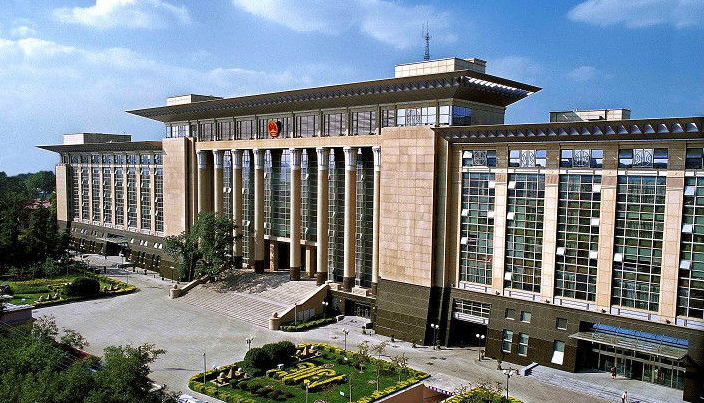
Liaoning Province High People’s Court. Image Credit: Zhonglan Xinwen
A Tale of Two Cases
What sentence should Schellenberg receive? A defendant’s criminal culpability and punishment ought to be determined in light of his or her own crimes. But whatever chance Robert Schellenberg may have once had of having his case interpreted in isolation ended last year. Today his case is indelibly wedded to another defendant: Meng Wanzhou, the CFO of Huawei, the world’s second largest cellphone manufacturer and one of China’s flagship companies.
Meng Wanzhou, Huawei CFO. Image Credit: Mingbao
In December 2018 Meng was arrested in Vancouver during a layover flight between Hong Kong and Mexico. Canadian officials arrested Meng based on a warrant issued by the United States Eastern District of New York, which named Meng as part of an alleged conspiracy violating sanctions with Iran. Meng is currently free on bail in Vancouver. The United States has requested that Meng be extradited to the U.S.
Meng’s arrest precipitated a diplomatic crisis in China-Canada relations. China has demanded Meng’s immediate release, alleging that the arrest is part of a Western effort to obstruct Huawei’s entry into Western markets. A representative of China’s Ministry of Foreign Affairs stated that Canada would face “grave consequences” over Meng’s continued detention. Immediately after Meng’s arrest in December, China detained two Canadians, Michael Spavor and Michael Kovrig, on accusations of endangering state security. Shortly thereafter the editor in chief of state media outlet the Global Times made a statement in English that “if Canada extradites Meng to the U.S., China’s revenge will be far worse than detaining a Canadian.”
It is in this context that Chinese and Western commentators interpret Schellenberg’s situation. When Schellenberg appealed his 15-year sentence in November 2018—just before Meng’s arrest—he had every reason to think that the re-consideration of his case at a trial of the second instance could only work in his favor. A defendant who appeals a verdict is not supposed to face a more severe sentence on retrial. And the prosecution did not file an appeal raising concerns about the severity of the sentence.
But circumstances changed between Schellenberg’s appeal in November 2018 and the Liaoning High People’s Court review in December. Meng’s case became an international flashpoint and China vowed to respond. The Liaoning High People’s Court took the unusual step of inviting foreign media to the second-instance trial. Western journalists who were present noted the ways in which the event appeared staged to send signals to the audience. Rather than reach a verdict on the case, the court took the unorthodox step of sending the case back to the lower court.
The remand to the lower court allowed the prosecution to amend the charges against Schellenberg, claiming new evidence in the case. This procedural move provided the trial court with a legal justification for resentencing Schellenberg to death. Numerous Chinese legal experts have noted irregularities in these proceedings. It is striking, for example, that although it took four years to initially sentence Schellenberg to a 15-year sentence, the justice system managed to re-sentence him to death in less than a month. His lawyers also contend the amended indictment in fact does not provide any new evidence of Schellenberg’s culpability.
What Are We Waiting For?
What comes next? Schellenberg’s case has so far proceeded in two phases with very different timelines. In the first phase, which ran from arrest in 2014 through Schellenberg’s initial sentence of 15 years in November 2018, there were no public announcements indicating the case carried political significance. The court moved extremely slowly, taking four years to deliver the initial sentence. Four years is an unusually long stretch for a criminal case in China. In waiting so long to produce a verdict, the Dalian trial court surely consulted higher authorities on the appropriate course of action. Why did this process take so long? The protracted wait might be the result of weak evidence in the case. Since China’s trials virtually never produce acquittals (as Dui Hua has recently noted), cases with shaky facts are likely to be sent to an adjudication committee for deliberation on appropriate sentencing. When a case involves a foreigner, the considerations may take even longer.
The second phase of the began after Schellenberg appealed his 15-year sentence in November 2018. In contrast to the first phase of the case, the second phase was fast, high-profile, and politically fraught. Following Meng’s arrest on December 1, 2018, Schellenberg’s case went through second instance trial and retrial of the first instance in six weeks. The second instance trial court announced its decision the day of the trial, rather than deliberating on the evidence, as usually takes place. And after the high court remanded the case for retrial, prosecutors amended the complaint with new evidence in a mere four days. The lightning speed of proceedings and state media comments about retaliation for Meng send signals about how Schellenberg’s death sentence should be interpreted. And yet Chinese authorities and media figures also strenuously insist that the court’s judgment was “beyond reproach” and rooted in the rule of law. China’s insistence on adherence to criminal procedure in the case fits with a general trend towards legal formalism in China, despite a larger turn away from rule of law. (China’s recent Supervision Law, for example, introduces a formal legal basis for the longstanding unaccountable, extrajudicial detention powers of the National Supervisory Committee, the Chinese Communist Party watchdog.).
We are now entering a third phase in the Schellenberg case, one in which Schellenberg’s fate hangs like a sword of Damocles over Canada. A cynical reading of the situation suggests that Schellenberg must continue to dangle there until Meng has either been extradited to the U.S. or returned to China. Meng’s most recent hearing took place on May 8. Schellenberg’s appeal hearing notably took place the following day. The timing of Schellenberg’s hearing carried a two-fold significance. The court heard the case within four months of accepting it, as required by law. But in doing so the day after Meng’s hearing, the court also pointed to the ongoing connection between the two defendants (a signal that did not, however, get much Western media coverage).
When will the Liaoning High People’s Court issue a sentence for Schellenberg? The Criminal Procedure Law indicates that the court may announce the sentence at a set time after the hearing, but does not stipulate any procedural constraints on that announcement (Articles 202 and 242). Indeed, Mark Swidan waited more than half a decade for announcement of a verdict following conclusion of his trial.
Although the court may delay indefinitely, Schellenberg’s procedural experience suggests that a verdict may be announced as a response to a development in Meng’s case. She is scheduled to next appear in court for an extradition hearing on September 23, so a sentence may be forthcoming at that time. If the high court upholds Schellenberg’s death sentence, the case will be sent to the Supreme People’s Court (SPC) for final review. There is no fixed statutory period for completion of this review. Although limited data suggests that many death penalty reviews are completed in a matter of months, anecdotal evidence also indicates that some cases are under review for years. Overall, however, the outcome is extremely consistent: the SPC eventually affirms the overwhelming majority of death sentences, although precise data on this is lacking. In 2007, around 15% of death sentences were not approved, but the percentage is believed to be lower now.
Once the SPC affirms the verdict, an execution order is issued and the execution usually takes place as soon as within a week, although there are exceptions: Li Yan, a woman from Sichuan, was sentenced to death for killing her husband in 2010 in self-defense, after enduring years of horrific domestic abuse at his hands, by each court that heard the case (local city/intermediate, provincial Sichuan High People’s Court, and finally, in January 2013, the SPC.) The case provoked broad condemnation and expressions of concern both inside and outside China, including by the Dui Hua Foundation. China’s 2016 anti-domestic violence law was invoked in wide-spread calls to take seriously the situation of domestically abused Chinese women who receive harsh sentences ranging from ten years to death sentences when they act in self-defense. On April 24, 2015, Li Yan’s death sentence was commuted to death with two years reprieve, and on September 8, 2017, the intermediate court commuted the 2015 sentence and sentenced Li Yan to life in prison.
Post settings Labels Criminal Justice, Law Enforcement Published on 5/30/19, 12:13 PM Pacific Daylight Time Permalink Location Options
Hong Kong-based pro-Beijing newspaper Wen Wei Po accuses democratic legislators and organizers of Occupy Central, including Joshua Wong, of making complaints overseas about internal affairs of China and Hong Kong. Photo credit: Wen Wei Po
China celebrates National Youth Day every year on May 4th, a holiday commemorating the patriotic May Fourth Movement in 1919. On this day exactly a century ago, thousands of university students assembled at Beijing’s Tiananmen Square, urging the Chinese delegation at the Paris Peace Conference not to sign the Versailles Treaty because the Allied Powers had conceded to Japan’s demand to take over the German concessions in Shandong. The procession proceeded to foreign embassies in the Legation Quarter to demand nullification of special foreign privileges, such as extraterritoriality. This was a privilege by which China was forced to yield control of sovereign powers, one of many losses as part of a series of “unequal treaties” in force since the First Opium War. Student protesters hoped that the United States would side with China over the “Shandong question,” because the U.S. was a key proponent of national self-determination and the U.S. embassy was the only foreign embassy willing to meet with their representatives and accept their petition.
A century later, the patriotic act of petitioning westerners known as gaoyangzhuang (告洋状) carries a negative connotation. Petitioning refers to the administrative system for receiving complaints from people with grievances, mostly concerning corrupt officials. While China guarantees the right to complain so long as petitioners do not bypass local authorities, the government does not tolerate the act of complaining to foreigners, in part due to the traditional notion of “not exposing family scandals.” Recent usage of gaoyangzhuang is often associated with Taiwanese president, Tsai Ing-wen, when she speaks to foreign diplomats and journalists about her rejection of Xi’s offer of the “one country, two systems” framework for reunification with the mainland. Li Jing-yu, wife of imprisoned Taiwanese activist Lee Ming-che (李明哲), has also been accused of gaoyangzhuang for criticizing China from overseas because she was prevented from visiting her husband, who is serving a five-year sentence in Hunan for subversion. The term is no less frequently used against Hong Kong democratic legislators, supporters and localists if they tell foreigners about Beijing’s tightening control over the former British colony.
In Taiwan and Hong Kong, complaining about the Chinese government does not land individuals in legal trouble because both regions are independent jurisdictions. By contrast, critics on the mainland face imminent threat of loss of personal liberty. In August 2013, Global Times stated that petitioners, alongside exiled democracy activists and “splittist forces overseas” headed by the Dalai Lama and Rebiya Kadeer, were the major users of gaoyangzhuang. Petitioners were accused of taking part in a number of “illegal behaviours” such as wearing clothing traditionally associated with petitioning. These included, for example, signs hanging both down the petitioner’s front and back, waving banners, and chanting slogans at Beijing-based international organizations, such as offices of the United Nations and foreign embassies, with the intention to “create international influence” (zaocheng guoji yingxiang 造成 国际 影响). Unlike those in Hong Kong and Taiwan, petitioners on the mainland with assorted grievances, from forced demolitions to land disputes, are most likely to face reprisals for complaining to foreigners.
Hu-Wen Era
It is unclear when the term of gaoyangzhuang entered the official lexicon. An article originally published by Phoenix Weekly in January 2009 stated that the term began to come into vogue during the Hu Jintao and Wen Jiabao administration. China’s effort to improve its global image prior to the Beijing 2008 Olympics incentivized provincial governments to track gaoyangzhuang petitioners in Beijing. In 2005, a total of 37 people from Hubei were reported to have travelled to Beijing to make complaints to foreigners, compared to 77 people from Liaoning, which was ranked as the top fourth province nationwide. In the 19 months since July 2004, over 540 people in 50 different groups had filed complaints to the Beijing offices of UNHCR and UN Development Programme, according to statistics from the Sanlitun police station. A Liaoning official was quoted as saying that gaoyangzhuang “seriously damages the country’s reputation and external image” and “creates pressure on the capital’s social security and stability.” Another Shanghai official called gaoyangzhuang “despicable,” an act tantamount to “blackmailing the Chinese people.”
A Hebei government directive in 2007 states that gaoyangzhuang petitioners adversely affect Beijing’s social stability and vilify the national image. Underlining added by Dui Hua Foundation. Photo credit: Boxun
Public censure achieved little to deter petitioners from complaining about local governments to foreigners. In view of this, provincial public security, procuratorial offices, and courts started to jointly push for punitive measures. Anhui was among the first to release an opinion in 2006, listing foreign embassies and international organizations as “key areas” for stability maintenance alongside the central organs of the Chinese Communist Party, and subjecting anyone who disturbed social order to punishment in accordance to the Public Security Administration Punishments Law.
Government officials are keen to suppress gaoyangzhuang because they use low rates of gaoyangzhuang as an indicator of good governance. A performance appraisal document in Shihu Township, Jiangsu, in 2011 categorized the prevention of gaoyangzhuang under the section appraising “critical stability control” (zhongdien weiwen 重点维稳) during “sensitive days” (such as certain national holidays and anniversaries of events that are likely to inspire protests and other forms of public political expression); the section carries two evaluation points. Each occurrence of gaoyangzhuang leads to a deduction of half a point. Similar assessment mechanisms likely existed before 2011, since the 2009 Phoenix Weekly article mentions that local public security bureaus in Henan, Shanghai and Liaoning had publicized cases of petitioners apprehended or detained for gaoyangzhuang.
In the run-up to the 2008 Olympics, both official usage of the term gaoyangzhuang and punitive measures proliferated. In June 2007, an official in Heilongjiang’s Datong District called for “detaining or giving re-education through labor (RTL)” to gaoyangzhuang petitioners before resolving their problems. Petitioners would have to pay for all expenses the government incurred for handling their petitions if deemed “unreasonable.” In January 2008, an opinion from Hebei called gaoyangzhuang an “irregular form of petitioning to Beijing” (feizhengchang jinjing shangfang非正常进京上访) and a “serious breach” of the petition regulations. The opinion recommended that public security directly detain or give RTL to gaoyangzhuang petitioners without the need to give prior admonishment or warning. In March, Liaoning followed suit and issued a similar opinion to crack down on gaoyangzhuang petitioners.
Nor did the crackdown on gaoyangzhuang relax in the wake of the Beijing Olympics. A local government directive issued in 2009 continued to blame gaoyangzhuang petitioners for “complicating simple issues, internationalizing and politicizing domestic problems” by means of “creating international influence.” Throughout the year, a total of 2,862 gaoyangzhuang petitioners were caught in Chaoyang District, Beijing, and, of these petitioners, 1,118 were detained. In February of that year, then-Secretary of State Hillary Clinton visited China. Zhao Chunhong (赵春红) led a group of petitioners to put up a banner welcoming Clinton and called on Nancy Pelosi (scheduled for a separate visit in May of 2009) to put pressure on China over its human rights records. Zhang was subsequently sentenced to three years’ imprisonment for “picking quarrels and provoking troubles.”
About half a year before Xi’s rise to power in 2012, blind activist Chen Guangcheng (陈光诚) made a daring escape from house arrest to the U.S. embassy. In May, Chen and his family left China for New York. Some mainland observers opined that the episode had emboldened petitioners to make complaints to foreigners in the belief that the Chinese government would ultimately address their problems. On May 8, 2012, elderly petitioner Nie Muni (聂木妮) and his wife attempted to “barge into” the U.S. embassy, but were intercepted by the embassy guards and taken to the Jiujingzhuang Reception Center in Beijing, an unofficial detention center where petitioners are held. In an interview with Voice of America (VOA), the couple said they wanted to “beat drums and cry injustice” (jigu mingyuan击鼓鸣冤) at the U.S. embassy because the U.S. “gives people a sense of trust and respect for human rights and dignity.” They claimed to have been inspired by Chen, who received medical treatment from the Chinese government after he escaped to the U.S. embassy.
Xi’s Regime
Despite the abolition of RTL in 2013, many gaoyangzhuang petitioners have not fared any better. They are now more likely to be convicted of “picking quarrels and provoking troubles,” which carries a maximum sentence of ten years. In 2013, over a dozen petitioners from Fuzhou, Fujian, started a series of gaoyangzhuang petitions in the hope that then-U.S. Ambassador Gary Locke would respond to their plight. In April of that year, they even planned to intercept John Kerry’s vehicle during his Beijing visit on the 13th. Upon learning that the Fuzhou government had dispatched large numbers of interceptors to Beijing, the group proceeded instead to Ambassador Locke’s residence, where they threw stacks of leaflets and some of them chained themselves to the front gate. The group of petitioners grew to over two dozen in July, but many were removed and collectively charged with “picking quarrels and provoking troubles.” Some of them were released on bail after several months in custody.
Some of the Fuzhou gaoyangzhuang petitioners who attempted to complain about corruption and rights abuses in China to then-U.S. Ambassador Gary Locke in 2013. Photo credit: RFA
Lin Yingqiang (林应强) continued his effort to petition Locke alongside a dozen of the Fuzhou petitioners into early November. After 15 months in criminal detention, Lin was sentenced to three years’ imprisonment in February 2015. The judgment stated that Lin circulated 68 blog posts about the “Fuzhou victims” to satisfy his greed in the name of “anti-corruption” and “whistleblowing.” Among these posts, two recounted his stories of “barging into” the American embassy, which were viewed over 9,000 times in 2013. A day after his November petition, he and other Fuzhou petitioners put up another blog post, entitled “Please Follow Fuzhou Petitioners Who Complained to Foreigners,” which was viewed 51,159 times within one month of posting. At least four other individuals surnamed Tang, Chen, Shi and He were sentenced to two and a half years for the same offense of “picking quarrels and provoking troubles.” According to a Fuzhou activist, the above-mentioned five Fuzhou petitioners were sentenced at three different locations on purpose, because putting all of them on the same trial would have attracted unwanted publicity to this significant gaoyangzhuang case.
In February 2016, unofficial news media reported that the Ministry of Public Security would establish a “national petitioner database” as a preventive measure of stability maintenance. The database would not only track mainland petitioners, but also those who petitioned in Hong Kong, Macao, and Taiwan. An exit ban might be placed on the mainland petitioners, who also faced restrictions from entering various municipalities and cities. Public security would liaise with Chinese embassies to track and monitor petitioners who made complaints overseas.
The petitioner database was created with the intention of curbing the rising number of petitioners who traveled abroad to voice complaints about the Chinese government, according to Bowen Press, citing an informed source. On September 25, 2015, dozens of petitioners attempted to intercept Xi’s motorcade at the end of the Obama-Xi meeting in Washington, D.C. One of them, a petitioner from Jilin, managed to stop Xi’s wife Peng Lijuan’s vehicle. Bowen reported that the incident had “frightened” Peng and made Xi “lose face.” The petitioner was taken away by police and his petition materials were subsequently received by officials from the Chinese embassy. In March 2016, another group of 50 gaoyangzhuang petitioners from 10 different provinces and municipalities were accused of “creating a nuisance” when Xi attended the Fourth Nuclear Security Summit, again in Washington, D.C. At the time of writing, Dui Hua is not aware whether the petitioner database has come into operation.
Communicating with Foreign Media
While petitioning is not the only channel for Chinese citizens seeking to publicize or change policies that they deem unfair, anyone who makes negative remarks about China to foreign media can face accusations of gaoyangzhuang. In May 2014, journalist Xiang Nanfu (向南夫) was detained for the offense of picking quarrels and provoking trouble, a charge stemming from his use of Boxun, a U.S.-based Chinese language news website, to “fabricate” news about organ harvesting and violent land grabs in China in exchange for article fees. It is worth noting that although Xiang was not a petitioner, Xinhua News called his act of “smearing” China in front of foreigners gaoyangzhuang.
Lawyers, too, have been affected by Chinese government responses to communicating with foreign sources. There has been a growing trend of using administrative penalties against lawyers following the nationwide crackdown on Chinese lawyers and human rights activists that began on July 9, 2015. During the “Two Meetings” in March 2018, the Ministry of Justice (MOJ) warned lawyers not to give dissenting views on China’s constitutional amendment that removed Xi’s presidential term limit. A notice issued by a local justice bureau indicated that violators would have his/her license to practice revoked and be barred from resuming work for five years. The MOJ also explicitly warned lawyers not to give interviews to foreign media, including BBC, Voice of Russia, and American media outlets such as NBC, CBS, VOA, and Radio Free Asia (RFA). When asked by RFA about the health condition of his client Huang Qi, the webmaster of the legal rights website 64 Tianwang, in August 2018, defence attorney Liu Zhengqing apologized for not being able to give an interview because he was under a lot of pressure with regard to talking to foreign media. On December 25, 2018, Liu’s license to practice law was revoked.
Critics in- and outside of academia frequently face harassment for speaking out to foreign media. On August 2, 2018, Shandong police broke into the home of retired professor Sun Wenguang (孙文广) while he was giving a phone interview to VOA. In the interview, Sun criticized Xi’s One Belt One Road initiative, urging Xi to spend more money in China instead of wasting money overseas on aid, loans and investments. Sun was put under house arrest for over 10 days.
A recent case involving prison sentences for who spoke out to foreign media involved Tibetan language activist Tashi Wangchuk, who was sentenced to five years’ imprisonment for inciting splittism in May 2018. In 2015, Tashi Wangchuk gave interviews to The New York Times, in which he expressed worries about the disappearance of the Tibetan language, as the Chinese authorities have been prohibiting the use of Tibetan in spheres ranging from schools to commerce even on the Tibetan plateau. Tashi Wangchuk described China’s ethnic policy as a “systematic slaughter” of Tibetan culture. Speaking to foreign media was his last resort, because government bureaus had refused to lodge a petition for him. He had also been turned down by domestic media, nor could he bring a lawsuit against the language policy. Knowing full well of the risk of speaking to foreign media, Tashi Wangchuk stressed that he was not advocating for independence. He insisted that language rights are human rights protected by China’s constitution. However, the nine-minute film made by The New York Times was cited as evidence that landed Tashi in jail. Tashi is scheduled for release from a prison in Qinghai in January 2021.
The frustration of those who apparently feel driven to complain to foreigners is succinctly described by a Caixin columnist who witnessed a gaoyangzhuang incident at the U.S. embassy in March 2014: a middle-aged petitioner holding two crutches, along with three people who appeared to have come from the countryside, were intercepted by a plainclothes officer after they ignored the warning that they would be arrested. Speaking from his own petitioning experience, the columnist wrote that the only response he received from the petition bureau was a receipt acknowledgement of his complaint, and despite an indefinite wait, his petition was never addressed. He guessed that gaoyangzhuang petitioners did not genuinely think they could succeed in obtaining redress from foreigners; they were simply trying their luck because they believed they had nothing more to lose by “speaking out against injustice” in front of foreigners.
Many gaoyangzhuang petitioners who made this or similar assumptions, however, have been mistaken. The cases explored in this article demonstrate how those who complain about China to foreigners, including foreign embassies, visiting diplomats and leaders, and journalists, could very well face several forms of retribution. Not only are they stigmatized for “badmouthing” China, but they also face the risk of imprisonment for picking quarrels and provoking troubles, and even for the very serious crime of endangering state security in cases involving ethnic minorities.
For more on petitioning in China, see also Dui Hua’s earlier reporting on the Beijing city government’s efforts to prohibit the use of “black security firms” and “black jails” to prevent petitioners from outside Beijing from coming to the capital to petition the central government, and, potentially, foreign actors.
On June 3, 1998, President Bill Clinton addressed a press conference in Washington D.C. Calling trade “a force for change in China,” Clinton cited “concrete results on human rights” as a result of his administration’s engagement with China, and then announced his intention to renew China’s Most Favored Nation (MFN) trading status, set to expire the next day.
Within hours of the press conference, China’s Ministry of Foreign Affairs announced that President Clinton would make a state visit to China from June 25 to July 3, 1998. He would meet with China’s President Jiang Zemin, and pay visits to Shanghai, Xian, Guilin, and Hong Kong.
President Bill Clinton and Jiang Zemin, 1998. Image Credit: Wikimedia Commons
Not unexpectedly, Clinton’s decision to renew MFN and pay a state visit to China was harshly criticized by members of Congress and human rights groups, who challenged the president’s conclusion that there had been positive developments in human rights in China. They claimed that, while there had been a few releases of political and religious prisoners, repression continued apace. Beijing had still not provided an accounting of individuals imprisoned in the Tiananmen protests of 1989 (it has yet to do so), and in October 1997 the head of the underground Catholic Church, Bishop Si Zhimin, had been taken into custody by officials of the Religious Affairs Bureau in Hebei Province. His whereabouts remain unknown more than 20 years later.
The reaction from China’s small dissident community to President Clinton’s decision to visit China was less condemnatory. Many saw the visit as an opportunity to test the limits of China’s strict control over dissent. The year before, in 1997, several dissidents, nearly all of whom had served time in prison for their political activities, had begun working to establish an opposition political party, and the prospect of an American president visiting China encouraged them to speed up their work.
Preparatory committees for the China Democracy Party (CDP), intended to be a national opposition party, were established in different parts of the country. Initially, they were established secretly, but on June 25, 1998, the day President Clinton arrived in China, the Hangzhou Preparatory Committee, led by Wang Youcai, issued an “Open Declaration of the Establishment of the CDP Zhejiang Preparatory Committee.” The declaration, together with a draft party constitution, was circulated on the Internet, and a formal application was filed with the Zhejiang government to register the CDP as a political party.
Soon other CDP preparatory committees were established elsewhere in China. By the end of 1998 there were 24 such committees. The names and details of 200 party members were posted on websites.
President Clinton’s visit to China came off without a hitch. He was criticized for inspecting an honor guard in Tiananmen Square, site of the killings in June 1989 that outraged the world. But afterwards, he met with Jiang Zemin and had what was by all accounts an extraordinary joint press conference with the Chinese president on June 17. The event was broadcast live on Chinese state television. Clinton expressed disapproval of the Tiananmen Square killings and referred to the Dalai Lama as a “holy man” whom President Jiang “would like very much.” President Clinton even referenced my own proposal that China should release all imprisoned counterrevolutionaries since the crime of counterrevolution had been removed from the Criminal Law in 1997.
Clinton’s endorsement of this proposal garnered much attention from Chinese officials, who marveled, in private conversations with me, at the president’s knowledge of the Chinese legal system. Clinton attended services at a Protestant church and gave a speech to Chinese students that was also televised nationwide.
His remarks on the Dalai Lama had a deleterious effect however. Talks were underway in Singapore between representatives of the Dalai Lama and the Chinese government. They were abruptly terminated, reportedly due to anger on the part of the People’s Liberation Army with Clinton’s remarks and Jiang Zemin’s failure to push back.
Crackdown
On July 10, 1998, one week after President Clinton left China, the police moved against the CDP, detaining Wang Youcai in Hangzhou. They formally arrested him for inciting subversion on August 7, but in an unusual move, he was released and placed under residential surveillance. The relative freedom of loose house arrest did not last long. He was rearrested and indicted for subversion, tried, and sentenced to 11 years in prison on December 21, 1998.
After the detention of Wang Youcai, the authorities changed their tactics. One by one, the preparatory committees were informed that their applications to register as a political party had been turned down. Leaders were visited by the police and told to desist their efforts or face the consequences.
Undeterred by threats, Xu Wenli, Gao Hongming, and Zha Jianguo established the CDP National Congress Preparatory Committee in Beijing on November 2, 1998. Xu was detained on November 30 and subsequently tried and sentenced to 13 years in prison on December 21, 1998 for the crime of subversion.
On May 7, 1999 NATO fighters under American command bombed China’s embassy in Belgrade, touching off a crisis in US-China relations. China suspendered all discussions on human rights with the United States.
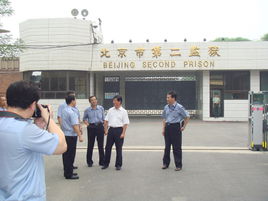
After the bombing, Beijing stepped up its repression of the CDP. On July 5, 1999 Zha Jianguo and Gao Hongming were tried for subversion in Beijing. Zha and Gao were sentenced to nine years and eight years, respectively, on August 2. After a few more weeks in a detention center, both men were placed in Beijing Number Two Prison, a facility in northeast Beijing housing 2,000 inmates. According to my list of political prisoners in Beijing, 26 of the 40 names of prisoners serving sentences for counterrevolution or endangering state security were housed in Beijing Number Two.
Dui Hua was established in April 1999. Its dialogue on human rights with the Chinese government had been suspended that month on account of the tabling of a resolution at the Human Rights Commission in Geneva. Its suspension therefore came before the suspension of the official dialogue on account of the Belgrade bombing in May. This proved to be fortuitous. Dui Hua’s dialogue was resumed well before the official dialogue resumed.
Some of Dui Hua’s earliest cases were those of CDP members, in line with the priorities of Western governments at the time. There were two high-profile successes that Dui Hua contributed to. Xu Wenli was granted medical parole and flown to the United States with his wife on Christmas eve 2002. Wang Youcai was granted medical parole and flown to the United States on March 4, 2004.
Xu Wenli with John Kamm at the Dui Hua Foundation’s San Francisco office.
Gao Hongming, Qin Yongmin, and Zha Jianguo, as well as most of other CDP members who had been imprisoned, served their entire sentences with not a day off. They were mostly forgotten by the West.
Zha Jianguo was an idealistic young man who, heeding Chairman Mao’s call, went down to the countryside in the late 1960s to make revolution. He was 17 years old. He became a village leader in Inner Mongolia, a dirt-poor part of China. Disillusioned with the promises of Maoism, he returned to Beijing, and became passionately involved in the Tiananmen protests of 1989. After the imprisonment of Xu Wenli and the dismemberment of the CDP, Zha Jianguo became the de facto leader of the soon-to-be crushed opposition party.
Zha Jianying
In the summer of 2000 I was contacted by Benjamin Lee, a visiting professor of comparative literature at the University of Hong Kong. Ben was an accomplished scholar. He had taught at the University of Chicago where he had earned his PhD in anthropology. He had also taught at Rice University, where he ran the Transnational China Project at the James A. Baker Institute of Policy Studies. Ben and I had studied Chinese language at Middlebury College in the summer of 1972, immediately before I left the United States for Macau.
Ben had married Zha Jianying, a rising star in contemporary literature on China. Her China Pop, published in 1995, was critically acclaimed. Her facility in the English language was astonishing. When she went for her visa application interview at the United States Embassy in Beijing she hardly spoke a word of English. Within a few years she was writing fluent and evocative prose, glistening with power and emotion.
Zha Jianying’s brother is Zha Jianguo, and Ben had suggested she reach out to me for advice and assistance on how to secure better treatment and clemency for Zha Jianguo.
Ben, Jianying, and I met for lunch in Hong Kong at the Mandarin Hotel’s Grill Room on September 19, 2000. Over the next six months Jianying and I met frequently. She joined me on visits to the Chinese University of Hong Kong’s University Services Centre which, at the time, had an outstanding collection of Chinese government open sources on political crime. Sadly, that is no longer the case.
I accepted her request to act as her advisor on matters relating to Chinese prisons and offered to begin including her brother’s name on prisoner lists submitted to the Chinese government by foreign governments, as well as asking about him directly in my meetings with the Chinese Ministry of Justice and Ministry of Foreign Affairs.
By the time I offered to assist Jianying I had already visited five Chinese prisons and met privately with officials of the Prison Administration Bureau of the Ministry of Justice more than two dozen times.
I concluded that Chinese prison officials were susceptible to flattery regarding their personal appearance, in particular their smart uniforms, and the physical appearance of their prisons. (This was in part because prison officials, unlike foreign affairs officials, rarely got to meet foreigners.) If prison officials had treated a prisoner well, this should be acknowledged. It was important that visitors dress appropriately. This was not an issue with Jianying, who is an elegant dresser.
I told her that monthly visits and phone calls were critically important, not only because they boosted the prisoner’s morale, but because they sent a strong signal to the prison authorities that people on the outside cared deeply for their imprisoned loved one. I admonished her to be careful what she said to Zha Jianguo during the 30-minute monthly visits; they spoke by phone through a thick plexiglass screen. The calls were monitored and could be cut off at any time. I advised to her to speak with her brother as if Jiang Zemin were in the room.
During monthly visits, friendships could be developed both with guards and wardens, some of whom would drop their guard and reveal important information on the prisoner’s behavior and health. I suggested she ask to meet with one of the wardens of Beijing Number Two Prison.
Jianying advised me that her brother was unrepentant, and since he refused to confess he could never be considered for sentence reduction or parole. She asked me what I would do if I were in her brother’s place. I gave her the same answer I have given to every friend and relative of prisoners who have asked me this question over many years: if I were in prison, I would say or sign anything to win early release, as long as it didn’t hurt anyone else, especially fellow prisoners. In short, I would lie. Confessions made under distress would not be taken as signs of genuine remorse by people familiar with the realities of prison life in China. They were not worth the paper they were written on. Jianying sighed, knowing that her brother would never admit guilt for what he had done or for what he believed.
I also taught Jianying about fen lei gai zao, a Ministry of Justice policy, followed in many prisons, of grouping prisoners together with those who had been sentenced for the same crime. She should ask to have her brother moved to a cell with other political prisoners. At the time he was in a cell with violent offenders who often engaged in fights and petty quarrels. He was left alone, however, due to the respect other prisoners afforded him.
Shortly after our first meeting I put Zha Jianguo’s name on a list of prisoners submitted as part of a bilateral human rights dialogue with a European government. In January 2001, the Chinese government, for the first time, provided written information on Zha Jianguo.
A Conversation with Warden Zhang
On April 10 and 11, 2001, Zha Jianying received phone calls from Zhang Yongsheng, a warden of Beijing Number Two. Her request for a private meeting with the warden had been granted. She was invited to visit the prison on April 13.
Upon her arrival she was brought into the warden’s office. She sat on a sofa opposite Warden Zhang and his assistant Mr. Han. What was supposed to be a 30-minute meeting wound up lasting 90 minutes.
Jianying started by praising Warden Zhang. “I have been quite surprised and impressed by your officers’ courtesy, efficiency, and law-abiding spirit,” she said. She complimented the warden and his assistant’s snappy new uniforms (modeled on Hong Kong prison uniforms) and asked for the meaning of the stars on their epaulets. Warden Zhang smiled broadly.
Jianying then proceeded to make requests. On a recent visit she had noticed that her brother was in poor health. While thanking the warden for arranging Jianguo to receive a spinal CT at a local hospital, she asked that he also be given a heart CT and a brain CT. She expressed concern over an alarming new development: Jianguo’s hands were purple and would turn black at night. This might be a sign of a circulation problem. A heart examination and treatment might be necessary. She worried about her brother’s headaches, and said she feared he might have a brain tumor.
Jianying complained that her brother was in a cell with ruffians who were noisy and argumentative. He was unable to get a good night’s sleep. Would it be possible to move him to a better cell? Perhaps the prison could move him in with other prisoners who were serving sentences for state security offenses.
She lodged a complaint with the warden over the lack of physical exercise for Zha Jianguo. He had fallen down while exercising in the prison yard and had been barred from going outside “for his own good.” All prisoners should do physical labor, the warden said. Zha Jianguo’s job was wrapping chopsticks, a monotonous task involving little physical exercise.
Finally, Warden Zhang told Zha Jianying that all her requests would be considered. “We will do the best we can.” However, the prison did not have enough state security prisoners to fill a cell block, so this request could not be granted. Transfer to another, quieter cell could however be considered.
In the months that followed Jianying’s visit, Zha Jianguo’s treatment improved. He was moved to a better cell and exempted from physical labor. He was allowed to read as much as he wanted; his sister brought piles of books to him on every visit. He was afforded better medical treatment.
A Visit to Beijing Number Two
Two months after Zha Jianying visited Beijing Number Two, I went to Beijing in June on one of my regular missions. I met with the Ministry of Justice and asked for permission to visit the prison. I was told that my request would be considered.
In December 2001, I traveled to Beijing accompanied by Tina Rosenberg, a journalist working for The New York Times who was writing a story about my work. (The story appeared in the March 3, 2002 issue of the Times’ Sunday Magazine under the title John Kamm’s Third Way.) Ms. Rosenberg observed my work (including during a frosty breakfast with the American Chamber of Commerce) and sat in on meetings with the Supreme People’s Court and the Ministry of Foreign Affairs, but her request for a meeting with the Ministry of Justice was denied, and it was made clear that she would not be allowed into a Chinese prison.
On the morning of December 18, 2001, I was picked up at the Jianguo Hotel and, together with representatives of the Ministry of Justice and the Beijing Prison Administration Bureau, we drove to northeast Beijing, down a dusty exit road off the Beijing-Shenyang expressway. It was familiar terrain for me. The prison sat cheek to jowl with the Beijing Chemical Works, with whom I’d done business 20 years before.
I was bringing with me a list of prisoners in Beijing Number Two. Among the names on the list were Zha Jianguo and Gao Hongming. Others included Hu Shigen, Liu Jingsheng, Chen Yanbin, and Han Chunsheng, all well-known dissidents. There were also two people on my list who had been given long sentences for counterrevolutionary sabotage and hooliganism committed during the June 1989 protests in Beijing, Chang Yongjie and Zhu Gengsheng. They were both released early after multiple sentence reductions.
Beijing Number Two was an old facility, drab and run-down. It had been designated a maximum-security prison in 1990. Among its 2,000 prisoners were many who had committed violent crimes. In the report on my two-hour visit, I noted that “Its facilities, including its clinic, are less extensive and more poorly equipped [than other prisons I had visited], and its cellblocks were more crowded and less well-appointed than those of model prisons. . . . My tour revealed a physical plant badly in need of repair and better maintenance. Foreigners are rarely taken to the prison. I was the only foreign visitor in the last 12 months.”
Beijing Number Two Prison. Photo Credit: Baidu Baike
In my conversation with the warden in his office (a different warden than the one Zha Jianying had met), I went over my list name by name and asked for their current status. The warden said he’d look into my requests. Although they did not have a separate section, those convicted of political crimes were not housed with violent criminals, sex offenders, or those convicted of economic crimes. Prisoners serving sentences for these crimes were housed together in separate cell blocks.
I was given a detailed account of the point system used to reward prisoners with sentence reductions and parole, as well as other benefits like more frequent family visits, conjugal visits, and use of two telephones to receive calls from family members. The prison granted sentence reductions to 25 percent of prisoners every year, though the warden acknowledged that the sentence reduction rate for those convicted of endangering state security was lower.
I asked if prisoners like Zha Jianguo and Han Chunsheng who refuse to “acknowledge guilt, show genuine remorse, obey regulations, and perform manual labor” could ever gain early release. He replied that prisoners who refuse to acknowledge guilt can petition courts for a retrial. And if their petitions are rejected? “Then the prisoner has no way out,” the warden explained.
After our conversation, I toured the prison grounds accompanied by Ministry of Justice officials and the warden. I used the walk-around to pepper them with questions on individual prisoners. I tried to raise as many names as I could before being invited to leave the prison. The visit had lasted two hours.
Of Courage and Devotion
During one of the monthly visits, Zha Jianguo asked his sister to tell me to stop my efforts on his behalf. He was doing fine, and I should focus on other prisoners who were in greater need. I complied with his request and stopped raising his name. He was released on June 29, 2008, having served his entire nine-year sentence. He returned home to a hero’s welcome.
Zha Jianying and Zha Jianguo, Beijing, 2017. Zha Jianguo had just returned to his apartment after spending an evening in a detention center. Photo courtesy of Zha Jianying.
Despite serving a supplemental sentence of “deprivation of political rights,” Zha Jianguo returned to political activism, at one point writing three separate blogs that commented on recent events. From time to time what he wrote got him into trouble. He would be “invited for tea,” his computer and cell phones seized, and, around the time of “sensitive anniversaries” or big meetings like party or legislative congresses, taken out of Beijing on tours of scenic and historic sights.
In her Tides Players, Zha Jianying paints me in heroic terms as someone who uses everything in his power, “hard data, personal connections, cajoling, name-dropping, bargaining, to make sure the issue of Chinese political prisoners does not go away.” She writes that “If Jianguo has been treated better than some political detainees it is probably because of John’s efforts.”
She is too generous. The reasons why Zha Jianguo was treated better than other political detainees were his courage and his sister’s devotion.
Possessed of a charismatic personality, Zha Jianguo refused to admit guilt, to grovel before authority. He was resolute, and held fast to his belief that, someday, China would be a democracy that respects human rights. He earned the respect of inmates and guards alike. He was neither tortured nor mistreated. For the most part he was left alone with his books.
On her monthly visits, Zha Jianying brought him news of home, money to buy extra food, snacks and sweets from the commissary, warm clothes, and, perhaps most important, books. She brought him hundreds of books during the time he was in prison, enough to stock a small library. She mostly visited her brother on her own, but on one occasion she brought along a grandchild he’d never seen. He watched her crawl around the reception room through the thick plexiglass barrier through which Jianying spoke with him by phone.
Abraham Lincoln once said that the power of hope on human exertion, and on happiness, is wonderful. Zha Jianying gave her brother hope, and strengthened his will to carry on. As for me, I was but an instrument of her devotion.
SAN FRANCISCO – April 30, 2019 – After spending nearly six and a half years in a Chinese detention center without having been convicted of a crime, 44-year-old American businessman Mark Swidan has been found guilty of trafficking and manufacturing drugs and sentenced to death, suspended for two years. The Jiangmen Intermediate People’s Court announced the sentence on April 30, 2019, more than five years after Swidan’s trial in 2013.
Mark
Swidan and ten other individuals were found guilty by the Jiangmen court,
including two who were sentenced to death. One of those sentenced to death is a
Canadian citizen. All of those convicted have 10 days to appeal their
sentences.
Since
Swidan’s trial in 2013, the Jiangmen court has applied for extensions of the
statutory requirement to announce a judgement no later than three months after
the trial. The Supreme People’s Court in
Beijing granted the extensions on more than 20 occasions. No explanation was
provided to the family.
According
to a summary
of the case published by the Dui Hua Foundation in November 2017,
“Mark Swidan was taken into custody during a police raid on his hotel room on
November 12, 2012. He was on a business trip. Two individuals – an interpreter
and a driver – had come to his room. Police reportedly found drugs on their
persons. No drugs were found on Mr. Swidan or in his room. Drugs were found in
the room of another suspect. No forensic evidence has been produced – no drugs
in his system, no DNA on the packages, no fingerprints on the packages or drug
paraphernalia – tying Mr. Swidan to the drugs. No emails, letters, or phone
calls have been found that link Mr. Swidan to any drug transaction. The
indictment states that Mr. Swidan played a secondary role in the alleged crime.
Prosecutors recommended a lesser sentence. Mr. Swidan has no history of
criminal behavior, including using or trafficking in drugs.”
Katherine
Swidan has led the fight for her son’s freedom. The news of this cruel sentence
is a crushing blow to her and her family in Houston, Texas.
The
American consulate in Guangzhou has paid Mr. Swidan monthly visits and consular
officers attended both the 2013 trial and the 2019 sentencing. The Department
of State and the White House have raised his case with the Chinese government
on numerous occasions. More recently, a local Catholic Church in Houston has
offered support for the family. The family’s congressman, Representative
Vicente Gonzalez (D-TX), has taken up Mr. Swidan’s cause, as well.
The
Dui Hua Foundation, based in San Francisco, has advocated for Mr. Swidan on
numerous occasions since it first became aware of Mr. Swidan’s plight more than
five years ago, placing his name on dozens of appeals made to the Chinese
government.
“At
the hour of Mark Swidan’s sentencing, American Treasury Secretary Mnuchin and
Trade Representative Lighthizer were in Beijing to discuss a deal to end the
trade war between the United States and China,” noted John Kamm, Dui Hua’s executive director. “Both countries agree that
the ultimate success of any agreement to end the trade war depends on
enforcement in a system based on judicial transparency and due process. The
Swidan family was never told why the judgment was repeatedly extended, a
violation of a basic norm of transparency. Mr. Swidan’s rights to a fair trial
and due process have been seriously abused. This is a sad day for justice in China.”
Mr. Swidan’s sentence is believed to be the first time an American citizen has been sentenced to death, suspended for two years, by a Chinese court.
Upcoming: International Symposium on Girls in Conflict with the Law
Preparations are well underway for an International
Symposium on Girls in Conflict with the Law. The event, the first of its kind,
is being organized by The Dui Hua Foundation and three other partners, to take
place in Hong Kong in April 2020.
There are many crucial conversations happening around the
world about juvenile justice. However, most of these conversations, as well as
related research, policies, and practices, are focused on young male offenders,
who have historically dominated the global population of juvenile offenders.
Recognizing the need to shift these conversations – and the attention of
communities worldwide – towards young female offenders, this 2020 symposium
will bring together leading experts and practitioners from around the world for
an exchange on the unique challenges related to protecting girls in conflict
with the law.
According to the United States Federal Bureau of
Investigation’s Uniform Crime Reporting, the number of juveniles arrested in
the United States between 2007-2017 showed a slight decline. However, the
number of women arrested in the United States during that same period showed a
steady increase of about two percent per year. This pales in comparison to the
number of women imprisoned in China, which rose more than 50 percent between
2003 and 2015, ten times faster than the growth registered for the population
of incarcerated men. The number of girls in prison is naturally linked to the
issue of women in prison: girls in conflict with the law often progress to
women in conflict with the law.
The Girls in Conflict with the Law symposium follows the success of several related programs undertaken by Dui Hua, including five juvenile justice exchanges with China’s Supreme People’s Court and the 2014 meeting, Women in Prison: An International Symposium on the Bangkok Rules. Next year’s program will be held at the University of Hong Kong, presented in partnership with the Centre for Comparative and Public Law and the Centre for Criminology at the University of Hong Kong, Managing Attorney Patricia Lee at San Francisco’s Juvenile Public Defender’s Office, and London-based Penal Reform International.
As of April 2019, over a dozen expert presenters have been confirmed, including judges, academic scholars and professors, and clinical psychologists from Western Europe, Asia, and North America. A strong presence from the China’s Supreme People’s Court is anticipated. Program partners are working to identify and confirm up to five additional presenters representing other regions around the world. Invitations will also be extended to select stakeholders – predominantly judges, researchers and funders from the US, Western Europe and China – to attend as commentators or observers.
Through panel discussions, key-note addresses, research presentations and collaborative case studies, presenters will speak to and share best practices on specific topics, according to their own expertise and areas of interest. Topics may include domestic violence/abuse; criminal procedures for girl offenders; restorative justice and diversion practices; human trafficking; services to address mental illness, drug abuse or physical disability; and psychological effects and social impacts on girl offenders worldwide. After two days of presentations and interactive dialogue, attendees will visit carceral and social work facilities for girls in Hong Kong.
To augment the experience of attendees and, for the larger Hong Kong community, to draw attention to the topic, program partners have arranged to exhibit a collection of evocative photos by American artist Richard Ross in the University’s public spaces over the course of the symposium. A rare, multidimensional look at the lives of girls in the criminal justice system, Ross’ photos have been compiled into a book, Girls in Justice.
By facilitating international dialogue on this
topic, program partners aim to support
the exchange of promising practices and challenges, to foster collaboration
towards finding applicable solutions, and to influence legislative practices in
China’s juvenile justice system.
PRISONER UPDATES
A response recently received confirmed the status of Sonam Tso (生龙措), a Tibetan nun convicted of inciting splittism. She was released from Chengdu Women’s Prison in October 2017 after serving nine years of her sentence, with a sentence reduction of seven months. The specifics of her case are unknown.
Tao Dafeng (陶达凤), a female Falun Gong practitioner convicted of “organizing/using a cult to undermine implementation of the law,” will complete her ten-year imprisonment in July 2019 after receiving two sentence reductions that total two years. Tao is reported to be in good health.
On political prisoners in Hunan, Mo Wulong (莫武隆) continues to serve his 20-year imprisonment in Wangling Prison. Mo was the leader of Lord God Sect (主神教) and was convicted in 2008. The banned sect based on Christian theology originated in Hunan and has recruited thousands of followers in over 22 provinces.
The response from Hunan also confirmed sentence reductions on two female Falun Gong practitioner. Both incarcerated in Provincial Women’s Prison, Li Jumei (李菊梅), serving her seven-year imprisonment, will finish her term in May 2022 after a sentence reduction of five months; Liu Qingxiu (刘青秀), serving her 10-year imprisonment, will finish her term in September 2021 after a sentence reduction of four months.
Supreme People’s Court of China Photo Credit: People’s Supreme Court of China Website
Human Rights Journal: In an important development in judicial transparency, China has released detailed statistics on sentencing and convictions by Chinese courts in 2017. The statistics are broken down by crime, length of sentences, and age and gender of defendants. The statistics, compiled by the Supreme People’s Court, are provided in two tables in the China Law Yearbook, 2018 Edition, available for purchase in China but not overseas. The yearbook also provides, for the first time, the number of cases that have been accepted by courts for trials of the first instance that have not yet been concluded.
Tables presenting the data can be found below.
Key findings for 2017 include:
Trials rarely result in acquittal. More than 99.9 percent of criminal trials resulted in guilty judgments. Although the acquittal rate of 0.091 percent in 2017 is extremely low, it is actually the highest rate since 2010, when it was 0.099 percent.
Forty-four percent of criminal judgments did not result in time spent in prison.
More than 86 percent of trials in China resulted in sentences of less than five years in prison in 2017.
A surprisingly high percentage of trials – 27 percent – resulted in suspended sentences in 2017.
Deprivation of Political Rights and Deportation were rarely used as a stand-alone sentence in 2017.
John Kamm Remembers is a feature that explores Kamm’s human rights advocacy prior to and since Dui Hua’s establishment in 1999.
Unrepentant: Zha Jianguo and the China Democracy Party
On June 3, 1998, President Bill Clinton addressed a press
conference in Washington D.C. Calling trade “a force for change in China,”
Clinton cited “concrete results on human rights” as a result of his
administration’s engagement with China, and then announced his intention to
renew China’s Most Favored Nation (MFN) trading status, set to expire the next
day.
Within hours of the press conference, China’s Ministry of
Foreign Affairs announced that President Clinton would make a state visit to
China from June 25 to July 3, 1998. He would meet with China’s President Jiang
Zemin, and pay visits to Shanghai, Xian, Guilin, and Hong Kong.
President Bill Clinton and Jiang Zemin, 1998. Photo Credit: Wikimedia Commons
Not unexpectedly, Clinton’s decision to renew MFN and pay a
state visit to China was harshly criticized by members of Congress and human
rights groups, who challenged the president’s conclusion that there had been
positive developments in human rights in China. They claimed that, while there
had been a few releases of political and religious prisoners, repression
continued apace. Beijing had still not provided an accounting of individuals
imprisoned in the Tiananmen protests of 1989 (it has yet to do so), and in
October 1997 the head of the underground Catholic Church, Bishop Si Zhimin, had
been taken into custody by officials of the Religious Affairs Bureau in Hebei
Province. His whereabouts remain unknown more than 20 years later.
The reaction from China’s small dissident community to
President Clinton’s decision to visit China was less condemnatory. Many saw the
visit as an opportunity to test the limits of China’s strict control over
dissent. The year before, in 1997, several dissidents, nearly all of whom had
served time in prison for their political activities, had begun working to
establish an opposition political party, and the prospect of an American
president visiting China encouraged them to speed up their work.
Preparatory committees for the China Democracy Party (CDP), intended to be a national opposition party, were established in different parts of the country. Initially, they were established secretly, but on June 25, 1998, the day President Clinton arrived in China, the Hangzhou Preparatory Committee, led by Wang Youcai, issued an “Open Declaration of the Establishment of the CDP Zhejiang Preparatory Committee.” The declaration, together with a draft party constitution, was circulated on the Internet, and a formal application was filed with the Zhejiang government to register the CDP as a political party.
Soon other CDP preparatory committees were established
elsewhere in China. By the end of 1998 there were 24 such committees. The names
and details of 200 party members were posted on websites.
President Clinton’s visit to China came off without a hitch.
He was criticized for inspecting an honor guard in Tiananmen Square, site of
the killings in June 1989 that outraged the world. But afterwards, he met with
Jiang Zemin and had what was by all accounts an extraordinary joint press
conference with the Chinese president on June 17. The event was broadcast live
on Chinese state television. Clinton expressed disapproval of the Tiananmen
Square killings and referred to the Dalai Lama as a “holy man” whom President
Jiang “would like very much.” President Clinton even referenced my own proposal
that China should release all imprisoned counterrevolutionaries since the crime
of counterrevolution had been removed from the Criminal Law in 1997.
Clinton’s endorsement of this proposal garnered much
attention from Chinese officials, who marveled, in private conversations with
me, at the president’s knowledge of the Chinese legal system. Clinton attended
services at a Protestant church and gave a speech to Chinese students that was
also televised nationwide.
His remarks on the Dalai Lama had a deleterious effect
however. Talks were underway in Singapore between representatives of the Dalai
Lama and the Chinese government. They were abruptly terminated, reportedly due
to anger on the part of the People’s Liberation Army with Clinton’s remarks and
Jiang Zemin’s failure to push back.
Crackdown
On July 10, 1998, one week after President Clinton left China, the police moved against the CDP, detaining Wang Youcai in Hangzhou. They formally arrested him for inciting subversion on August 7, but in an unusual move, he was released and placed under residential surveillance. The relative freedom of loose house arrest did not last long. He was rearrested and indicted for subversion, tried, and sentenced to 11 years in prison on December 21, 1998.
After the detention of Wang Youcai, the authorities changed
their tactics. One by one, the preparatory committees were informed that their
applications to register as a political party had been turned down. Leaders were
visited by the police and told to desist their efforts or face the
consequences.
Undeterred by threats, Xu Wenli, Gao Hongming, and Zha
Jianguo established the CDP National Congress Preparatory Committee in Beijing
on November 2, 1998. Xu was detained on November 30 and subsequently tried and
sentenced to 13 years in prison on December 21, 1998 for the crime of
subversion.
On May 7, 1999 NATO fighters under American command bombed
China’s embassy in Belgrade, touching off a crisis in US-China relations. China
suspendered all discussions on human rights with the United States.
After the bombing, Beijing stepped up its repression of the
CDP. On July 5, 1999 Zha Jianguo and Gao Hongming were tried for subversion in
Beijing. Zha and Gao were sentenced to nine years and eight years,
respectively, on August 2. After a few more weeks in a detention center, both
men were placed in Beijing Number Two Prison, a facility in northeast Beijing
housing 2,000 inmates. According to my list of political prisoners in Beijing,
26 of the 40 names of prisoners serving sentences for counterrevolution or
endangering state security were housed in Beijing Number Two.
Dui Hua was established in April 1999. Its dialogue on human
rights with the Chinese government had been suspended that month on account of
the tabling of a resolution at the Human Rights Commission in Geneva. Its
suspension therefore came before the suspension of the official dialogue on
account of the Belgrade bombing in May. This proved to be fortuitous. Dui Hua’s
dialogue was resumed well before the official dialogue resumed.
Some of Dui Hua’s earliest cases were those of CDP members, in line with the priorities of Western governments at the time. There were two high-profile successes that Dui Hua contributed to. Xu Wenli was granted medical parole and flown to the United States with his wife on Christmas eve 2002. Wang Youcai was granted medical parole and flown to the United States on March 4, 2004.
Xu Wenli with John Kamm at The Dui Hua Foundation’s San Francisco office.
Gao Hongming, Qin Yongmin, and Zha Jianguo, as well as most
of other CDP members who had been imprisoned, served their entire sentences
with not a day off. They were mostly forgotten by the West.
Zha Jianguo was an idealistic young man who, heeding
Chairman Mao’s call, went down to the countryside in the late 1960s to make
revolution. He was 17 years old. He
became a village leader in Inner Mongolia, a dirt-poor part of China.
Disillusioned with the promises of Maoism, he returned to Beijing, and became
passionately involved in the Tiananmen protests of 1989. After the imprisonment
of Xu Wenli and the dismemberment of the CDP, Zha Jianguo became the de facto
leader of the soon-to-be crushed opposition party.
Zha Jianying
In the summer of 2000 I was contacted by Benjamin Lee, a visiting professor of comparative literature at the University of Hong Kong. Ben was an accomplished scholar. He had taught at the University of Chicago where he had earned his PhD in anthropology. He had also taught at Rice University, where he ran the Transnational China Project at the James A. Baker Institute of Policy Studies. Ben and I had studied Chinese language at Middlebury College in the summer of 1972, immediately before I left the United States for Macau.
Ben had married Zha Jianying, a rising star in contemporary
literature on China. Her China Pop, published in 1995, was critically
acclaimed. Her facility in the English language was astonishing. When she went
for her visa application interview at the United States Embassy in Beijing she
hardly spoke a word of English. Within a few years she was writing fluent and
evocative prose, glistening with power and emotion.
Zha Jianying’s brother is Zha Jianguo, and Ben had suggested
she reach out to me for advice and assistance on how to secure better treatment
and clemency for Zha Jianguo.
Ben, Jianying, and I met for lunch in Hong Kong at the Mandarin Hotel’s Grill Room on September 19, 2000. Over the next six months Jianying and I met frequently. She joined me on visits to the Chinese University of Hong Kong’s University Services Centre which, at the time, had an outstanding collection of Chinese government open sources on political crime. Sadly, that is no longer the case.
I accepted her request to act as her advisor on matters
relating to Chinese prisons and offered to begin including her brother’s name
on prisoner lists submitted to the Chinese government by foreign governments,
as well as asking about him directly in my meetings with the Chinese Ministry
of Justice and Ministry of Foreign Affairs.
By the time I offered to assist Jianying I had already
visited five Chinese prisons and met privately with officials of the Prison
Administration Bureau of the Ministry of Justice more than two dozen times.
I concluded that Chinese prison officials were susceptible
to flattery regarding their personal appearance, in particular their smart
uniforms, and the physical appearance of their prisons. (This was in part
because prison officials, unlike foreign affairs officials, rarely got to meet
foreigners.) If prison officials had treated a prisoner well, this should be
acknowledged. It was important that visitors dress appropriately. This was not
an issue with Jianying, who is an elegant dresser.
I told her that monthly visits and phone calls were
critically important, not only because they boosted the prisoner’s morale, but
because they sent a strong signal to the prison authorities that people on the
outside cared deeply for their imprisoned loved one. I admonished her to be
careful what she said to Zha Jianguo during the 30-minute monthly visits; they
spoke by phone through a thick plexiglass screen. The calls were monitored and
could be cut off at any time. I advised to her to speak with her brother as if
Jiang Zemin were in the room.
During monthly visits, friendships could be developed both
with guards and wardens, some of whom would drop their guard and reveal
important information on the prisoner’s behavior and health. I suggested she
ask to meet with one of the wardens of Beijing Number Two Prison.
Jianying advised me that her brother was unrepentant, and
since he refused to confess he could never be considered for sentence reduction
or parole. She asked me what I would do if I were in her brother’s place. I
gave her the same answer I have given to every friend and relative of prisoners
who have asked me this question over many years: if I were in prison, I would
say or sign anything to win early release, as long as it didn’t hurt anyone
else, especially fellow prisoners. In short, I would lie. Confessions made
under distress would not be taken as signs of genuine remorse by people
familiar with the realities of prison life in China. They were not worth the
paper they were written on. Jianying sighed, knowing that her brother would
never admit guilt for what he had done or for what he believed.
I also taught Jianying about fen lei gai zao, a
Ministry of Justice policy, followed in many prisons, of grouping prisoners
together with those who had been sentenced for the same crime. She should ask
to have her brother moved to a cell with other political prisoners. At the time
he was in a cell with violent offenders who often engaged in fights and petty
quarrels. He was left alone, however, due to the respect other prisoners
afforded him.
Shortly after our first meeting I put Zha Jianguo’s name on
a list of prisoners submitted as part of a bilateral human rights dialogue with
a European government. In January 2001, the Chinese government, for the first
time, provided written information on Zha Jianguo.
A Conversation with Warden Zhang
On April 10 and 11, 2001, Zha Jianying received phone calls
from Zhang Yongsheng, a warden of Beijing Number Two. Her request for a private
meeting with the warden had been granted. She was invited to visit the prison
on April 13.
Upon her arrival she was brought into the warden’s office.
She sat on a sofa opposite Warden Zhang and his assistant Mr. Han. What was
supposed to be a 30-minute meeting wound up lasting 90 minutes.
Jianying started by praising Warden Zhang. “I have been
quite surprised and impressed by your officers’ courtesy, efficiency, and law-abiding
spirit,” she said. She complimented the warden and his assistant’s snappy new
uniforms (modeled on Hong Kong prison uniforms) and asked for the meaning of
the stars on their epaulets. Warden Zhang smiled broadly.
Jianying then proceeded to make requests. On a recent visit
she had noticed that her brother was in poor health. While thanking the warden
for arranging Jianguo to receive a spinal CT at a local hospital, she asked
that he also be given a heart CT and a brain CT. She expressed concern over an
alarming new development: Jianguo’s hands were purple and would turn black at
night. This might be a sign of a
circulation problem. A heart examination and treatment might be necessary. She
worried about her brother’s headaches, and said she feared he might have a
brain tumor.
Jianying complained that her brother was in a cell with
ruffians who were noisy and argumentative. He was unable to get a good night’s
sleep. Would it be possible to move him to a better cell? Perhaps the prison
could move him in with other prisoners who were serving sentences for state
security offenses.
She lodged a complaint with the warden over the lack of
physical exercise for Zha Jianguo. He had fallen down while exercising in the
prison yard and had been barred from going outside “for his own good.” All
prisoners should do physical labor, the warden said. Zha Jianguo’s job was
wrapping chopsticks, a monotonous task involving little physical exercise.
Finally, Warden Zhang told Zha Jianying that all her
requests would be considered. “We will do the best we can.” However, the prison
did not have enough state security prisoners to fill a cell block, so this
request could not be granted. Transfer to another, quieter cell could however
be considered.
In the months that followed Jianying’s visit, Zha Jianguo’s
treatment improved. He was moved to a better cell and exempted from physical
labor. He was allowed to read as much as he wanted; his sister brought piles of
books to him on every visit. He was afforded better medical treatment.
A Visit to Beijing Number Two
Two months after Zha Jianying visited Beijing Number Two, I
went to Beijing in June on one of my regular missions. I met with the Ministry
of Justice and asked for permission to visit the prison. I was told that my
request would be considered.
In December 2001, I traveled to Beijing accompanied by Tina
Rosenberg, a journalist working for The New York Times who was writing a
story about my work. (The story appeared in the March 3, 2002 issue of the Times’
SundayMagazine under the title John Kamm’s Third Way.) Ms.
Rosenberg observed my work (including during a frosty breakfast with the
American Chamber of Commerce) and sat in on meetings with the Supreme People’s
Court and the Ministry of Foreign Affairs, but her request for a meeting with
the Ministry of Justice was denied, and it was made clear that she would not be
allowed into a Chinese prison.
On the morning of December 18, 2001, I was picked up at the
Jianguo Hotel and, together with representatives of the Ministry of Justice and
the Beijing Prison Administration Bureau, we drove to northeast Beijing, down a
dusty exit road off the Beijing-Shenyang expressway. It was familiar terrain
for me. The prison sat cheek to jowl with the Beijing Chemical Works, with whom
I’d done business 20 years before.
I was bringing with me a list of prisoners in Beijing Number
Two. Among the names on the list were Zha Jianguo and Gao Hongming. Others included Hu Shigen, Liu Jingsheng,
Chen Yanbin, and Han Chunsheng, all well-known dissidents. There were also two
people on my list who had been given long sentences for counterrevolutionary
sabotage and hooliganism committed during the June 1989 protests in Beijing,
Chang Yongjie and Zhu Gengsheng. They were both released early after multiple sentence
reductions.
Beijing Number Two was an old facility, drab and run-down. It had been designated a maximum-security prison in 1990. Among its 2,000 prisoners were many who had committed violent crimes. In the report on my two-hour visit, I noted that “Its facilities, including its clinic, are less extensive and more poorly equipped [than other prisons I had visited], and its cellblocks were more crowded and less well-appointed than those of model prisons. . . . My tour revealed a physical plant badly in need of repair and better maintenance. Foreigners are rarely taken to the prison. I was the only foreign visitor in the last 12 months.”
Beijing Number Two Prison. Photo Credit: Baidu Baike
In my conversation with the warden in his office (a different warden than the one Zha Jianying had met), I went over my list name by name and asked for their current status. The warden said he’d look into my requests. Although they did not have a separate section, those convicted of political crimes were not housed with violent criminals, sex offenders, or those convicted of economic crimes. Prisoners serving sentences for these crimes were housed together in separate cell blocks.
I was given a detailed account of the point system used to
reward prisoners with sentence reductions and parole, as well as other benefits
like more frequent family visits, conjugal visits, and use of two telephones to
receive calls from family members. The prison granted sentence reductions to 25
percent of prisoners every year, though the warden acknowledged that the
sentence reduction rate for those convicted of endangering state security was
lower.
I asked if prisoners like Zha Jianguo and Han Chunsheng who
refuse to “acknowledge guilt, show genuine remorse, obey regulations, and
perform manual labor” could ever gain early release. He replied that prisoners
who refuse to acknowledge guilt can petition courts for a retrial. And if their
petitions are rejected? “Then the prisoner has no way out,” the warden
explained.
After our conversation, I toured the prison grounds
accompanied by Ministry of Justice officials and the warden. I used the
walk-around to pepper them with questions on individual prisoners. I tried to
raise as many names as I could before being invited to leave the prison. The
visit had lasted two hours.
Of Courage and Devotion
During one of the monthly visits, Zha Jianguo asked his
sister to tell me to stop my efforts on his behalf. He was doing fine, and I
should focus on other prisoners who were in greater need. I complied with his
request and stopped raising his name. He was released on June 29, 2008, having
served his entire nine-year sentence. He returned home to a hero’s welcome.
Zha Jianying and Zha Jianguo, Beijing, 2017. Zha Jianguo had just returned to his apartment after spending an evening in a detention center. Photo courtesy of Zha Jianying.
Despite serving a supplemental sentence of “deprivation of
political rights,” Zha Jianguo returned to political activism, at one point
writing three separate blogs that commented on recent events. From time to time
what he wrote got him into trouble. He would be “invited for tea,” his computer
and cell phones seized, and, around the time of “sensitive anniversaries” or
big meetings like party or legislative congresses, taken out of Beijing on
tours of scenic and historic sights.
In her Tides Players, Zha Jianying paints me in
heroic terms as someone who uses everything in his power, “hard data, personal
connections, cajoling, name-dropping, bargaining, to make sure the issue of
Chinese political prisoners does not go away.” She writes that “If Jianguo has
been treated better than some political detainees it is probably because of
John’s efforts.”
She is too generous. The reasons why Zha Jianguo was treated
better than other political detainees were his courage and his sister’s
devotion.
Possessed of a charismatic personality, Zha Jianguo refused
to admit guilt, to grovel before authority. He was resolute, and held fast to
his belief that, someday, China would be a democracy that respects human
rights. He earned the respect of inmates and guards alike. He was neither
tortured nor mistreated. For the most part he was left alone with his books.
On her monthly visits, Zha Jianying brought him news of home, money to buy extra food, snacks and sweets from the commissary, warm clothes, and, perhaps most important, books. She brought him hundreds of books during the time he was in prison, enough to stock a small library. She mostly visited her brother on her own, but on one occasion she brought along a grandchild he’d never seen. He watched her crawl around the reception room through the thick plexiglass barrier through which Jianying spoke with him by phone.
Abraham Lincoln once said that the power of hope on human exertion, and on happiness, is wonderful. Zha Jianying gave her brother hope, and strengthened his will to carry on. As for me, I was but an instrument of her devotion.
Supreme People’s Court of China Photo Credit: People’s Supreme Court of China Website
In an important development in judicial transparency, China has released detailed statistics on sentencing and convictions by Chinese courts in 2017. The statistics are broken down by crime, length of sentences, and age and gender of defendants. The statistics, compiled by the Supreme People’s Court, are provided in two tables in the China Law Yearbook, 2018 Edition, available for purchase in China but not overseas. The yearbook also provides, for the first time, the number of cases that have been accepted by courts for trials of the first instance that have not yet been concluded.
Tables presenting the data can be found below.
Key findings for 2017 include:
Trials rarely result in acquittal. More than 99.9 percent of criminal trials resulted in guilty judgments. Although the acquittal rate of 0.091 percent in 2017 is extremely low, it is actually the highest rate since 2010, when it was 0.099 percent.
Forty-four percent of criminal judgments did not result in time spent in prison.
More than 86 percent of trials in China resulted in sentences of less than five years in prison in 2017.
A surprisingly high percentage of trials – 27 percent – resulted in suspended sentences in 2017.
Deprivation of Political Rights and Deportation were rarely used as a stand-alone sentence in 2017.
More than 83 percent of individuals convicted of crimes were between the ages of 25 and 60 in 2017. Only two percent of those convicted were over the age of 60.
Women made up 9.3 percent of defendants convicted in criminal trials in 2017. This is a relatively high number and suggests that the number of women in prison continues to rise. The Ministry of Justice no longer publishes statistics on the number of female prisoners in China.
32,778 juveniles (defined as individuals between the ages of 14 and 18) were convicted by Chinese courts in 2017. Of these, 217 were girls. It is not known how many juveniles were placed under coercive measures. In 2010, Chinese police arrested 80,000 juveniles, of whom 64 percent or 51,200 were placed under coercive measures.
In addition, statistics on trials reveal that trials of the first instance for endangering state security (ESS) and dereliction of military duty accepted by courts totaled 441 cases in 2017; 448 cases were concluded. The great majority of these two crimes, grouped together as “other,” were for ESS. These numbers are consistent with previous years. Of cases accepted by courts, 86 cases had not been concluded by year’s end.
Although the Supreme People’s Court has taken the lead in advancing judicial transparency, the same cannot be said of other judicial organs. As noted above, the Ministry of Justice has, since 2015, declined to provide statistics on the number of juveniles and women in prison. In its 2019 work report for the National People’s Congress, the Supreme People’s Procuratorate groups the ten categories of crimes into six segments, putting endangering state security in with graft and bribery, endangering national defense, dereliction of duty, and dereliction of military duty. “By grouping endangering state security – the most serious political crime in the criminal law – with five other crimes,” Dui Hua’s executive director John Kamm pointed out, “it is virtually impossible to ascertain how many people were indicted for subversion, splittism, and other national security crimes by Chinese prosecutors in 2017.”
On March 12, a number of parents had posted photos and video clips of the rotten food online, complaining complained that the school not only provided frozen meat and instant food, but also moldy and expired food to its students. They were dissatisfied with the poor hygiene in the canteen’s kitchen as well. Some parents even connected their children’s health problems such as prolonged diarrhea and hematochezia with the rotten food they ate. The parents were particularly discontented because the private school charges high tuition fees — 39,000 yuan a year. It has also been designated a model school in the province. They did not expect such low quality food.
On the following day, hundreds of parents marched along a main road in Chengdu and gathered outside the school gates and demanded an explanation from the school. Some of them even knelt down, hoping that the local Wenjiang district government would intervene and investigate the issue. The government, however, regarded the protest as interrupting normal social order and disrupting traffic. According to government reports, the police first warned the protestors, who responded with violence and swearing. The police then dispersed the protestors with brute force and pepper spray. Twelve people were arrested. They were released on the same day after showing repentance. Several days later, the schoolmaster of the high school was fired. Several responsible government officials in the Wenjiang district were put under investigation. The school apologized for providing the rotten food, and the Chengdu city government promised to launch a comprehensive investigation into school canteens throughout city.
However, on the same day as the protest, three parents were arrested for faking the photos. The government accused them of spraying turmeric powder and red fermented rice on the frozen food, and based the accusation on footage provided by closed-circuit cameras in the school.
On March 11, 2019, about one thousand students from the Tianmen Vocational College protested in Tianmen, Hubei Province. They claimed that the college had made a mistake, causing them to be disqualified to sit for the 2019 Technique–basedNational Higher Education Entrance Examination (技能型高考),focused on the students’ability to control machines.
Holding banners and chanting the slogan “I want my Higher Education Entrance Examination! Return my dream to me!” the students marched along the streets and headed towards the city government building, where the Department of Education is located. Soon after the demonstration began, however, police forces were dispatched to stop the protestors from proceeding. Riot control vehicles were sent to block their way. Students at the front were beaten by armed police when they attempted to reach the vehicles. Many of them were injured. A female student’s injuries were so painful that she was unable to get up after being knocked down.
The high school students are likely frustrated because the college hasfailed to enroll the students in the examination. The college has changed the “origin of student registration” (xueji) for them, but it has misled the students that it was not necessary to change the hukou as well (China’s system of household registration, by which citizens are legally linked to specific geographic areas that also have crucial implications for many aspects of their lives, including for which schools and universities they are eligible). Under the new regulation of the Hubei authorities introduced in 2019, one’sxuejimust correspond to one’shukouif one wants to take the exam in Hubei.Some students are furious as well because they have already paid the full tuition fees for three years so that they can take the examination in 2019. A legal expert explains that the college may have violated the law if it intentionally charges tuition fees for making unrealizable promises, in which case therelevant personnel can be charged with fraud.