Blog

  • Dui Hua Digest August-September 2019

    EVENTS

    John Kamm addressing the American Chamber of Commerce, Hong Kong, 2013.

    Dui Hua’s Deep Ties to Hong Kong Reflect Years of Engagement

    The Dui Hua Foundation has enjoyed long and enduring ties with Hong Kong for many years and is deeply concerned by the turmoil engulfing the city. 

    Dui Hua Chairman and Executive Director John Kamm served as president of the American Chamber of Commerce (AmCham) in Hong Kong in 1990. As president, he testified to Congress three times that year, opposing revoking China’s Most Favored Nation (MFN) trading status in large part because removing the status would greatly harm Hong Kong, still reeling from the shock of the events of June 4, 1989 in Beijing. 

    Kamm arrived in Hong Kong in August 1972. It was his home for the next 23 years. He married and his two sons were born there. He launched a successful business career and became involved in human rights while living in Hong Kong. 

    In November 1990, Kamm spoke to the National Committee on U.S.-China Relations at the Harvard Club in New York City. In his last public remarks as president, he gave a speech entitled “Towards a Hong Kong Policy.” It advocated legislation to protect Hong Kong’s special status under United States law and was the first time a public figure spoke out on the need to enshrine Hong Kong’s status by an act of Congress. Kamm’s speech eventually found its way to senior staff of Senator Mitch McConnell (R-Kentucky). At the time, McConnell was finishing up his first term as a United States senator. He was reelected in November 1990 and has been reelected to the Senate five times. He is currently Majority Leader of the Senate and faces reelection in 2020. 

    McConnell introduced the Hong Kong Policy Act, which was passed by both houses of Congress in 1992. The Act granted Hong Kong separate status for trade, immigration, and access to technology. It also required the Department of State to report on whether Hong Kong continues to enjoy the high degree of autonomy promised by the Basic Law and the Sino-British Joint Declaration. 

    The Hong Kong Policy Act remains relevant to the current day: despite a raging trade war between the United States and China, Hong Kong products are not subjected to higher tariffs. It continues to enjoy the lowest tariff rates posted in the United States Harmonized Tariff Schedules. And it continues to enjoy special status on technology access and immigration. 

    The United States Congress is now debating the Hong Kong Human Rights and Democracy Act, championed by Senator Marco Rubio (R-Florida) and supported by a large group of bipartisan lawmakers in both the House of Representatives and the Senate. It differs from the Hong Kong Policy Act in at least one important way: it imposes sanctions on Hong Kong officials involved in human rights abuses, including extraditing Hong Kong people to China. Speaker Nancy Pelosi intends bringing up the act for debate and voting after Congress returns from its summer break in September. 

    Dui Hua established an office in Hong Kong in 2007. The office is manned by three staff, including research manager Luke Wong, and it makes significant contributions to Dui Hua’s advocacy, research, and publications work. Dui Hua Director Tom Gorman lives in Hong Kong and Director Magdalen Yum and Chief Operating Officer Irene Kamm were both born in Hong Kong. Both have many relatives in the former British Colony, which became the Hong Kong Special Administrative Region of China in 1997. 

    In 2014, Dui Hua, together with the University of Hong Kong Faculty of Law’s Centre for Comparative and Public Law, London-based Penal Reform International, and Renmin University of China Law School in Beijing, organized an international symposium on women in prison and the Bangkok Rules in Hong Kong. The symposium, which was generously supported by the governments of the Netherlands, Denmark, Norway, Sweden, and Switzerland and the Ford Foundation, brought together 25 expert presenters from nine countries, including China, the United Nations Office of the High Commissioner for Human Rights and the International Committee of the Red Cross. The symposium consisted of two days of discussions on issues facing women in conflict with the law followed by a full day visit to a large women’s prison.  

    Reflecting Hong Kong’s continued importance as a place where the international community can exchange ideas and best practices on issues of social justice, Dui Hua and partners will stage an international symposium on girls in conflict with the law in April 2020. 

    Although Dui Hua Executive Director returned to the United States in 1995 to settle in San Francisco, site of the foundation’s head office, he returns to Hong Kong at least twice a year to meet with local and Chinese government officials, NGO representatives, foreign diplomats, scholars, journalists and business leaders. Kamm intends to visit Hong Kong later this year to assess the current situation and push forward plans for next year’s International Symposium on Girls in Conflict with the Law.


    PRISONER UPDATES

    Tianjin Response

    In July, Dui Hua received a response from a reliable source on a request for information on prisoners in Tianjin. The response revealed that Zhou Shifeng (周世峰) is due for release on September 24, 2022. Zhou, a founder of the Beijing Fengrui Law Firm who was detained during the “709 crackdown” in 2015, was convicted of subversion and sentenced to seven years’ imprisonment by the Tianjin Number Two Intermediate People’s Court on August 4, 2016. Upon completion of his prison sentence, Zhou will be subject to a five-year deprivation of political rights (DPR), a sentence which entails surveillance and bars him from giving interviews, publishing articles, and standing for election. The same response confirms the release date for the veteran dissident Hu Shigen (胡石根). Convicted for subversion along with Zhou, his sentence is due to expire on March 26, 2023. The response also confirmed that Liu Yong (刘镛), convicted for illegally procuring or trafficking in state secrets for foreign entities, will serve four years of DPR after completing his sentence of eleven years on April 10, 2024.  

    The response also provided updates for prisoners convicted of “organizing/using a cult to undermine implementation of the law.” Two of these prisoners who received clemency are Falun Gong practitioners. Liu Hong (刘红) was released from Tianjin Women’s Prison on February 7, 2019, after her seven-year prison sentence had been reduced by eight months. Wang Shulin (王树林), who is serving his seven–year–and–six–months’ sentence in Binhai Prison, is due for release in December 2020, following a nine-month sentence reduction he earned in January 2019. 

    The response also confirmed that Lü Guifen (吕桂芬), another female Falun Gong practitioner, is currently confined in Tianjin Xinsheng Hospital, while serving her eight-year prison sentence. The response, however, did not provide information on her health status. She is due for release from Tianjin Women’s Prison in March 2020.

    Recent Updates

    Huang Qi (黄琦), who was accused of running a “hostile foreign website,” named 64tianwang.com  (六四天网) to commemorate the June 4, 1989 Tiananmen Square crackdown, received a harsh sentence of 12 years’ imprisonment in Mianyang, Sichuan, on July 29, 2019, for two offenses: intentionally leaking state secrets and illegally providing state secrets to foreign personnel or organizations. Friends and his 86-year-old mother worry that Huang will suffer the same fate as Nobel Prize laureate Liu Xiaobo (刘晓波), who died in custody in July 2017 after being denied leave to seek cancer treatment overseas. Huang, aged 56, is scheduled for release on November 27, 2028. He is reportedly suffering from chronic diseases such as renal failure, hydrocephalus, heart disease, and emphysema.

    Three notable activists were released in August 2019. Lin Zulian (林祖恋), an iconic figure of the 2011 Wukan protests against corruption and land seizure, was released from Guangdong’s Yangjiang Prison on August 3. The popularly elected village leader was once hailed by state media for creating a democratic mechanism that peacefully resolved a growing number of rural disputes across China. This mechanism came to be known as the “Wukan Model.” Lin continued his efforts to organize petitions to seek redress for land disputes, leading to his arrest and televised confession for taking bribes in June 2016. Three months later, the Chancheng District People’s Court sentenced him to a 37-month term of imprisonment on September 8. Lin, now aged 75, has been under 24-hour police surveillance since his release.

    Also on August 3, Dong Guangping (董广平) completed his three-years-and-six-month sentence at Nan’an District Detention Center, Chongqing, given for subversion and illegal border crossing. After fleeing to Thailand in September 2015, Dong awaited resettlement to Canada as a refugee, as recognized by the U.N. on account of a well-founded fear of persecution if he returned to China. His forcible repatriation by the Thai government in November 2015 drew strong criticism from the U.N. Human Rights Council and international rights groups. Dong was arrested in China for commemorating “June Fourth” in May 2014 but fled eight months later with his wife and daughter, while he was on bail and awaiting trial. In 2001, he was imprisoned for three years by the Zhengzhou Intermediate People’s Court for the inciting subversion. He publicly called for political reform and rehabilitation of “June Fourth.”

    Yang Maodong (杨茂东), also known as Guo Feixiong (郭飞雄), was released from Guangdong’s Yingde Prison on August 7, after serving six years in prison for “gathering a crowd to disturb a public place” and “picking quarrels and provoking troubles.” Guo was a vocal supporter of the now-defunct New Citizens Movement and Southern Street Movement, which both called for the disclosure of officials’ private assets.


    PUBLICATIONS ROUND UP

    Featured: Human Rights Journal: August 21, 2019: Fortifying the Great Firewall: The Criminalization of VPNs, Part II

    In “Fortifying the Great Firewall”, Dui Hua looks at the various cases where internet users were criminally punished for using unauthorized VPNs (Part I), and examines the crackdown on providers of VPNs (Part II).
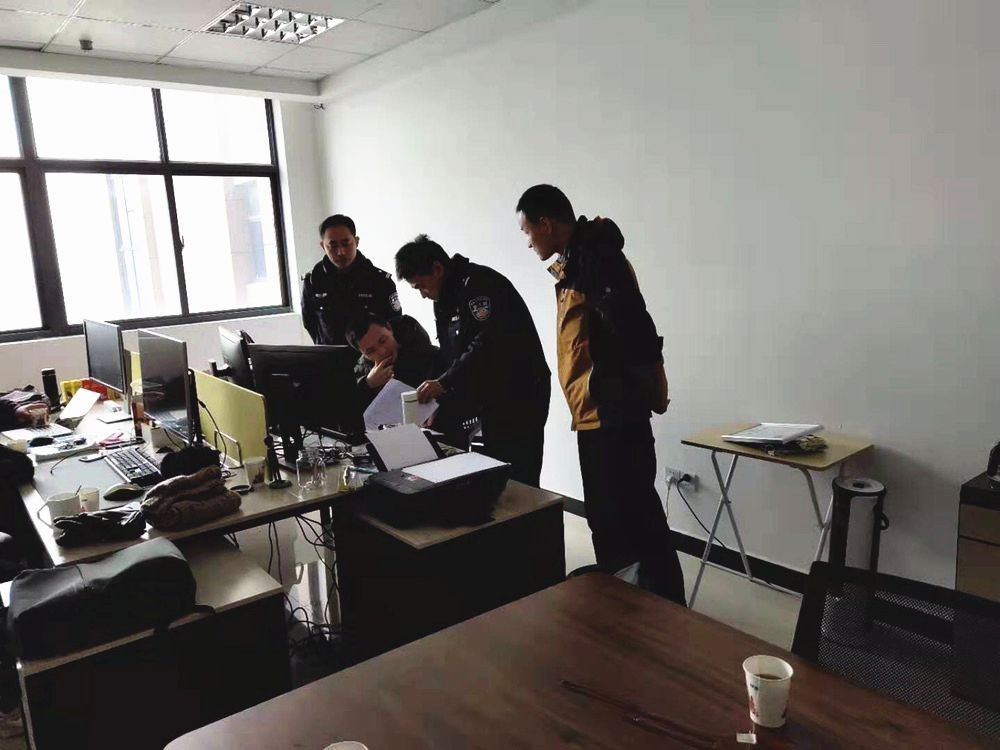
    An individual surnamed Zhang is given two-day administration detention by Internet police in 2018 for selling software that speeds up connections to overseas websites. His profits were also confiscated. Image Credit: Jiangsu Cybersecurity Police

    In 2017, a series of criminal cases against VPN providers and users began to surface after the Ministry of Industry and Information instituted VPN restrictions earlier that year in accordance with the Notice on Cleaning Up and Regulating the Internet Access Service Market. In these cases, authorities invoked the offense of “illegally providing a tool for intruding into a computer information system.” In a legal opinion column published in October 2018, China University of Political Science and Law Professor Luo Xiang) likened the offense to the now-abolished crime of “hooliganism” (liumangzui 流氓罪), calling it “cyber hooliganism” (jisuanjiliumangzui 计算机流氓罪), because it is increasingly being misused by law enforcement, as hooliganism once was, and is raising what Luo sees as “similar challenges.”

    Prior to its abolition in the 1997 Criminal Law, “hooliganism” was used as a catch-all offense based on weak legal logic that gave authorities discretion to punish a broad range of vaguely defined crimes. Luo uses the term cyber hooliganism as an analogy, to imply that the offense of illegally providing a tool to intrude into computers has become a new “pocket crime” (kou daizui 口袋罪). Such ill-defined offenses can all too easily be used, especially by police, to criminalize cyber activities, even those which “no explicit stipulations of law deems (sic) a crime,” and for which, according to Article 3 of the Criminal Law, they should not “be convicted or given punishment.”  

    An additional reason for concern is that the offence of using VPNs, which is now incorporated as Article 285 of the Criminal Law, is applicable in a broad range of circumstances, when an offender violates a decision or law formulated by the National People’s Congress (NPC) and its Standing Committee (SC), or even an administrative regulation, measure, or order issued by the State Council. In addition, the offense has been widely used even when an individual does not engage in any of the aforementioned cybercrimes: VPN providers are prosecuted simply for violating the 2017 VPN ban, an administrative notice by the Ministry of Industry and Information. As the VPN ban was not formulated by the State Council, however, violating this administrative measure should not incur criminal liability under Article 96 of the Criminal Law.

    Continue this story here, or read Part I here.


    JOHN KAMM REMEMBERS

    John Kamm Remembers is a feature that explores Kamm’s human rights advocacy prior to and since Dui Hua’s establishment in 1999.

    The Execution of Wo Weihan

    Wo (center) at the wedding of his daughter Ran Chen (left). His other daughter, Di Chen, is to the right. Source: Ran Chen.

    In November 2008 I traveled to the New Jersey shore, where I had grown up.  My youngest son, Rene, was with me. We would celebrate Thanksgiving dinner with my brother and his family, and, before leaving the family to return to San Francisco, scatter my mother’s ashes. She had died the previous July, the wife of three World War II veterans. I was with her when she died in a Florida hospice, and I had pledged to scatter her ashes in the place she loved best, off Avon beach, where she had met my father.

    The dinner on November 27 was joyous and traditional, turkey with all the trimmings (including copious amounts of the family’s special stuffing), but it was a time of hope as well. Wo Weihan (沃维汉), someone facing imminent execution in China whose case I’d been working on, had met with his family at a detention facility in Beijing, and they had been told by way of the Austrian Embassy that another family visit could take place the next day. When I heard this news, I allowed myself to think that his execution might still be stayed. This extension, if granted, would be beyond the limit for delaying an execution approved by the Supreme People’s Court.

    There were many reasons to stay this execution. Perhaps someone in a position of power would realize how this arbitrary, cruel, and unusually extreme punishment would impact China’s relationships with foreign countries and its international image, not long after the positive reaction to the 2008 Olympics.

    After dinner, Rene and I drove to our hotel, the Courtyard in Wall Township, where we shared a room. My sleep was fitful. I sensed another person in our room, wandering aimlessly about. In my dreams I saw a ghostly apparition.

    Just after 6 AM, my phone rang. It was my colleague Josh Rosenzweig, calling from Hong Kong. Wo Weihan had been executed earlier that day, when it was still Thanksgiving in the United States. Josh asked if I’d give an interview to The Washington Post. I said yes, in 10 minutes. I threw on my clothes and went down to the lobby and then outside where it was cold and foggy. The call came in to my cell phone. The journalist wrote that I reacted with anger and disbelief: “’I have been doing this work for 19 years, and this is the absolute lowest point of those 19 years,” Kamm said. “I am devastated.’”

    A Scientist and Entrepreneur

    Wo Weihan, a Chinese citizen born in 1949 in Heilongjiang Province, was an accomplished scientist who held several patents. He had founded a biochemical company in Beijing upon his return from studying and working in Germany and Austria, where he lived for several years in the 1990s, and where his two daughters, Ran and Di, live. Wo Weihan was a civilian who had never served in China’s military. His daughters are Austrian citizens. Wo was also a member of the Daur ethnic minority, one of China’s smallest ethnic groups. He had had the opportunity to apply for Austrian citizen but had turned it down. He was proud of his Chinese origins.

    In 1984, the Central Committee of the Chinese Communist Party issued Document Number Five, which set out the principle of “Two Restraints, One Leniency” that was to be applied to ethnic minorities. Law enforcement was to be lenient to offenders from ethnic minorities by making fewer arrests and handing down fewer executions. Executions of ethnic minorities in China were rare at the time of Wo Weihan’s execution. Executions of Uyghurs accused of terrorism-related crimes have taken place in recent years. Executions of members of other minorities remain rare, however. The only known execution of a Tibetan sentenced to death in recent years was that of Lobsang Dhundop, a nephew of Tenzin Delek Rinpoche. He was executed in 2003 after being convicted of involvement in a series of bombings. In 2005, an official of Manchu ethnicity, Tong Daning (佟达宁), was sentenced to death and subsequently executed for spying for Taiwan.

    Rarer than executions of members of ethnic minorities are executions of civilians for espionage, as opposed to executions of military officers and government officials. That remains the case in China today. Dui Hua is not aware of an execution of a civilian for espionage since 2000 – with the notable exception of Wo Weihan.

    Wo was taken into custody on January 19, 2005 and placed under residential surveillance in a designated location. Shortly thereafter, Guo Wanjun (郭万钧), said to be a distant relative of Wo who worked as a missile expert for a research institute affiliated with the Chinese air force, was taken into custody and placed under residential surveillance in a designated location as well. Both men were taken into custody on suspicion of committing the crime of espionage, a crime of endangering state security that carries the maximum sentence of death.

    Not long after being placed under residential surveillance in a designated location, Wo Weihan suffered a stroke, possibly due to mistreatment by his captors. He was granted bail to return to his home to recuperate. Granting bail to an individual accused of a crime that carries the death penalty is highly unusual.

    Wo was formally detained on March 30, 2005, accused of spying for Taiwan. He was put in the hospital ward of a state security detention center. He was formally arrested on May 5, 2005. Only after his arrest was Wo allowed a visit by a lawyer; it took place 10 months after his initial detention. Family visits were not permitted until the day before he was executed.

    The Supreme People’s Court (SPC) took back the power of final review of death sentences on January 1, 2007. Under pressure from China’s senior leaders, it had delegated this power to lower courts in 1984 at the height of the first “Strike Hard Campaign.” Upon taking back the power of final review, the SPC declared that, henceforth, only the most “vile and serious crimes” would attract the death penalty. In the first year of conducting reviews, the court overturned 15 percent of death sentences.

    On May 24, 2007, Wo Weihan and Guo Wanjun were tried by the Beijing Intermediate People’s Court. The two men were sentenced to death in a closed trial. The prosecution introduced a confession from Wo that had been given in the ten months he was denied a lawyer; Wo recanted the confession made under duress without a lawyer present. The court had determined that Wo and Guo had provided Taiwan military intelligence with top secrets but provided few actual details. It was alleged that Wo had provided photocopies of a missile defense system and information on the health of a senior official who was not identified. (According to Wo’s lawyer, the photocopies in question were from an article in a publicly available journal that was subsequently classified.) Providing these secrets apparently constituted a “vile and serious” crime deserving the ultimate penalty.

    The Taiwan intelligence agency to which secrets were provided turned out to be the “Grand Alliance for China’s Reunification under the Three Principles of the People,” a Taiwan-based non-governmental organization that promoted Dr. Sun Yatsen’s political philosophy and Chinese culture. It had no known links to Taiwan’s intelligence agency. The group’s contact details had been found in Wo’s diary.

    Dui Hua Gets Involved

    Dui Hua began working on Wo’s case in January 2008, when Josh Rosenzweig was visited in his Beijing hotel room by Wo’s daughter Ran Chen and an officer of the European Union (E.U.) Mission in Beijing. Josh offered advice and assistance. He was told that, for the time being, the family had decided, on the advice of Wo’s lawyer and the Austrian Embassy in Beijing, to keep a low profile and avoid media coverage.

    President Bush at the 2008 Olympics Opening Ceremony. Image Credit: georgewbush-whitehouse.archives.gov

    The Chinese government was preparing to host the Summer Olympics in August 2008. In March 2008 protests erupted in Tibet; they were put down by Chinese police and troops. The world reacted in outrage. The Olympic torch run was beset by protests. On March 26, French President Nicolas Sarkozy suggested that he might boycott the Olympics opening ceremony in Beijing. Not long afterward, American President George W. Bush announced that he would attend the ceremony, and other world leaders fell into line. Beijing was very grateful to President Bush.

    On March 28, 2008, the Kuomintang’s candidate for Taiwan president, Ma Yingjeou, won the presidential election. He succeeded Chen Shui-bian, seen by Beijing as a dangerous advocate of Taiwan independence. Ma’s election ushered in an era of good will between the Mainland and Taiwan that would be put at risk if China executed a civilian for allegedly spying for Taiwan.

    A day later, on March 29, 2008, Beijing’s High Court rejected the appeals of Wo Weihan and Guo Wanjun. The death sentences were upheld. The cases were sent to the Supreme People’s Court for final review.

    After Wo’s appeal was rejected the family decided to step up its effort to save him. I traveled to Beijing, and on April 2, 2008, I met Ran and her husband Michael in my room at the Beijing Renaissance Hotel. Ran, who had just enrolled as an MBA student at the University of California, struck me as an intelligent and courageous young woman determined to do what was necessary to save her father. Michael, an American citizen, was equally determined to fight for his father-in-law’s life. We mapped out a strategy and decided on the role I and Dui Hua would play.

    Dui Hua’s advocacy would involve the following:

    • Raise the profile of the case in international media and alert other human rights group of Wo’s possible execution;
    • Push the United States government to aggressively lobby the Chinese government to grant clemency to Wo Weihan; and
    • Use Dui Hua’s extensive contacts with China’s judicial and foreign affairs establishments to advocate for the overturning of Wo Weihan’s death sentence.

    Press Conference

    On April 3, 2008, I summoned Beijing-based journalists to come to my hotel for an impromptu, unsanctioned press conference on the Wo Weihan case. The hotel management became agitated and tried to stop the journalists from taking the elevator to the seventh floor, where I had been given a junior suite. In response, journalists walked up the stairs, lugging their heavy equipment with them.

    At least two dozen journalists from outlets in 10 countries in Latin America, North America, Europe, and Asia attended. I went over the basics of the case and listed the reasons I felt clemency should be granted: the need to project a humane image for the Olympic games; weak evidence and violations of due process rights; the Supreme Court’s overturning of hundreds of death sentences; Wo’s status as a member of an ethnic minority; the fact that executions of civilians for espionage were extremely rare; the prospect of improved relations with Taiwan, on whose behalf Wo allegedly spied.

    Articles in papers from Brazil to Austria to Japan began appearing the next day. At the same time, Ran and Michael were giving impassioned interviews to major outlets, including the BBC. Never before had there been so much coverage of an imminent execution in China, the world’s top executioner.

    Engaging the American Government

    My close friend Clark “Sandy” Randt was American ambassador to China. Sandy and I knew each other in Hong Kong, where we were both heavily involved in American Chamber of Commerce activities; our children grew up together. He proved to be an invaluable resource in the doomed fight to save Wo Weihan.

    Sandy Randt was also a close friend of President George W. Bush. The two men had attended Yale together, and after he was elected President Bush chose Sandy as America’s ambassador to China. After taking up his position in 2001, he went on to serve with distinction – he was an outspoken advocate for human rights – stepping down at the end of President Bush’s term of office as the longest serving American ambassador to China in the history of relations between the two countries.

    On April 8, 2008, Ambassador Randt raised Wo’s case with China’s Ministry of Foreign Affairs. In the months that followed, Secretary of State Condoleezza Rice, Assistant Secretary of State David Kramer, as well as other officials and members of Congress asked the Chinese government to grant clemency to Wo Weihan.

    David Kramer’s role was especially important. He was the Assistant Secretary of State for Human Rights, Democracy, and Labor, in which position he was the ranking official tasked with managing the bilateral human rights dialogue with China. After a hiatus of six years, the two countries agreed to hold a round of the dialogue in Washington May 24-28, 2008. Wo Weihan’s name was placed on the list of priority cases that Dui Hua helped draw up. It was accepted by the Chinese representative.

    Lobbying the Chinese Government

    Unique among human rights groups working on China, Dui Hua maintains open channels of communication with the Chinese government. I decided to bring these into play in the effort to save Wo Weihan’s life. I sent emails to, and met privately with, Chinese foreign affairs and judicial officials.

    I concentrated on the SPC, which had been tasked with reviewing Wo’s death sentence passed by the Beijing High People’s Court. Dui Hua had an especially good relationship with the SPC; we had invited them to visit the United States to study the American juvenile justice system in October 2008.

    Julius and Ethel Rosenberg leaving a U.S. Court House after being found guilty by a jury. Image Credit: Library of Congress Prints and Photographs Division, via Wikimedia. Original author was Roger Higgins, New York World-Telegram and the Sun Newspaper Photograph Collection.

    In September 2008 I traveled to Beijing to meet with two senior judges to make final arrangements for the delegation to the United States the next month. I turned the conversation to Wo Weihan and explained that I was a friend of the family. I pointed out that executions for espionage in the United States were very rare. The last time civilians were executed for espionage – Ethel and Julius Rosenberg – was in 1953. Now the trend for the most serious such offenders is a sentence of life in prison.

    The senior judge present nodded his head. He had been to Florence Super Max in Colorado and saw the tough conditions “lifers” faced there.

    I criticized the lack of detail in the court judgments and queried how someone facing a death sentence could be allowed home to recuperate from an illness. I asked the judge when the SPC would complete its review. He replied that most reviews are completed within six months of the High Court decision. He cautioned that the number of death sentences overturned thus far in 2008 was far fewer than in 2007. He assigned a colleague to be my liaison on the case, but as it turned out the man proved to be of no use.

    Family Told to Visit Wo

    On the evening of November 17, 2008, Wo Weihan’s wife received a call from the SPC advising her to file an application, with supporting documents, to visit Wo Weihan. The application was to be filed within seven days, and if approved, the family should make the visit as soon as possible. The family’s lawyer saw this as a bad sign: the SPC had approved the execution. Preparations to execute Wo Weihan were underway.

    I took action as soon as Ran advised me what happened, sending urgent messages to the Chinese Embassy in Washington, the Chinese Mission in Geneva, the SPC, the Supreme People’s Procuratorate, and academic and research organizations under the control of the Chinese government and Communist Party.

    Complicating Factors

    The responses I received were troubling. The Chinese embassy response was terse: the case would be handled in accordance with the law. My liaison at the SPC, which we had just hosted in the United States, washed his hands of the matter. A friend at the Chinese mission in Geneva advised that her ambassador would try to help – in fact he did try, telling me he had sent recommendations to his superiors in Beijing — but warned, somewhat ominously, that the sharp criticism of China’s capital punishment by the just-concluded meeting of the United Nations Committee Against Torture was deeply resented by Beijing: “Therefore it might be bad timing for the West to seek reconsideration of the case.”

    Another complicating factor was the unraveling of relations between China and the European Union, which had actively lobbied the Chinese government to grant clemency to Wo Weihan, the father of two E.U. citizens. France, which held the rotating presidency of the E.U., had already drawn the ire of the Chinese government over President Sarkozy’s suggestion that he might boycott the opening ceremony of the Olympic Games.

    On August 22, 2008, Sarkozy’s wife, Carla Bruni, joined the Dalai Lama at the inauguration of a Buddhist temple in France. There was speculation that Sarkozy himself would meet the Dalai Lama when the Tibetan spiritual leader visited Europe later in the year. When it became clear that the meeting would indeed take place, China canceled the E.U.-China Summit, shocking E.U. leaders and diplomats.

    Nevertheless, E.U. officials traveled to Beijing to take part in the E.U.-China human rights dialogue that opened in Beijing on November 25. It was to run until November 28. The fact that Beijing declined to cancel the dialogue raised hopes that damage from the fracas over the impending Sarkozy-Dalai Lama meeting could be contained.

    The Family Visits Wo Weihan

    On Tuesday, November 25, Ran Chen received a call from the Beijing Intermediate People’s Court Number Two. The caller advised Ran that the SPC had confirmed the death sentence on her father and told her to come to the court at 9 AM on Thursday November 27 to see her father for what would turn out to be the last time. Ran arrived at the court at the appointed time. Wo’s wife, Ran’s stepmother, arrived and together the two women were taken to a small room. They sat on one side of a glass partition. Wo was brought in, flanked by two guards.

    Beijing Number Two Intermediate People’s Court. Image Credit: Xinhua

    Wo was surprised to see his visitors. He had no idea that he would soon be executed. He was optimistic that the SPC would overturn the death sentence and expressed confidence in China’s justice system. Ran and his wife read letters from his brother and his wife, and told him that his youngest daughter, who was nine or ten at the time, was doing fine. Wo teared up at the mention of a child he’d never see again.

    The tension proved too much for Ran. “This is a terrible injustice. China has a broken justice system and you are a victim of it,” she cried. One of the guards standing behind her reproached her, saying she had no right to criticize the Chinese government and its justice system. Ran shot back. “Why not? I have every right to do so.” At this point Wo Weihan intervened and asked his daughter to calm down.

    The meeting lasted 30 minutes. Ran and her stepmother left the room, sobbing. None of the court officials dared to look at them. They returned to a friend’s apartment where they were joined by Di, Wo’s oldest daughter, who had just arrived in Beijing. They held each other and sobbed for a long time. Later that afternoon they received a call from the Austrian Embassy. China’s Ministry of Foreign Affairs (MFA) had told the Austrians that the execution would be put off to allow for Di to visit her father the next day.

    Execution and Aftermath

    That visit would never take place. On the morning of November 28, 2008, as the E.U.-China human rights dialogue was winding down, Wo Weihan and Guo Wanjun were executed by gunshots to the back of their heads. They were promptly cremated. That afternoon the MFA told the Austrian Embassy that the execution had taken place that morning. Senior E.U. officials were still in Beijing.

    The response from the E.U. was swift. A statement was issued. “The E.U. condemns in the strongest terms the execution of Mr. Wo. It deeply regrets the fact that China has not heeded the repeated calls for the execution to be deferred and for the death sentence to be commuted. It wishes to express its indignation at this execution which comes just after the conclusion in Beijing of the E.U.-China human rights dialogue.”

    Austria’s Foreign Minister Ursula Plassnik used even stronger language, saying that the execution “must be considered an intentional affront to the E.U.… China’s approach emphasizes the ruthlessness and coldness of the SPC’s decision.”

    Countries weighed in, including the United States, sharply condemning the execution. Human rights groups, including Amnesty International, likewise expressed outrage. Calls were made for the human rights dialogue between China and the E.U. to be permanently cancelled. It has in fact continued to take place every year.

    I received a message from a Chinese official, a leading reformer and opponent of the death penalty: “Today I am ashamed to be a Chinese official!” China’s media tried to justify the execution, but China Daily, in a rare admission, noted that the execution had stirred resentment of China in certain countries.  

    Wo Weihan is Buried

    Five days after the execution, the family retrieved Wo Weihan’s remains. They had selected a burial plot at Badaling Cemetery, a peaceful place a mile away from the Badaling Great Wall. They went to the cemetery to purchase the plot, but as the paperwork was being filled in, a manager appeared and told them they would not be permitted to buy the plot, apparently because it would contain the remains of an executed “criminal.” Ran once again exhibited her fearlessness. She accused the manager of being a coward and threatened to call the international press and file a lawsuit if the cemetery refused to let the family purchase the plot. Chastened, the manager backed down and the transaction was completed. Eventually the family bought two other plots for Wo’s father and mother, who were buried in Heilongjiang. The parents and their son were reunited in death.

    Wo Weihan’s funeral took place on December 6, 2008. Family members and representatives of the Austrian Embassy attended. It was a moving memorial, a tribute to an extraordinary man who was loyal to family and country.

    In December 2008 I went to New York to meet with a Chinese diplomat with whom I had worked on sensitive cases. He tried his best to convince me that the execution of Wo Weihan was justified, providing details of the other secrets Wo allegedly gave to Taiwan. I would have none of it. I told him that I would continue Dui Hua’s work on behalf of prisoners, at the family’s request. He seemed relieved that I would do so.

    Today the execution of Wo Weihan, nearly 11 years ago, has largely been forgotten. A blip on the screen of the history of E.U.-China relations on human rights, even less of a blip in the history of U.S.-China wrangling over human rights.

    But, as in the case of the Rosenbergs, the international and to some extent domestic outrage seems to have had an effect. Support for capital punishment in China is still strong among the Chinese population, but it has waned. Calls for its abolishment have gained strength among reformers.

    Since the execution of Wo Weihan, the number of executions in China has dropped sharply from around 7,000 in 2007 to around 2,000 in 2018, according to Dui Hua estimates. In 2019, 46 crimes carry the death sentence, down from 68 in 2008. There has not been an execution of a civilian for espionage in China since Wo Weihan’s. Nor has there been an execution of a member of an ethnic minority group for the crime of espionage.

    Such is the legacy of Wo Weihan, an extraordinary man forgotten by all but his family and those who worked to save him from execution. His brother still visits the place where Wo Weihan and his parents are buried, laying flowers and saying prayers for the repose of their souls.
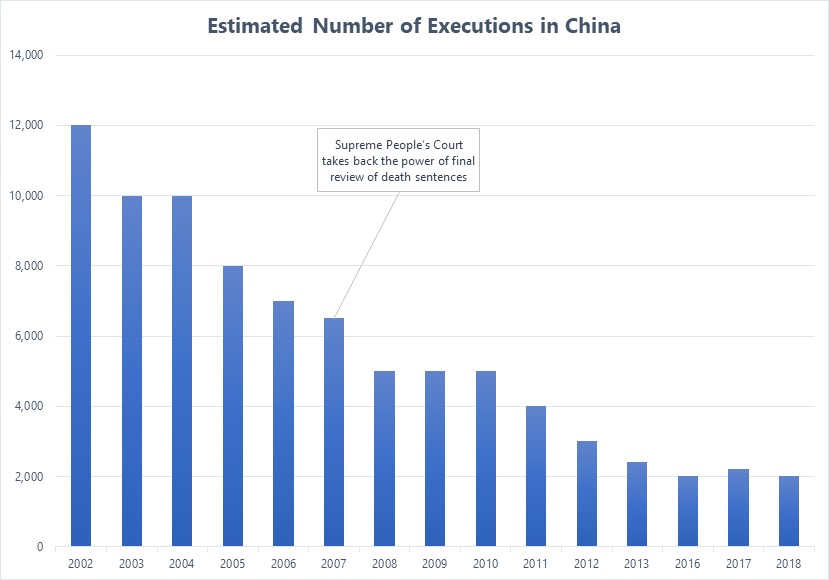
    Source: The Dui Hua Foundation’s Death Penalty Log
  • Fortifying the Great Firewall: The Criminalization of VPNs, Part II


    In “Fortifying the Great Firewall: The Criminalization of VPNs, Part I,” Dui Hua looked at the various cases where internet users were criminally punished for using unauthorized VPNs. In Part II, Dui Hua examines the crackdown on providers of VPNs.

    An individual surnamed Zhang (张) is given a two-day administration detention by cybersecurity police in 2018 for selling software that speeds up connections to overseas websites. His profits were also confiscated.
    Image Credit: Jiangsu Cybersecurity Police

    In 2017, a series of criminal cases against VPN providers and users began to surface after the Ministry of Industry and Information instituted VPN restrictions earlier that year by issuing the Notice on Cleaning Up and Regulating the Internet Access Service Market. In these cases, authorities invoked the offense of “illegally providing a tool for intruding into a computer information system.” In a legal opinion column published in October 2018, China University of Political Science and Law Professor Luo Xiang likened the offense to the now-abolished crime of “hooliganism” (liumangzui 流氓罪), calling it “cyber hooliganism” (jisuanjiliumangzui 计算机流氓罪), because it is increasingly being misused by law enforcement, as hooliganism once was, and is raising what Luo sees as “similar challenges.” Prior to its abolition in the 1997 Criminal Law, “hooliganism” was used as a catch-all offense based on weak legal logic that gave authorities discretion to punish a broad range of vaguely defined crimes. Luo uses the term cyber hooliganism as an analogy to imply that the offense of illegally providing a tool to intrude into computers has become a new “pocket crime” (kou daizui 口袋罪). Such ill-defined offenses can all too easily be used, especially by police, to criminalize cyber activities, even those which “no explicit stipulations of law deems (sic) a crime,” and for which, according to Article 3 of the Criminal Law, they should not “be convicted or given punishment.”
    An additional reason for concern is that the offence of using VPNs, which is now incorporated as Article 285 of the Criminal Law, is applicable in a broad range of circumstances, when an offender violates a decision or law formulated by the National People’s Congress (NPC) and its Standing Committee (SC), or even an administrative regulation, measure, or order issued by the State Council. In addition, the offense has been widely used even when an individual does not engage in any of the aforementioned cybercrimes: VPN providers are prosecuted simply for violating the 2017 VPN ban, an administrative notice by the Ministry of Industry and Information. As the VPN ban was not formulated by the State Council, however, violating this administrative measure should not incur criminal liability under Article 96 of the Criminal Law.


    Hooliganism in the Cyber Age: What counts as a serious crime?

    Available information shows that most offenders of cyber hooliganism were born in the 1980s to 1990s. Deng Jiewei (邓杰威) is one of the young VPN sellers known to have been convicted and sentenced to nine months’ imprisonment in Dongguan, Guangdong, in March 2017. The judgment stated that in October 2015 Deng began selling software on his website that allowed users to “visit foreign websites that could not be accessed by a mainland IP address” and “made an illegal profit of RMB 13,957.57.” Although Deng turned himself in and pleaded guilty during the trial, the court refused to mete out a lenient sentence on the grounds that Deng had been “committing the crime for a long time” and his actions “caused relatively great social harm.” Professor Luo disputed Deng’s conviction and sentencing in his column, because violating an administrative notice issued by the Ministry of Industry and Information should not have constituted a criminal offense.
    In a separate case, news media sources widely reported that an individual surnamed Dai was sentenced to three years (with a three-year suspension), in Baoshan District, Shanghai, in September 2018. Dui Hua’s research revealed that his full name is Dai Guimao (戴贵茂). Dai, a software developer for a securities management company, was accused of renting multiple servers from overseas internet service providers and providing VPN services for hundreds of mainland users from April 2016 to October 2017. The transaction records of Dai’s Wechat and Alipay accounts were cited as criminal evidence against him. Dai was also given a fine of RMB 10,000, equivalent to all the revenue he made from selling VPNs.
    Dui Hua also unearthed five other cases, in which a total of 17 individuals were sentenced for selling VPNs from 2017 to 2019 for crimes stemming from the concept of cyber hooliganism. Article 285 of the Criminal Law subjects offenders to no more than three years’ imprisonment in cases where the circumstances are “serious,” and three to seven years’ imprisonment if the circumstances are “especially serious.” In 2011, the Supreme People’s Court issued an interpretation defining both serious and especially serious circumstances. A case is considered serious if an offender provides a special program or tool that can be used for intruding into or illegally controlling a computer information system that reaches more than 20 people, or makes an illegal income of RMB 5,000. Once either the number of users or the amount reaches five times this standard, the circumstances become especially serious.
    Although the court judgments stated that all five cases were “especially serious,” their sentences varied from suspended sentences to 39 months’ imprisonment. Lu Bo (卢勃), who received the longest sentence among the 11 offenders in Henan, was accused of setting up a company that provided VPN services to 2,499 internet users and making an income of RMB 375,332 between April 1, 2015 and September 23, 2017. Lu and six other company employees, who were sentenced to 14-15 months’ imprisonment, lodged an appeal, but the Sanxiamen Intermediate People’s Court upheld the judgment on December 17, 2018.
    In a separate case, also in Henan, Liu Bingyang (刘冰洋 ) was only given a three-year sentence with a five-year suspension, even though he had earned roughly the same amount as Lu by providing VPN services to over 4,000 internet users. Another two people, surnamed Sang (桑), were also given two to three years’ imprisonment (with suspensions of two to three years) in Kunming, Yunnan, for amassing a profit of RMB 300,000. They claimed to have served 20,000 users. In another case concluded on January 29, 2019, in Hubei, Liu Xiaokang (刘小康) was also given a three-year sentence (with a suspension of four years) for making an illegal profit of RMB 2,662,280, seven times more than Lu and all his employees had made. The prosecutors found that 486,830 online users had registered for Liu’s VPNs. Of these, 37,077 were paying users. In the most recent case, concluded on April 22, 2019, six defendants who had made a profit totalling RMB 263,669 were given three-year suspended sentences. The judgment did not state how many users had purchased their VPN services.
    Evidence also suggests that promoting the use of VPNs even without an intent to profit can result in prosecution. On March 25, 2019, Sun Dongyang (孙东洋) was indicted for “illegally providing a tool for intruding into a computer information system.” Sun founded doubibackup.com, a website that provides free-of-charge instructions for online users, not only about VPNs but also about other circumvention software, such as Telegram and Shadowsocks. At the time of writing, Sun remains incarcerated in Henan’s Xinmi City Detention Center.


    Illegal Business

    Internet users who sell VPNs unapproved by the state are can also fall victim to the “illegal business activity” charge. The most severe sentence known to have been given involved Wu Xiangyang (吴向洋), a network engineer who was sentenced to five years and six months’ imprisonment in Guangxi in December 2017. Since 2013, Wu had operated an online store on his own website, popular e-shopping site Taobao, and social networking sites, where he made an “illegal profit” totalling RMB 500,000 from leasing or selling VPN software and hardware devices without applying for a business permit. Wu’s VPN service, which aimed to provide better access to overseas audio and video programs, claimed to have served 8,000 foreign clients and 5,000 businesses. Wu is expected to complete his sentence in December 2022. Dui Hua’s research recently revealed that the Guigang Intermediate People’s Court ordered the Pingnan County People’s Court to retry the case due to insufficient evidence on September 25, 2018. The outcome of the retried case remains unknown at the time of writing.
    Dui Hua’s research also discovered four similar cases involving eight defendants who were also sentenced in 2018. Their sentences ranged from suspension to nine months’ imprisonment. In one of these cases, a defendant surnamed Liao (廖) was given a prison sentence in Anhui for allegedly making revenue of about RMB 1.2 million in the 16 months from May 2016 to September 2017 from selling VPNs and EVO boosters, a software application that speeds up connections to overseas game servers, without a business license.
    The amount of proceeds made from selling VPNs and other software applications, again, does not appear to be an important factor in determining sentencing. For instance, both Wu and Liao, who received prison sentences, made substantially lower revenues, while three other people whose revenues were much higher were only given suspended sentences. The three, surnamed Chen (陈), Cao (曹) and Zeng (曾), sold VPNs for around RMB 8.8 million and made profits of RMB 250,000 each. Despite the scale of their businesses across China, the court in Hunan gave them suspended sentences, because the judgment stated that they each had surrendered RMB 500,000 before they were indicted.
    Dui Hua has previously reported that the offense of illegal business activity is also commonly used against Christian book sellers. The offense, which contains a vague clause of “other activities” in Article 225(3) of the 1997 Criminal Law, has allowed the Supreme People’s Court to issue judicial interpretations that extend the scope of criminal liabilities to violators of administrative regulations under the guise of “disrupting market order.” In the cases discussed above, VPN sellers were likewise found guilty of disrupting the market order governed by the Ministry of Industry and Information.


    The Costs of China’s Criminalization of VPNs

    China pays a high price for enforcing high-stakes and arbitrary control over the internet. Externally, it is an important irritant in U.S.-China relations. In 2016, the U.S. for the first time began calling China’s online censorship a trade barrier. According to the American Chamber of Commerce in China’s 2016 American Business in China White Paper, among the severe challenges faced by its members was the fact that “China is extending this restrictive regulatory framework beyond traditional telecommunications services into any IT sector that utilizes Internet connectivity, including…. technical standards that often diverge from global standards, Internet content restrictions, and privacy and cross-border data flow restrictions.”
    Domestically, internet users forced to spend money on VPNs to access overseas information are additionally often subjected to slow and low-capacity internet connections. The Great Firewall is detrimental to creativity and innovation, because mechanisms that block access to the web leave entrepreneurs, artists, scientists, and inventors unfamiliar with global trends and practices, and unable to communicate with peers abroad. In 2017, The Guardian, which appears intermittently on the list of blocked foreign websites, wrote that the ban on VPNs also harms academics, software developers, and foreign businesses: “For years Chinese researchers have complained they lack adequate access to overseas journals and methods to communicate with universities around the world, while developers rely on code hosted on websites based outside China.”
    While online information is not necessarily easy to access even in democratic societies, netizens there face no legal risk for using or selling VPNs. China under Xi has made the pursuit of internet freedom even more costly than under his predecessors. Since 2017, providers and users of VPNs have faced criminalization as part of Xi’s bid to fortify the Great Firewall against any ideas or information that Xi deems threatening. VPN providers can easily fall prey to charges of “illegally providing a tool for intruding into a computer information system” or illegal business activity, since, as we have seen, both “pocket crimes” effectively extend criminal liabilities to violators of administrative regulations. More research is needed to understand the rationale behind sentencing. Despite an announcement by the Beijing city government on August 15 of a three-year plan to expand openness in some areas in internet content service, it is doubtful that the trend towards increasingly strict government control over the distribution and sharing of content in cyber space that could be interpreted as political will see meaningful change. What is crystal-clear, however, is that Xi has magnified his internet control by punishing online users who access or post information that is deemed sensitive or subversive by the state, or enable others to do so, outside of China’s government-approved domestic networks.
  • Fortifying the Great Firewall: The Criminalization of VPNs, Part II


    In “Fortifying the Great Firewall: The Criminalization of VPNs, Part I,” Dui Hua looked at the various cases where internet users were criminally punished for using unauthorized VPNs. In Part II, Dui Hua examines the crackdown on providers of VPNs.

    An individual surnamed Zhang (张) is given a two-day administration detention by cybersecurity police in 2018 for selling software that speeds up connections to overseas websites. His profits were also confiscated.
    Image Credit: Jiangsu Cybersecurity Police

    In 2017, a series of criminal cases against VPN providers and users began to surface after the Ministry of Industry and Information instituted VPN restrictions earlier that year by issuing the Notice on Cleaning Up and Regulating the Internet Access Service Market. In these cases, authorities invoked the offense of “illegally providing a tool for intruding into a computer information system.” In a legal opinion column published in October 2018, China University of Political Science and Law Professor Luo Xiang likened the offense to the now-abolished crime of “hooliganism” (liumangzui 流氓罪), calling it “cyber hooliganism” (jisuanjiliumangzui 计算机流氓罪), because it is increasingly being misused by law enforcement, as hooliganism once was, and is raising what Luo sees as “similar challenges.” Prior to its abolition in the 1997 Criminal Law, “hooliganism” was used as a catch-all offense based on weak legal logic that gave authorities discretion to punish a broad range of vaguely defined crimes. Luo uses the term cyber hooliganism as an analogy to imply that the offense of illegally providing a tool to intrude into computers has become a new “pocket crime” (kou daizui 口袋罪). Such ill-defined offenses can all too easily be used, especially by police, to criminalize cyber activities, even those which “no explicit stipulations of law deems (sic) a crime,” and for which, according to Article 3 of the Criminal Law, they should not “be convicted or given punishment.”

    An additional reason for concern is that the offence of using VPNs, which is now incorporated as Article 285 of the Criminal Law, is applicable in a broad range of circumstances, when an offender violates a decision or law formulated by the National People’s Congress (NPC) and its Standing Committee (SC), or even an administrative regulation, measure, or order issued by the State Council. In addition, the offense has been widely used even when an individual does not engage in any of the aforementioned cybercrimes: VPN providers are prosecuted simply for violating the 2017 VPN ban, an administrative notice by the Ministry of Industry and Information. As the VPN ban was not formulated by the State Council, however, violating this administrative measure should not incur criminal liability under Article 96 of the Criminal Law.


    Hooliganism in the Cyber Age: What counts as a serious crime?

    Available information shows that most offenders of cyber hooliganism were born in the 1980s to 1990s. Deng Jiewei (邓杰威) is one of the young VPN sellers known to have been convicted and sentenced to nine months’ imprisonment in Dongguan, Guangdong, in March 2017. The judgment stated that in October 2015 Deng began selling software on his website that allowed users to “visit foreign websites that could not be accessed by a mainland IP address” and “made an illegal profit of RMB 13,957.57.” Although Deng turned himself in and pleaded guilty during the trial, the court refused to mete out a lenient sentence on the grounds that Deng had been “committing the crime for a long time” and his actions “caused relatively great social harm.” Professor Luo disputed Deng’s conviction and sentencing in his column, because violating an administrative notice issued by the Ministry of Industry and Information should not have constituted a criminal offense.

    In a separate case, news media sources widely reported that an individual surnamed Dai was sentenced to three years (with a three-year suspension), in Baoshan District, Shanghai, in September 2018. Dui Hua’s research revealed that his full name is Dai Guimao (戴贵茂). Dai, a software developer for a securities management company, was accused of renting multiple servers from overseas internet service providers and providing VPN services for hundreds of mainland users from April 2016 to October 2017. The transaction records of Dai’s Wechat and Alipay accounts were cited as criminal evidence against him. Dai was also given a fine of RMB 10,000, equivalent to all the revenue he made from selling VPNs.

    Dui Hua also unearthed five other cases, in which a total of 17 individuals were sentenced for selling VPNs from 2017 to 2019 for crimes stemming from the concept of cyber hooliganism. Article 285 of the Criminal Law subjects offenders to no more than three years’ imprisonment in cases where the circumstances are “serious,” and three to seven years’ imprisonment if the circumstances are “especially serious.” In 2011, the Supreme People’s Court issued an interpretation defining both serious and especially serious circumstances. A case is considered serious if an offender provides a special program or tool that can be used for intruding into or illegally controlling a computer information system that reaches more than 20 people, or makes an illegal income of RMB 5,000. Once either the number of users or the amount reaches five times this standard, the circumstances become especially serious.

    Although the court judgments stated that all five cases were “especially serious,” their sentences varied from suspended sentences to 39 months’ imprisonment. Lu Bo (卢勃), who received the longest sentence among the 11 offenders in Henan, was accused of setting up a company that provided VPN services to 2,499 internet users and making an income of RMB 375,332 between April 1, 2015 and September 23, 2017. Lu and six other company employees, who were sentenced to 14-15 months’ imprisonment, lodged an appeal, but the Sanxiamen Intermediate People’s Court upheld the judgment on December 17, 2018.

    In a separate case, also in Henan, Liu Bingyang (刘冰洋 ) was only given a three-year sentence with a five-year suspension, even though he had earned roughly the same amount as Lu by providing VPN services to over 4,000 internet users. Another two people, surnamed Sang (桑), were also given two to three years’ imprisonment (with suspensions of two to three years) in Kunming, Yunnan, for amassing a profit of RMB 300,000. They claimed to have served 20,000 users. In another case concluded on January 29, 2019, in Hubei, Liu Xiaokang (刘小康) was also given a three-year sentence (with a suspension of four years) for making an illegal profit of RMB 2,662,280, seven times more than Lu and all his employees had made. The prosecutors found that 486,830 online users had registered for Liu’s VPNs. Of these, 37,077 were paying users. In the most recent case, concluded on April 22, 2019, six defendants who had made a profit totalling RMB 263,669 were given three-year suspended sentences. The judgment did not state how many users had purchased their VPN services.

    Evidence also suggests that promoting the use of VPNs even without an intent to profit can result in prosecution. On March 25, 2019, Sun Dongyang (孙东洋) was indicted for “illegally providing a tool for intruding into a computer information system.” Sun founded doubibackup.com, a website that provides free-of-charge instructions for online users, not only about VPNs but also about other circumvention software, such as Telegram and Shadowsocks. At the time of writing, Sun remains incarcerated in Henan’s Xinmi City Detention Center.


    Illegal Business

    Internet users who sell VPNs unapproved by the state are can also fall victim to the “illegal business activity” charge. The most severe sentence known to have been given involved Wu Xiangyang (吴向洋), a network engineer who was sentenced to five years and six months’ imprisonment in Guangxi in December 2017. Since 2013, Wu had operated an online store on his own website, popular e-shopping site Taobao, and social networking sites, where he made an “illegal profit” totalling RMB 500,000 from leasing or selling VPN software and hardware devices without applying for a business permit. Wu’s VPN service, which aimed to provide better access to overseas audio and video programs, claimed to have served 8,000 foreign clients and 5,000 businesses. Wu is expected to complete his sentence in December 2022. Dui Hua’s research recently revealed that the Guigang Intermediate People’s Court ordered the Pingnan County People’s Court to retry the case due to insufficient evidence on September 25, 2018. The outcome of the retried case remains unknown at the time of writing.

    Dui Hua’s research also discovered four similar cases involving eight defendants who were also sentenced in 2018. Their sentences ranged from suspension to nine months’ imprisonment. In one of these cases, a defendant surnamed Liao (廖) was given a prison sentence in Anhui for allegedly making revenue of about RMB 1.2 million in the 16 months from May 2016 to September 2017 from selling VPNs and EVO boosters, a software application that speeds up connections to overseas game servers, without a business license.

    The amount of proceeds made from selling VPNs and other software applications, again, does not appear to be an important factor in determining sentencing. For instance, both Wu and Liao, who received prison sentences, made substantially lower revenues, while three other people whose revenues were much higher were only given suspended sentences. The three, surnamed Chen (陈), Cao (曹) and Zeng (曾), sold VPNs for around RMB 8.8 million and made profits of RMB 250,000 each. Despite the scale of their businesses across China, the court in Hunan gave them suspended sentences, because the judgment stated that they each had surrendered RMB 500,000 before they were indicted.

    Dui Hua has previously reported that the offense of illegal business activity is also commonly used against Christian book sellers. The offense, which contains a vague clause of “other activities” in Article 225(3) of the 1997 Criminal Law, has allowed the Supreme People’s Court to issue judicial interpretations that extend the scope of criminal liabilities to violators of administrative regulations under the guise of “disrupting market order.” In the cases discussed above, VPN sellers were likewise found guilty of disrupting the market order governed by the Ministry of Industry and Information.


    The Costs of China’s Criminalization of VPNs

    China pays a high price for enforcing high-stakes and arbitrary control over the internet. Externally, it is an important irritant in U.S.-China relations. In 2016, the U.S. for the first time began calling China’s online censorship a trade barrier. According to the American Chamber of Commerce in China’s 2016 American Business in China White Paper, among the severe challenges faced by its members was the fact that “China is extending this restrictive regulatory framework beyond traditional telecommunications services into any IT sector that utilizes Internet connectivity, including…. technical standards that often diverge from global standards, Internet content restrictions, and privacy and cross-border data flow restrictions.”

    Domestically, internet users forced to spend money on VPNs to access overseas information are additionally often subjected to slow and low-capacity internet connections. The Great Firewall is detrimental to creativity and innovation, because mechanisms that block access to the web leave entrepreneurs, artists, scientists, and inventors unfamiliar with global trends and practices, and unable to communicate with peers abroad. In 2017, The Guardian, which appears intermittently on the list of blocked foreign websites, wrote that the ban on VPNs also harms academics, software developers, and foreign businesses: “For years Chinese researchers have complained they lack adequate access to overseas journals and methods to communicate with universities around the world, while developers rely on code hosted on websites based outside China.”

    While online information is not necessarily easy to access even in democratic societies, netizens there face no legal risk for using or selling VPNs. China under Xi has made the pursuit of internet freedom even more costly than under his predecessors. Since 2017, providers and users of VPNs have faced criminalization as part of Xi’s bid to fortify the Great Firewall against any ideas or information that Xi deems threatening. VPN providers can easily fall prey to charges of “illegally providing a tool for intruding into a computer information system” or illegal business activity, since, as we have seen, both “pocket crimes” effectively extend criminal liabilities to violators of administrative regulations. More research is needed to understand the rationale behind sentencing. Despite an announcement by the Beijing city government on August 15 of a three-year plan to expand openness in some areas in internet content service, it is doubtful that the trend towards increasingly strict government control over the distribution and sharing of content in cyber space that could be interpreted as political will see meaningful change. What is crystal-clear, however, is that Xi has magnified his internet control by punishing online users who access or post information that is deemed sensitive or subversive by the state, or enable others to do so, outside of China’s government-approved domestic networks.
  • Fortifying the Great Firewall: The Criminalization of VPNs, Part I

    China’s Great Firewall keeps people inside the country from accessing thousands of overseas websites, 
    including Twitter, YouTube, and Facebook. Image credit: Megan Pendergrass
    With a netizen population of 829 million at the end of 2018, China is arguably the world’s most sophisticated surveillance state: with increasing effectiveness, China blocks information deemed sensitive or harmful by the party from entering its domestic network. Its notorious censorship scheme, widely known as the “Great Firewall,” came into operation not long after the internet arrived in China in 1994. The Chinese government realized the need to protect the regime from “flies” once “the window is open for fresh air,” a famous quote from Deng Xiaoping, who sought to keep the nation away from western influence, despite a commitment to economic reform.
    The Great Firewall has blocked around 10,000 domain names, including Dui Hua’s, according to Greatfire.org, a non-profit group that monitors the status of online censorship in China. Almost all popular social media websites and mobile apps are censored, including Google, Facebook, YouTube, Instagram, and Twitter. The New York Times, The Wall Street Journal, Reuters, Bloomberg, and the BBC are among the best-known foreign media outlets blocked by China’s domestic network. Just ahead of the 30th anniversary of the events of June Fourth, 1989, all versions of Wikipedia, in all languages, joined the long list of foreign websites blocked by the Chinese government. Even academic, cultural, and scientific sites can be blocked: current examples include Google Scholar, The China Quarterly, Northwestern University Medical School, and Shutterstock.
    Driven by their desire for information filtered out by the domestic network, an estimated 20-30 million internet users rely on virtual private networks (VPNs) to get unfettered access to overseas websites (commonly referred to as “scaling the wall”). They typically do so by paying a small subscription fee. The academic sector relies on VPNs for research data and to connect to libraries worldwide. VPNs are also a necessity for both Chinese companies that conduct business overseas and foreign companies that conduct business in China.
    Xi Jinping expresses his views on cybersecurity: “There is no national security without cyber security.” Image Credit: Xinhuanet

    In view of the growing number of internet users accessing overseas information, Beijing has not hesitated to target VPN providers and cripple their services. VPN service providers describe the battle against online censorship as a game of cat-and-mouse, in which they play mice trying to evade a giant cat—the Chinese government—by continuing to modify or develop new tools to skirt the increasingly fortified Firewall. The mice, however, have been playing a tougher game ever since Xi, in early 2017, called on other countries to respect different models of regulating the web space and extolled his concept of “cyber sovereignty.” A hallmark of how Xi exercises his cyber sovereignty is the launching of clean-up campaigns that periodically shut down websites and online accounts containing or propagating “harmful” online information. China’s state-owned internet service providers China Mobile, China Unicom, and China Telecom were ordered to completely block VPNs by February 2018. Green VPN, one of the most reputable China-based VPN companies, ceased service on July 1, 2017. In the same year, Apple defended its decision to remove 674 VPN apps from its China app store because they violated Chinese laws. All companies and individuals must seek government approval to use and install VPNs, effective March 31, 2018.

    In addition to expanding the list of blocked foreign IP addresses and shutting down unofficial VPN services, Xi has recently shifted to targeting individual users and providers of VPNs. Those who attempt to escape the tight leash on internet control, or those who enable others to do so, not only face fines, but also criminal detention and imprisonment for varying offenses.


    Before & Now

    China started regulating the use of VPNs with the enactment of the Regulations of the Administration of International Networking of Computer Information in 1996. Article 6 of the regulation states that “[c]omputer information networks within the territory of China, when connected with international networks, must use international inward and outward channels (guojichurukouxindao 国际出入口信道) provided by the national public telecommunication network of the Ministry of Posts and Telecommunications.” Violators shall be ordered to terminate their networking activities and are subject to a maximum fine of RMB 15,000. But in over two decades of existence, the regulation was not enforced until 2017, when Xi began tightening control over the VPN market, according to Lee Jyh-An, at the Chinese University of Hong Kong, who publishes extensively on Chinese internet law.
    An early case concerning the criminalization of internet users who bypass the Great Firewall, however, predated the VPN ban in 2017. In May 2015, Chen Lefu (陈乐福) was detained for 28 days in Shanghai on suspicion of sabotaging a computer information system. Chen promoted the use of Twister, an open source peer-to-peer (P2P) microblogging network whose decentralized platform prevents sent messages from being blocked or deleted after they are published. The tool also protects publishers’ identities from being tracked, since the posts’ IP addresses are not recorded. Exiled activist Wen Yunchao speculated that another reason for detention was that Chen helped other dissidents to circumvent the Great Firewall. Chen also published a list of Shanghai and Chongqing netizens he suspected of being the 50 Cent Army, a colloquial term referring to state-backed online commentators. Human rights lawyer Liu Xiaoyuan said that several other individuals were detained alongside Chen, but their identities are not known.
    In December 2018, news media sources began reporting more cases concerning VPN users. Zhu Yunfeng (朱云枫) was given a warning and a fine of RMB 1,000 by public security in Shaoguan, Guangdong, for “establishing or using an unauthorized channel to access the international internet” via Lantern, a globally recognized circumvention tool. The administrative punishment decision stated that Zhu had logged into the VPN 487 times in one week prior to the warning. A similar case occurred in Chongqing on January 4, 2019. Police summoned Huang Chengcheng (黄成成), on suspicion of the same offense. Huang was previously sentenced to two years’ re-education through labor in March 2011, after circulating online messages calling on netizens to “go for a stroll” to support China’s pro-democracy protests that year, known as the Chinese “Jasmine Revolution” and inspired by the Arab Spring in Tunisia.
    In addition to individual VPN users, police have also targeted unauthorized use by trading corporations. In June 2019, a news media source reported that an overseas trading company in Haining City, Zhejiang, received an administrative punishment for installing an unauthorized circumvention application. Police alleged that the use of such applications from an unidentified developer exposed the risk of privacy leakage. Nothing else is known about the administrative punishment.
    It must be noted, however, that using VPNs does not necessarily incur a penalty, nor is it necessarily criminal. Global Times editor-in-chief Hu Xijin, an active user of Twitter, is known to use a mobile circumvention tool frequently to tweet while defending China against international criticism, including over Xinjiang’s political re-education camps, which hold or have held over one million Muslims. China’s state media outlets China Daily and Xinhua, as well as Chinese telecommunications companies, rely on foreign social networking sites that are blocked in China to launch soft-power, marketing, and advertising campaigns. For example, Xinhua has accounts on both Facebook and Twitter, although these sites are blocked for most Chinese users. Similarly, despite being widely mocked online for tweeting “Happy #2019” on New Year’s Day with a “Twitter for iPhone” stamp clearly visible due to a VPN issue, Huawei continues to actively use Twitter and Facebook to rebut accusations that the telecom giant poses a threat to U.S. national security.


    “Politically harmful content”: The categories of offenses

    While the Chinese government justified its internet clean-up campaigns to combat economic crimes, online gambling, and pornography, the crackdown is also conspicuously aimed at eradicating “politically harmful content.” Within one month after the Cyberspace Administration of China launched a campaign on October 20, 2018, about 9,800 social media accounts had been scrubbed for posting sensational or vulgar content, or “spreading politically harmful information, maliciously falsifying the party history, slandering heroes and defaming the nation’s image.” As part of the internet clean-up, the crackdown has extended its reach to online users who post or circulate online messages unwanted by the party, or sometimes even local officials, beyond the Great Firewall.

    “Picking quarrels and provoking troubles”

    The offense of picking quarrels and provoking troubles is typically invoked to punish such VPN users. In November 2018, Radio Free Asia (RFA) reported that Liu Jichun (刘继春) was formally arrested in Chongqing because he refused to delete a large number of his tweets attacking social ills. Available sources, however, have not revealed the exact content of his tweets. Another case, also reported by RFA, sheds light on the political nature of offenses that resulted in imprisonment: in December 2018, Jiangsu netizen Liu Hongbo (刘红波) received a six-month sentence for picking quarrels and provoking troubles. The judgment stated that Liu Hongbo posted 72 tweets between August 2017 and August 2018 that “defamed the party and national leaders” and 329 tweets that harmed the image of the party and government. Liu Hongbo stated in his defence that the tweets were not composed by himself; he only liked and retweeted Guo Wengui’s tweets. Guo is an exiled billionaire tycoon wanted by China for a variety of crimes. He is currently seeking asylum in the U.S.
    An indictment statement recently circulated online stated that Shi Genyuan (施根源) was indicted for the same offense as Liu Hongbo in March 2019, because he used Twitter and Facebook to post 383 messages that “attacked the party and Chinese leaders, and exaggerated and distorted certain sensitive cases and incidents.” His messages, which have been discussed, forwarded, and liked 2,316 times, were said to have “caused a serious disturbance in a public place.” Since the Supreme People’s Court issued a judicial interpretation in 2015, the crime of picking quarrels and provoking troubles has extended its reach into virtual space, even though, ironically, most citizens do not have access to much of the space without VPNs.
    Dui Hua’s research into online judgments uncovered several cases that have not been reported by news media sources. A day prior to detention on October 7, 2018, Xu Nailai (许乃来) staged a solo protest on Beijing’s Wangfujing Street with a banner that read, “End the Chinese communist dictatorship; no more sexual assaults and faulty vaccines; taxpayers are in dire straits.” On March 25, 2019, Xu was sentenced to three years and six months’ imprisonment in Tianjin for picking quarrels and provoking troubles. The allegations against him also included posting a large number of tweets that “vilified the Communist Party and political system, slandered Chinese leaders, and hurled insults at public security.”
    The criminalization of VPN users also extends to critics of local officials. In a separate case also concluded in Tianjin in September 2018, Mu Zhixiang (穆志祥) was sentenced to 22 months’ imprisonment and convicted of the same offense as Xu Nailai, in addition to illegal business activity. Apart from using his personal blog and domestic online forums that required no circumvention, Mu was accused of posting multiple messages on Facebook and Twitter that allegedly attacked Tianjin public security officials and smeared the government.

    “Offenses related to defamation”

    VPN users can also stand accused of defamation. Initially detained and arrested for picking quarrels and provoking troubles in the second half of 2017, Yin Zhenglin (殷正林) was sentenced to 11 months’ imprisonment for defamation in Chongqing in July 2018. The prosecution accused Yin of obtaining a large amount of information that defamed the party and Chinese leaders concerning four issues: the Malaysian aircraft MH370 that went missing on March 8, 2014, with 153 Chinese nationals on board; the wrongful conviction and execution of Nie Shubin; the abnormal death of Lei Yang in police custody; and Guo Wengui, the tycoon mentioned above, now living in the U.S. Yin was said to have spread this negative information using three different Twitter accounts, “seriously harming the image of the party and nation, endangering state security, and disrupting social and public order.”
    Also convicted of defamation, Wang Zhiqiang (汪志强) was sentenced to one and a half years’ imprisonment in Benxi, Liaoning. Wang was found guilty of composing 412 tweets that defamed the Chinese leaders, with 637,610 views between June 2016 and September 2018. The judgment stated that his tweets “harmed the nation’s image and seriously endangered state interests.”

    Disseminating terrorist, subversive, divisive, and reactionary information

    VPN users who share dissenting versions of narratives about Xinjiang could be charged with a different set of offenses. For instance, Shandong netizen Wang Mingde (王明德) was sentenced in 2018 to 15 months’ imprisonment for “fabricating or intentionally disseminating false terrorist information,” a charge stemming from, among other things, his posting messages on Twitter and Facebook about “East Turkestan.” The Chinese government calls “East Turkestan” a terrorist group advocating both violence and Uyghur independence. In another case, Xinjiang resident Tian Weiguo (田卫国) was accused of tweeting two “fake” messages from his account, which has 98 followers. One of his tweets concerned the deadly incident in Shache, Xinjiang, that left 96 dead (including 59 terrorists) on July 28, 2014, according to official accounts. Tian called the incident the “Shache Massacre,” and claimed thousands of people were killed, many of whom were Uyghur women. Tian also called on the UN to look into the incident. In March 2016, Tian was sentenced to three years’ imprisonment for “inciting racial hatred” in Xinjiang’s Ili Autonomous Prefecture.
    More recently, Zhou Yongjun (周勇军) has been charged in Dongxing City, Guangxi, with picking quarrels and provoking troubles on the grounds of using overseas social networking media, presumably with the help of a VPN, to disseminate “reactionary information.” This is the fourth time Zhou has been taken into custody since he took part in the Tiananmen Square protests of 1989. Before he was charged with picking quarrels and provoking troubles, Zhou was initially detained for “using a cult to undermine implementation of the law” and then indicted for inciting subversion. Both charges stemmed from his alleged possession of Falun Gong materials, and his critical tweets about the Communist Party.
    Read Part II to find out about the crackdown on VPN providers.
  • Dui Hua Digest, July 2019

    Dui Hua Digest, July 2019

    ​EVENTS

    Dui Hua Attends 41st Meeting of the Human Rights Council

    Dui Hua Executive Director John Kamm and Senior Manager for Programs & Publications Lili Cole attended the first week of the 41st Session of the Human Rights Council [HRC] in Geneva from June 24 to June 30, 2019. They met with officials of the Office of the High Commissioner for Human Rights and diplomats of the Chinese Mission, the United States Mission, the Swedish Mission, the Swiss Mission, the Dutch Mission, and the Finnish Mission. Kamm and Cole were received by the President of the International Committee of the Red Cross, Peter Maurer. Kamm’s friendship with Mr. Maurer dates back 15 years.

    A principal focus of Dui Hua’s meetings in Geneva was the foundation’s April 2020 Symposium on Girls in Conflict with the Law, to be held in Hong Kong in April 2020. Dui Hua attended two events relevant to the Symposium. The first was the 41st Meeting of the Human Rights Council (HRC), at which the Working Group on Discrimination Against Women in Law and Practice presented its global report on women in detention, to which Dui Hua had submitted testimony in September 2018. The second was a side event at which a report on children deprived of liberty, “Counting Children to Make Them Count: Filling the Data Gap,” led by Manfred Nowak, Independent Expert for the Global Study on Children Deprived of Liberty, was presented. A separate meeting was held with Manfred Nowak. Professor Nowak will make a presentation at the Symposium on his global study as it relates to the treatment of girls in the criminal justice systems of more than 100 countries.

    Following on the attention paid to human rights in China at the 40th Session of the HRC in March 2019, the situation of Uyghurs in Xinjiang continued to attract attention at the 41st Session. Special Rapporteur on the Promotion and Protection of the Right to Freedom of Opinion and Expression David Kaye, in the presentation of his global report, emphasized the use of artificial intelligence to limit freedom of opinion and expression in Xinjiang. Apparently in response to rising concern about human rights abuses in Xinjiang, Aierken Tuniyazi, Vice Governor of the Xinjiang Autonomous Uyghur Region, made a presentation to attendees on the second day of the session. He presented the now-familiar defense of the “vocational training” centers: they are voluntary, “trainees” are allowed to go home on the weekends, and people in the camps are happily engaged in singing and dancing as well as learning how to cook and cut hair. The centers are credited by the Chinese government with having sharply reduced the number of terrorist incidents in Xinjiang.

    The Broken Chair, Place des Nations, Geneva. Image Credit: Herbert Wie, Wikimedia

    There was also a side event devoted to rights abuses in China, with a special emphasis on developments in Xinjiang, the protests in Hong Kong, and the crackdown on lawyers. It was organized by Human Rights Watch, Christian Solidarity International, and the International Service for Human Rights, with a video address by Arthur Moses SC, president of the Law Council of Australia. It was well attended, including by diplomats from foreign missions. A representative from the Chinese Mission attended and was invited to address the attendees. He congratulated the presenters on telling lie after lie, and slammed them for never having visited Xinjiang or Hong Kong. In general, developments in Hong Kong did not attract a lot of attention at the 41st Session, even though millions of people there had taken to the streets to protest a proposed extradition law in the two weeks prior to the opening of the session.

    The absence of the United States from the deliberations of the Council was much in evidence. This reflects a strategic decision by Washington to address human rights issues in the General Assembly’s Third Committee in New York City instead. The United States views the Human Rights Committee as a body dominated by human rights abusers that is biased against Israel and the United States.


    PRISONER UPDATES

    On July 10, 2019, three days before the two-year anniversary of the death of Nobel Laureate Liu Xiaobo, self-taught legal activist Ji Sijun (纪斯尊) died, at the age of 71, of colorectal cancer. His death, which came  about two months after Ji completed his four-years-and-six-months’ imprisonment, has once again raised questions about China’s treatment of human rights campaigners. In April 2016, Ji was sentenced in Fujian for gathering a crowd to disturb social order and picking quarrels and provoking troubles.  The sentence was upheld by the Fuzhou Intermediate People’s Court in July 2016. Widely lauded as a “barefoot lawyer” by the human rights community, Ji not only taught himself law but also gave advice to petitioners to defend their legal rights against land seizures and forcible demolitions. While imprisoned, Ji was hospitalized several times, as he had been suffering from multiple chronic diseases, including diabetes, hypertension, and heart disease. Upon completing his sentence in April 2019, he was again admitted to a hospital and placed in the intensive care unit under police guard. His relatives were only allowed to visit Ji when he was in a coma before his death. His body was immediately cremated, reportedly against his family’s wishes. Since Ji was imprisoned for the first time in 2008, Dui Hua has included his name on seven prisoner lists submitted directly or indirectly to the Chinese government. In 2009, he was sentenced to three years’ imprisonment for counterfeiting official documents and seals, a charge stemming from his efforts to apply for an official permit to hold a demonstration during the 2008 Beijing Olympics.    Two court judgments posted online confirmed that Guo Ran (果然) and Kou Ji (寇稽) were sentenced to 14 years’ and 10 years’ imprisonment, respectively, for subversion, by the Xi’an Intermediate People’s Court in 2013. Incarcerated in Weinan Prison, the two are believed to have been sentenced in connection with the same case of endangering state security. Kou has been granted two sentence reductions totaling 16 months and is due for release in July 2020. Guo, however, has not received any clemency to date, and will continue to serve his sentence until 2026. The Weinan Intermediate People’s Court has turned down two applications for a sentence reduction filed by the prison for Guo during 2018-2019. The specifics of their cases remain largely unknown. Dui Hua has received no government responses about them, despite repeated inquiries since 2015.     China appears to have extended the use of its vaguely-defined terrorism charges against Muslim minorities in Xinjiang to dissidents of Han descent. Zhang Baocheng (张宝成), a member of the now-defunct New Citizens’ Movement that promoted civil rights and constitutionalism, was criminally detained in Beijing on May 28, before the 30th anniversary of “June Fourth.” Police suspected that Zhang was in possession of a gun in his apartment, but they did not clarify whether they had found any firearms. On July 4, Zhang was arrested for promoting terrorism or extremism or instigating terror activities, and picking quarrels and provoking troubles. Since joining the New Citizen Movement founded by Xu Zhiyong (许志永) in 2012, Zhang has been detained multiple times. In March 2015, he completed his two-year sentence for gathering a crowd to disturb public order. He had been convicted of holding a banner in Beijing calling for officials to disclose their assets. In July 2016, he was granted bail after being detained for over a month for commemorating June Fourth.      In July, Chinese news media sources reported that three Buddhist monks, Zhang Zhongcai (张仲才), Yang Kang (杨康), and Wu Yuhui (吴雨辉) had been indicted for embezzlement and disrupting public services in February (Zhang and Yang) and March (Wu). They were part of a group of 11 suspects criminally detained in November 2018 for resisting the installation of drain pipes that were believed to dump industrial waste from a chemical plant near their monastery in Jiangsu. The remaining eight suspects were granted bail in January, but their identities and whereabouts remain unclear. 


     PUBLICATIONS ROUND UP

    Featured: Human Rights Journal: July 24, 2019: From Hu to Xi: China’s Grip on Environmental Activism: II of II. Environmental Activism from Above and Below

    A poster of Green Leaf Action, an environmental group founded by Xue Renyi, calls on the Chinese government to improve food safety and air and water quality. Photo credit: Boxun

    The concept of environmental non-governmental organizations (ENGOs) was entirely foreign to China until, in the nation’s first bid for the Olympic Games in 1993, its delegation was asked by the International Olympic Committee whether China had ENGOs. A year later, China’s first ENGO, Friends of Nature, formerly known as The Academy for Green Culture, was formally incorporated. Both grassroots and foreign-funded ENGOs thereafter emerged, and provided help for victims stricken by environmental disasters. The most famous of these were the deadly floods along the Yangtze River in 1998, caused by deforestation, and the Nu River hydropower project, which would have flooded a natural UNESCO site on the lower reaches of the river in Yunnan, had then-prime minister Wen Jiabo not put a dam-building moratorium on the river due to ecological concerns.

    An early criminal case involving six villagers, all surnamed Ye, who joined an environmental non-profit organization, did not garner the attention it deserves. The leading members were sentenced in 2010 to 6-18 years’ imprisonment for multiple violent offenses, including organizing/leading an organization of a gangland nature. The case took place in Guangdong’s Huangshawei Township, not far from another township well-known for ceramics, where a clay quarry began operation in 2008. Southern Farmer’s Daily reported that half of the quarry sites were illegal and over 300 haul trucks without mechanical covers passed through Huangshawei Township every day, causing both safety hazards and considerable dust pollution. As government officials refused to take measures to protect the villagers, the villagers set up The Huangshawei Education Foundation in July 2009 to defend their environmental rights. The foundation used its funds to provide subsidies to affected villagers and hired armed road guards to intercept haul trucks. Within two months of its founding, the foundation successfully pressed the local government and quarry operation for compensation over pollution. In October 2009, a verbal argument turned into a group brawl after the foundation members intercepted a haul trucker who refused to use a mechanical cover. The foundation was then labelled a “gangland” organization and the compensation it had received from the government was cited as evidence of extortion. In 2017, a Chinese government response provided to Dui Hua confirmed that one of the foundation members, Ye Bailian (叶百练), received three sentence reductions, 32 months in total, between 2013 and 2017. Ye is now scheduled for release on May 6, 2025.

    According to Southern Farmer’s Daily, similar environmental rights groups had emerged in four nearby villages after The Huangshawei Foundation was founded in 2009. While it is unclear whether they all suffered the same fate, the fact that all of them targeted the same clay mining operations reflected a growing trend in grassroots environmental consciousness. Over the two decades since 1994, there was an exponential growth in ENGOs nationwide. The number had grown from just nine in 1994 to 8,000 in 2017, according to Gulf News, citing the French Embassy in Beijing. ENGOs were said to have enjoyed an unusual degree of freedom – many, in fact, were co-funded by local governments to evaluate the environmental impact of factories and even to critique public policy.

    Nonetheless, Xi has tightened his grip on environmental activism, particularly since the Foreign NGO Law came into effect in 2017. The law requires all foreign NGOs to abide by strict requirements related to funding sources and registration procedures, which has sharply limited their ability to support or collaborate with Chinese NGOs, including ENGOs…

    See Also: Human Rights Journal: July 17 2019: From Hu to Xi: China’s Grip on Environmental Activism PART I: Mass Protests and the Threat to Activists

    In Part I of this featured research, Dui Hua analysed a decade of environmental activism, both mass protests and individual actions, and the price paid by those trying to protect the environment. 

    In case you missed it: June 27, 2019: Annual Report 2018 A summary of The Dui Hua Foundation’s activities and achievements for 2018.


    ​

    JOHN KAMM REMEMBERS

    John Kamm Remembers is a feature that explores Kamm’s human rights advocacy prior to and since Dui Hua’s establishment in 1999.

    A Teaching Prison

    I flew to Beijing from Hong Kong on February 26, 2003 to make final preparations for a visit to Lhasa to see Ngawang Sangdrol, a young Tibetan nun who had been incarcerated in Drapchi Prison as a counterrevolutionary. I was the guest of the Ministry of Justice, but the visit to Lhasa had also been approved by senior leaders of the State Council, including the Minister of Foreign Affairs, and the Communist Party.   

    Before going to Lhasa to meet Ngawang Sangdrol, I was invited to tour a Chinese prison in the vicinity of Beijing, Yancheng Prison in Yanjiao Township, Hebei Province, about an hour’s drive from Beijing. The visit was to take place on February 27, a cold and dreary day. I was picked up at my hotel at 9 AM, arriving at the prison before 10 AM. The visit lasted two hours.

    Yancheng Prison, Beijing Photo Credit: People’s Daily Online

    Yancheng Prison is the only prison in China under the direct control of the Ministry of Justice. All other prisons in China are under the control of provincial prison bureaus, with the exception of Qincheng Prison in Beijing, which is under the control of the Ministry of Public Security. Yancheng was opened in October 2002, less than six months before my visit. I was told that I was the second foreigner to visit the prison. The first foreign visitor was the Minister of Justice of Zimbabwe. I thanked the Vice Minister of Justice who accompanied me on the visit for this high honor.

    A High Honor

    At the time of my visit, the first phase of construction had been completed and the first batch of 100 prisoners had been admitted. Eventually, 1,000 prisoners would be housed in the half-square-kilometer facility until the second phase of construction was completed at the end of 2004, at which time the facility would house 1,600 prisoners.

    At full capacity, the prison would hold as many as 400 foreign prisoners. I was told that many of the foreign prisoners would have been convicted by courts in other parts of China but would be held in Yancheng for the convenience of family members who wished to make monthly visits, standard practice in the Beijing Hebei region. Guards speaking foreign languages would supervise the foreign prisoners.

    Yancheng Prison was described as a “teaching prison,” a facility where wardens and guards from around the country would learn the most advanced techniques for running prisons. The plan was for there to be a prisoner to guard ratio of 4:1. Prisoners would be organized into groups of 100, each group representing a specific crime (e.g. assault, theft). The administration would experiment with different reform techniques to ascertain which ones are most effective for which crimes.

    The prison (known, for its distinctive architecture, as the “White House”) was originally meant to house inmates from Beijing and Hebei serving sentences of 5-10 years, but as time went by it was used to house prisoners who had committed crimes in other parts of China, as well as prisoners serving longer sentences. Such prisoners were often senior government and party officials, including family members, many of whom had been convicted of corruption.

    They lived a privileged life. Chinese social media was ablaze with indignant tales of profligate living, including free internet, banquets, heavy drinking, and hosting of sex workers in the former officials’ palatial cells.

    One of the most famous prisoners sent to Yancheng was Gu Kailai, wife of Bo Xilai, former Chongqing party chief and member of the Politburo of the Chinese Communist Party. Bo was in line to join the Standing Committee of the Politburo when he was removed from his posts in 2012. He was convicted of corruption in 2013. He was one of the first “big tigers” felled by General Secretary Xi Jinping. Bo is serving his life sentence in Qincheng Prison.

    In August 2012, Gu Kailai was convicted of murdering British businessman Neil Heywood and given a suspended death sentence, later commuted in late December 2015 to life in prison. She is incarcerated in Yancheng’s female prisoner wing. Unlike almost all other prisons in China, Yancheng has cell blocks for both male and female prisoners.

    Other notorious tigers serving long sentences in Yancheng are Nan Yong and Yang Yimin, former vice chairmen of the China Football Association (sentenced to 10 and ½ years for corruption) and Zhang Shuguang, a senior official of the Ministry of Railways (life in prison for taking bribes).

    On February 27, 2003, the date of my visit, I was taken to the warden’s office where I was given a brief introduction, including on how the sentence reduction and parole system worked.

    I then toured a cell block, the well-equipped infirmary, work spaces, classrooms, and the kitchen offering bountiful dishes, including ethnic food. Each cell held up to eight prisoners. The prisoners slept on bunk beds made of wood with no sharp edges, to prevent suicides. I was also shown the solitary confinement cells. They had yet to be used, I was told. The prison was situated in well-tended grounds with flowers and trees. I was told that soccer pitches and a gym would be provided.

    Appeal for a Transfer

    Not long after my visit I sent a letter to the Ministry of Justice’s Department of Judicial Assistance and Foreign Affairs, thanking it for the visit. I had been asked by the family to help a foreign prisoner who had been convicted of an economic crime and was incarcerated in a Beijing prison. In my letter to the ministry I asked that he be transferred to Yancheng Prison. My request was eventually granted.

    After several sentence reductions, the man was released from Yancheng several years early, around five years after my visit to the prison. 

    He thanked me for my efforts on his behalf. He knew I had visited Yancheng, but he remarked that the inmates hated visits by foreign dignitaries. “They make us do lots of work to make the prison spic and span.” he remarked. “We are given toothbrushes to clean the stairs and if any dirt remains we are punished.”

    After my visit, I returned to Beijing. The following day I flew to Lhasa via Chengdu to see Ngawang Sangdrol.

    Yancheng’s reputation as a luxury prison for high level corrupt officials finally caught up to it. A widely-viewed WeChat posting of life at the prison in 2016 — replete with pictures of abundant food, manicured gardens, and soccer pitches — fueled widespread indignation. The photos appeared shortly before Minister of Justice Wu Aiying was toppled for corruption in early 2017.

    In December 2018, a high-level inspection team made up of central party and government officials reported on their investigation into what was going on in Yancheng Prison. It concluded that prison management lacked “in depth study and implementation of Xi Jinping’s socialist ideology with Chinese characteristics.”

    The prison also came under fire for lacking an “unswerving spirit to implement the instructions of central leading comrades, including General Secretary Xi Jinping,” and for “serious violations of law and discipline by guards.” It is not known if the findings of the MOJ inspection impacted inmates serving sentences at Yancheng. At least one prisoner who had refused to admit guilt and who was serving a long sentence was transferred to another prison with far worse conditions.


    Yancheng Prison’s Point System for Sentence Reduction (based on an interview with a released prisoner)
    1. Every day, a prisoner starts with a base of 1.2 points. During the day, he must participate in assigned labor and education, obey all disciplinary orders and prison rules and regulations, and maintain a positive attitude towards reform. If for whatever reason (including falling sick, being hospitalized, or becoming incapacitated) the prisoner cannot participate in either labor or education, breaks a rule, or shows poor attitude towards reform, points will be deducted from the allocated 1.2 points.
    2. These daily points are then accumulated and when the total reaches 180 points, the inmate can apply to receive a “biao yang” (表扬), which represents two months of sentence reduction.
    3. At the end of each calendar year, each district (the foreigners’ district has 40 – 50 inmates, while the locals’ districts have 70 – 80 inmates each) will award the top 10% of inmates (based on total points scored), a “jia jiang” (嘉奖), which represents an additional six months’ sentence reduction.
    4. There is also a second level end-of-year award that is called a “ji gong” (记功), representing four months’ time reduction. This is given to the top 35% of inmates, not counting those who have earned the jia jiang.
    5. Hence, if an inmate falls within the top 45% of prisoners on points earned over any one calendar year, he will be able to earn for himself either two biao yangs and one ji gong , totaling 8 months, or three biao yangs and one jia jiang , totaling 12 months. Other prisoners will receive either one or two biao yangs – i.e. two to four months’ sentence reduction.
    6. In addition to daily points earned, the inmate can earn additional points while serving his sentence. If he works in the prison factory, he can earn additional labor points by producing quantities (of whatever is being manufactured at that time) in excess of the allocated quota. Points will be deducted for shoddy work and goods returned by manufacturers who buy the prison’s products.
    7. In the area of education, the inmate can also study and sit for external examinations on subjects ranging from English, computer, and business skills (e.g. accounting) to ideology and politics. Exams are conducted at diploma to degree levels. Points will be awarded for each subject passed.
    8. Additional points can also be given to inmates for being cell-leaders and leaders of “small groups” for activities like music, language studies, football, basketball, and table tennis. Additional points are also given to inmates who “rat” on other inmates’ activities or act as the eyes and ears of the officers within the district.
    9. Additional points can also be awarded to inmates who participate in district- and prison-organized concerts and special events on national holidays. 
    10. If an inmate is caught fighting or committing a serious offense during the course of the year, he will have “significant” points deducted, e.g. two to three points for each infraction.  If the prisoner’s deductions are equal to or in excess of five demerit points throughout any single year, the prisoner will have an additional penalty of 60 points deducted. If the offense is especially serious, whatever points he may have accumulated through the year, up until the time of the incident, may be forfeited. This would take place before imposing the 60-point penalty. Inmates can owe points in arrears.
    11. When an inmate has accumulated the required number of credits and meets certain conditions, he can apply for a sentence reduction. For an inmate whose sentence is 10 years or below, he can submit his first sentence commutation one year after he enters prison (time spent in the detention center is not counted). For sentences over 10 years, an inmate must wait 18 months after entering prison (again, time in detention is not counted). Prisoners serving sentences for political crimes like endangering state security must wait longer than prisoners serving sentences for “ordinary” crimes.
    12. All sentence commutations must first be approved by the prison authorities up to the prison administration bureau of the municipality/province where the prison is located (or even the Ministry of Justice, in certain cases) and then by the local intermediate people’s court before the reduction takes effect. The right of approval lies solely with these authorities. Having the necessary points does not entitle an inmate to an automatic sentence commutation.
  • A Teaching Prison

    A Teaching Prison

    << Read all John Kamm Remembers stories

    I flew to Beijing from Hong Kong on February 26, 2003 to make final preparations for a visit to Lhasa to see Ngawang Sangdrol, a young Tibetan nun who had been incarcerated in Drapchi Prison as a counterrevolutionary. I was the guest of the Ministry of Justice, but the visit to Lhasa had also been approved by senior leaders of the State Council, including the Minister of Foreign Affairs, and the Communist Party.   

    Before going to Lhasa to meet Ngawang Sangdrol, I was invited to tour a Chinese prison in the vicinity of Beijing, Yancheng Prison in Yanjiao Township, Hebei Province, about an hour’s drive from Beijing. The visit was to take place on February 27, a cold and dreary day. I was picked up at my hotel at 9 AM, arriving at the prison before 10 AM. The visit lasted two hours.

     Yancheng Prison, Beijing Photo Credit: People’s Daily Online

    Yancheng Prison is the only prison in China under the direct control of the Ministry of Justice. All other prisons in China are under the control of provincial prison bureaus, with the exception of Qincheng Prison in Beijing, which is under the control of the Ministry of Public Security. Yancheng was opened in October 2002, less than six months before my visit. I was told that I was the second foreigner to visit the prison. The first foreign visitor was the Minister of Justice of Zimbabwe. I thanked the Vice Minister of Justice who accompanied me on the visit for this high honor.

    A High Honor

    At the time of my visit, the first phase of construction had been completed and the first batch of 100 prisoners had been admitted. Eventually, 1,000 prisoners would be housed in the half-square-kilometer facility until the second phase of construction was completed at the end of 2004, at which time the facility would house 1,600 prisoners.

    At full capacity, the prison would hold as many as 400 foreign prisoners. I was told that many of the foreign prisoners would have been convicted by courts in other parts of China but would be held in Yancheng for the convenience of family members who wished to make monthly visits, standard practice in the Beijing Hebei region. Guards speaking foreign languages would supervise the foreign prisoners.

    Yancheng Prison was described as a “teaching prison,” a facility where wardens and guards from around the country would learn the most advanced techniques for running prisons. The plan was for there to be a prisoner to guard ratio of 4:1. Prisoners would be organized into groups of 100, each group representing a specific crime (e.g. assault, theft). The administration would experiment with different reform techniques to ascertain which ones are most effective for which crimes.

    The prison (known, for its distinctive architecture, as the “White House”) was originally meant to house inmates from Beijing and Hebei serving sentences of 5-10 years, but as time went by it was used to house prisoners who had committed crimes in other parts of China, as well as prisoners serving longer sentences. Such prisoners were often senior government and party officials, including family members, many of whom had been convicted of corruption.

    They lived a privileged life. Chinese social media was ablaze with indignant tales of profligate living, including free internet, banquets, heavy drinking, and hosting of sex workers in the former officials’ palatial cells.

    One of the most famous prisoners sent to Yancheng was Gu Kailai, wife of Bo Xilai, former Chongqing party chief and member of the Politburo of the Chinese Communist Party. Bo was in line to join the Standing Committee of the Politburo when he was removed from his posts in 2012. He was convicted of corruption in 2013. He was one of the first “big tigers” felled by General Secretary Xi Jinping. Bo is serving his life sentence in Qincheng Prison.

    In August 2012, Gu Kailai was convicted of murdering British businessman Neil Heywood and given a suspended death sentence, later commuted in late December 2015 to life in prison. She is incarcerated in Yancheng’s female prisoner wing. Unlike almost all other prisons in China, Yancheng has cell blocks for both male and female prisoners.

    Other notorious tigers serving long sentences in Yancheng are Nan Yong and Yang Yimin, former vice chairmen of the China Football Association (sentenced to 10 and ½ years for corruption) and Zhang Shuguang, a senior official of the Ministry of Railways (life in prison for taking bribes).

    On February 27, 2003, the date of my visit, I was taken to the warden’s office where I was given a brief introduction, including on how the sentence reduction and parole system worked.

    I then toured a cell block, the well-equipped infirmary, work spaces, classrooms, and the kitchen offering bountiful dishes, including ethnic food. Each cell held up to eight prisoners. The prisoners slept on bunk beds made of wood with no sharp edges, to prevent suicides. I was also shown the solitary confinement cells. They had yet to be used, I was told. The prison was situated in well-tended grounds with flowers and trees. I was told that soccer pitches and a gym would be provided.

    Appeal for a Transfer

    Not long after my visit I sent a letter to the Ministry of Justice’s Department of Judicial Assistance and Foreign Affairs, thanking it for the visit. I had been asked by the family to help a foreign prisoner who had been convicted of an economic crime and was incarcerated in a Beijing prison. In my letter to the ministry I asked that he be transferred to Yancheng Prison. My request was eventually granted.

    After several sentence reductions, the man was released from Yancheng several years early, around five years after my visit to the prison. 

    He thanked me for my efforts on his behalf. He knew I had visited Yancheng, but he remarked that the inmates hated visits by foreign dignitaries. “They make us do lots of work to make the prison spic and span.” he remarked. “We are given toothbrushes to clean the stairs and if any dirt remains we are punished.”

    After my visit, I returned to Beijing. The following day I flew to Lhasa via Chengdu to see Ngawang Sangdrol.

    Yancheng’s reputation as a luxury prison for high level corrupt officials finally caught up to it. A widely-viewed WeChat posting of life at the prison in 2016 — replete with pictures of abundant food, manicured gardens, and soccer pitches — fueled widespread indignation. The photos appeared shortly before Minister of Justice Wu Aiying was toppled for corruption in early 2017.

    In December 2018, a high-level inspection team made up of central party and government officials reported on their investigation into what was going on in Yancheng Prison. It concluded that prison management lacked “in depth study and implementation of Xi Jinping’s socialist ideology with Chinese characteristics.”

    The prison also came under fire for lacking an “unswerving spirit to implement the instructions of central leading comrades, including General Secretary Xi Jinping,” and for “serious violations of law and discipline by guards.” It is not known if the findings of the MOJ inspection impacted inmates serving sentences at Yancheng. At least one prisoner who had refused to admit guilt and who was serving a long sentence was transferred to another prison with far worse conditions.

    Yancheng Prison’s Point System for Sentence Reduction (based on an interview with a released prisoner)
    1. Every day, a prisoner starts with a base of 1.2 points. During the day, he must participate in assigned labor and education, obey all disciplinary orders and prison rules and regulations, and maintain a positive attitude towards reform. If for whatever reason (including falling sick, being hospitalized, or becoming incapacitated) the prisoner cannot participate in either labor or education, breaks a rule, or shows poor attitude towards reform, points will be deducted from the allocated 1.2 points.
    2. These daily points are then accumulated and when the total reaches 180 points, the inmate can apply to receive a “biao yang” (表扬), which represents two months of sentence reduction.
    3. At the end of each calendar year, each district (the foreigners’ district has 40 – 50 inmates, while the locals’ districts have 70 – 80 inmates each) will award the top 10% of inmates (based on total points scored), a “jia jiang” (嘉奖), which represents an additional six months’ sentence reduction.
    4. There is also a second level end-of-year award that is called a “ji gong” (记功), representing four months’ time reduction. This is given to the top 35% of inmates, not counting those who have earned the jia jiang.
    5. Hence, if an inmate falls within the top 45% of prisoners on points earned over any one calendar year, he will be able to earn for himself either two biao yangs and one ji gong , totaling 8 months, or three biao yangs and one jia jiang , totaling 12 months. Other prisoners will receive either one or two biao yangs – i.e. two to four months’ sentence reduction.
    6. In addition to daily points earned, the inmate can earn additional points while serving his sentence. If he works in the prison factory, he can earn additional labor points by producing quantities (of whatever is being manufactured at that time) in excess of the allocated quota. Points will be deducted for shoddy work and goods returned by manufacturers who buy the prison’s products.
    7. In the area of education, the inmate can also study and sit for external examinations on subjects ranging from English, computer, and business skills (e.g. accounting) to ideology and politics. Exams are conducted at diploma to degree levels. Points will be awarded for each subject passed.
    8. Additional points can also be given to inmates for being cell-leaders and leaders of “small groups” for activities like music, language studies, football, basketball, and table tennis. Additional points are also given to inmates who “rat” on other inmates’ activities or act as the eyes and ears of the officers within the district.
    9. Additional points can also be awarded to inmates who participate in district- and prison-organized concerts and special events on national holidays. 
    10. If an inmate is caught fighting or committing a serious offense during the course of the year, he will have “significant” points deducted, e.g. two to three points for each infraction.  If the prisoner’s deductions are equal to or in excess of five demerit points throughout any single year, the prisoner will have an additional penalty of 60 points deducted. If the offense is especially serious, whatever points he may have accumulated through the year, up until the time of the incident, may be forfeited. This would take place before imposing the 60-point penalty. Inmates can owe points in arrears.
    11. When an inmate has accumulated the required number of credits and meets certain conditions, he can apply for a sentence reduction. For an inmate whose sentence is 10 years or below, he can submit his first sentence commutation one year after he enters prison (time spent in the detention center is not counted). For sentences over 10 years, an inmate must wait 18 months after entering prison (again, time in detention is not counted). Prisoners serving sentences for political crimes like endangering state security must wait longer than prisoners serving sentences for “ordinary” crimes.
    12. All sentence commutations must first be approved by the prison authorities up to the prison administration bureau of the municipality/province where the prison is located (or even the Ministry of Justice, in certain cases) and then by the local intermediate people’s court before the reduction takes effect. The right of approval lies solely with these authorities. Having the necessary points does not entitle an inmate to an automatic sentence commutation.

  • Listen to the Encounters with China podcast.

    Subscribe to receive notifications about new episodes. 

    Read all John Kamm Remembers stories.


    , , ,
  • From Hu to Xi: China’s Grip on Environmental Activism: PART II: Environmental Activism from Above and Below

    Environmental Activism from Above and Below
     

    In Part 1 of this series,  Dui Hua analyzed a decade of environmental activism, both mass protests and individual actions, and the price paid by those trying to protect the environment. In Part 2, Dui Hua looks at civil society engagement in activism to protect the environment, and China’s shrinking space for the work of environmental NGOs.

    Civil Society

    The concept of environmental non-governmental organizations (ENGOs) was entirely foreign to China until, in the nation’s first bid for the Olympic Games in 1993, its delegation was asked by the International Olympic Committee whether China had ENGOs. A year later, China’s first ENGO, Friends of Nature, formerly known as The Academy for Green Culture, was formally incorporated. Both grassroots and foreign-funded ENGOs thereafter emerged, and provided help for victims stricken by environmental disasters.The most famous of these
    were the deadly floods along the Yangtze River in 1998, caused by deforestation, and
    the Nu River hydropower project, which would have flooded a natural UNESCO site
    on the lower reaches of the river in Yunnan, had then-prime minister Wen Jiabo
    not put a dam-building moratorium on the river due to ecological concerns.

    An early criminal case involving six villagers, all surnamed Ye, who joined an environmental non-profit organization did not garner the attention it deserves. The leading members were sentenced in 2010 to 6-18 years’ imprisonment for multiple violent offenses, including organizing/leading an organization of a gangland nature. The case took place in Guangdong’s Huangshawei Township, not far from another township well-known for ceramics, where a clay quarry began operation in 2008. Southern Farmer’s Daily reported that half of the quarry sites were illegal and over 300 haul trucks without mechanical covers passed through Huangshawei Township every day, causing both safety hazards and considerable dust pollution. As government officials refused to take measures to protect the villagers, the villagers set up The Huangshawei Education Foundation in July 2009 to defend their environmental rights. The foundation used its funds to provide subsidies to affected villagers and hired armed road guards to intercept haul trucks. Within two months of its founding, the foundation successfully pressed the local government and quarry operation for compensation over pollution. In October 2009, a verbal argument turned into a group brawl after the foundation members intercepted a haul trucker who refused to use a mechanical cover. The foundation was then labelled a “gangland” organization and the compensation it had received from the government was cited as evidence of extortion. In 2017, a Chinese government response provided to Dui Hua confirmed that one of the foundation members, Ye Bailian (叶百练), received three sentence reductions, 32 months in total between 2013 and 2017. Ye is now scheduled for release on May 6, 2025.
    According to Southern Farmer’s Daily, similar environmental rights groups emerged in four nearby villages after The Huangshawei Foundation was founded in 2009. While it is unclear whether they all suffered the same fate, the fact that all of them targeted the same clay mining operations reflected a growing trend in grassroots environmental consciousness. Over the two decades since 1994, there was an exponential growth in ENGOs nationwide. The number had grown from just nine in 1994 to 8,000 in 2017, according to Gulf News, citing the French Embassy in Beijing. ENGOs were said to have enjoyed an unusual degree of freedom – many, in fact, were co-funded by local governments to evaluate the environmental impact of factories and even to critique public policy.
    Nonetheless, Xi Jinping has tightened his grip on environmental activism, particularly since the Foreign NGO Law came into effect in 2017. The law requires all foreign NGOs to abide by strict requirements related to funding sources and registration procedures, which has sharply limited their ability to support or collaborate with Chinese NGOs, including ENGOs. Police can also question foreign NGO employees and seal off their assets and offices. While in 2016 there had been about 7,000 foreign NGOs active in China, according to former vice foreign minister Fu Ying, in January 2019 ChinaFile reported that the number of new foreign NGOs registering to work in China dropped from 303 in 2017 to only 133 in 2018. Of these, the number of ENGOs dropped from 36 to 13 (although the number of ENGOs applying for temporary registration increased from 39 to 71, very likely indicating efforts to work around the difficulties of registering to operate permanently in China.) While exact numbers vary according to different reports, the drop in registration from the beginning of 2017, when the law went into effect, is consistent across sources. An ENGO from the U.S. said of its work in China that “[w]e chose to stop all activities to avoid putting ourselves and partners at risk… it’s not like the law allows any wriggle room.”
    A poster of Green Leaf Action, an
    environmental group founded by Xue Renyi,
    calls on the Chinese government to improve
    food safety and air and water quality.
    Image Credit: Boxun
    Members of Green Leaf Action, a Chongqing-based environmental group that promoted food safety, clean air, and clean water, were among the first to face suppression for having “foreign connections.” In December 2016, founder Xue Renyi (薛仁义) was warned by police that his group was “controlled” and “manipulated” by overseas forces. Xue was later detained for picking quarrels and provoking troubles in May 2018, and in January 2019, Xue’s fiancée claimed that she had not been allowed to visit him in custody. Another active member of Green Leaf Action, Pan Bin (潘斌), was sentenced in December 2018 to four years’ imprisonment for the same offense.
    The case of Liu Shu (刘曙) indicates that environmental surveying can also be considered a state secret. In 2013, the Ministry of Environmental Protection called soil pollution information a state secret in a reply to a Beijing lawyer’s request to make the information public. Liu, founder of ENGO Shuguang Green, was accused of revealing China’s state secrets related to counterespionage work in October 2016. Liu collected soil and paddy samples to examine the level of heavy metal pollution in the waters of Lake Dongting, a shallow lake in northeast Hunan. One of her samples indicated that heavy metal pollution exceeded the national limits by 715 times. In January 2016, Liu wrote that the degree of freedom in the realm of environmental protection had significantly declined because she had faced repeated harassment in the three years since her ENGO came into operation in 2013. Liu was given a ten-day administrative detention by the Changsha state security bureau.
    Whistleblowers

    China appears to have encouraged the public to monitor environmental affairs in the “war on pollution” that began in early 2013. The initiative has the intended goal to hold local governments accountable by encouraging informers to report environmental violations. In 2015, substantive amendments were made to the Environmental Protection Law, which imposes harsher penalties against polluters and requires that enterprises disclose information about discharged pollutants and that authorities keep reports filed by whistleblowers confidential.
    But disclosing information concerning an imminent danger to public health, safety, or the natural environment remains a highly risky proposition. In March 2018, Lei Ping (雷萍) was accused of rumor mongering after she made complaints online about illegal quarrying and disposal facilities near a national-level conservation area in her hometown of Xinyi City, Guangdong. Lei volunteered for the government-funded non-profit China Biodiversity Conservation and Green Development Foundation. Lei Ping spent ten days in detention and she was released in part due to public outcry; the foundation had issued a public letter to police calling for her release. Sixth Tone, a sister publication of The Paper (澎湃), cited a Beijing-based lawyer specializing in environmental cases as saying that the handling of Lei’s case by police gave a bad impression to the public that informers were being punished to cover up private business violations.
    A group of protesters from Funing, Jiangsu, assemble in support of environmental whistleblower Ji Shulong. The banner says: “Xi Jinping, release environmental rights defender Ji Shulong. We want blue mountains and green waters, not mountains of gold and silver. Ji Shulong is innocent.”
    Image Credit: RFA 
    Independent whistleblowers without support from government-funded environmental groups are not as fortunate. Ji Shulong (嵇书龙) tipped off the environmental authorities in Beijing that a local government in Yangcheng, Jiangsu, planned to reintroduce Aoyang Industrial Park (Yancheng is the same prefecture-level city where the plant explosion mentioned in Part I occurred in March 2019). Aoyang is a chemical enterprise widely discredited even by domestic news media for causing severe pollution, and has previously been ordered to suspend production for environmental violations. Ji led a group of villagers to petition Beijing to request intervention from the central government after Aoyang seized and converted approximately 130,000 square meters (32 acres) of farmland into a landfill. Ji continued her efforts to expose Aoyang’s environmental violations after completing her two-year sentence for picking quarrels in 2014. In October 2017, Ji was re-detained for the same offense, and remains incarcerated after spending 21 months in custody at the time of writing.
    Zhang Wenqi (张文奇) is yet another case highlighting how people who expose wrongdoing on
    environmental issues are given insufficient protection and subjected to
    retaliation
     . In July 2018, Zhang was sentenced to 17 months’ imprisonment for damaging business reputations and causing financial losses to three companies in his home province of Henan, even though the environmental authorities had verified Zhang’s complaints. Having worked for a Shanghai-based biochemical technology company, Zhang is well-informed about the environmental impact caused by crystal violet lactone (CVL), a dye used in carbonless copying paper. In 2014, Zhang found pollutants such as ammonia and heavy metals in the gases and solid waste discharged by the two manufacturers of CVL in Henan, and witnessed the companies illegally dumping waste near the industrial zone. Both manufacturers were connected to the same parent paper company, a major taxpayer in Wuzhi County. Unconvinced by the Ministry of Environmental Protection’s 2015 investigation that rebutted Zhang’s complaints that the companies were manufacturing CVL, Zhang continued to file anonymous reports against environmental violations. A year later, the Henan provincial environmental bureau confirmed Zhang’s allegations and ordered the companies to terminate CVL production. In March 2017, however, Zhang was detained for using a fake identity to fabricate the accusations against the companies over the past three years for personal gain. In a document submitted to the court, the parent company claimed that Zhang’s allegations had cost them a financial loss of 800,000 yuan, even though the defence lawyer claimed that the amount had not been independently verified by auditors.
    Despite the positive publicity Xi has received for his stated commitment to “ecological civilization,” the term is in fact not Xi’s own creation. It was first coined by Hu Jintao in 2007 as a guiding principle to cure environmental woes associated with China’s biggest and fastest industrial revolution in the world. From Hu to Xi, both regimes have made commitments to climate change targets and rolled out a number of corresponding measures to curb pollution. However, an article from The National Bureau of Asian Research (NBR) in 2014 argued that there was an apparent gap between rhetoric and reality in China’s air pollution control, due to an absence of a robust legal system, a free press, and an active civil society.
    After years of government-driven environmental efforts, China remains the world’s biggest polluter. It emits more carbon dioxide than the U.S. and EU combined. NBR explained that historical precedents have demonstrated that people who bore the direct consequences of pollution provided the driving forces of environmental reform. A top-down approach to environmental governance could not succeed in bringing about substantive changes without active assistance from below.
    Factors impeding the progress of grassroots environmental protection persist, or have even increased, in Xi’s “new era.” Xi shows few signs of tolerating individual rights to protest about environmental problems. His state security and NGO legislation have created an unfavourable atmosphere for environmental civil society, making activists who join independent groups more likely than ever to fall victim to state security charges. The cases discussed in this article also indicate that mechanisms intended to guarantee the safety of environmental whistleblowers are insufficient. To make meaningful progress in environmental protection both domestically and internationally, the Chinese government must reconsider its approach to environmental governance. It must respect human rights, because freedom of expression, assembly, and association are indispensable to the protection of public health and the environment.
  • From Hu to Xi: China’s Grip on Environmental Activism PART I: Mass Protests and the Threat to Activists

    Threats to China’s natural environment, and the resulting negative impact on public health and well-being, have galvanized an impressive range of individuals and groups across Chinese society. Whatever the diversity of the groups, they all face risks of official harassment, including detention and prison sentences. For example, in November 2018, a group of Buddhist monks from Sansheng Temple in Changzhou, Jiangsu, attempted to stop the construction of an underground rainwater pipe in front of a chemical plant across from the temple. While authorities claimed that the construction was intended to repair a road and improve traffic for local residents, the monks believed that the pipes would be used to dump industrial waste from the plant. This striking case of religious involvement in environmental activism did not surface until Chinese news media sources reported in July 2019 that three monks had been indicted for “disrupting public services.” This case not only demonstrates the range of Chinese groups involved in environmental protection, but also the growing mistrust of official narratives concerning environmental matters, and the risk of action against infrastructure projects that threaten to damage the environment.
    Having catapulted through the ranks of developing countries during the four decades of economic reform, China is now the world’s second largest economy. Its breakneck GDP growth, however, comes at the cost of egregious environmental degradation. Smog continues to blanket major cities surrounding heavy-industry hubs, while riverfront, lakeside, and coastal localities are hit hard by water contamination. Over the years, China has vowed to combat pollution and take a global lead in fighting climate change. In November 2016, Xi Jinping spoke to President Donald Trump about China’s commitment to combat climate change “whatever the circumstances,” in stark contrast to Trump’s climate change scepticism and subsequent withdrawal from the Paris climate accord.
    Domestically, China is making efforts to keep its environmental promises, although its carbon inventory for 2014, submitted to the UN in June 2019, revealed a surge of 53.5% over the 10-year period from 2004-2014. During the “Two Sessions” meetings in 2017, Li Keqiang pledged to make the nation’s smoggy skies “blue again” and curb pollution caused by burning coal for heat and electricity. Xi echoed the same sentiment by calling for constructing a system of an “ecological civilization” (shengtai wenming 生态文明) to bring back “clear waters and green mountains” for his “New Era of Socialism with Chinese Characteristics.” To redress the damages done to skies, water, and soil, authorities prosecuted 42,195 individuals nationwide for environmental offenses in 2018, including deforestation and illegal mining and fishing activities, a one-fifth increase in prosecutions compared to 2017.
    Algae Bloom on Lake Tai Image Credit Global Citizen.com

    Despite sharing the same green agenda with the central leadership, local governments have not steered away from their pursuit of GDP growth. They continue to cooperate with police, prosecutors, and judges to maintain social order. Two significant cases during the Hu Jintao administration indicated that environmental activists face reprisals from officials or businesses. The first case involved Wu Lihong (吴立红), who was sentenced in 2007 to three years’ imprisonment for extortion for bringing attention to the environmental plight of Lake Tai, China’s third largest freshwater body in the coastal province of Jiangsu. Once an agricultural heartland, the surrounding region of the lake is now home to thousands of chemical plants that are continuing to dump effluent straight into the lake. Liu Futang (刘福堂), another activist who, like Wu Lihong, had earned the nickname “Eco-Warrior”(huanbaoweishi 环保卫士), was named the Person of the Year 2007 for his environmental work by South Reviews, a subsidiary of Guangzhou Daily News Group, and named the Person of the Year 2011 by the Hainan Channel of People.cn. Despite his fame, Liu was given a three-year suspended sentence for illegal business activity, a charge stemming from his self-publishing of books that exposed pollution scandals in the southernmost province of Hainan.

    The impetus unleashed by the army of green activists continues to be deemed a destabilizing force under Xi, who has put the utmost emphasis on the longstanding policy of “stability above all else” to ensure the party’s “perennial ruling status,” as well as his permanent role as the leadership core. Despite nationwide government-driven initiatives to strengthen environmental protection, Beijing often construes criticisms “from below” — ie, from individuals and grassroots organizations — about environmental policies as endangering the foundations of China’s economic miracle. Space for environmental activism has shrunk, as a result of the slate of legislation Xi introduced against perceived threats to state security between 2014 and 2016, including the National Security Law, the Counterespionage Law, and the Cybersecurity Law. Since Xi’s rise to power in 2012, Dui Hua’s political prisoner database has recorded over 50 individuals who have been detained, arrested, or imprisoned for participating in environmental protests, joining environmental civil society organizations that promote environmental awareness, or whistleblowing.

    Environmental protests

    The Chinese Academy of Social Sciences estimated that half the large-scale protests between 2000 and 2013 were triggered by concerns over pollution and lack of transparency on environmental issues. Such protests were linked to land expropriation and forcible relocation. China’s Ministry of Environmental Protection claimed that major environmental protests surged by 120 percent a year before Xi’s rise to power, after which the Chinese government stopped releasing official statistics. At that time, violent protests initiated by parents of children suffering from lead poisoning due to heavy metal pollution from smelting and chemical plants frequently made domestic and international headlines.
    Observers continue to believe that environmental concerns are a prime cause for mass incidents during Xi’s administration. Some estimates suggest that there were as many as 30,000 or even 50,000 anti-pollution demonstrations over the four-year period from 2013 to 2017. When Xi began his first term as president, grassroots protests organized by residents of “cancer villages” were a flashpoint for mass incidents. “Cancer villages” refer to communities near chemical, pharmaceutical, or power plants where cancer rates far exceed the national average. In 2013, it was estimated that 459 cancer villages were spread across every province except Qinghai and Tibet. A peaceful protest occurred in Shantou’s Guiyu Township in March 2016. Over 10,000 residents assembled to demand that the township government terminate the construction of a waste incineration plant. Once the world’s largest e-waste dumping site, Guiyu is called Guangdong’s No.1 cancer village, as villagers have reported a suspiciously high number of deaths from cancer. As a result of the four-day protest, the township government gave in and shelved the incinerator proposal.
    There are signs that local governments were willing to yield to protesters’ demands to scrap or even terminate infrastructure projects during the Hu years, and even the early years of Xi’s era. From 2011-2016, official proposals to build or expand Para-Xylene (PX) factories triggered mass demonstrations every year across China, including in Dalian, Ningbo, Kunming, Maoming, Shanghai, and Longkou. PX is a chemical necessary for producing clothes and plastic bottles. Residents feared that the chemicals from the nearby PX factories would cause air pollution and even cancers. These anti-PX plant protests successfully pressured local governments to compromise, at least temporarily, in an attempt to pacify local discontent. The protest in Dalian, for instance, was caused by fears about PX leakage after a typhoon struck the city and breached the factory’s dyke. Although the government promised to suspend production and relocate the factory, Chinese news media reported in the following year that the factory had clandestinely resumed operation of the the PX plant.
    In November 2017, Michael Standaert wrote in Yale Environment 360 that fewer environmental protests were taking place in China. This argument is in line with Dui Hua’s observation that unofficial news media sources have been reporting noticeably fewer protests in recent years, in part because demonstrations, as Standaert noted, tended to be quickly broken up by police. The pesticide factory blast in Yancheng, Jiangsu, in March 2018 that caused nearly 80 deaths and dozens injured reportedly did not trigger any mass incidents. Authorities were swift to suppress signs of social instability by detaining family members of the deceased and injured who questioned the government’s handling of the man-made disaster. Zhang Wenbin (张文斌), a volunteer from a local environmental group, was summoned by police for “picking quarrels and provoking troubles” after he criticized local authorities for refusing to evacuate nearby residents after the blast and warned about the possible risks of contamination. Another individual, Cao Jianshan (曹建山) was criminally detained for “defamation” in April, after he called on the government to disclose information about the deceased victims. The authorities had previously rejected Cao’s request on the grounds that publicizing such information would cause “great harm to their family members.”
    Since June 2019, mass protests against official plans to build waste incinerator plants have become the latest type of environmental protest to take place in China. One week after hundreds of thousands of residents filled the streets in Yu’nan County, Guangdong, another large protest erupted in Wuhan, Hubei, on June 28, 2019. In mid-June, Wuhan protesters first learned of the government’s plan to build an incinerator plant on an existing landfill in a densely populated residential area. While the landfill is already causing severe land and ground water pollution, protesters are even more alarmed by the incinerator proposal, which had been previously shelved. The protests underscored the mounting discontent not just about public health, but also over the lack of public consultation and transparency of the projects. RFA reported that around 20 protesters were detained, many of whom were WeChat users who posted or forwarded information about the protests. The government quickly blocked mobile phone signals and possible contacts with Hong Kong, where the controversial extradition bill in the former British colony set in motion successive rallies and clashes in June 2019.
    Dui Hua’s research into Chinese-language judgment websites has uncovered approximately 20 criminal cases involving criminalization of anti-pollution protests since 2014. Some of them involved violence and did not receive any media coverage. While the offense of picking quarrels and provoking troubles is commonly used against protesters, other offenses include gathering a crowd to disturb social order, gathering a crowd to attack an organ of the state, and holding an illegal assembly. Among the protests recorded in the judgment websites, one broke out in July 2017 in Xiangtan, Hunan, where hundreds of villagers protested the Huashi township government’s plan to construct an animal carcass disposal plant, which would specialize in disposing of piles of pigs that had died of swine fever. The protesters used WeChat and blogs to discuss their fear of pollution and raised funds to print leaflets and produce banners. At its peak on August 3, over a thousand villagers took to the streets. (On the exact same day a year later, China reported its first case of African swine fever in Shenyang, Liaoning.) The Huashi township government refused to back down. Four leading protesters were sentenced from nine months’ to one year’s imprisonment for gathering a crowd to disrupt an organ of the state.
    Lawyer-turned-environmental activist Chen Wuquan initiates the “War to Protect the Sea” against illegal reclamation and destruction of marine resources in his home village in Zhanjiang, Guangdong, in 2017. Photo Credit: RFA
    The case of Chen Wuquan (陈武权) indicates that even peaceful protesters can receive severe sentences. In 2012, Chen Wuquan represented Chen Kegui, nephew of prominent dissident Chen Guangcheng, before his law license was rescinded in the same year for taking the sensitive case. Chen Wuquan (no relation to either Chen Guangcheng or his nephew Chen Kegui) returned to his home village in Zhanjiang, Guangdong, and initiated a campaign to protect the tidal flats and natural abundance that has provided a livelihood for the villagers for centuries. Chen Wuquan argued that the destruction of marine life in his village was caused by forced demolition, land reclamation, and mangrove logging—all conducted without the villagers’ consent. Prior to detention in February 2018, Chen Wuquan staged a seaside protest with over a dozen villagers, calling on the government to terminate the reclamation project. In January 2019, Chen Wuquan was sentenced to five years’ imprisonment for picking quarrels and provoking troubles, and six other villagers were each sentenced to 12-18 months for the same offense.
    Read Part II to learn about civil society activism and the shrinking space for environmental NGOs.
  • Mass Incident Monitor #8: Catholics Defend Marian Shrine

    April 10, 2019

    Location: Fengxiang County, Shaanxi

    Participants: About two hundred

    In April 2019, about two hundred Catholics held a sit-in protest to prevent the Marian Shrine of Mujiaping in Fengxiang County, Shaanxi from being destroyed. The demolition reflects the local government’s attempt to tighten its control over Catholic affairs in the  Fengxiang County Catholic Diocese. The protestors were unhappy about further demolitions of Catholic buildings by the local government.

    On the morning of April 10, over six hundred government cadres and policemen were dispatched to Mujiaping Village, Fengxiang, to demolish the Marian Shrine. Knowing full well of the scheduled demolition, two hundred Catholics gathered in front of the shrine. The Marian Shrine was the second Catholic building that the government planned to destroy. A week before, the Qianyang Church in the same diocese was demolished. The authorities are planning to destroy at least three more church buildings in Fengxiang.

    The Fengxiang County Catholic Diocese was the only diocese in China where neither the bishop nor the faithful are members of the Chinese Patriotic Catholic Association (CPCA, 中国天主教爱国会), the only Catholic organization recognized by the Chinese government. The CPCA oversees all Catholic affairs in Mainland China, excluding Hong Kong and Macau, which retain ties to the Vatican. The CPCA forms a system of joint meetings together with the Conference of Bishops of Catholic Churches in China to decide policies on Catholicism in the country.

    Han Yingjin (韩英进), the officially-appointed bishop of Shaanxi province, pushed forward the demolition of church buildings in Fengxiang, allegedly because many of them had been built without the government’s approval. He also called on Christians in the Fengxiang Diocese to learn more about the official church and communicate more with the government. He hopes to develop a smooth relationship between the Christians in the diocese and the official church.

    At the time of writing, there have been no more updates about the sit-in protest. The status of the shrine remains unknown.

  • Mass Incident Monitor #7: Moneylenders Protest After Closure of Online Peer-to-peer Lending Site

    April 5-7, 2019
    Location: Dongguan, Guangdong
    Participants: More than one thousand

    On April 5, 2019, more than 1000 moneylenders from various cities gathered in Dongguan, Guangdong. They launched a sit-in protest against the closure of the online peer-to-peer (P2P) lending website tuandai.com. Armed riot police were deployed to forcibly remove the moneylenders and put them onto buses. Protestors feared that their money could never be recovered after the shutdown of the P2P website.

    P2P websites act as an intermediary to match borrowers with lenders. Lenders are free to choose borrowers and determine the loan amount through P2P matchmaking sites. In recent years, the websites have gained traction among members of China’s middle class, who often invest their lifelong savings in hope of earning high returns. Some borrowers use loans to venture into businesses or illicit investments in the stock market. Once worth over a trillion yuan, China’s P2P industry began to collapse in 2018. Bad debts, fraud, multiple borrowing, disappearance of borrowers, low credibility of the sites, illegal businesses, and unfavorable market sentiment are among the factors causing the collapse.

    Tuandai.com had more than eight million registered users, 220,000 lenders, and 14.5 billion yuan (US$2.15 billion) in outstanding loans as of February 2019. The website was closed by the authorities in March 2019 on the grounds of fraud and illegal fundraising. The owners turned themselves in to the police. As investors were unable to reclaim their money and deposits, they protested in downtown Dongguan, Guangdong, where the firm’s head office was located. Sit-in protesters in front of the city’s government building were forcibly put on buses by riot police, and from there taken into custody. Protesters believed to be Tuandai investors by police were also taken to undergo “psychological therapy.” At the time of writing, it is unclear what kind of treatment the protesters received in the “therapy.”

    By the end of May, Dongguan police had arrested over 40 suspects in connection with fraud or illegal fundraising and recorded over 150,000 affected registered users. In conjunction with the investigation, 800 debt collectors from tuandai.com cooperated with police to call and text borrowers to pay off their debts.

  • Prisoner Updates 2019 Quarter 2

    Illegal Business Activity

    Dui Hua has recently discovered several cases of illegal business activities in 2016 related to the publication of religious booklets. Wang Xiaoyan (王小燕), Xia Songzhi (夏松芝), and Li Kehua (栗克华) were convicted of printing and selling booklets that promoted Xinling Famen (心灵法门), a Buddhist-sounding religious sect also known as Guanyin Citta Dharma Door. Wang will remain in prison in Shanghai until January 2021, while Li and Xia are now serving their suspended sentences in Henan until December 2019 and December 2020, respectively.

    Christian groups that have not been labelled “cults” by the Chinese government also face increasing suppression. The Gong’an County People’s Court in Hubei sentenced eleven members of the Seventh-day Adventist Church on March 18. The defendants were accused of engaging in “illegal business activities” for printing about 43,000 unauthorized religious booklets for the church. Pastor Zhu Zhongcai (朱仲才) was sentenced to five years’ imprisonment, while Elder Li Aihui (李爱辉) received a four-year sentence. Six other members responsible for editing, selling, and distributing the booklets received sentences of one year to three and a half years’ imprisonment. Three other defendants, including two printers that had received RMB150,800 from Zhu, received suspended sentences of four years.

    The offense of illegal business activity is not only used to target the printing of unauthorized religious books, but also publications deemed “immoral” by the authorities. On May 15, the Wuchang District People’s Court sentenced Tang Zhe (唐喆) to four years’ imprisonment for writing a homoerotic Boys Love novel. The young novelist was accused of engaging in “illegal business activities” together with six other people. Tang was responsible for writing, publishing, and selling the books, whereas six other people allegedly in charge of printing over 12,000 copies of Tang’s novels received sentences ranging from one year and nine months’ to three and a half years’ imprisonment.

    Subversion & Incitement

    Four prisoners affiliated with the so-called Shadow Corps (Yingzi Bintuan 影子兵团) were sentenced for subversion of state power in Guangdong. The Shadow Corps allegedly aimed to overthrow the Communist Party of China in a violent revolution, according to official accounts. Dui Hua has previously reported that Xiang Fengxuan (项逢选) was sentenced to 11 years’ imprisonment. A recent government response revealed that Ma Ji (马骥) is now serving his five-year sentence in Heyuan Prison and will be due for release in August 2020. The same response also revealed that Su Dongliang (苏东亮) has already been released from prison on an unspecified date. Also serving in Guangdong’s Heyuan Prison, Yang Wanben (杨万本) is expected to complete his four-year sentence on August 16, 2019.

    The same response also stated that prominent activist Chen Qitang (陈启棠) in Guangdong had not been granted clemency during his four-years-and-six-months’ sentence for inciting subversion. Chen was released from Sihui Prison on May 24, 2019. When the Occupy Central Movement broke out in Hong Kong in September 2014, Chen was in the former British colony. After he returned to Guangdong, he disseminated articles in support of the civil disobedience campaign that called for genuine universal suffrage. Chen was not sentenced until March 2017, after spending more than two years in custody. Chen had previously been imprisoned for more than two years in 2008 for swindling by false pretenses, apparently in reprisal for helping villagers over farmland expropriation in Guangdong.

    Land Rights Petitioning

    Zhao Lirong (赵丽荣) is a petitioner serving her four-year sentence for picking quarrels and provoking troubles. In 2008, her farmland was expropriated by the government and a glass manufacturing company was granted the right to use her land. She received 100,000 yuan compensation, but was subsequently sentenced to 18 months’ imprisonment for destruction of property because she demolished the walls of the company in 2009. Upon release, she petitioned township, county, and city governments against the expropriation and demanded additional compensation. In 2015 alone, she petitioned eight times in Beijing, including six times near Zhongnanhai, the headquarters of the Chinese Communist Party and State Council. She was convicted in June 2016, and two months later the Pingquan County People’s Court upheld the original sentence. Zhao is scheduled for release in December 2019, three months earlier than the expected release date.

    Religious Cases

    Sentence reductions were given to two female Falun Gong practitioners. Both are incarcerated in Hunan Provincial Women’s Prison: Li Jumei (李菊梅), serving her seven-year sentence, will finish her term in May 2022, after a sentence reduction of five months; Liu Qingxiu (刘青秀), serving her 10-year prison sentence, will finish her term in September 2021, after a sentence reduction of four months.

    Mo Wulong (莫武隆) continues to serve his 20-year  in Wangling Prison. Mo was the leader of Lord God Sect (Zhushenjiao,主神教) and was convicted in 2008. The banned sect, based on Christian theology, originated in Hunan and has allegedly recruited thousands of followers in over 22 provinces.

  • Renewed Calls to Lower China’s Age of Criminal Responsibility Ignore Benefits of Non-Custodial Measures and Lessons from Abroad Part II of II

    Camp Glenwood One-on-One Counseling with Probation Officer. Image Credit: Dui Hua
    Can China’s Juvenile Justice Policymakers Receive Lessons from Abroad?
     

    In “Renewed Calls to Lower China’s Age of Criminal Responsibility Ignore Benefits of Non-Custodial Measures and Lessons from Abroad” (Part I), Dui Hua analyzed a number of challenges in juvenile justice, both in China and elsewhere, including deciding the age of criminal responsibility and alternatives to criminal confinement. In Part II, Dui Hua looks at promising programs and important research findings from outside China that could be useful for Chinese experts in juvenile justice to study as part of China’s ongoing juvenile justice reforms.

    World Health Initiatives Regarding Juveniles

    The experiences and practices of other countries and institutions can play an instructive role in China’s efforts to reduce violent behavior by adolescents. Relevant international human rights principles include the 1989 UN Convention on the Rights of the Child, especially articles 37 and 40. UNICEF’s Child Protection Information Sheet on Children in Conflict with the Law, in its summary of key applicable human rights principles, states that “children in conflict with the law have the right to treatment that promotes their sense of dignity and worth, takes into account their age, and aims at their reintegration into society. Further, UNICEF recommends that placing children in conflict with the law in a closed facility should be a measure of last resort, to be avoided whenever possible.” In light of these provisions, UNICEF aims to “reduce incarceration while protecting children from violence, abuse, and exploitation,” while also promoting “rehabilitation that involves families and communities as a safer, more appropriate, and effective approach than punitive measures.” Mirroring some of the policies mentioned by China’s juvenile judges at Dui Hua’s 2017 expert exchange, UNICEF also strongly advocates diversion, restorative justice, and alternatives to confinement.
    Experiences from Europe might help Chinese officials in adopting some of these principles as it adjusts its juvenile justice practices. In the European context, the World Health Organization’s (WHO) adolescent mental health programs focus on reducing depression and anxiety disorders, severe cases of which can contribute to violent acts. As evidence of the severity of mental health problems for juveniles, suicide is the “leading cause of death among 10–19-year-olds in low- and middle-income countries of the [European] Region, and the second-leading cause in high-income countries.” To reduce risk factors associated with juvenile violence, European member states of the WHO find that “supportive parenting, a secure home life and a positive learning environment in school are the key factors in building and protecting mental well-being, or mental capital, in childhood and adolescence.”
    In 2015, WHO European member states formalized their approach to supporting the mental well-being of adolescents and others experiencing major life transitions. According to the Minsk Declaration, the WHO life-course approach “encompasses actions that are taken early and appropriately to transitions in life,” recognizing that “adolescence, the transition from child to adult, marks the pivotal change to greater personal autonomy. It could signify a new beginning for those who were disadvantaged in their start in life. It also represents an opportunity for policies and programmes to influence key decision-making processes such as the timing of sexual debut and parenthood, the onset or avoidance of risky and addictive behaviours, as well as the acquisition of life skills, the start of independent living, building resilience and the capacity to bounce back in the face of adversity…Effective intervention is also essential to modify the course of other critical phases in life in which people experience dramatic changes in roles and status, such as…the transition from adolescence to adulthood.”
    Making Every School a Health Promoting School Image Credit: WHO/SEARO/Sanjit Das
    One of the policy initiatives with potential to be used in tandem with the life-course approach is the Health Promoting School concept, developed by WHO and UNESCO. According to these agencies, “Health Promoting Schools have been recognized as a strategic vehicle to promote positive development and healthy behaviours such as physical activity, physical fitness, recreation and play, balanced nutrition, prevent (sic) tobacco use, and preventing being bullied.” Chinese policymakers might gain significant insights, for instance, by comparing the role of schools, parents, and work-study institutions to the Health Promoting School concept, to see if improvements to existing Chinese institutions can be made.

    Using Lessons from Abroad to Limit Dominant Role of Police in Juvenile Cases

    In addition to improving outcomes for juveniles, thoughtful consideration of the life course approach and health promoting schools concept might help reduce the dominance of police authority in juvenile cases and alleviate the caseload burden on China’s juvenile courts. Too often, police officials focus on exercising punitive measures, like fines and/or administrative detention in juvenile cases. When the police or procurators dismiss cases (which they often do to lower the crime rate and meet bureaucratic goals), they might also be failing to redirect youth to community resources that can help them from re-offending. Taking a holistic and inclusive approach to mental health intervention could be a way to limit police dominance in juvenile justice policy implementation, as, in most cases, local police lack the necessary training or proper tools to deal with juvenile offenders. A local police inspector suggested recently that although a child’s discipline is generally a parental decision, the police could still request young offenders to be sent to government rehabilitation with parental consent. This approach could be beneficial if police officials took a consultative approach to such requests, rather than treating the case solely as a criminal investigation. In the U.S., for example, since the early 2000s US juvenile judges have been “re-establishing their authority to decide whether to transfer youth in conflict with the law from juvenile court to the criminal court and corrections system. Transfer and waiver of juvenile court jurisdiction is frequently used in cases involving serious crimes by offenders aged 16 and younger.”
    Adopting lessons from the European and U.S. experiences that incorporate a stronger role for social workers and schools might also ease the caseload burden on China’s courts, which have been hearing cases involving juveniles at least since 1984, the year that the first specialized “juvenile courtrooms” were opened. Adding more juvenile cases to court dockets might simply overwhelm overburdened juvenile judges, who have generally been focused on delivering light sentences, but a focus on light punishment does not address affirmative steps needed to address adolescent mental health through community programs and non-custodial measures. The WHO “life course” approach taken in Europe sees a prominent role for schools as well in supporting adolescent mental health, by providing “a positive learning environment” that serves a key role “in building and protecting mental well-being,” a critical process in reducing violence among juveniles.

    Towards Evidence-Based Juvenile Reform in Lieu of Lowering the Age of Criminal Responsibility

    Instead of focusing on lowering the age of criminal responsibility as a principal concern, the WHO initiatives strongly suggest that reductions in juvenile violence result from providing a safe and supportive environment for children to grow. While European member states have come together in support of a life-course approach to juvenile mental health, they have not adopted a uniform age for criminal responsibility. According to the London-based Child Rights International Network, France and the Netherlands, for instance, allow children under 14 to be criminally sentenced, while Germany and Italy do not. This seems to suggest that the critical element in European juvenile justice has less to do with selecting a minimum age of criminal responsibility and more with identifying and implementing effective policy solutions based on non-custodial and preventive measures. Similarly, Dui Hua has previously written that the age of criminal responsibility varies significantly among different U.S. states, but there has been a trend to raise the age of criminal prosecution to 18 in light of two important findings: 1) recent neuroimaging studies showing important structural differences between adolescent brains and adult brains that persist well past the age of 20, and 2) evidence that criminal penalties for juveniles lead to more, not less, teen recidivism.
    Mental health evaluations are critical for the administration of juvenile justice. Findings support legislation that would establish clear court procedures “regarding when and how juvenile defendants should receive mental health evaluations…A 2016 NCBI/NIH study on mental health and juvenile crime examined the effectiveness of various intervention and treatment programs/approaches, finding that treatment models including Cognitive-Behavioral Interventions (CBI) and Functional Family Therapy (FFT) are effective treatment frameworks for juvenile offenders.” Changes to the age of criminal responsibility in China, such as lowering it to 12 from 14, are unlikely to reduce crime, and conversely, are likely to increase juvenile recidivism. Instead, a comprehensive approach to non-custodial measures that involves a variety of actors, and not just police and prosecutors, needs to be considered for implementation.
    Although China’s courts and juvenile justice system have made great strides since the establishment of the first juvenile courtrooms in the mid-1980’s, Chinese policymakers should eschew a focus on lowering the age of criminal responsibility and instead work to fully establish a comprehensive juvenile system that focuses on non-custodial measures. Such an approach would also avoid over-reliance on the police and procuratorial organs and integrate social workers, schools, and parents into the process of promoting well-being among China’s youth.