Blog

  • Leftist Dissent Under Xi: The Young Leftists Part II, Leftist Students Join in Labor Activism: Jasic and Beyond

    Leftist Dissent Under Xi: The Young Leftists Part II, Leftist Students Join in Labor Activism: Jasic and Beyond

    In Leftist Dissent Under Xi: The Young Leftists Part I, Who Are the Young Leftists?, Dui Hua  outlined the rise of a new generation of Chinese leftists and their swift repression by Xi Jinping’s Communist Party.
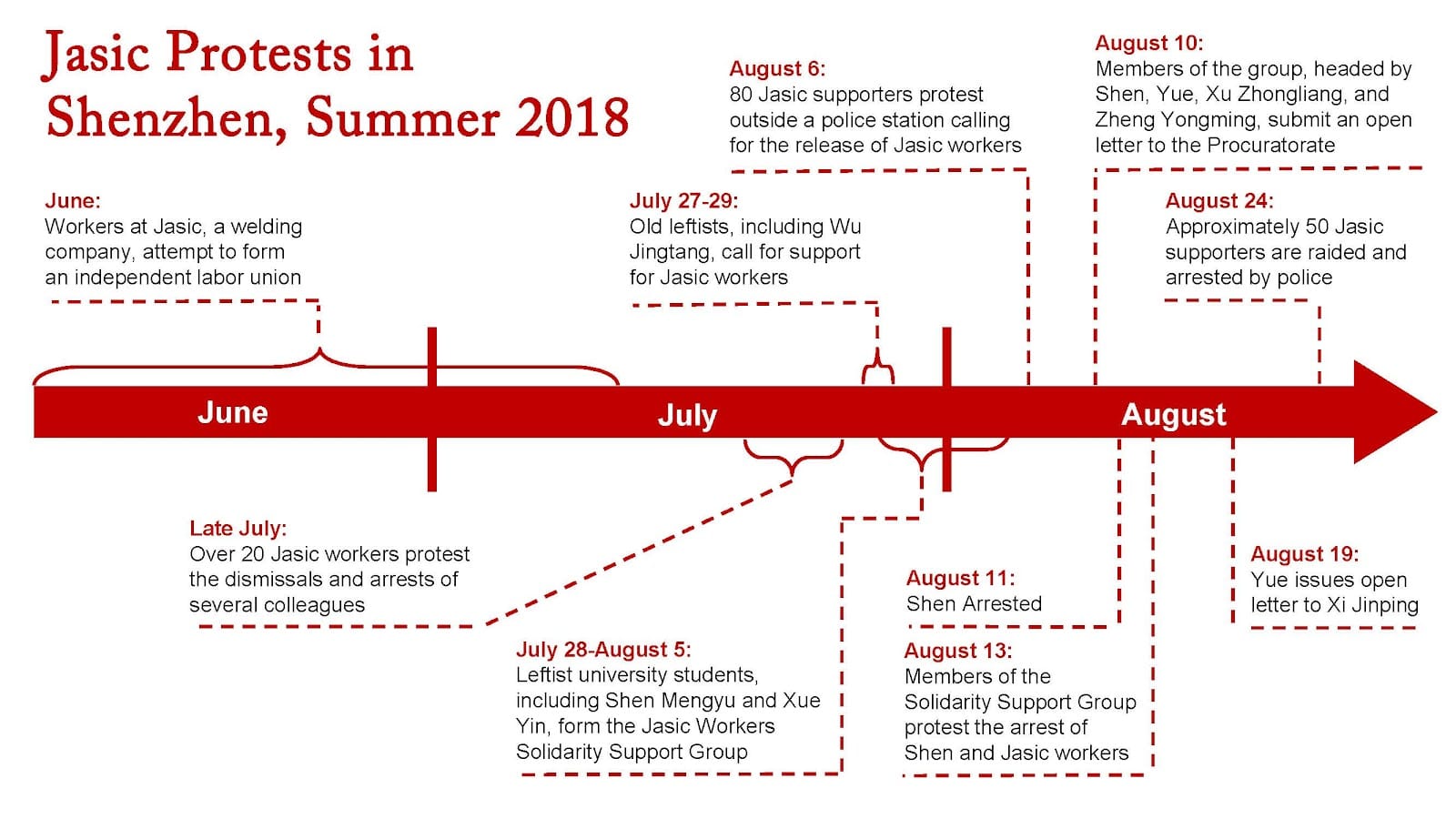
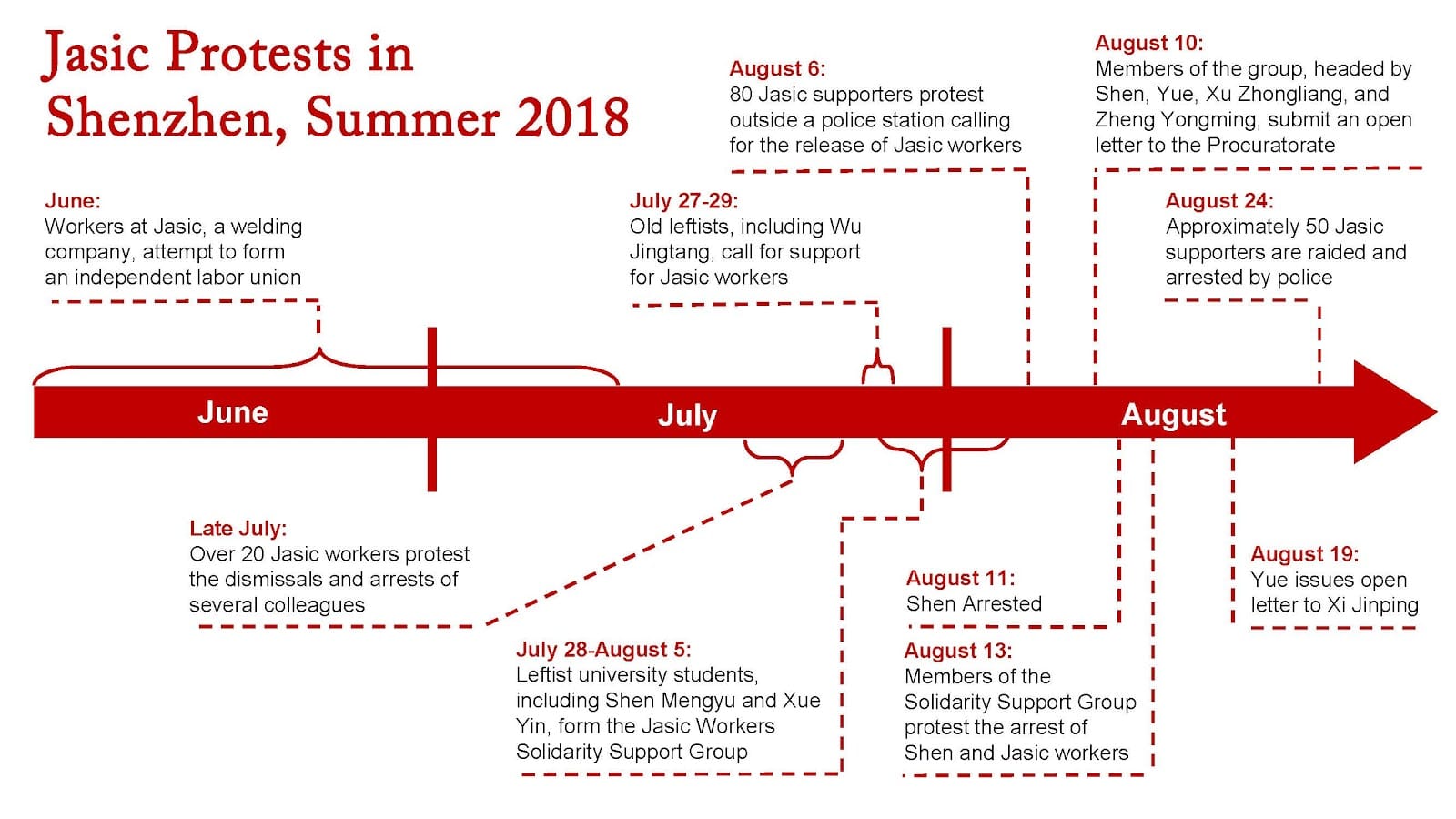
    Timeline of the Jasic protests in Shenzhen. Image Credit: The Dui Hua Foundation


    Double Solidarity Marks the Jasic Protests: Young Leftists in Support of Workers

    Unlike many other labor protests across China, the protests at Jasic Technology in Shenzhen in the summer of 2018 were unusual because of the role leftist students played. These students made an unprecedented move to intervene in a labor rights dispute by venturing into public space side by side with workers.
    In April 2018, welding machinery workers at Jasic Technology attempted to form an independent trade union. The nation’s sole legally-mandated All-China Federation of Trade Unions had been tasked with securing better wages, abolishing punitive fines, and improving working conditions. The Federation failed to achieve these goals, prompting the workers to take action. Several workers were dismissed because of their effort to unionize.
    The conflict escalated at the end of July, when over 20 workers and one student were arrested for protesting abusive treatment by police. From July 28 to early August, Shen Mengyu (沈梦雨), Yue Xin (岳昕), and sympathizers from Peking University, Tsinghua University, Nanjing University, and Sun Yat-sen University formed the Jasic Workers Solidarity Support Group. In solidarity with the workers, they began posting articles, open letters, photos, videos of speeches and peaceful demonstrations in front of the Jasic factory on digital media. They raised funds for workers, formed human chains, held banners, and chanted slogans alongside dozens of workers from Jasic and nearby factories.
    The student-worker coalition demanded the unconditional release of all detained workers and the punishment of police and mob members accused of beating workers. The Jasic protesters also requested the reinstatement of all previously dismissed workers. In less than a month, this student-worker coalition would be no more.

    On August 10, 2018, members of the Jasic Workers Solidarity Support Group submitted an open letter calling for the Shenzhen Pingshan District Procuratorate to investigate the police’s unlawful detention of workers in Shenzhen. The members (from left to right) were Zheng Yongming (郑永明), Shen Mengyu (沈梦雨), Xu Zhongliang (徐忠良), and Yue Xin (岳昕). Image Credit: @yuexinmutian, via Twitter

    Triple Solidarity: Old Leftists in Support of Leftist Students and Jasic Workers

    While young Marxists garnered widespread attention for bearing the subsequent brunt of government suppression, “old leftists” also took part in the Jasic protests in a display of solidarity with their young counterparts and the Jasic workers. The South China Morning Post reported that over half of the approximately 80 Jasic supporters who joined the rally on August 6 outside of Yanziling police station in Shenzhen’s Pingshan District were Chinese Communist Party (CCP) members and retired cadres. Many of them held portraits of Chairman Mao as they protested and were active members of Utopia, China’s leading Maoist internet forum.
    Other older leftists who were too weak to take to the streets contributed articles for leftist forums or websites. On July 28, as soon as he learned that workers were being detained, Wu Jingtang (吴敬堂) called on all “comrades” to support the Jasic workers in the name of Chairman Mao. Up until his death in early 2019 at the age of 82, Wu was revered for leading thousands of workers to protest the sale of Tonghua Iron and Steel Group in 2009, which they feared would threaten their jobs, and then successfully pressuring several corrupt officials to step down.
    After the Jasic protests were crushed in late August, another veteran leftist activist Gu Zhenghua (古正华) wrote in defense of the young Marxists. He openly countered the state media’s accusation that the Jasic protesters were “manipulated by overseas forces.” Gu, who called himself a devoted follower of Chairman Mao and previously worked for the Chinese press, was 90 years old when he penned the article in September 2018.
    During the month-long protest, Jasic student activists deliberately eschewed politics. In online posts, they pledged to espouse Marxism or even Maoism by standing with both the CCP and the working class against “local vicious forces.” On August 19, 2018, Yue posted an open letter to Xi, stressing that her activism aligned with Xi’s “Socialism with Chinese Characteristics for a New Era.” Yue attested to the unswerving loyalty of other solidary group members: they were neither plotting a revolution nor pressing for political reforms. They focused solely on helping Jasic workers safeguard their well-deserved labor rights. Jasic supporters young and old wore T-shirts with the slogan “Unity Is Strength,” a patriotic song about the People’s Liberation Army.

    Shen Mengyu, wearing a
    t-shirt that reads “Unity is Strength,
    ” above left, was taken away by unidentified men on August 11, 2018. Yue Xin and other
    members of the Jasic Workers’ Solidarity Support Group, above right, protested
    her disappearance on August 13. Image Credit: @wangshi77
    and @
    yuexinmutian, via Twitter
    But the tactic of using Marxist or patriotic rhetoric to get the CCP on their side failed. On August 24, anti-riot police raided the students’ apartments in Huizhou and detained approximately 50 people, including Shen Mengyu, Yue Xin, Zheng Yongming (郑永明), and Gu Jiayue (顾佳悦). Most were charged with “picking quarrels and provoking troubles.” The New York Times reported that the activists held hands and sang “L’Internationale” as the police broke through the door.
    In response to the police raid on the same day, state-run Xinhua News blamed non-governmental organizations and foreign forces for fanning the Jasic protests. These reports made no mention of the workers’ grievances or their rationale for protesting. Xinhua’s allegation was based on the fact that Fu Changguo (付常国) was an employee of Shenzhen-based Dagongzhe Migrant Workers Center, a local non-governmental organization said to have been “fully funded by an overseas NGO.” Fu is one of more than 50 protesters detained, disappeared, or placed under residential surveillance for participating in the Jasic labor movement.

    Aftermath of the Jasic Crackdown

    A year after the Jasic crackdown, almost 40 students, workers, and other Jasic supporters with records in Dui Hua’s political database remain in custody or have disappeared and their status remains unclear. In January 2019, about five months after their last public appearance, Shen, Yue, Zheng, and Gu briefly resurfaced in a 30-minute confessional video aired by state security officers to former members of the Jasic Workers’ Solidarity Support Group. In the video, all four pled guilty and admitted to being brainwashed. Shen was reported to have been incited by a “radical organization” to engage in subversive actions to overthrow the CCP.
    Observers believe their confessions were staged and scripted because Gu and Shen looked “dull and unresponsive” in the video, a quality observed among rights campaigners, celebrities, and even foreign nationals who have been forced to make confessions on TV since 2014. In many cases, these confessions are made before formal legal proceedings against the confessors have begun. In this sense, the use of public shaming violates the presumption of innocence, and these confessions seem to function more as a show of power rather than any substantial indictment of guilt.
    Campus activism has also been quashed. Universities warn students not to participate in protests. Despite its reputation as a wellspring for democracy movements, Peking University ousted leaders of the Marxism Society who were sympathetic to the Jasic workers and replaced them with “loyalists” from the CCP or Communist Youth League in September 2018. In addition to warning students off activism, the university branded the Jasic Workers’ Solidarity Support Group’s activities as “criminal,” in a November 2018 message to all students.
    The New Light People’s Development Association at Renmin University, too, is having a hard time recruiting members because migrant workers were pressured by the university and their contractors to leave the organization. Many students also quit after being summoned by university teachers. In November 2018, Nanjing University students were forbidden to register a Marxism reading group in reprisal for writing public letters and delivering speeches supporting the Jasic Workers’ Solidarity Support Group. VOA reported that on November 1 two Nanjing University students were beaten by university guards and thugs on campus while delivering a speech in which they announced their intention to form a Marxist reading association independent of the philosophy department. Their stated aim was to “study the original work of Marxism” and “pay more attention to workers and peasants.” The students were dragged away to an administrative building and later escorted to a police vehicle.
    In September 2018, leftist students from various universities and Jasic workers commemorated the 42nd death anniversary of Mao Zedong in his birth province Hunan. Image Credit: Jasic Workers’ Solidarity Support Group’s GitHub
    While China continues to sing the praises of Chairman Mao’s legacy, leftist students attempting to commemorate Mao’s 125th birthday in December 2018 were singled out for punishment. At least two Marxist students were taken by police for attempting to attend events related to Mao’s birthday. According to the Jasic Workers Solidarity Group’s Twitter account, Qiu Zhanxuan (邱占萱), who presided over the Peking University Marxism Study Society, was forcibly taken near the university gate by plainclothes police while on his way to attend a memorial he had organized for Mao’s birthday. In a video posted in early 2019, Qiu alleged that he had been strip-searched, slapped, and forced to listen to Xi’s speeches at high volume during an interrogation session in February 2019. Zhan Zhenzhen’s (展振振) whereabouts remain unknown after he was taken away on January 2, 2019 for joining a similar ceremony in Hunan, Mao’s native province.
    Several leftists not known to have travelled to Shenzhen to join the Jasic protests have also faced suppression. Leftist scholar Chai Xiaoming (柴晓明) was put under residential surveillance at a designated location for “subversion” in Nanjing on March 21, 2019. Chai was a lecturer at the School of Marxism of Peking University and a part-time editor at the Maoist website Red Reference. One day before he was detained, Chai was involved in the publication of an article by distinguished mainland scholar Jin Canrong (金灿荣), a professor at Renmin University. Jin had called on China to take a different path to modernization.
    In August 2018, police from Guangdong raided the Beijing office of Red Reference, confiscating computers and books. Editor Shang Kai (尚恺), a supporter of the Jasic protests, was detained on criminal charges of picking quarrels and provoking troubles. Information concerning Chai, Shang, and the police raid remains sparse.
    A year before Xi came to power in 2012, He Bing, a law professor at China University of Political Science and Law, called Bo Xilai’s promotion of “red culture” in Chongqing absurd. “In this absurd time, they encourage you to sing revolutionary songs, but they do not encourage you to wage a revolution.” Almost eight years on, the criticism about the now-disgraced Bo still rings true.
    The love for Mao and Marx as a part of modern Chinese patriotism does not translate into love for Xi or his ruling CCP. The “old leftists,” comprised of mostly state-owned enterprise workers and veteran protestors, find themselves increasingly alienated as today’s socialism directly contradicts the system they remember under Mao. Young Marxists also have reasons to feel aggrieved: the motherland they have been taught to love is falling short of their romanticized version of Marxism due to pervasive labor problems and a broad range of other socioeconomic issues. The Chinese government not only ignores these issues, it represses any attempt to raise them in the public sphere. In Xi’s China, even calling attention to existing problems either propagated or tolerated by the infrastructure, no matter how local or apolitical, is an offense to be met by everything from legal obfuscation to intimidation to detainment and being disappeared.
    From pro-democracy activists to rights lawyers and religious leaders, the CCP has crushed scores of activists who promote any of the seven political “perils” that Xi warned against in his infamous Document No.9. The reliance on the ideas of Marx, Lenin, or Mao to pave the way for Xi’s “Socialism with Chinese Characteristics for a New Era” has made clear the ideological contradictions between the CCP of yesterday and today, which will continue to impact the Party.
    Socialism with Chinese characteristics increasingly looks like an unembarrassed capitalist oligarchy, with “Chinese characteristics” as a catchall term to justify the demand for total fealty. Leftist supporters, both young and old, who do not toe Xi’s line face similar or worse fates than those who try to spread democratic ideals such as a multi-party system and judicial independence: the ideology they espouse may be more threatening to the Chinese government than those ideals which can be dismissed as “coming from the West.”
  • Leftist Dissent Under Xi: The Young Leftists Part II, Leftist Students Join in Labor Activism: Jasic and Beyond

    Leftist Dissent Under Xi: The Young Leftists Part II, Leftist Students Join in Labor Activism: Jasic and Beyond

    In Leftist Dissent Under Xi: The Young Leftists Part I, Who Are the Young Leftists?, Dui Hua  outlined the rise of a new generation of Chinese leftists and their swift repression by Xi Jinping’s Communist Party.
    Timeline of the Jasic protests in Shenzhen. Image Credit: The Dui Hua Foundation


    Double Solidarity Marks the Jasic Protests: Young Leftists in Support of Workers

    Unlike many other labor protests across China, the protests at Jasic Technology in Shenzhen in the summer of 2018 were unusual because of the role leftist students played. These students made an unprecedented move to intervene in a labor rights dispute by venturing into public space side by side with workers.
    In April 2018, welding machinery workers at Jasic Technology attempted to form an independent trade union. The nation’s sole legally-mandated All-China Federation of Trade Unions had been tasked with securing better wages, abolishing punitive fines, and improving working conditions. The Federation failed to achieve these goals, prompting the workers to take action. Several workers were dismissed because of their effort to unionize.
    The conflict escalated at the end of July, when over 20 workers and one student were arrested for protesting abusive treatment by police. From July 28 to early August, Shen Mengyu (沈梦雨), Yue Xin (岳昕), and sympathizers from Peking University, Tsinghua University, Nanjing University, and Sun Yat-sen University formed the Jasic Workers Solidarity Support Group. In solidarity with the workers, they began posting articles, open letters, photos, videos of speeches and peaceful demonstrations in front of the Jasic factory on digital media. They raised funds for workers, formed human chains, held banners, and chanted slogans alongside dozens of workers from Jasic and nearby factories.
    The student-worker coalition demanded the unconditional release of all detained workers and the punishment of police and mob members accused of beating workers. The Jasic protesters also requested the reinstatement of all previously dismissed workers. In less than a month, this student-worker coalition would be no more.
    On August 10, 2018, members of the Jasic Workers Solidarity Support Group submitted an open letter calling for the Shenzhen Pingshan District Procuratorate to investigate the police’s unlawful detention of workers in Shenzhen. The members (from left to right) were Zheng Yongming (郑永明), Shen Mengyu (沈梦雨), Xu Zhongliang (徐忠良), and Yue Xin (岳昕). Image Credit: @yuexinmutian, via Twitter
     

    Triple Solidarity: Old Leftists in Support of Leftist Students and Jasic Workers

    While young Marxists garnered widespread attention for bearing the subsequent brunt of government suppression, “old leftists” also took part in the Jasic protests in a display of solidarity with their young counterparts and the Jasic workers. The South China Morning Post reported that over half of the approximately 80 Jasic supporters who joined the rally on August 6 outside of Yanziling police station in Shenzhen’s Pingshan District were Chinese Communist Party (CCP) members and retired cadres. Many of them held portraits of Chairman Mao as they protested and were active members of Utopia, China’s leading Maoist internet forum.
    Other older leftists who were too weak to take to the streets contributed articles for leftist forums or websites. On July 28, as soon as he learned that workers were being detained, Wu Jingtang (吴敬堂) called on all “comrades” to support the Jasic workers in the name of Chairman Mao. Up until his death in early 2019 at the age of 82, Wu was revered for leading thousands of workers to protest the sale of Tonghua Iron and Steel Group in 2009, which they feared would threaten their jobs, and then successfully pressuring several corrupt officials to step down.
    After the Jasic protests were crushed in late August, another veteran leftist activist Gu Zhenghua (古正华) wrote in defense of the young Marxists. He openly countered the state media’s accusation that the Jasic protesters were “manipulated by overseas forces.” Gu, who called himself a devoted follower of Chairman Mao and previously worked for the Chinese press, was 90 years old when he penned the article in September 2018.
    During the month-long protest, Jasic student activists deliberately eschewed politics. In online posts, they pledged to espouse Marxism or even Maoism by standing with both the CCP and the working class against “local vicious forces.” On August 19, 2018, Yue posted an open letter to Xi, stressing that her activism aligned with Xi’s “Socialism with Chinese Characteristics for a New Era.” Yue attested to the unswerving loyalty of other solidary group members: they were neither plotting a revolution nor pressing for political reforms. They focused solely on helping Jasic workers safeguard their well-deserved labor rights. Jasic supporters young and old wore T-shirts with the slogan “Unity Is Strength,” a patriotic song about the People’s Liberation Army.
     
    Shen Mengyu, wearing a
    t-shirt that reads “Unity is Strength,
    ” above left, was taken away by unidentified men on August 11, 2018. Yue Xin and other
    members of the Jasic Workers’ Solidarity Support Group, above right, protested
    her disappearance on August 13. Image Credit: @wangshi77
    and @
    yuexinmutian, via Twitter
    But the tactic of using Marxist or patriotic rhetoric to get the CCP on their side failed. On August 24, anti-riot police raided the students’ apartments in Huizhou and detained approximately 50 people, including Shen Mengyu, Yue Xin, Zheng Yongming (郑永明), and Gu Jiayue (顾佳悦). Most were charged with “picking quarrels and provoking troubles.” The New York Times reported that the activists held hands and sang “L’Internationale” as the police broke through the door.
    In response to the police raid on the same day, state-run Xinhua News blamed non-governmental organizations and foreign forces for fanning the Jasic protests. These reports made no mention of the workers’ grievances or their rationale for protesting. Xinhua’s allegation was based on the fact that Fu Changguo (付常国) was an employee of Shenzhen-based Dagongzhe Migrant Workers Center, a local non-governmental organization said to have been “fully funded by an overseas NGO.” Fu is one of more than 50 protesters detained, disappeared, or placed under residential surveillance for participating in the Jasic labor movement.

    Aftermath of the Jasic Crackdown

    A year after the Jasic crackdown, almost 40 students, workers, and other Jasic supporters with records in Dui Hua’s political database remain in custody or have disappeared and their status remains unclear. In January 2019, about five months after their last public appearance, Shen, Yue, Zheng, and Gu briefly resurfaced in a 30-minute confessional video aired by state security officers to former members of the Jasic Workers’ Solidarity Support Group. In the video, all four pled guilty and admitted to being brainwashed. Shen was reported to have been incited by a “radical organization” to engage in subversive actions to overthrow the CCP.
    Observers believe their confessions were staged and scripted because Gu and Shen looked “dull and unresponsive” in the video, a quality observed among rights campaigners, celebrities, and even foreign nationals who have been forced to make confessions on TV since 2014. In many cases, these confessions are made before formal legal proceedings against the confessors have begun. In this sense, the use of public shaming violates the presumption of innocence, and these confessions seem to function more as a show of power rather than any substantial indictment of guilt.
    Campus activism has also been quashed. Universities warn students not to participate in protests. Despite its reputation as a wellspring for democracy movements, Peking University ousted leaders of the Marxism Society who were sympathetic to the Jasic workers and replaced them with “loyalists” from the CCP or Communist Youth League in September 2018. In addition to warning students off activism, the university branded the Jasic Workers’ Solidarity Support Group’s activities as “criminal,” in a November 2018 message to all students.
    The New Light People’s Development Association at Renmin University, too, is having a hard time recruiting members because migrant workers were pressured by the university and their contractors to leave the organization. Many students also quit after being summoned by university teachers. In November 2018, Nanjing University students were forbidden to register a Marxism reading group in reprisal for writing public letters and delivering speeches supporting the Jasic Workers’ Solidarity Support Group. VOA reported that on November 1 two Nanjing University students were beaten by university guards and thugs on campus while delivering a speech in which they announced their intention to form a Marxist reading association independent of the philosophy department. Their stated aim was to “study the original work of Marxism” and “pay more attention to workers and peasants.” The students were dragged away to an administrative building and later escorted to a police vehicle.
    In September 2018, leftist students from various universities and Jasic workers commemorated the 42nd death anniversary of Mao Zedong in his birth province Hunan. Image Credit: Jasic Workers’ Solidarity Support Group’s GitHub
    While China continues to sing the praises of Chairman Mao’s legacy, leftist students attempting to commemorate Mao’s 125th birthday in December 2018 were singled out for punishment. At least two Marxist students were taken by police for attempting to attend events related to Mao’s birthday. According to the Jasic Workers Solidarity Group’s Twitter account, Qiu Zhanxuan (邱占萱), who presided over the Peking University Marxism Study Society, was forcibly taken near the university gate by plainclothes police while on his way to attend a memorial he had organized for Mao’s birthday. In a video posted in early 2019, Qiu alleged that he had been strip-searched, slapped, and forced to listen to Xi’s speeches at high volume during an interrogation session in February 2019. Zhan Zhenzhen’s (展振振) whereabouts remain unknown after he was taken away on January 2, 2019 for joining a similar ceremony in Hunan, Mao’s native province.
    Several leftists not known to have travelled to Shenzhen to join the Jasic protests have also faced suppression. Leftist scholar Chai Xiaoming (柴晓明) was put under residential surveillance at a designated location for “subversion” in Nanjing on March 21, 2019. Chai was a lecturer at the School of Marxism of Peking University and a part-time editor at the Maoist website Red Reference. One day before he was detained, Chai was involved in the publication of an article by distinguished mainland scholar Jin Canrong (金灿荣), a professor at Renmin University. Jin had called on China to take a different path to modernization.
    In August 2018, police from Guangdong raided the Beijing office of Red Reference, confiscating computers and books. Editor Shang Kai (尚恺), a supporter of the Jasic protests, was detained on criminal charges of picking quarrels and provoking troubles. Information concerning Chai, Shang, and the police raid remains sparse.
    A year before Xi came to power in 2012, He Bing, a law professor at China University of Political Science and Law, called Bo Xilai’s promotion of “red culture” in Chongqing absurd. “In this absurd time, they encourage you to sing revolutionary songs, but they do not encourage you to wage a revolution.” Almost eight years on, the criticism about the now-disgraced Bo still rings true.
    The love for Mao and Marx as a part of modern Chinese patriotism does not translate into love for Xi or his ruling CCP. The “old leftists,” comprised of mostly state-owned enterprise workers and veteran protestors, find themselves increasingly alienated as today’s socialism directly contradicts the system they remember under Mao. Young Marxists also have reasons to feel aggrieved: the motherland they have been taught to love is falling short of their romanticized version of Marxism due to pervasive labor problems and a broad range of other socioeconomic issues. The Chinese government not only ignores these issues, it represses any attempt to raise them in the public sphere. In Xi’s China, even calling attention to existing problems either propagated or tolerated by the infrastructure, no matter how local or apolitical, is an offense to be met by everything from legal obfuscation to intimidation to detainment and being disappeared.
    From pro-democracy activists to rights lawyers and religious leaders, the CCP has crushed scores of activists who promote any of the seven political “perils” that Xi warned against in his infamous Document No.9. The reliance on the ideas of Marx, Lenin, or Mao to pave the way for Xi’s “Socialism with Chinese Characteristics for a New Era” has made clear the ideological contradictions between the CCP of yesterday and today, which will continue to impact the Party.
    Socialism with Chinese characteristics increasingly looks like an unembarrassed capitalist oligarchy, with “Chinese characteristics” as a catchall term to justify the demand for total fealty. Leftist supporters, both young and old, who do not toe Xi’s line face similar or worse fates than those who try to spread democratic ideals such as a multi-party system and judicial independence: the ideology they espouse may be more threatening to the Chinese government than those ideals which can be dismissed as “coming from the West.”
  • Mass Incident Monitor #13: Crematorium plan halted after police deployed water cannons and tear gas to suppress protests in Guangdong

    Police using tear gas to disperse protesting residents at Wenlou township (Photo credit: Radio Free Asia)

    November 28 – December 1 and December 16 – 17, 2019
    Location: Huazhou District, Maoming, Guangdong
    Participants: Thousands

    A crematorium plan triggered protests from residents in Wenlou, a township in Huazhou District, Maoming on November 28. Water cannons and tear gas were deployed to disperse the crowds. Residents, including children and elderly, were beaten by SWAT police armed with riot shields and batons. The district government halted the plan the day after the violent clashes.

    Residents were uninformed of the crematorium plan prior to the protest. On November 15, the government posted a on its office website and only allowed 10 days for public comment. Billed as an ecology park, the blueprint concealed the construction of, among other facilities, a crematory, funeral home and cemeteries. The actual details were only released by the government on November 27. The following day, hundreds of residents from Wenlou took to the streets to express concerns over possible air and water pollution, the disruption of by the graves, and impact on the property prices. The clashes left many protesters injured. A government notice dated November 29 announced that the plan would be suspended for further public comment. Protests subsided on December 1 when Wenlou’s party secretary announced the decision to formally withdraw the plan

    Two weeks later, violent clashes resurfaced in Boyang, another township in Huazhou less than 18 miles from Wenlou. Protests broke out near government buildings because of a rumor about the construction of a crematorium, as opposed to a water filtration facility which they had been previously told. On December 16, the Boyang government vowed not to build a crematorium. The Huazhou District government also dismissed the proposal as a rumor.

    Maoming is no stranger to environmental protests. In early April 2014, thousands of people rallied against a proposed paraxylene plant. In the same month, a protest took place against a crematorium plan in another township in Huazhou. The proposals were shelved after violent clashes between the locals and police. In both incidents, there were widespread rumors that protesters had been killed by police.

  • Mass Incident Monitor #12: Government’s plan to confiscate land provoked protest from property landowners

    Party committee secretary and mayor of the Cuicun Township, Changping District, surrounded and questioned by protesting villagers (Photo credit: Radio Free Asia)

    October 18 or 20, 2019
    Location: Changping District, Beijing
    Participants: Over one thousand

    Over one thousand property owners gathered in a square in front of the Changping District government building in Beijing for one day against a forced eviction order in October. Non-local protesters residing in the two villages were unsatisfied with the compensation. They demanded an explanation as to why the district government classified their houses as illegal constructions.

    On October 17, a notice was put up in Dongying Strawberry Farm Village and Xiangtang New Culture Village, urging all villagers to demolish their houses by the following day, lest the district government would bulldoze their houses. Disgruntled property owners rallied in front of the government building to defend their properties. They claimed that their purchase was recognized by village, township and district governments; however, government officials have breached the agreement and proceeded to expropriate the land.

    The properties in this mass incident belong to the so-called “minor property right houses” (小产权房). These houses are built on “village common land” collectively owned by local villagers. The protesters, however, were non-locals. They purchased such houses from local villagers, and mistakenly believed that they had acquired both land and property ownerships from the locals because of the certificates of transfer issued by the village and township governments; however, the district government has never granted them the property deeds.

    In 2012, the Beijing Municipal government began to scrutinize and expropriate “minor property right houses.” Beijing’s Land and Resources Bureau has also been warning non-locals not to purchase them. After demolition began in early November, affected property owners collected over 10,000 signatures against the forced eviction.  

  • Leftist Dissent Under Xi: The Young Leftists Part I, Who Are the Young Leftists?

    Leftist Dissent Under Xi: The Young Leftists Part I, Who Are the Young Leftists?

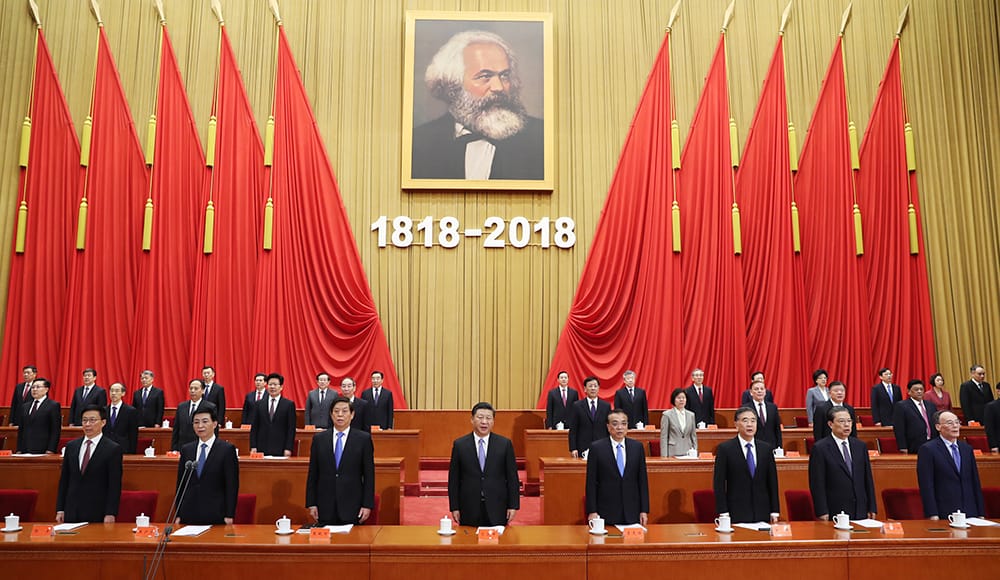
    Xi Jinping leads members of Politburo Standing Committee and other state leaders in celebrating the 200th birthday of Karl Marx in the Great Hall of People on May 5, 2018. Image credit: Xinhuanet
    In May 2018, Xi Jinping led a celebration of the 200th anniversary of Karl Marx’s birthday. During the event, Xi delivered a speech hailing Marx as the greatest thinker of modern times and holding up Marxism as the guiding ideology of the Chinese Communist Party (CCP). The days before and after Xi’s speech were marked by numerous celebratory events, including the placement of a golden Marx statue in Xi’s hometown.
    Just months later, the CCP would engage in a crackdown on leftist supporters who not only shared the same ideological bedrock as the CCP but were actively working to apply Marxism at the local level. The tactics used by the party may not surprise those familiar with the CCP’s handling of any dissent regardless of political ideology. However, the stark contrast between the tone struck by Xi in May and the party’s blatant rejection of those same ideals when carried out by its citizenry served as another reminder of the CCP’s intolerance for dissent, even that which seeks to bring local standards in line with the government’s stated values.
    This is the first entry in a two-part post that examines dissent among the ideological left in China. In October 2019, Dui Hua examined the grievances of the “old leftists,” including their efforts to form political parties. Dui Hua has also chronicled leftist subversion in China from 1980-2013. This post turns to a young generation of Marxists who emerged more recently and quickly faced repression in Xi’s China. The second part of this post, which will be released shortly, discusses the young leftists’ roles in the 2018 Jasic workers’ protests, as well as the consequences they faced after the government crackdown.
    The emergence of young leftist dissent, which culminated in the outbreak of workers’ protests at Jasic, a welding company, in the summer of 2018, represents an unlikely challenge for the CCP. Xi is continuing China’s decades-long effort to instill the political ideology of the CCP as the rightful successor to Marxism in the education curriculum. He also widely celebrates his own thoughts on socialism by adding “Chinese characteristics” to Marxism. To ensure loyalty and broaden the appeal of his Sinicized version of Marxism for future generations, Xi’s government launched a mobile app in early 2019 to educate school-aged children about the CCP’s ideological orthodoxy.
    Despite escalating political indoctrination among China’s youth, a group of self-declared Marxist students came to prominence under Xi’s rule. Most of them were born in the 1990s and early 2000s with no first-hand experience of Mao’s revolutionary zeal for class struggle. Growing up amid China’s economic boom, these young leftists find that the Marxist ideals trumpeted by the CCP in school do not line up with the realities of the society in which they are living. Rather, they see aggravated ideological contradictions in Xi’s “new era,” including increasing state capitalism and social injustice, especially corruption and a widening wealth gap. At the core of their disillusionment are rampant labor rights abuses, including wages in arrears, long work hours, and unlawful layoffs.
    Old leftists have joined these young dissenters and harnessed social activism when their interests conflict with government policies. Having grown up in Mao’s China without the benefit of formal Marxist education, their activism is rooted in what they perceive as the tainting of Mao’s ideals by corruption and capitalist tendencies. In contrast, many young leftists are well educated and motivated by the pursuit of social justice derived from Marxist values of equality. These young leftists come from diverse backgrounds, but they began their activism at universities with the formation of various Marxism-Leninism or Mao Zedong Thought discussion groups. In an unprecedented move, this activism would expand beyond the campus as students took their cause into society to support the Jasic workers.
    Diverse Backgrounds
    The young Marxists who emerged in Xi’s era were students or graduates from various disciplines and social backgrounds. Many of them attended China’s most prestigious universities. One student Marxist from Peking University who spoke to AFP on condition of anonymity said that he read the works of Marx to find ways to help China’s underclass. As the son of migrant farm workers, he believes that he has a sense of social responsibility.
    Other activists, like several members of a Marxism study group formed at Guangdong University of Technology in 2017, were born to less well-off families. For instance, chemical engineering student Ye Jianke(叶建科) grew up in Heping, the poorest county in Guangdong. Zheng Yongming (郑永明), a graduate of Nanjing Agricultural University, is a native of Ganzhou, a state-designated poverty city in Jiangxi. Sun Tingting(孙婷婷), a Chinese medicine graduate from Nanjing University, similarly grew up in a poor family in Jiangsu. In November 2017, the study group members took part in a group session and were detained for “gathering a crowd to disturb social order.” Afterwards, Sun released a public letter in which she described the difficulty of paying her legal fees.
    If the well-to-do backgrounds of some students made for unlikely Marxists, it did not deter the students’ convictions. For instance, Shen Mengyu (沈梦雨), whose parents are university lecturers, became a student leader who openly supported the Jasic protesters. Shen graduated with a master’s degree in computer science and mathematics from Sun Yat-sen University. Despite a family background and educational qualifications pointing to a bright future, Shen chose to work in a car factory in Guangzhou after graduation to experience life as a proletarian. In an interview with Asia Weekly (paywall), Shen said she did not consider herself a Marxist until she attended graduate school and learned about labor issues by attending talks and following leftist websites online.
    Another notable figure, Yue Xin (岳昕), was born to a typical middle-class family. Her family has an apartment in Beijing, and she had a materially trouble-free life. In a now-censored essay about social injustice and inequality published online, Yue expressed guilt for her privileged upbringing, something not afforded to many ordinary Chinese people. Yue became interested in workers’ rights in 2016 when she visited Jakarta as part of a language exchange from Peking University. Prior to her trip, she believed in constitutional democracy. Seeing that the Indonesian political system failed to improve the lives of Indonesian workers who continued to suffer capitalist exploitation, she began to follow labor issues in China more closely upon her return to China in 2017. These views led her to join various campus activities to promote workers’ rights.
    Leftist Campus Activism
    University students did not appear particularly vocal about labor issues, even after a spate of suicides at Foxconn starting in 2010 and other labor protests that rocked the manufacturing hub of Guangdong. Although many students likely experienced mistreatment while working to support themselves, there were no known collective student efforts to improve workers’ conditions until around 2014.
    That year, over 200 sanitation workers in Guangzhou University Town launched a two-week strike to seek severance pay and assurances that the new employer assuming the regional cleaning contract would continue to employ the workers. The striking workers received help from many of the area’s 200,000 students. These students signed an open letter supporting the strike, raised funds, and even brought food and water for the workers. Nevertheless, except for Shen Mengyu, who conducted on-site research about the strike, few students identified as Marxists.
    These efforts led to improvements in working conditions, including safer and more hygienic workplaces as well as better-defined work hours and duties. This success also sparked an interest among leftist student groups to improve the treatment of “campus proletarians” like cooks, construction workers, and janitors. In November 2018, Inkstone, a subsidiary of the South China Morning Post, wrote of several Marxist student groups in Jiangsu and Beijing. At Nanjing University, students from Marxist labor rights groups sympathetic to campus workers took up canteen work and organized square dance events. The New Light People’s Development Association at Renmin University supported migrant workers by organizing free clinics, night schools, and dance parties. Only months later, these groups would be suppressed by government action.
    Perhaps the best-known student group is the Peking University Marxism Study Society, which was founded in 2000. In late 2015, the society released a report detailing inadequate labor protections for the university’s maintenance staff, including unlawful pay cuts, insufficient social security coverage, and abhorrent living conditions. The report, based on responses from 100 interviewees on campus, urged the university management to act to improve working conditions in accordance with Chinese law.
    A follow-up survey conducted in 2017 by Zhan Zhenzhen(展振振) indicated that the university had made no substantive improvements to staff conditions. Perhaps recognizing the risk in making overt criticism, Zhan’s May 2018 report avoided naming and shaming, instead calling on university management to ensure the protection of basic workers’ rights. Although Zhan did not face any disciplinary action for his survey, Peking University warned workers not to cooperate with him lest they be laid off.
    While only a small minority of students are devoted to left-wing campus activism, the CCP fears a student-worker coalition that highlights labor rights and broader socio-economic inequalities. The CCP believes such criticisms undermine its vested interests in the increasingly capitalist markets. When the party believes a line has been crossed, it has not hesitated to crack down on leftist student groups, using a variety of methods including coercive measures. Zhang Yunfan (张云帆) was among the first students to have his leftist activism met with such resistance.
    A former member of the Peking University Marxism Study Society, Zhang started working in Guangzhou University Town after graduating from Peking University with a major in philosophy in 2016. In 2017, Zhang organized Marxism reading groups at Guangdong University of Technology for like-minded students and graduates. Three of the activists mentioned in this article—Sun Tingting, Ye Jianke, and Zheng Yongmin—were members. In addition to labor rights, Zhang’s reading groups were keen to discuss current affairs, even “June Fourth.”
    After a group session on November 15, 2017, Zhang, Ye, and a few other members were initially charged with “illegal business activity” but later detained for “gathering a crowd to disturb social order.” A month later, Zhang and Ye were placed under residential surveillance at a designated location and released on December 29, 2017. Sun and Zheng were also detained in early December and released on bail within a month.
    While the Marxist students shared similar passions to improve workers’ rights, some of them expanded their focus to explore women’s rights. Marxist student Yue Xin emerged as a critical voice in China’s #MeToo movement, which began in January 2018. She helped trigger a public reckoning when she began investigating an alleged rape that occurred almost 20 years ago and possibly led to the suicide of a Peking University student in 1998. In April 2018, Yue and other students requested that police disclose information about the investigation of a former literature professor who is believed to have raped the student who committed suicide and coerced other students into sexual relationships. In an open letter Yue published on April 23, 2018, she recounted intimidation by Peking University. The university said that she would not be able to matriculate unless she deleted all related information from her electronic devices.
    Many politically engaged students, including those profiled here, reached an important level of commitment with their involvement in the Jasic labor protests of summer 2018. The next post tells their story.
  • Defiant: Li Huanming’s Long Road to Freedom

    Defiant: Li Huanming’s Long Road to Freedom

    << Read all John Kamm Remembers stories

    Guangzhou’s CITIC Plaza, one of the tallest buildings in China. This is one of the locations where Li Huanming planned to distribute his flyers. Image credit: Quanjing.com

    Dui Hua researchers started finding the names of political prisoners on Chinese court websites in 2003. One of the first names we found was Li Huanming. My colleague Joshua Rosenzweig found his name on the Shenzhen Intermediate Court website. Later, in a work report out of Shenzhen, we confirmed that Li stood trial for inciting subversion in a high-profile case in 2002.

    Months later, in late 2003, Dui Hua sent Li’s name to a professor based in Guangzhou who enjoyed good relations with local security bureaus and courts. Within months, the professor responded with details on Li’s case, marking the first time Dui Hua received information on a political prisoner we identified from a Chinese government website.

    The information came from “friends” in the Shenzhen Public Security Bureau. We learned that Li was from Ankang Municipality in Shaanxi Province. He was charged with inciting subversion for distributing or planning to distribute tens of thousands of “reactionary” flyers in Shenzhen and Guangzhou. In one instance, he put flyers near the Shenzhen-Guangzhou Highway so trucks hurtling by would blow the flyers across the countryside.

    Diwang plaza in Shenzhen. Image Credit: sohu.com

    According to the email: “The case shocked the Ministry of Public Security, which dispatched two bureau chiefs to Guangzhou to personally supervise the investigation. The Central Committee’s Political and Legal Affairs Committee even hosted a special meeting to discuss the case.” When police detained Li in Guangzhou’s Tianhe District, he “shouted reactionary slogans [demonstrating that] he is a very stubborn person.”

    From the time Dui Hua first learned of Li Huanming in 2004 until his release in 2010, we put his name on 11 prisoner lists to the Chinese government both directly and through foreign governments. In 2005 alone, we put Li’s name on four lists submitted to both the central government and the Guangdong government. These interventions yielded eight written responses, which painted a picture of a young man who refused to bend to authority. The court sentenced Li to nine years in Shaoguan Prison in northern Guangdong Province for inciting subversion and to another three years of deprivation of political rights upon his release. He refused to give legitimacy to the Chinese government and did not appeal the sentence, which was the longest for inciting subversion that Dui Hua was aware of at the time. (In 2009, Nobel Peace Prize laureate Liu Xiaobo would be given an 11-year prison sentence for inciting subversion.)

    In prison, he was defiant. Li served every day of his sentence before being sent back to his hometown in Shaanxi Province on September 1, 2010. He spent several spells in solitary confinement, making him ineligible for clemency. I later learned that prison authorities forbade monthly phone privileges to call his family, and he did not receive family visits.

    Nonetheless, the stream of prisoner lists we sent beginning in late 2003 improved life for Li. Authorities put him in solitary confinement on three occasions in 2003, but never again after 2004. Li Huanming says that, in 2005, he was excused from working overtime and on weekends. He was given light work in the prison commissary. In 2007, he refused to do any manual labor, and he was not punished. He was left alone to write what would become a long novel that he was not allowed to take out of China.

    The China Alliance of Virtuous Youth

    In a conversation in 2005, the professor told me that Li originally faced harsh treatment for three reasons. First, he had a bad attitude. Second, authorities took issue with the high volume of reactionary leaflets he distributed and how he distributed them. Third, Li had a record, having served a three-year prison sentence for counterrevolution during the 1990s.

    While he was a student at Ankang Normal College (now Ankang Normal University), Li started the “China Alliance of Virtuous Youth.” Made up of five members, the group drafted a manifesto that was then confiscated by the police. Li was detained right before graduation in June 1993. He was subsequently convicted of organizing and leading a counterrevolutionary group and sentenced to three years in prison in 1994. Li was the only member of the group sentenced to prison. He finished the sentence in June 1996 and then moved to Guangdong to find employment. After working several jobs in the Pearl River Delta, he wound up working for a real estate company in Shenzhen.

    A Message from Vietnam

    Less than a year after Li finished his prison sentence, on June 15, 2011, Dui Hua’s Hong Kong office received an email from a reporter in Hanoi. The journalist had run into Li Huanming. He had entered Vietnam illegally and was facing difficulties.

    I subsequently learned that Li had taken a train from Shaanxi to Guangzhou. He was contacted by public security agents in Shaanxi and ordered to return to Ankang to serve his deprivation of political rights sentence. Li ditched his cell phone, borrowed money, and headed for the border with Vietnam. He crossed the border at Pingxiang in Guangxi Zhuang Autonomous Region and was immediately detained by Vietnamese border guards. He paid them off.

    Li took a bus from Hanoi to Ho Chi Minh City. From there he headed to Cambodia and then to Thailand. He entered Thailand, a month after leaving Guangzhou, but lost nearly all his documents on the way. He had been stopped by border guards and police on several occasions but managed to bribe or talk his way out of each brief detention. He spent a week living on the streets in Bangkok before finding a place to stay.

    On July 22, Li called Dui Hua from Thailand. He had had his first meeting with the United Nations Office of the High Commissioner for Refugees (UNOHCR). Afterwards he visited the embassies of the United States, the Netherlands, and New Zealand. None could help. He also sought out the Jesuit Refugee Service (JRS), but since he was not a Christian, Li was not optimistic he’d get assistance. I contacted the Department of State to see if it could help Li and asked for help from Dui Hua Director Bill McCahill, who asked Father John Shea SJ to intervene with JRS.

    On August 16, a lawyer working at JRS asked me to provide supporting documents to help verify Li’s claim for political asylum. I gathered and submitted all the official responses I had received on Li from the Chinese government.

    On September 16, Li had his first formal, full-day interview with UNOHCR. He presented the materials from Dui Hua and JRS. His second interview was scheduled but delayed due to a lack of Chinese interpreters. Li was advised that it usually took two years after the first interview to have a second. Months went by. Li worked at part-time jobs and earned enough to survive, but he was increasingly dispirited and pessimistic.

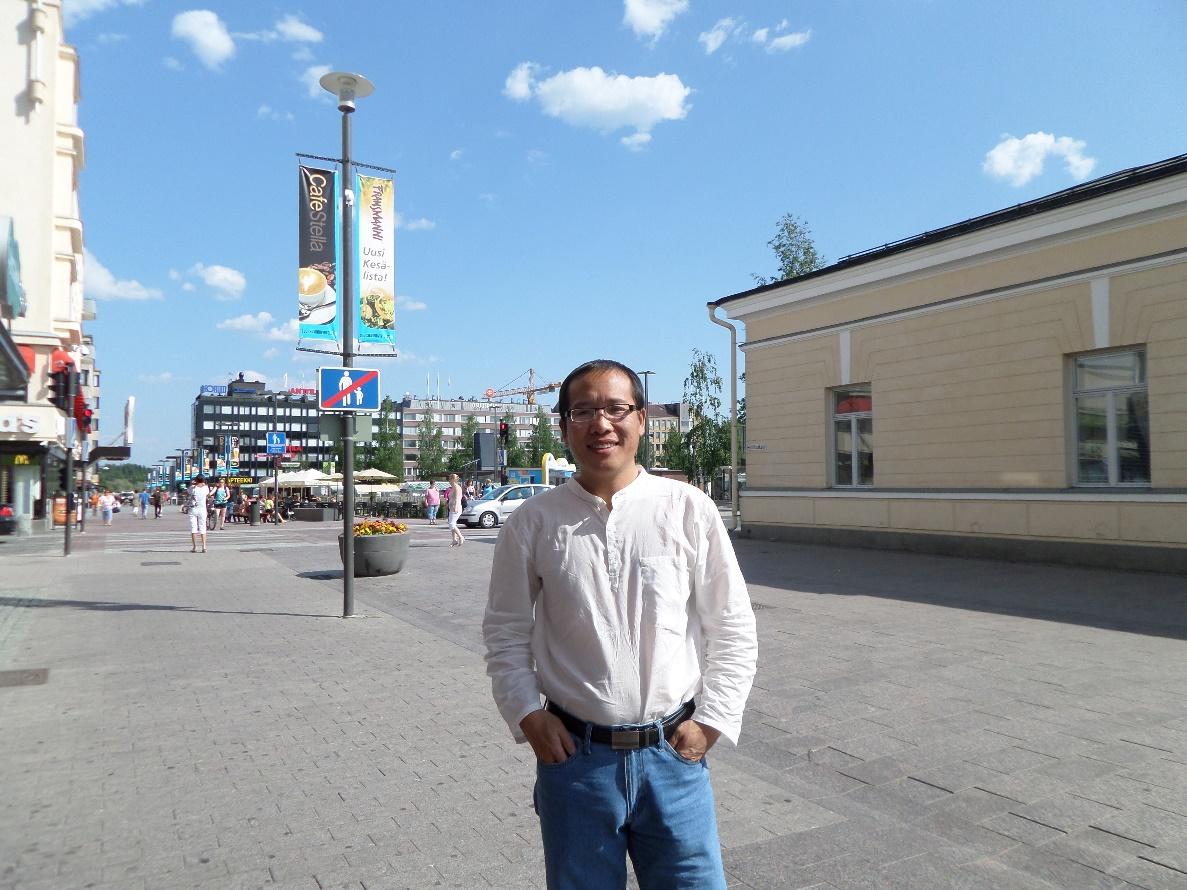
    Finally, on August 27, 2012, Li called Dui Hua’s Hong Kong office to report that his refugee status had been approved by UNOHCR. After months of the UNOHCR trying to find him a new home, Li arrived in Finland on May 7, 2013.  He settled in Mikkeli, a scenic city on a lake that is a two-and-a-half-hour drive from the capital, Helsinki. His life is good. He has made many friends and is free to travel around Europe.

    Li Huanming’s case demonstrates the value of submitting prisoner lists to the Chinese government and getting responses in return. The lists led to better treatment in prison, and the responses supported Li’s successful request for political asylum.

    Dui Hua’s work is as unique as it is important. Mr. Rosenzweig calls Li’s story a classic case of a successful Dui Hua intervention on behalf of a political prisoner. In the words of Li Huanming: “Dui Hua under John Kamm’s direction was the only human rights organization that cared about me.”

    Li Huanming in Mikkeli, Finland
    The June 15 Reactionary Leaflet Case in Shanghai

    Chinese police have a practice of naming important cases after the date on which the offense was committed. Li Huanming’s reactionary leaflet case was known as the “August 23” case, named after the date in 2001 when Li dropped a large quantity of leaflets from a tall office building in Shenzhen. Li’s case bears a striking similarity to the “June 15” case reactionary leaflet case in Shanghai.

    On June 15, 1989 – days after the political protests in Beijing were suppressed – a number of reactionary leaflets were tossed from a building in Shanghai. From that date until his arrest on October 2, 1989, Shanghai resident Yu Rong distributed 1,450 reactionary leaflets on 52 occasions in separate districts around the city. It was the largest case of reactionary leaflets in the history of Shanghai. In the words of the popular tabloid People’s Police, Yu Rong’s reactionary leaflets “caused serious damage to social stability and to people’s peace of mind.”

    As in the Li Huanming “August 23” case, solving the Yu Rong “June 15” case became a top priority for both the Shanghai Public Security Bureau and the Ministry of Public Security in Beijing. Zhu Rongji, then mayor of Shanghai and later China’s premier, personally oversaw the investigation that eventually led to Yu’s arrest. Hundreds of public security officers were deployed in stake outs in an attempt to catch the “counterrevolutionary” in the act of distributing the leaflets.

    Yu Rong – who, like Li Huanming, had served time in prison – used pages from middle-school textbooks to write his messages. Thirty-five-year-old Yu, who worked at the Shanghai Automobile Service Company, lived alone, and committed the crime without assistance from anyone else. His father had served a prison term for counterrevolutionary crimes. Yu resented the Chinese government and was inspired by the June 4 protests.

    Under interrogation Yu admitted that he was responsible for distributing the reactionary leaflets. He also confessed to setting 22 fires and to having dropped bricks from tall buildings on more than 50 occasions, killing three people.

    From the time Dui Hua first learned of the Yu Rong case in People’s Police to the present day, the foundation has placed Yu Rong’s name on 15 lists submitted directly or through foreign governments to the Chinese government. It has thus far received only one response. In April 2006, the Shanghai authorities advised Dui Hua that Yu Rong had been diagnosed with schizophrenia in 1990 and been placed in a psychiatric detention facility known as Ankang run by the Public Security Bureau. If Yu is alive he is likely still there.


    Listen to the Encounters with China podcast.

    Subscribe to receive notifications about new episodes. 

    Read all John Kamm Remembers stories.


  • Dui Hua Digest, December 2019

    EVENTS

    A Challenging Year: 2019 in Review

    Image Credit: Zbitnev/Shutterstock

    Since its establishment in 1999, Dui Hua has faced many challenges. Some have been mundane: securing adequate funding; hiring the right staff; finding suitable office space in San Francisco and Hong Kong, two of the most expensive cities in the world. Others go to the heart of the foundation’s mission: helping Chinese detainees at risk in a human rights climate that many see as deteriorating.

    Over the last 20 years, Dui Hua has had to deal with the fall-out from multiple crises in US-China relations – tensions over the South China Sea and Taiwan, trade disputes, and conflicts over human rights at the United Nations. Public crises in Hong Kong, including the SARS epidemic in 2003 and the Occupy Central movement in 2014, have also heightened tensions at times.

    In 2019, Dui Hua faced increasingly intense challenges when engaging in human rights dialogues. US-China relations have worsened. China has been accused of committing serious human rights abuses against Muslim minorities and Christians. It is said to be responsible for shipping massive quantities of fentanyl, a deadly opioid that has killed thousands of Americans, to the US. In Hong Kong, protests that began in June have disrupted life in the city so much that the city’s fate has also become a contentious issue between the two nations.

    Looking back over the past 12 months, the scale of this downturn in relations is stunning. The trade war has resulted in more than $500 billion of tariffs imposed on Chinese and American products; in the first 10 months of 2019, American imports of Chinese goods fell 14.4 percent compared to the same period in 2018. American exports to China similarly fell by 13.6 percent.

    Blistering rhetoric is employed by both countries, and insults are flying. The US Department of State has called China a “thuggish regime,” with Secretary of State Pompeo referring to China’s alleged internment of more than a million Uyghurs as “the stain of the century.” China’s Foreign Minister has called the United States the biggest source of global instability. Both countries now view the other as the greatest threat to their security.

    The quantifiable dimensions of this downward spiral in relations are staggering:

    • In the fiscal year that ended on September 30, 2019, the United States issued 45 percent fewer visas to Chinese citizens than in FY 2018.
    • At the end of 2016, the two countries were engaged in more than 100 dialogues and consultations on a wide range of subjects. There are fewer than 20 such dialogues and consultations today.
    • Chinese investments in the United States declined by 83 percent in 2018, and Chinese purchases of American real estate dropped by more than 50 percent.
    • Executive orders have been issued banning American companies from doing business with Chinese companies, and more than two dozen Chinese officials have been blacklisted.
    • According to one count, more than 150 bills targeting China are currently being considered by Congress.
    • More than 15 Confucius Institutes on American campuses have had to close due to threats to deny federal funding to colleges that accept Chinese money.
    • Over 1,000 cases of Chinese espionage are being investigated by the FBI. Several alleged spies have been convicted in American courts. American citizen Li Kai has been sentenced to 10 years in prison by a Shanghai court.
    • China has announced it will restrict visas to Americans who hold anti-China views and otherwise sanction American human rights groups, and it has reportedly banned Chinese publishers from publishing books by American authors. Senior officials of the American Chamber of Commerce in Hong Kong have been denied entry to Macau, a Chinese territory.
    • American public opinion towards China has worsened. According to a poll taken by the Pew Research Center, perceptions of China are at their lowest point since the events of Tiananmen in 1989.

    Hong Kong Protests

    Hong Kong, a Special Administrative Region of China, has been roiled by protests. The Hong Kong government estimates that more than 900 demonstrations have occurred since June 2019. Marches involving more than one million people have taken place, the airport was shut down for several days, and transportation links have been disrupted on multiple occasions.

    The protests started with objections to a bill that could have been used to extradite suspects to China and other jurisdictions; the bill was initially suspended and finally withdrawn. The movement has demanded an independent inquiry into police violence, the release of detained protesters, universal suffrage, and that the government cease referring to the protests as riots.

    By December 9, after six months of large-scale protests, police had fired around 16,000 canisters of tear gas and 10,000 rubber bullets at protesters. 19 live rounds have been fired on 13 occasions. Over 6,000 people have been arrested, of whom 2,393 are students and 946 are juveniles. 342 are under the age of 16, including 102 girls, as of November 28. More than 2,600 people have been injured. In a show of public support for the protesters’ goals, the pro-democracy camp swept the District Council elections on November 24, taking 85 percent of the seats and winning control of 17 out of 18 district council seats.

    The Hong Kong protests have emerged as another issue in the increasingly tense US-China relationship. On November 27, 2019, President Trump signed into law the Hong Kong Human Rights and Democracy Act despite warnings from Beijing of “serious consequences.” The President also signed a bill that prohibits exports of tear gas and rubber bullets to Hong Kong police. China has threatened countermeasures and on December 2 announced the suspension of all visits by American ships and planes to Hong Kong.

    Dui Hua Activities

    Despite tensions between the United States and China, Dui Hua had a productive year of dialogue. It submitted 26 lists to Chinese interlocutors and received responses on 73 individuals, matching the response rate in 2018. Some of these responses came through WeChat. Dui Hua has learned of 18 acts of clemency for individuals on its prisoner lists. Both Yao Wentian, father of an American citizen, and American pastor David Lin have been granted sentence reductions.

    At the same time, Dui Hua has learned of harsh treatment directed against Americans, including a death-with-two-year reprieve sentence against Mark Swidan, currently awaiting the outcome of his appeal. Permanent resident Cao Sanqiang was given a harsh prison sentence, and several Americans have had exit bans placed on them. Getting accurate information on Uyghurs subjected to coercive measures has been exceptionally difficult.

    Much progress has been made on preparations for the International Symposium on Girls in Conflict with the Law, the first event of its kind, to be held in Hong Kong in April 2020. We and our partners have confirmed the attendance of top experts and raised funds from governments and individuals. The symposium is timely: 280 girls have been arrested for participating in the Hong Kong protests, and there have been allegations of mistreatment by police.


    PRISONER UPDATES

    Library research conducted by Dui Hua in Cambridge, Massachusetts, in October uncovered a new, sensitive security case concerning state secrets. Ouyang Yi (欧阳毅), who worked for China’s Shanghai Theme Park Office, has been accused of providing four “secret-level” documents to a project coordinator of the Walt Disney Corporation. The government record vaguely stated that Ouyang’s action “adversely influenced the negotiation of the Shanghai Disneyland project” without providing further information. In June 2007, the Shanghai No.1 Intermediate People’s Court sentenced him to a prison term of five years for illegally providing state secrets or intelligence for an organization outside the country.

    Dui Hua also found new case specifics concerning three other individuals convicted of espionage:

    • Liu Guihui (刘桂辉) was recruited as an underground Kuomintang (KMT) member after sending critical letters about China to Taiwanese agents based in Hong Kong and Macau. He also provided military and political intelligence in the late 1980s. The Beihai Intermediate People’s Court sentenced him to 13 years’ imprisonment in 1990.
    • A government record also confirmed that Xu Shizhou (徐士洲 or 徐世洲) and Tian Huili (田惠丽) had spied for KMT agents based in Japan until they were arrested in 1983. They were both sentenced to 15 years’ imprisonment. No information was provided on the court or year of judgment.

    Outside of Harvard, Dui Hua has learned new information about Chinese officials who were convicted of spying for foreign governments. Just one day after the four-day Fourth Plenary of the Communist Party of China ended on October 31, 2019, state-news media reported three new espionage or state secret cases:

    Zhang Xiangbin. Image Credit: news.cctv.com

    Chen Wei. Image Credit: news.cctv.com
    • Zhang Xiangbin (张向斌), a ministry-level translator stationed overseas who fathered two children with an official of a foreign government, was sentenced to death with a two-year reprieve for espionage and illegally obtaining state secrets by the Guangxi Baise (Bo’se) Intermediate People’s Court in February 2019.
    • Chen Wei (陈伟), an Intranet administrator who worked for a subsidiary company affiliated with a military research institute, was sentenced to life imprisonment by the Beijing No.2 Intermediate People’s Court in March 2019. Both Zhang and Chen were said to have provided over five thousand classified documents to foreign agents.
    • Qiu Degui (邱德桂), a 29-year-old journalist for the Publicity Department, was convicted of illegally providing state secrets to foreign entities in June 2018. It is unclear where Qiu was tried and where he is serving his four-year sentence.

    Since the counter-espionage law came into effect in 2015, at least 13 Japanese citizens have been detained in China on various charges, including espionage (Dui Hua’s PPDB has information on four of them). One of them is Saki Tsuchikawa (土川纱辉), a China-born Japanese citizen who worked for a Japanese language school in Tokyo. She was sentenced to six year’s imprisonment by a Shanghai court for crimes involving state secrets in December 2018.

    More recently, Iwatani Nobu (岩谷将), a law and politics professor at Hokkaido University, was reportedly detained in China in September 2019 after accepting an invitation from a Chinese think tank to participate in a conference. Iwatani specializes in contemporary Chinese history, including the intelligence history of the CCP. He worked for the National Institute for Defense Studies under the Japanese Ministry of Defense for ten years before obtaining his professorship in 2016. The Chinese Ministry of Foreign Affairs alleges that Iwatani violated the Criminal Law and Counter-Espionage Law on September 8 by illegally obtaining a large amount of state secrets in China. The spokesperson did not confirm the charges against Iwatani. Nobu was released on bail after receiving “criticism and education” and subsequently returned to Japan on November 15.

    Another case with Japanese connections concerned Jin Xide (金熙德), an ethnic Korean and leading Japan scholar who was released from Chaobai Prison in Beijing on October 8, 2019. Jin was sentenced to 14 years’ imprisonment for espionage by the Beijing No.2 Intermediate People’s Court in November 2010 for allegedly leaking information about Kim Jong-il’s health to Japan and South Korea. The sentence was affirmed by the Beijing High People’s Court a month later. Dui Hua’s research into court websites indicated that Jin received four sentence reductions totaling 39 months from 2013 to 2019. In its submission to the 2018 Universal Periodic Review of China, Dui Hua included Jin’s clemency information, which was publicized online, to illustrate China’s efforts to increase judicial transparency.


    Publications Round Up

    Featured: Human Rights Journal, December 4, 2019: Sharp Drop in Number of Juveniles Convicted by Chinese Courts

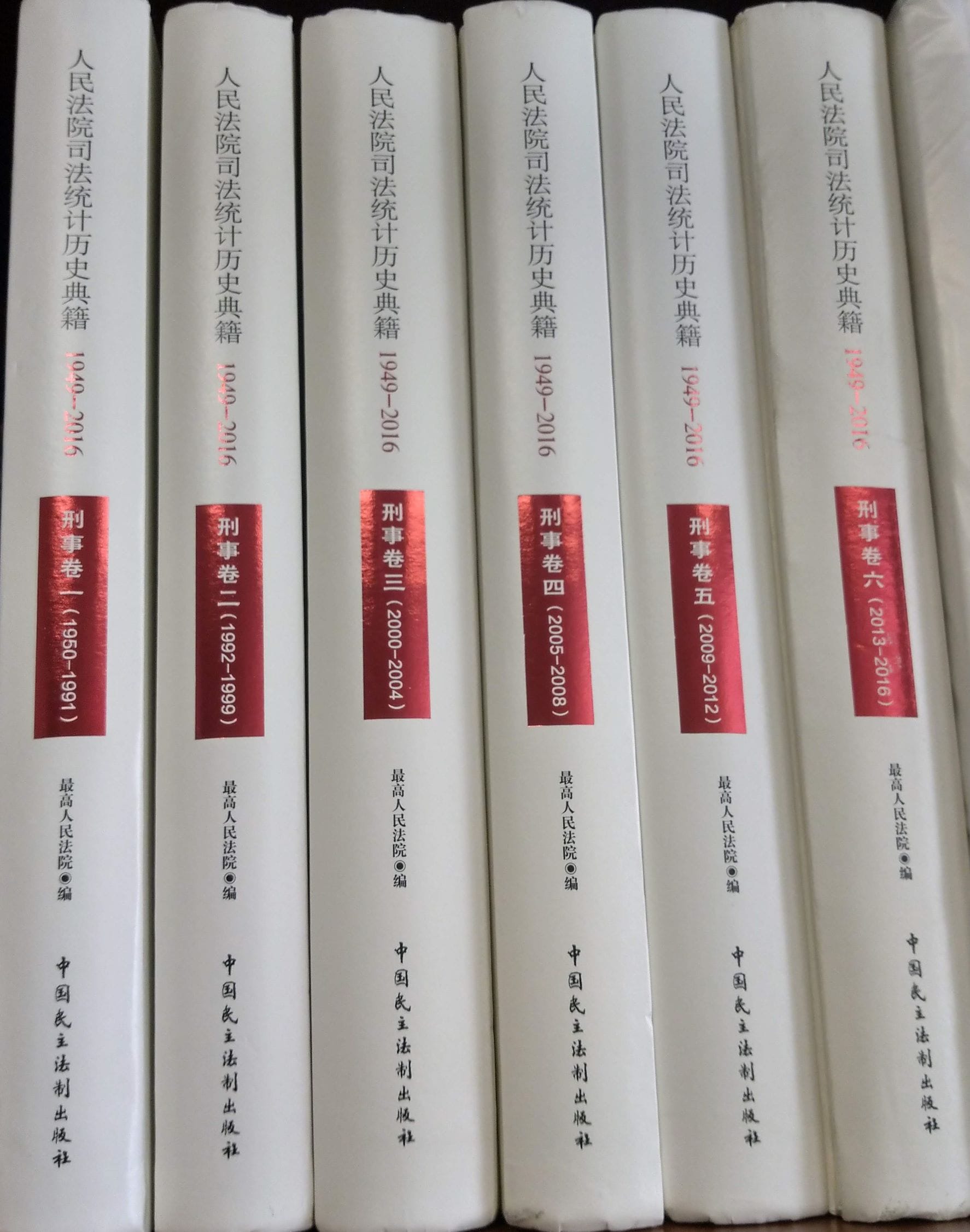
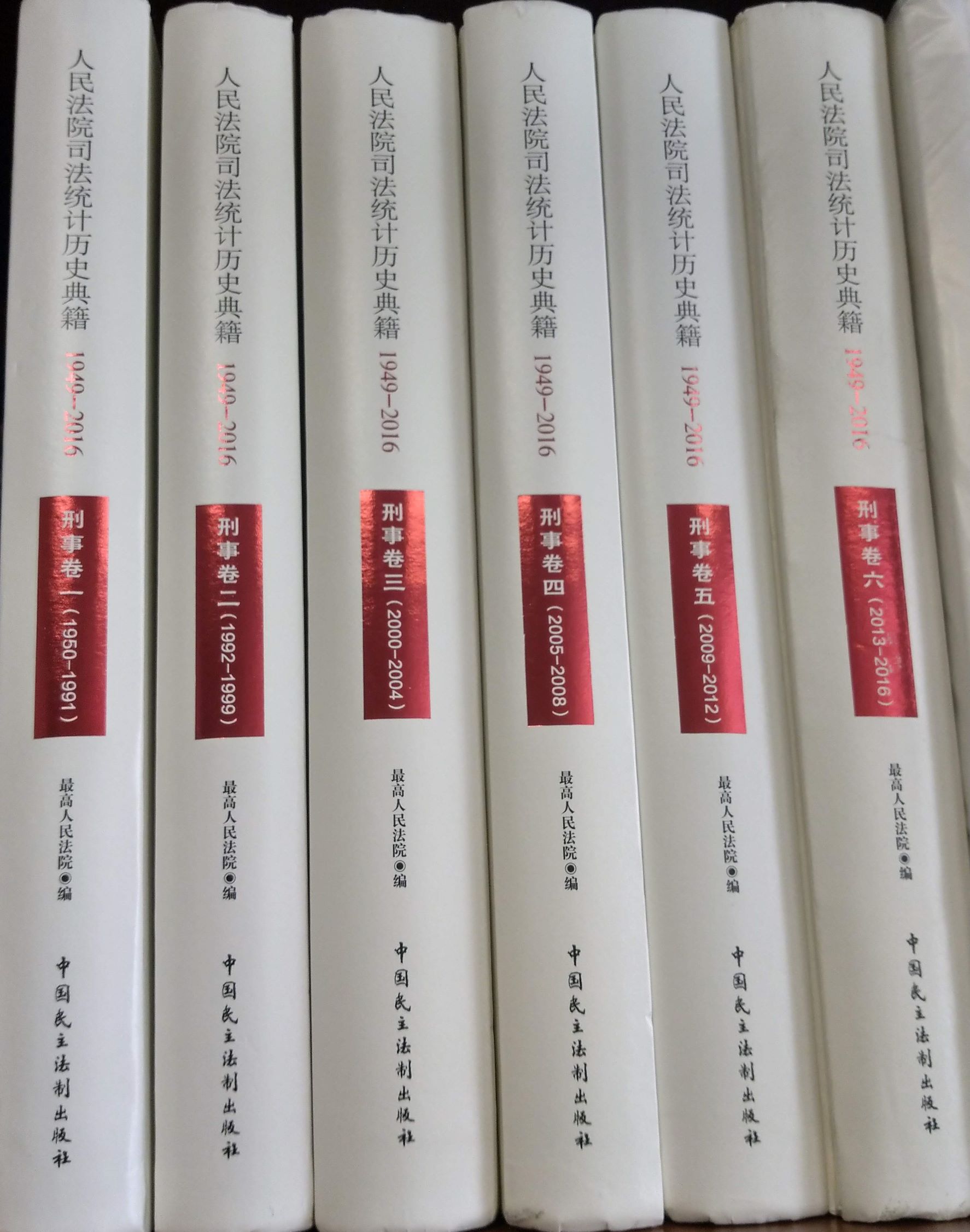
    Records of People’s Courts Historical Judicial Statistics: 1949-2016 (Renmin fayuan sifa tongji lishi dianji 人民法院司法统计历史典籍) were published by the Supreme People’s Court (SPC) at the end of 2018 and contain extensive information on the convictions of juveniles, including girls, by Chinese courts. Statistics are available for trials from 2002 to 2016, a period of 15 years.

    Table 1 shows the number of juveniles convicted, with a breakdown by gender. It reveals that the number of juveniles tried and convicted from 2008 to 2016 dropped by more than 60 percent. However, while the number of girls convicted by courts decreased until the end of 2016, the number of girls convicted as a percentage of juvenile convictions has increased.

    Table 1. Total Juvenile Convictions, by Gender

    Year 

    All Juveniles Convicted (ages 14-18) 

    All Girls Convicted 

    Girls as Percentage of the Year’s Total Convictions 

    All Boys Convicted 

    Boys as Percentage of the Year’s Total Convictions 

    2002 

    50,048 

    1,438 

    2.87% 

    48,610 

    97.13% 

    2003 

    58,870 

    1,792 

    3.04% 

    57,078 

    96.96% 

    2004 

    70,086 

    1,994 

    2.85% 

    68,092 

    97.15% 

    2005 

    82,692 

    2,188 

    2.65% 

    80,504 

    97.35% 

    2006 

    83,697 

    1,957 

    2.34% 

    81,740 

    97.66% 

    2007 

    87,506 

    2,007 

    2.29% 

    85,499 

    97.71% 

    2008 

    88,891 

    2,047 

    2.30% 

    86,844 

    97.70% 

    2009 

    77,604 

    2,075 

    2.67% 

    75,529 

    97.33% 

    2010 

    68,193 

    2,078 

    3.05% 

    66,115 

    96.95% 

    2011 

    67,280 

    2,146 

    3.19% 

    65,134 

    96.81% 

    2012 

    63,782 

    2,077 

    3.26% 

    61,705 

    96.74% 

    2013 

    55,817 

    2,001 

    3.58% 

    53,816 

    96.42% 

    2014 

    50,415 

    1,847 

    3.66% 

    48,568 

    96.34% 

    2015 

    43,839 

    1,777 

    4.05% 

    42,062 

    95.95% 

    2016 

    35,743 

    1,570 

    4.39% 

    34,173 

    95.61% 

    Political crimes – endangering state security and organizing or using a cult to undermine implementation of the law – are rare. Twenty juveniles, almost certainly Tibetans or Uyghurs, were convicted of splittism and inciting splittism from 2010-2015. Eighty juveniles were convicted of organizing or using a cult to undermine implementation of the law during the same period; these are thought to be predominantly Falun Gong practitioners.

    Recent evidence suggests that there has been a sharp increase in the percentage of girls convicted of crimes from 2016-2017. Based on data collected from Beijing News, the SPC statistics volumes, and China Law Yearbook 2017, Dui Hua estimates that the rate of female juvenile convictions reached its highest rate since at least 2002, with conviction rates of girls nearly doubling from 2016 to 2017.

    Continue this story here.


    JOHN KAMM REMEMBERS

    John Kamm Remembers is a feature that explores Kamm’s human rights advocacy prior to and since Dui Hua’s establishment in 1999.

    Defiant: Li Huanming’s Long Road to Freedom 

    Guangzhou’s CITIC Plaza, one of the tallest buildings in China. This is one of the locations where Li Huanming planned to distribute his flyers. Source: Quanjing.com

    Dui Hua researchers started finding the names of political prisoners on Chinese court websites in 2003. One of the first names we found was Li Huanming. My colleague Joshua Rosenzweig found his name on the Shenzhen Intermediate Court website. Later, in a work report out of Shenzhen, we confirmed that Li stood trial for inciting subversion in a high-profile case in 2002.

    Months later, in late 2003, Dui Hua sent Li’s name to a professor based in Guangzhou who enjoyed good relations with local security bureaus and courts. Within months, the professor responded with details on Li’s case, marking the first time Dui Hua received information on a political prisoner we identified from a Chinese government website.

    The information came from “friends” in the Shenzhen Public Security Bureau. We learned that Li was from Ankang Municipality in Shaanxi Province. He was charged with inciting subversion for distributing or planning to distribute tens of thousands of “reactionary” flyers in Shenzhen and Guangzhou. In one instance, he put flyers near the Shenzhen-Guangzhou Highway so trucks hurtling by would blow the flyers across the countryside.

    Diwang plaza in Shenzhen. Image Credit: sohu.com

    According to the email: “The case shocked the Ministry of Public Security, which dispatched two bureau chiefs to Guangzhou to personally supervise the investigation. The Central Committee’s Political and Legal Affairs Committee even hosted a special meeting to discuss the case.” When police detained Li in Guangzhou’s Tianhe District, he “shouted reactionary slogans [demonstrating that] he is a very stubborn person.”

    From the time Dui Hua first learned of Li Huanming in 2004 until his release in 2010, we put his name on 11 prisoner lists to the Chinese government both directly and through foreign governments. In 2005 alone, we put Li’s name on four lists submitted to both the central government and the Guangdong government. These interventions yielded eight written responses, which painted a picture of a young man who refused to bend to authority. The court sentenced Li to nine years in Shaoguan Prison in northern Guangdong Province for inciting subversion and to another three years of deprivation of political rights upon his release. He refused to give legitimacy to the Chinese government and did not appeal the sentence, which was the longest for inciting subversion that Dui Hua was aware of at the time. (In 2009, Nobel Peace Prize laureate Liu Xiaobo would be given an 11-year prison sentence for inciting subversion.)

    In prison, he was defiant. Li served every day of his sentence before being sent back to his hometown in Shaanxi Province on September 1, 2010. He spent several spells in solitary confinement, making him ineligible for clemency. I later learned that prison authorities forbade monthly phone privileges to call his family, and he did not receive family visits.

    Nonetheless, the stream of prisoner lists we sent beginning in late 2003 improved life for Li. Authorities put him in solitary confinement on three occasions in 2003, but never again after 2004. Li Huanming says that, in 2005, he was excused from working overtime and on weekends. He was given light work in the prison commissary. In 2007, he refused to do any manual labor, and he was not punished. He was left alone to write what would become a long novel that he was not allowed to take out of China.

    The China Alliance of Virtuous Youth

    In a conversation in 2005, the professor told me that Li originally faced harsh treatment for three reasons. First, he had a bad attitude. Second, authorities took issue with the high volume of reactionary leaflets he distributed and how he distributed them. Third, Li had a record, having served a three-year prison sentence for counterrevolution during the 1990s.

    While he was a student at Ankang Normal College (now Ankang Normal University), Li started the “China Alliance of Virtuous Youth.” Made up of five members, the group drafted a manifesto that was then confiscated by the police. Li was detained right before graduation in June 1993. He was subsequently convicted of organizing and leading a counterrevolutionary group and sentenced to three years in prison in 1994. Li was the only member of the group sentenced to prison. He finished the sentence in June 1996 and then moved to Guangdong to find employment. After working several jobs in the Pearl River Delta, he wound up working for a real estate company in Shenzhen.

    A Message from Vietnam

    Less than a year after Li finished his prison sentence, on June 15, 2011, Dui Hua’s Hong Kong office received an email from a reporter in Hanoi. The journalist had run into Li Huanming. He had entered Vietnam illegally and was facing difficulties.

    I subsequently learned that Li had taken a train from Shaanxi to Guangzhou. He was contacted by public security agents in Shaanxi and ordered to return to Ankang to serve his deprivation of political rights sentence. Li ditched his cell phone, borrowed money, and headed for the border with Vietnam. He crossed the border at Pingxiang in Guangxi Zhuang Autonomous Region and was immediately detained by Vietnamese border guards. He paid them off.

    Li took a bus from Hanoi to Ho Chi Minh City. From there he headed to Cambodia and then to Thailand. He entered Thailand, a month after leaving Guangzhou, but lost nearly all his documents on the way. He had been stopped by border guards and police on several occasions but managed to bribe or talk his way out of each brief detention. He spent a week living on the streets in Bangkok before finding a place to stay.

    On July 22, Li called Dui Hua from Thailand. He had had his first meeting with the United Nations Office of the High Commissioner for Refugees (UNOHCR). Afterwards he visited the embassies of the United States, the Netherlands, and New Zealand. None could help. He also sought out the Jesuit Refugee Service (JRS), but since he was not a Christian, Li was not optimistic he’d get assistance. I contacted the Department of State to see if it could help Li and asked for help from Dui Hua Director Bill McCahill, who asked Father John Shea SJ to intervene with JRS.

    On August 16, a lawyer working at JRS asked me to provide supporting documents to help verify Li’s claim for political asylum. I gathered and submitted all the official responses I had received on Li from the Chinese government.

    On September 16, Li had his first formal, full-day interview with UNOHCR. He presented the materials from Dui Hua and JRS. His second interview was scheduled but delayed due to a lack of Chinese interpreters. Li was advised that it usually took two years after the first interview to have a second. Months went by. Li worked at part-time jobs and earned enough to survive, but he was increasingly dispirited and pessimistic.

    Finally, on August 27, 2012, Li called Dui Hua’s Hong Kong office to report that his refugee status had been approved by UNOHCR. After months of the UNOHCR trying to find him a new home, Li arrived in Finland on May 7, 2013.  He settled in Mikkeli, a scenic city on a lake that is a two-and-a-half-hour drive from the capital, Helsinki. His life is good. He has made many friends and is free to travel around Europe.

    Li Huanming’s case demonstrates the value of submitting prisoner lists to the Chinese government and getting responses in return. The lists led to better treatment in prison, and the responses supported Li’s successful request for political asylum.

    Dui Hua’s work is as unique as it is important. Mr. Rosenzweig calls Li’s story a classic case of a successful Dui Hua intervention on behalf of a political prisoner. In the words of Li Huanming: “Dui Hua under John Kamm’s direction was the only human rights organization that cared about me.”

    Li Huanming in Mikkeli, Finland

    The June 15 Reactionary Leaflet Case in Shanghai

    Chinese police have a practice of naming important cases after the date on which the offense was committed. Li Huanming’s reactionary leaflet case was known as the “August 23” case, named after the date in 2001 when Li dropped a large quantity of leaflets from a tall office building in Shenzhen. Li’s case bears a striking similarity to the “June 15” case reactionary leaflet case in Shanghai.

    On June 15, 1989 – days after the political protests in Beijing were suppressed – a number of reactionary leaflets were tossed from a building in Shanghai. From that date until his arrest on October 2, 1989, Shanghai resident Yu Rong distributed 1,450 reactionary leaflets on 52 occasions in separate districts around the city. It was the largest case of reactionary leaflets in the history of Shanghai. In the words of the popular tabloid People’s Police, Yu Rong’s reactionary leaflets “caused serious damage to social stability and to people’s peace of mind.”

    As in the Li Huanming “August 23” case, solving the Yu Rong “June 15” case became a top priority for both the Shanghai Public Security Bureau and the Ministry of Public Security in Beijing. Zhu Rongji, then mayor of Shanghai and later China’s premier, personally oversaw the investigation that eventually led to Yu’s arrest. Hundreds of public security officers were deployed in stake outs in an attempt to catch the “counterrevolutionary” in the act of distributing the leaflets.

    Yu Rong – who, like Li Huanming, had served time in prison – used pages from middle-school textbooks to write his messages. Thirty-five-year-old Yu, who worked at the Shanghai Automobile Service Company, lived alone, and committed the crime without assistance from anyone else. His father had served a prison term for counterrevolutionary crimes. Yu resented the Chinese government and was inspired by the June 4 protests.

    Under interrogation Yu admitted that he was responsible for distributing the reactionary leaflets. He also confessed to setting 22 fires and to having dropped bricks from tall buildings on more than 50 occasions, killing three people.

    From the time Dui Hua first learned of the Yu Rong case in People’s Police to the present day, the foundation has placed Yu Rong’s name on 15 lists submitted directly or through foreign governments to the Chinese government. It has thus far received only one response. In April 2006, the Shanghai authorities advised Dui Hua that Yu Rong had been diagnosed with schizophrenia in 1990 and been placed in a psychiatric detention facility known as Ankang run by the Public Security Bureau. If Yu is alive he is likely still there.


  • Sharp Drop in Number of Juveniles Convicted by Chinese Courts

    Sharp Drop in Number of Juveniles Convicted by Chinese Courts

     
    Image Credit: Pixabay 
     

    Records of People’s Courts Historical Judicial Statistics: 1949-2016 (Renmin fayuan sifa tongji lishi dianji 人民法院司法统计历史典籍) were published by the Supreme People’s Court (SPC) at the end of 2018 and contain extensive information on the convictions of juveniles, including girls, by Chinese courts. Statistics are available for trials from 2002 to 2016, a period of 15 years.Table 1 shows the number of juveniles convicted, with a breakdown by gender. It reveals that the number of juveniles tried and convicted from 2008 to 2016 dropped by more than 60 percent. However, while the number of girls convicted by courts decreased until the end of 2016, the number of girls convicted as a percentage of juvenile convictions has increased.


    Table 1. Total Juvenile Convictions, by Gender
    Year
    All Juveniles Convicted (ages 14-18)
    All Girls Convicted
    Girls as Percentage of the Year’s Total Convictions
    All Boys Convicted
    Boys as Percentage of the Year’s Total Convictions
    2002
    50,048
    1,438
    2.87%
    48,610
    97.13%
    2003
    58,870
    1,792
    3.04%
    57,078
    96.96%
    2004
    70,086
    1,994
    2.85%
    68,092
    97.15%
    2005
    82,692
    2,188
    2.65%
    80,504
    97.35%
    2006
    83,697
    1,957
    2.34%
    81,740
    97.66%
    2007
    87,506
    2,007
    2.29%
    85,499
    97.71%
    2008
    88,891
    2,047
    2.30%
    86,844
    97.70%
    2009
    77,604
    2,075
    2.67%
    75,529
    97.33%
    2010
    68,193
    2,078
    3.05%
    66,115
    96.95%
    2011
    67,280
    2,146
    3.19%
    65,134
    96.81%
    2012
    63,782
    2,077
    3.26%
    61,705
    96.74%
    2013
    55,817
    2,001
    3.58%
    53,816
    96.42%
    2014
    50,415
    1,847
    3.66%
    48,568
    96.34%
    2015
    43,839
    1,777
    4.05%
    42,062
    95.95%
    2016
    35,743
    1,570
    4.39%
    34,173
    95.61%
    Source: Records of People’s Courts Historical Judicial Statistics: (1949-2016), 2018.
     
    Tables 2 and 3 present the types of crimes committed by all juveniles and girls, respectively, since 2002. There has been a troubling rise in the number of cases of drug crimes committed by girls in recent years.
     
     
    Table 2. Top Juvenile Crimes

    Year

    Violent

    Nonviolent


    Robbery

    Aggravated
    Assault

    Rape

    Brawls

    Murder

    Theft

    “Picking
    Quarrels and Provoking Trouble”

    Drugs* 

    200221,8464,7122,56968056413,9631,495373
    200325,6265,8142,959602644 16,8721,647400
    200429,2076,8182,81097164120,9292,202617
    200535,2888,0952,8451,31567823,9612,631874
    200634,2598,9182,5491,74176023,7633,581749
    200734,2179,2852,6672,31867225,3973,818916
    200834,3269,8222,6312,50752425,9164,1001,210
    200929,8849,2782,5932,66155020,8124,0051,268
    201024,2929,0152,5813,18246317,2443,7301,368
    201121,7149,8252,5853,72755817,3163,8651,543
    201218,5588,8922,5983,37159818,2593,9691,567
    201316,4647,8912,3103,36447014,7133,3581,748
    201414,8587,4922,2242,91233711,9663,5711,745
    201513,1646,1421,9363,1063178,9973,3231,595
    201612,4164,1521,4972,6001995,9103,0011,223
     
     
    * Drug related crimes: smuggling,
    trafficking, transporting, and manufacturing drugs


    Source:
    Records of People’s Courts Historical Judicial Statistics: (1949-2016),
    2018.
     
    Table 3. Top Crimes Committed by
    Girls
    Year
    Violent
    Nonviolent
    Robbery
    Aggravated
    Assault
    Rape
    Brawls
    Murder
    Theft
    “Picking
    Quarrels and Provoking Trouble”
    Drugs
    Fraud
    Extortion
    2002
    442
    74
    24
    5
    38
    524
    33
    54
    52
    16
    2003
    524
    99
    34
    3
    34
    738
    15
    87
    79
    15
    2004
    554
    130
    34
    11
    40
    840
    19
    89
    79
    23
    2005
    636
    115
    36
    13
    26
    850
    49
    112
    114
    30
    2006
    527
    104
    31
    22
    38
    749
    36
    103
    57
    44
    2007
    534
    157
    46
    21
    29
    709
    43
    107
    72
    31
    2008
    467
    138
    59
    24
    24
    729
    50
    122
    77
    33
    2009
    456
    158
    58
    38
    29
    641
    71
    124
    85
    45
    2010
    387
    162
    65
    74
    18
    670
    48
    163
    57
    44
    2011
    347
    186
    56
    73
    35
    650
    67
    204
    73
    20
    2012
    290
    152
    41
    63
    29
    748
    69
    218
    59
    27
    2013
    199
    164
    53
    52
    23
    651
    82
    213
    96
    22
    2014
    174
    163
    30
    63
    26
    527
    74
    230
    79
    34
    2015
    145
    126
    45
    58
    21
    427
    52
    232
    92
    19
    2016
    147
    100
    29
    66
    20
    381
    74
    189
    100
    14
     
    Source:
    Records of People’s Courts Historical Judicial Statistics: (1949-2016),
    2018.


    Political crimes – endangering state security and organizing or using a cult to undermine implementation of the law – are rare. Twenty juveniles, almost certainly Tibetans or Uyghurs, were convicted of splittism and inciting splittism during 2010-2015. Eighty juveniles were convicted of organizing or using a cult to undermine implementation of the law during the same period; these are thought to be predominantly Falun Gong practitioners.A recent article published by Beijing News suggests there was a sharp increase in the percentage of girls convicted of crimes in 2017. According to the article, girls convicted as a percentage of juveniles rose to 6.56 percent for years 2016-2017. The SPC statistics volumes only cover trials through the end of 2016. However, China Law Yearbook 2018 provides a number for juveniles convicted in 2017: 32,778. Using this number and the 2016 number of 35,743 in the SPC volumes, we calculate that the number of girls convicted in 2017 was 2,925, the highest number since at least 2002. Expressed as a percentage of all juveniles convicted by courts, girls doubled from 4.39 percent in 2016 to 8.92 percent in 2017.

    It should be noted that the statistics in the SPC volumes only cover juveniles convicted by courts. Juveniles can be held in various other carceral facilities without being tried by a court. Such alternatives include compulsory drug rehabilitation (qiangzhi jiedu 强制戒毒) centers, custody and education (shourong jiayu 收容教育) camps (for sex workers, including juveniles), “legal education” (fazhi jiaoyu 法制教育) campuses for “seriously poisoned Falun Gong practitioners,” “custody and rehabilitation” (shourong jiaoyang 收容教养) facilities for juveniles under the age of 16 who commit mostly minor offenses, and “work-study schools” (gongduxuexiao 工读学校) for juveniles who “engage in serious misbehavior.” There were 1,335 juveniles in “custody and rehabilitation” facilities in 2005, the latest year for which numbers are available. In 2013, there were 10,735 juveniles in 67 “work-study schools,” of whom 18 percent were girls.

    Juvenile Justice Reforms

    China stressed reform of the juvenile justice system in the 2002-2007 five-year judicial reform plan. During this period, emphasis was on infrastructure – specifically the creation of juvenile courts and the recruitment and training of judges for juvenile cases. During the 2008-2012 plan period, the emphasis was on process – how to best deal with juvenile crime. This period culminated in the passing of the amended Criminal Law in 2011 and the amended Criminal Procedure Law in 2012. The former recommended giving juveniles suspended sentences for minor crimes. The latter introduced a number of important reforms including “diversion” (sifa fenliu 司法分流 or fenliu chuzhi 分流处置), sometimes referred to as “postponed prosecution,” (futiaojian buqisu 附条件不起诉), sealing of juvenile records, and use of behavioral and psychological assessments at every stage of adjudication.In addition to implementing and assessing pilot projects in the provinces, the SPC also sent teams abroad to study foreign juvenile justice systems. From 2008 to 2017, Dui Hua joined with the SPC’s Office of Juvenile Courts to hold five in-depth exchanges with judges and other judicial officials and scholars – two in the United States and three in China.

    Topics covered by these exchanges included reforms that made their way into the amended CPL. Dui Hua believes that the adoption of “postponed prosecution” – a process whereby an offender can apologize and pay compensation to victims as well as undertake other steps that demonstrate “genuine repentance and a willingness to reform” – is the main reason why trials and convictions of juveniles dropped more than 60 percent since 2008.

    The Road Ahead

    In the autumn of 2019, the National People’s Congress (NPC) released the draft of a proposed Law on the Prevention of Juvenile Delinquency for public comment. The draft focuses on prevention rather than punitive measures, stressing education, mental health, reduction of bullying, and a focus on multi-institutional collaboration to reduce juvenile delinquency. It renames “custody and rehabilitation” centers as “specialized schools.”A notable omission of the draft law is that it does not propose gender-specific measures. It is increasingly accepted that gender-specific needs require different approaches. This shortcoming may be addressed during the public comment phase of consideration.

    Whether or not the age of criminal responsibility should be lowered from the current standard of 14 years old is a hotly debated topic in China. The draft does not mention this controversial proposal, but it is likely to emerge as a point of contention during the public comment phase.

  • Dui Hua’s First Trip to Beijing, May 2000

    Dui Hua’s First Trip to Beijing, May 2000

    << Read all John Kamm Remembers stories

    Ministry of Justice of the People’s Republic of China. Image Credit: Ministry of Justice of the People’s Republic of China

    The Dui Hua Foundation was established in April 1999. That same month, the United States introduced a resolution criticizing China’s human rights record at the United Nations Commission on Human Rights. The Ministry of Justice (MOJ) advised me that they would no longer provide information on prisoners “for reasons known to all.”

    On May 7, 1999, American warplanes bombed the Chinese Embassy in Belgrade, touching off a major crisis in U.S.-China relations. China immediately suspended the official human rights dialogue with the United States. Since Dui Hua’s unofficial dialogue had already been suspended, the suspension of the official dialogue did not affect us. In fact, it enabled our dialogue to be resumed before the government-to-government dialogue.

    My wife and I made a personal donation through the Chinese Embassy in Washington to the families of the Chinese killed in the Belgrade Bombing. I was advised by a senior Chinese official that we were the first American citizens to make this gesture, which was much appreciated.

    On March 21, 2000, I received a letter faxed from the MOJ. The letter thanked me for “all your hard work over these past several years to promote understanding between our two sides.” Attached to the letter was information on 14 prisoners about whom I had asked. The letter marked the resumption of Dui Hua’s dialogue on prisoners with the Ministry of Justice, something I called “the Prisoner Information Project.”

    The first prisoner about whom information was provided was Bai Weiji (白伟基), an official of China’s Ministry of Foreign Affairs who had led a march during the Spring 1989 protests, for which he was fired and expelled from the Communist Party. Bai was detained on May 5, 1992 and subsequently tried and convicted for “illegally providing state secrets to a foreign organization.” His wife, Zhao Lei (赵蕾) , was arrested a year later, and sentenced to six years in prison. (She was released early after an 18-month sentence reduction.)

    Bai was given a 10-year prison sentence. He had provided documents to the Beijing Bureau chief of The Washington Post, Ms. Lena Sun, for whom his wife worked. The documents were found during a police raid on Ms. Sun’s apartment. In her safe were 10 “top secret” documents, according to Xinhua News Agency. Ms. Sun asked me to help secure Bai Weiji’s release, and I began raising his name with Chinese officials and submitting lists with his name on them to the MOJ.

    The March 21 letter advised that Bai had received three sentence reductions and been released more than three years early on February 2, 1999.

    Not long after receiving the letter, the MOJ invited me to visit Beijing. It would be the first visit by Dui Hua to Beijing and the first visit by a foreign human rights organization to discuss China’s prisoners with the ministry in charge of the country’s 700 prisons.

    Prior to leaving for Beijing, I received a letter from Mr. Samuel (“Sandy”) Berger, President Bill Clinton’s National Security Advisor. The letter asked me to follow up on President Clinton’s request,  made during his trip to Beijing in June 1998, to release the remaining counterrevolutionaries serving sentences in China’s prisons. The fate of these prisoners would be the focus of my trip to Beijing.

    I arrived in Beijing on May 18, 2000. Before I departed on May 20, I met with MOJ Vice Minister Fan Fengping and held 10 hours of talks with officials of the Prison Administration Bureau and the Department of Judicial Assistance as well as Director Liu Huaqiu, head of the Foreign Affairs Office of the Communist Party’s Central Committee, and senior officials of the Ministry of Foreign Affairs. Meetings were held in the ministry’s nearly opened headquarters in Chaoyang District.

    I was given a great deal of information on counterrevolutionary prisoners. At the end of 1999, there were 1,300 such prisoners still serving sentences, a reduction of 650 from the end of 1997. Most of those released were released early, including several I had advocated for: Bai Weiji, Shandong’s Zhang Xiaoxu (张霄旭) (paroled in 1998 after serving less than nine years of a 15-year sentence), and Tibet’s Jampa Ngodrup (released three years early in 1999). Immediately prior to my visit, Chen Lantao (陈兰涛), a student leader in Qingdao, was released after serving less than 11 years of his 18-year sentence for counterrevolutionary propaganda and incitement and blocking traffic. Chen’s sentence was the longest for non-violent actions taken during the Spring 1989 protests, and I had taken a special interest in his case, raising his name on trips to Qingdao.

    I raised the case of Zhang Jie (张杰), another Shandong prisoner whose case had been taken up by Congresswoman Lynn Woolsey and 15 other members of Congress. I was told that Zhang had had his sentence reduced by four and one-half years. The sentence was due to expire on January 15, 2003. I pressed hard for his release before then, and was told that if Zhang continued to “make progress in his reform” he would be released early.

    I handed over a new list of 25 cases involving 51 individuals. Dui Hua had found their names in its research into “open source” Chinese publications. Most of their names were not known outside of China.

    A highlight of the trip was a visit to Beijing Number One Prison in Daxing County on May 19. This was the prison where Bai Weiji had served his sentence, and I was eager to take a look at conditions there.

    I left my hotel at 1:00 PM, and arrived at the prison an hour later. I was greeted by Warden Yang Di, a big man with a broad smile. He had earned a reputation as a warden who, though strict, cared about the prisoners under his charge.

    Yang gave me the standard “brief introduction” and showed me around the prison’s spacious and well-tended grounds. I was shown a cell block, the infirmary, and the cafeteria. The prison occupied an area of 440,000 square meters. Established in 1982, it held 2,000 male prisoners overseen by 370 guards.

    The prison was a hive of small factories, and included 18 workshops making automobile parts (some for export, although not to the United States), plastic packaging, steel templates, and toys, among other products.

    Beijing Number One Prison, now known as Beijing Municipal Prison, was designated a model prison by the Ministry of Justice and one of only seven “Cultural Units” (wenming danwei 文明单位) by Beijing Municipality. To be designated a model prison, a carceral facility has to meet 42 conditions including “no prison escapes” and “no prisoner suicides.” Beijing Number One enjoyed a recidivism rate of less than two percent.

    Prisoners ranged in age from 18 to 60. Sentences included life in prison, 16-20 year terms, 10-15 year terms, and under 10 year terms. Most sentences were 15 years or more. Fifty percent of prisoners would be granted sentence reductions or parole during their time at Beijing Number One. Medical parole was granted to prisoners near death who did not represent a threat to the community. Fifty-two percent of prisoners had committed property crimes and 30 percent had committed violent crimes, including sex crimes. Several officials were serving sentences for corruption.

    As I boarded my car to return to my hotel after a four-hour visit, I asked Warden Yang if he remembered Bai Weiji. He remembered Bai as a well-behaved prisoner who had been released early.

    Years after I visited Beijing Number One Prison, Bai Weiji came to visit me in the United States. He told me about his life in prison. He had acted as a translator for Warden Yang’s efforts to sell prison-made automobile parts abroad. The warden had treated him well.

    Bai thanked me for intervening on his and his wife’s behalf. While he credited my efforts for helping him gain early release, he cited two other reasons.

    First, his team had won a city-wide competition among prisons to see who knew the most about Hong Kong’s reversion to China in 1997. Although he gained points for use towards a sentence reduction, his team members were given twice as many points as Bai because Bai was a counterrevolutionary.

    The other reason had to do with the visit by the United Nations Working Group on Arbitrary Detention (WGAD) in July 1996. This visit, made by the Chairman-Rapporteur Louis Joinet, was to make arrangements for a trip to China by the full working group in 1997. Two carceral facilities were selected for visits by Joinet: Beijing Number One Prison and a reeducation-through-labor camp in Shandong Province.

    Part of the agreement between China’s Ministry of Foreign Affairs (MFA) and the WGAD was that randomly-selected prisoners could be interviewed in private, with no prison officials present. Upon arrival at Beijing Number One Prison, Joinet randomly selected Bai Weiji. Bai was the only political prisoner housed at the prison, and his selection was greeted with alarm and suspicion by the prison officials. They refused to let Joinet interview Bai. This led to a stand-off that was only resolved when a senior MFA official arrived to negotiate a solution.

    Eventually, Joinet was allowed to interview Bai in a small room off the prison courtyard. Although the interview was supposed to be private and out of earshot, Bai suspected that the conversation was being monitored. Accordingly, he was very guarded. He declined to say why he was in prison, and claimed that he was being well treated. For this performance, Bai was given three successive sentence reductions, totaling three years and three months, in 1996, 1997, and 1998.

    Not long after Bai visited me, I flew to Geneva. I requested, and was granted, a meeting with the WGAD. When I told them that the prisoner that Mr. Joinet had selected was the only political prisoner in the prison, they were shocked. I let them know that, because of the way he had handled the interview, Bai was released early, and was now a successful businessman able to travel abroad.


    Listen to the Encounters with China podcast.

    Subscribe to receive notifications about new episodes. 

    Read all John Kamm Remembers stories.


  • Dui Hua Digest, November 2019

    EVENTS

    Barnstorming in Cambridge

    Poster for Speech by John Kamm, Fairbank Center for Chinese Studies, Harvard University. Image Credit: Fairbank Center for Chinese Studies


    Dui Hua Executive Director John Kamm and Dui Hua Senior Manager for Research and Database Kevin Li spent the week of October 20, 2019 in Cambridge, Massachusetts. Kamm delivered remarks on four occasions at Harvard University and Boston University. When not speaking, Kamm joined Li in carrying out research in three Harvard libraries. They found information on more than 200 individuals subjected to coercive measures, including hitherto unknown details of the New Era Communist Party of China, a group whose leader was sentenced to life in prison for subversion, the longest sentence for this crime registered in Dui Hua’s political prisoner database.

    Kamm and Li spent many hours probing Harvard’s latest acquisition, a 12-volume set of books, compiled and published by China’s Supreme People’s Court, that provide statistics on all civil and criminal trials in China from 1950 to 2016. Among the important findings were details on girls tried by Chinese courts in recent years. Dui Hua is working with partners to hold the first international symposium on girls in conflict with the law in Hong Kong in April 2020.

    Poster for John Kamm talk for East Asian Legal Studies, Harvard Law School. Image Credit: EALS

    Overall, Kamm’s university remarks were attended by more than two hundred people, including leading Sinologists based at the two universities: William P. Alford, Vice Dean for the Graduate Program and International Legal Studies at Harvard Law School; Dwight Perkins, Harold Hitchings Burbank Research Professor of Political Economy at Harvard University; Ezra Vogel, Henry Ford II Professor of the Social Sciences Emeritus at Harvard University; and Joseph Fewsmith, Professor of International Relations and Political Science at Boston University. Kamm and Li met separately with Mark Elliott, Vice Provost of International Affairs and Mark Schwartz Professor of Chinese and Inner Asian History at Harvard University.

    Kamm’s first remarks were delivered at Harvard Law School on October 21, 2019. Titled “Thirty Years of Dialogue with the Chinese Government: My Work on Human Rights in China,” the speech covered Kamm’s history of human rights activism since his first intervention on behalf of a political prisoner in May 1990. The next day, October 22, Kamm spoke on the same topic at Boston University.

    On October 24, 2019, Kamm addressed a large audience on the topic “Counterrevolution in One Country: China, 1989.” Drawing on statistics for the crime of counterrevolution from 1989 to 1991, the years during which trials took place for counterrevolutionary offences committed during the Tiananmen protests of 1989, Kamm’s presentation drew a new picture of individuals who were convicted and sentenced for the most serious crime in China’s criminal law during those years. Findings from Dui Hua’s research reveal that the largest group of these counterrevolutionaries were farmers. Nearly all counterrevolutionaries sentenced were males and most were over the age of 25. Three quarters of counterrevolutionaries were tried for non-violent offenses, and they benefited from unusually high rates of acquittal. Comparing what he found in the material from the Supreme People’s Court with data in Dui Hua’s political prisoner database, Kamm concluded that no more than 15 percent of the names of those tried for counterrevolution in 1989-1991 are known outside China.

    Kamm capped off his visit by participating in a panel held on the evening of October 24, 2019 of alumni who graduated from the Regional Studies–East Asia [RSEA] program at Harvard University. In attendance were students currently enrolled in the program. Kamm discussed career opportunities at the intersection of human rights and business.

    Following the week in Cambridge, Kamm traveled to Washington, D.C., where he was joined by Dui Hua Senior Manager for Publications and Programs Elizabeth Cole. They met with American officials working on China in the Office of American Citizen Services, the Bureau of East Asian and Pacific Affairs, and the Bureau of Democracy, Human Rights and Labor, including recently confirmed assistant secretary Robert Destro. Kamm met separately with the China team at the National Security Council as well as senior staff of the Congressional Executive Commission on China and the Senate Foreign Relations Committee.


    PRISONER UPDATES

    As reported in our lead story, above, in late October, Kamm and Li spent a week at three Harvard libraries delving into public security, procuratorate, court, prison, and administrative gazettes, many of which are inaccessible to the public elsewhere in the world. Their research uncovered information about the “People’s Party” founded by Dong Zhanyi (董占义). The government record also revealed that Chen Guohua (陈国华), another founding member of Dong’s party, was sentenced to 14 years’ imprisonment for subversion on October 27, 2011. As Dui Hua previously reported, this organization, later renamed the “New Era Communist Party of China,” aimed to fight corruption and recruit aggrieved workers and petitioners to overthrow the Community Party of China.

    Dui Hua’s research uncovered four previously unknown names who were implicated in Dong’s party: Liu Jinlong (刘金龙), Zhang Xinxiang (张新祥), Yu Yingbin (余应斌) and Zhan Wenfang (湛文芳): all of them were sentenced in Beijing for subversion, while two were additionally sentenced for fraud. A government record stated that they were employees of Tongkang (通康), a corporate entity that allegedly promoted an investment scam in the name of a supermarket project. The party members lived in a number of locations across China, including Beijing, Tianjin, Henan, Shandong, Anhui, Jiangsu, and even Ningxia. In Beijing alone, Tongkang was accused of fraudulently raising 2.9 million yuan from investors. Dong and other members were said to have used Tongkang to fund their political activities, which included assassination plots and procurement of knives and crossbows.

    The government record also revealed that Chen Guohua (陈国华), another founding member of Dong’s party, was sentenced to 14 years’ imprisonment for subversion and fraud on October 27, 2011. Chen was responsible for writing propaganda about ending one-party rule and establishing a multi-party system. On the same day, the Beijing No. One Intermediate Court sentenced Liu and Zhang to 17 years’ imprisonment for the same charges. Yu and Zhan were sentenced to eight years’ imprisonment for the sole charge of subversion. As of November 2019, Dui Hua’s PPDB has information on 14 individuals who were detained or sentenced in connection with Dong’s party.


    PUBLICATIONS ROUND UP

    Featured: Human Rights Journal, November 7, 2019: China’s Supreme People’s Court Releases Detailed Statistics on Trials, 1949-2016

    Some of the SPC Volumes on
    Criminal Trials

    China’s Supreme People’s Court (SPC) has compiled and released detailed statistics covering the adjudication work of China’s courts from 1949 to 2016, inclusive. The first six volumes are devoted to criminal trials of the first and second instance as well as retrials. They include breakdowns of cases and individuals in trials accepted, concluded, and held over for each article of the Criminal Law, as well as information on sentences, supplemental sentences (e.g. deprivation of political rights), age, occupation, gender, and, in recent years, ethnicity of defendants.

    Records of People’s Courts Historical Judicial Statistics: 1949-2016 (Renmin fayuan sifa tongji lishi dianji 人民法院司法统计历史典籍) was compiled and edited by the SPC. It was published in September 2018 by the China Democracy and Legal System Press under the National People’s Congress. It became available in March 2019, but thus far the 12-volume set, priced at RMB 1,980, has attracted few readers and received little attention from scholars. Information is not provided on the number of volumes published.

    The sets are marked “for internal release” (neibu faxing 内部发行). A small market in second-hand volumes has emerged. Dui Hua has purchased a set. All 12 volumes are available at the H.C. Fung Library of the Fairbank Center for Chinese Studies at Harvard University.

    The publication of these volumes is a major step forward for judicial transparency in China and is a boon to scholars studying China’s justice system.

    In the coming months, Dui Hua will release reports in its Reference Materials series and Human Rights Journal that will draw on topics derived from the statistics published in the 12-volume set. Topics will include use of Article 300 to suppress unorthodox religious groups; trials of Hong Kong, Macau, and Taiwan residents as well as foreigners; splittism and inciting splittism; espionage and trafficking in state secrets; Cultural Revolution court trials; and treatment of juveniles, including girls, in the criminal justice system.

    Continue this story here.


    JOHN KAMM REMEMBERS

    John Kamm Remembers is a feature that explores Kamm’s human rights advocacy prior to and since Dui Hua’s establishment in 1999.

    Dui Hua’s First Trip to Beijing, May 2000

    Ministry of Justice of the People’s Republic of China. Image Credit: Ministry of Justice of the People’s Republic of China

    The Dui Hua Foundation was established in April 1999. That same month, the United States introduced a resolution criticizing China’s human rights record at the United Nations Commission on Human Rights. The Ministry of Justice (MOJ) advised me that they would no longer provide information on prisoners “for reasons known to all.”

    On May 7, 1999, American warplanes bombed the Chinese Embassy in Belgrade, touching off a major crisis in U.S.-China relations. China immediately suspended the official human rights dialogue with the United States. Since Dui Hua’s unofficial dialogue had already been suspended, the suspension of the official dialogue did not affect us. In fact, it enabled our dialogue to be resumed before the government-to-government dialogue.

    My wife and I made a personal donation through the Chinese Embassy in Washington to the families of the Chinese killed in the Belgrade Bombing. I was advised by a senior Chinese official that we were the first American citizens to make this gesture, which was much appreciated.

    On March 21, 2000, I received a letter faxed from the MOJ. The letter thanked me for “all your hard work over these past several years to promote understanding between our two sides.” Attached to the letter was information on 14 prisoners about whom I had asked. The letter marked the resumption of Dui Hua’s dialogue on prisoners with the Ministry of Justice, something I called “the Prisoner Information Project.”

    The first prisoner about whom information was provided was Bai Weiji (白伟基), an official of China’s Ministry of Foreign Affairs who had led a march during the Spring 1989 protests, for which he was fired and expelled from the Communist Party. Bai was detained on May 5, 1992 and subsequently tried and convicted for “illegally providing state secrets to a foreign organization.” His wife, Zhao Lei (赵蕾) , was arrested a year later, and sentenced to six years in prison. (She was released early after an 18-month sentence reduction.)

    Bai was given a 10-year prison sentence. He had provided documents to the Beijing Bureau chief of The Washington Post, Ms. Lena Sun, for whom his wife worked. The documents were found during a police raid on Ms. Sun’s apartment. In her safe were 10 “top secret” documents, according to Xinhua News Agency. Ms. Sun asked me to help secure Bai Weiji’s release, and I began raising his name with Chinese officials and submitting lists with his name on them to the MOJ.

    The March 21 letter advised that Bai had received three sentence reductions and been released more than three years early on February 2, 1999.

    Not long after receiving the letter, the MOJ invited me to visit Beijing. It would be the first visit by Dui Hua to Beijing and the first visit by a foreign human rights organization to discuss China’s prisoners with the ministry in charge of the country’s 700 prisons.

    Prior to leaving for Beijing, I received a letter from Mr. Samuel (“Sandy”) Berger, President Bill Clinton’s National Security Advisor. The letter asked me to follow up on President Clinton’s request,  made during his trip to Beijing in June 1998, to release the remaining counterrevolutionaries serving sentences in China’s prisons. The fate of these prisoners would be the focus of my trip to Beijing.

    I arrived in Beijing on May 18, 2000. Before I departed on May 20, I met with MOJ Vice Minister Fan Fengping and held 10 hours of talks with officials of the Prison Administration Bureau and the Department of Judicial Assistance as well as Director Liu Huaqiu, head of the Foreign Affairs Office of the Communist Party’s Central Committee, and senior officials of the Ministry of Foreign Affairs. Meetings were held in the ministry’s nearly opened headquarters in Chaoyang District.

    I was given a great deal of information on counterrevolutionary prisoners. At the end of 1999, there were 1,300 such prisoners still serving sentences, a reduction of 650 from the end of 1997. Most of those released were released early, including several I had advocated for: Bai Weiji, Shandong’s Zhang Xiaoxu (张霄旭) (paroled in 1998 after serving less than nine years of a 15-year sentence), and Tibet’s Jampa Ngodrup (released three years early in 1999). Immediately prior to my visit, Chen Lantao (陈兰涛), a student leader in Qingdao, was released after serving less than 11 years of his 18-year sentence for counterrevolutionary propaganda and incitement and blocking traffic. Chen’s sentence was the longest for non-violent actions taken during the Spring 1989 protests, and I had taken a special interest in his case, raising his name on trips to Qingdao.

    I raised the case of Zhang Jie (张杰), another Shandong prisoner whose case had been taken up by Congresswoman Lynn Woolsey and 15 other members of Congress. I was told that Zhang had had his sentence reduced by four and one-half years. The sentence was due to expire on January 15, 2003. I pressed hard for his release before then, and was told that if Zhang continued to “make progress in his reform” he would be released early.

    I handed over a new list of 25 cases involving 51 individuals. Dui Hua had found their names in its research into “open source” Chinese publications. Most of their names were not known outside of China.

    A highlight of the trip was a visit to Beijing Number One Prison in Daxing County on May 19. This was the prison where Bai Weiji had served his sentence, and I was eager to take a look at conditions there.

    I left my hotel at 1:00 PM, and arrived at the prison an hour later. I was greeted by Warden Yang Di, a big man with a broad smile. He had earned a reputation as a warden who, though strict, cared about the prisoners under his charge.

    Yang gave me the standard “brief introduction” and showed me around the prison’s spacious and well-tended grounds. I was shown a cell block, the infirmary, and the cafeteria. The prison occupied an area of 440,000 square meters. Established in 1982, it held 2,000 male prisoners overseen by 370 guards.

    The prison was a hive of small factories, and included 18 workshops making automobile parts (some for export, although not to the United States), plastic packaging, steel templates, and toys, among other products.

    Beijing Number One Prison, now known as Beijing Municipal Prison, was designated a model prison by the Ministry of Justice and one of only seven “Cultural Units” (wenming danwei 文明单位) by Beijing Municipality. To be designated a model prison, a carceral facility has to meet 42 conditions including “no prison escapes” and “no prisoner suicides.” Beijing Number One enjoyed a recidivism rate of less than two percent.

    Prisoners ranged in age from 18 to 60. Sentences included life in prison, 16-20 year terms, 10-15 year terms, and under 10 year terms. Most sentences were 15 years or more. Fifty percent of prisoners would be granted sentence reductions or parole during their time at Beijing Number One. Medical parole was granted to prisoners near death who did not represent a threat to the community. Fifty-two percent of prisoners had committed property crimes and 30 percent had committed violent crimes, including sex crimes. Several officials were serving sentences for corruption.

    As I boarded my car to return to my hotel after a four-hour visit, I asked Warden Yang if he remembered Bai Weiji. He remembered Bai as a well-behaved prisoner who had been released early.

    Years after I visited Beijing Number Two Prison, Bai Weiji came to visit me in the United States. He told me about his life in prison. He had acted as a translator for Warden Yang’s efforts to sell prison-made automobile parts abroad. The warden had treated him well.

    Bai thanked me for intervening on his and his wife’s behalf. While he credited my efforts for helping him gain early release, he cited two other reasons.

    First, his team had won a city-wide competition among prisons to see who knew the most about Hong Kong’s reversion to China in 1997. Although he gained points for use towards a sentence reduction, his team members were given twice as many points as Bai because Bai was a counterrevolutionary.

    The other reason had to do with the visit by the United Nations Working Group on Arbitrary Detention (WGAD) in July 1996. This visit, made by the Chairman-Rapporteur Louis Joinet, was to make arrangements for a trip to China by the full working group in 1997. Two carceral facilities were selected for visits by Joinet: Beijing Number One Prison and a reeducation-through-labor camp in Shandong Province.

    Part of the agreement between China’s Ministry of Foreign Affairs (MFA) and the WGAD was that randomly-selected prisoners could be interviewed in private, with no prison officials present. Upon arrival at Beijing Number One Prison, Joinet randomly selected Bai Weiji. Bai was the only political prisoner housed at the prison, and his selection was greeted with alarm and suspicion by the prison officials. They refused to let Joinet interview Bai. This led to a stand-off that was only resolved when a senior MFA official arrived to negotiate a solution.

    Eventually, Joinet was allowed to interview Bai in a small room off the prison courtyard. Although the interview was supposed to be private and out of earshot, Bai suspected that the conversation was being monitored. Accordingly, he was very guarded. He declined to say why he was in prison, and claimed that he was being well treated. For this performance, Bai was given three successive sentence reductions, totaling three years and three months, in 1996, 1997, and 1998.

    Not long after Bai visited me, I flew to Geneva. I requested, and was granted, a meeting with the WGAD. When I told them that the prisoner that Mr. Joinet had selected was the only political prisoner in the prison, they were shocked. I let them know that, because of the way he had handled the interview, Bai was released early, and was now a successful businessman able to travel abroad.

  • China’s Supreme People’s Court Releases Detailed Statistics on Trials, 1949-2016

    China’s Supreme People’s Court Releases Detailed Statistics on Trials, 1949-2016

    China’s Supreme People’s Court (SPC) has compiled and released detailed statistics covering the adjudication work of China’s courts from 1949 to 2016, inclusive. The first six volumes are devoted to criminal trials of the first and second instance as well as retrials. They include breakdowns of cases and individuals in trials accepted, concluded, and held over for each article of the Criminal Law, as well as information on sentences, supplemental sentences (e.g. deprivation of political rights), age, occupation, gender, and, in recent years, ethnicity of defendants.

    Records of People’s Courts Historical Judicial Statistics: 1949-2016 (Renmin fayuan sifa tongji lishi dianji 人民法院司法统计历史典籍) was compiled and edited by the SPC. It was published in September 2018 by the China Democracy and Legal System Press under the National People’s Congress. It became available in March 2019, but thus far the 12-volume set, priced at RMB 1,980, has attracted few readers and received little attention from scholars. Information is not provided on the number of volumes published.
    The sets are marked “for internal release” (neibu faxing 内部发行). A small market in second-hand volumes has emerged. Dui Hua has purchased a set. All 12 volumes are available at the H.C. Fung Library of the Fairbank Center for Chinese Studies at Harvard University.
    The publication of these volumes is a major step forward for judicial transparency in China and is a boon to scholars studying China’s justice system.
    In the coming months, Dui Hua will release reports in its Reference Materials series which will draw on topics derived from the statistics published in the 12-volume set. Topics will include use of Article 300 to suppress unorthodox religious groups; trials of Hong Kong, Macau, and Taiwan residents as well as foreigners; splittism and inciting splittism; espionage and trafficking in state secrets; Cultural Revolution court trials; and treatment of juveniles, including girls, in the criminal justice system.
    Counterrevolution in One Country: China, 1989
    Drawing on data in Volume Two of the Records, Dui Hua Executive Director John Kamm made a presentation at the Fairbank Center of Harvard University on October 24, 2019. Entitled “Counterrevolution in One Country: China, 1989,” the presentation covered trials for counterrevolution during the years 1989-1991. This period coincided with the political unrest in Beijing and other cities that took place in the spring of 1989 and its aftermath.
    Before beginning the presentation based on the data in the Records, Kamm made a few points about the crime of counterrevolution. Counterrevolution is a crime defined by motive. According to the 1979 Criminal Law, “All acts endangering the People’s Republic of China committed with the goal of overthrowing the dictatorship of the proletariat and the socialist system are crimes of counterrevolution.” In the tables in the Records there is a line for “other” counterrevolutionary crimes. Kamm related a story of a worker convicted of counterrevolutionary rape in the late 1970s. He was sentenced to death for sexually assaulting the wife of a foreign diplomat.
    Although the crime of counterrevolution was removed from the Criminal Law in 1997, there are still prisoners serving sentences for counterrevolution in China. It is commonly thought that counterrevolution was replaced by the crime of endangering state security in 1997. It was not. Crimes that were included in the articles on counterrevolution, like organizing a prison break or using a cult to commit crimes of counterrevolution, found their way into different parts of the Criminal Law.
    Not all individuals detained for offences committed during the protests were tried (some were placed in re-education-through-labor camps, for instance) and, of those tried, not all were tried for counterrevolution. According to Judicial and Administrative Records of Hunan Province, 1978-2002, 33 people were sentenced to prison for counterrevolutionary propaganda and incitement, 43 for robbery, and 57 for hooliganism or sabotaging transportation equipment in Hunan Province for June 4 related offenses.
    More than 1,700 people were tried for counterrevolution during the 1989-1991 period, the majority of whom are believed to have been detained and subsequently tried for their involvement in the political protests that took place in Beijing and approximately 300 other cities.
    Of those tried for counterrevolution during the 1989-1991 period, roughly half were convicted and sentenced for counterrevolutionary propaganda and incitement. Seventy-three counterrevolutionary groups were brought to court and 257 of their members were convicted and sentenced. In all, 75 percent of trials were for non-violent offenses – counterrevolutionary propaganda and incitement, organizing or leading a counterrevolutionary group, and using a cult to commit counterrevolutionary crimes.
    Nearly all tried for counterrevolution were male and most were 25 or older. In a surprise finding, the biggest group of tried counterrevolutionaries were farmers, accounting for 35 percent of defendants. Fifteen percent of those tried were workers, followed by government cadres and unemployed people. Students made up a relatively small number of those tried, accounting for seven percent.

    Although most of those tried were found guilty, 93 were acquitted in the first instance trial during the three-year period; 131 were exempted from criminal punishment, including the labor leader Han Dongfang. In 1991, nearly 19 percent of those tried for counterrevolution were either acquitted or exempted from criminal punishment. (In recent years, less than 0.1 percent of trials have resulted in acquittal). Eleven were acquitted on appeal, and 36 had their sentences reduced on appeal. Roughly half of counterrevolutionaries sentenced during the three-year period received sentences of at least five years in prison.
    As time passed, the sentences handed down for counterrevolution by courts grew shorter. The longest sentences were given before the end of 1989. According to materials collected by Dui Hua, the longest sentences were handed down in Shandong, where a student leader and a farmer were each given 18-year sentences.
    Most of the names of those tried for counterrevolution in the three-year period are not known. Despite strenuous efforts by Dui Hua and other human rights groups over the past 30 years, the foundation has found only 15 percent of their names.

    Look for future installments on these statistics on our Reference Materials site.
  • China’s Supreme People’s Court Releases Detailed Statistics on Trials, 1949-2016

    China’s Supreme People’s Court Releases Detailed Statistics on Trials, 1949-2016

    China’s Supreme People’s Court (SPC) has compiled and released detailed statistics covering the adjudication work of China’s courts from 1949 to 2016, inclusive. The first six volumes are devoted to criminal trials of the first and second instance as well as retrials. They include breakdowns of cases and individuals in trials accepted, concluded, and held over for each article of the Criminal Law, as well as information on sentences, supplemental sentences (e.g. deprivation of political rights), age, occupation, gender, and, in recent years, ethnicity of defendants.

    Records of People’s Courts Historical Judicial Statistics: 1949-2016 (Renmin fayuan sifa tongji lishi dianji 人民法院司法统计历史典籍) was compiled and edited by the SPC. It was published in September 2018 by the China Democracy and Legal System Press under the National People’s Congress. It became available in March 2019, but thus far the 12-volume set, priced at RMB 1,980, has attracted few readers and received little attention from scholars. Information is not provided on the number of volumes published.

    The sets are marked “for internal release” (neibu faxing 内部发行). A small market in second-hand volumes has emerged. Dui Hua has purchased a set. All 12 volumes are available at the H.C. Fung Library of the Fairbank Center for Chinese Studies at Harvard University.

    The publication of these volumes is a major step forward for judicial transparency in China and is a boon to scholars studying China’s justice system.

    In the coming months, Dui Hua will release reports in its Reference Materials series which will draw on topics derived from the statistics published in the 12-volume set. Topics will include use of Article 300 to suppress unorthodox religious groups; trials of Hong Kong, Macau, and Taiwan residents as well as foreigners; splittism and inciting splittism; espionage and trafficking in state secrets; Cultural Revolution court trials; and treatment of juveniles, including girls, in the criminal justice system.

    Counterrevolution in One Country: China, 1989

    Drawing on data in Volume Two of the Records, Dui Hua Executive Director John Kamm made a presentation at the Fairbank Center of Harvard University on October 24, 2019. Entitled “Counterrevolution in One Country: China, 1989,” the presentation covered trials for counterrevolution during the years 1989-1991. This period coincided with the political unrest in Beijing and other cities that took place in the spring of 1989 and its aftermath.

    Before beginning the presentation based on the data in the Records, Kamm made a few points about the crime of counterrevolution. Counterrevolution is a crime defined by motive. According to the 1979 Criminal Law, “All acts endangering the People’s Republic of China committed with the goal of overthrowing the dictatorship of the proletariat and the socialist system are crimes of counterrevolution.” In the tables in the Records there is a line for “other” counterrevolutionary crimes. Kamm related a story of a worker convicted of counterrevolutionary rape in the late 1970s. He was sentenced to death for sexually assaulting the wife of a foreign diplomat.

    Although the crime of counterrevolution was removed from the Criminal Law in 1997, there are still prisoners serving sentences for counterrevolution in China. It is commonly thought that counterrevolution was replaced by the crime of endangering state security in 1997. It was not. Crimes that were included in the articles on counterrevolution, like organizing a prison break or using a cult to commit crimes of counterrevolution, found their way into different parts of the Criminal Law.

    Not all individuals detained for offences committed during the protests were tried (some were placed in re-education-through-labor camps, for instance) and, of those tried, not all were tried for counterrevolution. According to Judicial and Administrative Records of Hunan Province, 1978-2002, 33 people were sentenced to prison for counterrevolutionary propaganda and incitement, 43 for robbery, and 57 for hooliganism or sabotaging transportation equipment in Hunan Province for June 4 related offenses.

    More than 1,700 people were tried for counterrevolution during the 1989-1991 period, the majority of whom are believed to have been detained and subsequently tried for their involvement in the political protests that took place in Beijing and approximately 300 other cities.

    Of those tried for counterrevolution during the 1989-1991 period, roughly half were convicted and sentenced for counterrevolutionary propaganda and incitement. Seventy-three counterrevolutionary groups were brought to court and 257 of their members were convicted and sentenced. In all, 75 percent of trials were for non-violent offenses – counterrevolutionary propaganda and incitement, organizing or leading a counterrevolutionary group, and using a cult to commit counterrevolutionary crimes.

    Nearly all tried for counterrevolution were male and most were 25 or older. In a surprise finding, the biggest group of tried counterrevolutionaries were farmers, accounting for 35 percent of defendants. Fifteen percent of those tried were workers, followed by government cadres and unemployed people. Students made up a relatively small number of those tried, accounting for seven percent.

    Although most of those tried were found guilty, 93 were acquitted in the first instance trial during the three-year period; 131 were exempted from criminal punishment, including the labor leader Han Dongfang. In 1991, nearly 19 percent of those tried for counterrevolution were either acquitted or exempted from criminal punishment. (In recent years, less than 0.1 percent of trials have resulted in acquittal). Eleven were acquitted on appeal, and 36 had their sentences reduced on appeal. Roughly half of counterrevolutionaries sentenced during the three-year period received sentences of at least five years in prison.

    As time passed, the sentences handed down for counterrevolution by courts grew shorter. The longest sentences were given before the end of 1989. According to materials collected by Dui Hua, the longest sentences were handed down in Shandong, where a student leader and a farmer were each given 18-year sentences.

    Most of the names of those tried for counterrevolution in the three-year period are not known. Despite strenuous efforts by Dui Hua and other human rights groups over the past 30 years, the foundation has found only 15 percent of their names.

    Look for future installments on these statistics on our Reference Materials site.