In the first quarter of 2019, workers suffering from silicosis continued their protests for medical compensation. There are mainly two groups of workers demanding fair treatment from the government. The first group is from Sangzhi County, Hunan, and the second groupis from Ziyang County, Shaanxi.
Thirty-three people working on construction sitesfrom the Hunan group who petitioned the Shenzhen government in last November were dispatched from Shenzhen, where they had been working, back to Sangzhi County by force in early January. The Shenzhengovernment promised to pay each of them ¥1070 per month, but never did so.In the end, each worker received ¥259 per month from the Sangzhi County government instead. On February 1, eighty workers petitioned the county government for more compensation. The county government, however, stated that they could only raise theamount to ¥500 at most, as “relief money.” An official even warned the workers not to petition anymoreor “something bad” will happen to their children.
On March 3 and 4, over fifty workers from Ziyang County, Shaanxi, travelled to Luoyang, Henan. They gathered at railway stations and squares in order to draw public attention to the risk of industrial dust. Many of them have been using pneumatic drills in their workplace in Yiyang County, Henan, and contracted silicosis due to the lack of protective measures. They petitioned the Yiyang County government, asking for medical compensation and provision of protective gearin the workplace.
Silicosis has been a serious disease among factory workers in China for years. Most of the them are from China’s central and western provinces.
Hong Kong publisher and American citizen Wang Jianmin (王健民, aka James Wong) was released from Meizhou Prison in Guangdong Province on February 20, 2019. He had been granted a six year 11-day sentence reduction by the Meizhou Intermediate People’s Court in late January 2019. He was accused of publishing (in Hong Kong) and distributing (on the Mainland) politically sensitive magazines Multiple Face and New Way Monthly. He was convicted in July 2016 of illegal business activities by a court in Shenzhen and sentenced to five years and three months in prison. Upon release, Wang flew to the US on March 24, accompanied by his family. The clemency granted to Wang is an unusual piece of good news in the context of tense Sino-US relations. Over the last three years, Dui Hua has raised his name in over twenty prisoner lists.
Religious Crimes
Dui Hua received information from our Chinese interlocutors on the whereabouts of a female Falun Gong practitioner convicted of “organizing/using a cult to undermine implementation of the law,” in Shanghai. Tao Dafeng (陶达凤) will complete her ten-year imprisonment in July 2019 after receiving two sentence reductions that total two years. Tao is reportedly in good health.
In Hunan, authorities granted Zhu Yu’an (朱玉安) medical parole in June 2018. The female Falun Gong practitioner was convicted of “organizing/using a cult to undermine implementation of the law” and sentenced to four years’ imprisonment in October 2016.
Bitter Winter, an online magazine on religious rights published in Italy, recently disclosed the sentencing of seven “Shouters” in Henan in 2015. Accused of disseminating banned religious publications, they were sentenced to three to thirteen years imprisonment. Six of them are still serving their sentences, including Liu Ruizhou (刘瑞周),Zhao Jincai (赵金才), Liu Jiachun (刘家春), Liang Baoyang (梁保洋), Zhou Fei (周飞) and Qiao Guiqing (乔桂青). The untraditional Christian sect has been declared a cult organization and banned by the Chinese government since 1983.
Online Activism
Two activists were convicted of inciting subversion in December. A Guangdong court sentenced Zhen Jianghua (甄江华) to two years’ imprisonment in December. Zhen administered a website which shared news about human rights activists across the country and ran another website that helped internet users circumvent censorship. Jiangsu activist Sun Lin (孙林) was sentenced to four years’ imprisonment and three years’ deprivation of political rights. Lin was accused of circulating online articles that discussed political issues and democracy as well as chanting “Down with the Communist Party” at a community meeting of Communist Party members in Nanjing.
Labor Activism
Wei Zhili (危志立), Ke Chengbing (柯成冰) and Yang Zhengjun (杨郑君) were criminally detained by Shenzhen police during the reporting period, for “picking quarrels and provoking troubles.” The trio are the editors of the online magazine New Generation and are accused of reporting labor protests. Since January 2018, hundreds of Hunan workers have petitioned the Shenzhen government demanding medical compensation for contracting pneumoconiosis.
Environmental Activism
Chen Wuquan (陈武权) was sentenced to five-years imprisonment for “picking quarrels and promoting troubles” by a Guangdong court on January 9. The lawyer-turned-environmental activist led the campaign “War to Protect the Sea” in protest of land appropriation and reclamation that took place from October to December 2017 in Zhanjiang. Six other villagers were also arrested and sentenced to one to one and a half years imprisonment, respectively.
Inciting Subversion / Subversion
On January 28, after
being held incommunicado for three and a half years, rights lawyer Wang
Quanzhang (王全璋) received his judgement. The Tianjin No.2 Intermediate
People’s Court sentenced Wang to four years and six months imprisonment, with
five years’ deprivation of political rights, for the crime of subversion.
According to a previous indictment, Wang was accused of recruiting dissidents
under the guise of legal training and using foreign funds to sensationalize
certain cases.
A Hubei court issued
the judgement for Liu Feiyue (刘飞跃) on January 29. The founder of the
group Civil Rights and Livelihood Watch was sentenced to five years
imprisonment for inciting subversion, with three years deprivation of political
rights. The evidence against Liu involved articles published by his group that
called for non-violent movements against the Chinese Communist Party, reports
about stability maintenance, and cartoons about human rights violations.
A website operated by the Supreme People’s Procuratorate disclosed a case of endangering state security. A district-level procuratorate reported the case of Huang Meng (黄萌), a suspect in an inciting subversion case, to the Xi’an procuratorate of Shaanxi Province in September 2018. The specifics of Huang’s case are not known..
In February, Dui Hua received a
response from the Chinese government on four prisoners. Quan Ping (Kwon
Pyong, 权平), an ethnic Korean graduate from Iowa State University, was
confirmed released in March 2018 after serving his one year six months’
sentence. He was indicted for inciting subversion for wearing a t-shirt emblazoned
with “Xitler” and “Xi-Bun” outside a government building in
Jilin province.
China Democracy Party member Xie Changfa (谢长发) continues to serve his 13-year sentence in Chishan Prison. The outlawed opposition party has faced suppression since its establishment in 1998. Xie has not received any sentence reductions after being convicted of subversion in 2009. Xie reportedly refuses to demonstrate remorse. He is expected to finish his term in June 2021.
Illegal Business Activity
Ding Lixian (丁立先) is serving his five-year sentence in Shandong Weifang
Prison. He was accused of using the printing company that he managed to print
more than 60,000 publications containing political gossip and scandal about
Chinese leadership. According to the response received, Ding has demonstrated
remorse, followed prison regulations, and participates in labor. However, he
has not yet received a sentence reduction. Ding is scheduled to be released in
August 2021.
SAN FRANCISCO (March 26, 2019) — The Dui Hua Foundation welcomes the release from Meizhou Prison of American citizen Wang Jianmin, aka James Wong, on February 20 2019. Mr. Wang and his family arrived in the United States on March 24, 2019. They have been reunited with their two children who have been living with a relative in New Jersey.
Mr. Wang, now 65 years old, was a magazine publisher in Hong Kong who specialized in magazines on sensitive political topics related to China’s leadership. Most of the magazines, including Multiple Face and New Way Monthly, were sold in Hong Kong but a small number were sent into the Mainland.
Although Mr. Wang is an American citizen, he entered China on his Hong Kong documents. Because his American citizenship was not recognized by China, he did not benefit from American consular protections. No American officials were allowed to attend his trial, and none were allowed to visit him in prison.
He was detained in Shenzhen on May 30, 2014 and subsequently sentenced by the Nanshan District People’s Court on July 26, 2016 for the crimes of illegal business activity, bribery, and bid-rigging. He was given a prison sentence of five years and three months. After spending many months in a Shenzhen detention center, Mr. Wang was transferred to Meizhou Prison in northeastern Guangdong Province.
Mr. Wang was due for release on August 29, 2019. He was granted a six-month eleven-day sentence reduction on January 29, 2019, by the Meizhou Intermediate People’s Court, and was released from prison twenty-two days later.
Dui Hua intervened with the Chinese authorities on Mr. Wang’s behalf on twenty occasions over the last three years.
John Kamm, Dui Hua’s Executive Director, stated that “Wang Jianmin’s release is a rare piece of good news in US-China relations, which are beset with troubles in many areas. The foundation wishes Mr. Wang and his family much happiness as they adjust to their new lives in the United States.”
Information about Mr. Wang’s sentence reduction, release and date of return to the U.S. was updated on April 4, 2019.
It’s been more than three years since China’s Anti-Domestic Violence Law came into effect on March 1, 2016. The law was celebrated as an achievement for women’s rights activists who spent decades fighting for legislative reform. The law introduced safety mechanisms for domestic violence victims through the introduction of protection orders and warning systems that involve employers, local governments, social workers, and law enforcement in the effort to better protect women from the scourge of domestic violence. However, three years since the law’s passage, its shortcomings are troublingly evident.
On November 25, 2018, International Day for the Elimination of Violence Against Women, People’s Daily reported several shocking statistics: of a sample of 270 million families, 30% of women suffer domestic violence; domestic violence is a cause of 60% of female suicide deaths annually; of women who die from homicide, more than 40% experienced domestic violence; and that women report domestic violence to police only after suffering an average of 35 incidents. Domestic violence is certainly not unique to China – one in three women suffer domestic violence globally. A study conducted by the All-China Women’s Federation and National Statistical Bureau in 2010 found that 24.7 percent of the population experiences domestic violence in their lifetime.
“Cooling off Period” in Divorce Cases
In June 2018, a Sichuanese woman by the name of Dong Fang (pseudonym) filed for divorce to a Chengdu court after suffering repeated domestic abuse from her husband. Dong applied for a personal safety protection order to the court after unsuccessfully filing for divorce. After three trials, the court finally permitted Dong’s request. After the initial hearing, Judge Zhang Yinbin claimed that it was necessary to give the parties a “cooling-off period” before he approved their divorce. Zhang claimed that because the abuse was not “chronic” it could not be considered domestic violence, even though the Anti-Domestic Violence Law does not require that abuse be chronic in order to constitute domestic violence and the Marriage Law mandates that domestic violence is grounds for divorce. Dong’s case received heavy media attention after she released a video describing her experience and called for “the rule of law to provide reasonable protections for vulnerable groups.” Dong’s video garnered more than ten thousand messages from supporters. The concept of a “cooling-off period” was originally designed to prevent “flash divorces” (闪离), divorces that were thought to be impulsive because of their swiftness. The fact that the concept has been applied to divorce cases involving domestic violence is a worrying sign. It reinforces the idea that victims’ testimonies are untrustworthy and that disputes should be resolved privately in the home, a dangerous message for judicial authorities to be sending to the public.
Female Incarceration
Although a number of Chinese courts have released guiding opinions that call for lighter sentences and sentence reductions for women who “fight violence with violence,” nationwide, most women who fight back still receive severe punishments including up to 10 years’ imprisonment, life sentences, death with reprieve, and, death sentences, as in the case of Li Yan (李彦) whose death sentence was eventually overturned. These harsh sentences do not take seriously the realities of domestic violence and do not account for the fact that women who have committed offenses while defending themselves against a family member tend not to pose a threat to society. They also fail to recognize the equal status of women by accepting domestic violence as a private affair for which the victim deserves at least some blame.
On September 14, 2017, after suffering more than 31 years of domestic abuse, 52-year-old Li Fang (pseudonym) killed her husband. In the early morning of that day, Li’s husband beat and kicked her. When Li’s husband fell asleep, she cut his feet with a knife. When Li’s husband awoke in shock, he attempted to chase her and died shortly after from blood loss. The Changshou Hanshou County Procuratorate charged Li with intentional assault and sentenced her to eight years in prison.
Li’s daughter later told reporters that said she understood why her mother reacted the way she did. Reporters discovered that Li had gone to the county women’s federation for help in the past and that she had visited the People’s Mediation Committee in October 2016 to apply for mediation for a divorce. On September 11, 2017 Li reported the abuse to police to no avail. The next day, Li visited her husband’s workplace community service hall to confront him in front of his colleagues. The next afternoon, two days before the incident, the community service hall leader, instead of taking Li’s complaints seriously, gave her three hours of “ideological education.”
Domestic Violence Against Children
The issue of domestic violence against children presents unique complications for reformers and those seeking to use the Anti-Domestic Violence Law to protect child victims. The case of fifth grader Wenwen (pseudonym) from Hangzhong, Shaanxi province who died at the hands of her abusive father illustrates the difficulty in protecting children from domestic violence.
Wenwen was eleven years old when she died on April 4, 2016. Neighbors and teachers of Wenwen’s were interviewed by media following her death; all of them were aware of the abuse against Wenwen and had confronted her father in the past on multiple occasions pleading him to stop his behavior. In one instance, the property manager of the housing compound in which Wenwen resided, confronted her father about the abuse. One neighbor, a woman surnamed Zhang, recounted a time when she found Wenwen kicked out of her home by her father and forced to stand on the street in the pouring rain without shoes and little clothes on. While neighbors and teachers were concerned for Wenwen’s well-being, the interviews suggest that they excused her father’s behavior due to his “high expectations” of Wenwen and his time spent in the military.
Wenwen’s case is not unique – violence against children inflicted by parents is often excused as “discipline” or as an effect of one’s parenting style. Violence takes many forms and is not always physical; neglect, abandonment, threats of intimidation, restrictions of personal freedom, witnessing violence, and mental abuse are all forms of domestic violence.
Verbal and mental abuse can be difficult for victims and outsiders to identify. In Wenwen’s case there was no question that she was being abused; her suffering was visible and her father admitted his actions. It was Wenwen’s community and school that failed to advocate for her. Underlying the silence of those who fail to advocate on behalf of domestic violence victims, particularly child victims, is the outdated belief that domestic violence is a “family matter” to be resolved privately and that children are in effect their parent’s property.
Media analysis by Huike News found 216 media reports about domestic violence cases involving children from September 2014 to September 2018. Of the 216 cases:
Dating Violence
In November 2018, Japanese model Haruka Nakaura released photos on social media revealing that her boyfriend, Jiang Jinfu, a Chinese model and actor, had been physically abusing her. Jiang admitted to beating her.
The reaction to the story on social media in China was unexpected – netizens applauded Jiang for his honesty and bravery. Lu Pin, a prominent Chinese feminist activist criticized the reaction stating, “People are always trying to find many reasons to justify violence and one reason they’ve found is ‘This woman is not one of us,’” alluding to Nakaura’s Japanese ethnicity.
China’s Anti-Domestic Violence Law is not limited to marriages, it also includes “persons living together other than family members.” However, in practice police are less likely to register cases where the victim and perpetrators are seen as “just dating.” In such cases, the violence inflicted is treated as a form of regular personal assault, which carries a lighter penalty. Harassment within relationships is often dismissed by authorities as simply an “emotional entanglement” (情感纠纷) and when they are brought to court, judges often treat the cases as no different from a form of intentional assault, ignoring the familial and domestic context within which the abuse occurred.
Social Credit System
Lü Xiaoquan, a Chinese lawyer who has represented victims in several high-profile domestic violence cases, proposes that “dating violence” should be included in the personal social credit system. Lü cites progress made in Shandong’s provincial Anti-Domestic Violence Regulations to implement this practice.
The social credit system is a state-run national reputation management project that is due to come into full effect in the summer of 2020. The system rewards and punishes citizens depending on certain behaviors. For example, citizens can earn points for volunteering, donating blood, or practicing “family virtues” which they can exchange for benefits like discounts on public tolls or priority enrollment to schools for their children. On the other hand, citizens can lose points for tax evasion, failure to pay bills, and in some cities for domestic violence. A loss of points bars citizens from benefits like staying at luxury hotels or buying real estate. Whether including domestic violence in the social credit system will be a more effective deterrent than criminal punishment has yet to be determined. Given the obstacles that victims face in obtaining evidence of domestic abuse and in applying for protection safety orders, the social credit system – which is very controversial as it can be seen as infringing on personal freedoms – may prove to be a more accessible method for victims to report abuse.
Progressive Reforms Underway in Yunnan
On January 3, 2019 Yunnan province became the first province to implement a “mandatory domestic violence reporting system.” This is a significant development because under Article 260 of the Criminal Law, courts can only accept domestic violence cases under procedures for private prosecution (自诉) of criminal cases. By implicating government authorities as responsible parties in collecting and reporting evidence of domestic violence, the reporting system brings greater protection to individuals who face difficulty in filing private prosecutions such as the elderly, children, people with disabilities, or people in financially dependent relationships with their abusers.
The reporting system was the result of Measures promulgated by the Yunnan Provincial Women’s Federation, the Provincial Department of Education, the Provincial Public Security Department, the Provincial Civil Affairs Department, and the Provincial Health Committee. The Measures stipulate that “schools, kindergartens, medical institutions, residents’ committees, village committees, social work agencies, rescue management agencies, welfare agencies and their staff” are all responsible parties in the mandatory reporting system for domestic violence. A highlight of the implementation method includes defining domestic violence to include an array of actions such as sexual violence, neglect, abandonment, forced marriage, forced begging, forced drug use, drug trafficking, and theft. The measure also includes the establishment of a risk assessment tool for victims and states that the Women’s Federation should be involved in informing the courts’ decision-making.
The implementation of the measures has been spearheaded by the Kunming Wuhua District Mingxin Social Work Service Center. In an interview, the Center’s Director Liu Ping stated “according to the experience of our institutional services, more than 70% of women who have suffered domestic violence have experienced sexual violence, and this is difficult for them to express. The Provincial Women’s Federation is seeing the harm and prevalence of sexual violence, so it is included [in the measures].” Liu reiterated the importance of including rarer cases such as forced marriages, where domestic violence is prevalent, into the measures. Liu stressed that police should be better trained in identifying and collecting evidence and issuing warning letters and handing down administrative punishments in the many cases where the actions of perpetrators do not constitute a legal violation.
The Yunnan implementation measures suggest incremental progress in bolstering the Anti-Domestic Violence Law and addressing the barriers victims face in reporting incidents. But simply having measures on paper is not enough. Public education that tackles the deep-rooted assumptions that normalize domestic violence must be addressed. Given that most victims of domestic violence suffer in silence, local actors must actively educate community members about how to identify signs of domestic violence, connect survivors with resources, and increase public awareness about domestic violence.
In Shanghai, the Shanghai West Road Police Station in Jinfeng District established a complaint station for domestic violence cases however from 2016 to 2017, the station received only 63 complaints of domestic violence, which resulted in 61 criticism and education cases, one administrative detention and fine, and one warning. In 2016, the Yuzhong District Court in Chongqing received 53 cases of family disputes involving domestic violence. Of the cases, 41 were dismissed for lack of evidence and of the remaining 12 cases that provided evidence of domestic violence in the form of photographs, police records, witness testimonies or medical records, six cases were dismissed. The fact that two cities with populations as large as Shanghai and Chongqing have recorded such low numbers points to the growing need for reformers to focus on the forceful implementation of the Anti-Domestic Violence Law.
Kamm Visits Beijing and Hong Kong for Talks with Chinese Officials and Foreign Diplomats
Secretary General of the Boao Forum for Asia Li Baodong and Executive Director John Kamm meet in Beijing, February 2019.
Dui Hua Executive Director John Kamm visited Beijing and Hong Kong February 17 to March 4, 2019. He met with senior Chinese officials handling foreign affairs and judicial matters, as well as heads of mission from 11 countries.
Kamm met with the Secretary General of the Boao Forum for Asia, Li Baodong; First Vice Minister for Foreign Affairs Le Yucheng; Special Representative for Human Rights Dialogues and Deputy Director General of the Ministry of Foreign Affairs International Department Liu Hua; Deputy Director of the International Department of the Supreme People’s Court Yu Xiaoyu; and Head of the Office of Juvenile Courts Judge Jiang Jihai.
Leading scholars with whom Kamm met included Professor Wang Jisi, President of the Institute of International and Strategic Studies of Peking University; Professor Dan Wei of the Institute of Procuratorial Studies of the Supreme People’s Procuratorate; and Professor Cheng Lei, Vice Dean of Renmin University School of Law.
Four topics dominated Kamm’s discussions with Chinese officials: the situation in Xinjiang; juvenile justice reform, judicial transparency; and US-China relations.
The Supreme People’s Court Office of Juvenile Courts agreed to participate in the first international symposium on girls in conflict with the law to be held at Hong Kong University in April 2020. Dui Hua is organizing the symposium with the Centre for Comparative Public Law and the Institute of Criminology of Hong Kong University School of Law, London-based Penal Reform International, and Patricia Lee, Managing Attorney of the Juvenile Unit of the San Francisco Public Defenders Office. Kamm also discussed Dui Hua’s hosting of a delegation from the Supreme People’s Court on a visit to the United States in late 2020 or early 2021.
While in Beijing, Kamm received detailed statistics on sentencing and conviction of criminal trials in China in 2017. This marks a significant development in judicial transparency.
Kamm was invited to visit Xinjiang to see for himself the situation in the autonomous region. He intends doing so at a future date. He was told that China plans to eventually close the “vocational training centers.” Every one of Xinjiang’s 106 counties has at least one of these centers. The largest center holds around 2,000 “trainees.”
A highlight of the visit to Beijing was a two hour “working” reception in Kamm’s honor held at the residence of the American ambassador to China Terry Branstad on February 19, 2019. Ten ambassadors attended the reception. The topic of the gathering was “successful strategies for engaging the Chinese government on human rights.”
During Kamm’s visit, he handed over lists of individuals subjected to coercive measures in China. He was given information on 15 individuals most of whom have served or are serving sentences for endangering state security and disturbing social order.
In Hong Kong, Kamm met with US Consul General Kurt Tong as well as scholars, business leaders, and journalists. A topic of discussion was the impending release of the State Department’s annual report on Hong Kong called for under the Hong Kong Policy Act.
Kamm’s visit to Beijing and Hong Kong took place against heightened tensions in US-China relations due to disputes over trade, technology, and national security. Despite these tensions, Kamm’s visit was productive and informative.
PRISONER UPDATES
Dui Hua received a response from the Chinese government on Quan Ping (Kwon Pyong, 权平), a Chinese national of Korean ethnicity and graduate of Iowa State University. He was released in March 2018 after serving his one year six months’ sentence. Detained on September 30, 2016, he was indicted for inciting subversion for, among other things, wearing a t-shirt with the print “Xitler” and “Xi-Bun” outside a government building in Jilin province. “Xi-Bun” is a satirical nickname given to Xi Jinping after his surprise visit to a chain bun shop in 2013. The visit was widely covered by Chinese media in an effort to paint an image of Xi as an approachable leader. Quan has likely spent the last year subject to deprivation of political rights, an accessory punishment designed to limit an individual’s political activity, which may explain his silence since his release last year. Dui Hua is the first non-governmental organization to obtain an official confirmation about his release.
Ding Lixian (丁立先) is serving his five-year sentence in Shandong Weifang Prison. He was accused of using the printing company that he managed to print more than 60,000 publications containing political gossip and scandal about Chinese leadership. According to the response received, Ding has demonstrated remorse, followed prison regulations, and carried out labor. However, he has not yet received a sentence reduction. Ding is scheduled to be released in August 2021.
Dui Hua received information on political prisoners in Hunan. Authorities granted Zhu Yu’an (朱玉安) medical parole in June 2018. The female Falun Gong practitioner was convicted of “organizing/using a cult to undermine implementation of the law” and sentenced to four years’ imprisonment in October 2016.
China Democracy Party member Xie Changfa (谢长发) continues to serve his 13-year sentence in Chishan Prison. The outlawed opposition party has faced suppression since its establishment in 1998. Xie has not received any sentence reductions after being convicted of subversion in 2009. Xie reportedly refuses to demonstrate remorse. He is expected to finish his term in June 2021.
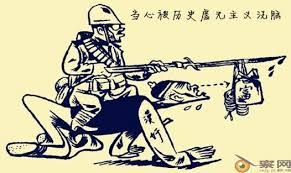
“Beware of getting brainwashed by historical nihilism,” a cartoon on the nationalist website cwzg.cn. A man dressed in imperial Japanese army uniform is depicted enslaving a “hanjian,” a pejorative term used to describe Chinese national traitors.
The term “historical nihilism” has come into vogue among Chinese government officials following Xi Jinping’s rise to power in 2012. “Historical nihilism” refers to the questioning of the official Chinese Communist Party’s version of Chinese history. A communiqué circulated in 2013 within the party known as Document No.9 calls historical nihilism one of the seven perils that threatens party rule. Under the guise of “re-evaluation,” historical nihilism “discredits revolution under the party’s leadership” and “denies the historical necessity of China’s choice of embarking on the socialist path.”
My own inquiries were exempted from the policy
decision to refuse prisoner lists and provide responses. I was not after all a
foreign government. I could continue to submit lists and get answers to my
queries.
In March 2012, just before the “policy decision,” I
was told that Tenzin Delek had been allowed family visits and that he would get
family visits in the future. In November 2013, Tenzin Delek’s family paid him a
visit. This would be the last time the family saw him alive.
The last written response to one of my requests for
information on Tenzin Delek Rinpoche was given during my trip to Beijing in
August 2014. The response implicitly acknowledged that he was ill but pointed
out that “sickness alone is not the only criteria for medical parole.” As the response
put it, “Tenzin Delek does not meet other criteria. He is a threat to social
stability and to himself.”
I concluded that the Chinese government was worried
that Tenzin Delek Rinpoche would commit suicide, perhaps by means of
self-immolation. Beginning in 2009, Tibetans burned themselves to death to
protest rule by Beijing. By the time I received the response, more than 130
Tibetans had self-immolated. I doubled down on medical parole,
arguing that a Rinpoche would never approve of violence of any kind, including
self-violence.
I was too late. Before my ideas gained traction,
Tenzin Delek Rinpoche passed away.
A
Call from London
At 3:30 PM on July 15, 2015, I received an email from Mandie McKeown, Campaigns Coordinator the International Tibet Network in London. “I have been given some worrying news,” she wrote. She hesitated, wanting to verify the news from another source. At 8:46 PM she informed me that Tenzin Delek Rinpoche had died in recent days.
McKeown’s news was current: Tenzin Delek had died on July 12. The lama’s family got the news in a phone call from the prison authorities at 10 PM Tibet time on the 12th. Large-scale protests broke out on July 13 as demonstrators demanded that the prison authorities hand over the Rinpoche’s body to his family and his monastery. The police reportedly beat the protesters and dispersed them with tear gas. Protests and unrest continued in Yajiang County, site of Orthok Monastery, and Lithang County on July 14 and July 15.
On July 15, McKeown advised me that Tenzin Delek’s body had not been handed over to the family, and that the prison authorities were preparing to cremate his remains without allowing the family or monks to view the body or carry out traditional Tibetan funeral rites. On July 15, the family was told that the cremation would take place the following day, July 16, Tibet time.
Acting on a hunch, I asked Dui Hua researchers to look
for regulations on how to deal with the death of prisoners in custody. It
turned out that regulations had just been jointly issued by the Ministry of
Justice, the Supreme People’s Procuratorate, and the Ministry of Civil Affairs
in March 2015, four months before Tenzin Delek’s death.
Article 17 of these regulations states that unless
relatives had objections to the cremation or questions about the prisoner’s
death, the body should be cremated as soon as possible. Article 19 states that
the body should be cremated within 15 days after investigation of death is
concluded, and that if the relatives request a delay in cremation, the prison
should decide on a case by case basis, but the delay should not be more than 10
days.
The results of the prison’s investigation into Tenzin
Delek’s death – if indeed there was an investigation – have never been
disclosed. No autopsy is believed to have been performed. He was cremated four
days after his death over the objections of his family.
Of special significance, Article 24 stipulates that if
the deceased prisoner is a member of an ethnic minority, “handling of the body
should respect ethnic traditions.”
I immediately informed Mandie McKeown, who confirmed receipt and advised that she would find a way to forward the regulations to the family. She succeeded in doing so. The family contacted the prison authorities right away and demanded that they act in accordance with the regulations. The authorities relented, and early on the morning of July 16, Tenzin Delek’s sister and niece, together with a small group of monks and nuns, were taken by car to Chuandong Prison. They arrived around 9 AM at this dreaded place and were allowed to enter. They were taken to a room near the crematorium.
The monks washed and anointed the body and changed his
clothes from prison garb to monk’s robes. The family was able to pay its
respects for about 30 minutes. Tenzin Delek was cremated at around 10 AM. The
monks were entrusted with the Rinpoche’s ashes and they set out for Orthok
Monastery.
They stopped at a hotel along the way to spend the
night. Police raided the hotel, barged into the room, and seized Tenzin Delek’s
ashes. They told the monks that the ashes would be dumped in a river. The
Chinese government was determined not to allow the holy man’s remains to become
a focal point of reverence or protest.
Liu
Xiaobo
Two years later, almost to the day after Tenzin Delek’s death, Nobel Peace Prize Laureate Liu Xiaobo – widely considered China’s top political prisoner – died of liver cancer on July 13, 2017 in Liaoning Province. He had served nearly nine years of an 11-year sentence in Jinzhou Prison for inciting subversion.
Liu Xiaobo’s final days were very different from the
final days of Tenzin Delek Rinpoche. Liu was granted medical parole several
weeks before his death, too late to save him as it turned out. He was taken to
a hospital in Shenyang where he was afforded the best treatment available.
Foreign doctors – one from Germany, one from the United States – were flown in
to conduct a diagnosis. His wife and immediate members of his family were
permitted to stay by his side to the hour of his death.
Every year since 1979, the year the United States and China normalized diplomatic relations, Washington-based Gallup Inc. has surveyed opinions of Americans on China. This year’s poll was conducted February 1-10, 2019, one year after the last poll was conducted in early February 2018. Results are based on interviews conducted with a random sample of 1,016 adults ages 18+ in all 50 states and the District of Columbia. The margin of error is plus/minus 4 percent, yielding a 95 percent confidence level.
Reflecting heightened tensions with China over a wide range of issues – trade, technology, cyber espionage, national security, ideology, Taiwan, South China Sea, human rights – this year’s results reveal a sharp deterioration in public opinion towards the Asian giant, viewed by the Trump administration as a strategic competitor.
Key results of this year’s poll include:
One in five Americans – 21 percent – consider China America’s greatest enemy. This is roughly double the number in 2018, when 11 percent viewed China as America’s biggest enemy. This result is second only to Russia. Thirty-two percent of Americans view Russia as the country’s greatest enemy, up from 19 percent in 2018.
Fifty-seven percent percent of Americans have an unfavorable view of China. Forty-one percent have a favorable view. These numbers reflect a 12-point percentage shift from the numbers recorded in 2018, when 45 percent of Americans had an unfavorable view of China, and 53 percent had a favorable view. The 2018 “favorable” number was the first time since the events of June 1989 that a majority of Americans had a favorable opinion towards China.
Among Americans who consider themselves conservatives, China is America’s number one enemy. More than one in four American conservatives consider China America’s greatest enemy. (Criticisms of China were much in evidence at the Conservative Political Action Committees annual meeting outside Washington D.C. in early March.) Sixty-three percent of conservatives now have an unfavorable view of China.
Americans are evenly split on President Trump’s handling of relations with China with 47 percent approving and 48 percent disapproving. The partisan gap is very large: 88 percent of Republicans approve of the way Mr. Trump is dealing with China, while only 14 percent of Democrats approve. Among independents, 42 percent approve.
Forty-six percent of Americans view China’s economic power as a critical threat.
Impressed with the results of the 2018 Gallup poll, Chinese Foreign Minister Wang Yi, at his press conference held at the end of last year’s annual session of the National People’s Congress, urged journalists to “pay more attention to such positive things.” Given this year’s results, it is doubtful that Mr. Wang will urge journalists to pay attention to the results of the 2019 Gallup poll.
“Beware of getting brainwashed by historical nihilism,” a cartoon on the nationalist website cwzg.cn. A man dressed in imperial Japanese army uniform is depicted enslaving a “hanjian,” a pejorative term used to describe Chinese national traitors.
The term “historical nihilism” has come into vogue among Chinese government officials following Xi Jinping’s rise to power in 2012. “Historical nihilism” refers to the questioning of the official Chinese Communist Party’s version of Chinese history. A communiqué circulated in 2013 within the party known as Document No.9 calls historical nihilism one of the seven perils that threatens party rule. Under the guise of “re-evaluation,” historical nihilism “discredits revolution under the party’s leadership” and “denies the historical necessity of China’s choice of embarking on the socialist path.” In September 2015, party magazine Qiushiwarned that historical nihilism would lead to a Soviet-style collapse should it be left unchecked. In February 2018, official news media outlets widely circulated Xi’s remark that historical nihilists “distort history” and “deny their own ancestry.” Historical nihilists are condemned as traitors to the Han people, “self-abased,” and as having lost their ethnic pride due to Western influence.
Official historical narratives about the party are crafted to instill nationalism and political loyalty. The narratives stress the party’s contributions to liberating China from century-long foreign imperialism, oppressed farmers from landlords, and ethnic minorities from feudalism – in stark contrast with Chinese history written in the west that calls the first three decades following 1949 a period of catastrophe caused by Mao Zedong. Those who share similar criticisms about the party’s past put their jobs, livelihood, and even personal liberty at risk. In some cases, delving into or writing about dissenting versions of history can land researchers or publishers in jail, with charges ranging from stealing state secrets, illegal business activity, and endangering state security.
Jailed Historians & “State Secrets”
A well-known case involving the criminalization of historians in China involved U.S.-based librarian and historian Song Yongyi (宋永毅) in 1999. In that year, Song was on a research trip to China to construct a database that would document the atrocities committed during the Cultural Revolution. Song collected tabloid newspapers published by the Red Guards and procured state-approved books from the China National Publications Import & Export Corporation at the Dickinson College Library in Pennsylvania. Although Song had obtained these materials through public channels, he was detained for “stealing state secrets” for six months, during which he was interrogated about whether his research project was supported by the Central Intelligence Agency. Song was not yet an American citizen at the time, but his detention sparked outrage in the American academic and diplomatic community. His release came as a result of Beijing’s wish to improve its image prior to the annual debate on renewal of China’s “Most Favored Nation” trading status.
A similar case that did not garner as much attention as Song’s involved historian Xu Zerong (徐泽荣) who was sentenced to 13 years’ imprisonment for illegally trafficking in state secrets for foreign entities and illegal business activity in Shenzhen in December 2001. Xu was an Associate Research Professor of Southeast Asian Studies at Zhongshan University in Guangzhou, well-known for his work on China’s role in the Korean War. The charges stemmed from his photocopying of books published in the 1950s about China’s involvement in the Korean War: unbeknownst to Xu the books were classified as “top-secret.” Xu allegedly received $2,500 for sending research materials to a South Korean scholar.
Some observers believed that Xu was imprisoned for reasons not mentioned in the court documents. Prior to his detention, Xu wrote an article for Hong Kong-based Asia Weekly, exposing clandestine support by the Chinese Communist Party to a Malaysian Communist insurgency from the 1950s to 1970s. Xu claimed that Chinese forces helped the insurgency group set up a radio station in Hunan during that period. His research suggested a double standard when it came to the Chinese government’s approach to foreign diplomacy – they had supported a revolution abroad and interfered in the internal affairs of another country, a line of argument the government frequently uses to criticize foreign counterparts that raise human rights issues with China.
Banned Books
Dui Hua has previously reported on the use of the crime “illegal business activity” to prosecute Christian booksellers and publishers. The same charge is also used to curb the distribution of history books that challenge the official historical narrative. In December 2015, Fu Zhibin (付志彬) was sentenced to 20 months’ imprisonment in Jiangxi for his book titled Historie der Mentalen Manipulation. In his book, Fu argues that the CCP used the concept of “Red Terror” to instill fear in people thus culminating in the Cultural Revolution. Fu accuses Mao of using this tactic to materialize his “emperor dream” – a term Fu borrowed from Lenin.
Published in Taiwan in 2014, the Jiangxi public security bureau accused Fu of “smearing and distorting the history of the Chinese Communist Party and denying the party’s legitimacy in the founding of the People’s Republic of China.” In the same year, Fu used a mainland publisher to print 3,000 copies of his book for domestic distribution. Of the books, 1,200 were sold online via social networking apps including WeChat and QQ.
In a separate case in February 2017, Dai Xuelin (戴学林) and Zhang Xiaoxiong (张晓雄) were sentenced in Zhejiang to five years and three years and six months, respectively, also for illegal business activity. The duo acquired books from Hong Kong’s Causeway Bay Bookstore and distributed them to online buyers in the mainland. One of the “illegal” titles was How the Red Sun Rose, a monograph written by a well-known historian who examined how Mao ascended to power by aggressive intra-party purges and coercion and the legacy of Mao on China’s political structure today. The book was published by The Chinese University Press in Hong Kong in 2001. Both Dai and Zhang remain imprisoned today. Dai is scheduled for release in May 2021 and Zhang is set for release in January 2020.
“Inalienable Part of China”
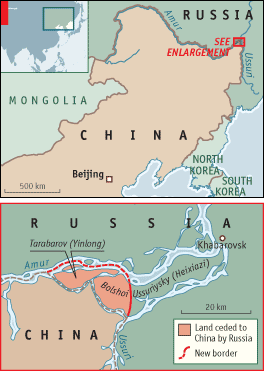
Photo credit: The Economist
China’s territorial dispute with Russia in the 2000s remains a thorn in the side of patriotic writers and historians. In the mid-19th century, the Qing Empire signed several “unequal treaties” with Russia, ceding over 600,000 square kilometers north of today’s Heilongjiang province and parts of Outer Manchuria, the majority of which is in Russia today. Shortly before the dissolution of the Soviet Union in 1991, border demarcation negotiations were held to resolve the longstanding Sino-Russian border disputes in Heilongjiang. The issues were eventually settled in an accord, signed by both countries in 2004, in which Russia recognized China’s ownership of Yinlong Island (Tarabarov Island) and over half of the Heixiazi Island (Bolshoy Ussuriysky Island) – both islands had been occupied by the Soviet Union since 1929. In 2008, China Daily lauded the formal territorial agreement signed by then Foreign Minister Yang Jiechi as a “hard-won” result after more than 40 years of negotiations.
The signing of the border agreement also signified China’s recognition of Russian sovereignty over territories that once belonged to China, a blow to many nationalists who regard the land as an “inalienable part of China” – a claim frequently used to justify sovereignty over Taiwan, Hong Kong, Xinjiang, Tibet, and other disputed islands and maritime claims in the South China Sea.
Some observers speculated that Hong Kong journalist Ching Cheong (程翔) was imprisoned for penning articles in 1998 for Hong Kong and Singaporean media that expressed his sentiments about the territorial losses, “equivalent to the size of forty Taiwans.” Ching criticized Jiang Zemin for signing a clandestine agreement with Boris Yeltsin in 1999 that delineated today’s Sino-Russian border. In signing the agreement, Jiang in turn recognized China’s loss of sovereignty over the territories “plundered” by Russia following the “unequal treaties” China was forced to sign in the 19th century. Ching was detained in Shenzhen in April 2005 and was sentenced in Beijing to five years’ imprisonment for “espionage” in 2006. He was released on parole in 2008 following an international campaign calling for his release.
Amateur historian Lü Jiaping (吕加平) was imprisoned for similar reasons. In 2011, Lü was sentenced to ten years’ imprisonment for inciting subversion in Beijing. Allegations against him included articles he published which called Jiang a “traitor” for “ceding vast Chinese territories” to Russia. Lü, now aged 77, reportedly suffers from heart disease among other ailments. He was released on medical parole in 2015.
“Historical Nihilism”
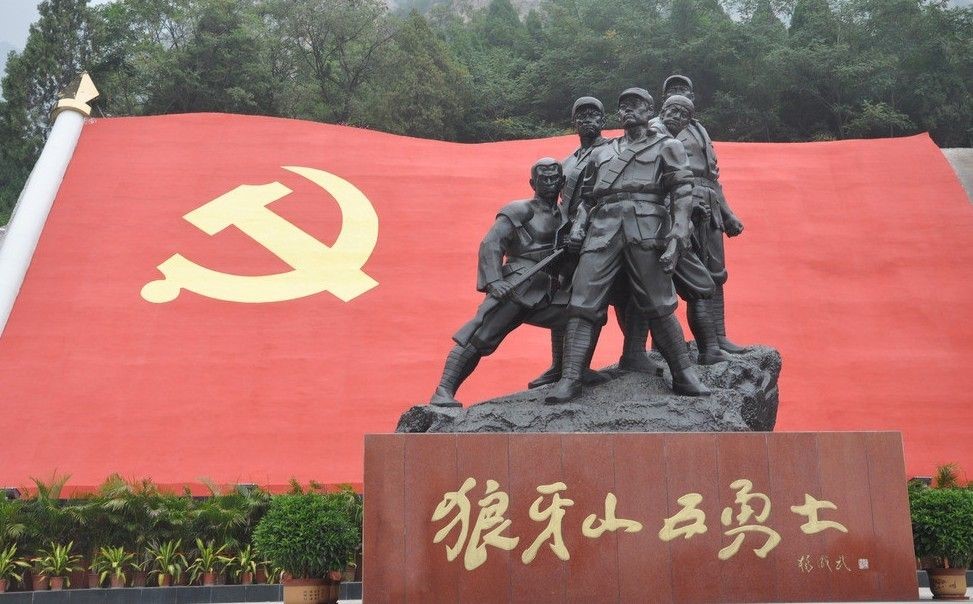
The “Five Heroes of Langya Mountain” are Communist soldiers portrayed in official narratives as having jumped off a cliff to avoid being captured by Japanese forces during World War II. Those who publicly question the authenticity of the official narrative not only face civil, but also criminal, consequences. Image credit: Baidu.
In 2015, the term historical nihilism began appearing in court documents following a civil case lodged by family members of “Communist heroes” to safeguard their ancestors’ “reputation” and “heroic spirit.” A Beijing court found columnists Hong Zhenkuai (洪振快) and Huang Zhong (黄钟)guilty of libel for an article that questioned the authenticity of the “Five Heroes of Langya Mountain,” communist lore that praised the valiant effort of five Communist soldiers during World War II. According to official narratives, the five men had jumped off a cliff to avoid being captured by Japanese forces. Hong argued that the men had in fact slipped off the cliff and that they did not kill any Japanese soldiers during their service. The court ruled that Hong and Huang had damaged the “heroic image” and “challenged social and public values that are both traditional and mainstream,” and “hurt the ethnic and historical feelings of the people.” Hong and Huang were ordered to make a public apology to the heroes on Weibo and in several major newspapers, including Global Times and Southern Metropolitan Daily.
Hong and Huang’s case demonstrates how publicly questioning the historical accuracy of Communist folklore can incur civil penalties. Effective April 27, 2018, the Heroes and Martyrs Protection Law obliges Chinese citizens to “revere and honor the memory of the sacrifices and contributions that heroes and martyrs made for the nation…” and subjects anyone who “defames” heroes and martyrs to criminal punishments and civil liabilities. At the time of writing, it remains to be seen what criminal punishments will be meted out to individuals who challenge the party’s narratives of heroes and martyrs.
Historians in and outside of China have long cast doubt on the authenticity of the “good deeds” of many Communist heroes and martyrs, including notably Lei Feng, a well-known propaganda icon who espoused values of selflessness and patriotism. Since his rise to power, Xi has further tightened the leash on historical discussions beyond the scholarly realm. Many online platforms have reportedly been investigated, fined, and ordered to shut down by the Internet Information Office for insulting heroes and martyrs. The Wall Street Journal reported that the Chinese government maintains a database of more than two million heroes and martyrs. It is doubtful whether the public knows who these two million heroes and martyrs are and therefore what kinds of criticisms might land them in legal trouble.
In China, history is heavily censored – not only are criticisms of government and former leaders censored, but narratives are also heavily redacted to shield the party from public skepticism about its legitimacy. The cases explored in this article demonstrate how those who dig into the party’s history have faced arrest, detention, and lengthy prison sentences for a wide range of offenses.
Most recently, two ethnic minority researchers have been taken into custody for writing histories of their own ethnic groups that are critical of the official narrative. Ethnic Mongolian historian Lhamjab A. Borigin faces prosecution for the crime of “separatism” and “sabotaging national unity” for his book written in Mongolian about the Cultural Revolution. Published in 2006 by an underground press and subsequently translated into Mandarin, the book discloses survivor testimonies and details torture techniques used during genocidal campaigns. Askar Yunus, an ethnic Kyrgyz historian, was incarcerated for an “undecided” offense due to his work that documented the history of Central Asia. Prior to his incarceration, Yunus published dozens of articles and books that examined the golden era of the history of the Kyrgyz people. An exiled Uyghur activist in the U.S. claimed that Askar Yunus might have been accused of being “two-faced” – an accusation frequently used by authorities to allegedly place more than a million of China’s Muslim minorities in re-education camps.
On April 3, 2002, an explosion took place in the central square of Sichuan Province’s capitol, Chengdu, injuring two people. The police moved quickly, detaining Tenzin Delek Rinpoche, a senior Tibetan religious leader, and his nephew Lobsang Dhundop on April 7. They were put in Dartsedo Detention Center. Although there have been improvements in recent years, Chinese detention centers in the early to mid-2000s were credibly accused of using torture to extract confessions, as attested to by the United Nations Special Rapporteur on Torture Manfred Nowak, who visited China in late 2005.
Both Tenzin Delek and Lobsang Dhundop were formally arrested, tried, and convicted of causing explosions, inciting splittism, and illegal possession of firearms; the prosecutors alleged that both men had been involved in a series of explosions. They demanded death sentences.
The trial by the Garze Intermediate People’s Court took place on November 29, 2002. It was a closed trial. Lobsang Dhundop was sentenced to death, and Tenzin Delek Rinpoche was sentenced to death with two-year reprieve, and suspension of political rights for life. Lobsang Dhundop was executed in late January 2003. Tenzin Delek appealed his sentence to the Sichuan High People’s Court, which dismissed it in January 2003, the same day the execution of his nephew took place.
Tenzin Delek was a much-revered and widely respected Tibetan monk who had been recognized as a reincarnated lama by the Dalai Lama in the 1980s. He was much loved by Tibetans – especially among nomads in Lithang, the place of his birth. From Orthok Monastery, he fought for justice, health care, educational opportunities, and especially for a clean environment, in the process making many enemies among mining and logging companies and their political protectors.
The man widely believed to be behind the persecution of Tenzin Delek Rinpoche was then party secretary of Sichuan Province, Zhou Yongkang. Zhou was a hardliner known for cracking down on Tibetans and members of the Falun Gong group. He was promoted to Minister of Public Security in Beijing in December 2002, immediately after the conviction of Tenzin Delek Rinpoche and his nephew and right before the rejection of Tenzin Delek’s appeal and Lobsang Dhundop’s execution.
Once in Beijing, Zhou continued his rapid ascent, eventually becoming a member of the all-powerful Standing Committee of the Politburo with responsibility for overseeing the police and the courts. He was purged by Secretary General Xi Jinping in 2013, becoming one of the most senior victims of Xi’s anti-corruption campaign. None of this had an impact on Tenzin Delek or any other political prisoner persecuted by Zhou. They remained in prison, denied any clemency.
Tenzin Delek Rinpoche was put in Sichuan’s Chuandong Prison, a high-security facility located in the remote Dabu Mountains in Dazhu County, a bleak landscape accessible only by car or bus. Chuandong Prison, also known as Sichuan Prison Number Three, is in Chongqing Municipality about 180 kilometres from Chongqing City and a four to five-hour drive from Chengdu. It has for decades been the prison in Sichuan where the most important political prisoners are held. As such it has acquired a well-deserved fearsome reputation.
Tenzin Delek’s sentence of death with two-year reprieve was commuted on January 26, 2005. The sentence was changed to life in prison.
Zhou Yongkang, former Party Secretary of Sichuan Province. Image Credit: TouTai.
Chuandong Prison in Sichuan. Image Credit: Baidu.
The Execution of Lobsang Dhundop
The execution of Lobsang Dhundop marked the first execution of a Tibetan for a political crime in more than 20 years. His death prompted international outrage.
Once I learned of the execution of Lobsang Dhundop I called a Chinese official with whom I had worked on human rights cases. He sounded much besieged. I admonished his government for killing Lobsang Dhondup, reminding him of remarks widely attributed to Chairman Mao Zedong: “We should be careful about killing people. People are not like vegetables. If you cut off their heads, they don’t grow back.” A grim silence followed.
After the execution, international attention turned to Tenzin Delek Rinpoche’s death with two-year reprieve sentence. Governments and human rights groups called for the sentence to be commuted.
I spent little time on this effort. Commutations of these sentences to life in prison or sometimes a lesser fixed term sentence like twenty years are the norm. By some estimates, fewer than 1 percent of prisoners serving sentences of death with two-year reprieve are executed. I assumed that Tenzin Delek’s sentence would be commuted, and it turned out I was right.
I soon set about trying to figure out a way to win Tenzin Delek’s early release. Early release in the Chinese prison system can be achieved by successive sentence reductions, parole, or medical parole. Sentence reduction and parole must be approved by a court. To get a sentence reduction or be paroled, the prisoner must admit guilt and express remorse. This Tenzin Delek refused to do. He pled not guilty at his trial and, while in the detention center, secretly taped a statement proclaiming his innocence. The statement was taped on January 20, 2003 and smuggled out of the detention center the same day. It was broadcast on Radio Free Asia on January 21, 2003. Tenzin Delek resisted his imprisonment, staging a hunger strike that landed him in solitary confinement.
Medical Parole for Political Prisoners
Tenzin Delek Rinpoche Image Credit: FreeTibet.Org
Medical parole for political and religious prisoners is not unusual. It does not require an admission of guilt. Although regulations state that a prisoner serving a life sentence must serve a minimum of seven years in prison before being considered for medical parole, they also state if the medical problem is serious enough, medical parole can be granted at any time. Unlike sentence reduction or parole, courts are not involved. The prison authorities can grant medical parole, though it must be approved by local prison bureaus and, in the case of sensitive prisoners, the Ministry of Justice in Beijing.
Since I began intervening on behalf of political prisoners in 1990, I have worked on more than a dozen cases of medical parole for prominent political prisoners, including Tibetans Jigme Sangpo and Ngawang Sangdrol, the Uyghur businesswoman Rebiya Kadeer, and democracy advocate Xu Wenli. All their medical paroles were approved by the Ministry of Justice, and in every instance the most senior officials in the Chinese government and Communist Party were consulted and gave the go-ahead.
I needed to get information on Tenzin Delek’s health, but I did not have a good channel to his family or to other individuals in Tenzin Delek’s home county who knew him. Dedicated activists for the cause of Tibet, Mandie McKeown and Alison Reynolds of Tibet Information Network (TIN) in London, had excellent contacts in Tibet and within the Tibetan diaspora, including with members of Tenzin Delek’s family. Of special importance was the relationship with Tenzin Delek’s niece, Nyama Lhamo who now lives in India after leaving Tibet in 2003. In a stroke of luck, TIN reached out to me for assistance, beginning more than 10 years of collaboration on the case of Tenzin Delek Rinpoche.
From the outset, I recommended medical parole. Over the years, the family applied for medical parole on several occasions. They never received a response from the prison authorities.
Bilateral Rights Dialogues
Complementing the efforts of international human rights groups, especially those focusing on Tibet, I began lobbying foreign governments that had official bilateral human rights dialogues with China to put Tenzin Delek’s name on the lists of political prisoners submitted at these dialogues. Western politicians and media often referred to Tenzin Delek Rinpoche as China’s top religious prisoner. From March 2003 to April 2011 – a period of eight years — the Chinese government gave written responses to at least 25 requests for information on Tenzin Delek submitted by the United Nations, the United States, the European Union (EU), European governments, Australia, and Canada. Dui Hua also submitted his name directly to the Chinese government, on average at least once a year, receiving both written and verbal responses.
While international efforts were underway to help Tenzin Delek, domestic pressures were building. In an extraordinary act of civil disobedience, 40,000 Tibetans living in Tenzin Delek’s home county of Lithang signed a petition demanding a retrial in 2009; the entire population of Lithang was, at the time, around 45,000. Local Tibetans staged a hunger strike, resulting in the detention of dozens of strikers.
Up until December 2006, China’s responses to foreign governments invariably claimed that Tenzin Delek was healthy, without giving details. Things changed in 2008. A Chinese response to the United States that year stated that Tenzin Delek had an illness prior to being put in prison (significant because prisoners cannot get medical parole if he or she had the medical condition prior to being admitted to prison), but that the condition had been treated and that his health was now okay. The response also said that the Rinpoche undertook light exercise and was sleeping and eating well.
In the November 2009 response to the EU, China repeated that Tenzin Delek’s health was okay, that he was eating well and was observing a strict diet, and that he did light exercise and gardening work. By this time the lama’s family knew that he was in fact seriously ill with high blood pressure and heart disease. He walked with a cane and had troubling spells of dizziness.
One of the last written responses to the list of a bilateral dialogue partner was the Chinese response to the United States in April 2011. After the EU-China human rights dialogue of May 2012 (a written response to a prisoner list was handed over – no information was provided on Tenzin Delek), China’s Ministry of Foreign Affairs made a “policy decision” to resist receiving prisoner lists from foreign governments, and under no circumstances to give written responses. The reason given for this decision was unhappiness over how the blind activist Chen Guangcheng’s case had been handled by the United States. Information on Tenzin Delek through governmental channels dried up.
Chuandong Prison in Sichuan. Image Credit: Baidu.
Exemption from “Policy Decision”
My own inquiries were exempted from the policy decision to refuse prisoner lists and provide responses. I was not after all a foreign government. I could continue to submit lists and get answers to my queries.
In March 2012, just before the “policy decision,” I was told that Tenzin Delek had been allowed family visits and that he would get family visits in the future. In November 2013, Tenzin Delek’s family paid him a visit. This would be the last time the family saw him alive.
The last written response to one of my requests for information on Tenzin Delek Rinpoche was given during my trip to Beijing in August 2014. The response implicitly acknowledged that he was ill but pointed out that “sickness alone is not the only criteria for medical parole.” As the response put it, “Tenzin Delek does not meet other criteria. He is a threat to social stability and to himself.”
I concluded that the Chinese government was worried that Tenzin Delek Rinpoche would commit suicide, perhaps by means of self-immolation. Beginning in 2009, Tibetans burned themselves to death to protest rule by Beijing. By the time I received the response, more than 130 Tibetans had self-immolated. I doubled down on medical parole, arguing that a Rinpoche would never approve of violence of any kind, including self-violence.
I was too late. Before my ideas gained traction, Tenzin Delek Rinpoche passed away.
A Call from London
At 3:30 PM on July 15, 2015, I received an email from Mandie McKeown, Campaigns Coordinator the International Tibet Network in London. “I have been given some worrying news,” she wrote. She hesitated, wanting to verify the news from another source. At 8:46 PM she informed me that Tenzin Delek Rinpoche had died in recent days.
McKeown’s news was current: Tenzin Delek had died on July 12. The lama’s family got the news in a phone call from the prison authorities at 10 PM Tibet time on the 12th. Large-scale protests broke out on July 13 as demonstrators demanded that the prison authorities hand over the Rinpoche’s body to his family and his monastery. The police reportedly beat the protesters and dispersed them with tear gas. Protests and unrest continued in Yajiang County, site of Orthok Monastery, and Lithang County on July 14 and July 15.
On July 15, McKeown advised me that Tenzin Delek’s body had not been handed over to the family, and that the prison authorities were preparing to cremate his remains without allowing the family or monks to view the body or carry out traditional Tibetan funeral rites. On July 15, the family was told that the cremation would take place the following day, July 16, Tibet time.
Acting on a hunch, I asked Dui Hua researchers to look for regulations on how to deal with the death of prisoners in custody. It turned out that regulations had just been jointly issued by the Ministry of Justice, the Supreme People’s Procuratorate, and the Ministry of Civil Affairs in March 2015, four months before Tenzin Delek’s death.
Article 17 of these regulations states that unless relatives had objections to the cremation or questions about the prisoner’s death, the body should be cremated as soon as possible. Article 19 states that the body should be cremated within 15 days after investigation of death is concluded, and that if the relatives request a delay in cremation, the prison should decide on a case by case basis, but the delay should not be more than 10 days.
The results of the prison’s investigation into Tenzin Delek’s death – if indeed there was an investigation – have never been disclosed. No autopsy is believed to have been performed. He was cremated four days after his death over the objections of his family.
Of special significance, Article 24 stipulates that if the deceased prisoner is a member of an ethnic minority, “handling of the body should respect ethnic traditions.”
I immediately informed Mandie McKeown, who confirmed receipt and advised that she would find a way to forward the regulations to the family. She succeeded in doing so. The family contacted the prison authorities right away and demanded that they act in accordance with the regulations. The authorities relented, and early on the morning of July 16, Tenzin Delek’s sister and niece, together with a small group of monks and nuns, were taken by car to Chuandong Prison. They arrived around 9 AM at this dreaded place and were allowed to enter. They were taken to a room near the crematorium.
The monks washed and anointed the body and changed his clothes from prison garb to monk’s robes. The family was able to pay its respects for about 30 minutes. Tenzin Delek was cremated at around 10 AM. The monks were entrusted with the Rinpoche’s ashes and they set out for Orthok Monastery.
They stopped at a hotel along the way to spend the night. Police raided the hotel, barged into the room, and seized Tenzin Delek’s ashes. They told the monks that the ashes would be dumped in a river. The Chinese government was determined not to allow the holy man’s remains to become a focal point of reverence or protest.
Liu Xiaobo
Two years later, almost to the day after Tenzin Delek’s death, Nobel Peace Prize Laureate Liu Xiaobo – widely considered China’s top political prisoner – died of liver cancer on July 13, 2017 in Liaoning Province. He had served nearly nine years of an 11-year sentence in Jinzhou Prison for inciting subversion.
Liu Xiaobo’s final days were very different from the final days of Tenzin Delek Rinpoche. Liu was granted medical parole several weeks before his death, too late to save him as it turned out. He was taken to a hospital in Shenyang where he was afforded the best treatment available. Foreign doctors – one from Germany, one from the United States – were flown in to conduct a diagnosis. His wife and immediate members of his family were permitted to stay by his side to the hour of his death.
On virtually every issue of concern to Americans – border security, immigration reform, climate change, tax policy – the Trump administration is at loggerheads with Democrats in Congress. With Democrats taking control of the House of Representatives on January 3, divisions have deepened, witness the longest government shutdown in American history touched off by a dispute on how best to secure the southern border.
On one issue however, President Trump and members of his team align with congressional Democrats: the need to get tough on opposing Chinese behavior. Whether on trade, national security, or human rights, both sides favor policies that confront China. In fact, in some areas, notably human rights and Taiwan, Democrats in the House of Representatives advocate policies on China that are tougher than those advocated by the Trump administration. The unlikely alliance between the Democratic House and a Republican president bodes ill for repairing the badly frayed relationship between the two countries.
A review of Democratic leadership in the House reinforces the view that body will push for tough policies on China. Democrats are led by Speaker Nancy Pelosi (D-CA) and the chairs of key committees that hold hearings, propose legislation, and provide oversight – Foreign Affairs, Ways and Means, Armed Services, and Intelligence – have all taken highly critical positions on China over the years.
In March 2018, then-Minority Leader Pelosi had this to say: “The United States must take strong, smart, and strategic action against China’s brazenly unfair trade practices.”
Pelosi returned as Speaker of the House on January 3. Pelosi built her political career criticizing China on human rights and Tibet. She had been in Congress for less than two years when, in 1989, the events of June 4 in Beijing’s Tiananmen Square played out. Together with Senate Majority Leader George Mitchell, Pelosi authored legislation that would place strict human rights conditions on the renewal of China’s Most Favored Trade status.
Decades later, Pelosi remains a vocal critic of China’s human rights practices. She has led bipartisan delegations to Tibet and met with the Dalai Lama. In 2010, Pelosi attended the Nobel Peace Prize ceremony in Oslo in honor of then-jailed Chinese dissident Liu Xiaobo. Among her many duties, Speaker Pelosi will appoint the new chairman of the Congressional Executive Commission on China. The agency monitors human rights and rule of law developments in China, holds hearings, and reports its findings to congress on an annual basis.
Representative Adam Schiff (D-CA), Chair of the House Intelligence Committee, has joined Republican lawmakers in backing measures to clamp down on Chinese technology companies ZTE and Huawei, referring to the companies as “cybersecurity threats.” Representative Eliot Engle, (D – NY), Chair of the House of Foreign Affairs Committee has been sharply critical of China’s trade policies and intellectual property rights violations and the consequent damage done to American companies. Ranking members of the House Foreign Affairs Committee include Democrats who have been vocal critics of China – mostly on issues of trade and security, but also on issues of human rights. Notable China critics include Taiwan-born Ted Lieu (D – CA), Brad Sherman (D – CA), and Tom Malinowski (D – NJ). Mr. Malinowski served as Assistant Secretary of Democracy, Rights, and Labor during the Obama administration and probably knows more about human rights in China than any other member of Congress.
Sherman will serve as Chair of the Subcommittee on Asia, the Pacific and Non-Proliferation. Sherman has introduced legislation to prevent U.S. technology from being exported to China to facilitate the construction of reeducation camps in Xinjiang. He has also called for applying Global Magnitsky sanctions on those who have created and run the camps.
Representative Adam Smith (D – WA), Chair of the House Armed Services Committee has criticized China for cyber espionage and being uncooperative on North Korea. Richard Neal (D-MA), Chair of the Ways and Means committee, issued a statement calling for President Trump not to lift tariffs on China. Last year, Neal joined committee members, as well as the likes of Peter Navarro, one of Trump’s most hawkish advisers on China, in an open letter calling on the president to get tougher on China.
Now that Democrats have taken back the House, it’s likely that Congress will do little in the way of reining in Trump’s hawkish policies on China and in fact may well pressure the White House to get tougher on China when it comes to issues of trade, cybersecurity, and human rights.
PRISONER UPDATES
Chen Wuquan (陈武权) was sentenced to five-years imprisonment for “picking quarrels and provoking troubles” by a Guangdong court on January 9. The lawyer-turned environmental activist led the campaign “War to Protect the Sea” in protest of land appropriation and reclamation that took place from October to December 2017 in Zhanjiang. Six other villagers were also arrested and sentenced to one to one and a half years imprisonment, respectively.
On January 28, after being held incommunicado for three and a half years, rights lawyer Wang Quanzhang (王全璋) received his judgement. The Tianjin No.2 Intermediate People’s Court sentenced Wang to four years and six months imprisonment, with five years’ deprivation of political rights, for the crime of subversion. According to a previous indictment, Wang was accused of recruiting dissidents under the guise of legal training and using foreign funds to sensationalize certain cases.
A Hubei court issued the judgement for Liu Feiyue (刘飞跃) on January 29. The founder of the group Civil Rights and Livelihood Watch was sentenced to five years imprisonment for inciting subversion, with three years deprivation of political rights. The evidence against Liu involved articles published by his group that called for non-violent movements against the Chinese Communist Party, reports about stability maintenance, and cartoons about human rights violations.
A website operated by the Supreme People’s Procuratorate disclosed a case of endangering state security. A district-level procuratorate reported the case of Huang Meng (黄萌), a suspect in an inciting subversion case, to the Xi’an procuratorate of Shaanxi Province in September 2018. The specifics of Huang’s case are unknown.
Zhang Hui (right) and his uncle Zhang Gaoping (left) were acquitted in March 2013 after spending a decade in jail due to false testimony given by a jailhouse informant. Photo credit: news.ifeng.com.
A controversial issue facing criminal justice reformers around the world is the use of jailhouse informant testimony, which has been discredited as being unreliable and a leading cause of wrongful convictions. Jailhouse informants are detained or incarcerated individuals tasked with obtaining inculpatory information about criminal suspects. Informants are often pressured into becoming informants in exchange for financial rewards and sentence reductions.
John Kamm Remembers is a feature that explores Kamm’s human rights advocacy prior to and since Dui Hua’s establishment in 1999.
Ashes and Water: The Death of Tenzin Delek Rinpoche (Part 1 of 2)
On April 3, 2002, an explosion took place in the central square of Sichuan Province’s capitol, Chengdu, injuring two people. The police moved quickly, detaining Tenzin Delek Rinpoche, a senior Tibetan religious leader, and his nephew Lobsang Dhundop on April 7. They were put in Dartsedo Detention Center. Although there have been improvements in recent years, Chinese detention centers in the early to mid-2000s were credibly accused of using torture to extract confessions, as attested to by the United Nations Special Rapporteur on Torture Manfred Nowak, who visited China in late 2005.
Both Tenzin Delek and Lobsang Dhundop were formally arrested, tried, and convicted of causing explosions, inciting splittism, and illegal possession of firearms; the prosecutors alleged that both men had been involved in a series of explosions. They demanded death sentences.
The trial by the Garze Intermediate People’s Court took place on November 29, 2002. It was a closed trial. Lobsang Dhundop was sentenced to death, and Tenzin Delek Rinpoche was sentenced to death with two-year reprieve, and suspension of political rights for life. Lobsang Dhundop was executed in late January 2003. Tenzin Delek appealed his sentence to the Sichuan High People’s Court, which dismissed it in January 2003, the same day the execution of his nephew took place.
Tenzin Delek was a much-revered and widely respected Tibetan monk who had been recognized as a reincarnated lama by the Dalai Lama in the 1980s. He was much loved by Tibetans – especially among nomads in Lithang, the place of his birth. From Orthok Monastery, he fought for justice, health care, educational opportunities, and especially for a clean environment, in the process making many enemies among mining and logging companies and their political protectors.
The man widely believed to be behind the persecution of Tenzin Delek Rinpoche was then party secretary of Sichuan Province, Zhou Yongkang. Zhou was a hardliner known for cracking down on Tibetans and members of the Falun Gong group. He was promoted to Minister of Public Security in Beijing in December 2002, immediately after the conviction of Tenzin Delek Rinpoche and his nephew and right before the rejection of Tenzin Delek’s appeal and Lobsang Dhundop’s execution.
Once in Beijing, Zhou continued his rapid ascent, eventually becoming a member of the all-powerful Standing Committee of the Politburo with responsibility for overseeing the police and the courts. He was purged by Secretary General Xi Jinping in 2013, becoming one of the most senior victims of Xi’s anti-corruption campaign. None of this had an impact on Tenzin Delek or any other political prisoner persecuted by Zhou. They remained in prison, denied any clemency.
Tenzin Delek Rinpoche was put in Sichuan’s Chuandong Prison, a high-security facility located in the remote Dabu Mountains in Dazhu County, a bleak landscape accessible only by car or bus. Chuandong Prison, also known as Sichuan Prison Number Three, is in Chongqing Municipality about 180 kilometres from Chongqing City and a four to five-hour drive from Chengdu. It has for decades been the prison in Sichuan where the most important political prisoners are held. As such it has acquired a well-deserved fearsome reputation.
Tenzin Delek’s sentence of death with two-year reprieve was commuted on January 26, 2005. The sentence was changed to life in prison.
Zhou Yongkang, former Party Secretary of Sichuan Province. Image Credit: TouTai.
Chuandong Prison in Sichuan. Image Credit: Baidu.
The Execution of Lobsang Dhundop
The execution of Lobsang Dhundop marked the first execution of a Tibetan for a political crime in more than 20 years. His death prompted international outrage.
Once I learned of the execution of Lobsang Dhundop I called a Chinese official with whom I had worked on human rights cases. He sounded much besieged. I admonished his government for killing Lobsang Dhondup, reminding him of remarks widely attributed to Chairman Mao Zedong: “We should be careful about killing people. People are not like vegetables. If you cut off their heads, they don’t grow back.” A grim silence followed.
After the execution, international attention turned to Tenzin Delek Rinpoche’s death with two-year reprieve sentence. Governments and human rights groups called for the sentence to be commuted.
I spent little time on this effort. Commutations of these sentences to life in prison or sometimes a lesser fixed term sentence like twenty years are the norm. By some estimates, fewer than 1 percent of prisoners serving sentences of death with two-year reprieve are executed. I assumed that Tenzin Delek’s sentence would be commuted, and it turned out I was right.
I soon set about trying to figure out a way to win Tenzin Delek’s early release. Early release in the Chinese prison system can be achieved by successive sentence reductions, parole, or medical parole. Sentence reduction and parole must be approved by a court. To get a sentence reduction or be paroled, the prisoner must admit guilt and express remorse. This Tenzin Delek refused to do. He pled not guilty at his trial and, while in the detention center, secretly taped a statement proclaiming his innocence. The statement was taped on January 20, 2003 and smuggled out of the detention center the same day. It was broadcast on Radio Free Asia on January 21, 2003. Tenzin Delek resisted his imprisonment, staging a hunger strike that landed him in solitary confinement.
Medical Parole for Political Prisoners
Tenzin Delek Rinpoche Image Credit: FreeTibet.Org
Medical parole for political and religious prisoners is not unusual. It does not require an admission of guilt. Although regulations state that a prisoner serving a life sentence must serve a minimum of seven years in prison before being considered for medical parole, they also state if the medical problem is serious enough, medical parole can be granted at any time. Unlike sentence reduction or parole, courts are not involved. The prison authorities can grant medical parole, though it must be approved by local prison bureaus and, in the case of sensitive prisoners, the Ministry of Justice in Beijing.
Since I began intervening on behalf of political prisoners in 1990, I have worked on more than a dozen cases of medical parole for prominent political prisoners, including Tibetans Jigme Sangpo and Ngawang Sangdrol, the Uyghur businesswoman Rebiya Kadeer, and democracy advocate Xu Wenli. All their medical paroles were approved by the Ministry of Justice, and in every instance the most senior officials in the Chinese government and Communist Party were consulted and gave the go-ahead.
I needed to get information on Tenzin Delek’s health, but I did not have a good channel to his family or to other individuals in Tenzin Delek’s home county who knew him. Dedicated activists for the cause of Tibet, Mandie McKeown and Alison Reynolds of Tibet Information Network (TIN) in London, had excellent contacts in Tibet and within the Tibetan diaspora, including with members of Tenzin Delek’s family. Of special importance was the relationship with Tenzin Delek’s niece, Nyama Lhamo who now lives in India after leaving Tibet in 2003. In a stroke of luck, TIN reached out to me for assistance, beginning more than 10 years of collaboration on the case of Tenzin Delek Rinpoche.
From the outset, I recommended medical parole. Over the years, the family applied for medical parole on several occasions. They never received a response from the prison authorities.
Bilateral Rights Dialogues
Complementing the efforts of international human rights groups, especially those focusing on Tibet, I began lobbying foreign governments that had official bilateral human rights dialogues with China to put Tenzin Delek’s name on the lists of political prisoners submitted at these dialogues. Western politicians and media often referred to Tenzin Delek Rinpoche as China’s top religious prisoner. From March 2003 to April 2011 – a period of eight years — the Chinese government gave written responses to at least 25 requests for information on Tenzin Delek submitted by the United Nations, the United States, the European Union (EU), European governments, Australia, and Canada. Dui Hua also submitted his name directly to the Chinese government, on average at least once a year, receiving both written and verbal responses.
While international efforts were underway to help Tenzin Delek, domestic pressures were building. In an extraordinary act of civil disobedience, 40,000 Tibetans living in Tenzin Delek’s home county of Lithang signed a petition demanding a retrial in 2009; the entire population of Lithang was, at the time, around 45,000. Local Tibetans staged a hunger strike, resulting in the detention of dozens of strikers.
Up until December 2006, China’s responses to foreign governments invariably claimed that Tenzin Delek was healthy, without giving details. Things changed in 2008. A Chinese response to the United States that year stated that Tenzin Delek had an illness prior to being put in prison (significant because prisoners cannot get medical parole if he or she had the medical condition prior to being admitted to prison), but that the condition had been treated and that his health was now okay. The response also said that the Rinpoche undertook light exercise and was sleeping and eating well.
In the November 2009 response to the EU, China repeated that Tenzin Delek’s health was okay, that he was eating well and was observing a strict diet, and that he did light exercise and gardening work. By this time the lama’s family knew that he was in fact seriously ill with high blood pressure and heart disease. He walked with a cane and had troubling spells of dizziness.
One of the last written responses to the list of a bilateral dialogue partner was the Chinese response to the United States in April 2011. After the EU-China human rights dialogue of May 2012 (a written response to a prisoner list was handed over – no information was provided on Tenzin Delek), China’s Ministry of Foreign Affairs made a “policy decision” to resist receiving prisoner lists from foreign governments, and under no circumstances to give written responses. The reason given for this decision was unhappiness over how the blind activist Chen Guangcheng’s case had been handled by the United States. Information on Tenzin Delek through governmental channels dried up.
Zhang Hui (right) and his uncle Zhang Gaoping (left) were acquitted in March 2013 after spending a decade in jail due to false testimony given by a jailhouse informant. Photo credit: news.ifeng.com.
A controversial issue facing criminal justice reformers around the world is the use of jailhouse informant testimony, which has been discredited as being unreliable and a leading cause of wrongful convictions. Jailhouse informants are detained or incarcerated individuals tasked with obtaining inculpatory information about criminal suspects. Informants are often pressured into becoming informants in exchange for financial rewards and sentence reductions.
Authorities in China acknowledge the practice of using jailhouse informants to gather information for investigations. Detention centers receive funding from the Ministry of Public Security (MPS) to help deploy a network of informants. The MPS Working Rules of 1986 classify informants into two groups: one group collects intelligence about criminal suspects to maintain jailhouse security and the other group assists police in the investigation of difficult cases.
Prisoners with at least three months remaining on their terms typically serve their sentences in prisons, however an exemption is made for long-serving prisoners to be placed in detention centers where they can act as the prison guards’ watchful eyes and ears. While the exact figures are unknown, a study revealed that of the 480 detainees in Xinjiang’s Yining Detention Center in 1990, 14 were informants. In the early 2000s, Xinjiang’s Yopurga County Detention Center used a total of 18 informants – 14 security informants and 4 “special case” informants. A recent estimate indicated that three to five percent of the entire prison population in China are informants in detention centers.
There has been widespread public criticism over the use of jailhouse informant testimonies in cases resulting in wrongful convictions. Below are three examples of cases where informant testimony was used to push forward on investigations when evidence against the accused was weak or non-existent.
Yuan Lianfang – “The Jailhouse Snitch”
Ma Tingxin
Yuan Lianfang (袁连芳) is a former jailhouse informant known to have produced false testimonies leading to two wrongful conviction cases involving three victims. In February 2003, Yuan was transferred to the Hebei Detention Center to collect information for a homicide case, which the county public security bureau had pledged to solve within three months. Ma Tingxin (马廷新) was mistakenly identified as a criminal suspect after failing a polygraph test. Investigators were unable to find sufficient evidence to use against Ma and ended up coercing six witnesses into providing false testimony. It was later discovered that Yuan was assigned to be the informant responsible for extracting Ma’s confession.
In an interview, Yuan admitted that he would take any opportunity to complete his six-year sentence early. At the time of Ma’s detention, his wife and father had been taken into custody for investigation. Using his position as a “cellblock boss,” Yuan did not allow Ma to sleep if he failed to memorize the confession script Yuan had composed for him. Yuan later threatened the safety of Ma’s family, prompting Ma to write a five-page long statement in which he admitted to committing the murder. After Ma’s “confession,” Yuan was transferred back to Hangzhou’s Gongshu District Detention Center on April 8, and one month later, he earned a sentence reduction of 18 months.
In July 2004, Ma was acquitted in the trial of first instance, but the prosecution appealed the judgment insisting that evidence for conviction was sufficient. The appeal was not withdrawn until April 2008. Ma spent five years in a detention center for a crime he did not commit.
Two Zhangs
Yuan Lianfang’s name did not garner media attention until a case involving a rape and murder conviction overturned by the Zhejiang High People’s Court in March 2013 came to light. Zhang Hui (张辉) and his uncle Zhang Gaoping (张高平) were sentenced to death with reprieve and 15 years’ imprisonment, respectively, in the appellate trial in October 2004.
Initial investigations against the duo produced no substantive evidence of their guilt. The victim was last known to have hitchhiked by truck from Anhui to Hangzhou before her corpse was found in a ditch. The DNA found on the victim belonged to neither of the Zhangs, but to another individual who could not be identified by police at the time. As the investigation dragged on, Yuan was transferred to Gongshu District Detention Center where he collected testimony from Zhang Hui. Yuan alleged that Zhang Hui had voluntarily confessed to strangling the victim to death after raping her. Zhang did not appear in court to testify. As in Ma’s case, Yuan used his position as the “cellblock boss” to coerce Zhang into writing a confession letter. The court ignored accusations against Yuan and convicted the two Zhangs for rape and murder.
In the appellate trial, the Zhejiang High People’s Court held that the facts in the two Zhang’s case were “clearly established.” In the judgment, the court only mentioned in passing that Zhang Hui “is not a criminal who requires immediate execution due to the special circumstances of the case” without explaining what constituted the “special circumstances.” In the absence of admissible circumstantial evidence, their conviction was yet another violation of the presumption of innocence – a principle established in the Criminal Procedure Law.
Both Zhangs were released in 2013 after they had been in prison for almost a decade. While serving his sentence in a Xinjiang prison in March 2008, Zhang Hui read about Ma Tingxin’s acquittal in a newspaper and learned that Yuan had given false testimony leading to Ma’s wrongful conviction. The prosecution accepted Zhangs’ request to re-examine the admissibility of Yuan’s testimony. Yuan admitted to perjury in both Ma and Zhangs’ cases. It was later found that the DNA on the victim belonged to another criminal who had been executed. An interview with Yuan in 2013 revealed that he had suffered a stroke while in prison, leaving him with permanent health issues. At the time of the interview Yuan was living in a small rented apartment in Hangzhou with limited means and fearful for his safety due to the reputation he had garnered as a jailhouse informant.
Jailhouse Bullies
In May 2018, Caixin Media’s coverage of the case of Wang Baiyu (王柏玉) brought much discredit to both law enforcement and jailhouse informants in China. Wang, a native in Jilin province, was sentenced to death with reprieve in 2004 after “confessing” to the murder of his fiancée. The investigation failed to uncover sufficient evidence that Wang was to blame for the murder and basic facts of the case were not disclosed to the defence, such as the victim’s time of death. Wang might have been able to provide a credible alibi had these details been disclosed. There was no witness testimony or forensic evidence linking Wang to the murder scene. The only evidence used to substantiate the conviction was Wang’s confession, which had been extracted by jailhouse informants.
Wang’s confession was full of inconsistencies. He gave three different accounts detailing how he committed the murder. It was later discovered that Wang’s confession was coerced in the detention center by investigating officers who also instructed several informants to inflict torture on Wang, including “banging Wang’s head against the wall, kicking him in his chest, suffocating him with plastic bags, depriving him of water, food, and sleep for consecutive days.” On May 31, 2002, Wang delivered his first written confession to his informants. In mid-August, the informants tortured Wang again, leaving him with a nasal fracture and bruises all over his body. Wang signed another fabricated confession statement. One of the informants received a sentence reduction of two years in January 2005 as a reward for his “meritorious service” in eliciting Wang’s confession.
In the appeal statement published in February 2017, Wang stated that at least four detainees witnessed the abuse and torture he suffered and that he knew of at least one other detainee, surnamed Song, who also fell victim to the same informants in June 2002. For the past 15 years, Wang has been lodging a post-conviction appeal. On August 26, 2016, the Jilin People’s Procuratorate refused to re-examine the admissibility of Wang’s testimony and determined that there were insufficient grounds to lodge an appeal. At the time of writing, Wang has 12 years left on his sentence.
Reform in United States
In the U.S., there is ongoing legislative debate concerning the use of jailhouse informant testimony. In response to Texas legislation that would end the use of incentivized jailhouse informants in death penalty cases, a Washington Post op-ed in May 2015 criticized that “[M]ost jailhouse snitches are lying. Informant testimony has become such a critical tool for prosecutors precisely because it allows them to put on testimony that is a) damning, b) easy to manufacture and c) allows b) to happen while giving them plausible deniability.” The Texas bill that was later passed in 2017 has been widely applauded. In California, Florida, Washington, New York, and Pennsylvania, legislatures have also sought to restrict the use of informant testimony. In November 2018, Illinois passed a bill making it mandatory for prosecutors to disclose their use of jailhouse informant testimony at least 30 days before trial. The bill gives defence attorneys time to examine informant testimony and forces prosecutors to prove that informant testimony is admissible and to disclose what rewards will be given to informants in exchange for testimony.
In China, reformers widely agree that the use of jailhouse informant testimony is problematic. Informants are deployed by police in detention centers administered by the Ministry of Public Security. Police play both a custodial role and an investigatory role and they routinely use informants to boost crime clearance rates for their own career advancement. In 2015, Secretary of the Central Political and Legal Affairs Commission Meng Jianzhu announced the removal of crime clearance rates as a performance indicator for police officers. The arbitrary power of police could be more easily restrained if the Ministry of Justice (MOJ) administered detention centers, since it has little direct interest in the outcome of criminal investigations.
Wrongful convictions reduce public confidence in the criminal justice system. The consequences are severe when miscarriages of justice result from the use of forced testimony obtained by torture. Legislative restrictions are needed to curb the arbitrary use of testimony. China can draw on the U.S. experience by improving transparency in how informant testimony is collected, and by restricting and banning its use in certain cases such as cases involving the death penalty.
Last year, 2018, was a challenging time for NGOs working to promote human rights and rule of law in China. In Xinjiang, government and media reports alleged that one million Muslims were interned in reeducation camps – called “vocational training centers” by the Chinese government. A nationwide crackdown against Christianity, marked by the razing of churches, the tearing down of crosses and the detention of leading Christian leaders like Pastor Wang Yi, was reported to be underway. The use of “exit bans” to stop foreigners from leaving China prompted a State Department travel advisory. In an apparent response to the detention of a prominent Chinese businesswoman by the Canadian authorities, two Canadian citizens were detained in China on suspicion of espionage in December.
The backsliding on civil and political rights took place against the backdrop of a slowing Chinese economy and heightened tensions with the United States over several issues, notably trade and national security. Senior American officials ramped up criticism of China over human rights. Despite quitting the United Nations Human Rights Council in June, the United States participated in China’s third Universal Periodic Review (UPR) of its human rights record in November.
At its UPR, China revealed that 427 foreign NGOs had registered in China by the time of the review. This marks a sharp drop in the number of NGOs operating legally in the country. Thousands of NGOs were operating before the Foreign NGO Management Law took effect on January 1, 2017.
Despite these challenges, Dui Hua recorded significant achievements in its dealings with the Chinese government.
Advocacy on Behalf of Political Prisoners
In 2018, Dui Hua met with Chinese officials to discuss human rights, including individuals detained for endangering state security (ESS) and cult activities, on 25 occasions. Meetings took place in Beijing, Hong Kong, San Francisco, New York, and Geneva. At these meetings, lists of names of political and religious prisoners were handed over. In all, Dui Hua submitted 52 lists with 199 names during the year.
In all, 74 written responses to names on Dui Hua lists were received in 2018. This compares to 66 written responses received in 2017. Dui Hua learned of 56 acts of clemency or better treatment for prisoners on its lists, an uptick over what the foundation learned in 2017 when it was informed of 32 acts of clemency or better treatment.
Dui Hua remains the only governmental or non-governmental body, apart from United Nations Special Procedures, able to submit lists to the Chinese government and receive written responses in return.
Dui Hua’s Political Prisoner Database (PPDB) ended 2018 with nearly 40,000 records, an increase of 2,000 records over the number at the end of 2017. In 2018, 187 individuals sentenced for ESS crimes were added to the database, compared to 111 in 2017. Dui Hua’s work uncovering political cases on court websites continues to bear fruit: 95 new ESS cases were found on judgment websites compared to 64 in 2017.
Girls in Conflict with the Law
Preparations to hold the first international symposium on girls in conflict with the law made significant progress in 2018. The symposium, the first of its kind, will be held in Hong Kong in April 2020. Hong Kong University School of Law’s Centre for Comparative and Public Law, Patricia Lee (Managing Attorney of the San Francisco Public Defender’s Juvenile Unit), and London-based Penal Reform International are partnering with Dui Hua. Expert presenters and observers from Europe, Asia, and North America have been identified and invited, and possible funders were approached, with good results.
The symposium is receiving interest and support from China. The Supreme People’s Court Office of Juvenile Courts has been invited. Renmin University School of Law agreed to conduct a study on girls in detention in China. The results of the study will be presented at the symposium.
Girls in conflict with the law are a growing population of at-risk detainees, yet their needs are not adequately addressed. Girls are at greater risk of sexual abuse than boys, are more likely to be victims of sexual trafficking, are more prone to alcohol and drug abuse, and are more prone to suicidal thinking and violence.
Death Penalty
The year ended with 3,221 records of executions in Dui Hua’s Death Penalty Log. The log contains records of 1,087 death sentences reviewed by the Supreme People’s Court. From 2014-2018, Dui Hua found 61 death sentences overturned, giving a reversal rate of 7.7 percent.
Dui Hua’s estimates of the number of executions are held in high regard. The foundation estimated that there were 2,000 executions in 2018, a small decrease from the number of executions in 2017.
PRISONER UPDATES
In December, Dui Hua received information from our interlocutors on seven prisoners in Shanghai. The response confirmed the whereabouts of two Falun Gong practitioners convicted of “organizing/using a cult to undermine implementation of the law”. Wu Xiaocun (吴啸村), who is currently serving in Tilanqiao Prison, will complete his four-year sentence on May 12, 2021. Female Falun Gong practitioner Zhong Yijun (钟怡君) is due for release from Nanhui Prison on January 2, 2021.
The same response also indicated that Jiang Cunde (蒋存德) remains incarcerated for counterrevolution, a crime that was removed from the Criminal Law over 20 years ago. Jiang has not received any form of clemency since his life sentence was commuted to 20 years’ imprisonment in 2004.
Two activists were convicted of inciting subversion in December. A Guangdong court sentenced Zhen Jianghua (甄江华) to two years’ imprisonment in December. Zhen administered a website which shared news about human rights activists across the country and ran another website that helped internet users to circumvent censorship. Jiangsu activist Sun Lin (孙林) was sentenced to four years’ imprisonment and three years’ deprivation of political rights. Lin was accused of circulating online articles that discussed political issues and democracy as well as for chanting ‘Down with the Communist Party’ at a community meeting with communist party members in Nanjing.
DUI HUA IN THE NEWS
Dui Hua was cited in New York Times articles on forced labor in Xinjiang and the retrial and death sentence of a Canadian citizen in China. In the article on forced labor in reeducation camps in Xinjiang, Executive Director Kamm was quoted saying “I don’t see China yielding an inch on Xinjiang. Now it seems we have entrepreneurs coming in and taking advantage of the situation.” In December, Robert Schellenberg, a Canadian national who was arrested in 2014 and tried and sentenced in obscurity in China became the focus of international attention after news that his retrial in January could result in a death sentence. After Canadian authorities arrested Meng Wanzhou, the chief financial officer of the Chinese technology company Huawei, diplomatic tensions between Canada and China have worsened. On January 14, Schellenberg’s retrial resulted in a death sentence. Dui Hua’s research on the number of foreigners executed in China for drug charges was cited by the media and Kamm was interviewed by Canadian media outlets about the Schellenberg case.
A conference organized by the Supreme People’s Court and the Ministry of Justice on expanding coverage of defense lawyers in criminal cases. November 29, 2018, Hefei, Anhui province. Image credit: court.gov.cn.
The recent license suspensions of two lawyers in Yunnan have come under public scrutiny for the strange circumstances that led to the suspensions: the lawyers were making legal arguments based on government regulations and criminal statutes, with citation to relevant parts of the national constitution, on behalf of their clients. Their plaintiffs were Falun Gong practitioners accused of “using a cult to undermine the implementation of the law.” The case sheds light on a pattern emerging in the legal profession in China – the penalization of criminal defense attorneys, who represent clients in sensitive cases, with legally dubious accusations of professional misconduct.
On November 3, 2010, Tan was at home, drunkenly playing with an air rifle. When Li tried to stop Tan, he kicked her and threatened her with the rifle. Li seized the gun and struck Tan in the head twice, killing him. She dismembered his body, boiled the parts, and spread them around the village. She was arrested and sentenced to death by the Ziyang City Intermediate People’s Court. The judgment was upheld by the Sichuan High People’s Court after which it was sent to the Supreme People’s Court (SPC) in Beijing. The SPC confirmed the judgment in January 2013. Tan’s family successfully filed a civil suit against Li Yan’s family to pay 58,212 RMB in compensation – a large sum of money for Li’s working-class family.
Death sentences reviewed and confirmed by the SPC typically take place within days of SPC approval. By the time of our Hong Kong symposium, more than 13 months after the SPC decision, Li Yan had not yet been executed. Her plight had drawn domestic attention as Chinese feminists lobbied the government to stay its hand arguing it had not taken into consideration the violence Li had suffered. More than 400 Chinese lawyers and legal scholars had signed a letter to the SPC pleading for Li Yan’s life to be spared. The case was beginning to draw international attention too. Amnesty International initiated a global signature campaign calling for Li Yan not to be executed.
One of the SPC judges attending the symposium sat on an SPC panel reviewing death sentences, and it emerged that she was one of the judges considering whether to carry out the execution of Li Yan. At the end of the symposium, she thanked me for inviting her to the event, and told me that she had learned a lot from the discussion on domestic violence. “It has changed the way I think about it,” she told me. I stayed in touch with the Chinese participants, and on June 23, 2014, a Chinese official who had been at the symposium and was deeply concerned with Li’s case sent me a short email: “She has survived.” At the same time, Li Yan’s brother was advised that his sister’s death sentence had been overturned by the SPC. A retrial by the Ziyang City Intermediate People’s Court was ordered.
Dui Hua issued a press statement and sent it to journalists covering human rights in China, including many who were based in Beijing. Coverage in the international media was widespread, and the United Nations Office of the High Commissioner for Human Rights in Geneva issued a statement applauding the decision.
One of the journalists I sent Dui Hua’s statement to was Didi Kirsten Tatlow, a New York Times journalist based in Beijing. Ms. Tatlow had been reporting on the Li Yan case since late 2012 and decided to travel to Chengdu and thence to Ziyang with photographer Gilles Sabrié to attend the retrial in November 2014. Outside the courthouse, she encountered an angry and threatening mob of Tan Yong’s family and friends. In a telephone call to me, Ms. Tatlow remarked that she had rarely welcomed the presence of Chinese police in her work, but she did on this occasion!
During the retrial, more evidence of domestic violence and testimonies from neighbors and witnesses emerged. Witness protection systems had to be set up to protect witnesses from Tan’s family. Inside the courtroom, the mob hurled insults and papers at Ms. Li and her lawyer. Five months later, on April 24, 2015, the court announced it had changed the judgment to death with two years reprieve, a unique Chinese sentence that almost always results in commutation after two years. On September 8, 2017, the intermediate court commuted the sentence and sentenced Li Yan to life in prison. Under Supreme People’s Court regulations that came into effect on January 1, 2017, Li Yan can be considered for a sentence reduction no earlier than September 2020. Her total time served after commutation cannot be less than 15 years, meaning that she will remain in prison until at least 2032, when she will be 62 years old.
Tan Yong’s family confront journalists outside of the Ziyang Intermediate Court. Image Credit: Gilles Sabrié
Relatives of Tan Yong called on the court to reaffirm Li Yan’s death sentence. Image Credit: Gilles Sabrié
“To Ziyang for Li Yan”
Didi Kirsten Tatlow
The reporting trip I made to Ziyang to attend Li Yan’s retrial was one of the most instructive, and frightening, moments of my 14 years reporting in China from 2003 until my departure for Berlin, Germany, in 2017. I had been reporting on women’s and feminist issues including gendered violence for years by the time the retrial was announced, including one heart-breaking magazine story for the South China Morning Post, my employer for the first seven years in China, about Sun Village, a home for children from abuse-filled families whose parents were both dead (often the father killed by the mother with rat poison after years of abuse by him), run by a former correctional officer from Xi’an. Strangely heartbreaking for me was the small fact that the children’s favorite TV show, SpongeBob SquarePants, was moved to late night viewing not long after my visit around 2006, on the grounds that it was an American show and would sully Chinese children’s minds. The kids had lost the cute little sponge and his pink friend Patrick Starfish, who made their often-harsh lives that bit more fun.
I applied to attend Li Yan’s retrial with low hopes – never had I been allowed to enter a Chinese courtroom and this was sensitive stuff. And initially I was put off by the Sichuan authorities, but always with the curious suggestion that I should try again later. I did, and on my third or fourth attempt I was given permission.
The experience was tough. In the small town of Ziyang Mr. Tan’s family seemed to be everywhere; the night before the hearing I met with members of Li Yan’s family in a restaurant, but we had to be careful not to speak loudly and her brother, Li Deshuai, though friendly and hospitable, was anxious. The next morning, I understood why. After handing over my reporter ID to the court front gate in order to enter the grounds, I went to talk to a large group of Mr. Tan’s family members that had gathered outside. They quickly grew hostile and began to pull at my clothes and arm, voices rising. His father waved his crutches at me; his sisters wagged their fingers in my face. Somehow, I was to blame, it seemed. Sensing things were slipping out of hand I moved into the court grounds and called for the police as the atmosphere deteriorated. They however were slow to react, and I wondered – if I, a foreign reporter with the backing of the court authorities to be present that day, could not get timely help from the dozens of court police standing around, how bad must it be for a Chinese, especially one with a grievance with the court?
Eventually the police did intervene. But Tan’s family persisted in their verbal and physical aggression, clearly hoping to influence the judges and the decision. I was shocked, too, that court officials did not order them out of the courtroom for contempt, as they sat there shouting and abusing Li Yan, telling her they hoped she would be raped for her crimes (her former husband had already done that, before she killed him.)
As a journalist, one rarely knows if or how one might have helped someone, though to me this was by far the most important aspect of the job. When John Kamm told me that he thought my work had helped I felt a deep sense of happiness. Li Yan was a petite woman standing alone in the courtroom between the panel of judges and shouting opponents, and I felt sorry for her, knowing also details of the appalling abuse she and her family had endured that had not been publicized out of consideration for the dignity and privacy of other family members (I also agreed not to publicize them, following their wishes.) It was a moment when I knew being a journalist was worth it, despite the strain, and regular fear, of reporting deeply not just on politics but also sensitive social issues like gender, in a complex, repressive and trigger-happy place like China.
Biel Crystal, one of the largest suppliers of touchscreens to smartphone giants Apple and Samsung allegedly laid off more than 8,000 workers in November 2018. Since the start of the US-China trade war, Chinese coastal cities such as Shenzhen that are heavily reliant on manufacturing and export have taken the greatest hit. The company failed to reach an agreement with former employees and refused to meet their demands for workers compensation, which is mandated by the Labor Law.
Hundreds of workers protested outside at the company’s Huizhou factory gates on November 9, demanding to negotiate compensation packages with Biel Crystal. Some of the workers’ family members joined the protests. The South China Morning Post reported on November 16 that almost 10,000 people gathered outside the factory where they clashed with police.