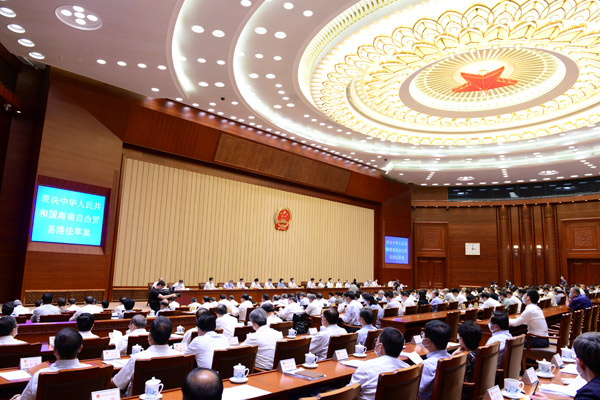
The closing ceremony of the 29th session of the 13th NPC Standing Committee on June 10. Image credit: NPC.gov
China’s National People’s Congress is considering a new Legal Aid Law. Among its many provisions, Article 24 of the new law would extend access to legal aid to condemned defendants during final death penalty case review at the Supreme People’s Court.
China’s legal system already provides legal aid to defendants in the trial phase of death penalty proceedings. However, legal aid does not currently cover the crucial final death penalty review stage of China’s capital punishment process: death penalty review at the Supreme People’s Court. Capital defense lawyers have dubbed the lack of legal aid in death penalty review the “last mile problem” of Chinese capital defense. The new law would finally address this last mile, bringing death penalty review under the scope of legal aid and guaranteeing universal representation during all stages of capital proceedings.
The law would also improve the quality of death penalty counsel at both trial and review. The draft law mandates that legal aid lawyers representing clients in cases carrying a possible sentence of death or an indeterminate life sentence have at least three years of legal practice experience.
The Development of the Legal Aid Law
If enacted, the new Legal Aid Law will be China’s first comprehensive legislation on legal aid. Up until now, China’s legal aid has been governed by State Council Regulations. Implementation of the regulations takes place at a local level, and the quality of legal assistance has been uneven. Critics charge that low funding, low status, and lack of oversight lead to substandard representation in many legal aid cases. The new law earmarks funds and sets new standards in an attempt to address these problems.
In recent years China’s leaders have signaled their intention to overhaul state legal aid as part of the Xi administration’s comprehensive effort to increase “governance through law.” In 2015 the CCP issued “Opinions on Improving the Legal Aid System,” a policy statement setting an agenda for improvements across the legal aid system. The document placed special emphasis on capital cases, including a call for legal aid in death penalty review cases. The 2015 opinion also called for an expansion in criminal representation generally, including the use of duty lawyers—criminal attorneys who can provide basic on-site legal advice at detention centers and courts. In 2018 the Supreme People’s Court and the Ministry of Justice issued “Measures on Launching the Pilot Program for Full Coverage of Lawyers’ Defense in Criminal Cases.” That measure did not specifically provide for death penalty review representation, but it has improved standards and increased access to defense lawyers in all criminal cases.
The new Legal Aid Law is currently under review at the National People’s Congress. The first draft of the new Legal Aid Law was released in January. A second draft was introduced for public comment in June. The second draft notably improves upon the first by including an additional provision specifying that appointed legal aid counsel must have at least three years of experience in all death penalty review proceedings and trial cases carrying the possibility of an indeterminate life sentence or death sentence.
Legal Aid and Death Penalty Review
Death penalty review is the final stage of legal proceedings in China’s capital punishment system. A capital defendant in China initially undergoes a trial of the first instance, typically at an intermediate court. If found guilty, the defendant faces a trial of the second instance, typically at a provincial high court. Following a capital sentence in a second instance trial, the condemned defendant’s case will undergo a final death penalty review. In 2007 the Supreme People’s Court retook the authority to perform death penalty review from provincial courts as part of its sweeping efforts at death penalty reform. Since that time, all death penalty review proceedings have been handled by the Supreme People’s Court in Beijing.
The Supreme People’s Court has not previously recognized a universal right to legal aid in its death penalty review proceedings. China’s Criminal Procedure Law (Art. 35) requires the provision of a legal aid lawyer in cases in which defendant faces an indeterminate life sentence or death sentence. This provision should logically extend to death penalty review. However, the Supreme People’s Court has declined to apply this provision in death penalty review.
The conference on providing legal aid for death penalty review. Image credit: Southern Metropolitan
Currently condemned defendants may choose to hire counsel for the proceedings; however, if they do not do so, the state will not provide a lawyer for them. While official death penalty review data is a state secret in China, the availableevidence indicates that under the current system—in which legal representation at the review is not mandatory and a defendant must hire an attorney privately—most condemned defendants do not retain a lawyer for the proceedings.
Experts Debate the Draft Law
On March 27 a group of 20 scholars and lawyers in China came together to discuss the implications of the death penalty review representation provision contained in the new Legal Aid Law. The conference was hosted by China University of Political Science and Law and Shangquan Law firm, a leading criminal defense firm in Beijing. Conference participants noted both the promise of the new legal aid law and the deficiencies that still exist in death penalty in China.
Defense lawyers pointed out that while universal legal representation in death penalty review is an important legal development, obstacles to lawyer engagement with death penalty review proceedings hinder the substantive impact of the new law. For example, although death penalty review judges are legally mandated to meet with defense counsel, attorneys report difficulty in arranging these meetings. Lawyers also report difficulty accessing casefiles, and often end up taking pictures of documents on their phones because they cannot get copies.
Scholars at the conference expressed concern that the expansion of legal aid to death penalty review might carry unexpected consequences for the legal market: legal aid lawyers assigned to death penalty review cases may lack experience and qualifications for this technical work, and the provision of these lawyers may also crowd out competent private lawyers who currently focus on death penalty practice. It is therefore important that the legal aid system provide sufficient compensation for this representation and also establish qualifications for death penalty review representation. The second draft of the Legal Aid Law, which was released subsequent to the conference, goes some way to addressing this concern by providing that legal aid counsel in both capital trial and death penalty review cases must have more than three years of related practice experience. Standing committee representatives also included a suggestion to include legal aid costs in the government budget, beginning at the county level. However, it is unclear whether death penalty review at the SPC would be covered by such a measure at the national level.
Since the Supreme People’s Court retook the power of death penalty review in 2007, the Shangquan law firm in Beijing has been conducting empirical work on death penalty review representation. This work has included pro bono death penalty review representation in the past. At the conference, Shangquan law firm director Mao Lixin formally announced a new pro bono program that will provide pro bono representation for indigent condemned defendants facing death penalty review. The program was intended to run through March 2021, or until the new Legal Aid Law goes into effect.
Australian citizen Yang Hengjun (杨恒均), also reported as Yang Jun (杨军) in Chinese official media, was tried on May 27 for the crime of espionage, two years after his detention began.
The trial, which took place at Beijing Number Two Intermediate People’s Court, was closed, and the Australian ambassador was turned away. In his brief statement to press waiting outside the court, Ambassador Fletcher said that he was told that he could not attend the trial due to COVID-19 restrictions and because the case involves state secrets.
Yang’s detention caught many by surprise. He is seen by many, in and out of China, as a moderate reformer who advocates for making small changes to improve governance and benefit regular people. Soft spoken and with a mild online presence, Yang’s unique career background attracted much attention when he emerged as an advocate for democracy in China. Yang was a former China state security officer and diplomat. After leaving China, he studied in the United States and Australia, becoming a citizen of the latter. He wrote semi-autobiographical spy fiction.
Despite writing about serious subjects, Yang did not seem to take himself too seriously, often presenting himself as merely “a street vendor of democracy” on social media. He has been critical of so-called exposés on mainland politicians published in Hong Kong, dismissing such accounts as sensational political gossip. Yang is said to be well-connected with friends across several spheres of Chinese society.
Yang was first believed to have been placed under residential surveillance in a designated location (RSDL) in January 2019. It was not until a press briefing in late August when the Ministry of Foreign Affairs first admitted that Yang had been formerly arrested for activities that endangered state security. His indictment for espionage came more than a year later, in October 2020. Through family and his lawyer, Yang denied the accusations and claimed he was tortured while under RSDL.
In a political dilemma similar to that of the “Two Michaels” from Canada, Australia has also been engaged in diplomatic confrontations with China over many issues in recent years, ranging from trade disputes to the pandemic. Both have accused the other of spying.
The sentence was not immediately announced after the trial. Courts in China have a very high conviction rate, and Yang is expected to be found guilty. The crime for espionage could carry a fixed term of more than 10 years’ imprisonment or even life in serious circumstances. Many observers worry that Yang faces a harsh outcome.
Yang’s wife Yuan Ruijuan has been under an exit ban since Yang was taken into custody despite having no charges filed against her. Exit bans are increasingly being used as an intimidation tactic against dissidents and their families.
Tibetan activist received a sentence reduction
Tsultrim Gyatso (aka Tseltem Gyatso, 次成加措 or 次成高恰) received a six-month sentence reduction in April 2021.
Tsultrim, a monk who asked for the return of Dalai Lama, was convicted of splittism in 2009 and sentenced to life by the Gannan Tibetan Minority Autonomous Prefecture Intermediate Court. The 2020 sentence reduction marks the first act of clemency granted to him since his sentence was commuted to 19 years with seven years of deprivation of political rights in 2014.
In the decision released by the Gansu Tianshui Intermediate Court, the court accepted the petition from the Tianshui Prison and determined that Tsultrim had demonstrated remorse and repented his crime since his last commutation. Tsultrim received several commendations for good behavior.
Even though it seems that Tsultrim complied with authorities and adequately demonstrated that he had reformed, he was only granted a short reduction. This is likely due to the restrictions on clemency enacted by the 2012 SPC regulations on organized crime, endangering state security, and serious corruption.
A sentence reduction is a rare instance of clemency for a person convicted of a crime of endangering state security. It is particularly rare for such a reduction to be granted to an ethnic minority convicted of splittism or inciting splittism.
Weibo influencer sentenced to prison for defaming heroes and martyrs
Chou Ziming (仇子明), an influencer on Weibo, was sentenced to eight months in prison on May 31 by the Nanjing Jianye District Court. Chou was convicted of defaming the reputations of heroes and martyrs, a new crime recently added to the Criminal Law 11th Amendment.
On February 19, the People’s Liberation Army Daily disclosed information about a border confrontation between China and India that occurred in December 2020 in which four Chinese soldiers died and a regiment officer was seriously injured. The incident quickly ignited strong sentiments in China as netizens praised the heroism of Chinese soldiers and attacked India on social media. Many comments featured blatantly racist content.
Chou, however, expressed skepticism about the accuracy of the reports in his Weibo posts on February 20. Specifically, he casted doubts on the number of casualties. Given his substantial following, his posts soon attracted attention from several propaganda outlets, such as the Youth League.
A screenshot of the Youth League’s Weibo account. In this message, the league expressed regret that it couldn’t use more offensive language when discussing Chou’s posts due to the account’s official status. Image credit: Weibo
The Nanjing Public Security Department swiftly moved in and announced Chou had been detained on February 20 for posting expressions that violated the law. On March 1, the same day as the new amendment became effective, the Nanjing Jianye District procuratorate formerly arrested Chou for the crime of defaming the reputations of heroes and martyrs.
Chou is no stranger to controversy. In 2010, while a reporter at The Economic Observer, Chou gained fame after exposing inside trading of several interconnected public companies. Zhejiang Lishui police briefly put him on a wanted list but quickly withdrew the designation after media pressure. Since becoming an independent influencer in 2015, he has used his Weibo account to recommend stocks and soccer lotteries to his followers.
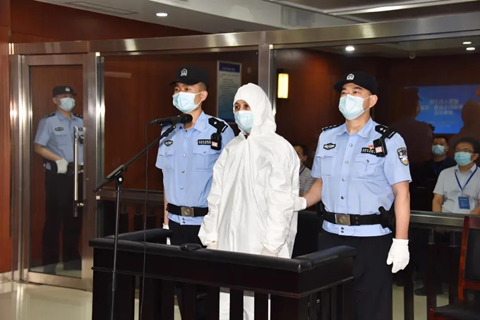
Chou during his trial and sentencing on May 31, 2021. Image credit: Subao
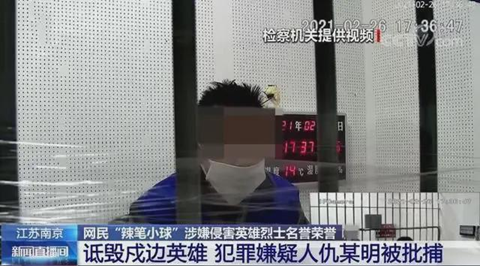
Chou’s case elicited the ire of mainstream Chinese media, with official state outlets seemingly using the case as a warning sign against further contradictions of official party narratives. Xinwen Lianbo, the most watched evening news program in China, aired a segment on Chou immediately on March 1, including footage of his confession at the detention center recorded on February 26. The show blasted Chou as a savvy internet opinion manipulator who would do anything to attract views to his posts.
The CCTV news broadcast screen as Chou makes his televised confession. Image credit: 163.com
Although Chou’s supposed criminal activities took place before the law went into effect, he nonetheless might become the first person to be convicted of this crime.
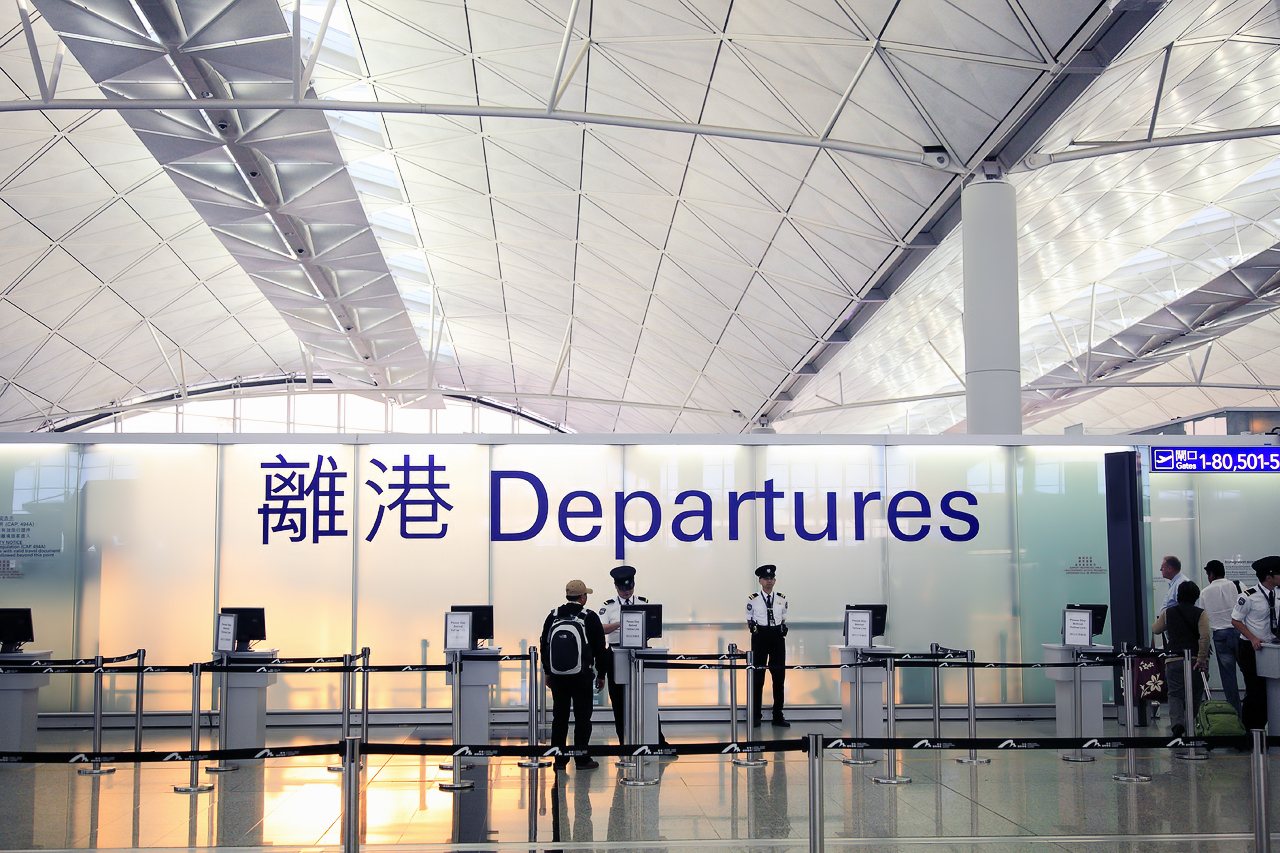
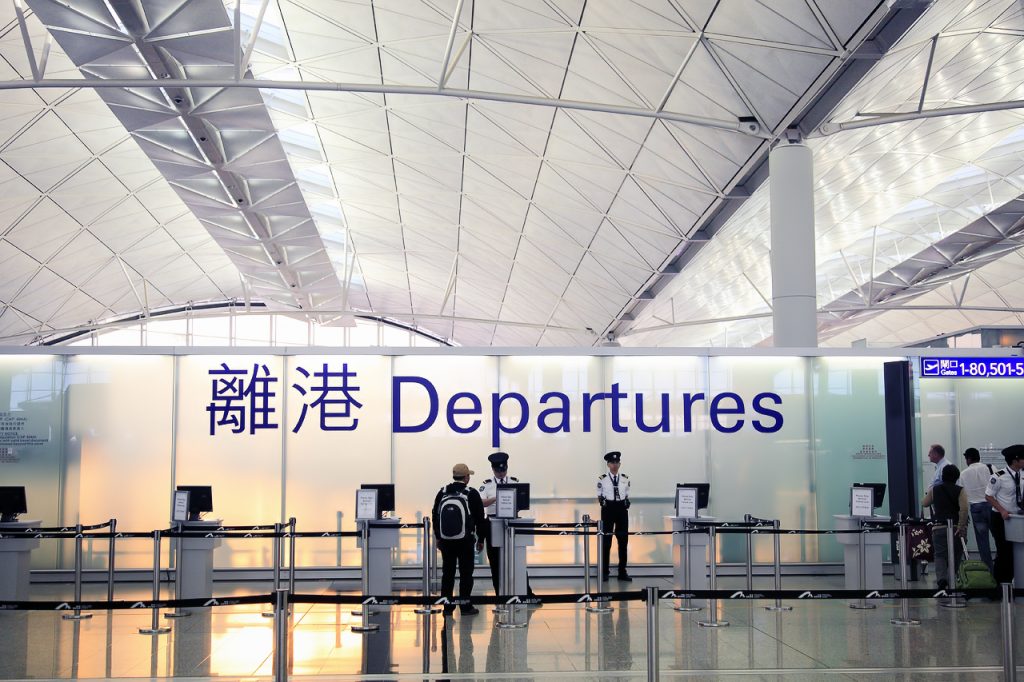
A photograph of Check Lap Kok Airport in Hong Kong, taken on November 20, 2010. Image credit: Elmar Bajora / CC BY-NC-ND 2.0
Before starting my human rights work in China, I prided myself on being a pioneering businessman. In 1979, I placed the first advertisement for Western products in China since the Cultural Revolution. In the same year, I opened two of the first offices in Chinese cities – Guangzhou and Shanghai – outside Beijing, before regulations on foreign offices were enacted. I made some of the first direct sales to Chinese county foreign trade corporations. These were sales of vaccines for pigeons raised in Zhongshan County, Guangdong, in the early 1980s.
I negotiated the first 50:50 joint venture between a Chinese chemical plant and a Western chemical company. The Chinese partner was the Qingdao Chemical Plant and the Western company was Occidental Chemical Company, which I served as vice president of the Asia Pacific region from 1986 to 1991. The product we joint ventured to produce was sodium silicate, a simple, low-risk inorganic chemical with wide applications in the detergent and glass industries.
Mixing Business and Human Rights
The negotiations began in 1988. I made a number of trips to Qingdao, a seaside city known, among other things, as a base for American navy vessels before 1949. (President Carter served there in the years immediately after the Second World War. There was a large Eurasian population in Qingdao as a result of American sailors being stationed there.)
I took the train from Hong Kong to Guangzhou where I boarded a flight to Qingdao on October 14, 1991. I stayed in the Qingdao Flower Stone House, a Gothic-style structure built in 1936 for a wealthy merchant family. Our joint venture negotiating sessions took place at the sodium silicate factory. Between sessions I and my team were hosted to lunch by the Qingdao Economic and Trade Department and to dinner by Qingdao’s mayor.
A photo of the Qingdao Flower Stone House from November 8, 2011. Image credit: Gisling / CC BY-SA 3.0 via Wikimedia Commons
On October 18, I was invited to give a speech at Qingdao University, where I had been made an honorary professor in April 1990. I spoke on US-China Relations to the university faculty, toured the campus, and was invited to lunch by the university president. At lunch I raised the names of Qingdao students who had been imprisoned for their actions in the May-June 1989 protests. (Shandong courts were known for passing some of the harshest sentences on students and workers.)
I flew to Beijing that evening and settled into the Jianguo Hotel. This was my third visit to Beijing in 1991.
Over the next three days I met with the Ministry of Justice to arrange a visit to Guangdong Meixian Prison; we discussed the fates of several prisoners including Wang Xizhe and Liu Shanshing. After this meeting I met with the head of the Foreign Affairs Department of the Supreme People’s Court to discuss the Lo Haixing and Han Dongfang cases, the situations of imprisoned Catholic clergy, and the abolition of counterrevolutionary crimes.
I then met with the Ministry of Foreign Economic Relations and Trade to discuss prison labor exports by Chinese factories, illegal in the United States. I had broached the topic of prison exports with the Ministry of Justice earlier in the day and been told that the ministry would take action against a Chinese factory that had been caught shipping products to the United States.
I also had a working dinner with the Ministry of Foreign Affairs (MFA) and the State Council.
The Issue of Exit Bans
At my meetings with the Supreme People’s Court, the State Council, and the Ministry of Foreign Affairs, I raised the issue of exit bans placed on relatives of dissidents who had fled China after the events of May and June 1989. I pressed my Chinese counterparts to let them join their family members who were living in exile in the United States.
At the dinner with the MFA and State Council on October 17, 1991, I was advised that several family members had, over the previous month, been allowed to leave China for the United States. I was told I would be given a full accounting the next day. The accounting would be given to me in a fax sent by the Supreme People’s Court to my hotel room.
On October 18, I debriefed the American Embassy and spoke to the American Chamber of Commerce. (It was a cool reception.) Upon my return to the Jianguo, I collected the fax from the Supreme People’s Court in the business center. The fax advised that family members of five leading dissidents had been allowed to leave China in recent weeks. The five dissidents were:
Chen Kuide (陈奎德), director of the Institute of Culture at the Eastern University of Chemistry;
Ma Bo (马波), an investigative journalist who wrote under the pen name Lao Gui (老鬼 “Old Ghost”). He had authored Blood Red Sunset, an early example of Cultural Revolution “scar literature;”
Ruan Ming (阮銘), a researcher at the Central Party School;
Su Xiaokang (苏晓康), an influential intellectual and scholar who was named as one of China’s seven most-wanted intellectuals involved in the 1989 protests. Su wrote the script for River Elegy, a controversial, six-episode television program that criticized Chinese culture; and
Yuan Zhiming (远志明), a student protest leader who worked with Su Xiaokang on River Elegy.
Both Su and Yuan were wanted by police when they fled China. I was told by American diplomats that the public security authorities wanted to force exiled dissidents to return to China in a naked display of hostage politics.
The families eventually reunited. The exiles had relocated to the East Coast of the United States. Chen Kuide and Su Xiaokang set up shop in Princeton New Jersey where they became core members of the Princeton China initiative. (At one point, more than 20 Chinese exiles had joined the initiative in Princeton.) Ma Bo became a writer in residence at Brown University. Yuan Ziming also settled in Princeton before becoming a Christian pastor. He stepped down from his ministry in 2015 after being accused of sexual misconduct, an accusation he denied. Ruan Ming was at Columbia University where he continued his research and writing on Chinese leadership politics.
After I received the fax I gave interviews to Jeff Parker of the UPI, Chris Yeung of the South China Morning Post, Cathy Wilhelm of the Associated Press, James Miles of the BBC, and David Holly of the Los Angeles Times. I continued my work with journalists the following day, giving radio interviews to Hong Kong media and filming a segment for ABC News at Ryh Tan, a park in central Beijing. After wrapping up the segment, I left for the airport, where I boarded a flight back to Hong Kong.
The Right to Travel
Article 13 of the Universal Declaration of Human Rights states that “Everyone has the right to leave any country, including his own, and return to his country.” Nevertheless, many countries, including the United States and China, restrict this right for a number of reasons. In the United States, a ban on leaving the country is imposed by a judge in an open hearing and is accomplished by forcing the defendant in a criminal or civil trial to surrender his or her passport.
In China, there is a long history of exit bans placed on both Chinese citizens and foreigners. One of the most famous examples of exit bans were those placed on British bankers who managed the Hong Kong Shanghai Bank and Chartered Bank in Shanghai. The exit bans, which were in place for decades, were accompanied by other restrictions, especially during the Cultural Revolution years, and were supposedly imposed to ensure that the head offices of the banks in London didn’t confiscate the holdings of Chinese banks—an early example of hostage politics. As soon as the bankers’ replacements arrived, the exit bans were lifted.
The HSBC building in Shanghai, which was the headquarters of the Shanghai branch of The Hongkong and Shanghai Banking Corporation from 1923 to 1955. Image credit: Livelikerw / CC BY-SA 3.0US citizens Victor and Cynthia Liu, who have been unable to leave China since June 2018. Image credit: club6parkbbs.com
In another case, that of a Chinese American woman whose father is a Chinese citizen suspected of endangering state security, the exit ban was only lifted after she signed a document pledging not to reveal details of her ordeal. In yet another case, an American of Chinese descent was forced to sell all his assets and hand the proceeds over to the Chinese government before he was allowed to leave the country, poorer but wiser.
While most exit bans are imposed against foreigners of Chinese descent, there are examples of foreigners who are not of Chinese descent living under exit bans in China. Irish businessman Richard O’Halloran has been forbidden to leave China for more than two years over a business dispute involving his employer, even though he was not employed by the firm when the dispute took place. He was advised by the police that if he pays more than $50 million, he can leave. The Irish president raised his plight with Chinese president Xi Jinping, to no avail.
The application of exit bans against American citizens has become a major irritant in US-China relations. The subject is raised as a priority issue in high-level discussions between officials of the two governments, including the March 2021 meeting in Anchorage between senior officials of the Department of State and the National Security Council and their Chinese counterparts.
In December 2020, the Department of State issued a Level Three Travel Advisory – “Reconsider Travel” – for American citizens considering visiting China in large part because of the danger of being subjected to an exit ban. The advisory states that “the PRC government uses exit bans to:
Compel individuals to participate in PRC government investigations,
Pressure family members to return to the PRC from abroad,
Influence PRC authorities to resolve civil disputes in favor of PRC citizens, and
Gain bargaining leverage over foreign governments.”
Under regulations that take effect on August 1, 2021, Hong Kong’s immigration authorities have the power to bar people from entering and leaving the territory, another sign that the legal systems of both the mainland and Hong Kong are moving closer together.
In an interview with the US network CNBC on January 28, airing one week after President Biden’s inauguration, Hong Kong Chief Executive Carrie Lam expressed optimism that the new administration would give Hong Kong a “fair hearing” on the National Security Law imposed on the territory at the end of June 2020.
Her optimism proved to be misplaced. Not only has the Biden administration not changed the position of the Trump administration on Hong Kong, it has doubled down on sanctions and other actions targeting the Special Administrative Region.
At the same time that Biden assumed office, the 117th Congress convened. In the subsequent four months, lawmakers in both the House of Representatives and Senate introduced legislation targeting Hong Kong. In the previous Congress, a staggering 550 bills or resolutions with China and/or Hong Kong content were debated. Several became law in the previous Congress after President Trump signed them. They included the Hong Kong Human Rights and Democracy Act of 2019.
By the end of May 2021, more than 170 bills or resolutions with China content had already been introduced in the 117th Congress. It is likely that the number of China-related legislation introduced in this Congress will exceed the number debated in the last Congress.
Fireworks in Anchorage
The first sign that the Biden administration would not change the Trump administration’s Hong Kong policy took place on the eve of the meeting of the two countries’ diplomats that took place in Anchorage, Alaska, on March 18 and 19, 2020. On March 17, the United States Department of State announced that it was sanctioning 24 officials (both mainland and Hong Kong-based) for eroding Hong Kong’s freedoms. Announcing the sanctions on the eve of the talks was viewed by Chinese officials as an insult meant to derail them. They were furious.
The talks themselves were contentious. The US team of Secretary of State Blinken and National Security Advisor Sullivan issued a long list of alleged human rights grievances, central of which was the treatment of Hong Kong. The Chinese team of State Counselor Yang Jiechi and Minister of Foreign Affairs Wang Yi rejected the US remarks on Hong Kong, asserting that they represented interference in China’s internal affairs.
For a complete list of individuals in mainland China, Hong Kong, and Macau sanctioned for committing human rights offenses, see the accompanying table. Of the 42 individuals sanctioned to date, 36 have been sanctioned for abusing human rights in Hong Kong. The remainder have been sanctioned for abusing rights in Xinjiang and for violating religious freedoms.
The next indication that there would be no change in policy took place on March 31, with the release of the report required under the Hong Kong Policy Act. The report confirmed the Trump State Department position that Hong Kong doesn’t deserve special privileges in the United States.
On May 11, 2021, the Department of State reissued the Level 3 Travel Advisory for Hong Kong, warning Americans to use increased caution when visiting Hong Kong. Some in Washington want this advisory to rise to Level 4 – “Don’t Travel,” but thus far the Department of State has declined to do so. This is largely a gratuitous gesture as travel from the United States and Hong Kong has slowed to a trickle. Few Americans are willing to quarantine for three weeks upon arrival in Hong Kong.
On June 9, 2021, the Department of State lowered the travel advisories for dozens of countries but those for mainland China and Hong Kong stayed in place, as did the rationale: the risk to Americans of arbitrary detention.
Senate and House Bills to be Merged
Most but not all the China bills introduced in the 117th Congress have been folded into the Senate’s Innovation and Competition Act (ICA) or its House companion piece, the Ensuring American Global Leadership and Engagement Act (EAGLE) introduced by Chairman Meeks of the House Foreign Affairs Committee. Since the Senate and House bills will have different content, a conference will be held to merge the two versions (along with even more amendments). The final bill to come out of the conference will doubtless be considerably more than 2,000 pages in length. President Biden has already stated his intention to sign the conference bill when it lands on his desk.
The Senate vote on June 8, 2021. Image credit: C-Span
Among the provisions of the ICA that rankle Beijing and the Hong Kong SAR the most are those which establish a $10 million fund to promote democracy in Hong Kong and a “Safe Harbor” provision to grant Hong Kongers who participated in the 2019-2020 protests refugee status in the United States. Others include provisions to develop and deploy internet freedom and Great Firewall circumvention tools for the people of Hong Kong, prohibition on sales of munitions and arms to the Hong Kong police, and reports on how the Chinese government uses Hong Kong to circumvent US laws and the applicability and effectiveness of sanctions imposed on Chinese and SAR officials who allegedly abuse Hong Kong human rights.
The 2,400-page ICA passed the Senate in a lop-sided vote on June 8, 2021. A number of China-related bills, including EAGLE, will be debated and voted on in House committees in June and July.
As debates over China roiled Washington, the American Chamber of Commerce in Hong Kong issued a survey that revealed that 42 percent of expatriates in the former colony were considering leaving the city. An oft-cited reason was the introduction of the National Security Law. It appears that many foreign businesspeople are voting with their feet.
EXCHANGES
Exchanges is a feature that explores Dui Hua’s expert exchanges and dialogues.
“These girls have suffered…before they committed a crime”
There are many factors that lead girls to enter the justice system. During the International Symposium on Girls in Conflict with the Law (GICL), several contexts recurred across the 12 webinars. Understanding these factors is key to combating recidivism and what one panelist referred to as the “sex abuse to prison pipeline.”
Participants of the GICL overwhelmingly recognized that most girls who come into conflict with the law do so after experiencing some form of trauma or family turbulence. Gena Castro-Rodriguez, Chief of the Victim Services Division at the San Francisco District Attorney’s Office, noted that girls are twice as likely as boys to report significant histories of trauma and multiple experiences of trauma in childhood. Superior Court Judge Susan Breall said, “Most girls who are arrested are arrested for non-violent, non-serious crimes, but they have been victimized in very serious and violent ways before they ever come into the juvenile justice system or the dependency system.” Breall added that, “Studies show that the familial turbulence experienced by a young girl in the home has a greater effect on her than boys…and a greater effect on her when she comes into the juvenile justice system.”
A slide from Victim Services Division Chief Gena Castro-Rodriguez’s presentation on November 18, 2020 showing the developmental affects that can result from childhood trauma or instability. Image credit: Gena Castro-Rodriguez
These factors can lead to offending and recidivism, but they also contribute to developmental issues. Social worker Michelle De Young spoke of her experience saying that “most of my girls don’t know how to process emotions or even know what they are… When we ask, they will talk and say, “I’m irritated or angry.” Those will be the only emotions they know and the easiest to feel. That’s how they have survived.” Professor Elizabeth Cauffman, who has researched how girls desist from crime, found that incarceration compounds the harm resulting from abuse and unsafe environments: “Our research has shown that incarceration settings, particularly secured confinement, actually arrest development and don’t promote it.”
Many of the presenters identified a strong connection between sexual abuse and offending. Kasie Lee, Assistant District Attorney for San Francisco’s Juvenile Unit said, “In my work here at the District Attorney’s Office, as I encounter the girls that come into our system, I have seen that almost all, the large majority, if not all, are part of the [commercial sexual exploitation of children, CSEC] population or CSEC victims or at-risk.” Photographer Richard Ross recounted a similar experience during his art-as-advocacy work: “I went to Maryville Residential Program, I asked the director, ‘What percentage of the girls here have been sexually abused when they come here? What percentage?’ he replied ‘Everyone. All 88 of the girls in our custody have been sexually abused.’”
Offending girls have often had experience in the child welfare system. Assistant District Attorney Lee underlined this trauma by pointing to the high number of “cross-over girls”—those living as a dependent of the welfare system who then enter the criminal justice system— that she sees. Similarly, Judge Leonard Edwards referenced a study in Santa Clara County, California, that found that girls coming into the juvenile justice system had multiple instances of contact with the welfare system. “What that told us,” Edwards said, “was that these girls have suffered. They have had a very difficult life before they committed a crime.”
A slide from Assistant District Attorney Lee’s presentation on February 2, 2021, showing commonalities among cases of children who have been sexually exploited. Image credit: Kasie Lee
Girl crime is also highly relational. Castro-Rodriguez offered that “young women engage in criminal or risk-taking behavior for, with, or because of other people. Their motivation for criminal behavior is relational.” Eric Chui, citing his study of gang-related girls in Hong Kong, observed that weakened belief in legal systems and Triad affiliation are positively associated with theft among girls. Elizabeth Cauffman noted the effects of romantic relationships on girls’ decisions to persist with crime:
“One of the best predictors of that persistence [in crime] was that their romantic partner was engaged in antisocial behavior or was influencing them to be antisocial…If girls were dating a romantic partner who was deviant, they kept right on doing their own delinquent behavior.”
Finally, while trauma and abuse are important trends to help us understand girl offending, these are often framed in ways that ignore social factors that incentivize the abuse of girls. Both Michelle Burman and Susan Batchelor at the University of Glasgow said that the overemphasis on trauma, familiar turbulence, and adversity can obscure underlying causes of the trauma or abuse. This leads to environments in which, as Burman says, “gendered abuse and exploitation are reconstructed as the outcome of young women’s own risky choices, rather than structural inequalities and injustice.”
Journalist Nicholas Kristof, speaking about the sex trafficking of girls, identified one root cause of child exploitation accordingly:
“The pattern for teenagers is often quite similar, and it involves a boy or girl who is in a situation that is intolerable at home. Maybe it’s somebody abusing them, maybe somebody neglecting them. They run away and they go to the bus station. The only person looking out for kids like them at the bus station is a pimp, [who] gives them food and a place to stay. If it’s a girl, he tells her that he loves her and then he controls her. We should be able to compete with pimps in providing social services at bus stations.”
To learn more about the panelists, watch their individual webinars and read a full list of recommendations visit girlsjustice.org.
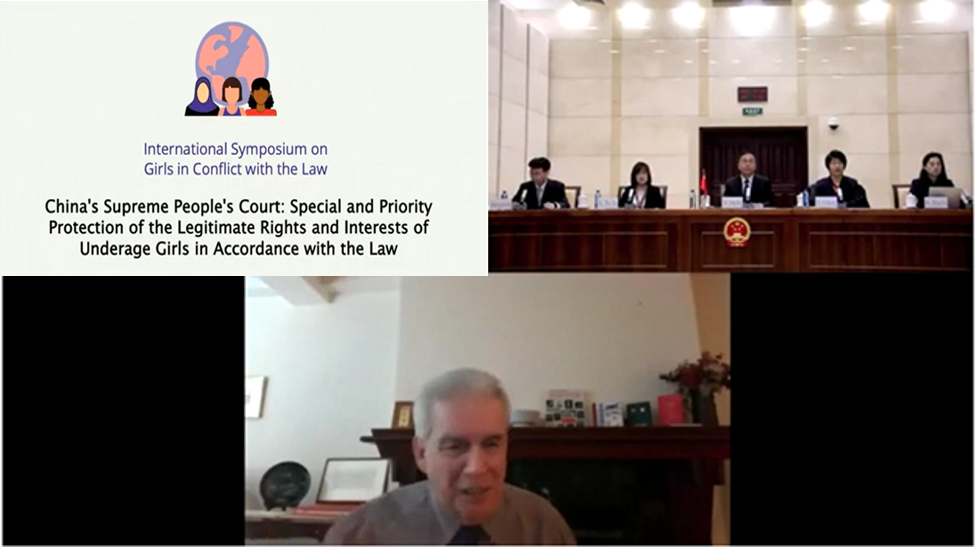
Executive Director John Kamm makes introductory remarks during the webinar on March 30. Composite image credit: The Dui Hua Foundation
The United States is increasingly mainstreaming gender-specific justice reform, and the need has been identified in China as well. In 2019, Dui Hua found that even as the number of girls convicted by courts decreased until the end of 2016, the number of girls convicted as a percentage of juvenile convictions had increased.
Remarks by both panelists, speaking through an interpreter, provide insight into the causal factors of female juvenile offences and new laws for juvenile offenders, particularly girls. These remarks, statistics discussed during the webinar, and Dui Hua’s research provide a more informed understanding of juvenile female crime rates in China and changing approaches to juvenile crime.
John Kamm Remembers is a feature that explores Kamm’s human rights advocacy prior to and since Dui Hua’s establishment in 1999.
Huis Clos
A photograph of Check Lap Kok Airport in Hong Kong, taken on November 20, 2010. Image credit: Elmar Bajora / CC BY-NC-ND 2.0
Before starting my human rights work in China, I prided myself on being a pioneering businessman. In 1979, I placed the first advertisement for Western products in China since the Cultural Revolution. In the same year, I opened two of the first offices in Chinese cities – Guangzhou and Shanghai – outside Beijing, before regulations on foreign offices were enacted. I made some of the first direct sales to Chinese county foreign trade corporations. These were sales of vaccines for pigeons raised in Zhongshan County, Guangdong, in the early 1980s.
I negotiated the first 50:50 joint venture between a Chinese chemical plant and a Western chemical company. The Chinese partner was the Qingdao Chemical Plant and the Western company was Occidental Chemical Company, which I served as vice president of the Asia Pacific region from 1986 to 1991. The product we joint ventured to produce was sodium silicate, a simple, low-risk inorganic chemical with wide applications in the detergent and glass industries.
Mixing Business and Human Rights
The negotiations began in 1988. I made a number of trips to Qingdao, a seaside city known, among other things, as a base for American navy vessels before 1949. (President Carter served there in the years immediately after the Second World War. There was a large Eurasian population in Qingdao as a result of American sailors being stationed there.)
I took the train from Hong Kong to Guangzhou where I boarded a flight to Qingdao on October 14, 1991. I stayed in the Qingdao Flower Stone House, a Gothic-style structure built in 1936 for a wealthy merchant family. Our joint venture negotiating sessions took place at the sodium silicate factory. Between sessions I and my team were hosted to lunch by the Qingdao Economic and Trade Department and to dinner by Qingdao’s mayor.
A photo of the Qingdao Flower Stone House from November 8, 2011. Image credit: Gisling / CC BY-SA 3.0 via Wikimedia Commons
On October 18, I was invited to give a speech at Qingdao University, where I had been made an honorary professor in April 1990. I spoke on US-China Relations to the university faculty, toured the campus, and was invited to lunch by the university president. At lunch I raised the names of Qingdao students who had been imprisoned for their actions in the May-June 1989 protests. (Shandong courts were known for passing some of the harshest sentences on students and workers.)
I flew to Beijing that evening and settled into the Jianguo Hotel. This was my third visit to Beijing in 1991.
Over the next three days I met with the Ministry of Justice to arrange a visit to Guangdong Meixian Prison; we discussed the fates of several prisoners including Wang Xizhe and Liu Shanshing. After this meeting I met with the head of the Foreign Affairs Department of the Supreme People’s Court to discuss the Lo Haixing and Han Dongfang cases, the situations of imprisoned Catholic clergy, and the abolition of counterrevolutionary crimes.
I then met with the Ministry of Foreign Economic Relations and Trade to discuss prison labor exports by Chinese factories, illegal in the United States. I had broached the topic of prison exports with the Ministry of Justice earlier in the day and been told that the ministry would take action against a Chinese factory that had been caught shipping products to the United States.
I also had a working dinner with the Ministry of Foreign Affairs (MFA) and the State Council.
The Issue of Exit Bans
At my meetings with the Supreme People’s Court, the State Council, and the Ministry of Foreign Affairs, I raised the issue of exit bans placed on relatives of dissidents who had fled China after the events of May and June 1989. I pressed my Chinese counterparts to let them join their family members who were living in exile in the United States.
At the dinner with the MFA and State Council on October 17, 1991, I was advised that several family members had, over the previous month, been allowed to leave China for the United States. I was told I would be given a full accounting the next day. The accounting would be given to me in a fax sent by the Supreme People’s Court to my hotel room.
On October 18, I debriefed the American Embassy and spoke to the American Chamber of Commerce. (It was a cool reception.) Upon my return to the Jianguo, I collected the fax from the Supreme People’s Court in the business center. The fax advised that family members of five leading dissidents had been allowed to leave China in recent weeks. The five dissidents were:
Chen Kuide (陈奎德), director of the Institute of Culture at the Eastern University of Chemistry;
Ma Bo (马波), an investigative journalist who wrote under the pen name Lao Gui (老鬼 “Old Ghost”). He had authored Blood Red Sunset, an early example of Cultural Revolution “scar literature;”
Ruan Ming (阮銘), a researcher at the Central Party School;
Su Xiaokang (苏晓康), an influential intellectual and scholar who was named as one of China’s seven most-wanted intellectuals involved in the 1989 protests. Su wrote the script for River Elegy, a controversial, six-episode television program that criticized Chinese culture; and
Yuan Zhiming (远志明), a student protest leader who worked with Su Xiaokang on River Elegy.
Both Su and Yuan were wanted by police when they fled China. I was told by American diplomats that the public security authorities wanted to force exiled dissidents to return to China in a naked display of hostage politics.
The families eventually reunited. The exiles had relocated to the East Coast of the United States. Chen Kuide and Su Xiaokang set up shop in Princeton New Jersey where they became core members of the Princeton China initiative. (At one point, more than 20 Chinese exiles had joined the initiative in Princeton.) Ma Bo became a writer in residence at Brown University. Yuan Ziming also settled in Princeton before becoming a Christian pastor. He stepped down from his ministry in 2015 after being accused of sexual misconduct, an accusation he denied. Ruan Ming was at Columbia University where he continued his research and writing on Chinese leadership politics.
After I received the fax I gave interviews to Jeff Parker of the UPI, Chris Yeung of the South China Morning Post, Cathy Wilhelm of the Associated Press, James Miles of the BBC, and David Holly of the Los Angeles Times. I continued my work with journalists the following day, giving radio interviews to Hong Kong media and filming a segment for ABC News at Ryh Tan, a park in central Beijing. After wrapping up the segment, I left for the airport, where I boarded a flight back to Hong Kong.
The Right to Travel
Article 13 of the Universal Declaration of Human Rights states that “Everyone has the right to leave any country, including his own, and return to his country.” Nevertheless, many countries, including the United States and China, restrict this right for a number of reasons. In the United States, a ban on leaving the country is imposed by a judge in an open hearing and is accomplished by forcing the defendant in a criminal or civil trial to surrender his or her passport.
In China, there is a long history of exit bans placed on both Chinese citizens and foreigners. One of the most famous examples of exit bans were those placed on British bankers who managed the Hong Kong Shanghai Bank and Chartered Bank in Shanghai. The exit bans, which were in place for decades, were accompanied by other restrictions, especially during the Cultural Revolution years, and were supposedly imposed to ensure that the head offices of the banks in London didn’t confiscate the holdings of Chinese banks—an early example of hostage politics. As soon as the bankers’ replacements arrived, the exit bans were lifted.
The HSBC building in Shanghai, which was the headquarters of the Shanghai branch of The Hongkong and Shanghai Banking Corporation from 1923 to 1955. Image credit: Livelikerw / CC BY-SA 3.0
Exit Bans Today
At least six laws and several regulations allow Chinese courts to impose exit bans. While there is a legal basis for imposing exit bans, the wording of applicable laws and regulations is vague, and their application is arbitrary and opaque. The most important law is the Exit and Entry Administration, the most recent version of which took effect in 2013. An individual can be barred from leaving China if he or she is involved in an ongoing civil or criminal case, or if his or her departure might impact national security. The law also provides for exit bans “in other circumstances in which exit from China is not allowed in accordance with laws or administrative regulations.” An aggrieved party in a divorce proceeding can ask a court to impose an exit ban. An angry official who thinks that an individual has insulted the official can apply for an exit ban.
Individuals can be banned from leaving China without their knowledge. They typically don’t attend the hearing at which the court imposes the ban. There is no right of appeal, nor is there any reliable way to learn how long the ban will be in place. Even if the ban is lifted by the court that originally imposed it, a different court can impose another ban. Individuals often don’t know they are living under an exit ban until they arrive at the airport and approach the immigration counter. That is when they first learn that they are forbidden from leaving the country. They are advised to return to their hotel and wait for instructions.
There are doubtless many people, Chinese citizens and foreigners alike, who don’t know that they are living under an exit ban. Based on my work on several cases, I believe that there are at least two dozen Americans living under exit bans in China today. Among the saddest cases are those of Cynthia and Victor Liu, siblings banned from leaving China as part of an effort by the police to force their father, who abandoned the family years ago and whose present location is unknown, to return to the country to face prosecution for corruption.
US citizens Victor and Cynthia Liu, who have been unable to leave China since June 2018. Image credit: club6parkbbs.com
In another case, that of a Chinese American woman whose father is a Chinese citizen suspected of endangering state security, the exit ban was only lifted after she signed a document pledging not to reveal details of her ordeal. In yet another case, an American of Chinese descent was forced to sell all his assets and hand the proceeds over to the Chinese government before he was allowed to leave the country, poorer but wiser.
While most exit bans are imposed against foreigners of Chinese descent, there are examples of foreigners who are not of Chinese descent living under exit bans in China. Irish businessman Richard O’Halloran has been forbidden to leave China for more than two years over a business dispute involving his employer, even though he was not employed by the firm when the dispute took place. He was advised by the police that if he pays more than $50 million, he can leave. The Irish president raised his plight with Chinese president Xi Jinping, to no avail.
The application of exit bans against American citizens has become a major irritant in US-China relations. The subject is raised as a priority issue in high-level discussions between officials of the two governments, including the March 2021 meeting in Anchorage between senior officials of the Department of State and the National Security Council and their Chinese counterparts.
In December 2020, the Department of State issued a Level Three Travel Advisory – “Reconsider Travel” – for American citizens considering visiting China in large part because of the danger of being subjected to an exit ban. The advisory states that “the PRC government uses exit bans to:
Compel individuals to participate in PRC government investigations,
Pressure family members to return to the PRC from abroad,
Influence PRC authorities to resolve civil disputes in favor of PRC citizens, and
Gain bargaining leverage over foreign governments.”
Under regulations that take effect on August 1, 2021, Hong Kong’s immigration authorities have the power to bar people from entering and leaving the territory, another sign that the legal systems of both the mainland and Hong Kong are moving closer together.
Executive Director John Kamm makes introductory remarks during the webinar on March 30. Composite image credit: The Dui Hua Foundation
The United States is increasingly mainstreaming gender-specific justice reform, and the need has been identified in China as well. In 2019, Dui Hua found that even as the number of girls convicted by courts decreased until the end of 2016, the number of girls convicted as a percentage of juvenile convictions had increased.
Remarks by both panelists, speaking through an interpreter, provide insight into the causal factors of female juvenile offences and new laws for juvenile offenders, particularly girls. These remarks, statistics discussed during the webinar, and Dui Hua’s research provide a more informed understanding of juvenile female crime rates in China and changing approaches to juvenile crime.
The Number of Offending Girls
Statistics from Dr. Jiang and Dui Hua research show that beginning in 2018, there was a sustained increase in the number of offending girls overall. Furthermore, the number of offending girls as a percentage of all offending juveniles has risen every year from 2013 to 2019 with a slight drop in 2020, yet percentagewise more than doubled over seven years earlier. Figures were unavailable for 2017 other than the total number of juveniles convicted.
Table 1: Total Convicted Juveniles by Gender and Percentage, All Chinese Courts
Overall indictments for juveniles decreased from 37,743 in 2016 to 33,223 in 2020, in part due to an increased emphasis on diversion. However, as seen in Table 1, the number of girl offenders convicted has increased to 7.32 percent, compared to 4.39 percent in 2016 according to Dui Hua’s research and the numbers provided by Dr. Jiang, compared with the period of 2013-2016.
Table 2: Number of Juveniles Indicted in China, Annually
Diversion: Reform Through Education
The combined efforts of the SPC and the Supreme People’s Procuratorate (SPP) work to create a “whole society approach” to the criminal process for juvenile offenders that is focused on rehabilitation and education first, and punishment second. Table 2 shows that in 2019, the SPP prosecuted a total of 43,234 minors suspected of committing crimes. Table 3 shows that conditional non-prosecution (known in the United States as “diversion”) was applied for 7,663 of the juveniles who committed “minor crimes” and showed repentance in 2019, a number that had already been increasing year-by-year but had a sharp uptick between 2016 to 2019.
The Chinese government has been overhauling legislation for juveniles as recently as 2020, when the newest version of the Law on Protection of Minors was passed. This law works in tandem with the revised Law of the People’s Republic of China on Prevention of Juvenile Delinquency to inform policy and approach. These revisions codify previous legal provisions into black letter legal provisions, basic principles of law that are undisputed and accepted by all judges.
Table 3: Percentage and Totals of Juveniles Diverted Annually in China
“Important Innovations” and Criminal Law
The increase in minors given conditional non-prosecution in 2019 points to the continued emphasis on rehabilitation and education as the first response to juvenile offenders. It also underlines the relevance of the recent changes to the Law on Protection of Minors and the revised Law of the People’s Republic of China on Prevention of Juvenile Delinquency.
Dr. Jiang discussed “important innovations” in the revised laws that aim to improve the treatment of juvenile offenders. These include refining the family guardianship system, improving governmental guardianship measures, establishing a mandatory reporting system, establishing an information inquiry system for criminals as well as clarifying the prevention and control of internet addiction, campus bullying, new offenses, and punishment measures for the behavior of failing to fulfill the legal obligations.
The newly revised law also states that if a minor below the age of criminal liability commits an act which is prohibited by law, then government agencies may conduct an evaluation and, with the approval of a special education steering committee, provide corrective education at a special school. At these special schools, offenders reportedly receive moral, legal, and psychological health education, along with appropriate vocational training.
In December 2020, China passed 11th Amendment to the Criminal Law lowering the age of criminal responsibility from 14 to 12 years old for some serious crimes. The law holds children aged 12 to 14 criminally liable for “intentional homicide or intentional injury that leads to death or causes others severe disabilities by extremely cruel means.” If a crime not mentioned in the new law is committed by a child under the age of 14, they will be exempt from criminal punishment but may be given correctional education as mentioned above. Remaining unchanged is the law that holds those between the ages of 14 to 16 criminally responsible in serious crimes such as cases of rape, robbery, and intentional homicide.
The approach to “juvenile justice with Chinese characteristics,” spoken of by both Dr. Jiang and Ms. Dai, prioritizes diversion from conviction and ongoing involvement by the court as part of the rehabilitation and education process. Under these reforms, judges are responsible for building and maintaining relationships with juvenile offenders and their families to understand the causal factors of their offence and provide guidance. Courts must first conduct a comprehensive analysis of the possibility of recidivism of minor offenders, including consideration of the offender’s family and home situation, then assess the best approach for rehabilitation with an emphasis on the primary caregiver or parents as role models. According to Dr. Jiang and Ms. Dai, the courts are also in the process of drafting two pieces of legislation titled the Family Education Law and the Child Welfare Law that would allow judicial agencies to play a larger role in ensuring the proper education and mentorship of children.
There is not much gender-specific data available to clarify what trends in diversion and education mean for girls specifically. Dr. Jiang noted that the overall age of female juvenile offenders has been getting younger. He cited the “low age” and “rebellious psychology during adolescence” of girl offenders as factors that lead them to “handle issues in a very simplified and immature way without the proper foresight and prediction of the consequence” due to their lack of legal knowledge. To address this, the government has taken efforts to help young people understand Chinese law. Such measures include events, campaigns, and educational materials for use in classrooms, judges serving as adjunct teachers on school campuses for primary and middle schools, and a moot court experience as well as online courses for older students.
Dr. Jiang makes remarks during the webinar. Image credit: The Dui Hua Foundation
Evidence also points to poor general education as a common causal factor for girl offenders, many with below a middle school education and a “non-existent or limited” understanding of the law according to Dr. Jiang. He also cited parents’ low education level as a causal factor for criminal behavior in both male and female minors. This lack of a basic education coupled with limited understanding of the law, can lead to the development of bad habits and criminal behavior. Both Dr. Jiang and Ms. Dai cited contexts and environmental factors as fundamental pathways to offending for girls, expressing the sentiment that “there are no problem children, only problem families.”
Neglect was noted as another strong contributing factor for female offenders in China. In today’s economy, many children are left home unsupervised as both parents are working. This can result in young girls being negatively influenced by older female peers or people they befriend on the internet. Judges review these types of causal factors when assessing how to handle crimes committed by female juvenile offenders and deciding which course of action will bring the offender back to a “normal law-abiding citizen and useful talent for society.”
Ms. Dai emphasized that the family is the most important domain for the growth and improvement of minors, saying that “people should build a family upbringing model full of love, freedom, and respect.” Reflecting this emphasis, Article 7 of the Minors Protection Law in China allows the state or government to take “necessary measures” to guide, support, and supervise the parents or guardians in doing their duty” to raise law abiding citizens.
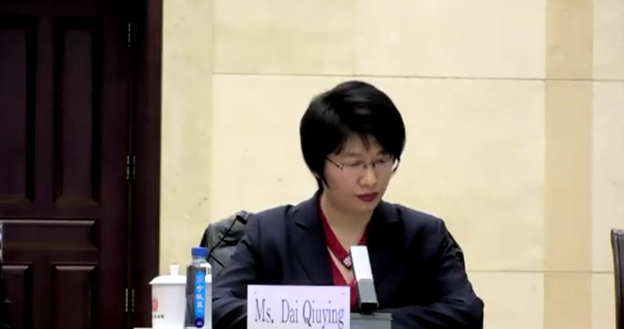
Ms. Dai makes remarks during the webinar.
Dr. Jiang suggested that the court is committed to continuing to improve gender-sensitive procedures for female juvenile offenders. These include increasing the use of female police officers, prosecutors, judges, and lawyers who are trained to handle girl’s cases and to protect the privacy of girl offenders. Taken together, these legislative and procedural changes suggest that juvenile justice policy reform, including gender-sensitive approaches, is increasingly seen as a priority.
A Gender-Sensitive Future
The comments by Dr. Jiang and Dai on changes to the SPC’s approach to juvenile justice law, including the inclusion of gender-sensitive processes, are promising. The International Symposium on Girls in Conflict with the Law produced a list of recommendations for the promotion of effective girls’ justice policy. Dr. Jiang and Ms. Dai’s remarks on community-based solutions, reducing detention, and applying non-custodial solutions/alternatives to detention are in line with these recommendations and Article 37b of the Convention on the Rights of the Child.
The focus on addressing root causes of juvenile offending, including socio-economic vulnerability and family instability, by funding and supporting social services is promising. At the time of this writing, China does not have, and never has, gender-specific criminal laws. Similarly, such measures as the implementation of gender-specific measures like specialized training and having female personnel interact with girls have yet to materialize in legislation or official policy.
The Symposium recommendations also stress the need to systematically collect disaggregated data in order to better understand the pathways leading children to detention globally. More transparency on figures for female juvenile offenders and diversion programs would contribute towards a collective understanding and better research. Were China to increase its engagement with the international community on girl’s justice, this could help promote best practices and effective policy at the international level.
Finally, the issue of long-standing research gaps rooted in discriminatory thinking emerged repeatedly during the Symposium in a variety of contexts. Like other countries including the United States and Canada, funding and supporting research on girl’s lives, including a special focus on Indigenous girls and ethnic minorities, would help governments effect better policy for justice-involved girls. China’s policy success and challenges around juvenile justice are a vital part of that understanding and would be an important contribution towards greater clarity on how to address juvenile justice for girls in the future.
I was quite surprised when the State Council Information Office (SCIO) and the Ministry of Justice (MOJ) agreed to the proposal I made at our January 1995 meeting to accept four lists of prisoners during the year, one each quarter. I had prepared and handed over a list of 25 prisoners, leaving three more lists of 25 names to be submitted in 1995.
This was four years before Dui Hua existed, and long before the foundation had set up its political prisoner database (PPDB). Since the early 2000s, I have relied on the PPDB to draft prisoner lists, but in the 1990s I had to rely on conversations with political activists, family members of political prisoners, and NGO publications to identify names for my lists.
Among the names I included on my lists was Zheng Yunsu, leader of a Jesus Family congregation in Shandong Province who was detained in May 1992 and subsequently sentenced in September 1992 to 12 years in prison for disturbing the social order and fraud. I found his name and accounts of his detention and sentencing in Detained in China and Tibet, published by Human Rights Watch in February 1994, and The Imprisonment and Harassment of Jesus Family Members in Shandong Province, published by Amnesty International in October 1994. I placed Zheng Yunsu’s name on my fourth quarter list, which I faxed to the Ministry of Justice in November 1995.
Subsequent to Zheng’s detention, Chinese police moved in and detained dozens of other Jesus Family members, including Zheng’s four sons, and demolished their church buildings in Duoyiguo Village in Shandong Province. The arrests and destruction of church properties were eerily reminiscent of the attack by Chinese police on Youtong Village in Hebei in April 1989. A Trappist priest, Pei Ronggui, was detained, Church property demolished, and two villagers killed in the attack. Pei was subsequently sentenced in 1991 to five years in prison for “disturbing the social order.” He was granted early release on March 31, 1993, following a brief campaign of spirited intervention with my interlocutors.
Instead of being put in prison for counterrevolution, both Pei Ronggui and Zheng Yunsu were imprisoned for disturbing the social order, a precursor of “using a cult to sabotage implementation of the law,” Article 300 of the Criminal Law amended in 1997.
The Jesus Family: A Brief History
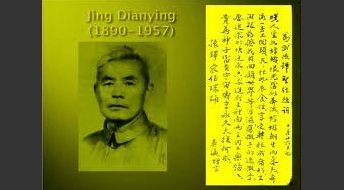
The Jesus Family is an indigenous Christian communitarian group that emerged in Shandong Province during the 1920s. Although it was influenced by Pentecostal missionaries, the Jesus Family is not a Pentecostal church. Founded by Jing Dianying, a charismatic Christian who was raised in a traditional Confucian family that practiced Buddhism and who later attended a Methodist high school, the Jesus Family expanded rapidly throughout China, surviving and even thriving during the Japanese occupation and the Chinese civil war that resulted in the defeat of Nationalist forces in 1949.
The Jesus Family emphasized simple living, poverty, communal sharing, piety, and prophesy. It emphasized prayers and singing of psalms. It reportedly rose to more than 125 congregations and 20,000 members in China by 1949. Although concentrated in Shandong, families existed in many other provinces.
After 1949, the Jesus Family leadership embraced the officially sanctioned Three-Self Movement, and for a while its activities were condoned, even praised by the Chinese government and communist party. However, the sect’s rapid growth and communitarianism came to be seen as a threat to the party, and in 1952 Jing was arrested and sentenced to prison where he developed cancer. Jesus Family properties were destroyed and the 500 members who lived in Mazhuang were dispersed throughout Shandong.
Jing died shortly after being granted medical parole in 1957. The Cultural Revolution (1966-1976) saw this unorthodox Christian group largely disappear. It was only after the reform and opening period began in 1979 that the church reemerged. It spread rapidly. In Ding’s home village, Mazhuang, the family reoccupied 43 acres of land, established a church, and grew crops. Eventually an eye hospital was established. It still serves the Mazhuang and surrounding communities and is deeply appreciated by both local residents and the party.
One of the biggest areas of growth took place in Duoyigao, a village near Weixian City in western Shandong. There and in surrounding villages, the family, under the leadership of Zheng Yunsu, counted around 3,000 congregants. Services, including baptisms, were attended by more than 1,000 believers. The congregation supported itself by raising rabbits, making shoes, and growing crops for its own consumption and to give away to those in need. Family activities alarmed local security forces, which subjected the group to surveillance, including using a helicopter to monitor gatherings. Members faced harassment and short detentions.
Attacks on Duoyigao Village, May-June 1992
On May 19, 1992, police disrupted a service led by Zheng Yunsu in Liuzhuang Village, a community with many Jesus Family congregants not far from Duoyigao Village. Zheng was spirited away from the service before police could take him into custody, but the next day, Zheng surrendered to police in Shandong’s provincial capital, Jinan. Not long afterwards, Zheng’s four sons were taken into custody. Zheng and his sons were paraded through Duoyigao Village and surrounding villages with placards hung around their necks identifying them as Jesus Family believers.
On June 18, 1992, 40 truckloads of police descended on Duoyigao Village. Several buildings were destroyed, and possessions – including bicycles, machinery for making shoes, furniture, bedding, clothing, livestock, and grains – were seized. On June 20, 1992, the police returned and detained more than 20 Jesus Family members. On July 10, 1992, another ten members were detained.
Excerpts from Amnesty International’s The Imprisonment and Harassment of Jesus Family Members in Shandong Province. Image credit: Amnesty International
On October 10, 1992, Zheng Yunsu was convicted of fraud and disrupting social order by the Weishan District Court. He was sentenced to 12 years in prison and placed in Shandong Number One Prison. His four sons were sentenced to three-year terms of re-education through labor. Most other Jesus Family detainees were released after they confessed their crimes and agreed to stop their religious activities. Those released, and other members of the Jesus Family, wrote a detailed account of what they had gone through. This was provided to Amnesty International in London which published an urgent appeal based on this information in August 1993. This appeal formed the basis of the information published by Human Rights Watch in 1994, which in turn led to my including Zheng Yunsu’s name on my November 1995 list submitted to the SCIO and the MOJ.
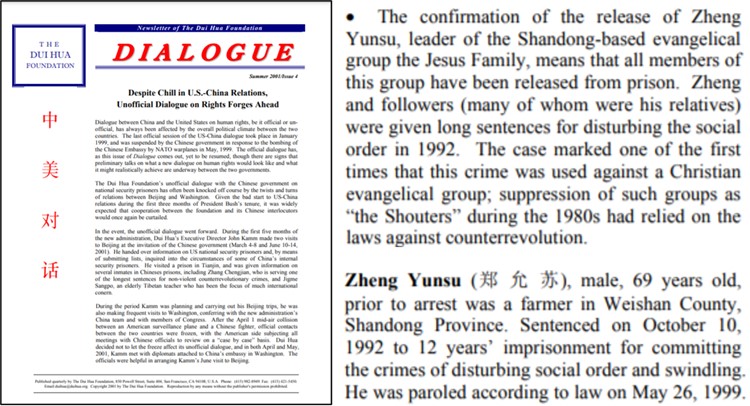
Nine months after I submitted the November 1995 list with Zheng Yunsu’s name on it, he was granted an 18-month sentence reduction. Further advocacy resulted in Zheng Yunsu being released on parole on May 26, 1999, seven years into his 12-year sentence.
Strategy to Free Zheng Yunsu
I adopted a multi-pronged strategy for advocating on Zheng Yunsu’s behalf. I placed him on my lists and raised his name in conversations with Chinese officials from the Ministry of Foreign Affairs, the SCIO, the MOJ, and the Religious Affairs Bureau. I also put his name on lists of countries having bilateral human rights dialogues with China, notably the United States. I encouraged members of Congress to reference Zheng in their letters Chinese leaders. Finally, I used the visits of senior American religious leaders to China to raise Zheng’s name.
Following the November 1995 list on which I put Zheng’s name, I placed Zheng’s name on a list of 24 prisoners submitted to the MOJ in October 1997, immediately prior to President Jiang Zemin’s state visit to the United States, and on a July 1998 list of religious prisoners eligible for parole (they had completed half of their sentences). I gave this list to the Department of State for use in its January 1999 bilateral human rights dialogue with China.
In addition to referring to the November 1995 list that included Zheng’s name in Congress members’ letters to the Chinese government urging a resumption of the Prisoner Information Project, several members either attached their own lists of religious prisoners on which Zheng’s name was included or raised Zheng in their conversations with Chinese officials in the United States or China.
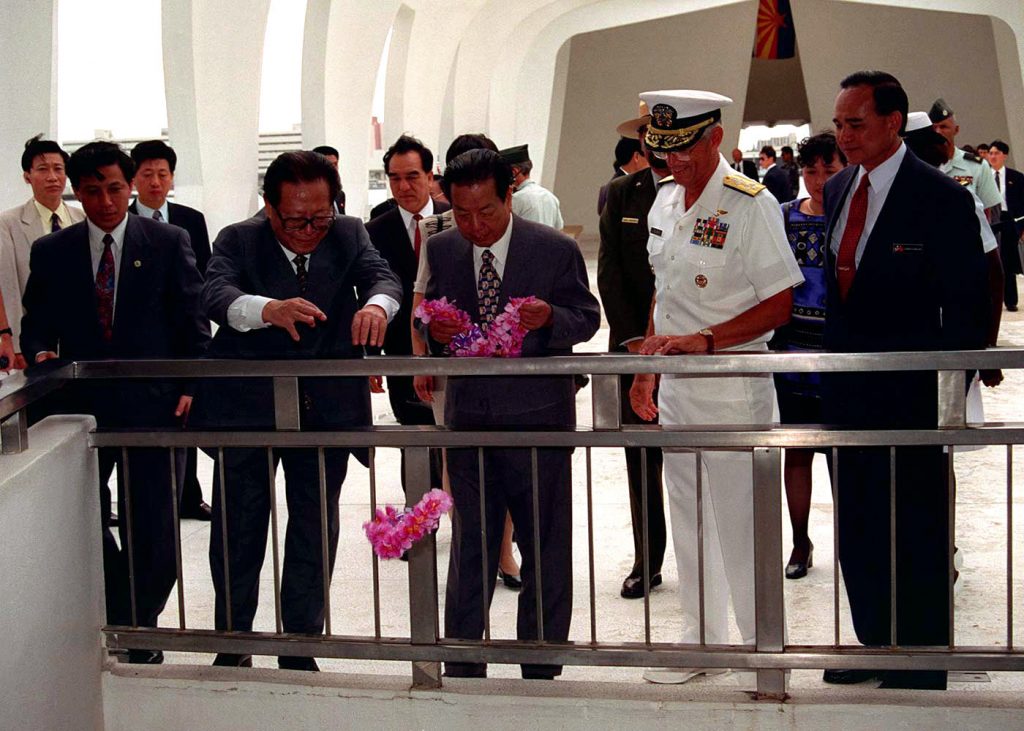
During the October 1997 state visit of Jiang Zemin to the United States, Jiang Zemin and President Clinton struck an agreement that a group of American religious leaders would be invited to visit China in early 1998.
The group, led by Rabbi Arthur Schneier, president of the Appeal of Conscience Foundation, and including the Roman Catholic Archbishop of Newark Theodore McCarrick and the president of the National Association of Evangelicals Reverend Don Argue, spent two weeks in China in February 1998. They met with President Jiang in the Great Hall of the People; Rabbi Schneier presented President Jiang with a gold-embossed Torah. They also met with Ye Xiaowen, director of the Religious Affairs Bureau. They provided Ye with a list of 30 religious prisoners drawn up in consultation with the United States government and human rights activists, including me. Ye promised to give answers.
In January 1999, Rabbi Yechiel Eckstein, one of America’s preeminent rabbis, traveled to China to lobby the Chinese government to release imprisoned Christian pastors. He forcefully took up the cause of Zheng Yunsu in discussions with Director Ye Xiaowen. Four months after the rabbi’s visit, Zheng Yunsu was paroled.
Coverage of Zheng Yunsu’s release in Dui Hua’s summer 2001 newsletter. Image credit: The Dui Hua Foundation
Aftermath
Little has been written about what happened to the Jesus Family after 1997. What has been written suggests that the Jesus Family has largely disappeared – disbanded, marginalized, affiliated with various house churches, or absorbed into the government-approved Three-Self Movement. In his book Pentecostals in China, published in September 2015, Robert Menzies maintains that the Jesus Family exists in non-communitarian form in various parts of China. “It’s quite small,” he writes.
An American religious scholar living in Hong Kong disagrees. This man, who visited the Mazhuang eye hospital in the early 1990s and has stayed in touch with the faith community in Shandong, states that the Jesus Family remains active in the public space. According to his account, as of the end of 2019, the Jesus Family enjoys good relations with the Three-Self Movement’s Shandong Christian Council. Zheng Yunsu, now in his late 80’s, was in good health and continuing his work. He was not in trouble with the Chinese government. He was well and at peace. His faith had set him free.
Kamm Addresses American and Global Audiences in Four Outreach Events
A slide from John Kamm’s presentation to the University Club. Image credit: The Dui Hua Foundation
Introducing Dui Hua’s mission of helping at-risk detainees to audiences around the world is a vitally important aspect of the foundation’s work. Hundreds of people attend virtual events at which Executive Director John Kamm describes what Dui Hua does, and how it does it. Kamm always entertains questions from the audience, and these questions, and the answers, open up new areas of understanding and suggest new approaches to advocacy. Outreach events often lead to members of the audience joining the Dui Hua family by becoming donors or sustainers.
In March and April 2021, Kamm addressed four audiences in different virtual events.
On March 24, 2021, Kamm addressed members of the Young President’s Organization (YPO). Founded in 1950, the YPO is a grouping of more than 30,000 members representing 142 countries. To accommodate the global audience spanning all continents (except Antarctica!), the event began at 7:30 AM PST. Kamm spoke of Dui Hua’s origins, its mission, its unique features, and the nature of the foundation’s relationship with the Chinese government. He outlined why businesspeople can make effective human rights activists: “They practice the five P’s – patience, persistence, preparation, persuasion, and passion; they are good at running organizations and raising money, and they know the value of metrics. They are skilled negotiators.”
The same day, he spoke to congregants of Trinity by the Cove Episcopal Church in Naples, Florida. The topic was “A Cross to Bear.” Kamm recounted his journey from businessman to human rights activist and spoke of the importance of scripture passages in informing his work, singling out Matthew 25 – “I was in prison and you visited me.” Prisoners are the lowest of the low who must command our attention, but they receive the highest attention of Jesus Christ.
On March 27, 2020, Kamm engaged members of the US China Catholic Association. He was joined by Father Drew Christenson who spoke on Catholicism’s human rights theology. For his part, Kamm began his presentation by quoting Albert Einstein: “In theory, theory and practice are the same, in practice they are different.” He went on to describe the foundation’s work helping Catholic priests and bishops win their freedom, and spent time briefing the audience on the Jesus Family case (see this month’s John Kamm Remembers), illustrating how practice forms the basis of Dui Hua’s activism.
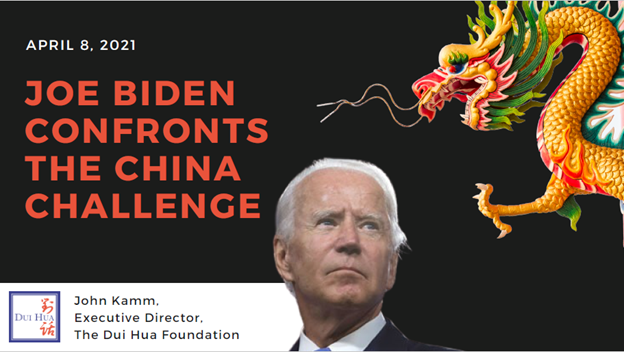
Finally, on April 8, 2020, Kamm delivered remarks to the University Club of San Francisco, one of the city’s oldest and largest clubs. It was Kamm’s third speech to the club over the last two years. The event was well attended by local dignitaries and individuals involved in US-China relations in Washington, D.C., including Carolyn Bartholomew, Chair of the US China Economic and Security Commission. The title of Kamm’s presentation was “Joe Biden Confronts the China Challenge.”
Dui Hua’s executive director summarized Joe Biden’s China policy by referring to Secretary of State Antony Blinken’s remarks in testimony to Congress and other venues: “Our relationship with China will be competitive when it should be, collaborative when it can be, adversarial when it must be.”
A slide from Kamm’s presentation comparing China policy between the Trump and Biden administrations. Image credit: The Dui Hua Foundation
Kamm pointed out that nearly all of former President Trump’s policies on China remain in place. “The charge that China is committing genocide has been repeated, the position that Hong Kong doesn’t deserve special privileges remains unchanged, the tariffs on Chinese goods have stayed in place, curbs on technology transfers to China have increased, and American ties with Taiwan have been strengthened.”
Kamm then transitioned to a discussion of the meeting between American and Chinese officials in Anchorage, Alaska, on March 18. On the eve of the meeting, the United States slapped sanctions on 24 Chinese officials over China’s treatment of Hong Kong, a move that cast a pall over the meeting. The two sides couldn’t even agree on what to call the session: China wanted it to be portrayed as the start of a strategic dialogue, but the United States insisted it was a one-off. There was neither a banquet nor a joint statement. Most important for Dui Hua, the Chinese diplomats proposed a new dialogue on human rights and invited Secretary Blinken to visit China. Mr. Blinken turned down the invitation and rejected the idea of holding a human rights dialogue with China. Lists of prisoners were handed over by the US diplomats.
A photograph of Secretary Blinken and National Security Advisor Sullivan’s March 18 meeting with CCP Director of the Office of the Central Commission for Foreign Affairs Yang Jiechi and State Councilor Wang Yi. Image credit: Ron Przysucha, State Department
Constraints on President Biden’s ability to fashion a new China policy are manifold. The two biggest constraints are strong attitudes against China among the American public and Congress. The latter body considered 550 bills and resolutions with China-related content in the 116th Congress. Fifteen passed and became law. Many others have been reintroduced. A focus of the 117th Congress will be the treatment of Uyghurs, including the use of forced labor and forced sterilization and abortion in Xinjiang.
Drawing on polls conducted by Gallup, Pew, the Chicago Council, and YouGov, Kamm’s remarks in the four events demonstrated China’s deep unpopularity in the United States, and the distrust of the country’s leadership. Among the most significant findings are that Americans blame China for Covid-19, nearly half support boycotting the 2022 Winter Olympics in Beijing, 70 percent favor prioritizing human rights over economic ties, and – perhaps most striking – many doubt that Joe Biden can successfully confront the China challenge.
EXCHANGES
Exchanges is a feature that explores Dui Hua’s expert exchanges and dialogues.
“…a 10×10 concrete cell with a metal toilet, concrete bed, and tiny windows…”
Managing Attorney Patricia Lee describes conditions in juvenile hall during the webinar on November 11, 2020. (Right, top to bottom) John Kamm, Anna Wu, Patricia Lee. Image credit: International Symposium on Girls in Conflict with the Law
When a girl enters the criminal justice system, what conditions does she face and how are they different depending on where she lives? A rough global sketch of this picture was filled in by panelists during the International Symposium on Girls in Conflict with the Law (GICL).
“When you put a ten‑year‑old into a room and a steel door closes, you can hear the sound. You can feel the cold. And then four deadbolts are thrown across. How much damage does it do to these kids?”
This sentiment was echoed by Patricia Lee of the San Francisco Public Defenders Office when describing the current, and relatively new, San Francisco County Juvenile Hall: “There is no difference between an old juvenile hall, a new juvenile hall and adult facility, it serves the same purpose, youth are locked into a 10 x10 concrete cell with a metal toilet, concrete bed, and tiny windows that allow a little light but that you can’t look out of.” Lee stressed that San Francisco is trying to adopt new approaches that include detention alternatives in secure but home-like environments with support services like mental health, family counseling, and skills training.
Panelists from other regions made similar calls for improved support and regulation of juvenile detention facilities. Nafula Wafula, Vice Chairperson for Policy and Advocacy at the Commonwealth Youth Council, shared that the experience of girls incarcerated in the Kenyan system often includes abuse by those who should be protecting them: “There’s a 2016 report that shows that 90 percent of abuses witnessed in police stations by children were perpetrated by police. And the study also found that the police are the most common perpetrators (of crimes against incarcerated girls) in juvenile centers.”
The fact that girls often make up a small portion of the incarcerated population leads to stopgap measures that can put girls at further risk. “In Yemen, girls are kept in detention cells with adult women, while in Jordan, they are kept in tiny, little care centers that do not provide enough space to enable these girls to have proper rehabilitation and reintegration programs that can facilitate their integration into society,” Taghreed Jaber, Penal Reform International’s Regional Director for the Middle East and North Africa, said. She described this as a sort of “double discrimination,” in which girls are a minority in a system that ignores their needs as it incarcerates them.
Taghreed Jaber of Penal Reform International speaks about issues affecting girls during “Girls in Conflict with the Law: Voices from Africa and the Middle East” on December 14, 2020. Image credit: International Symposium on Girls in Conflict with the Law
Manfred Nowak, who led the United Nations Global Study on Children Deprived of Liberty stated, “…since the rate of girls is so much smaller than of boys, the criminal justice system, and the prisons, are made for men and boys but not for women and girls. They are more vulnerable to physical violence, in particular, sexual violence, whether it’s by prison guards, virginity testing, etcetera. In general, the conditions in places of detention… lack separation between women and men or the women and girls because often there are only very few girls in a particular prison.”
The cover of the Chinese translation of “Neglected needs: girls in the criminal justice system.” Image credit: Penal Reform International
Meda Chesney-Lind, Chair of the University of Hawaii at Manoa, pointed out a key aspect of why the system seems to be failing girls. “There are big problems when you put girls in facilities and in systems that were really designed for violent boys. Our custody (facilities) lack effective monitoring, and as a result truly horrific conditions have developed in these institutions…there are routine allegations of sexual abuse, excessive idleness, inadequate educational services, allegations of the overuse of isolation, restraints, and chemical agents are also common.”
The Bangkok Rules provide guidelines on what detention facilities for women should include. When implemented, these guidelines protect girls in detention. Reflecting on the progress since the UN’s 2010 adoption of the Bangkok Rules, Jaber said, “I will tell you that as a practitioner in this field, I am a little bit disappointed. The number of girls who are coming in contact with the law and are in detention facilities is increasing, and the measures taken by states towards creating a protective environment and having full compliance with the rules is really shy.”
Across the board, panelists stressed that current juvenile justice systems were inadequate, ignoring the needs of girl detainees and leading to further victimization and stigmatization. The notion that many girls in detention would be better served by addressing the underlying factors of their criminal behavior was a recurring, and enduring, call to action. Drawing on his research for the UN, Nowak concluded “…the root causes for so many kids in detention are the lack of an effective child welfare system. Most of these children should actually be treated by the child welfare system and not in the criminal justice system.”
To learn more about the panelists, watch their individual webinars and read a full list of recommendations visit girlsjustice.org.
A selection of audio Bibles currently available on Taobao. Image credit: Taobao.com
Dui Hua’s research into court judgments found that four Christians who sold USB flash drives containing encrypted sermons were sentenced to two to six years in prison in Henan Province on December 2, 2020. Three of them were convicted of illegal business activity and another of “concealing crime-related income.” Their trial was concluded just a few days before overseas Christian groups reported another illegal business activity case in Shenzhen where five Christians were facing trial for selling audio Bibles amid China’s campaign to “eradicate pornography and illegal publications.”
In April 2018, China’s popular online retailers including JD.com, Tabao, and Amazon.cn began pulling Bibles from their stores. Although the Bibles are still printed in China, they are legally available only at state-sanctioned church bookstores and cannot be sold through normal commercial channels. Individuals who breach the rules to sell the Bibles online or in physical bookstores risk being charged with illegal business activity under Article 225 of the Criminal Law.
A picture of the town of Ganzi in the Tibetan Autonomous Region in western Sichuan Province, China, taken in 2005. Image credit: Colegota / CC BY-SA 2.5 ES
China’s Fifth Judicial Reform Plan Outline in 2019 committed itself to an “open, dynamic, transparent, convenient sunshine judicial system.” Although much progress has been made in the number of court rulings and judgments posted online, the level of transparency varies by case type, crime, and region. Criminal cases classified as endangering state security (ESS) are among the least transparent.
Despite being a restive region, Ganzi, or Garze, a Tibetan Autonomous Prefecture occupying the western arm of Sichuan Province, is the top region in all of China with the highest number of publicly disclosed ESS court rulings and judgments. In Ganzi, 26 of the 28 publicly disclosed ESS cases concerned the crime of inciting splittism (煽动分裂国家罪). Dui Hua previously reported that the Ganzi Intermediate People’s Court convicted nine Tibetans of inciting splittism between June and August 2020. In the last four months of 2020 the same court released five more judgments involving six defendants who were tried for the same crime.
I was quite surprised when the State Council Information Office (SCIO) and the Ministry of Justice (MOJ) agreed to the proposal I made at our January 1995 meeting to accept four lists of prisoners during the year, one each quarter. I had prepared and handed over a list of 25 prisoners, leaving three more lists of 25 names to be submitted in 1995.
This was four years before Dui Hua existed, and long before the foundation had set up its political prisoner database (PPDB). Since the early 2000s, I have relied on the PPDB to draft prisoner lists, but in the 1990s I had to rely on conversations with political activists, family members of political prisoners, and NGO publications to identify names for my lists.
Among the names I included on my lists was Zheng Yunsu, leader of a Jesus Family congregation in Shandong Province who was detained in May 1992 and subsequently sentenced in September 1992 to 12 years in prison for disturbing the social order and fraud. I found his name and accounts of his detention and sentencing in Detained in China and Tibet, published by Human Rights Watch in February 1994, and The Imprisonment and Harassment of Jesus Family Members in Shandong Province, published by Amnesty International in October 1994. I placed Zheng Yunsu’s name on my fourth quarter list, which I faxed to the Ministry of Justice in November 1995.
Subsequent to Zheng’s detention, Chinese police moved in and detained dozens of other Jesus Family members, including Zheng’s four sons, and demolished their church buildings in Duoyiguo Village in Shandong Province. The arrests and destruction of church properties were eerily reminiscent of the attack by Chinese police on Youtong Village in Hebei in April 1989. A Trappist priest, Pei Ronggui, was detained, Church property demolished, and two villagers killed in the attack. Pei was subsequently sentenced in 1991 to five years in prison for “disturbing the social order.” He was granted early release on March 31, 1993, following a brief campaign of spirited intervention with my interlocutors.
Instead of being put in prison for counterrevolution, both Pei Ronggui and Zheng Yunsu were imprisoned for disturbing the social order, a precursor of “using a cult to sabotage implementation of the law,” Article 300 of the Criminal Law amended in 1997.
The Jesus Family: A Brief History
The Jesus Family is an indigenous Christian communitarian group that emerged in Shandong Province during the 1920s. Although it was influenced by Pentecostal missionaries, the Jesus Family is not a Pentecostal church. Founded by Jing Dianying, a charismatic Christian who was raised in a traditional Confucian family that practiced Buddhism and who later attended a Methodist high school, the Jesus Family expanded rapidly throughout China, surviving and even thriving during the Japanese occupation and the Chinese civil war that resulted in the defeat of Nationalist forces in 1949.
The Jesus Family emphasized simple living, poverty, communal sharing, piety, and prophesy. It emphasized prayers and singing of psalms. It reportedly rose to more than 125 congregations and 20,000 members in China by 1949. Although concentrated in Shandong, families existed in many other provinces.
After 1949, the Jesus Family leadership embraced the officially sanctioned Three-Self Movement, and for a while its activities were condoned, even praised by the Chinese government and communist party. However, the sect’s rapid growth and communitarianism came to be seen as a threat to the party, and in 1952 Jing was arrested and sentenced to prison where he developed cancer. Jesus Family properties were destroyed and the 500 members who lived in Mazhuang were dispersed throughout Shandong.
Jing died shortly after being granted medical parole in 1957. The Cultural Revolution (1966-1976) saw this unorthodox Christian group largely disappear. It was only after the reform and opening period began in 1979 that the church reemerged. It spread rapidly. In Ding’s home village, Mazhuang, the family reoccupied 43 acres of land, established a church, and grew crops. Eventually an eye hospital was established. It still serves the Mazhuang and surrounding communities and is deeply appreciated by both local residents and the party.
One of the biggest areas of growth took place in Duoyigao, a village near Weixian City in western Shandong. There and in surrounding villages, the family, under the leadership of Zheng Yunsu, counted around 3,000 congregants. Services, including baptisms, were attended by more than 1,000 believers. The congregation supported itself by raising rabbits, making shoes, and growing crops for its own consumption and to give away to those in need. Family activities alarmed local security forces, which subjected the group to surveillance, including using a helicopter to monitor gatherings. Members faced harassment and short detentions.
Attacks on Duoyigao Village, May-June 1992
On May 19, 1992, police disrupted a service led by Zheng Yunsu in Liuzhuang Village, a community with many Jesus Family congregants not far from Duoyigao Village. Zheng was spirited away from the service before police could take him into custody, but the next day, Zheng surrendered to police in Shandong’s provincial capital, Jinan. Not long afterwards, Zheng’s four sons were taken into custody. Zheng and his sons were paraded through Duoyigao Village and surrounding villages with placards hung around their necks identifying them as Jesus Family believers.
On June 18, 1992, 40 truckloads of police descended on Duoyigao Village. Several buildings were destroyed, and possessions – including bicycles, machinery for making shoes, furniture, bedding, clothing, livestock, and grains – were seized. On June 20, 1992, the police returned and detained more than 20 Jesus Family members. On July 10, 1992, another ten members were detained.
Excerpts from Amnesty International’s The Imprisonment and Harassment of Jesus Family Members in Shandong Province. Image credit: Amnesty International
On October 10, 1992, Zheng Yunsu was convicted of fraud and disrupting social order by the Weishan District Court. He was sentenced to 12 years in prison and placed in Shandong Number One Prison. His four sons were sentenced to three-year terms of re-education through labor. Most other Jesus Family detainees were released after they confessed their crimes and agreed to stop their religious activities. Those released, and other members of the Jesus Family, wrote a detailed account of what they had gone through. This was provided to Amnesty International in London which published an urgent appeal based on this information in August 1993. This appeal formed the basis of the information published by Human Rights Watch in 1994, which in turn led to my including Zheng Yunsu’s name on my November 1995 list submitted to the SCIO and the MOJ.
Nine months after I submitted the November 1995 list with Zheng Yunsu’s name on it, he was granted an 18-month sentence reduction. Further advocacy resulted in Zheng Yunsu being released on parole on May 26, 1999, seven years into his 12-year sentence.
Strategy to Free Zheng Yunsu
I adopted a multi-pronged strategy for advocating on Zheng Yunsu’s behalf. I placed him on my lists and raised his name in conversations with Chinese officials from the Ministry of Foreign Affairs, the SCIO, the MOJ, and the Religious Affairs Bureau. I also put his name on lists of countries having bilateral human rights dialogues with China, notably the United States. I encouraged members of Congress to reference Zheng in their letters Chinese leaders. Finally, I used the visits of senior American religious leaders to China to raise Zheng’s name.
Following the November 1995 list on which I put Zheng’s name, I placed Zheng’s name on a list of 24 prisoners submitted to the MOJ in October 1997, immediately prior to President Jiang Zemin’s state visit to the United States, and on a July 1998 list of religious prisoners eligible for parole (they had completed half of their sentences). I gave this list to the Department of State for use in its January 1999 bilateral human rights dialogue with China.
In addition to referring to the November 1995 list that included Zheng’s name in Congress members’ letters to the Chinese government urging a resumption of the Prisoner Information Project, several members either attached their own lists of religious prisoners on which Zheng’s name was included or raised Zheng in their conversations with Chinese officials in the United States or China.
During the October 1997 state visit of Jiang Zemin to the United States, Jiang Zemin and President Clinton struck an agreement that a group of American religious leaders would be invited to visit China in early 1998.
The group, led by Rabbi Arthur Schneier, president of the Appeal of Conscience Foundation, and including the Roman Catholic Archbishop of Newark Theodore McCarrick and the president of the National Association of Evangelicals Reverend Don Argue, spent two weeks in China in February 1998. They met with President Jiang in the Great Hall of the People; Rabbi Schneier presented President Jiang with a gold-embossed Torah. They also met with Ye Xiaowen, director of the Religious Affairs Bureau. They provided Ye with a list of 30 religious prisoners drawn up in consultation with the United States government and human rights activists, including me. Ye promised to give answers.
In January 1999, Rabbi Yechiel Eckstein, one of America’s preeminent rabbis, traveled to China to lobby the Chinese government to release imprisoned Christian pastors. He forcefully took up the cause of Zheng Yunsu in discussions with Director Ye Xiaowen. Four months after the rabbi’s visit, Zheng Yunsu was paroled.
Coverage of Zheng Yunsu’s release in Dui Hua’s summer 2001 newsletter. Image credit: The Dui Hua Foundation
Aftermath
Little has been written about what happened to the Jesus Family after 1997. What has been written suggests that the Jesus Family has largely disappeared – disbanded, marginalized, affiliated with various house churches, or absorbed into the government-approved Three-Self Movement. In his book Pentecostals in China, published in September 2015, Robert Menzies maintains that the Jesus Family exists in non-communitarian form in various parts of China. “It’s quite small,” he writes.
An American religious scholar living in Hong Kong disagrees. This man, who visited the Mazhuang eye hospital in the early 1990s and has stayed in touch with the faith community in Shandong, states that the Jesus Family remains active in the public space. According to his account, as of the end of 2019, the Jesus Family enjoys good relations with the Three-Self Movement’s Shandong Christian Council. Zheng Yunsu, now in his late 80’s, was in good health and continuing his work. He was not in trouble with the Chinese government. He was well and at peace. His faith had set him free.
Retired police officer sentenced to twelve years for defamation and other crimes
First uncovered by The Paper in April, Li Yinsuo (李银锁), a 75-year-old retired police officer was sentenced to twelve years in November 2020 for picking quarrels and provoking trouble, defamation, extortion, and fraud.
The Yangquan Mining District Intermediate People Court convicted Li of fabricating and filing reports of false corruption accusations against various agencies in the Shanxi Yangquan police force since 2014. The court also found Li spread false information online about individual police officers, which caused harassment and harmed their reputations.
The court also determined that an escalated financial dispute resulting from a traffic accident involving Li’s daughter was evidence of extortion. Li’s daughter was the victim of an accident, and the alleged extortion came when Li and his family asked for more money from the person who caused the accident.
Citing coverage from 2001 by Xinhua and taking a slightly sympathetic tone, The Paper reported that Li was a veteran and former police officer who received numerous commendations and honors before retiring and was known for exposing corruption in the police force. At the time, Xinhua even called Li a thorn in the side of the corrupt.
Li was sentenced to six years for picking quarrels and provoking trouble, two years for defamation, four and a half years for extortion, and eight months for fraud. The combined sentence is 12 years with a fine of RMB 17,000 Yuan. Given Li’s advanced age, the sentence is unusually harsh.
Appeal rejected for citizen journalist who exposed corruption
In similar circumstances, another grassroots anti-corruption warrior once hailed in the media was also convicted and sentenced.
Li Xinde (李新德) [no relation to Li Yinsuo], founder of China Public Opinion Monitor Net—a “sunshine” website dedicated to grassroots opinions of government conduct— was sentenced to five years’ imprisonment for illegal business operation by the Jiangsu Pizhou Intermediate People’s Court on January 7, 2021.
Li gained a reputation as a “grassroots opinion supervisor” in 2018 after exposing several cases involving local government misconduct and potential corruption on his website as well as on public accounts on social media platforms such as WeChat. Li ran afoul of the Jiangsu Xinyi Police Bureau when he posted articles on an illegal fundraising case, accusing the local police of illegally seizing a defendant’s assets.
The court convicted Li of fabricating those stories and taking money from the defendant’s sister. Li’s son Li Chao was tried and sentenced to one year for the same crime. The younger Li was released in October 2020 as he had already spent a year in a detention center.
Li Xinde’s appeal to the Xuzhou Intermediate Court was rejected in April. His sentence expires on October 9, 2021.
Former party-school teacher released
Well-known public critic Zi Su (子肃) was released in April after completing his four-year sentence for subversion.
Zi Su, sometimes referred as Su X in Chinese media, was an economic lecturer at the Yunnan Provincial Party School. However, Zi never shied away from letting his criticisms of the government be known, and he often shared opinion of social issues in the classroom. He received numerous warnings from the provincial government and police summons before being forced into early retirement in 2014.
Zi’s case gained public attention when the Ministry of State Security revealed several “significant cases” through CCTV and Global Times for the 2020 National Security Education Day propaganda.
Zi was accused of planning a violent rebellion against the CCP and calling for a party election which would replace Xi Jinping with Hu Deping, the eldest son of Hu Yaobang. He was detained for inciting subversion in 2016 but was indicted then convicted for subversion by Chendu Intermediate Court in 2019.
CGTN documentary on “war on terrorism in Xinjiang”; “Two-faces” officials; fate of Ilham Tohti student learned
On April 2, two weeks before the National Security Education Day, CCTV/CGTN aired the fourth installment of a documentary series on the CCP’s war on terrorism in Xinjiang. The film, with a direct-to-video style title The War in the Shadows 暗流涌动, claimed to tell the “real stories” of the region and the challenges in the war against terrorism that China faces.
With glossy production and in typical propaganda fashion, the film paraded several Uyghurs charged with endangering state security and terrorism crimes in front of the camera, and they then gave confessions and tearfully repented their crimes in close-up shots. Among them were two former high ranking regional officials, Shirzat Bawudun and Sattar Sawut.
A few days later, the regional government held its 32nd press conference on “issues involving XJUAR [Xinjiang Uyghur Autonomous Region]” on April 7. During the conference, the vice president of the XJUAR high court Wang Langtao provided further details on the two cases.
Shirzat Bawudun (希尔扎提·巴吾东), former deputy secretary-general of the XJUAR political consultative conference, and, prior to that posting, former director-general of XJ justice bureau, party political-legal secretary, was convicted of 10 crimes including splittism, defecting to the enemy, illegally providing intelligence to overseas forces, participating in a terrorist organization, aiding terrorism activities, using extremism to undermine the implementation of the law, gathering a crowd to disrupt public order, accepting bribes, misusing the authority of his office, and bending the law for selfish ends. One of his most serious wrongdoings was arranging to have an illegal sermon at his daughter’s wedding. Shirzat was sentence to death with a two-year reprieve and deprivation of political rights (DPR) for life.
Sattar Sawut (沙塔尔·沙吾提), former director-general of the XJUAR Education Bureau, was convicted of splittism and accepting bribes. He was also sentenced to death with a two-year reprieve, and DPR for life.
At the press conference, both were called double-dealing “two-faces,” a derogatory term typically used against suspects who are perceived as being insolent or ungrateful towards the Party and its gestures of fairness.
A segment from The War in the Shadows. Image credit: CGTN
In particular, Sattar’s crime while at the education bureau is linked to multiple cases involving Uyghur intellectuals, including Alimjan Memetimin, former editor-in-chief of XJ Daily and former deputy director-general of XJUAR Education Bureau. They and several others were accused of a large-scale conspiracy from 2003 to 2009 to incorporate splittism and other “desinocized” contents into Uyghur language textbooks used in the Xinjiang region.
The CGTN film also claims that a generation of youth fell victim to such disinformation. Among them was a young student named Atikem Rozi.
A segment from The War in the Shadows. Image credit: CGTN
Atikem Rozi(阿提科木·肉孜 or 阿提克木·如孜) was a former student of Ilham Tohti. In 2014, she and six other students were sentenced to prison for splittism. Shown in frames only lasting a few seconds, the film disclosed that Atikem was sentenced to four years. She confessed to being brainwashed by false ideology and stories. Dui Hua, with other governments and NGOs, has repeatedly requested updates on Ilham Tohti’s students but has received no responses. Disclosure of her punishment by CGTN is believed to be the first official update since the trial in 2014.
CCTV claims to reveal money man behind Hong Kong protests
April saw more nationally televised denunciations related to national security with CCTV airing another “exposé” and TV confession on April 14, this time related to the unrest in Hong Kong.
Henry Li (李亨利 aka Li Hengli), a naturalized Belize citizen and businessman in Shanghai, was first arrested in November 2019 by the Guangzhou State Security Bureau for endangering state security. The high-profile news commentary program Focus Report 焦点访谈 produced a 15-minute long segment, lampooning Li as an ungrateful “two-faces” who was dissatisfied with his business success in China and full of delusions and vanity.
A shot from Focus Report 焦点访谈 featuring Li confessing his crime. Image credit: CCTV
The segment, quoting interviews from state security officers from Guangdong and Shanghai, painted Li as proof of foreign interference in Hong Kong’s political unrest that started in June 2019 and has affected the city ever since.
According to the investigation, state security uncovered close financial ties between Li and a well-known Chinese dissident surnamed Yang who resides in the United States. Supposedly under Yang’s guidance, Li met with Hong Kong political activist Leung Kwok-hung and student leader Alex Chow Yong Kang and funded their protest activities as well as Chow’s visit to Europe.
Li was indicted on April 23, 2020 for funding activities that endanger state security. If deemed serious, the crime can carry more than five-years of fixed-term imprisonment. Li was sentenced to eleven years on April 2, 2021. “They [people like Li] will be nailed to history’s pillar of shame,” the show proclaimed.
A selection of audio Bibles currently available on Taobao. Image credit: Taobao.com
Dui Hua’s research into court judgments found that four Christians who sold USB flash drives containing encrypted sermons were sentenced to two to six years in prison in Henan Province on December 2, 2020. Three of them were convicted of illegal business activity and another of “concealing crime-related income.” Their trial was concluded just a few days before overseas Christian groups reported another illegal business activity case in Shenzhen where five Christians were facing trial for selling audio Bibles amid China’s campaign to “eradicate pornography and illegal publications.”
In April 2018, China’s popular online retailers including JD.com, Tabao, and Amazon.cn began pulling Bibles from their stores. Although the Bibles are still printed in China, they are legally available only at state-sanctioned church bookstores and cannot be sold through normal commercial channels. Individuals who breach the rules to sell the Bibles online or in physical bookstores risk being charged with illegal business activity under Article 225 of the Criminal Law.
New rules aim to restrict the circulation of religious materials. State control has extended to electronic devices containing religious content not censored by the state. Bible audio players have gained popularity because they are easy to use, especially among the elderly, the illiterate, and those who are visually impaired. Apart from Bible verses, these electronic players are also loaded with sermons, hymns, and other religious content. Such devices were once widely available on China’s largest online commercial sites.
A version of an audio Bible previously available on Taobao, designed for and marketed to elderly customers. Image credit: Taobao
Four of five Christians facing trial in Shenzhen are employees of the Shenzhen Tree of Life Culture Communication Company, which was established in April 2011 to produce Bible audio players. The company did not run into any legal trouble until the four employees were detained for illegal business activity in July 2020. The trial outcome remains unclear, but available sources show that prosecutors recommended that the court sentence Fu Xuanjuan (傅炫娟), owner of the Shenzhen company, to five years’ imprisonment, and the other three staffers to 18 months to three years.
Unbeknownst to the outside world, the four sentenced in Henan were also related to the same Shenzhen company. The judgment stated that from June-August 2018, Li Junke (李君科) entrusted the Shenzhen company to produce encrypted USB flash drives loaded with sermons by Li and another defendant Feng Fang (冯芳). During this period, they were said to have made an illegal profit of RMB8,000 from the sale of the encrypted USB flash drives to other Christians through WeChat friend groups.
Li explored ways to reduce expenses so that he could donate more money to help the elderly and poor families. Instead of outsourcing to the Shenzhen company, he started to produce his own audio Bibles. First, he procured 1,922 blank USB flash drives from a computer wholesaler in his home province of Shaanxi. Additionally, he asked the third defendant, Zhang Haohao (张好好), to encrypt the audio Bibles after she taught herself encryption. The fourth defendant Wang Xuefen (王雪粉) was in charge of promoting the audio Bibles primarily using WeChat and mailing them out. From January 31, 2019, to June 13, 2019, they collected illegal revenue of RMB110,062 from the sale of 639 audio Bibles. After deducting the procurement cost of the 639 USB flash drives, the illegal profit amounted to RMB93,448.
Li, regarded as the principal offender in the case, received the lengthiest prison sentence among the defendants—six years. The court found that the sale constituted a “particularly grave circumstance,” citing Article 12 of the 1998 judicial interpretation concerning the hearings of illegal publications issued by the Supreme People’s Court. The article states that the circumstances are “particularly grave” where the profit made by an individual from illegal business activities exceeds RMB100,000. The court held that his total profit comprised RMB93,448 from the sale of 639 USB flash drives and RMB8,000 from the sale of USB flash drives manufactured by the Shenzhen company. The total profit amounted to RMB101,448, making Li’s profit barely exceed the “particularly grave circumstance” threshold.
Li’s prison sentence could have been shorter had the court considered deducting the mailing cost of the 639 USB flash drives. Each of the USB flash drives was mailed at the cost of RMB10. His profit would then have been reduced by RMB6,390 to RMB95,058, just below the “particularly grave circumstance” threshold. This was exactly what Li argued in his defense to mitigate his sentence during the trial. The court refused to accept his defense and instead determined the mailing cost to be part of operation costs for the illegal business activities, although it did deduct the procurement cost of the USB flash drives when calculating the profit.
The two other defendants, Zhang and Wang, were also convicted of illegal business activity. They were sentenced to three years and two years in prison, respectively. Feng was convicted of a different crime of “concealing crime-related income” and is now serving her three years’ imprisonment sentence.
Since China began banning online Bible sales in April 2018, Dui Hua’s research into court websites has found 11 court judgments involving 54 defendants who were convicted for illegally selling Christian books and/or audio Bibles. Among them, 27 received suspended sentences and the prison sentence given to Li was the lengthiest. Li is scheduled for release from prison on June 14, 2025.
The offence of illegal business activity has typically been applied to those who make a profit to support their churches. However, the standard of conviction does not necessarily require an intent to establish a profitable business. Precedents suggest that Christians can receive prison sentences for printing and giving away religious texts for free. All these indicate the worsening state of religious freedom in China: economic crimes like illegal business activity provide a pretense to suppress religious activities and legitimize criminal punishments against religious groups and private individuals operating beyond the state’s control.
A picture of the town of Ganzi in the Tibetan Autonomous Region in western Sichuan Province, China, taken in 2005. Image credit: Colegota / CC BY-SA 2.5 ES
China’s Fifth Judicial Reform Plan Outline in 2019 committed itself to an “open, dynamic, transparent, convenient sunshine judicial system.” Although much progress has been made in the number of court rulings and judgments posted online, the level of transparency varies by case type, crime, and region. Criminal cases classified as endangering state security (ESS) are among the least transparent.
Part of this is because judges frequently exercise their discretion to decide what information, including rulings and judgments, to publish. They may also conceal information about cases they deem “inappropriate for posting.” In regions rocked by incidents of ethnic unrest, accessing information about ESS cases is considered difficult or even impossible at times due to media blackouts which occur periodically following violent clashes with Han Chinese.
While this presumption about judicial transparency holds true in Xinjiang, it does not accurately reflect the availability of Chinese government sources with regard to ethnic minority prisoners who are convicted of political crimes in the Tibetan regions outside of the Tibetan Autonomous Region (TAR) and Han-majority provinces.
Despite being a restive region, Ganzi, or Garze, a Tibetan Autonomous Prefecture occupying the western arm of Sichuan Province, is the top region in all of China with the highest number of publicly disclosed ESS court rulings and judgments. In Ganzi, 26 of the 28 publicly disclosed ESS cases concerned the crime of inciting splittism (煽动分裂国家罪). Dui Hua previously reported that the Ganzi Intermediate People’s Court convicted nine Tibetans of inciting splittism between June and August 2020. In the last four months of 2020 the same court released five more judgments involving six defendants who were tried for the same crime.
Table 1. ESS Rulings Disclosed on China Judgements Online (as of April 30, 2021)
Aba, also known as Ngaba, similarly maintains a high level of transparency notwithstanding an astonishing number of self-immolation protests which occurred in the prefecture between 2012 and 2017. This Tibetan prefecture in northwestern Sichuan is ranked third in Table 1, with 20 ESS rulings and judgments disclosed on China Judgements Online. Thirteen of them were trials of inciting splittism. In 2020 alone, eight judgments were posted online by the Ganzi Intermediate People’s Court.
Dui Hua previously reported that Xinjiang makes up the majority of China’s ESS cases (see Court Statistics on Splittism and Inciting Splittism, Part II: Uyghurs and Tibetans for a detailed analysis). The Chinese government has made an apparent attempt to obfuscate information in the autonomous region. At the time of writing, none of the ESS rulings and judgments on China Judgements Online were disclosed in Xinjiang. A small number of Xinjiang ESS court judgments Dui Hua unearthed earlier from court websites have since been taken down.
Table 2. A list of inciting splittism cases in Ganzi and Aba posted on China Judgements Online after August 31, 2020
Political Prisoner Database
The names of political prisoners convicted of inciting splittism can also be found in other open-source materials. In its “official registry,” Dui Hua’s restricted-access Political Prisoner Database (PPDB) has information on 250 individuals who were tried nationwide for inciting splittism. The cases referred to here were collected from official sources including court judgments and rulings, state-run news media reports, judicial annals available in libraries and electronic yearbooks, and responses provided to Dui Hua by Chinese interlocutors.
Access to information in Xinjiang is far more restricted than in Tibetan regions. Table 3 shows that about 60 percent of people tried for inciting splittism in the official registry are in the Tibetan plateau, compared to only 38 people, or 17 percent, in the entire Xinjiang Uyghur Autonomous Region (XUAR) including It is worth noting that the eight percent remainder also involved Uyghurs, they were scattered across Han-majority provinces, including Shanghai, Tianjin, Guangdong, Fujian, Jiangsu, Henan, Liaoning, and Jilin also involved Uyghurs.
Table 3. Regional breakdown of inciting splittism trials with information in Dui Hua’s Official Registry
Ganzi comes out on top of all regions in Table 4; 68 prisoners convicted of inciting splittism are recorded in the official registry of the PPDB. The number is 11 times higher than that of Kashgar, Xinjiang, with records in the PPDB. The contrast is striking when we factor in a 2009 Chinese court report, which stated that more than 60 percent of Xinjiang’s ESS cases were tried in Kashgar. The paucity of prisoner information in the Uyghur prefecture has left the identities, acts, and fates of many of those convicted of inciting splittism unknown.
Labelled “the self-immolation capital” by The New York Times, Aba comes as a distant second in Table 4. The latest Tibetan to set himself ablaze, in November 2019, occurred in Aba.
Aba is followed by Huangnan, a Tibetan Autonomous Prefecture in Qinghai. It was another site of self-immolations and clashes between monks and Chinese security forces similar to Ganzi and Aba from 2012-2017.
Table 4. Top three regions with information of inciting splittism trials in PPDB Official Registry
In Qinghai, people tried for inciting splittism are not exclusively Tibetans. According to court judgments posted online, three ethnic Mongols were sentenced to nine to ten years in prison in the provincial capital of Xining in October 2008. Their imprisonment was likely related to the unrest in Tibet. Originally from Huangnan, they were detained in April 2008, just a month after the unrest in Lhasa set in motion a series of protests and demonstrations across the Tibetan plateau.
Outside of Xinjiang
Official information about Uyghur political cases appears more accessible outside of Xinjiang, at least for a brief period. Table 5 shows a breakdown of inciting splittism trials in the official registry of the PPDB. Of the 19 prisoners who were tried for inciting splittism in Han-majority provinces, all but one were Uyghurs.
Table 5. Number of inciting splittism trials in Han-majority provinces with information in PPDB Official Registry
Except for the three cases concluded in Shanghai in 2003, other cases in Table 5 were uncovered from court documents which were posted online between 2014 and 2016. Although the names of defendants were occasionally redacted or obscured, fewer ESS rulings and judgments at the time were classified as “unsuitable for posting.” These uncensored court judgments showed that most Uyghur defendants belonged to the “post-90s generation’ and were in their early twenties at the time of sentencing. Common allegations against them included using the internet to disseminate information about “East Turkestan” and the “Holy War.”
Some of the case highlights are:
Rozi Wulayimu, born in 1985, was a cake seller who traveled back and forth to Guangzhou from Yiwu, Zhejiang, prior to detention in January 2015. While in Yiwu, he became acquainted with what prosecutors called a Uyghur “religious extremist” (zongjiao jiduan fenzi 宗教极端分子). According to the judgment, the “religious extremist” called the ban on veils and beards in Xinjiang a repression of Islam. The “religious extremist” bought Rozi a cellphone. It was preinstalled with Voxer, an app best known for walkie-talkie messaging, and another app with access to IRIB World Service, Iran’s international broadcasting radio network.
Rozi did not use the preinstalled apps until after he moved back to Guangzhou in late 2014. IRIB World Service allegedly contained articles and images of violence, “East Turkestan,” and the “Holy War.” This browsing history became evidence of him inciting others to split China. Additionally, Rozi used Voxer to contact the “religious extremist,” who shared the idea of them illicitly going overseas. Uyghurs could not legally exit China because of tight travel restrictions placed on them, said Rozi during the trial. Rozi also expressed having a strong impulse to leave China because he was deeply moved by the contents of IRIB World Service. However, he dismissed this idea as he could not bear to leave his parents behind in China.
In July 2016, Rozi was sentenced to two years in prison by the Guangzhou Intermediate People’s Court. Rozi was released from prison in January 2017, having already spent 17 months in custody prior to conviction.
A Uyghur farmer, whose name was redacted in the judgment, was sentenced to two years in prison in Nanjing on July 17, 2015. He signed in to his QQ account with his cellphone and from cybercafes, where he disseminated audio and video messages of “religious extremism, the Holy War, and ethnic hatred.” Additionally, he was accused of sharing links to Turkistan Times, a multilingual news website covering news about Xinjiang.
Cases are also documented in China’s northeast provinces. Eli Exmet studied at Changchun’s Northeast Normal University. The then-25-year-old student was sentenced to eight years in prison in October 2014. Prosecutors accused him of teaching private religious classes to Uyghurs studying there. In the classes, he raised funds from attendees to buy tablets and removable storage to use as teaching tools and explained why he supported the “Holy War” and “East Turkestan” with information he downloaded and copied from e-books and online videos.
Another defendant, Metabdulla Iminniyaz, born in 1992, was sentenced to six years in prison. He was in charge of lecturing on Arabic-language videos. According to the judgment, he expressed the idea of “driving away all bad Han Chinese in Xinjiang” in his classes.
Born in 1993, a Uyghur barbeque shop worker was sentenced to three years in prison in Dalian in February 2016. His name was redacted in the judgment. He was accused of uploading images from 2013-2014 containing violence and religious extremism to his personal cloud storage. Since he did not set a passcode to restrict access, the images were seen by many of the over 200 people on his contact list. Among the images was a map of China separating Taiwan, Tibet, and Xinjiang from Chinese territory. Xinjiang was also labelled “East Turkestan” and painted blue with a white crescent flag.
The empirical data presented in this post indicated a varying level of judicial transparency concerning the trials of inciting splittism. While Tibetans and Uyghurs are both disproportionately represented in such trials, the Chinese government appears more willing to disclose information about Tibetans than Uyghurs. That said, courts in Aba, Ganzi, Huangnan, and other Tibetan regions are far from genuinely transparent. The judgments which have thus far been posted online there merely contain defendants’ names, courts, and sentence dates. Information about their sentences, whereabouts, and health status remains concealed.
As mentioned earlier, the Uyghur cases outside of Xinjiang were concluded in 2014-2016, but Dui Hua is unable to find additional cases from Chinese government sources published over the past four years. The same practice of concealing information in publicly disclosed court rulings and judgments has also extended to cases of Han Chinese convicted of ESS crimes. As such, the opacity of ESS cases is suggestive of an overall downward trend in judicial transparency. ESS cases are by nature sensitive, but the strategic use of “discretion” by judges can serve as a smoke screen for crimes to be reclassified and charges shuffled. As long as this happens, China’s stated intentions of having a dynamic and transparent justice system will be out of reach.
After six months of groundbreaking exchange, Dui Hua’s International Symposium on Girls in Conflict with the Law ended on March 30 with a bang. The final webinar, in which Dui Hua Executive Director John Kamm moderated a discussion with representatives of China’s Supreme People’s Court (SPC), encapsulated the mission of the Symposium: bringing together experts in criminal justice from around the world to share approaches, challenges, and best practices when it comes to girls and gender-aware treatment within the justice system.
The final webinar was titled “Special and Priority Protection of the Legitimate Rights and Interests of Underage Girls in Accordance with the Law.” It featured two speakers from China’s highest court: Dr. Jiang Jihai (江继海), Director of Juvenile Offender Office of Research Office of SPC (中国最高人民法院少年审判指导工作处处长), and Ms. Dai Qiuying (代秋影), Director of Center for the Protection of Minors of Applied Law Research Institute (中国最高人民法院中国应用法学研究所刑事行政审判研究部主任, 副研究员). This webinar was the culmination of the support and dedicated funding of the Canadian Fund for Local Initiatives, the Ministry of Foreign Affairs of the Netherlands, Mark Headley and Christina Pehl, and the Alice Lam Memorial Fund. It was also supported by core grants from the Swedish International Development Cooperation Agency, the Ministry of Foreign Affairs of Denmark, and the Ministry of Foreign Affairs of Norway.
According to Dr. Jiang, the SPC recorded 2,473 offending girls in 2020—girls who had been convicted and/or sentenced nationwide. This reflects 7.32 percent of juvenile offenders in China. The percentage of girl juvenile offenders has fluctuated, from 6.37 percent in 2018 and 7.72 percent in 2019, but the general trend has been a steady increase in the number of convicted girls (in 2016, 1,570 girls were convicted, accounting for 4.39 percent of juvenile offenders). The numbers cited by Dr. Jiang are some of the most specific figures available on juvenile offenders in the PRC.
Dr. Jiang stated that the most common charges brought against girls are mostly crimes against property and include “fraud, robbery, picking quarrel and provoking trouble, and theft.”
Reflecting on Dr. Jiang’s remarks after the webinar, Executive Director John Kamm noted that “picking quarrels and provoking troubles” is a charge often brought against dissidents and activists—raising the intriguing possibility that some girls might have been convicted of speech and association offenses.
Dr. Jiang Jihai speaking at the webinar on March 30, 2021. Image credit: The Dui Hua Foundation
Ms. Dai Qiuying spoke on the use of alternatives to incarceration, stating:
“We consider the possibility of the recidivism of a minor offender, their motive, and we also put into place the criminal policy of rehabilitation through education. This will give them diminished or an attenuated course of punishment on the basis of the proper application of laws in our conviction and sentencing.”
Factors that Contribute to Girls Coming into Conflict with the Law
Occurring over a span of six months, the Symposium was comprised of 12 webinars with a total of 167 attendees. Panelists included researchers, policy makers, and advocates from around the world. Through this series of expert exchanges, the Symposium explored the causal factors and system failures that lead to girls coming into conflict with the law.
Panelists in all regions spoke about common societal and cultural considerations including economic hardship, neglect or abuse at home, mental health issues, and lack of educational opportunities. During January’s panel, titled “Juvenile Incarceration: Alternatives,” San Francisco Superior Court Judge Susan Breall contextualized the dire situation many girls find themselves in prior to coming into conflict with the law:
“Most girls who are arrested are arrested for non‑violent, non‑serious crimes, but they have been victimized in very serious and violent ways before they ever come into the juvenile justice system or the dependency system.”
When girls enter the criminal justice system, these vulnerabilities follow. Panelists raised the issues of discrimination, sexual violence, and lack of appropriate services for juvenile girl offenders, especially in communities of color and indigenous communities. These factors leave girls in custody vulnerable to exploitation and further harm while being held.
Solutions & Best Practices
When speaking about effective strategies for preventing girls from coming into contact with the justice system, panelists emphasized the value of social services, importance of strong family and community relationships, and usefulness of practical vocational training.
Panelists recommended implementing alternatives to incarceration whenever possible. During the webinar “Working with Justice-Involved Girls,” Dr. Michele Burman, Professor of Criminology in the Scottish Centre for Crime and Justice Research at the University of Glasgow, stated the situation plainly:
“Many young people involved in offending behavior could and should be diverted from statutory measures, prosecution and custody through early intervention and the use of robust community alternatives.”
These alternative programs may provide skills training, mental health support, and substance abuse treatment. When detention is unavoidable, it is vital that gender-sensitive responses are taken into account.
GirlsJustice.org
Although Dui Hua worked through considerable obstacles to adapt the Symposium to the online format, this necessary change resulted in a catalogue of online resources that will outlast any in-person conference. GirlsJustice.org is home to over 12 hours of expert exchange produced through the Symposium, as well as transcripts and supporting materials. If you’re curious to learn more, you can reach out to our panelists with questions through the “Start a Conversation” button on their respective index pages. You can also view a list of recommendations with best practices for supporting girls both in- and outside the criminal justice system.
To dive even deeper, download the Global Bibliography of Girls in Conflict with the Law, which Dui Hua compiled for the Symposium. This bibliography includes annotations for resources across the general subject of girls in conflict with the law, including pathways to offending, family and relationships, substance abuse, violence and abuse, commercial sexual exploitation (CSE) and prostitution, mental health, peer groups and gangs, arrest to sentencing, detention and incarceration, post-release, alternative approaches to juvenile justice, and researching and working with girls in conflict with the law.
An Anniversary & Outreach
March and April 2021 have been busy months for Dui Hua. In April, not long after concluding its Symposium, Dui Hua celebrated its 22nd anniversary. Along with the Symposium webinars, Executive Director John Kamm has spoken at four external events. During these exchanges, Kamm engaged the community and explored Dui Hua’s advocacy work from many angles, looking at the current political climate, and the relationship between business and human rights.
On April 8, Kamm spoke to San Francisco University Club members about President Biden’s posture towards China and the difficult situation he has inherited. In a wide-ranging Q&A, Kamm touched on everything from the future of Hong Kong to the question of the US ambassador’s role in easing tensions between the US and China. You can watch the event here.
In late March, Dui Hua took part in two unique outreach events centered around religion, hosted by Trinity-by-the-Cove Episcopal Church and the US-China Catholic Association. You can watch John Kamm’s remarks to Trinity-by-the-Cove here.
On March 24, Kamm addressed members of the Young Presidents Organization (YPO), briefing this group of young executives on the ways business strategies can apply to human right work. He recounted his transition from vice president of a multinational corporation to the founder of a human rights non-profit, and the lessons he learned along the way.
EXCHANGES
Exchanges is a feature that explores Dui Hua’s expert exchanges and dialogues.
“An opportunity for the two countries to engage in a cooperative, non-confrontational way”
A commemorative photo of the participants of the 2010 exchange. Image credit: The Dui Hua Foundation
With the conclusion of the International Symposium on Girls in Conflict with the Law, Dui Hua has completed its seventh expert exchange. These exchanges support Dui Hua’s human rights advocacy by fostering dialogue about vulnerable prisoners including women in prison and juvenile offenders. As John Kamm said in 2010: “If we can work well together in areas where there is common ground, we might well find that talking with each other on issues where we don’t agree will prove easier and more productive.”
Dui Hua’s work on juvenile justice began in 2008 when it hosted the first-ever delegation from the Supreme People’s Court (SPC) to study juvenile justice in the United States. Six judges from China visited juvenile courts, detention centers, and other facilities in Illinois, Washington, DC, Maryland, and San Francisco, where they met with judges, prosecutors, attorneys, and leading juvenile justice scholars.
During the 2012 exchange, US and Chinese delegation members enter a prison. Image credit: The Dui Hua Foundation
More exchanges followed. In 2010, the SPC hosted a US delegation that visited the Beijing Juvenile Reform Center and the Haidian District Court. Both the US delegation and their Chinese hosts conducted mock trials of juvenile cases. In 2012, a Chinese delegation of seven juvenile judges and experts traveled to the Bay Area, where they accompanied probation officers into the field, observed a mock victim-offender mediation, and learned about the Juvenile Collaborative Reentry Team (JCRT). Following the exchange, Kamm said:
“Exchanges between the United States and China in the field of juvenile justice provide an opportunity for the two countries to engage in a cooperative, non-confrontational way in an area of human rights critical to the development of both societies…We are already seeing results from these exchanges.”
In 2014, Dui Hua held two exchanges. The fourth exchange took place in Beijing with a focus on records sealing. The US delegation visited Haidian District Juvenile Court and a seminar in an SPC courtroom attended by more than 40 judges from juvenile courts in 12 Chinese provinces and municipalities. Following this exchange, delegation member and leading expert on juvenile justice Judge Leonard Edwards said:
“The program showed that American and Chinese judges share the same goals. We need to focus on making the juvenile court an effective institution to rehabilitate young lawbreakers. Both countries are committed to making it possible for a juvenile to have a fresh start as an adult and to insure that juvenile arrests do not make it difficult to gain employment or educational opportunities.”
The 2017 delegation members visit a court in Baoan. Image credit: The Dui Hua Foundation
The fifth exchange focused on the treatment of women in prison and the Bangkok Rules, which promote gender-specific measures for women detainees. This exchange brought together 25 expert presenters from nine countries and included a visit to Lo Wu Correctional Institution, a women’s prison in Hong Kong.
The sixth exchange took place in Shenzhen in 2017 and was attended by over 40 Chinese participants, a US delegation consisting of five juvenile judges and experts, and Dui Hua representatives. The US delegation stressed that “children are not simply small adults,” and the Chinese delegation made clear that they too shared this goal of “treating the juvenile offender as a child rather than the child as a criminal.” The delegations visited the Juvenile Delinquent Assist & Education Campus of Baoan District, where social workers demonstrated record sealing protocol, and attended a roundtable discussion hosted by the Shenzhen Intermediate People’s Court.
The International Symposium on Girls in Conflict with the Law was Dui Hua’s seventh exchange overall, the sixth one to focus on juvenile justice, and the second to take a gender-specific approach to the justice systems of China and the United States. Read more about these expert exchanges on Dui Hua’s website.
Members of a Yi Guan Dao organization offer incense in an apartment believed to be in mainland China at an unknown date. Image credit: Jin De Fo Tang’s Facebook account
Yi Guan Dao (YGD) has not been rendered extinct in mainland China, despite a lack of recent reporting which has led some experts to express doubt on the sect’s persecution or even existence in the mainland (read “The Resurgence of Yi Guan Dao” for a detailed analysis). Combining elements of Daoism, Buddhism, and folklore, YGD has been banned for over seven decades. During the early years of repression beginning in 1950, scores of YGD members were tortured, imprisoned, and executed.
Dui Hua recently uncovered three court judgments online that corroborate its observation that YGD practitioners continue to be at risk of imprisonment. The sect continues to gain traction among the middle-aged rural population in Shantou, Guangdong, where prosecutors accuse YGD of conducting “reactionary” activities.
This installment of Prisoner Updates looks at recently uncovered additional information about the “Genuine Communist Party of China 中国真共产党” and its founder Chen Jianmin (陈剑敏) and the ongoing legal limbo of lawyer, activist, and human rights defender Li Yuhan (李昱函).
JOHN KAMM REMEMBERS
John Kamm Remembers is a feature that explores Kamm’s human rights advocacy prior to and since Dui Hua’s establishment in 1999.
Letters from Congress, Part II
Some of the members of Congress that participated in the letter writing campaign. (Left to right, top to bottom) Byron Dorgan, Chris Smith, Don Manzullo, Doug Bereuter, Howard Berman, Jim Leach, Joe Lieberman, Joe Pitts, John McCain, Lee Hamilton, Max Baucus, Nancy Pelosi, Orrin Hatch, Paul Wellstone, Pete Sessions, Jesse Helms, Phil Crane, Sam Brownback, Timothy Hutchinson, Tom Daschle, Tom DeLay, William Roth. Image credit: Public domain via Wikimedia Commons
Over the next two years, 20 letters were written from Senators and Congresspeople to me, Chinese ambassador Li Daoyu, Chinese President Jiang Zemin, Chinese Premier Li Peng, and Minister of Justice Xiao Yang. I also received a verbal commitment to help from House Speaker Newt Gingrich (R-Georgia) and, after a somewhat contentious session, from Senator Dianne Feinstein (D-California). On a visit to Beijing, Congressman Ed Royce (R-California) – he went on to become Chairman of the House Foreign Affairs Committee – managed to hand one of my lists to a startled Premier Li Peng.
The first letter came from Senator John Kerry. He had visited San Francisco on March 31, 1996, and together we had met with the Chinese consul general. Minister Song Zengshou. One of the topics the senator raised was the violation of American company intellectual property rights (IPR) by Chinese state-owned enterprises. The consul general claimed that the Chinese government was not able to track IPR violations by Chinese firms. Senator Kerry scoffed: “You can track citizens who voice dissenting views, but you can’t track companies that violate IPR?”
In his letter to me on June 11, 1996, Senator Kerry said that the “noteworthy success” of my dialogue with the MOJ “testifies to the wisdom of pursuing engagement with, not containment of, China.” He asked that as soon as I had received responses to my lists, I let him know so that he could invite me to Washington “to brief some of my skeptical colleagues on the value of dialog on human rights with the Chinese government.” He dangled the possibility of my testifying to the Senate Foreign Relations Committee on the results of my work in China.
Two days after the Senator Kerry letter, Senator Craig Thomas (R-Wyoming), chairman of the Senate Foreign Relations Committee’s Asian and Pacific Affairs Subcommittee, sent a letter to Chinese ambassador Li Daoyu. He told Ambassador Li that he thought my cooperation with the MOJ was significant and valuable and urged him to contact MOJ minister Xiao Yang and SCIO deputy director Ma Yuzhen to resume the Prisoner Information Project. Like Senator Kerry, he said it would be desirable for me to come to Washington to brief colleagues.
Two months went by. The letters from Senators Kerry and Thomas failed to get the desired results, so I turned to Congressman Chris Smith (D-New Jersey), chairman of the House of Representatives Subcommittee on Human Rights and a strong critic of China’s human rights record. I had met Congressman Smith at my first testimony on MFN in May 1990, and he and I had become friends (we both grew up on the New Jersey shore, so we were both “clam diggers”). In his letter, addressed to me and dated September 17, 1996, he made the point that for dialogue to be effective, “the question of trustworthiness is critical.” He too invited me to come to Washington to share with colleagues whatever information on prisoners I obtained “as we continue to assess US-China relations.”
The three letters appear to have had an impact. On October 15, 1996, the Director of the MOJ’s Prison Administration Bureau, sent me a letter stating that “the Chinese side does not have the duty to provide the American side with the information on the seventy-five inmates you mentioned.” I immediately replied, saying that I agreed that the Chinese government is not obligated to provide information about its prisoners to foreign governments, but stressing that this was a situation involving a private individual to whom the Chinese government had made a promise. My letter went unanswered. After waiting a few months, I resumed pressing members of Congress to write letters to the Chinese government.
On February 5, 1997, Congressman Lee Hamilton, Ranking Democratic member of the House International Relations Committee, wrote to Chinese Ambassador Li Daoyu expressing support for my work and asking him to urge the MOJ to provide the information that had been promised to me two years before. In quick succession, letters were sent by Congressman Matt Salmon (R-Arizona), who had studied Mandarin as a Mormon missionary in Taiwan, to Ambassador Li Daoyu (March 10, 1997) urging China to honor its commitment to me; Congressman Ed Royce (R-California) to Chinese premier Li Peng (March 21, 1997) pointing out the importance of honoring commitments; and Senators Max Baucus (D-Montana) to Ambassador Li (April 14, 1997), Paul Wellstone (D-Minnesota), and Congressman Doug Bereuter (R-Nebraska) to Ambassador Li, all urging the Chinese government to renew cooperation.
In June 1997, President Bill Clinton gave me the first Global Practices Award for my work on behalf of lesser-known political prisoners in China.
In August 1997, National Security Advisor Sandy Berger traveled to Beijing for discussions with Chinese President Jiang Zemin about a possible state visit to the United States in October 1997. After Berger’s return to the United States, the Department of State announced that President Bill Clinton would host Jiang on a nine-day visit in late October. A summit between the two leaders would take place on October 29, 1997.
On October 29, 1997, President Clinton makes remarks before exchanging toasts with President Jiang Zemin, seated next to First Lady Clinton. Image credit: C-Span
Prior to Jiang’s arrival in the United States, I sent the MOJ two new lists: one a “national list” with 37 names from provinces all of China, and one a list of 24 counterrevolutionaries and hooligans in Shandong Province, where leaders of the June 1989 protests had received some of the longest prison sentences in China. Also prior to the October summit Senator Hatch (R-Utah) visited China and intervened on my behalf with President Jiang Zemin and Minister of Justice Xiao Yang, urging them, in private meetings, to resume providing the information promised to me.
Talks between the two governments began on a list of “deliverables,” things that the two countries wanted to see come out of the Clinton-Jiang summit. One of the American deliverables was the resumption of my “prisoner information project.” A joint statement issued at the end of the summit affirmed both sides’ commitment to holding human rights dialogues involving both governmental and non-governmental organizations. A side document referenced resumption of the prisoner information project. (Mine was the only name in the joint statement documents. Mention of my name in Chinese, Kang Yuan, prompted hilarity on the Chinese side: Kang Yuan is a homonym of the name of a popular biscuit in China).
A selection of the Khong Guan biscuits that are homonymous with Kang Yuan, John Kamm’s Chinese name. Image credit: Midori / CC BY 3.0
Unfortunately, information did not begin to flow, necessitating another barrage of letters from members of Congress including Congressman Don Manzullo (R-Illinois) to Jiang Zemin (Manzullo attached one of my lists of religious prisoners to his letter), Senator Orrin Hatch (expressing disappointment that the promised information had yet to be provided), and Senator Jesse Helms, perhaps the fiercest critic of “Red China” in the Senate.
All the while I was getting lawmakers to write letters, senior administration officials including Secretary of State Madeline Albright and National Security Advisors Tony Lake and Sandy Berger were raising the Chinese side’s failure to honor their commitments with senior Chinese officials, including Foreign Minister Tang Jiaxuan, even after President Jiang’s promise that it would do so. The American embassy in Beijing also weighed in, pressing the Ministry of Justice to resume providing information. President Clinton exchanged letters with Senator Hatch in which the president expressed strong support for my efforts. I was authorized to provide the letters to the Chinese government.
In February 1998 I traveled to Atlanta to attend a conference with former President Jimmy Carter. On February 13, I received a phone call from Bai Ping, Deputy Director Bai Ping of the MOJ’s Foreign Affairs Bureau, advising me that I would be sent information on prisoners “in a few days.” As promised, I received the information – a partial installment on the list of 100 – a week later. I advised Senator Hatch, who commended me on this achievement, and other members of the House of Representatives and Senate who had supported me.
By the time Dui Hua was established in April 1999, the MOJ had fulfilled its 1995 commitment to provide information on 100 prisoners, “to the best of its ability.” The last installment was provided June 22, 1998, the eve of President Clinton’s state visit to China. Bolstering my claim, made in Congressional testimony in September 2006, that asking about prisoners tripled the chance of clemency, a majority of prisoners on my 1995, 1996, and 1997 lists had been granted early release from prison, while others had benefited from better treatment.
On June 26, 1998, the Clinton family visits the Terra Cotta Warriors Exhibit in Shaanxi Province during former President Clinton’s state visit to China. Image credit: Ralph Alswang (Presidential official photographer) / Public Domain, via Wikimedia Commons
After the resumption of the prisoner information project, members of Congress and the Clinton and George W. Bush administrations continued to write letters to Chinese officials supporting my efforts to win the release of counterrevolutionaries and reduce use of the death penalty. Some letters asked for my help in assisting constituent’s family members incarcerated in China. Some letters, including one sent to Religious Affairs Bureau chief Ye Xiaowen by Congressman Joe Pitts, were sent with prisoner lists.
In all, 60 letters were written from 1996 to 2007. Letters were written by members of the Senate and House of Representatives including House Minority Leader Nancy Pelosi (D-California), House Majority Whip Tom Delay, Chairman of the Senate Finance Committee William Roth (R-Delaware), Senate Minority Leader Tom Daschle (D-South Dakota), Senator John McCain (R-Arizona), Senator Joe Leiberman (D-Connecticut), Senator Sam Brownback (R-Kansas), Senator Tim Hutchinson (R-Arkansas), Pete Sessions (R-Texas), Phil Crane (R-Illinois), Howard Berman (D-California), and Jim Leach (R-Iowa). The last letter, dated June 5, 2007, was written to me by Senator Byron Dorgan (D-North Dakota) following a discussion we had in Rome.
The experience of having to fight for MFN renewal taught Beijing the importance of Congress in making China policy. After China gained entry to the World Trade Organization in December 2001, it gradually came around to the view that Congress was less and less important in formulating China policy, even though, in 2020, more than 300 bills and resolutions touching on China’s “core interests” in Hong Kong, Tibet, Taiwan, and Xinjiang were debated in Congress, and several were passed by both chambers with veto-proof majorities. Today, letters from congresspeople and senators to the Chinese government are often ignored and almost never acted on. I took advantage of a special moment in the history of US-China relations to use Congress to help political prisoners in China.