Leftist Subversion: The Genuine Communist Party of China
Dui Hua’s research into court websites uncovered additional information about the “Genuine Communist Party of China 中国真共产党.” In 2014, its founder Chen Jianmin (陈剑敏) was sentenced to 11 years’ imprisonment for subversion by Suqian Intermediate People’s Court. He is scheduled for release from prison in Jiangsu in 2024.
Chen, born in 1962, is also known by his internet nickname Zhou Qun (周群). He openly called for the overthrow of the ruling Chinese Communist Party (CCP) and condemned Chinese leaders from Deng Xiaoping to Xi Jinping as “fake communists” and “capitalist bureaucrats.” After founding the party in 2010, he ran a website to promote his vision of pre-reform era socialism which he calls the “Zhou Qun Thought.” The website allegedly had 800 registered users, most of whom were utopian leftists.
Although the judgment of this subversion case has not been posted online, Chen’s sentencing information was briefly mentioned in another criminal case involving another party member Wu Yong (吴勇). Wu administered the website and continued to promote the “Zhou Qun Thought” following Chen’s imprisonment in 2014. He claimed to hold all CCP persecutors to account on charges of “counterrevolution.” Additionally, Wu was accused of disseminating “political rumors” and “insults” about CCP leaders online. On August 3, 2020, a local court in Hubei found Wu guilty of “picking quarrels and provoking trouble” and sentenced him to 14 months in prison. He completed his prison sentence on December 9, 2020, four months after he was sentenced.
Li Yuhan (李昱函), a lawyer from Beijing and a vocal rights defender, would have spent three and a half years at the Shenyang Number One Detention Center at the time of this publication.
Li was first detained on October 9, 2017 for picking quarrels and provoking troubles, then indicted with an additional charge of fraud in March 2018. Li’s hearing was cancelled in June 2019, but no new hearing has been scheduled or reported. She has been left in legal limbo for more than three years.
Li was the defense lawyer for Wang Yu after Wang was swept up on a subversion charge during the “709 crackdown” on rights lawyers in 2015. Wang was later released on bail in June 2016. Li, who is also a vocal activist for rights defenders and their families outside of the court house, had been petitioning to the Shenyang Letters and Visits Office over harassment and assault by the Heping District Police Sub-bureau.
Picking quarrels and provoking troubles, one of the many “pocket crimes,” has routinely been deployed as a tool to harass and silent rights defenders and dissidents. The vaguely defined crime permits the police to “detain first” then “to investigate and build the case” while placing people in custody, often denying their legal rights such as access to legal consul under the pretense that the cases are “sensitive.”
Along with the international community, Dui Hua has repeatedly raised Li’s name to Chinese officials through direct and indirect channels. Given Li’s age and reported poor health, her situation raises grave concerns.
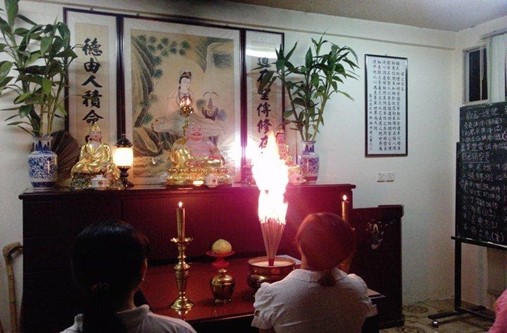
Members of a Yi Guan Dao organization offer incense in an apartment believed to be in mainland China at an unknown date. Image credit: Jin De Fo Tang’s Facebook account
Yi Guan Dao (YGD) has not been rendered extinct in mainland China, despite a lack of recent reporting which has led some experts to express doubt on the sect’s persecution or even existence in the mainland (read “The Resurgence of Yi Guan Dao” for a detailed analysis). Combining elements of Daoism, Buddhism, and folklore, YGD has been banned for over seven decades. During the early years of repression beginning in 1950, scores of YGD members were tortured, imprisoned, and executed.
Dui Hua recently uncovered three court judgments online that corroborate its observation that YGD practitioners continue to be at risk of imprisonment. The sect continues to gain traction among the middle-aged rural population in Shantou, Guangdong, where prosecutors accuse YGD of conducting “reactionary” activities.
YGD’s beliefs, with elements of feudalism, include apocalyptic teachings and salvationist doctrines that say that only converts will go to heaven. China’s pre-1997 Criminal Law classified YGD as a “reactionary secret society” or fandong huidaomen (反动会道门). The term is considered pejorative, denoting people or ideas that embrace views considered to be superstitious and outdated. However, the term has largely fallen into disuse after the amended Criminal Law, issued in 1997, removed “reactionary secret society” and replaced it with “organizing or using a cult to undermine implementation of the law (Article 300).”
Chenghai District
On May 30, 2018, the government of Chenghai District in Shantou, Guangdong, issued a public notice concerning the ban on YGD activities. Labelling it a “superstitious secret society,” the ban states that YGD carries out “infiltration and sabotage” in the name of “prostrating to Buddha” and “doing good deeds” when in fact they are “seriously and adversely affecting the socialist construction of spiritual civilization…and normal life of the people.”
Table 1: 7 YGD leaders sentenced on December 20, 2018
Source: Chenghai District People’s Court
Du Liqun (杜丽群), considered the principal offender in the case, had been secretly proselytizing across several villages in the district since learning the faith from two YGD masters from Taiwan in 1995. She founded several temples and provided worshippers with access to YGD books, videotapes, and CDs. Worship was held on every first and 15th day of the lunar calendar, coinciding with the lectures on YGD teachings. Worshippers learned about YGD standards of decency and morality in the lectures, but prosecutors alleged that the teachings “wantonly spread reactionary thought” and “fetter the freedom of thinking.”
The judgment cited a witness as saying that there were four to five hundred worshippers at one of the temples on one occasion. Most members joined YGD to pray for family safety. While some were drawn by YGD’s promotion of traditional Chinese values such as filial piety, they also believed that YGD represented good deeds and could bring good karma. Among the new converts were an unspecified number of minors. Du and other leaders were also accused of soliciting donations and membership fees from worshippers.
The court found that the seven YGD leaders had inflicted great social harm for influencing a large number of members. However, the circumstances of the case were mitigated by their willingness to confess and recant their beliefs. All defendants in this case have completed their prison sentences at the time of writing.
Shantou Chaoyang District
While the 2018 ban appears to have ended YGD activities in Shantou, Dui Hua found two more “cult” cases in Shantou Chaoyang District involving YGD leaders. On November 27, 2019, another group of 15 defendants were sentenced for Article 300, with punishments ranging from suspended sentences to three years in prison. Lin Qinmao (林钦茂) is the only defendant who remains imprisoned. He is expected to complete his three-year prison sentence in 2022.
A case posted on Guangdong Anti-Cult Website stated that most of the defendants were either illiterate or did not receive education past the primary school level. In this case, 13 defendants were women.
Table 2: 15 YGD leaders sentenced on November 27, 2019
Another court judgment shows that YGD has made inroads with members of the Chinese Communist Party (CCP), despite party membership rules that applicants must be “unyielding Marxist atheists.” Convicted separately in May 2020, CCP member Li Hesheng (李和胜) received a prison sentence of eight months suspended for one year. Li recruited 70 members for his self-funded temple before being criminally detained in December 2019.
Li Hesheng and the 15 defendants belonged to the same jing de fo tang (进德佛堂), a branch of YGD, in Shantou Chaoyang District. The court found that they were subordinate to another YGD group in Hong Kong, where members of spiritual groups outlawed in China can still practice freely. Since 2009, the group had recruited over 200 members in Shantou Chaoyang District. Some of them travelled to Hong Kong to take part in worship. The Hong Kong-based YGD group is also found to have shipped promotional materials to the mainland.
YGD typically gathers financial support through the performance of “rituals of salvation of the ancestors.” Its activities are also sustained by donations from ordinary members. In the case of the 15 defendants, the court confiscated a total of RMB600,000.
The prison sentences meted out to the YGD leaders are noticeably shorter than many adherents of Falun Gong and Almighty God who are also convicted of violating Article 300. Unofficial news sources reported that a leader of Almighty God in Xinjiang received a hefty sentence of 15 years in prison in July 2020. The difference in treatment likely reflects YGD’s status as a lesser political threat to the regime. While its popularity and influence have diminished considerably compared to its heyday prior to the Communist takeover in 1949, the activities YGD conducted in Shantou show that the sect has survived seven decades of state repression.
The cases discussed in this post do not only show continuity in YGD’s connections with Taiwan and Hong Kong, but also the official narrative and tactics used by authorities to suppress the sect. In addition to conducting localized activities in Guangdong, YGD is also known to be active in Fujian, where Taiwanese preachers and followers remain active. YGD members from Fujian have also made asylum claims in Canada and Australia since 2000, citing their fear of religious persecution in mainland China.
SAN FRANCISCO (APRIL 1, 2021) — The Dui Hua Foundation is proud to announce the conclusion of the International Symposium on Girls in Conflict with the Law (GICL). Beginning in October 2020, the 12-webinar series explored key issues and best practices related to girls’ criminal offending and rehabilitation. The final webinar took place on March 30 and featured participants from China’s Supreme People’s Court (SPC), the highest court in the People’s Republic of China.
The GICL brought together experts representing 18 countries to present a global snapshot of policy, approach, challenges and successes on girl’s justice and the criminal justice systems that they move through. Topics for the webinars included alternatives to juvenile incarceration, sex trafficking, and the treatment of Indigenous youth in Canada and Hawaii.
John Kamm, founder and Executive Director of the Dui Hua Foundation said, “The first goal of the Symposium was to raise awareness, second, to exchange and talk about best practices with experts, and finally, to make recommendations to governments and other institutions on how to deal with this crisis.”
Titled “Special and Priority Protection of the Legitimate Rights and Interests of Underage Girls in Accordance with the Law,” (中国最高人民法院:依法特殊、优先保护未成年女性合法权益), the final webinar on March 30 featured SPC representatives Jiang Jihai (江继海), Director of Juvenile Justice Guidance Division (中国最高人民法院少年审判指导工作处处长), and Dai Qiuying (代秋影), Director & Deputy Researcher of Department of Criminal and Administrative Justice Research (中国最高人民法院中国应用法学研究所刑事行政审判研究部主任、副研究员), China Institute of Applied Law. They discussed the number of girls tried, causal factors, types of crimes, and the SPC approach to handling crimes in accordance with the rule of law.
“It is unusual for China’s highest judicial body to join with an American human rights group to do a joint program online. This webinar underlines the high level of engagement and expertise GICL was able to bring to the table from the international community on the topic of juvenile justice for girls,” said Kamm.
All the webinars, transcripts, additional materials and recommendations are available on the virtual webinar space GirlsJustice.org. Visitors can watch a webinar, start a conversation with a panelist, and download recommendations to share with decision makers.
The Symposium was organized by an international cross-section of leaders and organizations that work in the fields of criminal and juvenile justice: the Dui Hua Foundation, Managing Attorney for the Juvenile Division of the San Francisco Public Defender’s Office Patricia Lee, Penal Reform International, the University of Hong Kong School of Law Centre for Comparative and Public Law and the University of Hong Kong Centre for Criminology.
To learn more about The International Symposium on Girls in Conflict with the Law, visit GirlsJustice.org. For questions, please contact Dui Hua.
On January 24, 1995, then-President Clinton delivers the State of the Union address to Congress. Image credit: C-Span
Acting on a recommendation by Assistant Secretary of State for Democracy Human Rights and Labor Richard Shifter, I began submitting prisoner lists to the Chinese government in 1991. In January 1995 I gathered all the responses on prisoners that I received from the Ministry of Justice (MOJ) and the State Council Information Office (SCIO) in 1993 and 1994, 50 in all, and sent a booklet containing the information to senior officials of the MOJ and the SCIO in Beijing.
I flew from Hong Kong to Beijing on Wednesday, February 15, and immediately went to the Jianguo Hotel upon arrival. The next day I met with SCIO Minister Zeng Jianhui, and Liang Gang, Director of the MOJ’s Prison Administration Bureau and his colleague Zhang Jinsheng. (Zeng, now 93 years old, had served as Vice President of the New China News Agency when he was picked to head the SCIO in 1990. He went on to chair the National People’s Congress Foreign Affairs Committee.) We met at the offices of the SCIO, a drab structure next to the Asian Games Village, a 30-minute drive from the Jianguo Hotel.
I started the conversation by asking Minister Zeng whether he had read the recently released human rights report on China released by the Department of State. He replied that he had read it and felt that it was negative and full of mistakes. I pointed out that the report made favorable mention of my cooperation with the Chinese government on prisoner information. Minister Zeng called that mention one of the few positive things in the report.
On October 14, 1999, then-Chairman of the Chinese National People’s Congress Zeng Jianhui spoke with reporters about their delegation’s meeting with members of congress. Image credit: C-Span
I then asked what he thought of the compilation of prisoner information that I had faxed to him a few weeks before. He replied that he had received it. “What do you think?” I asked. “You have accurately reported what you were told.” I then asked if we should continue our cooperation, and the minister replied “Of course.”
I took a chance, apologizing for causing so much work for the MOJ. “I suggest I limit my inquiries to 100 names in 1995, 25 a quarter.” Minister Zeng checked with the MOJ officials, and they nodded agreement. “Great,” I said, and extended my hand for a handshake. All present shook hands. Information on prisoners would be provided during in-person meetings or by fax.
I then handed over my first list of 25 names, singling out Yang Lianzi, Zhao Fengping, and Jigme Sangpo for special attention. Yang was an itinerant troubadour who entertained crowds at Tiananmen Square with protest songs and poems. Zhao founded the Northeast China Autonomous People’s Republic, a counterrevolutionary organization. Jigme Sangpo had been a schoolteacher in Lhasa who was now serving a long sentence for counterrevolution.
After I left the meeting I was hosted to a dinner by my host, the China Council for the Promotion of International Trade. The conversation centered around prospects for Most Favored Nation (MFN) renewal in 1995.
I returned to Beijing on April 24, 1995 and met with the SCIO Director of the Domestic Information Bureau Zhou Changnian and the MOJ’s Liang Gang, director of the Prison Administration Bureau. We met at the SCIO office on April 26. As soon as we sat down, Liang Gang handed over responses to 19 of the names on my first list of 25 names. He explained the difficulties in obtaining information on prisoners but said the MOJ was committed to providing information to the best of its ability. I handed over my second list of 25 names. I was informed that the SCIO had established a small human rights unit within the office.
As I had done at the February meeting, I focused on several prisoners including Hong Kong journalist Xi Yang in prison for trafficking in state secrets, Tibetan prisoner Tenpa Wangdrag who had been severely punished for attempting to hand over a letter to American Ambassador Jim Lilley when he visited Drapchi Prison, and Ahmet Jan, a young Uyghur who had been given a long prison sentence for establishing a reactionary organization. After the meeting, I visited bookstores where I found the names and basic information on several previously unknown prisoners. Their names were added to my lists.
Not long after this April visit, the MOJ sent out a directive to prisons under its control requiring them to report on a regular basis the situations of political and religious prisoners.
Taiwan Strait Crisis
In 1994, Taiwan President Lee Teng-hui transited Honolulu on his way to South America, where a number of countries maintained diplomatic relations with the Republic of China. President Bill Clinton’s State Department refused to grant Lee a visa, so he spent the evening on his plane, on the tarmac.
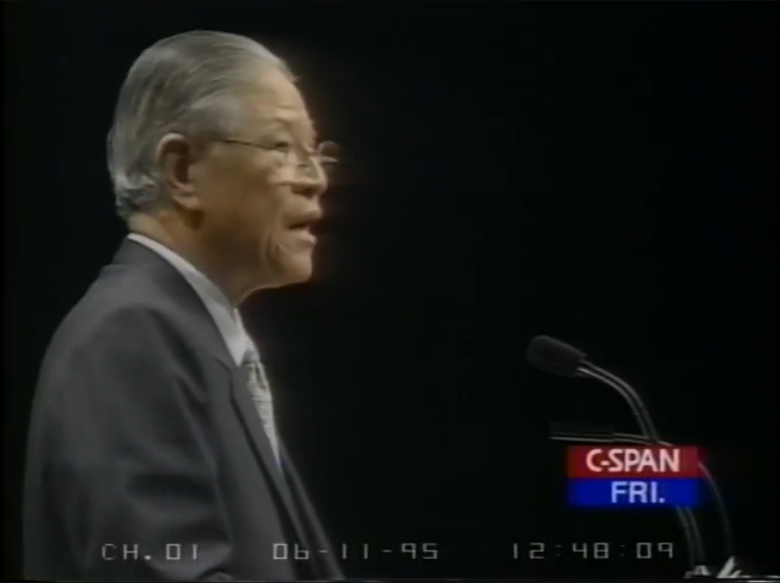
A year later, Lee Teng-hui was invited to speak at his alma mater, Cornell University. Lee accepted the invitation. Chinese foreign minister Qian Qichen claimed that Secretary of State Warren Christopher assured him in April 1995 that Lee would not be granted a visa. Whatever the truth, Congress stepped in and passed a concurrent resolution. Even though a concurrent resolution, as opposed to a joint resolution, need not be signed by the president, the State Department relented and issued the visa. Lee visited Cornell June 9-10, 1995.
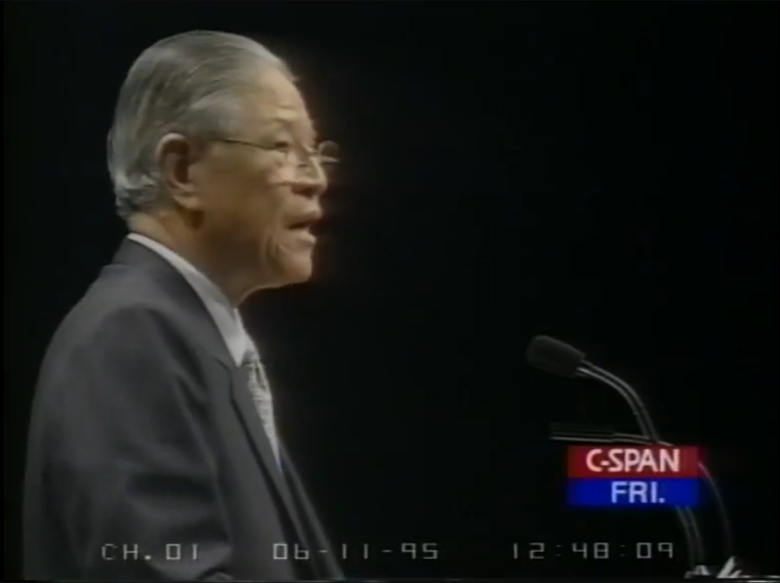
On June 9, 1995, then-president of Taiwan Lee Teng-hui speaks at the Cornell University Alumni Reunion. Image credit: C-Span
Beijing was furious and accused the United States of violating the “One China” principle and “ruining US-China relations.” In July and August, the Chinese military fired barrages of missiles into the waters off Taiwan, mobilized troops in Fujian Province, and conducted amphibious landing exercises.
Bill Clinton’s administration responded by bolstering the US naval presence in the area around Taiwan. Two aircraft battle groups were dispatched, and one of them sailed through the Taiwan Strait. China stopped the missile firings, and it appeared that the Chinese military had backed down, but the relaxation of tensions proved short-lived. In March 1996, just before Taiwan’s presidential election, the firings resumed. Once again, the United States dispatched a carrier battle group to the region. US-China relations had entered a period of crisis that was to last through the November 1996 US presidential election.
My cooperation with the SCIO and MOJ stalled. For my part, I sent my third and fourth quarter lists to the MOJ in August and December 1995. As I told Chinese officials at the time, I had lived up to my side of the agreement.
Stalemate
I traveled to Beijing in February and May 1996, meeting with the SCIO and the MOJ on both trips. I was told by both organizations, and by the Ministry of Foreign Affairs (MFA), that it had been decided to suspend providing information to me “for the time being,” due to tensions in US-China relations.
In addition to the fallout from the Taiwan Strait crisis, Beijing was increasingly concerned about the likelihood that the United States would put forward a China resolution at the Human Rights Commission in Geneva. If that happened, I was told by a senior official in the MFA, US-China relations would enter an “ice age.” I was also told that the best way to repair relations would be for President Clinton to invite Chinese President Jiang Zemin to make a state visit to the United States.
On June 2, 1996, I arrived in Washington to present a list of recommendations for US policy towards China now that MFN had been extended without human rights conditions. My recommendations included establishing a consulate in Lhasa, setting up a prisoner registry, and putting together a bipartisan, bicameral commission on human rights in China. I met with members of the Clinton administration and Congress to introduce my recommendations and to ask a favor: would they be willing to write letters urging Beijing to follow through on commitments to provide information, as promised, on prisoners about whom I had asked in 1995?
Prior to my visit to Washington in June, I went to Beijing in May and managed to hand over a new list of 25 names to MOJ, thus bringing to 100 the number of outstanding inquiries. My thinking was to keep the pressure on while I was waiting for responses to the remaining 75 names on the 1995 lists. It was a tactic I would use again before Jiang Zemin’s state visit to the United States in October 1997.
Starting with my testimonies on MFN in 1990, I had met with scores of members of the House of Representatives, Senators, and senior staff in Washington, San Francisco, and Hong Kong, and had formed strong friendships with several. My visits to Washington were facilitated by Hal Furman, a lawyer who had served in the Reagan administration and who had lost a narrow race for Senator from Nevada in 1994.
The plan I worked out with Mr. Furman was to ask members of both chambers, from both parties, and with different China positions to write letters addressed to me for forwarding, or directly to Chinese officials including the Chinese ambassador in Washington. On the early June 1996 trip, I asked Senators John Kerry (D-MA), Craig Thomas (R-WY) and congressmen Matt Salmon (R-AR) and Ed Royce (R-CA) to write letters. They all agreed to do so.
(Left to right) John Kerry, Craig Thomas, Matt Salmon, and Ed Royce. Image credit: Public domain via Wikimedia commons
Over the next two years, 20 letters were written from Senators and Congresspeople to me, Chinese ambassador Li Daoyu, Chinese President Jiang Zemin, Chinese Premier Li Peng, and Minister of Justice Xiao Yang. I also received a verbal commitment to help from House Speaker Newt Gingrich (R-Georgia) and, after a somewhat contentious session, from Senator Dianne Feinstein (D-California). On a visit to Beijing, Congressman Ed Royce (R-California) – he went on to become Chairman of the House Foreign Affairs Committee – managed to hand one of my lists to a startled Premier Li Peng.
The first letter came from Senator John Kerry. He had visited San Francisco on March 31, 1996, and together we had met with the Chinese consul general. Minister Song Zengshou. One of the topics the senator raised was the violation of American company intellectual property rights (IPR) by Chinese state-owned enterprises. The consul general claimed that the Chinese government was not able to track IPR violations by Chinese firms. Senator Kerry scoffed: “You can track citizens who voice dissenting views, but you can’t track companies that violate IPR?”
In his letter to me on June 11, 1996, Senator Kerry said that the “noteworthy success” of my dialogue with the MOJ “testifies to the wisdom of pursuing engagement with, not containment of, China.” He asked that as soon as I had received responses to my lists, I let him know so that he could invite me to Washington “to brief some of my skeptical colleagues on the value of dialog on human rights with the Chinese government.” He dangled the possibility of my testifying to the Senate Foreign Relations Committee on the results of my work in China.
Two days after the Senator Kerry letter, Senator Craig Thomas (R-Wyoming), chairman of the Senate Foreign Relations Committee’s Asian and Pacific Affairs Subcommittee, sent a letter to Chinese ambassador Li Daoyu. He told Ambassador Li that he thought my cooperation with the MOJ was significant and valuable and urged him to contact MOJ minister Xiao Yang and SCIO deputy director Ma Yuzhen to resume the Prisoner Information Project. Like Senator Kerry, he said it would be desirable for me to come to Washington to brief colleagues.
Two months went by. The letters from Senators Kerry and Thomas failed to get the desired results, so I turned to Congressman Chris Smith (D-New Jersey), chairman of the House of Representatives Subcommittee on Human Rights and a strong critic of China’s human rights record. I had met Congressman Smith at my first testimony on MFN in May 1990, and he and I had become friends (we both grew up on the New Jersey shore, so we were both “clam diggers”). In his letter, addressed to me and dated September 17, 1996, he made the point that for dialogue to be effective, “the question of trustworthiness is critical.” He too invited me to come to Washington to share with colleagues whatever information on prisoners I obtained “as we continue to assess US-China relations.”
The three letters appear to have had an impact. On October 15, 1996, the Director of the MOJ’s Prison Administration Bureau, sent me a letter stating that “the Chinese side does not have the duty to provide the American side with the information on the seventy-five inmates you mentioned.” I immediately replied, saying that I agreed that the Chinese government is not obligated to provide information about its prisoners to foreign governments, but stressing that this was a situation involving a private individual to whom the Chinese government had made a promise. My letter went unanswered. After waiting a few months, I resumed pressing members of Congress to write letters to the Chinese government.
On February 5, 1997, Congressman Lee Hamilton, Ranking Democratic member of the House International Relations Committee, wrote to Chinese Ambassador Li Daoyu expressing support for my work and asking him to urge the MOJ to provide the information that had been promised to me two years before. In quick succession, letters were sent by Congressman Matt Salmon (R-Arizona), who had studied Mandarin as a Mormon missionary in Taiwan, to Ambassador Li Daoyu (March 10, 1997) urging China to honor its commitment to me; Congressman Ed Royce (R-California) to Chinese premier Li Peng (March 21, 1997) pointing out the importance of honoring commitments; and Senators Max Baucus (D-Montana) to Ambassador Li (April 14, 1997), Paul Wellstone (D-Minnesota), and Congressman Doug Bereuter (R-Nebraska) to Ambassador Li, all urging the Chinese government to renew cooperation.
In June 1997, President Bill Clinton gave me the first Global Practices Award for my work on behalf of lesser-known political prisoners in China.
In August 1997, National Security Advisor Sandy Berger traveled to Beijing for discussions with Chinese President Jiang Zemin about a possible state visit to the United States in October 1997. After Berger’s return to the United States, the Department of State announced that President Bill Clinton would host Jiang on a nine-day visit in late October. A summit between the two leaders would take place on October 29, 1997.
On October 29, 1997, President Clinton makes remarks before exchanging toasts with President Jiang Zemin, seated next to First Lady Clinton. Image credit: C-Span
Prior to Jiang’s arrival in the United States, I sent the MOJ two new lists: one a “national list” with 37 names from provinces all of China, and one a list of 24 counterrevolutionaries and hooligans in Shandong Province, where leaders of the June 1989 protests had received some of the longest prison sentences in China. Also prior to the October summit Senator Hatch (R-Utah) visited China and intervened on my behalf with President Jiang Zemin and Minister of Justice Xiao Yang, urging them, in private meetings, to resume providing the information promised to me.
Talks between the two governments began on a list of “deliverables,” things that the two countries wanted to see come out of the Clinton-Jiang summit. One of the American deliverables was the resumption of my “prisoner information project.” A joint statement issued at the end of the summit affirmed both sides’ commitment to holding human rights dialogues involving both governmental and non-governmental organizations. A side document referenced resumption of the prisoner information project. (Mine was the only name in the joint statement documents. Mention of my name in Chinese, Kang Yuan, prompted hilarity on the Chinese side: Kang Yuan is a homonym of the name of a popular biscuit in China).
A selection of the Khong Guan biscuits that are homonymous with Kang Yuan, John Kamm’s Chinese name. Image credit: Midori / CC BY 3.0
Unfortunately, information did not begin to flow, necessitating another barrage of letters from members of Congress including Congressman Don Manzullo (R-Illinois) to Jiang Zemin (Manzullo attached one of my lists of religious prisoners to his letter), Senator Orrin Hatch (expressing disappointment that the promised information had yet to be provided), and Senator Jesse Helms, perhaps the fiercest critic of “Red China” in the Senate.
All the while I was getting lawmakers to write letters, senior administration officials including Secretary of State Madeline Albright and National Security Advisors Tony Lake and Sandy Berger were raising the Chinese side’s failure to honor their commitments with senior Chinese officials, including Foreign Minister Tang Jiaxuan, even after President Jiang’s promise that it would do so. The American embassy in Beijing also weighed in, pressing the Ministry of Justice to resume providing information. President Clinton exchanged letters with Senator Hatch in which the president expressed strong support for my efforts. I was authorized to provide the letters to the Chinese government.
In February 1998 I traveled to Atlanta to attend a conference with former President Jimmy Carter. On February 13, I received a phone call from Bai Ping, Deputy Director Bai Ping of the MOJ’s Foreign Affairs Bureau, advising me that I would be sent information on prisoners “in a few days.” As promised, I received the information – a partial installment on the list of 100 – a week later. I advised Senator Hatch, who commended me on this achievement, and other members of the House of Representatives and Senate who had supported me.
By the time Dui Hua was established in April 1999, the MOJ had fulfilled its 1995 commitment to provide information on 100 prisoners, “to the best of its ability.” The last installment was provided June 22, 1998, the eve of President Clinton’s state visit to China. Bolstering my claim, made in Congressional testimony in September 2006, that asking about prisoners tripled the chance of clemency, a majority of prisoners on my 1995, 1996, and 1997 lists had been granted early release from prison, while others had benefited from better treatment.
On June 26, 1998, the Clinton family visits the Terra Cotta Warriors Exhibit in Shaanxi Province during former President Clinton’s state visit to China. Image credit: Ralph Alswang (Presidential official photographer) / Public Domain, via Wikimedia Commons
After the resumption of the prisoner information project, members of Congress and the Clinton and George W. Bush administrations continued to write letters to Chinese officials supporting my efforts to win the release of counterrevolutionaries and reduce use of the death penalty. Some letters asked for my help in assisting constituent’s family members incarcerated in China. Some letters, including one sent to Religious Affairs Bureau chief Ye Xiaowen by Congressman Joe Pitts, were sent with prisoner lists.
In all, 60 letters were written from 1996 to 2007. Letters were written by members of the Senate and House of Representatives including House Minority Leader Nancy Pelosi (D-California), House Majority Whip Tom Delay, Chairman of the Senate Finance Committee William Roth (R-Delaware), Senate Minority Leader Tom Daschle (D-South Dakota), Senator John McCain (R-Arizona), Senator Joe Leiberman (D-Connecticut), Senator Sam Brownback (R-Kansas), Senator Tim Hutchinson (R-Arkansas), Pete Sessions (R-Texas), Phil Crane (R-Illinois), Howard Berman (D-California), and Jim Leach (R-Iowa). The last letter, dated June 5, 2007, was written to me by Senator Byron Dorgan (D-North Dakota) following a discussion we had in Rome.
The experience of having to fight for MFN renewal taught Beijing the importance of Congress in making China policy. After China gained entry to the World Trade Organization in December 2001, it gradually came around to the view that Congress was less and less important in formulating China policy, even though, in 2020, more than 300 bills and resolutions touching on China’s “core interests” in Hong Kong, Tibet, Taiwan, and Xinjiang were debated in Congress, and several were passed by both chambers with veto-proof majorities. Today, letters from congresspeople and senators to the Chinese government are often ignored and almost never acted on. I took advantage of a special moment in the history of US-China relations to use Congress to help political prisoners in China.
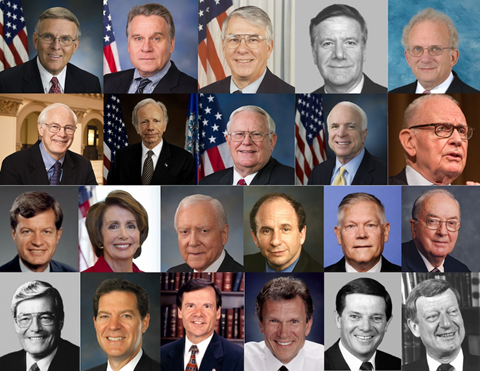
Some of the members of Congress that participated in the letter writing campaign. (Left to right, top to bottom) Byron Dorgan, Chris Smith, Don Manzullo, Doug Bereuter, Howard Berman, Jim Leach, Joe Lieberman, Joe Pitts, John McCain, Lee Hamilton, Max Baucus, Nancy Pelosi, Orrin Hatch, Paul Wellstone, Pete Sessions, Jesse Helms, Phil Crane, Sam Brownback, Timothy Hutchinson, Tom Daschle, Tom DeLay, William Roth. Image credit: Public domain via Wikimedia Commons
Hyatt Regency Orlando, 9801 International Drive, Orlando, Florida. Photograph taken 10 November 2013.
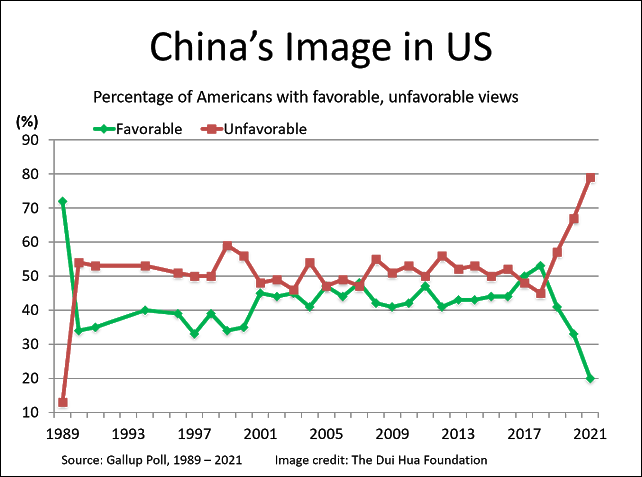
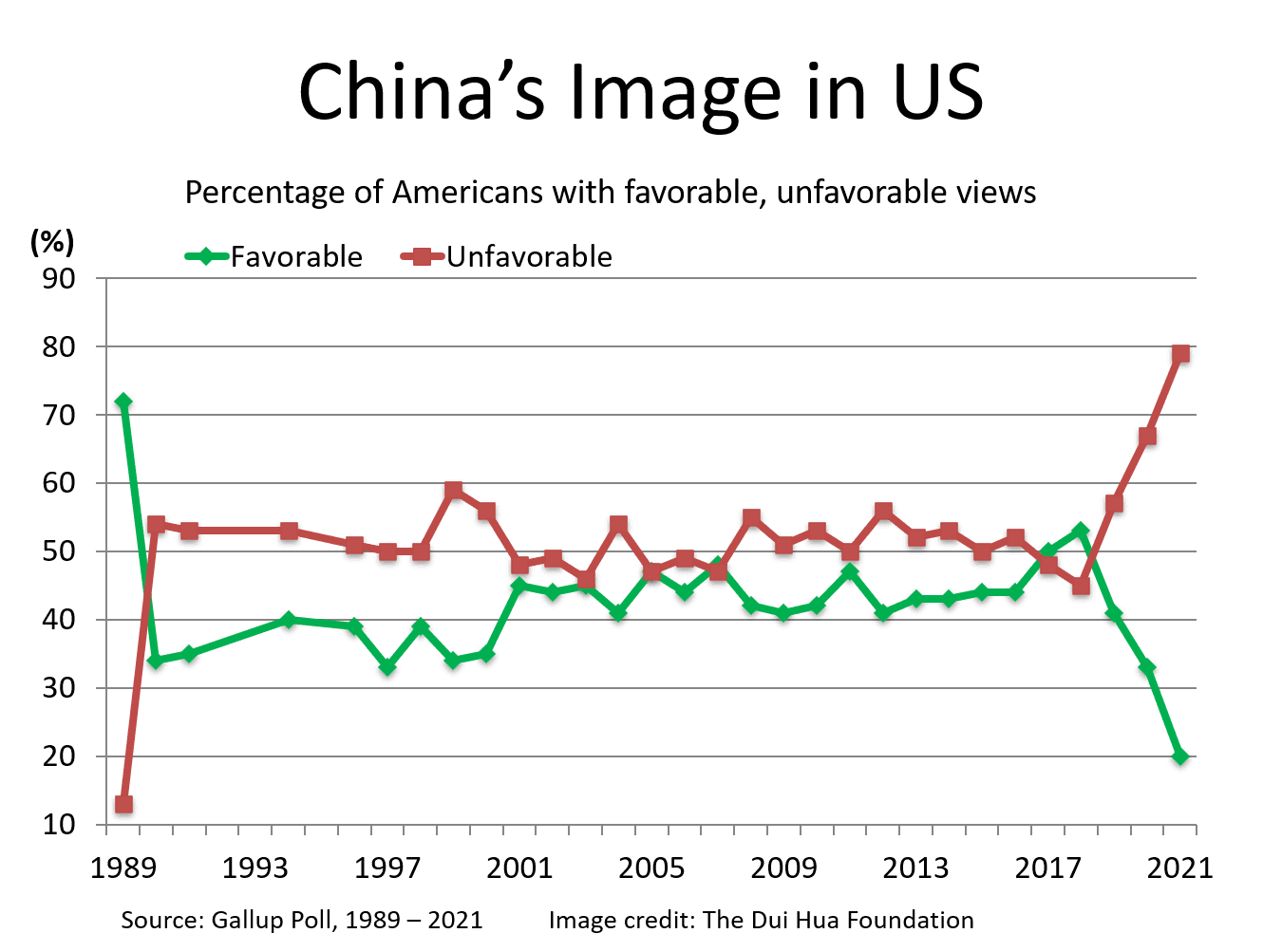
The most recent Gallup poll on American attitudes towards foreign countries was released on March 1. The poll, conducted February 3-18, 2021, revealed a sharp drop in American public opinion towards China over the previous 12 months, with 20 percent having a favorable view and 79 percent having an unfavorable view. Among the key demographics polled by Gallup were self-identified conservatives, of whom less than 10 percent had a favorable view of China.
Not surprisingly, China was the target of several speeches and no less than six panels at the annual Conservative Political Action Conference (CPAC), the principal gathering of American conservatives. CPAC took place in Orlando, Florida, from February 25-28, 2021. The titles of the six panels on China reflect the wide-ranging list of conservative concerns.
On February 26, three panels were held:
“Big Tech is for Sale and China and Russia are Buying”
“Familiarity Breeds Contempt: How Will China’s Neighbors Survive”
“China Subverts America: Winning Without Fighting”
On February 27, the remaining panels were held:
“Quad Goals: Fighting Communist China from All Four Corners”
“Love and Hate Relations between China and North Korea – A Threat to America?”
“China’s Puppets in South Korea and Hong Kong”
The audience at CPAC 2021 before the event “Quad Goal: Fighting Communist China from All Four Corners.” Image credit: C-Span
Eliminating 10-Year Visas
Five conservative senators didn’t even wait for the conference to begin, introducing legislation on February 24 titled the Visa Security Act. The act would end China’s access to multiple entry, 10-year visas until Beijing ceases “economic and industrial espionage” against the United States. The mutual granting of 10-year multiple entry visas was considered by the Obama administration a major accomplishment of its engagement policy with China.
In one particularly hard-hitting speech delivered at CPAC on February 26, Florida Senator Rick Scott stated that he would not allow “any more bad trade deals that favor Communist China and hurt American workers.” Echoes of the former president’s rhetoric could be heard as Scott added that China “is jailing and murdering its own citizens . . . because they have spoken the truth about the Wuhan virus.”
In an aside during his own speech on the Bill of Rights, former Secretary of State Mike Pompeo accused the Biden administration of sending “mixed messages” on the Chinese persecution of religious minorities in Xinjiang. Mr. Pompeo was doubtless referring to confusion arising from apparently contradictory statements by Secretary of State Tony Blinken, who agreed with Pompeo’s designation of China as committing genocide in Xinjiang, and United Nations Ambassador Linda Thomas-Greenfield who stated that the designation was being reviewed because all the procedures were not followed. The administration has also signaled shifting views on whether to boycott the 2022 Olympic Games in Beijing.
On Sunday, February 28, the last day of CPAC, former President Donald Trump gave a 90-minute speech loaded with attacks on China, accusing the country of having “ripped us off for years.” Mr. Trump proposed that American companies who leave America and create jobs in China should be “tariffed, fined and punished.” He accused the World Health Organization of being a puppet of China and resurrected use of the term “China virus” to refer to Covid-19. President Biden has banned use of the term in his administration as “racist.” Trump denied that he was considering forming a third party, but he didn’t indicate whether or not he’d run for president again in 2024.
A statue of gold resembling former President Trump displayed at the 2021 CPAC event. Image credit: News 360 Tv / Creative Commons
A New Front – US State Legislation Targets China
The day after CPAC concluded, Florida governor Ron DeSantis opened a new front in the all-of-government confrontation with China by proposing two bills at the opening session of Florida’s legislature. The bills came in addition to a bill introduced in the previous session that would curb China’s influence in academic fields by requiring disclosure of all donations exceeding $50,000 from foreign governments. The two new bills would ban state and local governments from purchasing products 100 percent made in China and increase penalties for technology theft and trafficking in trade secrets.
The strategy of disrupting relationships between US states and Chinese provinces could prove to be a significant deterrent to trade and investment between the two countries, as well as exchanges in other areas such as education. There are currently nearly 300 sister city and sister state relationships between American and Chinese entities.
EXCHANGES
Exchanges is a feature that explores Dui Hua’s International Symposium on Girls in Conflict with the Law as well as other expert exchanges and dialogues.
“The biggest challenge is poverty and lack of opportunities”
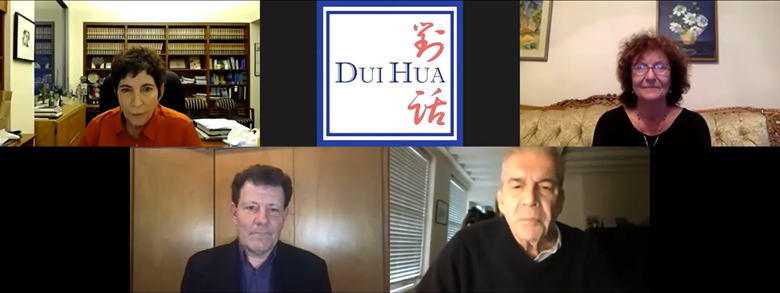
(Clockwise from top left) Judge Susan Breall, Antonia Lavine, John Kamm, and Nicholas Kristof on the “Sex Trafficking of Girls” webinar on February 23. Image credit: The Dui Hua Foundation
The most recent webinars in the International Symposium for Girls in Conflict with the Law may have had different foci—international sex trafficking and working with justice-involved girls in Scotland—but they shared some conclusions. Panelists in both webinars emphasized the need for poverty reduction and community-based responses to youth offending.
“Sex Trafficking of Girls” took place on February 23 and featured Superior Court Judge Susan Breall, Coordinator of the San Francisco Collaborative Against Human Trafficking (SFCAHT) Antonia Lavine, and journalist Nicholas Kristof speaking about their work to combat sex trafficking. In addition to her work in the Bay Area, Lavine also discussed her career fighting sex trafficking in the European Union, noting how cohesive international laws make prosecuting traffickers easier. Judge Breall discussed her work on the juvenile court working with survivors of trafficking. Nicholas Kristof recounted the events that led him to address sex trafficking in his work, including the horrifying commodification he witnessed in the Cambodian sex industry. With Judge Breall, Kristof also discussed the need to disrupt the profitability and impunity of sex trafficking industries around the world.
All three speakers emphasized that this problem needed to be addressed at its root causes. Referring to Eastern Europe, but also more broadly, Lavine said, “the biggest challenge is, of course, poverty and lack of opportunities.” Judge Breall echoed this, saying, “we have to shore up our torn and inadequate social safety net,” while Kristof offered a similar sentiment:
“The US has always accepted child poverty rates that are just among the highest in the industrialized world…If we could reduce child poverty in half that would make a real dent in some of these underlying causes, underlying pipelines.”
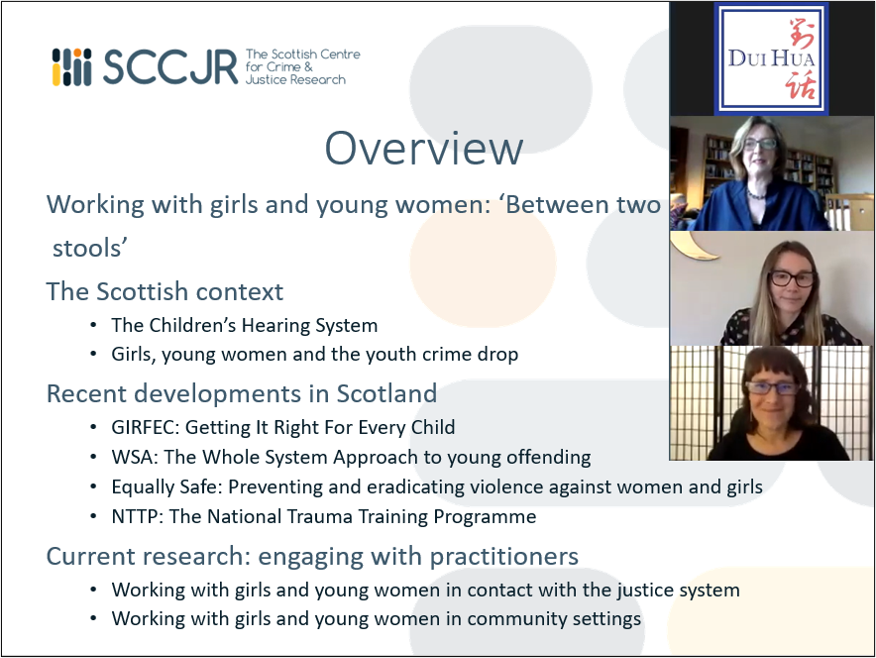
On March 2, “Working with Young Women and Girls” built on the theme of the power of government and policy in preventing girls from engaging in criminal behavior. The University of Glasgow’s Dr. Susan Batchelor and Dr. Michele Burman detailed the very real progress Scotland has made reducing juvenile offending, drawing on their work in the field of feminist youth justice to show how proper policy and investment can lead to tangible benefits for communities.
A presentation slide from “Working with Young Women and Girls” on March 2. (Right, top to bottom) Panelists Michele Burman and Susan Batchelor, moderator Rebekah Enoch. Composite image credit: The Dui Hua Foundation
Scotland has adopted a rights-based approach to youth crime and poverty, including a national policy framework called GIRFECT or “Getting It Right for Every Child,” that puts the needs and well-being of the child at the center of all criminal procedures and processes. Drs. Batchelor and Burman described a system of community volunteer panels, properly resourced social services, and “multi-agency working and joined-up thinking to ensure the best outcomes.” This “whole system approach” to youth offending adopted by the Scottish government echoed a comment by Judge Breall in the previous webinar: “there has to be collaboration, and there has to be a coordinated community response.” According to Dr. Burman, this approach has clear benefits:
“Now, research undertaken by myself and colleagues in 2015 revealed that the whole system approach has definitely supported more streamlined planning, assessment, and decision-making processes for children and young people who come into conflict with the law. This includes diversion from statutory measures, prosecution, and custody through early intervention.”
You can watch both of these webinars, and others, at GirlsJustice.org, an online resource dedicated to the International Symposium on Girls in Conflict with the Law. GirlsJustice.org features recordings of all Symposium webinars as well as information about the panelists, key research on girls’ justice, and opportunities to learn more about the crisis of girls in conflict with the law.
Reflecting a year of tense relations between the United States and China, China’s favorability rating among Americans as measured by the annual Gallup Poll has dropped to its lowest level in at least 40 years. The survey of 1,021 adults, carried out from February 3 to 28, 2021, found that 20 percent of American adults have a favorable view of China – down 13 points from the 2020 result – while 79 percent have an unfavorable view, an increase of 12 points over the 2020 result.
The second Prisoner Updates issue of 2021 looks at web administrators who received harsh sentences for allegedly doxing Xi Jinping’s daughter, Guangzhou activists detained for subversion, an artist released on bail nearly two years after his apprehension, and a crackdown of the Church of Almighty God in Xuzhou.
The third Prisoner Update explores the case of a veteran pro-democracy activist who had his political rights restored. It also updates a case in which an environmental activist from Guangdong received a sentence reduction after being transferred to a prison in Fujian.
John Kamm Remembers is a feature that explores Kamm’s human rights advocacy prior to and since Dui Hua’s establishment in 1999.
Letters from Congress, Part I
On January 24, 1995, then-President Clinton delivers the State of the Union address to Congress. Image credit: C-Span
Acting on a recommendation by Assistant Secretary of State for Democracy Human Rights and Labor Richard Shifter, I began submitting prisoner lists to the Chinese government in 1991. In January 1995 I gathered all the responses on prisoners that I received from the Ministry of Justice (MOJ) and the State Council Information Office (SCIO) in 1993 and 1994, 50 in all, and sent a booklet containing the information to senior officials of the MOJ and the SCIO in Beijing.
I flew from Hong Kong to Beijing on Wednesday, February 15, and immediately went to the Jianguo Hotel upon arrival. The next day I met with SCIO Minister Zeng Jianhui, and Liang Gang, Director of the MOJ’s Prison Administration Bureau and his colleague Zhang Jinsheng. (Zeng, now 93 years old, had served as Vice President of the New China News Agency when he was picked to head the SCIO in 1990. He went on to chair the National People’s Congress Foreign Affairs Committee.) We met at the offices of the SCIO, a drab structure next to the Asian Games Village, a 30-minute drive from the Jianguo Hotel.
I started the conversation by asking Minister Zeng whether he had read the recently released human rights report on China released by the Department of State. He replied that he had read it and felt that it was negative and full of mistakes. I pointed out that the report made favorable mention of my cooperation with the Chinese government on prisoner information. Minister Zeng called that mention one of the few positive things in the report.
On October 14, 1999, then-Chairman of the Chinese National People’s Congress Zeng Jianhui spoke with reporters about their delegation’s meeting with members of congress. Image credit: C-Span
I then asked what he thought of the compilation of prisoner information that I had faxed to him a few weeks before. He replied that he had received it. “What do you think?” I asked. “You have accurately reported what you were told.” I then asked if we should continue our cooperation, and the minister replied “Of course.”
I took a chance, apologizing for causing so much work for the MOJ. “I suggest I limit my inquiries to 100 names in 1995, 25 a quarter.” Minister Zeng checked with the MOJ officials, and they nodded agreement. “Great,” I said, and extended my hand for a handshake. All present shook hands. Information on prisoners would be provided during in-person meetings or by fax.
I then handed over my first list of 25 names, singling out Yang Lianzi, Zhao Fengping, and Jigme Sangpo for special attention. Yang was an itinerant troubadour who entertained crowds at Tiananmen Square with protest songs and poems. Zhao founded the Northeast China Autonomous People’s Republic, a counterrevolutionary organization. Jigme Sangpo had been a schoolteacher in Lhasa who was now serving a long sentence for counterrevolution.
After I left the meeting I was hosted to a dinner by my host, the China Council for the Promotion of International Trade. The conversation centered around prospects for Most Favored Nation (MFN) renewal in 1995.
I returned to Beijing on April 24, 1995 and met with the SCIO Director of the Domestic Information Bureau Zhou Changnian and the MOJ’s Liang Gang, director of the Prison Administration Bureau. We met at the SCIO office on April 26. As soon as we sat down, Liang Gang handed over responses to 19 of the names on my first list of 25 names. He explained the difficulties in obtaining information on prisoners but said the MOJ was committed to providing information to the best of its ability. I handed over my second list of 25 names. I was informed that the SCIO had established a small human rights unit within the office.
As I had done at the February meeting, I focused on several prisoners including Hong Kong journalist Xi Yang in prison for trafficking in state secrets, Tibetan prisoner Tenpa Wangdrag who had been severely punished for attempting to hand over a letter to American Ambassador Jim Lilley when he visited Drapchi Prison, and Ahmet Jan, a young Uyghur who had been given a long prison sentence for establishing a reactionary organization. After the meeting, I visited bookstores where I found the names and basic information on several previously unknown prisoners. Their names were added to my lists.
Not long after this April visit, the MOJ sent out a directive to prisons under its control requiring them to report on a regular basis the situations of political and religious prisoners.
Taiwan Strait Crisis
In 1994, Taiwan President Lee Teng-hui transited Honolulu on his way to South America, where a number of countries maintained diplomatic relations with the Republic of China. President Bill Clinton’s State Department refused to grant Lee a visa, so he spent the evening on his plane, on the tarmac.
A year later, Lee Teng-hui was invited to speak at his alma mater, Cornell University. Lee accepted the invitation. Chinese foreign minister Qian Qichen claimed that Secretary of State Warren Christopher assured him in April 1995 that Lee would not be granted a visa. Whatever the truth, Congress stepped in and passed a concurrent resolution. Even though a concurrent resolution, as opposed to a joint resolution, need not be signed by the president, the State Department relented and issued the visa. Lee visited Cornell June 9-10, 1995.
On June 9, 1995, then-president of Taiwan Lee Teng-hui speaks at the Cornell University Alumni Reunion. Image credit: C-Span
Beijing was furious and accused the United States of violating the “One China” principle and “ruining US-China relations.” In July and August, the Chinese military fired barrages of missiles into the waters off Taiwan, mobilized troops in Fujian Province, and conducted amphibious landing exercises.
Bill Clinton’s administration responded by bolstering the US naval presence in the area around Taiwan. Two aircraft battle groups were dispatched, and one of them sailed through the Taiwan Strait. China stopped the missile firings, and it appeared that the Chinese military had backed down, but the relaxation of tensions proved short-lived. In March 1996, just before Taiwan’s presidential election, the firings resumed. Once again, the United States dispatched a carrier battle group to the region. US-China relations had entered a period of crisis that was to last through the November 1996 US presidential election.
My cooperation with the SCIO and MOJ stalled. For my part, I sent my third and fourth quarter lists to the MOJ in August and December 1995. As I told Chinese officials at the time, I had lived up to my side of the agreement.
Stalemate
I traveled to Beijing in February and May 1996, meeting with the SCIO and the MOJ on both trips. I was told by both organizations, and by the Ministry of Foreign Affairs (MFA), that it had been decided to suspend providing information to me “for the time being,” due to tensions in US-China relations.
In addition to the fallout from the Taiwan Strait crisis, Beijing was increasingly concerned about the likelihood that the United States would put forward a China resolution at the Human Rights Commission in Geneva. If that happened, I was told by a senior official in the MFA, US-China relations would enter an “ice age.” I was also told that the best way to repair relations would be for President Clinton to invite Chinese President Jiang Zemin to make a state visit to the United States.
On June 2, 1996, I arrived in Washington to present a list of recommendations for US policy towards China now that MFN had been extended without human rights conditions. My recommendations included establishing a consulate in Lhasa, setting up a prisoner registry, and putting together a bipartisan, bicameral commission on human rights in China. I met with members of the Clinton administration and Congress to introduce my recommendations and to ask a favor: would they be willing to write letters urging Beijing to follow through on commitments to provide information, as promised, on prisoners about whom I had asked in 1995?
Prior to my visit to Washington in June, I went to Beijing in May and managed to hand over a new list of 25 names to MOJ, thus bringing to 100 the number of outstanding inquiries. My thinking was to keep the pressure on while I was waiting for responses to the remaining 75 names on the 1995 lists. It was a tactic I would use again before Jiang Zemin’s state visit to the United States in October 1997.
Starting with my testimonies on MFN in 1990, I had met with scores of members of the House of Representatives, Senators, and senior staff in Washington, San Francisco, and Hong Kong, and had formed strong friendships with several. My visits to Washington were facilitated by Hal Furman, a lawyer who had served in the Reagan administration and who had lost a narrow race for Senator from Nevada in 1994.
The plan I worked out with Mr. Furman was to ask members of both chambers, from both parties, and with different China positions to write letters addressed to me for forwarding, or directly to Chinese officials including the Chinese ambassador in Washington. On the early June 1996 trip, I asked Senators John Kerry (D-MA), Craig Thomas (R-WY) and congressmen Matt Salmon (R-AR) and Ed Royce (R-CA) to write letters. They all agreed to do so.
(Left to right) John Kerry, Craig Thomas, Matt Salmon, and Ed Royce. Image credit: Public domain via Wikimedia commons
With a single sheet of paper, veteran democratic activist Zhu Yufu (朱虞夫) had his political rights restored. So said the official notice issued by the Shangcheng sub-bureau of Hangzhou on March 3, 2021.
The notice to restore political rights issued by the Shangcheng sub-bureau of Hangzhou.
Zhu was last convicted in 2011, when he was sentenced to seven years in prison with three years of deprivation of political rights (DPR). The evidence for inciting subversion presented by the procuratorate included a poem posted on oversea sites and fundraising efforts to help dissidents. He completed the sentence in March 2018 without receiving any clemency and immediately began serving the three-year supplemental DPR sentence.
According to the Article 54 of the Criminal Law, people under DPR cannot participate in elections and cannot exercise rights to speech, participate in gatherings, publish, form associations, or demonstrate.
The notice to restore rights simply states that Zhu’s supplemental DPR sentence has expired thus “in according to the Criminal Procedure Law, proclaim the political rights restored.”
Zhu had been imprisoned several times in his long career of pro-democracy activism. As a founding member of the China Democracy Party, he was first convicted for subversion in 1999, when he organized a memorial for the June 4th victims, and sentenced to seven years in prison with three years of DPR. He then received a two-year sentence for disrupting public order in 2007, when he tried to protect a fellow activist from being interviewed by the police.
However, Zhu has likely already been classified as “targeted population 重点人口” and will continue to be under constant supervision and monitoring by the state security police. While serving DPR, Zhu could not freely travel and meet with visitors. Those restrictions will continue.
Environmental Activist Received Sentence Reductions
Dui Hua recently learned that one of the activists of the Guangdong “Huangshawei Education Foundation” received another sentence reduction in 2019.
Ye Minhuai (叶民怀, YMH), was granted a seven-month sentence reduction. However, this latest act of clemency comes with a slight twist. The sentence reduction decision was issued by the Longyan Intermediate Court in Fujian Province. The court evaluated evidence submitted by the prison and determined that it was sufficient to demonstrate Ye’s remorse and reform before granting him the reduction. In addition, the court also reduced the length of DPR to four years, the first reduction of this sort for Ye.
It appears that Ye was transferred from Meizhou Prison in Guangdong to Longyan Prison in Fujian sometime in 2017 or 2018. The reduction is the first he received at the new facility. He will be released in October 2024.
YMH, along with Ye Bailian (叶百练, YBL) and three villagers (all surnamed Ye) from the Huanshawei Village of Guangdong, founded the Huangshawei Education Foundation to educate fellow villagers on environmental issues, land rights, and the dangers of unregulated mining. Those missions often put the foundation at odds with the local township government and mining companies. The situation came to conflict in 2009, when the villagers clashed with thugs hired by the mining company while attempting to block mining vehicles from entering a construction site.
In September 2010, the five key members were tried and convicted by the Heping County People’s Court of multiple counts of serious crime, including organizing and leading an organization of a gangland nature, sabotaging transportation infrastructure, forcing trade, racketeering, aggregated assault, and gathering a crowd to disrupt traffic. Ye Minhuai received a combined sentence of 18 years with five years of DPR.
Ye’s appeal was rejected by the Heyuan Intermediate People’s Court in December 2010. He was sent to the Meizhou Prison, where he received three reductions totaling 29 months from 2013 to 2017.
Ye Minhuai is not the only one serving a lengthy prison term in another province. Ye Bailian, often portrayed as the leader of the group, is currently serving his sentence at the Jilin Prison. His transfer probably took place in 2016 or 2017. YBL received the same sentence, a combined 18-year prison statement with five years of DPR. He last received an eight-month reduction granted by the Jilin Intermediate Court in June 2017 and will be released in May 2025.
Prison transfers within the same province can occur, but the transfers of both YMH and YMB to different provinces 异地服刑 seems unusual, especially since the alleged crimes, arrest, indictment, and trial all took place locally in Heping County. Up until the early 1980’s, Shanghai was known to send some of its counterrevolutionary prisoners to Xinjiang and Qinghai. However, such an arrangement is rare now. Prisoners can still be sent back to the provinces where their resident registrations are, as is often the case with Xinjiang residents. Dui Hua has yet to identify the relevant regulations that inform this matter.
Because the Ye’s crimes were deemed to be gangland activities, the courts noted that restrictions must apply in accordance with the law in both men’s decisions. These restrictions mandate that those convicted generally must wait longer intervals when applying for sentence reductions, and they can receive shorter reductions than those granter for other crimes, according to the 2016 regulation issued Supreme People’s Court.
The “Huangshawei Education Foundation” was well known locally. Some media at the time praised foundation’s efforts protecting the villagers’ rights but nonetheless pointed out the challenges it faced: similar to many locally-formed environmental groups, it operated in a gray area due to its inability to obtain proper registration—more often than not, resisting local authorities’ heavy-handedness resulted in violence.
Dui Hua has raised all five Ye cases with the Chinese government between 2016 and 2019. However, current statuses of other three villagers surnamed Ye remain unknown after their trial. Ye Huilan (叶辉烂), Ye Peiguo (叶沛国), and Ye Qiming (叶启明) all reportedly received the same 18-year imprisonment with five years of DPR.
SAN FRANCISCO (March 8, 2021) — To coincide with International Women’s Day, the Dui Hua Foundation is launching a new interactive website: GirlsJustice.org. The site will act as a virtual webinar focused on the topic of juvenile justice for girls. GirlsJustice.org aims to be a global knowledge exchange, inviting visitors to learn, ask questions of the experts, and get involved with this issue.
“This Symposium was able to assemble a truly global set of researchers, policy makers, and advocates to shine a light on a border spanning crisis for young women and girls. Talking and learning from each other about the challenges, sharing solutions and fostering ongoing global dialogue on justice for girls, to lay the groundwork for real systems change,” said John Kamm, founder and Executive Director of Dui Hua.
Through the 12 webinars, professors, lawyers, journalists, social workers, judges, and activists discuss girl’s justice issues ranging from criminalized sexting in South Africa, judicial reforms in the United States, Indigenous rights in Canada and the psychology of girl gangs in Hong Kong. Experts also provide insights and recommendations at all levels, from changes in policy to needs for societal shifts.
“Change the system. Rather than have the child accountable to society and institutions, we need to have a society and its institutes accountable to the child,” said Symposium panelist Richard Ross, a photographer, activist, and founder of Juvenile-In-Justice.
The Symposium is organized by an international cross-section of leaders and organizations that work in the field of criminal justice: the Dui Hua Foundation, Managing Attorney for the Juvenile Division of the San Francisco Public Defender’s Office Patricia Lee, Penal Reform International, and the University of Hong Kong’s Centre for Criminology and Centre of Comparative and Public Law.
Dui Hua is also excited to announce a final live webinar on March 30th from 5-6pm PST with panelists representing the Supreme People’s Court of China. More information about this event and registration information will be available on GirlsJustice.org soon.
To learn more about The International Symposium on Girls in Conflict with the Law and to visit GirlsJustice.org, click here.
Reflecting a year of tense relations between the United States and China, China’s favorability rating among Americans as measured by the annual Gallup Poll has dropped to its lowest level in at least 40 years. The survey of 1,021 adults, carried out from February 3 to 28, 2021, found that 20 percent of American adults have a favorable view of China – down 13 points from the 2020 result – while 79 percent have an unfavorable view, an increase of 12 points over the 2020 result.
Clashes over how China has handled the coronavirus (polls show that large majorities of Americans fault China for how it handled the outbreak), human rights in Xinjiang and Hong Kong, trade, China’s militarization of the South China Sea, and China’s threats to Taiwan have taken a toll.
Unfavorable views of China in the Gallup poll outweighed favorable views in every demographic – gender, race, education, political party, and ideology. Only two countries – Iran and North Korea – are less popular than China. Taiwan has a favorability to unfavorability ratio of 72:24.
The results will bolster those in Congress and the Biden administration who favor tough policies towards China, and they will make efforts to ease tension and find common ground more difficult. A Pew poll taken in early February found that 48 percent of Americans believe that limiting the power and influence of China should be the United States’ top foreign policy priority. The same poll found that a slim majority of Americans – 53 to 46 percent – have confidence that President Biden will deal effectively with China.
Web Administrators Received Harsh Sentences in Alleged Xi Daughter Doxing Case
Guangdong Maoming Maonan District People’s Court concluded a highly sensitive case and sentenced a group of 24 people on December 30, 2020.
Niu Tengyu (牛腾宇), a 21-year-old originally from Gaoping, Shanxi, was accused of being the ringleader of “a vicious crime group” and received a combined 14-year sentence for picking quarrels and provoking troubles, infringing on personal information, and illegal business operations. He was also fined 130,000 RMB.
Niu’s family claimed that Niu had been tortured to elicit a confession. He was one of administrators for the “Vulgar Wiki 恶俗维基,” a China-based website modeled after Wikipedia with a stated purpose “to expose and record true facts.” Vulgar Wiki was seen by netizens of the transnational Chinese-language internet sphere as one of three leading platforms for posting user-generated content deemed “unhealthy” by Chinese authorities, the other two being overseas Chinese websites Zhina.net 支那维基 and Zhina.red 红岸基金会. Aside from featuring content including celebrity gossip and pornography, the sites also host pages on mass incident rumors and political gossip. Even though they are not affiliated with each other, the three websites and several similar content sites are often loosely referred to as the “Circle of Vulgarity 恶俗圈.” That general designation might have been the reason Vulgar Wiki landed in trouble.
During May 2019, several overseas “Circle of Vulgarity” sites posted photos and personal information alleging to be of Xi Jinping’s daughter and brother-in-law. Unable to pursue those responsible who operate outside of China, the Guangdong Maonan Internet Police Unit went after Vulgar Wiki as a scapegoat even though it did not post the content in question. Between August and October 2019, 24 web administrators and content editors were rounded up from different cities. Niu was reportedly first detained on August 24, 2019 and arrested on September 30, 2019 as the ringleader of a criminal group. He was later placed under residential surveillance in a designated location (RSDL) from December 2019 to January 2020 for subversion. It was during this time that the torture and false confession alleged by Niu’s family is said to have occurred.
Among the 23 other co-defendants, Chen Luoan (陈泺安), a 21-year-old transgender programmer, reportedly was sentenced to two and a half years for theft and picking quarrels and provoking troubles. Friends claim that Chen, who was born male but identifies as female, was verbally abused and assaulted by the Maonan police during her October 2019 arrest.
Guangzhou Activists Detained for Subversion
Guangzhou democracy activist Hu Tianfeng (胡天峰) was formally detained for subversion by the Guangzhou State Security on January 27, 2021. Hu, along with activists Lai Jianjun (赖见君) and Fan Yiping (范一平), was first placed under RSDL in mid-November 2020. According to the detention notice given to the family, Hu is held at the Guangzhou State Security Detention Center.
Fan, a veteran pro-democracy activist, was also detained on the same day. He previously served a three-year sentence for aiding Wang Xizhe to escape China. Little information about this case has been made available. The status of four other activists is unclear.
Artist Released on Bail Nearly Two Years Later
Liu Jinxing (刘进兴), an outspoken artist also known as “Zhui Hun,” posted an update on social media saying that he completed his 20-month prison sentence for picking quarrels and provoking troubles on January 28, 2021. Liu was accused of producing visual art criticizing the government. He is known to have used his income from art sales to help provide funding for individuals detained for their political expression.
According to Liu, he was officially released on bail (取保候审) pending his appeal. Liu was first detained on May 29, 2019. His trial was concluded almost a year after he was formally indicted in January 2020. With no legal explanation for the long delays provided in the judgment, it seems the court had Liu serve the full length of his sentence de facto by prolonging the process.
Church of Almighty God in Xuzhou
The discovery of an indictment filed in 2019 led Dui Hua to learn more about a large crackdown on Almighty God (CAG) in Xuzhou, Jiangsu, that might have gathered little attention.
Chen Aiqin (陈爱芹 CAQ), a woman in her mid-forties, was a key witness named in several cult trials related to Almighty God (sometimes under a partial name of Chen XX) that took place in 2019. Dui Hua has discovered that Chen herself was also indicted for using a cult to undermine implementation of the law in May 2019.
The procuratorate labelled the case as significant and complicated. Extended procuratorate review was requested for each of the seven suspects, and several supplemental investigations were also requested and assigned to multiple district police sub-bureaus.
Detained in August 2018, Chen was accused of leading the effort to recruit new members in the Xuzhou region beginning in March 2018. According to the indictment filed by Xuzhou Quanshan District Procuratorate, by the end of July 2018, the Church of Almighty God had recruited over 28,000 members. The indictment especially noted that during the three months of May to July in 2018, the group recruited 111, 45, and 83 new members, respectively.
Chen was also accused of developing propaganda materials and fundraising efforts. Together with co-defendants Yin Qingqing and Ge Yunlei, they raised money in RMB, foreign currencies, and gold (the total valued in the tens of thousands of dollars). Some of the collected funds were then transferred overseas.
In July 2019, the same procuratorate filed another indictment against a sole defendant, a woman named Chen Miaomiao (陈苗苗 CMM), for the same crime. CMM was also named as a leader of the CAG Xuzhou region. Though the facts from two cases overlap, there is no indication that the two Chens are related.
So far, Dui Hua has cross-referenced and matched names from seven indictments and judgments. A total of 12 people already received fixed-term sentences, and two people received suspended sentences. As with most other cult cases Dui Hua has identified, the majority of defendants in these cases are women.
For the period 2018-2020, Dui Hua has recorded 47 CAG cases in Xuzhou Municipality, out of a total 164 cases recorded in the same region since 1999.
According to the indictment against CAQ, some of her associates showed remorse and admitted guilt for their criminal acts. The procuratorate asked for leniency for some defendants.
In cult cases, only key members or those deemed to have played a “leader” role usually face criminal penalties. New and low-level members, however, are likely to be placed under administrative detention or ordered to attend mandatory “legal education” classes. The district police bureau can register “known cult members” as “targeted population” (zhongdian renkou) and place them under close watch. They can also be prevented from traveling to certain cities during sensitive times (such as to Beijing during “Two Meetings” or on National Day).
When I was president of the American Chamber of Commerce in 1990, I testified three times to the United States Congress as it was debating whether or not to renew China’s Most Favored Nation (MFN) tariff status. I presented what became known as the “Hong Kong argument”: Hong Kong, years away from being returned to China, would suffer disproportionately by removing China’s MFN. In one notable exchange between myself and Congressman Steve Solarz on May 16, 1990, I was asked whether I was advocating a “Hong Kong uber alles” policy. I reminded the congressman of the biblical story of Sodom and Gomorrah in which God spared the cities, both thoroughly evil, to spare the lives of a few good individuals.
In his decision to renew China’s MFN, President George H.W. Bush referenced the Hong Kong argument. This marked the first time in American history that the United States took into account Hong Kong’s interests when making a major foreign policy decision. My work received wide-spread acclaim in Hong Kong. A headline on the front page of USA Today referred to me as a “Hero in Hong Kong.”
Prior to my May 1990 testimonies I intervened on behalf of a young June 4 protester at a banquet hosted by senior Chinese official Zhou Nan in Hong Kong. After my testimony, the protester was released. I began to think I could use my vocal support for renewing China’s MFN to secure the release and better treatment of political prisoners. I decided to testify on two occasions in 1991.
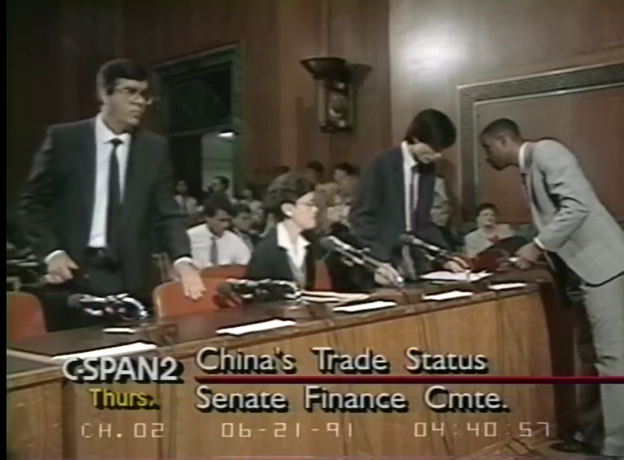
John Kamm testifying to Congress on June 20, 1991 (left). Also pictured: Holly Burkhalter, then-Director of Human Rights Watch in Washington, DC; Xingu Chen, then-President of the Independent Federation of Chinese Students; unnamed Congressional aide. Image credit: C-Span
For my 1991 testimonies, I prepared what came to be known as the Guangdong argument. I decided to explore whether or not there was a correlation between a province’s human rights record and its dependence on trade with the United States. Guangdong’s main export market was the United States, and most Americans of Chinese descent traced their roots to the province. The plan was to gather evidence and make a report to the Senate Finance Committee hearing on June 20.
Five Trips to Guangzhou
I made five trips to Guangzhou from February to June 1991. I met with former political and religious prisoners including Li Zhengtian (member of the Li Yizhe group and honorary advisor to the Guangzhou Student Federation, a leader of the June 4 protests), Father Tan Tiande, an underground Catholic church leader who spent decades in prison as a counterrevolutionary), and Pastor Samuel Lamb (a leader in the house church movement who, like Father Tan, had spent more than 20 years in prison for counterrevolution).
On these trips I also met with senior officials of the Guangdong and Guangzhou governments, including a vice-governor, a vice-chairman of the Foreign Economic and Trade Commission, a vice-chairman of the local branch of the China Council for the Promotion on International Trade (CCPIT), the bishop of the official Catholic Church who I pressed to end the harassment of Father Tan, and officials of the Guangdong Province Prison Bureau, and the Guangzhou Public Security Bureau.
Traffic at the crossroad near Guangzhou Railway Station in 1991. Image credit: Michael Woodhead / CC BY-SA 2.0 via Wikimedia Commons
Prior to my last trip to Guangzhou prior to my testimony, I flew to Beijing for a series of meetings with Chinese government officials. My host was a vice-chairman of the CCPIT. They arranged meetings with a vice president of the Supreme People’s Court during which I pressed for the release of the Li brothers (Li Lin and Li Zhi), Hong Kong Trade Representative Lo Haixing, and two individuals accused of helping dissidents leave China as a part of Operation Yellow Bird. (All were eventually released early).
I also met with the State Council to review moves in Washington to strip China of its trade privileges. Everyone I met with were afraid that China would lose MFN. They were motivated to assist me.
Prison Exports
A goal of the trip to Beijing was to get approval to visit a Chinese prison in Guangdong. In addition to getting information on how June 4 counterrevolutionaries and hooligans were being treated, I wanted to look into whether or not Chinese prisons were exporting products to the United States, a hot issue in Washington. Vice Chairman Xie of the CCPIT promised to assist. Not all Chinese prisons were open to foreigners. He said he’d ask the Guangzhou branch to identify a prison I could visit. They would meet me at Guangzhou Bai Yun Airport the next day.
I flew down to Guangzhou on Wednesday, June 12, and was met by the CCPIT officer who would accompany on the prison visit. The young man informed me that we would visit the Shijing Juvenile Reformatory the next morning.
After settling into my room, I was joined for lunch by a colleague from the Occidental Chemical Hong Kong office as well as the Guangzhou office manager. After lunch we visited Li Zhengtian’s art gallery in the Novotel Hotel.
At nine AM the next morning, my CCPIT handler met me and my Hong Kong colleague at the front door of the Garden Hotel. We drove for around 30 minutes to the Guangdong Provincial Juvenile Reformatory, commonly referred to as Shijing Juvenile Reformatory, in Baiyun District, where we were met at the entrance by the reformatory’s warden. Shijing was a facility open to foreigners, and quite a few had visited since the reformatory was founded in 1958. Senior leaders from Beijing had also visited, and we were shown a photograph of Qiao Shi, a member of the Politburo when he visited in 1985. We were ushered into the main office where we listened to a taped message in English. The warden then launched into a “brief introduction” to his “model reformatory.”
Director of the Provincial Department of Justice Zen Xianglu visits the Guangdong Provincial Juvenile Correctional Institution in January 2020. Image credit: Guangdong Prison Administrative Bureau
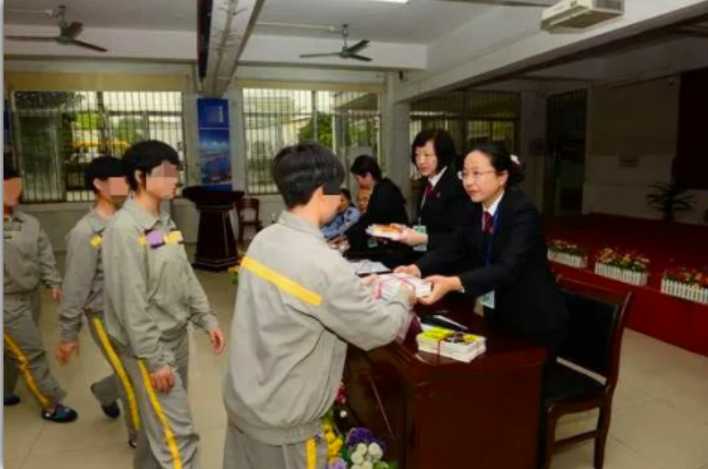
The Shijing Juvenile Reformatory was, and remains, the only juvenile reformatory in Guangdong Province. It houses all juveniles from age 14 (the current age of criminal responsibility) to 18 convicted by courts in Guangdong. It is administered by the provincial justice bureau. Juveniles who commit offenses that do not rise to the level of crimes are housed in work-study schools under the watchful eye of public security bureaus. The longest sentence in the juvenile reformatory was three years. In 1991 there were more than 1,700 male juveniles in Shijing, and 31 females. A contingent of 240 officers made up the staff.
Most of the juveniles in the reformatory had been convicted of theft and robbery, but there were some who had been convicted of more serious crimes like murder, rape, wounding, and arson. Juveniles were housed according to their crimes in 10 separate dormitories. Girls were housed in their own dormitory.
Hooligans
I asked the warden if any of the juveniles had been convicted of crimes of counterrevolution committed during the May-June 1989 protests. He replied no, but some inmates had been convicted of hooliganism. One youth had stolen RMB 400 from the warden’s office.
There was a recidivism rate of 10 percent for youth who passed through the reformatory, relatively high for China. In a typical year, 70 percent of inmates were rewarded points for good behavior and 17 percent received sentence reductions or parole. If inmates misbehaved, there were five levels of punishment. They would first undertake self-criticism. The next step was a warning, after which the juvenile would be written up. Especially serious offenders were shackled and finally, their sentences could be extended. The purpose of incarceration was to reform the juveniles so that they would become “useful citizens.” Strict but fair management was practiced, the warden assured us.
Each juvenile was given 40 catties of rice a month, RMB 50 worth of other foodstuffs, and RMB 3 spending money. The whole reformatory consumed 20,000 catties of fish every month. (One cattie is equivalent to 600 grams). Inmates were allowed to watch three hours of television a week, and two movies a month. They were permitted monthly visits by family members.
On November 27, 2018, inmates at the Guangdong Provincial Juvenile Criminal Correctional Institution on an “open day” when family and visitors can visit the facility. Image credit: Sohu.com
We then toured the facility, a large area of several hectares surrounded by brick walls topped with wire. It was a barren, hardscrabble place. Vegetation was sparse, common to this part of Guangzhou. The workshops and dormitories were connected by concrete paths. It had rained recently, and mud was everywhere. Potted plants lined the walkways.
After visiting the girls’ dormitory, we toured a workshop where boys were assembling radios for the Guangzhou Number Two Radio Factory. The juveniles were seated on benches. Each had a name plate with the length of their sentence. They did not make eye contact with the visitors. I was told that there were also workshops making garments and spare parts for adult prisoner factories managed by the prison bureau.
The warden denied that any products were manufactured for export. “The quality is too low, too simple,” he explained.
After our visit, we were driven back to the city where we were hosted to lunch by a CCPIT vice chairman. I returned to Hong Kong on the late afternoon train and ate dinner on board for RMB45.
Progress but Setbacks
There were large influxes of juvenile offenders into the reformatory in the early 2000s. The facility maxed out at 4,000 inmates, resulting in serious overcrowding. A new reformatory was constructed. Recent photos show bright, multistoried buildings with juveniles working on arts and crafts.
My visit to the Shijing Reformatory was my first visit to a Chinese carceral facility, and it touched off an interest in juvenile justice reform. I subsequently visited a juvenile reformatory in Beijing and a juvenile camp on one of Hong Kong’s offshore islands. In 2008, Dui Hua began a series of five juvenile justice exchanges with China’s Supreme People’s Court. We have contributed to meaningful reforms, but deep issues remain and are poised to worsen. Effective March 1, 2021, the age of criminal responsibility will drop from 14 to 12.
President Joe Biden participates in a virtual swearing-in ceremony of top aides and appointees on January 20 in the State Dining Room of the White House. Image credit: Adam Schultz, Official White House Photo
On January 20, President Joe Biden was sworn in, and he immediately launched a slate of executive actions to reverse cornerstone positions of the Trump administration, including rejoining the World Health Organization and Paris Climate Accord and reversing the “Muslim travel ban.” The Department of State signaled its intention to rejoin the United Nations Human Rights Council and the administration banned the use of “China Virus” to describe Covid-19, not to appease China but to show sensitivity to Chinese Americans. One can infer that Biden’s swift actions were meant to send a message: new leadership had arrived in town, with diametric policies to the previous administration.
One notable exception in this flurry of new actions was any change in policy towards China as established by Trump. In January’s Digest, we recapped Trump’s tumultuous relationship with China. There is little doubt that Biden will shun Trump’s uniquely acerbic tone. But the confirmation hearings of Biden’s cabinet picks took on a surreal—if not unpredictable—quality, as the opposition parties found common and comfortable ground on the topic of China.
Secretary of State
Biden nominated Antony Blinken, a long-time government advisor under the Clinton, Bush, and Obama administrations, for the nation’s top foreign policy position. At his Senate confirmation hearing on January 19, Blinken stated his belief that Trump had been correct to take a tougher stance towards China; he also stated that China was committing genocide in Xinjiang and expressed a desire to raise Taiwan’s international profile.
Secretary of State Antony J. Blinken is sworn in as the 71st U.S. Secretary of State by Acting Under Secretary of State for Management Carol Z. Perez at the U.S. Department of State in Washington, D.C., on January 26, 2021. Image credit: Ron Przysucha, State Department
In an interview with MSNBC’s Andrea Mitchell, Blinken provided a more qualified position: “There’s no doubt that China poses the most significant challenge to us of any other country, but it’s a complicated one,” he said. “There are adversarial aspects to the relationship, there’s certainly competitive ones, and there’s still some cooperative ones, too.” He went on to defuse a question on US military intervention in China, emphasizing that the US needed to repair international alliances and “self-inflicted weaknesses,” a nod towards the impact of Trump’s China tariffs on American producers and consumers.
Blinken’s recent lunar new year call with Chinese foreign affairs director Yang Jiechi was far from a rote greeting of warm wishes for the Year of the Ox. In the call, Blinken touched on PRC actions in Xinjiang, Tibet, Hong Kong, and Taiwan, making clear that the new administration would not shy away from invoking human rights in foreign policy discussions—or in routine diplomatic calls.
Secretary of the Treasury
Janet Yellen during her confirmation hearing with the Senate Finance Committee on January 19. Image credit: C-Span
Like Blinken, Biden’s Secretary of the Treasury is no stranger to high-level government service. Janet Yellen was previously the Federal Reserve chair, and her testimony at her confirmation hearing echoed the Trump administration’s stance on China and trade. She called out China for “abusive, unfair and illegal practices”; “giving illegal subsidies to corporations”; and “horrendous human rights abuses.” And in the same vein as Blinken, she continued Trump-era China critiques while citing a planned review of Trump policies to ensure that they’re being used appropriately.
Secretary of Defense
Lloyd Austin, a retired four-star army general, didn’t pull any punches during his nomination hearing for Secretary of Defense, further indicating a united front among Biden’s cabinet. His testimony included a telling slip of the tongue: “We’ll have to have capabilities that allow us to hold—to present a credible threat, a credible deterrent, excuse me, to China in the future.”
On January 22, Secretary of Defense Lloyd J. Austin III arrives at the Pentagon and greets Deputy Secretary of Defense David L. Norquist and Chairman of the Joint Chiefs of Staff Gen. Mark A. Milley, after being confirmed as secretary of defense, Washington, DC. Image credit: Lisa Ferdinando, Department of Defense
2020 saw Trump wielding many aspects of government power towards China, and Austin’s testimony alluded to this tactic and its likely continuation under Biden: “I fully recognize that while I have the military component of this problem set, it’s a whole-of-government approach because China looks to compete with us along a spectrum of activities,” he said.
US Ambassador to the UN
Linda Thomas-Greenfield, a nearly 40-year veteran of the US Foreign Service and expert in African affairs, was tapped as Biden’s ambassador to the United Nations. In her testimony before the Senate Foreign Relations Committee, Thomas-Greenfield towed the same line as other cabinet picks, singling out China as the United States’ primary foreign policy focus and stating, “We know that China is working across the UN system to drive an authoritarian agenda that stands in opposition to the values of the institution.”
Linda Thomas-Greenfield at her confirmation hearing with the Senate Foreign Relations Committee on January 27, 2021. Image credit: C-Span
Thomas-Greenfield also offered an ardent apology for giving a speech at a Confucius Institute branch at Savannah State University, a historically black college, in 2019. The Confucius Institute, which aims to advance Chinese language and culture on college campuses around the world, has been criticized for its ties to the Chinese government and possible conflicts of interest within its administrative structure. Under Trump, the Confucius Institute was labelled a Foreign Mission, requiring employees to register with the US government and face similar restrictions to embassy employees.
Addressing China by Solving Problems “At Home”
Trump routinely deflected criticisms by looking outward for bad actors to blame, and China served as a useful catch-all in this respect. Unsurprisingly, negative views of China significantly increased under Trump. Initially, at least, Biden’s advisors haven’t strayed too far from Trump in their focus on China as the greatest threat to the US. But these views have been tempered by a subtle but consistent assertion that not all of America’s problems can be traced to foreign actors.
A screenshot from the United States Institute for Peace’s “Passing the Baton” event with (left to right) Jake Sullivan, moderator Condoleeza Rice, and Robert O’Brien. Image credit: United States Insititute for Peace YouTube page
At a United States Institute for Peace event on January 29, appropriately titled “Passing the Baton,” Jake Sullivan, a Biden national security advisor, spoke cordially along with his Trump-era counterpart, Robert O’Brien. Sullivan spoke of US international dominance in terms of domestic renewal and a need for the US to get its own house in order:
“You know, when I think about the really foundational question of what is the most important national security priority facing the United States? It occurs to me something that Joe Biden has really reinforced for us, which is that foreign policy is domestic policy and domestic policy is foreign policy.”
This sort of nuance does not typically translate in partisan nomination hearings or media coverage. Over the next few years, we stand by to see if this tempered approach does indeed translate to policy and international diplomacy, or if it is merely drowned out by heated calls to address the “China threat.”
EXCHANGES
Exchanges is a feature that explores Dui Hua’s International Symposium on Girls in Conflict with the Law as well as other expert exchanges and dialogues.
“The power of telling the story from their own experience”
Gangs in Hong Kong. Art as advocacy. Indigenous communities over-policed and under-protected. The International Symposium on Girls in Conflict with the Law has continued to address the dynamic facets of gender-based juvenile justice with webinars on January 28, February 2, and February 15.
Presenters on January 28 (top to bottom): Zhang Hongwei, Lindsay Ernst, Eric Chui, and Karen Joe Laidler. Image credit: The Dui Hua Foundation
“Girls in Conflict with the Law in Hong Kong and Guangzhou,” held on January 28, approached juvenile crime from multiple perspectives. Karen Joe Laidler, director of the University of Hong Kong’s Centre for Criminology, looked at trends in juvenile crime over a 30-year period. Eric Chui, of the City University of Hong Kong, shared his research about girl gang behavior in Hong Kong. Zhang Hongwei of Jinan University discussed juvenile sentencing and changes to China’s civil code. The event was moderated by Lindsay Ernst, a clinical legal education specialist at the University of Hong Kong.
The following event, “Girls in Justice: Photographer Richard Ross in Conversation,” highlighted the work of the celebrated artist and juvenile justice reform activist. Ross was joined by Kasie Lee, assistant district attorney for the San Francisco Juvenile Unit, and social worker Michelle De Young. Ross’ photos often depict youth in carceral facilities alongside testimonials explaining how they ended up incarcerated. “The power of the voice, the power of telling the story from their own experience. I try to have both audio [and] simple images. I want things to haunt you,” Ross explained of his work, later adding, “you have to bear witness and you have to show people in power, ‘this is what you’re doing.’” The event was moderated by Patricia Lee of the San Francisco Public Defender’s Office.
“What has to happen is Indigenous-driven processes that look to the culture and the family to rehabilitate, to rejuvenate, to reground. That’s where we actually see success. That’s where we see a lowering of recidivism and crime. That’s where we see a coming together of communities. That’s where we actually see the big healing work done, when it’s Indigenous-driven on the terms of the Indigenous people.”
Information about upcoming webinars and presenters on February 2 (top to bottom): Christa Big Canoe, moderator and Dui Hua Fellow Rebekah Enoch, and Meda Chesney-Lind. Image credit: The Dui Hua Foundation
South Korean missionary Cho Young-joo (in a blue striped polo shirt) led a mission trip in the summer of 2013 to provide education for children in Mongla, Myanmar. China accused Cho of organizing volunteers from China and South Korea to illegally cross the Yunnan-Myanmar border. Image credit: GoodNewsTV
Cross-border evangelization involves unforeseeable risks. The risk is arguably grave in China, where foreign missionaries routinely face harassment and arbitrary detention. South Korean Christians and Chinese citizens of Korean descent (hereafter ethnic Koreans) are no strangers to arrests for assisting North Koreans who attempt the long journey to freedom and citizenship in the South.
A judgment unearthed by Dui Hua revealed that Korean Christians in China en route to their overseas missions in Southeast Asia face similar risks. In May 2014, South Korean national Cho Young-joo (KR: 조영주; CH: 曹永周) was sentenced to seven years in prison for organizing illegal border crossings to Myanmar from Yunnan.
See Also: Press Statement, February 11, 2021: UN Group Rules China Has Arbitrarily Detained American Citizen Kai Li
SAN FRANCISCO (February 11, 2021) – In a strongly worded opinion (PDF), the United Nations Working Group on Arbitrary Detention (WGAD) has determined that American citizen Kai Li has been denied his due process rights and arbitrarily detained in violation of international law. Given the gravity of the violations against Mr. Li, the WGAD has referred the case to the Working Group on Enforced and Involuntary Disappearance, the Special Rapporteur on Torture and Other Cruel, Inhuman, or Degrading Treatment and Punishment, and the Working Group on the Independence of Judges and Lawyers.
In this newly expanded publication, Dui Hua summarizes some of the most pressing prisoner cases from the last quarter of 2020. This installment of Prisoner Updates looks at cases related to Hong Kong, detainees challenging official COVID-19 narratives, subversion, and the sale of illicit religious materials.
When I was president of the American Chamber of Commerce in 1990, I testified three times to the United States Congress as it was debating whether or not to renew China’s Most Favored Nation (MFN) tariff status. I presented what became known as the “Hong Kong argument”: Hong Kong, years away from being returned to China, would suffer disproportionately by removing China’s MFN. In one notable exchange between myself and Congressman Steve Solarz on May 16, 1990, I was asked whether I was advocating a “Hong Kong uber alles” policy. I reminded the congressman of the biblical story of Sodom and Gomorrah in which God spared the cities, both thoroughly evil, to spare the lives of a few good individuals.
In his decision to renew China’s MFN, President George H.W. Bush referenced the Hong Kong argument. This marked the first time in American history that the United States took into account Hong Kong’s interests when making a major foreign policy decision. My work received wide-spread acclaim in Hong Kong. A headline on the front page of USA Today referred to me as a “Hero in Hong Kong.”
Prior to my May 1990 testimonies I intervened on behalf of a young June 4 protester at a banquet hosted by senior Chinese official Zhou Nan in Hong Kong. After my testimony, the protester was released. I began to think I could use my vocal support for renewing China’s MFN to secure the release and better treatment of political prisoners. I decided to testify on two occasions in 1991.
John Kamm testifying to Congress on June 20, 1991 (left). Also pictured: Holly Burkhalter, then-Director of Human Rights Watch in Washington, DC; Xingu Chen, then-President of the Independent Federation of Chinese Students; unnamed Congressional aide. Image credit: C-Span
For my 1991 testimonies, I prepared what came to be known as the Guangdong argument. I decided to explore whether or not there was a correlation between a province’s human rights record and its dependence on trade with the United States. Guangdong’s main export market was the United States, and most Americans of Chinese descent traced their roots to the province. The plan was to gather evidence and make a report to the Senate Finance Committee hearing on June 20.
Five Trips to Guangzhou
I made five trips to Guangzhou from February to June 1991. I met with former political and religious prisoners including Li Zhengtian (member of the Li Yizhe group and honorary advisor to the Guangzhou Student Federation, a leader of the June 4 protests), Father Tan Tiande, an underground Catholic church leader who spent decades in prison as a counterrevolutionary), and Pastor Samuel Lamb (a leader in the house church movement who, like Father Tan, had spent more than 20 years in prison for counterrevolution).
On these trips I also met with senior officials of the Guangdong and Guangzhou governments, including a vice-governor, a vice-chairman of the Foreign Economic and Trade Commission, a vice-chairman of the local branch of the China Council for the Promotion on International Trade (CCPIT), the bishop of the official Catholic Church who I pressed to end the harassment of Father Tan, and officials of the Guangdong Province Prison Bureau, and the Guangzhou Public Security Bureau.
Traffic at the crossroad near Guangzhou Railway Station in 1991. Image credit: Michael Woodhead / CC BY-SA 2.0 via Wikimedia Commons
Prior to my last trip to Guangzhou prior to my testimony, I flew to Beijing for a series of meetings with Chinese government officials. My host was a vice-chairman of the CCPIT. They arranged meetings with a vice president of the Supreme People’s Court during which I pressed for the release of the Li brothers (Li Lin and Li Zhi), Hong Kong Trade Representative Lo Haixing, and two individuals accused of helping dissidents leave China as a part of Operation Yellow Bird. (All were eventually released early).
I also met with the State Council to review moves in Washington to strip China of its trade privileges. Everyone I met with were afraid that China would lose MFN. They were motivated to assist me.
Prison Exports
A goal of the trip to Beijing was to get approval to visit a Chinese prison in Guangdong. In addition to getting information on how June 4 counterrevolutionaries and hooligans were being treated, I wanted to look into whether or not Chinese prisons were exporting products to the United States, a hot issue in Washington. Vice Chairman Xie of the CCPIT promised to assist. Not all Chinese prisons were open to foreigners. He said he’d ask the Guangzhou branch to identify a prison I could visit. They would meet me at Guangzhou Bai Yun Airport the next day.
I flew down to Guangzhou on Wednesday, June 12, and was met by the CCPIT officer who would accompany on the prison visit. The young man informed me that we would visit the Shijing Juvenile Reformatory the next morning.
After settling into my room, I was joined for lunch by a colleague from the Occidental Chemical Hong Kong office as well as the Guangzhou office manager. After lunch we visited Li Zhengtian’s art gallery in the Novotel Hotel.
At nine AM the next morning, my CCPIT handler met me and my Hong Kong colleague at the front door of the Garden Hotel. We drove for around 30 minutes to the Guangdong Provincial Juvenile Reformatory, commonly referred to as Shijing Juvenile Reformatory, in Baiyun District, where we were met at the entrance by the reformatory’s warden. Shijing was a facility open to foreigners, and quite a few had visited since the reformatory was founded in 1958. Senior leaders from Beijing had also visited, and we were shown a photograph of Qiao Shi, a member of the Politburo when he visited in 1985. We were ushered into the main office where we listened to a taped message in English. The warden then launched into a “brief introduction” to his “model reformatory.”
Director of the Provincial Department of Justice Zen Xianglu visits the Guangdong Provincial Juvenile Correctional Institution in January 2020. Image credit: Guangdong Prison Administrative Bureau
The Shijing Juvenile Reformatory was, and remains, the only juvenile reformatory in Guangdong Province. It houses all juveniles from age 14 (the current age of criminal responsibility) to 18 convicted by courts in Guangdong. It is administered by the provincial justice bureau. Juveniles who commit offenses that do not rise to the level of crimes are housed in work-study schools under the watchful eye of public security bureaus. The longest sentence in the juvenile reformatory was three years. In 1991 there were more than 1,700 male juveniles in Shijing, and 31 females. A contingent of 240 officers made up the staff.
Most of the juveniles in the reformatory had been convicted of theft and robbery, but there were some who had been convicted of more serious crimes like murder, rape, wounding, and arson. Juveniles were housed according to their crimes in 10 separate dormitories. Girls were housed in their own dormitory.
Hooligans
I asked the warden if any of the juveniles had been convicted of crimes of counterrevolution committed during the May-June 1989 protests. He replied no, but some inmates had been convicted of hooliganism. One youth had stolen RMB 400 from the warden’s office.
There was a recidivism rate of 10 percent for youth who passed through the reformatory, relatively high for China. In a typical year, 70 percent of inmates were rewarded points for good behavior and 17 percent received sentence reductions or parole. If inmates misbehaved, there were five levels of punishment. They would first undertake self-criticism. The next step was a warning, after which the juvenile would be written up. Especially serious offenders were shackled and finally, their sentences could be extended. The purpose of incarceration was to reform the juveniles so that they would become “useful citizens.” Strict but fair management was practiced, the warden assured us.
Each juvenile was given 40 catties of rice a month, RMB 50 worth of other foodstuffs, and RMB 3 spending money. The whole reformatory consumed 20,000 catties of fish every month. (One cattie is equivalent to 600 grams). Inmates were allowed to watch three hours of television a week, and two movies a month. They were permitted monthly visits by family members.
On November 27, 2018, inmates at the Guangdong Provincial Juvenile Criminal Correctional Institution on an “open day” when family and visitors can visit the facility. Image credit: Sohu.com
We then toured the facility, a large area of several hectares surrounded by brick walls topped with wire. It was a barren, hardscrabble place. Vegetation was sparse, common to this part of Guangzhou. The workshops and dormitories were connected by concrete paths. It had rained recently, and mud was everywhere. Potted plants lined the walkways.
After visiting the girls’ dormitory, we toured a workshop where boys were assembling radios for the Guangzhou Number Two Radio Factory. The juveniles were seated on benches. Each had a name plate with the length of their sentence. They did not make eye contact with the visitors. I was told that there were also workshops making garments and spare parts for adult prisoner factories managed by the prison bureau.
The warden denied that any products were manufactured for export. “The quality is too low, too simple,” he explained.
After our visit, we were driven back to the city where we were hosted to lunch by a CCPIT vice chairman. I returned to Hong Kong on the late afternoon train and ate dinner on board for RMB45.
Progress but Setbacks
There were large influxes of juvenile offenders into the reformatory in the early 2000s. The facility maxed out at 4,000 inmates, resulting in serious overcrowding. A new reformatory was constructed. Recent photos show bright, multistoried buildings with juveniles working on arts and crafts.
My visit to the Shijing Reformatory was my first visit to a Chinese carceral facility, and it touched off an interest in juvenile justice reform. I subsequently visited a juvenile reformatory in Beijing and a juvenile camp on one of Hong Kong’s offshore islands. In 2008, Dui Hua began a series of five juvenile justice exchanges with China’s Supreme People’s Court. We have contributed to meaningful reforms, but deep issues remain and are poised to worsen. Effective March 1, 2021, the age of criminal responsibility will drop from 14 to 12.
SAN FRANCISCO (February 11, 2021) – In a strongly worded opinion (PDF), the United Nations Working Group on Arbitrary Detention (WGAD) has determined that American citizen Kai Li has been denied his due process rights and arbitrarily detained in violation of international law. Given the gravity of the violations against Mr. Li, the WGAD has referred the case to the Working Group on Enforced and Involuntary Disappearance, the Special Rapporteur on Torture and Other Cruel, Inhuman, or Degrading Treatment and Punishment, and the Working Group on the Independence of Judges and Lawyers.
In its opinion, the WGAD urged the Chinese government to immediately release Mr. Li and compensate him for the way he has been treated.
Kai Li is an American businessman from New York. On September 9, 2016, he arrived in Shanghai to visit his family on the one year anniversary of his mother’s death. He was immediately taken into custody at Shanghai Pudong International Airport by agents of the Shanghai State Security Bureau (SSSB). He was not presented with an arrest warrant.
Mr. Li spent the initial 10 weeks of his detention under residential surveillance at a designated location (RSDL), a coercive measure that is imposed on a suspect for up to six months during which the suspect is held in communicado without access to legal counsel or family. RSDL has been condemned by United Nations Special Procedures as a form of enforced or involuntary disappearance that has been widely used by Chinese authorities in the detention of journalists and political activists. During RSDL, Mr. Li underwent harsh interrogations each day and night. Under international law, interrogations that take place without the presence of legal counsel are inadmissible as evidence in a trial. Under Chinese law, the procuratorate should supervise RSDL, but no such supervision took place in Mr. Li’s case.
After 10 weeks in RSDL, Mr. Li was formally arrested and transferred to the Shanghai Number One Detention Center, where he spent 27 months awaiting adjudication. His case was not presented to the procuratorate until February 24, 2017, five and a half months after he was taken into custody at the airport. While Mr. Li’s trial was originally scheduled for May 2017, it was postponed twice without explanation. The trial by the Shanghai Number One Intermediate Court finally took place on August 10, 2017. Consular representatives were prohibited from attending it, a violation of the consular agreement between China and the United States.
Nearly another year passed before the judgment was handed down by the court. In July 2018, Kai Li was found guilty of spying for the Federal Bureau of Investigation (FBI), sentenced to 10 years in prison, a fine of RMB 50,000 and deportation. Because he was not given full credit for the time in RSDL, Mr. Li’s sentence is due to expire on October 16, 2026 instead of September 8, 2026.
The FBI is not authorized to conduct espionage overseas. The evidence against Mr. Li – a collection of five “state secrets” he is alleged to have stolen – was freely available online.
Mr. Li immediately appealed the judgement to the Shanghai High People’s Court. The appeal was heard on December 29, 2018. The court upheld the intermediate court’s judgement. Once again, the U.S. Consulate was prohibited from attending the appeal hearing.
Kai Li, now 58 years old, was moved to Qingpu Prison in March 2019. Because of COVID-19 restrictions, he has not received any in-person visits from the consulate since January 2020. He is allowed a seven and a half minute phone call to his family three times a month, but his family maintains that these calls are tightly monitored. Recently, Mr. Li has been diagnosed by prison doctors with chronic atrophic gastritis and high blood pressure, despite previously suffering from chronic low blood pressure. A CT scan also revealed that Mr. Li suffered a stroke while in prison, likely when he collapsed during the summer while in line for food.
Despite the gravity of Mr. Li’s medical condition, the Shanghai Prison Bureau denied medical parole to Mr. Li in January, 2021.
This opinion marks the third time in as many years that the WGAD has found that China has arbitrarily detained an American citizen. Since the working group was established 29 years ago, it has ruled that China has arbitrarily detained suspects on 95 occasions. The opinion notes that “this indicates a systemic problem with arbitrary detention in China, which amounts to a serious violation of international law.”
The UN WGAD opinion on Kai Li can be downloaded at: