On October 27, the Symposium launched with an audience of participants and supporters from North America, Europe, Africa, and the Middle East. John Kamm spoke about Dui Hua’s history of expert exchanges and the need to pay greater attention to the crisis of girls in conflict with the law. Taghreed Jaber, Penal Reform International’s regional director for the Middle East and North Africa (MENA) gave a summary of the situation of girls in conflict with the law in the MENA region. Patricia Lee of the San Francisco Public Defender’s Office presented on the impending closure of San Francisco’s juvenile hall.
Here are some of the key takeaways from this event:
“The fact that girls within the criminal justice system are a minority is unfortunately putting them in more risks in facing this crisis and in facing double discrimination within the criminal justice system.” – Taghreed Jaber
“We hear this term ‘crisis’ used quite a bit…Rarely if ever do we talk about the crisis of girls in conflict with the law, so we’re going to raise awareness of the crisis…We want to exchange best practices and make recommendations to governments.” – John Kamm
“Even though the girls comprise a small percentage of youth in custody, they present with very serious behavioral and mental health issues, and any child that touches the carceral system and is housed in a detention facility is traumatized by that experience.” – Patricia Lee
On November 10, the Symposium launched with an audience of participants and supporters from North America and Asia. John Kamm spoke about Dui Hua’s history of expert exchanges and the need to pay greater attention to the crisis of girls in conflict with the law. Anna Wu, honorary fellow and professor at the University of Hong Kong, discussed how the relationship between juveniles and law enforcement in Hong Kong has changed in recent years, including during the 2019 protests. Patricia Lee of the San Francisco Public Defender’s Office presented on the impending closure of San Francisco’s juvenile hall.
Here are some of the key takeaways from this event:
“We’re used to hearing about various crises. We have the refugee crisis, the climate crisis, crises around the world in different hotspots, but we almost never hear about this crisis, which is hiding in plain sight: the crisis of girls in conflict with the law. And that’s what we’re going to be dealing with.” – John Kamm
“It is important that we design programs which are fluid, transformative, and gender-sensitive. We do have to factor in these issues. I think we need to incorporate into the program dialogues on notions of justice and injustice, and on disparities and differences, and we need to be sensitive to the causes of conflicts. We really have to dive deep into these issues to try to restore order and to restore human relations.” – Anna Wu
“Our charge is looking at creating a smaller, home-like, nurturing house of detention for youth that need to be detained, but only those youth that need to be detained, and then reinvesting that money back into the communities, the schools, and the families, so that hopefully we reduce the impact of being in the juvenile justice system and creating alternative programs…of restorative justice and diversion.” – Patricia Lee
This summer the United States federal government aggressively resumed federal executions, ending an ad hoc federal moratorium that had been in place since 2003. So far this year, the federal government has executed seven people, and three more federal executions are currently scheduled for 2020. The execution of Lisa Montgomery, scheduled for December 8, will mark the first federal execution of a woman since 1953. The number of US federal executions this year already exceeds the total number of federal executions that took place in the rest of the last half century combined. Even as both individual US states and nations around the world are abandoning capital punishment, the US federal government is instead choosing to embrace it. As the United States prepares for a review of its human rights record at the UN in November, the future of the federal death penalty is on the agenda.
Capital Punishment and the Universal Periodic Review
The resumption of federal executions comes as the United States is in the midst of its third Universal Periodic Review (UPR), a human rights process that every UN member state undergoes about every five years. The UPR is organized by the Human Rights Council. Although the United States withdrew from the Council in 2018, it still participates in the UPR as a UN member state.
The UPR of the United States is formally a three-hour event at the UN in Geneva that is scheduled for November 9. But the November review is the culmination of a long process that began in 2019 when the Human Rights Council solicited input on the US record from stakeholders. As an NGO with UN Special Consultative Status, Dui Hua provided a stakeholder submission on the US human rights record last fall. The death penalty was a theme raised by many stakeholders, and Dui Hua’s submission (PDF) focused in particular on Attorney General William Barr’s stated intention to re-start federal capital punishment. Dui Hua highlighted ongoing concerns about the administration of the federal death penalty and urged the administration to maintain the moratorium and address these procedural concerns. Dui Hua also noted that the federal government had selected people with the most gruesome crimes for execution, rather than those who had been on death row the longest, raising worries that optics—rather than justice—shaped the terms of the resumption.
Countries under review also prepare a national report in response to the stakeholder input. The US national report was due in February and finally released in September. While it does discuss capital punishment, it does not adequately address stakeholder concerns about the resumption of federal executions raised by Dui Hua. The report does not explain why the US attorney general directed the Bureau of Prisons to restart federal executions after more than 17 years without them. Nor does the report—which describes in detail the graphic crimes of the condemned—explain why the government is going forward with executions for these individuals, rather than others who had also exhausted appeals. Because these matters are entirely under the control of the same federal administration whose department of state prepares the national report, the report ought to address these issues.
Capital Punishment in a Federal Review
The United States is a compound federal republic in which criminal justice authority is divided between state and national jurisdictions. As long as capital punishment is deemed constitutional by the Supreme Court, state executions are a state matter outside the control of the federal government. The majority of US executions have always been carried out by the states—a point national government officials often make to international audiences. When the United States last underwent a UPR in 2015, the US report touted the fact that “the federal government has carried out no executions since our last UPR; in fact, it has not executed an inmate since 2003 and only three since 1963.” In some sense, the national government has been de facto abolitionist for over a decade. The resumption of federal executions ends this record. The federal government already accounts for half of all executions in the United States so far this year. If the federal government proceeds with the three executions it currently has scheduled, then federal executions will exceed state executions in 2020. It would be the first time in modern US history that this has occurred.
The rise of federal executions comes as states are moving away from capital punishment. Since the last US UPR in 2015, capital punishment has been struck down by courts in two states (Delaware, 2016; Washington State, 2018), repealed by the legislature in two states (New Hampshire, 2019; Colorado, 2020) and subject to moratoriums in two states (Pennsylvania, 2015; California, 2019). The death penalty is now abolished or under moratorium in half of all states. State executions have also been declining for two decades. As leaders in Washington have become directly responsible for a significant share of US executions, international scrutiny of American capital punishment should also shift from the states to the federal government.
Renewed Comparison to China
Dui Hua has long called for all countries that retain the death penalty to adhere to transparency and the rule of law in application of capital sanctions. The foundation puts a particular focus on China because of its secrecy and resistance to international laws and norms. China is a capital punishment outlier in the world today.
Despite the overall transparency in US federal executions, the manner in which the condemned were selected remains unclear. Of the many individuals on federal death row who have exhausted their appeals, those who were given execution dates this year are not the people who have been there longest. It appears that these individuals may have been scheduled for execution first because their crimes were particularly shocking and unlikely to elicit public sympathy. The Justice Department’s announcement of the resumption of federal executions in 2019 placed particular emphasis on the fact that the individuals scheduled for execution had committed crimes against children and the elderly. The US UPR report similarly emphasizes the graphic nature of the crimes committed by those who were executed. An impartial justice system should avoid even the appearance of politicization in the death penalty process. As China faces accusations that American, Australian, Japanese, and Canadian citizens are facing capital sentences for political reasons, the US federal government must do more to indicate how it is selecting individuals for execution warrants.
The current administration also appears to want to use the death penalty to mimic China in ways that may violate the US Constitution and international law. As Dui Hua makes clear in its US UPR stakeholder submission, President Trump has repeatedly called for the death penalty for drug dealers, an idea he claims he got from Xi Jinping. Following President Trump’s statements about capital punishment for drug offenders, former Attorney General Jeff Sessions released a memo encouraging federal prosecutors to pursue capital punishment in drug cases where permitted by federal law, including non-homicide “drug kingpin” cases. While capital punishment for non-homicide drug kingpin crime is allowed under US federal statute, no defendant has ever been sentenced to death under the statute, so its legality is untested. Existing caselaw suggests that capital punishment for a non-homicide drug crime is unconstitutional under the Eighth Amendment, and therefore constitutes “cruel, inhuman or degrading treatment or punishment” under Article 7 of the International Covenant on Civil and Political Rights as indicated under US reservations to the Covenant as well. In addition to capital punishment for non-homicide offenses, President Trump has also expressed support for the extra-judicial execution for drug offenses in the Philippines, a practice that is a clear violation of the Universal Declaration of Human Rights and US and international law.
The UPR and the Election
Because the power to carry out federal executions lies with the US executive branch, the upcoming presidential election will likely shape the course of federal executions over the next few years. Criminal justice has been front-and-center in the presidential race, even though capital punishment has not been a major topic of debate. The issue got more attention during the primary race. At the time, Democratic nominee Joe Biden called for eliminating the federal death penalty. Vice presidential candidate Kamala Harris also publicly opposes the death penalty. She declined to pursue the death penalty when prosecuting David Hill for murdering a police officer. Hill is now serving a sentence of life in prison without parole. Ultimately, the near future of the federal death penalty will be decided at the ballot box on November 3. Regardless of that outcome though, the United States should expect to receive comments from nations around the world at the UPR in Geneva on November 9.
SAN FRANCISCO (October 23, 2020) — Dui Hua is excited to announce the opening of the International Symposium on Girls in Conflict with the Law next Tuesday, October 27. This innovative exchange will bring experts together at the intersection of juvenile justice and gender-sensitive policy.
On Tuesday, Managing Attorney of the Juvenile Unit of the San Francisco Public Defender’s Office Patricia Lee will speak about the unprecedented closing of San Francisco’s juvenile hall. Ms. Lee is a co-host of the symposium. The first event also features remarks from Dui Hua Executive Director John Kamm and Taghreed Jaber, the Regional Director for North Africa and the Middle East for Penal Reform International.
The symposium will continue through March 2021 with 12 online panels and presentations featuring some of the world’s foremost experts on juvenile justice from North America, Europe, Africa, the Middle East, and Asia.
The symposium functions as a corrective to decades of neglect and ineffective policy. Participants will explore the question of why girls are the fastest growing demographic coming into conflict with the law, and they will examine the disproportionate risks girls face before, during, and after they enter the legal system. Participants will raise awareness on this crisis, exchange best practices, and make recommendations for policy and research.
Partnering with Dui Hua and Patricia Lee are the Centre of Comparative and Public Law and the Centre for Criminology of the University of Hong Kong (HKU), as well as Penal Reform International. The symposium follows the success of several related programs undertaken by Dui Hua, including five juvenile justice exchanges with China’s Supreme People’s Court and the 2014 exchange “Women in Prison: An International Symposium on the Bangkok Rules.”
For more information about the International Symposium on Girls in Conflict with the Law please contact us at duihua (at) duihua (dot) org.
In the 2020 race for the presidency, both Donald Trump and Joe Biden have emphasized their “tough-on-China” approaches. This messaging has continued down the ballot in several of the races for the 35 Senate seats being voted on in this election, of which 23 are currently held by Republicans and 12 are held by Democrats.
In April, the Republican party released a memo detailing their messaging strategy for COVID-19. Candidates were instructed to blame China for spreading the virus and to minimize or avoid commenting on the Trump administration’s response.
Senators, especially those in close races, are seeking to frame their opponent as weak on China. This is one of many strategies used by those running in this election cycle, but it has appeared consistently since the memo was first reported on by the press. With strong anti-China rhetoric an important part of the GOP playbook, the use of China-centric narratives in various races indicates that any connection to China is a vulnerability in this election.
A screenshot of the Republican memo on COVID-19 messaging. Image credit: Politico
In Arizona, Republican Senator Martha McSally has consistently trailed Democratic candidate Mark Kelly. McSally has repeatedly accused Kelly of being beholden to China, criticizing him for his ties to World View Enterprises, which he co-founded and which counts Tencent Holdings as an investor. These connections were repeated by other prominent Republicans in the press and on social media. McSally, however, was met with criticism over mutual funds that were “invested in Chinese companies or bonds issued by China’s communist government.” She has also criticized him for participating in Chinese “junkets” and taking a banner from one of those events into orbit. In October, former US ambassador to the United Nations and former South Carolina governor Nikki Haley campaigned in Arizona for McSally, targeting Kelly on China. During the October 15 debate between Kelly and McSally, Kelly directly referenced the GOP strategy, saying “I’ve known China as an adversary my entire adult life, not because I got a memo from Mitch McConnell.”
The Iowa Senate race has been competitive, partly due to the administration’s handling of COVID-19 and fallout from the trade war even as the state retains much support for the president. Senator Jodi Ernst (R-Iowa) has been a vocal supporter of the president’s policies, including his stance on China. She has said that China lied about the virus and has “certainly been a bad actor when it comes to trade.” The first campaign ad in her race against Democratic candidate Theresa Greenfield focused on China. Since his resignation, former ambassador to China Terry Branstad has been campaigning in Iowa for Ernst. Branstad is a popular former governor of Iowa. On October 14, President Trump held a rally in Iowa to support his and Ernst’s reelection bids.
In his campaign against Democratic challenger Cal Cunningham, Thom Tillis (R-North Carolina) has been particularly outspoken against China: Tillis released an 18-point plan “to hold the Chinese government accountable” for the COVID-19 pandemic, and his campaign sells “China Lied” bumper stickers. The North Carolina Democratic Party has countered with a detailed campaign outlining Tillis history “of support for US trade with China that [he is] now rushing to offset with hawkish positions.” The race continued to draw media attention following Tillis’ COVID-19 diagnosis and revelations that Cunningham had engaged in intimate extramarital behavior.
In many of the races where Senators are relying on tough-on-China messages, previous and even ongoing financial ties to China sometimes undermine the candidates’ messaging. The simplicity and broad appeal that often fuel anti-China messaging also seem to promote skepticism when a candidate tries to contextualize previous connections to China.
New Hampshire’s Republican Senate candidate Corky Messner has taken a notably critical stance on China, which has been undermined by reports that his law firm Messner Reeves represented China Export and Credit Insurance Corp. when it sued Tennessee-based Carlstar Group in 2016. In Alaska, incumbent Republican Senator Dan Sullivan’s criticisms of China earned reproach after his investments in a company that has operations in China, including manufacturing, emerged.
A screenshot of the Republican memo on COVID-19 messaging. Image credit: Politico
In Michigan, Republican challenger John James has sought to portray incumbent Democratic Senator Gary Peters as soft on China. An ad paid for by a Republican group accused Peters of praising China and blocking aid for small businesses. James has also criticized Peters as an absentee member of the Congressional Executive Commission on China. Peters has run ads asserting his toughness on China. Democrats have since accused James of hypocrisy, saying that his business with China enriches the CCP. On an October 16 call with press that was joined by noted China hawk Senator Tom Cotton (R-Arkansas), James put forward a “repatriation” plan for manufacturing from China.
Senator Steve Daines (R-Montana) has been noticeably vulnerable in terms of China messaging. As a businessperson and senator, Daines had extensive contact with Chinese businesses and officials, even being dubbed “China’s ambassador in Congress.” Supporters of Daines’ opponent, Governor Steve Bullock, have focused heavily on his alleged pro-China background despite attempts by Daines’ camp to contextualize his previous engagement with China. In the first week of October, Senator Tom Cotton (R-Arkansas), an outspoken critic of China, joined Daines on the campaign trail. Similarly, Colorado Senator Cory Gardner has been vocally critical of China in his race against former Governor John Hickenlooper. However, Gardner’s voting record on China has come under fire, mainly because he opposed a measure to address China’s currency manipulation in 2015.
With the election nearing, even races that had not focused on China seem to be drawing on the souring US-China relationship. After admitting that he was “getting killed” in fundraising, Senator Lindsey Graham’s (R-South Carolina) campaign got a boost in late September when the Security is Strength organization announced that it would run adds targeting Democratic candidate Jaime Harrison’s position on China. Senator Kelly Loeffler (R-Georgia), who is running in Georgia’s special Senate election, blamed China for President Trump’s COVID-19 diagnosis. On October 10, she requested that “an investigation be opened into the use of American nonprofit organizations by the People’s Republic of China and the Chinese Communist Party for the purpose of interfering with, or otherwise influencing, United States elections and policies.” This request comes a week after her opponent Doug Collins said that Loeffler’s husband, who owns the New York Stock Exchange, should de-list Chinese state-owned companies. There are 10 state-owned Chinese companies on the New York Stock Exchange.
In Alabama, where China loomed over July’s GOP Senate runoff race, China has come into play in the debate over climate change. GOP candidate Tommy Tuberville has sought to minimize or deny climate change and blame China. Incumbent Democrat Doug Jones received criticism for speaking positively of China’s climate change policy. Jones said that “China has been a rogue actor in the past” but has “made strides in recent years to reduce its carbon footprint.” On October 19, John Cornyn (R-Texas) told reporters on the campaign trail that he has privately disagreed with the president even when publicly supporting him, including on China: “I applaud him for standing up to China, but, frankly, this idea that China is paying the price and we’re not paying the price here at home is just not true.”
In Debates, Candidates Stump on China
The first presidential debate took place on September 29 with the vice presidential debate on October 7. Following the president’s COVID-19 diagnosis and his rejection of holding a virtual debate in light of concerns over the virus, the second debate was cancelled.
In the presidential debate, the majority of comments about China were made by the president—Trump explicitly referenced China 10 times, Biden three times—who blamed China for the pandemic and its economic impact, said that Biden was soft on China, accused Biden’s family and especially his son Hunter of profiting off of China, and blamed China for pollution. Biden faulted Trump’s COVID-19 response in Wuhan and the trade war with China. As Biden criticized Trump’s trade deal, the president twice interrupted to say that “China ate [his] lunch.”
In their separate town hall meetings on October 15, both candidates repeated their positions. Trump mentioned China four times during his town hall, all to blame China for the spread of COVID-19. Biden made three comments: one faulting Trump’s COVID-19 response, one faulting the trade deal, and one alluding to the changing US-China relationship (“China is making moves”).
During the vice presidential debate, moderator Susan Page asked both candidates to describe the US-China relationship, asking, “Are we competitors? Adversaries? Enemies?” Neither candidate provided a specific answer to that question.
Vice President Pence, who mentioned China 16 times during the debate, responded by blaming China for the pandemic. Pence also argued during the debate that China acted in bad faith towards the United States, that Joe Biden has been weak on China, and that the Republican party wants “to improve the relationship, but we’re going to level the playing field.” Pence’s China remarks were censored in China, where the debate was aired live.
In response to the moderator’s China question, Senator Harris criticized the Trump administration’s approach to the country as careless and detrimental to the American people. Addressing Pence earlier in the debate, Harris said, “You lost that trade war.” She faulted the trade war for losing 300,000 jobs and referenced a study released at the beginning of October that found that western countries hold Xi Jinping in higher esteem than they do Donald Trump. Senator Harris explicitly referenced China six times.
PRISONER UPDATES
Chinese government records acquired by university libraries on the East Coast are invaluable for uncovering the names of political prisoners, including those imprisoned for participating in June Fourth. Dui Hua previously reported that a total of 1,602 individuals were convicted and sentenced to prison for their activities during the spring 1989 protests in Beijing and elsewhere nationwide, according to an official account published by the Hunan provincial government.
While most narratives of the “counterrevolutionary rioting” in 1989 focused on the role of students and, to a lesser extent, workers, a Shaanxi government record revealed dissent within the ranks of the military. On May 4, 1989, public security in Wugong County, Xianyang, discovered 104 counterrevolutionary banners near the county government and party committee offices. They were composed by a clandestine group called “China One Central Committee” (中国一中央委员会) headed by an air force officer Ren Zhengyan(任正言). Ren was detained on June 20 alongside 16 core group members.
The government record did not explicitly state that Ren was a pro-democracy protester, but the timing of his detention indicates that this is a strong possibility. Ren allegedly developed hatred of the Chinese Communist Party after he failed an air force academy exam. With 41 members across Xianyang, his group was found in possession of over 1,000 copies of counterrevolutionary propaganda materials. Bullets, detonators, gun parts, and a handwritten copy of an air force ammunition depot plan were seized at the time of detention. Ren’s group was also said to have organized at least two guerrilla groups with a goal to overthrow the Chinese Communist Party.
In the early 2000s, Dui Hua submitted three prisoner lists to the Chinese government to inquire about Ren, but no response was given. The government record revealed that Ren was sentenced to 16 years in prison for “organizing a counterrevolutionary group.” Dui Hua believes that he was released in 2005, assuming that he had not been given any clemency or sentence extensions.
SAN FRANCISCO (October 19, 2020)— The Dui Hua Foundation has learned with great sadness that Takna Jigme Sangpo, a Tibetan schoolteacher who spent nearly four decades in prison for counterrevolutionary crimes, has passed away outside Zurich, Switzerland, on October 17, 2020, at the age of 91.
Dui Hua assisted in the negotiations which resulted in the release of Takna Jigme Sangpo in 2002. “It was our honor to have done so,” said John Kamm, Executive Director of Dui Hua.
Statistics released by China’s Ministry of Justice (MOJ) and recently published by the World Prison Brief have revealed a significant increase in the number of women prisoners incarcerated in MOJ prisons since 2015, the last year for which a number was made available prior to 2019. The numbers were provided in a statement by an MOJ official to the Asia Pacific Conference of Correctional Administrators (APCCA) meeting in Mongolia. The number of women prisoners in MOJ prisons in 2019 has yet to be made available.
Finally, in August 2003, the MFA gave a written response to the United States.
Wang Jun’s death with two-year reprieve sentence had been commuted to a 20-year prison sentence in December 1992. This was a tell-tale sign that Wang was behaving well in prison. Death with two-year reprieve sentences are usually commuted to life in prison, not a fixed term sentence. The response also revealed that Wang Jun was serving his sentence in Fuping Prison, a high-security prison in Weinan Municipality used to hold prisoners serving sentences of more than 15 years, including those serving life sentences and death with two-year reprieve.
I kept pushing for more information. A response to the European Union provided by the MFA in May 2006 revealed that Wang was given an 18-month sentence reduction in August 2001–only months after I had submitted lists including Wang Jun’s name to the MOJ – and another 18-month sentence reduction in December 2004.
An entrance to Fuping Prison in central Shaanxi. Image credit: Chinanews.com
Finally, I received information from the Shaanxi Prison Bureau in August 2009 that Wang Jun had received a two-year sentence reduction in September 2008 and had been released from Fuping Prison on May 11, 2009. After I first intervened on Wang Jun’s behalf in 2001, he received three sentence reductions totaling five years.
The Forgotten
The majority of those imprisoned for June 4, 1989 related offenses were convicted of committing acts of violence. In Hunan, the province with the highest number of “two disturbances” prisoners, 133 individuals were sentenced to prison for crimes committed during the protests that rocked China in the spring of 1989. Of these, 33 were imprisoned for counterrevolutionary propaganda and incitement, 43 were imprisoned for robbery, and 57 committed hooliganism and sabotage of transportation equipment.
By the time I began advocating on behalf of Wang Jun (王军) in 2000, most of those who had committed non-violent crimes like counterrevolutionary propaganda and incitement and leading or organizing a counterrevolutionary group had been released from prison, many before the end of their terms.
One of the last of these prisoners to be released was Yang Lianzi (杨连子), an itinerant troubadour from Gansu Province who sang counterrevolutionary songs to protesters in Tiananmen Square in May 1989. Yang, who figured on my prisoner lists, was sentenced to 15 years in prison. He received three sentence reductions and was released in May 2001.
A few days after Wang Jun was released, two other June 4 prisoners sentenced to long prison terms for violent crimes were released from prison. On May 18, 2009, Liu Zhihua (刘智华), a worker convicted of “hooliganism” for what he did during the 1989 protests, was released from a Hunan Province prison after receiving a two-year sentence reduction in December 2008. Peng Jiamin (彭家民), a Shanghai worker who had been sentenced to life in prison for arson and destruction of transport, was granted early release, according to information received from the Shanghai Prison Bureau.
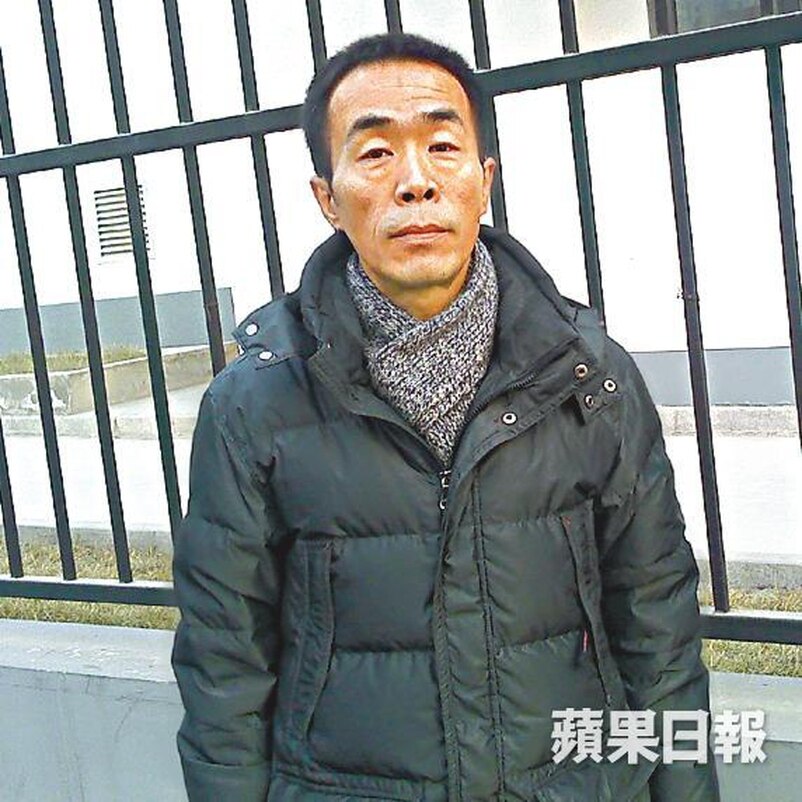
A case of a June 4 prisoner I paid special attention to was Zhu Gengsheng (朱更生), who was featured on Chinese television atop a burning tank, waving a flag and shouting, “We’ve won!” Although originally detained for counterrevolutionary propaganda and incitement, Zhu was sentenced to death with two-year reprieve for counterrevolutionary sabotage. In 1994, his sentence was commuted to life in prison. I placed Zhu’s name on seven prisoner lists and received four responses. Starting in 1997, Zhu received seven sentence reductions. He was released from Beijing Number Two Prison on April 29, 2011.
Zhu Gengsheng as he appeared in a news article published on March 11, 2014. Image credit: Apple Daily
We sometimes found information on the remaining June 4 prisoners in unusual places. In May 2013, Dui Hua researchers uncovered a notice issued by the Jiangshan Neighborhood Council in Beijing about an elderly man who had served a sentence in Yanqing Prison, Jiang Yaqun (姜亚群). Jiang was suffering from Alzheimer’s but had no relatives to look after him.
Jiang had been sentenced to death with two-year reprieve on July 17, 1990 for the crime of counterrevolutionary sabotage. I put him on 10 prisoner lists and received four responses. His sentence was commuted to life in prison and further reduced on five occasions. He was released from Yanqing Prison, which has a ward for elderly, weak, ill, and disabled prisoners in October or November 2012, whereupon he was taken in and cared for by the Jiangnan Neighborhood Council.
Li Yujun (李玉君) was convicted of arson by the Beijing High People’s Court in January 1991 and sentenced to death with two-year reprieve. The sentence was commuted to life in prison on December 31, 1996. I asked about him repeatedly; he was on nine of my prisoner lists submitted to the Chinese government. After receiving six sentence reductions for good behavior, Li was released from Beijing Number Two Prison on May 31, 2013.
Miao Deshun
The last Tiananmen prisoner known by Dui Hua to have served a sentence for an offence committed during the spring 1989 disturbances was Miao Deshun (苗德顺). Miao was a worker from Hebei Province who came to Beijing to participate in the uprising. He was sentenced to death with two-year reprieve by the Beijing Intermediate People’s Court on August 7, 1989. The crime was arson; he and four other protesters had thrown a basket onto a burning tank.
Miao had had no contact with the outside world for many years. At his request, his family stopped visiting him. He was defiant, refusing to admit guilt or participate in prison labor. He spent time in solitary confinement, which contributed to his schizophrenia and hepatitis.
I took a special interest in his case, putting his name on 17 lists submitted to the Chinese government. In late January 2016, I learned from a court website that, after several sentence reductions–the last granted six weeks after my last inquiry–Miao would be released from the elderly, weak, ill, and disabled ward of Yanqing Prison on October 15, 2016.
I announced his imminent release, and journalists became interested in the story. Several went to Yanqing Prison to observe the October 15 event, but no one could sight him.
It is sometimes the case that prisoners are released the night before, or at dawn, at the darkest moment. They are hustled out the back door.
The last of the known June 4 prisoners had been released, but, fittingly, no one had seen the moment, and it has been quickly forgotten.
Soldiers cleaning Tiananmen Square following the events of June 4, 1989. Image credit: timetoast.com
People in Ulaanbaatar on August 31 demonstrate against China’s new language education policies. Image credit: Mingpao
China’s latest effort to accelerate ethnic assimilation into mainstream Han culture has reached Inner Mongolia. Curriculum reforms to phase out local history, literature, and ethnic textbooks in favor of Mandarin-language education triggered widespread unrest among the country’s ethnic Mongols in early September. The new rules were announced just days before the start of the school term.
Hohhot, Tongliao, and Xilin Gol prefectures were among the cities swept up in an unusual display of dissent among ethnic Mongols. In Inner Mongolia, protests are typically joined by herders who air grievances about the mining pollution of grasslands. However, the protesters in September consisted of urban dwellers who fear that the new rules will erode the Mongolian language and identity. Tens of hundreds of parents pulled their children out of schools and took part in demonstrations, demanding that the Mongolian language be reinstated as an education language in the ethnic autonomous region bordering the independent state of Mongolia.
Initially, government officials were sent to persuade parents to send children back to school. As the protests continued to escalate after two ethnic Mongolian protesters jumped to their death, China resorted to coercion to end the unrest. Public-sector employees were warned that they would be stripped of social benefits, suspended, or fired should they continue to boycott classes. Bounties were offered for suspected protesters. China detained about 130 people in connection to the language protests within just one week. Incidents of unrest appeared to have stopped by the second week of September.
The Chinese government blames the west for spreading disinformation about China’s ethnic policy, and defended the adoption of a standardized curriculum, which it says will improve ethnic minority students’ path to higher education and employment. However, some observers believe that having the same writing system among Mongolians in the two countries would breed ethnic sentiment and even separatism.
Shaoyang, the birthplace of Mao Zedong, was rocked by demonstrations and violent clashes after the local government began a city-wide operation on August 1 to ban two-wheeled electric vehicles, including motorcycles, electric bikes, and mopeds. Thousands of owners who parked and used electrical vehicles without city license plates were penalized and had their vehicles impounded or seized.
The ban stemmed from the city government’s campaign to rectify the “chronic and persistent traffic problems” caused by electric vehicles. On August 7, thousands of residents gathered outside the city government and police transport bureaus, requesting the return of their property and the suspension of electrical bicycle ban. They also demanded the city government reopen traffic lanes for motorcycles and allow bikes from outside of the city to enter. Protesters reportedly chased after transport police officers and beat them up. Although news of the protests was censored on mainland’s social media, images and footage made their way to overseas Twitter accounts.
The city government was forced to relent on the ban just one day after the protests. Electrical bicycles are an essential part of everyday life in China, particularly for people with low or middle income. Because they are economical and have lower emissions than cars, they remain a preferred option among commuters in Shaoyang where transportation infrastructure is inadequate.
China has long taken aim at “negative information” about its one-party rule in cyberspace, but how it criminalizes disseminators of such information has not always been consistent. While “picking quarrels and provoking troubles” has been increasingly used to stifle dissenting voices, prosecutors have not entirely stopped using the endangering state security crime of inciting subversion to pursue online critics.
Two cases recently concluded in Jiangsu illustrate the overlapping scope of activities punishable under the two different crimes. On June 18, 2020, Ge Jueping (戈觉平) was sentenced to four years and six months with three years’ deprivation of political rights for inciting subversion. About a month later, Wu Qihe (吴其和) received a prison sentence of three years and eight months for “picking quarrels.” This crime does not carry a supplemental sentence of deprivation of political rights. Ge and Wu openly supported victims of forced evictions in Suzhou and actively took part in protests in support of evictee Fan Mugen, who was sentenced to eight years in prison for aggravated assault earlier in 2015.
Although Ge and Wu were sentenced for different crimes, prosecutors presented strikingly similar evidence against the duo. In addition to the public nuisance Ge and Wu allegedly created, the allegations centered on the negative information they posted online. Both were accused of using the Internet to hype up sensitive cases and incidents since 2013 by “distorting facts and maliciously attacking the nation’s judicial system.” However, only the acts committed by Ge were construed as subversive: the court held that Ge intended to “create an illusion of judicial injustice and antagonism between the government and people,” with an ulterior motive to incite people to “gradually disintegrate the power basis of the Chinese Communist Party.” Wu was similarly accused of “smearing, attacking the socialist system with Chinese characteristics,” but no explanation was given as to why the same acts did not amount to incitement to subvert state power.
It is not immediately clear how prosecutors determine which crime to pursue. Given the similarity in the harshness of sentencing, this question matters little to China so long as dissent can be silenced. Obfuscating the political nature of Wu’s case, the crime of “picking quarrels” perhaps provides an added benefit of avoiding scrutiny from observers.
“Picking quarrels” also appears to be a more likely option and results in lighter punishment if an individual only directs the criticisms against local officials. This point can be attested to by a case Dui Hua uncovered online: a court also in Jiangsu sentenced Wang Hongquan (王洪全) to 18 months in prison for “picking quarrels” because he allegedly set up a “fake” news media agency in Hong Kong and released a number of negative reports about government corruption, township elections, wage arrears, forced evictions and land seizures across multiple localities. The 14-page judgment said such coverage had a substantial negative impact on local government bureaus. There was no mention of how the negative coverage inflicted harm on the Chinese Communist Party or the socialist system.
Two other co-defendants were also convicted of “picking quarrels:” reporter Tang Yunli (唐云立) was sentenced to 13 months’ imprisonment. Li Hede (李鹤德), who was responsible for promoting the news website, received a one-year suspended sentence.
Article 22: Insulting the national anthem
On November 4, 2017, China passed the 10th amendment to Criminal Law, making disrespect of the national anthem a crime punishable by up to three years in prison. This move aims to further legislate respect for the nation and brought treatment of the national anthem in line with desecration of the national flag and symbol. The newly expanded Article 299 defines the following acts as an insult to the national anthem:
maliciously altering the lyrics or music of the “March of the Volunteers;”
performing it in a distorted or derogatory manner, or otherwise desecrating its solemnity.
There have been few if any reports of anyone being criminally pursued for insulting the anthem. The amended Article 299 makes these acts a criminal offense only when the circumstances are serious without explaining the criteria to determine seriousness. At the time of writing, all publicized cases have only resulted in administrative punishment, except for one case Dui Hua discovered involving an Almighty God member.
On December 18, 2019, a district-level court in Xinjiang Production and Construction Corps sentenced a group of 12 Han Almighty God members to prison terms from two years and six months to six years. All but one of them were convicted of Article 300 “organizing a cult to undermine implementation of law.” Police discovered the lyrics of “the Song of Satan’s Victory”” from an electronic file and cited witnesses’ testimonies as saying that the song was similar in tune to the national anthem. The song was composed by Hu Liancai (胡连彩) at the church’s behest in 2018. The judgment stated that Almighty God “silently sang” the song in public during a weekly national flag raising ceremony in Chepaizi Reclamation Area.
Despite being a member of Almighty God, Hu was sentenced to 30 months in prison not for Article 300, but for maliciously altering the lyrics of the national anthem under the Article 299. Hu’s codefendants who disseminated or contributed to the altered lyrics were convicted only of Article 300 but are serving longer prison sentences. The judgment did not state the extent to which the national anthem was modified; nor did it substantiate how or whether the anthem was performed in a distorted or derogatory manner. This first known criminal case appears to suggest that being a member of a banned religious group could be an important factor to determine whether the circumstances are serious in national anthem cases.
SAN FRANCISCO (October 19, 2020)— The Dui Hua Foundation (Dui Hua) has learned with great sadness that Takna Jigme Sangpo, a Tibetan schoolteacher who spent nearly four decades in prison for counterrevolutionary crimes, has passed away outside Zurich, Switzerland, on October 17, 2020, at the age of 91.
Dui Hua assisted in the negotiations which resulted in the release of Takna Jigme Sangpo in 2002. “It was our honor to have done so,” said John Kamm, Executive Director of Dui Hua.
Statistics released by China’s Ministry of Justice (MOJ) and recently published by the World Prison Brief have revealed a significant increase in the number of women prisoners incarcerated in MOJ prisons since 2015, the last year for which a number was made available prior to 2019. The numbers were provided in a statement by an MOJ official to the Asia Pacific Conference of Correctional Administrators (APCCA) meeting in Mongolia. The number of women prisoners in MOJ prisons in 2019 has yet to be made available.
As of mid-2015, there were 107,131 female prisoners in MOJ prisons, accounting for 6.5 percent of China’s population of prisoners held in all MOJ-administered prisons and juvenile reformatories. The number rose to approximately 143,000 as of mid-2018, equivalent to 8.4 percent of that population. This represents an increase of approximately 34 percent over a three-year period, or an average growth rate of more than 10 percent per year.
The numbers exclude women prisoners in Qincheng Prison, which is managed by the Ministry of Public Security (MPS). More significantly, the numbers do not include women held in pre-trial detention centers operated by the MPS and the State Security Ministry. Nor do they include women held in other carceral facilities like “legal education centers,” often used to hold female petitioners and practitioners of unorthodox religious groups like Falun Gong and Almighty God. A large but unknown number of Uyghur and Kazakh women in Xinjiang who are involuntarily held in a network of internment facilities known as “vocational training centers” are also omitted in the MOJ statistics. Finally, it should be borne in mind that the numbers are for adult females and do not include juvenile females incarcerated in juvenile reformatories run by the MOJ.
† Figures only available as of the middle of the year.
‡ This is an approximate figure. Dui Hua estimates suggest that the actual figure may be higher.
Sources: For 2003-2015 figures: Dui Hua, China Statistical Yearbook 2005-2013, APCCA Conference Report 2013-2015; For 2018 figure: World Prison Brief
In February 2014, Dui Hua, together with partners, held an International Symposium on Women in Prison in Hong Kong. The symposium, which aimed to introduce the United Nations Rules for the Treatment of Women Prisoners (the Bangkok Rules), was well attended by officials from China. In October of the same year, Dui Hua Executive Director John Kamm traveled to Beijing where he and Judge Leonard Edwards met with Mr. Wang Shengming, Vice Chairman of the Internal and Judicial Affairs Committee of the National People’s Congress. Wang advised the two Americans that China was considering incorporating the Bangkok Rules into Chinese legislation, but to date little appears to have been done. Rather than adopt policies that slow the influx of women prisoners, China seems to have opted to build more women’s prisons.
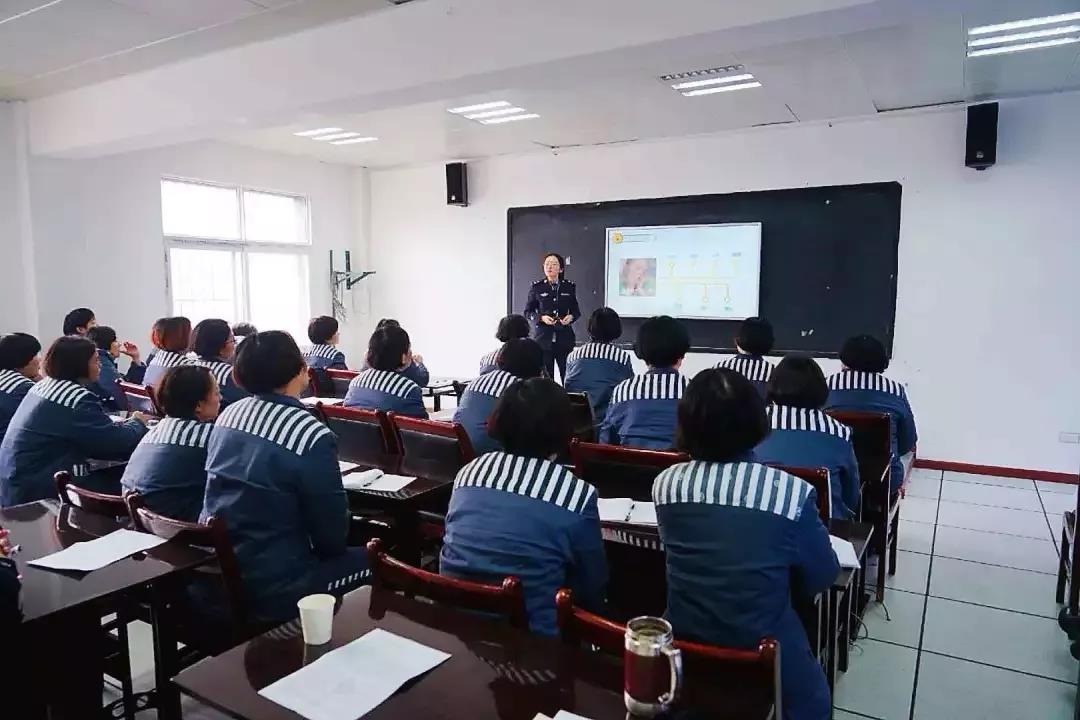
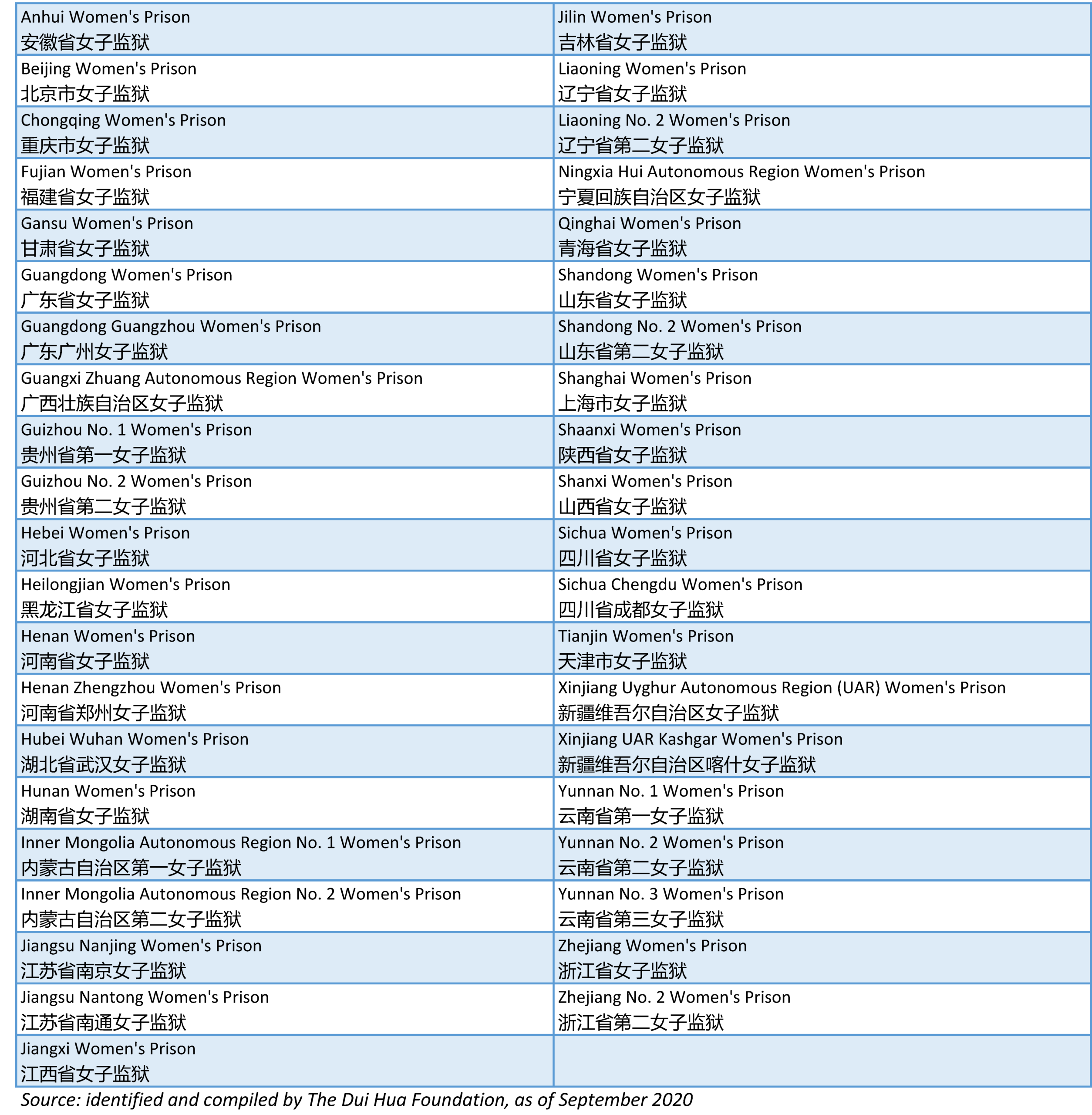
To cope with the rising number of women sentenced to prison, China has built 10 new women’s prisons since 2015. There were 31 women’s prisons in mid-2015, 38 in mid-2017, and by mid-2018 there were 41.i In the past, most provinces had only one prison for women. Now, ten provinces have two, and Yunnan has three. Noticeably, the Tibetan Autonomous Region does not have a women’s prison. By building more prisons, China has managed to keep the average number of prisoners per prison stable at around 3,500 per prison, high by international standards. Overcrowding of Chinese women’s prisons remains a serious problem.
Sources: China Statistical Yearbook 2013, APCCA Annual Report 2015, World Prison Brief
In its 2019 submission to the thematic session of the United Nations Working Group on Discrimination Against Women in Law and Practice held in June 2019, Dui Hua urged the MOJ to release the current number of women held in its prisons. Several months after Dui Hua made this recommendation, the MOJ released the mid-2018 figure to the APCCA at its September 2019 meeting in Mongolia.
Hong Kong’s Correctional Services department has also released numbers that are published in World Prison Brief. They reveal that, in 2019, more than 20 percent of the territory’s prison population were women, one of the highest such percentages in the world. Nearly half are non-local and convicted of non-violent crimes, including drug trafficking and immigration violations.
According to the Prison Policy Initiative, there were 130,000 women in American prisons and 101,000 in local jails in 2019. The number of women in Chinese pre-trial detention centers is not known. It nevertheless appears to be the case that the number of women in Chinese prisons now exceeds the number of women in American prisons, as Dui Hua predicted in its Human Rights Journal entries published in June 2015 and February 2016.
SAN FRANCISCO (September 14, 2020) — According to a reliable Chinese government source, nine Tibetans have been convicted of inciting splittism by the Ganzi Tibetan Autonomous Prefecture Intermediate People’s Court in Sichuan Province since the end of June 2020.
Three of the Tibetans were also convicted of arson in a case first heard by the court in 2019.
Aside from their names in Chinese characters, the names of the crimes for which they were convicted, and the dates of their judgments, little else is known about those convicted. Their ages, genders, the time and reasons for their arrest and trial, and the length of their sentences remain unknown at this time. It is not known if the cases are related to each other.
Unless those who have been convicted appeal their endangering state security convictions – which is rare in minority areas – all nine will be sent to serve their sentences in Sichuan prisons in the coming months.
The table below summarizes Dui Hua’s findings:
As a crime, inciting splittism falls under the category of endangering state security. The penalty for inciting splittism is stipulated in Article 103(2) of the Criminal Law:
Whoever incites others to split the State or undermine unity of the country shall be sentenced to fixed-term imprisonment of not more than five years, criminal detention, public surveillance or deprivation of political rights; the ringleaders and the ones who commit major crimes shall be sentenced to fixed-term imprisonment of not less than five years.
According to Article 56 of the Criminal Law, convictions for endangering state security also carry a supplemental sentence of deprivation of political rights.
The penalty for arson, which is a crime of endangering public security, is set out in Article 114 of the Criminal Law:
Whoever commits arson, breaches a dike, causes explosion, spreads poison or uses other dangerous means to sabotage any factory, mine, oilfield, harbor, river, water source, warehouse, house, forest, farm, threshing ground, pasture, key pipeline, public building or any other public or private property, thereby endangering public security but causing no serious consequences, shall be sentenced to fixed-term imprisonment of not less than three years but not more than 10 years.
Dui Hua has recorded 48 convictions of Tibetans for inciting splittism in its Political Prisoner Database since 2016.
Ganzi Tibetan Autonomous Prefecture is a predominantly Tibetan area in western Sichuan Province that borders on the Tibetan Autonomous Region. The Ganzi Intermediate People’s Court tries cases of endangering state security, among other serious crimes, in the entire prefecture. The court is known for having sentenced Lobsang Dhundop to death, and Tenzin Delek Rinpoche to death with two-year reprieve in 2002.
Individuals and organizations that have information on these convictions are invited to contact Dui Hua at duihua (at) duihua (dot) org. This statement will be updated on our website as new information is received.
SAN FRANCISCO (September 13, 2020) — The Dui Hua Foundation’s long-serving director, Tom Gorman, passed away in peace in Hong Kong on September 11, 2020 with his beloved wife Jenny and daughter Listen Chen by his side. Dui Hua mourns his passing.
Tom was a strong voice for the American community in Hong Kong. He served as Chairman of the American Chamber of Commerce in 1995. He also served as board chair of the Hong Kong International School for several years. He was a member of The Nature Conservancy’s Asia-Pacific Council and the Advisory Committee of International Service Committee Hong Kong Branch. A fluent Mandarin speaker, he served on the board of the Jesuits’ Beijing Center, offering wise counsel. He joined Dui Hua’s board in 2006, a year before Dui Hua established its Hong Kong office.
He was Chairman Emeritus of CCI Asia-Pacific Ltd., which he founded in the early 1970s. He was a pioneer in magazine publishing for a mainland Chinese audience.
Tom was an active a member of the Foreign Correspondent’s Club in Hong Kong, which he frequented whenever the opportunity arose. He was a writer–his most recent book, Hitchhiking to Hong Kong, was published earlier this year. He was a respected commentator on developments in China and Hong Kong.
A native of Chicago, Tom arrived in Hong Kong in 1974 after graduating from Princeton University in 1973. Hong Kong was his home for 46 years.
“Tom was a man of great courage, indefatigable optimism, and unflagging generosity who was deeply concerned about those less fortunate than him,” said John Kamm, Executive Director of Dui Hua. “He served with distinction on the Board of Directors of The Dui Hua Foundation, and he will be greatly missed.”