Tag: deprivation of political rights

  • Arbitrary Detention of Taiwanese in China

    Arbitrary Detention of Taiwanese in China

    The campaign headquarters of non-party legislator candidate Wang Xingzhi
    at the north entrance of Taiwan Railways Keelung Station in Keelung City
    Image credit:
    Solomon203
    /
    CC0 1.0 Universal

    On January 13, 2024, Lai Ching-te of the ruling Democratic Progressive Party (DPP) won Taiwan’s presidential election in a three-way race against two rivals who sought warmer ties with China. Reviled by Beijing for rejecting China’s sovereignty over Taiwan, the DPP will hold onto the presidency for an unprecedented third consecutive term following eight years under Tsai Ing-wen.
    Under Lai, Taiwan will face diplomatic isolation, trade coercion, and military threats from President Xi Jinping as China is expected to ramp up its pressure on the island by arbitrarily arresting more people from Taiwan on the Mainland.

    Taiwan began allowing its residents to visit the Mainland in 1987. According to The Straits Exchange Foundation, 594 Taiwanese went missing in China from 1991-2020. In 2019, Taiwan’s Mainland Affairs Council said that 149 Taiwanese had disappeared since 2016, the year when Tsai began her first term. While some of these people may have suffered accidents, been detained, or died, 67 cases were unaccounted for due to insufficient information or the Chinese government’s withholding of information. A number of them are believed to be held on political charges. Months after Tsai began her second term in 2020, China announced that its Thunder-2020 campaign had uncovered hundreds of cases orchestrated by Taiwan’s intelligence forces to “infiltrate and sabotage” and to set up a network of spies.

    One of the early cases Dui Hua worked on was that of Li Junmin (李俊敏), a Taiwan “spy” who was sentenced to death with reprieve for the now-defunct crime of counterrevolution. Li was granted early release in 2006 despite being once called “defiant and resistant to reform” by the Chinese government. This post examines the cases of seven Taiwanese arbitrarily detained in China, on charges of endangering state security, since the DPP took power in 2016. Two of the detainees have returned to Taiwan after completing their full prison sentences whereas the others remain in custody, either awaiting hefty jail terms or with their fate unclear.

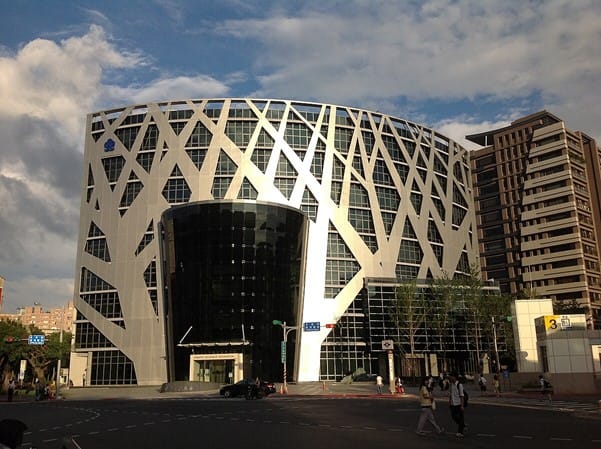
    The Straits Exchange Foundation’s headquarters in Dazhi, Taipei. Image
    credit:
    Meow, Wikimedia Commons /
    CC BY-SA 3.0

    Deprivation of Political Rights, Arbitrarily Applied

    China’s Criminal Law stipulates that deprivation of political rights (DPR) sentences be applied to individuals convicted of endangering state security and other serious crimes. People serving DPR sentences lose their rights to freedom of speech, press, assembly, association, procession, and demonstration. While foreign nationals are typically deported immediately upon completing their sentences, the situation remains murky for people from Taiwan, Hong Kong, and Macau.

    Lee Ming-che (李明哲) was among the first Taiwanese arbitrarily detained in China in 2017 when Tsai began her first term as president. Lee, a rights activist, community college administrator, and former member of the DPP, was convicted of subversion in the same year and sentenced to five years in prison with a supplemental two-year DPR sentence. His ordeal stemmed from group discussions he hosted on WeChat about Taiwan democracy. Additionally, he provided financial help to Chinese political prisoners and their families because their stories reminded him of Taiwan under martial law (1949-1987). When his sentence expired on April 14, 2022, he was allowed to return to Taiwan by plane the following day without having to serve his DPR sentence.

    Lee’s treatment is in stark contrast to that of another Taiwanese businessman, Lee Meng-chu (李孟居), who completed his 22-month prison sentence for “illegally trafficking in and gathering state secrets/intelligence for foreigners” on July 24, 2021. Lee Ming-chu had been banned from leaving China in order to serve his two years’ DPR sentence. Nonetheless, Lee was allowed to
    move around China and he used the opportunity to travel to more than 100 cities and meeting dissidents. When his DPR sentence ended on July 24, 2023, Lee left for Japan on the condition that he not return to Taiwan until after the 2024 presidential elections. However, after spending five weeks in Japan, Lee flew back to Taiwan.

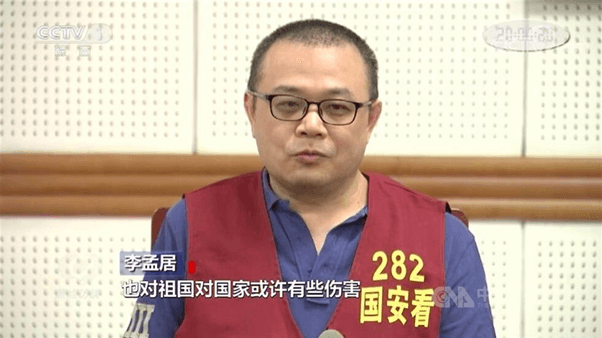
    Lee gave confession in a national news program in October 2020. Image
    source:
    Focus Report, CCTV

    Lee Meng-chu was detained in Shenzhen in August 2019 at the height of the anti-extradition bill protests in Hong Kong for possessing a card that read “Go Hong Kong!” — at the time a common protest slogan — and snapping pictures from his hotel of armed police gathering nearby. These actions and their accompanying media coverage were deemed to be evidence of him acting as a “Taiwan independence activist” attempting to foment a color revolution in Hong Kong. Lee took the position that he was a political hostage because China was outraged over Tsai Ing-wen’s vocal support for the Hong Kong protesters. His case shows that Taiwanese prisoners can be subjected to exit bans when the Chinese authorities decide to make a political point amid escalating tensions.

    Still in Custody

    Yang Chih-yuan (杨智渊)

    While the two Lees have safely returned to Taiwan, more cases of arbitrary detention have emerged as cross-strait relations have worsened. On August 3, 2022, Yang Chih-yuan was detained in Wenzhou for splittism, the first case where a Taiwanese resident was charged with this crime. His detention came hours after Tsai Ing-wen met with then-US House of Representatives Speaker Nancy Pelosi. China called the visit a “provocation” and condemned the United States for “seriously infringing on China’s sovereignty.”

    A screenshot of Yang being detained by police in Wenzhou. Image credit:
    CCTV

    China’s state news media claimed that Yang was appointed as the head of the DPP youth league in Taichung and became a member of the splittist forces on the island. In 2019, he became the vice chairman of the now defunct Taiwan National Party, which advocated for “Taiwan independence” through a referendum. Also in 2019, he was allegedly invited by then-DPP president Chen Shui-bian to run for a seat in the island’s legislature, albeit unsuccessfully. Yang was similarly accused of colluding with splittist forces to support Hong Kong protesters amid the citywide civil unrest the same year.

    Li Yanhe (李延贺)

    On March 23, 2023, Taiwan-based publisher Li Yanhe was placed under residential surveillance at a designated location (RSDL) for inciting splittism in Shanghai. RSDL is a coercive measure condemned by the United Nations Special Procedures as a form of enforced and involuntary disappearance. Under RSDL, a suspect can be held for up to six months incommunicado while being denied legal counsel or family visits.

    Gusa Press publisher Li Yanhe. Image credit:
    CNA
    via Taiwan News

    Li was born in China but settled in Taiwan in 2009 after marrying a Taiwanese woman. He is the founder and editor-in-chief of Gusa Publishing, which is known for publishing books on history and politics that are critical of the Chinese Communist Party (CCP). Some critical titles focused on subjects like CCP corruption and infiltration of global media. In March 2023, he visited
    Shanghai to revoke his mainland residence registration and to visit relatives. He had applied for citizenship in Taiwan, but to do so he was required by Taiwan law to relinquish his mainland household registration.

    Cheng Yu-chin (郑宇钦)

    One day after China Central Television (CCTV) aired the confession of Lee Meng-chu in October 2020, Cheng Yu-chin appeared in another televised confession in which he admitted to using his academic post in the Czech Republic to carry out espionage against China. State news media sources accused Cheng of infiltrating Chinese mainland organizations in Europe and damaging China’s diplomatic ties with other countries. Cheng was placed under criminal detention in Zhengzhou, Fujian, for espionage in April 2019. On April 15, 2024, China’s National Security Education Day, the Ministry of State Security reported that Cheng had been sentenced to seven years’ imprisonment. He has two more years to serve before completing his sentence in April 2026.

    Cheng claimed to be a member of the DPP and to have worked as an assistant to former DPP chairman Cho Jung-tai, but Cho rejected this claim and denied that he knew Cheng. Taiwan senior officials also came forward to rebuke false claims about Cheng’s case, adding that a Taiwanese associate said to have worked with Cheng did not even exist. Taiwan’s Mainland Affairs Council blamed Beijing for making up the spy case. A Taiwanese professor familiar with Cheng also expressed disbelief that Cheng was a spy because Cheng had set up a company to help Chinese students gain admission to post-graduate programs in the Czech Republic. He had worked to promote China’s Belt and Road Initiative during his stay in Europe.

    Chen Shu-kai (陈树楷)

    Dui Hua’s research discovered the case of Chen Shu-kai, who was detained for espionage in January 2017 and sentenced to 12 years and six months’ imprisonment with three years’ DPR in August 2020 in Xiamen. Chen was the chairman of the board of Bioil International Limited (Taiwan). While an official document stated that he received NTD700,000 from the Taiwan Military Intelligence Bureau to obtain 29 classified documents in China, Dui Hua could not find other sources to verify this official account in order to determine whether this is one of the many cases of arbitrary detention in China. He is currently incarcerated in a prison in Fujian. In 2023, the prison recommended a sentence reduction of four months be granted to Chen because he had demonstrated remorse. The sentence reduction, if approved, would shorten his release date to February 2029.

    Pan-Blue Camp Also Targeted

    In Taiwan, pan-blue refers to a political stance espoused by Kuomintang (KMT) supporters who favor a dual Taiwanese Chinese identity as well as friendly relations with China. However, people subscribing to the pan-blue view can still face arrest in China on charges of endangering state security. At least two pan-blue academics from Taiwan have been imprisoned in China in recent
    years.

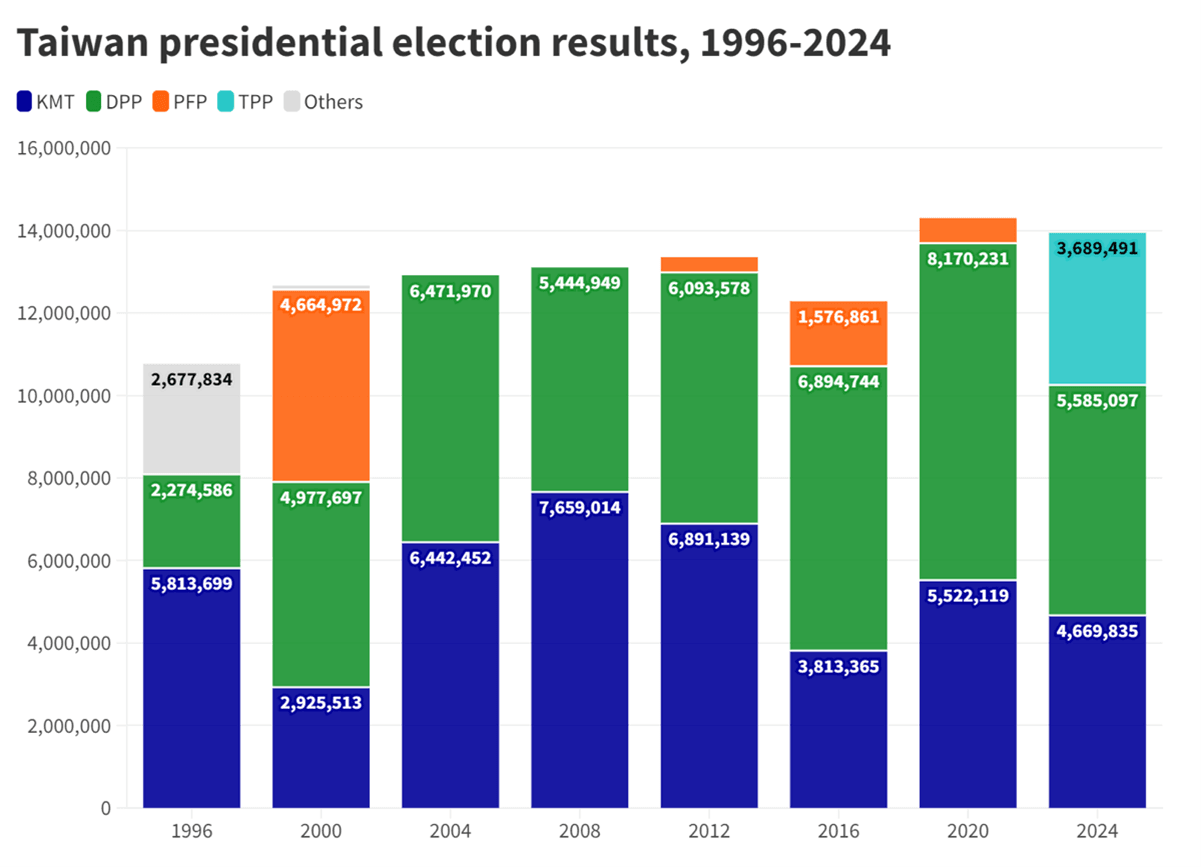
    Results from presidential elections for the past eight Taiwanese
    elections, showing changes in support for the Pan-Blue KMT and the DPP.
    Image credit:
    Emanuelamianstrolski
    /
    CC BY 4.0

    Shih Cheng-ping (施正屏) is a retired professor at National Taiwan Normal University. Shih wrote op-eds critical of Tsai Ing-wen in the Taiwanese press. In August 2022, he completed his four-year sentence for espionage in Anhui. It is not known whether Shih has returned to Taiwan or is obliged to stay in China to serve his two-year DPR sentence, which will end in August 2024.

    Shih disappeared after traveling to China in August 2018. His case came to light 15 months after his disappearance, when he appeared in a CCTV television program in October 2020 confessing to spying for Taiwan. In the recording, he admitted to passing information to Taiwan authorities from a mainland think tank in exchange for money. As with many other televised confessions, his was aired before he was found guilty by the court. This practice has been condemned by human rights groups as forced confessions under duress.

    Pro-unification Taiwanese scholar Tsai Chin-shu (蔡金树) was convicted of Taiwanese espionage in July 2020, Tsai is a KMT member and has worked in multiple capacities to promote cross-strait exchanges. He served as director of the Kaohsiung Cross-Strait Exchanges Research Association and chaired the Southern Taiwan Union of Cross-Strait Relations Associations, which advocated for the Ma Ying-jeou administration’s policies of forging ties with China.

    On January 13, 2024, Taiwan Democratic Progressive Party supporters
    watching the election results. Image credit: Cypp0847 / CC BY-SA 4.0

    He was released from a prison in Fujian in May 2022. Like Lee Meng-chu, Tsai has been barred from returning to Taiwan because of the four-year DPR sentence that was imposed on him. In June 2023, Taiwanese news media sources reported that Tsai was placed under house arrest in Gulangyu Island of Xiamen.

    China has a track record of making politically motivated arrests that observers call “hostage diplomacy.” Since the DPP won the 2016 presidential election, China and Taiwan have exchanged fiery rhetoric and denounced each other as threats to national security and social stability. Days after the DPP won the 2024 presidential election, China’s Ministry of State Security claimed it would intensify efforts to crack down on “subversion, espionage and splittist struggles” related to Taiwan. In June, judicial bodies and Ministry of State Security jointly issued a 22-point legal opinion against “Taiwan splittism” which threatens “trial in absentia” or even to impose the death penalty for “diehard” Taiwan independence splittists in extreme cases, and in August the Taiwan Affairs Office of the State Council added 10 Taiwanese to the list of die-hard splittists (nearly all are members of the DPP). At the time of writing, Taiwanese officials have confirmed to the media that 15 Taiwanese residents are currently held in China for various crimes, “including violations of the anti-secession law.” As cross-strait tensions escalate, more cases of arbitrary detention are likely to emerge, leaving citizens to pay the price for geopolitical hostility.

  • Arbitrary Detention of Taiwanese in China

    Arbitrary Detention of Taiwanese in China

    The campaign headquarters of non-party legislator candidate Wang Xingzhi
    at the north entrance of Taiwan Railways Keelung Station in Keelung City
    Image credit:
    Solomon203
    /
    CC0 1.0 Universal

    On January 13, 2024, Lai Ching-te of the ruling Democratic Progressive Party
    (DPP) won Taiwan’s presidential election in a three-way race against two
    rivals who sought warmer ties with China. Reviled by Beijing for rejecting
    China’s sovereignty over Taiwan, the DPP will hold onto the presidency for an
    unprecedented third consecutive term following eight years under Tsai Ing-wen.
    Under Lai, Taiwan will face diplomatic isolation, trade coercion, and military
    threats from President Xi Jinping as China is expected to ramp up its pressure
    on the island by arbitrarily arresting more people from Taiwan on the
    Mainland.

    Taiwan began allowing its residents to visit the Mainland in 1987. According
    to
    The Straits Exchange Foundation, 594 Taiwanese went missing in China from 1991-2020. In 2019,
    Taiwan’s Mainland Affairs Council
    said that 149 Taiwanese had disappeared since 2016, the year when Tsai began
    her first term. While some of these people may have suffered accidents, been
    detained, or died, 67 cases were unaccounted for due to insufficient
    information or the Chinese government’s withholding of information. A number
    of them are believed to be held on political charges. Months after Tsai began
    her second term in 2020, China announced that its
    Thunder-2020 campaign
    had uncovered hundreds of cases orchestrated by Taiwan’s intelligence forces
    to “infiltrate and sabotage” and to set up a network of spies.

    One of the early cases Dui Hua worked on was that of Li Junmin (李俊敏),
    a Taiwan “spy”
    who was sentenced to death with reprieve for the now-defunct crime of
    counterrevolution. Li was granted early release in 2006 despite being once
    called “defiant and resistant to reform” by the Chinese government.

    This post examines the cases of seven Taiwanese arbitrarily detained in China,
    on charges of endangering state security, since the DPP took power in 2016.
    Two of the detainees have returned to Taiwan after completing their full
    prison sentences whereas the others remain in custody, either awaiting hefty
    jail terms or with their fate unclear.

    The Straits Exchange Foundation’s headquarters in Dazhi, Taipei. Image
    credit:
    Meow, Wikimedia Commons /
    CC BY-SA 3.0

    Deprivation of Political Rights, Arbitrarily Applied

    China’s Criminal Law stipulates that deprivation of political rights (DPR)
    sentences be applied to individuals convicted of endangering state security
    and other serious crimes. People serving DPR sentences lose their rights to
    freedom of speech, press, assembly, association, procession, and
    demonstration. While foreign nationals are typically deported immediately upon
    completing their sentences, the situation remains murky for people from
    Taiwan, Hong Kong, and Macau.

    Lee Ming-che (李明哲) was among the first Taiwanese arbitrarily
    detained in China in 2017 when Tsai began her first term as president. Lee, a
    rights activist, community college administrator, and former member of the
    DPP, was convicted of subversion in the same year and sentenced to five years
    in prison with a supplemental two-year DPR sentence. His ordeal stemmed from
    group discussions he hosted on WeChat about Taiwan democracy. Additionally, he
    provided financial help to Chinese political prisoners and their families
    because their stories reminded him of Taiwan under martial law (1949-1987).
    When his sentence expired on April 14, 2022, he was allowed to return to
    Taiwan by plane the following day without having to serve his DPR sentence.

    Lee’s treatment is in stark contrast to that of another Taiwanese businessman,
    Lee Meng-chu (李孟居), who completed his 22-month prison sentence for
    “illegally trafficking in and gathering state secrets/intelligence for
    foreigners” on July 24, 2021. Lee Ming-chu had been banned from leaving China
    in order to serve his two years’ DPR sentence. Nonetheless, Lee was allowed to
    move around China and he used the opportunity to travel to more than 100
    cities and meeting dissidents. When his DPR sentence ended on July 24, 2023,
    Lee left for Japan on the condition that he not return to Taiwan until after
    the 2024 presidential elections. However, after spending five weeks in Japan,
    Lee flew back to Taiwan.

    Lee gave confession in a national news program in October 2020. Image
    source:
    Focus Report, CCTV

    Lee Meng-chu was detained in Shenzhen in August 2019 at the height of the
    anti-extradition bill protests in Hong Kong for possessing a card that read
    “Go Hong Kong!” — at the time a common protest slogan — and snapping pictures
    from his hotel of armed police gathering nearby. These actions and their
    accompanying media coverage were deemed to be evidence of him acting as a
    “Taiwan independence activist” attempting to foment a color revolution in Hong
    Kong. Lee took the position that he was a political hostage because China was
    outraged over Tsai Ing-wen’s vocal support for the Hong Kong protesters. His
    case shows that Taiwanese prisoners can be subjected to exit bans when the
    Chinese authorities decide to make a political point amid escalating tensions.

    Still in Custody

    Yang Chih-yuan (杨智渊)

    While the two Lees have safely returned to Taiwan, more cases of arbitrary
    detention have emerged as cross-strait relations have worsened. On August 3,
    2022,
    Yang Chih-yuan
    was detained in Wenzhou for splittism, the first case where a Taiwanese
    resident was charged with this crime. His detention came hours after Tsai
    Ing-wen met with then-US House of Representatives Speaker Nancy Pelosi. China
    called the visit a “provocation” and condemned the United States for
    “seriously infringing on China’s sovereignty.”

    A screenshot of Yang being detained by police in Wenzhou. Image credit:
    CCTV

    China’s state news media claimed that Yang was appointed as the head of the
    DPP youth league in Taichung and became a member of the splittist forces on
    the island. In 2019, he became the vice chairman of the now defunct
    Taiwan National Party, which advocated for “Taiwan independence” through a referendum. Also in
    2019, he was allegedly invited by then-DPP president Chen Shui-bian to run for
    a seat in the island’s legislature, albeit unsuccessfully. Yang was similarly
    accused of colluding with splittist forces to support Hong Kong protesters
    amid the citywide civil unrest the same year.

    Li Yanhe (李延贺)

    On March 23, 2023, Taiwan-based publisher Li Yanhe was placed under
    residential surveillance at a designated location (RSDL) for inciting
    splittism in Shanghai. RSDL is
    a coercive measure condemned by the United Nations Special Procedures
    as a form of enforced and involuntary disappearance. Under RSDL, a suspect can
    be held for up to six months incommunicado while being denied legal counsel or
    family visits.

    Gusa Press publisher Li Yanhe. Image credit:
    CNA
    via Taiwan News

    Li was born in China but settled in Taiwan in 2009 after marrying a Taiwanese
    woman. He is the founder and editor-in-chief of Gusa Publishing, which is
    known for publishing books on history and politics that are critical of the
    Chinese Communist Party (CCP). Some critical titles focused on subjects like
    CCP corruption and infiltration of global media. In March 2023, he visited
    Shanghai to revoke his mainland residence registration and to visit relatives.
    He had applied for citizenship in Taiwan, but to do so he was required by
    Taiwan law to relinquish his mainland household registration.

    Cheng Yu-chin (郑宇钦)

    One day after China Central Television (CCTV) aired the confession of Lee
    Meng-chu in October 2020, Cheng Yu-chin appeared in another televised
    confession in which he admitted to using his academic post in the Czech
    Republic to carry out espionage against China.
    State news media sources
    accused Cheng of infiltrating Chinese mainland organizations in Europe and
    damaging China’s diplomatic ties with other countries. Cheng was placed under
    criminal detention in Zhengzhou, Fujian, for espionage in April 2019. On April
    15, 2024, China’s National Security Education Day, the
    Ministry of State Security
    reported that Cheng had been sentenced to seven years’ imprisonment. He has
    two more years to serve before completing his sentence in April 2026.

    Cheng claimed to be a member of the DPP and to have worked as an assistant to
    former DPP chairman Cho Jung-tai, but Cho rejected this claim and denied that
    he knew Cheng. Taiwan senior officials also came forward to rebuke false
    claims about Cheng’s case, adding that a Taiwanese associate said to have
    worked with Cheng did not even exist. Taiwan’s Mainland Affairs Council blamed
    Beijing for making up the spy case. A Taiwanese professor familiar with Cheng
    also
    expressed disbelief
    that Cheng was a spy because Cheng had set up a company to help Chinese
    students gain admission to post-graduate programs in the Czech Republic. He
    had worked to promote China’s Belt and Road Initiative during his stay in
    Europe.

    Chen Shu-kai (陈树楷)

    Dui Hua’s research discovered the case of
    Chen Shu-kai, who was detained for espionage in January 2017 and sentenced to 12 years
    and six months’ imprisonment with three years’ DPR in August 2020 in Xiamen.
    Chen was the chairman of the board of Bioil International Limited (Taiwan).
    While an official document stated that he received NTD700,000 from the Taiwan
    Military Intelligence Bureau to obtain 29 classified documents in China, Dui
    Hua could not find other sources to verify this official account in order to
    determine whether this is one of the many cases of arbitrary detention in
    China. He is currently incarcerated in a prison in Fujian. In 2023, the prison
    recommended a sentence reduction of four months be granted to Chen because he
    had demonstrated remorse. The sentence reduction, if approved, would shorten
    his release date to February 2029.

    Pan-Blue Camp Also Targeted

    In Taiwan, pan-blue refers to a political stance espoused by Kuomintang (KMT)
    supporters who favor a dual Taiwanese Chinese identity as well as friendly
    relations with China. However, people subscribing to the pan-blue view can
    still face arrest in China on charges of endangering state security. At least
    two pan-blue academics from Taiwan have been imprisoned in China in recent
    years.

    Results from presidential elections for the past eight Taiwanese
    elections, showing changes in support for the Pan-Blue KMT and the DPP.
    Image credit:
    Emanuelamianstrolski
    /
    CC BY 4.0

    Shih Cheng-ping (施正屏) is a retired professor at National Taiwan Normal
    University. Shih wrote op-eds critical of Tsai Ing-wen in the Taiwanese press.
    In August 2022, he completed his four-year sentence for espionage in Anhui. It
    is not known whether Shih has returned to Taiwan or is obliged to stay in
    China to serve his two-year DPR sentence, which will end in August 2024.

    Shih disappeared after traveling to China in August 2018. His case came to
    light 15 months after his disappearance, when he appeared in a CCTV television
    program in October 2020 confessing to spying for Taiwan. In the recording, he
    admitted to passing information to Taiwan authorities from a mainland think
    tank in exchange for money. As with many other televised confessions, his was
    aired before he was found guilty by the court. This practice has been
    condemned by human rights groups as forced confessions under duress.

    Pro-unification Taiwanese scholar Tsai Chin-shu (蔡金树) was convicted of
    Taiwanese espionage in July 2020, Tsai is a KMT member and has worked in
    multiple capacities to promote cross-strait exchanges. He served as director
    of the Kaohsiung Cross-Strait Exchanges Research Association and chaired the
    Southern Taiwan Union of Cross-Strait Relations Associations, which advocated
    for the Ma Ying-jeou administration’s policies of forging ties with China.

    On January 13, 2024, Taiwan Democratic Progressive Party supporters
    watching the election results. Image credit: Cypp0847 / CC BY-SA 4.0

    He was released from a prison in Fujian in May 2022. Like Lee Meng-chu, Tsai
    has been barred from returning to Taiwan because of the four-year DPR sentence
    that was imposed on him. In June 2023, Taiwanese news media sources reported
    that Tsai was placed under house arrest in Gulangyu Island of Xiamen.

    China has a track record of making politically motivated arrests that
    observers call “hostage diplomacy.” Since the DPP won the 2016 presidential
    election, China and Taiwan have exchanged fiery rhetoric and denounced each
    other as threats to national security and social stability. Days after the DPP
    won the 2024 presidential election, China’s Ministry of State Security claimed
    it
    would intensify efforts
    to crack down on “subversion, espionage and splittist struggles” related to
    Taiwan. In June, judicial bodies and Ministry of State Security jointly issued
    a 22-point legal opinion against “Taiwan splittism” which threatens “trial in
    absentia” or even to
    impose the death penalty
    for “diehard” Taiwan independence splittists in extreme cases, and in August
    the Taiwan Affairs Office of the State Council added 10 Taiwanese to the
    list of die-hard splittists
    (nearly all are members of the DPP). At the time of writing, Taiwanese
    officials have confirmed to the media that
    15 Taiwanese residents
    are currently held in China for various crimes, “including violations of the
    anti-secession law.” As cross-strait tensions escalate, more cases of
    arbitrary detention are likely to emerge, leaving citizens to pay the price
    for geopolitical hostility.
  • Dui Hua Hits Important Milestone

    Dui Hua Hits Important Milestone

    Image credit: Dui Hua

    Since the Dui Hua Foundation was established in 1999, it has composed and handed over 500 written requests for information on prisoners to the Chinese government. The Chinese government has never refused to accept a list from Dui Hua.

    In the past 25 years, Dui Hua has asked about 2,210 prisoners, of whom 396 were females and 1,316 were males (gender is not known in all cases). The foundation received responses on 1,070 prisoners, of whom 235 were females and 726 were male (gender is not known in all cases). Dui Hua has learned of 454 acts of clemency and better treatment afforded to 294 prisoners on its lists.

    Dui Hua’s Political Prisoner Database, used to generate prisoner lists, has grown from a few hundred names on notecards in 1999 to 48,699 names at the end of 2023.

    Individuals in the PPDB from 2004-2023. Image credit: Dui Hua

    Prior to Dui Hua’s establishment in 1999, founder John Kamm actively engaged the Chinese government in a dialogue focused on prisoners, submitting hundreds of lists and receiving responses on more than a thousand prisoners. Unfortunately, good records were not kept.

    Dui Hua advocates for at-risk detainees — political and religious prisoners and other individuals facing coercive measures. Individuals have been subjected to coercive measures including detention, arrest, imprisonment, and residential surveillance in a designated location, among others. Most names raised by Dui Hua are largely unknown outside of China.

    Recipients of Dui Hua lists have included the State Council Information Office, Ministry of Justice, Ministry of Foreign Affairs, Supreme People’s Court, State Administration for Religious Affairs, provincial and municipal governments, and government backed policy thinktanks.

    As judicial transparency deteriorated, the number of prisoners about whom information has been provided has decreased but has nevertheless continued. In 2024, nine lists have thus far been accepted and two responses on eight prisoners have been received.

    Sample of prisoner lists from August 1999 (left) and June 2000 (right). Image credit: Dui Hua

    Important acts of clemency that Dui Hua has learned of through active interventions include:

    Xu Wenli (徐文立). Xu was a prominent political dissident who was dubbed “China’s special prisoner number one.” Xu co-founded the China Democracy Party (CDP) and organized activities during the 1979 Democracy Wall Movement leading to his sentence of 15 years in prison in 1982. Kamm’s intervention contributed to parole in 1993. Xu was subsequently convicted of subversion and sentenced to 13 years in prison and three years DPR in 1998. This was Xu’s second imprisonment. Dui Hua inquired about his case eight times during 2000 and 2002. China provided eight responses. Those efforts contributed to Xu being granted medical parole in 2002 and receiving permission to seek medical treatment abroad. Kamm and Dui Hua also successfully advocated for other June 4 protesters and members of the CDP, including Wang Youcai (王有才).

    Zhang Lin (张林). A veteran activist, Zhang was tried and convicted in five separate trials between 1991 and 2014. Kamm and Dui Hua raised his name on ten lists and received eight responses. Dui Hua assisted a women’s rights activist to bring Zhang’s daughters to the United States, then with stakeholders to secure his passage to the United States in 2018.

    Jigme Sangpo (晋美桑布). Takna Jigme Sangpo was a Tibetan school teacher and advocate for Tibetan independence. He was believed to be the longest serving prisoner convicted of counterrevolution. Dui Hua assisted in negotiations, one of which took place in Lhasa. Jigme Sangpo was released in 2002 on medical parole and allowed to come to the United States for medical treatment before taking up residence outside Zurich, Switzerland. Dui Hua submitted eight inquiries between 1999 and 2003, and Kamm submitted at least two in 1995 before the foundation’s establishment. He received six responses. Takna Jigme Sangpo passed away on October 17, 2020, at the age of 91.

    Ngawang Sangdrol (阿旺桑珍). At the age of 13, Ngawang Sangdrol was convicted of counterrevolutionary propaganda and incitement and sentenced to three years of imprisonment with one year deprivation of political rights (DPR) in 1992. Her sentence was then extended three times to 23 years. Ngawang was the youngest of 13 women known as the “singing nuns of Drapchi.” They secretly recorded and smuggled protest songs out of prison. Ngawang was granted a sentence reduction in 2001 and parole in 2002. John Kamm visited Lhasa in early 2003 and met with Ngawang. Dui Hua helped secure her departure to the United States for medical treatment that same year. Dui Hua made 11 inquiries between 2001 and 2003, either directly to the Chinese government or through governments that held human rights dialogues with China. The Chinese government provided ten responses. Dui Hua also assisted in efforts to secure the early release of another “singing nun,” Phuntsog Nyidron, in 2004.

    Xu Zerong (徐泽荣). Xu, a Hong Kong resident and respected expert on China’s military history, was detained in 2000 and accused of stealing state secrets and illegal business activity. He received a combined sentence of 13 years, with three years of DPR. From 2002 to 2011, Dui Hua raised Xu’s case on 28 lists, directly or through stakeholders, and received 26 responses. Those efforts contributed to three sentence reductions, totaling 24 months. Kamm visited the prison where Xu was first incarcerated and pressed the warden to provide better treatment. Xu was transferred to a “model prison” and released in 2011.

    Rebiya Kadeer (热比亚•卡德尔). A prominent Uyghur businesswoman and representative to the Chinese People’s Political Consultative Conference, Rebiya was placed in custody in August 1999 after attempting to meet with staff of a US congressional delegation that was visiting Urumqi. She was convicted of illegally providing state secrets to an overseas entity in 2000 and sentenced to eight years in prison and two years of DPR. Dui Hua submitted eight inquiries between 2002 and 2004 to the Chinese government and received more than 20 responses. Dui Hua’s efforts contributed to a one-year sentence reduction in 2004 and medical parole in 2005. She was allowed to seek medical treatment aboard.

    Liang Jiantian (梁鉴添). Owner of a small printing shop in Guangzhou, Liang was convicted of illegal business activities, including publishing Falun Gong materials, and sentenced to life in prison in 2000. Dui Hua put Liang’s name on 20 lists and received 18 responses contributing to seven sentence reductions. Liang was released in October 2021.

    Tenzin Delek Rinpoche (丹增德勒仁波切, 阿安扎西). An influential Tibetan monk from Ganzi, Sichuan. An outspoken advocate for local Tibetan autonomy, he led efforts to provide education to poor children and orphans in the region. The authorities accused Tenzin Delek of involvement in several explosions in Chengdu and Ganzi. He was convicted of inciting splittism and setting off explosions and given a sentence of death with two-year reprieve in 2002. The sentence was later commuted to life in 2005. Dui Hua raised the case directly and through governments on 31 lists and received 31 responses during 2002 and 2015. Despite being in poor health, the prison authorities refused to grant him medical parole. Tenzin Delek Rinpoche passed away in July 2015 at the age of 65. The authorities refused to release the body back to the family for a proper burial, fearing potential social unrest. Dui Hua found and provided the family with government regulations that required the body to be treated with respect for ethnic traditions. The government relented.

    Shi Tao (师涛). Shi was an editor of a provincial newspaper in Hunan. In 2005, he received an internal notice instructing reporters not to cover the upcoming 15th anniversary of the June 4th crackdown, Shi described the post on an overseas website. He was detained in 2004 and sentenced to ten years for providing state secrets to an overseas entity. Dui Hua uncovered the connection between a US internet company and the case and attended a congressional hearing on the case. Shi was released in 2013.

    Yao Wentian (姚文田). Publisher and bookstore owner based in Hong Kong. (He is the father of Yao Yongzhan, John Kamm’s first intervention that took place in 1990.) He was convicted for smuggling common goods and sentenced to ten years in 2013. He received a short sentence reduction in 2019. Although the prison authorities refused to consider medical parole for Yao, he was placed in the medical ward of the prison for most of his sentence, exempted from physical labor, and allowed to receive monthly visits from his wife. Yao returned to Hong Kong on February 27, 2023.

    Li Yan (李彦). A woman from Anyue County in Sichuan was sentenced to death for murdering her abusive husband in 2012. The Supreme People’s Court affirmed the judgment in January 2013. In February 2014, Dui Hua convened an international conference on women in prison in which judges from the Supreme People’s Court took part. Topics of domestic violence were discussed. A judge and another official from the court told Dui Hua that what they heard was helpful in reversing the lower court’s decision. In June 2014, the SPC issued a decision to the Sichuan High Court to hold a retrial. The sentence was changed to death with two-year reprieve in April 2015.

    Chen Taihe (陈泰和). A lawyer in Guilin, Guangxi, an associate professor at Guilin Electronic Technology University Law School, and an advocate of adopting the jury system, Chen was one of more than 300 lawyers and activists interrogated or detained in the “709” a national-wide police action in 2015, later known as the “7.09” crackdown. Dui Hua worked closely with Chinese officials and diplomats from China and the United States to secure a passport and permission for Chen’s departure for the United States in 2016.

  • The Arbitrary Classification of State Secrets

    China’s national broadcasting station CCTV airs Gao Yu’s confession of “illegally procuring/trafficking in state secrets for foreign entities,” blurring out her face but disclosing her full name.

    In China, transparency on endangering state security (ESS) cases is low in many respects. China Law Yearbook, an official judicial compendium that publishes judicial statistics, states that 4,818 individuals were indicted for ESS crimes during the four-year period from 2011-2014. In recent years, China Law Yearbook has obscured this information by counting ESS cases under the category of “others.” Dui Hua estimates that more than 1,000 individuals have been indicted every year for ESS crimes since 2015.

    There are 12 offences categorized under ESS. China has never disclosed a breakdown showing how many cases or individuals were arrested, indicted, tried or sentenced under each of these 12 offences, which include subversion, splittism, incitement, espionage, and illegally procuring/trafficking in state secrets for foreign entities. Dui Hua’s Political Prisoner Database (PPDB) has information on 779 individuals incarcerated for ESS crimes during 2011-2017.

    Dui Hua has found that a substantial portion of ESS judgments disclosed online by courts concern the crime of illegally procuring/trafficking in state secrets for foreign entities, a charge that carries a maximum sentence of death. These judgments generally provide little information about the background of defendants or the nature of the illegally acquired secrets. Only a few judgments provide specifics about the cases. Some defendants were sentenced for taking photos of troops, vessels, and air force equipment. Some judgments concern individuals who allegedly provided state secrets to Taiwanese, U.S. or other foreign agents in exchange for financial compensation.

    Every country has its reasons for guarding state secrets, but in China the offence has been frequently applied to regulate academic research, curb free speech, and suppress criticisms about party policy in the name of state security. Article 10 of the Law on Guarding State Secrets classifies state secrets into three levels: top secret (绝密), secret (机密), and confidential (秘密). What counts as a state secret and who is considered a foreign entity? The cases below illustrate that the classification system can be highly problematic, and the application of the offence can run counter to international norms, trumping individual rights of expression under the guise of safeguarding state security.

    “Top Secret” State Secrets

    The Law on Guarding State Secrets defines “top secret” as the highest level of state secrets; divulging such information is said to cause “extremely serious harm to state security and national interests.” In Dui Hua’s PPDB there are two cases involving the June Fourth protests and top secrets. Sympathetic to the protests, Fan Baolin (范宝琳) obtained six top secret documents in 1999 in his capacity as a state security cadre in Shaanxi. The documents revealed Beijing’s refusal to let exiled Chinese democracy activists return to China. Fan sent the documents to the Federation for a Democratic China, a group founded in Paris following the crackdown in 1989, which advocates for the democratization of China. In February 2001, Fan was sentenced to life imprisonment for illegally procuring state secrets for foreign entities. His imprisonment was not known by any human rights groups until 2007, when Zhao Changqing (赵常青) disclosed Fan’s case after completing his five years’ sentence in the same Weinan Prison for inciting subversion. Fan was imprisoned for a total of 17 years and was released on November 2, 2016, following multiple sentence reductions.

    The case of Shi Tao (师涛) received extensive international media coverage when the journalist was sentenced to 10 years’ imprisonment for using a Yahoo! Mail account to send top secrets to a New York-based, Chinese language website. In April 2004, Shi attended a staff meeting where a memo issued by the Central Propaganda Department about stability maintenance ahead of the 15th anniversary of the June Fourth protests was discussed. The memo covered restrictions on media coverage about June Fourth, Falun Gong, and mass protests. Prosecutors accused Shi of taking detailed notes about the memo and sending them to “overseas hostile forces” under the name of “198964”, despite him “knowing full well that recording and dissemination were strictly prohibited.”

    Prominent dissident Huang Qi (黄琦) is currently incarcerated for allegedly sharing a top secret report issued by a local neighborhood committee in Mianyang, Sichuan, on his 64 Tianwang website. With the help of like-minded volunteers, Huang founded the website to provide legal assistance and information to vulnerable groups. According to several volunteers, police investigating the case claimed 64 Tianwang was a “hostile foreign website” created to “spread negative news about China.” The so-called top secrets concerned a report covering the government’s handling of petitions lodged by Chen Tianmao (陈天茂), also a 64 Tianwang volunteer, who photographed the report for Huang. Pu Wenqing, Huang Qi’s mother, questioned why a petitioner report would be classified as top secret and claimed the offence was trumped up since the report did not even bear a “secrets” stamp or an official seal.

    “Secret” State Secrets

    “Secret” information refers to important state secrets, the leakage of which is said to cause “serious harm to the state.” Rights lawyer Zheng Enchong (郑恩宠) was sentenced to three years’ imprisonment for sending two documents by fax to the New York-based organization Human Rights in China (HRIC). The Shanghai Secrecy Bureau found that one of the documents contained “secrets” while the other was considered “confidential.” The secret information referred to a manuscript Zheng had compiled about police handling of a protest that broke out at a food factory in Shanghai in May 2003. Zheng was found guilty even though neither of the two faxes were actually received by HRIC due to technical errors; nor had HRIC sought to disclose information about the documents.

    In a relatively recent case, journalist Gao Yu (高瑜) was sentenced on November 26, 2015 to five years’ imprisonment for illegally providing secrets to Mirror Media Group, a Chinese news outlet based in the U.S. The charge stemmed from her acquisition of “Document No.9,” a warning to Chinese Communist Party members about the “seven perils.” The seven perils included the promotion of historical nihilism and Western values such as democracy, free press, and judicial independence. The full text of Document No.9 was shared online, garnering a total of 26,197 views as of April 28, 2014, according to the judgment handed down by the Beijing No.3 People’s Court. Due in part to her poor health and international outcry, Gao was allowed to serve her sentence outside prison. Her sentence will expire on April 23, 2019.

    “Confidential” State Secrets

    Although “confidential” is the lowest level of state secrets, individuals providing more than three “confidential secrets” to foreign entities can still face lengthy sentences of up to 10 years’ imprisonment. U.S. citizen Xue Feng (薛锋) was sentenced to eight years’ imprisonment in July 2010 for obtaining 15 geological reports classified as “intelligence” and acquiring an oil industry database classified as “confidential” on behalf of his employer, a U.S. consultancy company. The database contained information about the coordinates of more than 30,000 oil wells, each of which was “confidential” even though oil well coordinates are research data generally made public in countries other than China. Of the oil wells, 2,000 of them were either located outside of China or were already widely known. Dui Hua raised Xue’s case with Chinese officials and urged the U.S. government to step up efforts to secure Xue’s better treatment and early release. In November 2012, Xue was granted a 10-month sentence reduction. He was deported on the day he was released, April 3, 2015.

    While the case of Xue Feng casts a spotlight on the danger of doing business in China, academics also face similar risks. Dui Hua has previously reported on the case of Xu Zerong (徐泽荣), a historian sentenced to 13 years’ imprisonment for sending photocopies of books about the Korean War, published in the 1950s, to a South Korean scholar. Unbeknownst to Xu, the books remained classified as “top secret,” even though their secrecy status should have been declassified upon the expiry of the 30-year secrecy period as stipulated by Article 15 of the Law on Guarding State Secrets.

    An early case Dui Hua uncovered involved two individuals in Fujian who were sentenced to 5-10 years’ imprisonment for mailing “secret,” “confidential,” and “neibu” (i.e. internal) books to a university library in Hong Kong. The prosecutors claimed the duo illegally procured library materials in China starting in 1995 in exchange for financial compensation from the Hong Kong library. The “confidential” books covered statistical materials on broadcasting and civil administration in Hebei, which are now widely available in both Hong Kong and mainland libraries. The “secret” information referred to books published in the 1960s about the Sino-Soviet and Mongolian borders and books published in the early 2000s about Chongqing’s public security bureau and its anti-gang campaigns. The first defendant was released in September 2010 following two sentence reductions totaling 32 months; the second defendant completed his full five years’ sentence in May 2008.

    Arbitrary Application

    State secrets are matters that have a vital bearing on state security and national interests and are entrusted to only a limited number of people for a given period of time in accordance with proper legal procedures. The regulations governing the handling of state secrets in Chinese courts are not well understood. Dui Hua has previously reported that entire criminal cases may be classified as secret from the police investigation stage onward, based solely on the politically sensitive nature of the alleged criminal activities at play, and that this classification holds over when the case is tried in court. In the aforementioned cases, it is questionable how the defendants’ actions put China’s state security at risk. Zheng Enchong’s defense lawyers claim the offence was misapplied because Zheng only recorded ordinary social news – ranging from a small peaceful protest by factory workers to a demolition jointly carried out by government officials and business corporations. Zheng’s accounts have no obvious connection to state security.

    Similarly, it is hard to imagine why a document issued by a local neighborhood committee concerning a petitioner’s complaint could be classed as “top secret,” as in the case of Huang Qi. In an interview with Radio Free Asia, Huang’s mother stated that “if it were really a top secret document, the staff members [allowing Chen Tianmao to photograph] should have been detained too… They have set a trap for Huang Qi…” Huang’s defense lawyer, Li Jinglin, remarked that Huang would very likely be sentenced even though the state secret charge against him had no basis.

    Several Chinese legal scholars and practitioners have cast doubt on the labeling of Document No. 9 as a “secret.” Scholar Zhang Xuezhong argued that to avoid arbitrary application, courts should be required to identify and quantify the harm inflicted on state security and national interest. He remarked that a party document should not be seen as a state secret since the ruling party is obliged to make its policies and governing philosophy public so that party members can monitor and evaluate their performance. Even if a document discloses party secrets, party members only receive disciplinary, not criminal, punishment. Gao should not have received any form of punishment because she has never been a party member.

    Scholar He Bing argued that Gao is innocent on the basis that the information in Document No. 9 was already disclosed by official news media outlets that warned party members to remain vigilant about the infiltration of aspects of Western ideology, dubbed the “seven perils.” These reports came out months before Document No. 9 was circulated online in August 2013. Prominent dissident Bao Tong called it “ridiculous” to treat Document No. 9 as a state secret – as it relates neither to military affairs nor commerce, but an instruction of “ideological control” given by a political party.

    The two cases relating to Fujian and Guangdong academics illustrate the question of the expiration periods imposed on state secrets. In finding the scholars guilty, the courts’ decision ran counter to the Law on Guarding State Secrets, which provides that a state secret shall be automatically declassified upon the expiration of the period guarding it. The secrecy period of “top secrets” shall not exceed 30 years, whereas the time limit for “secrets” and “confidential” secrets is 20 years and 10 years, respectively. Nonetheless, Xu Zerong and the duo in Fujian were found guilty although the acquired materials had technically been “declassified” at the time of their detention.

    In January 2018, Swedish national Gui Minhai (桂民海) made international headlines again after he was snatched by Chinese agents on board a train to Beijing while accompanied by two Swedish diplomats. Gui was reportedly detained for the problematic offence of illegally procuring state secrets for foreign entities. The level of state secrets involved in the case remains unclear. In a televised confession in February, Gui claimed he had been manipulated by Sweden as a “chess piece” to cause trouble for China. Given Gui’s past involvement in Causeway Bay Books, a Hong Kong bookstore which sold titles about Chinese leaders, there are reasons to believe the charge is political and Gui’s statement at the government-arranged interview was coerced.

    The cases above reveal the problematic nature of the offence of “illegally procuring/trafficking in state secrets for foreign entities.” Not only is there a lack of transparency in the classification system of state secrets, there is also a great deal of evidence that the offence is being used to curb individual rights of expression under the guise of safeguarding state security. The offence has been arbitrarily used to silence dissidents, rights lawyers, journalists, and academics and to cover up events like June Fourth protests.

  • Will a New Judicial Interpretation on Cults Lead to Greater Leniency?

    Underground church goers watch a service on a video screen in Beijing. Image Credit: Express UK.

    Since coming into force in October 1997, Article 300 of the Criminal Law “organizing/using a cult to undermine implementation of the law” has been frequently used to suppress groups such as Falun Gong, unofficial Christian groups, Buddhist sects, and over a dozen qigong groups including Zhonggong. Accompanying this law, two judicial interpretations were jointly issued by the Supreme People’s Court and Supreme People’s Procuratorate on October 1999 and June 2001, respectively, to explain the law’s specific application. Effective since February 1, 2017, the latest joint interpretation of Article 300, consisting of sixteen articles, adds a new penalty range based on leniency and serves to redefine the sentencing standard.

    New Sentencing Standard

    The new interpretation incorporates previous changes made to the ninth amendment of the Criminal Law in November 2015 concerning the standard of punishments for cult crimes. Of significance is the elaboration of what is meant by “relatively minor circumstances” that can result in a sentence of three years or less, detention, surveillance, deprivation of political rights, fines, or combined penalties with fines. Such “circumstances” are defined in the interpretation as acts that inflict lighter social harm, which are measured by quantifiable factors such as: the number of cult propaganda materials produced and disseminated, the number of views or downloads of a cult propaganda video, the amount of economic loss caused by cult activity, or the number of members recruited by the cult. An act is considered relatively minor when such an amount or number falls below one-fifth of what is accepted as the new normal standard (see below).

    In the future, we can expect to see more cult offenses deemed as “relatively minor” cases, partly because by raising the benchmark for evidence necessary to imprison cult prisoners for up to three to seven years, the new interpretation has expanded the scope of activities that fall under the category of “minor” cases. For instance, the quantity of print propaganda materials (such as leaflets, banners or newspapers) produced or disseminated for cult purposes that constitute a normal offense has now been raised to 1,000, a significant leap from 300, as stated in the 2001 interpretation. For propaganda in the form of books or publications, the quantity for a normal offence requires evidence of at least 250 materials, again a significant leap from the previous count of 100 publication materials. The interpretation also quantifies a number of additional criminal behavior used to determine sentencing.

    List of criminal behaviors revised in Article 2 of the interpretation:

    • Recruiting over 50 members;
    • Swindling or leading to an economic loss of over one million yuan;
    • Using at least 500 banknotes as a means to disseminate information about a cult;
    • Manufacturing or disseminating cult propaganda over a certain amount:
      • over 1,000 leaflets, spray paints, pictures, banners and newspapers;
      • over 250 copies of books or publications, cassettes or audio-videotapes; or logos or signs;
      • over 100 CD-ROMs, U-disks, memory cards, mobile hard drivers or other mobile storage devices;
      • over 50 banners.
    • Using the Internet to disseminate information about a cult:
      • manufacturing or disseminating over 200 digital pictures or articles, over 50 copies of e-books, publications, audios or videos, electronic files with over five million characters, or electronic files exceeding 250 minutes;
      • composing or making over 1,000 messages or phone calls;
      • using online chatrooms, chat groups, WeChat, microblogs or other social networking services to spread information about a cult involving over 1,000 members or followers;
      • cult messages with over 5,000 views or clicks.

    A circumstance is considered “especially grave” when the quantity is five times more than the numbers stated above, and can lead to imprisonment of seven years or more. Although the ninth amendment to the Criminal Law increased the maximum sentence from 15 years to life, it has not been imposed for the single offense of Article 300. For example, while the Buddhist leader Wu Zeheng (吴泽衡) received a life sentence for charges of fraud and rape, his crime related to cult activity afforded him a sentence of 12 years.

    Greater Leniency Despite a Surge in Cult Cases

    Dui Hua’s Political Prisoner Database has collected information on over 8,000 individuals convicted of Article 300 of the Criminal Law between 2000-2016. Most convictions in the early years after Falun Gong was labelled an “evil cult” in 1999 are now considered “particularly serious circumstances” under the new interpretation. During that time, a number of high-profile leaders such as Wang Zhiwen (王治文) and Li Chang (李昌) were given lengthy sentences of over 10 years for multiple offenses.

    Image Credit: Dui Hua Foundation.

    Since December 2012, the total number of cult convictions recorded in the database has surged as a result of the nationwide clampdown on the group the Almighty God, and an improved level of judicial transparency due to the more regular online posting of court judgments. Nonetheless, the appearance of a new religious threat does not appear to be met with the same intensity compared to the Falun Gong crackdown of the early 2000s. Most convictions of Almighty God members resulted in sentences of three to four years’ imprisonment, and fewer than 10 percent of all cult sentences in the same period exceeded seven years. Also noteworthy is the surge of cases now considered relatively minor with sentences of three years or less. In 2016, over half of the convictions for cult activity are now considered relatively minor cases according to the new interpretation, superseding the number of ordinary cult cases for the first time since the offense was codified in the Criminal Law.

    Leniency in the form of shorter sentences is a further indication of an overall relaxation of the clampdown on cults. Article 9 of the interpretation states that:

    “a perpetrator can be exempt from indictment or criminal punishment if he or she expresses sincere remorse about his wrongdoing, and exhibits a willingness to leave the cult and cease joining in its activities. Those who are deceived or intimidated into joining the cult will not be handled as criminals.”

    Showing remorse is a prerequisite for prisoners seeking clemency, and it is not uncommon for prisoners charged with cult crimes to receive sentence reductions after expressing remorse for their behavior. Dui Hua’s Political Prisoner Database recorded over 300 instances of clemency in 2014 for cult prisoners and in 2015, the number surged to nearly 500.

    Deprivation of Political Rights

    Despite the trend towards greater leniency in sentence reductions, public security authorities also appear ready to continue exercising control over cult prisoners even after they have completed their sentences. Article 14 of the interpretation states that a supplemental sentence of “deprivation of political rights” (DPR) up to five years may be imposed on cult prisoners. Prior to the interpretation, only prisoners sentenced for the crime of “endangering state security” and a number of violent crimes were subject to a supplemental DPR sentence, depriving them of the right to vote, the right to stand for office and the right to hold a position in a state-owned company, regardless of the fact their sentences had already been completed. Of particular concern to cult prisoners is that individuals under DPR are prohibited from writing articles or giving interviews.

    Dui Hua will closely monitor the application and impact of this new interpretation for cult prisoners. The new sentencing standards suggest an expansion of crimes considered “minor” and hopefully a reduction of cult prisoners serving long sentences. That said, the enhancement of the use of DPR may present new opportunities for public security authorities to exert control over cult members even after their release.

  • Could China’s New Oversight Rules Have Avoided Arbitrary Detention of American Citizen?

    The United Nations Palais des Nations. On June 29, the UN Working Group on Arbitrary Detention recommended the release of American Sandy Phan-Gillis, who has been detained for over a year without having charges brought against her in court. Photo: www.unog.ch

    Dui Hua recently found a copy of Supreme People’s Procuratorate (SPP) regulations that govern oversight of “designated-location residential surveillance” (DLRS), a form of incommunicado detention that the Chinese government frequently uses in sensitive cases involving endangering state security, terrorism, and corruption (known as “three type offenses”). Dui Hua has translated the regulations into English below (Chinese source text available here).

    The SPP adopted the regulations on October 13, 2015 with the apparent intention of curtailing abuse of DLRS. During public comment periods leading up to the 2013 revisions to the Criminal Procedure Law (CPL) that established DLRS powers, many commentators heavily criticized DLRS for effectively legalizing the secret, incommunicado detentions that had existed for years in China due to ambiguities and blank spots in the law. In November 2011, the United Nations Working Group on Enforced or Involuntary Disappearances had also objected to the proposed CPL revisions, arguing that they would amount to the legalization of enforced disappearances.

    Oversight Regulations Aim to Limit Arbitrary Detention Through On-Site Inspections

    Given the importance of DLRS oversight, it is tempting to speculate whether these rules, had they been in place just a few months earlier, might have helped mitigate if not avert the arbitrary detention of American citizen Phan (Sandy) Phan-Gillis—the only American currently in a Chinese detention facility on state secrets charges. On June 29, the UN Working Group on Arbitrary Detention (WGAD) published an Opinion holding that Phan-Gillis’ detention is “arbitrary”, with US State Department officials urging China to consider the WGAD’s recommendation to release Phan-Gillis. Indicating the heightened US-China tensions resulting from the case, Chinese Foreign Ministry spokesman Hong Lei issued a swift reply, referring to the WGAD findings as “irresponsible” and calling for greater respect of China’s “judicial sovereignty”.

    Phan-Gillis (pictured left) was initially taken into custody by agents of the Guangxi Zhuang Autonomous Region’s state security bureau on suspicion of espionage on March 19, 2015. She was placed under DLRS until September 2015, when the six-month time limit on this coercive measure expired, and was then transferred to a detention center in Nanning and placed in solitary confinement. In March 2016, Newsweek reported on the one-year anniversary of her detention.

    Phan-Gillis has not received access to effective assistance of legal counsel and continues to be held in detention in Nanning, having never had charges brought against her in court. Had the SPP’s new oversight regulations been in place when Phan-Gillis was initially detained, procurators would have possessed clear authority under Article 19 to carry out on-site inspection of Phan-Gillis’ DLRS conditions and to conduct return inspection visits once per week.

    Other provisions of the oversight regulations raise the question whether procurators might also have been able to request her release or to otherwise curtail police powers. Article 20 of the regulations, for example, provides local procurators with authority to issue “rectification opinions” on procedural irregularities, several of which apply to the Phan-Gillis case: state security officials failed to notify Phan-Gillis’ family of her placement in a DLRS facility; probably failed to place her in a facility that meets the statutory requirements for DLRS (no one, including the American consular officials who conducted monthly visits, were allowed to visit Phan-Gillis in the detention facility where she is actually housed); and failed to allow her reasonable visits and correspondence with legal counsel and family as provided for under the relevant sections of the CPL, which grant discretion for the detaining authority to allow family and lawyer visits even in so-called “three type offenses.”

    Unfortunately, even these minimal oversight mechanisms were not in place at the time of Phan-Gillis’ DLRS confinement. The new rules came into force weeks after the end of her transfer to a detention facility. As it stands, the abuses of discretion that marked the first case of legalized disappearance after passage of CPL revisions in 2013 are eerily similar to those apparent in ongoing cases like Phan-Gillis’. It remains to be seen whether the oversight rules translated below will yield discernible changes in future police application of DLRS procedures.

    *

    Regulations on Oversight of Residential Surveillance in a Designated Location by People’s Procuratorates

    *

    Adopted at the 41st meeting of the 12th Procuratorial Committee of the Supreme People’s Procuratorate on October 13, 2015

    Chapter 1: General Principles

    Article 1: In order to strengthen and standardize how people’s procuratorates carry out oversight regarding imposition and implementation of designated-location residential surveillance (DLRS), these regulations are hereby enacted in accordance with the relevant provisions of the Criminal Procedure Law of the People’s Republic of China (CPL) and in consideration of the realities of procuratorial work.

    Article 2: When DLRS is used against criminal suspects or defendants by public security organs, people’s procuratorates, or people’s courts, people’s procuratorates shall carry out oversight in accordance with law as to the legality of imposition and implementation of DLRS.

    Article 3: Oversight of decisions to impose DLRS shall be the responsibility of the investigation-oversight and prosecutorial units of people’s procuratorates; responsibility for oversight of implementation of DLRS shall reside with the criminal enforcement inspectorate units of people’s procuratorates.

    Article 4: Designated locations shall possess the conditions for ordinary daily life and rest and shall be separate from places of interrogation; they shall be equipped with surveillance equipment to facilitate monitoring and management; and they shall possess security measures to ensure the security of case handling.

    Chapter 2: Oversight of Decisions to Impose Designated-Location Residential Surveillance

    Article 5: When a public security organ decides to impose DLRS on a criminal suspect who has no fixed residence, the investigation-oversight unit of the people’s procuratorate at the same administrative level [as the public security organ] shall conduct oversight to determine whether that decision has been made lawfully.

    When a public security organ at a higher administrative level has approved a decision to place an individual suspected of endangering state security or terrorist activity under DLRS, the investigation-oversight unit of the people’s procuratorate at the same administrative level as the public security organ that issued approval shall conduct oversight as to whether that decision has been made lawfully.

    Article 6: When a people’s procuratorate decides to place a criminal suspect who has no fixed residence under DLRS, the investigation-oversight unit of the people’s procuratorate immediately above shall conduct oversight as to whether that decision has been made lawfully.

    When a people’s procuratorate at a higher administrative level has approved a decision to place an individual suspected of serious corruption under DLRS, the investigation-oversight unit of the people’s procuratorate that gave that approval shall conduct oversight as to whether that decision has been made lawfully.

    Article 7: When any of the following conditions apply, the people’s procuratorate shall initiate oversight into whether a decision to impose DLRS is lawful:

    (i) A criminal suspect or his/her legal representatives, close relatives, or defense counsel believe that the decision to impose DLRS is in violation of the law and file a complaint, report, or petition with the people’s procuratorate;

    (ii) When, in the course of its involvement in investigation, review of arrest or indictment requests, review of criminal enforcement, or filing review, the people’s procuratorate discovers that the investigating organ (unit) may have issued a decision to impose DLRS in violation of the law;

    (iii) A people’s supervisor believes that a decision to impose DLRS is in violation of the law and files an oversight opinion with the people’s procuratorate;

    (iv) Other circumstances requiring initiation of oversight.

    Article 8: When initiating oversight of a decision by a people’s procuratorate to place a criminal suspect who has no fixed residence under DLRS, the investigating unit shall furnish the investigation-oversight unit of the people’s procuratorate at the administrative level immediately superior with copies of the case-filing decision, the decision to impose DLRS, and main pieces of evidence within three days.

    When initiating oversight of a decision to place an individual suspected of serious corruption under DLRS, the investigation unit of the people’s procuratorate that approved the decision shall furnish the aforementioned documents to its own investigation-oversight unit within three days.

    When the people’s procuratorate initiates oversight into a decision to impose DLRS by a public security organ, it may request that the public security organ provide the aforementioned documents.

    Article 9: Oversight into decisions to impose DLRS may be carried out in one of the following ways:

    (i) Review of the relevant case documents;

    (ii) Listening to the investigating organ (unit) present its reasons and factual basis for issuing the decision to impose DLRS;

    (iii) Listening to the opinions of the criminal suspect or his/her legal representatives, close relatives, or defense counsel;

    (iv) Other ways.

    Article 10: In reviewing the legality of a decision to impose DLRS, the people’s procuratorate shall check to see whether the decision satisfies the conditions set out in Articles 72 and 69(3) of the CPL, and further review whether the decision meets the following conditions:

    (i) The criminal suspect has no fixed residence in the city or county where the case-handling organ is located;

    (ii) The public security organ or people’s procuratorate at the administrative level immediately superior has approved the decision to impose DLRS on an individual suspected of endangering state security, terrorist activity, or serious corruption for whom implementation of residential surveillance in his/her own residence would impede the investigation.

    Article 11: The investigation-oversight unit of the people’s procuratorate should issue a decision within seven days of initiating oversight into whether a decision to impose DLRS was lawful.

    Article 12: When, having carried out its review, the people’s procuratorate finds that the public security organ’s decision to impose DLRS does not meet the conditions set out by the law, it shall report those findings to the head of the procuratorate and, upon his or her approval, issue a rectification notice to the public security organ and recommend that the public security organ revoke its decision to impose DLRS.

    When the procuratorate finds that a decision to impose DLRS issued by itself or the procuratorate at the next lower administrative level does not meet the conditions set out by the law, the investigation-oversight unit of the people’s procuratorate shall report to the head of the people’s procuratorate and, upon his or her decision, notify its own investigating unit or the people’s procuratorate at the next lower administrative level to revoke the decision to impose DLRS. When notifying the people’s procuratorate at the next lower administrative level to revoke the decision to impose DLRS, the procuratorate shall also circulate a notice to its own investigating unit.

    Article 13: Upon receiving a rectification opinion from the people’s procuratorate at the immediately superior administrative level, the people’s procuratorate shall immediately carry out the recommendation and report on the steps taken to the investigation-oversight unit of the immediately superior people’s procuratorate.

    If the people’s procuratorate believes that the rectification opinion from the immediately superior people’s procuratorate regarding its decision to impose DLRS is in error, it may request a new review by [that same superior] people’s procuratorate within three days of receiving the rectification opinion. The superior people’s procuratorate shall appoint a new procurator to review the case and issue a decision whether to amend its original opinion within five days.

    Article 14: Oversight of decisions by the people’s procuratorate to impose DLRS during the indictment phase shall be carried out in accordance with these provisions by the investigation-oversight unit of the same people’s procuratorate.

    Oversight of decisions by the people’s court to impose DLRS shall be carried out in accordance with these provisions by the prosecutorial unit of the people’s procuratorate at the same administrative level as the court.

    Chapter 3: Oversight of Implementation of Designated-Location Residential Surveillance

    Article 15: Oversight of implementation of DLRS is the responsibility of the criminal enforcement inspectorate unit of the people’s procuratorate at the same administrative level as the public security organ that implements the DLRS.

    Article 16: Oversight by people’s procuratorates as to implementation of DLRS shall include the following:

    (i) Whether legal paperwork, such as the DLRS decision or enforcement notice, is complete;

    (ii) Whether the place, term, and personnel are in accordance with regulation;

    (iii) Whether the lawful rights of the person under residential surveillance are being protected;

    (iv) Whether there is any unlawful behavior, such as interrogation in the designated location, corporal punishment, or abuse of the person under residential surveillance;

    (v) Other things that should be monitored in accordance with the law.

    Article 17: When carrying out oversight into the implementation of DLRS, the people’s procuratorate may employ the following measures:

    (i) Review of relevant legal documents; records of any meetings, correspondence, or outgoings by the person under residential surveillance; and physical examination records;

    (ii) On-site inspection of whether the designated location meets the legal conditions;

    (iii) Review of relevant surveillance video footage and, if necessary, physical examination of the person under residential surveillance;

    (iv) Interviews with the person under residential surveillance, enforcement personnel, investigators, or other relevant personnel in order to ascertain and understand relevant circumstances.

    Article 18: Within 24 hours of receiving a copy of a decision to impose DLRS from a public security organ or people’s court, the people’s procuratorate case management unit shall forward the decision to its criminal enforcement inspectorate unit.

    When the investigation unit or prosecution unit of a people’s procuratorate issues a DLRS decision in the name of the procuratorate, it shall send a copy of the DLRS decision to its criminal enforcement inspectorate unit within 24 hours and notify it of the address of the designated location.

    Article 19: Within 24 hours after receiving a copy of the DLRS decision, the criminal enforcement inspectorate unit of the people’s procuratorate shall appoint procurators to carry out on-site inspection and complete a record of oversight inspection. Monitoring of DLRS implementation should include return inspection visits by roving teams of no fewer than two procurators at least once per week. Inspection of the implementation of DLRS must not interfere with the ordinary work of criminal investigation.

    Article 20: When oversight of DLRS implementation by the people’s procuratorate uncovers one of the following, the people’s procuratorate shall issue a rectification opinion to the enforcement or investigating organ in accordance with the law:

    (i) Failure of the enforcement organ to appoint enforcement personnel or failure to appoint enforcement personnel in a timely manner upon receipt of the DLRS decision and implementation notice;

    (ii) Except when it is impossible to provide notice, failure to notify the family of the person under residential surveillance within 24 hours of implementing DLRS;

    (iii) Implementation of residential surveillance in a detention center, administrative jail, prison, holding cell, case-handling area, or other location not meeting the statutory conditions for a designated location;

    (iv) Arranging meetings or correspondence between defense lawyers and the person under residential surveillance in ways that violate regulations or illegally restricting the person under residential surveillance from meeting or corresponding with a defense lawyer;

    (v) Failure by a new case-handing organ to issue a new DLRS decision in a timely manner when there is a change in the phase of the criminal process;

    (vi) Failure of the enforcement organ to lift residential surveillance in a timely manner and notify the person under residential surveillance in a timely manner when the case-handling unit issues a decision to lift or change the DLRS conditions and notifies the enforcing organ of such;

    (vii) Demands for payment by the person under residential surveillance or his or her family;

    (viii) Other illegality.

    When the criminal enforcement inspectorate unit of the people’s procuratorate discovers that the investigation or prosecutorial unit of its own procuratorate has violated one of the above conditions, it shall seek approval from the head of the procuratorate to issue a rectification opinion.

    Article 21: When the criminal enforcement inspectorate unit of the people’s procuratorate finds irregularities in enforcement or security risks in the implementation of DLRS, it shall seek approval from the head of the procuratorate to issue a procuratorial recommendation to the enforcement organ or case-handling organ.

    Article 22: When a rectification notice or procuratorial opinion has been issued, a copy shall be sent to the procuratorate at the administrative level immediately superior as well as to the unit immediately superior to the enforcement unit or case-handling unit.

    Article 23: When a person under residential surveillance dies while under DLRS, the case shall be handled with reference to the Supreme People’s Procuratorate procuratorial procedures for death of a person in custody in a detention facility.

    Article 24: When a people’s court or people’s procuratorate assigns judicial police officers to assist the public security organ with implementation of DLRS, the criminal enforcement inspectorate unit of the people’s procuratorate shall carry out oversight of those officers’ assistance with implementation.

    Chapter 4: Additional Provisions

    Article 25: The people’s procuratorate shall process and provide responses in a timely manner to complaints, reports, or petitions regarding imposition or implementation of DLRS from criminal suspects or their legal representatives, close relatives, or defense counsel.

    Article 26: When the investigation-oversight or prosecutorial unit of the people’s procuratorate discovers the possibility of illegality in the implementation of DLRS, they shall report their findings in a timely manner to the criminal enforcement inspectorate unit. When the criminal enforcement inspectorate unit discovers the possibility of illegality in imposing a DLRS decision, it shall report its findings in a timely manner to the investigation-oversight or prosecutorial unit.

    Article 27: If, in the course of its oversight of imposition or implementation of DLRS, the people’s procuratorate discovers violations of disciplinary rules or the law by case-handling personnel or enforcement personnel, it shall seek a decision from the head of the procuratorate to send the case in a timely manner to be handled by the appropriate unit; if the wrongdoing constitutes a criminal offense, it shall pursue criminal responsibility in accordance with the law.

    Article 28: If there are violations of disciplinary rules or violations of the law by procuratorial personnel overseeing imposition or implementation of DLRS, responsibility shall be pursued in accordance with the relevant provisions; if the wrongdoing constitutes a criminal offense, responsibility shall be pursued in accordance with the law.

    Article 29: Oversight of imposition or implementation of DLRS by the people’s procuratorate shall be handled as part of the unified system of duties of the people’s procuratorate. The case-management unit of the people’s procuratorate shall conduct periodic statistical analysis and quality assessment and report results in a timely manner to the relevant units.

    Article 30: These measures take effect from the date of promulgation.

  • China State Security Trials Fell 50 Percent in 2015, Official Data Suggest

    Pu Zhiqiang (pictured above) was arrested for “inciting splittism”, but convicted of “inciting ethnic hatred” and “picking quarrels and provoking trouble”. Source: CCTV, DW-TV

    Chinese courts concluded 50 percent fewer endangering state security (ESS) trials in 2015, according to Dui Hua’s analysis of data released in the annual work report of China’s Supreme People’s Court (SPC). Dui Hua believes the decline represents an increase in the use of non-ESS charges to prosecute political and religious activism.

    Dui Hua estimates that Chinese courts concluded more than 500 ESS trials of the first instance in 2015, compared with more than 1,000 ESS trials in 2014. Delivered to the National People’s Congress by SPC President Zhou Qiang on March 13, 2016, the annual work report includes ESS and endangering national defense (END) crimes in a category of “Other” trials. The category comprised 0.06 percent of first-instance criminal trials in 2015, compared with 0.13 percent in 2014. Based on an accounting of all of the crime categories in China’s Criminal Law and historical data on END trials, Dui Hua believes that the “Other” category is primarily populated by ESS cases—according to China Law Yearbook, only 243 END trials were concluded in 2014.

    ESS crimes, which include subversion, inciting subversion, splittism, espionage, and state secrets violations, carry a mandatory supplemental sentence of deprivation of political rights (DPR). This sentence precludes individuals from writing articles, giving interviews, voting, standing for office, and working in a state-owned company.

    The Xinjiang Uyghur Autonomous Region typically accounts for the largest percentage of ESS trials of any Chinese region. According to the annual work report of the Xinjiang High People’s Court, courts in the autonomous region heard approximately 100 ESS trials in 2015, down from about 300 trials per year in 2014 and 2013. The same work report reveals that trials for the category of crimes that cover “terrorism” surged about 25 percent respectively in 2015. Dui Hua believes that many of the trials for cult and terrorism crimes had previously been handled as ESS trials.

    As previously reported by Dui Hua, ESS indictments by procuratorates in 2014 rose to a record level since the criminal category was introduced in 1997: 1,411 people were indicted in 663 cases. In light of the sharp drop in ESS trials in 2015, Dui Hua expects that ESS indictments also fell by a significant margin last year. The numbers are expected to be released later this year when the 2016 China Law Yearbook is published.

    ESS “and Other” Trials

    Pu Zhiqiang’s recent conviction is a prominent example of the uncertainty with which the justice system categorizes political activities as endangering state security. Police initially charged Pu with the ESS crime of “inciting splittism” for criticizing the Chinese Communist Party (CCP) on his microblog. However, his conviction at trial was ultimately for the non-ESS crimes of “inciting ethnic hatred” and “picking quarrels and provoking trouble.” Although Pu was given a suspended sentence, he is not a free man—he continues to serve a sentence through compulsory measures and will be subject to various regulations, the violation of which could result in his future detention.

    Dui Hua’s Political Prisoner Database (PPDB) records the names of 19 people tried for ESS crimes in 2015. Mettursun Eziz was sentenced in May to four years in prison and three years deprivation of political rights (DPR) for inciting splittism. The Henan Nanyang Intermediate People’s Court found that he used voice-messaging apps like WeChat to download a large number of “extreme religious materials” produced by the East Turkestan Islamic Party (ETIP). Mettursun Eziz is scheduled for release on April 2, 2018.

    In perhaps the most widely reported ESS trial of 2015, prominent journalist Gao Yu (高瑜) was sentenced to seven years in prison for leaking state secrets in April. Observers have attributed the charges to the leaking of “Document Number 9,” an internal CCP manifesto that rails against democracy, civil society, and universal values like human rights. In November, the Beijing High People’s Court reduced Gao’s sentence to a five-year term and allowed the 71-year-old to serve the remainder of her term outside prison.

    In December, the Nanyang Intermediate People’s Court sentenced prominent religious figure Li Baocheng (李保成) to four years in prison for inciting subversion and fraud. Henan’s Dahe Daily accused the 77-year-old of extortion for charging “baptism fees.” Li was also found guilty of discussing plans to establish a new political party to challenge the CCP.

    2015 First Instance Trials for ESS Cases in the Dui Hua PPDB
    NameSex Crime1st instance Trial Date1st Instance Verdict
    Du X
    杜某
    MInciting subversion12/15/201510 Months, 1 Yr DPR
    Gao Yu
    高瑜
    FIllegally procuring/trafficking in state secrets/intelligence for foreign entities04/17/20157 Yrs, 1 Yr DPR
    Han X
    韩某
    MIllegally procuring/trafficking in state secrets/intelligence for foreign entities01/29/20158 Yrs, 4 Yrs DPR
    Li Baocheng
    李保成
    MInciting subversion12/15/20154 Yrs, 2 Yrs DPR
    Li X
    李某
    MInciting subversion12/15/20151 Yr, 1 Yr DPR
    Liang Qinhui
    梁勤辉
    MInciting subversion11/13/2015Unknown
    Liu Chao
    刘超
    MInciting subversion01/27/20151 Yr (DPR Unknown)
    Liu Jiacai
    刘家财
    MInciting subversion05/08/20155 Yrs, 3 Yrs DPR
    Mettursun Eziz
    麦提图尔荪·艾则孜
    MInciting splittism03/17/20154 Yrs, 3 Yrs DPR
    Paziniye
    排孜妮耶
    FInciting splittism12/21/20155 Yrs, 2 Yrs DPR
    Qamber Amber
    卡姆巴尔·阿穆巴尔
    MInciting splittism03/21/20159 Yrs (DPR unknown)
    Wang Mo
    王默
    MInciting subversion11/19/2015Unkown
    Xie Fengxia
    谢丰夏
    MInciting subversion11/19/2015Unknown
    Yang Mingyu
    杨明玉
    MInciting subversion09/23/20153 Yrs, 4 Yrs DPR
    Yang X
    杨某
    MInciting subversion12/15/20151.5 Yrs, 1 Yr DPR
    Yang X
    杨某
    MInciting subversion12/15/201510 Months, 1 Yr DPR
    Zhang Rongping 张荣平MInciting subversion11/13/2015Unknown
    Zhang X
    张某
    MIllegally procuring/trafficking in state secrets/intelligence for foreign entities02/12/20156 Yrs, 1 Yr DPR
    Zhao X
    赵某
    MIllegally procuring/trafficking in state secrets/intelligence for foreign entities01/20157 Yrs, 2 Yrs DPR
  • China: State Security Indictments Hit Record High in 2014

    Sources: Dui Hua; China Law Yearbook (various years)

    China indicted more people for endangering state security (ESS) crimes in 2014 than in any year since China Law Yearbook began reporting the figure in 1999. The number of people indicted rose to 1,411, up 2 percent from 1,384 in 2013. These indictments spanned 663 cases, compared with 608 cases in the previous year.

    With the uptick in indictments, the number of trials in the category that includes ESS jumped 20 percent. China Law Yearbook reports ESS trials in aggregate along with trials for dereliction of military duty and possibly other crimes. The number of trials in this category hit 1,074 in 2014, compared with 893 in 2013. Based on indictment statistics from previous years, Dui Hua has assumed that the number of trials attributed to dereliction of military duty and other crimes was negligible. Trial numbers are limited to trials of first instance that courts concluded during the year.

    The ESS trial that received the most international attention in 2014 was that of Uyghur activist and scholar Ilham Tohti. He was convicted of splittism in September 2014 and sentenced to life in prison for operating a Uyghur news website. Including Ilham Tohti, Dui Hua’s Political Prisoner Database has information on 18 people tried for ESS in 2014, down from 32 in 2013 and 26 in 2012. Thus far in 2015, Dui Hua has information on nine people tried for endangering state security.

    Chinese courts invariably convict and sentence those tried for ESS. Although acquittals are extremely rare, relatively light sentences are sometimes imposed. In 2014, at least three of those tried—Gu Yimin, Liang Haiyi, and Liu Benqi—were released by year end. All three were convicted of inciting subversion. Gu and Liu were tried for online posts that were critical of the Chinese government. Gu was sentenced to 1.5 years in prison and Liu to three years, but both were released due to time served in detention. Liang was likely tried for online posts and her involvement in public protests. Detained in 2011, Liang was released after a court sentenced her to a suspended sentence of two years.

    ESS covers a range of political crimes including subversion, inciting subversion, splittism, inciting splittism, espionage, and state secrets violations. While it is considered the most serious category of political crimes—and is the only category that carries a mandatory supplemental sentence of deprivation of political rights—ESS crimes are not the only legal avenue used to punish activists. In recent years, authorities have also used “disturbing social order” crimes like “picking quarrels and provoking troubles” and economic crimes like fraud and operating an illegal business to put away critics.

    “The number of individuals indicted for ESS crimes reached an all time high in 2014, a striking and troubling development,” said Dui Hua Executive Director John Kamm. “Given ongoing campaigns against protest and dissent, especially in the western region of Xinjiang, the number of ESS indictments and trials are unlikely to fall in 2015.”

  • Gao Zhisheng Begins Sentence of Deprivation of Political Rights

    Gao Zhisheng was released from Xijiang’s Shaya Prison on August 7, 2014. Image credit: rfa.org

    Gao Zhisheng (高智晟), a defense lawyer known for taking on politically sensitive cases and for calling on the Chinese government to end its persecution of Falun Gong, completed his three-year prison sentence for inciting subversion today. He was released from Shaya Prison in western Xinjiang Uyghur Autonomous Region. Gao was accompanied by his brother and taken by police escort to his father-in-law’s house in Urumqi, Xinjiang’s capital and Gao’s place of household registration (hukou).

    Gao now begins his supplemental sentence of one year of deprivation of political rights (DPR). China’s Criminal Law, promulgated in March 1997, stipulates that DPR sentences of 1‒5 years be applied to individuals convicted of inciting subversion (which falls under the category of endangering state security) and other serious crimes. According to Chapter 3, Section 7 of the Criminal Law, people serving DPR sentences lose their rights to freedom of speech, press, assembly, association, procession, and demonstration.

    Two years prior to the promulgation of the Criminal Law, the Ministry of Public Security issued the “Regulations for Monitoring and Management of Offenders Subject to Public Surveillance, Deprivation of Political Rights, Suspended Sentence, Parole, or Medical Parole by Public Security Organs.” The Dui Hua Foundation has translated these regulations in their entirety. Together with the relevant articles of the Criminal Law, these regulations provide the framework for how Gao Zhisheng will be monitored and managed over the next 12 months.

    According to the regulations, public security authorities in Urumqi (Gao’s place of residence) will be responsible for monitoring and observing him during DPR. He must report periodically to police and receive their approval to travel outside Urumqi. The regulations prohibit Gao from giving interviews to journalists, and from “publishing or circulating, inside or outside China, any remarks, books, audio recordings, or other such items that damage the reputation or interests of the state or pose any other threat to society.”

    Gao was detained on suspicion of inciting subversion on August 16, 2006, and sentenced on December 22, 2006, to three years in prison and one year deprivation of political rights by the Beijing No. 1 Intermediate People’s Court. The prison sentence was suspended for five years, but shortly before that period ended, the suspension was revoked by the court on December 16, 2011. Gao was then incarcerated in remote Shaya Prison. The four months and seven days he spent in detention prior to his first trial was credited to his three-year sentence.

    Local public security bureaus have a high degree of discretion to establish measures targeting specific individuals during the enforcement of DPR. Given what is known about how Gao was treated during the period of his suspended sentence, portions of which were spent in Urumqi, and the current tense situation in Xinjiang arising from ethnic strife between Uyghurs and Han, it is likely that the Urumqi public security authorities will strictly implement the regulations, thereby effectively restricting Gao’s personal freedom and contact with the outside world.

    * * *

    Ministry of Public Security of the People’s Republic of China

    Order 23

    These “Regulations for Monitoring and Management of Offenders Subject to Public Surveillance, Deprivation of Political Rights, Suspended Sentences, Parole, or Medical Parole by Public Security Organs” have been passed by the Ministerial Conference of the Ministry of Public Security and are hereby issued for implementation.

    Minister of Public Security Tao Siju
    February 21, 1995

    Regulations for Monitoring and Management of Offenders Subject to Public Surveillance, Deprivation of Political Rights, Suspended Sentences, Parole, or Medical Parole by Public Security Organs

    Section I. General Provisions

    Article 1: In order to safeguard the smooth operation of the criminal process and the strict enforcement of criminal verdicts and rulings, as well as to strengthen monitoring and management of offenders subject to public surveillance, deprivation of political rights, suspended sentences, parole, or medical parole, these regulations are hereby enacted in accordance with the Criminal Law, Criminal Procedure Law, and the Regulations on Public Order Management Penalties.

    Article 2: County (city) public security bureaus and urban public security bureau branches shall take responsibility for arranging and implementing the monitoring and management of offenders subject to public surveillance, deprivation of political rights, suspended sentences, parole, or medical parole.

    Article 3: When public security organs carry out monitoring and management of offenders subject to public surveillance, deprivation of political rights, suspended sentences, parole, or medical parole, they must put in effect a monitoring and management responsibility system and carry out management in accordance with the law and in a civilized manner.

    Article 4: After the public security organ receives a verdict, ruling, or decision from a people’s court ordering that an offender be subject to public surveillance, deprivation of political rights, suspended sentences, parole, or medical parole or receives a decision from the prison administration authority approving medical parole, the public security organ shall immediately form a monitoring and observation team, set up a monitoring and observation file, and formulate and implement specific measures for monitoring and observation.

    Article 5: When an offender subject to public surveillance, deprivation of political rights, suspended sentences, parole, or medical parole relocates his or her residence with the permission of the public security organ, the public security organ originally responsible for enforcement shall provide the public security organ responsible for enforcement in the new location with an introduction to the offender’s situation and transfer all monitoring and observation files.

    Article 6: Public security organs shall provide timely reports of their monitoring and management of offenders subject to public surveillance, deprivation of political rights, suspended sentences, parole, or medical parole to people’s procuratorates, people’s courts, and prison administration authorities.

    Article 7: Monitoring and management of offenders subject to public surveillance, deprivation of political rights, suspended sentences, parole, or medical parole by the public security organs is subject to oversight by people’s procuratorates.

    Section II. Monitoring and Management of Offenders Subject to Public Surveillance or Deprivation of Political Rights

    Article 8: With respect to offenders who have been sentenced to public surveillance or deprivation of political rights, the county (city) public security bureau or urban public security bureau branch shall assign the public security police station in the offender’s place of residence to take specific responsibility for monitoring and observation. The urban residents committee or village committee in the offender’s place of residence or his or her former work unit shall assist in carrying out monitoring activity.

    Article 9: Public security organs responsible for monitoring and observation of offenders subject to public surveillance or deprivation of political rights shall, according to the verdict of the people’s court, make an announcement to the offender and members of the public from his or her former work unit or place of residence, including the facts of the offender’s crime, the duration of his or her public surveillance or deprivation of political rights, and the rules that the offender must obey during the enforcement period.

    Article 10: The public security organ shall announce to an offender sentenced to public surveillance that he or she must obey the following rules during the enforcement period:

    (1) Obey state laws and regulations as well as any relevant provisions enacted by the Ministry of Public Security;
    (2) Actively engage in productive labor or other work;
    (3) Periodically report his or her activities and situation to the monitoring and observation team;
    (4)Obtain permission from the public security organ before moving to a new residence or leaving his or her area of residence;
    (5) Obey all specific measures for monitoring and management established by the public security organ.

    Article 11: When an offender subject to public surveillance needs to leave his or her area of residence, he or she must receive approval from the public security organ and obtain an exit certificate. Upon arrival at and departure from his or her destination, the offender must report to the local public security police station, which shall make note of the arrival and departure times and the offender’s behavior on the exit certificate. Upon return to the enforcement locale, the offender must immediately report to the public security organ and hand over the certificate.

    Article 12: The public security organ shall declare to an offender sentenced to deprivation of political rights that he or she must obey the following rules during the enforcement period:

    (1) Obey state laws and regulations as well as any relevant provisions enacted by the Ministry of Public Security;
    (2) He or she may not vote or stand for election;
    (3) He or she may not organize or participate in any assembly, march, demonstration, or association;
    (4) He or she may not give interviews or make speeches;
    (5) He or she may not publish or circulate, inside or outside China, any remarks, books, audiovisual recordings, or other such items that damage the reputation or interests of the state or pose any other threat to society;
    (6) He or she may not take up any position in the state civil service;
    (7) He or she may not take up a leadership position in any enterprise, state institution, or mass organization;
    (8) Obey all specific measures for monitoring and management established by the public security organ.

    Article 13: Any offender subject to public surveillance or deprivation of political rights who violates these provisions shall, when the violation does not constitute a criminal offense, be subject to public-order management penalty by the public security organ in accordance with the law. When the violation constitutes a criminal offense, criminal liability shall be pursued in accordance with the law.

    Article 14: At the conclusion of the period of public surveillance or deprivation of political rights, the public security organ shall notify the individual (serving the sentence) and make a public announcement of release from public surveillance or restoration of political rights.

    When an offender dies during the period of public surveillance or deprivation of political rights, the public security organ shall immediately make a report to the sentencing people’s court or the prison that held former custody.

    Upon release from public surveillance, a “Notice of Release from Public Surveillance” shall be issued. When deprivation of political rights has been imposed as a supplementary punishment, a simultaneous announcement of restoration of political rights shall be made.

    Section III. Monitoring and Management of Offenders Granted Suspended Sentences or Parole

    Article 15: With respect to offenders who have been granted suspended sentences or parole, during the probationary period of the suspension or parole the county (city) public security bureau or urban public security bureau branch shall assign the public security police station in the offender’s place of residence to carry out monitoring and observation. The urban residents committee or village committee in the offender’s place of residence or his or her former work unit shall assist in carrying out monitoring activity.

    Article 16: Public security organs responsible for monitoring and observation of offenders granted suspended sentences or parole shall, according to the verdict or decision of the people’s court, make an announcement to and members of the public from the offender’s former work unit or place of residence, including the facts of the offender’s crime, the duration of his or her probationary period, and the rules that the offender must obey during the probationary period.

    Article 17: The public security organ shall announce to an offender who has been granted a suspended sentence or parole that he or she must obey the following rules:

    (1) Obey state laws and regulations as well as any relevant provisions enacted by the Ministry of Public Security;
    (2) Periodically report his or her activities and situation to the enforcement organ;
    (3) Obtain permission from the public security organ before moving to a new residence or leaving his or her area of residence;
    (4) If the offender serving a suspended sentence or parole has been given the supplementary punishment of deprivation of political rights, he or she must obey the rules set out in Article 12 of these regulations;
    (5) Obey all specific measures for monitoring and management established by the public security organ.

    Article 18: For offenders granted suspended sentences or parole, the public security organ shall periodically request reports on the offender’s behavior and situation from his or her former work unit or from the urban residents committee or village committee in his or her place of residence, and the public security unit shall also establish an observation file.

    Article 19: When an offender granted parole violates these provisions during the probationary period, if the violation does not constitute a new criminal offense requiring remand to prison, the public security organ shall recommend to the people’s court that the parole be revoked. When the people’s court rules to revoke parole, the public security organ shall immediately return the offender to prison to serve his or her sentence.

    Article 20: Any offender granted a suspended sentence or parole who violates these provisions shall, when the violation does not constitute a criminal offense, be subject to public-order management penalty by the public security organ in accordance with the law. When the violation constitutes a criminal offense, the public security organ shall report to the people’s court requesting revocation of the suspended sentence or parole and pursue criminal liability in accordance with the law.

    Article 21: At the end of the probationary period of a suspended sentence, if the offender granted a suspended sentence has not committed any new crime during the probationary period, the original penalty shall not be enforced and the public security organ shall declare [the end of the sentence] to the individual and make a report to the sentencing people’s court.

    At the end of the probationary period for parole, if the offender granted parole has not committed any new crime during the probationary period, his or her sentence shall be considered complete and the public security organ shall declare [the end of the sentence] to the individual and make a report to the people’s court that granted parole and the offender’s former prison.

    When an offender dies while serving a suspended sentence or parole, the public security organ shall immediately make a report to the sentencing people’s court and the [offender’s] former prison.

    Section IV. Monitoring and Management of Offenders Released on Medical Parole

    Article 22: With respect to offenders who have been released on medical parole, the county (city) public security bureau or urban public security bureau branch shall assign the public security police station in the offender’s place of residence or place of medical treatment to take responsibility for monitoring. The urban residents committee or village committee or the offender’s former work unit shall assist in carrying out monitoring activity. When necessary, the public security organ may assign personnel to keep close watch.

    Article 23: The public security organ shall make a declaration to the offender released on medical parole and members of the public from his or her former work unit or place of residence, including the facts of the offender’s crime, the reason for release on medical parole, and the rules that the offender must obey while under medical parole.

    Article 24: The public security organ shall declare to an offender who has been released on medical parole that he or she must obey the following rules during the parole period:

    (1) Obey state laws and regulations as well as any relevant provisions enacted by the Ministry of Public Security;
    (2) Receive medical treatment at the assigned hospital;
    (3) When, due to the special needs of medical treatment or care, it is necessary to change hospitals or leave the area of residence, approval must first be obtained from the public security organ;
    (4) Any social activities other than medical treatment must receive approval from the public security organ;
    (5) Obey all specific measures for monitoring and management established by the public security organ.

    Article 25: When the public security organ discovers that any one of the following circumstances applies to an offender who has been released on medical parole, it shall report to the former prison of custody and immediately remand the offender to custody:

    (1) Release on medical parole was obtained through fraud;
    (2) Recovery from or basic improvement of the medical condition through treatment such that the offender may be returned to custody;
    (3) Use of self-injury, self-maiming, fraud, or other means to intentionally prolong the medical parole period;
    (4) Failure to receive medical treatment after release on medical parole;
    (5) Repeated violation of monitoring and management rules, despite warnings.

    Article 26: Any offender released on medical parole who violates these provisions shall, when the violation does not constitute a criminal offense, be subject to public-order management penalty by the public security organ in accordance with the law. When the violation constitutes a criminal offense, criminal liability shall be pursued in accordance with the law.

    Article 27: When an offender released on medical parole reaches the end of his or her sentence, the public security organ shall immediately make a report to the prison where his or her sentence was originally served in order to carry out release procedures.

    When an offender dies while released on medical parole, the public security organ shall immediately report to the prison that formerly held custody.

    Section V. Additional Provisions

    Article 28: These regulations shall take effect from the date of issue.