Blog

  • Chinese Court Decision Highlights the Need for Full Implementation of Anti-Domestic Violence Law

    The Ordos Intermediate People’s Court in Inner Mongolia recently convicted a local government official of battering his wife—the journalist Hong Mei—to death. The case has received significant attention largely due to Hong’s standing as a successful journalist who had been reporting on domestic violence and the implementation of China’s year-old Anti-Domestic Violence Law. Major Chinese news organizations covering Hong’s death include Xinhua, Caixin, Sina, and Tencent News. Digital media outlets Quartz and Sixth Tone also reported the story.

    Brutal Death of a Promising Woman Journalist Strikes a Nerve

    Hong’s death touches a raw nerve with the many Chinese citizens who recognize domestic violence as a major social problem. As described in a mournful report published shortly after her death, Hong was an especially poignant victim. Personal artifacts remaining in her office at the Hangjinqi Broadcasting and Television Bureau speak to a respected journalist devoted to her work and family.

    While China’s post-1978 reform era has brought about a degree of economic and social liberalization that has created greater opportunities for women, according to The New York Times it “has also fostered a resurgence of long-repressed traditional values. More and more men and women say a woman’s place is in the home, wealthy men take mistresses in a contemporary reprise of the concubine system, and pressure for women to marry young is intense.” Increasing numbers of professional women in China, such as Hong, encounter obstacles to professional achievement stemming from domestic violence and a male-dominated workplace culture. Although China’s Anti-Domestic Violence Law came into effect on March 1, 2016 and receives strong support from the public, it still suffers from weak implementation, and the number of domestic violence cases continue to be alarmingly high. The All-China Women’s Federation found that a quarter of all married women in China experience some form of domestic violence.

    Domestic Violence and Women in Prison

    Women make up an overwhelming majority of the victims of domestic violence. While spousal abuse perpetrated against women is often trivialized or ignored by local law enforcement, survivors’ defensive strategies are routinely criminalized. In some provinces, the number of female offenders who are in prison for committing crimes related to domestic violence (such as fighting back to defend themselves or their children) can account for up to 22% of the total serious female offender prison population. Recognizing the gendered nature of domestic violence and the importance of putting in place preventative and interventionist measures to protect potential victims and survivors would go a long way in reducing China’s female prison population, which has been on the rise in recent years.

    The Anti-Domestic Violence Law rightly addresses the issue. Of special significance is the introduction of “personal safety protection orders.” The law marks the first time on a national legislative scale that protection orders (essentially a restraining order) can be issued by a court without the need for a lawsuit to be filed. Alongside the orders, the law also emphasizes the importance of public education and a community-based approach towards intervention whereby groups such as schools, medical facilities, and neighborhood committees are responsible for reporting cases of domestic violence. With the rising number of women in prison and the fact that their crimes are often the last resort of an abuse victim, preventative measures not only ensure that victims are protected as early as possible, they also have the long-term collateral impact of reducing a woman’s risk of incarceration.

    However, preventative measures can only be successful if implemented. It is crucial that police and courts are responsive and protective of victims before domestic violence cases escalate. Currently, even with the Anti-Domestic Violence Law well into its first year of implementation, numerous women’s rights groups have expressed disappointment in law enforcement and judicial handling of domestic violence cases—the former for failing to intervene and provide refuge for victims, and the latter for the long turnaround time in issuing protection orders.

    Court Decision Documents a Sad History of Abuse

    If Hong’s story generates sympathy among Chinese citizens and women’s rights advocates, the background of her abuser, Jin Zhu, likely also taps into the broader societal anger directed at government officials within China. Jin was a government official in Ordos, giving Chinese citizens yet another example of a lawbreaking official to rail against (according to a Pew Global Attitudes survey, four out of five Chinese citizens consider malfeasance in office by government officials a big problem).

    The facts of the case indicate that Jin is a serial domestic abuser who showed no remorse for his criminal actions. In its decision, the court made clear that Jin’s violence against Hong was hardly an isolated incident—it not only detailed Jin’s terrorizing Hong over the several hours that led to her death on April 6, 2016, but also noted specifically that Jin physically attacked Hong many times throughout their relationship. A Caixin summary of the court’s full opinion recounts that in 2013, Jin battered Hong so badly she had to go to the hospital; she initially refused to return home, but finally did so after Jin promised that he would not batter her again.

    Jin showed no remorse in court, offering a flimsy intoxication defense: according to Cao Chunfeng, the lawyer representing Hong’s family, Jin blamed his actions on “getting blackout drunk” and stated that, as such, “it couldn’t be ruled out that another person committed the crime.” Jin never admitted guilt in court.

    Did Local Procuratorates Pursue the Correct Charges Against Jin?

    The court found Jin guilty of “intentional injurious assault” (guyi shanghai zui) and ordered a suspended death sentence (which can be commuted to life in prison after two years). It isn’t clear why an intentional homicide (guyi sharen) conviction was not pursued since the court stated that Jin “battered victim Hong Mei on the evening of April 5, 2016 because she went to a social event, and after getting drunk he battered her until she was dead.” The definitions of these crimes are simple, and under Article 232 of the Criminal Law “anyone who intentionally kills a person” is guilty of intentional homicide, liable for punishment ranging from three years in prison to the death penalty.

    Under Article 172 of the PRC Criminal Procedure Law, the people’s procuratorate possesses authority to bring specific crimes to court for criminal prosecution. Although the specific factors considered by the procuratorate in its charging decision are unclear, it would be a poor precedent if the court was persuaded by Jin’s intoxication defense and found that he lacked the requisite criminal intent to commit homicide. In its full opinion, the court emphasized that Jin’s intoxication was wholly voluntary and that he exhibited a long history of physically assaulting Hong. His intent to kill can be deduced from his actions over several years. If China’s legal authorities refrained from prosecuting Jin to the fullest extent of the law, they risk sending the message that alcohol intoxication is at least a partial defense to domestic violence charges.

    Leniency for domestic abusers like Jin might also contribute to rising numbers of incarcerated women in China. Domestic violence is a major contributing factor to crime among women, as women who fight back against their abusers can receive severe prison sentences and heavy criminal charges. The Supreme People’s Court has recognized the importance of this issue by developing national sentencing standards for cases involving domestic violence and women. The case of Li Yan (李彦), who had been beaten and tortured by her spouse, is perhaps the most famous example of violent self-defense by a victim of domestic abuse. Li was initially sentenced to death for killing her husband in self-defense before her sentence was reduced in the wake of mounting public pressure in 2015.

    China’s Anti-Domestic Violence Law Must Be Fully Implemented

    Unfortunately, China’s Anti-Domestic Violence Law came too late for Hong Mei. She was killed on April 6, 2016, just a few short weeks after the law took effect on March 1. Had the law been passed earlier, Hong might have obtained a “personal safety protection order” against her husband in 2013 after she was hospitalized for injuries he inflicted on her during a violent beating. As it was, Hong sought a divorce, but abandoned her effort “under pressure from those around her.” The new law is designed to make it easier for victims of domestic abuse to overcome societal pressure that makes it difficult for women to protect themselves against male perpetrators of domestic violence.

    According to the Anti-Domestic Violence Law, victims can apply for personal safety protection orders through their local courts, which must respond within 72 hours, or 24 hours in the case of emergencies. If an application is successful, protection orders can forbid contact between the victim and their abuser and demand that the abuser move out of their residence. If a victim of domestic violence is unable to apply for protection orders on their own, relatives or welfare organizations can apply for the orders on the victim’s behalf. The efficacy of protection orders in stopping domestic violence has already been proven in China. In 2008, the Supreme People’s Court experimented with allowing local courts to use protection orders in lawsuits involving domestic violence; over 90% of the orders proved successful in stopping the violence. However, prior to the introduction of the Anti-Domestic Violence Law, getting a protection order required filing a lawsuit, which took time and placed the burden of proof on the victim. Under the new law, the court can grant a protection order without bringing a lawsuit.

    Now that the Anti-Domestic Violence Law has taken effect, proper implementation is key. Hopefully, Hong’s case will inspire tougher enforcement and greater societal support of victims. Although a promising first step, handing down harsh punishment to perpetrators of domestic violence does not address the root causes nor the rising number of women such as Li Yan who, after years of suffering domestic abuse, end up in prison. That said, the Anti-Domestic Violence Law has the potential to make a difference, particularly in the lives of female victims of domestic violence. If fully implemented, it offers them, their children, and other victims of domestic abuse a legal way out of a dangerous situation. For some of these women, it may also mean the difference between freedom and incarceration.
  • Dui Hua Digest, June 2017

    EVENTS

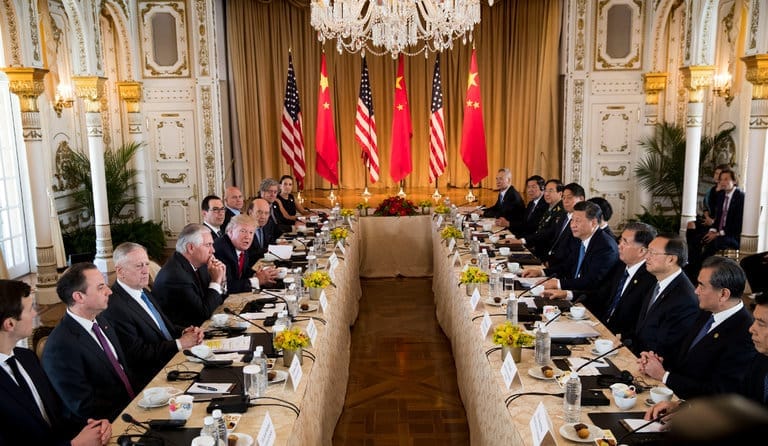
    Trump and Xi meet at Mar-a-Lago estate in April 2017. Image Credit: New York Times.
    Trump’s Human Rights Policy on China Takes Shape

    Dui Hua Executive Director John Kamm spent the week of June 5 in Washington DC holding meetings with senior American and Chinese officials who deal with human rights. Meetings were held with the National Security Council; the Department of State’s Bureau of East Asian and Pacific Affairs, Bureau of Consular Affairs, and Policy Planning Office; Embassy of the People’s Republic of China in the United States; Senate Foreign Relations Committee; and the Congressional Executive Commission on China.

    Sessions were also held with leading legal scholars and academics, representatives of human rights groups, journalists, and family members and friends of past and current prisoners serving sentences for endangering state security. A highlight of Kamm’s week-long visit was a dinner with Jeff and Sandy Phan-Gillis; Sandy was tried for espionage and released from detention in Nanning on April 28, returning to the United States the same day.

    Kamm was accompanied at several of his meetings by Dui Hua Program and Publications Associate Xandra Xiao.

    Emerging Rights Policy

    Features of the Trump administration’s China human rights policy are coming into focus. Kamm identified several features that will define the approach the administration takes towards addressing human rights in China.

    Dialogue Mechanisms

    As agreed to by President Trump and President Xi at the April summit in Mar-A-Lago, the two countries have agreed to establish four “comprehensive dialogue mechanisms (CDMs).” The mechanisms will replace the Strategic & Economic Dialogue (S&ED) agreed to in 2009 by President Obama and President Hu.

    The four CMDs cover diplomacy and security, economics, law enforcement and cyber security, and social and people-to-people exchanges. In addition to replacing the S&ED, several stand-alone dialogues covering a plethora of issues will be folded into one or more of the CMDs. Some dialogues are expected to continue. The dialogue on the rights of the disabled — a session was held in Washington in May — is likely to continue.

    Two of the existing dialogues, namely the human rights dialogue and the legal experts dialogue, will no longer take place. The annual human rights dialogue, started in 1991, was increasingly unsatisfying for officials in both Beijing and Washington to the extent that no dialogues took place in several years, including 2016. The Trump administration intends on raising human rights concerns in every CDM. As an example, the free flow of information, vital to successful business operations, will be raised in the economic CDM. Both individual cases and issues like the Foreign NGO Management Law will be discussed in the CDM framework.

    The first CDM, the one devoted to diplomacy and security, will take place in Washington before the end of June. The Chinese delegation will be led by State Councilor Yang Jiechi and the American team will be led by Secretary of State Rex Tillerson and Secretary of Defense Jim Mattis. Subsequent CDMs will alternate between Washington and Beijing.

    Putting Americans First

    The Trump administration will prioritize cases of prisoners who are either American citizens or who have strong connections to the United States. Examples of the latter might be Chinese citizens like Jiang Tianyong, whose wife lives in the United States, and Tashi Wangchuk, a Tibetan activist detained after giving an interview to The New York Times.

    Trump administration officials point to two early successes of this policy: the rescue of Chen Guiqiu, wife of lawyer Xie Yang, and their two daughters (one of whom is an American citizen) from the clutches of Chinese agents in Thailand in March, and the April release and deportation of American businesswoman Sandy Phan-Gillis.

    An issue of growing concern for the administration is the increased use, by Chinese police, of exit bans issued against American citizens. As many as 20 Americans are believed to be barred from leaving China. While several of the bans are related to ongoing commercial disputes, several appear to be related to investigations into alleged corruption activities on the part of relatives of the Americans living outside China. Placing an exit ban on the American citizen is seen by American officials as a way to pressure the relative living overseas to return to China.

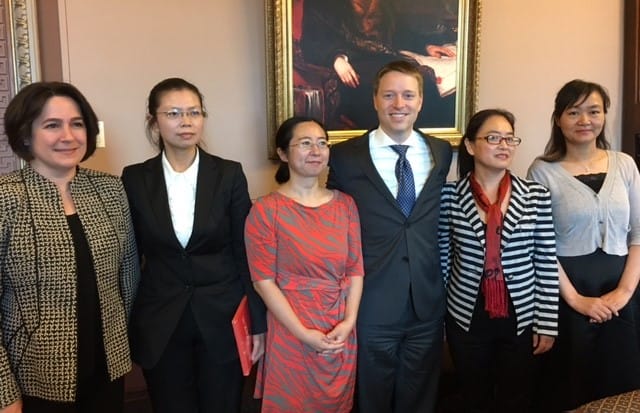
    NSC Senior Director for Asia Matt Pottinger and NSC Director of China Affairs Leah Bray meet with the wives of imprisoned Chinese rights activists and the wife of detained Taiwan activist Lee Ming-Che at the White House. Image Credit: China Aid

    Funding

    Concern is widespread among human rights groups that President Trump’s large cuts to the Department of State’s budget for Fiscal Year 2018 will result in a sharp decline in funding of activities related to human rights in China. Shortly before Kamm arrived in Washington, the International Campaign for Tibet issued a statement decrying the “zeroing out” of funds for Tibetan programs in the FY18 budget.

    Congressional staffers cautioned against jumping to conclusions. It is Congress that has the final say on budgets, and support is strong in both the House of Representatives and the Senate for funding human rights activities. As one experienced lobbyist put it, “No presidential budget has passed Congress in the form submitted to Congress in recent years.” At the end of the day, the Trump administration will likely acquiesce in the continued funding of China-related human rights activities.

    The New Team

    Three individuals have emerged as key players in the formation and implementation of the Trump administration’s China human rights policies.

    United Nations Ambassador Nikki Haley: Known for her strong positions on civil rights while serving as governor of South Carolina, Haley criticized China and four other members of the UN Human Rights Council for their records on human rights in her first speech to the Council on June 6. Those countries have “clearly failed to live up to the highest standards of human rights,” a condition for membership in the Council.

    Senior Director for Asia in the National Security Council Matt Pottinger: A journalist who lived in China and witnessed first hand how petitioners and protesters were treated by police, and a decorated war veteran, Pottinger has already made a name for himself by advocating on behalf of Chinese prisoners. He was active in securing the release and return of Sandy Phan-Gillis. Pottinger raised eyebrows in Beijing by meeting with the wives of imprisoned Chinese rights activists together with the wife of detained Taiwan activist Lee Ming-Che.

    Acting Assistant Secretary of State Susan Thornton: An experienced foreign service officer with more than 20 years of experience in China, Thornton is familiar with all areas of US-China relations. She brings to human rights diplomacy a deep knowledge of where human rights fits into the overall relationship, and strives to strike a balance between human rights and other concerns. She reports to Deputy Secretary of State John Sullivan, whom was confirmed by the Senate on May 24. Sullivan has a keen interest in promoting respect for human rights abroad.

    PRISONER UPDATE

    Dui Hua recently received a response from its interlocutors that reveals that two female Falun Gong practitioners serving in Guangdong’s Women Prison received clemency. He Xinfang (何新芳) was granted her first sentence reduction of four months on February 19, 2016, after she was sentenced to six years’ imprisonment in March 2014. She is scheduled for release on August 1, 2018. Another Falun Gong prisoner Yuan Yujiao (袁玉娇) was sentenced to six years’ imprisonment in the same case as He and received her first sentence reduction of six months on November 17, 2016. Her sentence is now set to expire on March 19, 2019.

    PUBLICATIONS ROUND-UP

    Featured: Phan-Gillis Case Highlights Deportation of Foreigners in China (May 18)

    Nanning Intermediate People ‘s Court. Image Credit: GXBaiBang.Com.

    The adjudication of the Sandy Phan-Gillis case by the Nanning Intermediate People’s Court has drawn attention to the supplemental punishment of deportation under Chinese law. Ms. Phan-Gillis, a prominent American businesswoman, was convicted of espionage by the court on April 25, 2017. She was sentenced to three and one-half years in prison and deportation. She was deported on April 28 without serving her prison sentence.

    Dui Hua Foundation Annual Report 2016 (May 23)

    Previous Digest: May 2017

    John Kamm Remembers

    City of the Doomed (Part 2)

    John Kamm Remembers is a feature that explores Kamm’s advocacy stories prior to and since Dui Hua’s establishment in 1999.

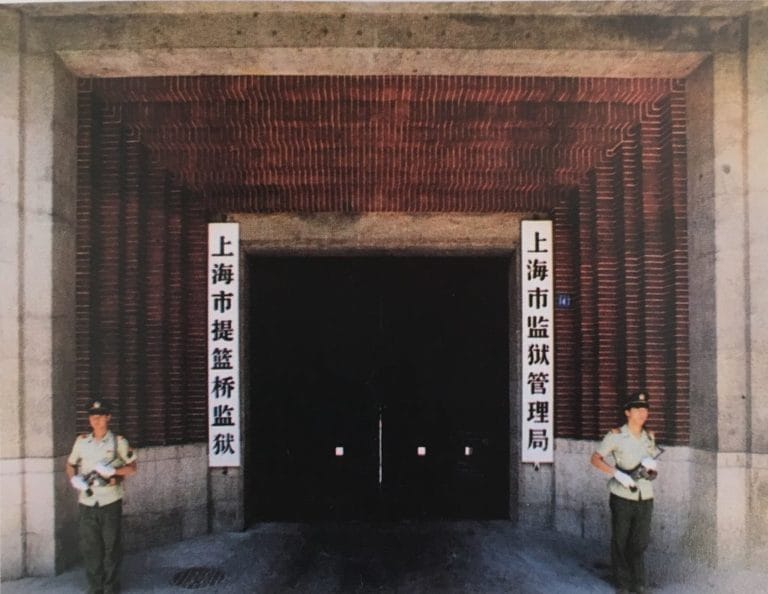
    The Gates of Tilanqiao Prison. Image Credit: MingHui.org.

    To read part one click here.


    An Artistic Troupe

    We left the cell block and walked a few yards to a recently constructed prefab unit where, I was told, female artistic performers were held. There were 33 females in this “special unit.” I was led into the cell block. Women prisoners, behind a wire mesh, were doing laundry, hanging up their undergarments, and donning theatrical costumes. I wrote in my notebook, “The women were clearly chosen for their appearance.” They met my eyes with defiant looks. I had seen women behind glass windows and even in cages in Southeast Asia, but I never imagined I’d see something like this in China.

    We left the women’s cellblock and headed for the theatrical performance at the prison’s auditorium. Our small party made up the entire audience. A special program was laid on by “The Xin-An Art Ensemble of Shanghai Tilanqiao Prison.” In all there were more than a dozen female performers and three male performers dressed up in traditional Han, Mongolian, Tibetan, and Uyghur garb. For an hour, we were treated to renditions of Leonard Bernstein’s Magnificent Seven, a tenor solo from an Italian opera, the theme from the movie Love Story and an assortment of ethnic song and dance routines.

    The last stop was the warden’s office, which was housed in the headquarters of the Shanghai Prison Bureau on the prison grounds. It was a squat red brick building constructed much like municipal administrative buildings throughout the British empire in the 1920s and 30s.

    Political Prisoners in Tilanqiao

    Warden Li and his colleagues asked about my impressions of Tilanqiao. I replied that I was impressed by how clean the prison looked. It certainly appeared that there was plentiful food. The staff looked to me to be professional. It was clear however that the prison was extremely overcrowded. I said that I was uncomfortable at times in both the male and female wards. I recommended that foreign guests not be allowed to get too close to inmates holding sharp scissors.

    Warden Li thanked me for my comments and asked if I had any questions before we had dinner at a hairy crab restaurant. I said yes, I wanted to talk about people who might be imprisoned at Tilanqiao, and hear from the warden whatever information he could give me on them. Warden Li became somewhat uneasy at this, even more so when I pulled out my prisoner list.

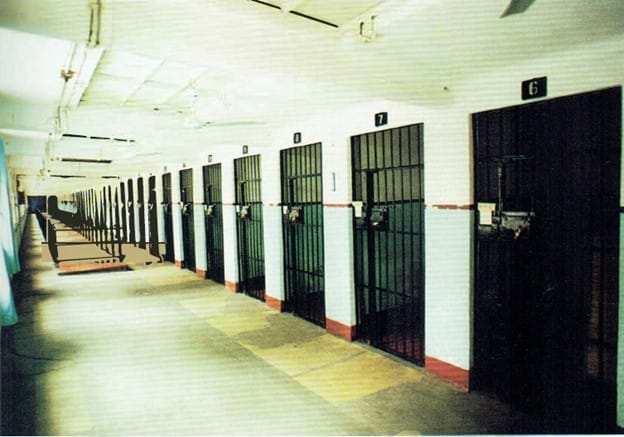
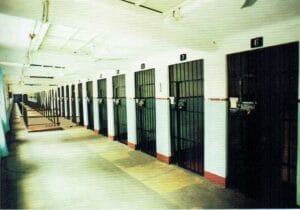
    Inside a Tilanqiao prison block. Image Credit: Shanghai Prison Administration.

    I said I wanted to learn about someone on my prisoner lists who had been sent to Tilanqiao to serve a two-year sentence, Mr. Lin Hai, who had been released six months early and gone to the United States. Mr. Lin was said to be China’s first Internet dissident.

    I remarked that I thought that only prisoners sentenced to 10 years or longer were housed at the prison. Warden Li replied that all Shanghai counterrevolutionaries were housed at Tilanqiao as part of a policy implemented in 1986 to segregate this special group of prisoners from the general population. Since then the number of counterrevolutionaries (and, after 1997, prisoners convicted of endangering state security) had been halved. It now stood at 17, half of whom were Taiwanese spies. I felt that segregating political prisoners from the general population was an enlightened policy; in some provinces, political prisoners in the general population are bullied by other prisoners, especially those serving time for violent crime. In fact, after his release, Lin revealed that he had not been mistreated, and had not been forced to do manual labor. He complained, however, about overcrowding, saying that he shared his small cell with one or at times two other prisoners.

    Since 1986, sentence reductions for political prisoners had increased, but the rate of reduction was well below that for ordinary prisoners, Warden Li acknowledged.

    I wondered if Warden Li was familiar with the name Yu Rong, a young man who had thrown 1,400 counterrevolutionary leaflets from the tops of downtown Shanghai buildings in 1990, a case that then-mayor Zhu Rongji dubbed the biggest case of counterrevolutionary incitement and propaganda in the city’s history. Warden Li was not familiar with the name. (In 2006 I learned that Yu Rong had been diagnosed with schizophrenia and was incarcerated in a psychiatric detention center, also known as Ankang.)

    I asked about Tao Shanben, sentenced to life in prison for being a follower of the Gang of Four. Warden Li said there were no more Gang of Four elements in the Shanghai prison system.

    Warden Li recognized the names Yao Kaiwen and Gao Xiaoliang as convicts who had tried to set up a counterrevolutionary group. Beyond that, he declined to say more. According to my notes, Yao, a school teacher, and Gao, a worker, had been detained in May 1993 for establishing “The Mainland Headquarters of the Democratic China Front.” They were subsequently sentenced to 10 years and nine years in prison, respectively. Gao received a sentence reduction after my visit, and was released in late 2001. Yao served his full term and was released in May 2003.

    Li Junmin in The City of the Doomed

    Sensing that the time for questions was running out, I moved on to my last two prisoners, Taiwanese spies Zhou Guogui and Li Junmin. I had received information on them from the MOJ in March 2000 at which time both were serving sentences in Tilanqiao.

    Zhou was an elderly Hong Kong doctor who had been sentenced to 15 years’ imprisonment in 1986 for spying for Taiwan. Because he suffered from a heart condition and high blood pressure, he was released on medical parole a few months before my visit.

    Li Junmin was the most famous counterrevolutionary prisoner in Shanghai at the time. A Taiwanese intelligence officer, he was sentenced to life in prison for espionage in May 1982 and sent to Tilanqiao. While in Tilanqiao, he managed to send letters detailing conditions in the detention center in which he had been held prior to being sent to Tilanqiao. He sent the letters through prisoners who were about to be released. He also carried out “counterrevolutionary propaganda and incitement” among other prisoners – “viciously attacking the Communist Party and seeking to overthrow China’s socialist system.”

    Li was tried again for his new crimes, and the Shanghai Intermediate People’s Court sentenced him to death in December 1983. The Shanghai High People’s Court upheld the verdict and sent the case for final review to the Supreme People’s Court (SPC) in Beijing. Following a decision made during the Strike Hard Campaign of the summer of 1983, death sentences could be carried out after the provincial high court had rejected an appeal, with an important exception: death sentences for counterrevolution had to be reviewed and approved by the SPC in Beijing.

    The SPC overturned the death sentence and passed a sentence of death with two-year reprieve in February 1984. In June 1986, this sentence was commuted to life in prison. Li’s life sentence was reduced to 18 years with seven years’ deprivation of political rights in June 1994. At the time of my visit to Tilanqiao, Li was scheduled to be released on December 20, 2012.

    In contrast to his responses on other prisoners, Warden Li became quite animated when I mentioned Li Junmin’s name. In language reminiscent of how Democracy Wall prisoner Wei Jingsheng was described to me by MOJ officials in 1992, Li Junmin was “defiant, and resists reform. For a long time, he had nothing good to say about the Chinese government, but now he has acknowledged that recent developments might be good for the Chinese people,” said Warden Li. “He now wishes both China and Taiwan well.” Warden Li expressed the hope that, one day, there would be no prisoners serving sentences for counterrevolution or endangering state security in his prison, but for the foreseeable future, Li Junmin would stay in Tilanqiao.

    A few months after my visit Li Junmin was given an eight-month sentence reduction. In 2003 he was granted a 14-month sentence reduction and this was followed in 2004 by a 12-month reduction. His sentence was commuted in December 2006. He returned to Taiwan to be greeted by his wife, who had never given up on Li Junmin despite being told by the Taiwan government that he was dead, and the son he had never known. Li Junmin had survived the City of the Doomed.

  • Revitalization of “Work-Study Schools” for Juveniles?

    A boy work-study school in Shanghai. With difficulties in school enrollment this class only has two students. Image Credit: ThePaper.Cn

    As China’s juvenile crime rate continues to rise and panic over the prevalence of school bullying and violence sets in authorities in China are turning to new and more effective ways to deal with the problem of correcting serious misbehavior by juveniles—especially those between the ages of 13 and 16.

    Lately, there has been renewed attention on the possibility of revitalizing an institution from the past: the “work-study school (gongdu xuexiao).” In Hubei, for example, provincial authorities recently issued a joint opinion authorizing use of work-study schools for students who engage in repeated acts of bullying or violence and fail to respond to other disciplinary measures. Following recent measures adopted by several other provinces including Shandong and Jiangsu, work-study schools are poised to once again play a role in preventing and correcting juvenile crime.

    Unless the implementation of work-study schools is accompanied by national legislative reform and a commitment to providing the necessary associated resources, it is unlikely that these schools will be able to play a significant role in addressing the root causes of school-based violence or other types juvenile delinquency.

    ***

    Originally established in the Soviet Union as a means of dealing with the problem of orphans after the Second World War, work-study schools first arrived in China in 1955 and became one of several means for handling the problem of juvenile delinquency.

    As the name implies, “work-study schools” once included workshops so that students could engage in productive labor to complement their studies. Into the 1980s and early 1990s, police continued to place juveniles in work-study schools, particularly juveniles who had committed minor infractions of the law or those who committted more serious offenses but who could not be held legally responsible due to their age.

    With the passage of the Law on Prevention of Juvenile Delinquency in 1999, work-study schools became officially voluntary. Parents or guardians of school-aged children who engaged in one of nine categories of “serious misbehavior,” ranging from disruption of public order to repeated theft to drug usage, could apply to education authorities to transfer their children to a work-study school for a combined course of education, treatment, and correction.

    These reforms have generally brought significant changes and improved conditions at the schools. Though still commonly known as “work-study schools,” the institutions no longer require students to participate in productive labor. Instead, the focus is on providing students with an environment in which they can complete middle-school curriculum as part of the national nine-year compulsory education system and receive treatment targeted at correcting their behavioral issues. Though this environment remains highly regimented, with continuous monitoring and an emphasis on instilling discipline, physical punishment is a much rarer occurrence.

    But the voluntary nature of the schools has also contributed to their general decline. Stories of the prison-like conditions and corporal punishment of former work-study schools have meant that parents are often reluctant to send their children to these schools, fearing both the stigma attached and the potential for bad habits and behaviors to be reinforced through proximity to other troubled teenagers. Even with a name-change to “special education schools” (zhuanmen jiaoyu xuexiao), the negative reputation of the “work-study school” still lingers.

    ***

    As a result, across the country once-full “work-study schools” have seen their student numbers decline despite an increase in delinquency rates. In some schools, teachers have come to outnumber students. Many institutions have been forced to close. This may be one reason why supporters of these institutions are seeking to present them as a valuable asset to society that can help respond to the problem of school violence. Experts on juvenile delinquency like Yao Jianlong see work-study schools as an important form of community-based corrections that can be used as an intermediate measure between doing nothing and mobilizing the machinery of the criminal justice system. For the schools to have that impact, however, there needs to be a mechanism through which students most in need of the schools’ educational offerings would be sent there.

    This would, at the very least, necessitate amendments to the Law on Prevention of Juvenile Delinquency and would most likely require complementing legislative changes to ensure that any administrative or judicial decision compelling a child to attend a “special education school” is accompanied by a right to appeal and other procedures aimed at protecting the rights of the child and their parents. Unless such actions are taken, it seems doubtful that even widespread public concern about school violence will see a resurgence of China’s work-study schools.

  • Dui Hua Digest, May 2017

    EVENTS

    US-China 19th Human Rights Dialogue in Washington, August 2015. Image Credit: Xinhua.Net

    Executive Director Kamm Addresses Commonwealth Club

    On May 2, 2017, Dui Hua Executive Director John Kamm addressed the Commonwealth Club of San Francisco on the topic “Engaging China on Human Rights.” This marked the sixth time in recent years that Kamm has addressed the club, which is the oldest and largest public affairs forum in the United States. An audience of 30 members and non-members, including several representatives from Bay Area human rights groups, attended the event.

    After the tragic events of June 1989, the Chinese government put in place a strategy of engaging foreign countries in dialogues on human rights. The first dialogues, those with the United States and Switzerland, were initiated in 1991. Later, dialogues were started with the United Kingdom, Germany, Australia, Canada, the European Union (EU), Norway, and Japan. Reflecting the rotating presidency, the EU dialogue consisted of two rounds a year. By the end of the last decade, as many as 10 rounds of bilateral dialogues were held every year. In addition, China held human rights consultations with countries including the Netherlands and Sweden.

    In recent years, however, the number of dialogues and consultations has dropped sharply. Kamm pointed out that both China and its foreign partners have grown disillusioned with human rights dialogues.

    China has sometimes suspended dialogues over diplomatic disputes with its partners. Beijing suspended its dialogue with Norway following the awarding of the Nobel Peace Prize by the Norwegian Nobel Committee – an independent body — to the dissident Liu Xiaobo in 2010. Anger over the perception in China and elsewhere that Tokyo has not atoned for its wartime record has made discussing human rights between the two countries problematic.

    In 2016, neither the EU nor the United States held bilateral dialogues with China. In fact, there were only three human rights dialogues held with China last year, those between China and Switzerland, the United Kingdom, and Germany, respectively. China postponed dialogues in part over the joint statement signed by 12 countries criticizing China’s human rights record at the March 2016 meeting of the Human Rights Council in Geneva. There have also been disputes between dialogue partners over the appropriate level at which human rights dialogues should take place.

    Perhaps the biggest sticking point has been the question of prisoner lists. Prior to 2012, China’s dialogue partners regularly submitted lists of names of individuals allegedly detained for the non-violent expression of political and religious beliefs. Although most lists consisted of a few dozen names, the United States and the EU regularly handed over lists with more than 200 names. In May 2012, Beijing decided to no longer accept prisoner lists. While Chinese officials have in fact accepted short lists on special occasions (e.g. the visit of a high-ranking foreign leader), it has by and large continued to resist accepting lists of names during dialogues or even during regular meetings with embassies.

    Dui Hua has maintained an unofficial dialogue on human rights with the Chinese government since Kamm began raising cases and issues in 1990. Kamm gave his audience some recent numbers to illustrate the status of Dui Hua’s work on political prisoners. In 2016, Dui Hua handed over 26 lists totaling nearly 250 names. It received written responses on 54 cases, and recorded 77 instances of clemency or better treatment for prisoners on its lists.

    Thus far in 2017, Kamm said, Dui Hua has handed over ten lists with around 90 names. The foundation has already received written information on 40 cases.

    Kamm was asked why Dui Hua’s efforts seemed to get results. “First of all, Dui Hua is not a country. We treat our ability to hand over lists and receive responses as a privilege, not as something like an obligation or right. Second, we choose our words carefully. Third, we embed the case in Chinese law. We ask how a certain case illustrates a facet of Chinese law. We present ourselves as people who are eager to learn, not to criticize. Finally, we are patient but persistent. Once we raise a case we keep asking about it until we get an answer. I personally have never given up on a case.”

    In addition to working on political cases, Dui Hua has expanded its mission to include areas of human rights where the Chinese government welcomes assistance from Western countries. A notable example is the foundation’s work on juvenile justice reform. Since 2008, Dui Hua has partnered with the Supreme People’s Court Research Department’s Office of Juvenile Courts to hold four exchanges on juvenile justice reform, two in the United States and two in China. During the foundation’s visit to Beijing in early April, a month before Kamm’s speech, agreement was reached with Dui Hua’s partners to hold another juvenile justice exchange in November 2017 in China.

    Kamm’s speech took place three days after the successful conclusion of the Sandy Phan-Gillis case (see Dui Hua In The News). There were many questions about the case and what it might mean for US-China relations and the emerging human rights policy of the Trump administration. Kamm told the audience that, in line with the policy of Putting America First, the Trump administration was prioritizing the human rights of Americans and American institutions abroad, a policy of “Putting Americans First.” A lively discussion on this idea ensued.

    DUI HUA IN THE NEWS

    In the first five months of 2017, Dui Hua was mentioned in close to 750 media articles and other online reports. In April, Dui Hua was widely cited (The New York Times, Radio Free Asia, The South China Morning Post) for playing a role in securing the release of Sandy Phan-Gillis (潘婉芬), an American citizen and businesswoman who was taken into custody in March 2015 while on a trade delegation to China.

    On April 25, Sandy was convicted of espionage and sentenced to three and one-half years’ imprisonment and deportation. Three days later, she was deported to the United States where she reunited with her family. At the request of Sandy’s husband Jeff Gillis, Dui Hua’s Executive Director John Kamm worked on Sandy’s case for more than 19 months to help bring about her release, raising her name in more than two dozen meetings with the Chinese government and party officials and placing her name on many prisoner lists. Last July, Dui Hua was also widely cited in the media following the UN Working Group on Arbitrary Detention’s (WGAD) finding that Phan-Gillis’ confinement on espionage charges constituted “arbitrary detention”, marking the first time in the WGAD’s 25-year history that an American citizen has been “arbitrarily detained” in China.

    Dui Hua’s press statements on the Phan-Gillis case can be found below:

    Dui Hua Welcomes Return of Sandy Phan-Gillis to the United States (April 28, 2017)

    UN Experts Rule Detention of American Citizen Arbitrary, Violates International Law (July 5, 2016)

    PRISONER UPDATES

    Dui Hua previously reported that Zhao Fengsheng (赵枫生) received a sentence reduction of seven months in December 2016. On April 27, 2017, he was released early from Hunan’s Chishan Prison, and is serving his three-year deprivation of political rights sentence until 2020. Knowing that the case was political, he chose not to file post-conviction appeal against his four-year sentence for subversion. His detention in November 2013 came after he penned an open letter to the Turkestan Islamic Party, urging it to attack government officials instead of innocent civilians.

    On April 27, 2017, two days after American citizen Sandy Phan-Gillis was convicted of espionage by the Nanning Intermediate People’s Court, Hong Kong-based newspaper Sing Tao Daily reported that another American citizen, Li Kai (李凱), had been arrested and indicted for espionage in Shanghai. Mr. Li is believed to be the only American citizen currently detained for an endangering state security crime in China.

    According to Sing Tao Daily, Li is a 55-year-old New York businessman who operated a trading business specializing in defense products. He traveled to China from the United States on several occasions since 2010, collecting information and visiting defense research institutes in Shanghai and Tianjin.

    Li was arrested in the autumn of 2016 and was apparently indicted in the first quarter of 2017.

    PUBLICATIONS ROUND-UP

    Featured: Medical Parole for Li Baocheng: Increasing Judicial Transparency (April 18)

    Prayers at an underground home church in Beijing. Image Credit: BBC News.

    Li Baocheng (李保成), a 79-year-old Christian Church leader from the central province of Henan, is finally being considered for medical parole after receiving a four-year sentence for fraud and “inciting subversion” in December 2015. As Dui Hua first reported a year ago, authorities in the city of Nanyang accused Li Baocheng of illicitly collecting “baptism fees” from members of his Huangjinduo Christian Church and organizing a political party aimed at overthrowing the Chinese Communist Party. While awaiting the results of his appeal, Li suffered a brain hemorrhage that left him seriously impaired. Recently published court documents show that judicial authorities have begun deliberating whether Li should serve the remainder of his sentence at home under conditions of medical parole.

    Previous Digest: April 2017

    John Kamm Remembers

    City of the Doomed

    John Kamm Remembers is a feature that explores Kamm’s advocacy stories since Dui Hua’s establishment in 1999.

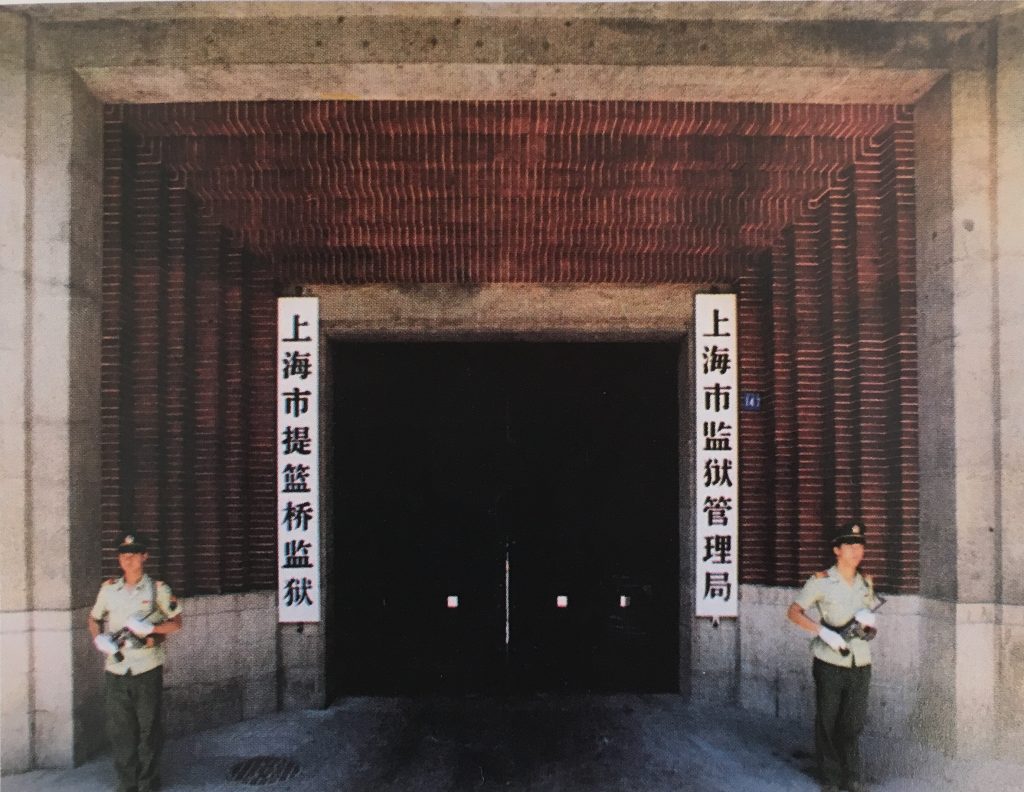
    The Gates of Tilanqiao Prison. Image Credit: Shanghai Prison Administration.

    Tilanqiao Prison in Shanghai is one of the oldest operating prisons in the world. Constructed in 1903, occupied in 1906, it has gone by many names. Wood Road Gaol. Shanghai Prison. Oriental Bastille. Alcatraz of the Orient. City of the Doomed. It is where mothers in Shanghai threaten to send their children if they misbehave.

    Thousands of inmates have entered Tilanqiao’s gates. Not all have survived. Some have gone mad. China’s longest serving political prisoner, labor leader Jiang Cunde, is incarcerated in Tilanqiao. He suffers from schizophrenia.

    After NATO bombed China’s Belgrade embassy in 1999, I resumed my advocacy work as soon as I could. Part of that work involved visiting prisons. It was my practice to carry with me a list of prisoners believed to be in the facility I was visiting. I visited Beijing Prison in early 2000. Not long after this visit I began pushing for another visit to a prison in Beijing. I wanted to go to Beijing Number Two, where most political prisoners in the municipality are held, then as now.

    In March 2000, plans were made for me to make a trip to Beijing in September, at which time I would visit a local prison. As soon as I arrived in Beijing in September I sensed problems. I was told that there would be no prison visit, and maybe no information on prisoners. The senior Ministry of Justice (MOJ) official who had agreed to my prison visit, as well as directors general of both the MOJ and the Ministry of Foreign Affairs with whom I worked, were unavailable to see me. The reason given for why MOJ officials couldn’t meet me was that they had given blood earlier in the week. Phlebotomies are considered a serious medical procedure in China, I was told, requiring days of rest to recover.

    I dug in my heals. A deal’s a deal. Officials were called back to work and we reached a compromise. I could visit a prison in Shanghai on my next trip to China, scheduled for December. The exact prison (at the time the Shanghai Prison Bureau administered 10 prisons, not counting two farms in Anhui and Jiangsu Provinces, respectively) and the timing of the visit would be up to the Shanghai Prison Bureau. The MOJ would send an officer to accompany me.

    Flight to Shanghai

    I flew to Shanghai from Hong Kong on December 3, still not knowing which prison I would visit. By then, the choice was down to two: Qing Pu, built in the 1990s to house, among others, foreign inmates, and Tilanqiao. I checked into the Hilton Hotel, opened in 1988 as the first foreign-owned hotel in China.

    I arrived to find a message from my MOJ escort, Director Bai. We would visit Tilanqiao on December 5. Pick- up would be 2:00 PM. The next morning, December 6, we would fly to Beijing.

    I had anticipated as much, so meetings were frontloaded prior to the prison visit. Over the next day and a half, I sat down with the American Consul General Hank Levine and his team, the Shanghai correspondents of The New York Times and the Associated Press, and two resident American businesspeople.

    One topic kept coming up in my discussions with diplomats and journalists: the removal from office of the Minister of Justice, Gao Changli, on December 2, the day before I boarded the flight to Shanghai. At first, health issues were cited as the reason this man, who had built a formidable reputation as a legal reformer, had stepped down. Over the next 24 hours however, in time for my meetings, accusations emerged that Gao had engaged in large scale corruption and abuse of power.

    There were darker rumors. Gao, it was said, had several mistresses and had overseen a scheme in which female prisoners were offered as sexual favors to well-heeled inmates and high officials, often after alcohol-infused dinners. Upon hearing these rumors, President Jiang Zemin was said to be livid. He angrily ordered the immediate removal of Gao Changli. Or so it was said at the time. The rumor was never confirmed. Gao emerged 10 years after his removal as an expert collector of calligraphy.

    My lunch with The New York Times correspondent Craig Smith the day before I visited Tilanqiao set a dark mood for my stay in Shanghai. The journalist recently interviewed the brother of a man who had been executed for tax evasion. The brother, a well-to-do businessman, followed the execution van to the crematorium and when he could see and cradle the executed man, his deceased brother’s intestines fell out. His kidneys had been harvested. After giving wrenching interviews in his office, located in a high-rise tower overlooking the city, and a local pub, the man became fearful – he was being threatened by the police – and tried to walk back what he had told the journalist. (The story eventually appeared in The Times in March 2001.)

    The car with my escort and an official from the Shanghai Prison Bureau, Mr. Zhao, showed up at the Hilton promptly at 2:00 PM. We headed for Tilanqiao.

    As we sat in the car — it was a cold December day — I ventured to ask about the fall from power of Gao Changli. Ms. Bai was taken aback by my question. Yes, she said, he had stepped down for reasons of health; he had a bad back. She translated our conversation for Mr. Zhao. “You know about this?” he asked me. I replied it was much in the news. That would be the last time I heard from Mr. Zhao during the visit. He declined to give me his name card.

    Site of former headquarters of the American Jewish Joint Distribution Committee located in Tilanqiao. Image Credit: AsianJewishLife.org

    Tilanqiao Prison occupies a four-hectare plot in the middle of a largely residential neighborhood in Shanghai’s Hongkou district. It is a neighborhood steeped in history. The Jewish ghetto, established in the 1920s, sheltered Jews during the Second World War. Hongkou saved more Jews from the Nazis than any other metropolitan center in the world during the Holocaust, around 25,000 by several accounts. The Ohel Moshe Synagogue, meters from the gates of Tilanqiao Prison, can still be visited. Not far from Tilanqiao is the fabled Broadway Mansions, where I had stayed during my first trip to China in 1976.

    The value of the plot of land that Tilanqiao occupies is enormous, especially given the sharp rise in land prices in recent years. For more than 10 years, there have been reports that it would be redeveloped as a mixed commercial residential complex, probably keeping the old British cell block as a tourist attraction. As of this writing, Tilanqiao remains very much in business as a prison, however. The municipal authorities have been unable to reach an agreement on the future of Tilanqiao with the prison bureau, which reports to the Ministry of Justice in Beijing.

    Warden Li

    We were met at the prison gate by Warden Li and his subordinates, all spit and polish in their fine dark blue uniforms. We entered the main courtyard. Overlooking the prison on two sides, cheek to jowl with its walls, were residential apartment blocks whose units offered a bird’s eye view of the main yard. “The broad masses people keep a close eye on our work,” the warden quipped.

    Our small group walked towards the pride of Tilanqiao, the old British cell block. The cell block was designed as a Panopticon. considered at the time of its construction to be the most scientific method of incarceration in the West, originally designed by the nineteenth-century British philosopher Jeremy Bentham as a wheel with the guard tower in the center, and spikes made up of lines of cells. A guard could monitor behavior without the inmates knowing they were being watched.

    On the way to the old cellblock I was given basic information about the prison. There were around 4,000 inmates (up from 3,500 inmates in 1998) in 10 male cellblocks and one female cellblock. The prison housed convicts serving sentences of 10 or more years, including those serving sentences of death with two-year reprieve. (Those about to be executed are held in detention centers, not prisons.) This made Tilanqiao one of China’s premier maximum security prisons. It was also considered a model prison, one of the first to be opened to foreign visitors.

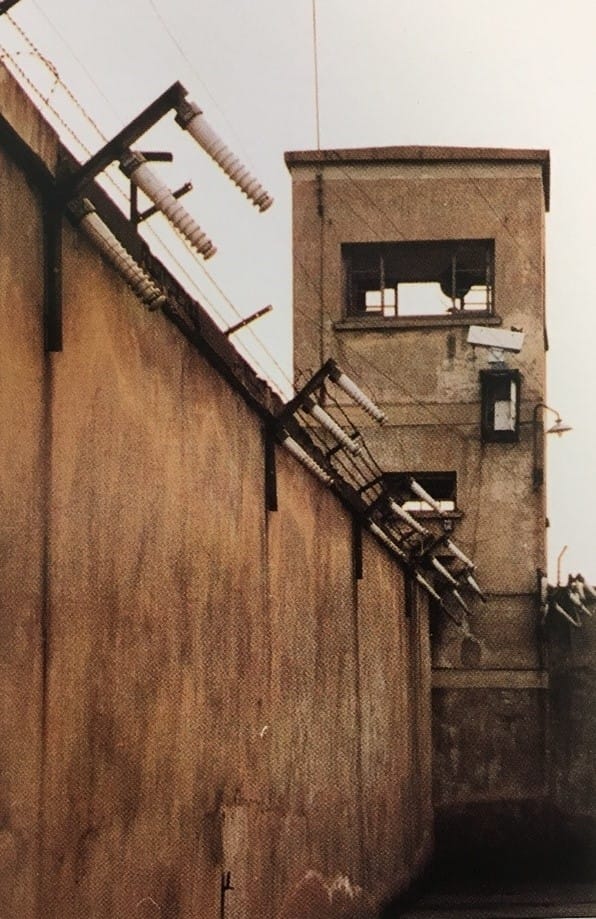
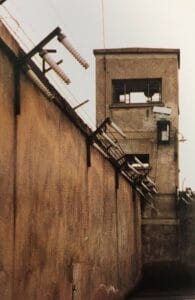
    High enclosure wall and Watchtower. Image credit: Shanghai Prison Administration.

    When I toured Tilanqiao in 2000, the old cell block was used as a museum and an exhibition space for artwork created by prisoners. One genre was models of buildings, including Tilanqiao itself, painstakingly pieced together from small pieces of wood. A model of the Panopticon itself took pride of place.

    We headed for one of the male prisoner cell blocks, passing on the way the prison hospital, which served as the principal hospital for all 10 Shanghai prisons. The cell block was constructed in the 1930s, during the British period, and was made up of six floors. On the ground floor was the kitchen, where piping hot cauldrons of rice were being prepared for dinner. Bushels of fresh vegetables were on display.

    We toured one of the floors of cells. There were no prisoners in the cells when I toured. Each cell had been designed for a single prisoner, but it was apparent that more than one prisoner was held in each. In addition to the wooden bunk, bedding was laid out on the floor. There was neither a lavatory nor a sink; a night soil pot could be seen in the corner. I was shown the key room. The cells, which opened onto a common area where prisoners could congregate and watch TV, were opened with keys still in use from the British era, big heavy steel devices. I was given a demonstration of how a cell was opened and locked.

    I was taken to the workshop. Rows of prisoners, lined up in the hundreds, sat at benches cutting cloth to be sewed into prison uniforms. I was assured that none of the products were for export; export to the United States of goods made in Chinese prisons was a controversial issue at the time. I was invited to walk the middle line between the rows. I did so with some reluctance. In the hands of prisoners, several with expressions of deep anger in their eyes, were long pairs of sharp scissors.

    To be continued in Dui Hua’s June Digest…

  • City of the Doomed

    City of the Doomed

    << Read all John Kamm Remembers stories

    TIlanqiao Prison in Shanghai is one of the oldest operating prisons in the world. Constructed in 1903, occupied in 1906, it has gone by many names. Wood Road Gaol. Shanghai Prison. Oriental Bastille. Alcatraz of the Orient. City of the Doomed. It is where mothers in Shanghai threaten to send their children if they misbehave.

    Thousands of inmates have entered Tilanqiao’s gates. Not all have survived. Some have gone mad. China’s longest serving political prisoner, labor leader Jiang Cunde, is incarcerated in Tilanqiao. He suffers from schizophrenia.

    After NATO bombed China’s Belgrade embassy in 1999, I resumed my advocacy work as soon as I could. Part of that work involved visiting prisons. It was my practice to carry with me a list of prisoners believed to be in the facility I was visiting. I visited Beijing Prison in early 2000. Not long after this visit I began pushing for another visit to a prison in Beijing. I wanted to go to Beijing Number Two, where most political prisoners in the municipality are held, then as now.

    In March 2000, plans were made for me to make a trip to Beijing in September, at which time I would visit a local prison. As soon as I arrived in Beijing in September I sensed problems. I was told that there would be no prison visit, and maybe no information on prisoners. The senior Ministry of Justice (MOJ) official who had agreed to my prison visit, as well as directors general of both the MOJ and the Ministry of Foreign Affairs with whom I worked, were unavailable to see me. The reason given for why MOJ officials couldn’t meet me was that they had given blood earlier in the week. Phlebotomies are considered a serious medical procedure in China, I was told, requiring days of rest to recover.

    I dug in my heals. A deal’s a deal. Officials were called back to work and we reached a compromise. I could visit a prison in Shanghai on my next trip to China, scheduled for December. The exact prison (at the time the Shanghai Prison Bureau administered 10 prisons, not counting two farms in Anhui and Jiangsu Provinces, respectively) and the timing of the visit would be up to the Shanghai Prison Bureau. The MOJ would send an officer to accompany me.

    Flight to Shanghai

    I flew to Shanghai from Hong Kong on December 3, still not knowing which prison I would visit. By then, the choice was down to two: Qing Pu, built in the 1990s to house, among others, foreign inmates, and Tilanqiao. I checked into the Hilton Hotel, opened in 1988 as the first foreign-owned hotel in China.

    I arrived to find a message from my MOJ escort, Director Bai. We would visit Tilanqiao on December 5. Pick- up would be 2:00 PM. The next morning, December 6, we would fly to Beijing.

    I had anticipated as much, so meetings were frontloaded prior to the prison visit. Over the next day and a half, I sat down with the American Consul General Hank Levine and his team, the Shanghai correspondents of The New York Times and the Associated Press, and two resident American businesspeople.

    One topic kept coming up in my discussions with diplomats and journalists: the removal from office of the Minister of Justice, Gao Changli, on December 2, the day before I boarded the flight to Shanghai. At first, health issues were cited as the reason this man, who had built a formidable reputation as a legal reformer, had stepped down. Over the next 24 hours however, in time for my meetings, accusations emerged that Gao had engaged in large scale corruption and abuse of power.

    There were darker rumors. Gao, it was said, had several mistresses and had overseen a scheme in which female prisoners were offered as sexual favors to well-heeled inmates and high officials, often after alcohol-infused dinners. Upon hearing these rumors, President Jiang Zemin was said to be livid. He angrily ordered the immediate removal of Gao Changli. Or so it was said at the time. The rumor was never confirmed. Gao emerged 10 years after his removal as an expert collector of calligraphy.


    Site of former headquarters of the American Jewish Joint Distribution Committee located in Tilanqiao. Image Credit: AsianJewishLife.org

    My lunch with The New York Times correspondent Craig Smith the day before I visited Tilanqiao set a dark mood for my stay in Shanghai. The journalist recently interviewed the brother of a man who had been executed for tax evasion. The brother, a well-to-do businessman, followed the execution van to the crematorium and when he could see and cradle the executed man, his deceased brother’s intestines fell out. His kidneys had been harvested. After giving wrenching interviews in his office, located in a high-rise tower overlooking the city, and a local pub, the man became fearful – he was being threatened by the police – and tried to walk back what he had told the journalist. (The story eventually appeared in The Times in March 2001.)

    The car with my escort and an official from the Shanghai Prison Bureau, Mr. Zhao, showed up at the Hilton promptly at 2:00 PM. We headed for Tilanqiao.

    As we sat in the car — it was a cold December day — I ventured to ask about the fall from power of Gao Changli. Ms. Bai was taken aback by my question. Yes, she said, he had stepped down for reasons of health; he had a bad back. She translated our conversation for Mr. Zhao. “You know about this?” he asked me. I replied it was much in the news. That would be the last time I heard from Mr. Zhao during the visit. He declined to give me his name card.

    Tilanqiao Prison occupies a four-hectare plot in the middle of a largely residential neighborhood in Shanghai’s Hongkou district. It is a neighborhood steeped in history. The Jewish ghetto, established in the 1920s, sheltered Jews during the Second World War. Hongkou saved more Jews from the Nazis than any other metropolitan center in the world during the Holocaust, around 25,000 by several accounts. The Ohel Moshe Synagogue, meters from the gates of Tilanqiao Prison, can still be visited. Not far from Tilanqiao is the fabled Broadway Mansions, where I had stayed during my first trip to China in 1976.

    The value of the plot of land that Tilanqiao occupies is enormous, especially given the sharp rise in land prices in recent years. For more than 10 years, there have been reports that it would be redeveloped as a mixed commercial residential complex, probably keeping the old British cell block as a tourist attraction. As of this writing, Tilanqiao remains very much in business as a prison, however. The municipal authorities have been unable to reach an agreement on the future of Tilanqiao with the prison bureau, which reports to the Ministry of Justice in Beijing.

    Warden Li

    We were met at the prison gate by Warden Li and his subordinates, all spit and polish in their fine dark blue uniforms. We entered the main courtyard. Overlooking the prison on two sides, cheek to jowl with its walls, were residential apartment blocks whose units offered a bird’s eye view of the main yard. “The broad masses people keep a close eye on our work,” the warden quipped.


    High enclosure wall and Watchtower. Image credit: Shanghai Prison Administration.

    Our small group walked towards the pride of Tilanqiao, the old British cell block. The cell block was designed as a Panopticon, considered at the time of its construction to be the most scientific method of incarceration in the West, originally designed by the nineteenth-century British philosopher Jeremy Bentham as a wheel with the guard tower in the center, and spikes made up of lines of cells. A guard could monitor behavior without the inmates knowing they were being watched.

    On the way to the old cellblock I was given basic information about the prison. There were around 4,000 inmates (up from 3,500 inmates in 1998) in 10 male cellblocks and one female cellblock. The prison housed convicts serving sentences of 10 or more years, including those serving sentences of death with two-year reprieve. (Those about to be executed are held in detention centers, not prisons.) This made Tilanqiao one of China’s premier maximum security prisons. It was also considered a model prison, one of the first to be opened to foreign visitors.

    When I toured Tilanqiao in 2000, the old cell block was used as a museum and an exhibition space for artwork created by prisoners. One genre was models of buildings, including Tilanqiao itself, painstakingly pieced together from small pieces of wood. A model of the Panopticon itself took pride of place.

    We headed for one of the male prisoner cell blocks, passing on the way the prison hospital, which served as the principal hospital for all 10 Shanghai prisons. The cell block was constructed in the 1930s, during the British period, and was made up of six floors. On the ground floor was the kitchen, where piping hot cauldrons of rice were being prepared for dinner. Bushels of fresh vegetables were on display.

    We toured one of the floors of cells. There were no prisoners in the cells when I toured. Each cell had been designed for a single prisoner, but it was apparent that more than one prisoner was held in each. In addition to the wooden bunk, bedding was laid out on the floor. There was neither a lavatory nor a sink; a night soil pot could be seen in the corner. I was shown the key room. The cells, which opened onto a common area where prisoners could congregate and watch TV, were opened with keys still in use from the British era, big heavy steel devices. I was given a demonstration of how a cell was opened and locked.

    I was taken to the workshop. Rows of prisoners, lined up in the hundreds, sat at benches cutting cloth to be sewed into prison uniforms. I was assured that none of the products were for export; export to the United States of goods made in Chinese prisons was a controversial issue at the time. I was invited to walk the middle line between the rows. I did so with some reluctance. In the hands of prisoners, several with expressions of deep anger in their eyes, were long pairs of sharp scissors.

    An Artistic Troupe

    We left the cell block and walked a few yards to a recently constructed prefab unit where, I was told, female artistic performers were held. There were 33 females in this “special unit.” I was led into the cell block. Women prisoners, behind a wire mesh, were doing laundry, hanging up their undergarments, and donning theatrical costumes. I wrote in my notebook, “The women were clearly chosen for their appearance.” They met my eyes with defiant looks. I had seen women behind glass windows and even in cages in Southeast Asia, but I never imagined I’d see something like this in China.

    We left the women’s cellblock and headed for the theatrical performance at the prison’s auditorium. Our small party made up the entire audience. A special program was laid on by “The Xin-An Art Ensemble of Shanghai Tilanqiao Prison.” In all there were more than a dozen female performers and three male performers dressed up in traditional Han, Mongolian, Tibetan, and Uyghur garb. For an hour, we were treated to renditions of Leonard Bernstein’s Magnificent Seven, a tenor solo from an Italian opera, the theme from the movie Love Story and an assortment of ethnic song and dance routines.

    The last stop was the warden’s office, which was housed in the headquarters of the Shanghai Prison Bureau on the prison grounds. It was a squat red brick building constructed much like municipal administrative buildings throughout the British empire in the 1920s and 30s.

    Political Prisoners in Tilanqiao

    Warden Li and his colleagues asked about my impressions of Tilanqiao. I replied that I was impressed by how clean the prison looked. It certainly appeared that there was plentiful food. The staff looked to me to be professional. It was clear however that the prison was extremely overcrowded. I said that I was uncomfortable at times in both the male and female wards. I recommended that foreign guests not be allowed to get too close to inmates holding sharp scissors.

    Warden Li thanked me for my comments and asked if I had any questions before we had dinner at a hairy crab restaurant. I said yes, I wanted to talk about people who might be imprisoned at Tilanqiao, and hear from the warden whatever information he could give me on them. Warden Li became somewhat uneasy at this, even more so when I pulled out my prisoner list.


    The Gates of Tilanqiao Prison. Image Credit: MingHui.org.

    I said I wanted to learn about someone on my prisoner lists who had been sent to Tilanqiao to serve a two-year sentence, Mr. Lin Hai, who had been released six months early and gone to the United States. Mr. Lin was said to be China’s first Internet dissident.

    I remarked that I thought that only prisoners sentenced to 10 years or longer were housed at the prison. Warden Li replied that all Shanghai counterrevolutionaries were housed at Tilanqiao as part of a policy implemented in 1986 to segregate this special group of prisoners from the general population. Since then the number of counterrevolutionaries (and, after 1997, prisoners convicted of endangering state security) had been halved. It now stood at 17, half of whom were Taiwanese spies. I felt that segregating political prisoners from the general population was an enlightened policy; in some provinces, political prisoners in the general population are bullied by other prisoners, especially those serving time for violent crime. In fact, after his release, Lin revealed that he had not been mistreated, and had not been forced to do manual labor. He complained, however, about overcrowding, saying that he shared his small cell with one or at times two other prisoners.

    Since 1986, sentence reductions for political prisoners had increased, but the rate of reduction was well below that for ordinary prisoners, Warden Li acknowledged.

    I wondered if Warden Li was familiar with the name Yu Rong, a young man who had thrown 1,400 counterrevolutionary leaflets from the tops of downtown Shanghai buildings in 1990, a case that then-mayor Zhu Rongji dubbed the biggest case of counterrevolutionary incitement and propaganda in the city’s history. Warden Li was not familiar with the name. (In 2006 I learned that Yu Rong had been diagnosed with schizophrenia and was incarcerated in a psychiatric detention center, also known as Ankang.)

    I asked about Tao Shanben, sentenced to life in prison for being a follower of the Gang of Four. Warden Li said there were no more Gang of Four elements in the Shanghai prison system.

    Warden Li recognized the names Yao Kaiwen and Gao Xiaoliang as convicts who had tried to set up a counterrevolutionary group. Beyond that, he declined to say more. According to my notes, Yao, a school teacher, and Gao, a worker, had been detained in May 1993 for establishing “The Mainland Headquarters of the Democratic China Front.” They were subsequently sentenced to 10 years and nine years in prison, respectively. Gao received a sentence reduction after my visit, and was released in late 2001. Yao served his full term and was released in May 2003.

    Li Junmin in The City of the Doomed

    Sensing that the time for questions was running out, I moved on to my last two prisoners, Taiwanese spies Zhou Guogui and Li Junmin. I had received information on them from the MOJ in March 2000 at which time both were serving sentences in Tilanqiao.

    Zhou was an elderly Hong Kong doctor who had been sentenced to 15 years’ imprisonment in 1986 for spying for Taiwan. Because he suffered from a heart condition and high blood pressure, he was released on medical parole a few months before my visit.

    Li Junmin was the most famous counterrevolutionary prisoner in Shanghai at the time. A Taiwanese intelligence officer, he was sentenced to life in prison for espionage in May 1982 and sent to Tilanqiao. While in Tilanqiao, he managed to send letters detailing conditions in the detention center in which he had been held prior to being sent to Tilanqiao. He sent the letters through prisoners who were about to be released. He also carried out “counterrevolutionary propaganda and incitement” among other prisoners – “viciously attacking the Communist Party and seeking to overthrow China’s socialist system.”

    Li was tried again for his new crimes, and the Shanghai Intermediate People’s Court sentenced him to death in December 1983. The Shanghai High People’s Court upheld the verdict and sent the case for final review to the Supreme People’s Court (SPC) in Beijing. Following a decision made during the Strike Hard Campaign of the summer of 1983, death sentences could be carried out after the provincial high court had rejected an appeal, with an important exception: death sentences for counterrevolution had to be reviewed and approved by the SPC in Beijing.


    Inside a Tilanqiao prison block. Image Credit: Shanghai Prison Administration.

    The SPC overturned the death sentence and passed a sentence of death with two-year reprieve in February 1984. In June 1986, this sentence was commuted to life in prison. Li’s life sentence was reduced to 18 years with seven years’ deprivation of political rights in June 1994. At the time of my visit to Tilanqiao, Li was scheduled to be released on December 20, 2012.

    In contrast to his responses on other prisoners, Warden Li became quite animated when I mentioned Li Junmin’s name. In language reminiscent of how Democracy Wall prisoner Wei Jingsheng was described to me by MOJ officials in 1992, Li Junmin was “defiant, and resists reform. For a long time, he had nothing good to say about the Chinese government, but now he has acknowledged that recent developments might be good for the Chinese people,” said Warden Li. “He now wishes both China and Taiwan well.” Warden Li expressed the hope that, one day, there would be no prisoners serving sentences for counterrevolution or endangering state security in his prison, but for the foreseeable future, Li Junmin would stay in Tilanqiao.

    A few months after my visit Li Junmin was given an eight-month sentence reduction. In 2003 he was granted a 14-month sentence reduction and this was followed in 2004 by a 12-month reduction. His sentence was commuted in December 2006. He returned to Taiwan to be greeted by his wife, who had never given up on Li Junmin despite being told by the Taiwan government that he was dead, and the son he had never known. Li Junmin had survived the City of the Doomed.


    Listen to the Encounters with China podcast.

    Subscribe to receive notifications about new episodes. 

    Read all John Kamm Remembers stories.


  • Phan-Gillis Case Highlights Deportation of Foreigners in China

    Nanning Intermediate People ‘s Court. Image Credit: GXBaiBang.Com.

    The adjudication of the Sandy Phan-Gillis case by the Nanning Intermediate People’s Court has drawn attention to the supplemental punishment of deportation under Chinese law. Ms. Phan-Gillis, a prominent American businesswoman, was convicted of espionage by the court on April 25, 2017. She was sentenced to three and one-half years in prison and deportation. She was deported on April 28 without serving her prison sentence.

    Expulsion is one of four supplemental punishments in China’s Criminal Law, the others being deprivation of political rights, fines, and confiscation. Article 35 of the Criminal Law as amended states that expulsion can be a stand-alone punishment or a supplemental punishment. (In common usage, expulsion and deportation are synonymous. They both refer to the compulsory removal of a foreigner from the territory of a sovereign state.)

    Deportations of foreigners are carried out in accordance with the Joint Regulations of the Supreme People’s Court, the Supreme People’s Procuratorate, the Ministry of Public Security, the Ministry of Justice, and the Ministry of Finance Regarding the Implementation of Compulsory Deportation of Foreigners. The regulations were jointly issued on July 31, 1992. Despite being nearly 25 years old, the regulations remained in force as of 2013, according to a Supreme People’s Procuratorate source (see also a 2016 discussion on deportation on a Chinese law firm website). There is no record of the regulations having been amended or replaced.

    Although the joint regulations do not mention the role of the State Security Ministry in carrying out deportation of foreigners, the 1993 National Security Law and the Counterespionage Law, passed in 2014, authorize state security bureaus to carry out deportations of foreigners for state security violations and espionage. (The 2015 National Security Law does not mention deportation of foreigners.) Provincial and municipal state security bureaus have issued regulations that deal with deporting foreigners in state security cases (see, for example, the document issued by the Shanghai State Security Bureau that defines the scope of its administrative authority.)

    A source in Beijing familiar with the case relates that the deportation of American citizen Xue Feng in 2015 was the first time that the Beijing State Security Bureau had carried out a deportation. More than a dozen officers were involved. Xue was flown back to New York instead of to his home town of Houston. No one from the American Embassy in Beijing could speak to him before he was put on a plane for the United States.

    Dui Hua’s translation of the 1992 joint regulations (“deportation regulations”) can be found below. The foundation welcomes comments and suggestions for improvement.

    Review of Court Judgement Websites

    A search of judgements on the Supreme People’s Court Judgement Website yields 34 sentences of deportation of foreigners in criminal cases covering the years 2014-2016. This is not an exhaustive listing of all deportation sentences for foreigners during these years. Several deportation sentences, including that of the Canadian citizen Kevin Garratt, convicted of espionage and deported in September 2016, are not to be found on the website.

    Of the 34 deportation sentences found on the court website, five were stand-alone sentences and the rest were supplemental sentences. Three of the five stand-alone deportation sentences handed down by the court of first instance were appealed by the procuratorate, thereby delaying the effective date of judgment and deportation (see Chapter II Article 1 of the deportation regulations.) Two of the sentences were upheld by the court of second instance. The stand-alone deportation sentence for drug trafficking handed down for Nigerian citizen Ukaegbu Kingsley Chinonso by the Hunan Hengyang Intermediate People’s Court on August 20, 2015 was overturned by the Hunan High People’s Court on November 21, 2016. The latter court sentenced Chinonso to 15 years in prison, confiscation of property valued at RMB 50,000, and deportation.

    Deportation as a Criminal Penalty in Endangering State Security Cases

    Seven citizens of the United States and Canada have been convicted of espionage or state secret crimes, both crimes of endangering state security, since 1995. All were sentenced to be deported.

    Of the seven citizens of the United States and Canada convicted of endangering state security and ordered by the court to be deported, one was given a stand-alone deportation sentence, three were sentenced to prison and were deported upon completion of the sentences (including reductions), and three were sentenced to prison and deported without serving the prison sentence. The seven cases, six of which involve naturalized American citizens of ethnic Chinese descent:

    1. Harry Hongda Wu, an American citizen and human rights activist, was detained on June 3, 1995 by officers of the Wuhan Public Security Bureau on suspicion of trafficking in state secrets and fraud. He was convicted by the Wuhan Intermediate People’s Court and given a combined sentence of 15 years in prison and deportation on August 24, 1995. He was deported the same day. His deportation came weeks before First Lady Hillary Clinton visited Beijing to attend an international conference.
    2. Li Shaomin, an American citizen and scholar, was taken into custody in late February 2001 in Shenzhen and subsequently charged with spying for Taiwan. He was tried by the Beijing Intermediate People’s Court on July 14, 2001 and sentenced to deportation as a stand-alone penalty. He was deported on June 25, 2001.
    3. Fong Fuming, an American citizen and business consultant, was sentenced to five years’ imprisonment and deportation in March 2002 by the Beijing Intermediate People’s Court for the crimes of trafficking in state secret and bribery. He was released 22 months early on October 27, 2003 and deported the same day to the United States.
    4. David Dong Wei, an American citizen and businessman, was taken into custody in September 2003 on suspicion of spying for Taiwan. He was convicted and sentenced to 13 years in prison and deportation by the Guangzhou Intermediate People’s Court in April 2005 for the crime of espionage. After sentence reductions totaling four years, David Dong Wei was released in September 2012. He is believed to have been deported to the United States shortly after his release.
    5. Xue Feng, an American citizen and geologist, was placed under residential surveillance in a designated location in 2007. He was convicted in 2010 of trafficking in state secrets and sentenced to eight years in prison, confiscation of RMB 200,000 worth of property, and deportation. He served his full sentence, minus a sentence reduction of 10 months, and was deported on April 3, 2015, returning to the United States the same day.
    6. Sandy Phan Phan-Gillis, an American citizen and businesswoman, was taken into custody in March 2015. She was convicted of spying for the United States and sentenced to three and one-half years in prison, deportation, and confiscation of personal property on April 25, 2017. Her deportation and return to the United States on April 28, 2017 came six weeks after American Secretary of State Rex Tillerson visited Beijing to prepare for the summit between Chinese President Xi Jinping and American President Donald Trump held on April 6-7, 2017 in Florida.
    7. Kevin Garratt, a Canadian citizen detained in 2014, was convicted of spying for Canada and sentenced to eight years in prison, a fine of Canadian Dollar 20,000 (in RMB equivalent), and deportation in September 2016. His deportation on September 15 came several days after Canadian Prime Minister Justin Trudeau finished a state visit to China.

    There is no clear basis under Chinese law for executing a deportation sentence prior to a defendant serving his or her imprisonment sentence. In all three cases where deportation was carried out prior to the defendant serving his or her sentence, the case had become a political issue affecting relations between the home countries and China, and the foreigners who were deported were the subjects of intense media attention, civil society advocacy, and high-level interventions by leaders of the home countries.

    Deportation as an Administrative Penalty in Politically Sensitive Cases

    Chapter Six of the Entry and Exit Administration Law of the People’s Republic of China (2014) and both the 1993 National Security Law of the People’s Republic of China and the Counterespionage Law, which took effect on January 1, 2015, provide for public security organs and state security organs, respectively, to carry out deportation of foreigners following detention and investigation, but prior to indictment and trial.

    In April 2001, American citizen Wu Jianmin was detained by agents of the Guangdong State Security Bureau on suspicion of spying for Taiwan. According to the Xinhua News Agency, he was expelled from China on September 29, 2001, and returned to the United States the same day.

    More recently, Swedish citizen and human rights worker Peter Dahlin was taken into custody on January 3, 2016 and placed under residential surveillance in a designated location. He was investigated for violating Article 23 of the Criminal Law, using foreign funding for subversive activities, and, following the airing of a taped confession, deported on January 24, 2016. His property was confiscated and he was banned from entering China for 10 years.

    China’s public security organs have detained, investigated, and deported foreign missionaries who have engaged in proselytizing in China on several occasions in recent years. Most have received little or no media attention.

    It is likely that espionage cases involving both Chinese citizens and foreigners will increase following the release of local state security bureaus’ measures that provide rewards to citizens who report espionage activities. The Beijing measures, announced on April 10, 2017, provide rewards on a sliding scale up to a maximum of RMB 500,000 for deterring and preventing espionage activities. If enacted, the National Intelligence Law, released on May 17, 2017 for public comment, will increase scrutiny of the activities of foreigners and foreign institutions in China.


    Supreme People’s Court, Supreme People’s Procuratorate, Ministry of Public Security, Ministry of Justice, and Ministry of Finance:
    Regulations Regarding the Implementation of Compulsory Deportation of Foreigners
    (Jointly issued by SPC et. al. on July 31, 1992. Public Notice [1992] No. 18)

    To the High People’s Courts, High People’s Procuratorates, Public Security Departments (Bureaus), Foreign Affairs Offices of the People’s Governments, Justice Departments (Bureaus), Finance Departments (Bureaus) of all provinces, autonomous regions and directly-administered municipalities:

    The following regulations are issued concerning the implementation of compulsory deportation of foreigners who have violated the law:

    I. Applicable Scope

    These regulations need to be complied with when deporting foreigners under one of the following circumstances:

    1. In accordance with the Criminal Law, where a foreigner has been sentenced by a people’s court to expulsion, either as a stand-alone or supplemental penalty;

    2. In accordance with the Exit and Entry Administration Law of the People’s Republic of China [1985], where the Ministry of Public Security has expelled or ordered a foreign offender to depart before the expiry of his/her limit of stay;
    3. In accordance with the Exit and Entry Administration Law of the People’s Republic of China [1985] and other relevant laws, a foreigner will be compulsorily deported where the public security organ has given an order of repatriation, a shortened duration of stay, revoked the residence permit, or where the foreigner has failed to depart voluntarily before the expiry of his/her limit of stay;
    4. In accordance with international treaties or the Regulations of the People’s Republic of China Concerning Consular Privileges and Immunities, where a foreigner with diplomatic or consular privileges and immunities has been declared by China as persona non grata, or whose diplomatic or consular status is not recognized by the China, or has been ordered to depart before the expiry of his/her limit of stay, or has overstayed or refused to voluntarily depart without justification.

    II. Executive Organs

    The tasks of executing and monitoring the deportation of foreigners shall be carried out by public security organs in accordance with the law or official documents:

    1. Where a foreigner is sentenced to expulsion as a stand-alone penalty, the people’s court shall deliver the criminal judgment and a copy of the execution order to the provincial public security organ within fifteen days of the effective date of the judgment. The provincial public security organ shall designate a subordinate organ to execute the deportation.
    2. Where a foreigner is sentenced to a fixed-term sentence, expulsion as a supplemental penalty will be carried out after the expiration of the prison term. One month before the sentence expires, the prison administration bureau shall deliver the original judgment and a copy or duplicate of the execution order to the provincial public security organ. The provincial public security organ shall designate a subordinate organ to execute the deportation.

    3. Where a foreigner is expelled or ordered to exit before the expiry of his/her limit of stay, the local public security organ shall execute the order in accordance with the Entry and Exit Administration Decision of the Ministry of Public Security.

    4. Where a foreigner is given a deportation order, a shortened duration of stay, or whose residence permit is revoked, the local public security organ shall execute the deportation order in accordance with the decision.

      Where a foreigner is given a shortened duration of stay or whose residence permit is revoked, the host organization can also arrange his/her departure. The public security organ shall perform the supervision in accordance with the decision.

    5. The public security organ shall carry out and monitor the deportation order in conformity with the official documents issued by the Ministry of Public Security where a foreigner with diplomatic or consular immunity has been declared by China as persona non grata in accordance with international treaties or the Regulations of the People’s Republic of China Concerning Consular Privileges and Immunities, or whose diplomatic or consular status is not recognized by China, or has overstayed or failed to voluntarily depart without justification after being ordered to exit before the expiry of his/her limit of stay.

    III. Preparation Work Before Execution

    1. When a foreigner is to be compulsorily deported, all documents in their possession permitting them to stay in China shall be confiscated. The visa on the passport shall be shortened, stamped with a seal prohibiting an extension of stay, or revoked.

    2. Foreigners who have been expelled are listed as persons to be denied entry. The matter shall be handled in accordance with The Specific Measures Regarding the Reporting of Foreigners to be Denied Entry ([1989] Public Security Border Control No. 87). For other types of deportations of foreigners, when it is necessary to place someone on the list of persons to be denied entry it should be done in accordance with regulations.

      Where a foreigner is listed as a person to be denied entry, the public security organ shall announce to the person the period during which s/he will be denied entry.

    3. The organ executing a deportation must examine the validity of the foreign deportee’s passport, other identification documents that can be used in place of a passport, and any valid visas for transiting through a third country or region.

      If the foreigner does not possess the aforementioned visas or documents, the organ executing the deportation shall contact the embassy or consulate that is responsible for issuing the required visa or documents. If the person has a host organization in China, the host organization shall contact the embassy or consulate. If the foreigner is not associated with a host organization, the Exit and Entry Administration Bureau of the Ministry of Public Security or local public security organ shall contact the embassy or local consulate. If the foreigner’s home country has no embassy or consulate in China, or if the embassy or consulate does not cooperate, the organ executing the deportation shall report to the Ministry of Foreign Affairs or the Ministry of Public Security so that the matter may be resolved by diplomatic means.

      Where the foreigner is from a neighboring country sharing borders with China, s/he may exit from a border port or crossing without processing documents or visa.

    4. A foreigner who has been given a deportation order shall pay for his/her own expenses for air travel, ground transportation, or travel by ship. If the foreigner cannot afford the expenses, or if the host organization is not responsible for providing the travel expenses, the embassy or consulate shall pay (following the same means of coordination described in the previous clause). If the embassy or consulate refuses to take responsibility, or if the foreigner’s home country has no embassy or consulate in China, the Chinese government shall be responsible for the expenses.

    5. Where a foreigner has been given a deportation order, in deciding whether it is necessary to notify the embassy or consulate of the reasons for and date of the deportation, the local foreign affairs office may request instructions from the Ministry of Foreign Affairs.

    6. If a case can cause possible diplomatic interventions or disputes, the authorized organ shall notify the local foreign affairs office of the case specifics and coordinate external lines of response with the local foreign affairs office. If a case requires a press release, the organ must seek approval from the Ministry of Public Security and Ministry of Foreign Affairs.

    IV. Execution Schedule

    The public security organ in charge shall immediately carry out the deportation order in accordance with the schedule set forth by the assigning organ. If there are special circumstances that require a delay, the organ shall seek approval from the public security department (bureau) of the province, autonomous region or directly-administered municipality.

    V. Departure Port

    1. Where a foreigner is to be deported, a departure port shall be arranged in advance and the nearest port shall be selected.

    2. Where a foreigner is to be deported to a neighboring country sharing borders with China, a border crossing shall be selected as the departure port.

    3. The organ executing the deportation shall coordinate with the public security organ at the departure port or immigration checkpoint, report details about the person being deported, arrival time at the port, transportation, flight number, ground transportation number, schedule and other matters related to the deportation. The public security organ at the departure port or immigration checkpoint shall assist with matters related to the departure.

    4. Whenever possible, the departure time shall be scheduled on the same day as arrival at the departure port. If the foreigner being deported cannot arrive and depart on the same day, the local public security organ at the departure port shall provide necessary assistance with custodial measures.

    VI. Execution Method and Related Matters

    1. Where a foreigner is sentenced to expulsion by the people’s court as a stand-alone penalty or is given a deportation order by the Ministry of Public Security, the foreigner shall be escorted by both armed police of the public security detention center and foreign affairs police; where a foreigner is sentenced to expulsion as a supplemental penalty after the expiration of the prison term, the foreigner shall be escorted by prison officers, guarding armed police and foreign affairs police of the public security organs. The above mentioned two types of foreigners may be handcuffed if necessary. Other deported foreigners who need to be escorted may be accompanied by foreign affairs police. If no police escort is required, the organ executing the deportation may assign foreign affairs police at the point of departure to monitor the deportation.

    2. The number of escorting personnel shall be determined by the specific circumstances. However, in principle, there should be a minimum of two officers.

    3. Escorting personnel shall be vigilant, ensure safety and prevent escape, violent acts, suicide, or acts of self-inflicted harm.

    4. Immigration checkpoints shall arrange passage for foreigners in accordance with the deportation order, decision or judgment, and said person’s passport and documents.

    5. Personnel executing a deportation shall monitor the means of transportation for the foreigner being deported and shall not leave the premises until s/he has boarded and departed. If a foreigner is deported through a border crossing, the personnel shall monitor the said person’s departure from China before leaving the premises.

    6. Depending on the specific circumstances and the means of transportation for the deporting foreigner the personnel shall take photographs, or record videos if conditions permit.

    VII. Expenses

    The expenses incurred in deporting a foreigner (including meals, lodging, and transportation for escorting personnel and meals, lodging, transportation, fees for renting temporary lodging, and international travel expenses that cannot be borne by the foreigner, or which the embassy or consulate in China refuses to pay, or the foreigner’s home country has no embassy or consulate in China) shall be handled in accordance with the existing fiscal system and borne by the finance department where the case is handled.

    VIII. People’s police and officers tasked with executing compulsory deportation shall have solemn demeanor, adhere strictly to professional duties, be civilized, and abide by foreign affairs discipline.

    Compulsory deportation of foreigners, from now on, shall comply with these regulations.

    Chinese Source(原文):法律图书馆 http://www.law-lib.com/Law/law_view.asp?id=8859


    最高人民法院 最高人民检察院 公安部 外交部 司法部 财政部
    关于强制外国人出境的执行办法的规定
    1992年7月31日最高法院等,公发18发布)

    各省、自治区、直辖市高级人民法院、人民检察院、公安厅(局)、人民政府外事办公室、司法厅(局)、财政厅(局):

    兹对违法犯罪的外国人强制出境的执行问题,作如下规定:

    一、适用范围

    有下列情形之一需要强制出境的外国人,均按本规定执行:

    1. 依据我国刑法的规定,由人民法院对犯罪的外国人判处独立适用或者附加适用驱逐出境刑罚的;

    2. 依据《中华人民共和国外国人入境出境管理法》的规定,由公安部对违法的外国人处以限期出境或者驱逐出境的;

    3. 依据《中华人民共和国外国人入境出境管理法》以及其他有关法律的规定,由公安机关决定遣送出境或者缩短停留期限、取消居留资格的外国人,未在指定的期限内自动离境,需强制出境的;

    4. 我国政府已按照国际条约或《中华人民共和国外交特权与豁免条例》的规定,对享有外交或领事特权和豁免的外国人宣布为不受欢迎的人或者不可接受并拒绝承认其外交或领事人员身份,责令限期出境的人,无正当理由逾期不自动出境的。

    二、执行机关

    执行和监视强制外国人出境的工作,由公安机关依据有关法律文书或者公文进行:

      1. 对判处独立适用驱逐出境刑罚的外国人,人民法院应当自该判决生效之日起十五日内,将对该犯的刑事判决书、执行通知书的副本交付所在地省级公安机关,由省级公安机关指定的公安机关执行。

      2. 被判处徒刑的外国人,其主刑执行期满后应执行驱逐出境附加刑的,应在主刑刑期届满的一个月前,由原羁押监狱的主管部门将该犯的原判决书、执行通知书副本或者复印本送交所在地省级公安机关,由省级公安机关指定的公安机关执行。

      3. 被公安部处以驱逐出境、限期出境的外国人,凭公安部出入境管理处罚裁决书,由当地的公安机关执行。

      4. 被公安机关决定遣送出境、缩短停留期限或者取消居留资格的外国人,由当地公安机关凭决定书执行。

    被缩短停留期限或者取消居留资格的外国人,也可以由接待单位安排出境,公安机关凭决定书负责监督。

    1. 我国政府已按照国际条约或《中华人民共和国外交特权与豁免条例》的规定,对享有外交或领事特权和豁免的外国人宣布为不受欢迎的人或者不可接受并拒绝承认其外交或领事人员身份,责令限期出境的人,无正当理由逾期不自动出境的,赁外交部公文由公安部指定的公安机关负责执行或者监督执行。

    三、执行前的准备工作

    1. 对被强制出境的外国人持有的准予在我国居留的证件,一律收缴。对护照上的签证应当缩短有效期,加盖不准延期章,或者予以注销。
    2. 凡被驱逐出境的外国人,均须列入不准入境者名单,具体办法按照公安部制订的《关于通报不准外籍人入境者名单的具体办法》(公境字87号)执行。对其他强制出境的外国人,需要列入不准入境者名单的,按规定报批。

      凡被列入不准入境者名单的外国人,执行的公安机关应当在执行前向其宣布不准入境年限。

    3. 对被强制出境的外国人,执行机关必须查验其本人的有效护照或者其他替代护照的身份证件,以及过境国家或者地区的有效签证。

      不具备上述签证或者证件的,应事先同其本国驻华使、领馆联系,由使、领馆负责办理。在华有接待单位的,由接待单位同使、领馆联系。没有接待单位的,由公安部出入境管理局或者领馆所在地公安机关同使、领馆联系。在华无使、领馆或者使、领馆不予配合的,应层报外交部或公安部,通过外交途径解决。

      对与我毗邻国家的公民从边境口岸或者通道出境的,可以不办理对方的证件或者签证。

    4. 被强制出境的外国人应当办妥离境的机票、车票、船票,费用由本人负担。本人负担不了的,也不属于按协议由我有关单位提供旅费的,须由其本国使、领馆负责解决(同使、领馆联系解决的办法,与前项相同)。对使、领馆拒绝承担费用或者在华无使、领馆的,由我国政府承担。

    5. 对已被决定强制出境的外国人,事由和日期是否需要通知其驻华使、领馆,可由当地外事部门请示外交部决定。

    6. 对有可能引起外交交涉或者纷争的案件,主管机关应及时将有关案情和商定的对外表态的口径等通知当地外事部门。需对外报道的,须经公安部、外交部批准。

    四、执行期限

    负责具体执行的公安机关、应当按照交付机关确定的期限立即执行。如有特殊情况,需要延期执行的,报省、自治区、直辖市公安厅、局核准。

    五、出境口岸

    1. 对被强制出境的外国人,其出境的口岸,应事先确定,就近安排。

    2. 如果被强制出境的外国人前往与我国接壤的国家,也可以安排从边境口岸出境。

    3. 执行机关应当事先与出境口岸公安机关和边防检查站联系,通报被强制出境人员的情况,抵达口岸时间、交通工具班次,出境乘用的航班号、车次、时间,以及其他与协助执行有关的事项。出境口岸公安机关和边防检查站应当协助安排有关出境事项。

    4. 出境时间应当尽可能安排在抵达口岸的当天。无法在当天出境的,口岸所在地公安机关应当协助采取必要的监护措施。

    六、执行方式及有关事项

    1. 被人民法院判决独立适用驱逐出境和被公安部处以驱逐出境的外国人,由公安机关看守所武警和外事民警共同押送;对主刑执行期满后再驱逐出境的外国人由原羁押监狱的管教干警、看守武警和公安机关外事民警共同押送。对上述两类人员押送途中确有必要时,可以使用手铐。对其他被责令出境的外国人,需要押送的,由执行机关派外事民警押送;不需要押送的,可以在离境时派出外事民警,临场监督。

    2. 执行人员的数量视具体情况而定,原则上应不少于2人。

    3. 押送人员应提高警惕,保障安全,防止发生逃逸、行凶、自杀、自伤等事故。

    4. 边防检查站凭对外国人强制出境的执行通知书、决定书或者裁决书以及被强制出境人的护照、证件安排放行。

    5. 执行人员要监督被强制出境的外国人登上交通工具并离境后方可离开。从边境通道出境的,要监督其离开我国国境后方可离开。

    6. 对被驱逐出境的外国人入出境交通工具等具体情况,应拍照,有条件的也可录像存查。

    七、经费

    执行强制外国人出境所需的费用(包括押送人员食宿、交通费,以及其本人无力承担费用而驻华使、领馆拒不承担或者在华没有使、领馆的外国人在中国境内的住宿、交通费、临时看押场所的租赁费、国际旅费等),应当按照现行财政体制,由办案地财政部门负责解决。

    八、执行强制出境任务的人民警察和工作人员,要仪表庄重、严于职守、讲究文明、遵守外事纪律。

    今后有关强制外国人出境的执行工作,统一遵照本规定执行。


  • Dui Hua Welcomes Return of Sandy Phan-Gillis to the United States

    SAN FRANCISCO (April 28, 2017) – On April 25, 2017, the Nanning Intermediate People’s Court in Nanning, capital of China’s Guangxi Zhuang Autonomous Region, convicted American businesswoman Sandy Phan-Gillis of espionage and sentenced her to three and one-half years’ imprisonment and deportation. On April 28, Ms. Phan-Gillis was deported. She arrived in Los Angeles the same day. She was met upon arrival by her husband and members of her family.

    Ms. Phan-Gillis was taken into custody by agents of the Nanning State Security Bureau on March 19, 2015 at the Zhuhai border crossing in Guangdong Province. She was taken to Nanning where, on March 20, 2015, she was placed under residential surveillance in a designated location (RSDL), a coercive measure under which a suspect can be held without access to a lawyer or members of family for up to six months. At the time Ms. Phan-Gillis was taken into custody and placed under RSDL, she was the President of the Houston-Shenzhen Sister City Association. She was exiting China with a trade delegation led by the Mayor Pro Tem of Houston, Ed Gonzalez; Ms. Phan-Gillis was a member of the Mayor’s International Trade and Development Council and was known for her efforts to promote good relations between the United States and China.

    After six months under RSDL, Ms. Phan-Gillis, who suffers from serious medical problems and was hospitalized in Nanning on two occasions, was formally detained and transferred to the Nanning Number Two Detention Center. She was formally arrested on suspicion of assisting in the theft of state secrets on October 26, 2015. The case was handed over to the procuratorate on May 26, 2016. Only then was she allowed to meet a lawyer, 14 months after she was taken into custody. In July, 2016 she was indicted for espionage and the case was sent to the Nanning Intermediate Court, which postponed the trial on at least two occasions.

    The crime of espionage is one of the most serious crimes in the Criminal Law, carrying a maximum sentence of death. Dui Hua has recorded 186 cases of espionage in its prisoner database. Of these 28 people were given life sentences, eight were given sentences of death with two-year reprieve, and eight were sentenced to death. At the lower end of the spectrum, seven were given sentences of three years in prison and three (including Ms. Phan-Gillis) were given sentences of three and a half years.

    On April 20, 2016, the United Nations Working Group on Arbitrary Detention (WGAD) determined that Ms. Phan-Gillis had been arbitrarily detained in violation of international law. The WGAD decision, which was announced on June 29, 2016, marked the first time in its 25-year history that this group of experts had determined that an American citizen had been arbitrarily detained by the Chinese government.

    Shortly before her conviction and deportation, Ms. Phan-Gillis was allowed a video call with her father who had suffered a major heart attack and had spent several days in a hospital intensive care unit. She has received monthly visits by officers of the Consulate General of the United States in Guangzhou.

    Ms. Phan-Gillis’ return to the United States comes three weeks after President Xi Jinping’s visit to the United States for talks with President Trump. Negotiations to secure the release of Ms. Phan-Gillis intensified during Secretary Tillerson’s visit to Beijing in March 2017. Tillerson’s State Department was assisted by the White House in bringing the negotiations to a successful conclusion.

    At the request of her husband, Jeff Gillis, Dui Hua’s executive director John Kamm worked for more than 19 months to help bring about her release, raising her case in more than two dozen meetings with Chinese government and party officials and placing her name on many prisoner lists.

    Kamm said: “Ms. Phan-Gillis’ return to her family in the United States is the result of her husband and daughter’s heroic work over a period of two years. They were assisted in this effort by officers of the American Embassy in Beijing, the American Consulate in Guangzhou, and the Department of State and White House National Security Council in Washington; Members of Congress led by Congressman Al Green of Texas’ Ninth Congressional District; Senator Marco Rubio and the Congressional Executive Commission on China; Andrew Duncan, Chairman of Los Angeles-based film company June Pictures; the Houston city government, the Mo Shaoping Law Firm; and private citizens, notably friends and family of Jeff Gillis and Sandy Phan-Gillis, as well as human rights and civil society groups. There has been intense media interest in her case.”

    Kamm also thanked members of the Chinese government with whom he met on many occasions to discuss Ms. Phan-Gillis’ case.

    Kamm noted that “More than 100 American citizens are currently being deprived of their freedom in China. Some are held in detention centers, a few for long periods without adjudication; others are in prison, convicted and sentenced for offenses under China’s Criminal Law; still others are forbidden from leaving the country because of commercial disputes or because a relative is suspected of a crime. We must not forget them.”

  • Medical Parole for Li Baocheng: Increasing Judicial Transparency

    Prayers at an underground home church in Beijing. Image Credit: BBC.

    Li Baocheng (李保成), a 79-year-old Christian Church leader from the central province of Henan, is finally being considered for medical parole after receiving a four-year sentence for fraud and “inciting subversion” in December 2015.

    As Dui Hua first reported a year ago, authorities in the city of Nanyang accused Li Baocheng of illicitly collecting “baptism fees” from members of his Huangjinduo Christian Church and organizing a political party aimed at overthrowing the Chinese Communist Party. While awaiting the results of his appeal, Li suffered a brain hemorrhage that left him seriously impaired. Recently published court documents show that judicial authorities have begun deliberating whether Li should serve the remainder of his sentence at home under conditions of medical parole.

    About Li Baocheng

    Li served two earlier prison sentences, one in the 1970s for “counterrevolution” and again in the 1980s for “disturbing social order.” Nonetheless, he went on to become a successful entrepreneur, winning official praise for providing material support in 1987 to Chinese troops at the Sino-Vietnam border.

    Something evidently changed in recent years. Li and four fellow members of his Christian church were taken into custody in April 2015. Their arrest took place just after they led a demonstration of over 200 church members on the streets of Nanzhao County. Demonstrators chanted slogans against the police and judiciary and called for an end to “American imperialism.” Investigators tied the protests to attempts by Li and others to form a new political party that would replace the Chinese Communist Party, which Li allegedly predicted was on its way to “self-destruction.”

    In December 2015, after receiving a four-year sentence followed by two years of deprivation of political rights from the Nanyang Intermediate People’s Court, Li and his defense counsel filed an appeal to the Henan Higher People’s Court. But before the higher court could issue its ruling, Li suffered a cerebral hemorrhage and was transferred from the county detention center to a hospital. In August 2016, after Li’s appeal was rejected, his lawyer filed an application for medical parole with the Nanyang Intermediate Court.

    For reasons that are not immediately clear, Li’s application was reviewed by the court’s juvenile tribunal. Li underwent a court-ordered medical examination in December 2016, which confirmed that he was suffering from the after-effects of an intracerebral hemorrhage (including paralysis on the right side of his body). Li was also diagnosed with dangerously high blood pressure. A court-appointed medical forensics expert submitted an affidavit certifying that Li’s condition was serious enough to qualify him for medical parole in accordance with legal provisions. The reviewing tribunal agreed and filed the case with the court’s adjudication review tribunal at the end of February 2017. At the time the case was filed, Li Baocheng was recuperating at home.

    Medical Parole

    Under the current regulations governing the granting of medical release, parole and other non-custodial enforcement mechanisms, the body responsible for reviewing the request must first post details of the case online for a period of ‘public comment.’ For this purpose, courts use a central online platform hosted by the Supreme People’s Court, which is also used as a space to announce sentence reduction and parole decisions. In Li Baocheng’s case, the period of public review concluded on or about March 15.

    It’s unclear when the court will issue its decision. Provincial rules stipulate a series of additional review steps before a final decision on medical parole can be made. Once the adjudication review tribunal makes its preliminary decision, it submits the case to the court’s adjudication committee for discussion and then to a division of the court at the next administrative level for review (in this case, the Henan Higher People’s Court).

    Assuming that Li Baocheng’s application for medical parole is successful, he will then become the responsibility of the local community corrections unit. Every three months, Li’s health will be monitored to determine whether his condition still qualifies for medical parole. (Typically, release on medical parole is subject to review by the court adjudication committee every six months to assess whether the parolee still qualifies.) All expenses related to medical treatment and care will be Li’s responsibility.

    Li’s four-year sentence is due to expire on April 15, 2019.

    Greater Transparency?

    The procedures surrounding sentence reduction and parole (including medical parole) have tightened considerably in recent years. The process has become more elaborate, with a number of review stages introduced at different administrative levels. In addition, there is an active effort to increase transparency through the use of the Internet and public comment periods. Both these steps have been taken in the interest of reducing the impact of corruption on judicial decision-making and reversing the perception among many in the public that individuals with wealth and power can manipulate the system in their favor.

    Increased disclosure of documents related to prosecution and adjudication along with the wider release of information related to sentence reductions and parole proceedings are examples of how China’s judicial system is gradually becoming more transparent. In the process, the increased transparency helps shed light on a criminal justice system that is still quite opaque—particularly where sensitive crimes such as those falling under the category of “endangering state security” are concerned.

  • Dui Hua Digest, April 2017

    EVENTS

    Executive Director John Kamm and Vice Minister of Ministry of Foreign Affairs Li Baodong exchanged opinions on the US-China human rights cooperation. Image Credit:  Ministry of Foreign Affairs of the People’s Republic of China

    Kamm’s Trip to Beijing

    Dui Hua Executive Director John Kamm visited Hong Kong and Beijing from March 24 to April 10, 2017. His trip was bracketed by two important events: the election of Hong Kong’s fourth chief executive on March 26 and the visit to the United States of Chinese President Xi Jinping from April 6 to April 8. President Xi held several hours of face-to-face talks with American President Donald Trump at the latter’s Mar-a-Lago estate in Florida.

    Hong Kong Election

    Carrie Lam, Beijing’s clear favorite, was elected Chief Executive with 777 votes out of nearly 1,200 votes cast by the Hong Kong Election Committee. Polls suggested that her main opponent, former Financial Secretary John Tsang, was more popular, but he lacked Beijing’s support, in part because he was seen as too close to the United States and the United Kingdom. Pro-Beijing commentators pointed out that he had spent 18 years in the United States, and had served as the private secretary of the last British governor, Chris Patten. Unlike Lam, Tsang had not condemned the Umbrella Movement which had paralyzed the city for more than three months at the end of 2014.

    The day after the election, Hong Kong police arrested nine of the principal organizers of the 2014 protests.

    Carrie Lam will take the oath of office on July 1, 2017, the 20th anniversary of the resumption of Chinese sovereignty over Hong Kong. Chinese President Xi Jinping is widely expected to preside over the ceremony. Hong Kong security forces are bracing for expected large-scale protests.

    Beijing Visit

    Kamm arrived in Beijing on April 2 for a week of discussions with senior Chinese diplomats, members of the judiciary, leading academics, and foreign diplomats.

    On April 6, Kamm and Program and Development Manager Ms. Yin Yu were received by judges of the Office of Juvenile Trials under the Supreme People’s Court’s Research Department. Agreement was reached to hold a seminar on juvenile court reform in China and the United States. The program, Dui Hua’s fifth expert exchange on juvenile justice, is slated to take place in November in China.

    On April 7, Kamm was received at the Ministry of Foreign Affairs by Vice Minister Li Baodong and colleagues responsible for human rights diplomacy. Vice Minister Li hailed the increased cooperation between the Chinese government and Dui Hua, and voiced support for the foundation’s work with the Supreme People’s Court on juvenile justice.

    In his discussions with Madame Liu Hua, Senior Director for Human Rights Dialogues, Mr. Yang Zhilun, Director of the Human Rights Division, and Ms. He Fen, deputy director of the division, information and opinions were exchanged on a wide variety of topics, including recent trials of lawyers in Tianjin, the situation at the Larung Gar Buddhist Academy in Sichuan, and the Foreign NGO Management Law which took effect on January 1.

    Kamm and Yu held meetings with the Charge of the American Embassy and the ambassadors of Norway, Sweden, Canada, and the European Union. In these and other discussions with lower ranking diplomats, talks centered around a letter signed by 11 countries that was delivered to the Minister of Public Security in late February. The letter called for an independent investigation into allegations of torture of a number of Chinese lawyers and activists. The letter was rejected by the ministry and returned to the Canadian embassy, one of the initiators of the letter.

    “Shirt Sleeve Summit” at Mar-a-Lago

    The talks between the two presidents, held on April 6 and 7, covered the full gamut of issues in US-China relations. An agreement was reached to come up with a plan to reduce the American trade deficit. Another big issue discussed by the two men was North Korea’s ballistic missile and nuclear programs. On the eve of summit, Pyongyang fired another ballistic missile into the Sea of Japan. As if to underline the new American president’s willingness to use force to address international crises, President Trump, during the banquet for President Xi, ordered an American warship to launch more than 50 Tomahawk missiles at a Syrian airbase that was allegedly used to drop chemical weapons on a stronghold of the government opposition.

    Human rights figured in discussions between American and Chinese officials both in the run-up to the summit — Secretary Rex Tillersen visited Beijing in March to lay the foundation for the meeting– and in the talks between the two presidents at Mar-a-Lago. Kamm was told by officials of both governments that the Trump administration — in line with its “Put America First” foreign policy — would prioritize the cases of American citizens held in detention centers and prisons in China, as well as the interests of American NGOs grappling with the new Foreign NGO Management Law. As Kamm’s trip ended, Beijing announced that a total of 62 foreign NGOs had registered under the new law, a small fraction of the number of foreign NGOs operating in China in recent years.

    PRISONER CASES

    Dui Hua previously reported on cases of Uyghurs detained or tried on charges of “endangering state security” (ESS) outside of Xinjiang, where the majority of the ESS cases nationwide in China occur. Official documents revealed that two Uyghurs were tried by the Tianjin Number One Intermediate People’s Court for “inciting splittism” in 2015, but available sources disclosed no further details of the cases. In March, Dui Hua received an update from its interlocutors on them. Mehtiyasin Osman completed his one year and six months’ imprisonment on June 26, 2016, and is serving his two-year deprivation of political rights sentence. In a separate case, Nijat Kamili was released on December 26, 2016, after serving his two years’ sentence.

    In the same official response, Dui Hua was given an update on Falun Gong practitioner Su Jianming (苏建明), who was sentenced to a lengthy term of 10 years’ imprisonment in December 2010. Su received his first sentence reduction of one month in December 2014. The second one-year sentence reduction was granted in May 2016. The response hinted at the possibility of granting Su a sentence reduction of seven months in July 2017. If it comes true, Su will be released in December 2017.

    In February 2016, Dui Hua reported on a political prisoner case involving 79-year old Christian leader Li Baocheng (李保成). An official document indicated that he suffers from severe hypertension and cerebral hemorrhage. In September 2016, he sought approval to serve his four-year sentence for subversion and fraud at home. Henan’s Nanyang Intermediate People’s Court reviewed the application, but the outcome remains unknown at the time of writing.

    PUBLICATIONS ROUND-UP

    Featured: China Could Learn Lessons from the Fifty States for Reducing Recidivism of Women Offenders (March 27)

    Image Credit: Getty Images.

    In countries across the world, punitive policies are contributing to serious prison overcrowding issues, with many national prison systems holding more than double their official capacity. And what’s more is that the number of women in prison is growing at a faster rate than men. Part of the problem is incarceration itself: instead of deterring repeat offenses, prisons act as ‘schools of crime’ that increase the likelihood of women prisoners to re-offend. Prisons function to isolate offenders from their family support networks, reduce job skills, and harm the mental health of offenders. By contrast, non-custodial measures have routinely proven to prevent recidivism and lower the number of women in prison.

    Wrongful Conviction for Counterrevolutionary Incitement Resurfaces (March 15)

    Will a New Judicial Interpretation on Cults Lead to Greater Leniency? (February 24)

    Leping 5.24 Murder Case: Wrongfully Convicted Seek Justice From Those Responsible (February 8)

    Previous Digest: March 2017.

    ROOTS

    “The Locust Man”

    Image Credit: Dui Hua Foundation.

    In China, prisoners serving sentences for counterrevolution and endangering state security who commit political crimes while behind bars make up a special group of political prisoners. They are treated especially harshly. For committing “counterrevolutionary propaganda and incitement” while in Drapchi Prison, Tibetan nun Ngawang Sangdrolhad her sentence extended three times. Omer Akchi, a Uyghur farmer sentenced to 14 years in prison in 1997 for forming the “Islamic Party of Allah,” a counterrevolutionary group, had his sentence extended to life imprisonment in 2006 for committing the crime of “splittism” while serving his sentence.

    In the early 1990s, Robin Munro, a China specialist working for Human Rights Watch and a friend of American businessman John Kamm, came into possession of a collection of model cases of June 4, 1989 offenses compiled by China’s Supreme People’s Court. One of the cases in the collection was that of a young man, Liu Baiqiang, who had been sentenced by a Guangdong Province court in 1988 to 10 years in Shaoguan Prison for robbery.

    In June 1989, pro-democracy protests erupted in Beijing and other cities. Liu and his fellow inmates heard news of the protests.

    According to the account of the case in the Supreme Court compilation, translated by Robin Munro and published in his and Mickey Spiegel’s Detained in China and Tibet (1994), “Liu secretly wrote out three leaflets bearing the words ‘Down with Deng Xiaoping and Li Peng,’ ‘Long Live Freedom,’ ‘Deng Xiaoping Should Step Down,’ and ‘Tyranny.’ After showing these to his cellmates, Liu attached them to the legs of locusts and released the insects from his prison cell.

    Liu was subsequently convicted of “counterrevolutionary propaganda and incitement” by the Jiangmen Intermediate People’s Court. Eight years were added to the remaining nine years of his sentence for a combined total of 17 years, followed by five years’ deprivation of political rights. His new date of release was set at June 5, 2006.

    Shortly after publication of Detained in China and Tibet, Kamm began putting Liu Baiqiang—dubbed “The Locust Man”—on prisoner lists. He raised the case at both central and local levels, and in June 1995, Liu received his first sentence reduction of one year and three months. In April 1998 Kamm learned that Liu had not received any further sentence reductions. The businessman pushed harder, and the following year Liu’s sentence was reduced another 15 months. By that time, his sentence was due to expire on December 5, 2003.

    On June 2, 1999, in hopes of securing another sentence reduction, Kamm boarded a train from Hong Kong to Guangzhou where he was received by a small group of senior party reformers at the Pearl Island Guest House. (Designed by Chairman Mao’s wife Jiang Qing in the early 1970s, by the late nineties it was still the Communist Party’s principal venue for receiving guests.)

    Kamm’s visit coincided with a difficult period in US-China relations. Less than a month before his trip to Guangzhou, the United States had bombed the Chinese embassy in Belgrade, killing three Chinese journalists. China exploded in anger. The US Embassy in Beijing was trashed, and Beijing announced it would suspend all discussions with the US about human rights.

    At the Pearl Island Guest House meeting, Kamm pressed hard for the early release of Liu Baiqiang whose name topped the list of 20 Guangdong prisoners that Kamm presented to the party seniors that day. Within three months after Kamm’s visit to Guangzhou, Liu was granted another sentence reduction, this one for 18 months. His new date of release was fixed at June 5, 2002.

    In July 2001, American Secretary of State Colin Powell visited Beijing. As a result of the visit, the two countries agreed to resume their bilateral human rights dialogue. Dates were set for October, and despite the 9/11 terrorist attacks—perhaps because of them—a Chinese delegation arrived in Washington. (For an account of President Jiang Zemin’s strategic decision to use the 9/11 attacks to improve China’s relations with the United States, see “To Lhasa for Jigme Sangpo.”)

    Prior to their departure from Beijing, the Chinese side accepted a list of more than 90 names of political prisoners from the US Embassy in Beijing. More than half of the names had been contributed by Kamm’s Dui Hua Foundation, all of them counterrevolutionaries. Among the names was Liu Baiqiang.

    During the bilateral talks the Chinese side presented a written response to the prisoner list, providing information on nearly all the names. In April 2001, Liu Baiqiang, by then serving his sentence in Meizhou Prison. had been granted a one-year sentence reduction. The Locust Man had been released on June 5, 2001, five years before the end of his extended sentence.

  • “The Locust Man”

    “The Locust Man”

    << Read all John Kamm Remembers stories

    Image Credit: The Dui Hua Foundation.

    In China, prisoners serving sentences for counterrevolution and endangering state security who commit political crimes while behind bars make up a special group of political prisoners. They are treated especially harshly. For committing “counterrevolutionary propaganda and incitement” while in Drapchi Prison, Tibetan nun Ngawang Sangdrolhad her sentence extended three times. Omer Akchi, a Uyghur farmer sentenced to 14 years in prison in 1997 for forming the “Islamic Party of Allah,” a counterrevolutionary group, had his sentence extended to life imprisonment in 2006 for committing the crime of “splittism” while serving his sentence.

    In the early 1990s, Robin Munro, a China specialist working for Human Rights Watch and a friend of American businessman John Kamm, came into possession of a collection of model cases of June 4, 1989 offenses compiled by China’s Supreme People’s Court. One of the cases in the collection was that of a young man, Liu Baiqiang, who had been sentenced by a Guangdong Province court in 1988 to 10 years in Shaoguan Prison for robbery.

    In June 1989, pro-democracy protests erupted in Beijing and other cities. Liu and his fellow inmates heard news of the protests.

    According to the account of the case in the Supreme Court compilation, translated by Robin Munro and published in his and Mickey Spiegel’s Detained in China and Tibet (1994), “Liu secretly wrote out three leaflets bearing the words ‘Down with Deng Xiaoping and Li Peng,’ ‘Long Live Freedom,’ ‘Deng Xiaoping Should Step Down,’ and ‘Tyranny.’ After showing these to his cellmates, Liu attached them to the legs of locusts and released the insects from his prison cell.

    Liu was subsequently convicted of “counterrevolutionary propaganda and incitement” by the Jiangmen Intermediate People’s Court. Eight years were added to the remaining nine years of his sentence for a combined total of 17 years, followed by five years’ deprivation of political rights. His new date of release was set at June 5, 2006.

    Shortly after publication of Detained in China and Tibet, Kamm began putting Liu Baiqiang—dubbed “The Locust Man”—on prisoner lists. He raised the case at both central and local levels, and in June 1995, Liu received his first sentence reduction of one year and three months. In April 1998 Kamm learned that Liu had not received any further sentence reductions. The businessman pushed harder, and the following year Liu’s sentence was reduced another 15 months. By that time, his sentence was due to expire on December 5, 2003.

    On June 2, 1999, in hopes of securing another sentence reduction, Kamm boarded a train from Hong Kong to Guangzhou where he was received by a small group of senior party reformers at the Pearl Island Guest House. (Designed by Chairman Mao’s wife Jiang Qing in the early 1970s, by the late nineties it was still the Communist Party’s principal venue for receiving guests.)

    Kamm’s visit coincided with a difficult period in US-China relations. Less than a month before his trip to Guangzhou, the United States had bombed the Chinese embassy in Belgrade, killing three Chinese journalists. China exploded in anger. The US Embassy in Beijing was trashed, and Beijing announced it would suspend all discussions with the US about human rights.

    At the Pearl Island Guest House meeting, Kamm pressed hard for the early release of Liu Baiqiang whose name topped the list of 20 Guangdong prisoners that Kamm presented to the party seniors that day. Within three months after Kamm’s visit to Guangzhou, Liu was granted another sentence reduction, this one for 18 months. His new date of release was fixed at June 5, 2002.

    In July 2001, American Secretary of State Colin Powell visited Beijing. As a result of the visit, the two countries agreed to resume their bilateral human rights dialogue. Dates were set for October, and despite the 9/11 terrorist attacks—perhaps because of them—a Chinese delegation arrived in Washington. (For an account of President Jiang Zemin’s strategic decision to use the 9/11 attacks to improve China’s relations with the United States, see “To Lhasa for Jigme Sangpo.”)

    Prior to their departure from Beijing, the Chinese side accepted a list of more than 90 names of political prisoners from the US Embassy in Beijing. More than half of the names had been contributed by Kamm’s Dui Hua Foundation, all of them counterrevolutionaries. Among the names was Liu Baiqiang.

    During the bilateral talks the Chinese side presented a written response to the prisoner list, providing information on nearly all the names. In April 2001, Liu Baiqiang, by then serving his sentence in Meizhou Prison. had been granted a one-year sentence reduction. The Locust Man had been released on June 5, 2001, five years before the end of his extended sentence.


    Listen to the Encounters with China podcast.

    Subscribe to receive notifications about new episodes. 

    Read all John Kamm Remembers stories.


  • China Could Find Lessons From the Fifty States for Reducing Recidivism of Women Offenders (Part II of II)

    Image Credit: Getty Images.
    Read part 1 of this article here.
     
    When Objectives are Clear, Non-Custodial Measures are More Effective
    In addition to the charts and statistics presented above, several recent empirical studies support the claim that targeted non-custodial treatment programs can help reduce the number of women in prison by limiting recidivism among women offenders. In California, a study carried out by researchers at UCLA found that among 1,182 women who participated in a community-based aftercare program (which included residential drug abuse treatment for 6 to 15 months, comprehensive case management, vocational assistance, and parenting and health-related services), those who completed the aftercare program were 36 percent less likely to return to prison compared with those who did not complete the treatment program. These results are summarized in Figure 4 below:
    Figure 4. Results of UCLA Study

    In a different study from 2006, funded by the National Institute of Justice, researchers found that drug offenses often lead to repeat arrests for women and recommended “enhanced substance abuse treatment in prison and in the community” to combat recidivism. Because women tend to be non-violent offenders, the researchers also recommended that re-entry and parole should emphasize the delivery of treatment and services rather than surveillance.
    The state of Oklahoma, as seen in Figure 2, features the worst record among the US states of keeping women out of prison. Surprisingly, an alternative to the prison program in Tulsa, a city in Oklahoma, called Women in Recovery has produced tangible results that demonstrate the effectiveness of non-custodial measures, even when the broader locality lacks a systematic approach to reducing recidivism. The recidivism rate for women who complete the Women in Recovery diversion program in Tulsa is only 4.9 percent; the rate for all of Oklahoma is almost three times higher. Not unexpectedly, the Tulsa Women in Recovery program addresses the underlying issues leading to the incarceration of women, including sexual and physical abuse, family separation, mental health problems, substance abuse, and employment readiness.
    Difficulties of Implementing Non-Custodial Measures
     
    Although the research and data shown above support the idea that non-custodial measures for women help to reduce recidivism, there are several challenges to the successful implementation of these alternatives to incarceration. In Massachusetts, for example, low numbers of women and girls are incarcerated and a wide variety of specialized alternatives to incarceration are available, with many of these programs demonstrating that they reduce short and long-term costs. Nonetheless, public funding for these programs remains unstable.
    Alternative custody programs can also be slowed by bureaucratic red tape. In California, alternative custody programs help women transition out of prison life, but the program’s application process is daunting—the Department of Corrections and Rehabilitation can take anywhere from six months to a year to make a decision. State officials can also have trouble convincing women to participate in alternatives to incarceration, a problem evident in the UCLA study mentioned above—even though the program reduced recidivism and proved effective, only about one-third of women participated (again see Figure 4).
    Fortunately, some states continue working to improve non-custodial measures. The Wellesley Centers for Women finds that while funding for diversion programs in Massachusetts can be unstable, other programs that feature “intermediate sanctions” and “accountability for participants’ substance use and program attendance” have proven more resilient. Further, states can become more proactive when mandated to do so, for instance, diversion programs in California began to open more quickly to comply with a court order to expand alternative to custody programs, which stemmed from a wider national effort to reduce prison overcrowding.
    Can Lessons from the Fifty States Address China’s Rising Population of Women Prisoners?
     
    The experiences of several American states show that non-custodial measures can reduce recidivism of women offenders, thereby helping to lower the number of women in prison. This lesson could be useful for China, which is dealing with its own rapidly rising prison population. As Dui Hua has pointed out, as of mid-2015, China had more than 107,000 women in prison, up 3.2 percent from the previous year, and up more than 50 percent since 2003. On the non-mainland Chinese localities of Hong Kong and Macau, the issue of women in prison is also a major problem—the World Prison Brief has noted that the proportion of women in prison in special administrative regions of China such as Hong Kong (19.4 percent) and Macau (21 percent) are the largest in the world.
    Although it is important to consider the many differences between the US and China, there are some similarities that show how the experience of the US states can be helpful for Chinese officials. Research has shown that, like the experiences of many US states, women prisoners in China suffer from mental health disorders, frayed contacts with the outside world, and drug-related arrests. Chinese prisons routinely limit women prisoners’ contact with the outside world, which can exacerbate psychological distress, disconnect from family, and lack of a support structure upon release from prison; a large majority (86 percent) of Chinese women prisoners are in prison for nonviolent crimes, nearly half of which are drug related.
    These similarities suggest that there are valuable lessons that many jurisdictions, including China, could study to limit the number of women in prison. The statistics, tables, and empirical research cited above show that targeted non-custodial measures that include mental health treatment, addiction recovery, and family support can benefit society and reduce public costs by reducing recidivism (up to 36 percent, according to the UCLA study). The similar characteristics of women in prison across countries and the positive results in several US states indicate that addressing the underlying causes of incarceration among women might prove effective in limiting incarceration in China.
  • China Could Find Lessons From the Fifty States for Reducing Recidivism of Women Offenders (Part I of II)

    Image Credit: Getty Images.
    In countries across the world, punitive policies are contributing to serious prison overcrowding issues, with many national prison systems holding more than double their official capacity. And what’s more is that the number of women in prison is growing at a faster rate than men.
    Part of the problem is incarceration itself: instead of deterring repeat offenses, prisons act as ‘schools of crime’ that increase the likelihood of women prisoners to re-offend. Prisons function to isolate offenders from their family support networks, reduce job skills, and harm the mental health of offenders. By contrast, non-custodial measures have routinely proven to prevent recidivism and lower the number of women in prison. In 2010, the United Nations issued The Bangkok Rules, which advocates for non-custodial measures for women prisoners partly because of this interrelation between prisons and recidivism : “The failure of imprisonment to address the underlying factors leading to offending behavior by women is reflected in the increasing rate of re-offending among women in some countries.”
    Substance abuse and mental health disorders are among the primary factors leading to the incarceration of women. To give just one example, The Greenhope Services for Women, an organization based in New York that provides substance abuse and mental health treatment to women offenders reported that 100% of its service users suffered from substance abuse and 70% from mental health related trauma. In addition to substance abuse and mental illness, other factors that contribute to re-offending and rising rates of women in prison include homelessness, unemployment, and loss of family support structure.
    Implementation of Non-Custodial Measures for Women Offenders in US States
     
    With the realization that prisons often serve to reinforce criminality rather than treat it, several states across the US have implemented non-custodial measures to limit the public cost of recidivism by addressing the root causes of female incarceration. Alternatives to custody include jail diversion, work release, electronic monitoring, fines, community service orders, substance abuse and mental health treatment, family reunification, and housing assistance. In general, non-custodial measures can be flexibly administered before an offender is placed in jail, before placement in prison, or after serving some time in prison.
    Dui Hua researched the alternatives to custody available to women offenders across different US states. Figure 1 is a non-exhaustive summary of the different non-custodial measures that are implemented at the state level or below in the US:
    Figure 1. Selected Non-custodial Measures for Women in Prison in US States
    Type of Non-Custodial measureWhat Stage is the Non-Custodial Measure used?Non-Custodial Programs Can Include the Following FeaturesStates in which measures have been utilized (non-exhaustive)
    Jail diversion/furlough, including for pregnant women; substance abuse and mental health treatmentPre-custodyOfficials including local police help identify mental illness or substance abuse issues in suspected offenders and provide treatment instead of incarceration.MA, NY, OK (Tulsa), NC, NY, IL
    “Intermediate” sanctionsPre-custodySubstance abuse programs offer “accountability”/harsher sanctions if substance abuse treatment/attendance goals are not met.MA
    Home detention/electronic monitoringPre-custodyInstead of prison, offenders serve sentences in specific residential locations, but offenders are required to submit to monitoring by electronic or GPS devices.CA
    Gender-specific programPre-custodySpecific “women’s track” programming aims for a gender and culturally responsive approach to women offenders.MA
    Work releasePre-prison (i.e., in-jail)Offenders are allowed to leave custody for specified periods of time to work or perform community service.CA
    Mental health treatmentPost-prisonPrograms offer comprehensive residential treatment, day treatment, or outpatient programs; non-profit organizations can act as service providers.NY, CA, CO
    Substance abuse treatmentPost-prisonPrograms designed to assist women offenders who have ongoing struggles with addiction.NY, CA, PA, WI, CO, AL, AZ, MI, NJ
    Employment coaching/job trainingPost-prisonPrograms aim to prepare candidates for job interviews and employment; non-profit organizations can act as service providersNY, WY, PA, KS, IL, WY
    Early release for prisoners, with family reunificationPost-prisonResidential programs designed to help prisoners serve limited portions of prison sentences in a non-prison residential facility; children of offenders allowed to live with their mothers.CA, MA
    Housing assistancePost-prisonPrograms help released offenders find safe and affordable housing; non-profit organizations can act as service providers.NY, PA, KS, MO, IL, MD
    Broad re-entry to societyPost-prisonPrograms do not specialize in particular areas, instead providing general assistance to women recently released from prison.MI, MD, IL, MN, TX, NY, PA, VT, CA, NY, FL, NY, AZ, NC, MO, RI
    This analysis, in combination with data on women and girls collected by The Sentencing Project, suggest that non-custodial programs tend to offer greater services, at various stages of women’s conflict with the law, and in states that have done a better job of keeping women out of prison. In states like Massachusetts, for example, the emphasis on non-custodial measures appears to contribute to its low rate of incarceration—only 15 per 100,000 women are imprisoned. For context, the average rate of women in prison across all US states is 58 per 100,000, and the state with the highest rate, Oklahoma, incarcerates 142 out of every 100,000 women. The rate of incarceration for women across US states by The Sentencing Project, as of 2014, is provided in Figure 2:
    Figure 2. Highest and Lowest Female State Sentencing Rates (per 100,000), 2014.

    In addition to the benefits of applying a gendered perspective to incarceration, a youth perspective also yields a better understanding of the benefits of using non-custodial measures. Similar to the variation in the treatment of women offenders throughout the US, there is large variation among US states regarding the treatment of girls in conflict with the law. The national rate of incarceration for female juvenile delinquents is 50 per 100,000; in Wyoming, 209 girls are incarcerated per 100,000; by contrast, in Massachusetts, only 10 per 100,000 are incarcerated.Figure 3 presents rates of incarceration of women prisoners for the top five and bottom five states, by rates of their confinement of girls.
    Figure 3. Highest and Lowest State Rates of Confinement for female juvenile prisoners (per 100,000), 2013.

    Policymakers in different countries could do well to examine the reasons why certain US states have been successful in limiting the rate of girls in confinement. [1] A recent US Department of Justice report recommends that girls in conflict with the law should be kept in the least-restrictive settings possible, mainly because “serving youth in community-based environments can reduce additional justice system involvement, lead to positive outcomes for the youth, and reduce system costs.” This advice might be particularly useful for legal reformers in China, where the juvenile corrections system has yet to create regulations or stable models for community corrections institutions aimed at reducing the number of girls in confinement. Ultimately, the recommendations are similar for both girls and women in conflict with the law: non-restrictive settings should address the underlying factors contributing to criminal activity—especially mental health, substance abuse, family support, and vocational training.
    Continue reading part II of this article here.

    1. The age limit for juvenile residential facilities in the US depends on state laws, however the approximate age range cited by the researchers in Figure 3 is from 12 to 18 years old. Source: The Sentencing Project.   Return to Article