Blog

  • Wrongful Conviction for Counterrevolutionary Incitement Resurfaces

    After the Cultural Revolution, workers at Shanghai No. 1 Textile Factory gathered to denounce the crimes of the “Gang of Four.” Image credit: zgdsw.org.cn

    When China emerged from the Cultural Revolution and set off on its path of “reform and opening,” the country’s judicial system was enlisted to address many of the politically motivated judgments that had been handed down during the Mao era. Courts throughout the country overturned verdicts against former “counterrevolutionaries,” clearing away their status as “enemies of the people.”

    This effort took place as China worked to rebuild its shattered legal institutions and put a new legal framework in place that would help to reduce some of the arbitrariness and injustice that had characterized the preceding era. Notably, a new Criminal Law and Criminal Procedure Law took effect on January 1, 1980. Counterrevolutionary crime continued to be punished, but punishment would henceforth be handed down in accordance with laws and would follow prescribed legal procedures.

    Of course, not everyone could benefit from the political rehabilitation of past political crimes. Those associated with the “Gang of Four,” pinned with blame for the violence and destruction of the Cultural Revolution and deemed to oppose the Communist Party of China and its leaders, were among the first “counterrevolutionaries” sentenced in accordance with the new laws. It didn’t matter much that most of them had been sitting in jail for years without access to any legal counsel or even anticipation of any formal legal proceeding. And though the courts that handed down judgments were now technically bound to do so “in accordance with the law,” the law was still primarily an instrument of the state’s political power that offered defendants little as far as protection of their rights was concerned.

    Lingering Stigma: Counterrevolutionary Incitement

    Concern for wrongful convictions and miscarriages of justice might lead one to take another look at some of these cases from the early 1980s. One example of residual injustice from this period recently came to light via Liu Xiaoyuan, a Beijing-based criminal defense lawyer who has been actively involved in rights-protection cases. Liu recently blogged about being contacted by an 80-year-old man from Henan who has spent most of the past four decades trying to get his elder brother’s 1980 conviction for “counterrevolutionary incitement” overturned.

    Ren Ruixiang (任瑞祥) was 17 years old when the People’s Republic of China was founded in 1949. Though he came from a “rich peasant” background, his middle-school education made him a valuable asset for building a “New China.” He served as a local government cadre in the city of Luoyang and joined the Communist Youth League.

    But Ren’s “bad class background” would eventually catch up with him. In 1959, in the fevered final months of the Anti-Rightist Movement, he was accused of having concealed his membership in a Nationalist Party youth organization and stripped of his position. Most likely he was also sent for re-education. He would eventually be transferred to Mianchi County, where he spent the tumultuous years of the Cultural Revolution labelled as a “bad element.”

    At the end of the Cultural Revolution, local authorities accused Ren of having been a follower of the “Gang of Four” and sent him for compulsory “re-education” in what was euphemistically known as a “study session” (xuexi ban). During his time there, in December 1977, Ren allegedly jotted down a short piece of counterrevolutionary verse in a notebook and then shouted it aloud. The verse read:

    “China’s troubles aren’t through—
    Bandit Hua* has risen again!
    My fellow Chinese brothers—
    You must eliminate Bandit Hua!”

    Ren was arrested and sent to the county detention center in January 1978, where he was alleged to have continued shouting counterrevolutionary slogans calling for the ouster of central party leaders, including Hua Guofeng, Ye Jianying, and Deng Xiaoping. China’s procuratorate system had not yet been restored after the Cultural Revolution, so the county public security authorities sent the case to the local court for prosecution the following month. But no trial was held and Ren spent the next two years in a detention center.

    At the time, China had few trained legal professionals. Therefore, it’s surprising to learn that Ren Ruixiang was able to be represented by a defense lawyer named Bo Xiping. When Bo went to meet with his client at the detention center, he found his behavior odd and reported this to the court. As a result, the court arranged for Ren Ruixiang to be evaluated by the Kaifeng Psychiatric Hospital. The hospital’s assessment report stated that Ren Ruixiang’s mental state was fine and that he had been feigning illness to avoid criminal responsibility.

    Imprisonment & Release

    China’s new Criminal Law and Criminal Procedure Law took effect just days after the completion of Ren’s psychiatric evaluation. The Mianchi County People’s Court proceeded to find Ren Ruixiang guilty of “counterrevolutionary incitement” and sentenced him to seven years in prison. According to Ren’s brother, however, the court held no trial hearing and did not notify the defense lawyer of Ren’s conviction. By the time anyone knew what had happened, the deadline for appeal had already passed.

    Ren was sent to a “reform through labor” camp at a glue factory in the city of Jiaozuo. Doubts about his mental state persisted, and family members again called upon Bo Xiping to file a petition for post-conviction relief. Bo also met with Ren Ruixiang and was shocked to hear the detainee insist that he “spoke with Chairman Mao every night.”

    Bo reviewed Ren’s medical file at the Kaifeng Psychiatric Hospital and found in the entrusted letter that the court had sent the hospital several statements detailing Ren’s past and his alleged “counterrevolutionary speech”. Bo considered the court’s behavior to be prejudicial and noted that the hospital had not employed modern diagnostic tests, such as an EEG, in assessing whether Ren was mentally ill and instead conducted only blood and urine tests.

    By this time Bo had become a senior legal figure in the province, and doubts about the case had begun to reach other senior provincial and central officials. In 1983, the Jiaozuo People’s Procuratorate arranged for Ren Ruixiang to undergo another psychiatric evaluation at the provincial psychiatric hospital in Xinxiang. This time, doctors performed an EEG and found abnormalities in his frontal cortex. They also reported that Ren Ruixiang frequently suffered from auditory hallucinations in which voices told him to say or do certain things. They diagnosed Ren as suffering from paranoid schizophrenia, and he was soon released on medical parole.

    Erasing Stigma

    Of course, Ren Ruixiang’s release is not the end of the story. His brother told Liu Xiaoyuan that the family’s limited resources meant that Ren was never able to receive the medical treatment needed for his illness. He has spent most of the past four decades unsuccessfully trying to clear his brother’s name. Now at the age of 85, Ren’s mental illness is unaddressed and the stigma of his conviction for “counterrevolution” remains.

    In the early days of “reform and opening”, courts across the nation overturned a number of counterrevolution cases handed down at a time when China’s criminal justice system did not operate under the boundaries of law. Ren’s case was decided after the Gang of Four was purged from leadership and his “reactionary” verse was cited as evidence of him being a remnant of the cadre population. The highly political nature of the case barred him from exoneration, or pingfan, that allowed many of the former “counterrevolutionaries” to escape stigma.

    There was no hope of a legal remedy until February 2012 when the Sanmenxia Intermediate People’s Court offered to pay Ren monthly subsidies so long as his family acknowledged his involvement with the Gang. Ren’s brother nevertheless rejected the offer and insists that Ren should never have been criminally responsible as he became mentally ill during his incarceration in the “study session” back in 1977. The family continued to file petitions until 2011, but the Mianchi County People’s Court formally rejected the family’s petition and upheld its original findings and the psychiatric assessment that Ren was “mentally sound” at the time of committing the crimes and had “feigned illness.”

    Setting aside the question of Ren Ruixiang’s mental illness, as Liu Xiaoyuan points out there are several substantive and procedural issues that arise because of the way that Ren’s case straddles a moment in history when Chinese criminal justice began to be implemented “in accordance with the law.” On the substantive side, it is unclear whether Ren’s statements against central government leaders amounted to “incitement to overthrow the dictatorship of the proletariat and the socialist system,” the standard under the Criminal Law at the time. And given the restrictive space (a “re-education” class) and the limited audience that heard Ren’s comments, the decision to classify his speech as a “serious offense” appears arbitrary. These objections about the arbitrary and harsh criminalization of political speech in China persist to the current day, however, as “counterrevolutionary incitement” is replaced with “inciting subversion” and “inciting splittism,” both crimes of “endangering state security.”

    Ren’s trial also seems to have violated several procedural protections that should have come into force with the new legal provisions. Under the Criminal Law, Ren’s case should have been handled by an intermediate court and not by the Mianchi County People’s Court. (In the county court’s 2011 appeal decision, it states that the Luoyang Prefecture Intermediate Court had granted it jurisdiction to try the case on its behalf, but no mention of this was made in the original court document.) The case should have been tried in open court, with Ren Ruixiang’s lawyer there to represent him. And by 1980 the prosecution should have been handled by the county procuratorate, but the record only shows that the case had been sent for prosecution by the county public security bureau.

    Double Standard

    There was nothing magical about the “legalization” of criminal justice in 1980 that would make Ren Ruixiang’s case any less deserving of re-evaluation than the cases that came before. But by the same token, a decision to re-evaluate a case like Ren’s could open the door for re-evaluation of other counterrevolution convictions that came afterwards, say in 1983 or 1989.

    Under Xi Jinping, China’s judicial system has made a point of its efforts to prevent and remedy wrongful convictions, and there have been some notable instances in which longstanding convictions have been overturned. But the victims of past political persecutions are clearly not meant to be included among the cases subject for review. Though willing, on occasion, to acknowledge the contribution of police abuse and procedural violations to miscarriages of justice in “ordinary” criminal cases involving rape and homicide, it is easier to pretend that these same things don’t happen in cases involving purported threats to the security of the regime. Perhaps it’s worth asking those who want to strengthen the credibility and legitimacy of China’s judiciary whether a system that maintains this sort of double standard and blindness to past injustice can ever be considered “fair.”


    * “Bandit Hua” likely was referring to the then Chairman Hua Guofeng.

  • Dui Hua Digest, March 2017

    John Kamm Remembers

    The Singing Nuns of Drapchi

    John Kamm Remembers, a new feature that explores Kamm’s advocacy stories since Dui Hua’s establishment in 1999.


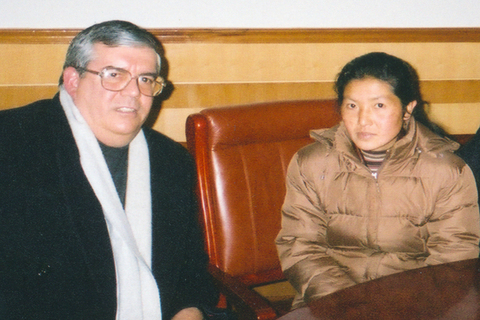
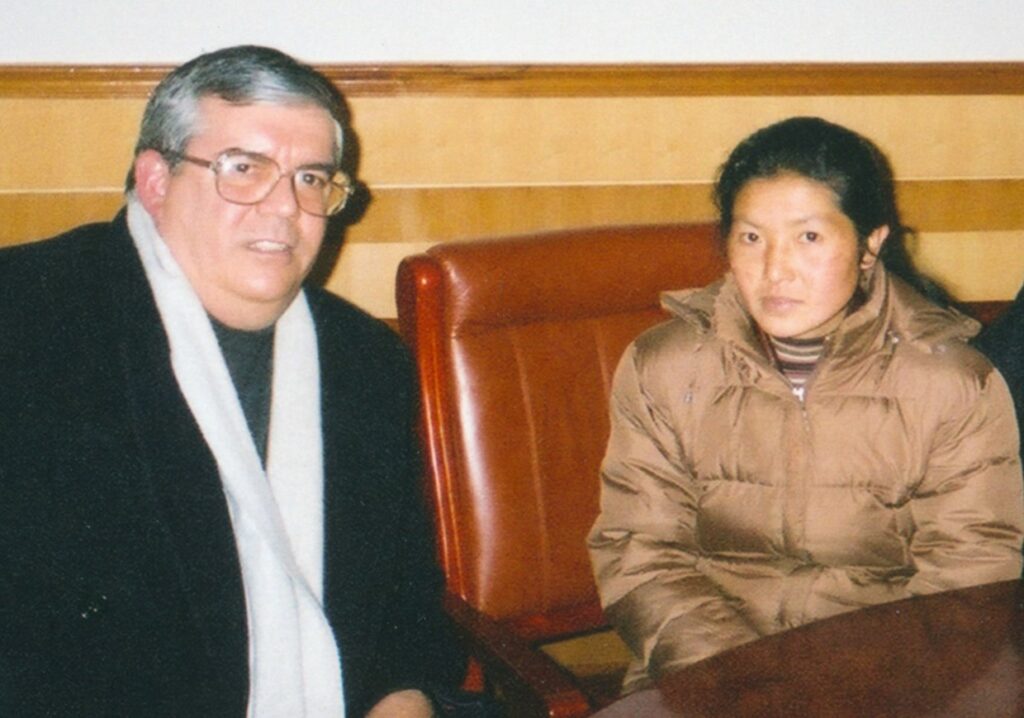
    Executive Director John Kamm and Ngawang Sangdrol. Lhasa, 2003.

    In February 2002, President George W. Bush visited Beijing and met with President Jiang Zemin. Their discussions covered the world’s hotspots, with a special focus on events in Iraq and North Korea. President Bush, in an unscripted moment, thanked President Jiang for the releases of Hong Kong resident and bible smuggler Li Guangqiang and the Tibetan musicologist Ngawang Choephel. Bush also invited Jiang to make a working visit to the United States in October, on his way to the APEC Summit in Mexico City. Perhaps they might meet at his famous ranch in Crawford, Texas. Jiang happily accepted the invitation.

    The group advising Jiang on which prisoners to release was convened. There were a number of good candidates for early release, including, first off, school teacher Jigme Sangpo, but also Democracy Party Chairman Xu Wenli and Uyghur businesswoman Rebiya Kadeer. There was no shortage of others worthy of clemency.

    Jigme Sangpo was released on March 31, 2002, six weeks after the Bush-Jiang summit. He flew to the United States on July 13, a month after I had visited him in Lhasa.

    In October 2002, Jiang Zemin and his wife Wang Yeping joins George W. Bush and his wife Laura Bush in Crawford, Texas. Jiang toured the Bush family ranch by truck and dined on Texas barbecue. Image Credit: China File.

    I left on a tour of European capitals in late August 2002, being received at senior levels by governments in London, Oslo, Stockholm, Copenhagen, and Geneva. My last stop was Bern. I arrived at around 10 AM on September 11, the first anniversary of the 9/11 attacks. I checked into the Savoy Hotel in the Old City and, at 11 AM, walked the short distance to the Federal Department of Foreign Affairs where I was received by Ambassador Peter Maurer, head of Political Section IV. We had a working lunch of traditional Swiss cuisine at a nearby restaurant. (Maurer went on to become Switzerland’s first ambassador to the United Nations. He is now the President of the International Committee of the Red Cross, based in Geneva.)


    A Divination in Lhasa

    During the lunch, Ambassador Maurer asked me if I would be willing to meet a prominent Tibetan living in Switzerland by the name of Tsultim Tersey that evening. I said fine, and around 6 PM Mr. Tersey and his daughter showed up at my hotel. They gave me a special khata, a ceremonial Tibetan scarf, and we went out to find a restaurant. It was a cold and wet night. We found a quiet place.

    As soon as we sat down, Tsultim Tersey pulled out a thick sheath of paper. It was a petition signed by 300 Tibetan Swiss citizens asking that I seek the release from prison of Ngawang Sangdrol, the young leader of a group known as the Singing Nuns of Drapchi. At the age of thirteen, Ngawang Sangdrol was detained and subsequently sentenced to three years in prison for counterrevolutionary propaganda and incitement in November 1992. In October 1993, she and 13 other nuns secretly recorded 27 songs of devotion to their homeland and the Dalai Lama. The cassette recording was smuggled out of prison; it circulated widely among Tibetans in Tibet and overseas. For this act, the nuns had their sentences extended. Maintaining a spirit of defiance, Ngawang Sangdrol had her sentence extended again in 1996 and 1998. What had been a three-year sentence became a 23-year sentence. Her plight received the attention of many governments and friends of Tibet overseas, especially in Switzerland which is home to a large ethnic Tibetan population.

    I accepted the petition and said that I would do what I could to press for her release, but that there were no guarantees that I would succeed. Tsultim Tersey replied: “You will succeed, you must succeed.”

    He told me that, after Jigme Sangpo’s release, he traveled to Lhasa and met with the elderly former prisoner at his niece’s residence. While in Lhasa, Tersey also met with Tibetan officials and asked them to release Ngawang Sangdrol. He felt he was making progress, but at his last meeting with the officials he was told that Ngawang Sangdrol would not be released. He was very upset, and sought the advice of a shaman.

    He asked the shaman if his effort to secure the release of Ngawang Sangdrol would eventually succeed. The shaman performed a divination. The answer was no. He then asked the shaman whether an American businessman by the name of John Kamm would succeed. The shaman once again performed a divination. The answer: “She will be released within six months.”

    Tsultim Tersey then told me that a kind and generous couple who lived in Geneva, Mrs. Maria José Rossotto and Professor Paolo Rossotto, had a strong interest in Tibet and in the Ngawang Sangdrol case in particular, and that if I needed their help I should contact them.

    I left the next day for Hong Kong. On the flight I decided to concentrate my efforts on securing the release of Tibetans convicted of counterrevolutionary crimes who were still serving their sentences. Upon my arrival in Hong Kong I briefed American officials and made calls to Beijing. On September 23, I spoke to my principal interlocutor with whom I had worked on the Jigme Sangpo case. He told me that progress was being made on the cases of Xu Wenli and Rebiya Kadeer. There was no mention of Ngawang Sangdrol.

    By that time, I had learned from other contacts in Beijing that Jiang Zemin, whose trip to Crawford was a month away, wanted to have a very special visit. He would be the fourth foreign leader to visit Crawford (Vladimir Putin of Russia, Prince Abdullah of Saudi Arabia, and Prime Minister Tony Blair had all spent time with President Bush at his ranch). President Jiang would be the first Asian leader to be accorded this honor, and he wanted it to be memorable.

    I called Lorne Craner, who was then Assistant Secretary for the Bureau of Democracy, Rights, and Labor at the State Department. Without detracting from the importance of securing the release of Xu Wenli and Rebiya Kadeer, I lobbied to include the release of Ngawang Sangdrol on the list of “deliverables” for the Jiang visit to Texas. Craner bought in.

    Shortly after, I flew to Beijing where I met with my principal interlocutor. As tea was being served, he looked at me and said. “There’s a prisoner you’ve asked about. I have some news, but I can’t recall the prisoner’s name.” His colleague reminded him: “Ngawang.” I jumped in. “Ngawang Sangdrol?” My interlocutor replied “Yes, she can be released. We have discussed her case, and senior leaders were surprised to learn that someone so young has been serving such a long sentence.” We agreed to hold a three-way meeting the next day: I could make my pitch directly to the Prison Administration Bureau of the Ministry of Justice, with my interlocutor present.

    The pitch went well and the following day, October 10, I had a wrap-up meeting with my principal interlocutor’s deputy. I was told that Ngawang Sangdrol would be released before the end of October. As in the case of Jigme Sangpo, I could travel to Lhasa at a future date, meet with Ngawang Sangdrol, and determine for myself if she wanted to leave China for medical treatment.

    I left Beijing and flew home to San Francisco. Following back and forth calls with Beijing and Washington, I was called by my principal interlocutor’s deputy at 10 PM on October 16, San Francisco time, and told that Ngawang Sangdrol had just been released and that she was on her way to her sister’s home in Lhasa. I was told that I could release a statement to the press. I demurred. I wanted to be sure that she arrived safely at her sister’s home before announcing the news. Finally, at 1:30 AM on October 17, I got the call. Ngawang Sangdrol was safe at her sister’s home.

    Ngawang Sangdrol’s release was widely seen as a good will gesture in advance of Jiang Zemin’s “working visit” to Crawford Ranch on October 26. His visit was a big success, and he benefited from the full measure of Texas hospitality, a Stetson hat, a barbecue by the lake, and a tour of the sprawling ranch. He was told that no other visitor to Crawford had been received with such honors.

    To Lhasa for Ngawang Sangdrol

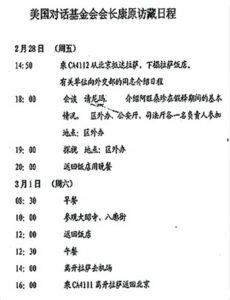
    Schedule in Lhasa, February 28 – March 1, 2003. Image Credit: Dui Hua Foundation.

    In November and December, I struggled to fix a date for my visit to Beijing and Lhasa. In a letter to my principal interlocutor’s deputy faxed on December 30, I suggested dates in January 2003. I was told my visit was inconvenient in January. Opposition to letting Ngawang Sangdrol leave Lhasa had grown, and local officials did not want to see me. I surmised that, with Jiang Zemin having stepped down as Communist Party Secretary in November 2002, and with his successor Hu Jintao opposed to releasing prisoners for favors, prospects looked bleak. I pressed on, arguing that a promise is a promise, and that since Jiang Zemin would stay on as president of China, the capacity in which he had visited George Bush, until March 2003, surely he would approve my trip.

    I tried again on January 21, suggesting dates of February 27 to March 5 for my visit to Beijing and Lhasa. This time I got the green light. After meetings in Washington with Lorne Craner and his colleagues in the Bureau of Democracy, Rights, and Labor and Mike Meserve, deputy director of the Office of Chinese and Mongolian Affairs in the Bureau of East Asian and Pacific Affairs, I returned to San Francisco where I drafted and mailed a letter to Losang Geleg, deputy director of the Prison Administration Bureau of the Tibet Autonomous Region (TAR). Attached to the letter was a list of 30 Tibetan political prisoners.

    I had met Losang Geleg on my visit to Lhasa in June 2002. Like other foreigners who had met him, I was struck by this man’s openness and willingness to share information on prisoners. (In an article published by the official Xinhua news agency on January 21, 2003, Losang Geleg stated that there were 2,300 prisoners in Tibet, of whom “less than five percent” were serving sentences for crimes of counterrevolution and endangering state security.) In the letter I asked for clemency for three Tibetan prisoners serving sentences for counterrevolution: Phuntsog Nyidron, Jampel Changchub, and Ngawang Oezer. Phuntsog Nyidron was, like Ngawang Sangdrol, a “Singing Nun of Drapchi.” The other two prisoners were serving long sentences, passed down in 1989, for counterrevolutionary crimes (they had translated the Universal Declaration of Human Rights into Tibetan and had attempted to popularize it). Because the prison bureau was no longer responsible for Ngawang Sangdrol, I did not bring up her name, nor did I mention my imminent visit to Lhasa, in the letter to Losang Geleg.

    I flew to Beijing on February 26, arriving on February 27. I departed Beijing for Lhasa via Chengdu on CA4112 on February 28, 2003. The night before I had dined with my principal interlocutor at the residence of American Ambassador Clark Randt. I was told that, despite opposition, my visit to Lhasa would go ahead as planned. I would be accompanied by a middle-ranking Ministry of Foreign Affairs official. I was asked not to say anything to anybody in Lhasa about a possible trip to the United States by Ngawang Sangdrol.

    It was a smooth flight, notwithstanding a brawl involving angry Sichuanese in the seats right behind me. Too much baijiu, too early. The crew moved in quickly, and the plane, which was rocking in mid-air, stabilized.

    Ngawang Sangdrol and her Niece

    I arrived with my companion at Lhasa Airport at 4:00 PM on February 28. Unlike what happened when I had flown to Tibet’s capital in June 2002 for Jigme Sangpo, we were met at the appropriate level – a deputy director of the TAR Foreign Affairs Office greeted us. We were driven to the hotel, where we dropped off our bags, and taken to the FAO office in downtown Lhasa. This was to be a lightning visit; I would leave Lhasa the next day, 24 hours after I had arrived.

    The meeting began at 6 PM. Officials on the TAR side included senior officials of the TAR foreign affairs and police organizations involved in the Ngawang Sangdrol case. I was pleasantly surprised to see Losang Geleg seated at the table. He agreed to see me for a few minutes after the meeting.

    Nima Tsering of the TAR Public Security Bureau opened the meeting by welcoming me to Lhasa. He then briefed me on Ngawang Sangdrol’s situation. Her parole had been approved by the Lhasa Intermediate Court on October 17, 2002, and her parole was being managed by the local public security office of the district where she lived. Mr. Tsering said she was allowed to travel around Lhasa, and that she had visited monasteries in the area around the city. She was required to report to public security once a month.

    Aerial Shot of Drapchi Prison, in Lhasa, Tibet. Image Credit: Tibetan Center for Human Rights and Democracy.

    Her parole was subject to four conditions: 1) She must respect the law and submit to supervision; 2) She must report all activities to the police; 3) She must apply for permission to meet people other than her family members; and 4) She must not travel to districts outside Lhasa without police permission.

    Nima Tsering said that Ngawang Sangdrol’s main medical problem was severe headaches. The authorities were concerned, and had taken her to the hospital. Her medical expenses were being paid for, and she was given meat, rice, and yak butter to build up her strength.

    I thanked Nima Tsering, and at that point Ngawang Sangdrol, a young girl, the police chief of the district where she lived, and a policewoman entered the room. I was told that the young girl was Ngawang Sangdrol’s niece. (I subsequently learned that when the police came to pick her up, Ngawang Sangdrol was afraid that they were taking her back to prison. She asked that her sister be allowed to accompany her, but this request was turned down. Ngawang Sangdrol then asked for her niece to accompany her, and the police unexpectedly agreed.)

    The nun appeared weak, listless, her eyes vacant. She complained of severe headaches, some lasting several days. During these times she could neither eat nor sleep. She had attacks of nausea. The police wanted her to undergo a spinal tap, but she refused. I told her I agreed with her decision. She said she preferred Tibetan medicines and Western pain killers.

    Ngawang Sangdrol repeatedly told me that she wanted to travel abroad for medical treatment. In a soft voice, I promised to help. Our conversation took place in Mandarin.

    After she left, I had a brief meeting with Losang Geleg. I went over the list of Tibetan political prisoners, nearly all counterrevolutionaries. I reminded him that he had told me in June that 30 percent of prisoners in the TAR were given either a sentence reduction or parole every year. I challenged him on this, and he admitted that counterrevolutionaries benefited at a lower rate. I pressed him to release Phuntsog Nyidron, Jampel Changchub, and Ngawang Oezer. He agreed to consider this request, but said it would take time. I would learn the result from the Ministry of Justice. (Phuntsog Nyidron was released more than two years early from Drapchi on February 26, 2004, one year after my visit to Lhasa. She was finally given a passport two years later and flew to the United States, accompanied by an officer of the United States embassy. She eventually settled in Switzerland. Ngawang Oezer and Jampel Changchub were granted early release in 2004 and 2005 respectively.)

    That evening I was hosted to a banquet by the TAR government. The next day, March 1, I was taken on a tour of Lhasa. I returned to Beijing with my companion on CA4111. The plane departed Lhasa at 4 PM.

    The Singing Nuns of Drapchi Reunite in Amsterdam in 2015. Phuntsog Nyidron (second on the left) and Ngawang Sangdrol (fourth on the left). Image Credit: International Campaign for Tibet.

    I worked with Chinese, American, and Swiss officials in Beijing and with American officials in Washington and Swiss officials in Bern to bring about Ngawang Sangdrol’s safe passage to the United States and Switzerland. Not long after my visit to Lhasa, she was granted medical parole by the warden of Drapchi Prison. (Parole and sentence reductions are approved by courts, medical parole is approved by prison wardens.) She boarded a plane to Beijing and, accompanied by an officer of the American Embassy, flew to the United States, arriving on March 28, 2003. She then went to Switzerland where, with the assistance of the Swiss government and the generous support of the Rossottos, she settled in Rikon, together with Jigme Sangpo in exile. Ngawang Sangdrol eventually settled in the United States.

  • The Singing Nuns of Drapchi

    The Singing Nuns of Drapchi

    << Read all John Kamm Remembers stories

    Kamm with Ngawang Sangdrol. Image credit: Dui Hua Foundation

    In February 2002, President George W. Bush visited Beijing and met with President Jiang Zemin. Their discussions covered the world’s hotspots, with a special focus on events in Iraq and North Korea. President Bush, in an unscripted moment, thanked President Jiang for the releases of Hong Kong resident and bible smuggler Li Guangqiang and the Tibetan musicologist Ngawang Choephel. Bush also invited Jiang to make a working visit to the United States in October, on his way to the APEC Summit in Mexico City. Perhaps they might meet at his famous ranch in Crawford, Texas. Jiang happily accepted the invitation.

    The group advising Jiang on which prisoners to release was convened. There were a number of good candidates for early release, including, first off, school teacher Jigme Sangpo, but also Democracy Party Chairman Xu Wenli and Uyghur businesswoman Rebiya Kadeer. There was no shortage of others worthy of clemency.

    Jigme Sangpo was released on March 31, 2002, six weeks after the Bush-Jiang summit. He flew to the United States on July 13, a month after I had visited him in Lhasa.

    I left on a tour of European capitals in late August 2002, being received at senior levels by governments in London, Oslo, Stockholm, Copenhagen, and Geneva. My last stop was Bern. I arrived at around 10 AM on September 11, the first anniversary of the 9/11 attacks. I checked into the Savoy Hotel in the Old City and, at 11 AM, walked the short distance to the Federal Department of Foreign Affairs where I was received by Ambassador Peter Maurer, head of Political Section IV. We had a working lunch of traditional Swiss cuisine at a nearby restaurant. (Maurer went on to become Switzerland’s first ambassador to the United Nations. He is now the President of the International Committee of the Red Cross, based in Geneva.

    A Divination in Lhasa


    In October 2002, Jiang Zemin and his wife Wang Yeping joins George W. Bush and his wife Laura Bush in Crawford, Texas. Jiang toured the Bush family ranch by truck and dined on Texas barbecue. Image Credit: China File.

    During the lunch, Ambassador Maurer asked me if I would be willing to meet a prominent Tibetan living in Switzerland by the name of Tsultim Tersey that evening. I said fine, and around 6 PM Mr. Tersey and his daughter showed up at my hotel. They gave me a special khata, a ceremonial Tibetan scarf, and we went out to find a restaurant. It was a cold and wet night. We found a quiet place.

    As soon as we sat down, Tsultim Tersey pulled out a thick sheath of paper. It was a petition signed by 300 Tibetan Swiss citizens asking that I seek the release from prison of Ngawang Sangdrol, the young leader of a group known as the Singing Nuns of Drapchi. At the age of thirteen, Ngawang Sangdrol was detained and subsequently sentenced to three years in prison for counterrevolutionary propaganda and incitement in November 1992. In October 1993, she and 13 other nuns secretly recorded 27 songs of devotion to their homeland and the Dalai Lama. The cassette recording was smuggled out of prison; it circulated widely among Tibetans in Tibet and overseas. For this act, the nuns had their sentences extended. Maintaining a spirit of defiance, Ngawang Sangdrol had her sentence extended again in 1996 and 1998. What had been a three-year sentence became a 23-year sentence. Her plight received the attention of many governments and friends of Tibet overseas, especially in Switzerland which is home to a large ethnic Tibetan population.

    I accepted the petition and said that I would do what I could to press for her release, but that there were no guarantees that I would succeed. Tsultim Tersey replied: “You will succeed, you must succeed.”


    Schedule in Lhasa, February 28 – March 1, 2003. Image Credit: Dui Hua Foundation.

    He told me that, after Jigme Sangpo’s release, he traveled to Lhasa and met with the elderly former prisoner at his niece’s residence. While in Lhasa, Tersey also met with Tibetan officials and asked them to release Ngawang Sangdrol. He felt he was making progress, but at his last meeting with the officials he was told that Ngawang Sangdrol would not be released. He was very upset, and sought the advice of a shaman.

    He asked the shaman if his effort to secure the release of Ngawang Sangdrol would eventually succeed. The shaman performed a divination. The answer was no. He then asked the shaman whether an American businessman by the name of John Kamm would succeed. The shaman once again performed a divination. The answer: “She will be released within six months.”

    Tsultim Tersey then told me that a kind and generous couple who lived in Geneva, Mrs. Maria José Rossotto and Professor Paolo Rossotto, had a strong interest in Tibet and in the Ngawang Sangdrol case in particular, and that if I needed their help I should contact them.

    I left the next day for Hong Kong. On the flight I decided to concentrate my efforts on securing the release of Tibetans convicted of counterrevolutionary crimes who were still serving their sentences. Upon my arrival in Hong Kong I briefed American officials and made calls to Beijing. On September 23, I spoke to my principal interlocutor with whom I had worked on the Jigme Sangpo case. He told me that progress was being made on the cases of Xu Wenli and Rebiya Kadeer. There was no mention of Ngawang Sangdrol.

    By that time, I had learned from other contacts in Beijing that Jiang Zemin, whose trip to Crawford was a month away, wanted to have a very special visit. He would be the fourth foreign leader to visit Crawford (Vladimir Putin of Russia, Prince Abdullah of Saudi Arabia, and Prime Minister Tony Blair had all spent time with President Bush at his ranch). President Jiang would be the first Asian leader to be accorded this honor, and he wanted it to be memorable.

    I called Lorne Craner, who was then Assistant Secretary for the Bureau of Democracy, Rights, and Labor at the State Department. Without detracting from the importance of securing the release of Xu Wenli and Rebiya Kadeer, I lobbied to include the release of Ngawang Sangdrol on the list of “deliverables” for the Jiang visit to Texas. Craner bought in.


    Aerial Shot of Drapchi Prison, in Lhasa, Tibet. Image Credit: Tibetan Center for Human Rights and Democracy.

    Shortly after, I flew to Beijing where I met with my principal interlocutor. As tea was being served, he looked at me and said. “There’s a prisoner you’ve asked about. I have some news, but I can’t recall the prisoner’s name.” His colleague reminded him: “Ngawang.” I jumped in. “Ngawang Sangdrol?” My interlocutor replied “Yes, she can be released. We have discussed her case, and senior leaders were surprised to learn that someone so young has been serving such a long sentence.” We agreed to hold a three-way meeting the next day: I could make my pitch directly to the Prison Administration Bureau of the Ministry of Justice, with my interlocutor present.

    The pitch went well and the following day, October 10, I had a wrap-up meeting with my principal interlocutor’s deputy. I was told that Ngawang Sangdrol would be released before the end of October. As in the case of Jigme Sangpo, I could travel to Lhasa at a future date, meet with Ngawang Sangdrol, and determine for myself if she wanted to leave China for medical treatment.

    I left Beijing and flew home to San Francisco. Following back and forth calls with Beijing and Washington, I was called by my principal interlocutor’s deputy at 10 PM on October 16, San Francisco time, and told that Ngawang Sangdrol had just been released and that she was on her way to her sister’s home in Lhasa. I was told that I could release a statement to the press. I demurred. I wanted to be sure that she arrived safely at her sister’s home before announcing the news. Finally, at 1:30 AM on October 17, I got the call. Ngawang Sangdrol was safe at her sister’s home.

    To Lhasa for Ngawang Sangdrol

    In November and December, I struggled to fix a date for my visit to Beijing and Lhasa. In a letter to my principal interlocutor’s deputy faxed on December 30, I suggested dates in January 2003. I was told my visit was inconvenient in January. Opposition to letting Ngawang Sangdrol leave Lhasa had grown, and local officials did not want to see me. I surmised that, with Jiang Zemin having stepped down as Communist Party Secretary in November 2002, and with his successor Hu Jintao opposed to releasing prisoners for favors, prospects looked bleak. I pressed on, arguing that a promise is a promise, and that since Jiang Zemin would stay on as president of China, the capacity in which he had visited George Bush, until March 2003, surely he would approve my trip.

    I tried again on January 21, suggesting dates of February 27 to March 5 for my visit to Beijing and Lhasa. This time I got the green light. After meetings in Washington with Lorne Craner and his colleagues in the Bureau of Democracy, Rights, and Labor and Mike Meserve, deputy director of the Office of Chinese and Mongolian Affairs in the Bureau of East Asian and Pacific Affairs, I returned to San Francisco where I drafted and mailed a letter to Losang Geleg, deputy director of the Prison Administration Bureau of the Tibet Autonomous Region (TAR). Attached to the letter was a list of 30 Tibetan political prisoners.

    I had met Losang Geleg on my visit to Lhasa in June 2002. Like other foreigners who had met him, I was struck by this man’s openness and willingness to share information on prisoners. (In an article published by the official Xinhua news agency on January 21, 2003, Losang Geleg stated that there were 2,300 prisoners in Tibet, of whom “less than five percent” were serving sentences for crimes of counterrevolution and endangering state security.) In the letter I asked for clemency for three Tibetan prisoners serving sentences for counterrevolution: Phuntsog Nyidron, Jampel Changchub, and Ngawang Oezer. Phuntsog Nyidron was, like Ngawang Sangdrol, a “Singing Nun of Drapchi.” The other two prisoners were serving long sentences, passed down in 1989, for counterrevolutionary crimes (they had translated the Universal Declaration of Human Rights into Tibetan and had attempted to popularize it). Because the prison bureau was no longer responsible for Ngawang Sangdrol, I did not bring up her name, nor did I mention my imminent visit to Lhasa, in the letter to Losang Geleg.

    I flew to Beijing on February 26, arriving on February 27. I departed Beijing for Lhasa via Chengdu on CA4112 on February 28, 2003. The night before I had dined with my principal interlocutor at the residence of American Ambassador Clark Randt. I was told that, despite opposition, my visit to Lhasa would go ahead as planned. I would be accompanied by a middle-ranking Ministry of Foreign Affairs official. I was asked not to say anything to anybody in Lhasa about a possible trip to the United States by Ngawang Sangdrol.

    It was a smooth flight, notwithstanding a brawl involving angry Sichuanese in the seats right behind me. Too much baijiu, too early. The crew moved in quickly, and the plane, which was rocking in mid-air, stabilized.

    Ngawang Sangdrol and her Niece

    I arrived with my companion at Lhasa Airport at 4:00 PM on February 28. Unlike what happened when I had flown to Tibet’s capital in June 2002 for Jigme Sangpo, we were met at the appropriate level – a deputy director of the TAR Foreign Affairs Office greeted us. We were driven to the hotel, where we dropped off our bags, and taken to the FAO office in downtown Lhasa. This was to be a lightning visit; I would leave Lhasa the next day, 24 hours after I had arrived.

    The meeting began at 6 PM. Officials on the TAR side included senior officials of the TAR foreign affairs and police organizations involved in the Ngawang Sangdrol case. I was pleasantly surprised to see Losang Geleg seated at the table. He agreed to see me for a few minutes after the meeting.

    Nima Tsering of the TAR Public Security Bureau opened the meeting by welcoming me to Lhasa. He then briefed me on Ngawang Sangdrol’s situation. Her parole had been approved by the Lhasa Intermediate Court on October 17, 2002, and her parole was being managed by the local public security office of the district where she lived. Mr. Tsering said she was allowed to travel around Lhasa, and that she had visited monasteries in the area around the city. She was required to report to public security once a month.


    The Singing Nuns of Drapchi Reunite in Amsterdam in 2015. Phuntsog Nyidron (second on the left) and Ngawang Sangdrol (fourth on the left). Image Credit: International Campaign for Tibet.

    I worked with Chinese, American, and Swiss officials in Beijing and with American officials in Washington and Swiss officials in Bern to bring about Ngawang Sangdrol’s safe passage to the United States and Switzerland. Not long after my visit to Lhasa, she was granted medical parole by the warden of Drapchi Prison. (Parole and sentence reductions are approved by courts, medical parole is approved by prison wardens.) She boarded a plane to Beijing and, accompanied by an officer of the American Embassy, flew to the United States, arriving on March 28, 2003. She then went to Switzerland where, with the assistance of the Swiss government and the generous support of the Rossottos, she settled in Rikon, together with Jigme Sangpo in exile. Ngawang Sangdrol eventually settled in the United States.


    Listen to the Encounters with China podcast.

    Subscribe to receive notifications about new episodes. 

    Read all John Kamm Remembers stories.


  • Will a New Judicial Interpretation on Cults Lead to Greater Leniency?

    Underground church goers watch a service on a video screen in Beijing. Image Credit: Express UK.

    Since coming into force in October 1997, Article 300 of the Criminal Law “organizing/using a cult to undermine implementation of the law” has been frequently used to suppress groups such as Falun Gong, unofficial Christian groups, Buddhist sects, and over a dozen qigong groups including Zhonggong. Accompanying this law, two judicial interpretations were jointly issued by the Supreme People’s Court and Supreme People’s Procuratorate on October 1999 and June 2001, respectively, to explain the law’s specific application. Effective since February 1, 2017, the latest joint interpretation of Article 300, consisting of sixteen articles, adds a new penalty range based on leniency and serves to redefine the sentencing standard.

    New Sentencing Standard

    The new interpretation incorporates previous changes made to the ninth amendment of the Criminal Law in November 2015 concerning the standard of punishments for cult crimes. Of significance is the elaboration of what is meant by “relatively minor circumstances” that can result in a sentence of three years or less, detention, surveillance, deprivation of political rights, fines, or combined penalties with fines. Such “circumstances” are defined in the interpretation as acts that inflict lighter social harm, which are measured by quantifiable factors such as: the number of cult propaganda materials produced and disseminated, the number of views or downloads of a cult propaganda video, the amount of economic loss caused by cult activity, or the number of members recruited by the cult. An act is considered relatively minor when such an amount or number falls below one-fifth of what is accepted as the new normal standard (see below).

    In the future, we can expect to see more cult offenses deemed as “relatively minor” cases, partly because by raising the benchmark for evidence necessary to imprison cult prisoners for up to three to seven years, the new interpretation has expanded the scope of activities that fall under the category of “minor” cases. For instance, the quantity of print propaganda materials (such as leaflets, banners or newspapers) produced or disseminated for cult purposes that constitute a normal offense has now been raised to 1,000, a significant leap from 300, as stated in the 2001 interpretation. For propaganda in the form of books or publications, the quantity for a normal offence requires evidence of at least 250 materials, again a significant leap from the previous count of 100 publication materials. The interpretation also quantifies a number of additional criminal behavior used to determine sentencing.

    List of criminal behaviors revised in Article 2 of the interpretation:

    • Recruiting over 50 members;
    • Swindling or leading to an economic loss of over one million yuan;
    • Using at least 500 banknotes as a means to disseminate information about a cult;
    • Manufacturing or disseminating cult propaganda over a certain amount:
      • over 1,000 leaflets, spray paints, pictures, banners and newspapers;
      • over 250 copies of books or publications, cassettes or audio-videotapes; or logos or signs;
      • over 100 CD-ROMs, U-disks, memory cards, mobile hard drivers or other mobile storage devices;
      • over 50 banners.
    • Using the Internet to disseminate information about a cult:
      • manufacturing or disseminating over 200 digital pictures or articles, over 50 copies of e-books, publications, audios or videos, electronic files with over five million characters, or electronic files exceeding 250 minutes;
      • composing or making over 1,000 messages or phone calls;
      • using online chatrooms, chat groups, WeChat, microblogs or other social networking services to spread information about a cult involving over 1,000 members or followers;
      • cult messages with over 5,000 views or clicks.

    A circumstance is considered “especially grave” when the quantity is five times more than the numbers stated above, and can lead to imprisonment of seven years or more. Although the ninth amendment to the Criminal Law increased the maximum sentence from 15 years to life, it has not been imposed for the single offense of Article 300. For example, while the Buddhist leader Wu Zeheng (吴泽衡) received a life sentence for charges of fraud and rape, his crime related to cult activity afforded him a sentence of 12 years.

    Greater Leniency Despite a Surge in Cult Cases

    Dui Hua’s Political Prisoner Database has collected information on over 8,000 individuals convicted of Article 300 of the Criminal Law between 2000-2016. Most convictions in the early years after Falun Gong was labelled an “evil cult” in 1999 are now considered “particularly serious circumstances” under the new interpretation. During that time, a number of high-profile leaders such as Wang Zhiwen (王治文) and Li Chang (李昌) were given lengthy sentences of over 10 years for multiple offenses.

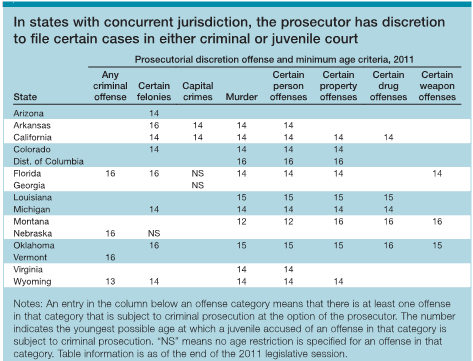
    Image Credit: Dui Hua Foundation.

    Since December 2012, the total number of cult convictions recorded in the database has surged as a result of the nationwide clampdown on the group the Almighty God, and an improved level of judicial transparency due to the more regular online posting of court judgments. Nonetheless, the appearance of a new religious threat does not appear to be met with the same intensity compared to the Falun Gong crackdown of the early 2000s. Most convictions of Almighty God members resulted in sentences of three to four years’ imprisonment, and fewer than 10 percent of all cult sentences in the same period exceeded seven years. Also noteworthy is the surge of cases now considered relatively minor with sentences of three years or less. In 2016, over half of the convictions for cult activity are now considered relatively minor cases according to the new interpretation, superseding the number of ordinary cult cases for the first time since the offense was codified in the Criminal Law.

    Leniency in the form of shorter sentences is a further indication of an overall relaxation of the clampdown on cults. Article 9 of the interpretation states that:

    “a perpetrator can be exempt from indictment or criminal punishment if he or she expresses sincere remorse about his wrongdoing, and exhibits a willingness to leave the cult and cease joining in its activities. Those who are deceived or intimidated into joining the cult will not be handled as criminals.”

    Showing remorse is a prerequisite for prisoners seeking clemency, and it is not uncommon for prisoners charged with cult crimes to receive sentence reductions after expressing remorse for their behavior. Dui Hua’s Political Prisoner Database recorded over 300 instances of clemency in 2014 for cult prisoners and in 2015, the number surged to nearly 500.

    Deprivation of Political Rights

    Despite the trend towards greater leniency in sentence reductions, public security authorities also appear ready to continue exercising control over cult prisoners even after they have completed their sentences. Article 14 of the interpretation states that a supplemental sentence of “deprivation of political rights” (DPR) up to five years may be imposed on cult prisoners. Prior to the interpretation, only prisoners sentenced for the crime of “endangering state security” and a number of violent crimes were subject to a supplemental DPR sentence, depriving them of the right to vote, the right to stand for office and the right to hold a position in a state-owned company, regardless of the fact their sentences had already been completed. Of particular concern to cult prisoners is that individuals under DPR are prohibited from writing articles or giving interviews.

    Dui Hua will closely monitor the application and impact of this new interpretation for cult prisoners. The new sentencing standards suggest an expansion of crimes considered “minor” and hopefully a reduction of cult prisoners serving long sentences. That said, the enhancement of the use of DPR may present new opportunities for public security authorities to exert control over cult members even after their release.

  • Dui Hua Digest, February 2017

    EVENTS

    Image Credit: CNN News

    Will Promoting Human Rights in China be a Priority for President Trump?

    Donald J. Trump was inaugurated as president of the United States on January 20, 2017. During the campaign and the transition period, Mr. Trump leveled a series of criticisms against China, calling the country a currency manipulator that was “raping” the American economy. He called climate change a “Chinese hoax” and he called on China to exert more pressure on North Korea to give up its nuclear weapons.

    Especially troubling to Beijing was president-elect Trump’s accepting a congratulatory phone call from Taiwan president Tsai Ing-wen on December 2, 2016. For nearly 40 years, American presidents had refrained from any interaction with a Taiwanese leader. In an interview on December 12 Trump declared that he didn’t see why America should be bound by the One-China policy.

    On another sensitive topic, the president-elect criticized China’s building of a “massive military complex” in the South China Sea in a tweet sent out on December 4. He followed up by accusing China of stealing an American underwater drone in another tweet sent out on December 12.

    Another topic of conversation was recent developments in Beijing and Hong Kong. Washington analysts agreed that Xi Jinping’s recent elevation to the “Core” of China’s Communist Party marked a further consolidation of the Chinese leader’s power in the run-up to the 19th Party Congress at the end of 2017. Many expressed surprise that the Standing Committee of China’s National People’s Congress had issued an interpretation of the Basic Law article on oath taking while the issue was still before the courts in Hong Kong.

    As troubling as the president-elect’s remarks were, his appointments to key posts were even more worrying. He appointed fervent China critic Peter Navarro, author of “Death by China” to the newly created position of chairman of the National Trade Council on December 21. On January 3, the president-elect named another China critic, Robert Lighthizer, as United States Trade Representative.

    Also unsettling to China’s leadership were remarks delivered at the confirmation hearings of picks for key cabinet posts. Rex Tillerson, the new Secretary of State, had this to say on January 12: “We’re going to have to send China a clear signal that first, the island-building stops, and second, your access to those islands (is) also not going to be allowed.” On January 24, the new White House Press Secretary Sean Spizer underlined Tillerson’s position by saying that the US would make sure “that we defend international territories from being taken over by one country.”

    On January 18, president-elect Trump’s pick for Commerce Secretary Wilbur Ross called China the most protectionist country among the world’s large economies, and threatened to take action against Chinese trade practices.

    The day before Ross’s hearing, Trump’s nominee for Defense Secretary James Mattis said that the world order “is under the biggest attack since World War II from Russia, from terrorist groups, and with what China is doing in the South China Sea.” He accused China of “shredding trust along its periphery.” On January 13, the day after Rex Tillerson said the United States would deny access to China’s man-made islands in the South China Sea, CIA director Mike Pompeo attacked China, saying its activities in the South and East China Seas and in cyberspace were creating tensions.

    Trump’s pick for National Security Advisor Michael Flynn did not go before the Senate for confirmation, so his views on China are largely unknown. In his book “The Field of Fight: How We Can Win the Global War Against Radical Islam and its Allies” Flynn raised eyebrows by claiming that China is part of a global alliance with Islamic jihadists that the United States must confront.

    Trump and his team have taken China to task for its trade and currency policies, its refusal to do more to stop North Korean nuclear development, its role in passing the Paris climate agreement, cybersecurity, and its actions in the South and East China Seas, while challenging the One-China policy. Flynn resigned on February 13 after accusations he had discussed sanctions with the Russian Ambassador. In one area, however, Trump and his team have been uncharacteristically silent: human rights.

    During the campaign, candidate Trump angered Chinese dissidents by calling the June 1989 protests in Beijing a “riot.” In August, candidate Trump stated that the United States would get out of the nation-building business, which observers interpreted as meaning that promoting democracy and human rights overseas would be a low priority in a Trump presidency.

    In his confirmation hearing, Rex Tillerson was asked pointblank by Senator Marco Rubio, chair of the Congressional Executive Commission on China, whether he thought China was one of the world’s worst violators of Human rights. While noting that China “certainly has serious human rights violations,” he declined to label them one of the worst human rights violators. His answer didn’t satisfy Rubio, who threatened to vote against Tillerson’s nomination. (In the end he voted for Tillerson, virtually assuring his confirmation in the full Senate.)

    Trump’s silence on human rights in China might not last. An event like the conviction and sentencing of American business woman Sandy Phan-Gillis would likely bring about harsh remarks from President Trump. As one of his first acts as secretary of state, Rex Tillerson will roll out the State Department’s annual country reports for human rights. The report on China will be harsh.

    Trump’s pick for United Nations Ambassador will need to decide who to appoint as the US Ambassador in Geneva; the post oversees America’s role on the Human Rights Council. President Trump, together with Secretary of State Tillerson, will have to decide who to nominate as Assistant Secretary of State for the Bureau of Democracy, Human Rights and Labor, the most senior officer in the US government charged with promoting human rights.

    Whether he likes it or not, President Trump will not be able to ignore calls from Congress and the American people to stand up for human rights in China. How and when he will do so is anyone’s guess.

    UPDATE

    President Xi Jinping and President Donald Trump held a 45-minute telephone conversation on February 9. According to a statement released by the White House, “President Trump agreed, at the request of President Xi, to honor our “One China” policy.”

    Although most American media portrayed Trump’s pledge as a climb down from his previous statements on “One China,” in fact what he did was to reaffirm the status quo. Moreover, it is almost certain that Xi did not ask Trump to honor America’s “One China” policy. Under the latter, the United States sells arms to Taiwan, sends Senate-approved officers to Taiwan, and conducts a wide range of bilateral activities. What exactly Xi asked Trump to honor is a mystery.

    The two men agreed to visit each other in their respective countries, but no dates for the visits have been agreed.


    PRISONER CASES

    An official document Dui Hua discovered reveals that Zhao Fengsheng (赵枫生) received a sentence reduction of seven months on December 27, 2016, and is scheduled for release from Hunan’s Chishan Prison on April 27, 2017. Originally from a Yao minority county, Zhao was sentenced to three years’ imprisonment for inciting subversion by Hunan’s Hengyang Intermediate People’s Court on November 28, 2014. He posted an open letter online shortly before he was detained in November 2013. One was addressed to the Turkestan Islamic Party, accused by the Chinese government for masterminding the car attack near Tiananmen Square in late October 2013. In the letter, Zhao claimed that the attack should have targeted government officials, not innocent civilians.

    Dui Hua previously reported a rare trial of armed rebellion, one of the 12 crimes under the category of endangering state security, concluded in Sichuan in 1999. Lai Shihua (赖仕华) was a leader of an anti-government militia formed in the early 1990s with the intention to overthrow the Communist regime. After his death with two-year reprieve sentence was commuted to life in 2000 and further commuted to 19 years’ imprisonment, Lai has thus far received four additional sentence reductions totaling 64 months. If the latest sentence reduction of 15 months was granted by the Dazhou Intermediate People’s Court, Lai will be released early from Chuandong Prison before his sentence expires in November 2018.

    PUBLICATIONS ROUND-UP

    Featured: Juvenile Justice Trends in the US Could Provide Lessons for China’s Courts (January 26)

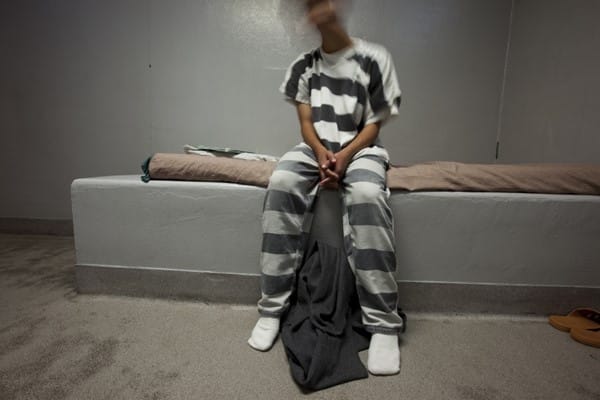
    A Young Offender Confined in the US. Image Credit: Juvenile-In-Justice Project.

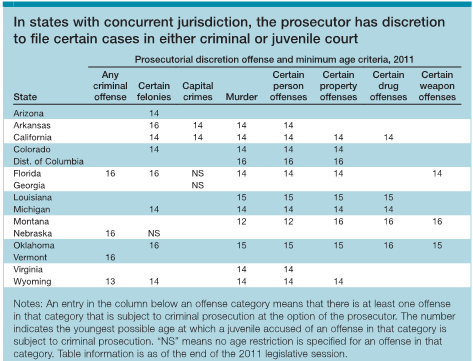
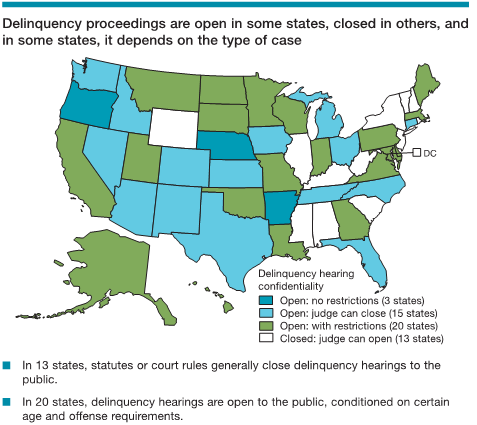
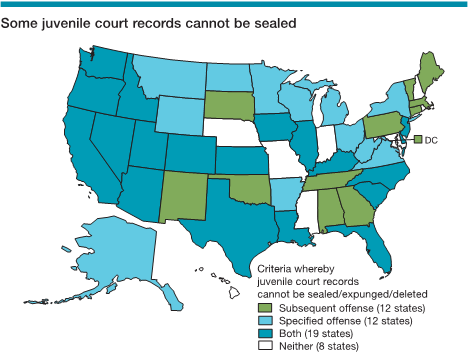
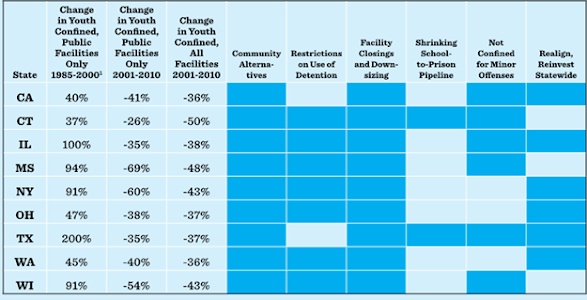
    Amid high-profile reports of violence among children under the age of 14 in China, voices from several corners of Chinese society have called to lower the age of criminal responsibility. However, some Chinese legal experts remain opposed to adopting a more punitive juvenile justice regime and a look into the recent history of the US juvenile justice system supports a more cautious approach. Since 2000, legislatures throughout the United States have been scrambling to correct excessive punishments imposed upon young offenders in the 1980s and 1990s. Since 2000, several states have enhanced the authority of their juvenile courts, and by 2015, 41 states had raised to 17 the maximum age for transferring offenders to criminal court (often called “adult court”).

    Juvenile Justice Trends in the US Could Provide Lessons for China’s Courts (January 26)

    Previous Digest: January 2017.

    ROOTS

    “Special Prisoner 01”

    In March 1993, American businessman John Kamm traveled to Beijing to attend an international conference on small and medium-sized enterprises hosted by the China Council for the Promotion of International Trade. During and after the conference he had talks with Chinese government officials on US-China relations and the need for more prisoner releases.

    President Clinton was a few weeks into his presidency. He was considering how to fulfill his campaign promise to put human rights conditions on renewal of China’s most favored nation (MFN) tariff status. China’s leaders were concerned that he might support and sign legislation imposing conditions, as opposed to issuing an executive order, which could be reversed with the stroke of a pen. Clinton had to make a decision no later than June 4, when China’s MFN expired.

    On March 2, 1993 Kamm was hosted to dinner by Minister Zeng Jianhui of the State Council Information Office, together with his deputy Li Yuanchao. Media coverage of recent releases was reviewed. The release of Wang Xizhe in February had generated positive press coverage, but it was mostly in Hong Kong and Overseas Chinese media. Zeng asked Kamm to name one or two prisoners whose release would make the front page in the United States. Kamm, opting for two, said “Wei Jingsheng and Xu Wenli.”

    Both Wei and Xu were veterans of the Democracy Wall Movement and both had been in prison for more than 10 years. Wei was China’s most prominent political prisoner, known for authoring an essay, “China’s Fifth Modernization,” which he posted on Democracy Wall in December 1978. The essay, which he signed above his address, called for China to adopt democracy and criticized China’s leader Deng Xiaoping by name. For this and other writings in his magazine Explorations, Wei was arrested and sentenced to 15 years in prison.

    Like Wei, Xu Wenli was the editor of a pro-democracy magazine (April Fifth Forum) where he posted essays advocating political reform. In June 1980, together with Wang Xizhe and other dissidents, he tried to organize a political party. For this he was convicted of counterrevolution and given a long prison sentence in 1981. Xu was reportedly known by Chinese authorities as “Special Prisoner 01.” The release of Wei and Xu were high priorities for Western governments and human rights groups.

    Kamm had been told by senior officials of the Ministry of Justice in 1992 that Wei was unrepentant, and showed no willingness to reform. He enjoyed arguing with his guards. The American businessman was told that, because of his attitude, Wei was not being considered for early release. With this in mind, Kamm decided to first push for Xu’s release.

    Zeng Jianhui told Kamm he’d work on Xu’s release, and then asked Kamm at what time of the day Xu should be released for maximum publicity. Kamm said major newspapers on the American east coast closed their editions for the following day at midnight. Ten in the morning Beijing time was the best time to announce important news.

    On March 8, 1993, Kamm met with Vice Minister of Justice Jin Jian. Jin told the businessman that “people like Xu Wenli can be released in accordance with Articles 71 and 73 of the Criminal Law, as had been demonstrated in the case of Wang Xizhe. It isn’t necessary for them to change their anti-government positions. They have to follow regulations, do meritorious service, and show an understanding of their crimes.” Jin did not mention that prisoners would need to admit their guilt to win parole, a significant departure from the usual litany of things prisoners would have to do to gain clemency.

    After Kamm left Beijing he flew to Washington where he briefed Clinton administration officials and members of Congress on possible prisoner releases in the run-up to the president’s MFN decision. On May 16, 1993, Kamm returned to Beijing. At a banquet in his honor on May 18, Kamm was advised by Public Security Ministry director general Zhu Entao that Xu’s release was imminent. At his meeting with the Ministry of Justice on May 19 Kamm was told that an application to parole Xu had been filed with the Beijing Intermediate Court. A director general of the Supreme People’s Court told Kamm that the decision to release Xu had been made in April. In a final meeting with Zeng Jianhui, details of the release were hammered out.

    Kamm left Beijing for Hong Kong on May 20. In the early morning of May 26, Kamm received a fax from the State Council Information Office with a simple message: Xu Wenli would be released on parole that day at 10:00 AM. Kamm, who had predicted that the release would take place before the end of May, informed the press. Reporters were waiting for Xu when he returned home.

    Coverage in the American press was heavy. The Clinton administration welcomed the news. On May 28, 1993, President Clinton issued an executive order renewing China’s MFN for one year, but placed conditions on renewal of the status in 1994. In May 1994, Clinton reversed course and renewed China’s MFN without conditions.

  • “Special Prisoner 01”

    “Special Prisoner 01”

    << Read all John Kamm Remembers stories

    In March 1993, American businessman John Kamm traveled to Beijing to attend an international conference on small and medium-sized enterprises hosted by the China Council for the Promotion of International Trade. During and after the conference he had talks with Chinese government officials on US-China relations and the need for more prisoner releases.President Clinton was a few weeks into his presidency. He was considering how to fulfill his campaign promise to put human rights conditions on renewal of China’s most favored nation (MFN) tariff status. China’s leaders were concerned that he might support and sign legislation imposing conditions, as opposed to issuing an executive order, which could be reversed with the stroke of a pen. Clinton had to make a decision no later than June 4, when China’s MFN expired.

    On March 2, 1993 Kamm was hosted to dinner by Minister Zeng Jianhui of the State Council Information Office, together with his deputy Li Yuanchao. Media coverage of recent releases was reviewed. The release of Wang Xizhe in February had generated positive press coverage, but it was mostly in Hong Kong and Overseas Chinese media. Zeng asked Kamm to name one or two prisoners whose release would make the front page in the United States. Kamm, opting for two, said “Wei Jingsheng and Xu Wenli.”

    Both Wei and Xu were veterans of the Democracy Wall Movement and both had been in prison for more than 10 years. Wei was China’s most prominent political prisoner, known for authoring an essay, “China’s Fifth Modernization,” which he posted on Democracy Wall in December 1978. The essay, which he signed above his address, called for China to adopt democracy and criticized China’s leader Deng Xiaoping by name. For this and other writings in his magazine Explorations, Wei was arrested and sentenced to 15 years in prison.

    Like Wei, Xu Wenli was the editor of a pro-democracy magazine (April Fifth Forum) where he posted essays advocating political reform. In June 1980, together with Wang Xizhe and other dissidents, he tried to organize a political party. For this he was convicted of counterrevolution and given a long prison sentence in 1981. Xu was reportedly known by Chinese authorities as “Special Prisoner 01.” The release of Wei and Xu were high priorities for Western governments and human rights groups.

    Kamm had been told by senior officials of the Ministry of Justice in 1992 that Wei was unrepentant, and showed no willingness to reform. He enjoyed arguing with his guards. The American businessman was told that, because of his attitude, Wei was not being considered for early release. With this in mind, Kamm decided to first push for Xu’s release. Zeng Jianhui told Kamm he’d work on Xu’s release, and then asked Kamm at what time of the day Xu should be released for maximum publicity. Kamm said major newspapers on the American east coast closed their editions for the following day at midnight. Ten in the morning Beijing time was the best time to announce important news.

    On March 8, 1993, Kamm met with Vice Minister of Justice Jin Jian. Jin told the businessman that “people like Xu Wenli can be released in accordance with Articles 71 and 73 of the Criminal Law, as had been demonstrated in the case of Wang Xizhe. It isn’t necessary for them to change their anti-government positions. They have to follow regulations, do meritorious service, and show an understanding of their crimes.” Jin did not mention that prisoners would need to admit their guilt to win parole, a significant departure from the usual litany of things prisoners would have to do to gain clemency.

    After Kamm left Beijing he flew to Washington where he briefed Clinton administration officials and members of Congress on possible prisoner releases in the run-up to the president’s MFN decision. On May 16, 1993, Kamm returned to Beijing. At a banquet in his honor on May 18, Kamm was advised by Public Security Ministry director general Zhu Entao that Xu’s release was imminent. At his meeting with the Ministry of Justice on May 19 Kamm was told that an application to parole Xu had been filed with the Beijing Intermediate Court. A director general of the Supreme People’s Court told Kamm that the decision to release Xu had been made in April. In a final meeting with Zeng Jianhui, details of the release were hammered out.

    Xu Wenli. Image credit: Fongwso/CC BY-SA 3.0

    Kamm left Beijing for Hong Kong on May 20. In the early morning of May 26, Kamm received a fax from the State Council Information Office with a simple message: Xu Wenli would be released on parole that day at 10:00 AM. Kamm, who had predicted that the release would take place before the end of May, informed the press. Reporters were waiting for Xu when he returned home.

    Coverage in the American press was heavy. The Clinton administration welcomed the news. On May 28, 1993, President Clinton issued an executive order renewing China’s MFN for one year, but placed conditions on renewal of the status in 1994. In May 1994, Clinton reversed course and renewed China’s MFN without condition


    Listen to the Encounters with China podcast.

    Subscribe to receive notifications about new episodes. 

    Read all John Kamm Remembers stories.


  • Leping 5.24 Murder Case: Wrongfully Convicted Seek Justice From Those Responsible

    In May 2015, lawyers and activists protesting outside of Jiangxi High Court for the right to review the Leping case file. Source: ifeng.com, China Digital Times

    On January 16, a group of lawyers filed a criminal complaint with prosecutors in Jiangxi Province against law-enforcement and judicial personnel responsible for one of China’s most infamous cases of wrongful conviction. There is yet no word on whether prosecutors will act on the complaint.

    Late last year in the city of Leping, four men were acquitted of murder and rape, charges dating back to a sensational case from May 2000 involving the murder and dismemberment of a man and a woman. Local police came under serious pressure to solve the case after it went unsolved for two years, leading them to arrest Huang Zhiqiang, Fang Chunping, Cheng Fagen, and Cheng Lihe in 2002. These men have spent most of the last decade and a half behind bars, many of those years awaiting execution.

    The former defendants in what became known as the “Leping 5.24 murder case” were convicted of murder, rape, and robbery and sentenced to death by the Jingdezhen Intermediate People’s Court. That verdict was overturned on appeal, and the case was sent back for retrial after the defendants alleged that their confessions had been obtained through torture. Despite the continued insistence that torture had taken place and inconsistencies in the defendants’ testimonies, death sentences were handed down again in 2004, only to be suspended by a two-year reprieve on appeal.

    In 2011, the allegations of torture gained more credibility after a suspect in another criminal case confessed to having committed the crimes for which the four men had been convicted. Despite this confession, it still took officials another four years to reopen the case, and even then the defendants’ lawyers were prevented from accessing necessary case files. Meanwhile, lawyers and family members held a weeklong demonstration outside the provincial court as well as nightly candlelight vigils.

    The lawyers’ protest took place amidst an ongoing crackdown of rights lawyers in China, who employ pressure tactics such as mobilizing public opinion to seek justice. In fact, an activist named Wu Gan—known more commonly by his online name, “Super Vulgar Butcher”—was detained in connection with the courthouse protest and now awaits trial on charges of subversion in Tianjin.

    Neither the lawyers’ protest nor the charges facing Wu Gan feature in a recent opinion piece in The Beijing News, in which lawyer Ruan Ziwen focuses on the justice still due these four men following their release. Victims of earlier cases of wrongful conviction and even wrongful execution have received state compensation following their exoneration. Ruan makes it clear that compensation is not enough; accountability is also needed if there is to be any hope of changing the behavior of law enforcement officials and judicial personnel and preventing wrongful convictions.

    The authorities in Jiangxi should be given credit for acknowledging past mistakes in the Leping case and righting the wrong that has been done. But it should not be forgotten that the four original defendants in the Leping case are free today largely because of the efforts of lawyers and others who continuously fought to challenge the conviction and demand justice. In China’s current legal environment, where questioning a court decision can be construed as a challenge to judicial authority or even be considered a politically subversive act, it remains to be seen how many lawyers will continue to stand up on behalf of defendants like those in the Leping case.

    *

    It is Right and Proper for Victims of Injustice to File Complaints

    Ruan Ziwen
    The Beijing News, January 17, 2017

    According to The Beijing Times social media channel, the five men wrongfully convicted in the “Leping 5.24 Murder Case”, together with their lawyers, have filed a criminal complaint with the Jiangxi Procuratorate, accusing police and procurators of “intentional homicide” and the Jiangxi High Court judge, who originally handed down the sentence against Huang Zhiqiang and three other defendants of “bending the law for personal interest”. The complainants have requested that their allegations be submitted to the Supreme People’s Procuratorate and that provincial law enforcement and judicial authorities completely recuse themselves from the case.

    The difficult step, taken by these victims of wrongful conviction with the help of lawyers, to file these criminal complaints has immeasurable practical significance and social impact.

    The past few years have seen the reversal of a number of wrongful conviction cases with major national influence. Not too long ago, the defendants in the Leping case were acquitted by the Jiangxi High Court. According to the provisions of the State Compensation Law, victims of wrongful conviction may seek compensation ranging from a few million yuan to tens of millions. In cases ranging from the Huugjilt case, to the case of the uncle and nephew surnamed Zhang, to the Nie Shubin case, the victims or their immediate family members all applied for state compensation, however none filed criminal complaints against those responsible for the case.

    From a technical legal perspective, there are challenges involving discovery and making a legal case that must be overcome in order to prove criminal wrongdoing by someone carrying out their duties in the handling of a case. From a practical legal standpoint, without institutional safeguards or effective oversight mechanisms, it is also difficult to get law enforcement or judicial bodies to bring “their own” to justice. It is therefore not hard to understand the sense of helplessness that makes victims of injustice unwilling to initiate complaint procedures.

    Despite this environment, the victims of injustice in the Leping case were still willing to file their complaints. The key significance of their action is that they are claiming their inherent rights. At the present, when a country governed by laws [is advocated], there is long-lasting value in using an individual case such as this to force law-enforcement personnel and judicial authorities to investigate, prosecute, and adjudicate in accordance with the law.

    If we take a moment to sift through the wrongful convictions that have been overturned in the past few years, we find that nearly all of them involved coercion of confessions through torture, insufficient evidence, or unclear facts. Nevertheless, contrary to the rule of law, the investigation, prosecution, and adjudication processes all managed to produce a guilty verdict and force victims to either die an unjust death or spend years in prison for crimes they didn’t commit. It’s hard to chalk this up simply to a lack of professional quality among those who handled the case; sometimes, the problem is that those handling the case perverted the course of justice.

    Reasonably speaking, the exercise of the Leping victims’ rights is both justified and normal. In compliance with the law, the Jiang Xi legal authorities should grant them adequate protection and response.

    Even though many wrongful convictions are connected to institutional problems, inadequacies of laws and regulations, or even human interventions and policies, these things cannot be used as excuses for legal officials to evade responsibility in handling cases. The legitimacy of how evidence is obtained, the proper finding of facts, and the proper application of the law have all been explicitly formulated in the provisions of both substantive and procedural law, even when we look at the legal provisions from 10 or 20 years ago.

    It’s possible that some of the people responsible for these miscarriages of justice lacked respect in the law or lacked faith in the idea of in judicial fairness. If that’s the case, the malicious intent behind their deliberate actions and perversions of the law will be relatively evident.

    No matter what the outcome will be, the fact that the victims of the Leping wrongful conviction case have filed their complaint ought to get the attention of those who design the legal system. It also ought to alert those in the judicial and law-enforcement agencies of the need, in the future operation of the legal system, to reduce and eliminate wrongful convictions and give due legal punishment to those legal personnel responsible for making those wrongful convictions.

  • Juvenile Justice Trends in the US Could Provide Lessons for China’s Courts (Part II of II)

    Juvenile Justice Trends in the US Could Provide Lessons for China’s Courts (Part II of II)

    Read Part I here.
     
    Transfer Rules from Juvenile to Criminal Court
     
    Despite the establishment of more than 3,000 juvenile tribunals and an Office of the Juvenile Court by the Supreme People’s Court there remains to be no unified system of juvenile courts in China. The transfer of serious cases involving juveniles to criminal courts in the US might become an issue in China if a more robust Chinese juvenile justice system arises to address the recent spate of violence among very young offenders. In the early 2000s, US juvenile judges began re-establishing their authority to decide whether to transfer youth in conflict with the law from juvenile court to the criminal court and corrections system. Transfer and waiver of juvenile court jurisdiction is frequently used in cases involving serious crimes by offenders aged 16 and younger.
    The 1966 US Supreme Court opinion in Kent v. United States lists eight factors that a juvenile court should consider in determining whether to transfer a case. The factors include the seriousness of the offense, whether the crime was against person or property, the juvenile’s background, and likelihood of rehabilitation. However, in the decades immediately following the Kent decision many states enacted laws to bypass these factors, allowing prosecutors—instead of judges—to decide whether to transfer juveniles. (Some states even allow for automatic transfer.) The states that allow prosecutors instead of judges to file juvenile cases in criminal court, as of the end of 2011, are listed in Chart 2.
    Chart 2. States Allowing Prosecutors to File Juvenile Cases in Criminal Court.
    Chart source: OJJDP
    Several recent laws—many passed during the November elections—re-invigorate judges’ authority to make transfer decisions and rely on factors like those pronounced in Kent. In California, prosecutors were previously allowed to file juvenile cases directly in adult criminal court if they determined that the crime was not appropriate for the juvenile system. But in November, California voters approved Proposition 57, which eliminates direct filing and requires juvenile court judges to determine whether a juvenile will be tried as an adult. The California law also speeds up parole consideration for non-violent felons. In Nevada, new state laws provide that juvenile courts should have exclusive jurisdiction over anyone younger than 16 who is charged with serious crimes like attempted murder; previously, those youths would have been tried in criminal court.
    Similar changes have also occurred in other parts of the country: at the age of 12, Paul Gingerich became the youngest person sentenced in adult court in Indiana history, sparking outrage from child welfare advocates. The outrage over Gingerich’s transfer to criminal court likely spurred legal changes that now allow Indiana judges to re-sentence juveniles previously transferred and sentenced to prison terms. With the population of juvenile girls rising, gender also might become a factor for judges to consider during transfer proceedings. As prison policy and practice were designed for adult men, juvenile girls present unique challenges to legal officials; girls in conflict with the law have historically disproportionately high rates of sexual abuse victimization, contributing to high rates of mental health problems. A recent report indicates that such girls have a high need for services but present a disproportionately low risk to the community.
    Confidentiality of Juvenile Records and Court Proceedings
     
    Reducing juvenile recidivism also relies on ensuring youthful offender’s successful reintegration into society, whether by protecting their opportunities to complete education or obtain access to employment. In achieving these goals, it is critical that judicial authorities enhance the confidentiality of court hearings and expunge juvenile court records, however the practice of these two procedures vary among American states.
    Chart 3. Confidentiality of Juvenile Court Hearings, By State (2011)
    Chart Source: OJJDP
    The earliest American juvenile courts held public hearings, but by the 1950s, many states restricted public access and media reporting on juvenile court proceedings to prevent juvenile stigma. However in late 1980s, many juvenile courts re-opened their doors to the public amid concerns about rising juvenile crime rates (see Chart 3, above). However, some states continue to close court hearings when a defendant is below a certain age, properly recognizing that confidentiality is an even greater concern when the suspect is very young.
    Chart 4: The Sealing of Juvenile Court Records, By State (2011)
    Chart Source: OJJDP
    Regarding juvenile record sealing, 31 states mandate that juvenile court records cannot be sealed, expunged, or deleted if the court finds that the offender has subsequently been convicted of a felony, misdemeanor, or statutorily-specified juvenile offense (see Chart 4, above). Despite these restrictions, 33 states allow record sealing or expungement in some form, and since 2012, several states have enacted laws to allow juveniles to petition for expungement of records.
    Dui Hua has noted in previous collaboration with China’s courts that juvenile offenses can follow a person through life, leaving a lasting impact both on the young offender and on the broader society that collectively bears the repercussions of recidivism. Further policy changes allowing for the appropriate closing of juvenile court proceedings to the public and for juvenile record sealing could prove valuable to US and Chinese policymakers.
    Conclusion
     
    Recent trends in US juvenile justice recognize that American juvenile policy in the 1980s and 1990s was based on several mistaken assumptions about the nature of the adolescent brain and the effectiveness of harsh punishment against juveniles, especially those aged 16 and younger.
    Current Chinese juvenile court reformers would do well to avoid the same mistakes made in the US during the 1980s and 1990s.
    An important first step would be to acknowledge, in light of recent advancements in adolescent neuroscience, that children are not simply small adults. As retired California Superior Court Judge Leonard Edwards writes, progressive juvenile justice reform requires expanding the role of the juvenile judge, who possesses higher quality and quantity of information relative to police or prosecutors. Hence, judges are in “the best position to determine whether a child should be prosecuted as an adult or retained in juvenile court.” Since the beginning of the 2000s, American judges have dramatically increased the implementation of non-custodial measures, helping to limit the transfer of juvenile offenders from juvenile to criminal court.
    From this perspective, limiting juvenile incarceration is a “win-win” for those seeking more humane treatments for juveniles as well as for those most interested in lowering the costs of government programs. The cost effectiveness of reducing juvenile incarceration coupled with a deeper understanding of the adolescent brain and the community-based interventions that elicit favorable responses from juveniles should lead to fewer young people housed in state institutions. Conversely, if juvenile recidivism is allowed to increase, harmful effects will only be more severe as the chances of criminal behavior multiply into adulthood.
    The juvenile court policies discussed here are but a small sample of a complex and extensive topic. Please investigate the links above to explore other important juvenile policy issues including: access to counsel, conditions of confinement, and status offenses like truancy—the proper handling of which are critical to the long-term reduction of crime and societal tension.
  • Juvenile Justice Trends in the US Could Provide Lessons for China’s Courts (Part I of II)

    Juvenile Justice Trends in the US Could Provide Lessons for China’s Courts (Part I of II)

    A young offender confined in the US. Image credit: Juvenile in Justice Project.
    Amid high-profile reports of violence among children under the age of 14 in China, voices from several corners of Chinese society have called to lower the age of criminal responsibility. However, some Chinese legal experts remain opposed to adopting a more punitive juvenile justice regime and a look into the recent history of the US juvenile justice system supports a more cautious approach. Since 2000, legislatures throughout the United States have been scrambling to correct excessive punishments imposed upon young offenders in the 1980s and 1990s. Since 2000, several states have enhanced the authority of their juvenile courts, and by 2015, 41 states had raised to 17 the maximum age for transferring offenders to criminal court (often called “adult court”).
    In China, we are seeing developments that mirror the turn the US took in the 1980s and 1990s against a rehabilitative and developmental approach to juvenile justice, likely also driven by an upsurge in media reportage of violent cases among the very young. By the mid-1990s, some experts infamously began referring to American juvenile offenders as “super-predators”; the number of incarcerated youth soared, states across the US lowered the minimum age to transfer juveniles to criminal court, imposed mandatory minimum sentences on juveniles, and even allowed for juveniles to face life without parole (which was ultimately reversed in 2012 by the US Supreme Court).
    The more recent attempt in the US to reverse decades of excessive juvenile punishment could prove instructive for Chinese legal officials contemplating various reform “models” for their country’s juvenile justice tribunals. The following sections discuss three major categories of state-level court reforms designed to rein in costly and unnecessary juvenile incarceration in the US: (1) implementing non-custodial measures for juvenile offenders; (2) increasing judicial authority over the transfer of juveniles from juvenile court to criminal court; and (3) enhancing the confidentiality of juvenile records and court proceedings.
    Non-Custodial Alternatives to Juvenile Incarceration
     
    Perhaps the most important method of limiting juvenile incarceration and recidivism put forth is the implementation of non-custodial alternatives to incarceration. The recent proliferation of non-custodial measures in the US is in part the result of scientific advancements in the fields of adolescent neurology and developmental psychology that were unknown to policymakers in the 1990s. The findings indicate that the prefrontal cortex of the adolescent brain is not fully developed, inhibiting their decision-making abilities and mitigating the culpability of very young juvenile offenders. Chart 1 lists nine “Comeback States,” as identified by the National Juvenile Justice Network, which since 2001 have been particularly successful in implementing non-custodial alternatives for juveniles in response to new findings in neuroscience.
    Chart 1. Changes in Juvenile Confinement in American “Comeback States” Since 2001.
    “Comeback States” that have seen dramatic declines in juvenile incarceration.Source: NJJN
    In these “comeback” states, scientific advancements have spurred changes aimed at rehabilitating juvenile offenders, especially those under 16, while also reducing the risk to society with lowered juvenile recidivism rates. For example, in Ohio, juvenile court judges can sentence offenders to non-custodial measures including “supervised release programs…home detention, electronic monitoring, day and evening reporting centers, and local treatment programs.” In Connecticut, a 2004 law, requires officials to create a continuum of community-based services, including substance abuse and mental health treatment, that juvenile courts can implement to address problems facing young offenders without resorting to incarceration. In California a 2014 law ensures greater access and usage of non-custodial alternatives by requiring juvenile court judges to consider factors including age and mental health status before deciding whether to transfer a juvenile offender to the criminal court system.
    Advancements in scientific research have also helped limit harsh penalties such as solitary confinement on juvenile offenders. Because of its proven to be severe effects on the very young, solitary confinement should not be used for punishment of young offenders, and non-punitive solitary confinement should only be used when a youth is engaging in behavior that creates an imminent risk of serious harm.
    With more than 65 percent of the 2 million youth arrested each year in the US suffering from some form of mental health disorder, the use of mental health rehabilitation as a non-custodial measure has become increasingly widespread. For example, in 2005, the state of Washington expanded mental health services to address treatment gaps among juvenile offenders and a Colorado law now allows juvenile judges to impose suspended sentences to allow rehabilitation and treatment for juveniles with developmental disabilities or mental illness. Alongside mental health issues, the intersection of gender is a worthy consideration in developing a juvenile justice system that emphasizes non-custodial measures. Juvenile girls tend to be at greater risk in developing serious mental health problems, as noted in a 2012 Department of Justice report stating that adolescent “girls are more likely than boys to attempt suicide and to self-mutilate.” Further, juvenile girls are also less likely to pose a significant public safety risk than their male counterparts and “would be far better served in nonresidential treatment facilities close to their own homes.” The fact girls are more likely to suffer from serious mental health issues while also posing a significantly lower public safety risk suggest gender might be another factor for juvenile judges to consider in deciding on penalties for young offenders.
    Evidence-based measures have provided juvenile court judges with several community-based intervention options to reduce incarceration rates, without increasing public expenditure. American states are finding new ways to fund community-based alternatives. In Georgia, for instance, the ability of courts to impose non-custodial sanctions has been supported by an incentive grant program to distribute federal and state funding to counties serving the state’s at-risk youth. Provisions in Ohio and other states save scarce public funds by shortening juvenile detention time.

    Read Part II here.
  • Bullying Ignites Calls to Lower Age of Criminal Responsibility in China

    Juvenile Prison Library. Image credit: Xin Hua Sichuan.

    In recent months, we have seen weekly, sometimes daily, media coverage of violent bullying amongst children in Chinese schools. Prompted by such reports, the Ministry of Education, Supreme People’s Court, Supreme People’s Procuratorate, Ministry of Public Security, and five other central party and government bodies issued a guiding opinion last month on the prevention of school bullying and violence among primary and secondary school students.

    With disturbing and viral videos of such incidents circulating throughout Chinese social media and lurid media reports of deadly assaults and other crimes committed by children, there is a growing sense of moral panic about the rise in juvenile crime and the inadequacy of existing laws and institutions to handle the problem.

    Public sentiment on the issue of juvenile crime spiked last August, following a pair of news reports that attracted widespread attention. In one, a 13-year-old Guangxi boy was sentenced to three years of “custody and education” after brutally killing three young children with rocks and a knife. In another, a 13-year-old boy from Sichuan was released into the custody of his father after using gasoline to set a young teacher on fire in order to steal her iPhone.

    Stories like these have garnered vocal support for lowering the age of criminal responsibility, currently set at 14 years old, for violent and other serious crimes. One online poll showed 85 percent of respondents agreeing that the age limit should be lowered. Some lawyers and other commentators have taken up the issue, calling for immediate legislative reform.

    Commentators cite societal and cultural factors—such as decreased parental supervision and excessive exposure to violent video games and movies—as the major contributing factors to the apparent rise in juvenile crime. As such they see stricter legal sanctions as the only way to control the rise and criticize recent reform trends towards non-custodial measures and diversion from punishment as only further contributing to juvenile delinquency.

    Despite popular pressure, there are signs of official support for reforms from Chinese legal experts who are skeptical about adopting a more punitive juvenile justice regime. Last month, People’s Daily, the official Communist Party’s newspaper, published an essay by Beijing Normal University Law School Professor Song Yinghui warning that lowering the age of criminal responsibility ran counter to the evidence-based, “scientific” approach that has guided the development of juvenile justice in China in recent years. Song advocates for treating the root social causes of juvenile delinquency, rather than turning to a more punitive system that seemingly promises quick fixes and the “instant gratification” of seeing more children tried as adults.

    The gradual pace of juvenile justice reform and the nature of sensational and viral media coverage on juvenile crime will all but guarantee that the debate over lowering the age of criminal responsibility will continue for some time to come.

    Looking Rationally at the Age of Criminal Responsibility in China

    Song Yinghui

    People’s Daily, November 16, 2016

    In recent years, there has been report after report involving incidents of school violence and socially harmful, terrible acts carried out by young juveniles. Some advocate lowering the age of criminal responsibility, but this proposal lacks empirical data and scientific basis. Such a suggestion could potentially make things worse, rather than better. We should take an objective and rational approach to the problem of juvenile criminal behavior and should not have scientific and professional judgements influenced by extreme individual cases or public opinion.

    Chinese legal provisions on the age of criminal responsibility are in line with global trends of criminal law and correspond with circumstances in our country. At the present time, a majority of countries set the age of criminal responsibility at 14 years old or above. Although some countries set a lower age limit, these countries all have separate legal provisions and judicial processes for juvenile crime. In the vast majority of cases in these countries, minors who have committed harmful acts are handled through non-criminal or non-punitive interventions; only a small number of juveniles are convicted and punished using the adult criminal procedure.

    Ever since China’s first modern criminal code, the Great Qing New Criminal Law of 1911, we have gradually adopted a dual standard for the age of criminal responsibility at 14 years [Ed.: for certain serious offenses] and 16 years [Ed.: for all other offenses]. This assessment has taken a number of factors into consideration, including China’s historical and cultural traditions, geographical and climatic conditions, criminal justice policies, child development, amount of time spent in school, and social experience. This standard has endured the test of time and is in line with the physical and mental characteristics of juveniles and the patterns regarding the occurrence and development of crime.

    The argument in favor of lowering the age of criminal responsibility lacks support from empirical data and risks becoming victim to the fallacious idea that as humans become more civilized the age of criminal responsibility ought to be lowered.

    To this point in time, I have seen no systematic set of statistics or research on harmful behavior by minors under the age of 14, and there is no uniform system for reporting acts of school violence. Therefore, we shouldn’t simply make sweeping generalizations from extreme, terrible incidents exposed by the media and conclude that that the number of criminal acts by minors under the age of 14 is rising dramatically. If we were to use these reports as the empirical basis for amending the universal legal standard and thereby lowering the age of criminal responsibility, it would violate the spirit of scientific and cautious legislation.

    Today’s juveniles are maturing more quickly than their age-peers of 30 years ago, but the social environment in which they are living has also undergone tremendous change. There has been no shortening of the growth period in which they learn, practice, and engage in trial and error, and their mental states are not maturing any earlier. In fact, when young juveniles commit harmful acts, it demonstrates that they do not yet possess the ability to discern situations or control themselves. Otherwise, as civilization progressively advances the age of criminal responsibility would get lower and lower.

    Lowering the age of criminal responsibility does nothing to resolve the problems that lead young juveniles to commit harmful acts. A great deal of empirical evidence and research shows that the root of illegal acts by juveniles are problems with families or guardians, education, and social governance. For example, most of the detainees in juvenile detention centers come from broken homes, or are “left behind” children with precarious living situations, marked by idleness, homelessness, and upbringings surrounded by the negative influences of entertainment venues like Internet cafés, bars, or karaoke parlors.

    Simply punishing juveniles is not only ineffective at preventing juvenile crime; it actually is a way of avoiding problems and shifting responsibility. Sentencing juveniles to prison not only leads to cross-infection from others; it also does nothing to help repair social relations. Once extremely malleable juveniles are labeled as criminals, it is easy for them to develop a mentality of hatred and even become antisocial and prone to re-offend. Research in psychology, sociology, psychiatry, and behavioral science all shows that juvenile psychology is highly susceptible and volatile. If provided appropriate education and intervention, the vast majority of problematic juvenile behavior or psychological deviations can be corrected.

    When we maximize the interests of children, we are also maximizing the interests of society. Only by enabling juveniles who have committed socially harmful acts to return to society do we truly protect society.

    The most urgent task is to establish a system of early intervention separate from the adult system that distinguishes between minor and serious harmful behaviors; to use educational preventative measures, targeted to address the problems facing juveniles; and to change the current situation where we “lock them up and forget them.” At the same time, we should immediately improve the legal system and establish measures that strengthen family monitoring. We need to strengthen responsibility of schools and educators and improve mechanisms to prevent and manage school violence. We should better regulate harmful social environments that have a negative influence on the education and daily life of juveniles. And we must increase government assistance and support for juveniles and their families who live in extreme poverty.

    In other words, we must solve the problem at its root. This is the only true path to responding to and preventing illegal criminal acts by juveniles.

    (Song Yinghui is Director of the Juvenile Justice Expert Committee of the Criminal Procedure Law Research Association, China Law Society)