Blog

  • Dui Hua Digest, January 2017

    John Kamm Remembers

    To Lhasa for Jigme Sangpo

    John Kamm Remembers, a new feature that explores Kamm’s advocacy stories since Dui Hua’s establishment in 1999, debuts in this special issue of Digest.

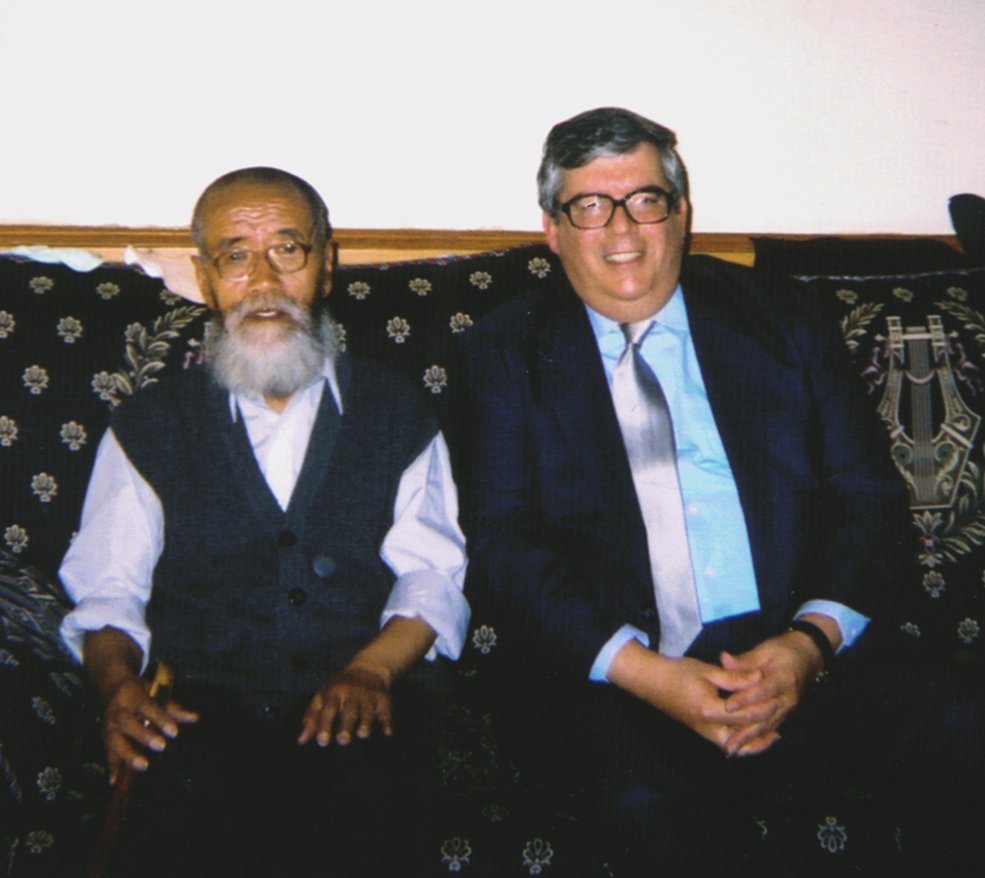
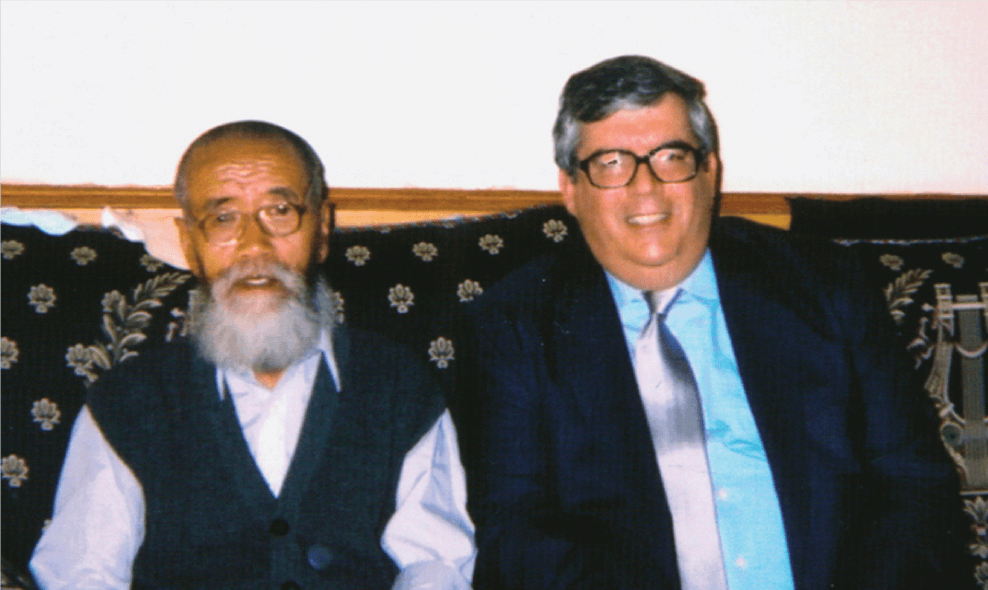
    China’s longest serving political prisoner, Jigme Sangpo, and John Kamm. Tibet 2002.

    In the aftermath of 9/11, Chinese President Jiang Zemin resolved to use the attacks to fundamentally improve relations with the United States. In doing so he ignored Vladimir Putin’s entreaties and the advice of several close aides to distance China from the United States. The principal goal of Jiang’s strategic move was to drive a wedge between Taiwan, then headed by Chen Shuibian, and the United States, led by George W. Bush. Shortly after taking office President Bush had pledged to do whatever it would take—perhaps including the use of nuclear weapons—to help Taiwan defend itself.

    Li Zhaoxing, Foreign Minister in 2003. Image: People.com.cn

    Jiang sought the advice of his soon-to-be-appointed foreign minister Li Zhaoxing who had recently returned to Beijing from Washington D.C. where he served as China’s ambassador to the United States. Li was impressed by how deeply members of Congress cared about the welfare of China’s political prisoners. Concern for one prisoner in particular, Ngawang Choephel, an ethnomusicologist who had studied at Vermont’s Middlebury College, made a big impact on the ambassador. Citing China’s treatment of Ngawang, then serving an 18-year sentence for espionage, Senator Jim Jeffords, a pro-trade Republican representing Vermont, had voted against renewing China’s Most Favored Nation (MFN) trading status.

    As part of the effort to improve relations with the United States, Jiang Zemin decided to start releasing high-profile political prisoners.

    Who to Release?

    By the end of 2001, I had been intervening on behalf of political prisoners for more than 10 years and had helped around 250 prisoners gain early release (according to a rough count by The Sunday New York Times Magazine for a 2002 profile on me). My greatest assets in these efforts were skills and relationships developed over a 25-year business career in China. Once the decision was made to release political prisoners, China’s leadership turned to me for advice and assistance regarding who should be released.

    We agreed that the first to be released should be Ngawang Choephel. On January 20, 2002, he was released on medical parole from De Yang Prison in Sichuan Province and flown to the United States.

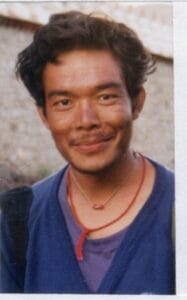
    Ngawang Choephel, released in January 2002. Image: tradartsteam.co.uk

    As anticipated, the reaction in Washington was positive.

    In March, 2002 I flew to Beijing for discussions on prisoner releases. My interlocutor was a member of a five-man group of senior officials headed by Jiang Zemin that was responsible for determining which prisoners would be released, when, and by what means. It was decided that medical parole was the best option since prison authorities could grant it without having to go through a court. I suggested releasing the elderly Tibetan schoolteacher Takna Jigme Sangpo who was believed to be the longest serving prisoner convicted of counterrevolution. (His sentence had been extended twice for staging protests in Drapchi Prison.)

    For Tibetans living overseas, gaining Jigme Sangpo’s release was a high priority. Every China-related human rights group, including those that focused on Tibet, had lobbied hard for his release; my foundation and I had included his name on numerous prisoner lists submitted to Beijing and, in August 2001, just weeks before the 9/11 attacks, Tenzin Gyatso, the 14th Dalai Lama, had urged a group of leading business leaders, celebrities, and athletes, who had convened in Los Angeles, to press for Jigme Sangpo’s release.

    Negotiations

    Shortly after I arrived in Beijing on March 10, 2002, detailed negotiations began. At my first meeting with my interlocutor, I was told that Jigme Sangpo did not want to leave prison where he was highly respected and looked after by his fellow prisoners. (I’d heard the same thing from Congressman Tom Lantos who had received a letter from the Chinese embassy in Washington DC to that effect.) When I said that I found it hard to believe that the elderly Tibetan preferred to remain incarcerated, my host offered to make arrangements for me to go to Drapchi Prison, on the outskirts of Lhasa, so that I could ask him myself.

    Naturally, I was eager to meet Jigme Sangpo, but not in prison. In the past, he had staged protests when foreigners—notably the Swiss ambassador—visited Drapchi. In each case, the resulting punishment was harsh and added many years to his prison term. Despite assurances that, whatever happened, the Tibetan prisoner would not be mistreated, I held firm. I suggested that Jigme Sangpo be granted medical parole and placed in a monastery, a hospital, or in the house of a relative.

    Discussions were put on hold and resumed two days later. No monastery or hospital would shelter the elderly teacher, fearing the consequences of a huge security presence. Likewise, no relatives dared take him in. Having heard that Jigme Sangpo had a niece living in Lhasa who was a Communist Party cadre, I suggested that she be ordered to temporarily house her uncle; surely, as a loyal party member, she’d be willing to do so.

    That did the trick. Details of Jigme Sangpo’s release and my visit to Lhasa were hammered out. I asked for permission to bring my own translator (I speak passable Chinese, no Tibetan.), which was denied—the explanation being that, as a teacher, Jigme Sangpo would know at least some Mandarin. I also asked to visit the U.S. consulate in Chengdu before or after my visit to Lhasa. (In those days, all flights to Lhasa from Beijing passed through the Sichuan capital.) This was also denied. However, the Chinese government placed no restrictions on Jigme Sangpo’s eventual choice of foreign residence. (Switzerland, with its large Tibetan population, had expressed an interest in hosting the Tibetan prisoner.) Its only condition was that he fly to the United States first.

    Before the meeting broke up, we agreed that I would return to Beijing in two months, then fly to Lhasa with an official from the Ministry of Foreign Affairs to meet Jigme Sangpo.

    Two weeks later, on April 1 at 1 AM, as I drove from Orlando to Port Saint Lucie, Florida to visit my ailing mother, I received the news on my cellphone that Takna Jigme Sangpo had been released from prison on medical parole on March 31, 2002. His niece had taken him in.

    Getting to Lhasa

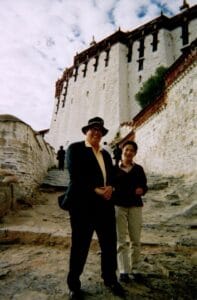
    Visiting the Potala with a TAR official.

    Before returning to China in June, I prepared for my trip to Lhasa by buying a disposable camera and a bottle of Jack Daniel’s (for medicinal purposes!). I also needed a picture of Jigme Sangpo, whom I’d never laid eyes on. Without it, how could I be sure I was meeting the right man? By then I was working with Tibetans living abroad, one of whom sent me a photograph taken in Jigme Sangpo’s cell at Drapchi Prison. It pictured the elderly prisoner sporting a long white beard, huddled in a corner. Because of his deteriorating eyesight, he wore his glasses at a tilt.

    I also wanted to confirm with a relative of Jigme Sangpo living in Washington that the Tibetan could indeed communicate in Chinese. And, I needed confirmation of the Swiss government’s willingness to care for him. Unlike the American government, which typically does not give financial support to political prisoners admitted into the country, Switzerland provides a generous monthly stipend. The country is home to a large Tibetan community, and houses a place of worship and study in the small village of Rikon on the outskirts of Zurich.

    On June 6, I arrived in Beijing. Over the next nine days I had three meetings with my interlocutor and his deputy and was introduced to my traveling companion, a third secretary in the Ministry of Foreign Affairs. I met with senior officials of the Ministry of Justice and the Supreme Court, as well as diplomats of the American and Swiss embassies.

    On June 16, my companion and I flew to Lhasa via Chengdu. Late that afternoon we arrived at Gonggar Airport and found no one there to greet us. This was my first taste of the hospitality of my Tibetan government hosts, who clearly wanted nothing to do with me. Gonggar Airport is almost 100 kilometers from Lhasa. My companion found a phone and organized a car to come get us. More than two hours later we arrived at the Lhasa Hotel where an official from the Tibet Autonomous Region’s (TAR) Foreign Affairs Bureau met us. He placed khatas around our necks and briefly went over the program. There was no invitation to dinner.

    The next day a car came to fetch us and take us to the office of the Foreign Affairs Bureau for a 9:30 AM meeting. In attendance were officials from the TAR Political and Legal Committee of the Communist Party, the TAR Prison Administration Bureau, the Foreign Affairs Bureau, and the Lhasa Public Security Bureau (PSB) which was responsible for monitoring Jigme Sangpo’s medical parole.

    I began by asking if the hosting officials would like to say a few words of welcome, but they all declined. For my opening question, I asked if a foreigner had ever been allowed to interview a prisoner on medical parole, to which the PSB official answered no. When I asked if they knew whether or not Jigme Sangpo would like to go abroad for medical treatment, they said I could ask him myself.

    I was then advised that medical parole is granted for an initial period of six months, after which the parolee’s condition is reviewed. If the parolee is deemed not seriously ill, he or she is returned to prison to serve the remainder of his or her term. It was clear to me that this is what TAR officials intended to do.

    After the meeting I was taken on a tour of the city’s notable sites. When I thanked the official accompanying me, I was told very pointedly that the Ministry of Foreign Affairs had paid for the tour, not the TAR government; thanks weren’t necessary.

    The Meeting

    On the afternoon of June 17, 2002, my companion and I were driven to the home of Jigme Sangpo’s niece. As we approached, I noticed an iron chain across the road leading into the residential compound and security was everywhere, with armed police on the rooftops and a PSB guard post near the front door. As we entered, the niece stuck out her tongue in the traditional Tibetan greeting. We went into a room that was filled with officials and uniformed and plain clothes police, and I was told to take a seat on a couch against the wall, directly in front of the audience.

    Then Jigme Sangpo was led into the room. Wearing his glasses at a tilt, he matched his photo. This was the frail old man for whom so much security had been laid on. He sat down next to me on the couch.

    I immediately asked him if he spoke Chinese, to which he shook his head no. I didn’t know how to proceed. How could I be sure that my questions and Jigme Sangpo’s answers were rendered accurately? Then a young woman in the room stepped forward and volunteered to translate. The atmosphere was tense and there was an air of displeasure within the group.

    With no time for pleasantries, I asked Jigme Sangpo about his health and whether he wished to seek treatment abroad. Though he suffered from multiple ailments and hoped to go to the U.S. for treatment, he’d been told that approval would only be granted if he promised never to return to Tibet. “This,” he said, “I am not willing to do.”

    At this point the interview came to an abrupt halt. Guards came in and, as they took Jigme Sangpo away, he broke loose and put his head on my chest. There were tears in his eyes. Addressing the room, I said that I had been told Jigme Sangpo did not want to leave prison; now that I knew the truth, I planned to return to Beijing and work with the central government to arrange Jigme Sangpo’s travel to the United States for medical treatment.

    With that, I got up to leave. Waiting outside was the director of the public security bureau who asked me what Jigme Sangpo had said. When I told her that he wanted to go to the U.S., and that I was going to make it happen, she blurted “You can’t do that! He’s old. He needs to be taken care of.” I told her that she and her colleagues had been taking care of him for long enough, and that now it was someone else’s turn.

    Leaving Lhasa

    That night I shared a simple meal with my traveling companion in the hotel coffee shop. After our yak burgers arrived, she told me that her colleagues at the Ministry of Foreign Affairs were jealous that she had gotten to accompany me on this historic trip. She continued: “We debate among ourselves why you chose to give up your business career to do this kind of work, to travel so far to help an old Tibetan you’ve never even met.” I asked her what she thought, and I appreciated her answer: “We think that you believe there are more important things in life than making money.”

    On July 13, 2002, one month after my meeting with Jigme Sangpo in Lhasa, the elderly Tibetan boarded United Flight 850 in Beijing, bound for Chicago. Accompanied by an officer of the American Embassy, he arrived in Chicago that afternoon (local time) and immediately flew to Washington, where he took up residence in the home of a relative. Tibetans around the world celebrated.

    Aftermath

    Jigme Sangpo eventually settled in Rikon, Switzerland, where I have visited him on several occasions and where my youngest son Rene spent several weeks with him in the summer of 2010. He has thanked me on behalf of Tibetan and Han prisoners. This kind and gentle man bears no ill will against Han Chinese.

    Ever since Jigme Sangpo’s release, Tibetans around the world have gone out of their way to express their gratitude. On one occasion, I was hosted to a fine meal and plenty of drink in London by a former prisoner who was in Drapchi Prison when Jigme Sangpo was there. He told me this story:

    Rene Kamm with Jigme Sangpo in Rikon, Fall 2014.
    Image: Jakob Hochendoner

    “On socialist education days in the prison, we were gathered together to hear speeches by the wardens. Seated on a stool was Jigme Sangpo. The warden would tell us: ‘If you want to get out of here, you will admit guilt, accept reform, obey all instructions, and perform manual labor. If you do so to our satisfaction you will be released. On the other hand, if you’re like this old fox (Jigme Sangpo) and don’t accept reform and admit guilt, you will never get out of here. The only way Jigme Sangpo will leave Drapchi is in a box.”

    My drinking companion finished up by saying that, with Jigme Sangpo’s release, every prisoner in Drapchi experienced a great sense of joy, of hope, knowing that if the Chinese government could free him, they could free anybody. In the following months, the Chinese government granted early release to a number of Tibetan political prisoners, including Ngawang Sangdrol and Phuntsog Nyidron, leaders of the Singing Nuns of Drapchi.
  • To Lhasa for Jigme Sangpo

    To Lhasa for Jigme Sangpo

    << Read all John Kamm Remembers stories

    China’s longest serving political prisoner, Jigme Sangpo, and John Kamm. Tibet 2002.

    In the aftermath of 9/11, Chinese President Jiang Zemin resolved to use the attacks to fundamentally improve relations with the United States. In doing so he ignored Vladimir Putin’s entreaties and the advice of several close aides to distance China from the United States. The principal goal of Jiang’s strategic move was to drive a wedge between Taiwan, then headed by Chen Shuibian, and the United States, led by George W. Bush. Shortly after taking office President Bush had pledged to do whatever it would take—perhaps including the use of nuclear weapons—to help Taiwan defend itself.

    Jiang sought the advice of his soon-to-be-appointed foreign minister Li Zhaoxing who had recently returned to Beijing from Washington D.C. where he served as China’s ambassador to the United States. Li was impressed by how deeply members of Congress cared about the welfare of China’s political prisoners. Concern for one prisoner in particular, Ngawang Choephel, an ethnomusicologist who had studied at Vermont’s Middlebury College, made a big impact on the ambassador. Citing China’s treatment of Ngawang, then serving an 18-year sentence for espionage, Senator Jim Jeffords, a pro-trade Republican representing Vermont, had voted against renewing China’s Most Favored Nation (MFN) trading status.

    As part of the effort to improve relations with the United States, Jiang Zemin decided to start releasing high-profile political prisoners.

    Who to Release?


    Ngawang Choephel, released in January 2002. Image: tradartsteam.co.uk

    By the end of 2001, I had been intervening on behalf of political prisoners for more than 10 years and had helped around 250 prisoners gain early release (according to a rough count by The Sunday New York Times Magazine for a 2002 profile on me). My greatest assets in these efforts were skills and relationships developed over a 25-year business career in China. Once the decision was made to release political prisoners, China’s leadership turned to me for advice and assistance regarding who should be released.

    We agreed that the first to be released should be Ngawang Choephel. On January 20, 2002, he was released on medical parole from De Yang Prison in Sichuan Province and flown to the United States.

    As anticipated, the reaction in Washington was positive.

    In March, 2002 I flew to Beijing for discussions on prisoner releases. My interlocutor was a member of a five-man group of senior officials headed by Jiang Zemin that was responsible for determining which prisoners would be released, when, and by what means. It was decided that medical parole was the best option since prison authorities could grant it without having to go through a court. I suggested releasing the elderly Tibetan schoolteacher Takna Jigme Sangpo who was believed to be the longest serving prisoner convicted of counterrevolution. (His sentence had been extended twice for staging protests in Drapchi Prison.)

    For Tibetans living overseas, gaining Jigme Sangpo’s release was a high priority. Every China-related human rights group, including those that focused on Tibet, had lobbied hard for his release; my foundation and I had included his name on numerous prisoner lists submitted to Beijing and, in August 2001, just weeks before the 9/11 attacks, Tenzin Gyatso, the 14th Dalai Lama, had urged a group of leading business leaders, celebrities, and athletes, who had convened in Los Angeles, to press for Jigme Sangpo’s release.

    Negotiations

    Shortly after I arrived in Beijing on March 10, 2002, detailed negotiations began. At my first meeting with my interlocutor, I was told that Jigme Sangpo did not want to leave prison where he was highly respected and looked after by his fellow prisoners. (I’d heard the same thing from Congressman Tom Lantos who had received a letter from the Chinese embassy in Washington DC to that effect.) When I said that I found it hard to believe that the elderly Tibetan preferred to remain incarcerated, my host offered to make arrangements for me to go to Drapchi Prison, on the outskirts of Lhasa, so that I could ask him myself.

    Naturally, I was eager to meet Jigme Sangpo, but not in prison. In the past, he had staged protests when foreigners—notably the Swiss ambassador—visited Drapchi. In each case, the resulting punishment was harsh and added many years to his prison term. Despite assurances that, whatever happened, the Tibetan prisoner would not be mistreated, I held firm. I suggested that Jigme Sangpo be granted medical parole and placed in a monastery, a hospital, or in the house of a relative.

    Discussions were put on hold and resumed two days later. No monastery or hospital would shelter the elderly teacher, fearing the consequences of a huge security presence. Likewise, no relatives dared take him in. Having heard that Jigme Sangpo had a niece living in Lhasa who was a Communist Party cadre, I suggested that she be ordered to temporarily house her uncle; surely, as a loyal party member, she’d be willing to do so.

    That did the trick. Details of Jigme Sangpo’s release and my visit to Lhasa were hammered out. I asked for permission to bring my own translator (I speak passable Chinese, no Tibetan.), which was denied—the explanation being that, as a teacher, Jigme Sangpo would know at least some Mandarin. I also asked to visit the U.S. consulate in Chengdu before or after my visit to Lhasa. (In those days, all flights to Lhasa from Beijing passed through the Sichuan capital.) This was also denied. However, the Chinese government placed no restrictions on Jigme Sangpo’s eventual choice of foreign residence. (Switzerland, with its large Tibetan population, had expressed an interest in hosting the Tibetan prisoner.) Its only condition was that he fly to the United States first.

    Before the meeting broke up, we agreed that I would return to Beijing in two months, then fly to Lhasa with an official from the Ministry of Foreign Affairs to meet Jigme Sangpo.

    Two weeks later, on April 1 at 1 AM, as I drove from Orlando to Port Saint Lucie, Florida to visit my ailing mother, I received the news on my cellphone that Takna Jigme Sangpo had been released from prison on medical parole on March 31, 2002. His niece had taken him in.

    Getting to Lhasa

    Before returning to China in June, I prepared for my trip to Lhasa by buying a disposable camera and a bottle of Jack Daniel’s (for medicinal purposes!). I also needed a picture of Jigme Sangpo, whom I’d never laid eyes on. Without it, how could I be sure I was meeting the right man? By then I was working with Tibetans living abroad, one of whom sent me a photograph taken in Jigme Sangpo’s cell at Drapchi Prison. It pictured the elderly prisoner sporting a long white beard, huddled in a corner. Because of his deteriorating eyesight, he wore his glasses at a tilt.

    I also wanted to confirm with a relative of Jigme Sangpo living in Washington that the Tibetan could indeed communicate in Chinese. And, I needed confirmation of the Swiss government’s willingness to care for him. Unlike the American government, which typically does not give financial support to political prisoners admitted into the country, Switzerland provides a generous monthly stipend. The country is home to a large Tibetan community, and houses a place of worship and study in the small village of Rikon on the outskirts of Zurich.

    On June 6, I arrived in Beijing. Over the next nine days I had three meetings with my interlocutor and his deputy and was introduced to my traveling companion, a third secretary in the Ministry of Foreign Affairs. I met with senior officials of the Ministry of Justice and the Supreme Court, as well as diplomats of the American and Swiss embassies.


    Visiting the Potala with a TAR official.

    On June 16, my companion and I flew to Lhasa via Chengdu. Late that afternoon we arrived at Gonggar Airport and found no one there to greet us. This was my first taste of the hospitality of my Tibetan government hosts, who clearly wanted nothing to do with me. Gonggar Airport is almost 100 kilometers from Lhasa. My companion found a phone and organized a car to come get us. More than two hours later we arrived at the Lhasa Hotel where an official from the Tibet Autonomous Region’s (TAR) Foreign Affairs Bureau met us. He placed khatas around our necks and briefly went over the program. There was no invitation to dinner.

    The next day a car came to fetch us and take us to the office of the Foreign Affairs Bureau for a 9:30 AM meeting. In attendance were officials from the TAR Political and Legal Committee of the Communist Party, the TAR Prison Administration Bureau, the Foreign Affairs Bureau, and the Lhasa Public Security Bureau (PSB) which was responsible for monitoring Jigme Sangpo’s medical parole.

    I began by asking if the hosting officials would like to say a few words of welcome, but they all declined. For my opening question, I asked if a foreigner had ever been allowed to interview a prisoner on medical parole, to which the PSB official answered no. When I asked if they knew whether or not Jigme Sangpo would like to go abroad for medical treatment, they said I could ask him myself.

    I was then advised that medical parole is granted for an initial period of six months, after which the parolee’s condition is reviewed. If the parolee is deemed not seriously ill, he or she is returned to prison to serve the remainder of his or her term. It was clear to me that this is what TAR officials intended to do.

    After the meeting I was taken on a tour of the city’s notable sites. When I thanked the official accompanying me, I was told very pointedly that the Ministry of Foreign Affairs had paid for the tour, not the TAR government; thanks weren’t necessary.

    The Meeting

    On the afternoon of June 17, 2002, my companion and I were driven to the home of Jigme Sangpo’s niece. As we approached, I noticed an iron chain across the road leading into the residential compound and security was everywhere, with armed police on the rooftops and a PSB guard post near the front door. As we entered, the niece stuck out her tongue in the traditional Tibetan greeting. We went into a room that was filled with officials and uniformed and plain clothes police, and I was told to take a seat on a couch against the wall, directly in front of the audience.

    Then Jigme Sangpo was led into the room. Wearing his glasses at a tilt, he matched his photo. This was the frail old man for whom so much security had been laid on. He sat down next to me on the couch.

    I immediately asked him if he spoke Chinese, to which he shook his head no. I didn’t know how to proceed. How could I be sure that my questions and Jigme Sangpo’s answers were rendered accurately? Then a young woman in the room stepped forward and volunteered to translate. The atmosphere was tense and there was an air of displeasure within the group.

    With no time for pleasantries, I asked Jigme Sangpo about his health and whether he wished to seek treatment abroad. Though he suffered from multiple ailments and hoped to go to the U.S. for treatment, he’d been told that approval would only be granted if he promised never to return to Tibet. “This,” he said, “I am not willing to do.”

    At this point the interview came to an abrupt halt. Guards came in and, as they took Jigme Sangpo away, he broke loose and put his head on my chest. There were tears in his eyes. Addressing the room, I said that I had been told Jigme Sangpo did not want to leave prison; now that I knew the truth, I planned to return to Beijing and work with the central government to arrange Jigme Sangpo’s travel to the United States for medical treatment.

    With that, I got up to leave. Waiting outside was the director of the public security bureau who asked me what Jigme Sangpo had said. When I told her that he wanted to go to the U.S., and that I was going to make it happen, she blurted “You can’t do that! He’s old. He needs to be taken care of.” I told her that she and her colleagues had been taking care of him for long enough, and that now it was someone else’s turn.

    Leaving Lhasa

    That night I shared a simple meal with my traveling companion in the hotel coffee shop. After our yak burgers arrived, she told me that her colleagues at the Ministry of Foreign Affairs were jealous that she had gotten to accompany me on this historic trip. She continued: “We debate among ourselves why you chose to give up your business career to do this kind of work, to travel so far to help an old Tibetan you’ve never even met.” I asked her what she thought, and I appreciated her answer: “We think that you believe there are more important things in life than making money.”

    On July 13, 2002, one month after my meeting with Jigme Sangpo in Lhasa, the elderly Tibetan boarded United Flight 850 in Beijing, bound for Chicago. Accompanied by an officer of the American Embassy, he arrived in Chicago that afternoon (local time) and immediately flew to Washington, where he took up residence in the home of a relative. Tibetans around the world celebrated.

    Aftermath


    Rene Kamm with Jigme Sangpo in Rikon, Fall 2014.  Image: Jakob Hochendoner

    Jigme Sangpo eventually settled in Rikon, Switzerland, where I have visited him on several occasions and where my youngest son Rene spent several weeks with him in the summer of 2010. He has thanked me on behalf of Tibetan and Han prisoners. This kind and gentle man bears no ill will against Han Chinese.

    Ever since Jigme Sangpo’s release, Tibetans around the world have gone out of their way to express their gratitude. On one occasion, I was hosted to a fine meal and plenty of drink in London by a former prisoner who was in Drapchi Prison when Jigme Sangpo was there. He told me this story:

    “On socialist education days in the prison, we were gathered together to hear speeches by the wardens. Seated on a stool was Jigme Sangpo. The warden would tell us: ‘If you want to get out of here, you will admit guilt, accept reform, obey all instructions, and perform manual labor. If you do so to our satisfaction you will be released. On the other hand, if you’re like this old fox (Jigme Sangpo) and don’t accept reform and admit guilt, you will never get out of here. The only way Jigme Sangpo will leave Drapchi is in a box.”

    My drinking companion finished up by saying that, “with Jigme Sangpo’s release, every prisoner in Drapchi experienced a great sense of joy, of hope, knowing that if the Chinese government could free him, they could free anybody.” In the following months, the Chinese government granted early release to a number of Tibetan political prisoners, including Ngawang Sangdrol and Phuntsog Nyidron, leaders of the Singing Nuns of Drapchi.

    Listen to the Encounters with China podcast.

    Subscribe to receive notifications about new episodes. 

    Read all John Kamm Remembers stories.


  • Dui Hua Digest, December 2016

    EVENTS

    The Palais Wilson, headquarters of the Office of the United Nations High Commissioner for Human Rights in Geneva, Switzerland. Photo credit: Newsflash.org

    After Trip to China, Kamm Visits Europe

    After spending three weeks in Hong Kong and Beijing, Dui Hua executive director John Kamm arrived in Geneva, Switzerland on November 6, the start of a two week tour of Switzerland and Scandinavia. In addition to Geneva, he visited Stockholm, Oslo, and Copenhagen. In Geneva, he met with senior officers and staff of the Office of the High Commissioner for Human Rights (OHCHR), more than a dozen diplomats posted to missions in Geneva who the activities of the Human Rights Council including the ambassadors of China and the United States, and ranking staff of treaty bodies and international humanitarian organizations. In Scandinavia Kamm met with leaders of the respective countries’ ministries of foreign affairs as well as senior staff of non-governmental organizations.

    Two days after arriving in Geneva, Donald Trump scored a shocking upset victory over Hillary Clinton to become the 45th president of the United States. Trump’s election was the main topic of conversation in virtually every meeting Kamm held on his swing through Europe. Officials and diplomats in Geneva were especially concerned over what President-elect Trump’s election might portend for America’s traditional support for promoting democracy and human rights. Many recalled that Mr. Trump had praised the Chinese government for the strength it had shown in putting down the 1989 worker and student protests in Beijing, and wondered how his statements about America crushing “radical Islamic terrorism” would translate into policy. Worries were also expressed about the fate of the Iran nuclear deal and the Paris climate change accord, both of which Trump had attacked during the acrimonious election campaign.

    A few weeks before Kamm arrived in Geneva, the Martin Ennals Prize was awarded to a prominent Uighur prisoner, Ilham Tohti, currently serving a life sentence in China for splittism. While the prize is awarded by a group of 12 human rights organizations, the award ceremony is held in Geneva and the high commissioner for human rights traditionally presents the award. This year High Commissioner Zeid bin Ra’ad al-Hussein presented the award to Ilham Tohti’s daughter. The reaction from the Chinese government was furious. It denounced Zeid’s presentation of the award as a violation of the United Nations Charter and declared, in effect, a complete severance of relations between China’s Mission in Geneva and the OHCHR. There would be no more high level meetings nor would the High Commissioner or his deputy be welcome to visit China. Financial support for the work of the OHCHR would be terminated.

    Another topic of conversation was recent developments in Beijing and Hong Kong. All agreed that Xi Jinping’s recent elevation to the “Core” of China’s Communist Party marked a further consolidation of the Chinese leader’s power in the run-up to the 19th Party Congress at the end of 2017. Many expressed surprise that the Standing Committee of China’s National People’s Congress had issued an interpretation of the Basic Law article on oath taking while the issue was still before the courts in Hong Kong.

    Kamm briefed his hosts in each of the four countries he visited on his recent meetings in Beijing. There was special interest in the agreement between Dui Hua and the Office of Juvenile Courts of the Supreme People’s Court’s Research Department to hold a program on juvenile justice after the foreign NGO Management Law takes effect on January 1, 2017. This program appears to be the first agreed to under the “temporary activity permit” provisions of the new law. No one with whom Kamm spoke knew of any NGOs that had identified a Professional Supervisory Unit (PSU) through which to register a permanent presence. The list of PSUs was scheduled to be issued by China’s Ministry of Public Security by the end of October. It had failed to do so by November 19, the date Kamm returned to San Francisco.

    Annual Friends of Dui Hua Holiday Party

    On December 8th, the annual Friends of Dui Hua Holiday Party took place at the Presidio Golf and Concordia Club. More than 60 supporters, Directors and staff of Dui Hua attended the Event. Executive Director John Kamm reviewed our developments in 2016, as well as challenges and plans ahead for 2017.

    PRISONER CASES

    Former Legal Daily journalist Qi Chonghuai (齐崇淮) was granted his first one-year sentence reduction in 2014, according to an official document Dui Hua recently acquired, and is scheduled for release from Shandong’s Luning Prison on June 25, 2018. Believed to have been retaliated against for his investigative work publishing photos of the opulent Tengzhou City government building, a poor county back then, Qi has been incarcerated for nine years since his detention in June 2007. He was first sentenced to four years’ imprisonment for extortion in May 2008. Two weeks before his release in June 2011, the Tengzhou City People’s Court “retried” him based on allegedly new evidence and sentenced him to an additional eight years’ imprisonment.

    PUBLICATIONS ROUND-UP

    Featured: Is Life Without Parole a Signal of China’s Will to Reduce Executions? (November 30)

    High ranking officials Bai Enpei (left) and Wei Pengyuan (right) sentenced to life without parole for extreme corruption charges. Image credit: Comm News and Caixin.

    Former high-ranking officials Bai Enpei and Wei Pengyuan have become the first individuals in China sentenced to life in prison without the possibility of a sentence reduction or parole (“life without parole,” or LWOP). The sentences for Bai and Wei were made possible by last year’s amendments to the PRC Criminal Law, which included a new provision that authorizes judges to issue LWOP along with suspended death sentences in extremely serious corruption cases.

    Featured: The Case of Feng Zhiming: A Question of Accountability (November 8)

    Previous Digest: November 2016

    ROOTS

    A Victory for Rights Diplomacy: Xi Yang Released Eight Years Early

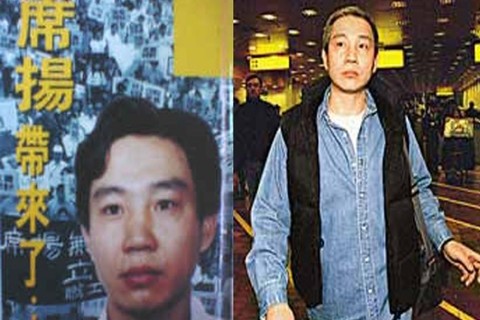
    Journalist Xi Yang convicted for “stealing state secrets” hk.apple.nextmedia.com

    On September 23, 1993, journalist Xi Yang, a reporter for the Hong Kong daily Ming Pao was detained on suspicion of “stealing state secrets.” His detention took place in Beijing shortly after the funeral for his mother, a senior cadre working for the Xinhua News Agency. Xi was tried and convicted on March 28, 1994. He was sentenced to 12 years in prison with two-year subsequent deprivation of political rights.

    The state secrets that Xi allegedly stole concerned unpublicized interest rate adjustments made by the People’s Bank of China and China’s international gold transactions. The information was allegedly provided by a PBOC official who was given a 15-year prison sentence.

    The detention of Xi caused an uproar in Hong Kong, which was still recovering from the shock of the suppression of pro-democracy demonstrations in Beijing in June 1989, and which eyed with growing apprehension that scheduled hand over of the colony to China on July 1, 1997, less than four years after Xi’s detention. Politicians from all political parties joined in calling for Beijing to provide an explanation. Large protests demanding Xi’s release took place.

    American businessman John Kamm added Xi’s name to his prisoner lists. He met frequently with Xi’s family in Hong Kong and Beijing.

    On February 9, 1996, Kamm met with Xi’s sister in Hong Kong. The businessman had picked up a rumor that the real reason that Xi was detained had little to do with his acquiring secrets related to interest rate adjustments and gold transactions, but rather concerned articles on Li Peng’s health that had appeared in Ming Pao. The Chinese premier had been hospitalized for a heart condition in April 1993, and though he was healthy enough to be seen in public again by late summer, his illness had touched off speculation about his political future.

    Xi’s sister confirmed that the Hong Kong journalist had in fact obtained information on Li Peng’s heart attack. Xi’s mother was in the same hospital for senior cadres as Li Peng, albeit in a different ward. Li’s doctor was also Xi’s mother’s doctor, and he shared information with the Xi family when they visited her. Xi relayed the information to Ming Pao which, based on the information, published an article confirming the premier had indeed suffered a heart attack, but that it was mild and not life-threatening. Li was furious that private information on his health had been leaked and published in a Hong Kong newspaper. The doctor who gave the information to Xi Yang was given a two-year prison sentence.

    Following the Taiwan crisis in 1995 – a crisis which saw China launch numerous missiles in the direction of Taiwan and the United States dispatch two carrier groups to the area – Washington and Beijing began looking for ways to mend the relationship. Robert Suettinger, then China Director of the National Security Council, was determined that human rights remain at the center of US-China relations. Over a period of several months starting in March 1996, Suettinger and Kamm worked together to assemble a list of eight “illustrative cases” of Chinese political prisoners. Knowing that Li Peng would play a central role in any rapprochement with the United States, Kamm made sure that Xi’s name was on the eight-name list.

    The list was handed over to the Chinese government by National Security Adviser Tony Lake on his visit to Beijing in June 1996. There was no immediate response from Chinese officials with whom Lake met, but separately, a Ministry of Foreign Affairs official hinted to Kamm that Xi might be released as part of the 10th anniversary of Hong Kong’s reversion to China in July 1997.

    In August 1996, NSC Director Suettinger came up with an idea that he shared with Kamm. In return for releasing prisoners on the list handed over by Lake in June, as well as taking other steps including signing and ratifying the two United Nations human rights covenants and allowing visits to prisons by the International Committee of the Red Cross, the United States would drop its sponsorship of a “China resolution” at the Human Rights Commission’s meeting in Geneva to take place in March 1997.

    Suettinger’s proposal was presented during the visit of State Department official Jim Steinberg to Beijing in October 1996, and presented again during the November 1996 visit to Beijing of Secretary of State Warren Christopher. Christopher went over the package with senior Chinese officials, including Li Peng. The Chinese showed interest in pursuing the Suettinger initiative.

    On January 25, 1997, Xi Yang was released on parole from Beijing Number Two Prison. Despite his deprivation of political rights sentence, Xi was allowed to return to Hong Kong. In a communication from the Ministry of Justice to Kamm, the reason for Xi’s release – more than eight years before the end of his sentence – was that Xi had acknowledged his guilt and demonstrated a willingness to reform.

    Xi’s release proved to be “too little, too late.” The United States again sponsored a China resolution at the Human Rights Commission in Geneva in March 1997, and the resolution was again soundly defeated by China and its allies. But it provides a striking example of how human rights diplomacy can win the release of political prisoners.

  • A Victory for Rights Diplomacy:  Xi Yang Released Eight Years Early

    A Victory for Rights Diplomacy: Xi Yang Released Eight Years Early

    << Read all John Kamm Remembers stories

    On September 23, 1993, journalist Xi Yang, a reporter for the Hong Kong daily Ming Pao was detained on suspicion of “stealing state secrets.” His detention took place in Beijing shortly after the funeral for his mother, a senior cadre working for the Xinhua News Agency. Xi was tried and convicted on March 28, 1994. He was sentenced to 12 years in prison with two-year subsequent deprivation of political rights.

    The state secrets that Xi allegedly stole concerned unpublicized interest rate adjustments made by the People’s Bank of China and China’s international gold transactions. The information was allegedly provided by a PBOC official who was given a 15-year prison sentence.

    The detention of Xi caused an uproar in Hong Kong, which was still recovering from the shock of the suppression of pro-democracy demonstrations in Beijing in June 1989, and which eyed with growing apprehension that scheduled hand over of the colony to China on July 1, 1997, less than four years after Xi’s detention. Politicians from all political parties joined in calling for Beijing to provide an explanation. Large protests demanding Xi’s release took place.

    American businessman John Kamm added Xi’s name to his prisoner lists. He met frequently with Xi’s family in Hong Kong and Beijing.

    On February 9, 1996, Kamm met with Xi’s sister in Hong Kong. The businessman had picked up a rumor that the real reason that Xi was detained had little to do with his acquiring secrets related to interest rate adjustments and gold transactions, but rather concerned articles on Li Peng’s health that had appeared in Ming Pao. The Chinese premier had been hospitalized for a heart condition in April 1993, and though he was healthy enough to be seen in public again by late summer, his illness had touched off speculation about his political future.

    Xi’s sister confirmed that the Hong Kong journalist had in fact obtained information on Li Peng’s heart attack. Xi’s mother was in the same hospital for senior cadres as Li Peng, albeit in a different ward. Li’s doctor was also Xi’s mother’s doctor, and he shared information with the Xi family when they visited her. Xi relayed the information to Ming Pao which, based on the information, published an article confirming the premier had indeed suffered a heart attack, but that it was mild and not life-threatening. Li was furious that private information on his health had been leaked and published in a Hong Kong newspaper. The doctor who gave the information to Xi Yang was given a two-year prison sentence.

    Following the Taiwan crisis in 1995 – a crisis which saw China launch numerous missiles in the direction of Taiwan and the United States dispatch two carrier groups to the area – Washington and Beijing began looking for ways to mend the relationship. Robert Suettinger, then China Director of the National Security Council, was determined that human rights remain at the center of US-China relations. Over a period of several months starting in March 1996, Suettinger and Kamm worked together to assemble a list of eight “illustrative cases” of Chinese political prisoners. Knowing that Li Peng would play a central role in any rapprochement with the United States, Kamm made sure that Xi’s name was on the eight-name list.

    The list was handed over to the Chinese government by National Security Adviser Tony Lake on his visit to Beijing in June 1996. There was no immediate response from Chinese officials with whom Lake met, but separately, a Ministry of Foreign Affairs official hinted to Kamm that Xi might be released as part of the 10th anniversary of Hong Kong’s reversion to China in July 1997.

    In August 1996, NSC Director Suettinger came up with an idea that he shared with Kamm. In return for releasing prisoners on the list handed over by Lake in June, as well as taking other steps including signing and ratifying the two United Nations human rights covenants and allowing visits to prisons by the International Committee of the Red Cross, the United States would drop its sponsorship of a “China resolution” at the Human Rights Commission’s meeting in Geneva to take place in March 1997.

    Suettinger’s proposal was presented during the visit of State Department official Jim Steinberg to Beijing in October 1996, and presented again during the November 1996 visit to Beijing of Secretary of State Warren Christopher. Christopher went over the package with senior Chinese officials, including Li Peng. The Chinese showed interest in pursuing the Suettinger initiative.

    On January 25, 1997, Xi Yang was released on parole from Beijing Number Two Prison. Despite his deprivation of political rights sentence, Xi was allowed to return to Hong Kong. In a communication from the Ministry of Justice to Kamm, the reason for Xi’s release – more than eight years before the end of his sentence – was that Xi had acknowledged his guilt and demonstrated a willingness to reform.

    Xi’s release proved to be “too little, too late.” The United States again sponsored a China resolution at the Human Rights Commission in Geneva in March 1997, and the resolution was again soundly defeated by China and its allies. But it provides a striking example of how human rights diplomacy can win the release of political prisoners.


    Listen to the Encounters with China podcast.

    Subscribe to receive notifications about new episodes. 

    Read all John Kamm Remembers stories.


  • China Tightens Clemency Rules for Political Prisoners

    China Tightens Clemency Rules for Political Prisoners

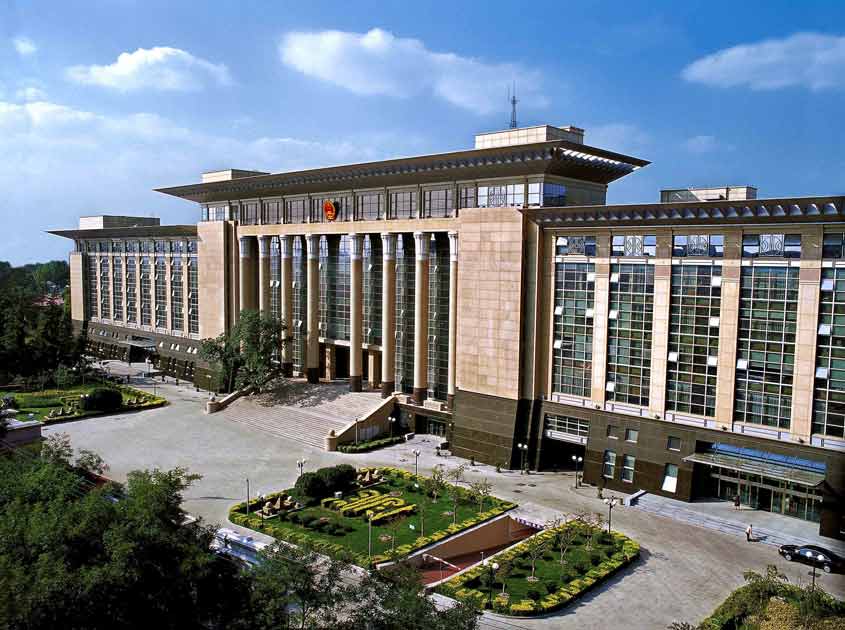
    Supreme People’s Court of China, Beijing. Image credit: WIPO Magazine

    On November 14th the Supreme People’s Court (SPC) published China’s most recent interpretation of the Criminal Law’s articles on sentence reduction and parole. The regulations, which take effect on January 1, 2017, will tighten rules for granting reduced sentences and parole to prisoners serving time for endangering state security (ESS) and other serious crimes including corruption. [1] They reflect a 2014 guiding opinion (指导意见) from the Communist Party’s Political and Legal Commission that mandated tougher rules for “three types” of crimes including bribery, financial fraud and organized crime—and they are considerably more detailed than the Court’s previous interpretation on sentence reduction and parole, issued in 2012.

    For decades, the SPC has issued regulations calling for “strict handling” of clemency for prisoners serving sentences for counterrevolution and (after 1997) ESS, a category of crimes that includes subversion, inciting subversion, splittism, and inciting splittism. However, until these latest regulations were issued, the court hadn’t defined “strict handling”, leaving it up to the provinces to decide what measures to apply to ESS prisoners in each jurisdiction. [2]

    Under the new regulations, “ordinary prisoners” sentenced to life in prison must wait two years before the sentence is commuted to a fixed term sentence of no less than 19 years. Thereafter, each ensuing sentence reduction can occur at a minimum interval of two years, and the length of the reduction is based on the prisoner’s behavior and whether the prisoner performs “meritorious service.” [3]

    The new regulations mandate that ESS prisoners like Ilham Tohti and Wang Bingzhang (王炳章) and other prisoners serving life sentences for serious crimes must wait a minimum of three years, rather than two, before the sentence is commuted to a term of no less than 20 years (as opposed to 19 for ordinary inmates). While each ensuing sentence reduction can occur at a minimum of a two-year interval, reductions for ESS prisoners cannot exceed one year. In the best-case scenario, if Ilham Tohti’s life sentence were commuted to a 20-year fixed term sentence in January 2017, it would be 2030 before his sentence would expire, and that would be only if all regulatory requirements for subsequent sentence reductions had been satisfied.

    Similarly, prisoners serving fixed term sentences of more than ten years under the new regulations are treated differently according to whether the crime is an ordinary crime or falls under one of the categories of serious crime (which includes ESS) as specified in the SPC regulations. Thus, an ordinary prisoner serving a 12-year sentence for robbery must wait a minimum of two years before being eligible for his or her first sentence reduction, and thereafter must wait at least eighteen months before being considered for subsequent reductions. The length of the reductions is largely at the discretion of the prison authorities, but cannot exceed two years.

    By contrast, while a prisoner serving a 12-year sentence for subversion, an ESS crime, must wait at least two years before the first sentence reduction (which is the same for ordinary prisoners) thereafter, he or she must wait more than eighteen months before being considered for a sentence reduction, and the sentence reduction cannot exceed one year.

    Three points are worth bearing in mind:

    1. The new regulations apply to everyone currently serving prison terms; in other words, existing sentences are not “grandfathered.” Dui Hua has documented many cases of prisoners serving long sentences for counterrevolution and endangering state security who have received generous sentence reductions that released them from prison many years before the expiration of their original sentences. (Hong Kong journalist Xi Yang , for example, served less than four years of a 12-year sentence for trafficking in state secrets.) The new regulations apply to prisoners whether their sentences were handed down before January 1, 2017 or after. Prior rules and practices will no longer apply.

    2. Provincial prison authorities will be able to impose stricter restrictions than those in the SPC regulations, but they may not impose laxer restrictions.

    3. Medical parole is not covered by the new regulations. Prisoners with serious illnesses can be released at any time with the approval of prison authorities and, for prominent political prisoners, approval by the Ministry of Justice in Beijing. (ESS prisoners who perform meritorious service can be granted clemency, but Dui Hua is not aware of a single example of an ESS prisoner getting a sentence reduction or parole in this manner.) Accordingly, as it has been for many years, medical parole remains the best hope for political prisoners seeking early release from prison.


    1. For sentences up to ten-years, serious crimes include graft; undermining financial order and committing security fraud; organizing, leading, participating in, harboring, or colluding with organized crime; endangering state security; terrorism; serious drug-related crimes; recidivism; refusing to fulfill financial judgment. For sentences of ten-years or more, serious crimes include the above, and murder, rape, robbery, kidnapping, arson, causing an explosion, releasing harmful materials, and organizing violent crimes.   Return to Article

    2. In the absence of a national standard as to what “strict handling” means, local authorities have been given broad discretion of interpretation and implementation. In December 2003, the Shanghai High People’s Court issued provisional rules stipulating that a sentence reduction for an ESS prisoner is normally up to one year shorter than that for other prisoners who satisfied the same conditions. The rules also stated that there must be an additional delay of one year before sentence reduction when a prisoner was eligible for “a normal commutation to a 20-year fixed-term sentence.” In 2009, the Yunnan Prison Management Bureau announced that sentence reductions for ESS prisoners would be three to six months shorter than those for other inmates under satisfying the same conditions. Restrictions on parole for ESS prisoners are also in force in other provinces and municipalities. In January 2005, Beijing issued a decision that required instructions from higher organs before parole can be granted to ESS prisoners. In the same year, Shandong issued a similar provisional notice that stated “criminals who endanger state security… are normally not to be granted parole.”    Return to Article

    3. The regulations define meritorious service as 1. Preventing others from committing crimes; 2. Reporting and exposing criminal activities inside or outside prison, or providing important clues for solving a case, which are later verified as being true; 3. Assisting the judicial organs in arresting other criminal suspects; 4. Making outstanding achievements in technological innovation in production and scientific research; 5. Actively resisting natural disasters or preventing major accidents; 6. Making major contributions to the state or society.   Return to Article

  • Is Life Without Parole a Signal of China’s Will to Reduce Executions?

    High ranking officials Bai Enpei (left) and Wei Pengyuan (right) sentenced to life without parole for extreme corruption charges. Image credit: Comm News and Caixin.

    Former high-ranking officials Bai Enpei and Wei Pengyuan have become the first individuals in China sentenced to life in prison without the possibility of a sentence reduction or parole (“life without parole,” or LWOP). The sentences for Bai and Wei were made possible by last year’s amendments to the PRC Criminal Law, which included a new provision that authorizes judges to issue LWOP along with suspended death sentences in extremely serious corruption cases.

    Before these cases, it had become common in China for high-ranking officials to receive sentence commutations after their suspended death sentences, effectively allowing for release on parole several years later. The judgments for Bai and Wei, however, state explicitly that after a two-year reprieve from their death sentences, they must begin serving LWOP sentences.

    On October 9, 2016, the Anyang City Intermediate People’s Court in Henan province found that Bai abused his posts and illegally amassed more than RMB 247 million yuan (approximately USD $37 million) in assets. (Bai had previously served as Party Secretary in Yunnan and Qinghai provinces and was most recently a Vice Chair of the National People’s Congress Environment and Resources Protection Committee.) A week later, the Baoding City Intermediate Court in Hebei province similarly found that Wei kept more than RMB 200 million yuan (approximately USD $30 million) at his home, corroborating suspicions that Wei received bribes to approve coal projects.

    Bribery charges in excess of RMB 3 million yuan trigger a maximum penalty of death, but other defendants accused of receiving millions more in bribes have still received sentences that leave open the possibility of future release (e.g., Zhou Yongkang and Liu Zhijun). Bai and Wei have thus become the first “tigers” ensnared in Xi Jinping’s anti-corruption campaign to receive sentences mandating that they die behind bars.

    Observers Question Legality of New Life Without Parole Sentences

    Since the sentences of Bai and Wei were reported, some informed observers have questioned whether the courts properly applied the law, with attorney and microblogger Chen Youxi emerging on social media as a leading critic. When the Criminal Law was amended last year, Dui Hua noted that Article 383—which covers official corruption—authorizes courts to simultaneously pronounce sentences of LWOP and death with two-year reprieve during initial judgment (as opposed to courts issuing LWOP decisions after completion of the two-year period of reprieve). Consistent with Article 383, the courts in the cases of Bai and Wei both pronounced the LWOP sentences at the time of judgment.

    Attorney Chen acknowledges that Article 383 authorizes courts to pronounce LWOP sentences, but finds that the Criminal Law only allows the court to amend a suspended death sentence after the defendant successfully completes the period of reprieve. Legally speaking, completing the death penalty suspension is not a foregone conclusion—for instance, the defendant must admit guilt and no new crimes can be discovered during the period of reprieve.

    Chen claims that issuing LWOP as a condition of a suspended death sentence assumes that the defendant will successfully complete the reprieve period. According to Chen, a broader analysis of the legislative and regulatory framework of the Criminal Law indicates that the courts’ actions and Article 383 violate the legal logic relevant to suspended sentences.

    Is Life Without Parole a Step Towards Abolishing the Death Penalty for Corrupt Officials and the General Public Alike?

    Despite Attorney Chen’s objections, the sentences given to Bai and Wei are likely to be upheld, as they come in the context of China’s broader effort to combat corruption and to place serious limits on the death penalty. Since 2011, 22 non-violent crimes have been removed from the list of capital offences. Beijing Normal University Criminal Law Institute Professor Yuan Bin believes that capital punishment is a source of tension between the legal system and Chinese society: on the one hand, corruption is primarily a non-violent offense that does not directly threaten lives, and so the death penalty seems disproportionate; on the other, there is strong public support for harsh punishment of corrupt officials, which suggests that efforts to abolish the death penalty for offenses such as bribery would meet stiff public resistance.

    Further complicating matters, despite public support for harsh punishment, the current trend in sentencing is against executing corrupt officials. Though three high-ranking officials were executed in 2011 for taking bribes, since 2012, when Xi Jinping came to power and launched his anti-corruption crackdown, no high-ranking officials charged with accepting bribes have been executed.

    The June 2013 sentencing of Liu Zhijun is seen by many as a turning point towards leniency for corrupt officials. Though he was found guilty of taking bribes totaling more than RMB 64 million yuan (more than USD $10 million), instead of immediate execution he received a suspended death sentence. According to Southern Weekend’s count, among high-ranking officials criminally charged since the 18th Party Congress, six have received life in prison with no imposed restrictions on the possibility of parole (including Zhou Yongkong and Ling Jihua) and 21 have received fixed prison terms.

    At least some lawyers and judges have suggested that the trend against executions in official corruption cases might lead to abolition of the death penalty altogether. A “highly experienced” judge commented on Chen Youxi’s microblog that eliminating capital punishment for official corruption might provide a model for total abolishment of the death penalty. The judge noted that if the death penalty was phased out, China would join more than 100 nations that have legally abolished the death penalty or have done so in practice. Most likely, even if China eliminated executions in practice, the death penalty would almost certainly remain on the books as a punishment option in extreme cases.

    Life Without Parole in Other Countries and the Deterrence Argument

    Often overshadowed by debates over the death penalty, life imprisonment without parole is also a controversial international topic. The UN General Assembly, for instance, since 2006 has regularly called for immediate abrogation of juvenile LWOP sentences in all countries. From 2006-2008, the US cast the lone dissenting vote to this resolution, but reversed its stance in 2009. The US Supreme Court then found in the 2012 case Miller v. Alabama that the Eighth Amendment of the US Constitution “forbids a sentencing scheme that mandates life in prison without possibility of parole for juvenile homicide offenders.”

    In the aftermath of the Miller case, Dui Hua also noted LWOP for adult offenders runs counter to the spirit of international conventions, including those to which the US is a party. The International Covenant on Civil and Political Rights (ICCPR) states that the aim of prison systems “shall be [prisoner] reformation and social rehabilitation”—a futile goal if an eventual re-entry to society is not within reach. Nonetheless, LWOP sentences are common in the US for violent crimes like homicide, and according to the Sentencing Project, there are more than 49,000 people in American prisons serving sentences of life without the possibility of parole (as of 2012). By comparison, lifetime prison sentences are not an option in many countries across Latin America, Europe, and Asia.

    In China, the goal of deterring corruption appears to outweigh the controversy over imposing LWOP for non-violent crimes. Professor Ruan Qilin of the China Politics and Law University Criminal Justice Institute suggests that LWOP sentences are appropriate given China’s fight against corruption and the rarity of executions for officials convicted of corruption. Instead of executing corrupt officials, LWOP preserves a deterrence function, while at the same time, citizens fed up with corruption are “comforted and placated” (抚慰和鼓舞). Professor Ruan claims that LWOP has a greater deterrent effect than sentencing practices in other countries, specifically questioning those in Spain, where even violent terrorists are regularly released early despite initial prison sentences hundreds of years long.

    Phasing out the Death Penalty: Welcome to the Life Without Parole Era?

    It remains to be seen whether the sentencing treatment of Bai and Wei is a harbinger of change. Will the Chinese government note public reaction to the use of LWOP in corruption cases and adjust accordingly? Even if the public is generally amenable to LWOP for corrupt officials, societal tensions will still arise in response to wrongful executions of ordinary citizens (e.g., the recent investigation into officials involved in the wrongful conviction of 18-year-old Huugjilt in 1996). The knowledge that, in cases of corruption, high-ranking political officials are largely exempt from capital punishment (and therefore from the possibility of wrongful execution), while ordinary citizens have no such protection, will likely not sit well with the general public. Should these circumstances swing public opinion against general use of the death penalty, future amendments to the Criminal Law might include LWOP as a possible replacement in an array of criminal offenses.

  • Dui Hua Digest, November 2016

    EVENTS

    Kamm and Vice Minister Li Baodong exchange opinions on human rights dialogue in China. Source: fmprc.gov.cn

    Kamm’s trip to Beijing

    Dui Hua Executive Director John Kamm spent the week of October 24th in Beijing exchanging opinions with senior Chinese foreign affairs and judicial officials, and meeting high ranking diplomats of foreign embassies. Kamm was accompanied on this visit by Ms. Yin Yu, Dui Hua’s Program and Development Manager.

    Highlights of the trip included Kamm’s meetings with Vice Minister of Foreign Affairs Li Baodong, China’s most senior diplomat in charge of international affairs, including human rights, and Deputy Director General Zhou Jiahai of the Research Department of the Supreme People’s Court. The meeting with Vice Minister Li marked the fourth time in three years that the two exchanged opinions on human rights dialogue. After the meeting, a photograph of the two was posted on the Ministry’s webpage and is featured above.

    Surrounding Kamm’s meeting with Vice Minister Li Baodong, he had separate meetings with Ministry of Foreign Affairs (MFA) officials including the Special Representative in charge of human rights dialogues Ms. Liu Hua and a ranking member of the Ministry’s North American and Oceanian Affairs Department.

    Kamm’s three meetings with MFA covered a wide range of topics. Unsurprisingly, given that Kamm’s visit to Beijing took place less than two weeks before the US presidential election, the likely course of US-China relations after the new president takes office in January 2017 dominated discussions.

    Kamm and his interlocutors also focused on developments in China with respect to civil and political rights. These included greater use of non-custodial measures for juvenile offenders and the reduction in the number of crimes carrying the death penalty. All parties agreed that the decision by the Supreme People’s Court to publish online judgments by lower courts was an important advance in the effort to enhance transparency of China’s judicial system. Yet at the same time, there was general agreement that more work needs to be done.

    At the meeting with Deputy Director General Zhou of the Supreme People’s Court, an agreement was reached to hold Dui Hua’s fifth expert exchange with the Research Office’s Office of the Juvenile Courts. The exchange will cover topics in juvenile justice reform, and will involve both Chinese and international experts. The exchange is tentatively scheduled to take place in the latter half of 2017 and will be conducted in accordance with the Foreign NGO Management Law, which was passed by the National People’s Congress in April 2016 and which takes effect on January 1, 2017. The exchange is believed to be one of the first activities conducted in accordance with the new law. Though details of the new law have yet to be spelled out – including the guidelines and list of Professional Supervisory Units – the general directions and channel of communication for the exchange program on juvenile justice were agreed upon.

    Kamm’s visit to Beijing took place shortly after the MFA agreed to hold human rights dialogues with the United Kingdom, Germany, and the European Union. Kamm was told that the decision to resume the dialogues came after the MFA received assurances that the countries concerned would not sign future statements on China’s human rights at the UN Human Rights Council. No progress has been made on resuming the human rights dialogue between China and the United States.

    Kamm was informed that there has been no change in the MFA’s position regarding prisoner lists. It will resist accepting them, and will not reply to them in any event. An exception has been made for Kamm and Dui Hua. In light of the longstanding relationship between the Chinese government and the foundation, lists will continue to be accepted and replied to when possible.

    Altogether, Kamm met with senior diplomats of 20 countries in Beijing. Lively exchanges were held with Ambassadors and Deputy Chiefs of Mission of Sweden, Canada, the United States, Switzerland, Denmark, Norway, and the European Union. Kamm also met with Beijing based legal scholars and representatives of foreign NGOs.

    PRISONER UPDATES

    In October, Dui Hua’s interlocutors provided updates on two Falun Gong practitioners who were sentenced to lengthy terms in Chongqing for organizing/using a cult to undermine implementation of the law. He Mingli (何明礼) was released from Yudu Prison about six years earlier on October 25, 2011. According to unofficial media sources, He was sentenced to 13 years’ imprisonment by the Jiulongpo District People’s Court in September 2004 for allegedly fabricating a story in May 2003 that a Falun Gong female practitioner was raped by a policeman while in custody. The story claims the victim attempted a hunger strike, but was forced fed, a procedure that was reported to have damaged her trachea and esophagus.

    Sentenced to 15 years’ imprisonment in 2002 for an additional charge of sabotaging radio and television infrastructure, Li Xiangdong (李向东) was part of the group that tapped into broadcast signals to broadcast Falun Gong materials on TV for over an hour on January 1, 2002. Also incarcerated in Yudu Prison, Li was released about seven years earlier on October 20, 2010.

    Dui Hua uncovered an official document that reveals the identity of a previously-unknown individual sentenced for subversion for joining Dong Zhanyi’s New Era Communist Party of China. Zhang Guofang (张国芳) still has one more year to serve in Henan No.1 Prison before completing his eight years’ sentence. While Dong was a key leader of the underground party with its stated mission of fighting corruption, it is unclear what Zhang’s role was. Other imprisoned party members Dui Hua has uncovered include Sun Tianxi (孙天西), Shi Zongzhao (石宗兆), Xie Jucai (谢聚才), Liang Jizheng (梁纪政), Chen Guohua (陈国华) and Huang Huiming (黄会明).

    PUBLICATIONS ROUND-UP

    Featured: China: New Rules on Electronic Data Collection Take Effect (October 11)

    New rules raise concern over whether China’s criminal justice system can adequately protect the right to privacy while exercising the power to collect and make use of electronic evidence. Image credit: Sina.com.cn

    On October 1, a new set of rules took effect in China that raised alarms when first introduced last month. Casual observers worried that the “Provisions Concerning the Collection, Extraction, Review, and Judgment of Electronic Data in the Handling of Criminal Cases” (“Provisions”) (translation), issued jointly by the Supreme People’s Court, the Supreme People’s Procuratorate, and the Ministry of Public Security, would mean that from now on, every word you say in a Weibo post or WeChat circle could be used against you in court.

    Previous Digest: October 2016

    DUI HUA IN THE NEWS

    This month, Dui Hua received a surge of media coverage concerning the release of the last known Tiananmen prisoner, Miao Deshun, including coverage from The Washington Post and The New York Times. The foundation learned of Miao’s release earlier this year and published a press statement about the much welcomed news. Dui Hua has been tracking Miao’s case for over the past decade and has included his name in 17 prisoner’s lists submitted to the Chinese government.

    ROOTS

    A Prison Without Walls

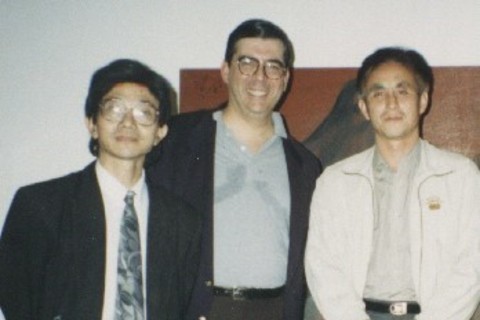
    From left: Li Jengtian, John Kamm, and Wang Xizhe

    In the 1992 presidential campaign, Democratic challenger Bill Clinton attacked incumbent President George H. W. Bush for “coddling” dictators from Baghdad to Beijing. He endorsed the use of trade sanctions to force China to improve its human rights record. After Clinton won the election in November 1992, China’s leaders grew increasingly concerned that Clinton would make good on his promise. They turned to American businessman turned rights advocate John Kamm for advice.

    Shortly after the election, Kamm flew to Beijing for meetings with senior officials. On November 16, 1992, Kamm dined with Zeng Jianhui, Director of the State Council Information Office (Zeng later served as chairman of the Foreign Affairs Committee of the National People’s Congress.) Kamm reminded Zeng of the positive reaction in the United States to the release of Tiananmen Square and Catholic prisoners, and suggested that China release prisoners from the Democracy Wall movement, namely Wei Jingsheng, Xu Wenli, and Wang Xizhe.* Kamm told Zeng that China had never released a prominent Democracy Wall prisoner, and opined that releasing one or more of them would have a positive impact.

    Wang Xizhe was a member of the famous Li Yizhe group that had put up a wall poster in Guangzhou in 1974 that called for democracy and rule of law. Wang had served five years in prison for his bold move, and, upon release, resumed his activism. He became a leader in the Democracy Wall movement, was detained in April 1981 and subsequently sentenced to 14 years in prison for counterrevolutionary incitement and propaganda and establishing a counterrevolutionary group. He sent to Huaiji Prison in western Guangdong Province to serve his sentence.

    Wang was released on February 3, 1993. Media coverage, especially by the Hong Kong press, was heavy.

    In early March 1993, Kamm returned to Beijing for meetings with senior officials including Zeng Jianhui and representatives of the Ministry of Foreign Affairs, Ministry of Public Security, Ministry of Justice, and Supreme People’s Court. He told officials with whom he met that he wanted go to Guangzhou and meet with Wang Xizhe. No objections were raised.

    On March 26, Kamm took the through train from Hong Kong to Guangzhou. That evening he was hosted to a banquet by Guangdong vice governor Zhang Gaoli. In his notes, Kamm recorded that 48 year old Zhang was a “high flyer.” He is currently a member of the Standing Committee of the Politburo of the Communist Party of China. The focus of the discussion was Clinton’s looming decision on whether or not to extend China’s Most Favored Nation trading status.

    Having gotten the go ahead from both Beijing and Guangdong, Kamm went to the coffee shop of the Jiang Nan Hotel in Guangzhou’s Henan District. He found Wang Xizhe and Li Jengtian, another leader of the Li Yizhe group, waiting for him.

    Li, by then a successful businessman who ran his own art gallery, was dressed in an elegant suit. Kamm found Wang’s appearance disconcerting. Kamm wrote in his notebook: “His time in prison must have been very difficult. He is trying to tint his hair back to brown from snow white. Most of the teeth on the upper right side of his mouth are gone.” Wang, Kamm wrote, is a proud and dignified man, determined to have his verdict reversed. He gave Kamm a copy of his 40th petition to the Supreme People’s Court; none of his petitions had been answered.

    The conversation covered many topics. How did Kamm become interested in Wang’s case? What did Kamm think of Wang getting into business to promote capitalism and democracy? Wang told Kamm that his future was in China, and that he didn’t want to go abroad.

    As the conversation grew animated, the tables around the small party in the coffee shop filled up with muscular young men in black leather jackets. These were officers of the state security bureau that Kamm had been told by officials in Beijing and Guangzhou to expect.

    Soon it was midnight. The small group was surrounded by a dozen agents. Gesturing towards them, Wang said “Although I am not in a prison with walls, I am not free. I am in a prison without walls.”

    Suddenly, Wang stood up and bowed to Kamm, declaring that this is how Chinese people show respect. Kamm then stood up and asked him to sit down, saying he didn’t deserve such respect. Wang would have none if it. He bowed a second time. ” My first bow was to say thank you for what you did for me, this bow is to say thank you on behalf of people who would like to thank you, but cannot.”

    After taking photos and settling the bill, the group went their separate ways. Kamm promised to return to Guangzhou in June to attend a children’s art exhibition at Li Jengtian’s gallery, and to see Wang.

    *The Democracy Wall movement, sometimes referred to as Beijing Spring, lasted from November 1978 to December 1979. Thousands of people aired their grievances on a wall near a bus stop in Beijing’s Xidan District. Elsewhere around China, demonstrations, petitions, and unofficial journals flourished. Wang Xizhe assisted in the publication of the April Fifth Forum and edited his own journal, Study Bulletin.

  • A Prison Without Walls

    A Prison Without Walls

    << Read all John Kamm Remembers stories

    From left: Li Jengtian, John Kamm, and Wang Xizhe

    In the 1992 presidential campaign, Democratic challenger Bill Clinton attacked incumbent President George H. W. Bush for “coddling” dictators from Baghdad to Beijing. He endorsed the use of trade sanctions to force China to improve its human rights record. After Clinton won the election in November 1992, China’s leaders grew increasingly concerned that Clinton would make good on his promise. They turned to American businessman turned rights advocate John Kamm for advice.

    Shortly after the election, Kamm flew to Beijing for meetings with senior officials. On November 16, 1992, Kamm dined with Zeng Jianhui, Director of the State Council Information Office (Zeng later served as chairman of the Foreign Affairs Committee of the National People’s Congress.) Kamm reminded Zeng of the positive reaction in the United States to the release of Tiananmen Square and Catholic prisoners, and suggested that China release prisoners from the Democracy Wall movement, namely Wei Jingsheng, Xu Wenli, and Wang Xizhe.* Kamm told Zeng that China had never released a prominent Democracy Wall prisoner, and opined that releasing one or more of them would have a positive impact.

    Wang Xizhe was a member of the famous Li Yizhe group that had put up a wall poster in Guangzhou in 1974 that called for democracy and rule of law. Wang had served five years in prison for his bold move, and, upon release, resumed his activism. He became a leader in the Democracy Wall movement, was detained in April 1981 and subsequently sentenced to 14 years in prison for counterrevolutionary incitement and propaganda and establishing a counterrevolutionary group. He sent to Huaiji Prison in western Guangdong Province to serve his sentence.

    Wang was released on February 3, 1993. Media coverage, especially by the Hong Kong press, was heavy.

    In early March 1993, Kamm returned to Beijing for meetings with senior officials including Zeng Jianhui and representatives of the Ministry of Foreign Affairs, Ministry of Public Security, Ministry of Justice, and Supreme People’s Court. He told officials with whom he met that he wanted go to Guangzhou and meet with Wang Xizhe. No objections were raised.

    On March 26, Kamm took the through train from Hong Kong to Guangzhou. That evening he was hosted to a banquet by Guangdong vice governor Zhang Gaoli. In his notes, Kamm recorded that 48 year old Zhang was a “high flyer.” He is currently a member of the Standing Committee of the Politburo of the Communist Party of China. The focus of the discussion was Clinton’s looming decision on whether or not to extend China’s Most Favored Nation trading status.

    Having gotten the go ahead from both Beijing and Guangdong, Kamm went to the coffee shop of the Jiang Nan Hotel in Guangzhou’s Henan District. He found Wang Xizhe and Li Jengtian, another leader of the Li Yizhe group, waiting for him.

    Li, by then a successful businessman who ran his own art gallery, was dressed in an elegant suit. Kamm found Wang’s appearance disconcerting. Kamm wrote in his notebook: “His time in prison must have been very difficult. He is trying to tint his hair back to brown from snow white. Most of the teeth on the upper right side of his mouth are gone.” Wang, Kamm wrote, is a proud and dignified man, determined to have his verdict reversed. He gave Kamm a copy of his 40th petition to the Supreme People’s Court; none of his petitions had been answered.

    The conversation covered many topics. How did Kamm become interested in Wang’s case? What did Kamm think of Wang getting into business to promote capitalism and democracy? Wang told Kamm that his future was in China, and that he didn’t want to go abroad.

    As the conversation grew animated, the tables around the small party in the coffee shop filled up with muscular young men in black leather jackets. These were officers of the state security bureau that Kamm had been told by officials in Beijing and Guangzhou to expect.

    Soon it was midnight. The small group was surrounded by a dozen agents. Gesturing towards them, Wang said “Although I am not in a prison with walls, I am not free. I am in a prison without walls.”

    Suddenly, Wang stood up and bowed to Kamm, declaring that this is how Chinese people show respect. Kamm then stood up and asked him to sit down, saying he didn’t deserve such respect. Wang would have none if it. He bowed a second time. ” My first bow was to say thank you for what you did for me, this bow is to say thank you on behalf of people who would like to thank you, but cannot.”

    After taking photos and settling the bill, the group went their separate ways. Kamm promised to return to Guangzhou in June to attend a children’s art exhibition at Li Jengtian’s gallery, and to see Wang.

    *The Democracy Wall movement, sometimes referred to as Beijing Spring, lasted from November 1978 to December 1979. Thousands of people aired their grievances on a wall near a bus stop in Beijing’s Xidan District. Elsewhere around China, demonstrations, petitions, and unofficial journals flourished. Wang Xizhe assisted in the publication of the April Fifth Forum and edited his own journal, Study Bulletin.


    Listen to the Encounters with China podcast.

    Subscribe to receive notifications about new episodes. 

    Read all John Kamm Remembers stories.


  • The Case of Feng Zhiming: A Question of Accountability

    Li Sanren and Shang Aiyun, parents of Huugjilt, who was wrongly executed for rape and murder at age 18. Image credit: China Daily

    On October 18, a court in Inner Mongolia sentenced the former deputy police chief of Hohhot, Feng Zhiming, to 18 years in prison. Feng’s conviction on charges of corruption, taking bribes, having large amounts of property that cannot be accounted for, and illegal possession of firearms and ammunition made national headlines, in part because of his connection to one of China’s most infamous cases of wrongful conviction and execution of an innocent person— the case of Huugjilt.

    Huugjilt was executed in 1996 for the rape and murder of a woman whose body he had reported finding in a public toilet. The case against the 18-year-old Huugjilt moved swiftly through the criminal justice system, taking just over two months from the time of his arrest to his execution. Law-enforcement authorities considered it an open-and-shut case, based mainly on the strength of the defendant’s confession, allegedly made while he was in custody. The key players responsible for steering Huugjilt’s case through the system went on to receive promotions and commendations. But in 2005, a serial murderer confessed to the crime. When authorities reviewed the case they determined that Huugjilt had been wrongly convicted.

    In the years that followed, judicial authorities were repeatedly ordered to reopen the case. But it was not until November 2014 that the Inner Mongolia Autonomous Region High People’s Court held a new trial and posthumously exonerated Huugjilt of all charges.

    Days after the court’s decision, it was announced that Feng Zhiming, the police official who had led the original criminal investigation in 1996, had been placed under arrest by the local procuratorate and was being investigated for dereliction of duty, coercing confessions through torture, and taking bribes.

    To many Chinese, Huugjilt’s wrongful conviction and Feng Zhiming’s arrest were clearly connected. At the time of the arrest many hailed it as evidence of a new commitment to fighting wrongful convictions by demanding individual accountability from law-enforcement. However, Feng Zhiming’s conviction—despite the heavy prison sentence—left many disappointed when no mention was made of the Huugjilt case or Feng’s role in it. An online survey of more than 1,000 people conducted by the Beijing News found that nearly three quarters of respondents thought that Feng should have been held criminally responsible for his role in the Huugjilt case and 57 percent considered the verdict’s failure to mention the case “unreasonable.”

    It took 18 years to finally exonerate Huugjilt of the crime for which he was wrongly executed, so there’s a certain symbolic balance in a prison sentence of 18 years for the man widely believed to have been responsible for the miscarriage of justice. However, absent an official statement from judicial authorities connecting Feng’s many criminal misdeeds with Huugjilt’s specific case, the question of accountability and positive change in the legal system remains.

    Last February when authorities in Inner Mongolia announced the results of their investigation into 27 individuals being held in connection with Huugjilt’s wrongful conviction, Feng Zhiming was unique in that his case was being “handled separately” in the criminal justice system. But in the The Beijing Times of October 19, 2016, columnist Binglin observes that the earliest charges brought against Feng Zhiming dated from 2000—four years after Huugjilt’s execution—meaning that the question of his role in the case was never actually put before the court. Binglin asks:

    Does Feng Zhiming’s responsibility for this miscarriage of justice fall within the scope of criminal liability? Even if his responsibility is limited to the realm of administrative sanction or party discipline, the fact that he’s been held criminally responsible for other acts shouldn’t mean abandoning the pursuit of a clear explanation of personal accountability and punishment for his role in the miscarriage of justice.

    On the same day, in Shanghai’s Oriental Morning Post, columnist Shen Bin points out that Feng Zhiming’s corruption has been documented “to two decimal points,” meaning that the investigation was conducted quite thoroughly. He asks: “Has the statute of limitations expired or has so much time passed since the Huugjilt case that it’s become too difficult to pin down the relevant evidence? I hope there will be an authoritative answer.”

    Ultimately, these discussions highlight the importance of transparency and accountability. While the arrest and sentencing of Feng Zhiming provides some consolation, without the specific accountability that a judicial judgment could bring, justice has yet to run its full course. And without a reasonable explanation for why Feng’s role in the Huugjilt case has so far gone unpunished, many will conclude that there has been some sort of cover-up.

  • Dui Hua Digest, October 2016

    EVENTS

    The Presidential Debate on September 26, 2016. Credit: Variety

    Kamm Speaks on Human Rights in China in an Election Year

    On September 29, 2016, Dui Hua Executive Director John Kamm presented remarks at “The China Card: Politics vs. Policy,” a conference hosted by the University of Southern California’s US-China Institute. Kamm joined 20 leading experts on China and American politics in examining China’s influence on the political process in the United States. Kamm focused his talk on how China’s human rights record affects American politics in an election year.

    Kamm began his remarks by pointing out that China’s image in the United States has never recovered from the events of June 4, 1989. In a Gallup poll taken in February 1989, 72 percent of Americans had a favorable opinion of China, with 13 percent holding an unfavorable view. A few weeks after June 4, Gallup did another poll: only 34 percent now had a favorable view, and the percentage of respondents holding an unfavorable view jumped to 54 percent. In the latest Gallup poll taken in February 2016, 52 percent of Americans said their opinion of China is unfavorable.

    There is little question that China’s human rights record is a principal cause for the country’s poor image in the United States. Kamm pointed to a Pew poll taken in June 2016 that found 80 percent of Americans think that the Chinese government does not respect the individual freedoms of its people. The same poll found that 55 percent of Americans have an unfavorable opinion of China.

    Distaste for China’s human rights record is reflected in the two parties’ platforms. While the Democrats limit their mention to a single sentence – “We will promote great respect for human rights (in China), including the rights of Tibetans” – the Republican platform excoriates China for crushing dissent, heightening religious persecution, crippling the Internet, carrying out forced abortions and sterilizations, reviving the Mao cult, carrying out “cultural genocide” in Tibet and Xinjiang, and eroding the promised autonomy of Hong Kong. It accuses Beijing of sending its agents to kidnap critics in foreign countries.

    Although the Democratic platform on China’s human rights is less harsh than the Republican platform, Kamm pointed out that the Democratic candidate, Hillary Clinton, has been sharply critical of human rights in China for more than 20 years. By contrast, the Republican candidate, Donald Trump, has been “remarkably tolerant,” praising Beijing for putting down the “riot” in Tiananmen Square in 1989 and stating in his August foreign policy speech that, if elected, the United States would stop promoting democracy and human rights overseas and would instead concentrate on defeating ISIS. Any country that joins the United States in fighting “radical Islamic terrorism” would be considered an ally. Beijing has often complained that Washington has “interfered in China’s internal affairs” by criticizing its rights record and not supporting its fight against Uyghurs it accuses of committing acts of terrorism, so this pronouncement was “music to China’s ears,” Kamm observed.

    While human rights in China is rarely mentioned on the campaign trail, it is nevertheless a consideration for voters in Ohio, Michigan, and North Carolina, where Donald Trump blames China for stealing jobs. China is seen as denying rights to workers in order to boost its competitive advantage over American industry.

    Human rights has entered election politics in the past, Kamm recalled. In 1992, Tiananmen protesters addressed the Democratic National Convention. The convention adopted a platform that included a call to strip China of its Most Favored Nation trading status. In 2012, Mitt Romney called the Obama administration’s handling of the Chen Guangcheng case “a day of shame” and “a dark day for freedom.”

    Kamm warned that human rights in China could yet emerge as a campaign issue if a court in Nanning, Guangxi Zhuang Autonomous Region, convicts American businesswoman Phan (Sandy) Phan-Gillis of spying on China for the United States. He also opined that events in Hong Kong, where several candidates favoring self-determination won seats in the recent Legislative Council elections, could figure in the 2016 presidential race if the newly elected legislators are barred from taking their seats, triggering large-scale protests.

    Regardless of who wins the election, Kamm said the next administration would have to decide whether and how to continue the bilateral human rights dialogue, currently suspended. With all its faults, the dialogue remains the best forum for raising the cases of imprisoned activists. Kamm ended his remarks by expressing the hope that the dialogue would be resumed in 2017.

    Staff Changes

    In September, Jonathan Kinkel transitioned from his position as Programs & Publications Officer to a continuing role as an independent consultant.

    After serving over a year as Development Officer, Yin Yu has been promoted to Program and Development Manager, where she will manage and coordinate fundraising, outreach, and special program projects.

    Xandra Xiao joined Dui Hua in September 2016 as a Program Associate. She will help coordinate Dui Hua’s publication and program activities and provide support for research and outreach projects. Xandra has lived in Hong Kong, mainland China, and the UK, and she speaks Mandarin and English. She recently graduated from the University of Oxford, receiving her master’s degree in contemporary Chinese studies with a concentration in Chinese law. Before that, she completed her bachelor’s degree in history at University College London, where she focused on modern Chinese history. We welcome Xandra to our Dui Hua family!

    PRISONER UPDATE

    The issue of illegal cross-border law enforcement by mainland officers in Hong Kong has sparked an outcry in the former British colony in the wake of incidents involving the five missing Causeway Bay booksellers. In a case dating back to the pre-handover era, not much has been discussed regarding Su Zhiyi (苏志一), a Hong Kong businessman who was sentenced in 2000 to life imprisonment for graft by Guangdong’s Zhaoqing Intermediate People’s Court. Turning 83 years old this year, Su allegedly embezzled four million Hong Kong dollars from Chinese state-owned company. In April 2000, Su’s daughter complained that mainland police conducted an unauthorized home search at her father’s residence and seized a number of documents after her parents were detained on the Mainland in 1995. The following January, public security officials escorted her father back to Hong Kong for eight days for the seizure of properties and personal effects.

    Dui Hua has recently learned that Su has been released from Dongguan Prison following multiple sentence reductions. His life sentence was first commuted to 20 years’ imprisonment in 2003, and further reduced six times totaling 99 months. Following the sixth sentence reduction in 2012, he was scheduled for release on March 1, 2015, but because the prison had applied for a one-month sentence reduction on Su’s behalf, the court might have released him even earlier, in 2014. Dui Hua has no information about the application outcome.

    A deep love for Chairman Mao is not tantamount to a deep love for the Communist Party of China (CPC). Dui Hua has previously reported several lesser-known cases involving Mao’s supporters jailed for establishing leftist political organizations advocating for the return of pre-reform socialism. An official document Dui Hua recently acquired indicates that Wei Jinxiang (蔚晋湘), a leader of the Mao Zedong Thought Communist Party of China founded in November 2008, received a 10-month sentence reduction in August 2014. He is now scheduled for release from Chongqing’s Yuzhou Prison on December 14, 2018. Wei was sentenced to 10 years’ imprisonment for subversion by the Chongqing No. 5 Intermediate People’s Court on March 18, 2011. Another party co-founder, Ma Houzhi (马厚芝), was also sentenced in the same case but is not known to have received clemency thus far.

    Dui Hua has also received an update on Kou Ji (寇稽), who was sentenced in an obscure political case in Xi’an in 2013. Kou was sentenced to 10 years’ imprisonment for subversion. In February 2016, he received a nine-month sentence reduction and is now due for release from Shaanxi’s Weinan Prison in February 2021. Dui Hua is seeking to ascertain the particulars of this case from its interlocutors.

    PUBLICATIONS ROUND-UP

    Featured: China: SPC Issues New Regulations on the Release of Court Judgments (September 14)

    Written judgments from criminal and civil cases in a Yunnan court. New regulations now state that digital copies of such judgments must be released online within a week of a court’s decision. Photo credit: ynfy.gov.cn

    In a bid to increase judicial transparency, including the adjudication of sensitive political cases, China’s Supreme People’s Court (SPC) recently released new regulations that unambiguously assign to courts throughout the country the responsibility for publicly releasing judgments. The SPC released similar regulations in 2013 and 2010, but the new regulations require courts to release more information, and with greater detail.

    Chinese Officials Struggle to Counter Juvenile Crime Without Relying on Harsh Punishment (August 24)

    Activist Zhang Lin Released from Prison After Sentence Commutation (September 12)

    Earthquake Victim Sentenced to Prison for Desecrating Flag (September 27)

    Previous Digest: August/September 2016

    ROOTS

    The Young Diplomat

    Beijing Prison Credit: wdh.la

    In May 1992, a young Chinese Ministry of Foreign Affairs (MFA) official, Bai Weiji, and his wife Zhao Lei, were detained by China’s State Security police on suspicion of trafficking in state secrets. Two weeks later, police raided the apartment of Lena Sun, Beijing Bureau Chief of The Washington Post. They briefly detained Ms. Sun and her family and forced the American journalist to open the safe where she kept sensitive materials. In the safe they found internal documents that Bai Weiji had provided Ms. Sun.

    Lena Sun, who had written one of the first profiles on American businessman and recently turned human rights activist John Kamm, requested assistance from Kamm. Kamm began raising Bai and Zhao’s case with Chinese authorities, with whom he was regularly meeting in Beijing..

    In May, 1993, Bai was sentenced to 10 years in prison for trafficking in state secrets by the Beijing Intermediate People’s Court. His wife was given a six-year sentence. It is believed that one of the reasons that Bai was given such a lengthy sentence was that he had organized protests among MFA staff over the June 1989 suppression of pro-democracy demonstrations in Beijing.

    Kamm, in an interview with The New York Times Bureau Chief Nicholas Kristof, called the verdicts “very troubling” and “a serious disappointment.”

    Bai was sent to Beijing Prison, considered to be a model prison, where Bai was the only prisoner serving a sentence for counterrevolution. His English language skills were put to good use by the prison warden, who was seeking to find export markets for products made in prison workshops. Because he “expressed regret and a genuine willingness to reform,” and because he exhibited good behavior, Bai was granted three sentence reductions in 1996, 1997 and 1998 for a total reduction of three years and three months. He was released on February 2, 1999. His wife had been released early on October 20, 1997.

    After his release, Bai became a successful businessman. On a trip to the United States, he looked up John Kamm, who had moved with his family to San Francisco from Hong Kong in July 1995.

    Bai credited Kamm’s interventions for his early release, but brought up two other reasons he was shown clemency.

    In July 1996, Louis Joinet, chairman of the United Nations Working Group on Arbitrary Detention, visited China to begin preparations for a visit by the full working group the following year. One of the prisons he was allowed to visit was Beijing Prison.

    Upon arrival at the prison, Joinet asked to interview prisoners. His request was rejected. The director general of the MFA’s International Department, Li Baodong, rushed to the prison to resolve the stand-off. It was agreed that Joinet could interview a prisoner, and he was invited to select one at random. At that moment, Bai Weiji was walking in the prison yard, and Joinet chose him to be interviewed. Joinet had no idea who he was, but the prison officials became suspicious: how could it be that the prisoner selected to be interviewed was the only prisoner serving a sentence for counterrevolution?

    Bai played his role brilliantly. He declined to give any identifying information. He did not tell Joinet why he was in prison, nor did he say he was a former MFA official. He went to considerable length to commend the prison authorities for treating him so well. Although the interview was supposed to be held in a secure, confidential setting, Bai figured that the prison authorities were listening in. Shortly after the interview, Bai was granted his first sentence reduction.

    The second reason given to explain Bai’s clemency involves the July 1997 handover of Hong Kong from the United Kingdom to China. A city-wide competition to ascertain who knew the most about the handover was held among teams representing all of Beijing’s prisons. Bai, who was familiar with Hong Kong from his days working for MFA, was chosen to head the Beijing Prison team, which handily won the competition. Bai and his team members were rewarded with sentence reductions, but Bai noted, somewhat ruefully, that because he was serving a sentence for counterrevolution, he could only get half the number of points awarded to the other teammates.

    According to regulations, prisoners serving sentences for counterrevolution had to be “strictly handled” when it came to sentence reductions. The Bai Weiji case afforded Kamm one of his first opportunities to find out what these regulations meant in practice.

  • The Young Diplomat

    The Young Diplomat

    << Read all John Kamm Remembers stories

    A photograph of Beijing Prison and its personnel. Image credit: wdh.la

    In May 1992, a young Chinese Ministry of Foreign Affairs (MFA) official, Bai Weiji, and his wife Zhao Lei, were detained by China’s State Security police on suspicion of trafficking in state secrets. Two weeks later, police raided the apartment of Lena Sun, Beijing Bureau Chief of The Washington Post. They briefly detained Ms. Sun and her family and forced the American journalist to open the safe where she kept sensitive materials. In the safe they found internal documents that Bai Weiji had provided Ms. Sun.

    Lena Sun, who had written one of the first profiles on American businessman and recently turned human rights activist John Kamm, requested assistance from Kamm. Kamm began raising Bai and Zhao’s case with Chinese authorities, with whom he was regularly meeting in Beijing..

    In May, 1993, Bai was sentenced to 10 years in prison for trafficking in state secrets by the Beijing Intermediate People’s Court. His wife was given a six-year sentence. It is believed that one of the reasons that Bai was given such a lengthy sentence was that he had organized protests among MFA staff over the June 1989 suppression of pro-democracy demonstrations in Beijing.

    Kamm, in an interview with The New York Times Bureau Chief Nicholas Kristof, called the verdicts “very troubling” and “a serious disappointment.”

    Bai was sent to Beijing Prison, considered to be a model prison, where Bai was the only prisoner serving a sentence for counterrevolution. His English language skills were put to good use by the prison warden, who was seeking to find export markets for products made in prison workshops. Because he “expressed regret and a genuine willingness to reform,” and because he exhibited good behavior, Bai was granted three sentence reductions in 1996, 1997 and 1998 for a total reduction of three years and three months. He was released on February 2, 1999. His wife had been released early on October 20, 1997.

    After his release, Bai became a successful businessman. On a trip to the United States, he looked up John Kamm, who had moved with his family to San Francisco from Hong Kong in July 1995.

    Bai credited Kamm’s interventions for his early release, but brought up two other reasons he was shown clemency.

    In July 1996, Louis Joinet, chairman of the United Nations Working Group on Arbitrary Detention, visited China to begin preparations for a visit by the full working group the following year. One of the prisons he was allowed to visit was Beijing Prison.

    Upon arrival at the prison, Joinet asked to interview prisoners. His request was rejected. The director general of the MFA’s International Department, Li Baodong, rushed to the prison to resolve the stand-off. It was agreed that Joinet could interview a prisoner, and he was invited to select one at random. At that moment, Bai Weiji was walking in the prison yard, and Joinet chose him to be interviewed. Joinet had no idea who he was, but the prison officials became suspicious: how could it be that the prisoner selected to be interviewed was the only prisoner serving a sentence for counterrevolution?

    Bai played his role brilliantly. He declined to give any identifying information. He did not tell Joinet why he was in prison, nor did he say he was a former MFA official. He went to considerable length to commend the prison authorities for treating him so well. Although the interview was supposed to be held in a secure, confidential setting, Bai figured that the prison authorities were listening in. Shortly after the interview, Bai was granted his first sentence reduction.

    The second reason given to explain Bai’s clemency involves the July 1997 handover of Hong Kong from the United Kingdom to China. A city-wide competition to ascertain who knew the most about the handover was held among teams representing all of Beijing’s prisons. Bai, who was familiar with Hong Kong from his days working for MFA, was chosen to head the Beijing Prison team, which handily won the competition. Bai and his team members were rewarded with sentence reductions, but Bai noted, somewhat ruefully, that because he was serving a sentence for counterrevolution, he could only get half the number of points awarded to the other teammates.

    According to regulations, prisoners serving sentences for counterrevolution had to be “strictly handled” when it came to sentence reductions. The Bai Weiji case afforded Kamm one of his first opportunities to find out what these regulations meant in practice.


    Listen to the Encounters with China podcast.

    Subscribe to receive notifications about new episodes. 

    Read all John Kamm Remembers stories.


  • China: New Rules on Electronic Data Collection Take Effect

    New rules raise concern over whether China’s criminal justice system can adequately protect the right to privacy while exercising the power to collect and make use of electronic evidence. Image credit: Sina.com.cn

    On October 1, a new set of rules took effect in China that raised alarms when first introduced last month. Casual observers worried that the “Provisions Concerning the Collection, Extraction, Review, and Judgment of Electronic Data in the Handling of Criminal Cases” (“Provisions”) (translation), issued jointly by the Supreme People’s Court, the Supreme People’s Procuratorate, and the Ministry of Public Security, would mean that from now on, every word you say in a Weibo post or WeChat circle could be used against you in court.

    In fact, the Provisions don’t appear to give legal authorities greater powers or put PRC netizens and mobile users at substantially increased risk of criminal prosecution for their online activity. Rather, the new rules clarify the types of electronic data that can be collected in prosecuting criminal cases and establish protocols for handling the data.

    That said, the public’s sense of insecurity can be readily understood in the context of a criminal justice system in which investigators routinely act arbitrarily and without effective checks on their power. Given the amount of content and metadata stored in computers, electronic devices, and network systems, the real question is whether China’s criminal justice system can adequately protect an individual’s legitimate right to privacy while exercising the power to collect and make use of electronic evidence.

    ***

    In the course of a criminal investigation, Article 52 of the Criminal Procedure Law (CPL) in China gives courts, procuratorates, and public security organs the power to collect and obtain evidence from relevant organizations and individuals who, in turn, are obligated by law to be truthful and to provide the required information.

    To obtain evidence from someone, investigators need only seek internal approval and do not need external authorization in the form of a warrant or something similar. Verification of evidence and review of whether it was obtained and handled lawfully is supposed to take place at trial, and any evidence deemed to have been collected or obtained unlawfully is supposed to be excluded.

    When the CPL was amended in 2012, the section on evidence was updated to include electronic data among the kinds of evidence that can be used as the basis of a criminal conviction. Considering how much of contemporary life takes place online, including criminal activity, it’s reasonable to give law enforcement some power to collect electronic evidence in criminal investigations. And, given that data can be easily altered or deleted, there are particular concerns regarding timely seizure of the evidence and preservation of its integrity. Recognizing this, the new measures aim to provide clear standards for collecting and storing electronic data, protocols for preserving the integrity of the data, requirements regarding the chain of custody as electronic evidence moves through the criminal procedure, and guidelines for verifying and validating evidence.

    ***

    Perhaps the main reason Chinese netizens have been so alarmed by the Provisions is the broad, open-ended scope of digital content that is now potentially subject to collection and to being used as evidence in criminal cases. Included are:

    • Information on web pages, blogs, microblogs, chat groups, and network cloud storage
    • Correspondence in the form of text messages, email, instant messages, and chat groups
    • Other data such as account registration, user authentication data, electronic transaction records, and login records

    With potential access to so much data from computers and networks, authorities will inevitably encounter personal data of a private nature that has no connection to the criminal investigation at hand. According to legal commentator Bing Lin at the Beijing Times

    If collection of evidence is not subject to regulation, and attention is not paid to protecting citizens’ privacy, it will be very easy for an individual’s personal information to be leaked. Therefore, the granting of power to law enforcement agencies to collect electronic data as evidence also implicitly carries the imperative to regulate the way this power is carried out in order to achieve a balance between fighting crime and protecting citizens’ privacy.

    According to Bing Lin: “We cannot one-sidedly focus on the role electronic evidence can have in fighting crime while ignoring the need to regulate the way that law-enforcement personnel collect this evidence.” Though Legal Daily commentator Liu Xun starts from the premise that public interest outweighs the individual’s right to privacy, he too acknowledges “When it comes to collecting and obtaining electronic data, judicial authority should define concrete measures in order to effectively prevent investigators from disclosing personal or private information and to reinforce implementation of the discipline for maintaining secrecy.”

    One of the arguments used to reassure the public is that law enforcement authorities have these powers to collect and obtain electronic evidence only in the context of criminal investigations. However, the editorialists at Southern Metropolis Daily point out that this argument actually offers little comfort:

    What’s truly worth noticing is the impulsive and arbitrary manner in which criminal prosecutions are carried out in some parts of China, without effective limits or oversight. Sometimes it’s too easy to file a criminal case for investigation (for example, in past arrests of individuals for so-called “online defamation of county leaders”). Sometimes the exact opposite is the case…The reality behind the contradiction is the arbitrary way that criminal cases are filed for investigation. What prompts public concern about the new rules covering data collection from Weibo and WeChat friend circles is the lack of effective oversight of the criminal case-filing process and the absence of strong procedural checks on the way specific cases are handled (particularly where judicial authorities accept evidence that they know was unlawfully obtained).

    Noting that the Provisions raise issues that have “broad impact on citizens’ lives,” the Southern Metropolis Daily hints that when decisions about electronic data collection depend solely on judicial interpretations and administrative regulations, there is no avenue for public input. Ensuring that rule-making “adheres to the relevant provisions of Legislation Law” and “makes public input a mandatory part of the process” will “help dispel misconceptions and prevent surprise attacks.”