SAN FRANCISCO (July 5, 2016)–For the first time in its 25-year history, the United Nations Working Group on Arbitrary Detention (WGAD) has ruled that an American citizen, Phan (“Sandy”) Phan-Gillis, has been arbitrarily deprived of her liberty by the Chinese government, in violation of international human rights law and the relevant provisions of China’s criminal procedure law. The WGAD has called on the Chinese authorities to release Phan-Gillis, who is now 56 years old and has worked tirelessly to promote US-China relations for more than 20 years. She served as either Vice President or President of the Houston Shenzhen Sister City Association for over 20 years, and she was President of the association at the time of her initial detention.
The WGAD posted its opinion (available here) on Wednesday, June 29, not only calling for the release of Phan-Gillis, but also considering it “appropriate to refer allegations of torture and inhuman treatment to the Special Rapporteur on Torture for appropriate action.”
Phan-Gillis was taken into custody by agents of the Nanning State Security Bureau at the border crossing between Macau and China on March 19, 2015. She was taken to Nanning, capital of Guangxi Zhuang Autonomous Region, where, on March 20, 2015, she was placed under “designated location residential surveillance” (DLRS), a coercive measure in which a suspect in an endangering state security case is held incommunicado, without access to legal counsel, for a maximum period of six months. DLRS, frequently used against Chinese dissidents but rarely used against foreigners, has been condemned by the United Nations Working Group on Enforced or Involuntary Detention as constituting enforced or involuntary disappearance, a violation of international human rights law. There have been numerous reports in the media and by human rights organizations about harsh interrogation and even torture of other detainees during DLRS. The interrogation of Phan-Gillis took a physical and mental toll, leading to her hospitalization for a period of five days.
At the end of her six-month DLRS term, Phan-Gillis was formally detained on September 20, 2015. She was moved to the Nanning Number Two Detention Center where she was placed in solitary confinement and subjected to interrogation twice a day. According to information provided by the Chinese government to the WGAD, Phan-Gillis was formally arrested on October 26, 2015 and charged with “assisting in the theft of state secrets,” a crime of endangering state security. (Phan-Gillis is currently the only American being held on suspicion of endangering China’s state security.) On May 26, 2016, the case was handed over to the Nanning procuratorate (the prosecutor in the Chinese legal system), which is currently considering whether to indict Phan-Gillis. She now has a cell mate, and her health is said to have improved. Phan-Gillis has received monthly consular visits and, following submission of her case to the procuratorate, she has been allowed to see a lawyer for the first time since being taken into custody over 14 months earlier.
Despite repeated pleas (most recently by Secretary of State John Kerry during the Strategic and Economic Dialogue held in Beijing in June) and requests by the U.S. government for information on Phan-Gillis, the Chinese government has thus far failed to provide evidence to support any charges that may be pending against her.
“The WGAD has, over the years, ruled that the Chinese government has arbitrarily detained scores of its own citizens, but this marks the first time it has ruled that agents have arbitrarily detained an American citizen in violation of international human rights law,” noted John Kamm, Executive Director of The Dui Hua Foundation. “Ms. Phan-Gillis’ arbitrary detention and her treatment at the hands of China’s state security police has badly damaged US-China relations. Dui Hua joins the WGAD, the American government, and members of Congress in calling for Sandy Phan-Gillis’ immediate release.”
Hong Kong residents hold a candlelight vigil in memory of those who died during the democracy protests of June 4, 1989. Photo Credit: www.ibtimes.co.uk
Party Paper Reports Clemency for Tiananmen Prisoner
After Dui Hua announced in early May that Chinese authorities granted the country’s last known June 4 prisoner an 11-month sentence reduction, something strange happened—Global Timesreported the news. Controlled by the Chinese Communist Party (CCP), the mainland paper predictably denounced those involved in the 1989 democracy protests, but in so doing, it called attention to an event that the CCP would prefer the whole world to forget.
The Global Times (Huanqiu shibao) borders on sympathetic in its reporting, calling the events in Tiananman Square on June 4, 1989, “an incident that startled the world.” Referring to the ongoing incarceration of Miao Deshun (苗德顺), the paper implies undue severity in sentencing, reporting that, in response to the 27 years Miao has spent in prison, people can only “sigh” (xixu). Over nearly three decades, Miao has received a total of two sentence reductions. He is scheduled for release from Beijing’s Yanqing Prison on October 15, 2016.
The Global Times report cites Dui Hua as “an American human rights organization” in what is perhaps the first time a Chinese government-controlled newspaper has mentioned the foundation. Dui Hua has raised Miao’s case with Chinese officials for more than 10 years.
At least partially in response to the article, China’s Office of the Central Leading Group for Cyberspace Affairs ordered Global Times and its online affiliates to undergo one month of “rectification” for “hyping” sensitive issues, according to Radio France International. Despite international awareness of the protests that swept Beijing and hundreds of other cities in 1989, many young people in China are unaware of their occurrence or historical significance.
Although many mainland news organizations likely erased the Global Times article following the leading group’s response, prominent reprints from Xinhua and China Daily remained accessible as of this writing.
Outside mainland China, international media widely reported Miao’s sentence reduction. The act of clemency was reported in more than 100 news items across 40 countries throughout the month of May, including in interviews with Dui Hua Executive Director John Kamm by the Voice of America‘s Chinese language edition and Korean digital radio program This Morning.
PRISONER CASES
Clemency in Guangdong
Dui Hua received updates from government interlocutors on two prisoners serving lengthy sentences in Guangdong. Former senior Xinhua News Agency official Wei Pingyuan (魏平原) received an 11-month sentence reduction, which follows a 15-month reduction in April 2014. Wei was one of three Xinhua officials sentenced to life imprisonment in 2004 on allegations that they provided the United Kingdom with Chinese state secrets about the Hong Kong handover during the 1990s. Dui Hua has named Wei on more than 14 prisoner lists. He is scheduled for release from Meizhou Prison on August 20, 2020.
Guangzhou publishing house owner Liang Jiantian (梁鉴添) received a seven-month sentence reduction but still has more than six years to serve in Guangdong’s Panyu Prison. Liang and Liu Jingsong (刘镜崧), who co-owned the publishing house, were convicted of illegal business activity and producing obscene materials for printing about five million Falun Gong publications. Liu was released on September 17, 2010. Dui Hua has included Liang on ten prisoner lists since 2003.
Nuclear Plants as State Secrets
Mainland China currently has 32 nuclear power reactors in operation, 22 under construction, and several more ready to break ground. The country closely guards information about nuclear-plant construction and has classified some of it as state secrets. People convicted of illegally procuring or trafficking this information for foreign entities may be sentenced to death.
Dui Hua recently learned about two endangering state security cases involving Chinese nuclear-plant construction. On September 3, 2012, Fu Qi (傅琪) was sentenced to five years in prison in Guangzhou. According to a government document, Fu “inflicted harm on the interest and safety of the nation’s nuclear development.” Available information indicates that Fu was a regional director working in the Guangzhou office of Alstom, a French multinational company active in the fields of transportation, power generation, and electricity transmission before General Electric acquired its power business in 2014. After receiving a seven-month sentence reduction, Fu was released from Dongguan Prison on July 19, 2015.
In a separate case, a 61-year-old Hong Kong resident surnamed Wang was sentenced to 11 years in prison. Wang allegedly received more than 4 million euro from foreign entities in return for classified information on nuclear-plant construction. Wang’s case was made public in March at an education fair about state security in Guangdong Province.
Chen Man (center) served 21 years in prison for a crime he did not commit. Photo credit: SCMP
Increased attention to wrongful convictions in recent years has caused Chinese judicial authorities to retry more criminal cases and exonerate greater numbers of long-serving prisoners. What these trends mask, however, are the formidable obstacles to reopening a criminal case in China.
This section delves into the human rights activism of John Kamm between 1990 and 1999, the year he established Dui Hua.
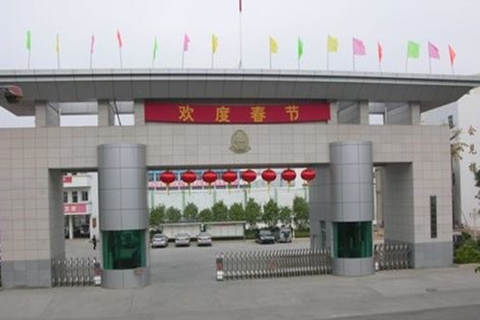
Meizhou Prison’s front gate, in a 2015 photo. Credit: On.cc
Kamm Visits a Chinese Prison (Part 2 of 2)
Continued from Dui Hua’s May Digest–read Part 1 of 2 here.
Kamm and his hosts left Meizhou Airport and headed directly to the prison in the center of Meixian Municipality. Founded in 1951, Meizhou Prison was built on the site of a former Guomindang detention facility.
They entered the prison complex from a bustling street through white gates with signboards that read “Meixian New Life Automotive Parts Factory.” Prisoners at Meizhou Prison manufactured wheel assemblies in three workshops. The officials insisted that none of the products, valued at RMB 5 million, were for export.
In the outer courtyard Kamm was shown the family meeting rooms where prisoners were allowed once or twice a month, the mail room, a shop selling products for visiting relatives to give to prisoners, staff quarters, and the prison administration offices. On the western side of the courtyard were a car repair workshop and a plastic bottle workshop with two injection molding machines. Family members of prison staff ran the workshops.
On the northern end of the outer courtyard was Meizhou Prison. Kamm passed through a large sliding gate and a separate entrance guarded by an armed sentry. The walls were 18-20 feet high and topped by electrified wires.
At the end of a 200-meter walkway flanked by vegetable fields, a pigsty, and lumberyards filled with laboring prisoners, Kamm entered the cellblocks. There were 11 cellblocks, each housing 120-130 prisoners, who stood at attention during his visits. In each block, there were cells of 28-32 bed spaces. The cells were spartan, but it appeared that electric fans had recently been installed. Each block had a television that prisoners were allowed to watch three times a week and a common latrine and shower area.
Kamm visited the prison kitchen, where he heard about the rations given to each prisoner. He then toured the clinic; a music room—where the prisoners played Jingle Bells on Chinese instruments for the duration of the visit; a library; and the prison school where classes were taught in politics, art, and mathematics. Pleasantries were exchanged with prisoners, who seemed amused by the first visiting foreigner to have set foot in the facility.
In the courtyard between two cellblocks, Kamm watched a 10-minute exercise session. He asked to see the solitary confinement area, but his request was denied. At the time of his visit, one prisoner was in solitary for trying to escape.
The warden said that torture was strictly prohibited, and guards who beat inmates were disciplined—in one instance, a guard was sentenced to prison.
Every day the wardens of each cellblock graded prisoners on a 10-point scale. Those who received a year’s worth of 10-point scores were virtually guaranteed a sentence reduction. In line with national averages, 30 percent of prisoners received sentence reductions every year. Parole, approved by courts, also took place, and prisoners were allowed to petition courts for their cases to be reheard.
In the workshops, Kamm observed rudimentary safety measures for tractor wheel assemblies. The environment resembled that of the scores of state-owned factories that he had visited in his business career: lots of idling, and low levels of efficiency.
After the visit to the workshops, Director Chen Weixiong of the Guangdong Prison Administration Department gave Kamm information on five of the 13 prisoners he had asked about.
Three individuals had spent time at Meizhou Prison: Mai Furen and Sun Ludian, pastors of the Shouters, an evangelical sect targeted in a nationwide campaign in late 1983, and Liu Shanqing (刘山青), a Hong Kong resident detained in December 1981 and sentenced to 10 years in prison for counterrevolutionary offenses. Mai, who was serving a 13-year sentence, was released to his family a few months before Kamm’s visit due to his advanced age. Sun, who was serving a nine-year sentence, was released on medical parole in December 1990. Liu had been transferred to Huaiji Prison in 1989 or 1990. Kamm asked that Liu be released and allowed to return to Hong Kong without serving his deprivation of political rights in China. He returned to Hong Kong on Christmas Day, 1991.
Director Chen also gave Kamm information on two people who had not been incarcerated in Meizhou Prison. Chen Zhixiang (陈志祥) and Chen Pokong (陈破空) were sentenced for counterrevolutionary offenses committed during the spring 1989 protests in Guangzhou. Chen Zhixiang, a teacher sentenced to 10 years in prison, was in a detention center awaiting prison placement. He eventually went to Shaoguan Prison from which he was released more than three years early in 1995. Protest organizer Chen Pokong received a three-year sentence that he served in a public security detention center. He served nearly his entire sentence and was subsequently sentenced to re-education through labor for illegal border crossing.
In carrying out its reviews, the SPC may consider several mitigating factors, including the defendant’s remorse, good behavior, and role in the crime, as well as the severity of the crime. Poverty is another mitigating factor that, while sometimes ignored, has the potential to decrease the number of executions China carries out each year. A collection of drug-related death penalty cases the SPC overturned between 1997 and 2015 demonstrates the court’s willingness to take economic factors into account.
In 2007, Li Budu (李补都), a native of Sichuan Province, was sentenced to death for transporting over 1,000 g of heroin—20 times the 50 g threshold making drug transport a capital crime. After Li’s loss on appeal, the SPC ultimately found that, while Li should be severely punished due to the quantity of drugs involved in his case, the poverty level of Li’s family and other mitigating factors were sufficient to reverse the sentence.
In advocating leniency in Li’s case, the SPC noted that the people sentenced for transporting drugs—as opposed to smuggling, trafficking, or manufacturing them—are usually “farmers, people living in border regions [which have higher rates of poverty], or people experiencing unemployment, whose motives are to solve economic difficulties.”
Recognizing poverty in death penalty decisions is just and equitable because it takes into account the circumstances affecting individuals’ choices to engage in criminal activity. It is also economical: as an infographic from Chinese news portal NetEase makes clear, the cost of the death penalty is rising. These costs include travel reimbursements for SPC judges’ traveling from Beijing to local jurisdictions to interview defendants, defense attorney fees, equipment necessary to shift from firing squad to lethal injection as the preferred method of execution, and state compensation in the event of wrongful execution.
Costs are likely to add up during the period before a capital case ever reaches the SPC for final review. It now it takes an average of six months for a death sentence to reach the SPC after pronouncement by an Intermediate People’s Court and review by a High People’s Court.
China has committed to gradually reducing use of the death penalty, but downward trends have stalled in recent years. Dui Hua estimates that China executed about 2,400 people per year in 2013, 2014, and 2015, after marking annual declines in the previous three years and a precipitous drop from 6,500 executions per year in 2007—the year the SPC regained final authority to review death sentences.
Chen Man (center) served 21 years in prison for a crime he did not commit. Photo credit: SCMP
Increased attention to wrongful convictions in recent years has caused Chinese judicial authorities to retry more criminal cases and exonerate greater numbers of long-serving prisoners. What these trends mask, however, are the formidable obstacles of getting a criminal case reopened in China.
Whether one looks at the case of Chen Man—released earlier this year after serving 21 years for a murder he didn’t commit—or the posthumous exoneration of Huugjilt in 2014—18 years after his execution—it is clear that it takes many years of petitioning just to get authorities to consider reopening a case. After a petition is accepted, it can still take years to decide whether it meets the criteria for retrial, as demonstrated by the ongoing effort to secure posthumous exoneration for Nie Shubin.
Critics point out that the protracted and arbitrary manner in which these post-conviction appeals are handled is almost as damaging to the credibility of the judicial system as wrongful convictions themselves. Late last month, a group of lawyers and legal experts met in Beijing to discuss ways to address this problem, indicating that reform may be on the horizon.
Conditions for Relief
China’s criminal procedure gives both defense and prosecution the right to appeal the verdict of a trial heard in the first instance. If either side exercises this right, the court one level above holds a second-instance proceeding. The outcome of this proceeding is considered final (unless it results in a decision to send the case back for retrial). Defendants who lose their appeals at this stage are required to begin serving their sentences, with the exception of those sentenced to death, who go through another stage of review by the Supreme People’s Court.
After appeals are exhausted and a verdict becomes final, the only way a case can be reopened is by initiating the process known under the Criminal Procedure Law (CPL) as “adjudication supervision.” The law gives convicted persons, as well as their legal representatives and close family members, the right to petition either the court or the procuratorate to seek retrial. The law specifies five conditions under which the court ought to provide relief:
New evidence demonstrates errors in the factual basis of the original decision that could have an impact on conviction or sentencing;
Evidence used to convict or sentence was unreliable, insufficient, or should have been excluded, or contradictions exist between major pieces of evidence used to determine the facts;
The law was applied erroneously;
Procedure was violated in a way that affects the fairness of the adjudication; or
Judicial personnel were corrupt, showed favoritism, or perverted the law.
The adjudication supervision process also empowers higher courts to order lower courts to reopen cases and permits higher level procuratorates to file post-conviction appeals if they “discover” errors in cases that have already been decided. In practice, this means that individuals (or their advocates) have an incentive to employ a variety of means—such as petitioning through the “letters and visits” (xinfang) system or attempting to get media attention—to make higher level judicial officials aware of their cases. The effort necessary to garner enough attention to initiate a post-conviction appeal is one major reason why the process tends to take so long.
Lack of Incentives and Clarity
Experts point to a number of other factors that contribute to the arbitrary and slow nature of this process. First is the simple fact that getting a case reopened relies to a considerable degree on getting judicial authorities to acknowledge the possibility that they made a mistake. Human nature makes this difficult enough, but recent personal accountability measures imposing “lifetime responsibility” for errors in the judicial process may make police and judicial authorities more resistant. This is why lawyer Mao Lixin, who has handled a number of wrongful conviction cases, thinks that such measures need to be calibrated to incentivize individuals and institutions to admit and remedy past mistakes.
Another factor contributing to the difficulty of initiating the post-conviction relief process is the absence of clear procedures. Though the CPL sets out the criteria under which cases should be reopened and procedures for how new trials should be carried out, there are no procedures for the initiation or review of petitions for post-conviction relief. There is also a lack of clear, formal differentiation in the evidentiary standards used to review petitions for post-conviction relief and those used to overturn convictions. In practice, many courts will only provide new trials in cases where evidence for exoneration is overwhelming—such as when a supposed murder victim turns out to be alive or another person credibly confesses to the crime. Because of the way the current system is designed, courts that decide to retry a case often become the focus of public attention and scrutiny. This creates an expectation for courts to reverse their verdicts that undermines the impartiality of adjudication.
Calls for Law, Transparency, Oversight
The way to resolve these problems, legal experts argue, is to formalize the process of post-conviction appeals and define each stage more clearly under the CPL. They point to recent docketing reforms that have simplified individuals’ ability to file lawsuits of all types and suggest that courts also be required to accept petitions for post-conviction relief as long as they meet basic criteria. As for the review process, Renmin University Law School Professor Chen Weidong argues that a formal procedure needs to be introduced that would increase transparency and give petitioners a more meaningful opportunity to participate and air their positions.
Chen Guangzhong, one of China’s leading procedural law experts, has even proposed setting up an independent body to review petitions for post-conviction relief that would be made up of people’s congress delegates and members of the public. This, he argues, would help overcome the challenges arising from asking courts to find fault with themselves. Though it is hard to imagine such a body playing a direct role in what others are hoping will become a more formal judicial process, some have suggested that a non-judicial body could at least serve to exercise a welcome degree of independent oversight.
Fear of Retaliation
Formalizing a judicial process for post-conviction relief could help to greatly reduce the amount of time and effort spent trying to remedy wrongful convictions, but it may not lead to more exonerations. Individuals convicted of endangering state security and other political crimes will likely continue to find it nearly impossible to have their cases retried, even if reforms reduce court discretion over docketing decisions and make review proceedings more transparent.
In fact, many who are currently serving prison sentences choose not to exercise their right to petition for post-conviction relief because they fear retaliation or negative impacts on their eligibility for sentence reduction or parole. When journalist Gao Yingpu was serving his three-year sentence in connection with critical comments made online about former Chongqing Party Secretary Bo Xilai, his wife reportedly declined to pursue post-conviction appeal for fear that he might be penalized for “refusing to admit guilt.” She changed her mind after Bo Xilai was removed from power. She filed a petition with the Chongqing High People’s Court in January 2013, shortly before Gao was given a sentence reduction and released from prison. As far as anyone knows, that petition—like so many others throughout China—is stuck in bureaucratic limbo.
On March 10, 2016, American Ambassador Keith Harper (pictured above) read a joint statement criticizing China’s “deteriorating” human rights record during the 31st session of the UN Human Rights Council.
Dui Hua Visits Europe after UN Human Rights Council Showdown
After a two-week speaking tour on the East Coast of the United States, Dui Hua Executive Director John Kamm flew to Geneva to begin a three-week trip to Europe. In Geneva, he met with officials of the United Nations Office of the High Commissioner for Human Rights, diplomats from more than a dozen countries, and senior members of non-governmental organizations (NGOs).
Kamm arrived in Geneva two weeks after the conclusion of the confrontational 31st session of the United Nations Human Rights Council (HRC). During the session, western nations voiced concern over China’s “deteriorating” human rights situation, with American Ambassador Keith Harper reading a statement signed by 12 countries. The March 10 statement mentioned a wide range of issues, including the arrests of activists, civil society leaders, and lawyers; recent disappearances of Chinese and foreign citizens in Hong Kong and Thailand—the individuals were reportedly forcibly removed to mainland China and, in the Hong Kong case, the ambassador claimed this was a violation of Hong Kong’s Basic Law; and a surge in the number of individuals put on state television to confess their alleged crimes before being formally charged or tried.
The statement marked the first time that a United Nations member state had been subjected to this kind of criticism in the 10-year history of the HRC. In response, impassioned Chinese Ambassador Fu Cong attacked the United States for abuses committed at Guantanamo Bay, gun violence, and racism.
The next day, China was further incensed by the warm welcome received by the Dalai Lama. He attended a “Nobel Laureates on Human Rights” event moderated by UN Deputy Commissioner for Human Rights Kate Gilmore and organized by the American and Canadian missions at the Graduate Institute of Geneva. Afterward, he went to the park in front of the Palais des Nations, which houses the United Nations Office in Geneva, where he addressed an estimated 3,000 Tibetans.
By the time Kamm arrived two weeks later, the joint statement and the Dalai Lama events were still major topics of discussion. Some foreign diplomats raised the possibility that more joint statements would be issued at future sessions of the HRC. Meanwhile, Chinese diplomats made clear that countries that signed the joint statement would “pay a price.” As April ended, it appeared likely that bilateral human rights dialogues and consultations between China and countries that signed the statement would be suspended or cancelled.
Kamm left Geneva for the capitals of Denmark, Norway, and Sweden—three countries that signed the joint statement—to discuss human rights developments in China with officials of each country’s ministry of foreign affairs. In addition to the joint statement and the situation in Hong Kong, talks focused on cases of prisoners serving sentences for political crimes, such as Uyghur scholar Ilham Tohti, who was named a finalist on April 27 for the Martin Ennals Prize for Human Rights Defenders, which is awarded by the international human rights community.
Kamm also met with Scandinavian NGOs to discuss the impending passage of China’s Foreign NGO Management Law and, near the end of the trip, spoke about Dui Hua’s work to an audience of two dozen scholars, journalists, and officials at Copenhagen Business School.
PRISONER CASES
Feng Chaoxi (冯朝喜) and Wu Xiaoling (吴筱玲), two people convicted of spying for Taiwan in Shaanxi Province, received sentence reductions in November 2015. The sentence reductions came four months after Dui Hua submitted a prisoner list including their names to government interlocutors. Feng was as a general manager at a Xi’an-based company, when in January 2002, he allegedly joined a Taiwanese intelligence agency. Sentenced to life in prison in September 2002, Feng received four sentence reductions totaling 87 months since his sentence was commuted to a fixed term of 18 years in 2005. With his latest 23-month sentence reduction, Feng was released from Weinan Prison on March 29, 2016.
Wu Xiaoling was released nearly four years early from a 12-year sentence in Shaanxi Women’s Prison. Sentenced in April 2007, she received her first sentence reduction of 24 months in 2012 and had her remaining 21-month sentence commuted by the Xi’an Intermediate People’s Court in November 2015. Information was not provided on whether Wu, a resident of Taiwan, will need to serve her three-year sentence of deprivation of political rights, which follows after her prison sentence, in mainland China. Wu’s husband, Taiwan resident Yu Wengong (于文恭), is scheduled to remain in prison on the same charges until 2022. No sentence reductions have been reported in his case.
DUI HUA IN THE NEWS
Dui Hua was mentioned in nearly 70 media reports in the first four months of 2016. In April, coverage of Dui Hua’s estimates of Chinese executions spanned the globe, with reports from Indonesia, China, Vietnam, and Germany. A Polish news outlet reported on last year’s release of American geologist Xue Feng, and the Chinese-language edition of Radio Free Asia caught up with professor and lawyer Chen Taihe. Chen was reunited with his family in the United States this spring after several months under coercive measures in China.
Based on Dui Hua analysis of more than 500 Supreme People’s Court decisions, China’s average “death row” prisoner can expect to wait roughly two months from the time the high court approves their death sentence to the time of their execution. This period can vary considerably, however, with a small handful of people waiting more than 200 days, and others waiting less than a week. Based on our sample, the median length of time on “death row” was 50 days.
This section delves into the human rights activism of John Kamm between 1990 and 1999, the year he established Dui Hua.
Meizhou Prison’s front gate, in a 2015 photo. Credit: On.cc
Kamm Visits a Chinese Prison (Part 1 of 2)
Reflecting his background as president of the American Chamber of Commerce in Hong Kong in 1990, the early trips businessman John Kamm made to Beijing to engage Chinese officials on human rights were hosted by the Chinese Council for the Promotion of International Trade (CCPIT). It was with the assistance of the CCPIT that Kamm first met with China’s Prison Administration Bureau (PAB), under the Ministry of Justice (MOJ), on October 17, 1991.
During that meeting, Kamm sat down with PAB Deputy Director Wang Mingdi and MOJ Foreign Affairs Department Deputy Director Zhang Yaochen to discuss the possibility of visiting one of the approximately 700 prisons under the control of the PAB in 1991.
The MOJ told Kamm that while it was not prepared to allow the International Committee of the Red Cross (ICRC) to visit Chinese prisons, it welcomed foreign visitors to its 31 “model prisons” and had hosted more than 20,000 of these visitors since 1979.
Opining that model prisons were unlikely to be representative of general prison conditions, Kamm asked the MOJ to consider allowing him to visit a prison that 1) had never been visited by a foreigner, 2) was not a model prison, 3) housed prisoners convicted of counterrevolutionary crimes (which are now mostly reclassified as endangering state security crimes), and 4) was located in a coastal region (coastal prisons were alleged to make goods for export).
Wang said the ministry would consider his request and asked if Kamm had any prisons in mind. Kamm named Huaiji Prison in western Guangdong Province, following a tip from Hong Kong businessman Luo Haixing, who was previously incarcerated there, that it had a specialized cellblock for people who had committed counterrevolutionary crimes. Wang said he would pass along the request, making clear that China would decide which prisons to open to outsiders.
The next day, on October 18, 1991, Kamm received a phone call inviting him to visit a prison that met all of his conditions: Meizhou Prison in northeastern Guangdong Province. He was told that no photography would be allowed during the visit.
Kamm immediately returned to Hong Kong to put together as much information as he could on Guangdong’s counterrevolutionary prisoners and Meizhou Prison. Using reports issued by international human rights organizations, Kamm put together a list of 13 people convicted of counterrevolutionary crimes who might be in Meizhou.
Armed with the list, Kamm took the train to Guangzhou on October 21 and flew to Meizhou on October 22. He was met at the airport by Guangdong’s Prison Administration Department Director Chen Weixiong and Meizhou Prison Warden Zhou Xiongxiang.
The men repaired to a small room at the airport where Chen and Zhou gave Kamm a “brief introduction” to Meizhou Prison, and Kamm gave them his list.
In late 1990, the Guangdong Prison Administration Department managed 20 prison and reform-through-labor brigades as well as several reeducation-through-labor camps. Only one facility was open to foreigners: the juvenile reformatory in Guangzhou. Generally speaking, prisons are used to house people with prison terms of 10 years or more, while detention centers run by public security bureaus house people awaiting trial as well as those sentenced to one or two years in prison who, because of the length of their sentences, are not transferred to prisons.
In 1990, the largest prison in Guangdong Province was Shaoguan Prison in the north, housing 3,000 prisoners. Huaiji held 2-3,000 prisoners, while Meizhou was considered average size at 1,500 prisoners and 300 staff who lived and worked at the prison with their families. Eighty percent of Meizhou prisoners had been convicted of a violent crime in Meixian, Shantou, and Heyuan municipalities; 30 percent had been convicted of murder; 20 percent of economic crimes, like embezzlement and corruption. Only about 10 prisoners had been convicted of counterrevolutionary crimes, typically of spying for Taiwan. Meizhou did not house any people convicted for offenses committed during the 1989 June Fourth protests.
Meizhou Prison’s front gate, in a 2015 photo. Image credit: On.cc
Reflecting his background as president of the American Chamber of Commerce in Hong Kong in 1990, the early trips businessman John Kamm made to Beijing to engage Chinese officials on human rights were hosted by the Chinese Council for the Promotion of International Trade (CCPIT). It was with the assistance of the CCPIT that Kamm first met with China’s Prison Administration Bureau (PAB), under the Ministry of Justice (MOJ), on October 17, 1991.
During that meeting, Kamm sat down with PAB Deputy Director Wang Mingdi and MOJ Foreign Affairs Department Deputy Director Zhang Yaochen to discuss the possibility of visiting one of the approximately 700 prisons under the control of the PAB in 1991.
The MOJ told Kamm that while it was not prepared to allow the International Committee of the Red Cross (ICRC) to visit Chinese prisons, it welcomed foreign visitors to its 31 “model prisons” and had hosted more than 20,000 of these visitors since 1979.
Opining that model prisons were unlikely to be representative of general prison conditions, Kamm asked the MOJ to consider allowing him to visit a prison that 1) had never been visited by a foreigner, 2) was not a model prison, 3) housed prisoners convicted of counterrevolutionary crimes (which are now mostly reclassified as endangering state security crimes), and 4) was located in a coastal region (coastal prisons were alleged to make goods for export).
Wang said the ministry would consider his request and asked if Kamm had any prisons in mind. Kamm named Huaiji Prison in western Guangdong Province, following a tip from Hong Kong businessman Luo Haixing, who was previously incarcerated there, that it had a specialized cellblock for people who had committed counterrevolutionary crimes. Wang said he would pass along the request, making clear that China would decide which prisons to open to outsiders.
The next day, on October 18, 1991, Kamm received a phone call inviting him to visit a prison that met all of his conditions: Meizhou Prison in northeastern Guangdong Province. He was told that no photography would be allowed during the visit.
Kamm immediately returned to Hong Kong to put together as much information as he could on Guangdong’s counterrevolutionary prisoners and Meizhou Prison. Using reports issued by international human rights organizations, Kamm put together a list of 13 people convicted of counterrevolutionary crimes who might be in Meizhou.
Armed with the list, Kamm took the train to Guangzhou on October 21 and flew to Meizhou on October 22. He was met at the airport by Guangdong’s Prison Administration Department Director Chen Weixiong and Meizhou Prison Warden Zhou Xiongxiang.
The men repaired to a small room at the airport where Chen and Zhou gave Kamm a “brief introduction” to Meizhou Prison, and Kamm gave them his list.
In late 1990, the Guangdong Prison Administration Department managed 20 prison and reform-through-labor brigades as well as several reeducation-through-labor camps. Only one facility was open to foreigners: the juvenile reformatory in Guangzhou. Generally speaking, prisons are used to house people with prison terms of 10 years or more, while detention centers run by public security bureaus house people awaiting trial as well as those sentenced to one or two years in prison who, because of the length of their sentences, are not transferred to prisons.
In 1990, the largest prison in Guangdong Province was Shaoguan Prison in the north, housing 3,000 prisoners. Huaiji held 2-3,000 prisoners, while Meizhou was considered average size at 1,500 prisoners and 300 staff who lived and worked at the prison with their families. Eighty percent of Meizhou prisoners had been convicted of a violent crime in Meixian, Shantou, and Heyuan municipalities; 30 percent had been convicted of murder; 20 percent of economic crimes, like embezzlement and corruption. Only about 10 prisoners had been convicted of counterrevolutionary crimes, typically of spying for Taiwan. Meizhou did not house any people convicted for offenses committed during the 1989 June Fourth protests.
Kamm and his hosts left Meizhou Airport and headed directly to the prison in the center of Meixian Municipality. Founded in 1951, Meizhou Prison was built on the site of a former Guomindang detention facility.
They entered the prison complex from a bustling street through white gates with signboards that read “Meixian New Life Automotive Parts Factory.” Prisoners at Meizhou Prison manufactured wheel assemblies in three workshops. The officials insisted that none of the products, valued at RMB 5 million, were for export.
In the outer courtyard Kamm was shown the family meeting rooms where prisoners were allowed once or twice a month, the mail room, a shop selling products for visiting relatives to give to prisoners, staff quarters, and the prison administration offices. On the western side of the courtyard were a car repair workshop and a plastic bottle workshop with two injection molding machines. Family members of prison staff ran the workshops.
On the northern end of the outer courtyard was Meizhou Prison. Kamm passed through a large sliding gate and a separate entrance guarded by an armed sentry. The walls were 18-20 feet high and topped by electrified wires.
At the end of a 200-meter walkway flanked by vegetable fields, a pigsty, and lumberyards filled with laboring prisoners, Kamm entered the cellblocks. There were 11 cellblocks, each housing 120-130 prisoners, who stood at attention during his visits. In each block, there were cells of 28-32 bed spaces. The cells were spartan, but it appeared that electric fans had recently been installed. Each block had a television that prisoners were allowed to watch three times a week and a common latrine and shower area.
Kamm visited the prison kitchen, where he heard about the rations given to each prisoner. He then toured the clinic; a music room—where the prisoners played Jingle Bells on Chinese instruments for the duration of the visit; a library; and the prison school where classes were taught in politics, art, and mathematics. Pleasantries were exchanged with prisoners, who seemed amused by the first visiting foreigner to have set foot in the facility.
In the courtyard between two cellblocks, Kamm watched a 10-minute exercise session. He asked to see the solitary confinement area, but his request was denied. At the time of his visit, one prisoner was in solitary for trying to escape.
The warden said that torture was strictly prohibited, and guards who beat inmates were disciplined—in one instance, a guard was sentenced to prison.
Every day the wardens of each cellblock graded prisoners on a 10-point scale. Those who received a year’s worth of 10-point scores were virtually guaranteed a sentence reduction. In line with national averages, 30 percent of prisoners received sentence reductions every year. Parole, approved by courts, also took place, and prisoners were allowed to petition courts for their cases to be reheard.
In the workshops, Kamm observed rudimentary safety measures for tractor wheel assemblies. The environment resembled that of the scores of state-owned factories that he had visited in his business career: lots of idling, and low levels of efficiency.
After the visit to the workshops, Director Chen Weixiong of the Guangdong Prison Administration Department gave Kamm information on five of the 13 prisoners he had asked about.
Three individuals had spent time at Meizhou Prison: Mai Furen and Sun Ludian, pastors of the Shouters, an evangelical sect targeted in a nationwide campaign in late 1983, and Liu Shanqing (刘山青), a Hong Kong resident detained in December 1981 and sentenced to 10 years in prison for counterrevolutionary offenses. Mai, who was serving a 13-year sentence, was released to his family a few months before Kamm’s visit due to his advanced age. Sun, who was serving a nine-year sentence, was released on medical parole in December 1990. Liu had been transferred to Huaiji Prison in 1989 or 1990. Kamm asked that Liu be released and allowed to return to Hong Kong without serving his deprivation of political rights in China. He returned to Hong Kong on Christmas Day, 1991.
Director Chen also gave Kamm information on two people who had not been incarcerated in Meizhou Prison. Chen Zhixiang (陈志祥) and Chen Pokong (陈破空) were sentenced for counterrevolutionary offenses committed during the spring 1989 protests in Guangzhou. Chen Zhixiang, a teacher sentenced to 10 years in prison, was in a detention center awaiting prison placement. He eventually went to Shaoguan Prison from which he was released more than three years early in 1995. Protest organizer Chen Pokong received a three-year sentence that he served in a public security detention center. He served nearly his entire sentence and was subsequently sentenced to re-education through labor for illegal border crossing.
SAN FRANCISCO, CA (May 2, 2016)—Dui Hua has learned that Miao Deshun (苗德顺), the last known prisoner still serving a sentence for offenses committed during the June 1989 disturbances in Beijing, has been granted an 11-month sentence reduction. He is now due to be released from Beijing’s Yanqing Prison on October 15, 2016.
Miao, a worker from Hebei Province, was 25 years old when he was sentenced to death with two-year reprieve for the crime of arson by the Beijing Intermediate People’s Court on August 7, 1989. Miao and four coworkers allegedly threw a basket onto a burning tank. Miao did not appeal his sentence.
As with nearly all sentences of death with two-year reprieve, Miao’s sentence was commuted to life in prison in 1991. His life sentence was reduced to 20 years in 1998. On June 12, 2012, Miao was given a one-year sentence reduction. On March 7, 2016, after receiving a citation for good behavior, Miao’s sentence was reduced again, this time by 11 months, by the Beijing Number One Intermediate People’s Court. The court also reduced his supplemental sentence of eight years’ deprivation of political rights by one year.
Miao has had no contact with the outside world for many years. People who served sentences with him in the 1990s remember him as a very thin man who refused to admit wrongdoing and participate in prison labor. He is said to have spent time in solitary confinement. Miao suffers from hepatitis B and schizophrenia. He was transferred in 2003 to Yanqing Prison, which has a ward for sick, elderly, and disabled prisoners. Miao’s family stopped visiting him more than ten years ago, reportedly at Miao’s request.
Dui Hua has worked tirelessly on Miao’s case, putting his name on 17 prisoner lists submitted to the Chinese government since 2005. In February 2015, Dui Hua’s executive director John Kamm was told by a Chinese official that Miao had been given a one-year sentence reduction in 2012. In late January 2016, Kamm submitted another request for an update on Miao’s situation. The 51 year-old former worker was given an 11-month reduction six weeks later.
According to an account published in a provincial record, 1,602 people were sentenced to prison nationwide for what they did during the 1989 disturbances. (Many more were held in detention centers for long periods, or sentenced to re-education through labor.) Dui Hua’s Political Prisoner Database has records on about half of those sentenced to prison. The foundation continues to seek information on individuals who were sentenced to death with two-year reprieve who remain unaccounted for. On a recent visit to a university library, Dui Hua researchers found information on several June 4 prisoners whose names were previously unknown. (All have been released.) As of today, Miao Deshun is the only Tiananmen prisoner known to Dui Hua to still be in prison.
“Miao Deshun, the last known prisoner serving a sentence for a crime committed during the June 1989 disturbances in Beijing, is due to be released from Yanqing Prison in less than six months,” said John Kamm, Executive Director of The Dui Hua Foundation. “We welcome this news, and express the hope that he will receive the care he needs to resume a normal life after spending more than half of it behind bars.”
A court official reads a decision confirming sentence to a death row inmate.
In the United States, men and women sentenced to death typically await execution in “death row” sections of state and federal prisons. Due to complex and time-consuming appeals procedures, that wait can be quite long, averaging roughly 15 years, according to government statistics. This has led to arguments that the “death row phenomenon”—execution after extended delay under the harsh regime applied to condemned prisoners—constitutes cruel and inhumane punishment outlawed under international law.
Though China continues to make liberal use of the death penalty—executing more people than the rest of the world combined—the Chinese public is less aware of “death row.” In part, this is because individuals are not transferred to prisons but remain in detention centers during the period between sentencing and execution. There, they are often housed alongside other detainees rather than being segregated into special units. People sentenced to death often stand out, however, because of the shackles on their hands and feet.
Another reason why China is not typically thought to have a “death row” is because people spend relatively less time awaiting execution. Though there can be lengthy delays while cases bounce back and forth between intermediate courts of first instance and provincial courts of appeal, the wait becomes much shorter once the death sentence is sent to the Supreme People’s Court (SPC) for review and approval.
Just how long or short this wait is remains shrouded in the cloak of secrecy that surrounds many other aspects of the death penalty in China. More detail has become available since the SPC started routinely publishing review decisions on its website in July 2013. The court still has quite a way to go in terms of disclosing information about capital punishment, but even the rather limited information it publishes provides some insight into opaque territory.
As a demonstration, Dui Hua recently reviewed roughly 500 SPC review decisions in an attempt to answer a surprisingly complicated question: How long do Chinese “death row” prisoners wait between the time their sentences are approved by the SPC and execution?
In all, these decisions concerned 525 individuals and were handed down between April 2011 and November 2015. Most of the decisions were from 2013–2015, with 2014 accounting for more than half of the total (see table below). The SPC rejected the death sentences given to only 11 individuals, leaving 514 facing execution.
Supreme People’s Court Death Penalty Review Decisions, Apr 2011- Nov 2015
Outcome
Year issued
No. of individuals w/ sentences reviewed
Death penalty rejected
Execution publicly reported
2015
115
3
22
2014
283
4
41
2013
121
4
37
2012
4
0
1
2011
2
0
1
TOTAL
525
11
102
It can be assumed that all of these individuals have been or will be executed, but in order to confirm exact dates, Dui Hua drew upon public execution reports. Doing so, Dui Hua was able to confirm the executions of 102 of the 514 individuals whose death sentences were approved by the SPC. In other words, no public record of any execution could be found for 80 percent of those whose sentences received final approval. An even smaller fraction of those whose executions were logged by Dui Hua have had their court decisions made public on the SPC website.
Based on Dui Hua analysis of the SPC decisions, China’s average “death row” prisoner can expect to wait roughly two months from the time the court approves their death sentence to the time of execution. But this period can vary considerably, with a small handful of people waiting more than 200 days and others waiting less than a week. Based on our sample, the median length of time on “death row” was 50 days.
This suggests that there is often a gap between the time that the SPC finishes its review and the time that highest court’s president signs a warrant of execution. This is clear because, under the Criminal Procedure Law, courts are required to carry out the death penalty within seven days of receiving such a warrant. The only statutory grounds for altering this strict timeline are when: 1) there is evidence of a possible error in the original judgment; 2) the person sentenced to death provides evidence of other crimes or performs other acts of major meritorious service that could result in leniency; or 3) the person sentenced to death is discovered to be pregnant.
The speed with which execution is carried out may be associated with certain individuals or crimes. For example, all 16 Uyghurs in the sample had their executions for terrorist activity carried out between five and nine days after the SPC approved their sentences. This means that warrants for execution had to have been issued more or less simultaneously with the court’s decision to approve capital punishment. The wait was also very brief for Xu Maiyong (eight days) and Liu Han (13 days). Xu was the former vice-mayor of Hangzhou who was executed for corruption in 2011. Liu was a politically connected business figure executed in 2015 for allegedly leading an organized crime syndicate in Sichuan.
In fact, the timing of executions may be tied to the social and political value of their publicity. Most of the Uyghurs were executed after region-wide mass rallies were covered widely in the national press in 2014 in an apparent attempt to show government resolve to combat violent terrorism. The April 2014 execution of Wang Yunsheng, only five days after SPC approval of his death sentence for murdering a doctor, appears to have been timed to coincide with the release of a judicial opinion on stricter punishment for crimes against medical practitioners.
Timeliness can also mean longer periods in custody. People who commit drug offenses sometimes wait for weeks or even months after their sentences have been approved, apparently in order for their execution to herald the “International Day against Drug Abuse and Illicit Trafficking” commemorated on June 26.
These cases are relatively easy to single out precisely because reporting on the death penalty in China is very selective and incomplete. Most cases receive no publicity at all, while others are used to send messages to the public. By virtue of being reported in some way, the executions reviewed here are more likely to have been carried out according to a schedule not simply determined by the judicial process. Were China to report information about death penalty cases more routinely, it would be possible to test the results of this dataset and learn more about the final days on China’s “death row.”
Executive Director Kamm discusses Dui Hua’s work at Boston University in March 2016.
Dui Hua Hits the East Coast for Research, Speaking Engagements
Dui Hua Executive Director John Kamm and Research Assistant Ricky Hui traveled to Cambridge, Massachusetts, in the last week of March to conduct research and address students and faculties at Boston University and Harvard Law School. Research yielded information on more than 180 individuals detained in political cases since 1980. Indicating the sensitivity of the cases, authorities obscured the suspects’ or defendants’ names in about half of the case materials.
At the invitation of Professor Joe Fewsmith, Kamm addressed 30 students at Boston University’s stately Castle on March 29. Students showed interest in Dui Hua’s work promoting the United Nations Standards for the Treatment of Women Prisoners and Non-Custodial Measures for Women Offenders (the Bangkok Rules).
On March 31, Kamm addressed nearly 100 students in Professor William Alford’s class on Chinese law at Harvard Law School. After presenting an overview of China’s criminal justice system and illustrative cases, Kamm reviewed Dui Hua’s four areas of concentration: political and religious prisoners, juvenile offenders, women in prison, and those facing the death penalty. A lively question and answer period followed the lecture.
A special screening of Bridge of Spies—the Steven Spielberg film that tells a story of prisoner exchanges between the United States and Soviet Union in the early 1960s—took place the evening before the law school lecture. Attendees joined Kamm in comparing and contrasting these prisoner negotiations with those currently occurring between the United States and China.
While at Harvard, Kamm discussed recent developments in Greater China with Charlotte Ikels, Professor of Anthropology Emeritus at Case Western Reserve University; Rod MacFarquhar, Leroy B. Williams Professor of History and Political Science at Harvard University; and Ezra Vogel, Henry Ford II Professor of the Social Sciences Emeritus at Harvard University.
Following their week in Cambridge, Kamm and Hui travelled to New Haven, where Kamm gave a public lecture at Yale University, and to New York, where he spoke at a seminar at New York University School of Law and taught a class on Chinese human rights diplomacy at Columbia University. From New York, Kamm flew to Geneva to embark on a three-week trip that will include Berne, Oslo, Stockholm, and Copenhagen. These activities will be covered in more detail in the May issue of Digest.
Dui Hua Addresses Students at Princeton and Berkeley
On March 10, Dui Hua Publications & Programs Officer Jonathan J. Kinkel delivered a guest lecture in Professor Peter Lorenzen’s Chinese politics class at the University of California-Berkeley. Kinkel discussed the role of law in contemporary China, which was the focus of his PhD dissertation, and changes to China’s judiciary and legal profession since the beginning of the post-Mao reform period.
As part of the lecture, Kinkel introduced students to Dui Hua’s work and methods for intervening on behalf of political prisoners. Students asked several questions including those regarding Dui Hua’s work in the areas of juvenile justice and women in prison.
On March 22, Kamm addressed Princeton students in Professor Rory Truex’s freshman seminar on human rights in China. Due to his active travel schedule, Kamm delivered remarks via Skype from Dui Hua’s home office. Truex moderated a question-and-answer session with questions ranging from Dui Hua’s prisoner list methodology to the history of Dui Hua’s founding and human rights advocacy.
PRISONER CASES
June Fourth, Religion in Inner Mongolia
Reviewing more than 100 government records, Dui Hua staff uncovered information on the 1989 pro-democracy protests in Shiyan, Hubei Province and on underground religious groups in Kezuohou Banner, Inner Mongolia. In Shiyan, a prefecture-level city in northwestern Hubei, a total of eight defendants were tried for their participation in the 1989 “political turmoil.” An individual surnamed Hu stood accused of giving speeches to incite the overthrow of the Chinese Communist Party. In a separate case, an individual surnamed Wang displayed public banners with the slogans: “Remember the one-year anniversary of June Fourth! Oppose retrogression, oppose autocracy, and fight for democracy!” and “Release all ’89 democracy movement political prisoners immediately.” Both men received prison sentences for counterrevolutionary propaganda and incitement.
In 2003, authorities in Kezuohou Banner (a banner is a geographic unit akin to a county) reported that a total of 1,500 people were affiliated with illegal religious groups. The largest group led by Qi Guiying (齐桂英) and Hao Guixiang (郝桂香) had more than 500 adherents. Police repeatedly targeted the Christian-influenced group and reported that Qi and Hao failed to show remorse.
Clemency
Rao Wenwei (饶文蔚), a former county government official in Chongqing, received his second sentence reduction of 18 months in 2013 and is scheduled for release on March 8, 2017. Prosecutors accused Rao of writing a series of “anti-China” essays for “foreign websites run by hostile forces” and of criticizing the “strike black” campaign against corruption and organized crime orchestrated by then-Chongqing Party Secretary Bo Xilai. The court sentenced Rao to 12 years in prison for inciting subversion and taking bribes. Rao received his first 18-month sentence reduction in September 2011.
DUI HUA IN THE NEWS
The Chinese government’s decision to release dissident lawyer Chen Taihe (陈泰和) and allow him to reunite with his family in the United States generated widespread media coverage. Stories in The New York Times and in The Wall Street Journal covered Chen’s arrival in the US, while The American Lawyer magazine and Radio Free Asia followed up with more detailed interviews with Chen. Last month, Newsweek and The Houston Chronicle also published stories on the one-year anniversary of the detention of Sandy Phan-Gillis, who continues to be the only known American citizen held by Chinese authorities on spying charges.
Associate Professor Chen Taihe (陈泰和) of Guilin Electronic Technology University Law School (pictured left), a practicing attorney and leading voice for legal reform in China, was reunited with his family in San Francisco on March 1. Professor Chen was detained on July 12, 2015, on suspicion of inciting subversion, provoking a serious disturbance, and embezzlement. His detention was part of a nationwide crackdown on lawyers and activists that led to the interrogation or detention of more than 200 people.
This section delves into the human rights activism of John Kamm between 1990 and 1999, the year he established Dui Hua.
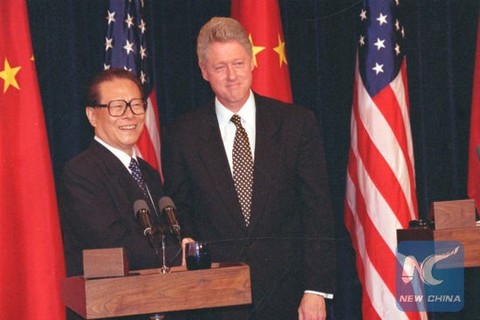
Jiang Zemin during his state visit to the United States in October 1997, after which Kamm was able to resume cooperation with the Chinese government. Photo credit: sina.com
You’re on a Businessman’s List
In February 1995, American businessman John Kamm traveled to Beijing to review progress of his effort to systematically obtain information on people imprisoned for counterrevolutionary crimes. Prior to his arrival, he compiled a booklet with all of the information he had received from the Ministry of Justice (MOJ) in 1994 and sent it to the MOJ and State Council Information Office (SCIO).
When he met with senior officials of the SCIO and MOJ, Kamm asked them what they thought of his booklet. SCIO Director Zeng Jianhui replied, “You have accurately reported what you were told.”
Kamm then proposed that, for 1995, he submit quarterly lists of 25 prisoners for a total of 100 names. Director Zeng looked at the MOJ representative, who nodded in agreement. “It’s a deal then,” said Kamm. “Let’s shake on it.” He then handed over the first list of 25 names.
Two months later Kamm returned to Beijing, where the MOJ gave him responses on 18 of the first 25 names, and he submitted a second list.
Then, in May 1995, the United States Department of State issued a visa to then-President of Taiwan Lee Tenghui. Lee traveled to the United States where he gave an impassioned speech on Taiwan at his alma mater, Cornell University. The Chinese government was furious. As tensions mounted, Chinese rockets were fired in the direction of Taiwan, and President Clinton dispatched two carrier groups to patrol the waters off the island.
The Taiwan Straits crisis effectively ended Kamm’s “prisoner information project,” but he refused to accept what he saw as a unilateral termination of a contract. He continued to travel to Beijing and lobbied whoever would see him—not many Chinese officials would—to resume cooperation. He convinced dozens of American senators and members of Congress to write letters of support to the Chinese Embassy and to bring up the matter in face-to-face meetings with senior Chinese officials. Most importantly, he “kept his side of the deal,” faxing to the SCIO and MOJ the third and fourth quarter lists.
It wasn’t until after President Jiang Zemin made a state visit to the United States in October 1997 that cooperation between Kamm and the Chinese government resumed. By the end of 1998, Kamm had received responses to nearly all of the prisoners on his 1995 lists.
One of the names for which he received a response was Zhang Xianliang, a Shanghai-based dissident who had served a sentence for counterrevolution in the mid-1980s and who had resumed his pro-democracy activism after his release. Zhang had been detained in 1993 for organizing a commemoration of the 1989 June Fourth anti-government protests in Beijing and other cities. He was sentenced to three years of re-education through labor in Anhui Province.
According to the MOJ response, Zhang had been released early for good behavior in June 1996. Not long after his release, Zhang traveled to the United States to join his daughter.
In March 2002, Kamm was profiled in a cover story for The New York Times Magazine. A few days after the story appeared, Kamm received a call from Ms. Zhang Bing, Zhang Xianliang’s daughter, who lived in Berkeley. She asked to come and see him at his San Francisco office.
Zhang came to Kamm’s office and immediately began telling him a story she had heard from her father, who was at that time running a small human rights group in Chicago. Upon arrival at the camp, Zhang Xianliang, a fifty-year-old intellectual, had been assigned to hard labor. He was tormented by two guards, until one day they were replaced by a kind guard. Zhang was reassigned to work in the camp library, and his guard would stop by and join him for tea and cigarettes.
At one of these get-togethers, the guard told Zhang: “Don’t worry. You will be released and allowed to travel to the United States. You’re on a businessman’s list.” When Zhang read the story in the Times magazine, he realized that the businessman was John Kamm.
Jiang Zemin during his state visit to the United States in October 1997, after which Kamm was able to resume cooperation with the Chinese government. Image credit: sina.com
In February 1995, American businessman John Kamm traveled to Beijing to review progress of his effort to systematically obtain information on people imprisoned for counterrevolutionary crimes. Prior to his arrival, he compiled a booklet with all of the information he had received from the Ministry of Justice (MOJ) in 1994 and sent it to the MOJ and State Council Information Office (SCIO).
When he met with senior officials of the SCIO and MOJ, Kamm asked them what they thought of his booklet. SCIO Director Zeng Jianhui replied, “You have accurately reported what you were told.”
Kamm then proposed that, for 1995, he submit quarterly lists of 25 prisoners for a total of 100 names. Director Zeng looked at the MOJ representative, who nodded in agreement. “It’s a deal then,” said Kamm. “Let’s shake on it.” He then handed over the first list of 25 names.
Two months later Kamm returned to Beijing, where the MOJ gave him responses on 18 of the first 25 names, and he submitted a second list.
Then, in May 1995, the United States Department of State issued a visa to then-President of Taiwan Lee Tenghui. Lee traveled to the United States where he gave an impassioned speech on Taiwan at his alma mater, Cornell University. The Chinese government was furious. As tensions mounted, Chinese rockets were fired in the direction of Taiwan, and President Clinton dispatched two carrier groups to patrol the waters off the island.
The Taiwan Straits crisis effectively ended Kamm’s “prisoner information project,” but he refused to accept what he saw as a unilateral termination of a contract. He continued to travel to Beijing and lobbied whoever would see him—not many Chinese officials would—to resume cooperation. He convinced dozens of American senators and members of Congress to write letters of support to the Chinese Embassy and to bring up the matter in face-to-face meetings with senior Chinese officials. Most importantly, he “kept his side of the deal,” faxing to the SCIO and MOJ the third and fourth quarter lists.
It wasn’t until after President Jiang Zemin made a state visit to the United States in October 1997 that cooperation between Kamm and the Chinese government resumed. By the end of 1998, Kamm had received responses to nearly all of the prisoners on his 1995 lists.
One of the names for which he received a response was Zhang Xianliang, a Shanghai-based dissident who had served a sentence for counterrevolution in the mid-1980s and who had resumed his pro-democracy activism after his release. Zhang had been detained in 1993 for organizing a commemoration of the 1989 June Fourth anti-government protests in Beijing and other cities. He was sentenced to three years of re-education through labor in Anhui Province.
According to the MOJ response, Zhang had been released early for good behavior in June 1996. Not long after his release, Zhang traveled to the United States to join his daughter.
In March 2002, Kamm was profiled in a cover story for The New York Times Magazine. A few days after the story appeared, Kamm received a call from Ms. Zhang Bing, Zhang Xianliang’s daughter, who lived in Berkeley. She asked to come and see him at his San Francisco office.
Zhang came to Kamm’s office and immediately began telling him a story she had heard from her father, who was at that time running a small human rights group in Chicago. Upon arrival at the camp, Zhang Xianliang, a fifty-year-old intellectual, had been assigned to hard labor. He was tormented by two guards, until one day they were replaced by a kind guard. Zhang was reassigned to work in the camp library, and his guard would stop by and join him for tea and cigarettes.
At one of these get-togethers, the guard told Zhang: “Don’t worry. You will be released and allowed to travel to the United States. You’re on a businessman’s list.” When Zhang read the story in the Times magazine, he realized that the businessman was John Kamm.
Pu Zhiqiang (pictured above) was arrested for “inciting splittism”, but convicted of “inciting ethnic hatred” and “picking quarrels and provoking trouble”. Source: CCTV, DW-TV
Chinese courts concluded 50 percent fewer endangering state security (ESS) trials in 2015, according to Dui Hua’s analysis of data released in the annual work report of China’s Supreme People’s Court (SPC). Dui Hua believes the decline represents an increase in the use of non-ESS charges to prosecute political and religious activism.
Dui Hua estimates that Chinese courts concluded more than 500 ESS trials of the first instance in 2015, compared with more than 1,000 ESS trials in 2014. Delivered to the National People’s Congress by SPC President Zhou Qiang on March 13, 2016, the annual work report includes ESS and endangering national defense (END) crimes in a category of “Other” trials. The category comprised 0.06 percent of first-instance criminal trials in 2015, compared with 0.13 percent in 2014. Based on an accounting of all of the crime categories in China’s Criminal Law and historical data on END trials, Dui Hua believes that the “Other” category is primarily populated by ESS cases—according to China Law Yearbook, only 243 END trials were concluded in 2014.
ESS crimes, which include subversion, inciting subversion, splittism, espionage, and state secrets violations, carry a mandatory supplemental sentence of deprivation of political rights (DPR). This sentence precludes individuals from writing articles, giving interviews, voting, standing for office, and working in a state-owned company.
The Xinjiang Uyghur Autonomous Region typically accounts for the largest percentage of ESS trials of any Chinese region. According to the annual work report of the Xinjiang High People’s Court, courts in the autonomous region heard approximately 100 ESS trials in 2015, down from about 300 trials per year in 2014 and 2013. The same work report reveals that trials for the category of crimes that cover “terrorism” surged about 25 percent respectively in 2015. Dui Hua believes that many of the trials for cult and terrorism crimes had previously been handled as ESS trials.
As previously reported by Dui Hua, ESS indictments by procuratorates in 2014 rose to a record level since the criminal category was introduced in 1997: 1,411 people were indicted in 663 cases. In light of the sharp drop in ESS trials in 2015, Dui Hua expects that ESS indictments also fell by a significant margin last year. The numbers are expected to be released later this year when the 2016 China Law Yearbook is published.
ESS “and Other” Trials
Pu Zhiqiang’s recent conviction is a prominent example of the uncertainty with which the justice system categorizes political activities as endangering state security. Police initially charged Pu with the ESS crime of “inciting splittism” for criticizing the Chinese Communist Party (CCP) on his microblog. However, his conviction at trial was ultimately for the non-ESS crimes of “inciting ethnic hatred” and “picking quarrels and provoking trouble.” Although Pu was given a suspended sentence, he is not a free man—he continues to serve a sentence through compulsory measures and will be subject to various regulations, the violation of which could result in his future detention.
Dui Hua’s Political Prisoner Database (PPDB) records the names of 19 people tried for ESS crimes in 2015. Mettursun Eziz was sentenced in May to four years in prison and three years deprivation of political rights (DPR) for inciting splittism. The Henan Nanyang Intermediate People’s Court found that he used voice-messaging apps like WeChat to download a large number of “extreme religious materials” produced by the East Turkestan Islamic Party (ETIP). Mettursun Eziz is scheduled for release on April 2, 2018.
In perhaps the most widely reported ESS trial of 2015, prominent journalist Gao Yu (高瑜) was sentenced to seven years in prison for leaking state secrets in April. Observers have attributed the charges to the leaking of “Document Number 9,” an internal CCP manifesto that rails against democracy, civil society, and universal values like human rights. In November, the Beijing High People’s Court reduced Gao’s sentence to a five-year term and allowed the 71-year-old to serve the remainder of her term outside prison.
In December, the Nanyang Intermediate People’s Court sentenced prominent religious figure Li Baocheng (李保成) to four years in prison for inciting subversion and fraud. Henan’s Dahe Daily accused the 77-year-old of extortion for charging “baptism fees.” Li was also found guilty of discussing plans to establish a new political party to challenge the CCP.
2015 First Instance Trials for ESS Cases in the Dui Hua PPDB
Name
Sex
Crime
1st instance Trial Date
1st Instance Verdict
Du X
杜某
M
Inciting subversion
12/15/2015
10 Months, 1 Yr DPR
Gao Yu
高瑜
F
Illegally procuring/trafficking in state secrets/intelligence for foreign entities
04/17/2015
7 Yrs, 1 Yr DPR
Han X
韩某
M
Illegally procuring/trafficking in state secrets/intelligence for foreign entities
01/29/2015
8 Yrs, 4 Yrs DPR
Li Baocheng
李保成
M
Inciting subversion
12/15/2015
4 Yrs, 2 Yrs DPR
Li X
李某
M
Inciting subversion
12/15/2015
1 Yr, 1 Yr DPR
Liang Qinhui
梁勤辉
M
Inciting subversion
11/13/2015
Unknown
Liu Chao
刘超
M
Inciting subversion
01/27/2015
1 Yr (DPR Unknown)
Liu Jiacai
刘家财
M
Inciting subversion
05/08/2015
5 Yrs, 3 Yrs DPR
Mettursun Eziz
麦提图尔荪·艾则孜
M
Inciting splittism
03/17/2015
4 Yrs, 3 Yrs DPR
Paziniye
排孜妮耶
F
Inciting splittism
12/21/2015
5 Yrs, 2 Yrs DPR
Qamber Amber
卡姆巴尔·阿穆巴尔
M
Inciting splittism
03/21/2015
9 Yrs (DPR unknown)
Wang Mo
王默
M
Inciting subversion
11/19/2015
Unkown
Xie Fengxia
谢丰夏
M
Inciting subversion
11/19/2015
Unknown
Yang Mingyu
杨明玉
M
Inciting subversion
09/23/2015
3 Yrs, 4 Yrs DPR
Yang X
杨某
M
Inciting subversion
12/15/2015
1.5 Yrs, 1 Yr DPR
Yang X
杨某
M
Inciting subversion
12/15/2015
10 Months, 1 Yr DPR
Zhang Rongping 张荣平
M
Inciting subversion
11/13/2015
Unknown
Zhang X
张某
M
Illegally procuring/trafficking in state secrets/intelligence for foreign entities
02/12/2015
6 Yrs, 1 Yr DPR
Zhao X
赵某
M
Illegally procuring/trafficking in state secrets/intelligence for foreign entities
People who were acquitted in 2015 (from left): July 21, 2015, Zeng Aiyun of Hunan (ynet.com); August 11, 2015, Yang Ming of Guizhou; December 21, 2015 (news.ifeng.com), Xian Renfeng of Yunnan (jinhua.cn).
The most important events on China’s political calendar — the annual sessions of the National People’s Congress (NPC) and the Chinese People’s Consultative Congress (CPPCC) — concluded in Beijing on March 16, 2016.
The heads of the Supreme People’s Procuratorate and Supreme People’s Court (SPC) presented their work reports to the NPC. These reports, and the subsequent resolutions to accept them, represent one of the main ways in which the NPC performs its constitutional duty to oversee China’s two nominally independent legal institutions.
The reports typically include statistical data, including figures on arrests, convictions, and acquittals. Although not presented in detail, these data can be used to track the performance and priorities of China’s legal system, like trends in “endangering state security” crimes.
Many NPC delegates seem to pay close attention to these figures as measures of effectiveness in fighting serious crime. If the numbers are not to their liking, some will vote against the reports as a symbolic way of voicing dissatisfaction. An interesting take-away from the SPC report is that the number of acquittals rose from 778 in 2014 (a rate of 0.066 percent for all cases adjudicated) to 1039 in 2015 (a rate of 0.084 percent).
In the weeks preceding the national “two meetings,” courts and procuratorates at lower administrative levels also present work reports to people’s congresses at the provincial, prefecture, and county levels.
Recently, reporters at online news journal The Paper observed the low number of acquittals reported by provincial courts in 2015 and asked legal experts how to reconcile these figures with increased attention to wrongful convictions. The experts pointed to many of the same explanations raised in an analysis of acquittals done by researchers at the Guangdong High People’s Court—performance measures based on conviction rates, “coordination” between law-enforcement institutions, and resolution of problematic cases through means other than acquittal. Some expressed optimism that China’s acquittal rates would start to approach more “normal” levels as a result of recent legal reforms aimed at strengthening the judicial process and reducing the pressure that comes from distortionary performance metrics.
Percentage of Adjudications Resulting in Acquittal, 2000-2015
Source: Supreme People’s Court Annual Work Report, 2000-2015
Wang Lin, a frequent commentator on legal issues and professor at Hainan University Law School, took up this issue in a recent column in the Beijing Times. He, too, thinks that recent reforms are likely to reverse the long-term decline in China’s acquittal rates. The title of Wang’s piece poses a provocative question: “Are You Ready for a Rise in the Acquittal Rate?”
This question is significant. Chinese leaders are concerned about the negative impact that miscarriages of justice and wrongful convictions have on popular assessments of the criminal justice system. For decades, however, the stress has mainly been on the effectiveness and efficiency of that system in fighting crime and promoting stability and security. It comes down to a need to make choices, as Professor Chen Ruihua put it in an interview last year, between “the risk of being unable to fight crime [and] the social damage caused by wrongful convictions.”
Professor Chen expressed optimism that public rights consciousness was helping to shift the balance in the direction of the procedural justice that would help protect against wrongful conviction. Professor Wang, who has closely observed the influence of China’s mercurial public opinion on criminal justice, appears a bit more ambivalent. Both would no doubt agree that if either Chinese law enforcement bodies or the Chinese public—or both—isn’t “ready” to see more criminal defendants proclaimed innocent by the country’s courts, then efforts to reform the judicial system may have limited impact.
*
Are You Ready for a Rise in the Acquittal Rate?
Wang Lin Beijing Times, February 23, 2016
As we enter this year’s “two meetings” period, provincial courts and procuratorates have been presenting their work reports around the country. A report in the media added up figures from 14 provincial-high-court work reports to reveal that these courts convicted 721,000 individuals and acquitted 543 individuals, for an average acquittal rate of 0.075 percent.
According to past work reports from the Supreme People’s Court, China’s acquittal rate has been gradually declining over the recent decade, reaching 0.066 percent in 2014. Of the extremely limited number of acquittals each year, more than 80 percent occur in cases in which individuals brought prosecutions directly to the court. In cases brought to court by public prosecutors, the acquittal rate has fallen from 0.296 percent in 2001 to 0.018 percent in 2010.
One can generally expect that when prosecutors bring a criminal case to court, there will be a conviction. Otherwise, why would they prosecute the case? A high conviction rate in publicly prosecuted cases ought to be the norm. If there’s not enough reliable evidence to prove that these convictions were decided unjustly, we shouldn’t criticize the fact that the acquittal rate is extremely low. “Presumption of innocence” is a fundamental principle of criminal justice. If a criminal justice system has a low acquittal rate, one shouldn’t automatically conclude that the rate of wrongful convictions is high.
Therefore, even though the acquittal rate in common-law jurisdictions is around 25 percent, around 5 percent in civil law countries, and 3.7 percent in Taiwan, one cannot conclude that our extremely low acquittal rate in publicly prosecuted cases must be a problem. There are reasons to doubt the accuracy of a low acquittal rate, however, since it’s only after a miscarriage of justice is reversed that one can say, legally speaking, that a past conviction was made in error.
For a long time, court work reports at various levels rarely touched upon wrongful convictions. Over the past two years, there’s been a lot of effort to reopen cases and overturn wrongful convictions. The public has made widespread note of these efforts, and some courts have begun including information about remedying such cases in their reports. As far as the public is concerned, “justice delayed is better than justice denied,” and when justice is overturned it’s thought of as a bit of luck for the exoneree amid his or her great misfortune. Praising courts for the courage to remedy their mistakes also carries important significance, as it stirs up other “highly suspected wrongful convictions” that have run into so many obstacles on the road to justice.
For those 14 provincial jurisdictions, last year’s acquittal rate represents a slight increase over the national rate for 2014. There is reason to expect evidence of an even higher increase when the SPC and SPP present their data during the March “two meetings.” This is because the Central Politico-Legal Commission gave clear orders at the beginning of 2015 that central and local law enforcement institutions were to carry out a comprehensive inventory of all performance indicators and eliminate unreasonable indicators such as the number of criminal detentions, arrest approval rate, indictment rate, conviction rate, or case clearance rate. If high conviction rates (in other words, low acquittal rates) were considered “hard” targets in the past and if these performance indicators could “forcibly” turn what ought to be acquittals into convictions, then once you’ve gotten rid of these irrational performance indicators a rise in the acquittal rate should follow as a matter of course.
Once the policy has been set at the top, you have to wait and see how it’s implemented at the local level. First, though, we should ask both law enforcement bodies and the general public this question: “Are you prepared for a rise in the acquittal rate?”