Blog

  • Dui Hua Digest, March 2016

    EVENTS

    Photo credit: Thailand Institute of Justice

    Bangkok Rules E-course Out on International Women’s Day

    In honor of International Women’s Day (March 8), Dui Hua released a Chinese translation of an e-course on non-custodial measures based on the UN Rules for the Treatment of Women Prisoners and Non-custodial Measures for Women Offenders (Bangkok Rules). The translation recognizes the rising number of women and mothers living in the Chinese prison system.

    In February, Dui Hua’s Human Rights Journal reported that the number of women in prison in mainland China has risen more than 50 percent since 2003 to account for 6.5 percent of China’s prison population. Hong Kong and Macau—special administrative regions that are not included in China’s statistics—have the largest portions of incarcerated women in the world. Women accounted for 21 and 19 percent of incarcerated people in Macau and Hong Kong, respectively, as of mid-2015.

    As more women enter criminal justice systems worldwide, the need to implement the Bangkok Rules becomes more urgent. The rules provide a framework for meeting the physical and psychological needs of women in conflict with the law. Being responsive to women’s needs includes increasing the use of non-custodial measures especially for pregnant women, parents, and survivors of gender-based violence.

    Dui Hua Executive Director John Kamm traveled to China earlier this year, distributing several copies of the e-course to Chinese judges, procuratorial officials, and scholars. The translation is meant as a training guide for Chinese legal officials in the mainland, Hong Kong, and Macau. It is based on Penal Reform International’s e-course “Women in Detention: Putting the UN Bangkok Rules into Practice,” which is also available in English, Arabic, and Russian.

    Dui Hua plans to publicize its Chinese translation in the coming months via Chinese journals and websites and to continue distributing hard copies to Chinese officials involved in legal reform efforts.

    The translation’s release comes just after of the landmark passage of China’s first anti-domestic violence law, which became effective on March 1 after years of effort by Chinese rights advocates. The law allows a survivor of domestic violence who is married to or cohabitating with the perpetrator to apply to the court for a restraining order, a form of legal recourse long sought by anti-violence groups. Approximately one in four Chinese women is a survivor of domestic violence.

    Chinese Consulate Welcomes Dui Hua Lecturer

    On February 19, Dui Hua Publications & Programs Officer Jonathan J. Kinkel gave a talk at the Chinese Consulate General’s Young Diplomats Reading Club in San Francisco. The lecture introduced to Chinese diplomats elements of the American legal system such as judicial appointment, the jury system, and the federal courts, and was the first presentation to the diplomats delivered in Mandarin by an American expert. The outreach event underscored positive relations between Dui Hua and the San Francisco consulate.

    PRISONER CASES

    Law Professor Held on Political Charges Released

    Associate Professor Chen Taihe (陈泰和) of Guilin Electronic Technology University Law School, a practicing attorney and leading voice for legal reform in China, was released from residential surveillance at the end of February. A jury-system advocate, Professor Chen was one of more than 200 lawyers and activists interrogated or detained in a nationwide police action in mid-July. He is the first lawyer detained during the crackdown confirmed to be released. Police detained Professor Chen on July 12, 2015, on suspicion of inciting subversion of state power, provoking a serious disturbance, and embezzlement. He was placed under residential surveillance in a designated location on August 12 and transferred to residential surveillance at his home on August 22.

    Informed by Guilin police that charges against him would not be pursued, the 45-year-old Chen traveled to San Francisco to be reunited with his family on Tuesday, March 1. In 2012, Chen visited Washington, DC, to participate in a judicial exchange program at the invitation of the US Department of State. He previously studied the jury system in the United Kingdom and published a book on the topic, The Most Common Right (《最普通的权利》).

    Updates from Hubei, Tibet, and Tianjin

    Government interlocutors updated Dui Hua on the status of five women Falun Gong practitioners imprisoned in Hubei Province. One of the five, Niu Qingyang (牛庆阳), was released early from Hubei Women’s Prison in late 2015. Sentenced in 2009 to nine years in prison for her involvement with the outlawed group, Niu received sentence reductions totaling approximately three years.

    Local courts granted sentence reductions to two Tibetan men convicted of endangering state security (ESS). Pema Yeshe, a 34-year-old native of Xinlong County, Sichuan, had his life sentence commuted to a fixed term of 19 years and 11 months on August 21, 2015. The Kardze Tibetan Minority Autonomous Prefecture Intermediate People’s Court sentenced him to death with two-year reprieve in 2009 for distributing pro-independence leaflets and setting fire to a government building. Pema Yeshe is in prison in Sichuan Province. He is scheduled for release on July 20, 2035.

    After receiving a four-month sentence reduction in December 2015, Namkha Jam has 29 months left to serve on a six-year sentence for inciting splittism. The Huangnan Tibetan Minority Autonomous Prefecture Intermediate People’s Court found him guilty of disseminating photos of Tibetan self-immolations both domestically and to overseas separatist organizations on March 28, 2013. He is incarcerated in Qinghai’s Dongchuan Prison.

    The Tianjin No.1 Intermediate People’s Court sentenced 45-year old Uyghur farmer Samir Aamir to 10 months in prison for inciting splittism on December 17, 2014. The government source Dui Hua obtained did not reveal the specifics of the case but stated that Samir initially lodged and later withdrew an appeal to the Tianjin High People’s Court. Dui Hua has previously reported on a handful of cases of Uyghurs detained outside Xinjiang on suspicion of ESS crimes.

    DUI HUA IN THE NEWS

    News outlets from around the globe carried Dui Hua’s February press release on the sentence reductions China announced for 11 Uyghur prisoners, including Canadian national Huseyin Celil, on February 1. Canadian coverage included reports from The Globe and Mail and the National Post. Both articles quote Dui Hua Executive Director John Kamm regarding the sentence reduction and ongoing efforts towards further clemency.

    Radio Free Asia cited Dui Hua to report on the release of Li Baocheng, a religious figure sentenced to four years in prison for inciting subversion and fraud in December 2015. The Georgetown Journal of International Affairs published an extensively researched article on Chinese capital punishment by Dui Hua staffer Jonathan Kinkel.

    PUBLICATIONS ROUND-UP

    Featured: Growing Number of Women in Prison in China (February 23)

    China may soon surpass the United States in the number of women it puts behind bars. The Asian Pacific Conference of Correctional Administrators finds that by the middle of last year, China had more than 107,000 women in prison, up 3.2 percent from the previous year. By comparison, US federal and state corrections facilities housed just over 110,000 women at the beginning of 2015. The number of women in Chinese prisons has risen more than 50 percent since 2003.

    American Views of China Remain Negative (February 25)

    China Issues Oversight Rules for “Non-residential” Residential Surveillance (February 9)

    China Reduces Sentences of 11 Uyghur Prisoners, Including Huseyin Celil (February 2)

    Previous Digest: February 2016

    ROOTS

    This section delves into the human rights activism of John Kamm between 1990 and 1999, the year he established
    Dui Hua.
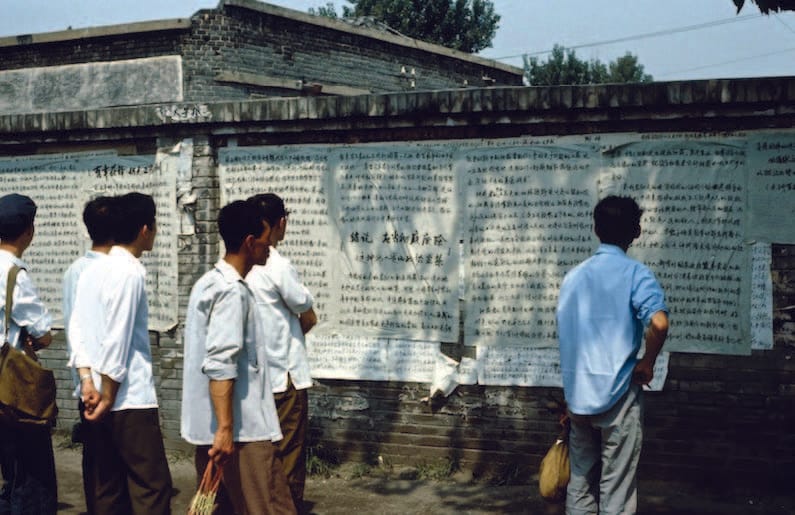
    Democracy Wall in Beijing, August 20, 1979. Photo credit: internet image.


    The Bell Tolls for Zhu Jianbin

    As American businessman John Kamm was nearing the end of his one-year term as president of the American Chamber of Commerce in Hong Kong, an article appeared in The New York Times about obscure Democracy Wall activist Zhu Jianbin. Before writing the piece, Nicholas Kristof, the paper’s Beijing bureau chief, traveled to Zhu’s hometown of Wuhan.

    Kristof wrote: “[Zhu’s] very existence has been virtually obliterated, for most democracy advocates here and abroad have never heard of him, and even in this city where he worked and dreamed of democracy, people shake their heads and say they have never heard his name.”

    Reading these words, Kamm resolved to find out what had happened to Zhu Jianbin.

    What little was known about Zhu came from media and NGO accounts from the early 1980s. Born in 1957, he was one of more than 100,000 workers employed at Wuhan Steel Works, China’s first supergiant steel factory. He edited a journal about democracy, “The Bell Tolls,” and in the summer of 1980, attempted to form the All-China Association of the Democratic Press. He signed a petition calling for the release of Liu Qing, an editor of the April Fifth Forum. Police detained Zhu in April 1981, then tried and sentenced him to prison for counterrevolutionary crimes.

    Kamm didn’t get a chance to ask about Zhu Jianbin until May 1992, after he had met with Politburo Standing Committee Member Li Ruihuan in November 1991 and Vice Minister of Justice Jin Jian in April 1992. Kamm added Zhu’s name to a prisoner list and asked about him in face-to-face meetings with senior officials of the State Council Information Office and the Ministry of Justice. These officials agreed to look into the case.

    On his next visit to Beijing, in August 1992, Kamm was received by Prison Administration Bureau Deputy Director Wang Mingdi. Wang told Kamm that Zhu Jianbin was sentenced to six years in prison in 1981, but had his sentence extended for getting into a fight with another inmate. Zhu had recently been released, Kamm was told, and went back to his hometown to resume working. The deputy said Zhu had not been sent to a re-education through labor camp.

    Zhu’s case was the first of several Democracy Wall dissidents whose cases Kamm worked on in 1992 and 1993. One by one, the most prominent of them were granted early release: Wang Xizhe in February 1993, Xu Wenli in May 1993, and finally Wei Jingsheng in September 1993.

  • The Bell Tolls for Zhu Jianbin

    The Bell Tolls for Zhu Jianbin

    << Read all John Kamm Remembers stories

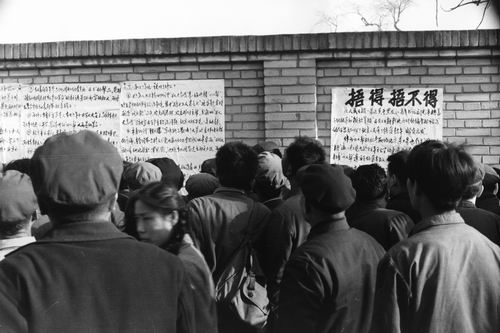
    The Xidan democracy wall. Image credit: China Daily

    As American businessman John Kamm was nearing the end of his one-year term as president of the American Chamber of Commerce in Hong Kong, an article appeared in The New York Times about obscure Democracy Wall activist Zhu Jianbin. Before writing the piece, Nicholas Kristof, the paper’s Beijing bureau chief, traveled to Zhu’s hometown of Wuhan.

    Kristof wrote: “[Zhu’s] very existence has been virtually obliterated, for most democracy advocates here and abroad have never heard of him, and even in this city where he worked and dreamed of democracy, people shake their heads and say they have never heard his name.”

    Reading these words, Kamm resolved to find out what had happened to Zhu Jianbin.

    What little was known about Zhu came from media and NGO accounts from the early 1980s. Born in 1957, he was one of more than 100,000 workers employed at Wuhan Steel Works, China’s first supergiant steel factory. He edited a journal about democracy, “The Bell Tolls,” and in the summer of 1980, attempted to form the All-China Association of the Democratic Press. He signed a petition calling for the release of Liu Qing, an editor of the April Fifth Forum. Police detained Zhu in April 1981, then tried and sentenced him to prison for counterrevolutionary crimes.

    Kamm didn’t get a chance to ask about Zhu Jianbin until May 1992, after he had met with Politburo Standing Committee Member Li Ruihuan in November 1991 and Vice Minister of Justice Jin Jian in April 1992. Kamm added Zhu’s name to a prisoner list and asked about him in face-to-face meetings with senior officials of the State Council Information Office and the Ministry of Justice. These officials agreed to look into the case.

    On his next visit to Beijing, in August 1992, Kamm was received by Prison Administration Bureau Deputy Director Wang Mingdi. Wang told Kamm that Zhu Jianbin was sentenced to six years in prison in 1981, but had his sentence extended for getting into a fight with another inmate. Zhu had recently been released, Kamm was told, and went back to his hometown to resume working. The deputy said Zhu had not been sent to a re-education through labor camp.

    Zhu’s case was the first of several Democracy Wall dissidents whose cases Kamm worked on in 1992 and 1993. One by one, the most prominent of them were granted early release: Wang Xizhe in February 1993, Xu Wenli in May 1993, and finally Wei Jingsheng in September 1993.


    Listen to the Encounters with China podcast.

    Subscribe to receive notifications about new episodes. 

    Read all John Kamm Remembers stories.


  • Dui Hua and PRI Release Mandarin Course on Bangkok Rules for Women in Prison

    SAN FRANCISCO, CA (March 8, 2016)—Aiming to improve legal outcomes for women in Chinese-speaking areas of the world, Dui Hua has just released a Chinese translation of an e-course on sections of the Bangkok Rules regarding non-custodial measures. Earlier this year, Dui Hua Executive Director John Kamm traveled to China and distributed several copies of the translation to Chinese judges, procuratorial officials, and scholars. The course serves as a training guide for legal officials from several Chinese-speaking localities, including those in mainland China, Hong Kong and Macau. The translation is based on Penal Reform International’s e-course “Women in Detention: Putting the UN Bangkok Rules into Practice,” already available in English, Arabic, and Russian.

    Today is International Women’s Day, and this year Dui Hua observes the occasion by recognizing the rising number of women—especially those who are pregnant or who are raising children—living in prisons that are largely built for men. The number of women in mainland Chinese prisons has now risen more than 50 percent since 2003. Hong Kong and Macau—special administrative regions which are not included in China’s statistics—have the largest portions of incarcerated women in the world. Macau’s prison population as of mid-2015 is comprised of 21 percent women, and Hong Kong’s is 19 percent women. As more women enter the criminal justice system, the UN Rules for the Treatment of Women Prisoners and Non-custodial Measures for Women Offenders (Bangkok Rules) become increasingly important as a framework for meeting the physical and psychological needs of women in penal systems. Non-custodial measures help reduce the social and psychological repercussions of legal sanctions by addressing the needs of pregnant women, keeping families together, and reducing the risk of additional trauma for women who are survivors of gender-based violence.

    Dui Hua plans to publicize these materials in the coming months, including publishing the translated materials in mainland Chinese journals and on Chinese-language websites, as well as distributing hard copies to Chinese officials involved in pushing for legal reform. Executive Director Kamm stated, “Promoting the non-custodial measures of the Bangkok Rules, along with robust enforcement of China’s new anti-domestic violence law that became effective March 1, are the best ways of addressing the seemingly inexorable rise in the number of women prisoners in China. Dui Hua is proud to work with its partner, Penal Reform International, to promote the Bangkok Rules with an eye to halting and reversing the incarceration of women.”

  • Dui Hua Hails Professor Chen Taihe’s Arrival in the United States

    SAN FRANCISCO (MARCH 7, 2016): Associate Professor Chen Taihe (陈泰和) of Guilin Electronic Technology University Law School, a practicing attorney and a leading voice for legal reform and the adoption of the jury system in China, was reunited with his family in San Francisco on Tuesday, March 1.

    Professor Chen was one of more than 200 lawyers and activists interrogated or detained in a nationwide police action in mid-July. He was detained on July 12, 2015 on suspicion of “inciting subversion of state power,” “provoking a serious disturbance,” and “embezzlement.” He was released from detention and placed under residential surveillance in a designated location on August 12 and transferred to residential surveillance in his own residence on August 22.

    Unlike residential surveillance in a designated location, residential surveillance in one’s own residence is a less taxing coercive measure. During the roughly six months he was under residential surveillance, Chen was allowed to move about Guilin, visit with friends, and make and receive calls to his wife in the United States. He was permitted to travel outside Guilin. He was required to report regularly to the police and to submit to interviews.

    Chen, 45 years old, studied the jury system in the United Kingdom and, based on his study, published his book The Most Common Right (《最普通的权利》). In 2012, Chen visited Washington DC and participated in a judicial exchange program at the invitation of the Department of State. In October 2013, at the invitation of retired Chief Judge of the Maui Second Circuit of Hawaii Shackley F. Raffetto, Chen led a group of Chinese lawyers to visit Hawaii for a series of exchanges with judges, including Chief Justice Mark Recktenwald of the Hawaii Supreme Court, and leading lawyers. They observed a complete jury trial over a two-day period.

    A short time before departing for the United States, Chen was informed by the Guilin police department that charges against him would not be pursued and that he would be allowed to travel to the United States to reunite with his family. He applied for and quickly received a new Chinese passport, as well as an American visa.

    Dui Hua worked with Chinese officials and American diplomats to help bring about this result. It expresses its gratitude to everyone who helped make this important humanitarian gesture possible.

    Dui Hua has been authorized by Professor Chen to release the following statement:

    “I am grateful to the Guilin police for dropping the charges against me and allowing me to be reunited with my family in the United States. I would also like to thank my American friends who helped make this possible.

    I sincerely hope that the Chinese government will also show clemency to those lawyers and citizens who have been arrested for subversion and inciting subversion.

    I intend to resume my work promoting the adoption of the jury system in China, and look forward to the day when China is a free country that respects individual rights and the rule of law.

    A society based on dialogue is superior to a society based on conflict. I hope that China will tolerate more dissenting opinions, to the mutual benefit of the government and the people it governs.”

    *

    对话基金会欢迎陈泰和教授抵达美国

    旧金山 (2016年3月7日): 桂林电子科技大学法学院陈泰和副教授,执业律师,呼吁在中国进行司法改革并采纳民决团(陪审团)制度的主要倡导者,3月1日在旧金山与他的家人重聚团圆。

    陈教授是去年七月中旬在全国范围内进行的警方行动中被约谈或拘捕的200多名律师和活动人士中的一个。他在2015年7月12日被拘传,涉嫌罪名是“煽动颠覆国家政权罪”,“寻衅滋事罪”和“职务侵占罪”。8月12日他从看守所被释放同时被在指定地点监视居住,又在8月22日变更为在自己居所监视居住。

    与指定地点监视居住不同,在自己家中监视居住是一个较为轻缓的强制措施。大概六个月的在自己居所监视居住期间,陈教授被允许在桂林活动,走亲访友,并与在美国的妻子通讯联系。他也被获准旅行到外地,但被要求定期向警察汇报并面谈。

    陈,45岁,在英国研究民决团制度并以此为基础出版了专著《最普通的权利》。2012年他应美国国务院之邀访问了华盛顿参加一个司法交流项目。2013年,应退休的夏威夷州茂宜(Maui)第二巡回法院首席法官 Shackley F. Raffetto的邀请,陈教授带领一批律师与包括夏威夷州最高法院首席大法官 Mark Recktenwald 在内的美国法官和重要律师进行交流访问,期间观察了一个持续两天完整的民决案庭审。

    在陈教授出发到美国之前不久,桂林公安部门告知针对他的指控将不再追诉,而且他被获准出国到美国与家人团聚。很快地,他申请办理了一个新护照,之后快速地申请得到了美国签证。

    对话基金会通过与中国官员及美国外交官合作力助促成此事,并向帮助使得这个重要的人道主义援助成为可能的所有人表示感谢。

    经陈泰和教授授权,对话基金会做出以下声明:

    “本人感谢桂林警方撤销对我的刑事指控并允许我与在美国的家人团聚,并同时感谢提供帮助的美国朋友们。

    本人衷心希望中国政府对于其他那些以颠覆国家政权及煽动颠覆国家政权罪逮捕的律师和公民们给予同样的仁慈。

    本人将继续开展本人致力于的促成中国采纳民决团制度的工作,并看好有朝一日中国成为一个自由国家,尊重个人权利,实现法治。

    基于对话的社会较基于冲突的社会优越。我希望中国能够宽容更多的歧见,以期使得政府及其治下的民众互惠互利。”

    For questions, please contact us.

  • American Views of China Remain Negative

    Less than six months after Chinese president Xi Jinping’s state visit to the United States—a visit intended to improve American perceptions of China—the percentage of Americans who hold an unfavorable view of China rose in 2016, according to the Gallup Organization. For the ninth year in a row, at least half of Americans hold an unfavorable view of China; 52 percent held that view in early February 2016, versus 44 percent who held a favorable view. In 2015 the percentages were 50 and 44, respectively. Gallup conducted its annual survey on American attitudes towards foreign countries earlier this month.

    The percentage of Americans who consider China to be America’s greatest enemy remained steady at 12 percent.

    Americans who see China’s economic power as a critical or important threat to the United States rose marginally from 84 percent of those polled in 2015 to 86 percent in 2016, while the percentage who see China’s military power to be a critical or important threat was 87 percent—the same percentage recorded the last time the question was asked in 2014.

    Since 2011, at least 50 percent of Americans have viewed China as the world’s leading economic power, but this year the percentage dropped to exactly 50 percent, while the percentage holding the view that the US is the leading economic power rose to 37 percent from 31 percent in 2015. Perhaps the most surprising result of the poll is the response of Americans to the question “Who will be the leading economic power in 20 years?” In 2012, the last time the question was posed, 46 percent responded China and 38 percent responded the US. In 2016, 44 percent believe the US will be the leading power in 2026; only 34 percent predict China will then be the leading power.

  • Growing Number of Women in Prison in China

    Women prisoners in China. Photo source: gucheng.com

    China may soon surpass the United States in the number of women it puts behind bars. The Asian Pacific Conference of Correctional Administrators finds that by the middle of last year, China had more than 107,000 women in prison, up 3.2 percent from the previous year. By comparison, federal and state facilities in the US housed just over 110,000 women in prison at the beginning of 2015 (according to the US Bureau of Justice Statistics’ analysis tool).

    The number of women in Chinese prisons has now risen more than 50 percent since 2003. These figures exclude women held in detention centers or other facilities run by China’s public security bureaus (e.g., custody and education, mandatory drug rehabilitation, and legal education). If these facilities were included, the number of women China incarcerates would likely have already exceeded that of the United States.

    Women now make up 6.5 percent of China’s general prison population, compared with 7.2 percent of total prisoners in the United States. Hong Kong and Macau—special administrative regions which are not included in China’s statistics—have the largest portions of incarcerated women in the world. As of mid-2014, the World Prison Brief noted that Hong Kong imprisoned the largest proportion of women (19.4 percent) within its total prison population than any other country with a population of at least 60,000. In the past year, however, Hong Kong was surpassed by Macau, whose prison population as of mid-2015 is comprised of 21 percent women.

    Sources: Dui Hua, China Statistical Yearbook, APCCA

    Promoting the Bangkok Rules

    Worldwide, the number of women in prison has increased 50 percent since 2000, compared with 18 percent growth for men, according to the Institute for Criminal Policy Research. As more women enter the criminal justice system, the UN Rules for the Treatment of Women Prisoners and Non-custodial Measures for Women Offenders (Bangkok Rules) become increasingly important as a framework for meeting the physical and psychological needs of women in penal systems built for men.

    Aiming to improve legal outcomes for women in Chinese-speaking areas of the world, Dui Hua has just released a Chinese translation of an e-course on sections of the Bangkok Rules regarding non-custodial measures. Starting in 2016, Dui Hua began distributing the translation as a training guide for legal officials in China. The translation is based on Penal Reform International’s e-course “Women in Detention: Putting the UN Bangkok Rules into Practice,” already available in English, Arabic, and Russian.

    Non-custodial measures help reduce the social and psychological repercussions of legal sanctions by keeping families together and reducing the risk of additional trauma for women who are survivors of gender-based violence.

  • The Campaign to Free Counterrevolutionaries

    The Campaign to Free Counterrevolutionaries

    << Read all John Kamm Remembers stories

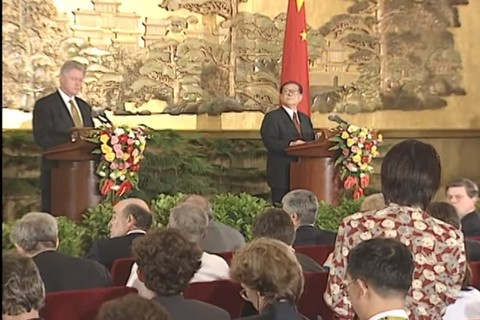
    Former presidents Bill Clinton and Jiang Zemin, holding a June 1998 press conference in Beijing, listen to an American reporter raise the issue of releasing prisoners sentenced in China for counterrevolutionary crimes. Source: YouTube screengrab

    China’s most recent Criminal Law was adopted by the National People’s Congress on July 1, 1979, and came into force on January 1, 1980. It has been amended nine times, most recently in September 2015.

    The most sweeping amendment to the Criminal Law took effect on March 14, 1997, when lawmakers removed the chapter on counterrevolutionary crimes and added another on crimes of endangering state security (ESS). The new chapter covered some, but not all, of the acts formerly classified as counterrevolutionary offenses. For instance, the counterrevolutionary crimes relating to “reactionary sects,” organizing a jailbreak, and plotting and carrying out airplane hijackings were reclassified as crimes other than ESS in the amended Criminal Law.

    American businessman John Kamm had been intervening on behalf of prisoners convicted of counterrevolutionary crimes—most of whom had been convicted for offenses committed during the Spring 1989 disturbances—for nearly seven years when the amended Criminal Law took effect. From exchanges he had with the Ministry of Justice (MOJ), he obtained information on individual cases as well as the number of counterrevolutionaries serving sentences in prison: 2,016 as of the end of 1996. By the end of 1997, almost nine months after counterrevolutionary crimes had been removed from the Criminal Law, there were still 1,946 people serving prison sentences for the defunct crimes.

    In early 1998, Kamm began lobbying the SPC and the MOJ to release these prisoners in accord with both Chinese and international law. In China, there is no such thing as “crime by analogy.” An offense cannot be an offense simply because it is like another crime, and counterrevolution and ESS are different.

    Kamm also relied on an interpretation of Article 15 of the International Covenant on Civil and Political Rights, which China signed in 1998 but has not ratified. Article 15 states that, “If subsequent to the commission of an offense, provision is made for the imposition of a lighter penalty, the offender should benefit thereby.” Kamm argued that, after their removal from the Criminal Law, the legal penalties for counterrevolutionary crimes became nonexistent.

    Surprisingly, Chinese officials were sympathetic. An SPC official told Kamm that if his arguments were accepted, many prisoners and their families would be forever grateful. An MOJ official told Kamm that the ministry’s own analysis somewhat aligned with his: under international human rights law, the prisoners should be released, but under Chinese law, this was impossible.

    The MOJ expanded on its position in a letter to Kamm dated April 17, 1998, citing Article 12 of the amended Criminal Law, which states: “Before the entry into force of this law, any judgment that has been made and has become effective according to the laws at the time shall remain valid.”

    Around the time Kamm received the letter, President Bill Clinton was planning a state visit to China. Kamm appealed to Jeff Bader, who headed China affairs at the National Security Council, to present Kamm’s proposal for clemency to the president. Clinton agreed to raise the issue with President Jiang Zemin.

    On June 27, 1998, Clinton met Jiang at the Great Hall of the People. After the meeting, they held a press conference at which President Clinton revealed that he had suggested to President Jiang that “Chinese citizens who were in prison for crimes no longer on the books” should be released.

    On a subsequent trip to China, Kamm asked a senior adviser what President Jiang thought of the suggestion. The advisor said, “President Jiang was impressed by President Clinton’s deep knowledge of Chinese law.”

    To this day several dozen people remain in prison for counterrevolutionary crimes committed before 1997. One of the longest still in prison is Shanghai labor activist Jiang Cunde, who was detained in 1987 and subsequently sentenced to life in prison for counterrevolutionary sabotage. His life sentence was commuted in 2004, and there have been no sentence reductions since then. Jiang, who reportedly suffers from schizophrenia, is not due for release until August 22, 2024, by which time he will be 71 years old.


    Listen to the Encounters with China podcast.

    Subscribe to receive notifications about new episodes. 

    Read all John Kamm Remembers stories.


  • Dui Hua Digest, February 2016

    EVENTS

    The Supreme People’s Court (SPC) building in Beijing. Dui Hua is eager to plan new juvenile justice exchanges with the SPC as soon as uncertainties arising from the NGO management law are dispelled. Photo source: english.cri.cn

    Kamm Holds Talks in Beijing, Hong Kong

    Dui Hua Executive Director John Kamm made his first trip to China of 2016 in the last week of January. In Beijing, he met with Chinese officials and leading scholars from the Ministry of Foreign Affairs, Supreme People’s Court (SPC), Supreme People’s Procuratorate, Peking University, and Renmin University Law School. In Beijing and Hong Kong, Kamm met with senior foreign diplomats—representing Australia, Canada, Denmark, the European Union, France, New Zealand, Norway, Sweden, Switzerland, and the United States—as well as business people, journalists, and non-governmental organizations (NGOs) focused on civil society, religion and labor.

    Topics discussed during the meetings included:

    • People detained for state security and public order offenses. Kamm made individual inquiries and obtained information on more than a dozen individuals, including news of several acts of clemency.
    • The “Bookstore Five.” Concern over the case of five Causeway Bay Bookstore managers and employees dominated discussions in Hong Kong. Hong Kong residents representing the entire political spectrum believe that mainland Chinese agents abducted the booksellers. Two ethnic Chinese managers—a Swedish citizen living in Thailand and a British national living in Hong Kong—made statements in China from undisclosed places of detention. Some speculated that their statements were made under duress.
    • The Foreign NGO Management Law. This controversial law has divided Chinese government ministries and even ministerial departments. Detractors worry that the law concentrates too much power in the Ministry of Public Security. Foreign governments and NGOs were alarmed by the detention of Swedish NGO activist Peter Dahlin, who was released and deported after strong interventions by the Swedish government.
    • The Chinese economy. China’s economic growth slowed in 2015, and many observers expect more of the same this year. Chinese stock exchanges have been performing particularly poorly, with the Shanghai exchange dropping 20 percent in January. This is the first year of China’s latest five-year plan, the road map for China’s economic development during the period 2016-2020.
    • American politics. Chinese officials and academics quizzed Kamm on likely outcomes of the 2016 presidential election and what various scenarios might mean for US-China relations. Kamm noted that foreign policy, which normally takes a back seat to economic issues, is dominated by the struggle against terrorism. He also opined that poor performance of the Chinese stock markets could become an issue if it weakens, or is perceived to weaken, American markets. Since January 1, Americans have lost significant amounts in the values of their individual retirement accounts.
    • Juvenile justice reform: Dui Hua and the SPC are eager to begin planning new juvenile justice exchanges as soon as uncertainties arising from the NGO management law are dispelled. Kamm met with the SPC Office of Juvenile Courts to outline an ambitious agenda of future exchanges. Dui Hua has organized four expert exchanges with the SPC since 2008.
    • Special pardon: While Kamm was in Beijing, Chinese media announced the results of the special pardon that marked the 70th anniversary of the end of World War II. Reflecting China’s emphasis on juvenile justice reform, nearly 30,000 young people benefited from the pardon.

    PRISONER CASES

    Septuagenarian Christian Leader Imprisoned for Inciting Subversion

    The Nanyang Intermediate People’s Court sentenced 77-year-old Li Baocheng (李保成) to four years in prison for inciting subversion and fraud on December 15, 2015, official sources say. The religious-turned-political leader received a much shorter sentence than 60-year-old Dong Zhanyi (董占义), who, as founder of the New Era Communist Party of China, received a life sentence for subversion and contract fraud in 2011.

    Li became a leader of the Huangjinduo Christian Church (黄金垛基督教会) in Henan’s Nanzhao County in 1961. Over the last 50 years, he developed 24 church branches in Nanzhao and surrounding cities.

    Despite earlier brushes with the law, Li was celebrated for his charitable contributions and economic development efforts in the late 1980s and 1990s. During the Sino-Vietnamese border clashes near Yunnan’s Laoshan Mountain in 1987, Li organized church members to make 8,800 pairs of insoles for Chinese soldiers, delivering them to the battlefront at his own expense. Li was also a successful entrepreneur who raised funds from his adherents to found carpet and dye factories in Henan and Hubei provinces and to invest in the mining industry. The United Front of Henan, a monthly political journal published by the provincial government, praised Li and his church for their diligence and patriotism in 1995.

    Li did not appear in the headlines again until last summer, when a short article in Henan’s Dahe Daily called him a fraud. Accused of extortion, Li reportedly charged 500 yuan per baptism and had amassed a total of 141,500 yuan in “baptism fees” since April 2015.

    An official source uncovered by Dui Hua explains that Li was also charged with inciting subversion. During religious meetings held between October 2014 and April 2015, Li and four other church leaders allegedly discussed plans to establish a new political party (Jinhua Aimin) to replace the Communist Party of China (CPC) and save the nation from US imperialism. The Christian-led party reportedly intended to rename China (from zhong guo to jin guo) and Beijing (from Beijing to “xiandu”), as well as to adopt the Kuomintang’s (KMT) emblem and an eight-star flag. Li reportedly said that both the CPC and KMT were destined to “self-destruct.”

    On April 15, 2015, Li and more than 200 church members held a demonstration in Nanzhao County, chanting slogans such as “Topple American imperialism”; “Smash public security, procuratorates, and courts”; and “Long live Jinhua Aimin Party.” The next day, public security detained Li and other church leaders for holding an illegal demonstration, then criminally detained them for inciting subversion on April 17, and formally arrested them on May 19.

    Back in the 1970s, Li was sentenced to three years’ in prison for counterrevolution, just a few months before the Cultural Revolution ended. In 1983, Li was detained during the first strike-hard campaign, receiving a five-year sentence for disturbing social order.

    From counterrevolutionary to patriot to enemy of the state, Li will spend his 81st birthday in prison if he completes his original sentence. The four other church leaders—sentenced to 10-18 months in prison for inciting subversion—are scheduled for release between February and October of this year.

    Women Imprisoned for State Security Offenses (Part III)

    Inciting subversion

    While still relatively small, the number of women charged with inciting subversion has increased in recent years. One of the most sensational cases is that of prominent feminist Su Changlan (苏昌兰). Police formally arrested Su on December 3, 2014, for circulating online messages and articles in support of Hong Kong’s Occupy Central protesters. Since taking the case over for review on May 3, 2015, the Foshan procuratorate has twice returned it to public security for supplementary investigation due to insufficient evidence. Su spent 13 months in detention before she was indicted on November 13. She applied for bail on the grounds that she has a heart condition, but police denied her application.

    Amid the nationwide crackdown ahead of the 25th anniversary of June Fourth, police detained Huang Fangmei (黄芳梅) in Hubei Province. Huang’s indictment alleges that she participated in a series of “meal gatherings” organized by activists who made negative remarks about party leaders and discussed sensitive issues including petitioning, Bo Xilai’s trial, and the abolition of re-education through labor. Huang was detained while attending a sermon hosted by Xu Zhiqiang (徐志强), an “anti-Communist” Buddhist master who performed rituals for protesters killed during the suppression of protests in the spring of 1989. The Wuhan Intermediate People’s Court brought Huang to trial on April 21, 2015.

    Police have put at least three women under “residential surveillance in designated locations” for inciting subversion since the nationwide clampdown on lawyers began in July 2015. Wang Yu (王宇) was among the first lawyers named in the official smear campaign as benefitting personally from rights defense by mobilizing protesters and posting inflammatory articles. Wang first became involved in controversial human rights cases when she lodged complaints about the abusive practices of police in Tianjin. As a result she was sentenced to two and a half years in prison for disrupting official business in 2009. Wang has also taken on sensitive cases, including those of Falun Gong practitioners. She was arrested for subversion along with Zhao Wei (赵威), assistant to rights lawyer Li Heping (李和平), on January 8, 2016, shortly before the expiry of their six-month terms of residential surveillance. The same day, Zhao’s colleague Gao Yue (高月) was arrested for “helping to destroy evidence.”

    Dui Hua’s Political Prisoner Database (PPDB) also includes the case of Sun Fangyun (孙芳云), convicted of inciting subversion and involvement in a cult. While police occasionally charge practitioners of banned spiritual sects with inciting subversion during the early stages of investigation, in most cases court convictions are reduced to cult crimes. Sun’s verdict does not specify her religious affiliation. An Anhui court sentenced her to 10 years in prison in September 2009. Following a 15-month sentence reduction in January 2014, she is scheduled for release from Anhui Women’s Prison this year.

    DUI HUA IN THE NEWS

    Several international news organizations have cited Dui Hua publications thus far in 2016. The Wall Street Journal’s China blog quoted Executive Director Kamm saying that Chinese officials seriously violated the due process rights of Mark Swidan, an American citizen who has been detained in China for more than three years without a determination of guilt or innocence. News media from Japan to Russia reported on the special pardon that resulted in early releases for nearly 30,000 juveniles in 2015—a story Dui Hua brought to English media via Human Rights Journal. A New York paper also reported on Dui Hua’s analysis of the rise in the number of women in prison in China.

    PUBLICATIONS ROUND-UP

    Featured:China: Juveniles Biggest Winners in 2015 Special Pardon (January 29)

    Just before last September’s 70th anniversary of the end of World War II, the Standing Committee of the National People’s Congress (NPC) passed a decision—subsequently issued by President Xi Jinping—to grant a special pardon to selected prisoners. Xinhua reported last week that the government pardoned 31,527 people in 2015. The total number of pardons exceeded estimates by members of the NPC Legal Committee more than threefold. Ninety-five percent of recipients were under 18 at the time of their offense.

    China Mulls Ranking System for Lawyers (January 5)

    Previous Digest: January 2016

    ROOTS

    This section delves into the human rights activism of John Kamm between 1990 and 1999, the year he established Dui Hua.

    Former presidents Bill Clinton and Jiang Zemin, holding a June 1998 press conference in Beijing, listen to an American reporter raise the issue of releasing prisoners sentenced in China for counterrevolutionary crimes. Source: YouTube screengrab

    The Campaign to Free Counterrevolutionaries

    China’s most recent Criminal Law was adopted by the National People’s Congress on July 1, 1979, and came into force on January 1, 1980. It has been amended nine times, most recently in September 2015.

    The most sweeping amendment to the Criminal Law took effect on March 14, 1997, when lawmakers removed the chapter on counterrevolutionary crimes and added another on crimes of endangering state security (ESS). The new chapter covered some, but not all, of the acts formerly classified as counterrevolutionary offenses. For instance, the counterrevolutionary crimes relating to “reactionary sects,” organizing a jailbreak, and plotting and carrying out airplane hijackings were reclassified as crimes other than ESS in the amended Criminal Law.

    American businessman John Kamm had been intervening on behalf of prisoners convicted of counterrevolutionary crimes—most of whom had been convicted for offenses committed during the Spring 1989 disturbances—for nearly seven years when the amended Criminal Law took effect. From exchanges he had with the Ministry of Justice (MOJ), he obtained information on individual cases as well as the number of counterrevolutionaries serving sentences in prison: 2,016 as of the end of 1996. By the end of 1997, almost nine months after counterrevolutionary crimes had been removed from the Criminal Law, there were still 1,946 people serving prison sentences for the defunct crimes.

    In early 1998, Kamm began lobbying the SPC and the MOJ to release these prisoners in accord with both Chinese and international law. In China, there is no such thing as “crime by analogy.” An offense cannot be an offense simply because it is like another crime, and counterrevolution and ESS are different.

    Kamm also relied on an interpretation of Article 15 of the International Covenant on Civil and Political Rights, which China signed in 1998 but has not ratified. Article 15 states that, “If subsequent to the commission of an offense, provision is made for the imposition of a lighter penalty, the offender should benefit thereby.” Kamm argued that, after their removal from the Criminal Law, the legal penalties for counterrevolutionary crimes became nonexistent.

    Surprisingly, Chinese officials were sympathetic. An SPC official told Kamm that if his arguments were accepted, many prisoners and their families would be forever grateful. An MOJ official told Kamm that the ministry’s own analysis somewhat aligned with his: under international human rights law, the prisoners should be released, but under Chinese law, this was impossible.

    The MOJ expanded on its position in a letter to Kamm dated April 17, 1998, citing Article 12 of the amended Criminal Law, which states: “Before the entry into force of this law, any judgment that has been made and has become effective according to the laws at the time shall remain valid.”

    Around the time Kamm received the letter, President Bill Clinton was planning a state visit to China. Kamm appealed to Jeff Bader, who headed China affairs at the National Security Council, to present Kamm’s proposal for clemency to the president. Clinton agreed to raise the issue with President Jiang Zemin.

    On June 27, 1998, Clinton met Jiang at the Great Hall of the People. After the meeting, they held a press conferenceat which President Clinton revealed that he had suggested to President Jiang that “Chinese citizens who were in prison for crimes no longer on the books” should be released.

    On a subsequent trip to China, Kamm asked a senior adviser what President Jiang thought of the suggestion. The advisor said, “President Jiang was impressed by President Clinton’s deep knowledge of Chinese law.”

    To this day several dozen people remain in prison for counterrevolutionary crimes committed before 1997. One of the longest still in prison is Shanghai labor activist Jiang Cunde, who was detained in 1987 and subsequently sentenced to life in prison for counterrevolutionary sabotage. His life sentence was commuted in 2004, and there have been no sentence reductions since then. Jiang, who reportedly suffers from schizophrenia, is not due for release until August 22, 2024, by which time he will be 71 years old.

  • China Issues Oversight Rules for “Non-residential” Residential Surveillance

    The Supreme People’s Procuratorate building in Beijing.

    Not long after the draft of the amended Criminal Procedure Law (CPL) was released by China’s National People’s Congress (NPC) for public comment in August 2011, the United Nations Working Group on Enforced or Involuntary Disappearances expressed concern that the provisions relating to the coercive measure known as “designated-location residential surveillance” (zhiding jusuo jianshi juzhu) would legalize enforced disappearances. In late 2015, the United Nations Committee against Torture (CAT) went further and called on China to abolish the measure.

    The Supreme People’s Procuratorate (SPP) subsequently issued trial rules for determining the necessity of detention and rules to govern oversight of “designated-location residential surveillance” (DLRS), which had leapt back into the headlines in 2015 as part of a police crackdown against Chinese rights lawyers that intensified in July.

    A Coercive Measure

    Custodial detention or arrest takes place in detention centers, ordinary residential surveillance in one’s residence. DLRS happens someplace else, perhaps in a hotel or guesthouse, where law enforcement agents hold criminal suspects or defendants for up to six months while they investigate alleged crimes or prepare a case for trial.

    Authorities justify the lengthy six-month period by stating that residential surveillance is relatively lenient—not depriving people of their liberty, but merely restricting it. Nonetheless, individuals held under DLRS face an environment ripe with potential abuse and rights violations.

    When law enforcement uses the practice against people charged with endangering state security (ESS), terrorist activity, or serious corruption, the outcome is hard to distinguish from enforced disappearance or incommunicado detention. In these types of cases, investigators may use the law to deny families the knowledge of where their loved ones are being held and to deny detainees’ access to a lawyer. Within 24 hours of carrying out DLRS, investigators are only required to provide families with notice of detention and of the alleged offense.

    What a Difference Two Years Makes

    Faced with public opposition to the practice, legislators granted oversight powers to the procuratorate, but it has taken nearly two years for the SPP to define its role. In the meantime, as predicted, DLRS has become a routine part of handling politically sensitive cases. Though its high costs of facilities and manpower are somewhat prohibitive, DLRS is unparalleled in its long duration, ability to isolate detainees, option to delay intervention by legal counsel, and general capacity to exert psychological (and, in some cases, physical) pressure on suspects.

    Unfortunately, the new rules will do little to diminish these serious violations of due process. Procurators are concerned with whether DLRS is carried out lawfully, yet the most concerning aspects of the practice are themselves spelled out in the law.

    Focus on Decisions, Implementation

    The SPP has yet to publish their oversight regulations, but highly controlled media reporting sheds some light on their content. One thing is clear: the intention of the rules is bureaucratic oversight, not judicial oversight. Procurators will likely focus on examining paperwork, making the occasional inspection, and issuing instructions in case anything is out of the ordinary. People held under DLRS may initiate the oversight process by filing complaints independently or through their advocates. What appear to be missing are mechanisms for hearings to allow for the presentation of evidence or for appeals to challenge procuratorial decisions.

    Monitoring by the procuratorate will focus on two areas: (1) whether the decision to impose DLRS was lawful and (2) whether DLRS has been lawfully implemented. The former chiefly concerns whether the case involves a person who either (a) lacks a fixed residence in the county or city where the criminal investigation is taking place, or (b) is suspected of ESS, terrorism-related offenses, or serious corruption. In case of (b), the law requires investigators to substantiate a claim that ordinary residential surveillance would impede their investigation and obtain approval for DLRS from their immediately superior law-enforcement unit.

    The second area of focus involves ensuring that all paperwork is in order; necessary notices have been delivered; and the appropriate location, duration, and personnel are employed. Procurators would also ensure that detainees’ lawful rights are being protected, interrogations are held in separate locations, and no “physical punishment or abuse” is inflicted.

    Adding Inspections

    Oversight activities require procurators to make an on-scene inspection within 24 hours of receiving a copy of a decision to carry out DLRS. This inspection presumably enables inspectors to interview detainees and establish whether they have any allegations to make. It should also allow them to ascertain whether the designated location meets the lawful conditions for “ordinary living and rest” and to ensure that surveillance cameras and safety equipment are installed.

    The rules also appear to require procurators to visit the location at least once a week for the duration of DLRS. Periodic inspections should offer minimal guarantees against physical torture or ill treatment. They are inadequate, however, in preventing mental suffering and the use of other cruel and degrading treatment.

    Also troubling is the requirement that inspections be carried out in ways that do not interfere with investigations. This prioritizes the needs of investigators over the rights of detainees and may give investigators broad discretion to delay access to facilities.

    Missing the Mark

    This type of oversight, with its emphasis on ensuring adherence to applicable laws and regulations, will no doubt help to limit certain kinds of arbitrary and abusive behaviors. Other arbitrary practices and violations of due process will remain unaffected because they are legally sanctioned. For example, procurators are very unlikely to challenge investigators’ decisions to deny access to legal counsel to individuals charged with ESS or terrorism. The CPL empowers investigators to deny such access if they believe it might interfere with their investigation.

    In their attention to the legality of decision and implementation, procurators may also fail to scrutinize the legitimacy of charges made against detainees. Investigators can use flimsy evidence to initiate ESS investigations—thereby justifying the use of DLRS and exclusion of legal counsel—only to modify the charges when requesting approval of formal arrest after expiry of the six-month time limit.

    Ultimately, however well intentioned it might be, this kind of bureaucratic review cannot address the risks of DLRS. The measure grants law-enforcement investigators too much power over individuals, and the procuratorate lacks both power and incentive to challenge DLRS decisions, especially in the kinds of politically sensitive cases where abuse is most likely.

    The best solution would be for China to abolish DLRS, or at the very least, to restore detainees’ rights to full access to legal counsel and to communicate with the outside world. Anything less, and China is sanctioning enforced disappearances.

  • China Reduces Sentences of 11 Uyghur Prisoners, including Huseyin Celil

    SAN FRANCISCO (FEBRUARY 2, 2016) – In a rare act of mass clemency, the Xinjiang High People’s Court has reduced the sentences of 11 Uyghurs convicted of endangering state security and terrorism. The reductions were announced at a rally held at Xinjiang Number One Prison on February 1, 2016.

    Among those who benefited is the Canadian national Huseyin Celil, whose life sentence was reduced to a fixed term sentence. (The new sentence has not yet been announced). Celil, an Iman from Hamilton Ontario, fled China and gained refugee status in Turkey from the United Nations High Commissioner of Refugees in 2000, after which he went to Canada, where he was granted Canadian citizenship in November 2005. China has refused to recognize his Canadian citizenship.

    Celil was detained in Uzbekistan on March 27, 2006 and subsequently extradited to China, where he was detained, arrested and eventually sentenced to life in prison for endangering state security and organizing a terrorist organization on April 4, 2007. Celil was allowed to speak at the sentence reduction rally. He reportedly thanked the prison authorities for treating him well.

    Six other prisoners serving life sentences had their sentences commuted, while four serving fixed term sentences had their sentences reduced. One of these was released, having completed his sentence.

    Aside from Celil, the report mentions two other prisoners whose sentences were either reduced or commuted:

    • Dr. Mehmetjan Abduqadir of Urumqi University Medical School, detained in 2009 and subsequently sentenced to 15 years imprisonment for subversion in 2011; and
    • Muhammed Tohti Metrozi, detained in 2003 and sentenced in 2005 to life in prison for splittism.

    All three prisoners named in the report have figured on lists submitted by Dui Hua to the Chinese government in recent years.

    “This rare act of clemency has come about after years of hard work by the Canadian government, and reflects lobbying by international human rights groups and concerned citizens,” said John Kamm, Dui Hua’s Executive Director. “We welcome this development, and hope that other acts of clemency will follow.”

  • China: Juveniles Biggest Winners in 2015 Special Pardon

    Source: outlookchina.com

    Just before last September’s 70th anniversary of the end of World War II, the Standing Committee of the National People’s Congress (NPC) passed a decision—subsequently issued by President Xi Jinping—to grant a special pardon (teshe) to selected prisoners. Xinhua reported last week that the government pardoned 31,527 people during 2015. The total number of pardons exceeded estimates by members of the NPC Legal Committee more than threefold.

    Ninety-five percent of recipients were under age 18 at the time of their offense and either sentenced to fewer than three years in prison or had less than one year left to serve for a non-serious crime. Three other groups of prisoners also benefited following rigorous review. Fifty veterans of the War of Resistance Against Japan (World War II) and the War of Liberation (the Chinese Civil War) were pardoned, as were 1,428 veterans of foreign wars who were not convicted of serious crimes and 122 non-self-sufficient disabled elderly prisoners (over age 75).

    2015 Special Pardon Recipients by Category

    The 2015 special pardon was the first since 1975 and the first ever to include a more general prison population. Chairman Mao Zedong granted all previous special pardons to war criminals (zhanfan). China’s Constitution grants the authority to decide on special pardons to the NPC Standing Committee (Article 67), while reserving the authority to issue orders for special pardons to the president (Article 80).

    Chinese Special Pardons, 1959-2015
    DateTotal RecipientsBeneficiaries
    Dec 4, 195912,115Counterrevolutionaries & ordinary criminal offenders (12,082); war criminals (33), incl. Emperor Puyi
    Nov 28, 196050War criminals: Kuomintang (45), Manchukuo (4), Mengkukuo (1)
    Dec 25, 196168War criminals: Kuomintang (61), Manchukuo (7)
    Apr 9, 196335War criminals: Kuomintang (30), Manchukuo (4), Mengkukuo (1)
    Dec 28, 196453War criminals: Kuomintang (45), Manchukuo (7), Mengkukuo (1)
    Apr 16, 196657War criminals: Kuomintang (52), Manchukuo (4), Mengkukuo (1)
    Mar 19, 1975293War criminals: all remaining
    Aug 29, 201531,527Juvenile offenders, veterans, disabled elders

    Local government officials moved quickly to begin implementation shortly after the central government announced the special pardon. In Hebei, the provincial politico-legal committee held a teleconference days after the announcement to study the NPC decision and the implementation measures drafted by the Central Politico-Legal Committee. Representatives from provincial courts, procuratorates, and public security and justice agencies attended the meeting that led to the establishment of special teams and working groups. Provincial prisons, detention centers, and community corrections organizations specified the scope, conditions, and procedure of the special pardon in accordance with the NPC decision.

    Although pardons are typically decided on a case-by-case basis, special pardons pave the way for many individuals to benefit at once. Different from an amnesty, a pardon amends a punishment without affecting a guilty verdict. Amnesties remove the offense from a person’s criminal record.

    Public response to the 2015 pardon was lukewarm at best. Chinese legal scholars opined that too few would benefit, while the public took to Chinese social media to criticize the pardons for being too lenient. Dui Hua previously called on China to grant special pardons ahead of the 2008 Summer Olympics and the 60th anniversary of the founding of the People’s Republic of China in 2009.

    Having worked closely on juvenile justice reforms with the Supreme People’s Court Office of Juvenile Courts, Dui Hua welcomes the special pardon as a pathway to justice for youth in conflict with the law.

    “Having successfully carried out the largest special pardon in the history of the People’s Republic of China, the Standing Committee of the National People’s Congress should consider issuing special pardons to other groups of prisoners,” said John Kamm, executive director of The Dui Hua Foundation. “Prisoners serving sentences for crimes that no longer appear in the Criminal Law—like counterrevolution and hooliganism, which haven’t been on the books for nearly 20 years—should be prime candidates for clemency. Doing so would support China’s constitution, the International Covenant of Civil and Political Rights (Article 15, Paragraph One), and the rule of law.”