Continuing from Part I, Part II of “The Importance of Mental Health Evaluations in Juvenile Cases” explores how the states of California and South Dakota apply or fail to apply juvenile competency laws when it comes to violent crimes committed by young juveniles.
California: Mid-High Incarceration Rate (173-366.5 per 100,000)
Facts: A female defendant, Sarah Weeden, who was 14 at the time of the crime, was arrested, convicted, and sentenced for the killing of Navnil Chand, who was killed by gunshot in a robbery by 23-year-old Sertice Melonson. The crime occurred in August 2005 and Weeden’s trial was in 2008. In April 2017, the 9th US Circuit Court of appeals reversed Weeden’s conviction and remanded for a new trial, finding that Weeden’s trial attorney provided ineffective assistance of counsel for failing to have Weeden evaluated by a psychologist to determine Weeden’s capacity to form criminal intent. Weeden might be re-tried in juvenile court.
California on Juvenile Mental Health/Competency: According to the Youth Law Center based in San Francisco, California case law has held, since 1978, that children must be competent to stand trial, but the California legislature only passed a juvenile competence statute in 2010 (i.e., after Weeden’s trial). Since then, the legislative framework provides that if a juvenile case presents evidence that the defendant might not be competent to stand trial, the courts have a variety of informal and formal options to determine competency.
Defendants Evaluated for Mental Health/Competency Before Conviction? Weeden was never evaluated for competency by the Sacramento District Attorney’s Office, and Weeden’s attorney did not request a psychological evaluation, forming the basis for the reversal of Weeden’s conviction. In reversing the conviction, the 9th Circuit opinion criticized Weeden’s trial attorney “for not seeking a psychological evaluation on Weeden to determine the effect of her youth on her mental state and whether she could form the intent to rob.”
South Dakota: High Rate of Juvenile Incarceration (366.5-560 per 100,000)
Facts: In 2000, a jury convicted Daniel Charles of first-degree murder in 2000 in the sniper killing of his stepfather, Duane Ingalls. Charles was 14 at the time of the crime. Charles was sentenced to life in prison without the possibility of parole (LWOP), but such sentences were largely ruled unconstitutional by the US Supreme Court in 2012. Charles was resentenced to a 92-year sentence, a decision that was upheld by the South Dakota Supreme Court in March 2017.
South Dakota on Juvenile Mental Health/Competency: The South Dakota legislature passed a juvenile competency statute in 2013, giving trial courts wide latitude to order psychological evaluations to determine a juvenile defendant’s competency to stand trial, with the evaluation to occur within 30 days of the court’s order. This law was passed well after Charles was convicted and sentenced for killing his stepfather.
Defendants Evaluated for Mental Health Before Conviction?Extant accounts of the killing and the trial give no indication that mental health of Charles was considered, as the defense theory was based purely on the claim that Charles accidently shot the victim.
Why mental health evaluations are critical for juvenile justice
Among the four violent criminal cases examined, the only one in which the defendant was given a psychological evaluation before adjudication was in Wisconsin, a state that had an existing statute covering juvenile competency hearings. Juvenile incarceration rate was not associated with a greater tendency to conduct mental health evaluations— in the Massachusetts case, the defendant was not evaluated despite presenting significant mental health concerns. These findings support appeals by proponents to implement juvenile competency legislation so that courts follow clear procedures regarding when and how juvenile defendants should receive mental health evaluations. This growing trend is especially important given the complicated mental health issues facing adolescents and questions about criminal culpability that arise from scientific findings about the juvenile brain. Although these cases are a small sample, they suggest that if state legislatures provide statutory guidance on juvenile competency, it becomes more likely that juvenile defendants will receive a professional evaluation before they are sentenced to a lengthy term of confinement. With a mental health evaluation, youth in conflict with the law have a better chance of accessing the necessary mental healthcare and community services that they need to recover and live a better life.
If the mental health problems of more juveniles are identified and early intervention is prioritized in case handling, more juveniles and communities would also benefit from the policy advances being made in juvenile mental healthcare programs. A 2016 NCBI/NIH study on mental health and juvenile crime examined the effectiveness of various intervention and treatment programs/approaches, finding that treatment models including Cognitive-Behavioral Interventions (CBI) and Functional Family Therapy (FFT) are effective treatment frameworks for juvenile offenders. These models share two major features: integrated systems of care (education, child protection, family participation, and mental healthcare) that intervene in juvenile cases in a collaborative manner to meet the interrelated needs of each individual youth; and an approach to rehabilitation that emphasizes an effective screening and assessment process.
If we don’t identify mental health issues in juveniles prior to conviction, we run the risk of allowing the carceral system to be the site where juvenile mental health disorders are identified and treated, or worse yet further ignored. Prisons have repeatedly proven to worsen inmate’s mental health and contribute to their recidivism. According to the National Center for Mental Health and Juvenile Justice, the timing of mental health intervention is critical:
“Youths who immediately receive a mental health screening are more likely to have their problems identified and treated. Often, however, screening and assessment take place only after a juvenile has been adjudicated and placed in a correctional facility. A prompt mental assessment of juveniles at initial court intake allows the information gained to be used in making diversion or other dispositional decisions.”
Reforms in Nevada are consistent with these findings, as they have appropriated funding and mandated the implementation of mental health evaluations and programs before a youth is convicted and punished. At Mendota Juvenile Facility in Madison, Wisconsin, results from a program to treat psychopathology among violent juvenile offenders are promising. The study finds that even among violent juvenile offenders who exhibit psychopathological traits, interventions focused on positive reinforcement and constant staff presence produced much lower rates of general and violent recidivism 4.5 years after offenders were released compared to recidivism rates among juveniles released from ordinary (non-psychopathology specialist) detention centers.
Despite the tragic circumstances behind these cases, hopefully they can buoy a growing trend towards juvenile competency statutes in the United States that grant better treatment for juvenile offenders and an overall reduction in juvenile incarceration.
Dui Hua’s International Symposium on Women in Prison. Hong Kong, 2014.
Dui Hua Marks Ten Years in Hong Kong
In 2007, Dui Hua opened its Hong Kong office. Ten years later, the foundation looks back on a decade of achievement. Dui Hua’s Hong Kong office, manned by dedicated and skilled professionals, carries out tasks that are central to the foundation’s mission of promoting human rights through a well-informed and respectful dialogue with the Chinese government and civil society. It is the foundation’s front-line presence in China. Hong Kong staff are supplemented by frequent visits from managers and associates based in San Francisco.
The Hong Kong office maintains the foundation’s political prisoner database (PPDB) and death penalty log; conducts research online and in local libraries; draws up lists of cases to be presented to the Chinese authorities; organizes programs and outreach events; maintains contact with donors; hosts and attends meetings with foreign diplomats, including those attached to local consulates and those working out of Beijing; keeps in close touch with local human rights groups; and contributes to Dui Hua publications, including Dui Hua’s Digest, Annual Reports, Human Rights Journal, and Reference Material blogs.
Political Prisoner Database Adds Thousands of Names
Over the last ten years, Hong Kong managers and associates have added more than 20,000 records to Dui Hua’s PPDB, making it the largest and most comprehensive repository of the names of individuals detained in political and religious cases in China. The PPDB is used to generate prisoner lists submitted to the Chinese government through direct and indirect channels.
Names for the database are acquired by a variety of means: communications with family members and activists; monitoring of Chinese and English language media and NGO reports; online research; and library research.
Of particular importance in recent years is the acquisition of names found on court websites in China. In 2016 alone, more than 1,000 names of political and religious detainees were found on the judgement websites of the Supreme People’s Court and intermediate courts, as well as websites of other judicial organs like the Supreme People’s Procuratorate.
Library research has become less fruitful in recent years as the Chinese government imposes stricter controls on the kinds of publications allowed to be sent from China. Ironically, most volumes on political crime that Dui Hua uses for its research are now found in university libraries in the United States.
Programs and Outreach Events
One of the most successful Dui Hua programs ever conducted was the international symposium on women in prison, which focused on the United Nations Rules for the Treatment of Women Prisoners and Non-Custodial Measures for Women Prisoners. The event was held in February 2014 at Hong Kong University.
The symposium brought together government officials, including correctional officers, scholars, and representatives of non-governmental organizations (NGOs) representing ten countries and UN bodies. Greater China accounted for half of the 50 participants. Thirty papers were presented by 23 experts on a wide variety of topics related to the surging number of women in prison, including health care, violence against women, non-custodial measures, children of incarcerated mothers, juvenile offenders, international human rights institutions and mechanisms, and staffing of prison personnel.
Highlights of the symposium included the presentation of a report based on field research carried out by Professor Cheng Lei of China’s Renmin University School at five Mainland Chinese carceral facilities for women , and a study tour of Hong Kong’s largest correctional institution for women at Lo Wu Correctional Institute.
Dui Hua’s Executive Director John Kamm visits Hong Kong at least twice a year. He uses the occasion of these visits to give speeches to Hong Kong audiences. In March 2008, not long after the Hong Kong office was established, Kamm gave the keynote address at the 12th Human Rights Press Awards ceremony held at the Foreign Correspondents Club. He often speaks at local academic institutions.
Meetings with Foreign Governments and Local NGOs
The Hong Kong office occasionally hosts visits from local consulates and foreign embassies in Beijing. In any given month, staff from San Francisco and Hong Kong host briefing sessions or attend programs put on by local missions like those of the United States, European Union, and Canada.
Many of the world’s leading human rights groups have presences in Hong Kong. Dui Hua enjoys good working relations with all of them, including Amnesty International and China Labour Bulletin.
Dui Hua has recently moved its office to a new location in Hong Kong. The foundation looks forward to many more years of productive work and strong relationships in Hong Kong.
PRISONER UPDATE
Many publishers on the mainland have been sentenced for printing or selling politically sensitive books. But unlike the cross-border abductions and detentions of Hong Kong-based booksellers, these cases have garnered little or no media attention. In August, Dui Hua uncovered two previously unknown cases where the defendants were sentenced for selling books that are deemed problematic by the Chinese government.
The first case involved a Han Chinese man from Henan surnamed Wang, who was sentenced to one year’s imprisonment and ordered to pay a fine of 5,000 yuan in Inner Mongolia in February 2014. The punishment was relatively light because Wang was only able to sell 651 copies of “prohibited” or “illegal” CD-ROMs about June Fourth and other unspecified historical records, while the remaining 1,449 unsold copies were confiscated. It is unclear whether Wang lodged an appeal. Assuming the sentence remained unchanged, he completed his sentence in July 2014.
Another case involved eight employees working at a Chengdu-based book publisher. One of the employees was an ethnic Tibetan by the name of Namjee. All eight were convicted of illegal business activity, with punishments ranging from suspended sentences to three years’ imprisonment. The company was accused of printing and disseminating three Tibetan-language publications titled “Showing the Light of Justice,” “Tibet-China Peace Talk: Policy and Historical Evolution of the Middle Way Approach,” and “Letters from the Dalai Lama to the Han Chinese Political Leaders” — described in the judgment as reactionary for advocating Tibetan independence. Through Namjee’s referral, a Tibetan customer placed a purchase order of over 10,000 copies of the above mentioned titles.
Zhao Yangjun (赵杨军), the person-in-charge of the publishing company, ordered his staff to typeset, bind, print, and deliver the books. Over 9,000 copies circulated in Qinghai. Due to the sensitivity of the case, Zhao and Namjee were initially investigated by Chengdu’s state security bureau in June and July 2012. After they were released on bail in July, public security authorities took over and detained them and the other employees on the non-state security charge of illegal business activity (The customer was also detained, but handled in a separate case). Although it was not classified as a state security case, the trial in Sichuan’s Jinniu District People’s Court was closed to the public. All the employees were sentenced in September 2013. Zhao received the heaviest sentence, three years’ imprisonment, which expired on July 30, 2015. Namjee was sentenced to 22 months’ imprisonment. He was released on May 26, 2014.
Xi Jinping made judicial reform a priority item on his agenda after fully taking power in 2013. He promised to “construct a rule-of-law country” and repeatedly emphasized the need for governing with respect to Chinese law and the constitution. Legal institutions were the focus of the “Fourth Plenum” meeting of the Central Committee of the Chinese Communist Party in October 2014, which pledged to “strive to let the popular masses feel justice in every court case.” Since then, efforts have been undertaken to “deepen” reform of the country’s legal institutions and officials have been served notice to achieve their reform targets before the upcoming 19th Party Congress later this year.
Following the Taiwan Straits crisis of 1995, the Chinese government stopped giving me information on political prisoners. I asked several American senators and members of Congress to write letters to the Chinese government urging the Ministry of Justice to resume providing information on political prisoners to me.
From June 1996 to June 1997, such letters were sent to Chinese Ambassador Li Daoyu by Senator Craig Thomas (D-Wyoming), Congressman Lee Hamilton (D-Indiana), Congressman Matt Salmon (R-Arizona), Senator Max Baucus (D-Montana), Senator Paul Wellstone (D-Minnesota), and Congressman Doug Bereuter (R-Nebraska). Congressman Ed Royce (R-California) sent a detailed letter to Chinese Premier Li Peng asking him to instruct the Ministry of Justice to resume cooperation with me.
The Third Taiwan Straits Crisis of 1995-1996. Image Credit: ForeignPolicy.com
Thanks to these letters, and the support of the White House, the “prisoner information project” resumed in 1998 following Jiang Zemin’s state visit in 1997. While it was no longer necessary to ask members of Congress to write letters to the Chinese government on my behalf, I stayed in close contact with members, attending congressional hearings, roundtables, and forums at their invitation.
One such event that I participated in was a breakfast meeting with members of the House of Representatives organized by the Aspen Institute on July 17, 2002. One of the congressmen attending the breakfast was Congressman John Tierney (D-Massachusetts).
An Email from Congressman Tierney
On January 28, 2003, I received an email from Congressman Tierney asking for assistance on behalf of a constituent whose older sister, Ms. Liang Shaolin, had been detained in a Chinese labor camp for practicing the banned spiritual practice known as Falun Gong.
In his email, Congressman Tierney described Liang Shaolin’s situation:
<p=”justify”>“In September 1999, Shaolin is reported to have been detained in her workplace, the Maoming Oil Company, and not allowed to return home. She is said to have continued working but escaped after one month and seized as she made her way to Beijing ‘to appeal on behalf of Falun Gong.’ The police in Guangzhou sent her to a local detention center from where she was released after a seven-day hunger strike. Not long after, she was again detained by police and in January 2000 was sentenced without trial to two years in Sanshui Labor Camp; (she was) denied visitors, including family members. In 2002, the family received a phone call saying she had been transferred to the Legal School of Maoming City, yet to this day she is not allowed contact.”</p=”justify”>
Congressman Tierney then asked if I could find a way to obtain some relief for Liang Shaolin.
I was familiar with Falun Gong, but had never heard of a “Legal School” used as a carceral facility.
Falun Gong
Falun Gong is a popular spiritual movement that arose in the early 1990s, initially in China’s northeastern region. The practice involves a mix of beliefs and practices that combine Buddhism and Taoism with qigong, defined by Wikipedia as “a holistic system of coordinated body posture and movement, breathing and meditation used for health, spirituality, and martial arts training.”
Falun Gong spread rapidly in China in the 1990s, and by the end of the decade the movement reportedly had a following of tens of millions of Chinese practitioners. The rapid growth and popularity of the movement alarmed China’s top leaders. In April 1999, as many as 10,000 Falun Gong practitioners traveled to Beijing where they surrounded the central leadership compound, Zhongnanhai, in a mass demonstration calling for the release of imprisoned Falun Gong practitioners. The event had an immediate impact, and soon many more practitioners and their leaders were detained by authorities. In July 1999, Falun Gong was classified by the government as an “evil sect,” and repression intensified, repression that has continued to the present day.
After receiving Tierney’s email, I began looking into “legal schools,” but could find little information about schools being used as detention sites. I found one or two references to “legal education schools” or “legal education bases” as places where petitioners and adherents of unauthorized religious groups were placed for indeterminate periods of time.
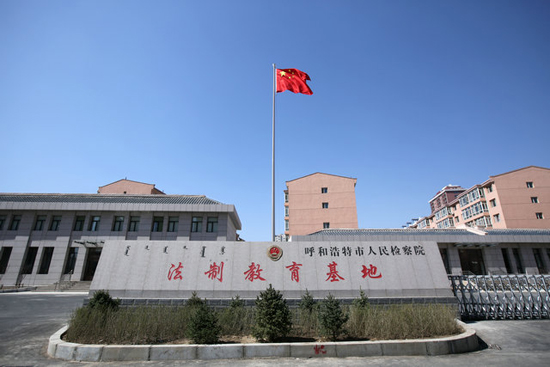
Heilongjiang Legal Education Campus
I phoned Congressman Tierney’s office and we agreed that we would meet on my next visit to Washington in April 2003. When I arrived at his office I couldn’t help but notice the striking painting that hung behind his desk. It was a large oil painting of a scene from the Salem Witch trials, a troubling page in American history. In colonial Massachusetts in 1692 and 1693, twenty people, mostly women, were prosecuted and executed for practicing witchcraft. Salem, a city in Congressman Tierney’s district, was famous for being at the center of the mass hysteria which resulted in the executions. The congressman told me that the painting served to remind visitors that religious persecution was no stranger to the US, and that Americans should reflect on their own past before criticizing others for human rights violations.
A Plan to help Liang Shaolin
We settled on a plan to help Liang Shaolin. I would try my best to put Liang’s name on all requests for information on prisoners submitted by the US government to China, and I would activate my relationship with a provincial research association based in Guangzhou to seek information on Liang Shaolin. Congressman Tierney’s staff would help by composing a letter on the case that I could send to my Guangdong interlocutors.
Upon my return from D.C., I received the letter on Liang’s case by fax. The letter provided helpful information including the name, address, and telephone number of the legal education school in Maoming, the names and phone numbers of the officials in charge of the legal education school, the name and address of Liang Shaolin’s former employer, Maoming Oil Company, and the names and phone numbers of the officials in charge of the company’s “610 Office,” a specialized unit established in offices and enterprises across China in charge of suppressing Falun Gong practitioners. In the following months, I managed to get this letter into the hands of my Guangzhou interlocutor and put Liang Shaolin’s name on a prisoner list submitted by the International Commission on Religious Freedom.
Unfortunately, I wasn’t able to visit Guangzhou until September 18, 2003. I took the train up to Guangzhou from Hong Kong and met with my interlocutor that same day. Liang Shaolin’s case was raised. I included it on a new list of five prisoners in Guangdong Province about whom I was concerned. I followed up the meeting with an email sent on October 15, 2003 . In less than a month, I would receive a response from my interlocutor.
On November 12, 2003, I received a detailed response from my interlocutor. It confirmed much of what I had been told by Congressman Tierney, but added new details. The picture of Liang Shaolin that emerged from this response was of a strong-willed, defiant woman fiercely devoted to Falun Gong.
From June 1996 to June 1997, such letters were sent to Chinese Ambassador Li Daoyu by Senator Craig Thomas (D-Wyoming), Congressman Lee Hamilton (D-Indiana), Congressman Matt Salmon (R-Arizona), Senator Max Baucus (D-Montana), Senator Paul Wellstone (D-Minnesota), and Congressman Doug Bereuter (R-Nebraska). Congressman Ed Royce (R-California) sent a detailed letter to Chinese Premier Li Peng asking him to instruct the Ministry of Justice to resume cooperation with me.
Thanks to these letters, and the support of the White House, the “prisoner information project” resumed in 1998 following Jiang Zemin’s state visit in 1997. While it was no longer necessary to ask members of Congress to write letters to the Chinese government on my behalf, I stayed in close contact with members, attending congressional hearings, roundtables, and forums at their invitation.
One such event that I participated in was a breakfast meeting with members of the House of Representatives organized by the Aspen Institute on July 17, 2002. One of the congressmen attending the breakfast was Congressman John Tierney (D-Massachusetts).
An Email from Congressman Tierney
On January 28, 2003, I received an email from Congressman Tierney asking for assistance on behalf of a constituent whose older sister, Ms. Liang Shaolin, had been detained in a Chinese labor camp for practicing the banned spiritual practice known as Falun Gong.
In his email, Congressman Tierney described Liang Shaolin’s situation:
“In September 1999, Shaolin is reported to have been detained in her workplace, the Maoming Oil Company, and not allowed to return home. She is said to have continued working but escaped after one month and seized as she made her way to Beijing ‘to appeal on behalf of Falun Gong.’ The police in Guangzhou sent her to a local detention center from where she was released after a seven-day hunger strike. Not long after, she was again detained by police and in January 2000 was sentenced without trial to two years in Sanshui Labor Camp; (she was) denied visitors, including family members. In 2002, the family received a phone call saying she had been transferred to the Legal School of Maoming City, yet to this day she is not allowed contact.”
Congressman Tierney then asked if I could find a way to obtain some relief for Liang Shaolin. I was familiar with Falun Gong, but had never heard of a “Legal School” used as a carceral facility.
Falun Gong
Falun Gong is a popular spiritual movement that arose in the early 1990s, initially in China’s northeastern region. The practice involves a mix of beliefs and practices that combine Buddhism and Taoism with qigong, defined by Wikipedia as “a holistic system of coordinated body posture and movement, breathing and meditation, natural products, spirituality, and martial arts training.”
Falun Gong spread rapidly in China in the 1990s, and by the end of the decade the movement reportedly had a following of tens of millions of Chinese practitioners. The rapid growth and popularity of the movement alarmed China’s top leaders. In April 1999, as many as 10,000 Falun Gong practitioners traveled to Beijing where they surrounded the central leadership compound, Zhongnanhai, in a mass demonstration calling for the release of imprisoned Falun Gong practitioners. The event had an immediate impact, and soon many more practitioners and their leaders were detained by authorities. In July 1999, Falun Gong was classified by the government as an “evil sect,” and repression intensified, repression that has continued to the present day.
Heilongjiang Legal Education Campus
After receiving Tierney’s email, I began looking into “legal schools,” but could find little information about schools being used as detention sites. I found one or two references to “legal education schools” or “legal education bases” as places where petitioners and adherents of unauthorized religious groups were placed for indeterminate periods of time.
I phoned Congressman Tierney’s office and we agreed that we would meet on my next visit to Washington in April 2003. When I arrived at his office I couldn’t help but notice the striking painting that hung behind his desk. It was a large oil painting of a scene from the Salem Witch trials, a troubling page in American history. In colonial Massachusetts in 1692 and 1693, twenty people, mostly women, were prosecuted and executed for practicing witchcraft. Salem, a city in Congressman Tierney’s district, was famous for being at the center of the mass hysteria which resulted in the executions. The congressman told me that the painting served to remind visitors that religious persecution was no stranger to the US, and that Americans should reflect on their own past before criticizing others for human rights violations.
A Plan to help Liang Shaolin
We settled on a plan to help Liang Shaolin. I would try my best to put Liang’s name on all requests for information on prisoners submitted by the US government to China, and I would activate my relationship with a provincial research association based in Guangzhou to seek information on Liang Shaolin. Congressman Tierney’s staff would help by composing a letter on the case that I could send to my Guangdong interlocutors.
Upon my return from D.C., I received the letter on Liang’s case by fax. The letter provided helpful information including the name, address, and telephone number of the legal education school in Maoming, the names and phone numbers of the officials in charge of the legal education school, the name and address of Liang Shaolin’s former employer, Maoming Oil Company, and the names and phone numbers of the officials in charge of the company’s “610 Office,” a specialized unit established in offices and enterprises across China in charge of suppressing Falun Gong practitioners. In the following months, I managed to get this letter into the hands of my Guangzhou interlocutor and put Liang Shaolin’s name on a prisoner list submitted by the International Commission on Religious Freedom.
Unfortunately, I wasn’t able to visit Guangzhou until September 18, 2003. I took the train up to Guangzhou from Hong Kong and met with my interlocutor that same day. Liang Shaolin’s case was raised. I included it on a new list of five prisoners in Guangdong Province about whom I was concerned. I followed up the meeting with an email sent on October 15, 2003 . In less than a month, I would receive a response from my interlocutor.
A Response from Guangdong
On November 12, 2003, I received a detailed response from my interlocutor. It confirmed much of what I had been told by Congressman Tierney, but added new details. The picture of Liang Shaolin that emerged from this response was of a strong-willed, defiant woman fiercely devoted to Falun Gong.
The email stated that Liang began practicing Falun Gong in 1996. After the government officially declared Falun Gong to be an “evil cult,” Liang “confronted the government” and conducted activities that violated the law including “gathering crowds and making a disturbance,” promulgating Falun Gong teachings, and collecting and distributing propaganda and publications banned by the government. For these reasons, Liang was sentenced to two years and three months in a reeducation through labor (RTL) camp.
The email went on to say that, after entering the RTL camp, Liang continued her activities, which now included secretly distributing subversive messages written on small strips of paper. Because of this, when her RTL sentence ended, she was sent to the Maoming Legal Education School “to continue her education.” Liang had stayed in the school for a fairly long time because she had continued to try to influence and incite other students. “Recently, she started shouting slogans supporting Falun Gong three times a day. Because the school is in a residential area, her actions have had a negative influence on nearby residents.”
The response concluded by outlining an arrangement under which Liang Shaolin would be freed. Liang, it was claimed, was healthy – aside from an eye infection that she refused to have treated, citing Falun Gong beliefs – and not being tortured. She had received visits by family members, but because of the SARS epidemic, which hit Southern China particularly hard, family visits to the Maoming Legal Education School had been suspended. Liang Shaolin’s husband, who was not a Falun Gong practitioner, had filed for divorce. The school had hired a lawyer to help her.
“The school has indicated to Ms. Liang that if she promises to be a law-abiding citizen after leaving the school, she can leave. The school does not forbid her to believe in and practice Falun Going, so long as she does not practice in public and endanger social stability. She not only refuses to make such a promise, but has also indicated that she wants to continue popularizing and propagating Falun Gong to the society at large.”
A Meeting in Guangzhou
I decided to travel to Guangzhou to explore the proposed arrangement under which Liang Shaolin could be released. I left for Beijing on December 1, and after meetings with Chinese government officials and foreign diplomats, I traveled via Hong Kong to Guangzhou, arriving on December 11, 2003. My interlocutor, a professor affiliated with the research association who held relatively liberal views, and his assistant met me at the train station. It was a cold and overcast day.
We went to a restaurant in the Pearl Island Hotel, a location favored by provincial party and government officials. After settling into a well-appointed private room for a ten-course “light” lunch, we immediately began discussing the Liang Shaolin case.
“Legal Education Schools have been built to house ‘seriously poisoned’ Falun Gong practitioners,” I was told. “There are two things you need to know about them. First, the Maoming Legal Education School is by no means the only such school in China. There are many of them. Second, legal education schools have no basis under Chinese law. This is a problem that must be addressed.” (The professor made clear that he favored the abolition of all forms of arbitrary detention.)
The professor and his assistant had previously traveled to Maoming Legal Education School, to look into Liang Shaolin’s situation. The response they had sent me earlier in November was an account of their visit to Maoming. Although they did not directly speak to Liang, they were able to observe her. She appeared thin and her eyes swollen, but aside from this she appeared healthy and energetic. They reported that “Three times a day – in the morning, in the afternoon, and in the evening – Liang Shaolin shouts in a loud voice: ‘Long Live Li Hongzhi (the founder of Falun Gong), Down with Jiang Zemin (China’s president who initiated the crackdown against Falun Gong).’
If Liang Shaolin were to be released and she took to the streets and shouted such things, I was told she’d be arrested and sentenced to prison under Article 300 of the Criminal Law, which criminalizes organizing religious groups that the Chinese government considers “cults.” “We are prepared to release her and allow her to return home where she can practice Falun Gong,” I was told. “But under no circumstances will the police allow her to publicly propagate Falun Gong. If you were in our shoes, what would you do Mr. Kamm?”
I replied that I did not believe in placing restrictions on free speech. On the other hand, I did not want Liang to be put in prison. I suggested that the authorities continue to practice gentle persuasion, and under no circumstances should she be mistreated. I wondered aloud whether she could be given a passport to travel to the United States to join her brother who lived in Congressman Tierney’s district. The response: “Possible, but not likely. If she were given a passport and allowed to leave, other Falun Gong practitioners would see this as a reward. It might encourage them to behave like Liang Shaolin.”
After we concluded our lunch, I took the train back to Hong Kong, and soon was homebound to San Francisco. I summarized the meeting held in Guangzhou and sent a memo to Congressman Tierney. He replied by email on January 28, 2004: “As a result of your attention and the intervention of some of your friends in the Guangdong government, Liang Shaolin appears to be receiving better treatment.” Congressman Tierney encouraged me to “do everything possible to insure her safety and good treatment. . . I respectfully renew my request for a member of Liang Shaolin’s family in the United States to contact her at the Maoming Legal Education School via telephone.”
Over the next 14 months I continued to communicate and meet with my Guangdong interlocutor. I submitted two more written requests for information in February and June 2004. In these I asked that Liang Shaolin be allowed to return home and be allowed to communicate with her family in the United States. In January 2005 at a meeting with my interlocutor in Hong Kong, I pointedly asked if it were legal to hold Liang Shaolin indefinitely.
Finally, in early April that year, I was advised that, while Liang Shaolin remained unrepentant, she had been allowed to return home. The authorities in Maoming had presented her with an agreement for her release: if she agreed not to go to the streets and practice Falun Gong and shout slogans, she would be allowed to leave the school. I was told that she tore up the agreement, crumpled it, and threw it back at the authorities. Finally, her sister in Guangzhou, who was not a Falun Gong practitioner, had to be brought to the school and to sign the agreement on Liang Shaolin’s behalf.
Aftermath
In July 2016, an article appeared on a Falun Gong website with Liang’s name. It said that Liang Shaolin had been detained in September 2009 and subsequently sentenced to nine years in prison for “organizing a cult to sabotage implementation of the law.” Another source claimed that her date of release would be September 9, 2018.
I immediately put her name on a list of Guangdong prisoners and submitted it to my interlocutor, and in January 2017 I was advised that Liang Shaolin had been convicted and sentenced to nine years in prison on May 18, 2010. She was in Guangdong Women’s Prison (said to be the largest women’s prison in the world). I was told that Liang Shaolin is due for release on December 23, 2017.
Congressman John Tierney lost his bid for reelection in November 2014. In February 2016, he was appointed the executive director of the Council for a Livable World and the Center for Arms Control and Non-Proliferation based in Washington D.C. Dui Hua remains actively engaged with its Guangdong interlocutor, and is monitoring Liang Shaolin’s release.
He Jiahong is a special kind of Chinese legal expert. He is a well-known legal scholar at Renmin University Law School in Beijing, where he specializes in criminal justice and the issue of wrongful convictions. He is also the author of detective novels and writes prolifically on legal subjects for popular audiences. He reportedly likes to describe himself as: “I am not only a jurist but a novelist, so I often have novel ideas about law.”
One of the ways in which He Jiahong expresses those ideas is through his public WeChat channel—a blog distributed to anyone who subscribes via the social media platform. Recently, he posted a piece with the rather provocative title: “The Number of Executions Should be Made Public.”
In China’s criminal justice discourse, public calls for greater transparency around the use of the death penalty are not unheard of but are nevertheless eye-catching when they do appear, especially from well-known legal experts such as He. Information related to the death penalty, including the number of executions carried out each year, continue to be treated as a closely guarded “state secret.” This is despite the fact that there are many indications that China has significantly reduced its use of capital punishment over the past decade—though it is still generally believed to be the world’s top executioner—and continues to face pressure from NGOs and United Nations human rights bodies to be more transparent about its use of the death penalty.
Changsha Court public announcement of death sentences. Source: Hu Guiyun.
He Jiahong raises some familiar arguments in support of greater transparency about capital punishment in China, including the importance of preventing wrongful executions, demonstrating the progress made in reducing the use of the death penalty, and the value of facilitating public discussion about the future of capital punishment. He clearly believes that openness and greater transparency will help build public trust in the judiciary and show respect for the public’s right to access such information.
He notes that the trend towards online publicization of court documents is making secrecy about capital punishment irrelevant. On this point, he is perhaps overly optimistic. Dui Hua and other organizations that have tried to use online platforms like the Supreme People’s Court’s national database of court judgments have found it seriously lacking when it comes to information about cases involving the death penalty and other “sensitive” subjects.
This suggests that the trend toward judicial transparency is already bound by pre-set limits on what information is considered “appropriate” for public disclosure. If the Chinese government were to do as He Jiahong recommends and make data about capital punishment public, it would first have to make the top-down decision to lift secrecy restrictions. The hope of a shortcut to judicial transparency through the release of court data is unlikely given such secrecy restrictions.
He Jiahong, professor at Renmin University School of Law. Source: Financial Times.
On April 27, 1987, a dismembered female corpse was found in the Mianjiang River of Mayang County, Hunan. After searching missing-person’s reports, identification by family members, and blood-type analysis, the police confirmed that the deceased was a woman from Guizhou named Shi Xiaorong who had been missing for a month after working at a local hotel.
After several months of investigation, police determined, based on the manner in which the culprit had dismembered the corpse that the killer was a butcher named Teng Xingshan… On December 6, police placed Teng Xingshan under custody and investigation. Following continuous interrogation, Teng finally “confessed.” On December 13, 1988, the Huaihua Prefecture Intermediate People’s Court sentenced Teng Xingshan to death. On January 19, 1989, the Hunan Higher People’s Court rejected Teng’s appeal, upheld the original verdict, and approved his death sentence.
In order to ensure that the death penalty is applied impartially and correctly, Chinese law mandates a special review and ratification procedure for death penalty cases, on the principle of a two-stage judicial process of trial and appeal. According to the provisions of the 1979 Criminal Procedure Law, death sentences with two-year reprieve were to be reviewed by high people’s courts and death sentences with immediate execution were to be reviewed by the Supreme People’s Court. Regardless of whether or not the defendant filed an appeal, cases involving the death penalty would all be subject to an automatic review process. In 1983, in an effort to “strike hard and fast” against criminal acts that seriously endangered public security and social order, the Supreme People’s Court delegated the power to review death sentences for homicide, rape, robbery, setting explosions, and other serious crimes to high people’s courts. To a certain degree, this led to a loosening of the review and control procedures over the death penalty. Since high people’s courts in provinces, municipalities, and autonomous regions were generally the courts hearing appeals in death penalty cases, delegation of the power to review these cases meant that the same court became responsible for hearing the appeal and carrying out the final review. The review and ratification process that had been originally intended as a way to strictly control use of the death penalty became effectively meaningless.
Teng Xingshan’s case was handled under the combined “two-in-one” process of appeal trial and death sentence approval that existed during that particular period of Chinese law. On January 28, 1989, Teng Xingshan was executed by gunshot. However, that wasn’t the end of the case, because the so-called “victim” was still alive and would later “come back to life.”
In 1993, Shi Xiaorong finally made it home to Guizhou after having been abducted and trafficked to Shandong. When she heard about the Teng Xingshan case, she said that she didn’t even know Teng, and certainly did not have any “dubious relationship” with him. She even wrote to the Hunan court, asking it to revoke its mistaken judgment that she had “dubious relations” with Teng Xingshan, had been “murdered” by him, and demanded compensation for her reputation damage. But there was no response from the court. Shi now has a new life and no longer cares about an old case that has nothing to do with her.
News that the “dead had come back to life” eventually reached Teng Xingshan’s family. Teng’s parents had both died not long after their son had been executed. His brother figured that because their family was poor and ordinary they should not oppose the government. Not wanting to make trouble for himself, he decided not to mention the matter to anyone outside the family. In 2004, Teng Xingshan’s daughter Teng Yan had already grown up and worked as a migrant laborer for many years. After she learned the truth about what had happened, she and her younger brother Teng Hui, with help from a lawyer, filed a motion for appeal with the Hunan Provincial Procuratorate and Hunan High People’s Court. On October 25, 2005, the Hunan Higher People’s Court ordered a retrial in Teng Xingshan’s homicide trial and formally acquitted him of the charges. Teng Yan and Teng Hui received state and other compensations in the amount of 666,660 yuan (approximately US$85,000 at the time).
At the time, the National People’s Congress Legislative Affairs Commission was organizing experts and scholars to study ways of reforming the Criminal Procedure Law, and the death penalty review procedure was one of the areas that everyone was paying close attention to. There’s no question that the Teng Xingshan case played a role in pushing forward reform of the death penalty review system. The Supreme People’s Court decided from January 1, 2007, to take back the authority to review death sentences in all cases.
It’s now been 10 years since the reform of the death penalty review system. I was recently asked how I’d evaluate this reform. I said that it’s certainly been very positive, but I would have a hard time saying for sure. I believe that, since the power to review death sentences was returned to the Supreme People’s Court, the death penalty has definitely been applied with much greater strictness, in greater accordance with the rules, and in a more uniform manner. And the number of executions has certainly also decreased by a great deal. But because I don’t know the specific details, it’s impossible to comment in an objective and precise way.
In China, the number of executions seems to be treated as a kind of “state secret”. Those in the know remain tight-lipped on the subject, while those on the outside let their imaginations run wild. In my opinion, there’s no reason to treat the number of executions as a “state secret.” All death sentences in China are handed down and executed openly and in accordance with the law. It’s all perfectly open and aboveboard—executions are not carried out in secret or indiscriminately. Why does the government choose to be so secretive and why is it afraid of keeping the public informed? Disclosing the number of executions will not stain the reputation of the judicial organs or lead to social unrest. Tempered by their experience of numerous wars and disasters, Chinese people surely are psychologically resilient enough to face up to the number of executions!
On this point, policymakers ought to abandon their antiquated ideas of closed-door justice and embrace the modern judicial norms of transparency. Practical experience shows that openness is the best publicity and offers the best route to foster public trust. Publishing execution numbers also demonstrates judicial organs’ respect for citizens’ right to access information (zhiqingquan).
Actually, the Chinese judiciary has already made progress on this front, as court verdicts have begun to be published online! As a technical matter, when court verdicts are all online it won’t be that difficult to use “big data” technology to tally up the number of executions. Even if officials don’t make it public, the public can still find out. Therefore, I recommend that the Supreme People’s Court choose the right moment to begin publishing the number of executions. This can demonstrate the Chinese government’s resolve and sincerity in facing up to capital punishment and promoting civilized justice.
At the present time, there are more than 140 countries and regions in the world that have abolished the death penalty either by law or in practice. This shows that abolishing the death penalty is the general trend of human society because it is in line with the general spirit of humanitarianism and civilized justice. Furthermore, abolishing the death penalty is an effective way to prevent wrongful executions of innocent people. For judicial personnel, “no unjust treatment, no indulging wrongdoings” is but a beautiful tale/lore. Police, prosecutors and judges aren’t supernatural beings, and making the incorrect decisions when evidence is lacking is something that cannot be entirely avoided. Therefore, to prevent further miscarriages of justice in which innocent people are mistakenly put to death, we should seriously consider abolishing capital punishment.
I am deeply aware that China cannot abolish the death penalty at the current time, but we should have an earnest discussion about the issue and, through our efforts, make more of our fellow Chinese understand that the death penalty is not perfectly justified. Our government ought to make a solemn pledge to the world that China will make an effort to abolish the death penalty and that it will start by making the number of executions public so that the world can see the progress of China’s death penalty policies. After several years of continued hard work, China will go from “executing fewer” to “no executions” to full abolition of capital punishment, once again making China one of the most civilized, humane, and harmonious countries in the world!
Number of Inmates Serving Life-Without-Parole Sentences for Crimes Committed as Juveniles
Data taken from July 2015 study “No Hope: Re-Examining Lifetime Sentences for Juvenile Offenders.” Source: Philips Black.
The US is also dealing with the issue of violent crimes committed by juveniles 15 and under, with perhaps the most famous case being the “Slender Man” incident in Wisconsin, in which two 12-year-old female defendants stabbed a classmate repeatedly and were charged with attempted homicide. Because these cases are highly complex, this article conducts in-depth case studies comparing different state approaches to high profile felonies committed by juveniles 15 and younger, similar to the Slender Man case. Two case studies involve female juvenile defendants, and two involve males. Chinese officials considering policy reforms aimed at curbing violence among very young juveniles might draw important lessons from these state-level US cases.
California: Mid-High Confinement Rate (173-366.5 per 100,000)
Facts: Female defendant, Sarah Weeden, who was 14 at the time of the crime, was arrested, convicted, and sentenced for the murder of Navnil Chand, killed by gunshot by 23-year-old Sertice Melonson. The crime occurred in August 2005. According to testimony at Weeden’s 2008 trial, Weeden agreed to meet Chand at a park for a date and directed him there by cellphone. When he arrived, Melonson waited to rob him. During the robbery, Melonson shot and killed Chand. In April 2017, the 9th US Circuit Court of Appeals reversed Weeden’s conviction and remanded her for a new trial, finding that Weeden’s trial attorney provided ineffective assistance of counsel for failing to have Weeden evaluated by a psychologist to determine her capacity to form criminal intent. Weeden might be re-tried in juvenile court.
Law and Policies: California has three ways that juveniles can be prosecuted as adults:
Statutory Exclusion: California has a list of offenses, which if committed by a youth aged 14 or older, require that the youth be criminally prosecuted as an adult. Cal. Welf. & Inst. Code § 602(b);
Discretionary Judicial Waiver: The juvenile court has original jurisdiction over most juvenile cases, but in certain delineated cases where the child is at least 16 years old at the time of the offense, the state may request that the juvenile court transfer jurisdiction to adult criminal court. The juvenile court must conduct a hearing and consider statutorily listed factors to determine whether to transfer jurisdiction. Cal. Welf. & Inst. Code § 707;
Once an Adult, Always an Adult: California has a set procedure by which if a juvenile has been adjudicated, and certain criteria are met, all future charges against them will be automatically prosecuted in adult criminal court. Cal. Welf. & Inst. Code § 707.01.
Defendants Waived Into Adult Court? Weeden appears to have been processed automatically in adult trial court pursuant to the “statutory exclusion” provisions above. Weeden’s appellate attorney notes that prosecutors filed directly in Superior Court (i.e., “adult court”) because it was a murder case, without consideration of factors such as Weeden’s age, maturity level, or mental health. Jurors found Weeden guilty of first-degree murder as an aider and abettor to Melonson, and Sacramento Superior Court Judge Maryanne G. Gilliard sentenced her to 27 years to life in prison.
South Dakota: High Rate of Juvenile Confinement (366.5-560 per 100,000)
Facts: In 2000, a jury convicted Daniel Charles of first-degree murder in the sniper killing of his stepfather, Duane Ingalls. Charles was 14 at the time of the crime. Charles was sentenced to life in prison without the possibility of parole (LWOP), despite the fact that such sentences were largely ruled unconstitutional by the US Supreme Court in 2012. In March 2017, Charles was resentenced to a 92-year sentence, a decision that was upheld by the South Dakota Supreme Court.
Law and Policies: South Dakota has three ways that juveniles can be prosecuted as adults:
Discretionary waiver: for any felony; there is no minimum age requirement. S.D. Codified Laws § 26-11-4;
Statutory Exclusion: required for youth age 16 and older accused of class A, B, C, 1, or 2 felonies. S.D. Codified Laws § 26-11-3.1;
Once an Adult, Always an Adult (if convicted of the offense): S.D. Codified Laws § 26-11-4.
Defendant Waived Into Adult Court? It appears that Charles was waived into adult court based on the “discretionary waiver” provisions listed above.
Figure 1. Selected Non-custodial Measures for Women in Prison in US States
Mandatory adult court jurisdiction for violent crimes committed by person 14 or older
Yes
South Dakota
366.5-560
14-year-old defendant, homicide, gunshot
Discretionary waiver
Yes; defendant sentenced to LWOP in 2000, later commuted to 92 years
Reforming Juvenile Sentencing Standards
While the case studies and data presented above are subject to multiple interpretations, the case studies curiously display little correlation between confinement rate and waiver into adult court jurisdiction laws. Where a trend can be identified is in the relationship between high confinement rates and the severity of punishment (as exemplified in the South Dakota case).
Juvenile justice policy reformers have tended to assume that limiting adult court jurisdiction for very young juvenile offenders will help limit unnecessary juvenile confinement. In extremely serious cases involving very young defendants, however, it appears that juvenile court jurisdiction is almost never an option. The two states with the lowest juvenile confinement rates in the case study have the most restrictive laws in favor of trying very young, violent juveniles in adult criminal court: Massachusetts and Wisconsin. Rather than focusing on waiver into adult court in these cases, perhaps juvenile justice reformers should place more emphasis on reforming juvenile sentencing standards and providing defendants with mental health evaluations.
The case study comparison suggests that harsh penalties, rather than mandatory adult court jurisdiction, might co-occur more significantly with high juvenile confinement rates. After all, the state with the highest juvenile confinement rate in the case study, South Dakota, also dealt the harshest penalty: Daniel Charles, the 14-year-old defendant in the South Dakota case, was tried in adult court without a mental health evaluation and was sentenced to life without parole. Even following US Supreme Court criticism of life sentences for juveniles in 2012, the South Dakota court still provided Charles only a nominal commutation to his sentence, reducing the life sentence to a term of 92 years in prison, allowing Charles no chance at parole until he is 60 years old. Further, it appears that only in the bizarre Slender Man case in Wisconsin were the defendants given a mental health evaluation before adjudication. In California, this omission resulted in the reversal of the defendant’s conviction. Increased attention to a defendant’s mental health status might also lower pressure on judges to impose long prison sentences on very young juveniles, thereby reducing the overall rate of confinement in the US.
In May 2014, two twelve year-old girls were charged with attempted homicide in Wisconsin. Image Credit: Newsweek.
Recently, stories of violent crimes committed by juveniles, particularly girls, have featured widely in Chinese media. Stories include the case of a 14 year old girl in Yunnan who was charged with homicide in cooperation with her much older boyfriend and a 12 year old in Hunan who is suspected of having fatally poisoned two other primary school girls. Dui Hua’s 2014 Women in Prison symposium also features research exploring violent crimes committed by juvenile girls in Beijing courts. It found that the percentage of violent crimes committed by juvenile girls has been increasing over the past several years.
The US is also dealing with the issue of violent crimes committed by juveniles 15 and under, with perhaps the most famous case being the “Slender Man” incident in Wisconsin, in which two 12-year-old female defendants stabbed a classmate repeatedly and were charged with attempted homicide. Because these cases are highly complex, this article conducts in-depth case studies comparing different state approaches to high profile felonies committed by juveniles 15 and younger, similar to the Slender Man case. Two case studies involve female juvenile defendants, and two involve males. Chinese officials considering policy reforms aimed at curbing violence among very young juveniles might draw important lessons from these state-level US cases.
Putting the Case Studies in Perspective
To better understand these case studies on violent juvenile crime, this section provides a survey of each state’s rate of juvenile confinement. State juvenile policy works best when the lowest possible proportion of the juvenile population is confined in a detention facility.
Understanding each state’s juvenile confinement rate will then allow for the selection of state-level case studies that reflect the variation in juvenile justice policy across the United States. Using the map below, we hope to identify what conditions are operating in states that do a good job of keeping juveniles out of adult prisons.
The data and maps used in this article come from the Office of Juvenile Justice and Delinquency Prevention (OJJDP), which collects comprehensive data for all 50 states and the District of Columbia. The following map is based on the most recent available data from 2013. [1]
In the map above, it appears that in general, lower confinement rates are found in the Northeast and in some states in the South. (The raw data for 2013 can be found here.)
State-Level Case Studies of Violent Crimes Committed by Young Juveniles
Based on this map of juvenile confinement rates, case studies were selected from different states to get a sense of the variations in juvenile justice performance across the country. The case studies focus on violent crimes committed by juveniles in four states: Massachusetts, Wisconsin, California, and South Dakota, each with varying juvenile confinement rates. Massachusetts has a “low” confinement rate, Wisconsin has a “mid-low” rate, California has a “mid-high” rate, and South Dakota has a “high” rate.
This case selection is intended to gain a better understanding of the spectrum of regional variations in juvenile justice performance across the US, even though the cases themselves likely represent a small number of recent violent juvenile crimes committed in the US.
Massachusetts: Low Confinement Rate (46-109.5 per 100,000 juveniles)
Facts: Fifteen year-old Mathew Borges is accused of stabbing Viloria Paulino, his Lawrence High School classmate on November 18, 2016, decapitating him and mutilating his body.
Laws and Policies: Massachusetts has one way that juveniles can be prosecuted as adults: “Statutory exclusion: [adult court original jurisdiction is] mandatory for youth 14 and older charged with first-degree or second-degree murder. Mass. Gen. Laws Ann. ch. 119, § 72B.”
Defendants Waived Into Adult Court? The defendant was automatically processed in adult court based on the severity of the charges: “Borges will be arraigned in Lawrence District Court…as an adult on a count of first degree murder.”
Wisconsin: Mid-Low Confinement Rate (109.5-173 per 100,000)
Facts: In May 2014, two 12-year-old girls stabbed another girl of the same age 19 times to impress the fictional “Slender Man” horror character; the case has received extensive media attention and the trial is now pending in adult court.
Laws and Policies: In the “Slender Man” case, the adult court assumed mandatory “original jurisdiction” over the case, even though the defendants were 12 years-old, because under Wis. Stat. Sec. 938.183(1), “adult courts have exclusive original jurisdiction over first degree intentional homicide, attempted first degree intentional homicide, first degree reckless homicide, second degree intentional homicide.” According to the Wisconsin Council on Children and Families, “Wisconsin’s lowest age of automatic adult court jurisdiction (age 10) is the lowest in the nation,” and “Wisconsin is one of only 7 states remaining in which youth under 18 are automatically considered adults.” For less serious offenses, Wisconsin youth ages 15 and 16 can still be waived into adult court for any delinquent offense, and for a few serious offenses youth as young as 14 may be waived. Wis. Stat. Sec. 938.18(1).
Defendants Waived Into Adult Court? The defendants were automatically placed into adult court, as mandated by law, and appealed their placement in adult court. The Wisconsin Court of Appeals upheld the placement of defendants in adult court, and denied a related motion for “reverse waiver” that would have placed defendants back in juvenile court: “Wisconsin law requires children as young as 10 to be charged as adults for the most serious crimes, but allows them to seek transfer back to juvenile court, as was recently tried, unsuccessfully, by the two 12-year-old Waukesha girls charged with trying to kill a sixth grade classmate last year to please Slender Man.”
1. OJJDP Statistical Briefing Book. “The information in this table is based on the state where the offense was committed. However, the state of offense is not always reported. Youth for whom state of offense was unknown are included in U.S. totals (3,401 in 1997). These instances are not evenly distributed across states. As such, users should exercise caution when examining state-level trends or comparing states. Visit the EZACJRP methods section for more information. U.S. total excludes youth in tribal facilities. The residential placement rate is the number of juvenile offenders in residential placement per 100,000 juveniles age 10 through the upper age of original juvenile court jurisdiction in each state. To preserve the privacy of the juvenile residents, state cell counts have been rounded to the nearest multiple of three. Detail may not add to total because of rounding. Rates and percentages presented are also based on rounded totals. More information on this rounding rule is available on the EZACJRP Web site.” Return to article
First China-US Diplomatic and Security Dialogue Held in Washington D.C. Image Credit: VOA News.
Human Rights Raised in Diplomatic and Security Dialogue
The United States and China held the first Diplomatic and Security Dialogue in Washington on June 21, 2017. The dialogue was the first under the framework of the “Comprehensive Dialogue Mechanisms (CDMs)” agreed to by President Donald Trump and President Xi Jinping at their summit at Mar-a-Lago, Florida in April 2017. Other dialogues under the CDMs, to take place by the end of the year, cover economics, law enforcement and cybersecurity, and social and people-to-people exchanges.
The Chinese side was represented by State Councilor Yang Jiechi and PLA Chief of Joint Staff Fang Fenghui. The American side was represented by Secretary of State Rex Tillerson and Secretary of Defense Jim Mattis. On the eve of the dialogue, President Donald Trump tweeted that his approach to China, an approach focused on getting Beijing to rein in North Korea’s missile and nuclear ambitions, “has not worked out.”
There was neither a joint statement nor a joint press conference following the dialogue. In their press conference after the dialogue Secretary Tillerson and Secretary Mattis referred to the exchange as “frank” and “candid,” diplomatic language that usually refers to contentious discussions. In fact, little appears to have been agreed upon. The two sides reaffirmed their commitment to a “complete, verifiable, and irreversible denuclearization” of the Korean peninsula; companies in both countries should not do business with North Korean entities sanctioned by the United Nations.
There was no change in either country’s position on the South China Sea. The two sides agreed to enhance coordination in the global fight against terrorism. China agreed to take unspecified steps to assist the Iraqi government.
In the words of Secretary Tillerson, “We discussed how this administration will stand up for American and universal values like human rights. We will not be shy about raising our concerns about China’s human rights record, and I was direct and candid in our meetings today.” According to American officials, the United States intends on raising human rights in all of the four CDMs.
Dui Hua understands that both issues like the barring of American citizens from leaving China and cases of imprisoned activists were raised during the Diplomatic and Security Dialogue.
One of the cases that might have been raised during the June 21 dialogue was that of imprisoned Nobel Peace Prize laureate Liu Xiaobo. Unbeknownst to the Americans, and possibly the Chinese as well, Liu had been diagnosed with advanced liver cancer on May 31 and granted medical parole on June 7. At the time of the dialogue Liu was receiving treatment at a Shenyang hospital.
The news that Liu had been granted medical parole and transferred to the Number One Hospital of the China Medical University was announced by the Liaoning Province Prison Administrative Bureau on June 26. In the ensuing days governments and human rights organizations called for Liu to be sent abroad for medical treatment. American Ambassador Terry Branstad, who had just arrived in Beijing, used the occasion of his first press briefing to call for Liu Xiaobo to be treated for liver cancer “elsewhere.” Leading members of Congress including Senator Marco Rubio joined in calling for Liu’s complete release and departure from China. On June 30, the House of Representatives passed a resolution introduced by Minority Leader Nancy Pelosi and Congressional Executive Commission on China Co-Chairman Chris Smith. The resolution called on Beijing to “unconditionally release Liu Xiaobo and his wife Liu Xia” and allow them to meet with family and seek medical treatment overseas.
Beijing initially rejected calls for Liu Xiaobo to be treated by foreign cancer specialists in China, and refused to consider sending him overseas for treatment. Eventually, Beijing allowed two foreign liver cancer specialists to visit Shenyang and examine Liu Xiaobo on July 8. They issued a statement agreeing with the Chinese medical team’s diagnosis but stated that, in their opinion, Liu Xiaobo could be safely transported abroad for medical treatment.
Some officials and media outlets claimed that it is against Chinese law for a prisoner serving a sentence of medical parole to be allowed to travel overseas. In fact, a number of Chinese political prisoners have been granted medical parole and sent to the United States for treatment “in accordance with Chinese law,” including Ngawang Choephel, Jigme Sangpo, Xu Wenli, Wang Youcai, and Rebiya Kadeer. Liu passed away on July 13.
In the weeks following the Diplomatic and Security Dialogue, US-China relations took a sharp turn for the worse. The Pentagon announced that it would sell $1.4 billion of arms to Taiwan and the Senate passed a bill that would allow American naval vessels to visit ports in Taiwan, something that has not happened since 1979. The Department of State sharply criticized China’s human rights at the Human Rights Council meeting in Geneva, and released a report in Washington naming China as one of the world’s worst human trafficking countries. On June 29, the Treasury Department announced sanctions against a Chinese bank, the first time that the United States had sanctioned a Chinese bank since 2006.
PRISONER UPDATE
An official document Dui Hua recently uncovered revealed a rare act of clemency given to a Uyghur youth convicted of splittism. Originally from Hotan, Xinjiang, Metabdulla Iminniyaz (麦提阿卜拉*伊敏尼亚孜) was sentenced to six years’ imprisonment and three years’ deprivation of political rights in Changchun, Jilin, in October 2014. While serving in Gongzhulin Prison, he was granted an eight-month sentence reduction on May 27, 2017. Dui Hua previously reported cases of Uyghurs detained or tried on charges of splittism or inciting splittism outside of Xinjiang, including Tianjin, Shaanxi, Henan, and Liaoning. Most of the Uyghurs in these cases were in their 20s; the lengthiest sentence was 13 years’ imprisonment.
In June, Sichuan-based female journalist Yang Xiuqiong (杨秀琼) was formally arrested for illegally procuring state secrets for foreign entities, a more severe charge than provoking a serious disturbance, the charge she was originally detained for. Yang was a major contributor to 64tianwang, a now-defunct news website originally founded by prominent activist Huang Qi covering protests, government corruption, brutal law enforcement, and disappearances of activists and dissidents. Huang also faces the same endangering state security charge for releasing an official document about the crackdown of the critical website.
DUI HUA IN THE NEWS
In July, Dui Hua released a press statement on the news of Nobel Peace Prize laureate Liu Xiaobo’s medical parole status. Dui Hua was mentioned in The New York Times, The Washington Post, and Hong Kong Free Press. The foundation clarified that Liu’s medical parole status should not be regarded as a “release;” under Chinese regulations, even during the period of medical parole, the parolee is supervised by local public security bureaus. Chinese authorities rejected calls from the international community, Liu’s foreign doctors, and Liu himself to seek medical treatment abroad. Executive Director John Kamm, noted that “Common in the early years of the last decade, a prisoner granted medical parole has rarely been allowed to go abroad for medical treatment in recent years.” Liu passed away on July 13.
A woman stands near videos from an exhibition on domestic violence in China. Image Credit: The Guardian.
The Ordos Intermediate People’s Court in Inner Mongolia recently convicted a local government official of battering his wife—the journalist Hong Mei—to death. The case has received significant attention largely due to Hong’s standing as a successful journalist who had been reporting on domestic violence and the implementation of China’s year-old Anti-Domestic Violence Law. Major Chinese news organizations covering Hong’s death include Xinhua, Caixin, Sina, and Tencent News. Digital media outlets Quartz and Sixth Tone also reported the story.
John Kamm Remembers is a feature that explores Kamm’s advocacy stories prior to and since Dui Hua’s establishment in 1999.
Following my first meeting with the Ministry of Justice (MOJ) in October 1991, I made 18 trips to Beijing before the end of 1994 – an average of one trip every two months. At a meeting with Vice Minister of Justice Jin Jian and Deputy Director of the Ministry’s Prison Administration Bureau Wang Mingdi in April 1992, I was given the green light to ask about any prisoner incarcerated in one of the approximately 700 prisons and 300 reform-through-labor camps administered by the Ministry of Justice.
Deputy Director of the Ministry of Justice’s Prison Administration Bureau Wang Mingdi. Image Credit: HumanRights.cn
Thereafter I would prepare lists of 20 names and fax them to the Ministry of Justice prior to visiting Beijing. The lists were simple. In the left-hand column was the province where the prisoner was serving his or her sentence. (In those days, before the opening of the Yanshan Prison in Hebei, all prisons were administered by provincial prison bureaus.) In the middle column was the prisoner’s name in pinyin. In the right-hand column were the Chinese characters for the prisoner’s name.
Upon my arrival in Beijing I would confirm the date and time of my meeting with Wang Mingdi with the MOJ’s Department of Judicial Assistance and Foreign Affairs through my host organization, the China Council for the Promotion of International Trade. Once that was settled, I would leave the hotel for the Ministry’s headquarters, making sure to arrive promptly.
In the early 1990s, the MOJ was headquartered in a drab, rather run-down building down a dusty road off the main highway to Beijing’s Capital Airport. Outside the gates of the headquarters were several shops, including a bicycle repair business, and in front of this there was a pool table where locals, including prison officers, played billiards.
After I entered the MOJ’s headquarters, I was shown to a room where I was received by Deputy Director Wang and an assistant from the foreign affairs department. Out would come my most recent list. Wang Mingdi would read from a document that provided basic information on the prisoner including correct name in characters, aliases if applicable, age, gender, ethnicity, place of residence, details of detention and trial, name of prison, and, sometimes, information on health and behavior. The latter information was useful in determining if the prisoner was eligible for sentence reduction, parole, or medical parole.
Wang Mingdi would never give me a copy of the document he was reading from. Instead I had to copy down what he said, word for word. This was a laborious process taking well over an hour. Typically, I would receive information on around 80 percent of the prisoners I asked about.
In October 1994 I was preparing to visit Beijing on my last trip of the year. On October 31, I faxed a letter to Wang Mingdi with a list of 20 names as an attachment.
I arrived in Beijing on November 26 for an eight-day visit. After assisting a business client carry out a technical seminar and making a presentation on the recently concluded congressional elections to the Chinese People’s Institute of Foreign Affairs, I set about meeting with interlocutors with whom I discussed human rights. I was disappointed to learn that Wang Mingdi was not in Beijing. Since he was the only one in MOJ authorized to provide information to me on prisoners, it looked like I would leave Beijing empty-handed.
I was fortunate however to meet Minister Zeng Jianhui, head of the State Council Information Office, on December 2, and he agreed to accept the list I had sent to Wang Mingdi. He also accepted a clipping on the three counterrevolutionary prisoners in Jilin who had been given long sentences for establishing a counterrevolutionary group. In our conversation, I also asked Minister Zeng to see if he could find out anything about Ren Wanding, a veteran democracy activist who had entered the grounds of the US embassy during the violent aftermath of the June 1989 protests. The US embassy subsequently turned him over to the police; he was sentenced to seven years in prison in January 1991.
News clipping of the three counterrevolutionary prisoners in Jilin who had been sentenced for establishing a counterrevolutionary group.
To my surprise, Minister Zeng offered to find out the information and send it to me by fax in Hong Kong. I was skeptical. China had never given a detailed written response to a prisoner list, and to do so over an open fax would be highly unusual.
I returned to Hong Kong. Two weeks after my meeting with Zeng Jianhui, I received a fax with information on 16 prisoners, including all three of the Jilin counterrevolutionaries and Ren Wanding. Thirteen of the responses concerned prisoners on the list I sent to Wang Mingdi on October 31. One of those prisoners was Ge Hu, a teacher in Shanxi Province who had been sentenced to seven years in prison for “counterrevolution” in 1990. One week after faxing my list to Wang Mingdi, Ge had been granted medical parole.
Two other counterrevolutionary prisoners on the list, Hao Jinguang and Zhang Chengjian, received sentence reductions in the months following the response to my list. They were released from prison early. Unfortunately, others, including Ren Wanding, were destined to serve their entire terms.
In the years that followed the written response to my list, I and Dui Hua have submitted hundreds of prisoner lists with thousands of names to the Chinese government. We have received responses on more than 1,000 prisoners, and many of them have been granted clemency. The breakthrough took place in December 1994. Six months later, the Ministry of Justice stopped responding to my lists in large part because of the sharp deterioration in US-China relations that took place in the wake of the visit by Taiwan president Lee Tenghui, but by then precedent had been established. When responses resumed in 1997, they were made for the most part in writing, a practice that has continued to the present day.
Following my first meeting with the Ministry of Justice (MOJ) in October 1991, I made 18 trips to Beijing before the end of 1994 – an average of one trip every two months. At a meeting with Vice Minister of Justice Jin Jian and Deputy Director of the Ministry’s Prison Administration Bureau Wang Mingdi in April 1992, I was given the green light to ask about any prisoner incarcerated in one of the approximately 700 prisons and 300 reform-through-labor camps administered by the Ministry of Justice.
Thereafter I would prepare lists of 20 names and fax them to the Ministry of Justice prior to visiting Beijing. The lists were simple. In the left-hand column was the province where the prisoner was serving his or her sentence. (In those days, before the opening of the Yanshan Prison in Hebei, all prisons were administered by provincial prison bureaus.) In the middle column was the prisoner’s name in pinyin. In the right-hand column were the Chinese characters for the prisoner’s name.
Upon my arrival in Beijing I would confirm the date and time of my meeting with Wang Mingdi with the MOJ’s Department of Judicial Assistance and Foreign Affairs through my host organization, the China Council for the Promotion of International Trade. Once that was settled, I would leave the hotel for the Ministry’s headquarters, making sure to arrive promptly.
In the early 1990s, the MOJ was headquartered in a drab, rather run-down building down a dusty road off the main highway to Beijing’s Capital Airport. Outside the gates of the headquarters were several shops, including a bicycle repair business, and in front of this there was a pool table where locals, including prison officers, played billiards.
After I entered the MOJ’s headquarters, I was shown to a room where I was received by Deputy Director Wang and an assistant from the foreign affairs department. Out would come my most recent list. Wang Mingdi would read from a document that provided basic information on the prisoner including correct name in characters, aliases if applicable, age, gender, ethnicity, place of residence, details of detention and trial, name of prison, and, sometimes, information on health and behavior. The latter information was useful in determining if the prisoner was eligible for sentence reduction, parole, or medical parole.
Wang Mingdi would never give me a copy of the document he was reading from. Instead I had to copy down what he said, word for word. This was a laborious process taking well over an hour. Typically, I would receive information on around 80 percent of the prisoners I asked about.
In October 1994 I was preparing to visit Beijing on my last trip of the year. On October 31, I faxed a letter to Wang Mingdi with a list of 20 names as an attachment.
I arrived in Beijing on November 26 for an eight-day visit. After assisting a business client carry out a technical seminar and making a presentation on the recently concluded congressional elections to the Chinese People’s Institute of Foreign Affairs, I set about meeting with interlocutors with whom I discussed human rights. I was disappointed to learn that Wang Mingdi was not in Beijing. Since he was the only one in MOJ authorized to provide information to me on prisoners, it looked like I would leave Beijing empty-handed.
I was fortunate however to meet Minister Zeng Jianhui, head of the State Council Information Office, on December 2, and he agreed to accept the list I had sent to Wang Mingdi. He also accepted a clipping on the three counterrevolutionary prisoners in Jilin who had been given long sentences for establishing a counterrevolutionary group. In our conversation, I also asked Minister Zeng to see if he could find out anything about Ren Wanding, a veteran democracy activist who had entered the grounds of the US embassy during the violent aftermath of the June 1989 protests. The US embassy subsequently turned him over to the police; he was sentenced to seven years in prison in January 1991.
To my surprise, Minister Zeng offered to find out the information and send it to me by fax in Hong Kong. I was skeptical. China had never given a detailed written response to a prisoner list, and to do so over an open fax would be highly unusual.
I returned to Hong Kong. Two weeks after my meeting with Zeng Jianhui, I received a fax with information on 16 prisoners, including all three of the Jilin counterrevolutionaries and Ren Wanding. Thirteen of the responses concerned prisoners on the list I sent to Wang Mingdi on October 31. One of those prisoners was Ge Hu, a teacher in Shanxi Province who had been sentenced to seven years in prison for “counterrevolution” in 1990. One week after faxing my list to Wang Mingdi, Ge had been granted medical parole.
Two other counterrevolutionary prisoners on the list, Hao Jinguang and Zhang Chengjian, received sentence reductions in the months following the response to my list. They were released from prison early. Unfortunately, others, including Ren Wanding, were destined to serve their entire terms.
In the years that followed the written response to my list, I and Dui Hua have submitted hundreds of prisoner lists with thousands of names to the Chinese government. We have received responses on more than 1,000 prisoners, and many of them have been granted clemency. The breakthrough took place in December 1994. Six months later, the Ministry of Justice stopped responding to my lists in large part because of the sharp deterioration in US-China relations that took place in the wake of the visit by Taiwan president Lee Tenghui, but by then precedent had been established. When responses resumed in 1997, they were made for the most part in writing, a practice that has continued to the present day.
Rule of Law was a centerpiece of the Fourth Plenum meeting of the Central Committee of the CCP in October 2014. Image Credit: Getty Images.
Xi Jinping made judicial reform a priority item on his agenda after fully taking power in 2013. He promised to “construct a rule-of-law country” and repeatedly emphasized the need for governing with respect to Chinese law and the constitution. Legal institutions were the focus of the “Fourth Plenum” meeting of the Central Committee of the Chinese Communist Party in October 2014, which pledged to “strive to let the popular masses feel justice in every court case.” Since then, efforts have been undertaken to “deepen” reform of the country’s legal institutions and officials have been served notice to achieve their reform targets before the upcoming 19th Party Congress later this year.
In the run up to the 19th Party Congress, we should expect to hear more talk of the great achievements and successful reforms of China’s judicial system. In February, the Supreme People’s Court released a white paper on judicial reform describing its progress in improving the efficiency, accountability, and transparency of the judicial system and declaring that 63 of the 65 reform goals it had set for itself to achieve by 2018 had already been basically accomplished by the end of 2016.
The reform of China’s law-enforcement and judicial institutions has certainly made some progress in recent years, but are there problems in the country’s legal system that remain untouched by these reforms and continue to undermine the ability of those institutions to deliver justice?
According to Professor Chen Ruihua, an expert on criminal procedure law at Peking University Law School, the answer is a resounding yes. In a recent blog post, widely circulated online, Chen observes that there are 17 “hidden rules” that govern how the Chinese criminal justice system “really” operates. These rules describe a system of collusion between institutions intended to check each other’s powers, courts that are fundamentally biased against defendants, and a coordinated effort to limit the impact of defense lawyers.
A list like this is clearly not meant to be analytical, though Chen has spoken and written quite frankly and at length on the flaws he observes in China’s criminal justice system. At a time of renewed ideological attacks against judicial independence and separation of powers, it takes courage to even raise the possibility that the progress of Chinese legal reform is not everything it’s made out to be.
In the Chinese criminal justice system, the “gong-jian-fa” institutions (public security, procuratorate, and courts) follow a set of “hidden rules” outside of the formal legal system. These “hidden rules” have great vitality and have operated over a long period of time, making it difficult to change them despite revisions to the criminal procedure law or even judicial reforms. Professor Chen Ruihua sums up these “hidden rules” as follows:
The investigative organs will only file a case for investigation when that case has already been solved.
Most of the public security organ’s criminal investigation activity is completed before issuing the decision to arrest.
The vast majority of cases are only solved after obtaining a confession of guilt by the suspect.
If it were not for the purposeful restriction of the rights of defense lawyers and the extralegal detention measures against suspects, solving criminal cases would be extremely difficult for the majority of investigative organs.
Compared to plaintiffs in civil trials, the public prosecutor in a criminal trial has a far stronger appetite for “winning”.
When a case lacks clear facts or evidence, the procuratorate would rather withdraw the prosecution than allow the court to acquit the defendant.
Almost all police and procurators treat defense lawyers with a certain degree of hostility.
When a case lacks clear facts or evidence, courts will generally issue decisions that “give lenient punishment when there is doubt” or “remand for retrial;” the “presumption of innocence” is an extremely rare exception.
Nearly all first-instance trials proceed by reading the record of criminal investigation aloud.
In cases where the defendant hasn’t put forward enough exculpatory evidence, the court’s judgement is basically a kind of process to affirm the conclusions of the investigators and prosecutors.
The vast majority of criminal judges lean toward the side of prosecution and will do everything they can to avoid allowing a “guilty” defendant to escape justice.
Judgments in the vast majority of cases are reached outside of the trial process.
The vast majority of judges turn a blind eye to procedural violations of law made by police, procurators, and first-instance trial judges.
When a defendant refuses to admit guilt during the investigation or trial phases, it becomes a significant basis for the court to impose a more severe punishment.
In the vast majority of cases it is a “responsible” judge that makes the judgement decision.
Judges would rather write extremely detailed “trial conclusion reports” than provide detailed reasoning for their judgments.
Whether it is the individual police, procurator, judge, or the “gong-jian-fa” organs, each has a direct interest in how criminal cases are decided.
SAN FRANCISCO (June 26, 2017) — According to an announcement posted on the website of the Liaoning Province Prison Administration Bureau, Liu Xiaobo, sentenced to 11 years in prison for inciting subversion in 2009, was recently granted medical parole “in accordance with the law.” No date was given for the decision.
The announcement confirmed reports that Liu is suffering from liver cancer and has been moved to the Number One Hospital of the China Medical University. It claims that a nationally recognized team of eight specialists is implementing a treatment plan.
Under Chinese law, medical parole is granted for an initial period of six months. After six months, the condition of the individual granted medical parole is assessed. The period of medical parole can be extended, or the parolee can be ordered back to prison to serve the remainder of his or her sentence.
According to regulations on handling prisoners granted medical parole issued in 1995, during the period of medical parole the parolee is supervised by local public security bureaus. It is likely that Liu Xiaobo is being supervised by armed guards.
It is not correct to say that the prisoner granted medical parole is “free,” nor is it correct to say that the prisoner has been “released.” The prisoner is still serving his/or her sentence, albeit in a location other than the prison itself. Monthly family visits are allowed. Time spent under medical parole counts against the sentence.
“In the past, prisoners granted medical parole have been allowed to go abroad for medical treatment,” noted Dui Hua executive director John Kamm. “Common in the early years of the last decade, a prisoner granted medical parole has rarely been allowed to go abroad for medical treatment in recent years. Dui Hua calls on the prison authorities to allow Liu Xiaobo and his wife to go abroad for medical treatment if they so desire.”