Blog

  • Call for Constitutional Review of Custody and Education

    Zhu Zhengfu, Vice President of the All-China Lawyers Association and member of the Chinese People’s Political Consultative Conference. Image Credit: Weibo.

    In the lead up to this year’s session of the National People’s Congress (NPC), prominent Chinese lawyer, Zhu Zhengfu, called on the NPC to review the constitutionality of the system of custody and education (收容教育). Zhu is the Vice President of the All-China Lawyers Association and a member of the Chinese People’s Political Consultative Conference. Custody and education is a form of administrative detention designed to punish both sex workers and their clients.

    Those who find themselves in one of these centers can be detained for up to two years without judicial process. Similar to previous debates over the system of “re-education through labor,” which was abolished in 2013, calls for the abolition of custody and education have been made ahead of the annual NPC meeting. The detention of well-known Chinese actor Huang Haibo in 2014 for soliciting a sex worker also helped put a spotlight on the coercive measure.

    During the 2016 NPC session, Taiwanese delegate Zhang Xiaodong proposed to the NPC, on similar grounds as Zhu, that custody and education be abolished. In this years’ proposal, Zhu emphasized the weak legal basis of the system, specifically citing its inconsistency with the Constitution and the Legislation Law.

    As a form of administrative detention, custody and education is exclusively overseen and carried out by public security organs and is beyond the supervision of procuratorates and courts. Public security organs have comprehensive control over the investigation and incarceration process as well as the operation of the custody and education centers, an environment in which abuse of power thrives. The centers were originally created with the goal of educating and rehabilitating sex workers and treating sexually transmitted diseases (STD). The education detainees receive is intended to direct them towards other occupations upon release and treatment of STDs is designed to help contain ongoing public health issues such as the prevalence of HIV/AIDS.

    Instead, the centers are often riddled with stories of arbitrary arrests, forced and unpaid labor, and charging detainees fees for their living and medical expenses as well as their rehabilitation treatments. Detainees undergo compulsory testing and treatment for STDs, which they must bear the costs of; many are not informed about the results of their tests or provided adequate counselling. The centers not only violate detainees’ right to health and privacy, but critics argue that they have also been counterproductive at achieving their goal. Detainees frequently return to sex work upon release, having failed to obtain an education, new professional skills, or the health services and counselling needed to protect themselves as they reenter the sex work industry.

    Experts estimate that somewhere between 18,000 to 28,000 individuals are sent to custody and education centers each year. From 1987 to 2000, more than 300,000 people had been housed in custody and education centers across China and as of 2014 there were more than 116 custody and education centers in the country.

    *

    Discussing the System of Custody and Education

    Restricting the Personal Freedoms of Individuals Through Administrative Regulations Goes Against the Spirit of the Constitution

    Beijing News (BJ News): Why does your proposal focus on custody and education? What are the current problems with this system?

    Zhu Zhengfu (Zhu): The system of custody and education has many facets, including legislation passed at the 1991 National People’s Congress (NPC) Decision on the Strict Prohibition Against Prostitution, the State Council’s Measures on the Custody and Education of Prostitutes and Clients of Prostitutes, and the Ministry of Public Security’s regulations governing the sites of custody and education centers. The thrust of the legislations targets sex workers and their clients. Around the time of 1991, societal conditions were decadent and sex work was on the cusp of spreading. In hindsight, we cannot say that those who hired sex workers were right or wrong. However, following constitutional amendments and the passage of the Legislation Law, problems underlying custody and education’s legislative process, its legislative jurisdiction, and its enforcement began to gradually surface. The main problem is that as an administrative penalty, custody and education can restrict the personal freedoms of an individual from six months up to two years prior to trial and without judicial process before the punishments take effect. In other words, there is no legal defense and no cross-examination of evidence. Long periods of restricting personal freedoms under administrative penalties, without corresponding procedural safeguards, clearly demonstrates that the measure violates [the principle] of procedural fairness.

    BJ News: In other words, when you punish by limiting the personal freedoms of an individual, it should not be governed by administrative regulations.

    Zhu: Yes, Article 8(5) of the Legislation Law clearly stipulates that coercive measures and penalties that restrict personal freedoms must be governed by law. Article 9 of the Legislation Law also stipulates that if laws have not been formulated regarding this matter [Article 8(5)], the NPC or its Standing Committee can authorize the State Council to formulate administrative regulations, except for when it involves regulations that restrict personal freedoms. However, the 1991 NPC Decision on the Strict Prohibition Against Prostitution authorized the State Council to formulate specific measures for custody and education, which is legally at odds with the Legislation Law.

    Besides its inconsistency with the Legislation Law, custody and education also touches on the issue of the inconsistency of legislative jurisdiction. Custody and education is now regarded as a measure carried out by public security organs. Administrative penalties can be appealed and litigated on. The Law on Administrative Penalties covers different types of administrative penalties, however it does not include custody and education. Even as the most serious form of an administrative penalty, the system of custody and education is inconsistent with the Law on Administrative Penalties.

    Furthermore, the Criminal Law provides exemption from criminal punishment in cases where there is a sentence of less than two years’ imprisonment; in cases involving six-months [or less] criminal detention or control; and in cases where the circumstances are minor, even though the action constitutes a criminal offence. The Criminal Law targets and punishes those who commit criminal offences, however sex work is merely an administrative offence, yet it carries a punishment that is more severe than a criminal offence. In doing so, [custody and education] has disrupted the order set forth by the various measures stipulated in the Criminal Law.

    BJ News: You have repeatedly proposed abolishing the system of custody and education at the time of the Two Meetings, why are you so closely committed to ridding this system?

    Zhu: In 2003, I joined several members of the Guangdong People’s Consultative Conference and proposed to abolish the system of Re-education Through Labor (RTL); through many calls for action, media spotlight, and several important RTL cases, RTL was finally abolished in 2013. Custody and education and RTL are similar, on a legislative basis they have clear flaws and they both work through administrative organs that enforce punishments to restrict personal freedoms. Thus in 2014, [I proposed to] abolish custody and education, and again in 2016 and 2017.

    Prior proposals have all tackled the issue from an abolitionist perspective, this year’s proposal takes a constitutional review angle. In the 19th Party Congress work report, it clearly states the importance of “strengthening the implementation and supervision of the constitution, advancing constitutional review, and maintaining the authority of the constitution.” Because the work report has such a focus on this area and because I believe that the era of conducting constitutional reviews and establishing constitutional authority has come, I made the proposal to conduct a constitutional review of custody and education.

    BJ News: There are many vocal supporters of abolishing custody and education. At present, what do you regard as the hardest part in abolishing this system?

    Zhu: The hardest part is that [custody and education] has already become an established system that is well-embedded into mutually beneficial relationships; law enforcement organs may believe that the existing system could aid in problem solving – once you get rid of it, you are also removing a tool of law enforcement.
  • Dui Hua Makes Submission to China’s Third Universal Periodic Review

    SAN FRANCISCO (April 5, 2018) – Dui Hua has made a submission to China’s Universal Periodic Review (UPR) to be convened by the Human Rights Council in Geneva, Switzerland in late October or early November 2018. Under the agreement that established the Human Rights Council in 2006, all United Nation member states have their human rights records examined at intervals of four to five years. This will be China’s third UPR.

    Dui Hua enjoys Special Consultative Status with the United Nations Economic and Social Council; it has made submissions to China’s previous UPRs held in 2009 and 2013.

    Dui Hua’s submission for this year’s UPR focuses on judicial transparency. Special attention is paid to judgments posted on court websites.

  • Dui Hua Digest, March 2018

    Dui Hua Digest, March 2018

    EVENTS

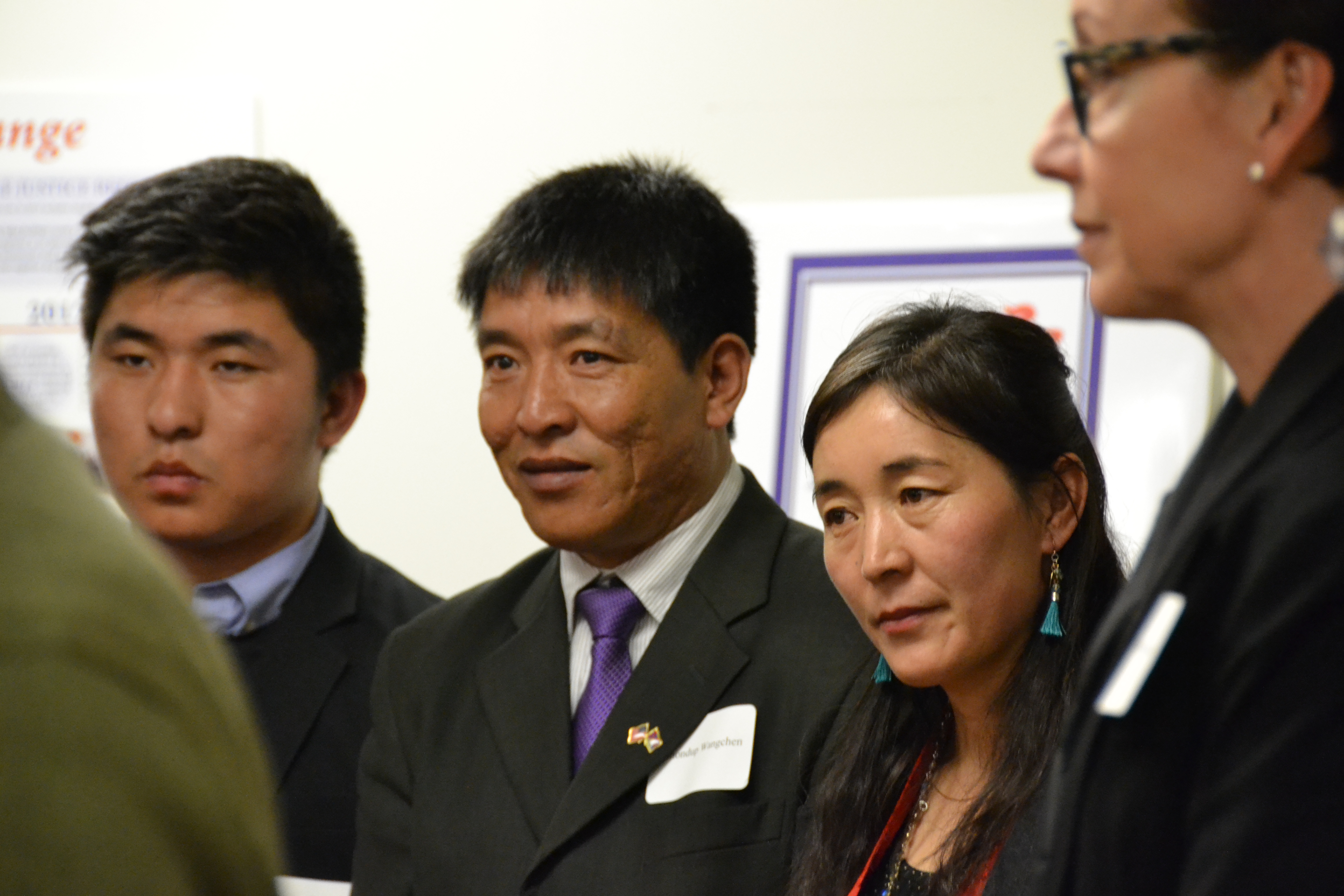
    Top: Executive Director John Kamm; bottom: Tibetan Filmmaker Dhondup Wangchen, with his wife Lhamo Tso and their son.

    On the evening of February 28, friends of Dui Hua gathered at the foundation’s San Francisco office to celebrate the Spring Festival. Dui Hua was glad to welcome several special guests at this year’s celebration. Dhondup Wangchen, a Tibetan independent filmmaker, whose case Dui Hua had worked on for many years, was joined by his wife Lhamo Tso and their son. Wangchen spent ten years being held incommunicado, detained, imprisoned, and subject to deprivation of political rights in China for his documentary filmmaking. Wangchen reunited with his family in San Francisco on Christmas Day last year. Professor Chen Taihe, joined by his wife, Jiang Jie, and their sons, was also in attendance. Chen was one of the lawyers detained during the “709” crackdown on human rights lawyers and activists in July 2015.

    Just returning from Beijing, where he was received by the Ministry of Foreign Affairs and the Supreme People’s Court, Executive Director John Kamm briefed guests on the operating environment for foreign NGOs in China. With the Foreign NGO Management Law now over one year in effect, 2017 ended with more than 300 foreign NGOs having successfully registered with the Ministry of Public Security (MPS) to establish a physical and sustained presence in China. Before registering with the MPS, these foreign NGOs had to reach agreement with a “Professional Supervisory Unit,” a government or government-affiliated organization approved by the MPS. Another 500 foreign NGOs registered with the MPS for “temporary activity permits” in 2017. By a mid-2016 estimate there were more than 6,000 foreign NGOs operating in China, meaning that many have either pulled up stakes and left China or are operating outside of the law. Moves against dissent continue and opportunities for international intervention are increasingly problematic. In 2017, China held just four human rights dialogues.

    In 2018, the foundation will be participating in China’s Universal Periodic Review at the United Nation’s Human Rights Council in Geneva. Dui Hua is one of a handful of independent human rights organizations that holds Special Consultative Status with the United Nations Economic and Social Council, allowing it to participate in the review process. Dui Hua plans to focus its review on the issue of judicial transparency as it relates to court websites and figures on special populations.

    PRISONER UPDATE

    Dui Hua has received information on prisoners serving sentences for endangering state security who have been granted clemency. An online judgment uncovered by Dui Hua indicated that Yang Changlin (杨长林) received a recommendation of a 16-month sentence reduction from the Henan No.1 Prison in June 2015. A government response stated that Yang was granted another one-year sentence reduction and is now due for release on September 6, 2025. Yang was convicted of contract fraud and subversion and sentenced to 16 years’ imprisonment in Beijing in 2011. Dui Hua believes that Yang was involved in the same case as Dong Zhangyi (董占义), founder of the New Era Communist Party, a group with the mission of fighting corruption and overthrowing the Communist Party of China.

    Tian Weicheng (田伟成) is one of several Falun Gong practitioners known to have been sentenced for inciting subversion. In March 2015, the Xinjiang No.5 Prison withdrew its recommendation to grant a sentence reduction to Tian. The reason was not stated in the online judgment Dui Hua uncovered. A government response nevertheless indicated that Tian was released on July 27, 2017 following a three-month sentence reduction granted to him in July 2016.

    PUBLICATIONS ROUND UP

    Featured: Despite Tensions, American Attitudes Towards China Improve (March 2, 2018)

    Gallup’s annual survey of American attitudes towards foreign countries has been released. It shows that 53 percent of Americans have a favorable opinion of China, versus 45 percent who have an unfavorable view of the country. This marks the first time that the long-running poll has yielded in a majority favorability rating for China since the events of June 1989 nearly 30 years ago.

    Previous Digest: February 2018

    John Kamm Remembers

    John Kamm Remembers is a feature that explores Kamm’s human rights advocacy prior to and since Dui Hua’s establishment in 1999

    Lansing and the Sanming Eight

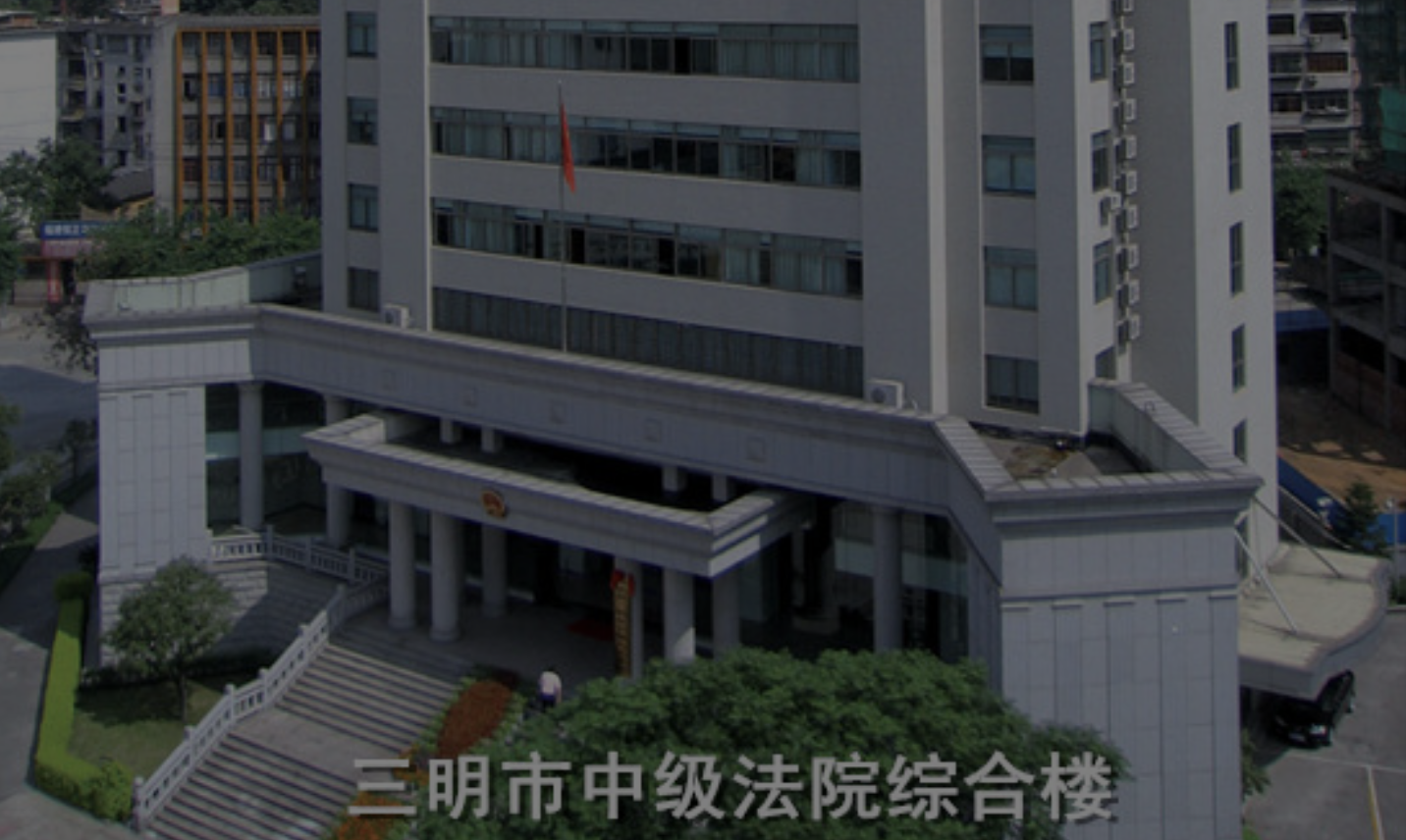
    Sanming Intermediate People’s Court. Image Credit: Sanming Court Network.

    In 2017, there were more than 200 sister city and state relationships between the United States and China, ties that bind states and cities. The relationships are handled, on the American side, by offices in state and city governments, often manned by volunteers. The relationships exist primarily to foster economic and cultural ties. They have rarely been used to promote human rights and the rule of law.

    In the summer of 2004, I hit upon the idea of utilizing sister city relationships to intervene on behalf of political prisoners in the Chinese cities and provinces that had American partners. There were around 120 sister community relationships at that time. I and my colleagues put together a list of contacts in the governor’s and mayor’s offices who oversaw the relationships with Chinese provinces and cities. Our final list had 83 names and addresses of individuals in charge of the sister community relationship.

    On August 18, 2004, Dui Hua sent letters to our list of contacts introducing our work and asking if the sister city would be willing to engage their counterparts in a discussion of human rights, and, in particular, whether the state would be willing to submit a list of political prisoners incarcerated in their Chinese counterpart’s jails and prisons.

    The response was underwhelming. Of the 83 letters sent out, we received only one positive response. Lansing, Michigan’s state capital, had a sister city relationship with Sanming Municipality, a prefecture-level municipality with a population of 2.5 million, in Fujian Province. Martha Fujita, the Executive Director in charge of Lansing’s Regional Sister City Commission, housed in the Mayor’s office, replied that she would be willing to help Dui Hua. Ms. Fujita advised that a delegation headed by the mayor of Sanming would visit Lansing on September 19-21, 2004.

    It so happened that there was a group of eight labor activists who had been detained in April 2002 and sentenced to prison for subversion by the Sanming Intermediate People’s Court in October 2003. The sentences ranged from two to sixteen years. The 16-year sentence was given to the group’s leader, Li Jianfeng, a former court official who had set up an independent trade union and who, the prosecution alleged, had downloaded materials from the Internet which he compiled into a book entitled “Labor Unions.”

    Lansing is a city with deep roots to the automotive industry. It has manufactured automobiles at General Motor’s Lansing Plant for decades. Trade unions are strong. National and local unions as well as the local chapter of Amnesty International had already contacted Mayor Tony Benevides asking him to intervene on behalf of the Sanming Eight.

    I composed a “Request for Information” and faxed it to Ms. Fujita on August 31, 2004. She agreed to find a way to hand it over, with a cover letter from Mayor Benevides, to the mayor of Sanming when the right moment presented itself.

    The Chinese delegation arrived and were hosted to a “Mayor’s Welcome Dinner” and a Chamber of Commerce luncheon. They visited the General Motors plant, Michigan State University, and Sparrow Health Systems. A highlight of the delegation’s visit was sitting in on a Chinese immersion program at an elementary school where the children greeted the guests in Chinese and performed a Chinese folk song for them. The Chinese guests were thrilled and posed for photographs with the children. They also attended a baseball game and sat in the Mayor’s VIP Skybox.

    In short, the Chinese delegation was treated to a hearty dose of Midwestern hospitality, setting the stage for the intervention that was to follow.

    On September 21, the Chinese group left from Lansing Capital International Airport to make their way back to China via Chicago. While the group was checking in their bags, Ms. Fujita took the mayor of Sanming aside. She explained that Lansing is a city with deep connections to the labor movement, and that an important base of support for Mayor Benevides was labor unions. She then presented Mayor Benevides’ letter and Dui Hua’s request for information to the Chinese mayor. He accepted them without hesitation.

    Over the next few years, two of the three labor leaders, including Li Jianfeng, were given sentence reductions and released early. Li was given sentence reductions totaling five years. He was released in April 2013. His five-year supplemental sentence of deprivation of political rights will expire next month, in April 2018. Huang Xiangwei, who was sentenced to six years in prison, received a 10-month sentence reduction and was released after serving just over five years of his sentence.

    The use of sister city relationships to promote respect for human rights in China holds potential, but the relationships are rarely used. Boulder, Colorado has had an active sister city relationship with Lhasa, Tibet for more than 30 years. According to the body’s website, it “promotes and implements non-political exchanges of mutual benefit with Lhasa” including in the fields of health care, education, environmental protection, agriculture, and animal husbandry. No mention of human rights, even though human rights abuses in Tibet are often in the news. Houston, which has a sister city relationship with Shenzhen, did little to assist American businesswoman Sandy Phan-Gillis, even though Ms. Phan-Gillis was the president of the Houston-Shenzhen Sister City Association.

    Lansing’s decision to use its relationship with Sanming to help secure the release of the Sanming Eight shows that sister city relationships can play a role in advancing the cause of human rights in China, if city and state governments demonstrate the political will to do so.

  • Lansing and the Sanming Eight

    Lansing and the Sanming Eight

    << Read all John Kamm Remembers stories

    In 2017, there were more than 200 sister city and state relationships between the United States and China, ties that bind states and cities. The relationships are handled, on the American side, by offices in state and city governments, often manned by volunteers. The relationships exist primarily to foster economic and cultural ties. They have rarely been used to promote human rights and the rule of law.

    In the summer of 2004, I hit upon the idea of utilizing sister city relationships to intervene on behalf of political prisoners in the Chinese cities and provinces that had American partners. There were around 120 sister community relationships at that time. I and my colleagues put together a list of contacts in the governor’s and mayor’s offices who oversaw the relationships with Chinese provinces and cities. Our final list had 83 names and addresses of individuals in charge of the sister community relationship.

    On August 18, 2004, Dui Hua sent letters to our list of contacts introducing our work and asking if the sister city would be willing to engage their counterparts in a discussion of human rights, and, in particular, whether the state would be willing to submit a list of political prisoners incarcerated in their Chinese counterpart’s jails and prisons.

    The response was underwhelming. Of the 83 letters sent out, we received only one positive response. Lansing, Michigan’s state capital, had a sister city relationship with Sanming Municipality, a prefecture-level municipality with a population of 2.5 million, in Fujian Province. Martha Fujita, the Executive Director in charge of Lansing’s Regional Sister City Commission, housed in the Mayor’s office, replied that she would be willing to help Dui Hua. Ms. Fujita advised that a delegation headed by the mayor of Sanming would visit Lansing on September 19-21, 2004.

    It so happened that there was a group of eight labor activists who had been detained in April 2002 and sentenced to prison for subversion by the Sanming Intermediate People’s Court in October 2003. The sentences ranged from two to sixteen years. The 16-year sentence was given to the group’s leader, Li Jianfeng, a former court official who had set up an independent trade union and who, the prosecution alleged, had downloaded materials from the Internet which he compiled into a book entitled “Labor Unions.”

    Lansing is a city with deep roots to the automotive industry. It has manufactured automobiles at General Motor’s Lansing Plant for decades. Trade unions are strong. National and local unions as well as the local chapter of Amnesty International had already contacted Mayor Tony Benevides asking him to intervene on behalf of the Sanming Eight.

    I composed a “Request for Information” and faxed it to Ms. Fujita on August 31, 2004. She agreed to find a way to hand it over, with a cover letter from Mayor Benevides, to the mayor of Sanming when the right moment presented itself.

    The Chinese delegation arrived and were hosted to a “Mayor’s Welcome Dinner” and a Chamber of Commerce luncheon. They visited the General Motors plant, Michigan State University, and Sparrow Health Systems. A highlight of the delegation’s visit was sitting in on a Chinese immersion program at an elementary school where the children greeted the guests in Chinese and performed a Chinese folk song for them. The Chinese guests were thrilled and posed for photographs with the children. They also attended a baseball game and sat in the Mayor’s VIP Skybox.

    In short, the Chinese delegation was treated to a hearty dose of Midwestern hospitality, setting the stage for the intervention that was to follow.

    On September 21, the Chinese group left from Lansing Capital International Airport to make their way back to China via Chicago. While the group was checking in their bags, Ms. Fujita took the mayor of Sanming aside. She explained that Lansing is a city with deep connections to the labor movement, and that an important base of support for Mayor Benevides was labor unions. She then presented Mayor Benevides’ letter and Dui Hua’s request for information to the Chinese mayor. He accepted them without hesitation.

    Over the next few years, two of the three labor leaders, including Li Jianfeng, were given sentence reductions and released early. Li was given sentence reductions totaling five years. He was released in April 2013. His five-year supplemental sentence of deprivation of political rights will expire next month, in April 2018. Huang Xiangwei, who was sentenced to six years in prison, received a 10-month sentence reduction and was released after serving just over five years of his sentence.

    The use of sister city relationships to promote respect for human rights in China holds potential, but the relationships are rarely used. Boulder, Colorado has had an active sister city relationship with Lhasa, Tibet for more than 30 years. According to the body’s website, it “promotes and implements non-political exchanges of mutual benefit with Lhasa” including in the fields of health care, education, environmental protection, agriculture, and animal husbandry. No mention of human rights, even though human rights abuses in Tibet are often in the news. Houston, which has a sister city relationship with Shenzhen, did little to assist American businesswoman Sandy Phan-Gillis, even though Ms. Phan-Gillis was the president of the Houston-Shenzhen Sister City Association.

    Lansing’s decision to use its relationship with Sanming to help secure the release of the Sanming Eight shows that sister city relationships can play a role in advancing the cause of human rights in China, if city and state governments demonstrate the political will to do so.


    Listen to the Encounters with China podcast.

    Subscribe to receive notifications about new episodes. 

    Read all John Kamm Remembers stories.


  • Uncovering the Obscurity of “Educational Placement”

    The public sentencing of 55 people in a stadium in Yining, northern Xinjiang province. Image Credit: AP.

    Dui Hua’s research into online judgments has uncovered the first known case of “educational placement” (安置教育, anzhi jiaoyu), a measure imposed on prisoners who are considered “a danger to society” even after they have completed their sentences for terrorism or extremism offenses. Educational placement is a new measure included in the Counterterrorism Law which took effect on January 1, 2016. The measure is classified as a subcategory of a criminal case – carrying its own legal codes and procedures, standardized and stipulated by the Supreme People’s Court.

    The uncovered judgment states that the Urumqi Intermediate People’s Court approved a recommendation from Xinjiang No. 5 Prison to order a Uyghur prisoner from Shache County to be placed in educational placement on August 30, 2017, 18 days before his 10-year prison sentence for inciting splittism was due to expire. The court believed that the prisoner, Ismaili Rozi (伊斯马伊力·如则), continued to pose a threat to society because he “refused to admit guilt during imprisonment, refused to accept education and reform, and was deeply influenced by extreme religious thoughts.” The judgment did not state the length of his educational placement. However, it did indicate that Ismaili had the right to lodge a review of the court order to the Xinjiang High People’s Court within 10 days of receiving it.

    At present, information about educational placement exists mostly on paper and how it has been implemented remains largely unclear. Article 30 of the Counterterrorism Law states that it is organized and carried out by provincial-level people’s governments. The measure remains effective until the individual is no longer considered a risk to society by the educational placement institute. The implementation measures issued in Xinjiang on August 1, 2016, provide some details about what the “at-risk” prisoners are obliged to learn once they are committed to the institutes. These include “laws and regulations, ideology and morality, psychological health, modern culture, scientific education, religious orthodoxy and vocational trainings.” The implementation measures also state that prisons and detention centers shall submit recommendations for educational placement to the intermediate people’s courts six months prior to the scheduled release of the prisoners sentenced for terrorism or extremism offenses.

    A few Chinese scholars have spoken out on the custodial nature of educational placement. In an article published in the Jilin Province Law Society Journal in May 2017, legal scholar Xu Chi described the measure as both a coercive and custodial measure aimed to prevent released prisoners from re-offending, and as the most severe existing form of post-imprisonment security punishment. Another legal scholar, Zhou Zhenjie, described educational placement as an extension of a criminal sentence and as a security measure independent of the Criminal Law.

    Despite scarcely available information, the first-known judgment about educational placement raises several alarming issues. First, the measure was applied beyond the legal scope stipulated by the Counterterrorism Law. The Counterterrorism Law stipulates that educational placement is applicable only to prisoners sentenced to fixed-term imprisonment for terrorism or extremism offenses. However, Ismaili was sentenced for neither of these offenses, but for inciting splittism, which is a crime of endangering state security. When he was sentenced in 2010, the offenses of extremism did not even exist until five years later when they were codified during the ninth amendment to the Criminal Law. The judgment suggests that the scope of offenses for those serving educational placement is likely much greater than the Counterterrorism Law mandates. Educational placement also creates more risks for the arbitrary denial of rights for political prisoners who have already completed their sentences. Ethnic minorities in Xinjiang, who comprise the majority of the country’s endangering state security prison population, are particularly vulnerable to falling prey to this measure.

    Another troubling aspect is that it is unclear when Ismaili’s educational placement will end, if ever. The Counterterrorism Law provides no time limit for how long someone can be held in educational placement, meaning that the length of punishment can be indefinite. Xu described it as having “the same punitive effect as fixed-term or life imprisonment.” Zhou does not share Xu’s optimism that an indeterminate punishment could be effective in combating terrorism and extremism. Rather, he expressed concerns that it leaves open the possibility of de facto life imprisonment – an individual can be deprived of their lifelong freedom so long as the educational placement facility considers him or her a risk to society.

    Another cause for concern is how prisons and detention centers evaluate the risk levels of soon-to-be released prisoners when they make their initial recommendations to the courts for educational placement. Zhou criticized the procedure for being opaque and opening up risk to the notion that all prisoners convicted of terrorism or extremism offenses are predisposed to being perpetually “at risk.” Although the Counterterrorism Law mandates prisons to “hear opinions from grassroots organizations and organs that initially handled the case,” they have never made public how these opinions are accepted, or even considered, when forming their recommendations. Zhou also questioned how they assessed the impact of prisoner releases on the wider community. Do they conduct interviews and surveys? The evaluation process prisons use to decide whether prisoners should be held in educational placement after serving their sentences is highly subjective, wrote Zhou, and how decisions are reached likely depends more on the current political atmosphere and fears surrounding terrorism in a particular region at a given time than on any real indication of potential threat posed by an individual prisoner.

    While Ismaili can appeal the educational placement order to the Xinjiang High People’s Court in theory, it remains to be seen how he can go about exercising this right. Zhou wrote that it is unclear whether the appellant is allowed under the current law to entrust a third party to challenge the evaluation conducted by the prisons or detention centers.

    Zhou questions what the likelihood is of overturning recommendations made by the educational placement bodies to keep an individual incarcerated. Once admitted, an individual will be released only when the institute no longer considers him or her a threat to society, or when their application to lift the educational placement order has been approved by the court. Zhou remarked that the current law does not provide a clear review procedure. Should the application be submitted directly to the court, or indirectly through the educational placement institute? If it is the latter, the institute may censor applications submitted by those it considers a threat to society.

    Two years since its formal introduction, educational placement remains a measure shrouded in secrecy. Whether the measure is applied beyond its legal limits, and whether the evaluation mechanisms and review procedures are fair and transparent are not the only issues emanating from the discovered judgment. As Uyghurs in Xinjiang are disproportionately incarcerated for splittism, terrorism and extremism offenses, they are more likely than Han Chinese and other ethnic groups to bear the brunt of this post-imprisonment measure that could put their personal liberty at risk for life. China should promote judicial transparency by making judgments about its use more readily available on its online platforms.

  • Despite Tensions, American Attitudes Towards China Improve

    Gallup’s annual survey of American attitudes towards foreign countries has been released. It shows that 53 percent of Americans have a favorable opinion of China, versus 45 percent who have an unfavorable view of the country. This marks the first time that the long-running poll has yielded in a majority favorability rating for China since the events of June 1989 nearly 30 years ago.

    According to Gallup polling, China’s image in the United States has risen 10 points since Xi Jinping assumed leadership of the Communist Party in late 2012.

    The result is surprising given rising tensions in the relationship over trade, the South China Sea, and other security concerns, as well as a steady diet of negative news on the human rights front.

    The poll also recorded that 11 percent of Americans view China as the greatest threat to the United States, down from 12 percent in 2016. There is significant difference between Republicans and Democrats on this issue, with 15 percent of Republicans versus seven percent of Democrats viewing China as the greatest threat to the United States.

    The reasons for China’s uptick in popularity are difficult to discern. Given President Trump’s low approval rating, his bashing of China over trade may help actually help China: “The enemy of your enemy is your friend.” According to the RealClear average of polls on President Trump’s handling of foreign policy, 40.4 percent of Americans approve versus 53.6 percent who disapprove.

    It might also be that Americans see China as having helped contain North Korea’s missile and nuclear programs by supporting tough sanctions against the regime. The Gallup poll reveals that 92 percent of Americans have an unfavorable view of North Korea, while 51 percent see the reclusive state as America’s biggest enemy, up from 16 percent in 2016.

    The poll was conducted February 1-10, 2018. It was based on random telephone interviews with 1,044 adults in all 50 states and the District of Columbia. It has a margin of error of plus/minus four percent.

  • Ban on Islamic Clothing in Xinjiang

    Pedestrians walk past propaganda posters in Urumqi, Xinjiang. Image credit: The Uyghur American Association.


    In April 2011, France became the first Western country to ban the wearing of full-face veils in public. Similar national and regional bans in other secular Western countries soon followed, including in Belgium, the Netherlands, Italy, Spain, Switzerland, Austria, and Canada. In Australia, there is ongoing legislative debate on the issue. Under these bans, anybody caught wearing a burka (a veil covering the full face and body) or a niqab (a veil covering the face except the eyes) in public can face fines and in some cases even imprisonment.

    China is an officially atheist country. Civil servants and teachers across the country have long been prohibited from participating in religious activities or wearing religious clothing in public. In schools, students can be disqualified from scholarships, government subsidies, attending their graduation ceremonies and even face expulsion if found wearing religious clothing on campus. Around the same time when many in the West were busy passing anti-Islamic legislation, China was rocked by the Urumqi Riots of July 2009. Shortly after, the Xinjiang government began tightening restrictions on Islamic clothing on security grounds in the autonomous region, home to a Muslim population of over 13 million.

    In enforcing restrictions on Islamic clothing, Chinese officials have denied that veils are a part of Uyghur culture and have attempted to stigmatize wearers as uneducated and sharing a propensity towards religious extremism. A Phoenix News Media article in 2014 reported that veils had historically never been part of Uyghur culture and only first gained traction in southern Xinjiang in the 1980s. While officials argue that veils are unique to uneducated Uyghurs who share a propensity towards extremism, they also blame religious extremism in Xinjiang as deriving from overseas forces – a line of argument frequently used to justify the forced deportations of overseas Uyghurs. A Uyghur researcher from the Xinjiang Academy of Social Science’s Institute of Sociology opined that the phenomenon of religious extremism was largely driven by the high and disproportionate rates of poverty and unemployment among the Uyghur population. As Xinjiang becomes increasingly dominated by a market-oriented economy run by the Han population, Uyghurs feel they face greater economic, cultural, religious, and political marginalization. The same Uyghur scholar stated that the local Uyghurs’ disillusionment with their future in Xinjiang has led more Uyghur women to adopt the black veil and jilbab in place of their traditional headscarves, especially after the 2009 attacks and the ensuing incidents of ethnic unrest in the region.

    Not only has Xinjiang outlawed the wearing of veils in public, but Dui Hua has also uncovered cases of individuals facing criminal charges for wearing veils in their own homes and for selling the banned clothing items.

    The “Five Abnormalities”

    The restrictions on Islamic clothing in Xinjiang first emerged in a number of localities in province’s southern region. However, after the 2009 Urumqi attacks, similar regulations were implemented in northern Xinjiang. Restrictions in the north remained relatively lax until 2013, when the Xinjiang government issued a provisional-wide directive known as Document No.11. In a question and answer format, the document serves as a set of guidelines for local authorities and as a warning to the public on how “illegal religions and extremism” will be handled; there are three mentions of the ban on the jilbab in the text. The document does not specify what the punishment for wearing a jilbab is. It merely calls on officials to “resolutely handle” violators.

    The “Five Abnormalities” in Karamay, Xinjiang. August 2014. Image credit: ifeng.com

    It should be noted that the translation of terms used to describe Islamic clothing under Chinese regulations differ from what is generally used in Islamic communities. In August 2014, authorities in Karamay, a city in northern Xinjiang, banned those wearing Islamic clothing and those with beards from boarding a public bus, including women and girls who were wearing what authorities call a jilbab. In Islamic communities, a jilbab refers to a long and loose-fitting garment or cloak designed to cover the entire body while leaving the face visible, whereas under Chinese regulations they use the word jilbab for what would be considered a burka or a niqab in most Islamic communities, which covers the body and the face. The first category of women shown in the “Five Abnormalities,” with veils covering their face and hair but not their eyes, are wearing what would be considered a niqab outside of China, but is called a jilbab in China.

    The ban also prohibits young women from wearing what China calls a niqab, a garment that would generally be referred to as a hijab (a headscarf covering the hair and neck while leaving the face visible) in most Islamic communities.

    As a provincial-wide directive, Document No.11 has been introduced in localities across Xinjiang. In Karamay, authorities have banned the jilbab, the niqab, all face-covering veils, as well as young men from growing “big beards.” The ban has also outlawed clothes featuring the Islamic star and crescent symbol.

    Also in 2013, Xinjiang’s Ili Prefecture issued a provisional rule to proscribe the “five abnormalities” from all public spaces. The 2014 Ili Yearbook reported investigating nearly 1,000 violators and confiscating 7,364 jilbabs and garments with the star and crescent symbol. The following year, the capital of Urumqi followed suit. Instead of using the term jilbab, which opens room for debate about what constitutes a jilbab, the Urumqi regulation has added the more secular-sounding but even vaguer term – “face-masking robes” (蒙面罩袍) – to the Chinese legal lexicon, giving authorities even greater power to determine what garments can be considered illegal.

    Effective April 1, 2017, Xinjiang’s “Anti-Extremism Regulations” claimed that the wearing of “face-masking robes” and “abnormal beards” symbolized extremism. The regulations also officially expanded the administrative ban to the entire autonomous region.

    The five main categories of Islamic clothing in the Islamic world. Image credit: ABC News

    Criminalization of Islamic Clothing

    Violators of the aforementioned bans can face criminal prosecution under a number of offenses. One can be prosecuted for “forcing others to wear terrorism, extremism clothes or symbols,” a new offense that carries a maximum sentence of three years’ imprisonment. It was added to the Criminal Law in November 2015 and can be used in cases where violence or coercion is involved. Dui Hua is unable to find online judgments to understand how often this offense is being used by authorities. Unofficial news media has reported on cases of Uyghur women sentenced for promoting the wearing of headscarves, but the exact charges remain unknown.

    Dui Hua has found one case where the charge of illegal business activity was used to prosecute an individual for selling banned Islamic clothing. Yang Bao’an (杨宝安), a Han Chinese man who originally migrated to Xinjiang from Hunan, was sentenced to three years’ imprisonment in April 2015 in Ili Prefecture for selling a hundred niqabs in a shopping center in Korgas (China’s westernmost port bordering Kazakhstan). Twenty-four of the niqabs carried the star and crescent symbol. The court found that Yang violated the “five abnormalities” ban that had been widely enforced in Ili Prefecture. Yang pled innocent on several grounds – 1. He was not aware of the meaning behind the star and crescent symbol; 2. Nobody had purchased any of the garments from him; 3. He did not know about the local rules since he had only just arrived in Xinjiang. Given that he had obtained a university education, the court found that Yang should have been aware and cautious about local regulations and that his actions had adversely affected the social stability of the area.

    There is also evidence that wearing banned Islamic clothing can fall under the purview of the crime of “picking quarrels and provoking troubles.” In September 2014, the Supreme People’s Court, the Supreme People’s Procuratorate, and the Ministry of Public Security jointly issued a judicial interpretation to expand the applicable scope of this “pocket crime” in cases related to terrorism and extremism. An individual is now punishable for this offense if they disrupt social order by “willfully attacking, chasing, intercepting, and insulting others” while calling others “infidels or religious traitors.”

    In March 2015, China Youth Online reported that a court in Kashgar sentenced a group of religious extremists for “picking quarrels and provoking troubles.” The report cited one case in which a Uyghur couple repeatedly refused to comply with “Project Beauty,” a campaign to discourage men from keeping long beards and women from wearing veils and headscarves. The husband was sentenced to six years’ imprisonment for “ignoring the national law.” Not only was he punished for keeping a long beard, but he was also punished for encouraging his wife to wear a veil. As his wife was said to have shown remorse, she was given a relatively lenient two-year imprisonment sentence. The original report was removed the day after it was originally posted. An anonymous source who proclaimed to have written the article allegedly sent an apology statement via WeChat for misreporting the case. Critics remain skeptical of its authenticity, with some suspecting that the apology was made under duress. The article has since been widely circulated online and remains accessible on official news websites.

    Banning Islamic Clothing in the Home

    Although the ban on Islamic clothing has been enforced in the name of “maintaining public order,” Dui Hua has found cases where authorities in Xinjiang have enforced the ban in people’s homes.

    Dui Hua uncovered a judgment in which a Muslim man, Gong Xiaojun (龚小军, ethnicity unknown), was sentenced to two years’ imprisonment for “disrupting official business” in Urumqi after arguing with community cadres in December 2014. When the community cadres paid Gong a home visit in June 2014, they found that Gong had grown an “abnormal beard.” The cadres admonished Gong for his beard and Gong allegedly responded with “extreme language” insisting that he grew the beard because he simply liked the way it looked.

    The cadres informed Gong and his wife about the ban on “black religious clothing,” and accused his wife of wearing a jilbab. Gong argued that his wife was wearing a long loose black robe, not what the cadres were calling a jilbab and that the cadres had no right to intervene in what his family chose to wear at home. He claimed that he had requested his wife to wear the robe and his wife agreed that she had done so voluntarily. Gong was first indicted for “picking quarrels and provoking troubles,” but was convicted of a different charge – “disrupting official business.” The judgment did not explain in what ways Gong’s language was “extreme,” it only vaguely stated that his language was “extreme” and provocative enough to disrupt law enforcement.

    Beyond Xinjiang

    For Muslims who belong to China’s Hui minority, reports suggest that they currently do not face the same intensity of restrictions as Muslims in Xinjiang do. In a propaganda film entitled Leaving Heart in Hezhou (情定河州) about China’s “One Belt, One Road” initiative, the Hui women of Linxia Hui Autonomous Prefecture in Gansu Province are portrayed in long black garments covering their bodies, hair, and necks. While the same clothes are banned in public and private spaces in Xinjiang and violators can face imprisonment, in Linxia, also known as “China’s Little Mecca,” Hui women are currently free to wear veils in public. However, given the growing restrictions on religious freedom in Linxia, the question remains for how long this freedom will last.

    Xinjiang’s ban on Islamic clothing is no less controversial than the anti-Islamic legislation we see in the West and is no less discriminatory to Muslims. Since joining the global ranks of countries that impose restrictions on the appearance of its Muslim citizens, China has been under fire by human rights groups for intruding on its citizens’ religious freedoms. Although transparency of criminal cases involving the ban on Islamic clothing leaves much to be desired in Xinjiang, given what we know about how the sellers of Islamic clothing and those who wear Islamic clothing in their homes have fared, it is likely that those caught wearing Islamic clothing in public are facing increasing risks.

  • Dui Hua Digest, February 2018

    EVENTS

    Executive Director John Kamm Talks Human Rights in Beijing
    Executive Director John Kamm and Vice Minister of Foreign Affairs Li Baodong exchange views on human rights. Image Credit:fmprc.gov.cn

    Dui Hua Executive Director John Kamm discussed human rights issues with senior Chinese officials and foreign diplomats in Beijing in January 2018.

    He was received at the Ministry of Foreign Affairs by Vice Minister Li Baodong on January 15 (pictured above). This was the fifth meeting between the two men since the vice minister returned to Beijing from New York, where he served as China’s ambassador to the United Nations, in 2013. Kamm also met with Deputy Director of the Department of International Organizations and Conferences and Special Representative for Human Rights Affairs Madame Liu Hua and Division Director Chief Yang Zhilun. Kamm was hosted to a working luncheon by Special Representative Liu.

    On January 16, Kamm was received at the Supreme People’s Court (SPC) by Director General of the Research Department Yan Maokun. Joining the meeting was Judge Jiang Jihai, the newly-appointed head of the Office of Juvenile Trials.

    The talks with Vice Minister Li and Director General Yan focused on two areas of cooperation between Dui Hua and the Chinese government: the November 2017 China-US Juvenile Trial System Reform Seminar, organized by Dui Hua and the SPC’s Office of Juvenile Trials, and the upcoming Universal Periodic Review (UPR) of China’s human rights record to be held in Geneva in November 2018. Dui Hua, which holds special consultative status with the Economic and Social Council of the United Nations, will make a submission to the UPR before the end of March 2018.

    Left to right: Program & Development Manager Yin Yu, Executive Director John Kamm, Director General Yan Maokun, Judge Jiang Jihai, Judge Yue Lin, and Zhao Xin at the Supreme People’s Court, January 16, 2018.

    Kamm was told that an inter-agency meeting reviewed the 2017 Seminar, and found that it represented the successful implementation of the Foreign NGO Management Law. As for China’s 2018 UPR, Kamm advised both the MFA and the SPC that Dui Hua would focus on judicial transparency, with a focus on the posting of criminal judgments on the SPC websites. Around 70 percent of all criminal judgments, including some involving sensitive cases, are now available online.

    Kamm took the opportunity to discuss cases of concern with officials of the relevant departments.

    During his five days in Beijing, Kamm was hosted to a dinner by the Ambassador of The Netherlands, His Excellency Ed Kronenburg and to a lunch by the Ambassador of Sweden, Her Excellency Anna Lindstedt. Kamm met with ambassadors and deputy chiefs of mission from Belgium, Brazil, Denmark, Finland, Mexico, Norway, Spain, Switzerland, and the United States. He also met with officials of the European Union, The United Nations, New Zealand, and the United Kingdom. Kamm met with leading scholars, journalists, and NGO representatives during his stay in Beijing.

    After Beijing, Kamm traveled to Hong Kong. In addition to meetings with Chinese officials and foreign diplomats, Kamm met several of Dui Hua’s supporters in the Special Administrative Region.

    PRISONER UPDATE

    Dui Hua has received information on prisoners serving sentences in Guangdong Province, including six women held in Guangdong Women’s Prison, who are convicted of “organizing/using a cult to undermine implementation of the law.”

    Dui Hua learned that Cheng Li (成丽) was granted a sentence reduction of ten months, her second sentence reduction since 2015. She is now scheduled for release in November 2018. Cheng was sentenced to 11 years’ imprisonment in 2010.

    After receiving a total of 22 months of sentence reductions, Lu Hongfei (卢洪飞) was granted a further reduction of ten months in February 2017, and will complete her sentence in December 2021. Lu was sentenced to the maximum penalty under Article 300 of the Criminal Law to fifteen years’ imprisonment in 2010 (Amendment to the Criminal Law in 2015 increased the maximum penalty to life imprisonment).

    Li Aiqun (李爱群) and Li Meiping (李美萍) received their first sentence reduction of ten months and seven months, respectively. The former was sentenced to eight years’ imprisonment in 2013, and is due for release in December 2019. The latter was sentenced to five years and six months imprisonment in 2014 and is set for release in November 2018.

    The response also indicated that Zeng Hui (曾慧) was released about two years early on June 27, 2016. She was sentenced to eight years and six months’ imprisonment in March 2011.

    Almighty God member Huang Mingfei (黄明妃) was released in October 2017 after receiving a sentence reduction of 11 months. She was sentenced to five years’ imprisonment in 2013 for organizing a gathering of a dozen Almighty God adherents at her home.

    PUBLICATIONS ROUND UP

    Featured: Dui Hua Book Review: The People’s Republic of the Disappeared (February 8, 2018)

    Dui Hua examines the stories of dissidents held under the coercive measure “residential surveillance in a designated location” in Michael Caster’s The People’s Republic of the Disappeared: Stories from Inside China’s System for Enforced Disappearances (Safeguard Defenders, 2017). As the waves of repression in China have intensified over the past decade, one encounters the strange phrase “residential surveillance in a designated location” (RSDL) with greater frequency.

    Dui Hua Welcomes Arrival of Zhang Lin in the United States

    Previous Digest: January 2018

    John Kamm Remembers

    John Kamm Remembers is a feature that explores Kamm’s human rights advocacy prior to and since Dui Hua’s establishment in 1999

    To read part one click here.

    A Prison for Foreigners (Part 2 of 2)

    Dongguan Prison in Guangdong Province. Image Credit: Baidu.com.

    Cell Block Nine

    As we approached Cell Block Nine, Warden Li informed me that this block was used to house Hong Kong and Macau prisoners. There were more than 300 such prisoners spread across five floors of cells. The rest of the Hong Kong-Macau prisoner population – totaling around 400 inmates – was placed among the general population, or were in the prison hospital. Most of the Hong Kong-Macau prisoners were serving sentences for drug trafficking and smuggling of common goods. A few of them were serving sentences for espionage. On the wall of the cell block were lists of prisoners whose behavior was “exemplary, normal, and sub-standard.”

    The prisoners could receive monthly visits from members of their families living in the two special administrative regions, Taiwan, and overseas. Although representatives of civil society had visited, no Hong Kong official had ever visited a Hong Kong person in Dongguan Prison.

    Our small party entered the cell block and walked up a flight of stairs to the second floor. The cells were oblong, opening onto a hallway where there were chairs and a television set on which inmates could watch the seven o’clock news. There was a telephone where prisoners could receive calls from relatives. Each cell had a small balcony. I noticed the smell of cigarette smoke. Contrary to practice in every other prison I have visited in the world, prisoners were apparently permitted to smoke. Each cell had six bunk beds. Space was at a premium.

    We left the cell block and headed for the product exhibition hall. Before we got there, I asked about Chen Meng. The warden recognized his name. Chen, he said, was in the general population, when he wasn’t in a hospital bed. His medical expenses were borne by the hospital, and he was exempt from physical labor. Family members paid regular visits. He had not received any sentence reductions, and was not being considered for medical parole. (Chen Meng served his entire sentence. He was released on March 13, 2007).

    The exhibition of arts and crafts products contained a wide variety of items, ranging from models made with wooden sticks, to plastic flower displays, to paintings. I was asked to sign the visitor’s comments book, and given a Chinese calligraphy brush to do so. I found the brush unwieldy, so I jotted down a few phrases: “Nice work! Congratulations!” and signed the book using my Chinese name, Kang Yuan.

    Years later, an assessment of Dongguan Prison attributed to me appeared in a local Chinese newspaper, much to the amusement of friends. “Even John Kamm, head of the American Human Rights Dialogue Foundation, who has consistently been a critic of China’s prisons, sighed with emotion.” The article went “Your work inspires confidence. I am a fairly serious person who rarely writes inscriptions when visiting prisons, but I was happy with everything I saw today, for which I express my thanks.”

    After the visit to the exhibition hall, we left the prison for lunch at a local seafood restaurant. We dined on rice sparrows, a delicacy during cold weather, washed down by beer and maotai. After lunch, I was driven to the train station, where I boarded the express train to Hong Kong, arriving at my hotel in the early evening.

    Xu Zerong

    I didn’t know it at the time of my visit, but Xu Zerong began serving his sentence for endangering state security in Dongguan Prison in the first half of 2002.

    Xu was a respected scholar and historian who resided in Hong Kong but who, because of his distinguished family background (his father and mother were senior officials in the People’s Liberation Army and Zhongshan University, respectively), traveled to Guangzhou frequently. Xu, aka David Tsui, earned his PhD from Oxford University in 1999, after which he returned to China where he assumed positions at the Guangzhou Academy of Social Sciences and Zhongshan University. Xu’s area of specialization was China’s role in the Korean War. He also studied and wrote articles on China’s support for communist insurgencies in Southeast Asia, a sensitive topic.

    Xu was detained on June 24, 2000, accused of having photocopied and sent out of China excerpts from books on China’s military strategy during the Korean War, which had ended in 1953. Although marked internal (nei bu), Xu believed the books had been declassified. He was also accused of running an illegal publishing business. He was placed in the Guangzhou State Security Bureau Detention Center, and formally arrested on July 29, 2000. He was tried on August 7, 2001 by the Shenzhen Intermediate People’s Court and sentenced to 13 years in prison and three years subsequent deprivation of political rights on December 12, 2001. His appeal was rejected and he was moved from the detention center to Dongguan Prison sometime in the first half of 2002.

    Not long after he was detained, Xu’s friends at universities in the United Kingdom and the United States asked me to help. I began making inquiries. I was finally told that he was serving his sentence in Dongguan Prison.

    Since I had already established a good relationship with Warden Li Jianping, I decided to try a novel approach to helping Xu Zerong. I would write letters to the warden asking him to look after Xu Zerong. On March 14, 2003, I mailed a letter to Warden Li from Hong Kong.

    The first thing I did in the letter was to establish a personal connection to Xu. The two of us had worked together on Professor Ezra Vogel’s One Step Ahead in China. I had contributed a chapter while David had helped with translation for the Chinese edition. Vogel’s work on Guangdong over many years had resulted in his having many friends in the provincial government. The professor gave me permission to use his name in making appeals on Xu’s behalf.

    In my letter, I pointed out that Xu had a number of medical conditions, and asked that he be placed in the prison hospital. “Because Dr. Xu is a scholar, it would help if he could receive books and scholarly journals,” I wrote. “You might also consider exempting him from physical labor and employing him, if he is not too ill, as a librarian or teacher.”

    To my surprise, Warden Li replied on April 15, 2003 to my letter. The letter was written in English. He confirmed that Xu Zerong had been taken into custody at Dongguan Prison. Li said that the prison would look after his health and “dispose him to rational labor work required by rehabilitation.”

    I wrote a second letter to Warden Li on May 28, 2003. By then, the SARS epidemic was raging in China. I offered to donate to the prison’s medical fund to help combat SARS. I again recommended that Xu be placed in the medical ward and be employed teaching English to his fellow inmates. “I think being able to receive letters and reading material . . . would help his morale and assist his rehabilitative progress,” I wrote.

    Warden Li replied on June 11, 2003. He thanked me for my concern over SARS, and said not a single case had been diagnosed in the prison. As for Xu Zerong, “he is now emotionally stable and physically healthy (and) makes use of his advantage of English language helping the other inmates with the English classes.”

    Teaching English to prisoners constitutes meritorious service, and qualifies the prisoner doing the teaching to receive points that can be used to obtain sentence reductions.

    In his June 11 letter, Warden Li confirmed that Xu had the right to receive a small quantity of commodities including books, but pointed out that the books would be examined by prison administrators before they reach prisoners “to safeguard the security of the prison.”

    I immediately set about trying to mail books to Xu in Dongguan Prison. I quickly discovered, from friends with ties to the provincial prison bureau, that books in English would have to be translated into Chinese! (One of the books I sent to Xu was the English-language translation of Tolstoy’s War and Peace.) I subsequently discovered that books published in Hong Kong and sent from the Special Administrative Region attracted extra scrutiny. Finally, on a trip to Shanghai, I purchased books and sent them via domestic mail to Dongguan. Those books made it to Xu Zerong.

    I sent my third letter to Warden Li on July 25, 2003, but I never got an answer. Xu Zerong was transferred in November 2003 to Xicun Prison, also known as Guangzhou Prison. Xicun Prison is considered the best prison in Guangdong, and Xu was treated well there.

    Xu received a nine-month sentence reduction in 2006. This was followed by a 10-month sentence reduction in 2008 and a five-month sentence reduction in 2011. He was released two years early on June 23, 2011. Despite having a supplemental sentence of three years deprivation of political rights, Xu was allowed to return to Hong Kong.

    Not long after he arrived in Hong Kong, Xu gave an interview to Open Magazine. In the interview, published on August 6, 2011, Xu credits my efforts on his behalf – visiting the prison in the company of an official from the Ministry of Justice, mailing him books, frequently submitting lists with his name on them – for his better treatment and early release. My visit was covered in the prison newspaper. Xu claimed that with my attention, “prison conditions improved, and all prisoners benefited.”

    A few years after Xu’s release, I was told by one of my interlocutors in the Guangdong government that Warden Li Jianping had been criticized for engaging in the exchange of letters with me. He was transferred to another prison, but otherwise was not punished.

  • Dui Hua Book Review: The People’s Republic of the Disappeared

    Michael Caster’s The People’s Republic of the Disappeared: Stories from Inside China’s System for Enforced Disappearances. Image Credit: RSDLMonitor.Com


    Dui Hua examines the stories of dissidents held under the coercive measure “residential surveillance in a designated location” in Michael Caster’s The People’s Republic of the Disappeared: Stories from Inside China’s System for Enforced Disappearances (Safeguard Defenders, 2017).

    As the waves of repression in China have intensified over the past decade, one encounters the strange phrase “residential surveillance in a designated location” (RSDL) with greater frequency.

    It was memorably employed (though by no means for the first time) against the late Nobel Peace Prize laureate Liu Xiaobo, after the publication of “Charter 08” in December 2008. Later, it was used in the crackdown against the so-called “Jasmine Revolution” in the spring of 2011. Most recently, it has been a prominent feature of the ongoing crackdown against rights lawyers and activists that began in July 2015.

    This measure, with its relatively benign-sounding name, has been examined critically before, both inside and outside China. The new book The People’s Republic of the Disappeared makes an important contribution to this critique by collecting vivid accounts from those who have been subjected to the measure. Together, these accounts paint a damning portrait of how Chinese law enforcement agents are using the power they have been given under the law to violate human rights with impunity in the name of safeguarding state security.

    ***

    What exactly is RSDL? At first glance, it looks like it might be a form of house arrest, although “designated location” suggests that it might involve something other than being confined in one’s own home. “Surveillance” only adds to the mystery, suggesting some sort of monitoring without making exactly clear how intrusive it might be.

    In China’s Criminal Procedure Law (CPL), RSDL is what’s known as a “coercive measure.” Simply put, coercive measures authorize law enforcement agents to restrict a person’s liberty in the course of a criminal investigation. The degree and duration of that restriction depends on a variety of factors, but coercive measures are meant to serve a rather limited set of aims: preventing suspects from posing further threats to society or obstructing the investigation process and ensuring their availability to face questioning or stand trial. Coercive measures are not meant to be punitive or to be used as tools of investigation in their own right.

    In Chinese criminal procedure, “residential surveillance” exists alongside other coercive measures such as custodial detention (seen as the most restrictive measure) and “release on guarantee pending further investigation” (qubao houshen, which is much less restrictive). The ordinary form of residential surveillance—which, as the name suggests, permits suspects to remain in their homes under certain restrictions—is a relatively lenient, non-custodial measure. For that reason, the CPL allows it to be imposed for up to six months.

    Six months spent under house arrest is no picnic, but it is likely to be a more comfortable experience than being sent to a detention center. For this reason, reformers have promoted the greater use of non-custodial measures like residential surveillance as a way of reducing overuse of custodial detention.

    ***

    The book features eleven accounts, all but one of them presented in the first-person, from lawyers and political activists who were subjected to RSDL or similar measures between 2011 and 2016. These include well-known human rights lawyers, such as Tang Jitian, Liu Shihui, Sui Muqing, and Wang Yu. It also includes an account by Peter Dahlin, a Swedish human rights activist detained in 2016 for his connection with some of these lawyers and activists. Though each account is distinct, the victims’ experiences under RSDL share some key features. It is difficult to ignore how the measure of RSDL has become an integral part of a systematic regime used by authorities to target particular individuals.

    Though regulations require that the locations used for RSDL “possess conditions for ordinary living and rest,” it is clear from these accounts that disruption of routine daily activities is key to how the system operates. Sleep deprivation and the withholding of food and personal hygiene products are common practice. Detainees are cut off from communication with family, friends, and lawyers. Guards and interrogators use humiliation, enforced discipline, physical and verbal abuse, and threats to friends and family members. Family members of victims are also subject to varying degrees of surveillance, including house arrest, such as in the case of Wang Yu’s family. International law recognizes family members of victims of enforced disappearances as full victims.

    The victims’ accounts of confinement and interrogation becomes at times indistinguishable, since most detainees are subjected to questioning in the same place they are held—contrary to the provisions of RSDL. Invisible, alone, and at the mercy of guards and investigators who act with impunity, it is unsurprising that, in almost every case included in this book, involuntary confession is what brings the ordeal to an end.

    Lawyer Liu Shihui, who describes his 2011 confinement under RSDL, calls the measure “a system designed for prisoners of conscience [and] a place designed for torture.” Time and torment essentially ensure that any resistance gives way to capitulation. However, some accounts reveal that even in their acts of forced “confessions”, victims attempt to resist the abuse of state power. For example, lawyer Sui Muqing recounts the importance he placed in maintaining a degree of personal integrity and dignity by refusing to incriminate others in his confession.

    In reading these accounts one cannot escape the recurring sense that authorities use the brutal conditions of confinement in RSDL for the purpose of obtaining these confessions—the veracity and voluntariness of which does not necessarily matter. In this sense, one can certainly see how useful investigators would find RSDL—especially as a tool in sweeping crackdowns with multiple, linked suspects. Even if, as in most of the cases in this book, confessions do not lead to direct criminal prosecution, the authorities can still use them against other suspects. And by recording and broadcasting these forced confessions, the authorities can attempt to bring public discredit on both the individuals and the causes they promoted.

    Beyond confessions, the brutal confinement of RSDL constitutes a form of punishment in itself, especially when stretched to its six-month limit. Even the mere existence of RSDL seems designed to spread fear, and threat of its use can be enough, in some cases, to achieve the desired outcome.

    ***

    Of course, no matter how well RSDL might serve the aims of the Chinese authorities in terms of maintaining stability and political control, it doesn’t justify the use of torture and many other violations of individual human rights that it enables. Liu Shihui’s judgment that RSDL is a “place where law doesn’t exist” is amply backed up by the other accounts in this book.

    The similarities in these accounts unquestionably demonstrate a pattern of abuse. Yet, there may still be some who will claim that these stories are exceptional and do not represent the entirety of RSDL. For every instance of abuse under RSDL, there are sure to be examples in which the measure is being used in more benign ways. Even if these cases are exceptional, this is precisely why RSDL is so insidious. By labeling these acts a form of “residential surveillance,” Chinese authorities are engaged in a deliberate effort to obscure their use of torture and enforced disappearance. Through publishing these accounts, The People’s Republic of the Disappeared is attempting to shatter the veneer behind which these severe violations have tried to hide and expose them for the world to see. And given that the accounts are diverse in both the time frames and geographical regions they represent, it is unlikely that they are simply exceptional cases. The accounts come from two separate sweeps, one carried out in 2011 and the other in 2015-2016 and they take place across four distinct locations: Beijing, Guangzhou, Tianjin, and Changsha.

    Of all the people who should read this book, which has also recently been released in Chinese, it can only be hoped that it will be read by all of the Chinese academic legal experts who have been so instrumental in directing the reform of China’s criminal justice system. In the past, many of these experts had publicly criticized the ways Chinese investigators used residential surveillance. Yet these same experts stood by and even defended the inclusion of RSDL measures in the most recent revision to the CPL, rejecting predictions that the measure would be abused. In a perfect world, this book would prod their consciences and, in the name of human rights and rule of law, lead these influential experts to turn their efforts to stopping the outrageous abuses exercised under RSDL.

  • Sexist and Racist Attacks at the South China Morning Post

    SAN FRANCISCO (February 5, 2018) – At a time when she is dealing with the possibility that she will never see her father again, Angela Gui has endured a vicious personal attack at the hands of the South China Morning Post (SCMP). In his ill-tempered and sexist rant, published on January 27, the Post’s Chief News Editor, Yonden Lhatoo, says that Angela is “a woman whose one and only claim to fame” is that she is the daughter of Gui Minhai.

    Ms. Gui obtained an honours degree in Sociology, graduating at the top of her class, from Warwick University. Her highly regarded dissertation is entitled “Personal Identity and the Law in Cyberspace.” She followed this up with an MA in the History of Medicine, also from Warwick. Upon graduation she was admitted to Cambridge University on a Bill and Melinda Gates Fellowship. She is currently studying at Corpus Christi College for a doctorate in the History and Philosophy of Science. Ms. Gui, who is 23 years old, has hosted her own radio program in Sweden and won numerous academic awards. She has also, in defense of her father, published opinion pieces in leading newspapers like The Washington Post, and testified to the US Congress.

    This is not the first of Lhatoo’s virulent rants published by the Post. Following the suicide of Korean pop star Jonghyun in December 2017, Lhatoo claimed that “all of South Korea’s prettiest and shiniest humanoid cultural exports look and sound exactly the same. I can’t tell them apart.”

    Publication of racist and sexist opinions by a leading member of the Post’s editorial team is inconsistent with the values of a great newspaper. Until Yonden Lhatoo, the Post’s Chief News Editor, apologizes to the victims of his sexist and racist attacks, The Dui Hua Foundation will have nothing to do with this publication. Dui Hua has removed journalists working for the newspaper from its distribution lists, and will no longer make comments or give interviews to the South China Morning Post.

  • Dui Hua Welcomes Arrival of Zhang Lin in the United States

    SAN FRANCISCO (January 26, 2018) – Veteran activist and writer Zhang Lin will arrive at New York’s JFK Airport on January 26, 2018. Zhang is being reunited with friends, including human rights activist Ms. Jing Zhang, and his daughters Anni and Ruli, who now reside in California. His daughters have been cared for by Ms. Reggie Littlejohn, a prominent women’s rights activist, and her husband. Ms. Littlejohn has worked tirelessly to bring about Zhang Lin’s release and safe passage to the United States.

    The Anhui-based activist was detained on July 19, 2013 for organizing protests over Hefei authorities’ refusal to allow his youngest daughter, Anni, to attend a local school. Several prominent activists, including Xu Zhiyong, joined Zhang in protesting his daughter’s treatment. (Xu, a leading rights lawyer, completed his four-year sentence for gathering a crowd to disrupt a public place in June 2017.)

    Zhang was also convicted of gathering a crowd to disrupt a public place and sentenced to three and a half years in prison in December 2013. His sentence was due to expire on January 18, 2017, but the remainder of his sentence was commuted on September 9, 2016 and he was released from Anhui’s Tongling Prison on the same day. Since then, he has resided in a government-provided apartment in his hometown of Bengbu, Anhui Province.

    Now 54 years old, Zhang has been sentenced five times for his political activism, serving a total of more than 16 years in prisons and re-education through labor (RTL) camps. He has spent half of his adult life in carceral facilities. He was first detained for organizing a hunger strike in Bengbu in support of the Tiananmen protests of 1989. He was convicted of counterrevolutionary propaganda and incitement and sentenced to two years in prison with one year subsequent deprivation of political rights. After his release, Zhang continued his activism, serving three years in a RTL camp for hooliganism (August 1994 to August 1997), another three years in a RTL camp for illegal border crossing (October 1998 to October 2001), and five years for inciting subversion (February 2005 to February 2010).

    The United States Department of State has monitored Zhang Lin’s case and frequently submitted lists of cases of concern with Zhang Lin’s name on them. The Dui Hua Foundation has also worked vigorously on Zhang Lin’s case. Its executive director John Kamm first intervened on Zhang’s behalf in 1995, and most recently intervened on his behalf on a trip to Beijing in January 2016.

    “Dui Hua welcomes Mr. Zhang Lin’s arrival in the United States,” said John Kamm, Dui Hua’s executive director. “It looks forward to his positive contributions to human rights and democracy in the years ahead.”

  • Dui Hua Digest, January 2018

    EVENTS

    Dui Hua Attends Association for Justice-Involved Females and Organizations
    17th Biannual Association for Justice-Involved Females and Organizations held in Santa Clara, California.

    Dovetailing with Dui Hua’s juvenile justice exchange with China’s Supreme People’s Court held in Shenzhen in November 2017, the foundation has started preparations for its next juvenile justice exchange program with a special focus on girls in conflict with the law. On December 11-13 Dui Hua attended the 17th Biannual Association for Justice-Involved Females and Organizations (AJFO) in Santa Clara, California. Representing Dui Hua were Program & Development Manager, Yin Yu and Program & Publications Associate Xandra Xiao. AJFO’s mission is to create opportunities to share best practices and advance gender responsive outcomes for justice-involved women and girls. The conference drew a crowd of diverse professionals, including formerly incarcerated girls and girls currently on probation; juvenile justice practitioners, advocates, researchers, lawyers, judges; experts in the field of re-entry programs, criminology, and trauma and gender informed practices; and government officials from federal, state and local correctional facilities.

    Underlying the conference’s agenda was its goal to promote an international discussion on addressing the fundamental gender and cultural differences faced by women and girls in the criminal justice system. Women and girls involved in the criminal justice system disproportionately experience obstacles such as substance abuse, prostitution and human trafficking, responsibility for child care, economic marginality, and domestic violence. As the assumptions behind incarceration, correctional facilities, and reentry services have been historically designed with men in mind, it is critical to recognize the unique challenges faced by women and girls in the justice system.

    The US and China hold the world’s largest populations of incarcerated women. In China, there has been significant growth in the incarceration of women, with the number rising ten times that of men. Acknowledging gender differences matters at all stages in the justice system for women and girls in conflict with the law — it shapes the patterns of offending as well as the system’s response to offenders in the sentencing laws, correctional facilities, and treatment programs that have traditionally centered on male experiences. Gender-responsive strategies for women should include policies and practices that attempt to identify the root cause behind why individual women and girls commit crimes. If rehabilitation is to be successful, then interventions must target the reasons behind women and girl’s pathways to criminality, whether it be issues related to: mental health, substance abuse, trauma, or economic marginality.

    Another major takeaway from the workshops was the emphasis placed on recognizing childhood trauma and why gender responsive policies and practices for girls must also be trauma-informed. Practitioners in juvenile justice have only recently begun to understand the gravity and pervasiveness of trauma; the survival and coping mechanisms that girls turn to because of experiencing trauma; and how girls end up being criminalized for such coping mechanisms. On the courts and correctional side, there is growing awareness of how the mere process of going through the criminal justice system from arrest, through to conviction, through to incarceration can re-traumatize girls to the point that they reenter society with more trauma to overcome than before they entered the system. Implementing trauma screenings for girls who enter the criminal justice system, encouraging the use of community-based care, and providing mental health counselling are some examples of how practitioners can begin to provide trauma-informed and gender-responsive care.

    PRISONER UPDATE

    Uyghurs are the primary target of the terrorism crackdown in Xinjiang, but there is evidence that Muslims who belong to the Hui minority outside of the restive region are facing similar pressure. An online judgment discovered by Dui Hua indicated that a Hui farmer Ma Shengli (马胜利) was sentenced to two years imprisonment for aiding terrorist activities on July 12, 2017, by the Dali Prefecture Intermediate People’s Court, Yunnan Province. Ma is scheduled for release in September 2018. The judgment stated that Ma used WeChat Pay, a payment method integrated in China’s popular social networking mobile app WeChat, to transfer funds to a Uyghur suspect who had escaped to Istanbul. The Uyghur man allegedly used the money to instigate and help other people to leave China. Ma admitted to sending money to the Uyghur man, but stated in his defence that the money was merely provided as a loan and he was not aware that the Uyghur man had been wanted by public security for splittism. The court dismissed Ma’s plea of innocence in part because he was previously sentenced in 2010 to two years’ imprisonment for organizing several Uyghurs to illegally cross borders and helping them rent apartments in Yunnan before they escaped China. The browsing history on Ma’s mobile phone concerning several Muslim militant groups in the southern Philippines was cited as evidence that he knowingly helped terrorists to escape abroad.

    Information recently provided to Dui Hua by a source in the Chinese government revealed the whereabouts of two dissidents serving their sentences for inciting subversion in Guangdong. The information confirmed that rights lawyer Tang Jingling (唐荆陵) is serving his five-year sentence in Zhaoqing Prison and is due for release in April 2019. In addition to providing legal advice for family members of incarcerated activists, Tang is widely known for his pro-democracy work and advocacy of non-violent civil disobedience. Liu Shaoming (刘少明) is currently held in Shaoguan Prison. Liu was sentenced to four years’ imprisonment in July 2017 for writing articles about June Fourth and organizing several labor protests, including a strike at a shoe factory in Panyu in 2014. Liu is set for release in April 2019.

    The response also confirmed Dui Hua’s earlier speculation that female Falun Gong practitioner Liang Shaolin (梁少琳)was granted a nine-month sentence reduction in October 2012 and released on December 23, 2017. Liang was sentenced to two-years re-education through labor in 2000. Upon completing the sentence, she was sent to a legal education school to “continue her education” as she was deemed unrepentant. In 2009, Liang was sentenced to nine-years imprisonment for “organizing a cult to undermine implementation of the law.”

    PUBLICATIONS ROUND UP

    Featured: Imprisonment for Crimes No Longer in the Criminal Law (December 20, 2017)

    Dui Hua research has uncovered the names of more than 180 individuals serving sentences for hooliganism — a crime removed from the Criminal Law in 1997 — as late as 2015. Dozens of these prisoners are still serving their sentences. Based on circumstantial evidence, Dui Hua believes that one of them may have been convicted of hooliganism for offenses committed during the Spring 1989 protests that rocked China. The last known June Fourth prisoner serving a sentence for hooliganism was Liu Zhihua (刘智华). Liu was released from Loudi Prison in Hunan Province in January 2009.

    Dui Hua Welcomes Arrival of Dhondup Wangchen in the United States

    Previous Digest: December 2017

    John Kamm Remembers

    John Kamm Remembers is a feature that explores Kamm’s human rights advocacy prior to and since Dui Hua’s establishment in 1999

    A Prison for Foreigners (Part 1 of 2)

    John Kamm with Ministry of Justice and prison administration bureau officials at Dongguan Prison, November 11, 2002.

    As 2002 drew to a close, I travelled to Beijing
    again to make the final arrangements for the release of Ngawang Sangdrol. It had been a busy year. Dui Hua had announced the release of two other Tibetan political prisoners earlier that year, Jigme Sangpo and ethnomusicologist Ngawang Choephel.

    On March 3, I was featured in a cover story in The New York Times Sunday Magazine and in April 11, I delivered testimony to the Congressional Executive Commission on China — “An Arsenal of Human Rights.”

    I had travelled to China a number of times that year, including in June to Beijing and Lhasa where I visited Jigme Sangpo, in the home of his niece, at the tail end of my efforts to secure his release and safe passage to the United States. In September, I had visited Beijing shortly after the release of American businessman David Chow from a prison in Harbin after serving eight years of a 15-year sentence. I had worked hard on Chow’s case for several years. His release, together with that of Ngawang Sangdrol on October 17, were intended to lay the groundwork for Jiang Zemin’s state visit to the United States in late October 2002.

    On October 9, 2002, I met with officials of the Ministry of Foreign Affairs and Ministry of Justice the day after I arrived in Beijing. Joint meetings with different ministries are rare, then as now. In addition to discussing Ngawang Sangdrol’s imminent release, I asked that I be allowed to visit a prison before the end of the year. I was told that my request would be considered, and that I should return to Beijing later that month to get an answer.

    I returned to Beijing on October 26. I was told that I would be allowed to visit Dongguan Prison in Guangdong Province, one of China’s largest prisons, in two weeks. I would be accompanied by Mr. Zhang Yi, a ranking official of the Ministry of Justice’s Department of Judicial Assistance and Foreign Affairs.

    I flew back to Hong Kong to research the prison and to speak to NGOs to ascertain if there were political prisoners incarcerated there. It turned out that Chen Meng, a Shenzhen-based musician, was serving a 12-year sentence in Dongguan Prison for trafficking in state secrets. In November 1994, Chen had faxed to two Hong Kong human rights groups a “blacklist” of political activists barred from leaving or entering China. He had obtained the list from his brother-in-law who worked for the border control police. Chen’s identity was quickly uncovered. Chen, his sister, and his brother-in-law all went to prison. In Chen Meng’s case, that meant entering Dongguan Prison.

    On November 10, 2002, I boarded the direct train from Hong Kong to Guangzhou, arriving in Guangdong’s capital city in the late morning. I was met by local officials, with whom I had lunch. After lunch, I was driven to the White Swan Hotel, considered one of the best hotels in the city. (It is situated on Shamian Island, site of the pre-1949 foreign concessions.) Zhang Yi had already arrived. I called his room and we settled on the next day’s program. Afterwards I called John Norris, the American Consul General in Guangzhou.

    The next day, November 11, Zhang Yi and I left the hotel after breakfast for the 90-minute drive on the expressway to the prison. Dongguan Prison is situated in Gaobu Township on the outskirts of Shijie village in Dongguan Municipality. We arrived at the prison shortly before 10 AM.

    By the time I visited Dongguan Prison, I had already toured six prisons in China, in Beijing, Tianjin, Shanghai, and Guangdong. I knew the routine. Upon arrival, I would be met by a phalanx of officers in full uniform, after which the warden would take me to his conference room where he would deliver a “brief introduction” to the prison. From there, depending on the prison’s layout, one would tour the hospital, kitchen, exhibition space for products made by prisoners, and a cellblock (but almost never solitary confinement cells). Sometimes you could witness prison labor, and, even rarer, one might see performances laid on by prisoners for visitors.

    Afterwards everyone would go to a local restaurant where much eating and drinking took place. Those occasions proved to be a good opportunity for effective advocacy, so I reluctantly joined in.

    A Brief Introduction

    Upon arrival at the prison, Zhang Yi and I were greeted by the warden, Mr. Li Jianping. He introduced us to two senior members of the provincial prison administration bureau, as well as his deputy wardens. Mr. Li, who was to be my guide during the two-hour tour, escorted us to his office, where the group sat down at a mahogany table in his conference room.

    Dongguan Prison, Warden Li explained, was established in 1988. In November 1998, it was designated a “ministry level” model prison, a status which enabled it to host high-level central and provincial government officials. At the time of my visit, it housed 5,200 inmates in 15 cell blocks. It held the largest population of Hong Kong-Macau-Taiwan residents and foreigners in China – 700 inmates from 20 territories and countries. Each block had 30 cells (six cells on each of the five floors) measuring 30 square meters each. The cells housed 10-12 inmates each. The prison was overcrowded, well above design capacity.

    Foreign prisoners in Dongguan Prison, Guangdong. Image Credit:WenXueCity.Com

    Most individuals convicted by courts in Shenzhen and Dongguan Municipalities served their sentences in Dongguan Prison. Those whose household registrations were in those two municipalities but who were convicted by Beijing courts served their sentences in Dongguan Prison. Most foreigners and Hong Kong-Macau-Taiwan residents convicted by Guangdong courts were housed there.

    Warden Li explained the management system of the prison. There were four types of prisoners and four types of punishment. The four types of prisoners were those who were serving sentences for violent crimes, smuggling, other economic crimes, and sexual crimes. Well-behaved prisoners would be treated leniently, “ordinary” prisoners would be treated according to standard policies, prisoners whose behavior was sub-standard would be placed under observation (one-third of Hong Kong prisoners were under observation at the time of my visit), and prisoners who violated prison regulations, including violent and dangerous prisoners, would be “strictly managed.” They could be subjected to solitary confinement.

    The warden extolled the results achieved by the prison’s management system: 35 percent of all prisoners receive a sentence reduction or parole every year, there was a low recidivism rate of 3.2 percent, and there had been no prison escapes. Because of the high level of care available in the prison’s “Grade A” hospital, medical parole was rarely granted, I was told.

    All prisoners were required to do manual labor, except those who were old, weak, or sick, who were placed in their own cell block (prisoners over the age of 55 were considered elderly). The prison made toys and plastic flowers. Since November 1991, none of their products had been exported. (In 1992, the United States and China signed a memorandum of understanding prohibiting trade in products made with prison labor.)

    A Performance

    When the briefing was over, our party went to the prison courtyard to watch a program of performances by prisoners, passing along the way the Grade A Prison Hospital. There were many pieces of advanced medical devices in evidence, though not in use.

    Anticipating the performance, I sat in the front row, next to Warden Li. We were serenaded by an 18-piece band under an energetic conductor. I was told that this man, dressed in standard prison garb save for a red coat and a jaunty navy cap, was a Hong Kong person serving a life sentence. Throughout the band’s performance, the conductor would turn his head and flash a toothy smile.

    One performance in particular stood out. A prisoner from Ghana serving a sentence of death with two-year reprieve performed a skit in which he, dressed as a peasant woman with a rag doll strapped to his back, leapt about the stage singing a plaintive Mandarin song. It bore a striking resemblance to an Al Jolson routine. He looked at me with vacant eyes.

    The warden jabbed me with his elbow. “Pretty good, eh?” he said under his breath. “I think we’ll keep him.”

    I was outraged. The warden was seeking my opinion as to whether this man’s life should be spared based on an offensive performance with strong racist overtones.

    As we left the courtyard and headed for one of the cell blocks, I admonished Warden Li. He responded, in a matter-of-fact way, “Don’t worry about it. No one serving a death with two-year reprieve at my prison has ever been executed. In 2002, 100 prisoners serving sentences of death with two-year reprieve had their sentences commuted, including eight Hong Kong people.”

    I replied: “Let me give you a piece of advice. If ever you host a delegation of African-Americans don’t lay on that performance. You will regret doing so. They will not be as polite as me.”

    To be continued in Dui Hua’s February Digest.