John Kamm Remembers are stories written by Dui Hua’s founder recounting Kamm’s advocacy for prisoners in China. In addition to these stories, the 50 Years in China timeline visualizes Kamm’s human rights work alongside the history of US-China relations.
In the two years that followed Dui Hua’s incorporation in April 1999, relations between the United States and China were roiled by two incidents: the May 7, 1999 bombing of China’s embassy in Belgrade by US planes and the April 1, 2001 mid-air collision between an American EP3 surveillance plane and a Chinese fighter jet 70 miles off the coast of Hainan.
The Belgrade bombing led to the suspension of the human rights dialogue between the two countries. The EP3 incident, which resulted in the downing of the Chinese fighter jet and the capture of the US plane, came less than three months after President George W. Bush was inaugurated in January 2001. The US plane was forced to land on Hainan. The crew was held in China for 12 days before they were repatriated to the United States. During this roughly two-week period, newly elected President George W. Bush and Vice President Dick Cheney froze all contact between US officials and Chinese diplomats, with few exceptions. I was discouraged from attending a reception at the Chinese embassy in Washington.
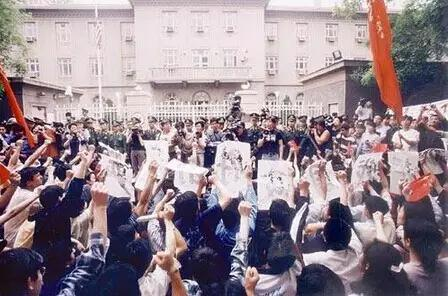
On May 8, 1999, Chinese university students gathered outside the US embassy in Beijing to protest the bombing of China’s embassy in Belgrade by US-led NATO forces. Image Credit: Liu Zhankun via news.sina.com.cn
Seeking to repair badly frayed relations between the two countries, Secretary of State Colin Powell announced on April 23, 2001 that he would visit Beijing at the end of July 2001.
A goal of the July 2001 visit was to announce the resumption of the human rights dialogue with China, which had been suspended for more than two years by this point. Powell brought Lorne Craner, the newly confirmed Assistant Secretary for Democracy, Rights, and Labor, with him on his three-day visit to China. As hoped, the visit resulted in an announcement that the human rights dialogue would resume in October 2001 in Beijing.
Not long after the announcement that the July 2001 visit would take place, Craner asked me to assist with the preparation of a prisoner list that he hoped to hand over to his Chinese counterpart, Director General of the Ministry of Foreign Affairs International Department Li Baodong. The list was in fact made up of two lists, one of long-serving prisoners and the other of priority cases. Dui Hua drew up the long-serving prisoner list, a compilation of 50 individuals serving sentences for counterrevolution and endangering state security, and it contributed names to the priority cases list.
Craner was able to hand over the list to Li Baodong, who reluctantly accepted it but told Craner not to expect a response.
In the wake of the September 11, 2001 terrorist attacks in the United States, Chinese President Jiang Zemin made a strategic decision to improve relations with the United States. As part of this decision he ordered his Ministry of Foreign Affairs to make the human rights dialogue session taking place in October 2001 a success. Instead of Beijing, the session would take place in Washington. At the same time the Ministry of Justice was ordered to reply to the US prisoner list and to separately draw up a list of political prisoners who could be released.
The dialogue session that took place on October 10, 2001 was a success. The Chinese delegation handed over a document with information on 48 of the prisoners on the “long-serving list” and 26 of the prisoners on the “priority list” – a response rate of 92.5 percent. Releases of long-serving prisoners began in January 2002 with Tibetan ethnomusicologist Ngawang Choephel, followed later that year by the releases of elderly teacher Jigme Sangpo, Drapchi nun Ngawang Sangdrol, and Democracy Party Chairman Xu Wenli.
In testimony I delivered to Congress in 2005, I estimated that prisoners on the 2001 Craner list were three times more likely than prisoners not on the list to benefit from early release.
Bolstered by the success of the October 2001 dialogue session, Craner decided to prepare a list for the next round of the human rights dialogue to take place in Beijing in December 2002. Once again, he asked for my assistance. My colleagues and I put together a list of 250 names which I sent to Craner on November 7, 2002. Twenty names were removed from the list, which was then forwarded to the US embassy in Beijing. This list of 230 names was handed over to China’s Ministry of Foreign Affairs. One of the names on that list was that of US businessman Fong Fuming (方复明).
Who is Fong Fuming?
At the dawn of the new millennium, Fong Fuming was a US businessman, engineer, and power industry consultant based in New Jersey. In China, he had been the deputy director and chief engineer of the Zhejiang Provincial Power Bureau. In the wake of the June 1989 killings in Beijing and other cities, he resigned his position and left for the United States. His decision did not sit well with the Ministry of State Security.
Fong Fuming in a 2012 video expressing support for Congressman Pascrell. Image Credit: Pascrell2012
Fong regularly visited China on business. In the late 1990s, officials from the Shanghai State Security Bureau contacted Fong’s agent with a request to cooperate with the bureau to earn money bidding for power plants. The agent rebuffed them. The Shanghai State Security Bureau, suspicious of Fong after he resigned his position and angry at his agent’s rejection, placed Fong under surveillance. The director of the Shanghai Bureau was promoted to Vice Minister of the State Security Ministry in Beijing, and the investigation into Fong intensified.
On February 28, 2000, Fong arrived in Beijing for a meeting with B&W Boiler Manufacturing. He was taken into custody by officers of the Beijing State Security Bureau at Beijing International Airport and placed under residential surveillance in a designated location (RSDL), a coercive measure that is often used to hold political prisoners for a period of up to six months and is rarely used against foreigners. During this period, those subjected to RSDL cannot receive visits from family members or lawyers. Foreigners under RSDL are permitted one 30-minute visit once a month from consular officers at their embassy.
Fong was moved around among State Security facilities in the outskirts of Beijing. His laptop, seized at the airport, was scrutinized. State Security found 32 documents containing specifications of various manufacturers’ power equipment. The State Security Bureau had these documents classified as state secrets. Fong was now suspected of obtaining and providing state secrets to foreign entities.
After spending six months under RSDL, Fong was formerly detained on August 28, 2000 on state secrets charges and bribery. He was arrested the following month. Following two hearings, Fong was tried in March 2002. He was convicted and sentenced to five years in prison. He was not given credit for the time he served under RSDL.
According to statistics released by China’s Supreme People’s Court, 19 people were convicted of obtaining and providing state secrets to foreign entities in 2002. Only one of them – American Fong Fuming – was a foreigner.
Fong entered Beijing Number Two Prison on June 6, 2002 and was placed in the cell block holding foreigners. These included three or four Americans, two Japanese citizens, and several South Koreans. Not long after Fong’s arrival, the foreigner group was transferred to Beijing’s Liangxiang Prison, where Fong was to serve the remainder of his sentence.
Fong was not physically tortured but was subjected to a number of indignities while under detention. His glasses, dentures, and hearing aid were taken from him; his dentures were returned at mealtime. On one occasion, the guards lost his dentures, and Fong refused to eat until they were found.
Advocacy
Shortly after Fong Fuming was taken into custody, the Chinese Ministry of Foreign Affairs notified the US embassy, which in turn notified Fong’s family in New Jersey. Fong’s wife and sons immediately began working to secure his release. They consulted the preeminent expert on Chinese law, Jerome Allen Cohen, and reached out to me for help. They appealed to senior officials of the George W. Bush administration, including Secretary of State Colin Powell, Ambassador to China Clark “Sandy” Randt, and assistant secretaries James Kelley (in charge of the East Asia and Pacific Bureau) and Lorne Craner. President Bush raised Fong’s case when he visited Beijing in February 2002.
Congressman Pascrell. Image Credit: United States Congress / Public Domain
Most importantly, Fong’s family asked for assistance from the family’s congressman, Bill Pascrell. Pascrell, a Democrat elected in 1996, worked tirelessly on behalf of his constituents. In his words, Pascrell launched an “avalanche of letters” to US and Chinese officials demanding Fong’s immediate release. He reached across the aisle and secured the help of Congressman Chris Smith, a fierce critic of China’s human rights record. Pascrell even engineered a resolution on Fong Fuming that was passed by the New Jersey State Assembly.
The family requested medical parole for Fong on four occasions. Their applications were ignored or rejected by the Beijing Prison Bureau.
The campaign to secure Fong’s release intensified in November 2002, when his name was presented to the Chinese Ministry of Foreign Affairs on the list compiled by Dui Hua for the human rights dialogue in Beijing. This was in anticipation of the human rights dialogue to take place in December 2002. That same month, Dui Hua researchers found a December 1984 document issued by the Supreme People’s Court; the document stated that time spent under RSDL should be counted when calculating the date when a criminal sentence expires. I immediately sent this document to Fong’s family.
In January 2003, Congressman Pascrell visited Beijing. He forcefully raised Fong’s case in a meeting with Chinese President Jiang Zemin. Pascrell’s meeting was one of the last between Jiang and a US member of Congress. Jiang stepped down from his position in March 2003 and was succeeded by Hu Jintao.
On January 4, 2003, I faxed a petition to La Yifan, the head of the Ministry of Foreign Affairs’ Human Rights Division. I asked him to consider granting good behavior parole to Fong. Under Chinese law, a prisoner can be released on good behavior parole after he or she has completed half of his or her sentence. Citing records of consular visits provided to me by the family, I pointed out that Fong was considered an exceptionally well-behaved prison – “a model prisoner” – and argued that if Fong had been given credit for the time he served under RSDL, then he would have already completed half of his sentence months before.
La Yifan, the head of the Ministry of Foreign Affairs’ Human Rights Division during Fong Fuming’s ordeal. Image Credit: Ministry of Foreign Affairs of China
I followed up on this message when I met with La in Beijing on March 3, 2003. In the months that followed, frequent follow-up calls were made to La after consultations with Fong’s family, Assistant Secretary Craner, and Ambassador Randt.
My next visit to Beijing took place from September 8-12, 2003. I met with a wide range of interlocutors and was informed by two sources that a decision had been made in August to grant Fong a nine-month sentence reduction. I argued that instead of giving Fong a nine-month sentence reduction, his sentence should be commuted, a procedure known as “jianxing shifang” (减刑释放) – literally “reduce sentence followed by release.” I felt progress was being made, so I briefed Craner by phone on September 12, 2003.
On October 19, 2003, President Bush met with Chinese President Hu in Bangkok. President Bush again brought up Fong. Eight days later, Fong was released from prison and flown back to the United States accompanied by an embassy officer. I received a phone call from La Yifan at 2 a.m. advising me that Fong was on a plane on the way back to the United States.
Fong arrived at Newark International Airport and was met in an emotional reunion by his wife and sons as well as his champion Congressman Pascrell. The congressman subsequently sent me a letter in which he thanked me for the “invaluable assistance” I provided. At the bottom of the letter, Mr. Pascrell penned a brief note: “We couldn’t have done this without your help.”
I had already begun working on a juvenile justice program in China when the Dui Hua board approved expanding the foundation’s mission to include at-risk detainees other than political prisoners (read “Li Yan Has Survived!” parts one and two to learn about Dui Hua’s expanded focus). Shortly after board approval, I set in motion a plan to bring a delegation from China’s Supreme People’s Court (SPC) to visit the United States to study its juvenile justice system. I had already raised this possibility with the Court’s Research Department and the Office of Juvenile Courts in 2007, and they were receptive. We agreed that the delegation would take place in the summer of 2008.
On May 12, 2008, a devasting earthquake, measuring 8.0 on the Richter Scale, took place in Sichuan Province. More than 69,000 people were killed, and all overseas trips by Chinese government officials were put on hold. The Chinese juvenile justice delegation was eventually rescheduled, and it took place in October 2008.
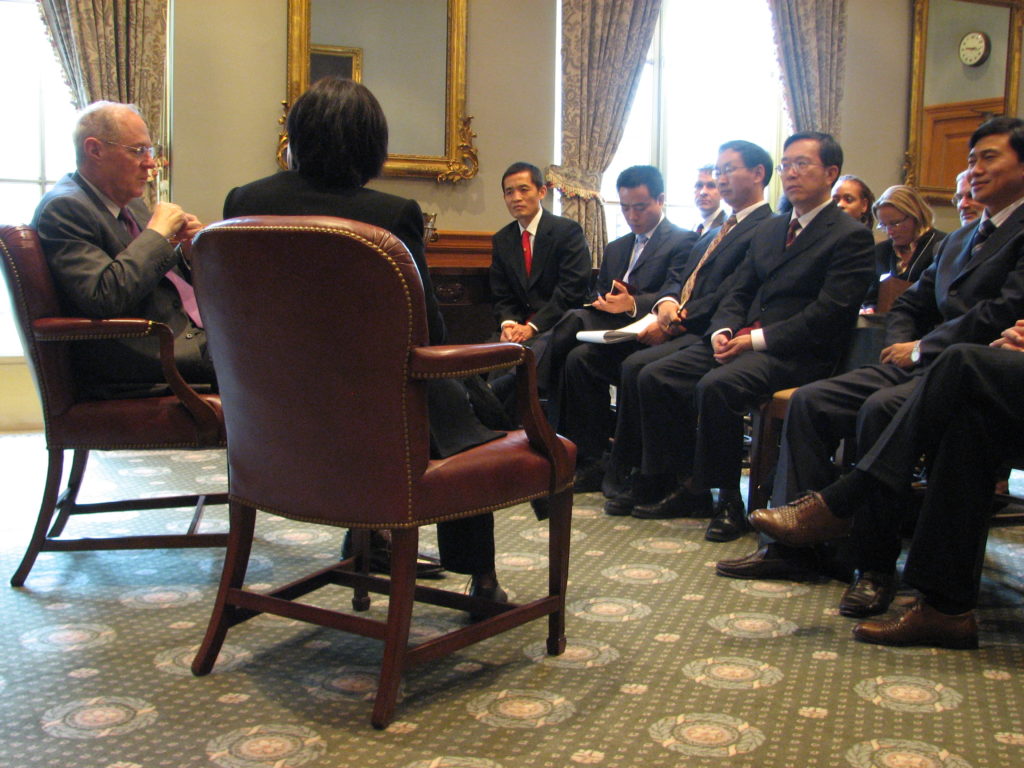
The visit included meetings, presentations, and tours of courts and detention facilities in Chicago, Maryland, Washington, D.C., and San Francisco. A highlight of the two-week trip was a meeting with Supreme Court Justice Anthony Kennedy, well known to Chinese legal circles as the justice who wrote the 2005 Roper vs. Simmons decision which declared that executing juveniles (individuals under the age of 18) was unconstitutional. Kennedy referenced China’s own abolition of capital punishment for juveniles in 1997 in his majority opinion.
Associate Justice Kennedy (left) received the delegation and US hosts in Washington on October 16, 2008. Image credit: Dui Hua Foundation
Upon the delegation’s return to China, Senior Judge Hu Weixin, who led the delegation, wrote a report on the visit. The report was widely circulated within the government and court system. On my visit to Beijing in July 2009, I was told by Chinese officials at the SPC and Ministry of Foreign Affairs that the report had been read by Premier Wen Jiabao. The Chinese juvenile justice delegation to the United States was considered one of the most successful programs in the field of legal exchange between the United States and China. It provided impetus for the reform of China’s juvenile justice system.
During the July visit I was invited to organize a return delegation of American juvenile justice practitioners to China. I followed up this visit by traveling to China twice during the first few months of 2010 to prepare. We agreed that the delegation would visit Beijing and Qingdao in May 2010 to make presentations, hold a mock trial, and visit juvenile detention facilities.
Tour of the Beijing Juvenile Reform Center
The delegation, led by Judge Lillian Sing of the San Francisco Superior Court, arrived in Beijing on May 8, 2010. We were met by a senior SPC official and transported to the Jianguo Hotel. We spent May 9 seeing the sites around Beijing (Great Wall, Forbidden City). In the evening we were hosted at a banquet held by SPC Vice President Xi Xiaoming.
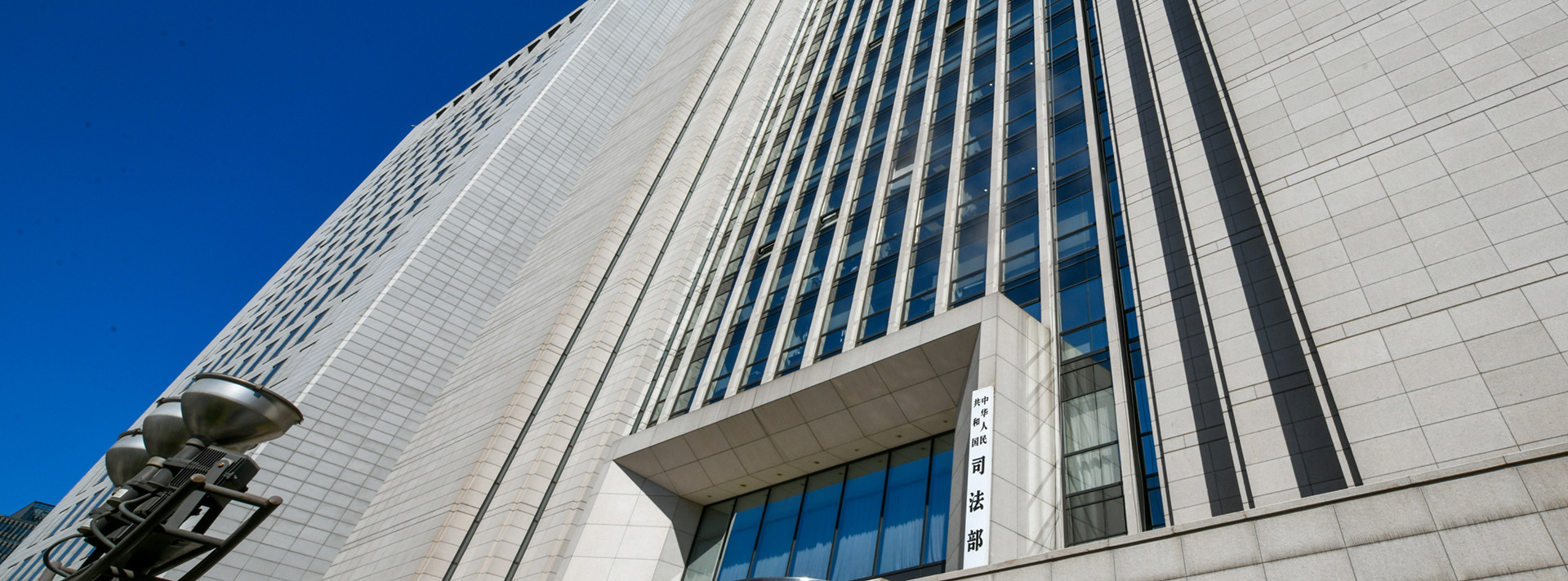
On May 10 we set out for rural Daxing County on the outskirts of Beijing. There, surrounded by acres of agricultural land and several other correctional facilities, was the Beijing Juvenile Reform Center. Founded in 1955, the center is the only juvenile prison in Beijing. It is managed by the Beijing Bureau of Prison Administration under the Ministry of Justice. At the time of our visit, it held 470 juveniles (in China, juveniles are 14-18 years old), 60 percent of whom had been sentenced to prison for violent offenses. There are also “work study schools” – now known as “specialized schools” – in Beijing. They are managed by the Public Security Bureau and hold juveniles who have committed less serious offenses but who are not tried by courts. Although 95 percent of those held in the center were males, there were 12 females. They were housed in a cell block separate from the boys.
It took more than an hour to reach the center from our hotel. Our cars encountered a massive traffic jam which necessitated our taking a back road. A colleague quipped, “They must have known you were coming.”
Upon arrival our delegation was met by Madame Sun, a formidable lady who was a senior cadre in the Beijing Prison Bureau, and by the warden and deputy warden of the Beijing Juvenile Reform Center. I had met Madame Sun once before, when I visited Beijing Number Two Prison in 2001.
We were treated to a performance of traditional Chinese drumming by around 100 boys, decked out in colorful peasant garb. The sound was deafening, and it seemed to go on for an eternity. The noise made it impossible to carry on a conversation with the wardens. Finally, SPC Judge Hu, who had accompanied us, stepped in and asked for the performance to end. At this point we were told that the boys were the only inmates that we would see on the visit. Everyone else was required to participate in the center’s annual sports day. It was odd that our visit was scheduled on one of the only days of the year when we could not see, much less interact with, incarcerated young people, something we had arranged for the Chinese delegation when they visited the United States. Sessions between young detainees and the Chinese visitors were among the most valuable experiences of the 2008 delegation’s visit to the United States.
Our group proceeded to visit the empty male and female cell blocks, classrooms and other activity rooms. We were told that the average inmate age was 17 and a half years old. Inmates who turn 18 but who have two years left on their sentences are typically not transferred to adult prisons and instead serve the remainder of their sentences in the juvenile reform center. Two juveniles were serving life sentences at the time of our visit.
The wardens explained the system of awarding points for good behavior. Each month, inmates can earn a maximum of 10 points: one for “showing remorse,” one for performing well in “thought reform,” and eight for general behavior such as observing discipline, classroom performance, good hygiene and so forth. Violations result in the deduction of points. Accumulation of points leads to citations which in turn form the basis of applications for sentence reductions. Every year 20 percent of juveniles in the center are granted parole, a rate much higher than the rate in adult prisons.
Teens incarcerated in the center are entitled to one family visit a month, and unlike inmates in adult prisons, this privilege is not restricted as a form of punishment. Inmates can also make phone calls and send letters to family members. Unlike in the United States, there are no gangs in juvenile prisons in China, and fights are uncommon due to intense monitoring by staff. Although there is a protocol for solitary confinement, it is rarely employed. The biggest problem is that it is difficult to deliver vocational training given the varying ages and sentences of the young people in the center.
After we left the cell block, I tried to find out if any inmates were serving sentences for endangering state security. Madame Sun jumped in before the wardens could answer my question. “You’re always asking about such people,” she exclaimed. I failed to get an answer.
After our second juvenile justice delegation concluded, Dui Hua organized three more delegations, two to China and one to the United States. American experts introduced such practices as “diversion,” the sealing of juvenile records, gender-specific measures, and psychological and behavioral assessments at every stage of adjudication and incarceration. Several of these practices were enshrined in the amended Criminal Procedure Law promulgated in 2012.
In 2010, when I visited the Beijing center with our delegation, 80,000 juveniles were arrested in China. More than 68,000 were given custodial sentences. In 2017, the year our last exchange with the SPC took place, fewer than 33,000 juveniles were given custodial sentences by Chinese courts, a drop of more than 50 percent.
In 2010, when I visited the Beijing center with our delegation, 80,000 juveniles were arrested in China. More than 68,000 were given custodial sentences. In 2017, the year our last exchange with the SPC took place, fewer than 33,000 juveniles were given custodial sentences by Chinese courts, a drop of more than 50 percent.
Guangzhou’s CITIC Plaza, one of the tallest buildings in China. This is one of the locations where Li Huanming planned to distribute his flyers. Image credit: Quanjing.com
Dui Hua researchers started finding the names of political prisoners on Chinese court websites in 2003. One of the first names we found was Li Huanming. My colleague Joshua Rosenzweig found his name on the Shenzhen Intermediate Court website. Later, in a work report out of Shenzhen, we confirmed that Li stood trial for inciting subversion in a high-profile case in 2002.
Months later, in late 2003, Dui Hua sent Li’s name to a professor based in Guangzhou who enjoyed good relations with local security bureaus and courts. Within months, the professor responded with details on Li’s case, marking the first time Dui Hua received information on a political prisoner we identified from a Chinese government website.
The information came from “friends” in the Shenzhen Public Security Bureau. We learned that Li was from Ankang Municipality in Shaanxi Province. He was charged with inciting subversion for distributing or planning to distribute tens of thousands of “reactionary” flyers in Shenzhen and Guangzhou. In one instance, he put flyers near the Shenzhen-Guangzhou Highway so trucks hurtling by would blow the flyers across the countryside.
Diwang plaza in Shenzhen. Image Credit: sohu.com
According to the email: “The case shocked the Ministry of Public Security, which dispatched two bureau chiefs to Guangzhou to personally supervise the investigation. The Central Committee’s Political and Legal Affairs Committee even hosted a special meeting to discuss the case.” When police detained Li in Guangzhou’s Tianhe District, he “shouted reactionary slogans [demonstrating that] he is a very stubborn person.”
From the time Dui Hua first learned of Li Huanming in 2004 until his release in 2010, we put his name on 11 prisoner lists to the Chinese government both directly and through foreign governments. In 2005 alone, we put Li’s name on four lists submitted to both the central government and the Guangdong government. These interventions yielded eight written responses, which painted a picture of a young man who refused to bend to authority. The court sentenced Li to nine years in Shaoguan Prison in northern Guangdong Province for inciting subversion and to another three years of deprivation of political rights upon his release. He refused to give legitimacy to the Chinese government and did not appeal the sentence, which was the longest for inciting subversion that Dui Hua was aware of at the time. (In 2009, Nobel Peace Prize laureate Liu Xiaobo would be given an 11-year prison sentence for inciting subversion.)
In prison, he was defiant. Li served every day of his sentence before being sent back to his hometown in Shaanxi Province on September 1, 2010. He spent several spells in solitary confinement, making him ineligible for clemency. I later learned that prison authorities forbade monthly phone privileges to call his family, and he did not receive family visits.
Nonetheless, the stream of prisoner lists we sent beginning in late 2003 improved life for Li. Authorities put him in solitary confinement on three occasions in 2003, but never again after 2004. Li Huanming says that, in 2005, he was excused from working overtime and on weekends. He was given light work in the prison commissary. In 2007, he refused to do any manual labor, and he was not punished. He was left alone to write what would become a long novel that he was not allowed to take out of China.
The China Alliance of Virtuous Youth
In a conversation in 2005, the professor told me that Li originally faced harsh treatment for three reasons. First, he had a bad attitude. Second, authorities took issue with the high volume of reactionary leaflets he distributed and how he distributed them. Third, Li had a record, having served a three-year prison sentence for counterrevolution during the 1990s.
While he was a student at Ankang Normal College (now Ankang Normal University), Li started the “China Alliance of Virtuous Youth.” Made up of five members, the group drafted a manifesto that was then confiscated by the police. Li was detained right before graduation in June 1993. He was subsequently convicted of organizing and leading a counterrevolutionary group and sentenced to three years in prison in 1994. Li was the only member of the group sentenced to prison. He finished the sentence in June 1996 and then moved to Guangdong to find employment. After working several jobs in the Pearl River Delta, he wound up working for a real estate company in Shenzhen.
A Message from Vietnam
Less than a year after Li finished his prison sentence, on June 15, 2011, Dui Hua’s Hong Kong office received an email from a reporter in Hanoi. The journalist had run into Li Huanming. He had entered Vietnam illegally and was facing difficulties.
I subsequently learned that Li had taken a train from Shaanxi to Guangzhou. He was contacted by public security agents in Shaanxi and ordered to return to Ankang to serve his deprivation of political rights sentence. Li ditched his cell phone, borrowed money, and headed for the border with Vietnam. He crossed the border at Pingxiang in Guangxi Zhuang Autonomous Region and was immediately detained by Vietnamese border guards. He paid them off.
Li took a bus from Hanoi to Ho Chi Minh City. From there he headed to Cambodia and then to Thailand. He entered Thailand, a month after leaving Guangzhou, but lost nearly all his documents on the way. He had been stopped by border guards and police on several occasions but managed to bribe or talk his way out of each brief detention. He spent a week living on the streets in Bangkok before finding a place to stay.
On July 22, Li called Dui Hua from Thailand. He had had his first meeting with the United Nations Office of the High Commissioner for Refugees (UNOHCR). Afterwards he visited the embassies of the United States, the Netherlands, and New Zealand. None could help. He also sought out the Jesuit Refugee Service (JRS), but since he was not a Christian, Li was not optimistic he’d get assistance. I contacted the Department of State to see if it could help Li and asked for help from Dui Hua Director Bill McCahill, who asked Father John Shea SJ to intervene with JRS.
On August 16, a lawyer working at JRS asked me to provide supporting documents to help verify Li’s claim for political asylum. I gathered and submitted all the official responses I had received on Li from the Chinese government.
On September 16, Li had his first formal, full-day interview with UNOHCR. He presented the materials from Dui Hua and JRS. His second interview was scheduled but delayed due to a lack of Chinese interpreters. Li was advised that it usually took two years after the first interview to have a second. Months went by. Li worked at part-time jobs and earned enough to survive, but he was increasingly dispirited and pessimistic.
Finally, on August 27, 2012, Li called Dui Hua’s Hong Kong office to report that his refugee status had been approved by UNOHCR. After months of the UNOHCR trying to find him a new home, Li arrived in Finland on May 7, 2013. He settled in Mikkeli, a scenic city on a lake that is a two-and-a-half-hour drive from the capital, Helsinki. His life is good. He has made many friends and is free to travel around Europe.
Li Huanming’s case demonstrates the value of submitting prisoner lists to the Chinese government and getting responses in return. The lists led to better treatment in prison, and the responses supported Li’s successful request for political asylum.
Dui Hua’s work is as unique as it is important. Mr. Rosenzweig calls Li’s story a classic case of a successful Dui Hua intervention on behalf of a political prisoner. In the words of Li Huanming: “Dui Hua under John Kamm’s direction was the only human rights organization that cared about me.”
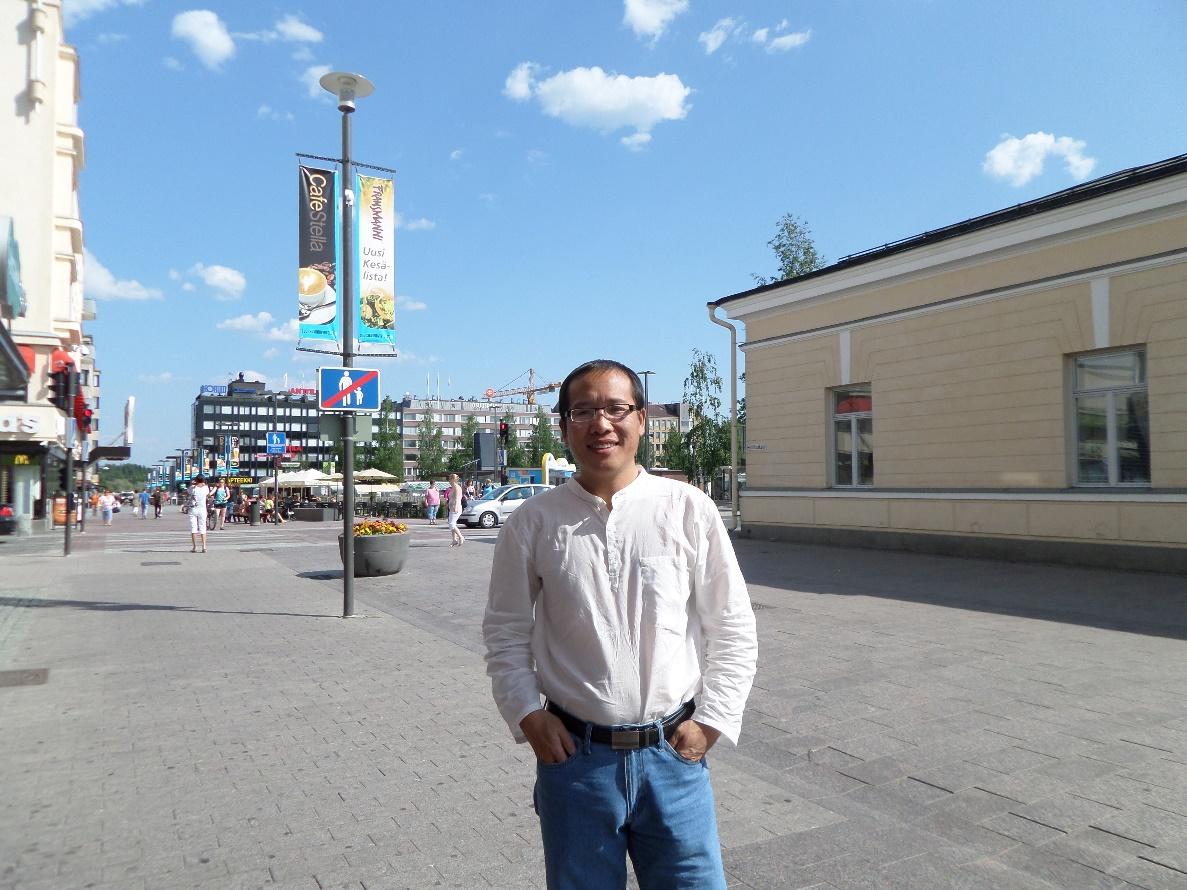
Li Huanming in Mikkeli, Finland
The June 15 Reactionary Leaflet Case in Shanghai
Chinese police have a practice of naming important cases after the date on which the offense was committed. Li Huanming’s reactionary leaflet case was known as the “August 23” case, named after the date in 2001 when Li dropped a large quantity of leaflets from a tall office building in Shenzhen. Li’s case bears a striking similarity to the “June 15” case reactionary leaflet case in Shanghai.
On June 15, 1989 – days after the political protests in Beijing were suppressed – a number of reactionary leaflets were tossed from a building in Shanghai. From that date until his arrest on October 2, 1989, Shanghai resident Yu Rong distributed 1,450 reactionary leaflets on 52 occasions in separate districts around the city. It was the largest case of reactionary leaflets in the history of Shanghai. In the words of the popular tabloid People’s Police, Yu Rong’s reactionary leaflets “caused serious damage to social stability and to people’s peace of mind.”
As in the Li Huanming “August 23” case, solving the Yu Rong “June 15” case became a top priority for both the Shanghai Public Security Bureau and the Ministry of Public Security in Beijing. Zhu Rongji, then mayor of Shanghai and later China’s premier, personally oversaw the investigation that eventually led to Yu’s arrest. Hundreds of public security officers were deployed in stake outs in an attempt to catch the “counterrevolutionary” in the act of distributing the leaflets.
Yu Rong – who, like Li Huanming, had served time in prison – used pages from middle-school textbooks to write his messages. Thirty-five-year-old Yu, who worked at the Shanghai Automobile Service Company, lived alone, and committed the crime without assistance from anyone else. His father had served a prison term for counterrevolutionary crimes. Yu resented the Chinese government and was inspired by the June 4 protests.
Under interrogation Yu admitted that he was responsible for distributing the reactionary leaflets. He also confessed to setting 22 fires and to having dropped bricks from tall buildings on more than 50 occasions, killing three people.
From the time Dui Hua first learned of the Yu Rong case in People’s Police to the present day, the foundation has placed Yu Rong’s name on 15 lists submitted directly or through foreign governments to the Chinese government. It has thus far received only one response. In April 2006, the Shanghai authorities advised Dui Hua that Yu Rong had been diagnosed with schizophrenia in 1990 and been placed in a psychiatric detention facility known as Ankang run by the Public Security Bureau. If Yu is alive he is likely still there.
The Dui Hua Foundation was established in April 1999. That same month, the United States introduced a resolution criticizing China’s human rights record at the United Nations Commission on Human Rights. The Ministry of Justice (MOJ) advised me that they would no longer provide information on prisoners “for reasons known to all.”
On May 7, 1999, American warplanes bombed the Chinese Embassy in Belgrade, touching off a major crisis in U.S.-China relations. China immediately suspended the official human rights dialogue with the United States. Since Dui Hua’s unofficial dialogue had already been suspended, the suspension of the official dialogue did not affect us. In fact, it enabled our dialogue to be resumed before the government-to-government dialogue.
My wife and I made a personal donation through the Chinese Embassy in Washington to the families of the Chinese killed in the Belgrade Bombing. I was advised by a senior Chinese official that we were the first American citizens to make this gesture, which was much appreciated.
On March 21, 2000, I received a letter faxed from the MOJ. The letter thanked me for “all your hard work over these past several years to promote understanding between our two sides.” Attached to the letter was information on 14 prisoners about whom I had asked. The letter marked the resumption of Dui Hua’s dialogue on prisoners with the Ministry of Justice, something I called “the Prisoner Information Project.”
The first prisoner about whom information was provided was Bai Weiji (白伟基), an official of China’s Ministry of Foreign Affairs who had led a march during the Spring 1989 protests, for which he was fired and expelled from the Communist Party. Bai was detained on May 5, 1992 and subsequently tried and convicted for “illegally providing state secrets to a foreign organization.” His wife, Zhao Lei (赵蕾) , was arrested a year later, and sentenced to six years in prison. (She was released early after an 18-month sentence reduction.)
Bai was given a 10-year prison sentence. He had provided documents to the Beijing Bureau chief of The Washington Post, Ms. Lena Sun, for whom his wife worked. The documents were found during a police raid on Ms. Sun’s apartment. In her safe were 10 “top secret” documents, according to Xinhua News Agency. Ms. Sun asked me to help secure Bai Weiji’s release, and I began raising his name with Chinese officials and submitting lists with his name on them to the MOJ.
The March 21 letter advised that Bai had received three sentence reductions and been released more than three years early on February 2, 1999.
Not long after receiving the letter, the MOJ invited me to visit Beijing. It would be the first visit by Dui Hua to Beijing and the first visit by a foreign human rights organization to discuss China’s prisoners with the ministry in charge of the country’s 700 prisons.
Prior to leaving for Beijing, I received a letter from Mr. Samuel (“Sandy”) Berger, President Bill Clinton’s National Security Advisor. The letter asked me to follow up on President Clinton’s request, made during his trip to Beijing in June 1998, to release the remaining counterrevolutionaries serving sentences in China’s prisons. The fate of these prisoners would be the focus of my trip to Beijing.
I arrived in Beijing on May 18, 2000. Before I departed on May 20, I met with MOJ Vice Minister Fan Fengping and held 10 hours of talks with officials of the Prison Administration Bureau and the Department of Judicial Assistance as well as Director Liu Huaqiu, head of the Foreign Affairs Office of the Communist Party’s Central Committee, and senior officials of the Ministry of Foreign Affairs. Meetings were held in the ministry’s nearly opened headquarters in Chaoyang District.
I was given a great deal of information on counterrevolutionary prisoners. At the end of 1999, there were 1,300 such prisoners still serving sentences, a reduction of 650 from the end of 1997. Most of those released were released early, including several I had advocated for: Bai Weiji, Shandong’s Zhang Xiaoxu (张霄旭) (paroled in 1998 after serving less than nine years of a 15-year sentence), and Tibet’s Jampa Ngodrup (released three years early in 1999). Immediately prior to my visit, Chen Lantao (陈兰涛), a student leader in Qingdao, was released after serving less than 11 years of his 18-year sentence for counterrevolutionary propaganda and incitement and blocking traffic. Chen’s sentence was the longest for non-violent actions taken during the Spring 1989 protests, and I had taken a special interest in his case, raising his name on trips to Qingdao.
I raised the case of Zhang Jie (张杰), another Shandong prisoner whose case had been taken up by Congresswoman Lynn Woolsey and 15 other members of Congress. I was told that Zhang had had his sentence reduced by four and one-half years. The sentence was due to expire on January 15, 2003. I pressed hard for his release before then, and was told that if Zhang continued to “make progress in his reform” he would be released early.
I handed over a new list of 25 cases involving 51 individuals. Dui Hua had found their names in its research into “open source” Chinese publications. Most of their names were not known outside of China.
A highlight of the trip was a visit to Beijing Number One Prison in Daxing County on May 19. This was the prison where Bai Weiji had served his sentence, and I was eager to take a look at conditions there.
I left my hotel at 1:00 PM, and arrived at the prison an hour later. I was greeted by Warden Yang Di, a big man with a broad smile. He had earned a reputation as a warden who, though strict, cared about the prisoners under his charge.
Yang gave me the standard “brief introduction” and showed me around the prison’s spacious and well-tended grounds. I was shown a cell block, the infirmary, and the cafeteria. The prison occupied an area of 440,000 square meters. Established in 1982, it held 2,000 male prisoners overseen by 370 guards.
The prison was a hive of small factories, and included 18 workshops making automobile parts (some for export, although not to the United States), plastic packaging, steel templates, and toys, among other products.
Beijing Number One Prison, now known as Beijing Municipal Prison, was designated a model prison by the Ministry of Justice and one of only seven “Cultural Units” (wenming danwei 文明单位) by Beijing Municipality. To be designated a model prison, a carceral facility has to meet 42 conditions including “no prison escapes” and “no prisoner suicides.” Beijing Number One enjoyed a recidivism rate of less than two percent.
Prisoners ranged in age from 18 to 60. Sentences included life in prison, 16-20 year terms, 10-15 year terms, and under 10 year terms. Most sentences were 15 years or more. Fifty percent of prisoners would be granted sentence reductions or parole during their time at Beijing Number One. Medical parole was granted to prisoners near death who did not represent a threat to the community. Fifty-two percent of prisoners had committed property crimes and 30 percent had committed violent crimes, including sex crimes. Several officials were serving sentences for corruption.
As I boarded my car to return to my hotel after a four-hour visit, I asked Warden Yang if he remembered Bai Weiji. He remembered Bai as a well-behaved prisoner who had been released early.
Years after I visited Beijing Number One Prison, Bai Weiji came to visit me in the United States. He told me about his life in prison. He had acted as a translator for Warden Yang’s efforts to sell prison-made automobile parts abroad. The warden had treated him well.
Bai thanked me for intervening on his and his wife’s behalf. While he credited my efforts for helping him gain early release, he cited two other reasons.
First, his team had won a city-wide competition among prisons to see who knew the most about Hong Kong’s reversion to China in 1997. Although he gained points for use towards a sentence reduction, his team members were given twice as many points as Bai because Bai was a counterrevolutionary.
The other reason had to do with the visit by the United Nations Working Group on Arbitrary Detention (WGAD) in July 1996. This visit, made by the Chairman-Rapporteur Louis Joinet, was to make arrangements for a trip to China by the full working group in 1997. Two carceral facilities were selected for visits by Joinet: Beijing Number One Prison and a reeducation-through-labor camp in Shandong Province.
Part of the agreement between China’s Ministry of Foreign Affairs (MFA) and the WGAD was that randomly-selected prisoners could be interviewed in private, with no prison officials present. Upon arrival at Beijing Number One Prison, Joinet randomly selected Bai Weiji. Bai was the only political prisoner housed at the prison, and his selection was greeted with alarm and suspicion by the prison officials. They refused to let Joinet interview Bai. This led to a stand-off that was only resolved when a senior MFA official arrived to negotiate a solution.
Eventually, Joinet was allowed to interview Bai in a small room off the prison courtyard. Although the interview was supposed to be private and out of earshot, Bai suspected that the conversation was being monitored. Accordingly, he was very guarded. He declined to say why he was in prison, and claimed that he was being well treated. For this performance, Bai was given three successive sentence reductions, totaling three years and three months, in 1996, 1997, and 1998.
Not long after Bai visited me, I flew to Geneva. I requested, and was granted, a meeting with the WGAD. When I told them that the prisoner that Mr. Joinet had selected was the only political prisoner in the prison, they were shocked. I let them know that, because of the way he had handled the interview, Bai was released early, and was now a successful businessman able to travel abroad.
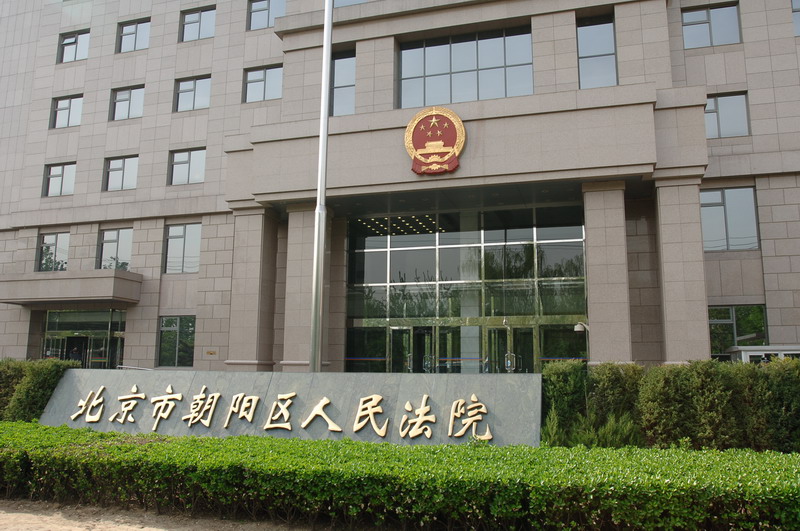
Beijing Chaoyang District Peoples Court. Image credit: Chinacourt.org
After Minister of Justice Wu Aiying took up her position in 2005, I was barred from visiting Chinese prisons. By 2005 I had been shown around prisons in Beijing, Hebei, Tianjin, Shanghai, Fujian, and Guangdong – nine prisons in all.
Wu Aiying was expelled from the Communist Party for corruption in 2017. Her ceaseless efforts to dismantle my dialogue with the ministry came to a head when a colleague and I were invited to visit Yichang Municipality in Hubei Province in 2007 to make presentations on the American justice system to a large audience of provincial justice officials. We had been promised a prison visit, but after finishing our presentations our hosts confirmed that we would not after all be allowed to visit the prison, on the instruction of the Ministry of Justice in Beijing. We needed to get out of town quickly.
In early 2006, I shifted my attention from visiting prisons to attending criminal trials. In January I wrote to the Supreme People’s Court in Beijing, requesting permission to attend a trial of either endangering state security or disturbing the social order, specifically a “mass incident,” when I visited Beijing the following month. This was a bold request. Although most trials are supposed to be open to the public, trials of endangering state security are usually closed. Trials of disturbing the social order involving dissidents are often closed to outsiders. In general foreigners, other than consular representatives, who are, for the most part, allowed to attend trails of their citizens, rarely get permission to attend trials.
To my surprise, I was told that I could attend a disturbing the social order trial, as the guest of the Beijing High Court, when I visited Beijing the following month. The trial would take place at the Chaoyang District Court, one of the country’s busiest; it had heard 50,000 criminal cases in 2005.
At 9 AM on February 17, 2006, my driver and I arrived at the Chaoyang District Court. I was met by the Chief Judge of the Chaoyang Court’s Criminal Division, the Director of the Court’s General Office, and the Director of the High Court’s Foreign Affairs Office. My driver told me that I was being given great face.
I was ushered into a polyurethane wood-paneled court room where photographers and cameramen were waiting to film my attendance. Other than court officials and police officers, I was the only other person in the room.
Seated at the front of the court was an appropriately robed collegiate panel consisting of two judges and a people’s assessor. In front of them was the court recorder. The defense team sat to my right while the prosecutors sat to my left. The defendant, Mr. Dong, was led into the courtroom in shackles. He stood in a box before the judges, flanked by two sturdy policemen.
Mr. Dong was accused of creating a disturbance, a violation of Article 293 of the Criminal Law, and a crime of disturbing the social order. In October 2005, Mr. Dong had been drinking in a bar. After a bit too much bai jiu, a fiery Chinese liquor, he stumbled into the street, where he began fights with passersby. The police showed up and detained him, somewhat worse for the wear.
I asked a court official seated next to me if this was considered a “mass incident.” He replied yes, “a small-scale mass incident.”
Mr. Dong had already served a two-year sentence for fighting, which meant that as a recidivist he could expect a harsh sentence. He pleaded guilty at this trial. The judges, in a show of leniency, noted his deep remorse and decided to give him a second chance, a suspended sentence. Mr. Dong thanked the court and was led away.
The whole proceeding had taken just 30 minutes. After my visit to the court room I was taken to see the room where copies of judgments are held. I asked to take a look at a few randomly selected judgments, but my request was denied.
On the way back to the car we passed through the court’s atrium. Overhead was a glass ceiling. I was told that this ceiling symbolized the court’s commitment to transparency.
After the trial and before returning to Hong Kong on February 18, 2006, I was hosted to lunch by Swedish Ambassador Borje Ljunggren and dinner by American Ambassador Clark Randt. I also met with the Red Cross and the Swiss Embassy.
A Case of Armed Robbery
I took the afternoon train to Guangzhou from Hong Kong on February 19. I was met at the train station by a professor and his junior colleague who both worked for a research association. They drove me to the White Swan Hotel on Shamian Island, close to the American consulate. We went to dinner at the hotel’s Chinese restaurant.
Over dinner I related my experience at the Chaoyang District Court. I told my friends that I felt that the trial I had attended was choreographed and intended to impress me with how compassionate the judges were. To my surprise I was asked if I’d like to attend a trial in Guangzhou. “We are far more open here. Foreigners can attend trials without prior approval,” I was told. We agreed to try to attend a trial at the Guangzhou Intermediate Court the next day.
We arrived at the court by taxi on the morning of February 20. The court was housed in a large, multi-story building, a hive of 80 court rooms. The ground floor was teeming with family members and others intending to attend trials, as well as judges and bailiffs. After passing through the security check, I went to an unimpressive wooden desk and registered to attend a trial of armed robbery, a capital offense. I presented my passport and was given a pass. Intermediate courts in China are the courts of first instance of trials for crimes that carry the death sentence, so we chose a death penalty trial.
My friend and I went to Courtroom Two on the fourth floor, where the trial was taking place, Judge Jiang Jianxiong presiding. The defendant, 19-year-old Huang Changwei was brought into the courtroom, shackled and accompanied by two blue-suited bailiffs. He stood in the dock shivering with fear. He was flanked by two cops. I thought of my own children. My oldest son was the same age as Huang Changwei, a migrant from a poor family in rural Guangdong. The judge, spying me out of the corner of his eye, asked young Mr. Huang if he needed some time to compose himself.
Mr. Huang was accused of killing his girlfriend, whom he had met on the Internet, in June 2005. The couple had rented a hotel room to negotiate a “breakup fee,” the amount the young woman was to receive for agreeing to separate. She demanded RMB 10,000. The boyfriend refused to pay anything and instead demanded that the girl return the cellphone he had given her. She refused, and when he tried to grab it a struggle ensued. During the fight he grabbed a fruit knife and stabbed her to death, after which he fled the scene, in possession of the cellphone. It was a simple matter for the police to track him down and detain him.
The court room was crowded. In addition to court officials, lawyers, and police, there were people like me (I was the only foreigner) who simply wanted to watch the proceedings. There was a group of relatives of the deceased girl who were there to demand justice. They were armed with a document that apparently allowed them to calculate the amount of compensation to the family that the young man should pay them for killing the girl.
The defendant’s lawyer stated that his client was too poor to pay a large compensation. At this point, the judge moved to adjourn the trial in order that he consider amending the charge to intentional murder. The defendant’s lawyer exclaimed: “Surely your honor wouldn’t sentence my client to death simply because he can’t afford to pay compensation.”
After the trial was adjourned, I went up to the judge and asked him if he cared to join me for a cup of tea and a cigarette. We agreed to do so in a small room off the hallway outside the court. We sat down on a couch to discuss the case. I found myself in the unlikely role of advocating for someone facing the death penalty in a Chinese court of law.
I said that Mr. Huang was a young man (he was 18 years old at the time of the crime) and took the position that this was a crime of passion committed by an immature person. There was no evidence of premeditation. At most this would be second-degree murder in the United States, maybe manslaughter. No way, I opined, could the crime justify his execution.
Judge Jiang seemed to take what I said on board. After finishing the tea and cigarette, I asked if he’d take a picture with me. He agreed and we reentered the courtroom where compensation negotiations between parties were still underway. He shooed them away, and we took a picture together, he in his splendid robes.
Judge Jiang did not amend the charge to intentional murder, keeping it as intentional robbery, a capital crime.
John Kamm with Judge Zhang Jianxiong of the Guangzhou Intermediate People’s Court, February 2006
Aftermath
On April 25, 2006 the Guangzhou Intermediate People’s Court sentenced Huang Changwei to death. He was ordered to compensate the girl’s family to the tune of RMB 292,689, the sum total of his assets. Huang appealed the judgment to the Guangdong High Court.
I wrote a letter to Judge Jiang which I asked my Guangzhou friend to deliver. I asked the judge to pass along my comments on the case to the High Court. On November 28, 2006 the High Court amended the sentence to death with two-year reprieve, reasoning that he had just turned 18 (the youngest age at which someone can be executed for a crime committed at or after the age of 18) not long before he committed the crime. He deserved a second chance. My friend wrote me that it was virtually certain that the sentence would be commuted to life in prison, which is what happened on August 8, 2009.
Huang turned out to be a very well-behaved prisoner. His life sentence was reduced to 19 years on July 28, 2011 and further reduced by 17 months on December 31, 2013. He was given an eight-month sentence reduction on May 6, 2016 and a five-month reduction in 2018. After the last reduction this sentence is set to expire on June 27, 2028, 23 years after the death at his hands of his girlfriend.
Wo (center) at the wedding of his daughter Ran Chen (left). His other daughter, Di Chen, is to the right. Source: Ran Chen.
In November 2008 I traveled to the New Jersey shore, where I had grown up. My youngest son, Rene, was with me. We would celebrate Thanksgiving dinner with my brother and his family, and, before leaving the family to return to San Francisco, scatter my mother’s ashes. She had died the previous July, the wife of three World War II veterans. I was with her when she died in a Florida hospice, and I had pledged to scatter her ashes in the place she loved best, off Avon beach, where she had met my father.
The dinner on November 27 was joyous and traditional, turkey with all the trimmings (including copious amounts of the family’s special stuffing), but it was a time of hope as well. Wo Weihan (沃维汉), someone facing imminent execution in China whose case I’d been working on, had met with his family at a detention facility in Beijing, and they had been told by way of the Austrian Embassy that another family visit could take place the next day. When I heard this news, I allowed myself to think that his execution might still be stayed. This extension, if granted, would be beyond the limit for delaying an execution approved by the Supreme People’s Court.
There were many reasons to stay this execution. Perhaps someone in a position of power would realize how this arbitrary, cruel, and unusually extreme punishment would impact China’s relationships with foreign countries and its international image, not long after the positive reaction to the 2008 Olympics.
After dinner, Rene and I drove to our hotel, the Courtyard in Wall Township, where we shared a room. My sleep was fitful. I sensed another person in our room, wandering aimlessly about. In my dreams I saw a ghostly apparition.
Just after 6 AM, my phone rang. It was my colleague Josh Rosenzweig, calling from Hong Kong. Wo Weihan had been executed earlier that day, when it was still Thanksgiving in the United States. Josh asked if I’d give an interview to The Washington Post. I said yes, in 10 minutes. I threw on my clothes and went down to the lobby and then outside where it was cold and foggy. The call came in to my cell phone. The journalist wrote that I reacted with anger and disbelief: “’I have been doing this work for 19 years, and this is the absolute lowest point of those 19 years,” Kamm said. “I am devastated.’”
A Scientist and Entrepreneur
Wo Weihan, a Chinese citizen born in 1949 in Heilongjiang Province, was an accomplished scientist who held several patents. He had founded a biochemical company in Beijing upon his return from studying and working in Germany and Austria, where he lived for several years in the 1990s, and where his two daughters, Ran and Di, live. Wo Weihan was a civilian who had never served in China’s military. His daughters are Austrian citizens. Wo was also a member of the Daur ethnic minority, one of China’s smallest ethnic groups. He had had the opportunity to apply for Austrian citizen but had turned it down. He was proud of his Chinese origins.
In 1984, the Central Committee of the Chinese Communist Party issued Document Number Five, which set out the principle of “Two Restraints, One Leniency” that was to be applied to ethnic minorities. Law enforcement was to be lenient to offenders from ethnic minorities by making fewer arrests and handing down fewer executions. Executions of ethnic minorities in China were rare at the time of Wo Weihan’s execution. Executions of Uyghurs accused of terrorism-related crimes have taken place in recent years. Executions of members of other minorities remain rare, however. The only known execution of a Tibetan sentenced to death in recent years was that of Lobsang Dhundop, a nephew of Tenzin Delek Rinpoche. He was executed in 2003 after being convicted of involvement in a series of bombings. In 2005, an official of Manchu ethnicity, Tong Daning (佟达宁), was sentenced to death and subsequently executed for spying for Taiwan.
Rarer than executions of members of ethnic minorities are executions of civilians for espionage, as opposed to executions of military officers and government officials. That remains the case in China today. Dui Hua is not aware of an execution of a civilian for espionage since 2000 – with the notable exception of Wo Weihan.
Wo was taken into custody on January 19, 2005 and placed under residential surveillance in a designated location. Shortly thereafter, Guo Wanjun (郭万钧), said to be a distant relative of Wo who worked as a missile expert for a research institute affiliated with the Chinese air force, was taken into custody and placed under residential surveillance in a designated location as well. Both men were taken into custody on suspicion of committing the crime of espionage, a crime of endangering state security that carries the maximum sentence of death.
Not long after being placed under residential surveillance in a designated location, Wo Weihan suffered a stroke, possibly due to mistreatment by his captors. He was granted bail to return to his home to recuperate. Granting bail to an individual accused of a crime that carries the death penalty is highly unusual.
Wo was formally detained on March 30, 2005, accused of spying for Taiwan. He was put in the hospital ward of a state security detention center. He was formally arrested on May 5, 2005. Only after his arrest was Wo allowed a visit by a lawyer; it took place 10 months after his initial detention. Family visits were not permitted until the day before he was executed.
The Supreme People’s Court (SPC) took back the power of final review of death sentences on January 1, 2007. Under pressure from China’s senior leaders, it had delegated this power to lower courts in 1984 at the height of the first “Strike Hard Campaign.” Upon taking back the power of final review, the SPC declared that, henceforth, only the most “vile and serious crimes” would attract the death penalty. In the first year of conducting reviews, the court overturned 15 percent of death sentences.
On May 24, 2007, Wo Weihan and Guo Wanjun were tried by the Beijing Intermediate People’s Court. The two men were sentenced to death in a closed trial. The prosecution introduced a confession from Wo that had been given in the ten months he was denied a lawyer; Wo recanted the confession made under duress without a lawyer present. The court had determined that Wo and Guo had provided Taiwan military intelligence with top secrets but provided few actual details. It was alleged that Wo had provided photocopies of a missile defense system and information on the health of a senior official who was not identified. (According to Wo’s lawyer, the photocopies in question were from an article in a publicly available journal that was subsequently classified.) Providing these secrets apparently constituted a “vile and serious” crime deserving the ultimate penalty.
The Taiwan intelligence agency to which secrets were provided turned out to be the “Grand Alliance for China’s Reunification under the Three Principles of the People,” a Taiwan-based non-governmental organization that promoted Dr. Sun Yatsen’s political philosophy and Chinese culture. It had no known links to Taiwan’s intelligence agency. The group’s contact details had been found in Wo’s diary.
Dui Hua Gets Involved
Dui Hua began working on Wo’s case in January 2008, when Josh Rosenzweig was visited in his Beijing hotel room by Wo’s daughter Ran Chen and an officer of the European Union (E.U.) Mission in Beijing. Josh offered advice and assistance. He was told that, for the time being, the family had decided, on the advice of Wo’s lawyer and the Austrian Embassy in Beijing, to keep a low profile and avoid media coverage.
The Chinese government was preparing to host the Summer Olympics in August 2008. In March 2008 protests erupted in Tibet; they were put down by Chinese police and troops. The world reacted in outrage. The Olympic torch run was beset by protests. On March 26, French President Nicolas Sarkozy suggested that he might boycott the Olympics opening ceremony in Beijing. Not long afterward, American President George W. Bush announced that he would attend the ceremony, and other world leaders fell into line. Beijing was very grateful to President Bush.
On March 28, 2008, the Kuomintang’s candidate for Taiwan president, Ma Yingjeou, won the presidential election. He succeeded Chen Shui-bian, seen by Beijing as a dangerous advocate of Taiwan independence. Ma’s election ushered in an era of good will between the Mainland and Taiwan that would be put at risk if China executed a civilian for allegedly spying for Taiwan.
A day later, on March 29, 2008, Beijing’s High Court rejected the appeals of Wo Weihan and Guo Wanjun. The death sentences were upheld. The cases were sent to the Supreme People’s Court for final review.
After Wo’s appeal was rejected the family decided to step up its effort to save him. I traveled to Beijing, and on April 2, 2008, I met Ran and her husband Michael in my room at the Beijing Renaissance Hotel. Ran, who had just enrolled as an MBA student at the University of California, struck me as an intelligent and courageous young woman determined to do what was necessary to save her father. Michael, an American citizen, was equally determined to fight for his father-in-law’s life. We mapped out a strategy and decided on the role I and Dui Hua would play.
Dui Hua’s advocacy would involve the following:
Raise the profile of the case in international media and alert other human rights group of Wo’s possible execution;
Push the United States government to aggressively lobby the Chinese government to grant clemency to Wo Weihan; and
Use Dui Hua’s extensive contacts with China’s judicial and foreign affairs establishments to advocate for the overturning of Wo Weihan’s death sentence.
Press Conference
On April 3, 2008, I summoned Beijing-based journalists to come to my hotel for an impromptu, unsanctioned press conference on the Wo Weihan case. The hotel management became agitated and tried to stop the journalists from taking the elevator to the seventh floor, where I had been given a junior suite. In response, journalists walked up the stairs, lugging their heavy equipment with them.
At least two dozen journalists from outlets in 10 countries in Latin America, North America, Europe, and Asia attended. I went over the basics of the case and listed the reasons I felt clemency should be granted: the need to project a humane image for the Olympic games; weak evidence and violations of due process rights; the Supreme Court’s overturning of hundreds of death sentences; Wo’s status as a member of an ethnic minority; the fact that executions of civilians for espionage were extremely rare; the prospect of improved relations with Taiwan, on whose behalf Wo allegedly spied.
Articles in papers from Brazil to Austria to Japan began appearing the next day. At the same time, Ran and Michael were giving impassioned interviews to major outlets, including the BBC. Never before had there been so much coverage of an imminent execution in China, the world’s top executioner.
Engaging the American Government
My close friend Clark “Sandy” Randt was American ambassador to China. Sandy and I knew each other in Hong Kong, where we were both heavily involved in American Chamber of Commerce activities; our children grew up together. He proved to be an invaluable resource in the doomed fight to save Wo Weihan.
Sandy Randt was also a close friend of President George W. Bush. The two men had attended Yale together, and after he was elected President Bush chose Sandy as America’s ambassador to China. After taking up his position in 2001, he went on to serve with distinction – he was an outspoken advocate for human rights – stepping down at the end of President Bush’s term of office as the longest serving American ambassador to China in the history of relations between the two countries.
On April 8, 2008, Ambassador Randt raised Wo’s case with China’s Ministry of Foreign Affairs. In the months that followed, Secretary of State Condoleezza Rice, Assistant Secretary of State David Kramer, as well as other officials and members of Congress asked the Chinese government to grant clemency to Wo Weihan.
David Kramer’s role was especially important. He was the Assistant Secretary of State for Human Rights, Democracy, and Labor, in which position he was the ranking official tasked with managing the bilateral human rights dialogue with China. After a hiatus of six years, the two countries agreed to hold a round of the dialogue in Washington May 24-28, 2008. Wo Weihan’s name was placed on the list of priority cases that Dui Hua helped draw up. It was accepted by the Chinese representative.
Lobbying the Chinese Government
Unique among human rights groups working on China, Dui Hua maintains open channels of communication with the Chinese government. I decided to bring these into play in the effort to save Wo Weihan’s life. I sent emails to, and met privately with, Chinese foreign affairs and judicial officials.
I concentrated on the SPC, which had been tasked with reviewing Wo’s death sentence passed by the Beijing High People’s Court. Dui Hua had an especially good relationship with the SPC; we had invited them to visit the United States to study the American juvenile justice system in October 2008.
In September 2008 I traveled to Beijing to meet with two senior judges to make final arrangements for the delegation to the United States the next month. I turned the conversation to Wo Weihan and explained that I was a friend of the family. I pointed out that executions for espionage in the United States were very rare. The last time civilians were executed for espionage – Ethel and Julius Rosenberg – was in 1953. Now the trend for the most serious such offenders is a sentence of life in prison.
The senior judge present nodded his head. He had been to Florence Super Max in Colorado and saw the tough conditions “lifers” faced there.
I criticized the lack of detail in the court judgments and queried how someone facing a death sentence could be allowed home to recuperate from an illness. I asked the judge when the SPC would complete its review. He replied that most reviews are completed within six months of the High Court decision. He cautioned that the number of death sentences overturned thus far in 2008 was far fewer than in 2007. He assigned a colleague to be my liaison on the case, but as it turned out the man proved to be of no use.
Family Told to Visit Wo
On the evening of November 17, 2008, Wo Weihan’s wife received a call from the SPC advising her to file an application, with supporting documents, to visit Wo Weihan. The application was to be filed within seven days, and if approved, the family should make the visit as soon as possible. The family’s lawyer saw this as a bad sign: the SPC had approved the execution. Preparations to execute Wo Weihan were underway.
I took action as soon as Ran advised me what happened, sending urgent messages to the Chinese Embassy in Washington, the Chinese Mission in Geneva, the SPC, the Supreme People’s Procuratorate, and academic and research organizations under the control of the Chinese government and Communist Party.
Complicating Factors
The responses I received were troubling. The Chinese embassy response was terse: the case would be handled in accordance with the law. My liaison at the SPC, which we had just hosted in the United States, washed his hands of the matter. A friend at the Chinese mission in Geneva advised that her ambassador would try to help – in fact he did try, telling me he had sent recommendations to his superiors in Beijing — but warned, somewhat ominously, that the sharp criticism of China’s capital punishment by the just-concluded meeting of the United Nations Committee Against Torture was deeply resented by Beijing: “Therefore it might be bad timing for the West to seek reconsideration of the case.”
Another complicating factor was the unraveling of relations between China and the European Union, which had actively lobbied the Chinese government to grant clemency to Wo Weihan, the father of two E.U. citizens. France, which held the rotating presidency of the E.U., had already drawn the ire of the Chinese government over President Sarkozy’s suggestion that he might boycott the opening ceremony of the Olympic Games.
On August 22, 2008, Sarkozy’s wife, Carla Bruni, joined the Dalai Lama at the inauguration of a Buddhist temple in France. There was speculation that Sarkozy himself would meet the Dalai Lama when the Tibetan spiritual leader visited Europe later in the year. When it became clear that the meeting would indeed take place, China canceled the E.U.-China Summit, shocking E.U. leaders and diplomats.
Nevertheless, E.U. officials traveled to Beijing to take part in the E.U.-China human rights dialogue that opened in Beijing on November 25. It was to run until November 28. The fact that Beijing declined to cancel the dialogue raised hopes that damage from the fracas over the impending Sarkozy-Dalai Lama meeting could be contained.
The Family Visits Wo Weihan
On Tuesday, November 25, Ran Chen received a call from the Beijing Intermediate People’s Court Number Two. The caller advised Ran that the SPC had confirmed the death sentence on her father and told her to come to the court at 9 AM on Thursday November 27 to see her father for what would turn out to be the last time. Ran arrived at the court at the appointed time. Wo’s wife, Ran’s stepmother, arrived and together the two women were taken to a small room. They sat on one side of a glass partition. Wo was brought in, flanked by two guards.
Beijing Number Two Intermediate People’s Court. Image Credit: Xinhua
Wo was surprised to see his visitors. He had no idea that he would soon be executed. He was optimistic that the SPC would overturn the death sentence and expressed confidence in China’s justice system. Ran and his wife read letters from his brother and his wife, and told him that his youngest daughter, who was nine or ten at the time, was doing fine. Wo teared up at the mention of a child he’d never see again.
The tension proved too much for Ran. “This is a terrible injustice. China has a broken justice system and you are a victim of it,” she cried. One of the guards standing behind her reproached her, saying she had no right to criticize the Chinese government and its justice system. Ran shot back. “Why not? I have every right to do so.” At this point Wo Weihan intervened and asked his daughter to calm down.
The meeting lasted 30 minutes. Ran and her stepmother left the room, sobbing. None of the court officials dared to look at them. They returned to a friend’s apartment where they were joined by Di, Wo’s oldest daughter, who had just arrived in Beijing. They held each other and sobbed for a long time. Later that afternoon they received a call from the Austrian Embassy. China’s Ministry of Foreign Affairs (MFA) had told the Austrians that the execution would be put off to allow for Di to visit her father the next day.
Execution and Aftermath
That visit would never take place. On the morning of November 28, 2008, as the E.U.-China human rights dialogue was winding down, Wo Weihan and Guo Wanjun were executed by gunshots to the back of their heads. They were promptly cremated. That afternoon the MFA told the Austrian Embassy that the execution had taken place that morning. Senior E.U. officials were still in Beijing.
The response from the E.U. was swift. A statement was issued. “The E.U. condemns in the strongest terms the execution of Mr. Wo. It deeply regrets the fact that China has not heeded the repeated calls for the execution to be deferred and for the death sentence to be commuted. It wishes to express its indignation at this execution which comes just after the conclusion in Beijing of the E.U.-China human rights dialogue.”
Austria’s Foreign Minister Ursula Plassnik used even stronger language, saying that the execution “must be considered an intentional affront to the E.U.… China’s approach emphasizes the ruthlessness and coldness of the SPC’s decision.”
Countries weighed in, including the United States, sharply condemning the execution. Human rights groups, including Amnesty International, likewise expressed outrage. Calls were made for the human rights dialogue between China and the E.U. to be permanently cancelled. It has in fact continued to take place every year.
I received a message from a Chinese official, a leading reformer and opponent of the death penalty: “Today I am ashamed to be a Chinese official!” China’s media tried to justify the execution, but China Daily, in a rare admission, noted that the execution had stirred resentment of China in certain countries.
Wo Weihan is Buried
Five days after the execution, the family retrieved Wo Weihan’s remains. They had selected a burial plot at Badaling Cemetery, a peaceful place a mile away from the Badaling Great Wall. They went to the cemetery to purchase the plot, but as the paperwork was being filled in, a manager appeared and told them they would not be permitted to buy the plot, apparently because it would contain the remains of an executed “criminal.” Ran once again exhibited her fearlessness. She accused the manager of being a coward and threatened to call the international press and file a lawsuit if the cemetery refused to let the family purchase the plot. Chastened, the manager backed down and the transaction was completed. Eventually the family bought two other plots for Wo’s father and mother, who were buried in Heilongjiang. The parents and their son were reunited in death.
Wo Weihan’s funeral took place on December 6, 2008. Family members and representatives of the Austrian Embassy attended. It was a moving memorial, a tribute to an extraordinary man who was loyal to family and country.
In December 2008 I went to New York to meet with a Chinese diplomat with whom I had worked on sensitive cases. He tried his best to convince me that the execution of Wo Weihan was justified, providing details of the other secrets Wo allegedly gave to Taiwan. I would have none of it. I told him that I would continue Dui Hua’s work on behalf of prisoners, at the family’s request. He seemed relieved that I would do so.
Today the execution of Wo Weihan, nearly 11 years ago, has largely been forgotten. A blip on the screen of the history of E.U.-China relations on human rights, even less of a blip in the history of U.S.-China wrangling over human rights.
But, as in the case of the Rosenbergs, the international and to some extent domestic outrage seems to have had an effect. Support for capital punishment in China is still strong among the Chinese population, but it has waned. Calls for its abolishment have gained strength among reformers.
Since the execution of Wo Weihan, the number of executions in China has dropped sharply from around 7,000 in 2007 to around 2,000 in 2018, according to Dui Hua estimates. In 2019, 46 crimes carry the death sentence, down from 68 in 2008. There has not been an execution of a civilian for espionage in China since Wo Weihan’s. Nor has there been an execution of a member of an ethnic minority group for the crime of espionage.
Such is the legacy of Wo Weihan, an extraordinary man forgotten by all but his family and those who worked to save him from execution. His brother still visits the place where Wo Weihan and his parents are buried, laying flowers and saying prayers for the repose of their souls.
I flew to Beijing from Hong Kong on February 26, 2003 to make final preparations for a visit to Lhasa to see NgawangSangdrol, a young Tibetan nun who had been incarcerated in Drapchi Prison as a counterrevolutionary. I was the guest of the Ministry of Justice, but the visit to Lhasa had also been approved by senior leaders of the State Council, including the Minister of Foreign Affairs, and the Communist Party.
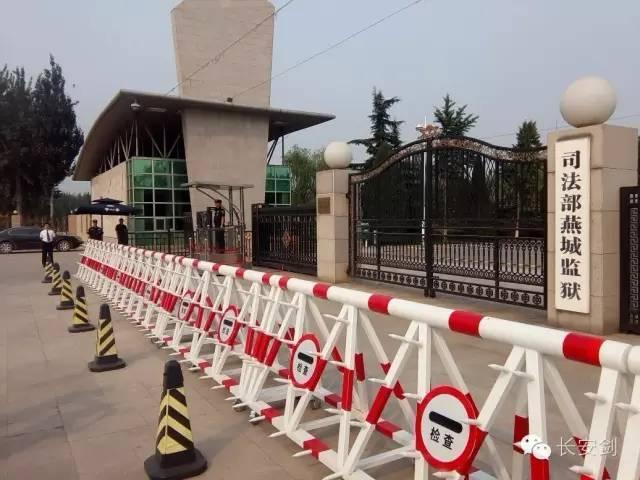
Before going to Lhasa to meet Ngawang Sangdrol, I was invited to tour a Chinese prison in the vicinity of Beijing, Yancheng Prison in Yanjiao Township, Hebei Province, about an hour’s drive from Beijing. The visit was to take place on February 27, a cold and dreary day. I was picked up at my hotel at 9 AM, arriving at the prison before 10 AM. The visit lasted two hours.
Yancheng Prison is the only prison in China under the direct control of the Ministry of Justice. All other prisons in China are under the control of provincial prison bureaus, with the exception of Qincheng Prison in Beijing, which is under the control of the Ministry of Public Security. Yancheng was opened in October 2002, less than six months before my visit. I was told that I was the second foreigner to visit the prison. The first foreign visitor was the Minister of Justice of Zimbabwe. I thanked the Vice Minister of Justice who accompanied me on the visit for this high honor.
A High Honor
At the time of my visit, the first phase of construction had been completed and the first batch of 100 prisoners had been admitted. Eventually, 1,000 prisoners would be housed in the half-square-kilometer facility until the second phase of construction was completed at the end of 2004, at which time the facility would house 1,600 prisoners.
At full capacity, the prison would hold as many as 400 foreign prisoners. I was told that many of the foreign prisoners would have been convicted by courts in other parts of China but would be held in Yancheng for the convenience of family members who wished to make monthly visits, standard practice in the Beijing Hebei region. Guards speaking foreign languages would supervise the foreign prisoners.
Yancheng Prison was described as a “teaching prison,” a facility where wardens and guards from around the country would learn the most advanced techniques for running prisons. The plan was for there to be a prisoner to guard ratio of 4:1. Prisoners would be organized into groups of 100, each group representing a specific crime (e.g. assault, theft). The administration would experiment with different reform techniques to ascertain which ones are most effective for which crimes.
The prison (known, for its distinctive architecture, as the “White House”) was originally meant to house inmates from Beijing and Hebei serving sentences of 5-10 years, but as time went by it was used to house prisoners who had committed crimes in other parts of China, as well as prisoners serving longer sentences. Such prisoners were often senior government and party officials, including family members, many of whom had been convicted of corruption.
They lived a privileged life. Chinese social media was ablaze with indignant tales of profligate living, including free internet, banquets, heavy drinking, and hosting of sex workers in the former officials’ palatial cells.
One of the most famous prisoners sent to Yancheng was Gu Kailai, wife of Bo Xilai, former Chongqing party chief and member of the Politburo of the Chinese Communist Party. Bo was in line to join the Standing Committee of the Politburo when he was removed from his posts in 2012. He was convicted of corruption in 2013. He was one of the first “big tigers” felled by General Secretary Xi Jinping. Bo is serving his life sentence in Qincheng Prison.
In August 2012, Gu Kailai was convicted of murdering British businessman Neil Heywood and given a suspended death sentence, later commuted in late December 2015 to life in prison. She is incarcerated in Yancheng’s female prisoner wing. Unlike almost all other prisons in China, Yancheng has cell blocks for both male and female prisoners.
Other notorious tigers serving long sentences in Yancheng are Nan Yong and Yang Yimin, former vice chairmen of the China Football Association (sentenced to 10 and ½ years for corruption) and Zhang Shuguang, a senior official of the Ministry of Railways (life in prison for taking bribes).
On February 27, 2003, the date of my visit, I was taken to the warden’s office where I was given a brief introduction, including on how the sentence reduction and parole system worked.
I then toured a cell block, the well-equipped infirmary, work spaces, classrooms, and the kitchen offering bountiful dishes, including ethnic food. Each cell held up to eight prisoners. The prisoners slept on bunk beds made of wood with no sharp edges, to prevent suicides. I was also shown the solitary confinement cells. They had yet to be used, I was told. The prison was situated in well-tended grounds with flowers and trees. I was told that soccer pitches and a gym would be provided.
Appeal for a Transfer
Not long after my visit I sent a letter to the Ministry of Justice’s Department of Judicial Assistance and Foreign Affairs, thanking it for the visit. I had been asked by the family to help a foreign prisoner who had been convicted of an economic crime and was incarcerated in a Beijing prison. In my letter to the ministry I asked that he be transferred to Yancheng Prison. My request was eventually granted.
After several sentence reductions, the man was released from Yancheng several years early, around five years after my visit to the prison.
He thanked me for my efforts on his behalf. He knew I had visited Yancheng, but he remarked that the inmates hated visits by foreign dignitaries. “They make us do lots of work to make the prison spic and span.” he remarked. “We are given toothbrushes to clean the stairs and if any dirt remains we are punished.”
After my visit, I returned to Beijing. The following day I flew to Lhasa via Chengdu to see Ngawang Sangdrol.
Yancheng’s reputation as a luxury prison for high level corrupt officials finally caught up to it. A widely-viewed WeChat posting of life at the prison in 2016 — replete with pictures of abundant food, manicured gardens, and soccer pitches — fueled widespread indignation. The photos appeared shortly before Minister of Justice Wu Aiying was toppled for corruption in early 2017.
In December 2018, a high-level inspection team made up of central party and government officials reported on their investigation into what was going on in Yancheng Prison. It concluded that prison management lacked “in depth study and implementation of Xi Jinping’s socialist ideology with Chinese characteristics.”
The prison also came under fire for lacking an “unswerving spirit to implement the instructions of central leading comrades, including General Secretary Xi Jinping,” and for “serious violations of law and discipline by guards.” It is not known if the findings of the MOJ inspection impacted inmates serving sentences at Yancheng. At least one prisoner who had refused to admit guilt and who was serving a long sentence was transferred to another prison with far worse conditions.
Yancheng Prison’s Point System for Sentence Reduction (based on an interview with a released prisoner)
Every day, a prisoner starts with a base of 1.2 points. During the day, he must participate in assigned labor and education, obey all disciplinary orders and prison rules and regulations, and maintain a positive attitude towards reform. If for whatever reason (including falling sick, being hospitalized, or becoming incapacitated) the prisoner cannot participate in either labor or education, breaks a rule, or shows poor attitude towards reform, points will be deducted from the allocated 1.2 points.
These daily points are then accumulated and when the total reaches 180 points, the inmate can apply to receive a “biao yang” (表扬), which represents two months of sentence reduction.
At the end of each calendar year, each district (the foreigners’ district has 40 – 50 inmates, while the locals’ districts have 70 – 80 inmates each) will award the top 10% of inmates (based on total points scored), a “jia jiang” (嘉奖), which represents an additional six months’ sentence reduction.
There is also a second level end-of-year award that is called a “ji gong” (记功), representing four months’ time reduction. This is given to the top 35% of inmates, not counting those who have earned the jia jiang.
Hence, if an inmate falls within the top 45% of prisoners on points earned over any one calendar year, he will be able to earn for himself either two biao yangs and one ji gong , totaling 8 months, or three biao yangs and one jia jiang , totaling 12 months. Other prisoners will receive either one or two biao yangs – i.e. two to four months’ sentence reduction.
In addition to daily points earned, the inmate can earn additional points while serving his sentence. If he works in the prison factory, he can earn additional labor points by producing quantities (of whatever is being manufactured at that time) in excess of the allocated quota. Points will be deducted for shoddy work and goods returned by manufacturers who buy the prison’s products.
In the area of education, the inmate can also study and sit for external examinations on subjects ranging from English, computer, and business skills (e.g. accounting) to ideology and politics. Exams are conducted at diploma to degree levels. Points will be awarded for each subject passed.
Additional points can also be given to inmates for being cell-leaders and leaders of “small groups” for activities like music, language studies, football, basketball, and table tennis. Additional points are also given to inmates who “rat” on other inmates’ activities or act as the eyes and ears of the officers within the district.
Additional points can also be awarded to inmates who participate in district- and prison-organized concerts and special events on national holidays.
If an inmate is caught fighting or committing a serious offense during the course of the year, he will have “significant” points deducted, e.g. two to three points for each infraction. If the prisoner’s deductions are equal to or in excess of five demerit points throughout any single year, the prisoner will have an additional penalty of 60 points deducted. If the offense is especially serious, whatever points he may have accumulated through the year, up until the time of the incident, may be forfeited. This would take place before imposing the 60-point penalty. Inmates can owe points in arrears.
When an inmate has accumulated the required number of credits and meets certain conditions, he can apply for a sentence reduction. For an inmate whose sentence is 10 years or below, he can submit his first sentence commutation one year after he enters prison (time spent in the detention center is not counted). For sentences over 10 years, an inmate must wait 18 months after entering prison (again, time in detention is not counted). Prisoners serving sentences for political crimes like endangering state security must wait longer than prisoners serving sentences for “ordinary” crimes.
All sentence commutations must first be approved by the prison authorities up to the prison administration bureau of the municipality/province where the prison is located (or even the Ministry of Justice, in certain cases) and then by the local intermediate people’s court before the reduction takes effect. The right of approval lies solely with these authorities. Having the necessary points does not entitle an inmate to an automatic sentence commutation.
In the spring of 1989 I was Far East Vice President of Occidental Chemical (Oxychem), a subsidiary of Occidental Petroleum, a large American corporation. I lived in Hong Kong where I was also First Vice President of the American Chamber of Commerce in Hong Kong. AMCHAM, as it was known, was the largest American chamber of commerce outside of North America. As First Vice President, I was in line to become president of the chamber in 1990.
Under my direction, Oxychem had concluded a letter of intent with a chemical factory in Qingdao to form a joint venture to produce sodium silicate, a chemical used to manufacture, among other things, detergents. Oxychem was a leader in producing this chemical and held a proprietary license that we would contribute as a part of our equity. This was to be a groundbreaking venture, the first 50:50 jointly owned company between an American company and a Chinese state-owned enterprise.
The time had come to conclude a detailed agreement, and I formed a team of technical, financial, and marketing executives to travel with me to China. Where should we meet with our Chinese counterparts?
Starting in mid-April 1989, China was in turmoil. Violent riots had broken out in Xi’an and Changsha, and in Beijing more than 100,000 students were occupying Tiananmen Square. On May 20, Chinese Premier Li Peng ordered martial law in parts of Beijing. Several hundred thousand troops were mobilized and took up positions surrounding Beijing.
Oxychem and Qingdao decided to hold the negotiations in Zhuhai, a special economic zone that bordered Macau, a Portuguese-ruled territory across the Pearl River from Hong Kong. I took the high-speed ferry that departed Hong Kong for Macau at 9:30 AM on May 31.
Ruins of St. Paul’s Church, Macau Image Credit Flickr/Razlan
I decided to take care of AMCHAM business before my Oxychem colleagues arrived. On May 31, I had a luncheon meeting with the American business community in Macau. The conversation focused on the gathering storm in Beijing. Attendees were split between an optimistic assessment – there would be no violence, and economic and political reform would eventually take place – and a pessimistic assessment – the Chinese Communist Party would not give up without a fight, a fight that would likely involve bloodshed.
After lunch I met with Portuguese officials in charge of running Macau’s economy. These meetings spilled over into the next day, June 1, when the Oxychem team was due to arrive in Macau. They arrived on schedule and we set off for Zhuhai at 12:30 PM. After settling into our hotel, negotiations with the Qingdao Chemical Bureau and the Chinese factory that was to be our partner began at 3:00 PM.
Negotiations continued on June 2 and lasted from 9:00 AM to 6:00 PM. They were followed by a dinner hosted by Qingdao.
The next day, June 3, negotiations continued. The focus was on Oxychem’s technology and the terms and conditions of the license. They wrapped up for the day at 6:00 PM, after which the two sides gathered for a dinner hosted by Oxychem in the hotel’s restaurant.
The private room where we dined had a television that was tuned to Hong Kong’s Jade TV station. There was live coverage of events in Beijing where martial law troops were closing in on Tiananmen Square. One could hear the sounds of shots and see plumes of smoke from barricades and vehicles set alight by Beijing citizens trying to stop the advance of the troops.
Our Chinese guests were clearly upset. One of them, an engineer known for his progressive views on reform, shouted in protest: “My government has gone crazy!” He was admonished by the senior party member present to be silent in the presence of foreigners. The dinner broke up shortly thereafter.
The next day, June 4, was a Sunday. The Oxychem team decided to take the day off and tour Macau. As we headed for the border, we encountered an eerie silence. There were signs of turmoil the night before. Posters denouncing the Communist party and the government were plastered in conspicuous locations including bus stops. Guards at the border were few in number. Many had deserted their posts. The Zhuhai border crossing was to become a favored exit point for dissidents fleeing post-Tiananmen China.
In Macau I showed my crew around the city and its two islands. I knew Macau well, having lived there in 1972. While touring the sights, we came across large protests outside of China’s Xinhua News Agency in the city center, not far from the Leal Senado. The protesters were raucous but peaceful. There were long lines outside the Macau branch of the Bank of China. People were removing their deposits in a flight from danger, but also in deliberate attempt to bankrupt China’s largest state-owned bank. The Oxychem team decided to return to Zhuhai.
The final negotiation took place on Monday morning, June 5. Talks were suspended by mutual agreement. A sense of dread filled the room. No one had any idea where China was heading. The live feed from Beijing had been cut. We packed our belongings and voluminous files and prepared to leave the hotel. Social order was breaking down. I went to find a young colleague whose room had been entered by two women seeking his company. I shooed them away, and they left after they cleaned out the minibar.
We arrived in Hong Kong to find a city in turmoil. Before the events of June 4 in Beijing and other Chinese cities, including Guangzhou where protesters had blockaded the Pearl River bridge, Hong Kong was primarily a commercial city. Protests of any sort rarely attracted more than a few hundred people. That changed after June 4, 1989. Hundreds of thousands of protesters filled the streets chanting anti-China slogans, condemning the Communist Party. Hong Kong had become a political city. It has remained so to this day.
An emergency meeting of AMCHAM’s Board of Governors was convened on June 7. I pressed for a strong statement condemning what had already become known as the Tiananmen Massacre, but which also endorsed the limited sanctions imposed on China by the administration of President George W. Bush. Most of those sanctions have been lifted, though an arms embargo remains in place. Over the objection of governors representing large corporations, the board endorsed the statement I drafted. AMCHAM subsequently placed the statement in leading English and Chinese language newspapers.
Later on June 7, I received a call from an American parent of a young man who was teaching in China in the Princeton-in-Asia program. His father lived in Kentucky and worked for a subsidiary of Occidental Petroleum. He asked me to help evacuate his son from China. I agreed to do so, and word quickly spread that the office of Occidental Chemical Far East would provide a haven for Princeton students who were able to make it out of the Chinese cities where they were teaching. One by one they showed up in my conference room where I and my staff made arrangements for food and lodging, and for tickets back home.
We coordinated our work with that of the American Consulate General, where an emergency meeting of the American community in Hong Kong took place on Friday morning June 9. More meetings were held at AMCHAM the following week. Later that week the last of the Princeton students left my office and returned to the United States.
I stayed in Hong Kong for another six years before returning to the United States. I served my one-year term as president of the chamber, and made my first intervention on behalf of a political prisoner in May 1990, immediately before traveling to Washington D.C. to testify on China’s Most-Favored-Relations trading status. I resigned from Oxychem in 1991 and began traveling to Beijing and other Chinese cities to hand over prisoner lists and visit places of detention. I moved my family to San Francisco in July 1995, and have lived there since, though I keep an apartment and an office in Hong Kong, my second home.
On June 3, 1998, President Bill Clinton addressed a press conference in Washington D.C. Calling trade “a force for change in China,” Clinton cited “concrete results on human rights” as a result of his administration’s engagement with China, and then announced his intention to renew China’s Most Favored Nation (MFN) trading status, set to expire the next day.
Within hours of the press conference, China’s Ministry of Foreign Affairs announced that President Clinton would make a state visit to China from June 25 to July 3, 1998. He would meet with China’s President Jiang Zemin, and pay visits to Shanghai, Xian, Guilin, and Hong Kong.
President Bill Clinton and Jiang Zemin, 1998. Image Credit: Wikimedia Commons
Not unexpectedly, Clinton’s decision to renew MFN and pay a state visit to China was harshly criticized by members of Congress and human rights groups, who challenged the president’s conclusion that there had been positive developments in human rights in China. They claimed that, while there had been a few releases of political and religious prisoners, repression continued apace. Beijing had still not provided an accounting of individuals imprisoned in the Tiananmen protests of 1989 (it has yet to do so), and in October 1997 the head of the underground Catholic Church, Bishop Si Zhimin, had been taken into custody by officials of the Religious Affairs Bureau in Hebei Province. His whereabouts remain unknown more than 20 years later.
The reaction from China’s small dissident community to President Clinton’s decision to visit China was less condemnatory. Many saw the visit as an opportunity to test the limits of China’s strict control over dissent. The year before, in 1997, several dissidents, nearly all of whom had served time in prison for their political activities, had begun working to establish an opposition political party, and the prospect of an American president visiting China encouraged them to speed up their work.
Preparatory committees for the China Democracy Party (CDP), intended to be a national opposition party, were established in different parts of the country. Initially, they were established secretly, but on June 25, 1998, the day President Clinton arrived in China, the Hangzhou Preparatory Committee, led by Wang Youcai, issued an “Open Declaration of the Establishment of the CDP Zhejiang Preparatory Committee.” The declaration, together with a draft party constitution, was circulated on the Internet, and a formal application was filed with the Zhejiang government to register the CDP as a political party.
Soon other CDP preparatory committees were established elsewhere in China. By the end of 1998 there were 24 such committees. The names and details of 200 party members were posted on websites.
President Clinton’s visit to China came off without a hitch. He was criticized for inspecting an honor guard in Tiananmen Square, site of the killings in June 1989 that outraged the world. But afterwards, he met with Jiang Zemin and had what was by all accounts an extraordinary joint press conference with the Chinese president on June 17. The event was broadcast live on Chinese state television. Clinton expressed disapproval of the Tiananmen Square killings and referred to the Dalai Lama as a “holy man” whom President Jiang “would like very much.” President Clinton even referenced my own proposal that China should release all imprisoned counterrevolutionaries since the crime of counterrevolution had been removed from the Criminal Law in 1997.
Clinton’s endorsement of this proposal garnered much attention from Chinese officials, who marveled, in private conversations with me, at the president’s knowledge of the Chinese legal system. Clinton attended services at a Protestant church and gave a speech to Chinese students that was also televised nationwide.
His remarks on the Dalai Lama had a deleterious effect however. Talks were underway in Singapore between representatives of the Dalai Lama and the Chinese government. They were abruptly terminated, reportedly due to anger on the part of the People’s Liberation Army with Clinton’s remarks and Jiang Zemin’s failure to push back.
Crackdown
On July 10, 1998, one week after President Clinton left China, the police moved against the CDP, detaining Wang Youcai in Hangzhou. They formally arrested him for inciting subversion on August 7, but in an unusual move, he was released and placed under residential surveillance. The relative freedom of loose house arrest did not last long. He was rearrested and indicted for subversion, tried, and sentenced to 11 years in prison on December 21, 1998.
After the detention of Wang Youcai, the authorities changed their tactics. One by one, the preparatory committees were informed that their applications to register as a political party had been turned down. Leaders were visited by the police and told to desist their efforts or face the consequences.
Undeterred by threats, Xu Wenli, Gao Hongming, and Zha Jianguo established the CDP National Congress Preparatory Committee in Beijing on November 2, 1998. Xu was detained on November 30 and subsequently tried and sentenced to 13 years in prison on December 21, 1998 for the crime of subversion.
On May 7, 1999 NATO fighters under American command bombed China’s embassy in Belgrade, touching off a crisis in US-China relations. China suspendered all discussions on human rights with the United States.
After the bombing, Beijing stepped up its repression of the CDP. On July 5, 1999 Zha Jianguo and Gao Hongming were tried for subversion in Beijing. Zha and Gao were sentenced to nine years and eight years, respectively, on August 2. After a few more weeks in a detention center, both men were placed in Beijing Number Two Prison, a facility in northeast Beijing housing 2,000 inmates. According to my list of political prisoners in Beijing, 26 of the 40 names of prisoners serving sentences for counterrevolution or endangering state security were housed in Beijing Number Two.
Dui Hua was established in April 1999. Its dialogue on human rights with the Chinese government had been suspended that month on account of the tabling of a resolution at the Human Rights Commission in Geneva. Its suspension therefore came before the suspension of the official dialogue on account of the Belgrade bombing in May. This proved to be fortuitous. Dui Hua’s dialogue was resumed well before the official dialogue resumed.
Some of Dui Hua’s earliest cases were those of CDP members, in line with the priorities of Western governments at the time. There were two high-profile successes that Dui Hua contributed to. Xu Wenli was granted medical parole and flown to the United States with his wife on Christmas eve 2002. Wang Youcai was granted medical parole and flown to the United States on March 4, 2004.
Xu Wenli with John Kamm at the Dui Hua Foundation’s San Francisco office.
Gao Hongming, Qin Yongmin, and Zha Jianguo, as well as most of other CDP members who had been imprisoned, served their entire sentences with not a day off. They were mostly forgotten by the West.
Zha Jianguo was an idealistic young man who, heeding Chairman Mao’s call, went down to the countryside in the late 1960s to make revolution. He was 17 years old. He became a village leader in Inner Mongolia, a dirt-poor part of China. Disillusioned with the promises of Maoism, he returned to Beijing, and became passionately involved in the Tiananmen protests of 1989. After the imprisonment of Xu Wenli and the dismemberment of the CDP, Zha Jianguo became the de facto leader of the soon-to-be crushed opposition party.
Zha Jianying
In the summer of 2000 I was contacted by Benjamin Lee, a visiting professor of comparative literature at the University of Hong Kong. Ben was an accomplished scholar. He had taught at the University of Chicago where he had earned his PhD in anthropology. He had also taught at Rice University, where he ran the Transnational China Project at the James A. Baker Institute of Policy Studies. Ben and I had studied Chinese language at Middlebury College in the summer of 1972, immediately before I left the United States for Macau.
Ben had married Zha Jianying, a rising star in contemporary literature on China. Her China Pop, published in 1995, was critically acclaimed. Her facility in the English language was astonishing. When she went for her visa application interview at the United States Embassy in Beijing she hardly spoke a word of English. Within a few years she was writing fluent and evocative prose, glistening with power and emotion.
Zha Jianying’s brother is Zha Jianguo, and Ben had suggested she reach out to me for advice and assistance on how to secure better treatment and clemency for Zha Jianguo.
Ben, Jianying, and I met for lunch in Hong Kong at the Mandarin Hotel’s Grill Room on September 19, 2000. Over the next six months Jianying and I met frequently. She joined me on visits to the Chinese University of Hong Kong’s University Services Centre which, at the time, had an outstanding collection of Chinese government open sources on political crime. Sadly, that is no longer the case.
I accepted her request to act as her advisor on matters relating to Chinese prisons and offered to begin including her brother’s name on prisoner lists submitted to the Chinese government by foreign governments, as well as asking about him directly in my meetings with the Chinese Ministry of Justice and Ministry of Foreign Affairs.
By the time I offered to assist Jianying I had already visited five Chinese prisons and met privately with officials of the Prison Administration Bureau of the Ministry of Justice more than two dozen times.
I concluded that Chinese prison officials were susceptible to flattery regarding their personal appearance, in particular their smart uniforms, and the physical appearance of their prisons. (This was in part because prison officials, unlike foreign affairs officials, rarely got to meet foreigners.) If prison officials had treated a prisoner well, this should be acknowledged. It was important that visitors dress appropriately. This was not an issue with Jianying, who is an elegant dresser.
I told her that monthly visits and phone calls were critically important, not only because they boosted the prisoner’s morale, but because they sent a strong signal to the prison authorities that people on the outside cared deeply for their imprisoned loved one. I admonished her to be careful what she said to Zha Jianguo during the 30-minute monthly visits; they spoke by phone through a thick plexiglass screen. The calls were monitored and could be cut off at any time. I advised to her to speak with her brother as if Jiang Zemin were in the room.
During monthly visits, friendships could be developed both with guards and wardens, some of whom would drop their guard and reveal important information on the prisoner’s behavior and health. I suggested she ask to meet with one of the wardens of Beijing Number Two Prison.
Jianying advised me that her brother was unrepentant, and since he refused to confess he could never be considered for sentence reduction or parole. She asked me what I would do if I were in her brother’s place. I gave her the same answer I have given to every friend and relative of prisoners who have asked me this question over many years: if I were in prison, I would say or sign anything to win early release, as long as it didn’t hurt anyone else, especially fellow prisoners. In short, I would lie. Confessions made under distress would not be taken as signs of genuine remorse by people familiar with the realities of prison life in China. They were not worth the paper they were written on. Jianying sighed, knowing that her brother would never admit guilt for what he had done or for what he believed.
I also taught Jianying about fen lei gai zao, a Ministry of Justice policy, followed in many prisons, of grouping prisoners together with those who had been sentenced for the same crime. She should ask to have her brother moved to a cell with other political prisoners. At the time he was in a cell with violent offenders who often engaged in fights and petty quarrels. He was left alone, however, due to the respect other prisoners afforded him.
Shortly after our first meeting I put Zha Jianguo’s name on a list of prisoners submitted as part of a bilateral human rights dialogue with a European government. In January 2001, the Chinese government, for the first time, provided written information on Zha Jianguo.
A Conversation with Warden Zhang
On April 10 and 11, 2001, Zha Jianying received phone calls from Zhang Yongsheng, a warden of Beijing Number Two. Her request for a private meeting with the warden had been granted. She was invited to visit the prison on April 13.
Upon her arrival she was brought into the warden’s office. She sat on a sofa opposite Warden Zhang and his assistant Mr. Han. What was supposed to be a 30-minute meeting wound up lasting 90 minutes.
Jianying started by praising Warden Zhang. “I have been quite surprised and impressed by your officers’ courtesy, efficiency, and law-abiding spirit,” she said. She complimented the warden and his assistant’s snappy new uniforms (modeled on Hong Kong prison uniforms) and asked for the meaning of the stars on their epaulets. Warden Zhang smiled broadly.
Jianying then proceeded to make requests. On a recent visit she had noticed that her brother was in poor health. While thanking the warden for arranging Jianguo to receive a spinal CT at a local hospital, she asked that he also be given a heart CT and a brain CT. She expressed concern over an alarming new development: Jianguo’s hands were purple and would turn black at night. This might be a sign of a circulation problem. A heart examination and treatment might be necessary. She worried about her brother’s headaches, and said she feared he might have a brain tumor.
Jianying complained that her brother was in a cell with ruffians who were noisy and argumentative. He was unable to get a good night’s sleep. Would it be possible to move him to a better cell? Perhaps the prison could move him in with other prisoners who were serving sentences for state security offenses.
She lodged a complaint with the warden over the lack of physical exercise for Zha Jianguo. He had fallen down while exercising in the prison yard and had been barred from going outside “for his own good.” All prisoners should do physical labor, the warden said. Zha Jianguo’s job was wrapping chopsticks, a monotonous task involving little physical exercise.
Finally, Warden Zhang told Zha Jianying that all her requests would be considered. “We will do the best we can.” However, the prison did not have enough state security prisoners to fill a cell block, so this request could not be granted. Transfer to another, quieter cell could however be considered.
In the months that followed Jianying’s visit, Zha Jianguo’s treatment improved. He was moved to a better cell and exempted from physical labor. He was allowed to read as much as he wanted; his sister brought piles of books to him on every visit. He was afforded better medical treatment.
A Visit to Beijing Number Two
Two months after Zha Jianying visited Beijing Number Two, I went to Beijing in June on one of my regular missions. I met with the Ministry of Justice and asked for permission to visit the prison. I was told that my request would be considered.
In December 2001, I traveled to Beijing accompanied by Tina Rosenberg, a journalist working for The New York Times who was writing a story about my work. (The story appeared in the March 3, 2002 issue of the Times’ Sunday Magazine under the title John Kamm’s Third Way.) Ms. Rosenberg observed my work (including during a frosty breakfast with the American Chamber of Commerce) and sat in on meetings with the Supreme People’s Court and the Ministry of Foreign Affairs, but her request for a meeting with the Ministry of Justice was denied, and it was made clear that she would not be allowed into a Chinese prison.
On the morning of December 18, 2001, I was picked up at the Jianguo Hotel and, together with representatives of the Ministry of Justice and the Beijing Prison Administration Bureau, we drove to northeast Beijing, down a dusty exit road off the Beijing-Shenyang expressway. It was familiar terrain for me. The prison sat cheek to jowl with the Beijing Chemical Works, with whom I’d done business 20 years before.
I was bringing with me a list of prisoners in Beijing Number Two. Among the names on the list were Zha Jianguo and Gao Hongming. Others included Hu Shigen, Liu Jingsheng, Chen Yanbin, and Han Chunsheng, all well-known dissidents. There were also two people on my list who had been given long sentences for counterrevolutionary sabotage and hooliganism committed during the June 1989 protests in Beijing, Chang Yongjie and Zhu Gengsheng. They were both released early after multiple sentence reductions.
Beijing Number Two was an old facility, drab and run-down. It had been designated a maximum-security prison in 1990. Among its 2,000 prisoners were many who had committed violent crimes. In the report on my two-hour visit, I noted that “Its facilities, including its clinic, are less extensive and more poorly equipped [than other prisons I had visited], and its cellblocks were more crowded and less well-appointed than those of model prisons. . . . My tour revealed a physical plant badly in need of repair and better maintenance. Foreigners are rarely taken to the prison. I was the only foreign visitor in the last 12 months.”
Beijing Number Two Prison. Photo Credit: Baidu Baike
In my conversation with the warden in his office (a different warden than the one Zha Jianying had met), I went over my list name by name and asked for their current status. The warden said he’d look into my requests. Although they did not have a separate section, those convicted of political crimes were not housed with violent criminals, sex offenders, or those convicted of economic crimes. Prisoners serving sentences for these crimes were housed together in separate cell blocks.
I was given a detailed account of the point system used to reward prisoners with sentence reductions and parole, as well as other benefits like more frequent family visits, conjugal visits, and use of two telephones to receive calls from family members. The prison granted sentence reductions to 25 percent of prisoners every year, though the warden acknowledged that the sentence reduction rate for those convicted of endangering state security was lower.
I asked if prisoners like Zha Jianguo and Han Chunsheng who refuse to “acknowledge guilt, show genuine remorse, obey regulations, and perform manual labor” could ever gain early release. He replied that prisoners who refuse to acknowledge guilt can petition courts for a retrial. And if their petitions are rejected? “Then the prisoner has no way out,” the warden explained.
After our conversation, I toured the prison grounds accompanied by Ministry of Justice officials and the warden. I used the walk-around to pepper them with questions on individual prisoners. I tried to raise as many names as I could before being invited to leave the prison. The visit had lasted two hours.
Of Courage and Devotion
During one of the monthly visits, Zha Jianguo asked his sister to tell me to stop my efforts on his behalf. He was doing fine, and I should focus on other prisoners who were in greater need. I complied with his request and stopped raising his name. He was released on June 29, 2008, having served his entire nine-year sentence. He returned home to a hero’s welcome.
Zha Jianying and Zha Jianguo, Beijing, 2017. Zha Jianguo had just returned to his apartment after spending an evening in a detention center. Photo courtesy of Zha Jianying.
Despite serving a supplemental sentence of “deprivation of political rights,” Zha Jianguo returned to political activism, at one point writing three separate blogs that commented on recent events. From time to time what he wrote got him into trouble. He would be “invited for tea,” his computer and cell phones seized, and, around the time of “sensitive anniversaries” or big meetings like party or legislative congresses, taken out of Beijing on tours of scenic and historic sights.
In her Tides Players, Zha Jianying paints me in heroic terms as someone who uses everything in his power, “hard data, personal connections, cajoling, name-dropping, bargaining, to make sure the issue of Chinese political prisoners does not go away.” She writes that “If Jianguo has been treated better than some political detainees it is probably because of John’s efforts.”
She is too generous. The reasons why Zha Jianguo was treated better than other political detainees were his courage and his sister’s devotion.
Possessed of a charismatic personality, Zha Jianguo refused to admit guilt, to grovel before authority. He was resolute, and held fast to his belief that, someday, China would be a democracy that respects human rights. He earned the respect of inmates and guards alike. He was neither tortured nor mistreated. For the most part he was left alone with his books.
On her monthly visits, Zha Jianying brought him news of home, money to buy extra food, snacks and sweets from the commissary, warm clothes, and, perhaps most important, books. She brought him hundreds of books during the time he was in prison, enough to stock a small library. She mostly visited her brother on her own, but on one occasion she brought along a grandchild he’d never seen. He watched her crawl around the reception room through the thick plexiglass barrier through which Jianying spoke with him by phone.
Abraham Lincoln once said that the power of hope on human exertion, and on happiness, is wonderful. Zha Jianying gave her brother hope, and strengthened his will to carry on. As for me, I was but an instrument of her devotion.
On April 3, 2002, an explosion took place in the central square of Sichuan Province’s capitol, Chengdu, injuring two people. The police moved quickly, detaining Tenzin Delek Rinpoche, a senior Tibetan religious leader, and his nephew Lobsang Dhundop on April 7. They were put in Dartsedo Detention Center. Although there have been improvements in recent years, Chinese detention centers in the early to mid-2000s were credibly accused of using torture to extract confessions, as attested to by the United Nations Special Rapporteur on Torture Manfred Nowak, who visited China in late 2005.
Both Tenzin Delek and Lobsang Dhundop were formally arrested, tried, and convicted of causing explosions, inciting splittism, and illegal possession of firearms; the prosecutors alleged that both men had been involved in a series of explosions. They demanded death sentences.
The trial by the Garze Intermediate People’s Court took place on November 29, 2002. It was a closed trial. Lobsang Dhundop was sentenced to death, and Tenzin Delek Rinpoche was sentenced to death with two-year reprieve, and suspension of political rights for life. Lobsang Dhundop was executed in late January 2003. Tenzin Delek appealed his sentence to the Sichuan High People’s Court, which dismissed it in January 2003, the same day the execution of his nephew took place.
Tenzin Delek was a much-revered and widely respected Tibetan monk who had been recognized as a reincarnated lama by the Dalai Lama in the 1980s. He was much loved by Tibetans – especially among nomads in Lithang, the place of his birth. From Orthok Monastery, he fought for justice, health care, educational opportunities, and especially for a clean environment, in the process making many enemies among mining and logging companies and their political protectors.
The man widely believed to be behind the persecution of Tenzin Delek Rinpoche was then party secretary of Sichuan Province, Zhou Yongkang. Zhou was a hardliner known for cracking down on Tibetans and members of the Falun Gong group. He was promoted to Minister of Public Security in Beijing in December 2002, immediately after the conviction of Tenzin Delek Rinpoche and his nephew and right before the rejection of Tenzin Delek’s appeal and Lobsang Dhundop’s execution.
Once in Beijing, Zhou continued his rapid ascent, eventually becoming a member of the all-powerful Standing Committee of the Politburo with responsibility for overseeing the police and the courts. He was purged by Secretary General Xi Jinping in 2013, becoming one of the most senior victims of Xi’s anti-corruption campaign. None of this had an impact on Tenzin Delek or any other political prisoner persecuted by Zhou. They remained in prison, denied any clemency.
Tenzin Delek Rinpoche was put in Sichuan’s Chuandong Prison, a high-security facility located in the remote Dabu Mountains in Dazhu County, a bleak landscape accessible only by car or bus. Chuandong Prison, also known as Sichuan Prison Number Three, is in Chongqing Municipality about 180 kilometres from Chongqing City and a four to five-hour drive from Chengdu. It has for decades been the prison in Sichuan where the most important political prisoners are held. As such it has acquired a well-deserved fearsome reputation.
Tenzin Delek’s sentence of death with two-year reprieve was commuted on January 26, 2005. The sentence was changed to life in prison.
Zhou Yongkang, former Party Secretary of Sichuan Province. Image Credit: TouTai.
Chuandong Prison in Sichuan. Image Credit: Baidu.
The Execution of Lobsang Dhundop
The execution of Lobsang Dhundop marked the first execution of a Tibetan for a political crime in more than 20 years. His death prompted international outrage.
Once I learned of the execution of Lobsang Dhundop I called a Chinese official with whom I had worked on human rights cases. He sounded much besieged. I admonished his government for killing Lobsang Dhondup, reminding him of remarks widely attributed to Chairman Mao Zedong: “We should be careful about killing people. People are not like vegetables. If you cut off their heads, they don’t grow back.” A grim silence followed.
After the execution, international attention turned to Tenzin Delek Rinpoche’s death with two-year reprieve sentence. Governments and human rights groups called for the sentence to be commuted.
I spent little time on this effort. Commutations of these sentences to life in prison or sometimes a lesser fixed term sentence like twenty years are the norm. By some estimates, fewer than 1 percent of prisoners serving sentences of death with two-year reprieve are executed. I assumed that Tenzin Delek’s sentence would be commuted, and it turned out I was right.
I soon set about trying to figure out a way to win Tenzin Delek’s early release. Early release in the Chinese prison system can be achieved by successive sentence reductions, parole, or medical parole. Sentence reduction and parole must be approved by a court. To get a sentence reduction or be paroled, the prisoner must admit guilt and express remorse. This Tenzin Delek refused to do. He pled not guilty at his trial and, while in the detention center, secretly taped a statement proclaiming his innocence. The statement was taped on January 20, 2003 and smuggled out of the detention center the same day. It was broadcast on Radio Free Asia on January 21, 2003. Tenzin Delek resisted his imprisonment, staging a hunger strike that landed him in solitary confinement.
Medical Parole for Political Prisoners
Tenzin Delek Rinpoche Image Credit: FreeTibet.Org
Medical parole for political and religious prisoners is not unusual. It does not require an admission of guilt. Although regulations state that a prisoner serving a life sentence must serve a minimum of seven years in prison before being considered for medical parole, they also state if the medical problem is serious enough, medical parole can be granted at any time. Unlike sentence reduction or parole, courts are not involved. The prison authorities can grant medical parole, though it must be approved by local prison bureaus and, in the case of sensitive prisoners, the Ministry of Justice in Beijing.
Since I began intervening on behalf of political prisoners in 1990, I have worked on more than a dozen cases of medical parole for prominent political prisoners, including Tibetans Jigme Sangpo and Ngawang Sangdrol, the Uyghur businesswoman Rebiya Kadeer, and democracy advocate Xu Wenli. All their medical paroles were approved by the Ministry of Justice, and in every instance the most senior officials in the Chinese government and Communist Party were consulted and gave the go-ahead.
I needed to get information on Tenzin Delek’s health, but I did not have a good channel to his family or to other individuals in Tenzin Delek’s home county who knew him. Dedicated activists for the cause of Tibet, Mandie McKeown and Alison Reynolds of Tibet Information Network (TIN) in London, had excellent contacts in Tibet and within the Tibetan diaspora, including with members of Tenzin Delek’s family. Of special importance was the relationship with Tenzin Delek’s niece, Nyama Lhamo who now lives in India after leaving Tibet in 2003. In a stroke of luck, TIN reached out to me for assistance, beginning more than 10 years of collaboration on the case of Tenzin Delek Rinpoche.
From the outset, I recommended medical parole. Over the years, the family applied for medical parole on several occasions. They never received a response from the prison authorities.
Bilateral Rights Dialogues
Complementing the efforts of international human rights groups, especially those focusing on Tibet, I began lobbying foreign governments that had official bilateral human rights dialogues with China to put Tenzin Delek’s name on the lists of political prisoners submitted at these dialogues. Western politicians and media often referred to Tenzin Delek Rinpoche as China’s top religious prisoner. From March 2003 to April 2011 – a period of eight years — the Chinese government gave written responses to at least 25 requests for information on Tenzin Delek submitted by the United Nations, the United States, the European Union (EU), European governments, Australia, and Canada. Dui Hua also submitted his name directly to the Chinese government, on average at least once a year, receiving both written and verbal responses.
While international efforts were underway to help Tenzin Delek, domestic pressures were building. In an extraordinary act of civil disobedience, 40,000 Tibetans living in Tenzin Delek’s home county of Lithang signed a petition demanding a retrial in 2009; the entire population of Lithang was, at the time, around 45,000. Local Tibetans staged a hunger strike, resulting in the detention of dozens of strikers.
Up until December 2006, China’s responses to foreign governments invariably claimed that Tenzin Delek was healthy, without giving details. Things changed in 2008. A Chinese response to the United States that year stated that Tenzin Delek had an illness prior to being put in prison (significant because prisoners cannot get medical parole if he or she had the medical condition prior to being admitted to prison), but that the condition had been treated and that his health was now okay. The response also said that the Rinpoche undertook light exercise and was sleeping and eating well.
In the November 2009 response to the EU, China repeated that Tenzin Delek’s health was okay, that he was eating well and was observing a strict diet, and that he did light exercise and gardening work. By this time the lama’s family knew that he was in fact seriously ill with high blood pressure and heart disease. He walked with a cane and had troubling spells of dizziness.
One of the last written responses to the list of a bilateral dialogue partner was the Chinese response to the United States in April 2011. After the EU-China human rights dialogue of May 2012 (a written response to a prisoner list was handed over – no information was provided on Tenzin Delek), China’s Ministry of Foreign Affairs made a “policy decision” to resist receiving prisoner lists from foreign governments, and under no circumstances to give written responses. The reason given for this decision was unhappiness over how the blind activist Chen Guangcheng’s case had been handled by the United States. Information on Tenzin Delek through governmental channels dried up.
Chuandong Prison in Sichuan. Image Credit: Baidu.
Exemption from “Policy Decision”
My own inquiries were exempted from the policy decision to refuse prisoner lists and provide responses. I was not after all a foreign government. I could continue to submit lists and get answers to my queries.
In March 2012, just before the “policy decision,” I was told that Tenzin Delek had been allowed family visits and that he would get family visits in the future. In November 2013, Tenzin Delek’s family paid him a visit. This would be the last time the family saw him alive.
The last written response to one of my requests for information on Tenzin Delek Rinpoche was given during my trip to Beijing in August 2014. The response implicitly acknowledged that he was ill but pointed out that “sickness alone is not the only criteria for medical parole.” As the response put it, “Tenzin Delek does not meet other criteria. He is a threat to social stability and to himself.”
I concluded that the Chinese government was worried that Tenzin Delek Rinpoche would commit suicide, perhaps by means of self-immolation. Beginning in 2009, Tibetans burned themselves to death to protest rule by Beijing. By the time I received the response, more than 130 Tibetans had self-immolated. I doubled down on medical parole, arguing that a Rinpoche would never approve of violence of any kind, including self-violence.
I was too late. Before my ideas gained traction, Tenzin Delek Rinpoche passed away.
A Call from London
At 3:30 PM on July 15, 2015, I received an email from Mandie McKeown, Campaigns Coordinator the International Tibet Network in London. “I have been given some worrying news,” she wrote. She hesitated, wanting to verify the news from another source. At 8:46 PM she informed me that Tenzin Delek Rinpoche had died in recent days.
McKeown’s news was current: Tenzin Delek had died on July 12. The lama’s family got the news in a phone call from the prison authorities at 10 PM Tibet time on the 12th. Large-scale protests broke out on July 13 as demonstrators demanded that the prison authorities hand over the Rinpoche’s body to his family and his monastery. The police reportedly beat the protesters and dispersed them with tear gas. Protests and unrest continued in Yajiang County, site of Orthok Monastery, and Lithang County on July 14 and July 15.
On July 15, McKeown advised me that Tenzin Delek’s body had not been handed over to the family, and that the prison authorities were preparing to cremate his remains without allowing the family or monks to view the body or carry out traditional Tibetan funeral rites. On July 15, the family was told that the cremation would take place the following day, July 16, Tibet time.
Acting on a hunch, I asked Dui Hua researchers to look for regulations on how to deal with the death of prisoners in custody. It turned out that regulations had just been jointly issued by the Ministry of Justice, the Supreme People’s Procuratorate, and the Ministry of Civil Affairs in March 2015, four months before Tenzin Delek’s death.
Article 17 of these regulations states that unless relatives had objections to the cremation or questions about the prisoner’s death, the body should be cremated as soon as possible. Article 19 states that the body should be cremated within 15 days after investigation of death is concluded, and that if the relatives request a delay in cremation, the prison should decide on a case by case basis, but the delay should not be more than 10 days.
The results of the prison’s investigation into Tenzin Delek’s death – if indeed there was an investigation – have never been disclosed. No autopsy is believed to have been performed. He was cremated four days after his death over the objections of his family.
Of special significance, Article 24 stipulates that if the deceased prisoner is a member of an ethnic minority, “handling of the body should respect ethnic traditions.”
I immediately informed Mandie McKeown, who confirmed receipt and advised that she would find a way to forward the regulations to the family. She succeeded in doing so. The family contacted the prison authorities right away and demanded that they act in accordance with the regulations. The authorities relented, and early on the morning of July 16, Tenzin Delek’s sister and niece, together with a small group of monks and nuns, were taken by car to Chuandong Prison. They arrived around 9 AM at this dreaded place and were allowed to enter. They were taken to a room near the crematorium.
The monks washed and anointed the body and changed his clothes from prison garb to monk’s robes. The family was able to pay its respects for about 30 minutes. Tenzin Delek was cremated at around 10 AM. The monks were entrusted with the Rinpoche’s ashes and they set out for Orthok Monastery.
They stopped at a hotel along the way to spend the night. Police raided the hotel, barged into the room, and seized Tenzin Delek’s ashes. They told the monks that the ashes would be dumped in a river. The Chinese government was determined not to allow the holy man’s remains to become a focal point of reverence or protest.
Liu Xiaobo
Two years later, almost to the day after Tenzin Delek’s death, Nobel Peace Prize Laureate Liu Xiaobo – widely considered China’s top political prisoner – died of liver cancer on July 13, 2017 in Liaoning Province. He had served nearly nine years of an 11-year sentence in Jinzhou Prison for inciting subversion.
Liu Xiaobo’s final days were very different from the final days of Tenzin Delek Rinpoche. Liu was granted medical parole several weeks before his death, too late to save him as it turned out. He was taken to a hospital in Shenyang where he was afforded the best treatment available. Foreign doctors – one from Germany, one from the United States – were flown in to conduct a diagnosis. His wife and immediate members of his family were permitted to stay by his side to the hour of his death.
Li Yan In Happier Times. Image Credit: Li Yan’s family
The events of June 4, 1989 in Beijing – known in the West as the Tiananmen Massacre – had a catastrophic impact on China’s image around the world, especially in the United States, China’s largest trading partner. By one measure, Gallup’s annual poll of attitudes among Americans to foreign countries, China’s favorability rating among Americans fell by 50 percent between early 1989 and the summer of that year. China went from being the “cuddly Communist” to an international pariah virtually overnight.
Seizing on China’s bad image as a violator of human rights, in 1990 the United States Congress began considering legislation that would strip China of its Most Favored Nation trading status. In May of that year I made my first intervention on behalf of a political prisoner. In the ensuing months and years, I intervened on behalf of hundreds of political prisoners, often with good results. A principal weapon in my arsenal was the argument that by releasing prisoners China’s image in the United States would improve.
After the attacks on New York and Washington on September 11, 2001, President George W. Bush declared a War on Terror. In carrying out that war, the United States took a series of actions that affected its global image. It incarcerated scores of captured Islamic militants without trial at the naval base in Guantanamo, Cuba. It built an extraordinary rendition program under which detainees captured in a foreign country would be transferred to the United States or another jurisdiction, without due process.
In March 2003, the United States invaded Iraq, overthrowing the regime of Saddam Hussein. The United States military, with its new Iraqi allies, undertook “enhanced interrogation techniques” like waterboarding, viewed by many as torture, at the Abu Ghraib Prison in Baghdad. As evidence of these abuses began to become public, many were outraged, and America’s image took another hit.
By the mid-2000s, polling data suggested that China’s image around the world was better than that of the United States. The argument that China should release political prisoners to improve its image lost much of its potency. Beijing had little incentive to deal with me and Dui Hua.
Expanded Mission: Juvenile Justice
Faced with this situation, I decided to find other reasons for the Chinese government to engage with me on human rights. I hit upon the idea that Dui Hua should expand its mission beyond advocating for political prisoners to advocating for other groups of prisoners at risk. One group in particular caught my attention: juvenile offenders. In its third reform plan covering 2004-2008. China’s Supreme People’s Court (SPC) prioritized the reform of the country’s juvenile justice system. Maybe Dui Hua could help by engaging in expert exchanges with the court’s Office of Juvenile Courts.
In June 2007, I traveled to Beijing to explore the idea of holding expert exchanges on juvenile justice. I had a meeting at the SPC on June 13. Present were three judges from the Office of Juvenile Courts under the SPC’s Research Department. After a review of where things stood insofar as the reform plan was concerned, the Chinese judges said that they would be open to discussing a delegation to the United States to study the American juvenile justice system.
On August 27, 2007, Dui Hua held its annual meeting in Tiburon, California. During my executive director report, I proposed that Dui Hua undertake a new program on juvenile justice. Directors expressed concern that the new program would sow confusion amongst supporters who might see it as diluting Dui Hua’s core mission of helping political prisoners.
According to the minutes of the meeting: “Kamm responded to the concerns, assuring directors that the new initiative would in fact be supportive of the core mission by opening up new relationships, demonstrating to the Chinese government that we’re willing to help in an area identified as a high priority for legal reform.” A consensus was reached that the initiative should only be undertaken if financial support could be secured, and if the initiative did not detract from Dui Hua’s ongoing work identifying and assisting individuals detained in political cases, some of whom, including Tibetan nun Ngawang Sangdrol, were juveniles.
Working with colleagues and partners in Chicago, Washington D.C., and San Francisco, preparations began for hosting a delegation from the SPC in the spring of 2008. Unfortunately, the devastating Sichuan earthquake put paid to those plans, but the visit was rearranged to take place in the autumn. The delegation was a success, and it was followed by a delegation of American experts to China in 2010 and another Chinese delegation to the United States in September 2012.
A few months before the September 2012 delegation, China’s National People’s Congress adopted the amended Criminal Procedure Law. For the first time, the law contained a chapter on the handling of juvenile cases. Many of the ideas explored in Dui Hua’s exchanges with the SPC were included in the chapter, including diversion (referred to as “postponed prosecution” in the law) and sealing of juvenile records.
Women Prisoners and the Bangkok Rules
Chen Min, one of China’s leading experts on domestic violence at the China Institute of Applied Jurisprudence under the Supreme People’s Court delivers a presentation.
Audience members at the International Symposium on the Bangkok Rules held in Hong Kong in February 2014.
In December 2010, the United Nations General Assembly had adopted the United Nations “Rules for the Treatment of Women Prisoners and Non-Custodial Measures for Women Offenders.” Reflecting the strong support of the Thai royal family, the rules became popularly known as the Bangkok Rules.
And in early 2011, Dui Hua began covering the plight of Chinese women in prison in its publications. At its annual meeting, held in San Diego in October 2011. Dui Hua’s board endorsed my proposal to expand our work from juvenile offenders to female prisoners in the framework of promoting adoption of the Bangkok Rules in China. We decided that I should explore the idea of holding an international symposium on the Bangkok Rules in Beijing.
Unfortunately, while China’s Ministry of Foreign Affairs supported the idea, China’s Ministry of Justice didn’t. The Justice Minister, Wu Aiying, herself a woman, was dead-set against any form of cooperation with Dui Hua or for that matter other governments and NGOs on issues related to the rights of prisoners. I decided to explore other partners and other venues.
In March 2012, I traveled to Geneva with my colleague Daisy Yau. We were invited to attend a side event on the Bangkok Rules organized by the Thai Mission to the United Nations. After the side event, which was sparsely attended (no one from either the Chinese Mission or the US Mission attended), Ms. Yau and I huddled with Rachel Brett of the Quakers’ Office in Geneva and Andrea Huber of Penal Reform International in London. Both women had played important roles in developing and promoting the Bangkok Rules. We agreed to work together on an international symposium.
It took nearly two years of preparation until the International Symposium on the Bangkok Rules took place in Hong Kong at the end of February 2014. There were four partners: The Centre for Comparative and Public Law at the Faculty of Law, University of Hong Kong (CCPL); Dui Hua; Penal Reform International; and the Center for Criminal Procedure and Reform (CCPR) at Renmin University of China Law School. The CCPL oversaw logistics, including securing the Law School’s new conference room and arranging rooms for participants. The CCPR undertook field research at five places of detention for women on the mainland and presented its findings at the symposium. PRI lent its expertise in the Bangkok Rules to selecting topics and making suggestions for expert presenters.
Dui Hua was in charge of fundraising and retaining interpreters. In addition to securing support from several individuals, the foundation received grants from the governments of Denmark, the Netherlands, Norway, the United Nations Office of the High Commissioner for Human Rights, and the Ford Foundation.
Experts from countries in Europe, Asia, and North America attended and made presentations and interventions. Especially gratifying was the high turnout from Mainland China. More than a dozen judges, judicial officials, and scholars came to the symposium. Unfortunately, the Ministry of Justice declined to attend, even though they had been invited a year in advance. The ministry claimed it was too busy. Not only did it refuse to attend, the ministry actively tried to sabotage the symposium by pressuring a presenter from China’s Prison Society to withdraw at the last minute, claiming illness.
After two days of listening to presenters and engaging in lively exchanges on a wide range of issues, the participants toured Hong Kong’s women’s prison at Lo Wu. Hong Kong turned out to be a good choice for the symposium. The territory has one of the highest percentages of women in its prisoner population of any country or territory in the world. The symposium, attended by officers of the Hong Kong Correctional Services, raised questions as to why this was so, and what could be done about it.
Domestic Violence: Li Yan
One of the topics explored at the symposium was violence against women. On the first morning, two experts – Elizabeth Brundige, Executive Director of the Avon Global Center for Women and Justice in the United States, and Chen Min, one of China’s leading experts on domestic violence at the China Institute of Applied Jurisprudence under the Supreme People’s Court – made presentations.
Using national and provincial statistics, Chen Min outlined the stark realities of violence against women in China: in China as a whole, nearly 25 percent of women experience domestic violence during their marriages, and in Shaanxi Province, 171 women were serving time in the provincial women’s prison for violent crimes, more than 90 percent of them had killed their spouse due to prolonged domestic violence.
While there were no national statistics on the reasons for women’s incarceration, Chen Min, drawing on local data, concluded that the main reason for women’s incarceration was their experience of domestic violence and for their fighting that violence with violence.
Chen Min’s presentation was timely. China’s NPC was considering the country’s first domestic violence law. Legislators finished drafting the law in November 2014, and it was passed by lawmakers in July 2015. It took effect on March 1, 2016. Although flawed (the law has been criticized for failing to address violence in relationships other than marriage), the law was an important step in addressing the pandemic of domestic violence in China.
There was another reason why Chen Min’s presentation was timely. In November 2010, a woman by the name of Li Yan, a then 41-year-old resident of Anyue County in Sichuan Province. murdered her husband Tan Yong. The couple, who ran a noodle shop, had married the year before. It was Tan’s fourth marriage. He boasted of abusing his previous wives, and it wasn’t long after his marriage to Li Yan that he began subjecting her to horrific violence, beating her, sexually assaulting her, stubbing cigarettes out on her face, and locking her outside on cold winter nights.
On November 3, 2010, Tan was at home, drunkenly playing with an air rifle. When Li tried to stop Tan, he kicked her and threatened her with the rifle. Li seized the gun and struck Tan in the head twice, killing him. She dismembered his body, boiled the parts, and spread them around the village. She was arrested and sentenced to death by the Ziyang City Intermediate People’s Court. The judgment was upheld by the Sichuan High People’s Court after which it was sent to the Supreme People’s Court (SPC) in Beijing. The SPC confirmed the judgment in January 2013. Tan’s family successfully filed a civil suit against Li Yan’s family to pay 58,212 RMB in compensation – a large sum of money for Li’s working-class family.
Death sentences reviewed and confirmed by the SPC typically take place within days of SPC approval. By the time of our Hong Kong symposium, more than 13 months after the SPC decision, Li Yan had not yet been executed. Her plight had drawn domestic attention as Chinese feminists lobbied the government to stay its hand arguing it had not taken into consideration the violence Li had suffered. More than 400 Chinese lawyers and legal scholars had signed a letter to the SPC pleading for Li Yan’s life to be spared. The case was beginning to draw international attention too. Amnesty International initiated a global signature campaign calling for Li Yan not to be executed.
One of the SPC judges attending the symposium sat on an SPC panel reviewing death sentences, and it emerged that she was one of the judges considering whether to carry out the execution of Li Yan. At the end of the symposium, she thanked me for inviting her to the event, and told me that she had learned a lot from the discussion on domestic violence. “It has changed the way I think about it,” she told me. I stayed in touch with the Chinese participants, and on June 23, 2014, a Chinese official who had been at the symposium and was deeply concerned with Li’s case sent me a short email: “She has survived.” At the same time, Li Yan’s brother was advised that his sister’s death sentence had been overturned by the SPC. A retrial by the Ziyang City Intermediate People’s Court was ordered.
Dui Hua issued a press statement and sent it to journalists covering human rights in China, including many who were based in Beijing. Coverage in the international media was widespread, and the United Nations Office of the High Commissioner for Human Rights in Geneva issued a statement applauding the decision.
One of the journalists I sent Dui Hua’s statement to was Didi Kirsten Tatlow, a New York Times journalist based in Beijing. Ms. Tatlow had been reporting on the Li Yan case since late 2012 and decided to travel to Chengdu and thence to Ziyang with photographer Gilles Sabrié to attend the retrial in November 2014. Outside the courthouse, she encountered an angry and threatening mob of Tan Yong’s family and friends. In a telephone call to me, Ms. Tatlow remarked that she had rarely welcomed the presence of Chinese police in her work, but she did on this occasion!
During the retrial, more evidence of domestic violence and testimonies from neighbors and witnesses emerged. Witness protection systems had to be set up to protect witnesses from Tan’s family. Inside the courtroom, the mob hurled insults and papers at Ms. Li and her lawyer. Five months later, on April 24, 2015, the court announced it had changed the judgment to death with two years reprieve, a unique Chinese sentence that almost always results in commutation after two years. On September 8, 2017, the intermediate court commuted the sentence and sentenced Li Yan to life in prison. Under Supreme People’s Court regulations that came into effect on January 1, 2017, Li Yan can be considered for a sentence reduction no earlier than September 2020. Her total time served after commutation cannot be less than 15 years, meaning that she will remain in prison until at least 2032, when she will be 62 years old.
Tan Yong’s family confront journalists outside of the Ziyang Intermediate Court. Image Credit: Gilles Sabrié
Relatives of Tan Yong called on the court to reaffirm Li Yan’s death sentence. Image Credit: Gilles Sabrié
“To Ziyang for Li Yan”
Didi Kirsten Tatlow
The reporting trip I made to Ziyang to attend Li Yan’s retrial was one of the most instructive, and frightening, moments of my 14 years reporting in China from 2003 until my departure for Berlin, Germany, in 2017. I had been reporting on women’s and feminist issues including gendered violence for years by the time the retrial was announced, including one heart-breaking magazine story for the South China Morning Post, my employer for the first seven years in China, about Sun Village, a home for children from abuse-filled families whose parents were both dead (often the father killed by the mother with rat poison after years of abuse by him), run by a former correctional officer from Xi’an. Strangely heartbreaking for me was the small fact that the children’s favorite TV show, SpongeBob SquarePants, was moved to late night viewing not long after my visit around 2006, on the grounds that it was an American show and would sully Chinese children’s minds. The kids had lost the cute little sponge and his pink friend Patrick Starfish, who made their often-harsh lives that bit more fun.
I applied to attend Li Yan’s retrial with low hopes – never had I been allowed to enter a Chinese courtroom and this was sensitive stuff. And initially I was put off by the Sichuan authorities, but always with the curious suggestion that I should try again later. I did, and on my third or fourth attempt I was given permission.
The experience was tough. In the small town of Ziyang Mr. Tan’s family seemed to be everywhere; the night before the hearing I met with members of Li Yan’s family in a restaurant, but we had to be careful not to speak loudly and her brother, Li Deshuai, though friendly and hospitable, was anxious. The next morning, I understood why. After handing over my reporter ID to the court front gate in order to enter the grounds, I went to talk to a large group of Mr. Tan’s family members that had gathered outside. They quickly grew hostile and began to pull at my clothes and arm, voices rising. His father waved his crutches at me; his sisters wagged their fingers in my face. Somehow, I was to blame, it seemed. Sensing things were slipping out of hand I moved into the court grounds and called for the police as the atmosphere deteriorated. They however were slow to react, and I wondered – if I, a foreign reporter with the backing of the court authorities to be present that day, could not get timely help from the dozens of court police standing around, how bad must it be for a Chinese, especially one with a grievance with the court?
Eventually the police did intervene. But Tan’s family persisted in their verbal and physical aggression, clearly hoping to influence the judges and the decision. I was shocked, too, that court officials did not order them out of the courtroom for contempt, as they sat there shouting and abusing Li Yan, telling her they hoped she would be raped for her crimes (her former husband had already done that, before she killed him.)
As a journalist, one rarely knows if or how one might have helped someone, though to me this was by far the most important aspect of the job. When John Kamm told me that he thought my work had helped I felt a deep sense of happiness. Li Yan was a petite woman standing alone in the courtroom between the panel of judges and shouting opponents, and I felt sorry for her, knowing also details of the appalling abuse she and her family had endured that had not been publicized out of consideration for the dignity and privacy of other family members (I also agreed not to publicize them, following their wishes.) It was a moment when I knew being a journalist was worth it, despite the strain, and regular fear, of reporting deeply not just on politics but also sensitive social issues like gender, in a complex, repressive and trigger-happy place like China.
450 Sutter, the site of the San Francisco office. Image credit: The Dui Hua Foundation
When Senator Orrin Hatch visited China in 1997, he was accompanied by a leading scholar of contemporary China Michel Oksenberg, and a former senior staff member of Senator Hatch who had recently joined a private foundation, based on the East Coast, that supported both domestic and international projects with grants. A few months after the senator’s visit, I was contacted by the foundation to see if I’d be interested in applying for a grant.
The experience of working on the Northeast China Autonomous People’s Republic – in which I had uncovered the names of three hitherto unknown political prisoners in a provincial newspaper – convinced me that one could find names of political and religious prisoners whose names were not known outside China by scouring “open sources:” official publications – in particular – provincial newspapers. I submitted a proposal for a research grant to find these names.
At the time, my work on political and religious prisoners was supported entirely by the profits of my consulting business. I had never received a grant from either a government or private group and I had no idea how to go about winning one. I did a bit of research and learned that to receive a grant from a non-profit foundation I would need to use a “pass through” organization that was also a non-profit. I discussed the situation with my wife and a close friend. We looked into what it would take to create our own “pass through,” our own private foundation. We settled on a name – Dui Hua, which means dialogue 对话 in Mandarin Chinese – and applied to the State of California to begin operations as a non-profit foundation. Our application was accepted, and Dui Hua was incorporated in April 1999. After that we applied to the Internal Revenue Service for 501(c)(3) status which would enable us to operate as a non-profit exempt from federal taxes. This application was accepted in July 1999.
The Centre’s current office at Tin Ka Ping Building, CUHK. Image Credit: CUHK.
After the East Coast foundation received Dui Hua’s proposal, it forwarded it to three Sinologists for peer reviews. The responses were not very encouraging. Aside from being an unknown quantity insofar as research into contemporary China was concerned, there was skepticism that my research would find anything. As one reviewer put it, “The Chinese government does not make the names of political prisoners available in publications available to the public.” I was asked how many names of prisoners I expected to find. I answered I’d be satisfied if I could find 100 hitherto unknown names. The foundation decided to take a chance, and Dui Hua received the grant and began operations in August 1999.
With Dui Hua established and our first grant in hand, I headed for Hong Kong. I hired a couple of research assistants and together we went to the University Services Centre (USC) at the Chinese University of Hong Kong, one of the world’s premier repositories of materials on contemporary China. The USC has three floors of newspapers, journals, and books. The newspapers were held in the basement, in stacks arranged by province. I started by looking at newspapers published around the time of the Spring 1989 protests that culminated in the killings in Tiananmen Square. I focused on the newspapers of cities most affected by what the Chinese government referred to as a “counterrevolutionary uprising” – Beijing, Changsha, Shanghai, and Guangzhou.
After four hours of eye-straining research, I had turned up virtually nothing. Not a single story, even those that reported on the protests, yielded the name of a detainee. Maybe the critics were right – the Chinese government didn’t publish such information. Maybe the Jilin newspaper report was a fluke. Discouraged, I took the elevator to the eighth floor.
The eighth floor is where books are held in open stacks. I headed for the section that held judicial books. There I found several hundred yearbooks and records (multi-year collections) put out by public security bureaus, courts, procuratorates, and prisons. I had struck gold. In four hours of work I unearthed more than a hundred names of individuals detained for political crimes.
Two of my most important finds were found in publications put out by the Shanghai Public Security Bureau.
The December 1997 issue of Shanghai Public Security Journal revealed details of the case of Jiang Cunde. Jiang was a worker at a tool repair factory who plotted with other workers to set up an organization – “China Human Rights Committee” – modeled on Poland’s Solidarity Trade Union. Their activities took place in 1985 and 1986, and they were arrested and charged with counterrevolution in 1987. Jiang was sentenced to life in prison.
After discovering Jiang’s name, I began putting him on prisoner lists submitted to the Chinese government and have continued doing so up to the present day. I have been told that Jiang was diagnosed with schizophrenia in 1993 and released on medical parole. He returned to political activities and was put back in prison in 1999. In 2004 his sentence was commuted to 20 years. Despite being awarded several citations for good behavior, Jiang has yet to receive another sentence reduction. He is imprisoned in Tilanqiao Prison and is said to suffer from severe mental illness characterized by psychotic episodes. He is due for release in 2024, by which time he will have served 31 years in prison.
The other case I found on my first foray into the holdings at USC was that of a disaffected young man by the name of Yu Rong. According to the 1990 Shanghai Public Security Yearbook and the popular magazine China Police, Yu Rong was responsible for printing and distributing 1,450 reactionary leaflets in Shanghai over a four-month period beginning in June 1989, not long after the suppression of the democracy protests in Beijing. Then-Mayor Zhu Rongji declared Yu’s action the biggest case of counterrevolutionary incitement in the history of Shanghai. He ordered the mobilization of hundreds of police officers to catch the culprit.
Most of Yu’s leaflets were dropped from tall buildings in Shanghai. By the time the leaflets reached the ground and had been collected and read, Yu had left the top of the buildings from where he had dropped the leaflets. After Yu was finally captured, the police accused him of committing 20 acts of arson and of dropping bricks from tall buildings, causing serious injuries and three deaths.
Since discovering Yu’s name in 1999, I have put him on 14 prisoner lists, but I have only received one written response. In April 2006 I was told that Yu was in a psychiatric detention center, also known as Ankang. If he is alive he is likely to still be there.
As China’s influence in Hong Kong has grown, the usefulness of the University Services Centre’s holdings has diminished. Recent publications with information on sensitive political crimes are rarely found on the centre’s shelves. The centre has been “harmonized.” For several years however the centre was an unrivaled source of the names of mostly unknown political prisoners about whom Dui Hua submits inquiries to the Chinese government. The USC’s role as a resource for our work has largely been taken over by Internet research, including surveying judgments in criminal cases posted on the Supreme People’s Court judgment websites.