Tag: rule of law

  • Dangerous Border Crossings: The Case of Cho Young-joo

    Dangerous Border Crossings: The Case of Cho Young-joo

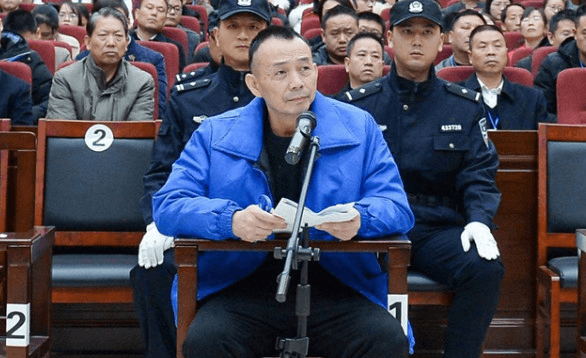
    South Korean missionary Cho Young-joo (in a blue striped polo shirt) led a mission trip in the summer of 2013 to provide education for children in Mongla, Myanmar. China accused Cho of organizing volunteers from China and South Korea to illegally cross the Yunnan-Myanmar border. Image credit: GoodNewsTV  

    Cross-border evangelization involves unforeseeable risks. The risk is arguably grave in China, where foreign missionaries routinely face harassment and arbitrary detention. South Korean Christians and Chinese citizens of Korean descent (hereafter ethnic Koreans) are no strangers to arrests for assisting North Koreans who attempt the long journey to freedom and citizenship in the South.   

    A judgment unearthed by Dui Hua revealed that Korean Christians in China en route to their overseas missions in Southeast Asia face similar risks. In May 2014, South Korean national Cho Young-joo (KR: 조영주; CH: 曹永周) was sentenced to seven years in prison for organizing illegal border crossings to Myanmar from Yunnan. 

    While overland border crossings between Yunnan and Myanmar are only legally accessible to citizens from the two countries with valid exit permits, some areas are separated by rivers but crossable on foot in most other places. Informal Yunnan-Myanmar border crossings can be common, or were at the time of Cho’s conviction, in some areas. For this reason, the prosecution of some crossings and not others can be considered arbitrary or politically motivated applications of the law. 

    The crime of organizing illegal border crossings, defined in Article 318 of the Criminal Law, has become the latest rallying point for critics of Beijing following the detention of twelve Hong Kong anti-extradition bill protesters who attempted to flee by boat to Taiwan in August 2020. On December 30, two of them received prison sentences of between two to three years in Yantian District, Shenzhen, for Article 318. The crime can lead to as many as seven years in prison and even longer if violence is involved.  

    While some offenders feel compelled to flee lawsuits they believe to be politically motivated, Christians have fallen victim to the same crime for crossing the Chinese border to conduct charitable activities in another country. Cho led a group of Christians to provide education for impoverished children in Mongla, a Burmese city best known for casinos, prostitution, and markets for endangered wildlife with Chinese clientele.  

    Good News Mission

    Cho is from the South Korea-based Good News Mission (KR: 기쁜소식교회; CH: 好消息教会). The mission was founded by Ock Soo-park in 1976 and proclaims to have 170 churches in South Korea and 838 international churches. Due to doctrinal differences, mainstream South Korean Protestant denominations have called the mission “heretical.” The accusation stems from its allegedly objectionable conduct, such as deceptive recruiting and the exaltation of Ock. 

    In China, there were few if any reports about its church members being subjected to coercive measures until Bitter Winter, an online magazine that focuses on religious liberty and human rights issues in China, reported a case of 26 people who were sentenced for “illegal business activity” in July 2020. They were accused of printing Good News Mission books. Among them, Xian Renguo (咸仁国), director of the Secretarial Department of the mission, received a prison sentence of 42 months in Jiangsu. 

    There is evidence that the mission has gained some traction in China. Government gazettes have documented instances of “infiltration” from the Good News Mission in the northeast provinces of Liaoning, Jilin, and Heilongjiang, where the majority of two million ethnic Koreans are concentrated. Liaoning was among the first provinces to have banned the church as early as  2005. Public security in Inner Mongolia, Hunan, Guizhou, and Shaanxi have also filed “special cases” (专案) to monitor the church. The most recent mention by the government found in the 2016 Changsha Yearbook  states that an unknown number of members were taken to “education classes” for illegally proselytizing there. Reporting by Bitter Winter also revealed that the mission established a secretarial department in Guangzhou in 2009. 

    Three Border Crossings

    Jingkang School is a government-funded school founded in 2011 in Mongla, a township in Shan State Special Administrative Region 4, Myanmar. In 2013, Cho led volunteers from China and South Korea to cross the Yunnan-Myanmar border to provide schooling and humanitarian aid. Image credit: Information Website of the No.4 Special Administrative Region of Eastern Shan Information Website  
    Prior to detention, Cho administered a website to recruit volunteers to provide schooling for children in Mongla, the capital of Myanmar’s Shan State Special Administrative Region 4 bordering China’s Menghai County in Yunnan. Jointly initiated by Jingkang School (景康学校) in Mongla, the mission was joined by South Koreans and Chinese nationals, including members of ethnic minority groups such as ethnic Koreans, Manchu, and Jingpo (景颇族, a predominantly Christian ethnic group in Yunnan).
    The Daluo Port is the official crossing that connects Mongla to Yunnan’s Menghai County. Image credit: Google Map and zhihu.com 

    The Daluo Port is the only official crossing that connects Mongla to Yunnan’s Menghai County. As with many other overland border crossings between Yunnan and Myanmar, the port is accessible only to citizens from the two countries with valid exit permits. Exit permits are also obtainable by licensed tour operators catering to casino clientele. However, as noted above, the Yunnan-Myanmar border is considered porous and crossable on foot in many places. Locals are known to eschew the process of applying for a pass in favor of informal crossings utilizing accessible entry points. A 2014 New York Times article noted that few locals “bother applying for a pass and instead sneak through, via motorbike or by climbing through large holes conveniently located on the border fence.”  

    Cho was accused of organizing three illegal border crossings from Yunnan to Mongla, all of which were made in July 2013. Of the three border crossings, Cho admitted to having a leading role in the first one where he was physically present:

    1. In the summer of 2013, Cho was assisted by local churches in China to arrange for five South Korean students to meet him in Kunming, Yunnan’s provincial capital. From Kunming, they travelled to Jinghong, where they split into two groups. All but one student made their way to Mongla’s Jingkang School.

      Cho and his wife stayed with the one South Korean student who did not make it to Jingkang School. They were later alerted by Zhang Hongjun (张洪军), a Han missionary from Qiqihar, Heilongjiang Province, to evade Chinese police before crossing a river to Mongla. The trio was intercepted by Yunnan police upon their return to Kunming on July 25, 2013.

    2. Prior to Cho’s detainment, Burmese police apprehended a total of 31 people on July 21. They were sent back to Yunnan on the same day. According to the Chinese prosecutors, Cho instructed Wang Yingjie (王应杰) and Yang Yuanyuan (杨园园) to arrange a coach for the volunteers after they had arrived in Kunming. Wang travelled with them to the border township of Menglong, from where they took minivans and crossed the border to Myanmar via a secret route. This group appeared to have taken a detour in a bid to join Cho in Mongla to avoid unwanted attention from border police.
    3. Yang was responsible for collecting transportation fees from the volunteers and did not cross the Yunnan-Myanmar border. Yang, however, was detained separately on August 9, 2013.

    4. The third border crossing involved seven volunteers, all of whom managed to reach Mongla. Four of them were detained in Menghai County on July 28 after they had finished volunteering and returned to Yunnan on the same day.
    Map showing the route (green) from Kunming to Jinghong, from where Cho intended to travel to Mongla. Source: Gaode Map 

    Convictions & Harsh Sentences

    Ten other defendants were also tried alongside Cho. The Jinghong City People’s Court sentenced three for “organizing illegal border crossings;” four for “transporting others to illegally cross the border;” and another four for “illegal border crossing.” All but Cho were Chinese nationals. 

    Cho’s wife and the five volunteers from South Korea were not prosecuted. They were deported after paying a fine for violating the Exit and Entry Administration Law.  

    Table 1: Individuals convicted of crimes related to illegal border crossings.
    Source: Jinghong City People’s Court

    The sentence handed down to Cho can be considered severe, even more so than many profit-oriented smugglers convicted of the same crime for pouring an illegal flow of labor into or out of China.

    According to the 12-volume Records of People’s Courts Historical Judicial Statistics: 1949-2016 released by the Supreme People’s Court, 7,264 individuals were convicted of Article 318 in the 18 years beginning in 1998. Of them, one in every five defendants received prison sentences over five years. A larger portion, 37 percent, received prison sentences not exceeding three years. 
    Considered a lenient punishment, suspended sentences are quite common in Article 318 cases. One in every four defendants received suspended sentences from 1998-2016. Cho was not given leniency even though none of the 11 defendants had an intent to profit. It would be hard to argue that Cho’s humanitarian work in Mongla has inflicted any social harms in China or Myanmar, an important factor to consider when a court determines sentencing. Cho’s defense lawyer also asked the court, albeit in vain, to consider the ties of friendship between China and South Korea. 
    A cropped image of the 29-page court judgment detailing the specifics of the three illegal border crossings organized by Cho. Image credit: China Judgements Online 

    The 29-page judgment did not explain why Cho deserved a seven-year prison sentence; it only focused on Cho’s role as the principal offender who “led, plotted, and organized” more than 40 people to illegally cross the Yunnan-Myanmar border thrice. The court also found that Cho had known that crossing the Yunnan-Myanmar border without proper documentation would be an unlawful act. However, he only expected that the crossings, if found, would constitute an administrative violation, rather than a criminal offense. He appeared to have acted on his belief that Chinese authorities would turn a blind eye to people illicitly slipping through the border, as they often do with locals who commute to towns on the other side of the border to see relatives or conduct trade as part of their daily lives.

    Cho’s case was investigated by guobao, China’s secret police force in charge of handling political dissidents, religious groups, and “subversive” activities. The case fulfilled the criteria for being an “important case” (pinyin: zhongda anjian, 重大案件), as defined in the notice issued by the Ministry of Public Security in 2000 which stipulates that one of the following conditions is met:

    1. organizing 20-49 people to illegally cross the border at one time; 
    2. organizing others to cross the border three to four times; 
    3. causing serious injuries to one to two persons during the crossing; 
    4. depriving of or restricting personal freedom of others; 
    5. using violence or coercion to resist law enforcement; 
    6. illegally making a profit of RMB50,000-200,000; 
    7. and other “serious circumstances.” 

    Points 1 and 2 are relevant to Cho, making his case almost certainly a zhongda anjian. 

    Cho served his prison sentence in Qingdao, Shandong, in closer geographical proximity to South Korea than Yunnan. His first sentence reduction was granted three years into his prison sentence in December 2016; another reduction was granted in 2018. Good News Daily (Good News Mission’s news portal) reported his return to South Korea on January 23, 2019 upon completion of his prison sentence. Other than that, his case did not appear to have garnered substantial coverage in mainstream news media in South Korea. 

    The Chinese government likely considers Cho a case of foreign infiltration, a term typically associated with religious activities conducted by foreign missionaries inside China. His case suggested that foreigners proselytizing outside of China face hefty prison sentences.

    A Risky Venture

    Cho’s imprisonment was by no means an isolated incident. In March 2018, Reverend John Cao Sanqiang (曹三强) was sentenced to seven years in prison for the same charge of organizing illegal border crossings. Cao conducted charitable work in Myanmar’s Wa Region, subsumed under the northern special region of Shan State near the Yunnan-Myanmar border. In addition to providing schooling, Cao also organized a charity clinic to reduce child and infant mortality rates, offered drug rehabilitation, and conducted onsite visits to Wa families to educate them about the harms of drug abuse. On March 5, 2017, Cao was taken into custody by Chinese police at the border upon his return to Menglian County, Yunnan, from Myanmar.
    Despite being a Chinese national, Cao is perceived by the Chinese government to have close US connections. Cao is a US permanent resident with links to China’s house church movement. His trial was concluded at the onset of the fraying US-China ties caused by the trade war. The Department of State has expressed “deep concerns” and urged that Cao be released on humanitarian grounds. The UN Working Group on Arbitrary Detention called for his release from wrongful imprisonment in October 2019. 
    China has a track record of hostage diplomacy by holding foreign nationals as bargaining chips on dubious charges, as in the cases of Michael Kovrig and Michael Spavor. However, political and economic problems between China and South Korea were irrelevant to Cho’s case. Cho was sentenced amid the warming ties between the two countries. Irritants did not occur until South Korea announced its approval of the US deployment of the THAAD missile system to counter the growing threats from North Korea. As China-South Korea relations turned sour in 2016, an increasing number of reports of missionaries being deported and visas refused have emerged.

    There might be reasons not explicitly stated in the judgment that could explain Cho’s harsh prison sentence. In the early 2010s, official news media began reporting a surge of cross-border crimes in Southwest China. Of particular concern were cases of a political nature involving overseas religious forces complicit in organizing “Uyghurs splittists” to flee overseas through Yunnan and Guangxi. This led the Supreme People’s Court and Supreme People’s Procuratorate to issue a joint response in 2012, in which they called on all cross-border crimes to be “handled in the strictest possible manner.” Public security was required to strengthen investigation and detection of cross-border crimes. Cho, a religious figure with close foreign connections, might just be an unfortunate victim as China began increasing scrutiny along the Yunnan-Myanmar border amid its campaign to ratchet up stability maintenance.

    The case of Cho Young-joo is not well-documented in Chinese government sources beyond the 29-page court judgment published on China Judgements Online. We will likely be kept in the dark until more information about Cho’s case becomes publicly available. That said, it has become increasingly clear that cross-border evangelization is riskier than ever. In early 2020, China reportedly started erecting a 2000-kilometer reinforced fence along the Yunnan-Myanmar border. The move has been officially cast as an attempt to contain imported cases of COVID-19 from Myanmar. 

    Some observers have alluded other motives to Beijing. The wall can be more than just a physical barrier; it has created new nodes of surveillance combined with the rollout of facial recognition technologies that can be used to monitor not only dissidents, but also ethnic minorities and missionaries, as well as to keep them from fleeing the country.

  • Supreme People’s Court Makes Two Announcements About Online Court Database

    Supreme People’s Court Makes Two Announcements About Online Court Database

    A screenshot of the China Judgements Online site’s announcement requiring users to register a mobile phone number. The announcement was put up on August 31, 2020, one day before the change took place.

    In September 2020, China’s Supreme People’s Court (SPC) announced two developments concerning China Judgements Online, the country’s national public internet court case database. First, the Court announced that the database has grown to contain over 100 million judgements—a staggering figure. Second, since September 1, database users have been required to register using a mobile phone number in order to search the website—a chilling restriction. Do these two developments mean anything for the future of judicial transparency in China? On both counts, the answer is yes, but not for the obvious reasons. The growth of the database may be positive, but more cases do not necessarily signal more judicial openness; meanwhile, the registration requirement may be bad, but more access requirements don’t necessarily signal more legal repression.

    China’s Judicial Transparency Initiative and Case Databases 

    The SPC launched China Judgements Online in 2013 as part of a commitment to increasing judicial transparency. The database is reportedly the largest of its kind in the world, and it continues to grow at a rapid pace. The database has been one of the most important court developments in China in half a century; it is a boon for lawyers and researchers, as well as ordinary citizens who want to know what the courts are doing.

    But despite the database’s promise, those who want to use it face two major roadblocks. The first impediment is about interface: the search functions on the website are not very good. Cases are often inaccurately tagged and do not always come up in searches, even when they are available on the website. The second impediment is about content: many cases are not available on the database. In principle, all court judgements are supposed to be posted online, but some categories of cases—notably those deemed state secrets and those that might endanger social stability—are excepted from this requirement. Unfortunately, courts are not transparent about which cases are not posted. The subversion trials of human rights lawyers such as  Zhou Shifeng (周世锋), Li Heping (李和平), and Wang Quanzhang (王全璋) have garnered substantial media attention even within mainland China, but their judgments are not available on China Judgements Online.

    Worse still, cases sometimes are removed from China Judgements Online without notice, or cease to show up in searches, even when they are still available. This means that China Judgements Online queries alone are not a reliable way to identify published cases. Finally, the contents of cases are not always disclosed, making their inclusion on the site largely uninformative. This tends to be particularly true of cases of endangering state security involving ethnic minorities in restive regions. In one example, Dui Hua found that nine Tibetans had been sentenced for inciting splittism in Ganzi, Sichuan, but the site included no information beyond their names, the charges of conviction, and the dates of the judgement.

    Because of these shortcomings in the official China Judgements Online database, a brisk secondary market in online case databases has taken hold in China. Secondary databases include open access, such as Jufaanli, and paid databases such as LawXP and Legal Miner. Secondary databases exist in a legal grey zone. SPC guidelines prohibit duplication of the website, but the popularity of alternative databases has only grown in recent years, and the court has not seriously moved to eliminate them. That may be because the secondary databases are so useful. Not only do alternative databases offer better user interface and analytical tools, but they may also contain judgements that are not available on China Judgements Online, including cases that may have been taken down or cases from local courts that were not uploaded to the national database. For example, the case of Ismaili Rozi has never been posted on China Judgements Online but is available on an alternative site. Rozi is the first known case of educational placement, a measure imposed on prisoners who are considered “a danger to society” even after they have completed their sentences for terrorism or extremism offenses.

    While these secondary databases provide benefits over the official Court website, they also make the user problems with the official database worse. Many users—including researchers at Dui Hua—have noted that response times on China Judgements Online queries have slowed to a crawl in recent years. This is reportedly due in large part to the increased traffic from secondary databases, which use programs to search and scrape cases from the public portal. The use of bots to harvest case data helps explain why China Daily reports that China Judgements Online has had nearly 48 billion visits (it seems unlikely that these are human visits, as this would amount to the equivalent of dozens of site visits from every person on the planet).

    Registering for China Judgements Online 

    This brings us to the announcement that as of September 1, 2020, users who wish to query the database must first register using a mobile phone number. The registration is apparently an effort to ensure that site users are humans, rather than web crawling bots that slow down database queries. If this is indeed the court’s rationale, this is a commendable attempt to improve the experience for individual database users. Even so, requiring registration to search public cases raises fears of surveillance and may deter citizens from using the database.

    There are many reasons people may be hesitant to register for the site. For some users, the registration requirement may raise worries that the SPC is tracking their individual case search histories. This could be a particular concern for people who search, for example, administrative lawsuits against local governments in order to bring a similar action themselves. Registration may also deter scholars who study sensitive types of cases such as political prosecutions, capital sentences, or cases from areas such as Xinjiang, Tibet, or other minority autonomous regions. These scholars may worry that if authorities track their searches, the judgements they find will be taken offline in response.

    Dui Hua regularly uses China Judgements Online for case research, and the foundation was able to successfully register after several attempts and gain access to the site after the new requirement went into effect. The change did seem to bring desired improvements for site stability and performance. However, a faster site alone will not reduce the draw of secondary case databases. Long-standing aforementioned issues still remain. Dui Hua regularly uncovers published cases posted on alternative databases that do not appear in queries on China Judgements Online. Until the SPC can guarantee that all public cases are accessible on its own website (and not removed without notice), people will still flock to alternative databases to seek information. However, to comply with China’s internet use regulations, many alternative sites have already implemented user registration requiring a China mobile number or a WeChat account, which greatly impeded access from overseas.

    Along the same lines, the rapid growth of China Judgements Online is a laudable feat. The number of posted judgements, 100 million online, is incredible. But transparency is not just about volume, it is also about completeness. As Dui Hua indicated in its assessment to the United Nations in preparation for China’s 2018 Universal Periodic Review, the country’s record on this matter is mixed. The sensitive cases are always the minority, but in a rule of law system, a handful of cases could also be the ones that count most. The public needs some information about all cases, even the controversial ones. Where there are legitimate reasons for withholding the publication of a judgement, the existence of the case and the reason for the restriction should still be made public in every instance. Otherwise, although China Judgements Online may provide us with more and more cases, it will not tell us anything more about what we actually need to know.

  • Supreme People’s Court Makes Two Announcements About Online Court Database

    Supreme People’s Court Makes Two Announcements About Online Court Database

    A screenshot of the China Judgements Online site’s announcement requiring users to register a mobile phone number. The announcement was put up on August 31, 2020, one day before the change took place. 

    In September 2020, China’s Supreme People’s Court (SPC) announced two developments concerning China Judgements Online, the country’s national public internet court case database. First, the Court announced that the database has grown to contain over 100 million judgements—a staggering figure. Second, since September 1, database users have been required to register using a mobile phone number in order to search the website—a chilling restriction. Do these two developments mean anything for the future of judicial transparency in China? On both counts, the answer is yes, but not for the obvious reasons. The growth of the database may be positive, but more cases do not necessarily signal more judicial openness; meanwhile, the registration requirement may be bad, but more access requirements don’t necessarily signal more legal repression.  

    China’s Judicial Transparency Initiative and Case Databases 

    The SPC launched China Judgements Online in 2013 as part of a commitment to increasing judicial transparency. The database is reportedly the largest of its kind in the world, and it continues to grow at a rapid pace. The database has been one of the most important court developments in China in half a century; it is a boon for lawyers and researchers, as well as ordinary citizens who want to know what the courts are doing.  

    But despite the database’s promise, those who want to use it face two major roadblocks. The first impediment is about interface: the search functions on the website are not very good. Cases are often inaccurately tagged and do not always come up in searches, even when they are available on the website. The second impediment is about content: many cases are not available on the database. In principle, all court judgements are supposed to be posted online, but some categories of cases—notably those deemed state secrets and those that might endanger social stability—are excepted from this requirement. Unfortunately, courts are not transparent about which cases are not posted. The subversion trials of human rights lawyers such as  Zhou Shifeng (周世锋), Li Heping (李和平), and Wang Quanzhang (王全璋) have garnered substantial media attention even within mainland China, but their judgments are not available on China Judgements Online. 

    Worse still, cases sometimes are removed from China Judgements Online without notice, or cease to show up in searches, even when they are still available. This means that China Judgements Online queries alone are not a reliable way to identify published cases. Finally, the contents of cases are not always disclosed, making their inclusion on the site largely uninformative. This tends to be particularly true of cases of endangering state security involving ethnic minorities in restive regions. In one example, Dui Hua found that nine Tibetans had been sentenced for inciting splittism in Ganzi, Sichuan, but the site included no information beyond their names, the charges of conviction, and the dates of the judgement.  

    Because of these shortcomings in the official China Judgements Online database, a brisk secondary market in online case databases has taken hold in China. Secondary databases include open access, such as Jufaanli, and paid databases such as LawXP and Legal Miner. Secondary databases exist in a legal grey zone. SPC guidelines prohibit duplication of the website, but the popularity of alternative databases has only grown in recent years, and the court has not seriously moved to eliminate them. That may be because the secondary databases are so useful. Not only do alternative databases offer better user interface and analytical tools, but they may also contain judgements that are not available on China Judgements Online, including cases that may have been taken down or cases from local courts that were not uploaded to the national database. For example, the case of Ismaili Rozi has never been posted on China Judgements Online but is available on an alternative site. Rozi is the first known case of educational placement, a measure imposed on prisoners who are considered “a danger to society” even after they have completed their sentences for terrorism or extremism offenses. 

    While these secondary databases provide benefits over the official Court website, they also make the user problems with the official database worse. Many users—including researchers at Dui Hua—have noted that response times on China Judgements Online queries have slowed to a crawl in recent years. This is reportedly due in large part to the increased traffic from secondary databases, which use programs to search and scrape cases from the public portal. The use of bots to harvest case data helps explain why China Daily reports that China Judgements Online has had nearly 48 billion visits (it seems unlikely that these are human visits, as this would amount to the equivalent of dozens of site visits from every person on the planet).  

    Registering for China Judgements Online 

    This brings us to the announcement that as of September 1, 2020, users who wish to query the database must first register using a mobile phone number. The registration is apparently an effort to ensure that site users are humans, rather than web crawling bots that slow down database queries. If this is indeed the court’s rationale, this is a commendable attempt to improve the experience for individual database users. Even so, requiring registration to search public cases raises fears of surveillance and may deter citizens from using the database.  

    There are many reasons people may be hesitant to register for the site. For some users, the registration requirement may raise worries that the SPC is tracking their individual case search histories. This could be a particular concern for people who search, for example, administrative lawsuits against local governments in order to bring a similar action themselves. Registration may also deter scholars who study sensitive types of cases such as political prosecutions, capital sentences, or cases from areas such as Xinjiang, Tibet, or other minority autonomous regions. These scholars may worry that if authorities track their searches, the judgements they find will be taken offline in response.  

    Dui Hua regularly uses China Judgements Online for case research, and the foundation was able to successfully register after several attempts and gain access to the site after the new requirement went into effect. The change did seem to bring desired improvements for site stability and performance. However, a faster site alone will not reduce the draw of secondary case databases. Long-standing aforementioned issues still remain. Dui Hua regularly uncovers published cases posted on alternative databases that do not appear in queries on China Judgements Online. Until the SPC can guarantee that all public cases are accessible on its own website (and not removed without notice), people will still flock to alternative databases to seek information. However, to comply with China’s internet use regulations, many alternative sites have already implemented user registration requiring a China mobile number or a WeChat account, which greatly impeded access from overseas. 

    Along the same lines, the rapid growth of China Judgements Online is a laudable feat. The number of posted judgements, 100 million online, is incredible. But transparency is not just about volume, it is also about completeness. As Dui Hua indicated in its assessment to the United Nations in preparation for China’s 2018 Universal Periodic Review, the country’s record on this matter is mixed. The sensitive cases are always the minority, but in a rule of law system, a handful of cases could also be the ones that count most. The public needs some information about all cases, even the controversial ones. Where there are legitimate reasons for withholding the publication of a judgement, the existence of the case and the reason for the restriction should still be made public in every instance. Otherwise, although China Judgements Online may provide us with more and more cases, it will not tell us anything more about what we actually need to know. 

  • Observations in Death Penalty Cases in China

    Observations in Death Penalty Cases in China

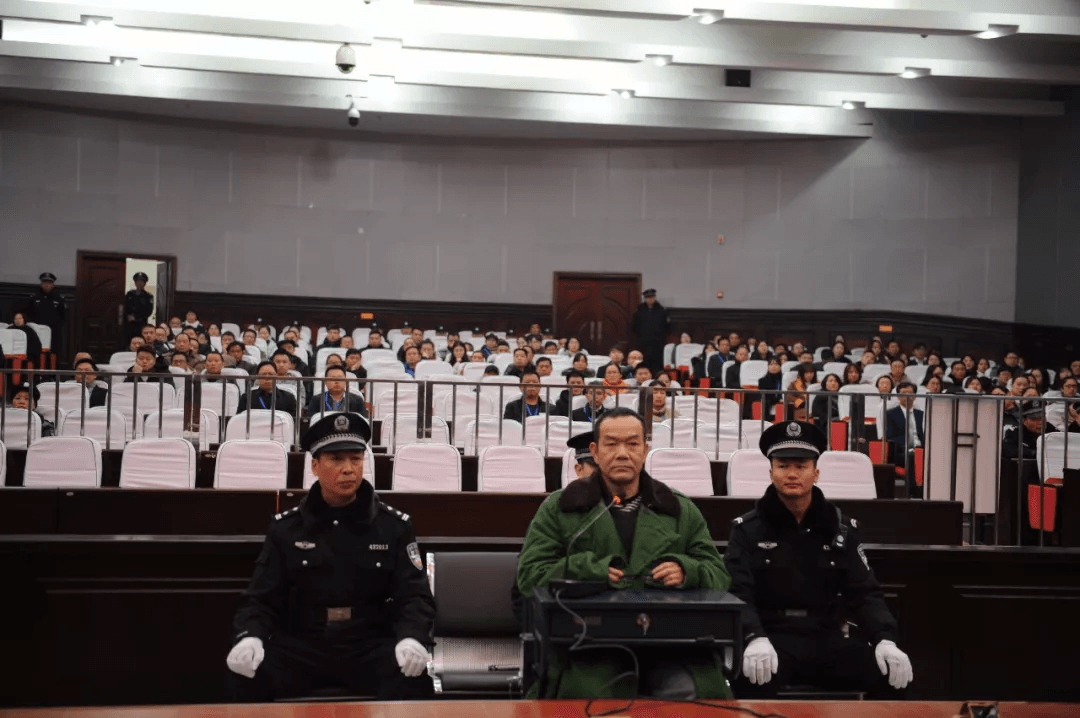
    Du Shaoping in court. Image Credit: Haibao News
    As the world’s leading executioner, China’s death penalty law has long been scrutinized by scholars, policy makers, and human rights groups. The subject matter garners an outsized level of international attention when the cases involve foreigners. Robert Schellenberg’s case serves as a recent, highly visible example: Schellenberg is a Canadian sentenced to death for drug trafficking, and his case has seemingly been thrust into the tit-for-tat of international politics. Ironically, this increased attention comes amid a decades-long decline in the overall use of the death penalty in China.
    It has been over a year since Schellenberg appealed his death sentence to the Liaoning High People’s Court in January 2019. The court appears to be delaying the judgment in order to seek leverage over the case of Meng Wanzhou. International politics are clearly at play in Schellenberg’s case, but it must be noted that delayed judgments are not uncommon in capital cases involving Chinese citizens. In some cases, defendants have waited as long as 600 days between first and second instance trials; in a rare case, 900 days elapsed before the final review by the Supreme People’s Court (SPC).
    The length of time between trials, SPC reviews, and execution varies case by case. It is also possible for the SPC to expeditiously approve death sentences within a month after the sentences were handed down at first-instance trials. The cases below display some disparities in this application:
    • The Beijing High People’s Court upheld the death sentence of Sun Wenbin 29 days after the Beijing No.3 Intermediate People’s Court handed down the judgment on January 16, 2020. Sun was found guilty of intentional homicide for stabbing a doctor at a Beijing hospital in December 2019. The SPC approved the death sentence on March 17, 2020, slightly over a month after the appellate ruling was made. The period from Sun’s criminal detention to his execution on April 3, 2020 lasted 101 days.
    • In another case, Du Shaoping was found guilty of intentional homicide and other crimes by a court in Huaihua, Hunan, sentenced to death, and executed in January 2020. The alleged crime of him killing and burying a teacher in a school yard, which took place in 2003, was said to be instigated by disputes over a schoolyard construction project. While 16 years passed between the crime and Du’s trial hearing on December 17, 2019, judicial proceedings were more expeditious. Du was executed on January 20, 2020, meaning that the period from his first trial to the SPC approval of his conviction and sentencing lasted 30 days. Four days elapsed between the SPC’s approval and his execution.
    Understanding of how China applies the death penalty is largely lacking. To better understand these conflicting trends, Dui Hua has conducted an updated analysis of trends in the length of time between trial and execution in China’s death penalty cases. Longer times between sentence and execution could indicate a more deliberate judicial approach that allows for meaningful review of the evidence supporting a conviction and death sentence, and it also provides a window for intervention from higher courts and others to stop executions and correct wrongly decided cases.
    This article examines possible trends in sentencing and execution in order to discern attitudes and practices towards the application of the death penalty. First, this article presents new statistical data on the length of time between sentence and execution using Dui Hua’s Death Penalty Log. It then provides a paired comparison of a very quick (less than 60 days) and a very deliberate (more than 2 years) death penalty appellate review, which can assist in developing an understanding of the factors that tend to be associated with a longer judicial deliberation between trial and execution.
    A Look at the Numbers: Time from Trial to Final SPC Approval of Execution


    In the United States, the term “death row” is part of the common lexicon, perhaps owing to the extended delay between the investigation, trial, appeal, and execution of condemned prisoners. By contrast, there has been little need for a term like “death row” in China because there has not historically been an extended period between trial and execution, and capital offenders are rarely sent to prison before execution. In China, capital offenders stay in detention centers after they are sentenced, or when appeals to a higher-level court or approvals from Supreme People’s Court are pending.
    However, as the SPC has reclaimed its authority over the review and final approval of death sentences, times between trial and sentencing have begun to lengthen and vary. Although the complete abolition of the death penalty should be the ultimate goal from a human rights perspective, understanding how and why delays of execution occur is nonetheless an important element of understanding whether China engages in the deliberation necessary to limit injustice in death penalty cases.
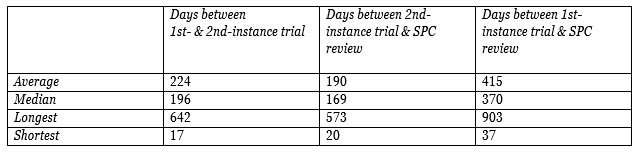
    Dui Hua has recently compiled the following information regarding the time between trial and execution in death penalty cases in China: from 2015 to 2019, Dui Hua recorded 1,247 first-instance trials involving the death penalty; of those, there were 460 known second instance trials, and 261 known SPC reviews of those trials. Table 1 below provides a summary of average lengths of time between adjudication and final SPC death penalty review.1
    Table 1. Length of Time in Days Between Adjudication and Final SPC Judgment in Death Penalty Cases
    Image Credit: The Dui Hua Foundation
    Of the 261 SPC reviews, 239 death sentences were approved (91.6 percent), and 24 were not approved (9.2 percent). While these data provide a sense of the average delays between death penalty trial and execution, Figure 1 provides a more detailed understanding of how many cases involve significant appellate deliberation.
    Figure 1. Number of Death Penalty Cases, Sorted by Days Between First Instance Trial to Final SPC Decision
    Image Credit: The Dui Hua Foundation
    In approximately half of the cases, the time between first instance death penalty trial and SPC review is between six months to a year. On the other hand, in more than half of cases, the period from trial to SPC review took longer than a year; of those, nearly 33 percent took longer than one and a half years. Interestingly, a very small number of cases landed on opposite ends of the spectrum – only three cases took less than 182 days to review, and only 10 took longer than 730 days.
    To better understand what factors lead to longer time windows between trial and execution, the next part provides a more in depth look at two cases, one from each end of the spectrum. While these two cases are outliers – one was particularly quick while the other was noticeably drawn out – they provide insight into factors affecting the duration of judicial proceedings in death penalty cases.

    Yang Zanyun and the “9-12” Attack

    A photograph of Yang Zanyun from a court proceeding related to his mass killing case. Image Credit: Hunan People’s Court

    On one end of the spectrum is a high-profile mass killing that featured a highly expeditious SPC review in which the period from initial trial to execution lasted only 48 days (December 12, 2018-January 29, 2019). This case involved an attack carried out in Hunan province by Yang Zanyun (阳赞云), who drove a car into a crowd in September 12, 2018, killing 15 people.

    Yang was convicted of the crime of “endangering public safety using dangerous methods”; however, a more accurate contemporary translation of the crime would probably be “mass killing” or even terrorism (media articles branded the case the “9-12” attack). According to Xinhua, Yang drove a Land Rover into a crowd of people at Mijiang Square in Hunan before exiting his vehicle and attacking more people with a knife and a shovel. In addition to those killed, Yang also injured 43 others. Unsurprisingly, as one of the most heinous mass killings in China’s history, the case drew strong public response, with more than 300 people attending the proceedings held at the Hengyang Intermediate People’s Court in December 2018.
    A little over one month later, the Hunan High People’s Court announced on its WeChat account that the Hengyang Intermediate People’s Court carried out Yang’s execution on January 29, 2019, in accordance with a final SPC death penalty order.
    Another negative factor that likely contributed to Yang’s execution was his long criminal history. According to Reuters, Yang had previous convictions for “selling drugs, theft and attacking people, which caused him to harbor a desire for ‘revenge on society.’”

    Ma Gongxian and the Land Dispute Homicide

    By contrast, a recent homicide case has led to a much longer judicial review process. The defendant in this case, Ma Gongxian (马攻先), was convicted of intentional homicide for stabbing a family member to death as part of a dispute over land rights in Qingdao, Shandong province.
    The case arose out of long simmering tensions between Ma Gongxian and his younger brother, Ma Huixian, with respect to a 16-mu (approximately two-and-a-half-acre) piece of real estate. In October 2015, tensions boiled over when Ma Gongxian confronted Ma Huixian regarding a building that Ma Huixian was constructing on the disputed land. While the exact details remain somewhat unclear, at some point Ma Gongxian wielded a large knife and stabbed and killed Zhao Jufang, Ma Huixian’s wife. Ma Gongxian was then attacked with rocks by others at the scene and taken to the hospital.
    According to the report, Ma Gongxian was arrested in the hospital, and the Qingdao Procuratorate charged him with intentional homicide. The Qingdao Intermediate People’s Court sentenced him to death with immediate execution in October 2016, but despite the judgment calling for the immediate implementation of the death penalty verdict, Ma was allowed to appeal the sentence. The Shandong High Court heard the case on June 8, 2017, and Ma Gongxian presented a complex court defense in which he admitted to killing the victim but claimed that his actions amounted to negligent, rather than intentional, homicide. The defendant was 69 years old at the time of the crime. As of November 2019, the Shandong High Court reportedly upheld the judgement, and the SPC approved the death sentence, meaning that the execution likely took place soon after the final SPC approval.
    In the small village in Shandong where the crime took place, however, the execution sentence was met with opposition. During Ma Gongxian’s appellate hearing, nearly a hundred villagers from Ma Gongxian’s village went to the Shandong High Court, expressing opposition to Ma Gongxian’s death sentence and saying that “the crime should not lead to death” (罪不致死, zui bu zhi si). The defense also noted that Ma did not have a history of committing crimes, a point that seems to have been accepted by the criminal judicial officials.
    Assuming that Ma’s death sentence was carried out in November 2019, the execution would have taken place approximately three years after the start of the first-instance trial in October 2016, making this case much longer than the average time from trial to SPC death penalty approval.
    Toward a List of Factors that Impact Length of SPC Review
     
    Although no conclusions can be definitively made from only two cases, the major differences between the two cases might illuminate some of the factors upon which to assess Chinese judicial review of death penalty cases and, in a broader sense, human rights in China. The differences in the Yang Zanyun and Ma Gongxian cases include the following elements:
    • number of deaths (overall severity of the crime)
    • public versus private dispute
    • social pressure
    • complicated criminal defenses
    • previous criminal history
    Clearly, Yang’s crimes were particularly heinous and attracted international media attention. His crimes resulted in a substantial threat to social stability, which might have pressured higher courts and the SPC to approve the death penalty quickly. These factors are absent in the Ma Gongxian case that involved the murder of a single individual amidst a family dispute that was not a threat to spill into other corners of society. These factors can be considered in addition to other governmental or political factors involving ongoing counter-terrorist policies and or other campaigns noted previously by Dui Hua.
    It is also interesting to note that Ma Gongxian’s case led to substantial delays perhaps in part because he was able to present a complex criminal defense. Although it might be a positive sign that Ma’s defense strategy was able to produce a more deliberate judicial response, it also might call into question whether criminal defendants with financial means to pay defense lawyers might be able to more successfully challenge their sentences, with poorer defendants more likely to face unjust execution.
    While these factors are by no means an exhaustive or definitive list of factors influencing appellate review in these two cases, they offer a perspective into a legal system that is notorious for its low acquittal rate and lack of transparency. The insights gleaned from these cases and available statistics can help inform the ongoing conversation about how judicial review occurs and how human rights might be protected in China.
    As the coronavirus pandemic upends proceedings, China has vowed not to delay justice in the midst of the outbreak. Such promises have raised concerns that procedural justice may suffer as a result, especially in capital cases, where the review process already faces transparency issues.

    1
    Of all of the death penalty cases for which statistics are provided, only a small number are reported on in the media or in other public forums; at times, some cases are reported in the media that are not yet included in statistical accounts

  • Dui Hua Digest, June 2019

    Dui Hua Digest, June 2019

    EVENTS

    Kamm Visits Copenhagen, Stockholm, and Oslo to Review Cooperation

    John Kamm with Swedish Ambassador-at-Large for Human Rights, Democracy and the Rule of Law Annika Ben David,May 2019 Image Credit Amb. Annika Ben David

    Dui Hua Executive Director John Kamm paid visits to the capitals of three Scandinavian countries – Copenhagen (Denmark), Stockholm (Sweden) and Oslo (Norway) – from May 5 to May 14, 2019. He met with government officials and senior staff of non-governmental and international humanitarian organizations involved in handling relations with China.

    In Copenhagen, Kamm met with the Ministry of Foreign Affairs, the Danish Institute for Human Rights, and a group of labor and Christian activists. In Stockholm, Kamm held several meetings with senior ministers and state secretaries as well as the Swedish International Development Cooperation Agency (Sida). Finally, in Oslo, Kamm met with the Secretary of the Norwegian Nobel Institute, the Secretary of the Storting’s International Committee, and several officials in the human rights and East Asia sections of the Ministry of Foreign Affairs.

    The three countries have provided financial support to Dui Hua for more than 10 years. The meetings provided Kamm an opportunity to review the progress in meeting the goals of the grants.

    On May 5, the day Kamm arrived in Copenhagen, President Donald Trump unleashed a twitter storm accusing China of reneging on commitments it allegedly made in the long-running talks to resolve trade differences between the two countries. Tensions in U.S.-China relations were a topic in virtually every discussion between Kamm and his interlocutors. Dui Hua’s executive director stressed that the “trade war” was but one of many conflicts between China and the U.S. Of equal importance is the technology war, something very much on the minds of Scandinavian officials who are grappling with the question of whether and to what extent China telecom giant Huawei should participate in the building of the countries’ 5G networks.

    Other dimensions of the conflict between the two countries were ideological disagreements that had led to the closure of several Confucius Institutes in the United States, the drop in people-to-people exchanges—the so-called “visa war”—sharp difference over human rights, notably over China’s treatment of Muslims in Xinjiang, and strategic flashpoints, including Taiwan, the South China Sea, and Hong Kong.

    Time was spent discussing the current situation in Hong Kong, where the government’s plan to enact an extradition law would allow for the transfer of people wanted in China back to the mainland. Tens of thousands of people had taken to the streets in the former British colony on April 28 to protest the proposed legislation. On May 1, a brawl erupted between opposing groups of legislators in the Legislative Council chamber. The proposed law had drawn criticism from foreign governments, human rights groups, and foreign chambers of commerce.

    Although the three countries enjoy generally good relations with China, all have disagreements of varying intensity. China is displeased with the decision to reopen the investigation by the Danish government into the police handling of Tibetan protests in 2012, as well as the Danish government’s move to block Chinese participation in an airport project in Greenland. The most nettlesome issue in Sino-Swedish relations remains the treatment of Swedish citizen Gui Minhai. Since Gui was seized by Chinese law enforcement officers on board a train, in the company of Swedish diplomats, in January 2018, Sweden has not been granted consular access.

    By comparison, Norway’s relations have been sound since normalization of relations in 2016. Ties with China had been icy for six years following the awarding of the 2010 Nobel Peace Prize to Chinese dissident Liu Xiaobo.

    Shortly after Kamm departed Oslo to return to the United States, Norway’s parliament, the Storting, hosted a four-day visit to Norway by Li Zhanshu, Chairman of China’s National People’s Congress and the third most powerful man in China after President and Communist Party General Secretary Xi Jinping and Premier Li Keqiang. In addition to discussing Huawei’s possible participation in Norway’s 5G network, talks took place on energy cooperation. After sessions in Oslo, Li and his delegation travelled to Stavenger, the center of Norway’s oil industry.


    Kamm Speaks at San Francisco’s University Club

    On May 28, 2019, Dui Hua Executive Director John Kamm addressed a sold-out audience at San Francisco’s University Club, one of the city’s oldest clubs, and one steeped in history. The topic of his speech was “How Tiananmen Changed China – and Me.” Kamm, who was in China when the tragic events of June 4, 1989 took place, surveyed developments in China’s economy, society, and politics over the last three decades. He answered numerous questions in a lively Q&A at the end of his remarks.

    Although she was unable to attend the event, Speaker of the House of Representatives Nancy Pelosi sent Kamm a message: “I take this opportunity to remember the human rights abuses which befell the Chinese people. Your remarks regarding Tiananmen preserve the legacy of heroes.”


    PRISONER UPDATES

    In May, Dui Hua received a government response on 17 prisoners in Hebei. Most of them concerned Falun Gong practitioners or adherents of other religious sects labelled “cults” by the Chinese government. It is worth noting that none of them had received any clemency. The only exception was Zhao Lirong (赵丽荣), a petitioner serving her four-year sentence for picking quarrels and provoking troubles. In 2008, her farmland was expropriated by the government and a glass manufacturing company was granted the right to use her land. She received 100,000 yuan compensation, but was subsequently sentenced to 18 months’ imprisonment for destruction of property because she demolished the walls of the company in 2009. Upon release, she petitioned township, county, and city governments against the expropriation and demanded additional compensation. In 2015 alone, she petitioned eight times in Beijing, including six times at Zhongnanhai, the headquarters of the Chinese Communist Party and State Council. She was convicted in June 2016, and two months later, the Pingquan County People’s Court upheld the original sentence. Zhao is scheduled for release in December 2019, three months earlier than the expected release date.

    Another government response Dui Hua received in April provided new information concerning four prisoners sentenced for subversion of state power in Guangdong due to their affiliation with the so-called Shadow Corps (Yingzibintuan 影子兵团), which allegedly aimed to overthrow the Communist Party of China in a violent revolution, according to official accounts. Dui Hua has previously reported that Xiang Fengxuan (项逢选) was sentenced to 11 years’ imprisonment. The response revealed that Ma Ji (马骥) is now serving his five-year sentence in Heyuan Prison and will be due for release in August 2020. Also serving in Guangdong’s Heyuan Prison, Yang Wanben (杨万本) is expected to complete his four-year sentence on August 16, 2019. Another corps member Su Dongliang (苏东亮) has already been released from prison on an unspecified date.

    The same response also stated that prominent activist Chen Qitang (陈启棠) in Guangdong had not been granted clemency during his four years and six months’ imprisonment for inciting subversion. Chen was released from Sihui Prison on May 24, 2019. When the Occupy Central Movement broke out in Hong Kong in September 2014, Chen was in the former British colony. After he returned to Guangdong, he disseminated articles in support of the civil disobedience campaign that called for genuine universal suffrage. Chen was not sentenced until March 2017, after spending more than two years in custody. Chen had previously been imprisoned for more than two years in 2008 for swindling by false pretenses, apparently in reprisal for helping villagers over farmland expropriation in Guangdong.

    Dui Hua’s research into court websites has recently discovered several cases of illegal business activities in 2016 related to the publication of religious booklets. Wang Xiaoyan (王小燕), Xia Songzhi (夏松芝), and Li Kehua (栗克华) were convicted of printing and selling booklets that promoted Xinling Famen (心灵法门), a Buddhist-sounding religious sect also known as Guanyin Citta Dharma Door. Wang will remain in prison in Shanghai until January 2021, while Li and Xia are now serving their suspended sentences in Henan until December 2019 and December 2020, respectively.


    PUBLICATIONS ROUND UP

    Featured: Human Rights Journal: Hurry Up and Wait: The Robert Schellenberg Case

    Robert Schellenberg, Dalian Intermediate Court, Jan 14, 2019. Image Credit: cdn.hk01.com

    As U.S.-China relations sink ever lower, the list of urgent criminal cases involving Western citizens in China has increased. In just the last few weeks Canadians Michael Kovrig and Michael Spavor were formally arrested on espionage charges and American Mark Swidan was given a suspended death sentence for drug trafficking.

    Amid so many arrests and sentences, a May 9 appeal hearing in the case of Robert Schellenberg, a Canadian sentenced to death for drug trafficking, went largely unnoticed. Although Schellenberg’s appeal hearing concluded without pronouncement of a sentence, the timing of the hearing—the day after a hearing in Vancouver for Huawei CFO Meng Wanzhou—points to the continuing role of international politics in the outcome of his case.

    Schellenberg’s case is part of a larger emerging dynamic of tit-for-tat detention diplomacy, but it is also unique because it is both overtly political and carries a death sentence. No other case is so inextricably bound up with that of a Chinese national being held in the West. Schellenberg’s fate has unfolded in parallel to that of Meng, a Chinese citizen who is currently detained in Canada pending extradition to the United States. After her detention Chinese state media representatives ominously warned there would be retaliation. Schellenberg’s sudden, unusual retrial and capital sentence followed shortly thereafter, leading many to conclude that it is Canada, as well as Schellenberg, that is being punished in this case. The fact that Schellenberg’s most recent hearing in Dalian took place the day after Meng appeared in court in Vancouver suggests that the two cases remain linked. As Huawei has moved to the center of a global struggle over China’s role in technology markets in the last few weeks, the political stakes in the two cases have increased as well.

    Human Rights Journal: Complaints with Retribution: China’s Muffling of Gaoyangzhuag


    STAFF UPDATE

    Dui Hua Welcomes New Staff in San Francisco and Hong Kong

    A measure of an organization’s sustainability is its ability to attract new talent committed to carrying out the organization’s mission. Dui Hua has been fortunate over the years in bringing in veterans and young professionals alike to serve in its San Francisco headquarters and Hong Kong branch office.

    Recent additions to the ranks of the foundation are:

    Elizabeth (“Lili”) Cole is Dui Hua’s Senior Manager based in San Francisco overseeing publications and program development.  Lili spent 10 years at the United States Institute for Peace in Washington D.C. before joining Dui Hua. She has years of experience working in/on China and has a lifelong interest in human rights and US-China relations.

    Also based in San Francisco, Joshua Nederhood is Dui Hua’s new Development and Operations Associate. Joshua spent a year in Wuhan and Beijing researching policy and markets for a senior care company and a development consultancy.

    Joining our Hong Kong research team are Kenneth Yung and Ray Yuen.  Kenneth holds a Ph.D. in modern Chinese history from the University of Sydney and has taught in Hong Kong’s higher education sector for five years. Ray holds a Master of Laws in Human Rights from the University of Hong Kong. 


    JOHN KAMM REMEMBERS

    John Kamm Remembers is a feature that explores Kamm’s human rights advocacy prior to and since Dui Hua’s establishment in 1999.

    June 4, 1989 in Zhuhai and Macau

    In the spring of 1989 I was Far East Vice President of Occidental Chemical (Oxychem), a subsidiary of Occidental Petroleum, a large American corporation. I lived in Hong Kong where I was also First Vice President of the American Chamber of Commerce in Hong Kong. AMCHAM, as it was known, was the largest American chamber of commerce outside of North America. As First Vice President, I was in line to become president of the chamber in 1990.

    Under my direction, Oxychem had concluded a letter of intent with a chemical factory in Qingdao to form a joint venture to produce sodium silicate, a chemical used to manufacture, among other things, detergents. Oxychem was a leader in producing this chemical and held a proprietary license that we would contribute as a part of our equity. This was to be a groundbreaking venture, the first 50:50 jointly owned company between an American company and a Chinese state-owned enterprise.

    The time had come to conclude a detailed agreement, and I formed a team of technical, financial, and marketing executives to travel with me to China. Where should we meet with our Chinese counterparts?

    Starting in mid-April 1989, China was in turmoil. Violent riots had broken out in Xi’an and Changsha, and in Beijing more than 100,000 students were occupying Tiananmen Square. On May 20, Chinese Premier Li Peng ordered martial law in parts of Beijing. Several hundred thousand troops were mobilized and took up positions surrounding Beijing.

    Oxychem and Qingdao decided to hold the negotiations in Zhuhai, a special economic zone that bordered Macau, a Portuguese-ruled territory across the Pearl River from Hong Kong. I took the high-speed ferry that departed Hong Kong for Macau at 9:30 AM on May 31.

    Ruins of St. Paul’s Church, Macau
    Image Credit Flickr/Razlan

    I decided to take care of AMCHAM business before my Oxychem colleagues arrived.  On May 31, I had a luncheon meeting with the American business community in Macau. The conversation focused on the gathering storm in Beijing. Attendees were split between an optimistic assessment – there would be no violence, and economic and political reform would eventually take place – and a pessimistic assessment – the Chinese Communist Party would not give up without a fight, a fight that would likely involve bloodshed.

    After lunch I met with Portuguese officials in charge of running Macau’s economy. These meetings spilled over into the next day, June 1, when the Oxychem team was due to arrive in Macau. They arrived on schedule and we set off for Zhuhai at 12:30 PM. After settling into our hotel, negotiations with the Qingdao Chemical Bureau and the Chinese factory that was to be our partner began at 3:00 PM.

    Negotiations continued on June 2 and lasted from 9:00 AM to 6:00 PM. They were followed by a dinner hosted by Qingdao.

    The next day, June 3, negotiations continued. The focus was on Oxychem’s technology and the terms and conditions of the license. They wrapped up for the day at 6:00 PM, after which the two sides gathered for a dinner hosted by Oxychem in the hotel’s restaurant.

    The private room where we dined had a television that was tuned to Hong Kong’s Jade TV station. There was live coverage of events in Beijing where martial law troops were closing in on Tiananmen Square. One could hear the sounds of shots and see plumes of smoke from barricades and vehicles set alight by Beijing citizens trying to stop the advance of the troops.

    Our Chinese guests were clearly upset. One of them, an engineer known for his progressive views on reform, shouted in protest: “My government has gone crazy!” He was admonished by the senior party member present to be silent in the presence of foreigners. The dinner broke up shortly thereafter.

    The next day, June 4, was a Sunday. The Oxychem team decided to take the day off and tour Macau. As we headed for the border, we encountered an eerie silence. There were signs of turmoil the night before. Posters denouncing the Communist party and the government were plastered in conspicuous locations including bus stops. Guards at the border were few in number. Many had deserted their posts. The Zhuhai border crossing was to become a favored exit point for dissidents fleeing post-Tiananmen China.

    In Macau I showed my crew around the city and its two islands. I knew Macau well, having lived there in 1972. While touring the sights, we came across large protests outside of China’s Xinhua News Agency in the city center, not far from the Leal Senado. The protesters were raucous but peaceful. There were long lines outside the Macau branch of the Bank of China. People were removing their deposits in a flight from danger, but also in deliberate attempt to bankrupt China’s largest state-owned bank. The Oxychem team decided to return to Zhuhai.

    The final negotiation took place on Monday morning, June 5. Talks were suspended by mutual agreement. A sense of dread filled the room. No one had any idea where China was heading. The live feed from Beijing had been cut. We packed our belongings and voluminous files and prepared to leave the hotel. Social order was breaking down. I went to find a young colleague whose room had been entered by two women seeking his company. I shooed them away, and they left after they cleaned out the minibar.

    We arrived in Hong Kong to find a city in turmoil. Before the events of June 4 in Beijing and other Chinese cities, including Guangzhou where protesters had blockaded the Pearl River bridge, Hong Kong was primarily a commercial city. Protests of any sort rarely attracted more than a few hundred people. That changed after June 4, 1989. Hundreds of thousands of protesters filled the streets chanting anti-China slogans, condemning the Communist Party. Hong Kong had become a political city. It has remained so to this day.

    An emergency meeting of AMCHAM’s Board of Governors was convened on June 7. I pressed for a strong statement condemning what had already become known as the Tiananmen Massacre, but which also endorsed the limited sanctions imposed on China by the administration of President George W. Bush. Most of those sanctions have been lifted, though an arms embargo remains in place. Over the objection of governors representing large corporations, the board endorsed the statement I drafted. AMCHAM subsequently placed the statement in leading English and Chinese language newspapers.

    Later on June 7, I received a call from an American parent of a young man who was teaching in China in the Princeton-in-Asia program. His father lived in Kentucky and worked for a subsidiary of Occidental Petroleum. He asked me to help evacuate his son from China. I agreed to do so, and word quickly spread that the office of Occidental Chemical Far East would provide a haven for Princeton students who were able to make it out of the Chinese cities where they were teaching. One by one they showed up in my conference room where I and my staff made arrangements for food and lodging, and for tickets back home.

    We coordinated our work with that of the American Consulate General, where an emergency meeting of the American community in Hong Kong took place on Friday morning June 9. More meetings were held at AMCHAM the following week. Later that week the last of the Princeton students left my office and returned to the United States.

    I stayed in Hong Kong for another six years before returning to the United States. I served my one-year term as president of the chamber, and made my first intervention on behalf of a political prisoner in May 1990, immediately before traveling to Washington D.C. to testify on China’s Most-Favored-Relations trading status. I resigned from Oxychem in 1991and began traveling to Beijing and other Chinese cities to hand over prisoner lists and visit places of detention. I moved my family to San Francisco in July 1995, and have lived there since, though I keep an apartment and an office in Hong Kong, my second home.

  • Hurry Up and Wait: The Robert Schellenberg Case

    Robert Schellenberg, Dalian Intermediate Court, Jan 14, 2019. Image Credit: cdn.hk01.com
    As US-China relations sink ever lower, the list of urgent criminal cases involving Western citizens in China has increased. In just the last few weeks Canadians Michael Kovrig and Michael Spavor were formally arrested on espionage charges and American Mark Swidan was given a suspended death sentence for drug trafficking.

    Amid so many arrests and sentences, a May 9 appeal hearing in the case of Robert Schellenberg, a Canadian sentenced to death for drug trafficking, went largely unnoticed. Although Schellenberg’s appeal hearing concluded without pronouncement of a sentence, the timing of the hearing—the day after a hearing in Vancouver for Huawei CFO Meng Wanzhou—points to the continuing role of international politics in the outcome of his case.

    Schellenberg’s case is part of a larger emerging dynamic of tit-for-tat detention diplomacy, but it is also unique because it is both overtly political and carries a death sentence. No other case is so inextricably bound up with that of a Chinese national being held in the West. Schellenberg’s fate has unfolded in parallel to that of Meng, a Chinese citizen who is currently detained in Canada pending extradition to the United States. After her detention Chinese state media representatives ominously warned there would be retaliation. Schellenberg’s sudden, unusual retrial and capital sentence followed shortly thereafter, leading many to conclude that it is Canada, as well as Schellenberg, that is being punished in this case. The fact that Schellenberg’s most recent hearing in Dalian took place the day after Meng appeared in court in Vancouver suggests that the two cases remain linked. As Huawei has moved to the center of a global struggle over China’s role in technology markets in the last few weeks, the political stakes in the two cases have increased as well.

    Mark Swidan with his mother, Katherine Swidan, in 1991.
    Image Credit: Katherine Swidan
    Schellenberg’s case stands out not just because it is one of a prominent set of political cases involving foreigners, but also because it is the only overtly political verdict carrying a sentence likely to result in death. (Swidan, an American detained on drug charges in 2012, received a suspended death sentence on April 30, which, in accordance with Article 50 of the Criminal Law, will be reduced to a prison sentence so long as he does not commit a new crime in the next two years). Western citizens have been executed in China before, but such cases typically become international causes of concern because of China’s use of capital punishment in general, rather than doubts about the intention behind the ruling. For example, another Canadian citizen, Fan Wei, was also recently sentenced to death for drug trafficking, but so far there have been no accusations that his sentence was intended to punish Canada; in Schellenberg’s case, by contrast, it seems that the death sentence is politically motivated. While Chinese authorities insist that the punishment conforms to the rule of law, state spokespeople have also provided not-so-subtle indications that the death sentence should be understood as retaliation for Meng’s detention. Canadian Prime Minister Justin Trudeau has accused China of “arbitrarily” applying the death penalty in the case. For better or worse, Schellenberg stands out as the capital test case in a new dynamic that one legal commentator has dubbed “death-threat diplomacy.”

    What has happened in the case to date, and what might we expect in the future? So far, the case has unfolded in two phases. In the first phase, which stretched from arrest in 2014 to an initial sentence of 15 years in November 2018, the case was not overtly political, and the judicial process was slow and low-profile, perhaps because the evidence against Schellenberg was weak and central authorities were called in to deliberate. In the second phase of the case, which began with an appeal court remand for retrial immediately following Meng’s detention in December 2018, the case took on a new political valence. The judicial process was fast and well-publicized. The court operated with perverse procedural formalism, meeting legal deadlines and adhering to the letter, if not the spirit, of the Criminal Procedure Law.

    Following the hearing this month it is likely that the pace of proceedings will again slow to a crawl. Formal deadlines for the next legal phases of the case are minimal. The Liaoning High People’s Court may draw out announcement of the sentence. If the appeals court does come down with a death sentence, the case will be sent to the Supreme People’s Court (SPC) for final review. There are no procedural deadlines in that process; the judiciary can hold up the case indefinitely, or wait until an opportune political moment in the Meng case to announce a decision.

    The Background of the Schellenberg Case

    Robert Schellenberg, a Canadian citizen, was arrested in the city of Dalian in 2014. (According to Canadian officials, nearly 200 Canadians are currently detained or imprisoned in China.) He stood accused of participating in a scheme to smuggle about 500 pounds of methamphetamine from China to Australia inside car tires. He was tried in 2016. In November 2018, two years after his trial, Schellenberg and his co-defendants were sentenced by the Dalian Intermediate People’s Court. He was found guilty of drug smuggling and sentenced to 15 years in prison, along with a hefty fine and expulsion from China following completion of the prison term. No one involved in the case was initially sentenced to execution, though two of Schellenberg’s co-defendants—both Chinese nationals—were given stiffer sentences: a suspended death sentence and an indeterminate life sentence (wuqi tuxing 无期徒刑). (In contrast to the U.S. parole system, China’s sentence reduction policy entails the reduction of sentences based on a system of points for good behavior, and generally means that prisoners with indeterminate life sentences are not usually imprisoned until death). The harsher punishments for the co-defendants reflect the court’s initial judgment that Schellenberg did not carry principal culpability in the case.

    Dalian Intermediate People’s Court. Image Credit: chinaplus.cri.com

    Following the initial verdict Schellenberg appealed his sentence, indicating he considered the punishment too severe. If a defendant appeals a verdict, a second-instance court may not increase the sentence on review. The prosecution may also choose to appeal a sentence in order to increase the punishment, but they did not do so, suggesting they considered the penalty appropriate at the time.

    Typically defendants face no risk in filing an appeal, but the Liaoning High People’s Court took an unusual approach to the case: rather than rule on it, the high court returned the case to the lower court for retrial. The retrial gave prosecutors the power to amend the charges and seek a harsher sentence, something the appeal court could not do. Prosecutors quickly amended the charges, ostensibly introducing new evidence that increased Schellenberg’s culpability. (Schellenberg’s lawyer claims no new evidence was introduced.) The lower court retried the case in January 2019 and sentenced Schellenberg to death, a significant increase in punishment from the previous trial verdict. Schellenberg appealed his verdict to the Liaoning People’s High Court a second time. On May 9, 2019—days before the four month procedural deadline for a hearing—the appeal court heard the case. However, the court declined to issue a judgment, indicating it would do so at an unspecified later date.

    Liaoning Province High People’s Court. Image Credit: Zhonglan Xinwen

    A Tale of Two Cases

    What sentence should Schellenberg receive? A defendant’s criminal culpability and punishment ought to be determined in light of his or her own crimes. But whatever chance Robert Schellenberg may have once had of having his case interpreted in isolation ended last year. Today his case is indelibly wedded to another defendant: Meng Wanzhou, the CFO of Huawei, the world’s second largest cellphone manufacturer and one of China’s flagship companies.

    Meng Wanzhou, Huawei CFO. Image Credit: Mingbao

    In December 2018 Meng was arrested in Vancouver during a layover flight between Hong Kong and Mexico. Canadian officials arrested Meng based on a warrant issued by the United States Eastern District of New York, which named Meng as part of an alleged conspiracy violating sanctions with Iran. Meng is currently free on bail in Vancouver. The United States has requested that Meng be extradited to the U.S.

    Meng’s arrest precipitated a diplomatic crisis in China-Canada relations. China has demanded Meng’s immediate release, alleging that the arrest is part of a Western effort to obstruct Huawei’s entry into Western markets. A representative of China’s Ministry of Foreign Affairs stated that Canada would face “grave consequences” over Meng’s continued detention. Immediately after Meng’s arrest in December, China detained two Canadians, Michael Spavor and Michael Kovrig, on accusations of endangering state security. Shortly thereafter the editor in chief of state media outlet the Global Times made a statement in English that “if Canada extradites Meng to the U.S., China’s revenge will be far worse than detaining a Canadian.”

    It is in this context that Chinese and Western commentators interpret Schellenberg’s situation. When Schellenberg appealed his 15-year sentence in November 2018—just before Meng’s arrest—he had every reason to think that the re-consideration of his case at a trial of the second instance could only work in his favor. A defendant who appeals a verdict is not supposed to face a more severe sentence on retrial. And the prosecution did not file an appeal raising concerns about the severity of the sentence.

    But circumstances changed between Schellenberg’s appeal in November 2018 and the Liaoning High People’s Court review in December. Meng’s case became an international flashpoint and China vowed to respond. The Liaoning High People’s Court took the unusual step of inviting foreign media to the second-instance trial. Western journalists who were present noted the ways in which the event appeared staged to send signals to the audience. Rather than reach a verdict on the case, the court took the unorthodox step of sending the case back to the lower court.

    The remand to the lower court allowed the prosecution to amend the charges against Schellenberg, claiming new evidence in the case. This procedural move provided the trial court with a legal justification for resentencing Schellenberg to death. Numerous Chinese legal experts have noted irregularities in these proceedings. It is striking, for example, that although it took four years to initially sentence Schellenberg to a 15-year sentence, the justice system managed to re-sentence him to death in less than a month. His lawyers also contend the amended indictment in fact does not provide any new evidence of Schellenberg’s culpability.

    What Are We Waiting For?

    What comes next? Schellenberg’s case has so far proceeded in two phases with very different timelines. In the first phase, which ran from arrest in 2014 through Schellenberg’s initial sentence of 15 years in November 2018, there were no public announcements indicating the case carried political significance. The court moved extremely slowly, taking four years to deliver the initial sentence. Four years is an unusually long stretch for a criminal case in China. In waiting so long to produce a verdict, the Dalian trial court surely consulted higher authorities on the appropriate course of action. Why did this process take so long? The protracted wait might be the result of weak evidence in the case. Since China’s trials virtually never produce acquittals (as Dui Hua has recently noted), cases with shaky facts are likely to be sent to an adjudication committee for deliberation on appropriate sentencing. When a case involves a foreigner, the considerations may take even longer.

    The second phase of the began after Schellenberg appealed his 15-year sentence in November 2018. In contrast to the first phase of the case, the second phase was fast, high-profile, and politically fraught. Following Meng’s arrest on December 1, 2018, Schellenberg’s case went through second instance trial and retrial of the first instance in six weeks. The second instance trial court announced its decision the day of the trial, rather than deliberating on the evidence, as usually takes place. And after the high court remanded the case for retrial, prosecutors amended the complaint with new evidence in a mere four days. The lightning speed of proceedings and state media comments about retaliation for Meng send signals about how Schellenberg’s death sentence should be interpreted. And yet Chinese authorities and media figures also strenuously insist that the court’s judgment was “beyond reproach” and rooted in the rule of law. China’s insistence on adherence to criminal procedure in the case fits with a general trend towards legal formalism in China, despite a larger turn away from rule of law. (China’s recent Supervision Law, for example, introduces a formal legal basis for the longstanding unaccountable, extrajudicial detention powers of the National Supervisory Committee, the Chinese Communist Party watchdog.).

    We are now entering a third phase in the Schellenberg case, one in which Schellenberg’s fate hangs like a sword of Damocles over Canada. A cynical reading of the situation suggests that Schellenberg must continue to dangle there until Meng has either been extradited to the U.S. or returned to China. Meng’s most recent hearing took place on May 8. Schellenberg’s appeal hearing notably took place the following day. The timing of Schellenberg’s hearing carried a two-fold significance. The court heard the case within four months of accepting it, as required by law. But in doing so the day after Meng’s hearing, the court also pointed to the ongoing connection between the two defendants (a signal that did not, however, get much Western media coverage).

    When will the Liaoning High People’s Court issue a sentence for Schellenberg? The Criminal Procedure Law indicates that the court may announce the sentence at a set time after the hearing, but does not stipulate any procedural constraints on that announcement (Articles 202 and 242). Indeed, Mark Swidan waited more than half a decade for announcement of a verdict following conclusion of his trial.

    Although the court may delay indefinitely, Schellenberg’s procedural experience suggests that a verdict may be announced as a response to a development in Meng’s case. She is scheduled to next appear in court for an extradition hearing on September 23, so a sentence may be forthcoming at that time. If the high court upholds Schellenberg’s death sentence, the case will be sent to the Supreme People’s Court (SPC) for final review. There is no fixed statutory period for completion of this review. Although limited data suggests that many death penalty reviews are completed in a matter of months, anecdotal evidence also indicates that some cases are under review for years. Overall, however, the outcome is extremely consistent: the SPC eventually affirms the overwhelming majority of death sentences, although precise data on this is lacking. In 2007, around 15% of death sentences were not approved, but the percentage is believed to be lower now.

    Once the SPC affirms the verdict, an execution order is issued and the execution usually takes place as soon as within a week, although there are exceptions: Li Yan, a woman from Sichuan, was sentenced to death for killing her husband in 2010 in self-defense, after enduring years of horrific domestic abuse at his hands, by each court that heard the case (local city/intermediate, provincial Sichuan High People’s Court, and finally, in January 2013, the SPC.) The case provoked broad condemnation and expressions of concern both inside and outside China, including by the Dui Hua Foundation. China’s 2016 anti-domestic violence law was invoked in wide-spread calls to take seriously the situation of domestically abused Chinese women who receive harsh sentences ranging from ten years to death sentences when they act in self-defense. On April 24, 2015, Li Yan’s death sentence was commuted to death with two years reprieve, and on September 8, 2017, the intermediate court commuted the 2015 sentence and sentenced Li Yan to life in prison.

    Post settings Labels Criminal Justice, Law Enforcement Published on 5/30/19, 12:13 PM Pacific Daylight Time Permalink Location Options

  • Complaints with Retribution: China’s Muffling of Gaoyangzhuang

    Hong Kong-based pro-Beijing newspaper Wen Wei Po accuses democratic legislators and organizers of Occupy Central, including Joshua Wong, of making complaints overseas about internal affairs of China and Hong Kong. Photo credit: Wen Wei Po
    China celebrates National Youth Day every year on May 4th, a holiday commemorating the patriotic May Fourth Movement in 1919. On this day exactly a century ago, thousands of university students assembled at Beijing’s Tiananmen Square, urging the Chinese delegation at the Paris Peace Conference not to sign the Versailles Treaty because the Allied Powers had conceded to Japan’s demand to take over the German concessions in Shandong. The procession proceeded to foreign embassies in the Legation Quarter to demand nullification of special foreign privileges, such as extraterritoriality. This was a privilege by which China was forced to yield control of sovereign powers, one of many losses as part of a series of “unequal treaties” in force since the First Opium War. Student protesters hoped that the United States would side with China over the “Shandong question,” because the U.S. was a key proponent of national self-determination and the U.S. embassy was the only foreign embassy willing to meet with their representatives and accept their petition.

    A century later, the patriotic act of petitioning westerners known as gaoyangzhuang (告洋状) carries a negative connotation. Petitioning refers to the administrative system for receiving complaints from people with grievances, mostly concerning corrupt officials. While China guarantees the right to complain so long as petitioners do not bypass local authorities, the government does not tolerate the act of complaining to foreigners, in part due to the traditional notion of “not exposing family scandals.” Recent usage of gaoyangzhuang is often associated with Taiwanese president, Tsai Ing-wen, when she speaks to foreign diplomats and journalists about her rejection of Xi’s offer of the “one country, two systems” framework for reunification with the mainland. Li Jing-yu, wife of imprisoned Taiwanese activist Lee Ming-che (李明哲), has also been accused of gaoyangzhuang for criticizing China from overseas because she was prevented from visiting her husband, who is serving a five-year sentence in Hunan for subversion. The term is no less frequently used against Hong Kong democratic legislators, supporters and localists if they tell foreigners about Beijing’s tightening control over the former British colony.

    In Taiwan and Hong Kong, complaining about the Chinese government does not land individuals in legal trouble because both regions are independent jurisdictions. By contrast, critics on the mainland face imminent threat of loss of personal liberty. In August 2013, Global Times stated that petitioners, alongside exiled democracy activists and “splittist forces overseas” headed by the Dalai Lama and Rebiya Kadeer, were the major users of gaoyangzhuang. Petitioners were accused of taking part in a number of “illegal behaviours” such as wearing clothing traditionally associated with petitioning. These included, for example, signs hanging both down the petitioner’s front and back, waving banners, and chanting slogans at Beijing-based international organizations, such as offices of the United Nations and foreign embassies, with the intention to “create international influence” (zaocheng guoji yingxiang 造成 国际 影响). Unlike those in Hong Kong and Taiwan, petitioners on the mainland with assorted grievances, from forced demolitions to land disputes, are most likely to face reprisals for complaining to foreigners.

    Hu-Wen Era

    It is unclear when the term of gaoyangzhuang entered the official lexicon. An article originally published by Phoenix Weekly in January 2009 stated that the term began to come into vogue during the Hu Jintao and Wen Jiabao administration. China’s effort to improve its global image prior to the Beijing 2008 Olympics incentivized provincial governments to track gaoyangzhuang petitioners in Beijing. In 2005, a total of 37 people from Hubei were reported to have travelled to Beijing to make complaints to foreigners, compared to 77 people from Liaoning, which was ranked as the top fourth province nationwide. In the 19 months since July 2004, over 540 people in 50 different groups had filed complaints to the Beijing offices of UNHCR and UN Development Programme, according to statistics from the Sanlitun police station. A Liaoning official was quoted as saying that gaoyangzhuang “seriously damages the country’s reputation and external image” and “creates pressure on the capital’s social security and stability.” Another Shanghai official called gaoyangzhuang “despicable,” an act tantamount to “blackmailing the Chinese people.”

    A Hebei government directive in 2007 states that gaoyangzhuang petitioners adversely affect Beijing’s social stability and vilify the national image. Underlining added by Dui Hua Foundation. Photo credit: Boxun
    Public censure achieved little to deter petitioners from complaining about local governments to foreigners. In view of this, provincial public security, procuratorial offices, and courts started to jointly push for punitive measures. Anhui was among the first to release an opinion in 2006, listing foreign embassies and international organizations as “key areas” for stability maintenance alongside the central organs of the Chinese Communist Party, and subjecting anyone who disturbed social order to punishment in accordance to the Public Security Administration Punishments Law.

    Government officials are keen to suppress gaoyangzhuang because they use low rates of gaoyangzhuang as an indicator of good governance. A performance appraisal document in Shihu Township, Jiangsu, in 2011 categorized the prevention of gaoyangzhuang under the section appraising “critical stability control” (zhongdien weiwen 重点维稳) during “sensitive days” (such as certain national holidays and anniversaries of events that are likely to inspire protests and other forms of public political expression); the section carries two evaluation points. Each occurrence of gaoyangzhuang leads to a deduction of half a point. Similar assessment mechanisms likely existed before 2011, since the 2009 Phoenix Weekly article mentions that local public security bureaus in Henan, Shanghai and Liaoning had publicized cases of petitioners apprehended or detained for gaoyangzhuang.

    In the run-up to the 2008 Olympics, both official usage of the term gaoyangzhuang and punitive measures proliferated. In June 2007, an official in Heilongjiang’s Datong District called for “detaining or giving re-education through labor (RTL)” to gaoyangzhuang petitioners before resolving their problems. Petitioners would have to pay for all expenses the government incurred for handling their petitions if deemed “unreasonable.” In January 2008, an opinion from Hebei called gaoyangzhuang an “irregular form of petitioning to Beijing” (feizhengchang jinjing shangfang非正常进京上访) and a “serious breach” of the petition regulations. The opinion recommended that public security directly detain or give RTL to gaoyangzhuang petitioners without the need to give prior admonishment or warning. In March, Liaoning followed suit and issued a similar opinion to crack down on gaoyangzhuang petitioners.

    Nor did the crackdown on gaoyangzhuang relax in the wake of the Beijing Olympics. A local government directive issued in 2009 continued to blame gaoyangzhuang petitioners for “complicating simple issues, internationalizing and politicizing domestic problems” by means of “creating international influence.” Throughout the year, a total of 2,862 gaoyangzhuang petitioners were caught in Chaoyang District, Beijing, and, of these petitioners, 1,118 were detained. In February of that year, then-Secretary of State Hillary Clinton visited China. Zhao Chunhong (赵春红) led a group of petitioners to put up a banner welcoming Clinton and called on Nancy Pelosi (scheduled for a separate visit in May of 2009) to put pressure on China over its human rights records. Zhang was subsequently sentenced to three years’ imprisonment for “picking quarrels and provoking troubles.”

    About half a year before Xi’s rise to power in 2012, blind activist Chen Guangcheng (陈光诚) made a daring escape from house arrest to the U.S. embassy. In May, Chen and his family left China for New York. Some mainland observers opined that the episode had emboldened petitioners to make complaints to foreigners in the belief that the Chinese government would ultimately address their problems. On May 8, 2012, elderly petitioner Nie Muni (聂木妮) and his wife attempted to “barge into” the U.S. embassy, but were intercepted by the embassy guards and taken to the Jiujingzhuang Reception Center in Beijing, an unofficial detention center where petitioners are held. In an interview with Voice of America (VOA), the couple said they wanted to “beat drums and cry injustice” (jigu mingyuan击鼓鸣冤) at the U.S. embassy because the U.S. “gives people a sense of trust and respect for human rights and dignity.” They claimed to have been inspired by Chen, who received medical treatment from the Chinese government after he escaped to the U.S. embassy.

    Xi’s Regime

    Despite the abolition of RTL in 2013, many gaoyangzhuang petitioners have not fared any better. They are now more likely to be convicted of “picking quarrels and provoking troubles,” which carries a maximum sentence of ten years. In 2013, over a dozen petitioners from Fuzhou, Fujian, started a series of gaoyangzhuang petitions in the hope that then-U.S. Ambassador Gary Locke would respond to their plight. In April of that year, they even planned to intercept John Kerry’s vehicle during his Beijing visit on the 13th. Upon learning that the Fuzhou government had dispatched large numbers of interceptors to Beijing, the group proceeded instead to Ambassador Locke’s residence, where they threw stacks of leaflets and some of them chained themselves to the front gate. The group of petitioners grew to over two dozen in July, but many were removed and collectively charged with “picking quarrels and provoking troubles.” Some of them were released on bail after several months in custody.

    Some of the Fuzhou gaoyangzhuang petitioners who attempted to complain about corruption and rights abuses in China to then-U.S. Ambassador Gary Locke in 2013. Photo credit: RFA
    Lin Yingqiang (林应强) continued his effort to petition Locke alongside a dozen of the Fuzhou petitioners into early November. After 15 months in criminal detention, Lin was sentenced to three years’ imprisonment in February 2015. The judgment stated that Lin circulated 68 blog posts about the “Fuzhou victims” to satisfy his greed in the name of “anti-corruption” and “whistleblowing.” Among these posts, two recounted his stories of “barging into” the American embassy, which were viewed over 9,000 times in 2013. A day after his November petition, he and other Fuzhou petitioners put up another blog post, entitled “Please Follow Fuzhou Petitioners Who Complained to Foreigners,” which was viewed 51,159 times within one month of posting. At least four other individuals surnamed Tang, Chen, Shi and He were sentenced to two and a half years for the same offense of “picking quarrels and provoking troubles.” According to a Fuzhou activist, the above-mentioned five Fuzhou petitioners were sentenced at three different locations on purpose, because putting all of them on the same trial would have attracted unwanted publicity to this significant gaoyangzhuang case.

    In February 2016, unofficial news media reported that the Ministry of Public Security would establish a “national petitioner database” as a preventive measure of stability maintenance. The database would not only track mainland petitioners, but also those who petitioned in Hong Kong, Macao, and Taiwan. An exit ban might be placed on the mainland petitioners, who also faced restrictions from entering various municipalities and cities. Public security would liaise with Chinese embassies to track and monitor petitioners who made complaints overseas.

    The petitioner database was created with the intention of curbing the rising number of petitioners who traveled abroad to voice complaints about the Chinese government, according to Bowen Press, citing an informed source. On September 25, 2015, dozens of petitioners attempted to intercept Xi’s motorcade at the end of the Obama-Xi meeting in Washington, D.C. One of them, a petitioner from Jilin, managed to stop Xi’s wife Peng Lijuan’s vehicle. Bowen reported that the incident had “frightened” Peng and made Xi “lose face.” The petitioner was taken away by police and his petition materials were subsequently received by officials from the Chinese embassy. In March 2016, another group of 50 gaoyangzhuang petitioners from 10 different provinces and municipalities were accused of “creating a nuisance” when Xi attended the Fourth Nuclear Security Summit, again in Washington, D.C. At the time of writing, Dui Hua is not aware whether the petitioner database has come into operation.

    Communicating with Foreign Media

    While petitioning is not the only channel for Chinese citizens seeking to publicize or change policies that they deem unfair, anyone who makes negative remarks about China to foreign media can face accusations of gaoyangzhuang. In May 2014, journalist Xiang Nanfu (向南夫) was detained for the offense of picking quarrels and provoking trouble, a charge stemming from his use of Boxun, a U.S.-based Chinese language news website, to “fabricate” news about organ harvesting and violent land grabs in China in exchange for article fees. It is worth noting that although Xiang was not a petitioner, Xinhua News called his act of “smearing” China in front of foreigners gaoyangzhuang.

    Lawyers, too, have been affected by Chinese government responses to communicating with foreign sources. There has been a growing trend of using administrative penalties against lawyers following the nationwide crackdown on Chinese lawyers and human rights activists that began on July 9, 2015. During the “Two Meetings” in March 2018, the Ministry of Justice (MOJ) warned lawyers not to give dissenting views on China’s constitutional amendment that removed Xi’s presidential term limit. A notice issued by a local justice bureau indicated that violators would have his/her license to practice revoked and be barred from resuming work for five years. The MOJ also explicitly warned lawyers not to give interviews to foreign media, including BBC, Voice of Russia, and American media outlets such as NBC, CBS, VOA, and Radio Free Asia (RFA). When asked by RFA about the health condition of his client Huang Qi, the webmaster of the legal rights website 64 Tianwang, in August 2018, defence attorney Liu Zhengqing apologized for not being able to give an interview because he was under a lot of pressure with regard to talking to foreign media. On December 25, 2018, Liu’s license to practice law was revoked.

    Critics in- and outside of academia frequently face harassment for speaking out to foreign media. On August 2, 2018, Shandong police broke into the home of retired professor Sun Wenguang (孙文广) while he was giving a phone interview to VOA. In the interview, Sun criticized Xi’s One Belt One Road initiative, urging Xi to spend more money in China instead of wasting money overseas on aid, loans and investments. Sun was put under house arrest for over 10 days.

    A recent case involving prison sentences for who spoke out to foreign media involved Tibetan language activist Tashi Wangchuk, who was sentenced to five years’ imprisonment for inciting splittism in May 2018. In 2015, Tashi Wangchuk gave interviews to The New York Times, in which he expressed worries about the disappearance of the Tibetan language, as the Chinese authorities have been prohibiting the use of Tibetan in spheres ranging from schools to commerce even on the Tibetan plateau. Tashi Wangchuk described China’s ethnic policy as a “systematic slaughter” of Tibetan culture. Speaking to foreign media was his last resort, because government bureaus had refused to lodge a petition for him. He had also been turned down by domestic media, nor could he bring a lawsuit against the language policy. Knowing full well of the risk of speaking to foreign media, Tashi Wangchuk stressed that he was not advocating for independence. He insisted that language rights are human rights protected by China’s constitution. However, the nine-minute film made by The New York Times was cited as evidence that landed Tashi in jail. Tashi is scheduled for release from a prison in Qinghai in January 2021.

    The frustration of those who apparently feel driven to complain to foreigners is succinctly described by a Caixin columnist who witnessed a gaoyangzhuang incident at the U.S. embassy in March 2014: a middle-aged petitioner holding two crutches, along with three people who appeared to have come from the countryside, were intercepted by a plainclothes officer after they ignored the warning that they would be arrested. Speaking from his own petitioning experience, the columnist wrote that the only response he received from the petition bureau was a receipt acknowledgement of his complaint, and despite an indefinite wait, his petition was never addressed. He guessed that gaoyangzhuang petitioners did not genuinely think they could succeed in obtaining redress from foreigners; they were simply trying their luck because they believed they had nothing more to lose by “speaking out against injustice” in front of foreigners.

    Many gaoyangzhuang petitioners who made this or similar assumptions, however, have been mistaken. The cases explored in this article demonstrate how those who complain about China to foreigners, including foreign embassies, visiting diplomats and leaders, and journalists, could very well face several forms of retribution. Not only are they stigmatized for “badmouthing” China, but they also face the risk of imprisonment for picking quarrels and provoking troubles, and even for the very serious crime of endangering state security in cases involving ethnic minorities.

    For more on petitioning in China, see also Dui Hua’s earlier reporting on the Beijing city government’s efforts to prohibit the use of “black security firms” and “black jails” to prevent petitioners from outside Beijing from coming to the capital to petition the central government, and, potentially, foreign actors.
  • Complaints with Retribution: China’s Muffling of Gaoyangzhuang

    Hong Kong-based pro-Beijing newspaper Wen Wei Po accuses democratic legislators and organizers of Occupy Central, including Joshua Wong, of making complaints overseas about internal affairs of China and Hong Kong. Photo credit: Wen Wei Po
    China celebrates National Youth Day every year on May 4th, a holiday commemorating the patriotic May Fourth Movement in 1919. On this day exactly a century ago, thousands of university students assembled at Beijing’s Tiananmen Square, urging the Chinese delegation at the Paris Peace Conference not to sign the Versailles Treaty because the Allied Powers had conceded to Japan’s demand to take over the German concessions in Shandong. The procession proceeded to foreign embassies in the Legation Quarter to demand nullification of special foreign privileges, such as extraterritoriality. This was a privilege by which China was forced to yield control of sovereign powers, one of many losses as part of a series of “unequal treaties” in force since the First Opium War. Student protesters hoped that the United States would side with China over the “Shandong question,” because the U.S. was a key proponent of national self-determination and the U.S. embassy was the only foreign embassy willing to meet with their representatives and accept their petition.
    A century later, the patriotic act of petitioning westerners known as gaoyangzhuang (告洋状) carries a negative connotation. Petitioning refers to the administrative system for receiving complaints from people with grievances, mostly concerning corrupt officials. While China guarantees the right to complain so long as petitioners do not bypass local authorities, the government does not tolerate the act of complaining to foreigners, in part due to the traditional notion of “not exposing family scandals.” Recent usage of gaoyangzhuang is often associated with Taiwanese president, Tsai Ing-wen, when she speaks to foreign diplomats and journalists about her rejection of Xi’s offer of the “one country, two systems” framework for reunification with the mainland. Li Jing-yu, wife of imprisoned Taiwanese activist Lee Ming-che (李明哲), has also been accused of gaoyangzhuang for criticizing China from overseas because she was prevented from visiting her husband, who is serving a five-year sentence in Hunan for subversion. The term is no less frequently used against Hong Kong democratic legislators, supporters and localists if they tell foreigners about Beijing’s tightening control over the former British colony.
    In Taiwan and Hong Kong, complaining about the Chinese government does not land individuals in legal trouble because both regions are independent jurisdictions. By contrast, critics on the mainland face imminent threat of loss of personal liberty. In August 2013, Global Times stated that petitioners, alongside exiled democracy activists and “splittist forces overseas” headed by the Dalai Lama and Rebiya Kadeer, were the major users of gaoyangzhuang. Petitioners were accused of taking part in a number of “illegal behaviours” such as wearing clothing traditionally associated with petitioning. These included, for example, signs hanging both down the petitioner’s front and back, waving banners, and chanting slogans at Beijing-based international organizations, such as offices of the United Nations and foreign embassies, with the intention to “create international influence” (zaocheng guoji yingxiang 造成 国际 影响). Unlike those in Hong Kong and Taiwan, petitioners on the mainland with assorted grievances, from forced demolitions to land disputes, are most likely to face reprisals for complaining to foreigners.
    Hu-Wen Era
    It is unclear when the term of gaoyangzhuang entered the official lexicon. An article originally published by Phoenix Weekly in January 2009 stated that the term began to come into vogue during the Hu Jintao and Wen Jiabao administration. China’s effort to improve its global image prior to the Beijing 2008 Olympics incentivized provincial governments to track gaoyangzhuang petitioners in Beijing. In 2005, a total of 37 people from Hubei were reported to have travelled to Beijing to make complaints to foreigners, compared to 77 people from Liaoning, which was ranked as the top fourth province nationwide. In the 19 months since July 2004, over 540 people in 50 different groups had filed complaints to the Beijing offices of UNHCR and UN Development Programme, according to statistics from the Sanlitun police station. A Liaoning official was quoted as saying that gaoyangzhuang “seriously damages the country’s reputation and external image” and “creates pressure on the capital’s social security and stability.” Another Shanghai official called gaoyangzhuang “despicable,” an act tantamount to “blackmailing the Chinese people.”
    A Hebei government directive in 2007 states that gaoyangzhuang petitioners adversely affect Beijing’s social stability and vilify the national image. Underlining added by Dui Hua Foundation. Photo credit: Boxun
    Public censure achieved little to deter petitioners from complaining about local governments to foreigners. In view of this, provincial public security, procuratorial offices, and courts started to jointly push for punitive measures. Anhui was among the first to release an opinion in 2006, listing foreign embassies and international organizations as “key areas” for stability maintenance alongside the central organs of the Chinese Communist Party, and subjecting anyone who disturbed social order to punishment in accordance to the Public Security Administration Punishments Law.
    Government officials are keen to suppress gaoyangzhuang because they use low rates of gaoyangzhuang as an indicator of good governance. A performance appraisal document in Shihu Township, Jiangsu, in 2011 categorized the prevention of gaoyangzhuang under the section appraising “critical stability control” (zhongdien weiwen 重点维稳) during “sensitive days” (such as certain national holidays and anniversaries of events that are likely to inspire protests and other forms of public political expression); the section carries two evaluation points. Each occurrence of gaoyangzhuang leads to a deduction of half a point. Similar assessment mechanisms likely existed before 2011, since the 2009 Phoenix Weekly article mentions that local public security bureaus in Henan, Shanghai and Liaoning had publicized cases of petitioners apprehended or detained for gaoyangzhuang.
    In the run-up to the 2008 Olympics, both official usage of the term gaoyangzhuang and punitive measures proliferated. In June 2007, an official in Heilongjiang’s Datong District called for “detaining or giving re-education through labor (RTL)” to gaoyangzhuang petitioners before resolving their problems. Petitioners would have to pay for all expenses the government incurred for handling their petitions if deemed “unreasonable.” In January 2008, an opinion from Hebei called gaoyangzhuang an “irregular form of petitioning to Beijing” (feizhengchang jinjing shangfang非正常进京上访) and a “serious breach” of the petition regulations. The opinion recommended that public security directly detain or give RTL to gaoyangzhuang petitioners without the need to give prior admonishment or warning. In March, Liaoning followed suit and issued a similar opinion to crack down on gaoyangzhuang petitioners.
    Nor did the crackdown on gaoyangzhuang relax in the wake of the Beijing Olympics. A local government directive issued in 2009 continued to blame gaoyangzhuang petitioners for “complicating simple issues, internationalizing and politicizing domestic problems” by means of “creating international influence.” Throughout the year, a total of 2,862 gaoyangzhuang petitioners were caught in Chaoyang District, Beijing, and, of these petitioners, 1,118 were detained. In February of that year, then-Secretary of State Hillary Clinton visited China. Zhao Chunhong (赵春红) led a group of petitioners to put up a banner welcoming Clinton and called on Nancy Pelosi (scheduled for a separate visit in May of 2009) to put pressure on China over its human rights records. Zhang was subsequently sentenced to three years’ imprisonment for “picking quarrels and provoking troubles.”
    About half a year before Xi’s rise to power in 2012, blind activist Chen Guangcheng (陈光诚) made a daring escape from house arrest to the U.S. embassy. In May, Chen and his family left China for New York. Some mainland observers opined that the episode had emboldened petitioners to make complaints to foreigners in the belief that the Chinese government would ultimately address their problems. On May 8, 2012, elderly petitioner Nie Muni (聂木妮) and his wife attempted to “barge into” the U.S. embassy, but were intercepted by the embassy guards and taken to the Jiujingzhuang Reception Center in Beijing, an unofficial detention center where petitioners are held. In an interview with Voice of America (VOA), the couple said they wanted to “beat drums and cry injustice” (jigu mingyuan击鼓鸣冤) at the U.S. embassy because the U.S. “gives people a sense of trust and respect for human rights and dignity.” They claimed to have been inspired by Chen, who received medical treatment from the Chinese government after he escaped to the U.S. embassy.
    Xi’s Regime
    Despite the abolition of RTL in 2013, many gaoyangzhuang petitioners have not fared any better. They are now more likely to be convicted of “picking quarrels and provoking troubles,” which carries a maximum sentence of ten years. In 2013, over a dozen petitioners from Fuzhou, Fujian, started a series of gaoyangzhuang petitions in the hope that then-U.S. Ambassador Gary Locke would respond to their plight. In April of that year, they even planned to intercept John Kerry’s vehicle during his Beijing visit on the 13th. Upon learning that the Fuzhou government had dispatched large numbers of interceptors to Beijing, the group proceeded instead to Ambassador Locke’s residence, where they threw stacks of leaflets and some of them chained themselves to the front gate. The group of petitioners grew to over two dozen in July, but many were removed and collectively charged with “picking quarrels and provoking troubles.” Some of them were released on bail after several months in custody.
    Some of the Fuzhou gaoyangzhuang petitioners who attempted to complain about corruption and rights abuses in China to then-U.S. Ambassador Gary Locke in 2013. Photo credit: RFA
    Lin Yingqiang (林应强) continued his effort to petition Locke alongside a dozen of the Fuzhou petitioners into early November. After 15 months in criminal detention, Lin was sentenced to three years’ imprisonment in February 2015. The judgment stated that Lin circulated 68 blog posts about the “Fuzhou victims” to satisfy his greed in the name of “anti-corruption” and “whistleblowing.” Among these posts, two recounted his stories of “barging into” the American embassy, which were viewed over 9,000 times in 2013. A day after his November petition, he and other Fuzhou petitioners put up another blog post, entitled “Please Follow Fuzhou Petitioners Who Complained to Foreigners,” which was viewed 51,159 times within one month of posting. At least four other individuals surnamed Tang, Chen, Shi and He were sentenced to two and a half years for the same offense of “picking quarrels and provoking troubles.” According to a Fuzhou activist, the above-mentioned five Fuzhou petitioners were sentenced at three different locations on purpose, because putting all of them on the same trial would have attracted unwanted publicity to this significant gaoyangzhuang case.
    In February 2016, unofficial news media reported that the Ministry of Public Security would establish a “national petitioner database” as a preventive measure of stability maintenance. The database would not only track mainland petitioners, but also those who petitioned in Hong Kong, Macao, and Taiwan. An exit ban might be placed on the mainland petitioners, who also faced restrictions from entering various municipalities and cities. Public security would liaise with Chinese embassies to track and monitor petitioners who made complaints overseas.
    The petitioner database was created with the intention of curbing the rising number of petitioners who traveled abroad to voice complaints about the Chinese government, according to Bowen Press, citing an informed source. On September 25, 2015, dozens of petitioners attempted to intercept Xi’s motorcade at the end of the Obama-Xi meeting in Washington, D.C. One of them, a petitioner from Jilin, managed to stop Xi’s wife Peng Lijuan’s vehicle. Bowen reported that the incident had “frightened” Peng and made Xi “lose face.” The petitioner was taken away by police and his petition materials were subsequently received by officials from the Chinese embassy. In March 2016, another group of 50 gaoyangzhuang petitioners from 10 different provinces and municipalities were accused of “creating a nuisance” when Xi attended the Fourth Nuclear Security Summit, again in Washington, D.C. At the time of writing, Dui Hua is not aware whether the petitioner database has come into operation.

    Communicating with Foreign Media

    While petitioning is not the only channel for Chinese citizens seeking to publicize or change policies that they deem unfair, anyone who makes negative remarks about China to foreign media can face accusations of gaoyangzhuang. In May 2014, journalist Xiang Nanfu (向南夫) was detained for the offense of picking quarrels and provoking trouble, a charge stemming from his use of Boxun, a U.S.-based Chinese language news website, to “fabricate” news about organ harvesting and violent land grabs in China in exchange for article fees. It is worth noting that although Xiang was not a petitioner, Xinhua News called his act of “smearing” China in front of foreigners gaoyangzhuang.
    Lawyers, too, have been affected by Chinese government responses to communicating with foreign sources. There has been a growing trend of using administrative penalties against lawyers following the nationwide crackdown on Chinese lawyers and human rights activists that began on July 9, 2015. During the “Two Meetings” in March 2018, the Ministry of Justice (MOJ) warned lawyers not to give dissenting views on China’s constitutional amendment that removed Xi’s presidential term limit. A notice issued by a local justice bureau indicated that violators would have his/her license to practice revoked and be barred from resuming work for five years. The MOJ also explicitly warned lawyers not to give interviews to foreign media, including BBC, Voice of Russia, and American media outlets such as NBC, CBS, VOA, and Radio Free Asia (RFA). When asked by RFA about the health condition of his client Huang Qi, the webmaster of the legal rights website 64 Tianwang, in August 2018, defence attorney Liu Zhengqing apologized for not being able to give an interview because he was under a lot of pressure with regard to talking to foreign media. On December 25, 2018, Liu’s license to practice law was revoked.
    Critics in- and outside of academia frequently face harassment for speaking out to foreign media. On August 2, 2018, Shandong police broke into the home of retired professor Sun Wenguang (孙文广) while he was giving a phone interview to VOA. In the interview, Sun criticized Xi’s One Belt One Road initiative, urging Xi to spend more money in China instead of wasting money overseas on aid, loans and investments. Sun was put under house arrest for over 10 days.
    A recent case involving prison sentences for who spoke out to foreign media involved Tibetan language activist Tashi Wangchuk, who was sentenced to five years’ imprisonment for inciting splittism in May 2018. In 2015, Tashi Wangchuk gave interviews to The New York Times, in which he expressed worries about the disappearance of the Tibetan language, as the Chinese authorities have been prohibiting the use of Tibetan in spheres ranging from schools to commerce even on the Tibetan plateau. Tashi Wangchuk described China’s ethnic policy as a “systematic slaughter” of Tibetan culture. Speaking to foreign media was his last resort, because government bureaus had refused to lodge a petition for him. He had also been turned down by domestic media, nor could he bring a lawsuit against the language policy. Knowing full well of the risk of speaking to foreign media, Tashi Wangchuk stressed that he was not advocating for independence. He insisted that language rights are human rights protected by China’s constitution. However, the nine-minute film made by The New York Times was cited as evidence that landed Tashi in jail. Tashi is scheduled for release from a prison in Qinghai in January 2021.
    The frustration of those who apparently feel driven to complain to foreigners is succinctly described by a Caixin columnist who witnessed a gaoyangzhuang incident at the U.S. embassy in March 2014: a middle-aged petitioner holding two crutches, along with three people who appeared to have come from the countryside, were intercepted by a plainclothes officer after they ignored the warning that they would be arrested. Speaking from his own petitioning experience, the columnist wrote that the only response he received from the petition bureau was a receipt acknowledgement of his complaint, and despite an indefinite wait, his petition was never addressed. He guessed that gaoyangzhuang petitioners did not genuinely think they could succeed in obtaining redress from foreigners; they were simply trying their luck because they believed they had nothing more to lose by “speaking out against injustice” in front of foreigners.
    Many gaoyangzhuang petitioners who made this or similar assumptions, however, have been mistaken. The cases explored in this article demonstrate how those who complain about China to foreigners, including foreign embassies, visiting diplomats and leaders, and journalists, could very well face several forms of retribution. Not only are they stigmatized for “badmouthing” China, but they also face the risk of imprisonment for picking quarrels and provoking troubles, and even for the very serious crime of endangering state security in cases involving ethnic minorities.
    For more on petitioning in China, see also Dui Hua’s earlier reporting on the Beijing city government’s efforts to prohibit the use of “black security firms” and “black jails” to prevent petitioners from outside Beijing from coming to the capital to petition the central government, and, potentially, foreign actors.
  • China Releases Detailed Statistics on Trials

    China Releases Detailed Statistics on Trials

    Supreme People’s Court of China Photo Credit: People’s Supreme Court of China Website
    In an important development in judicial transparency, China has released detailed statistics on sentencing and convictions by Chinese courts in 2017. The statistics are broken down by crime, length of sentences, and age and gender of defendants. The statistics, compiled by the Supreme People’s Court, are provided in two tables in the China Law Yearbook, 2018 Edition, available for purchase in China but not overseas. The yearbook also provides, for the first time, the number of cases that have been accepted by courts for trials of the first instance that have not yet been concluded.

    Tables presenting the data can be found below.

    Key findings for 2017 include:
    • Trials rarely result in acquittal. More than 99.9 percent of criminal trials resulted in guilty judgments. Although the acquittal rate of 0.091 percent in 2017 is extremely low, it is actually the highest rate since 2010, when it was 0.099 percent.
    • Forty-four percent of criminal judgments did not result in time spent in prison.
    • More than 86 percent of trials in China resulted in sentences of less than five years in prison in 2017.
    • A surprisingly high percentage of trials – 27 percent – resulted in suspended sentences in 2017.
    • Deprivation of Political Rights and Deportation were rarely used as a stand-alone sentence in 2017.
    • More than 83 percent of individuals convicted of crimes were between the ages of 25 and 60 in 2017. Only two percent of those convicted were over the age of 60.
    • Women made up 9.3 percent of defendants convicted in criminal trials in 2017. This is a relatively high number and suggests that the number of women in prison continues to rise. The Ministry of Justice no longer publishes statistics on the number of female prisoners in China.
    • 32,778 juveniles (defined as individuals between the ages of 14 and 18) were convicted by Chinese courts in 2017. Of these, 217 were girls. It is not known how many juveniles were placed under coercive measures. In 2010, Chinese police arrested 80,000 juveniles, of whom 64 percent or 51,200 were placed under coercive measures.

    In addition, statistics on trials reveal that trials of the first instance for endangering state security (ESS) and dereliction of military duty accepted by courts totaled 441 cases in 2017; 448 cases were concluded. The great majority of these two crimes, grouped together as “other,” were for ESS. These numbers are consistent with previous years. Of cases accepted by courts, 86 cases had not been concluded by year’s end.
    Although the Supreme People’s Court has taken the lead in advancing judicial transparency, the same cannot be said of other judicial organs. As noted above, the Ministry of Justice has, since 2015, declined to provide statistics on the number of juveniles and women in prison. In its 2019 work report for the National People’s Congress, the Supreme People’s Procuratorate groups the ten categories of crimes into six segments, putting endangering state security in with graft and bribery, endangering national defense, dereliction of duty, and dereliction of military duty. “By grouping endangering state security – the most serious political crime in the criminal law – with five other crimes,” Dui Hua’s executive director John Kamm pointed out, “it is virtually impossible to ascertain how many people were indicted for subversion, splittism, and other national security crimes by Chinese prosecutors in 2017.”
  • Cracking Down on Dissenting Versions of History

    “Beware of getting brainwashed by historical nihilism,” a cartoon on the nationalist website cwzg.cn. A man dressed in imperial Japanese army uniform is depicted enslaving a “hanjian,” a pejorative term used to describe Chinese national traitors.
    The term “historical nihilism” has come into vogue among Chinese government officials following Xi Jinping’s rise to power in 2012. “Historical nihilism” refers to the questioning of the official Chinese Communist Party’s version of Chinese history. A communiqué circulated in 2013 within the party known as Document No.9 calls historical nihilism one of the seven perils that threatens party rule. Under the guise of “re-evaluation,” historical nihilism “discredits revolution under the party’s leadership” and “denies the historical necessity of China’s choice of embarking on the socialist path.” In September 2015, party magazine Qiushi warned that historical nihilism would lead to a Soviet-style collapse should it be left unchecked. In February 2018, official news media outlets widely circulated Xi’s remark that historical nihilists “distort history” and “deny their own ancestry.” Historical nihilists are condemned as traitors to the Han people, “self-abased,” and as having lost their ethnic pride due to Western influence.
    Official historical narratives about the party are crafted to instill nationalism and political loyalty. The narratives stress the party’s contributions to liberating China from century-long foreign imperialism, oppressed farmers from landlords, and ethnic minorities from feudalism – in stark contrast with Chinese history written in the west that calls the first three decades following 1949 a period of catastrophe caused by Mao Zedong. Those who share similar criticisms about the party’s past put their jobs, livelihood, and even personal liberty at risk. In some cases, delving into or writing about dissenting versions of history can land researchers or publishers in jail, with charges ranging from stealing state secrets, illegal business activity, and endangering state security.
    Jailed Historians & “State Secrets”
    A well-known case involving the criminalization of historians in China involved U.S.-based librarian and historian Song Yongyi (宋永毅) in 1999. In that year, Song was on a research trip to China to construct a database that would document the atrocities committed during the Cultural Revolution. Song collected tabloid newspapers published by the Red Guards and procured state-approved books from the China National Publications Import & Export Corporation at the Dickinson College Library in Pennsylvania. Although Song had obtained these materials through public channels, he was detained for “stealing state secrets” for six months, during which he was interrogated about whether his research project was supported by the Central Intelligence Agency. Song was not yet an American citizen at the time, but his detention sparked outrage in the American academic and diplomatic community. His release came as a result of Beijing’s wish to improve its image prior to the annual debate on renewal of China’s “Most Favored Nation” trading status.
    A similar case that did not garner as much attention as Song’s involved historian Xu Zerong (徐泽荣) who was sentenced to 13 years’ imprisonment for illegally trafficking in state secrets for foreign entities and illegal business activity in Shenzhen in December 2001. Xu was an Associate Research Professor of Southeast Asian Studies at Zhongshan University in Guangzhou, well-known for his work on China’s role in the Korean War. The charges stemmed from his photocopying of books published in the 1950s about China’s involvement in the Korean War: unbeknownst to Xu the books were classified as “top-secret.” Xu allegedly received $2,500 for sending research materials to a South Korean scholar.
    Some observers believed that Xu was imprisoned for reasons not mentioned in the court documents. Prior to his detention, Xu wrote an article for Hong Kong-based Asia Weekly, exposing clandestine support by the Chinese Communist Party to a Malaysian Communist insurgency from the 1950s to 1970s. Xu claimed that Chinese forces helped the insurgency group set up a radio station in Hunan during that period. His research suggested a double standard when it came to the Chinese government’s approach to foreign diplomacy – they had supported a revolution abroad and interfered in the internal affairs of another country, a line of argument the government frequently uses to criticize foreign counterparts that raise human rights issues with China.
    Banned Books
    Dui Hua has previously reported on the use of the crime “illegal business activity” to prosecute Christian booksellers and publishers. The same charge is also used to curb the distribution of history books that challenge the official historical narrative. In December 2015, Fu Zhibin (付志彬) was sentenced to 20 months’ imprisonment in Jiangxi for his book titled Historie der Mentalen Manipulation. In his book, Fu argues that the CCP used the concept of “Red Terror” to instill fear in people thus culminating in the Cultural Revolution. Fu accuses Mao of using this tactic to materialize his “emperor dream” – a term Fu borrowed from Lenin.
    Published in Taiwan in 2014, the Jiangxi public security bureau accused Fu of “smearing and distorting the history of the Chinese Communist Party and denying the party’s legitimacy in the founding of the People’s Republic of China.” In the same year, Fu used a mainland publisher to print 3,000 copies of his book for domestic distribution. Of the books, 1,200 were sold online via social networking apps including WeChat and QQ.
    In a separate case in February 2017, Dai Xuelin (戴学林) and Zhang Xiaoxiong (张晓雄) were sentenced in Zhejiang to five years and three years and six months, respectively, also for illegal business activity. The duo acquired books from Hong Kong’s Causeway Bay Bookstore and distributed them to online buyers in the mainland. One of the “illegal” titles was How the Red Sun Rose, a monograph written by a well-known historian who examined how Mao ascended to power by aggressive intra-party purges and coercion and the legacy of Mao on China’s political structure today. The book was published by The Chinese University Press in Hong Kong in 2001. Both Dai and Zhang remain imprisoned today. Dai is scheduled for release in May 2021 and Zhang is set for release in January 2020.
    “Inalienable Part of China”
    Photo credit: The Economist
    China’s territorial dispute with Russia in the 2000s remains a thorn in the side of patriotic writers and historians. In the mid-19th century, the Qing Empire signed several “unequal treaties” with Russia, ceding over 600,000 square kilometers north of today’s Heilongjiang province and parts of Outer Manchuria, the majority of which is in Russia today. Shortly before the dissolution of the Soviet Union in 1991, border demarcation negotiations were held to resolve the longstanding Sino-Russian border disputes in Heilongjiang. The issues were eventually settled in an accord, signed by both countries in 2004, in which Russia recognized China’s ownership of Yinlong Island (Tarabarov Island) and over half of the Heixiazi Island (Bolshoy Ussuriysky Island) – both islands had been occupied by the Soviet Union since 1929. In 2008, China Daily lauded the formal territorial agreement signed by then Foreign Minister Yang Jiechi as a “hard-won” result after more than 40 years of negotiations.
    The signing of the border agreement also signified China’s recognition of Russian sovereignty over territories that once belonged to China, a blow to many nationalists who regard the land as an “inalienable part of China” – a claim frequently used to justify sovereignty over Taiwan, Hong Kong, Xinjiang, Tibet, and other disputed islands and maritime claims in the South China Sea.
    Some observers speculated that Hong Kong journalist Ching Cheong (程翔) was imprisoned for penning articles in 1998 for Hong Kong and Singaporean media that expressed his sentiments about the territorial losses, “equivalent to the size of forty Taiwans.” Ching criticized Jiang Zemin for signing a clandestine agreement with Boris Yeltsin in 1999 that delineated today’s Sino-Russian border. In signing the agreement, Jiang in turn recognized China’s loss of sovereignty over the territories “plundered” by Russia following the “unequal treaties” China was forced to sign in the 19th century. Ching was detained in Shenzhen in April 2005 and was sentenced in Beijing to five years’ imprisonment for “espionage” in 2006. He was released on parole in 2008 following an international campaign calling for his release.
    Amateur historian Lü Jiaping (吕加平) was imprisoned for similar reasons. In 2011, Lü was sentenced to ten years’ imprisonment for inciting subversion in Beijing. Allegations against him included articles he published which called Jiang a “traitor” for “ceding vast Chinese territories” to Russia. Lü, now aged 77, reportedly suffers from heart disease among other ailments. He was released on medical parole in 2015.
    “Historical Nihilism”

    The “Five Heroes of Langya Mountain” are Communist soldiers portrayed in official narratives as having jumped off a cliff to avoid being captured by Japanese forces during World War II. Those who publicly question the authenticity of the official narrative not only face civil, but also criminal, consequences. Image credit: Baidu.
    In 2015, the term historical nihilism began appearing in court documents following a civil case lodged by family members of “Communist heroes” to safeguard their ancestors’ “reputation” and “heroic spirit.” A Beijing court found columnists Hong Zhenkuai (洪振快) and Huang Zhong (黄钟) guilty of libel for an article that questioned the authenticity of the “Five Heroes of Langya Mountain,” communist lore that praised the valiant effort of five Communist soldiers during World War II. According to official narratives, the five men had jumped off a cliff to avoid being captured by Japanese forces. Hong argued that the men had in fact slipped off the cliff and that they did not kill any Japanese soldiers during their service. The court ruled that Hong and Huang had damaged the “heroic image” and “challenged social and public values that are both traditional and mainstream,” and “hurt the ethnic and historical feelings of the people.” Hong and Huang were ordered to make a public apology to the heroes on Weibo and in several major newspapers, including Global Times and Southern Metropolitan Daily.
    Hong and Huang’s case demonstrates how publicly questioning the historical accuracy of Communist folklore can incur civil penalties. Effective April 27, 2018, the Heroes and Martyrs Protection Law obliges Chinese citizens to “revere and honor the memory of the sacrifices and contributions that heroes and martyrs made for the nation…” and subjects anyone who “defames” heroes and martyrs to criminal punishments and civil liabilities. At the time of writing, it remains to be seen what criminal punishments will be meted out to individuals who challenge the party’s narratives of heroes and martyrs.
    Historians in and outside of China have long cast doubt on the authenticity of the “good deeds” of many Communist heroes and martyrs, including notably Lei Feng, a well-known propaganda icon who espoused values of selflessness and patriotism. Since his rise to power, Xi has further tightened the leash on historical discussions beyond the scholarly realm. Many online platforms have reportedly been investigated, fined, and ordered to shut down by the Internet Information Office for insulting heroes and martyrs. The Wall Street Journal reported that the Chinese government maintains a database of more than two million heroes and martyrs. It is doubtful whether the public knows who these two million heroes and martyrs are and therefore what kinds of criticisms might land them in legal trouble.
    In China, history is heavily censored – not only are criticisms of government and former leaders censored, but narratives are also heavily redacted to shield the party from public skepticism about its legitimacy. The cases explored in this article demonstrate how those who dig into the party’s history have faced arrest, detention, and lengthy prison sentences for a wide range of offenses.
    Most recently, two ethnic minority researchers have been taken into custody for writing histories of their own ethnic groups that are critical of the official narrative. Ethnic Mongolian historian Lhamjab A. Borigin faces prosecution for the crime of “separatism” and “sabotaging national unity” for his book written in Mongolian about the Cultural Revolution. Published in 2006 by an underground press and subsequently translated into Mandarin, the book discloses survivor testimonies and details torture techniques used during genocidal campaigns. Askar Yunus, an ethnic Kyrgyz historian, was incarcerated for an “undecided” offense due to his work that documented the history of Central Asia. Prior to his incarceration, Yunus published dozens of articles and books that examined the golden era of the history of the Kyrgyz people. An exiled Uyghur activist in the U.S. claimed that Askar Yunus might have been accused of being “two-faced” – an accusation frequently used by authorities to allegedly place more than a million of China’s Muslim minorities in re-education camps.
  • United States and Chinese National Security Policies Raise Memories of World War II

    Photo by Crystal K. Huie, Courtesy of the Fred T. Korematsu Institute.

    In 2018 the international community rebuked both China and the United States (U.S.) for controversial policies affecting Muslim populations. This summer it was reported that China has detained more than a million of its own citizens — Uyghurs in the Xinjiang Autonomous Region suspected of dissident sentiments — in re-education camps. Meanwhile, the U.S. instituted a travel restriction on citizens from eight Muslim majority countries in what was widely viewed as an attempt to prevent Muslims from entering the country. Despite the many differences in these two policies, China and the U.S. offer strikingly similar justifications for their actions. Both countries point to overriding national security concerns and insist that these extreme practices are permissible by law. Although extremist violence is portrayed as a new threat that requires new responses, the legal battle over the U.S. travel ban and the outcry over detention of Muslims in China resurface discussion of a similar policy from a bygone era: the internment of Japanese citizens in the U.S. during World War II.
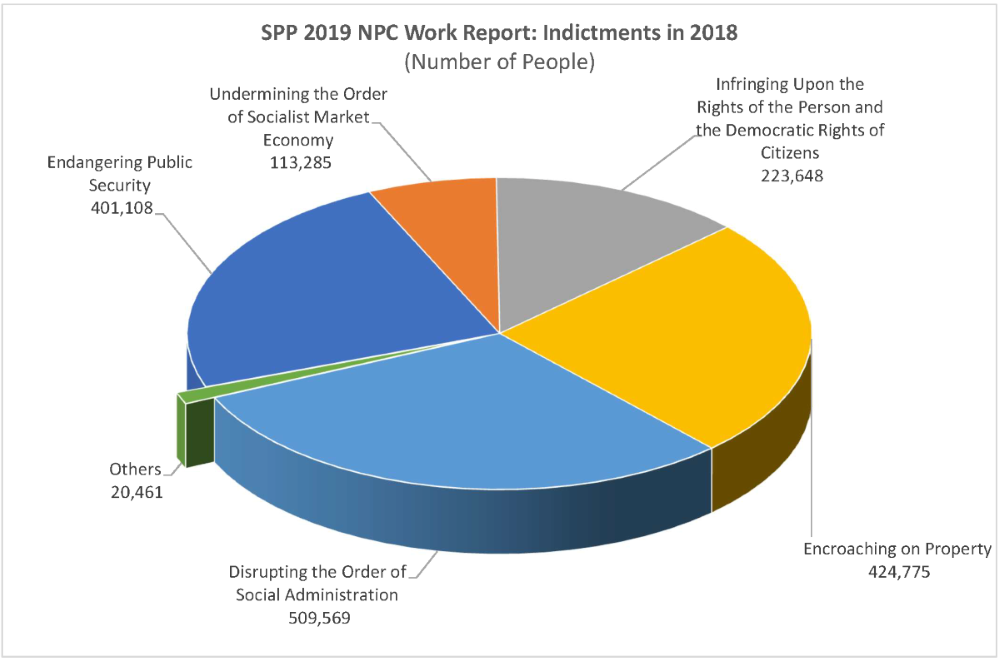
    This summer the U.S. Supreme Court ruled that the Trump administration’s travel ban is constitutional. In the same decision, the court finally overturned its ruling in United States v. Korematsu, a 1944 case holding it permissible for the military to detain Japanese Americans in internment camps as a preventative safety measure. Although the internment camps were widely condemned in the decades since that decision, the practice officially remained “good law” until this year. The fact that such a flagrant human rights abuse could be found legally permissible—and remain so for so long—offers an important lesson: Although a policy that directly or indirectly targets an ethnic group may be judged lawful in a contemporary court, it may still be overruled in the court of history.

    The Internment of Japanese Americans and the Korematsu Decision

    More than a half-century ago the U.S. and China united in war against a common enemy: Japan. After years of imperial expansion in Asia, Japan’s incursion into Manchuria led to the formal declaration of war with China in 1937. In 1941 Japan attacked Pearl Harbor, prompting the U.S. to enter the conflict as well. The next year President Roosevelt signed Executive Order 9066, which authorized the military to exclude people from geographic areas in the U.S. at their discretion.

    Following the executive order, more than 112,000 people in the U.S., primarily people of Japanese ancestry living on the west coast, were relocated from their homes and interned in concentration camps. At least 70,000 of these people were American citizens. Despite a lack of empirical evidence that Japanese-Americans posed a threat to national security, citizens were held against their will for years because of their ethnic background.

    Fred Korematsu, an American of Japanese descent who was born in Oakland, California, refused to obey the exclusion order. He was arrested, convicted of violating the order, and sent to a camp in Utah. Korematsu appealed the conviction, arguing that the exclusion order was discriminatory and violated his constitutional rights.

    In 1944 the U.S. Supreme Court considered Korematsu’s case. A divided court ultimately upheld the exclusion order and Korematsu’s conviction. Justice Hugo Black, writing for the majority, argued that while restrictions on the civil rights of a racial group are legally suspect, Roosevelt was justified in his order for reasons of national security. Black opined that “exclusion of those of Japanese origin was deemed necessary because of the presence of an unascertained number of disloyal members of the group.”

    Even at the time of the ruling, some members of the Court condemned the exclusion. In a published dissent, Justice Frank Murphy called the order a “legalization of racism.” In the decades following the end of World War II, the U.S. reached a similar national consensus that the internment was a mistake and an injustice. In 1976 President Gerald Ford issued a formal apology, stating that “[w]e now know what we should have known then—not only was that evacuation wrong but Japanese-Americans were and are loyal Americans.” President Jimmy Carter established a commission that debunked the argument that the internment was necessary for national security. Following the recommendations of the commission, the U.S. government subsequently made reparation payments to people who had been interned.

    But, despite the widespread recognition by both the public and the U.S. government that the internment was unjust, the Supreme Court’s 1944 Korematsu decision remained the unchallenged law of the land for more than 70 years.

    Supreme Court Decision Invokes America’s Past Missteps in Travel Ban Decision

    The Supreme Court reconsidered Korematsu this year in light of a contemporary presidential directive. Immediately after assuming office in 2017 President Donald Trump issued an executive order temporarily restricting entry to the U.S. for citizens from seven Muslim-majority countries. Although the Trump administration insisted that the restrictions were intended to prevent terrorist attacks, critics of the proposal pointed to numerous campaign statements by the president that seemed to indicate the order was intended to bar Muslims from entering the country.
    The travel restriction order immediately came under judicial scrutiny. Following a series of legal actions and modifications to the order, in April 2018 the U.S. Supreme Court heard opinions in the question of whether the ban violated the establishment clause of the First Amendment, which forms the basis of the constitutional right to freedom of religion. In June the court issued its decision. Justice John Roberts, writing for a narrow majority, <a href=”The Korematsu decision reminds us that while a discriminatory policy may enjoy a veneer of legality, that legality is ultimately no match for the judgment of history. The internment of Japanese Americans was wrong during WWII, despite Supreme Court reasoning to the contrary. China’s efforts to criminalize Muslim expressions of faith today are no less abhorrent, whether or not they find basis in statute. As Justice Murphy wrote in his dissent in Korematsu in 1944, “[s]uch exclusion goes over ‘the very brink of constitutional power,’ and falls into the ugly abyss of racism” Justice John Roberts, writing for a narrow majority, upheld the constitutionality of the Trump order, finding that the president has broad authority over issues of national security.

    In two dissents, four of the Supreme Court’s nine justices disagreed with the majority opinion upholding the travel ban. Justice Sonia Sotomayor, joined by Justice Ruth Bader Ginsburg, wrote that the majority “leaves undisturbed a policy first advertised openly and unequivocally as a ‘total and complete shutdown of Muslims entering the United States’ because the policy now masquerades behind a façade of national-security concerns.”

    The ghost of the court’s previous decision in Korematsu haunts both the majority decision and the dissent response to the travel restrictions. In the majority opinion Justice Roberts seemed to finally overturn the 1944 decision, stating that the contemporary debate “affords this Court the opportunity to express what is already obvious: Korematsu was gravely wrong on the day it was decided, has been overruled in the court of history, and—to be clear— ‘has no place in law under the constitution’.” Meanwhile, Justice Sotomayor wrote that while “[i]n the intervening since Korematsu, our Nation has done much to leave its sordid legacy behind,” in upholding the executive order and sanctioning a discriminatory policy in the name of national security, “the court replaces one ‘gravely wrong decision’ with another.”

    The debate over Korematsu shows that even in a country such as the U.S. with a hearty tradition of strong and independent courts, when it comes to questions of national security and minority groups, what is lawful is not always what is right.

    Korematsu and Lessons for China

    China ought to take note of the legacy of the Korematsu decision. International news outlets reported this year that China has detained as many as a million Chinese Muslims—particularly ethnic minority Uyghurs and Kazakhs in the western autonomous region of Xinjiang—out of national security concerns. In August the United Nations Committee on the Elimination of Racial Discrimination issued a report expressing concern that these Muslims were being “held incommunicado and often for long periods, without being charged or tried, under the pretext of countering terrorism and religious extremism” and are “forced to spend varying periods in political ‘re-education camps’ for even nonthreatening expressions of Muslim ethno-religious culture like daily greetings.” In November numerous nations raised concerns about China’s treatment of Muslims at the Universal Periodic Review of China’s human rights record at the United Nations. Dui Hua’s submission to the Review highlights the Foundation’s research uncovering discrimination against Muslims in Xinjiang.

    China disputes reports on its policies towards Muslims in Xinjiang. At the same time, the government passed a series of laws and regulations purportedly providing a legal basis for targeting Muslims in response to national security concerns. These new legal measures include a 2015 Counterterrorism Law that criminalized a broad range of conduct and expression, including clothes and symbols. And Xinjiang introduced regulations authorizing re-education facilities to combat “religious extremism.” Dui Hua found the first judgment involving the use of “educational placement,” a new coercive measure imposed on prisoners who are considered a danger to society even after completing their sentences for terrorism or extremism offenses. The Foundation also discovered judgments involving violators of the Islamic clothing ban in force throughout Xinjiang. Individuals can be sentenced for “illegal business activity” for selling clothing with the Islamic star and crescent symbol. In one case, a Muslim man, Gong Xiaojun, was sentenced to two years’ imprisonment for “disrupting official business” after arguing with cadres over his “abnormal” beard and a black robe his wife was wearing at home. The case indicates that Xinjiang authorities have extended the reach of the ban to peoples’ homes. Across the board, China appears to be using the veil of national security law to justify openly discriminatory practice.

    The Korematsu decision reminds us that while a discriminatory policy may enjoy a veneer of legality, that legality is ultimately no match for the judgment of history. The internment of Japanese Americans was wrong during WWII, despite Supreme Court reasoning to the contrary. China’s efforts to criminalize Muslim expressions of faith today are no less abhorrent, whether or not they find basis in statute. As Justice Murphy wrote in his dissent in Korematsu in 1944, “[s]uch exclusion goes over ‘the very brink of constitutional power,’ and falls into the ugly abyss of racism.”

  • “All Criminal Defendants to Have Lawyers”: Is Access to Defense Lawyers Enough in a System Designed Against Defendants? Part II

    Dr. Tan Qindong, detained for three months in Guangdong, found himself at the center of a major conflict of interest story in Chinese media. Image source: Caixin.
    In “‘All Criminal Defendants to Have Lawyers:’ Is Access to Defense Lawyers Enough in a System Designed Against Defendants? Part I,” Dui Hua analyzed shortcomings in the pilot projects including their failure to address the role of defense counsel in pre-trial contexts and the overemphasis on measuring success by coverage rather than quality of defense. In Part II, Dui Hua looks at a how a failure to embrace principles such as conflict of interest and clear commitment to public resources and accountability mechanisms are barriers that reformers must also consider.
     
    Conflict of Interest
     
    The presence of lawyers who are free from conflict of interest is key to a well-functioning criminal justice system. Recent cases illustrate that this principle has yet to be fully embraced in China’s criminal justice system. In January 2018, Guangzhou doctor Tan Qindong was arrested for writing online that in “his scientific opinion” the popular Chinese tonic liquor made by the Hongmao Liquor Company “appeared to be quack medicine, and a potential ‘poison’ for many retirees who drink it every day.” Hongmao is considered the backbone of the economy in Liangcheng County in Inner Mongolia, where the liquor is produced. Inner Mongolia police officers traveled more than 1,700 miles to arrest Tan in Guangzhou for his statements made online. The police later recommended that Tan’s wife, hire an attorney. Unbeknownst to her, the lawyer had previously served as Hongmao’s in-house legal counsel (falü guwen). The attorney advised Tan to admit guilt and to refrain from speaking to the media. Following heavy media attention and public outcry, Tan was released in April 2018. Professor Wang Yong of China University of Political Science and Law described the case as an overreach of power reflecting the influence of the Hongmao Liquor Company on the Inner Mongolia legal authorities.
    Yin Chuji was investigated in 2016 for handling cases as a defense attorney while also serving as a Hunan Taojiang Party official. Source: ifeng.
    In Hunan, Yin Chuji, was investigated in 2016 for simultaneously serving as a defense attorney at a Changsha law firm as well as a deputy party secretary of the Hunan Taojiang Political-Legal Commission. Yin reportedly handled more than eighty cases over a six-year period while holding both positions. In Beijing, Wang Hongguang, a former presiding Supreme People’s Court judge of the second civil division, was imprisoned in a case suggesting serious conflict of interest. The case was reported on WeChat. Wang allegedly accepted payments to influence the outcome of cases. In 2017, Beijing Dongcheng People’s Court found Wang guilty of accepting bribes. Wang’s appeal was rejected in 2018. As reformers seek to create a more robust system of defense counsels in China, efforts must also be made to address corruption and bias in the court room.
    Funding for Defense Counsels
     
    Another shortcoming of the pilot projects is adequate funding – critical for defense counsels who are expected to perform an array of functions. As a Congressional Executive Commission on China report points out, legal aid centers have “insufficient funding and eligibility restrictions continue to seriously limit accessibility to legal aid.” Local officials in Bao’an and Henan have acknowledged the varying duties defense counsels must perform, from obtaining case files and drafting briefs to applying for bail and other changes to coercive measures. However, the national regulations on the criminal defense pilot projects do not specify which government actors or units are responsible for ensuring the project’s funding.
    Media outlets have stated that in some cases subsidies are provided for defendants who cannot afford to hire their own attorneys. The pilot project regulations on funding are complex, leaving a series of bureaucratic loopholes for local officials looking to cut funding for criminal defense counsel. For example, Article 9 states that defendants should bear the costs of a publicly funded defense lawyer and that any cost sharing can be determined by provincial level judicial-administrative branches based on the regions local economic development, average residents’ income, and case-handling subsidy allowance standards. Article 7 and 8 states that the responsibility for providing funding for defense attorneys in criminal cases is shared among local jurisdictions, with unspecified “areas with means” (you tiaojian de difang) relied upon to voluntarily shoulder the cost burden in different ways, including establishing a criminal defense lawyer pool to develop the criminal defense counsel pilot projects and launching government procurement of legal aid services. A clear commitment to public resources would bolster the capacity of defense counsels to perform these specialized tasks.
    Sources of Accountability
     
    Another troubling pattern has emerged in the implementation of the pilot projects – it is unclear which bodies of government are responsible for the projects. Different municipalities and provinces seem to have their own opinion on which bodies are responsible for project implementation. In some projects, party units are entrusted with carrying out the projects, even though the national regulations on the pilot projects were launched by the Ministry of Justice. In some projects, the implementation is carried out by government offices or by provincial justice bureaus and courts. In Hebei province, which was not among the pilot project jurisdictions initially selected, neither the courts nor justice bureau has been involved in the project implementation. Instead it is the party or the government office that is overseeing the implementation. In Henan province, among the first to launch its pilot project in 2016, the provincial justice ministry is the project implementer “throughout the province and in selected areas,” with plans to expand the project to 91 county-level localities.
    The presence of a justice ministry bureau as the project implementer does not automatically mean the projects are better informed. For example, in the E’zhou prefecture of Hubei province, the pilot project was subsumed under a larger project of combating organized crime, with only a cursory mention of the criminal defense counsel pilot project.
    Meetings on “Full Coverage” of Defense Counsel for All Criminal Defendants in China
    JurisdictionBody Managing Pilot ProjectsReported DateOfficial Pilot Project location Under Article 26 Regulations?Status of Defense Counsel Pilot Projects
    Bao’an District, Shenzhen, GuangdongBao’an courts and Bao’an Justice BureauJune 2018YesAchievement of “complete criminal defense coverage” in Bao’an District
    Guangzhou, GuangdongGuangzhou courts and Guangzhou Justice BureauMay 2018YesImplementation of local regulations
    Henan provinceHenan Justice BureauJune 2018YesImplementation of local regulations
    Wujin District, Changzhou JiangsuWujin Court and Wujin Justice BureauMay 2018NoComplete criminal defense coverage underway
    Hebei provinceHenan Party General Office and Henan Government General OfficeJune 2018NoCriminal defense reform is part of a broader anti-crime agenda
    E’zhou, Hubei provinceE’zhou Justice BureauMay 2018NoCity Ministry of Justice unit advances criminal defense reform as part of a broader anti-crime agenda
    As these defense counsel pilot projects take shape across the country, precise guidelines on funding and identifying responsible actors are crucial. To understand the future implications of not doing so, the Chinese government’s needs to look no further than what has happened in the last fifty years in the U.S. In the 1963 U.S. Supreme Court decision Gideon v. Wainwright, the court unanimously announced that the Sixth Amendment of the Constitution “guarantees to every criminal defendant in a felony trial the right to a lawyer.” As Justice Hugo Black wrote, “any person hauled into court, who is too poor to hire a lawyer, cannot be assured a fair trial unless counsel is provided to him.”
    Fifty years later, much of Gideon’s promise remains a myth. The resources necessary to maintain high standards for the pro bono defense bar have been largely gutted; states are incentivized to cut funding and have many tools at their disposal to do so. Remuneration for public defenders has been capped in some states; in others, defendants must jump through various bureaucratic hoops to see a lawyer. In many jurisdictions, unqualified defense attorneys are the norm. To avoid the pitfalls of Gideon’s promise, Chinese authorities would benefit from making a long-term investment in their defense counsels.
    The defense counsel pilot projects are a step towards enhancing the protection of human rights in China. It is encouraging to see that provinces beyond the eight localities originally selected are also carrying out their own versions of the pilot projects, including in Jiangsu, Hubei, and Hebei provinces. However, there are obstacles that still need to be addressed, including providing better pre-trial defense, ensuring defense lawyers are free from conflicts of interest, and clarifying the funding sources and accountability mechanisms for defense counsels. As localities move ahead with expanding defense counsel appointments in criminal cases, courts and local units of the Justice Ministry should take the lead in implementing these reforms as the state institutions responsible for processing criminal cases. Limiting the role of party officials in the pilot project would safeguard defendants and minimize bias in court.