Tag: rule of law

  • Curious Timing: SPC Death Penalty Reviews Posted after Universal Periodic Review (Part I)

    Curious Timing: SPC Death Penalty Reviews Posted after Universal Periodic Review (Part I)

    This Human Rights Journal entry is the first in a two-part series that explores the Supreme People’s Court’s recent disclosures of death penalty decisions made shortly after its human rights review in Geneva in January 2024. This post, Part I, looks at the demographics of those sentenced to death as well as trends in types of crime and decision review times. Part II explores reasons for disapprovals, the presence of counsel, and inconsistencies in the disclosures.  

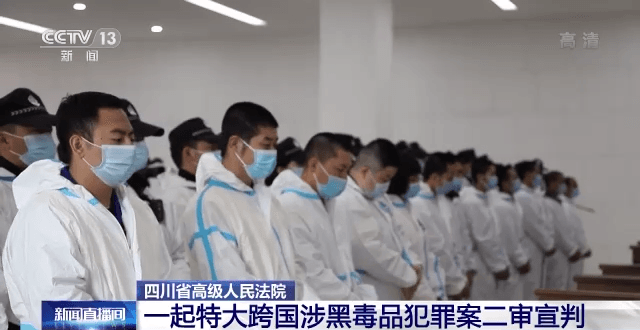
    The Sichuan High People’s Court upheld the judgments for a case of organized crime group and drug trafficking with 12 defendants in June 2022. Three principal defendants were sentenced to death. Image credit: Sichuan High People’s Court, CCTV13

    Three years after a large number of judgments and judicial decisions involving the use of the death penalty were removed from China Judgements Online (CJO) in 2021, the Supreme People’s Court (SPC) added a new batch of death penalty review decisions in February 2024. The posting of these death penalty reviews occurred one month after China’s human rights record was reviewed by the United Nations Human Rights Council’s Universal Periodic Review (UPR) in January 2024.

    CJO & Review Decisions

    The posting of judgments and judicial decisions on CJO began in 2013. The effort to boost transparency was applauded by legal scholars and professionals inside and outside of the country. CJO judgments and decisions were not confined to ordinary civil and criminal cases, but also cases considered to be sensitive. Hundreds of endangering state security (ESS) cases and thousands of cult-related cases were made available on CJO.

    Significant media attention from Western countries and NGOs like Dui Hua may have contributed to the Chinese government’s decision to purge documents related to ESS and cult cases in July 2021. Around the same time, CJO also removed SPC review decisions on the application of the death penalty.
    Death penalty review decisions re-surfaced on CJO in 2022. In July 2022, Dui Hua found that decisions taken offline a year ago had been reuploaded to CJO. However, CJO did not post new information until the submission of China’s report at the country’s fourth UPR in January 2024. The new information came from a batch of 86 newly uploaded review decisions issued from 2022 to 2023 concerning 93 individuals. Dui Hua also found that decisions originally posted in July 2022 had been reposted, with CJO showing December 1, 2022 as the new posting date.
    At the time of publication, CJO has not published any new death penalty reviews after March 2024. Also noteworthy is that seven months into 2024 no review decisions issued within the year 2024 have been published. This article reviews the batch of death penalty documents posted in February 2024. While the documents present some insights into an increasingly opaque system, there are omissions and inconsistencies that raise questions about the timing of the documents’ release.
    Source: CJO
    China’s trial system follows a two-hearing system in the trial process. The SPC’s decisions on the first- and second-hearing cases are final and must be enforced once promulgated. Cases that may result in a death penalty are first tried by an intermediate people’s court, and appellate trials are conducted by the relevant high people’s court. If the sentence is upheld, the judgment is submitted to the SPC for review. In death penalty cases, appeal is not an automatic process. In the batch of judgments examined in this post, all but one of the 93 convicted filed for appeal. All appeals were rejected by the high courts before they were submitted to the SPC for final review.
     
    Demographics of Those Sentenced to Death 
    Individuals in death penalty cases are mostly male and of Han ethnicity (see below). Notably absent from the newly posted death penalty reviews are cases involving Uyghurs, who are often accused of terrorism and ESS crimes, both of which carry the maximum penalty of death.
    Another group for whom no information was given is foreign nationals, despite such executions being reported during the period. For example, in 2023, the Chinese government executed a South Korean citizen who was convicted of drug trafficking.
    Table 1. Sex of those sentenced
    Table 2. Ethnicity of those sentenced
    The majority of individuals sentenced to death are aged between 30 to 59.
    Table 3. Age of those sentenced
    While the Criminal Law stipulates lighter punishments for elderly offenders, two individuals over 70 years old were given death sentences. The SPC approved the sentence for a man from Changchun who committed robbery. That man was 69 years old at the time of the crime, and the SPC took 268 days to complete the review.
    The SPC disapproved the death sentence for another man who murdered his neighbor on the grounds that the crime started as a civil dispute between two neighbors. Additionally, the offender surrendered to police. The case was sent back for retrial at the Jilin High People’s Court. The offender, an ethnic Mongolian, was 68 years old at the time of the crime. The SPC took 798 days to complete the review.
    In all, the SPC approved 77 death sentences and disapproved 16 of them.
    Crime
    The death penalty in China is typically invoked when the offender commits a violent crime resulting in the death of the victim. In the new batch of decisions, murder accounted for more than half of those sentenced while robbery made up a fifth of the documents. Drug-related crimes—trafficking, selling, transporting, and manufacturing—accounted for another fifth of those sentenced.
    When an individual was convicted of multiple crimes, the court typically applied the sentence of death to the crime considered to be the most severe. Life or fixed-term sentences were applied to the other crimes.

    Table 4. Crime type

    Dui Hua keeps track of the number of executions in China. The crimes committed in death penalty cases are similar to what we see in CJO. Of the 153 executions recorded by Dui Hua in 2023, 94 were of individuals convicted of murder, 13 of robbery, and 29 of drug crimes. In 2022, Dui Hua recorded 120 executions: 61 for murder, 11 for robbery, and 42 for drug crimes.
    Review Time 
    Review time refers to the number of days between the final high court trial and the SPC review decision. In instances where no appeal is filed, the first-instance trial is considered the final trial.
    In May 2020, Dui Hua examined a sample of 261 review decisions issued between 2015 and 2019 and made observations on the length of time between trial and the review decision. The SPC took an average of 190 days to issue a decision after the final trial by the court of second instance, with a median of 169 days. The longest review time was 573 days while the shortest was 20 days.
    In the newly published death penalty reviews, the SPC took an average of 461 days to issue the decisions, with a median of 390 days. The lengthiest review concerns a drug manufacturing case with five offenders. All of them were first-time offenders who manufactured hundreds of kilos of methamphetamine. The first-instance trial was concluded in Changde, Hunan, on January 25, 2019. The high court upheld the sentences on December 27, 2019. All five had been convicted of manufacturing drugs and had been sentenced to death by the lower courts. The SPC completed its review 1,079 days (almost three years) on November 28, 2022. In its decision, the SPC approved the death sentences for three of them and disapproved the sentences for two. One of the disapproved sentences was revised to death with two-year reprieve and the other was revised to a life sentence.
    The shortest SPC review took 93 days. The case involved drug trafficking, in which the convict was a recidivist who has been sentenced twice to short prison sentences for selling drugs. In his latest trial, Mr. Xiao was convicted of organizing and funding the trafficking of a large quantity of drugs obtained in Yunnan. He was sentenced to death by an intermediate court at the first-instance trial on February 15, 2022. The sentence was upheld by the high court on July 28, 2022. On October 29 of the same year, the SPC completed the review and approved the death sentence.
    Table 5. Review time
    Given the small (and selective) sample size, it is difficult to conclude with certainty that longer review times would necessarily result in disapproval. That said, the probability of disapproval rises when the Court takes longer to review. On the surface, the SPC appears to be more judicious. More reviews took a year or longer to complete compared to those completed within nine months.  

    Read Part II

  • New Rules on Religion in Xinjiang: Comparing State Council and Provincial Congress Regulations

    New Rules on Religion in Xinjiang: Comparing State Council and Provincial Congress Regulations

    The entrance to Ihlas Supermarket in the Kashgar city center in August 2018. Various banners and posters bearing political slogans in Mandarin and Uyghur, with slogans promoting speaking Mandarin and ethnic unity. Image credit: Kubilayaxun / CC BY-SA 4.0

    Near the end of 2023, the Xinjiang Uyghur Autonomous Region (XUAR) issued new regulations on administrating religious affairs in the region. The restive province remains a source of international controversy — Western nations have decried widespread surveillance and religious repression while China has refuted these as politically motivated criticisms and pointed to its support from Muslim-majority nations to validate its policies. The Office of the UN High Commissioner for Human Rights (OHCHR) 2022 report concluded that “serious human rights violations” that may constitute crimes against humanity have been committed in the region, and the new regulations passed more than a year after that report and China’s rejection of its findings.

    The fourteenth XUAR People’s Congress passed the Religious Affairs Regulation on December 22, 2023, at its seventh session. The new regulations will take effect on February 1, 2024, a week after its human rights record was examined in the United Nations Universal Periodic Review in Geneva. Xinjiang was notably a recurring issue during this review, which took place on January 23, 2024.

    The regional regulations are based in large part on the 2018 National Religious Affairs Regulation issued by the State Council. The Xinjiang regulations introduce several provisions “in consideration of [the] actual circumstances in the autonomous region.” (XJ Article 1)

    Using translations done by the China Law Translation, Dui Hua has put together a side-by-side comparison (link) of the XUAR Religious Affairs Regulations (2024), hereafter referred to as XJ regulations, and the State Council Religious Affairs Regulations (2018), hereafter SC regulations.

    In the XJ regulations, some provisions from the SC regulations are re-arranged and combined. They also omit details of some provisions included in the SC version by simply referring to them as “in accordance with the national laws, regulations, and rules.”

    Such regulations and rules include the Measures for Administration of Religious Venues introduced by the State Religious Affairs Bureau, which went into effect on September 1, 2023. Some of the notable differences between the XJ and SC versions are highlighted below.

    Battling Against Endangering State Security, Extremism, & Ethnic Hatred 

    The stated goal of the XJ regulations is to protect citizens’ freedom of religious worship and to maintain religious and social harmony. Both the XJ regulations and the SC regulations highlight the responsibility of religious groups and believers to fight criminal activities carried out in the name of religion.

    Both regulations reference the need to battle extremism (SC Article 3. XJ Article 4) and activities that might endanger state security (SC Article 4, 63, 64. XJ Article 5), especially splittism (SC Article 4, 63, 73(1). XJ Article 5, 49(2)). While both versions strongly emphasize the importance of promoting and maintaining “ethnic harmony” the XJ regulations also reference “inciting ethnic hatred” in its text (XJ Article 5, 49(2)), which is not mentioned in the SC text.

    XJ expands on the emphasis against religious extremism and includes specific behavior in Article 47:

    • …must not use appearances, apparel, signs, symbols, and so forth to play up religious fanaticism;
    • [must] not coerce or force others to wear religious extremist clothing or wear religious extremist symbols or signs.
    Publishing & Personal Consumption of Religious Materials 
    While SC Article 45 permits religious groups, religious schools, and churches and temples to print materials for internal use (“in accordance with relevant laws on publishing”), XJ Article 48 requires such publications to be reviewed and approved by the regional religious affairs bureau. A printing permit issued by the regional news and press department is required and distribution can only be within the approved scope.
    De-extremization propaganda paintings. Image credit People.com.cn
    SC Article 45 stipulates religious materials cannot contain content:
    1. that undermines harmonious co-existence between religious and non-religious citizens;
    2. that undermines the harmony between different religions or within a religion;
    3. that discriminates against or insults religious or non-religious citizens;
    4. that advocates religious extremism;
    5. that contravenes the principle of religions’ independence and self-governance.
    XJ Article 49 expands on this by prohibiting five more types of illegal content:
    (1) that undermines national unity, social stability, economic development, and scientific and technological progress;
    (2) that incites ethnic hatred, ethnic discrimination, and undermines ethnic unity;
    (3) that promotes ethnic separatism, religious extremism, and violent terrorism;
    (7) that endangers social morality or the traditional culture of China; and
    (8) Other content prohibited by laws, regulations, and state provisions.
    XJ Article 50 further restricts individual consumption of contents that are deemed illegal (as defined by Article 49) on the internet or other digital formats, including mobile phones and portable data storage. The article adds that “Organizations and individuals must not illegally listen to, watch, or transmit overseas religious radio and television programs.”
    However, the XJ version omits SC Article 46 which regulates importing religious materials from overseas for personal use.
    A photo of the Urumqi bazaar taken in 2005. Image credit: 29cm via Wikimedia Commons / CC BY-SA 2.0
    Religious School Appointments & Sinicization 
    The XJ regulations largely follow the SC regulations in “Chapter II: Religious Groups” (on rules for personnel appointments) and “Chapter III: Religious Schools” (on religious training), but it adds the requirement that religious schools and religious training should contribute to social harmony and Chinese culture by incorporating “Chinese characteristics.”
    XJ Article 11(3) stipulates that research on religious culture and texts should:
    “… thoroughly uncover content in religious teachings and rules that are conducive to social harmony, modern progress, and health and civilization; and make interpretations of religious teachings and rules in line with contemporary China’s requirements for development and improvement, and in line with the outstanding traditional Chinese culture.”
    XJ Article 14 also asks religious schools to:
    “…follow the path of school operations with Chinese characteristics, running the school in accordance with law, advancing educational and teaching reforms, and increasing the quality of school operations.”

    Sinicization reappears in “Chapter IV: Religious Activity Sites” which regulates building, renovation, and expansion of religious sites and venues. XJ Article 26 adds that sites that are newly built or renovated, expanded, or rebuilt shall “reflect Chinese characteristics and style in areas such as their architecture, sculptures, paintings, and decorations.”

    Conduct of Religious Professionals 

    While the SC regulations includes brief, generalized provisions regulating the conduct of religious professionals, including the requirement to follow relevant laws and rules and to protect their rites, the XJ regulations call on personnel to also follow orthodoxy and anti-extremism measures.

    XJ Article 38 further defines specific acts that are not permitted, including:

    1. Making “edicts” [DH: Idhn—permission, promise], appointing religious presiding officiants, and restoring or indirectly restoring feudal privileges;
    2. Accepting canonization, appointments, or honorary titles from overseas organizations or individuals;
    3. Accepting instruction on engaging in religious and educational activities from overseas organizations or individuals;
    4. Setting up private meeting places and establishing illegal religious organizations;
    5. Conducting unauthorized “living Buddha reincarnation” activities.

    Of these, (1) is a common practice among Chinese Hui Muslims, and (5) is specific to Tibetan Buddhism.

    A roadside sign in Turpan, Xinjiang Uygur Autonomous Region, written in both Uyghur and Chinese with the phrase “I liken the party to my mother.” Image credit: Kubilayaxun / CC BY-SA 4.0 

    An Expansion of Past Regulations 

    It is important to note that the XJ regulations are an expansion of the SC regulations. On the surface, it appears that the XJ regulations include fewer mentions of the phrase “extremism.” However, the regional version refers in places to being “in accordance with the relevant national laws and regulations,” which is a clear reference to the SC regulations. The regional regulations also made combating splittism and extremism a top priority, including allocating these responsibilities to religious schools and religious professionals. Additionally, the XUAR previously passed de-extremification regulations in 2017.

    The XJ regulations build on the SC ones to further dictate how individuals and institutions can engage with state-sanctioned religions. Beyond the restrictions and obligations outlined above, both regulations also place restrictions on adhering to specific pillars of Islam. For example, going abroad for the Hajj is permitted only when organized by a national Islamic group (in this case the Islamic Association of China), and both regulations include rules against accepting overseas funds (SC Article 57; XJ Article 45) with a few exceptions, which may impinge on the third pillar of Islam known as Zakat, or almsgiving).

    Similarly, other regions like Qinghai and the Tibet Autonomous Region have their own religious affairs regulations. Qinghai’s went into effect on October 1, 2021 and Tibet’s a month later on November 1, 2021. The Tibetan regulations also include some provisions specific to Tibetan Buddhist tradition and beliefs, such as reincarnation. The Chinese government’s insistence on controlling all aspects of religious practice, from what materials adherents can possess to transnational processes, reflect how national security and social stability concerns drive policies that demand adherence to the state above all.

    Dui Hua has compiled a side-by-side comparison of the XJ and SC regulations and provided comments where appropriate: Comparison of XJ and SC Regulations

  • Public Sentencing Rallies during the Pandemic

    Public Sentencing Rallies during the Pandemic

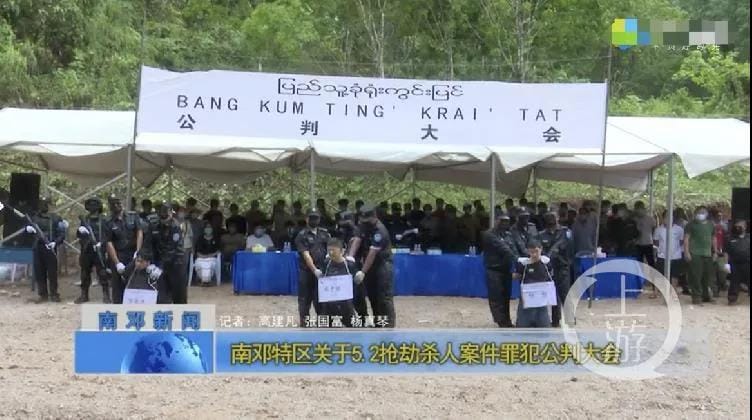
    Three Chinese nationals were executed in a public sentencing rally in Wa State, a Chinese-speaking region in Northern Myanmar on May 14, 2020. Image credit: The Paper 
    In May 2020, a video clip featuring the execution of three men in a public sentencing rally in Wa State of Myanmar became a trending topic on domestic social media. The three executed men were Chinese nationals who had reportedly robbed a gold shop and murdered the owner. While calling on the public to obey laws and customs overseas, Chinese news media sources appear to have expressed shock that the shaming ritual was replicated in Myanmar even though it has “long vanished in China.”
    Historically, public sentencing rallies were widely used in and outside China to crush political opponents and consolidate the power of the ruling class. In the first three decades of the People’s Republic of China, mass rallies served to educate the public about the errors of class enemies, including Kuomintang members and landlords.
    While there are signs that these rallies have fallen into disuse in recent years, they continue to take place in some localities where they target drug offenders and members of organized crime. In these rallies, which continue to serve as propaganda to “frighten criminals, educate people, and maintain social stability,” judges hand out mass sentencing and mete out harsh punishments, including death sentences. Because of the nationwide lockdowns and stringent social distancing measures accompanying China’s zero-COVID policy in the two full years since 2020, the rallies that are typically held in large public venues like plazas, stadiums, and auditoriums in front of crowds numbering in the thousands seemingly vanished from public sight.
    However, Chinese government sources continued to report on small rallies that have been convened. Many of these rallies appeared no different from regular court trials when they were held indoors or virtually with no or limited public attendance. Regardless of the forms and scale, Chinese courts continue to retain the campaign-style rallies which legal experts have decried for years, arguing that the rallies disregard the presumption of innocence and mainly serve to shame prisoners.
    Indoor & Virtual Rallies 
     
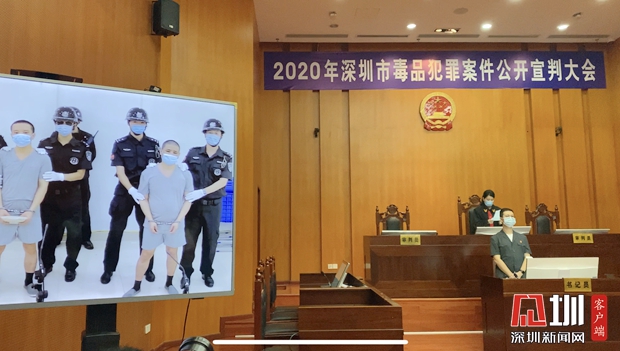
    A group of 14 drug traffickers were sentenced in what a Shenzhen court called a “public sentencing rally” on June 23, 2020. Image credit: Shenzhen News Network website
    Public sentencing rallies have long been integral to showcase the government’s efforts to combat drug crimes on the International Day against Drugs and Illicit Trafficking, observed annually on June 26. The date is of special significance in China as it serves to commemorate Lin Zexu, officially lauded as an anti-opium hero for dismantling the opium trade in Guangdong before the First Opium War in 1839.
    China continued to feature a series of high-profile public sentencing rallies on the International Day against Drugs and Illicit Trafficking amid the outbreak of the pandemic. In Shenzhen, a rally was held on June 23, 2020 to announce the death sentences of two traffickers of methamphetamine. The sentences had previously been determined by the Shenzhen Intermediate People’s Court and subsequently approved by the Supreme People’s Court. On the same day, the intermediate court also publicly sentenced ten people involved in a drug case.
    Unlike a widely reported rally in Lufeng County, Guangdong, where two courts sentenced 10 criminals to death in front of tens of thousands of people including children on December 16, 2017, the 2020 Shenzhen rally was not attended by any public spectators due to the stringent social distancing measures and anti-pandemic curbs at the time. The rally took place instead in a courtroom where only a judge and a clerk could be seen, according to an online video published on the Shenzhen News Network website. None of the defendants appeared in front of the judge to receive judgments. They were seen in a synchronous video in Shenzhen No.2 Detention Center wearing face masks, handcuffed, and escorted by security guards while the judge announced the death sentences.
    The duo was executed on the same day immediately after the rally ended. In the same rally, the judge announced that another drug trafficker was sentenced to life imprisonment and that ten other defendants were convicted of manufacturing, selling and transporting drugs, and illegal possession of firearms.
    Courts outside of Guangdong have also been eager to convene sentencing rallies in campaigns against drug abuse on or before the International Day Against Drug Abuse and Illicit Trafficking. In 2021, the Dandong Intermediate People’s Court of Liaoning Province held a rally in a courtroom where 13 handcuffed drug offenders stood in front of the judge in a courtroom to receive prison sentences ranging from nine years’ imprisonment to death with a two-year reprieve. A post published on the Liaoning High Court website claimed that the rally, which was attended by less than two dozen spectators, manifested “a high-pressure crackdown on drug crimes, effectively suppressed the arrogance of drug criminals, and contributed to the construction of a harmonious and safe Dandong.”
    Four defendants received judgments in a public sentencing rally convened by the Pingnan County People’s Court of Guangxi Zhuang Autonomous Region as part of the campaign to combat environmental pollution. Photo image: Pingnan County People’s Court website
    It must be noted that sentencing rallies are not exclusively used against drug traffickers. In May 2021, a local court in Guangxi convened a virtual rally for four people convicted of illegally disposing of hazardous substances. As with the 2020 Shenzhen rally, the defendants received their judgments via video while handcuffed in a detention center. This rally was held as part of the open day organized by the Pingnan County People’s Court to educate the public about environmental protection. It was sparsely attended by only 12 people from the local community, according to information provided by the court website.
    200-Spectator Rally in Yancheng, Jiangsu 
    Twenty-two criminal suspects were hauled into a sentencing rally attended by over 200 people in Yancheng, Jiangsu on October 28, 2020. Image credit: China Central Television 
    Despite the onerous zero-COVID measures that were in full swing in 2020, public attendees were occasionally allowed to take part in sentencing rallies of a smaller scale. The Yancheng Intermediate People’s Court in Jiangsu Province invited over 200 people from the National People’s Congress, members of the Chinese People’s Political Consultative Conference, journalists, village cadres, and resident representatives to the rally in Longgang Township on December 28, 2020. The 22 defendants manufactured banned substances including hydroxylamine hydrochloride, chlorophenyl, hydrochloric acid, and toluene. They could be seen wearing white hazmat suits with face masks while receiving judgments in front of the judge and the spectators.
    Of the 22 defendants, three were sentenced to death with a two-year reprieve. Each of them was accused of selling methamphetamine weighing 4,000 to 6,000 grams (about 8.82 to 13.23 pounds). The other defendants received prison sentences from 22 months to 11 years for manufacturing hydroxylamine hydrochloride totaling 1,106 grams (about 2.44 pounds).
    Student Spectators in Hainan 
     
    (Top to bottom) Dozens of Hainan school students, all seen wearing uniforms and face masks, sat in rows in a public sentencing rally held at the Danzhou District People’s Court on April 24, 2020. Image credit: The Paper
    As public sentencing rallies serve as sites of expressive punishment, teenage students are also required to attend such events as part of their legal education (法制教育). Images published by the Hainan court website show dozens of students in school uniforms sitting in rows to watch nine drug defendants receive prison sentences from ten months to 15 years’ imprisonment on April 24, 2020. The defendants were accused of selling large quantities of ecstasy and other counterfeit drugs.
    It was not the first time young students were required to watch public sentencing rallies. In June 2018, two drug dealers received death sentences in Haikou in front of hundreds of people, many of whom were students wearing school uniforms. The duo was executed following the rally. The executions took place elsewhere at a designated venue, so the students did not witness the actual executions.
    Outdoor Rally in Guangxi against Gangland Crimes 
    Traditional sentencing rallies held in large outdoor public spaces did not entirely vanish during the pandemic. On June 28, 2020, an outdoor rally was held in Donglan County, Guangxi, to publicly arrest and sentence gangland criminals. The rally was not held in a courtroom but in a sports stadium. Available sources did not state how many spectators attended, but the image below shows rows of police officers alongside dozens of public spectators. At the back of the crowds, criminal suspects and defendants stood in a row in front of the judge’s podium. They could be seen wearing the typical white hazmat protective suits and facing the group of public spectators.
    An outdoor rally in Donglan County, Guangxi, on June 28, 2020, during which alleged criminals were publicly arrested and sentenced. Image credit: Wei Hao / Weixin 
    Efforts to ban public executions 
     
    China’s decision to ban public executions dates back to 1979, while “perp walks” for sex workers were banned more recently in 2010. The Supreme People’s Court, Supreme People’s Procuratorate, Ministry of Public Security, and Ministry of Justice jointly issued notices in 1984 and 1986 prohibiting public parades before executions, saying that such events provided opportunities for overseas counterrevolutionary propaganda to “slander” China.
    Public executions (as well as the broader use of capital punishment) were thought to be one of many human rights-related objections to China’s bid to host the 2008 Summer Olympics in Beijing, a point Dui Hua executive director John Kamm recalled in a 2010 Washington Post op-ed. In the run-up to the opening of the Games, another joint opinion was issued in March 2007 to prohibit public parades before executions as well as to enforce the rights of the executed, including last visitation rights for the family. Criminal Procedure Law also stipulates that while the public should be notified of executions, the execution itself should not be held in public.
     
    Going Forward 
    Over the years, legal experts have spoken out against public arrests and sentencings, branding them “campaign-style justice” that emphasize swift and severe punishment. However, the general public tends to empathize with the need to deter crimes by publicly shaming the offenders. In its seventh annual report, the Collaborative Innovation Center of Judicial Civilization released its latest data collected over 24,354 surveys across 31 provinces, municipalities, and autonomous regions. It finds that over 62.5 percent of respondents expressed support for public arrest and sentencing rallies in 2018. The following year, the approval rate declined to 55.5 percent but bounced back to 61.3 percent in 2020-2021. Of them, 19.1 percent in 2020-2021 expressed strong support for retaining the practice, lower than 23.7 percent in 2018 but higher than the 15.8 percent in 2019.
    A public trial is intended to boost transparency by informing the public about who the accusers are, the nature of the charges, and the evidence against the accused. It is fundamentally different from a public sentencing rally — a form of show trial where the judgment and sentence of a criminal case already determined in court is publicly announced in front of crowds of public spectators. Such rallies serve a political agenda to demonstrate the government’s determination to fight crimes, blame and shame criminals, and educate the public about their alleged crimes. In response to a controversial sentencing rally held in Langzhong, Sichuan, in 2016, Professor Yu Qilin of China University of Political Science and Law remarked that trial fairness and justice is maintained through procedure transparency in the courtroom, not public spectacle.
    The use of public sentencing rallies to shame the accused appears to be on a downward trend in recent years thanks to China’s strict adherence to the hard-line zero-COVID policy. A decade ago, people accused of endangering state security, terrorism, and religious extremism in Xinjiang, as well as well as “wild imams” who preached illegally in the restive region, were condemned in front of crowds of thousands. At the very least, the rallies discussed in this post were downsized and used in a narrower scope to target drug traffickers and members of organized crime. Additionally, individuals shamed in the rallies were no longer seen wearing confessional placards or driven through the streets in open trucks.
    The practice of public shaming never really vanished even when strict pandemic measures were in force. On December 28, 2021, four men accused of smuggling people across an international border were publicly shamed in Guangxi. They were flanked by police officers and paraded through the streets of Jingxi City. Although authorities claimed that the parade served as a warning of what could happen if people violated the pandemic curbs, a Beijing News editorial remarked that “the measure seriously violates the spirit of the rule of law and cannot be allowed to happen again.” With the lifting of pandemic curbs following nationwide protests in late 2022, it remains to be seen whether large-scale sentencing rallies will reemerge.
  • Patriotic Acts as Cause for Non-Prosecution

    Patriotic Acts as Cause for Non-Prosecution

    Changle government building. Image credit: Google images
    Chinese prosecutors have the discretion not to indict an accused when the evidence is insufficient or when his/her perceived threat to society is minimal. However, these are not necessarily the most important reasons. Dui Hua’s research found that criminal suspects deemed patriotic can also avoid prosecution in mainland China.
    China’s long-time conviction rate of over 99.9 percent often overshadows the judicial progress it has made in other areas. While the acquittal rate dipped to its lowest point at 0.052 percent in 2021, Chinese prosecutors have approved fewer arrests and indicted fewer suspects in recent years. Statistics released by the Supreme People’s Procuratorate in March 2022 indicated that the country’s non-prosecution rate increased from 9.9 percent in 2019 to 16.6 percent in 2021.
    Non-prosecution embodies the lenient aspect of China’s largely punitive criminal justice system. Among the major beneficiaries of non-prosecution are juvenile delinquents, the elderly, severely ill, first-time offenders, and pregnant and breastfeeding women. Prosecutors can also exercise discretion and choose to not indict suspects if they have made “major contributions to the state or society” or performed “meritorious deeds.” Existing laws and regulations leave undefined what acts are considered “major contributions,” but the following case Dui Hua discovered concerning a Hong Kong “patriot” provides insight into this term.
    On October 21, 2019, the Public Security Bureau of Changle District, Fuzhou, decided not to prosecute a Hong Kong resident surnamed Chan. The bureau carried out criminal detention in December 2013 and listed Chan as a wanted criminal online on June 18, 2014. Chan was suspected of “organizing an illegal border crossing,” for allegedly forging identity documents for a group of 11 Chinese nationals in their applications for tourist visas at the US Consulate in Guangzhou. Their application was unsuccessful because the documents were found to be counterfeit by the consulate staffers.
    Chan flew back to Fuzhou from Hong Kong and turned himself in on October 14, 2019, six years after his alleged offense took place. That same day, Chan was released on bail pending further investigation. About a week later, the procuratorate issued a non-prosecution decision, citing the various patriotic acts he had performed in Hong Kong.
    Fuzhou Changle International Airport. Chan flew here from Hong Kong before turning himself in, six years after his alleged crime. Image credit: Fuzhou Changle International Airport
    First among these acts, Chan served as the then-incumbent executive vice president of the Hong Kong Family Union (New Territories West Branch), a pro-China non-governmental organization which helps mainland residents to emigrate to Hong Kong. During his tenure, Chan allegedly organized and participated in multiple activities to promote love for the motherland and Hong Kong. Chan was given credit for carrying out stability maintenance and secret investigation work for the Hong Kong Liaison Office during “Occupy Central,” the civil disobedience movement which paralyzed parts of Hong Kong for 79 days in late 2014.
    On October 13, 2014, protestors camp out in the streets of Hong Kong as part of the Occupy Central movement. Image credit: L-BBE / CC BY 3.0
    Furthermore, Chan was commended for performing security work for the official celebrations marking the 20th anniversary of Hong Kong’s handover to Chinese rule in 2017, the only year Xi Jinping attended the handover celebrations in the former British colony as Chinese president, as of this writing. More notably, Chan was cited for his “fearless” and “tenacious struggle” against the “radical opposition forces” during the recent 2019 protests, as well as his unified actions in supporting the Hong Kong government. The decision not to prosecute Chan came as Hong Kong protesters fought citywide pitched battles with police in an eruption of public anger against an already suspended extradition bill that critics saw as a fundamental threat to the former British colony’s civic freedoms and rule of law.
    Prosecutors also outlined other reasons for not indicting Chan, but the arguments are not without flaws. For example, one reason for not indicting Chan is because he turned himself in even though he did so six years after the public security bureau carried out criminal detention. Additionally, it was argued that the seriousness of Chan’s crime was mitigated because his attempt to organize illegal crossings failed. Chan did not complete the crime; he only attempted to commit it, argued the prosecutors. Even with this reasoning, it is unclear why the prosecutors did not charge Chan with forgery, covered by Article 280 of the Criminal Law, since the non-prosecution decision found that Chan did indeed forge identity documents for 11 Chinese nationals.
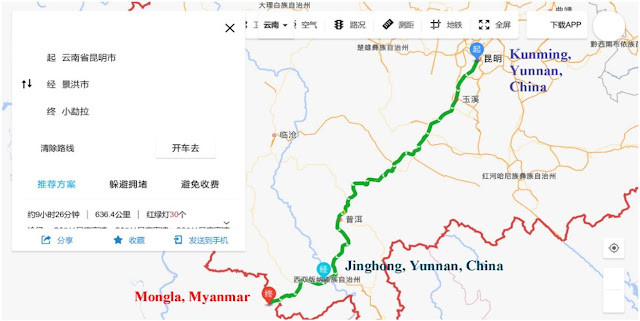
    The crime of organizing illegal border crossings is known to incur serious penalties. Dui Hua previously reported that the crime resulted in Korean missionary Cho Young-joo getting a seven-year prison sentence. Cho was not given lenient punishment for the humanitarian mission he conducted across the Yunnan-Myanmar border. Prominent house church leader Cao Sanqiang (曹三强) has more than a year to serve before completing his seven-year prison sentence in Yunnan for the same crime. Also convicted of the same crime are two Hong Kong anti-extradition bill protesters who attempted to flee to Taiwan by speedboat but were intercepted by mainland coastguards in August 2020. The duo is still serving their sentences in Guangdong.
    Map showing the route (in green) from Kunming to Jinghong, from where Cho intended to travel to Mongla. Source: Gaode Map
    The treatment given to Chan was vastly different to that of Cho, Cao, and two of the Hong Kong 12, despite all of them being accused of organizing illegal border crossings. Chan’s preferential treatment calls into question whether “patriots” enjoy impunity for the criminal offenses they committed in mainland China. This raises speculation that Chan is not the only case of prosecutors dropping criminal charges against the so-called “patriots” because of meritorious services rendered in Hong Kong, China, or elsewhere.
  • Crimes of Extremism, Part I: Observations on Use and Sentencing

    Crimes of Extremism, Part I: Observations on Use and Sentencing

    Screenshot from a 2019 CGTN program titled Fighting Terrorism in Xinjiang. Image credit: CGTN

    Extremism, officially defined in Chinese law as the “ideological basis of terrorism”, or more broadly, “inciting hatred, discrimination or agitating violence through distorting religious doctrines or other means, has long been integral to China’s security policy against the “three evil forces” (i.e terrorism, splittism, and religious extremism). However, it was not a precisely defined legal term until the following provisions were added in 2015 under Article 120 of the Criminal Law, “organizing, leading, and actively participating in a terrorist organization:”

    • Article 120(3): Promoting terrorism, or extremism or instigating terrorist activities;
    • Article 120(4): Using extremism to undermine implementation of the law;
    • Article 120(5): Coercing other people into wearing costumes or symbols to promote terrorism or extremism;
    • Article 120(6): Illegally possessing articles to promote terrorism or extremism.

    Reporting by overseas news media sources suggests that the four new crimes are most typically invoked against Uyghurs. The crimes have been criticized by United Nations’ special rapporteurs and working groups for being overly vague with no basis in binding international legal standards. Human rights groups have also said that many of the extremism arrests are made without evidentiary basis and authorities frequently fail to respect the due process rights of detainees.

    This is the first installment in a two-part series which discusses Dui Hua’s observations on extremism, with a focus on Article 120(3) and (6). Part I discusses the extent of the crimes’ application and sentencing trends, drawing on the 2016 statistics released by the Supreme People’s Court. Individuals charged with and convicted of extremism crimes are not exclusively members of ethnic minority groups, despite their accounting for most of the cases. Extremism cases are selectively published in Chinese government sources. Those involving Han are notably well documented, and only rarely do they receive lengthy prison sentences. Part II focuses on cases involving Muslim minorities. Hefty punishments appear commonplace in Xinjiang, but information on prisoners pre- and post-sentencing is extremely limited.

    Court Statistics One Year After Expansion

    According to the 12-volume Records of People’s Courts Historical Judicial Statistics: 1949-2016, China tried 1,403 extremism cases involving 2,463 defendants in 2016. Of them, 2,031, or 82 percent, were ethnic minorities. Additionally, 85 percent of the defendants were farmers. As Xinjiang has been cast as a key battlefield in the fight against extremism, it would be natural to assume that the charges are predominantly leveled against Muslim minorities.

    Table 1. Court statistics on extremism crimes for 2016

    Source: Records of People’s Courts Historical Judicial Statistics: 1949-2016
    Two-thirds of the defendants violated Article 120(3) “promoting terrorism, or extremism or instigating terrorist activities.” Slightly over one quarter were tried for Article 120(6) “illegally possessing articles to promote terrorism or extremism.” About five percent, or 124 people, were tried for Article 120(4) “using extremism to undermine implantation of the law.” Only 18 people were tried in 17 cases of Article 120(5) “coercing other people into wearing costumes or symbols to promote terrorism or extremism” in 2016.
    Of the four extremism crimes, Article 120(3) is most likely to result in lengthy prison sentences. Among the 1,669 people who received criminal punishment for this crime, 1,109, or 66 percent, received prison sentences of five years or more. By contrast, a much bigger portion of people who are tried for Article 120 (4), (5) and (6) received prison sentences below five years. The use of non-custodial punishment in all extremism cases was rare. Only 70 people convicted of the four extremism crimes were given suspended sentences or control (guanzhi).
    Members of China’s largest ethnic group, Han, are not immune to the crackdown on extremism. The court statistics indicated that 422, or 17 percent, of the 2,463 people tried for the new extremism crimes in 2016 were Han. Of them, 198 were tried for Article 120(3) “promoting terrorism, or extremism or instigating terrorist activities,” 172 for Article 120(6) “illegally possessing articles to promote terrorism or extremism,” 59 for Article 120(4) “using extremism to undermine implantation of the law,” and two for Article 120(5) “coercing other people into wearing costumes or symbols to promote terrorism or extremism.”
    Han Cases
     
    Han extremism cases are easily searchable in Chinese government and media sources. Their cases rarely result in lengthy prison sentences. Dui Hua found 18 cases tried in Beijing which invoked Article 120(3) or (6) from 2017-2021. There were 19 defendants, of whom 11 were Han, one ethnic Manchu, and one Dongxiang. Ethnicity is not always specified in the judgments. None of the Han defendants in Beijing received prison sentences of more than one year, and the lengthiest sentence of two years was given to a duo whose ethnicity is not specified.
    The circumstances of the publicly disclosed extremism cases in other Han-majority provinces are almost identical: they are accused of disseminating violent and terrorist videos they downloaded from overseas websites with the use of a VPN. The videos, typically filmed in the Middle East, contain scenes of violence with prisoners of war beheaded or executed, footage of Islamic State or sometimes Taliban attacks, training, and fighting. The defendants unwittingly commit Article 120(3) when they share the videos with their friends, post them on social media, or put them in cloud storage.
    A screenshot of a 2015 tweet from Mashable on Chinese-language ISIS propaganda. Image credit: Mashable Twitter account
    Most Han defendants are not religious, and they are depicted to have been driven by curiosity to download or share the violent videos. In some cases, they are convicted for simply poking fun at terrorist organizations or figures. In December 2019, news media sources reported that a man surnamed Zhang was sentenced to nine months in prison in Beijing for Article 120(3) for sending out a six-word joke in Chinese which can be translated as “follow me and believe in Islam, join the ISIS” to a WeChat group with over 300 people. He also used a photo of Bin Laden as his profile portrait.
    A portion of Han defendants were convicted of Article 120(6) “illegally possessing articles to promote terrorism or extremism” for keeping violent footage on their personal electronic or mobile devices, despite them not having shared anything with other people. None of the Han defendants convicted of this crime in Beijing received prison sentences exceeding one year.
    Targeting Han Dissidents
     
    While most Han defendants in extremism cases are portrayed as thrill seekers who inadvertently violate the law, precedents also show that extremism easily becomes a catch-all offense to be used in politically motivated prosecutions targeting political and religious dissenters. In such cases, prison sentences can be excessive. For instance, Huang Yunmin (黄云敏) is serving his 10-year prison sentence for Article 120(6), one of the longest prison sentences given to a Han dissenter for an extremism crime. Huang was initially detained for provoking ethnic hatred in March 2017 for accompanying farmers and ex-soldiers to Beijing to petition during the “Two Sessions.” Additionally, prosecutors accused Huang of downloading a large number of anti-China footage from overseas websites and audiovisual materials related to the July 5 Urumqi riots. Huang is scheduled for release in 2027.
    (Clockwise top left) Journalist Zhang Baocheng; Huang Yunmin, known for helping petitioners; Zhao Waikei, Xuncheng Reformed Church leader. Image credits: Civil Rights and Livelihood Watch via RFA; Asia News; WeChat via ChinaAid
    Han who express sympathy with the Uyghur cause are at heightened risk of imprisonment for extremism crimes. Zhang Baocheng (张宝成) is serving his 42-month prison sentence in Beijing for Article 120(3) and “picking quarrels and provoking trouble” until November 27, 2022. The extremism charge, which afforded him a prison sentence of eight months, stemmed from one video clip he circulated about “East Turkestan.” In November 2021, the UN Working Group on Arbitrary Detention concluded that Zhang’s detention since 2019 was “arbitrary” and called on China to “release Mr. Zhang immediately,” noting that the prosecution’s main evidence against him related not to violence but to his tweets criticizing the re-education camps in Xinjiang holding Uyghurs. The Working Group’s ruling was made public by one of the plaintiffs on April 25, 2022.
    In a separate case, Hu Xincheng (胡新城) was arrested for Article 120(3) in Taiyuan, Shanxi, in January 2022 because of his journalistic work. Hu became a thorn in the side of local governments after he published hundreds of articles and reports about corruption. Additionally, Hu reportedly gave advice to petitioners on how to find redress for grievances within the petitioning system.
    Extremism is also used to target Christians unwilling to join the state sanctioned Three Self Patriotic Church. In July 2020, police in Taiyuan arrested Zhao Weikai (赵维凯) for Article 120(6). Zhao, a leader of the Xuncheng Reformed Church, repeatedly faces harassment by the authorities because of his insistence on educating his three children at home instead of sending them to a state school to receive atheist education. Zhao was formally arrested in the same month, being accused of possessing extremism materials.
    Part II will be published next week. Subscribe to Dui Hua publications here. 
  • Decoding State Security Trials, Part II: “Other” Trials & Other Provinces

    Decoding State Security Trials, Part II: “Other” Trials & Other Provinces

    Haikou Intermediate People’s Court in Haikou, Hainan Province, People’s Republic of China. Image credit: Anna Frodesiak / CCO

    In China, trials for crimes of endangering state security (ESS) are capable of generating intense, international media scrutiny while also being woefully opaque. In the face of severe degradations in judicial transparency, increasingly scant data—the latest from 2020—suggests that ESS trials have surged in recent years.

    In Part I, Dui Hua looked at available statistics for ESS trials, focusing on Tibet—where ESS cases rose sharply in 2020—and Xinjiang, which accounted for the largest percentage of ESS trials of any Chinese region through the mid-2010s. This entry considers the rates of additional trials categorized as “other” in China Statistical Yearbooks (中国统计年鉴): dereliction of military duty, criminal offenses prior to 1997, and ESS trials in Han-majority provinces and Guangdong.

    “Other” Trials: ESS, Dereliction of Military Duty, and Cases Before 1997

    Table 1. Number of cases and people arrested and indicted for dereliction of military duty, 2012-2018
    Source: China Statistical Yearbooks
    Dereliction of military duty typically makes up a negligible number of “other” trials. From 2012-2016, Chinese courts concluded 48 trials of dereliction of military duty, just one percent of “other” trials. China Statistical Yearbooks revealed that only two people were arrested for the crime in 2016, and no single arrest was made from 2017-2020. Additionally, no one was indicted in the three years since 2016. Assuming the same trend of arrest and indictment continues, it is to be expected that only a handful of dereliction of military duty cases had proceeded to trials in the four years since 2017.
    “Other” trials also include the little-known category of pre-1997 criminal cases, which concern crimes committed before the revised Criminal Law took effect on October 1, 1997. The Records of People’s Courts Historical Judicial Statistics: 1949-2016 indicated that nearly 60 percent of “other” trials concerned pre-1997 criminal cases from 2012-2016. In 2012 alone, fifteen years after the 1997 Criminal Law came into force, as many as 995 trials were concluded, accounting for 72 percent of “other” trials in that year. While there is insufficient information to estimate the number of pre-1997 criminal cases in recent years, the number showed signs of abating. In 2016, only 88 trials were concluded, down from 651 and 191 trials in 2014 and 2015, respectively.

    Table 2. Number of “other” trials and trials of ESS, dereliction of military duty trials, and pre-1997 criminal cases
    *(a) = (b) + (c) + (d); Sources: China Statistical Yearbooks & Records of People’s Courts Historical Judicial Statistics: 1949-2016
    Among the pre-1997 criminal cases to have been concluded after 1997 are the now-defunct crimes of counterrevolution, with a notable example being Chen Yulin (陈瑜琳). The former employee of Xinhua News Agency was accused of handing over materials, including the Xinhua telephone directory and organization chart, to a British agent embedded in the Hong Kong police force during his tenure in the early 1990s. In 2004, he was sentenced to life imprisonment in Guangzhou. He was convicted not of ESS, but of the counterrevolution crime of espionage in accordance with the 1979 Criminal Law. Chen completed his sentence in August 2020 following multiple sentence reductions granted to him since 2007.
    Hooliganism, another crime which no longer exists in the 1997 Criminal Law, was among the cases which could be found under the category of pre-1997 criminal cases before the mass purge of China Judgements Online in June 2021. China’s Criminal Law imposes no limit on the period of prosecution for cases where the suspect has escaped after a pre-1997 criminal case has been filed by police or the procuratorate, or heard by the courts. Some hooliganism cases concern prisoners who were released on probation but re-sentenced after 1997 for violating parole rules. Courts can also hear a new case and extend sentences for hooliganism prisoners for violating prison regulations. A few prisoners were sentenced to new offenses that were missing in the original hooliganism trials, and thus received sentence extensions.
    Han-Majority Provinces & Guangdong
    Outside of Tibetan regions and Xinjiang, Dui Hua’s research into provincial statistical yearbooks found that few ESS trials have been concluded in Han-majority provinces. In Chongqing, no ESS trials were held from 2018-2020. Hainan accepted and concluded two ESS trials in 2020, whereas Guizhou only held one ESS trial every year from 2014-2019.
    More ESS trials took place in Guangdong, but the figures are far out of proportion given the province’s large population. From 2013-2019, courts in Guangdong concluded 54 ESS trials. Although the numbers in 2020-2021 are not yet available, it is likely that some of the latest ESS trials were closely related to Hong Kong.
    In 2018 and 2019, Guangdong authorities arrested a total of 17 people on suspicion of ESS and indicted a total of 30 people on ESS charges. Some of the ESS arrests in Guangdong over the past three years involved Hong Kong’s anti-extradition bill protests. In April 2021, state-run news media publicized four ESS cases in Guangdong, two of which were Hong Kong-related. In June 2020, a university student from Hong Kong surnamed Yeung was accused of subversion while studying in the mainland. Yeung not only retweeted in support of Hong Kong’s “black-clad mobs,” but also smeared the police force with a stated goal to bring Hong Kong’s model of political resistance to China.
    In the second case, a mainland student studying at the University of Hong Kong posted information on social media to support Hong Kong protesters and attack the central government. His messages also included “liberate Hong Kong,” a banned slogan also deemed capable of inciting secession in the former British colony. Detained in June 2020 upon his return to the mainland, the student reportedly wrote a 100,000-word repentance statement in which he vowed not to take part in activity that endangers state security.
    More Hong Kong-related ESS arrests were made in Guangdong. In September 2021, news media sources reported that independent journalist Huang Xueqin (黄雪琴) was placed under residential surveillance at a designated location in Shenzhen. She was formally arrested for inciting subversion the following month. Prior to her arrest, Huang was briefly detained for “picking quarrels and provoking trouble” in 2019 after taking part in and publishing writings about the Hong Kong protests. Arrested with Huang in October was her friend Wang Jianbin (王建兵), an education and labor advocate. Wang too was arrested for inciting subversion.
    ESS trials have long been criticized for being opaque. A number of these trials were held behind closed doors with citizens, journalists and foreign diplomats shut out, as in the cases of the Canadians Michael Spavor and Michael Kovrig and Australian citizen Yang Hengjun (杨恒君, aka Yang Jun). The identities, acts, and fates of many more people tried, convicted, and sentenced in ESS cases are not known.
    Media attention for recent ESS cases on Twitter (left to right): Reporters Without Borders calls for the release of Huang Xueqin; PEN America calls for the release of Yang Hengjun; Canada’s Prime Minister hails the release of Michaels Kovrig and Spavor. Image credits: RSF in English Twitter account; PEN America Twitter account;  Justin Trudeau Twitter account
    In 2021, transparency of ESS cases dipped to a record low. Dui Hua’s Political Prisoner Database has information on 68 individuals who were sentenced in ESS trials of first instance in 2020. With the mass purge of court judgments online, the Chinese government has undone some of its progress in judicial transparency and, in doing so, possibly harmed its own rule of law.
  • Decoding State Security Trials, Part I: ESS Cases in Tibet Rose Sharply in 2020

    Decoding State Security Trials, Part I: ESS Cases in Tibet Rose Sharply in 2020

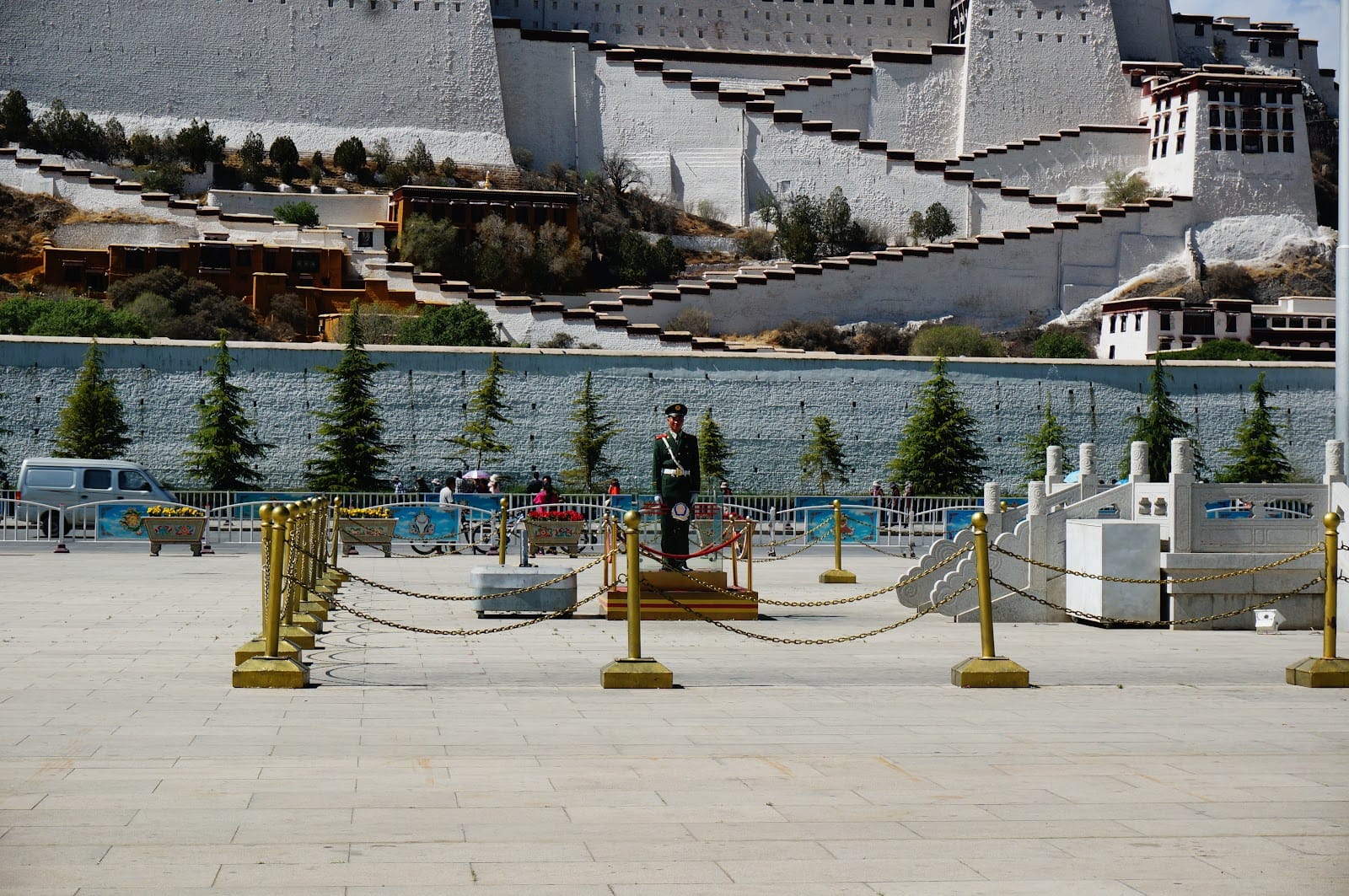
    Chinese guard in Potala Square on May 20, 2014. Image credit: Andrew and Annemarie / CC BY-SA 2.0

    Crimes of endangering state security in China achieved international attention in 2021 with high-profile cases related to hostage diplomacy, even as available information about individual trials decreased. Such crimes include subversion, splittism, incitement to subversion/splittism, espionage, and state secrets violations. They carry a mandatory supplemental sentence of deprivation of political rights, precluding individuals from writing articles, giving interviews, voting, standing for office, and working in a state-owned company.

    From 2017-2020, Chinese courts concluded 1,330 trials of endangering state security (ESS), dereliction of military duty, and pre-1997 offenses, according to Dui Hua’s analysis of data published annually in China Statistical Yearbooks (中国统计年鉴) by the National Bureau of Statistics. The yearbooks, accessible on the National Bureau of Statistics website, provide information on the number of first-instance criminal trials accepted and concluded by people’s courts nationwide.

    ESS, dereliction of military duty, and criminal offenses prior to October 1, 1997 are typically included in the category of “other” trials. In 2020, the latest year for which information is available, trials of ESS by Chinese courts appear to have surged. They accepted 417 “other” trials, up from 257 and 317 in 2018 and 2019, respectively. The courts also concluded 382 “other” trials in 2020, an increase from 218 and 283 over the previous two years.

    This post, the first of two, looks at the number of ESS trials in Tibetan areas as well as in Xinjiang. Part II details case numbers for “other” trials such as dereliction of military duty as well as ESS trials in Han-majority provinces and Guangdong.

    Table 1. Number of “other” trials and trials of ESS, dereliction of military duty trials, and pre-1997 criminal cases

    *(a) = (b) + (c) + (d); Sources: China Statistical Yearbooks & Records of People’s Courts Historical Judicial Statistics: 1949-2016

    A fair portion of “other” trials are made up of ESS. Statistics released by the Supreme People’s Court in the 12-volume Records of People’s Courts Historical Judicial Statistics: 1949-2016 confirmed that a total of 1,602 ESS trials were concluded from 2012-2016, making up 40 percent of “other” trials. In 2016, as many as two-thirds of the 285 “other” trials concluded were ESS.

    Tibet

    Tibet covers one-eighth of China’s territory and has a relatively small population of 3.6 million people, but a disproportionately large number of China’s ESS trials are concluded in the region. With a level of transparency not seen in other provinces, the high court of the Tibet Autonomous Region has annually disclosed the number of ESS trials in the region for the years 2018-2020. In 2018, 25 people were tried for inciting splittism and providing funds to entities/individuals to endanger state security. The following year, 37 people were tried in 24 ESS cases involving the same offenses. The latest available 2021 work report stated that the number of ESS cases in 2020 increased to 65 involving 74 defendants.

    Official figures disclosed in Ganzi Prefecture also hint at the extent of crackdown in the Tibetan autonomous region in western Sichuan. Although trial numbers are not available, the prefecture’s procuratorate approved the arrest of nine individuals in seven ESS cases in 2020, according to its 2021 annual work report. That same year, 15 people were indicted in 12 ESS cases. While figures are available for Tibet and Ganzi, it is not known how many people were arrested, indicted, or tried in other Tibetan regions in Sichuan, Gansu, Ningxia, and Yunnan.

    Tibetans stand accused of ESS for sharing news and opinions on social media and for contacting relatives living in exile, sometimes with news of anti-government protests. Chinese authorities maintain tight control over information flows across the Tibetan regions. Dui Hua’s research into court judgments found the names of nine Tibetans who were tried for inciting splittism in Ganzi between June and August 2020. From September to December of the same year, six more Tibetans were tried in Ganzi, and seven Tibetans were tried for the same crime in its neighboring Aba Prefecture. These judgments provided no information beyond their names, the charges against them, and the dates of the judgment.

    Xinjiang

    Dui Hua’s analysis of data published in the annual work reports of the Xinjiang High People’s Court through the mid-2010s found that the autonomous region accounted for the largest percentage of ESS trials of any Chinese region. About 300 ESS trials were held in Xinjiang each year in 2013 and 2014, accounting for three quarters of China’s total ESS trials. The number decreased in 2015, but Xinjiang continued to account for almost half of the 214 ESS trials nationwide. The lack of publicly available data in recent years makes it impossible to ascertain whether the majority of ESS cases continued to be concluded in the region. The use of the vast network of re-education camps beginning in 2017 might have an impact on the number of ESS trials. Authorities in Xinjiang can easily stifle dissent under the pretext of vocational training without invoking ESS crimes.

    In 2021, transparency of ESS cases dipped to a record low. Dui Hua’s Political Prisoner Database has information on 68 individuals who were sentenced in ESS trials of first instance in 2020. With the mass purge of court judgments online, the Chinese government has undone some of its progress in judicial transparency and, in doing so, possibly harmed its own rule of law.

    Read Part II.

  • Article 299: Criminalizing Disrespect of the National Flag, Part II

    Article 299: Criminalizing Disrespect of the National Flag, Part II

    Read Part I here.

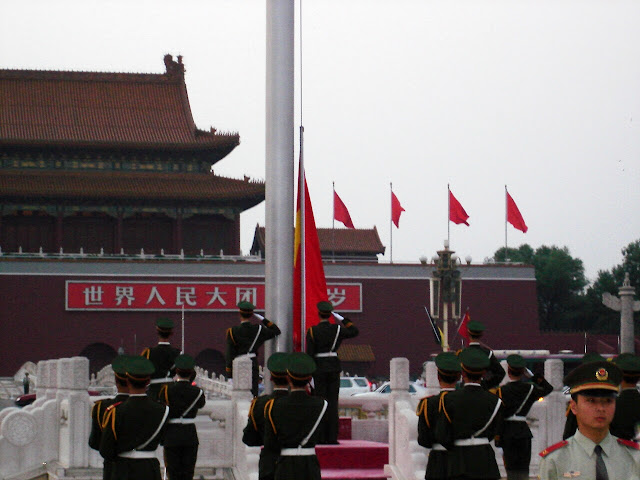
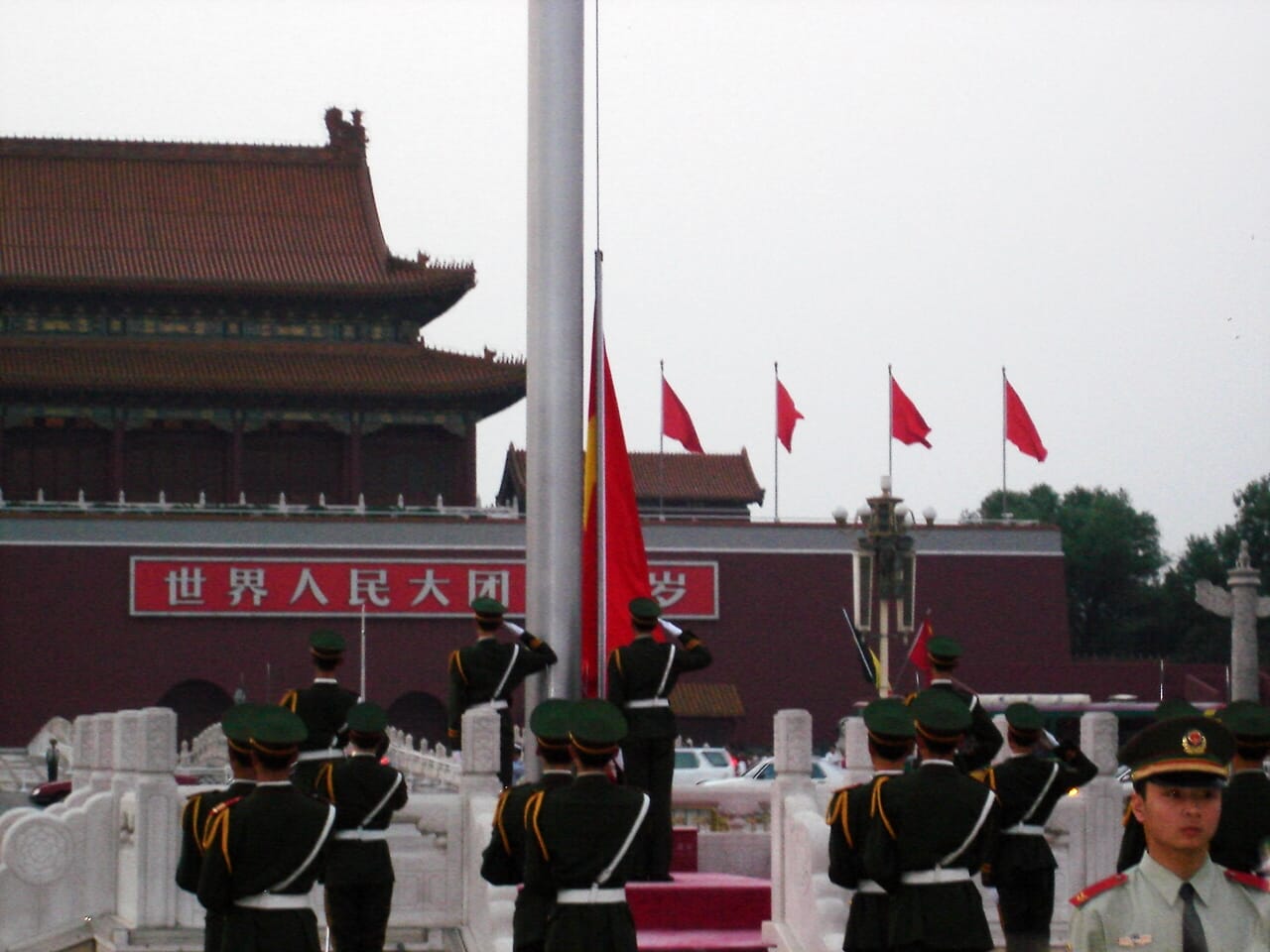
    A flag hoisting ceremony in Tiananmen Square in 2005. Image credit: 武当山人 / CC BY-SA 3.0

    The desecration of national symbols is a crime under Chinese law. The National Flag Law was enacted in June 1990 and was extended to cover the national emblem one year later. While the laws were merely codes governing formalities to display the national symbols, a provision to the 1979 Criminal Law added in 1990 made intentionally desecrating the national flag and symbol in public a crime punishable by up to three years’ imprisonment.

    This article explores the often-ignored topic of flag desecration in China. Part I looked at trends in sentencing and the law’s application across different cases. Part II discusses how the law is applied to different groups like Falun Gong, Tibetans, and Uyghurs. While most publicly disclosed cases involve “ordinary” offenders who did not desecrate the flag for political reasons, the same acts committed by practitioners of Falun Gong and ethnic minorities tend to result in lengthier prison sentences.

    Political Cases 

    In cases where national symbols in China are desecrated in protest of public policy, like those of Wang Chunhua (王春花) and Lie Jinjie (刘杰津) discussed in Part I, the starting point for sentencing appears to get noticeably longer. Two other cases, which involved criticism of the CCP and so-called “anti-China elements,” also resulted in lengthier prison sentences. However, the circumstances of these cases have not been made entirely clear in available sources.

    1. Tianjin’s first flag desecration case concerned Wu Zhaoming (吴兆明), who was sentenced to two years in prison in December 2017 for cutting up and damaging a total of 66 national flags, allegedly in a bid to express his discontent with the CCP. Some of the damaged flags and flagpoles were found in garbage bins and on sideroads. Available sources did not explain why Wu became dissatisfied with the CCP.
    2. In a separate case in Changsha, Hunan, Wu Di (吴迪) was sentenced to 18 months in prison in January 2020 for setting fire to four flags with a lighter. Prosecutors alleged that Wu experienced depression due to unemployment and became “thrill-seeking” after he browsed overseas “anti-China” websites. From October 1-2, the 70th anniversary of the People’s Republic of China, he circulated a video to his friends of himself burning the flags on a university campus.

    Falun Gong 

    As shown in the chart below, from 1998-2016, only five people had received the maximum sentences of three years in prison. Of them, Dui Hua found that two were Falun Gong practitioners:

    Chart 1. Sentencing breakdown of defendants convicted of Article 299

    Source: Records of People’s Court Historical Judicial Statistics: 1949-2016
    An early case involved Zhang Jingzhi (张敬之) and Wen Yanyu (文廷玉); each was sentenced to three years in prison for throwing paint-filled eggs at flags at a public memorial in Chongqing in August 2009. The heavy sentences could be attributed in part to the timing and setting of their protest. The flags were displayed at a memorial for “revolutionary martyrs”—300 Communist political prisoners held and then slaughtered by Kuomintang security agents in Chongqing’s notorious Zhazidong Prison Camp on November 27, 1949, as the city fell to the People’s Liberation Army.
    According to media accounts, national and local leaders expressed concern about this flag desecration case, and personal instructions to investigators were reportedly issued by then-Chongqing governor Bo Xilai—whose use of public patriotic campaigns and a heavy-handed crackdown on corruption and organized crime was seen by some as an attempt to generate popular support to become a member of the powerful Politburo Standing Committee.
    Another pair of Falun Gong practitioners, Dong Zhiyong (董志勇) and Zhi Xunlin (茆训林), in Jiangsu were sentenced for both Article 299 and Article 300 on November 2016. Although Article 299 in this case only carried one year in prison, they ended up serving prison sentences of 57-69 months because of Article 300. Chinese government sources said that the duo used sickles to damage 114 flags flown on street lampposts in the run up to the 64th National Day.
    Tibetans 
    From time to time, Tibetans have undertaken flag desecration to express their blatant rejection of Beijing’s repressive religious policy, desire for genuine autonomy, and even independence. In her blog Invisible Tibet, prominent writer Tsering Woeser chronicled multiple instances of what appeared to be flag desecration incidents across the Tibetan plateau amid the 2008 Lhasa Riots. Protesters across cities and townships reportedly raised the “snow lion flag,” a symbol of the Tibetan independence movement, in place of the Chinese national flag just months ahead of the Beijing Summer Olympics.
    The Tibetan flag carried during Olympic torch run demonstrations in San Francisco, California, on April 9, 2008. Image credit: Victor Lee / CC BY-NC-ND 2.0
    However, many flag burning protesters might not have been charged with Article 299. Court statistics indicate that only three ethnic minorities were convicted of flag desecration from 2008-2009. It is possible they were convicted of the more serious charges of splittism or inciting splittism, with the former carrying a potential death sentence.
    Dui Hua’s Political Prisoner Database has information on two Article 299 cases from 2011-2013. The two cases, both reported by Radio Free Asia, were likely linked to the self-immolation protests involving over a hundred Tibetan women and men who set themselves ablaze to highlight resistance to Beijing’s rule:
    1. Around 2011, Sonam Norgye received a three-year prison sentence in Basu [Pashoe] County, Tibet, for hauling down and soiling with feces a Chinese flag that had been raised by government workers in the area;
    2. In September 2013, a court in Sichuan’s Kardze County reportedly handed prison terms of between one and four years to three monks accused of pulling down the Chinese national flag at a local school. Because Article 299 only carries a maximum sentence of three years, one of the monks might have been convicted of an additional crime.
    Dui Hua previously reported the case of Garab (嘎热) who was accused of desecrating the flag out of frustration over the disaster relief efforts for the devastating 7.8-magnitude earthquake that rocked Nepal on April 25, 2015. The earthquake also brought causalities and widespread damage to southwestern Tibet, including his home in Tingri County.
    According to the court judgment, Garab found an old Chinese national flag in the ruins of his former home weeks after the April quake. Prosecutors alleged that he burned holes in the flag and then used a marker to write “Free Tibet” on it. After allegedly hiding the flag under his mattress for several days, he discarded it along a path where some village children found it. Members of a work group stationed in the village noticed the children playing with the flag and reported the incident to local authorities. Garab received a prison sentence of two and a half years in November 2015.
    Uyghurs
     
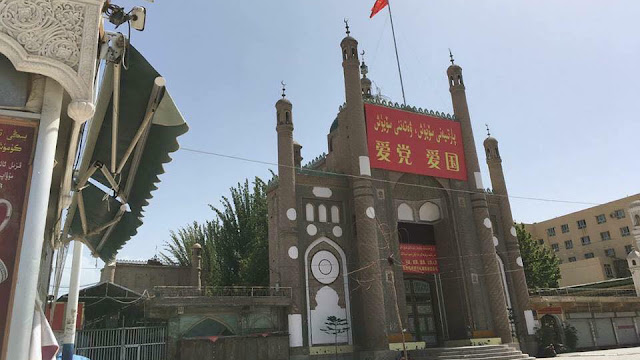
    A picture of Jama Mosque in Kargilik County, Kashgar, with China’s flag and propaganda banners that read “Love the Party, Love the Country.” The photo is undated but was published by Radio Free America (RFA) in August 2018. Image credit: RFA via an unnamed RFA listener


    The PPDB also has information on two Article 299 cases involving Uyghurs. In both cases, the Uyghur defendants received relatively lengthier prison sentences.
    1. On February 20, 2013, two Uyghurs were sentenced to 24-30 months’ imprisonment in Wensu County, Aksu Prefecture. State news media sources claimed that they refused to perform salah, the obligatory Muslim prayers which are performed five times each day, in mosques where the national flag was displayed. They pulled down and burned the Chinese national flag on December 26, 2012.This trial was attended by a total of 1,208 people, including county congress representatives, religious figures, and villagers. The large size of the court audience suggested that the trial was conducted in the form of a public sentencing rally, which is often held in large outdoor public spaces like plazas and stadiums where the accused are bound and flanked by police in front of crowds of spectators that can number in the thousands. While public sentencing rallies in Xinjiang are typically held in cases involving violence, drugs, and state security, this case indicates that Uyghurs in flag desecration cases can also be brought to a public rally.
    2. Just a month after the flag desecration case in Wensu County, a similar case was concluded in Awat County, also in Aksu Prefecture. According to news media sources, all mosques in the county were required to fly the Chinese national flag after August 2011. A muezzin (the person who performs the call to prayer) put the flag into a fireplace; he blamed the flag for the drop in mosque worshippers. Concerned about the choking smoke, he threw the half-burned flag outside of the mosque. He received a 30-month prison sentence on March 19, 2013. 

    Article 299: Beyond the National Flag


    It is worth noting that the scope of activities punishable under Article 299 is expanding. The tenth amendment to the Criminal Law, which went into force in November 2017, made insults to the national anthem a crime punishable under the same article. Dui Hua previously reported the first known such case involving a female member of Almighty God in Xinjiang Production and Construction Corps. She received a 30-month prison sentence for composing “the Song of Satan’s Victory,” similar in tune to the national anthem.
    Effective March 1, 2021, a new provision added to Article 299 extended the same punishment to those who “misrepresent, defame, profane or deny the deeds and spirits of heroes and martyrs.” On the same day, Chinese blogger Qiu Ziming (仇子明) became the first person to be convicted of this new crime over his posts that authorities say demeaned the Chinese military casualties of a border clash with Indian soldiers in June 2020. Qiu, also a victim of China’s practice of airing forced confessions on state television, is serving his eight months’ prison sentence in Jiangsu until October 19, 2021.
    Footage of Qiu’s televised forced confession. Image credit: Hanqiu.com
    China is not alone in taking an aggressive stance towards desecration, but questions remain as to whether sentencing is consistent, appropriate, and fair to all. The cases demonstrated in this post suggest that Falun Gong practitioners, Tibetans, Uyghurs, and those who commit the crime as a symbolic political expression against the CCP are at higher risk of receiving longer prison sentences. As Xi continues to cement the notion that a deep love for the CCP and even himself is the same as a deep love for the nation, it is likely that more people who do not share his version of patriotism will run afoul of an ever-expanding Article 299.
  • China’s National People’s Congress May Expand Legal Aid in Death Penalty Cases

    China’s National People’s Congress May Expand Legal Aid in Death Penalty Cases

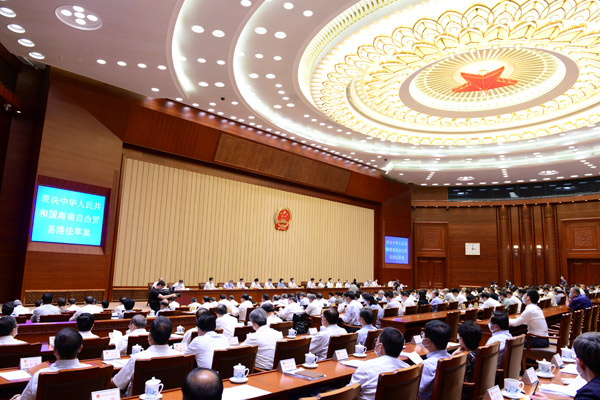
    The closing ceremony of the 29th session of the 13th NPC Standing Committee on June 10. Image credit: NPC.gov

    China’s National People’s Congress is considering a new Legal Aid Law. Among its many provisions, Article 24 of the new law would extend access to legal aid to condemned defendants during final death penalty case review at the Supreme People’s Court.

    China’s legal system already provides legal aid to defendants in the trial phase of death penalty proceedings. However, legal aid does not currently cover the crucial final death penalty review stage of China’s capital punishment process: death penalty review at the Supreme People’s Court. Capital defense lawyers have dubbed the lack of legal aid in death penalty review the “last mile problem” of Chinese capital defense. The new law would finally address this last mile, bringing death penalty review under the scope of legal aid and guaranteeing universal representation during all stages of capital proceedings.

    The law would also improve the quality of death penalty counsel at both trial and review. The draft law mandates that legal aid lawyers representing clients in cases carrying a possible sentence of death or an indeterminate life sentence have at least three years of legal practice experience.

    The Development of the Legal Aid Law  

    If enacted, the new Legal Aid Law will be China’s first comprehensive legislation on legal aid. Up until now, China’s legal aid has been governed by State Council Regulations. Implementation of the regulations takes place at a local level, and the quality of legal assistance has been uneven. Critics charge that low funding, low status, and lack of oversight lead to substandard representation in many legal aid cases. The new law earmarks funds and sets new standards in an attempt to address these problems.

    In recent years China’s leaders have signaled their intention to overhaul state legal aid as part of the Xi administration’s comprehensive effort to increase “governance through law.” In 2015 the CCP issued “Opinions on Improving the Legal Aid System,” a policy statement setting an agenda for improvements across the legal aid system. The document placed special emphasis on capital cases, including a call for legal aid in death penalty review cases. The 2015 opinion also called for an expansion in criminal representation generally, including the use of duty lawyers—criminal attorneys who can provide basic on-site legal advice at detention centers and courts. In 2018 the Supreme People’s Court and the Ministry of Justice issued “Measures on Launching the Pilot Program for Full Coverage of Lawyers’ Defense in Criminal Cases.” That measure did not specifically provide for death penalty review representation, but it has improved standards and increased access to defense lawyers in all criminal cases.

    The new Legal Aid Law is currently under review at the National People’s Congress. The first draft of the new Legal Aid Law was released in January. A second draft was introduced for public comment in June. The second draft notably improves upon the first by including an additional provision specifying that appointed legal aid counsel must have at least three years of experience in all death penalty review proceedings and trial cases carrying the possibility of an indeterminate life sentence or death sentence.

    Legal Aid and Death Penalty Review 

    Death penalty review is the final stage of legal proceedings in China’s capital punishment system. A capital defendant in China initially undergoes a trial of the first instance, typically at an intermediate court. If found guilty, the defendant faces a trial of the second instance, typically at a provincial high court. Following a capital sentence in a second instance trial, the condemned defendant’s case will undergo a final death penalty review. In 2007 the Supreme People’s Court retook the authority to perform death penalty review from provincial courts as part of its sweeping efforts at death penalty reform. Since that time, all death penalty review proceedings have been handled by the Supreme People’s Court in Beijing.

    The Supreme People’s Court has not previously recognized a universal right to legal aid in its death penalty review proceedings. China’s Criminal Procedure Law (Art. 35) requires the provision of a legal aid lawyer in cases in which defendant faces an indeterminate life sentence or death sentence. This provision should logically extend to death penalty review. However, the Supreme People’s Court has declined to apply this provision in death penalty review.

    The conference on providing legal aid for death penalty review. Image credit: Southern Metropolitan
    Currently condemned defendants may choose to hire counsel for the proceedings; however,  if they do not do so, the state will not provide a lawyer for them. While official death penalty review data is a state secret in China, the available evidence indicates that under the current system—in which legal representation at the review is not mandatory and a defendant must hire an attorney privately—most condemned defendants do not retain a lawyer for the proceedings.

    Experts Debate the Draft Law 

    On March 27 a group of 20 scholars and lawyers in China came together to discuss the implications of the death penalty review representation provision contained in the new Legal Aid Law. The conference was hosted by China University of Political Science and Law and Shangquan Law firm, a leading criminal defense firm in Beijing. Conference participants noted both the promise of the new legal aid law and the deficiencies that still exist in death penalty in China.

    Defense lawyers pointed out that while universal legal representation in death penalty review is an important legal development, obstacles to lawyer engagement with death penalty review proceedings hinder the substantive impact of the new law. For example, although death penalty review judges are legally mandated to meet with defense counsel, attorneys report difficulty in arranging these meetings. Lawyers also report difficulty accessing casefiles, and often end up taking pictures of documents on their phones because they cannot get copies.

    Scholars at the conference expressed concern that the expansion of legal aid to death penalty review might carry unexpected consequences for the legal market: legal aid lawyers assigned to death penalty review cases may lack experience and qualifications for this technical work, and the provision of these lawyers may also crowd out competent private lawyers who currently focus on death penalty practice. It is therefore important that the legal aid system provide sufficient compensation for this representation and also establish qualifications for death penalty review representation. The second draft of the Legal Aid Law, which was released subsequent to the conference, goes some way to addressing this concern by providing that legal aid counsel in both capital trial and death penalty review cases must have more than three years of related practice experience. Standing committee representatives also included a suggestion to include legal aid costs in the government budget, beginning at the county level. However, it is unclear whether death penalty review at the SPC would be covered by such a measure at the national level.

    Since the Supreme People’s Court retook the power of death penalty review in 2007, the Shangquan law firm in Beijing has been conducting empirical work on death penalty review representation. This work has included pro bono death penalty review representation in the past. At the conference, Shangquan law firm director Mao Lixin formally announced a new pro bono program that will provide pro bono representation for indigent condemned defendants facing death penalty review. The program was intended to run through March 2021, or until the new Legal Aid Law goes into effect.

    By Tobias Smith 

  • Hefty Prison Sentences for Selling Audio Bibles

    Hefty Prison Sentences for Selling Audio Bibles

    A selection of audio Bibles currently available on Taobao. Image credit: Taobao.com 

    Dui Hua’s research into court judgments found that four Christians who sold USB flash drives containing encrypted sermons were sentenced to two to six years in prison in Henan Province on December 2, 2020. Three of them were convicted of illegal business activity and another of “concealing crime-related income.” Their trial was concluded just a few days before overseas Christian groups reported another illegal business activity case in Shenzhen where five Christians were facing trial for selling audio Bibles amid China’s campaign to “eradicate pornography and illegal publications.”

    In April 2018, China’s popular online retailers including JD.com, Tabao, and Amazon.cn began pulling Bibles from their stores. Although the Bibles are still printed in China, they are legally available only at state-sanctioned church bookstores and cannot be sold through normal commercial channels. Individuals who breach the rules to sell the Bibles online or in physical bookstores risk being charged with illegal business activity under Article 225 of the Criminal Law.

    New rules aim to restrict the circulation of religious materials. State control has extended to electronic devices containing religious content not censored by the state. Bible audio players have gained popularity because they are easy to use, especially among the elderly, the illiterate, and those who are visually impaired. Apart from Bible verses, these electronic players are also loaded with sermons, hymns, and other religious content. Such devices were once widely available on China’s largest online commercial sites.
    A version of an audio Bible previously available on Taobao, designed for and marketed to elderly customers. Image credit: Taobao

    Four of five Christians facing trial in Shenzhen are employees of the Shenzhen Tree of Life Culture Communication Company, which was established in April 2011 to produce Bible audio players. The company did not run into any legal trouble until the four employees were detained for illegal business activity in July 2020. The trial outcome remains unclear, but available sources show that prosecutors recommended that the court sentence Fu Xuanjuan (傅炫娟), owner of the Shenzhen company, to five years’ imprisonment, and the other three staffers to 18 months to three years.

    Unbeknownst to the outside world, the four sentenced in Henan were also related to the same Shenzhen company. The judgment stated that from June-August 2018, Li Junke (李君科) entrusted the Shenzhen company to produce encrypted USB flash drives loaded with sermons by Li and another defendant Feng Fang (冯芳). During this period, they were said to have made an illegal profit of RMB8,000 from the sale of the encrypted USB flash drives to other Christians through WeChat friend groups.

    Li explored ways to reduce expenses so that he could donate more money to help the elderly and poor families. Instead of outsourcing to the Shenzhen company, he started to produce his own audio Bibles. First, he procured 1,922 blank USB flash drives from a computer wholesaler in his home province of Shaanxi. Additionally, he asked the third defendant, Zhang Haohao (张好好), to encrypt the audio Bibles after she taught herself encryption. The fourth defendant Wang Xuefen (王雪粉) was in charge of promoting the audio Bibles primarily using WeChat and mailing them out. From January 31, 2019, to June 13, 2019, they collected illegal revenue of RMB110,062 from the sale of 639 audio Bibles. After deducting the procurement cost of the 639 USB flash drives, the illegal profit amounted to RMB93,448.

    Li, regarded as the principal offender in the case, received the lengthiest prison sentence among the defendants—six years. The court found that the sale constituted a “particularly grave circumstance,” citing Article 12 of the 1998 judicial interpretation concerning the hearings of illegal publications issued by the Supreme People’s Court. The article states that the circumstances are “particularly grave” where the profit made by an individual from illegal business activities exceeds RMB100,000. The court held that his total profit comprised RMB93,448 from the sale of 639 USB flash drives and RMB8,000 from the sale of USB flash drives manufactured by the Shenzhen company. The total profit amounted to RMB101,448, making Li’s profit barely exceed the “particularly grave circumstance” threshold.

    Li’s prison sentence could have been shorter had the court considered deducting the mailing cost of the 639 USB flash drives. Each of the USB flash drives was mailed at the cost of RMB10. His profit would then have been reduced by RMB6,390 to RMB95,058, just below the “particularly grave circumstance” threshold. This was exactly what Li argued in his defense to mitigate his sentence during the trial. The court refused to accept his defense and instead determined the mailing cost to be part of operation costs for the illegal business activities, although it did deduct the procurement cost of the USB flash drives when calculating the profit. 

    The two other defendants, Zhang and Wang, were also convicted of illegal business activity. They were sentenced to three years and two years in prison, respectively. Feng was convicted of a different crime of “concealing crime-related income” and is now serving her three years’ imprisonment sentence.

    Since China began banning online Bible sales in April 2018, Dui Hua’s research into court websites has found 11 court judgments involving 54 defendants who were convicted for illegally selling Christian books and/or audio Bibles. Among them, 27 received suspended sentences and the prison sentence given to Li was the lengthiest. Li is scheduled for release from prison on June 14, 2025.

    The offence of illegal business activity has typically been applied to those who make a profit to support their churches. However, the standard of conviction does not necessarily require an intent to establish a profitable business. Precedents suggest that Christians can receive prison sentences for printing and giving away religious texts for free. All these indicate the worsening state of religious freedom in China: economic crimes like illegal business activity provide a pretense to suppress religious activities and legitimize criminal punishments against religious groups and private individuals operating beyond the state’s control.

  • Transparency in Inciting Splittism Trials

    Transparency in Inciting Splittism Trials

    A picture of the town of Ganzi in the Tibetan Autonomous Region in western Sichuan Province, China, taken in 2005. Image credit: Colegota / CC BY-SA 2.5 ES

    China’s Fifth Judicial Reform Plan Outline in 2019 committed itself to an “open, dynamic, transparent, convenient sunshine judicial system.” Although much progress has been made in the number of court rulings and judgments posted online, the level of transparency varies by case type, crime, and region. Criminal cases classified as endangering state security (ESS) are among the least transparent.

    Part of this is because judges frequently exercise their discretion to decide what information, including rulings and judgments, to publish. They may also conceal information about cases they deem “inappropriate for posting.” In regions rocked by incidents of ethnic unrest, accessing information about ESS cases is considered difficult or even impossible at times due to media blackouts which occur periodically following violent clashes with Han Chinese.

    While this presumption about judicial transparency holds true in Xinjiang, it does not accurately reflect the availability of Chinese government sources with regard to ethnic minority prisoners who are convicted of political crimes in the Tibetan regions outside of the Tibetan Autonomous Region (TAR) and Han-majority provinces.

    Despite being a restive region, Ganzi, or Garze, a Tibetan Autonomous Prefecture occupying the western arm of Sichuan Province, is the top region in all of China with the highest number of publicly disclosed ESS court rulings and judgments. In Ganzi, 26 of the 28 publicly disclosed ESS cases concerned the crime of inciting splittism (煽动分裂国家罪). Dui Hua previously reported that the Ganzi Intermediate People’s Court convicted nine Tibetans of inciting splittism between June and August 2020. In the last four months of 2020 the same court released five more judgments involving six defendants who were tried for the same crime.

    Table 1. ESS Rulings Disclosed on China Judgements Online (as of April 30, 2021)

    Aba, also known as Ngaba, similarly maintains a high level of transparency notwithstanding an astonishing number of self-immolation protests which occurred in the prefecture between 2012 and 2017. This Tibetan prefecture in northwestern Sichuan is ranked third in Table 1, with 20 ESS rulings and judgments disclosed on China Judgements Online. Thirteen of them were trials of inciting splittism. In 2020 alone, eight judgments were posted online by the Ganzi Intermediate People’s Court.

    Dui Hua previously reported that Xinjiang makes up the majority of China’s ESS cases (see Court Statistics on Splittism and Inciting Splittism, Part II: Uyghurs and Tibetans for a detailed analysis). The Chinese government has made an apparent attempt to obfuscate information in the autonomous region. At the time of writing, none of the ESS rulings and judgments on China Judgements Online were disclosed in Xinjiang. A small number of Xinjiang ESS court judgments Dui Hua unearthed earlier from court websites have since been taken down.

    Table 2. A list of inciting splittism cases in Ganzi and Aba posted on China Judgements Online after August 31, 2020

    Political Prisoner Database

    The names of political prisoners convicted of inciting splittism can also be found in other open-source materials. In its “official registry,” Dui Hua’s restricted-access Political Prisoner Database (PPDB) has information on 250 individuals who were tried nationwide for inciting splittism. The cases referred to here were collected from official sources including court judgments and rulings, state-run news media reports, judicial annals available in libraries and electronic yearbooks, and responses provided to Dui Hua by Chinese interlocutors.

    Access to information in Xinjiang is far more restricted than in Tibetan regions. Table 3 shows that about 60 percent of people tried for inciting splittism in the official registry are in the Tibetan plateau, compared to only 38 people, or 17 percent, in the entire Xinjiang Uyghur Autonomous Region (XUAR) including It is worth noting that the eight percent remainder also involved Uyghurs, they were scattered across Han-majority provinces, including Shanghai, Tianjin, Guangdong, Fujian, Jiangsu, Henan, Liaoning, and Jilin also involved Uyghurs.

    Table 3. Regional breakdown of inciting splittism trials with information in Dui Hua’s Official Registry

    Ganzi comes out on top of all regions in Table 4; 68 prisoners convicted of inciting splittism are recorded in the official registry of the PPDB. The number is 11 times higher than that of Kashgar, Xinjiang, with records in the PPDB. The contrast is striking when we factor in a 2009 Chinese court report, which stated that more than 60 percent of Xinjiang’s ESS cases were tried in Kashgar. The paucity of prisoner information in the Uyghur prefecture has left the identities, acts, and fates of many of those convicted of inciting splittism unknown.

    Labelled “the self-immolation capital” by The New York Times, Aba comes as a distant second in Table 4. The latest Tibetan to set himself ablaze, in November 2019, occurred in Aba.

    Aba is followed by Huangnan, a Tibetan Autonomous Prefecture in Qinghai. It was another site of self-immolations and clashes between monks and Chinese security forces similar to Ganzi and Aba from 2012-2017.

    Table 4. Top three regions with information of inciting splittism trials in PPDB Official Registry

    In Qinghai, people tried for inciting splittism are not exclusively Tibetans. According to court judgments posted online, three ethnic Mongols were sentenced to nine to ten years in prison in the provincial capital of Xining in October 2008. Their imprisonment was likely related to the unrest in Tibet. Originally from Huangnan, they were detained in April 2008, just a month after the unrest in Lhasa set in motion a series of protests and demonstrations across the Tibetan plateau.

    Outside of Xinjiang

    Official information about Uyghur political cases appears more accessible outside of Xinjiang, at least for a brief period. Table 5 shows a breakdown of inciting splittism trials in the official registry of the PPDB. Of the 19 prisoners who were tried for inciting splittism in Han-majority provinces, all but one were Uyghurs.

    Table 5. Number of inciting splittism trials in Han-majority provinces with information in PPDB Official Registry
    Except for the three cases concluded in Shanghai in 2003, other cases in Table 5 were uncovered from court documents which were posted online between 2014 and 2016. Although the names of defendants were occasionally redacted or obscured, fewer ESS rulings and judgments at the time were classified as “unsuitable for posting.” These uncensored court judgments showed that most Uyghur defendants belonged to the “post-90s generation’ and were in their early twenties at the time of sentencing. Common allegations against them included using the internet to disseminate information about “East Turkestan” and the “Holy War.”

    Some of the case highlights are:

    1. Rozi Wulayimu, born in 1985, was a cake seller who traveled back and forth to Guangzhou from Yiwu, Zhejiang, prior to detention in January 2015. While in Yiwu, he became acquainted with what prosecutors called a Uyghur “religious extremist” (zongjiao jiduan fenzi 宗教极端分子). According to the judgment, the “religious extremist” called the ban on veils and beards in Xinjiang a repression of Islam. The “religious extremist” bought Rozi a cellphone. It was preinstalled with Voxer, an app best known for walkie-talkie messaging, and another app with access to IRIB World Service, Iran’s international broadcasting radio network.

    Rozi did not use the preinstalled apps until after he moved back to Guangzhou in late 2014. IRIB World Service allegedly contained articles and images of violence, “East Turkestan,” and the “Holy War.” This browsing history became evidence of him inciting others to split China. Additionally, Rozi used Voxer to contact the “religious extremist,” who shared the idea of them illicitly going overseas. Uyghurs could not legally exit China because of tight travel restrictions placed on them, said Rozi during the trial. Rozi also expressed having a strong impulse to leave China because he was deeply moved by the contents of IRIB World Service. However, he dismissed this idea as he could not bear to leave his parents behind in China.

    In July 2016, Rozi was sentenced to two years in prison by the Guangzhou Intermediate People’s Court. Rozi was released from prison in January 2017, having already spent 17 months in custody prior to conviction.

    • A Uyghur farmer, whose name was redacted in the judgment, was sentenced to two years in prison in Nanjing on July 17, 2015. He signed in to his QQ account with his cellphone and from cybercafes, where he disseminated audio and video messages of “religious extremism, the Holy War, and ethnic hatred.” Additionally, he was accused of sharing links to Turkistan Times, a multilingual news website covering news about Xinjiang.

    • Cases are also documented in China’s northeast provinces. Eli Exmet studied at Changchun’s Northeast Normal University. The then-25-year-old student was sentenced to eight years in prison in October 2014. Prosecutors accused him of teaching private religious classes to Uyghurs studying there. In the classes, he raised funds from attendees to buy tablets and removable storage to use as teaching tools and explained why he supported the “Holy War” and “East Turkestan” with information he downloaded and copied from e-books and online videos.

      Another defendant, Metabdulla Iminniyaz, born in 1992, was sentenced to six years in prison. He was in charge of lecturing on Arabic-language videos. According to the judgment, he expressed the idea of “driving away all bad Han Chinese in Xinjiang” in his classes.

    • Born in 1993, a Uyghur barbeque shop worker was sentenced to three years in prison in Dalian in February 2016. His name was redacted in the judgment. He was accused of uploading images from 2013-2014 containing violence and religious extremism to his personal cloud storage. Since he did not set a passcode to restrict access, the images were seen by many of the over 200 people on his contact list. Among the images was a map of China separating Taiwan, Tibet, and Xinjiang from Chinese territory. Xinjiang was also labelled “East Turkestan” and painted blue with a white crescent flag.

    The empirical data presented in this post indicated a varying level of judicial transparency concerning the trials of inciting splittism. While Tibetans and Uyghurs are both disproportionately represented in such trials, the Chinese government appears more willing to disclose information about Tibetans than Uyghurs. That said, courts in Aba, Ganzi, Huangnan, and other Tibetan regions are far from genuinely transparent. The judgments which have thus far been posted online there merely contain defendants’ names, courts, and sentence dates. Information about their sentences, whereabouts, and health status remains concealed.
    As mentioned earlier, the Uyghur cases outside of Xinjiang were concluded in 2014-2016, but Dui Hua is unable to find additional cases from Chinese government sources published over the past four years. The same practice of concealing information in publicly disclosed court rulings and judgments has also extended to cases of Han Chinese convicted of ESS crimes. As such, the opacity of ESS cases is suggestive of an overall downward trend in judicial transparency. ESS cases are by nature sensitive, but the strategic use of “discretion” by judges can serve as a smoke screen for crimes to be reclassified and charges shuffled. As long as this happens, China’s stated intentions of having a dynamic and transparent justice system will be out of reach.