Tag: ethnic minorities

  • Dui Hua Hits Important Milestone

    Dui Hua Hits Important Milestone

    Image credit: Dui Hua

    Since the Dui Hua Foundation was established in 1999, it has composed and handed over 500 written requests for information on prisoners to the Chinese government. The Chinese government has never refused to accept a list from Dui Hua.

    In the past 25 years, Dui Hua has asked about 2,210 prisoners, of whom 396 were females and 1,316 were males (gender is not known in all cases). The foundation received responses on 1,070 prisoners, of whom 235 were females and 726 were male (gender is not known in all cases). Dui Hua has learned of 454 acts of clemency and better treatment afforded to 294 prisoners on its lists.

    Dui Hua’s Political Prisoner Database, used to generate prisoner lists, has grown from a few hundred names on notecards in 1999 to 48,699 names at the end of 2023.

    Individuals in the PPDB from 2004-2023. Image credit: Dui Hua

    Prior to Dui Hua’s establishment in 1999, founder John Kamm actively engaged the Chinese government in a dialogue focused on prisoners, submitting hundreds of lists and receiving responses on more than a thousand prisoners. Unfortunately, good records were not kept.

    Dui Hua advocates for at-risk detainees — political and religious prisoners and other individuals facing coercive measures. Individuals have been subjected to coercive measures including detention, arrest, imprisonment, and residential surveillance in a designated location, among others. Most names raised by Dui Hua are largely unknown outside of China.

    Recipients of Dui Hua lists have included the State Council Information Office, Ministry of Justice, Ministry of Foreign Affairs, Supreme People’s Court, State Administration for Religious Affairs, provincial and municipal governments, and government backed policy thinktanks.

    As judicial transparency deteriorated, the number of prisoners about whom information has been provided has decreased but has nevertheless continued. In 2024, nine lists have thus far been accepted and two responses on eight prisoners have been received.

    Sample of prisoner lists from August 1999 (left) and June 2000 (right). Image credit: Dui Hua

    Important acts of clemency that Dui Hua has learned of through active interventions include:

    Xu Wenli (徐文立). Xu was a prominent political dissident who was dubbed “China’s special prisoner number one.” Xu co-founded the China Democracy Party (CDP) and organized activities during the 1979 Democracy Wall Movement leading to his sentence of 15 years in prison in 1982. Kamm’s intervention contributed to parole in 1993. Xu was subsequently convicted of subversion and sentenced to 13 years in prison and three years DPR in 1998. This was Xu’s second imprisonment. Dui Hua inquired about his case eight times during 2000 and 2002. China provided eight responses. Those efforts contributed to Xu being granted medical parole in 2002 and receiving permission to seek medical treatment abroad. Kamm and Dui Hua also successfully advocated for other June 4 protesters and members of the CDP, including Wang Youcai (王有才).

    Zhang Lin (张林). A veteran activist, Zhang was tried and convicted in five separate trials between 1991 and 2014. Kamm and Dui Hua raised his name on ten lists and received eight responses. Dui Hua assisted a women’s rights activist to bring Zhang’s daughters to the United States, then with stakeholders to secure his passage to the United States in 2018.

    Jigme Sangpo (晋美桑布). Takna Jigme Sangpo was a Tibetan school teacher and advocate for Tibetan independence. He was believed to be the longest serving prisoner convicted of counterrevolution. Dui Hua assisted in negotiations, one of which took place in Lhasa. Jigme Sangpo was released in 2002 on medical parole and allowed to come to the United States for medical treatment before taking up residence outside Zurich, Switzerland. Dui Hua submitted eight inquiries between 1999 and 2003, and Kamm submitted at least two in 1995 before the foundation’s establishment. He received six responses. Takna Jigme Sangpo passed away on October 17, 2020, at the age of 91.

    Ngawang Sangdrol (阿旺桑珍). At the age of 13, Ngawang Sangdrol was convicted of counterrevolutionary propaganda and incitement and sentenced to three years of imprisonment with one year deprivation of political rights (DPR) in 1992. Her sentence was then extended three times to 23 years. Ngawang was the youngest of 13 women known as the “singing nuns of Drapchi.” They secretly recorded and smuggled protest songs out of prison. Ngawang was granted a sentence reduction in 2001 and parole in 2002. John Kamm visited Lhasa in early 2003 and met with Ngawang. Dui Hua helped secure her departure to the United States for medical treatment that same year. Dui Hua made 11 inquiries between 2001 and 2003, either directly to the Chinese government or through governments that held human rights dialogues with China. The Chinese government provided ten responses. Dui Hua also assisted in efforts to secure the early release of another “singing nun,” Phuntsog Nyidron, in 2004.

    Xu Zerong (徐泽荣). Xu, a Hong Kong resident and respected expert on China’s military history, was detained in 2000 and accused of stealing state secrets and illegal business activity. He received a combined sentence of 13 years, with three years of DPR. From 2002 to 2011, Dui Hua raised Xu’s case on 28 lists, directly or through stakeholders, and received 26 responses. Those efforts contributed to three sentence reductions, totaling 24 months. Kamm visited the prison where Xu was first incarcerated and pressed the warden to provide better treatment. Xu was transferred to a “model prison” and released in 2011.

    Rebiya Kadeer (热比亚•卡德尔). A prominent Uyghur businesswoman and representative to the Chinese People’s Political Consultative Conference, Rebiya was placed in custody in August 1999 after attempting to meet with staff of a US congressional delegation that was visiting Urumqi. She was convicted of illegally providing state secrets to an overseas entity in 2000 and sentenced to eight years in prison and two years of DPR. Dui Hua submitted eight inquiries between 2002 and 2004 to the Chinese government and received more than 20 responses. Dui Hua’s efforts contributed to a one-year sentence reduction in 2004 and medical parole in 2005. She was allowed to seek medical treatment aboard.

    Liang Jiantian (梁鉴添). Owner of a small printing shop in Guangzhou, Liang was convicted of illegal business activities, including publishing Falun Gong materials, and sentenced to life in prison in 2000. Dui Hua put Liang’s name on 20 lists and received 18 responses contributing to seven sentence reductions. Liang was released in October 2021.

    Tenzin Delek Rinpoche (丹增德勒仁波切, 阿安扎西). An influential Tibetan monk from Ganzi, Sichuan. An outspoken advocate for local Tibetan autonomy, he led efforts to provide education to poor children and orphans in the region. The authorities accused Tenzin Delek of involvement in several explosions in Chengdu and Ganzi. He was convicted of inciting splittism and setting off explosions and given a sentence of death with two-year reprieve in 2002. The sentence was later commuted to life in 2005. Dui Hua raised the case directly and through governments on 31 lists and received 31 responses during 2002 and 2015. Despite being in poor health, the prison authorities refused to grant him medical parole. Tenzin Delek Rinpoche passed away in July 2015 at the age of 65. The authorities refused to release the body back to the family for a proper burial, fearing potential social unrest. Dui Hua found and provided the family with government regulations that required the body to be treated with respect for ethnic traditions. The government relented.

    Shi Tao (师涛). Shi was an editor of a provincial newspaper in Hunan. In 2005, he received an internal notice instructing reporters not to cover the upcoming 15th anniversary of the June 4th crackdown, Shi described the post on an overseas website. He was detained in 2004 and sentenced to ten years for providing state secrets to an overseas entity. Dui Hua uncovered the connection between a US internet company and the case and attended a congressional hearing on the case. Shi was released in 2013.

    Yao Wentian (姚文田). Publisher and bookstore owner based in Hong Kong. (He is the father of Yao Yongzhan, John Kamm’s first intervention that took place in 1990.) He was convicted for smuggling common goods and sentenced to ten years in 2013. He received a short sentence reduction in 2019. Although the prison authorities refused to consider medical parole for Yao, he was placed in the medical ward of the prison for most of his sentence, exempted from physical labor, and allowed to receive monthly visits from his wife. Yao returned to Hong Kong on February 27, 2023.

    Li Yan (李彦). A woman from Anyue County in Sichuan was sentenced to death for murdering her abusive husband in 2012. The Supreme People’s Court affirmed the judgment in January 2013. In February 2014, Dui Hua convened an international conference on women in prison in which judges from the Supreme People’s Court took part. Topics of domestic violence were discussed. A judge and another official from the court told Dui Hua that what they heard was helpful in reversing the lower court’s decision. In June 2014, the SPC issued a decision to the Sichuan High Court to hold a retrial. The sentence was changed to death with two-year reprieve in April 2015.

    Chen Taihe (陈泰和). A lawyer in Guilin, Guangxi, an associate professor at Guilin Electronic Technology University Law School, and an advocate of adopting the jury system, Chen was one of more than 300 lawyers and activists interrogated or detained in the “709” a national-wide police action in 2015, later known as the “7.09” crackdown. Dui Hua worked closely with Chinese officials and diplomats from China and the United States to secure a passport and permission for Chen’s departure for the United States in 2016.

  • New Rules on Religion in Xinjiang: Comparing State Council and Provincial Congress Regulations

    New Rules on Religion in Xinjiang: Comparing State Council and Provincial Congress Regulations

    The entrance to Ihlas Supermarket in the Kashgar city center in August 2018. Various banners and posters bearing political slogans in Mandarin and Uyghur, with slogans promoting speaking Mandarin and ethnic unity. Image credit: Kubilayaxun / CC BY-SA 4.0

    Near the end of 2023, the Xinjiang Uyghur Autonomous Region (XUAR) issued new regulations on administrating religious affairs in the region. The restive province remains a source of international controversy — Western nations have decried widespread surveillance and religious repression while China has refuted these as politically motivated criticisms and pointed to its support from Muslim-majority nations to validate its policies. The Office of the UN High Commissioner for Human Rights (OHCHR) 2022 report concluded that “serious human rights violations” that may constitute crimes against humanity have been committed in the region, and the new regulations passed more than a year after that report and China’s rejection of its findings.

    The fourteenth XUAR People’s Congress passed the Religious Affairs Regulation on December 22, 2023, at its seventh session. The new regulations will take effect on February 1, 2024, a week after its human rights record was examined in the United Nations Universal Periodic Review in Geneva. Xinjiang was notably a recurring issue during this review, which took place on January 23, 2024.

    The regional regulations are based in large part on the 2018 National Religious Affairs Regulation issued by the State Council. The Xinjiang regulations introduce several provisions “in consideration of [the] actual circumstances in the autonomous region.” (XJ Article 1)

    Using translations done by the China Law Translation, Dui Hua has put together a side-by-side comparison (link) of the XUAR Religious Affairs Regulations (2024), hereafter referred to as XJ regulations, and the State Council Religious Affairs Regulations (2018), hereafter SC regulations.

    In the XJ regulations, some provisions from the SC regulations are re-arranged and combined. They also omit details of some provisions included in the SC version by simply referring to them as “in accordance with the national laws, regulations, and rules.”

    Such regulations and rules include the Measures for Administration of Religious Venues introduced by the State Religious Affairs Bureau, which went into effect on September 1, 2023. Some of the notable differences between the XJ and SC versions are highlighted below.

    Battling Against Endangering State Security, Extremism, & Ethnic Hatred 

    The stated goal of the XJ regulations is to protect citizens’ freedom of religious worship and to maintain religious and social harmony. Both the XJ regulations and the SC regulations highlight the responsibility of religious groups and believers to fight criminal activities carried out in the name of religion.

    Both regulations reference the need to battle extremism (SC Article 3. XJ Article 4) and activities that might endanger state security (SC Article 4, 63, 64. XJ Article 5), especially splittism (SC Article 4, 63, 73(1). XJ Article 5, 49(2)). While both versions strongly emphasize the importance of promoting and maintaining “ethnic harmony” the XJ regulations also reference “inciting ethnic hatred” in its text (XJ Article 5, 49(2)), which is not mentioned in the SC text.

    XJ expands on the emphasis against religious extremism and includes specific behavior in Article 47:

    • …must not use appearances, apparel, signs, symbols, and so forth to play up religious fanaticism;
    • [must] not coerce or force others to wear religious extremist clothing or wear religious extremist symbols or signs.
    Publishing & Personal Consumption of Religious Materials 
    While SC Article 45 permits religious groups, religious schools, and churches and temples to print materials for internal use (“in accordance with relevant laws on publishing”), XJ Article 48 requires such publications to be reviewed and approved by the regional religious affairs bureau. A printing permit issued by the regional news and press department is required and distribution can only be within the approved scope.
    De-extremization propaganda paintings. Image credit People.com.cn
    SC Article 45 stipulates religious materials cannot contain content:
    1. that undermines harmonious co-existence between religious and non-religious citizens;
    2. that undermines the harmony between different religions or within a religion;
    3. that discriminates against or insults religious or non-religious citizens;
    4. that advocates religious extremism;
    5. that contravenes the principle of religions’ independence and self-governance.
    XJ Article 49 expands on this by prohibiting five more types of illegal content:
    (1) that undermines national unity, social stability, economic development, and scientific and technological progress;
    (2) that incites ethnic hatred, ethnic discrimination, and undermines ethnic unity;
    (3) that promotes ethnic separatism, religious extremism, and violent terrorism;
    (7) that endangers social morality or the traditional culture of China; and
    (8) Other content prohibited by laws, regulations, and state provisions.
    XJ Article 50 further restricts individual consumption of contents that are deemed illegal (as defined by Article 49) on the internet or other digital formats, including mobile phones and portable data storage. The article adds that “Organizations and individuals must not illegally listen to, watch, or transmit overseas religious radio and television programs.”
    However, the XJ version omits SC Article 46 which regulates importing religious materials from overseas for personal use.
    A photo of the Urumqi bazaar taken in 2005. Image credit: 29cm via Wikimedia Commons / CC BY-SA 2.0
    Religious School Appointments & Sinicization 
    The XJ regulations largely follow the SC regulations in “Chapter II: Religious Groups” (on rules for personnel appointments) and “Chapter III: Religious Schools” (on religious training), but it adds the requirement that religious schools and religious training should contribute to social harmony and Chinese culture by incorporating “Chinese characteristics.”
    XJ Article 11(3) stipulates that research on religious culture and texts should:
    “… thoroughly uncover content in religious teachings and rules that are conducive to social harmony, modern progress, and health and civilization; and make interpretations of religious teachings and rules in line with contemporary China’s requirements for development and improvement, and in line with the outstanding traditional Chinese culture.”
    XJ Article 14 also asks religious schools to:
    “…follow the path of school operations with Chinese characteristics, running the school in accordance with law, advancing educational and teaching reforms, and increasing the quality of school operations.”

    Sinicization reappears in “Chapter IV: Religious Activity Sites” which regulates building, renovation, and expansion of religious sites and venues. XJ Article 26 adds that sites that are newly built or renovated, expanded, or rebuilt shall “reflect Chinese characteristics and style in areas such as their architecture, sculptures, paintings, and decorations.”

    Conduct of Religious Professionals 

    While the SC regulations includes brief, generalized provisions regulating the conduct of religious professionals, including the requirement to follow relevant laws and rules and to protect their rites, the XJ regulations call on personnel to also follow orthodoxy and anti-extremism measures.

    XJ Article 38 further defines specific acts that are not permitted, including:

    1. Making “edicts” [DH: Idhn—permission, promise], appointing religious presiding officiants, and restoring or indirectly restoring feudal privileges;
    2. Accepting canonization, appointments, or honorary titles from overseas organizations or individuals;
    3. Accepting instruction on engaging in religious and educational activities from overseas organizations or individuals;
    4. Setting up private meeting places and establishing illegal religious organizations;
    5. Conducting unauthorized “living Buddha reincarnation” activities.

    Of these, (1) is a common practice among Chinese Hui Muslims, and (5) is specific to Tibetan Buddhism.

    A roadside sign in Turpan, Xinjiang Uygur Autonomous Region, written in both Uyghur and Chinese with the phrase “I liken the party to my mother.” Image credit: Kubilayaxun / CC BY-SA 4.0 

    An Expansion of Past Regulations 

    It is important to note that the XJ regulations are an expansion of the SC regulations. On the surface, it appears that the XJ regulations include fewer mentions of the phrase “extremism.” However, the regional version refers in places to being “in accordance with the relevant national laws and regulations,” which is a clear reference to the SC regulations. The regional regulations also made combating splittism and extremism a top priority, including allocating these responsibilities to religious schools and religious professionals. Additionally, the XUAR previously passed de-extremification regulations in 2017.

    The XJ regulations build on the SC ones to further dictate how individuals and institutions can engage with state-sanctioned religions. Beyond the restrictions and obligations outlined above, both regulations also place restrictions on adhering to specific pillars of Islam. For example, going abroad for the Hajj is permitted only when organized by a national Islamic group (in this case the Islamic Association of China), and both regulations include rules against accepting overseas funds (SC Article 57; XJ Article 45) with a few exceptions, which may impinge on the third pillar of Islam known as Zakat, or almsgiving).

    Similarly, other regions like Qinghai and the Tibet Autonomous Region have their own religious affairs regulations. Qinghai’s went into effect on October 1, 2021 and Tibet’s a month later on November 1, 2021. The Tibetan regulations also include some provisions specific to Tibetan Buddhist tradition and beliefs, such as reincarnation. The Chinese government’s insistence on controlling all aspects of religious practice, from what materials adherents can possess to transnational processes, reflect how national security and social stability concerns drive policies that demand adherence to the state above all.

    Dui Hua has compiled a side-by-side comparison of the XJ and SC regulations and provided comments where appropriate: Comparison of XJ and SC Regulations

  • Eleven Years on the Lam: Indictment of a Tibetan “Robber”

    Eleven Years on the Lam: Indictment of a Tibetan “Robber”

    Barkhor Square in Lhasa, Tibet, on 22 September 2008. Image credit: Reurinkjan / CC BY 2.0

    Protests swept across the Tibetan plateau ahead of the 2008 Beijing Olympics. More than a decade later, China continues to track down and punish pro-independence protesters who took part in the unrest, some episodes of which turned deadly. An indictment uncovered by Dui Hua reveals how one protester was ultimately found and punished years after their alleged crime.

    This case revolves around a Tibetan known by the name of Kelsang Cheron (格桑谢郎) who was accused of robbery. He was formally arrested on October 18, 2019 in Zhuoni County, Gansu, for a crime he allegedly committed 11 years ago during the Tibetan protests that began on March 17, 2008. The case was transferred to the procuratorate for prosecution on January 7, 2020.

    Cropped image of the indictment confirming that arrest of Kelsang Cheron in October 2019 for robbery. His name was partially redacted, but the full name was revealed later in the indictment.
    Zhuoni County (Jonê County 卓尼县) is located in the southeast of Gannan Tibetan Autonomous Prefecture, one of the hardest hit regions during the 2008 Tibetan unrest. State news media reported that as of April 8, 2008 (about three weeks after the outbreak), 2,204 protesters reportedly turned themselves in and 432 people were in criminal detention for “beating, smashing, looting, and burning” (da 打za 砸 qiang 抢 shao 烧) across the prefecture. Derived from the denunciation of the Red Guards during the Cultural Revolution, the phrase “beating, smashing, looting and burning” is highly ideological and permeates official accounts of popular protests, including June Fourth, regardless of whether violence is involved.
    It is questionable whether the robbery charge against Cheron is justified. Throughout the indictment the prosecutors failed to present evidence of him looting properties by means of force or fear. The allegations focused on his role as the principal organizer of the protests in Zhuoni County. First, he was accused of convening a secret meeting on March 17 with over 60 Tibetan monks in a forest near the Gongba Monastery to discuss the specifics of the protests and their plans to “smash” the public security bureau and county government office. The following morning, he gave Snow Lion flags to a group of 200 Buddhist monks to be used in a Buddhist ceremony. After the ceremony was over, the monks proceeded to march to the public security bureau and county government offices, where they allegedly waved the Snow Lion flags and chanted slogans about independence and “Long Live the Dalai Lama.”
    Cropped image of the indictment showing the facts pertaining to Cheron’s crime of robbery. There is no evidence that Cheron engaged in looting or using force or intimidation, important requirements for the crime in many other jurisdictions outside of China.

    Similarly, the indictment did not say whether the Tibetan monks looted anything valuable. However, evidence is cited of them damaging public property. They allegedly set fire and threw bricks and stones, destroying more than four million yuan worth of property such as fences, gates, computers, televisions, vehicles, and various data files. During the destruction, some protesters entered a primary school where they lowered the Chinese national flag and replaced it with the Snow Lion flag, which remained hoisted for days until police took the flag down on March 20.

    In May 2008, Tibetans in Dharamsala, India, protest China’s occupation while holding the Snow Lion flag. Image credit: Kiran Jonnalagadda / CC BY 2.0
    Cheron was on the run for 11 years until he was apprehended by Zhuoni Public Security on September 11, 2019. The indictment did not say whether he took part in the actual protests when the alleged violence occurred. It is only clear that he was the person who gave the protesters the Snow Lion flags on the morning of March 18 prior to the protests. The prosecutor argued that he was complicit in the commission of robbery with other Tibetan protesters. According to the indictment, Cheron refused to confess to his crimes during interrogation.

    The case of Cheron calls into question of the allegations of robbery, a crime many Tibetan monks were also accused of violating in 2008. Official accounts of his case bear resemblance to some of the problematic evidence about “beating, smashing, looting and burning” by pro-democracy protesters in 1989, with a notable example being Wang Jun (王军). Wang, 18 years old at the time, was caught at the scene during the April disturbance in Xi’an. In May, the Xi’an Intermediate People’s Court convicted Wang for arson and robbery and sentenced him to death for the two crimes. Upon appeal, the Shaanxi High Court, following the review instruction from the Supreme People’s Court, revised the combined sentence to death with two-year reprieve. The crime of robbery, which afforded him a life sentence, stemmed from Wang allegedly “taking advantage of the unrest and stealing an electronic calculator, cassette tapes, and pens.” Wang ultimately spent a total of twenty years in Shaanxi’s Fuping Prison before he was released in May 2009.

    Common charges against Tibetan protesters who participated in the 2008 unrest include robbery, arson, and gathering a crowd to disturb social order or to attack state organs. In the same year, the number of people tried for splittism nationwide doubled from 459 in the previous year to 926. By now, many of these Tibetan protesters are believed to have completed their prison sentences, but the fate of Kelsang Cheron remains shrouded in mystery. Dui Hua has been unable to find the judgment of his case. Given the abysmally low acquittal rates and his refusal to confess, it is likely that Kelsang Cheron is still behind bars for a disputable crime that he committed 14 years ago.

  • Punishing Namāz Prayer in Prison, Part II: “Illegal Religious Activity”

    Punishing Namāz Prayer in Prison, Part II: “Illegal Religious Activity”

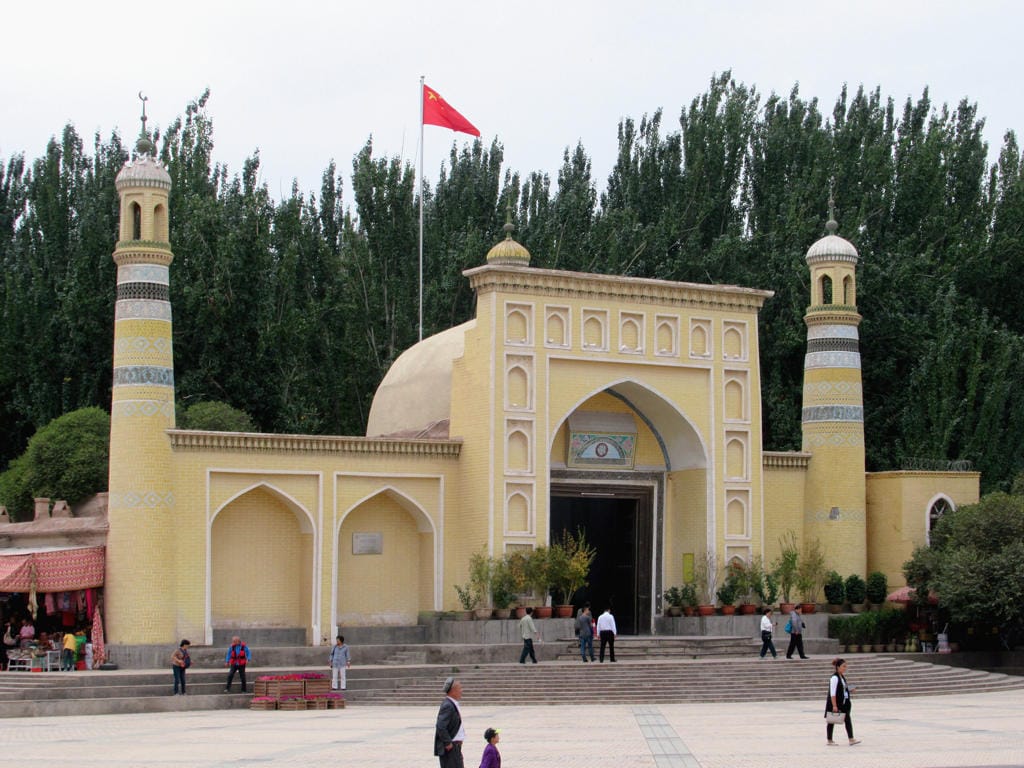
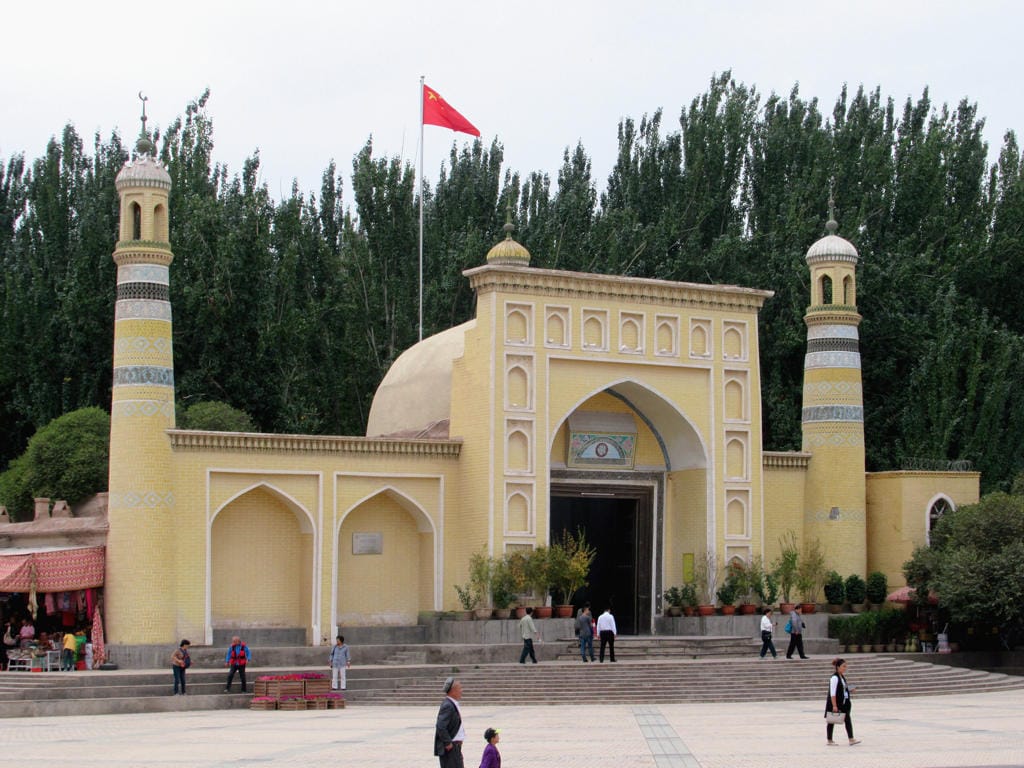
    A photo of the Id Kah Mosque, the largest in China, in Kashgar, Xinjiang, taken in 2017. The photographer noted that worshippers had their ID cards recorded. Image credit: David Stanley / CC By 2.0 

    Part I of this article discussed existing laws and regulations limiting religious expression in China, and it explored the case of Ismayil Sidiq, a Uyghur farmer serving a 10-year prison sentence for “promoting extremism” whose sentence was doubled after he “used a disguised and simplified method to perform namāz in the prison dormitory.” Namāz, commonly known as salah, refers to the pillar of the Islamic faith that obliges believers to pray five times a day. 

    Dui Hua’s research into court judgments, however, found a similar case where a Uyghur prisoner was sentenced in December 2019 to 18 months for Article 315 for conducting “illegal religious activity” on four occasions in Xinjiang’s Shihezi Prison. Prior to this, the Uyghur prisoner was serving his 20 years prison sentence for terrorism and promoting extremism. Despite being accused of conducting “illegal religious activity” on one more occasion, he was given an 18-month prison sentence for Article 315—half the length of Ismayil’s sentence. The judgment did not state whether namāz was involved. 

    Ismayil’s case is by no means an isolated incident, although what happened to him might have portended the worst possible outcome for performing namāz in prison. Dui Hua found cases where other Uyghur prisoners, while already serving lengthy prison sentences, were criminally prosecuted for Article 315 because of namāz. In the first case, a Uyghur serving his 10-year sentence for participating in a terrorist organization in Xinjiang’s Bayingolin Prison was found to have performed namāz on four occasions during the week of March 14, 2017. On each occasion, he awoke other cellmates, including those serving their sentences for endangering state security, to join his morning prayer. On May 21, he was put under 15 days of solitary confinement, during which he insisted on performing namāz five times a day and called on other cellmates to join his prayer. 

    A picture of Bayingolin Prison. Image credit: Shahit.biz 

    It would be a mistake to assume that prosecution against namāz only targets Uyghurs convicted of endangering state security, terrorism, or religious extremism offenses. In the second case, a Uyghur serving his seven-year sentence for “gathering a crowd to disturb social order,” a public order offense, in Korla Prison was indicted for Article 315 on June 13, 2017. The indictment stated that he refused to repent and that he insisted on performing namāz every day. Originally due for release on July 17, 2021, this Uyghur prisoner is likely to remain incarcerated until at least 2024. 

    In these two cases, the trial outcome is unclear. However, given what happened to Ismayil, they are highly likely to have been convicted and sentenced to additional prison terms under Article 315. 

    Besides Uyghurs, Muslim prisoners from other ethnic minority groups outside of Xinjiang also receive punishment for performing namāz. However, Dui Hua found that none of them were sentenced or criminally prosecuted like the abovementioned Uyghurs. These cases involved one Hui and two ethnic Dongxiang Muslims who were convicted of theft or drug-related crimes in Linxia, Gansu. The Hui and Dongxiang Muslims were only given warnings by prison authorities in July 2018. The duo allegedly showed remorse by stopping their prayers completely after they were warned. 

    Nevertheless, not all prisoners are as obedient. Ma Mene (马么呢), an ethnic Dongxiang Muslim, displayed a “bad attitude” and confronted prison guards after he was found praying in prison. Ma was placed under yanguan jixun (严管集训) for 15 days, a form of strict control for collective discipline training. During this period, he was unable to accrue clemency points to obtain early release. 

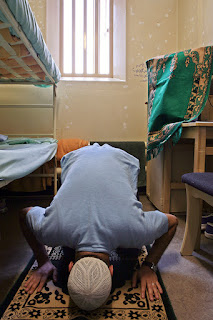
    A Muslim prisoner in the United States prays on his rug inside his cell at prison. Image credit: Andy Aitchison, PrisonImage / Creative Commons 

    China is not alone in denying Muslims their right to pray or worship meaningfully in prison. From reading the Quran to growing beards and restricting daily group prayers, Muslim prisoners in other countries have their religious rights deprived to varying degrees. In the United States, Muslims are overrepresented in state prisons, making up 9 percent of the prison population despite being 1 percent of the general population according to a 2019 report by Muslim Advocates. The report found that prisons in multiple states fail to accommodate Muslim dietary requirements, force male prisoners to shave their beards, and restrict group prayer.  

    As recently as April 2022, Muslim prisoners in the United States faced obstacles in accessing halal food, adequate dietary accommodations during Ramadan, and religious materials such as prayer mats and Qurans even as equivalent requirements are met for other faiths. Some progress has been made after civil society organizations filed lawsuits challenging religious restrictions in prison. For instance, federal prisons in the United States changed the national guideline in 2019 to accommodate Muslim congregational prayer services, which was previously restricted to three people, unless there is a security concern.  

    The use of “security concerns” to justify restrictions on religious expressions is an oft-used tool of governments. China, too, often cites security concerns to justify its religious crackdowns in- and outside of its carceral system. In a country which adheres so closely to the notion of “stability above all else,” it is unlikely that religious restrictions on namāz in prison will abate. Similarly, the right to free assembly through group prayer, a practice valued by Muslims and only recently permissible in US prisons, is likely to continue amongst China’s repression of religious expression and assembly. 

  • Punishing Namāz Prayer in Prison, Part II: “Illegal Religious Activity”

    Punishing Namāz Prayer in Prison, Part II: “Illegal Religious Activity”

    A photo of the Id Kah Mosque, the largest in China, in Kashgar, Xinjiang, taken in 2017. The photographer noted that worshippers had their ID cards recorded. Image credit: David Stanley / CC By 2.0

    Part I of this article discussed existing laws and regulations limiting religious expression in China, and it explored the case of Ismayil Sidiq, a Uyghur farmer serving a 10-year prison sentence for “promoting extremism” whose sentence was doubled after he “used a disguised and simplified method to perform namāz in the prison dormitory.” Namāz, commonly known as salah, refers to the pillar of the Islamic faith that obliges believers to pray five times a day.

    Dui Hua’s research into court judgments, however, found a similar case where a Uyghur prisoner was sentenced in December 2019 to 18 months for Article 315 for conducting “illegal religious activity” on four occasions in Xinjiang’s Shihezi Prison. Prior to this, the Uyghur prisoner was serving his 20 years prison sentence for terrorism and promoting extremism. Despite being accused of conducting “illegal religious activity” on one more occasion, he was given an 18-month prison sentence for Article 315—half the length of Ismayil’s sentence. The judgment did not state whether namāz was involved.

    Ismayil’s case is by no means an isolated incident, although what happened to him might have portended the worst possible outcome for performing namāz in prison. Dui Hua found cases where other Uyghur prisoners, while already serving lengthy prison sentences, were criminally prosecuted for Article 315 because of namāz. In the first case, a Uyghur serving his 10-year sentence for participating in a terrorist organization in Xinjiang’s Bayingolin Prison was found to have performed namāz on four occasions during the week of March 14, 2017. On each occasion, he awoke other cellmates, including those serving their sentences for endangering state security, to join his morning prayer. On May 21, he was put under 15 days of solitary confinement, during which he insisted on performing namāz five times a day and called on other cellmates to join his prayer.

    A picture of Bayingolin Prison. Image credit: Shahit.biz 

    It would be a mistake to assume that prosecution against namāz only targets Uyghurs convicted of endangering state security, terrorism, or religious extremism offenses. In the second case, a Uyghur serving his seven-year sentence for “gathering a crowd to disturb social order,” a public order offense, in Korla Prison was indicted for Article 315 on June 13, 2017. The indictment stated that he refused to repent and that he insisted on performing namāz every day. Originally due for release on July 17, 2021, this Uyghur prisoner is likely to remain incarcerated until at least 2024.

    In these two cases, the trial outcome is unclear. However, given what happened to Ismayil, they are highly likely to have been convicted and sentenced to additional prison terms under Article 315.

    Besides Uyghurs, Muslim prisoners from other ethnic minority groups outside of Xinjiang also receive punishment for performing namāz. However, Dui Hua found that none of them were sentenced or criminally prosecuted like the abovementioned Uyghurs. These cases involved one Hui and two ethnic Dongxiang Muslims who were convicted of theft or drug-related crimes in Linxia, Gansu. The Hui and Dongxiang Muslims were only given warnings by prison authorities in July 2018. The duo allegedly showed remorse by stopping their prayers completely after they were warned.

    Nevertheless, not all prisoners are as obedient. Ma Mene (马么呢), an ethnic Dongxiang Muslim, displayed a “bad attitude” and confronted prison guards after he was found praying in prison. Ma was placed under yanguan jixun (严管集训) for 15 days, a form of strict control for collective discipline training. During this period, he was unable to accrue clemency points to obtain early release.

    A Muslim prisoner in the United States prays on his rug inside his cell at prison. Image credit: Andy Aitchison, PrisonImage / Creative Commons

    China is not alone in denying Muslims their right to pray or worship meaningfully in prison. From reading the Quran to growing beards and restricting daily group prayers, Muslim prisoners in other countries have their religious rights deprived to varying degrees. In the United States, Muslims are overrepresented in state prisons, making up 9 percent of the prison population despite being 1 percent of the general population according to a 2019 report by Muslim Advocates. The report found that prisons in multiple states fail to accommodate Muslim dietary requirements, force male prisoners to shave their beards, and restrict group prayer.

    As recently as April 2022, Muslim prisoners in the United States faced obstacles in accessing halal food, adequate dietary accommodations during Ramadan, and religious materials such as prayer mats and Qurans even as equivalent requirements are met for other faiths. Some progress has been made after civil society organizations filed lawsuits challenging religious restrictions in prison. For instance, federal prisons in the United States changed the national guideline in 2019 to accommodate Muslim congregational prayer services, which was previously restricted to three people, unless there is a security concern.

    The use of “security concerns” to justify restrictions on religious expressions is an oft-used tool of governments. China, too, often cites security concerns to justify its religious crackdowns in- and outside of its carceral system. In a country which adheres so closely to the notion of “stability above all else,” it is unlikely that religious restrictions on namāz in prison will abate. Similarly, the right to free assembly through group prayer, a practice valued by Muslims and only recently permissible in US prisons, is likely to continue amongst China’s repression of religious expression and assembly.

  • Punishing Namāz Prayer in Prison, Part I: “Sabotaging Prison Supervision”

    Punishing Namāz Prayer in Prison, Part I: “Sabotaging Prison Supervision”

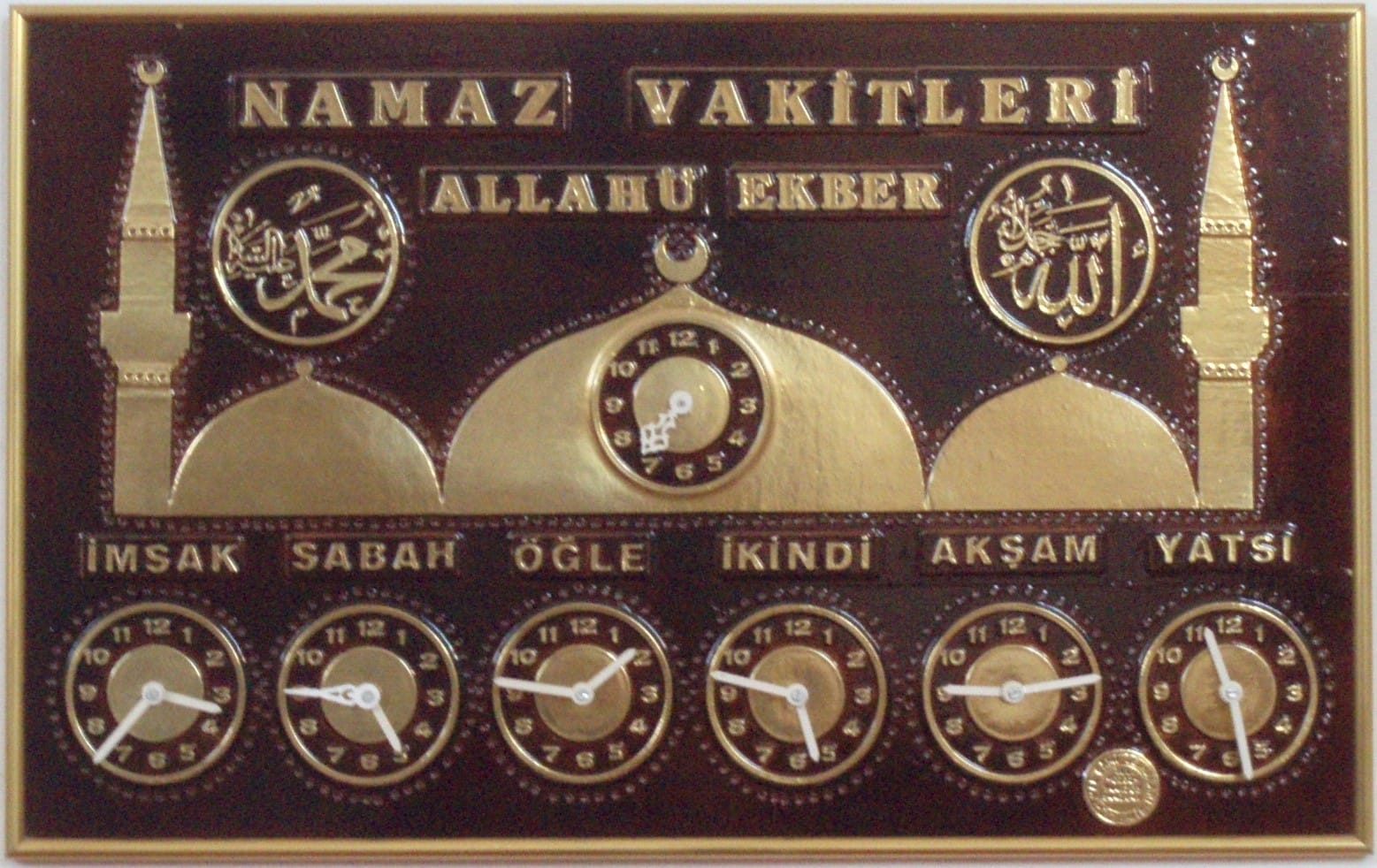
    A clock hanging in a Turkish mosque showing Muslim prayer times. Image credit: LooiNL 

    Muslims around the world are obliged to perform five daily prayers at dawn, midday, afternoon, sunset, and night. The ritual, commonly known as salah, is often called namazi (CN: 乃玛孜) in China, a Persian transliteration of namāz. Within China’s carceral system, all forms of religious worship, including namāz, are forbidden. Prisoners who covertly perform namāz are at risk of receiving harsh punishment, with the most serious penalty being a sentence extension. 

    This risk is well demonstrated in the case of Ismayil Sidiq. In May 2021, the BBC reported that the now-57-year-old Uyghur farmer was serving a 10-year prison sentence for “promoting extremism” in Kuitun Prison in the Xinjiang Production and Construction Corps when he had his sentence doubled after he “used a disguised and simplified method to perform namāz in the prison dormitory.” On May 29, 2018, the Kuitun Reclamation Area People’s Court convicted him of “sabotaging prison supervision” and “provoking ethnic hatred,” and handed down an additional prison term of 13 years. Ismayil has 16 more years to serve before completing his sentence on May 28, 2038. He will be 74 years old. 

    The four-page judgment gave a detailed account of what happened in Kuitun Prison. First searchable on China Judgements Online, the judgment is among the tens of thousands of sensitive cases taken offline in mid-2021. The judgment has since been archived and translated into English by the Xinjiang Victims Database. 

    A translation of the judgment against Ismayil. Image credit: Xinjiang Victims Database Twitter account 

    According to the judgment, Ismayil performed namāz on three occasions in the prison dormitory in early 2018. The first two took place on January 25 and February 17 after he realized that the time displayed on the television was the time for his final daily namāz. On March 3, on the pretext of needing to urinate, he secretly performed wudu, the washing ritual that Muslims perform before praying. After being discovered and stopped by his Uyghur cellmates, he became outraged and shouted at them asking, “Are you Uyghurs? Do Uyghurs enjoy reporting other Uyghurs like this?” 

    The court found clear and sufficient evidence of Ismayil sabotaging prison supervision because he “repeatedly engaged in covert religious activities in prison.” This crime alone afforded him a prison sentence of three years – the maximum penalty stipulated in Article 315 of the Criminal Law. Furthermore, he was found guilty of “provoking ethnic hatred” because the remarks he made to other Uyghur cellmates “sowed discord among the ethnic groups and created ethnic antagonism.” This crime also landed him the maximum prison sentence of 10 years as stipulated by Article 249. 

    An excerpt taken from academic journal Crime and Corrections reveals that namāz is among the religious activities explicitly banned in prisons and re-education-through-labor facilities through Xinjiang. Image credit: Crime and Corrections, (2001) Issue 4 

    While prisoners are allowed to retain their religious faith, prison authorities across China proscribe all forms of religious activities but allow prisoners to read religious books or silently chant scriptures. Article 2 of a provisional regulation issued by the Xinjiang Department of Justice explicitly prohibits all forms of religious activity such as participating in Ramadan, namāz, other forms of worship, or sermons in prisons and reeducation-through-labor facilities. However, many Muslim detainees and prisoners defied this prison rule and “shared a propensity to organize gangs when they perform namāz in groups,” according to an article published in Crime and Corrections in 2001. Congregational prayer, referred to as Salat al-Jama’ah, is highly valued among Muslims and is thought to be more spiritually enriching than solo prayer.  

    In Xinjiang, namāz is a matter of concern for managing prisoners serving their sentences for endangering state security. A 2008 policy document examining the challenges faced by Xinjiang prison authorities states that these prisoners not only distort the history of Xinjiang, spread rumors, and incite ethnic hatred, but they also “use acts such as hunger strikes, suicide, namāz and feigned illness to disobey management and refuse reform.” 

    Existing laws and regulations, however, have not clearly explained the criminal liabilities for performing namāz in prison. The crime of “sabotaging prison supervision,” defined in Article 315 of the Criminal Law, makes no mention of namāz or any other forms religious activity. It only stipulates that the following acts fall under the crime’s purview: (1) beating supervising personnel; (2) organizing other people under detention to sabotage supervision order; (3) assembling a crowd to make trouble, thereby disturbing normal supervision order; (4) beating, carrying out corporal punishment on or instigating other people to beat, carry out corporal punishment on other people under detention. 

    It is not immediately clear whether performing namāz fulfills the criteria of stipulation 2 as stated above. Assuming it does, Ismayil’s case might suggest that the three instances of namāz he performed on January 25, February 17, and March 3 of 2018 were already sufficient to reach the threshold for the maximum prison sentence of three years.  

    Read Part II.

  • Punishing Namāz Prayer in Prison, Part I: “Sabotaging Prison Supervision”

    Punishing Namāz Prayer in Prison, Part I: “Sabotaging Prison Supervision”

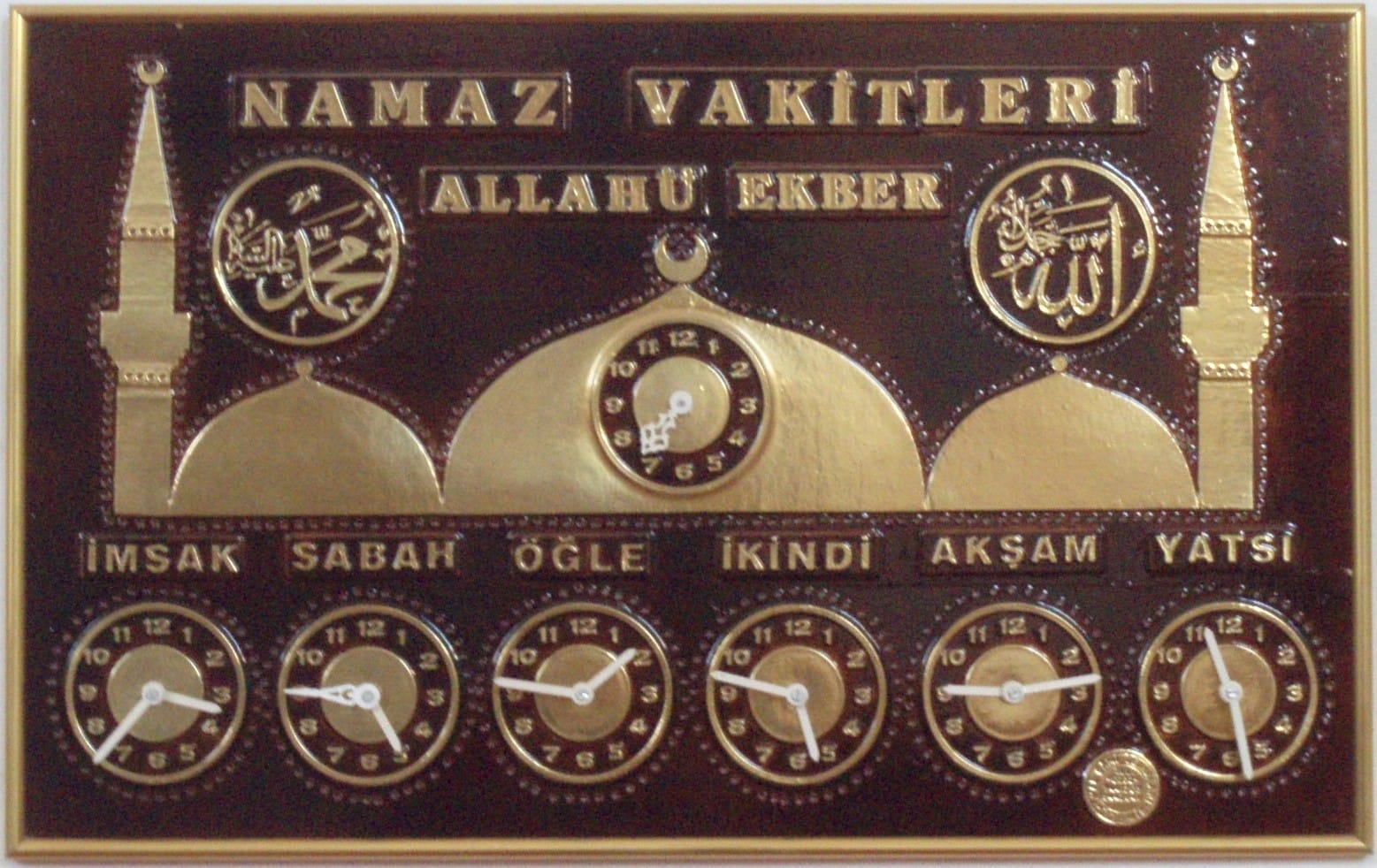
    A clock hanging in a Turkish mosque showing Muslim prayer times. Image credit: LooiNL 

    Muslims around the world are obliged to perform five daily prayers at dawn, midday, afternoon, sunset, and night. The ritual, commonly known as salah, is often called namazi (CN: 乃玛孜) in China, a Persian transliteration of namāz. Within China’s carceral system, all forms of religious worship, including namāz, are forbidden. Prisoners who covertly perform namāz are at risk of receiving harsh punishment, with the most serious penalty being a sentence extension.

    This risk is well demonstrated in the case of Ismayil Sidiq. In May 2021, the BBC reported that the now-57-year-old Uyghur farmer was serving a 10-year prison sentence for “promoting extremism” in Kuitun Prison in the Xinjiang Production and Construction Corps when he had his sentence doubled after he “used a disguised and simplified method to perform namāz in the prison dormitory.” On May 29, 2018, the Kuitun Reclamation Area People’s Court convicted him of “sabotaging prison supervision” and “provoking ethnic hatred,” and handed down an additional prison term of 13 years. Ismayil has 16 more years to serve before completing his sentence on May 28, 2038. He will be 74 years old.

    The four-page judgment gave a detailed account of what happened in Kuitun Prison. First searchable on China Judgements Online, the judgment is among the tens of thousands of sensitive cases taken offline in mid-2021. The judgment has since been archived and translated into English by the Xinjiang Victims Database.

    A translation of the judgment against Ismayil. Image credit: Xinjiang Victims Database Twitter account

    According to the judgment, Ismayil performed namāz on three occasions in the prison dormitory in early 2018. The first two took place on January 25 and February 17 after he realized that the time displayed on the television was the time for his final daily namāz. On March 3, on the pretext of needing to urinate, he secretly performed wudu, the washing ritual that Muslims perform before praying. After being discovered and stopped by his Uyghur cellmates, he became outraged and shouted at them asking, “Are you Uyghurs? Do Uyghurs enjoy reporting other Uyghurs like this?”

    The court found clear and sufficient evidence of Ismayil sabotaging prison supervision because he “repeatedly engaged in covert religious activities in prison.” This crime alone afforded him a prison sentence of three years – the maximum penalty stipulated in Article 315 of the Criminal Law. Furthermore, he was found guilty of “provoking ethnic hatred” because the remarks he made to other Uyghur cellmates “sowed discord among the ethnic groups and created ethnic antagonism.” This crime also landed him the maximum prison sentence of 10 years as stipulated by Article 249.

    An excerpt taken from academic journal Crime and Corrections reveals that namāz is among the religious activities explicitly banned in prisons and re-education-through-labor facilities through Xinjiang. Image credit: Crime and Corrections, (2001) Issue 4

    While prisoners are allowed to retain their religious faith, prison authorities across China proscribe all forms of religious activities but allow prisoners to read religious books or silently chant scriptures. Article 2 of a provisional regulation issued by the Xinjiang Department of Justice explicitly prohibits all forms of religious activity such as participating in Ramadan, namāz, other forms of worship, or sermons in prisons and reeducation-through-labor facilities. However, many Muslim detainees and prisoners defied this prison rule and “shared a propensity to organize gangs when they perform namāz in groups,” according to an article published in Crime and Corrections in 2001. Congregational prayer, referred to as Salat al-Jama’ah, is highly valued among Muslims and is thought to be more spiritually enriching than solo prayer.

    In Xinjiang, namāz is a matter of concern for managing prisoners serving their sentences for endangering state security. A 2008 policy document examining the challenges faced by Xinjiang prison authorities states that these prisoners not only distort the history of Xinjiang, spread rumors, and incite ethnic hatred, but they also “use acts such as hunger strikes, suicide, namāz and feigned illness to disobey management and refuse reform.”

    Existing laws and regulations, however, have not clearly explained the criminal liabilities for performing namāz in prison. The crime of “sabotaging prison supervision,” defined in Article 315 of the Criminal Law, makes no mention of namāz or any other forms religious activity. It only stipulates that the following acts fall under the crime’s purview: (1) beating supervising personnel; (2) organizing other people under detention to sabotage supervision order; (3) assembling a crowd to make trouble, thereby disturbing normal supervision order; (4) beating, carrying out corporal punishment on or instigating other people to beat, carry out corporal punishment on other people under detention.

    It is not immediately clear whether performing namāz fulfills the criteria of stipulation 2 as stated above. Assuming it does, Ismayil’s case might suggest that the three instances of namāz he performed on January 25, February 17, and March 3 of 2018 were already sufficient to reach the threshold for the maximum prison sentence of three years.

    Read Part II.

  • Crimes of Extremism, Part II: Harsh Sentences, Low Transparency in Xinjiang

    Crimes of Extremism, Part II: Harsh Sentences, Low Transparency in Xinjiang

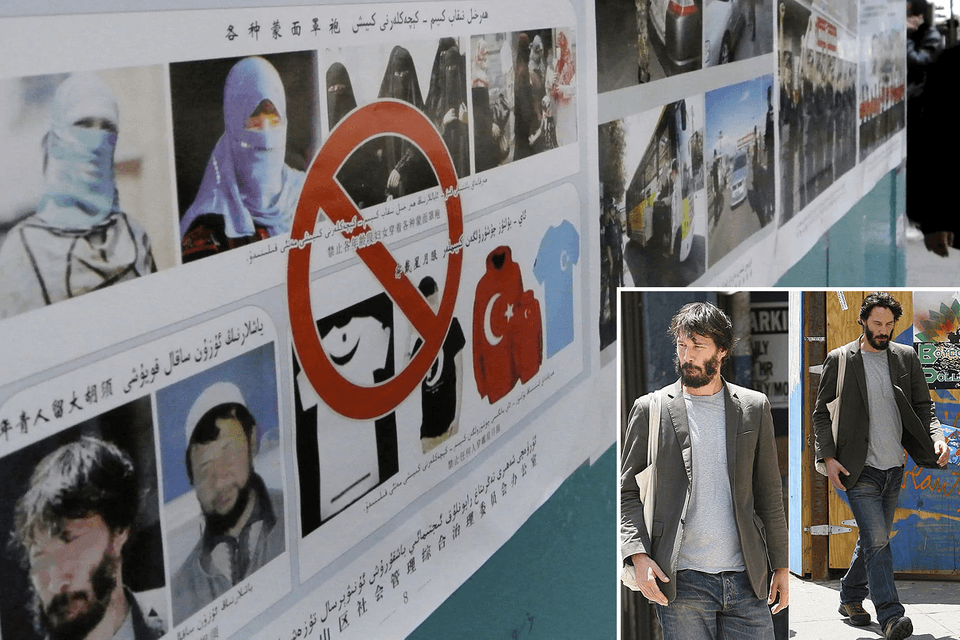
    A Chinese propaganda poster denouncing extremism. In 2018, the poster went viral after a social media user noticed that one of the poster’s images condemning Islamic facial hair featured actor Keanu Reeves, who does not identify as Muslim. Image credit: Reddit via Taiwan News

    Read Part I here.

    Although ethnic minorities make up the majority of the extremism cases, there is a dearth of publicly available information about them, particularly those of the Islamic faith. Court judgments and judicial decisions like this in Xinjiang are deemed to be highly sensitive; they were almost never posted online even before the purge on China Judgements Online started in June 2021. Overseas news media sources have reported on a few cases, but it is impossible to grasp the whole picture due to the tight control on information flows in the region. In most cases, media reports did not explicitly state which specific extremism crimes were invoked.

    Radio Free Asia (RFA) is among the overseas news media groups which have occasionally covered extremism cases over the years. In September 2017, a Uyghur woman named Horigul Nasir was reportedly sentenced to 10 years in prison in Kashgar, presumably for extremism because she allegedly told one of her friends that not wearing a headscarf is sinful. The allegation, however, has been disputed by her brother, who claimed that his sister does not even wear a headscarf or pray five times a day.

    In another case also reported by RFA, a Uyghur businessman named Ekber Imin is serving a 25-year prison sentence for an unspecified extremism crime alongside two of his brothers. They were reportedly convicted for having foreign contacts and spreading extremism by incorporating ethnic and religious elements in the buildings they developed.

    In March 2022, RFA reported that Abdureshid Obul died in 2020 while serving his eight-year prison sentence for an extremism crime. The Uyghur farmer was reportedly jailed for having a fourth child and relocating his pregnant wife to avoid a forced abortion. Ethnic minority families living in rural areas are limited to two children. Authorities considered Abdureshid’s violation of the family planning policy to be an act of extremism.

    (Top) Horigul Nasir’s identification card. (Bottom) A photo of Ekber Imin’s passport page. Image credits: RFA listeners via RFA 
    The harsh punishments given to the aforementioned Uyghurs are by no means isolated incidents. Dui Hua’s research into Chinese government sources found evidence of Muslim minorities receiving excessive punishment for committing extremism crimes in Xinjiang. For instance, Dui Hua discovered a case in which a Uyghur prisoner had his prison sentence extended by 15 years in July 2017 for violating Article 120(3). He was already serving his seven-year prison sentence for Article 300 “organizing or using a cult to undermine implementation of the law.” It is unclear which “cult organization” he had joined leading to his initial conviction. The court ordered him to serve a total prison sentence of 19 years and 8 months, which included the 56-month sentence for Article 300 he had yet to complete. After his prison sentence expires in 2036, he must still serve a supplemental deprivation of political rights sentence of five years.

    It would be a mistake to assume that only Uyghurs are singled out for excessive criminal punishment. An ethnic Dongxiang surnamed Chen received a 10-year prison sentence for Article 120(3) with a deprivation of political rights sentence of three years in Nilka County in July 2018. As with almost all other cases of a similar nature, there is no information about the acts that led to his harsh prison sentence.

    Two Rare Judgments 

    Despite being unable to find an extremism judgment in Xinjiang, where the majority of extremism cases are tried and heavy sentences are meted out, Dui Hua found two rare judgments in other provinces. Dongxiang are among the Muslim communities who have faced restrictions in and outside of Xinjiang, but very little information is known about the crackdown on this ethnic group. The case of Ma Yinglong (马英龙) in Beijing indicates that besides growing beards, conducting regular prayer or unauthorized religious classes, or fasting for Ramadan, Islamic booksellers are another target of China’s crackdown on extremism.

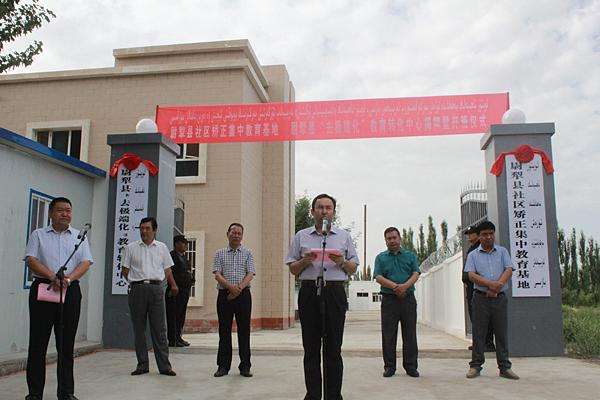
    A picture of the opening ceremony of a Xinjiang re-education camp, posted online by the government in Korla, Xinjiang in June 2018. The partially obscured sign on the left reads “Transformation Through Education Center” (教育转化中心 jiàoyù zhuǎnhuà zhōngxīn). Image credit Korla government via SupChina

    Ma is a native from Xinjiang’s Yining County. He was convicted of Article 120(3) and sentenced to 13 months in prison by Beijing’s Haidian District People’s Court in September 2017. The crime stemmed from him running an Islamic bookstore which sold books about Islam and related topics. Additionally, he administered his IslamBook.net website, which offered a number of Islamic religious items including Malaysian-made hijabs and other clothing, Islamic arts and crafts, and halal food items, according to reporting from unofficial news media sources.

    The court judgment focused on one title he sold: Milestones: Ma’alim Fi’l Tariq. This book was written by Egyptian Islamic author Sayyid Qutb, who calls for the re-creation of the Muslim world on strictly Quranic grounds to counter western influence. Qutb is seen by some observers as one of the formative, leading theorists of violent jihad. Unbeknownst to Ma, the Chinese version of this book had been classified in China as an illegal publication about terrorism and extremism. Ma stated in his defense that he had not read the book; he only procured a total of six copies of Milestones at the request of his customers. The court rejected Ma’s defense because “he should have known about the extremely harmful nature of the book” considering he had many years of experience selling Islamic books.

    In another case, Dui Hua found that Uyghur businessman Erkin Balat was sentenced to 22 months in prison for Article 120(6) in Shandong. Erkin moved to Qufu from Xinjiang to start his jade business in 2007. In early 2017, he was found in possession of 50 Uyghur-language books, one Uyghur-Arabic dictionary and one Arabic-language Quran, which became evidence of him possessing articles to promote extremism. Some of the Uyghur titles touched on topics such as the history of Islam. Other evidence included two Japanese sabres and one Arabian scimitar he displayed in one of his shops. Erkin completed his prison sentence on March 8, 2021.

    Same Acts, Different Outcomes

     
    In Part I, Dui Hua discussed how Han come into conflict with the law for extremism, including by possessing or circulating videos with scenes of violence in connection to the “East Turkestan Independence Movement,” ISIS, or the Taliban. Chinese law criminalizes such behavior regardless of ethnicity, but in practice there is a clear ethnic bias in sentencing. The same acts committed by Uyghurs or other Muslim minority groups are more likely to result in harsher criminal punishments. Precedents indicated that the same audio-visual evidence is almost certainly construed by prosecutors and judges to contain messages about “jihad” and “hijrat” (i.e. migration to another place for the sake of Allah) where the defendants practice Islam. In such cases, other crimes such as splittism, inciting splittism, and/or organizing or participating in a terrorist organization are often tacked on to the allegations of extremism.
    Screenshot from a 2019 CGTN program titled Fighting Terrorism in Xinjiang. Image credit: CGTN
    While Muslims in Western countries have been given prison sentences for viewing, disseminating, or producing films containing extremist material, these cases have typically been handled with greater transparency to hold law enforcements accountable for their decisions and ensure that their counterterrorism measures are non-arbitrary and impartial. In cases where this might not be possible, such as the CIA’s use of black sites to interrogate suspected terrorist actors or other “enemy combatants,” civil society organizations and independent journalism efforts can provide a degree of scrutiny.
    By contrast, cases in China are selectively transparent at best, as in many publicized cases of Han. The vast majority of ethnic minority cases remain shrouded in secrecy. Limited available evidence on Uyghurs and other ethnic groups suggests that the acts are more diverse, but they all resolve around the expression of Islam. Muslims are also much more likely to receive disproportionately severe sentences for the same crimes than the Han counterparts.
  • Crimes of Extremism, Part I: Observations on Use and Sentencing

    Crimes of Extremism, Part I: Observations on Use and Sentencing

    Screenshot from a 2019 CGTN program titled Fighting Terrorism in Xinjiang. Image credit: CGTN

    Extremism, officially defined in Chinese law as the “ideological basis of terrorism”, or more broadly, “inciting hatred, discrimination or agitating violence through distorting religious doctrines or other means, has long been integral to China’s security policy against the “three evil forces” (i.e terrorism, splittism, and religious extremism). However, it was not a precisely defined legal term until the following provisions were added in 2015 under Article 120 of the Criminal Law, “organizing, leading, and actively participating in a terrorist organization:”

    • Article 120(3): Promoting terrorism, or extremism or instigating terrorist activities;
    • Article 120(4): Using extremism to undermine implementation of the law;
    • Article 120(5): Coercing other people into wearing costumes or symbols to promote terrorism or extremism;
    • Article 120(6): Illegally possessing articles to promote terrorism or extremism.

    Reporting by overseas news media sources suggests that the four new crimes are most typically invoked against Uyghurs. The crimes have been criticized by United Nations’ special rapporteurs and working groups for being overly vague with no basis in binding international legal standards. Human rights groups have also said that many of the extremism arrests are made without evidentiary basis and authorities frequently fail to respect the due process rights of detainees.

    This is the first installment in a two-part series which discusses Dui Hua’s observations on extremism, with a focus on Article 120(3) and (6). Part I discusses the extent of the crimes’ application and sentencing trends, drawing on the 2016 statistics released by the Supreme People’s Court. Individuals charged with and convicted of extremism crimes are not exclusively members of ethnic minority groups, despite their accounting for most of the cases. Extremism cases are selectively published in Chinese government sources. Those involving Han are notably well documented, and only rarely do they receive lengthy prison sentences. Part II focuses on cases involving Muslim minorities. Hefty punishments appear commonplace in Xinjiang, but information on prisoners pre- and post-sentencing is extremely limited.

    Court Statistics One Year After Expansion

    According to the 12-volume Records of People’s Courts Historical Judicial Statistics: 1949-2016, China tried 1,403 extremism cases involving 2,463 defendants in 2016. Of them, 2,031, or 82 percent, were ethnic minorities. Additionally, 85 percent of the defendants were farmers. As Xinjiang has been cast as a key battlefield in the fight against extremism, it would be natural to assume that the charges are predominantly leveled against Muslim minorities.

    Table 1. Court statistics on extremism crimes for 2016

    Source: Records of People’s Courts Historical Judicial Statistics: 1949-2016
    Two-thirds of the defendants violated Article 120(3) “promoting terrorism, or extremism or instigating terrorist activities.” Slightly over one quarter were tried for Article 120(6) “illegally possessing articles to promote terrorism or extremism.” About five percent, or 124 people, were tried for Article 120(4) “using extremism to undermine implantation of the law.” Only 18 people were tried in 17 cases of Article 120(5) “coercing other people into wearing costumes or symbols to promote terrorism or extremism” in 2016.
    Of the four extremism crimes, Article 120(3) is most likely to result in lengthy prison sentences. Among the 1,669 people who received criminal punishment for this crime, 1,109, or 66 percent, received prison sentences of five years or more. By contrast, a much bigger portion of people who are tried for Article 120 (4), (5) and (6) received prison sentences below five years. The use of non-custodial punishment in all extremism cases was rare. Only 70 people convicted of the four extremism crimes were given suspended sentences or control (guanzhi).
    Members of China’s largest ethnic group, Han, are not immune to the crackdown on extremism. The court statistics indicated that 422, or 17 percent, of the 2,463 people tried for the new extremism crimes in 2016 were Han. Of them, 198 were tried for Article 120(3) “promoting terrorism, or extremism or instigating terrorist activities,” 172 for Article 120(6) “illegally possessing articles to promote terrorism or extremism,” 59 for Article 120(4) “using extremism to undermine implantation of the law,” and two for Article 120(5) “coercing other people into wearing costumes or symbols to promote terrorism or extremism.”
    Han Cases
     
    Han extremism cases are easily searchable in Chinese government and media sources. Their cases rarely result in lengthy prison sentences. Dui Hua found 18 cases tried in Beijing which invoked Article 120(3) or (6) from 2017-2021. There were 19 defendants, of whom 11 were Han, one ethnic Manchu, and one Dongxiang. Ethnicity is not always specified in the judgments. None of the Han defendants in Beijing received prison sentences of more than one year, and the lengthiest sentence of two years was given to a duo whose ethnicity is not specified.
    The circumstances of the publicly disclosed extremism cases in other Han-majority provinces are almost identical: they are accused of disseminating violent and terrorist videos they downloaded from overseas websites with the use of a VPN. The videos, typically filmed in the Middle East, contain scenes of violence with prisoners of war beheaded or executed, footage of Islamic State or sometimes Taliban attacks, training, and fighting. The defendants unwittingly commit Article 120(3) when they share the videos with their friends, post them on social media, or put them in cloud storage.
    A screenshot of a 2015 tweet from Mashable on Chinese-language ISIS propaganda. Image credit: Mashable Twitter account
    Most Han defendants are not religious, and they are depicted to have been driven by curiosity to download or share the violent videos. In some cases, they are convicted for simply poking fun at terrorist organizations or figures. In December 2019, news media sources reported that a man surnamed Zhang was sentenced to nine months in prison in Beijing for Article 120(3) for sending out a six-word joke in Chinese which can be translated as “follow me and believe in Islam, join the ISIS” to a WeChat group with over 300 people. He also used a photo of Bin Laden as his profile portrait.
    A portion of Han defendants were convicted of Article 120(6) “illegally possessing articles to promote terrorism or extremism” for keeping violent footage on their personal electronic or mobile devices, despite them not having shared anything with other people. None of the Han defendants convicted of this crime in Beijing received prison sentences exceeding one year.
    Targeting Han Dissidents
     
    While most Han defendants in extremism cases are portrayed as thrill seekers who inadvertently violate the law, precedents also show that extremism easily becomes a catch-all offense to be used in politically motivated prosecutions targeting political and religious dissenters. In such cases, prison sentences can be excessive. For instance, Huang Yunmin (黄云敏) is serving his 10-year prison sentence for Article 120(6), one of the longest prison sentences given to a Han dissenter for an extremism crime. Huang was initially detained for provoking ethnic hatred in March 2017 for accompanying farmers and ex-soldiers to Beijing to petition during the “Two Sessions.” Additionally, prosecutors accused Huang of downloading a large number of anti-China footage from overseas websites and audiovisual materials related to the July 5 Urumqi riots. Huang is scheduled for release in 2027.
    (Clockwise top left) Journalist Zhang Baocheng; Huang Yunmin, known for helping petitioners; Zhao Waikei, Xuncheng Reformed Church leader. Image credits: Civil Rights and Livelihood Watch via RFA; Asia News; WeChat via ChinaAid
    Han who express sympathy with the Uyghur cause are at heightened risk of imprisonment for extremism crimes. Zhang Baocheng (张宝成) is serving his 42-month prison sentence in Beijing for Article 120(3) and “picking quarrels and provoking trouble” until November 27, 2022. The extremism charge, which afforded him a prison sentence of eight months, stemmed from one video clip he circulated about “East Turkestan.” In November 2021, the UN Working Group on Arbitrary Detention concluded that Zhang’s detention since 2019 was “arbitrary” and called on China to “release Mr. Zhang immediately,” noting that the prosecution’s main evidence against him related not to violence but to his tweets criticizing the re-education camps in Xinjiang holding Uyghurs. The Working Group’s ruling was made public by one of the plaintiffs on April 25, 2022.
    In a separate case, Hu Xincheng (胡新城) was arrested for Article 120(3) in Taiyuan, Shanxi, in January 2022 because of his journalistic work. Hu became a thorn in the side of local governments after he published hundreds of articles and reports about corruption. Additionally, Hu reportedly gave advice to petitioners on how to find redress for grievances within the petitioning system.
    Extremism is also used to target Christians unwilling to join the state sanctioned Three Self Patriotic Church. In July 2020, police in Taiyuan arrested Zhao Weikai (赵维凯) for Article 120(6). Zhao, a leader of the Xuncheng Reformed Church, repeatedly faces harassment by the authorities because of his insistence on educating his three children at home instead of sending them to a state school to receive atheist education. Zhao was formally arrested in the same month, being accused of possessing extremism materials.
    Part II will be published next week. Subscribe to Dui Hua publications here. 
  • Decoding State Security Trials, Part I: ESS Cases in Tibet Rose Sharply in 2020

    Decoding State Security Trials, Part I: ESS Cases in Tibet Rose Sharply in 2020

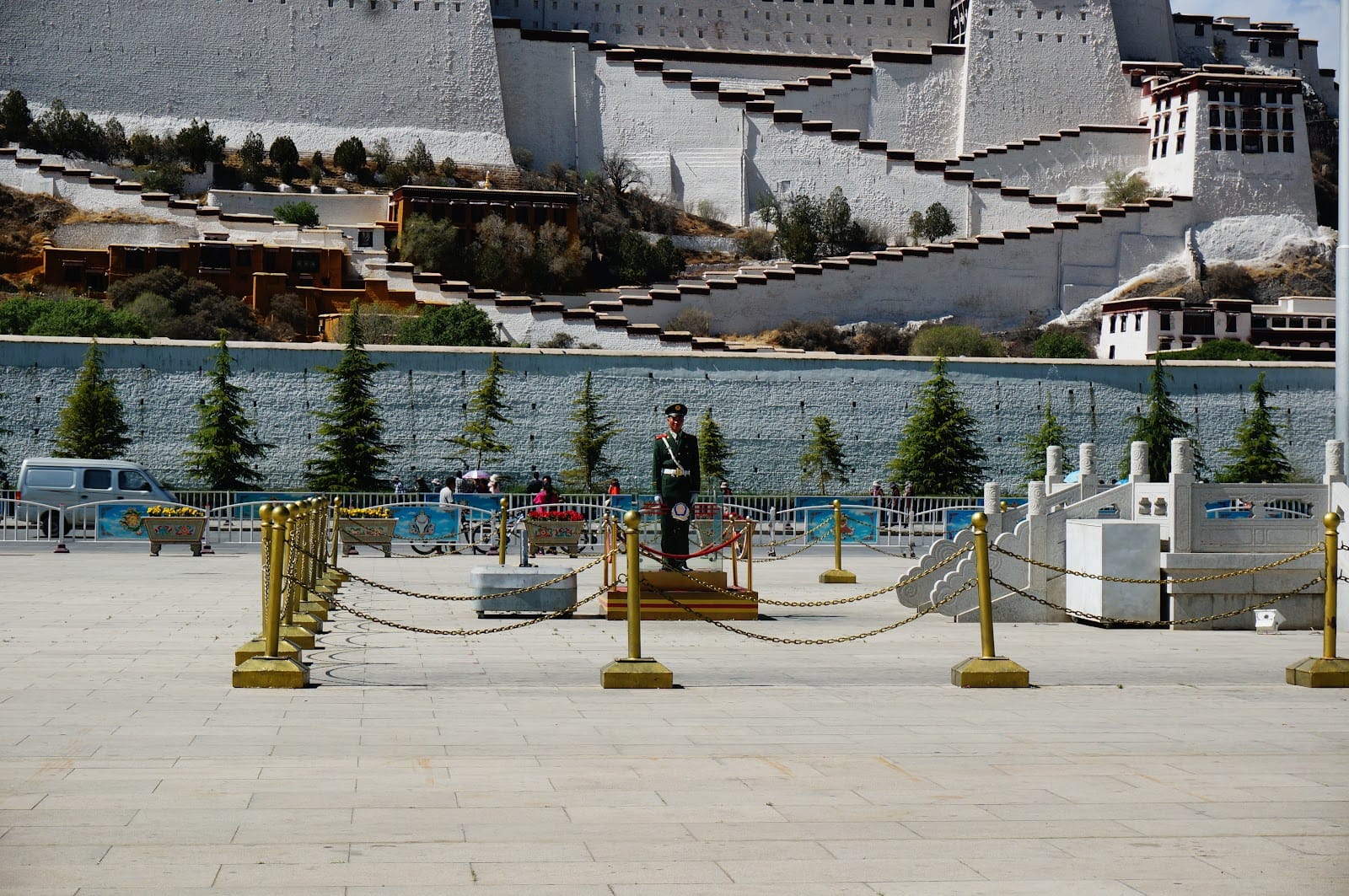
    Chinese guard in Potala Square on May 20, 2014. Image credit: Andrew and Annemarie / CC BY-SA 2.0

    Crimes of endangering state security in China achieved international attention in 2021 with high-profile cases related to hostage diplomacy, even as available information about individual trials decreased. Such crimes include subversion, splittism, incitement to subversion/splittism, espionage, and state secrets violations. They carry a mandatory supplemental sentence of deprivation of political rights, precluding individuals from writing articles, giving interviews, voting, standing for office, and working in a state-owned company.

    From 2017-2020, Chinese courts concluded 1,330 trials of endangering state security (ESS), dereliction of military duty, and pre-1997 offenses, according to Dui Hua’s analysis of data published annually in China Statistical Yearbooks (中国统计年鉴) by the National Bureau of Statistics. The yearbooks, accessible on the National Bureau of Statistics website, provide information on the number of first-instance criminal trials accepted and concluded by people’s courts nationwide.

    ESS, dereliction of military duty, and criminal offenses prior to October 1, 1997 are typically included in the category of “other” trials. In 2020, the latest year for which information is available, trials of ESS by Chinese courts appear to have surged. They accepted 417 “other” trials, up from 257 and 317 in 2018 and 2019, respectively. The courts also concluded 382 “other” trials in 2020, an increase from 218 and 283 over the previous two years.

    This post, the first of two, looks at the number of ESS trials in Tibetan areas as well as in Xinjiang. Part II details case numbers for “other” trials such as dereliction of military duty as well as ESS trials in Han-majority provinces and Guangdong.

    Table 1. Number of “other” trials and trials of ESS, dereliction of military duty trials, and pre-1997 criminal cases

    *(a) = (b) + (c) + (d); Sources: China Statistical Yearbooks & Records of People’s Courts Historical Judicial Statistics: 1949-2016

    A fair portion of “other” trials are made up of ESS. Statistics released by the Supreme People’s Court in the 12-volume Records of People’s Courts Historical Judicial Statistics: 1949-2016 confirmed that a total of 1,602 ESS trials were concluded from 2012-2016, making up 40 percent of “other” trials. In 2016, as many as two-thirds of the 285 “other” trials concluded were ESS.

    Tibet

    Tibet covers one-eighth of China’s territory and has a relatively small population of 3.6 million people, but a disproportionately large number of China’s ESS trials are concluded in the region. With a level of transparency not seen in other provinces, the high court of the Tibet Autonomous Region has annually disclosed the number of ESS trials in the region for the years 2018-2020. In 2018, 25 people were tried for inciting splittism and providing funds to entities/individuals to endanger state security. The following year, 37 people were tried in 24 ESS cases involving the same offenses. The latest available 2021 work report stated that the number of ESS cases in 2020 increased to 65 involving 74 defendants.

    Official figures disclosed in Ganzi Prefecture also hint at the extent of crackdown in the Tibetan autonomous region in western Sichuan. Although trial numbers are not available, the prefecture’s procuratorate approved the arrest of nine individuals in seven ESS cases in 2020, according to its 2021 annual work report. That same year, 15 people were indicted in 12 ESS cases. While figures are available for Tibet and Ganzi, it is not known how many people were arrested, indicted, or tried in other Tibetan regions in Sichuan, Gansu, Ningxia, and Yunnan.

    Tibetans stand accused of ESS for sharing news and opinions on social media and for contacting relatives living in exile, sometimes with news of anti-government protests. Chinese authorities maintain tight control over information flows across the Tibetan regions. Dui Hua’s research into court judgments found the names of nine Tibetans who were tried for inciting splittism in Ganzi between June and August 2020. From September to December of the same year, six more Tibetans were tried in Ganzi, and seven Tibetans were tried for the same crime in its neighboring Aba Prefecture. These judgments provided no information beyond their names, the charges against them, and the dates of the judgment.

    Xinjiang

    Dui Hua’s analysis of data published in the annual work reports of the Xinjiang High People’s Court through the mid-2010s found that the autonomous region accounted for the largest percentage of ESS trials of any Chinese region. About 300 ESS trials were held in Xinjiang each year in 2013 and 2014, accounting for three quarters of China’s total ESS trials. The number decreased in 2015, but Xinjiang continued to account for almost half of the 214 ESS trials nationwide. The lack of publicly available data in recent years makes it impossible to ascertain whether the majority of ESS cases continued to be concluded in the region. The use of the vast network of re-education camps beginning in 2017 might have an impact on the number of ESS trials. Authorities in Xinjiang can easily stifle dissent under the pretext of vocational training without invoking ESS crimes.

    In 2021, transparency of ESS cases dipped to a record low. Dui Hua’s Political Prisoner Database has information on 68 individuals who were sentenced in ESS trials of first instance in 2020. With the mass purge of court judgments online, the Chinese government has undone some of its progress in judicial transparency and, in doing so, possibly harmed its own rule of law.

    Read Part II.

  • Chinese Asylum Seekers in Bangkok, Part I

    Chinese Asylum Seekers in Bangkok, Part I

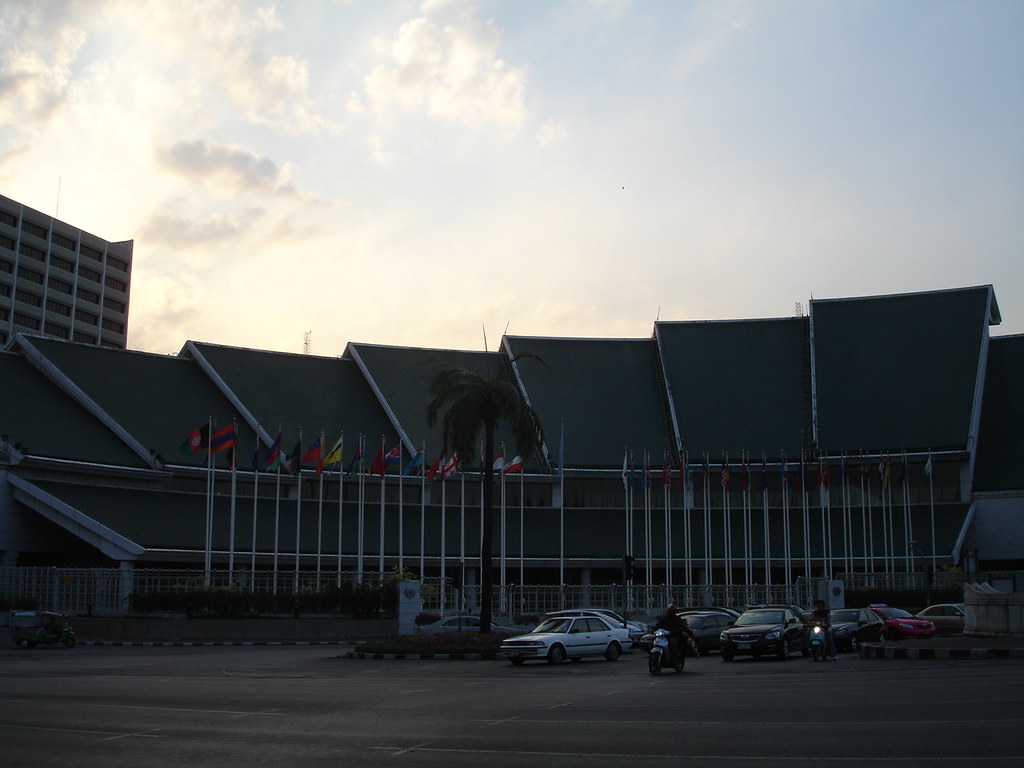
    The United Nations building in Bangkok, Thailand. Image credit: dsin_travel / CC BY 2.0 

    China has consistently ranked among the top 20 refugee producing countries every year since 2003, according to statistics published by the United Nations High Commission for Refugees (UNHCR). The latest statistics published in June 2021 indicated that China was 18th on the UNHCR’s list at the end of 2020. The number of UNHCR-registered refugees originally from China reached 175,585. Additionally, there were 107,864 Chinese asylum seekers around the globe with pending claims. The number of asylum seekers increased nine-fold from just 11,375 in 2011, the year before paramount leader Xi Jinping assumed power.  

    Table 1. UNHCR’s Forced Displacement Statistics (Country of Origin: China)

    Source: UNHCR, Refugee Data Finder, 2003-2020 
    Many UNHCR-recognized refugees from China consider the West a destination of choice for resettlement. After taking the first step in the long journey to asylum, many refugees from China sojourn in Thailand where they await refugee status determination. It is an administrative process by which the Bangkok-based regional office of UNHCR for Southeast Asia determines whether a person seeking protection qualifies as a refugee under international law. Bangkok is home to an estimated 8,000 urban refugees—hailing from Asia, the Middle East, and Africa.  

    Dui Hua is not aware of any official statistics about Chinese asylum seekers in Thailand. However, Bei Ling, founder of “Home of Refugees” in Thailand in 2015, estimated that more than 300 Chinese asylum seekers were in the country as of October 2018.  

    This is the first entry in a two-part series examining issues facing Chinese asylum seekers in Thailand. This entry explores who they are and why they have fled China. The second entry will look at how and why Thailand falls short of being a safe haven. Prospective refugees with or without valid passports risk criminal detention for overstaying in Thailand. Their predicaments also include indefinite wait times for third country resettlement. The fact that Thailand fails to abide by the principle of non-refoulement also places a heightened risk of repatriation for those seeking protection from persecution at home. 

    Why Thailand?

    Thailand started to become a popular place of transit for Chinese refugees about two decades ago. Prior to that, those with a well-founded fear of persecution decamped to colonial Hong Kong to flee political persecution thanks to the lax border controls at the time. Since China resumed sovereignty over the former British colony in 1997, Hong Kong has ceased to be a popular destination for asylum protection.  

    For decades, Hong Kong has been a magnet for refugees. It is troubling to see a spiked increase in asylum seekers from Hong Kong since civil unrest triggered first by the now-rescinded extradition bill, and then by the sweeping arrests made under the National Security Law. The law criminalizes secession, subversion, terrorism, and collusion with foreign forces. At the end of 2020, there were 487 registered asylum seekers from Hong Kong, up from 22 in 2018 before mass protests erupted in June 2019. 

    While a portion of those who fled China could be considered “economic migrants” in search of sustenance and a livelihood, China’s much-lauded economic success has fallen short of stopping people from fleeing abroad. Critics of one-party rule, adherents of banned religious groups, civil rights activists, petitioners, and ethnic minority groups are continuing to seek asylum protection abroad via Thailand.  

    Chinese nationals find entry to Thailand easier than other neighboring countries or regions including South Korea, Japan, and Taiwan, mainly because they benefit from the 15-day visas on arrival available to them (Thailand has suspended this arrangement due to the outbreak of coronavirus). Entry to elsewhere requires obtaining a pre-arranged visa. 

    The Thailand-Laos overland crossing checkpoint at Sop Ruak. Image credit: Slleong / CC0 via Wikimedia Commons 

    Because of geographical proximity, those without proper legal documents can resort to traveling illicitly overland from Yunnan with the help of smugglers. Chiang Mai, for instance, is reachable by land transport from Yunnan’s border in nine hours. From Chiang Mai, it is another half-day journey to Bangkok, where asylum seekers file their refugee claims at the UNHCR office. 

    Why Flee?

    Political Prisoners

    Geng He (耿和), wife of human rights lawyer Gao Zhisheng, is arguably the most notable example of a family member of a Chinese political prisoner fleeing political persecution via Thailand. She left for Bangkok with her children in January 2009 while her husband was serving his suspended sentence for inciting subversion. Gao’s entire family faced reprisal because Gao took on controversial cases and publicly called for an end to the persecution of Falun Gong. While in China, Gao’s children were prevented from attending school. Geng and her children stayed in Bangkok for two months before resettling in the United States. However, it must be noted that such speedy granting of asylum by the United States was only expedited by international attention. As will be discussed in Part II, the wait time for third country resettlement is often indefinite. Today, Gao remains under house arrest even after his sentence expired in August 2014. 

    Another asylum application involved Hua Yong (华涌), who arrived in Canada in April 2021. Hua is a well-known painter from Beijing who posted videos documenting forced evictions and demolitions in poor neighborhoods. He was placed under residential surveillance at a designated location for three months after meeting with the father of Dong Yaoqiong, a girl who was admitted to a psychiatric facility after she live-streamed a video of herself accusing the Chinese Communist Party of “thought control.” Hua escaped to Thailand in September 2019. 

    Dui Hua previously assisted former political prisoner Li Huangming (李焕明) with verifying his claim for political asylum. Before being granted political asylum in Finland in May 2013, Li fled to Bangkok after he completed his nine years’ sentence for inciting subversion in September 2010. The conviction stemmed from him distributing or planning to distribute tens of thousands of “reactionary” flyers in Shenzhen. While awaiting refugee resettlement, Li wrote stories about other Chinese asylum seekers in Bangkok for Boxun and other NGOs. In an article published by Human Rights in China in November 2012, Li wrote that Bangkok’s UNHCR office had a special team of interpreters and officials to handle the surge of applications from Chinese dissidents.  

    Li wrote about changing demographics of Chinese asylum seekers. A significant number of applications were submitted by petitioners contrary to the popular belief that most Chinese refugees are supporters of China’s democracy movement, violators of the one-child policy, and adherents of banned religious groups such as Falun Gong and house churches. 

    Petitioners

    Li’s observation is in line with what has been reported in unofficial news sources in recent years. Petitioners fled to Bangkok because they face reprisal in China after lodging futile complaints about land expropriation or forced demolition in their home cities.  

    Petitioner Zhang Shufeng protests at UNHCR’s Bangkok office while holding a bilingual slogan that says “Request UNHCR help.” Image credit: Mirror Media 

    Zhang Shufeng (张淑凤), a native of Beijing, fled to Bangkok in 2014 and obtained refugee status three years later. Taiwan-based Mirror Media reported that Zhang’s family was subjected to house arrest, beatings, and constant surveillance by government-hired thugs in China. Surveillance intensified during the “Two Sessions” (the National People’s Congress and the Chinese People’s Political Consultative Conference) and other political events. In Bangkok, Zhang protested at the UNHCR office while holding a bilingual slogan saying “Request UNHCR help,” in the hope that the UNHCR would expedite her resettlement process.  

    In January 2017, unofficial news media reported that Beijing evictee Wang Ling (王玲) joined her son who had arrived in Bangkok in December 2016 to maximize the chance of them both getting through Chinese immigration checks. Wang claimed that she had received death threats from police after pursuing complaints about the forced demolition of her home. In 2008, she was sentenced to 15 months of re-education through labor and had been detained a total of 11 times. The news of abnormal deaths in police custody made Wang fear for her life.

    Religious Persecution

    Falun Gong practitioners still make up a large portion of asylum seekers in Bangkok. Many of them have fled persecution after the suppression of the spiritual sect began in 1999. One widely publicized case concerns Song Zhiyu (宋志宇), who escaped to Thailand in early 2014 via Myanmar after completing his three-and-a-half-year sentence for “organizing a cult to undermine implementation of the law.” In a Reuters interview in 2016, Song recounted how he “was spirited across a river into Thailand and hidden in the luggage hold of a Bangkok-bound bus.” Song claimed that Thailand had about 160 Falun Gong refugees and asylum seekers. The Thai authorities have taken an interest in them owing to the close bond between the military junta and Chinese government since 2014. More than 29 practitioners had been arrested on immigration charges under the military junta, said Song. 

    Members of the Early Rain Covenant Church in Chengdu have also made their escapes via Thailand and joined the ranks of asylum seekers before pastor Wang Yi (王怡) was sentenced to nine years in prison for subversion and illegal business activity in December 2019. The crackdown on this prominent house church prompted Liao Qiang (廖强) to travel to Thailand with five of his family members in July 2019. They stayed in Thailand only for three days before transiting to Taiwan. However, their stay in Taiwan was only temporary because Taiwan does not have a refugee law. Liao and his family left for the United States on June 29, 2021 after receiving political asylum there. 

    Civil Activism

    New groups of asylum seekers have emerged following Xi Jinping’s sweeping crackdown on civil society since he took power in 2012. Some were participants of the “Southern Street Movement,” a series of small-scale street banner protests that occurred in southern cities such as Guangzhou and Shenzhen from 2012-2013. The movement called for democratic reform and government officials to disclose assets.  

    Among the “Southern Street Movement” asylum seekers were Wu Yuhua (吴玉华) and her husband Yang Chong (杨崇). They fled China in early 2015 after being targeted by police for supporting the protests in Guangzhou. Two years later, the couple was granted refugee status in Bangkok.  

    Yang Chong holding up a banner calling for human rights and elections in 2015. Image credit: Bnn.co
    Supporters of the New Citizens’ Movement have also sought political asylum. The movement was promoted by prominent legal scholar and civil rights lawyer Xu Zhiyong, who was formally arrested for subversion in January 2021 after calling on Xi Jinping to step down. Sharing similar aspirations with Xu, Yan Bojun (颜伯钧) arrived in Bangkok in early 2015 after several futile attempts to leave China. In 2016, Yan published a book in Japan recounting the suppression he faced after helping Xu provide legal assistance to victims of social injustice. He had been placed under criminal detention several times in China; the longest one lasted 30 days. 
    Liu Xinglian (刘兴联), another UNHCR-recognized refugee, was arrested in Hubei for inciting subversion in June 2015 due to his involvement in Qin Yongmin’s “China Human Rights Watch.” The group promoted the idea of a peaceful transformation to a democracy and circulated Qin’s articles about the inevitable demise of China’s autocratic rule. After Liu was released on bail in April 2016, he managed to escape to Bangkok in 2017.  

    Uyghurs & Kazakhs

    Pakistan, which borders Xinjiang, was once a popular escape route for Uyghurs seeking to escape Chinese state repression, but its growing economic reliance on China has made Uyghurs fear for their future. Pakistani Prime Minister Imran Khan said as recently as July 2021 that, “What they [China] say about the programs in Xinjiang, we accept it.”  In the mid-2010s, a large group of Uyghurs made a long detour south to Bangkok before human rights abuses associated with the “re-education camps” made international headlines. However, Uyghurs are typically not interested in registering in Thailand as asylum seekers, according to a UNHCR statement in 2015. They were only looking for ways to get to Turkey, a destination of choice with an estimated 50,000 Uyghur residents.  

    Thai authorities have confirmed a staggering number of Uyghur escapees in Thailand. In 2014, a group of 424 Uyghurs were detained in Thailand. In July 2015, over 170 Uyghurs were released to start new lives in Turkey, but a week later the Thai government repatriated 109 refugees to China. In July 2017, Thai immigration police said about 60 Uyghurs remained in detention centers across the country. As recently as 2020, their number was down to about 50. They were remnants of the Uyghurs who fled to Thailand in 2014. 

    Evidence also suggests that ethnic Kazakhs have fled Xinjiang’s massive surveillance and detention campaign. A recent case involved Qalymbek Shahman, who Uzbek authorities sent back to Thailand after being denied entry to Kazakhstan in January 2019. He was subjected to intense racial profiling in China, making it impossible for him to make a living. “I would have my ID checked every 50 to 100 meters when I was in Xinjiang…Whether it was getting on a plane, on a train or other public transportation, they would spend half an hour checking me out every time.” His clients became concerned as to why he was routinely monitored and consequently stopped doing businesses with him. 

    Chinese asylum seekers in Thailand face a number of problems beyond finding safe haven, including the lack of legal recognition. The second instalment will explore why and how Thailand falls short in protecting asylum seekers, and the challenges asylum seekers encounter once in Thailand. 

    Read Part II here.