Blog

  • Dialogue – Issue 46: Dui Hua News

    Research: Execution Estimate Gets Global Attention

    In December, Dui Hua announced that an estimated 4,000 executions took place in China in 2011, marking a 50 percent drop since 2007. Executive Director John Kamm said that “China has made dramatic progress in reducing the number of executions, but the number is still far too high and declining far too slowly.”

    Dui Hua’s press statement about the estimate resulted in at least 28 media reports including those by The Economist, The Washington Post, and South China Morning Post. Agence France-Presse referred to the statistic as “rare data.” Dui Hua’s estimate was calculated as a result of information released at a first-of-its-kind death-penalty seminar jointly organized by the United Nations Office of the High Commissioner for Human Rights and China’s Ministry of Foreign Affairs in December 2011.

    Engagement: Kamm Travels, Testifies to House of Representatives


    Executive Director John Kamm testifies to the U.S. House of
    Representatives Committee on Foreign Affairs about political
    prisoners and revisions to the Criminal Procedure Law.
    Photo credit: House Committee on Foreign Affairs


    In November, Kamm went to the East Coast and Europe, stopping in Washington DC, New York, Oslo, and Geneva. In Washington, he testified to the U.S. House of Representatives Committee on Foreign Affairs about the treatment of state security detainees, who are often detained for exercising their rights of freedom of speech and association, and proposed revisions to the Criminal Procedure Law (CPL), which threaten to legalize “enforced disappearance.” (At a subsequent meeting held in January 2012, Dr. Sun Jin, the Chinese Embassy’s newly appointed Counselor in charge of bilateral human rights and rule of law exchanges, maintained that those subjected to detention in an undisclosed location without family notification remain under the protection of the law.) In New York, Kamm spoke at the New York University School of Law and Columbia Business School and participated in a roundtable series at the Council on Foreign Relations titled: “At Risk: Treatment of Political Prisoners, Juvenile Offenders and Women Prisoners in China’s Justice System.”

    In Europe, Kamm spoke at the Norwegian Centre for Human Rights and gave a presentation to the UN Working Group on Arbitrary Detention, citing state security and mass incidents data to illustrate China’s growing crackdown on dissent.

    In early 2012, Kamm traveled to New York; Washington DC; and Lexington, Kentucky. In New York, Kamm met with Chinese Ambassador Li Baodong and spoke at the National Committee for US-China Relations on recent developments in human rights in China. In Washington, Kamm met with senior staff of the U.S. Senate Committee on Foreign Relations; Jeff Bader of the Brookings Institution; Dan Baer, Principal Deputy Assistant Secretary of State for Democracy, Human Rights and Labor; and Kin Moy, Deputy Assistant Secretary of State for East Asia and the Pacific. In Lexington, Kamm spoke at the University of Kentucky about the direction of US-China relations as part of the school’s “Year of China” program. He was interviewed by students contributing to the China Beat blog and recorded a podcast with Denise Ho, assistant professor of history and historian of modern China.

    In March, Kamm will set out on another month-long trip through Europe and China. Accompanied by Development & Program Manager Daisy Yau, he will visit Bredtveit Women’s Prison in Oslo, Norway’s model prison for women; attend meetings at the 19th Human Rights Council, including a side event on the implementation of the Bangkok Rules titled: “Female Offenders: What Difference Can the Bangkok Rules Make?; and discuss upcoming initiatives on juvenile justice with Professor Jean Zermatten, chair of the Committee on the Rights of the Child.

    Outreach: Focus on New Opportunities


    Visitors listen to Kamm speak at Dui Hua’s open
    house in December 2011.

    While in Washington in November, Kamm was the guest at the 2nd Annual Friends of Dui Hua DC Reception hosted by Dui Hua Director Linda Ziglar. Nearly 40 close friends and supporters attended to hear about Dui Hua’s expanded mission to meet the needs of more at-risk detainees. Kamm emphasized that Dui Hua will continue to pursue well-informed, mutually respectful dialogue with China despite the difficult political environment. On the West Coast, Dui Hua opened the doors of its San Francisco headquarters for the Friends of Dui Hua San Francisco Reception to talk about the challenges of working on human rights in 2012 and the opportunities for cooperation on issues like juvenile justice. Present at the event was Judge Julie Tang of the San Francisco Superior Court, who participated in Dui Hua’s Juvenile Justice Exchanges in 2008 and 2010.

  • Dialogue – Issue 46: Pardon Us: Asian Clemency Laps China

    Recent acts of clemency show the leaders of several Asian nations running circles around China as it takes a 37-year breather from issuing pardons. Local interest in reviving the practice has grown, but will it be embraced by Chinese leadership?

    On January 5, in one of the first official acts since new North Korean leader Kim Jong Un’s assumption of power, the Presidium of the Supreme People’s Assembly decreed an “amnesty” to be carried out on February 1 to honor the birthdays of North Korea’s former leaders. Five days later, the South Korean Ministry of Justice announced that 955 of its citizens benefited from sentence reductions, exemptions, and annulments as a result of presidential pardons marking the Lunar New Year holiday. On January 13, the Burmese government granted clemency to 651 prisoners in what is widely seen as part of an effort to persuade foreign governments to end economic and diplomatic isolation of the country. The release included an estimated 287 political prisoners, including a former prime minister, high-profile democracy activists, and leaders from the country’s often restive ethnic groups.

    In contrast, China has not issued a pardon since 1975 and issued its last major act of widespread clemency in 1959. However, interest in reviving the practice has grown in recent years, and the death penalty trial of young businesswoman Wu Ying (吴 英) adds immediacy to the debate.


    People wait at the gate of Insein Prison on January 13. Photo credit: The Irrawaddy


    Semantics

    States normally establish certain constitutional measures whereby acts of clemency may be carried out under special circumstances in order to make changes to judicial decisions of guilt and punishment. Although common usage often blurs distinctions, such acts of clemency can be broadly divided into two types: “amnesties” and “pardons.”

    The term “amnesty” technically refers to a form of clemency whereby an official act, usually a legislative act, removes all trace of an offense without making any change to the law defining the offense. Beneficiaries are thus restored to the status of innocent persons, with their conviction meant to be completely forgotten. (“Amnesty” and “amnesia” both derive from the same Greek root.) Amnesties are typically general in their application and are frequently used in social-reconciliation efforts—for example, to promote peace after a civil war.

    The forms of clemency that fall under the general category of “pardon” usually affect the execution of a punishment while making no change to an offender’s guilty status. Pardons, which are often directed by heads of state, forgive offenses and offer lenience through the removal or partial reduction of sentences. In contrast to the general application of amnesties, pardons are usually decided on a case-by-case basis, though many individuals may benefit at once.

    Collecting Dust

    As of this writing, there was no official tally as to how many North Koreans benefited from clemency announced on January 5. But an earlier pardon, issued in September 2010 to commemorate the 65th anniversary of the founding of the ruling Korean Workers’ Party, reportedly brought sentence reductions to around 150,000 prisoners. This suggests that although the most recent act of clemency was translated into English as an “amnesty” by the state-run Korean Central News Agency, it was more likely a large-scale pardon.

    The last time China granted clemency on the scale of North Korea’s 2010 pardon was in 1959. That year, a pardon to celebrate the 10th anniversary of the founding of the People’s Republic of China (PRC) led to the complete or partial remission of sentences of tens of thousands of “war criminals,” counterrevolutionaries, and ordinary prisoners. Between 1961 and 1975, China granted six more pardons to Japanese and Nationalist war criminals, each on a much smaller scale. Although the power to grant general amnesties was also included in the first PRC constitution in 1954, it was never used and was removed from the constitution in 1982.

    While several Asian nations continue to issue pardons on a relatively frequent basis, China has allowed the measures to gather dust for more than 35 years. But China is not entirely devoid of clemency. In fact, Chinese law provides for a system of sentence reduction and parole whereby courts reward offenders for good behavior, admission of guilt, and reform. There are, however, serious variances in application with prisoners convicted of “endangering state security” subjected to “strict handling.” In practice this means that ethnic Uyghurs and Tibetans, political dissidents, and rights activists receive clemency at rates far lower than other prisoners.

    The Harmony of Revival

    In recent years, there have been a number of efforts to revive the practice of granting special pardons in China. Pardons were proposed, and supported by Dui Hua, to commemorate the Beijing Olympics and the 60th anniversary of the founding of the PRC. More recently, a group of legal scholars at China University of Political Science and Law proposed adding provisions to the Criminal Procedure Law to allow people sentenced to death to apply for pardon.

    A common argument against these proposals is that the importance of establishing judicial authority should not be trumped by the prospective benefits of encouraging legislative or executive intervention, which invites corruption and undermines the rule of law. But proponents of revival contend that intervention can help restore balance to existing inconsistencies in China’s criminal justice system. The ability for pardons to promote overall balance is supported by former Supreme People’s Court President Xiao Yang. In late 2007, Yang said that “fully demonstrating the role of the pardon system certainly will have an enormously positive impact toward creating a harmonious and stable social environment and enhancing the internal unity of the people.”


    Wu Ying faces the death penalty for charges of illegal fundraising.
    Photo credit: Xinhua News Agency


    The case of Wu Ying is arguably one in which this statement would ring true. A Zhejiang businesswoman in her early 30s, Wu is facing the death penalty on charges of illegal fundraising. Many Chinese are sympathetic to Wu. To her many supporters, Wu is a victim and a scapegoat: the victim of a system in which the difficulty for entrepreneurs to secure loans from state banks virtually necessitates private-lending channels, and a scapegoat doomed by her ability to expose the economic crimes of local officials. Beyond the particularities of her case, however, there is also growing consensus that the death penalty is inappropriate for economic crimes.

    China’s courts may find that a death sentence for Wu is warranted under present law. If so, allowing public opinion to directly influence their decision would be a sacrifice of judicial autonomy. But China’s legislative and executive bodies are supposed to be more accountable to public opinion and pardoning Wu would be a humanitarian gesture that promotes larger social and political interests such as rooting out corruption and reducing the scope of the death penalty—a goal that China has stressed repeatedly.

    In order for China to revive the practice of issuing pardons, broader consensus may be necessary about the positive effects of clemency in the criminal justice system and in society at large. In this regard, Chinese leaders might have something to learn from neighboring countries which, despite differing political and social circumstances, have found it useful to issue pardons routinely.

    North Korea Steals March on China

    September 14, 1981 marked North Korea’s accession to the International Covenant on Civil and Political Rights (ICCPR). China has yet to ratify the ICCPR despite signing it in October 1998. In the year before China became a signatory, North Korea tried to withdraw from the covenant. In response, the UN secretary-general opined that since the ICCPR lacks a withdrawal provision, such an act would require the agreement of all states parties to the covenant. Following the UN’s response, North Korea made good on one of the obligations of the treaty in 2000 by submitting its second periodic report on civil and political rights to the Human Rights Committee (now the Human Rights Council). In economic prosperity and foreign relations, China has far surpassed North Korea but, paradoxically, it still lags behind in granting pardons and ratifying the ICCPR.

  • Dialogue – Issue 46: Uncovering China’s Korean Christians

    Of the 55 ethnic minorities recognized in China, the human rights community has focused most extensively on three: Tibetans, Uyghurs, and to a lesser extent, Mongolians. Conducting ongoing research on China’s political and religious prisoners, Dui Hua believes that another group requires further attention: ethnic Koreans (朝鲜族). Research suggests that ethnic Koreans—a population of more than 2 million concentrated along the sensitive North Korean border—have faced arbitrary detention and harassment due to religious and humanitarian activities.

    Unrest in Tibet and Xinjiang shows plainly the links between ethnicity, religion, and government repression in China, but when it comes to Christianity, a religion whose believers are less regionally defined, does ethnicity play a role? The majority of reporting on Chinese Christians ignores questions of ethnicity presumably because most Chinese Christians are Han Chinese, the ethnic majority accounting for more than 91 percent of the country’s population. This presumption, while not necessarily inaccurate, ignores the strength of religious belief among Koreans in China (i.e., Chinese citizens of Korean descent, hereafter “ethnic Koreans,” and citizens of South Korea and to a lesser extent, North Korea) and obscures some of the factors motivating religious repression.

    Official Rhetoric

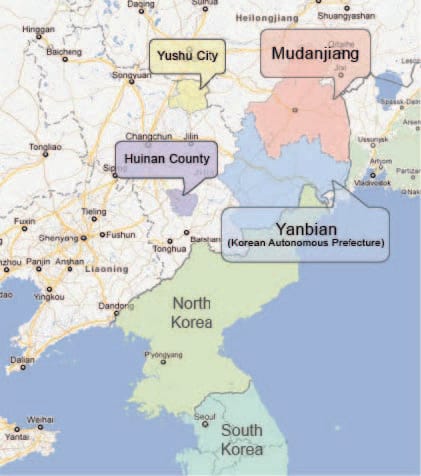
    Data is spotty on the prevalence of Christianity among ethnic Koreans, but Chinese authorities have made explicit references to ethnic Koreans and Korean nationals as a religious threat. In 2011, the official website of Yushu City in northeastern Jilin Province featured an article on a stability-maintenance conference where local officials were warned of the “illegal proselytizing, infiltration activities, and religious extremism” of Korean Christian groups. In the article, Korean Christianity is cited as a national security threat along with international non-governmental organizations and the Falun Gong, an outlawed spiritual sect. In September 2009, the education bureau of Jilin’s Huinan County talked about the “internationalization of ‘the problem of ethnic Koreans in China’” caused by the “infiltration activities” carried out by Korean Christian churches among ethnic Koreans working temporarily in South Korea. In 2003, Zhang Jian, an official at the State Administration for Religious Affairs, listed northeastern China along with Xinjiang and Tibet as an area at risk of “splittist” activities. Zhang said that “certain Korean Christian powers openly express territorial ambitions” in Jilin’s Yanbian Korean Autonomous Prefecture (Yanbian).

    The threat it seems is not just that ethnic Koreans and Korean nationals are Christian but that they are Korean. Article 36 of China’s constitution grants “freedom of religious belief” only so long as “Religious bodies and religious affairs are not subject to any foreign domination.”

    Mudanjiang Records

    Several Chinese religious scholars believe that ethnic Koreans account for a large portion of worshippers at house churches (i.e., churches not registered with the government as required by law) outside the governance of the state-controlled Three-Self Patriotic Movement (TSPM). TSPM was started in 1950 to rid religion of its colonial ties by emphasizing self-governance, self-support, and self-propagation. Public security records from Mudanjiang, Heilongjiang Province in northeastern China list several cases of raids and detentions related to Korean house churches from 2000 through 2003.

    In October 2000, public security arrested 37 members of Korea’s World Elijah Evangelical Mission—China declared the mission an “evil cult” in 1996, three years before the Falun Gong was outlawed. Six core leaders were placed under criminal detention while the rest were sent to “legal education classes.” Police went on to discover the church’s religious bases in Jixi, Dongfanghong, and Harbin and detained over 40 members.

    In April 2001, Jin Mingxiu (金明秀) and Piao Zhenshu (朴贞淑) were detained for illegal proselytizing in the ethnic Korean community. Public security also cited Piao for organizing religious exchanges with church members from a Korean-funded enterprise in Shenyang, Liaoning Province. Both Jin and Piao were members of a Chinese branch of the World Mission Society Church of God. They converted to Christianity while working in South Korea.

    In July 2002, police arrested 10 members of Grace Church (施恩教会), including its leader Shen Zhunzhe (申谆哲). Shen is an ethnic Korean who became a certified catechist after graduating from a training course organized by Korean Central Church missionaries in Harbin.

    In September 2003, police arrested 15 core members of the New Heaven and Earth Church (新天地教会). The previous year the church was discovered to have 184 members under the leadership of Jin Zhenshu (金振淑), who was in charge of finances, missionary training, and reporting to the church’s headquarters in South Korea.

    Evangelizing Outward

    While research suggests that more than 60 percent of China’s approximately 2 million ethnic Korean citizens live in northeastern China, official concern over Korean Christianity is not limited to the region. The migration of job-seeking ethnic Koreans and an increase in South Korean investment, sparked in part by the western development strategy launched in China in 1999, has led to reports of religious suppression in metropolitan areas including Beijing, Qingdao, Shanghai, and Shenzhen and in central provinces like Gansu, Henan, Qinghai, and Shaanxi.

    Pastor Jin Tianming preaches in the snow to members
of Beijing’s largest house church in November 2009.
    Pastor Jin Tianming preaches in the snow to members of Beijing’s largest house church in November 2009.
    Photo credit: Beijing Shouwang Church

    Beijing’s largest house church, Shouwang Church (守望教会), started making headlines in April 2011 when the government banned its outdoor service and arrested several parishioners. Shouwang is led by several ethnic Korean pastors, among whom Jin Tianming (金天明) is reportedly under house arrest. In Shanghai’s Mingheng District, 24 of the 31 locations of illegal religious activities identified by the religious affairs bureau in 2005 and 2006 were related to Korean Christian groups including the Presbyterian Church of Korea (韩国基督教长老会) and Full Gospel Church (纯福音教会).

    In rural Henan Province, where the majority of house-church raids occur, police detained 49 Han Chinese and deported two Korean pastors in May 2011. The third Korean pastor, whose Chinese name was given as Jin Yongzhe (金永哲), was given a five-day public order detention.

    Farther west in Gansu and Qinghai provinces, five members of the World Mission Society Church of God—Li Shujie (李淑洁), Liu Xiangchun (刘香春), Jin Donghua (金东花), Li Chuang (李闯), and Miao Yufen (苗玉芬)—were detained in July 2011 for illegal proselytizing, according to a Tianshui Daily report. Three of them had met with Heavenly Mother Zahng Gil-Jah at their church’s religious headquarters in South Korea. All five were sent back to their northeastern residences after police “admonishment.”

    North Korean Concern

    China’s Korean Christians not only spread the gospel outside the confines of official churches, they also offer aid to potential and existing North Korean escapees. China’s decision to crackdown on these activities, which many in the West see as humanitarian work, may be related to a fear that tacit acceptance would lead to an influx of North Koreans and ultimately disrupt local economy and stability. It may also be motivated by China’s agreement with North Korea to repatriate escapees, who the allies consider to be illegal immigrants.

    In July 2002, the Ministry of Foreign Affairs openly denounced Korean house churches for instigating a number of North Korean refugees to forcibly enter foreign consulates and embassies to seek political asylum. The same year, the Mudanjiang Public Security Bureau discovered at least three Korean Christian groups sheltering North Korean escapees. Yanshou Church (延寿教会) reportedly helped more than 10 North Koreans enter foreign embassies or exit China through the Yunnanese border. Yanshou and Suowang Church (所望教会) were said to have provided accommodation and jobs for more than 100 North Koreans. The Swallow Society (燕子会) was identified as carrying out “religious infiltration” among ethnic Koreans and facilitating the resettlement of North Koreans in China. Mudanjiang authorities named Langang Township villager Zhao Guangzhe (赵光哲) for his involvement with the Swallow Society and critical comments made to South Korea’s KBS Radio about China’s immigration policy and the living conditions of North Korean escapees in China. No information was provided on the legal repercussions of his actions.

    In August 2011, an anti-infiltration action plan was launched in Yanbian’s Longjing City to “combat” Korean churches that harbor “illegal immigrants” from North Korea and collect intelligence along the China-North Korean border. Elsewhere, harsh sentences have been meted out to those involved in helping North Koreans escape. In 2009, ethnic Korean Li Mingshun (李明顺) was sentenced to 10 years’ imprisonment by the Erlianhaote (Eriyenkhota) City People’s Court in Inner Mongolia for helping a Korean pastor take 61 North Koreans to Mongolia. Li co-founded an underground seminary with another pastor, a Korean national, to train house church leaders and convert North Korean immigrants. She was released on probation in April 2010, but the current status of Zhang Yonghu (张永湖), a Han Chinese church member sentenced to seven years’ imprisonment in the same case, is unknown. In 2002, Korean national Choi Bong-il (崔奉一) was sentenced to nine years’ imprisonment by a Jilin court for helping nine North Koreans enter South Korea. Choi was released early in September 2004, but the status of other missionaries detained along with Choi Bong-il remains unknown.

    South Korean Stance

    The kidnapping of Korean missionaries in Afghanistan in 2007 prompted the Korean Ministry of Foreign Affairs and Trade (Mofat) to hold its first meeting with domestic missionary groups that send missionaries overseas. Following the second of these meetings, held in March 2008, a reporter from Korea’s Daehan News asked Mofat’s spokesman whether the Korean government had any countermeasures to protect Korean missionaries in China who are “deported or sent to jail” for working “undercover.” The spokesman did not respond to the question about countermeasures but stated that he believed the meeting dealt with mission work in China.

    South Korea is second only to the US in the number of missionaries it sends overseas, and according to Mofat’s spokesman, “some local communities misunderstand them.” When the local community is China, these misunderstandings have implications for the sovereignty of both China and North Korea and raise difficult questions about the boundaries of religious freedom and humanitarian aid. But tough questions need to be faced, and more research and open debate is necessary to understand the fate of China’s Korean Christians.

  • Dialogue – Issue 46: Content over Volume

    Chinese Vice President Xi Jinping’s February visit to the United States led to a flood of western media reports and press statements calling for a tough stance on human rights in China. Many of the calls to increase pressure on China were based on the idea that, evidenced by continuing human rights abuses, “quiet diplomacy” isn’t working.

    To be sure, human rights in China have deteriorated in some respects, but in others they have gotten better. Recent commendable aspects relate to proposals and pilots to improve the treatment of juveniles and women in the criminal justice system and to provide more due process rights to defendants, including enhanced access to counsel and bail. Continuing abuses involve, among other things, government repression in regions with large Uyghur and Tibetan ethnic populations and the spate of long prison sentences for political dissidents exercising guaranteed freedoms of expression and association.

    While human rights concerns are real, the emphasis on a “worsening” condition of human rights in China is in part due to external factors. Electoral races in the US have spurred anti-China rhetoric. Although attacks on China—most notably from Republican presidential contender Mitt Romney—have largely focused on the country’s trade and currency policies, its human rights record and political system have also been slammed. (Romney has referred to China as a “prosperous tyranny” where individual and political freedoms are suppressed.) China is also being measured against human rights developments in its neighbors. In January, Taiwan held free, fair, and non-violent democratic elections, while Mongolia’s parliament took steps to abolish the death penalty, Burma made democratic reforms that led to the release of nearly 300 political prisoners, and North Korea issued a general pardon to welcome its new leader (see Pardon Us: Asian Clemency Laps China).

    The value of taking a comparative approach to human rights is not in ranking countries but in determining what methods work in what systems and how continuing problems might best be addressed. “Naming and shaming” is placed on one side of the spectrum, while “quiet diplomacy” is placed on the other. In fact, the most likely formula for successful resolution of human rights disagreements lies in a deft combination of both. While American public opinion on China remains largely negative, according to a Gallup poll conducted in November and December 2011, most Americans “desire more cooperation between the [US and China] in key policy areas.”

    Common Problems

    China and the US proclaim that they believe in human rights but both see a conflict between rights protection and national security. Their desire for stability puts an emphasis on what’s best for the majority. In China, the resultant “greater good” mentality has led to a concentration of state security arrests in China’s largely Muslim Xinjiang Uyghur Autonomous Region and Tibetan areas as well as the targeting of ethnic Korean Christians (see Uncovering China’s Korean Christians). Similarly, the US is wrestling with the question of long-term incarceration without trial for terror suspects, and the FBI has infiltrated American Muslim communities without evidence of criminal activity.

    In the juvenile justice system, retribution often trumps rehabilitation, despite official rhetoric to the contrary. Although juvenile justice exchange is resulting in the welcome adoption of rehabilitative procedures in China (e.g., the sealing of records and conditional non-persecution), the path to implementation is long. While different provinces are experimenting with the sealing of records, some officials, including members of the National People’s Congress, have already expressed concern about being too lenient and limiting the deterrent effect of criminal punishment. Moreover, Human Rights Watch recently called into question the US system upon which many of China’s reforms are based. In a January 2012 report, the organization alleges that there are currently more than 2,500 juveniles serving life without parole in the US, while not a single youth offender is serving this sentence anywhere else in the world. This is in contravention of three international human rights treaties to which the US is a party, according to the report. The US Supreme Court only recently, in 2010, narrowly ruled that this sentence is unconstitutional for nonhomicide offenses. It has agreed to take up the issue for homicide offenses in 2012.

    The needs of women prisoners are also neglected. The Bangkok Rules, adopted by the UN in December 2010, clarify basic standards for the treatment of women prisoners but have yet to become the driving force behind international reform. A report published by the National Women’s Law Center in 2010 gives thirty-six US states failing grades for their refusal to comprehensively limit, or limit at all, the use of restraints (shackling) on pregnant women during transportation, labor and delivery, and postpartum recuperation. In China, little research has been done measuring the treatment of women in prison against the Bangkok Rules. Among the issues the rules address is the need for research and supportive policies for children of incarcerated mothers (see Sino-US Comparison: Children of Incarcerated Mothers). These aspects of the rules build upon the Convention of the Rights of the Child, which includes the right to maintain personal relations and direct contact with incarcerated parents. China ratified this UN treaty in 1992, but the US, while signing it in 1995, has yet to ratify.

    UN Convention
    Ratification Status
    China
    US
      Racial discrimination
    Y
    Y
      Economic, social and cultural rights
    Y
    N (1977)
      Civil and political rights
    N (1998)
    Y
      Discrimination against women
    Y
    N (1980)
      Torture
    Y
    Y
      Rights of the child
    Y
    N (1995)
      Enforced disappearance
    N
    N
      Source: United Nations Treaty Collection
    Note: “Y” indicates that the convention was either acceded or ratified; “N” indicates that the convention was signed
    but not ratified and is followed by year of signing.


    Finger-Pointing, Foregone

    Ahead of Canadian Prime Minister Stephen Harper’s visit to China, a group representing thousands of British Columbian aboriginals sent an open letter to Chinese President Hu Jintao. The letter called on Hu to raise human rights issues, including police mistreatment and torture, with the Canadian government. A Canadian Press article about the letter suggests that it is unusual and embarrassing for people living in western democracies to appeal to foreign governments as a means to redress their grievances. What it doesn’t suggest is that human rights violations are serious issues that need to be addressed wherever they occur.

    If they are, the problem with current advocacy work may not be its volume but its content: the degree to which it is predicated on a sense that human rights have been achieved in the developed world. While China’s infringement on the freedoms of speech and association is unacceptable and escalating, other countries are struggling with protecting other fundamental freedoms. A human rights debate that looks critically only at China does little but promote finger-pointing over problem solving. The focus should not be on proving whose records are worse by naming and shaming or checking “human rights” off the diplomatic agenda but recognizing common challenges and fostering partnerships. Only in this way can we hope to protect individuals barred from the negotiating table and do justice to universal human rights.

  • Universal Human Rights Should Trump the Politics of “the People”

    How much difference can two Chinese characters make to the impact of legislation? Considerable difference, according to recent commentary by Han Dayuan (韩大元), dean of Renmin University of China Law School, that looks at proposed changes to the Criminal Procedure Law (CPL).
    Ever since the full text of a draft CPL revision was made public in August 2011, its content has been examined closely and debated vociferously within China. Supporters herald the legislation as a major improvement in the protection of rights, pointing to things like facilitating the work of criminal defense lawyers, formalizing procedures aimed at excluding evidence obtained illegally, and establishing new procedures for juvenile offenders. Critics, on the other hand, have raised concerns that the revision would greatly expand the power of investigators to abuse secret surveillance and to detain people without notifying their family.
    More than 80,000 recommendations regarding the draft amended CPL were submitted to the National People’s Congress (NPC) Standing Committee during a one-month period of public consultation that ended September 30. At least some of these suggestions made their way into a second draft that was reviewed by the NPC Standing Committee in late December. Now, a final draft of the legislation is slated for review by the nearly 3,000-member NPC when it meets for its annual session, scheduled to open in less than two weeks.
    Thus far, most of the discussion surrounding CPL revision has concerned specific changes to procedures or measures added to the legislation. But there are also many concerns about changes that haven’t been made.
    For example, the drafts reviewed by the NPC Standing Committee do not change Article 1, the statement of the legislation’s purpose: “保护人民” [to protect the people]. In commentary published in Legal Daily last week, Han Dayuan recommends changing that purpose to “保障人权” [to protect human rights]. This change was included in each of the major revision proposals prepared by Chinese legal scholars after CPL revision was first placed on the legislative agenda back in 2003.
    Professor & Dean Han Dayuan. Photo credit:
    Renmin University of China Law Shool
    Han believes the change would better reflect the spirit of China’s constitution—which was amended in 2004 to affirm the state’s role in respecting and safeguarding human rights—and highlight both domestically and internationally China’s existing achievements and future goals with regard to rights protection and rule-of-law development.
    The change is also significant because in the Marxist-Leninist-Maoist political culture of China, all references to “the people” are implicitly exclusive of particular groups, e.g., the exploiting classes, counterrevolutionaries, and “enemies of the people.” Removing this political category from the CPL would imply that the rights and protections granted therein are universal, rather than selective.
    Making the protection of human rights the explicit aim of the CPL would thus strike a symbolic blow against the kind of “dual track” criminal justice system that is being fostered in China, one in which procedural protections are extended in the majority of criminal cases but withheld in cases deemed threatening to sociopolitical order.
    At this stage in the legislative process, a symbolic victory like an amendment to Article 1 may be more achievable than substantial changes to procedural provisions over which China’s law-enforcement stakeholders have already reached consensus. And for those who have been working to more firmly establish constitutionalism, rule of law, and human rights protection, a symbolic victory could set new standards for future legal reform.
    Ultimately, however, the immediate impact of such a change would likely be only symbolic. What matters more as far as the protection of human rights is concerned is not the CPL’s programmatic principles but, rather, the concrete procedures and measures set out therein and the extent to which these measures are implemented. In evaluating China’s human rights situation, actions still speak louder than words.
    *
    Clarify Subject in CPL Draft Amendment, Article 1
    Recommend Changing “Protect the People” to “Protect Human Rights”
    Han Dayuan, Legal Daily
    February 15, 2012
    The 5th plenary session of the 11th National People’s Congress (NPC) will open on March 5, 2012, at which time the Draft Criminal Procedure Law (CPL) Amendments will be deliberated. This revision of the CPL adds many important items, including a prohibition on compulsory self-incrimination, and emphasizes the basic principle of protecting human rights. The number of articles that the draft adds or revises makes up around half of the total number of articles in the current CPL.
    As a basic law of the state, revision of the CPL has always received widespread attention from all sectors of society, including legal scholars. Among the issues discussed most often is how to properly understand and handle the relationships between the CPL and the constitution and between punishing crime and protecting human rights. The basic idea behind the CPL should be adequate protection of human rights and effective crime-fighting. The content of the CPL should sufficiently embody the constitutional principles of protecting human rights, [developing] rule of law, and “dividing [the] functions [of the courts, procuratorates, and public security organs], each taking responsibility for its own work, and coordinating their efforts and checking each other.”
    Generally speaking, the first article of a law expresses the purpose of that law, reflects its central values, and serves as a kind of summary of its essential points. Article 1 of the CPL draft revision states: “This law is enacted in accordance with the constitution for the purpose of ensuring correct enforcement of the Criminal Law, punishing crimes, protecting the people, safeguarding state- and public security and maintaining socialist public order.” In light of the relationship between the constitution and the CPL and based on the legislative purpose, I recommend that “protecting the people” in Article 1 be changed to “protecting human rights.”
    Protecting Human Rights Embodies Constitutional Principles
    The constitution is the founding law of the state. It carries supreme legal force and occupies the “leading” position in the socialist legal system wherein all laws and regulations should remain in accord with the constitution. This is why the majority of laws all say in their first articles: “This law is enacted in accordance with the constitution.” In his 2004 speech in Beijing commemorating the 50th anniversary of the establishment of the NPC, General Secretary Hu Jintao emphasized that to rule the country in accordance with the law means first ruling the country in accordance with the constitution and that to govern in accordance with the law means first governing in accordance with the constitution.
    In 2004, China’s constitution was revised and “the state respects and safeguards human rights” was solemnly added to establish a national value system and set a basic standard for all acts of public authority. As a basic law meting out the specifics of the constitution, the CPL must obey the values of the constitution and give expression in its conception of values to the principles and spirit of the constitution, as well as establish institutions that respect and implement the provisions of the constitution. The relationship between the CPL and human rights is especially close, with the CPL having been called the “defendant’s charter of rights.” It should embody the requirements of the constitution and clearly provide for “protecting human rights.”
    After the constitution was revised in 2004, the enactment and revision of laws must fully reflect the principle of protecting human rights. If the CPL were to announce “to protect human rights” as its legislative purpose, then it would be not only a major step forward for criminal legislation and the administration of criminal justice but also a concrete implementation of constitutional principles.
    Though the phrase “to protect the people” that is stipulated in the current draft is premised on expressing the law’s affinity with the people, it is neither scientific legal terminology nor is it appropriate. “The people” is a political concept, not a legal concept. During different periods, the specific meaning of “the people” has varied depending on the historical period of the nation’s development. What human rights protects are “human beings.” Even defendants, criminal suspects, or criminal offenders—even offenders who have been sentenced to death—all enjoy certain human rights and there are some human rights that cannot be stripped away. When the constitution says that the state protects human rights, it means that the constitution protects not only the people but protects the legitimate rights and interests of criminal offenders, suspects, and defendants as well.
    An important function of the CPL is to use procedural [norms] to safeguard the basic rights of specific groups. If we only write “to protect the people,” then it’s possible that other groups outside of the people will be left out, resulting in an incomplete level of protection by the state. Generally speaking, in the procedures of the CPL, those who are being prosecuted are clearly in the weaker category. Their human rights are easily infringed upon by the mighty power of state organs, and so they rightly ought to receive fuller protection under the CPL in order to realize the principle of all being equal before the law.
    Protecting Human Rights Embodies the Spirit of International Covenants
    A clear CPL provision “to protect human rights” would also help to express the spirit of international human rights covenants. China has already acceded to several international treaties related to criminal justice and has signed the International Covenant on Civil and Political Rights (ICCPR). A clear statement “to protect human rights” in Article 1 of the CPL would help link the legislation with human rights treaties, help the NPC Standing Committee to ratify the ICCPR, to reduce the legal and technical problems that might be faced at the time of ratification, to display China’s progress in rule of law, to avoid attacks by hostile forces against our human rights situation, and to effectively uphold China’s international image.
    At the same time that we firmly establish “to protect human rights” as the legislative purpose of the CPL, I recommend that we also change the expression “to punish crime [and] to protect the people” to “to protect human rights [and] to punishing crime.” Punishing crime and protecting human rights are both of important significance, and both are goals for the CPL to realize. But protection of human rights is fundamental, and the goal of punishing crime is to protect human rights.
    The phrase “to punish crime [and] to protect the people” carries the logic that the people are protected by punishing crime. Once “to protect the people” is changed to “to protect human rights,” the CPL will protect the rights of all people as human beings, not just protect the rights of the people from being infringed upon by criminal elements. The innocent must also be protected from prosecution and, even more, the lawful rights and interests of criminal suspects, defendants, and criminal offenders must be protected.
    In sum, changing “to protect the people” to “to protect human rights” will help to embody the spirit of the constitution, to correctly reflect the positive achievements of CPL reform, and to highlight the progress of China’s human rights development and future goal of the development of rule of law.
  • State Security Stats Highlight Ethnic Unrest, Lack of Names

    Growth in the number of “endangering state security” (ESS) trials concluded in the Xinjiang Autonomous Region (Xinjiang) provides evidence of a widespread crackdown on ethnic Uyghurs. The number of trials for the category of crimes often used to suppress speech, association, and assembly increased 10.11 percent year-on-year in 2011, up from 376 trials in 2010, according to the annual work report of courts in the region. (Note: There is not a one-to-one ratio of trials to defendants. Court data from 1998 through 2003 show that, for ESS crimes, there was an average of more than three defendants per trial in Xinjiang.)
     
    In 2009, ethnic riots in Urumqi—during which the Chinese government says 197 people were killed—coincided with a more than 60 percent jump in the number of ESS trials concluded in Xinjiang. In 2011, tensions between Uyghurs, a Turkic-speaking Muslim ethnic group, and Han Chinese, China’s ethnic majority, continued to precipitate smaller scale protests and culminated in a regional “Religious Strike Hard Campaign” beginning on November 20. The campaign will continue until February 22, 2012, and local authorities intend to recruit 8,000 police officers to join “the auxiliary police and militia” in, among other things, “cracking down on illegal religious activities.”
     
    The increase in ESS trials in Xinjiang also suggests that nationwide figures grew during the period. In 2009 and 2010, the change in the number of ESS trials in Xinjiang was indicative of nationwide trends (see chart below) because so many ESS trials occur in the region. Official statistics show that more than half of ESS trials (of first instance) took place in Xinjiang from 1998 through 2003.
    Note: *For nationwide data, the number of trials includes both ESS and dereliction of duty, which is believed to account for less than 1 percent of the total figure. 

    Source: National statistics are trials of first instance compiled from China Law Yearbooks (中国法律年鉴). Xinjiang statistics are not disaggregated by trials of first and second instance and are from annual court work reports and Xinjiang High People’s Court President
    Rozi Ismail.
    Court work reports come out during regional and provincial people’s congresses in January, but not all of them are made public. Those that are tend not to include ESS data but instead state generally that fighting ESS is a key aspect in achieving the goal of stability. Xinjiang and Sichuan were the only regions found to have stand-alone ESS data in their most recent reports. National figures for 2011 are expected to be reported to the National People’s Congress in March, including the number of indictments and arrests, and in China Law Yearbook in September, including the number of trials.
     
    Uyghur Activism
     
    It bears repeating that Xinjiang has been known to account for over 50 percent of China’s ESS trials yet makes up less than 2 percent of China’s population. The obvious question is: Why? The answer, suggested by regional government policies and anecdotal evidence, is Uyghur activism in response to government restrictions on religious and cultural activities and state-sponsored inward migration of Han Chinese. While Han Chinese account for more than 91 percent of China’s population, Uyghurs make up about 40 percent of Xinjiang’s.
     
    In 2010, RFA reported on five Uyghurs convicted of ESS in Xinjiang, with sentences ranging from three years’ to life imprisonment. All were Uyghurs involved in non-violent online activism or speaking to foreign media.
     
    The Chinese government confirmed two of the cases. Gheyret Niyaz was sentenced to 15 years’ imprisonment for “inciting splittism.” RFA reported that Niyaz was persecuted for giving interviews to the foreign media about the Urumqi riots. According to the Ministry of Foreign Affairs, Niyaz was still awaiting the verdict of his appeal 16 months after the announcement of his original sentence.
     
    Dilshat Parhat was also convicted of inciting splittism. He was sentenced to five years’ imprisonment. RFA reported that he maintained a Uyghur website and was detained on suspicion of online activism.
     
    “Splittism” and “inciting splittism” are believed to account for many, if not most, of the ESS cases in Xinjiang. In 2011, Dui Hua uncovered no information on individuals confirmed to be convicted on ESS charges in the region. One possible individual, however, is 25-year-old Musa Muhamad, who according to an RFA report, was sentenced to 17 years’ imprisonment in a closed trial in October. The charges against him are unclear, but Muhamad is one of 20 Uyghur asylum-seekers who fled to Cambodia following the Urumqi riots in July 2009 and was deported back to China in December 2009 before a Cambodian visit by Chinese Vice President Xi Jinping. Although the circumstances of Muhamad’s case are unknown, if he was involved in the riots, even just by talking about them to the wrong people, he may well have faced charges of splittism.
     
    Sichuan: Self-Immolation as Murder
     
    Sichuan Province is home to two Tibetan autonomous prefectures, Aba (Ngaba) and Ganzi (Kardze), in which ethnic Tibetans account for about 55 and 78 percent of the populations, respectively. Tibetan areas of Sichuan have seen widespread unrest since August 2007, and government repression of ethnic Tibetans has heightened since the Lhasa riots left at least 19 people dead (according to a Chinese government tally) in the Tibetan Autonomous Region in March 2008. In 2011, ethnic unrest continued and 12 Tibetan self-immolations were reported, 11 of which occurred in Sichuan.
     
    Unlike Xinjiang, however, ethnic unrest has not necessarily resulted in a high number of ESS trials in Sichuan. According to the annual work report of the Sichuan High People’s Court, there were 11 ESS trials concluded in the province in 2011. Moreover, cases relating to the immolations may not be among them. According to the report, three people detained in connection with the March 16 immolation of Phuntsog, a monk in his early 20s, were not charged with ESS, but with murder.
     
    As is the case in Xinjiang, information on individual cases is limited. For 2011, the only two people known to be convicted of ESS in Sichuan are Han Chinese dissidents Liu Xianbin (刘贤斌) and Chen Wei (陈卫). They were convicted of inciting subversion and are serving 10 and 9 year sentences, respectively, for writing articles critical of the Chinese government. Unofficial media reports have named a dozen Tibetans whose actions put them at risk of ESS conviction last year, but as indicated by the self-immolation cases mentioned above, they may not be included in ESS tallies and may instead face other criminal charges or administrative punishments like reeducation through labor. One of these question-mark cases is Jolep Dawa, a teacher and editor of a monthly Tibetan-language magazine reportedly sentenced to three years’ imprisonment for unknown charges.
     
    The identities of the people convicted in the nine remaining cases of endangering state security in Sichuan and all 414 cases in Xinjiang, to most of us, remain a mystery. What is clear, however, is the need for greater transparency in the criminal justice system in general and trials that involve fundamental freedoms of speech, association, and assembly in particular.
  • Do Work-Study Schools Reduce Juvenile Crime?

    Kang Shuhua (康树华), a professor at
    Peking University Law School and
    expert on juvenile crime in China.
    Photo credit:
    Peking University Law School
    Juvenile crime may be on the rise in China, but the country’s juvenile recidivism rate is half that of the US, according to a Legal Evening News interview with Kang Shuhua (康树华), a professor at Peking University Law School and expert on juvenile crime. In the interview (translated below), Kang discusses the “success” of juvenile justice reform in China, emphasizing the fruits of correctional work-study schools, the importance of preventing crime, and the need for separate juvenile laws embodying the principle of “education first, punishment second.”In particular, Kang believes that correctional work-study schools (工读学校) have contributed to China’s relatively low juvenile recidivism rate. In 2008, a Supreme People’s Court judge likened the schools to US “boot camps,” citing management by retired officers of the People’s Liberation Army and strict routines of marching and legal education. In 2011, China had 77 correctional work-study schools enrolling 10,735 students, 18 percent of whom were young women, according to Ministry of Education statistics. In 2009, these schools enrolled 9,213 students, compared with 20,662 minors (between the ages of 14 and 18) incarcerated in juvenile reformatories nationwide.

    Dating back to the 1950s, correctional work-study schools are alternative schools for middle and high school students who commit minor criminal offenses that do not merit criminal or administrative punishment or whose behavior puts them at odds with the conventional school environment. Since 1999, enrollment in correctional work-study schools has not been compulsory but determined by a student’s parent or guardian, the school, and the public security bureau. In this way the concept seems in line with the principle of “education first, punishment second”; however, militaristic management and the reluctance of many parents to enroll their children may be indicative of the inverse. The number of correctional work-study schools has dropped sharply from a peak of at least 150 schools and fallen by 21 percent since 1985.

    Regardless of the decline, Kang Shuhua and Xiong Wei, a lecturer at Zhongnan University of Economics and Law, believe that correctional work-study schools are necessary to prevent juvenile crime and believe that a renaissance of these institutions is possible with a new name and more robust coursework.

     
    *
    The reform function of youth courts and other correctional institutions is evident, founder of criminilogical studies Kang Shuhua notes China’s—
     
    Juvenile Recidivism Rate Lower than in the US
    Legal Evening News
    December 11, 2011
     
    Youth courts and other juvenile correctional institutions with Chinese characteristics have led China’s juvenile recidivism rate to be half that of the United States.
     
    Faced with the current decline of the special crime prevention system known as work-study schools, the father of criminology [in China] and juvenile crime expert Kang Shuhua recommends that the words “work-study” be eliminated in order to reduce the aversion and negative response felt by children and parents.
     
    Kang Shuhua notes that when conditions are ripe, [China] should establish a criminal law and criminal procedure law explicitly for juveniles to truly realize the principle of “education first, punishment second” for juvenile offenders.
     
    Talking about History
    In the first three years of the 1980s, teen crime accounted for 70 to 80 percent of criminal cases.
     
    Legal Evening News (LEN): When did criminological research begin in China? The film In the Heat of the Sun portrays youth life during the Cultural Revolution and shows children daring to drive a truck to engage in a brawl. Did the study of teen crime in China arise from the chaos of those years?
     
    Kang Shuhua (KS): Criminological research in the People’s Republic of China (PRC) did actually begin with the study of teen crime. Before the Cultural Revolution, teen crime was not a serious social problem in China. In 1956, teen crime only accounted for 20 to 25 percent of all criminal cases. Afterwards there was a bit of an increase, and it accounted for 30 to 35 percent of all criminal cases.
     
    With the prevalence of extreme “leftism” during the “ten years of chaos,” teens were pushed to the fore as “revolutionary young generals.” Many clueless teens committed crimes with impunity under the slogan of “it is right to rebel,” and teen criminal cases accounted for 50 to 60 percent of all criminal cases, even reaching 70 to 80 percent in some places.
     
    After the downfall of the “Gang of Four,” it was difficult for the “internal damage” done to people’s hearts to recover in such a short period, and there were a whole host of accumulated problems in society and people’s lives. Add to that the recently implemented policies of opening up to the world and spurring economic activity, which made the social environment of that time the most complex of any period since the establishment of the PRC. It was inevitable that these major turning points would bring some new circumstances and new problems, and the problem of teen delinquency and crime was revealed in a very concentrated way.
     
    In the first three years of the 1980s, the rate of teen crime in relation to all criminal cases maintained around 70 to 80 percent. Such a major teen-crime problem attracted the serious attention of the party, the government, and all segments [of society]. In 1985, the Central Committee clearly raised the issue of “urgently drafting laws to protect adolescents.” From that point, subjects like teen criminology, teen legal study, and [adolescent] criminal psychology were born.
     
    Talking about the Present
    Work-study schools should eliminate “work-study” and strengthen vocational and technical training.
     
    LEN: As theory has developed, what changes has it brought to practice?
     
    KS: At the same time that China has strengthened its research into teen crime, it has revived and improved specialized youth justice facilities such as juvenile correctional facilities and work-study schools, established youth courts, and drafted a Juvenile Protection Law and Juvenile Crime Prevention Law.
     
    LEN: One always heard about work-study schools in the 1980s, but we’ve heard much less about them over the past decade or so. What’s the reason for this?
     
    KS: I know of two or three work-study schools in Beijing. Work-study schools are an important part of preventing teen crime. They evince Chinese characteristics and take special responsibility for accepting children who engage in minor delinquency that has not yet reached the level of crime.
     
    LEN: Then why is it that we almost never hear this phrase anymore?
     
    KS: These days work-study schools are in decline. Children [there] are far fewer than before, and [the schools] are incompatible with China’s current situation. Work-study schools initially played a very important role in preventing crime. But gradually, the public came to feel that once a child had been to a work-study school, he or she was labeled as a bad child. One of the main reasons for the decline is that many parents are unwilling to send their children to work-study schools because they are damaging to the reputation.
     
    LEN: Since work-study schools are beneficial to preventing teen crime, how do you think they should be reformed?
     
    KS: Personally, I feel that we can change the name, get rid of the words “work-study,” and leave the nature of the school alone. This way, perhaps many parents will be able to accept them. As far as I know, some work-study schools in several different locations have already changed names. Modern work-study schools all offer vocational school diplomas, but I think that the schools should not only offer diplomas but should also truly improve their vocational and technical training.
     
    Juvenile Recidivism Rate Half of that of US
     
    LEN: Just now, you mentioned youth courts. In daily reporting I’ve discovered that today’s youth courts commonly give light punishments to youth offenders. There are those in the public who express doubts, saying that uniform light punishments mean [offenders] won’t learn serious lessons and will have “short memories.” Once while covering a case of a youth who committed murder after having been given a suspended sentence, a reporter raised these doubts with a youth court judge, and the judge remained silent.
     
    KS: I think that ultimately juveniles are in the process of growing up and their cognitive abilities are relatively low. The vast majority of children who undergo education and reform will correct their ways. As for those who don’t change after repeated education, they should not be punished leniently.
     
    LEN: Trials in youth courts all have a court education component. As I understand it, many youths burst into tears when receiving correctional education. But there are others who simply ignore it or even laugh indifferently.
     
    KS: Usually the judges are much older than these children, and there may be a generation gap in thinking caused by the difference in age. Before carrying out education, these judges really ought to make more of an effort to understand the true thinking of these youths. But education and reform really is very important. Many perpetrators in major [criminal] cases began committing crimes as youth.
     
    Most of those born in the 1980s and 1990s do not have brothers or sisters and are commonly very selfish. [Those with] this type of personality can relatively easily pursue the path of crime. On the other hand, (judges) also ought to strengthen the education of [these young people’s] parents.
     
    LEN: Do you think that China has been successful in the reform of juvenile offenders? What is the current recidivism rate among juveniles?
     
    KS: I think it has been successful. Juvenile crime truly is increasing in China, but the rate of juvenile recidivism is just over 20 percent, half of the 40 percent rate in the United States. This success owes to China’s special teen crime prevention work, the sort of institutions I previously described.
     
    Putting “Strike Hard” Above Prevention Means Failure of Criminal-Law Effectiveness
     
    LEN: According to reports, between January and November 2010 more than 5.34 million criminal cases were filed by public security organs nationwide, an increase of 7.5 percent year-on-year. Criminal cases are on the rise, and, looking at individual cases, a number of teenagers have committed many serious, awful crimes in recent years. Given that law enforcement agencies have made so much effort, why have these problems emerged?
     
    KS: This is actually a consequence of emphasizing punishment over prevention. The facts show that over more than 30 years, the pursuit of “heavy, fast, and severe” policies in the criminal justice process has led to a clear failure in the effectiveness of the criminal law.
     
    Criminology aside, current theories about controlling crime only focus on “punishment,” with little or no [attention to] “prevention.” Current criminal legislation and its study all look at what do after a crime has been committed, and there is little research on patterns of change, causes, and prevention of the phenomenon of crime before it has been committed.
     
    One must say that this is an extremely large deficiency. Punishment of crime is a negative way of fixing damage that has already occurred. And it’s a bit like harvesting chives: as soon as you cut one, another sprouts up.
     
    The core legal practice of criminology is crime prevention. Yet in recent years there has been a decline in the development of the field of criminology. Nationally, some universities have already changed criminology from a required course into an elective, or even eliminated it.
     
    At its most fundamental, this is an ideological problem. Believing that rampant crime must be met with severe penalties, too much emphasis is placed on the role of the criminal law and the study of the causes of crime is ignored and little attention is paid to crime-prevention work.
     
    Talking about the Future
    Provisions of the 8th Amendment [to the Criminal Law] promote the improvement of the juvenile justice system.
     
    LEN: The 8th Criminal Law Amendments that took effect on May 1, 2011, contain three provisions concerning juvenile crime. First, criminal offenses committed before the age of 18 will not count in determining repeat offenses. Second, offenders below the age of 18 should be given suspended sentences as long as they meet the relevant criteria. Third, those who were sentenced to fixed-term sentences or less before reaching the age of 18 are exempt from reporting their criminal history. How do you view these new provisions?
     
    KS: These provisions reflect the policy of “education, reform, and rehabilitation” and the principle of “education first, punishment second” where juvenile offenders are concerned. This is a big highlight of the 8th Criminal Law Amendments. It is a legislative manifestation of the criminal justice policy of combining lenience and severity, and the result of many years of continued calls by insightful people from all segments of society.
     
    It breaks through the oversimplified thinking about juvenile crime that has existed in the Criminal Law for many years—the age of criminal responsibility, rules for the age of criminal responsibility were only discussed in the four paragraphs of Article 17 of the Criminal Law. It is a milepost that will only further promote improvement in the juvenile justice system.
     
    When Time is Ripe, Criminal and Other Laws Should Be Enacted for Juveniles
     
    LEN: In some western countries, there is an independent juvenile legal system established outside of the criminal legal code. Will this also be China’s development trend?
     
    KS: Yes, this should be the trend.
     
    For the conviction and sentencing of juvenile offenders, both the 1979 Criminal Law and the current Criminal Law only have a single article, and law-enforcement personnel have no choice but to make use of the law for adults in handling criminal cases involving juveniles. This is regretful and something about which many people have been urgently campaigning.
     
    LEN: How should a juvenile justice system be established?
     
    KS: When the conditions are ripe, a juvenile criminal law and juvenile criminal procedure law should be enacted to aggregate today’s individual laws and regulations.
     
    In recent years, the Supreme People’s Court has engaged in many valuable experiments in respect to substantive and procedural aspects of the adjudication of juvenile cases. This is something that should be acknowledged.
     
    Unfortunately, though, the aforementioned regulations still lie outside of legal statutes and haven’t brought the principle of “education first, punishment second” and the policy of “education, reform, and rehabilitation” clearly within the scope of the Criminal Law as far as the adjudication of juvenile criminal cases is concerned.
     
    Kang Shuhua’s Views
    • Work-study schools have played a very important role in preventing crime. But work-study schools should further reform and develop. They should get rid of the words “work-study” and conscientiously strengthen vocational and technical training.
    • Over more than 30 years, the pursuit of “heavy, fast, and severe” policies in the criminal justice process has led to a clear failure in the effectiveness of the criminal law. Punishment of crime is a negative way of fixing damage that has already occurred. The core legal practice of criminology is crime prevention.
    • When conditions are ripe, [China] should enact a juvenile criminal law and juvenile criminal procedure law to truly realize the principle of “education first, punishment second” and the policy of “education, reform, and rehabilitation” in trying juvenile criminal cases.
     
    Reported by Fu Zhong
     
    Design by Li Ming


    Personal Profile
     
    Kang Shuhua, the father of the field of criminology [in China], is a professor in the Peking University Law School, Honorary Chairman of the China Criminological Research Association, member of the Working Group on Youth Issues of the National People’s Congress Internal and Judicial Affairs Committee, and youth legislation consultant for the Central Committee of the Communist Youth League.
  • Dui Hua Launches New Website as Need for China Dialogue Grows

    SAN FRANCISCO (January 12, 2012) — Dui Hua, a nonprofit organization with 13 years of experience promoting respect for human rights in China, today announces the launch of its new website, www.duihua.org, to better communicate its ongoing and expanded mission. The need for dialogue and accessible information is crucial, as there are now more people incarcerated in China for political reasons than at any time since 1989, the year of the Tiananmen Square crackdown.

    Articles on China’s criminal justice system and Dui Hua’s work advancing the rights of at-risk detainees are now featured on a dynamic homepage. A more intuitive menu organizes content on Dui Hua’s four areas of focus—political and religious prisoners, juvenile justice, women in prison, and criminal justice; five-pronged, dialogic approach; and history, from its founding by businessman-cum-activist John Kamm in 1999.

    For research professionals, officials, diplomats, and others with a scholarly interest, the website’s Research Resources page provides links and information on Dui Hua publications, databases, and official testimonies and statements. For media professionals, the Press page offers a complete archive of Dui Hua press statements and selected media coverage in a variety of formats.

    Fostering the dialogue with Dui Hua’s friends and supporters, the new website also provides a list of ways to Get Involved. Job openings, internship and volunteer opportunities, and events are featured. Direct paths to making online donations and information on other ways to contribute to Dui Hua’s work are available on the Give page.

    “Transparency and access are important to our advocacy work, and they should be equally important to our website,” says John Kamm, founder and executive director of Dui Hua. “With this new web launch, Dui Hua hopes to make its mission and efforts clear to help advance informed, mutually respectful human rights dialogue with China.”

    Dui Hua will launch its new website on Thursday, January 12, 2012, US Pacific Standard Time. During the update links may still be directed to old website content. Thank you for your patience and understanding.

    About Dui Hua

    Dui Hua logo

    “Dui Hua” (对话) means “dialogue” in Mandarin Chinese. Founded in April 1999 by former businessman John Kamm, Dui Hua is a nonprofit humanitarian organization that brings clemency and better treatment to at-risk detainees through promotion of universally recognized human rights in a well-informed, mutually respectful dialogue with China. As testament to its work, Dui Hua enjoys special consultative status with the UN Economic and Social Council and is the only independent NGO focusing on human rights in China to have such status.

    Dui Hua has established productive working relations with officials in China, the European Union, the United States, and other countries that conduct human rights exchanges or dialogues with China. Fueled by a growing database that now includes more than 25,000 prisoners, the organization pioneered the use of prisoner lists as a means to raise individual cases during diplomatic encounters. Prisoner lists have since been used by more than a dozen countries and organizations during human rights dialogues and consultations.

  • Remaining Vigilant about Criminal Procedure Law Reform

    Late last month, proposed revisions to China’s Criminal Procedure Law (CPL) got a second review by the National People’s Congress Standing Committee. Days later, it was announced that the CPL revision was being submitted to the National People’s Congress, which is widely expected to pass the legislation during its annual session in early March.
    Enforced Disappearance
    In contrast to the first draft, which was put forward for public comment at the end of August, the present draft of the CPL has not been published in full. Instead several revisions have been reported by the Chinese press. Among them is a revision purported to address one of the most widely criticized proposals in the earlier draft, that enabling investigators to hold suspects in certain types of cases without notifying their family of their whereabouts or the charges against them.
    As it turns out, headlines hailing the “elimination of ‘secret arrest’” (取消“秘密拘捕”) were misleading, pertaining only to people placed under formal arrest (逮捕). Drafters deleted a clause that would have exempted investigators from notifying the relatives of people who had been placed under formal arrest “in cases involving serious crimes such as endangering state security or terrorist activity” when it was deemed that doing so might have “the potential to impede the investigation.” Under the terms of the current draft, then, investigators would be required to notify the relatives of all suspects within 24 hours of a formal arrest, “except when notification is impossible.”
    What the headlines obscured (but later revealed in a handful of reports) was that similar exceptions for state security or terrorism suspects had not been eliminated from provisions covering other “coercive measures” such as detention (拘留) or “residential surveillance” (监视居住). Since authorities can use “residential surveillance” to hold a suspect for up to six months in any location they choose, giving authorities the legal basis not to notify the suspect’s family has been strongly condemned as secret detention or enforced disappearance by critics both inside and outside China—including United Nations human rights experts and Dui Hua’s Executive Director John Kamm in his Congressional testimony (PDF).
    Public Attention
    Compared to the flood of public comment and criticism that followed the publication of the earlier draft, there has been relatively little discussion of the current CPL proposal. In part, this is likely a function of the decision not to make the full draft available for public scrutiny. There may also be a certain amount of resignation—a sense that the public has had its say, a few concessions have been made, and passage is all but a foregone conclusion.
    However, the debate may not be completely over. A recent editorial in the Guangzhou newspaper Southern Metropolis Daily urged members of the public to keep up the pressure, warning that reform of the CPL was “a serious matter about which the slightest laxity cannot be tolerated.” In an opinion piece (translated below) published in another Guangzhou daily, the Yangcheng Evening News, regular legal commentator Yang Tao urges China’s legislators to take full consideration of public concerns about the legislation and address remaining provisions that fail to meet the standards of fairness and justice.
    The discrepancy between the headlines and the latest draft is notable. The persistence of measures that would legitimate enforced disappearance, the failure to protect a suspect’s right to remain silent, and the lack of strong checks on investigators’ ability to employ covert and technical surveillance measures have, in fact, furthered concerns that CPL revision strengthens law-enforcement powers at the expense of individual rights.
    It remains to be seen whether China’s legislators will use their last review of the CPL draft to address these concerns. But only by doing so, Yang warns, can China pass a CPL that will “withstand the scrutiny of history.”
    *
    Respect Public Opinion to Eliminate Regrets over Criminal Procedure Law
    Yang Tao, Yangcheng Evening News
    December 27, 2011
    On December 26, the draft revision to the Criminal Procedure Law (CPL) was again submitted to the National People’s Congress Standing Committee for review. This was the second reading for this draft legislation, and, compared to the draft in the first reading, there are many highlights in the second draft that deserve public attention.
    The CPL is a basic law that regulates the activities of public security, procuratorates, courts, lawyers, and citizens to participate in criminal litigation. Criminal litigation frequently involves depriving citizens of their life, liberty, or property, and a law of criminal procedure must put public authority inside a cage, protect citizens’ legal rights, and enable public authority to prosecute crime in accordance with the law. In this respect, the CPL is a Magna Carta for defendants, as well as for each and every citizen. Whether a CPL is well-drafted is directly related to whether citizens’ rights receive fair treatment. For this reason, revision of the CPL must take ample consideration of public opinion in order to correct any injustice contained in the law.
    The current CPL was enacted in 1979 and amended in 1996. The reason why revision of this law has been placed on the agenda after 15 years is because it no longer meets the needs of a new era in which people make ever-increasing demands for the protection of human rights. Whether it’s coercion of confessions through torture, the difficulties lawyers face in meeting [with detained clients], or secret detentions, the appearance of all of these problems is related to major flaws in this law.
    Additional CPL reform arises from precisely this background and faces up squarely to public response to the situation. We were glad to see so many highlights in the first draft, such as the provision that suspects must not be compelled to self-incriminate, which is a major step towards reducing and eliminating coercion of confessions through torture. The draft also sets out standards for covert and technical investigations, formally bringing measures within the confines of the law that in practice have long been used outside the law. The draft proposes that close relatives [of a defendant] have the option of not testifying in court, taking a step toward the international practice of a “relative’s privilege against testifying” and preserving family ethics. And the draft also proposes that lawyers be allowed to meet suspects freely and without interference, helping to eliminate the conflict between the CPL and the Lawyers Law and giving effective protection to lawyers’ legitimate professional rights.
    But the first draft of the legislation also left behind many regrets, such as the problem of lawyers being detained by investigative bodies without cause or the problem of secret detention. Thus, after the first draft was made public, there was still a strong reaction from all segments of society, with one voice after another demanding further revision. The second draft, after [lawmakers] listened to public opinion and the arguments of experts and scholars, [included] several major changes on the basis of the first draft. For example, the second draft stipulates that after criminal suspects are [formally] arrested, their relatives must be notified within 24 hours in all cases except when such notification is impossible, and that the investigation of defense lawyers suspected of crimes should be handled by an investigative body other than the body handling the cases in which the defense lawyer is representing a client. These new provisions have especially great significance for the protection of human rights.
    As a matter of principle, however, revision of the CPL entails competition between protecting human rights and fighting crime. On a practical level, this involves competitions over power within the public authorities of public security, procuratorates, and courts; between public authority and lawyers and citizens; and even between different levels of society. Therefore, each time the law is amended, there will always be debate and [expressions of] regret. Taking the second draft [of the CPL] as an example, even though after a suspect is [formally] arrested “relatives must be notified within 24 hours in all cases except when such notification is impossible,” [the provisions for criminal] detention still allow for no notification “when it would impede the investigation.” Even though covert and technical investigations have been brought within the law, investigative bodies still approve their own investigations without any judicial review. Prohibiting compulsion of suspects to self-incrimination has been included, but [the clause that] “suspects shall truthfully answer investigators’ questions” has not been deleted, leaving a “tail” for torture. Legislators should thus take a neutral position and listen to mainstream public opinion to the greatest extent possible; weigh the positions taken by each side; and, in the course of revising the draft, continue to revise unjust provisions so that this legislation may, after it has been amended, withstand the scrutiny of history.
  • The Right to Seek Pardon: From Constitution to Procedural Law

    Professors and researchers from China University of Political Science and Law at a forum on Criminal Procedure Law revision and procedural control of the death penalty, September 2011. Photo credit: CUPL.edu.cn
    A group of legal scholars from China University of Political Science and Law (CUPL) has recommended adding a provision to the Criminal Procedure Law to give people sentenced to death the right to seek pardons, according to a Legal Daily report. The recommendation was included in a submission made to the National People’s Congress during the period of public comment (August 30–September 30, 2011) on a draft revision of the law.
     
    Supporters say the proposal would “mobilize” long-dormant constitutional provisions, help limit use of the death penalty, and put China’s criminal justice system more in line with the International Covenant on Civil and Political Rights (ICCPR). China signed the ICCPR in 1998 but has yet to ratify.
     
    Dusting Off the Constitution
     
    Mechanisms for the pardon of specific prisoners, as opposed to general amnesties, already exist in China’s constitution. They authorize the Standing Committee of the National People’s Congress to make pardon decisions that are then issued by the head of state. In 1959, tens of thousands of prisoners were released or had their sentences reduced in a pardon commemorating the 10th anniversary of the founding of the People’s Republic of China. Six more pardons were carried out between 1959 and 1975, but no Chinese leader has issued a pardon since the death of Mao Zedong.
     
    There have been several proposals to initiate special pardons in recent years, for example to commemorate the 2008 Beijing Olympics and the 60th anniversary of the founding of the PRC. Though these proposals generated interest from legal scholars, legislators, and members of the general public, they did not succeed in reviving the practice.
     
    Wu Hongyao, an assistant professor at CUPL and person responsible for the group advancing the proposal on pardons, recommends that a new provision to the Criminal Procedure Law put forth the following procedure: after authorizing a death sentence, the Supreme People’s Court should notify individuals of their right to apply to the Legal Committee of the National People’s Congress for pardons. If an individual decides to apply, then the president of the Supreme People’s Court should delay signing their execution warrant until a decision is made.
     
    International Standard
     
    Wu argues that instituting a pardon mechanism for death penalty cases is part of China’s obligation under the ICCPR. Article 6.4 of the covenant stipulates that “anyone sentenced to death shall have the right to seek pardon or commutation of the sentence.” Though China has not yet ratified the ICCPR, as a signatory it is required to take legislative steps to implement the rights provided therein. Wu contends that since China will eventually ratify, the question of pardons for death-row prisoners is one China must eventually face.
     
    Pardons are a “political remedy that exists outside the judicial process,” says CUPL researcher Luo Haimin. They allow judicial outcomes to be adjusted in ways that realize political or diplomatic interests without directly manipulating the judicial process. Luo says that pardons might best be used in cases where the death penalty is indicated as a matter of law but that the interests of the state or society would be better served by not carrying out an execution. One example she gives is the case of Lai Changxing. The Canadian government delayed his extradition to China for more than a decade over concerns that he would face the death penalty if convicted of the corruption charges against him.
     
    Pardons could also solve the problem of dubious convictions that present no legal basis for retrial, argues CUPL lecturer Fang Peng. To illustrate his point, Fang mentions the execution of Nie Shubin for a crime he didn’t commit and blanket clemency granted by former Illinois Governor George Ryan in 2003. Governor Ryan pardoned all 156 people on Illinois’ death row stating that it was impossible to guarantee that no innocent person would be put to death.
     
    Though Fang considers the US system of executive pardons an effective means of restricting capital punishment, he is quick to point out that what’s being contemplated in China is “certainly different” and acknowledges that details remain unclear.
     
    Overall, proponents of making pardons available see their proposal as part of a longer process of reform aimed at reducing China’s use of capital punishment—Dui Hua estimates that China will execute 4,000 people in 2011 alone. Though their proposal may not be embodied in the next draft of the Criminal Procedure Law, it represents a first step that could garner public support for future reform.