Blog

  • Dui Hua Estimates 4,000 Executions in China, Welcomes Open Dialogue

    SAN FRANCISCO (December 12, 2011) — On December 1 through 3, 2011, a seminar on the death penalty was held in Hangzhou, Zhejiang Province in eastern China. The seminar was jointly organized by the United Nations Office of the High Commissioner for Human Rights and China’s Ministry of Foreign Affairs, assisted by the Institute of Law of the Chinese Academy of Social Sciences. The seminar is believed to be the first time a meeting focusing on the death penalty was organized in a UN forum in China. More than 30 Chinese scholars and officials whose work involves implementing and monitoring policies on the death penalty joined a group of three western experts and two UN officials at the seminar.

    Topics addressed were wide-ranging. Chinese participants reiterated China’s long-term goal of abolishing the death penalty, but there was disagreement over when abolition would occur. There was support for further reducing the scope of the death penalty by removing more offenses from the list of capital crimes and lowering the upper age limit for eligibility. (The National People’s Congress set the age limit to 75 and removed capital punishment as a penalty for 13 crimes in February 2011.) At present 55 offenses in China’s Criminal Law are punishable by death. Participants agreed that more work needs to be done to rigorously define “the most serious crimes”—the only offenses for which the death penalty can be imposed under Article 6.2 of the International Covenant on Civil and Political Rights, to which China is a signatory—and reduce the possibility of wrongful conviction.

    There was widespread agreement that greater transparency is needed, but none of the Chinese participants—several of whom are believed to have access to statistics on death verdicts and executions—disclosed the number of executions being carried out in China. Nevertheless a key statistic was revealed: since the Supreme People’s Court (SPC) regained the power to conduct final review over death sentences on January 1, 2007, the number of executions has dropped by approximately 50 percent. It was also revealed that the SPC currently overturns about 10 percent of the death sentences it reviews each year (see seminar participant William Schabas’ blog for his account of the seminar and these statistics, as well as his suggestion that China abstain instead of voting “no” when the UN holds its next vote on a global death penalty moratorium).

    On the eve of the seminar, a participant, Professor Liu Renwen, told an audience in Suzhou that in the four years since the SPC recommenced death-penalty review, the number of executions had declined by more than 50 percent. According to a 2006 media report, Professor Liu estimated that there were around 8,000 executions a year at that time. Dui Hua, a nonprofit humanitarian organization which regularly publishes its own estimates, also put the number at 8,000 in 2006. Xinhua, China’s official news agency, reported in 2008 that an “international human rights organization” estimated that as of 2007, China executed at least 8,000 people a year. Using this data and assuming a 50 percent drop, Dui Hua now estimates that approximately 4,000 executions take place in China every year.

    “China has made dramatic progress in reducing the number of executions, but the number is still far too high and declining far too slowly,” said John Kamm, executive director of Dui Hua. “At the present rate of decline it will take many years for the government to reach its goal of abolishing the death penalty. The seminar jointly held by the United Nations Office of the High Commissioner for Human Rights and China’s Ministry of Foreign Affairs is a step towards greater openness and transparency. When officials and the public know the full extent of the death penalty in China, abolition will be achieved more quickly.”

  • Can Beijing’s “Black Security” Crackdown Protect Petitioners?

    Police in Beijing have launched a six-month campaign to crack down on illegal behavior of the city’s security companies. The campaign claims “zero tolerance” for security contractors involved in “petitioner interception” and “black jails;” however, this involvement is generally sanctioned by local governments keen to keep petitioners out of the capital.
     
    Though long denied officially, the illegal detention of petitioners has been of increasing concern among the Chinese public since the end of 2009. At that time, an in-depth report revealed the role played by local government contractor Anyuanding in the detention, incarceration, and transport of petitioners, resulting in widespread condemnation and a criminal investigation. Partly to curb the abuse of petitioners, Beijing has taken steps to reduce the presence of local “liaison offices” in the capital, but pressure on local governments to “preserve stability” has made it difficult to protect petitioners’ rights.
     
    On December 2 the lead editorial in The Beijing News (translated below) welcomed the announcement of the crackdown but warned that security firms must be held thoroughly accountable, with personnel at all levels punished for their involvement. The editorial also places special emphasis on the need for transparency, urging not only that details of the extent of illegal activity be made public but that police report fully on how they deal with offenders.
     
    Transparency is important partly because, until recently, China’s security companies were monopolized as the revenue-generating ventures of local police. On January 1, 2010, however, new State Council regulations took effect to prohibit police from running security companies, while giving them administrative oversight of the industry.
     
    Yet this Caijing article from April 2011 makes clear that police have had a hard time giving up their monopoly. Police in many areas have apparently been using oversight and registration controls to form patron-client relationships with security companies—some of which may be indistinguishable from companies once run by police. Under these circumstances, it seems natural for The Beijing News to highlight transparency as Beijing probes “black security.”
     
    *
    Rooting Out “Petitioner Interception” by Security Firms Requires Lawful Punishment
    Editorial, The Beijing News
    December 2, 2011
     
    How to protect the bottom line that security firms must not participate in “petitioner interception”? Besides a concentrated clean-up and crackdown, it is also necessary to punish involved security companies and personnel in accordance with the law.
     
    According to reports in The Beijing News, Beijing police announced on November 30 that they would be carrying out a six-month campaign to clean up and restore order to Beijing’s security industry, focusing on six types of illegal behavior by security guards. Among them, particular emphasis was placed on strictly prohibiting security service companies from involvement in “petitioner interception” and strictly prohibiting the illegal restriction of the personal liberty of others. Until February of next year, Beijing security guards must carry their security-personnel ID while on duty in an effort to achieve zero tolerance of “petitioner interception” and illegal acts by security service companies.
     
    Now, the security industry certainly needs to be cleaned up and order restored. Targeting “petitioner interception” and other illegal acts by security guards and setting a zero tolerance goal for “petitioner interception” is in line with public opinion and deserves recognition.
     
    Last year, it was revealed that the Anyuanding Security Company took deposits from some local governments to set up several “black jails” and intercept and lock up petitioners. Then in September of this year, Zhao Zhifei, a tourist who came to Beijing from Henan, was mistaken for a petitioner [resulting in] a dozen or so “black security guards” barging into his guesthouse in the middle of the night and escorting him the same night to a town government in Henan. The participation of these “black security guards” in “petitioner interception,” with its illegal detention and pummeling of citizens, not only infringes on the freedom of citizens but also sullies the image of the capital and ought to be punished severely in accordance with the law.
     
    Before, Beijing police have also made many efforts to combat “black security.” For example in July of this year, they discovered and closed one “black jail” and rescued the people being held there illegally, the oldest of whom was 81 and the youngest of whom was still nursing!
     
    This time, a person responsible said that the reason this campaign has set a zero tolerance goal for “petitioner interception” is to remind companies in the industry not to cross the line. How can this “bottom line” be adequately protected? Besides a concentrated clean-up and crackdown, it’s also necessary to punish involved security companies and personnel in accordance with the law.
     
    First, security companies that violate the law should receive appropriate punishment and those that need to be shut down should be shut down. The Security Services Management Regulations issued by the State Council in 2009 stipulate that the security industry must strictly examine and approve entrants. Public security organs are only responsible for the examination and approval of security guards and companies, and management mechanisms have been rationalized. At the same time, the Measures for Implementation of Security Services Management Regulations for Public Security Organs contain explicit provisions for the daily management and punitive measures of security companies. For example, if security companies “instigate or condone security guards’ obstruction of law enforcement, participation in debt collection, or resolution of conflicts through violence or threats of violence,” they can be shut down. This is an important way to achieve “zero tolerance.”
     
    Second, all personnel involved in a case should be punished in accordance with the law to intimidate other violators. When “black security guards” commit acts like intercept petitioners and take people into custody, they are suspected of a crime. Based on relevant judicial interpretations, when an illegal detention lasts for more than 24 hours there should be criminal liability. Clearly, the personnel in charge of the security company as well as guard, support, and other staff all fall under [the category of] accomplices to the crime of illegal detention and should all be investigated. When “black security guards” beat petitioners or steal property, it should be treated as intentional assault, robbery, and so on.
     
    Moreover, fixing [the problem of] “black security” should be open and transparent, giving the public sufficient information. Some cases of “black security guards” intercepting petitioners have such a negative impact that providing the public with the circumstances and developments of the case will restore government credibility. For example, the police have already begun investigations into a group of “black security companies” including Anyuanding and relevant persons in charge have been detained. How the cases are currently progressing; what stage has been reached in the judicial process—the public is actually extremely interested to know this information. Revealing the details of the cases can also better show the resolve of police to combat “black security.” Through these cases, those black security companies that continue to illegally do wrong can be warned and supervision of the entire society can be reminded.
     
    [We] hope, in the course of this six-month campaign, that some “black security” companies are shut down because of it and the relevant people responsible are held accountable in accordance with the law. Otherwise, it will not be enough to intimidate violators and it will not be enough to promote the righteousness of the capital.
  • Taming Police Influence in Politico-Legal Committees

    The overlap of administrative and Communist Party bureaucracies and party control over bureaucratic appointments mean that Chinese officials often wear many hats. Giving a single official simultaneous leadership posts cements party interest in the administration of government and allows various bureaucratic interests to be represented in policymaking. One way to judge an official’s political clout is to look at how many leadership posts he or she occupies at once.
     
    Since 2002, concurrent appointments in powerful party and government leadership groups (领导班子) have indicated an increase in the amount of power granted to China’s police chiefs. One common arrangement at the provincial, prefectural, and especially county levels has been to name the same person as head of the public security organ and the “politico-legal committee” (政法委) within the local party organization. Due to a 2010 party directive discussed in a recent article by Guangzhou’s Southern Weekly, this arrangement may be coming to an end, but the change won’t necessarily mean any diminution of police power.
     
    Entering the Inner Circle
     
    The politico-legal committee is one of the least-understood components of the Chinese criminal justice system. This is largely because the Communist Party has not provided many details on its structure, internal rules, and day-to-day operations. Established at each level of the party’s leadership bureaucracy, from the central government down through China’s counties and urban districts, these committees are responsible for overseeing, coordinating, and managing the work of police, procuratorates, courts, and judicial administration organs.
     
    Particularly at and below the provincial level, politico-legal committees frequently play an active role in the process of administering justice. Represented by high-ranking officials from public security, procuratorates, courts, and judicial administration institutions, the committee serves as a channel through which the interests of these institutions can be coordinated in pursuit of broader policy goals, such as fighting crime or preserving social and political stability.
     
    In 2002, when Zhou Yongkang (then Minister of Public Security) was named to the Politburo and the State Council, it marked a clear elevation in the status of the public security system within the party-state organization. Throughout the country, heads of local public security bureaus joined their respective party and government “leadership groups,” often as members of the standing committee of the local party committee and as secretary of that committee’s politico-legal committee.
    Politburo member and Politico-Legal Committee Chairman Zhou Yangkang presides over a plenary
    meeting of the Central Politico-Legal Committee in Beijing, October 19, 2011.
    Photo credit: Zhang Duo, Xinhua
    In practice, this has tended to give police the greatest say in decision-making among China’s various legal institutions. Welcoming public security chiefs into the leadership group has generally increased the political clout of the police, giving them better access to personnel and budget allocations and facilitating the mobilization of political support for security interests.
     
    Honorary Chief of Police
     
    The arrangement, however, carries a significant downside. Instead of giving a sitting police chief a spot within the local leadership group, the more common practice has been to appoint an official who is already part of the leadership group as head of the public security bureau. As a result, many police chiefs have little to no experience in law enforcement and spend much of their time in administrative and party meetings with no direct relation to police work.
     
    Having the same person head both the public security organ and the politico-legal committee also tends to create imbalance between the various institutions charged with enforcing and administering the law. With the head of police managing a committee responsible for “coordinating” the interests of public security, procuratorates, and courts, conflicts are bound to be resolved in favor of police interests—as, for example, when the committee intervenes in a criminal case in which the procuratorate refused to grant police approval for arrest.
     
    Yang Haiyun, who until earlier this year headed the public security bureau and politico-legal committee in Huangzhong County, Qinghai Province, acknowledged that this arrangement tends to have a detrimental effect on the ability of procuratorates and courts to exert proper oversight. In 2010, National People’s Congress Deputy Wu Xiaoling urged an end to the practice of “putting the monitored in charge of the monitors.” Soon thereafter, according to Southern Weekly, the Central Organization Department of the Communist Party issued a directive that would prevent the heads of provincial-level public security departments from simultaneously heading provincial politico-legal committees. As of late October 2011, 22 of China’s 31 provincial-level politico-legal committees had complied.
     
    This is not likely, however, to mean that the overall authority of China’s public security apparatus will diminish. The same 2010 directive still calls for public security chiefs to be members of the leadership group or party organization within the same level of government. So while the directive seeks to address the imbalance of power between public security, procuratorates, and courts that became institutionalized in the politico-legal committee, it also preserves a policymaking role for public security so as to maintain its preeminence in preserving public order and socio-political stability.
  • Protect Youth, Rights, Clarify Custody and Rehabilitation

    The 15-year-old son of Li Shuangjiang, a retired People’s Liberation Army general known for singing patriotic songs, became the subject of scandal in September after reports emerged that he had assaulted a couple in a traffic incident and then warned bystanders not to notify police. The incident fueled intense online criticism from a public fed up with bad behavior and assertions of privilege by children of the rich and powerful.
     
    News that Li’s son would serve one year in “custody and rehabilitation” may have satisfied some of these critics, but it prompted legal scholar Liu Renwen to reflect on shortcomings of the system of custody and rehabilitation—a system intended to protect juveniles who have not yet reached the age of criminal responsibility but that in fact resulted in consequences for Li’s son that in Liu’s opinion were too harsh. In commentary published by The Beijing News, Liu proposes reforms to better protect the rights of young people and improve China’s compliance with its obligations under international human rights law. He argues for greater restrictions on the use of custody and rehabilitation and the transfer of decision-making power from the police to the courts. (Liu is the Criminal Law Department director at Chinese Academy of Social Sciences’ Institute of Law; he also frequently comments on issues related to capital punishment.)
    *
    Custody and Rehabilitation System Needs Improvement
    Liu Renwen, The Beijing News
    October 8, 2011
    Recently, Li Shuangjiang’s son Li X was sentenced by Beijing police to one year of custody and rehabilitation because he created a serious disturbance while under the age of criminal responsibility. This incident has turned the public’s attention to the system of custody and rehabilitation.
    The legal basis for the system of custody and rehabilitation originates in Article 17(4) of the Criminal Law: “If [an individual] is not given criminal punishment because he/she has not reached the age of 16, the head of his/her family or his/her guardian shall be ordered to discipline [the individual]. When necessary, the government may take [the individual] into custody for rehabilitation.”
    Looking at the original intent of the legislation, this provision was meant to resolve the following problem: Individuals who commit socially harmful acts but have not reached the age of criminal responsibility can neither be labeled criminals nor be simply ignored. So, the system of custody and rehabilitation was created as something akin to a security disciplinary measure.
    However, practice shows that this provision has some areas that need to be improved. Specifically, this can be seen in, first of all, the vagueness in the standard for application. What, ultimately, is meant by “when necessary”?
    I believe that we should establish the following basic criteria:
    First, if the family has the ability to discipline, there is no need for the government to take [the juvenile] into custody for rehabilitation. Only for a juvenile that does not have family or whose family is unable to discipline should the government take [the juvenile] into custody for rehabilitation.
    Second, if there is a family and a parent or guardian willing to carry out discipline, as a matter of principle, the family should carry out discipline for a first offense. If there is a second offense, however, custody and rehabilitation should be considered.
    Third, in some vicious cases, even if [the juvenile] has a family and a parent or guardian willing to carry out discipline, if, out of overall consideration of the harmful consequences to society of the [juvenile’s] actions and the dangerous nature of the [juvenile’s] character, it is felt that there is need to send [the juvenile] to a custody and rehabilitation facility to carry out the necessary correction and behavioral intervention, custody and rehabilitation may be used even for a first offense.
    In sum, [we] cannot regulate as vaguely as we do now with words like “when necessary.” This is too flexible and does not benefit the seriousness of law enforcement. In the case of Li Shuangjiang’s son, many believe that Li Shuangjiang’s notoriety led Li X to be treated unfairly, as custody and rehabilitation would not generally be used under these circumstances. Instead, a parent or guardian would [normally] be ordered to do the disciplining.
    Next, there are flaws in the procedure used [for custody and rehabilitation]. [Although the law stipulates that] “the government may take into custody for rehabilitation,” in practice, the public security organ carries out custody and rehabilitation on behalf of the government. According to relevant regulations of the Ministry of Public Security, the duration of custody and rehabilitation generally ranges from one to three years. Deprivations of liberty for such a long period of time, without first conducting a court trial, are unreasonable.
    China has already signed the International Covenant on Civil and Political Rights, which holds that all deprivations of liberty, regardless of whether in criminal or other proceedings, must be determined by a “competent, independent, and impartial tribunal established by law.”
    With this spirit as a starting point, [we] should reform the procedure used for the system of custody and rehabilitation to transfer the decision-making power from its current holder, the public security organ, to the courts and to give individuals subjected to custody and rehabilitation and their parents or guardians the right to an open-trial hearing, the right to appoint a defense lawyer, and the right to appeal.
    Otherwise, this awkward phenomenon will occur in practice: Legislation that was originally intended to protect juveniles results in an individual who has reached the age of criminal responsibility having the right to an open-trial hearing, the right to obtain a defense lawyer, and the right to appeal, while an individual in the same case who has not reached the age of criminal responsibility loses all of these procedural protections. This is clearly unfair.
    Some may say that custody and rehabilitation does not involve labeling a [juvenile] as a criminal, and thus, relatively speaking, it still protects [the juvenile’s] interests. The problem is that this kind of protection cannot be at the expense of proper procedure, since this kind of protection can in fact be fully realized through a court decision.
    Finally, the duration and implementation of custody and rehabilitation also have room for improvement. The current term of one to three years of custody and rehabilitation is too long and should be shortened. Also, there are currently no standards for the management of custody and rehabilitation facilities, and the methods of custody and rehabilitation used are too homogenous. We need to think seriously about how to truly come up with effective methods of education, reform, and rehabilitation that are based on juveniles’ physical and psychological characteristics, rather than simply locking them up in what even turns into [a kind of] disguised criminal punishment.
    Liu Renwen, Researcher and Criminal Law Department Director, Institute of Law, Chinese Academy of Social Sciences
  • Dialogue — Issue 45, Fall 2011

    Separate and Unequal
    CPL Revision and the Treatment of Political Prisoners in China’s Dual-track Justice System

    China’s Criminal Procedure Law is on the road to revision. While a draft shows that more attention is being paid to the rights of most suspects and defendants, it also suggests the strengthening of a separate, less-regulated criminal justice system for those accused of state-security offenses (including crimes of speech and association), terrorism, and corruption.

    Confession: The Price of Freedom

    The US and China have a lot in common: they draw international criticism for their prison systems, and they place undue burden on prisoners who refuse to confess. With systems for parole and sentence reduction, both countries should allow “well-behaved” prisoners to serve less than their full sentence, but if prisoners maintain their innocence, they’re likely to face formidable obstacles on the path to early release.


    From Fighting Domestic Violence to Advancing the Bangkok Rules

    The UN’s adoption of the Bangkok Rules in December 2010 created a new set of standards governing the treatment of women prisoners worldwide, but nearly a year later, implementation is at a standstill in China and other countries. Despite this, the rise in the number of women prisoners has led to some progress in the treatment of women in China’s criminal justice system, especially in regards to domestic violence.

    Counterrevolution’s Nine Lives

    Shanghai Courts: 30 Years of Model Cases (上海法院30年经典案例) is three books of more than 350 cases handled from 1978 to 2008. In it are two instances of political crime that highlight acquittal trends and the reach of long-dead counterrevolutionary crimes into the present day.

    Dui Hua logoDui Hua News

    Announcing our new logo, tagline, and mission to help more at-risk detainees; highlights from our executive director’s recent trip to China, including a meeting with US Ambassador Gary Locke and an update on US citizen and Chinese political prisoner Dr. Xue Feng; and an upcoming tour of the US and Europe involving testimony to the US House Committee on Foreign Affairs and a meeting with the UN Working Group on Arbitrary Detention.

  • Dialogue – Issue 45: Dui Hua News

    New Direction, Expanded Focus

    Ten years after its first annual meeting, Dui Hua’s Board of Directors returned to La Jolla, California to hold its yearly gathering in August 2011. The board reviewed the achievements and challenges of the past 12 months and set a new strategic direction that combines the traditional focus on achieving clemency for political prisoners with more robust efforts on behalf of juvenile offenders and women in prison.

    Highlighting the organization’s humanitarian nature, the board adopted a new logo, tagline, and mission statement:

    Dui Hua is a nonprofit humanitarian organization that brings clemency and better treatment to at-risk detainees through promotion of universally recognized human rights in well-informed, mutually respectful dialogue with China. Focusing on political and religious prisoners, juvenile justice, women in prison, and issues in criminal justice, our work rests on the premise that positive change is realized through constructive relationships and exchange.


    China Trip

    The Supreme People’s Court. Photo credit: CFP

    Dui Hua Executive Director John Kamm made his third trip to China this year, spending two weeks in Beijing and Hong Kong. Dui Hua’s Hong Kong-based publications officer, Megan Ko, joined Kamm in Beijing to attend meetings, visit bookshops and libraries, and collect materials on juvenile offenders and women in prison.

    At a lunch hosted by Qi Xiaoxia, the special representative for human rights dialogues at China’s Ministry of Foreign Affairs (MFA), Kamm introduced the MFA to Dui Hua’s new mission and burgeoning initiatives and discussed political prisoners and legal reform. Individuals serving sentences for endangering state security were discussed, with an emphasis on those with serious health concerns. Proposed revisions to the Criminal Procedure Law (see Separate and Unequal: CPL Revision and Treatment of Political Prisoners in China’s Dual-track Justice System) garnered lively debate over controversial rules for residential surveillance and less-noted changes regarding juveniles, women, mental-health assessments, and bail.

    Kamm held two meetings with the Supreme People’s Court to push forward cooperation on juvenile justice and to initiate discussion to promote implementation the Bangkok Rules(see From Fighting Domestic Violence to Advancing the Bangkok Rules, and Bangkok Rules Address the Plight of Women in Prison) to improve the treatment of women in prison.). Other meetings were held with a legal reformer working to increase the use of bail and Professor Wang Jisi, one of China’s leading experts on international affairs and US-China relations.

    The trip also included fruitful talks with diplomats, journalists, and scholars based in China’s capital. Kamm met with ambassadors from the United States, Switzerland, Norway, Denmark, and Sweden, and with staff working on human rights at more than a dozen embassies.

    Ambassador Locke mentions human rights at Beijing Foreign Studies University, September 9, 2011. Photo credit: US Embassy

    Meeting with the US ambassador, Kamm learned that, although he is best known for increasing trade with China as US commerce secretary and Washington state governor, Ambassador Gary Locke is committed to engaging China on human rights. Shortly after taking up his new post in August, Locke insisted on visiting American geologist Xue Feng, showing his willingness to pursue sensitive cases. Xue is one of only two American citizens serving prison sentences in China for endangering state security. The embassy indicated that Xue is in good spirits and being treated well by prison authorities.


    On the Road Again

    Dui Hua Executive Director John Kamm will speak at Columbia Business School’s Uris Hall in November. Photo credit: Columbia University

    In November Kamm will be on the road again, visiting Washington DC, New York, Oslo, and Geneva. His first stop is the annual Friends of Dui Hua reception in Washington DC. He will then testify to the House of Representatives Committee on Foreign Affairs. Subsequent speaking events will be held at Cornell in Washington, the Timothy Gelatt Dialogue at the New York University School of Law, Westport Public Library and Newtown High School in Connecticut, an event hosted by the US-Asia Law Institute, Columbia Business School’s Paul M. Montrone Seminar Series on Ethics, and the roundtable of the Council on Foreign Relations. In Oslo Kamm will speak to the Norwegian Institute of Human Rights, and in Geneva he will meet with the UN Working Group on Arbitrary Detention. The three-week trip will also include meetings with senior officials from the US, China, Norway, Switzerland, and the United Nations.

  • Dialogue – Issue 45: Counterrevolution’s Nine Lives

    Sensitive information is fickle, its sources changeable, its disaggregation erratic. A single book never tells the whole story but offers fragments that can be collected into portraits of the disappeared. Shanghai Courts: 30 Years of Model Cases (上海法院30年经典案例) is three books of more than 350 cases handled from 1978 to 2008; it holds two instances of political crime.

    Motivating Acquittal

    In 1978 Zhang Guanyou (章关友) sent anonymous letters to Shanghai officials because his son had been sentenced to reeducation through labor. Zhang’s letters used “vicious” language, like “the Gang of Four is good,” to “attack the Party and the socialist system.” With the letters as evidence, the Huangpu District People’s Court sentenced Zhang to five years’ imprisonment for “carrying out counterrevolutionary propaganda and creating and spreading rumors.” Zhang appealed, and in its review of the case, the Shanghai Intermediate People’s Court acquitted. It ruled that Zhang did not possess a clear counterrevolutionary motive.

    The importance of motive was codified in the 1979 Criminal Law, one year after Zhang’s acquittal, as a means to stem the abuse of counterrevolutionary crime that typified the Gang of Four era. But making motive a criteria for guilt was not enough to stop political persecution. Zhang was one of 668 individuals tried and 36 individuals acquitted for counterrevolution in Shanghai between 1977 and 1990, according to municipal data that return an acquittal rate of 5.4 percent.

    Today acquittals are even rarer. Nationwide, individuals tried for endangering state security (ESS), which since 1997 has encompassed many formerly “counterrevolutionary” crimes, had an acquittal rate of 0.3 percent in 2002 and 1.2 percent in 2004, the only years for which national data is available. In those years, about 54 percent of individuals punished for ESS crimes were sentenced to death, death with reprieve, or imprisonment of five years to life. (China’s acquittal rate for criminal cases fell annually to reach 0.1 percent in 2010 from 0.7 percent in 2002. By comparison, the criminal acquittal rate is around 17 percent in the US and less than one percent in Japan.)

    Covering 1980 to present, Dui Hua’s political prisoner database only includes one officially confirmed acquittal for counterrevolutionary or ESS prisoners. Guo Yaotang (郭耀唐), a villager in Henan Province, was prosecuted in 1993 for counterrevolutionary propaganda and incitement. He allegedly erected a monument and gathered a crowd to commemorate his grandfather, who was labeled a counterrevolutionary leader in the 1950s. Both the Sanmenxia Intermediate People’s Court and the Henan High People’s Court found Guo not guilty, also on the grounds that he lacked counterrevolutionary motive.


    The Long Arm of Counterrevolution

    In a widely publicized incident in 1982, five individuals—Sun Yunping (孙云平), Yang Feng (杨锋), Gao Keli (高克力), Xie Zhimin (谢智敏), and Wei Xueli (魏学利)—reportedly hijacked a plane flying from Xi’an to Shanghai. They allegedly caused explosions in the cabin, injured passengers, shouted counterrevolutionary slogans, and threatened to kill communists. While pleading guilty to causing explosions, the defendants denied counterrevolutionary motives. Regardless, the Shanghai Intermediate People’s Court sentenced them to death for counterrevolutionary hijacking, calling their actions part of a premeditated plot to defect to an unidentified enemy, suggested in some sources to be Taiwan. The Shanghai High People’s Court upheld the verdict and after review by the Supreme People’s Court (SPC), all five were executed in August 1982. (One year later the SPC would lose the power of death penalty review for all crimes except counterrevolution.)

    The 1979 Criminal Law is a milestone in China’s legal history, but by using motive to define a counterrevolutionary act, it raised problems of subjectivity and standards of proof that eventually made the law a target for reform. In 1997 counterrevolution was removed from the Criminal Law and largely replaced with crimes of endangering state security. But the legacy of political persecution continues.

    Fourteen years after counterrevolution was removed from the Criminal Law, more than 60 individuals sentenced for counterrevolutionary crimes are still known or believed to be in jail, according to Dui Hua research. Among them is Jiang Cunde (蒋存德), sentenced to life imprisonment in 1987 and now one of the longest-serving “counterrevolutionaries.” Jiang was found guilty of conspiring to purchase weapons to hijack a plane to Taiwan; he is also known for his labor and human rights activism inspired by Polish independent trade union Solidarity. Official sources say that Jiang was released on medical parole in 1993 but sent back to prison in 1999 for participating in demonstrations. His sentence was commuted to 20 years’ imprisonment in 2004, meaning Jiang is to serve 13 more years for a crime that no longer exists.

  • Dialogue – Issue 45: From Fighting Domestic Violence to Advancing the Bangkok Rules

    The UN’s adoption of the Bangkok Rules in December 2010 created a new set of standards governing the treatment of women prisoners worldwide, but nearly a year later, implementation is at a standstill in China and other countries. China’s judiciary has shown a general lack of knowledge about the standards; the Ministry of Justice has expressed little interest in engaging with outsiders on the rules, and the Chinese press has hardly mentioned them.

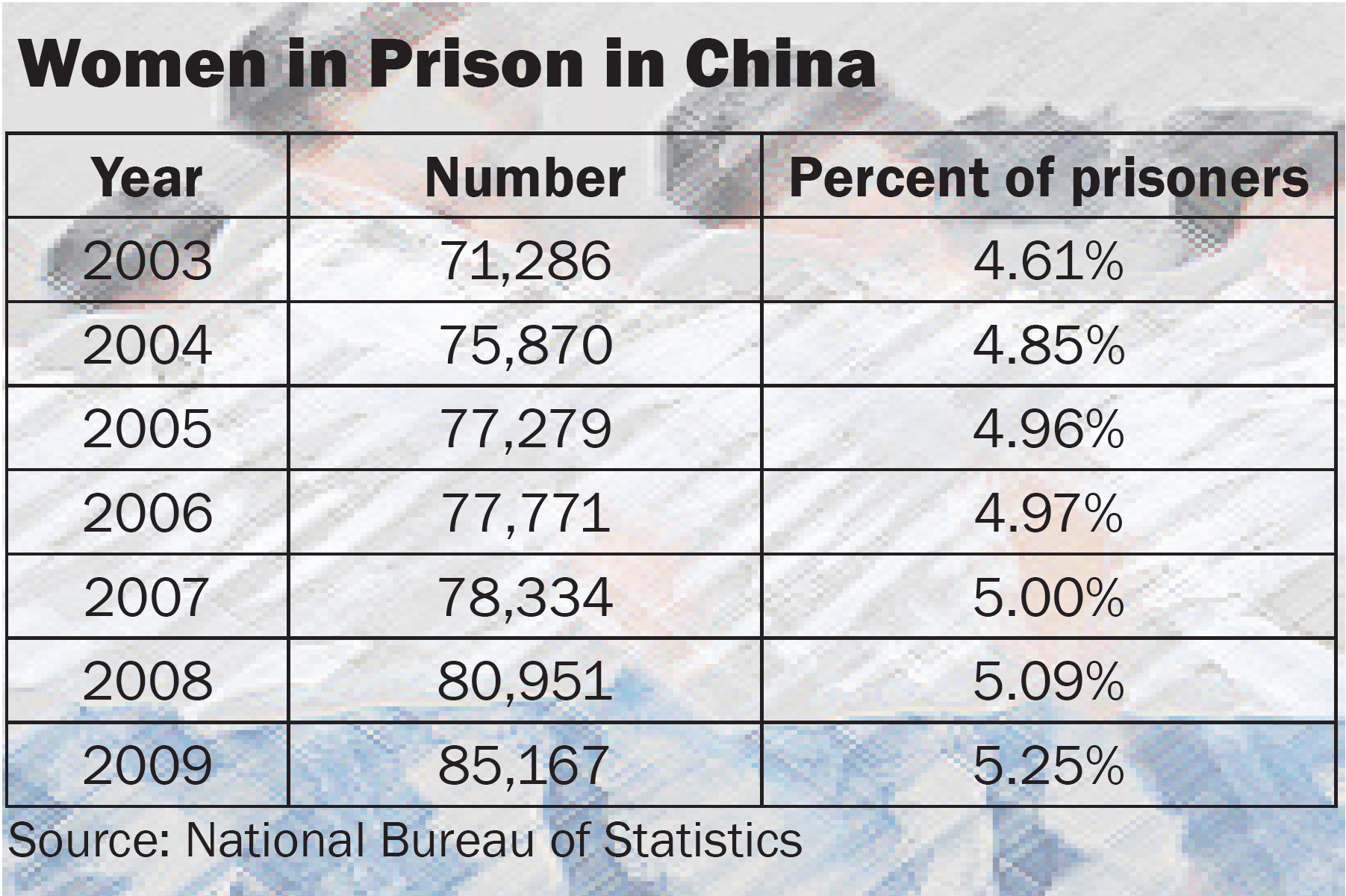
    It would seem as though growth in the world’s population of women detainees has not affected China, but since 2003, the country’s population of women prisoners has grown faster than that of men. More than five percent of China’s prisoners were women in 2009, and if the growth rate registered that year is maintained, there will be nearly 100,000 women prisoners in China by mid-2012.

    In fact, the low-profile of the Bangkok Rules aside, the rise in the number of women prisoners has led to some progress in the treatment of women in China’s criminal justice system. While national projects have yet to take hold, pockets of change in places like Hunan, Chongqing, and Hebei have addressed areas of concern enumerated in the Bangkok Rules, especially with respect to domestic violence.

    National Problem

    Rule 67

    “Research shall be conducted on the reasons that “trigger women’s confrontation with the criminal justice system.“

    Generally, the Bangkok Rules take into account not only the increasing number of women in prison but the “disproportionate experience of domestic violence” shared by women prisoners.

    Since 2000 a great deal of research has been done on the triggers of crime committed by women in China. A recent survey conducted by the All-China Women’s Federation (ACWF) indicated that domestic violence played a role in more than 50 percent of crimes committed by Chinese women and that domestic violence is the cause of 80 percent of violent crimes committed by women.

    Partly the result of advocacy work by the ACWF and findings that domestic abuse occurs in more than a third of Chinese families, the Standing Committee of the National People’s Congress announced plans to draft an independent anti-domestic violence law in August 2011. In preparation for the national law, a research group traveled to Changsha, the capital of Hunan province, in March to study the implementation of municipal regulations lauded as China’s first anti-domestic violence rules in 1996. As of 2010, similar regulations for handling complaints and defining organizational procedures had spread throughout the nation, with the exception of Guangdong, Tibet, Shanghai, and Beijing.

    The Standing Committee has not given a timetable for when a draft of the law will be circulated for public comment or when it might become effective. But media reports have increased awareness about the upcoming legislation. News of the law grabbed popular attention in September 2011 when Li Yang, well-known for his development of a popular English-learning technique, publically apologized for beating his American wife after she posted photos of her injuries on a Chinese microblogging service.

    Local Clemency

    Rule 56:

    “Sentencing alternatives shall be developed within Member States’ legal systems, taking account of the history of victimization of many women offenders.”

    Judicial officials and scholars have jointly launched pilot schemes at the local level to examine the use of reduced sentences for women convicted of murdering their abusive husbands. A volume of selected criminal cases published in 2007 shows that courts in various provinces have handed down reduced sentences for women defendants based on past domestic violence, caretaking responsibilities (emphasized in Rule 63 discussed below), and confession. The cases also show precedent for granting suspended sentences to domestic-violence survivors convicted of capital crimes like murder and aggravated assault.

    Prisoners at Beijing Women’s Prison receive clemency on International Women’s Day in 2006. Photo credit: Zheng Chenggang, ifeng.com

    The first provincial guiding opinion on domestic violence was issued by the Hunan High People’s Court in 2009. It encourages courts to grant lighter sentences and sentence reductions to those who “fought violence with violence” (以暴制暴). A year later the vice president of the Chongqing High People’s Court suggested that domestic-violence survivors be exempt from punishment since their crimes were “less heinous.”

    But despite progressive locales, China has yet to develop a national sentencing standard, and most women who commit violent crimes as a result of domestic violence receive severe punishment ranging from death with reprieve to 10 years’ imprisonment. As pointed out by an article in China Women’s News (中国妇女报), some local courts justify the use of severe punishment on the grounds that leniency would encourage more women to commit violent crimes at home.

    Rule 63:

    “Decisions regarding early conditional release (parole) shall favourably take into account women prisoners’ caretaking responsibilities.”

    During a Women’s Rights Week event in March 2004, organized in Hebei province by the provincial women’s federation and women’s prisons, 26 women prisoners were granted either sentence reductions or parole. The Shijiazhuang Intermediate People’s Court offered clemency on the grounds that these women suffered chronic physical and psychological trauma inflicted by their husbands, had no prior criminal record, and “fought violence with violence.” While many local regulations make individuals convicted of violent crime ineligible for clemency, regulations issued in Beijing in 2005 made an exception for victims of domestic violence. Under the 2005 rules, these prisoners become eligible for sentence reduction and parole after serving two-thirds of their sentence or one half of their sentence if they show good behavior.

    Soft Media, Serious Exchange

    Rule 70:

    “Raising public awareness, sharing information and training.”

    So far public awareness seems to be quite low, with the possible exception of the link between domestic violence and incarceration. This is partly because the bulk of Chinese media reports related to women in prison focus on one-off events like holiday celebrations, beauty pageants, and fashion shows. Contributing to stereotypes of women as soft, trivial creatures, media reports have featured stories on lipstick and makeup privileges, while avoiding serious investigation into more salient topics like sanitation; hygiene; and healthcare, especially as it relates to pregnancy and HIV/AIDS.

    “Humane management” rules enacted in Shaanxi Women’s Prison in 2004 allow prisoners to apply light makeup before seeing visitors. Photo credit: Yi Fei, ifeng.com

    China has, however, engaged in international exchanges related to women and domestic violence. Most recently in July 2010, around the time of the plenary session introducing the Bangkok Rules, a seminar on the criminal liability of defendants suffering from battered woman syndrome was hosted in Xi’an by the Shaanxi Women’s Federation, International Bridges to Justice (IBJ), and others. Officials from public security organs, procuratorates, and the Shaanxi women’s prison joined judges, lawyers, and scholars at the event. Adhering to the principle of “combining leniency with punishment,” participating Chinese lawyers proposed fixed-term imprisonment of three to five years for battered women convicted of aggravated assault or murder. Also in attendance, an American lawyer representing IBJ discussed the US practice of referencing expert testimony to present battered woman syndrome as a mitigating circumstance—a procedure not currently used in China.

    With involvement from the courts, the National People’s Congress, civil society, and the public, significant progress has been made in the development of research and practices related to domestic violence and its role in the incarceration and sentencing of women in China. Similar cooperation and momentum is necessary to promote the implementation of the Bangkok Rules both nationally and internationally. China has shown that it has as much to teach as it has to learn by engaging in international exchange, and existing precedent shows that meaningful dialogues can and should be held regarding the sentencing and treatment of women detainees.

  • Dialogue – Issue 45: Separate and Unequal

    CPL Revision and the Treatment of Political Prisoners in China’s Dual-track Justice System

    Dual tracks

    Photo credit: bigfoto.com

    Sometimes referred to as the “second constitution,” China’s Criminal Procedure Law will soon undergo significant changes in a number of key areas. In the works for eight years, this revision will in many ways set the tone for how Chinese law regulates the balance between fighting crime and protecting human rights. While the draft shows that increasing attention is being paid to the rights of most suspects and defendants, it also suggests the establishment of a separate, less-regulated criminal justice system for those accused of state-security offenses (including crimes of speech and association), terrorism, and corruption.

    Promulgated in 1979 and revised in 1996, the Criminal Procedure Law of the People’s Republic of China (CPL) establishes the rules by which China’s police, prosecutors, and courts are obliged to operate in the handling of criminal cases. In addition to defining the balance between the coercive power of the state and the rights of individuals, the CPL also regulates the arrangement of power between law-enforcement and judicial institutions through provisions governing criminal investigation, detention, evidence, and trial.

    After years of discussion, the effort to put together new legislation began in earnest in 2009. Then, on the afternoon of August 30, 2011, the Standing Committee of the National People’s Congress (NPC) published its draft of a proposed revision and announced a one-month period of public consultation. During the period, the CPL was subject to intense scrutiny, with legal scholars, lawyers, and the general public voicing their opinions online and to the press. At the close of the public-consultation period on September 30, the NPC had received nearly 80,000 comments.

    Empowering Police

    Many of these comments were critical of a perceived expansion of police powers. For instance, additional provisions would give police new authority to carry out electronic surveillance against suspects in cases involving state security, terrorism, organized crime, major drug offenses, or criminal cases involving “other serious threats to society.” Investigators could initiate these measures as needed but would be subject to “strict,” yet vaguely defined, “approval procedures.” Public-security officials at or above the county level would be empowered to authorize “secret investigations,” amounting to a trivial amount of oversight.

    Considerable attention has focused on changes to the provisions concerning the “coercive measures” available to law-enforcement officers during their investigation of suspected criminal offenses. In particular, changes covering the procedure known as “residential surveillance” appear to legitimize what can only be called enforced disappearance: detention of suspects in unspecified locations for up to six months without any notification to their family members or ability to exercise their right to meet with a lawyer. Such use of residential surveillance to carry out secret, incommunicado detentions has existed for years in China due to ambiguities and blank spots in the present law, but the proposed legislation would effectively legalize such practices in certain types of cases, including those involving terrorism, serious corruption charges, and “endangering state security” (ESS) offenses, which have been the basis of imprisonment for activists like Nobel laureate Liu Xiaobo.

    In this respect, the measures on residential surveillance are illustrative of the proposed revision’s attempt to place new restrictions on police power for the majority of cases, while expanding police flexibility and authority in sensitive cases. New provisions that would obligate criminal investigators to notify a detained suspect’s family members within 24 hours include an exception for ESS, terrorism, and corruption cases if it is decided that notification could interfere with investigation. Likewise, provisions requiring that lawyers be able to meet with detained suspects give investigators discretion to withhold permission in these same three types of cases.

    These exceptions indicate that consensus on certain revisions to generally limit the power of Chinese law enforcement may have been reached by maintaining or even expanding that power in the relatively few cases that authorities determine to pose the greatest danger to public, social, and political order. This suggests that legal reform may be moving towards a dual-track criminal justice system in which general, institutionalized respect for rule of law exists alongside expansive powers that allow the government to detain individuals suspected of specified, most notably political, offenses. Though such a system would not be unprecedented—it is a feature of the criminal justice system in Singapore, for example—its establishment would be a step backward for the promotion of universal human rights in China.

    CPL Proposals Indicating a Dual-Track System

    “Exception”-ally Better

    When one sets aside these exceptions and the expansive law-enforcement powers they make possible, there are in fact a number of ways in which the proposed revision is an improvement over current law. In order for these improvements to be realized, however, there will need to be a concerted commitment to implementation and clear sanctions for non-compliance.

    Several proposed measures address ways to reduce the use of torture by investigators. The CPL draft incorporates rules adopted by the Supreme People’s Court in 2010 that establish guidelines and procedures for the exclusion of confessions, testimony, and other evidence obtained through coercion or other illegal means. Suspects placed under criminal detention or formal arrest would be required to be transferred to a detention center within 24 hours, and audiovisual recording of interrogations would be mandatory in cases in which life or death sentences are possible. The law would also protect suspects from being forced to incriminate themselves, though the continuing obligation to answer investigators’ questions truthfully is a far cry from a guaranteed right to remain silent—adoption of which Chinese law-enforcement agencies have adamantly resisted.

    The proposed CPL draft would clarify the role of defense lawyers, bringing relevant provisions more in line with the Law on Lawyers, which was last revised in 2007. Suspects would have the right to engage a defense lawyer almost immediately after they are first taken into custody or subjected to questioning—a much earlier stage in the criminal process than the CPL currently allows. The revised CPL would also make it much easier for lawyers to meet with most detained suspects, though permission from investigators would continue to be required in cases involving ESS, terrorism, or serious corruption. Despite these clarifications, however, some lawyers have observed that there has not been any real expansion of the fairly limited role played by defense lawyers in the pre-trial phase.

    To address the common problem of witnesses not appearing in court to provide testimony, the draft proposes to obligate appearance by those whose testimony has “major implications” for conviction or sentencing and gives courts new authority to compel appearance and imprison those who refuse to comply. Spouses, parents, and children of defendants cannot be compelled to testify; however, the court appears to retain significant discretion over the necessity of witness testimony.

    In death-penalty cases, new provisions would require courts to hold hearings in trials of second instance, a measure that would theoretically give defendants a better opportunity to present their case and challenge evidence presented by the prosecution. Furthermore, the law would give more definition to the Supreme People’s Court’s final review of death sentences, requiring judges to interview the defendant and to consider the opinions of the defense.

    There are several other areas of potential improvement in the proposed CPL. Despite the serious problems with the provisions on residential surveillance, the draft shows a certain commitment towards increasing the use of non-custodial measures, like bail, and reducing pre-trial detention by giving procuratorates the ability to review the need for continued arrest. Women sentenced to life imprisonment would be allowed to serve their sentences outside of prison while pregnant or nursing. In the area of juvenile justice, special procedures would incorporate the new practices of deferred prosecution and sealing of criminal records. Other measures would give courts (rather than police) the authority to order compulsory psychiatric treatment for “mentally ill” individuals who have committed violent offenses.


    Loading the Scales

    In the end, the proposed revision of the CPL contains both measures that have the potential to protect the rights of suspects and measures that enhance the power of authorities to fight crime and maintain order. It would be misleading, however, to conclude that a healthy balance has been achieved. The many provisions that are protective of rights will depend on consistent and committed enforcement to realize their potential. Meanwhile, the powers that have been granted to the police can be exercised immediately with little effective oversight. Though the categories targeted are relatively small—state security cases contributed less than 0.1 percent of all criminal cases in 2010, the lack of clear definitions in some of these offenses and the tendency for police powers granted in certain cases to be applied in others, particularly when unchecked, enlarges scope for abuse.

    It is not yet clear how public criticism will affect amendments to the “second constitution,” the passage of which is expected by the plenary session of the NPC in March 2012. Legislation like this requires the balancing of many interests, but it is not always clear which interests are given priority and how conflicts of interest are ultimately resolved. Time will tell whether pressure to respect rule of law, originating from both inside and outside China, will derail the construction of a dual-track justice system in favor of a single path to procedural rights for all.

  • Dialogue – Issue 45: Confession: The Price of Freedom

    The US and China have a lot in common: they draw international criticism for their prison systems, and they place undue burden on prisoners who refuse to confess. With systems for parole and sentence reduction, both countries should allow “well-behaved” prisoners to serve less than their full sentence, but if prisoners maintain their innocence, they’re likely to face formidable obstacles on the path to early release.

    The Gears of Reduction

    In China, “showing genuine repentance” is one of the criteria necessary to receive a sentence reduction or parole. For most prisoners, clemency is approved through a grueling eight-step process, moving from cellmates to guards, evaluation committees, wardens, and the court. For those convicted of “endangering state security” (ESS) and crimes like “using a cult to sabotage implementation of the law,” the process is more rigorous, resulting in significantly lower rates of sentence reduction and parole even for those who confess.

    A prisoner sits before a US parole board hearing in 2009. Photo credit: 95.9 WATD-FM

    In the US, the federal and state prison systems release prisoners early through a combination of determinate parole, where prisoners receive standard reductions for set reasons like good behavior, and indeterminate or discretionary parole, which takes prisoners before parole boards. One factor that US parole boards take into consideration is whether prisoners confess.

    Many criminal justice practitioners see confession as a mark of emotional maturity and responsibility for past actions. What this view fails to consider is that some prisoners genuinely believe they are innocent and have been wrongly convicted. These prisoners are often faced with the choice between compromising both their innocence, which affects their ability to appeal, and serving longer sentences.

    Prisoners who do not confess have little opportunity to express the nuances of their cases because parole hearings are too short and too far between. California’s 12-member board, for example, averages nearly 4,000 parole hearings a year. Tough new parole laws such as California’s Proposition 9 (Marsy’s Law), which was passed in 2008, extended the maximum period between an inmate’s parole hearings from five years to 15. Measures like Proposition 9 reduce the case loads of parole boards but raise the stakes for prisoners. And since in most states parole is an administrative power of the executive branch (with parole boards appointed by the governor), prisoners do not have the same right to legal counsel at parole hearings as criminal defendants have at trial.

    In China, refusal to confess not only reduces the prospect of clemency but can mark prisoners for a harsher regime of treatment, including denial of family contact, meant to induce admissions of guilt.

    Case Study

    America’s Michael McDonald

    In 1992 Michael McDonald was convicted of murder and sentenced to 15 years to life for his part in the slaying of Alexander Geraldo. Both McDonald and the victim were 16 years old at the time of the crime. McDonald was found guilty on the basis of circumstantial evidence and shaky witness testimony. Throughout his arrest, trial, and imprisonment, he maintained his innocence.

    The prison psychologist who evaluated McDonald said she believed he was not involved in the murder. Prior to his arrest, he had no criminal record or history of drug or alcohol abuse. While in prison, his behavior was exemplary: he earned a high-school diploma, an associate’s degree, and vocational certificates.

    Based on his history and behavior, the parole board found McDonald fit for release on three occasions. Each time the governor denied parole, citing the seriousness of the original offense and McDonald’s “lack of insight,” as evidenced by his continued claims to innocence.

    China’s Hu Shigen

    In 1995, as a founding member of the China Liberation and Democracy Party and the China Free Labor Union, Hu Shigen (胡石根) was sentenced to 20 years’ imprisonment for “organizing and leading a counterrevolutionary group” and “counterrevolutionary propaganda and incitement.” Although pressured to do so, Hu initially refused to confess.

    His prison sentence legally began with the start of his detention in 1992. Because he was given fixed-term imprisonment, he became eligible for parole in 2002 after he had served half of his sentence. Around that time Chinese-government responses to US prisoner lists indicated that Hu was behaving well in prison, offering strong basis for early release: in October 2001 Hu was said to “obey his supervisors,” and in December 2002 he was “able to submit to reform.”

    By 2003, however, no sentence reduction was forthcoming, and desperate for clemency, Hu confessed. A year later China’s Ministry of Justice maintained that Hu was still not eligible for parole. In a December 2004 response to Dui Hua, the ministry said that: “although [Hu] has completed more than half of his sentence, based on his attitude toward reform he has still not yet met the requirements for sentence reduction or parole” (emphasis added).

    The Politics of Innocence

    With evidence of good behavior and a confession to satisfy regulations requiring “acknowledgement of guilt” as a sign of “sincere repentance,” why was Hu denied clemency? The answer may lie in rules that were codified by the Beijing Prison Management Bureau in 2006. The rules specify that approval from the municipal prison-administration bureau is necessary to process sentence reduction and parole applications for certain prisoners, including political prisoners, foreign nationals convicted of endangering state security, and people “whose cases have significant domestic and international influence.” In short, the rules clarify that political, not judicial, mechanisms determine the fate of prisoners like Hu.

    Politics also played a role in McDonald’s case. Since parole decisions are typically made by executive-appointed boards, governors tend to protect their careers by appointing conservative members. Parolees committing crime make headline news rife with political liability, while reformed inmates denied parole make back-page editorials and little else.

    In the three states where governors have the power to veto parole board decisions, politically motivated decisions are even more blatant. In California, for example, Governor Schwarzenegger approved only 27 percent of paroles recommended by the board during his eight-year tenure. This was a big improvement over his predecessor. Governor Gray Davis denied 98 percent of recommended paroles from 1999 to 2003. “If you take someone else’s life,” Governor Davis told parole-seekers, “forget it.” Since taking up office in 2011, California Governor Jerry Brown has been more moderate vetoing only 20 percent of parole board decisions thus far. While Governor Brown’s deference to his board is commendable, it is in the context of an unprecedented budget crisis and a major court decision to reduce prison overcrowding. Strong variation in gubernatorial veto rates points to party politics.

    External Release

    Stuck in political limbo, both McDonald and Hu eventually obtained clemency with the help of outside forces. In the McDonald case, the California Court of Appeal ruled that the state could not legally deny parole solely because an individual refused to confess, and that McDonald did not pose “an unreasonable risk to public safety.” The decision was upheld despite the governor’s appeal, and McDonald was released in November 2010 after 18 years in prison.

    On a mission to China as the special rappoteur on torture, Manfred Nowak interviewed political prisoner Hu Shigen. Photo credit: ACUNS Secretariat

    In the case of Hu, three sentence reductions, each roughly one year apart, led to an early release after Manfred Nowak, the UN special rapporteur on torture, published an account of Hu’s plight in a report on his mission to China in 2006. Hu was released four years early in April 2008, presumably due to international attention garnered by Nowak and countries like the EU and US that, assisted in part by Dui Hua, submitted prisoner lists of concern.

    Finding a Third Way

    In cases of non-violent crime (Hu) or when experts objectively determine that a prisoner is fit for release (McDonald), explanations for denying clemency are often political, and prisoner advocates must seek compromise.

    Until 2005, medical parole was the compromise offered to many high-profile Chinese dissidents who refused to confess. Unlike parole and sentence reduction in which prisoners are expected to serve at least part of their sentences, medical parole can be granted at any time. Medical parolees are not generally required to report to police and have been known to “seek treatment” abroad.

    Starting in the 1990s, a string of relatively healthy political prisoners were released and sent abroad. These prisoners chiefly went to the US, where an annual debate was deciding the renewal of China’s trade status. But after China’s trade status was permanently secured, and especially since the campaign against color revolutions began in 2005, hardly any political prisoners have been granted medical parole. Instead, internationally known prisoners like Tenzin Delek in Sichuan and Lobsang Tenzin in Tibet have been denied medical parole despite serious health conditions.

    The road to early release for political prisoners has become increasing difficult to navigate in recent years, but a new path offers hope that clemency can be achieved with broader interpretations of existing regulations. Dui Hua has learned of a handful of Chinese political prisoners who met the requirements for confession by choosing not to “admit guilt” but “to accept the verdict.” This compromise resembles the Alford Plea in the US criminal justice system—a plea entered at trial allowing defendants to maintain an innocence claim on the record, while accepting a guilty verdict on the grounds that there is sufficient evidence to convict—and is available to all prisoners of conscience.

    Sentence reduction and parole are answers to tight budgets, overcrowded prisons, and miscarriages of justice, but when the keys to freedom lie with politicians, prison doors too often remain locked.

  • In Chinese Lawmaking, Draft Disclosure Fosters Democracy

    In China’s legislative process, public consultation is a relatively new phenomenon that is neither formalized nor routine. The handling of two recent pieces of important legislation suggests, however, that members of the public may begin to get more of a say in how their laws are written.
     
    This would be a welcome turn of events for law professor Wang Lin. In commentary published by the Economic Observer (translated below), Wang recently wrote about the importance of public access to legislative drafts, in particular the criminal and civil procedure laws, as a means to democratize the legislative process.
     
    The 11th NPC Standing Committee reviewing proposed drafts.
    Photo credit: npc.gov.cn

    Though not nearly as devoid of debate as implied by the caricature of “rubber-stamp parliament,” the National People’s Congress (NPC) nevertheless remains some distance from being a democratic institution. Much of the process of drafting and deliberating legislation takes place behind closed doors. Because NPC deputies are not chosen through broad-based popular election, the national legislative body is a poor reflection of the increasingly complex and fragmented interests in Chinese society.

     
    In the absence of electoral democracy, one way to give citizens more influence over policymaking is to establish institutions for public consultation and a greater role for public opinion. Public debate and discussion over legislation, Wang argues, will contribute to laws that are more easily accepted by society than laws passed without public comment. Citizen input in the drafting of procedural legislation is particularly important, given that these laws have direct relevance to the ways in which citizens’ rights may be exercised.
     
    Wang’s essay was apparently written between the first release of information about proposed changes to the Civil Procedure Law on October 24 and the time the full text of the amended draft was published by the NPC Standing Committee on October 29. Similarly, official release of the draft of the amended Criminal Procedure Law followed initial media reports by a few days. For both pieces of legislation, the days preceding publication of the drafts were filled with a mixture of government propaganda and critical commentary, much of which was based on uncertainties about the specific wording of certain provisions.
     
    In the case of the Criminal Procedure Law, Wang writes that the ultimate decision to publish the full text was a response to criticism of the proposed amendments. However, the gradual release could also be interpreted as a deliberate means for officials to control the grounds of debate and adapt publicity strategies to the public’s initial response. In fact, the gradual release of the less controversial amendments to the Civil Procedure Law demonstrates that delays are not necessarily indicative of strong public pressure.
     
    Wang notes that in 2008 the NPC Standing Committee made a general commitment to publish draft legislation and seek public comment, but this process has yet to be firmly institutionalized. A possible reason is that China’s limited experience with public consultation has not always been easy. After being first published in 2002, a historic and controversial Property Law was forced by public scrutiny to undergo numerous revisions and withdrawn from consideration by the NPC before finally passing in 2007.
     
    The general messiness democracy typically creates poses a challenge to the Chinese government, which has conventionally prized flexibility and efficiency as drivers of development. Wang maintains, however, that the benefits of a more democratic legislative process ultimately outweigh the short-term costs, and thus he advocates the full integration of public consultation into the legislative process.
     
    *
     
    Publicize Legislative Drafts to Promote a Democratic Legislative Process
    Wang Lin, Economic Observer
    October 30, 2011
     
         On October 24, the 23rd meeting of the Standing Committee of the 11th National People’s Congress reviewed the Draft Amendment of the Civil Procedure Law. According to reports, the draft will relax [restrictions on] public-interest litigation, and “relevant organs and mass organizations” will be allowed to act as plaintiffs in public-interest lawsuits filed with people’s courts.
     
         These reports led to much public discussion, but without additional sources of information, reporters and commentators have been left to play guessing games. Besides China’s ever-elusive “relevant organs,” [the term] mass organizations has also been subject to many different interpretations. In particular, use of the traditional phrase “mass organization” instead of the more broadly defined “social organization” has led the media to worry that the draft excludes the up-and-coming [sector of] non-governmental and nonprofit organizations from [the category of] possible plaintiffs in public-interest litigation.
     
         It is precisely because of the dearth of publicly available legislative information that public opinion has resorted to so much speculation and the legislative debate cannot properly begin. Two months ago the Draft Amendment to the Criminal Procedure Law was also the subject of heated debate after scholars first revealed [its content], and only after widespread calls from public opinion did the legislative organ publish the draft. In the August 26 edition of the Economic Observer, I called for a “public debate platform for the revision of the Criminal Procedure Law.” Of course, this “platform” is not only for the revision of the Criminal Procedure Law; it should be used for all NPC legislation. Specifically, [the entire process] from legislative planning to drafting, to first reading, final review, and passage should all be made public. Not only should the progress of legislation be made public; the drafts under review and the proposed changes should all be announced promptly.
     
         Legislative drafts concern the public interest and are a prerequisite for legislative debate. There is absolutely no reason why they should be hidden in black boxes. Law is the art of compromise, a reflection of the opinion of the majority. Article 5 of the Legislation Law stipulates clearly: “Lawmaking shall reflect the will of the people, promote socialist democracy, and ensure that people are able to participate in legislative activities through various channels.” Ensuring citizens’ participation in the legislative process is a responsibility that the legislative organ cannot evade.
     
         Confined by the limitations of legal statute, the constitution and Legislation Law only set forth a few principles of democratic lawmaking. Saying “ensure that people are able to participate in legislative activities through various channels” still requires the legislative organ to establish detailed regulations to put this into practice. Mere principled provisions without institutional protections mean that, after many years, “various channels” really means “no channels.”
     
         At a time when it has become almost routine not to publicize legislative drafts, citizens have no room for timely participation in the legislative process. They take no interest in lawmaking, which results in passed legislation that lacks legitimacy. When the legislative organ itself is passive in its implementation of the constitution and the law, how can one expect the government, legal entities, and individual citizens to observe the law in an active way?
     
         Lenin once said: “It would be absurd to speak of democracy without publicity.” Compared to “democratic lawmaking,” a “draft” inside a black box or “made public within a small circle” also looks rather “absurd.”
     
         It should be admitted that, in the last few years, the legislative organ has been opening the door wider and wider to accepting public participation in the legislative process. Back in April 2008 the Chairmen’s Council of the NPC Standing Committee decided that legislative drafts being reviewed by the NPC Standing Committee would thenceforth generally be made public, and opinions broadly sought from the public. Based on that decision, on April 20 [of that year], the General Office of the NPC Standing Committee published the full text of the Draft Food Safety Law.
     
         Without a doubt, the decision by the Chairman’s Council to generally make legislative drafts public has greatly strengthened democratic lawmaking and benefited the legislative debate. In fact, every legislative draft that has been made public and for which opinions have been sought in recent years has attracted positive response and participation from the public. Of course, the deepening of legislative debate means that more legislative resources are needed to collect, balance, and accommodate public opinion. Objectively speaking, it increases the workload of the legislative organ and, in reality, makes it more difficult for drafts to gain passage. The fragmentation of society means that different interest groups will have different expectations with respect to legislation. These conflicts of interest must be discovered and resolved during the legislative stage—this is actually the lowest-cost way to resolve [such] conflicts. If you wait until after a law has been unveiled, [people] don’t accept the new law because they did not participate in the lawmaking [process]. This leads directly to opposition and passive violations, both of which come at much greater cost.
     
         While the draft revision of the Civil Procedure Law is generating public attention, work is underway on revision of the Administrative Procedure Law. [The policy of] “generally” making drafts public should [instead become] publicity as a matter of principle. Revision of the three major procedural laws does not involve state secrets, and the legislative organ should take the initiative to make [the drafts] public. There is no need to wait for the media to begin exposing [aspects of] the drafts before being forced to act. Public speculation because of the non-disclosure of information is actually a waste of valuable social resources, and the longer legislative debate is put off, the more acute the mutual lack of trust between different interest groups becomes. The earlier you make things public, the earlier you can reap the benefits. I look forward to the day that the publication of legislative drafts becomes institutionalized and hope that two months from now I won’t be writing an article calling for the release of the Draft Amendment to the Administrative Procedure Law.
     
    The author is an assistant professor at the Law School of Hainan University.
  • As Execution Reports Decline, Law Expert Challenges “Secret” Status

    In 2010 Dui Hua recorded 700 Chinese executions in a systematic review of open-source materials for the year ended September 30. This year the same research methodology showed a 35 percent decline in reported executions. Neither figure comes close to the actual number of executions in China, which is a closely guarded state secret.
    Does this mean that China has curbed its use of the death penalty?
    Not necessarily. Amnesty International estimates that China put “thousands” to death in 2010, and there is little reason to expect a change of more than 10 percent from Dui Hua’s 2009 estimate of about 5,000 executions, a number that the government has neither confirmed nor denied. (A source in China’s judiciary recently advised a Dui Hua staff member that the number of executions had in fact decreased in 2011. The source, who is believed to have access to the actual number of executions, declined to give a percentage for the decrease.)
    A public sentencing in Chengdu in 2010. Some were sentenced to death.
    Photo credit: Beijing Morning Post
    Given this and strict media controls in China, the 452 executions recorded during the past year serve as a minimum number for comparison and a bleak reminder of how little is known about the death penalty in China.
    Open Secret
    Chinese media reported fewer executions over the past year but published no shortage of articles on the death penalty itself. Controversies surrounding several notorious cases and the decision to reduce the number of capital offenses contributed to an ongoing public discussion about the death penalty and its place in the criminal justice system.
    Capital punishment is rather unique among controversial criminal justice issues in that it has garnered relatively wide-ranging and sustained public debate involving a diversity of viewpoints. One subject that has been raised periodically is whether China is justified in its policy of refusing the public’s right to know how many people it puts to death.
    Although the Chinese public is often described as favoring capital punishment, they don’t necessarily favor the secrecy that surrounds it. According to a general survey of Chinese attitudes towards the death penalty conducted in 2007 and 2008, 64 percent of respondents thought the government ought to reveal execution numbers.
    After much debate, Li Changkui was sentenced to death by the
    intermediate court. Photo credit: Yunnan Intermediate People’s Court
    Writing in support of this view in a commentary recently published by Guangzhou’s Southern Metropolis Daily, Peking University law professor Zhang Qianfan rejects the government’s legal basis for classifying execution statistics as state secrets. Noting heated debate sparked this year by the capital cases of Yao Jiaxin and Li Changkui, Zhang argues that the public cannot speak rationally about abolition, or other topics, with little access to anything but sensational reports. Zhang calls for increased transparency in the number and nature of China’s death sentences.

    *
    Death Penalty Numbers Are Not “State Secrets”
    Zhang Qianfan, Southern Metropolis Daily
    September 9, 2011

    Recently, the Yao Jiaxin and Li Changkui cases have generated heated debate over abolition of the death penalty and put the ongoing reform of death penalty sentencing in a difficult position. Actually, both cases involve extremely heinous circumstances that gave rise to considerable public anger. So in terms of a general discussion of whether to abolish capital punishment, they are not representative, and thus not sufficient to stop the general reform of the death penalty.
    With these two extreme cases as a backdrop, people have at most been discussing the question of “whether extremely heinous murderers should be spared the death penalty.” But each year there are only a handful of cases like these that become the subject of widespread public attention—what about other death sentences? Even people who support the death penalty for Yao Jiaxin and Li Changkui won’t necessarily oppose sparing the lives of offenders [if] the circumstances of their crimes are not as horrifying, and not to mention, of course, those who have been wrongly convicted. This raises the question: just how many death sentences do we have every year? What kinds of cases are they? When the criminal law currently requires the death penalty with immediate execution for so many cases, can the public accept a decision to forego immediate execution? Without knowing so many of these basic facts, any so-called “discussion” about abolition of the death penalty can be little more than an emotional reaction.
    But not only do we not open death penalty sentencing to the public—even the number of death sentences is a closely guarded secret. Everywhere the number and nature of executions are spoken about only vaguely, even to the point that the number of death sentences is called a “state secret.” What is the so-called “state secret”? To answer this, I purposefully read the Law on the Protection of State Secrets that was just amended last year, in which Article 9 sets the following condition for protecting secrets: “Any matter concerning state security or interests that, if leaked, might damage the security or interests of the state in areas such as politics, economics, defense, or foreign relations shall be classified as a state secret.” What sorts of things, specifically? Poring over the six items [enumerated under Article 9], the only things I found of any relevance were Item 1, “secret matters of major policies related to national affairs,” and Item 6, “secret matters related to activities for the protection of state security and the investigation of criminal offenses.” But can such a small thing as the number of death sentences amount to “major policies related to national affairs”? Can revealing this number, the result of proper court adjudication, be a “secret matter related to the protection of state security and the investigation of criminal offenses”? Even if these two [provisions] are themselves more than a little “flexible,” to use them to determine that the number of death sentences amounts to a “state secret” is clearly a “stretch” of the imagination.
    Of course, no Chinese law would be complete without a “pocket clause.” Besides the six items mentioned above, there is a last item: “other secret matters that have been classified by the state secrets administration agency.” This “state secrets administration agency” must mean the State Bureau for the Protection of Secrets and not any other central offices or local agencies for the protection of secrets. For the time being, let’s not say whether the State Bureau for the Protection of Secrets has officially classified the number of death sentences as a “state secret”; even if it had it would not be etched in stone and beyond question. Clearly no office or individual can unilaterally say what constitutes a “state secret”; it must meet legal conditions, the least of which is the precondition in Article 9 of the Law on the Protection of State Secrets: [namely, that] “if [the matter is] leaked, [it] might damage the security or interests of the state in areas such as politics, economics, defense, or foreign relations.” Can “leaking” the number of death sentences really damage the political, economic, or diplomatic “security or interests” of China? Will it give others a way to attack our “human rights situation”? This kind of “pretext” might, in certain people’s eyes, “damage China’s image,” but, in fact, as far as China’s “security and interests” are concerned, there is no harm and many benefits. When you come right down to it, human rights are our own, our lives are our own. If making the number of executions public can provide a factual basis upon which to have a rational discussion about the abolition of capital punishment and reduce the number of unnecessary death sentences, the Chinese people themselves should be happy—what’s the point in worrying about what others think or say?
    Although the Regulations on Disclosure of Government Information have been in force for nearly five years and the Law on the Protection of State Secrets has narrowed the scope of “state secrets,” there has been no fundamental change in the reality that “state secrets are everywhere you look.” Officials at all levels can easily put a “state secrets” stamp on any information they are unwilling to make public, causing the public discussion of serious issues to lose basic, factual foundations. The number of death sentences and executions is a classic example. Even though judicial information is not necessarily subject to information disclosure regulations, it is information that the public has a right to know since it does not qualify as a “state secret” under the Law on the Protection of State Secrets, and no agency has the right to refuse to reveal this number. Only when the number of executions is made public can China’s rational debate on abolition of the death penalty begin.
    The author is a professor of constitutional law at Peking University.