Tag: religion or cult

  • Transparency in Inciting Splittism Trials

    Transparency in Inciting Splittism Trials

    A picture of the town of Ganzi in the Tibetan Autonomous Region in western Sichuan Province, China, taken in 2005. Image credit: Colegota / CC BY-SA 2.5 ES

    China’s Fifth Judicial Reform Plan Outline in 2019 committed itself to an “open, dynamic, transparent, convenient sunshine judicial system.” Although much progress has been made in the number of court rulings and judgments posted online, the level of transparency varies by case type, crime, and region. Criminal cases classified as endangering state security (ESS) are among the least transparent.

    Part of this is because judges frequently exercise their discretion to decide what information, including rulings and judgments, to publish. They may also conceal information about cases they deem “inappropriate for posting.” In regions rocked by incidents of ethnic unrest, accessing information about ESS cases is considered difficult or even impossible at times due to media blackouts which occur periodically following violent clashes with Han Chinese.

    While this presumption about judicial transparency holds true in Xinjiang, it does not accurately reflect the availability of Chinese government sources with regard to ethnic minority prisoners who are convicted of political crimes in the Tibetan regions outside of the Tibetan Autonomous Region (TAR) and Han-majority provinces.

    Despite being a restive region, Ganzi, or Garze, a Tibetan Autonomous Prefecture occupying the western arm of Sichuan Province, is the top region in all of China with the highest number of publicly disclosed ESS court rulings and judgments. In Ganzi, 26 of the 28 publicly disclosed ESS cases concerned the crime of inciting splittism (煽动分裂国家罪). Dui Hua previously reported that the Ganzi Intermediate People’s Court convicted nine Tibetans of inciting splittism between June and August 2020. In the last four months of 2020 the same court released five more judgments involving six defendants who were tried for the same crime.

    Table 1. ESS Rulings Disclosed on China Judgements Online (as of April 30, 2021)

    Aba, also known as Ngaba, similarly maintains a high level of transparency notwithstanding an astonishing number of self-immolation protests which occurred in the prefecture between 2012 and 2017. This Tibetan prefecture in northwestern Sichuan is ranked third in Table 1, with 20 ESS rulings and judgments disclosed on China Judgements Online. Thirteen of them were trials of inciting splittism. In 2020 alone, eight judgments were posted online by the Ganzi Intermediate People’s Court.

    Dui Hua previously reported that Xinjiang makes up the majority of China’s ESS cases (see Court Statistics on Splittism and Inciting Splittism, Part II: Uyghurs and Tibetans for a detailed analysis). The Chinese government has made an apparent attempt to obfuscate information in the autonomous region. At the time of writing, none of the ESS rulings and judgments on China Judgements Online were disclosed in Xinjiang. A small number of Xinjiang ESS court judgments Dui Hua unearthed earlier from court websites have since been taken down.

    Table 2. A list of inciting splittism cases in Ganzi and Aba posted on China Judgements Online after August 31, 2020

    Political Prisoner Database

    The names of political prisoners convicted of inciting splittism can also be found in other open-source materials. In its “official registry,” Dui Hua’s restricted-access Political Prisoner Database (PPDB) has information on 250 individuals who were tried nationwide for inciting splittism. The cases referred to here were collected from official sources including court judgments and rulings, state-run news media reports, judicial annals available in libraries and electronic yearbooks, and responses provided to Dui Hua by Chinese interlocutors.

    Access to information in Xinjiang is far more restricted than in Tibetan regions. Table 3 shows that about 60 percent of people tried for inciting splittism in the official registry are in the Tibetan plateau, compared to only 38 people, or 17 percent, in the entire Xinjiang Uyghur Autonomous Region (XUAR) including It is worth noting that the eight percent remainder also involved Uyghurs, they were scattered across Han-majority provinces, including Shanghai, Tianjin, Guangdong, Fujian, Jiangsu, Henan, Liaoning, and Jilin also involved Uyghurs.

    Table 3. Regional breakdown of inciting splittism trials with information in Dui Hua’s Official Registry

    Ganzi comes out on top of all regions in Table 4; 68 prisoners convicted of inciting splittism are recorded in the official registry of the PPDB. The number is 11 times higher than that of Kashgar, Xinjiang, with records in the PPDB. The contrast is striking when we factor in a 2009 Chinese court report, which stated that more than 60 percent of Xinjiang’s ESS cases were tried in Kashgar. The paucity of prisoner information in the Uyghur prefecture has left the identities, acts, and fates of many of those convicted of inciting splittism unknown.

    Labelled “the self-immolation capital” by The New York Times, Aba comes as a distant second in Table 4. The latest Tibetan to set himself ablaze, in November 2019, occurred in Aba.

    Aba is followed by Huangnan, a Tibetan Autonomous Prefecture in Qinghai. It was another site of self-immolations and clashes between monks and Chinese security forces similar to Ganzi and Aba from 2012-2017.

    Table 4. Top three regions with information of inciting splittism trials in PPDB Official Registry

    In Qinghai, people tried for inciting splittism are not exclusively Tibetans. According to court judgments posted online, three ethnic Mongols were sentenced to nine to ten years in prison in the provincial capital of Xining in October 2008. Their imprisonment was likely related to the unrest in Tibet. Originally from Huangnan, they were detained in April 2008, just a month after the unrest in Lhasa set in motion a series of protests and demonstrations across the Tibetan plateau.

    Outside of Xinjiang

    Official information about Uyghur political cases appears more accessible outside of Xinjiang, at least for a brief period. Table 5 shows a breakdown of inciting splittism trials in the official registry of the PPDB. Of the 19 prisoners who were tried for inciting splittism in Han-majority provinces, all but one were Uyghurs.

    Table 5. Number of inciting splittism trials in Han-majority provinces with information in PPDB Official Registry
    Except for the three cases concluded in Shanghai in 2003, other cases in Table 5 were uncovered from court documents which were posted online between 2014 and 2016. Although the names of defendants were occasionally redacted or obscured, fewer ESS rulings and judgments at the time were classified as “unsuitable for posting.” These uncensored court judgments showed that most Uyghur defendants belonged to the “post-90s generation’ and were in their early twenties at the time of sentencing. Common allegations against them included using the internet to disseminate information about “East Turkestan” and the “Holy War.”

    Some of the case highlights are:

    1. Rozi Wulayimu, born in 1985, was a cake seller who traveled back and forth to Guangzhou from Yiwu, Zhejiang, prior to detention in January 2015. While in Yiwu, he became acquainted with what prosecutors called a Uyghur “religious extremist” (zongjiao jiduan fenzi 宗教极端分子). According to the judgment, the “religious extremist” called the ban on veils and beards in Xinjiang a repression of Islam. The “religious extremist” bought Rozi a cellphone. It was preinstalled with Voxer, an app best known for walkie-talkie messaging, and another app with access to IRIB World Service, Iran’s international broadcasting radio network.

    Rozi did not use the preinstalled apps until after he moved back to Guangzhou in late 2014. IRIB World Service allegedly contained articles and images of violence, “East Turkestan,” and the “Holy War.” This browsing history became evidence of him inciting others to split China. Additionally, Rozi used Voxer to contact the “religious extremist,” who shared the idea of them illicitly going overseas. Uyghurs could not legally exit China because of tight travel restrictions placed on them, said Rozi during the trial. Rozi also expressed having a strong impulse to leave China because he was deeply moved by the contents of IRIB World Service. However, he dismissed this idea as he could not bear to leave his parents behind in China.

    In July 2016, Rozi was sentenced to two years in prison by the Guangzhou Intermediate People’s Court. Rozi was released from prison in January 2017, having already spent 17 months in custody prior to conviction.

    • A Uyghur farmer, whose name was redacted in the judgment, was sentenced to two years in prison in Nanjing on July 17, 2015. He signed in to his QQ account with his cellphone and from cybercafes, where he disseminated audio and video messages of “religious extremism, the Holy War, and ethnic hatred.” Additionally, he was accused of sharing links to Turkistan Times, a multilingual news website covering news about Xinjiang.

    • Cases are also documented in China’s northeast provinces. Eli Exmet studied at Changchun’s Northeast Normal University. The then-25-year-old student was sentenced to eight years in prison in October 2014. Prosecutors accused him of teaching private religious classes to Uyghurs studying there. In the classes, he raised funds from attendees to buy tablets and removable storage to use as teaching tools and explained why he supported the “Holy War” and “East Turkestan” with information he downloaded and copied from e-books and online videos.

      Another defendant, Metabdulla Iminniyaz, born in 1992, was sentenced to six years in prison. He was in charge of lecturing on Arabic-language videos. According to the judgment, he expressed the idea of “driving away all bad Han Chinese in Xinjiang” in his classes.

    • Born in 1993, a Uyghur barbeque shop worker was sentenced to three years in prison in Dalian in February 2016. His name was redacted in the judgment. He was accused of uploading images from 2013-2014 containing violence and religious extremism to his personal cloud storage. Since he did not set a passcode to restrict access, the images were seen by many of the over 200 people on his contact list. Among the images was a map of China separating Taiwan, Tibet, and Xinjiang from Chinese territory. Xinjiang was also labelled “East Turkestan” and painted blue with a white crescent flag.
    The empirical data presented in this post indicated a varying level of judicial transparency concerning the trials of inciting splittism. While Tibetans and Uyghurs are both disproportionately represented in such trials, the Chinese government appears more willing to disclose information about Tibetans than Uyghurs. That said, courts in Aba, Ganzi, Huangnan, and other Tibetan regions are far from genuinely transparent. The judgments which have thus far been posted online there merely contain defendants’ names, courts, and sentence dates. Information about their sentences, whereabouts, and health status remains concealed.
    As mentioned earlier, the Uyghur cases outside of Xinjiang were concluded in 2014-2016, but Dui Hua is unable to find additional cases from Chinese government sources published over the past four years. The same practice of concealing information in publicly disclosed court rulings and judgments has also extended to cases of Han Chinese convicted of ESS crimes. As such, the opacity of ESS cases is suggestive of an overall downward trend in judicial transparency. ESS cases are by nature sensitive, but the strategic use of “discretion” by judges can serve as a smoke screen for crimes to be reclassified and charges shuffled. As long as this happens, China’s stated intentions of having a dynamic and transparent justice system will be out of reach.
  • The Ongoing Crackdown on Yi Guan Dao

    The Ongoing Crackdown on Yi Guan Dao

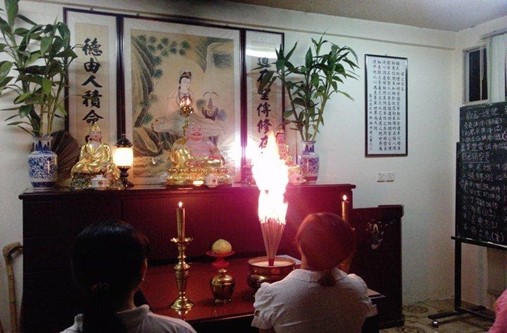
    Members of a Yi Guan Dao organization offer incense in an apartment believed to be in mainland China at an unknown date. Image credit: Jin De Fo Tang’s Facebook account

    Yi Guan Dao (YGD) has not been rendered extinct in mainland China, despite a lack of recent reporting which has led some experts to express doubt on the sect’s persecution or even existence in the mainland (read “The Resurgence of Yi Guan Dao” for a detailed analysis). Combining elements of Daoism, Buddhism, and folklore, YGD has been banned for over seven decades. During the early years of repression beginning in 1950, scores of YGD members were tortured, imprisoned, and executed.

    Dui Hua recently uncovered three court judgments online that corroborate its observation that YGD practitioners continue to be at risk of imprisonment. The sect continues to gain traction among the middle-aged rural population in Shantou, Guangdong, where prosecutors accuse YGD of conducting “reactionary” activities.

    YGD’s beliefs, with elements of feudalism, include apocalyptic teachings and salvationist doctrines that say that only converts will go to heaven. China’s pre-1997 Criminal Law classified YGD as a “reactionary secret society” or fandong huidaomen (反动会道门). The term is considered pejorative, denoting people or ideas that embrace views considered to be superstitious and outdated. However, the term has largely fallen into disuse after the amended Criminal Law, issued in 1997, removed “reactionary secret society” and replaced it with “organizing or using a cult to undermine implementation of the law (Article 300).”

    Chenghai District

    On May 30, 2018, the government of Chenghai District in Shantou, Guangdong, issued a public notice concerning the ban on YGD activities. Labelling it a “superstitious secret society,” the ban states that YGD carries out “infiltration and sabotage” in the name of “prostrating to Buddha” and “doing good deeds” when in fact they are “seriously and adversely affecting the socialist construction of spiritual civilization…and normal life of the people.”
    Seven months after the ban was made public, a group of seven YGD leaders in Chenghai District were given prison sentences of eight to 18 months for “organizing or using a cult to undermine implementation of the law” on December 20, 2018.

    Table 1: 7 YGD leaders sentenced on December 20, 2018

    Source: Chenghai District People’s Court

    Du Liqun (杜丽群), considered the principal offender in the case, had been secretly proselytizing across several villages in the district since learning the faith from two YGD masters from Taiwan in 1995. She founded several temples and provided worshippers with access to YGD books, videotapes, and CDs. Worship was held on every first and 15th day of the lunar calendar, coinciding with the lectures on YGD teachings. Worshippers learned about YGD standards of decency and morality in the lectures, but prosecutors alleged that the teachings “wantonly spread reactionary thought” and “fetter the freedom of thinking.”

    The judgment cited a witness as saying that there were four to five hundred worshippers at one of the temples on one occasion. Most members joined YGD to pray for family safety. While some were drawn by YGD’s promotion of traditional Chinese values such as filial piety, they also believed that YGD represented good deeds and could bring good karma. Among the new converts were an unspecified number of minors. Du and other leaders were also accused of soliciting donations and membership fees from worshippers.

    The court found that the seven YGD leaders had inflicted great social harm for influencing a large number of members. However, the circumstances of the case were mitigated by their willingness to confess and recant their beliefs. All defendants in this case have completed their prison sentences at the time of writing.

    Shantou Chaoyang District

    While the 2018 ban appears to have ended YGD activities in Shantou, Dui Hua found two more “cult” cases in Shantou Chaoyang District involving YGD leaders. On November 27, 2019, another group of 15 defendants were sentenced for Article 300, with punishments ranging from suspended sentences to three years in prison. Lin Qinmao (林钦茂) is the only defendant who remains imprisoned. He is expected to complete his three-year prison sentence in 2022.

    A case posted on Guangdong Anti-Cult Website stated that most of the defendants were either illiterate or did not receive education past the primary school level. In this case, 13 defendants were women.

    Table 2: 15 YGD leaders sentenced on November 27, 2019

    Source: Guangdong Anti-Cult Website
    Another court judgment shows that YGD has made inroads with members of the Chinese Communist Party (CCP), despite party membership rules that applicants must be “unyielding Marxist atheists.” Convicted separately in May 2020, CCP member Li Hesheng (李和胜) received a prison sentence of eight months suspended for one year. Li recruited 70 members for his self-funded temple before being criminally detained in December 2019.
    Li Hesheng and the 15 defendants belonged to the same jing de fo tang (进德佛堂), a branch of YGD, in Shantou Chaoyang District. The court found that they were subordinate to another YGD group in Hong Kong, where members of spiritual groups outlawed in China can still practice freely. Since 2009, the group had recruited over 200 members in Shantou Chaoyang District. Some of them travelled to Hong Kong to take part in worship. The Hong Kong-based YGD group is also found to have shipped promotional materials to the mainland.

    YGD typically gathers financial support through the performance of “rituals of salvation of the ancestors.” Its activities are also sustained by donations from ordinary members. In the case of the 15 defendants, the court confiscated a total of RMB600,000.

    The prison sentences meted out to the YGD leaders are noticeably shorter than many adherents of Falun Gong and Almighty God who are also convicted of violating Article 300. Unofficial news sources reported that a leader of Almighty God in Xinjiang received a hefty sentence of 15 years in prison in July 2020. The difference in treatment likely reflects YGD’s status as a lesser political threat to the regime. While its popularity and influence have diminished considerably compared to its heyday prior to the Communist takeover in 1949, the activities YGD conducted in Shantou show that the sect has survived seven decades of state repression.

    The cases discussed in this post do not only show continuity in YGD’s connections with Taiwan and Hong Kong, but also the official narrative and tactics used by authorities to suppress the sect. In addition to conducting localized activities in Guangdong, YGD is also known to be active in Fujian, where Taiwanese preachers and followers remain active. YGD members from Fujian have also made asylum claims in Canada and Australia since 2000, citing their fear of religious persecution in mainland China.

  • Dangerous Border Crossings: The Case of Cho Young-joo

    Dangerous Border Crossings: The Case of Cho Young-joo

    South Korean missionary Cho Young-joo (in a blue striped polo shirt) led a mission trip in the summer of 2013 to provide education for children in Mongla, Myanmar. China accused Cho of organizing volunteers from China and South Korea to illegally cross the Yunnan-Myanmar border. Image credit: GoodNewsTV  

    Cross-border evangelization involves unforeseeable risks. The risk is arguably grave in China, where foreign missionaries routinely face harassment and arbitrary detention. South Korean Christians and Chinese citizens of Korean descent (hereafter ethnic Koreans) are no strangers to arrests for assisting North Koreans who attempt the long journey to freedom and citizenship in the South.   

    A judgment unearthed by Dui Hua revealed that Korean Christians in China en route to their overseas missions in Southeast Asia face similar risks. In May 2014, South Korean national Cho Young-joo (KR: 조영주; CH: 曹永周) was sentenced to seven years in prison for organizing illegal border crossings to Myanmar from Yunnan. 

    While overland border crossings between Yunnan and Myanmar are only legally accessible to citizens from the two countries with valid exit permits, some areas are separated by rivers but crossable on foot in most other places. Informal Yunnan-Myanmar border crossings can be common, or were at the time of Cho’s conviction, in some areas. For this reason, the prosecution of some crossings and not others can be considered arbitrary or politically motivated applications of the law. 

    The crime of organizing illegal border crossings, defined in Article 318 of the Criminal Law, has become the latest rallying point for critics of Beijing following the detention of twelve Hong Kong anti-extradition bill protesters who attempted to flee by boat to Taiwan in August 2020. On December 30, two of them received prison sentences of between two to three years in Yantian District, Shenzhen, for Article 318. The crime can lead to as many as seven years in prison and even longer if violence is involved.  

    While some offenders feel compelled to flee lawsuits they believe to be politically motivated, Christians have fallen victim to the same crime for crossing the Chinese border to conduct charitable activities in another country. Cho led a group of Christians to provide education for impoverished children in Mongla, a Burmese city best known for casinos, prostitution, and markets for endangered wildlife with Chinese clientele.  

    Good News Mission

    Cho is from the South Korea-based Good News Mission (KR: 기쁜소식교회; CH: 好消息教会). The mission was founded by Ock Soo-park in 1976 and proclaims to have 170 churches in South Korea and 838 international churches. Due to doctrinal differences, mainstream South Korean Protestant denominations have called the mission “heretical.” The accusation stems from its allegedly objectionable conduct, such as deceptive recruiting and the exaltation of Ock. 

    In China, there were few if any reports about its church members being subjected to coercive measures until Bitter Winter, an online magazine that focuses on religious liberty and human rights issues in China, reported a case of 26 people who were sentenced for “illegal business activity” in July 2020. They were accused of printing Good News Mission books. Among them, Xian Renguo (咸仁国), director of the Secretarial Department of the mission, received a prison sentence of 42 months in Jiangsu. 

    There is evidence that the mission has gained some traction in China. Government gazettes have documented instances of “infiltration” from the Good News Mission in the northeast provinces of Liaoning, Jilin, and Heilongjiang, where the majority of two million ethnic Koreans are concentrated. Liaoning was among the first provinces to have banned the church as early as  2005. Public security in Inner Mongolia, Hunan, Guizhou, and Shaanxi have also filed “special cases” (专案) to monitor the church. The most recent mention by the government found in the 2016 Changsha Yearbook  states that an unknown number of members were taken to “education classes” for illegally proselytizing there. Reporting by Bitter Winter also revealed that the mission established a secretarial department in Guangzhou in 2009. 

    Three Border Crossings

    Jingkang School is a government-funded school founded in 2011 in Mongla, a township in Shan State Special Administrative Region 4, Myanmar. In 2013, Cho led volunteers from China and South Korea to cross the Yunnan-Myanmar border to provide schooling and humanitarian aid. Image credit: Information Website of the No.4 Special Administrative Region of Eastern Shan Information Website  
    Prior to detention, Cho administered a website to recruit volunteers to provide schooling for children in Mongla, the capital of Myanmar’s Shan State Special Administrative Region 4 bordering China’s Menghai County in Yunnan. Jointly initiated by Jingkang School (景康学校) in Mongla, the mission was joined by South Koreans and Chinese nationals, including members of ethnic minority groups such as ethnic Koreans, Manchu, and Jingpo (景颇族, a predominantly Christian ethnic group in Yunnan).
    The Daluo Port is the official crossing that connects Mongla to Yunnan’s Menghai County. Image credit: Google Map and zhihu.com 

    The Daluo Port is the only official crossing that connects Mongla to Yunnan’s Menghai County. As with many other overland border crossings between Yunnan and Myanmar, the port is accessible only to citizens from the two countries with valid exit permits. Exit permits are also obtainable by licensed tour operators catering to casino clientele. However, as noted above, the Yunnan-Myanmar border is considered porous and crossable on foot in many places. Locals are known to eschew the process of applying for a pass in favor of informal crossings utilizing accessible entry points. A 2014 New York Times article noted that few locals “bother applying for a pass and instead sneak through, via motorbike or by climbing through large holes conveniently located on the border fence.”  

    Cho was accused of organizing three illegal border crossings from Yunnan to Mongla, all of which were made in July 2013. Of the three border crossings, Cho admitted to having a leading role in the first one where he was physically present:

    1. In the summer of 2013, Cho was assisted by local churches in China to arrange for five South Korean students to meet him in Kunming, Yunnan’s provincial capital. From Kunming, they travelled to Jinghong, where they split into two groups. All but one student made their way to Mongla’s Jingkang School.

      Cho and his wife stayed with the one South Korean student who did not make it to Jingkang School. They were later alerted by Zhang Hongjun (张洪军), a Han missionary from Qiqihar, Heilongjiang Province, to evade Chinese police before crossing a river to Mongla. The trio was intercepted by Yunnan police upon their return to Kunming on July 25, 2013.

    2. Prior to Cho’s detainment, Burmese police apprehended a total of 31 people on July 21. They were sent back to Yunnan on the same day. According to the Chinese prosecutors, Cho instructed Wang Yingjie (王应杰) and Yang Yuanyuan (杨园园) to arrange a coach for the volunteers after they had arrived in Kunming. Wang travelled with them to the border township of Menglong, from where they took minivans and crossed the border to Myanmar via a secret route. This group appeared to have taken a detour in a bid to join Cho in Mongla to avoid unwanted attention from border police.
    3. Yang was responsible for collecting transportation fees from the volunteers and did not cross the Yunnan-Myanmar border. Yang, however, was detained separately on August 9, 2013.

    4. The third border crossing involved seven volunteers, all of whom managed to reach Mongla. Four of them were detained in Menghai County on July 28 after they had finished volunteering and returned to Yunnan on the same day.
    Map showing the route (green) from Kunming to Jinghong, from where Cho intended to travel to Mongla. Source: Gaode Map 

    Convictions & Harsh Sentences

    Ten other defendants were also tried alongside Cho. The Jinghong City People’s Court sentenced three for “organizing illegal border crossings;” four for “transporting others to illegally cross the border;” and another four for “illegal border crossing.” All but Cho were Chinese nationals. 

    Cho’s wife and the five volunteers from South Korea were not prosecuted. They were deported after paying a fine for violating the Exit and Entry Administration Law.  

    Table 1: Individuals convicted of crimes related to illegal border crossings.
    Source: Jinghong City People’s Court

    The sentence handed down to Cho can be considered severe, even more so than many profit-oriented smugglers convicted of the same crime for pouring an illegal flow of labor into or out of China.

    According to the 12-volume Records of People’s Courts Historical Judicial Statistics: 1949-2016 released by the Supreme People’s Court, 7,264 individuals were convicted of Article 318 in the 18 years beginning in 1998. Of them, one in every five defendants received prison sentences over five years. A larger portion, 37 percent, received prison sentences not exceeding three years. 
    Considered a lenient punishment, suspended sentences are quite common in Article 318 cases. One in every four defendants received suspended sentences from 1998-2016. Cho was not given leniency even though none of the 11 defendants had an intent to profit. It would be hard to argue that Cho’s humanitarian work in Mongla has inflicted any social harms in China or Myanmar, an important factor to consider when a court determines sentencing. Cho’s defense lawyer also asked the court, albeit in vain, to consider the ties of friendship between China and South Korea. 
    A cropped image of the 29-page court judgment detailing the specifics of the three illegal border crossings organized by Cho. Image credit: China Judgements Online 

    The 29-page judgment did not explain why Cho deserved a seven-year prison sentence; it only focused on Cho’s role as the principal offender who “led, plotted, and organized” more than 40 people to illegally cross the Yunnan-Myanmar border thrice. The court also found that Cho had known that crossing the Yunnan-Myanmar border without proper documentation would be an unlawful act. However, he only expected that the crossings, if found, would constitute an administrative violation, rather than a criminal offense. He appeared to have acted on his belief that Chinese authorities would turn a blind eye to people illicitly slipping through the border, as they often do with locals who commute to towns on the other side of the border to see relatives or conduct trade as part of their daily lives.

    Cho’s case was investigated by guobao, China’s secret police force in charge of handling political dissidents, religious groups, and “subversive” activities. The case fulfilled the criteria for being an “important case” (pinyin: zhongda anjian, 重大案件), as defined in the notice issued by the Ministry of Public Security in 2000 which stipulates that one of the following conditions is met:

    1. organizing 20-49 people to illegally cross the border at one time; 
    2. organizing others to cross the border three to four times; 
    3. causing serious injuries to one to two persons during the crossing; 
    4. depriving of or restricting personal freedom of others; 
    5. using violence or coercion to resist law enforcement; 
    6. illegally making a profit of RMB50,000-200,000; 
    7. and other “serious circumstances.” 

    Points 1 and 2 are relevant to Cho, making his case almost certainly a zhongda anjian. 

    Cho served his prison sentence in Qingdao, Shandong, in closer geographical proximity to South Korea than Yunnan. His first sentence reduction was granted three years into his prison sentence in December 2016; another reduction was granted in 2018. Good News Daily (Good News Mission’s news portal) reported his return to South Korea on January 23, 2019 upon completion of his prison sentence. Other than that, his case did not appear to have garnered substantial coverage in mainstream news media in South Korea. 

    The Chinese government likely considers Cho a case of foreign infiltration, a term typically associated with religious activities conducted by foreign missionaries inside China. His case suggested that foreigners proselytizing outside of China face hefty prison sentences.

    A Risky Venture

    Cho’s imprisonment was by no means an isolated incident. In March 2018, Reverend John Cao Sanqiang (曹三强) was sentenced to seven years in prison for the same charge of organizing illegal border crossings. Cao conducted charitable work in Myanmar’s Wa Region, subsumed under the northern special region of Shan State near the Yunnan-Myanmar border. In addition to providing schooling, Cao also organized a charity clinic to reduce child and infant mortality rates, offered drug rehabilitation, and conducted onsite visits to Wa families to educate them about the harms of drug abuse. On March 5, 2017, Cao was taken into custody by Chinese police at the border upon his return to Menglian County, Yunnan, from Myanmar.
    Despite being a Chinese national, Cao is perceived by the Chinese government to have close US connections. Cao is a US permanent resident with links to China’s house church movement. His trial was concluded at the onset of the fraying US-China ties caused by the trade war. The Department of State has expressed “deep concerns” and urged that Cao be released on humanitarian grounds. The UN Working Group on Arbitrary Detention called for his release from wrongful imprisonment in October 2019. 
    China has a track record of hostage diplomacy by holding foreign nationals as bargaining chips on dubious charges, as in the cases of Michael Kovrig and Michael Spavor. However, political and economic problems between China and South Korea were irrelevant to Cho’s case. Cho was sentenced amid the warming ties between the two countries. Irritants did not occur until South Korea announced its approval of the US deployment of the THAAD missile system to counter the growing threats from North Korea. As China-South Korea relations turned sour in 2016, an increasing number of reports of missionaries being deported and visas refused have emerged.

    There might be reasons not explicitly stated in the judgment that could explain Cho’s harsh prison sentence. In the early 2010s, official news media began reporting a surge of cross-border crimes in Southwest China. Of particular concern were cases of a political nature involving overseas religious forces complicit in organizing “Uyghurs splittists” to flee overseas through Yunnan and Guangxi. This led the Supreme People’s Court and Supreme People’s Procuratorate to issue a joint response in 2012, in which they called on all cross-border crimes to be “handled in the strictest possible manner.” Public security was required to strengthen investigation and detection of cross-border crimes. Cho, a religious figure with close foreign connections, might just be an unfortunate victim as China began increasing scrutiny along the Yunnan-Myanmar border amid its campaign to ratchet up stability maintenance.

    The case of Cho Young-joo is not well-documented in Chinese government sources beyond the 29-page court judgment published on China Judgements Online. We will likely be kept in the dark until more information about Cho’s case becomes publicly available. That said, it has become increasingly clear that cross-border evangelization is riskier than ever. In early 2020, China reportedly started erecting a 2000-kilometer reinforced fence along the Yunnan-Myanmar border. The move has been officially cast as an attempt to contain imported cases of COVID-19 from Myanmar. 

    Some observers have alluded other motives to Beijing. The wall can be more than just a physical barrier; it has created new nodes of surveillance combined with the rollout of facial recognition technologies that can be used to monitor not only dissidents, but also ethnic minorities and missionaries, as well as to keep them from fleeing the country.

  • Tablighi Jamaat and Hui Muslims

    Tablighi Jamaat and Hui Muslims

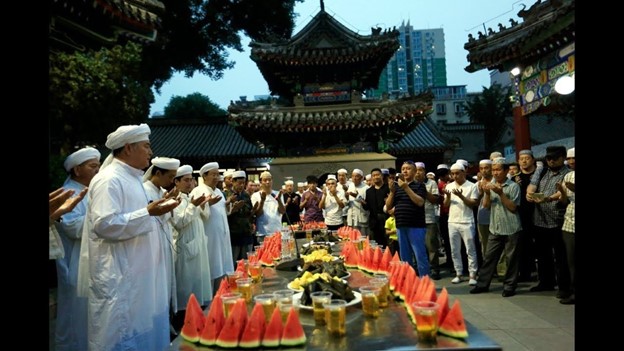
    Footage posted in 2015 shows Chinese Muslims, who appear to be members of Tablighi Jamaat (in white robes), holding a prayer in a Chinese-style mosque. The skullcapped worshippers to the right are believed to be Hui Muslims. Image credit: Umal Al-Dawa Youtube Account
    Literally translated as “society for spreading faith,” Tablighi Jamaat (TJ) is a transnational movement closely tied to the Deobandi interpretation of the Sunni Islamic teachings. It is often seen as an ultraorthodox sect, and some media outlets have erroneously reported that TJ calls on Muslims to travel the world to convert non-believers. Founded in India in 1926, TJ encourages all members to form small groups to proselytize both in- and outside of mosques.

    TJ’s proselytizing method differs from the mainstream practice in that it is revivalist and insular. Rather than focus on non-Muslims, TJ adherents encourage other Muslims to adopt more orthodox lifestyles akin to those of Muhammad and the first Muslim adherents, and to focus proselytizing on current believers and Muslims of lapsed faith. Branding itself as a pietistic movement that eschews politics, TJ is active in over 150 countries, according to a study published in 2010 by Pew Research Center. TJ has an estimated 25 to 80 million participants around the globe, with the majority living in South Asia.

    Although TJ openly rejects violence as a means for evangelism, it is banned by Russia and a number of Middle East nations due to its suspected connections to militancy and terrorism. TJ, however, continues to operate legally in much of Europe. While a French intelligence official remarked that TJ provided “fertile ground for breeding terrorism,” other European anti-terrorism officials said there is insufficient proof to substantiate the claim. The United Kingdom has become a center of TJ activities with the arrival of South Asian immigrants since the 1960s. In the United States, officials have been unable to prove that TJ is a terrorist group although the then-assistant director of the FBI said in 2003 that “al-Qaida used them for recruiting.” Since the attacks of September 11, 2001, the United States has placed the 50,000 TJ participants in the country under close surveillance.

    The Chinese government sees TJ as a matter of serious concern and employs similar rhetoric to discredit the sect. That said, because of its diffuse nature and scarcity of public information, little is known about how TJ operates and the extent of its influence in China. Researching this subject is also difficult because varying transliterations are in use, including taibilike (台比力克), zhema’erti (哲麻尔体), zhemati (哲麻提), and chuzhemati (出哲麻提). In government sources, TJ is also called Da’wah Preaching Society (dawa xuanjiaotuan 达瓦宣教团). The name is occasionally shortened as Da’wah (达瓦), dawaer (达瓦尔), or dawa (达洼), all of which stem from an Arabic word used in the Quran to describe Allah’s call to proselytize. Some scholars have also said that in China and elsewhere, Da’wah refers to a range of educational and social welfare activities catering to Muslims in need.

    The participation of Hui Muslims in TJ has attracted some scholarly interest. Among the first English literature on this topic is “Hui Muslims: The Milieu of Radicalization and Extremism,” a chapter of Ethnic Identity and National Conflict in China, but it only mentions in passing that TJ increases the risk of radicalization among Hui. There are also a few Chinese-language studies about TJ, but none of them go beyond providing basic facts about its history, practices, and overseas activities.

    Alexander Stewart

    Anthropology scholar Alexander Stewart conducted an in-depth study on this little-known subject. His 2018 article titled “Tabligh Jama’at in China: Sacred self, worldly nation, transnational imaginary” focuses on Hui participation in TJ in Xining, Qinghai. Stewart pointed out the sensitivity of the subject matter, citing anecdotal remarks from a graduate student who was told by mainland professors to avoid touching on it. Stewart indicated that many TJ participants in Xining “wear the loose, white, South Asian-style clothing common to the movement…” Unlike TJ participants outside of China, they do not gather in exclusively dedicated mosques or institutes. They have distinctive ritualized behaviour and proselytizing methods: they lead study sessions and travel occasionally in groups of four to ten people to preach all over China. “Instead of violently opposing the Han-dominated atheist state like some extremists among Uyghur splittists in Xinjiang,” TJ stresses the unity of all Muslims, transcending the many Islamic sectarian divides. Another reason why TJ appeals to Hui is because the sect provides an escape for those dissatisfied with state-appointed imams who prioritize patriotism over religious orthodoxy.

    Stewart noted that the legal status of TJ in China is ambiguous. In his article, Stewart cites one criminal case which strongly suggests that TJ participants are at risk of imprisonment in Xinjiang. The case was concluded in Gulja County in September 2013 and involved a Hui farmer sentenced to two years’ imprisonment for “gathering a crowd to disturb social order.” The charge stemmed from his participation in TJ and illegally proselytizing in Xinjiang, Gansu, Ningxia, and Qinghai. In the judgment, the court designated Da’wah as an “overseas religious infiltration organization… unanimously boycotted by China’s traditional Islamic groups.”

    Dui Hua’s Research

    The Hui farmer case cited by Stewart was not an isolated instance. Politically driven accusations against TJ are dominant in official narratives. In 1999, Kashgar Yearbook recounted finding “reactionary propaganda” from hostile forces that included TJ. In that year, police broke up 11 secret TJ gatherings and confiscated about 2,000 copies of “reactionary” books, 80,000 copies of illegal religious publications, and thousands of reactionary and religious cassette tapes. Kashgar and other Xinjiang localities have also branded TJ as a source of “sabotage and infiltration” and religious extremism despite a lack of evidence to substantiate the claims. In Xinjiang, TJ is also categorized as one of the sanfei (三非, i.e. three illegal) cases, which include people who take part in illegal religious activities, produce illegal religious publications, and propagate illegal religion online.

    Government gazettes sometimes give piecemeal figures of police raids that hint at the extent of influence of TJ. In 2004, Kashgar police reportedly investigated 220 participants in the whole prefecture. In 2010, police outlawed five gatherings involving 76 people. The sources, however, did not state whether the TJ participants were Uyghurs, Hui, or members of other Muslim minorities.

    Dui Hua’s research into court judgments uncovered several criminal cases in connection to TJ, all of which involved Hui Muslims. None of them were accused of terrorism or convicted of terrorism-related crimes. Allegations against them all centered on “illegally proselyting” or “illegally teaching illegal Islamic classes.” For instance, Ma Decang (马德仓) was sentenced to six years’ imprisonment on December 12, 2014, in Turpan City, for the same offense of “gathering a crowd to disturb social order” because he was not authorized by the state to teach the Quran in mosques and his home. As a leader of a local TJ group, he received non-local TJ visitors in his home, where he held prayers and arranged proselytizing missions to Xinjiang, Gansu, Shaanxi, Ningxia, and Sichuan.

    Available sources also suggest that some TJ participants travelled abroad to preach. As recently as April 2020, news media reported that six Chinese nationals were among the 960 TJ members who were blacklisted and their tourist visas cancelled by India’s Union Home Ministry as the deepening coronavirus sparked border closures and strict lockdowns.

    In China, even making arrangements for TJ participants to travel overseas can be seen as a criminal act. On May 19, 2015, Jin Dehuai (金德怀) received an even lengthier seven years’ prison sentence in Xinjiang, again for “gathering a crowd to disturb social order.” The judgment stated that Jin arranged Bangladesh visas for other TJ participants. In 2013, Jin himself paid a 40-day visit to Bangladesh, where he met with other TJ participants from China. Additionally, Jin was accused of organizing multiple “jamaat’” gatherings and Islamic classes in his home in Changji Hui Autonomous Prefecture.

    Another reason for the severity of Jin’s sentence is that he reoffended. In 2009, Jin was sentenced to one year and six months for the same offense as he was found guilty of teaching the Quran to over two dozen Hui and Uyghur children aged three to 16. The religious classes Jin provided were said to have inflicted harm on the children’s health because they were confined in several small apartments that “restricted their free movement,” according to the judgment.

    From “reactionary” to “infiltration, extremism and terrorism,” the different accusations put forward by the Chinese government against TJ appear to suggest that local officials in Xinjiang do not share the same understanding on how to pursue the sect. There were also cases where TJ participants were instead charged with Article 300 of the Criminal Law “organizing/using a cult to undermine implementation of the law.” The application of this offense is unusual because TJ is not an officially recognized cult organization such as Falun Gong or Almighty God.

    Riyad as-Salihin Hadiths, once available for sale in online bookstores, was said to be an illegal religious publication in the case of Ma Sheng in 2013. The image was originally from www.kongfz.com but is no longer on the site.

    In one case concluded in October 2010, the Gulja County People’s Court sentenced seven Hui TJ participants to three-four years’ imprisonment for “cult.” One of them is Ma Sheng (马胜), who was similarly accused of conducting illegal religious classes. Available sources stated that he taught several banned books, including Islamic Six Virtues and Riyad as-Salihin Hadiths. Publications of the same titles are downloadable free of charge from various online file sharing services.

    Beyond Xinjiang

    The crackdown on Muslims that began with the Uyghurs in Xinjiang has spread to other regions. Dui Hua has also found criminal cases involving TJ participants in other provinces. Ningxia, home to a large concentration of Hui Muslims, is another center of Hui TJ participants. In 2014, public security in Litong District launched a district-wide crackdown on “cults”, breaking up five different Da’Wah gatherings and “dismissing” 48 participants. In 2015, Ningxia raided 48 instances of “Da’wah Work” involving 355 individuals throughout the province. In 2016, in Tongxin County alone, also in Ningxia, authorities reportedly stopped 125 Da’Wah participants from “illegally proselytizing.”

    An online judgment unearthed by Dui Hua indicated that a local court in Ningxia found Ma Zongcheng (马宗成) guilty of “gathering a crowd to disrupt a public place and traffic order” for taking part in TJ activities from 2009-2018 and gathering TJ members in his home from other parts of Ningxia, Gansu, and Henan. Ma was sentenced to two years’ imprisonment and was released on December 23, 2019.

    A document issued by the Hohhot Islamic Association in August 2019 asks all mosques to deny entry of Da’wah imams in order to comply with the state policy to Sinicize religion. Initially posted on QQ, a web portal developed by Chinese tech giant Tencent, the image has been deleted.

    How TJ is officially designated in China remains ambiguous—does it really share a propensity towards extremism and terrorism, or is it another a peaceful group banned in China because of its effort to preach and conduct classes outside the state system? Instead of violent or other terrorism-related crimes, TJ members of Hui descent were mostly convicted of public order offenses, or sometimes “cult,” for illegally proselytizing or conducting Islamic classes.

    Media attention to Hui Muslims began relatively recently around 2018 when authorities across China started demolishing mosques perceived to be “un-Chinese,” shuttered Arabic language schools, and launched “anti-halal” crackdowns which affected tens of thousands of Hui entrepreneurs and restaurant owners. However, the cases demonstrated in this post show that a portion of Hui Muslims, particularly participants of TJ, faced repression even before Chinese president Xi Jinping announced his plan to Sinicize religion. First mentioned at the Central United Front Work Conference in May 2015, Sinicization brought about major bureaucratic restructuring that put state organs in charge of religious affairs directly under the CCP’s United Front Work Department, with the primary objective to safeguard CCP’s power. At a Central Religious Work Conference in April 2016, Xi directed his Sinicization remark in part at Hui Muslims for their troubling extension of “Islamization” of Chinese society.

    Today, the clampdown on Islam has become more widespread, and some Hui Muslims are known to have been swept into re-education camps alongside Uyghurs. More research is needed to evaluate how Sinicization has accelerated the clampdown on Hui participants of TJ, whose beliefs, practices, and overseas connections are at odds with increasingly xenophobic body politic under Xi.

    In addition to Uyghurs and Hui, the Sinicization of Islam has taken aim at additional minority groups. In September 2020, reports of a crackdown on the Utsul Muslims, a population of around 10,000 living in Hainan, emerged. New restrictions ban traditional Islamic dress, including the hijab and a traditional long skirt worn by female practitioners, from schools in Utsul neighborhoods. The ban is allegedly part of a wider prohibition against any traditional ethnic garments in schools, even though it only affects the Utsuls. In addition to the ban on traditional dress, other measures to be implemented include increased surveillance of residents in Muslim neighborhoods, restrictions on the sizes of mosques, and the removal of Arabic script and architectural features from mosques and other buildings.

  • Detailed Court Statistics on Article 300, Part II

    Detailed Court Statistics on Article 300, Part II

    In Detailed Court Statistics on Article 300, Part I, Dui Hua explored the application of Article 300 over an 18-year period spanning 1998-2016, examining the types of cases prosecuted under Article 300 as well as the roles of women and ethnic minorities in organizations deemed to be cults. Part II analyzes trends in sentencing and discusses post-2016 developments concerning Article 300.
     
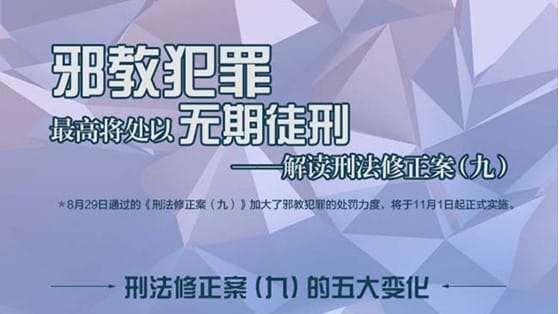
    The Standing Committee of the National
    People’s Congress extended the maximum penalty of Article 300 from 15 years’
    imprisonment to life imprisonment in the ninth amendment of the criminal law,
    which came into effect on November 1, 2015. Image credit:
    Liaoning
    Pindao
    Since coming into force in 1997, Article 300 of the Criminal Law—“using or organizing a cult to undermine implementation of the law”—has frequently been used to criminalize non-mainstream religious groups. Records of People’s Courts Historical Judicial Statistics: 1949-2016 contains information on trials of Article 300 offenses, including statistical breakdowns of sentencing, gender, and defendants’ occupation. These statistics have revealed that over 23,000 cult cases were accepted and over 40,000 people were tried during an 18-year period beginning in 1998.
    Replacing the former crime of “organizing or using a sect or feudal superstition to carry out counterrevolution activities” in 1997, Article 300 began to be used extensively after the Chinese government designated Falun Gong as an “evil cult” in 1999. The court statistics do not fully reflect the extent of the cult crackdown because they omit a large but unknown number of people whose personal liberties were deprived without any legal procedure. Despite these limitations, the statistics offer a glimpse of how China invoked its criminal justice process to crack down on religion.

    Punishment Trends

    Acquittals are rare in China. In cult cases, only 69 men and women who stood trial from 1998-2016 were acquitted.
    About 99.8 percent of cult trials ended with a conviction. Among them, 384, or 1.3 percent, were exempt from criminal punishment, and 219, or 0.8 percent, were sentenced to criminal detention or public surveillance.
    Table 1. Sentencing breakdown of cult cases
    Most cult defendants received imprisonment sentences. The court statistics broke down the sentencing information into four groups: a. below three years, b. three to five years, c. over five years to death penalty, and d. suspended sentences.
    Article 300 is not a capital crime, but China’s propaganda often conflates cults with violent crimes such as murder to stigmatize certain religious groups even though violence is only rarely involved. In such cases, death sentences are possible.
    From 1997-2015, Article 300 as a standalone offense carried a maximum sentence of 15 years’ imprisonment. The ninth amendment to the Criminal Law in 2015 increased the maximum sentence to life imprisonment. It is unclear how many defendants convicted of Article 300 received life sentences because of how the sentencing information is categorized in the court records.
    In the 18 years beginning in 1998, suspended sentences were not uncommon in cult cases, with 3,620 defendants, or 13 percent, receiving suspended sentences. Chart 1 shows an overall upward trend in the use of suspended sentences. In 2013, suspended sentences were meted out to one in every four defendants.
    From 2002-2004, about 40 percent of all the cult defendants received the upper end of prison sentences exceeding five years, vis-à-vis 26 percent and 18 percent of those who received the medium and lower end of prison sentences, respectively. The severity of punishment highlighted the heightened repression of Falun Gong at the time.
    The proportion of people who received prison sentences exceeding five years dropped to 12 percent from 28 percent from 2005-2013. In 2015, however, the number of people who received longer prison sentences surged to 1,218, making it the only year between 1998-2016 when the number exceeded 1,000. The severity of punishment, which cumulated in the 2015 amendment to the Criminal Law that turned Article 300 into a crime with the possibility of life in prison, was largely triggered by the heightened crackdown on Almighty God. China’s propaganda offensive against the quasi-Christian sect intensified following the killing of a woman in a McDonald’s restaurant allegedly committed by Almighty God members in May 2014. In this case, two members who committed the murder were sentenced to death in February 2015, and two others received life imprisonment. All of them were also convicted of violating Article 300.
    This trend of severe punishment appears to have lasted only one year. In 2016, the number of cult defendants who received longer prison sentences dropped fourfold to 333. More than half of them were sentenced to imprisonment not longer than three years.
    Going forward
     
    Although the court records only provide criminal trial statistics up to 2016, other government sources seem to suggest that the trend towards greater leniency in cult cases continued afterwards. Effective since February 1, 2017, the judicial interpretation issued by the Supreme People’s Court in 2017 raises the threshold for evidence necessary to imprison cult prisoners for up to three to seven years. For instance, the quantity of print propaganda materials (such as leaflets, banners, or newspapers) produced or disseminated for cult purposes that constitute a normal offense has now been raised to 1,000, a significant leap from 300, as stated in the 2001 interpretation. Today, more cult cases are likely to be deemed “relatively minor” because the interpretation has expanded the scope of activities that fall under such a category.
    Dui Hua previously reported that it is not uncommon for cult prisoners to receive clemency after expressing remorse for their behaviour. This trend remains unchanged. Since January 1, 2017, Dui Hua’s Political Prisoner Database has documented over 1,200 instances of sentence reductions, parole, and medical parole granted to “cult” prisoners. All these acts of clemency were confirmed by official sources, including court judgments and responses provided by government interlocutors to Dui Hua.
    However, Dui Hua continues to find a large number of cult cases from government sources after 2016. From 2017-2019, over 6,000 cult judgments have been posted online. Most of them involve Falun Gong, followed by Almighty God.
    These judgments also revealed a troubling aspect of judicial transparency in cult cases involving ethnic minorities. Dui Hua uncovered about three dozen cases which appear to involve Uyghurs or Kazakhs; the judgments were all handed down in Aksu Prefecture in June 2019. This finding suggests that China’s crackdown on cult organizations has extended to Muslim minorities in Xinjiang, but details remain unknown because judges exercised their power to conceal content that they believe might endanger social stability. These judgments only revealed information about defendants’ names, crimes, and the courts which handled the cases. All other information, including how long they were sentenced and where they are incarcerated, has been obscured.
    Since 2019, state news media has reported a large number of cult cases in Shandong and Qinghai. In each instance, dozens to over 600 people were admonished, administratively detained, or criminally detained. A portion of these “cult” members are believed to have been indicted or brought to trial.
    Anti-cult propaganda continues unabated even amid the COVID-19 outbreaks across China. Authorities in Henan combine COVID-19 prevention measures with an anti-cult message, saying, “Pandemic prevention requires cult prevention.” Image credit: Guancha.cn
    China continued to deploy considerable manpower to suppress cult organizations even amid the COVID-19 outbreaks across the country. From January to early May 2020, the China Anti-Cult Association reported 25 cult cases across different provinces. About half of these cases were related to the pandemic. Among them, 15 Falun Gong practitioners were detained for disseminating anti-government materials. They were also accused of “concocting and spreading superstitious fallacies” about their supernatural power to cure COVID-19 when the outbreaks were at their peak in February.
     
    Society of Disciples, also known as Mentu Hui, has been much less visible in China, but this Christian sect was involved in one of the reported coronavirus-related cult cases. The group allegedly claimed that conversion could help to prevent the spread of COVID-19. In this case, a woman surnamed Wu in Gong County, Sichuan, received administrative detention for 15 days.
    Despite signs of greater leniency towards cult offenders, there are sufficient grounds to believe that the number of cases, as well as the number of individuals, especially women, brought to trial for Article 300 has remained in the thousands over the past few years. Dui Hua will continue to monitor the application of this crime, which has been used by the Chinese government to jail tens of thousands of religious dissenters since 1997.
  • Detailed Court Statistics on Article 300, Part I

    Detailed Court Statistics on Article 300, Part I

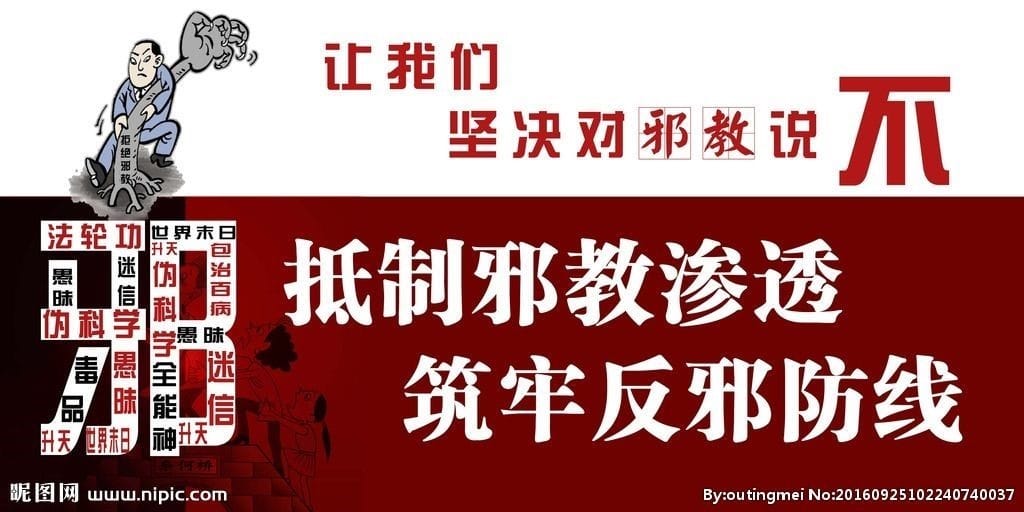
    China’s anti-cult propaganda likens Falun Gong and Almighty
    God to drugs, superstition, and pseudoscience. Image credit:
    The
    Paper
    A cult is a social group characterized by its unconventional, sometimes controversial religious, spiritual, or philosophical beliefs. In the United States, mainstream culture and religious leaders consider violent acts such as murder, suicide, and bodily harm as important factors when designating a social group as a cult. Most liberal democracies do not have legislation against cults because any attempt to do so is believed to run counter to freedom of religion enshrined in their constitutions. In China, however, a group can be designated as a cult because its politics and potential to mobilize people are considered threats to Communist Party rule.
    Since coming into force in 1997, Article 300 of the Criminal Law—“using or organizing a cult to undermine implementation of the law”—has frequently been used to criminalize non-mainstream religious groups. Observers have long viewed religious persecution as being widespread in China, but they have been unable to quantify the precise extent of the crackdown because reliable figures are not available.
    Published by China’s Supreme People’s Court at the end of 2018, Records of People’s Courts Historical Judicial Statistics: 1949-2016 contains extensive information on trials of Article 300 offenses, including statistical breakdowns of sentencing, gender, and defendants’ occupation. These statistics have revealed that over 23,000 cult cases were accepted and over 40,000 people were tried during an 18-year period beginning in 1998.
    This is the latest article in a series based on Dui Hua’s research into Records of People’s Courts Historical Judicial Statistics: 1949-2016. Previous posts have explored the decline in juvenile convictions, Hong Kong-related cases, and Taiwan-related cases.What were the cult cases?

    The Criminal Law does not provide an explicit and detailed definition of cult organizations. Back in 1995, the Central Committee, State Council, and Ministry of Public Security identified 14 religious groups (12 Christian and two seemingly Buddhist) as cult organizations. In 2014, the China Anti-Cult Association compiled another list of 20 cult organizations (16 Christian, three quasi-Buddhist, and one qigong). These lists are not exhaustive because local authorities across China have exercised broad discretion to designate numerous religious groups as “cults” even though they have not been named on the aforementioned cult lists.

     
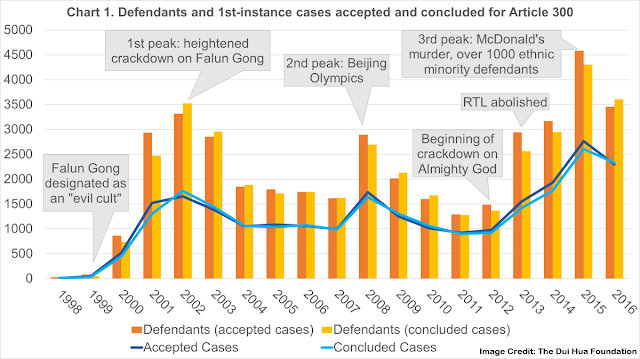
    Replacing the former religious crime of “organizing or using a sect or feudal superstition to carry out counterrevolution activities” in 1997, Article 300 began to be used extensively after the Chinese government designated Falun Gong as an “evil cult” in 1999. Before the nationwide repression began, tens of thousands of practitioners could be seen meditating in parks and public squares all over China. Chinese courts began filing the bulk of cult cases a year after Falun Gong was outlawed. The number of people brought to trial skyrocketed from 864 in 2000 to almost 3,000 in 2001. The country recorded its first peak of cult cases in 2002; 3,315 people were brought to first-instance trials.
    The second peak took place in 2008; the reasons are not entirely clear. It could be that China ratcheted up stability maintenance in the run up to the Olympics in Beijing. Falun Gong practitioners joined forces with international activists to boycott the Olympic torch relay over China’s extensive human rights violations. Chinese state media called Falun Gong one of the three forces seeking to sabotage the Olympics alongside the East Turkestan and Tibetan independence movements.
    The court statistics do not fully reflect the extent of the cult crackdown because they omit a large but unknown number of people whose personal liberties were deprived without any legal procedure. Among these measures are people who are placed in “legal education classes,” which have been used in China for two decades. This measure provides local authorities with a highly flexible means of dealing with individuals who engage in behavior that is viewed as socially disruptive but does not meet the criteria for criminal prosecution or public-order punishment.

    The court
    statistics also exclude
     tens of thousands of cult offenders who were sent to
    re-education through 
    labor (RTL) camps. Under RTL, individuals could be detained and
    subjected to forced 
    labor for up to three years, extendable for another year, for the
    vaguely defined conduct of
     “disrupting social order” on the
    decision of the public security organs alone. 
    During the 2009 China session
    of the UN Human Rights Council’s Universal Periodic Review
    , the Chinese government confirmed the existence of 320 RTL
    facilities with approximately 190,000 inmates, down from 500,000 inmates in 310
    RTL facilities in 2005. At the end of 2012, 
    the Ministry of
    Justice claimed that the number of RTL inmates further decreased to 50,000 from
    across 351 RTL facilities nationwide
    . 
    Despite these limitations, the statistics offer a glimpse of how China invoked its criminal justice process to crack down on religion. The surge of cult cases in 2013 warranted particular attention. Compared to 2012, the number of people who stood trial in 2013 doubled to 2,942. There were two main reasons:
    1. RTL was abolished in 2013. Cult offenders who were previously sent to RTL are now more likely to face imprisonment sentences.
      People
      in Gansu Province on December 11, 2012 carry a banner warning that Almighty God
      is coming to save believers and destroy the people and nations that resist. Image
      credit:
      Global
      Times


    2. China’s sweeping clampdown on Almighty God began in late December 2012. Identified by the Chinese government as a cult organization in 1995, the quasi-Christian group claims that Jesus was reincarnated as a Chinese woman and calls on members to slay the Chinese Communist Party, which they call the “great red dragon.” It joined the chorus of voices spreading rumors of an impending apocalypse, which predicted that the sun would cease to shine and electricity would stop working for three days beginning on December 21, 2012. Prior to the “doomsday,” group members spread the rumors at public venues and by going door-to-door, and they held demonstrations across China which were put down with force.
      The Chinese press had published very little about Almighty God before 2012, but the demonstrations in that year became the catalyst for China’s propaganda offensive against the sect. Just ahead of the “doomsday,” public security detained 1,300 Almighty God members across 16 provinces, with the majority of them in Qinghai and Guizhou. In 2014, China Daily reported the arrests of another batch of 800 Almighty God members in Ningxia over the previous two years.
    The highest peak of cult cases occurred in 2015: 2,764 cases and 4,582 defendants. This peak coincided with the amendment to the Criminal Law which turned Article 300 into a crime with the possibility of life in prison (up from a fixed-term imprisonment sentence of 15 years). In that year, China intensified its propaganda offensive against Almighty God and sentenced two members who allegedly killed a woman in a McDonald’s restaurant to death.

    It is worth noting that the surge of cult cases in 2015 was attributed largely to ethnic minorities. Except for 2015, ethnic minorities typically accounted for a few dozen to over a hundred defendants each year from 2000-2016. Evidence suggests that Falun Gong, Almighty God, and other unconventional Christian sects have made inroads with a small number of Hui, who are traditionally Muslims. With a strong base in northeast China, Falun Gong is also known to have converted a number of Manchus, ethnic Koreans, and Mongols. More research is needed to examine why the number of ethnic minorities surged to 1,082 in 2015. It remains unclear who these ethnic groups were and what happened to them in that year.

    Dui Hua’s research into online judgments also uncovered cult cases concerning lesser-known unconventional religious groups, including the Three Grades of Servants (三班仆人), Society of Disciples (门徒会), Spirit Sect (灵灵教), Blood of the Holy Spirit (血水圣灵), Lord God Sect (主神教), Full Scope Church (全范围教会), Shouters (呼喊派), and the quasi-Buddhist group Guanyin Famen (观音法门). However, Falun Gong and Almighty God continue to account for the majority of cult cases. Violence is rarely involved in cases involving these organizations.
    Over one-third were women
    From 2010-2016, women accounted for five to seven percent of defendants in all criminal cases. However, they are disproportionately represented in cult cases tried. The court records indicated that women made up 41 percent of all the 28,497 cult defendants during the 18-year period. In the 2000s, the number of female defendants ranged from 400 to 800 each year, but it doubled in just one year after the state crackdown on Almighty God commenced in December 2012. About 2,600 women stood trial within two years since 2015.
    China’s anti-cult propaganda says that women in cult cases are typically middle aged and “left-behind” by husbands (留守妇女) who migrated from rural regions to cities for employment or to conduct business for an extended period. It often makes sexist claims that women are “weak-willed and psychologically vulnerable, with a propensity to succumb to coercion or monetary enticements from cult organizations” because many of them have a low level of education.
    Statistics are given about the defendants’ occupational background, but it is unclear how many workers, farmers, and other occupations were women. The statistics indicated that 35 percent of all cult defendants were farmers or migrant workers, and slightly less than one-third were unemployed. Only 7.5 percent of all the defendants were classified as employed or laid-off workers, and another 7.5 percent were retired.
    Although China’s anti-cult propaganda tends to describe women as passive victims in cult cases, they are known to have taken a leading role in several religious groups outlawed by the Chinese government. For instance, Guanyin Famen (观音法门) was founded by Vietnam-born Chinese Shi Qinghai in 1988 and introduced to China around 1992. It appears to be the largest of the three Buddhist-sounding groups banned by China (read The “Cult of Buddha” for a more in-depth discussion). Shi, who is residing overseas, continues to attract members in China despite the state ban that has been in place for almost three decades.
    Many China-based Guanyin Famen leaders are women. Although the number of publicized cases has decreased sharply in recent years, Dui Hua continues to uncover new cases related to this sect. In September 2019, a local court in Shaanxi sentenced Guo Huiling (郭会玲) to 18 months’ imprisonment. Guo, a leading member in charge of recruiting members in Baoji, was apprehended by public security while distributing Guanyin Famen pamphlet cards in March 2019. The “cult” books, posters, cassette tapes, and CD-ROMs found by public security in her home became the evidence for conviction.
    Women have likewise played a leading role in several other homegrown religious groups which emerged relatively recently in the 2010s. Combining elements of Daoism, Buddhism, Chinese folklore, and superstitious practices, these groups have never been mentioned on the different lists of cults compiled by the Chinese government. Their leaders also received lengthy sentences for Article 300.
    Zheng Hui, founder of the Milky Way Federation, promoted the use of alien energy to become Buddha.
    Image credit:
    Sohu
    Among these groups are the Milky Way Federation (银河联邦), which was established in 2012 by Zheng Hui (郑辉). Zheng resigned from her job and created a website dedicated to promoting a belief she learned from a group in Germany, which China views as an apocalyptic religious cult. Zheng combined concepts of Buddhism with her belief that extra-terrestrial beings exist. Proclaiming herself to be the female Gautama Buddha, Zheng intended to awaken humankind in her envisioned “Buddha kingdom.” Her group allegedly had over 4,000 members from across China. In July 2015, Zheng was sentenced to eight years in prison under Article 300 in Nanning, Guangxi.
    Zhongtian Zhengfa is a Buddhist-sounding religious group co-founded by
    self-proclaimed reincarnated mother Buddha Chen Yunxiu. Despite propaganda
    presenting women as passive victims in cult cases, Chen has played a leading
    role in an organization designated as a cult. Image credit:
    Sina
    Blog
    Bizarre as it may sound, syncretic religious groups similar to the Milky Way Federation appear to have gained popularity in other provinces. Alongside her husband, Chen Yunxiu (陈云秀) founded Zhongtian Zhengfa (中天正法) in 2010 and called herself the reincarnated mother Buddha, Nüwa (the mother goddess in Chinese mythology), and Saint Mary. Zhang said that conversion to her sect would be the only way to obtain salvation. Zheng was sentenced in Shandong to seven years’ imprisonment for Article 300 in 2018. The court judgment indicated that her group had over 900 members from different provinces.
    In Part II, Dui Hua examines the different forms of punishment meted out to those convicted under Article 300, analyzes trends in sentencing, and explores post-2016 developments concerning cult cases. Read it here.
  • China’s Supreme People’s Court Releases Detailed Statistics on Trials, 1949-2016

    China’s Supreme People’s Court Releases Detailed Statistics on Trials, 1949-2016

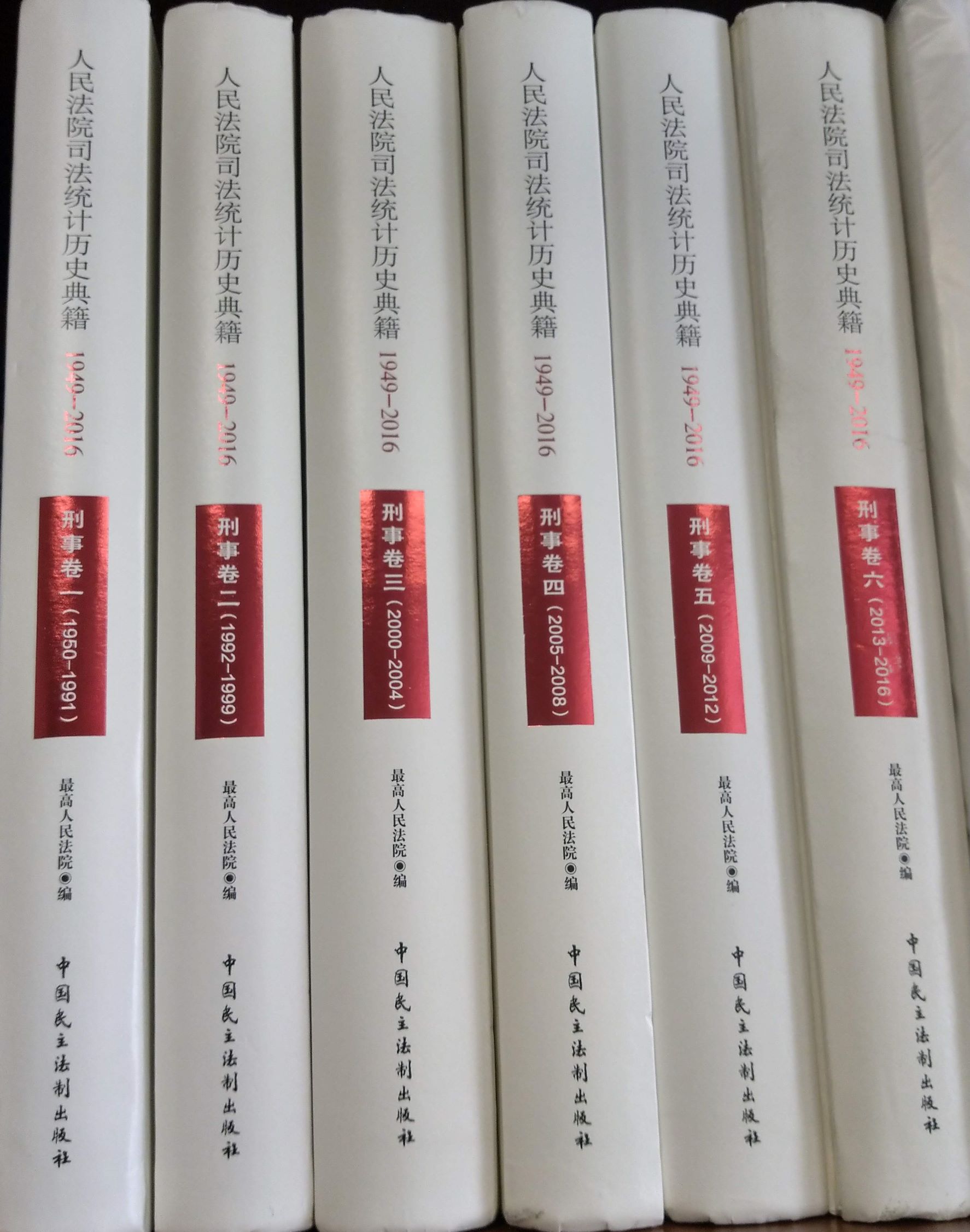
    China’s Supreme People’s Court (SPC) has compiled and released detailed statistics covering the adjudication work of China’s courts from 1949 to 2016, inclusive. The first six volumes are devoted to criminal trials of the first and second instance as well as retrials. They include breakdowns of cases and individuals in trials accepted, concluded, and held over for each article of the Criminal Law, as well as information on sentences, supplemental sentences (e.g. deprivation of political rights), age, occupation, gender, and, in recent years, ethnicity of defendants.

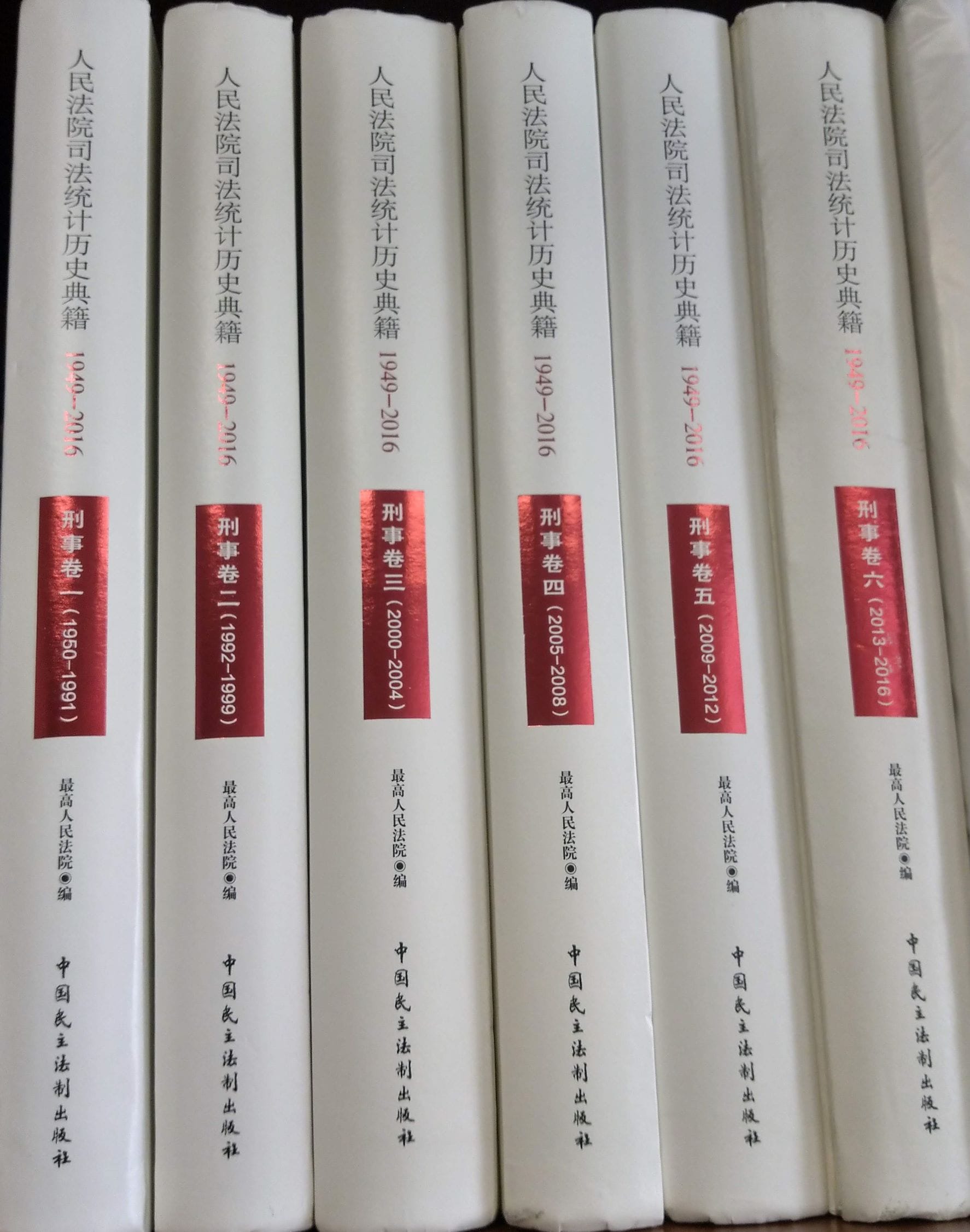
    Records of People’s Courts Historical Judicial Statistics: 1949-2016 (Renmin fayuan sifa tongji lishi dianji 人民法院司法统计历史典籍) was compiled and edited by the SPC. It was published in September 2018 by the China Democracy and Legal System Press under the National People’s Congress. It became available in March 2019, but thus far the 12-volume set, priced at RMB 1,980, has attracted few readers and received little attention from scholars. Information is not provided on the number of volumes published.

    The sets are marked “for internal release” (neibu faxing 内部发行). A small market in second-hand volumes has emerged. Dui Hua has purchased a set. All 12 volumes are available at the H.C. Fung Library of the Fairbank Center for Chinese Studies at Harvard University.

    The publication of these volumes is a major step forward for judicial transparency in China and is a boon to scholars studying China’s justice system.

    In the coming months, Dui Hua will release reports in its Reference Materials series which will draw on topics derived from the statistics published in the 12-volume set. Topics will include use of Article 300 to suppress unorthodox religious groups; trials of Hong Kong, Macau, and Taiwan residents as well as foreigners; splittism and inciting splittism; espionage and trafficking in state secrets; Cultural Revolution court trials; and treatment of juveniles, including girls, in the criminal justice system.

    Counterrevolution in One Country: China, 1989

    Drawing on data in Volume Two of the Records, Dui Hua Executive Director John Kamm made a presentation at the Fairbank Center of Harvard University on October 24, 2019. Entitled “Counterrevolution in One Country: China, 1989,” the presentation covered trials for counterrevolution during the years 1989-1991. This period coincided with the political unrest in Beijing and other cities that took place in the spring of 1989 and its aftermath.

    Before beginning the presentation based on the data in the Records, Kamm made a few points about the crime of counterrevolution. Counterrevolution is a crime defined by motive. According to the 1979 Criminal Law, “All acts endangering the People’s Republic of China committed with the goal of overthrowing the dictatorship of the proletariat and the socialist system are crimes of counterrevolution.” In the tables in the Records there is a line for “other” counterrevolutionary crimes. Kamm related a story of a worker convicted of counterrevolutionary rape in the late 1970s. He was sentenced to death for sexually assaulting the wife of a foreign diplomat.

    Although the crime of counterrevolution was removed from the Criminal Law in 1997, there are still prisoners serving sentences for counterrevolution in China. It is commonly thought that counterrevolution was replaced by the crime of endangering state security in 1997. It was not. Crimes that were included in the articles on counterrevolution, like organizing a prison break or using a cult to commit crimes of counterrevolution, found their way into different parts of the Criminal Law.

    Not all individuals detained for offences committed during the protests were tried (some were placed in re-education-through-labor camps, for instance) and, of those tried, not all were tried for counterrevolution. According to Judicial and Administrative Records of Hunan Province, 1978-2002, 33 people were sentenced to prison for counterrevolutionary propaganda and incitement, 43 for robbery, and 57 for hooliganism or sabotaging transportation equipment in Hunan Province for June 4 related offenses.

    More than 1,700 people were tried for counterrevolution during the 1989-1991 period, the majority of whom are believed to have been detained and subsequently tried for their involvement in the political protests that took place in Beijing and approximately 300 other cities.

    Of those tried for counterrevolution during the 1989-1991 period, roughly half were convicted and sentenced for counterrevolutionary propaganda and incitement. Seventy-three counterrevolutionary groups were brought to court and 257 of their members were convicted and sentenced. In all, 75 percent of trials were for non-violent offenses – counterrevolutionary propaganda and incitement, organizing or leading a counterrevolutionary group, and using a cult to commit counterrevolutionary crimes.

    Nearly all tried for counterrevolution were male and most were 25 or older. In a surprise finding, the biggest group of tried counterrevolutionaries were farmers, accounting for 35 percent of defendants. Fifteen percent of those tried were workers, followed by government cadres and unemployed people. Students made up a relatively small number of those tried, accounting for seven percent.

    Although most of those tried were found guilty, 93 were acquitted in the first instance trial during the three-year period; 131 were exempted from criminal punishment, including the labor leader Han Dongfang. In 1991, nearly 19 percent of those tried for counterrevolution were either acquitted or exempted from criminal punishment. (In recent years, less than 0.1 percent of trials have resulted in acquittal). Eleven were acquitted on appeal, and 36 had their sentences reduced on appeal. Roughly half of counterrevolutionaries sentenced during the three-year period received sentences of at least five years in prison.

    As time passed, the sentences handed down for counterrevolution by courts grew shorter. The longest sentences were given before the end of 1989. According to materials collected by Dui Hua, the longest sentences were handed down in Shandong, where a student leader and a farmer were each given 18-year sentences.

    Most of the names of those tried for counterrevolution in the three-year period are not known. Despite strenuous efforts by Dui Hua and other human rights groups over the past 30 years, the foundation has found only 15 percent of their names.

    Look for future installments on these statistics on our Reference Materials site.
  • China’s Supreme People’s Court Releases Detailed Statistics on Trials, 1949-2016

    China’s Supreme People’s Court Releases Detailed Statistics on Trials, 1949-2016

    China’s Supreme People’s Court (SPC) has compiled and released detailed statistics covering the adjudication work of China’s courts from 1949 to 2016, inclusive. The first six volumes are devoted to criminal trials of the first and second instance as well as retrials. They include breakdowns of cases and individuals in trials accepted, concluded, and held over for each article of the Criminal Law, as well as information on sentences, supplemental sentences (e.g. deprivation of political rights), age, occupation, gender, and, in recent years, ethnicity of defendants.

    Records of People’s Courts Historical Judicial Statistics: 1949-2016 (Renmin fayuan sifa tongji lishi dianji 人民法院司法统计历史典籍) was compiled and edited by the SPC. It was published in September 2018 by the China Democracy and Legal System Press under the National People’s Congress. It became available in March 2019, but thus far the 12-volume set, priced at RMB 1,980, has attracted few readers and received little attention from scholars. Information is not provided on the number of volumes published.
    The sets are marked “for internal release” (neibu faxing 内部发行). A small market in second-hand volumes has emerged. Dui Hua has purchased a set. All 12 volumes are available at the H.C. Fung Library of the Fairbank Center for Chinese Studies at Harvard University.
    The publication of these volumes is a major step forward for judicial transparency in China and is a boon to scholars studying China’s justice system.
    In the coming months, Dui Hua will release reports in its Reference Materials series which will draw on topics derived from the statistics published in the 12-volume set. Topics will include use of Article 300 to suppress unorthodox religious groups; trials of Hong Kong, Macau, and Taiwan residents as well as foreigners; splittism and inciting splittism; espionage and trafficking in state secrets; Cultural Revolution court trials; and treatment of juveniles, including girls, in the criminal justice system.
    Counterrevolution in One Country: China, 1989
    Drawing on data in Volume Two of the Records, Dui Hua Executive Director John Kamm made a presentation at the Fairbank Center of Harvard University on October 24, 2019. Entitled “Counterrevolution in One Country: China, 1989,” the presentation covered trials for counterrevolution during the years 1989-1991. This period coincided with the political unrest in Beijing and other cities that took place in the spring of 1989 and its aftermath.
    Before beginning the presentation based on the data in the Records, Kamm made a few points about the crime of counterrevolution. Counterrevolution is a crime defined by motive. According to the 1979 Criminal Law, “All acts endangering the People’s Republic of China committed with the goal of overthrowing the dictatorship of the proletariat and the socialist system are crimes of counterrevolution.” In the tables in the Records there is a line for “other” counterrevolutionary crimes. Kamm related a story of a worker convicted of counterrevolutionary rape in the late 1970s. He was sentenced to death for sexually assaulting the wife of a foreign diplomat.
    Although the crime of counterrevolution was removed from the Criminal Law in 1997, there are still prisoners serving sentences for counterrevolution in China. It is commonly thought that counterrevolution was replaced by the crime of endangering state security in 1997. It was not. Crimes that were included in the articles on counterrevolution, like organizing a prison break or using a cult to commit crimes of counterrevolution, found their way into different parts of the Criminal Law.
    Not all individuals detained for offences committed during the protests were tried (some were placed in re-education-through-labor camps, for instance) and, of those tried, not all were tried for counterrevolution. According to Judicial and Administrative Records of Hunan Province, 1978-2002, 33 people were sentenced to prison for counterrevolutionary propaganda and incitement, 43 for robbery, and 57 for hooliganism or sabotaging transportation equipment in Hunan Province for June 4 related offenses.
    More than 1,700 people were tried for counterrevolution during the 1989-1991 period, the majority of whom are believed to have been detained and subsequently tried for their involvement in the political protests that took place in Beijing and approximately 300 other cities.
    Of those tried for counterrevolution during the 1989-1991 period, roughly half were convicted and sentenced for counterrevolutionary propaganda and incitement. Seventy-three counterrevolutionary groups were brought to court and 257 of their members were convicted and sentenced. In all, 75 percent of trials were for non-violent offenses – counterrevolutionary propaganda and incitement, organizing or leading a counterrevolutionary group, and using a cult to commit counterrevolutionary crimes.
    Nearly all tried for counterrevolution were male and most were 25 or older. In a surprise finding, the biggest group of tried counterrevolutionaries were farmers, accounting for 35 percent of defendants. Fifteen percent of those tried were workers, followed by government cadres and unemployed people. Students made up a relatively small number of those tried, accounting for seven percent.

    Although most of those tried were found guilty, 93 were acquitted in the first instance trial during the three-year period; 131 were exempted from criminal punishment, including the labor leader Han Dongfang. In 1991, nearly 19 percent of those tried for counterrevolution were either acquitted or exempted from criminal punishment. (In recent years, less than 0.1 percent of trials have resulted in acquittal). Eleven were acquitted on appeal, and 36 had their sentences reduced on appeal. Roughly half of counterrevolutionaries sentenced during the three-year period received sentences of at least five years in prison.
    As time passed, the sentences handed down for counterrevolution by courts grew shorter. The longest sentences were given before the end of 1989. According to materials collected by Dui Hua, the longest sentences were handed down in Shandong, where a student leader and a farmer were each given 18-year sentences.
    Most of the names of those tried for counterrevolution in the three-year period are not known. Despite strenuous efforts by Dui Hua and other human rights groups over the past 30 years, the foundation has found only 15 percent of their names.

    Look for future installments on these statistics on our Reference Materials site.
  • Administrative Penalties Against Lawyers: Another Strike Against Professional Autonomy and Religious Freedom

    A conference organized by the Supreme People’s Court and the Ministry of Justice on expanding coverage of defense lawyers in criminal cases. November 29, 2018, Hefei, Anhui province. Image credit: court.gov.cn.

    The recent license suspensions of two lawyers in Yunnan have come under public scrutiny for the strange circumstances that led to the suspensions: the lawyers were making legal arguments based on government regulations and criminal statutes, with citation to relevant parts of the national constitution, on behalf of their clients. Their plaintiffs were Falun Gong practitioners accused of “using a cult to undermine the implementation of the law.” The case sheds light on a pattern emerging in the legal profession in China – the penalization of criminal defense attorneys, who represent clients in sensitive cases, with legally dubious accusations of professional misconduct.

    “Disorder in the Courtroom”

    On November 2, 2018 the Hunan Changsha Ministry of Justice issued administrative penalty decisions against defense lawyers Hu Linzheng and Zeng Wu, claiming that both lawyers “denied the nationally recognized nature of a cult organization.” In December 2017, the two lawyers appeared at the Yunnan Honghe Prefecture Kaiyuan City Court to defend their clients. Hu argued there was no evidence that Falun Gong is a cult and that Article 36 of the Constitution grants Chinese citizens freedom of religion, which at least theoretically limits the government from restricting the practice of Falun Gong. Zeng was faulted for arguing in court that there are “no direct legal regulations that determine Falun Gong is a cult,” and that his client “believed that Falun Gong is protected by the freedom of religion provided in Article 36 of the Constitution.”

    The administrative penalty decisions concluded that Hu and Zeng’s conduct violated Article 49, Section 8 of the Lawyers Law of the People’s Republic of China, which states that lawyers can be penalized for speech that severely “disrupts courtroom order.” The decision also cited Articles 2, 39, and 53 of the Measures on the Administration of Lawyers’ Practice, which states that lawyers must support the Communist Party and the socialist rule of law, that lawyers’ conduct cannot disrupt the normal handling of legal cases, and that violations of these measures are punishable by Article 49 of the Lawyers Law.

    The Changsha Justice Bureau suspended each of the lawyers’ licenses for six months, without providing evidence that Hu and Zeng had in fact caused disorder in the courtroom. Perhaps as an indication of how baseless the decision was, the Changsha Justice Bureau indicated that leniency was provided to the two lawyers when determining the penalty because both were “sincerely remorseful and cooperated with the investigation.”

    A Catch 22 for Defense Lawyers

    Defense lawyers in China assigned to politically sensitive cases are faced with a dilemma: either they deny representation to accused defendants (which contradicts the spirit of the central government’s goal to have “all criminal defendants in China represented by counsel”), or they take these cases and risk their careers.

    Hu and Zeng’s clients’ alleged crime is an apparent reference to Article 300 of the Criminal Law, which criminalizes “using a cult to undermine the implementation of the law.” A defense lawyer would need to point out, as Hu did, whether the government provided any evidence establishing Falun Gong’s legal classification as a cult. Zeng’s argument similarly cast doubt on the premise that there is a law that categorizes Falun Gong as a cult. Although Falun Gong has been categorized as a cult by the China Anti-Cult Association, neither the State Council nor the Ministry of Public Security has recognized Falun Gong as a cult in their public notices.

    In the penalty decisions, the Changsha Justice Bureau did not challenge the lawyers’ arguments, nor did it attempt to establish Falun Gong as a “cult” under Article 300. Hu and Zeng’s claims before the court were relevant legal arguments that a defense attorney would make in the course of representing a client. As such, it is difficult to see why a lawyer would be punished for bringing these arguments in a court of law and citing the country’s own constitution and the relevant legal facts surrounding the issue.

    Contradictions with China’s New Criminal Defense Counsel Policy

    The license suspensions of Hu and Zeng will likely discourage other criminal defense lawyers from pursuing perfectly legal and effective defense strategies. The Changsha Justice Bureau’s interpretation of the Administrative Penalty Act is well on its way to becoming another legal tool used to threaten defense lawyers. Experts on the legal profession in China have also criticized Article 306 of the Criminal Law (aka the “Big Stick 306”) which states that any defense lawyer who assists in a client’s false testimony, or “encourages perjury,” can be sentenced to three to seven years in prison. “Big Stick 306” has been abused by the police and the procuracy to “take revenge on those defense lawyers who dare to vigorously challenge the prosecution in court.”

    In the wake of the “709” crackdown on rights lawyers in 2015 and without a better explanation for the Changsha Justice Bureau’s decision, the penalties against Hu and Zeng contradict the central government’s goal to advance the level of professional expertise in the legal system and to guarantee that criminal suspects in all cases have meaningful access to defense counsel. What’s more, on December 22, 2018 the Fujian Provincial Lawyers Association issued a set of rules that require defense lawyers in certain criminal cases to report their defense strategies prior to trial for approval by the provincial level justice bureau. Lawyers in China have spoken out against the rules arguing that it violates both the Criminal Procedure Law and the Lawyers Law. Without even a bare minimum of professional autonomy for criminal defense attorneys in China, there is significant danger that local officials will continue to categorize the reasonable efforts of criminal attorneys to defend their clients in court as “disruptive behavior.”

  • The Resurgence of Yi Guan Dao

    “A Reactionary Secret Society”, a communist propaganda film produced in 1952 that depicts the harmful acts committed by Yi Guan Dao members prior to the founding of the People’s Republic of China in 1949. Image credit: Baidu.cn
    At the end of China’s civil war nearly seven decades ago, Yi Guan Dao (一贯道) was proscribed by the Chinese government as an “illegal secret society” and a “heretical sect.” Yi Guan Dao (YGD), which translates to “the Way of Pervading Unity” in English, is a religious group that combines elements of Daoism, Buddhism, and folklore. It first gained popularity in northeast China during World War II – at one point the group had more than ten million followers in the Japanese-occupied regions. While its apocalyptic teachings appealed to those living under Japanese occupation, YGD has long been at odds with the Chinese government.
    As with many Qigong, Buddhist, and Christian groups labelled as “cults” by the Chinese government, YGD is banned largely due to the government’s fear of the popularity of a mass spiritual movement. As such YGD continues to be stigmatized in official narratives as “anti-science, anti-humanity, anti-society.” YGD followers are active in Taiwan, Hong Kong, and among diaspora Chinese communities in Southeast Asia, Australia, North America, and Europe. In Taiwan, YGD had more than 1.2 million followers by a 2010 estimate and the group has been lauded by the Executive Yuan for its charity work on behalf of disadvantaged communities.
    Crackdown in 1950
    In December 1950, a nationwide crackdown on YGD began after a People’s Daily editorial branded YGD as a “counterrevolutionary tool… utilized by the bandit gangs of imperialism and Kuomintang” and a “retroactive, feudalistic and superstitious” organization deceiving the masses who “do not know the truth.” The editorial labelled YGD followers as “traitors” and accused them of serving as secret agents of Japanese forces. In 1951, tens of thousands of YGD leaders were either executed or imprisoned and an even greater number of followers were forced to undergo intense thought reform in carceral facilities.
    YGD has largely been driven underground since the crackdown in 1950, with some branches operating clandestinely under different names including Tian Dao (i.e. Way of Heaven). The sect attempted to re-establish itself in the late 1970s towards the end of the Cultural Revolution, but it quickly became a target of China’s first strike hard campaign in 1983. Many followers were sentenced to death for “organizing/using a sect or feudal superstition to carry out counterrevolutionary activities” in Yunnan and the northern provinces of Gansu, Shaanxi, and Shanxi. Dui Hua’s Political Prisoner Database has information on over 300 YGD followers. Of them, over 80 percent are known or believed to have been incarcerated in the 1980s.
    Testimony gathered from former YGD prisoners in the 1990s exposed the harsh prison conditions, the abuse YGD prisoners faced by guards and other inmates, and the fact that several hundred YGD members imprisoned in the 1950s remained locked up in Shaanxi’s Fuping Prison or have perished due to old age or ill-treatment.
    Underground Reestablishment – Signs of Tolerance?
    Taiwanese President Tsai Ing-wen delivers a speech at a YGD prayer ceremony joined by 15,000 followers at the National Chiang Kai-shek Memorial Hall, Taipei, on March 5, 2017, expressing gratitude to the sect and commending religion for stabilizing society. Image credit: Baidu.cn
    Although YGD has been dubbed a “universal villain” in official media and is often cited by human rights groups and governments concerned about religious freedom in China, the lack of recent reporting on YGD in China has led some experts to believe that the religion has gained tacit acceptance by authorities. Some are skeptical about the extent of the group’s persecution or even its existence in China today, claiming that “it is unlikely that [the sect] still exist[s].” Others speculate that even if YGD still has followers in China they are likely concentrated in Guangdong and Fujian where there are more practicing Taiwanese YGD members, following the religion’s legalization in Taiwan in 1987.
    In May 2009, an official from China’s State Administration for Religious Affairs visited a YGD monastery in Taipei. The Chinese Religious Studies Yearbook also stated that China Academy of Social Sciences (CASS) researchers have attended academic conferences organized by Taiwanese YGD groups beginning in 2009. In 2017, CASS researchers joined overseas YGD leaders on a visit to the Zu Lai Temple in Brazil.
    Recent Crackdown
    A district government in Shantou, Guangdong, issued a public notice concerning the ban on YGD activities on May 30, 2018.Image credit: Baidu.cn
    Dui Hua continues to find evidence of a crackdown on YGD activities as recently as 2018. On February 9, 2018, a couple from Jiangsu was given suspended sentences for printing illegal religious books, including over 3,000 copies used by YGD adherents at a private gathering. A year earlier, police had detained the couple for printing nearly 8,000 copies of unlicensed Buddhist titles. The couple was convicted of illegal business activity, a charge frequently used against religious groups and private individuals operating outside the state’s control.
    More recently, the Chenghai District government in Shantou, Guangdong, issued a notice on May 30, 2018, concerning the ban of YGD. Labelling it a “superstitious secret society”, the ban states that YGD carries out “infiltration and sabotage” in the name of “prostrating to Buddha” and “doing good deeds” when in fact they are “seriously and adversely affecting the socialist construction of spiritual civilization… and normal life of the people.” YGD followers were called to register with local police, write a statement of repentance, and vow not to re-join YGD.
    Dui Hua has found instances of cracking down on YGD followers in local government gazettes and annals.
    • In 1994, six Taiwanese YGD members were interrogated and “educated” by police in Quanzhou for setting up pulpits, delivering sermons and recruiting more than 400 followers “under the cover of making investments and running factories.”
    • In June 1998, Dehong Prefecture, Yunnan, authorities carried out a local strike hard initiative against YGD. Over 70 policemen were deployed to raid two gatherings, detaining seven core leaders and investigating 38 members.
    • In September 2000, Yunnan police clamped down on a YGD gathering in Weishan County, Dali. Three key members were detained, and 304 volumes of “reactionary” scriptures, 148 cassette tapes, 218 hanging portraits, 66 draperies and other items were confiscated. Also in Dali, about 10 YGD members were given administrative detention in 2005 in two townships in Midu County.
    • In May 2004, Tieling police sent key leaders to re-education through labor camps after raiding a YGD meeting in Longhua Temple in Changtu County, Liaoning. The Buddhist Association of China subsequently sent religious personnel to Tieling to “purify” their practice of Buddhism.
    • In 2006, Changsha Public Security started “Project 308” to curb YGD infiltration from Taiwan. After a year of investigation, guobao discovered 29 YGD altars in Hunan led by a couple who had previously traveled to Taiwan. The couple recruited several hundred followers from Hunan, Beijing, Shanghai, Jiangxi, and Anhui. On November 25, six places of worship in Ningxiang were raided. Five members were placed in administrative detention and two members were deported a few days later.
    In most cases, it is unclear whether YGD members were criminally charged. Dui Hua has discovered a case in 2000 in Hongta District, Yunnan where two leaders were sentenced to three years’ imprisonment for “organizing a cult to undermine implementation of the law.” Miao Huimin (缪惠民) and Zhang Laixian (张来仙) shared the teachings of YGD at Zhang’s home with around twenty villagers. At the time of sentencing, Miao was aged 75. The same government record revealed that two public sentencing rallies were held in October in Hongta District to condemn followers of YGD and the Full Scope Church, a Christian sect. Three people were given fixed-term sentences, four were sent to re-education through labor camps and twenty received administrative punishments.
    Asylum Seekers
    Since 2000, both the Canadian and Australian governments have reported receiving asylum applications from Chinese nationals on the grounds of religious persecution of YGD. In 2003, an applicant surnamed Li from Fujian sought asylum based on fear of persecution for his perceived affiliation with YGD. Li left China for Toronto with the help of smugglers. Although not a YGD follower himself, he was perceived as one because his fishing farm had been used for YGD religious purposes by two of his business partners, who were each sentenced to five years’ imprisonment.
    In Australia, the Refugee Review Tribunal determined that two Chinese nationals had well-founded fear of persecution for returning to China due to their affiliation with YGD. The first applicant was a business owner in China and learned about YGD through a neighbour. He was converted to YGD and believed the religion could save China from the prevalence of corruption. He distributed leaflets and provided a secret place of worship for YGD followers. After escaping a police raid on YGD followers, he left China for Australia using a fake passport. He was initially denied a protection visa by the Australian immigration authorities but in November 2007, the Tribunal declared itself satisfied that he would be at risk if he returned to China.
    The second applicant was also from Fujian. He converted to YGD two years after he arrived in Australia. In 2012, his brother-in-law invited a Taiwanese YGD preacher to the family shrine in Fujian to deliver lectures. The shrine hosted exchanges and visitors from YGD organizations based in Taiwan, Hong Kong, and Macau on a regular basis. Chinese authorities in the applicant’s hometown began to take an interest as the family shrine grew. The applicant obtained a video showing a violent clash in September 2013 between police officers and YGD followers, including the applicant’s wife and two children. The applicant’s mother, wife, and son suffered injuries by police and the son eventually went into hiding. The applicant’s brother-in-law, sister-in-law, and other YGD followers were all charged, with some receiving suspended sentences. The police continued to harass the applicant’s wife in order to coerce her husband to return to China. In August 2015, the Tribunal held that despite a “distinct lack of information regarding the Chinese authorities’ current attitude towards YGD practice,” there were substantial grounds for believing that the applicant faced a real risk of significant harm if he was to return to China.
    Overseas Yi Guan Dao Groups

    Official narratives have labelled Myanmar and Hong Kong YGD groups as “overseas hostile forces” and accused them of “infiltrating” and “sabotaging.” In 2016, Hangzhou police lauded the success of “preventing infiltration in a timely manner” from a Hong Kong YGD group, which had set up a Buddhist shrine in Beixin Village, Puyang Township. In 2007, another YGD crackdown connected to Myanmar took place. Sichuan’s Binchuan County public security stopped a group of YGD members from attending a training course in Burma, destroying 475 volumes of publications and 159 items.

    A government record Dui Hua uncovered provided a detailed account about the government crackdown in 1992 against YGD in multiple border townships in Yunnan’s Dehong Prefecture. A YGD elder who resided in Myanmar after escaping persecution in the 1950s was accused of inciting members in the prefecture to take up “reactionary” tasks and “spying” missions in China. They were invited to attend a religious ceremony in the newly built Wangfo Palace (i.e. Palace of Ten Thousand Buddha) in the Myanmar township of Namhkan as well as the elder’s birthday celebration. In order to halt the more than one hundred Chinese nationals from traveling to Myanmar, a two-day military blockade was imposed at the immigration port requiring nearly two hundred police officers’ presence. Anti-YGD materials were broadcasted and distributed in the neighbouring Ruli City to expose the “evil deeds” of YGD members.
    YGD continues to face suppression by the government and police. The cases Dui Hua has uncovered show continuity in the official narratives about YGD and the tactics used by authorities to suppress the group’s activities. With the increasing restrictions placed on religious groups in China today, followers of YGD and their family members will continue to face restrictions and persecution.
  • “Illegal Business Activity” and Christian Bookstores

    “Illegal Business Activity” and Christian Bookstores

    Liaofu House Church during a lesson of the Chinese Christian Faith and Legal Training Camp on July 23, 2014. Image credit: China Aid

    Last month, the Chinese government banned online retailers from selling the Bible on their platforms. Within days after the ban was announced, ecommerce giants Taobao and JD.com had removed the book from its websites. In an officially atheist country where stories of religious oppression often make international headlines, many would be surprised to learn that the Bible is a bestseller. In March 2017, more than 160 million Bibles were printed by Nanjing-based Amity Printing – the state-approved company that holds a monopoly on all Bible printing and distribution in China. Approximately sixty percent of Amity’s Bibles are for domestic consumption in state-sanctioned churches where they are sold at an affordable price. Under Chinese law, it is illegal to publish, print, or distribute the Bible without a license, not only at privately-owned bookstores but also state-run chains such as Xinhua Bookstore.

    While the number of Christians in China is a contested figure, scholars broadly agree that Christianity is the fastest growing religion in the country. The millions of Bibles printed by Amity certainly do not meet the demands of the rising number of Christians. Smaller and independent publishers that are not state-approved have attempted to satisfy the excess demand by either directly importing Bibles and religious texts from overseas or by printing and selling such texts outside of the state-sanctioned churches. Some distribute the materials free of charge, while others seek to make a small profit to support their own churches. Many are subject to imprisonment under the charge of “illegal business activity” – an economic crime said to undermine the socialist market order.

    The crime of illegal business activity has also been used against booksellers who sell political books, not necessarily of a religious nature, that are banned in the mainland. A court in Guangdong Province sentenced an American citizen to five years in prison for illegal business activity in 2016. The businessman, Wang Jianmin, published political magazines in Hong Kong of which a small number were distributed in China. The Causeway Bay booksellers – Gui Minhai, Lee Bo, and Lam Wingkee among others – were abducted in Thailand and Hong Kong and brought back to China where they have been investigated for illegal business activity. Gui is currently being held somewhere in China. His legal status is not known.

    An early case involving the charge of illegal business activity and Christian booksellers concerns the Beijing-based house church pastor Shi Weihan (石维翰). Shi gave away free Bibles and other devotional texts printed by his private printing company. The texts were not government approved and Shi was consequently detained in November 2007. The police seized over 140,000 unlicensed Bibles and devotional texts and in June 2009 the shareholders and executives of Shi’s printing company were sentenced to one to three years’ imprisonment alongside Shi.

    No less sensational is the case of Enyu (lit.: Grace of Rain) bookstore, the first and only Christian bookstore in Taiyuan, Shaanxi, founded by house church leader Ren Lacheng (任拉成). The bookstore sold Christian gift items in addition to traditional print and video offerings. In 2012, Li Wenxi (李文习), who came from a Beijing-based Christian bookstore, provided staff training at Ren’s newly expanded bookstore. The Xiaodian District People’s Court accused the duo of making an illegal profit of 5,460 yuan from the sale of 780 hymnals. In June 2013, Ren was sentenced to five years’ imprisonment and Li received a two-year prison sentence for selling books procured from a Guangzhou-based church. Unofficial news sources reported that Li completed his full two-year sentence in December 2014. A judgment Dui Hua discovered online indicated that Ren was released one year early on December 18, 2016, following a sentence reduction granted to him one month before his release.

    Taobao and Bibles

    Dui Hua has uncovered two related cases involving individuals punished for selling religious texts and items on Taobao, a Chinese ecommerce site – long before the recently announced ban. Shortly after Han X (韩某), a Shandong resident, opened his online bookstore in July 2012, he got in touch with Tu X (屠某), another online Christian bookstore owner in Jilin. For the first three years of operation, Han acquired Bibles and hymnals from other Taobao vendors and sold them to customers nationwide. Payments were made through Alipay, a popular Chinese mobile payment platform. The payment record showed that Tu had sent Han a total of 391,191 yuan between August 9, 2012 and June 29, 2015. In addition to reselling the hymnals acquired from Han, Tu also sold Bibles he acquired from state-sanctioned churches, audio Bibles, and Christian-themed paintings, calendars, and couplets on Taobao. Neither Tu nor Han had obtained a license to operate their online bookstores. The courts found that their online business violated state regulations and the circumstances were grave enough to disrupt the “normal market order,” even though Tu was found to have made a profit of only 15,000 yuan over the three-year period. Tu claimed that he only made a few cents worth of profit from each item sold online. The judgment did not state how much profit Han had made from Taobao, but a local court in Shandong handed down a three-year suspended sentence for the crime of illegal business activity, with a supplemental fine of 80,000 yuan. Tu was given a suspended sentence of two years in Jilin and a fine equal to the entire 15,000 yuan profit he had made.

    State-Sanctioned Churches Are No Exception

    One would be mistaken to assume that sentences for illegal business activity are generally as lenient as they were for Han and Tu. The case of Li Dongzhe (李东哲) is an example of how severe the punishment for selling religious texts can be, even for members of state-sanctioned churches.

    Li Dongzhe is an ethnically Korean pastor who was based at Chaoguang Church, a state-sanctioned church in Liaoning. The church had a small store that sold Christian books, which Li and his wife Piao Shunnan (朴顺南) procured from a Guangzhou-based church. To raise funds for the church, the couple entrusted their church officer to procure over 100,000 copies of Christian books worth approximately 500,000 yuan from Guangzhou. The books were then sold to church members in Liaoning and other provinces at prices 10-20 percent higher than the purchase price, allegedly to cover transportation costs. The church made a profit of 1-2 yuan per book, with a total profit of approximately 60,000 yuan. It was later discovered that the books were printed by a publisher only licensed to process book design and packaging, not to print literature. The book covers were designed by church members, and the books had no author names, place of publication, or ISBNs. Dui Hua has previously reported that Korean Christians, including both South Korean nationals and ethnically Korean Chinese, disproportionately face arbitrary detention and harassment.

    As with the other Christians convicted of illegal business activity, the purchase and reselling of unauthorized religious books by Li and his wife were said to constitute a “grave circumstance” and to have “seriously disrupted the market order.” In February 2017, the couple were each sentenced to seven years’ imprisonment and are now scheduled for release in May 2023. Three other members of their church were sentenced to three to five years’ imprisonment.

    Illegal Business Activity Without a Business

    The offence of illegal business activity has also been applied to those who give away religious materials for free and those who make just a marginal profit. The standard of conviction for illegal business activity does not require intent to establish a profitable business. Unofficial news media reported that Beijing house church pastor Cai Zhuohua (蔡卓华) had been interrogated by state security police nearly ninety times before he was sentenced to three years’ imprisonment in November 2005. Cai was accused of printing over 200,000 copies of the Bible and other Christian texts. He gave away the texts for free. The Ministry of Public Security called his case the “largest foreign religious infiltration in the history of the People’s Republic of China.”

    The judgment for aforementioned Korean pastor Li Dongzhe revealed that his case was first discovered and investigated by guobao (i.e. Internal Security Bureau of the Ministry of Public Security) in 2016. Guobao probed the church officer’s personal email account and concluded that Li’s church had sold 71,515 copies of illegal books, which the police valued at 291,326.90 yuan.

    Dui Hua uncovered a similar case in Shenzhen where two partial-named members of Shenzhen registered churches were convicted of illegal business activity for helping warehouse and deliver more than 200,000 Christian books and 7,000 CDs. The two were given suspended sentences in December 2017, even though the court failed to obtain evidence of them having received any monetary gains.

    The Politicization of “Illegal Business Activity”

    Prosecutors in China frequently denounce underground Christian bookstores for undermining the “market order.” Market order in China is predicated on a rigid licensing network managed by public security, industry, and commerce bureaus and by a set of stringent administrative rules. By franchising monopolies to Amity Printing and Three-Self churches, the central government can readily control circulation and censor content. Attempts to privately print, distribute, and sell without a license not only constitute an administrative violation but also a criminal offence. In the Taobao case, the bookseller was criminally liable for disrupting the “market order” as he had violated the Publications Management Regulations, an administrative regulation issued by the State Council in December 2001.

    The offence of illegal business activity bears striking resemblance to the now-defunct crime of “profiteering,” encoded in 1979 to safeguard state policy and administrative rules against the private businesses that emerged during the reform and opening era. The first illegal publishing case was in Tianjin in 1987, two months following a State Council notice that authorized a crackdown on illegal publishing. The notice called for criminal punishments in publishing cases that had “serious consequences,” even though the 1979 Criminal Law made no reference to publishing as a crime. What followed was that the Supreme People’s Court (SPC) deemed the Tianjin case a significant case, in which infringement of the state’s management over publishing and printing constituted profiteering. In the Tianjin case, the defendants were sentenced for compiling and printing criminal law casebooks without a license.

    The amended 1997 Criminal Law also makes no reference to publishing as an illegal business activity. The vague clause of “other activities” in Article 225(3) of the law gives authorities the discretion to punish undesirable behavior as defined in interpretations issued by the SPC. To coordinate with the central government to suppress unauthorized publishing following a series of administrative notices issued between 1994 and 1997, the SPC issued a judicial interpretation in December 1998 making illegal publishing criminally punishable under “other illegal business activities.” The interpretation extended criminal liabilities to violators of administrative regulations, allowing authorities to criminalize virtually any unfavorable activity under the guise of disrupting the “market order.”

    In the case of Christian bookstores, illegal business activity is disguised as an economic crime that is used to legitimize criminal punishments against religious groups and private individuals operating outside of the state’s control. In the case of Li Dongzhe and the partial-named duo in Shenzhen, all three individuals were connected to registered churches, but that status alone did not protect them from being punished for distributing unlicensed religious materials. While China rebukes criticisms of its religious affairs by stating that its citizens enjoy freedom of religion in accordance with the law, the charge of illegal business activity clearly works alongside the more overtly repressive crimes such as “organizing/using a cult to undermine implementation of the law.”

    Dui Hua’s Political Prisoner Database has recorded information on over 1,500 Christians who have been detained or sentenced for either illegal business activity or using a cult to undermine implementation of the law since 1997. Most recently, the Chuxiong Municipality People’s Court in Yunnan tried seven Christians for organizing/using a cult to undermine implementation of the law on April 27 and 28, 2018. The procuratorate accused the Christians of setting up an illegal printing shop in Chuxioing and reading illegal religious books, among other offenses.