Blog

  • Dui Hua Digest, April 2015

    EVENTS

    UN Human Rights Council. Credit: UN Geneva

    After a week in Cambridge, Massachusetts, Dui Hua Executive Director John Kamm headed to Europe for 17 days of meetings and speeches in Geneva, Berne, Copenhagen, Stockholm, and Oslo.

    The opening session of this year’s UN Human Rights Council coincided with Kamm’s week in Geneva. He met with Peter Maurer, President of the International Committee of the Red Cross (ICRC); UN High Commissioner for Human Rights Zeid Ra’ad Al Hussein; Ambassador Keith Harper of the Permanent Mission of the United States in Geneva; and Minister Counselor Ren Yisheng of China’s Permanent Mission in Geneva.

    During Kamm’s trip to Beijing in early February, a senior official with responsibilities for China’s human rights diplomacy told him that China would be increasing its cooperation with the Office of the High Commissioner for Human Rights and other international humanitarian organizations based in Geneva. Kamm heard much to suggest that active engagement is well underway. For the first time, China is providing financial support to the ICRC’s mission in Kabul, and, according to an informed source, ICRC was able to resume its work in Sudan after a discreet intervention by Beijing. Within the work of the Human Rights Council, China has assumed the chairmanship of the Working Group on Situations, a body that examines the most urgent human rights issues and cases. Discussions are underway between High Commissioner Zeid’s office and the Chinese Mission regarding the timing of a possible visit to China by the high commissioner. No high commissioner has visited China since Louise Arbour toured the country in September 2005.

    After Geneva, Kamm held meetings in the Swiss capital of Berne with officials handling human rights and Asia Pacific matters for the Federal Department of Foreign Affairs.

    From Switzerland, Kamm flew to Copenhagen for meetings with the Danish Ministry of Foreign Affairs. Relations between Denmark and China are the best they’ve been in years. Kamm made a presentation on his 25 years of human rights activism at the University of Copenhagen. The turnout included Danish officials, journalists, and scholars, as well as Chinese teachers and students.

    Kamm’s next stop was Stockholm where he met with the Swedish Ministry of Foreign Affairs and the Swedish International Development Cooperation Agency. Kamm had a freewheeling conversation with Gustaf Lind, the newly appointed head of the Department for International Law, Human Rights and Treaty Law at the Swedish Ministry of Foreign Affairs, and colleagues.

    Like Switzerland, Denmark, and Sweden, Norway has supported Dui Hua financially for more than 10 years. Kamm’s schedule in Oslo was befitting of such long-term cooperation. He met with newly appointed Executive Director Olav Njølstad of the Norwegian Nobel Institute, Deputy Director General Tine Mørch Smith of the Norwegian Ministry of Foreign Affairs Department of the United Nations and Humanitarian Affairs, Secretary Dag Stangnes of the Storting Standing Committee on Foreign Affairs and Defence, Secretary General Bjørn Engesland of the Norwegian Helsinki Committee, and Minister of EEA and EU Affairs Vidar Helgesen of the Norwegian Ministry of Foreign Affairs.

    Kamm’s last event of his European trip was a talk at the Norwegian Centre for Human Rights at the University of Oslo. Professor Emeritus Asbjørn Eide, one of Norway’s most distinguished scholars and activists in the field of human rights, introduced Kamm to a room full of students and scholars to discuss “Human Rights in China: 25 years of Activism.”

    PRISONER CASES

    Xue Feng

    Dui Hua welcomes the release of American geologist Dr. Xue Feng (薛锋) (pictured right, AP) who returned home to Houston on April 3 after his release from Beijing No.2 Prison. Xue was sentenced to eight years in prison for “illegally procuring state secrets for foreign entities” in July 2010 and received a 10-month sentence reduction in November 2012. Dui Hua advocated for better treatment and early release for Xue, who purchased a commercially available oil industry database, which was subsequently classified as a state secret. At the time of his release, Xue was the only American citizen serving a sentence for endangering state security in a Chinese prison.

    New Era Communist Party of China

    In March, Dui Hua sent inquiries to Chinese interlocutors about four members of the New Era Communist Party of China: Shi Zongzhao (石宗兆), Xie Jucai (谢聚才), Liang Jizheng (梁纪政), and Dong Zhanyi (董占义). All four are known to have been charged with subversion. Shi Zongzhao, Xie Jucai, and Liang Jizheng were formally arrested in Nanyang, Henan Province, on October 29, 2009.

    According to official sources, New Era is an underground political party that aimed to overthrow the Communist Party of China. New Era members claim that they were working to fight corruption. Dui Hua discovered this group in early 2012 in a government source about Sun Tianxi (孙天西), a party member who completed his three-year sentence for subversion in September 2014. The source stated that New Era set up a supermarket management company to fund its activities in several provinces and municipalities, including Beijing and Henan. In 2008, Sun became a security officer for New Era in charge of recruitment. He was later appointed party secretary of Dengzhou City, Henan. As with other core leaders, Sun was tasked with collecting information about unemployed workers and impoverished rural families and helping them to organize petitions.

    Library research conducted by Dui Hua last month uncovered another individual involving with New Era. Huang Huiming (黄会明) was tried for subversion in Jiangxi Province, where he allegedly recruited more than 200 party members, organized petitions, and distributed reactionary materials. Dui Hua has yet to discover the year or outcome of his trial.

    Dui Hua believes that Dong Zhanyi and Chen Guohua (陈国华) are the founders of New Era. According to an official source, Dong was sentenced to life in prison in Beijing in October 2011 but had his sentence commuted to 19 years and six months in February 2015. Chen’s fate remains unclear as of this writing.

    DUI HUA IN THE NEWS

    Dui Hua research informed about two dozen news articles and reports from around the globe in March. An article in The New York Times presents our analysis of an uptick in the number of criminal trials in Xinjiang and its relationship to human rights abuses. Media reports examining the use of the death penalty worldwide continued to cite Dui Hua as a reliable source on the annual number of executions in China. The Economist used Dui Hua estimates in an article documenting China’s effort to curb the use of executed prisoners as the source of organs for transplant, and ABC News referenced Dui Hua in a report on the use of the death penalty around the globe in 2014.

    PUBLICATIONS ROUND-UP

    Featured Article: Xinjiang State Security Trials Flat, Criminal Trials Soar in 2014 (March 10)

    Xinjiang’s number of endangering state security trials did not show annual growth in 2014, but a 40 percent jump in all criminal trials indicated that the suppression of fundamental human rights intensified in the region during Xi Jinping’s “anti-terror” campaign. Three categories of crimes accounted for the bulk of the annual increase in criminal trials, namely, “obstructing social administrative order,” “infringing upon citizens’ personal and democratic rights,” and “endangering public safety.”

    Article 293: Deeming Free Speech Disorder in Internet Space (March 5)
    Last month’s Digest: March 2014

    THIS MONTH IN HISTORY

    On April 16, 1999, The Dui Hua Foundation was established as a California nonprofit public benefit corporation. Shortly thereafter, the Internal Revenue Service approved Dui Hua’s tax-exempt status, registering it as a 501(c)(3) under the tax code. These twin developments enabled Dui Hua to start operations by opening its first office, hiring staff, and applying for grants from governments and private foundations.

    Dui Hua was established for the dual purposes of uncovering the names of political prisoners in open-source publications issued by the Chinese government and submitting lists to the Chinese government inquiring about these individuals. Prospective grantors initially approached Dui Hua’s methods with skepticism, doubting that open-source research would turn up any new names. As one scholar who participated in a peer review of a grant application said: “The Chinese government does not put information on sensitive political cases in publicly accessible materials.”

    Executive Director John Kamm collects open-source Chinese materials on a trip to Beijing. Credit: The New York Times Sunday Magazine

    Dui Hua quickly proved disbelievers wrong. By the end of 1999, Dui Hua had found hundreds of names of previously unknown prisoners and began submitting the names to China’s Ministry of Justice and other ministries. In 2000, the foundation launched its Political Prisoner Database with 1,600 names, 80 percent of which were discovered through Dui Hua research into records and yearbooks issued by public security bureaus, courts, procuratorates, and prisons. By the end of 2014, the database held records on more than 30,000 prisoners, making it the world’s largest and most comprehensive resource of its kind.

    One of the earliest cases uncovered by Dui Hua was that of Shanghai labor leader Jiang Cunde (蒋存德). Jiang tried to establish an independent trade union similar to the Polish union Solidarity. He was sentenced to life in prison for “counterrevolutionary sabotage” in 1987. After six years of medical parole, Jiang was sent back to prison in 1999. That year Dui Hua found his name in the 1997 Shanghai Public Security Yearbook and began submitting requests for information about him. Jiang’s life sentence was commuted to 20 years in prison in 2004. He remains in prison in Shanghai, where he is confined in a ward for mentally ill prisoners. According to information received by Dui Hua from a government source in February 2015, Jiang suffers from schizophrenia.
  • Life Sentence Commuted for Opposition Party Leader Dong Zhanyi

    SAN FRANCISCO (April 13, 2015) – According to information Dui Hua obtained from an official source in China, Dong Zhanyi (董占义), the 59-year-old founder of the New Era Communist Party of China, has had his life sentence for subversion and eight-year sentence for contract fraud commuted to a fixed term of 19 years and six months. The Inner Mongolia High People’s Court commuted the sentence on February 4, 2015. Dong’s sentence is now due to expire on August 3, 2034, and will be followed by an eight-year sentence of deprivation of political rights.

    Prior to Dong’s case, Dui Hua did not know of any instances of subversion charges resulting in a life sentence, the severest punishment for leaders of subversive groups as set forth in Article 105 of China’s Criminal Law. (Life sentences are common in cases of splittism, charges almost always applied to ethnic minorities, such as Uyghur scholar Ilham Tohti.) After learning of Dong Zhanyi’s case, Dui Hua sought information about him from trusted interlocutors in October and November 2014.

    Beijing No.1 Intermediate People’s Court sentenced Dong to life imprisonment on October 27, 2011, in a decision upheld on appeal by the Beijing High People’s Court. Following standard procedure in the capital, Dong was returned to his place of household registration to serve his sentence. Incarcerated in Inner Mongolia’s Höhhot No.1 Prison, Dong has reportedly acknowledged his guilt; accepted reform through education; actively participated in political, cultural, and technical study; completed all tasks assigned to him; and demonstrated a good attitude. He has received three commendations for good behavior.

    “In addition to recognizing Dong Zhanyi’s good behavior in prison, one hopes the court took into consideration the exceptional severity of the original sentence,” said Dui Hua Executive Director John Kamm. “Dong appears to have engaged in non-violent expression and association in furtherance of his political views, activities protected under international human rights law.”

    Dong Zhanyi established the underground party around 2008, originally calling it the People’s Party, with the mission of fighting corruption. Dong and Chen Guohua (陈国华), another leader of the group, allegedly convened a secret party meeting in an abandoned factory in Linyi, Shandong Province, in March 2008, to discuss plans to overthrow the Communist Party of China. At subsequent meetings, party members agreed to set up a supermarket management company to raise funds. In order to recruit members, the party hosted a training program billed as a fertilizer symposium, where they collected information about unemployed workers and impoverished rural families and helped organize petitions. Spotty records indicate that the party was active in Beijing, Henan, Shandong, and Jiangxi. (Huang Huiming (黄会明), who was tried for subversion in Jiangxi Province, reportedly recruited 200 members of the party.) Dui Hua first discovered Dong’s name in the verdict of party member Sun Tianxi (孙天西), who was given a three-year sentence for subversion by the Nanyang Intermediate People’s Court in Henan Province on December 2, 2011. Sun was released in September 2014. Dui Hua is still seeking sentencing information for other party members convicted of subversion.

  • Dui Hua Welcomes Release of American Geologist Xue Feng

    SAN FRANCISCO (April 3, 2015) – American geologist Dr. Xue Feng (薛锋) has been released from Beijing No. 2 Prison after serving all but ten months of his eight year sentence for “illegally procuring state secrets.” In November 2012, he was granted a 10-month sentence reduction for good behavior. It was expected that he would receive another sentence reduction, but it was not granted.

    In accordance with the verdict, Dr. Xue was deported the same day as his release. He arrived home in Houston on the evening of April 3.

    At the time of his release, Dr. Xue was the only American citizen serving a sentence in a Chinese prison for the crime of endangering state security.

    Born in 1965, Dr. Xue is a naturalized US citizen who earned his Ph.D. in geology from the University of Chicago. He was working in China for American energy and engineering consulting firm IHS when he was detained for introducing his employer to what he believed was a commercially available oil industry database. After IHS purchased the database, the data encompassed therein was classified as a state secret. Dr. Xue was taken into custody in Beijing on November 20, 2007 and placed under “residential surveillance” in a state security detention center. Contrary to the bilateral treaty on consular access which stipulates that embassies must be notified within four days of the detention of a citizen, officers of the United States Embassy were unable to see Xue for several weeks.

    He was formally detained in February 2008. After repeated delays, Xue was tried in July 2009 and sentenced one year later on July 7, 2010. Xue was given no credit for the time he spent under residential surveillance. His case was upheld on appeal on February 17, 2011. He was then transferred from a state security detention center, where he had been held for more than three years, to Beijing No. 2 Prison to serve his sentence.

    In November 2009, Dui Hua was asked by Xue’s family to help him. The foundation has repeatedly raised his case with Chinese officials, and urged the US government to step up its efforts to secure better treatment and release. His case has been raised by numerous members of the US government including President Barack Obama and Rep. Kevin Brady (R-Texas), Xue’s congressman. Xue has received regular consular visits from US Ambassadors Jon Huntsman, Gary Locke, and Max Baucus, as well as their senior aides.

    “Dui Hua is delighted that Dr. Xue has finally been reunited with his family in America after a terrible ordeal,” said John Kamm, Dui Hua’s executive director. “The foundation wishes him every success as he rebuilds his life.”

    The Dui Hua Foundation
    San Francisco

  • Dui Hua Digest, March 2015

    EVENTS

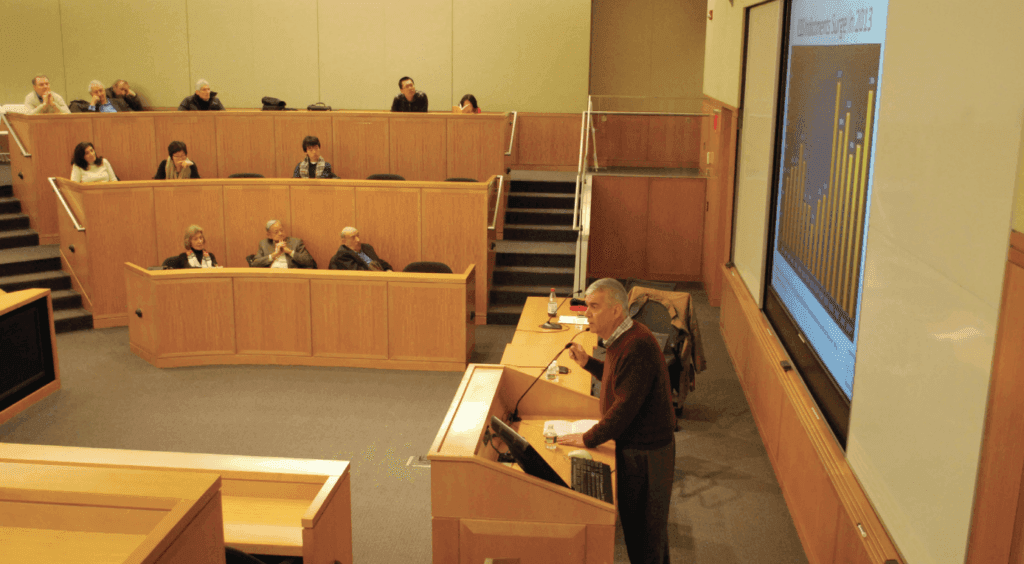
    Executive Director John Kamm shares Dui Hua’s work at Harvard Law School, March 5, 2015

    Dui Hua greeted the Year of the Ram with two San Francisco events. On February 10, Executive Director John Kamm spoke at the Commonwealth Club for the fourth time in 20 years. His lecture, titled “Half the Sky: China’s Women Prisoners,” highlighted Dui Hua’s work on women in prison. Kamm shared findings from Dui Hua’s international symposium on the UN Rules for the Treatment of Women Prisoners and Non-custodial Measures for Women Offenders (the Bangkok Rules). A representative of the Chinese consulate attended the public Commonwealth Club event.

    On February 24, more than 40 Dui Hua supporters gathered for a Chinese New Year’s reception and dinner at the Oriental Pearl Restaurant in Chinatown. Attendees included Dui Hua directors Bill Simon and Michael McCune, valued program partners, and current and former staff. In his remarks, Kamm recounted his first intervention on behalf of a prisoner, which occurred 25 years ago this May.

    A highlight of each year for Dui Hua is the week spent in Cambridge, Massachusetts, home to two of America’s leading centers for China studies. From March 3-10, Executive Director John Kamm and Publications & Programs Officer Jonathan Kinkel conducted research, gave presentations, and discussed recent developments in China’s human rights with top Sinologists at Harvard and Boston University.

    Kamm made remarks at three different venues. The first presentation, titled “Iron Fist, Velvet Glove,” was given at Harvard University’s Fairbank Center for Chinese Studies on March 4. It examined Chinese Communist Party General Secretary Xi Jinping’s wars on corruption and extravagance, protest and dissent, and Western values and interests. Kamm’s remarks were followed by a lively question and answer session.

    The next day Kamm addressed more than 100 students at Harvard Law School regarding “Encounters with China’s Criminal Justice System.” He used cases to illustrate aspects of China’s Criminal Procedure Law, including residential surveillance, deprivation of political rights, application of the death penalty, medical parole, and treatment of counterrevolutionaries.

    Also on March 5, Joseph Fewsmith, professor of International Relations and Political Science at Boston University, moderated at conversation with Kamm at Boston University’s stately Castle. Titled “John Kamm: 25 Years of Activism,” the conversation attracted an audience of 45 students, faculty, and community members. Women faculty members and students expressed surprise that they had never heard of the Bangkok Rules and asked questions about the UN standards.

    In addition to the conversation moderated by Professor Fewsmith, the Dui Hua team discussed the foundation’s work with distinguished Harvard scholars: William Alford, the Henry L. Stimson Professor of Law and director of East Asian Legal Studies at Harvard Law School; William Kirby, the T. M. Chang Professor of China Studies and director of the Fairbank Center for Chinese Studies; Roderick MacFarquhar, the Leroy B. Williams Research Professor of History and Political Science and former director of the John King Fairbank Center for East Asian Research; and Ezra Vogel, the Henry Ford II Professor of the Social Sciences Emeritus.

    PRISONER CASES

    In March, library research conducted by Kamm and Kinkel uncovered the name Omer Hebibullah, a Uyghur man suspected by police of inciting splittism. Omer was detained by Xi’an railway police on a Kunming-bound train on August 8, 2007. He was then returned to Xinjiang, where he was wanted by the public security bureau’s Special Investigation Unit.

    Dui Hua research has documented other cases of Uyghurs being detained on suspicion of endangering state security (ESS) outside Xinjiang. In 2012, two men were detained in Pingdingshan, Henan Province. Adili Tursun was allegedly one of 61 “three forces” (i.e., separatism, religious extremism, and terrorism) fugitives, while Iliyar Kublati was charged with inciting splittism. Eli Exmet and Paziniye were indicted in Henan Province and tried in Jilin Province for inciting splittism. The fates of all of these individuals remain unknown.

    The account of Omer Hebibullah does not state whether Omer went to trial, but if he did, it is likely that he received a lengthy sentence. Political crimes committed by Uyghurs invariably draw long sentences, and Omer’s offence was probably compounded by his failed escape attempt. Recently, Ilham Tohti’s case showed the severity with which Uyghurs are treated in China’s criminal justice system. The scholar was convicted of splittism and received a life sentence largely for his work maintaining Uyghur news site uighurbiz.net.

    Even after entering prison, Uyghur political activists sometimes have their sentences extended. Dui Hua has learned that Abdukerim Abduweli, chairman of the Islamic Reform Party, has received several sentence extensions for violating prison rules. The Urumqi Intermediate People’s Court sentenced him to 12 years in prison on May 6, 1993, for counterrevolutionary propaganda and incitement and leading a counterrevolutionary group. He is now due for release on December 25, 2018, more than 25 years after he was sentenced.

    At least one other Uyghur prisoner sentenced for now defunct counterrevolutionary crimes (counterrevolution was removed from China’s Criminal Law in 1997) remains in prison today. Detained in December 1996 for organizing the Islamic Party of Allah, Omer Akchi was sentenced to 14 years’ imprisonment in Xinjiang’s Aksu Prefecture. In 2006, five years before his sentence was scheduled to end, he was sentenced to life in prison for splittism. He is not known to have received any sentence reductions.

    Splittism falls under the category of endangering state security crimes. This category entered the Criminal Law during the same year that counterrevolutionary crimes were ushered out. Both splittism and inciting splittism are charges often used to restrict the liberty of Uyghur rights activists.

    Uyghurs are the primary target of China’s repressive religious controls in Xinjiang, but evidence suggests that Muslims who belong to the Hui minority face similar pressures. A verdict Dui Hua recently discovered online states that in 2013 the Ili Prefecture Intermediate People’s Court upheld a two-year sentence against a Hui man surnamed Ma for “gathering a crowd to disturb social order.” Ma was initially charged with “organizing a cult to undermine implementation of the law,” and according to the verdict, had conducted unauthorized Islamic classes in connection with Tablighi Jamaat in Gansu, Ningxia, Qinghai, and Sichuan as well as Xinjiang.

    Basic Knowledge of Islam was banned by the Xinjiang Press and Publications Bureau, but is still available for purchase on popular Chinese shopping website Taobao.

    Ma was accused of teaching banned religious books in mosques and homes. The books, banned by the Xinjiang Press and Publications Bureau, include Basic Knowledge about Islam, Riyad us-Saliheen, Six Virtues, and Story of Thalaba. (Some of these titles are being sold on popular Chinese shopping website Taobao.) The court found that Ma’s teachings deceived an increasing number of “ordinary” religious people, led to “religious internal contradictions,” and “seriously disrupted normal religious activity and religious administrative order.”

    Ma’s verdict provides the first official evidence Dui Hua has found of a Chinese court convicting an individual affiliated with Tablighi Jamaat. It describes the group as an “overseas religious infiltration organization banned by China’s traditional Islam.” Citing findings from an Indian think tank, a Chinese study claims that Tablighi Jamaat actively propagates religious extremism in Central Asia, Russia, and Xinjiang and has indirect ties to terrorism. Iran, Russia, and some Central Asian nations have banned the organization. According to The Jamestown Foundation, “many followers of terrorist and extremist groups have reportedly attended meetings run by Tablighi Jamaat, but widespread jihadist preaching and ties to terrorist activities have not been identified yet.”

    Information posted about Ma’s case in Chinese online forums make no mention of his affiliation to Tablighi Jamaat, and instead claim that a total of seven Hui Muslims were sentenced to 3-4 years in prison for “cult” activities.

    DUI HUA IN THE NEWS

    Dui Hua continued to attract attention from a wide variety of media outlets in February and was mentioned in nearly 80 news articles and NGO reports in the first two months of 2015. Media sources from North America, Asia, Europe, and Australia continue to cite our work, including research on ESS prosecutions in Xinjiang and across the nation. Dui Hua’s estimate of the number of executions in China during 2013 was cited in The South China Morning Post, and Dui Hua Executive Director John Kamm was quoted in The Telegraph regarding the political climate under Xi Jinping. Commenting on counter-terrorism cooperation between the United States and China, Foreign Policy cited Dui Hua’s statistics on the disproportionately high number of state security cases in Xinjiang, characterizing Dui Hua’s data as the most up-to-date available on the topic.

    PUBLICATIONS ROUND-UP

    Featured Article: Behind the Rarity of China’s Acquittals (February 10)

    For every 10,000 people tried in Chinese criminal courts in 2013, just seven were acquitted. Despite an incremental rise in 2013, the number of people found not guilty plummeted between 2000 and 2012. Chinese prosecutors have tended to attribute high acquittal rates to “judicial precision,” but a closer look at the justice process indicates that stability maintenance may play a bigger role.

    Court Flaunting of Nian Bin Acquittal Raises Questions of Lessons Learned (February 19)
    Last month’s Digest: February 2015

    THIS MONTH IN HISTORY

    Following the release on medical parole of elderly Tibetan teacher Jigme Sangpo on March 31, 2002, and his subsequent arrival in the United States on July 13, 2002, Dui Hua shifted its attention to Ngawang Sangdrol, the young leader of a group known as the Singing Nuns of Drapchi. Ngawang Sangdrol had been detained in June 1992 and was subsequently tried and sentenced to three years in prison for the crime of counterrevolutionary propaganda and incitement. She entered Drapchi Prison the same month.

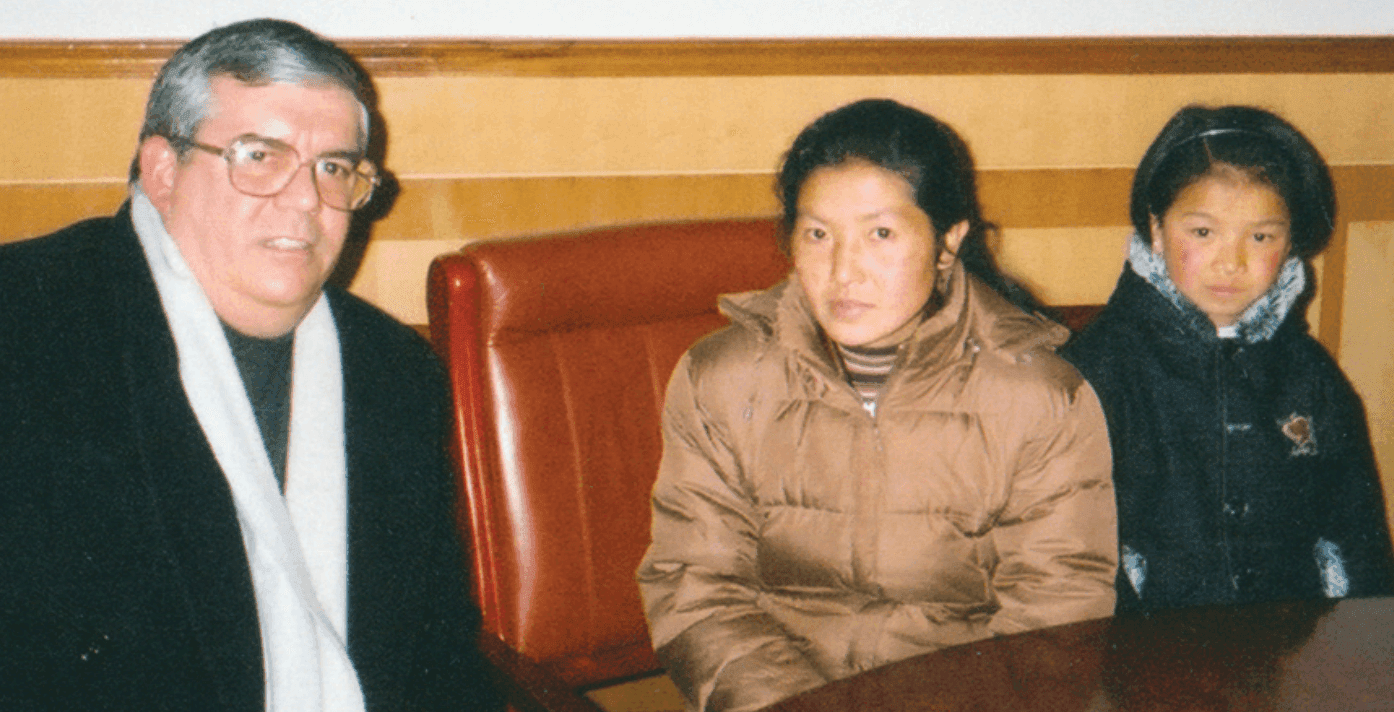
    Executive Director John Kamm with Ngawang Sangdrol in Lhasa in 2003.

    In October 1992, Ngawang Sangdrol and 13 other imprisoned nuns secretly recorded 27 songs expressing love for the Dalai Lama and their desire for a Tibet free from Chinese rule. The recordings were smuggled out of Drapchi and were soon circulating in Tibet and abroad as the CD “Seeing Nothing but the Sky.” As a result of the recording, Ngawang Sangdrol and the other “singing nuns” received three-year sentence extensions. For her continued protests in prison, Ngawang Sangdrol’s sentence was extended again in 1996 and 1998.

    Following intense discussions between Dui Hua Executive Director John Kamm and China’s Ministry of Foreign Affairs (MFA), Ngawang Sangdrol was released on parole on October 14, 2002. Dui Hua received credible reports that she had serious health problems, and Kamm requested permission from the MFA to fly to Lhasa to meet her and ascertain whether she wished to receive medical treatment abroad. Permission was granted, and accompanied by an MFA officer, Kamm travelled to Lhasa in late February 2003.

    On February 28, 2003, Ngawang Sangdrol, joined by her niece, was taken to see Kamm in a conference room of the Foreign Affairs Bureau of the Tibet Autonomous Region. She said she was suffering from severe headaches and requested Kamm’s help in seeking medical treatment abroad. Exactly one month later, on March 28, 2003, Ngawang Sangdrol departed China and arrived in the United States, accompanied by an officer of the US Embassy. After a brief stay in Switzerland, Ngawang Sangdrol settled in the United States, where she remains today.

    One year later, in February 2004, the last of the Singing Nuns of Drapchi, Phuntsog Nyidron, had the remaining years of her sentence commuted by the Lhasa Intermediate People’s Court. By then the atmosphere in Beijing regarding prisoner releases had begun to sour. It took two years for the Chinese government to approve Phuntsog Nyridon’s application for a passport. Unlike in the cases of Jigme Sangpo and Ngawang Sangdrol, Kamm’s application to visit the nun in Lhasa was not approved. Phuntsog Nyridon eventually departed Tibet and arrived in the United States in March 2006. She now lives in Switzerland, which has the highest population of Tibetans outside Asia.

    The overseas Tibetan community, governments, and human rights NGOs lobbied for and welcomed Ngawang Sangdrol’s release and credited Dui Hua for arranging it. In 2006, French director Marie Louville released to critical acclaim the documentary Prisoner of Lhasa, telling the story of Ngawang Sangdrol and John Kamm.

  • Dui Hua History: March 2002 – Meeting the Nuns of Drapchi

    << Read all John Kamm Remembers stories

    Following the release on medical parole of elderly Tibetan teacher Jigme Sangpo on March 31, 2002, and his subsequent arrival in the United States on July 13, 2002, Dui Hua shifted its attention to Ngawang Sangdrol, the young leader of a group known as the Singing Nuns of Drapchi. Ngawang Sangdrol had been detained in June 1992 and was subsequently tried and sentenced to three years in prison for the crime of counterrevolutionary propaganda and incitement. She entered Drapchi Prison the same month.

    In October 1992, Ngawang Sangdrol and 13 other imprisoned nuns secretly recorded 27 songs expressing love for the Dalai Lama and their desire for a Tibet free from Chinese rule. The recordings were smuggled out of Drapchi and were soon circulating in Tibet and abroad as the CD “Seeing Nothing but the Sky.” As a result of the recording, Ngawang Sangdrol and the other “singing nuns” received three-year sentence extensions. For her continued protests in prison, Ngawang Sangdrol’s sentence was extended again in 1996 and 1998.

    Following intense discussions between Dui Hua Executive Director John Kamm and China’s Ministry of Foreign Affairs (MFA), Ngawang Sangdrol was released on parole on October 14, 2002. Dui Hua received credible reports that she had serious health problems, and Kamm requested permission from the MFA to fly to Lhasa to meet her and ascertain whether she wished to receive medical treatment abroad. Permission was granted, and accompanied by an MFA officer, Kamm travelled to Lhasa in late February 2003.

    On February 28, 2003, Ngawang Sangdrol, joined by her niece, was taken to see Kamm in a conference room of the Foreign Affairs Bureau of the Tibet Autonomous Region. She said she was suffering from severe headaches and requested Kamm’s help in seeking medical treatment abroad. Exactly one month later, on March 28, 2003, Ngawang Sangdrol departed China and arrived in the United States, accompanied by an officer of the US Embassy. After a brief stay in Switzerland, Ngawang Sangdrol settled in the United States, where she remains today.

    One year later, in February 2004, the last of the Singing Nuns of Drapchi, Phuntsog Nyidron, had the remaining years of her sentence commuted by the Lhasa Intermediate People’s Court. By then the atmosphere in Beijing regarding prisoner releases had begun to sour. It took two years for the Chinese government to approve Phuntsog Nyridon’s application for a passport. Unlike in the cases of Jigme Sangpo and Ngawang Sangdrol, Kamm’s application to visit the nun in Lhasa was not approved. Phuntsog Nyridon eventually departed Tibet and arrived in the United States in March 2006. She now lives in Switzerland, which has the highest population of Tibetans outside Asia.

    The overseas Tibetan community, governments, and human rights NGOs lobbied for and welcomed Ngawang Sangdrol’s release and credited Dui Hua for arranging it. In 2006, French director Marie Louville released to critical acclaim the documentary Prisoner of Lhasa, telling the story of Ngawang Sangdrol and John Kamm.


    Listen to the Encounters with China podcast.

    Subscribe to receive notifications about new episodes. 

    Read all John Kamm Remembers stories.

  • Xinjiang State Security Trials Flat, Criminal Trials Soar in 2014

    Sentences are announced for 55 defendants, including some convicted of splittism, a state security crime, at a public sentencing rally in Xinjiang’s Ili Prefecture on May 27, 2014. Image Credit: voachinese.com

    Xinjiang’s high court recently reported that, as compared with 2013, the number of endangering state security (ESS) trials in Xinjiang was flat in 2014. A graph included in the court’s annual work report and Dui Hua estimates released last year indicate that about 300 ESS trials of first instance were concluded in Xinjiang in each year. ESS trials can be used as a proxy for the suppression of human rights activism since several of the crimes in the ESS category are constituted by certain kinds of speech and association.

    A significant jump in the number of overall criminal trials indicates, however, that even without growth in ESS trials, authorities heightened the suppression of human rights activism and dissent in Xinjiang. The number of criminal trials concluded in the region soared more than 40 percent to 29,511 trials, including those of first and second instance. Kicked off in May 2014, Xi Jinping’s “anti-terrorism” campaign likely played a significant role in increased law enforcement.

    Concluded First-instance Criminal Trials in Xinjiang by Crime Category, 2013 & 2014

    Sources: Dui Hua; Xinjiang High People’s Court Annual Work Report, 2015

    Concluded First-Instance ESS Trials in Xinjiang, 2010-2014

    Note: Figures for 2012-2014 are estimates made by Dui Hua; all other data were reported by Xinjiang authorities.
    Sources: Dui Hua; Xinjiang High People’s Court Annual Work Report, 2011-2015; Xinjiang Yearbook, 2011-2013

    Three categories of crimes accounted for the bulk of the annual increase in criminal trials. Trials for obstructing social administrative order doubled to exceed 4,500. This category of crimes can be used to target unauthorized Islamic and Christian groups or “cults” and covers activities including the distribution of religious materials as well as assemblies and demonstrations.

    Trials for infringing upon citizens’ personal and democratic rights almost doubled nearly reaching 7,500. This category of crimes includes the offense of “inciting racial hatred and discrimination,” which may be applied to people who disseminate information that “tarnishes” China’s ethnic harmony by, for example, challenging government bans on beards, veils, and religious observance.

    Naming Names

    Dui Hua’s Political Prisoner Database includes the names of about a dozen people convicted of ESS crimes in Xinjiang in 2014. Ilham Tohti, a Uyghur scholar sentenced to life in prison for splittism, is the most well known. Seven of his students also went to trial for their involvement in the operation of Uyghur news site uighurbiz.net. All were convicted of splittism, and four were sentenced to 3-8 years’ imprisonment. Luo Yuwei (罗玉伟), a member of the Yi ethnic group, received the shortest sentence of three years, according to prominent Chinese lawyer Liu Xiaoyuan. Luo joined Perhat Halmurat and Shohret Tursun in a televised confession, presumably under duress, last November. The other students convicted in the case are Abdukeyum Ablimit, Mutellip Imin, Akbar Imin, and Atikem Rozi, the only woman in the group.

    In a lesser-known splittism case, Reyim Abuliz was sentenced to 15 years’ imprisonment in Ili Prefecture. She was involved in one of the 11 cases of Communist Party members and civil servants punished for violating political discipline. The teacher was accused of using China’s mobile instant messaging app WeChat to send “sensitive” pictures and audio materials to a number of individuals.

    Last May, state news media reported that five Uyghurs, whose names were not fully revealed, were convicted of splittism and sentenced to 7-15 years’ imprisonment in a public sentencing rally in Kashgar Prefecture. They were condemned in front of 300 cadres and students for disseminating information about hijrah and jihad through mobile and online networks and for “indoctrinating” young children in “extremism” in unauthorized religious classes.

    Zhao Haitong (赵海通) was the only Han Chinese known to have been convicted of ESS in Xinjiang in 2014. He was convicted of inciting subversion, and possibly other crimes, and sentenced by the Urumqi Intermediate People’s Court to 14 years in prison. Zhao actively participated in a series of small-scale protests against Internet censorship and miscarriages of justice and called for officials to disclose their assets. A Guangzhou-based lawyer has claimed that Zhao’s case was related to Xinjiang’s “ethnic issues.”

    Xinjiang typically accounts for the majority of China’s ESS trials, however, official data has yet to be released showing whether the nation’s ESS trial numbers grew in 2014. That said, in 2013 ESS indictments showed strong annual growth with 32 percent more individuals indicted in 57 percent more cases.

  • Article 293: Deeming Free Speech Disorder in Internet Space

    Article 293: Deeming Free Speech Disorder in Internet Space

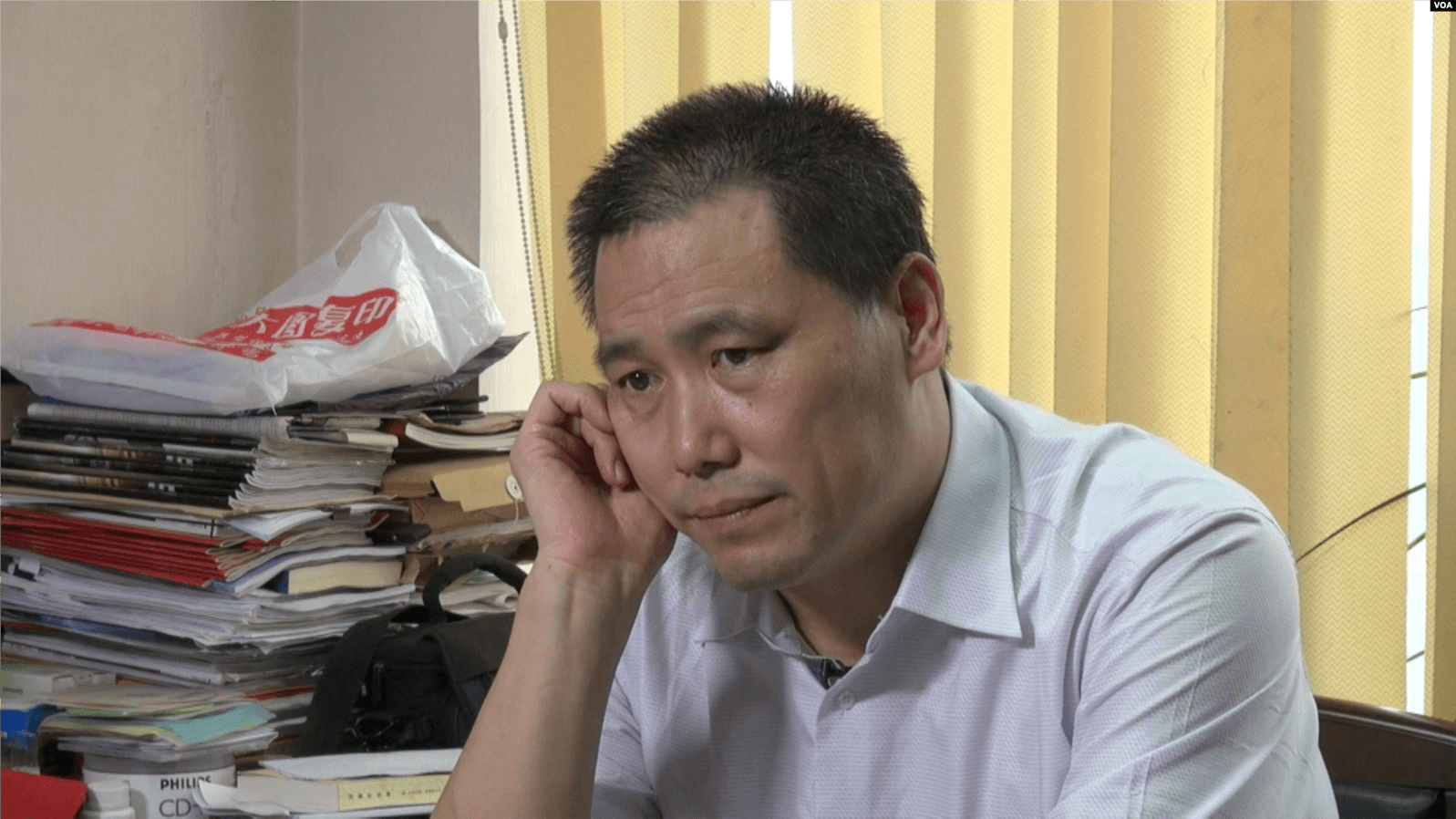
    Pu Zhiqiang, who was arrested for “creating a serious disturbance.” Image credit: VOA / Public domain
    In September 2013, the Supreme People’s Court (SPC) and Supreme People’s Procuratorate (SPP) jointly issued a judicial interpretation addressing a number of issues related to criminal speech online. That interpretation held that use of information networks “to berate or intimidate others,” “to disseminate false information . . . that one has either invented or clearly knows to be fabricated,” and “to organize or incite others to disseminate [such information]” should be punished under Article 293 of the Criminal Law, “creating a serious disturbance.”

    This marked a major elaboration of Article 293, which is also known by its literal translation, “picking quarrels and provoking trouble.” Prior to the interpretation, the offense had targeted a variety of behaviors deemed to be disruptions to social order, such as fighting, looting, throwing rocks or refuse at vehicles or buildings, or otherwise stirring up trouble in public spaces. Now, the interpretation seems to have expanded the definition of “public space” to include online space, treating it not only as a platform through which to incite others to disrupt social order but as a kind of public space itself that can be thrown into disorder by certain kinds of acts.

    Since September 2013, a growing list of Chinese people have been detained or charged for speech-related incidents under the provisions of Article 293. Perhaps the most well-known is the crusading rights lawyer Pu Zhiqiang, whose initial detention for “creating a serious disturbance” appeared to be connected to a private meeting to discuss issues related to June Fourth. According to recent reports, however, it appears that the authorities may also be trying to prosecute Pu under Article 293 (in addition to even more serious speech-related charges, including “inciting subversion” and “inciting splittism”) for a series of items he posted on social media.

    Prosecutors in Zhengzhou, Henan, also recently presented an indictment for “creating a serious disturbance” against Yu Shiwen, a former student leader during the 1989 democracy movement who was arrested last year in connection with a public memorial commemorating former leaders Zhao Ziyang and Hu Yaobang and those who died in the June Fourth crackdown. The authorities appear to have been unaware that the memorial had taken place until Yu and other participants posted photographs online and gave interviews to overseas media.

    Critics have argued that the judicial interpretation by the SPC and SPP is improper because by significantly expanding the scope under which Article 293 can be applied, it has ventured into the jurisdiction of China’s legislature. Peking University’s Zhang Qianfan recently took up the argument from a position defending the freedom of expression. In a blog post that has been widely republished on numerous Chinese-language websites, the liberal constitutional law scholar warns that overemphasis on preventing disorder in virtual space risks undermining what is not only a fundamental human right but also an essential component of ensuring proper governance. He describes Article 293 as a “pocket crime”—an offense so vaguely defined that nearly anything can be stuffed into it—and warns that, unless the boundaries are tightened up, even more Chinese citizens are likely to fall victim to arbitrary and abusive uses of offenses like these.

    *
    Don’t Let “Creating a Serious Disturbance” Become a “Pocket Crime”

    Zhang Qianfan
    February 5, 2015

    Over the past year, the offense of “creating a serious disturbance” (Article 293 of the Criminal Law) has been applied more and more often in cases involving speech by citizens. Legal scholars are widely concerned that this offense has already become a “pocket crime” whose borders can be extended at will. This not only violates the principles of “governing the country in accordance with the law” and “governing the country in accordance with the constitution” that were promoted at the Fourth Plenum of the Eighth Chinese Communist Party Conference; it will also inevitably lead to serious abuses of state power and an extreme restriction of citizens’ freedom of expression that is protected under Article 35 of China’s constitution.

    In a certain respect, we can consider the state as a supremely powerful Hobbesian “Leviathan,” but this Leviathan does not have a will of its own. On the contrary, it is a product of human reason. We establish the state and invest it with such huge powers so that it may control the irrationality of private individuals and prevent their using violence to harm others. At its most basic, the function of the state is to use its monopoly of lawful violence to control the unlawful violence committed by private individuals. The criminal law is the main means by which the state carries out this basic function, and police are the specific force through which the criminal law is enforced. You could say that it is a limb of the Leviathan. For rational people, limbs must be controlled by the brain. If the brain loses control, then the limbs can move wildly on their own in a dangerous manner. The same is true with the state.

    What is the “brain” of the state? The “brain” of the state is the public reason expressed through its laws. In a healthy state under ordinary conditions, law exists to serve the common interests of all people. But what exactly is the “common interest”? What sort of policies, laws, or institutions bring the greatest happiness to people? There can be no single answer to these questions, and since each person has freedom of thought and expression, no person can claim that he alone possesses the truth. So-called public reason is a social consensus that is formed in the course of free discussion, meaning that free expression is an institutional precondition for the production of public reason. Of course, total consensus is impossible, because no viewpoint can secure the agreement of every single person in society. We must be able to cast votes to determine the majority position at any time and use this as the basis for the laws that govern us. Only such laws can be considered “good laws” that express public reason. Public reason of this kind is bound to be flawed and can only attain perfection through practice. But it is inevitably far superior to any private individual reason—because humans are rationally self-interested, individual reason can only serve particular individuals. Only public reason formed in the context of free expression can serve the entire society.

    We can only live in a reasonable state if we enforce good laws, implement the rule of law, and allow our public reason “brain” to control the limbs of the state. On the other hand, if the limbs take control of the brain and prevent the brain from thinking in a normal way—or if individual reason is allowed to replace public reason and the machinery of the state is used to suppress and “manage” speech—then the “arms control the brain” and the state cannot operate normally. Arms can only control arms. State violence can only be used to control violence by private individuals and not to govern speech.

    Of course, if speech truly threatens to incite an immediate, obvious, and serious danger—for example, if a person spreads panic in a crowded place and causes a stampede—then that sort of speech should be liable for criminal responsibility. But so long as there is no such “clear and present danger” and there is still time to clarify the truth through additional discussion, free speech should be allowed to continue without state power intervening to impose silence.

    As long as the state’s “brain” is still capable of ordinary thought, the “arms” must not be allowed to control the “head.” The reason is simple: arms can never be as good at thinking as the head. Likewise, police are no more capable than ordinary people of correct judgments about matters of right or wrong or expertise. When the arms control the head, coercive power is substituted for public reason.

    If a criminal offense becomes a “pocket crime” that can be expanded or contracted at will such that it becomes a way of punishing citizens’ speech, then the “arms are controlling the head.” The fourth clause of the offense of “creating a serious disturbance” refers to “stirring up trouble in a public place that creates serious disorder in [that] public place.” Since the Supreme People’s Court and Supreme People’s Procuratorate have expanded the meaning of “public place” to include online space, this clause has often been applied in cases involving citizens’ speech. Looking purely at the text of the statute, there’s no big problem with this offense. Whether it’s speech or acts, if there truly is “serious disorder in a public place,” then the person(s) responsible should be held criminally liable. The problem is how to define “serious disorder in a public place” and, particularly, disorder as applied to the “public space” of the Internet. The Internet is a platform for free expression and it is normal for there to be different opinions expressed there. “Order” in this kind of space connotes a kind of place where one person has all the say. In the “public space” of the Internet, it’s practically impossible for there to be “serious disorder” in the sense of the criminal law. Does crude, acrimonious, and radical online speech that leads to widespread arguments or even abuse constitute “creating a serious disturbance”? Even if you believe in the idea that there is “verbal violence” online, you should not use physical violence to counter verbal violence.

    Under ordinary circumstances, the criminal law should only apply to actual violence that takes place in the real world, not virtual “violence” that takes place in the online world—with the exception of online speech that can actually cause “serious disorder in a public place” in the real world. If online speech that does not satisfy this condition is treated as “creating a serious disturbance,” then it is another case of the arms controlling the head.

    The analysis above does not simply apply to “creating a serious disturbance” and can be applied to all other “pocket crimes” as well. The unlimited expandability of “pocket crimes” not only restricts citizens’ right to free expression but also can easily lead to abuses of power by local authorities. In China, no matter whether it’s the constitution, laws, or central policies like the Fourth Plenum decision, all are used by central authorities to regulate the behavior of local authorities at all levels. But if the constitution is not implemented fully and laws become pocket crimes to be interpreted arbitrarily by local authorities, then not only is the law unable to serve any normative function but it can actually become a powerful weapon with which local authorities can abuse their power.

    For example, in Henan a rights defender named Jia Lingmin provided free legal advice for many years to families who had been forcibly evicted from their homes. She was warmly welcomed by people all over for spreading legal information concerning land seizures and forced evictions. But because she was a thorn in the side of the local authorities, she was framed on charges of “creating a serious disturbance.” However, not only did Jia’s speech not cause any “serious disorder in a public place,” it played an extremely positive role by protecting the lawful rights and interests of evicted households, upholding social stability, and preventing predatory behavior by those with power. Such an abuse of power by local authorities seriously undermines the rule of law and shows flagrant contempt for central authority.

    To prevent “creating a serious disturbance” from becoming a “pocket crime,” we must strictly define key legal criteria like “serious disorder in a public place.” The crime should only be constituted in cases where expression has truly caused serious disruption to the order of an actual public place. And in order to constitute “serious disorder,” the speech in question must cause harm that is clear and imminent. If “serious disorder” is simply determined by the subjective conjecture and imagination of those in charge of the case or based on fear of some unpredictable or uncertain outcome, it naturally cannot be considered “serious.”

    A classic example is the case of Yu Shiwen and others from Henan who publicly mourned Zhao Ziyang. Zhao Ziyang was originally from Henan, and there is nothing out of the ordinary for people from Henan to mourn other people from Henan. There was no disorder on the scene, and the mourning took place without any interference. It was only when Yu Shiwen and others put a video of the mourning online that they were detained by Henan police. But there is no evidence to prove that these videos caused any disorder in a public place. When investigators make such accusations, they must provide the national public with a convincing explanation in order to prevent the impression that the machinery of state power is being operated by a few arms in order to control 1.4 billion heads.

  • Court Flaunting of Nian Bin Acquittal Raises Questions of Lessons Learned

    Nian Bin reunites with his sister, who built his legal defense team, and uncle after being released from prison in 2014. Image credit: You Jingyou, Weibo

    Last August, the Fujian High People’s Court acquitted Nian Bin, a former grocery-store owner sentenced to death in 2008 for allegedly poisoning his neighbors in 2006. The incident led to the deaths of two children. Nian claimed that he confessed to the crime only under the duress of police torture. After more than six years of trial and appeal, Nian’s lawyers were able to prove that police had fabricated evidence against him and withheld other evidence that showed his innocence.

    Nian’s case, which has long been in the public spotlight and a focus of anti-death-penalty activists in China, has been hailed as a landmark victory after a long and hard-fought struggle by Nian’s family and lawyers. Some credit for this victory must also go to legal reforms that have changed the environment in which death penalty cases are handled in China. The careful review of the death penalty by the Supreme People’s Court is one factor, as is the increased emphasis that has been placed on the exclusion of confessions extracted through torture or other illegal evidence.

    The outcome of Nian Bin’s case may also reflect the attention that Chinese leaders have paid in recent years to the serious problem of wrongful convictions and other miscarriages of justice. Because addressing individual cases of injustice is increasingly both a legal and political problem for Chinese courts, it is not surprising that the Fujian High People’s Court chose to make mention of the “positive” impact of the successful resolution of the Nian Bin case in its annual work report to provincial people’s congress deputies. After all, under China’s political system, approval of state institutions’ work by legislative bodies is supposed to serve as an important affirmation of the correctness and legitimacy of that work.

    But to commentator Zhu Changjun, writing in the February 2 edition of The Beijing News, the Fujian court’s attempt to take credit for overturning Nian Bin’s conviction inadequately addresses either the factors that contributed to Nian’s wrongful conviction in the first place or the provincial court’s failure to acquit Nian earlier despite identifying serious problems with the prosecution’s case.

    Zhu’s concern highlights a general problem faced in trying to evaluate achievement in reform of China’s legal system and human-rights protections. On the one hand, there is a tendency to exaggerate the progressive impact of new policies or legislation before there is concrete evidence that institutions and practices have truly changed for the better. On the other hand, it can often be difficult to say how indicative positive outcomes in individual cases are of systemic change.

    This is perhaps a particular problem when the progress in question is so closely linked to the undoing of past mistakes, rather than simply improving upon existing policies and practices. In these cases, as Zhu Changjun suggests, Chinese authorities might earn more credit for their efforts if they were to show with greater transparency how the lessons learned from past miscarriages of justice are being put to use in the reform process.

    *
    How Should the Impact of the Nian Bin Case be Recorded?

    Zhu Changjun
    The Beijing News, February 2, 2015

    Overturning the verdict in the Nian Bin case merely reflects the ordinary operation of the judicial system’s mechanisms to correct errors. Correcting these errors is a basic responsibility of a reasonable judicial system. It’s really inappropriate for local high courts to one-sidedly prettify this sort of action in a work report.

    According to recent reports citing a number of deputies to the Fujian Provincial People’s Congress, the Nian Bin case, which received a lot of attention in 2014, was mentioned in the work report of the Fujian High People’s Court. In that report, court president Ma Xinlan commented that the court’s “resolution of a number of cases in accordance with the law, including the case against Pingtan resident Nian Bin on charges of poisoning with a hazardous substance, caused a positive impact both legally and socially.”

    Nian Bin’s case was a classic example of a miscarriage of justice and received national attention. As such, reversal of the verdict against Nian Bin is of course worth including in the annual work report of the local judicial authorities. But what is the most appropriate way of discussing it? Should it be a full accounting of the lessons learned from how this miscarriage of justice came to pass or simply a comment on the significance of how mistake were ultimately rectified? The answer should be self-evident. The way that judicial authorities have, at least at the current stage, chosen to focus on the “positive impact both legally and socially” of their “resolution of the case in accordance with the law,” deserves further scrutiny and discussion.

    One can of course understand the Fujian High People’s Court’s mention of the positive social value of overturning Nian’s wrongful conviction. After all, Nian Bin’s case was finally overturned after eight years of 10 verdicts—four of those carrying a sentence of immediate execution, but this is not simply about restoring justice to a single individual. It allows people to hope for the rectification of even more wrongful convictions, a kind of judicial multiplier effect. To be sure, this has a positive social and legal impact. But it’s rather biased for an annual work report to only reveal and magnify the positive side and fail to reflect the complexity and real external impact of the case.

    On multiple occasions, the Fujian high court sent the case back to the intermediate court for retrial on the grounds of “unclear facts and insufficient evidence.” This does actually show the high court’s cautious attitude in trying the case. But it’s also worth noting that on June 8, 2009, the Fuzhou Intermediate People’s Court once again sentenced Nian Bin to death for poisoning with a hazardous substance. Once again, Nian appealed the verdict. Only this time, on April 7, 2010, the Fujian high court issued its final ruling, rejecting the appeal and upholding the lower court’s verdict. The case was then sent to the Supreme People’s Court for review of the death sentence in accordance with the law. In other words, the Fujian high court upheld the death sentence against Nian Bin despite its previous findings of “unclear facts and insufficient evidence.” If it weren’t for the SPC decision to reject the death sentence, Nian Bin’s fate and the outcome of the case would most likely have been completely different.

    Moreover, since the Fujian high court found multiple times that the case had “unclear facts and insufficient evidence,” why did it continue to send the case back for retrial time and again instead of directly acquitting Nian Bin? In this respect, even though neglect of supervision over the police investigation stage has enormous relevance to the way the case against Nian Bin developed, the Fujian high court’s role in “correcting errors” clearly shouldn’t be overstated.

    It’s even more important to see that by only paying attention to the “social and legal impact” of the case, the Fujian high court takes the position of a cool and detached observer without fully considering the fate of Nian Bin, the victim.

    No matter how you approach it, the lessons of the Nian Bin case are all very serious. Overturning the verdict in the case merely reflects the ordinary operation of the judicial system’s mechanisms to correct errors. And correction of the errors in this case was never a foregone conclusion and came only after such great difficulty. If it weren’t for the persistence of Nian Bin’s relatives and lawyers and the decision of the SPC not to approve the death sentence, the outcome would be utterly unimaginable. In summing up the case as a participant, the Fujian high court ought to place its primary emphasis on the lessons and errors that led to this wrongful conviction in the first place. It should offer a deep reflection on and take appropriate responsibility for negligence and flaws in trying the case. To talk so single-mindedly about “impact” and “turning negatives into positives” is not only flippant; it makes it difficult for people to have any faith that the court has learned any lessons about miscarriages of justice.

    A miscarriage of justice is a miscarriage of justice, and correcting these errors is a basic responsibility of a reasonable judicial system. It’s really inappropriate to one-sidedly prettify this sort of action in a work report.

  • Dui Hua Digest, February 2015

    EVENTS

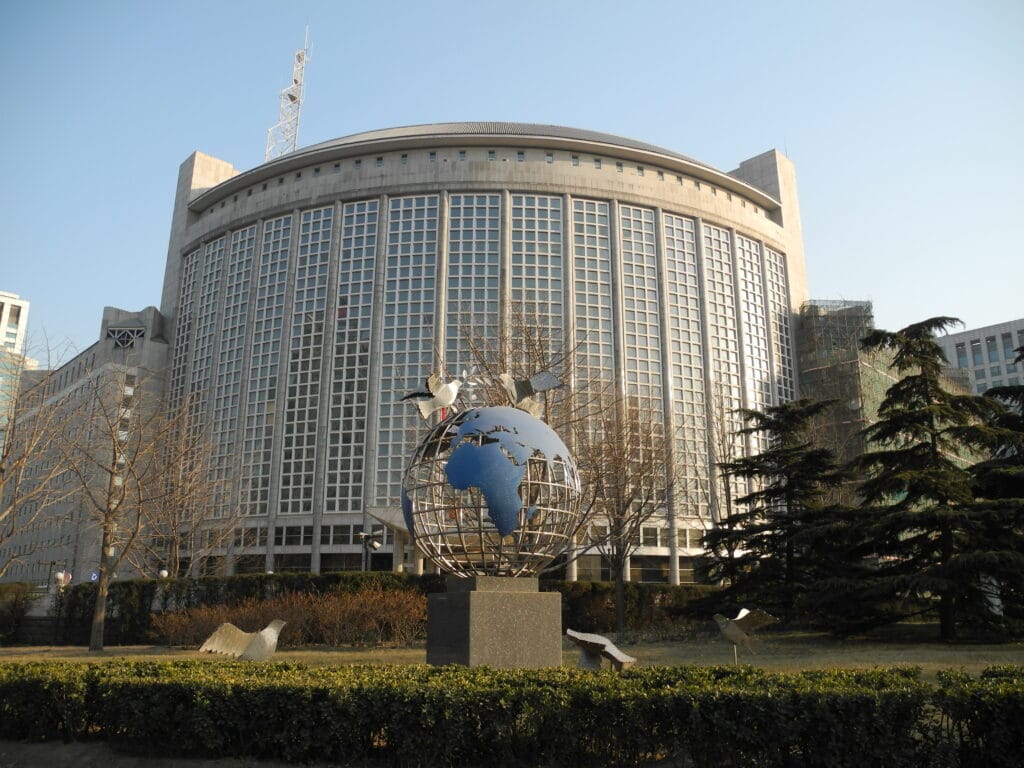
    China’s Ministry of Foreign Affairs. Credit: Wikimedia Commons, licensed under CC BY-SA 4.0

    Dui Hua Executive Director John Kamm visited Hong Kong and Beijing from January 23 to February 4, 2015. It was Kamm’s first trip of a year likely to be dominated by travels to capitals of countries involved in bilateral human rights dialogues and consultations with China.

    This trip was particularly fruitful. Chinese interlocutors provided Kamm with information on 15 individuals serving sentences for political offenses. Kamm explored next steps in the foundation’s women in prison initiative and met with Chinese officials and diplomats from more than a dozen countries. Kamm learned that after more than a year of suspended and delayed bilateral human rights dialogues, China’s Ministry of Foreign Affairs (MFA) has recommitted itself to holding these exchanges and to programs with the United Nations Office of the High Commissioner for Human Rights.

    Disputes over timing, level of representation, and the agenda nearly scuppered the annual EU-China Human Rights Dialogue, but after months of tough negotiations, a round finally took place in Brussels on December 8-9, 2014. The EU delegation was led by Gerhard Sabathil, European External Action Service Director for North-East Asia and the Pacific, while the Chinese delegation was led by Li Junhua, Director General of the MFA Department of International Organizations and Conferences. Delegates discussed a wide range of issues, with a focus on recent developments in China. These included minority rights in Tibet and Xinjiang; freedoms of belief, speech, and association; reform of China’s household registration system; arbitrary detention and due process of the law; and the death penalty.

    In keeping with its policy of no longer accepting prisoner lists from countries with whom it conducts human rights dialogues, the Chinese delegation refused to accept a long list of individuals believed to be detained in political cases. The EU delegation instead verbally raised 18 names, including Liu Xiaobo (刘晓波), Ilham Tohti, Gao Yu (高瑜), Hada, Pu Zhiqiang (浦志强), Xu Zhiyong (许志永), Tenzin Delek Rinpoche, and Gao Zhisheng (高智晟).

    Prior to traveling to Brussels, the Chinese delegation joined their German counterparts for a round of the Sino-German Human Rights Dialogue in Berlin, and in the first half of 2015, dialogues will likely be held with Australia, Switzerland, and the United Kingdom. In March, China’s delegation to the UN Human Rights Council meeting in Geneva is expected to discuss a visit to China by UN High Commissioner for Human Rights Zeid Ra’ad Al Hussein later this year.

    The MFA has entered talks with the US government regarding resumption of their human rights dialogue, according to Chinese and American officials who spoke with Kamm. China suspended the dialogue in 2014 due to President Barack Obama’s meeting with the Dalai Lama in February of that year. If this dialogue is resumed, the Legal Experts Dialogue, which was also suspended in 2014, will follow suit. The United States, led by President Barak Obama and Secretary of State John Kerry, has pressed Beijing to resume talks, and China has committed to do so, possibly as early as May or June. Talks on resuming the dialogue were not affected by the Dalai Lama’s presence at the National Prayer Breakfast hosted by President Obama in Washington on February 5, 2015. The last round of the US-China Human Rights Dialogue was held in Kunming in late July 2013.

    PRISONER CASES

    In early 2015, Chinese government interlocutors provided Dui Hua with information on two sentence reductions. The oldest of the two cases dates back to 2000. In that year, China detained about 6,000 criminal suspects in the saohuang dafei campaign that targeted publications that are considered pornographic, superstitious, or socially or politically harmful. The lead working group for the campaign was established to facilitate “ideological struggle” against Western influence just one month after the suppression of the 1989 June Fourth protests.

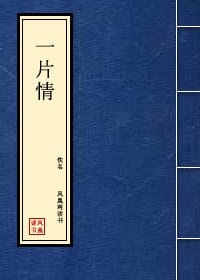
    Yi Pian Qing, banned in the Qing Dynasty for its explicit sexual content, was one of the “obscene” books Xi Baoping was convicted of selling.

    As part of the saohuang dafei campaign Xi Baoping (席保平) was sentenced to 20 years in prison by a Guangzhou court for “illegal business activity” and “producing obscene materials.” The owner of an advertising company, Xi was labeled a “predator” in official news media. He was accused of printing 276 books without proper licensing and selling more than four million books between 1997 and March 2000. The publications he sold included everything from Taiwanese romance novels to biographies of President Bill Clinton and Monica Lewinsky and at least two erotic novels published in the late Ming and early Qing dynasties.

    Government interlocutors informed Dui Hua that Xi was transferred from a Guangdong prison to Henan No.3 Prison in January 2009 and released seven years early on December 28, 2013. Meanwhile, in a similar case for which no new information was received on this trip, Liang Jiantian (梁鉴天) remains in prison after being convicted of the same crimes in the same year as Xi. In contrast to Xi’s case, Liang’s case pertained to Falun Gong publications. Liang was sentenced to life—the maximum penalty for producing or disseminating obscene material—on November 2, 2000, and after four sentence reductions, Liang is scheduled for release from Panyu Prison, in Guangdong Province, on May 17, 2023.

    Through desktop research Dui Hua also discovered official records confirming two acts of clemency for individuals convicted of endangering state security. Tsering Serpo received a three-month sentence reduction on January 4, 2015. A Tibetan man in his late-20s, he was convicted of inciting splittism and sentenced to four years’ imprisonment with three years’ deprivation of political rights in May 2012. Hailing from Dege County, Sichuan Province, Tsering Serpo was detained on May 21, 2011, two months after that year’s first Tibetan self-immolation protest.

    Abduhapar Memeteysa is the second of 23 people convicted in a 2009 splittism case heard by the Shenyang Intermediate People’s Court known to have received a sentence reduction. Last August, Dui Hua reported that Abdullah Mehmet received his second sentence reduction in May 2014. Abduhapar Memeteysa received a 16-month sentence reduction in September 2014 for good behavior. He is currently serving a 13-year sentence for advocating Xinjiang independence in Fushun No.2 Prison in Liaoning Province.

    DUI HUA IN THE NEWS

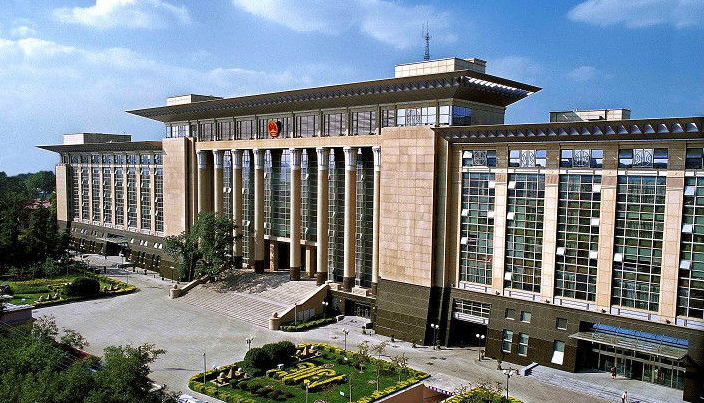
    Supreme People’s Court. Credit: Internet image.

    Dui Hua was mentioned in more than 50 news articles and reports from nonprofit organizations in January. Coverage was dominated by statistics on indictments for endangering state security that took place in Xi Jinping’s first year in office. News outlets including Aftenposten, The Wall Street Journal, and The South China Morning Post published the statistics that we discovered in government publications. News media continued to cite Dui Hua’s estimate of Chinese executions in 2013 after an old murder case that led to a wrongful execution took a new turn.

    PUBLICATIONS ROUND-UP

    Featured Article: State Security Indictments, Cult Trials Up in Xi Jinping’s 2013 (January 7)

    2013 was Xi Jinping’s first year as party secretary, and statistics recently released in China Law Yearbook indicate that in that year indictments for crimes of endangering state security reached the second highest level on record. The authoritative compendium also provides first-ever official data on the number of trials for “cult” offenses nationwide, showing 60 percent more trials than in 2012.

    Congressional Action on Hong Kong Set to Roil US-China Relations (January 15)
    Last month’s Digest: January 2015

    THIS MONTH IN HISTORY

    Dui Hua has long advocated for greater transparency in China’s judicial system, and in particular has pushed for more trials to be open to foreigners. All Chinese trials except those involving state secrets, juveniles, or certain sensitive issues, like sex crimes, are supposed to be open, but foreign attendance is rare. After two years of applying to attend trials of disturbing public order and endangering state security, Kamm was finally permitted to attend trials in Beijing and Guangzhou in February 2006.

    The first trial was one of a “small-scale mass incident” held in Beijing’s Chaoyang District People’s Court on February 17, 2006. After leaving a bar, the defendant had attacked a man, causing a crowd to gather. The defendant was arrested for “creating a public disturbance,” an offense he had been convicted of once before. At the trial, the defendant pled guilty, and due to his “genuine remorse and willingness to reform,” he was given a relatively light sentence of two years in prison.

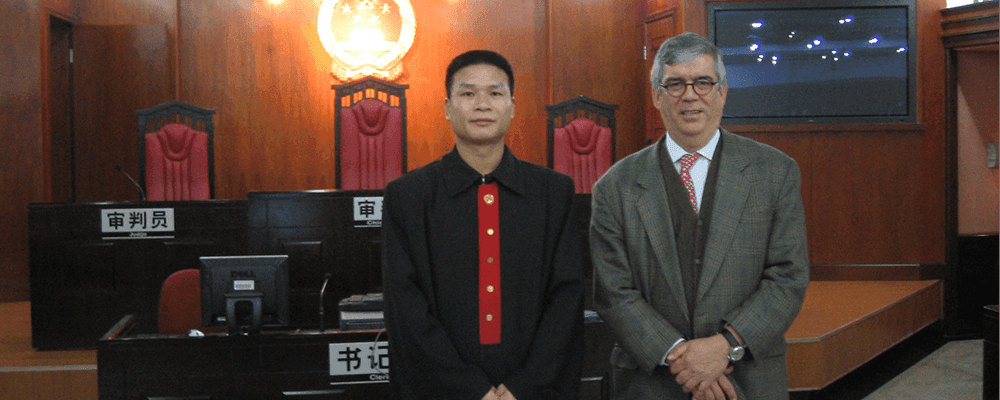
    Kamm with Judge Zhang Jianxiong of the Guangzhou Intermediate People’s Court.

    The next trial involved was held at the Guangzhou Intermediate People’s Court on February 20, 2006. A young man who had split with his girlfriend tried to reclaim a cell phone he had given to her. In the ensuing struggle, the young man, an 18-year-old migrant worker, picked up a knife and stabbed the girl to death. The girl’s family, who were in court, demanded the defendant pay compensation according to a fixed formula, but the migrant worker was from a poor family and had no resources. The judge suspended the trial to decide whether to amend the charge from robbery to murder, which he subsequently did. The young man was sentenced to death.

    The judge agreed to meet with Kamm after the hearing was suspended, and Kamm opined that in the United States, the crime would probably be considered second-degree murder, as it was not premeditated and took place in the heat of the moment. After the defendant was sentenced, Kamm wrote to the judge again expressing his hope to avoid the use of capital punishment. The young man was sentenced to death with two-year reprieve on appeal, and the sentence was subsequently commuted to a fixed term.

    On the same trip, Kamm was allowed to visit the verdicts room of the Chaoyang court. Foreigners can apply to read verdicts there, but permission is rarely granted. In recent years, however, more and more verdicts have become available on Chinese court websites, and they have become an important resource for Dui Hua’s work tracking political and religious crime.

  • Dui Hua History: February 2006 – Attending Trials

    << Read all John Kamm Remembers stories

    This post was originally published as part of Dui Hua’s This Month in History series in its February 2015 Digest.

    Dui Hua has long advocated for greater transparency in China’s judicial system, and in particular has pushed for more trials to be open to foreigners. All Chinese trials except those involving state secrets, juveniles, or certain sensitive issues, like sex crimes, are supposed to be open, but foreign attendance is rare. After two years of applying to attend trials of disturbing public order and endangering state security, Kamm was finally permitted to attend trials in Beijing and Guangzhou in February 2006.

    The first trial was one of a “small-scale mass incident” held in Beijing’s Chaoyang District People’s Court on February 17, 2006. After leaving a bar, the defendant had attacked a man, causing a crowd to gather. The defendant was arrested for “creating a public disturbance,” an offense he had been convicted of once before. At the trial, the defendant pled guilty, and due to his “genuine remorse and willingness to reform,” he was given a relatively light sentence of two years in prison.

    The next trial involved was held at the Guangzhou Intermediate People’s Court on February 20, 2006. A young man who had split with his girlfriend tried to reclaim a cell phone he had given to her. In the ensuing struggle, the young man, an 18-year-old migrant worker, picked up a knife and stabbed the girl to death. The girl’s family, who were in court, demanded the defendant pay compensation according to a fixed formula, but the migrant worker was from a poor family and had no resources. The judge suspended the trial to decide whether to amend the charge from robbery to murder, which he subsequently did. The young man was sentenced to death.

    The judge agreed to meet with Kamm after the hearing was suspended, and Kamm opined that in the United States, the crime would probably be considered second-degree murder, as it was not premeditated and took place in the heat of the moment. After the defendant was sentenced, Kamm wrote to the judge again expressing his hope to avoid the use of capital punishment. The young man was sentenced to death with two-year reprieve on appeal, and the sentence was subsequently commuted to a fixed term.

    On the same trip, Kamm was allowed to visit the verdicts room of the Chaoyang court. Foreigners can apply to read verdicts there, but permission is rarely granted. In recent years, however, more and more verdicts have become available on Chinese court websites, and they have become an important resource for Dui Hua’s work tracking political and religious crime.


    Listen to the Encounters with China podcast.

    Subscribe to receive notifications about new episodes. 

    Read all John Kamm Remembers stories.

  • Behind the Rarity of China's Acquittals

    Image credit: 163.com

    Acquittals are rare in China. The most recent China Law Yearbook, an official compendium, states that for every 10,000 people tried in criminal courts in 2013, just seven were acquitted. Although the number of people found not guilty rose incrementally in 2013, it plummeted from 6,617 to 727 per year between 2000 and 2012. Meanwhile the number of people whose cases were adjudicated trended upward, causing acquittals to account for just 0.07 percent of completed trials in 2013, falling from 1.02 percent in 2000. In comparison to China, Japan and Russia acquit less than 1 percent of defendants, while the Department of Justice reports that since 2001, the United States has convicted more than 90 percent of defendants each year.

    Adjudications and acquittals for defendants in criminal trials, 2000-2013
    YearAdjudicationsAcquittals% Acquitted
    2000648725*66171.02
    2001740000*65970.89
    200270670749350.70
    200374709648350.65
    200476795122920.30
    200584471721620.26
    200689075517130.19
    200793315614170.15
    2008100867713730.14
    200999787212060.12
    201010074199990.10
    201110516388910.08
    201211741337270.06
    201311586098250.07
    * Dui Hua estimates
    Sources: Dui Hua, China Law Yearbook

    China Law Yearbook does not typically disaggregate acquittal data by crime, but in select years it has provided the number of people found not guilty in trials for endangering state security (ESS) and dereliction of military duty. (Dui Hua research indicates that ESS accounts for the vast majority of cases when these two crime categories are combined.) In 2002, only one of the 366 people tried in these types of cases was acquitted, while in 2004, there were five in 336. None of the 730 individuals tried for ESS with records in Dui Hua’s Political Prisoner Database was found not guilty.

    Indirectly addressing the paucity of acquittals as part of judicial reform efforts, the Central Politico-Legal Committee (PLC) announced its decision on January 20, 2015, to remove indictment and conviction rates from the list of performance indicators applied to judicial officials. While this should reduce pressure to convict, the number of not-guilty verdicts will continue to be influenced by efforts to avoid the payment of state compensation, marginalize defense attorneys, restrict judicial independence, and maintain stability, among others.

    Procuratorates

    Chinese prosecutors tend to explain low acquittal rates as an indicator of good work. In 2012, a Beijing prosecutor told Legal Daily that a high level of “judicial precision” allowed good prosecutors to “filter out” cases likely to result in acquittal so that the majority of people standing trial were “guilty.” A Guangdong High People’s Court judge reiterated this sentiment by telling the paper that, “The reduction in acquittals, to a very large extent, is a manifestation of increasing awareness about evidence and law in our investigative and prosecutorial units.”

    For prosecutors, acquittals signify failure to demonstrate guilt, and at least prior to the implementation of the PLC decision, they have a direct negative impact on performance evaluations. In 2005, the Supreme People’s Procuratorate (SPP) issued evaluation measures stating that acquittal rates should not exceed 0.2 percent. Local procuratorates followed suit by putting forth “zero acquittals” as the ultimate goal in their annual work reports. Among various performance indicators, the acquittal rate was the most important, legal scholar Yuan Yicheng told Legal Daily in 2012.

    Rather than risk acquittal, it is an unspoken rule that prosecutors decide to withdraw indictments. The procuratorate may formally drop the charges against a criminal suspect or remand a case for supplementary investigation, both with the approval of the court. If additional investigation is conducted, a suspect may be unable to fully regain their personal freedom during that time. By deciding not to pursue charges, prosecutors not only reduce acquittals but also dodge legal repercussions, since people without not-guilty verdicts face barriers to filing complaints against or winning compensation from government bureaus that wrongfully deprive them of their personal freedom.

    Called a “black-box operation” by Xiaoxiang Morning Post, indictment withdrawals are not covered by the Criminal Procedure Law. Instead they are outlined in judicial interpretations and opinions issued by the SPP and Supreme People’s Court (SPC). After conducting a study on the use of the practice between 2003 and 2005, the SPP reported finding numerous problems, according to legal scholar Gao Tong. These problems included prosecutors opting to withdraw indictments in instances where they feared the defendant would be found not guilty and laxity in carrying out legal oversight. The SPP’s 2005 evaluation measures state that decisions not to pursue charges should occur in less than 0.8 percent of cases, four times the target for acquittals.

    Indictment withdrawals are not uncommon in political cases. In Gansu, Chen Pingfu (陈平福) was placed under residential surveillance in June 2012 for writing dozens of blog posts about the social injustices he experienced as a laid-off teacher, petitioner, and street performer. Chen was formally arrested for inciting subversion in August, but following an outpouring of public support for his release, his indictment was withdrawn on December 14, 2012. Chen’s defense lawyer claimed that he never saw the prosecutors’ application for withdrawal and was not informed of the basis for withdrawing the indictment. In a separate case, the Beijing People’s Procuratorate decided not to pursue charges against Wang Gongquan (王功权) on January 21, 2015. The prominent businessman was a cofounder, along with Xu Zhiyong (许志永), of the New Citizens’ Movement, which advocates for education for migrant children and transparency in the assets of government officials. The withdrawal followed a televised confession Wang made in December 2013 and his release on bail in January 2014.

    Courts

    Prosecutors issue indictments, but it is the courts that hand down convictions. Because convictions are the primary basis upon which their promotions are decided, “prosecutors need to run daily to the courts to beg [judges] not to hand down acquittals,” according to a mid-ranking prosecutor cited in an article published in Contemporary Law Review by legal scholar Zhu Tonghui. Painting a picture of insufficient checks and balances within the judiciary, Zhu notes that judges tend to approve most indictment withdrawals in part because they are aware of the adverse impact acquittals have on prosecutors. Courts and procuratorates tend to work together to rule out the possibility of not-guilty verdicts, according to an article published in the Journal of Hubei Correspondence University in 2014.

    Like prosecutors, judges see convictions as a means to career advancement, but they also see them as tools for maintaining stability. Judges worry that finding defendants not guilty causes an uptick in petitioning because victims’ family members may feel that the judiciary failed to deliver justice and punish the real culprits, the SPC Research Office wrote in 2014. Acquittals in appellate trials are equally undesirable because higher-level courts do not want the public to view lower-court verdicts as “wrongful,” said Yuan Yicheng. Gao Tong says that acquittals often spark fierce public sentiments, where judges are denounced as “corrupt” or “abusing power.”

    Some legal experts believe that courts reconcile unfounded guilty verdicts by issuing light or suspended sentences or exempting defendants from criminal punishment. China Law Yearbook shows that the percentage of convicted persons who were exempt from criminal punishment remained relatively stable around 1.67 percent from 2003 through 2013, however, the number of people receiving suspended sentences increased annually, going from 18.47 percent in 2003 to 30.78 percent in 2013. Critics argue that a portion of these exemptions and suspensions represent people who should have been acquitted.

    Defense lawyers

    Within the Chinese criminal justice system, defendants have little support. In 2012, former All China Lawyers Association president Yu Ning publicly stated that defense lawyers participated in fewer than 30 percent of all criminal cases nationwide with participation as low as 12 percent in some provinces. Defense lawyers face political and professional retaliation for performing their duties, and are often barred from routine activities such as meeting with their clients and obtaining case documents from police, prosecutors, and judges. The challenges facing defense lawyers are widely documented.

    Stability maintenance

    The decision of guilt or innocence is beyond the courts when the PLC intervenes in cases deemed to have far-reaching consequences for social or political stability. In these “stability maintenance” interventions, the PLC encourages coordination between courts, procuratorates, and police. China Youth Daily reported on this type of intervention in January 2014. In this instance, the local PLC in Gushi County, Henan Province, issued a “red-head document” requesting that the county court convict Wu Yunqiang (吴运强) on the grounds that an acquittal would lead to “negative social consequences” and “render local land-administration regulations useless.” The county accused Wu of illegal land use in early 2009 after he sold his kindergarten in Zhongshan, Guangdong Province. Wu was convicted and given a suspended sentence in November 2011, but two years later the Xinyang Intermediate People’s Court overturned the verdict and ordered a retrial due to insufficient evidence. The procuratorate then formally withdrew the indictment in December 2013. However, due in large part to PLC intervention, Wu was re-indicted. In October 2014 he was sentenced to three years in prison for illegal transfer of land-use rights despite the fact that the procuratorate reportedly failed to present new evidence to substantiate his guilt.

    Policies to manipulate verdicts based upon their social and political outcome undermine judicial independence and justice itself. During a speech at the National Prosecutors’ College in August 2014, SPP Procurator-General Cao Jianming acknowledged the prevention of wrongful convictions as the biggest challenge for prosecutors and urged judicial officials to hold on to the presumption of innocence. Coordinated or not, as wrongful convictions continue to be exposed by Chinese news media, it is increasingly difficult to view China’s acquittal rate as simply good work.