Blog

  • Dui Hua Digest, November 2014

    EVENTS

    From October 6 to November 6, 2014, Dui Hua Executive Director John Kamm circled the globe, visiting Hong Kong, Beijing, Geneva, Berne, The Hague, Stockholm, Copenhagen, Bergen, and Oslo. This issue of Digest will cover the China portion of the trip. Information on the European tour will be included in the December Digest.

    Participants of the 4th US-China Juvenile Justice Exchange gather in front of the Supreme People’s Court.

    Occupy Central

    Kamm arrived in Hong Kong 10 days after the Occupy Central protests began. Vast crowds of demonstrators demanding “genuine elections” defied the police and the Hong Kong government in one of the largest and longest lasting civil disobedience movements ever seen in a Chinese city. Kamm discussed the crisis with both supporters and opponents.

    The protests polarized the city, pitting students against the establishment, haves against have-nots, and pro-Beijing constituencies against local, mostly Cantonese people. One thing is certain. However the crisis is resolved—and it won’t be easy—Hong Kong will never be the same. Beijing is perilously close to calling the special administrative region a base of subversion against the mainland with the black hands of foreign countries, led by the United States, fomenting the protests.

    Juvenile Justice, Women in Prison

    In Beijing, Kamm joined Dui Hua Research & Programs Associate Lincey Qi and Judge Leonard Edwards (ret.) and his wife Margaret for Dui Hua’s fourth juvenile justice exchange with China’s Supreme People’s Court (SPC). The Dui Hua team was joined by Ms. Melodee Hanes, former Director of the U.S. Department of Justice Office of Juvenile Justice and Delinquency Prevention and wife of American Ambassador to China Max Baucus.

    Unlike Dui Hua’s previous exchanges, which delved into many subjects, this exchange focused on the sealing of juvenile records. The program consisted of a visit to the Haidian District Juvenile Court and a full-day seminar on juvenile record sealing held in an SPC courtroom.

    On October 15, the Dui Hua team was received in the Jiangsu Room of the Great Hall of the People by Vice Chairman Wang Shengming of the National People’s Congress Committee for Internal and Judicial Affairs. Prior to the meeting, Kamm submitted a question on China’s attitude to the United Nations Rules for the Treatment of Women Prisoners and Non-Custodial Measures for Women Offenders (the Bangkok Rules), which was the focus of an international symposium organized by Dui Hua in February. Wang stated that the adoption of the rules by the UN General Assembly was a matter of “profound significance” and that women should receive different treatment from men, including, under certain circumstances, different treatment regarding non-custodial measures. The vice chairman advised that China was studying the rules and opined that China would enact legislation to implement them.

    Vice Foreign Affairs Minister Li Baodong welcomes Executive Director Kamm to discuss human rights in Beijing. Image credit: MFA China

    For the third time in less than a year, Kamm was received at the Ministry of Foreign Affairs by Vice Minister Li Baodong for a wide-ranging exchange on human rights. Later in the week, the ministry’s Special Representative for Human Rights Liu Hua hosted Kamm to a working lunch where they discussed several sensitive cases.

    In addition to a dinner with American Ambassador Max Baucus, Kamm held private meetings with the ambassadors of Australia, Denmark, Norway, Sweden, and Switzerland and with the French charge d’affaires.

    PRISONER CASES

    Early Releases

    Falun Gong leader Wang Zhiwen (王治文) was released one year early on October 18, 2014, after serving 15 years in prison for “cult” and state secrets charges. Wang was accused of using secret documents to “organize and incite” hundreds of Falun Gong practitioners to “besiege” state organs in Beijing and Tianjin and to encourage more than ten thousand practitioners to protest Zhongnanhai on April 25, 1999. An article published in a state-run magazine condemning Falun Gong as an “evil cult” triggered the mass protests. Wang was sentenced along side Li Chang (李昌), Ji Liewu (纪烈武), and Yao Jie (姚洁), who were sentenced to 7-18 years’ imprisonment. All four defendants were Chinese Communist Party (CCP) members holding key positions in government or business.

    Thousands of members of the Falun Gong religious group sit in silent protest along Chang’an Avenue in 1999. Image credit: AP

    The harsh sentences led to an international outcry, and Dui Hua named Wang on 14 prisoner lists submitted to Chinese and foreign governments between 2001 and October 2014. Li Chang is the only one of the four to remain in prison. He is scheduled for release from Beijing’s Qianjin Prison in October 2017 at the age of 78.

    Immediately after Wang’s release from prison, he was reportedly held in legal education, a form of arbitrary detention commonly used to restrict the freedom of petitioners and Falun Gong practitioners, for about a week. Wang is now set to serve his four-year sentence of deprivation of political rights.

    Tibetan prisoner Sangye Kyab (桑吉克) was released on August 3, 2014, after receiving a nine-month sentence reduction in April. He was sentenced to three and a half years in prison for inciting splittism on April 27, 2012. The publication of Sangye Kyab’s verdict by a Gansu court was a rare occurrence, as officials sources do not typically make public early releases of ethnic minorities convicted of endangering state security crimes. Sangye Kyab was detained in November 2011. Case specifics were not disclosed but may relate to the self-immolation protests that began making headlines in Tibetan regions in that year.

    Subversion

    Earlier this year Dui Hua inquired with the Chinese government about several individuals convicted of subversion. In November, government sources confirmed that Mao Yan (毛雁) was released on October 15, 2014. Based on court documents stating that Mao was detained in Jiangsu in 2011 and Chinese sources stating that he was sentenced to six years’ imprisonment, Dui Hua believes Mao was released early.

    The particulars of Mao’s case are uncertain but Chinese subversion cases typically involve the establishment of political parties to rival the CCP. Sentences are often lengthy, although Dui Hua has yet to document an instance in which a defendant received the maximum penalty of life imprisonment. Dui Hua knows of nine political organizers serving subversion sentences of 10 years or more who have yet to receive any sentence reductions (see table).

    Individuals Sentenced to 10+ Years for Subversion
    NamePartyProvinceSentenceRelease Date
    Ren Ziyuan (任自元)Mainland Democratic Front
    (大陆民主阵线)
    Shandong10 yearsMay 2015
    Yang Tongyan (杨同彦)China Democracy Party, Jiangsu Branch
    (中国民主党)
    Jiangsu12 yearsDecember 2017
    Guo Quan (郭泉)New People’s Party
    (新民党)
    Jiangsu10 yearsNovember 2018
    Li Nanhang (李南航)China Democratic Republican Party
    (中国民主共和党)
    Yunnan10 yearsApril 2020
    Li Tie (李铁)Chinese Social Democracy Party
    (中国社会民主党)
    Hubei10 yearsDecember 2020
    Liu Xingrong (刘兴荣)China Workers Party
    (中国工人党)
    Hubei11 yearsSeptember 2016
    Ma Houzhi (马厚芝),
    Wei Jinxiang (蔚晋湘)
    Mao Zedong Thought Communist Party of China
    (中国毛泽东主义共产党)
    Chongqing10 yearsOctober 2019
    Xie Changfa (谢长发)China Democracy Party
    (中国民主党)
    Hunan13 yearsJune 2021

    DUI HUA IN THE NEWS

    In a press statement issued on October 2014, Dui Hua states that an estimated 2,400 people were executed in China in 2013, down by 20 percent from the previous year. More than 20 news outlets around the world, including The New York Times, Newsweek, and The Telegraph, reported Dui Hua’s estimate in the days following the release.

    A week later, a proposal to remove the death penalty from nine crimes reached the National People’s Congress for consideration. News agencies including Reuters and Associated Press cited Dui Hua’s estimate in their coverage of the story.

    PUBLICATIONS ROUND-UP

    Featured Article: China Executed 2,400 People in 2013, Dui Hua (October 2014)

    Dui Hua estimates that China executed approximately 2,400 people in 2013 and will execute roughly the same number of people in 2014, based on data points published in Southern Weekly and information provided to Dui Hua by a judicial official earlier this year. In 2013, 39 percent of all death penalty cases reviewed by the Supreme People’s Court were sent back to provincial courts for more evidence and fewer than 10 percent of verdicts were overturned.

    Torture in Harbin Drug Cases Met with Little Punishment (October 2)
    Dui Hua, China’s Supreme Court Hold 4th Juvenile Justice Exchange (October 23)
    Last month’s Digest: October 2014

    THIS MONTH IN HISTORY

    To celebrate 15 years of human rights advocacy, we’ll be highlighting a key moment from this month in Dui Hua history.
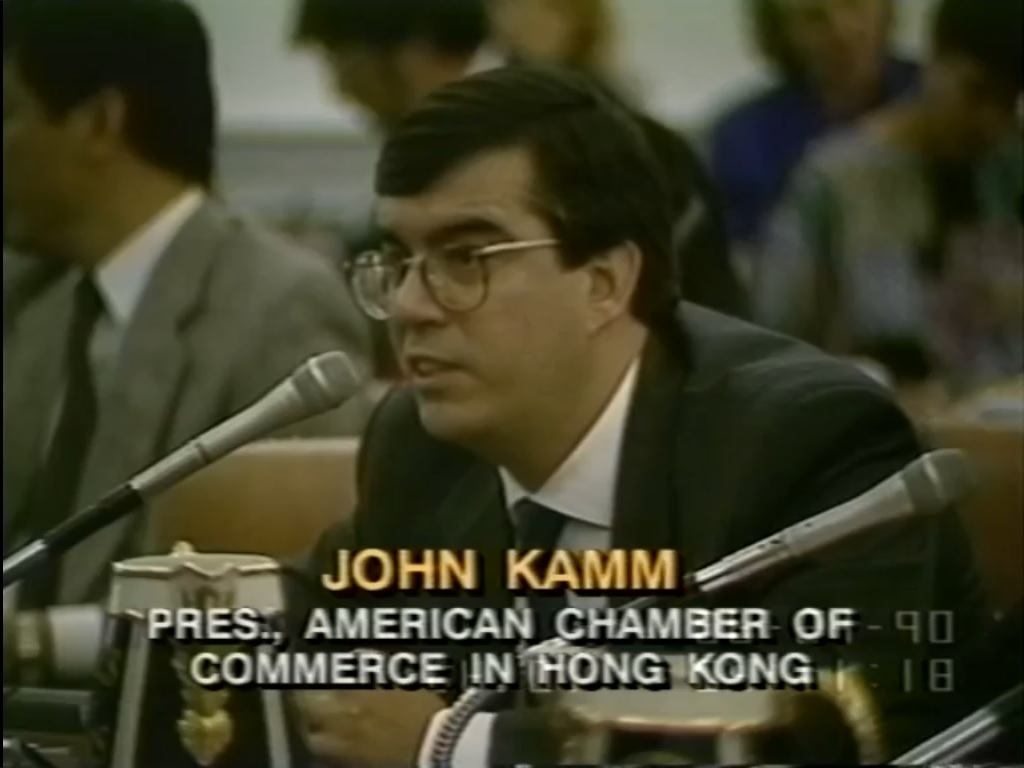
    John Kamm testifying before the House Ways and Means Subcommittee on Trade on June 19, 1990. Image credit: C-Span

    Kamm testified before House Committee. Image credit: C-SPAN

    On November 2011, Executive Director Kamm testified before the Committee on Foreign Affairs of the U.S. House of Representatives as part of the hearing on the annual report of the Congressional-Executive Commission on China. Titled “Separate and Unequal: State Security Detainees in China,” the testimony highlights how detained individuals who are viewed as a threat to one-party rule receive harsher punishments than other detainees in what Kamm called a dual-track justice system.

    At particular risk of receiving discriminatory treatment are people accused of crimes of endangering state security (ESS). It is commonplace for their families not to be notified of the reasons for their detention, for their cases to be classified as state secrets, and for their trials to be closed. Those convicted of ESS are designated “important prisoners” and held under closer watch. Sentence reduction and parole are stifled. The rate of clemency for ESS prisoners is far lower than that of the general population, as discrimination pervades every step of the lengthy process. Once ESS prisoners are released they are subject to a supplemental sentence of one to five years’ deprivation of political rights (DPR). People serving DPR cannot publish their writing or give interviews. They cannot vote, stand for office, or work at a state-owned company. Many are subjected to house arrest and enforced disappearance.

    Amendments to the Criminal Procedure Law, drafted prior to Kamm’s testimony and effective January 1, 2013, placed even greater restrictions on ESS suspects. Lawyers now have to apply for permission to hold meetings with these clients and ESS suspects can be disappeared through the use of “non-residential residential surveillance” (NRRS). Under this form of so-called residential surveillance, suspects can be detained in a place that is not their residence or a prison or detention center for up to six months without their families being notified of their whereabouts.

    Although legal, the practice does not appear to be widely used. Dui Hua is aware of only two cases of NRRS, both of which occurred in 2013. Yang Guixiang (杨桂香) was placed under NRRS for petitioning for compensation for a land development project, while Zhu Chengzhi (朱承志) was held for raising questions about the circumstances of the death of labor activist Li Wangyang (李旺阳).

    Shortly after Kamm gave his testimony, the United Nations also issued a statement criticizing the use of NRRS. While implementation difficulties like finding appropriate sites may have made NRRS impractical, international criticism stemming from the work of Dui Hua and other organizations also served to disincentivize the its use. As part of our mission to advocate for the rights of at-risk detainees, Dui Hua continues to raise awareness of human rights abuses through publications and outreach.

  • Dui Hua, China’s Supreme Court Hold 4th Juvenile Justice Exchange

    SAN FRANCISCO (October 24, 2014) — The Dui Hua Foundation held its fourth US-China juvenile justice exchange with the Supreme People’s Court (SPC) in Beijing on October 13–14, 2014. Records sealing was the focus of the exchange.


    Participants of the 4th US-China Juvenile Justice Exchange.

    Judge Leonard Edwards (retired) of the Santa Clara Juvenile Court was the principal participant on the US side, which was led by Dui Hua Executive Director John Kamm. Also participating was Ms. Melodee Hanes, former acting director of the U.S. Department of Justice Office of Juvenile Justice and Delinquency Prevention (OJJDP). Ms. Hanes is the wife of the American Ambassador to China, His Excellency Max Baucus.

    The SPC Research Department Office of Juvenile Courts hosted the US team. The program consisted of a visit to the Haidian District Juvenile Court on October 13 and a full-day seminar in an SPC courtroom the following day. More than 40 judges attended the seminar from juvenile courts in 12 Chinese provinces and municipalities.

    Judge Edwards, recognized as a leading expert in the field, reviewed the current state of juvenile record sealing in the United States and explained the advantages of automatic sealing in most juvenile cases. Ms. Hanes introduced the work of the OJJDP. Judge Jiang Ming, director of the Office of Juvenile Courts, addressed progress made in China since record sealing was introduced in the amended Criminal Procedure Law, effective January 1, 2013.

    On October 14, Judge Hu Yunteng, member of the SPC Adjudication Committee, hosted a lunch for the US team. Judge Hu has led several Chinese delegations to sessions of the US-China Human Rights Dialogue. On October 15, National People’s Congress Internal and Judicial Committee Vice Chairman Wang Shengming welcomed the team for a meeting on protecting juvenile rights at the Great Hall of the People.

    Executive Director Kamm lauded the exchange as an outstanding example of bilateral cooperation in the field of human rights. Judge Edwards said, “The program showed that American and Chinese judges share the same goals. We need to focus on making the juvenile court an effective institution to rehabilitate young lawbreakers. Both countries are committed to making it possible for a juvenile to have a fresh start as an adult and to insure that juvenile arrests do not make it difficult to gain employment or educational opportunities.”

    Prior to the seminar, Foreign Affairs Vice Minister Li Baodong received Executive Director Kamm.

  • China Executed 2,400 People in 2013, Dui Hua

    SAN FRANCISCO (October 20, 2014) — The Dui Hua Foundation estimates that China executed approximately 2,400 people in 2013 and will execute roughly the same number of people in 2014. Annual declines in executions recorded in recent years are likely to be offset in 2014 by the use of capital punishment in anti-terrorism campaigns in Xinjiang and the anti-corruption campaign nationwide.

    Dui Hua bases its 2013 estimate on data points published in Southern Weekly that are consistent with information provided to Dui Hua by a judicial official earlier this year.

    The mainland magazine reported that a former senior judge of the Supreme People’s Court (SPC) stated at a seminar in July that the number of executions had reached one-tenth of the highest number recorded since 1979. In 1983—the first year of the Strike Hard campaign during which the power to approve capital punishment was given to provincial high courts—24,000 people were sentenced to death, according to a report by southcn.com citing The Communist Party of China: Forty Years in Power (Zhongguo gongchandang zhizheng sishi nian). The book called the first year of the Strike Hard campaign the largest centralized attack since the campaign to suppress counterrevolutionaries in 1950.

    A judicial official with access to the number of executions carried out each year, which is a state secret, told Dui Hua Executive Director John Kamm in early 2014 that the number of executions dropped by around 20 percent in 2013 compared to the previous year. Dui Hua previously estimated that China executed 3,000 people in 2012.

    China currently executes more people every year than the rest of the world combined, but it has executed far fewer people since the power of final review of death sentences was returned to the SPC in 2007. Since then, the number of executions nationwide may have dropped by more than a third with declines of nearly 50 percent in some locales, Southern Weeklyreported citing an expert familiar with the court system. Other experts have said that the national figure dropped by 50 percent four years after 2007.

    In 2013, 39 percent of all death penalty cases reviewed by the SPC were sent back to provincial high courts for additional evidence, Southern Weekly reported citing an SPC official speaking at a legal seminar. Domestic violence survivor Li Yan(李彦) was among the defendants whose cases lacked sufficient evidence; the verdict against her was ultimately overturned.

    The SPC currently overturns fewer than 10 percent of death penalty verdicts, a former SPC senior judge told Southern Weekly. In the years immediately after 2007, the rate was about 15 percent. (This percentage varies considerably by province.)

    Between July 2, 2013, and September 30, 2014, the SPC published 152 death penalty review decisions online, Southern Weekly reported in a separate article. The 152 decisions involved 129 murder cases and 17 drug cases. Only five verdicts were fully or partially overturned, and defense lawyers participated in just 13 percent of death penalty reviews. Amendments to Article 240 of the Criminal Procedure Law, effective January 1, 2013, state that if the defense attorney requests, the SPC shall listen to the opinion of the defense attorney during its review.

    Provinces with the most review decisions were Yunnan (14), Xinjiang (13), Zhejiang (11), Guangdong (8), and Henan (8). The average time for reviewing a death penalty verdict was six months, with two years as the longest period.

  • Dui Hua History: October 2008 – The First Juvenile Justice Exchange

    << Read all John Kamm Remembers stories

    This post was originally published as part of Dui Hua’s This Month in History series in its October 2014 Digest.

    From October 12–23, 2008, Dui Hua held its first juvenile justice exchange with the SPC, hosting a delegation of Chinese judges to study juvenile justice in the United States. Juvenile justice reform became a priority for the Chinese government as unprecedented economic growth and mass migration from rural to urban areas led to a sharp rise in juvenile criminal cases. Delinquency was particularly prevalent among children of migrant workers who were either left behind or taken to the cities where they were denied access to schooling and other social benefits.

    Chinese reform efforts included the creation of an independent juvenile justice system with more than 2,000 juvenile tribunals. The SPC also embarked on study tours around the world to learn about approaches to addressing juvenile delinquency that stress education and rehabilitation.

    Senior Judge Hu Weixin, deputy director of the SPC Research Office, led the delegation of judges hosted by Dui Hua in 2008. In total there were six judges from the SPC, the Politico-Legal Institute under the Central Committee of the Communist Party of China, the Beijing High People’s Court, and the Qingdao Intermediate People’s Court. They visited juvenile courts, detention centers, and other rehabilitative facilities in Cook County, Illinois; Washington, DC; and San Francisco, California. The delegation met with experts and practitioners and spoke directly with juveniles standing trial and housed in correctional facilities. One of the highlights of the exchange was a meeting with US Supreme Court Associate Justice Anthony Kennedy, who wrote the majority opinion in the 2005 landmark decision to abolish the death penalty for juveniles.

    Following this successful program, Dui Hua organized juvenile justice exchanges with the SPC in 2010 and 2012 and will host its fourth exchange in October 2014. In 2010, China invited Dui Hua to select a US delegation to tour juvenile facilities in Beijing and Qingdao. Two years later Chinese judges and experts spent a week observing juvenile justice systems in the San Francisco Bay Area.

    These exchanges contributed to concrete changes in China’s juvenile justice system. Members of these delegations advised Chinese lawmakers on the addition of a section on juvenile criminal cases to the Criminal Procedure Law. Effective in 2013, these provisions prioritized diversionary measures, records sealing, behavioral and psychological assessments, protections during interrogation and trial, and non-custodial punishment.

    These exchanges embody Dui Hua’s approach of promoting detainees’ rights by facilitating mutually respectful dialogue. While advocating for political and religious prisoners, Dui Hua has continued to plan productive exchanges on common-ground issues such as juvenile justice and women in prison, building strong times with China and expanding the number of at-risk detainees we serve.


    Listen to the Encounters with China podcast.

    Subscribe to receive notifications about new episodes. 

    Read all John Kamm Remembers stories.

  • Dui Hua Digest, October 2014

    EVENTS

    Dui Hua celebrates its 15th year. View more photos.

    Receptions were held in San Francisco and Washington DC to celebrate the 15th anniversary of Dui Hua’s establishment in 1999. More than 100 people gathered in both cities to mark the occasion. Guests included a number of California judges and US government officials, including several who have worked closely with Dui Hua in its mission to promote the rights of at-risk detainees.

    The San Francisco event took place on September 10 and was hosted by Director Magdalen Yum at the historic Presidio Golf Course Club House. Ten days later the Washington DC Friends of Dui Hua reception was held at the home Director Linda Ziglar. Executive Director John Kamm spoke at both events and his remarks were followed by lively Q&A sessions.

    Director Michael McCune joined Kamm at the San Francisco event and encouraged attendees to sign up for Dui Hua’s recurring donation program. Director Bill Simon attended the Washington DC event and recounted the day in January 1976 when he first met John Kamm as they made their way to Shanghai to attend the China National Native Products and Animal By-Products Corporation’s Feather and Down Mini-Fair.

    In his remarks, Kamm reviewed 15 years of challenge and achievement. He recalled that Dui Hua was set up at a time of crisis in US-China relations, namely NATO’s bombing of the Chinese Embassy in Belgrade. We navigated that crisis successfully, as we have navigated several crises since. Our perseverance over the years has allowed us to ask about thousands of political prisoners and contribute to the early release and better treatment of hundreds.

    We have helped reform China’s juvenile justice system with thousands of juveniles being spared imprisonment since January 1, 2013. At the San Francisco event, awards were given to four attendees who have made contributions to Dui Hua’s juvenile justice exchanges: Judge Lillian Sing and Judge Julie Tang of the San Francisco Supreme Court; Patricia Lee, Managing Attorney at the San Francisco Office of the Public Defender; and Sonia Ng, a well-known interpreter in US-China legal exchanges.

    Our international symposium on women in prison in February 2014 was a signal success. The symposium’s focus on domestic violence as a cause and consequence of women’s imprisonment contributed to the Supreme People’s Court (SPC) overturning the death sentence passed on Li Yan (李彦), a Sichuan woman convicted of killing her abusive husband. “Though Li Yan is not a political prisoner, Dui Hua’s efforts on her behalf rank among the foundation’s proudest moments,” Kamm said.

    Kamm arrived in Washington DC four days prior to the reception at Director Ziglar’s home. He met with Deputy Assistant Secretary of State for East Asia and the Pacific Susan Thornton, as well as the senior US diplomat responsible for the Bureau of Democracy, Human Rights and Labor, Assistant Secretary Tom Malinowski. He also huddled with the directors and staff of the Congressional-Executive Commission on China. Kamm briefed his interlocutors on the results of his visit to Beijing in August and plans for his next trip to Beijing in mid-October. The latter visit will include Dui Hua’s fourth juvenile justice exchange. Judge Leonard Edwards (ret.), one of America’s foremost experts in the field, will make a presentation on the sealing of juvenile records and visit Haidian District Court, a leader in juvenile justice reform in China.

    PRISONER CASES

    Since it entered the Criminal Law in 1997, and particularly after large-scale protests by Falun Gong supporters in 1999, Article 300, which deals with “cult” organizing and activities, has been used to imprison Falun Gong practitioners, Almighty God members, and adherents of other qigong groups and Protestant and Buddhist sects. The criminal provision is also broadly applied to people who publish or distribute “cult” publications. According to a joint interpretation issued by the SPC and Supreme People’s Procuratorate in June 2001, defendants should only be convicted when they print or disseminate more than 300 copies of leaflets, pictures, posters or newspapers or more than 100 copies of books or CDs. Dui Hua research shows that courts do not always abide by these standards.

    On March 15, 2008, middle school teacher Wei Rongxin (韦荣新) was sentenced to three years in prison in Guigang, Guangxi Province. Although not a Falun Gong practitioner, Wei created two websites where he received advertising revenue from overseas entities to put links to Falun Gong-affiliated websites and upload the Falun Gong publication Nine Commentaries on the Communist Party. According to the website of the Guangxi procuratorate, Nine Commentariesincites the overthrow of the Communist Party and given the significant threat its content poses to society, the number of views or downloads Wei’s websites received need not be quantified to determine his conviction. The prosecutor said his act constituted a crime as long as he knew he was disseminating Falun Gong information.

    Democracy activists and dissidents sympathetic to Falun Gong are particularly susceptible to punishment. Chi Jianwei (池建伟) was sentenced to three years’ imprisonment under Article 300 on March 27, 2007. A labor activist and member of Zhejiang’s China Democracy Party, Chi was found to have disseminated 150 copies of CDs, but only 57 of them, well under the minimum standard of 100, were Falun Gong related. The remaining CDs pertained to history, literature, and June Fourth.

    Shenzhen activist Ren Ming (任铭) only burned about a dozen DVDs but was also sentenced to three years in prison. The DVDs included a documentary produced in Taiwan that suggested, contrary to popular belief and official accounts, that the Communist Party put more effort into killing Kuomintang soldiers than defending national soil during the War of Resistance against Japan (1937–1945). The DVD also included copies of Nine Commentaries and another banned book about former Communist Party General Secretary Jiang Zemin. Ren completed his full three-year sentence in September 2012.

    In a more recent and arguably contentious case, New Citizens’ Movement activists Liu Ping (刘萍) and Wei Zhongping(魏忠平) were sentenced to six years and six months in prison. Initially charged with inciting subversion, they were ultimately indicted for cult offenses, holding illegal assemblies, and gathering a crowd to disrupt public order. Liu, a Christian, was accused of making an online plea for Chinese citizens to exercise their right to observe public trials by attending the hearing against a Falun Gong practitioner in Shanghai’s Qingpu District People’s Court. Praising the defense lawyers for their courage, Liu wrote that China was the only country to have banned Falun Gong. The criminal evidence against Wei was a video of an interview published by foreign media in 2013 wherein Wei sends New Year’s greetings to Falun Gong founder Li Hongzhi.

    DUI HUA IN THE NEWS

    The California International Law Journal of the California State Bar published “Spotlight on John Kamm—Business and Human Rights Do Mix” on September 30. In the interview, Kamm discusses US-China relations and the role business leaders can play in promoting human rights.

    For links to more selected coverage, please visit our website at In the Media.

    PUBLICATIONS ROUND-UP

    Featured Article: Ministry: China has 116 Custody and Education Centers (September 4)

    Critics of custody and education (C&E) have successfully used requests for “open government information” to get details about the form of arbitrary detention used to lock up Chinese sex workers and their clients. Among them, Beijing lawyer Zhao Yunheng recently received a reply from the Ministry of Public Security making public the number C&E centers, but raising questions about whether C&E is on the decline.

    Last month’s Digest: September 2014

    THIS MONTH IN HISTORY

    To celebrate 15 years of human rights advocacy, we’ll be highlighting a key moment from this month in Dui Hua history.

    From October 12–23, 2008, Dui Hua held its first juvenile justice exchange with the SPC, hosting a delegation of Chinese judges to study juvenile justice in the United States. Juvenile justice reform became a priority for the Chinese government as unprecedented economic growth and mass migration from rural to urban areas led to a sharp rise in juvenile criminal cases. Delinquency was particularly prevalent among children of migrant workers who were either left behind or taken to the cities where they were denied access to schooling and other social benefits.

    US Supreme Court Associate Justice Anthony Kennedy (fifth right) meets with Chinese delegates during Dui Hua’s 2008 juvenile justice exchange.

    Chinese reform efforts included the creation of an independent juvenile justice system with more than 2,000 juvenile tribunals. The SPC also embarked on study tours around the world to learn about approaches to addressing juvenile delinquency that stress education and rehabilitation.

    Senior Judge Hu Weixin, deputy director of the SPC Research Office, led the delegation of judges hosted by Dui Hua in 2008. In total there were six judges from the SPC, the Politico-Legal Institute under the Central Committee of the Communist Party of China, the Beijing High People’s Court, and the Qingdao Intermediate People’s Court. They visited juvenile courts, detention centers, and other rehabilitative facilities in Cook County, Illinois; Washington, DC; and San Francisco, California. The delegation met with experts and practitioners and spoke directly with juveniles standing trial and housed in correctional facilities. One of the highlights of the exchange was a meeting with US Supreme Court Associate Justice Anthony Kennedy, who wrote the majority opinion in the 2005 landmark decision to abolish the death penalty for juveniles.

    Following this successful program, Dui Hua organized juvenile justice exchanges with the SPC in 2010 and 2012 and will host its fourth exchange in October 2014. In 2010, China invited Dui Hua to select a US delegation to tour juvenile facilities in Beijing and Qingdao. Two years later Chinese judges and experts spent a week observing juvenile justice systems in the San Francisco Bay Area.

    These exchanges contributed to concrete changes in China’s juvenile justice system. Members of these delegations advised Chinese lawmakers on the addition of a section on juvenile criminal cases to the Criminal Procedure Law. Effective in 2013, these provisions prioritized diversionary measures, records sealing, behavioral and psychological assessments, protections during interrogation and trial, and non-custodial punishment.

    These exchanges embody Dui Hua’s approach of promoting detainees’ rights by facilitating mutually respectful dialogue. While advocating for political and religious prisoners, Dui Hua has continued to plan productive exchanges on common-ground issues such as juvenile justice and women in prison, building strong times with China and expanding the number of at-risk detainees we serve.

  • Torture in Harbin Drug Cases Met with Little Punishment

    Seven defendants stand trial for torture at the appellate court, Harbin Intermediate People’s Court, in August. Image credit: dbw.cn

    A recent court case in the northeastern city of Harbin is shining new light on some of the extremes to which police investigators occassionally go to get criminal suspects to confess in China. It also raises new questions about whether the Chinese criminal justice system punishes the perpetrators of torture severely enough to act as a deterrent.

    Last May, a court in Harbin convicted seven defendants of coercing confessions through torture in connection with seven separate incidents, all committed in March 2013. The court imposed sentences ranging from a suspended one-year prison sentence to two-and-a-half years in prison. At least one of the defendants appealed the verdict, landing the case at the Harbin Intermediate People’s Court for an appellate hearing at the end of August.

    The court found evidence of what appeared to be routine use of electric shock and other physical torture in the investigation of drug cases by officers at the Daowai District Branch Public Security Bureau. One suspect recalled being handcuffed to a metal chair and shocked with electric batons. Mustard oil was poured up his nose. When he refused to tell police where he got his drugs, they took off his shoe and applied wires to one of his toes. The wires were then connected to an old-fashioned military crank telephone, which sent a current of 120 volts through his body as they cranked it, causing his entire body to convulse.

    The same technique was used during another drug investigation that same month. Again, a drug suspect surnamed Liang was handcuffed to a chair. When he began to shout, a towel was stuffed in his mouth. One interrogator began beating Liang in the face with the sole of a shoe. During this ordeal, Liang lost consciousness. By the time they realized that something was wrong, he was dead.

    One of the unusual things about this case is that only three of the defendants were police officers. Most of the defendants, including the ones responsible for carrying out most of the actual physical torture, were what is commonly known as “special informants” (teqing, or teshu qingbao renyuan). Police investigators often rely on these informants to provide information or leads that can help them crack cases. In this instance, however, it seems that police were also delegating some of their authority to carry out interrogations—or at least using special informants to do some of their dirty work for them.

    Another thing that has attracted attention about the case is the relatively light sentences, especially considering that one victim of torture apparently died during interrogation. As legal scholar Wang Gangqiao pointed out in an opinion piece published in The Beijing News on September 23, the maximum penalty for coercing confessions through torture is three years’ imprisonment, but torture resulting in serious injury or death should be punished according to the more serious offenses of intentional injury or homicide. He questions the court’s failure to hand down more serious penalties in this case, even hinting at the possibility of collusion between law-enforcement authorities to prevent torturers from being held fully accountable.

    According to reports, however, local prosecutors lacked evidence to bring homicide charges because police cremated the body of the deceased as the incident was under investigation. As a consequence, a deputy chief at the Daowai Public Security Bureau who ordered the cremation has since been put on trial for abuse of power.

    Use of torture to extract confessions is a problem in many countries, especially in situations where investigators lack the skill or experience to build a case through other means. But acceptance of torture can also become part of an institutional mindset, especially when there are expectations of impunity. In this case, the highly politicized nature of China’s “People’s War on Drugs” and the criminal justice system’s long-standing reliance on confession to secure convictions appear to have been contributing factors.

    *
    Don’t Let Harbin Torture Trial Serve as Negative Model

    Wang Gangqiao
    The Beijing News, 23 September 2014

    Recently, the trial of Wu Yan and others charged with extracting confessions through torture entered the second-instance appellate phase in Harbin. Earlier, the court of first instance found evidence of seven instances of torture, all occurring in March 2013. Official reporting on the case said “the methods used to extract confessions were extremely vile.” [One defendant,] Wu Yan, was sentenced to two-and-a-half years’ imprisonment. [Another,] Zhao Xiaoguang, received a one-year sentence, suspended for a year. All of the other defendants in the first-instance trial received sentences of between one and two years in prison.

    A maximum sentence of two-and-a-half years doesn’t seem all that severe. Looking at the statute, the Criminal Law provision on coercing confessions through torture states: “Any law-enforcement officer who extorts confession from a criminal suspect or defendant by torture or extorts testimony from a witness by violence shall be sentenced to fixed-term imprisonment of not more than three years or penal servitude. If he causes injury, disability, or death [to the victim], he shall be convicted and given a heavier punishment based on the provisions covering the crimes of intentional injury or intentional homicide.” According to the Xinhua News Agency’s report on the case yesterday, on March 24 of last year, Wu Yan accused Chen Xiaowei, Pan Yongquan, and Li Yingbin of using an old-fashioned military crank telephone to electrocute a [suspect] surnamed Liang; Cheng Xiaowei was in the process of beating Liang in the face with the sole of a shoe when Liang suddenly died.

    This is probably the reason why the Harbin torture case has been described as involving “extremely vile” methods. The law says that when torture leads to death, it should be “given a heavier punishment based on the provisions covering the crimes of intentional injury or intentional homicide.” Looking at the less serious of these two offenses, intentional injury resulting in death, the penalty should be “fixed-term imprisonment of 10 years or more, life imprisonment, or the death penalty.” This is worlds apart from the sentences handed down in the present case. The reason for this case being tried in second instance is apparently because the defendants appealed. It’s unclear whether the prosecution also appealed the verdict acording to the provisions of the Criminal Law on the grounds that the sentences were abnormally light. It’s really nonsense to think that a one- or two-year sentence—especially a suspended sentence—could help to contain the coercion of confessions through torture, a practice which previous prohibitions have failed to stop.

    It’s even more noteworthy that, of the defendants in this case, only Wu Yan, Zhang Siliang, and Zhao Xiaoguang were police officers. Defendants Cheng Xiaowei, Pan Yongquan, Li Chunlong, and Li Yingbin, who also took part in torturing suspects, were not police at all, but rather, “special informants.”

    Investigative power is a power specially designated by the state that only specialized units and personnel are authorized to exercise. The interrogation of criminal suspects is the most important part of the investigative process, an activity that is to be carried out only by qualified investigative personnel. “Special informants,” also known as xianren, are individuals whose status is defined by their ability to provide needed information for use by investigators during the investigative process and help them to solve cases. According to the law, “special informants” are still ordinary citizens. They play an auxilliary role in investigations and come under the responsibility of investigative units, but they do not have any investigative power themselves.

    Everyone understands the evils of coercing confessions through torture. Police are law-enforcement personnel who have a personal responsibility to maintain law and discipline and safeguard human rights. So when some law-enforcers instead knowingly violate the law and treat torture as an ordinary investigative tool, they ought to be severely punished in accordance with the law. In this case, however, if the prosecution never appealed the verdict, then under the principle of “no heavier penalty on appeal,” the court of second instance cannot increase the penalties given to the defendants in the first-instance verdict. This perhaps demonstrates that, in some locations, police, prosecutors, and courts have come to a kind of “consensus” about lenient punishment for the use of torture to extract confessions.

    “Incidents” in the criminal process like this Harbin torture case are a portent of things to come. Behind this incident are the sprouts of many other incidents. For example, the extreme chaos surrounding the system of “special informants,” the extremely casual way that investigative powers are delegated, etc. Open violations like this involve “sprouts of accidents” that should have been extremely obvious to see. While we are pursuing criminal responsibility for coercion of confessions through torture, those units and officials who are responsible for oversight should undertake some serious reflection: As the “safety officials” of the criminal process, what have you done to contain and eradicate this kind of mishap? Oversight requires the establishment of rules and measures that prevent law enforcers from doing things they’re not supposed to do. These are preventative measures for which we can no longer wait!

  • Surge in Foreign Prisoners in Beijing

    Foreign prisoners marching in Shanghai Qingpu Prison. Image credit: Phoenix Weekly

    The paucity of statistics on China’s prisoner population sometimes results in observers concluding that recent events represent new trends. For example, a recent spate of arrests and convictions of foreign nationals—e.g., Canadians Kevin and Julia Garratt on suspicion of espionage, Briton Peter Humphrey and Chinese-American Yu Yinzheng for allegedly trafficking in private information, and naturalized American citizen Vincent Wu for allegedly running a criminal enterprise (China does not recognize Wu’s American citizenship)—has raised concerns that foreign firms and businesspeople operating in China are being treated more harshly. Official statistics uncovered by Dui Hua indicate that growth in China’s number of foreign prisoners may be an ongoing trend, but that historically, the most common reason for incarceration probably relates to a different business, trafficking in drugs.

    Annual volumes of Beijing Prison Yearbook show that the number of foreign citizens (not including Taiwanese or Hong Kong and Macau “compatriots”) imprisoned in the capital nearly quintupled between 2006 and 2010, reaching 232 prisoners, or 1.8 percent of the prisoner population in China’s second largest city. The number of countries with citizens incarcerated in Beijing rose from 22 to 53. The number of Taiwan, Hong Kong, and Macau residents incarcerated in Beijing rose 170 percent to 68 prisoners.

    Breakdown of Foreign Nationals in Beijing Prisons by Nationality, 2006‒2010
    Region Country20062010RegionCountry20062010
    EuropeFrance13Latin AmericaBrazil3
    Lithuania1Columbia33
    Portugal1Peru14
    Russia11Uruguay1
    Sweden1AfricaBenin1
    UK1Cameroon9
    Middle East &
    Central Asia
    Afghanistan2Congo2
    Iran18Egypt1
    Kyrgyzstan2Gambia1
    South AsiaBangladesh1Ghana19
    CambodiaaGuinea5
    India23Guinea-Bissau2
    Indonesia3Ivory Coast2
    Malaysia33Kenya4
    Pakistan224Lesotho11
    Philippines14Liberia13
    Singapore24Mali1
    Sri Lanka1Malawi2
    Thailand9Morocco1
    Vietnam1Namibia1
    East AsiaJapan33Nigeria447
    Mongolia1South Africa2
    N. Korea1Sierra Leone1
    S. Korea137Tanzania5
    OceaniaAustralia5Togo1
    Nauru12Uganda11
    N. AmericaCanada14Zambia1
    US35Zimbabwe10
    Total49232

    Growth in the number of foreign prisoners took place virtually across the board. The combined number of prisoners from North America, Europe, and Australia tripled. However, the biggest growth came from African and South Asian countries, specifically Nigeria and Pakistan. The number of African prisoners rose from just nine in 2006 to 121 in 2010 to account for more than half of Beijing’s foreign prisoners. Outside Beijing, Dongguan Prison is known to be holding a large number of African prisoners who reside in Guangdong Province, home to tens of thousands of African migrant workers, business people, and those seeking political asylum in Hong Kong.

    The reasons for the sharp rise in foreign prisoners in Beijing likely vary by country. Drug trafficking is probably a primary reason for the uptick in Pakistani and Nigerian prisoners, if not for prisoners of other countries. According to a report from the UN Office on Drugs and Crime (UNODC), China arrested 1,559 drug traffickers from 50 different countries in 2009. The previous year foreign drug traffickers arrested in China were primarily from Burma, Pakistan, Nigeria, Hong Kong, and Malaysia. Nigerians and Pakistanis accounted for an equal percentage of drug trade arrests in Pakistan from 2000 to 2008, and police in Kazakhstan frequently report the involvement of Nigerians in trafficking Afghan heroin to China from Kazakhstan, the UNODC report said.

    Although official data does not break down foreign prisoners by crime, a prison inspector told Dui Hua that most foreign nationals are convicted of economic crimes, including smuggling common goods, and drug-related crimes. A smaller percentage is convicted of violent crimes, and very few are convicted of endangering state security crimes, making the espionage charges against the Garratt’s quite rare. American geologist Xue Feng (薛峰) is the only foreign national known to be presently serving a sentence for endangering state security in China. He was transferred to Beijing No. 2 Prison to serve his sentence in 2011.

    Direct foreign investment in Beijing rose a relatively modest 40 percent over the five-year period from 2006 to 2010. The 2008 Summer Olympics took place during the period, but the numbers of tourists visiting the capital in August 2008, the month the games were held, were a disappointing 388,000, considerably less than the anticipated 500,000. The poor attendance was due to the global economic crisis, which also affected investment and trade, and to strict security and visa controls imposed on visitors to Beijing.

    South Korea, Malawi, North Korea, and Sweden were the only countries for which official data showed a decline in prisoner numbers. The number of South Korean prisoners dropped from 13 in 2006 to seven in 2010. This may be due to requests for prison transfers. According to a report by The Global Times, South Korea originated 107 of the 198 requests for prisoner transfers (both within China and to foreign countries) that the Ministry of Justice had received by early 2012. Dui Hua research indicates that South Korean pastors and missionaries have been imprisoned in China for helping North Korean refugees enter South Korea, while those charged with proselytizing have been deported.

    Of the 232 foreign citizens in Beijing prisons at the end of 2010, 184 were men and 48—a striking 21 percent—were women. (Women generally account for 2 to 10 percent of national prison populations.) Most men were incarcerated in Beijing No. 2 Prison where they accounted for nearly 15 percent of all prisoners. Women were incarcerated in Beijing Women’s Prison. As in most provinces and municipalities with large foreign prisoner populations (e.g., Shanghai and Guangdong Province), in these Beijing prisons, foreign nationals are housed in separate cell blocks. Foreign prisoners, like prisoners from Taiwan, Hong Kong, and Macau, generally do not mix with inmates from the mainland. Yancheng Prison, China’s only prison run by the Ministry of Justice and not by a provincial prison bureau, is located immediately across Beijing’s border in Hebei Province. It houses scores of foreign nationals, including several sentenced by Beijing courts.

    Managing large numbers of foreigner prisoners poses challenges for the Beijing Prison Administration Bureau (PAB). In addition to granting prisoners regular monthly visits from their family members, countries with consular agreements with China’s Ministry of Foreign Affairs are permitted regular access to their citizens, in many cases in the form of monthly visits. In 2010, the PAB arranged more than 3,000 visits to foreign prisoners by diplomats, embassy officials, and family members from more than 40 countries and translated over 300 letters. That year, Beijing prisons also received 145 overseas visitors on legal exchanges including members of judicial delegations from Hong Kong, Macau, and Taiwan. A delegation of American experts organized by Dui Hua visited Beijing’s only juvenile reformatory in May 2010.

    In 2008 a report by the Ministry of Justice called language and healthcare the two biggest problems facing the management of incarcerated foreign nationals, The Global Times reported. These and other issues can cause tension, and disciplinarily actions are sometimes taken. A group of 10 foreign citizens who were deemed to “pose management problems” was dispersed from Beijing to prisons in Inner Mongolia, Heilongjiang, Liaoning, and Jilin in 2010.

    Deaths of incarcerated foreign nationals, though rare, do occur. A Zimbabwean woman died of heart complications resulting from AIDS in 2010. The Zimbabwean Embassy was notified, and the woman was cremated.

    Beijing statistics provide a glimpse of what may be a national upswing in the number of foreign nationals imprisoned in China. Nationwide, there are more than 6,000 foreign nationals serving sentences in Chinese prisons, The Global Times reported citing Guo Jian’an, director of the Ministry of Justice Department of Judicial Assistance and Foreign Affairs. In order to ensure the health, rights, and dignity of these men and women, consular involvement and access as well as Chinese laws are necessary—China’s Prison Law does not mention foreign prisoners.

    Prison transfers should also be considered. China has signed bilateral prisoner transfer agreements with 11 countries and has been approached by more than 20 other countries regarding such agreements, according to The Global Times report. Guo Jian’an said China is willing to work on a case-by-case basis to transfer prisoners and has transferred more than 40 foreign prisoners, or about 10 people per year.

    Particularly where drug crime is the major driver of incarceration, root causes like drug use, addiction, and poverty must also be addressed both inside and outside China to help people lead free lives.

  • Dui Hua History: September 2003 – Touring Xiamen Prison

    << Read all John Kamm Remembers stories

    This post was originally published as part of Dui Hua’s This Month in History series in its September 2014 Digest.

    On September 15, 2003, Executive Director Kamm was invited to tour Xiamen Prison in Fujian Province along with representatives of the Ministry of Justice and the Fujian Province Prison Administration Bureau. Kamm had the opportunity to view all sections of the facility—one of China’s so-called model prisons—including the solitary confinement cells that are seldom open to visitors. At the time of his tour, the five-year old prison held about 2,000 prisoners and 200 administrators and staff within its 16-acre plot in the Dongan District. Many of the prisoners were officials convicted of corruption. (Fujian gained notoriety as being the location of one of the largest corruption cases in the past 50 years, involving a $6 billion smuggling operation run by business mogul Lai Changxing.)

    The prison tour enabled an in-depth examination of the eight-step process of sentence reduction and parole. Back in early 2003, in a response to Dui Hua, the Supreme People’s Court stated that sentence reduction and parole for endangering state security (ESS) prisoners—including prisoners sentenced not to ESS crimes but their predecessor, counterrevolutionary crimes, which were removed from Criminal Law in 1997—is to be “strictly handled.” When Kamm asked the Xiamen warden when strict handling is applied, he answered “at every step,” during reviews by fellow inmates, correctional officers, committees, and courts.

    Such scrutiny, in accordance with national and provincial regulations, ensures longer waits and unequal treatment for ESS prisoners who tend to be political prisoners. Enlightened by the trip to Xiamen, Kamm urged the United States and China to hold a Legal Experts Dialogue on sentence reduction and parole. The first round of the now annual dialogue was held in 2004. Although China contends that all prisoners are treated equally before the law, strict handling continues to be applied to political prisoners.


    Listen to the Encounters with China podcast.

    Subscribe to receive notifications about new episodes. 

    Read all John Kamm Remembers stories.

  • Dui Hua Digest, September 2014

    EVENTS

    Protesters burn a copy of a white paper on “one country, two systems” outside the Central Government Liaison Office in Hong Kong. Image credit: South China Morning Post

    Dui Hua Executive Director John Kamm visited Hong Kong from August 16‒25. During his stay in the Special Administrative Region (SAR) he met with Hong Kong and Guangdong officials, foreign diplomats, journalists, religious leaders, businessmen, and human rights activists. The principal topic of these meetings was the then upcoming announcement by the Standing Committee of the National People’s Congress of a proposal for election procedures for the SAR chief executive in 2017.

    The Standing Committee announced on August 31 a proposal that would have Hong Kong’s next leader elected by universal suffrage with no more than three candidates nominated by a committee said to be broadly representative of the Hong Kong people, but widely expected to be dominated by Beijing’s allies in the SAR. Candidates would also need at least 50 percent of nominating committee votes to appear on the ballot.

    The proposal’s limited scope for grassroots, multiparty democracy was no surprise, especially after the State Council Information Office released a white paper on Hong Kong in June that made clear that Hong Kong’s autonomy was not inherent but was rather conferred on the territory by Beijing. (The white paper also declared that administrators, including judges, had to be “patriotic” and love China.) Nevertheless, several of the officials and activists that Kamm met thought that the Standing Committee would ultimately show some flexibility.

    One senior diplomat opined that if Beijing were to lower the threshold for nomination to any percentage under 50 that might be sufficient to win enough pan-democrat votes to pass the reform package in the Legislative Council (Legco). The Chinese government’s refusal to budge an inch could well lead to Legco voting down any reform package that sticks closely to the Standing Committee decision. While Kamm was in Hong Kong, all 27 pan-democrats signed a pledge not to vote for a bill that does not give the Hong Kong people genuine democracy.

    The same senior diplomat predicted that Occupy Central, a mass civil disobedience campaign that could paralyze the city’s financial district, would fizzle and not pose a serious threat to Hong Kong police. A businessman familiar with the police department explained that, with 33,000 uniformed officers (not including maritime police and other units) and after months of training, demonstrations could be handled with a minimum of force. Calls from former Chinese officials based in Hong Kong, together with pro-Beijing voices in Hong Kong, to use the People’s Liberation Army garrisoned in SAR to quell unrest raised eyebrows, as did rumors of the massing of more troops on the border. In late August, armored personnel carriers loaded with Chinese troops were deployed in early-morning exercises in Kowloon.

    The diplomat’s prediction appeared to be borne out in the immediate aftermath of the Standing Committee decision when one of the organizers of Occupy Central conceded that the threat to paralyze the financial district had had no discernable effect on Beijing. The organizer lowered the estimate of how many people would take part in any sit-in and promised to hold demonstrations at times and in places least likely to inconvenience Hong Kong people.

    Kamm met with a former Chinese parliamentarian who maintains good contacts with both Beijing and its opponents in Hong Kong, notably students. The parliamentarian observed that, while the leadership of Occupy Central might back down, student leaders were unlikely to do so. While Kamm was in Hong Kong reports began circulating that students would stage a territory-wide strike at all colleges and universities in the last week of September.

    According to Chinese officials that Kamm met with, Beijing remains deeply concerned over what it perceives as interference in Hong Kong affairs by the United States. They cited reports that the US Department of State would resume reporting on Hong Kong under the Hong Kong Policy Act. The last report was provided to Congress in 2007. If such a report was written, it would almost certainly involve “fact-finding” missions to the SAR. Contrary to the expectations ofthese officials, however, the American government’s response to the Standing Committee decision was muted. In response to a reporter’s question, the State Department spokesperson simply said that the United States supports universal suffrage in accordance with the Basic Law and the aspirations of the Hong Kong people. The Foreign & Commonwealth Office of the United Kingdom appeared to cautiously welcome the decision, which elicited howls of protest from the pro-democracy camp.

    Tensions are high in Hong Kong. Kamm witnessed several confrontations between locals and visiting mainlanders, and the increasing animosity is beginning to show up in reduced visits from mainland Chinese, and reduced retail sales at the luxury shops that cater to them. Tensions are set to rise even further as the Hong Kong government undertakes another round of consultations before it releases the bill to be voted on by Legco. If the bill passes, Hong Kong will become the first Chinese city to elect its leader, albeit one acceptable to Beijing, by one-man, one-vote. If the bill fails to pass, the chief executive will be selected in 2017 as in 2012, by a nominating committee dominated by businesspeople allied with Beijing.

    PRISONER CASES

    Clemency

    According to a government response received by Dui Hua in August, two Guangdong prisoners serving sentences for espionage have received sentence reductions. Following his fourth sentence reduction in May 2012, Wei Pingyuan (魏平原) received an additional 15-month sentence reduction this April. Wei was one of the three senior officials at Xinhua News Agency accused of providing the United Kingdom with state secrets about Sino-British handover negotiations in the 1990s. The men were convicted by the Guangzhou Intermediate People’s Court in 2004, one year after an estimated half a million people protested the July 1 anniversary of Hong Kong’s return to the mainland in 1997. Wei is now scheduled for release on July 20, 2021.

    Former air force logistics officer Wang Ruiquan (王瑞泉) had his sentence commuted to 19 years’ imprisonment on November 12, 2013, after serving four years of a life sentence in Guangzhou. The verdict against him stated that Wang was recruited by Taiwanese intelligence agents in 1994 to take pictures of secret documents about China’s military plans to curb Taiwanese independence. Wang is now scheduled for release on November 21, 2032.

    Outside Guangdong, three espionage prisoners were released this year following sentence reductions of 5‒6 months, according to official sources. Prisoners convicted of espionage seem to receive clemency more frequently than those convicted of speech and association offenses.

    Known Sentence Reductions for Espionage Prisoners, 2014
    NameSexProvinceOriginal sentenceSentence reductionRelease date
    Liu Yulin 刘玉林MShandong10 years (2007)6 monthsApril 9, 2014
    Ye Shouqing 叶寿青MFujian15 years (2002)5 monthsFebruary 20, 2014
    Zhou Lijuan 周丽娟FHunan6 years (2009)5 monthsJune 5, 2014

    Serving Time for What’s No Longer a Crime

    A government source told Dui Hua that six people are still serving sentences in one province for counterrevolution and hooliganism (CR-H)—crimes that were removed from China’s Criminal Law 17 years ago. No details on the prisoners were provided. Dui Hua research indicates that they were likely sentenced to life in prison or death with two-year reprieve for counterrevolutionary espionage or “organizing/using a sect or feudal superstition to carry out counterrevolutionary activities” in the 1980s and 1990s.

    If we extrapolate the number of CR-H prisoners nationwide based on the ratio of this province’s CR-H prisoners to its total population, an estimated 75 to 100 people across China may still be in prison for the long defunct crimes.

    This estimate contrasts sharply with Chinese media reports that in 2010 called Niu Yuqiang (牛玉强) China’s “last hooligan.” Arrested in 1983 for stealing a hat and getting into a fight, Niu is expected to be released from Xinjiang Shihezi Prison in the next year or two. In addition to Niu and the six prisoners mentioned above, Dui Hua believes that a number of people still serving sentences for counterrevolution and hooliganism are Uyghurs incarcerated in Xinjiang in the aftermath of large-scale riots in 1990 and 1997.

    The Baren Township Riot in April 1990 was the first major political violence in Xinjiang since the Cultural Revolution ended in 1978. While the Chinese government blamed “independence insurgents“ for instigating thousands of “uninformed” villagers to join the “counterrevolutionary rebellion,” western scholars pointed to villagers’ longstanding dissatisfaction with religious oppression, lack of reproductive freedom, nuclear weapons testing, and natural resource exploitation. The riot began on April 5 and was suppressed by the Liberation Army within two days. Forty protesters were convicted. Some were sentenced to life in prison; others to death. Since the protest is officially called a counterrevolutionary rebellion, some of the convicted are presumed to have been charged with counterrevolution.

    Characterized in official narratives as “beating, smashing, and looting” masterminded by the three forces of “separatism, religious extremism, and terrorism,” the Ghulja [Yining] Incident was a series of demonstrations in Ili [Yili] Prefecture that lasted two days starting on February 5, 1997. According to unofficial news media, the protests left over 100 dead and were sparked by the executions of more than two dozen Uyghurs and a crackdown on a Meshrep, a traditional Uyghur gathering.

    Amnesty International reported that more than 50 protesters involved in the incident were sentenced at public rallies in 1997. Xiernali Shadeke was sentenced to life imprisonment for hooliganism. Three Uyghurs were sentenced to death with two-year reprieve. Among them was Perhat Mollahun, who was convicted of the counterrevolutionary crime of “conspiring to subvert and split the state.” According to Radio Free Asia, Mollahun died in prison in August 2013 after his sentence had been commuted to life imprisonment. The vast majority of people sentenced to death with reprieve see their sentence commuted to life imprisonment.

    Between 1990 and 1997, police used the crime of “organizing, leading, and actively participating in a counterrevolutionary group” to imprison Uyghur leaders who participated in numerous lesser-known incidents of political resistance. Dui Hua’s Political Prisoner Database has information on two such cases. Eysa Yusan was sentenced to life in February 1995 for counterrevolution, robbery, and setting explosions for his part in a series of bombings in Akesu Prefecture in July 1994. To date, he is not known to have received any sentence reductions.

    Religious leader Kerem Abduweli was sentenced to 12 years in prison in 1993 for attempting to establish an “Islamic Reformist Party.” After five sentence extensions that involved additional charges of counterrevolutionary propaganda and incitement, he is scheduled to remain in prison until 2019. He is reportedly in poor health due in part to a 270-day hunger strike that he ended in June 2012.

    DUI HUA IN THE NEWS

    Gao Zhisheng in Beijing in 2011. Image credit: AP

    Several media outlets, including the Associated Press, mentioned Dui Hua or Executive Director Kamm in their coverage of the release from prison of rights lawyer Gao Zhisheng (高智晟). Dui Hua released a press statement with a translation of Chinese regulations describing “deprivation of political rights,” the subsequent sentence that Gao is now serving from his father-in-law’s home in Urumqi.

    The Globe and Mail quoted Kamm on the role of diplomatic pressure in helping foreign detainees in China in a report on the detention of a Canadian couple operating a coffee business and providing aid to North Korea. A South China Morning Postarticle on the death sentence handed down to a German citizen quoted Kamm on the likelihood of having the sentence overturned.

    For links to more selected coverage, please visit our website at In the Media.

    PUBLICATIONS ROUND-UP

    Featured Article: Gao Zhisheng Begins Sentence of Deprivation of Political Rights (August 7)

    On August 7, Chinese rights defense lawyer Gao Zhisheng completed his three-year sentence for inciting subversion and went with his brother and a police escort from a remote Xinjiang prison to his father-in-law’s house in Urumqi. Gao immediately began a one-year sentence of deprivation of political rights (DPR), curbing his freedom of speech and movement. Dui Hua translates the little known regulations that pertain to DPR and Gao’s circumstances in the year ahead.

    Zhonggong: The Subversive Business of Qigong (August 14)
    Justice for Some, Notoriety for Others: Public Law Enforcement in China (August 26)

    Last month’s Digest: August 2014

    THIS MONTH IN HISTORY

    To celebrate 15 years of human rights advocacy, we’ll be highlighting a key moment from this month in Dui Hua history.

    Executive Director John Kamm met with prison wardens at Xiamen Prison.

    On September 15, 2003, Executive Director Kamm was invited to tour Xiamen Prison in Fujian Province along with representatives of the Ministry of Justice and the Fujian Province Prison Administration Bureau. Kamm had the opportunity to view all sections of the facility—one of China’s so-called model prisons—including the solitary confinement cells that are seldom open to visitors. At the time of his tour, the five-year old prison held about 2,000 prisoners and 200 administrators and staff within its 16-acre plot in the Dongan District. Many of the prisoners were officials convicted of corruption. (Fujian gained notoriety as being the location of one of the largest corruption cases in the past 50 years, involving a $6 billion smuggling operation run by business mogul Lai Changxing.)

    The prison tour enabled an in-depth examination of the eight-step process of sentence reduction and parole. Back in early 2003, in a response to Dui Hua, the Supreme People’s Court stated that sentence reduction and parole for endangering state security (ESS) prisoners—including prisoners sentenced not to ESS crimes but their predecessor, counterrevolutionary crimes, which were removed from Criminal Law in 1997—is to be “strictly handled.” When Kamm asked the Xiamen warden when strict handling is applied, he answered “at every step,” during reviews by fellow inmates, correctional officers, committees, and courts.

    Such scrutiny, in accordance with national and provincial regulations, ensures longer waits and unequal treatment for ESS prisoners who tend to be political prisoners. Enlightened by the trip to Xiamen, Kamm urged the United States and China to hold a Legal Experts Dialogue on sentence reduction and parole. The first round of the now annual dialogue was held in 2004. Although China contends that all prisoners are treated equally before the law, strict handling continues to be applied to political prisoners.

  • MPS: China Has 116 Custody and Education Centers Nationwide

    Detainees participate in work training at a custody and education center in Nantong, Jiangsu Province. Image credit: Nandu.com

    As several recent posts have pointed out, the formal abolition of reeducation through labor (RTL) at the end of last year has prompted new scrutiny of other arbitrary forms of detention routinely used in China. Getting the most attention in recent months is the system known as “custody and education,” used to punish both prostitutes and their clients with up to two years of detention without any formal judicial process.

    A recent article from the Guangzhou newspaper Southern Metropolis Daily showed how critics of custody and education have successfully used requests for “open government information” to get details about the measure and its use in China. This summer, Beijing lawyer Zhao Yunheng received a reply to his request to the Ministry of Public Security (MPS) for information about custody and education. The reply included an acknowledgment that there are currently 116 custody and education facilities nationwide.

    Though Zhao did not get all of the detailed information he requested, the MPS response does reveal a number of interesting things. First, it is clear that, with only 116 facilities nationwide, there are many parts of China where custody and education is not being enforced at all. Thus, in addition to the arbitrary nature of the procedures used to send individuals to custody and education, there is also a serious problem of geographical inconsistency of enforcement—meaning that individuals accused of the same illegal behavior might receive very different degrees of punishment, for example up to 15 days of administrative detention in places where there are no custody and education facilities but a minimum of six months in custody and education in places where there are.

    Distribution of custody and education centers by province based on provincial public security department data obtained by Southern Metropolis Daily. Image credit: Nandu.com

    Second, there are some puzzling discrepancies between the data reported on the national level and information collected locally. The MPS report of 116 custody and education centers contrasts with an earlier figure of 90 facilities derived by Southern Metropolis Daily through open government information requests and reporting at the provincial level. Because the MPS did not provide details, such as the names of each facility or their relative distribution throughout the country, it is difficult to know how to reconcile the two different figures.

    Even though he did not get all of the information he requested, Zhao Yunheng expresses general satisfaction with the way the MPS handled his response and remains optimistic that custody and education will undergo substantial reform in the near future. The fact that the issue continues to receive periodic coverage in the national media suggests that changes to the system may indeed be on the reform agenda. Continued pressure from the media and civil society—including demands that the government reveal more details about the various ways it locks up its citizens—will undoubtedly help to further this process along.

    *
    MPS Replies to Open Government Information Request,
    Now 116 Custody and Education Centers Nationwide

    Wang Xing, Southern Metropolis Daily
    August 1, 2014

    In a recent reply to an open government information request, the Ministry of Public Security (MPS) for the first time made public the number of custody and education facilities nationwide—116. The MPS also stated that China has not yet abolished custody and education and that public security units continue to enforce this measure.

    “I never imagined that the MPS Open Government Information Office would take such a conscientious attitude,” said lawyer Zhao Yunheng, who applied to have the information made public. “They acted fully in accordance with procedures, and even telephoned me to explain when they needed to extend the time limit.”

    Custody and Education Still Being Enforced

    In its July 22 reply entitled “MPS Open Government Information Response,” the MPS Open Government Information Office responded separately to each of Zhao Yunheng’s three questions.

    On the question of which provinces, municipalities, and autonomous regions were still enforcing custody and education and which had effectively abolished or ceased enforcing the measure, the MPS reply stated: In 1991, the National People’s Congress (NPC) Standing Committee passed its Decision Concerning the Strict Prohibition of Prostitution and Visiting Prostitutes.” Article 4(2) of that decision states: “Public security organs, in cooperation with other relevant agencies, may subject those who engage in prostitution or visit prostitutes to between six months and two years of compulsory legal and moral education and productive labor so that they may change their bad habits. Detailed measures are to be enacted by the State Council.” In 1993, the State Council promulgated and put into effect the Measures for the Custody and Education of Prostitutes and Clients of Prostitutes. These measures specify that prostitutes and those who visit prostitutes are subject to custody and education and provide detailed provisions concerning the decision-making body, term of custody, testing and treatment for sexually transmitted disease, inmate education and management, and procedures for release and remedy. The reply added: “Currently, the state has not abolished custody and education and public security authorities continue to enforce the measure. We have no information about abolition of custody and education by local authorities.”

    According to an investigation by Southern Metropolis Daily (see the previous report in Weekly In-Depth Report, July 2 [Translator’s note: This report is no longer available on their website, but is available here.]), of the 31 provincial-level areas nationwide (excluding Hong Kong, Macau, and Taiwan), 26 have at least one custody and education center. Anhui, Jiangxi, Ningxia, Qinghai, and Tibet do not currently have custody and education centers. Of these, Ningxia, Qinghai, Tibet, and Jiangxi have never had custody and education centers, so abolition is not an issue there. Anhui once had 17 custody and education centers, but around 2005 they were ordered to close because the “conditions for custody no longer existed.” Even though there is no longer custody and education there, no one has ever said anything about formally “abolishing the custody and education system.”

    No Mention of Specific Designations or Distribution

    With respect to the number of custody and education centers nationwide, as well as their designations and locations, the MPS reply states: Article 4 of the Measures for the Custody and Education of Prostitutes and Clients of Prostitutes stipulates that: “Based on the need for custody and education work, public security organs at the level of the province, autonomous region, municipality or autonomous prefecture, or city district shall submit plans for the establishment of custody and education centers to the people’s government at the same level for approval.” According to figures from the MPS Detention Facility Administration Bureau, there are 116 custody and education centers nationwide.

    There are more than 330 cities or autonomous prefectures at the prefectural level in China. With 116 custody and education centers, that means that there is one center for every two prefectural cities on average.

    Between April and May of this year, public security departments in 19 provinces nationwide responded to requests for open government information, revealing a total of 55 custody and education centers. Southern Metropolis Daily reporters then visited the 12 other provincial-level public security departments, all of which apart from Guizhou provided figures on the number of local custody and education centers. Calculating from the 19 provincial replies to requests for open government information and the information provided during visits to 11 other provinces (excepting Guizhou), one gets a total of 90 custody and education centers.

    According to Zhao Yunheng’s analysis, perhaps the custody and education centers in some areas have already stopped operating in practice, but because they have not been formally abolished, this leads to the discrepancy in the data.

    The MPS reply did not provide the specific designations or distribution of the 116 custody and education centers. Based on previous investigations, the centers are distributed extremely unevenly. In some provinces, nearly every city has one, while in others the centers have been set up in only a few cities. Yesterday, Zhao Yunheng submitted another open government information request for additional information.

    Applicant: MPS Attitude Conscientious

    Zhao Yunheng, the person who made this application for open government information, is the director of the criminal defense division at the Dacheng Law Firm. In early June, he, Duan Wanjin, and other criminal defense lawyers at the Dacheng Law Firm met to discuss the problem of custody and education, out of which came the request for open government information. “A few days later, I got a call from the MPS Open Government Information Office,” said Zhao. “They said our request wasn’t formatted correctly and suggested that I go to the MPS website to download the correct form and reapply.” By default, the applicant on the standard open government information request form is a citizen or legal entity, so when Zhao Yunheng resubmitted the application it was in his capacity as an individual citizen.

    Zhao’s application requested information about the implementation of custody and education in each province; the names, numbers, and distribution of custody and education centers nationwide; and the number of people being held in custody and education. Zhao Yunheng believes that many delegates to the NPC and Chinese People’s Political Consultative Conference, legal experts, lawyers, and others have already made a great effort and carried out a valuable investigation into the issue of custody and education. He and his colleagues wanted to approach the problem from the angle of open government information in hopes that they could provide a better basis for debate if they received more information.

    According to the regulations on open government information, the department receiving the request should furnish a reply within 15 working days. As the deadline was about to approach, Zhao Yunheng received a call from the MPS Open Government Information Office. “They said this information concerned a large number of bureaus and that they themselves did not have the information,” Zhao recalled. “They said they would have to coordinate with these agencies to collect statistics, so they hoped to extend the 15-day deadline. This was fully in keeping with the regulations, and I felt this was perfectly ordinary.” On July 23, a registered letter was delivered to the Dacheng Law Firm. It was dated July 22—a reply delivered within the statutory deadline.

    Zhao Yunheng said that in his many telephone interactions with them, the MPS Open Government Information Office took a very conscientious attitude, and he was personally satisfied with their attitude and the response they provided: “I believe the MPS took a positive attitude. I am relatively optimistic that custody and education will be reformed in the near future.”

  • Justice for Some, Notoriety for Others: Public Law Enforcement in China

    Ten thousand people watched this public sentencing and arrest gathering in Xinjiang’s Tekesi [Tekes] County, Yili [Ili] Kazakh Autonomous Prefecture on June 16, 2014. Image credit: Tekesi County People’s Court

    Part of doing justice in the criminal process is protecting the dignity of people in custody, presuming their innocence, and providing them with the conditions necessary for fair trial. China’s decisions to prohibit public executions, in 1979, and ban “perp walks” for sex workers, in 2010, seemed to acknowledge at least some of these principles, but ongoing public arrests and sentencing and televised confessions indicate that dignity and fairness are not afforded equally to all Chinese citizens.

    Public arrests and sentencing are often held in large outdoor public spaces like plazas and stadiums and feature the accused bound and flanked by police—at times with placards around their necks—in front of crowds of spectators that can number in the thousands. According to Phoenix Weekly, at least 196 “public displays of law enforcement” (i.e., public arrests and sentencing) were reported on by Chinese news media between 2008 and May 2011. More than 90 percent of the gatherings were in smaller cities, i.e., county-level cities and municipally administered districts. The report says that the gatherings aim to “frighten criminals, educate people, and maintain social stability.”

    Historically, public arrest and sentencing rallies were widely used in and outside China to crush political opponents and consolidate the power of royal families. In the first three decades of the People’s Republic of China, mass rallies served to educate the public about the errors of class enemies, including Kuomintang members and landlords.

    Legal experts have spoken out against modern-day public arrests and sentencing, branding them “campaign-style justice” that emphasizes swift and severe punishment. In July 2010, Renmin University of China Law Professor Guo Weidong told Legal Daily that gatherings like these violate the presumption of innocence that requires the court to prove the guilt of a criminal defendant. Several legal experts joined the call for a legislative ban of these public rallies after more than 20,000 spectators witnessed the arrest of about 70 criminal suspects who were paraded in a public plaza in Qidong County, Hunan Province, on April 12, 2011. The rally was held amid a local “strike hard” campaign that began earlier that year.

    Xinjiang and Tibet

    Critics have been less vocal, however, about public arrest gatherings in Xinjiang. There public rallies are often publicized as stern efforts to combat and educate the public about the “three evil forces” of “separatism, religious extremism, and terrorism,” giving them a veneer of legitimacy amid the global “war on terror.” China News Website has called such gatherings “a concrete action to crack down on violent terrorist crimes and to rejuvenate positive energy in society.”

    In May, 7,000 people witnessed the detention, arrest, and sentencing of more than 100 Uyghurs charged with inciting splittism, terrorism, and murder in a stadium in Yili [Ili] Kazakh Autonomous Prefecture. Pictures of the event were widely circulated in official news media.

    That said, public rallies in Xinjiang occur even without allegations of extremism. As recently as June 16, 2014, 15 suspects shackled on blue trucks were condemned in front of 10,000 people in Tekesi [Tekes] County, Yili. They were charged with cult offenses, disrupting official business, and rape.

    In contrast with Xinjiang, Tibet has received little media attention for public arrests and sentencing. The most recent instance of such an event being reported in official media was on March 9, 2012, in Jiulong [Gyezur] County. No information was made public on the allegations against the suspects and defendants but a crowd of more than 5,000 spectators, including cadres and students, watched as 24 people were detained, arrested, and tried.

    In December 2011, Tibetan writer Woeser posted six photos of Tibetan monks captured by armed police during a stability maintenance campaign in Ganzi [Kardze] and Aba [Ngaba] prefectures. The images of people bound and bedecked with placards—some in open trucks beds—were reminiscent of those subjected to public arrests and sentencing but no narrative came with the photos. Some of the placards displayed criminal charges such as splittism and gathering a crowd to attack an organ of the state. Woeser speculated that the photos were taken sometime between March 2008 and 2011.

    TV Set Confessional

    Public arrests and sentencing if concentrated in Xinjiang appear to exist throughout the country and in response to various anti-crime campaigns. Probably due to the nature of their transmission, televised confessions seem to be more commonly applied to celebrities and public figures who have infringed upon the economic and political interests of the party.

    The most recent televised confessions were made by Jaycee Chan, son of Hong Kong action film star Jackie Chan, and Taiwanese actor Kai Ko. (Ko’s detention was reportedly publicized before his family was notified, breaking with a cross straits agreement requiring notification within 24 hours.) Both were detained on drug charges in Beijing on August 14. Their confessions were preceded in early August by that of Internet celebrity Guo Meimei, who has been charged with illegal gambling.

    Confessions on TV: (top left, clockwise) Kai Ko, Guo Meimei, Peter Humphrey, and Gao Yu. Image credit: CCTV

    Foreign nationals have also been compelled to make televised confessions. In August 2013, Briton Peter Humphrey apologized to the Chinese government on Chinese Central Television for illegally obtaining private information. Broadcast narration from the news segment describes China as a country ruled by law where police fight crime regardless of whether it is committed by Chinese nationals or foreigners. Humphrey’s firm conducted investigations for GlaxoSmithKline (GSK) in China; the global drug company is now facing corruption allegations.

    Chinese journalists have also been targeted. Chen Yongzhou (陈永州) was detained in July 2013 on suspicion of damaging business reputation after writing several newspaper articles accusing a listed company of falsifying its sales. Chen’s detention initially triggered a strong backlash in official Chinese media with several critics calling for his immediate release. The tide turned after the Central Publicity Department intervened in the case, and in late October 2013, state television aired Chen’s confession as filmed from a detention center in Changsha, Hunan Province.

    In the lead up to the 25th anniversary of the Tiananmen Protest, another journalist, Gao Yu (高瑜), became the subject of televised confession . Gao’s face was blurred as she pled guilty to “illegally procuring state secrets for foreign entities” on May 30, 2014, the day of her formal arrest. Gao was accused of circulating Document No. 9 to an overseas website. The apparently classified document lists “seven perils” threatening the Chinese Communist Party (CCP), including western constitutional democracy, media independence, and civic participation. Gao was previously sentenced to six years’ imprisonment for illegally procuring state secrets in November 1994 for criticizing the violent suppression of the 1989 pro-democracy protests.

    Both forms of public shaming, televised confessions and public arrests and sentencing likely share the same goals: frightening criminals, educating people, and maintaining social stability. Absent from this list of aims is justice, procedural or substantive. Public law enforcement marginalizes lawyers and courtrooms and with them go dignity, presumptions of innocence, and the likelihood of a fair trial. With an emphasis on legal reform in the upcoming plenary session of the 18th CPC Central Committee in October, perhaps one area worth revisiting is the tendency for humiliation to masquerade as justice.