Blog

  • Meeting Li Ruihuan in the Great Hall

    Meeting Li Ruihuan in the Great Hall

    << Read all John Kamm Remembers stories

    Executive Director Kamm meets with Li Ruihuan at the Great Hall of the People in 1991.

    After his early trips to Guangdong in the first half of 1991, Executive Director Kamm headed north to Beijing to discuss human rights and raise the names of prisoners. In May of that year, a senior official of the Supreme People’s Court told Kamm that the case of the Li brothers—two young Hunan labor leaders—would be settled. They were released shortly after his visit.

    Kamm’s host in Beijing in the early 1990s was the China Council for the Promotion of International Trade (CCPIT), an organization that Kamm had extensive dealings with in the 1970s and 1980s in his capacity as an officer of the National Council for US-China Trade, based in Washington DC, and the American Chamber of Commerce in Hong Kong.

    Of the many meetings the CCPIT organized for Kamm during the early 1990s, none was more important than the meeting with Communist Party of China Politburo Standing Committee member Li Ruihuan on November 25, 1991. The meeting was held in the Great Hall of the People, and representatives from central government ministries, including the State Council Information Office, the Ministry of Foreign Affairs, and the Ministry of Justice, were present. (Li was a carpenter who helped build the Great Hall.)

    The meeting began with Li Ruihuan thanking Kamm for helping to preserve China’s trade in the United States. Kamm responded by thanking Li for China’s decision to drop charges against labor leader Han Dongfang and to allow the early release of student leader Wang Youcai. Kamm argued that more of these releases would translate into better prospects for approval of Most Favored Nation tariff status.

    “Releasing people from prison is no big deal,” Li replied. He said that when foreigners come to China and ask “why” (wei shenme) we don’t release such and such a person, we reply “for no particular reason” (bu wei shenme). Sometimes releases become more difficult when foreign governments are vocal about a specific case, since Chinese leaders never want to appear to give in to foreign government demands.

    Li went on to say that the Chinese government was well aware of American concerns about particular prisoners. Some Chinese leaders have asked, when reflecting on President Nixon’s visit to China in 1972, why neither Deng Xiaoping nor Hu Jintao, both in jail at the time, had their cases raised by American visitors.

    Li went on: “It’s true that Americans often don’t understand how the Chinese people feel. But it’s also true that Chinese often don’t understand how American people feel.”

    Li recounted that upon President Nixon’s arrival in China, he was driven to the Diao Yu Tai Guesthouse. Opposite the entrance of the guesthouse was a large concrete sign proclaiming in Chinese characters, “We Will Definitely Liberate Taiwan!” When Nixon was given a translation, he was furious. Premier Zhou Enlai immediately rushed to the President’s suite and asked him not to pay attention to such slogans: “They are empty cannons!”

    When Kamm met with Li in November 1991, Beijing was in the grip of a campaign against “spiritual pollution” and littered with slogans. Everyone in the room chuckled at Li’s reference to “empty cannons.” Shortly after the meeting, Kamm was authorized to ask about and receive information on prisoners from the Ministry of Justice and to visit Chinese prisons under their management.


    Listen to the Encounters with China podcast.

    Subscribe to receive notifications about new episodes. 

    Read all John Kamm Remembers stories.


  • More People Say China Doesn’t Respect Human Rights: Global Poll

    Hundreds of protesters march in Istanbul on July 5 against Beijing’s policies towards the Muslim Uyghur minority. Source: AP
    Chinese diplomats often assert that progress on human rights in China has been remarkable and is plain to see. The results of a recent survey by the Pew Research Center call this rosy assessment into question. In country after country, including China’s top trading partners, big majorities see human rights in China as bad and getting worse.
    Since 2013, the year Xi Jinping assumed China’s presidency, the Pew Research Center’s Global Attitudes project has conducted a one-of-its-kind survey that asks whether the Chinese government respects the individual liberties of its people. Over the last three years, Pew has polled more than 120,000 individuals in 49 countries. People in 34 of these countries were surveyed in all three years of Xi’s presidency. Pew conducted the latest survey in 40 countries from May 25–27, 2015; the results were released on June 23.
    “Does the government of China respect the personal freedoms of its people?” (Global median)

    Sources: Pew Research Center, Dui Hua.
    The survey finds a sharp deterioration in international opinion towards the Chinese government’s human rights record since the last survey of 43 countries in 2014. The poll poses the question: “Does the government of China respect the personal freedoms of its people?” In 2015, the global median responses for “Yes” and “No” showed an 11-point spread (34 percent “Yes” and 45 percent “No”), compared to a four-point spread in 2014 (36 percent “Yes” and 40 percent “No”). Of the 35 countries surveyed in both years, 23 registered an increase in the percentage of “No” responses, while 15 tallied an increase in the percentage of “Yes” responses. (Some countries showed increases in both the “Yes” and “No” results.)
    Between 2014 and 2015, the median percentage of people who said that the Chinese government does not respect the personal freedoms of its people increased in every geographic area surveyed.
    “Does the government of China respect the personal freedoms of its people?”
    (Median percentage saying “No” by region, 2014-2015)

    Sources: Pew Research Center, Dui Hua
    Attitudes towards China’s human rights record are particularly bad in Western Europe, North America, Northeast Asia, and Australia. In France, 93 percent replied that the Chinese government does not respect the personal freedoms of its citizens. In Germany 92 percent held that view, as did 88 percent in Spain. In the United States, the percentage of those who say that China does not respect the personal freedoms of its people rose steadily to 84 percent in 2015, from 71 percent in 2013, and 78 percent in 2014. Responses in the United Kingdom show a similar trend.
    In Italy, South Korea, Japan, and Australia, eight in ten or more of respondents in 2015 indicated that China lacks respect for personal freedoms.
    One of the biggest shifts in opinion took place in Turkey, where the percentage of those who said that China does not respect the personal freedoms of its people rose to 58 percent in 2015 from 38 percent in 2014.
    While opinions towards China’s human rights record in Latin America turned largely negative, the Pew survey found a staggering 31 percentage point increase in the percentage of Chileans—from 20 percent in 2014 to 51 percent in 2015—who said that China does respect its people’s personal freedoms. Other countries that registered double-digit improvements in perceptions of China’s human rights record were Pakistan (up 13 points), the Philippines (up 11 points), and Nigeria (up 13 points).
    One is left to speculate on why there has been such a sharp deterioration in China’s human rights image overall. In some countries, especially those engaged in territorial disputes with China, geopolitical factors might be at play. Countries with large Christian populations may have been affected by reports of church demolitions. In Turkey, China’s suppression of the economic, social, and cultural rights of Uyghurs, a Turkic-speaking Muslim ethnic group of Xinjiang, has almost certainly played a role in the dramatic fall of China’s image. (Uyghur economist Ilham Tohti was sentenced to life in prison for splittism in September 2014, and protests over China’s treatment of Uyghurs erupted in Istanbul in early July 2015.) Countries that value the rule of law may have been repelled by the increase in the jailing and beating of lawyers and human rights defenders. Beijing’s refusal to show flexibility in its dealings with Hong Kong protesters over political reforms and the, at least initially, heavy-handed police response to the protests were widely reported. Foreign journalists in China, many of whom complain of their treatment at the hands of Chinese authorities, not surprisingly, focus on reporting negative stories.
    On the other hand, the Chinese government’s effort to counter the country’s negative image has been feckless and episodic. Perhaps its biggest achievement in human rights in recent years is its sharp reduction in the number of executions. The government rarely highlights this feat, and when it does, omits specific figures, which it chooses to classify as state secrets.
  • China: Women Prisoner Numbers Rise 10 Times Faster than Men

    Women exercise in the yard at Henan Women’s Prison. Image credit: sina.com
    The number of women in prison in China surpassed 100,000 in 2013, continuing a decade-long trend of population growth for women prisoners far exceeding that of men. Between 2003 and 2014, the number of women incarcerated in Chinese prisons soared 46 percent, 10 times faster than growth for the population of incarcerated men. By comparison, the number of women in US prisons grew 15 percent over the period, about one and a half times faster than the growth rate for men. As of mid-2014, 103,766 women were serving sentences in Chinese prisons.
    If current trends continue, China will imprison more women than the United States, often cited as the world’s largest jailer, within five years. Over the past decade, the number of incarcerated women has increased an average of 3 percent per year in Chinese prisons, compared with 1 percent growth in American prisons. Accounting for more than 100,000 prisoners in each country, women make up 6.3 percent and 7 percent of total prisoner populations in China and the United States, respectively.
    Number of Women in Prison in China and United States, 2003-2021*

    Sources: Dui Hua; China Statistical Yearbook; Asian and Pacific Conference of Corrections Administrators (APCCA); Carson, E. Ann and Mulako-Wangota, Joseph. Bureau of Justice Statistics. Generated using the Corrections Statistical Analysis Tool (CSAT) – Prisoners at www.bjs.gov. (03-Jun-15).
    Notes: Chinese prisoner data is as of the beginning of the year except for 2013 and 2014 data, which is mid-year. To allow for comparison, US prisoner data for each year is year-end data for the previous year. *Data from 2015-2021 is projected using historical data.
    Women in Prison in China and United States, 2003-2014
    YearChinaUnited States
    Number% of Prison PopulationNumber% of Prison Population
    200371,2864.695,1376.7
    200475,8704.998,3326.8
    200577,2795.0101,9727.0
    200677,7715.0104,7977.0
    200778,3345.0109,2577.1
    200880,9515.1111,5447.1
    200985,1675.2112,1367.1
    201090,3225.5111,0717.0
    201193,0515.6110,4787.0
    201295,7705.8109,0376.9
    2013100,5845.9106,2796.9
    2014103,7666.3109,0207.0
    Sources: Dui Hua; China Statistical Yearbook; APCCA; Carson, E. Ann and Mulako-Wangota, Joseph. Bureau of Justice Statistics. Generated using the Corrections Statistical Analysis Tool (CSAT) – Prisoners at www.bjs.gov. (03-Jun-15).
    The number of women in prison refers to the number of women reported to be serving custodial sentences in Chinese and American prisons. It does not include the number of women and girls held in Immigration and Customs Enforcement facilities, pre-trial detention, or juvenile facilities in the United States, or in detention centers, custody and education camps, legal education centers, mandatory drug treatment, or juvenile detention facilities in China. If all these data were included, the number of women and girls incarcerated in China would likely already exceed that of the United States.
    Root Causes and Political Activism
    Decisions to put women behind bars are made by prosecutors and courts, but women’s choices that lead to conflict with the law are often rooted in gender-based violence and poverty. A 2009 survey conducted by the All-China Women’s Federation indicates that domestic violence plays a role in more than half of crimes committed by Chinese women and that domestic violence causes 80 percent of the violent crimes they commit.
    Demonstrating the importance of economic factors, drug- and property-related crimes were the most common offenses committed by women surveyed in five Chinese prisons and detention centers by researchers from Renmin University of China Law School in the summer of 2013. The researchers noted that the “vast majority” of women involved in drug crime, which includes possession, trafficking, and sheltering others to use drugs, is illiterate and relies on drug trafficking as its primary source of income. Property crime, which includes theft, fraud, illegal fundraising, and extortion, was most prevalent among low-wage earners in developed cities in eastern China.
    Crackdowns on civil and political rights also contribute to an uptick in the number of women in prison. Women account for at least a quarter of people in custody who are listed in Dui Hua’s Political Prisoner Database. About 37 percent of prisoners of conscience involved in religious activities (including Falun Gong) are women, as are about 20 percent of petitioners.
    China’s Women Prisoners by Selected Crime Type

    Source: Dui Hua; Cheng Lei, et al., “Research Report on the Treatment of Women Detainees in China.” Note: Percentages do not add up to 100, since researchers do not account for all crime types but focus instead on these five categories. There is also significant overlap between “non-violent” crime and all other listed crime types.
    Overcrowding
    Perhaps not surprisingly, overcrowding is already a serious problem in women’s prisons in the United States and China. China has built six women’s prisons since 2003. Two of these were built after 2007, during the period when China experienced the most dramatic growth in its population of women prisoners. If China distributed women inmates evenly between its 36 women’s prisons, each would house 2,882 inmates, a figure 14 percent higher than for men incarcerated at China’s 614 men’s prisons. Some Chinese women’s prisons far exceed this average. Guangdong Women’s Prison, for example, opened in 2003 with a capacity of about 5,000 prisoners. That said, building prisons neither reduces the social and financial costs of incarceration nor addresses the root causes women’s conflict with the law.
    Doing Women Justice: The Bangkok Rules
    The large and growing population of women in prison in China, the United States, and worldwide makes attention to and implementation of the United Nations Rules for the Treatment of Women Prisoners and Non-custodial Measures for Women Offenders (the Bangkok Rules) all the more urgent. These rules provide a framework for improving conditions for women in prison by taking into account the fact that women in conflict with the law are more likely to have histories of abuse and different healthcare needs and child-rearing duties than men.
    The Bangkok Rules also provide guidance on increasing the use of non-custodial measures to keep women out of prison in the first place. Since most women do not commit violent crimes or commit them in response to gender-based violence that was perpetrated against them, imprisonment is often disproportionate and unnecessary. It also carries with it the risk of further gender-based harassment and abuse.
  • Dui Hua Digest, June 2015

    EVENTS

    Executive Director Kamm meets with PRC Vice Minister of Foreign Affairs Li Baodong in Beijing on May 29, 2015. Image credit: PRC Ministry of Foreign Affairs

    Against the backdrop of rising tensions in Hong Kong and the South China Sea, and a debate over a draft law managing the activities of foreign non-governmental organizations (NGO) in China, Executive Director John Kamm visited Hong Kong and Beijing from May 21–31, 2015. There he met with Chinese officials, foreign diplomats, human rights activists, scholars, business leaders, and journalists.

    In Hong Kong, public attention is focused on the impending vote on political reform legislation by the Legislative Council (Legco). The bill is based on a proposal issued by the National People’s Congress (NPC) Standing Committee on August 31, 2014, regarding the 2017 election of Hong Kong’s chief executive. That proposal, and the legislation before Legco, provide for universal suffrage, i.e., “one man, one vote,” but limits the field of candidates to two or three individuals vetted by a nominating committee dominated by the city’s pro-Beijing elite.

    Passage of the bill requires that two-thirds of Legco members vote in its favor. The so-called pan-Democrats, who hold 24 seats in Legco, have the power to veto the legislation, which they have pledged to do. The bill will be formally introduced on June 17, 2015, and a vote is expected within a few days. Virtually everyone Kamm spoke to in Hong Kong expects the bill to fail, leaving in place the current system in which a nominating committee of 1,200 people selects the chief executive.

    Calls for universal suffrage galvanized the Occupy Central movement that paralyzed Hong Kong for 79 days at the end of 2014. Beijing initially accused the United States and other Western powers of instigating the civil disobedience, but a Chinese government source told Kamm that Beijing ultimately concluded that the White House and US Department of State played no role in organizing Occupy Central and actually favor passage of the legislation that offers limited political reform.

    In Beijing, the topic on everyone’s minds was the draft foreign NGO law, which one astute observer believes is better described as a law managing people-to-people exchange. Following its second reading, the law was published on the NPC’s website for public comment in May. The period of public comment ended June 4, with more than a thousand submissions made by a diversity of organizations including human rights groups, chambers of commerce, trade groups, and foreign embassies.

    The proposed law shifts responsibility for foreign NGOs from the Ministry of Civil Affairs to the Ministry of Public Security (MPS) and sets up an elaborate structure of partners, hosts, and monitoring bodies. NGO “activities,” a term not defined in the law, are to be cleared in advance and subjected to strict evaluation and monitoring. Fundraising by foreign NGOs is to be prohibited in China, and all their expenditures passed through a local host body. Foreign NGOs who do not presently have a registered office in China must apply for one-year permits from the MPS.

    During the Beijing trip, Kamm had hoped to make progress on new Dui Hua initiatives, especially efforts to promote the United Nations Rules for the Treatment of Women Prisoners and Non-Custodial Measures for Women Offenders (the Bangkok Rules). Given the uncertainties surrounding the draft foreign NGO law, however, it is likely that it will become more challenging to hold programs on the mainland in the near term. Nonetheless the law is not expected to affect programs in Hong Kong, where Dui Hua maintains an active presence.

    A highlight of Kamm’s visit to Beijing was a meeting with Vice Minister of Foreign Affairs Li Baodong on May 29, 2015. The two men discussed the upcoming US-China human rights dialogue scheduled to take place in Washington, D.C., on August 4-5, 2015. Vice Minister Li spoke highly of Dui Hua’s cooperation with China on human rights issues, while taking a firm line on both the South China Sea and Hong Kong. If conflict breaks out in the South China Sea, the vice minister stressed, there will be “very serious, long-term consequences for US-China relations.”

    Kamm also met with senior representatives from 10 foreign embassies in Beijing, including the ambassadors of Canada, Denmark, the European Union, and Norway. Kamm was unable to meet with American Ambassador Max Baucus, who was traveling in Tibet. In recent weeks, a number of foreign embassies have been given permission to visit the Tibetan Autonomous Region.

    PRISONER CASES

    June Fourth

    June 4th vigil in Hong Kong’s Victoria Park, 2015. Image credit: RTHK

    Chinese sources recently informed Dui Hua that Miao Deshun (苗德顺), China’s last known June Fourth prisoner, received a one-year sentence reduction on June 18, 2012. Dui Hua’s Political Prisoner Database tracks about half of the 1,602 people imprisoned for the political turmoil in 1989, and Miao is the only one in the database who has yet to be released. China’s last known June Fourth prisoner convicted of counterrevolutionary crimes, Jiang Yaqun (姜亚群), was released in late 2012.

    Beijing courts convicted Miao of arson. A 25-year-old factory worker from Beijing, Miao was sentenced to death with two-year reprieve for throwing a basket at a burning tank during the Tiananmen Square protests. His sentence was commuted to life in prison in 1991 and to 20 years in prison in 1998. Fellow June Fourth prisoner Zhu Gengsheng (朱更生), released in 2011, met Miao in Beijing No.2 Prison. Zhu claims that Miao refused to admit that he was guilty of arson and that he had suffered from a serious bout of hepatitis. After being diagnosed with mental illness in 2003, Miao was transferred to Beijing’s Yangqing Prison, which houses prisoners who are elderly, sick, and disabled. Miao is scheduled release on September 15, 2017.

    Tianjin

    In May, Chinese sources provided Dui Hua with updates on four prisoners in Tianjin. Land rights activist Ding Shuyin (丁树银) received her second sentence reduction in April 2015. The 10-month reduction follows a 19-month reduction in March 2012. Ding is now scheduled for release from Tianjin Women’s Prison on January 12, 2017. In June 2007, Ding was sentenced to 12 years and 6 months in prison for disrupting official business and gathering a crowd to disrupt traffic. Hers was the longest sentence handed down in a case against 14 farmers who attempted to stop railroad construction in protest of unlawful land grabs.

    Dui Hua also asked about Tianjin prisoner Liu Yong (刘镛). Sources said that the Tianjin No.1 Intermediate People’s Court sentenced Liu to 11 years in prison for illegally procuring/trafficking in state secrets/intelligence for foreign entities in 2011. Dui Hua is seeking more information on this case.

    Uyghur

    Research into official sources recently uncovered the case of 38-year old Mettursun Eziz, a Uyghur convicted of inciting splittism. Henan’s Nanyang Intermediate People’s Court sentenced Mettursun to four years in prison and three years deprivation of political rights on May 17, 2015. The prosecutor alleged that Mettursun used voice messaging apps including WeChat and Talkbox to download a large number of “extreme religious materials” produced by the East Turkestan Islamic Party (ETIP) and circulated them through his personal cloud storage, receiving a total of 3,659 views and 480 downloads. The United States labeled ETIP a terrorist organization in 2002. The Chinese government attributes a number of Chinese bombings and hijackings to the group, but these claims are not typically verified by independent media accounts. Mettursun is scheduled for release on April 2, 2018.

    According to a Global Times article published on June 4, Nanyang has become a popular transit route for hijrah, a migratory process to preach Islamism and take up residence overseas. Due to tightened border controls between Xinjiang and Central Asia, an increasing number of Uyghurs have attempted to exit the country through Nanyang, Henan, as well as Heilongjiang, Guangxi, and Yunnan provinces.

    PUBLICATIONS ROUND-UP

    Featured: Annual Report 2014

    In our 15th year, Dui Hua cemented its status as the only organization in the world, other than the United Nations, that receives information from the Chinese government on prisoners of conscience. In 2014, we asked about 64 prisoners and received responses regarding 38 people and 13 acts of clemency. We also engaged China by holding an international symposium on women in prison and a seminar on the sealing of juvenile records.

    How Chinese Institutions Manufacture Conviction and Quash Acquittal (May 6)

    Quest for Retrial: Court Holds Novel Hearing on Nie Shubin Case (May 19)

    Last month’s Digest: May 2015

    DUI HUA IN THE NEWS

    Dui Hua was mentioned in more than 180 news articles and NGO reports in the first five months of 2015. In May, Reutersnamed Executive Director John Kamm among those advocating for the release of the Beijing Five, women’s rights activists detained days before International Women’s Day for organizing a campaign to raise awareness about sexual harassment. Taking cues from the Bangkok Rules, which emphasize the use of non-custodial measures for women in conflict with the law, Kamm suggested that the activists be released on bail. Following Kamm’s fourth meeting with Vice Minister Li Baodong in less than two years, China’s Ministry of Foreign Affairs posted a photograph of Kamm and Li on its website on May 29, underscoring Dui Hua’s long-standing dialogue with the ministry on human rights and US-China relations.

    ROOTS OF DUI HUA

    This section delves into the human rights activism of John Kamm between 1990 and 1999, the year he established Dui Hua.

    Kamm visits Pastor Lamb at his house church in Guangzhou in 1998.

    After stepping down as President of the American Chamber of Commerce at the end of 1990, American businessman John Kamm, now executive director of The Dui Hua Foundation, stepped up his efforts to engage the Chinese government in a dialogue on human rights. In 1991, he made 11 trips to mainland China, seven of which were to cities in Guangdong Province.

    His concentration on Guangdong was deliberate. It was China’s top exporter to the United States, with half of its exports destined for America. It was the principal site for foreign investment in China. Guangdong was the “home country” for the majority of Chinese Americans, whose relatives had emigrated to the United States as early as the 1840s. Since 1956, Guangdong’s capital began holding biannual export commodities fairs, and this venue soon became China’s most important window to western countries and firms wishing to do business with the country.

    Kamm enjoyed deep roots to the government and people of Guangdong. Fluent in Cantonese, he had attended every Guangzhou trade fair since 1976, and had established the first foreign office in Guangzhou in 1979. He had visited every prefecture in the province and was an honorary professor at the Guangzhou Foreign Trade Institute. Professor Qian Yimin, president of the Guangzhou Foreign Trade Institute, became close friends with Kamm and closely followed Kamm’s testimony to US Congress in 1990.

    Kamm approached Qian to see if the professor could win the support of Guangdong’s senior leaders for a series of fact-finding missions on three general themes: 1) the fates of individuals serving sentences in Guangdong prisons for the peaceful expression of their political and religious views; 2) the living conditions of individuals recently released from prison sentences for counterrevolutionary crimes; and 3) the conditions in the province’s prisons. Senior leaders agreed to support Kamm’s request, and the trips began in February.

    Prior to Kamm’s March 1991 trip, he submitted to the prison administration department a short list of individuals serving sentences in Guangdong prisons for political and religious offenses—the first of hundreds of prisoner lists Kamm submitted to the Chinese government. The 10-name Guangdong list included Yi Danxuan and Chen Pokong (陈破空), June 4 activists who organized the obstruction of the Pearl River Bridge in protest of the suppression of the student-led protests in Beijing; Luo Haixing (罗海星), a Hong Kong trade representative who helped organize the escape from China of those fleeing the suppression of the protests, and two individuals sentenced with him, Li Peicheng and Li Longqing (李龙庆)); Democracy Wall activists Wang Xizhe (王希哲), He Qiu, and Liu Shanqing (刘山青)); and house church pastors Mai Furen and Sun Ludian.

    By the end of the year, Yi Danxuan, Luo Haixing, Mai Furen, and Sun Ludian had been granted early release from prison. He Qiu and Li Shanqing were released after serving their full terms, though Liu was allowed to return to Hong Kong despite having been given a supplemental sentence of deprivation of political rights, which usually bars individuals from exiting the country. The remaining four prisoners were released in 1992 and 1993, three prior to the expiration date of their sentences. Only Chen Pokong was released after serving his full sentence.

    Kamm made a point of paying several visits to individuals who had served sentences for counterrevolution and were rebuilding their lives in Guangzhou. These included the prominent house church leader Lin Xiangao, known in the West as pastor Samuel Lamb; Father Tan Tiande of the Sacred Heart Cathedral; and Li Jengtian, a leader of one of the Li Yizhe Democracy group active in Guangzhou in the mid-1970s.

    Kamm visited Pastor Lamb on three occasions in his Madazhan house church located on the second floor of a “shop-house” in the old city. At the time, Lamb was holding four services a day, attracting 400 worshippers at each service. A few months before Kamm began his visits, police had raided the church and confiscated its bibles. When Kamm arrived for his first visit he had to pass through a police post on the ground floor.

    Gaining access to Father Tan also proved difficult. A representative of the local Catholic Patriotic Association initially refused to let Kamm see the elderly cleric, but Kamm sought a meeting with the officially recognized bishop of Guangzhou, who ultimately approved the meeting with Father Tan. Both Pastor Lamb and Father Tan had spent more than 20 years in labor camps for their faith.

    In addition to handing over his first prisoner list in 1991, Kamm made his first visits to Chinese prisons. In May, he visited the Guangzhou Juvenile Prison in Shi Qing and witnessed young people assembling radios for export to Southeast Asia. In October Kamm toured the Meixian Prison in northeast Guangdong, where he was informed that pastors Sun and Mai had recently been released on medical parole due to their old age.

  • Kamm’s First List

    << Read all John Kamm Remembers stories

    This post was originally published as part of Dui Hua’s Roots series in its June 2015 Digest.

    Kamm visits Pastor Lamb at his house church in Guangzhou in 1998.

    After stepping down as President of the American Chamber of Commerce at the end of 1990, American businessman John Kamm, now executive director of The Dui Hua Foundation, stepped up his efforts to engage the Chinese government in a dialogue on human rights. In 1991, he made 11 trips to mainland China, seven of which were to cities in Guangdong Province.

    His concentration on Guangdong was deliberate. It was China’s top exporter to the United States, with half of its exports destined for America. It was the principal site for foreign investment in China. Guangdong was the “home country” for the majority of Chinese Americans, whose relatives had emigrated to the United States as early as the 1840s. Since 1956, Guangdong’s capital began holding biannual export commodities fairs, and this venue soon became China’s most important window to western countries and firms wishing to do business with the country.

    Kamm enjoyed deep roots to the government and people of Guangdong. Fluent in Cantonese, he had attended every Guangzhou trade fair since 1976, and had established the first foreign office in Guangzhou in 1979. He had visited every prefecture in the province and was an honorary professor at the Guangzhou Foreign Trade Institute. Professor Qian Yimin, president of the Guangzhou Foreign Trade Institute, became close friends with Kamm and closely followed Kamm’s testimony to US Congress in 1990.

    Kamm approached Qian to see if the professor could win the support of Guangdong’s senior leaders for a series of fact-finding missions on three general themes: 1) the fates of individuals serving sentences in Guangdong prisons for the peaceful expression of their political and religious views; 2) the living conditions of individuals recently released from prison sentences for counterrevolutionary crimes; and 3) the conditions in the province’s prisons. Senior leaders agreed to support Kamm’s request, and the trips began in February.

    Prior to Kamm’s March 1991 trip, he submitted to the prison administration department a short list of individuals serving sentences in Guangdong prisons for political and religious offenses—the first of hundreds of prisoner lists Kamm submitted to the Chinese government. The 10-name Guangdong list included Yi Danxuan and Chen Pokong (陈破空), June 4 activists who organized the obstruction of the Pearl River Bridge in protest of the suppression of the student-led protests in Beijing; Luo Haixing (罗海星), a Hong Kong trade representative who helped organize the escape from China of those fleeing the suppression of the protests, and two individuals sentenced with him, Li Peicheng and Li Longqing (李龙庆)); Democracy Wall activists Wang Xizhe (王希哲), He Qiu, and Liu Shanqing (刘山青)); and house church pastors Mai Furen and Sun Ludian.

    By the end of the year, Yi Danxuan, Luo Haixing, Mai Furen, and Sun Ludian had been granted early release from prison. He Qiu and Li Shanqing were released after serving their full terms, though Liu was allowed to return to Hong Kong despite having been given a supplemental sentence of deprivation of political rights, which usually bars individuals from exiting the country. The remaining four prisoners were released in 1992 and 1993, three prior to the expiration date of their sentences. Only Chen Pokong was released after serving his full sentence.

    Kamm made a point of paying several visits to individuals who had served sentences for counterrevolution and were rebuilding their lives in Guangzhou. These included the prominent house church leader Lin Xiangao, known in the West as pastor Samuel Lamb; Father Tan Tiande of the Sacred Heart Cathedral; and Li Jengtian, a leader of one of the Li Yizhe Democracy group active in Guangzhou in the mid-1970s.

    Kamm visited Pastor Lamb on three occasions in his Madazhan house church located on the second floor of a “shop-house” in the old city. At the time, Lamb was holding four services a day, attracting 400 worshippers at each service. A few months before Kamm began his visits, police had raided the church and confiscated its bibles. When Kamm arrived for his first visit he had to pass through a police post on the ground floor.

    Gaining access to Father Tan also proved difficult. A representative of the local Catholic Patriotic Association initially refused to let Kamm see the elderly cleric, but Kamm sought a meeting with the officially recognized bishop of Guangzhou, who ultimately approved the meeting with Father Tan. Both Pastor Lamb and Father Tan had spent more than 20 years in labor camps for their faith.

    In addition to handing over his first prisoner list in 1991, Kamm made his first visits to Chinese prisons. In May, he visited the Guangzhou Juvenile Prison in Shi Qing and witnessed young people assembling radios for export to Southeast Asia. In October Kamm toured the Meixian Prison in northeast Guangdong, where he was informed that pastors Sun and Mai had recently been released on medical parole due to their old age.


    Listen to the Encounters with China podcast.

    Subscribe to receive notifications about new episodes. 

    Read all John Kamm Remembers stories.


  • Despite Legal Reform, SPC Still Blocks Lawyer-Client Access

    Defense lawyer Zhang Kai holds a sign outside Zhejiang’s Pingyang County Detention Center requesting that he be able to meet with his client in October 2014. Image credit: Weibo

    Improving criminal defense lawyers’ access to clients was hailed as one of the highlights of the revised Criminal Procedure Law (CPL) that came into force in 2013. Incorporating provisions of the 2007 Lawyers Law that had yet to be universally respected, the new CPL requires detention centers to arrange for access within 48 hours of request by a lawyer upon presentation of his or her license to practice, the certificate of his or her law firm, and power-of-attorney documentation. The only exceptions are cases involving state security, terrorism, or “particularly serious” bribery, for which police investigators can require that a lawyer seek their approval before a meeting can be arranged.

    Although these new provisions have not been implemented perfectly, defense lawyers generally acknowledge that access to suspects has improved in most routine criminal cases. But what recourse is there when these provisions are not strictly enforced?

    Background

    On July 15, 2014, long-time petitioners Zhang Xiaoyu and husband Xu Youchen were formally “reprimanded” (xunjie) by Beijing police for disturbing public order. Two days later, officials from their hometown of Jiaozuo, Henan, accompanied them back home. Upon arrival, Zhang and Xu reportedly resisted attempts to hand them over to local police officers. Xu allegedly attacked a police officer with a small knife, causing a fatal wound. Xu and Zhang were then placed under criminal detention on suspicion of intentional homicide.

    Lawyers for the couple attempted over a period of several days to meet with the detainees, but their multiple requests were refused by the Jiaozuo Detention Center. Finally, on July 25, lawyers got their first opportunity to meet with Zhang and Xu, who each spoke of being beaten by police. The lawyers took photographs of the couple’s bruised and swollen faces and uploaded these to the Internet.

    The next day, detention center officials refused to provide the lawyers with any additional access to Xu and Zhang, saying that the lawyers had violated the rules by releasing photos of the detainees. The officials informed the lawyers that a complaint had been filed with judicial administration authorities in Shandong and that the detention center would not agree to any more visits, pending a decision on sanctions.

    Over subsequent weeks, lawyers for the couple complained repeatedly to local and provincial authorities and attempted to get the official lawyers’ association to intervene on their behalf. When none of these efforts were successful, two of the lawyers—Liu Jinbin and Liu Shuqing—decided to sue the detention center in court.

    Administrative Action or Judicial Process

    Citizens or other parties who wish to challenge the legality of official government actions can do so under the Administrative Litigation Law (ALL). The challenge must involve a concrete administrative action directed against specific individuals or entities, rather than decisions with general applicability. The ALL also explicitly excludes certain areas from challenge, including national defense and foreign affairs, administrative rules and regulations, administrative decisions of an internal nature, and administrative acts that are deemed by the law to be within a particular state organ’s final authority.

    Under the law, administrative actions are generally distinguished from actions related to judicial process. In theory, disputes that private parties may have with public authorities in the course of the judicial process should be dealt with as part of the judicial process itself. For example, unlawful coercion of confessions by investigators can be addressed through a request to have a court rule on exclusion of that confession from evidence. In China, however, many aspects of judicial authority are invested in the procuratorate, rather than the court. For example, procuratorates make decisions about whether suspects may be held under formal arrest pending trial and are generally responsible for ensuring that various parts of the criminal process are lawful.

    China’s public security organs carry out a variety of functions, some of which fall under the category of administrative acts and some of which can be classified as being part of the judicial process. Punishments for public order offenses (such as short-term jailings, property confiscation, or fines) are unquestionably administrative actions and are, therefore, subject to challenge under the ALL. On the other hand, imposition of coercive measures and actions related to criminal investigation are considered to be actions related to the judicial process that are excluded from the purview of the ALL.

    Legal Argument

    In the nearly identical lawsuits that plaintiffs Liu Jinbin and Liu Shuqing brought before the Shanyang District People’s Court in November 2014, the main issue of dispute was whether arrangement of meetings between lawyer and detainee by a detention center should be considered an administrative action or part of the judicial process. The opportunity to argue this point at trial was itself a rarity, as courts throughout the country had basically refused to hear such cases for almost 15 years.

    That hadn’t always been the case. In 1999, a Hunan lawyer named Liao Jianhua successfully sued the Loudi Public Security Bureau for refusing to allow him to meet with a detained suspect. According to Professor Chen Ruihua, there were a few other cases around that time where courts similarly granted relief to lawyers. But that effectively ended in March 2000, when the Supreme People’s Court issued an interpretation of the ALL that explicitly excluded from the purview of administrative litigation all “actions that the Criminal Procedure Law specifically empowers (shouquan) public security, state security [and other] organs to carry out.” With this provision, the SPC eliminated the courts as an avenue for lawyers to challenge decisions over access to detainees, which helped contribute to making the securing of such access one of the “three difficulties” often complained about by Chinese lawyers.

    The lawyers argued that the Criminal Procedure Law only empowers the police to detain people and carry out investigations. Although the Detention Center Regulations issued by the State Council in 1990 gave responsibility over management of detention centers to public security organs and stated their purpose as “guarantee[ing] the smooth progress of the criminal process,” that role as custodian over detainees was merely a managerial function indirectly part of the criminal process. Under the law, the process of arranging meetings between lawyers and detainees was, at least in the case at hand, supposed to be a relatively simple matter of ensuring that the lawyer’s paperwork was in order and did not leave any room for discretion. Despite being set out in the CPL, this amounted to a routine approval process indistinguishable in form from other administrative actions and should, therefore, be subject to challenge under the ALL.

    The court of first instance rejected this argument, finding that decisions over lawyers’ access were acts “empowered” by the CPL and, therefore, outside the purview of the ALL. In an appeal to the Jiaozuo Intermediate People’s Court in February 2015, Liu Jinbin argued that the district court’s conclusion was based on a flawed understanding of the word “empowered” (shouquan). He argued that arranging lawyers’ access to detainees was a responsibility, rather than a right, and could not therefore be the object of the word “empower.” Public security organs were only empowered by the CPL to detain and investigate suspects; if anything, it was lawyers who were empowered by the law with the right to access detainees.

    The Jiaozuo Intermediate People’s Court essentially ignored this argument by noting that laws endow state organs with both powers and responsibilities. Arranging access between lawyers and detainees was a “clearly stipulated responsibility” under the CPL, it found, and if a lawyer believed that the exercise of his or her rights in this regard were being “hindered” (zu’ai), then the proper channel for seeking remedy was through complaint to the procuratorate. Since the matter was outside the scope of the ALL, the matter was dismissed.

    SPC Interpretation Remains Supreme

    Given that guaranteeing suspects’ access to legal assistance from the point of initial detention is an essential part of safeguarding their human rights and preventing torture and other miscarriages of justice, any violations of lawyers’ rights in the criminal process ought to be met with swift and strong consequences in order to ensure compliance. In the current legal environment, however, a lawyer’s only option is to seek intervention by the procuratorate. Notwithstanding that the Supreme People’s Procuratorate recently issued a set of regulations aimed at protecting the rights of lawyers, what happens if the procuratorate refuses or is slow to intervene? Or what if a procuratorate order goes unheeded?

    These scenarios suggest that some form of judicial remedy could be helpful in vindicating lawyers’ rights to meet with detainees. There are, however, few signs that the door to administrative litigation will open anytime soon. A revised version of the ALL took effect on May 1, and even though legislators still have not explicitly excluded acts connected to the criminal process from the scope of administrative litigation, officials at the SPC have made clear that the relevant provision of its previous interpretation remains binding.

    One possible solution would be pending legislation regarding detention center management. Were management of detention centers to be shifted toward the judicial administration authorities that also manage China’s prisons, it would potentially result in a much clearer separation between the administrative management of detainees and the investigative powers associated with the criminal justice process itself. However, even though there has been a great deal of support among legal experts for making such institutional reform part of a proposed Detention Center Law, current indications are that public security authorities will retain power over detention facilities for the time being. This means that, barring change to the SPC interpretation, the boundaries between criminal investigation and detainee management will remain blurred.

  • Quest for Retrial: Court Holds Novel Hearing on Nie Shubin Case

    Nie Shubin. Image credit: Internet photo

    For a decade, the name Nie Shubin has been synonymous with the problem of wrongful conviction in China. A court in Hebei executed Nie in 1995 for the rape and murder of a woman in a suburban cornfield. Ten years later, Wang Shujin, a man arrested in connection with three other rape-murders during the same period, confessed to the crime, referencing a number of specific details about the crime scene that were not publicly known. His confession attracted national attention, leading many to assume that Wang was the “true culprit” in the case and, consequently, that Nie’s conviction was an injustice that must be remedied.

    With 2015 well underway, the Chinese criminal justice system has yet to confirm either of those assumptions. Nie’s family has been trying for years to get his conviction overturned, but they were stymied in their efforts by, among other things, their inability to obtain a copy of the original court verdict (until it mysteriously arrived by courier after two years of petitioning). Meanwhile, after a protracted and closely watched trial, in September 2013 the Hebei High People’s Court upheld a lower court’s decision to sentence Wang Shujin to death for all of his confessed crimes except the offense that led to Nie’s execution.

    The court cited insufficient evidence to corroborate Wang’s confession, and many legal scholars praised the court for upholding the presumption of innocence. But the court’s failure to convict Wang left Nie’s guilt in limbo and forced observers to consider what the outcome of Nie Shubin’s trial might have been had he been granted a similar presumption of innocence.

    Now, two decades after Nie Shubin’s life was ended with a bullet to the head, that opportunity might finally come to pass. Last December, the Supreme People’s Court announced that it was assigning the Shandong High People’s Court to review whether Nie’s case should be reopened and a new trial held.

    Normally, this would have led to an internal review of case files and written submissions from all parties to the case.

    Instead, judicial authorities in Shandong took the completely unexpected step of announcing late last month that it would hold a kind of preliminary hearing. The procedure would allow both sides to present their positions in front of a five-person judicial panel responsible for the case and a 15-person panel selected to give their opinions on whether to reopen it.

    As there is presently no law or regulation providing for such hearings, the Shandong court was entering uncharted terrain. According to Judge Zhu Yunsan, who presided over the judicial panel, a hearing would help the court to accentuate openness, fairness, and impartiality, as well as give both the petitioners and the public a sense that the case was being handled in a just manner. A hearing would also enable the court to increase the level of transparency surrounding the case and involve a degree of public participation in a highly controlled manner. All of this was a way of acknowledging that the considerable public attention surrounding the case demanded more than a routine review process.

    It was made clear, however, that the hearing would not be about reassessing Nie Shubin’s guilt or innocence. Instead, the matter under consideration would be simply to determine whether there were sufficient grounds to initiate retrial proceedings. This would mean meeting the standards set out in Article 242 of the Criminal Procedure Law, which include the existence of new evidence disproving facts confirmed in the original judgment that could affect conviction or sentencing, or the presence of procedural violations that could have had implications for the fairness of the trial.

    It is unlikely that the Shandong High People’s Court would initiate this hearing process without approval from the Supreme People’s Court. Given that there seems to be a trend towards the use of hearings and other forms of expanded participation in recent criminal procedure reform, it even seems possible that preliminary hearings of this type might become a normal part of the process of reopening decided cases. (A similar hearings procedure has also been used as part of the process of determining whether to reopen civil trial proceedings.) If such hearings are to become more routine, judicial authorities may be hoping that the high profile of Nie Shubin’s case can help justify this particular reform, even in the absence of any provisional normative guidelines.

    The Hearing

    Evidence is presented to a 15-person panel during the hearing.
    Image Credit: Shandong People’s High Court

    The hearing commenced at 1:30 p.m. on April 28 and was finally brought to a close shortly before midnight. The proceedings differed from a regular trial in that evidence presented was not subject to cross-examination and there was no debate between contending sides. In fact, the two sides made completely separate appearances. The judges and panel heard first from lawyers Li Shuting and Chen Guangwu, representing Nie’s family. That was followed by a presentation from personnel representing the Hebei Public Security Department, Hebei People’s Procuratorate, and Hebei High People’s Court—all three of which had been responsible for handling Nie’s case.

    The role of the 15-person panel was to listen to the presentations, at the end of which they were permitted to ask questions and seek clarifications. The panel was made up of five academic experts, four delegates to China’s legislative bodies, four “grassroots” representatives (including two representing women’s organizations), and two members of the court’s group of appointed external “supervision personnel.” All participants were required to be at least 45 years old and demonstrate “good character.” In the interest of objectivity, panel members must not have expressed any opinions on Nie’s case in the past.

    At the end of the hearing, panelists were asked to convey their opinions on anonymous forms that they placed into a sealed box. These opinions, together with the case files and the presentations made by the other participants in the hearing, would then form the basis for the court to make a decision, on a later date, about whether to initiate a retrial.

    Citing concerns for the victim’s privacy, the Shandong High People’s Court did not open the hearing to the public, but rather provided live updates on the hearing through its microblog.

    During the hearing, Nie Shubin’s lawyers presented evidence of a number of substantive and procedural problems with the original trial. Among the most sensational of their allegations was the suggestion that Hebei judicial authorities may have falsified the date of Nie’s execution. Court documents all claim that Nie was among a group of people executed by gunshot on April 27, 1995. However, Nie’s lawyers pointed to a petition in the case file bearing Nie’s signature that was dated May 13, 1995. Lawyers also raised questiones about photos taken to document the execution that appeared to show Nie and others wearing heavy winter clothing and snow on the ground—despite a recorded temperature of nearly 26˚C (79˚F) on April 27. These allegations were rebutted by a representative from the Hebei provincial court, who claimed that Nie had written the wrong date in his petition. He also denied that the photos showed anyone wearing winter clothing and claimed that the “snow” in the photos was actually sand from the dry riverbed where the executions were carried out.

    Questions about the exact date of Nie Shubin’s execution may seem like they have little to do with whether he received a fair trial. But Nie’s lawyers pointed to a pattern of sloppy record-keeping, including many instances in which court officials apparently forged Nie Shubin’s signature on legal documents. Court officials acknowledged these procedural irregularities during the hearing, explaining the forgeries by noting that defendants had sometimes used pens to assault court officials, injure themselves, or destroy documents. To prevent this, court officials would sign the documents on behalf of the defendant, who would then confirm the process by applying his fingerprint. Though this practice did not follow the letter of the law, court officials insisted that these procedural irregularities did not rise to the level of error that would justify a retrial.

    Another major point of controversy was whether Nie Shubin’s confession of guilt had been extracted through torture. Lawyers noted that Nie’s first documented statement to police was not given until the fifth day after he was taken into custody. Prior to that point, Nie had been held under dubiously lawful “residential surveillance” at the local police station. Lawyers raised questions about what may have transpired during this four-day period and presented a statement from a Hebei prison inmate surnamed Ji who had been held in the same detention center as Nie and claimed that Nie had told him he had been tortured.

    The Hebei prosecutor attending the hearing reported that the authorities had already investigated the torture claim in 2005 and were able to find no evidence. Moreover, he noted that detention center records showed that Ji and Nie were not housed in the same cell and could not have had the close contact and opportunity for communication claimed by Ji. Furthermore, they questioned Ji’s reliability by noting that he had been imprisoned several times for fraud.

    Doubts about Nie’s confession are extremely significant, because, aside from that confession, there is no other evidence linking Nie directly to the crime. All the other evidence in the case serves to corroborate statements made in the confession, so if that confession can be called into doubt, the prosecution’s case would weaken substantially. Moreover, the presence of Wang Shujin’s later confession puts the questionable circumstances surrounding Nie’s confession in a new light and may be considered the “new evidence” necessary to secure a new trial.

    Wang Shujin stands trial in 2013. Image Credit: CCTV

    Even if the possibility of a coerced confession and Wang Shujin’s confession were both set aside, there would still remain at least one key argument for retrying Nie’s case. Because the police medical examiner did not even try to recover traces of sperm from the victim’s body, the only evidence used to convict Nie on the charge of rape was his confession—a clear violation of the Criminal Procedure Law. Several legal experts—including Professor Hong Daode of China University of Political Science and Law, who was one of the panel members in the Shandong hearing—have pointed to this fact as an irrefutable basis for re-opening the case.

    Official media coverage of the hearing has been largely supportive of the Shandong high court’s “innovative” efforts to increase transparency in this contentious and controversial case, and legal scholars have generally expressed praise. That said, the ad-hoc nature of the hearing procedure has concerned some observers. Some wonder whether it was fair to have the Hebei authorities present their case to the panel last, rather than allowing lawyers for Nie’s family to have the final word. Professor He Jiahong of Renmin University was among those who called on the court to make the panelists opinions—though not their identities—public, so that the public might see how the court’s later ruling made use of this new body’s input.

    Now that so much of the evidence in the case has been subjected to such intense and public scrutiny, it seems almost inevitable that the Shandong court will agree to a retrial. But what then? If a new trial proceeds based on the present evidence and a new presumption of Nie’s innocence, then it is quite possible that the court will be unable to convict him for the crimes for which he has already been put to death. That wouldn’t necessarily be the same thing as finding him innocent, however. Despite confessions by two separate “culprits,” it’s possible that this case ends with neither Nie Shubin nor Wang Shujin being found guilty. Though that outcome may not satisfy those in China who have come to assume Nie’s innocence and Wang’s guilt, it may be the kind of result necessary if the Chinese criminal justice system is to make real progress toward preventing miscarriages of justice in the future.

  • The Northeast China Autonomous People’s Republic

    The Northeast China Autonomous People’s Republic

    << Read all John Kamm Remembers stories

    This post was originally published as part of the Roots series in the May 2015 Digest.

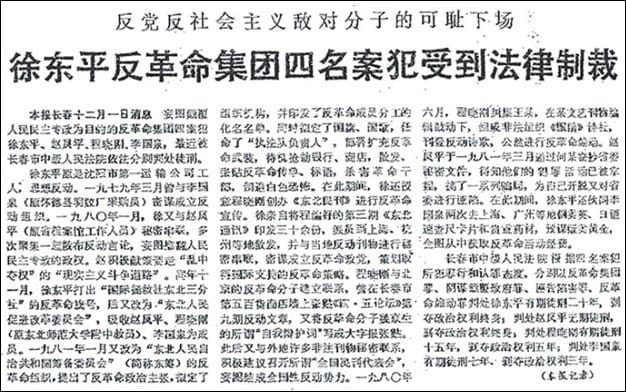
    An article from the Jilin Daily in 1983 provided Kamm the names of previously unknown political prisoners.

    John Kamm was a private businessman based in Hong Kong when he was granted a meeting with Vice Minister of Justice Jin Jian and Prison Administration Bureau Director Wang Mingdi in April 1992. At the time, US Congress was debating whether to extend Most-Favored-Nation tariffs to China, and Kamm was one of the principal proponents in favor of granting China this treatment. The Chinese government decided to support Kamm’s effort by releasing information on cases and granting clemency to prisoners Kamm named in meetings and lists.

    During the April meeting, Vice Minister Jin offered to respond to any prisoner inquiry Kamm submitted, provided that the name was given in accurate pinyin or, even better, in Chinese characters. Kamm immediately asked about Wei Jingsheng, arguably China’s most famous political prisoner known for his essays in support of democratic reform published during the brief period of political liberalization of the late 1970s. True to the vice minister’s word, Director Wang Mingdi responded to Kamm’s inquiry. Information included in the response was published the next day in The New York Times, which referred to the correspondence as “the first time that the [Chinese] government has provided extensive details of the imprisonment of Mr. Wei.”

    Two years later, Kamm was compelled to look into a lesser-known case. In February 1994, Human Rights Watch published Detained in China and Tibet: A Directory of Political Prisoners. The 632-page tome contains information on approximately 1,700 prisoners and remains a valuable resource for scholars and activists.

    Buried in the section “Long-Term Prisoners Sentenced Prior to 1989” was an account of a counterrevolutionary party, the Preparatory Committee for the Northeast China Autonomous People’s Republic, set up in Jilin Province in the early 1980s. The account was based on the transcript of a Changchun Radio broadcast recorded by the BBC. It gave the names of the three ringleaders—Cheng Xiaogang, Shi Dongting, and Zhao Fengxing—thought to remain in prison.

    Kamm wondered whether the names were recorded correctly and if a written account of the case could be found in a provincial newspaper. On a hunch, he visited a Hong Kong library and searched Jilin newspapers published in late 1983. After several hours, he came across a detailed account of the case in the December 2 edition of the Jilin Daily that named the party leaders as Cheng Xiaogang, Xu Dongping, and Zhao Fengping.

    Armed with Chinese characters and accurate pinyin, Kamm immediately filed an inquiry with the Ministry of Justice. In response, the ministry advised Kamm that all three men had been convicted of counterrevolutionary crimes. Cheng Xiaogang was sentenced to 15 years in prison and paroled on December 1, 1987. Xu Dongping was sentenced to 20 years in prison and released on medical parole in 1991. Zhao Fengping was given a life sentence, which was commuted to 13 years on December 20, 1989. Zhao’s sentence was due to expire on December 19, 2002. Kamm continued to inquire about Zhao after founding Dui Hua—until the ministry reported that he had been released two and a half years early on April 21, 2000.

    The prospect of finding the names of political prisoners in open source materials seemed absurd until John Kamm went to a library in 1994. Five years later, Kamm would establish Dui Hua, which, due in part to the contribution of open-source research, now maintains the world’s largest database of Chinese prisoners of conscience.


    Listen to the Encounters with China podcast.

    Subscribe to receive notifications about new episodes. 

    Read all John Kamm Remembers stories.


  • Dui Hua Digest, May 2015

    EVENTS

    Executive Director Kamm speaks as part of the Public Intellectuals Program hosted by the National Committee on US-China Relations on April 24, 2015.

    For the third consecutive year, the National Committee on US-China Relations invited Dui Hua to participate in an event for the Public Intellectuals Program (PIP). The program aims to support up-and-coming China specialists with events in Washington D.C., San Francisco, and China. On April 24, Executive Director John Kamm and Publications & Programs Officer Jonathan Kinkel received the PIP Fellows for a luncheon in San Francisco’s Chinatown.

    Kamm spoke about the 25 years he has spent working with China on human rights policy as well as Dui Hua’s ongoing efforts on behalf of political prisoners and women in prison. During the event, the fellows asked several questions regarding China’s changing political climate.

    WOMEN IN PRISON

    The controversial detention of the Beijing Five (from left: Wu Rongrong, Li Tingting, Zheng Churan, Wang Man, and Wei Tingting) ended with release on guarantee pending investigation, a face-saving measure similar to bail. Image credit: Huffington Post

    On April 13, police officers in western Beijing released five women’s rights activists who were detained in early March for attempting to raise awareness about sexual harassment. Dubbed the Beijing Five, the activists were released on guarantee pending further investigation, or qubao houshen, a measure similar to bail.

    Professor Jerome A. Cohen of the US-Asia Law Institute at New York University has previously noted that release on guarantee pending investigation has frequently been used as a “face-saving” measure, whereby detainees in sensitive cases may be released without authorities having to acknowledge wrongdoing or lack of evidence. It also appears to be a legal means to wrap up detentions that were intended merely as punishment or intimidation.

    That said, qubao houshen does carry limitations on personal liberty. During their release on guarantee, the Beijing Five may be barred from travelling without permission, must appear promptly when given a custodial summons, and may be prohibited from communicating with certain designated persons, according to Article 69 of China’s Criminal Procedure Law (CPL). A period of release on guarantee may last up to 12 months before police are legally required to end their investigation, and guarantee collateral may be returned after that time, according to articles 77 and 71 of the law, respectively.

    China faced a strong political backlash for detaining the Beijing Five two days before International Women’s Day. The detention also appeared out of step with what seemed to be China’s growing recognition of the seriousness of domestic violence, evidenced by the case of Li Yan and the consideration of the anti-domestic violence law.

    The United Nations Rules for the Treatment of Women Prisoners and Non-Custodial Measures for Women Offenders (the Bangkok Rules) bring together the issues of women’s rights, non-custodial measures, sexual harassment, and domestic violence within the context of criminal justice. The rules advocate for the use of non-custodial measures and for histories of victimization to be taken into account in their application. For women who have experienced sexual harassment and abuse, detention can be an especially triggering experience.

    In China, detention is applied as a routine measure, taking little account of its necessity to the case or its impact on the women behind bars. A reduction in the use of custodial measures in China would be a welcome change.

    PRISONER CASES

    Dui Hua research recently uncovered four noteworthy cases involving inciting subversion, an endangering state security (ESS) crime commonly used to suppress freedoms of speech and association. The first took place amid the nationwide clampdown on activities commemorating the 25th anniversary of June Fourth. Nie Zhanye (聂占业) was arrested on June 12, 2014, in Dunhuang, Gansu Province, on suspicion of inciting subversion. He was criminally detained on May 30, four days after using social media (QQ) to circulate articles that authorities said discussed “mourning June Fourth” as a means to “instigate” demonstrations in Beijing. The court said a total of 10,781 members of the chat group received the June Fourth articles. Authorities accused Nie of circulating seven other articles containing “false” and “defamatory” information about China. Among them was an article about the trial of Liu Ping (刘萍), a member of the New Citizens’ Movement who was sentenced to six and a half years in prison for attempting to run for office as an independent candidate in Xinyu, Jiangxi Province. Similar to several members of the New Citizens’ Movement, Nie initially faced inciting subversion charges but was ultimately convicted of provoking a serious disturbance. He received a suspended sentence on January 6, 2015.

    In Anhui’s Guoyang County, a 26-year old farmer surnamed Liu received a one-year sentence for inciting subversion on January 27, 2015. Although articles 19 and 20 of China’s Criminal Procedure Law stipulate that intermediate courts have jurisdiction over ESS cases, the Guoyang County People’s Court heard the trial of first instance. Liu’s conviction was upheld upon appeal to the Bozhou Intermediate People’s Court on April 10, 2015. Liu is believed to have been taken into custody in Shenzhen on August 19, 2014, and formally arrested on September 30. The reasons for his arrest and sentencing remain unclear.

    Xinjiang is known to account for a large number of China’s ESS trials, with most defendants believed to be Uyghurs seeking greater cultural freedom. The last two incitement cases shed light on a different type of Xinjiang ESS case: Han Chinese men tried for their involvement with Falun Gong. Anhui native, Li Qishan (李奇山) received a suspended sentence for “using/organizing a cult to undermine the implementation of the law” in February 2001. In a separate case, on May 13, 2009, the Urumqi Intermediate People’s Court sentenced him to eight years’ imprisonment and four years’ deprivation of political rights for inciting subversion. A year and a half later, on November 18, 2010, the same court sentenced Tian Weicheng (田伟成) to eight years in prison and three years’ deprivation of political rights for inciting subversion. Both men are currently serving their sentences in Xinjiang No.5 Prison. On January 27, 2015, the prison sent recommendations that both Li and Tian receive sentence reductions to the Urumqi Intermediate People’s Court. Shortly thereafter, the prison withdrew the recommendations on the grounds that the Urumqi Intermediate People’s Court did not have jurisdiction over the cases. Neither Li nor Tian are known to have received sentence reductions as of this writing. They are due for release on July 1, 2015, and October 27, 2017, respectively.

    DUI HUA IN THE NEWS

    Dui Hua was named in nearly 80 news articles and NGO reports in April. Most articles devoted their attention to the release of American political prisoner Dr. Xue Feng. The Wall Street Journal, The New York Times, and the BBC all published stories on the case, citing Dui Hua as both a primary source and advocate for Xue’s early release. National Public Radio’s Morning Edition quoted Dui Hua Executive Director John Kamm regarding the underlying reasons for the Chinese government’s decision to stop accepting written requests for information regarding prisoners of conscience after Chen Guangcheng, a rights activist and blind self-taught lawyer, evaded police captors and fled to the US in 2012. Another New York Times article cited Dui Hua in its discussion of the landmark decision by China’s Supreme People’s Court to overturn the death sentence against Li Yan, a domestic violence survivor who killed her abusive husband.

    PUBLICATIONS ROUND-UP

    Featured Article: Dui Hua Welcomes Release of American Geologist Xue Feng (April 3)

    American geologist Dr. Xue Feng (薛锋, pictured left) has been released from Beijing No. 2 Prison after serving all but 20 months of his eight-year sentence for “illegally procuring state secrets.” In accordance with the verdict, Dr. Xue was deported the same day. He arrived home in Houston on the evening of April 3. At the time of his release, he was the only American citizen serving a sentence in a Chinese prison for the crime of endangering state security.

    Life Sentence Commuted for Opposition Party Leader Dong Zhanyi (April 13)

    Paraplegic Petitioner Jailed for Disturbing Real, Not Online, Space (April 23)

    Last month’s Digest: April 2015

    ROOTS OF DUI HUA

    This section delves into the human rights activism of John Kamm between 1990 and 1999, the year he established Dui Hua.

    Article from 1983 Jilin Daily, provided Kamm the names of previously unknown political prisoners.

    John Kamm was a private businessman based in Hong Kong when he was granted a meeting with Vice Minister of Justice Jin Jian and Prison Administration Bureau Director Wang Mingdi in April 1992. At the time, US Congress was debating whether to extend Most-Favored-Nation tariffs to China, and Kamm was one of the principal proponents in favor of granting China this treatment. The Chinese government decided to support Kamm’s effort by releasing information on cases and granting clemency to prisoners Kamm named in meetings and lists.

    During the April meeting, Vice Minister Jin offered to respond to any prisoner inquiry Kamm submitted, provided that the name was given in accurate pinyin or, even better, in Chinese characters. Kamm immediately asked about Wei Jingsheng, arguably China’s most famous political prisoner known for his essays in support of democratic reform published during the brief period of political liberalization of the late 1970s. True to the vice minister’s word, Director Wang Mingdi responded to Kamm’s inquiry. Information included in the response was published the next day in The New York Times, which referred to the correspondence as “the first time that the [Chinese] government has provided extensive details of the imprisonment of Mr. Wei.”

    Two years later, Kamm was compelled to look into a lesser-known case. In February 1994, Human Rights Watch published Detained in China and Tibet: A Directory of Political Prisoners. The 632-page tome contains information on approximately 1,700 prisoners and remains a valuable resource for scholars and activists.

    Buried in the section “Long-Term Prisoners Sentenced Prior to 1989” was an account of a counterrevolutionary party, the Preparatory Committee for the Northeast China Autonomous People’s Republic, set up in Jilin Province in the early 1980s. The account was based on the transcript of a Changchun Radio broadcast recorded by the BBC. It gave the names of the three ringleaders—Cheng Xiaogang, Shi Dongting, and Zhao Fengxing—thought to remain in prison.

    Kamm wondered whether the names were recorded correctly and if a written account of the case could be found in a provincial newspaper. On a hunch, he visited a Hong Kong library and searched Jilin newspapers published in late 1983. After several hours, he came across a detailed account of the case in the December 2 edition of the Jilin Dailythat named the party leaders as Cheng Xiaogang, Xu Dongping, and Zhao Fengping.

    Armed with Chinese characters and accurate pinyin, Kamm immediately filed an inquiry with the Ministry of Justice. In response, the ministry advised Kamm that all three men had been convicted of counterrevolutionary crimes. Cheng Xiaogang was sentenced to 15 years in prison and paroled on December 1, 1987. Xu Dongping was sentenced to 20 years in prison and released on medical parole in 1991. Zhao Fengping was given a life sentence, which was commuted to 13 years on December 20, 1989. Zhao’s sentence was due to expire on December 19, 2002. Kamm continued to inquire about Zhao after founding Dui Hua—until the ministry reported that he had been released two and a half years early on April 21, 2000.

    The prospect of finding the names of political prisoners in open source materials seemed absurd until John Kamm went to a library in 1994. Five years later, Kamm would establish Dui Hua, which, due in part to the contribution of open-source research, now maintains the world’s largest database of Chinese prisoners of conscience.

  • How Chinese Institutions Manufacture Conviction and Quash Acquittal

    Vindication comes slowly, if at all, for innocent individuals courts fail to acquit. Image credit: Sina

    One of the prominent features of Xi Jinping’s administration has been the attention paid to the problem of wrongful convictions. Since 2012, Chinese legal authorities have overturned a series of high-profile convictions, and taken steps to strengthen measures to exclude confessions extracted through torture and other illegal evidence and establish a system to hold judges and law-enforcement officials responsible for wrongdoing or negligence. But the obvious question is whether these measures will be effective in reducing the number of wrongful convictions.

    Chen Ruihua has his doubts. Professor Chen, a leading expert on criminal procedure at Peking University Law School, sat down for a remarkably frank and detailed interview on the topic with Phoenix Weekly (translated below). In his analysis, the problem of wrongful convictions cannot be fixed without addressing the imbalance of power among China’s legal institutions—particularly, by placing more limits on the power of police and procuratorates, and clearing the way for courts to play their role as a “last defense” against miscarriages of justice. Hinted at in the interview is something that Professor Chen certainly understands only too well: that any institutional restructuring of the kind he describes would entail political reform that has, to date, been a non-starter in China.

    Chen and other legal scholars have been looking at these problems for many years, and one can sense a certain frustration at how little their input has mattered thus far. Nonetheless, Chen ends on an optimistic note. He suggests that the Chinese public is not only beginning to embrace ideas about procedural protections and the need for institutional checks on state power, but might also be less swayed by competing appeals to stability and fighting crime. Even if he is right about this, however, given China’s very limited democracy, it remains to be seen how any shift in public views about criminal justice might translate into the kind of institutional change for which Chen and other legal scholars advocate.

    *
    Why Don’t Courts Dare to Acquit?

    Duan Wen, Phoenix Weekly
    April 1, 2015

    Phoenix Weekly (hereafter, “PW”): In recent years, the Supreme People’s Court (SPC) and other relevant organs have issued a series of many judicial interpretations and other regulations aimed at preventing injustices caused by wrongful convictions. Why have these had so little effect in practice?

    Chen Ruihua (hereafter, “CRH”): First, let me ask you a question. Have you ever noticed how, after some wrongful convictions have been overturned, officials from the courts involved will mention the court’s “positive contributions” while summing up the case? The idea is that, though the court may have been “following orders” in its original handling of the case, it ultimately “spared” the defendant’s life and made it possible for him to live long enough to see his name cleared. Don’t you feel this is ridiculous?

    If they are to prevent wrongful convictions, courts must be able to say “No!” and dare to announce acquittals. But are courts in mainland China able to do this? Look at the number of people acquitted by mainland courts in recent years, what is the acquittal rate? About a decade ago, courts at all levels throughout the country handled hundreds of thousands of criminal cases each year and acquitted a few thousand people. In the past few years, there have been more than a million criminal cases a year, but do you know how many people were acquitted? Fewer than 900! At this rate, will mainland China still have acquittals 20 years from now? I call this a “soul-stirring number.”

    What do these cold numbers show? From basic-level courts all the way up to the SPC, mainland courts have grown increasingly timid about acquitting people. But the question is: has the quality of criminal cases increased? Are criminal suspects really are all guilty? On the contrary, what so many miscarriages of justice demonstrate is that outcomes are basically pre-determined once cases are prosecuted.

    From this point of view, we can say that mainland courts have lost the basic ability to remedy mistakes made by institutions of state power. This is simply unforgiveable. Every country in the world has police who extract confessions through torture or prosecutors who abuse their power, but so long as the courts can stick to principles and maintain a bottom line, it’s still possible for them to prevent miscarriages of justice. Courts should be the last line of defense in preserving justice in society, but in China they’ve already basically completely abandoned that role.

    PW: In 1996, China’s Criminal Procedure Law was amended to include a presumption of innocence and emphasize a prohibition on the use of torture. And after the occurrence of so many miscarriages of justice, such as the Zhao Zuohai case in Henan, the SPC, Supreme People’s Procuratorate (SPP), and Ministry of Public Security jointly issued regulations under the guidance of the Central Politico-Legal Commission to exclude “illegal evidence.” Wouldn’t the courts now have more grounds to “dare to say no” over these past few years?

    CRH: In practice, excluding “illegal evidence” is not such an effective way to deal with the problem of wrongful convictions. Let me give you an example. In 2012, the SPC and SPP had organized an inspection study of a criminal trial at a Beijing court. During the trial, the prosecution presented eight separate confessions, two of which were excluded at trial. This won the court a lot of praise from all who attended. But what about the other six confessions? In practice, you only need one confession to convict. So how far can excluding illegal evidence get you toward the goal of preventing wrongful convictions?

    I’ve always felt that there’s something quixotic about the hope that excluding illegal evidence will prevent torture and, thereby, solve the problem of wrongful convictions. The legal history of other countries demonstrates that no country can solve the problem of torture through exclusion of illegal evidence because the rate of successful exclusion is so low. In a country like the United States, fewer than 10 percent of requests to exclude illegal evidence are granted.

    PW: Then what do you think is necessary to resolve the problem?

    CRH: You need to attack the problem at its source. When Yu the Great tamed the floods in ancient times, he didn’t wait until there was a problem and respond reactively with targeted quick-fixes. Issuing a few regulations in the moment has no real impact other than as a means of soothing popular anger and responding to public opinion.

    In actual cases, there are three central reasons why courts don’t dare to acquit defendants on the basis of the law and the facts. First, they lack independence. Second, they lack authority. And third, they stand wholly on the side of the prosecution and the police and are biased in favor of punishing crime, thereby abandoning their basic ability to conduct a fair trial.

    Let’s look at the issue of independence first. We know that fixing the problem of independent adjudication is something that’s on the legal reform agenda in China. One main focus of legal reform is guaranteeing that courts are able to exercise their judicial powers independently in accordance with the law. There is consensus on this at both the central and local levels, as well as throughout society. But can it truly be achieved in practice? In many major cases, especially homicide cases, the local party committee and government take an interest from the very beginning and there is also a great deal of public attention. It’s easy for courts to make accommodations to local party or government officials, to members of the local public or public opinion, or to the feelings of the victim’s family members. So, even if the court discovers a miscarriage of justice, it doesn’t dare acquit because it can’t withstand the consequences of all that pressure.

    Then there’s the problem of authority. Mainland courts have absolutely no authority relative to public security or the procuratorates. The powerful public security organs have a much higher political status. Even though these days many local police chiefs might not necessarily head the politico-legal committee, they definitely continue to hold high positions as deputies of that committee. The procuratorates also enjoy a high status. The constitution gives them supervisory powers over the legal system and the courts, and procuratorates can even investigate and bring cases against courts at the same administrative level. In isolated cases, the procuratorate has even hauled in a judge when a court has issued an acquittal. In this system, courts that issue acquittals risk offending both public security and the procuratorate—do they really dare? So, no one has the courage to remedy a miscarriage of justice when they encounter one.

    Finally, courts totally stand on the side of fighting crime. In practice, many judges in Chinese criminal tribunals are more inclined to fight crime than prosecutors are, lacking even basic fairness. This is a consequence of practice and tradition over many years, during which time the courts turned into a third stage on the crime-fighting assembly line. Judges have become the third person in the crime-fighting relay race, receiving the baton handed off to them from police and then the prosecutors.

    PW: All of these problems have already been discussed a lot in the past. Why is it so hard to change?

    CRH: First, fixing these problems requires institutional change. For example, in the Chinese criminal process judges read the entire case file before the trial even begins. That’s a huge problem, because once judges read all the files that investigators and prosecutors have submitted they’re bound to be influenced by their first impressions and believe “the defendant is guilty.” The result is that the subsequent trial becomes totally formalistic, and the investigation and debate phases of the trial become useless.

    Moreover, Chinese judges are required to conclude trials within a short amount of time. Unless the case is especially important or complex, the majority of trials are concluded in half a day. Can defense lawyers present an adequate defense if you only have half a day to finish the trial? When it’s all a matter of pre-judgments derived from reading the case file and witnesses and experts who don’t appear in court, then of course the trial will be one-sided. No one can match the power of the prosecution, which is immune from effective challenge. And the defense is extremely weak, unable to get any attention from the judges. The whole trial becomes a matter of going through the motions.

    Even given prejudicial case files and formalistic trials, the examples of previous miscarriages of justice show us that it’s still possible to discover problems like insufficient evidence that could mean the defendant should be found not guilty. But the system used to evaluate performance within the courts makes it nearly impossible for judges to issue acquittals. Any judge who wants to acquit must first report to the head of the criminal tribunal and the court’s vice president responsible for criminal cases. The case will be brought before the court’s adjudication committee, and all eyes in the court will look skeptically at the judge, wondering whether any money has changed hands. When the police and prosecution disagree with the decision to acquit, the judge has to go to try to explain things to them and make a report to the politico-legal committee. Isn’t it much, much simpler to convict? The presiding judge can make his or her own decision and no one will question it. Put it this way: Judges who convict have smooth sailing in front of them, without any obstacles or professional risk. But judges who acquit will face multiple difficulties within the system. When you look at the problem in terms of human nature, is a judge more likely to convict or acquit?

    Then there’s the utilitarian problem of risk transfer. We can see from many wrongful convictions that higher-level courts are unwilling to take responsibility and transfer most of the risk to lower courts. They may clearly recognize that a case has problems, but instead of directly issuing an acquittal they return the case to the lower court for retrial. But many times the lower court can’t bear the risk, either. Faced with pressure from the politico-legal committee, the police, the procuratorate, and the potential for the victim to petition, the court will ultimately produce this distinctly Chinese phenomenon—the “verdict with room to maneuver.”

    Here, the basic pattern is that the higher court doesn’t dare commit to independent adjudication and transfers the risk to the lower court. On the one hand, it hopes that the lower court won’t convict too easily and hand down heavy sentences. On the other hand, it also doesn’t want the lower court to issue acquittals. The result is this very strange legal phenomenon, where, even though the lack of evidence makes it possible to acquit, the defendant is convicted but given a more lenient sentence that leaves a bit of room to maneuver. I once wrote an article pointing out that this was the root of many wrongful convictions in China. The central problem is that Chinese courts don’t dare to remain true to the spirit of independent adjudication.

    All of these problems require solutions at the institutional level.

    But on the other hand, judges need to find their own reasons to change. I teach part-time at the National Judges College. I often give this example when I lecture to judges. One year, after a wrongful conviction was discovered, there was a great deal of pressure from public opinion and everyone who handled the case back in the day was investigated, with some even being placed under “shuanggui” [i.e., a form of investigative custody used against Communist Party members accused of serious disciplinary violations such as corruption or dereliction of duty—Trans.]. One of the people who originally handled the case went to a cemetery, where he bit the tip of his finger and wrote in blood: “I’ve been wronged.” Then, he killed himself. As I tell this story, I tell the judges that upholding judicial fairness and correcting miscarriages of justice are both closely related to every judge’s interests. I say, “If you can’t manage it, you won’t be able to protect yourselves.” At that point, the room is absolutely silent. No one is whispering to each other; everyone is listening very attentively. The Fourth Plenum document mentions a system for pursuing retroactive responsibility and a system of lifetime responsibility. This will have a huge impact on judicial officials and their future destinies.

    Need for Checks on Power of Public Security, Procuratorate

    PW: A moment ago you said that China’s criminal process is like an assembly line. If you want to go back to the beginning, you probably can’t simply put your hope on courts as the last line of defense in preventing miscarriages of justice. Shouldn’t we look at earlier stages in the process?

    CRH: Personally, I feel we haven’t done enough research or given enough serious thought to the procuratorate’s role in causing miscarriages of justice. According to China’s constitution, procuratorates are not just the organs of prosecution. They are also responsible for preventing unlawful case-handling through oversight of the legal system, including oversight of public security, courts, prisons, and so on.

    It’s precisely the procuratorate’s powerful role in China’s legal system that causes courts not to dare to acquit in many instances. This, in other words, is a fundamental reason for miscarriages of justice. Procuratorates can investigate and pursue criminal responsibility against judges from courts at the same administrative level. Doesn’t this force all judges to live in fear and tread carefully, as if on thin ice?

    At this point, perhaps some might say, “Well, they have nothing to fear if they keep their noses clean.” My response would be that, under China’s current system, doesn’t everyone have reason to fear being investigated? It’s not necessarily judges who issue acquittals that get detained. Pick a judge at random, and all of the court’s work will be affected negatively. Because of the pressure on the court president, it will prevent others from issuing acquittals.

    Once, at a meeting at the SPP, I said without any reservation that the procuratorate’s strong oversight power to investigate courts at the same administrative level is a major reason why it’s so difficult to prevent wrongful convictions in China. I believe we ought to prohibit procuratorates from investigating courts at the same level and that any cases against judges should be brought by procuratorates at the provincial or even central level.

    Besides the procuratorate’s legal status, Chinese law gives prosecutors too much power, which creates a serious imbalance between prosecution and defense.

    For example, the law clearly states that after a first-instance verdict is issued, as long as the procuratorate appeals then there must be a court hearing during the trial of second instance. But if an appeal is filed only by the defendant, there’s no requirement of any trial hearing. If you won’t even hold a trial hearing, how can you correct a wrongful conviction? If a procuratorate believes there is an error in a verdict that has already taken effect and appeals, this meets the statutory conditions for retrying the case and the court is required to hold a retrial. But if a defendant or his attorney wants to petition to have a case retried, it’s extremely difficult. Petitioning and a prosecutorial appeal shouldn’t even be mentioned in the same breath, they’re so different.

    Also, Chinese procuratorates have the power to approve arrests and prosecute. In cases where the procuratorate serves as investigator, these two powers get merged into one so that approving arrest becomes a mere prelude to conviction, a rehearsal for sentencing. In Western countries, the power to approve arrest almost always belongs to the courts. This is because this is a very serious power; once a person is arrested, people begin to think he’s guilty. This is a power that shouldn’t be in the hands of the police or the procuratorate. A system in which arrest and indictment are combined concentrates too much power. If the arrest was in error, the indictment will also be in error. And so on from there. In some wrongful convictions, the original responsibility rests with the procuratorate. The original arrest was a mistake, but in order to demonstrate that the arrest was correct, they must prosecute and put a great deal of pressure on the court. For so many years, legal scholars have been calling for the power to approve arrests to be transferred to the courts, but it’s never become reality.

    With these examples, I’m trying to show that mainland Chinese procuratorates possess a very strong prosecutorial power. The law grants them limitless resources to prosecute crime, including almost monopolistic control over many procedural powers. But the law gives defendants and defense lawyers very weak rights. When there is a wrongful conviction, it’s extraordinarily difficult to initiate the remedial process.

    PW: After the procuratorate, I guess the next topic should be public security, no?

    CRH: Public security organs are responsible for more than 90 percent of criminal investigations, thus serving as the first gate through which the vast majority of criminal cases need to pass. But the system ensures that its investigative powers can be exercised with almost no restrictions. You could even say that, under some circumstances, they can exercise that power without any scruple whatsoever. There are few places in the world where public security organs have as much power as they do in China. Even though there have been some reforms in the past few years, the change is too slow.

    Now, what sorts of problems exist in the investigations carried out by public security organs?

    First of all, it has almost gotten to the point where suspects can be interrogated without any effective constraint. Often, wrongful convictions are connected to confessions extracted through torture, and torture usually is related to the way that suspects are interrogated. But under the current system:

    • There are no specific regulations governing when a suspect can be questioned. In practice, you often see questioning of suspects starting in the middle of the night or in the early morning hours. There are also no restrictions on the length of time suspects can be questioned. In practice, you often see non-stop questioning over a period of days, beyond a person’s physical limits. Currently, the Criminal Procedure Law only says that a person cannot be summoned for initial questioning for longer than 24 hours, but once a person has been placed under detention or arrested, there are no time restrictions on interrogation.
    • Interrogations take place without a lawyer present and the police control the recording of interrogations so that, in practice, interrogations aren’t controlled.
    • As soon as criminal suspects confess to a crime, they lose any opportunity to recant. In practice, as long as a suspect makes a single confession, it doesn’t matter how many times they might recant or refuse to acknowledge the confession subsequently, that confession will be considered to be admissible. Many wrongful convictions are like this. A confession is made during the investigation phase, but the defendant tries to recant at trial. The Du Peiwu case in Yunnan is the most classic example. He went so far as to present a bloody shirt in the courtroom to prove that he had given the confession under torture, but the court paid him no attention.

    All of this shows the central importance of confessions in the Chinese criminal justice system. As long as a police investigator has a record of a confession, it can always be used as evidence for conviction.

    Then there are problems associated with identification. The cases of Du Peiwu, She Xianglin, and Zhao Zuohai all followed a common pattern. Besides the extraction of confessions through torture, they had another startling similarity: serious problems with the identification procedure. Whether it was identification of the crime scene or identification of the victim’s body, the way the public security organs carried out the identification process seriously violated legal procedure. For example, the process was undertaken without the presence of a lawyer or an independent third party, so it was easy to make mistakes and an excellent opportunity for the public security organ to falsify evidence. In many countries with rule of law, the rules require that a lawyer be present for the identification process, otherwise the identification will be considered invalid. But the identification process in China is extremely closed and totally controlled by investigators.

    Third, there are problems with the procedures surrounding expert assessments. In ancient China, in homicide cases it was required to conduct an autopsy right there in court in front of all concerned. Today, the expert assessment process in criminal cases is completely closed, with investigation and assessment both conducted inside the public security agencies. Even if an expert is hired from outside, he or she will still be connected to investigators in some way and subject to very little supervision. The assessment takes place outside the presence of other interested parties or lawyers to supervise and bear witness.

    In this kind of system, unless you assume that all public security officers are angels, there is no way to prevent problems from occurring in the way cases are handled. The closed nature of the investigation system gives irresponsible individuals or those with ulterior motives viable opportunities to create miscarriages of justice.

    Tragedies occur one after another, but no one has learned a single lesson from them. When the Criminal Procedure Law was being revised, academics proposed that lawyers should be present for interrogation, assessment, and identification. But the legislative body vetoed it immediately because the public security organs and procuratorate both opposed it.

    Besides the problems associated with case investigation I’ve just mentioned, public security organs have another extremely serious tradition. Before a case has even had a chance to be decided at trial, first impressions become established facts, putting pressure on the subsequent prosecutorial review and trial phases of the process. The specific manifestations of this are as follows:

    • After the case has been investigated, when it has just been transferred to prosecutors, even before the court has rendered its final verdict the investigating unit can hold an award ceremony and bestow honors on those who “contributed meritorious service to solving the case.” This both demonizes the criminal suspect and broadcasts the first impressions of the so-called facts of the crime to the general public. The media reports on the ceremony, which is attended by leading party and government officials. This has an impact and puts pressure on later phases of the criminal process. It’s something very difficult to fix through law, as it has become a standard part of criminal justice practice.
    • Then there’s the problem of how to dispose of assets alleged to be connected to the case. The Wu Ying case in Zhejiang was a classic example. Even while the case was still at the investigative stage and well before the court’s verdict had been finalized, the assets alleged to be involved in the case had already been auctioned off. If the court were later to find the defendant not guilty, how would the asset problem have been dealt with? Isn’t this something that runs counter to the entire legal system? There’s a problem of vested interests at hand.
    • Then there’s another situation in certain homicide cases involving civil servants or officials where the deceased is named a “revolutionary martyr” during the investigation stage. This carries very serious implications, because if the defendant has killed a “revolutionary martyr,” shouldn’t he be expected to be punished most severely?
    • Another way that first impressions gathered during the investigation stage become established facts is through the press releases circulated when a case is considered solved, which creates an impression on public opinion. These days, many places prohibit lawyers involved in a criminal case from casually revealing their defense arguments to the media, otherwise they risk criticism for violating professional ethics or might even face formal punishment. But there’s absolutely no restriction on public security organs and procuratorates issuing press releases when they finish investigating a case. For example, Nian Bin was eventually acquitted in Fujian, but when you look back at the publicity the public security organ gave the case back in the day you see how thoroughly the press reports demonized Nian Bin. Not only does this put pressure on the courts, but it also incites victims’ [relatives], causing them to become firm believers that the defendant is a vicious murderer. This, in turn, can create huge obstacles to redressing a wrongful conviction.

    So, I often say that if checks are not placed on China’s investigative organs and their exercise of that power does not start to comply with rule of law, in practice it will become a great scourge, as difficult to tame as a runaway wild horse, uncontrolled by rule of law.

    Now is Best Time to Control Miscarriages of Justice

    PW: A moment ago, you said that the defense occupies a very weak position in criminal cases. How can the defense be made stronger? How can lawyers have more of an impact on the process?

    CRH: Fundamentally, the failure of lawyers to make their impact felt is a reflection of the lower status accorded to defendants. After all, a lawyer’s power comes from the assignment granted to them by the defendant. So the central issue is how to raise the status of criminal suspects and defendants.

    Of course, lawyers are not simply the same as their clients and have their own professional qualities. In the current system that’s been set up to redress wrongful convictions, the role of lawyers has truly not been given enough emphasis. We can see that in all of the official documents, which only make passing mention of the role of lawyers.

    In a country with true rule of law, lawyers are the most active of all legal professionals. Whether they’ve been hired by a defendant or assigned to provide legal aid, they play the role of correcting errors within a case. In Western countries, they say: “A good defense lawyer is the best help a judge can have.” Lawyers are very good at helping to expose questions, holes, or conflicts in a case, and the exercise of their power acts as a check to ensure that the power of criminal investigators isn’t too great.

    In the current mainland legal system, we still have the idea of “law enforcement cadres” where police, procuratorate, and courts are all part of a single system from which lawyers are excluded. As a result, it’s hard to have a sense of a common community of legal professionals. There have been a few changes recently, such as the emphasis on listening to lawyers’ opinions in death penalty review cases at the SPC. This is a welcome change, but things are changing too slowly.

    PW: It’s sometimes difficult to give equal consideration to preventing wrongful convictions and fighting crime. This is particularly true given ordinary Chinese people’s traditional desire for stability and security. If we over-emphasize the rights of criminal suspects, won’t it be difficult for the public to accept?

    CRH: This problem you just mentioned exists to some degree, especially when mainstream public opinion in China is so focused on anti-corruption and punishing corrupt officials. Ordinary people have a desire to see crime punished and swift resolution of cases by public security can earn popular support. Under these circumstances, if courts hand down acquittals for insufficient or flawed evidence, it will certainly anger the public, not to mention bringing protest from victims’ families. Under these circumstances, pressure from public opinion will be difficult for legal institutions to bear.

    So we must weigh these two interests and determine which is greater, the risk of being unable to fight crime or the social damage caused by wrongful convictions?

    Fighting crime is something that is in the interest of the entire society. But in recent years there has been growing suspicion toward state power. It’s a sign of social progress that the public no longer blindly submits to state power. Rights consciousness is rising within the public, and these days people are more worried about abuse of state power than they are about the risk of being unable to fight crime. People have increasingly come to understand that “fighting crime,” “maintaining public safety,” and “punishing corruption” are all, fundamentally, political discourse. Abuse of state power is the more frightening thing and something that ought to be seen as the people’s common enemy. This kind of public opinion is already beginning to form. I believe that this opinion environment presents China with a historic opportunity to bring the problem of wrongful convictions under control.

    That is to say, public awareness and rights consciousness is a source of my optimism for the future.

    Of course, in specific individual cases there need to be some technical changes. It’s not easy being a judge in mainland China. Under the current system, putting ourselves in their shoes, it’s very difficult to issue acquittals in cases where there is insufficient evidence. This is a reason why legal scholars have recommended that China introduce a jury system so that judges don’t have to bear the entire burden themselves in individual cases.

    However, the time has to be right for introducing a jury system. Based on the history of how juries were introduced in other countries, it’s a reform that has been closely associated with political reform.


  • Paraplegic Petitioner Jailed for Disturbing Real, Not Online, Space

    Police pick up leaflets scattered by Wei Biling (center left, in wheelchair) at Tiananmen Square on October 6, 2013. Image credit: boxun.com

    The crime of “provoking a serious disturbance,” Article 293 of China’s Criminal Law, has received a great deal of attention inside and outside China over the past couple of years. This is partly because Chinese authorities appear to have relied on the crime in their recent concerted campaign against rights defenders, civil-society activists, and others deemed to disrupt social order. One recent example is the detention of the “Beijing five” on the eve of International Women’s Day. The five women planned to protest sexual harassment on public transport. Zheng Churan (郑楚然), Wei Tingting (韦婷婷), Wang Man (王曼), Wu Rongrong (武嵘嵘), and Li Tingting (李婷婷) had been released on bail at the time of writing.

    Dui Hua has previously pointed out Article 293’s reputation as a “pocket crime,” or a vaguely defined catchall. But as Jeremy Daum at the China Law Translate website points out, even though Article 293 encompasses four different categories of illegal action, most of these are actually quite specific. Moreover, subsequent interpretation by the Supreme People’s Court (SPC) and Supreme People’s Procuratorate (SPP) has made headway in further defining the conditions that constitute the crime.

    It is the fourth category of Article 293, namely, “making a commotion and creating a serious disturbance in a public place,” that has been most frequently invoked during the recent crackdown on rights defenders. Petitioners are particularly vulnerable to prosecution under this category—especially those who have resorted to more unconventional methods to gain publicity.

    Wei Biling (韦碧玲) is one such petitioner. She was sentenced to four years in prison last October by a court in the city of Liuzhou, Guangxi Zhuang Autonomous Region.

    In 1997, Wei Biling was a 25-year-old employee at a state-owned car dealer, when she was hit by a car that was being test-driven outside her office. The accident left her paralyzed and confined to a wheelchair. With the incident ruled a workplace accident, Wei was awarded what she considered to be inadequate compensation. A subsequent divorce left her without a place to live.

    Wei began petitioning in Beijing in 2008, becoming a familiar and visible presence as an organizer and spokesperson for the fluid community of individuals seeking justice in the capital. One of the ways that Wei Biling tried to bring attention to her case was to scatter large piles of leaflets in high traffic areas. The leaflets detailed her story and allegations of wrongdoing. Because she often chose to do this at “sensitive” times, such as during the annual gathering of the National People’s Congress, police tasked with preserving the impression of “stability above all else” could wind up on their hands and knees, scrambling to collect the leaflets before they blew into the hands of citizens.

    These “abnormal petitioning” techniques are ultimately what led to Wei’s arrest in Beijing in February 2014 and subsequent conviction on charges of “provoking a serious disturbance” in October. At trial, prosecutors brought a total of seven separate charges against her. Four of them focused on “abnormal” petitioning activities like those described above. Three others focused on gathering petitioners to hold up banners and signs in public places as well as sending photographs and videos of those gatherings to people who posted them on Chinese-language websites published overseas.

    In their indictment, prosecutors made note of the fact that one of these videos had been viewed more than 6,000 times. This suggests that they may have been trying to argue that the social harm caused by some of Wei’s actions should not be limited to physical space. This follows a controversial 2013 interpretation by the SPC and SPP, which extends the scope of Article 293 to include the use of information networks to, among other things, “disseminate false information ” and organize or incite others to do so.

    It is noteworthy, however, that the Yufeng District People’s Court rejected the prosecution’s Internet-related charges, convicting Wei only for scattering leaflets in public places. The judicial panel’s particular reasoning, which appears to have reflected a decision by the court’s sentencing committee, is not especially clear. The court ruled only that there was no evidence to prove that the petitioner’s gatherings (and presumably the online posts as well) caused any serious disruptions to social order.

    In the end, the court did not venture into the more nebulous question of whether actions taken in virtual space can be prosecuted under Article 293. Instead, it stuck with incidents in the types of locations that have been explicitly singled out in previous judicial interpretations, such as bus stops, theaters, and busy street corners. Yet the evidence for the seriousness of the disturbances at these street-level locations is quite thin, apparently relying on general witnesses statements about the potential for disruption by petitioners, instead of specific testimony about disruption caused by Wei Biling in particular.

    Court verdicts in cases like this are increasingly available online, thanks to recent national efforts at increasing the degree of transparency of China’s judiciary. Before making Wei Biling’s verdict available to the public online, local court authorities evidently went to great efforts to conceal many of the details of her case—particularly in terms of the many locations she had gone to in search of publicity. The zeal with which these redactions were made to the verdict meant that Wei was initially identified only by her surname (common to many of the Zhuang ethnicity who live in Guangxi) and that the facts of the case were nearly incomprehensible in some places. As it turned out, however, an appellate decision from the Liuzhou Intermediate People’s Court was later published without any redaction, making it possible to fill in many details of the original verdict and locate more information about Wei Biling from non-official sources. What follows is a translation of the verdict issued by the Yufeng District People’s Court with details filled in from subsequent documents and research.


    Yufeng District (Liuzhou) People’s Court Verdict: click to expand

    Yufeng District (Liuzhou) People’s Court, Guangxi Zhuang Autonomous Region Criminal Verdict

    (2014) Yu Crim. 1st No. 445

    The prosecuting organ is the Yufeng District (Liuzhou) People’s Procuratorate, Guangxi Zhuang Autonomous Region.

    Defendant Wei [Biling], unemployed. Given 10-day administrative detention on June 30, 2012, by the Fengtai Precinct of the Beijing Public Security Bureau (PSB) for provoking a serious disturbance. On February 20, 2014, the defendant was placed under criminal detention by the Yufeng Precinct of the Liuzhou PSB on suspicion of provoking a serious disturbance. On March 6 of that year, the Yufeng District People’s Procuratorate approved the defendant’s arrest, which was carried out the next day by the Yufeng Precinct of the Liuzhou PSB. The defendant is currently detained in the Liuzhou No. 1 Detention Center.

    Defense counsel is Luo [Hongfeng], lawyer with the Guangxi Yinli Law Firm.

    On August 4, 2014, the Yufeng District People’s Procuratorate filed indictment Yu Proc. Crim. Indict. (2014) No. 488 with this court, charging defendant Wei [Biling] with provoking a serious disturbance. This court accepted the case on the same day in accordance with the decision on jurisdiction assignment issued by the Guangxi Zhuang Autonomous Region High People’s Court, formed a collegiate bench in accordance with the law, and held open hearings to try this case on August 26, 27, and 28, 2014. The Yufeng District People’s Procuratorate appointed prosecutors Li Jing, Qin Mengshu, and Huang Xuan to appear in court on behalf of the prosecution. Defendant Wei [Biling] and defense counsel Luo [Hongfeng] also appeared in court to participate in the proceedings. The trial has now concluded.

    The Yufeng District People’s Procuratorate alleged that: Defendant Wei [Biling] did not accept the official reply and arrangements made by relevant departments of the people’s government in response to her petition demands and, in order to continue seeking resolution to her demands regarding medical expenses and housing placement, first went to Beijing in 2008 to begin a long period of abnormal petitioning activity. During this period, she gathered many others to participate in abnormal petitioning and took photographs and videos that were posted to overseas websites like “Human Rights Campaign in China” and “Boxun.” Of these, a video of her scattering leaflets at Tiananmen was viewed 6,111 times. Her actions created a serious harm to social and public order.

    1. On March 8, March 11, August 31, September 24, and October 24, 2012, Wei [Biling] went to the area around [Zhongnanhai] in Beijing to engage in abnormal petitioning and was given formal warnings in accordance with the law by the public security organ;
    2. At approximately 1 p.m. on November 8, 2012, Wei [Biling] scattered leaflets containing phrases like “Disabled Petitioner Given Mysterious Injection” and “evil Guangxi government” to passers-by at the [No. 938] bus stop on the west side of the [Liyuan] metro station in Tongzhou, Beijing, resulting in many people gathering to have a closer look. On this occasion, the public security organ seized 388 copies of the leaflets in accordance with the law;
    3. On the afternoon of October 2, 2013, Wei [Biling] took advantage of the many tourists visiting during the National Day holiday to scatter leaflets to people near the bus stop at the plaza north of the [National Performing Arts Center] at [2 West Changan Avenue], Beijing;
    4. At approximately 5 p.m. on October 1, 2013, Wei [Biling] took advantage of the many tourists visiting during the National Day holiday to distribute fliers to passers-by and shout on the sidewalk at the south entrance to [Nanchizi Street], Beijing;
    5. At approximately 1 p.m. on December 14, 2013, Wei [Biling] organized approximately 30 petitioners to hold banners and take photographs outside the petition office at the [redacted] Court on [redacted] Road, Chaoyang District, Beijing. After police officers intervened, Wei [Biling] organized petitioners to gather at the east side of [redacted] Court, blocking the road on [redacted] Street, to hold banners and take photos with the court as backdrop. These photos were then published on the overseas website “Boxun” under the title “Three Elderly Women Petitioners Locked up by Guangxi Public Security (video)”;
    6. At approximately 1 p.m. on December 15, 2013, Wei [Biling] organized approximately 40 petitioners to go to the open space on the west side of an island in the center of the lake inside [Tuanjiehu] Park at [redacted address], Chaoyang District, Beijing, where they held up banners and signs and took photographs that were subsequently uploaded to the overseas website “Boxun” for publication under the title “On Sunday, Beijing Petitioners Keep Demanding Officials Make Assets Public with Park Banner Blitz.” Afterwards, Wei [Biling] organized the petitioners to go to the green space located between the south side of [redacted] office building at [redacted addresss], Chaoyang District, Beijing, and the [redacted] overpass ([redacted] Bridge), where they held up banners and signs and took photographs with the CCTV Tower as backdrop, which were then published on the overseas website “Human Rights Campaign in China” under the title “The Lie of ‘Zero Petitioners’”;
    7. At approximately 1 p.m. on December 11, 2013, Wei [Biling] organized approximately 20 petitioners to gather on the sidewalk across from the north entrance to the [Guangxi] Hotel at 21 [redacted] Road, [Panjiayuan], Chaoyang District, Beijing, where they held banners and signs and took photographs that were published on the overseas website “Boxun” under the title “Guangxi Petitioners in Beijing Demonstrate outside [the Guangxi Hotel] (Beijing Representative Office).”

    At approximately 6:30 p.m. on February 20, 2014, the public security organ took Wei [Biling] into custody in the stairwell at [redacted address], Tongzhou District, Beijing.

    With respect to the aforementioned charges, prosecutors read aloud or presented the following evidence in court: the defendant’s confession, witness statements, records of identification, written evidence, audiovisual materials, and electronic data. The prosecution maintains that, in order to vent her grievances, defendant Wei used the pretext of petitioning and, finding excuses to make trouble, on multiple occasions gathered others to go to public places such as bus stops, parks, or theaters to stir up trouble and seriously damage social order. Her behavior violated Article 293(2) of the Criminal Law of the PRC, and she ought to be held criminally responsible for the crime of provoking a serious disturbance. Citing Article 172 of the Criminal Procedure Law of the PRC, the prosecution requested that this court deliver punishment in accordance with the law.

    Defendant Wei [Biling] did not dispute the facts as alleged in charges 1–3 of the indictment but took issue with charges 5–7, claiming that she did not organize petitioners to go to [redacted] Court, [redacted] Park, or [redacted] Hotel to hold up banners and take photographs. She also denied posting or uploading photographs to overseas websites.

    Defense counsel argued that the prosecution had insufficient evidence to prove that defendant Wei [Biling] organized petitioners to engage in illegal assembly or post or upload photos to overseas websites, and he also recommended a suspended sentence in light of Wei’s physical condition.

    In the course of the trial, it was ascertained that:

    On December 1, 1997, defendant Wei [Biling] was in a vehicular accident that left her paraplegic. After the accident left her disabled, defendant Wei [Biling] made multiple requests to the relevant authorities to resolve issues related to medical treatment and [housing] placement, in response to which the relevant authorities issued a formal reply and proposed a plan. Defendant Wei [Biling] did not accept the plan proposed by the relevant authorities and, starting in 2008, commenced a long period of abnormal petitioning activity in Beijing:

    1. At approximately 1 p.m. on November 8, 2012, Wei [Biling] shouted and scattered leaflets containing phrases like “Disabled Petitioner Given Mysterious Injection” to passers-by at the [No. 938] bus stop on the west side of the [Liyuan] metro station in Tongzhou District, Beijing, resulting in many people gathering to have a closer look and causing chaos at the scene. Afterwards, the public security organ seized 388 copies of her petitioning leaflet in accordance with the law.At trial, defendant Wei [Biling] did not dispute the aforementioned facts, which are confirmed by the following evidence that was cross-examined and confirmed in court:

      (1) “Report by the Office of the Guangxi Joint Conference on Handling Conspicuous Petitioning Problems and Mass Incidents on the Matter of [Steps Taken to] Resolve Wei [Biling]’s Petitioning Demands and Her Unlawful Petitioning Activity,” confirming that, beginning in 2008, Wei [Biling] had been engaged in long-term abnormal petitioning in Beijing in the name of problems associated with medical expenses and housing. In reply to Wei’s demands, the Guangxi Commission on Industry and Information Technology ultimately issued a response offering a final opinion on her petition and making arrangements to resolve the problems of medical treatment and cost-of-living allowance raised in her petition.(2) Documents and memoranda from the Liuzhou Bureau of Housing and Urban-Rural Development and the Yufeng District Government’s Bureau [for Letters and Visits] regarding resolution of the problem of living expenses, medical treatment, and housing for Wei [Biling] and her parents, confirming that the relevant authorities had already issued formal replies offering resolution to the demands raised by Wei [Biling].

      (3) A memorandum issued by the Yufeng District Bureau [for Letters and Visits], confirming that Wei [Biling] had previously in March, April, and October of 2013 been returned from Beijing to receive treatment by hospitals in Nanning and Liuzhou.

      (4) The statement of witness Shi [redacted], head of the Yufeng District Bureau [for Letters and Visits], confirming that Wei [Biling] began petitioning in 2007 as a result of a work accident but never went to petition at the Yufeng District Bureau [for Letters and Visits]. The relevant departments in the Yufeng District Government had held multiple meetings to discuss the demands raised by Wei [Biling], out of which they developed a plan that was subsequently approved by the Guangxi Commission [on Industry and Information Technology] to resolve her problems related to housing, allowances, and medical expenses but that Wei [Biling] did not accept the plan.

      (5) The statement of witness Zeng [redacted], deputy head of the [Rongjun] Sub-District Office in Yufeng District, confirming that Wei [Biling] began petitioning in 2007 as a result of a work accident. The relevant departments in the Yufeng District Government had held multiple meetings to discuss the demands raised by Wei [Biling], out of which they developed a plan that was subsequently approved by the Guangxi Commission [on Industry and Information Technology] to resolve her problems related to housing, allowances, and medical expenses but that Wei [Biling] did not accept the plan.

      (6) Statements from the [Rongjun] Police Station and [Rongxin] Residential Community, confirming that Wei [Biling] had been seeking medical treatment outside Liuzhou for a long time and had never resided in their jurisdiction.

      (7) The statement of Lai [redacted], mother of Wei [Biling], confirming that Wei [Biling] had been seeking medical treatment outside Liuzhou for a long time and only occasionally returned home to stay for a few days. Over the past two years, Wei [Biling] had continually been in Beijing to receive medical treatment.

      (8) A memorandum, record of arrest, and inventory of seized items issued by the Tongzhou Precinct of the Beijing PSB, confirming that, at approximately 1 p.m. on November 8, 2012, public security officers on patrol near the [No. 938] bus stop on the west side of the [Liyuan] metro station in Tongzhou, Beijing, saw Wei [Biling] scattering leaflets to passers-by. The officers stopped her and took her to the public security organ for investigation, where they confiscated 388 fliers, which included the phrases “Disabled Petitioner Given Mysterious Injection” and “evil Guangxi government.”

      (9) The statement of witness Ji [redacted], confirming that, at approximately 1 p.m. on November 8, 2012, he was passing a bus stop outside [Liyuan] metro station in Beijing when he saw a flier on the ground containing petitioning information and noticed a group of people gathered around watching.

      (10) The statement of witness Zhang [redacted], confirming that he is the director of [Liyuan] station on the [No. 8] line of the Beijing Metro and began working at that station in 2009. There are bus stops outside that station with considerable pedestrian traffic. Occasionally, there are incidents of people distributing leaflets that can result in people standing around looking and affect the ability of passengers to exit the station.

      (11) Statement of witness Zhang [redacted], confirming that she is the duty officer at [Liyuan] metro station and has worked there since 2010. That station is near the offices of [Liyuan] Town Government and exits onto bus stops, making for a great deal of pedestrian traffic. People frequently come to distribute illegal fliers and hold up banners, which causes the public to stop and look, blocks traffic, and disrupts the order at the bus stops.

      (12) Statement of witness Xu [redacted], administration manager at [Jingtong] International Co. in Beijing, confirming that work often requires him to take the [No. 8] line of the Beijing Metro to [Liyuan] station. There is a commercial center in [Liyuan] Town near the station and a great deal of pedestrian traffic. If someone distributes fliers, it will lead members of the public to stop and look, causing congestion and disrupting the order at the bus stop.

    2. On October 2, 2013, Wei [Biling] distributed petitioning materials near the bus stop at the plaza north of the [National Performing Arts Center] at [2 West Chang’an Avenue], Xicheng District, Beijing, seriously disrupting public safety order in the surrounding area.At trial, defendant Wei [Biling] did not dispute the aforementioned facts, which are confirmed by the following evidence that was cross-examined and confirmed in court:

      (1) A memorandum issued by the [National Performing Arts Center] Police Station of the Xicheng Precinct of the Beijing PSB, confirming that, on October 2, 2013, Wei [Biling] was placed under control by public security officers after distributing petitioning documents in front of the bus stop at the plaza north of the [National Performing Arts Center], disrupting public safety order in the surrounding area.(2) Statement issued by the [National Performing Arts Center] Security Department, confirming that, apart from serving the general public, the theater often serves national leaders from China and abroad and that the theater and the surrounding area are a key national security control area.

      (3) Statement of witness Zhao [redacted], a deputy squadron leader of the first squadron of the [National Performing Arts Center] Security Department confirming that the theater is located on the western end of [Changan] Avenue in the political heart of the nation. Foreign and domestic leaders often come to see performances there, and petitioners frequently come to scatter leaflets and hold up banners on [Changan] Avenue. In early October 2013, he heard that a petitioner was taken away by police after distributing fliers near the bus stop on [West Changan] Avenue at the north plaza of the theater. This kind of behavior has a detrimental effect on public order.

      (4) Statement of witness Zhang [redacted], confirming that he attended a performance at the [National Performing Arts Center]. Because the [National Performing Arts Center] is geographically located in a political and tourist center, there is a great deal of pedestrian traffic. He believes that distributing fliers in such an area will cause members of the public to stop and look, disrupting normal order.

    3. At approximately 5 p.m. on October 1, 2013, Wei [Biling] shouted and distributed petitioning materials to passers-by on the sidewalk at the southern entrance to [Nanchizi Street], Dongcheng District, Beijing, seriously affecting order on the scene.At trial, defendant Wei [Biling] did not dispute the aforementioned facts, which are confirmed by the following evidence that was cross-examined and confirmed in court:

      (1) Memorandum issued by the [Donghuamen] Police Station of the Dongcheng Precinct of the Beijing PSB, confirming that, at approximately 5 p.m. on October 1, 2013, police patrolling the eastern side of the southern entrance to [Nanchizi Street] in Dongcheng District, Beijing, saw Wei [Biling] on East [Changan] Avenue shouting and distributing petitioning materials to passers-by, seriously affecting the order on the scene. They stopped her and took her back to the public security organ for investigation.(2) Witness Zhao [redacted], confirming that he is a sanitation worker for a Beijing sub-station of the Beijing Dongcheng Sanitation Bureau who is responsible for cleaning the sidewalk along East [Changan] Avenue to the southern entrance to [Nanchizi] Street. During the National Day holiday in October 2013, he saw a woman in a wheelchair on the sidewalk at the intersection of East [Changan] Avenue and [Nanchizi] Street who was taken away by police responsible for handling petitioners.

      (3) Statement of witness Liu [redacted]’ou, confirming that she works in Beijing’s [Oriental] Plaza and that there are often petitioners on [Changan] Avenue distributing petitioning leaflets and holding up banners. Because [Changan] Avenue is a political center and there are many tourists, it can lead people to stop and look and block traffic, affecting public order.

    At approximately 6:30 p.m. on February 20, 2014, public security officers took Wei [Biling] into custody in the stairwell at [redacted address], Tongzhou District, Beijing.

    The following evidence was also submitted in this case:

      1. Documentary evidence

        1. A reported-case registration form, a jurisdiction-assignment decision, and a case-filing decision, confirming that the Yufeng Precinct of the Liuzhou PSB was assigned jurisdiction over this case on February 13, 2014, and filed the case for investigation the next day.
        2. Record of arrest, confirming that, while handling the case of Tang [redacted] and Qin [redacted] for gathering a crowd to disrupt public order, the Jianpan Criminal Investigation Unit of the Liuzhou PSB Criminal Investigation Division learned through questioning the suspects that a woman named Wei [Biling] always participated [in their protests] and took responsibility for taking photographs of the gatherings and sending them to overseas websites. Through investigation, it was discovered that Wei [Biling] was located in a residential neighborhood in Tongzhou District, Beijing, and a police force was organized to go to Beijing to take her into custody. At approximately 6:30 p.m. on February 20, 2014, investigators captured defendant Wei [Biling] in the stairwell at [redacted address], Tongzhou District, Beijing, and announced that she was being placed under criminal detention.
        3. An administrative penalty decision issued by the Fengtai Precinct of the Beijing PSB, confirming that defendant Wei [Biling] was placed under administrative detention for 10 days after provoking a serious disturbance on January 30, 2012, by destroying the mirror on a car belonging to another person without cause outside the west entrance of the [China Aerospace Science and Technology Corporation] General Hospital.
        4. Household registration documents, confirming the identity details of Wei [Biling].
        5. Written reprimands issued by the Xicheng Precinct of the Beijing PSB, confirming that Wei [Biling] was reprimanded by the public security organ in accordance with the law on March 8, March 11, August 31, September 24, and October 24, 2012, for engaging in abnormal petitioning activity around [Zhongnanhai] in Beijing.
        6. A memorandum issued by the [Fuyou Street] Police Station of the Xicheng Precinct of the Beijing PSB, confirming that Wei [Biling] went to engage in abnormal petitioning in the [Zhongnanhai] area a total of 46 times between April 30, 2008, and February 2, 2014.
        7. Housing registration documents issued by the Tongzhou District Housing Ownership Management Center, confirming that Wei [Biling] became the registered owner of Flat 1203, 2/F [redacted address], Tongzhou District, Beijing, on November 15, 2011.

      1. Witness statements

        1. Witness Wang [redacted], confirmed that he was the maintenance manager for [redacted] Property Company in Tongzhou District, Beijing, and that his company was responsible for property management of the flat owned by Wei [Biling].
        2. Witness Zou [redacted] confirmed that she lived in Flat 1202, next to the flat owned by Wei [Biling] in Beijing, that remodeling of Wei’s flat began around February 2011, and that Wei ordinarily resided there alone.

      1. Defendant’s confession and defense argumentIn her confession to the public security organ, defendant Wei [Biling] said that she had petitioned in Beijing over issues related to a work accident and housing arrangements; that she told petitioners to go to the [Guangxi] Hotel to hold up banners and signs; and that she used her mobile phone to take photographs, which she subsequently sent by QQ to Old Zhang, who wrote articles and sent information about other petitioners to the overseas website “Human Rights Campaign in China.” In her confession to prosecutors, defendant Wei [Biling] said that she had been continuously petitioning in Beijing since February 28, 2008, and had scattered leaflets on the streets on many occasions in order to achieve her petitioning goals, but she denied gathering and organizing people or taking photographs and uploading them to the Internet.

    1. Search records, inventory of seized items, confirming that the public security organ conducted a search of Wei [Biling’s] residence in [redacted] Town, Beijing, on February 20, 2014, seizing a computer, camera, mobile phone, USB recorder, memory cards, SIM cards, leaflets, lists of names, notebooks, and petitioning documents.
    2. Audiovisual materials and electronic data:

      1. A total of 22 optical discs, recording the public security investigators’ questioning of Wei [Biling] and He [redacted]; the search of Wei [Biling’s] Beijing residence; and the gathering of evidence around Beijing’s [Liyuan] metro station, [Tuanjiehu] Park, the greenbelt across from CCTV Tower, and the entrance to the [Guangxi] Hotel.
      2. A record of electronic evidence inspection, photographs, use records, and a list of stored items, confirming the public security organ’s reading; extraction; and storage of photographs, images, and QQ chat records during their inspection of defendant Wei [Biling’s] mobile phone and computer.

    The aforementioned evidence is objective and authentic and was obtained in a lawful manner; [therefore,] this court can confirm it.

    The facts of this case are clear and the evidence is reliable and sufficient; [therefore,] the defendant may be found guilty of the offense.

    This court finds that defendant Wei [Biling] distributed petitioning materials and made a commotion in high-traffic public spaces such as subway stations, bus stops, and theaters, causing the public to stop and look and creating serious disorder at the scene; [therefore], her acts constitute the offense of provoking a serious disturbance. The prosecution’s allegation that Wei [Biling] committed the crime of provoking a serious disturbance is therefore valid. Because defendant Wei [Biling] truthfully admitted her crimes, a more lenient punishment may be imposed in accordance with the law.

    As for the prosecution’s allegation that Wei [Biling] engaged in abnormal petitioning on multiple occasions between March 8 and October 24, 2012, this court has determined that these actions have already been handled through reprimand by the public security organ in accordance with the law and may not be punished again.

    As for charges 5–7 of the prosecution’s indictment, this court has determined that though there is evidence proving that defendant Wei [Biling] organized petitioners to hold up banners and signs and take photos in front of state organs and symbolic places like [redacted] Court, the CCTV Tower, and the [Guangxi] Hotel and that she sent those photos to a third party to publish on overseas websites, there is no evidence proving that these actions caused serious disorder in a public place. Therefore, based on the principle that there can be no penalty without a law, this court cannot convict defendant Wei [Biling] of the crime of provoking a serious disturbance based on the facts alleged in the prosecution’s charges 5–7.

    In summary, defendant Wei [Biling] provoked serious disturbances and undermined social order, thereby constituting the crime of provoking a serious disturbance, which is punishable by up to five years’ imprisonment, penal detention, or public surveillance. This case has been discussed by this court’s sentencing committee, which has issued a decision. In accordance with Articles 293(1)(4), 67(3), and 61 of the Criminal Law of the PRC, [this court] rules as follows:

    For the crime of provoking a serious disturbance, defendant Wei [Biling] is sentenced to four years’ imprisonment.

    (The prison term is to be calculated from the day the verdict is implemented, with each day spent in detention prior to the verdict’s implementation to count as one day of the prison term; therefore, it will run from February 20, 2014, to February 19, 2018.)

    If this verdict is not accepted, an appeal may be filed within 10 days of the second day following the receipt of this verdict, either to this court or directly to the Liuzhou Intermediate People’s Court. In the case of a written appeal, the original appellate petition must be submitted together with two copies.

    Presiding Judge: Huang Yu People’s
    Assessor: Liu Jian People’s
    Assessor: Huang Fengqiong
    October 11, 2014
    Court Clerk: Chen Yingying
    Chinese Source(原文):广西壮族自治区柳州市鱼峰区人民法院

    刑事判决书 (2014)鱼刑初字第445号

    http://yj.gxfy.gov.cn

    Click on icon to expand

    韦某犯寻衅滋事罪一审刑事判决书

    公诉机关广西壮族自治区柳州市鱼峰区人民检察院。

    被告人韦某,无职业。曾因寻衅滋事,于2012年6月30日被北京市公安局丰台分局行政拘留十日。现因涉嫌犯寻衅滋事罪,于2014年2月20日被柳州市公安局鱼峰分局刑事拘留,同年3月6日经柳州市鱼峰区人民检察院批准逮捕,次日由柳州市公安局鱼峰分局执行逮捕。现羁押于柳州市第一看守所。

    辩护人罗某,广西银荔律师事务所律师。

    广西壮族自治区柳州市鱼峰区人民检察院以鱼检公刑诉(20某4)488号起诉书指控被告人韦某犯寻衅滋事罪,于20某4年8月4日向本院提起公诉。本院遵照广西壮族自治区高级人民法院指定管辖的决定于同日受理本案,并依法组成合议庭,于20某4年8月26、27、28日公开开庭审理了本案。广西壮族自治区柳州市鱼峰区人民检察院指派检察员李静、覃孟术、黄绚出庭支持公诉,被告人韦某及其辩护人罗某到庭参加诉讼。现已审理终结。

    广西壮族自治区柳州市鱼峰区人民检察院指控:被告人韦某不接受人民政府有关部门对其信访诉求的批复和安置,而以要求解决其医疗费用、住房安置等问题为由,自2008年起长期到北京市进行非正常上访活动,并多次纠集多人参与非正常上访,拍摄照片、视频,发送网贴至“权利运动”、“博讯网”等境外网站上,其到天安门撒传单的相关视频网贴被点击观看6111次,其行为给社会公共秩序造成严重影响。

    1、韦某于2012年3月8日、2012年3月11日、2012年8月31日、2012年9月24日、2012年10月24日到北京市某地区非正常上访,被公安机关依法予以训诫;

    2、2012年11月8日13时许,韦某到北某州区某地铁站西侧某路公交车站旁,向过路行人抛撒印有“黑针残害信访人员、广西区害人政府等字样”的传单,造成群众围观,被公安机关依法扣押传单388份;

    3、2013年10月2日下午,韦某到北京市某街某号某剧院大门北广场公交车站旁,趁国庆期间游人众多之机,向群众抛撒传单;

    4、2013年10月1日17时许,韦某到北京市某街某大街南口人行道上,趁国庆期间游人众多之机,向路人抛撒传单并大声叫喊;

    5、2013年12月14日某3时许,韦某组织访民约30人,到北京市朝阳区某路某法院申诉立案大厅信访接待站大门前进行拉横幅、拍照。在被公安民警劝阻后,韦某又组织访民到某法院东面某村某街东口,以法院为背景进行拉横幅、拍照,堵塞该路段,并以《三耄耋老妪上访被广西公安关押/视频》的标题,在境外“博讯网”网站上发布网贴;

    6、2013年12月15日13时许,韦某组织访民约40人,到北京市朝阳区某路某公园内湖中心岛西侧空地,进行拉横幅、举牌照相,并以《星期天在京访民继续要求官员公布财产公园里猛打横幅》的标题,在境外“博讯网”网站上发布网贴。随后,韦某又组织访民到北京市朝阳区某路某号北京某中心写字楼南侧与某高架桥(某桥)之间的绿化带上,以央视大楼为背景进行拉横幅、举牌照相,并以《广西访民集体到央视大裤衩抗议“零上访”谎言》的标题,在境外“权利运动”网站上发布网贴;

    7、2013年12月11日13时许,韦某组织访民约20人,到北京市朝阳区某园某路21号某大厦北面大门对面人行道上,进行拉横幅、举牌照相,并以《广西赴京访民到某大厦(驻京办)示威》的标题,在境外“博讯网”网站上发布网贴。

    2014年2月20日18时30分许,公安机关在北京市通州区某镇某路某小镇某号楼某单元楼梯口处,将被告人韦某抓获归案。

    对于上述指控,公诉人当庭宣读和出示了被告人供述、证人证言、辨认笔录、书证、视听资料、电子数据等证据。公诉机关认为,被告人韦某为了发泄情绪,以上访为由,借故生非,纠集他人多次到车站、公园、影剧院等公共场所起哄闹事,严重破坏社会秩序,其行为触犯了《中华人民共和国刑法》第二百九十三条第二款,应当以寻衅滋事罪追究其刑事责任。根据《中华人民共和国刑事诉讼法》第一百七十二条之规定,提请本院依法判处。

    被告人韦某对起诉书指控的第1、2、3起犯罪事实无异议,对第5、6、7起犯罪事实有异议,辩称其没有组织访民到某法院、某公园和某大厦进行拉横幅及拍照,也没有在境外网站发帖及上传照片。

    辩护人提出,公诉机关指控被告人韦某组织访民进行非法集会及在境外网站发帖和上传照片的证据不足,鉴于被告人韦某的身体状况,建议对其判处缓刑。

    经审理查明:

    被告人韦某于1997年12月1日遭遇车祸,造成高位截瘫。车祸致残后,被告人韦某多次向有关部门要求解决其医疗和安置问题,有关部门对其诉求进行了批复并提出了解决方案。被告人韦某不接受有关部门对其诉求的解决方案,自2008年起长期在北京进行非正常上访活动:

    1、2012年11月8日13时许,韦某在北京市通州区某地区某地铁站西侧某路公交车站旁,向路人抛撒印有“黑针残害信访人”字样的上访传单并大声叫喊,造成群众围观,现场混乱,后公安机关依法扣押其上访传单388张。

    上述事实,被告人韦某在庭审过程中无异议,并有以下经庭审质证、查实的证据证实:

    (1)《自治区处理信访突出问题及群体性事件联席会议办公室关于韦某有关信访诉求解决及违法上访情况的报告》,证实韦某自2008年以来,以医疗费用、住房等问题为名,长期在北京非正常上访。对韦某提出的诉求,最终由自治区工业和信息化委员会答复,已做出信访终结意见,对其提出的医疗问题、生活费补助问题已予以安排解决。

    (2)柳州市住房和城乡建设局、柳州市鱼峰区政府某局关于解决韦某父母生活、医疗、住房问题的文件、情况,证实有关部门已对韦某的诉求予以批复和解决。

    (3)柳州市鱼峰区某局出具的说明,证实韦某曾于20某3年3月、4月、10月被从北京接回南宁、柳州医院治疗。

    (4)证人史某证实,其系柳州市鱼峰区某局局长。韦某因工伤事故从2007年开始上访,但从未到鱼峰区某局上访。鱼峰政府有关部门对韦某的诉求,多次召开会议,并落实解决方案,经自治区某委答复,解决其住房、补助、医疗费用问题,但韦某不接受。

    (5)证人曾某证实,其系鱼峰区某街道办事处副主任。韦某因工伤事故从2007年开始上访,鱼峰政府有关部门对韦某的诉求,多次召开会议,并落实解决方案,经自治区某委答复,解决其住房、补助、医疗费用问题,但韦某不接受。

    (6)某派出所、某社区出具的证明,证实韦某因病长期在外治疗,未在其辖区居住。

    (7)证人赖某证实,其系韦某母亲,韦某长期在外治病,只是偶尔回家住几日,近两年来,韦某一直在北京居住治疗。

    (8)北京市公安局通州分局出具的情况说明、到案经过、扣押物品清单,证实2012年11月8日13时许,公安民警巡逻至北京通州区某地铁站西侧某路公交车站时,见韦某向过路行人抛撒传单,后被民警制止并带回公安机关调查,扣押传单388份,传单内容有:黑针残害信访人员、广西区害人政府等字样。

    (9)证人季某证实,其于2012年11月8日13时许,路过北京某地铁站的公交车站旁边时,看到地上有传单,写的是上访情况,现场有一些人围观。

    (10)证人张某证实,其系北京地铁某线某站站区长,2009年开始在该站工作。该站出口是公交车站,人流量较大,偶尔发生散发传单情况,容易造成围观,影响乘客出行。

    (11)证人张某甲证实,其系某地铁站值班班长,2010年至今在某地铁站工作,该站紧邻某镇政府,出口是公交车站,人流量非常大,经常有人散发非法传单、打横幅,会引起群众围观、堵塞交通,扰乱车站秩序。

    (12)证人徐某证实,其系北京某国际公司行政经理,因工作原因经常乘坐地铁某线到某站下,该站附近就是某镇的商业中心,人流量大,如果有人撒传单会引起群众围观,导致人群拥挤,扰乱车站秩序。

    2、2013年10月2日,韦某在北京市西城区某街某号某剧院北广场公交车站前抛撒上访材料,严重影响周边治安秩序。

    上述事实,被告人韦某在庭审过程中无异议,并有以下经庭审质证、查实的证据证实:

    (1)北京市公安局西城分局某剧院派出所出具的情况说明,证实2013年10月2日,韦某在某剧院北广场公交车站前抛撒上访材料,影响周边治安秩序,后被公安控制。

    (2)某剧院安保部出具的证明,证实该剧院除接待人民群众外,还经常接待中外国家领导人,剧院及周边为国家重点治安管控区域。

    (3)证人赵某证实,其系某剧院安保部一中队副中队长。某剧院位于国家政治中心某街西边,经常有国内外领导人来看演出,时常有上访人员在某街抛撒传单、拉横幅。2013年10月初,其听说有上访人员在大剧院北广场某街公交车站附近抛撒传单,后被警察带走,行为给公共秩序造成影响。

    (4)证人张某证实,其系到某剧院观看表演的观众,由于某剧院地理位置处于政治、旅游的中心地段,人流量大,其认为撒传单的行为会造成人群围观,影响正常秩序。

    3、2013年10月1日17时许,韦某在北京市东城区某大街南口处,向路人抛撒上访材料并大声叫喊,严重影响现场秩序。

    上述事实,被告人韦某在庭审过程中无异议,并有以下经庭审质证、查实的证据证实:

    (1)北京市公安局东城分局某派出所出具的情况说明,证实2013年10月1日17时许,巡警在北京市东城区某南口东侧,见韦某在东某街向路人抛撒上访材料并大声叫喊,严重影响现场秩序,遂制止并带回公安机关审查。

    (2)证人赵某证实,其系北京东城环卫局一所北京分站环卫工人,负责东某街至某街南口路段人行道的保洁工作。2013年10月国庆期间,其见到有一名坐轮椅的女子在东某街某街口人行道上,被处理上访人员的警察带走。

    (3)证人刘某鸥证实,其在北京市某广场内上班,经常有上访人员在某街上撒上访传单、拉横幅,因某街是政治中心、游客量大,会造成围观而堵塞交通,影响公共秩序。

    2014年2月20日18时30分许,公安人员在北京市通州区某镇某小镇小区某号某单元楼梯口处将被告人韦某抓获。

    本案还有以下证据:

    一、书证

    1、受案登记表、指定管辖决定书、立案决定书,证实柳州市公安局鱼峰分局于2014年2月13日被指定管辖本案,该局于次日决定立案侦查。

    2、到案经过,证实柳州市公安局刑事侦查支队箭盘责任区刑侦大队在办理唐某、秦某等人聚众扰乱公共秩序案中,经调查审讯,均反映有一叫韦某的女子每次都参与其中,并负责在聚众时用相机照相,之后发到境外网站上,经侦查,发现韦某身处北京市通州区一小区内,后组织警力赶赴北京进行抓捕。20某4年2月20日18时30分许,侦查人员在北京市通州区某镇某小镇小区某号某单元楼梯口处将被告人韦某抓获,并当场宣布刑事拘留。

    3、北京市公安局丰台分局行政处罚决定书,证实被告人韦某于2012年1月30日在某总医院西门无故毁坏他人汽车反光镜寻衅滋事,被行政拘留10日。

    4、户籍证明,证实韦某的身份情况。

    5、北京市公安局西城分局训诫书,证实韦某于2012年3月8日、2012年3月11日、2012年8月31日、2012年9月24日、2012年10月24日,到北京某周边非正常上访被公安机关依法训诫。

    6、北京市公安局西城分局府某派出所出具的工作说明,证实韦某自2008年4月30日至2014年2月2日期间,到某地区非正常上访共计46次。

    7、北京市通州区房屋产权籍管理中心出具的房屋档案材料,证实北京市通州区某东里某号楼某2层某单元1203号房所有人为韦某,登记日为2011年11月15日。

    二、证人证言

    1、证人王某证实,其系北京市通州区某物业公司秩序维护部经理。其物业公司负责对韦某房屋的物业管理。

    2、证人邹某证实,其系韦某北京住房的邻居,住1202号房。韦某房屋于2011年2月左右开始装修,平日一个人居住。

    三、被告人供述和辩解

    被告人韦某在公安机关供述,其因工伤和改制安置问题在北京上访,其叫访民到某大厦拉横幅举牌子,并用其手机进行拍摄,后通过QQ发送给老张,撰写文章以及将其他访民情况上传至境外“权利运动”网站。被告人韦某在检察机关供述,其从2008年2月28日起一直在北京上访,多次在大街上抛撒传单以达到上访目的,但否认纠集、组织人员以及拍照传送上网的事实。

    四、搜查笔录、扣押清单,证实公安机关于2014年2月20日搜查韦某位于北京某镇的住处,扣押电脑、相机、手机、录音机U盘、储存卡、手机卡、传单、名单、笔记本、上访资料等物品。

    视听资料、电子数据

    1、光碟22张,证实公安人员讯问被告人韦某、何某的过程,搜查被告人韦某北京住处的过程,以及在北京市某地铁站附近、北京市某公园、北京市央视大楼对面路边绿化带、北京市某大厦门前取证的过程。

    2、电子证据检查笔录、照片、使用记录、封存清单,证实公安机关对查获的被告人韦某手机、电脑内的照片、图片、QQ聊天记录进行读取、提取和封存。

    上述证据,内容客观真实,来源合法,本院予以确认。

    本案事实清楚,证据确实、充分,足以认定。

    本院认为,被告人韦某在地铁站、公交车站、影剧院等人流量大的公共场所抛撒上访材料、起哄闹事,引起群众围观,造成现场秩序严重混乱,其行为构成寻衅滋事罪。公诉机关指控被告人韦某犯寻衅滋事罪成立。被告人韦某如实供述自己的罪行,依法可以从轻处罚。关于公诉机关对被告人韦某自2012年3月8日至2012年10月24日多次到某地区非正常上访的指控,经查,该行为已被公安机关依法予以训诫,不应再被处理。对于公诉机关指控的第5、6、7起事实,经查,虽然有证据证实被告人韦某组织访民以某法院、央视大楼、某大厦等国家机关及标志性建筑为背景,进行拉横幅举牌照相,并将照片发送给他人上传至境外网站,但没有证据证实该行为已造成公共场所秩序严重混乱,根据罪刑法定原则,不能认定公诉机关指控被告人韦某的第5、6、7起事实中的行为构成寻衅滋事罪。综上所述,被告人韦某因其寻衅滋事行为,破坏了社会秩序,构成寻衅滋事罪,依法应处五年以下有期徒刑、拘役或者管制。本案经本院审判委员会讨论决定。依照《中华人民共和国刑法》第二百九十三条第一款第(四)项、第六十七条第三款、第六十一条之规定,判决如下:

    被告人韦某犯寻衅滋事罪,判处有期徒刑四年。

    (刑期从判决执行之日起计算。判决执行以前先行羁押的,羁押一日折抵刑期一日,即自2014年2月20日起至2018年2月19日止)。

    如不服本判决,可在接到判决书的第二日起十日内,通过本院或者直接向广西壮族自治区柳州市中级人民法院提出上诉。书面上诉的,应当提交上诉状正本一份,副本二份。

    审判长   黄宇
    人民陪审员   刘健
    人民陪审员   黄凤琼
    二〇一四年十月十一日
    书记员 陈莹莹

    Collapse

  • Dui Hua History: April 1999 – An Official Origin

    << Read all John Kamm Remembers stories

    This post was originally published as part of Dui Hua’s This Month in History series in its April 2015 Digest.

    On April 16, 1999, The Dui Hua Foundation was established as a California nonprofit public benefit corporation. Shortly thereafter, the Internal Revenue Service approved Dui Hua’s tax-exempt status, registering it as a 501(c)(3) under the tax code. These twin developments enabled Dui Hua to start operations by opening its first office, hiring staff, and applying for grants from governments and private foundations.

    Dui Hua was established for the dual purposes of uncovering the names of political prisoners in open-source publications issued by the Chinese government and submitting lists to the Chinese government inquiring about these individuals. Prospective grantors initially approached Dui Hua’s methods with skepticism, doubting that open-source research would turn up any new names. As one scholar who participated in a peer review of a grant application said: “The Chinese government does not put information on sensitive political cases in publicly accessible materials.”

    Dui Hua quickly proved disbelievers wrong. By the end of 1999, Dui Hua had found hundreds of names of previously unknown prisoners and began submitting the names to China’s Ministry of Justice and other ministries. In 2000, the foundation launched its Political Prisoner Database with 1,600 names, 80 percent of which were discovered through Dui Hua research into records and yearbooks issued by public security bureaus, courts, procuratorates, and prisons. By the end of 2014, the database held records on more than 30,000 prisoners, making it the world’s largest and most comprehensive resource of its kind.

    One of the earliest cases uncovered by Dui Hua was that of Shanghai labor leader Jiang Cunde (蒋存德). Jiang tried to establish an independent trade union similar to the Polish union Solidarity. He was sentenced to life in prison for “counterrevolutionary sabotage” in 1987. After six years of medical parole, Jiang was sent back to prison in 1999. That year Dui Hua found his name in the 1997 Shanghai Public Security Yearbook and began submitting requests for information about him. Jiang’s life sentence was commuted to 20 years in prison in 2004. He remains in prison in Shanghai, where he is confined in a ward for mentally ill prisoners. According to information received by Dui Hua from a government source in February 2015, Jiang suffers from schizophrenia.


    Listen to the Encounters with China podcast.

    Subscribe to receive notifications about new episodes. 

    Read all John Kamm Remembers stories.