Category: John Kamm Remembers

John Kamm Remembers are stories written by Dui Hua’s founder recounting Kamm’s advocacy for prisoners in China. In addition to these stories, the 50 Years in China timeline visualizes Kamm’s human rights work alongside the history of US-China relations.

  • Kamm Meets “China’s 007”

    << Read all John Kamm Remembers stories

    This post was originally published as part of Dui Hua’s Roots series in its November 2015 Digest.
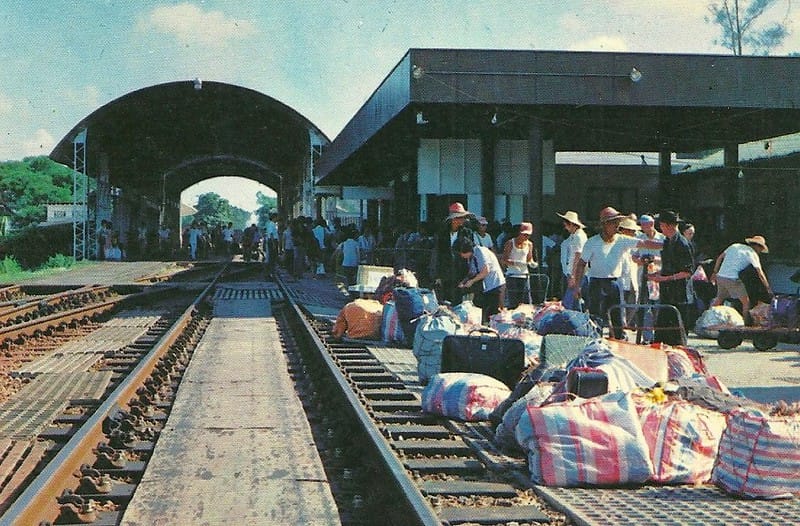
    Hong Kong, 1987: The Lo Wu train station at what was then the “Sino-British Border” between Hong Kong and mainland China. Image credit: Nathan Hughes Hamilton / CC BY 2.0

    For two and a half years, Hong Kong-based American businessman John Kamm focused exclusively on prisoners of conscience. Then, in the summer of 1992, Kamm received a request to intervene on behalf of Hong Kong businessman Chong Kwee-sung. Chong, an American green card holder, was taken into custody at the border crossing between Hong Kong and mainland China in August 1991 and immediately transported to Zhengzhou, Henan Province. Three months later he was formally arrested on suspicion of fraud.

    Chong was representing an American bicycle importer who was embroiled in a commercial dispute with Zhengzhou-based Central China International Economic and Trading Corporation. For 30 months, from August 1991 to February 1994, Chong was held in a Zhengzhou detention center. He was allowed to keep his cell phone, which he used to call colleagues and family to arrange the payment of bribes to guards, who in turn afforded him better treatment, including a choice spot near a window in his 40-man cell.

    Kamm quickly made the Chong Kwee-sung case a priority, raising it on every trip he made to Beijing from the second half of 1992 until Chong’s release. In meetings with Kamm, China’s Ministry of Public Security, Hong Kong and Macau Affairs Office, State Council Information Office, and Ministry of Foreign Affairs all heard about Chong.

    A breakthrough in the case came in early 1994 when an increasingly desperate Chong wrote a letter to his family in which he said he wanted to commit suicide by refusing to eat or drink. A guard smuggled the letter out of the detention center. Chong’s daughter immediately brought the letter to Kamm. While she told Kamm that he could use the letter to help win her father’s release, she asked that he not give the letter to the Chinese authorities in order to protect the guard and her father from reprisal.

    Kamm set up a meeting with one of China’s most famous police officers: Zhu Entao, head of the Ministry of Public Security’s International Division, and known in some circles as “China’s 007.” Zhu was China’s senior representative on Interpol and among the most senior Chinese officials who decided which prisoners to release. He was a dapper, sophisticated man who first met Kamm in the mid-1970s, while managing the Guangzhou Trade Fair’s Liaison Office for westerners.

    The pair met in Zhu’s office at the Ministry of Public Security. While holding the letter in plain view, Kamm pleaded for Chong’s freedom. Weeks later, Chong was released and allowed to return to Hong Kong.

    After his release, Chong came to see Kamm. The two men repaired to a nearby restaurant, where Chong provided a detailed account of his time in detention. He revealed that detainees worked long hours making plastic flowers for export to the United States and brought with him a box that named the Los Angeles-based importer. He also spoke of witnessing the beatings of detainees whose families were too poor to make pay-offs. Most shocking was Chong’s account of the practice of executing young, healthy men so that a hospital, which had a business relationship with the detention center, could harvest their organs.

    Young men were executed in batches of 14. The executions were scheduled when the hospital had filled all of its beds with patients, mostly from Southeast Asian countries, desperate for life-saving transplants. The day before they were to be executed, the detainees were informed of their fates, provided with a farewell meal, and given an injection to reduce the trauma a body suffers when a bullet is taken in the back of the head. The prisoners’ organs were harvested in specially designed vehicles parked at the site of the executions. Chong told Kamm that he was aware of more than 20 such “batch executions” during his time in the center.

    China has since banned the use of prisoner organs for transplants and prohibits the export to the United States of goods made in prisons or detention centers. Chong’s revelations were among the first detailed reports about these practices, and they contributed to their eventual abolition.


    Listen to the Encounters with China podcast.

    Subscribe to receive notifications about new episodes. 

    Read all John Kamm Remembers stories.


  • In Bid for MFN, 2000 Olympics, China Freed Catholics

    In Bid for MFN, 2000 Olympics, China Freed Catholics

    << Read all John Kamm Remembers stories

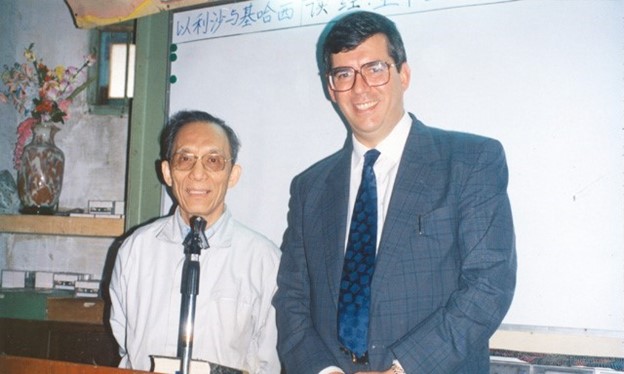
    A photo of Father Li Fangchun, who was released on medical parole in 1992, with Father Giancarlo Politi.

    The attempt by US Congress to attach human rights conditions on the renewal of China’s Most Favored Nation (MFN) trading status narrowly failed when Senate Majority Leader George Mitchell could not muster the votes necessary to override President George H. W. Bush’s veto in the summer of 1991.

    Beijing knew that the fight to renew MFN in 1992—a presidential election year—would be a tough one, and that it would be necessary to continue making human rights concessions to achieve renewal of that trade status without conditions. Adding to China’s willingness to compromise was the 2000 Summer Olympics. Beijing announced a bid to host the games in February 1991 and the winner would be determined in September 1993.

    American businessman Kamm, who by late 1991 was increasingly seen as a middleman in securing the release of Chinese prisoners of conscience, had an idea for how China could demonstrate its commitment to human rights. He suggested the release of “underground Catholics.” As the early 1990s began, dozens of Catholic clergy and laity were being held in prisons and re-education through labor (RTL) camps as well as “homes for the elderly,” detention facilities for elderly clergy operated by the State Administration of Religious Affairs (SARA). For many Catholics, their only offense was refusal to join the Catholic Patriotic Association under the control of the Chinese Communist Party.

    In meetings with a number of Chinese government agencies—including the State Council Information Office, the Ministry of Foreign Affairs, the Ministry of Justice, the Ministry of Public Security, and the Catholic Section of SARA known as the Second Department—Kamm argued that releasing underground Catholics, served China’s twin goals of renewing MFN and securing the 2000 Olympics.

    Kamm stressed the high percentage of Roman Catholics who were members of US Congress, and the large number of countries in Europe, Latin America, and Asia with majority Roman Catholic populations. He used the information obtained during his visit to Meizhou Prison in late 1991—that elderly prisoners are eligible for medical parole—to concentrate his early efforts on bishops and priests in their seventies.

    From January 1992 to September 1993, Kamm intervened on behalf of more than 20 Catholic clergy, many of whom were brought to his attention by Giancarlo Politi, a Catholic priest in Hong Kong. Kamm put their names on lists, raised their names in meetings, unleashed a barrage of letters and faxes, and, as a Roman Catholic, requested to hear Mass said by the clergy and to send them Christmas cards.

    By September 1993, virtually all of the bishops and priests for whom Kamm advocated had gained early release, including:

    • Bishop Liu Guandong (刘冠东), the de facto president of the underground Chinese Bishops Conference, was sentenced to three years of RTL on May 21, 1990. He was released one year early on May 21, 1992.
    • Father Jin Dechen (靳德辰), sentenced to 15 years in prison for counterrevolutionary crimes in 1982, was released on parole on May 21, 1992.
    • Monsignor Wang Yijun (王益俊), one of the longest serving Catholic prisoners who was sentenced to prison for counterrevolution in 1981 and then sentenced to an additional three years of RTL in February 1990, was released on parole on May 21, 1992.

    China’s effort to win renewal of its MFN trade status was successful in 1992, and in 1993, President Bill Clinton eschewed legislative action in favor of an executive order that was eventually abandoned as China’s economic clout and lobbying prowess began to rise. As for its Olympic bid, after leading in four of five rounds of voting, China was finally edged out by Sydney, which won by two votes. To this day, Catholics, like other religious groups, continue to be persecuted in China, and elderly clergy can still be found in government-run “homes.”


    Listen to the Encounters with China podcast.

    Subscribe to receive notifications about new episodes. 

    Read all John Kamm Remembers stories.


  • I Guess You’d Call it a Miracle

    I Guess You’d Call it a Miracle

    << Read all John Kamm Remembers stories

    Kamm with the Li Brothers following their release in 1991.

    In early 1991, after stepping down as president of the American Chamber of Commerce in Hong Kong, John Kamm began working as a private businessman to help political prisoners in China, starting with several visits to Guangzhou. Human rights activists initially greeted his efforts with skepticism. At a breakfast meeting with Kamm, Human Rights Watch Hong Kong Director Robin Munro expressed disbelief that businesspeople could be effective rights advocates.

    A few weeks after the breakfast, Munro phoned Kamm at his Hong Kong office. Making clear that he was calling in his private capacity, Munro told Kamm that a journalist friend had given him a letter smuggled out of a detention center in Hengyang, Hunan Province. “You say that businesspeople can help political prisoners,” Munro told Kamm. “Well, here’s your chance.”

    Two brothers, Li Lin and Li Zhi, wrote the letter. They had been leaders in the spring 1989 protests in Hengyang. Both fled to Hong Kong after the protests subsided, courtesy of Operation Yellow Bird. Once in Hong Kong, Li Lin, a leader of the Hunan Independent Workers Federation, found work as a mechanic, while his younger brother, Li Zhi, worked as a salesman and musician.

    The brothers went back to their hometown to visit family during the Lunar New Year holiday in 1991. Contrary to assurances from local officials, both were detained on February 16, 1991.

    Munro gave Kamm the brothers’ names (in Pinyin and in characters) as well as their Chinese ID numbers and the location of the detention center where they were allegedly being tortured.

    It happened that, in the afternoon, Kamm was to meet with a Deputy Vice-Secretary General of the State Council, accompanied by an editor of a left-leaning Chinese newspaper in the then-British colony, and an officer of the American Consulate General. The State Council official got right to the point: “Why is it so difficult for China to win renewal of its Most Favored Nation (MFN) trade status in the United States?” Kamm responded, “Because, every day, average Americans like me hear something about how your government treats its citizens that makes us angry.” The official asked, “What do you mean?” Kamm replied by handing the official a note with the information on the Li brothers. “I understand they are being tortured,” Kamm said. The official took the note, folded it, and put it into his pocket.

    In order to prepare for two testimonies to Congress in late June 1991, Kamm flew to Beijing to obtain updates on political prisoners in early June. He set up meetings with a number of officials, including the State Council official who had accepted the note. Prior to this meeting, Kamm met with the Supreme People’s Court (a court vice president and directors of court’s Criminal Division and Foreign Affairs Bureau) and an official of the China Council for the Promotion of International Trade, Kamm’s official host. The purpose of this meeting was to ask about the possibility of parole for Lo Xaixing, a former Hong Kong Trade Development Council representative who was serving a five-year sentence for his role in helping dissidents escape China in the aftermath of June 4.

    After asking about Lo, Kamm followed up with a question about two men who had been convicted along with him. The vice president misunderstood Kamm’s question and replied: “Regarding the Li brothers, their case will be handled in accordance with the policy that those who have committed offenses during the turmoil can return to China provided they do not commit new crimes.”

    After being sentenced to five and a half months for illegal border crossing, the Li brothers were released on July 9, 1991—four weeks after Kamm’s meeting with the State Council official. The brothers went directly to Hong Kong and had dinner with Kamm the following day. They were emaciated and showed signs of having been tortured. The day Kamm raised their cases was the day police started treating them better, the Li’s told Kamm. The Li brothers eventually traveled to the United States where they were granted political asylum.

    Months later, on another trip to Beijing, Kamm had an informal meeting with the Supreme People’s Court Foreign Affairs Bureau official who had attended the meeting at which the Li brothers were discussed. Kamm asked for information on the policy that those who fled China after June 4 would not be detained provided they did not commit new crimes. The official replied that he was also curious about this policy, but had found no relevant official documents. Kamm asked, “If that’s the case, why were the Li brothers released?”

    The official replied, “I guess you’d call it a miracle.”


    Listen to the Encounters with China podcast.

    Subscribe to receive notifications about new episodes. 

    Read all John Kamm Remembers stories.


  • Meeting Li Ruihuan in the Great Hall

    Meeting Li Ruihuan in the Great Hall

    << Read all John Kamm Remembers stories

    Executive Director Kamm meets with Li Ruihuan at the Great Hall of the People in 1991.

    After his early trips to Guangdong in the first half of 1991, Executive Director Kamm headed north to Beijing to discuss human rights and raise the names of prisoners. In May of that year, a senior official of the Supreme People’s Court told Kamm that the case of the Li brothers—two young Hunan labor leaders—would be settled. They were released shortly after his visit.

    Kamm’s host in Beijing in the early 1990s was the China Council for the Promotion of International Trade (CCPIT), an organization that Kamm had extensive dealings with in the 1970s and 1980s in his capacity as an officer of the National Council for US-China Trade, based in Washington DC, and the American Chamber of Commerce in Hong Kong.

    Of the many meetings the CCPIT organized for Kamm during the early 1990s, none was more important than the meeting with Communist Party of China Politburo Standing Committee member Li Ruihuan on November 25, 1991. The meeting was held in the Great Hall of the People, and representatives from central government ministries, including the State Council Information Office, the Ministry of Foreign Affairs, and the Ministry of Justice, were present. (Li was a carpenter who helped build the Great Hall.)

    The meeting began with Li Ruihuan thanking Kamm for helping to preserve China’s trade in the United States. Kamm responded by thanking Li for China’s decision to drop charges against labor leader Han Dongfang and to allow the early release of student leader Wang Youcai. Kamm argued that more of these releases would translate into better prospects for approval of Most Favored Nation tariff status.

    “Releasing people from prison is no big deal,” Li replied. He said that when foreigners come to China and ask “why” (wei shenme) we don’t release such and such a person, we reply “for no particular reason” (bu wei shenme). Sometimes releases become more difficult when foreign governments are vocal about a specific case, since Chinese leaders never want to appear to give in to foreign government demands.

    Li went on to say that the Chinese government was well aware of American concerns about particular prisoners. Some Chinese leaders have asked, when reflecting on President Nixon’s visit to China in 1972, why neither Deng Xiaoping nor Hu Jintao, both in jail at the time, had their cases raised by American visitors.

    Li went on: “It’s true that Americans often don’t understand how the Chinese people feel. But it’s also true that Chinese often don’t understand how American people feel.”

    Li recounted that upon President Nixon’s arrival in China, he was driven to the Diao Yu Tai Guesthouse. Opposite the entrance of the guesthouse was a large concrete sign proclaiming in Chinese characters, “We Will Definitely Liberate Taiwan!” When Nixon was given a translation, he was furious. Premier Zhou Enlai immediately rushed to the President’s suite and asked him not to pay attention to such slogans: “They are empty cannons!”

    When Kamm met with Li in November 1991, Beijing was in the grip of a campaign against “spiritual pollution” and littered with slogans. Everyone in the room chuckled at Li’s reference to “empty cannons.” Shortly after the meeting, Kamm was authorized to ask about and receive information on prisoners from the Ministry of Justice and to visit Chinese prisons under their management.


    Listen to the Encounters with China podcast.

    Subscribe to receive notifications about new episodes. 

    Read all John Kamm Remembers stories.


  • Kamm’s First List

    << Read all John Kamm Remembers stories

    This post was originally published as part of Dui Hua’s Roots series in its June 2015 Digest.

    Kamm visits Pastor Lamb at his house church in Guangzhou in 1998.

    After stepping down as President of the American Chamber of Commerce at the end of 1990, American businessman John Kamm, now executive director of The Dui Hua Foundation, stepped up his efforts to engage the Chinese government in a dialogue on human rights. In 1991, he made 11 trips to mainland China, seven of which were to cities in Guangdong Province.

    His concentration on Guangdong was deliberate. It was China’s top exporter to the United States, with half of its exports destined for America. It was the principal site for foreign investment in China. Guangdong was the “home country” for the majority of Chinese Americans, whose relatives had emigrated to the United States as early as the 1840s. Since 1956, Guangdong’s capital began holding biannual export commodities fairs, and this venue soon became China’s most important window to western countries and firms wishing to do business with the country.

    Kamm enjoyed deep roots to the government and people of Guangdong. Fluent in Cantonese, he had attended every Guangzhou trade fair since 1976, and had established the first foreign office in Guangzhou in 1979. He had visited every prefecture in the province and was an honorary professor at the Guangzhou Foreign Trade Institute. Professor Qian Yimin, president of the Guangzhou Foreign Trade Institute, became close friends with Kamm and closely followed Kamm’s testimony to US Congress in 1990.

    Kamm approached Qian to see if the professor could win the support of Guangdong’s senior leaders for a series of fact-finding missions on three general themes: 1) the fates of individuals serving sentences in Guangdong prisons for the peaceful expression of their political and religious views; 2) the living conditions of individuals recently released from prison sentences for counterrevolutionary crimes; and 3) the conditions in the province’s prisons. Senior leaders agreed to support Kamm’s request, and the trips began in February.

    Prior to Kamm’s March 1991 trip, he submitted to the prison administration department a short list of individuals serving sentences in Guangdong prisons for political and religious offenses—the first of hundreds of prisoner lists Kamm submitted to the Chinese government. The 10-name Guangdong list included Yi Danxuan and Chen Pokong (陈破空), June 4 activists who organized the obstruction of the Pearl River Bridge in protest of the suppression of the student-led protests in Beijing; Luo Haixing (罗海星), a Hong Kong trade representative who helped organize the escape from China of those fleeing the suppression of the protests, and two individuals sentenced with him, Li Peicheng and Li Longqing (李龙庆)); Democracy Wall activists Wang Xizhe (王希哲), He Qiu, and Liu Shanqing (刘山青)); and house church pastors Mai Furen and Sun Ludian.

    By the end of the year, Yi Danxuan, Luo Haixing, Mai Furen, and Sun Ludian had been granted early release from prison. He Qiu and Li Shanqing were released after serving their full terms, though Liu was allowed to return to Hong Kong despite having been given a supplemental sentence of deprivation of political rights, which usually bars individuals from exiting the country. The remaining four prisoners were released in 1992 and 1993, three prior to the expiration date of their sentences. Only Chen Pokong was released after serving his full sentence.

    Kamm made a point of paying several visits to individuals who had served sentences for counterrevolution and were rebuilding their lives in Guangzhou. These included the prominent house church leader Lin Xiangao, known in the West as pastor Samuel Lamb; Father Tan Tiande of the Sacred Heart Cathedral; and Li Jengtian, a leader of one of the Li Yizhe Democracy group active in Guangzhou in the mid-1970s.

    Kamm visited Pastor Lamb on three occasions in his Madazhan house church located on the second floor of a “shop-house” in the old city. At the time, Lamb was holding four services a day, attracting 400 worshippers at each service. A few months before Kamm began his visits, police had raided the church and confiscated its bibles. When Kamm arrived for his first visit he had to pass through a police post on the ground floor.

    Gaining access to Father Tan also proved difficult. A representative of the local Catholic Patriotic Association initially refused to let Kamm see the elderly cleric, but Kamm sought a meeting with the officially recognized bishop of Guangzhou, who ultimately approved the meeting with Father Tan. Both Pastor Lamb and Father Tan had spent more than 20 years in labor camps for their faith.

    In addition to handing over his first prisoner list in 1991, Kamm made his first visits to Chinese prisons. In May, he visited the Guangzhou Juvenile Prison in Shi Qing and witnessed young people assembling radios for export to Southeast Asia. In October Kamm toured the Meixian Prison in northeast Guangdong, where he was informed that pastors Sun and Mai had recently been released on medical parole due to their old age.


    Listen to the Encounters with China podcast.

    Subscribe to receive notifications about new episodes. 

    Read all John Kamm Remembers stories.

  • The Northeast China Autonomous People’s Republic

    The Northeast China Autonomous People’s Republic

    << Read all John Kamm Remembers stories

    This post was originally published as part of the Roots series in the May 2015 Digest.

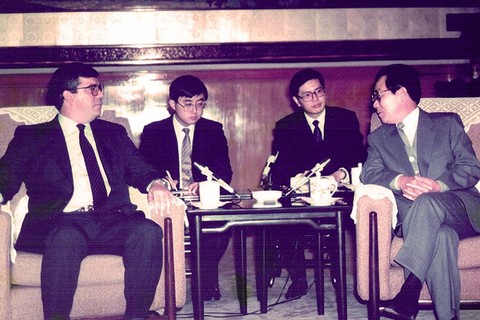
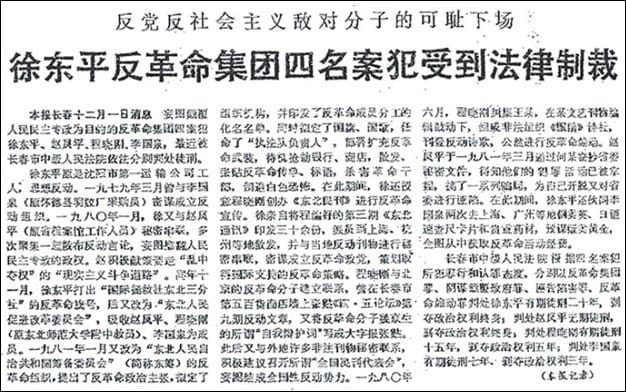
    An article from the Jilin Daily in 1983 provided Kamm the names of previously unknown political prisoners.

    John Kamm was a private businessman based in Hong Kong when he was granted a meeting with Vice Minister of Justice Jin Jian and Prison Administration Bureau Director Wang Mingdi in April 1992. At the time, US Congress was debating whether to extend Most-Favored-Nation tariffs to China, and Kamm was one of the principal proponents in favor of granting China this treatment. The Chinese government decided to support Kamm’s effort by releasing information on cases and granting clemency to prisoners Kamm named in meetings and lists.

    During the April meeting, Vice Minister Jin offered to respond to any prisoner inquiry Kamm submitted, provided that the name was given in accurate pinyin or, even better, in Chinese characters. Kamm immediately asked about Wei Jingsheng, arguably China’s most famous political prisoner known for his essays in support of democratic reform published during the brief period of political liberalization of the late 1970s. True to the vice minister’s word, Director Wang Mingdi responded to Kamm’s inquiry. Information included in the response was published the next day in The New York Times, which referred to the correspondence as “the first time that the [Chinese] government has provided extensive details of the imprisonment of Mr. Wei.”

    Two years later, Kamm was compelled to look into a lesser-known case. In February 1994, Human Rights Watch published Detained in China and Tibet: A Directory of Political Prisoners. The 632-page tome contains information on approximately 1,700 prisoners and remains a valuable resource for scholars and activists.

    Buried in the section “Long-Term Prisoners Sentenced Prior to 1989” was an account of a counterrevolutionary party, the Preparatory Committee for the Northeast China Autonomous People’s Republic, set up in Jilin Province in the early 1980s. The account was based on the transcript of a Changchun Radio broadcast recorded by the BBC. It gave the names of the three ringleaders—Cheng Xiaogang, Shi Dongting, and Zhao Fengxing—thought to remain in prison.

    Kamm wondered whether the names were recorded correctly and if a written account of the case could be found in a provincial newspaper. On a hunch, he visited a Hong Kong library and searched Jilin newspapers published in late 1983. After several hours, he came across a detailed account of the case in the December 2 edition of the Jilin Daily that named the party leaders as Cheng Xiaogang, Xu Dongping, and Zhao Fengping.

    Armed with Chinese characters and accurate pinyin, Kamm immediately filed an inquiry with the Ministry of Justice. In response, the ministry advised Kamm that all three men had been convicted of counterrevolutionary crimes. Cheng Xiaogang was sentenced to 15 years in prison and paroled on December 1, 1987. Xu Dongping was sentenced to 20 years in prison and released on medical parole in 1991. Zhao Fengping was given a life sentence, which was commuted to 13 years on December 20, 1989. Zhao’s sentence was due to expire on December 19, 2002. Kamm continued to inquire about Zhao after founding Dui Hua—until the ministry reported that he had been released two and a half years early on April 21, 2000.

    The prospect of finding the names of political prisoners in open source materials seemed absurd until John Kamm went to a library in 1994. Five years later, Kamm would establish Dui Hua, which, due in part to the contribution of open-source research, now maintains the world’s largest database of Chinese prisoners of conscience.


    Listen to the Encounters with China podcast.

    Subscribe to receive notifications about new episodes. 

    Read all John Kamm Remembers stories.

  • Dui Hua History: April 1999 – An Official Origin

    << Read all John Kamm Remembers stories

    This post was originally published as part of Dui Hua’s This Month in History series in its April 2015 Digest.

    On April 16, 1999, The Dui Hua Foundation was established as a California nonprofit public benefit corporation. Shortly thereafter, the Internal Revenue Service approved Dui Hua’s tax-exempt status, registering it as a 501(c)(3) under the tax code. These twin developments enabled Dui Hua to start operations by opening its first office, hiring staff, and applying for grants from governments and private foundations.

    Dui Hua was established for the dual purposes of uncovering the names of political prisoners in open-source publications issued by the Chinese government and submitting lists to the Chinese government inquiring about these individuals. Prospective grantors initially approached Dui Hua’s methods with skepticism, doubting that open-source research would turn up any new names. As one scholar who participated in a peer review of a grant application said: “The Chinese government does not put information on sensitive political cases in publicly accessible materials.”

    Dui Hua quickly proved disbelievers wrong. By the end of 1999, Dui Hua had found hundreds of names of previously unknown prisoners and began submitting the names to China’s Ministry of Justice and other ministries. In 2000, the foundation launched its Political Prisoner Database with 1,600 names, 80 percent of which were discovered through Dui Hua research into records and yearbooks issued by public security bureaus, courts, procuratorates, and prisons. By the end of 2014, the database held records on more than 30,000 prisoners, making it the world’s largest and most comprehensive resource of its kind.

    One of the earliest cases uncovered by Dui Hua was that of Shanghai labor leader Jiang Cunde (蒋存德). Jiang tried to establish an independent trade union similar to the Polish union Solidarity. He was sentenced to life in prison for “counterrevolutionary sabotage” in 1987. After six years of medical parole, Jiang was sent back to prison in 1999. That year Dui Hua found his name in the 1997 Shanghai Public Security Yearbook and began submitting requests for information about him. Jiang’s life sentence was commuted to 20 years in prison in 2004. He remains in prison in Shanghai, where he is confined in a ward for mentally ill prisoners. According to information received by Dui Hua from a government source in February 2015, Jiang suffers from schizophrenia.


    Listen to the Encounters with China podcast.

    Subscribe to receive notifications about new episodes. 

    Read all John Kamm Remembers stories.

  • Dui Hua History: March 2002 – Meeting the Nuns of Drapchi

    << Read all John Kamm Remembers stories

    Following the release on medical parole of elderly Tibetan teacher Jigme Sangpo on March 31, 2002, and his subsequent arrival in the United States on July 13, 2002, Dui Hua shifted its attention to Ngawang Sangdrol, the young leader of a group known as the Singing Nuns of Drapchi. Ngawang Sangdrol had been detained in June 1992 and was subsequently tried and sentenced to three years in prison for the crime of counterrevolutionary propaganda and incitement. She entered Drapchi Prison the same month.

    In October 1992, Ngawang Sangdrol and 13 other imprisoned nuns secretly recorded 27 songs expressing love for the Dalai Lama and their desire for a Tibet free from Chinese rule. The recordings were smuggled out of Drapchi and were soon circulating in Tibet and abroad as the CD “Seeing Nothing but the Sky.” As a result of the recording, Ngawang Sangdrol and the other “singing nuns” received three-year sentence extensions. For her continued protests in prison, Ngawang Sangdrol’s sentence was extended again in 1996 and 1998.

    Following intense discussions between Dui Hua Executive Director John Kamm and China’s Ministry of Foreign Affairs (MFA), Ngawang Sangdrol was released on parole on October 14, 2002. Dui Hua received credible reports that she had serious health problems, and Kamm requested permission from the MFA to fly to Lhasa to meet her and ascertain whether she wished to receive medical treatment abroad. Permission was granted, and accompanied by an MFA officer, Kamm travelled to Lhasa in late February 2003.

    On February 28, 2003, Ngawang Sangdrol, joined by her niece, was taken to see Kamm in a conference room of the Foreign Affairs Bureau of the Tibet Autonomous Region. She said she was suffering from severe headaches and requested Kamm’s help in seeking medical treatment abroad. Exactly one month later, on March 28, 2003, Ngawang Sangdrol departed China and arrived in the United States, accompanied by an officer of the US Embassy. After a brief stay in Switzerland, Ngawang Sangdrol settled in the United States, where she remains today.

    One year later, in February 2004, the last of the Singing Nuns of Drapchi, Phuntsog Nyidron, had the remaining years of her sentence commuted by the Lhasa Intermediate People’s Court. By then the atmosphere in Beijing regarding prisoner releases had begun to sour. It took two years for the Chinese government to approve Phuntsog Nyridon’s application for a passport. Unlike in the cases of Jigme Sangpo and Ngawang Sangdrol, Kamm’s application to visit the nun in Lhasa was not approved. Phuntsog Nyridon eventually departed Tibet and arrived in the United States in March 2006. She now lives in Switzerland, which has the highest population of Tibetans outside Asia.

    The overseas Tibetan community, governments, and human rights NGOs lobbied for and welcomed Ngawang Sangdrol’s release and credited Dui Hua for arranging it. In 2006, French director Marie Louville released to critical acclaim the documentary Prisoner of Lhasa, telling the story of Ngawang Sangdrol and John Kamm.


    Listen to the Encounters with China podcast.

    Subscribe to receive notifications about new episodes. 

    Read all John Kamm Remembers stories.

  • Dui Hua History: February 2006 – Attending Trials

    << Read all John Kamm Remembers stories

    This post was originally published as part of Dui Hua’s This Month in History series in its February 2015 Digest.

    Dui Hua has long advocated for greater transparency in China’s judicial system, and in particular has pushed for more trials to be open to foreigners. All Chinese trials except those involving state secrets, juveniles, or certain sensitive issues, like sex crimes, are supposed to be open, but foreign attendance is rare. After two years of applying to attend trials of disturbing public order and endangering state security, Kamm was finally permitted to attend trials in Beijing and Guangzhou in February 2006.

    The first trial was one of a “small-scale mass incident” held in Beijing’s Chaoyang District People’s Court on February 17, 2006. After leaving a bar, the defendant had attacked a man, causing a crowd to gather. The defendant was arrested for “creating a public disturbance,” an offense he had been convicted of once before. At the trial, the defendant pled guilty, and due to his “genuine remorse and willingness to reform,” he was given a relatively light sentence of two years in prison.

    The next trial involved was held at the Guangzhou Intermediate People’s Court on February 20, 2006. A young man who had split with his girlfriend tried to reclaim a cell phone he had given to her. In the ensuing struggle, the young man, an 18-year-old migrant worker, picked up a knife and stabbed the girl to death. The girl’s family, who were in court, demanded the defendant pay compensation according to a fixed formula, but the migrant worker was from a poor family and had no resources. The judge suspended the trial to decide whether to amend the charge from robbery to murder, which he subsequently did. The young man was sentenced to death.

    The judge agreed to meet with Kamm after the hearing was suspended, and Kamm opined that in the United States, the crime would probably be considered second-degree murder, as it was not premeditated and took place in the heat of the moment. After the defendant was sentenced, Kamm wrote to the judge again expressing his hope to avoid the use of capital punishment. The young man was sentenced to death with two-year reprieve on appeal, and the sentence was subsequently commuted to a fixed term.

    On the same trip, Kamm was allowed to visit the verdicts room of the Chaoyang court. Foreigners can apply to read verdicts there, but permission is rarely granted. In recent years, however, more and more verdicts have become available on Chinese court websites, and they have become an important resource for Dui Hua’s work tracking political and religious crime.


    Listen to the Encounters with China podcast.

    Subscribe to receive notifications about new episodes. 

    Read all John Kamm Remembers stories.

  • Dui Hua History: January 2005 – An Unusual Fax

    << Read all John Kamm Remembers stories

    This post was originally published as part of Dui Hua’s This Month in History series in its January 2015 Digest.

    In January 2005, Dui Hua received an unusual fax from China’s Ministry of Foreign Affairs (MFA). The unsigned documents comprised four lists of information on sentence reductions and parole for 56 Chinese prisoners serving sentences for counterrevolution or ESS. Nearly all of the information was new, and most of it related to prisoners whose names were unknown outside China. The information came from provincial prison bureaus in 11 provinces, with the bulk of it out of the Tibetan Autonomous Region and Fujian.

    At the time we received the fax, the United States and China were engaged in talks about sentence reduction and parole systems in the two countries. (These talks were the forerunner of the present-day Legal Experts Dialogue.) The United States, based on its own research, contended that China discriminated against prisoners serving sentences for counterrevolution and ESS in the country’s sentence reduction and parole system. China denied this accusation, and by providing information to Dui Hua on more than four dozen acts of clemency, hoped to buttress its claim.

    The amount of case information the Chinese government provided in that single fax is more than it gave Dui Hua during the full year 2014, yet even a decline in information cannot change that fact that Dui Hua remains the only non-governmental organization in the world to exchange information on prisoners directly with the Chinese government, and the only body in the world other than the United Nations to receive written information on prisoners from the Chinese government. In fact as China increasingly guards its prisoner information from foreign governments, Dui Hua’s receipt of information on 40 cases in 2014 is no small feat.


    Listen to the Encounters with China podcast.

    Subscribe to receive notifications about new episodes. 

    Read all John Kamm Remembers stories.

  • Dui Hua History: December 2001 – The Eleanor Roosevelt Award for Human Rights

    << Read all John Kamm Remembers stories

    This post was originally published as part of Dui Hua’s This Month in History series in its December 2014 Digest.

    On December 13, 2001, Executive Director John Kamm received the Eleanor Roosevelt Award for Human Rights for his and Dui Hua’s work in helping prisoners of conscience through dialogue with China. Established in 1998 by Secretary of State Madeleine Albright under the direction of President Bill Clinton, the Eleanor Roosevelt Award is given to Americans who have an outstanding record of promoting human rights domestically or internationally. Before presenting the award at the US Department of State, then Deputy Secretary of State Richard Armitage praised Kamm, who had left the business field to become a full-time human rights advocate, for showing that “business people can not only open markets to American products they can touch hearts with their pursuit of American values.”

    Dui Hua was less than two years old at the time of the award. Now in our 15th year, Dui Hua continues to advocate for at-risk prisoners and human rights advancements by engaging in dialogue with the Chinese government and with human rights advocates worldwide. In addition to our focus on political prisoners, Dui Hua has expanded its mission to advocate for the rights of juvenile offenders and women at odds with the law.

    For the original transcript of the 2001 award ceremony, please click here.


    Listen to the Encounters with China podcast.

    Subscribe to receive notifications about new episodes. 

    Read all John Kamm Remembers stories.

  • Dui Hua History: November 2011 – Non-Residential Residential Surveillance

    << Read all John Kamm Remembers stories

    This post was originally published as part of Dui Hua’s This Month in History series in its November 2014 Digest.

    On November 2011, Executive Director Kamm testified before the Committee on Foreign Affairs of the U.S. House of Representatives as part of the hearing on the annual report of the Congressional-Executive Commission on China. Titled “Separate and Unequal: State Security Detainees in China,” the testimony highlights how detained individuals who are viewed as a threat to one-party rule receive harsher punishments than other detainees in what Kamm called a dual-track justice system.

    At particular risk of receiving discriminatory treatment are people accused of crimes of endangering state security (ESS). It is commonplace for their families not to be notified of the reasons for their detention, for their cases to be classified as state secrets, and for their trials to be closed. Those convicted of ESS are designated “important prisoners” and held under closer watch. Sentence reduction and parole are stifled. The rate of clemency for ESS prisoners is far lower than that of the general population, as discrimination pervades every step of the lengthy process. Once ESS prisoners are released they are subject to a supplemental sentence of one to five years’ deprivation of political rights (DPR). People serving DPR cannot publish their writing or give interviews. They cannot vote, stand for office, or work at a state-owned company. Many are subjected to house arrest and enforced disappearance.

    Amendments to the Criminal Procedure Law, drafted prior to Kamm’s testimony and effective January 1, 2013, placed even greater restrictions on ESS suspects. Lawyers now have to apply for permission to hold meetings with these clients and ESS suspects can be disappeared through the use of “non-residential residential surveillance” (NRRS). Under this form of so-called residential surveillance, suspects can be detained in a place that is not their residence or a prison or detention center for up to six months without their families being notified of their whereabouts.

    Although legal, the practice does not appear to be widely used. Dui Hua is aware of only two cases of NRRS, both of which occurred in 2013. Yang Guixiang (杨桂香) was placed under NRRS for petitioning for compensation for a land development project, while Zhu Chengzhi (朱承志) was held for raising questions about the circumstances of the death of labor activist Li Wangyang (李旺阳).

    Shortly after Kamm gave his testimony, the United Nations also issued a statement criticizing the use of NRRS. While implementation difficulties like finding appropriate sites may have made NRRS impractical, international criticism stemming from the work of Dui Hua and other organizations also served to deincentivize the its use. As part of our mission to advocate for the rights of at-risk detainees, Dui Hua continues to raise awareness of human rights abuses through publications and outreach.


    Listen to the Encounters with China podcast.

    Subscribe to receive notifications about new episodes. 

    Read all John Kamm Remembers stories.