Tag: SPC statistics 1946-2016

  • Subversion in Xi’an: The Trials of Guo Ran & Kou Ji

    Subversion in Xi’an: The Trials of Guo Ran & Kou Ji

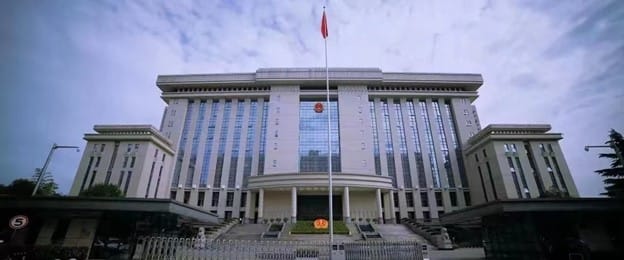
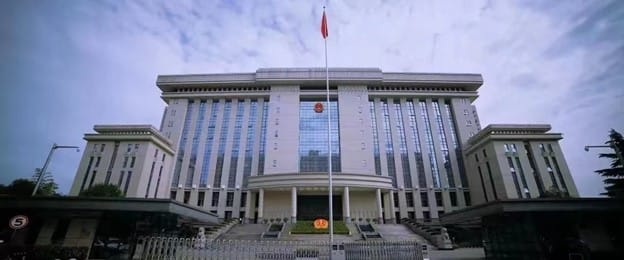
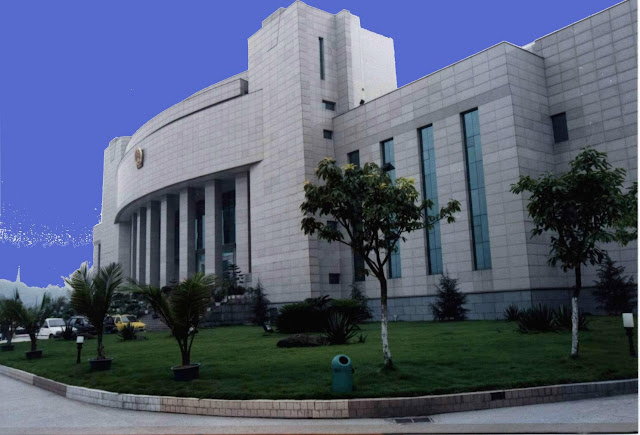
    The Xi’an Intermediate People’s Court building. Image credit: Xi’an court website 

    Dui Hua’s research into Chinese government sources uncovered new information concerning Guo Ran (果然) and Kou Ji (寇稽). The two men received lengthy prison sentences in a closed-door trial for subversion held in Xi’an in 2013. Subversion is a crime of endangering state security and carries a maximum sentence of life imprisonment. 

    Dui Hua first discovered their names in an annual work report an annual work report released by the Xi’an Intermediate People’s Court in June 2013. The report stated that Guo and Kou were tried for subversion, but the trial outcome was not disclosed. Their fate was only subsequently revealed by sentence reduction decisions posted on China Judgements Online around 2016.  

    The first reduction decision Dui Hua found stated that Kou, born in 1969, was serving his 10-year prison sentence in Shaanxi’s Weinan Prison. Because of good behavior and meritorious service, Kou received his first sentence reduction of nine months in February 2016, about four years into his sentence. Two years later, in May 2018, Kou received his second sentence reduction of seven months.  

    That same year, Guo, born in 1981, received his first sentence reduction of five months in September. The sentence reduction decision stated that Guo was serving his 14-year prison sentence for subversion in the same prison as Kou. The clemency he received took place seven years into his prison sentence. Kou completed his prison sentence on July 13, 2020, and his three-year supplemental sentence of deprivation of political rights (DPR) is thought to have expired on July 12, 2023. Guo’s sentence is expected to end on July 1, 2025, after which he will begin his five years of DPR. All three sentence reduction decisions have since been removed from China Judgements Online. 

    A search for “inciting subversion of state power” that yielded no results in July 2021. Dui Hua conducted another search in May 2024. As in 2021, the search yielded no results. Image credit: China Judgements Online

    The court documents did not provide other case specifics beyond their background, crime, sentences, sentence reductions, and new release dates. The acts leading to their imprisonment were unknown. Around 2019, information from unofficial news sources concerning this subversion case began to surface. However, it was only briefly reported that Guo frequently held gatherings on his own business premises to discuss pathways to achieve freedom and democracy. The duo was reportedly detained in 2012 and formally arrested on February 20, 2013. 

    A Chinese government publication Dui Hua uncovered in 2022 sheds light on this mysterious case of subversion. Guo operated a private gallery, and Kuo was an architect. The two were accused of establishing a political group known as the “Xingya Party” (兴亚党, lit “Thriving Asia Party”). Guo published posts online and recruited people online to join the group. Members were to become citizens of the “Chinese Federal Republic” (中华联邦共和国). Guo allegedly called on online recruits to carry out violent activities.  

    As part of their operation, which they named “Dawn of Liberty,” Kou was allegedly tasked with collecting intelligence about troop deployment and military facilities on Chongming Island, China’s third largest island located on the estuary of Yangtze River in Shanghai. Guo intended to launch a military occupation there and create the “Chinese Federal Republic,” according to the official narrative. Kuo was also accused of scheming and drafting the “state creed.” Guo was arrested for subversion, and Kuo was initially arrested for kidnapping.

    Military patrol on Chongming Island. Image credit: Sohu 
    While this account is likely the only official source which provides information about the acts of Guo and Kou, Dui Hua is unable to assess how truthful the description of criminal activities is. Assuming this account is accurate, Guo and Kou are not the first people to have been sentenced to lengthy terms for subversion for founding opposition parties and advocating for a violent overthrow of the Chinese government.  
    According to Records of People’s Courts Historical Judicial Statistics: 1949-2016, Chinese courts accepted 162 subversion cases involving 347 individuals in the 18-year period from 1998 to 2016. Many of these subversion cases are by nature sensitive, and information pertaining to these cases is far from transparent. 
    Among the earliest cases of subversion involved leaders of the so-called “Southwest Yangtze Column of the Chinese Anti-Corruption Army” (中国人民农工反腐败大军西南长江纵队) in Chongqing. Established by farmers in 1998, the group called itself a democratic alternative to the Chinese Communist Party (CCP). It opposed excessive agricultural taxes and distributed fliers calling for the rehabilitation of June Fourth prisoners on the tenth anniversary of the 1989 pro-democracy movement. Sentenced to 12 years’ imprisonment for subversion in the early 2000s, Song Bukun (宋步坤) is believed to be the last member of the group to be released from prison in September 2013. Dui Hua received two responses from inquiries dating back to 2008 in which government sources said Song received an 11-month sentence reduction in February 2009. 

    In March 2006, dissident writer Ren Ziyuan (任自元) was sentenced to 10 years in prison for subversion because he established the “Mainland Democracy Frontline” to promote the right to end tyranny by violent means. He reportedly published anti-government views on the Internet, including a tract entitled “The Road to Democracy” and other essays. Some human rights organizations claim that some of his essays asserted citizens’ rights to violently overthrow tyranny. Ren was released from Shandong No.1 Prison on May 9, 2015, without receiving a single sentence reduction. 

    Dui Hua uncovered details of another political party that was accused of “violent intent” in 2019. The “People’s Party,” later renamed the “New Era Communist Party of China,” was founded by Dong Zhanyi (董占义). The group aimed to fight corruption and recruit aggrieved workers and petitioners to overthrow the CCP. Dong and another founding member Chen Guohua (陈国华) established a corporate entity called Tongkang to operate a supermarket project. The plan, according to official documents, was to use the supermarket project to employ online recruits and raise money to fund their political activities, including assassination plots and procuring weapons. Dong was convicted of subversion and fraud and was sentenced to life in 2011 by a Beijing intermediate court. The sentence later was commuted to a fixed 19 years’ imprisonment in 2015. Chen was convicted of subversion and sentenced to 14 years. Other key party members were also given long sentences. 

    Xu Zhiyong (left) and Ding Jiaxi. Image credit: VOA 

    Subversion is not exclusively used to criminalize leaders of opposition parties nor is it confined to suppressing calls for the violent overthrow of the Chinese government. As recently as April 2023, prominent rights activist and legal scholar Xu Zhiyong (许志永) and rights lawyer Ding Jiaxi (丁家喜) were both convicted of subversion. Unlike Guo and Kou’s case, Xu and Ding did not establish a dissident party. They are advocates of non-violent resistance and the responsible use of civil and social rights. In late 2019, they organized an informal gathering with around 20 activists and lawyers in Xiamen to discuss current political affairs and activism. Xu and Ding were sentenced to 14 and 12 years in prison, respectively, and their appeals were rejected in November 2023. Despite their rejection of violence, Xu and Ding’s sentences are among the harshest for a subversion conviction, exceeding in length even cases where the accused allegedly called for the use of force. 

    The fates of Kuo and Guo may no longer be shrouded in secrecy, but the acts leading to their imprisonment were revealed only a decade after they were incarcerated. Such gaps in disclosure further concerns that vague laws with ambiguous wording and low levels of legal transparency are eroding confidence in China’s judicial system.  

  • UN Submission Focuses on Persecution of Women in Unorthodox Religions

    UN Submission Focuses on Persecution of Women in Unorthodox Religions

    The logo for the Committee on the Elimination of Discrimination against Women, which monitors compliance with the Convention, both of which are abbreviated as CEDAW. Image credit: UN Office of the High Commission for Human Rights

    The number of women incarcerated in Chinese prisons has grown faster than the population of incarcerated men over the past decade, and women are disproportionately represented in criminal cases involving unorthodox religious groups. These are the main points highlighted by Dui Hua in its submission to the Committee on the Elimination of All Forms of Discrimination against Women (CEDAW)’s review of China.

    CEDAW, which also stands for the Convention on the Elimination of All Forms of Discrimination against Women and is sometimes described as an “international bill of rights for women,” is the treaty and human rights instrument adopted by the United Nations that provides guidance for nations to combat discrimination faced by women. Nations that have signed and ratified CEDAW – which includes all but six UN member states – are required to submit reports to the Committee on their compliance with the Convention every four years. NGOs are invited to make submissions informing country reports, which Dui Hua did for China’s, considered during CEDAW’s 85th session in the week of May 8, 2023.

    Dui Hua’s statement largely focused on female prisoners charged under Article 300, “organizing or using a cult to undermine implementation of the law.” The statement noted that women account for 8 percent of the prison population in China – a figure similar to that of the United States – but are thought to make up more than 40 percent of prisoners incarcerated for violating Article 300 from 1998-2016. More so, court records suggest that sentencing for these cases is comparatively harsh and that instances of clemency are rare. (The statement notes that there may have been an increase in clemency over the last two years but the lack of consistent data and transparency in legal processes makes this difficult to confirm.)

    Charts 1 and 2: Gender breakdown of unorthodox religious prisoners accused of violating Article 300 in the PPDB as of March 31, 2023.*

    *Gender is not known for all cases. Image credit: The Dui Hua Foundation

    The submission builds on the research Dui Hua initially published in its report “The Persecution of Unorthodox Religious Groups in China,” which identified a gender imbalance in sentencing under Article 300. Dui Hua’s Political Prisoner Database (PPDB) holds records on 11,400 women who have been subject to coercive measures for violating Article 300 due to their participation in unorthodox religious groups, which the Chinese Communist Party regards as cult organizations practicing non-state sanctioned faiths.

    The statement also noted that women are the main target of negative stereotypes in China’s anti-cult propaganda. This messaging often relies on stereotypes of middle-aged, rural women being “weak-willed and psychologically vulnerable” and more vulnerable to “coercion or monetary enticements from cult organizations.” Such messaging, which comes from both national and regional organizations, itself seems to violate Article 5 of CEDAW which mandates that state parties take all appropriate measures to eliminate “prejudices and customary and all other practices which are based on the idea of inferiority or the superiority of either of the sexes or on stereotyped roles for men and women.”

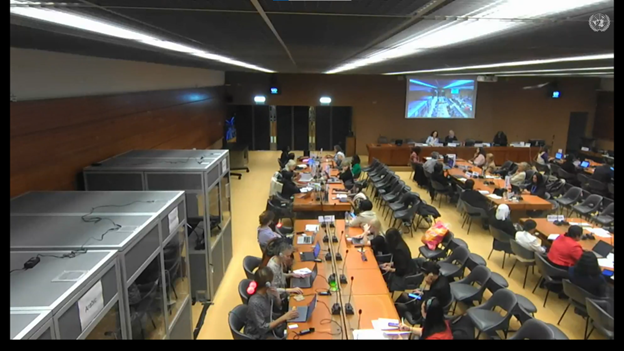
    An image from the opening session of CEDAW’s 85th session on May 8, 2023. Image credit: UN Web TV

    Another focus of Dui Hua’s submission to China’s state report was the decline in judicial transparency. Dui Hua ended its submissions by recommending that the Chinese government increase the use of non-custodial measures and clemency for women prisoners and improve judicial transparency, writing:

    Dui Hua urges the Chinese government to resume providing meaningful access for the public to judicial documents, including indictments, court judgments, and decisions of all cases, regardless of the criminal offense involved. Transparency is particularly lacking in provinces with high populations of ethnic minorities. It also helps the public understand the reasons why women are placed in custody for peacefully pursuing their religious faith and other criminal offenses.   

    This is not the first time Dui Hua has made a statement to a UN body concerning China’s treatment of female prisoners. Dui Hua previously made submissions to CEDAW during China’s previous review in 2014 and, more recently, to the Working Group on Discrimination Against Women in Law and Practice in June 2019.

    Of the 193 UN member states, 189 have ratified CEDAW, binding them to the treaty and mandating that they participate in regular review every four years. The United States has not ratified CEDAW, placing it among a small group of countries – Iran, Somalia, Sudan, Tonga, Palau – and the Holy See that have yet to bind themselves to the treaty.

    Read the full statement 

    Read the report “The Persecution of Unorthodox Religious Groups in China” 

  • Criminal Acts: Luzhou Armed Rioting Cases

    Criminal Acts: Luzhou Armed Rioting Cases

    Daheidong Cave in Luzhou, Sichuan, where the Southwest Buddha League was headquartered in 1996. Image credit: Sogou 
    The criminal acts of armed rebellion (武装叛乱) and armed rioting (武装暴乱), defined in Article 104 of the Criminal Law, are among the least understood crimes of endangering state security (ESS). They are also among the least frequently invoked in the country. Statistics published by the 12-volume Records of People’s Courts Historical Judicial Statistics: 1949-2016 indicated that Chinese courts only tried 11 cases involving 39 defendants in the 18 years beginning in 1998.
    Trials of armed rebellion and rioting intermittently took place in 1999, 2001-2003, 2006, 2008, 2011-2012, and 2015. The largest case involved 24 defendants and was tried in 1999. Two years later, six people were tried in two separate cases. Only one to two people were tried each year in the remainder of the years.
    Both armed rebellion and armed rioting are capital crimes that are punishable by death when cases are deemed to be particularly severe, but the acts are not identical. One key difference, according to Chinese legal practitioners and scholars, is that armed rebellion requires an intent to seek refuge with or assistance from an entity perceived by the Chinese government to be a hostile foreign organization.  Armed rioting, however, occurs when a group of people take up weapons or use explosives as an act of resistance against the Chinese Communist Party without seeking assistance from abroad.
    Armed rebellion and armed rioting are not the same, as explained in Illustration of Standards and Application of Law for Filing a Case, Evidence Assessment, Conviction, and Sentencing (tu jie li an zheng ju ding zui liang xing biao zhun yu fa lü shi yong 图解立案证据定罪量刑标准与法律适用). Image credit:Illustration of Standards and Application of Law for Filing a Case, Evidence Assessment, Conviction, and Sentencing, China Legal Publishing House
    As public information about armed rebellion or armed rioting cases is almost non-existent, the defendants and their acts remain shrouded in secrecy. However, Dui Hua found evidence that these cases could be connected to an armed riot which broke out 24 years ago in Luzhou, Sichuan.
    Luzhou, Sichuan 
    The 24 people convicted in 1999 were all sentenced in a closed trial in Luzhou, Sichuan. Official sentencing records report that they participated in an anti-government militia called the Southwest Buddha League (西南佛联盟). Guizhou native Chen Faqing (陈发清) founded the militia in Yongxu County, Sichuan, in the early 1990s. Chen allegedly aimed to overthrow the Communist regime and save the Chinese people from an apocalypse that he said would occur between 1997 and 2000. The militia issued its own work permits, organized an independent household registration system, and established more than 30 bureaucratic divisions and a military academy. At its peak, the Southwest Buddha League had 1,120 registered members, according to provincial records.
    The militia attempted to stage an armed riot in April 1998 after two members were detained. On June 5, armed police surrounded the group’s stronghold in Daheidong Cave in Gulin County, detaining 48 core members and confiscating more than 400 pounds of explosives. The most lenient sentence in the case was three years in prison. However, Chen Faqing and three others were sentenced to death.
    A photograph of Luzhou, Sichuan, from August 2008. Image credit: Philip / CC BY-SA 4.0
    Another three were sentenced to 15 years’ imprisonment: two of them were released early while the third died in custody. In the early 2010s, Dui Hua inquired about the fate of two of the surviving members. Chen Yunhua (陈云华) was released on November 7, 2011, after receiving a 19-month sentence reduction. Zeng Xiangui (曾显桂) received four sentence reductions totaling 60 months between 2002 and 2008. Zeng was released on June 7, 2008.
    More Trials in Luzhou 
    Dui Hua’s research has uncovered more armed rioting trials after the case of Southwest Buddha League was concluded in 1999. Coincidentally, all the trials took place in Luzhou. In April 2008, Liu Zhonglin (刘中林) received a 10-year prison sentence and a one-year supplemental sentence of deprivation of political rights. In 2012, his sentence was reduced by one year. In 2015, Sichuan’s Ya’an Prison recommended that an additional 18-month sentence reduction be given to Liu because he demonstrated diligence in prison labor. If the recommendation was approved, Liu would have completed his sentence early in June 2015.
    An armed rioting trial as recently as 2019 was also concluded in Luzhou. The case involved three defendants: Li Guanghong (李光洪), Long Xianyao (龙先尧), and Wang Anhua (王安华). The judgment, which was published online on December 25, 2019, has since been removed amid the mass purge of court judgments beginning in June 2021. The specifics of the case are unclear because the contents of the judgment had not been disclosed. Precedent suggests that prison sentences for people convicted of armed rioting tend to be lengthier and more severe, and it is very likely that the three are serving their sentences somewhere in Sichuan.
    Intermediate People’s Court of Luzhou City, Sichuan Province. Image credit: Baike 
    The 1998 incident in Luzhou took place at a time when the internet was at its infancy. It is the only armed riot known to have been documented online over the past two decades. It is difficult assess how truthful this official narrative is. Were there a recent outbreak of an armed riot, it is likely that some Chinese netizens would still have recorded and posted what they witnessed on blogging and messaging services.
    Dui Hua could not find information about any other armed riots or rebellion beyond what happened in Luzhou in 1998. The fact that all three known trials of armed rioting cases occurred in the same place can hardly be a coincidence. It is possible that those tried in 2008 and 2019 took part in the same 1998 incident and eluded police for an extended period. ESS cases are by nature sensitive and are subject to low transparency. Unless the Chinese government publishes more information about these trials, the incident officially labeled “Luzhou armed riot” will join the ranks of other mysterious ESS cases about which extremely little is known.
  • Crimes of Extremism, Part I: Observations on Use and Sentencing

    Crimes of Extremism, Part I: Observations on Use and Sentencing

    Screenshot from a 2019 CGTN program titled Fighting Terrorism in Xinjiang. Image credit: CGTN

    Extremism, officially defined in Chinese law as the “ideological basis of terrorism”, or more broadly, “inciting hatred, discrimination or agitating violence through distorting religious doctrines or other means, has long been integral to China’s security policy against the “three evil forces” (i.e terrorism, splittism, and religious extremism). However, it was not a precisely defined legal term until the following provisions were added in 2015 under Article 120 of the Criminal Law, “organizing, leading, and actively participating in a terrorist organization:”

    • Article 120(3): Promoting terrorism, or extremism or instigating terrorist activities;
    • Article 120(4): Using extremism to undermine implementation of the law;
    • Article 120(5): Coercing other people into wearing costumes or symbols to promote terrorism or extremism;
    • Article 120(6): Illegally possessing articles to promote terrorism or extremism.

    Reporting by overseas news media sources suggests that the four new crimes are most typically invoked against Uyghurs. The crimes have been criticized by United Nations’ special rapporteurs and working groups for being overly vague with no basis in binding international legal standards. Human rights groups have also said that many of the extremism arrests are made without evidentiary basis and authorities frequently fail to respect the due process rights of detainees.

    This is the first installment in a two-part series which discusses Dui Hua’s observations on extremism, with a focus on Article 120(3) and (6). Part I discusses the extent of the crimes’ application and sentencing trends, drawing on the 2016 statistics released by the Supreme People’s Court. Individuals charged with and convicted of extremism crimes are not exclusively members of ethnic minority groups, despite their accounting for most of the cases. Extremism cases are selectively published in Chinese government sources. Those involving Han are notably well documented, and only rarely do they receive lengthy prison sentences. Part II focuses on cases involving Muslim minorities. Hefty punishments appear commonplace in Xinjiang, but information on prisoners pre- and post-sentencing is extremely limited.

    Court Statistics One Year After Expansion

    According to the 12-volume Records of People’s Courts Historical Judicial Statistics: 1949-2016, China tried 1,403 extremism cases involving 2,463 defendants in 2016. Of them, 2,031, or 82 percent, were ethnic minorities. Additionally, 85 percent of the defendants were farmers. As Xinjiang has been cast as a key battlefield in the fight against extremism, it would be natural to assume that the charges are predominantly leveled against Muslim minorities.

    Table 1. Court statistics on extremism crimes for 2016

    Source: Records of People’s Courts Historical Judicial Statistics: 1949-2016
    Two-thirds of the defendants violated Article 120(3) “promoting terrorism, or extremism or instigating terrorist activities.” Slightly over one quarter were tried for Article 120(6) “illegally possessing articles to promote terrorism or extremism.” About five percent, or 124 people, were tried for Article 120(4) “using extremism to undermine implantation of the law.” Only 18 people were tried in 17 cases of Article 120(5) “coercing other people into wearing costumes or symbols to promote terrorism or extremism” in 2016.
    Of the four extremism crimes, Article 120(3) is most likely to result in lengthy prison sentences. Among the 1,669 people who received criminal punishment for this crime, 1,109, or 66 percent, received prison sentences of five years or more. By contrast, a much bigger portion of people who are tried for Article 120 (4), (5) and (6) received prison sentences below five years. The use of non-custodial punishment in all extremism cases was rare. Only 70 people convicted of the four extremism crimes were given suspended sentences or control (guanzhi).
    Members of China’s largest ethnic group, Han, are not immune to the crackdown on extremism. The court statistics indicated that 422, or 17 percent, of the 2,463 people tried for the new extremism crimes in 2016 were Han. Of them, 198 were tried for Article 120(3) “promoting terrorism, or extremism or instigating terrorist activities,” 172 for Article 120(6) “illegally possessing articles to promote terrorism or extremism,” 59 for Article 120(4) “using extremism to undermine implantation of the law,” and two for Article 120(5) “coercing other people into wearing costumes or symbols to promote terrorism or extremism.”
    Han Cases
     
    Han extremism cases are easily searchable in Chinese government and media sources. Their cases rarely result in lengthy prison sentences. Dui Hua found 18 cases tried in Beijing which invoked Article 120(3) or (6) from 2017-2021. There were 19 defendants, of whom 11 were Han, one ethnic Manchu, and one Dongxiang. Ethnicity is not always specified in the judgments. None of the Han defendants in Beijing received prison sentences of more than one year, and the lengthiest sentence of two years was given to a duo whose ethnicity is not specified.
    The circumstances of the publicly disclosed extremism cases in other Han-majority provinces are almost identical: they are accused of disseminating violent and terrorist videos they downloaded from overseas websites with the use of a VPN. The videos, typically filmed in the Middle East, contain scenes of violence with prisoners of war beheaded or executed, footage of Islamic State or sometimes Taliban attacks, training, and fighting. The defendants unwittingly commit Article 120(3) when they share the videos with their friends, post them on social media, or put them in cloud storage.
    A screenshot of a 2015 tweet from Mashable on Chinese-language ISIS propaganda. Image credit: Mashable Twitter account
    Most Han defendants are not religious, and they are depicted to have been driven by curiosity to download or share the violent videos. In some cases, they are convicted for simply poking fun at terrorist organizations or figures. In December 2019, news media sources reported that a man surnamed Zhang was sentenced to nine months in prison in Beijing for Article 120(3) for sending out a six-word joke in Chinese which can be translated as “follow me and believe in Islam, join the ISIS” to a WeChat group with over 300 people. He also used a photo of Bin Laden as his profile portrait.
    A portion of Han defendants were convicted of Article 120(6) “illegally possessing articles to promote terrorism or extremism” for keeping violent footage on their personal electronic or mobile devices, despite them not having shared anything with other people. None of the Han defendants convicted of this crime in Beijing received prison sentences exceeding one year.
    Targeting Han Dissidents
     
    While most Han defendants in extremism cases are portrayed as thrill seekers who inadvertently violate the law, precedents also show that extremism easily becomes a catch-all offense to be used in politically motivated prosecutions targeting political and religious dissenters. In such cases, prison sentences can be excessive. For instance, Huang Yunmin (黄云敏) is serving his 10-year prison sentence for Article 120(6), one of the longest prison sentences given to a Han dissenter for an extremism crime. Huang was initially detained for provoking ethnic hatred in March 2017 for accompanying farmers and ex-soldiers to Beijing to petition during the “Two Sessions.” Additionally, prosecutors accused Huang of downloading a large number of anti-China footage from overseas websites and audiovisual materials related to the July 5 Urumqi riots. Huang is scheduled for release in 2027.
    (Clockwise top left) Journalist Zhang Baocheng; Huang Yunmin, known for helping petitioners; Zhao Waikei, Xuncheng Reformed Church leader. Image credits: Civil Rights and Livelihood Watch via RFA; Asia News; WeChat via ChinaAid
    Han who express sympathy with the Uyghur cause are at heightened risk of imprisonment for extremism crimes. Zhang Baocheng (张宝成) is serving his 42-month prison sentence in Beijing for Article 120(3) and “picking quarrels and provoking trouble” until November 27, 2022. The extremism charge, which afforded him a prison sentence of eight months, stemmed from one video clip he circulated about “East Turkestan.” In November 2021, the UN Working Group on Arbitrary Detention concluded that Zhang’s detention since 2019 was “arbitrary” and called on China to “release Mr. Zhang immediately,” noting that the prosecution’s main evidence against him related not to violence but to his tweets criticizing the re-education camps in Xinjiang holding Uyghurs. The Working Group’s ruling was made public by one of the plaintiffs on April 25, 2022.
    In a separate case, Hu Xincheng (胡新城) was arrested for Article 120(3) in Taiyuan, Shanxi, in January 2022 because of his journalistic work. Hu became a thorn in the side of local governments after he published hundreds of articles and reports about corruption. Additionally, Hu reportedly gave advice to petitioners on how to find redress for grievances within the petitioning system.
    Extremism is also used to target Christians unwilling to join the state sanctioned Three Self Patriotic Church. In July 2020, police in Taiyuan arrested Zhao Weikai (赵维凯) for Article 120(6). Zhao, a leader of the Xuncheng Reformed Church, repeatedly faces harassment by the authorities because of his insistence on educating his three children at home instead of sending them to a state school to receive atheist education. Zhao was formally arrested in the same month, being accused of possessing extremism materials.
    Part II will be published next week. Subscribe to Dui Hua publications here. 
  • The Persecution of Unorthodox Religious Groups in China: A report by Dui Hua

    The Persecution of Unorthodox Religious Groups in China: A report by Dui Hua

    (Clockwise from top left) Chinese government anti-cult propaganda; Tablighi Jamaat members with Hui Muslims at a mosque; practitioners of Yi Guan Dao; promotion for Milky Way Federation; a notice expanding the penalties under Article 300; the Jesus Family. Image credits: The Paper; Umal Al-Dawa Youtube Account; Jin De Fo Tang’s Facebook account; Sohu; Liaoning Pindao; Bridge Magazine

    Dui Hua’s new report “The Persecution of Unorthodox Religious Groups in China” [PDF, 1.4 MB] details and analyzes the Chinese government’s treatment of unorthodox religious groups, listing known banned groups and the actions taken against them. The report, compiled over several months in 2021, offers a view into a substantial and largely unrecognized aspect of the Chinese population.

    “The Persecution of Unorthodox Religious Groups in China” is based on legal documents, media reports, case studies, official publications, Chinese government responses to requests for information on persecuted prisoners, court statistics, and Dui Hua’s Political Prisoner Database (PPDB).  It provides a comprehensive view of how non-state sanctioned religious practitioners come into conflict with the law, how officials at different levels of government criminalize unorthodox worship, and how past trends can inform future advocacy for those undergoing coercive measures for the non-violent expression of their beliefs.

    As early as 1951, regulations on punishing counterrevolutionaries targeted leaders of reactionary religious organizations. Currently, the Chinese government allows its citizens to take part in the five state-sanctioned patriotic associations of Buddhism, Catholicism, Daoism, Islam, and Protestantism, but many seeking spiritual salvation look beyond government-approved faiths and embrace unorthodox religious groups.

    Graph 1. Defendants and 1st-instance cases accepted and concluded for violating Article 300(1)
    Image credit: The Dui Hua Foundation

    Noting the extensive historical context informing the Chinese government’s approach to religious groups, especially those not sanctioned by the state, Dui Hua found that the 1997 revision to the criminal law placed “cult” trials into the purview of district courts, resulting in less transparency and attention for such cases. By 1999, trials of Article 300 cases—for those accused of organizing and using superstitious sects, secret societies, and religious organizations to undermine the law—soared, largely due to the ban on Falun Gong.

    The report includes an overview of 41 unorthodox religious groups; a summary of laws and regulations targeting unorthodox religious groups; analysis of court statistics from 1979-2016; discussion of deteriorating transparency in the disclosure of information on Article 300 cases; analysis of religious persecution using the PPDB; a summary of Dui Hua’s advocacy for such prisoners using prisoner lists and responses; and recommendations for future advocacy.

    Table 1. Breakdown of unorthodox religious practitioners in PPDB by affiliation
    Source: PPDB

    The objective of the report is to enable more effective interventions on behalf of practitioners of unorthodox religious groups who face coercive measures under Article 300 by providing insight and actionable information. Its main findings include the following:

    • The number of adherents of orthodox religious groups makes up more than 10 percent of China’s population, perhaps as many as 15 percent. Unorthodox religious groups exist in all of China’s provinces and autonomous regions, and many have developed links to international groups. If the number of unorthodox religious adherents was incorporated into official figures, then the number of all religious practitioners in China would far exceed the current government figure of 200 million official practitioners (as of 2018).
    • Adherents of unorthodox religious groups subjected to coercive measures for violating Article 300(1)—“organizing and using a cult to undermine implementation of the law”—and other charges make up 60 percent of all prisoners in the PPDB. Their numbers have swelled in recent years as sentence reductions and paroles have been restricted.
    • The most common crime for which adherents of unorthodox religious groups are imprisoned is covered by Article 300(1) of China’s Criminal Law but other crimes are also used, including endangering state security and economic crimes like committing fraud (Article 266) and operating illegal businesses (Article 225).
    • Falun Dafa (aka Falun Gong) and the Church of Almighty God have the largest number of adherents, but there are many other smaller groups. This report identified 41 unorthodox religious groups operating in China today or during the last two decades.
    • From 1998-2016, women made up 41 percent of those sentenced to prison for violating Article 300, five times the percentage of all women prisoners in China.
    Graph 2. Gender Breakdown of prisoners and unorthodox religious prisoners in PPDB
    Image credit: The Dui Hua Foundation
    • Adherents of unorthodox religions are typically non-violent. Instances of violence are rare; when they occur, the Chinese government features them in “anti-cult” propaganda. Adherents have been convicted of rape and murder. Those so convicted are often executed.
    • The persecution of unorthodox religious groups has existed since the founding of the People’s Republic in 1949; adherents were classified as counterrevolutionaries prior to 1997. They have been viewed as threats to the government’s hold on power.
    • Persecution of unorthodox religious practitioners rose sharply following the banning of Falun Gong in 1999. In recent years, practitioners have seen sentences increase and clemency restricted. Persecution shows no sign of abating. In 2018, there were 3,550 people tried for violating Article 300(1), one of the highest numbers of individuals tried for this charge in recent years.
    • Adherents of unorthodox religions rarely make their way onto prisoner lists submitted to the Chinese government in bilateral and multilateral human rights dialogues. Their numbers dwarf those subject to coercive measures for exercising their political beliefs.
    Dui Hua encourages governments to raise the issue of this persecution in formal and informal discussions on human rights with the Chinese government and to include the names of imprisoned practitioners of unorthodox religions to the lists compiled for use in human rights dialogues with China. When, and to the extent possible, governments and NGOs should support appeals of unorthodox religion practitioners to Special Procedures of the United Nations. More so, governments and NGOs should incorporate concerns about the persecution of unorthodox religious groups into submissions to China’s Universal Periodic Review, tentatively scheduled for October 2023.
    Finally, governments should use this report when considering applications of political asylum by practitioners of unorthodox religions. Some governments, particularly in Europe, have become more open to accepting asylum requests for Church of Almighty God members. Dui Hua encourages courts to recognize the persecution of unorthodox religious group members as grounds for asylum and to recognize precedents for such asylum requests.
  • Decoding State Security Trials, Part II: “Other” Trials & Other Provinces

    Decoding State Security Trials, Part II: “Other” Trials & Other Provinces

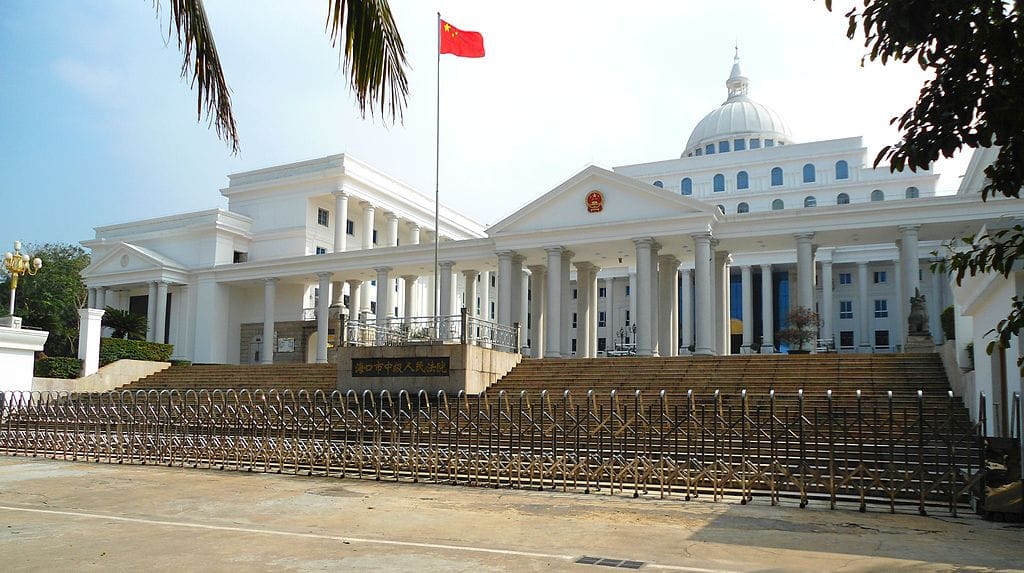
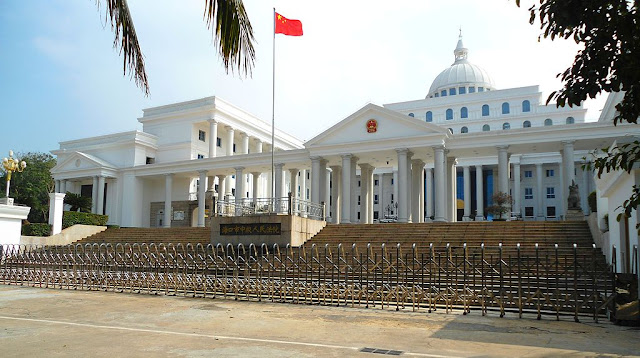
    Haikou Intermediate People’s Court in Haikou, Hainan Province, People’s Republic of China. Image credit: Anna Frodesiak / CCO

    In China, trials for crimes of endangering state security (ESS) are capable of generating intense, international media scrutiny while also being woefully opaque. In the face of severe degradations in judicial transparency, increasingly scant data—the latest from 2020—suggests that ESS trials have surged in recent years.

    In Part I, Dui Hua looked at available statistics for ESS trials, focusing on Tibet—where ESS cases rose sharply in 2020—and Xinjiang, which accounted for the largest percentage of ESS trials of any Chinese region through the mid-2010s. This entry considers the rates of additional trials categorized as “other” in China Statistical Yearbooks (中国统计年鉴): dereliction of military duty, criminal offenses prior to 1997, and ESS trials in Han-majority provinces and Guangdong.

    “Other” Trials: ESS, Dereliction of Military Duty, and Cases Before 1997

    Table 1. Number of cases and people arrested and indicted for dereliction of military duty, 2012-2018
    Source: China Statistical Yearbooks
    Dereliction of military duty typically makes up a negligible number of “other” trials. From 2012-2016, Chinese courts concluded 48 trials of dereliction of military duty, just one percent of “other” trials. China Statistical Yearbooks revealed that only two people were arrested for the crime in 2016, and no single arrest was made from 2017-2020. Additionally, no one was indicted in the three years since 2016. Assuming the same trend of arrest and indictment continues, it is to be expected that only a handful of dereliction of military duty cases had proceeded to trials in the four years since 2017.
    “Other” trials also include the little-known category of pre-1997 criminal cases, which concern crimes committed before the revised Criminal Law took effect on October 1, 1997. The Records of People’s Courts Historical Judicial Statistics: 1949-2016 indicated that nearly 60 percent of “other” trials concerned pre-1997 criminal cases from 2012-2016. In 2012 alone, fifteen years after the 1997 Criminal Law came into force, as many as 995 trials were concluded, accounting for 72 percent of “other” trials in that year. While there is insufficient information to estimate the number of pre-1997 criminal cases in recent years, the number showed signs of abating. In 2016, only 88 trials were concluded, down from 651 and 191 trials in 2014 and 2015, respectively.

    Table 2. Number of “other” trials and trials of ESS, dereliction of military duty trials, and pre-1997 criminal cases
    *(a) = (b) + (c) + (d); Sources: China Statistical Yearbooks & Records of People’s Courts Historical Judicial Statistics: 1949-2016
    Among the pre-1997 criminal cases to have been concluded after 1997 are the now-defunct crimes of counterrevolution, with a notable example being Chen Yulin (陈瑜琳). The former employee of Xinhua News Agency was accused of handing over materials, including the Xinhua telephone directory and organization chart, to a British agent embedded in the Hong Kong police force during his tenure in the early 1990s. In 2004, he was sentenced to life imprisonment in Guangzhou. He was convicted not of ESS, but of the counterrevolution crime of espionage in accordance with the 1979 Criminal Law. Chen completed his sentence in August 2020 following multiple sentence reductions granted to him since 2007.
    Hooliganism, another crime which no longer exists in the 1997 Criminal Law, was among the cases which could be found under the category of pre-1997 criminal cases before the mass purge of China Judgements Online in June 2021. China’s Criminal Law imposes no limit on the period of prosecution for cases where the suspect has escaped after a pre-1997 criminal case has been filed by police or the procuratorate, or heard by the courts. Some hooliganism cases concern prisoners who were released on probation but re-sentenced after 1997 for violating parole rules. Courts can also hear a new case and extend sentences for hooliganism prisoners for violating prison regulations. A few prisoners were sentenced to new offenses that were missing in the original hooliganism trials, and thus received sentence extensions.
    Han-Majority Provinces & Guangdong
    Outside of Tibetan regions and Xinjiang, Dui Hua’s research into provincial statistical yearbooks found that few ESS trials have been concluded in Han-majority provinces. In Chongqing, no ESS trials were held from 2018-2020. Hainan accepted and concluded two ESS trials in 2020, whereas Guizhou only held one ESS trial every year from 2014-2019.
    More ESS trials took place in Guangdong, but the figures are far out of proportion given the province’s large population. From 2013-2019, courts in Guangdong concluded 54 ESS trials. Although the numbers in 2020-2021 are not yet available, it is likely that some of the latest ESS trials were closely related to Hong Kong.
    In 2018 and 2019, Guangdong authorities arrested a total of 17 people on suspicion of ESS and indicted a total of 30 people on ESS charges. Some of the ESS arrests in Guangdong over the past three years involved Hong Kong’s anti-extradition bill protests. In April 2021, state-run news media publicized four ESS cases in Guangdong, two of which were Hong Kong-related. In June 2020, a university student from Hong Kong surnamed Yeung was accused of subversion while studying in the mainland. Yeung not only retweeted in support of Hong Kong’s “black-clad mobs,” but also smeared the police force with a stated goal to bring Hong Kong’s model of political resistance to China.
    In the second case, a mainland student studying at the University of Hong Kong posted information on social media to support Hong Kong protesters and attack the central government. His messages also included “liberate Hong Kong,” a banned slogan also deemed capable of inciting secession in the former British colony. Detained in June 2020 upon his return to the mainland, the student reportedly wrote a 100,000-word repentance statement in which he vowed not to take part in activity that endangers state security.
    More Hong Kong-related ESS arrests were made in Guangdong. In September 2021, news media sources reported that independent journalist Huang Xueqin (黄雪琴) was placed under residential surveillance at a designated location in Shenzhen. She was formally arrested for inciting subversion the following month. Prior to her arrest, Huang was briefly detained for “picking quarrels and provoking trouble” in 2019 after taking part in and publishing writings about the Hong Kong protests. Arrested with Huang in October was her friend Wang Jianbin (王建兵), an education and labor advocate. Wang too was arrested for inciting subversion.
    ESS trials have long been criticized for being opaque. A number of these trials were held behind closed doors with citizens, journalists and foreign diplomats shut out, as in the cases of the Canadians Michael Spavor and Michael Kovrig and Australian citizen Yang Hengjun (杨恒君, aka Yang Jun). The identities, acts, and fates of many more people tried, convicted, and sentenced in ESS cases are not known.
    Media attention for recent ESS cases on Twitter (left to right): Reporters Without Borders calls for the release of Huang Xueqin; PEN America calls for the release of Yang Hengjun; Canada’s Prime Minister hails the release of Michaels Kovrig and Spavor. Image credits: RSF in English Twitter account; PEN America Twitter account;  Justin Trudeau Twitter account
    In 2021, transparency of ESS cases dipped to a record low. Dui Hua’s Political Prisoner Database has information on 68 individuals who were sentenced in ESS trials of first instance in 2020. With the mass purge of court judgments online, the Chinese government has undone some of its progress in judicial transparency and, in doing so, possibly harmed its own rule of law.
  • Decoding State Security Trials, Part I: ESS Cases in Tibet Rose Sharply in 2020

    Decoding State Security Trials, Part I: ESS Cases in Tibet Rose Sharply in 2020

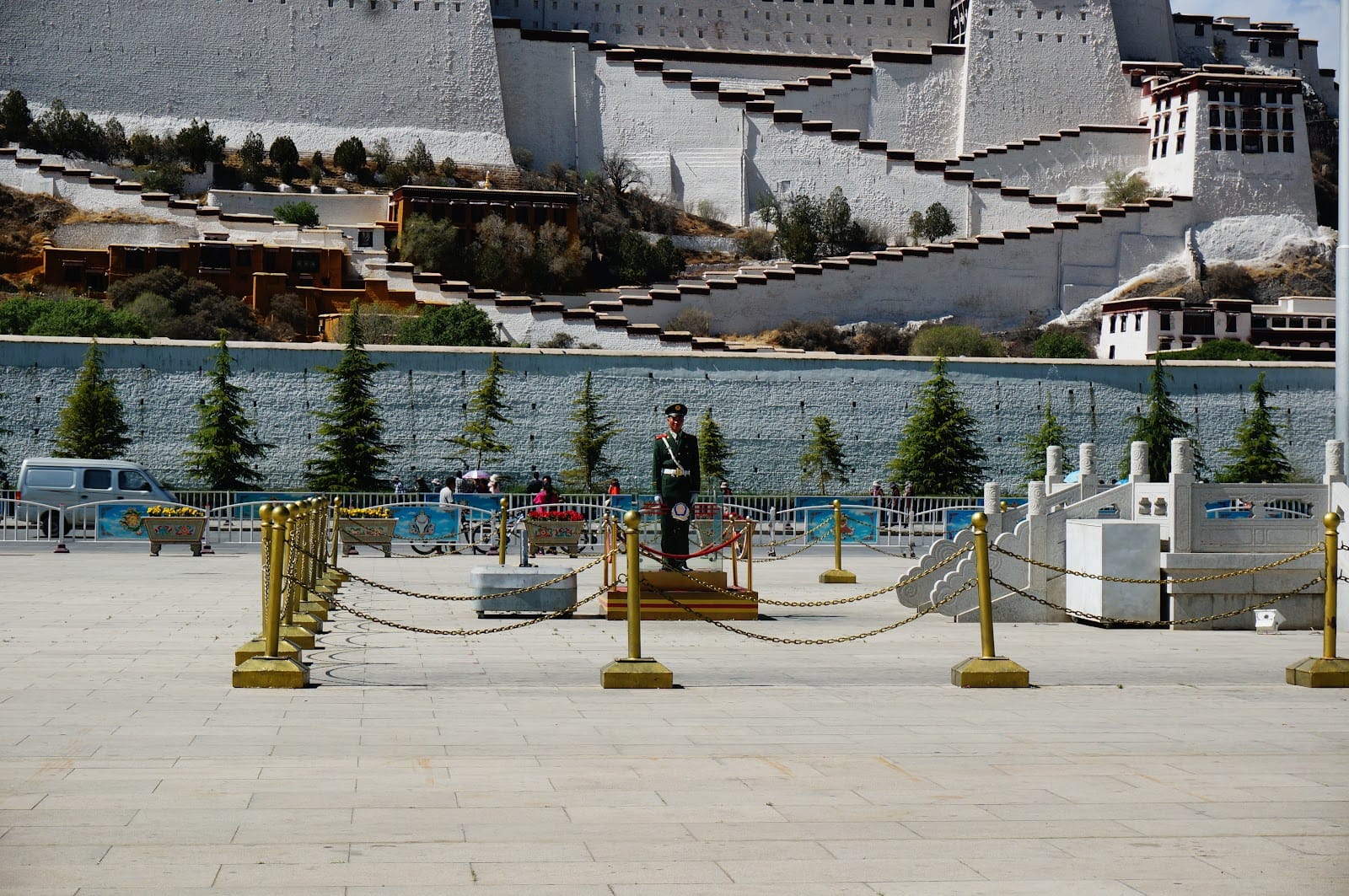
    Chinese guard in Potala Square on May 20, 2014. Image credit: Andrew and Annemarie / CC BY-SA 2.0

    Crimes of endangering state security in China achieved international attention in 2021 with high-profile cases related to hostage diplomacy, even as available information about individual trials decreased. Such crimes include subversion, splittism, incitement to subversion/splittism, espionage, and state secrets violations. They carry a mandatory supplemental sentence of deprivation of political rights, precluding individuals from writing articles, giving interviews, voting, standing for office, and working in a state-owned company.

    From 2017-2020, Chinese courts concluded 1,330 trials of endangering state security (ESS), dereliction of military duty, and pre-1997 offenses, according to Dui Hua’s analysis of data published annually in China Statistical Yearbooks (中国统计年鉴) by the National Bureau of Statistics. The yearbooks, accessible on the National Bureau of Statistics website, provide information on the number of first-instance criminal trials accepted and concluded by people’s courts nationwide.

    ESS, dereliction of military duty, and criminal offenses prior to October 1, 1997 are typically included in the category of “other” trials. In 2020, the latest year for which information is available, trials of ESS by Chinese courts appear to have surged. They accepted 417 “other” trials, up from 257 and 317 in 2018 and 2019, respectively. The courts also concluded 382 “other” trials in 2020, an increase from 218 and 283 over the previous two years.

    This post, the first of two, looks at the number of ESS trials in Tibetan areas as well as in Xinjiang. Part II details case numbers for “other” trials such as dereliction of military duty as well as ESS trials in Han-majority provinces and Guangdong.

    Table 1. Number of “other” trials and trials of ESS, dereliction of military duty trials, and pre-1997 criminal cases

    *(a) = (b) + (c) + (d); Sources: China Statistical Yearbooks & Records of People’s Courts Historical Judicial Statistics: 1949-2016

    A fair portion of “other” trials are made up of ESS. Statistics released by the Supreme People’s Court in the 12-volume Records of People’s Courts Historical Judicial Statistics: 1949-2016 confirmed that a total of 1,602 ESS trials were concluded from 2012-2016, making up 40 percent of “other” trials. In 2016, as many as two-thirds of the 285 “other” trials concluded were ESS.

    Tibet

    Tibet covers one-eighth of China’s territory and has a relatively small population of 3.6 million people, but a disproportionately large number of China’s ESS trials are concluded in the region. With a level of transparency not seen in other provinces, the high court of the Tibet Autonomous Region has annually disclosed the number of ESS trials in the region for the years 2018-2020. In 2018, 25 people were tried for inciting splittism and providing funds to entities/individuals to endanger state security. The following year, 37 people were tried in 24 ESS cases involving the same offenses. The latest available 2021 work report stated that the number of ESS cases in 2020 increased to 65 involving 74 defendants.

    Official figures disclosed in Ganzi Prefecture also hint at the extent of crackdown in the Tibetan autonomous region in western Sichuan. Although trial numbers are not available, the prefecture’s procuratorate approved the arrest of nine individuals in seven ESS cases in 2020, according to its 2021 annual work report. That same year, 15 people were indicted in 12 ESS cases. While figures are available for Tibet and Ganzi, it is not known how many people were arrested, indicted, or tried in other Tibetan regions in Sichuan, Gansu, Ningxia, and Yunnan.

    Tibetans stand accused of ESS for sharing news and opinions on social media and for contacting relatives living in exile, sometimes with news of anti-government protests. Chinese authorities maintain tight control over information flows across the Tibetan regions. Dui Hua’s research into court judgments found the names of nine Tibetans who were tried for inciting splittism in Ganzi between June and August 2020. From September to December of the same year, six more Tibetans were tried in Ganzi, and seven Tibetans were tried for the same crime in its neighboring Aba Prefecture. These judgments provided no information beyond their names, the charges against them, and the dates of the judgment.

    Xinjiang

    Dui Hua’s analysis of data published in the annual work reports of the Xinjiang High People’s Court through the mid-2010s found that the autonomous region accounted for the largest percentage of ESS trials of any Chinese region. About 300 ESS trials were held in Xinjiang each year in 2013 and 2014, accounting for three quarters of China’s total ESS trials. The number decreased in 2015, but Xinjiang continued to account for almost half of the 214 ESS trials nationwide. The lack of publicly available data in recent years makes it impossible to ascertain whether the majority of ESS cases continued to be concluded in the region. The use of the vast network of re-education camps beginning in 2017 might have an impact on the number of ESS trials. Authorities in Xinjiang can easily stifle dissent under the pretext of vocational training without invoking ESS crimes.

    In 2021, transparency of ESS cases dipped to a record low. Dui Hua’s Political Prisoner Database has information on 68 individuals who were sentenced in ESS trials of first instance in 2020. With the mass purge of court judgments online, the Chinese government has undone some of its progress in judicial transparency and, in doing so, possibly harmed its own rule of law.

    Read Part II.

  • Article 299: Criminalizing Disrespect of the National Flag, Part II

    Article 299: Criminalizing Disrespect of the National Flag, Part II

    Read Part I here.

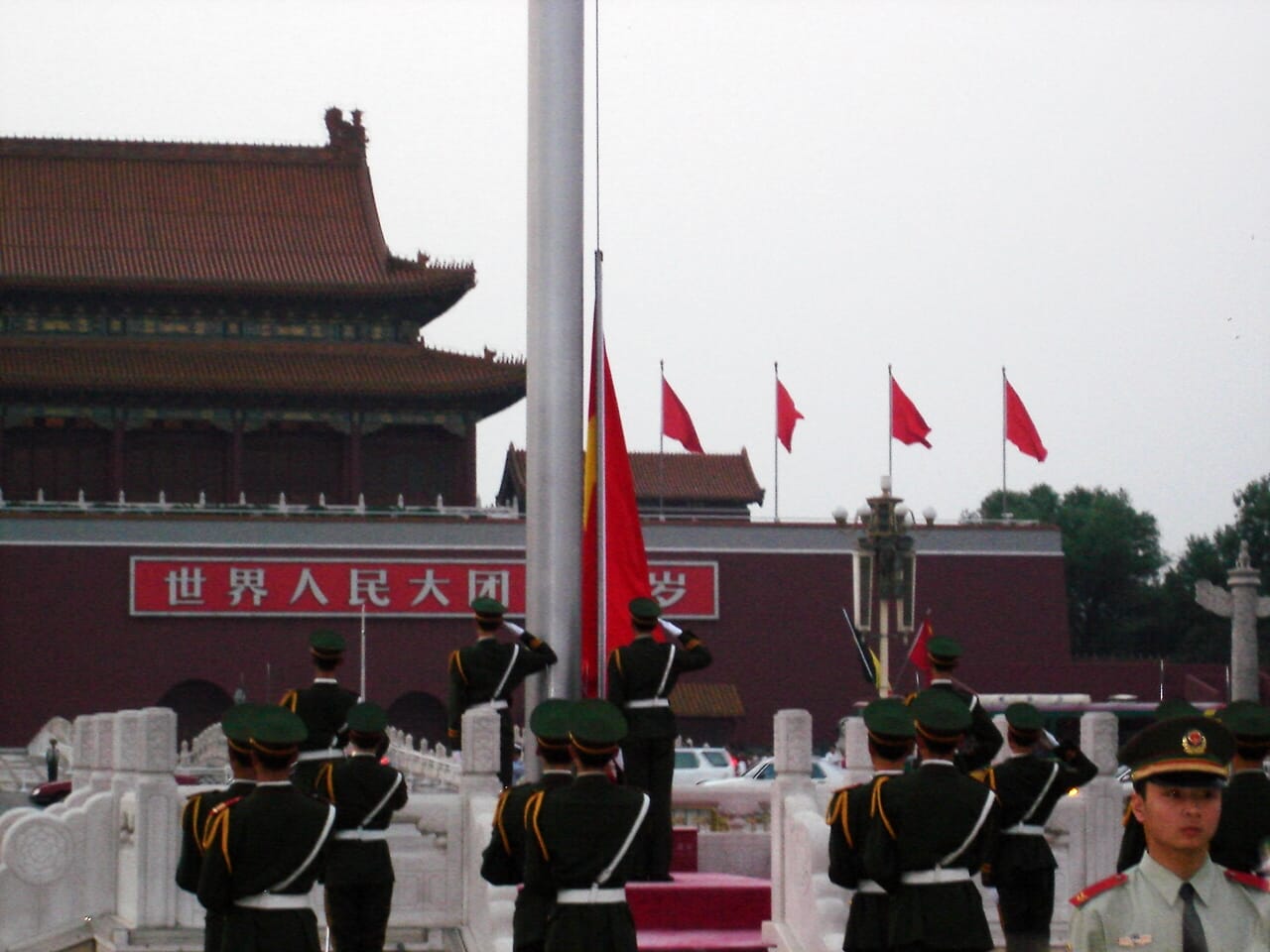
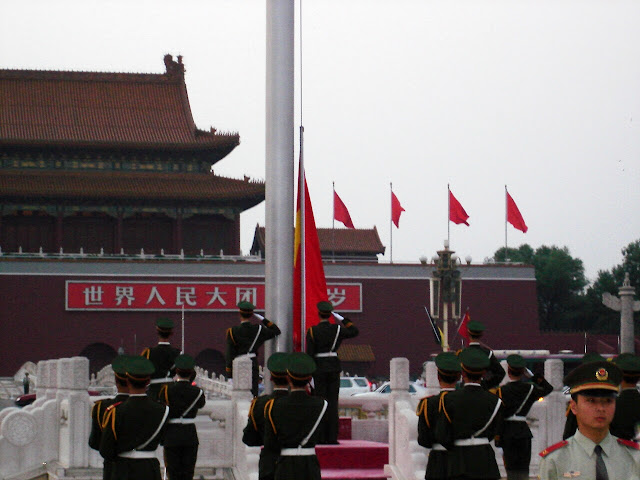
    A flag hoisting ceremony in Tiananmen Square in 2005. Image credit: 武当山人 / CC BY-SA 3.0

    The desecration of national symbols is a crime under Chinese law. The National Flag Law was enacted in June 1990 and was extended to cover the national emblem one year later. While the laws were merely codes governing formalities to display the national symbols, a provision to the 1979 Criminal Law added in 1990 made intentionally desecrating the national flag and symbol in public a crime punishable by up to three years’ imprisonment.

    This article explores the often-ignored topic of flag desecration in China. Part I looked at trends in sentencing and the law’s application across different cases. Part II discusses how the law is applied to different groups like Falun Gong, Tibetans, and Uyghurs. While most publicly disclosed cases involve “ordinary” offenders who did not desecrate the flag for political reasons, the same acts committed by practitioners of Falun Gong and ethnic minorities tend to result in lengthier prison sentences.

    Political Cases 

    In cases where national symbols in China are desecrated in protest of public policy, like those of Wang Chunhua (王春花) and Lie Jinjie (刘杰津) discussed in Part I, the starting point for sentencing appears to get noticeably longer. Two other cases, which involved criticism of the CCP and so-called “anti-China elements,” also resulted in lengthier prison sentences. However, the circumstances of these cases have not been made entirely clear in available sources.

    1. Tianjin’s first flag desecration case concerned Wu Zhaoming (吴兆明), who was sentenced to two years in prison in December 2017 for cutting up and damaging a total of 66 national flags, allegedly in a bid to express his discontent with the CCP. Some of the damaged flags and flagpoles were found in garbage bins and on sideroads. Available sources did not explain why Wu became dissatisfied with the CCP.
    2. In a separate case in Changsha, Hunan, Wu Di (吴迪) was sentenced to 18 months in prison in January 2020 for setting fire to four flags with a lighter. Prosecutors alleged that Wu experienced depression due to unemployment and became “thrill-seeking” after he browsed overseas “anti-China” websites. From October 1-2, the 70th anniversary of the People’s Republic of China, he circulated a video to his friends of himself burning the flags on a university campus.

    Falun Gong 

    As shown in the chart below, from 1998-2016, only five people had received the maximum sentences of three years in prison. Of them, Dui Hua found that two were Falun Gong practitioners:

    Chart 1. Sentencing breakdown of defendants convicted of Article 299

    Source: Records of People’s Court Historical Judicial Statistics: 1949-2016
    An early case involved Zhang Jingzhi (张敬之) and Wen Yanyu (文廷玉); each was sentenced to three years in prison for throwing paint-filled eggs at flags at a public memorial in Chongqing in August 2009. The heavy sentences could be attributed in part to the timing and setting of their protest. The flags were displayed at a memorial for “revolutionary martyrs”—300 Communist political prisoners held and then slaughtered by Kuomintang security agents in Chongqing’s notorious Zhazidong Prison Camp on November 27, 1949, as the city fell to the People’s Liberation Army.
    According to media accounts, national and local leaders expressed concern about this flag desecration case, and personal instructions to investigators were reportedly issued by then-Chongqing governor Bo Xilai—whose use of public patriotic campaigns and a heavy-handed crackdown on corruption and organized crime was seen by some as an attempt to generate popular support to become a member of the powerful Politburo Standing Committee.
    Another pair of Falun Gong practitioners, Dong Zhiyong (董志勇) and Zhi Xunlin (茆训林), in Jiangsu were sentenced for both Article 299 and Article 300 on November 2016. Although Article 299 in this case only carried one year in prison, they ended up serving prison sentences of 57-69 months because of Article 300. Chinese government sources said that the duo used sickles to damage 114 flags flown on street lampposts in the run up to the 64th National Day.
    Tibetans 
    From time to time, Tibetans have undertaken flag desecration to express their blatant rejection of Beijing’s repressive religious policy, desire for genuine autonomy, and even independence. In her blog Invisible Tibet, prominent writer Tsering Woeser chronicled multiple instances of what appeared to be flag desecration incidents across the Tibetan plateau amid the 2008 Lhasa Riots. Protesters across cities and townships reportedly raised the “snow lion flag,” a symbol of the Tibetan independence movement, in place of the Chinese national flag just months ahead of the Beijing Summer Olympics.
    The Tibetan flag carried during Olympic torch run demonstrations in San Francisco, California, on April 9, 2008. Image credit: Victor Lee / CC BY-NC-ND 2.0
    However, many flag burning protesters might not have been charged with Article 299. Court statistics indicate that only three ethnic minorities were convicted of flag desecration from 2008-2009. It is possible they were convicted of the more serious charges of splittism or inciting splittism, with the former carrying a potential death sentence.
    Dui Hua’s Political Prisoner Database has information on two Article 299 cases from 2011-2013. The two cases, both reported by Radio Free Asia, were likely linked to the self-immolation protests involving over a hundred Tibetan women and men who set themselves ablaze to highlight resistance to Beijing’s rule:
    1. Around 2011, Sonam Norgye received a three-year prison sentence in Basu [Pashoe] County, Tibet, for hauling down and soiling with feces a Chinese flag that had been raised by government workers in the area;
    2. In September 2013, a court in Sichuan’s Kardze County reportedly handed prison terms of between one and four years to three monks accused of pulling down the Chinese national flag at a local school. Because Article 299 only carries a maximum sentence of three years, one of the monks might have been convicted of an additional crime.
    Dui Hua previously reported the case of Garab (嘎热) who was accused of desecrating the flag out of frustration over the disaster relief efforts for the devastating 7.8-magnitude earthquake that rocked Nepal on April 25, 2015. The earthquake also brought causalities and widespread damage to southwestern Tibet, including his home in Tingri County.
    According to the court judgment, Garab found an old Chinese national flag in the ruins of his former home weeks after the April quake. Prosecutors alleged that he burned holes in the flag and then used a marker to write “Free Tibet” on it. After allegedly hiding the flag under his mattress for several days, he discarded it along a path where some village children found it. Members of a work group stationed in the village noticed the children playing with the flag and reported the incident to local authorities. Garab received a prison sentence of two and a half years in November 2015.
    Uyghurs
     
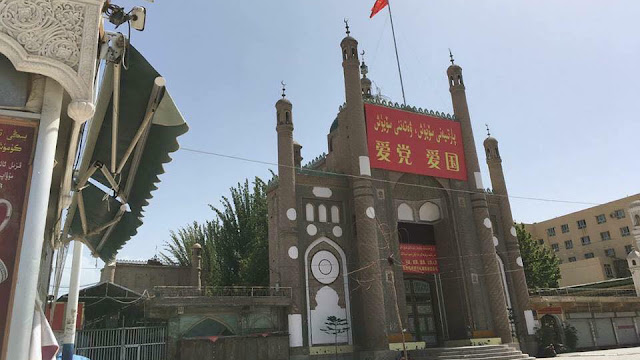
    A picture of Jama Mosque in Kargilik County, Kashgar, with China’s flag and propaganda banners that read “Love the Party, Love the Country.” The photo is undated but was published by Radio Free America (RFA) in August 2018. Image credit: RFA via an unnamed RFA listener


    The PPDB also has information on two Article 299 cases involving Uyghurs. In both cases, the Uyghur defendants received relatively lengthier prison sentences.
    1. On February 20, 2013, two Uyghurs were sentenced to 24-30 months’ imprisonment in Wensu County, Aksu Prefecture. State news media sources claimed that they refused to perform salah, the obligatory Muslim prayers which are performed five times each day, in mosques where the national flag was displayed. They pulled down and burned the Chinese national flag on December 26, 2012.This trial was attended by a total of 1,208 people, including county congress representatives, religious figures, and villagers. The large size of the court audience suggested that the trial was conducted in the form of a public sentencing rally, which is often held in large outdoor public spaces like plazas and stadiums where the accused are bound and flanked by police in front of crowds of spectators that can number in the thousands. While public sentencing rallies in Xinjiang are typically held in cases involving violence, drugs, and state security, this case indicates that Uyghurs in flag desecration cases can also be brought to a public rally.
    2. Just a month after the flag desecration case in Wensu County, a similar case was concluded in Awat County, also in Aksu Prefecture. According to news media sources, all mosques in the county were required to fly the Chinese national flag after August 2011. A muezzin (the person who performs the call to prayer) put the flag into a fireplace; he blamed the flag for the drop in mosque worshippers. Concerned about the choking smoke, he threw the half-burned flag outside of the mosque. He received a 30-month prison sentence on March 19, 2013. 

    Article 299: Beyond the National Flag


    It is worth noting that the scope of activities punishable under Article 299 is expanding. The tenth amendment to the Criminal Law, which went into force in November 2017, made insults to the national anthem a crime punishable under the same article. Dui Hua previously reported the first known such case involving a female member of Almighty God in Xinjiang Production and Construction Corps. She received a 30-month prison sentence for composing “the Song of Satan’s Victory,” similar in tune to the national anthem.
    Effective March 1, 2021, a new provision added to Article 299 extended the same punishment to those who “misrepresent, defame, profane or deny the deeds and spirits of heroes and martyrs.” On the same day, Chinese blogger Qiu Ziming (仇子明) became the first person to be convicted of this new crime over his posts that authorities say demeaned the Chinese military casualties of a border clash with Indian soldiers in June 2020. Qiu, also a victim of China’s practice of airing forced confessions on state television, is serving his eight months’ prison sentence in Jiangsu until October 19, 2021.
    Footage of Qiu’s televised forced confession. Image credit: Hanqiu.com
    China is not alone in taking an aggressive stance towards desecration, but questions remain as to whether sentencing is consistent, appropriate, and fair to all. The cases demonstrated in this post suggest that Falun Gong practitioners, Tibetans, Uyghurs, and those who commit the crime as a symbolic political expression against the CCP are at higher risk of receiving longer prison sentences. As Xi continues to cement the notion that a deep love for the CCP and even himself is the same as a deep love for the nation, it is likely that more people who do not share his version of patriotism will run afoul of an ever-expanding Article 299.
  • Article 299: Criminalizing Disrespect of the National Flag, Part I

    Article 299: Criminalizing Disrespect of the National Flag, Part I

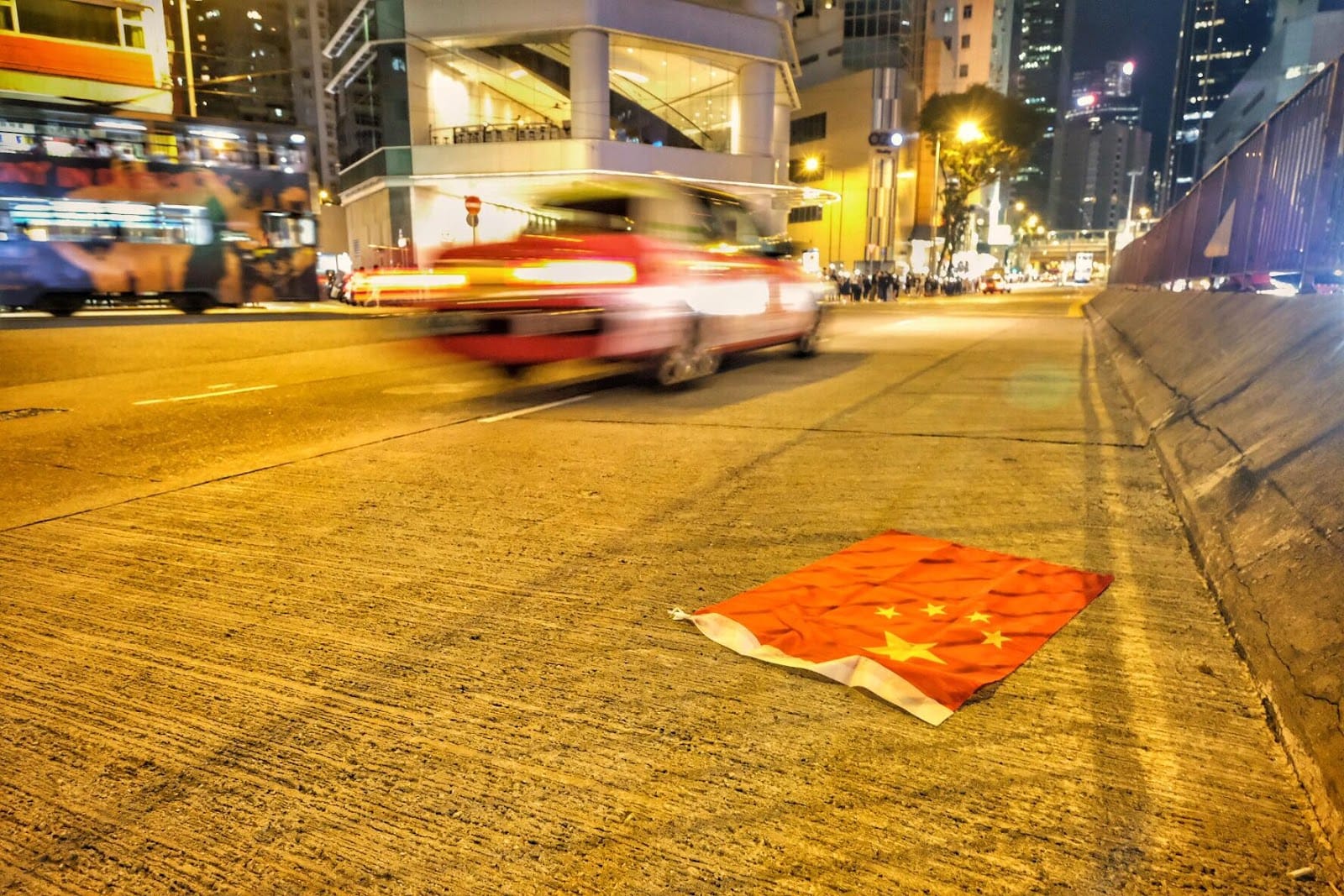
    A Chinese flag left on Hong Kong Road 01 in 2019. Image credit: 梁柏堅(表弟) Pakkin Leung / CC BY 1.0

    The desecration of national symbols evokes different responses from different governments. In some countries it is an acceptable form of political expression, in others an act that is merely tolerated, and in others a crime. China is among the countries that place broad restrictions on speech to criminalize acts it finds disrespectful to national symbols.

    The five-starred red national flag, which symbolizes the Communist Revolution and unity of the Chinese People under the leadership of the Chinese Communist Party (CCP), is at the heart of the legislation to mandate respect. Its first effort began with the National Flag Law in June 1990. The following year, the law was extended to cover the national emblem, which comprises the design of Tiananmen in a red circle illuminated by five stars and surrounded by sheaves of wheat. While the laws were merely codes of practice governing the formalities to display the two national symbols, a provision to the 1979 Criminal Law added in 1990 made intentionally burning, mutilating, scrawling on, defiling, or trampling upon the national flag and symbol in public a crime punishable by up to three years’ imprisonment.

    Despite being a criminal offense in mainland China for nearly three decades, flag desecration cases have yet to be thoroughly discussed by observers. Internet searches are swamped with media coverage related to the now-rescinded extradition bill in Hong Kong. During the second half of 2019, Hong Kong protesters made headlines for burning, trampling, and flinging the national flag into the sea and defacing the national emblem on China’s liaison office. The former British colony is slated to amend its flag desecration law to criminalize acts in the virtual world, while extending the time allowable for a prosecution for up to two years.

    Drawing on Dui Hua’s research into news media sources, court records, and online judgments, this article sheds light on the little-discussed topic of flag desecration in China. Part I looks at trends in sentencing and the law’s application across different cases. Part II explores how the law is applied to different groups like Falun Gong, Tibetans, and Uyghurs.  Most publicly disclosed cases involve “ordinary” offenders who did not make a political point against the CCP. However, the same acts committed by practitioners of Falun Gong and ethnic minorities tend to result in lengthier prison sentences.

    Court statistics, 1998-2016 

    Chart 1. No. of accepted and concluded first-instance criminal cases invoking Article 299

    Source: Records of People’s Court Historical Judicial Statistics: 1949-2016

    First and foremost, Article 299 has not been frequently invoked in China. The 12-volume Records of People’s Court Historical Judicial Statistics: 1949-2016 published by the Supreme People’s Court in 2018 indicated that there were only 61 first-instance criminal cases involving 86 defendants from 1998-2016. Except for 2014, the number of people brought to trial every year never exceeded 10. No court cases were tried or concluded in 2001, 2005, and 2006.  

    While Article 299 only covered the national flag and emblem from 1998-2016, criminal cases concerning the latter are rare. A possible reason for this is that the national emblem, typically displayed at government offices, is less readily accessible to the general public. Dui Hua has only found one case where someone was sentenced to one year in prison for editing an online image of the national emblem. His sentence was reduced to six months’ criminal detention upon appeal. Most, if not all, of the cases Dui Hua found relate to the physical desecration of the national flag in public spaces.

    The surge of cases beginning in 2012 coincided with Xi Jinping’s ascension to General Secretary. This increase likely reflects his image as a patriotic leader who is more eager than his predecessor to punish disrespect of the national flag, which has come to symbolize the unity of the Chinese people under his leadership. After 2016, the last year for which court statistics are available, Xi continued to usher in new laws aimed at further legislating respect for the national flag. In October 2020, the National People’s Congress Standing Committee passed another amendment to make it a crime to simply turn the national flag upside town.

    Nearly four in every five defendants received prison sentences of less than three years. The maximum sentence of three years was only meted out to five defendants. After cross-referencing cases recorded in its Political Prisoner Database, Dui Hua found that Falun Gong practitioners and Tibetans were among those who received the maximum sentences.

    Chart 2. Sentencing breakdown of defendants convicted of Article 299

    Source: Records of People’s Court Historical Judicial Statistics: 1949-2016

    Another notable observation gleaned from court statistics is that 70 percent of all the defendants were ethnic minorities. The court records did not specify which ethnic groups were involved. Public information about these cases is also sparse. Of the 46 Article 299 judgments posted on China Judgements Online, all but five were Han Chinese. The selective disclosure of court judgments suggests an effort to cover up ethnic discord. 

    The First Desecration Case 

    China’s first criminal trial of flag desecration was reportedly concluded in April 1993. In this case, three students from the Fujian Vocational College of Geology were sentenced to 12-18 months of public surveillance. According to the judgment, the students became dissatisfied with the school after they received disciplinary punishment for violating school regulations. They held a grudge against the student guard team, who they believed was the whistle-blower. In November 1992, the students hoisted two men’s pants on a flagpole in the school playground. They doused the Chinese national flag with kerosene and set it on fire.

    The Chinese national flag and emblem. Desecrating either has been punishable by up to three years in prison since 1990. Image credit: Wikimedia Commons

    A commentary on this first case of flag desecration commended the court’s decision to hand down public surveillance to the adolescent defendants (one of them was minor at the time of the offense). The punishment was a rare act of leniency: public surveillance was only given once, in 2003 for a period of 18 years beginning in 1998. As part of the emplacement measures, the students were allowed to continue attending the same school. However, the court was obliged to hold them criminally liable for desecrating the national flag, which “represents the sovereignty and dignity of the nation.” Their acts of “intentionally insulting the national flag is an affront to the dignity of the country and damages the patriotic passion of the Chinese people.”

    Non-political Desecration 

    The same line of patriotic argument has been reiterated to determine conviction in many other publicly disclosed flag desecration cases. Most of these cases are similarly apolitical, with offenders committing the crime over seemingly personal or trivial matters. There were also cases where defendants faced trials for what they claimed were drunken indiscretions. The prison sentences in such cases rarely exceeded six months.

    Recent examples include:

    • Fang Runzhou (范润州), a farmer from Sanmenxia, Henan, was sentenced to six months of public surveillance in 2017 for ripping up a national flag after a futile attempt to register with the village committee as a “poverty household.”
    • A man surnamed Zhong from Guangdong received a six-month prison sentence in May 2018 for trampling the national flag while performing a lion dance for a newly opened martial arts center.
    • On October 1, 2019, Ma Yiyi (马义益) burned two national flags to “vent dissatisfaction with his life circumstances and social reality.” The flags were slated for display at a school in Zunyi, Guizhou, on the 70th anniversary of the founding of the People’s Republic of China. Ma was sentenced to six months in prison in December 2019.
    • Unable to find a cadre to discuss his own household issues, a man surnamed Pang pulled down a national flag flying over a village committee square in October 2020 and set it alight. On February 2, 2021, Pang was sentenced to six months’ imprisonment.
    The court hearing for the defendant Pang, who was sentenced to six months in prison for desecrating the flag. Image credit: New.qq


    Political Desecration 
     
    As with protests in western countries, national flags in China are sometimes burned in protest of public policy. This happened to be the case of Wang Chunhua (王春花), whose anger with the local government’s decision to rush the construction of a garbage incinerator in Nan County, Hunan, landed her a one-year prison sentence (suspended for 18 months) in May 2017. Wang took part in a protest, where she lowered the national flag from a flagpole in front of a county government office building. The court found her guilty of “recklessly waving the national flag, throwing it on the ground and trampling it multiple times.”
    The starting point for sentencing appears to get noticeably longer in cases triggered by political defiance. Dui Hua found a case where Lie Jinjie (刘杰津) was sentenced to 18 months in prison for burning the national flag in Chibi City, Hubei, in November 2020, allegedly in a bid to express discontent with the stringent COVID-19 quarantine rules. Unable to return to work in Jiangsu amid the province-wide lockdown, Lie claimed to have been inspired by online images of “Taiwanese and Hong Kong independence activists” who burned the national flag to vent discontent with the Chinese government.
    Part II, which explores cases of political desecration and looks at how Article 299 is applied to Tibetans, Uyghurs, and Falun Gong practitioners, will be published in two weeks.
  • Juvenile Justice for Girls with Chinese Characteristics: Juvenile Convictions Drop, Number of Offending Girls Remains High

    Juvenile Justice for Girls with Chinese Characteristics: Juvenile Convictions Drop, Number of Offending Girls Remains High

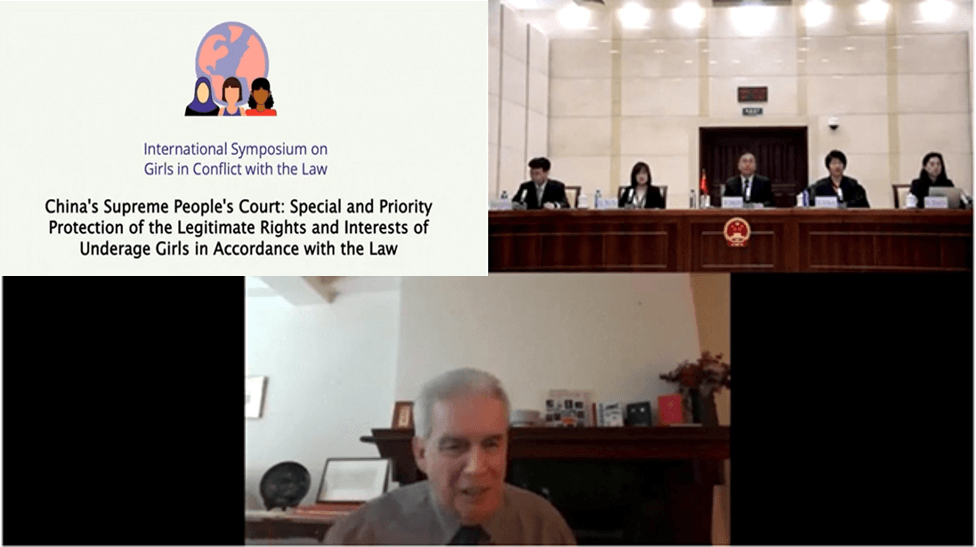
    Executive Director John Kamm makes introductory remarks during the webinar on March 30. Composite image credit: The Dui Hua Foundation 

    The United States is increasingly mainstreaming gender-specific justice reform, and the need has been identified in China as well. In 2019, Dui Hua found that even as the number of girls convicted by courts decreased until the end of 2016, the number of girls convicted as a percentage of juvenile convictions had increased.

    When Dui Hua published its research and analysis in December 2019, it expressed concern that the draft of a proposed law on the Prevention of Juvenile Delinquency released that autumn omitted gender-specific measures, saying that “it is increasingly accepted that gender-specific needs require different approaches.” The International Symposium on Girls in Conflict with the Law, organized by Dui Hua and its partners, explored issues related to girls’ justice in the Chinese justice system with representatives from China’s Supreme People’s Court (SPC). The webinar “China’s Supreme People’s Court: Special and Priority Protection of the Legitimate Rights and Interests of Underage Girls in Accordance with the Law” featured Dr. Jiang Jihai, Director of Juvenile Offender Office of Research Office of SPC, and Ms. Dai Qiuying, Director of Center for the Protection of Minors of Applied Law.

    Remarks by both panelists, speaking through an interpreter, provide insight into the causal factors of female juvenile offences and new laws for juvenile offenders, particularly girls. These remarks, statistics discussed during the webinar, and Dui Hua’s research provide a more informed understanding of juvenile female crime rates in China and changing approaches to juvenile crime.

    The Number of Offending Girls

    Statistics from Dr. Jiang and Dui Hua research show that beginning in 2018, there was a sustained increase in the number of offending girls overall. Furthermore, the number of offending girls as a percentage of all offending juveniles has risen every year from 2013 to 2019 with a slight drop in 2020, yet percentagewise more than doubled over seven years earlier. Figures were unavailable for 2017 other than the total number of juveniles convicted.

    Table 1: Total Convicted Juveniles by Gender and Percentage, All Chinese Courts 

    Overall indictments for juveniles decreased from 37,743 in 2016 to 33,223 in 2020, in part due to an increased emphasis on diversion. However, as seen in Table 1, the number of girl offenders convicted has increased to 7.32 percent, compared to 4.39 percent in 2016 according to Dui Hua’s research and the numbers provided by Dr. Jiang, compared with the period of 2013-2016.
    Table 2: Number of Juveniles Indicted in China, Annually

    Diversion: Reform Through Education

    The combined efforts of the SPC and the Supreme People’s Procuratorate (SPP) work to create a “whole society approach” to the criminal process for juvenile offenders that is focused on rehabilitation and education first, and punishment second. Table 2 shows that in 2019, the SPP prosecuted a total of 43,234 minors suspected of committing crimes. Table 3 shows that conditional non-prosecution (known in the United States as “diversion”) was applied for 7,663 of the juveniles who committed “minor crimes” and showed repentance in 2019, a number that had already been increasing year-by-year but had a sharp uptick between 2016 to 2019. 

    The Chinese government has been overhauling legislation for juveniles as recently as 2020, when the newest version of the Law on Protection of Minors was passed. This law works in tandem with the revised Law of the People’s Republic of China on Prevention of Juvenile Delinquency to inform policy and approach. These revisions codify previous legal provisions into black letter legal provisions, basic principles of law that are undisputed and accepted by all judges.

    Table 3: Percentage and Totals of Juveniles Diverted Annually in China

    “Important Innovations” and Criminal Law

    The increase in minors given conditional non-prosecution in 2019 points to the continued emphasis on rehabilitation and education as the first response to juvenile offenders. It also underlines the relevance of the recent changes to the Law on Protection of Minors and the revised Law of the People’s Republic of China on Prevention of Juvenile Delinquency. 

    Dr. Jiang discussed “important innovations” in the revised laws that aim to improve the treatment of juvenile offenders. These include refining the family guardianship system, improving governmental guardianship measures, establishing a mandatory reporting system, establishing an information inquiry system for criminals as well as clarifying the prevention and control of internet addiction, campus bullying, new offenses, and punishment measures for the behavior of failing to fulfill the legal obligations. 

    The newly revised law also states that if a minor below the age of criminal liability commits an act which is prohibited by law, then government agencies may conduct an evaluation and, with the approval of a special education steering committee, provide corrective education at a special school. At these special schools, offenders reportedly receive moral, legal, and psychological health education, along with appropriate vocational training.

    In December 2020, China passed 11th Amendment to the Criminal Law lowering the age of criminal responsibility from 14 to 12 years old for some serious crimes. The law holds children aged 12 to 14 criminally liable for “intentional homicide or intentional injury that leads to death or causes others severe disabilities by extremely cruel means.” If a crime not mentioned in the new law is committed by a child under the age of 14, they will be exempt from criminal punishment but may be given correctional education as mentioned above. Remaining unchanged is the law that holds those between the ages of 14 to 16 criminally responsible in serious crimes such as cases of rape, robbery, and intentional homicide. 

    The approach to “juvenile justice with Chinese characteristics,” spoken of by both Dr. Jiang and Ms. Dai, prioritizes diversion from conviction and ongoing involvement by the court as part of the rehabilitation and education process. Under these reforms, judges are responsible for building and maintaining relationships with juvenile offenders and their families to understand the causal factors of their offence and provide guidance. Courts must first conduct a comprehensive analysis of the possibility of recidivism of minor offenders, including consideration of the offender’s family and home situation, then assess the best approach for rehabilitation with an emphasis on the primary caregiver or parents as role models. According to Dr. Jiang and Ms. Dai, the courts are also in the process of drafting two pieces of legislation titled the Family Education Law and the Child Welfare Law that would allow judicial agencies to play a larger role in ensuring the proper education and mentorship of children.

    There is not much gender-specific data available to clarify what trends in diversion and education mean for girls specifically. Dr. Jiang noted that the overall age of female juvenile offenders has been getting younger. He cited the “low age” and “rebellious psychology during adolescence” of girl offenders as factors that lead them to “handle issues in a very simplified and immature way without the proper foresight and prediction of the consequence” due to their lack of legal knowledge. To address this, the government has taken efforts to help young people understand Chinese law. Such measures include events, campaigns, and educational materials for use in classrooms, judges serving as adjunct teachers on school campuses for primary and middle schools, and a moot court experience as well as online courses for older students.

    Dr. Jiang makes remarks during the webinar. Image credit: The Dui Hua Foundation

    Evidence also points to poor general education as a common causal factor for girl offenders, many with below a middle school education and a “non-existent or limited” understanding of the law according to Dr. Jiang. He also cited parents’ low education level as a causal factor for criminal behavior in both male and female minors. This lack of a basic education coupled with limited understanding of the law, can lead to the development of bad habits and criminal behavior. Both Dr. Jiang and Ms. Dai cited contexts and environmental factors as fundamental pathways to offending for girls, expressing the sentiment that “there are no problem children, only problem families.” 

    Neglect was noted as another strong contributing factor for female offenders in China. In today’s economy, many children are left home unsupervised as both parents are working. This can result in young girls being negatively influenced by older female peers or people they befriend on the internet. Judges review these types of causal factors when assessing how to handle crimes committed by female juvenile offenders and deciding which course of action will bring the offender back to a “normal law-abiding citizen and useful talent for society.”

    Ms. Dai emphasized that the family is the most important domain for the growth and improvement of minors, saying that “people should build a family upbringing model full of love, freedom, and respect.” Reflecting this emphasis, Article 7 of the Minors Protection Law in China allows the state or government to take “necessary measures” to guide, support, and supervise the parents or guardians in doing their duty” to raise law abiding citizens.

    Ms. Dai makes remarks during the webinar.

    Dr. Jiang suggested that the court is committed to continuing to improve gender-sensitive procedures for female juvenile offenders. These include increasing the use of female police officers, prosecutors, judges, and lawyers who are trained to handle girl’s cases and to protect the privacy of girl offenders. Taken together, these legislative and procedural changes suggest that juvenile justice policy reform, including gender-sensitive approaches, is increasingly seen as a priority.

    A Gender-Sensitive Future

    The comments by Dr. Jiang and Dai on changes to the SPC’s approach to juvenile justice law, including the inclusion of gender-sensitive processes, are promising. The International Symposium on Girls in Conflict with the Law produced a list of recommendations for the promotion of effective girls’ justice policy. Dr. Jiang and Ms. Dai’s remarks on community-based solutions, reducing detention, and applying non-custodial solutions/alternatives to detention are in line with these recommendations and Article 37b of the Convention on the Rights of the Child.

    The focus on addressing root causes of juvenile offending, including socio-economic vulnerability and family instability, by funding and supporting social services is promising. At the time of this writing, China does not have, and never has, gender-specific criminal laws. Similarly, such measures as the implementation of gender-specific measures like specialized training and having female personnel interact with girls have yet to materialize in legislation or official policy.

    The Symposium recommendations also stress the need to systematically collect disaggregated data in order to better understand the pathways leading children to detention globally. More transparency on figures for female juvenile offenders and diversion programs would contribute towards a collective understanding and better research. Were China to increase its engagement with the international community on girl’s justice, this could help promote best practices and effective policy at the international level.

    Finally, the issue of long-standing research gaps rooted in discriminatory thinking emerged repeatedly during the Symposium in a variety of contexts. Like other countries including the United States and Canada, funding and supporting research on girl’s lives, including a special focus on Indigenous girls and ethnic minorities, would help governments effect better policy for justice-involved girls. China’s policy success and challenges around juvenile justice are a vital part of that understanding and would be an important contribution towards greater clarity on how to address juvenile justice for girls in the future.

  • Dangerous Border Crossings: The Case of Cho Young-joo

    Dangerous Border Crossings: The Case of Cho Young-joo

    South Korean missionary Cho Young-joo (in a blue striped polo shirt) led a mission trip in the summer of 2013 to provide education for children in Mongla, Myanmar. China accused Cho of organizing volunteers from China and South Korea to illegally cross the Yunnan-Myanmar border. Image credit: GoodNewsTV  

    Cross-border evangelization involves unforeseeable risks. The risk is arguably grave in China, where foreign missionaries routinely face harassment and arbitrary detention. South Korean Christians and Chinese citizens of Korean descent (hereafter ethnic Koreans) are no strangers to arrests for assisting North Koreans who attempt the long journey to freedom and citizenship in the South.   

    A judgment unearthed by Dui Hua revealed that Korean Christians in China en route to their overseas missions in Southeast Asia face similar risks. In May 2014, South Korean national Cho Young-joo (KR: 조영주; CH: 曹永周) was sentenced to seven years in prison for organizing illegal border crossings to Myanmar from Yunnan. 

    While overland border crossings between Yunnan and Myanmar are only legally accessible to citizens from the two countries with valid exit permits, some areas are separated by rivers but crossable on foot in most other places. Informal Yunnan-Myanmar border crossings can be common, or were at the time of Cho’s conviction, in some areas. For this reason, the prosecution of some crossings and not others can be considered arbitrary or politically motivated applications of the law. 

    The crime of organizing illegal border crossings, defined in Article 318 of the Criminal Law, has become the latest rallying point for critics of Beijing following the detention of twelve Hong Kong anti-extradition bill protesters who attempted to flee by boat to Taiwan in August 2020. On December 30, two of them received prison sentences of between two to three years in Yantian District, Shenzhen, for Article 318. The crime can lead to as many as seven years in prison and even longer if violence is involved.  

    While some offenders feel compelled to flee lawsuits they believe to be politically motivated, Christians have fallen victim to the same crime for crossing the Chinese border to conduct charitable activities in another country. Cho led a group of Christians to provide education for impoverished children in Mongla, a Burmese city best known for casinos, prostitution, and markets for endangered wildlife with Chinese clientele.  

    Good News Mission

    Cho is from the South Korea-based Good News Mission (KR: 기쁜소식교회; CH: 好消息教会). The mission was founded by Ock Soo-park in 1976 and proclaims to have 170 churches in South Korea and 838 international churches. Due to doctrinal differences, mainstream South Korean Protestant denominations have called the mission “heretical.” The accusation stems from its allegedly objectionable conduct, such as deceptive recruiting and the exaltation of Ock. 

    In China, there were few if any reports about its church members being subjected to coercive measures until Bitter Winter, an online magazine that focuses on religious liberty and human rights issues in China, reported a case of 26 people who were sentenced for “illegal business activity” in July 2020. They were accused of printing Good News Mission books. Among them, Xian Renguo (咸仁国), director of the Secretarial Department of the mission, received a prison sentence of 42 months in Jiangsu. 

    There is evidence that the mission has gained some traction in China. Government gazettes have documented instances of “infiltration” from the Good News Mission in the northeast provinces of Liaoning, Jilin, and Heilongjiang, where the majority of two million ethnic Koreans are concentrated. Liaoning was among the first provinces to have banned the church as early as  2005. Public security in Inner Mongolia, Hunan, Guizhou, and Shaanxi have also filed “special cases” (专案) to monitor the church. The most recent mention by the government found in the 2016 Changsha Yearbook  states that an unknown number of members were taken to “education classes” for illegally proselytizing there. Reporting by Bitter Winter also revealed that the mission established a secretarial department in Guangzhou in 2009. 

    Three Border Crossings

    Jingkang School is a government-funded school founded in 2011 in Mongla, a township in Shan State Special Administrative Region 4, Myanmar. In 2013, Cho led volunteers from China and South Korea to cross the Yunnan-Myanmar border to provide schooling and humanitarian aid. Image credit: Information Website of the No.4 Special Administrative Region of Eastern Shan Information Website  
    Prior to detention, Cho administered a website to recruit volunteers to provide schooling for children in Mongla, the capital of Myanmar’s Shan State Special Administrative Region 4 bordering China’s Menghai County in Yunnan. Jointly initiated by Jingkang School (景康学校) in Mongla, the mission was joined by South Koreans and Chinese nationals, including members of ethnic minority groups such as ethnic Koreans, Manchu, and Jingpo (景颇族, a predominantly Christian ethnic group in Yunnan).
    The Daluo Port is the official crossing that connects Mongla to Yunnan’s Menghai County. Image credit: Google Map and zhihu.com 

    The Daluo Port is the only official crossing that connects Mongla to Yunnan’s Menghai County. As with many other overland border crossings between Yunnan and Myanmar, the port is accessible only to citizens from the two countries with valid exit permits. Exit permits are also obtainable by licensed tour operators catering to casino clientele. However, as noted above, the Yunnan-Myanmar border is considered porous and crossable on foot in many places. Locals are known to eschew the process of applying for a pass in favor of informal crossings utilizing accessible entry points. A 2014 New York Times article noted that few locals “bother applying for a pass and instead sneak through, via motorbike or by climbing through large holes conveniently located on the border fence.”  

    Cho was accused of organizing three illegal border crossings from Yunnan to Mongla, all of which were made in July 2013. Of the three border crossings, Cho admitted to having a leading role in the first one where he was physically present:

    1. In the summer of 2013, Cho was assisted by local churches in China to arrange for five South Korean students to meet him in Kunming, Yunnan’s provincial capital. From Kunming, they travelled to Jinghong, where they split into two groups. All but one student made their way to Mongla’s Jingkang School.

      Cho and his wife stayed with the one South Korean student who did not make it to Jingkang School. They were later alerted by Zhang Hongjun (张洪军), a Han missionary from Qiqihar, Heilongjiang Province, to evade Chinese police before crossing a river to Mongla. The trio was intercepted by Yunnan police upon their return to Kunming on July 25, 2013.

    2. Prior to Cho’s detainment, Burmese police apprehended a total of 31 people on July 21. They were sent back to Yunnan on the same day. According to the Chinese prosecutors, Cho instructed Wang Yingjie (王应杰) and Yang Yuanyuan (杨园园) to arrange a coach for the volunteers after they had arrived in Kunming. Wang travelled with them to the border township of Menglong, from where they took minivans and crossed the border to Myanmar via a secret route. This group appeared to have taken a detour in a bid to join Cho in Mongla to avoid unwanted attention from border police.
    3. Yang was responsible for collecting transportation fees from the volunteers and did not cross the Yunnan-Myanmar border. Yang, however, was detained separately on August 9, 2013.

    4. The third border crossing involved seven volunteers, all of whom managed to reach Mongla. Four of them were detained in Menghai County on July 28 after they had finished volunteering and returned to Yunnan on the same day.
    Map showing the route (green) from Kunming to Jinghong, from where Cho intended to travel to Mongla. Source: Gaode Map 

    Convictions & Harsh Sentences

    Ten other defendants were also tried alongside Cho. The Jinghong City People’s Court sentenced three for “organizing illegal border crossings;” four for “transporting others to illegally cross the border;” and another four for “illegal border crossing.” All but Cho were Chinese nationals. 

    Cho’s wife and the five volunteers from South Korea were not prosecuted. They were deported after paying a fine for violating the Exit and Entry Administration Law.  

    Table 1: Individuals convicted of crimes related to illegal border crossings.
    Source: Jinghong City People’s Court

    The sentence handed down to Cho can be considered severe, even more so than many profit-oriented smugglers convicted of the same crime for pouring an illegal flow of labor into or out of China.

    According to the 12-volume Records of People’s Courts Historical Judicial Statistics: 1949-2016 released by the Supreme People’s Court, 7,264 individuals were convicted of Article 318 in the 18 years beginning in 1998. Of them, one in every five defendants received prison sentences over five years. A larger portion, 37 percent, received prison sentences not exceeding three years. 
    Considered a lenient punishment, suspended sentences are quite common in Article 318 cases. One in every four defendants received suspended sentences from 1998-2016. Cho was not given leniency even though none of the 11 defendants had an intent to profit. It would be hard to argue that Cho’s humanitarian work in Mongla has inflicted any social harms in China or Myanmar, an important factor to consider when a court determines sentencing. Cho’s defense lawyer also asked the court, albeit in vain, to consider the ties of friendship between China and South Korea. 
    A cropped image of the 29-page court judgment detailing the specifics of the three illegal border crossings organized by Cho. Image credit: China Judgements Online 

    The 29-page judgment did not explain why Cho deserved a seven-year prison sentence; it only focused on Cho’s role as the principal offender who “led, plotted, and organized” more than 40 people to illegally cross the Yunnan-Myanmar border thrice. The court also found that Cho had known that crossing the Yunnan-Myanmar border without proper documentation would be an unlawful act. However, he only expected that the crossings, if found, would constitute an administrative violation, rather than a criminal offense. He appeared to have acted on his belief that Chinese authorities would turn a blind eye to people illicitly slipping through the border, as they often do with locals who commute to towns on the other side of the border to see relatives or conduct trade as part of their daily lives.

    Cho’s case was investigated by guobao, China’s secret police force in charge of handling political dissidents, religious groups, and “subversive” activities. The case fulfilled the criteria for being an “important case” (pinyin: zhongda anjian, 重大案件), as defined in the notice issued by the Ministry of Public Security in 2000 which stipulates that one of the following conditions is met:

    1. organizing 20-49 people to illegally cross the border at one time; 
    2. organizing others to cross the border three to four times; 
    3. causing serious injuries to one to two persons during the crossing; 
    4. depriving of or restricting personal freedom of others; 
    5. using violence or coercion to resist law enforcement; 
    6. illegally making a profit of RMB50,000-200,000; 
    7. and other “serious circumstances.” 

    Points 1 and 2 are relevant to Cho, making his case almost certainly a zhongda anjian. 

    Cho served his prison sentence in Qingdao, Shandong, in closer geographical proximity to South Korea than Yunnan. His first sentence reduction was granted three years into his prison sentence in December 2016; another reduction was granted in 2018. Good News Daily (Good News Mission’s news portal) reported his return to South Korea on January 23, 2019 upon completion of his prison sentence. Other than that, his case did not appear to have garnered substantial coverage in mainstream news media in South Korea. 

    The Chinese government likely considers Cho a case of foreign infiltration, a term typically associated with religious activities conducted by foreign missionaries inside China. His case suggested that foreigners proselytizing outside of China face hefty prison sentences.

    A Risky Venture

    Cho’s imprisonment was by no means an isolated incident. In March 2018, Reverend John Cao Sanqiang (曹三强) was sentenced to seven years in prison for the same charge of organizing illegal border crossings. Cao conducted charitable work in Myanmar’s Wa Region, subsumed under the northern special region of Shan State near the Yunnan-Myanmar border. In addition to providing schooling, Cao also organized a charity clinic to reduce child and infant mortality rates, offered drug rehabilitation, and conducted onsite visits to Wa families to educate them about the harms of drug abuse. On March 5, 2017, Cao was taken into custody by Chinese police at the border upon his return to Menglian County, Yunnan, from Myanmar.
    Despite being a Chinese national, Cao is perceived by the Chinese government to have close US connections. Cao is a US permanent resident with links to China’s house church movement. His trial was concluded at the onset of the fraying US-China ties caused by the trade war. The Department of State has expressed “deep concerns” and urged that Cao be released on humanitarian grounds. The UN Working Group on Arbitrary Detention called for his release from wrongful imprisonment in October 2019. 
    China has a track record of hostage diplomacy by holding foreign nationals as bargaining chips on dubious charges, as in the cases of Michael Kovrig and Michael Spavor. However, political and economic problems between China and South Korea were irrelevant to Cho’s case. Cho was sentenced amid the warming ties between the two countries. Irritants did not occur until South Korea announced its approval of the US deployment of the THAAD missile system to counter the growing threats from North Korea. As China-South Korea relations turned sour in 2016, an increasing number of reports of missionaries being deported and visas refused have emerged.

    There might be reasons not explicitly stated in the judgment that could explain Cho’s harsh prison sentence. In the early 2010s, official news media began reporting a surge of cross-border crimes in Southwest China. Of particular concern were cases of a political nature involving overseas religious forces complicit in organizing “Uyghurs splittists” to flee overseas through Yunnan and Guangxi. This led the Supreme People’s Court and Supreme People’s Procuratorate to issue a joint response in 2012, in which they called on all cross-border crimes to be “handled in the strictest possible manner.” Public security was required to strengthen investigation and detection of cross-border crimes. Cho, a religious figure with close foreign connections, might just be an unfortunate victim as China began increasing scrutiny along the Yunnan-Myanmar border amid its campaign to ratchet up stability maintenance.

    The case of Cho Young-joo is not well-documented in Chinese government sources beyond the 29-page court judgment published on China Judgements Online. We will likely be kept in the dark until more information about Cho’s case becomes publicly available. That said, it has become increasingly clear that cross-border evangelization is riskier than ever. In early 2020, China reportedly started erecting a 2000-kilometer reinforced fence along the Yunnan-Myanmar border. The move has been officially cast as an attempt to contain imported cases of COVID-19 from Myanmar. 

    Some observers have alluded other motives to Beijing. The wall can be more than just a physical barrier; it has created new nodes of surveillance combined with the rollout of facial recognition technologies that can be used to monitor not only dissidents, but also ethnic minorities and missionaries, as well as to keep them from fleeing the country.