Tag: law

  • Despite Legal Reform, SPC Still Blocks Lawyer-Client Access

    Defense lawyer Zhang Kai holds a sign outside Zhejiang’s Pingyang County Detention Center requesting that he be able to meet with his client in October 2014. Image credit: Weibo

    Improving criminal defense lawyers’ access to clients was hailed as one of the highlights of the revised Criminal Procedure Law (CPL) that came into force in 2013. Incorporating provisions of the 2007 Lawyers Law that had yet to be universally respected, the new CPL requires detention centers to arrange for access within 48 hours of request by a lawyer upon presentation of his or her license to practice, the certificate of his or her law firm, and power-of-attorney documentation. The only exceptions are cases involving state security, terrorism, or “particularly serious” bribery, for which police investigators can require that a lawyer seek their approval before a meeting can be arranged.

    Although these new provisions have not been implemented perfectly, defense lawyers generally acknowledge that access to suspects has improved in most routine criminal cases. But what recourse is there when these provisions are not strictly enforced?

    Background

    On July 15, 2014, long-time petitioners Zhang Xiaoyu and husband Xu Youchen were formally “reprimanded” (xunjie) by Beijing police for disturbing public order. Two days later, officials from their hometown of Jiaozuo, Henan, accompanied them back home. Upon arrival, Zhang and Xu reportedly resisted attempts to hand them over to local police officers. Xu allegedly attacked a police officer with a small knife, causing a fatal wound. Xu and Zhang were then placed under criminal detention on suspicion of intentional homicide.

    Lawyers for the couple attempted over a period of several days to meet with the detainees, but their multiple requests were refused by the Jiaozuo Detention Center. Finally, on July 25, lawyers got their first opportunity to meet with Zhang and Xu, who each spoke of being beaten by police. The lawyers took photographs of the couple’s bruised and swollen faces and uploaded these to the Internet.

    The next day, detention center officials refused to provide the lawyers with any additional access to Xu and Zhang, saying that the lawyers had violated the rules by releasing photos of the detainees. The officials informed the lawyers that a complaint had been filed with judicial administration authorities in Shandong and that the detention center would not agree to any more visits, pending a decision on sanctions.

    Over subsequent weeks, lawyers for the couple complained repeatedly to local and provincial authorities and attempted to get the official lawyers’ association to intervene on their behalf. When none of these efforts were successful, two of the lawyers—Liu Jinbin and Liu Shuqing—decided to sue the detention center in court.

    Administrative Action or Judicial Process

    Citizens or other parties who wish to challenge the legality of official government actions can do so under the Administrative Litigation Law (ALL). The challenge must involve a concrete administrative action directed against specific individuals or entities, rather than decisions with general applicability. The ALL also explicitly excludes certain areas from challenge, including national defense and foreign affairs, administrative rules and regulations, administrative decisions of an internal nature, and administrative acts that are deemed by the law to be within a particular state organ’s final authority.

    Under the law, administrative actions are generally distinguished from actions related to judicial process. In theory, disputes that private parties may have with public authorities in the course of the judicial process should be dealt with as part of the judicial process itself. For example, unlawful coercion of confessions by investigators can be addressed through a request to have a court rule on exclusion of that confession from evidence. In China, however, many aspects of judicial authority are invested in the procuratorate, rather than the court. For example, procuratorates make decisions about whether suspects may be held under formal arrest pending trial and are generally responsible for ensuring that various parts of the criminal process are lawful.

    China’s public security organs carry out a variety of functions, some of which fall under the category of administrative acts and some of which can be classified as being part of the judicial process. Punishments for public order offenses (such as short-term jailings, property confiscation, or fines) are unquestionably administrative actions and are, therefore, subject to challenge under the ALL. On the other hand, imposition of coercive measures and actions related to criminal investigation are considered to be actions related to the judicial process that are excluded from the purview of the ALL.

    Legal Argument

    In the nearly identical lawsuits that plaintiffs Liu Jinbin and Liu Shuqing brought before the Shanyang District People’s Court in November 2014, the main issue of dispute was whether arrangement of meetings between lawyer and detainee by a detention center should be considered an administrative action or part of the judicial process. The opportunity to argue this point at trial was itself a rarity, as courts throughout the country had basically refused to hear such cases for almost 15 years.

    That hadn’t always been the case. In 1999, a Hunan lawyer named Liao Jianhua successfully sued the Loudi Public Security Bureau for refusing to allow him to meet with a detained suspect. According to Professor Chen Ruihua, there were a few other cases around that time where courts similarly granted relief to lawyers. But that effectively ended in March 2000, when the Supreme People’s Court issued an interpretation of the ALL that explicitly excluded from the purview of administrative litigation all “actions that the Criminal Procedure Law specifically empowers (shouquan) public security, state security [and other] organs to carry out.” With this provision, the SPC eliminated the courts as an avenue for lawyers to challenge decisions over access to detainees, which helped contribute to making the securing of such access one of the “three difficulties” often complained about by Chinese lawyers.

    The lawyers argued that the Criminal Procedure Law only empowers the police to detain people and carry out investigations. Although the Detention Center Regulations issued by the State Council in 1990 gave responsibility over management of detention centers to public security organs and stated their purpose as “guarantee[ing] the smooth progress of the criminal process,” that role as custodian over detainees was merely a managerial function indirectly part of the criminal process. Under the law, the process of arranging meetings between lawyers and detainees was, at least in the case at hand, supposed to be a relatively simple matter of ensuring that the lawyer’s paperwork was in order and did not leave any room for discretion. Despite being set out in the CPL, this amounted to a routine approval process indistinguishable in form from other administrative actions and should, therefore, be subject to challenge under the ALL.

    The court of first instance rejected this argument, finding that decisions over lawyers’ access were acts “empowered” by the CPL and, therefore, outside the purview of the ALL. In an appeal to the Jiaozuo Intermediate People’s Court in February 2015, Liu Jinbin argued that the district court’s conclusion was based on a flawed understanding of the word “empowered” (shouquan). He argued that arranging lawyers’ access to detainees was a responsibility, rather than a right, and could not therefore be the object of the word “empower.” Public security organs were only empowered by the CPL to detain and investigate suspects; if anything, it was lawyers who were empowered by the law with the right to access detainees.

    The Jiaozuo Intermediate People’s Court essentially ignored this argument by noting that laws endow state organs with both powers and responsibilities. Arranging access between lawyers and detainees was a “clearly stipulated responsibility” under the CPL, it found, and if a lawyer believed that the exercise of his or her rights in this regard were being “hindered” (zu’ai), then the proper channel for seeking remedy was through complaint to the procuratorate. Since the matter was outside the scope of the ALL, the matter was dismissed.

    SPC Interpretation Remains Supreme

    Given that guaranteeing suspects’ access to legal assistance from the point of initial detention is an essential part of safeguarding their human rights and preventing torture and other miscarriages of justice, any violations of lawyers’ rights in the criminal process ought to be met with swift and strong consequences in order to ensure compliance. In the current legal environment, however, a lawyer’s only option is to seek intervention by the procuratorate. Notwithstanding that the Supreme People’s Procuratorate recently issued a set of regulations aimed at protecting the rights of lawyers, what happens if the procuratorate refuses or is slow to intervene? Or what if a procuratorate order goes unheeded?

    These scenarios suggest that some form of judicial remedy could be helpful in vindicating lawyers’ rights to meet with detainees. There are, however, few signs that the door to administrative litigation will open anytime soon. A revised version of the ALL took effect on May 1, and even though legislators still have not explicitly excluded acts connected to the criminal process from the scope of administrative litigation, officials at the SPC have made clear that the relevant provision of its previous interpretation remains binding.

    One possible solution would be pending legislation regarding detention center management. Were management of detention centers to be shifted toward the judicial administration authorities that also manage China’s prisons, it would potentially result in a much clearer separation between the administrative management of detainees and the investigative powers associated with the criminal justice process itself. However, even though there has been a great deal of support among legal experts for making such institutional reform part of a proposed Detention Center Law, current indications are that public security authorities will retain power over detention facilities for the time being. This means that, barring change to the SPC interpretation, the boundaries between criminal investigation and detainee management will remain blurred.

  • Article 293: Deeming Free Speech Disorder in Internet Space

    Article 293: Deeming Free Speech Disorder in Internet Space

    Pu Zhiqiang, who was arrested for “creating a serious disturbance.” Image credit: VOA / Public domain
    In September 2013, the Supreme People’s Court (SPC) and Supreme People’s Procuratorate (SPP) jointly issued a judicial interpretation addressing a number of issues related to criminal speech online. That interpretation held that use of information networks “to berate or intimidate others,” “to disseminate false information . . . that one has either invented or clearly knows to be fabricated,” and “to organize or incite others to disseminate [such information]” should be punished under Article 293 of the Criminal Law, “creating a serious disturbance.”

    This marked a major elaboration of Article 293, which is also known by its literal translation, “picking quarrels and provoking trouble.” Prior to the interpretation, the offense had targeted a variety of behaviors deemed to be disruptions to social order, such as fighting, looting, throwing rocks or refuse at vehicles or buildings, or otherwise stirring up trouble in public spaces. Now, the interpretation seems to have expanded the definition of “public space” to include online space, treating it not only as a platform through which to incite others to disrupt social order but as a kind of public space itself that can be thrown into disorder by certain kinds of acts.

    Since September 2013, a growing list of Chinese people have been detained or charged for speech-related incidents under the provisions of Article 293. Perhaps the most well-known is the crusading rights lawyer Pu Zhiqiang, whose initial detention for “creating a serious disturbance” appeared to be connected to a private meeting to discuss issues related to June Fourth. According to recent reports, however, it appears that the authorities may also be trying to prosecute Pu under Article 293 (in addition to even more serious speech-related charges, including “inciting subversion” and “inciting splittism”) for a series of items he posted on social media.

    Prosecutors in Zhengzhou, Henan, also recently presented an indictment for “creating a serious disturbance” against Yu Shiwen, a former student leader during the 1989 democracy movement who was arrested last year in connection with a public memorial commemorating former leaders Zhao Ziyang and Hu Yaobang and those who died in the June Fourth crackdown. The authorities appear to have been unaware that the memorial had taken place until Yu and other participants posted photographs online and gave interviews to overseas media.

    Critics have argued that the judicial interpretation by the SPC and SPP is improper because by significantly expanding the scope under which Article 293 can be applied, it has ventured into the jurisdiction of China’s legislature. Peking University’s Zhang Qianfan recently took up the argument from a position defending the freedom of expression. In a blog post that has been widely republished on numerous Chinese-language websites, the liberal constitutional law scholar warns that overemphasis on preventing disorder in virtual space risks undermining what is not only a fundamental human right but also an essential component of ensuring proper governance. He describes Article 293 as a “pocket crime”—an offense so vaguely defined that nearly anything can be stuffed into it—and warns that, unless the boundaries are tightened up, even more Chinese citizens are likely to fall victim to arbitrary and abusive uses of offenses like these.

    *
    Don’t Let “Creating a Serious Disturbance” Become a “Pocket Crime”

    Zhang Qianfan
    February 5, 2015

    Over the past year, the offense of “creating a serious disturbance” (Article 293 of the Criminal Law) has been applied more and more often in cases involving speech by citizens. Legal scholars are widely concerned that this offense has already become a “pocket crime” whose borders can be extended at will. This not only violates the principles of “governing the country in accordance with the law” and “governing the country in accordance with the constitution” that were promoted at the Fourth Plenum of the Eighth Chinese Communist Party Conference; it will also inevitably lead to serious abuses of state power and an extreme restriction of citizens’ freedom of expression that is protected under Article 35 of China’s constitution.

    In a certain respect, we can consider the state as a supremely powerful Hobbesian “Leviathan,” but this Leviathan does not have a will of its own. On the contrary, it is a product of human reason. We establish the state and invest it with such huge powers so that it may control the irrationality of private individuals and prevent their using violence to harm others. At its most basic, the function of the state is to use its monopoly of lawful violence to control the unlawful violence committed by private individuals. The criminal law is the main means by which the state carries out this basic function, and police are the specific force through which the criminal law is enforced. You could say that it is a limb of the Leviathan. For rational people, limbs must be controlled by the brain. If the brain loses control, then the limbs can move wildly on their own in a dangerous manner. The same is true with the state.

    What is the “brain” of the state? The “brain” of the state is the public reason expressed through its laws. In a healthy state under ordinary conditions, law exists to serve the common interests of all people. But what exactly is the “common interest”? What sort of policies, laws, or institutions bring the greatest happiness to people? There can be no single answer to these questions, and since each person has freedom of thought and expression, no person can claim that he alone possesses the truth. So-called public reason is a social consensus that is formed in the course of free discussion, meaning that free expression is an institutional precondition for the production of public reason. Of course, total consensus is impossible, because no viewpoint can secure the agreement of every single person in society. We must be able to cast votes to determine the majority position at any time and use this as the basis for the laws that govern us. Only such laws can be considered “good laws” that express public reason. Public reason of this kind is bound to be flawed and can only attain perfection through practice. But it is inevitably far superior to any private individual reason—because humans are rationally self-interested, individual reason can only serve particular individuals. Only public reason formed in the context of free expression can serve the entire society.

    We can only live in a reasonable state if we enforce good laws, implement the rule of law, and allow our public reason “brain” to control the limbs of the state. On the other hand, if the limbs take control of the brain and prevent the brain from thinking in a normal way—or if individual reason is allowed to replace public reason and the machinery of the state is used to suppress and “manage” speech—then the “arms control the brain” and the state cannot operate normally. Arms can only control arms. State violence can only be used to control violence by private individuals and not to govern speech.

    Of course, if speech truly threatens to incite an immediate, obvious, and serious danger—for example, if a person spreads panic in a crowded place and causes a stampede—then that sort of speech should be liable for criminal responsibility. But so long as there is no such “clear and present danger” and there is still time to clarify the truth through additional discussion, free speech should be allowed to continue without state power intervening to impose silence.

    As long as the state’s “brain” is still capable of ordinary thought, the “arms” must not be allowed to control the “head.” The reason is simple: arms can never be as good at thinking as the head. Likewise, police are no more capable than ordinary people of correct judgments about matters of right or wrong or expertise. When the arms control the head, coercive power is substituted for public reason.

    If a criminal offense becomes a “pocket crime” that can be expanded or contracted at will such that it becomes a way of punishing citizens’ speech, then the “arms are controlling the head.” The fourth clause of the offense of “creating a serious disturbance” refers to “stirring up trouble in a public place that creates serious disorder in [that] public place.” Since the Supreme People’s Court and Supreme People’s Procuratorate have expanded the meaning of “public place” to include online space, this clause has often been applied in cases involving citizens’ speech. Looking purely at the text of the statute, there’s no big problem with this offense. Whether it’s speech or acts, if there truly is “serious disorder in a public place,” then the person(s) responsible should be held criminally liable. The problem is how to define “serious disorder in a public place” and, particularly, disorder as applied to the “public space” of the Internet. The Internet is a platform for free expression and it is normal for there to be different opinions expressed there. “Order” in this kind of space connotes a kind of place where one person has all the say. In the “public space” of the Internet, it’s practically impossible for there to be “serious disorder” in the sense of the criminal law. Does crude, acrimonious, and radical online speech that leads to widespread arguments or even abuse constitute “creating a serious disturbance”? Even if you believe in the idea that there is “verbal violence” online, you should not use physical violence to counter verbal violence.

    Under ordinary circumstances, the criminal law should only apply to actual violence that takes place in the real world, not virtual “violence” that takes place in the online world—with the exception of online speech that can actually cause “serious disorder in a public place” in the real world. If online speech that does not satisfy this condition is treated as “creating a serious disturbance,” then it is another case of the arms controlling the head.

    The analysis above does not simply apply to “creating a serious disturbance” and can be applied to all other “pocket crimes” as well. The unlimited expandability of “pocket crimes” not only restricts citizens’ right to free expression but also can easily lead to abuses of power by local authorities. In China, no matter whether it’s the constitution, laws, or central policies like the Fourth Plenum decision, all are used by central authorities to regulate the behavior of local authorities at all levels. But if the constitution is not implemented fully and laws become pocket crimes to be interpreted arbitrarily by local authorities, then not only is the law unable to serve any normative function but it can actually become a powerful weapon with which local authorities can abuse their power.

    For example, in Henan a rights defender named Jia Lingmin provided free legal advice for many years to families who had been forcibly evicted from their homes. She was warmly welcomed by people all over for spreading legal information concerning land seizures and forced evictions. But because she was a thorn in the side of the local authorities, she was framed on charges of “creating a serious disturbance.” However, not only did Jia’s speech not cause any “serious disorder in a public place,” it played an extremely positive role by protecting the lawful rights and interests of evicted households, upholding social stability, and preventing predatory behavior by those with power. Such an abuse of power by local authorities seriously undermines the rule of law and shows flagrant contempt for central authority.

    To prevent “creating a serious disturbance” from becoming a “pocket crime,” we must strictly define key legal criteria like “serious disorder in a public place.” The crime should only be constituted in cases where expression has truly caused serious disruption to the order of an actual public place. And in order to constitute “serious disorder,” the speech in question must cause harm that is clear and imminent. If “serious disorder” is simply determined by the subjective conjecture and imagination of those in charge of the case or based on fear of some unpredictable or uncertain outcome, it naturally cannot be considered “serious.”

    A classic example is the case of Yu Shiwen and others from Henan who publicly mourned Zhao Ziyang. Zhao Ziyang was originally from Henan, and there is nothing out of the ordinary for people from Henan to mourn other people from Henan. There was no disorder on the scene, and the mourning took place without any interference. It was only when Yu Shiwen and others put a video of the mourning online that they were detained by Henan police. But there is no evidence to prove that these videos caused any disorder in a public place. When investigators make such accusations, they must provide the national public with a convincing explanation in order to prevent the impression that the machinery of state power is being operated by a few arms in order to control 1.4 billion heads.

  • Congressional Action on Hong Kong Set to Roil US-China Relations

    Hong Kong people demand genuine democracy during a seven-week civil disobedience campaign in 2014. Photo credit: ezone.hk news

    Buried in the massive 1,600-page, $1.1 trillion omnibus spending bill that was signed into law by President Obama on December 16, 2014, is a provision requiring the Department of State to resume reporting under the terms of the Hong Kong Policy Act of 1992. A report on Hong Kong covering topics such as the development of democratic institutions, change in the exercise of sovereignty, and bilateral relations with the United States must be submitted to Congress no later than January 31. The Department of State is currently drafting the report and will submit it by the deadline imposed by Congress. The last time a report was filed under the Hong Kong Policy Act was in 2007.

    Resumption of reporting as provided for in the omnibus spending bill applies only to 2015, but legislation being reintroduced to the House of Representatives by Congressman Chris Smith (R-NJ), co-chairman of the Congressional-Executive Commission on China, would extend reporting for many years to come. The legislation in question is the Hong Kong Human Rights and Democracy Act (HKHRDA), which was originally introduced in both the House and Senate in November 2014. Although it passed the Senate Foreign Relations Committee in the waning hours of the 113th Congress, both the Senate and House adjourned before further action could be taken.

    The HKHRDA stipulates that the Department of State file annual reports on conditions in Hong Kong for 10 years, or until “the Secretary of State certifies that Hong Kong has held free and fair elections for two consecutive Chief Executive and two consecutive Legislative Council periods.” Of greater concern to Hong Kong and mainland officials is the stipulation that the Secretary of State issue an annual certification that Hong Kong is sufficiently autonomous to warrant separate treatment under US law. The Department of State has made clear that it is opposed to this certification requirement. The Hong Kong Policy Act does not require annual certification. It gives the president the discretion to decide whether Hong Kong enjoys the high degree of autonomy called for under both the Sino-British Joint Declaration and the Basic Law, Hong Kong’s mini-constitution. Between 1993 and 2007, no president exercised the discretion to deny Hong Kong separate treatment.

    Congressman Smith is also putting together a Hong Kong Caucus in the House of Representatives. The caucus, which must be approved by Speaker of the House John Boehner (R-OH), is expected to hold its first meeting in the coming weeks. At some point, Congressman Smith, possibly accompanied by other caucus members, will seek to visit Hong Kong on a “fact finding mission.” Like all members of Congress, he travels on a diplomatic passport, which means that he will need to get a visa from the Chinese Embassy in Washington in order to do so. Long a critic of China’s human rights record, Congressman Smith has had his applications to visit mainland China rejected on several occasions. It remains to be seen whether the Chinese Embassy will issue a visa to allow him to enter the Hong Kong Special Administrative Region (SAR). In light of the recent refusal by the Chinese Embassy in London to issue visas to British members of parliament seeking to visit Hong Kong, chances are high that Congressman Smith will not get a visa, something likely to prompt a strong reaction in Washington.

    Members of Congress are taking action on Hong Kong in part to support “genuine democracy” (i.e., universal suffrage and an open selection of candidates) in response to the Occupy Central protests that paralyzed parts of Hong Kong for seven weeks from late September to mid-December 2014. They may also be responding to how Hong Kong authorities handled the Edward Snowden affair in June 2013. When the SAR government allowed Snowden to leave Hong Kong for Moscow, it looked to many in Washington that it had done Beijing’s bidding, raising questions about the level of autonomy in Hong Kong.

    Although the Chinese government has not made statements on the renewal of reporting and the introduction of the HKHRDA, it is certainly deeply opposed to both. The Ministry of Foreign Affairs’ spokewoman stated on September 29, 2014 that “Hong Kong affairs fall entirely within China’s internal affairs. [The ministry] urge[s] relevant countries to be prudent in their words and deeds [and to] refrain [from] interfering in Hong Kong’s internal affairs in any way.” Chinese leaders believe that foreign governments, led by the United States, were behind Occupy Central. Congressional action on Hong Kong will reinforce this belief.

    For now at least, Beijing is content to let the Hong Kong government take the lead in lobbying Congress and the Obama administration not to enact the HKHRDA. The Hong Kong Trade and Economic Commission in Washington is actively meeting with state department officials and congressional staffers. It has enlisted the support of trade organizations who warn of dire consequences if Hong Kong is stripped of separate treatment under US law.

    How a Bill Becomes a Law

    The HKHRDA has a long way to go before it passes both chambers of Congress and lands on President Obama’s desk. A person involved in the drafting of the bill told Dui Hua that it is not expected to pass both houses of Congress until the summer of 2015—around the time that Hong Kong’s Legislative Council will vote on the political reform package based on the National People’s Congress Standing Committee decision issued August 31, 2014.

    Once Congressman Smith introduces the HKHRDA, it will receive a number and be referred to committees with jurisdiction, almost certainly the House Foreign Affairs Committee but possibly, since the legislation touches on economic and trade issues, the House Ways and Means Committee as well. Hearings on the bill would likely be held before passage by the full committees, after which it would head to the House for a vote.

    The HKHRDA was co-sponsored in the 113th Congress by Senator Marco Rubio (R-FL), but has yet to find a Senate sponsor in the 114th Congress. Assuming a senator does introduce the bill in the Senate, it would follow a path similar to that in the House. Opposition by the Department of State could cause some Democratic senators to oppose the bill and affect its chances of passage. Assuming the bill does pass both chambers and the version that passes the Senate is different from that which passes the House, a conference of members from both chambers would hammer out a bill that merges the two. Both chambers must in turn pass that bill before it goes to the president for his signature or veto. If President Obama vetoes the bill on the grounds that it removes his discretionary power, two-thirds of the members of both the House and Senate would need to vote to override the veto.

    The long process of hearings and debates, denial of visas to American congressmen bent on visiting Hong Kong, and strong statements by the Chinese government that are expected to ensue should make human rights and democracy in Hong Kong a bone of contention in US-China relations for the months ahead. Weeks after the Department of State issues its report at the end of January, the department will issue its country report on China’s human rights record, which contains a section on Hong Kong. In the words of an official involved in writing this year’s report, it will be a “scorcher,” guaranteed to raise hackles in Beijing.

  • Why Feng Zhiming’s Arrest Is Not Enough to Prevent Injustice

    Feng Zhiming, lead investigator in the 1996 case against Huugjilt, is under investigation for dereliction of duty. Image credit: CCTV

    The Chinese Communist Party’s Fourth Plenum that took place in October was notable for its emphasis on promoting “rule of law” and laying out guiding principles for further reform of the country’s legal system. Events in recent weeks have pushed one subject discussed at the Fourth Plenum into the spotlight: namely, the desire to implement more stringent systems of personal accountability for law-enforcement personnel to help stem the problem of wrongful convictions and other miscarriages of justice.

    The face that has lately come to exemplify China’s resolve to address the problem is that of Huugjilt, who as an 18-year-old young man from Hohhot, Inner Mongolia, was executed back in 1996 for a rape and homicide he did not commit. Huugjilt became a suspect after he and a friend told police of their discovery of a woman’s dead body in a public toilet. He was brought to justice swiftly on the basis of an alleged confession, with just over two months elapsing between his arrest and eventual execution by gunshot.

    In 2005, however, a serial murderer named Zhao Zhiheng confessed to a string of murders, including the one for which Huugjilt had been convicted. When Zhao’s case went to trial the following year, however, he was not charged for that particular murder and the conviction against Huugjilt was left to stand. Fearing that local authorities were trying to cover up evidence of a miscarriage of justice, a Xinhua News Service reporter named Tang Ji wrote up the first of several internal reports on the case intended for the eyes of central authorities.

    The following year, the Inner Mongolia Autonomous Region Politico-Legal Committee conducted a review of the case that determined Huugjilt had been wrongly convicted. Over the years that followed, central and regional authorities issued instructions for the case to be reopened, but court officials repeatedly demurred and no one was held responsible for this tragic miscarriage of justice. In fact, as a recent graphic that circulated online makes clear, the main people responsible for seeing Huugjilt’s case through the system went on to receive promotions and commendations.

    That nine-year process of legal limbo came to an end abruptly last month, as the Inner Mongolia Autonomous Region High People’s Court held a new trial in the case that posthumously exonerated Huugjilt of all charges on December 15. Even more dramatic was the announcement days later that Feng Zhiming, the police official who had led the original criminal investigation in 1996, had been placed under arrest by the local procuratorate and was being investigated for dereliction of duty, coercing confessions through torture, and taking bribes.

    A spokesperson for the Inner Mongolia High People’s Court announces investigation of Feng Zhiming at a December press conference. Image credit: CCTV

    While many are hailing this as a victory (albeit belated) for justice, several commentators have greeted the news of Feng’s arrest with a more cautious eye. At issue is how far the accountability drive will go in holding all those responsible for miscarriages of justice like this and whether it will be carried out in ways that promote positive systemic change.

    In a recent commentary in The Beijing Times, a frequent legal pundit who writes under the name “Binglin” argues the need for openness and transparency in the process of holding officials accountable for wrongful convictions. For one thing, transparency will facilitate both to ensure that the process is as comprehensive and thorough as possible. Keeping the process in the public eye will also strengthen its effectiveness at molding the behavior of others within law-enforcement.

    Accountability for acts carried out in individual cases is perhaps the easy part; much more difficult is to assess responsibility for the deeper institutional causes underlying wrongful convictions—such as the role that inter-institutional “coordination” plays in weakening the procedural checks that are supposed to protect suspects and defendants from miscarriages of justice. The worst outcome would be for accountability in the Huugjilt case to be merely a propaganda effort aimed at convincing the public of authorities’ sincerity at tackling the problem of wrongful convictions. Punishing Feng Zhiming for wrongdoing is only the first step. What’s even more essential is to bring an end to the ways that campaign-style “strike hard” policing and stability-first policies have shaped practices within the Chinese criminal justice system for decades.

    *
    Openness Will Encourage Birth of “Wrongful Case Responsibility-Tracing Mechanism”

    Binglin
    The Beijing Times, 19 December 2014

    When neither information nor process is public, the mechanism for tracing past responsibility loses its most important role as a warning to others. Without strict assurance of open information and transparent procedures, it’s hard to ensure there will be no cover-ups.

    The recent spate of actions taken to redress wrongful judicial decisions has caused a great deal of public excitement. Particularly after the Inner Mongolia [High People’s Court] re-tried the case against Huugjilt and pronounced him innocent, the public has been paying a great deal of attention to the pursuit of accountability in wrongful convictions. So far, the Inner Mongolia Public Security Department, High People’s Court, and Procuratorate have all publicly announced that they have launched investigations into personnel related to the Huugjilt case. The most recent news is that Hohhot Public Security Bureau Deputy Chief Feng Zhiming, who led the special investigative team in Huugjilt’s case, has now been taken into custody by the procuratorate and is under investigation for suspected criminal offenses committed while on the job.

    Along the assembly line on which wrongful convictions are manufactured, those parts of the system that are intended to uphold justice frequently fail to do so. From investigative units that are eager to solve cases, to prosecutors who are supposed to screen and examine cases, and to adjudicating bodies responsible for conviction and sentencing—no matter what the reason for the failure might be, objectively speaking, none can easily evade responsibility when there is a wrongful conviction. After enduring a marathon process of petition, re-examination, and re-trial in the Huugjilt case, the swift launch of the legal accountability process is, to a certain degree, a response to the public’s demands and can mark a good beginning of the implementation of a system to trace accountability in wrongful convictions.

    But there are also reasons not to be so optimistic. A special team to re-examine Huugjilt’s case was set up back in 2006, so why did it take nine years for this case to get resolved? Was there obstruction to the re-examination? Was it anything that people should be held accountable for? Was responsibility for the wrongful conviction limited to the police, prosecutors, and courts? It is crucial that any accountability system for wrongful convictions be comprehensive, open, and thorough. However, a recent media accounting of 10 wrongful convictions in recent years revealed that, apart from the Zhao Zuohai case (in which five police officers were convicted of coercing confessions through torture), in most of the other cases the decisions about accountability were not revealed to the public. In the case of the Zhejiang man and his nephew wrongly convicted of rape or the five young men from Xiaoshan wrongly convicted of fatal robberies, there were only “internal investigations into accountability,” “the details of which cannot be released.” It is worth questioning seriously just how heavy the sanctions are in such internal accountability investigations and how much they serve as warnings to others handling cases within the law-enforcement system. After all, it is not all that uncommon to see institutions respond perfunctorily to public opinion oversight through such actions as horizontal re-shuffling or even apparent demotions that are actually promotions.

    More importantly, non-public and non-transparent accountability processes in response to wrongful convictions are less likely to become subject to public oversight and cause people to suspect that there may be something fishy going on. When neither information nor process is public, the mechanism for tracing past responsibility loses its most important role as a warning to others in the system, who can’t appreciate the severity of the accountability or use the result of the process to regulate their own specific case-handling behaviors. We must realize that when a system for tracing past accountability in wrongful convictions is limited to internal processes within enforcement agencies, sometimes those who ought to be held accountable are actually leading cadres within those agencies. Without strict assurance of public information and transparent procedures, it’s hard to ensure there will be no cover-ups.

    At the end of the day, if you want to prevent the mechanism for tracing past accountability from becoming a sham, there needs to be open and transparent procedural mechanisms and the accountability process itself must be part of what officials are held accountable for. If the response to a wrongful conviction is limited only to payment of state compensation and those “law-enforcers” are never held accountable for causing innocent people to spend time in prison or go to their graves proclaiming their innocence, then this kind of remedy will ultimately fail to bring any improvement to the judicial environment. It will seem to people as if the state is left to foot the bill whenever law-enforcement officials make mistakes, and the gap between power and responsibility will mean that other law-enforcement personnel will learn no lessons from the process.

    Accountability is a crucial part of legal justice. The decision of the Fourth Plenum of the 18th Party Congress clearly called for the implementation of a lifetime responsibility and punishment mechanism for individuals who handle cases within the law-enforcement system and a system to trace accountability in cases of wrongful conviction. These systems are intended to help ensure that cases are handled in a way that can stand up to the scrutiny of both law and history. It might be worth starting with the wrongful convictions and other miscarriages of justice that have been uncovered in recent years to launch a process of accountability that demonstrates the same resolve and severity shown in the anti-corruption campaign and lets the mechanism for tracing past accountability come into being.

  • Deciding Death: How Chinese Judges Review Capital Punishment Cases

    In a separate unmarked building, the five criminal divisions of the Supreme People’s Court review capital punishment cases. Image credit: internet image.

    In the eastern part of Beijing, not far from the city’s main railway station, sits an unmarked, multi-storey office building whose importance can only be discerned by the presence of armed police guards posted at its entrance. This is where the five criminal divisions of China’s Supreme People’s Court (SPC) are located, the place where the fates of the country’s death-row defendants are ultimately determined.

    A recent feature article in Guangzhou’s Southern Weekly newspaper has shed new light on how the more than 300 court personnel who work in this building handle the thousands of capital punishment cases sent for final review each year. Below, we summarize the article’s descriptions of the process in order to enable even more people to understand the way that these life-and-death decisions are made.

    After the appeals process has run its course and a decision involving the death penalty takes effect, the case file is sent to the SPC for mandatory review. The case is first assigned a case number, and then all of the relevant case files are delivered to one of the court’s five divisions according to the geographic origin of the case or, in some cases, the type of crime involved.

    Unlike the other four divisions, which are larger and handle many more cases, the court’s second criminal division is dedicated to handling review of some of the most sensitive cases: those involving crimes by government or party officials; cases involving foreigners or defendants from Hong Kong, Macau, or Taiwan; crimes under the category of “endangering state security”; and cases involving defendants from Xinjiang.

    Division Region Specialization
    FirstShaanxi, Gansu, Qinghai, Ningxia, Shandong, Zhejiang, Anhui, FujianCrimes against the rights of women and children, the environment, intellectual property
    SecondNationwide, XinjiangCrimes involving people from Hong Kong, Taiwan, Macau, and foreign countries; occupational crimes; crimes involving members of the armed forces; cases involving crimes of endangering state security and politically sensitive cases; all Xinjiang cases
    ThirdYunnan, Guizhou, Sichuan, Chongqing, Tibet, Shanghai, Jiangsu, JiangxiOrganized crime
    FourthHeilongjiang, Jilin, Hebei, Guangdong, Guangxi, HainanMajor accident liability crimes
    FifthBeijing, Tianjian, Liaoning, Shandong, Inner Mongolia, Henan, Hubei, HunanDrug crime
    Source: Dui Hua, Southern Weekly

    Within each division, cases are assigned first to quasi-administrative units divided either by geography or case type. These units then assign each case to a panel of three judges, one of whom is designated as the principal case manager. This judge will take responsibility for reviewing the case files and liaising with lower courts or law-enforcement agencies over any questions that might arise.

    Sometimes, review of the case files uncovers very basic errors that could have an impact either on conviction or sentencing. In many instances, additional details or investigation will be required, and sometimes the SPC judge handling the case will have to go personally to the provinces to conduct investigations. According to one SPC official, additional investigation was required in 39 percent of the cases sent to the SPC for review in 2013.

    Under new provisions introduced into the Criminal Procedure Law in 2012, judges are also required to interview defendants before deciding whether or not to confirm a death sentence. If the case is relatively straightforward, these interviews may be conducted remotely via video feed. However, if more problems are uncovered in the case file, then the judge handling the case will typically go to conduct the interview in person. One judge told Southern Weekly that, in the interest of reducing the burden on local courts, SPC judges try to minimize travel to the provinces and attempt to handle multiple cases on a single trip as much as possible.

    The principal judge will then write a detailed report covering the results of his or her review of the case, summarizing any problems with the evidence or other issues that could have an impact on conviction or sentencing. This report is then circulated along with the case file to the other two members of the judicial panel responsible for the case, each of whom conduct their own review and write their own report.

    Then, after each of the three judges has reviewed the case independently, they meet to discuss the case as a group in the presence of a court clerk. After coming to a decision, the panel then reports to the responsible division head and SPC vice president. If the decision is to execute the death penalty, the case then goes to the SPC president for his signature.

    If court officials identify a problem with the panel’s decision or the panel is unable to reach consensus on how to decide, the case might be sent to the division’s council of chief judges for additional discussion. If this does not lead to a decision, the case might be sent for discussion by the SPC adjudication committee or the special committee for criminal adjudication. The Southern Weekly article makes pains to note that these bodies play only an advisory role and that final decision-making power rests solely with the three-judge panel.

    As they review death penalty cases, judges pay particular attention to issues of evidence and penal policy. In recent years, the SPC has introduced and refined measures for excluding evidence that has been obtained illegally, and the court’s stricter line on evidence is one of the reasons why China’s highest court rejects roughly 10 percent of death penalty cases each year.

    The impact of penal policy is much more fluid and hard to predict. Over time, the court has settled on a number of general principles designed to reduce use of the death penalty. For example, in cases involving the death of a single victim the death penalty is typically waived if the defendant surrenders or if the case involves a dispute among family members or neighbors. But putting these more lenient policies into effect often requires overcoming resistance from a victim’s family members. In fact, one reason why the process of reviewing death penalties is often delayed is because efforts are underway to use court mediation to “work on” these family members and obtain their agreement for more lenient punishment.

    For example, the article reveals that in the case of Li Yan (李彦), whose sentence to death for murdering her abusive husband caused a national sensation in 2013, the SPC’s adjudication committee decided relatively early on that the circumstances of the case did not require her immediate execution. The victim’s family initially refused to accept anything less that Li’s execution, even staging protests outside local court buildings. But rather than give in to such pressure, the court delayed its decision until emotions died down and the victim’s relatives were able to accept the decision.

    As the Supreme People’s Court Monitor blog recently pointed out, one potentially groundbreaking reform being considered would ensure that all defendants in death penalty cases are represented by a lawyer during the death penalty review process. The Southern Weekly article reveals that the SPC is in the process of drafting provisions entitled “Regulations on Considering the Views of Defense Lawyers in Death Penalty Review Cases.” These follow on amendments to the Criminal Procedure Law in 2012 aimed at strengthening legal representation during the death penalty review process that have not yet fully translated into a right to legal defense for capital defendants. Ensuring that all defendants in cases involving capital punishment have legal representation throughout the criminal process, regardless of economic means, would be another important step toward strengthening rights protections in the criminal process in China.

  • Gao Zhisheng Begins Sentence of Deprivation of Political Rights

    Gao Zhisheng was released from Xijiang’s Shaya Prison on August 7, 2014. Image credit: rfa.org

    Gao Zhisheng (高智晟), a defense lawyer known for taking on politically sensitive cases and for calling on the Chinese government to end its persecution of Falun Gong, completed his three-year prison sentence for inciting subversion today. He was released from Shaya Prison in western Xinjiang Uyghur Autonomous Region. Gao was accompanied by his brother and taken by police escort to his father-in-law’s house in Urumqi, Xinjiang’s capital and Gao’s place of household registration (hukou).

    Gao now begins his supplemental sentence of one year of deprivation of political rights (DPR). China’s Criminal Law, promulgated in March 1997, stipulates that DPR sentences of 1‒5 years be applied to individuals convicted of inciting subversion (which falls under the category of endangering state security) and other serious crimes. According to Chapter 3, Section 7 of the Criminal Law, people serving DPR sentences lose their rights to freedom of speech, press, assembly, association, procession, and demonstration.

    Two years prior to the promulgation of the Criminal Law, the Ministry of Public Security issued the “Regulations for Monitoring and Management of Offenders Subject to Public Surveillance, Deprivation of Political Rights, Suspended Sentence, Parole, or Medical Parole by Public Security Organs.” The Dui Hua Foundation has translated these regulations in their entirety. Together with the relevant articles of the Criminal Law, these regulations provide the framework for how Gao Zhisheng will be monitored and managed over the next 12 months.

    According to the regulations, public security authorities in Urumqi (Gao’s place of residence) will be responsible for monitoring and observing him during DPR. He must report periodically to police and receive their approval to travel outside Urumqi. The regulations prohibit Gao from giving interviews to journalists, and from “publishing or circulating, inside or outside China, any remarks, books, audio recordings, or other such items that damage the reputation or interests of the state or pose any other threat to society.”

    Gao was detained on suspicion of inciting subversion on August 16, 2006, and sentenced on December 22, 2006, to three years in prison and one year deprivation of political rights by the Beijing No. 1 Intermediate People’s Court. The prison sentence was suspended for five years, but shortly before that period ended, the suspension was revoked by the court on December 16, 2011. Gao was then incarcerated in remote Shaya Prison. The four months and seven days he spent in detention prior to his first trial was credited to his three-year sentence.

    Local public security bureaus have a high degree of discretion to establish measures targeting specific individuals during the enforcement of DPR. Given what is known about how Gao was treated during the period of his suspended sentence, portions of which were spent in Urumqi, and the current tense situation in Xinjiang arising from ethnic strife between Uyghurs and Han, it is likely that the Urumqi public security authorities will strictly implement the regulations, thereby effectively restricting Gao’s personal freedom and contact with the outside world.

    * * *

    Ministry of Public Security of the People’s Republic of China

    Order 23

    These “Regulations for Monitoring and Management of Offenders Subject to Public Surveillance, Deprivation of Political Rights, Suspended Sentences, Parole, or Medical Parole by Public Security Organs” have been passed by the Ministerial Conference of the Ministry of Public Security and are hereby issued for implementation.

    Minister of Public Security Tao Siju
    February 21, 1995

    Regulations for Monitoring and Management of Offenders Subject to Public Surveillance, Deprivation of Political Rights, Suspended Sentences, Parole, or Medical Parole by Public Security Organs

    Section I. General Provisions

    Article 1: In order to safeguard the smooth operation of the criminal process and the strict enforcement of criminal verdicts and rulings, as well as to strengthen monitoring and management of offenders subject to public surveillance, deprivation of political rights, suspended sentences, parole, or medical parole, these regulations are hereby enacted in accordance with the Criminal Law, Criminal Procedure Law, and the Regulations on Public Order Management Penalties.

    Article 2: County (city) public security bureaus and urban public security bureau branches shall take responsibility for arranging and implementing the monitoring and management of offenders subject to public surveillance, deprivation of political rights, suspended sentences, parole, or medical parole.

    Article 3: When public security organs carry out monitoring and management of offenders subject to public surveillance, deprivation of political rights, suspended sentences, parole, or medical parole, they must put in effect a monitoring and management responsibility system and carry out management in accordance with the law and in a civilized manner.

    Article 4: After the public security organ receives a verdict, ruling, or decision from a people’s court ordering that an offender be subject to public surveillance, deprivation of political rights, suspended sentences, parole, or medical parole or receives a decision from the prison administration authority approving medical parole, the public security organ shall immediately form a monitoring and observation team, set up a monitoring and observation file, and formulate and implement specific measures for monitoring and observation.

    Article 5: When an offender subject to public surveillance, deprivation of political rights, suspended sentences, parole, or medical parole relocates his or her residence with the permission of the public security organ, the public security organ originally responsible for enforcement shall provide the public security organ responsible for enforcement in the new location with an introduction to the offender’s situation and transfer all monitoring and observation files.

    Article 6: Public security organs shall provide timely reports of their monitoring and management of offenders subject to public surveillance, deprivation of political rights, suspended sentences, parole, or medical parole to people’s procuratorates, people’s courts, and prison administration authorities.

    Article 7: Monitoring and management of offenders subject to public surveillance, deprivation of political rights, suspended sentences, parole, or medical parole by the public security organs is subject to oversight by people’s procuratorates.

    Section II. Monitoring and Management of Offenders Subject to Public Surveillance or Deprivation of Political Rights

    Article 8: With respect to offenders who have been sentenced to public surveillance or deprivation of political rights, the county (city) public security bureau or urban public security bureau branch shall assign the public security police station in the offender’s place of residence to take specific responsibility for monitoring and observation. The urban residents committee or village committee in the offender’s place of residence or his or her former work unit shall assist in carrying out monitoring activity.

    Article 9: Public security organs responsible for monitoring and observation of offenders subject to public surveillance or deprivation of political rights shall, according to the verdict of the people’s court, make an announcement to the offender and members of the public from his or her former work unit or place of residence, including the facts of the offender’s crime, the duration of his or her public surveillance or deprivation of political rights, and the rules that the offender must obey during the enforcement period.

    Article 10: The public security organ shall announce to an offender sentenced to public surveillance that he or she must obey the following rules during the enforcement period:

    (1) Obey state laws and regulations as well as any relevant provisions enacted by the Ministry of Public Security;
    (2) Actively engage in productive labor or other work;
    (3) Periodically report his or her activities and situation to the monitoring and observation team;
    (4)Obtain permission from the public security organ before moving to a new residence or leaving his or her area of residence;
    (5) Obey all specific measures for monitoring and management established by the public security organ.

    Article 11: When an offender subject to public surveillance needs to leave his or her area of residence, he or she must receive approval from the public security organ and obtain an exit certificate. Upon arrival at and departure from his or her destination, the offender must report to the local public security police station, which shall make note of the arrival and departure times and the offender’s behavior on the exit certificate. Upon return to the enforcement locale, the offender must immediately report to the public security organ and hand over the certificate.

    Article 12: The public security organ shall declare to an offender sentenced to deprivation of political rights that he or she must obey the following rules during the enforcement period:

    (1) Obey state laws and regulations as well as any relevant provisions enacted by the Ministry of Public Security;
    (2) He or she may not vote or stand for election;
    (3) He or she may not organize or participate in any assembly, march, demonstration, or association;
    (4) He or she may not give interviews or make speeches;
    (5) He or she may not publish or circulate, inside or outside China, any remarks, books, audiovisual recordings, or other such items that damage the reputation or interests of the state or pose any other threat to society;
    (6) He or she may not take up any position in the state civil service;
    (7) He or she may not take up a leadership position in any enterprise, state institution, or mass organization;
    (8) Obey all specific measures for monitoring and management established by the public security organ.

    Article 13: Any offender subject to public surveillance or deprivation of political rights who violates these provisions shall, when the violation does not constitute a criminal offense, be subject to public-order management penalty by the public security organ in accordance with the law. When the violation constitutes a criminal offense, criminal liability shall be pursued in accordance with the law.

    Article 14: At the conclusion of the period of public surveillance or deprivation of political rights, the public security organ shall notify the individual (serving the sentence) and make a public announcement of release from public surveillance or restoration of political rights.

    When an offender dies during the period of public surveillance or deprivation of political rights, the public security organ shall immediately make a report to the sentencing people’s court or the prison that held former custody.

    Upon release from public surveillance, a “Notice of Release from Public Surveillance” shall be issued. When deprivation of political rights has been imposed as a supplementary punishment, a simultaneous announcement of restoration of political rights shall be made.

    Section III. Monitoring and Management of Offenders Granted Suspended Sentences or Parole

    Article 15: With respect to offenders who have been granted suspended sentences or parole, during the probationary period of the suspension or parole the county (city) public security bureau or urban public security bureau branch shall assign the public security police station in the offender’s place of residence to carry out monitoring and observation. The urban residents committee or village committee in the offender’s place of residence or his or her former work unit shall assist in carrying out monitoring activity.

    Article 16: Public security organs responsible for monitoring and observation of offenders granted suspended sentences or parole shall, according to the verdict or decision of the people’s court, make an announcement to and members of the public from the offender’s former work unit or place of residence, including the facts of the offender’s crime, the duration of his or her probationary period, and the rules that the offender must obey during the probationary period.

    Article 17: The public security organ shall announce to an offender who has been granted a suspended sentence or parole that he or she must obey the following rules:

    (1) Obey state laws and regulations as well as any relevant provisions enacted by the Ministry of Public Security;
    (2) Periodically report his or her activities and situation to the enforcement organ;
    (3) Obtain permission from the public security organ before moving to a new residence or leaving his or her area of residence;
    (4) If the offender serving a suspended sentence or parole has been given the supplementary punishment of deprivation of political rights, he or she must obey the rules set out in Article 12 of these regulations;
    (5) Obey all specific measures for monitoring and management established by the public security organ.

    Article 18: For offenders granted suspended sentences or parole, the public security organ shall periodically request reports on the offender’s behavior and situation from his or her former work unit or from the urban residents committee or village committee in his or her place of residence, and the public security unit shall also establish an observation file.

    Article 19: When an offender granted parole violates these provisions during the probationary period, if the violation does not constitute a new criminal offense requiring remand to prison, the public security organ shall recommend to the people’s court that the parole be revoked. When the people’s court rules to revoke parole, the public security organ shall immediately return the offender to prison to serve his or her sentence.

    Article 20: Any offender granted a suspended sentence or parole who violates these provisions shall, when the violation does not constitute a criminal offense, be subject to public-order management penalty by the public security organ in accordance with the law. When the violation constitutes a criminal offense, the public security organ shall report to the people’s court requesting revocation of the suspended sentence or parole and pursue criminal liability in accordance with the law.

    Article 21: At the end of the probationary period of a suspended sentence, if the offender granted a suspended sentence has not committed any new crime during the probationary period, the original penalty shall not be enforced and the public security organ shall declare [the end of the sentence] to the individual and make a report to the sentencing people’s court.

    At the end of the probationary period for parole, if the offender granted parole has not committed any new crime during the probationary period, his or her sentence shall be considered complete and the public security organ shall declare [the end of the sentence] to the individual and make a report to the people’s court that granted parole and the offender’s former prison.

    When an offender dies while serving a suspended sentence or parole, the public security organ shall immediately make a report to the sentencing people’s court and the [offender’s] former prison.

    Section IV. Monitoring and Management of Offenders Released on Medical Parole

    Article 22: With respect to offenders who have been released on medical parole, the county (city) public security bureau or urban public security bureau branch shall assign the public security police station in the offender’s place of residence or place of medical treatment to take responsibility for monitoring. The urban residents committee or village committee or the offender’s former work unit shall assist in carrying out monitoring activity. When necessary, the public security organ may assign personnel to keep close watch.

    Article 23: The public security organ shall make a declaration to the offender released on medical parole and members of the public from his or her former work unit or place of residence, including the facts of the offender’s crime, the reason for release on medical parole, and the rules that the offender must obey while under medical parole.

    Article 24: The public security organ shall declare to an offender who has been released on medical parole that he or she must obey the following rules during the parole period:

    (1) Obey state laws and regulations as well as any relevant provisions enacted by the Ministry of Public Security;
    (2) Receive medical treatment at the assigned hospital;
    (3) When, due to the special needs of medical treatment or care, it is necessary to change hospitals or leave the area of residence, approval must first be obtained from the public security organ;
    (4) Any social activities other than medical treatment must receive approval from the public security organ;
    (5) Obey all specific measures for monitoring and management established by the public security organ.

    Article 25: When the public security organ discovers that any one of the following circumstances applies to an offender who has been released on medical parole, it shall report to the former prison of custody and immediately remand the offender to custody:

    (1) Release on medical parole was obtained through fraud;
    (2) Recovery from or basic improvement of the medical condition through treatment such that the offender may be returned to custody;
    (3) Use of self-injury, self-maiming, fraud, or other means to intentionally prolong the medical parole period;
    (4) Failure to receive medical treatment after release on medical parole;
    (5) Repeated violation of monitoring and management rules, despite warnings.

    Article 26: Any offender released on medical parole who violates these provisions shall, when the violation does not constitute a criminal offense, be subject to public-order management penalty by the public security organ in accordance with the law. When the violation constitutes a criminal offense, criminal liability shall be pursued in accordance with the law.

    Article 27: When an offender released on medical parole reaches the end of his or her sentence, the public security organ shall immediately make a report to the prison where his or her sentence was originally served in order to carry out release procedures.

    When an offender dies while released on medical parole, the public security organ shall immediately report to the prison that formerly held custody.

    Section V. Additional Provisions

    Article 28: These regulations shall take effect from the date of issue.

  • Is Detention Center Law Enough to Prevent Police Abuse?

    A cell inside Zhejiang Zhoushan Detention Center, July 2013. Image credit: eastday.com

    Wrongful convictions and other miscarriages of justice have been the subject of intense scrutiny in China over the past several years. When details emerge of, for example, a person who has been mistakenly convicted of a crime he did not commit or detainees mysteriously dying inside detention facilities, these cases can easily become sensational news. They can also become opportunities for members of the public to vent anger over arbitrary and abusive actions taken by law enforcement authorities who are under strong pressure to fight crime effectively and efficiently in the name of preserving stability.

    More often than not, individual cases are symptomatic of institutional flaws and weaknesses in the Chinese criminal justice system. Awareness of these flaws, if left unaddressed, threatens to undermine public confidence in China’s legal system, which in turn reflects badly on China’s political leaders. This, then, creates an opportunity to push harder for reforms to the legal system and, in some cases, overcome resistance from certain sectors who have a vested interest in maintaining the status quo.

    When it comes to the problem of torture and abuse in China’s pre-trial detention centers, there has been no shortage of expert opinion about how reform ought to proceed. Previous attempts to regulate these facilities by replacing outdated administrative regulations with national legislation have been stymied, however, despite support from the highest levels in China’s government. Although there is widespread consensus about the desirability of placing pre-trial detention centers under the management of judicial administration authorities (who already manage most of China’s other custodial facilities) and of breaking the current tendency of the police to use pre-trial detention as an instrument of solving crime, such an institutional rearrangement would have practical implications for the “balance of power” inside the criminal justice system. Moreover, by constraining the ability of police investigators to “dig for additional crimes” among detainees, detention center reform could have a significant impact on the perceived effectiveness of China’s law enforcement authorities.

    These and other issues were recently explored in an article published in China Youth Daily. The article notes that the Ministry of Public Security has taken the lead in drafting new legislation to regulate pre-trial detention centers. This suggests that long-awaited reforms to the system may be imminent. Experts surveyed on the subject express optimism about the prospects for specific reforms to be integrated into the new legislation, but there is also an undercurrent of disappointment. More far-reaching proposals appear to be off the table, and for the time being at least, China’s police seem poised to retain control over pre-trial detention.

    Among the experts interviewed by China Youth Daily was Cheng Lei, deputy director of the Center for Criminal Procedure and Reform at Renmin University of China. Professor Cheng partnered with Dui Hua to conduct research at Chinese women’s prisons and detention centers last year as part of our women in prison symposium. During his interviews, incarcerated women complained most about insufficient family contact. In practice, family visits are prohibited for people in pre-trial detention.

    *
    Can a Detention Center Law End “Death by Blind Man’s Bluff”

    Xu Xiaotong
    China Youth Daily, May 14, 2014

    “Coercion of confessions through torture, jailhouse bullies, detention beyond legal time limits, and digging for additional crimes” are four major abuses of the current detention center management system. The 2012 revisions to the Criminal Procedure Law established provisions that prohibit coercion of confessions through torture and forcing self-incrimination and require exclusion of illegally obtained evidence and full audio-visual recording of interrogations. But these are all missing from the Detention Center Regulations. A Detention Center Law being drafted by the Ministry of Public Security will remedy this, possibly ending incidents like “death by blind man’s bluff” and “death by drinking water” that have aroused such public doubt.

    At a seminar held at the Institute of Law of the Chinese Academy of Social Sciences in April 2014, Director General Zhao Chunguang from the Department of Prison Administration at the Ministry of Public Security (MPS) revealed that the ministry is in the process of drafting a Detention Center Law (DCL).

    Following that, scholars under the MPS said that the formulation of the DCL is focused on incorporating detention centers’ years of reform experience and bringing them into line with the new Criminal Procedure Law (CPL) in order to better serve the entire criminal justice system.

    Consensus on Detention Center Legislation

    The current Detention Center Regulations were issued 24 years ago in 1990. Since then, China’s CPL has undergone two major revisions in 1996 and 2012.

    These antiquated regulations are no longer in sync with the CPL.

    Fan Chongyi, honorary director of the Criminal Procedure Research Center at China University of Political Science and Law, gives an example: “Now we call them ‘criminal suspects.’ At that time, they were called ‘criminals.’”

    The 2012 CPL revisions established mechanisms to prohibit coercion of confessions through torture. Among these are provisions that prohibit forcing self-incrimination, exclude illegally obtained evidence, and stipulate full audio-visual recording of interrogations. But these are all missing from the Detention Center Regulations.

    Fan Chongyi believes that, whether in terms of terminology or content, the Detention Center Regulations have already fallen behind the needs of the current era. He also says that another principal feature [of the legislation] will be to sum-up and regularize the reform experiences of the past several years.

    In 2009, Li Qiaoming was beaten to death by a jailhouse bully while detained at the Puning Detention Center in Yunnan Province. The detention center claimed that Li had died while playing blind man’s bluff with other detainees. Following this, there were a series of unnatural deaths in detention centers, leading public opinion to focus attention on detention centers.

    Under scrutiny from all sectors, the MPS began carrying out reforms to the detention center system. Cheng Lei, deputy director of the Center for Criminal Procedure and Reform at Renmin University of China, told China Youth Daily that to date the MPS has already issued around 200–300 normative documents related to detention centers, with no shortage of highlights.

    At the end of 2013, the Henan High People’s Court instituted a reform of its trial process whereby defendants are not required to wear “prisoner uniforms” when appearing in court. Cheng Lei notes that, many years ago, internal MPS rules concerning detention centers had stated that detainees could choose their own clothing when appearing in court. But these rules did not carry the force of law; therefore, it was necessary to upgrade them into law and routinize this practice.

    In October 2013, the 12th National People’s Congress (NPC) Standing Committee announced its legislative agenda for the coming five years, and the DCL was among the 68 pieces of draft legislation listed therein.

    Actually, the MPS began researching how to revise the Detention Center Regulations as early as 2000. In December 2008, the second Central Plan for Legal System Reform clearly called for “perfecting legislation related to detention centers and improving the mechanisms for procuratorial monitoring of detention centers.” These then became legal-system reform tasks assigned to the MPS to take the lead in implementing with assistance from the State Council Legislative Affairs Office and other bodies.

    In 2011, the revision plans for the Detention Center Regulations were basically ready, but in the end, they were never passed.

    Fan Chongyi told China Youth Daily that the revisions were not passed because of a recommendation from the Legislation Committee of the NPC Standing Committee. The Legislation Committee considered that, according to the provisions of the Legislation Law, coercive measures and procedural institutions concerning restriction of individual freedom can only be enacted through legislation and this legislative authority cannot be delegated to the State Council.

    For this reason, revision of the Detention Center Regulations was temporarily put on hold.

    Cheng Lei also believes that it would be inappropriate for legislation concerning detention centers to continue to take the form of administrative regulations. He contends that only administrative organs can be bound by State Council regulations, whereas detention centers must also interact with judicial organs like the procuratorates and courts.

    Fan Chongyi told China Youth Daily that the MPS began drafting work on a DCL a year ago and has now completed a preliminary draft. Cheng Lei believes that there is basic consensus about the content of the detention center legislation but that its progress will depend on whether the State Council Legislative Affairs Office, which is taking the lead, has enough legislative resources to see it through.

    Debate over “Combining Investigation and Detention”

    On the subject of detention center legislation, what one hears most from criminal justice experts and lawyers are calls for detention centers to be stripped away from the public security bureaus.

    According to the current Detention Center Regulations, detention centers are units of governments at the county level and above that are managed by public security organs. Under this kind of system, detention centers serve the interests of handling cases. They have turned into combined investigation-custody units—that is, they serve the purpose of case investigation.

    Professor Meng Zhaoyang of the People’s Public Security University of China has written that, in several seminars discussing the Detention Center Regulations in 2010, scholars all maintained that “coercion of confessions through torture, jailhouse bullies, detention beyond legal time limits, and digging for additional crimes” were four major abuses of the current detention center management system, the causal root of which was the investigation-custody combination.

    According to Fan Chongyi, one of the goals of the current legislation is to transform thinking from the notion that detention centers should serve the interests of case investigation to [the notion that they should serve] an impartial position in service of the criminal process. “If you don’t take proper custody and beat everyone to death, how can the criminal process proceed?” he asks. “When it becomes common practice to coerce confessions and beat people during interrogation, how can you safeguard the criminal process?”

    The newest recommendations come from the Zhejiang High People’s Court. According to a report in Qianjiang Evening News, Qi Qi, president of the Zhejiang High People’s Court, summed up the characteristics and lessons of wrongful convictions as part of the work report delivered to the second plenary session of the 12th Zhejiang Provincial People’s Congress in January 2014. During his report, Qi also recommended the “separation of investigation and custody.”

    But there are some practical obstacles to transferring management of detention centers to the judicial administration authorities. Most detention centers are located at the county level, explains Fan Chongyi. If detention centers are transferred too suddenly, the county-level judicial administration authorities “might not have the personnel, budget capacity, or material resources to keep up.”

    Furthermore, Cheng Lei points out that it would be easy to fix many of the problems facing detention centers under public security management. The institutional bottlenecks that inhibit development of detention centers do not all originate in the public security organs; rather, they come from other institutions. “For example,” he says, “[they are the result of the] finance, housing, civil affairs, and health [institutions]. Detention centers are spaces in which people live. It’s necessary to deal with many different aspects, and this depends on the public security organs’ ability to coordinate with each of these institutions.”

    Beginning in 2009, the MPS undertook a series of reforms to strengthen the neutral position of detention centers. Fan Chongyi believes that, after five years of reform, they have gradually begun to take on an internal functional neutrality. For example, the MPS requires that responsibility for management of detention and investigation at the county and prefectural levels be divided between two separate deputy public security heads. In this way, there develops a kind of mutual constraint at the leadership level.

    A scholar who has participated in several discussions on the problems facing detention centers told China Youth Daily that the biggest obstacle preventing the neutrality of detention centers is “digging for additional crimes.” This refers to the additional questioning and investigation of offenders being held in detention centers or prisons in an effort to uncover new facts or leads related to crime. Objectively speaking, many cases are solved through digging for additional crimes.

    According to statistics published in the 2008 China Law Yearbook, more than 600,000 leads related to additional crimes were dug up in public security detention facilities nationwide, from which more than 300,000 criminal cases were solved—12.6 percent of all cases solved by public security organs nationwide that year. For this reason, detention centers have been criticized as the “second front” for public security investigation.

    On this subject, Cheng Lei has suggested the possibility of reforming detention center management following the proposal in recent legal system reforms to unify the management of local courts and procuratorates under the provincial level. In other words, provincial-level public security departments would manage all detention centers, enabling them to break free from management by county- and prefecture-level public security units. “This is because the pressure to solve cases comes mainly from the local level,” Cheng says. “In this way, there would be a lot less pressure on the heads of local detention centers.”

    Another of his recommendations would be to set up a custodial enforcement authority that would be responsible for managing prisons, detention centers, drug treatment centers, and other custodial enforcement units.

    On this point, however, scholars involved in the process told China Youth Daily that the draft being proposed by the MPS would not make major changes to the institutional structure of detention centers.

    Opening up the Closed Doors

    Apart from an overall change in the way of thinking, detention center legislation is also being directed toward the protection of rights and openness and transparency.

    Cheng Lei’s Center for Criminal Procedure and Reform at Renmin University of China is working with the MPS Department of Prison Administration to carry out pilot reform projects in detention centers throughout China. Two such projects concern systems for carrying out inspections of detainees and handing detainee complaints. In the former project, ordinary people are selected to serve as specially invited inspectors authorized to enter detention centers at any time to meet with detainees and carry out spot inspections. In the latter project, individuals from all sectors of society are invited to form a complaints committee to handle major and difficult complaints raised by detainees.

    Cheng says that the results from these projects over the past two or three years have been good and have helped make detention centers more open and transparent.

    Another area [awaiting reform] is the problem of pre-trial visitation [by family members]. In China, once criminal suspects are taken into custody the earliest they see their family members is at trial. Cheng Lei notes that, actually, the law has no provision prohibiting [earlier] visits. “The detention centers’ own rules state that you must first seek approval from the unit handling the case, but the unit handling the case definitely won’t permit visits in order to facilitate its own investigation.” Because the legal provisions are not clear on this, Cheng believes, there are deviations in enforcement that lead to detainees being deprived of their lawful rights. This is a problem, he contends, that the current round of legislation should try to overcome.

    Another area of reform is the strict execution of offsite transfers. According to Cheng Lei, coercion of confessions through torture usually takes place prior to arrival at the detention center or during temporary transfers outside the detention facility. Now, these temporary releases must first get the signed approval of the principal person in charge at the local public security bureau, and [the law] requires that detainees be returned the same day and prohibits them from being held overnight. Moreover, [detainees] must be given physical examinations before they leave and upon return to the facility.

    Even though the results of these reforms have been positive, there remain concerns. Can the good intentions of the MPS be implemented in the more than 2,700 detention centers throughout the country? Cheng Lei is not optimistic: “No matter how good central policies might be, public security bureaus are under pressure when they need to solve major or important cases. When they ask a detention center to assist in the investigation, what can the head of the local detention center do?”

  • Community Correction Expands as RTL Contracts

    People sentenced to community correction take a test on community correction implementation measures in Guangyuan, Sichuan, August 8, 2013. Photo credit: Guangyuan Justice Bureau

    When details of the Chinese Communist Party Central Committee’s latest reform resolution were made public last month, the spotlight focused on the long-awaited announcement that the system of administrative detention known as reeducation through labor (RTL) would finally be abolished. A less noticed clause of the same item in the resolution, which was issued following the Third Plenum of the 18th Congress of the Central Committee, was an imperative to “enhance the community correction system.”

    The juxtaposition of these two items led many observers both inside and outside China to conclude that a system of community correction would at least partially replace RTL—a supposition stoked by the lack of any clear signal regarding what, if anything, might replace the soon-to-be defunct system. Deputy Justice Minister Zhao Dacheng told reporters on November 29 that community correction was not, in fact, being proposed as a replacement. However, if part of the reform process involves expanding the scope of the Criminal Law to absorb some of the illegal behavior formerly handled by RTL, this will likely mean an expansion in use of community correction.

    While relatively little is known about this newer system—first introduced to China through pilot projects in select locations in 2003—the number of people affected by it is growing fast. The number of people in community correction in China has more than tripled from about 400,000 in May 2012 to 1.4 million in 2013 (the latest figure appeared in China’s national report to its 2013 Universal Periodic Review).

    Community correction is an important part of the “lenience” side of the current penal policy known as “combining lenience with severity” (kuan-yan xiangji). Currently, the system is applied to people sentenced to parole, suspended sentences, or “control” (guanzhi) in accordance with provisions introduced into the Criminal Law in 2010, as well as to people granted approval to temporarily serve custodial sentences outside a facility in accordance with the Criminal Procedure Law. The system is also seen as an important part of dealing with juvenile offenders without resorting to incarceration.

    Before the implementation of the community correction system, parolees or those serving suspended sentences were subject to supervision by their local police station. Now, judicial administrative departments supervise the community correction system that relies in part on “social organizations,” contractors, and volunteers. Targets remain in the community but must report on their activities; get approval to travel or receive visitors; attend study sessions related to public morality, current affairs, and legal knowledge; and perform social service. Notably, while local community correction authorities are required to ensure that those under their supervision complete minimum monthly quotas of study and community service, the implementation measures do not set any maximum limits for either requirement.

    People sentenced to deprivation of political rights (DPR) are also subjected to community corrections, not in accord with either of the aforementioned laws, but as a result of implementation measures (translated below) that took effect in March 2012. Citizens serving DPR—a supplemental sentence which is invariably applied to persons convicted of “endangering state security” crimes—cannot write articles or give interviews, cannot vote, cannot stand for office, and cannot hold a position in a state-owned company.

    The Ministry of Justice is currently in the process of drafting a proposed Community Correction Law that would presumably incorporate and elaborate on the provisions of these national implementation measures as well as the many local implementation rules that have been put into place to govern this developing institution. Community correction will be an area to watch as China’s system for maintaining social order and stability continues to evolve.

    *
    Notice of the Supreme People’s Court, Supreme People’s Procuratorate,
    Ministry of Public Security, and Ministry of Justice Regarding Issue of
    Implementation Measures for Community Correction

    To: The High People’s Courts, People’s Procuratorates, Public Security Departments (Bureaus), and Justice Departments (Bureaus) of each province, autonomous region, and directly administered municipality, the Production and Construction Corps Branch Court of the Xinjiang Uyghur Autonomous Region, and the People’s Procuratorate, Public Security Bureau, Justice Bureau, and Prison Administration Bureau of the Xinjiang Production and Construction Corps:

    In order to further standardize community correction work, strengthen and innovate in the management of special populations, according to the overall arrangements made by the Center with respect to deepening reform of the legal system and mechanisms of legal work, and on the basis of deeper research and demonstration and broad solicitation of opinions, the Supreme People’s Court, Supreme People’s Procuratorate, Ministry of Public Security, and Ministry of Justice have jointly enacted these Implementation Measures for Community Correction. We hereby issue and distribute [these measures] and request their earnest and thorough implementation. Please report promptly to the Supreme People’s Court, Supreme People’s Procuratorate, Ministry of Public Security, or Ministry of Justice, respectively, regarding implementation or if you encounter any problems.

    Supreme People’s Court
    Supreme People’s Procuratorate
    Ministry of Public Security
    Ministry of Justice
    January 10, 2012

    Article 1: To standardize the implementation of community correction in accordance with the law and allow those under community correction to reform themselves into law-abiding citizens, these measures are enacted based on the Criminal Law of the PRC, Criminal Procedure Law of the PRC, and other relevant laws and regulations and in light of the realities of community correction work.

    Article 2: Judicial administration organs shall be responsible for guidance, management, organization, and implementation of community correction work.

    People’s courts shall issue verdicts, rulings, or decisions in accordance with the law with respect to defendants or offenders who meet the conditions for use of community correction.

    People’s procuratorates shall conduct legal oversight in accordance with the law with respect to all areas of implementation of community correction.

    Public security organs shall handle individuals sent to community correction in a timely manner and in accordance with the law when they violate public order management regulations or re-offend.

    Article 3: Community correction units of county-level judicial administration organs shall supervise, manage, educate, and assist individuals sent to community correction. Judicial affairs centers shall be responsible for the daily work of community correction.

    Social workers and volunteers shall participate in community correction work under the organization and guidance of community correction units.

    The relevant departments, village (neighborhood) committee, and the work unit or school of the person under community correction, as well as his or her family members, guardians, or guarantors, shall assist the community correction unit in carrying out community correction.

    Article 4: In considering whether to send a defendant or offender to community correction, the people’s court, people’s procuratorate, public security organ, or prison shall investigate what impact doing so would have on the community where the individual resides; to do this, they may enlist the county-level judicial administration organ to conduct an investigation and assessment.

    A judicial administration organ enlisted [to carry out an investigation and assessment] shall, according to the request of the initiating organ, thoroughly investigate the residential circumstances of the defendant or offender, his or her family or social relations, consistent behavior, the consequences and impact of his or her criminal behavior, the views of the village (neighborhood) committee in his or her place of residence, the views of the victims, and the things he or she has been prohibited from doing and put together an assessment opinion to be delivered to the initiating organ in a timely manner.

    Article 5: When community correction is used for a criminal offender, the people’s court, public security organ, and prison shall verify his or her place of residence and, at the time of sentencing or prior to his or her departure from the place of detention, notify him or her in writing regarding the deadline for reporting to the county-level judicial administration organ in his or her place of residence and the consequences of reporting late; the county-level judicial administration organ in his or her place of residence should also be notified. Within three working days of the verdict or ruling taking effect, copies of the verdict, ruling, or decision, enforcement notice, certificate of parole or other [relevant] legal documents shall be delivered [to the local judicial administration organ] and copies sent to the county-level people’s procuratorate and public security organ in his or her place of residence. A receipt shall be sent by the judicial administration bureau within three working days of receiving the legal documents.

    Article 6: A person under community correction shall report to the county-level judicial administration organ in his or her place of residence within 10 days of a people’s court verdict or ruling becoming effective or leaving the place of detention. The county-level judicial administration organ shall promptly carry out intake registration procedures and notify him or her to report to a specified judicial affairs center to undertake community correction. If it is discovered that a person sent to community correction fails to report at the appointed time, the county-level judicial administration organ shall immediately organize a search and notify the deciding authority.

    Individuals under community correction while temporarily serving their sentences non-custodially, shall be delivered to their place of residence by the responsible prison or detention center and handed over to the county-level judicial administration organ in accordance with procedures. When the offender’s place of imprisonment and place of residence are not in the same province, autonomous region, or municipality, and it is necessary for him or her to temporarily serve his or her sentence non-custodially under community correction, the prison administration bureau or detention administration unit at the provincial level in the place of imprisonment shall notify the prison administration bureau or detention administration unit at the same level in the place of residence [so that it may] appoint a prison or detention center to receive the offender’s case file and take responsibility for handling the intake and release procedures for the offender. When a people’s court decides on a sentence involving temporary non-custodial enforcement, it shall notify the county-level judicial administration organ in the individual’s place of residence to dispatch personnel to handle transfer paperwork with the court.

    Article 7: After the judicial affairs center takes in a person for community correction, it shall promptly read aloud the main parts of the verdict, ruling, decision, enforcement notice, or other relevant legal documents; the time limits for community correction; the rules that the person under community correction shall obey; the things he or she has been prohibited from doing and the legal consequences for violating the rules; the rights that a person under community correction has and the rights that have been restricted in accordance with the law; and the composition of the corrections team and its responsibilities.

    These announcements shall be led by an employee of the judicial affairs center in the presence of members of the corrections team and other relevant personnel and in accordance with regulations and procedures.

    Article 8: The judicial affairs center shall confirm a special corrections team for the person under community correction. The corrections team shall be headed by an employee of the judicial affairs center and composed of other persons listed in Articles 3(2) and 3(3) of these measures. When the person under community correction is female, the corrections team shall have female members.

    The judicial affairs center shall establish a corrections responsibility agreement with the corrections team, setting out the responsibilities and duties of each team member according to his or her work-unit and background and ensuring that each corrections measure is carried out.

    Article 9: The judicial affairs center shall devise a corrections plan for each individual under community correction and, on the basis of a comprehensive evaluation of the type of offense the person under community correction was convicted of, the circumstances of his or her crime, his or her display of remorse, personality traits, and daily life environment, establish targeted measures for monitoring, education, and assistance. The corrections plan shall be adjusted in a timely manner based on its effectiveness.

    Article 10: The county-level judicial administration organ shall establish a community-corrections enforcement file for each person under community correction, including the legal documents applying community correction and other legal documents related to the enforcement of community corrections, such as those related to intake, monitoring approval, punishment, remand to custodial enforcement, and lifting of community correction.

    The judicial affairs center shall establish archives related to community correction work, including records of the community correction work carried out by the judicial affairs center and corrections team and relevant documents related to the community correction undergone by individuals sent to community correction. It shall also maintain copies of the community correction enforcement files.

    Article 11: Persons under community correction shall report to the judicial affairs center at the appointed time; obey disciplinary rules and laws; submit to monitoring and control; and participate in education, study, community service, and social activities. When there are changes in residence or work, major unforeseen events in the family, or encounters with persons with harmful influence on his or her correction, the person under community correction shall report this at once.

    Persons in community correction while under medical parole shall provide a health report to the judicial affairs center once per month. Every three months, he or she shall present the results of a medical checkup to the judicial affairs center.

    Article 12: When a person under community correction has a legitimate need to enter an area or location subject to an “entry-by-permission-only” prohibition order of a people’s court, he or she shall enter only after approval from the county-level judicial administration organ and notice shall be given to the people’s procuratorate.

    Article 13: Persons under community correction may not leave the city, county, or banner of their residence.

    When a person under community correction has a legitimate need to leave the city, county, or banner of his or her residence in order to seek medical treatment, or because of family emergency or other reason, he or she shall seek approval from the judicial affairs center if the absence is for seven days or less. For absences exceeding seven days, approval shall be sought from the county-level judicial administration organ after getting a signed opinion from the judicial affairs center. Upon returning to his or her place of residence, he or she shall immediately report to the judicial affairs center. Persons under community correction may not leave the city, county, or banner of their residence for more than one month.

    Article 14: A person under community correction may not move his or her residence to another county, city, district, or banner.

    When a person under community correction has a legitimate need to move his or her residence, he or she shall make written application one month in advance for approval of the county-level judicial administration organ after getting a signed opinion from the judicial affairs center. The county-level judicial administration organ shall make its decision after seeking input from the county-level judicial administration organ in the new place of residence.

    For those with approval to move their place of residence, the county-level judicial administration organ shall transfer all legal documents and corrections files to the county-level judicial administration organ in the new place of residence within three working days of issuing a decision. Copies of the relevant legal documents shall be sent to the people’s procuratorates and public security organs in both the current and new places of residence. The person under community correction shall report to the county-level judicial administration organ in the new place of residence within seven days of receiving the decision.

    Article 15: Persons under community correction shall participate in educational study activity related to public morality, legal knowledge, and current affairs in order to improve their legal understanding, moral character, and thinking about remorse and rehabilitation. Persons under community correction shall participate in no less than eight hours of educational study each month.

    Article 16: Persons under community correction who are able to work shall participate in community service in order to re-establish social ties and cultivate a sense of social responsibility, the collective, and discipline. Persons under community correction shall participate in no less than eight hours of community service each month.

    Article 17: Based on the psychological status and behavioral characteristics of each person under community correction, targeted measures shall be taken to carry out individualized educational and psychological counseling to correct his or her law-breaking or criminal mindset and enhance his or her ability to adapt to society.

    Article 18: The judicial administration organ shall, according to the needs of the person under community correction, coordinate between the relevant departments and work units to undertake vocational training and employment guidance and assist in the arrangement of social security measures.

    Article 19: The judicial affairs center shall, based on the actual circumstances of the life, work, and community of the individual under community correction, employ targeted measures such as on-the-spot inspection, correspondence and contact, or information verification in order to remain actively aware of the activities of the person under community correction. During key periods or times around major events, or under other special circumstances, the judicial affairs center shall immediately ascertain the relevant circumstances of persons under community correction and may, according to necessity, require persons under community correction to report to its office and provide explanations.

    When a person under community correction evades supervision, the judicial affairs center shall immediately report to the county-level judicial administration organ to organize a search.

    Article 20: Judicial affairs centers shall periodically visit the homes, work units, schools, and communities of individuals under community correction in order to investigate and check the thinking and actual behavior of individuals under community correction.

    For individuals under community correction who are on medical parole, the judicial affairs center shall periodically make contact with the hospital providing treatment and promptly understand his or her physical condition and illness treatment and check-up and communicate this information back to the prison or detention center that issued the approval or decision [for medical parole].

    Article 21: Judicial affairs centers shall promptly record details of how individuals under community correction accept oversight and control and participate in educational study and community service and periodically evaluate how well they are accepting correction. Individuals under community corrections shall be managed differently according to the results of their evaluations.

    Article 22: When a person under community correction is found to have violated the regulations for oversight and control or a prohibition ordered by a people’s court, the judicial administration organ shall promptly send someone to investigate the situation, collect relevant evidence, and make a recommendation for handling the matter.

    Article 23: When a person under community correction commits one of the following infractions, the county-level judicial administration organ shall give a warning and produce a written decision:

    1. Failure to report at the appointed time;
    2. Violation of the provisions regarding reporting, meeting with visitors, travel, or change of residence;
    3. Failure to participate in educational study or community service according to regulation despite repeated attempts at correction;
    4. Failure by individuals under community correction who are on medical parole to provide details of their illness or medical checkups without legitimate reason or engaging in social activities other than medical treatment despite repeated attempts at correction;
    5. Violation of a prohibition ordered by a people’s court, when the circumstances are minor;
    6. Other violations of regulations on oversight and control.

    Article 24: When a person under community correction violates a regulation on oversight and control or a prohibition made by a people’s court and that violation ought to be punished with a public-order management penalty in accordance with the law, the county-level judicial administration organ shall promptly request the public security organ at the same level to issue the penalty. The public security organ shall notify the county-level judicial administration organ of its decision.

    Article 25: When a person under community correction who is serving a suspended sentence or who has been granted parole commits one of the following infractions, the county-level judicial administration organ in his or her place of residence shall issue a written recommendation to revoke the suspension or parole to the people’s court that made the original ruling and attach relevant supporting documents. The people’s court shall issue a ruling in accordance with the law within a month of receiving [the recommendation]:

    1. Violation of a prohibition ordered by a people’s court, when the circumstances are serious;
    2. Failure to report at the appointed time or eluding control during the period of community correction for longer than one month;
    3. Failure to correct behavior after having been given a public order management penalty for a violation of regulations on oversight and control;
    4. Failure to correct behavior after having been given three warnings by the judicial administration organ;
    5. Other violations of the relevant laws, administrative regulations, or rules on oversight and control, where the circumstances are serious.

    The judicial administration organ’s recommendation to revoke suspension or parole shall be sent together with the people’s court ruling to the people’s procuratorate and public security organ at the same level in the place of residence of the person under community correction.

    Article 26: When a person under community correction who is temporarily serving outside of custody commits one of the following infractions, the county-level judicial administration organ in his or her place of residence shall send a written remand recommendation to the unit that approved or decided the non-custodial enforcement and attach relevant supporting documents. The approving or deciding unit shall issue its decision within 15 days of receiving [the recommendation]:

    1. Discovery that the individual does not meet the conditions for non-custodial enforcement;
    2. Unauthorized departure from the city, county, or banner that is the place of residence without prior permission from the judicial administration organ and refusal to correct after being warned or refusal to report whereabouts and evasion of supervision;
    3. Failure to correct behavior after having been given public order management penalty for a violation of regulations on oversight and control;
    4. Failure to correct behavior after having been given two warnings by the judicial administration organ;
    5. Failure to provide details of illness and checkup in accordance with the rules during the medical parole period and refusal to correct this behavior after being warned;
    6. When the circumstances justifying temporary non-custodial enforcement no longer exist and the sentence has not concluded;
    7. When the guarantor ceases to meet the conditions of a guarantor or has had his or her qualifications as a guarantor cancelled for failure to fulfill his or her duties and a new guarantor cannot be produced within the statutory time period;
    8. Other violations of the relevant laws, administrative regulations, or rules on oversight and control, where the circumstances are serious.

    Copies of the judicial administration organ’s recommendation to remand for custodial enforcement shall be sent together with the decision from the deciding unit to the people’s procuratorate and public security organ at the same level in the place of residence of the person under community correction.

    Article 27: When a people’s court rules to revoke a suspended sentence or parole or decides to remand to custody an offender who had temporarily been serving a non-custodial sentence, the county-level judicial administration organ in the individual’s place of residence shall, with the assistance of the public security organ, promptly deliver the offender to the prison or detention center.

    When the prison administration organ decides to remand to custody an offender who had temporarily been serving a non-custodial sentence, the prison shall immediately go to the place of custody and return the offender to prison to serve his or her sentence.

    When the public security organ decides to remand to custody an offender who had temporarily been serving a non-custodial sentence, the detention center in the offender’s place of residence shall take custody of the offender.

    Article 28: When a person under community corrections meets to statutory conditions for sentence reduction, the county-level judicial administration organ in his or her place of residence shall prepare a written recommendation for sentence reduction and attach related evidentiary documents and, after the prefectural judicial administration organ inspects and approves, submit the request for a ruling by the intermediate people’s court in the individual’s place of residence. The people’s court shall issue its ruling in accordance with the law within one month of receiving the request; when the case involves sentence reduction for a person serving a non-custodial sentence and the circumstances are complex or special, the deadline may be extended by one month. Copies of the judicial administration organ’s recommendation for sentence reduction and the people’s court ruling on sentence reduction shall be sent together to the people’s procuratorate and public security organ at the same administrative level for the place of residence of the person under community correction.

    Article 29: Prior to the end of their community correction period, individuals under community correction shall produce a personal summary report and the judicial affairs center shall prepare a written evaluation based on his or her behavior during the period of community correction, assessment results, and community opinions, and make recommendations for placement, help, and education.

    Article 30: At the end of an individual’s period of community correction, the judicial affairs center shall arrange to announce the lifting of community correction. The announcement shall be led by an employee of the judicial affairs center and carried out publicly and in accordance with statutory procedures.

    The judicial affairs center shall, based on the different circumstances of each person under community correction, notify the relevant departments, village (neighborhood) committee, local public representatives, the individual’s work unit, members of his or her family or guardian or guarantor to attend the announcement proceedings.

    The announcement proceedings shall include: a reading of the evaluation of the person under community correction; an announcement that the community correction period has concluded and community correction is being lifted in accordance with the law; for those sentenced to public surveillance, an announcement that the sentence has concluded and public surveillance is being lifted; for those sentenced to suspended sentences, an announcement that the period of suspension and probation is complete and the original sentence will no longer be enforced; for those who were released on parole, an announcement that the period of probation has concluded and the original sentence has been fully served.

    The county-level judicial administration organ shall issue a certificate of completion of community correction to the person under community correction and notify the deciding organ in writing and send a copy to the county-level people’s procuratorate and public security organ.

    When the sentence has concluded for a person under community correction serving a temporary non-custodial sentence, the prison or detention center shall carry out sentence-completion and release procedures in accordance with the law.

    Article 31: Community correction shall terminate when a person under community correction dies, is remanded for custodial enforcement, or is sentenced to a custodial penalty.

    When a person under community correction dies during the period of community correction, the county-level judicial administration organ shall promptly give written notice to the unit that approved or ordered [the community correction] and notify the county-level people’s procuratorate.

    Article 32: For offenders who have been sentenced to deprivation of political rights as a stand-alone punishment, the judicial administration organ shall assist the public security organ in monitoring compliance with Article 54 of the Criminal Law and keeping abreast of relevant information promptly. Offenders who have been deprived of their political rights may voluntarily participate in psychological counseling, vocational training, and employment guidance activities organized by the judicial administration organ.

    Article 33: When carrying out community correction for juveniles, the policy of education, reform, and rehabilitation shall be followed and correction enforced according to the following provisions:

    1. Community correction for juveniles shall be conducted separately from that for adults;
    2. To protect the identities of juveniles under community correction, decisions to impose correction shall not be announced publicly and their correction files shall be kept confidential;
    3. Correction teams for juveniles under community correction shall include members who are familiar with the special characteristics of adolescent development;
    4. Measures taken for monitoring and controlling juveniles shall be beneficial to their physical and mental health and take his or her age, psychological characteristics, and needs of physical and mental development into consideration;
    5. Provide ideological, legal, and moral education and psychological counseling in a manner that is easy for juveniles to accept;
    6. Coordinate with the relevant departments to provide juveniles under community correction with education and employment assistance;
    7. Urge the guardians of juveniles under community correction to carry out their guardianship responsibilities and assume their custodial and disciplinary duties;
    8. Employ other necessary measures that will help juveniles under community correction to mend their ways and re-enter normal social life.

    The above provisions apply to individuals under community correction who were under 18 years old at the time of their criminal offense and were sentenced to penalties of five years’ imprisonment or less.

    Article 34: When the period of community correction is finished, the judicial affairs center shall notify the person under community correction of the relevant regulations concerning placement, help, and education, liaise with the units responsible for placement, help, and education and transfer the relevant files.

    Article 35: Judicial administration organs shall set up systems for regular meetings, circular notices, professional training, information reporting, statistics, records management, as well as systems for evaluating law-enforcement, open law-enforcement, and oversight and investigation in order to ensure that community corrections work is carried out in a standardized manner.

    Judicial administration organs shall establish mechanisms for handling emergency situations. When individuals under community correction are found to have died unnatural deaths, engaged in criminal activity, or participated in mass incidents, [judicial administration organs] shall immediately coordinate efforts with public security organs and other relevant departments to handle the matter appropriately and promptly report all relevant details to their superior judicial administration organ and other relevant departments.

    Judicial administration organs shall, together with public security organs, people’s procuratorates, and people’s courts, establish a platform for information exchange regarding individuals under community correction in order to promote sharing of data on developments in community correction work.

    Article 36: Persons under community correction may not suffer any infringement of their personal safety, lawful property, rights to defense, appeal, complaint, and impeach, or any other rights that have not been subject to deprivation or restriction in accordance with the law. Persons under community correction shall suffer no discrimination with regard to education, employment, or enjoyment of social security benefits.

    Judicial administration personnel shall conscientiously listen to and appropriately handle problems raised by persons under community correction in order to protect their lawful rights and interests in accordance with the law.

    Article 37: When a people’s procuratorate discovers that community correction work violates the law or these measures, it may, based on different circumstances, issue verbal rectification opinion or issue a written notice to correct illegality or a procuratorial recommendation. The sending organ and the enforcement organ shall make corrections at once and give appropriate notice to the people’s procuratorate.

    Article 38: In the course of community correction work, judicial administration personnel who engage in behavior that violates the law such as dereliction of duty, favoritism, or abuse of office shall be given the appropriate punishment in accordance with the law; when the behavior constitutes a criminal offense, criminal responsibility shall be pursued.

    Article 39: People’s courts, people’s procuratorates, public security organs, and judicial administration organs at all levels shall earnestly strengthen their organizational leadership over community correction work, strengthen work mechanisms, clarify work structures, provide personnel, ensure funding, and ensure that community correction work is able to be undertaken smoothly

    Article 40: These measures take effect from March 1, 2012. In case of any conflicts between these measures and provisions concerning community corrections previously issued by the Supreme People’s Court, Supreme People’s Procuratorate, Ministry of Public Security, or Ministry of Justice, these measures shall take precedence.

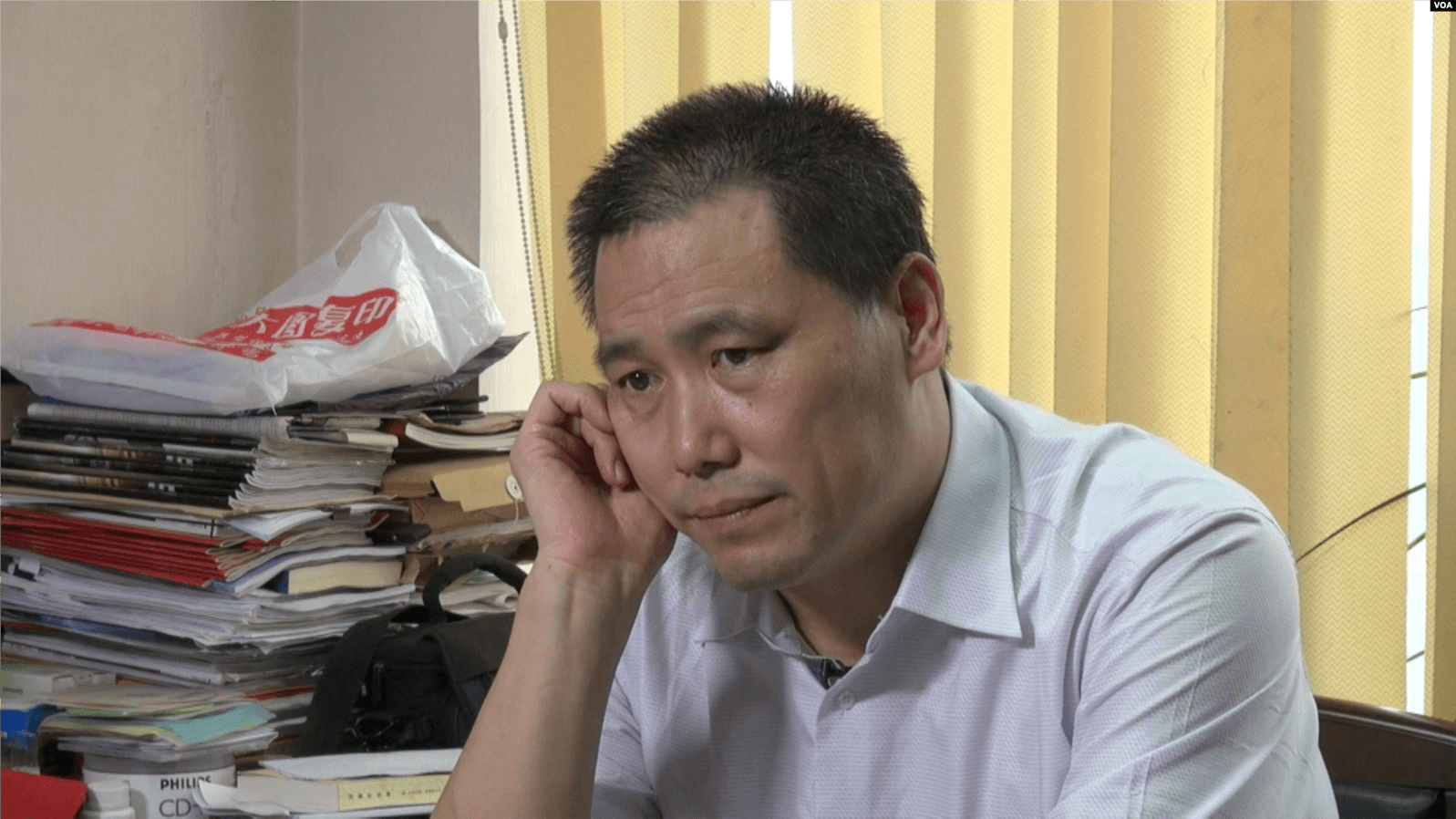
  • Justice Ministry to Silence Lawyers with New Confidentiality Rules

    China University of Political Science and Law Professor Wang Jianxun. Photo credit: sohu.com

    Months before China’s highest court and prosecutor prescribed imprisonment for online posts that got too popular, the Ministry of Justice introduced information controls in draft regulations targeting criminal defense lawyers. Circulated to province-level judicial administration departments earlier this summer, the rules were met with criticism from those in the legal profession.

    Defense lawyers voiced concern that certain provisions would impose upon them absolute obligations to keep various case details confidential. Compared with the Supreme People’s Court’s judicial interpretation of the Criminal Procedure Law that barred the use of social media in the courtroom, the Ministry of Justice rules go further. While the judicial interpretation only covers the conduct of lawyers inside the courtroom and, specifically, their ability to reveal trial proceedings, the rules impose limitations on things like sharing case information with the relatives of defendants or accessing or reproducing court records. As the body mandated with the supervision of lawyers, the ministry also has more direct weapons (e.g., the approval of lawyer licenses) to use as punishment against those who fail to abide by its rules.

    The main concern, explains China University of Political Science and Law Professor Wang Jianxun, is that the rules are aimed at preventing defense lawyers from using the media and the Internet to raise public awareness about individual cases that may become miscarriages of justice.

    In recent years, Chinese lawyers have increasingly made public details of ongoing criminal cases involving procedural irregularities or other types of injustice. There is a perception among some, however, that such mobilization of public opinion interferes with courts’ ability to adjudicate cases independently and ought to be curbed in an effort to promote rule of law.

    But as Professor Wang notes, in an article published by Caijing (translated below), the Chinese judicial system is plagued by insufficient transparency and imperfect attention to procedural rights. Moreover, “coordination” between judicial and law-enforcement bodies under the party’s guidance limits, rather than promotes, judicial independence. Under these circumstances, publicity and public opinion offers an important channel through which courts, prosecutors, and police may be held accountable for their actions in the criminal process. Imposing an absolute ban on revealing case details would further limit lawyers’ ability to defend their clients and could potentially result in sanctions for those lawyers who violate these provisions.

    *
    Lawyers’ Defense Rights and the “Cutthroat” Bill

    Wang Jianxun
    Caijing, July 29, 2013

    In the wake of the promulgation of rules related to the new Criminal Procedure Law by the Supreme People’s Court, Supreme People’s Procuratorate, and Ministry of Public Security, the Ministry of Justice (MOJ) has also drafted a consultation version of Regulations on Several Issues Concerning Criminal Defense by Lawyers, regulations specifically aimed at regulating the criminal defense activities of lawyers. These regulations concern issues related to the appointment of criminal defense lawyers and their abilities to meet with clients, read case files, and carry out defense work. Many provisions tend toward restriction of lawyers’ defense rights, among which a widely criticized one is the requirement that lawyers keep case information confidential.

    According to Articles 18, 27, and 42 of these regulations, defense lawyers must not leak notes, audio recordings, video recordings, or photographs to relatives of criminal suspects or defendants or use case-file documents or notes or audio- or video recordings made during the trial for purposes other than defense in that case. Also, any audio- or video recording of the trial or requests to view or reproduce audio- or video recordings of the trial made by the people’s court must first get the court’s approval.

    What do these provisions mean, ultimately? Will they constrict the already narrow space available for criminal defense even further? How will lawyers’ criminal defense rights be protected?

    There’s no doubt that criminal cases are special, and it’s understandable that lawyers’ activities in criminal litigation be subject to certain regulation and restriction. But the problem is that restrictions on lawyers’ activities ought to be premised on protecting their rights to engage in defense and motivated by protecting the rights of criminal suspects and defendants. After all, the entire system of criminal defense was set up to protect the rights of these persons, and to protect the rights of lawyers to engage in defense is also to protect the rights of suspects and defendants.

    In this respect, there is nothing improper about requiring criminal defense lawyers to fulfill certain confidentiality obligations, but complete or unconditional requirements that lawyers keep case information secret are inappropriate.

    If in certain special instances secrecy does not benefit a lawyer’s exercise of defense rights or benefit protection of the rights of a criminal suspect or defendant, then there is no reason to require the lawyer to fulfill this kind of confidentiality obligation. For example, the MOJ regulations bar defense lawyers from leaking notes, audio recordings, video recordings, or photographs to relatives of criminal suspects or defendants. Does this mean that defense lawyers may not report information about the case or give a progress report to those relatives? If those things are prohibited, how are they supposed to coordinate on behalf of defending the suspect or defendant?

    As another example, the MOJ regulations also bar lawyers from using case documents or notes or audio- or video recordings of the trial for purposes other than defense in the case at hand. This provision is intended to prevent lawyers from revealing information about cases to outsiders.

    The question is: what is the legal basis for this sort of prohibition? If a defendant’s confession is coerced through torture, can’t a lawyer notify relatives of audio or videotapes or make them public? And how does one define “other purposes”? Does discussing details of the case with relatives of a suspect or defendant count as “other purposes”? Does being interviewed about a trial count as “other purposes”? Does publicizing details of the trial online count as “other purposes”?

    There is widespread concern among lawyers that these provisions barring defense lawyers from revealing case details will in fact block them from using the media and public opinion to prevent miscarriages of justice. In a society where rule of law is imperfect and the judicial process is not independent, there is already limited space for criminal defense. The rights of lawyers to engage in criminal defense work are unable to receive effective protection, and the rights of criminal suspects and defendants are often violated. For proof, just look at the frequent occurrence of miscarriages of justice and the jailing of some criminal defense lawyers.

    If one says that the confidentiality responsibility of lawyers in societies with rule of law does not worry people because of procedural justice, then in a society with imperfect rule of law this kind of confidentiality responsibility has the possibility to deny a wrongly accused criminal suspect or defendant their final hope of obtaining justice.

    In fact, when we look at the level of practice, in a society where the judicial process is not independent and procedural justice is not made manifest, the act of a lawyer revealing case details will often enable an unfair case to turn itself around and either prevent or remedy a case of injustice due to false evidence or errors in the law.

    Cases like the “Beihai Case” in Guangxi or the “Xiaohe Case” in Guiyang were able to benefit to a considerable degree from timely publicity of case information by defense lawyers in order to avoid an even greater degree of judicial unfairness. As everyone knows, one of the chronic problems of the criminal process is insufficient openness and transparency. Even though trials and verdicts are supposed to be public according to the law, in practice both are regularly done in a non-open manner—especially those so-called sensitive or major and important cases. The court often makes excuses for refusing to try a case in public, whether it’s through the excuse that all observer permits have been distributed already, deliberately holding the trial in a small courtroom, or even making it impossible for the defendant’s relatives to observe.

    In essence, these kinds of trials are secret trials, and not only do secret trials violate the law, they are also unfair. Even worse, in many criminal cases, defendants and their relatives don’t even get copies of the verdicts.

    In this kind of situation with no open trials or verdicts, what is the crime in a defense lawyer making details of the case public? Otherwise, would there be any openness to speak of in the entire criminal process? Without openness, how can the fairness of the judicial process be guaranteed?

    One of the signs of humanity’s becoming more civilized is the shift from secret trials to public trials and the shift from secret decisions to public decisions. Where there are secret trials and secret decisions, there is no reason to bar lawyers from revealing case details; otherwise, it’s unavoidable that defendants’ rights will get trampled upon.

    Then if you permit lawyers to reveal case details as they please—especially in those cases that have not yet been tried—what do you do when these actions have negative consequences for adjudication or even judicial independence? Frankly speaking, this sort of worry is not without merit because public opinion has the potential to be a double-edged sword.

    However, the way to go about resolving this problem is not to bar lawyers from revealing case details, which could possibly make it so that these cases of injustice have no remedy. Rather, the solution is to establish judicial independence in an institutional way and realize the procedural justice of the Criminal Procedure Law.

    Were the judicial process to truly achieve independence, then even if a lawyer reveals details of a case or public opinion exerts pressure on the judicial process the judicial process would be able to handle it calmly, stand firm, and carry on. It thus wouldn’t have to worry about the improper influence of public opinion or the media.

    Only a judicial system that is not independent will be vulnerable in the face of public opinion and [state] power.

    The author is an assistant professor at China University of Political Science and Law.

  • China Plots National Verdict Database

    Supreme People’s Court meeting on judicial openness in Liuzhou, Guangxi, May 8, 2013. Photo credit: Gmw.cn

    Appeals for public access to court documents may have gained new ground in China. Following a recent upsurge in reporting on miscarriages of justice, plans to establish a national database of court decisions became the main topic of discussion at a meeting convened by the Supreme People’s Court (SPC) on May 8 and 9. The meeting appears to be part of new SPC President Zhou Qiang’s effort to increase the transparency and credibility of the judicial system.

    Calls to make court verdicts available online have been around almost as long as the Internet in China. Nearly a decade ago, legal scholars such as Peking University’s He Weifang argued that the online publication of verdicts would bring increased scrutiny and force judges to produce higher-quality judgements. Advocates of online publication also say that it will promote greater public awareness of the judicial system and its procedures.

    In the years since, there has been a gradual expansion in both the number of courts that put verdicts online and the scope of decisions that are available for public viewing. In 2007, the SPC issued guidelines urging courts to increase their efforts in this regard, and courts in Henan Province have perhaps gone the farthest, publishing over 440,000 decisions on its court websites as of the beginning of this year. In February 2013, Guangdong High People’s Court President Zheng E said that Guangdong courts would start to publish “all” court verdicts online in the coming months.

    In an opinion piece published in the May 12 edition of The Beijing News (translated below), lawyer Liu Changsong welcomes the plans for a national database and provides some examples of how access to court documents can make it easier for people to appeal wrongful convictions. He also cites curbing judicial corruption as an important reason to make verdicts available online.

    If plans for a national database are realized, it would be a monumental showing of transparency in China’s often opaque judicial system, but there is good reason to believe that any such database would remain selective. Courts are likely to resist having their work subjected to public scrutiny, and certain types of verdicts are expected to remain outside the public domain. In particular, cases that involve crimes of “endangering state security” are less likely to become public given their political nature and tendency to be classified as involving “state secrets.” Similarly, while Chinese courts have released verdicts in cases of death with two year reprieve (as these sentences are generally commuted to life or fixed-term imprisonment), it would be surprising if they released decisions in all cases of death with immediate execution, as this would shed light on another closely guarded secret: the number of executions—believed to be in the thousands—that China carries out each year.

    Although some of these exceptions may seem logical on the surface, they are not based in the law. This is because, while Chinese law allows courts to hear certain cases in closed hearings when issues such as state secrecy or privacy are involved, the law requires that all court verdicts be announced publicly, even for closed trials. Legitimate concerns about personal privacy may justify light redaction of certain court decisions, but complete exclusion or heavy culling of entire verdict categories would simply highlight the division of the legal system into two realms—one open and the other hidden—divided out of political expedience, rather than legal bounds.

    *
    Publishing Court Decisions Will Help Reduce Judicial Corruption

    Liu Changsong, The Beijing News
    May 12, 2013

    The core motivation of making court decisions public is to allow judicial decisions to have oversight from all sectors [of society] and thereby promote judicial fairness.

    Recently, the Supreme People’s Court (SPC) held a study meeting on judicial openness in Liuzhou, Guangxi, where publishing court decisions online became a hot topic of discussion. The SPC Judicial Reform Office revealed that a Chinese Judicial Decision Website may be operational within the year (via People’s Court Daily).

    Publication of judicial decisions is the issue related to judicial openness that has received the most public attention. With the development of Internet technology, many have dreamed of the ability to freely search for and read online any judicial decision that they care about. Now, that dream will finally become a reality.

    The reason that publication of judicial decisions has received so much attention is because of its importance. The [decisions] fully reflect the claims of each party, the court’s finding of fact, and the reasoning behind the court’s decision. They are the basis for appeal and petition when a party doesn’t agree with the decision, as well as the basis for the court’s implementation of the verdict after it takes effect. Even more, [publication of verdicts] is a basis for all sectors of society to monitor and oversee court decisions.

    A well-known example can show the difficulties that arise when court decisions are unavailable. In 2005, 10 years after Nie Shubin was executed for rape and murder, the real culprit was discovered. Nie’s mother spent two years petitioning the Shijiazhuang Intermediate People’s Court and the Hebei High People’s Court to re-open the case, but both courts refused to accept the petition without a copy of the court decision. After two years of petitioning, a mysterious person sent Nie’s mother copies of the first- and second-instance decisions by courier, finally enabling her to initiate the petition process.

    As Nie’s mother said: “If we’re not even clear about the court’s finding of fact, how can we petition? If we don’t even know the specific document number of the effective verdict, how can we ask for a retrial?” Of course, despite continued petitioning by Nie’s mother, for a variety of reasons there has not yet been any result in the Nie Shubin case. This is something that causes legal professionals to feel deep [regret]. That’s another issue entirely, but one can get a sense of the importance of court decisions from the fact that without a verdict it’s impossible to petition for retrial.

    As a lawyer, I’ve also felt the awkwardness of not being able to access court decisions. Last year, I represented the victim’s family in a voluntary manslaughter case. After both the first- and second-instance trials, the victim’s parents did not accept the verdict and wanted to petition for a retrial. They didn’t have a copy of the verdict, so I had to use my connections to get a photocopy from the court so that we could initiate the petition process.

    Of course, even the current criminal procedure law does not categorize the immediate family members of a deceased victim as a party to the case or require that they be given a copy of the court verdict. This is a gap in the legislation, but if they could easily go online to search for and copy court verdicts, this gap would be sufficiently filled.

    Naturally, the benefit of publishing court decisions online would not merely be to facilitate appeals and court petitions. The core motivation is to allow all sectors [of society] to engage in oversight of judicial decisions and, thereby, promote judicial fairness. Publication of court decisions online can force courts to improve the quality of their decisions, increase the reasoning of the decisions, promote a higher degree of professionalism among judges, prevent and reduce judicial corruption, and increase the credibility of the courts.

    Both the constitution and the law have clear provisions about public adjudication, so there is no legal impediment to publishing all court documents online. I understand that the SPC is presently undertaking to establish a Chinese Judicial Decision Website that when fully functional will include all types of verdicts, be updated in real time, contain clear categories, have scientific search functionality, and provide convenient statistical information and automatic analysis. At the same time, I hope that the SPC will issue an authoritative judicial interpretation on the subject of publishing all court decisions online in order to provide even stronger legal protection for judicial openness.

  • How Many More Sacrifices until Rule of Law Reigns?

    Zhao Yanjin and her husband read her acquittal verdict in their home after her release. She had spent 10 years in custody. Photo credit: dfdaily.com

    On May 6, the China Youth Daily reported on the case of a Hebei woman, Zhao Yanjin, who had stood accused of murdering a neighbor’s child in 2001. In May 2011, after a series of trials, appeals, and conflicting court decisions, the Hebei Higher People’s Court finally acquitted her on the grounds of insufficient evidence. By that time, she had spent nearly 10 years in police custody.

    This might have been just one more case of belated exoneration for a suspect victimized by a criminal justice system that too often rushes to solve murder case. But there was an added twist: in Zhao’s case, it took six months for the court’s decision to reach the Baoding Intermediate People’s Court, which was responsible for announcing Zhao’s innocence, and after the decision was announced authorities in Baoding delayed her release for more than a year while they took steps to ensure that the murdered child’s relatives would not protest the decision.

    Meanwhile, unaware of the acquittal, Zhao’s husband continued to protest her innocence by petitioning, which landed him in a reeducation through labor (RTL) facility for nearly 10 months—his second RTL sentence for petitioning on his wife’s behalf. In the weeks leading up to her release, court officials repeatedly met with Zhao and had her write a statement promising to remain “low-key” after her release.

    Chinese media has recently reported several stories similar to Zhao Yanjin’s. In late April, two men in Zhejiang submitted a claim for 7.02 million yuan (US$1.1 million) in state compensation after a court retrial found insufficient evidence to support their conviction on rape charges nearly 10 years ago. The men say that they had been tortured into confessing. Then on May 3, five men were acquitted of charges stemming from the bombing of a government office in Fujian province—charges for which they, too, had spent a decade in custody while court proceedings stalled because local law-enforcement authorities were unwilling to acknowledge that they had no case beyond confessions coerced through torture.

    In the wake of these and other cases, the problem of wrongful convictions has been in the spotlight in recent months. In March, the president of the Zhejiang Higher People’s Court blamed pressure to deal with murder cases and other serious crime for the frequent use of torture to extract confessions. Earlier this week, Shen Deyong, a vice-president at the Supreme People’s Court, warned in an essay in China Court News that mounting wrongful convictions posed an “unprecedented challenge” to China’s court system.

    In a commentary posted on a major news portal in Henan Province (where authorities recently announced that judges will held accountable for wrongful convictions), Ning Xinchun reflects on the way that Zhao Yanjin’s husband describes their sacrifices as necessary to promote rule of law development in China. Ning rejects this interpretation, writing that Chinese citizens are much too easily sacrificed to the largely indifferent power of the state. Instead of forgiveness and a willingness to sacrifice oneself in the interest of eventual progress, Ning suggests that such progress is not inevitable and that outrage at the unacceptability of such sacrifices is instead needed to change a criminal justice system that makes people live in fear.

    *
    Citizen Sacrifice Doesn’t Represent Rule of Law Progress

    Ning Xinchun
    May 6, 2013 dahe.cn

    “Without sacrifice, we can’t further the promotion of rule of law,” said Li Jianjun. Li is Zhao Yanjin’s husband. In an effort to proclaim his wife’s innocence, he went all over to engage in petitioning and was sent to re-education through labor more than once. In September 2001, Zhao Yanjin got caught up in a murder case. Over 12 years, she was twice sentenced to life in prison and twice acquitted. Before fully recovering her freedom, she had spent a total of 10 years in a detention center. After the Hebei high court issued its acquittal decision, she was kept in custody for an additional 20 months before she regained her freedom. (Source: China Youth Daily, May 6)

    A close look at the news reveals that the experience of Zhao Yanjin and her family is not unique. First, there was the She Xianglin case. Then there was the reversal of the case in Zhejiang of the uncle and nephew surnamed Zhang who had been wrongly convicted for more than 10 years. Then there was the Henan case of the “guaranteed death sentence” for defendant Li Huailiang. In terms of the time involved and the experience of having finally been acquitted and released on grounds of insufficient evidence after going through seven court hearings and three verdicts, the case is much more similar to the case of the bombing at the Fuqing, Fujian, discipline inspection committee office, where five defendants languished for 12 years in prison only to be acquitted and released.

    Without doubt, human life cannot be recovered. More than a decade passed in jail, with no career advancement, loss of health, and even changing the fate of the entire family. Under the giant wheels of the state machine, lowly individuals wind up being ground up into scattered dust. Perhaps it’s out of a sorrowful choice to “forgive” or an intentional exaggeration of consciousness [that leads them to say]: “Without sacrifice, we can’t further the promotion of rule of law.”

    What this news shows is that, the reality of the justice system is not only a host of procedural problems but the fact that the presumption of innocence is often set aside. Pursuing responsibility in these individual cases perhaps won’t have huge significance for a country’s legal system. But to each citizen, there is nothing in the world more significant. Faced with a shattered family or loss of life, any so-called “huge compensation” is really quite insignificant. In this respect, fairness and transparency of the legal system, adherence to basic legal rationality such as “no crime without sufficient evidence” is the most valuable thing in the lives of ordinary people because it protects people from malicious prosecution under the law.

    In Hugo’s masterpiece Les Misérables, there is a representative of the legal system, Javert, who spends his entire life pursuing the main character, Jean Valjean. Here, the law almost becomes a force of evil used to attack ordinary people. Just like these innocent Chinese citizens who have spent long years locked up in jail, Jean Valjean lives his life in the shadow of this kind of evil law, living a life of continual setbacks, vagrancy, jail, and persecution. The only beauty in his life is in his imagining the kingdom of heaven.

    Only through strict observance of legal procedure and adherence to legal rationality can we prevent the way that the machinery of state has for a long time waged mistaken wars against citizens. From another perspective, this raises a question that urgently needs to be answered: when citizens fall into deliberate legal traps, how should they use everything from state institutions to civil society to mobilize and organize forces to remedy the situation and clear channels for relief? We’ve seen that when there is no [means to seek] immediate remedy, any person can fall victim to this kind of evil legal system. If you have good luck, you can wait until the facts of the case clear your name; if not, you can spend your life in jail.

    But we know that justice is not a matter of hitting the jackpot.

    In his brilliant work of philosophy, The Spirit of the Laws, Montesquieu holds rationality to be the first criterion and maintains that ordinary laws are [reflections of] human rationality and that law is the application of human rationality in special circumstances. Today, people do not lack in expectations for rationality, but the progress of a country’s rule of law, besides being built upon the foundation of people’s rationality, must also [be based in] the state’s adherence to rationality, including a pursuit of procedural legality, improving channels for relief, etc.

    At the beginning of the essay, the party to the case said that without sacrifice, we can’t further the promotion of rule of law. But society should not take comfort in this kind of magnanimous forgiveness. Instead, we should always bear in mind: citizen sacrifice does not represent social progress; it represents the shame of our rule of law, and nothing more.