Tag: law enforcement

  • Chinese Court Decision Highlights the Need for Full Implementation of Anti-Domestic Violence Law

    The Ordos Intermediate People’s Court in Inner Mongolia recently convicted a local government official of battering his wife—the journalist Hong Mei—to death. The case has received significant attention largely due to Hong’s standing as a successful journalist who had been reporting on domestic violence and the implementation of China’s year-old Anti-Domestic Violence Law. Major Chinese news organizations covering Hong’s death include Xinhua, Caixin, Sina, and Tencent News. Digital media outlets Quartz and Sixth Tone also reported the story.

    Brutal Death of a Promising Woman Journalist Strikes a Nerve

    Hong’s death touches a raw nerve with the many Chinese citizens who recognize domestic violence as a major social problem. As described in a mournful report published shortly after her death, Hong was an especially poignant victim. Personal artifacts remaining in her office at the Hangjinqi Broadcasting and Television Bureau speak to a respected journalist devoted to her work and family.

    While China’s post-1978 reform era has brought about a degree of economic and social liberalization that has created greater opportunities for women, according to The New York Times it “has also fostered a resurgence of long-repressed traditional values. More and more men and women say a woman’s place is in the home, wealthy men take mistresses in a contemporary reprise of the concubine system, and pressure for women to marry young is intense.” Increasing numbers of professional women in China, such as Hong, encounter obstacles to professional achievement stemming from domestic violence and a male-dominated workplace culture. Although China’s Anti-Domestic Violence Law came into effect on March 1, 2016 and receives strong support from the public, it still suffers from weak implementation, and the number of domestic violence cases continue to be alarmingly high. The All-China Women’s Federation found that a quarter of all married women in China experience some form of domestic violence.

    Domestic Violence and Women in Prison

    Women make up an overwhelming majority of the victims of domestic violence. While spousal abuse perpetrated against women is often trivialized or ignored by local law enforcement, survivors’ defensive strategies are routinely criminalized. In some provinces, the number of female offenders who are in prison for committing crimes related to domestic violence (such as fighting back to defend themselves or their children) can account for up to 22% of the total serious female offender prison population. Recognizing the gendered nature of domestic violence and the importance of putting in place preventative and interventionist measures to protect potential victims and survivors would go a long way in reducing China’s female prison population, which has been on the rise in recent years.

    The Anti-Domestic Violence Law rightly addresses the issue. Of special significance is the introduction of “personal safety protection orders.” The law marks the first time on a national legislative scale that protection orders (essentially a restraining order) can be issued by a court without the need for a lawsuit to be filed. Alongside the orders, the law also emphasizes the importance of public education and a community-based approach towards intervention whereby groups such as schools, medical facilities, and neighborhood committees are responsible for reporting cases of domestic violence. With the rising number of women in prison and the fact that their crimes are often the last resort of an abuse victim, preventative measures not only ensure that victims are protected as early as possible, they also have the long-term collateral impact of reducing a woman’s risk of incarceration.

    However, preventative measures can only be successful if implemented. It is crucial that police and courts are responsive and protective of victims before domestic violence cases escalate. Currently, even with the Anti-Domestic Violence Law well into its first year of implementation, numerous women’s rights groups have expressed disappointment in law enforcement and judicial handling of domestic violence cases—the former for failing to intervene and provide refuge for victims, and the latter for the long turnaround time in issuing protection orders.

    Court Decision Documents a Sad History of Abuse

    If Hong’s story generates sympathy among Chinese citizens and women’s rights advocates, the background of her abuser, Jin Zhu, likely also taps into the broader societal anger directed at government officials within China. Jin was a government official in Ordos, giving Chinese citizens yet another example of a lawbreaking official to rail against (according to a Pew Global Attitudes survey, four out of five Chinese citizens consider malfeasance in office by government officials a big problem).

    The facts of the case indicate that Jin is a serial domestic abuser who showed no remorse for his criminal actions. In its decision, the court made clear that Jin’s violence against Hong was hardly an isolated incident—it not only detailed Jin’s terrorizing Hong over the several hours that led to her death on April 6, 2016, but also noted specifically that Jin physically attacked Hong many times throughout their relationship. A Caixin summary of the court’s full opinion recounts that in 2013, Jin battered Hong so badly she had to go to the hospital; she initially refused to return home, but finally did so after Jin promised that he would not batter her again.

    Jin showed no remorse in court, offering a flimsy intoxication defense: according to Cao Chunfeng, the lawyer representing Hong’s family, Jin blamed his actions on “getting blackout drunk” and stated that, as such, “it couldn’t be ruled out that another person committed the crime.” Jin never admitted guilt in court.

    Did Local Procuratorates Pursue the Correct Charges Against Jin?

    The court found Jin guilty of “intentional injurious assault” (guyi shanghai zui) and ordered a suspended death sentence (which can be commuted to life in prison after two years). It isn’t clear why an intentional homicide (guyi sharen) conviction was not pursued since the court stated that Jin “battered victim Hong Mei on the evening of April 5, 2016 because she went to a social event, and after getting drunk he battered her until she was dead.” The definitions of these crimes are simple, and under Article 232 of the Criminal Law “anyone who intentionally kills a person” is guilty of intentional homicide, liable for punishment ranging from three years in prison to the death penalty.

    Under Article 172 of the PRC Criminal Procedure Law, the people’s procuratorate possesses authority to bring specific crimes to court for criminal prosecution. Although the specific factors considered by the procuratorate in its charging decision are unclear, it would be a poor precedent if the court was persuaded by Jin’s intoxication defense and found that he lacked the requisite criminal intent to commit homicide. In its full opinion, the court emphasized that Jin’s intoxication was wholly voluntary and that he exhibited a long history of physically assaulting Hong. His intent to kill can be deduced from his actions over several years. If China’s legal authorities refrained from prosecuting Jin to the fullest extent of the law, they risk sending the message that alcohol intoxication is at least a partial defense to domestic violence charges.

    Leniency for domestic abusers like Jin might also contribute to rising numbers of incarcerated women in China. Domestic violence is a major contributing factor to crime among women, as women who fight back against their abusers can receive severe prison sentences and heavy criminal charges. The Supreme People’s Court has recognized the importance of this issue by developing national sentencing standards for cases involving domestic violence and women. The case of Li Yan (李彦), who had been beaten and tortured by her spouse, is perhaps the most famous example of violent self-defense by a victim of domestic abuse. Li was initially sentenced to death for killing her husband in self-defense before her sentence was reduced in the wake of mounting public pressure in 2015.

    China’s Anti-Domestic Violence Law Must Be Fully Implemented

    Unfortunately, China’s Anti-Domestic Violence Law came too late for Hong Mei. She was killed on April 6, 2016, just a few short weeks after the law took effect on March 1. Had the law been passed earlier, Hong might have obtained a “personal safety protection order” against her husband in 2013 after she was hospitalized for injuries he inflicted on her during a violent beating. As it was, Hong sought a divorce, but abandoned her effort “under pressure from those around her.” The new law is designed to make it easier for victims of domestic abuse to overcome societal pressure that makes it difficult for women to protect themselves against male perpetrators of domestic violence.

    According to the Anti-Domestic Violence Law, victims can apply for personal safety protection orders through their local courts, which must respond within 72 hours, or 24 hours in the case of emergencies. If an application is successful, protection orders can forbid contact between the victim and their abuser and demand that the abuser move out of their residence. If a victim of domestic violence is unable to apply for protection orders on their own, relatives or welfare organizations can apply for the orders on the victim’s behalf. The efficacy of protection orders in stopping domestic violence has already been proven in China. In 2008, the Supreme People’s Court experimented with allowing local courts to use protection orders in lawsuits involving domestic violence; over 90% of the orders proved successful in stopping the violence. However, prior to the introduction of the Anti-Domestic Violence Law, getting a protection order required filing a lawsuit, which took time and placed the burden of proof on the victim. Under the new law, the court can grant a protection order without bringing a lawsuit.

    Now that the Anti-Domestic Violence Law has taken effect, proper implementation is key. Hopefully, Hong’s case will inspire tougher enforcement and greater societal support of victims. Although a promising first step, handing down harsh punishment to perpetrators of domestic violence does not address the root causes nor the rising number of women such as Li Yan who, after years of suffering domestic abuse, end up in prison. That said, the Anti-Domestic Violence Law has the potential to make a difference, particularly in the lives of female victims of domestic violence. If fully implemented, it offers them, their children, and other victims of domestic abuse a legal way out of a dangerous situation. For some of these women, it may also mean the difference between freedom and incarceration.

  • China: New Rules on Electronic Data Collection Take Effect

    New rules raise concern over whether China’s criminal justice system can adequately protect the right to privacy while exercising the power to collect and make use of electronic evidence. Image credit: Sina.com.cn

    On October 1, a new set of rules took effect in China that raised alarms when first introduced last month. Casual observers worried that the “Provisions Concerning the Collection, Extraction, Review, and Judgment of Electronic Data in the Handling of Criminal Cases” (“Provisions”) (translation), issued jointly by the Supreme People’s Court, the Supreme People’s Procuratorate, and the Ministry of Public Security, would mean that from now on, every word you say in a Weibo post or WeChat circle could be used against you in court.

    In fact, the Provisions don’t appear to give legal authorities greater powers or put PRC netizens and mobile users at substantially increased risk of criminal prosecution for their online activity. Rather, the new rules clarify the types of electronic data that can be collected in prosecuting criminal cases and establish protocols for handling the data.

    That said, the public’s sense of insecurity can be readily understood in the context of a criminal justice system in which investigators routinely act arbitrarily and without effective checks on their power. Given the amount of content and metadata stored in computers, electronic devices, and network systems, the real question is whether China’s criminal justice system can adequately protect an individual’s legitimate right to privacy while exercising the power to collect and make use of electronic evidence.

    ***

    In the course of a criminal investigation, Article 52 of the Criminal Procedure Law (CPL) in China gives courts, procuratorates, and public security organs the power to collect and obtain evidence from relevant organizations and individuals who, in turn, are obligated by law to be truthful and to provide the required information.

    To obtain evidence from someone, investigators need only seek internal approval and do not need external authorization in the form of a warrant or something similar. Verification of evidence and review of whether it was obtained and handled lawfully is supposed to take place at trial, and any evidence deemed to have been collected or obtained unlawfully is supposed to be excluded.

    When the CPL was amended in 2012, the section on evidence was updated to include electronic data among the kinds of evidence that can be used as the basis of a criminal conviction. Considering how much of contemporary life takes place online, including criminal activity, it’s reasonable to give law enforcement some power to collect electronic evidence in criminal investigations. And, given that data can be easily altered or deleted, there are particular concerns regarding timely seizure of the evidence and preservation of its integrity. Recognizing this, the new measures aim to provide clear standards for collecting and storing electronic data, protocols for preserving the integrity of the data, requirements regarding the chain of custody as electronic evidence moves through the criminal procedure, and guidelines for verifying and validating evidence.

    ***

    Perhaps the main reason Chinese netizens have been so alarmed by the Provisions is the broad, open-ended scope of digital content that is now potentially subject to collection and to being used as evidence in criminal cases. Included are:

    • Information on web pages, blogs, microblogs, chat groups, and network cloud storage
    • Correspondence in the form of text messages, email, instant messages, and chat groups
    • Other data such as account registration, user authentication data, electronic transaction records, and login records

    With potential access to so much data from computers and networks, authorities will inevitably encounter personal data of a private nature that has no connection to the criminal investigation at hand. According to legal commentator Bing Lin at the Beijing Times

    If collection of evidence is not subject to regulation, and attention is not paid to protecting citizens’ privacy, it will be very easy for an individual’s personal information to be leaked. Therefore, the granting of power to law enforcement agencies to collect electronic data as evidence also implicitly carries the imperative to regulate the way this power is carried out in order to achieve a balance between fighting crime and protecting citizens’ privacy.

    According to Bing Lin: “We cannot one-sidedly focus on the role electronic evidence can have in fighting crime while ignoring the need to regulate the way that law-enforcement personnel collect this evidence.” Though Legal Daily commentator Liu Xun starts from the premise that public interest outweighs the individual’s right to privacy, he too acknowledges “When it comes to collecting and obtaining electronic data, judicial authority should define concrete measures in order to effectively prevent investigators from disclosing personal or private information and to reinforce implementation of the discipline for maintaining secrecy.”

    One of the arguments used to reassure the public is that law enforcement authorities have these powers to collect and obtain electronic evidence only in the context of criminal investigations. However, the editorialists at Southern Metropolis Daily point out that this argument actually offers little comfort:

    What’s truly worth noticing is the impulsive and arbitrary manner in which criminal prosecutions are carried out in some parts of China, without effective limits or oversight. Sometimes it’s too easy to file a criminal case for investigation (for example, in past arrests of individuals for so-called “online defamation of county leaders”). Sometimes the exact opposite is the case…The reality behind the contradiction is the arbitrary way that criminal cases are filed for investigation. What prompts public concern about the new rules covering data collection from Weibo and WeChat friend circles is the lack of effective oversight of the criminal case-filing process and the absence of strong procedural checks on the way specific cases are handled (particularly where judicial authorities accept evidence that they know was unlawfully obtained).

    Noting that the Provisions raise issues that have “broad impact on citizens’ lives,” the Southern Metropolis Daily hints that when decisions about electronic data collection depend solely on judicial interpretations and administrative regulations, there is no avenue for public input. Ensuring that rule-making “adheres to the relevant provisions of Legislation Law” and “makes public input a mandatory part of the process” will “help dispel misconceptions and prevent surprise attacks.”

  • China Issues Oversight Rules for “Non-residential” Residential Surveillance

    The Supreme People’s Procuratorate building in Beijing.

    Not long after the draft of the amended Criminal Procedure Law (CPL) was released by China’s National People’s Congress (NPC) for public comment in August 2011, the United Nations Working Group on Enforced or Involuntary Disappearances expressed concern that the provisions relating to the coercive measure known as “designated-location residential surveillance” (zhiding jusuo jianshi juzhu) would legalize enforced disappearances. In late 2015, the United Nations Committee against Torture (CAT) went further and called on China to abolish the measure.

    The Supreme People’s Procuratorate (SPP) subsequently issued trial rules for determining the necessity of detention and rules to govern oversight of “designated-location residential surveillance” (DLRS), which had leapt back into the headlines in 2015 as part of a police crackdown against Chinese rights lawyers that intensified in July.

    A Coercive Measure

    Custodial detention or arrest takes place in detention centers, ordinary residential surveillance in one’s residence. DLRS happens someplace else, perhaps in a hotel or guesthouse, where law enforcement agents hold criminal suspects or defendants for up to six months while they investigate alleged crimes or prepare a case for trial.

    Authorities justify the lengthy six-month period by stating that residential surveillance is relatively lenient—not depriving people of their liberty, but merely restricting it. Nonetheless, individuals held under DLRS face an environment ripe with potential abuse and rights violations.

    When law enforcement uses the practice against people charged with endangering state security (ESS), terrorist activity, or serious corruption, the outcome is hard to distinguish from enforced disappearance or incommunicado detention. In these types of cases, investigators may use the law to deny families the knowledge of where their loved ones are being held and to deny detainees’ access to a lawyer. Within 24 hours of carrying out DLRS, investigators are only required to provide families with notice of detention and of the alleged offense.

    What a Difference Two Years Makes

    Faced with public opposition to the practice, legislators granted oversight powers to the procuratorate, but it has taken nearly two years for the SPP to define its role. In the meantime, as predicted, DLRS has become a routine part of handling politically sensitive cases. Though its high costs of facilities and manpower are somewhat prohibitive, DLRS is unparalleled in its long duration, ability to isolate detainees, option to delay intervention by legal counsel, and general capacity to exert psychological (and, in some cases, physical) pressure on suspects.

    Unfortunately, the new rules will do little to diminish these serious violations of due process. Procurators are concerned with whether DLRS is carried out lawfully, yet the most concerning aspects of the practice are themselves spelled out in the law.

    Focus on Decisions, Implementation

    The SPP has yet to publish their oversight regulations, but highly controlled media reporting sheds some light on their content. One thing is clear: the intention of the rules is bureaucratic oversight, not judicial oversight. Procurators will likely focus on examining paperwork, making the occasional inspection, and issuing instructions in case anything is out of the ordinary. People held under DLRS may initiate the oversight process by filing complaints independently or through their advocates. What appear to be missing are mechanisms for hearings to allow for the presentation of evidence or for appeals to challenge procuratorial decisions.

    Monitoring by the procuratorate will focus on two areas: (1) whether the decision to impose DLRS was lawful and (2) whether DLRS has been lawfully implemented. The former chiefly concerns whether the case involves a person who either (a) lacks a fixed residence in the county or city where the criminal investigation is taking place, or (b) is suspected of ESS, terrorism-related offenses, or serious corruption. In case of (b), the law requires investigators to substantiate a claim that ordinary residential surveillance would impede their investigation and obtain approval for DLRS from their immediately superior law-enforcement unit.

    The second area of focus involves ensuring that all paperwork is in order; necessary notices have been delivered; and the appropriate location, duration, and personnel are employed. Procurators would also ensure that detainees’ lawful rights are being protected, interrogations are held in separate locations, and no “physical punishment or abuse” is inflicted.

    Adding Inspections

    Oversight activities require procurators to make an on-scene inspection within 24 hours of receiving a copy of a decision to carry out DLRS. This inspection presumably enables inspectors to interview detainees and establish whether they have any allegations to make. It should also allow them to ascertain whether the designated location meets the lawful conditions for “ordinary living and rest” and to ensure that surveillance cameras and safety equipment are installed.

    The rules also appear to require procurators to visit the location at least once a week for the duration of DLRS. Periodic inspections should offer minimal guarantees against physical torture or ill treatment. They are inadequate, however, in preventing mental suffering and the use of other cruel and degrading treatment.

    Also troubling is the requirement that inspections be carried out in ways that do not interfere with investigations. This prioritizes the needs of investigators over the rights of detainees and may give investigators broad discretion to delay access to facilities.

    Missing the Mark

    This type of oversight, with its emphasis on ensuring adherence to applicable laws and regulations, will no doubt help to limit certain kinds of arbitrary and abusive behaviors. Other arbitrary practices and violations of due process will remain unaffected because they are legally sanctioned. For example, procurators are very unlikely to challenge investigators’ decisions to deny access to legal counsel to individuals charged with ESS or terrorism. The CPL empowers investigators to deny such access if they believe it might interfere with their investigation.

    In their attention to the legality of decision and implementation, procurators may also fail to scrutinize the legitimacy of charges made against detainees. Investigators can use flimsy evidence to initiate ESS investigations—thereby justifying the use of DLRS and exclusion of legal counsel—only to modify the charges when requesting approval of formal arrest after expiry of the six-month time limit.

    Ultimately, however well intentioned it might be, this kind of bureaucratic review cannot address the risks of DLRS. The measure grants law-enforcement investigators too much power over individuals, and the procuratorate lacks both power and incentive to challenge DLRS decisions, especially in the kinds of politically sensitive cases where abuse is most likely.

    The best solution would be for China to abolish DLRS, or at the very least, to restore detainees’ rights to full access to legal counsel and to communicate with the outside world. Anything less, and China is sanctioning enforced disappearances.

  • China: State Security Indictments Hit Record High in 2014

    Sources: Dui Hua; China Law Yearbook (various years)

    China indicted more people for endangering state security (ESS) crimes in 2014 than in any year since China Law Yearbook began reporting the figure in 1999. The number of people indicted rose to 1,411, up 2 percent from 1,384 in 2013. These indictments spanned 663 cases, compared with 608 cases in the previous year.

    With the uptick in indictments, the number of trials in the category that includes ESS jumped 20 percent. China Law Yearbook reports ESS trials in aggregate along with trials for dereliction of military duty and possibly other crimes. The number of trials in this category hit 1,074 in 2014, compared with 893 in 2013. Based on indictment statistics from previous years, Dui Hua has assumed that the number of trials attributed to dereliction of military duty and other crimes was negligible. Trial numbers are limited to trials of first instance that courts concluded during the year.

    The ESS trial that received the most international attention in 2014 was that of Uyghur activist and scholar Ilham Tohti. He was convicted of splittism in September 2014 and sentenced to life in prison for operating a Uyghur news website. Including Ilham Tohti, Dui Hua’s Political Prisoner Database has information on 18 people tried for ESS in 2014, down from 32 in 2013 and 26 in 2012. Thus far in 2015, Dui Hua has information on nine people tried for endangering state security.

    Chinese courts invariably convict and sentence those tried for ESS. Although acquittals are extremely rare, relatively light sentences are sometimes imposed. In 2014, at least three of those tried—Gu Yimin, Liang Haiyi, and Liu Benqi—were released by year end. All three were convicted of inciting subversion. Gu and Liu were tried for online posts that were critical of the Chinese government. Gu was sentenced to 1.5 years in prison and Liu to three years, but both were released due to time served in detention. Liang was likely tried for online posts and her involvement in public protests. Detained in 2011, Liang was released after a court sentenced her to a suspended sentence of two years.

    ESS covers a range of political crimes including subversion, inciting subversion, splittism, inciting splittism, espionage, and state secrets violations. While it is considered the most serious category of political crimes—and is the only category that carries a mandatory supplemental sentence of deprivation of political rights—ESS crimes are not the only legal avenue used to punish activists. In recent years, authorities have also used “disturbing social order” crimes like “picking quarrels and provoking troubles” and economic crimes like fraud and operating an illegal business to put away critics.

    “The number of individuals indicted for ESS crimes reached an all time high in 2014, a striking and troubling development,” said Dui Hua Executive Director John Kamm. “Given ongoing campaigns against protest and dissent, especially in the western region of Xinjiang, the number of ESS indictments and trials are unlikely to fall in 2015.”

  • Guangdong High Court Asks Why So Few Are Found Innocent

    A recently freed, wrongfully accused man becomes emotional during a 2014 interview. Credit: Nandu.com

    Since 2012, Chinese legal authorities have overturned a series of high-profile convictions and taken steps to prevent miscarriages of justice, but one question is still being asked: why do Chinese courts acquit so few defendants? (In 2013, the acquittal rate rose for the first time since 2000, growing annually from six acquittals per 10,000 adjudications to seven.) Some argue that institutional support for conviction stands in the way of systemic change.

    Researchers at Guangdong High People’s Court wanted to find out for themselves, conducting interviews, holding seminars, and analyzing court documents related to acquittals throughout the province. The results, which were published as a report last year, offer a fascinating view into how those within the judiciary interpret the institutional, legal, political, and social factors that shape the way Chinese courts operate.

    The researchers report that, for the five years between 2008 and 2012, Guangdong courts acquitted only 198 individuals in 180 cases. This represents a mere 0.04 percent of all individuals subject to criminal decisions that took effect during the period. The great majority (86 percent) of acquittals were on grounds of insufficient evidence, with a handful of others issued for things like self-defense, mental incompetence, or defendants who were under the age of 16. Acquittals occurred in a wide variety of cases—though not in any involving state-security offenses—but were most frequent in cases of assault. The trial process typically took longer than average when it resulted in acquittal, extended in accordance with the law by both courts and prosecutors. The average length of a trial that ended in acquittal was 169 days, or about five months, with the longest stretching to 504 days and the shortest at 55.

    These quantitative results are not the most interesting part of the report, in part because there are so few cases to study. Much more interesting are the authors’ observations on the factors contributing to the dearth of acquittals, the impact this has on the legal system and society at large, and what might be done to remedy the situation.

    Acquittal Averse Strategies

    The extremely low number of acquittals doesn’t mean that criminal prosecutions in Guangdong are rock-solid. The report points out that, when the facts of the case are unclear and evidence is insufficient, judges use a number of strategies other than acquittal. In relatively minor cases, for example, courts might work out an informal “plea bargain,” promising to hand down a non-custodial penalty (like a suspended sentence) in exchange for a defendant’s promise not to appeal. In death-penalty cases, on the other hand, a court might issue judgments “with room to maneuver” (liu you yudi caipan)—imposing a more lenient suspended death sentence that gets commuted to life imprisonment (and then, later, a fixed-term sentence) almost automatically. Appeals courts are in an even better position to shift responsibility, as they can always send cases back to a lower court for retrial rather than rule to acquit.

    Another common way courts avoid acquittals is to allow the prosecution to withdraw its indictment, which it may do at any point before a verdict is announced. In some cases, this has the effect of ending the case against the defendant, but in others, the prosecution can decide to submit a new indictment or send the case back to police for additional investigation. This amounts to a waste of resources, the report says, and results in individuals being locked up for far longer than they ought to be.

    The report argues that prosecutors, with the help of the courts, are abusing this provision of the Criminal Procedure Law (CPL) and that the practice needs to be more strictly regulated. For example, it recommends that prosecutors generally not be allowed to withdraw indictments for unclear facts or insufficient evidence. This is because the CPL already gives prosecutors two opportunities to request trial adjournment for additional investigation. If this is not enough, the report concludes, then the court should exercise its power to issue an acquittal. The report also suggests prohibiting prosecutors from withdrawing an indictment once investigation of the facts and evidence has begun at trial and, when withdrawal is approved, limiting prosecutors to one re-indictment.

    Inside the Pressure Cooker

    Why is it necessary to go through so much effort to avoid issuing acquittals? A recurring theme throughout the report is pressure. Stability-first governance campaigns and a whole system of associated performance measurements create pressures for conviction throughout the criminal justice system. Written and unwritten rules place a premium on rates of case-solving, arrest approval, and conviction as factors used to measure police or procuratorate effectiveness and can be tied to individual promotion or ranking. Since acquittals have the effect of lowering these statistics, police and prosecutors are incentivized to seek conviction and mobilize all manner of available resources to influence courts not to acquit.

    As the final stop in the criminal process, courts bear the brunt of the pressure to convict that’s built into the system. As the report puts it: “The public security bureau is responsible for cooking the meal and the procuratorate for serving it. Last to come, the court has only two choices as it faces this meal—either eat up or reject all the work that the first two institutions have already put into the case.” Acquittal, in other words, puts courts in potential conflict with other local law-enforcement bodies that are expecting conviction.

    In major cases, especially homicides, police often face considerable political and social pressure to bring a culprit to justice. When they do make arrests, it can lead to merit citations being publicly issued to the investigation team even before indictment, let alone conviction. If the court later acquits, not only must these citations be withdrawn, there will likely be compensation claims made against the police for wrongful detention. In some cases, the same individuals who had been rewarded for solving the case might end up facing investigation for misconduct or even criminal liability.

    Prioritizing Public and Process

    There are many negative consequences arising from courts’ failure to issue acquittals, according to the report. The most obvious effect is on the credibility of the courts. On this point, the report is particularly frank, warning: “the public is already deeply suspicious and dissatisfied with the [level of] fairness in our criminal justice system, and wrongful convictions are adding fuel to the fire.” They continue, stating: “Convictions based on protecting face and reducing pressure only bring momentary peace and tranquility. When and if the bomb will explode all becomes a matter of luck. But what’s certain is that, the moment the bomb goes off, the courts will suffer the heaviest casualties.”

    In order to prevent calamity, the report recognizes that courts must exercise their judicial powers more independently, but it provides little advice on how to do so, apart from improving awareness and understanding of the law and legal principles like the presumption of innocence. There is no mention of the “coordination” between police, procuratorates, and courts by the party’s politico-legal committees and little on the role of adjudication committees, where senior court officials get an opportunity to weigh in on how to rule in complex or important cases they have not personally heard.

    In fact, the authors appear to believe that increased communication between investigators, prosecutors, and judges can help judicial authorities make their case about resolving problematic prosecutions through acquittal. They recommend, for example, having police and prosecutors sit in on adjudication committee meetings in cases where problems arise. The assumption is that this will enable the courts to exert influence over the other law-enforcement bodies as opposed to the other way around.

    One thing that seems to be on the minds of the report’s authors is a responsibility system for wrongful convictions. They make the case that mistakes are inevitable within any legal system and that neither wrongful convictions nor acquittals should automatically be thought of as “mistakes” for which someone must be punished. That is what happens, they suggest, when too much emphasis is placed on outcomes without giving due weight to process.

    This is especially important for judges, they argue, and requires transforming the way that judges are evaluated and how data is used. They believe that judicial statistics like conviction rates have no place in deciding promotion or professional ranking. They do, however, see value in continuing to collect statistics and conduct ongoing research in order to evaluate the performance of the criminal justice system as a whole and to boost its credibility with the public.

  • Article 293: Deeming Free Speech Disorder in Internet Space

    Article 293: Deeming Free Speech Disorder in Internet Space

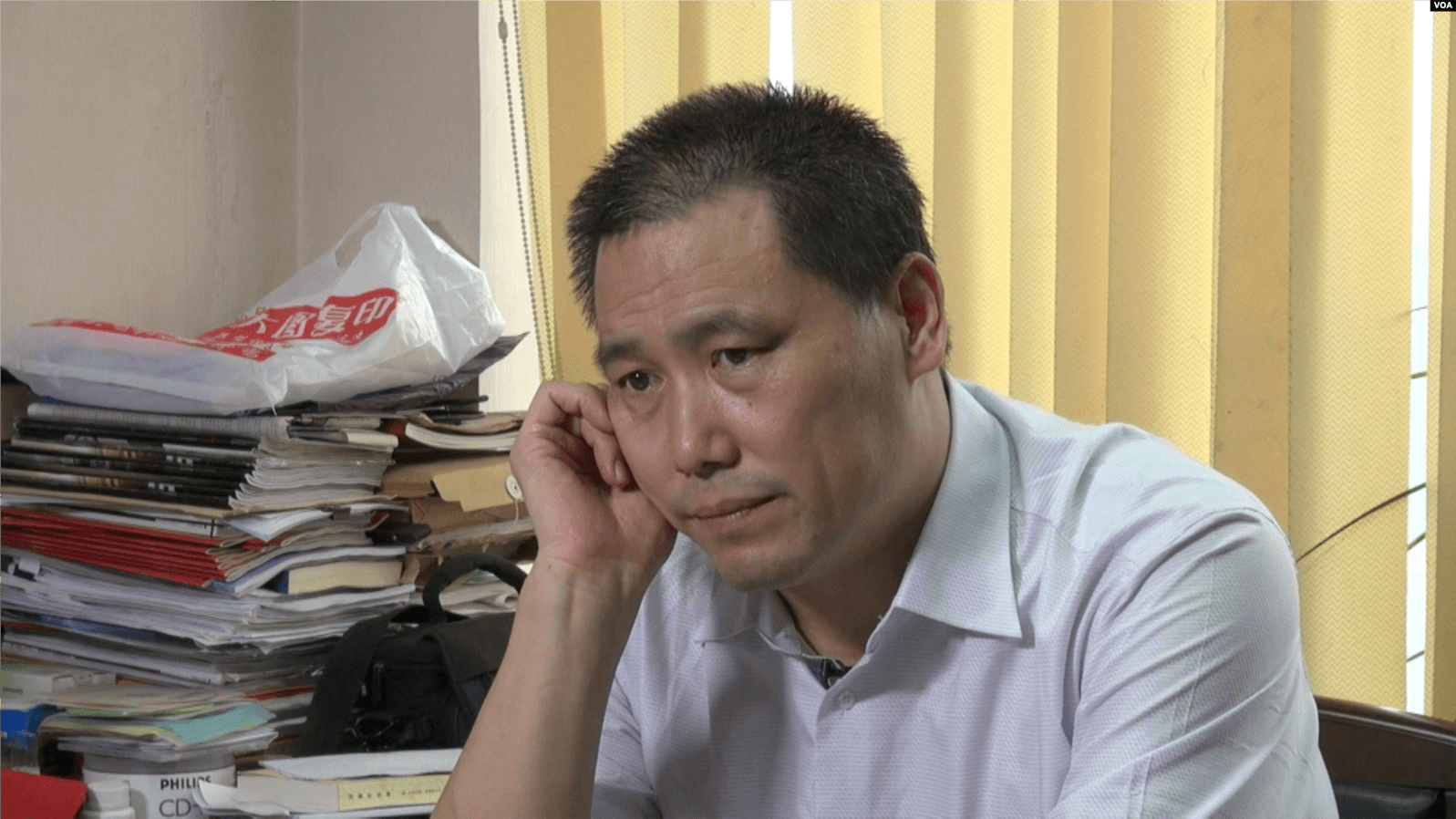
    Pu Zhiqiang, who was arrested for “creating a serious disturbance.” Image credit: VOA / Public domain
    In September 2013, the Supreme People’s Court (SPC) and Supreme People’s Procuratorate (SPP) jointly issued a judicial interpretation addressing a number of issues related to criminal speech online. That interpretation held that use of information networks “to berate or intimidate others,” “to disseminate false information . . . that one has either invented or clearly knows to be fabricated,” and “to organize or incite others to disseminate [such information]” should be punished under Article 293 of the Criminal Law, “creating a serious disturbance.”

    This marked a major elaboration of Article 293, which is also known by its literal translation, “picking quarrels and provoking trouble.” Prior to the interpretation, the offense had targeted a variety of behaviors deemed to be disruptions to social order, such as fighting, looting, throwing rocks or refuse at vehicles or buildings, or otherwise stirring up trouble in public spaces. Now, the interpretation seems to have expanded the definition of “public space” to include online space, treating it not only as a platform through which to incite others to disrupt social order but as a kind of public space itself that can be thrown into disorder by certain kinds of acts.

    Since September 2013, a growing list of Chinese people have been detained or charged for speech-related incidents under the provisions of Article 293. Perhaps the most well-known is the crusading rights lawyer Pu Zhiqiang, whose initial detention for “creating a serious disturbance” appeared to be connected to a private meeting to discuss issues related to June Fourth. According to recent reports, however, it appears that the authorities may also be trying to prosecute Pu under Article 293 (in addition to even more serious speech-related charges, including “inciting subversion” and “inciting splittism”) for a series of items he posted on social media.

    Prosecutors in Zhengzhou, Henan, also recently presented an indictment for “creating a serious disturbance” against Yu Shiwen, a former student leader during the 1989 democracy movement who was arrested last year in connection with a public memorial commemorating former leaders Zhao Ziyang and Hu Yaobang and those who died in the June Fourth crackdown. The authorities appear to have been unaware that the memorial had taken place until Yu and other participants posted photographs online and gave interviews to overseas media.

    Critics have argued that the judicial interpretation by the SPC and SPP is improper because by significantly expanding the scope under which Article 293 can be applied, it has ventured into the jurisdiction of China’s legislature. Peking University’s Zhang Qianfan recently took up the argument from a position defending the freedom of expression. In a blog post that has been widely republished on numerous Chinese-language websites, the liberal constitutional law scholar warns that overemphasis on preventing disorder in virtual space risks undermining what is not only a fundamental human right but also an essential component of ensuring proper governance. He describes Article 293 as a “pocket crime”—an offense so vaguely defined that nearly anything can be stuffed into it—and warns that, unless the boundaries are tightened up, even more Chinese citizens are likely to fall victim to arbitrary and abusive uses of offenses like these.

    *
    Don’t Let “Creating a Serious Disturbance” Become a “Pocket Crime”

    Zhang Qianfan
    February 5, 2015

    Over the past year, the offense of “creating a serious disturbance” (Article 293 of the Criminal Law) has been applied more and more often in cases involving speech by citizens. Legal scholars are widely concerned that this offense has already become a “pocket crime” whose borders can be extended at will. This not only violates the principles of “governing the country in accordance with the law” and “governing the country in accordance with the constitution” that were promoted at the Fourth Plenum of the Eighth Chinese Communist Party Conference; it will also inevitably lead to serious abuses of state power and an extreme restriction of citizens’ freedom of expression that is protected under Article 35 of China’s constitution.

    In a certain respect, we can consider the state as a supremely powerful Hobbesian “Leviathan,” but this Leviathan does not have a will of its own. On the contrary, it is a product of human reason. We establish the state and invest it with such huge powers so that it may control the irrationality of private individuals and prevent their using violence to harm others. At its most basic, the function of the state is to use its monopoly of lawful violence to control the unlawful violence committed by private individuals. The criminal law is the main means by which the state carries out this basic function, and police are the specific force through which the criminal law is enforced. You could say that it is a limb of the Leviathan. For rational people, limbs must be controlled by the brain. If the brain loses control, then the limbs can move wildly on their own in a dangerous manner. The same is true with the state.

    What is the “brain” of the state? The “brain” of the state is the public reason expressed through its laws. In a healthy state under ordinary conditions, law exists to serve the common interests of all people. But what exactly is the “common interest”? What sort of policies, laws, or institutions bring the greatest happiness to people? There can be no single answer to these questions, and since each person has freedom of thought and expression, no person can claim that he alone possesses the truth. So-called public reason is a social consensus that is formed in the course of free discussion, meaning that free expression is an institutional precondition for the production of public reason. Of course, total consensus is impossible, because no viewpoint can secure the agreement of every single person in society. We must be able to cast votes to determine the majority position at any time and use this as the basis for the laws that govern us. Only such laws can be considered “good laws” that express public reason. Public reason of this kind is bound to be flawed and can only attain perfection through practice. But it is inevitably far superior to any private individual reason—because humans are rationally self-interested, individual reason can only serve particular individuals. Only public reason formed in the context of free expression can serve the entire society.

    We can only live in a reasonable state if we enforce good laws, implement the rule of law, and allow our public reason “brain” to control the limbs of the state. On the other hand, if the limbs take control of the brain and prevent the brain from thinking in a normal way—or if individual reason is allowed to replace public reason and the machinery of the state is used to suppress and “manage” speech—then the “arms control the brain” and the state cannot operate normally. Arms can only control arms. State violence can only be used to control violence by private individuals and not to govern speech.

    Of course, if speech truly threatens to incite an immediate, obvious, and serious danger—for example, if a person spreads panic in a crowded place and causes a stampede—then that sort of speech should be liable for criminal responsibility. But so long as there is no such “clear and present danger” and there is still time to clarify the truth through additional discussion, free speech should be allowed to continue without state power intervening to impose silence.

    As long as the state’s “brain” is still capable of ordinary thought, the “arms” must not be allowed to control the “head.” The reason is simple: arms can never be as good at thinking as the head. Likewise, police are no more capable than ordinary people of correct judgments about matters of right or wrong or expertise. When the arms control the head, coercive power is substituted for public reason.

    If a criminal offense becomes a “pocket crime” that can be expanded or contracted at will such that it becomes a way of punishing citizens’ speech, then the “arms are controlling the head.” The fourth clause of the offense of “creating a serious disturbance” refers to “stirring up trouble in a public place that creates serious disorder in [that] public place.” Since the Supreme People’s Court and Supreme People’s Procuratorate have expanded the meaning of “public place” to include online space, this clause has often been applied in cases involving citizens’ speech. Looking purely at the text of the statute, there’s no big problem with this offense. Whether it’s speech or acts, if there truly is “serious disorder in a public place,” then the person(s) responsible should be held criminally liable. The problem is how to define “serious disorder in a public place” and, particularly, disorder as applied to the “public space” of the Internet. The Internet is a platform for free expression and it is normal for there to be different opinions expressed there. “Order” in this kind of space connotes a kind of place where one person has all the say. In the “public space” of the Internet, it’s practically impossible for there to be “serious disorder” in the sense of the criminal law. Does crude, acrimonious, and radical online speech that leads to widespread arguments or even abuse constitute “creating a serious disturbance”? Even if you believe in the idea that there is “verbal violence” online, you should not use physical violence to counter verbal violence.

    Under ordinary circumstances, the criminal law should only apply to actual violence that takes place in the real world, not virtual “violence” that takes place in the online world—with the exception of online speech that can actually cause “serious disorder in a public place” in the real world. If online speech that does not satisfy this condition is treated as “creating a serious disturbance,” then it is another case of the arms controlling the head.

    The analysis above does not simply apply to “creating a serious disturbance” and can be applied to all other “pocket crimes” as well. The unlimited expandability of “pocket crimes” not only restricts citizens’ right to free expression but also can easily lead to abuses of power by local authorities. In China, no matter whether it’s the constitution, laws, or central policies like the Fourth Plenum decision, all are used by central authorities to regulate the behavior of local authorities at all levels. But if the constitution is not implemented fully and laws become pocket crimes to be interpreted arbitrarily by local authorities, then not only is the law unable to serve any normative function but it can actually become a powerful weapon with which local authorities can abuse their power.

    For example, in Henan a rights defender named Jia Lingmin provided free legal advice for many years to families who had been forcibly evicted from their homes. She was warmly welcomed by people all over for spreading legal information concerning land seizures and forced evictions. But because she was a thorn in the side of the local authorities, she was framed on charges of “creating a serious disturbance.” However, not only did Jia’s speech not cause any “serious disorder in a public place,” it played an extremely positive role by protecting the lawful rights and interests of evicted households, upholding social stability, and preventing predatory behavior by those with power. Such an abuse of power by local authorities seriously undermines the rule of law and shows flagrant contempt for central authority.

    To prevent “creating a serious disturbance” from becoming a “pocket crime,” we must strictly define key legal criteria like “serious disorder in a public place.” The crime should only be constituted in cases where expression has truly caused serious disruption to the order of an actual public place. And in order to constitute “serious disorder,” the speech in question must cause harm that is clear and imminent. If “serious disorder” is simply determined by the subjective conjecture and imagination of those in charge of the case or based on fear of some unpredictable or uncertain outcome, it naturally cannot be considered “serious.”

    A classic example is the case of Yu Shiwen and others from Henan who publicly mourned Zhao Ziyang. Zhao Ziyang was originally from Henan, and there is nothing out of the ordinary for people from Henan to mourn other people from Henan. There was no disorder on the scene, and the mourning took place without any interference. It was only when Yu Shiwen and others put a video of the mourning online that they were detained by Henan police. But there is no evidence to prove that these videos caused any disorder in a public place. When investigators make such accusations, they must provide the national public with a convincing explanation in order to prevent the impression that the machinery of state power is being operated by a few arms in order to control 1.4 billion heads.

  • Riding the Rails: Political Investigations by China’s Railway Police

    Guangzhou Railway Police patrolling station, 2011. Image credit: gdwh.com.cn.

    China’s railway police are tasked with preventing and handling criminal activity and maintaining safety and order in train stations and on trains. They also cooperate with state security to investigate and detain criminal suspects in political cases. Railroads move people, goods, and ideas, and over the past few decades the focus of political investigations among railway police has shifted from counterrevolution to religion to mass incidents. By reviewing official archives, Dui Hua has uncovered scores of political and religious cases handled by railway police, prosecutors, and courts from 1980 to present.

    1980s

    “The railway bureaus must not be overlooked as an important sub-battleground [in the fight] against hostile forces.” — Liaoning Province Railway Police Records

    During the 1980s, railway police across the country worked closely with state security forces to “safeguard national security, socialism, and the smooth implementation of the Four Modernizations.” Six major areas of political investigation were: (1) espionage and other counterrevolutionary cases; (2) railroad sabotage; (3) stealing state secrets and espionage at bus and train stations; (4) people potentially manipulated by enemies and suspected of counterrevolution; (5) the enemy’s situation, prevention of counterrevolutionary sabotage, and strengthening investigative services; and (6) fighting the enemy at ports and borders. [*]

    The political cases most commonly documented by railway police were counterrevolutionary propaganda and incitement. Official records routinely state that counterrevolutionary propaganda stirs resentment against the people’s dictatorship and tarnishes China’s international image. Whether they criticized the Chinese Communist Party (CCP), local cadres, the abandonment of pre-reform socialism, agricultural taxes, the one-child policy, or simply presented personal grievances, “reactionary” slogans, letters, leaflets, and poems were deemed to have far-reaching, negative consequences. In train stations—high-traffic areas with thousands of idling people, propaganda has a huge potential audience.

    Travelers were not the only potential recipients or disseminators of so-called counterrevolutionary rhetoric, and railway police worked to ensure that all railway employees were politically correct and loyal to the CCP. Of particular concern was Taiwanese infiltration of the railways, which were closely linked to economic development. Railway police used surveillance networks to ensure that railway employees were not affected by the “poisonous thoughts of psychological warfare,” i.e., Taiwanese propaganda in the form of radio broadcasts and “reactionary” materials making it across the strait in balloons and floating carriers. In 1983, one of six counterrevolution cases filed by railway police in Shenyang, Liaoning Province, involved a railway electrician who allegedly wrote in his notebook that he hoped Chiang Kai-shek would retake the mainland and kill a few communists. In a separate counterrevolutionary case the same year, a train station employee in Hebei’s Shanhai Pass allegedly spread rumors that “viciously attacked Deng Xiaoping.”

    In the northeastern provinces, railway bureaus were more vigilant about secret agents from the Soviet Union than Taiwan. In the two years after China began research to counter Soviet espionage in 1979, Harbin railway police examined 41 suspects. Among them was Ma Wenzhong (马文忠) a Hui man originally from Gansu Province. Harbin Public Security Records state that Ma was paid by Soviet agents to collect political, military, and economic intelligence. He was detained in Mudanjiang Train Station and sentenced to 12 years in prison by the Harbin Railway Transport Intermediate People’s Court in December 1983.

    1989 Protests

    In 1989, one major responsibility undertaken by railway bureaus was to help contain the nationwide pro-democracy protests that first began in Beijing on April 15. On May 25, the State Council issued an emergency notice to the Ministry of Public Security and Ministry of Railways condemning the negative social impact and economic losses caused by students who “barged into train stations and forcefully took trains to Beijing.” All railway bureaus were urged to take concrete measures to prevent students from traveling to Beijing by train.

    Railway police in Kunming, Yunnan Province, “dissuaded” 683 students from traveling north to Beijing and confiscated 558 copies of reactionary propaganda. In Harbin, the capital of Heilongjiang Province, railway police tracked down a total 284 key suspects who joined the pro-democracy protests and two “ringleaders who created disturbances in Jilin Province and Nanjing” and confiscated 48 leaflets and eight notebooks with reactionary content. Elsewhere, railway police dispersed protesters laying down on tracks; removed barricades; and searched trains, guesthouses, and hotels along the railroads.

    Dui Hua’s Political Prisoner Database (PPDB) has information on three individuals who were tried by railway courts for inciting demonstrators to block trains. In Shanghai, Gao Guihong (高贵鸿) and Wang Xia (王霞) were sentenced to five and four years in prison, respectively, for gathering a crowd to disrupt traffic or a public place. In Hunan, Huang Junjie (黄俊杰) was convicted of hooliganism but exempted from criminal punishment due to his advanced age by the Changsha Railway Transport Court in January 1991. Huang was 69 years old in 1989.

    1990s

    Despite a significant drop in the number of cases of counterrevolutionary sabotage, propaganda, and incitement, the 1990s saw a surge in “anti-socialist and anti-CCP” activities “disguised” as religious outreach. — Harbin Railway Public Security Records

    On July 16, 1994, several church members staying at a guesthouse owned by the Harbin railway bureau were found to have gathered 1,000 members of New Testament Church to prepare for the “ascension to heaven.” In November 1995, the State Council labeled New Testament Church a cult. According to official records, the church aimed to “shatter the dysnomy of the Communist Party.”

    Between 1995 and 1998, records from Xinjiang railway police reported crackdowns not only on “illegal mosques,” but also on Guanyin Famen; Bloody Holy Spirit; and house church gatherings in Urumqi, Turpan Korla City, and Yu’ergou Village. In 1999, Urumqi railway police intercepted 56 Falun Gong practitioners at train stations and confiscated 1,342 copies of Falun Gong propaganda and 980 copies of audio-video materials.

    Cases involving secret political associations are occasionally mentioned in railway police records. In 1992, Yu Jie (于杰), an electrician at Jiamusi Train Station in Heilongjiang Province, was arrested for his involvement in the China Democracy Party. Yu joined people from Beijing and Liaoning Province in designing a new national flag and “conspiring to build an army to overthrow the CCP.” After reading Yu’s private letters, Harbin railway police concluded that Yu and others were in collusion with capitalism and “conspired” to seek help from the West.

    In the south, surveillance of “reactionary” individuals and publications connected to Hong Kong continued even after the British returned the territory to China in July 1997. Guangdong railway police investigated Zhang Xuguang (张旭光), a cargo officer at Longchuan Train Station, after he accepted an invitation to meet with members of Tsung Tsin Association, a “pro-rightist” Hakka association based in Hong Kong, in September 1997. Between 1994 and 1999, the Huizhou Railway Public Security Department confiscated 1,637 copies of Hong Kong newspaper Apple Daily and East Week magazine, 89 copies of One Magazine, and more than 50 copies of banned political books.

    2000s-present

    Railway police often list the suppression of illegal religious activities among their top achievements. In 2010, railway police in Nanchang, Jiangxi Province, tracked down 1,310 members of 48 cults and “a large number of underground religious groups” along the Xiangtang-Putian Railway. In 2012, railway police in Zhengzhou, Henan Province, confiscated more than 26,200 copies of “cult” propaganda. Some of the material discussed qigong and religious sects such as Almighty God, Zhonggong and the Amitabha Society.

    Falun Gong is the religious group most frequently discussed in railway bureau records. In 2006 alone, Guangxi’s Liuzhou railway police investigated a total of 114 Falun Gong propaganda and incitement cases and confiscated 2,425 copies of illegal publications.

    The PPDB has information on 18 Falun Gong practitioners who were convicted by railway courts and sentenced to up to six years’ imprisonment. At least a third of these individuals were railway bureau employees in Heilongjiang and Guangxi, while others were passengers in possession of Falun Gong publications while at train stations or traveling by train.

    Amid a rising number of mass incidents nationwide, railway police constitute part of the stability-maintenance machine meant to curb potential unrest. In the wake of the deadly high-speed rail accident in Wenzhou on July 23, 2011, Nanchang railway police detained Zhang Qijin (张琦金) and Lin Tao (林涛) for disseminating social media posts in an effort to organize a mass vigil outside Xiamen Train Station. The vigil aimed to further demands that authorities investigate the cause of the accident.

    Xuzhou Railway Police check “important travelers” in 2011. Image credit: news.cnr.cn.

    Internally, railway police add names to the list of “targeted people” who should be kept under close watch and identify railway bureau employees who might “illegally petition” or protest low wages, layoffs, or poor retirement benefits. In 2000, Zhengzhou railway police resolved 63 incidents of collective petitioning involving 1,282 railway bureau staff and their family members. In 2005, the number of these incidents and the people involved jumped more than six-fold to 419 and nearly threefold to 3,513, respectively. Fifty of the cases in 2005 were mass incidents, including those plotted but not carried out, involving “attacks on the railroad and obstruction of railway transit.”

    In close collaboration with local governments and security contractors, railway police intercept tens of thousands of petitioners who are not railway employees, with most of them taken into custody during “sensitive” periods such as the two meetings (i.e., the National People’s Congress and Chinese People’s Political Consultative Conference in March) and June Fourth. In the four-year period from 2008 to 2011, Zhengzhou railway police prevented more than 3,000 petitioners from traveling to Beijing. Further south in Nanning, Guangxi Province, more than 3,300 petitioners were intercepted on their way to Beijing in the seven years between 2004 and 2010. In both places the highest number of annual interceptions was in 2009, which marked the 60th anniversary of the People’s Republic of China. The most recent petitioning statistic Dui Hua uncovered was from 2012, when Xi Jinping replaced Hu Jintao as general secretary during the 18th National People’s Congress. That year a disaggregated total of 7,799 individuals attempting to petition either provincial or central governments were intercepted or inspected by Zhengzhou railway police.

    Interception of Petitioners En Route to Beijing by Local Railway Police
    Zhengzhou, HenanNanning, Guangxi
    YearNo. of petitionsNo. of petitionersNo. of petitionsNo. of petitioners
    2004––38632
    2005––43414
    2006––54296
    2007
    200846>380105507
    20091371,431103695
    20105557960379
    201169706––
    Sources: Dui Hua, Zhengzhou Railway Bureau Yearbook, Nanning Railway Bureau Yearbook

    Railway police require ethnic minorities to bear the brunt of more stringent security protocols due to ethnic unrest. In the wake of the Lhasa Riots in 2008, several locales in eastern coastal province of Zhejiang issued a passenger, freight, and delivery safety opinion requesting all transport units to thoroughly check the identity and belongings of each Tibetan, Uyghur, foreign national, and other suspicious persons. In the same year, Zhengzhou railway police singled out 5,422 Uyghur and 608 Tibetan passengers for examination.

    While its focus has shifted over the past few decades in response to new challenges to the CCP’s grip on power, political investigation by railway police has continued to be an important part of stability maintenance. From its origins in fighting overseas forces, political work along the rails has come to tackle the homegrown protests and dissent of rights-conscious Chinese citizens.


    * These areas were identified by Luoyang Railway Public Security in Henan Province for the period from 1986 through 1990 and appear consistent with work carried out by railway police nationwide during that time. back to top ↑

  • Torture in Harbin Drug Cases Met with Little Punishment

    Seven defendants stand trial for torture at the appellate court, Harbin Intermediate People’s Court, in August. Image credit: dbw.cn

    A recent court case in the northeastern city of Harbin is shining new light on some of the extremes to which police investigators occassionally go to get criminal suspects to confess in China. It also raises new questions about whether the Chinese criminal justice system punishes the perpetrators of torture severely enough to act as a deterrent.

    Last May, a court in Harbin convicted seven defendants of coercing confessions through torture in connection with seven separate incidents, all committed in March 2013. The court imposed sentences ranging from a suspended one-year prison sentence to two-and-a-half years in prison. At least one of the defendants appealed the verdict, landing the case at the Harbin Intermediate People’s Court for an appellate hearing at the end of August.

    The court found evidence of what appeared to be routine use of electric shock and other physical torture in the investigation of drug cases by officers at the Daowai District Branch Public Security Bureau. One suspect recalled being handcuffed to a metal chair and shocked with electric batons. Mustard oil was poured up his nose. When he refused to tell police where he got his drugs, they took off his shoe and applied wires to one of his toes. The wires were then connected to an old-fashioned military crank telephone, which sent a current of 120 volts through his body as they cranked it, causing his entire body to convulse.

    The same technique was used during another drug investigation that same month. Again, a drug suspect surnamed Liang was handcuffed to a chair. When he began to shout, a towel was stuffed in his mouth. One interrogator began beating Liang in the face with the sole of a shoe. During this ordeal, Liang lost consciousness. By the time they realized that something was wrong, he was dead.

    One of the unusual things about this case is that only three of the defendants were police officers. Most of the defendants, including the ones responsible for carrying out most of the actual physical torture, were what is commonly known as “special informants” (teqing, or teshu qingbao renyuan). Police investigators often rely on these informants to provide information or leads that can help them crack cases. In this instance, however, it seems that police were also delegating some of their authority to carry out interrogations—or at least using special informants to do some of their dirty work for them.

    Another thing that has attracted attention about the case is the relatively light sentences, especially considering that one victim of torture apparently died during interrogation. As legal scholar Wang Gangqiao pointed out in an opinion piece published in The Beijing News on September 23, the maximum penalty for coercing confessions through torture is three years’ imprisonment, but torture resulting in serious injury or death should be punished according to the more serious offenses of intentional injury or homicide. He questions the court’s failure to hand down more serious penalties in this case, even hinting at the possibility of collusion between law-enforcement authorities to prevent torturers from being held fully accountable.

    According to reports, however, local prosecutors lacked evidence to bring homicide charges because police cremated the body of the deceased as the incident was under investigation. As a consequence, a deputy chief at the Daowai Public Security Bureau who ordered the cremation has since been put on trial for abuse of power.

    Use of torture to extract confessions is a problem in many countries, especially in situations where investigators lack the skill or experience to build a case through other means. But acceptance of torture can also become part of an institutional mindset, especially when there are expectations of impunity. In this case, the highly politicized nature of China’s “People’s War on Drugs” and the criminal justice system’s long-standing reliance on confession to secure convictions appear to have been contributing factors.

    *
    Don’t Let Harbin Torture Trial Serve as Negative Model

    Wang Gangqiao
    The Beijing News, 23 September 2014

    Recently, the trial of Wu Yan and others charged with extracting confessions through torture entered the second-instance appellate phase in Harbin. Earlier, the court of first instance found evidence of seven instances of torture, all occurring in March 2013. Official reporting on the case said “the methods used to extract confessions were extremely vile.” [One defendant,] Wu Yan, was sentenced to two-and-a-half years’ imprisonment. [Another,] Zhao Xiaoguang, received a one-year sentence, suspended for a year. All of the other defendants in the first-instance trial received sentences of between one and two years in prison.

    A maximum sentence of two-and-a-half years doesn’t seem all that severe. Looking at the statute, the Criminal Law provision on coercing confessions through torture states: “Any law-enforcement officer who extorts confession from a criminal suspect or defendant by torture or extorts testimony from a witness by violence shall be sentenced to fixed-term imprisonment of not more than three years or penal servitude. If he causes injury, disability, or death [to the victim], he shall be convicted and given a heavier punishment based on the provisions covering the crimes of intentional injury or intentional homicide.” According to the Xinhua News Agency’s report on the case yesterday, on March 24 of last year, Wu Yan accused Chen Xiaowei, Pan Yongquan, and Li Yingbin of using an old-fashioned military crank telephone to electrocute a [suspect] surnamed Liang; Cheng Xiaowei was in the process of beating Liang in the face with the sole of a shoe when Liang suddenly died.

    This is probably the reason why the Harbin torture case has been described as involving “extremely vile” methods. The law says that when torture leads to death, it should be “given a heavier punishment based on the provisions covering the crimes of intentional injury or intentional homicide.” Looking at the less serious of these two offenses, intentional injury resulting in death, the penalty should be “fixed-term imprisonment of 10 years or more, life imprisonment, or the death penalty.” This is worlds apart from the sentences handed down in the present case. The reason for this case being tried in second instance is apparently because the defendants appealed. It’s unclear whether the prosecution also appealed the verdict acording to the provisions of the Criminal Law on the grounds that the sentences were abnormally light. It’s really nonsense to think that a one- or two-year sentence—especially a suspended sentence—could help to contain the coercion of confessions through torture, a practice which previous prohibitions have failed to stop.

    It’s even more noteworthy that, of the defendants in this case, only Wu Yan, Zhang Siliang, and Zhao Xiaoguang were police officers. Defendants Cheng Xiaowei, Pan Yongquan, Li Chunlong, and Li Yingbin, who also took part in torturing suspects, were not police at all, but rather, “special informants.”

    Investigative power is a power specially designated by the state that only specialized units and personnel are authorized to exercise. The interrogation of criminal suspects is the most important part of the investigative process, an activity that is to be carried out only by qualified investigative personnel. “Special informants,” also known as xianren, are individuals whose status is defined by their ability to provide needed information for use by investigators during the investigative process and help them to solve cases. According to the law, “special informants” are still ordinary citizens. They play an auxilliary role in investigations and come under the responsibility of investigative units, but they do not have any investigative power themselves.

    Everyone understands the evils of coercing confessions through torture. Police are law-enforcement personnel who have a personal responsibility to maintain law and discipline and safeguard human rights. So when some law-enforcers instead knowingly violate the law and treat torture as an ordinary investigative tool, they ought to be severely punished in accordance with the law. In this case, however, if the prosecution never appealed the verdict, then under the principle of “no heavier penalty on appeal,” the court of second instance cannot increase the penalties given to the defendants in the first-instance verdict. This perhaps demonstrates that, in some locations, police, prosecutors, and courts have come to a kind of “consensus” about lenient punishment for the use of torture to extract confessions.

    “Incidents” in the criminal process like this Harbin torture case are a portent of things to come. Behind this incident are the sprouts of many other incidents. For example, the extreme chaos surrounding the system of “special informants,” the extremely casual way that investigative powers are delegated, etc. Open violations like this involve “sprouts of accidents” that should have been extremely obvious to see. While we are pursuing criminal responsibility for coercion of confessions through torture, those units and officials who are responsible for oversight should undertake some serious reflection: As the “safety officials” of the criminal process, what have you done to contain and eradicate this kind of mishap? Oversight requires the establishment of rules and measures that prevent law enforcers from doing things they’re not supposed to do. These are preventative measures for which we can no longer wait!

  • Is Detention Center Law Enough to Prevent Police Abuse?

    A cell inside Zhejiang Zhoushan Detention Center, July 2013. Image credit: eastday.com

    Wrongful convictions and other miscarriages of justice have been the subject of intense scrutiny in China over the past several years. When details emerge of, for example, a person who has been mistakenly convicted of a crime he did not commit or detainees mysteriously dying inside detention facilities, these cases can easily become sensational news. They can also become opportunities for members of the public to vent anger over arbitrary and abusive actions taken by law enforcement authorities who are under strong pressure to fight crime effectively and efficiently in the name of preserving stability.

    More often than not, individual cases are symptomatic of institutional flaws and weaknesses in the Chinese criminal justice system. Awareness of these flaws, if left unaddressed, threatens to undermine public confidence in China’s legal system, which in turn reflects badly on China’s political leaders. This, then, creates an opportunity to push harder for reforms to the legal system and, in some cases, overcome resistance from certain sectors who have a vested interest in maintaining the status quo.

    When it comes to the problem of torture and abuse in China’s pre-trial detention centers, there has been no shortage of expert opinion about how reform ought to proceed. Previous attempts to regulate these facilities by replacing outdated administrative regulations with national legislation have been stymied, however, despite support from the highest levels in China’s government. Although there is widespread consensus about the desirability of placing pre-trial detention centers under the management of judicial administration authorities (who already manage most of China’s other custodial facilities) and of breaking the current tendency of the police to use pre-trial detention as an instrument of solving crime, such an institutional rearrangement would have practical implications for the “balance of power” inside the criminal justice system. Moreover, by constraining the ability of police investigators to “dig for additional crimes” among detainees, detention center reform could have a significant impact on the perceived effectiveness of China’s law enforcement authorities.

    These and other issues were recently explored in an article published in China Youth Daily. The article notes that the Ministry of Public Security has taken the lead in drafting new legislation to regulate pre-trial detention centers. This suggests that long-awaited reforms to the system may be imminent. Experts surveyed on the subject express optimism about the prospects for specific reforms to be integrated into the new legislation, but there is also an undercurrent of disappointment. More far-reaching proposals appear to be off the table, and for the time being at least, China’s police seem poised to retain control over pre-trial detention.

    Among the experts interviewed by China Youth Daily was Cheng Lei, deputy director of the Center for Criminal Procedure and Reform at Renmin University of China. Professor Cheng partnered with Dui Hua to conduct research at Chinese women’s prisons and detention centers last year as part of our women in prison symposium. During his interviews, incarcerated women complained most about insufficient family contact. In practice, family visits are prohibited for people in pre-trial detention.

    *
    Can a Detention Center Law End “Death by Blind Man’s Bluff”

    Xu Xiaotong
    China Youth Daily, May 14, 2014

    “Coercion of confessions through torture, jailhouse bullies, detention beyond legal time limits, and digging for additional crimes” are four major abuses of the current detention center management system. The 2012 revisions to the Criminal Procedure Law established provisions that prohibit coercion of confessions through torture and forcing self-incrimination and require exclusion of illegally obtained evidence and full audio-visual recording of interrogations. But these are all missing from the Detention Center Regulations. A Detention Center Law being drafted by the Ministry of Public Security will remedy this, possibly ending incidents like “death by blind man’s bluff” and “death by drinking water” that have aroused such public doubt.

    At a seminar held at the Institute of Law of the Chinese Academy of Social Sciences in April 2014, Director General Zhao Chunguang from the Department of Prison Administration at the Ministry of Public Security (MPS) revealed that the ministry is in the process of drafting a Detention Center Law (DCL).

    Following that, scholars under the MPS said that the formulation of the DCL is focused on incorporating detention centers’ years of reform experience and bringing them into line with the new Criminal Procedure Law (CPL) in order to better serve the entire criminal justice system.

    Consensus on Detention Center Legislation

    The current Detention Center Regulations were issued 24 years ago in 1990. Since then, China’s CPL has undergone two major revisions in 1996 and 2012.

    These antiquated regulations are no longer in sync with the CPL.

    Fan Chongyi, honorary director of the Criminal Procedure Research Center at China University of Political Science and Law, gives an example: “Now we call them ‘criminal suspects.’ At that time, they were called ‘criminals.’”

    The 2012 CPL revisions established mechanisms to prohibit coercion of confessions through torture. Among these are provisions that prohibit forcing self-incrimination, exclude illegally obtained evidence, and stipulate full audio-visual recording of interrogations. But these are all missing from the Detention Center Regulations.

    Fan Chongyi believes that, whether in terms of terminology or content, the Detention Center Regulations have already fallen behind the needs of the current era. He also says that another principal feature [of the legislation] will be to sum-up and regularize the reform experiences of the past several years.

    In 2009, Li Qiaoming was beaten to death by a jailhouse bully while detained at the Puning Detention Center in Yunnan Province. The detention center claimed that Li had died while playing blind man’s bluff with other detainees. Following this, there were a series of unnatural deaths in detention centers, leading public opinion to focus attention on detention centers.

    Under scrutiny from all sectors, the MPS began carrying out reforms to the detention center system. Cheng Lei, deputy director of the Center for Criminal Procedure and Reform at Renmin University of China, told China Youth Daily that to date the MPS has already issued around 200–300 normative documents related to detention centers, with no shortage of highlights.

    At the end of 2013, the Henan High People’s Court instituted a reform of its trial process whereby defendants are not required to wear “prisoner uniforms” when appearing in court. Cheng Lei notes that, many years ago, internal MPS rules concerning detention centers had stated that detainees could choose their own clothing when appearing in court. But these rules did not carry the force of law; therefore, it was necessary to upgrade them into law and routinize this practice.

    In October 2013, the 12th National People’s Congress (NPC) Standing Committee announced its legislative agenda for the coming five years, and the DCL was among the 68 pieces of draft legislation listed therein.

    Actually, the MPS began researching how to revise the Detention Center Regulations as early as 2000. In December 2008, the second Central Plan for Legal System Reform clearly called for “perfecting legislation related to detention centers and improving the mechanisms for procuratorial monitoring of detention centers.” These then became legal-system reform tasks assigned to the MPS to take the lead in implementing with assistance from the State Council Legislative Affairs Office and other bodies.

    In 2011, the revision plans for the Detention Center Regulations were basically ready, but in the end, they were never passed.

    Fan Chongyi told China Youth Daily that the revisions were not passed because of a recommendation from the Legislation Committee of the NPC Standing Committee. The Legislation Committee considered that, according to the provisions of the Legislation Law, coercive measures and procedural institutions concerning restriction of individual freedom can only be enacted through legislation and this legislative authority cannot be delegated to the State Council.

    For this reason, revision of the Detention Center Regulations was temporarily put on hold.

    Cheng Lei also believes that it would be inappropriate for legislation concerning detention centers to continue to take the form of administrative regulations. He contends that only administrative organs can be bound by State Council regulations, whereas detention centers must also interact with judicial organs like the procuratorates and courts.

    Fan Chongyi told China Youth Daily that the MPS began drafting work on a DCL a year ago and has now completed a preliminary draft. Cheng Lei believes that there is basic consensus about the content of the detention center legislation but that its progress will depend on whether the State Council Legislative Affairs Office, which is taking the lead, has enough legislative resources to see it through.

    Debate over “Combining Investigation and Detention”

    On the subject of detention center legislation, what one hears most from criminal justice experts and lawyers are calls for detention centers to be stripped away from the public security bureaus.

    According to the current Detention Center Regulations, detention centers are units of governments at the county level and above that are managed by public security organs. Under this kind of system, detention centers serve the interests of handling cases. They have turned into combined investigation-custody units—that is, they serve the purpose of case investigation.

    Professor Meng Zhaoyang of the People’s Public Security University of China has written that, in several seminars discussing the Detention Center Regulations in 2010, scholars all maintained that “coercion of confessions through torture, jailhouse bullies, detention beyond legal time limits, and digging for additional crimes” were four major abuses of the current detention center management system, the causal root of which was the investigation-custody combination.

    According to Fan Chongyi, one of the goals of the current legislation is to transform thinking from the notion that detention centers should serve the interests of case investigation to [the notion that they should serve] an impartial position in service of the criminal process. “If you don’t take proper custody and beat everyone to death, how can the criminal process proceed?” he asks. “When it becomes common practice to coerce confessions and beat people during interrogation, how can you safeguard the criminal process?”

    The newest recommendations come from the Zhejiang High People’s Court. According to a report in Qianjiang Evening News, Qi Qi, president of the Zhejiang High People’s Court, summed up the characteristics and lessons of wrongful convictions as part of the work report delivered to the second plenary session of the 12th Zhejiang Provincial People’s Congress in January 2014. During his report, Qi also recommended the “separation of investigation and custody.”

    But there are some practical obstacles to transferring management of detention centers to the judicial administration authorities. Most detention centers are located at the county level, explains Fan Chongyi. If detention centers are transferred too suddenly, the county-level judicial administration authorities “might not have the personnel, budget capacity, or material resources to keep up.”

    Furthermore, Cheng Lei points out that it would be easy to fix many of the problems facing detention centers under public security management. The institutional bottlenecks that inhibit development of detention centers do not all originate in the public security organs; rather, they come from other institutions. “For example,” he says, “[they are the result of the] finance, housing, civil affairs, and health [institutions]. Detention centers are spaces in which people live. It’s necessary to deal with many different aspects, and this depends on the public security organs’ ability to coordinate with each of these institutions.”

    Beginning in 2009, the MPS undertook a series of reforms to strengthen the neutral position of detention centers. Fan Chongyi believes that, after five years of reform, they have gradually begun to take on an internal functional neutrality. For example, the MPS requires that responsibility for management of detention and investigation at the county and prefectural levels be divided between two separate deputy public security heads. In this way, there develops a kind of mutual constraint at the leadership level.

    A scholar who has participated in several discussions on the problems facing detention centers told China Youth Daily that the biggest obstacle preventing the neutrality of detention centers is “digging for additional crimes.” This refers to the additional questioning and investigation of offenders being held in detention centers or prisons in an effort to uncover new facts or leads related to crime. Objectively speaking, many cases are solved through digging for additional crimes.

    According to statistics published in the 2008 China Law Yearbook, more than 600,000 leads related to additional crimes were dug up in public security detention facilities nationwide, from which more than 300,000 criminal cases were solved—12.6 percent of all cases solved by public security organs nationwide that year. For this reason, detention centers have been criticized as the “second front” for public security investigation.

    On this subject, Cheng Lei has suggested the possibility of reforming detention center management following the proposal in recent legal system reforms to unify the management of local courts and procuratorates under the provincial level. In other words, provincial-level public security departments would manage all detention centers, enabling them to break free from management by county- and prefecture-level public security units. “This is because the pressure to solve cases comes mainly from the local level,” Cheng says. “In this way, there would be a lot less pressure on the heads of local detention centers.”

    Another of his recommendations would be to set up a custodial enforcement authority that would be responsible for managing prisons, detention centers, drug treatment centers, and other custodial enforcement units.

    On this point, however, scholars involved in the process told China Youth Daily that the draft being proposed by the MPS would not make major changes to the institutional structure of detention centers.

    Opening up the Closed Doors

    Apart from an overall change in the way of thinking, detention center legislation is also being directed toward the protection of rights and openness and transparency.

    Cheng Lei’s Center for Criminal Procedure and Reform at Renmin University of China is working with the MPS Department of Prison Administration to carry out pilot reform projects in detention centers throughout China. Two such projects concern systems for carrying out inspections of detainees and handing detainee complaints. In the former project, ordinary people are selected to serve as specially invited inspectors authorized to enter detention centers at any time to meet with detainees and carry out spot inspections. In the latter project, individuals from all sectors of society are invited to form a complaints committee to handle major and difficult complaints raised by detainees.

    Cheng says that the results from these projects over the past two or three years have been good and have helped make detention centers more open and transparent.

    Another area [awaiting reform] is the problem of pre-trial visitation [by family members]. In China, once criminal suspects are taken into custody the earliest they see their family members is at trial. Cheng Lei notes that, actually, the law has no provision prohibiting [earlier] visits. “The detention centers’ own rules state that you must first seek approval from the unit handling the case, but the unit handling the case definitely won’t permit visits in order to facilitate its own investigation.” Because the legal provisions are not clear on this, Cheng believes, there are deviations in enforcement that lead to detainees being deprived of their lawful rights. This is a problem, he contends, that the current round of legislation should try to overcome.

    Another area of reform is the strict execution of offsite transfers. According to Cheng Lei, coercion of confessions through torture usually takes place prior to arrival at the detention center or during temporary transfers outside the detention facility. Now, these temporary releases must first get the signed approval of the principal person in charge at the local public security bureau, and [the law] requires that detainees be returned the same day and prohibits them from being held overnight. Moreover, [detainees] must be given physical examinations before they leave and upon return to the facility.

    Even though the results of these reforms have been positive, there remain concerns. Can the good intentions of the MPS be implemented in the more than 2,700 detention centers throughout the country? Cheng Lei is not optimistic: “No matter how good central policies might be, public security bureaus are under pressure when they need to solve major or important cases. When they ask a detention center to assist in the investigation, what can the head of the local detention center do?”

  • Criminal Detention as Punishment in Post-RTL Era

    Abuse of criminal detention in duration and scope made headlines when it befell (clockwise from top left) Xue Manzi, Wang Gongquan, Wang Peng, and Wu Hongfei. Photo credits: CCTV, Southern People, China.com, and Xinhua

    One of the big uncertainties facing China’s legal system at present is how matters formerly handled with reeducation through labor (RTL) will be dealt with once RTL has been abolished. Police and local authorities have grown accustomed to the quick and flexible manner in which threats to public order and social stability could be neutralized with extended incarceration without formal judicial process. While some fear that police will cope by simply taking advantage of other kinds of extra-legal measures, such as “custody and education” and “legal education classes,” there are also good reasons to worry about the abuse of measures that are, strictly speaking, legal.

    One such measure that has recently been put under the spotlight is “criminal detention” (xingshi juliu). As reporter Ye Zhusheng explained recently in the magazine South Reviews, the routine practice of locking up criminal suspects for up to 30 days before seeking approval for arrest is quite far removed from the “emergency measure” originally envisioned in China’s Criminal Procedure Law. Though the letter of the law sets limits on both the duration and conditions under which the measure may be employed, both have been expanded broadly in practice thanks to a lack of rigorous institutional oversight or significant consequences for improper application.

    Criminal detention has been used on dissidents and activists such as Wang Gongquan, a billionaire who is a founder of the New Citizens Movement alongside Xu Zhiyong. It was announced today that Wang, who has been under criminal detention since September 13, 2013, has signed a confession and been released on bail. His admission could have implications for Xu who had his final defense hearing in court yesterday.

    It is under similar circumstances that the measure known as “residential surveillance” (jianshi juzhu) has been able to evolve into a measure encompassing two almost completely different types of measures—one lenient and non-custodial and the other arguably the most severe and restrictive measure possible under China’s Criminal Procedure Law. In both cases, the tendency has been to use compulsory measures instrumentally to further investigators’ goals of obtaining confessions, and this instrumental orientation has enabled the use of compulsory measures as leverage in non-criminal disputes or even as a form of punishment itself.

    Ye’s article ends on an optimistic note, however, suggesting that police discretion to abuse such measures without consequence is slowly being reformed. For one thing, the abolition of RTL is seen as a clear signal of Chinese society’s demand that police operate under rule of law. This will involve continued oversight of all types—institutional oversight by the procuratorate, external pressure by the media and public opinion, and the checks associated with more robust approval procedures and channels for appeal. In this respect, the ability of lawyers to intervene earlier in criminal cases—something granted on paper by the revised Criminal Procedure Law that took effect a year ago—has the potential to play an important role in reducing police use of detention and ensuring that when detention is used, it is used properly.

    *
    Criminal Detention in the “Post-RTL Era”

    Ye Zhusheng, South Reviews
    December 8, 2013

    In the “post-RTL era,” public security units will be increasingly expected to combat unlawful and criminal activity under rule of law. Criminal detention, standing at the front lines of the criminal procedure, will bear the brunt of these expectations.

    At the end of June of this year, the Hunan Politico-Legal Committee and all of the provincial legal authorities jointly issued Several Rules Concerning All-Province Politico-Legal Organs Serving Enterprises and Optimizing the Development Environment, calling on local [authorities] to “use discretion in detaining.” For legal representatives or senior management of enterprises suspected of criminal activities, non-custodial compulsory measures are to be employed as often as possible except when it is truly necessary to do otherwise. For those already under criminal detention or arrest, when it is necessary for the enterprise’s production or operations and the facts of the case have already basically been investigated, they may, in light of the circumstances, be transferred to non-custodial compulsory measures in accordance with the law.

    Criminal detention is the most commonly employed custodial measure used by public security organs against criminal suspects. In news reports, the phrase “case was uncovered” is typically accompanied by word that a criminal suspect has been placed under criminal detention.

    The reform program of the Third Plenum of the 18th Party Central Committee calls for construction of a rule-of-law business environment, improved operating mechanisms for judicial powers, and perfection of the system of human rights and legal protections. Abolition of re-education through labor (RTL) is a major step in this reform direction. In the “post-RTL era,” public security units will be increasingly expected to combat unlawful and criminal activity under rule of law. Criminal detention, standing at the front lines of the criminal procedure, will bear the brunt of these expectations.

    Broad Standards

    Just what sort of procedure is criminal detention? Though “criminal detention” is already a hot topic, ordinary members of the public don’t necessarily have a clear understanding of it and even possess many misunderstandings.

    According to the law, public security organs may “initially detain an active criminal or major suspect” under one of seven conditions, such as when he or she is “preparing to commit a crime, is in the process of committing a crime, or is discovered immediately after committing a crime,” or “if there is likelihood of his or her destroying or falsifying evidence or coordinating confessions [with other suspects].”

    A procurator in the criminal investigation supervision office of a procuratorate in a Guangdong county told South Reviews that a considerable portion of the criminal suspects placed under criminal detention do not understand the measure: “They have no idea what criminal detention is, so even those who have been improperly detained have no understanding of how to protect their own rights and interests.”

    According to the prevailing interpretation among legal scholars, criminal detention ought to be applied in emergency situations and is not a compulsory measure for routine use. According to a report by Fei Zhiguo and Hu Junce, two procurators from the Xiacheng District Procuratorate in Hangzhou who analyzed problems in the use of criminal detention, “in actual implementation many local investigators are under the mistaken impression that, as long as a criminal case is involved, they may place criminal suspects under criminal detention no matter whether it is necessary or whether they meet the criteria.”

    Li Xiujiao, a criminal defense lawyer who previously worked for many years as a procurator, told South Reviews that, despite the existence of threshold standards in theory, in practice these standards are extremely flexible. Basically, so long as the police believe that a crime may be demonstrated [to have taken place], they may use criminal detention. Inside public security bureaus, criminal detention is typically approved by the legal affairs office. A police officer in the legal affairs office of a public security bureau in a district of Guangzhou told South Reviews that the standards for approval are quite broad and only a minority of criminal detentions fail to be approved.

    This situation can be demonstrated empirically. South Reviews obtained a copy of a report prepared by a procuratorate in a coastal city that had conducted a special monitoring of the use of criminal detention by units under its jurisdiction. According to the report, from 2009 to the first half of 2011, public security units in that area apprehended 11,393 criminal suspects. Of these, 8,551 were placed under criminal detention, or 75.1 percent. According to Zhang Chao, a researcher at the Henan Police and Rule of Law Research Center who collected statistics from 10 public security bureaus in 2010, nearly 90 percent of criminal suspects had been placed under criminal detention.

    Obviously, the over-application of criminal detention is rarely ever called into question. Besides the gaps in public understanding, there are legislative roots as well. The seven circumstances set out under the law are extremely broad and difficult to narrow down in practice, so it is extraordinarily easy for them to be distorted.

    Scholars who have investigated the historical development of the statutory conditions for criminal detention have found that two situations in which the now-abolished practice of “shelter and investigation” was once used—“refusal to tell his or her true name and address and his or her identity is unknown” and “strong suspicion of committing crimes from one place to another, repeatedly, or in a gang”—became “grafted” onto the criminal detention system. Fei Zhiguo and Hu Junce report that, in practice, these standards are often given expansive interpretation by police, who, for example, “consider those from other areas suspected of committing crimes while in a place to work, study, or visit friends and family as cases of ‘committing crimes from one place to another.’”

    Another reason contributing to the over-broad interpretation of the standards for criminal detention is the lack of oversight mechanisms over the police process for approving detentions. In theory, the procuratorate oversees the criminal process, including criminal detention, but the law provides for no specific way or manner for oversight of criminal detention. The county-level procurator from the criminal investigation oversight office quoted above told South Reviews that, aside from cases involving confessions extracted through torture, there is “basically no oversight” by the procuratorate over criminal detention. In Li Xiujiao’s view, even though the procuratorate oversees case-filing by police, the focus of that work is on cases “not filed that should be filed” with “much less attention paid” to determining whether criminal detention has been used in cases “filed that ought not have been filed.”

    Detention as Punishment

    Besides the extremely high rate of criminal detention, detention in excess of statutory time limits is also a common problem. According to the law, under ordinary circumstances the period of criminal detention should last from one to three days. If the case is extremely complex, that can be extended to one week, and in special circumstances defined by statute the period may be extended up to 30 days. Extension approval is handled within the public security organ. In Zhang Chao’s view, there are two types of extended detention. The first is when the period of detention is extended arbitrarily without meeting statutory criteria; the other is criminal detention beyond the maximum time limit allowed by law. In the 10 public security bureaus for which he collected statistics, as many as 44.47 percent of detainees were detained beyond the time limit, with the longest time a suspect was detained reaching three years and 155 days.

    In countries with developed rule of law, police can generally only detain criminal suspects for one or two days before a court needs to formally approve arrest. Usually, a complex approval process is required before the detention period may be extended. For example, in the United Kingdom, the Home Secretary’s personal approval is necessary before extending detention to five days.

    According to the procurator quoted earlier, there are two main circumstances in which the period of criminal detention gets extended beyond its limits. The first is when police repeatedly impose new criminal detention measures on the same person every time a new piece of evidence or new detail is discovered. The second probably involves detention in a location different from the place of initial apprehension, because it is currently unclear when the criminal detention period begins under those circumstances. Police might have a criminal suspect apprehended in a different location “hosted” in that location’s detention center for a long period, and there is often a lot of debate over whether that time should be counted toward the criminal detention time limit. The procurator revealed a case involving a criminal suspect apprehended in a different location who was “forgotten about” by the police officer handling the case and was only released after half a year had passed.

    The police officer in the legal affairs office quoted above told South Reviews that, other than individuals who commit solo crimes, the majority of those under criminal detention have their time limits extended, with a considerable number of those detained for the full 30 days. In the past, this sort of thing was particularly common. According to an investigation by the Nanchong procuratorate into use of criminal detention by public security organs there, between 2001 and 2003, three-quarters of all persons arrested had been detained for the full 30 days prior to arrest. The procurator quoted above told South Reviews that, in practice, the percentage of cases meeting the standard for extending the period of criminal detention is not really that high.

    According to the law, “for major suspects involved in crimes committed from one place to another, repeatedly, or in a gang, the time limit for submitting a request for examination and approval of arrest may be extended to 30 days with approval of the responsible person from a public security organ at the county level or above.” But according to the research by Fei Zhiguo and Hu Junce, this standard is also easy to interpret loosely. According to the observation of these two procurators, police can in practice use non-statutory reasons such as “the need to investigate and verify other suspected cases,” “complex case circumstances,” or “the need to travel to other places to obtain evidence” in order to extend the period of criminal detention.

    Why is it so common to expand both the scope and duration of criminal detention? There are many interpretations. Li Xiujiao told South Reviews that, in the past, confession was the main form of investigation in the public security system. Currently, that idea of investigation has not completely changed: “Locking someone up is the best way to get them to confess. Police often wait for a confession before going out to collect other evidence to support it.”

    In terms of getting a confession before arrest, there is also the measure known as criminal summons, but the maximum duration for that is 24 hours. In the view of legal scholars, the original intent of criminal detention was to prevent the effects of a crime from spreading and to avoid obstruction of the investigation. But for all sorts of reasons, the emergency measure of criminal detention has come to replace criminal summons and has, contrary to the original intent, become the routine investigative measure used in practice.

    In Li Xiujiao’s view, suspects under criminal detention are held in the detention center, where the special environment imposes a serious kind of mental pressure on them. According to his understanding, people are packed more tightly together and the facilities and conditions are worse in detention centers than in prisons. After being held in a detention center for a while, one of Li’s clients began to display serious mental problems. The endless stream of incidents like the “death by ‘blind man’s bluff’” and “death by showering” confirm this point. Under these circumstances, in Li Xiujiao’s view, many criminal suspects would rather “confess” early and be convicted sooner so that they might serve their sentence in a prison “where the conditions are better.”

    It is precisely because of the detention center’s “special effectiveness” that release on guarantee pending further investigation and residential surveillance—functionally similar to criminal detention but involving lower degrees of restriction on personal liberty—are used infrequently by police.

    Within the [criminal procedure] system, criminal detention is not a punishment but only an emergency measure used in the course of investigation. But because it can be easily extended to 30 days, even longer than the administrative detention measure used for public-order punishment (which generally is limited to 15 days), criminal detention also has the potential to be abused as a purely punitive measure. Paradoxically, even though the period of criminal detention is twice as long as that for administrative detention, the approval process and standards for the former are much simpler than those for the latter. Additionally, a person wrongly placed under criminal detention may pursue remedies through administrative reconsideration or litigation, but interviewees from different agencies all told South Reviews that it is very difficult for persons under criminal detention to get a remedy. According to Fei Zhiguo and Hu Junce, “some investigators, not wanting the trouble [of getting approval for an administrative punishment], use the compulsory measure of criminal detention instead of administrative punishment in cases where there is no need for criminal detention.”

    Researchers have discovered that police also use criminal detention as a tool and employ it to intervene in civil disputes: “In some cases involving minor injuries or traffic accidents, investigators use criminal detention against the party at fault to encourage quick civil mediation or payment of compensation to the victim. When a mediated settlement has been reached or compensation has been paid, they revoke [the detention decision] on grounds of ‘no criminal liability should be pursued.’”

    Li Xiujiao told South Reviews that he once had a client who ran a business who got in a dispute over an unpaid debt. He was placed under criminal detention for “contract fraud” and, upon release, police only paid state compensation of slightly more than 100 yuan per day. In fact, this was a case of someone using criminal detention to interfere in ordinary economic interactions.

    Perhaps it is precisely because of the indiscriminate use of criminal detention that Hunan issued the regulations mentioned above emphasizing the need to “use discretion in detaining.” In fact, similar documents have been issued in Guangdong, Jiangxi, and other locations.

    Reform

    One consequence of the expanded use of criminal detention is that a large number of criminal detention cases do not meet the standards for arrest approval, so they have to be “digested” inside the public security organ. According to the special report on criminal detention issued by the procuratorate in that coastal city that was cited above, nearly half of the individuals placed under criminal detention in that city never made it to the arrest approval process, meaning that these cases clearly did not constitute crimes or meet the conditions for prosecution. But this does not mean that the remaining half smoothly passed through the procuratorate for arrest approval. According to the statistics collected in 2010 by Zhang Chao, of the cases sent by the 10 public security bureaus to the procuratorate for review, not even 40 percent were ultimately approved for arrest.

    Considering these two sets of data together, this means that a relatively small proportion of criminal suspects placed under criminal investigation by police are ultimately approved for arrest. According to statistics obtained by South Reviews showing the percentage of those arrested but not prosecuted by procuratorates in the districts of Shenzhen during the first three quarters of this year, the rate of non-prosecution after arrest in each district in Shenzhen varied between 1 and 10 percent. Considering that, after a case is sent to the court for trial, there remains the possibility that the court will ultimately acquit, the proportion of cases involving criminal detention that do not result in conviction is even higher.

    In the view of Li Xiujiao, even though public security bureaus have accountability systems to deal with improperly handled cases, police set a relatively high standard for finding that a case has been handled improperly, generally only involving cases involving “human error or serious mistakes.” Moreover, the law places only loose limits on criminal detention. According to Article 15 of the State Compensation Law, a person wrongly detained can be compensated for “wrongful detention of a person without incriminating facts or proof substantiating a strong suspicion of the commission of a crime.” The standard for state compensation is generally calculated according to the average salary in a given location; in practice, even such minor compensation can often be easily circumvented. According to the report from the coastal procuratorate cited above, not quite 15 percent of those for whom the police chose not to pursue arrest were released directly; the rest were shifted to other measures such as administrative detention, guaranteed release pending investigation, or even RTL.

    Looking at all of the data, police currently still have a relatively great degree of freedom and room for discretion when it comes to criminal detention, but there are signs of reform. This reporter learned from procuratorates in different locations that some procuratorates have begun exercising more oversight in practice. For example, beginning in 2004 Nanchong, Sichuan Province, launched a “Special Procuratorial Oversight of Public Security Criminal Detention.” According to statistics, in 2001 the number of criminal detentions and arrests approved in Nanchong was 3,726 cases and 1,802 cases, respectively—a difference of nearly one half. In 2006, the numbers were 2,207 and 1,571, respectively, representing a significant decrease in the gap between the two.

    Looking at it from a professional perspective, Li Xiujiao sees signs of progress. In his analysis, after the new Criminal Procedure Law passed, the role of lawyers was enhanced during the detention phase, enabling them to represent suspects in petitions and allegations regarding all of the potential problems related to criminal detention and to submit defense opinions at the time the procuratorate approves arrest. Li Xiujiao told South Reviews that currently many lawyers are still not accustomed to engaging in active defense during the detention period, but he has already handled cases in which successful defense during the detention phase led to release. He therefore believes that active defense by lawyers during the detention phase will help to improve the state of criminal detention.

  • China Ushers in Non-Residential Residential Surveillance

    Zhu Chengzhi (right) visits his friend, deceased democracy activist Li Wangyang. Photo credit: Deutsche Welle

    Considerable public controversy erupted in China in late 2011 and early 2012 over proposed amendments to the Criminal Procedure Law (CPL) that would have allowed police to detain certain suspects without notifying the suspects’ family. One of the most troubling examples was the proposal concerning the measure known as “residential surveillance,” which—in spite of the name—was revised to include certain circumstances under which police could choose to carry out the coercive measure in a “designated residence” that was not the suspects’ home for up to six months. Critics argued that the ability to employ this measure without family notification would be tantamount to enforced disappearance and, therefore, a violation of international human rights law.

    Public criticism over the “disappearance clauses” may have ultimately contributed to some salutary changes to the legislation, including the removal of exemptions for providing notification of residential surveillance (but not carrying out residential surveillance in a designated residence). Under the revised CPL, which took effect on January 1, 2013, police are thus required to give notice to relatives within 24 hours of all individuals being subjected to “non-residential residential surveillance.” This limits the ability of police to make an individual disappear without a trace, but the practice of non-residential residential surveillance remains deeply problematic, even though its inclusion in the CPL has given it a veneer of legitimacy.

    This situation is illustrated by the case of Zhu Chengzhi, who, according to Zhu’s defense lawyer Liu Xiaoyuan, is likely to be the first person in China to be placed in this form of residential surveillance (the number of the notice issued by local police is “A01”) since the new CPL took effect earlier this month. Zhu, age 62, was detained in June 2012 by police in Shaoyang, Hunan, after he allegedly disseminated information that raised doubts about local authorities’ official finding of suicide in the death of his friend and long-time political prisoner Li Wangyang (李旺阳). After reportedly refusing to sign a guarantee that he would cease his efforts to draw attention to suspicions surrounding Li’s death, Zhu was placed under criminal detention on suspicion of “inciting subversion,” charges for which he was formally arrested on July 25, 2012.

    After five months of incommunicado detention, Zhu’s case was transferred to prosecutors on December 25. On January 4 (the first day of business for Chinese government offices following the New Year’s Day holiday), Zhu’s wife, Zeng Qiulian, retained Liu Xiaoyuan to represent her husband. That same day, the Shaoyang People’s Procuratorate handed the case back to police for additional investigation, and police decided to place Zhu under residential surveillance and delivered an official notification (translated below) to his wife.

    Even though Zhu Chengzhi has a legal residence in Shaoyang, police have chosen to carry out residential surveillance in a designated location under the provisions of Article 73 of the CPL, which allows for use of this measure “in cases involving crimes of endangering state security, terrorist activity, or especially serious bribery, if carrying out [residential surveillance] in the residence [of the criminal suspect or defendant] has the potential to interfere with the investigation.” The official notice of residential surveillance provided to Zhu’s wife does not identify the location where he is being held, meaning that his current whereabouts are unknown. The new CPL does not specify what information is to be included on notices of residential surveillance. Stipulations included in the August 2011 draft of CPL revisions said that the grounds and whereabouts of detention should be disclosed, but these clarifications were removed for residential surveillance and other coercive measures in the final law. Zeng told Reuters that police were moving her husband to a hotel but that they did not provide an exact location.

    On January 5, Liu Xiaoyuan met with Shaoyang police and filed a request to meet with his client. Article 37 of the CPL gives lawyers the right to meet with clients who are under residential surveillance but also gives police discretion to deny lawyers’ requests when the client’s alleged offense falls under the category of “endangering state security,” which includes inciting subversion. Liu told Voice of America that he suspects Zhu was placed under non-residential residential surveillance precisely in order to prevent him from having access to a lawyer.

    Under the new CPL, will this kind of long-term, incommunicado detention for people charged with state security crimes become more routine? It is still too early to say, but Zhu Chengzhi’s example is a very worrying sign.


    Shaoyang Public Security Bureau
    Notice of Residential Surveillance in a Designated Residence

    SY PSB (     ) Res. Surv. Not. (2013) No. A01

    Zeng Qiulian:

            In accordance with the provisions of Article 73 of the Criminal Procedure Law of the PRC, our bureau on January 4, 2013 at 11 a.m. carried out residential surveillance in a designated residence against Zhu Chengzhi (sex male, birthdate 1950.10.18, residence 1469 Baoqing East Road, Shuangqing District, Shaoyang, Hunan Province) on suspicion of the crime of inciting subversion of state power.

    Shaoyang Public Security Bureau (chop)
    January 4, 2013

    This notice is given to the family member of the person under residential surveillance.

  • Detention House Rules Can’t Accommodate Oversight

    On March 1, China’s State Council published long-awaited rules governing the management of police-run detention houses (拘留所). Also known as administrative jails, these facilities are primarily used for people given administrative detentions of 10 to 15 days for violations of the Law on Public Security Administration Punishments. (Detention houses are different from criminal detention centers (看守所), which are police-run facilities that hold individuals being investigated or prosecuted for violations of the Criminal Law.)
    The regulations include many new protections for detainees, including prohibitions of forced labor and detainee abuse, provisions guaranteeing health and safety standards, and a requirement that relatives be notified “promptly” after detainees are taken into custody. Beijing-based criminal lawyer Tang Hongxin told China Daily that the new provisions are “up to international standards” and will offer better protection to detainees “if they can be enforced well.”
    The need for improved detention-house regulation has been evident for some time. The jails are currently regulated by provisional rules formulated in 1990, well before more progressive thinking about rule of law and the need to protect individual rights began to take firm hold in China. Moreover, the nation’s detention facilities have come under scrutiny in recent years for a spate of suspicious detainee deaths that were widely reported by domestic media. Concern over the deaths, and their implications for poor jail management, has been compounded by police who have attributed them to seemingly incredible causes, like falling out of bed during a nightmare or drowning while washing one’s face.
    The majority of reported incidents took place in criminal detention centers, but administrative jails have not been immune. It is notable, then, that the new regulations eliminate a draft provision that would have required police to report unnatural deaths and procuratorates to investigate their cause. This is one of several provisions involving external procuratorial oversight that were struck from the rules that become effective next month. Other provisions, including a ban on using detainees to control other detainees, were also removed.
    Professor Li Kejie.
    Photo credit:
    Shandong University of
    Political Science and Law
    Li Kejie (李克杰), a law professor at the Shandong University of Political Science and Law, argues in a Legal Daily article (translated below) that the omissions demonstrate the limitations of administrative regulations, which are rife with institutional interests. In this case, police may have chosen to omit certain provisions to reduce demands on enforcement, which is their responsibility. It is also simply the case, Li notes, that State Council agencies like the Ministry of Public Security have no authority to legislate action by judicial bodies like procuratorates or the courts. Thus, in order to establish adequate procuratorial oversight of administrative jails, administrative regulations are ineffectual and a law enacted by the National People’s Congress is essential.
    *
    Detention House Rules Bound by Administrative Regulation [Status]
    Li Kejie, Legal Daily
    March 5, 2012
    The State Council recently issued Detention House Regulations (拘留所条例) that will take effect on April 1, 2012. The regulations require detention houses to protect the personal safety and legal rights of detainees in accordance with the law; prohibit the act of or the permission or instruction of others to humiliate, corporally punish, or abuse detainees; and prohibit forced labor. However, compared to the previous discussion draft, [the regulations] also eliminate provisions for things such as “submitting to oversight by the procuratorate” and “notifying relatives within 12 hours of custody” (The Beijing News, March 2).
    With everything from content to form, the Detention House Regulations clearly show progress towards rule of law. In terms of content, the regulations strengthen the protection of detainees’ rights, providing: when carrying out a detention, [one] shall inform detainees of their rights and promptly notify their relatives. During detention, [one] shall provide detainees with food and drink and respect their ethnic dietary customs; guarantee at least two hours per day of activity outside the holding room; prohibit forced labor; not monitor or intercept correspondence; and not monitor or intercept documents such as those [necessary for] detainees to lodge a complaint or request administrative review. Detainees enjoy visitation rights and may request leave for school-entrance examinations, the birth of a child, or the life-threatening illness or death of a close relative.
    In form and in terms of legal hierarchy, the rules are administrative regulations. When they come into effect, they will replace the internal rules that have been used for the past 22 years, strengthening the authority of rule-making and displaying abundant respect for and effective protection of citizens’ personal rights.
    However, we also note with disappointment that the formally announced Detention House Regulations concurrently eliminate several major provisions that were included in the discussion draft. These include provisions like “detention houses carrying out detention activities shall submit to legal oversight by procuratorates,” “the death of a detainee from unnatural causes shall be reported to the procuratorate and investigated immediately,” “relatives shall be notified within 12 hours of custody,” and “detainees must not be used to manage other detainees.” Speaking as a matter of rule of law, I think that these provisions ought to be included in the national legal document that governs detention houses. But why were they ultimately removed? Based on my analysis, there are probably two major reasons: First, the regulations strongly tend towards institutional rulemaking, and [provisions] were [thus] eliminated to make enforcement more convenient for the institution or to accommodate reality. The last two of the aforementioned provisions may fall under this category. Second, limited by their nature as administrative regulations, the rules cannot issue orders to procuratorates. So in order to avoid overstepping legislative authority, it was necessary to remove [certain provisions]. The first two of the aforementioned provisions would fall into this group.
    In my view, both of these reasons clearly show the limitations of administrative regulations. The only way to better resolve the problems associated with detention houses and have their work follow a truly norm-abiding, rule-of-law path is to speed up the legislative process of the National People’s Congress (NPC) and promptly enact a law on detention houses. Even though administrative regulations enjoy considerable authority in China, they are ultimately administrative legislation that, according to Chinese conventional practice, is mostly drafted by enforcement agencies. Commonly called “institutional rulemaking,” the provisions and even principles of such laws are strongly infused with institutional interests, and many considerations are made to convenience management and enforcement, while insufficient consideration is given to the legal rights of those being managed. As such, there are always doubts about the fairness of “institutional rulemaking.” On the other hand, NPC legislation is able to enact laws that are much fairer and take into account the interests of all parties. This is by virtue of its high level of democratization in which various voices may openly compete as well as the impartiality of the NPC as an institution.
    When it comes to issues concerning procuratorial oversight, it is certainly inappropriate for administrative regulations to provide specific provisions. First, there is currently insufficient direct legal basis for [a provision saying that] “detention houses carrying out detention activities shall submit to legal oversight by procuratorates.” Looking at China’s Organic Law of the People’s Procuratorates and Law on Prosecutors, there are only provisions covering legal oversight of prisons and detention centers (看守所), while no provisions concern procuratorates’ legal oversight of detention houses (拘留所). If the Detention House Regulations added such provisions, it would raise concerns that the State Council had exceeded its legislative powers.
    “Procutorial oversight in the event that a detainee dies of unnatural causes” should be treated differently. A regulation requiring that “the procuratorate at the same [administrative] level shall immediately investigate and determine the cause of death” also seems like something that an administrative regulation is unable to stipulate because it also involves the separation and arrangement of power. But there is nothing wrong with “the detention house shall immediately notify the procuratorate,” because it has a legal basis. This is because, first of all, the public security organ must avoid suspicion, and second of all, the procuratorate has the legal responsibility to investigate crimes of dereliction of duty. When an unnatural death occurs in a detention house, the procuratorate should arrive at the scene as soon as possible—this is the fundamental requirement set out in Article 18(2) of the Criminal Procedure Law.
    (Author is a law professor at Law School of the Shandong University of Political Science and Law)