Tag: International View

  • A Prison for Foreigners

    A Prison for Foreigners

    << Read all John Kamm Remembers stories

    As 2002 drew to a close, I travelled to Beijing again to make the final arrangements for the release of Ngawang Sangdrol. It had been a busy year. Dui Hua had announced the release of two other Tibetan political prisoners earlier that year, Jigme Sangpo and ethnomusicologist Ngawang Choephel.

    On March 3, I was featured in a cover story in The New York Times Sunday Magazine and in April 11, I delivered testimony to the Congressional Executive Commission on China — “An Arsenal of Human Rights.”

    I had travelled to China a number of times that year, including in June to Beijing and Lhasa where I visited Jigme Sangpo, in the home of his niece, at the tail end of my efforts to secure his release and safe passage to the United States. In September, I had visited Beijing shortly after the release of American businessman David Chow from a prison in Harbin after serving eight years of a 15-year sentence. I had worked hard on Chow’s case for several years. His release, together with that of Ngawang Sangdrol on October 17, were intended to lay the groundwork for Jiang Zemin’s state visit to the United States in late October 2002.

    On October 9, 2002, I met with officials of the Ministry of Foreign Affairs and Ministry of Justice the day after I arrived in Beijing. Joint meetings with different ministries are rare, then as now. In addition to discussing Ngawang Sangdrol’s imminent release, I asked that I be allowed to visit a prison before the end of the year. I was told that my request would be considered, and that I should return to Beijing later that month to get an answer.

    I returned to Beijing on October 26. I was told that I would be allowed to visit Dongguan Prison in Guangdong Province, one of China’s largest prisons, in two weeks. I would be accompanied by Mr. Zhang Yi, a ranking official of the Ministry of Justice’s Department of Judicial Assistance and Foreign Affairs.

    I flew back to Hong Kong to research the prison and to speak to NGOs to ascertain if there were political prisoners incarcerated there. It turned out that Chen Meng, a Shenzhen-based musician, was serving a 12-year sentence in Dongguan Prison for trafficking in state secrets. In November 1994, Chen had faxed to two Hong Kong human rights groups a “blacklist” of political activists barred from leaving or entering China. He had obtained the list from his brother-in-law who worked for the border control police. Chen’s identity was quickly uncovered. Chen, his sister, and his brother-in-law all went to prison. In Chen Meng’s case, that meant entering Dongguan Prison.

    On November 10, 2002, I boarded the direct train from Hong Kong to Guangzhou, arriving in Guangdong’s capital city in the late morning. I was met by local officials, with whom I had lunch. After lunch, I was driven to the White Swan Hotel, considered one of the best hotels in the city. (It is situated on Shamian Island, site of the pre-1949 foreign concessions.) Zhang Yi had already arrived. I called his room and we settled on the next day’s program. Afterwards I called John Norris, the American Consul General in Guangzhou.

    The next day, November 11, Zhang Yi and I left the hotel after breakfast for the 90-minute drive on the expressway to the prison. Dongguan Prison is situated in Gaobu Township on the outskirts of Shijie village in Dongguan Municipality. We arrived at the prison shortly before 10 AM.

    By the time I visited Dongguan Prison, I had already toured six prisons in China, in Beijing, Tianjin, Shanghai, and Guangdong. I knew the routine. Upon arrival, I would be met by a phalanx of officers in full uniform, after which the warden would take me to his conference room where he would deliver a “brief introduction” to the prison. From there, depending on the prison’s layout, one would tour the hospital, kitchen, exhibition space for products made by prisoners, and a cellblock (but almost never solitary confinement cells). Sometimes you could witness prison labor, and, even rarer, one might see performances laid on by prisoners for visitors.

    Afterwards everyone would go to a local restaurant where much eating and drinking took place. Those occasions proved to be a good opportunity for effective advocacy, so I reluctantly joined in.

    A Brief Introduction

    Upon arrival at the prison, Zhang Yi and I were greeted by the warden, Mr. Li Jianping. He introduced us to two senior members of the provincial prison administration bureau, as well as his deputy wardens. Mr. Li, who was to be my guide during the two-hour tour, escorted us to his office, where the group sat down at a mahogany table in his conference room.

    Dongguan Prison, Warden Li explained, was established in 1988. In November 1998, it was designated a “ministry level” model prison, a status which enabled it to host high-level central and provincial government officials. At the time of my visit, it housed 5,200 inmates in 15 cell blocks. It held the largest population of Hong Kong-Macau-Taiwan residents and foreigners in China – 700 inmates from 20 territories and countries. Each block had 30 cells (six cells on each of the five floors) measuring 30 square meters each. The cells housed 10-12 inmates each. The prison was overcrowded, well above design capacity.

    Foreign prisoners in Dongguan Prison, Guangdong.
    Image Credit: WenXueCity.Com

    Most individuals convicted by courts in Shenzhen and Dongguan Municipalities served their sentences in Dongguan Prison. Those whose household registrations were in those two municipalities but who were convicted by Beijing courts served their sentences in Dongguan Prison. Most foreigners and Hong Kong-Macau-Taiwan residents convicted by Guangdong courts were housed there.

    Warden Li explained the management system of the prison. There were four types of prisoners and four types of punishment. The four types of prisoners were those who were serving sentences for violent crimes, smuggling, other economic crimes, and sexual crimes. Well-behaved prisoners would be treated leniently, “ordinary” prisoners would be treated according to standard policies, prisoners whose behavior was sub-standard would be placed under observation (one-third of Hong Kong prisoners were under observation at the time of my visit), and prisoners who violated prison regulations, including violent and dangerous prisoners, would be “strictly managed.” They could be subjected to solitary confinement.

    The warden extolled the results achieved by the prison’s management system: 35 percent of all prisoners receive a sentence reduction or parole every year, there was a low recidivism rate of 3.2 percent, and there had been no prison escapes. Because of the high level of care available in the prison’s “Grade A” hospital, medical parole was rarely granted, I was told.

    All prisoners were required to do manual labor, except those who were old, weak, or sick, who were placed in their own cell block (prisoners over the age of 55 were considered elderly). The prison made toys and plastic flowers. Since November 1991, none of their products had been exported. (In 1992, the United States and China signed a memorandum of understanding prohibiting trade in products made with prison labor.)

    A Performance

    When the briefing was over, our party went to the prison courtyard to watch a program of performances by prisoners, passing along the way the Grade A Prison Hospital. There were many pieces of advanced medical devices in evidence, though not in use.

    Anticipating the performance, I sat in the front row, next to Warden Li. We were serenaded by an 18-piece band under an energetic conductor. I was told that this man, dressed in standard prison garb save for a red coat and a jaunty navy cap, was a Hong Kong person serving a life sentence. Throughout the band’s performance, the conductor would turn his head and flash a toothy smile.

    One performance in particular stood out. A prisoner from Ghana serving a sentence of death with two-year reprieve performed a skit in which he, dressed as a peasant woman with a rag doll strapped to his back, leapt about the stage singing a plaintive Mandarin song. It bore a striking resemblance to an Al Jolson routine. He looked at me with vacant eyes.

    The warden jabbed me with his elbow. “Pretty good, eh?” he said under his breath. “I think we’ll keep him.” I was outraged. The warden was seeking my opinion as to whether this man’s life should be spared based on an offensive performance with strong racist overtones.

    As we left the courtyard and headed for one of the cell blocks, I admonished Warden Li. He responded, in a matter-of-fact way, “Don’t worry about it. No one serving a death with two-year reprieve at my prison has ever been executed. In 2002, 100 prisoners serving sentences of death with two-year reprieve had their sentences commuted, including eight Hong Kong people.”

    I replied: “Let me give you a piece of advice. If ever you host a delegation of African-Americans don’t lay on that performance. You will regret doing so. They will not be as polite as me.

    Cell Block Nine

    As we approached Cell Block Nine, Warden Li informed me that this block was used to house Hong Kong and Macau prisoners. There were more than 300 such prisoners spread across five floors of cells. The rest of the Hong Kong-Macau prisoner population – totaling around 400 inmates – was placed among the general population, or were in the prison hospital. Most of the Hong Kong-Macau prisoners were serving sentences for drug trafficking and smuggling of common goods. A few of them were serving sentences for espionage. On the wall of the cell block were lists of prisoners whose behavior was “exemplary, normal, and sub-standard.”

    The prisoners could receive monthly visits from members of their families living in the two special administrative regions, Taiwan, and overseas. Although representatives of civil society had visited, no Hong Kong official had ever visited a Hong Kong person in Dongguan Prison.

    Dongguan Prison in Guangdong Province. Image Credit: Baidu.com

    Our small party entered the cell block and walked up a flight of stairs to the second floor. The cells were oblong, opening onto a hallway where there were chairs and a television set on which inmates could watch the seven o’clock news. There was a telephone where prisoners could receive calls from relatives. Each cell had a small balcony. I noticed the smell of cigarette smoke. Contrary to practice in every other prison I have visited in the world, prisoners were apparently permitted to smoke. Each cell had six bunk beds. Space was at a premium.

    We left the cell block and headed for the product exhibition hall. Before we got there, I asked about Chen Meng. The warden recognized his name. Chen, he said, was in the general population, when he wasn’t in a hospital bed. His medical expenses were borne by the hospital, and he was exempt from physical labor. Family members paid regular visits. He had not received any sentence reductions, and was not being considered for medical parole. (Chen Meng served his entire sentence. He was released on March 13, 2007).

    The exhibition of arts and crafts products contained a wide variety of items, ranging from models made with wooden sticks, to plastic flower displays, to paintings. I was asked to sign the visitor’s comments book, and given a Chinese calligraphy brush to do so. I found the brush unwieldy, so I jotted down a few phrases: “Nice work! Congratulations!” and signed the book using my Chinese name, Kang Yuan.

    Years later, an assessment of Dongguan Prison attributed to me appeared in a local Chinese newspaper, much to the amusement of friends. “Even John Kamm, head of the American Human Rights Dialogue Foundation, who has consistently been a critic of China’s prisons, sighed with emotion.” The article went “Your work inspires confidence. I am a fairly serious person who rarely writes inscriptions when visiting prisons, but I was happy with everything I saw today, for which I express my thanks.”

    After the visit to the exhibition hall, we left the prison for lunch at a local seafood restaurant. We dined on rice sparrows, a delicacy during cold weather, washed down by beer and maotai. After lunch, I was driven to the train station, where I boarded the express train to Hong Kong, arriving at my hotel in the early evening.

    Xu Zerong

    I didn’t know it at the time of my visit, but Xu Zerong began serving his sentence for endangering state security in Dongguan Prison in the first half of 2002.

    Xu was a respected scholar and historian who resided in Hong Kong but who, because of his distinguished family background (his father and mother were senior officials in the People’s Liberation Army and Zhongshan University, respectively), traveled to Guangzhou frequently. Xu, aka David Tsui, earned his PhD from Oxford University in 1999, after which he returned to China where he assumed positions at the Guangzhou Academy of Social Sciences and Zhongshan University. Xu’s area of specialization was China’s role in the Korean War. He also studied and wrote articles on China’s support for communist insurgencies in Southeast Asia, a sensitive topic.

    Xu was detained on June 24, 2000, accused of having photocopied and sent out of China excerpts from books on China’s military strategy during the Korean War, which had ended in 1953. Although marked internal (nei bu), Xu believed the books had been declassified. He was also accused of running an illegal publishing business. He was placed in the Guangzhou State Security Bureau Detention Center, and formally arrested on July 29, 2000. He was tried on August 7, 2001 by the Shenzhen Intermediate People’s Court and sentenced to 13 years in prison and three years subsequent deprivation of political rights on December 12, 2001. His appeal was rejected and he was moved from the detention center to Dongguan Prison sometime in the first half of 2002.

    Not long after he was detained, Xu’s friends at universities in the United Kingdom and the United States asked me to help. I began making inquiries. I was finally told that he was serving his sentence in Dongguan Prison.

    Since I had already established a good relationship with Warden Li Jianping, I decided to try a novel approach to helping Xu Zerong. I would write letters to the warden asking him to look after Xu Zerong. On March 14, 2003, I mailed a letter to Warden Li from Hong Kong.

    The first thing I did in the letter was to establish a personal connection to Xu. The two of us had worked together on Professor Ezra Vogel’s One Step Ahead in China. I had contributed a chapter while David had helped with translation for the Chinese edition. Vogel’s work on Guangdong over many years had resulted in his having many friends in the provincial government. The professor gave me permission to use his name in making appeals on Xu’s behalf.

    In my letter, I pointed out that Xu had a number of medical conditions, and asked that he be placed in the prison hospital. “Because Dr. Xu is a scholar, it would help if he could receive books and scholarly journals,” I wrote. “You might also consider exempting him from physical labor and employing him, if he is not too ill, as a librarian or teacher.”

    To my surprise, Warden Li replied on April 15, 2003 to my letter. The letter was written in English. He confirmed that Xu Zerong had been taken into custody at Dongguan Prison. Li said that the prison would look after his health and “dispose him to rational labor work required by rehabilitation.”

    I wrote a second letter to Warden Li on May 28, 2003. By then, the SARS epidemic was raging in China. I offered to donate to the prison’s medical fund to help combat SARS. I again recommended that Xu be placed in the medical ward and be employed teaching English to his fellow inmates. “I think being able to receive letters and reading material . . . would help his morale and assist his rehabilitative progress,” I wrote.

    Warden Li replied on June 11, 2003. He thanked me for my concern over SARS, and said not a single case had been diagnosed in the prison. As for Xu Zerong, “he is now emotionally stable and physically healthy (and) makes use of his advantage of English language helping the other inmates with the English classes.”

    Teaching English to prisoners constitutes meritorious service, and qualifies the prisoner doing the teaching to receive points that can be used to obtain sentence reductions.

    In his June 11 letter, Warden Li confirmed that Xu had the right to receive a small quantity of commodities including books, but pointed out that the books would be examined by prison administrators before they reach prisoners “to safeguard the security of the prison.”

    I immediately set about trying to mail books to Xu in Dongguan Prison. I quickly discovered, from friends with ties to the provincial prison bureau, that books in English would have to be translated into Chinese! (One of the books I sent to Xu was the English-language translation of Tolstoy’s War and Peace.) I subsequently discovered that books published in Hong Kong and sent from the Special Administrative Region attracted extra scrutiny. Finally, on a trip to Shanghai, I purchased books and sent them via domestic mail to Dongguan. Those books made it to Xu Zerong.

    I sent my third letter to Warden Li on July 25, 2003, but I never got an answer. Xu Zerong was transferred in November 2003 to Xicun Prison, also known as Guangzhou Prison. Xicun Prison is considered the best prison in Guangdong, and Xu was treated well there.

    Xu received a nine-month sentence reduction in 2006. This was followed by a 10-month sentence reduction in 2008 and a five-month sentence reduction in 2011. He was released two years early on June 23, 2011. Despite having a supplemental sentence of three years deprivation of political rights, Xu was allowed to return to Hong Kong.

    Not long after he arrived in Hong Kong, Xu gave an interview to Open Magazine. In the interview, published on August 6, 2011, Xu credits my efforts on his behalf – visiting the prison in the company of an official from the Ministry of Justice, mailing him books, frequently submitting lists with his name on them – for his better treatment and early release. My visit was covered in the prison newspaper. Xu claimed that with my attention, “prison conditions improved, and all prisoners benefited.”

    A few years after Xu’s release, I was told by one of my interlocutors in the Guangdong government that Warden Li Jianping had been criticized for engaging in the exchange of letters with me. He was transferred to another prison, but otherwise was not punished.


    Listen to the Encounters with China podcast.

    Subscribe to receive notifications about new episodes. 

    Read all John Kamm Remembers stories.


  • “Mandarin Only” Visitation Rules

    Bilingual education class offered in a juvenile reformatory in Kashgar, Xinjiang. Image: Baidu.cn.

    The promotion of Mandarin as China’s lingua franca, commonly referred to as “tuipu,” has been one of the most sweeping initiatives implemented by the Chinese government. Tuipu serves the dual purpose of forging a sense of national identity based on Han culture and weakening regional and ethnic loyalties. Some regional dialects and ethnic minority languages have largely died out in China because of tuipu propaganda that portrays them as “uncivilized” and “barbaric.” The use of regional dialects and ethnic minority languages (e.g. Mongolian, Tibetan, Uyghur) is banned in many government offices and schools, and on television programs. According to the latest official statistics, the literacy rate of Mandarin in urban China has reached 90 percent, however in rural areas it remains around 40 percent.

    Within the carceral system, prisoners are not required to speak Mandarin among their peers, but the use of dialects and minority languages are subject to varying degrees of restrictions when it comes to family visitation rules. It should be noted that at the national level neither the Prison Law nor the visitation and correspondence regulations issued by the Ministry of Justice (MOJ) on December 5, 2016, contain provisions restricting the use of dialects or minority languages. However, in practice many local prisons have taken it upon themselves to mandate the use of Mandarin during family visitations, with varying degrees of enforcement. As many of those who come into conflict with the law are from rural areas, it comes as little surprise that many of those subject to prison surveillance have limited economic means and educational opportunities to learn Mandarin. Prisoners and their family members, especially older generations, who can only speak their regional dialects or their minority languages are consequently deprived of their visitation rights. Dui Hua’s research has found that those who fail the “Mandarin only” visitation requirement also have slimmer prospects for obtaining clemency.

    Domestic news media in China occasionally report stories about the use of regional dialects during prison visitations to showcase the more “human” side of prison management. A news article in 2004 reported a story from Shanghai’s Tilanqiao Prison where well-behaved prisoners were allowed to speak in their local dialects when making phone calls to family members. A Xinhua article in 2014 covered a story about a prisoner serving time in Guangdong’s Jieyang Prison who spoke in a local dialect during a video call with his mother in Guangxi, who he had not seen in three years.

    In Sichuan’s Jinjiang Prison, visitation rules state that prisoners and their family visitors can speak in Mandarin or Sichuanese during visitations. However, such leniency is not extended to many other prisons around the country. In Guangdong, Zhuang Songkun (庄松坤) is one of the Wukan villagers who was sentenced in December 2016 for allegedly instigating protests against local government corruption. When Zhuang’s wife tried to visit him at Guangdong’s Wujiang Prison on February 23, 2017, she was not allowed to speak in her Chaozhou dialect. As she was unable to speak Mandarin, the prison officers confiscated her microphone, which had been attached to a video recording device, cutting short the whole visit to a mere five minutes. Henan-based lawyer Ren Quanniu publicly remarked that such a policy is an abuse of power, especially given that there is no written provision prohibiting the use of regional dialects. The MOJ regulation entitles prisoners to up to one monthly visit from family members or guardians in the form of telephone calls, face-to-face meetings, or video calls. (In some parts of China, visits from family members take place less frequently.) Meetings are not supposed to exceed 30 minutes, though sometimes more time is given as a reward for good behavior. Even during court proceedings, defendants, police, prosecutors, and judges often communicate in regional dialects. It is unlawful to deprive prisoners such as Zhuang of their visitation rights just because prison staff cannot understand them, says Ren.

    Wujiang Prison is not alone in prohibiting regional dialects; similar visitation restrictions are commonplace across China. A guide issued by Guangdong’s Gaoming Prison in December 2015 states that a family visit will be cancelled unless both prisoners and visitors speak Mandarin. The same policy is enforced in Fujian’s Qingliu Prison as part of the campaign to “cultivate civilization.” In the same province, an exception is made at Putian Prison, but only for elderly prisoners who cannot speak Mandarin and who are meeting with a relative who can provide translation for the supervising guard.

    Despite the generally lower Mandarin proficiency among many ethnic minority groups in China, there are still language restrictions in prisons located in provinces with large ethnic minority populations. In Guizhou province, where one-third of the population is non-Han Chinese, minority languages spoken in prisons are strictly regulated. A provincial visitation guide issued in 2015 bans ethnic minority languages and the use of any “secret languages” during visitations to the provincial judicial police hospital that caters to prisoners in need of medical treatment. The restriction aims to cultivate “linguistic civilization” and maintain “one’s dignified demeanor.” The same restrictions apply to Wenshan Prison and Yiliang Prison in Yunnan province, which has an ethnic minority population of over 15 million. Yiliang Prison does not explicitly forbid the use of Yunnanese among local prisoners, but all other regional dialects and minority languages are prohibited. Violators of the rule can have their family visitation rights taken away for six months and in serious circumstances a case can be filed to investigate the matter.

    Sichuan appears to be one of the few exceptions. Given that Sichuan has a non-Han population of approximately five million, the Sichuan Prison Administrative Bureau permits the use of minority languages like Tibetan in prisons throughout the province. Shandong province, although not nearly as ethnically diverse as Sichuan, permits minority language use during visitations, albeit with some restrictions. For instance, Shandong’s Luning Prison only allows the use of minority languages when prisoners have obtained prior police approval.

    In China’s autonomous regions of Tibet and Xinjiang, regulations on prison visitation rules could not be found by Dui Hua researchers. However anecdotal evidence from formerly incarcerated individuals suggests that these regions are not unlike the rest of China when it comes to enforcing Mandarin during prison visitations. Circumstantial factors such as the particular prison, the language ability of the guards on duty, and the political climate at the time can impact whether and how language and dialect restrictions are enforced.

    Dui Hua’s research into clemency judgments found that the practice of speaking regional dialects also has a significant impact on a prisoner’s chances of gaining sentence reductions and parole. The judgments reveal that speaking dialects can be considered evidence of not “showing remorse,” a prerequisite for obtaining early release. Sentence reductions and parole are granted to those who have accrued a certain number of points for good behavior. Between 2013-2016, prisoners in Fujian and Shanghai received point deductions ranging from 0.5 to 2 points for each instance of speaking regional dialects during family visitations. In December 2016, the Fujian Bureau of Justice implemented new measures for assessing clemency points, drastically increasing the penalty for speaking dialects to a deduction of 30-100 points. In accordance with the new provincial directive, Wuyishan Prison deducted 30 points from a prisoner because he did not speak Mandarin on just one occasion during a family visit in March 2017.

    The impact these rules have on prisoners who are ethnic minorities or who come from rural areas with limited opportunities to learn Mandarin, or those who come from both backgrounds is significant. The rules not only deny these groups precious contact with their families and opportunities to gain early release but they also function to further stigmatize and criminalize these groups because of their ethnicity and limited economic means.

    It is not uncommon for prisons to impose restrictions on communication within prisons for security purposes, such as to guard against distribution of printed materials that can be used to plan escapes or other crimes. However, language restrictions on visitations are now widely uncommon. (In the United States, Utah was the last state to drop the “English only” visitation requirement in August 2013.) While the promotion of Mandarin has been crucial to China’s development, punishments in the form of denying visitation rights and equal opportunities for clemency due to language ability deprive prisoners of their constitutional rights (Article 4 “All nationalities have the freedom to use and develop their own spoken and written languages.”)

    Dui Hua has found some cases where prisoners earn points towards clemency as a result of learning Mandarin. In some rare cases, rewards are given to those who learn minority languages and contribute to “bilingual education classes” offered to prisoners to learn both Mandarin and ethnic minority languages in autonomous regions. However, these cases are rare and resources for Mandarin education in prisons are by no means comprehensive.

    The suppression of regional dialects and ethnic minority languages that has accompanied tuipu has long been a source of social and ethnic tension, sparking incidents of unrest across China. Learning Mandarin can better equip prisoners with skills for post-release integration and opportunities for clemency provide prisoners with a strong incentive to learn and a chance at earlier reintegration. Rather than directing resources to support prisoner’s education and rehabilitation, the punitive “Mandarin only” visitation rules serve instead to undermine inter-ethnic relationships and run counter to the ideal of the “harmonious society” that the Chinese Communist Party and the Chinese government strive to achieve.

  • Enemy of Dialogue

    Enemy of Dialogue

    << Read all John Kamm Remembers stories

    In the Spring of 2004, I was asked by a librarian at a center in Hong Kong to help on a case of endangering state security. This center had on its shelves many valuable volumes – public security yearbooks, court records and the like – that contained the names of people detained in political cases in China. For five years, Dui Hua had done research here, uncovering the names of hundreds of political and religious prisoners. The librarian wanted me to help secure the release or better treatment for one of the center’s Mainland vendors. The vendor had recently been convicted of  trafficking in state secrets because of his sales of old and used books to the center.  

    The man who had been convicted was a retired official in Fujian Province, a party member from a distinguished family, by the name of Jin Zhangqin. Before retirement this man oversaw Fujian’s provincial archives. After retirement, Mr. Jin set up a small business that specialized in buying old books from vendors in different parts of China. These vendors would buy volumes that had been discarded by government offices when they relocated. The government offices that supplied these vendors wanted to get rid of old volumes for which they no longer had use; the offices would sell the old books for as little as RMB 2 per kilogram to Jin’s partners, who would go through them and sell those considered most valuable to Jin, who would sell them, in turn, to the research center in Hong Kong. Some of the volumes were marked internal (nei bu) or even secret (ji mi); they dealt with mundane topics like economic statistics from collective enterprises in Hebei Province. All volumes were at least 10 years old, some were more than 20 years old.

    Jin Zhangqin was convicted of trafficking in state secrets by the Fuzhou Intermediate People’s Court and sentenced to 10 years in prison on January 5, 2004. The sentence was upheld by the Fujian High People’s Court on March 9, 2004. (I obtained a copy of the judgment issued by the intermediate court and was relieved to find that none of the volumes dealing with political crime that Dui Hua had uncovered at the Hong Kong center were mentioned in the judgment.) Not long after the high court rejected Jin Zhangqin’s appeal, the retired official, who was then 64 years old, was moved to Jianyang Prison in northeast Fujian Province to begin serving his sentence.

    Ministry of Justice, Beijing. Image Credit: DW News.

    I took up the case. In those days, I enjoyed good working relations with both the Ministry of Justice (MOJ) in Beijing and the provincial prison administration in Fuzhou. The deputy director general of the MOJ’s Department of Judicial Assistance and Foreign Affairs had the same surname as my Chinese surname, and he called me “older brother.” I had visited Xiamen Prison in September 2003, accompanied by senior officials from the provincial prison bureau. The visit had been an informative one. I had been briefed on how the sentence reduction system worked, knowledge I would put to good use, and been given detailed information on the inmate population of Fujian Province.

    After taking up the case, I developed as much information on Jin as possible. I contacted a relative of Jin’s in New York who told me that Jin suffered a serious heart ailment that required surgery. I was asked to intervene with the authorities to see if an operation could be arranged in Fuzhou, where Jin Zhangqin’s family lived. Fuzhou was hundreds of miles from Jianyang Prison, and the medical care available in the provincial capital was far superior to the care available in Jianyang.

    I began putting Jin’s name on prisoner lists, and wrote letters to the officials I had met when I visited Xiamen Prison in September 2003. I raised the elderly prisoner’s name with officials I met on my visits to Beijing.

    A Breakthrough Meeting

    A breakthrough took place on my April 2005 trip to Beijing. On April 5, I was met by senior officials of the Prison Administration Bureau and the Department of Judicial Assistance and Foreign Affairs in the minister’s conference room at the MOJ’s headquarters. This was the first time I had been invited to a meeting in the conference room. It was a well-appointed office with a large mahogany table. On the wall were photographs of all the officials who had served as justice ministers since the ministry had been established.

    The meeting itself was successful. Agreement was reached that Dui Hua would host a delegation of ten ministry officials on a tour of prison facilities in California. I handed over a prisoner list and a special appeal for Jin Zhangqin; I asked that he be moved to Fuzhou for heart surgery, and that he be considered for medical parole. The deputy director general of the Prison Administration Bureau accepted my letter and told me he would personally take care of it.

    The official was true to his word. Senior prison officials went to Jianyang Prison where, in the presence of Jin’s wife, the prisoner was told that he would have the surgery in Fuzhou. The operation was a complete success, but not long after the procedure he was sent back to serve his sentence in Jianyang Prison. (My work contributed to two sentence reductions, totaling 34 months, for Jin Zhangqin. He was released from prison in July 2010.)

    The April 5 meeting ended with a commitment that we would meet again on my next visit to Beijing in late June or early July. I didn’t know it at the time, but the April 5 meeting would be the last time I set foot in the MOJ’s headquarters. A new Minister of Justice was about to be appointed, a woman by the name of Wu Aiying.

    The Three Nos

    I returned to Beijing on June 28, 2005. Shortly before arriving, I phoned a junior official at the MOJ and was told that everyone was too busy to see me. 

    My next trip to Beijing was in October 2005. Upon arrival, I phoned the Director General of the Department of Judicial Assistance and Foreign Affairs Mr. Gong Xiaobing. I had a good relationship with Mr. Gong, having hosted him in San Francisco. Mr. Gong told me that, as an old friend of the ministry, I could visit the headquarters at the precise date and time he specified. He said I should arrive promptly, not a minute early or a minute late. To get this meeting, I would have to agree to three conditions: 1) There would be no talk of cooperation between Dui Hua and the ministry; 2) There would be no talk about “criminals;” and 3) I would not try to hand over a list.

    A Solemn Representation

    I was shocked. “What else is there to talk about? What’s the point of having a meeting?” I asked. I protested that this was a serious violation of the understanding under which we had operated for nearly 15 years, and that I would make a “solemn representation” to the Ministry of Foreign Affairs (MFA) when I met them the next day. Mr. Gong sheepishly replied: “Please understand. I didn’t make this decision. It was made at a senior level.” He was referring to Wu Aiying.

    Wu Aiying was born in Shandong Province in 1951, the daughter of poor peasants. She joined the Communist Party at a young age, and was admitted to Shandong University in 1971, during the Cultural Revolution. She was almost certainly a Red Guard. She had studied the thoughts of Chairman Mao for two years, which was the extent of her undergraduate education (After she became MOJ minister, she received a law degree from the Party School.) She rose through the ranks of Shandong officials, becoming a senior member of the Communist Youth League in 1982. She became a vice governor of Shandong Province in 1993 in which capacity she oversaw the police and the courts. Some of the harshest sentences of counterrevolution were handed out in Shandong Province.

    Wu became a vice minister of justice in 2003 and was appointed minister in July 2005. She was a prominent member of the China Youth League faction, a bastion of support for then-Party Secretary Hu Jintao. Wu Aiying was known as an ignorant, short tempered official who had famously upbraided an official whose cell phone had gone off during one of her meetings. She knew nothing about law, preferring to talk about cooking when meeting foreign visitors. She enjoyed traveling abroad where she was given expensive gifts and enjoyed lavish banquets.

    Wu Aiying’s Damage to Human Rights Dialogues

    The MOJ under Wu Aiying did everything it could to undermine Dui Hua’s work in China. In addition to refusing to see me, accept lists, or give answers to my queries, the ministry barred me from visiting prisons. On a visit to Yichang in central China, a visit to a prison that had been agreed to in advance by local officials was abruptly cancelled on orders from Beijing. In February 2014, Dui Hua partnered with Renmin University School of Law to hold an international symposium on women in prison. Despite Dui Hua having invited the MOJ to participate in the conference more than six months in advance, and despite the relevance of the topic to the MOJ’s work, the ministry said they were too busy to attend. Ministry officials actively discouraged Chinese Mainland participants from attending, resulting in the cancellation of a presentation from a senior member of the China Prison Society.

    The dismantling of the MOJ’s relationship with Dui Hua was but one act in a wide-ranging assault by Wu Aiying on human rights dialogues with foreign governments and international organizations. She resisted providing responses to lists accepted from the MFA’s official dialogue partners. In 2005, China had official dialogues with nine foreign governments. In 2016, her final year as minister of justice, the number of dialogues had shrunk to three. She told the president of an international humanitarian organization that visits to Chinese prisons were out of the question.

    She tightened rules governing clemency, reducing the number of sentence reductions and paroles of political prisoners. The MOJ oversees and licenses China’s lawyers. Wu Aiying made sure that human rights lawyers were stripped of their licenses. She doubtless played a role in the crackdown against those lawyers that began in July 2015. She opposed granting medical parole to prominent political prisoners including Chen Guangcheng, Tenzin Delek Rinpoche, and Liu Xiaobo. The latter prisoner, who was awarded the Nobel Peace Prize in 2010, served virtually his entire prison sentence while Wu was minister. He passed away in July 2017.

    The Downfall of Wu Aiying

    It turns out that Wu Aiying was not only an ignorant and crude obstructionist, she was also a poor judge of people and a terrible manager. In early 2017 it emerged that the director general of the MOJ’s political department, Lu Enguang, was a conman and scam artist who had faked his entire biography – education, age, even party membership – to gain a position in the MOJ. Lu Enguang, like Wu Aiying, was a native of Shandong Province. He was promoted by Wu Aiying, to whom he gave expensive gifts and for whom he performed menial tasks. According to Chinese media reports, as many as 20 other senior MOJ officials benefited from this conman’s corrupt activities. Lu was arrested and is awaiting trial at the time of this writing.

    Wu Aiying was removed as Minister of Justice in July 2017. She was expelled from the Communist Party at the 19th Party Congress in October 2017. Lawyers all over China rejoiced at hearing the news. It is expected she will face trial, and she could well wind up in one of the women’s prisons she once oversaw (during her tenure at the MOJ, the number of women in prison in China rose by more than 50 percent). If she goes to prison, she will have received her just deserts.


    Listen to the Encounters with China podcast.

    Subscribe to receive notifications about new episodes. 

    Read all John Kamm Remembers stories.


  • The United States and European Union Hammer China at the Human Rights Council

    Statements delivered at the Human Rights Council 36th Session; clockwise from top left: the US, China, Germany, and Estonia (representing the EU). Image Credit: UN Web TV.

    At the 35th session of the Human Rights Council (HRC) in Geneva in June 2017, the European Union (EU) was unable to make a statement criticizing China’s human rights record under Item 4 of the Council agenda, “Human Rights Situations that Require the Council’s Attention.” The EU works under the consensus principle, meaning that all 28 member countries must agree on important foreign policy statements, and Greece, which has received massive investments and aid from China (China Cosco Shipping owns a controlling stake in the Greek port of Piraeus), refused to endorse the EU’s statement, effectively killing the initiative.

    Diplomats and representatives of human rights groups were outraged. Rubbing salt into the wound, China thanked Greece. The German foreign minister accused China of trying to undermine “One Europe.”

    Media coverage was intense. In one of many articles in American and European media that covered the debacle, The Washington Post, in an article entitled “Europe divided, China gratified, as Greece blocks EU statement over human rights,” wrote that “Money really can buy love, and in China’s case, it appears to be helping to keep the EU divided and ineffective.”

    In a stunning reversal, the EU made an Item 4 statement at the 36th session of the HRC that ended in Geneva on September 29. The EU statement was accompanied by Item 4 statements by Germany, the United Kingdom, and the Czech Republic. (Switzerland, which is not a member state of the EU, made a statement on Liu Xia, the widow of Nobel Peace Prize laureate Liu Xiaobo, under Item 2 of the agenda.) The EU regretted the death in prison of Liu Xiaobo and called on Beijing to lift restrictions on Liu Xia. It expressed concern over the lack of transparency and respect for due process in the cases of detained human rights lawyers and called on China to ensure fair trials for individuals detained for their human rights activities, including Jiang Tianyong, Wang Quanzhang, Tashi Wangchuk, and Wu Gan. It also called on China to respect cultural diversity and freedom of religion in Tibet and Xinjiang.

    Germany expressed deep worries over widespread human rights abuses in China, especially in Tibet and Xinjiang. It cited infringements on the freedom of religion witnessed at the Larung Gar monastery in Sichuan Province, and urged China to immediately release all human rights defenders, including Jiang Tianyong, Wang Quanzhang, Wu Gan, Liu Feiyue, Huang Qi, Li Tingyu, Lu Yuyu, and Tashi Wangchuk. It asked China to allow visits of the UN Special Procedures.

    The United Kingdom (UK) registered sadness over the death of Liu Xiaobo, and concern over the handling of his case. It too called for the lifting of all restrictions on Liu Xia.

    Dui Hua has failed to find a single media article on the EU’s about-face. Nor has the foundation received an explanation of how it came about. The final decision was said to have been reached by foreign ministers in New York for the United Nations General Assembly meeting. It was also claimed that the final decision was reached in Brussels hours before the statement was delivered. One European diplomat said that Germany in particular was incensed by the Greek scuttling of the EU statement at the 35th session of the HRC, and let Greece know “which side of their bread was being buttered by whom,” a reference to the bailout of cash-strapped Greece by the European Commission and EU member states. Another official cited widespread disappointment with the bilateral human rights dialogue held between China and the EU on June 22-23, 2017. Despite questions by the EU on Liu Xiaobo, the Chinese side said nothing in reply, even though it has emerged that the Chinese side was aware at the time that Liu was gravely ill.

    The statements under Item 4 by the EU, Germany, and the UK could impact the holding of future bilateral human rights dialogues between the countries and China. Prior to the June 22-23, 2017 dialogue, China warned the EU that the dialogue would be cancelled if it made an Item 4 statement at the 35th session of the HRC. Now that the EU, Germany, and the UK have defied China, it may well turn out that sessions of human rights dialogues expected to be held in 2018 will not take place, dealing a fatal blow to the practice of holding human rights dialogues with China.

    The United States Issues Sharp Criticisms at HRC 36

    As if to challenge the narrative, advanced by critics, that the Trump administration does not care about human rights abuses in China, the US Mission in Geneva made three statements that sharply criticized aspects of China’s human rights behavior. Statements were made under Items 3 (“disappearances”), 4 (“situations requiring attention”), and 5 (“human rights bodies and mechanisms.”) No other country made three critical statements.

    The Item 4 statement accuses China of arbitrary detentions, torture, and forced confessions on state media of lawyers and activists. Both Item 4 and Item 5 cite retaliations against family members and others who cooperate with UN Special Procedures. Item 4 says that conditions in Tibet and Xinjiang are akin to martial law.

    Of particular note is language on Hong Kong in the U.S. Item 4 statement: “We are concerned by the decision of the Hong Kong authorities to seek tougher sentences for activists after they served their original sentences.” This is a rare instance of U.S. criticism of Hong Kong at a session of the HRC.

    Another first for the U.S. was the issuance of a statement under Item 3 of the agenda. The statement criticized China for detaining the Hong Kong Causeway Bay booksellers in 2015, and the alleged kidnapping by Chinese security agents of billionaire businessman Xiao Jianhua in a Hong Kong hotel earlier this year. The US Item 3 statement registered concern over enforced disappearances in only two countries, China and Syria, in that order.

    China Reacts

    China’s mission in Geneva issued furious rebuttals to the US and EU Item 4 statements, accusing the countries of widespread and serious human rights abuses. It singled out racism and white supremacism in the United States and the rise of neo-Nazis and xenophobia in Germany. The UK was called out for “the phenomenon of modern slavery in which tens of thousands of migrant household workers suffer ill treatment.”

    China was especially angered by the US statement under Item 3. Not only did the Americans criticize Chinese actions involving Hong Kong, the Chinese side was given only 20 minutes to craft a reply. In one respect, however, the Chinese government was relieved by the action in Geneva. It had been rumored that another joint statement like the one made by the United States and 11 “like-minded countries” under Item 2 at the 31st session of the Human Rights Council would be delivered at the 36th session. It appears that the strategy by Western countries has shifted from making joint statements to making individual statements. Whether this strategy holds going forward remains to be seen.

  • The Importance of Mental Health Evaluations in Juvenile Cases (Part I of II)

    Girls detained at a Santa Clarita detention facility in Los Angeles. Image Credit: LA Times.
    According to a National Conference of State Legislatures report, approximately 70 percent—or 2 million—juveniles arrested each year in the United States suffer from a mental health disorder. One in five “suffer from a mental illness so severe as to impair their ability to function,” and in addition, juvenile offenders often suffer multiple disorders at once, substance abuse being the most common co-occurrence with mental illness. Dui Hua has previously pointed out that girls in conflict with the law are more likely than boys to attempt suicide and to self-mutilate. And the disproportionately high rate of girls who are also victims of sexual abuse places them at even greater risk of suffering from multiple mental health illnesses.
    Perhaps the most famous recent criminal case in the United States involving mental health concerns and very young female defendants is the “Slender Man” incident in Wisconsin, in which two 12-year-old female defendants stabbed a classmate repeatedly and were charged with attempted homicide. This unusual case reflects the complex intersection between mental health, crime, and juvenile justice policy and suggests that the growing trend toward juvenile competency statutes in certain US states might be a path towards more humane and sensible treatment of juvenile offenders.
    This article is another installment in Dui Hua’s investigation of how different states approach high profile felonies committed by juveniles 15 and younger. In a similar vein to earlier installments, two case studies involve female juvenile defendants and two involve males, and the states chosen represent a variety of juvenile incarceration rates and juvenile policies. See here for a broad survey of each state’s rate of juvenile confinement. State juvenile policy works best when the lowest possible proportion of the juvenile population is confined in a detention facility. Selecting states with varying juvenile incarceration rates and juvenile justice policies is instructive for analyzing juvenile justice trends in the United States.
    This article compares different state-level policy on juvenile competency hearings and applies these policies to the specific facts of each case, inquiring whether the defendants in each case were provided a psychological or mental health exam before adjudication and sentencing. Competency refers to the minor’s ability to understand the proceeding against them and to assist in his or her own defense. Competency evaluations can uncover not just mental health issues facing defendants, but also substance abuse and developmental problems that often co-occur among adolescents.
    This section presents serious crimes committed by juveniles in four states. Part 1 investigates the states of Massachusetts and Wisconsin representing states with relatively low juvenile incarceration rates. Part 2 examines the states of California and South Dakota, representing states with higher juvenile incarceration rates.
    Massachusetts: Low Incarceration Rate (46-109.5 per 100,000 juveniles)
     
    Facts: Mathew Borges is accused of stabbing Viloria Paulino, his Lawrence High School classmate on November 18, 2016, decapitating him and mutilating his body. Borges was 15 at the time of the crime.
    Massachusetts on Juvenile Mental Health/Competency: A Massachusetts bill that would create a juvenile-specific competence law in Massachusetts has been pending in the legislature for years. In general, juvenile defendants should be briefly evaluated by a court clinician; a more comprehensive evaluation may be conducted in an inpatient setting, but many of juveniles cannot easily be seen in the short same-day time frame created by the initial triage stage.
    Defendants Evaluated for Mental Health Before Conviction? The defendant does not appear to have been evaluated for mental illness since his arrest, despite mental health concerns noted in media reports. Classmates described Borges as a quiet teenager with anger issues, with one classmate saying “He was scary,” and that “He was negative to be around. He seemed mad at the world.” Another classmate stated that Borges was frequently involved in fights.
    Wisconsin: Mid-Low Incarceration Rate (109.5-173 per 100,000)
     
    Facts: In May 2014, two 12-year-old girls stabbed another girl of the same age 19 times to impress the fictional “Slender Man” horror character; the case has received extensive media attention and separate trials for the two defendants are currently pending. One of the girls, now 15-years-old, pleaded guilty but claimed that she could not be held responsible for her actions on grounds of insanity; she will be placed in a mental hospital for three years. The trial for the second girl is scheduled to begin on October 9.
    Wisconsin on Juvenile Mental Health/Competency: Wisconsin appears to be among a minority of US states that have passed laws providing for mental health screening of juvenile offenders via competency hearings, which occur before juvenile defendants can be sentenced to confinement. Wisconsin has had this provision on its books since 1995; under Wis. Stat. 938.295(2)(a), in cases where “there is probable cause to believe that the juvenile has committed the alleged offense and if there is reason to doubt the juvenile’s competency to proceed, the court is required to order the juvenile to be examined by a psychiatrist or licensed psychologist.
    Defendants Evaluated for Mental Health Before Conviction? Both defendants in the Slender Man case were assessed in 2014 for their competence to stand trial. Since then, one defendant was diagnosed with schizophrenia and both defendants have pled not guilty by reason of mental disease.
  • The Importance of Mental Health Evaluations in Juvenile Cases (Part II of II)

    Juvenile Justice Information Exchange Illustration by Kathy McCarthy.
    Continuing from Part I, Part II of “The Importance of Mental Health Evaluations in Juvenile Cases” explores how the states of California and South Dakota apply or fail to apply juvenile competency laws when it comes to violent crimes committed by young juveniles.
    California: Mid-High Incarceration Rate (173-366.5 per 100,000)

    Facts: A female defendant, Sarah Weeden, who was 14 at the time of the crime, was arrested, convicted, and sentenced for the killing of Navnil Chand, who was killed by gunshot in a robbery by 23-year-old Sertice Melonson. The crime occurred in August 2005 and Weeden’s trial was in 2008. In April 2017, the 9th US Circuit Court of appeals reversed Weeden’s conviction and remanded for a new trial, finding that Weeden’s trial attorney provided ineffective assistance of counsel for failing to have Weeden evaluated by a psychologist to determine Weeden’s capacity to form criminal intent. Weeden might be re-tried in juvenile court.
    California on Juvenile Mental Health/Competency: According to the Youth Law Center based in San Francisco, California case law has held, since 1978, that children must be competent to stand trial, but the California legislature only passed a juvenile competence statute in 2010 (i.e., after Weeden’s trial). Since then, the legislative framework provides that if a juvenile case presents evidence that the defendant might not be competent to stand trial, the courts have a variety of informal and formal options to determine competency.
    Defendants Evaluated for Mental Health/Competency Before Conviction? Weeden was never evaluated for competency by the Sacramento District Attorney’s Office, and Weeden’s attorney did not request a psychological evaluation, forming the basis for the reversal of Weeden’s conviction. In reversing the conviction, the 9th Circuit opinion criticized Weeden’s trial attorney “for not seeking a psychological evaluation on Weeden to determine the effect of her youth on her mental state and whether she could form the intent to rob.”

    South Dakota: High Rate of Juvenile Incarceration (366.5-560 per 100,000)

    Facts: In 2000, a jury convicted Daniel Charles of first-degree murder in 2000 in the sniper killing of his stepfather, Duane Ingalls. Charles was 14 at the time of the crime. Charles was sentenced to life in prison without the possibility of parole (LWOP), but such sentences were largely ruled unconstitutional by the US Supreme Court in 2012. Charles was resentenced to a 92-year sentence, a decision that was upheld by the South Dakota Supreme Court in March 2017.
    South Dakota on Juvenile Mental Health/Competency: The South Dakota legislature passed a juvenile competency statute in 2013, giving trial courts wide latitude to order psychological evaluations to determine a juvenile defendant’s competency to stand trial, with the evaluation to occur within 30 days of the court’s order. This law was passed well after Charles was convicted and sentenced for killing his stepfather.
    Defendants Evaluated for Mental Health Before Conviction? Extant accounts of the killing and the trial give no indication that mental health of Charles was considered, as the defense theory was based purely on the claim that Charles accidently shot the victim.

    Why mental health evaluations are critical for juvenile justice

    Among the four violent criminal cases examined, the only one in which the defendant was given a psychological evaluation before adjudication was in Wisconsin, a state that had an existing statute covering juvenile competency hearings. Juvenile incarceration rate was not associated with a greater tendency to conduct mental health evaluations— in the Massachusetts case, the defendant was not evaluated despite presenting significant mental health concerns. These findings support appeals by proponents to implement juvenile competency legislation so that courts follow clear procedures regarding when and how juvenile defendants should receive mental health evaluations. This growing trend is especially important given the complicated mental health issues facing adolescents and questions about criminal culpability that arise from scientific findings about the juvenile brain. Although these cases are a small sample, they suggest that if state legislatures provide statutory guidance on juvenile competency, it becomes more likely that juvenile defendants will receive a professional evaluation before they are sentenced to a lengthy term of confinement. With a mental health evaluation, youth in conflict with the law have a better chance of accessing the necessary mental healthcare and community services that they need to recover and live a better life.

    If the mental health problems of more juveniles are identified and early intervention is prioritized in case handling, more juveniles and communities would also benefit from the policy advances being made in juvenile mental healthcare programs. A 2016 NCBI/NIH study on mental health and juvenile crime examined the effectiveness of various intervention and treatment programs/approaches, finding that treatment models including Cognitive-Behavioral Interventions (CBI) and Functional Family Therapy (FFT) are effective treatment frameworks for juvenile offenders. These models share two major features: integrated systems of care (education, child protection, family participation, and mental healthcare) that intervene in juvenile cases in a collaborative manner to meet the interrelated needs of each individual youth; and an approach to rehabilitation that emphasizes an effective screening and assessment process.

    If we don’t identify mental health issues in juveniles prior to conviction, we run the risk of allowing the carceral system to be the site where juvenile mental health disorders are identified and treated, or worse yet further ignored. Prisons have repeatedly proven to worsen inmate’s mental health and contribute to their recidivism. According to the National Center for Mental Health and Juvenile Justice, the timing of mental health intervention is critical:
    “Youths who immediately receive a mental health screening are more likely to have their problems identified and treated. Often, however, screening and assessment take place only after a juvenile has been adjudicated and placed in a correctional facility. A prompt mental assessment of juveniles at initial court intake allows the information gained to be used in making diversion or other dispositional decisions.”
    Reforms in Nevada are consistent with these findings, as they have appropriated funding and mandated the implementation of mental health evaluations and programs before a youth is convicted and punished. At Mendota Juvenile Facility in Madison, Wisconsin, results from a program to treat psychopathology among violent juvenile offenders are promising. The study finds that even among violent juvenile offenders who exhibit psychopathological traits, interventions focused on positive reinforcement and constant staff presence produced much lower rates of general and violent recidivism 4.5 years after offenders were released compared to recidivism rates among juveniles released from ordinary (non-psychopathology specialist) detention centers.

    Despite the tragic circumstances behind these cases, hopefully they can buoy a growing trend towards juvenile competency statutes in the United States that grant better treatment for juvenile offenders and an overall reduction in juvenile incarceration.
  • A Prison Without Walls

    A Prison Without Walls

    << Read all John Kamm Remembers stories

    From left: Li Jengtian, John Kamm, and Wang Xizhe

    In the 1992 presidential campaign, Democratic challenger Bill Clinton attacked incumbent President George H. W. Bush for “coddling” dictators from Baghdad to Beijing. He endorsed the use of trade sanctions to force China to improve its human rights record. After Clinton won the election in November 1992, China’s leaders grew increasingly concerned that Clinton would make good on his promise. They turned to American businessman turned rights advocate John Kamm for advice.

    Shortly after the election, Kamm flew to Beijing for meetings with senior officials. On November 16, 1992, Kamm dined with Zeng Jianhui, Director of the State Council Information Office (Zeng later served as chairman of the Foreign Affairs Committee of the National People’s Congress.) Kamm reminded Zeng of the positive reaction in the United States to the release of Tiananmen Square and Catholic prisoners, and suggested that China release prisoners from the Democracy Wall movement, namely Wei Jingsheng, Xu Wenli, and Wang Xizhe.* Kamm told Zeng that China had never released a prominent Democracy Wall prisoner, and opined that releasing one or more of them would have a positive impact.

    Wang Xizhe was a member of the famous Li Yizhe group that had put up a wall poster in Guangzhou in 1974 that called for democracy and rule of law. Wang had served five years in prison for his bold move, and, upon release, resumed his activism. He became a leader in the Democracy Wall movement, was detained in April 1981 and subsequently sentenced to 14 years in prison for counterrevolutionary incitement and propaganda and establishing a counterrevolutionary group. He sent to Huaiji Prison in western Guangdong Province to serve his sentence.

    Wang was released on February 3, 1993. Media coverage, especially by the Hong Kong press, was heavy.

    In early March 1993, Kamm returned to Beijing for meetings with senior officials including Zeng Jianhui and representatives of the Ministry of Foreign Affairs, Ministry of Public Security, Ministry of Justice, and Supreme People’s Court. He told officials with whom he met that he wanted go to Guangzhou and meet with Wang Xizhe. No objections were raised.

    On March 26, Kamm took the through train from Hong Kong to Guangzhou. That evening he was hosted to a banquet by Guangdong vice governor Zhang Gaoli. In his notes, Kamm recorded that 48 year old Zhang was a “high flyer.” He is currently a member of the Standing Committee of the Politburo of the Communist Party of China. The focus of the discussion was Clinton’s looming decision on whether or not to extend China’s Most Favored Nation trading status.

    Having gotten the go ahead from both Beijing and Guangdong, Kamm went to the coffee shop of the Jiang Nan Hotel in Guangzhou’s Henan District. He found Wang Xizhe and Li Jengtian, another leader of the Li Yizhe group, waiting for him.

    Li, by then a successful businessman who ran his own art gallery, was dressed in an elegant suit. Kamm found Wang’s appearance disconcerting. Kamm wrote in his notebook: “His time in prison must have been very difficult. He is trying to tint his hair back to brown from snow white. Most of the teeth on the upper right side of his mouth are gone.” Wang, Kamm wrote, is a proud and dignified man, determined to have his verdict reversed. He gave Kamm a copy of his 40th petition to the Supreme People’s Court; none of his petitions had been answered.

    The conversation covered many topics. How did Kamm become interested in Wang’s case? What did Kamm think of Wang getting into business to promote capitalism and democracy? Wang told Kamm that his future was in China, and that he didn’t want to go abroad.

    As the conversation grew animated, the tables around the small party in the coffee shop filled up with muscular young men in black leather jackets. These were officers of the state security bureau that Kamm had been told by officials in Beijing and Guangzhou to expect.

    Soon it was midnight. The small group was surrounded by a dozen agents. Gesturing towards them, Wang said “Although I am not in a prison with walls, I am not free. I am in a prison without walls.”

    Suddenly, Wang stood up and bowed to Kamm, declaring that this is how Chinese people show respect. Kamm then stood up and asked him to sit down, saying he didn’t deserve such respect. Wang would have none if it. He bowed a second time. ” My first bow was to say thank you for what you did for me, this bow is to say thank you on behalf of people who would like to thank you, but cannot.”

    After taking photos and settling the bill, the group went their separate ways. Kamm promised to return to Guangzhou in June to attend a children’s art exhibition at Li Jengtian’s gallery, and to see Wang.

    *The Democracy Wall movement, sometimes referred to as Beijing Spring, lasted from November 1978 to December 1979. Thousands of people aired their grievances on a wall near a bus stop in Beijing’s Xidan District. Elsewhere around China, demonstrations, petitions, and unofficial journals flourished. Wang Xizhe assisted in the publication of the April Fifth Forum and edited his own journal, Study Bulletin.


    Listen to the Encounters with China podcast.

    Subscribe to receive notifications about new episodes. 

    Read all John Kamm Remembers stories.


  • The Young Diplomat

    The Young Diplomat

    << Read all John Kamm Remembers stories

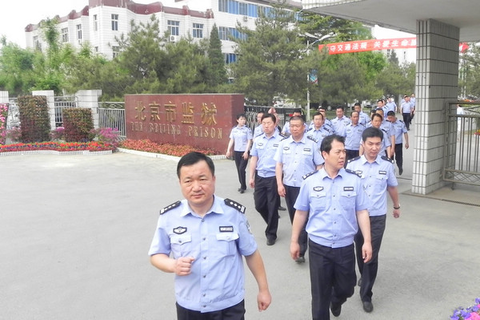
    A photograph of Beijing Prison and its personnel. Image credit: wdh.la

    In May 1992, a young Chinese Ministry of Foreign Affairs (MFA) official, Bai Weiji, and his wife Zhao Lei, were detained by China’s State Security police on suspicion of trafficking in state secrets. Two weeks later, police raided the apartment of Lena Sun, Beijing Bureau Chief of The Washington Post. They briefly detained Ms. Sun and her family and forced the American journalist to open the safe where she kept sensitive materials. In the safe they found internal documents that Bai Weiji had provided Ms. Sun.

    Lena Sun, who had written one of the first profiles on American businessman and recently turned human rights activist John Kamm, requested assistance from Kamm. Kamm began raising Bai and Zhao’s case with Chinese authorities, with whom he was regularly meeting in Beijing..

    In May, 1993, Bai was sentenced to 10 years in prison for trafficking in state secrets by the Beijing Intermediate People’s Court. His wife was given a six-year sentence. It is believed that one of the reasons that Bai was given such a lengthy sentence was that he had organized protests among MFA staff over the June 1989 suppression of pro-democracy demonstrations in Beijing.

    Kamm, in an interview with The New York Times Bureau Chief Nicholas Kristof, called the verdicts “very troubling” and “a serious disappointment.”

    Bai was sent to Beijing Prison, considered to be a model prison, where Bai was the only prisoner serving a sentence for counterrevolution. His English language skills were put to good use by the prison warden, who was seeking to find export markets for products made in prison workshops. Because he “expressed regret and a genuine willingness to reform,” and because he exhibited good behavior, Bai was granted three sentence reductions in 1996, 1997 and 1998 for a total reduction of three years and three months. He was released on February 2, 1999. His wife had been released early on October 20, 1997.

    After his release, Bai became a successful businessman. On a trip to the United States, he looked up John Kamm, who had moved with his family to San Francisco from Hong Kong in July 1995.

    Bai credited Kamm’s interventions for his early release, but brought up two other reasons he was shown clemency.

    In July 1996, Louis Joinet, chairman of the United Nations Working Group on Arbitrary Detention, visited China to begin preparations for a visit by the full working group the following year. One of the prisons he was allowed to visit was Beijing Prison.

    Upon arrival at the prison, Joinet asked to interview prisoners. His request was rejected. The director general of the MFA’s International Department, Li Baodong, rushed to the prison to resolve the stand-off. It was agreed that Joinet could interview a prisoner, and he was invited to select one at random. At that moment, Bai Weiji was walking in the prison yard, and Joinet chose him to be interviewed. Joinet had no idea who he was, but the prison officials became suspicious: how could it be that the prisoner selected to be interviewed was the only prisoner serving a sentence for counterrevolution?

    Bai played his role brilliantly. He declined to give any identifying information. He did not tell Joinet why he was in prison, nor did he say he was a former MFA official. He went to considerable length to commend the prison authorities for treating him so well. Although the interview was supposed to be held in a secure, confidential setting, Bai figured that the prison authorities were listening in. Shortly after the interview, Bai was granted his first sentence reduction.

    The second reason given to explain Bai’s clemency involves the July 1997 handover of Hong Kong from the United Kingdom to China. A city-wide competition to ascertain who knew the most about the handover was held among teams representing all of Beijing’s prisons. Bai, who was familiar with Hong Kong from his days working for MFA, was chosen to head the Beijing Prison team, which handily won the competition. Bai and his team members were rewarded with sentence reductions, but Bai noted, somewhat ruefully, that because he was serving a sentence for counterrevolution, he could only get half the number of points awarded to the other teammates.

    According to regulations, prisoners serving sentences for counterrevolution had to be “strictly handled” when it came to sentence reductions. The Bai Weiji case afforded Kamm one of his first opportunities to find out what these regulations meant in practice.


    Listen to the Encounters with China podcast.

    Subscribe to receive notifications about new episodes. 

    Read all John Kamm Remembers stories.


  • Cousin Orrin

    Cousin Orrin

    << Read all John Kamm Remembers stories

    Orrin Hatch speaks at Utah Valley University on August 31, 2011. Image credit: Michael Jolley/ CC BY 2.0

    In October 1997, American businessman and human rights activist John Kamm flew to Hong Kong to start a two-week business and human rights advocacy trip that would also take him to Dalian and Beijing. On the flight to Hong Kong he was in the same cabin as the late Michel Oksenberg, the Stanford University scholar who played a key role in normalizing US-China relations when he served on the National Security Council.

    Kamm and Oksenberg discussed why they were heading to China. Oksenberg advised Kamm that he would be accompanying Senator Orrin Hatch, then-chairman of the Senate Judiciary Committee, on a weeklong visit to Hong Kong, Beijing, and Shanghai. Senator Hatch was visiting China 10 days before President Jiang Zemin’s state visit to the United States hosted by President Bill Clinton. Hatch and his wife Elaine were due to arrive in Hong Kong the following evening, accompanied by aides, and the Stanford scholar invited Kamm to join the small party for dinner at the Spring Deer Restaurant in Kowloon.

    Kamm put together a file of material on his work, and showed up at the restaurant on time. When he arrived, Oksenberg told him that, due to a bad weather delay in Washington DC, Senator Hatch had to cancel his trip to Hong Kong and instead fly directly to Beijing. Oksenberg took the file from Kamm and promised to hand it to Senator Hatch. If there were an opportunity for Kamm to meet Hatch, Oksenberg would contact Kamm in Beijing.

    Kamm and Oksenberg went their separate ways, Oksenberg to Beijing, Kamm to Dalian. After business meetings in Dalian, Kamm flew to Beijing where he settled into his hotel. The morning after he arrived, Kamm received a phone call from Professor Oksenberg.

    “Are you sitting down?” Oksenberg asked. “You’re not going to believe this, but you and Senator Hatch are related. He insists that you are his cousin. His mother was a Kamm, and her family came from the same part of New York as your father’s family.” Oksenberg asked Kamm to come to the China World Hotel right away to meet Senator Hatch and his wife.

    Upon his arrival, Senator Hatch stood up, looked at Kamm, and turned to his wife: “The spittin’ image of grandpa!”

    Kamm and Hatch sat down for a friendly conversation. Hatch asked if there was anything he could do to help Kamm’s work on political prisoners. Kamm advised Hatch that Kamm’s prisoner information project had been suspended since 1995, and that the Ministry of Justice owed him answers on 75 requests for information. Hatch promised to assist.

    The next day, Senator Hatch met with Xiao Yang, then Minister of Justice. At the end of a meeting that focused on possible cooperation between the Senate Judiciary Committee and the Ministry of Foreign Affairs, Hatch got up to leave. When he reached the door, he put his arm around Minister Xiao (who would later go on to become President of China’s Supreme People’s Court) and asked for a personal favor: “My friend and relative John Kamm has cooperated with your ministry on a prisoner information project. The project has been suspended due to no fault of John’s. Can you please look into this and resume your cooperation with my cousin?”

    After his stay in Beijing, Hatch flew to Shanghai and had a meeting with President Jiang Zemin. As had done with Xiao Yang, Hatch raised Kamm’s work and asked President Jiang to authorize the resumption of the prisoner information project.

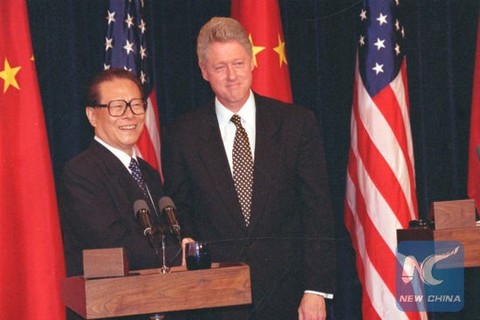
    Jiang Zemin visited Washington from October 25 to October 28, 1997. At the conclusion of the state visit, the two countries issued a joint statement listing the achievements of the meeting. Among the accomplishments was the resumption of American businessman John Kamm’s accounting project. Kamm was the only individual whose name appeared in the joint statement. Cooperation with the Ministry of Justice resumed, and within a few months all of Kamm’s remaining inquiries had been answered. The responses indicated that several long serving prisoners had been granted early release after Kamm submitted their names in 1995.


    Listen to the Encounters with China podcast.

    Subscribe to receive notifications about new episodes. 

    Read all John Kamm Remembers stories.


  • China Scores Low Marks on Human Rights in 14 Democracies

    A recent Pew survey finds that China’s favorability rating among Americans is at its lowest level since Pew began polling attitudes towards China in 2005. Photo Source: telegraph.co.uk

    According to a June report from the Pew Research Center, more than 60 percent of respondents in 14 democratic countries across North America, Europe, and Asia believe that the Chinese government does not respect the personal freedoms of its people. In France, Germany, and Sweden, as many as nine out of ten people surveyed hold this view. The report comes on the heels of a Joint Statement criticizing China’s human rights record, signed by several of the countries surveyed in the poll, that was released at the meeting of the Human Rights Council in Geneva in March.

    General attitudes towards China were also starkly negative—in the United States, where 80 percent of people polled think that the Chinese government does not respect the personal freedoms of its people, only 37 percent of those surveyed have a favorable opinion of China. This figure represents the lowest favorability rating since Pew began polling attitudes towards China in 2005.

    Unfavorable Five-Year Trend

    Negative feelings towards China have risen sharply since 2011, the year before Xi Jinping took over as chairman of China’s Communist Party. The figure below shows that in five major global powers—US, UK, France, Germany, and Japan—survey respondents with unfavorable views of China have increased since 2011.Since Xi has come to power, China’s relations with neighboring countries have likewise deteriorated—Vietnam, Philippines, Malaysia, and Indonesia, for example, have all drawn closer to the US.

    Percentage of Respondents with Unfavorable View of China, 2011 and 2016, by Country

    Source: Pew Research Center Reports, 2011 and 2016.

    These results cast doubt upon Xi’s approach to international affairs, evidenced most recently by China’s decision to refrain from any participation in the South China Sea arbitration case brought against it by the Philippines at the Permanent Court of Arbitration in The Hague. Not only did the PCA reject China’s “nine-dash line” claim to rights over the South China Sea, “the ruling was unanimously in favor of the Philippines on every issue. The result is widely seen as a blow to China’s prestige, and to Xi’s leadership skills as well.

    On specific issues, Pew respondents also tended to hold negative opinions of the Chinese economy. Of the ten European countries surveyed, all but one (France), now see the United States as the world’s leading economic power. In 2015, those surveyed in France, Germany, Spain, and the United Kingdom held the opinion that China was the world’s leading economic power. Competing with China-related economic fears, increasing numbers of Americans are “most concerned” with China’s growing military might. (Economic concerns outweigh military concerns, however, though the percentage of those who are most concerned by China’s economic might is dropping.)

    The Pew results were not entirely grim for China, however. A majority of people in Australia have a favorable view of China. According to a poll conducted by the Lowy Institute that was released in June, Australians now view China as their best friend in Asia, and 43 percent feel that Australia’s relationship with China is the country’s most important relationship, tied with the percentage who hold that the relationship with the United States is the country’s most important relationship. Nevertheless, 86 percent of Australians surveyed in the Lowy poll stated that “China’s human rights record” exerted a negative influence on their views of the country.

    Finally, in a finding that might have implications in the American presidential campaign, there is a wide disparity in American views about China based on respondents’ political affiliation and age. Republicans tend to have more negative feelings towards the country than Democrats, and young people tend to view China more favorably than older people.

  • Executions of Hong Kong Residents Spur Interest in Human Rights

    Executions of Hong Kong Residents Spur Interest in Human Rights

    << Read all John Kamm Remembers stories

    Prisoners transported for public display during Strike Hard 1983. Image credit: Sina Blogger

    Before he began his human rights work in 1990, John Kamm was an American businessman based in Hong Kong. As the Hong Kong representative of the semi-governmental National Council for US-China Trade, Kamm worked to open China to trade and investment. He registered the first Chinese factories with the American Food and Drug Administration in 1977 and introduced American firms to investment opportunities on the Mainland. He ran the National Council’s office at the Guangzhou Trade Fair from 1976 to 1980.

    After the United States and China established diplomatic relations in 1979, Kamm established a company and began representing American and other firms in China. Leveraging his knowledge of the city and his fluency in Cantonese, Kamm established the first foreign office in Guangzhou in 1979.

    Shortly before the Spring Chinese Export Commodities Fair opened in Guangzhou in April 1983, an event took place that focused Kamm’s attention on human rights. China’s first Strike Hard Campaign was launched in August 1983, and offenders were dealt with harshly. It was recently revealed in a Mainland Chinese publication that there were 24,000 executions in China in 1983. Kamm witnessed men being led to their executions in the summer of 1983 as he crisscrossed Guangdong Province buying and selling chemicals.

    Two young men from Hong Kong, He Enjie and Liu Zerong, hung a banner from their room in the Guangzhou Hotel denouncing China’s ruling Communist Party. They left the hotel and photographed the banner, then headed for the train station to return to Hong Kong. They were intercepted by public security officers, detained and subsequently tried for espionage. They were convicted, sentenced to death, and had their appeals rejected. The Supreme People’s Court (SPC) in Beijing then approved their executions, which were carried out on September 6, 1983.

    Hong Kong prisoners serving sentences for counterrevolution in Mainland prisons were a top priority for Kamm after he turned to human rights work in 1990. One of these early cases was that of Qin Hanbiao, a Guangzhou native who emigrated to Hong Kong in 1979. Qin and Guangzhou resident Qin Yaoche were detained on May 10, 1983 on suspicion of spying for Taiwan. They were tried by the Guangzhou Intermediate Court on September 10, 1983, found guilty, and sentenced to death. The sentence was upheld by the Guangdong High People’s Court on September 21, 1983, after which it was sent to Beijing for SPC review.

    The SPC, perhaps influenced by the uproar over the execution of He Enjie and Liu Zerong the month before, determined in October that the damage to China’s national security caused by Qin Hanbiao and Qin Yaoche was not sufficiently serious to warrant the death sentence. The two men were retried in Guangzhou and sentenced to life in prison.

    Kamm sought information on Qin Hanbiao from both the Hong Kong government and the Guangdong government. The latter advised him that Qin was serving his sentence in Huaiji Prison in western Guangdong (Huaji had a special cell block for counterrevolutionaries). His sentence had been reduced to a 20-year sentence in March 1986. The sentence was further reduced by 18 months in January 1990. After Kamm’s repeated inquiries, Qin Hanbiao was released on June 24, 1999—shortly after Dui Hua was established, and seven years before the end of Qin’s 20-year sentence imposed in 1986. (In China, people sentenced to life in prison whose sentences are subsequently reduced to a fixed term do not receive credit for time served. Qin did not get credit for the three years he spent in prison before the life sentence was commuted.)

    Hong Kong residents who were convicted of counterrevolution in Guangdong usually served their sentences in the province, but other prisoners convicted of counterrevolution—even those residing in the province—were often shipped to Xinjiang in China’s far northwest to serve their sentences. That is what happened to Qin Yaoche. Despite many attempts by Kamm to find out what happened to him, the trail went cold. Then as now, finding information on prisoners in Xinjiang remains difficult.


    Listen to the Encounters with China podcast.

    Subscribe to receive notifications about new episodes. 

    Read all John Kamm Remembers stories.


  • You’re on a Businessman’s List

    You’re on a Businessman’s List

    << Read all John Kamm Remembers stories

    Jiang Zemin during his state visit to the United States in October 1997, after which Kamm was able to resume cooperation with the Chinese government. Image credit: sina.com

    In February 1995, American businessman John Kamm traveled to Beijing to review progress of his effort to systematically obtain information on people imprisoned for counterrevolutionary crimes. Prior to his arrival, he compiled a booklet with all of the information he had received from the Ministry of Justice (MOJ) in 1994 and sent it to the MOJ and State Council Information Office (SCIO).

    When he met with senior officials of the SCIO and MOJ, Kamm asked them what they thought of his booklet. SCIO Director Zeng Jianhui replied, “You have accurately reported what you were told.”

    Kamm then proposed that, for 1995, he submit quarterly lists of 25 prisoners for a total of 100 names. Director Zeng looked at the MOJ representative, who nodded in agreement. “It’s a deal then,” said Kamm. “Let’s shake on it.” He then handed over the first list of 25 names.

    Two months later Kamm returned to Beijing, where the MOJ gave him responses on 18 of the first 25 names, and he submitted a second list.

    Then, in May 1995, the United States Department of State issued a visa to then-President of Taiwan Lee Tenghui. Lee traveled to the United States where he gave an impassioned speech on Taiwan at his alma mater, Cornell University. The Chinese government was furious. As tensions mounted, Chinese rockets were fired in the direction of Taiwan, and President Clinton dispatched two carrier groups to patrol the waters off the island.

    The Taiwan Straits crisis effectively ended Kamm’s “prisoner information project,” but he refused to accept what he saw as a unilateral termination of a contract. He continued to travel to Beijing and lobbied whoever would see him—not many Chinese officials would—to resume cooperation. He convinced dozens of American senators and members of Congress to write letters of support to the Chinese Embassy and to bring up the matter in face-to-face meetings with senior Chinese officials. Most importantly, he “kept his side of the deal,” faxing to the SCIO and MOJ the third and fourth quarter lists.

    It wasn’t until after President Jiang Zemin made a state visit to the United States in October 1997 that cooperation between Kamm and the Chinese government resumed. By the end of 1998, Kamm had received responses to nearly all of the prisoners on his 1995 lists.

    One of the names for which he received a response was Zhang Xianliang, a Shanghai-based dissident who had served a sentence for counterrevolution in the mid-1980s and who had resumed his pro-democracy activism after his release. Zhang had been detained in 1993 for organizing a commemoration of the 1989 June Fourth anti-government protests in Beijing and other cities. He was sentenced to three years of re-education through labor in Anhui Province.

    According to the MOJ response, Zhang had been released early for good behavior in June 1996. Not long after his release, Zhang traveled to the United States to join his daughter.

    In March 2002, Kamm was profiled in a cover story for The New York Times Magazine. A few days after the story appeared, Kamm received a call from Ms. Zhang Bing, Zhang Xianliang’s daughter, who lived in Berkeley. She asked to come and see him at his San Francisco office.

    Zhang came to Kamm’s office and immediately began telling him a story she had heard from her father, who was at that time running a small human rights group in Chicago. Upon arrival at the camp, Zhang Xianliang, a fifty-year-old intellectual, had been assigned to hard labor. He was tormented by two guards, until one day they were replaced by a kind guard. Zhang was reassigned to work in the camp library, and his guard would stop by and join him for tea and cigarettes.

    At one of these get-togethers, the guard told Zhang: “Don’t worry. You will be released and allowed to travel to the United States. You’re on a businessman’s list.” When Zhang read the story in the Times magazine, he realized that the businessman was John Kamm.


    Listen to the Encounters with China podcast.

    Subscribe to receive notifications about new episodes. 

    Read all John Kamm Remembers stories.