Tag: accountability

  • Subversion in Xi’an: The Trials of Guo Ran & Kou Ji

    Subversion in Xi’an: The Trials of Guo Ran & Kou Ji

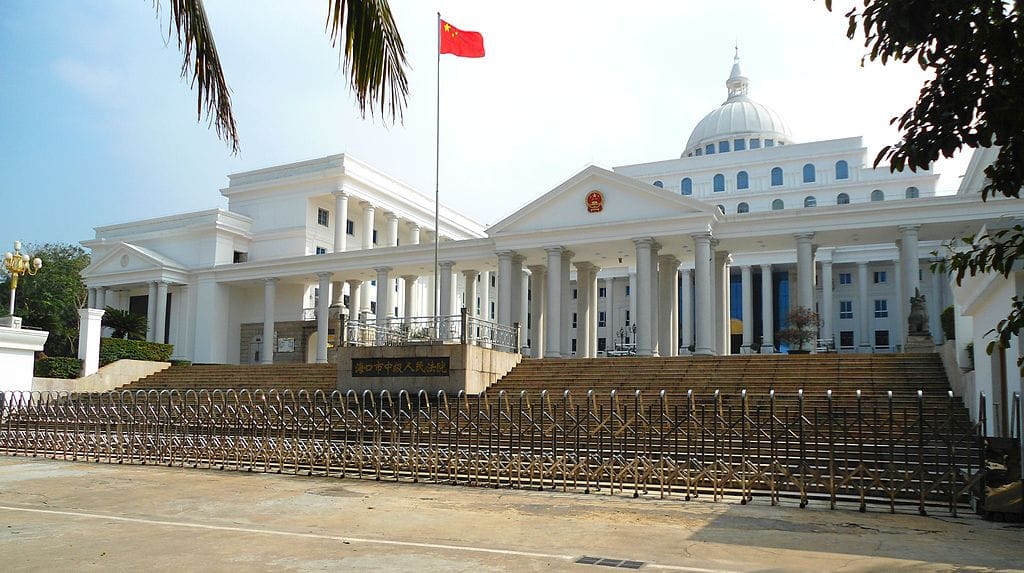
    The Xi’an Intermediate People’s Court building. Image credit: Xi’an court website 

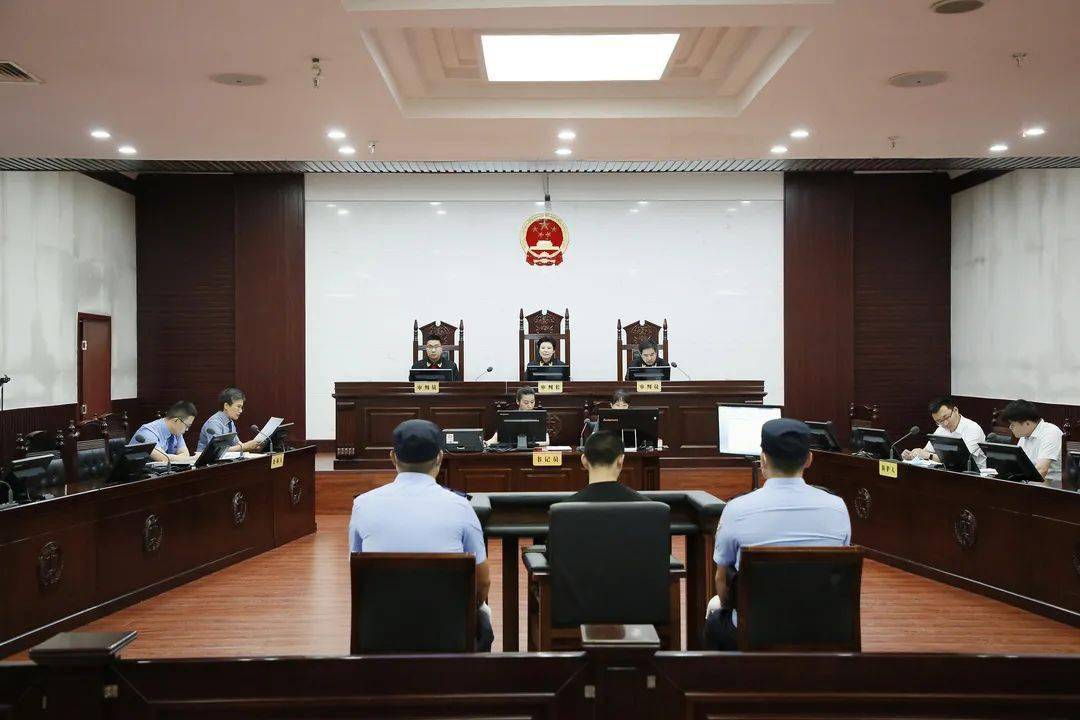
    Dui Hua’s research into Chinese government sources uncovered new information concerning Guo Ran (果然) and Kou Ji (寇稽). The two men received lengthy prison sentences in a closed-door trial for subversion held in Xi’an in 2013. Subversion is a crime of endangering state security and carries a maximum sentence of life imprisonment. 

    Dui Hua first discovered their names in an annual work report an annual work report released by the Xi’an Intermediate People’s Court in June 2013. The report stated that Guo and Kou were tried for subversion, but the trial outcome was not disclosed. Their fate was only subsequently revealed by sentence reduction decisions posted on China Judgements Online around 2016.  

    The first reduction decision Dui Hua found stated that Kou, born in 1969, was serving his 10-year prison sentence in Shaanxi’s Weinan Prison. Because of good behavior and meritorious service, Kou received his first sentence reduction of nine months in February 2016, about four years into his sentence. Two years later, in May 2018, Kou received his second sentence reduction of seven months.  

    That same year, Guo, born in 1981, received his first sentence reduction of five months in September. The sentence reduction decision stated that Guo was serving his 14-year prison sentence for subversion in the same prison as Kou. The clemency he received took place seven years into his prison sentence. Kou completed his prison sentence on July 13, 2020, and his three-year supplemental sentence of deprivation of political rights (DPR) is thought to have expired on July 12, 2023. Guo’s sentence is expected to end on July 1, 2025, after which he will begin his five years of DPR. All three sentence reduction decisions have since been removed from China Judgements Online. 

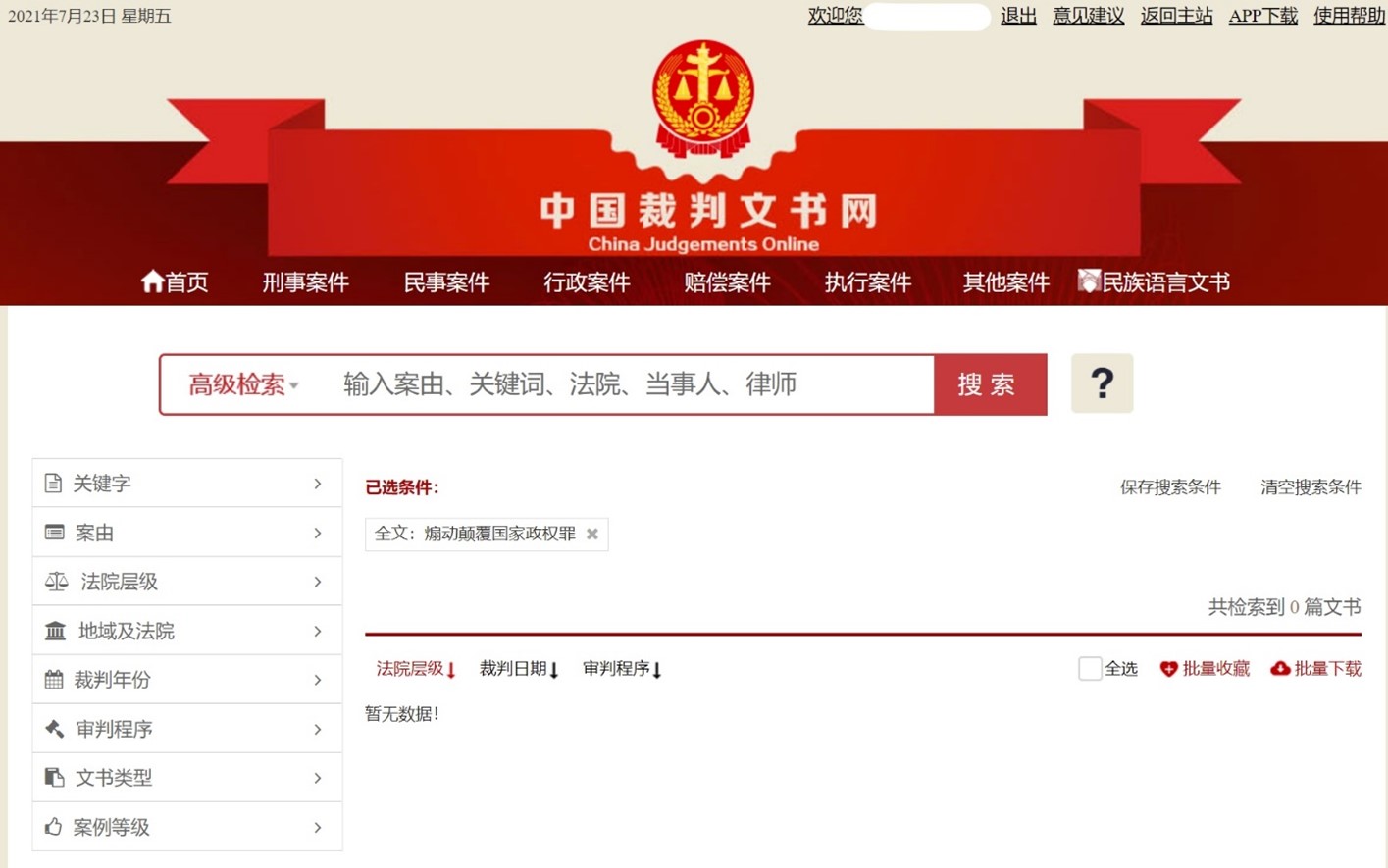
    A search for “inciting subversion of state power” that yielded no results in July 2021. Dui Hua conducted another search in May 2024. As in 2021, the search yielded no results. Image credit: China Judgements Online

    The court documents did not provide other case specifics beyond their background, crime, sentences, sentence reductions, and new release dates. The acts leading to their imprisonment were unknown. Around 2019, information from unofficial news sources concerning this subversion case began to surface. However, it was only briefly reported that Guo frequently held gatherings on his own business premises to discuss pathways to achieve freedom and democracy. The duo was reportedly detained in 2012 and formally arrested on February 20, 2013. 

    A Chinese government publication Dui Hua uncovered in 2022 sheds light on this mysterious case of subversion. Guo operated a private gallery, and Kuo was an architect. The two were accused of establishing a political group known as the “Xingya Party” (兴亚党, lit “Thriving Asia Party”). Guo published posts online and recruited people online to join the group. Members were to become citizens of the “Chinese Federal Republic” (中华联邦共和国). Guo allegedly called on online recruits to carry out violent activities.  

    As part of their operation, which they named “Dawn of Liberty,” Kou was allegedly tasked with collecting intelligence about troop deployment and military facilities on Chongming Island, China’s third largest island located on the estuary of Yangtze River in Shanghai. Guo intended to launch a military occupation there and create the “Chinese Federal Republic,” according to the official narrative. Kuo was also accused of scheming and drafting the “state creed.” Guo was arrested for subversion, and Kuo was initially arrested for kidnapping.

    Military patrol on Chongming Island. Image credit: Sohu 
    While this account is likely the only official source which provides information about the acts of Guo and Kou, Dui Hua is unable to assess how truthful the description of criminal activities is. Assuming this account is accurate, Guo and Kou are not the first people to have been sentenced to lengthy terms for subversion for founding opposition parties and advocating for a violent overthrow of the Chinese government.  
    According to Records of People’s Courts Historical Judicial Statistics: 1949-2016, Chinese courts accepted 162 subversion cases involving 347 individuals in the 18-year period from 1998 to 2016. Many of these subversion cases are by nature sensitive, and information pertaining to these cases is far from transparent. 
    Among the earliest cases of subversion involved leaders of the so-called “Southwest Yangtze Column of the Chinese Anti-Corruption Army” (中国人民农工反腐败大军西南长江纵队) in Chongqing. Established by farmers in 1998, the group called itself a democratic alternative to the Chinese Communist Party (CCP). It opposed excessive agricultural taxes and distributed fliers calling for the rehabilitation of June Fourth prisoners on the tenth anniversary of the 1989 pro-democracy movement. Sentenced to 12 years’ imprisonment for subversion in the early 2000s, Song Bukun (宋步坤) is believed to be the last member of the group to be released from prison in September 2013. Dui Hua received two responses from inquiries dating back to 2008 in which government sources said Song received an 11-month sentence reduction in February 2009. 

    In March 2006, dissident writer Ren Ziyuan (任自元) was sentenced to 10 years in prison for subversion because he established the “Mainland Democracy Frontline” to promote the right to end tyranny by violent means. He reportedly published anti-government views on the Internet, including a tract entitled “The Road to Democracy” and other essays. Some human rights organizations claim that some of his essays asserted citizens’ rights to violently overthrow tyranny. Ren was released from Shandong No.1 Prison on May 9, 2015, without receiving a single sentence reduction. 

    Dui Hua uncovered details of another political party that was accused of “violent intent” in 2019. The “People’s Party,” later renamed the “New Era Communist Party of China,” was founded by Dong Zhanyi (董占义). The group aimed to fight corruption and recruit aggrieved workers and petitioners to overthrow the CCP. Dong and another founding member Chen Guohua (陈国华) established a corporate entity called Tongkang to operate a supermarket project. The plan, according to official documents, was to use the supermarket project to employ online recruits and raise money to fund their political activities, including assassination plots and procuring weapons. Dong was convicted of subversion and fraud and was sentenced to life in 2011 by a Beijing intermediate court. The sentence later was commuted to a fixed 19 years’ imprisonment in 2015. Chen was convicted of subversion and sentenced to 14 years. Other key party members were also given long sentences. 

    Xu Zhiyong (left) and Ding Jiaxi. Image credit: VOA 

    Subversion is not exclusively used to criminalize leaders of opposition parties nor is it confined to suppressing calls for the violent overthrow of the Chinese government. As recently as April 2023, prominent rights activist and legal scholar Xu Zhiyong (许志永) and rights lawyer Ding Jiaxi (丁家喜) were both convicted of subversion. Unlike Guo and Kou’s case, Xu and Ding did not establish a dissident party. They are advocates of non-violent resistance and the responsible use of civil and social rights. In late 2019, they organized an informal gathering with around 20 activists and lawyers in Xiamen to discuss current political affairs and activism. Xu and Ding were sentenced to 14 and 12 years in prison, respectively, and their appeals were rejected in November 2023. Despite their rejection of violence, Xu and Ding’s sentences are among the harshest for a subversion conviction, exceeding in length even cases where the accused allegedly called for the use of force. 

    The fates of Kuo and Guo may no longer be shrouded in secrecy, but the acts leading to their imprisonment were revealed only a decade after they were incarcerated. Such gaps in disclosure further concerns that vague laws with ambiguous wording and low levels of legal transparency are eroding confidence in China’s judicial system.  

  • Subversion in Xi’an: The Trials of Guo Ran & Kou Ji

    Subversion in Xi’an: The Trials of Guo Ran & Kou Ji

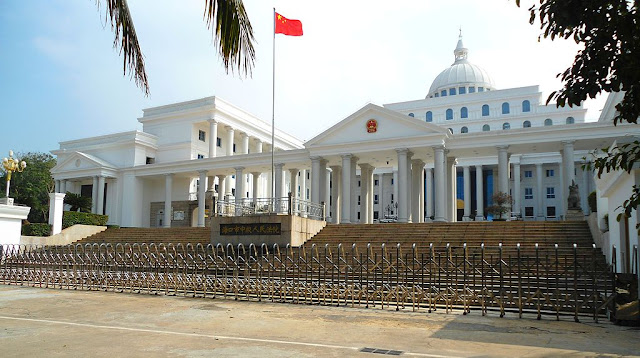
    The Xi’an Intermediate People’s Court building. Image credit: Xi’an court website 

    Dui Hua’s research into Chinese government sources uncovered new information concerning Guo Ran (果然) and Kou Ji (寇稽). The two men received lengthy prison sentences in a closed-door trial for subversion held in Xi’an in 2013. Subversion is a crime of endangering state security and carries a maximum sentence of life imprisonment. 

    Dui Hua first discovered their names in an annual work report an annual work report released by the Xi’an Intermediate People’s Court in June 2013. The report stated that Guo and Kou were tried for subversion, but the trial outcome was not disclosed. Their fate was only subsequently revealed by sentence reduction decisions posted on China Judgements Online around 2016.  

    The first reduction decision Dui Hua found stated that Kou, born in 1969, was serving his 10-year prison sentence in Shaanxi’s Weinan Prison. Because of good behavior and meritorious service, Kou received his first sentence reduction of nine months in February 2016, about four years into his sentence. Two years later, in May 2018, Kou received his second sentence reduction of seven months.  

    That same year, Guo, born in 1981, received his first sentence reduction of five months in September. The sentence reduction decision stated that Guo was serving his 14-year prison sentence for subversion in the same prison as Kou. The clemency he received took place seven years into his prison sentence. Kou completed his prison sentence on July 13, 2020, and his three-year supplemental sentence of deprivation of political rights (DPR) is thought to have expired on July 12, 2023. Guo’s sentence is expected to end on July 1, 2025, after which he will begin his five years of DPR. All three sentence reduction decisions have since been removed from China Judgements Online. 

    A search for “inciting subversion of state power” that yielded no results in July 2021. Dui Hua conducted another search in May 2024. As in 2021, the search yielded no results. Image credit: China Judgements Online

    The court documents did not provide other case specifics beyond their background, crime, sentences, sentence reductions, and new release dates. The acts leading to their imprisonment were unknown. Around 2019, information from unofficial news sources concerning this subversion case began to surface. However, it was only briefly reported that Guo frequently held gatherings on his own business premises to discuss pathways to achieve freedom and democracy. The duo was reportedly detained in 2012 and formally arrested on February 20, 2013. 

    A Chinese government publication Dui Hua uncovered in 2022 sheds light on this mysterious case of subversion. Guo operated a private gallery, and Kuo was an architect. The two were accused of establishing a political group known as the “Xingya Party” (兴亚党, lit “Thriving Asia Party”). Guo published posts online and recruited people online to join the group. Members were to become citizens of the “Chinese Federal Republic” (中华联邦共和国). Guo allegedly called on online recruits to carry out violent activities.  

    As part of their operation, which they named “Dawn of Liberty,” Kou was allegedly tasked with collecting intelligence about troop deployment and military facilities on Chongming Island, China’s third largest island located on the estuary of Yangtze River in Shanghai. Guo intended to launch a military occupation there and create the “Chinese Federal Republic,” according to the official narrative. Kuo was also accused of scheming and drafting the “state creed.” Guo was arrested for subversion, and Kuo was initially arrested for kidnapping.

    Military patrol on Chongming Island. Image credit: Sohu 
    While this account is likely the only official source which provides information about the acts of Guo and Kou, Dui Hua is unable to assess how truthful the description of criminal activities is. Assuming this account is accurate, Guo and Kou are not the first people to have been sentenced to lengthy terms for subversion for founding opposition parties and advocating for a violent overthrow of the Chinese government.  
    According to Records of People’s Courts Historical Judicial Statistics: 1949-2016, Chinese courts accepted 162 subversion cases involving 347 individuals in the 18-year period from 1998 to 2016. Many of these subversion cases are by nature sensitive, and information pertaining to these cases is far from transparent. 
    Among the earliest cases of subversion involved leaders of the so-called “Southwest Yangtze Column of the Chinese Anti-Corruption Army” (中国人民农工反腐败大军西南长江纵队) in Chongqing. Established by farmers in 1998, the group called itself a democratic alternative to the Chinese Communist Party (CCP). It opposed excessive agricultural taxes and distributed fliers calling for the rehabilitation of June Fourth prisoners on the tenth anniversary of the 1989 pro-democracy movement. Sentenced to 12 years’ imprisonment for subversion in the early 2000s, Song Bukun (宋步坤) is believed to be the last member of the group to be released from prison in September 2013. Dui Hua received two responses from inquiries dating back to 2008 in which government sources said Song received an 11-month sentence reduction in February 2009. 

    In March 2006, dissident writer Ren Ziyuan (任自元) was sentenced to 10 years in prison for subversion because he established the “Mainland Democracy Frontline” to promote the right to end tyranny by violent means. He reportedly published anti-government views on the Internet, including a tract entitled “The Road to Democracy” and other essays. Some human rights organizations claim that some of his essays asserted citizens’ rights to violently overthrow tyranny. Ren was released from Shandong No.1 Prison on May 9, 2015, without receiving a single sentence reduction. 

    Dui Hua uncovered details of another political party that was accused of “violent intent” in 2019. The “People’s Party,” later renamed the “New Era Communist Party of China,” was founded by Dong Zhanyi (董占义). The group aimed to fight corruption and recruit aggrieved workers and petitioners to overthrow the CCP. Dong and another founding member Chen Guohua (陈国华) established a corporate entity called Tongkang to operate a supermarket project. The plan, according to official documents, was to use the supermarket project to employ online recruits and raise money to fund their political activities, including assassination plots and procuring weapons. Dong was convicted of subversion and fraud and was sentenced to life in 2011 by a Beijing intermediate court. The sentence later was commuted to a fixed 19 years’ imprisonment in 2015. Chen was convicted of subversion and sentenced to 14 years. Other key party members were also given long sentences. 

    Xu Zhiyong (left) and Ding Jiaxi. Image credit: VOA 

    Subversion is not exclusively used to criminalize leaders of opposition parties nor is it confined to suppressing calls for the violent overthrow of the Chinese government. As recently as April 2023, prominent rights activist and legal scholar Xu Zhiyong (许志永) and rights lawyer Ding Jiaxi (丁家喜) were both convicted of subversion. Unlike Guo and Kou’s case, Xu and Ding did not establish a dissident party. They are advocates of non-violent resistance and the responsible use of civil and social rights. In late 2019, they organized an informal gathering with around 20 activists and lawyers in Xiamen to discuss current political affairs and activism. Xu and Ding were sentenced to 14 and 12 years in prison, respectively, and their appeals were rejected in November 2023. Despite their rejection of violence, Xu and Ding’s sentences are among the harshest for a subversion conviction, exceeding in length even cases where the accused allegedly called for the use of force. 

    The fates of Kuo and Guo may no longer be shrouded in secrecy, but the acts leading to their imprisonment were revealed only a decade after they were incarcerated. Such gaps in disclosure further concerns that vague laws with ambiguous wording and low levels of legal transparency are eroding confidence in China’s judicial system.  
  • China’s 2022 Acquittal Rate Lowest in Two Decades

    China’s 2022 Acquittal Rate Lowest in Two Decades

    A 2021 trial for a murder case, which was livestreamed on China Court Trial Online. Image credit: Kaifeng Intermediate People’s Court, Henan Province
    Acquittal rates in China have always been low, but in 2022 the number decreased to a record low. According to the most recent China Law Yearbook, an annual official compendium released in 2023 that covers 2022, only 631 individuals (0.044 percent of the 1,431,585 defendants with effective judgments) were found not guilty by criminal courts in 2022.
    The conviction rate in 2022 was 99.95 percent, a record high according to statistics in the China Law Yearbook. The acquittal rates dropped every year in the decade after 2003. The most dramatic decrease happened in 2005, when the 0.256 percent acquittal rate was less than half of 2003’s already low 0.647 percent. In 2010, the acquittal rate fell below 0.1 percent for the first time and has never returned above this level.
    Table 1.
    Source: China Law Yearbooks, 2004-2023
    When Xi Jinping began his first term as Chinese president in 2013, many legal practitioners expressed optimism that acquittal rates would approach more “normal” levels as a result of proposed legal reforms aimed to strengthen procedural justice. Although what constitutes a “normal” acquittal level is not clearly defined, a five percent rate is often cited when the topic is discussed in China. Chinese legal authorities also overturned a series of high-profile convictions and took steps to strengthen measures to exclude confessions extracted through torture and other illegal evidence.
    For 2013, the acquittal rate rose briefly for the first time since 2003, growing annually from six acquittals per 10,000 adjudications to seven. The rates remained steady, climbing at a slow pace until 2018 when they dropped again to 0.057 percent, a 37 percent decrease compared to the previous year.
    Table 2.
    Source: China Law Yearbooks, 2004-2023
    Xi has spearheaded an effort to hold judges, prosecutors, and police officers accountable for wrongful convictions in cases that have since been retried. In 2021, the Supreme People’s Procuratorate investigated all of the 246 criminal cases that were re-tried and corrected since 2018 and found that in 22 of these cases, people had been wrongly jailed for more than 10 years. More than 500 prosecutors were punished, some of whom had already retired.
    The acquittal rate saw a brief rise to 0.084 percent in 2019. However, this reversal was short-lived. In the three years that followed, the rates have again dropped, to 0.068 percent in 2020, 0.052 percent in 2021, and then to 0.044 percent in 2022.
    Acquittals are even rarer in trials of endangering state security (ESS) crimes, which include subversion, inciting subversion, splittism, inciting splittism, obtaining or providing state secrets, and espionage.  From 2013-2016, only ten people were acquitted, according to statistics released by the Supreme People’s Court. The names and other details of these ten individuals are not known. Dui Hua is not aware of any acquittals for ESS crimes after 2016.
    Table 3. ESS acquittals (effective judgments), 2013-2016
    YearNo. of Acquittals of ESS Crimes
    20132
    20142
    20150
    20166
    Source: Records of People’s Courts Historical Judicial Statistics, Criminal Trials Vol. 6, 2013-2016
    In a Human Rights Journal published in 2015, Dui Hua reported that the number of not-guilty judgments is influenced by efforts to avoid the payment of state compensation, marginalize defense attorneys, restrict judicial independence, and maintain stability. Some of these issues have continued, according to a 2022 legal journal re-posted by Shanghquan Law Firm. Additionally, judges realize that acquittals can adversely impact professional assessments for prosecutors because successful convictions are seen as a means for career advancement. There remains an unspoken rule that prosecutors can withdraw indictments and collaborate with judges to eliminate the possibility of non-guilty judgments or to hand out lighter punishments in cases where evidence against the accused is weak.
    One of the fundamental purposes of a criminal justice system is to protect innocent people from being convicted of crimes they did not commit. Despite efforts to overturn high-profile wrongful convictions, these instances likely represent a fraction of cases where defendants are wrongly charged with crimes. The persistently low acquittal rates over the years raise questions about how many more people are incarcerated for crimes they did not commit. A court which exercises its authority to acquit in accordance with the law ensures systemic justice and procedural fairness; it is fundamentally different from relying on political whims to right past wrongs. As Xi rejects the notion of judicial independence, continues his crackdown on defense lawyers, and places state security and stability maintenance above all else, there is little in place to stop the near-guaranteed high conviction rate from continuing for the foreseeable future.

    Download: China Acquittals, 2003-2022 (Excel). Source: China Law Yearbook, compiled by Dui Hua.

  • Of Dialogues and Prisoner Lists

     This essay, written by Dui Hua Executive Director John Kamm, was originally published in the US-Asia Law Institute’s journal USALI Perspectives, Volume 3, Number 16 on February 13, 2023. You can view the original posting here. 

    As China prepares to resume bilateral human rights dialogues, a human rights advocate reflects on their record.

    In August 1989, just weeks after the Chinese army opened fire on peaceful protesters in Tiananmen Square, the UN Human Rights Commission’s Subcommission on the Prevention of Discrimination and Protection of Minorities passed a resolution censoring China. It was the first and last time that China lost a vote at a UN forum over its human rights record.
    Since then, Beijing has strenuously lobbied and spent significant resources to make sure nothing like this ever happened again. Instead of multilateral discussions about its treatment of dissidents and minorities in open UN fora, the Chinese government persuaded Western countries to present their criticisms in closed-door, bilateral human rights dialogues. One of the main features of such dialogues was the presentation by the foreign party (and acceptance by the Chinese side) of prisoner lists. As China prepares now to revive its dialogues with some Western governments, it’s worth reflecting on the role that dialogues and prisoner lists have played.
    Switzerland and the United States were the first two countries that China invited to launch these dialogues, which began in 1991. Geneva was home to the Human Rights Commission (now the Human Rights Council), and China hoped to discourage future critical resolutions by lobbying Swiss officials in Geneva and Berne. Geneva also was home to the International Committee of the Red Cross (ICRC). Access to Chinese prisons by the ICRC has been a key demand of Western governments for decades.
    As for the United States, China was not fazed by the sanctions put in place by the George H.W. Bush administration after Tiananmen, but it was deeply worried by the prospect of Congress revoking its trade privileges, notably its MFN status. To avoid this outcome, Beijing made many concessions to prevent the loss of its trade status, including releasing dozens of political prisoners, agreeing to a memorandum on prison labor in 1992, and initiating numerous bilateral human rights dialogues.
    Throughout the early 1990s, other governments agreed to hold their own bilateral human rights dialogues with China. These included the European Union, the United Kingdom, Germany, Norway, Canada, Australia, and Japan. In addition to periodic human rights dialogues, the United States and China held seven sessions of a legal experts’ dialogue, focusing on rule of law issues. China also held human rights consultations with the Netherlands, New Zealand, and developing countries such as Brazil.
    In addition to the submission of prisoner lists, bilateral human rights dialogues featured visits to Chinese and American courts and prisons, and, in rare instances, meetings with representatives of civil society groups. All told, more than 120 sessions of human rights dialogues took place between China and foreign countries between 1991 and 2019, according to my count.
    As time went by, China held fewer and fewer dialogues with foreign governments. It also downgraded the status of officials leading the dialogues, from vice-minister to assistant minister, then to director general, and finally to deputy director general or special representative. According to a senior Chinese official, once China achieved its goals of lifting post-1989 economic sanctions and entering the World Trade Organization, it no longer felt the need to hold human rights dialogues or otherwise make human rights concessions.
    The last governmental dialogue, a session with the European Union, took place in 2019. China  cited various reasons for suspending or cancelling dialogues: with Norway, it was the 2010 award of the Nobel Peace Prize to Liu Xiaobo; with Japan, it was visits to the Yasukuni Shrine by senior Japanese officials.
    However, alarmed by the deterioration of China’s image in the West, Beijing decided in late 2022 to resume human rights dialogues with Western governments. On February 11, Hong Kong’s South China Morning Post reported that the EU and China would hold the 38th session of their human rights dialogue in Brussels at the end of the week of February 13. Beijing has hinted that it is willing to resume its dialogue with Australia.
    China suspended the dialogue with the United States on at least three occasions, most recently in 2016 after then-President Barack Obama met with the Dalai Lama. Then-assistant secretary of state for democracy, human rights, and labor, Tom Malinowski, declared that the dialogue with China had been a waste of time anyway. No efforts have been made to revive it.
    The suspension of both the human rights dialogue and the legal experts’ dialogue that same year were but two of the official US-China dialogues in various issue areas that were done away with immediately before or during the Trump administration. More recently, dialogues with the Biden administration on climate change and narcotics were frozen in the wake of then-House Speaker Nancy Pelosi’s visit to Taiwan in August 2022.
    The submission of prisoner lists to the Chinese government was always the most valuable part of rights dialogues. Some of these lists have been very long, containing hundreds of names of individuals subjected to coercive measures in virtually every province and autonomous region. Lists promote transparency and force the Chinese government to focus on specific individuals whose rights have been violated, drawing in ministries and courts responsible for the violations. In response to prisoner lists, over the years the government released information about the location and status of hundreds of political and religious prisoners who had simply dropped into a black hole.
    The lists also have played a role in gaining clemency for political and religious prisoners. According to a survey submitted by the Dui Hua Foundation to Congress in 2005, presence on a prisoner list tripled the chance that a prisoner would be granted clemency. Even when the Chinese government declines to respond to a list, evidence suggests that the inquiry is passed along to ministries and courts, where, occasionally, action is taken.
    For the same reasons that it downgraded human rights dialogues, China’s Ministry of Foreign Affairs increasingly resisted accepting prisoner lists. In one instance, a list was left on the table while the Chinese official leading the dialogue played video games on a cell phone. No written responses to prisoner lists submitted by governments have been recorded since 2012.
    Matters came to a head at the 18th session of the US-China dialogue in Kunming in July 2013. The leader of the Chinese side refused to accept the US list. Only after intense pressure from the US side was the list begrudgingly accepted. The director general who led the Chinese side made clear that this would be the last time the Ministry of Foreign Affairs accepted a prisoner list from a foreign government.
    While governments have been unable to hand over lists, my organization, the Dui Hua Foundation (whose name means “dialogue” in Chinese), has been able to submit lists continuously since it was established in 1999. By the end of December 2022, Dui Hua had handed over 463 lists containing altogether more than 2000 “unique” names of prisoners (“unique” means names are only counted once; it is not uncommon for a name to appear on dozens of Dui Hua lists). Interlocutors responded on 282 occasions, providing information on more than 1,000 unique names. In 2022, Dui Hua submitted 21 lists, received 27 responses, and learned of instances of clemency or better treatment for 22 names on its lists.
    The degradation of human rights dialogues that intensified after Xi Jinping assumed power in 2012 is not the only blow to judicial transparency during the strongman’s reign. In June 2021, China’s Supreme People’s Court purged all cases involving state security, “cults,” and death sentences from its judgment website. Crafting prisoner lists has become increasingly difficult for Dui Hua, but it has found new sources and new channels to continue submitting lists and getting responses.
    Experience tells us that dialogues cannot immediately solve China’s human rights problems, but they can increase transparency. Prisoner lists in particular have benefited prisoners and their families, and should be part of any resumed dialogues.  Dui Hua, which remains committed to a mutually respectful dialogue with the Chinese government, plans to continue submitting lists for as long as it is able to do so.
  • Patriotic Acts as Cause for Non-Prosecution

    Patriotic Acts as Cause for Non-Prosecution

    Changle government building. Image credit: Google images
    Chinese prosecutors have the discretion not to indict an accused when the evidence is insufficient or when his/her perceived threat to society is minimal. However, these are not necessarily the most important reasons. Dui Hua’s research found that criminal suspects deemed patriotic can also avoid prosecution in mainland China.
    China’s long-time conviction rate of over 99.9 percent often overshadows the judicial progress it has made in other areas. While the acquittal rate dipped to its lowest point at 0.052 percent in 2021, Chinese prosecutors have approved fewer arrests and indicted fewer suspects in recent years. Statistics released by the Supreme People’s Procuratorate in March 2022 indicated that the country’s non-prosecution rate increased from 9.9 percent in 2019 to 16.6 percent in 2021.
    Non-prosecution embodies the lenient aspect of China’s largely punitive criminal justice system. Among the major beneficiaries of non-prosecution are juvenile delinquents, the elderly, severely ill, first-time offenders, and pregnant and breastfeeding women. Prosecutors can also exercise discretion and choose to not indict suspects if they have made “major contributions to the state or society” or performed “meritorious deeds.” Existing laws and regulations leave undefined what acts are considered “major contributions,” but the following case Dui Hua discovered concerning a Hong Kong “patriot” provides insight into this term.
    On October 21, 2019, the Public Security Bureau of Changle District, Fuzhou, decided not to prosecute a Hong Kong resident surnamed Chan. The bureau carried out criminal detention in December 2013 and listed Chan as a wanted criminal online on June 18, 2014. Chan was suspected of “organizing an illegal border crossing,” for allegedly forging identity documents for a group of 11 Chinese nationals in their applications for tourist visas at the US Consulate in Guangzhou. Their application was unsuccessful because the documents were found to be counterfeit by the consulate staffers.
    Chan flew back to Fuzhou from Hong Kong and turned himself in on October 14, 2019, six years after his alleged offense took place. That same day, Chan was released on bail pending further investigation. About a week later, the procuratorate issued a non-prosecution decision, citing the various patriotic acts he had performed in Hong Kong.
    Fuzhou Changle International Airport. Chan flew here from Hong Kong before turning himself in, six years after his alleged crime. Image credit: Fuzhou Changle International Airport
    First among these acts, Chan served as the then-incumbent executive vice president of the Hong Kong Family Union (New Territories West Branch), a pro-China non-governmental organization which helps mainland residents to emigrate to Hong Kong. During his tenure, Chan allegedly organized and participated in multiple activities to promote love for the motherland and Hong Kong. Chan was given credit for carrying out stability maintenance and secret investigation work for the Hong Kong Liaison Office during “Occupy Central,” the civil disobedience movement which paralyzed parts of Hong Kong for 79 days in late 2014.
    On October 13, 2014, protestors camp out in the streets of Hong Kong as part of the Occupy Central movement. Image credit: L-BBE / CC BY 3.0
    Furthermore, Chan was commended for performing security work for the official celebrations marking the 20th anniversary of Hong Kong’s handover to Chinese rule in 2017, the only year Xi Jinping attended the handover celebrations in the former British colony as Chinese president, as of this writing. More notably, Chan was cited for his “fearless” and “tenacious struggle” against the “radical opposition forces” during the recent 2019 protests, as well as his unified actions in supporting the Hong Kong government. The decision not to prosecute Chan came as Hong Kong protesters fought citywide pitched battles with police in an eruption of public anger against an already suspended extradition bill that critics saw as a fundamental threat to the former British colony’s civic freedoms and rule of law.
    Prosecutors also outlined other reasons for not indicting Chan, but the arguments are not without flaws. For example, one reason for not indicting Chan is because he turned himself in even though he did so six years after the public security bureau carried out criminal detention. Additionally, it was argued that the seriousness of Chan’s crime was mitigated because his attempt to organize illegal crossings failed. Chan did not complete the crime; he only attempted to commit it, argued the prosecutors. Even with this reasoning, it is unclear why the prosecutors did not charge Chan with forgery, covered by Article 280 of the Criminal Law, since the non-prosecution decision found that Chan did indeed forge identity documents for 11 Chinese nationals.
    The crime of organizing illegal border crossings is known to incur serious penalties. Dui Hua previously reported that the crime resulted in Korean missionary Cho Young-joo getting a seven-year prison sentence. Cho was not given lenient punishment for the humanitarian mission he conducted across the Yunnan-Myanmar border. Prominent house church leader Cao Sanqiang (曹三强) has more than a year to serve before completing his seven-year prison sentence in Yunnan for the same crime. Also convicted of the same crime are two Hong Kong anti-extradition bill protesters who attempted to flee to Taiwan by speedboat but were intercepted by mainland coastguards in August 2020. The duo is still serving their sentences in Guangdong.
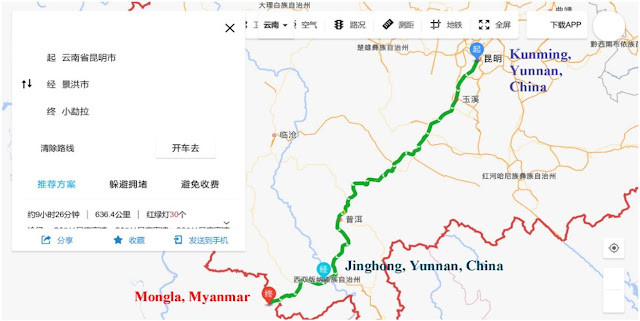
    Map showing the route (in green) from Kunming to Jinghong, from where Cho intended to travel to Mongla. Source: Gaode Map
    The treatment given to Chan was vastly different to that of Cho, Cao, and two of the Hong Kong 12, despite all of them being accused of organizing illegal border crossings. Chan’s preferential treatment calls into question whether “patriots” enjoy impunity for the criminal offenses they committed in mainland China. This raises speculation that Chan is not the only case of prosecutors dropping criminal charges against the so-called “patriots” because of meritorious services rendered in Hong Kong, China, or elsewhere.
  • Decoding State Security Trials, Part II: “Other” Trials & Other Provinces

    Decoding State Security Trials, Part II: “Other” Trials & Other Provinces

    Haikou Intermediate People’s Court in Haikou, Hainan Province, People’s Republic of China. Image credit: Anna Frodesiak / CCO

    In China, trials for crimes of endangering state security (ESS) are capable of generating intense, international media scrutiny while also being woefully opaque. In the face of severe degradations in judicial transparency, increasingly scant data—the latest from 2020—suggests that ESS trials have surged in recent years.

    In Part I, Dui Hua looked at available statistics for ESS trials, focusing on Tibet—where ESS cases rose sharply in 2020—and Xinjiang, which accounted for the largest percentage of ESS trials of any Chinese region through the mid-2010s. This entry considers the rates of additional trials categorized as “other” in China Statistical Yearbooks (中国统计年鉴): dereliction of military duty, criminal offenses prior to 1997, and ESS trials in Han-majority provinces and Guangdong.

    “Other” Trials: ESS, Dereliction of Military Duty, and Cases Before 1997

    Table 1. Number of cases and people arrested and indicted for dereliction of military duty, 2012-2018
    Source: China Statistical Yearbooks
    Dereliction of military duty typically makes up a negligible number of “other” trials. From 2012-2016, Chinese courts concluded 48 trials of dereliction of military duty, just one percent of “other” trials. China Statistical Yearbooks revealed that only two people were arrested for the crime in 2016, and no single arrest was made from 2017-2020. Additionally, no one was indicted in the three years since 2016. Assuming the same trend of arrest and indictment continues, it is to be expected that only a handful of dereliction of military duty cases had proceeded to trials in the four years since 2017.
    “Other” trials also include the little-known category of pre-1997 criminal cases, which concern crimes committed before the revised Criminal Law took effect on October 1, 1997. The Records of People’s Courts Historical Judicial Statistics: 1949-2016 indicated that nearly 60 percent of “other” trials concerned pre-1997 criminal cases from 2012-2016. In 2012 alone, fifteen years after the 1997 Criminal Law came into force, as many as 995 trials were concluded, accounting for 72 percent of “other” trials in that year. While there is insufficient information to estimate the number of pre-1997 criminal cases in recent years, the number showed signs of abating. In 2016, only 88 trials were concluded, down from 651 and 191 trials in 2014 and 2015, respectively.

    Table 2. Number of “other” trials and trials of ESS, dereliction of military duty trials, and pre-1997 criminal cases
    *(a) = (b) + (c) + (d); Sources: China Statistical Yearbooks & Records of People’s Courts Historical Judicial Statistics: 1949-2016
    Among the pre-1997 criminal cases to have been concluded after 1997 are the now-defunct crimes of counterrevolution, with a notable example being Chen Yulin (陈瑜琳). The former employee of Xinhua News Agency was accused of handing over materials, including the Xinhua telephone directory and organization chart, to a British agent embedded in the Hong Kong police force during his tenure in the early 1990s. In 2004, he was sentenced to life imprisonment in Guangzhou. He was convicted not of ESS, but of the counterrevolution crime of espionage in accordance with the 1979 Criminal Law. Chen completed his sentence in August 2020 following multiple sentence reductions granted to him since 2007.
    Hooliganism, another crime which no longer exists in the 1997 Criminal Law, was among the cases which could be found under the category of pre-1997 criminal cases before the mass purge of China Judgements Online in June 2021. China’s Criminal Law imposes no limit on the period of prosecution for cases where the suspect has escaped after a pre-1997 criminal case has been filed by police or the procuratorate, or heard by the courts. Some hooliganism cases concern prisoners who were released on probation but re-sentenced after 1997 for violating parole rules. Courts can also hear a new case and extend sentences for hooliganism prisoners for violating prison regulations. A few prisoners were sentenced to new offenses that were missing in the original hooliganism trials, and thus received sentence extensions.
    Han-Majority Provinces & Guangdong
    Outside of Tibetan regions and Xinjiang, Dui Hua’s research into provincial statistical yearbooks found that few ESS trials have been concluded in Han-majority provinces. In Chongqing, no ESS trials were held from 2018-2020. Hainan accepted and concluded two ESS trials in 2020, whereas Guizhou only held one ESS trial every year from 2014-2019.
    More ESS trials took place in Guangdong, but the figures are far out of proportion given the province’s large population. From 2013-2019, courts in Guangdong concluded 54 ESS trials. Although the numbers in 2020-2021 are not yet available, it is likely that some of the latest ESS trials were closely related to Hong Kong.
    In 2018 and 2019, Guangdong authorities arrested a total of 17 people on suspicion of ESS and indicted a total of 30 people on ESS charges. Some of the ESS arrests in Guangdong over the past three years involved Hong Kong’s anti-extradition bill protests. In April 2021, state-run news media publicized four ESS cases in Guangdong, two of which were Hong Kong-related. In June 2020, a university student from Hong Kong surnamed Yeung was accused of subversion while studying in the mainland. Yeung not only retweeted in support of Hong Kong’s “black-clad mobs,” but also smeared the police force with a stated goal to bring Hong Kong’s model of political resistance to China.
    In the second case, a mainland student studying at the University of Hong Kong posted information on social media to support Hong Kong protesters and attack the central government. His messages also included “liberate Hong Kong,” a banned slogan also deemed capable of inciting secession in the former British colony. Detained in June 2020 upon his return to the mainland, the student reportedly wrote a 100,000-word repentance statement in which he vowed not to take part in activity that endangers state security.
    More Hong Kong-related ESS arrests were made in Guangdong. In September 2021, news media sources reported that independent journalist Huang Xueqin (黄雪琴) was placed under residential surveillance at a designated location in Shenzhen. She was formally arrested for inciting subversion the following month. Prior to her arrest, Huang was briefly detained for “picking quarrels and provoking trouble” in 2019 after taking part in and publishing writings about the Hong Kong protests. Arrested with Huang in October was her friend Wang Jianbin (王建兵), an education and labor advocate. Wang too was arrested for inciting subversion.
    ESS trials have long been criticized for being opaque. A number of these trials were held behind closed doors with citizens, journalists and foreign diplomats shut out, as in the cases of the Canadians Michael Spavor and Michael Kovrig and Australian citizen Yang Hengjun (杨恒君, aka Yang Jun). The identities, acts, and fates of many more people tried, convicted, and sentenced in ESS cases are not known.
    Media attention for recent ESS cases on Twitter (left to right): Reporters Without Borders calls for the release of Huang Xueqin; PEN America calls for the release of Yang Hengjun; Canada’s Prime Minister hails the release of Michaels Kovrig and Spavor. Image credits: RSF in English Twitter account; PEN America Twitter account;  Justin Trudeau Twitter account
    In 2021, transparency of ESS cases dipped to a record low. Dui Hua’s Political Prisoner Database has information on 68 individuals who were sentenced in ESS trials of first instance in 2020. With the mass purge of court judgments online, the Chinese government has undone some of its progress in judicial transparency and, in doing so, possibly harmed its own rule of law.
  • China: All State Security Judgments Purged from Supreme Court Site

    China: All State Security Judgments Purged from Supreme Court Site

    A search for “inciting subversion of state power” yields no results as of July 23, 2021. Image credit: CJO

    In a blow to judicial transparency, all judgments and judicial decisions for endangering state security (ESS) cases, including those for sentence reduction, have been purged from the Supreme People’s Court (SPC) online judgment website China Judgements Online (CJO, 中国裁判文书网).

    The SPC has selectively removed judgments on CJO for some time, but the mass purge of a full chapter of the criminal law is unprecedented. In early 2021, the built-in crimes filter on CJO yielded over 640 ESS judgments and rulings, but the whole category of ESS judgments covering Articles 102-113 of the Criminal Law disappeared in mid-July. At the time of this posting, using the CJO’s search feature to look for ESS cases, such as inciting subversion of state power, returns not a single result even though the category has returned to the filters.  

    The removal of all ESS judgments is the culmination of a process whereby politically sensitive judgments – including for pocket crimes like picking quarrels and provoking troubles, which is often used against peaceful dissidents and petitioners – have become harder to come by. The Los Angeles Times recently told the story of Dong Zehua (董泽华), a protester who was sentenced to seven months in prison for picking quarrels and provoking troubles. Yuan Shaui (原帅), another young man who protested alongside of Dong, received six months for the same crime. Their judgment was erased from CJO. 

    The posting of judgments of sensitive cases has always been arbitrary. One of the most prominent cases to come out of the “709” crackdown on rights lawyers was the trial of veteran political dissident Hu Shigen (胡石根). Bucking the usual secretive practice, China widely publicized the trial for this subversion case. Tianjin Number Two Intermediate Court posted the court hearing and sentencing live on Weibo. The trial was hailed in Chinese official media as proof that China’s legal system secures convictions using evidence – not just witness testimony and confessions – and can withstand outside scrutiny. However, the full judgment was never posted on CJO.

    The number of trials for ESS cases is a closely guarded secret. In the annual work reports delivered by the SPC and Supreme People’s Procuratorate to the National People’s Congress, the number of ESS prosecutions and trials has been lumped together under the category of “Others” with crimes such as violation of duty by military personnel. In provincial court reports, ESS is one of the most serious organized crimes together with organized gangs, yet information is rarely given.

    Judgments for splittism and inciting splittism, crimes used almost exclusively against ethnic minorities, have always been selectively posted. Over the past four years, Dui Hua has been unable to find ESS cases in Xinjiang from CJO, despite the region making up the majority of the ESS cases nationwide. That said, intermediate people’s courts in Sichuan published no fewer than 13 inciting splittism judgments between August and December 2020. All the defendants were Tibetans.
    CJO from time to time reveals the humane side of China’s legal system. Discovery of a sentence reduction decision of a long-forgotten prisoner can provide comfort to the family and renew supporters’ hopes. Dui Hua’s research with CJO found that Tibetan monk Tsultrim Gyatso received a six-month sentence reduction in April 2021, just before judgments of a sensitive nature like these were removed from the website. Tsultrim was convicted of splittism in 2009, and very little had been known about him after his life sentence was commuted to 19.5 years in 2014. Now, his sentence reduction decision is nowhere to be found. The lack of transparency now leaves prisoners’ families and supporters in the dark and can lead to misinterpretations, speculation, and undue suffering.
    In addition to ESS, judgments involving other politically motivated criminal offenses have also disappeared. Among them are Article 300 cases, punishing those found to be “organizing/using a cult to undermine implementation of the Law.” Only a few dozen judgments can still be found, down from 4,000 judgments in early June of this year. The contents of these remaining judgments are not disclosed; they are all deemed “unsuitable for disclosure.”
    Besides cases that are of a political nature, death penalty cases, another example of closely guarded “state secrets” in China, have for the most part disappeared from CJO. Death penalty judgments, especially review decisions issued by the SPC, offer a rare window into the legal procedures governing death penalty reviews, including the investigation process, evidence gathering and review, and, most importantly, the appeals process. It is valuable to learn, although very rare, the legal basis on which the SPC chooses to reject a death penalty sentence. Along with judgments on ESS and cult cases, all SPC death penalty review decisions have been removed as well. At the time of writing, only 1,968 documents issued by SPC remain on the site, most of which are notices of rejecting petitions for retrial.
    Paradoxically, references of counterrevolution can still be found under the judgments and decisions issued for crimes abolished under the 1997 Criminal Law revision. The remaining decisions principally relate to sentence reductions. There are 25 results found for counterrevolution listed under the “pre-1997 crimes” category. Most documents suffer from the same lack of content as those noted above. Although the majority of cases are former counterrevolutionaries’ petitions for rehabilitation, the courts usually deemed these case details too “sensitive for online posting.” The box at the end of this article, however, recounts a striking case of a counterrevolutionary, still in prison, found by Dui Hua on CJO.
    Dui Hua, in its submission to China’s 2018 Universal Periodic Review (UPR) at the United Nations, hailed advances in judicial transparency. It was only in 2016 that the SPC issued the regulation about releasing judgments online. The Court has since issued numerous statements about the importance of judicial transparency and the need to “place justice under the sun.” Even with some issues along the way, the CJO enjoyed a brief boom in both the quantity and quality of the documents released in its infancy. In September 2020, China announced that CJO had reached a milestone of 100 million published cases while also implementing measures to restrict access to judgment sites. However, posting of sensitive cases such as ESS became less frequent in the past two years before stopping fully in mid-2021 and the complete removal of such cases now. The removal of sensitive judgments from CJO is a significant setback which will be brought to the attention of the United Nations Office of the High Commissioner for Human Rights.
    (Left) On November 9, 2018, Assistant Minister of Foreign Affairs of the People’s Republic of China Zhang Jun delivers final remarks during the adoption of recommendations for China’s UPR. (Right) The hall as adoption session ends. Image credit: UN Web TV
    A popular phrase among young patriotic Chinese netizens is “don’t hand knives to foreign hostile forces” – a self-imposed censorship reminder that no one should volunteer information that could be used by Western media to draw attention to problems in China. In a 2015 Central Political and Legal Affairs Commission work meeting, the Party Secretary Xi Jinping remarked that the Party must firmly grip the “knife handle” – control of the political and legal system. China now sees the outside world gaining an understanding of – and reporting on – its legal system as problematic: a questioning of the fairness of its judicial system and, thus, a direct challenge to the legitimacy of Party rule.
    Although the purging of judgments on ESS, cults, and death penalty reviews considerably diminishes the value of CJO for human rights groups like Dui Hua, that is not to say the CJO is without value. It is not unusual for political and religious prisoners to be tried for economic crimes like operating an illegal business or fraud. US citizen and pastor David Lin (林大卫) was sentenced to life in prison for fraud in December 2009. Dui Hua learned of his subsequent commutation and multiple sentence reductions in CJO. He is due to be released in 2029. News of clemency for David Lin was met with great relief by his family who feared they would never see him again.

    Lost and Found: the Case of He Shuichang

    Among the counterrevolution cases still listed without
    details, Dui Hua was able to identify a man – He Shuichang (何水长) – who is quite
    possibly one of China’s last remaining prisoners still serving a sentence for counterrevolution, a crime that
    was abolished in the 1997 revision.

    He, a 66-year-old man from Sichuan’s Meichan
    Municipality, was first convicted in 1977 – not long after the downfall of
    the Gang of Four – by the Pengshan County Court for counterrevolution. He was
    22 years old in 1977 and was one of 22,218 individuals sentenced for
    counterrevolution that year (624 of whom were between 18 and 25 years old).
    All but 243 of 23,797 tried were convicted.

    Details of He Shuichang’s offense are not known. His
    original sentence would have expired in 1989 had He not escaped from prison.
    After his recapture, the Muchuan County Court in 1981 gave him a combined
    15-year prison sentence for his escape and his previous remaining sentence.
    This sentence would have expired in 1995 had He not escaped again two years
    later, in 1983. He evaded the law for almost 15 years. In 2018, He was sent
    to Jiazhou Prison to serve out his remaining 12-year imprisonment. The
    sentence was set to expire in 2030.

    According to a decision found by Dui Hua on CJO,
    He recently received his first act of clemency: a seven-month sentence
    reduction granted by Leshan Intermediate People’s Court in 2020. With this
    reduction, the counterrevolutionary will leave prison in September 2029, when
    he will be more than 75 years old.

    China’s continued punishment of crimes abolished in its
    own legal code contravenes international legal norms, notably Article 15 paragraph One of the International Covenant on Civil and Political Rights. Dui Hua noted the
    importance of “retroactive application of ameliorative law,” citing a report by the Human Rights in Criminal Sentencing project that found that 129 of 193
    countries surveyed – 67 percent – have some provision requiring the
    retroactive implementation of a lesser penalty in their criminal law.

  • Supreme People’s Court Makes Two Announcements About Online Court Database

    Supreme People’s Court Makes Two Announcements About Online Court Database

    A screenshot of the China Judgements Online site’s announcement requiring users to register a mobile phone number. The announcement was put up on August 31, 2020, one day before the change took place. 

    In September 2020, China’s Supreme People’s Court (SPC) announced two developments concerning China Judgements Online, the country’s national public internet court case database. First, the Court announced that the database has grown to contain over 100 million judgements—a staggering figure. Second, since September 1, database users have been required to register using a mobile phone number in order to search the website—a chilling restriction. Do these two developments mean anything for the future of judicial transparency in China? On both counts, the answer is yes, but not for the obvious reasons. The growth of the database may be positive, but more cases do not necessarily signal more judicial openness; meanwhile, the registration requirement may be bad, but more access requirements don’t necessarily signal more legal repression.  

    China’s Judicial Transparency Initiative and Case Databases 

    The SPC launched China Judgements Online in 2013 as part of a commitment to increasing judicial transparency. The database is reportedly the largest of its kind in the world, and it continues to grow at a rapid pace. The database has been one of the most important court developments in China in half a century; it is a boon for lawyers and researchers, as well as ordinary citizens who want to know what the courts are doing.  

    But despite the database’s promise, those who want to use it face two major roadblocks. The first impediment is about interface: the search functions on the website are not very good. Cases are often inaccurately tagged and do not always come up in searches, even when they are available on the website. The second impediment is about content: many cases are not available on the database. In principle, all court judgements are supposed to be posted online, but some categories of cases—notably those deemed state secrets and those that might endanger social stability—are excepted from this requirement. Unfortunately, courts are not transparent about which cases are not posted. The subversion trials of human rights lawyers such as  Zhou Shifeng (周世锋), Li Heping (李和平), and Wang Quanzhang (王全璋) have garnered substantial media attention even within mainland China, but their judgments are not available on China Judgements Online. 

    Worse still, cases sometimes are removed from China Judgements Online without notice, or cease to show up in searches, even when they are still available. This means that China Judgements Online queries alone are not a reliable way to identify published cases. Finally, the contents of cases are not always disclosed, making their inclusion on the site largely uninformative. This tends to be particularly true of cases of endangering state security involving ethnic minorities in restive regions. In one example, Dui Hua found that nine Tibetans had been sentenced for inciting splittism in Ganzi, Sichuan, but the site included no information beyond their names, the charges of conviction, and the dates of the judgement.  

    Because of these shortcomings in the official China Judgements Online database, a brisk secondary market in online case databases has taken hold in China. Secondary databases include open access, such as Jufaanli, and paid databases such as LawXP and Legal Miner. Secondary databases exist in a legal grey zone. SPC guidelines prohibit duplication of the website, but the popularity of alternative databases has only grown in recent years, and the court has not seriously moved to eliminate them. That may be because the secondary databases are so useful. Not only do alternative databases offer better user interface and analytical tools, but they may also contain judgements that are not available on China Judgements Online, including cases that may have been taken down or cases from local courts that were not uploaded to the national database. For example, the case of Ismaili Rozi has never been posted on China Judgements Online but is available on an alternative site. Rozi is the first known case of educational placement, a measure imposed on prisoners who are considered “a danger to society” even after they have completed their sentences for terrorism or extremism offenses. 

    While these secondary databases provide benefits over the official Court website, they also make the user problems with the official database worse. Many users—including researchers at Dui Hua—have noted that response times on China Judgements Online queries have slowed to a crawl in recent years. This is reportedly due in large part to the increased traffic from secondary databases, which use programs to search and scrape cases from the public portal. The use of bots to harvest case data helps explain why China Daily reports that China Judgements Online has had nearly 48 billion visits (it seems unlikely that these are human visits, as this would amount to the equivalent of dozens of site visits from every person on the planet).  

    Registering for China Judgements Online 

    This brings us to the announcement that as of September 1, 2020, users who wish to query the database must first register using a mobile phone number. The registration is apparently an effort to ensure that site users are humans, rather than web crawling bots that slow down database queries. If this is indeed the court’s rationale, this is a commendable attempt to improve the experience for individual database users. Even so, requiring registration to search public cases raises fears of surveillance and may deter citizens from using the database.  

    There are many reasons people may be hesitant to register for the site. For some users, the registration requirement may raise worries that the SPC is tracking their individual case search histories. This could be a particular concern for people who search, for example, administrative lawsuits against local governments in order to bring a similar action themselves. Registration may also deter scholars who study sensitive types of cases such as political prosecutions, capital sentences, or cases from areas such as Xinjiang, Tibet, or other minority autonomous regions. These scholars may worry that if authorities track their searches, the judgements they find will be taken offline in response.  

    Dui Hua regularly uses China Judgements Online for case research, and the foundation was able to successfully register after several attempts and gain access to the site after the new requirement went into effect. The change did seem to bring desired improvements for site stability and performance. However, a faster site alone will not reduce the draw of secondary case databases. Long-standing aforementioned issues still remain. Dui Hua regularly uncovers published cases posted on alternative databases that do not appear in queries on China Judgements Online. Until the SPC can guarantee that all public cases are accessible on its own website (and not removed without notice), people will still flock to alternative databases to seek information. However, to comply with China’s internet use regulations, many alternative sites have already implemented user registration requiring a China mobile number or a WeChat account, which greatly impeded access from overseas. 

    Along the same lines, the rapid growth of China Judgements Online is a laudable feat. The number of posted judgements, 100 million online, is incredible. But transparency is not just about volume, it is also about completeness. As Dui Hua indicated in its assessment to the United Nations in preparation for China’s 2018 Universal Periodic Review, the country’s record on this matter is mixed. The sensitive cases are always the minority, but in a rule of law system, a handful of cases could also be the ones that count most. The public needs some information about all cases, even the controversial ones. Where there are legitimate reasons for withholding the publication of a judgement, the existence of the case and the reason for the restriction should still be made public in every instance. Otherwise, although China Judgements Online may provide us with more and more cases, it will not tell us anything more about what we actually need to know. 

  • Supreme People’s Court Makes Two Announcements About Online Court Database

    Supreme People’s Court Makes Two Announcements About Online Court Database

    A screenshot of the China Judgements Online site’s announcement requiring users to register a mobile phone number. The announcement was put up on August 31, 2020, one day before the change took place.

    In September 2020, China’s Supreme People’s Court (SPC) announced two developments concerning China Judgements Online, the country’s national public internet court case database. First, the Court announced that the database has grown to contain over 100 million judgements—a staggering figure. Second, since September 1, database users have been required to register using a mobile phone number in order to search the website—a chilling restriction. Do these two developments mean anything for the future of judicial transparency in China? On both counts, the answer is yes, but not for the obvious reasons. The growth of the database may be positive, but more cases do not necessarily signal more judicial openness; meanwhile, the registration requirement may be bad, but more access requirements don’t necessarily signal more legal repression.

    China’s Judicial Transparency Initiative and Case Databases 

    The SPC launched China Judgements Online in 2013 as part of a commitment to increasing judicial transparency. The database is reportedly the largest of its kind in the world, and it continues to grow at a rapid pace. The database has been one of the most important court developments in China in half a century; it is a boon for lawyers and researchers, as well as ordinary citizens who want to know what the courts are doing.

    But despite the database’s promise, those who want to use it face two major roadblocks. The first impediment is about interface: the search functions on the website are not very good. Cases are often inaccurately tagged and do not always come up in searches, even when they are available on the website. The second impediment is about content: many cases are not available on the database. In principle, all court judgements are supposed to be posted online, but some categories of cases—notably those deemed state secrets and those that might endanger social stability—are excepted from this requirement. Unfortunately, courts are not transparent about which cases are not posted. The subversion trials of human rights lawyers such as  Zhou Shifeng (周世锋), Li Heping (李和平), and Wang Quanzhang (王全璋) have garnered substantial media attention even within mainland China, but their judgments are not available on China Judgements Online.

    Worse still, cases sometimes are removed from China Judgements Online without notice, or cease to show up in searches, even when they are still available. This means that China Judgements Online queries alone are not a reliable way to identify published cases. Finally, the contents of cases are not always disclosed, making their inclusion on the site largely uninformative. This tends to be particularly true of cases of endangering state security involving ethnic minorities in restive regions. In one example, Dui Hua found that nine Tibetans had been sentenced for inciting splittism in Ganzi, Sichuan, but the site included no information beyond their names, the charges of conviction, and the dates of the judgement.

    Because of these shortcomings in the official China Judgements Online database, a brisk secondary market in online case databases has taken hold in China. Secondary databases include open access, such as Jufaanli, and paid databases such as LawXP and Legal Miner. Secondary databases exist in a legal grey zone. SPC guidelines prohibit duplication of the website, but the popularity of alternative databases has only grown in recent years, and the court has not seriously moved to eliminate them. That may be because the secondary databases are so useful. Not only do alternative databases offer better user interface and analytical tools, but they may also contain judgements that are not available on China Judgements Online, including cases that may have been taken down or cases from local courts that were not uploaded to the national database. For example, the case of Ismaili Rozi has never been posted on China Judgements Online but is available on an alternative site. Rozi is the first known case of educational placement, a measure imposed on prisoners who are considered “a danger to society” even after they have completed their sentences for terrorism or extremism offenses.

    While these secondary databases provide benefits over the official Court website, they also make the user problems with the official database worse. Many users—including researchers at Dui Hua—have noted that response times on China Judgements Online queries have slowed to a crawl in recent years. This is reportedly due in large part to the increased traffic from secondary databases, which use programs to search and scrape cases from the public portal. The use of bots to harvest case data helps explain why China Daily reports that China Judgements Online has had nearly 48 billion visits (it seems unlikely that these are human visits, as this would amount to the equivalent of dozens of site visits from every person on the planet).

    Registering for China Judgements Online 

    This brings us to the announcement that as of September 1, 2020, users who wish to query the database must first register using a mobile phone number. The registration is apparently an effort to ensure that site users are humans, rather than web crawling bots that slow down database queries. If this is indeed the court’s rationale, this is a commendable attempt to improve the experience for individual database users. Even so, requiring registration to search public cases raises fears of surveillance and may deter citizens from using the database.

    There are many reasons people may be hesitant to register for the site. For some users, the registration requirement may raise worries that the SPC is tracking their individual case search histories. This could be a particular concern for people who search, for example, administrative lawsuits against local governments in order to bring a similar action themselves. Registration may also deter scholars who study sensitive types of cases such as political prosecutions, capital sentences, or cases from areas such as Xinjiang, Tibet, or other minority autonomous regions. These scholars may worry that if authorities track their searches, the judgements they find will be taken offline in response.

    Dui Hua regularly uses China Judgements Online for case research, and the foundation was able to successfully register after several attempts and gain access to the site after the new requirement went into effect. The change did seem to bring desired improvements for site stability and performance. However, a faster site alone will not reduce the draw of secondary case databases. Long-standing aforementioned issues still remain. Dui Hua regularly uncovers published cases posted on alternative databases that do not appear in queries on China Judgements Online. Until the SPC can guarantee that all public cases are accessible on its own website (and not removed without notice), people will still flock to alternative databases to seek information. However, to comply with China’s internet use regulations, many alternative sites have already implemented user registration requiring a China mobile number or a WeChat account, which greatly impeded access from overseas.

    Along the same lines, the rapid growth of China Judgements Online is a laudable feat. The number of posted judgements, 100 million online, is incredible. But transparency is not just about volume, it is also about completeness. As Dui Hua indicated in its assessment to the United Nations in preparation for China’s 2018 Universal Periodic Review, the country’s record on this matter is mixed. The sensitive cases are always the minority, but in a rule of law system, a handful of cases could also be the ones that count most. The public needs some information about all cases, even the controversial ones. Where there are legitimate reasons for withholding the publication of a judgement, the existence of the case and the reason for the restriction should still be made public in every instance. Otherwise, although China Judgements Online may provide us with more and more cases, it will not tell us anything more about what we actually need to know.

  • China Releases Detailed Statistics on Trials

    China Releases Detailed Statistics on Trials

    Supreme People’s Court of China Photo Credit: People’s Supreme Court of China Website
    In an important development in judicial transparency, China has released detailed statistics on sentencing and convictions by Chinese courts in 2017. The statistics are broken down by crime, length of sentences, and age and gender of defendants. The statistics, compiled by the Supreme People’s Court, are provided in two tables in the China Law Yearbook, 2018 Edition, available for purchase in China but not overseas. The yearbook also provides, for the first time, the number of cases that have been accepted by courts for trials of the first instance that have not yet been concluded.

    Tables presenting the data can be found below.

    Key findings for 2017 include:
    • Trials rarely result in acquittal. More than 99.9 percent of criminal trials resulted in guilty judgments. Although the acquittal rate of 0.091 percent in 2017 is extremely low, it is actually the highest rate since 2010, when it was 0.099 percent.
    • Forty-four percent of criminal judgments did not result in time spent in prison.
    • More than 86 percent of trials in China resulted in sentences of less than five years in prison in 2017.
    • A surprisingly high percentage of trials – 27 percent – resulted in suspended sentences in 2017.
    • Deprivation of Political Rights and Deportation were rarely used as a stand-alone sentence in 2017.
    • More than 83 percent of individuals convicted of crimes were between the ages of 25 and 60 in 2017. Only two percent of those convicted were over the age of 60.
    • Women made up 9.3 percent of defendants convicted in criminal trials in 2017. This is a relatively high number and suggests that the number of women in prison continues to rise. The Ministry of Justice no longer publishes statistics on the number of female prisoners in China.
    • 32,778 juveniles (defined as individuals between the ages of 14 and 18) were convicted by Chinese courts in 2017. Of these, 217 were girls. It is not known how many juveniles were placed under coercive measures. In 2010, Chinese police arrested 80,000 juveniles, of whom 64 percent or 51,200 were placed under coercive measures.

    In addition, statistics on trials reveal that trials of the first instance for endangering state security (ESS) and dereliction of military duty accepted by courts totaled 441 cases in 2017; 448 cases were concluded. The great majority of these two crimes, grouped together as “other,” were for ESS. These numbers are consistent with previous years. Of cases accepted by courts, 86 cases had not been concluded by year’s end.
    Although the Supreme People’s Court has taken the lead in advancing judicial transparency, the same cannot be said of other judicial organs. As noted above, the Ministry of Justice has, since 2015, declined to provide statistics on the number of juveniles and women in prison. In its 2019 work report for the National People’s Congress, the Supreme People’s Procuratorate groups the ten categories of crimes into six segments, putting endangering state security in with graft and bribery, endangering national defense, dereliction of duty, and dereliction of military duty. “By grouping endangering state security – the most serious political crime in the criminal law – with five other crimes,” Dui Hua’s executive director John Kamm pointed out, “it is virtually impossible to ascertain how many people were indicted for subversion, splittism, and other national security crimes by Chinese prosecutors in 2017.”
  • Will Revisions to the Lay Assessors Law Help Limit the Number of Executions in China?

    Lay assessors sitting in court alongside judges in China. Image Credit: China Daily.

    In April, the National People’s Congress (NPC), China’s national legislature, passed a revised Lay People’s Assessor’s Law (renmin peishenyuan fa), substantially affecting the role that ordinary citizens play on adjudicatory panels in criminal cases in China. Revisions to the law had been contemplated since at least 2015, when a series of pilot projects were launched to determine the feasibility of enacting nationwide reforms. Whether the law’s revisions will affect criminal trials and sentences involving the death penalty is a major question especially in light of China’s efforts in recent decades to limit the number of executions.

    Though some might see an expansion of the role of lay assessors in Chinese courts as an imported legal idea, a robust role for lay assessors is arguably a revival of practices from China’s own not-so-distant past. Traces of China’s lay assessor system can be found as early as the 19th century in the late Qing Era, and in Communist-controlled territories before and after the founding of the PRC, lay assessors were granted authority in adjudication practice rivaling that of judges. It was not until the more radical periods following the Great Leap Forward and Cultural Revolution that the lay assessor system was discontinued as part of the larger dismantling of legal institutions countrywide.

    The lay assessors’ system was revived along with other aspects of the legal system at the conclusion of the Cultural Revolution, first as part of the 1978 Constitution and subsequently in several pieces of relevant legislation including the Law on Organization of Courts and the Criminal Procedure Law. In 2004, The NPC Standing Committee decided to reform the lay assessor system, and the effort to revamp the adjudicatory function of lay assessors eventually led to a pilot program in 10 provincial-level regions starting in 2015.

    The Role of Lay Assessors Expands to Include Death Penalty Cases

    In April, a second draft of a law on lay assessors was passed by the NPC, which expanded the role of lay assessors in participating in judgments in many types of disputes, including sentencing in criminal cases that involve the death penalty. A draft law on lay assessors was initially submitted to the NPC Standing Committee in December 2017, and recognized that the lay assessors “‘have equal rights’ as professional judges in trials, unless the law specifically provides otherwise.” According to the law, high-school educated citizens of the PRC who are 28 years of age or older can serve as lay assessors, with some exceptions; once in court, an assessor can exercise power equivalent to that of a judge but cannot hear cases independently or serve as chief judge of a collegial panel (heyi ting). In a report on lay assessors’ pilot projects conducted across China since 2015, Supreme People’s Court President Zhou Qiang reported that a total of 13,740 assessors in the ten pilot locations participated in 30,659 criminal cases, 178,749 civil cases and 11,846 administrative cases.

    More specifically, when the Lay Assessors’ Law came into effect in April, assessors were granted authority to serve on seven-person judicial panels that pass judgment on death penalty cases. Although observers, researchers, and human rights advocates will need a much longer period of time to examine whether the expanded role of assessors can help continue the decrease in the number of executions in China, developments in the early days after the passing of the revised law indicate that the law is being followed in local courts even in potentially sensitive, high-profile cases. In April, Zhao Zewei killed nine classmates and injured several others in a school in Mizhi County, Shaanxi province in one of the most violent mass murders in China in recent times. In the trial presiding over Zhao’s eventual conviction and death sentence, media outlets reported that four lay assessors and three judges sat on the seven-member panel ruling on Zhao’s guilt and death sentence, indicating that plans to include lay assessors on judicial panels even in high profile death penalty cases with potentially “severe social impact” continues to move forward.

    Lessons from Reforms in a Neighboring Country

    Allowing lay assessors to participate more actively in death penalty cases would mark an important opportunity for human rights advocates and researchers to examine whether changes to the lay assessor system will continue to influence efforts to limit the number of executions. According to the new law, lay assessors who serve on seven-person benches will have more weight when questioning lawyers and defendants and examining physical evidence.

    Based on research from other legal systems, China’s reforms of its criminal legal system toward incorporating greater input from lay actors – away from the unquestioning authority and deference given to the criminal judges – is a step in the right direction. As noted, a robust role for lay assessors is consistent with legal practice at various periods in China’s Communist and non-Communist past. Expansions of the role of jurors in the neighboring country of South Korea also indicates that concerns that expansions in the authority of assessors, and even the adoption of a full jury system, were overblown. Although many in Korea criticized the implementation of a jury system as being against cultural norms, the recent jury reforms in Korea beginning in 2007 have shown that culture is not a deterrent to the effectiveness of a jury system; in fact, the adoption of jurors seems to have raised the quality of the legal profession, a shared goal of the Korean and Chinese governments. The need to persuade a jury has been cited as a factor in raising the quality of oral advocacy of criminal lawyers and improving the quality of evidentiary rules and discovery processes.

    An expanded role for lay assessors in China appears to be a positive step in the careful adjudication of serious criminal cases, and for human rights in China more broadly. The next step is to ensure that assessors are given more than simply a passive role in the criminal justice system, and strong enforcement of elements of the law on lay assessors designed to guard against retaliation for criminal verdicts is critical in this regard.

  • Uncovering the Obscurity of “Educational Placement”

    The public sentencing of 55 people in a stadium in Yining, northern Xinjiang province. Image Credit: AP.

    Dui Hua’s research into online judgments has uncovered the first known case of “educational placement” (安置教育, anzhi jiaoyu), a measure imposed on prisoners who are considered “a danger to society” even after they have completed their sentences for terrorism or extremism offenses. Educational placement is a new measure included in the Counterterrorism Law which took effect on January 1, 2016. The measure is classified as a subcategory of a criminal case – carrying its own legal codes and procedures, standardized and stipulated by the Supreme People’s Court.

    The uncovered judgment states that the Urumqi Intermediate People’s Court approved a recommendation from Xinjiang No. 5 Prison to order a Uyghur prisoner from Shache County to be placed in educational placement on August 30, 2017, 18 days before his 10-year prison sentence for inciting splittism was due to expire. The court believed that the prisoner, Ismaili Rozi (伊斯马伊力·如则), continued to pose a threat to society because he “refused to admit guilt during imprisonment, refused to accept education and reform, and was deeply influenced by extreme religious thoughts.” The judgment did not state the length of his educational placement. However, it did indicate that Ismaili had the right to lodge a review of the court order to the Xinjiang High People’s Court within 10 days of receiving it.

    At present, information about educational placement exists mostly on paper and how it has been implemented remains largely unclear. Article 30 of the Counterterrorism Law states that it is organized and carried out by provincial-level people’s governments. The measure remains effective until the individual is no longer considered a risk to society by the educational placement institute. The implementation measures issued in Xinjiang on August 1, 2016, provide some details about what the “at-risk” prisoners are obliged to learn once they are committed to the institutes. These include “laws and regulations, ideology and morality, psychological health, modern culture, scientific education, religious orthodoxy and vocational trainings.” The implementation measures also state that prisons and detention centers shall submit recommendations for educational placement to the intermediate people’s courts six months prior to the scheduled release of the prisoners sentenced for terrorism or extremism offenses.

    A few Chinese scholars have spoken out on the custodial nature of educational placement. In an article published in the Jilin Province Law Society Journal in May 2017, legal scholar Xu Chi described the measure as both a coercive and custodial measure aimed to prevent released prisoners from re-offending, and as the most severe existing form of post-imprisonment security punishment. Another legal scholar, Zhou Zhenjie, described educational placement as an extension of a criminal sentence and as a security measure independent of the Criminal Law.

    Despite scarcely available information, the first-known judgment about educational placement raises several alarming issues. First, the measure was applied beyond the legal scope stipulated by the Counterterrorism Law. The Counterterrorism Law stipulates that educational placement is applicable only to prisoners sentenced to fixed-term imprisonment for terrorism or extremism offenses. However, Ismaili was sentenced for neither of these offenses, but for inciting splittism, which is a crime of endangering state security. When he was sentenced in 2010, the offenses of extremism did not even exist until five years later when they were codified during the ninth amendment to the Criminal Law. The judgment suggests that the scope of offenses for those serving educational placement is likely much greater than the Counterterrorism Law mandates. Educational placement also creates more risks for the arbitrary denial of rights for political prisoners who have already completed their sentences. Ethnic minorities in Xinjiang, who comprise the majority of the country’s endangering state security prison population, are particularly vulnerable to falling prey to this measure.

    Another troubling aspect is that it is unclear when Ismaili’s educational placement will end, if ever. The Counterterrorism Law provides no time limit for how long someone can be held in educational placement, meaning that the length of punishment can be indefinite. Xu described it as having “the same punitive effect as fixed-term or life imprisonment.” Zhou does not share Xu’s optimism that an indeterminate punishment could be effective in combating terrorism and extremism. Rather, he expressed concerns that it leaves open the possibility of de facto life imprisonment – an individual can be deprived of their lifelong freedom so long as the educational placement facility considers him or her a risk to society.

    Another cause for concern is how prisons and detention centers evaluate the risk levels of soon-to-be released prisoners when they make their initial recommendations to the courts for educational placement. Zhou criticized the procedure for being opaque and opening up risk to the notion that all prisoners convicted of terrorism or extremism offenses are predisposed to being perpetually “at risk.” Although the Counterterrorism Law mandates prisons to “hear opinions from grassroots organizations and organs that initially handled the case,” they have never made public how these opinions are accepted, or even considered, when forming their recommendations. Zhou also questioned how they assessed the impact of prisoner releases on the wider community. Do they conduct interviews and surveys? The evaluation process prisons use to decide whether prisoners should be held in educational placement after serving their sentences is highly subjective, wrote Zhou, and how decisions are reached likely depends more on the current political atmosphere and fears surrounding terrorism in a particular region at a given time than on any real indication of potential threat posed by an individual prisoner.

    While Ismaili can appeal the educational placement order to the Xinjiang High People’s Court in theory, it remains to be seen how he can go about exercising this right. Zhou wrote that it is unclear whether the appellant is allowed under the current law to entrust a third party to challenge the evaluation conducted by the prisons or detention centers.

    Zhou questions what the likelihood is of overturning recommendations made by the educational placement bodies to keep an individual incarcerated. Once admitted, an individual will be released only when the institute no longer considers him or her a threat to society, or when their application to lift the educational placement order has been approved by the court. Zhou remarked that the current law does not provide a clear review procedure. Should the application be submitted directly to the court, or indirectly through the educational placement institute? If it is the latter, the institute may censor applications submitted by those it considers a threat to society.

    Two years since its formal introduction, educational placement remains a measure shrouded in secrecy. Whether the measure is applied beyond its legal limits, and whether the evaluation mechanisms and review procedures are fair and transparent are not the only issues emanating from the discovered judgment. As Uyghurs in Xinjiang are disproportionately incarcerated for splittism, terrorism and extremism offenses, they are more likely than Han Chinese and other ethnic groups to bear the brunt of this post-imprisonment measure that could put their personal liberty at risk for life. China should promote judicial transparency by making judgments about its use more readily available on its online platforms.