Blog

  • Dialogue – Issue 50: China’s State Security Trials Suggest Ethnic Discrimination

    “The most fundamental feature of China’s ethnic policy is equality.”

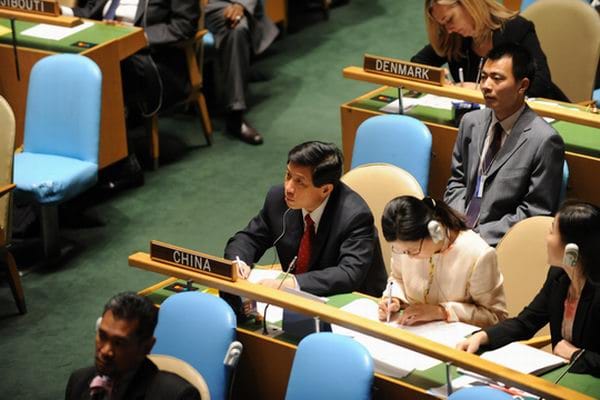
    Chinese delegation, 2009 Universal Periodic Review
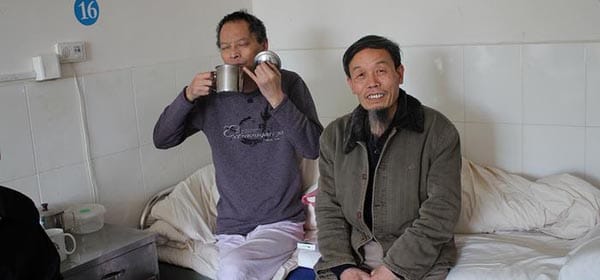
    Source: RFA

    With a level of transparency not afforded by other jurisdictions, the high court of the Xinjiang Uyghur Autonomous Region discloses annually the number of endangering state security (ESS) trials in the region. In 2012, 314 ESS trials of first and second instance were concluded, down 24 percent year-on-year. The decline is no cause for celebration, however, since, according to Xinjiang Party Secretary Zhang Chunxian, “the struggle between splittist and anti-splittist forces in Xinjiang [is] long-term, complicated, and intense.”

    Splittism and inciting splittism are ESS crimes, and information in Dui Hua’s Political Prisoner Database (PPDB) indicates that Xinjiang mostly applies them to Uyghurs—a Turkic-speaking Muslim ethnic group that accounts for 46 percent of Xinjiang’s population—who assert their cultural identity through speech, association, and assembly. (Similarly, in Tibetan regions, splittism charges appear to be disproportionately applied to Tibetans as compared with Han Chinese.) During its Universal Periodic Review in 2009, China noted that it “prohibits speeches and actions that instigate ethnic hatred and religious discrimination … a few people with the support of foreign forces try to split Tibet and Xinjiang … and the Government will not allow any attempt to split China to succeed.”

    Underscoring the government’s hardline approach, Dui Hua’s analysis of official data reveals a disturbing trend: between 2008 and 2010, Xinjiang, which accounts for less than 2 percent of China’s population, accounted for 50 percent of the nation’s first-instance ESS trials. Given that splittism is the focus of stability maintenance in the region, the great majority of defendants in these trials is almost certain to be Uyghur.

    ESS Trials Concluded in Xinjiang, Nationwide, 2008‒2012
     
    First- and
    Second-Instance
    First-Instance
    Year
    Xinjiang
    Nationwide*
    Xinjiang
     
    No. of Trials
    No. of Trials
    No. of Trials
    % of National
    2008
    268
    466
    235
    50.43
    2009
    437
    698
    378
    54.15
    2010
    376
    670
    314
    46.87
    2011
    414
    1314‡
    356†
    27.09
    2012
    314
    §
    270†
     
    Source: Dui Hua, Xinjiang Courts Annual Work Report, Xinjiang Yearbook, China Law Yearbook
    Notes:
    * China Law Yearbook disaggregates first-instance trial data by crime category, listing eight of the 10 categories enumerated in the Criminal Law (Part 2, chapters 1‒10) along with a category referred to as “other.” Dui Hua believes that the unlisted categories of ESS and dereliction of military duty are combined under “other.” Since indictment statistics have indicated that dereliction of military duty generally accounts for less than 1 percent of indictments when placed in a separate category with only ESS, we believe that military dereliction trials account for a similarly low percentage of trials when combined with ESS and thus use “other” trials as a proxy for ESS trials.
    † Dui Hua estimate based on the assumption that 85.9 percent of combined first- and second-instance trials are trials of first instance. First-instance trials accounted for 87.7 percent of combined first- and second-instance trials in 2008, 86.5 percent in 2009, and 83.5 percent in 2010.
    ‡ Given the discrepancy between this number and historical data, we do not include 2011 figures in our analysis.
    § Data expected to be released later this year.

    Information on individual cases, however, is restricted. Of the hundreds of people tried for ESS in Xinjiang in 2012—in the ballpark of 500 to 1,300 people based on data available on the number of defendants per trial—Dui Hua has discovered public information on just two. Both are Uyghurs sentenced to more than 10 years’ imprisonment by the Kashgar Prefecture Intermediate People’s Court.

    Sidik Kurban is a Muslim leader who oversaw religious homeschools throughout Xinjiang. He was convicted of inciting splittism and sentenced to 15 years’ imprisonment with 5 years’ deprivation of political rights. Abdirahman Yimerallegedly disseminated separatist ideas using removable storage devices and CD-ROM. He was sentenced to 13 years’ imprisonment with 5 years’ deprivation of political rights.

    In Xinjiang, harsh sentences are routine. In 2009, the conclusion of 437 ESS trials resulted in 255 people sentenced to more than 10 years’ imprisonment, life imprisonment, or death.

    Locals enter Id Kah Mosque in Kashgar, Xinjiang. Photo credit:
    Chinatourguide.com

    Pointing to the US

    In its most recent report on human rights in the United States, China stated that “ethnic minorities and non-Christians are also badly discriminated against in the fields like law enforcement, justice and religion, rendering the so-claimed ethnic equality and religious freedom nothing but self-glorifying forged labels.” The report specifically mentions Muslims, stating that “government anti-terrorism policies single them out for increased surveillance and monitoring.”

    In China, splittism—the incitement of which can amount to little more than blog posts—is commonly lumped together with terrorism and extremism in a tripartite known as “the three evil forces.” Thus, in light of ESS data indicating that Ugyhurs, who account for less than 1 percent of the national population, likely account for around half of all ESS trials, one wonders to what extent statements about ethnic discrimination in the judicial systems of other countries serve in part to mask systemic discrimination at home.

    Evidence of the treatment of Uyghurs before the law is in the hands of the Chinese government. To dispel concerns that Uyghurs face discrimination, the government should make public ESS verdicts in accordance with Article 14.1 of the International Covenant on Civil and Political Rights, and, in keeping with promises made during its 2009 UPR, do as Japan recommended and “continue its efforts to further ensure ethnic minorities the full range of human rights including cultural rights.”

    An expanded version of this article including additional data is published on Reference Materials

  • Dialogue – Issue 50: China under the Microscope: The Second Universal Periodic Review

    China was re-elected to the UN Human Rights Council months after its first UPR in February 2009. Photo credit: China-un.org

    The process is well underway. The troika of countries overseeing the review—Sierra Leone, United Arab Emirates, and Poland—has been selected, and information on China’s human rights record is being compiled by non-governmental organizations, like Dui Hua, UN treaty bodies and working groups, and, of course, China. All members of the United Nations are invited to participate in the interactive dialogue on China’s report to register criticism, acknowledge progress, and submit recommendations that China can either accept or reject.

    At the time of China’s first UPR, a number of kinks existed due to the novelty of the exercise. Representatives of countries had to line up to participate in the interactive dialogue and were called according to their places in line. China’s allies were at the front of the queue, some waiting all night to secure their spot. Because time for the dialogue was limited, many countries, mostly those with more critical statements, weren’t able to speak.

    China also benefited from the low-key approach adopted by the United States. President Barack Obama had just taken office and his administration had yet to determine its policy towards China. The United States sent relatively junior officers who neither participated in the interactive dialogue nor lodged criticisms or recommendations. The United States, which is a member of the Human Rights Council, is expected to adopt a far more vigorous approach during China’s UPR this October.

    Steps Forward, Steps Backward

    The number of executions has been sharply reduced but remained around 3,000 per year in 2012

    Dui Hua

    A country’s second UPR is supposed to focus on two things: 1) changes in the country’s human rights situation, and 2) implementation of recommendations the country accepted in its last UPR.

    China’s human rights record has shown positive and negative developments since the last review. On the positive side, the number of executions has been sharply reduced, although in 2012 it remained high at around 3,000 per year. The reduction was likely brought about by greater use of the unique Chinese sentence of death with two-year reprieve (which is nearly always commuted to life imprisonment or a fixed-term sentence), improvements in due process rights recently codified in revisions to the Criminal Procedure Law (CPL), continued review by the Supreme People’s Court, and the decision to move away from using executed prisoners as the country’s primary “organ donors.” (According to Vice Health Minister Huang Jiefu, China may end its reliance on executed prisoners as a source of organs in 1-2 years. Executed prisoners account for more than 90 percent of deceased donors.)

    The revised CPL that took effect on January 1, 2013, will be critically assessed at the UPR, and a number of positive changes will be highlighted by China and its friends. A section on juvenile cases includes provisions for diversion (which the law refers to as “conditional non-prosecution”) and records sealing—measures that are likely to significantly reduce the number of juveniles incarcerated and improve opportunities for rehabilitative justice. Strictures against torture have been tightened. Decisions to place people under psychiatric detention have been wrested from police and put in the hands of the courts (the National People’s Congress also passed China’s first mental health law in October 2012, a few months after adopting the CPL revisions). Women serving life sentences are permitted to nurse their children outside prison. Suspects must be notified of their right to an attorney during their first interrogation and, in most criminal cases, are required to have access to counsel within 48 hours of their lawyer’s request.

    Vice Health Minister Huang Jiefu (front, left) performs an organ transplant using an organ from a voluntary donor. Photo credit:Yangcheng Evening News

    Also expected to be praised are reforms related to reeducation through labor (RTL), a type of custodial “compulsory education” that is imposed without trial for a period of up to four years. In early January 2013, the newly appointed head of the Central Politico-Legal Committee of the Communist Party, Meng Jianzhu, said that, pending approval, RTL will “cease” in 2013. China reported 160,000 RTL detainees in 2009, and by October 2012, a government researcher said the number had dropped to about 60,000. The numbers are not comparable, however, since the latter excludes more than 200,000 people in mandatory drug treatment, which is often conducted inside RTL facilities.

    But as is so often the case, there is more to the reforms than meets the eye. Despite reducing the scope of the death penalty, people can still be executed for non-violent and economic crimes like illegal fundraising. Public security bureaus will continue to run their own psychiatric detention hospitals. And even though RTL may be phased out, there are still a number of common ways to detain people without trial.

    While some of these means, like mandatory drug treatment and “custody and education” for sex workers, stand outside the criminal law, others have made their way into the revised CPL. In three types of cases—endangering state security, terrorism, and “extremely serious” bribery—suspects can be placed under “non-residential residential surveillance” in places of police choosing for up to six months. They are held incommunicado. Access to counsel is not guaranteed. Families need not be informed of their whereabouts, and, perhaps because of this, family visits are neither assured nor routine. For people suspected in the first two types of cases, police can impose criminal detention for up to 37 days without providing the family with any notification if police believe it would interfere with the investigation. These provisions have become collectively known as the “disappearance clauses.”

    Acceptance Foregone

    Despite its international obligations and assurances that it would do so, China has yet to implement several of the recommendations it accepted during its first UPR. Three examples certain to draw fire are: 1) ratification of the International Covenant on Civil and Political Rights (ICCPR), 2) stepping up cooperation with the Human Rights Council’s special procedures mandate holders, and 3) facilitating an early visit by the UN high commissioner for human rights.

    Zhu Chengzhi (right) became the first person known to be subjected to non-residential residential surveillance in 2013. Photo credit: Deutsche Welle

    China rejected recommendations that stipulated a clear ratification deadline but did agree to Austria’s recommendation to ratify the ICCPR. When Chinese representatives signed the covenant on October 5, 1998, they were confident of early ratification. They gave assurances to foreign diplomats that China would ratify in less time than it took the United States, but to make good on its promise, China would need to ratify the covenant no later than June 8, 2013. Moreover, by accepting the recommendation to ratify, China reaffirmed its commitment to take steps towards aligning its law and practice with the covenant. Yet despite some improvements, China has yet to make verdicts and execution statistics public in accordance with Article 14.1. It also recently codified incommunicado detention in excess of 15 days, in contravention of Article 10, and for more than 15 years has held dozens of people in custody for defunct counterrevolutionary crimes, in contravention of Article 15.1.

    Despite having 12 pending requests, the oldest dating back more than 10 years, China has only hosted one visit of a rapporteur or other official from the UN Special Procedures Division over the last four years. The special rapporteur on the right to food, Olivier De Schutter, visited China in December 2010. Covering what the Chinese government likely saw as a relatively safe topic, his report lauded achievements in agricultural productivity—in 2005, China went from being a food-aid recipient to a food-aid donor. However, it also critically assessed the forced resettlement of Tibetan herders, a much more controversial issue.

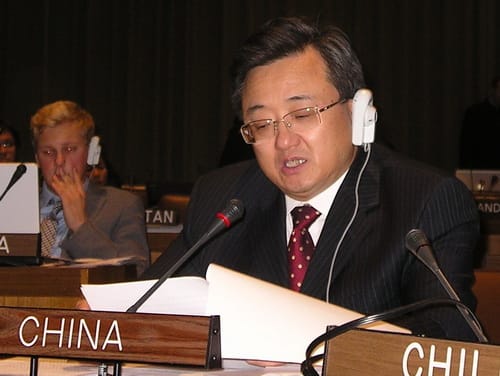
    Liu Zhenmin, then deputy permanent representative to the UN, states in 2009 that China will implement accepted UPR recommendations. Photo credit: China-un.org

    As it did for De Schutter, China had high hopes for Navanethem Pillay, the first UN high commissioner for human rights to hail from a developing country. When the South African took office in September 2008, she declared her intention to spend more time critically examining the rights records of developed countries. During its 2009 UPR, the Chinese delegation welcomed Pillay to visit China at “a time convenient to both sides,” and an invitation to visit China was floated by He Yafei, then Chinese ambassador to the UN stationed in Geneva, in April 2011. Later that year, a seminar on the death penalty was held in Hangzhou, providing an unprecedented example of cooperation between China and the United Nations. Then, before a visit had been scheduled, Pillay began releasing statements critical of China’s rights record that generated significant discord. China’s Ministry of Foreign Affairs was particularly incensed by a statement in November 2012 that called on China to address “deep underlying issues” that have led to self-immolations in Tibet. It rejected the criticisms and made clear to the Office of the High Commissioner for Human Rights (OHCHR) that cooperation would cease unless the “finger pointing” and China “bias” ended.

    During her first term, Pillay made country visits to all of the permanent members of the UN Security Council except China. It would be unprecedented for a high commissioner to leave office without visiting China and would not go unnoticed by the OHCHR or any branch of the United Nations system.

    Of course, there’s still time for relations to improve. Tentative discussions are underway regarding a possible trip to China by the high commissioner, and Pillay’s mandate does not end until September 1, 2014. In the eight-month countdown to China’s UPR, there may yet be a warming of Sino-UN cooperation and further improvements on key areas like arbitrary detention with the highly anticipated reform of reeducation through labor. ■

    2009 UPR Recommendations
    In its first Universal Periodic Review in 2009, China accepted 42 recommendations and
    rejected 50. Below are excerpts related to Dui Hua’s focus areas.
    Accepted
    Rejected
    Political and Religious Prisoners
    Ratify the ICCPR (Austria)
    Ratify the ICCPR as soon as possible and bring its
    legislation into line with its provisions (Netherlands)
    Juvenile Justice
    Attach more importance to the protection of rights of
    the child through national plans for economic and
    social development (Qatar)
    N/A
    Women in Prison
    Continue the efforts aimed at further enhancing
    the status of women (Mozambique)
    Adopt specific
    legislation on domestic violence (Brazil)
    Capital Punishment
    In the light of its national realities, continue to
    implement the policy of strictly controlling and
    applying the death penalty (Egypt)
    Reduce the scope of application of the death
    penalty, and publish statistics to show that the use
    of the death penalty is falling in China (UK)
  • Dialogue Issue 50 – Dui Hua News

    Media Spotlight Juvenile Justice

    Dui Hua’s third Juvenile Justice Expert Exchange continued to make headlines after a successful September wrap-up. On November 29, 2012, The New York Times published an op-ed by Executive Director John Kamm, entitled “Trying Juveniles.” The article highlights improvements in China’s juvenile justice system, including records sealing and diversionary measures introduced in revisions to the Criminal Procedure Law that went into effect this year. Dui Hua is among the international partners who engaged China on the development of rehabilitative measures that we believe will significantly reduce incarceration rates for Chinese youth. American understanding of Chinese procedure has also been known to promote positive reform. As Kamm notes, Supreme Court Justice Anthony Kennedy referenced Chinese practice in the 2005 Roper vs. Simmons case that declared the death penalty unconstitutional as a punishment for juveniles offenders—China exempted juveniles from capital punishment in 1997.


    Kamm discusses juvenile justice reform on local news channel KTSF 26. Photo credit: KTSF

    KTSF Channel 26, an independent broadcasting station in the San Francisco Bay Area, featured Dui Hua’s work on juvenile justice reform on its nightly news program on January 2, 2013. KTSF visited our offices to interview Kamm and Senior Manager of Development & Programs Daisy Yau about our exchanges with China’s Supreme People’s Court and how new juvenile procedures will improve future prospects for juveniles in conflict with the law. The program aired in Mandarin and Cantonese.

    Chinalogue: Advocacy Update

    Kamm and Yau traveled to Beijing and Hong Kong in November to meet with various stakeholders. In Beijing, Kamm had a productive working lunch with China’s Ministry of Foreign Affairs. Kamm and Yau later met with Supreme People’s Court judges to receive feedback on the week-long Juvenile Justice Expert Exchange in September. In Hong Kong, Kamm received information on seven individuals imprisoned in Guangdong and visited Shek Pik Prison with Research Assistant Vannie Lau. Following a presentation to the Swedish International Development Agency, Dui Hua secured additional funding from Sweden.

    Progress was made on Dui Hua’s women in prison initiative with the confirmation of the University of Hong Kong as our local partner to host an international conference in 2014. Dui Hua is now working with the University of Hong Kong Faculty of Law, Renmin University Law School, and Penal Reform International to raise funds for the conference and develop research, identify participants, and shape the conference itinerary. The purpose of the conference is to increase awareness of the conditions of the growing number of women in prison—people whose needs have traditionally been overlooked in overwhelmingly male corrections systems—and promote implementation of the Bangkok Rules (the UN Rules for the Treatment of Women Prisoners and Non-Custodial Measures for Women Offenders) to ensure that women’s needs are not only understood but met.

    Community Outreach

    At the Annual Friends of Dui Hua Open House, Dui Hua Senior Manager of Finance & Operations Irene Kamm (left photo, center) and Executive Director John Kamm (right photo, center) chat with supporters.

    Dui Hua engaged scholars and supporters with several events this winter. On December 11, 2012, more than 30 supporters braved the cold to attend the Annual Friends of Dui Hua Open House at our San Francisco headquarters. Kamm addressed attendees, emphasizing the importance of promoting human rights in China and advocating on the behalf of political prisoners amid tensions over trade relations and territorial disputes and uncertainties surrounding China’s new leadership.

    In Hong Kong, Publications & Communications Officer Megan Ko gave a presentation on Dui Hua’s work to 27 students and faculty visiting from the Perkins School of Theology at Southern Methodist University and Andover Newton Theological School. In California, Kamm gave a presentation to students studying “Hot Topics in US-China Law” at UC Berkeley School of Law. He discussed his involvement in China since the late 1970’s and answered questions on advocacy for political prisoners and the prospects of human rights in China.


    Kamm and Yau (center) meet with Berkeley Law students and Professor Daniel Farber (front, 5th left) and Professor Alex Wang (back left)

    Gratitude for the New Year

    Generous contributions kept Dui Hua staff busy as 2012 came to a close. Economic uncertainty meant that fewer funds were raised than in the previous year, but the number of people making donations rose more than 11 percent to 214 individuals and companies. Nearly a quarter of those making donations were first-time contributors. Dui Hua would like to thank you for continuing to support the dialogue with your actions, donations, and readership and wish you an empowering year of the snake!

  • Court Avoids Free Speech Issue, RTL Case Lost on Technicality

    Ren Jianyu (center), with his father (left) and Pu Zhiqiang, outside the Chongqing courthouse following the November verdict. Photo credit: China Youth Daily

    If, as indications suggest, China is to undertake major reform of its reeducation through labor (RTL) system sometime this year, one factor that will have helped to catalyze this development is the opposition to RTL that has been building over the past year. Behind the negative publicity has been a series of cases involving individuals sent to RTL for critical or embarrassing online speech or seeking redress for the wrongdoing of local officials.

    One of the most well-known of these cases involves Ren Jianyu, a 25-year-old from Chongqing whose plans to pursue a civil-service career were dashed when police detained him for using social media. His Internet activity included reposting a satirical image showing Wen Jiabao saying “Down with the Communist Party” after the Wenzhou train crash and items calling for political reform and an end to one-party rule. Initially charged with “inciting subversion,” Ren was sent to Chongqing’s Fuling RTL Center in September 2011 to serve a two-year term.

    After former Chongqing party secretary Bo Xilai and his powerful police chief Wang Lijun were removed from office in early 2012, amid allegations of “severe disciplinary violations” including graft, people sent to RTL during their reign began to bring administrative lawsuits. Many did so with the help of prominent rights lawyer and free speech advocate Pu Zhiqiang. Pu’s very public advocacy has not only helped to bring attention to RTL abuses in Chongqing and elsewhere but to successfully overturn a number of RTL decisions.

    With Pu as legal counsel, Ren Jianyu filed an administrative lawsuit against Chongqing’s RTL Management Committee in August 2012, and a trial was held in October of that year. The following month, the committee unexpectedly revoked its decision against Ren and set him free. A day later, the Chongqing No. 3 Intermediate People’s Court rejected Ren’s suit (in a verdict translated below) on the grounds that it was filed after a three-month statutory deadline.

    The Chongqing No. 3 Intermediate People’s Court has overturned a number of RTL decisions in the past year. In those rulings, as in Ren’s, the court makes a point to note the need for public authority to exercise tolerance and to avoid the use of severe punishment against those who express criticism. In Ren’s case, however, the court sided with the defendant on strictly procedural grounds that hinge upon the question of whether Ren had sufficient ability to file a lawsuit while serving a custodial sentence.

    The imposition of deadlines for filing administrative lawsuits is intended to prevent plaintiffs from arbitrarily delaying the exercise of their rights. But the Supreme People’s Court has recognized in a judicial interpretation that incarceration places impediments on an individual’s ability to exercise his or her litigation rights; therefore, it has determined that time spent under “restricted personal liberty” should not be counted in determining the deadline to file an administrative lawsuit.

    Other plaintiffs—such as, Fang Hong, whose case was tried in the same court and heard by two of the same judges as Ren’s—have successfully overturned RTL decisions through suits filed after their release from custody and beyond the statutory deadline. Yet the judicial panel in Ren’s trial agreed with the defendant that, because Ren had met with his father and girlfriend on several occasions—the verdict includes a laundry list of dates—and requested that they file suit on his behalf, his incarceration did not impede his ability to exercise his litigation rights.

    In hewing to this technical ruling, the court leaves a number of important issues unaddressed. For instance, how freely can a person sent to RTL exercise his or her rights when police and even fellow inmates reiterate the futility of appeal—especially under the reign of Wang Lijun? Ren was allowed only one 20-minute meeting with his father during the three months following the RTL decision against him, and during that meeting, the two were separated by glass and forced to speak by telephone. Ren did not have access to a lawyer, and Ren’s father, a construction worker with very little education, was not in an ideal position to serve as his son’s proxy. And, even if Ren overcame the pressure not to appeal earlier, what protections would there have been against the difficulties routinely faced by those trying to get lawsuits past the courts’ powerful “gatekeepers” who decide which suits to accept?

    Since his release, Ren Jianyu has given countless interviews, had his photo featured on the cover of magazines, and appeared on national television. In many ways, his has become the face of opposition to RTL in China. Ren has vowed to continue appealing in court until the decision against him is overturned. Even though he was released ahead of schedule and the Chongqing RTL Management Committee revoked its earlier decision against him, Ren continues to seek justice through the courts because what he wants from the authorities is not simply their concession of wrongdoing but, more importantly, their affirmation of his rights and acknowledgement that they violated the law.


    Chongqing Municipality No. 3 Intermediate People’s Court Administrative Decision: click to expand

    Chongqing Municipality No. 3 Intermediate People’s Court
    Administrative Decision

    (2012) CQ 3d Int. Admin First No. 14

    Plaintiff Ren Jianyu, male, born April 15, 1987, citizen identification number [Omitted—Ed.], Han ethnicity, previously assigned as a university [educated] “village official” in the Pengshui County Yushan Town People’s Government of Chongqing Municipality, resides in [Omitted—Ed.], Jiangjin District, Chongqing Municipality.

    Legal counsel is Pu Zhiqiang, lawyer with Beijing Huayi Law Firm, and Xu Liping, lawyer with Zhejiang Wulian Law Firm.

    Defendant is the Reeducation through Labor Management Committee of the Chongqing Municipality People’s Government, located at 555 Huanglong Road, Yubei District, Chongqing Municipality.

    Legal representative is Wang Aizu, [committee] director.

    Legal counsel is Yan Gangtao, civil servant employed by the Reeducation through Labor Management Committee of the Chongqing Municipality People’s Government, and Jin Xueling, civil servant employed by the Reeducation through Labor Management Committee of the Chongqing Municipality People’s Government.

    Plaintiff Ren Jianyu did not accept the RTL decision made against him by the Reeducation through Labor Management Committee of the Chongqing Municipality People’s Government (hereafter, “Chongqing RTL Committee”) and filed an administrative lawsuit with this court on August 15, 2012. After accepting the suit on August 21, 2012, this court formed a collegiate bench in accordance with the law and held an open hearing on October 10, 2012, to try the case. Plaintiff Ren Jianyu and his counsel, Pu Zhiqiang and Xu Liping, and defendant Chongqing RTL Committee and its counsel, Yao Gangtao and Jin Xueling, all appeared in court to participate in the proceedings. The trial in this case has now concluded.

    Plaintiff Ren Jianyu claimed that the Chongqing RTL Committee’s CQ RTL Rev. (2011) No. 3954 RTL Decision issued on September 23, 2011, lacked a factual and legal basis and requested that the people’s court rule to revoke or nullify that RTL decision.

    Defendant Chongqing RTL Committee contended that the CQ RTL Rev. (2011) No. 3954 RTL Decision RTL decision was lawful. After Ren Jianyu received the RTL decision, while in the RTL facility where his rights to correspondence, communication, and visitation were amply protected, he did not file his administrative lawsuit during the statutory time period and his suit [thus] exceeds the statutory filing deadline. It requested that the people’s court rule to dismiss Ren Jianyu’s suit.

    In the course of the trial it was ascertained that: On September 23, 2011, the Chongqing RTL Committee issued CQ RTL Rev. (2011) No. 3954 RTL Decision, finding that Ren Jianyu, between April and August 2011, had used the computer in the Family Planning Office of the Pengshui County Yushan Town People’s Government many times to go on Qzone and Tencent microblog and, through following [i.e., to “follow” on social media like Facebook or Twitter—Ed.], browsing, copying, pasting, re-posting, posting, and other means published commentary about international and domestic affairs and negative speech and information [regarding] reform of the political system [totaling] more than 100 items that promoted Western political models and attacked our party and government. The facts of his incitement of subversion of state power are clear and the evidence is reliable and sufficient. The Chongqing RTL Committee, in accordance with relevant provisions including those in the State Council Decision on the Issue of RTL, Article 3 of the State Council Supplementary Regulations on RTL, and Article 10(1) of Trial Measures for RTL, which were [all] approved by the Standing Committee of the National People’s Congress, decided to send Ren Jianyu to two years of RTL. That RTL decision clearly states: “If this decision is not accepted, an administrative lawsuit may be filed with the Chongqing No. 1, 2, 3, 4, or 5 Intermediate People’s Courts within three months of receiving this decision or application for administrative reconsideration made with the Chongqing Municipality People’s Government.” On September 24 of that year, the Chongqing RTL Committee delivered that RTL decision to Ren Jianyu. On September 26 of that year, Ren Jianyu was sent to the Chongqing Fuling RTL and Drug Rehabilitation Center to serve his RTL.

    While serving his RTL, Ren Jianyu met with his father, Ren Shiliu, and his girlfriend on October 6, 2011, and April 24, June 26, and August 21, 2012; he spoke with his grandmother and his girlfriend by telephone on November 11, November 26, and December 11, 2011, and January 10, January 21, February 19, March 18, April 14, July 14, August 6, August 11, August 13, and August 18, 2012; and he corresponded by letter with his friends, classmates, and girlfriend on December 4 and December 30, 2011, and January 10, January 12, January 30, February 4, February 17, March 4, March 6, March 12, and March 23, 2012. During his meetings with his father and girlfriend, Ren Jianyu asked them to file an administrative lawsuit or request administrative reconsideration on his behalf. On August 21, 2012, Ren Shiliu filed an administrative lawsuit with this court in the name of Ren Jianyu.

    Ren Jianyu’s main argument in court for why his suit did not exceed the statutory filing deadline was that according to the provisions of Article 43 of the Supreme People’s Court’s Interpretation Regarding Several Issues Related to Implementation of the Administrative Litigation Law of the PRC, in administrative lawsuits filed by persons whose personal liberty has been restricted, the time in which their personal liberty was restricted shall not be counted toward the lawsuit [deadline] period.

    With respect to the aforementioned facts, there is evidence on file such as the statements made in court by the plaintiff and defendant; the CQ RTL Rev. (2011) No. 3954 RTL Decision; delivery receipts; a Memorandum of Explanation issued by the Chongqing Municipality Fuling RTL and Drug Rehabilitation Center; the Visitor Registration Log for Persons in RTL, Registration Log for Family Telephone Calls, and Transcripts of Telephone Conversations by Persons in RTL [provided by] the Chongqing Municipality Fuling RTL and Drug Rehabilitation Center; transcripts of conversations with police officers from the Chongqing Municipality Public Security Bureau and procurators from the Chongqing Municipality People’s Procuratorate No. 3 Branch assigned to the procuratorate office within the Chongqing Municipality Fuling RTL and Drug Rehabilitation Center; and the transcript of the Pengshui County Public Security Bureau’s police questioning of Ren Jianyu.

    While the case was being tried, the Chongqing RTL Committee revoked CQ RTL Rev. (2011) No. 3954 RTL Decision on November 19, 2012, on the grounds that the case had been handled inappropriately, and the compulsory measures restricting Ren Jianyu’s personal liberty were lifted. The Chongqing RTL Committee’s voluntary actions to correct its errors ought to be acknowledged. Any exercise of public power must be done in accordance with the law and done cautiously, especially when it involves serious punishments that restrict personal liberty. The principle of proportionality between ends and means ought to be respected, and public power ought to act with rationality and tolerance, even when faced with radical and inappropriate speech by citizens. Any administrative act that violates the law substantively or procedurally ought to be corrected.

    This court finds that: A citizen’s right to file administrative lawsuits with the people’s court ought to be protected, but that right must be exercised in accordance with the law. According to Article 39 of the Administrative Litigation Law of the PRC: “Where citizens, legal persons, or other organizations directly file suit with a people’s court, they shall do so within three months from the day when they became aware that a specific administrative act has been taken, except as otherwise provided for by law.” Article 43 of the Supreme People’s Court’s Interpretation Regarding Several Issues Related to Implementation of the Administrative Litigation Law of the PRC states: “Where restriction of personal liberty makes it impossible to file suit, the time of restricted personal liberty is not counted toward the deadline for filing suit.” In light of the legal facts ascertained in this case, although Ren Jianyu’s personal liberty was restricted during the period of RTL, his rights to visitation, correspondence, and telephone were protected, and during this period Ren instructed his father and girlfriend to file an administrative lawsuit or apply for administrative reconsideration on his behalf. This ought to confirm that Ren Jianyu was able to file suit during the time that his personal liberty was restricted; [therefore] his argument that the period of his restricted personal liberty should not be counted toward the deadline for filing suit cannot be substantiated. Plaintiff Ren Jianyu signed to acknowledge his receipt of Chongqing RTL Committee’s CQ RTL Rev. (2011) No. 3954 RTL Decision on September 24, 2011, and filed suit with this court on August 15, 2012, after the statutory filing deadline. Therefore, in accordance with Article 44.1(6) of the Supreme People’s Court’s Interpretation Regarding Several Issues Related to Implementation of the Administrative Litigation Law of the PRC, [this court] rules as follows:

    Plaintiff Ren Jianyu’s suit is rejected.

    The litigation fee of 50 yuan paid by plaintiff Ren Jianyu is to be refunded. If this decision is not accepted, an appeal may be filed with the Chongqing High People’s Court by submitting an appellate brief with this court within 10 days of the delivery of this decision, along with copies for each member of the opposite party.

    Presiding Judge: Yang Yu
    Judicial Officer: Shao Ruiyi
    Deputy Judicial Officer: Tan Xiaoqi

    [Seal: Chongqing No. 3 Intermediate People’s Court]
    November 20, 2012

    [Seal: There are no differences between this copy and the original]

    Court Clerk: Zheng Qin

    Chinese Source(原文):
    《重庆市第三中级人民法院 – 行政判决书》
    Click on icon to expand

    重庆市第三中级人民法院
    行政裁定书

    ( 2012 ) 渝三中法行初字第00014号

    原告任建宇,男,生于1987年4月15日,公民身份号码[编者略],汉族,原系选派到重庆市彭水县郁山镇人民政府的大学生“村官”,住重庆市江津区[编者略]。

    委托代理人浦志强,北京市华一律师事务所律师。

    委托代理人徐利平,浙江五联律师事务所律师。

    被告重庆市人民政府劳动教养管理委员会,住所地重庆市渝北区黄龙路555号。

    法定代表人王爱祖,主任。

    委托代理人姚岗涛,重庆市人民政府劳动教养管理委员会公务员。

    委托代理人金学凌,重庆市人民政府劳动教养管理委员会公务员。

    原告任建宇不服被告重庆市人民政府劳动教养管理委员会(以下简称重庆市劳教委)作出的劳动教养决定,于2012年8月15日向本院提起行政诉讼。本院于2012年8月21日受理后,依法组成合议庭,于2012年10 月10 日公开开庭审理了本案,原告任建宇及其委托代理人浦志强、徐利平,被告重庆市劳教委的委托代理人姚岗涛、金学凌出庭参加了诉讼。本案现已审理终结。

    原告任建宇诉称:重庆市劳教委于2011年9月23日作出的渝劳教审(2011)字第3954号劳动教养决定,没有事实和法律依据,请求人民法院判决撤销该劳动教养决定或确认该劳动教养决定无效。

    被告重庆市劳教委辩称:重庆市劳教委作出的渝劳教审(2011)字第3954号劳动教养决定合法。任建宇收到劳动教养决定书后,在劳动教养管理场所充分保障其通信、通讯、会见权利的情况下,未在法定期限内提起行政诉讼,其起诉已超过法定起诉期限。请求人民法院裁定驳回任建宇的起诉。

    经审理查明:2011年9月23日,重庆市劳教委作出渝劳教审(2011)字第3954号劳动教养决定书,认定任建宇于2011年4月至8月期间,先后多次在彭水县郁山镇人民政府计生办公室内用计算机上网,在其QQ空间、腾讯微博上以关注、浏览、复制、粘贴、转帖、发贴等方式发表国际国内时事评论和政治体制改革方面的负面言论和信息100 多条,鼓吹西方政权模式,攻击我党、政府,其煽动颠覆国家政权的事实清楚,证据确实充分。重庆市劳教委根据全国人民代表大会常务委员会批准的《国务院关于劳动教养问题的决定》、《国务院关于劳动教养的补充规定》第三条和《劳动教养试行办法》第十条第(一)项及有关规定,决定对任建宇劳动教养二年。该劳动教养决定书中载明:“如不服本决定,可在接到本决定书之日起三个月内直接向重庆市第一、二、三、四、五中级人民法院提起行政诉讼或在接到本决定书之日起六十日内向重庆市人民政府申请行政复议。”同年9月24日,重庆市劳教委将该劳动教养决定书送达任建宇。同年9月26日,任建宇被送到重庆市涪陵劳动教养戒毒所执行劳动教养。

    在执行劳动教养期间,任建宇先后于2011年10月6日、2012年4月24日、6月26日、8月21日会见其父任世六及其女友;于2011年11月11日、11月26日、12月11日、2012年1月10日、l月21日、2月19日、3月18日、4月14日、7月14日、8月6日、8月11日、8月13日、8月18日与其外婆、其女友通电话;于2011年12月4日、12月30日、2012年1月10日、1月12日、l月30日、2月4月、2月17日、3月4日、3月6日、3月12日、3月23日与其朋友、同学、女友通信。任建宇在会见其父亲任世六以及女友时,要求他们代为提起行政诉讼或申请行政复议。2012年8月21日,任世六以任建宇的名义向本院提起行政诉讼。

    任建宇庭审中提出其起诉未超过法定起诉期限的主要理由是,根据《最高人民法院关于执行(中华人民共和国行政诉讼法)若干问题的解释》第四十三条之规定,被限制人身自由的人提起行政诉讼,其人身自由受到限制的时间不应计入起诉期间。

    上述事实,有原、被告的当庭陈述,渝劳教审(2011)字第3954号《劳动教养决定书》,送达回证,重庆市涪陵劳动教养戒毒所出具的《情况说明》,重庆市涪陵劳动教养戒毒所《劳动教养人员会见登记表》,《亲情电话登记簿》、《劳动教养人员通话记录》,重庆市公安局民警与重庆市人民检察院第三分院派驻重庆市涪陵劳动教养戒毒所检察室检察官谈话的谈话记录,彭水县公安局民警询问任建宇的询问笔录等证据在案佐证。

    在诉讼中,重庆市劳教委于2012年11月19日以处理不当为由撤销了渝劳教审(2011) 字第3954号《劳动教养决定书》,任建宇已解除限制人身自由的强制措施。对重庆市劳教委自行纠错行为,应予认可。任何公权力的行使都须依法、审慎,尤其是采取限制人身自由的严厉处分措施时,应遵循目的与手段相适应的原则,即使面对公民的过激不当言论,公权机关也应给予合理宽容。凡实体、程序存在违法的行政行为都应予以纠正。

    本院认为:公民向人民法院提起行政诉讼的权利应当保护,但也要依法行使。根据《中华人民共和国行政诉讼法》第三十九条规定:“公民、法人或者其他组织直接向人民法院提起诉讼的,应当在知道作出具体行政行为之日起三个月内提出。法律、法规另有规定的除外。”《最高人民法院关于执行(中华人民共和国行政诉讼法)若干问题的解释》第四十三条规定:“因人身自由受到限制而不能提起诉讼的,被限制人身自由的时间不计算在起诉期间内。”从本案查明的法律事实看,任建宇在劳动教养期间虽然人身自由受到限制,但其会见、通信、通电话的权利得到保障,任建宇在此期间曾委托其父和女友代为提起诉讼或申请行政复议,应当确认任建宇在被限制人身自由期问能够提起诉讼,其主张人身自由受到限制的时间不应计入起诉期间的诉讼理由不成立;原告任建宇2011年9月24日签收重庆市劳教委作出的渝劳教审(2011)字第3954号劳动教养决定书后,于2012年8月15日向本院提起的诉讼,已超过法定起诉期限。据此,依照《最高人民法院关于执行(中华人民共和国行政诉讼法)若干问题的解释》第四十四条第一款第(六)项之规定,裁定如下:

    驳回原告任建宇的起诉。

    原告任建宇已预交的案件受理费50元,予以退还。如不服本裁定,可在裁定书送达之日起十日内,向本院递交上诉状,并按对方当事人的人数提出副本,上诉于重庆市高级人民法院。

    审判长   杨 煜
    审判员   邵瑞一
    代理审判员   谭晓琪

    [图章:重庆市第三中级人民法院]
    二〇一二年十一月二十日

    [印章:本件与原本核对无异]

    书记员   郑 琴

    收起中文部分

    Collapse

  • SPC Interpretation Silent on Meeting Death Penalty Defendants

    SPC questions a defendant in a death penalty review case via video conferencing, Zhengzhou, Henan, December 2, 2009. Photo credit: Zynews.com

    Last year’s revisions to China’s Criminal Procedure Law (CPL) took effect on January 1, 2013. In the weeks preceding that date, the Supreme People’s Court (SPC), Supreme People’s Procuratorate, and Ministry of Public Security each issued judicial interpretations or regulations detailing how they intend (at least on paper) to implement the law.

    After the revised CPL was passed, Dui Hua analyzed provisions related to the death penalty and raised several questions regarding the process of death penalty review. Now that the SPC has issued its judicial interpretation, it is possible to revisit this topic and see whether those questions have been answered.

    The section of the SPC interpretation devoted to death penalty review (translated below) is closely modeled on implementation regulations the SPC issued in February 2007, shortly after the supreme court regained authority to review all death sentences. In reviewing death sentences, the SPC is primarily interested in whether the lower court’s decision made a correct finding of fact based on sufficient evidence, whether the law has been applied appropriately and the death penalty is appropriate, and whether proper judicial procedure has been followed—or, more accurately, whether any procedural improprieties have potentially affected the fairness of the outcome.

    The interpretation makes clear that the SPC will continue to handle the majority of death sentences it rejects by remanding cases for retrial and that, as in the 2007 regulations, the court may only impose its own sentences in limited, specific circumstances outlined in Articles 351–2. Also similar to the 2007 regulations, there is a degree of tolerance for relatively minor errors in the lower court’s finding of fact or citation of statute; however, the current interpretation describes these more generally as “flaws” (瑕疵) in contrast to the 2007 regulations’ more specific (but equally vague) use of the phrase “not completely correct or standard” (不完全准确、规范的).

    The interpretation also covers the procedures whereby high people’s courts review sentences of death with reprieve. In instances where an intermediate court has made an error, the provincial high court is given more leeway to make changes to the lower court’s decision but is clearly prohibited from imposing heavier sentences, i.e., death with immediate execution.

    One thing added to the CPL during its latest revision was a provision requiring the SPC to interview defendants as part of the death penalty review process. Left unclear, however, was whether SPC judges would be required to meet defendants in person, as opposed to being able to set up remote interviews or even assign provincial-court officials to act as proxies. An earlier draft version of the SPC interpretation contained a provision requiring that defendants be interviewed in person, except when “the facts are clear and the evidence is reliable and sufficient,” in which case interviews could be conducted through a video conference. Surprisingly, however, this provision was omitted from the final version of the interpretation, which instead states in Article 544 of its supplemental provisions that “based on the circumstances of the case, people’s courts may use video [conferencing] as a means to carry out the questioning of defendants.”

    SPC questions a defendant in a death penalty review case via video conferencing, Nandan, Guangxi, July 20, 2011. Photo credit: Gxfzw.com.cn

    The SPC’s reticence to set out generally applicable guidelines for death penalty review cases is notable, especially given that, last year, the interview requirement was nearly eliminated from the CPL entirely in favor of more discretionary language. After the CPL revisions passed last March, an SPC official told Legal Daily that the SPC generally uses remote video conferencing to question defendants in cases where the facts are clear, the evidence is reliable and sufficient, the collegiate benches and adjudication committees of the courts of first and second instance and the collegiate bench of the SPC all have consistent opinions regarding conviction and sentencing, the defendant and his or her defender have not raised objections based on the facts or evidence, and there are no circumstances requiring leniency. The official said that defendants are questioned in person when the facts and evidence in the case are “relatively complex.” In 2009, the SPC released a notice stating that, going forward, the main means for the SPC to question defendants would be video conferencing and that other methods would be supplemental, while in 2012, the SPC and Ministry of Public Security jointly released a notice requiring detention centers to build interrogation rooms for remote video interrogation. Advocates for video conferencing emphasize judicial efficiency and cost reduction; however, these benefits likely come at the cost of the defendants’ rights to due process and to be heard in a neutral environment.

    Regarding input by defense lawyers, the interpretation adopts more explicit language. Lawyers will apparently have the opportunity to submit opinions to the court in person if desired, and judges will be obligated to arrange meetings for this purpose “on work premises” upon request. It is worth noting that the earlier draft of the interpretations specified that the meeting would also be required to be held “during business hours” but that this language was omitted from the final version. Moreover, the interpretation requires the court to produce transcripts of meetings with defense lawyers but says nothing about what should happen to those transcripts, in contrast with the earlier draft’s specific requirement that transcripts be placed in the case file.

    Original Source: 
    最高人民法院
    法释〔2012〕21号
    发布日期:2012年12月20日
    http://legal.people.com.cn/n/2012/1224/c42510-20000004.html
    Click on icon to expand

    第十五章 死刑复核程序
    Chapter 15: Death Penalty Review Procedure
    第三百四十四条 报请最高人民法院核准死刑案件,应当按照下列情形分别处理:
    Article 344: Reporting of death penalty cases to the SPC for review and approval shall be dealt with accordingly in respect to the following circumstances:
    (一)中级人民法院判处死刑的第一审案件,被告人未上诉、人民检察院未抗诉的,在上诉、抗诉期满后十日内报请高级人民法院复核。高级人民法院同意判处死刑的,应当在作出裁定后十日内报请最高人民法院核准;不同意的,应当依照第二审程序提审或者发回重新审判;
    (1) Where an intermediate people’s court has imposed a death sentence in a trial of first instance and neither the defendant appeals nor the people’s procuratorate protests, [the court] shall report the case to the high people’s court for review within 10 days after expiry of the appeal and protest period. Where the high people’s court agrees with the death sentence, it shall report the case for review and approval by the SPC within 10 days after issuing its ruling; where it does not agree [with the sentence], it shall either hear the case in accordance with the procedures for a second-instance trial or remand the case for retrial;
    (二)中级人民法院判处死刑的第一审案件,被告人上诉或者人民检察院抗诉,高级人民法院裁定维持的,应当在作出裁定后十日内报请最高人民法院核准;
    (2) Where an intermediate people’s court has imposed a death sentence in a trial of first instance and either the defendant appeals or the people’s procuratorate protests and the high people’s court rules to uphold [the death sentence], [the high people’s court] shall report the case for review and approval by the SPC within 10 days after issuing its ruling;
    (三)高级人民法院判处死刑的第一审案件,被告人未上诉、人民检察院未抗诉的,应当在上诉、抗诉期满后十日内报请最高人民法院核准。
    (3) When a high people’s court, has imposed a death sentence in a trial of first instance and neither the defendant appeals nor the people’s procuratorate protests, [the court] shall report the case for review and approval by the SPC within 10 days after expiry of the appeal and protest period.
    高级人民法院复核死刑案件,应当讯问被告人。
    When a high people’s court reviews a death penalty case, it shall question the defendant.
    第三百四十五条 中级人民法院判处死刑缓期执行的第一审案件,被告人未上诉、人民检察院未抗诉的,应当报请高级人民法院核准。
    Article 345: Where an intermediate people’s court imposes a sentence of death with reprieve in a trial of first instance and neither the defendant appeals nor the people’s procuratorate protests, [the court] shall report the case to the high people’s court for review and approval.
    高级人民法院复核死刑缓期执行案件,应当讯问被告人。
    When a high people’s court reviews a case of death with reprieve, it shall question the defendant.
    第三百四十六条 报请复核的死刑、死刑缓期执行案件,应当一案一报。报送的材料包括报请复核的报告,第一、二审裁判文书,死刑案件综合报告各五份以及全部案卷、证据。死刑案件综合报告,第一、二审裁判文书和审理报告应当附送电子文本。
    Article 346: Where reporting death penalty or death with reprieve cases, one case shall [be filed] per report. Documents to be sent in the request include five copies of each of the review request report, decisions in the trials of first and second instance, and the comprehensive report for death penalty cases, as well as the complete case file and evidence. Electronic copies of the comprehensive report for death penalty cases, decisions in the trials of first- and second instance, and the trial report shall be attached.
    同案审理的案件应当报送全案案卷、证据。
    Full case files and evidence shall be sent for all trials that are part of the same case.
    曾经发回重新审判的案件,原第一、二审案卷应当一并报送。
    Where a case has been previously remanded for retrial, the case files for the original trials of first and second instance shall be sent as part of the request.
    第三百四十七条 报请复核的报告,应当写明案由、简要案情、审理过程和判决结果。
    Article 347: The review request report shall clearly state in writing the cause of action, a summary of the case details, the trial history, and the results of the verdict.
    死刑案件综合报告应当包括以下内容:
    The comprehensive report for death penalty cases shall include the following content:
    (一)被告人、被害人的基本情况。被告人有前科或者曾受过行政处罚的,应当写明;
    (1) Basic details about the defendant and victim(s). Where the defendant has a prior criminal record or previously received administrative punishment, this shall be stated clearly in writing;
    (二)案件的由来和审理经过。案件曾经发回重新审判的,应当写明发回重新审判的原因、时间、案号等;
    (2) Origin of the case and its trial history. Where the case has previously been remanded for retrial, the reasons, time, and case number for the remand shall be stated clearly in writing;
    (三)案件侦破情况。通过技术侦查措施抓获被告人、侦破案件,以及与自首、立功认定有关的情况,应当写明;
    (3) Circumstances under which the case was solved. Relevant details of how the defendant was apprehended or the case was solved through the use of technical investigation measures and/or of the defendant’s voluntary surrender or performance of meritorious service shall be stated clearly in writing;
    (四)第一审审理情况。包括控辩双方意见,第一审认定的犯罪事实,合议庭和审判委员会意见;
    (4) Details of the trial of first instance. This includes the opinions of the prosecution and defense, the first-instance [court’s] finding of criminal fact, and the opinions of the collegiate bench and the adjudication committee;
    (五)第二审审理或者高级人民法院复核情况。包括上诉理由、检察机关意见,第二审审理或者高级人民法院复核认定的事实,证据采信情况及理由,控辩双方意见及采纳情况;
    (5) Details of the trial of second instance or review by the high people’s court. This includes the reasons for appeal, the prosecution’s opinions, the finding of fact made during the second-instance trial or review by the high people’s court, the acceptance status and rationale for the evidence, the arguments of the prosecution and defense and the court’s acceptance of them;
    (六)需要说明的问题。包括共同犯罪案件中另案处理的同案犯的定罪量刑情况,案件有无重大社会影响,以及当事人的反应等情况;
    (6) Any issues requiring explanation. This includes, among other things, details regarding conviction and sentencing of offenders involved jointly in the criminal case whose cases were handled separately, whether the case has a major impact on society, and the reactions of parties to the case.
    (七)处理意见。写明合议庭和审判委员会的意见。
    (7) Opinions on handling the case. The opinions of the collegiate bench and the adjudication committee shall be stated clearly in writing.
    第三百四十八条 复核死刑、死刑缓期执行案件,应当全面审查以下内容:
    Article 348: In reviewing cases involving sentences of death or death with reprieve, a complete investigation shall be made of the following:
    (一)被告人的年龄,被告人有无刑事责任能力、是否系怀孕的妇女;
    (1) The defendant’s age and whether the defendant possesses the capacity for criminal responsibility or is a pregnant woman;
    (二)原判认定的事实是否清楚,证据是否确实、充分;
    (2) Whether the original verdict’s finding of fact was clear and whether the evidence was reliable and sufficient;
    (三)犯罪情节、后果及危害程度;
    (3) The circumstances, consequences, and degree of harm of the crime;
    (四)原判适用法律是否正确,是否必须判处死刑,是否必须立即执行;
    (4) Whether the original verdict’s application of the law was correct, whether it is necessary to impose the death penalty, and whether it is necessary to execute the death penalty immediately;
    (五)有无法定、酌定从重、从轻或者减轻处罚情节;
    (5) Whether there are circumstances that call for mandatory or discretionary heavy, lenient, or mitigated punishment;
    (六)诉讼程序是否合法;
    (6) Whether the procedure was lawful;
    (七)应当审查的其他情况。
    (7) Other circumstances that ought to be reviewed.
    第三百四十九条 高级人民法院复核死刑缓期执行案件,应当按照下列情形分别处理:
    Article 349: In reviewing cases involving death with reprieve, a high people’s court shall deal with the case accordingly in respect to the following circumstances:
    (一)原判认定事实和适用法律正确、量刑适当、诉讼程序合法的,应当裁定核准;
    (1) Where the original verdict’s finding of fact and application of the law is correct, the punishment is appropriate, and the judicial procedure lawful, a ruling to approve [the sentence] shall be issued;
    (二)原判认定的某一具体事实或者引用的法律条款等存在瑕疵,但判处被告人死刑缓期执行并无不当的,可以在纠正后作出核准的判决、裁定;
    (2) Where there is a flaw in the original verdict, such as in the finding of a particular fact or in the citation of a legal provision, but it is not inappropriate to sentence the defendant to death with reprieve, the verdict or decision may be approved after correction is made;
    (三)原判认定事实正确,但适用法律有错误,或者量刑过重的,应当改判;
    (3) Where the original verdict’s finding of fact is correct but there are errors in applying the law or the sentence is too heavy, a new sentence shall be issued;
    (四)原判事实不清、证据不足的,可以裁定不予核准,并撤销原判,发回重新审判,或者依法改判;
    (4) Where the original verdict’s facts are unclear or its evidence insufficient, either a decision not to approve [the sentence of death with reprieve] may be issued, the original verdict vacated, and the case remanded for retrial, or a new sentence may be issued in accordance with the law;
    (五)复核期间出现新的影响定罪量刑的事实、证据的,可以裁定不予核准,并撤销原判,发回重新审判,或者依照本解释第二百二十条规定审理后依法改判;
    (5) Where, during the review period, new facts or evidence emerge that affect the conviction or penalty imposed, a decision not to approve [the sentence of death with reprieve] may be issued, the original verdict vacated, and the case remanded for retrial, or a new sentence may be issued pursuant to a trial in accordance with Article 220 of this interpretation;
    (六)原审违反法定诉讼程序,可能影响公正审判的,应当裁定不予核准,并撤销原判,发回重新审判。
    (6) Where the original trial violated statutory judicial procedure in a way that could potentially affect the fairness of the trial, a decision not to approve [the sentence of death with reprieve] shall be issued, the original verdict vacated, and the case remanded for retrial.
    高级人民法院复核死刑缓期执行案件,不得加重被告人的刑罚。
    In reviewing cases of death with reprieve, high people’s courts must not impose heavier penalties on defendants.
    第三百五十条 最高人民法院复核死刑案件,应当按照下列情形分别处理:
    Article 350: When reviewing death penalty cases, the SPC shall deal accordingly in respect to the following circumstances:
    (一)原判认定事实和适用法律正确、量刑适当、诉讼程序合法的,应当裁定核准;
    (1) Where the original verdict’s finding of fact and application of the law is correct, the punishment is appropriate, and the judicial procedure lawful, a ruling to approve [the sentence] shall be issued;
    (二)原判认定的某一具体事实或者引用的法律条款等存在瑕疵,但判处被告人死刑并无不当的,可以在纠正后作出核准的判决、裁定;
    (2) When there is a flaw in the original verdict, such as in the finding of a particular fact or in the citation of a legal provision, but it is not inappropriate to sentence the defendant to death, the verdict or decision may be approved after correction is made;
    (三)原判事实不清、证据不足的,应当裁定不予核准,并撤销原判,发回重新审判;
    (3) Where the original verdict’s facts are unclear or its evidence insufficient, a decision not to approve [the death penalty] shall be made, the original verdict vacated, and the case remanded for retrial;
    (四)复核期间出现新的影响定罪量刑的事实、证据的,应当裁定不予核准,并撤销原判,发回重新审判;
    (4) Where, during the review period, new facts or evidence emerge that affect the conviction or penalty imposed, a decision not to approve [the death penalty] shall be issued, the original verdict vacated, and the case remanded for retrial;
    (五)原判认定事实正确,但依法不应当判处死刑的,应当裁定不予核准,并撤销原判,发回重新审判;
    (5) Where the original verdict’s finding of fact is correct but, in accordance with the law, the death penalty shall not be imposed, a decision not to approve [the death penalty] shall be issued, the original verdict vacated, and the case remanded for retrial;
    (六)原审违反法定诉讼程序,可能影响公正审判的,应当裁定不予核准,并撤销原判,发回重新审判。
    (6) Where the original trial violated statutory judicial procedure in a way that could potentially affect the fairness of the trial, a decision not to approve [the death penalty] shall be issued, the original verdict vacated, and the case remanded for retrial.
    第三百五十一条 对一人有两罪以上被判处死刑的数罪并罚案件,最高人民法院复核后,认为其中部分犯罪的死刑判决、裁定事实不清、证据不足的,应当对全案裁定不予核准,并撤销原判,发回重新审判;认为其中部分犯罪的死刑判决、裁定认定事实正确,但依法不应当判处死刑的,可以改判,并对其他应当判处死刑的犯罪作出核准死刑的判决。
    Article 351: In cases in which a person has been sentenced to death after the sentences for two or more crimes have been combined, where the SPC finds after its review that the facts are unclear or the evidence is insufficient for the death penalty verdicts or decisions covering a portion of the crimes, it shall issue a ruling not to approve the [death sentence] in the entire case, the original verdict shall be vacated, and the case remanded for retrial; where it finds that the finding of fact is correct for the death penalty verdicts or decisions covering a portion of the crimes but, in accordance with the law, the death sentence shall not be applied, [the SPC] may change the verdict and issue a decision to approve the death penalty for the other crimes for which the death penalty ought to be applied.
    第三百五十二条 对有两名以上被告人被判处死刑的案件,最高人民法院复核后,认为其中部分被告人的死刑判决、裁定事实不清、证据不足的,应当对全案裁定不予核准,并撤销原判,发回重新审判;认为其中部分被告人的死刑判决、裁定认定事实正确,但依法不应当判处死刑的,可以改判,并对其他应当判处死刑的被告人作出核准死刑的判决。
    Article 352: In cases in which two or more defendants have been sentenced to death, where the SPC finds after its review that the facts are unclear or the evidence is insufficient for the death penalty verdicts or decisions covering a portion of those defendants, it shall issue a ruling not to approve any of the [death sentences] in the entire case, the original verdict shall be vacated, and the case remanded for retrial; where it finds that the finding of fact is correct for the death penalty verdicts or decisions covering a portion of those defendants but, in accordance with the law, they should not be sentenced to death, [the SPC] may change the verdict and issue a decision to approve the death penalty for the other defendants who ought to be given the death penalty.
    第三百五十三条 最高人民法院裁定不予核准死刑的,根据案件情况,可以发回第二审人民法院或者第一审人民法院重新审判。
    Article 353: Where the SPC decides not to approve a death sentence, it may, according to the circumstances of the case, remand the case to the second-instance people’s court or the first-instance people’s court for retrial.
    第一审人民法院重新审判的,应当开庭审理。第二审人民法院重新审判的,可以直接改判;必须通过开庭查清事实、核实证据或者纠正原审程序违法的,应当开庭审理。
    Where the first-instance court retries the case, it shall hold a trial hearing. Where the second-instance court retries the case, it may impose a new sentence directly; if it is necessary to hold a hearing to examine the facts, verify the evidence, or correct improper procedure used in the original trial, it shall hold a trial hearing.
    第三百五十四条 高级人民法院依照复核程序审理后报请最高人民法院核准死刑,最高人民法院裁定不予核准,发回高级人民法院重新审判的,高级人民法院可以依照第二审程序提审或者发回重新审判。
    Article 354: When a high people’s court has tried a case in accordance with the procedures for reviewing [a death sentence] and reported the case to the SPC for review and approval of the death sentence, where the SPC rules not to approve [the death penalty] and remands the case to the high people’s court for retrial, the high people’s court may either try the case itself in accordance with the procedures for second-instance trials or remand the case for retrial.
    第三百五十五条 最高人民法院裁定不予核准死刑,发回重新审判的案件,原审人民法院应当另行组成合议庭审理,但本解释第三百五十条第四项、第五项规定的案件除外。
    Article 355: Where the SPC rules not to approve the death penalty and remands the case for retrial, the people’s court that originally tried the case shall form a new collegiate bench to try the case, except in cases covered by Article 350.4‒5 of this interpretation.
    第三百五十六条 死刑复核期间,辩护律师要求当面反映意见的,最高人民法院有关合议庭应当在办公场所听取其意见,并制作笔录;辩护律师提出书面意见的,应当附卷。
    Article 356: During the death penalty review period, where a defense lawyer requests to make his or her opinions known in person, the relevant collegiate bench of the SPC shall hear his or her opinions in a workplace and make a transcript; where the defense lawyer submits opinions in writing, they shall be included in the case file.
    第三百五十七条 死刑复核期间,最高人民检察院提出意见的,最高人民法院应当审查,并将采纳情况及理由反馈最高人民检察院。
    Article 357: During the death penalty review period, the SPC shall review any proposals made by the Supreme People’s Procuratorate and provide the SPP with feedback regarding its acceptance of the proposals and the reasoning involved.
    第三百五十八条 最高人民法院应当根据有关规定向最高人民检察院通报死刑案件复核结果。
    Article 358: The SPC shall report the results of its review of death penalty cases to the Supreme People’s Procuratorate in accordance with the relevant provisions.

    收起中文部分

  • Rule of Law: From Official Rhetoric to Public Participation

    As a new Chinese leadership takes office at the beginning of 2013 there has been much discussion and speculation about what might be in store for reform of China’s legal system. One place to look for signs of things to come might be in official rhetoric, which has shown signs of moderating the rigid “stability maintenance” policies of recent years in favor of policies that relax some political control over the legal system and place more emphasis on rule of law development.

    Hainan University Law School Professor Wang Lin.
    Photo credit: jcrb.com

    In assessing the prospects for legal reform, law professor Wang Lin, who frequently comments on legal affairs for a number of Chinese newspapers, looks not only at official pronouncements but also at the role played by social pressure and public opinion in shaping the reform agenda. In an article published recently in The Beijing News, Wang notes that controversy surrounding the handling of individual cases has energized the public’s enthusiasm for participation in the process of legal reform. This controversy can sometimes be noisy and contentious, but, he argues, it is ultimately a positive force—especially in its tendency to focus on problematic aspects of the legal system. Rather than attempt to steer the public away from discussion of these shortcomings, Wang suggests (in a theme he has discussed in detail before) that the government and legislators would be better off formalizing channels for public participation in the drafting of legislation and planning of new legal institutions.

    This does not necessarily shed any light on what future legal reforms might be, but it does point to the links between legal reform and political reform in China and raises the possibility that growing public expectations and demands rule of law might have implications that are broader than legislation and legal institutions themselves.

    *
    Pace of “Rule of Law Construction” Can’t Keep Up With “Rule of Law Demand”

    Wang Lin, The Beijing News
    February 2, 2013

    In terms of building rule of law in China, 2012 was a year to remember. That year was the 30th anniversary of the promulgation of the current constitution as well as the 100th anniversary of the promulgation of the Provisional Constitution of the Republic of China. Reviewing what has been more than a century of Chinese constitutionalism, reveals a time of many re-tunings and repeated twists and turns.

    Perhaps because there are still many gaps between the current rule of law situation and society’s rule of law demands, the report [delivered by General Secretary Hu Jintao] at the 18th Party Congress placed particular emphasis on [the need to] “accelerate construction of a socialist country based on the rule of law” and “place greater emphasis on the important role the rule of law plays in the country’s governance and in social management.” The phrase “accelerate construction” clearly reveals the urgency of rule of law to China.

    As for how to “accelerate construction,” the report of the 18th Party Congress placed special stress on: “ensur[ing] that leading officials are guided by law in both thinking and action in their effort to deepen reform, promote development, solve problems, and maintain stability.” In order to draw a clear distinction with rule by man, the ruling party repeated its warning that “no organization or individual has the privilege of overstepping the constitution and laws, and no one in a position of power is allowed in any way to take one’s own words as the law, place one’s own authority above the law or abuse the law.”

    Legislative Progress: Reform of the Criminal and Civil Procedure Laws, Enactment of a Mental Health Law…
    Public Enthusiasm for Legislative Participation Continues to Surge

    The best way for those in power and legislators to reduce contention and soothe public sentiment is to be more humble, respect democratic rights, and maintain positive interaction with public opinion. Compared to “guiding opinion,” paying attention to legislative bills themselves is the foundation and core.

    Another important influence that the 18th Party Congress will have on China’s future can be seen in the new guiding policy for building rule of law: “Make laws in a scientific way, enforce them strictly, administer justice impartially, and ensure that everyone abides by the law.” According to Aristotle’s classic theory, the two basic key elements of rule of law are that there be widespread obedience to laws that have already been enacted and that the laws that everyone obeys be good laws. In order to have “good laws,” we must “make laws in a scientific way.” Given the present degree of social stratification and frequent conflict and somewhat obstructed channels for policy entrepreneurship and interest competition in the legislative process, debate over the enactment and revision of legislation has become unprecedentedly fierce.

    The most important legislative events in 2012 were, by far, the revision of the two major procedural laws—the Criminal Procedure Law and the Civil Procedure Law. Although these were only revisions, when you consider it in terms of institutional evolution or look at the number [of provisions] revised, the significance of the revisions to the two major procedural laws far exceeds that of any other legislation last year. The revision of the Criminal Procedure Law covered nearly all aspects of the criminal process: from case-filing to investigation; then to prosecution, defense, adjudication, and implementation; plus a system [covering] evidence. Revision of the Civil Procedure Law covered seven major areas, ranging from the first inclusion of “public interest litigation” in the law and establishment of “small-claims litigation” to things like further definition of adjudication jurisdiction, enactment of property preservation measures, and optimization of a party’s right to request a retrial—none of these is insignificant.

    Although revisions to the two major procedural laws were widely different in terms of specific content, there was a shared pursuit of safeguarding human rights. The revised Criminal Procedure Law included the phrase “respect and safeguard human rights” in its section on general principles, and human rights thinking was also expressed in the provisions of the Civil Procedure Law. Even though “respect and safeguard human rights” was already a constitutional principle and lower-order legislation is expected to abide by the constitution, this principle of “safeguarding human rights” would run the risk of being put aside and forgotten about if it were not given particular shape and detail in the legal system through the two major procedural laws, which act as “laws for the application of the constitution.”

    Laws are revised to change with the times, and once a revised law takes effect it brings new impetus for social development. For example, the establishment of rules to exclude illegal evidence will directly bring about changes to methods of investigation. Legislation allowing public interest litigation will directly or indirectly promote the development of social organizations.

    In 2012, public enthusiasm for participating in the legislative process continued to surge. In a related development, splits in public opinion during the legislative process remained as visible as ever. For example, during revision of the Criminal Procedure Law online public opinion was focused on Article 73, which was labeled the “secret arrest” [provision], and the focus of online opinion for the Mental Health Law was how to deal with “forced psychiatric treatment.” But in the field of official opinion, these worries about individual provisions were considered to be “making mountains out of molehills”; [officials] were more interested in looking at accomplishments and progress. The stark difference between these two fields of opinion is obvious. For the public, which places more emphasis on “participation,” discussion and criticism should, of course, focus on “problem provisions.” Passage of unproblematic provisions about which there is already consensus should be automatic—why even discuss it?

    So, the best way for those in power and legislators to reduce contention and soothe public sentiment is to be more humble, respect democratic rights, and maintain positive interaction with public opinion. Compared to “guiding opinion,” paying attention to legislative bills themselves is the foundation and core.

    Unsolved Problems: Adding “Crime of Child Abuse,” Abolishing “Crime of Prostitution with Underage Girls,” RTL System Reform…
    Public Still Has Many Expectations for Systemic Change

    For China in “the period of advancing rule of law construction,” the “Bo-Gu Kailai murder case” and the associated “Wang Lijun case” make clear to all that “all problems are, in the end, problems for the judicial system.”

    In the legislative memory of 2012, the equally fierce debates over adding a “crime of child abuse,” abolishing the “crime of prostitution with underage girls,” and reform of re-education through labor (RTL) each remain problems unsolved. Behind each of these public debates is the shadow of individual cases.

    In October 2012, after the “Wenling kindergarten teacher child abuse case,” the public security organ placed suspect Yan X under criminal detention for creating a serious disturbance. This caused a fierce debate within legal circles over crime and punishment for Yan. Of particular note is that, at least in the print media, no legal professionals ever expressed the customary concern that “the people of the nation want this person dead.” On the contrary, discussion and analysis of “statutorily prescribed punishment for a crime” occupied the mainstream. This individual case quickly transformed from a “legal discussion” into a “legislative discussion.” This shows that the media’s oversight over [the handling of] individual cases is increasingly rational and cautious.

    Whether to retain or abolish the “crime of prostitution with underage girls” is a longstanding topic of discussion. In 2012, two “underage prostitution cases” (one in Yongkang, Zhejiang, and the other in Yongcheng, Henan) brought this debate to the fore once again, where it stayed through the end of the year. And in 2012 calls for abolition of the RTL system reached a new peak, with the flames fanned by influential individual cases like the “Tang Hui case” and “Ren Jianyu case.” Reform of RTL has already reached “a point of no return.”

    In the age of social media, [the number of] cases that can be called “influential cases” increases by the day. In selections of the “Top Ten Influential Cases of the Year,” the “Bo-Gu Kailai and Zhang Xiaojun murder case” made the lists of Southern Weekly and other institutions. For China in “the period of advancing rule of law construction,” this case and the associated “Wang Lijun case” make clear to all that “all problems are, in the end, problems for the judicial system.”

    More proof of how “individual cases have become public events” would be the “Wu Ying case.” After the Supreme People’s Court remanded this case for retrial, the Zhejiang Province High People’s Court issued a final decision on May 21, 2012, sentencing Wu Ying to death, suspended for two years, for the crime of fundraising fraud, and depriving her of her political rights for life and confiscating all of her personal assets. But the distinction between illegal fundraising and private lending still remains unclear. The greatest significance of Wu Ying’s case is the way it has sped up the pace of reform of private financing and led to the creation of a specific “Wenzhou Pilot Zone for Comprehensive Financial Reform.” There will probably be many more “Wu Yings” in the future, but no one hopes to see any more “Wu Ying cases.”

    On October 5, 2011, 13 Chinese crew members were shot and killed by armed attackers while on a boat in the waters of the Mekong River. The “Mekong River Massacre” that took place outside of China’s borders ultimately became the “Mekong River Special Case” under China’s jurisdiction and Naw Kham and others were charged with crimes including intentional homicide, transporting narcotics, kidnapping, and hijacking a ship. On November 6, the Kunming Intermediate People’s Court sentenced Naw Kham and three other principal defendants to death. In this way, the “Mekong River Special Case” became “China’s first case of judicial sovereignty.”

    Events in Focus: Shooting of Violent Criminal Zhou Kehua, Wang Lijun’s “Shift from Red to Black,” Li Yapeng Becomes a “Rule of Law Personality”…
    Debate over Personalities and Incidents Promotes Progress toward Rule of Law

    The judicial process should be authoritative, and it is unnecessary for rule of law to have role models. We should not be concerned if the field of public opinion becomes too contentious or too negative. Debate over personalities and incidents is a positive force for promoting progress toward rule of law.

    In this age of deconstruction, authority is weakening and role models are faint and dim. What we remember is the violent criminal Zhou Kehua’s destiny with death, the “narrow escape from death” of the controversial young woman Wu Ying, and “Ph.D. Advisor” Wang Lijun’s shift from red to black. But we probably don’t remember the police officer who shot down Zhou Kehua, the judges who sent Wu Ying back for retrial, or the prosecutors who brought Wang Lijun to trial.

    It is difficult to make a list of positive people [involved with] rule of law during the year. For the inclusion of [actor] Li Yapeng on the [list of] “CCTV Rule of Law Personalities of 2012” received a lot of criticism. This doesn’t mean that Li Yapeng’s private philanthropy activities don’t merit praise; what the public questions is what this person and his affairs have to do with “rule of law for the year.”

    Returning to common sense, as far as public power is concerned, the goal of rule of law is to place limits on its exercise; as far as specific individuals are concerned, rule of law is aimed at “living proper lives, not harming others, and each receiving what they deserve.” The judicial process should be authoritative, and role models are unnecessary for rule of law. We should not be concerned if the field of public opinion becomes too contentious or too negative. Debate over personalities and incidents is a positive force for promoting progress toward rule of law.

  • Staying Execution Would Bolster Death Penalty, Women’s Rights Achievements

    SAN FRANCISCO (February 1, 2013) — Following recent achievements in limiting capital punishment and recognizing domestic violence as a leading trigger of women’s crimes, the case of Li Yan (李彦) provides another opportunity for China to demonstrate its commitment to legal reform. Li was convicted of homicide and sentenced to death by the Ziyang Intermediate People’s Court in Sichuan Province. She allegedly killed her husband in self-defense in one of many instances during which he subjected her to physical abuse. After its review of the case, the Supreme People’s Court (SPC) approved the death sentence.

    In accordance with the Criminal Procedure Law and the Supreme People’s Court judicial interpretation regarding procedures for the stay of executions, the SPC, the Ziyang Intermediate People’s Court, or the procuratorial officer supervising the execution should suspend execution of a death sentence if: 1) there may be an error in the judgment, 2) the convicted performs major meritorious acts, or 3) the convicted is pregnant.

    Given the circumstances and allegations, there is evidence that there may be an error in the judgment against Li Yan. About one third of Chinese families are reported to have experienced domestic violence, and the SPC recently created a task force to develop standards for sentencing in cases involving domestic violence. In Shandong, SPC research indicates that the heaviest sentence faced by women who killed their husbands in self-defense was death with reprieve. In 2009, the Hunan High People’s Court issued the first provincial guiding opinion on domestic violence, encouraging lighter sentences and sentence reductions for women who “fought violence with violence.” In 2010, the vice president of the Chongqing High People’s Court called crimes committed by domestic-violence survivors “less heinous.”

    Even if domestic violence is only considered a personal dispute, a suspended death sentence would still be the norm. In a Legal Daily op-ed published in March 2008, Hu Yunteng, now director of the SPC Research Office, said:

    In the past, when homicide cases arose from contradictions among people and neighborhood disputes, a large number of defendants were sentenced to death with immediate execution; now, however, the death penalty with immediate execution is nearly unknown in such cases.

    “The Chinese government has made important progress in death penalty reform and women’s rights in recent years,” said Dui Hua Executive Director John Kamm. “Creating new standards for cases involving domestic violence is likely to contribute to these reforms, but while these standards are under review, executions should be stayed to prevent irrevocable error.”

    In accordance with the judicial interpretation regarding the stay of executions, if the SPC believes that an error exists that may impact the sentencing and determination of the crime, it should issue a ruling for the lower court to stay the execution. The lower court should then conduct an investigation along with relevant departments and submit their findings to the SPC for review by the collegiate bench that conducted the original death penalty review or, where necessary, by another collegiate bench. If the SPC determines that the original judgment was in error or the convicted performed major meritorious acts that require the judgment to be changed, it shall decide not to approve the death penalty, revoke the original judgment, and send the case back to the lower court for retrial.

    China’s constitution provides another way to halt an execution. The Standing Committee of the National People’s Congress can issue pardons that are then issued by the head of state, at present, President Hu Jintao. This mechanism is rarely used however, and given the urgency of the Li Yan case, a better approach to staying the execution lies with exercising judicial restraint as provided by law.

    Largely due to the return of the SPC’s power to review death sentences in 2007, the number of executions in China dropped by more than 50 percent to an estimated 4,000 executions in 2011. Given the high number annual executions, the Chinese government continues to work towards abolition through legal reform, as evidenced by recent revisions to the Criminal Procedure Law and Criminal Law.

  • Guangzhou Police Chief Stands Up for Government Critics, RTL Demise

    Ever since the Chinese Communist Party’s top body in charge of law-enforcement matters signalled that “further reform” of China’s reeducation-through-labor (RTL) system would be carried out this year, there has been a great deal of talk and speculation about what, exactly, might be in store. It seems increasingly likely that steps will be taken this year to bring an end to the current RTL system, although it remains unclear what, if anything, might be put in its place—making celebrations of RTL’s imminent “demise” (feichu) potentially premature.

    Yan Zhichan. Photo credit: Guangdong Department of Justice

    Yan Zhichan, who heads Guangdong’s Department of Justice (and thus oversees the province’s prisons and RTL facilities) was quoted in the January 29 edition of Southern Daily, a newspaper published by the Guangdong Province Party Committee, saying that the province had “completed all preparatory work” and was waiting for the National People’s Congress Standing Committee to review and approve a plan for reforming RTL. One of the first steps in such a plan is expected to be a “cessation” (tingzhi) in the use of RTL, which Yan explained would entail halting new intakes and releasing those currently in the system at the ends of their terms.

    A major part of the “preparatory work” has apparently involved a change in accounting that follows the June 2008 enactment of China’s Anti-Drug Law. The law caused Guangdong to put up new signs at its RTL centers signalling their joint functions as “compulsory drug treatment” facilities. Although compulsory drug treatment continues to occur in existing RTL centers (and those receiving treatment were previously included in officially reported RTL tallies), data is now being disaggregated. According to Southern Daily, nearly 80 percent (14,000) of the more than 18,000 people in RTL in Guangdong are in compulsory drug treatment, while the remaining RTL detainees are mostly there for gambling, soliciting and patronizing sex work, and other public order violations. Nationwide, according to Wang Gongyi, a researcher at the Ministry of Justice, there are more than 60,000 individuals in RTL, and more than 200,000 in compulsory drug treatment. This compares with an aggregated 160,000 RTL detainees, as reported by the Ministry of Justice, in 2008.

    Xie xiaodan. Photo credit: Guangzhou Public Security Bureau

    Perhaps on a more positive note, Guangzhou Police Chief and Deputy Mayor Xie Xiaodan recently told reporters covering the city’s annual people’s congress meeting that he “fully supports getting rid of [i.e., feichu] RTL,” although he also said that more study needed to be carried out to determine how to deal with minor offenders previously targeted for such administrative detention. Xie was very clear, however, in opposing the use of RTL on “persistent or disruptive petitioners,” and said that RTL should not be used casually to punish critics of the party or the government.

    Xie’s comments were welcomed in a January 25 editorial (translated below) in Southern Metropolis Daily, another paper published under the auspices of the Guangdong Party Committee. The editorial focuses its attention on the importance of government tolerance for criticism and critics as a “positive force” for promoting progress. Getting rid of RTL will eliminate a tool that has been used to repress critics in the past, but it does not necessarily mean that the mentality of intolerance for criticism among many in positions of power will go away. To ensure that criticism gets to play its positive role in China, what’s needed are channels to facilitate the expression of diverse and contentious views along with effective measures to restrain the exercise of state power. In this regard, the editors signal their hope that new party leader Xi Jinping—who recently said “power should be restricted by the cage of regulations”—can put his words into action.

    *
    Criticism Is a Positive Force for Promoting the Progress of the Nation and Society

    Southern Metropolis Daily
    January 25, 2013

    From time to time, there are bright spots at the Guangzhou People’s Congress.

    After discussing the topic of making official’s assets public, Guangzhou Deputy Mayor and Police Chief Xie Xiaodan spoke in an interview with reporters about petitioning that involves litigation and legal disputes and the question of RTL, saying that it was inappropriate to use RTL against persistent and disruptive petitioners, that people who express criticism of the party and the government should not be casually sent to RTL, and that he fully supports getting rid of RTL.

    After a series of awful cases, one could say that a kind of consensus on the evils of RTL formed long ago. [With his statement that he] “fully supports getting rid of RTL,” Xie Xiaodan merely makes clear that such a consensus exists. Worth paying more attention to is the fact that, as someone responsible for a vital part of the RTL system, he actually rejects the “instrumental value” upon which RTL has depended.

    Xie Xiaodan’s comments reveal the way that RTL has targeted two types of people: first, persistent and disruptive petitioners and second, those who express criticism of the party and the government. Why is RTL “inappropriate” for the first group? Xie Xiaodan said that “we must first address the origins [of the problem] in the legal system and resolve the current problem of petitioning but having a lack of trust in the courts.” It’s easy to see that most of the time petitioners’ preference for petitioning over the courts is the result of the failure of the legal system to work properly. If [disputes] are not, as Xie Xiaodan puts it, “returned to legal channels,” RTL will have no way of containing this so-called persistent and disruptive petitioning. Why should the second group not be “casually sent to RTL”? Although Xie Xiaodan did not elaborate, his emphasis on “human rights principles” shows that he views citizens’ expression of criticism as a kind of fundamental human right.

    True, different individuals and groups have different views about criticism. For an ordinary member of society, tolerance for criticism is an expression of magnanimity. But for government, the value of criticism is not nearly so simple: it can help the nation and society to fully “face up to its fears” in the course of moving forward and continuously undergo correction and adjustment in order to correspond to the greatest happiness for the greatest number. In this regard, Jefferson, one of America’s founding fathers, famously said: “Dissent is the highest form of patriotism” [sic, for related discussion, see here]. It is in this respect we maintain that it is sufficient for an individual to show magnanimous tolerance in the face of criticism, but for a government this is not enough. Government should also make institutional arrangements to include criticism and critics and employ criticism as a positive force for promoting the progress of the nation and society.

    We believe that there will be more and more people like Xie Xiaodan who don’t approve of “casually sending to RTL” those “people who express criticism of the party and the government,” and believe that, once the Central Politico-Legal Commission issues its decision on furthering reform of the RTL system, an end to the evils of RTL will be just around the corner. But there’s less reason to be optimistic about making institutional arrangements for tolerating criticism and making criticism a positive force for promoting the progress of the nation and society. Every day, right in front of us, there are agencies of state power and civil servants that treat citizen criticism as an affront, and ignore, resist, or even suppress criticism. The public has reason to worry that, even if the weapon of RTL disappears, other kinds of hard or soft violence will become the nightmare of these patriots of “the highest form.”

    In suppressing criticism, RTL is only a tool; unless you tame power, there is a danger of this tool being reborn or mutating. To tame power, it is necessary to make efforts to place it in a “cage of regulations.”

  • RTL Abolition: “Only a Matter of Time”?

    Secretary Meng Jianzhu (center) at the meeting of the Central Politico-Legal Committee, January 7, 2013. Photo credit: hebpingan.org

    On Monday, law enforcement authorities from throughout the country gathered in Beijing to attend the annual National Conference on Politico-Legal Work, which was led by the new head of the Central Politico-Legal Commission, Meng Jianzhu. From this meeting, an announcement was made that four areas had been selected to be the focus of reforms: reeducation through labor (RTL), the household registration (hukou) and petitioning systems, and the way in which authority is exercised in the judiciary.

    Secretary Meng Jianzhu. Photo credit: hebpingan.org

    News about changes to RTL spread quickly on the Internet. Although few specifics have been revealed, there are signs that the current RTL system may “cease” operation before the year is over. Cessation may simply mean curtailing the ability of Chinese police to send more people to RTL without affecting the fate of those already in custody, and it appears to stop short of widespread demands to abolish the entire system.

    It is not surprising that RTL has been slated for “further reform” in 2013, but the big question is: what comes next? For months, it has been clear that the end is near for RTL as we know it. Public opinion galvanized against the system late last year following the exposure of a series of high-profile cases involving the wrongful use of RTL, and there were various indications of high-level consensus about the need to do something about the system. Efforts to set up a system of “corrections” have been underway for many years, but relatively little is known about what this might entail and whether it will simply repackage current problems and give them the imprimatur of law, as is arguably the case with the addition of “non-residential residential surveillance” in the newly revised Criminal Procedure Law.

    Such concerns are evident in much of the initial response to Monday’s announcement, including in the following opinion piece by commentator Zhang Ruoyu published in the Xi’an newspaper, Chinese Business View. Many in China want to believe that their country’s new political leaders actually intend to carry out wide-ranging reforms on the basis of protecting human rights and promoting rule of law, but nagging skepticism remains. Whatever system replaces RTL will inevitably face challenges in terms of enforcement and accountability because, until the government discards a mentality that prizes social stability above all else, law-enforcement authorities will likely continue to feel justified in using a wide variety of measures—including legal and extralegal tactics—to neutralize threats to social order.

    *
    Deposing RTL Lacks Only the Puncture of a Paper Window
    Zhang Ruoyu, Chinese Business View
    January 8, 2013

    The National Conference on Politico-Legal Work held on January 7 set out the thinking on work for 2013 and established furthering reform of the RTL system, reform of work related to petitioning on legal and rights claims, reform of the mechanisms for exercising power in the judicial system, and reform of the household registration system as the “four reforms” that will be the focus of work in 2013. Among these, furthering reform of the RTL system is without a doubt the item that has attracted the most attention.

    Even though “furthering reform of the RTL system,” like a lot of official pronouncements, is rather vague and grandiose, there is still a voice in our hearts that repeatedly reminds us that this time is different from the past. The notorious RTL system may have reached the eve of its dethroning and we may see it topple at any time.

    Since its origins in 1957, the RTL system has existed in China for over half a century. We concede that this system had some positive effects within its particular historical context. But today, in a country that strives to build rule of law, in an era where millions await the deposing of the RTL system, and in a historical context in which the RTL system has caused innumerable rule-of-law and human-rights disasters, there is no longer any reason to allow this system, a source of national shame, to continue to exist.

    At the very least, the RTL system violates the Constitution, the Legislation Law, the Administrative Penalty Law, and the International Covenant on Civil and Political Rights, which the Chinese government has signed. The only way to restore the dignity and honor of China’ rule-of-law system is by deposing this “draconian law” that everyone has been calling out to overturn.

    Countries with rule of law must pay attention to legality in all matters—this is the bottom line of the bottom line. We cannot build a rule-of-law country by means of brazenly illegal methods. The existence of the RTL system is like a poisonous thorn within China’s legal system, bringing disgrace and serious harm to China’s various efforts along the path toward rule of law. There is no way to [deal with] the odious stench and clearly wicked nature of a draconian law, but to abolish it in one stroke.

    If, in disregard of the current political situation and public opinion, the RTL system were to continue to be maintained or the public deceived by a mere name-switch, then it would be like a nightmare that just won’t go away, one that repeatedly violates people’s belief in rule of law and hides its murderous intentions all along the path towards the good life that people seek. No matter what, this kind of nightmare has no place in a “Beautiful China.”

    We believe that consensus has been reached at the highest levels. This National Conference on Politico-Legal Work has responded positively to the ardent wishes of the public. Even though the wording remains cautious as ever, we have reason to believe that a decision has been made. It’s only a matter of time and it won’t be too long. This is because for this country to have made it to today one had to dare to progress and bravely resist retreat in order to arrive at a civilized [stage]. This is a responsibility that cannot be left to others in another era.

    Deposing the RTL system lacks only the puncture of a paper window. One must not hesitate; one need not hesitate. As the death of citizen Sun Zhigang brought about the end of the system of custody and repatriation 10 years ago, we similarly hope that the suffering of [RTL’s] victims will bring about abolition of the system of RTL, marking another glorious moment. If, as it is said, suffering is a kind of blessing, then China is sufficiently qualified to win this historic blessing.

  • China Ushers in Non-Residential Residential Surveillance

    Zhu Chengzhi (right) visits his friend, deceased democracy activist Li Wangyang. Photo credit: Deutsche Welle

    Considerable public controversy erupted in China in late 2011 and early 2012 over proposed amendments to the Criminal Procedure Law (CPL) that would have allowed police to detain certain suspects without notifying the suspects’ family. One of the most troubling examples was the proposal concerning the measure known as “residential surveillance,” which—in spite of the name—was revised to include certain circumstances under which police could choose to carry out the coercive measure in a “designated residence” that was not the suspects’ home for up to six months. Critics argued that the ability to employ this measure without family notification would be tantamount to enforced disappearance and, therefore, a violation of international human rights law.

    Public criticism over the “disappearance clauses” may have ultimately contributed to some salutary changes to the legislation, including the removal of exemptions for providing notification of residential surveillance (but not carrying out residential surveillance in a designated residence). Under the revised CPL, which took effect on January 1, 2013, police are thus required to give notice to relatives within 24 hours of all individuals being subjected to “non-residential residential surveillance.” This limits the ability of police to make an individual disappear without a trace, but the practice of non-residential residential surveillance remains deeply problematic, even though its inclusion in the CPL has given it a veneer of legitimacy.

    This situation is illustrated by the case of Zhu Chengzhi, who, according to Zhu’s defense lawyer Liu Xiaoyuan, is likely to be the first person in China to be placed in this form of residential surveillance (the number of the notice issued by local police is “A01”) since the new CPL took effect earlier this month. Zhu, age 62, was detained in June 2012 by police in Shaoyang, Hunan, after he allegedly disseminated information that raised doubts about local authorities’ official finding of suicide in the death of his friend and long-time political prisoner Li Wangyang (李旺阳). After reportedly refusing to sign a guarantee that he would cease his efforts to draw attention to suspicions surrounding Li’s death, Zhu was placed under criminal detention on suspicion of “inciting subversion,” charges for which he was formally arrested on July 25, 2012.

    After five months of incommunicado detention, Zhu’s case was transferred to prosecutors on December 25. On January 4 (the first day of business for Chinese government offices following the New Year’s Day holiday), Zhu’s wife, Zeng Qiulian, retained Liu Xiaoyuan to represent her husband. That same day, the Shaoyang People’s Procuratorate handed the case back to police for additional investigation, and police decided to place Zhu under residential surveillance and delivered an official notification (translated below) to his wife.

    Even though Zhu Chengzhi has a legal residence in Shaoyang, police have chosen to carry out residential surveillance in a designated location under the provisions of Article 73 of the CPL, which allows for use of this measure “in cases involving crimes of endangering state security, terrorist activity, or especially serious bribery, if carrying out [residential surveillance] in the residence [of the criminal suspect or defendant] has the potential to interfere with the investigation.” The official notice of residential surveillance provided to Zhu’s wife does not identify the location where he is being held, meaning that his current whereabouts are unknown. The new CPL does not specify what information is to be included on notices of residential surveillance. Stipulations included in the August 2011 draft of CPL revisions said that the grounds and whereabouts of detention should be disclosed, but these clarifications were removed for residential surveillance and other coercive measures in the final law. Zeng told Reuters that police were moving her husband to a hotel but that they did not provide an exact location.

    On January 5, Liu Xiaoyuan met with Shaoyang police and filed a request to meet with his client. Article 37 of the CPL gives lawyers the right to meet with clients who are under residential surveillance but also gives police discretion to deny lawyers’ requests when the client’s alleged offense falls under the category of “endangering state security,” which includes inciting subversion. Liu told Voice of America that he suspects Zhu was placed under non-residential residential surveillance precisely in order to prevent him from having access to a lawyer.

    Under the new CPL, will this kind of long-term, incommunicado detention for people charged with state security crimes become more routine? It is still too early to say, but Zhu Chengzhi’s example is a very worrying sign.


    Shaoyang Public Security Bureau
    Notice of Residential Surveillance in a Designated Residence

    SY PSB (     ) Res. Surv. Not. (2013) No. A01

    Zeng Qiulian:

            In accordance with the provisions of Article 73 of the Criminal Procedure Law of the PRC, our bureau on January 4, 2013 at 11 a.m. carried out residential surveillance in a designated residence against Zhu Chengzhi (sex male, birthdate 1950.10.18, residence 1469 Baoqing East Road, Shuangqing District, Shaoyang, Hunan Province) on suspicion of the crime of inciting subversion of state power.

    Shaoyang Public Security Bureau (chop)
    January 4, 2013

    This notice is given to the family member of the person under residential surveillance.

  • Police Updated RTL Rules in 2005, But Have They Complied?

    A reeducation through labor center in Guizhou Province. Photo: Southcn.com

    In a previous post, Dui Hua published a translation of regulations issued by the Ministry of Public Security in 2002 that govern many of the procedures connected with reeducation through labor (RTL). Not long after those regulations were first introduced, the National People’s Congress announced plans to replace RTL with a system of “education and correction.” A new Public Security Administration Penalty Law gave new legal grounding to all administrative punishments available to the police (other than RTL, which is formally considered “compulsory education,” rather than a kind of punishment). At the time, it seemed that reform of RTL was imminent.

    In apparent response to these legislative developments, the MPS introduced new RTL policies in 2005 (translated below) in the form of an Implementation Opinion Regarding Further Strengthening and Improvement of Reeducation through Labor Review and Approval Work (hereafter, the “2005 Opinion”). Although many of these policies are exhortatory in nature and others concern institutional arrangements, this document also introduced several policy changes with important ramifications for those facing RTL.

    First, a cap was placed on the length of time that a person could be sent to RTL. Though previous regulations allowed RTL to be imposed for between one and three years, with the possibility of an extension of up to one year, the 2005 Opinion states that most RTL decisions should henceforth fall in the range of one to one-and-a-half years, with a two year maximum for pickpocketing, drug use, and recalcitrant “cult” beliefs.

    Second, earlier restrictions on eligibility for pre-decision hearings were loosened. The 2005 Opinion explicitly overruled the provision in the 2002 MPS regulations denying such hearings to individuals being sent to RTL in connection with “cult” activities or drug use, stipulating that hearings be available for all suspects except in cases involving state secrets or “simple cases” in which the suspect either admitted to an offense or did not contest the RTL decision.

    Third, individuals facing RTL were given an explicit right to engage a lawyer to provide them with legal assistance during the period preceding the RTL decision. The 2005 Opinion stipulates that lawyers can apply to meet with suspects, review case files, and submit opinions to the RTL review-and-approval panel, either at the pre-decision hearing or in writing. A suspect’s access to a lawyer can be denied, however, if the case is deemed to involve state secrets.

    Given the notoriously arbitrary way in which China’s state-secrecy provisions are applied—especially with respect to criminal investigation—this restriction on lawyers’ right to meet with suspects is cause for concern. Similar provisions in the 1996 Criminal Procedure Law (the likely model for the RTL rule in question) have been amended in the revised Criminal Procedure Law that took effect on January 1. If the RTL rules are revised to follow suit, it could mean restrictions for lawyers representing suspects charged with offenses under the category of “endangering state security”—a potentially broader category than that in the earlier state-secrets exemption.

    Finally, new requirements were added to the system of non-custodial RTL. Each month, persons serving non-custodial RTL sentences would be required to attend a legal-education session and perform between 10 and 30 hours of community service. These elements resemble features of the community corrections system that has been proposed to replace RTL in the future.

    It is not clear how consistently any of these new policies have been enforced. For example, records from Dui Hua’s database of prisoner information suggest that, since 2006, RTL management committees have continued to impose RTL sentences of more than two years, though there appear to be fewer of these longer sentences than before the 2005 Opinion.

    Part of the reason why implementation may have been inconsistent is that the 2005 Opinion reflects internal policies with no formal normative status outside of the public security system. As such, their enforcement is largely reliant on the commitment of the public security system to regulate itself. Although individuals facing RTL may challenge RTL decisions in court through administrative litigation, it would be difficult, if not impossible, to use non-compliance with these policies as the basis for such a challenge. Instead, non-compliance with the 2005 Opinion could only really be pursued through administrative reconsideration—an administrative appeals process that does not involve court litigation and generally relies upon the police to police themselves.


    Ministry of Public Security Notice: click to expand

    Ministry of Public Security Notice on Issue of “Implementation Opinion Regarding Further Strengthening and Improvement of Reeducation Through Labor Review and Approval Work”

    MPS Legal [2005] No. 292

    To the public security departments and bureaus of each province, autonomous region, and directly administered municipality and the Xinjiang Production and Construction Corps Public Security Bureau:

    In order to implement law enforcement for the people and put into practice the spirit of the central legal institutional reform [agenda], standardize law-enforcement behavior, and promote fair law enforcement, the Ministry of Public Security (MPS) issued the MPS Notice Regarding Further Strengthening and Improvement of Reeducation Through Labor Review and Approval Work (MPS Notice [2005] No. 58) on August 25, 2005. In order to ensure the correct and effective enforcement of that notice, the MPS enacted the Implementation Opinion Regarding Further Strengthening and Improvement of Reeducation Through Labor Review and Approval Work, which is hereby issued to you for your compliance and implementation. At an appropriate time in 2006, the MPS will arrange to inspect the implementation situation in each locale and promote effective enforcement experiences and methods through the use of on-site meetings, experience-exchange meetings, and other fora. Please report any problems encountered during [reeducation through labor] work to the MPS in a timely manner.

    September 13, 2005

    Implementation Opinion Regarding Further Strengthening and Improvement of Reeducation Through Labor Review and Approval Work

    Further strengthening and improvement of reeducation through labor (RTL) review and approval work is an important measure in the MPS effort to put into practice the spirit of the central legal institutional reform [agenda] and a major act for fully raising the law-enforcement level of public security organs. In order to ensure the correct and effective implementation of the MPS Notice Regarding Further Strengthening and Improvement of Reeducation Through Labor Review and Approval Work (MPS Notice [2005] No. 58, hereafter “the Notice”), the following implementation opinions are hereby offered in response to relevant problems:

         I. Regarding the Legal Basis for Reeducation Through Labor

    1. The legal basis for RTL is the State Council Decision on the Issue of Reeducation Through Labor and the State Council Supplementary Regulations on Reeducation Through Labor, both approved by the National People’s Congress (NPC) Standing Committee; the Public Security Administration Penalty Regulations of the PRC, the Decision on Prohibition of Drugs, and the Decision on Strict Prohibition of Prostitution, passed by the NPC Standing Committee; the Trial Measures on Reeducation Through Labor, issued by the MPS under approval of the State Council; the MPS Regulations on the Handling of Reeducation Through Labor Cases by Public Security Organs (hereafter, “the Regulations”); etc. Public security organs in each locale shall review and approve RTL in strict accordance with the applicable targets and procedures as set out in the provisions of the aforementioned laws, administrative regulations, normative documents, and the Notice.
    2. According to Article 76 of the Public Security Administration Penalty Law of the PRC, compulsory education measures may be used in accordance with [the relevant] state regulations against those who “lure, shelter, or introduce another person to engage in prostitution”; “produce, transport, duplicate, sell, or lend pornographic materials including books, periodicals, pictures, movies, and audio-video products, or disseminate pornographic information by making use of computer information networks, telephones, or other means of communications”; or “provide conditions for gambling for the purpose of making profits, or participates in gambling with a relatively large amount of money” and who refuse to reform despite several attempts at admonition. Here, “compulsory education measures” means RTL; “in accordance with the relevant state regulations” means in accordance with the provisions of the aforementioned laws and administrative regulations; “refuse to reform despite several attempts at admonition” means again committing one of the three aforementioned acts, without warranting criminal punishment, after having been fined, given administrative detention, custody and education, or RTL in accordance with the law for the aforementioned acts. Since the implementation on March 1, 2006, of the Public Security Administration Penalty Law of the PRC, public security organs in all locales must operate strictly in accordance with the aforementioned provisions.

         II. Regarding Making Full Use of RTL to Combat Unlawful Offenses in Accordance with the Law

    • Public security organs at all levels must handle RTL cases in strict accordance with the law, making full, lawful use of RTL to combat unlawful offenses and protect social stability and public order while also firmly fostering consciousness of rule of law and human rights protection and earnestly preventing the negative consequences caused by improper use of RTL.
    • With respect to those unlawful offenders who meet the criteria for RTL, especially those unlawful offenders who disrupt social order and affect the public’s sense of safety, public security organs must resolutely request and approve RTL in accordance with the law and must not simply issue public-security-administration penalties or fail to investigate and issue punishment in accordance with the law.
    • The case-handling units of public security organs that are in charge of things such as public order, criminal investigation, and drug enforcement must firmly foster consciousness of the law, evidence, and procedure and make efforts when investigating and obtaining evidence to promptly collect and firm up evidence and accurately determine the facts and nature of the unlawful offense; legal-affairs units and RTL review-and-approval units must strengthen legal verification, follow strict review and approval procedure, and earnestly raise the quality of cases.
    • Public security organs must not downgrade [cases] to RTL where, in accordance with the law, criminal responsibility ought to be pursued; must not upgrade [cases] to RTL where, in accordance with the law, they ought to be handled through public-security-administration penalties or other means; must not approve RTL where the facts are unclear or the evidence is insufficient; and must not use RTL to covertly extend the custody period when investigation of a suspected offender cannot be concluded within the statutory custody period.

         III. Regarding the Issue of Attorney Representation in RTL Cases

    1. In order to protect citizens’ lawful rights and interests, after the case-handling units of county-level public security organs or prefectural- or provincial-level public security organs have requested RTL, where the person suspected of an unlawful offense or his or her legal representative requests to appoint [the suspect’s] guardian, friend, or relative or to hire a lawyer to provide legal assistance on his or her behalf, the prefectural- or provincial-level public security organ shall give its approval. However, with respect to cases that involve state secrets, the public security organ, in line with the procedural provisions for handling criminal cases, shall refuse to give its approval and explain the reason. So-called “cases that involve state secrets” means cases in which the circumstances or nature of the case involve state secrets; cases cannot be treated as cases involving state secrets [only] because, during the process of the investigation, relevant documents or opinions about the handling of the case were required to be kept secret.
    2. A lawyer acting as representative may meet with and provide legal assistance to the person suspected of an unlawful offense as well as participate in proceedings such as hearings. Where a lawyer requests to meet with a person in custody on suspicion of an unlawful offense, public security organs, in line with the procedural provisions for handling criminal cases, must arrange a meeting within 48 hours.
    3. From the day a lawyer is named as representative, he or she may consult and excerpt from documents relating to the facts of the unlawful offense; other representatives may, with approval from a prefectural- or provincial-level public security organ, also consult and excerpt from the aforementioned documents or meet with the person suspected of an unlawful offense.
    4. Where there has been no application for a hearing, the public security organ must consider the opinions of the lawyer or other representative before convening the meeting [to review and approve the RTL case]. The public security organ shall accept lawful and reasonable opinions made by the representative; where opinions are not accepted, the public security organ must explain its reasoning in the RTL decision.

         IV. Regarding the Issue of Fully Implementing the Hearing System

    1. Prior to issuing an RTL decision, except in cases involving state secrets or simple cases where the person suspected of an unlawful offense has admitted to the facts of the unlawful offense or does not contest the ruling, the public security organ must inform the person suspected of an unlawful offense that he or she has the right to apply for a hearing. The scope for hearings is no longer bound by the provisions of Article 25 of the Regulations which excludes cases involving “organizing or using a cult to undermine the implementation of national laws and [cases involving] smoking, ingesting, or injecting drugs.”
    2. Public security organs shall no longer arrange for hearings in simple cases where the person suspected of an unlawful offense has admitted to the facts of the unlawful offense or does not contest the ruling. So-called “simple cases” means cases where the facts of the case are clear, causality is certain, the number of people involved is relatively few, and it is not necessary to review the evidence from all sides, e.g., cases involving smoking, ingesting, or injecting drugs. So-called “does not contest the ruling” means that there is no difference of opinion with respect to the proposed RTL decision.

         V. Regarding the Issue of Shortening the RTL Duration

    1. When deciding on the duration of RTL for a person who has committed an unlawful offense, generally limit [the duration] to the three levels of 1 year, 1 year and 3 months, and 1 year and 6 months. For those who commit pickpocketing; smoking, ingesting, or injecting drugs; or organizing or using a cult to undermine implementation of national laws and refuse to reform despite several attempts at admonition or prove difficult to reform through education, as well as persons who have committed an unlawful offense and meets the conditions for heavier punishment under Article 47 of the Regulations, it may be decided to impose RTL for 1 year and 9 months or 2 years.
    2. If, during the time that RTL is being served, a public security organ finds that the person upon whom RTL has been imposed has committed unlawful offenses for which criminal responsibility has not yet been pursued, it may decide to impose RTL in accordance with the law if [the circumstances] meet the criteria for RTL; however, the combination of the duration of the new RTL decision and the remaining duration generally must not exceed 2 years.

         VI. Regarding the Issue of Expanding the Scope of Non-Custodial RTL

    1. In addition to the scope for applying non-custodial RTL set out in Articles 11 and 54 of the Regulations, a decision of non-custodial RTL may be issued at the same time that RTL is decided in accordance with the law for persons who show a sincere expression of regret and who will not endanger society if not sent to an [RTL] facility. However, under any of the circumstances set out in Article 55 of the Regulations, non-custodial RTL must not be [imposed]. So-called “sincere expression of regret” means things such as sufficient recognition that one’s actions have violated the law, a willingness to accept legal sanctions, a willingness to accept and obey monitoring and inspection by the relevant agencies, and an indication of active participation in public service. So-called “will not endanger society” means things such as the ability of a person sanctioned with RTL to obey the law and regulations and MPS regulations on oversight management while under non-custodial RTL and that he or she will not abscond or re-offend.
    2. Public security organs must not collect a non-custodial-RTL bond from a person on whom non-custodial RTL has been imposed.
    3. For persons serving non-custodial RTL, the public security police station in their place of residence shall, together with their family, school, work unit, neighborhood (village) committee, etc., carry out oversight and help-and-education, and arrange for them to go once a month to the local township, town, or subdistrict [government office], police station, or neighborhood (village) committee to study relevant details of the criminal law, public security administration penalty law, legal knowledge about RTL, and MPS regulations regarding oversight and management and, according to the different circumstances of each individual serving non-custodial RTL, arrange for him or her to perform 10 to 30 hours of public service per month in local old-age homes, orphanages, or other welfare organizations to help him or her turn over a new leaf as soon as possible.

         VII. Regarding Strengthening Oversight Work

    1. As a member of the RTL management committee, the public security organ must actively accept the guidance and oversight of the RTL management committees at the same or superior administrative levels; periodically (at least once at mid-year and once at year-end) report on its work to the RTL management committee at the same administrative level; and request that the RTL management committee at its own administrative level review and decide on major matters such as annual RTL work arrangements, policy demarcations, and funding; coordinate the resolution of problems associated with RTL approval and implementation; and study and make decisions about major influential or complex and difficult RTL cases occurring in its own region or nationwide.
    2. Where the organization of the RTL management committee at the same administrative level is not robust or personnel arrangements have not been made in a timely manner, a public security organ must take the initiative to request that the people’s government at that administrative level strengthen the organization, make immediate personnel arrangements, and increase the number of member units.
    3. Public security organs in all locales must consciously accept the oversight of the people’s procuratorate, the people’s court, and the people. Where, through inspections or in handling letters and visits from the public, the people’s procuratorate [office] stationed in the [RTL] facility discovers that a public security organ has made an unlawful RTL decision and provides a recommendation to the public security organ for how to remedy the problem, the public security organ shall promptly conduct an examination in accordance with the law. If the examination finds that there were in fact errors, remediation must be carried out in a timely manner in accordance with the law.
    4. Provincial-level public security organs must conscientiously carry out work on administrative reconsideration of RTL and actively promote a system to openly solicit opinions regarding RTL-reconsideration cases. In administrative litigation regarding RTL, a responsible person of the public security organ that issued the RTL decision [in question] must appear in court to respond to the litigation.
    5. Public security organs must resolutely enforce all legally effective administrative reconsideration decisions, administrative litigation verdicts, and compensation decisions related to RTL. After a public security organ has been found liable for payment of state compensation in accordance with the law, it shall order leaders or police officers whose intentional [acts] or gross negligence [were responsible] to pay some or all of the compensation amount.
    6. Public security organs must, in strict accordance with the requirements of the Regulations, strengthen internal law-enforcement oversight, earnestly place the handling of RTL cases within the scope of law-enforcement quality performance appraisals, and strengthen inspection of law-enforcement. Where it is discovered in the course of law-enforcement oversight that an excessively broad scope of targets has been applied or the review and approval of RTL has violated procedure, remediation must be conscientiously carried out in accordance with the law and responsibility for the mistakes pursued from the relevant leaders and police officers in accordance with regulations.

         VIII. Regarding the Issue of Strengthening Work Guarantees

    1. Public security organs at all administrative levels must fully understand the major significance of strengthening and improving RTL review and approval work and earnestly carry out related work. Public security organs at the prefectural level and above must set up RTL review and approval offices before the end of 2005 and provide appropriate personnel to carry out review and approval work, as well as a full-strength leadership group. In order to meet the needs of carrying out obligations in accordance with the law, the RTL review-and-approval office shall set up at least one [review and approval] panel. Where there are a great number of cases for review and approval, panels may be set up based on the average annual standard of one per 300 cases reviewed.
    2. Public security organs must include operational RTL funding and equipment and funding for RTL review and approval personnel in the budget for the public security organ at that administrative level under separate line items. The RTL review and approval office must be provided with the vehicles, communication tools, computers, audiovisual recording equipment, and other equipment necessary for handling cases and office work, and a sufficient number of hearing rooms should be established based on the work situation.
    3. Public security authorities must strengthen operational training for RTL review and approval personnel in order to continually raise their professional quality and law-enforcement capacity
    4. In order to ensure the smooth introduction and actual effectiveness of improvement measures, the RTL review and approval office must actively report on its work to the RTL management committee at its own administrative level, highlighting analysis of new circumstances and new problems encountered during review and approval work by promptly summarizing practical experience, reviewing real effectiveness, and adjusting improvement measures to ensure work yields practical effectiveness.

    December 12, 2005

    Chinese Source(原文):
    公安部关于印发《关于进一步加强和改进劳动教养审批工作的实施意见》的通知
    http://www.cixi.gov.cn/art/2008/6/19/art_17970_280231.html
    Click on icon to expand

    公安部关于印发《关于进一步加强和改进劳动教养审批工作的实施意见》的通知

    公法[2005]292号

    各省、自治区、直辖市公安厅、局,新疆生产建设兵团公安局:

            为深入落实执法为民思想,贯彻中央司法体制改革精神,规范执法行为,促进执法公正,公安部于2005年8月25日印发了《公安部关于进一步加强和改进劳动教养审批工作的通知》(公通字[2005]58号)。为保证该通知的正确、有效贯彻执行,公安部制定了((关于进一步加强和改进劳动教养审批工作的实施意见),现印发给你们,请遵照执行。公安部将在2006年适当时候组织检查各地的执行情况,并将通过召开现场会、经验交流会等形式推广执行效果好的经验、做法。工作中遇到问题,请及时报部。

    2005年9月13日

    关于进一步加强和改进劳动教养审批工作的实施意见

            进一步加强和改进劳动教养审批工作,是公安部贯彻落实中央司法体制改革精神的重要措施,是全面提高公安机关执法水平的重要举措。为保证《公安部关于进一步加强和改进劳动教养审批工作的通知》(公通字[2005]58号,以下简称((通知))的正确、有效贯彻执行,现就有关问题提出如下实施意见:

            一、关于劳动教养的法律依据

    1. 劳动教养的法律依据是全国人大常委会批准的《国务院关于劳动教养问题的决定和《国务院关于劳动教养的补充规定》,全国人大常委会通过的《中华人民共和国治安管理处罚条例》、《关于禁毒的决定》、《关于严禁卖淫嫖娼的决定》,国务院批准公安部转发的《劳动教养试行办法》、公安部《公安机关办理劳动教养案件规定》(以下简称《规定》等。各地公安机关要严格按照上述法律、行政法规和规范性文件及《通知》规定的适用对象和程序审批劳动教养。
    2. 根据《中华人民共和国治安管理处罚法》第76条的规定,对有“引诱、容留、介绍他人卖淫”,“制作、运输、复制、出售、出租淫秽的书刊、图片、影片、音像制品等淫秽物品或者利用计算机信息网络、电话以及其他通讯工具传播淫秽信息”,“以营利为目的,为赌博提供条件的,或者参与赌博赌资较大的”行为,屡教不改的,可以按照国家规定采取强制性教育措施。这里的“强制性教育措施”即为劳动教养;“按照国家有关规定”即为按照上述法律、行政法规的规定;“屡教不改”是指有上述行为被依法给予罚款、行政拘留、收容教育、劳动教养后又实施上述三种行为之一,尚不够刑事处罚的。自2006年3月1日《中华人民共和国治安管理处罚法》施行后,各地公安机关要严格按照上述规定执行。

            二、关于依法充分运用劳动教养打击违法犯罪活动

    1. 各级公安机关要严格依法办理劳动教养案件,既要依法充分运用劳动教养打击违法犯罪活动,维护社会稳定和治安秩序,也要牢固树立法治意识和保护人权意识,切实防止因运用劳动教养手段不当而产生负面影响。
    2. 公安机关对符合劳动教养条件的违法犯罪人员,特别是对那些扰乱社会治安、影响人民群众安全感的违法犯罪人员,要坚决依法呈报和批准劳动教养,不得简单地予以治安管理处罚或者不依法查处。
    3. 公安机关的治安、刑侦、禁毒等办案部门要牢固树立法律意识、证据意识和程序意识,在调查取证上下功夫,及时收集和固定证据,准确认定违法犯罪事实和性质;法制和劳动教养审批部门要加强法律审核,严格审批程序,切实提高案件质量。
    4. 公安机关对依法应当追究刑事责任的,不得降格予以劳动教养;对依法应当予以治安管理处罚或者作其他处理的,不得升格予以劳动教养;对事实不清、证据不足的,不得批准劳动教养;对不能在法定羁押期限内侦查终结的犯罪嫌疑人,不得以劳动教养变相延长羁押期限。

            三、关于律师代理劳动教养案件问题

    1. 为保护公民的合法权益,县级公安机关或者地级、省级公安机关的办案部门在呈报劳动教养后,违法犯罪嫌疑人或者其法定代理人要求委托其监护人、亲友或者聘请律师为其提供法律帮助的,地级、.省级公安机关应当允许;但是对于涉及国家秘密的案件,公安机关应当参照办理刑事案件程序规定不予批准,并说明理由。所谓“涉及国家秘密的案件”,是指案情或者案件性质涉及国家秘密的案件,不能因案件调查过程中的有关材料和处理意见需保守秘密而作为涉及国家秘密的案件。
    2. 代理律师可以会见违法犯罪嫌疑人、为违法犯罪嫌疑人提供法律帮助,以及参加聆询等活动。对律师提出会见在押的违法犯罪嫌疑人的,公安机关要参照办理刑事案件程序规定,在48小时内安排会见。
    3. 律师自代理之日起,可以查阅、摘抄违法犯罪事实材料;其他代理人经地级、省级公安机关批准,也可以查阅、摘抄上述材料或者会见违法犯罪嫌疑人。
    4. 对未申请聆询的,公安机关在合议前,要听取律师或者其他代理人的意见。对代理人提出的合法合理的意见,公安机关应当予以采纳;对不予采纳的,公安机关要在劳动教养决定书中说明理由。

            四、关于全面实行聆询制度问题

    1. 在作出劳动教养决定前,除涉及国家秘密的案件和案情简单且违法犯罪嫌疑人承认违法犯罪事实、对裁决无异议的案件外,公安机关都要告知违法犯罪嫌疑人有申请聆询的权利。聆询范围不再限于((规定》第25条规定的“组织、利用邪教组织破坏国家法律实施和吸食、注射毒品”以外的案件。
    2. 对案情简单且违法犯罪嫌疑人承认违法犯罪事实、对裁决无异议的案件,公安机关不再组织聆询。所谓“案情简单”,是指案件事实清楚,因果关系明确,参与人员较少,不需要进行多方查证的案件,如吸食、注射毒品案件等。所谓“对裁决无异议”,是指对拟作出的劳动教养决定没有不同意见。

            五、关于缩短决定劳动教养的期限问题

    1. 在对违法犯罪行为人决定劳动教养期限时,一般按照1年、1年3个月和1年6个月三个档次掌握。其中,对实施扒窃,吸食、注射毒品,组织、利用邪教组织破坏国家法律实施等屡教不改、教育改造难度大的,以及具有《规定》第47条规定的从重情节的违法犯罪行为人,可以决定劳动教养1年9个月或者2年。
    2. 在执行劳动教养期间,公安机关查明被劳动教养人员有尚未追究法律责任的违法犯罪行为,符合劳动教养条件的,可以依法决定劳动教养,但新决定的劳动教养期限与剩余期限合并执行一般不要超过2年。

            六、关于扩大所外执行范围问题

    1. 除((规定)第11条、第54条确定的所外执行适用范围外,对确有悔改表现,且不投送场所执行不致发生社会危险性的,可以在依法决定劳动教养的同时决定所外执行。但是,对具有《规定》)第55条所列情形之一的,不得决定所外执行。所谓“确有悔改表现”,是指充分认识到自己行为的违法性、愿意接受法律制裁、愿意接受和服从有关部门的监督考察、表示积极参加公益劳动等。所谓“不致发生社会危险陛”,是指对被劳动教养人员在所外执行期间能够遵守法律、法规和公安部的监督管理规定,不会逃跑或者再次违法犯罪等情形。
    2. 对劳动教养所外执行人员,公安机关不得收取所外执行保证金。
    3. 对所外执行人员,被劳动教养人员居住地公安派出所要会同其家庭、学校、单位、居(村)民委员会等进行监管和帮教,组织他们每月一次到所在地乡镇、街道、派出所或者居(村)民委员会学习有关刑法、治安管理处罚法、劳动教养的法律知识和公安部的相关监督管理规定等,并根据所外执行人员的不同情况确定其每月到当地敬老院、儿童福利院等福利机构参加10小时至30小时的公益劳动,使其早日改过自新。

            七、关于进一步强化监督工作

    1. 公安机关作为劳动教养管理委员会的成员单位,要主动接受同级和上级劳动教养管理委员会的指导、监督,定期(至少年中、年底各一次)向同级劳动教养管理委员会汇报工作,并提请同级劳动教养管理委员会审查决定劳动教养的年度工作部署、政策界限、经费等重大事项,协调解决劳动教养审批和执行中存在的问题,以及研究决定在本地区、全国有重大影响或者复杂、疑难的劳动教养案件。
    2. 公安机关对同级劳动教养管理委员会机构不健全或者人员未及时调整的,要主动提请同级人民政府健全机构,及时调整人员,增加成员单位。
    3. 各地公安机关要自觉接受人民检察院、人民法院和人民群众的监督。对人民检察院在驻所检察和处理群众信访工作中发现公安机关违法决定劳动教养而向公安机关提出纠正建议的,公安机关应当及时依法进行核查。对经核查确属错误的,要及时依法纠正。
    4. 省级公安机关要认真做好劳动教养行政复议工作,积极推行劳动教养复议案件公开听取意见制度。对劳动教养行政诉讼案件,作出劳动教养决定的公安机关负责人要出庭应诉。
    5. 公安机关对发生法律效力的劳动教养行政复议决定、行政诉讼判决和赔偿决定,要坚决执行。公安机关依法承担国家赔偿责任后,应当责令有故意或者重大过失的领导和民警承担部分或者全部赔偿费用。
    6. 公安机关要严格按照《规定》的要求,加强内部执法监督,切实将办理劳动教养案件情况纳入执法质量考核评议范围,并加强执法检查。对在执法监督中发现超出适用对象范围、违反程序审批劳动教养的,要坚决依法予以纠正,并按照规定追究有关领导和民警的执法过错责任。

            八、关于加强工作保障问题

    1. 各级公安机关要充分认识加强和改进劳动教养审批工作的重大意义,切实做好相关工作。地级以上公安机关要在2005年底前设立劳动教养审批办公室,并配备与审批任务相适应的工作人员,并配齐配强领导班子。为适应依法履行职责的需要,劳动教养审批办公室至少设立1个合议组,审批量大的地方可以按照年均审批300起案件设立1个合议组的标准设立。
    2. 公安机关要将劳动教养业务经费、装备和劳动教养审核、审批部门的人员经费列入本级公安机关预算,并单独列支;要为劳动教养审批办公室配备必要的交通工具、通讯工具、电脑、录音录像等办案、办公设备,并根据工作情况,设立相应数量的聆询室。
    3. 公安机关要加强对劳动教养审核、审批人员的业务培训,不断提高其业务素质和执法能力。
    4. 为确保改进措施的顺利推进和实际效果,劳动教养审批办公室要主动向同级劳动教养管理委员会汇报工作,注意研究审批工作中遇到的新情况和新问题,及时总结实践经验、检查实际效果、调整改进措施,确保工作取得实效。

    二〇〇五年十二月十二日

    收起中文部分

    Collapse

  • Kneeling Down to Stand Up: Petitioning China’s Premier

    Petitioners kneel on a highway in Yunnan Province in 2010. Photo credit: Xinhua

    Earlier this month, the national newspaper Legal Weekly published an essay by commentator Xie Yuhang that reflects on the phenomenon of “kneeling petitions” in light of a recent incident involving Premier Wen Jiabao.

    Following a deadly September earthquake in Yunnan Province, Wen visited the epicenter in Yiliang County to inspect the damage and recovery efforts. There, his motorcade was blocked by a group of farmers seeking redress for local land seizures. Wen reportedly stopped to speak with the petitioners and promised that their concerns would be handled to their satisfaction. More than two months later (shortly after the close of the 18th Party Congress), one of the petitioners, Liang Yonglan, was abruptly taken into custody by local police and given a seven-day administrative detention for “disrupting public order.” She was released the following day after paying a 1,000 yuan bond, but soon thereafter the detention order was revoked and the county police chief dispatched to deliver an apology.

    Xie’s essay follows a conventional praise-and-blame model in which the patient and generous manner displayed by China’s premier is contrasted with not only the particular attempts by Yiliang police to punish Liang but also with the more general tendency of some local officials to punish petitioners on the pretext of “abnormal petitioning.”

    Aside from its rather fawning portrayal of Premier Wen, Xie’s essay accepts, rather uncritically, the value of petitioning as an institution. The system of “letters and visits,” which offers citizens a chance to protect their rights by communicating grievances to higher authorities, serves many functions in the Chinese governance system. As one of many alternative channels for dispute resolution, the petitioning system helps reduce the burden on China’s courts. In theory, it can also help to resolve disputes before they turn into violent or destructive “mass incidents.” And by channeling information about local corruption or misconduct upward through the bureaucracy, it gives senior officials an opportunity to deal with problematic cadres.

    But the petitioning system is also widely seen as being overburdened and ineffective. Observers have long noted that the system tends to push petitioners towards larger and more dramatic actions in hopes of getting the attention of high officials, a tendency reflected in the popular saying: “A big disturbance leads to a big solution, a small disturbance leads to a small solution, and no disturbance leads to no solution.” And because petitioning activity tends to reflect badly on the performance of local officials, there is a natural incentive for them to use a mixture of “carrot and stick” techniques to prevent local grievances from reflecting poorly upon their chances of promotion.

    In practice, the petitioning system serves more often as a way of containing grievances (rather than resolving them), in part by fostering expectations of the possibility for official intervention and remedy. If the system functioned as intended, it might not be necessary for someone like Liang Yonglan to take the drastic step of blocking the premier’s motorcade to resolve local problems. Xie may be right that kneeling petitions are designed to minimize risks of retaliation and that Liang’s “kneeling petition” (and the act of petitioning in general) reflects a degree of faith in senior leaders, but one can also read the incident more cynically as a calculated strategy designed to maximize publicity and pressure. As another commentator opined in response to a previous case of kneeling petitioner Zhang Yanhui: “good fortune wasn’t won through her humiliating kneeling but relied instead on the expanded channels for online oversight and the questioning of government brought about by the microblog era.”

    *
    Full Trust Lies Behind Kneeling Petitions

    Xie Yuhang, Legal Weekly
    December 4, 2012

    When Premier Wen Jiabao arrived in Yiliang County, Yunnan, to inspect the damage after the September earthquake, Liang Yonglan and dozens of other local residents knelt at the village entrance to petition and present their complaints about land seizures to the premier. On November 19, Liang Yonglan was given a seven-day administrative detention by local police on what was called suspicion of disrupting public order. Afterwards, on the 20th, she was released ahead of schedule. Recently, the Zhaotong Public Security Bureau revoked the administrative detention order against Liang Yonglan, and Yiliang County Deputy Mayor and Public Security Bureau Chief Li Jiajun went to Liang Yonglan’s home to apologize.

    Kneeling in petition is also a kind of petitioning. Petitioning makes many people unhappy, and thus makes the fate of petitioners rather unfortunate. If you want to petition but also minimize as much risk as possible, kneeling in petition may be a way to make the best of a bad situation.

    It’s easy for petitioners to get hit with all sorts of “labels.” Certain locations have issued comprehensive regulations concerning various types of “abnormal petitioning” behavior—such as wearing clothing upon which one’s grievances are written, holding sit-ins, self-maiming, attempting suicide, carrying banners, and displaying petition documents—all of which are equated with deliberately causing trouble and are prohibited. Given this exhaustive list, as long as one petitions, it will be difficult not to “step on a landmine.” Kneeling in petition is probably the best way of avoiding punishment on pretext because it doesn’t come across as malicious or confrontational and shows respect and trust in leaders. Perhaps it’s because of this that Zhang Yanhui, a woman from Huaiyang, Henan, who knelt in petition before [her local] county party secretary, was to some extent “successful.”

    But kneeling in petition before the premier is not a small matter. Even if Liang Yonglan were bolder, she wouldn’t dare kneel before the premier’s vehicle if she didn’t have a deep trust in Wen Jiabao.

    The facts prove that Liang Yonglan and the others made the right judgment and their trust was not mistaken. Faced with Liang and the other farmers kneeling in petition, the premier not only got out of his car himself, [he also] shook hands with the farmers, asked them about their problems, and indicated that a satisfactory response would be given. Most importantly, it should be pointed out that in judging the nature of the kneeling petitioners’ actions, the premier said: “This is the farmer’s fundamental right and should not be obstructed.”

    However, some people have different ideas. They think that blocking the premier’s motorcade obstructs the premier’s official business and “disrupts public order.” To be sure, the premier’s vehicle cannot be blocked for any old reason. A country’s highest administrative leader has many important responsibilities that most of the time cannot afford the least bit of delay. If ordinary people were to block [the premier’s] vehicle over every little matter, how could he handle larger national affairs? But [these defenders of public order] perhaps overlook the special nature of the premier’s itinerary on this occasion—the premier went to inspect Yiliang precisely in order to understand the [local] people’s situation. Even though he went on account of an earthquake, this does not mean that he can only understand the situation relating to the disaster and that other matters cannot be raised. What’s more, Liang Yonglan and the others were not completely ignorant of the “rules”: their kneeling petition only took just over two minutes of the premier’s time.

    If the kneeling petition by Liang Yonglan and the others had any adverse effect, it was a loss of face for local officials. If ordinary people resort to kneeling petitions, it shows that they have major grievances—if there is local disharmony, it is because [local] officials have not governed well. That ordinary people don’t turn to local officials when they have grievances shows that they either have no way to protect their rights or do not trust local officials. This is perhaps why some local officials are particularly unwelcoming towards petitioning. In some places, local officials even take repressive measures against petitioners, mobilizing public power to strike back against petitioners on all sorts of pretexts in an effort to “kill a chicken to warn the monkeys.”

    Actually, it’s extremely unwise to try to eliminate petitioning through repression. Repression carries extremely high costs. Whether it’s enacting all sorts of rules against petitioners so that they will be punished at the slightest move or tracking and intercepting petitioners … all of these require huge investments of human and material resources. Moreover, even if these prevention measures are stronger, it’s hard to avoid loopholes. One ought to realize that if ordinary people have grievances, there must be some way to resolve them. Either officials keep rights-protection channels open in the localities they govern so that ordinary people’s rights get sufficient relief, or ordinary people will petition—petitioning is a good thing, because it shows that [people] believe in the government and believe in the ability of the vertical oversight system to resolve problems.

    Different attitudes toward petitioning will result in different outcomes. Being generous like the premier and showing a bit more tolerance, more understanding, and, when possible, more patience will not only help to resolve conflicts in a timely manner and preserve social harmony but also help to garner positive credibility and win the respect and trust of average people. [Acting] conversely may add insult to injury, allowing the situation to continue to get worse, and as was the case among some people in Yiliang County, infringing upon the rights and interests of petitioners will only make one more reactive.

    The Zhaotong Public Security Bureau’s revocation of the administrative detention order against Liang Yonglan and the Yiliang County Public Security Bureau’s personal apology have already rejected the methods earlier applied by certain people. This acknowledgement of fault and willingness to change has earned much praise. But a more ideal situation would be to avoid making mistakes as much as possible, especially mistakes that could have been avoided in the first place.