Tag: Mass Incidents Monitor

Dui Hua’s Mass Incident Monitor tracks unrest in China and those detained for their participation in these events. Monitoring these events allows for a greater understanding in how Chinese police investigate such incidents and the measures they take to prevent them. Key to preventing the outbreak of mass incidents—and their transformation into destabilizing political affairs—is expansion of police intelligence-gathering activity. The role of social unrest as a breeding ground for subversive activity makes mass incidents a key area for continued research for Dui Hua.

  • Mass Incidents Monitor #21: Mandarin Over Mongolian: language policy triggers school protests

    People in Ulaanbaatar on August 31 demonstrate against China’s new language education policies. Image credit: Mingpao

    China’s latest effort to accelerate ethnic assimilation into mainstream Han culture has reached Inner Mongolia. Curriculum reforms to phase out local history, literature, and ethnic textbooks in favor of Mandarin-language education triggered widespread unrest among the country’s ethnic Mongols in early September. The new rules were announced just days before the start of the school term.

    Hohhot, Tongliao, and Xilin Gol prefectures were among the cities swept up in an unusual display of dissent among ethnic Mongols. In Inner Mongolia, protests are typically joined by herders who air grievances about the mining pollution of grasslands. However, the protesters in September consisted of urban dwellers who fear that the new rules will erode the Mongolian language and identity. Tens of hundreds of parents pulled their children out of schools and took part in demonstrations, demanding that the Mongolian language be reinstated as an education language in the ethnic autonomous region bordering the independent state of Mongolia.

    Initially, government officials were sent to persuade parents to send children back to school. As the protests continued to escalate after two ethnic Mongolian protesters jumped to their death, China resorted to coercion to end the unrest. Public-sector employees were warned that they would be stripped of social benefits, suspended, or fired should they continue to boycott classes. Bounties were offered for suspected protesters. China detained about 130 people in connection to the language protests within just one week. Incidents of unrest appeared to have stopped by the second week of September.

    The rules came months after the independent state of Mongolia announced plans to gradually abandon its Soviet past by restoring the use of the traditional Mongolian alphabets by 2025. Since the 1940s, the difference in alphabets has kept Mongolian people in the two countries divided: three million living in Mongolia write in Cyrillic, whereas nearly six million Chinese Mongols continue to use the traditional script written in vertical lines.

    The Chinese government blames the west for spreading disinformation about China’s ethnic policy, and defended the adoption of a standardized curriculum, which it says will improve ethnic minority students’ path to higher education and employment. However, some observers believe that having the same writing system among Mongolians in the two countries would breed ethnic sentiment and even separatism.

  • Mass Incidents Monitor #20: Electrical bicycle ban sparks outrage in Shaoyang, Hunan

    Image credit: Radio Free Asia

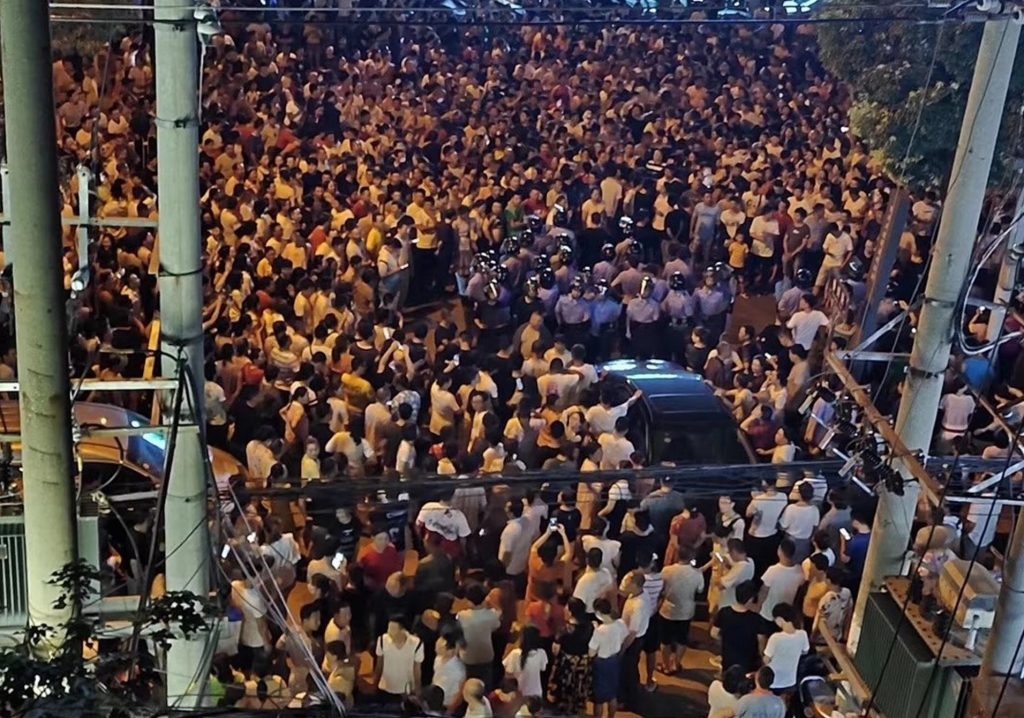
    Shaoyang, the birthplace of Mao Zedong, was rocked by demonstrations and violent clashes after the local government began a city-wide operation on August 1 to ban two-wheeled electric vehicles, including motorcycles, electric bikes, and mopeds. Thousands of owners who parked and used electrical vehicles without city license plates were penalized and had their vehicles impounded or seized.

    The ban stemmed from the city government’s campaign to rectify the “chronic and persistent traffic problems” caused by electric vehicles. On August 7, thousands of residents gathered outside the city government and police transport bureaus, requesting the return of their property and the suspension of electrical bicycle ban. They also demanded the city government reopen traffic lanes for motorcycles and allow bikes from outside of the city to enter. Protesters reportedly chased after transport police officers and beat them up. Although news of the protests was censored on mainland’s social media, images and footage made their way to overseas Twitter accounts.

    The city government was forced to relent on the ban just one day after the protests. Electrical bicycles are an essential part of everyday life in China, particularly for people with low or middle income. Because they are economical and have lower emissions than cars, they remain a preferred option among commuters in Shaoyang where transportation infrastructure is inadequate.

  • Mass Incident Monitor #19: Residents clashed with police to resist forced demolition of “illegally constructed” villas in Beijing

    Residents used fire extinguishers against police who fired tear gas and pepper spray during a major clash in Wayao village, Beijing, ahead of a forced demolition on June 29. Image credit: Cable News

    June 2020

    Location: Changping District, Beijing

    Participants: Hundreds

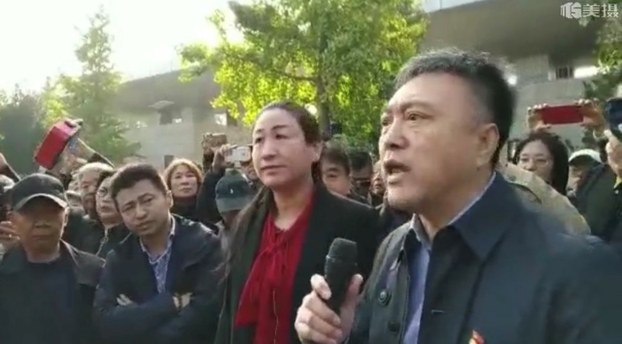
    The incident first began with a standoff between police and residents  on June 21 in a suburb northwest of Beijing, where residents used cars as roadblocks to prevent police and demolition crews from entering their village. On June 29, police armed with riot shields and long sticks used tear gas and pepper spray to disperse around 200 protesting residents, including the elderly, from Wayao Township of Changping District in Beijing. Residents attempted to stop police from advancing and neutralized tear gas with fire extinguishers. Similar incidents took place in Pinggu District in Beijing and Laishui County in Hebei. All these clashes were triggered by the demolition of  villas which government officials say were “illegal.”

    The incident in Wayao, home to 1,300 households, was not the first of its kind. Dui Hua previously reported a similar protest in another village, also in Changping, in October 2019. The district government put up an eviction notice on October 17, urging villagers to leave their properties by the following day. The properties in the mass incident belong to the so-called “minor property rights houses” (小产权房). These houses are built on “village common land” collectively owned by local villagers.

    In the June 2020 incident, the properties considered illegal by the district government also involved “minor property rights houses.” The villas were constructed by village committees on village common land, and were sold to outside buyers from 2008-2014. As early as 2010, the district government began issuing demolition orders of all “illegal” villas across different villages, but its policy has not been consistent. For instance, Chinese Real Estate News and China Industrial Economy News reported in 2011 that the sale of the Wayao Township villas was officially approved by the district government’s Development and Reform Commission as part of its priority project to develop the cultural and creative industry.

    Residents, including seniors and artists, in Changping District invested their life savings in the villas they bought from the village committee without legal titles and/or deeds. The village committee gave them the right to use the property for 70 years. Unbeknownst to them, the district government changed tack and claimed that the village committee has no legal right in the first place to build the villas on the village common land.  

    State media Legal Daily reported, according to one study, “minor property rights houses” estimated to account for 24 percent of the total urban housing areas nationwide as of 2018. In 2019, the Beijing Municipal Committee decided that a large number of existing illegal “minor property rights houses” should be demolished. A map prepared by an online media shows these “illegal villas” scattered across Bejing. Forced demolition of these properties will continue, and they will likely trigger similar mass incidents in the future.

  • Mass Incidents Monitor #18: Proposed site selection of an electrical substation triggered protest in Wuhan amid COVID-19 outbreak

    Amid the resurgence of new COVID-19 cases in Wuhan in May 2020, residents took to the streets against an electrical substation to be constructed near residential areas. A banner held by protesters in Hongshan District wrote “Who can save the lives of Nanhu people?” Image credit: Radio France Internationale 

    May 10, 2020

    Location: Hongshan District in Wuhan, Hebei

    Participants: Over a hundred

    Over a hundred people took to the streets to protest the site selection of an electrical transformer substation near residential areas in Wuhan. The incident coincided with reports of the first new cluster of coronavirus cases  on May 10, after Wuhan  lifted the strict lockdown on April 8. Footage shows that over a hundred people gathered at crossroads to chant slogans about safeguarding their homes and health. Several people were taken away by police officers. A video uploaded on April 24 shows a group of ten people holding placards protesting the site selection plan outside of the Hongshan District government office. Hongshan District government office.

    The Wuhan National Resources and Planning Bureau announced  the site selection proposal on March 30, when the city was still in lockdown. With no other means to channel their grievances, residents voiced complaints to higher level officials on an online “Message Board for Leaders.” A message addressed to the Hubei Provincial Party Secretary wrote that the substation would pose a danger to residential areas and kindergartens should accidents such as fire or explosions occur. Residents also expressed fear about radiation and noise pollution. No official responses have been given on the message board.

    The status of the site selection remains unclear because of limited media coverage in- and outside of China.  


  • Mass Incident Monitor #17: Violent clashes between the public and police broke out at a Hubei border after the lockdown was lifted

    This series (#14 to 17) of Dui Hua’s Mass Incident Monitor highlights four major protests that took place across China in relation to the novel coronavirus (COVID-19). Wuhan, the epicenter of COVID-19, was under lockdown from January 23 to April 8. Hubei province was also under lockdown for more than one month. Other Chinese cities implemented traffic restrictions and around-the-clock “closed off management,” where residents of a community must be registered before they are allowed in or out. Many of these protests were triggered by the expansive and draconian quarantine measures put in place to contain the outbreak.

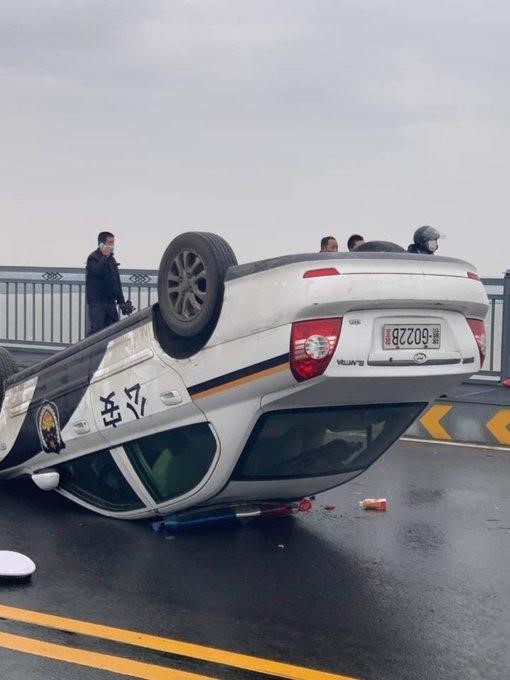
    On March 17, Hubei workers clashed with the SWAT police from the neighboring province, Jiangxi, as they were stopped from crossing the provincial boundary after the lockdown was lifted. Image credit: Twitter 

    After claiming to have achieved zero new local infections in March, the Chinese government began to lift the lockdown and traffic controls in Hubei on March 25 (the provincial capital Wuhan remained under lockdown until April 8). Residents from other Hubei cities who hold digital health certificates obtained online should be allowed to travel outside of the province. However, they are not necessarily welcome by people from other provinces due to the stigma of Hubei as the origin of COVID-19.

    The incident on March 27 began with a clash among police officers from Hubei and neighboring Jiangxi province after Hubei reopened its outbound traffic. Police officers from the two provinces traded accusations against one another on social media over online footage which showed them beating and grabbing each other. Witnesses claimed that Jiangxi police had crossed Hubei’s provincial boundary to set up a travel and health checkpoint to stop Hubei people from entering Jiangxi via the Jiujiang Yangtze River Bridge, including those who had obtained the digital health certificates issued in Hubei. Hubei police officers accused their Jiangxi colleagues of overstepping the provincial boundary, but Jiangxi police refuted the claim and blamed Hubei police for initiating the assault.

    The initial police clash was later joined by thousands of Hubei workers who attempted to cross the bridge but were stopped by Jiangxi SWAT police with riot shields. As the Hubei workers felt that they were being discriminated against, they charged at the Jiangxi SWAT police. An online video circulated on social media shows that police officers only stood aside and watched the crowds damage and topple multiple police vehicles. The county party secretary from Huangmei, Hubei, arrived at the scene to placate the crowd and vowed to resolve the crisis with his Jiangxi counterparts. Dozens of residents surrounded a Jiangxi police station to demand an apology, with some holding banners that asked Jiujiang people not to be biased against them.

    In an apparent bid to shy away from this violent incident, Hubei and Jiangxi issued a joint statement on March 28 in which they agreed to remove the checkpoints at the provincial border and welcome any person holding a digital health certificate. It is unclear whether any officials would be held accountable for the incident. Available sources did not say whether anyone from Hubei or Jiangxi was detained.

  • Mass Incident Monitor #16: Shop tenants in multiple provinces demanded rent waivers

    This series (#14 to 17) of Dui Hua’s Mass Incident Monitor highlights four major protests that took place across China in relation to the novel coronavirus (COVID-19). Wuhan, the epicenter of COVID-19, was under lockdown from January 23 to April 8. Hubei province was also under lockdown for more than one month. Other Chinese cities implemented traffic restrictions and around-the-clock “closed off management,” where residents of a community must be registered before they are allowed in or out. Many of these protests were triggered by the expansive and draconian quarantine measures put in place to contain the outbreak.

    In March, shop tenants in multiple provinces demanded rent waivers for poor business conditions due to the COVID-19 outbreak. Image credit: Intenet

    After the end of the extended Lunar New Year Holidays on February 2, the Chinese government imposed entry and exit restrictions on all residential communities in Shenzhen and Guangzhou. Shopping malls and public entertainment venues were shuttered. Some business owners struggled to make ends meet as they continued to pay regular expenses such as rent and wages even when their businesses were suspended. Although the situation appeared to have improved after the number of new cases of COVID-19 subsided in late February, customer flows continued to dip. Retail sales of consumer goods, a major indicator of consumption growth, plummeted by 20.5 percent for the first two months of 2020 compared to the same period in 2019.

    Shop tenants from New China Mansion, one of the largest clothing wholesale markets in Guangzhou, marched to demand rent waivers from their landlords one day after the mall reopened on March 4. They also requested two months’ rent free because of the poor business conditions. The property development company offered a rent reduction plan, which was rejected by the protesters because only a small number of them could benefit. Video footage shows that uniformed security guards pepper sprayed and clashed with tenants. A day after the protest, the entire New China Mansion was guarded by police and security officers. On March 17, the property development company introduced another rent reduction plan to benefit all tenants. However, some tenants were reportedly unable to receive rent reductions because of subleases.

    As more businesses resumed, similar protests occurred not only in Guangdong cities such as Shenzhen, Zhuhai, Zhongshan, and Dongguan, but also in the provinces of Liaoning, Guangxi and Sichuan. Landlords face additional demands from shop tenants. For example, dozens of tenants from Zhengzhou, Henan, took to the streets to demand rent exemption for an extended period of six months.

    Due to limited news coverage, it is unclear how these protests were resolved.

  • Mass Incident Monitor #15: Residents held a public gathering against food price gouging during the lockdown in Hubei

    This series (#14 to 17) of Dui Hua’s Mass Incident Monitor highlights four major protests that took place across China in relation to the novel coronavirus (COVID-19). Wuhan, the epicenter of COVID-19, was under lockdown from January 23 to April 8. Hubei province was also under lockdown for more than one month. Other Chinese cities implemented traffic restrictions and around-the-clock “closed off management,” where residents of a community must be registered before they are allowed in or out. Many of these protests were triggered by the expansive and draconian quarantine measures put in place to contain the outbreak.

    On March 12, residents in Xiaogan gathered to protest against overpriced food during stay-at-home order. Image credit: Sina

    “Fake! Fake! Everything is fake!” Local residents in Wuhan were heard shouting through apartment windows in online videos when Vice-Premier Sun Chunlan was inspecting the work of a neighborhood committee tasked with taking care of quarantined residents on March 6. The property management company was accused by the residents of arranging employees who disguised themselves as volunteers to deliver groceries during Sun’s visit. On March 10, Xi Jinping made his first visit to virus-hit Wuhan after more than a month after the lockdown. Police officers were reportedly stationed inside apartments to prevent residents from heckling Xi.

    Two days after Xi’s visit to Wuhan, aggrieved residents in Xiaogan gathered to protest against overpriced food as they were forced to comply with the stay-at-home order (Xiaogan is a city in Hubei around 70 kilometers from Wuhan). From February 14 to late March, the Xiaogan government prohibited all residents from leaving their homes, lest they be subjected to administrative detention for up to 15 days. Government-designated companies and organizations distributed daily necessities including food supplies and banned private sales of the kind.

    Residents complained about food price inflation, with some accusing government-designated suppliers of profiteering during the pandemic. A resident who sold groceries to his neighbors at a lower price than government-designated suppliers was detained by police for “illegal private transactions” on March 12. On the same day, over a hundred residents in the community gathered at a basketball court to demand release of the detained resident. The Chinese word xiake, an equivalent to “stepping down,” can be heard being chanted from the crowds, but it is unclear who they were targeting. According to the Xiaogan government, the crowds left after officials arrived at the scene. The detained resident was subsequently released. The government also announced that it would lower food prices, introduce competition among suppliers, and provide additional subsidies to suppliers.

    Officials were criticized for disregarding public health needs and people’s livelihoods during the curfew-like lockdown. A day after Xi’s visit, Wuhan residents quarreled with officials who used sanitary trucks to deliver packs of raw meat on March 11. Similar incidents occurred all over the city: residents were outraged to see online images of food supplies getting delivered by sanitart trucks, sanitary trolleys, construction trolleys, and even ambulances. The party officials in the residential community were fired the following day.

  • Mass Incident Monitor #14: Residents in Fujian clashed with police to halt the construction of a quarantine center

    This series (#14 to 17) of Dui Hua’s Mass Incident Monitor highlights four major protests that took place across China in relation to the novel coronavirus (COVID-19). Wuhan, the epicenter of COVID-19, was under lockdown from January 23 to April 8. Hubei province was also under lockdown for more than one month. Other Chinese cities implemented traffic restrictions and around-the-clock “closed off management,” where residents of a community must be registered before they are allowed in or out. Many of these protests were triggered by the expansive and draconian quarantine measures put in place to contain the outbreak.

    On January 28, residents in Xiapu County clashed with police at a tunnel entrance to halt the construction of a quarantine center one kilometer from their village.  Image credit: Internet

    The Wuhan lockdown, which began on January 23, too late to curb the spread of COVID-19 to neighboring provinces and then to the rest of the world. In response to this fast spreading public health crisis, local governments scrambled to designate sites for makeshift quarantine centers, usually without seeking public comments. Local residents believed that the quarantine centers in the densely populated neighborhoods would pose a serious health threat to members of their community.

    On January 28, residents from Xiapu County in Ningde, Fujian, clashed with police to halt the construction of a quarantine center just one kilometer from their village. Images posted online show a crowd gathering at a tunnel entrance during the daytime. Upon learning that a police vehicle was about to clear the tunnel at night, protesters used wooden chairs as roadblocks. Some even threw chairs at police officers and one of the vehicles. Online footage also shows that a police officer holding a riot shield suffered a head injury. Several protesters were taken into custody.

    The county had two confirmed cases of COVID-19 on the day of the protest. The local government planned to convert a deserted factory dormitory into a quarantine center for those who had close contact with infected patients. The government announced that the incident was resolved following a public dialogue among government officials, medical experts, and protesters. Sources do not say whether any detained protesters were released after the dialogue.

  • Mass Incident Monitor #13: Crematorium plan halted after police deployed water cannons and tear gas to suppress protests in Guangdong

    Police using tear gas to disperse protesting residents at Wenlou township (Photo credit: Radio Free Asia)

    November 28 – December 1 and December 16 – 17, 2019
    Location: Huazhou District, Maoming, Guangdong
    Participants: Thousands

    A crematorium plan triggered protests from residents in Wenlou, a township in Huazhou District, Maoming on November 28. Water cannons and tear gas were deployed to disperse the crowds. Residents, including children and elderly, were beaten by SWAT police armed with riot shields and batons. The district government halted the plan the day after the violent clashes.

    Residents were uninformed of the crematorium plan prior to the protest. On November 15, the government posted a on its office website and only allowed 10 days for public comment. Billed as an ecology park, the blueprint concealed the construction of, among other facilities, a crematory, funeral home and cemeteries. The actual details were only released by the government on November 27. The following day, hundreds of residents from Wenlou took to the streets to express concerns over possible air and water pollution, the disruption of by the graves, and impact on the property prices. The clashes left many protesters injured. A government notice dated November 29 announced that the plan would be suspended for further public comment. Protests subsided on December 1 when Wenlou’s party secretary announced the decision to formally withdraw the plan

    Two weeks later, violent clashes resurfaced in Boyang, another township in Huazhou less than 18 miles from Wenlou. Protests broke out near government buildings because of a rumor about the construction of a crematorium, as opposed to a water filtration facility which they had been previously told. On December 16, the Boyang government vowed not to build a crematorium. The Huazhou District government also dismissed the proposal as a rumor.

    Maoming is no stranger to environmental protests. In early April 2014, thousands of people rallied against a proposed paraxylene plant. In the same month, a protest took place against a crematorium plan in another township in Huazhou. The proposals were shelved after violent clashes between the locals and police. In both incidents, there were widespread rumors that protesters had been killed by police.

  • Mass Incident Monitor #12: Government’s plan to confiscate land provoked protest from property landowners

    Party committee secretary and mayor of the Cuicun Township, Changping District, surrounded and questioned by protesting villagers (Photo credit: Radio Free Asia)

    October 18 or 20, 2019
    Location: Changping District, Beijing
    Participants: Over one thousand

    Over one thousand property owners gathered in a square in front of the Changping District government building in Beijing for one day against a forced eviction order in October. Non-local protesters residing in the two villages were unsatisfied with the compensation. They demanded an explanation as to why the district government classified their houses as illegal constructions.

    On October 17, a notice was put up in Dongying Strawberry Farm Village and Xiangtang New Culture Village, urging all villagers to demolish their houses by the following day, lest the district government would bulldoze their houses. Disgruntled property owners rallied in front of the government building to defend their properties. They claimed that their purchase was recognized by village, township and district governments; however, government officials have breached the agreement and proceeded to expropriate the land.

    The properties in this mass incident belong to the so-called “minor property right houses” (小产权房). These houses are built on “village common land” collectively owned by local villagers. The protesters, however, were non-locals. They purchased such houses from local villagers, and mistakenly believed that they had acquired both land and property ownerships from the locals because of the certificates of transfer issued by the village and township governments; however, the district government has never granted them the property deeds.

    In 2012, the Beijing Municipal government began to scrutinize and expropriate “minor property right houses.” Beijing’s Land and Resources Bureau has also been warning non-locals not to purchase them. After demolition began in early November, affected property owners collected over 10,000 signatures against the forced eviction.  

  • Mass Incident Monitor #11: Government’s Plan to Demolish Sanctuary Provoked Thousands of Catholics to Crawl Up Mountain in Dong’ergou, Shanxi

    Pilgrims crawling to the Shrine of Our Lady of the Seven Sorrows, Shanxi. Image Credit: RFA

    September 15, 2019

    Location: Taiyuan, Shanxi

    Participants: Estimates from various news sources vary, running as high as 10,000

    By some estimates nearly ten thousand Catholic pilgrims travelled to the Shrine of Our Lady of the Seven Sorrows (Qikushengmutang,七苦聖母堂) sitting atop of the Mount of the Seven Sorrows (七苦山) in Dong’ergou, Taiyuan, to celebrate the Feast of Our Lady of Sorrows on September 15, 2019. This year, the pilgrims were alarmed by the imminent demolition of a structure at the Shrine, an order by the local government to the Taiyuan Diocese in late August 2019. Dong’ergou is a strongly Catholic region with many structures and sites sacred to local people.

    On August 26, 2019, the local authorities instructed state-approved Bishop Paul Meng Ningyou (孟宁友) of the Taiyuan Diocese under the Chinese Catholic Patriotic Association to demolish an arch of the Shrine called the “Gate of Heaven” (Shangtianzimen,上天之门) on the grounds of “unlawful land occupation” (feifazhandi, 非法占地). Bishop Meng has been negotiating to preserve the landmark and succeeded in postponing the demolition until early October 2019. The authorities, however, not only forbade the local diocese to organize the annual pilgrimage, but also set up roadblocks and implemented traffic control measures to prevent pilgrims from reaching the Dong’ergou Marian Shrine. Ahead of the 70th anniversary of the founding of the People’s Republic of China, social stability in the area was a top priority for the local authorities. On the day of the Feast, pilgrims who circumvented the restrictions spent hours walking uphill for at least three kilometers to reach the Shrine. There were no protests per se, as the authorities might have feared.

    Several days before the Feast, on September 11, about one hundred Catholics crawled up to the Shrine, hoping that their hardship and prayer would be rewarded with a cancellation of the demolition plan.

    It is not the first time that the local authorities announced plans to eradicate structures on the Mount of the Seven Sorrows. Last year, statues of the Twelve Apostles on the hilltop were forcibly removed. Despite the signing of the Sino-Vatican agreement in September 2018, the Chinese government launched a five-year campaign to sinicize religions early that year. Chinese practices are to be incorporated into Catholic practices, while structures and symbols that appear too religious are to be removed. The impact of sinicization has extended far beyond underground churches to the government-sanctioned Chinese Patriotic Catholic Association.

  • Mass Incident Monitor #10: Site Selection of an Incineration Plant Project Triggered Protests and Violent Suppression

    Protests over a proposed incinerator project, Wuhan. Image Credit: Weibo

    June 28 – July 5, 2019

    Location: Xinzhou District, Wuhan, Hubei

    Participants: Estimates from various news sources vary, running as high as 10,000

    News media reports claimed that up to ten thousand residents of Xinzhou District, Wuhan, took to the streets for at least one whole week from June 28 to July 5 to protest against the site selection of an incineration plant project. It is unclear as of this writing when the protests ended and whether the local government has yielded to public demand to terminate the incinerator project.

    The Chenjiachong landfill, full to bursting with solid waste from over 300,000 residents in Yangluo subdistrict and nearby areas over the last decade, has been slammed for causing air pollution affecting nearby residents and even contaminating underground water. In May 2019, a report from a development research institute in Wuhan briefly revealed the government’s plan to replace the landfill by an economy-eco industrial park that would allegedly combine recreation and incineration. Wuhan’s urban management administration later responded to an online inquiry in June: an incinerator slated for construction in September would replace the landfill scheduled to cease operation in 2020. The decision, which only became public knowledge through the online response, did not receive any public comments.

    On June 28, the Xinzhou District government announced on its official Weibo account the decision to hold off construction until a consensus among residents is reached. Residents concerned about cancerous gas emission and the exacerbation of Yangtze River pollution massed on the streets for days to voice objections to the proposed incinerator while holding banners with slogans such as “air pollution will harm the next generations.” Riot police with shields and batons were deployed to disperse protesters. In a letter issued on July 3, the Xinzhou government agreed not to push through the incinerator project without first conducting an environmental assessment and receiving public comments. It also reiterated that “the project will never start if people disagree with it.” The letter or other updates on the project, however, cannot be found on the Xinzhou government website nor its Weibo account as of September 2019.

    Incinerator proposals in China have long been a major source of environmental concern, sparking scores of incidents of unrest despite authorities’ promise to put them on hold, including the Yunfu protest Dui Hua previously reported in June. While the incident garnered widespread media attention in early July not long after its outbreak, censorship on social media has prevented Wuhan locals from circulating updates about the protest. The status of the incinerator in Xinzhou remains unclear. Chinese state media cited anonymous analysts as saying that insufficient communication between the government and public, and the lack of transparent pollution data were the major reasons for public resentment. State media also commented that “allowing residents to participate in accessing and supervising the project from the beginning could help ease concern and build public confidence.”