Tag: freedom of association

  • “All People Act Together” Supporters Imprisoned, Part I: Social Media Campaign Draws Ire

    “All People Act Together” Supporters Imprisoned, Part I: Social Media Campaign Draws Ire

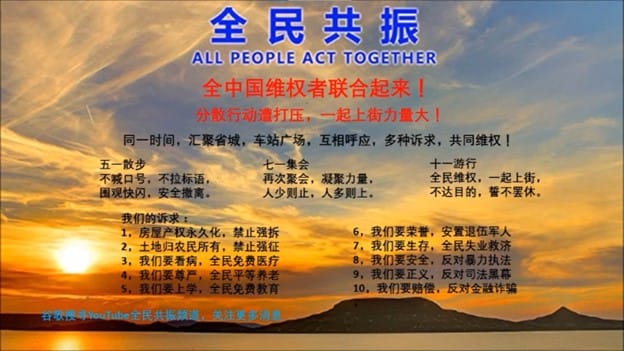
    A screenshot from a video about the “All People Act Together” campaign. Image credit: 一平論政 Youtube page

    “All People Act Together” (APAT), or quanmin gongzhen (全民共振), is a social media campaign launched in early 2018 by Chinese dissidents overseas. The campaign calls on rights defenders to collectively seek redress and make their voices heard by staging street protests across Chinese cities on occasions of special historical, social, or political importance such as International Workers’ Day (May 1), the anniversary of the founding of the Chinese Communist Party (July 1), and National Day (October 1).

    Proponents of APAT believe that resistance movements can “reverberate” or “resonate” around the country and overwhelm the stability maintenance regime if the outbreaks are simultaneous and sustained. They predict CCP’s eventual demise when it runs short of resources to keep up its increasingly expensive operations.

    The CCP’s zeal in crushing dissent to maintain stability has created a domestic security system so costly that it is sapping funds required elsewhere to support the country’s economic health. APAT emerged against the backdrop of China’s spending on internal security, which has exceeded the national defense budget since 2010. The rise in spending on domestic security is most evident in western regions of Xinjiang and Tibet, but a sizable portion is spent in Han-majority regions keeping potential troublemakers in residential surveillance, running “black jails,” or forcing dissenters to “travel” elsewhere — all part of the longstanding scheme designed to muzzle protestors during sensitive occasions.

    Part I of this post focuses on APAT’s reach and cases in which supporters were charged with “picking quarrels and provoking trouble (PQPT).” Part II will look at cases involving charges of disrupting public services and preparing for a terrorist activity.

    The nature of APAT is similar to the online calls for the 2011 Tunisia-inspired “Jasmine Revolution” manifested in the form of “strolling” protests around McDonald’s on Wangfujing shopping streets and spots in other cities. Chinese state media have been largely silent on the planned protests, but social media accounts recounted major shows of police force to disperse small crowds of seemingly curious onlookers that had gathered in Beijing and Shanghai.

    APAT appears to have limited reach in China. No visible protests linked to APAT have been reported. However, prominent dissidents including Hu Jia were reportedly warned by police not to take part in or publicly discuss APAT. There was scant media coverage and the fate of those who openly espouse APAT in China has gone largely unnoticed. Dui Hua’s Political Prisoner Database has information on six individuals who were given coercive measures for heeding the calls of APAT. Of them, four received prison sentences for a variety of crimes ranging from PQPT and disrupting public services to preparing for terrorist activities.

    Picking Quarrels & Provoking Trouble

    Xue Renyi, an advocate of Greenleaf Action, who was arrested on May 1, 2018 for walking in Jiefangbei Square in Chongqing while wearing a green leaf. Image credit: Twitter via RFA

    The first APAT supporter known to have been imprisoned is Xue Renyi (薛仁义). He was taken into custody on May 1, 2018 after posting a photograph of himself “strolling” in Chongqing People’s Liberation Monument Square while carrying a green leaf in his shirt pocket. Some other people were seized on the same day; they were warned off speaking out online or giving interviews with foreign media after being released from custody.

    Xue is the founder of Green Leaf Action, an environmental group which promoted food safety, clean air, and clean water. The group stood accused by police of being “controlled” and “manipulated” by foreign forces. Xue’s three-year sentence became known to the outside world only when his fiancée received his letter from prison one year after he was detained. Xue completed his sentence for PQPT in Dianjiang Prison without receiving a sentence reduction. He was released on April 30, 2021.

    Gao Zhigang’s case materials and ID card. Image credit: Provided by Geng Guanjun via RFA

    In a separate case, Gao Zhigang (高志刚) was sentenced to 10 months in prison for PQPT in 2020 even without showing up at any APAT protest spot. Gao was accused of forwarding a video which called on people to join a rally in Taiyuan’s Wuyi Square on the 2019 National Day. Additionally, Gao sent the video to an “overseas democracy activist” known by the name of Geng Guanjun (耿冠军). Geng fled to the United States in 2018 and has been a target of attack by patriotic internet users for his “reactionary” views and anti-China remarks. After completing his sentence in August 2020, Gao spoke to Radio Free Asia claiming that he never expected the conviction would be based entirely on his private conversations from his social media account which he had deleted prior to his detainment in October 2019.

    Read Part II here. 

  • Underground, Not Extinct: South China Church

    Underground, Not Extinct: South China Church

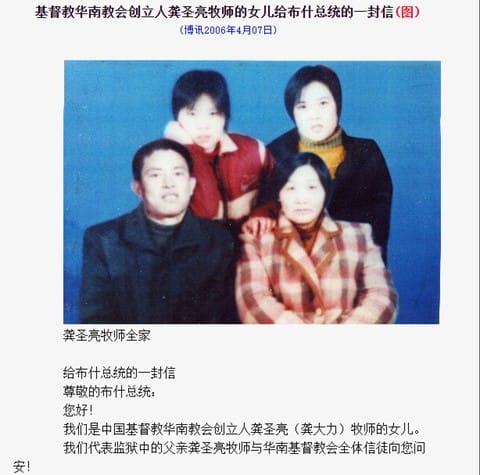
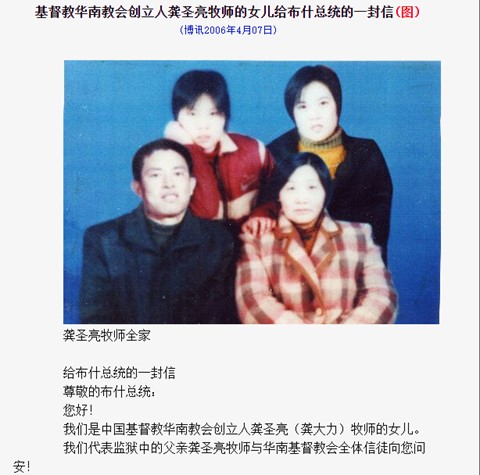
    An open letter from the daughters of Pastor Gong Shengliang to then-President George W. Bush. The letter includes a picture of the Gong family (Gong Shengliang seated bottom left). Image credit: Boxun News
    The lack of recent information about South China Church has led to questions about its continued existence. Dui Hua’s research, including a criminal judgment issued in 2016 involving its members, suggests, however, that the group continues to operate even as its founder remains incarcerated.
    Founded in Hubei Province in 1991 as an offshoot of Full Scope Church, South China Church (华南教会) was designated as an “evil cult” by the Chinese government in 1995. At the time, the church was thought to have 50,000 followers across central China (some sources reported nearly 100,000 members). In 2001, the trial of 17 leaders of this Protestant house church sparked an international outcry. Church members submitted sworn statements to the United Nations Working Group on Arbitrary Detention claiming that the church leaders had been tortured into confessing and making false statements prior to and during the trial.
    Among those sentenced was church founder Gong Shengliang (龚圣亮), who initially received a death sentence for “organizing a cult to undermine implementation of the law,” aggravated assault, and rape. Responding to international pressure, the Hubei High People’s Court dropped the death sentence and ordered a retrial. Gong was granted a two-year reprieve from his death sentence in September 2002 after making a successful appeal.
    Reporting on Gong Shengliang’s two-year reprieve from the death penalty: (left) A reprinted Baltimore Sun article from 2002 on Gong; (right) a BBC article mentioning Gong’s case from November 9, 2004. Image credits: The Tech; BBC News
    Gong’s sentence was commuted to life in prison in 2006. Gong was granted a six-month sentence reduction in 2008. As he has been held behind bars for twenty years, updates about him and his church have been sparse. An exception came in December 2012, when his family members spoke to foreign press about Gong’s deteriorating health in prison. Gong was reportedly paralyzed by stroke. He was unable to speak or move the left side of his body and kept drooling from his mouth. However, prison officials have not conceded to his family’s request to release him on medical parole.
    Compared to Falun Gong and Almighty God, South China Church has not been a prime target of attacks by China’s anti-cult propaganda since its 17 church leaders were put on trial in the early 2000s. As recently as March 2020, a county government in Gansu mentioned South China Church only in passing alongside other seemingly inactive unorthodox Christian sects such as Anointed King, New Testament Church, Dami Mission, World Elijah Evangelical Mission, and Buddhist sect Yuandun Famen.
    Partly because of a lack of recent information about South China Church since Gong’s imprisonment, questions have arisen as to whether the group still exists. Some leaders left the church after 2002, while other members have continued to meet and have accepted the teachings of orthodox pastors. In the early 2010s, www.kaiwind.com, a so-called non-governmental website claiming to reveal facts about Falun Gong, ran at least four reports covering South China Church. The interviewees were allegedly abused by South China Church members. The series appears to be a response to the brief foreign media exposure in 2012 resulting from Gong’s family members speaking out about his deteriorating health.
    A screenshot of a search on Kaiwind.com showing reports on South China Church, including alleged abuses. Image credit: Kaiwind.com
    South China Church is a subject of research in at least two academic journals published after 2015. Their findings affirmed the church’s continuing operation. Huang Jianbo, anthropology professor at East China Normal University, wrote in Chinese Journal of Theology in 2015 that South China Church members continued to proselytize and that they administered the now-defunct website www.huananchurch.org. The journal was published by Institute of Sino-Christian Studies in Hong Kong.
    As recently as 2018, Beijing-based Christian Times (基督时报), which claimed to be independent of house churches or other religious organizations, also provided updates about South China Church. The in-depth article, authored by prolific Christian researcher Liu Yanyue, stated that Gong continued to decree that church members must read John Calvin’s seminal work of Institutes of the Christian Religion. The church might soon become marginalized, wrote Liu, but he also cited a church member he had interviewed as saying that many of its members are still longing for Gong’ release.
    (Left) The cover of a 1995 translation of John Calvin’s Institutes of the Christian Religion, said to be required reading for South China Church members; (right) the first page of the book’s first printing, from 1536. Image credits: The Book Depository; Public domain
    Dui Hua’s research into court websites also uncovered a judgment involving seven South China Church members who made an unsuccessful appeal in Jiangxi to overturn their conviction in December 2016. They were sentenced to 20-36 months in prison for “gathering a crowd to disturb social order,” instead of Article 300. One of the defendants was previously sentenced to a 10-year prison sentence in October 2002 for aggravated assault, the same year when Gong’s death sentence was reduced to death with two-year reprieve.
    In May 2015, the defendants organized over 40 church members to travel from their home province Hubei to Gao’an City, Jiangxi, to protest the police’s handling of a traffic accident that had left one of their church members dead. The judgment stated that they chanted slogans, unfurled banners, placed wreathes, and held photos of the deceased while protesting and blocking traffic for four hours. Forty-one protesters were taken away at the scene.
    All the defendants have been released from prison at the time of writing. Two other court rulings Dui Hua uncovered indicated that Ding Zhicheng (丁志成) and Zhang Chengqin (张成勤) completed their sentences about four months early in January-February 2018 after being granted a sentence reduction. Ding and Zhang received the longest prison sentences, consisting of three years each, among the defendants in the case. Another recently uncovered official document from 2015 helped Dui Hua identify another defendant named Mei Yuqing (梅宇清) who received a two-year sentence while defendants Dong Hualing (董华玲), Dong Nengjun (董能军), and Wang Tiantian (万甜甜) both received sentences of one year and eight months in prison.
    Gong is believed to be the only South China Church leader still imprisoned. He has been a source of controversy due to questions concerning the orthodoxy of his teachings and his personal conduct. In 2007, reports by rights monitoring groups overseas found some evidence corroborating accusations against Gong, including that he molested female church members and that he encouraged the use of violence against the church’s perceived enemies. Yet, Dui Hua’s recent research on unorthodox religious groups and their treatment by the CCP suggests that the great majority of unorthodox religious prisoners are nonviolent.
    Like many other unorthodox religious groups suppressed by the Chinese government, South China Church has not been rendered extinct. Many of its activities appear to have been driven underground. With two more years to serve in prison, Gong is scheduled for release in April 2024.
  • People’s Parties & “Picking Quarrels,” Part I: Mysterious Party Founder Charged amid Pandemic

    People’s Parties & “Picking Quarrels,” Part I: Mysterious Party Founder Charged amid Pandemic

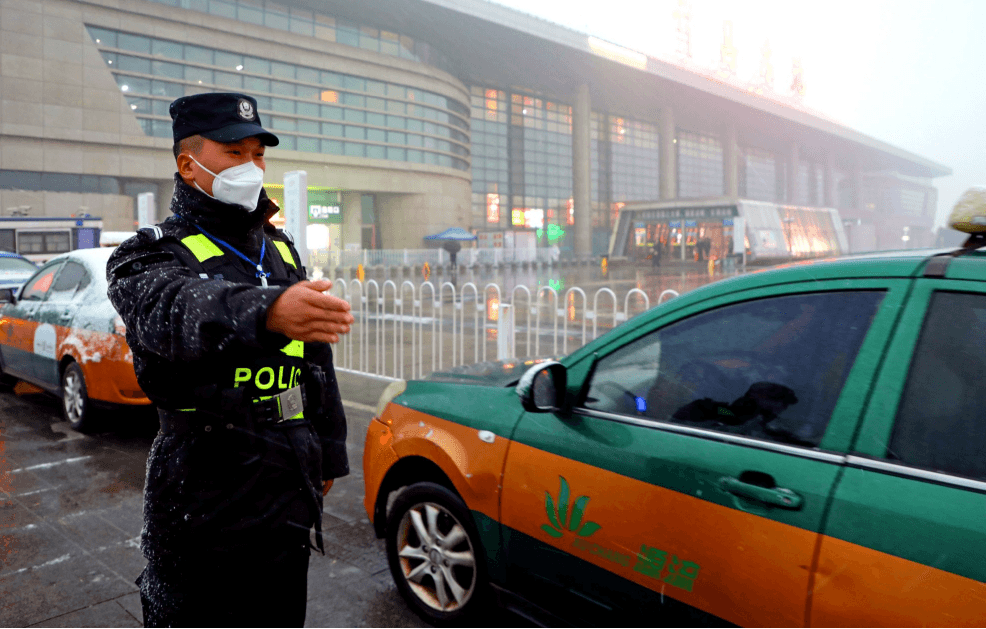
    On January 4, 2022, a police officer from the Dongcheng Branch of the Xuchang Public Security Bureau managing the taxi rank in front of Xuchang East Station following the closure of the city. Image credit: Xuchang government 

    Dissent has fast become a victim of the coronavirus as China tightens controls on acceptable forms of speech during the pandemic. Citizen journalists who give first-hand accounts that contradict the official version of events are at risk of arrest for “picking quarrels and provoking trouble,” with a notable example being Zhang Zhan (张展).  

    The crime of “picking quarrels and provoking trouble” also targets those who take to the streets during lockdowns. China’s persistence with the zero-COVID policy, often imposing total lockdowns alongside mandatory testing programs in major cities or across entire neighborhoods, has sparked protests over overpriced groceries and poor-quality food supplies. As recently as January 2022, mass incidents broke out in Shenzhen, Tianjin, and Xi’an.

    This entry in the Human Rights Journal, the first of two installments, looks at the application of “picking quarrels and provoking trouble,” through the case of a one prisoner whose political engagement was born out of frustration with pandemic restrictions. Part II looks at how this and similar cases reflect shifts in the use of different crimes to stifle dissent.

    Images from Radio Free Asia’s reporting on mass protests in Tianjin, Shenzhen, and Xian against COVID-19 restrictions. Image credit: Radio Free Asia

    Unbeknownst to many people is that China’s heavy-handed approach to handling COVID-19 led a dissenter to form an opposition party to challenge the Chinese Communist Party. Dui Hua’s research found that a young man surnamed Li founded the “People’s Party” (人民党) in Weihui City, Henan, in March 2020, two months after the initial outbreak occurred in neighboring Hubei province.

    A document filed to the Weihui City People’s Court stated that Li became “anti-social” and resented the current political system after his sources of income were cut off as a result of pandemic containment measures. Following in the footsteps of Wuhan, the site of the first lockdown, cities and counties across Henan were soon placed under strict lockdowns with measures such as banning non-essential travel between villages and communities. Li allegedly recruited leftist supporters to join his People’s Party with a goal to save the world.

    Li’s People’s Party might have existed only in name and only in the virtual space. Li used the internet to comment on current issues, disseminate his political views, and seek members. Li founded Oriental Voice, an online journal he irregularly posted in his QQ chatgroups. In Oriental Voice, Li published his party constitution and discussed historical nihilism (i.e. the questioning of the Chinese Communist Party’s official version of Chinese history). Additionally, he collected articles on how to “drink tea,” a euphemism for being summoned or interrogated by public and state security police. His articles, published over a total of 36 issues, garnered over 150,000 views.

    Prosecutors alleged that the articles contained slanderous remarks about the socialist system and senior leaders. His personal QQ document folders also contained content described as “reactionary articles” with titles such as “Discussing Our Future during the Trough of the Communist Movement,” “A Letter to All Chinese Socialist Leftist Comrades,” “The Constitution of the People’s Party,” and “The Confidentiality Code of the People’s Party.”

    According to the document, Li was suspected of “picking quarrels and provoking trouble,” and the Weihui City Public Security Bureau decided to carry out criminal detention on March 21, 2021 after he was apprehended in a staff dormitory in Guangzhou a day earlier. The Weihui City Procuratorate approved his arrest on April 2. Li was charged with the crime of “picking quarrels and provoking trouble.” On June 2, Li was formally indicted for this crime, which has been increasingly used against peaceful protests and those who express dissent.

    The procuratorate claimed that Li had “promoted and disseminated reactionary speech in online public space and seriously disturbed social order” in violation of Article 293 of the Criminal Law. The prosecutor recommended that the court give Li a short prison sentence of 12 to 18 months in part because he was a first-time offender, admitted his guilt, and “showed repentance.”

    It is notable that Li’s crime was “picking quarrels and provoking trouble.” In the past, similar behavior—starting a political party in opposition to the CCP, publishing materials political in nature, and seeking to recruit others—would be more likely to face charges of endangering state security, mainly subversion or inciting subversion.

    Read Part II here.

    Subscribe to Dui Hua publications here.

  • Shincheonji Church in China Before & Through the Pandemic

    Shincheonji Church in China Before & Through the Pandemic

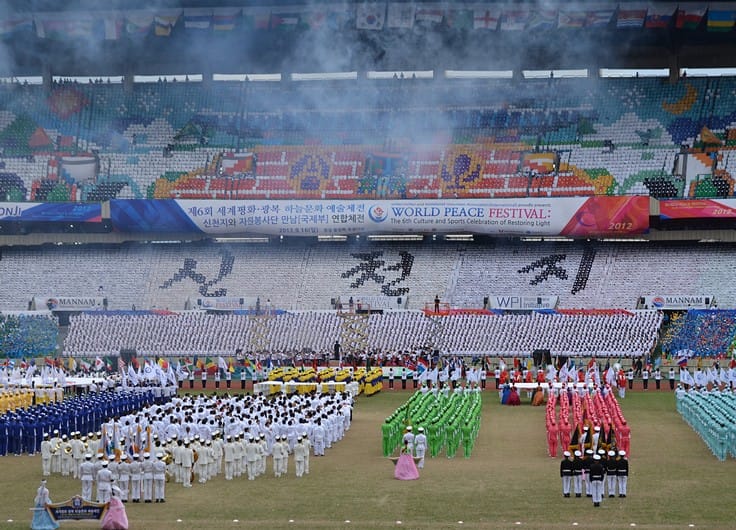
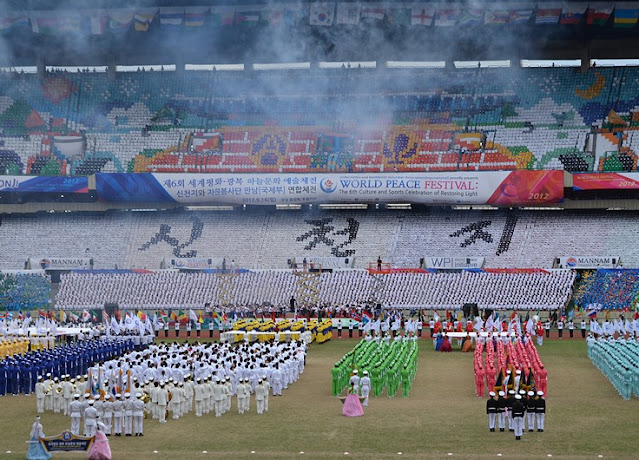
    On September 16, 2012, Shincheonji Church hosted the 6th Shincheonji National Olympiad in Olympic Stadium in Seoul. Image credit: Junganghansik / CC BY-SA 3.0

    The Chinese government has long been vigilant of burgeoning Christian groups from South Korea. Of the 12 Christian groups identified as cult organizations in a circular issued by the Ministry of Public Security in 2000, three are from South Korea: The Unification Church, World Elijah Evangelical Mission, and Dami Mission. However, many more South Korean Christian groups have been targeted in religious crackdowns across China. Following its exploration of the case of Cho Young-joo and his Good News Mission, Dui Hua has found ample evidence of a clampdown on the Shincheonji Church of Jesus (新天地教会) by the Chinese government.

    Literally translated as New Heaven and New Earth Church, Shincheonji was singled out for fierce criticism in South Korea in early 2020 while the country was battling its COVID-19 outbreak. The controversy began with a Shincheonji congregant nicknamed Patient 31 who attended several church events in Daegu despite having COVID-19 symptoms. In March 2020, the city became the largest epicenter of the pandemic outside China, with a cluster of infections reportedly linked to this secretive Protestant group. Sincheonji’s founder Lee Man-hee was charged with and acquitted of obstructing efforts to stamp out the pandemic by deliberately withholding information about its membership from health authorities trying to conduct contact tracing. However, Lee was convicted of embezzling billions of Korean won and received a suspended prison sentence.

    Before the pandemic made Shincheonji a target of public scorn, Dui Hua’s research into government records found that China had long perceived the group to be a “cult organization” and source of religious infiltration and heresy. While some Shincheonji activity was identified in China as early as 1993, Chinese government sources say that “religious infiltration” in an organized manner in northeast provinces and eastern coastal regions began around 2010. A state-run media article in 2018 wrote that, “Under the banner of Christianity and being a public welfare organization,” Shincheonji deifies its founder Lee Man-hee and fabricates heresy about the “immortal body.” The article went on to say that by illegally collecting personal information,  Shincheonji  “steals state secrets, amasses vast fortunes, and endangers society.”

    A parked car with signs protesting Shincheonji Church in March 2020. Image credit: MatthieuRicard / CC0 via Wikimedia Commons

    Dui Hua’s research into local government yearbooks found about two dozen instances of religious clampdowns targeting Shincheonji in Beijing, Heilongjiang, Liaoning, Fuzhou, Jiangsu, Zhejiang, Henan, Hubei, Hebei, and Shanxi before the pandemic. In 2018, local governments across China began banning Shincheonji in their anti-cult campaigns. The largest raid occurred in November 2018 in Dalian, Liaoning, where the church had grown to 2,000 members. Dozens of core members were admonished after police confiscated all their religious items. In the same year, police in Zhangwan District, Hubei, found that Shincheonji had been actively preaching among students during the summer holiday, and authorities detained 40 people in 11 cult cases involving Shincheonji as well as Falun Gong and Almighty God.

    Shincheonji members in South Korea and China were in frequent communication with each other. On February 29, 2020, South Korea’s Ministry of Justice said that a total of 3,600 Shincheonji followers entered South Korea from China between July 2019 and February 27, 2020. Of them, 42 members had entered the country from Wuhan during this period.

    In February 2020, the South China Morning Post (SCMP) reported that Shincheonji had a membership of 20,000 people across China. There were about 200 members in Wuhan when rumors surfaced in late 2019 about an unknown virus in the Chinese city which would become the epicenter of the epidemic. Members continued to hold meetings until December 2019 but stopped after they realized that their congregants had been infected with COVID-19. After December 2019, Shinchoenji moved online, continuing to share sermons and teachings virtually. Most members had returned home at the start of the Lunar New Year holiday in late January 2020.

    The same SCMP report also quoted a former Shincheonji missionary in Shanghai as saying that the church used to hold meetings every Wednesday and Sunday, attracting 300-400 people at a time. Despite multiple raids by police, church members continued to meet in smaller groups of eight to 10 people. The church’s secretive nature made it hard for the authorities to eradicate its activities, said the missionary.

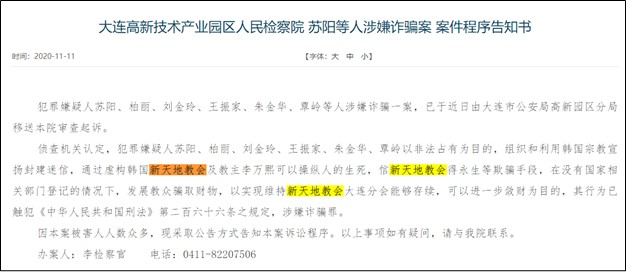
    The first known criminal case involving six members of Shincheonji in Dalian, Liaoning. Image credit: www.12309.gov.cn

    Dui Hua’s research found the two criminal cases involving Shincheongji in China from the procuratorate website. In both cases, the suspects were accused of fraud. A notice posted on November 11, 2020 indicated that six Shincheonji members were detained for “organizing and using a Korean religion to promote feudal superstition” in Dalian, Liaoning, by falsely saying “that Shincheonji and its founder Lee Man-hee can manipulate one’s life and death.” The case was transferred to Dalian High-Tech Industrial Zone Procuratorate for review, but no further information is publicly available.

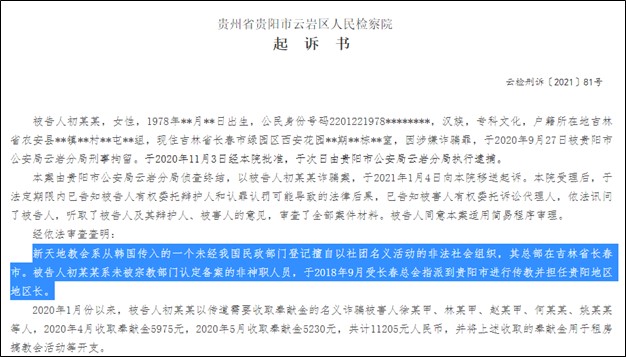
    A female Shincheonji member in Guiyang, Guizhou, was indicted for fraud on February 3, 2021. Image credit: www.12309.gov.cn

    The second case involves one female criminal suspect surnamed Chu, who was detained in Guiyang, Guizhou, on September 27, 2020 and arrested 37 days later on November 3. According to the indictment issued on February 3, 2021, Chu was appointed by Shincheonji’s Chinese headquarters in Changchun to proselytize in Guiyang, but her status as a cleric had not been recognized by China’s religious bureau. Chu was accused of receiving 11,205-yuan in donations from church members in the two months since April 2020. The prosecutor recommended that the court give Chu a lenient prison sentence of six months because Chu admitted her guilt.

    China is not alone in discrediting minority religious groups like Shincheonji. Mainstream Protestant denominations in South Korea call it a “cult” because of its secretive nature and unconventional beliefs. Lee Man-hee claimed that he is the second coming of Jesus Christ uniquely capable of deciphering the Bible’s Book of Revelation. Despite having been acquitted over the COVID case surge in South Korea, Shincheonji continues to come under fire for spreading the coronavirus. Chinese news media sources have reinforced the notion that Shincheonji is a virus spreader and a fraudulent cult, just as some in South Korea and further abroad continue to regard the group with fear, resentment, and confusion.

  • Mainland China Administrative Deacon Station: Leaders Receive Lengthy Sentences

    Mainland China Administrative Deacon Station: Leaders Receive Lengthy Sentences

    Xiao County People’s Court in Anhui Province, where Wang Yongmin was convicted of violating Article 300. Image credit: Suzhou Intermediate Court WeChat account

    In 2000, the Ministry of Public Security issued a circular concerning the identification and banning of 14 evil cult or sect organizations. Of them, 12 were unorthodox Christian groups. Following hefty prison sentences given to founders in the 1990s, many of these groups have been severely weakened, driven underground, or have gone extinct. After state repression of religion intensified in late 2012, there appears to be a consensus that Almighty God has become the most suppressed Christian sect in China, but the continuing crackdown on other smaller and lesser-known Christian groups which are similarly considered “unorthodox” has not garnered the same level of scrutiny.

    A few groups have survived the intense government suppression and even resurfaced recently after two decades of inactivity. One of them is the Mainland China Administrative Deacon Station (MCADS 中华大陆行政执事站). Dui Hua’s research into court judgments found that its founder Wang Yongmin (王永民) is serving his second jail term in Anhui for 10 years. The now-67-year-old was found guilty of “organizing or using a cult to undermine implementation of the law” on December 27, 2019 and is scheduled to complete his prison sentence on March 22, 2028. In 1995, Wang began a 20-year prison sentence for “disturbing social order” and “fraud,” serving 17 years before being released early in February 2012.

    MCADS was among the earliest doomsday Christian sects banned by the Chinese government in November 1995. Formerly a core member of the Shouters (呼喊派), founded by Li Changshou in the United States in 1962, Wang set up MCADS as an offshoot in Anhui 1994. According to Chinese government sources, Wang proclaimed himself to be the “one true deacon” to seize power from Satan and create the Kingdom of God.

    A notice circulated in 2000 about banned religious organizations, including the Mainland China Administrative Deacon Station. This notice was recirculated in 2015 after a murder case involving Almighty God. Image credit: China Youth Network

    Additionally, the Chinese government asserts that MCADS members “confront the CCP and government, rape women, and swindle money”—allegations that remain commonplace against many “cult organizations.” At its peak during the early 1990s, thousands of MCADS members distributed “reactionary propaganda” in 69 cities across 20 provinces, municipalities, and autonomous regions. Wang was sentenced to 20 years in prison for fraud and disturbing social order in 1996, one year after MCADS was banned by the Chinese government.

    Despite being convicted over two decades ago, Wang continues to be prominently featured in China’s anti-cult propaganda. His case is labeled one of the top ten cult cases in China by kaiwind.com, which Global Times describes as a non-governmental website devoted to “revealing facts about Falun Gong.” Also listed as the top ten cases were founders and leading members from other unorthodox Christian and Buddhist groups. Some of them were executed, including:

    1. Wu Yangming (吴扬明), founder of the now seemingly defunct Beili Wang, or Anointed King, was executed in December 1995 for rape;
    2. Liu Jiaguo (刘家国), leader of the Zhusheng Jiao, or the Lord God Sect was executed in October 1999 for Article 300, rape, and fraud;
    3. Xu Wenku (徐文库), who founded sanban furen, or the Three Grades of Servants, was found guilty of murder, fraud, and using a cult to cause death. His execution took place in November 2006.

    Like MCADS, both Beili Wang and Zhusheng Jiao are offshoots of the Shouters.

    A court judgment previously uploaded to China Judgements Online in September 2020—and since removed from the site—indicated that Anhui’s Xiao County People’s Court convicted Wang again on December 27, 2019, alongside four other MCADS leaders who were also accused of violating Article 300.

    Source: China Judgements Online

    The judgment stated that Wang resumed his role as the leader of MCADS upon his prison release in February 2012. After formulating the church’s agenda and programs with the four defendants in the same case, Wang set up service centers in Xiao County and re-established contacts with former members of MCADS. The judgment also stated that another defendant, Li Yuhong, printed 9,000 pamphlets for distribution in Anhui, Henan, Jiangsu, and Shandong. However, no information was given about how many people had rejoined the sect.

    One noteworthy allegation against Wang is his effort to gain overseas recognition of MCADS as a religious group. Wang allegedly attempted to contact Living Stream Ministry via a professor at the Nanjing Union Theological Seminary. Living Stream Ministry is a Christian book publisher based in Anaheim, California. It was founded by Shouters’ founder Li Changshou. Wang and the other defendants were detained on March 16, 2018.

    Article 300 mandates a minimum sentence of seven years’ imprisonment for “especially serious” or otherwise grave acts. The sentences given to Wang and Li can be considered severe. A major reason is that Wang reoffended. Although Li was a first-time offender, the 9,000 leaflets he printed were more than sufficient to render the circumstances “especially serious.” Effective since February 1, 2017, the joint interpretation of Article 300 states that a circumstance is considered “especially serious” when a defendant manufactures over 5,000 “cult” leaflets.

    These cases reflect how the CCP’s campaign to control and restrict religious plurality extends to smaller, lesser-known Christian groups. However, some groups like the Mainland China Administrative Deacon Station continue to reemerge despite crackdowns even as hefty prison sentences face the leadership of any group that can be considered “unorthodox.”

  • Chinese Asylum Seekers in Bangkok, Part II

    Chinese Asylum Seekers in Bangkok, Part II

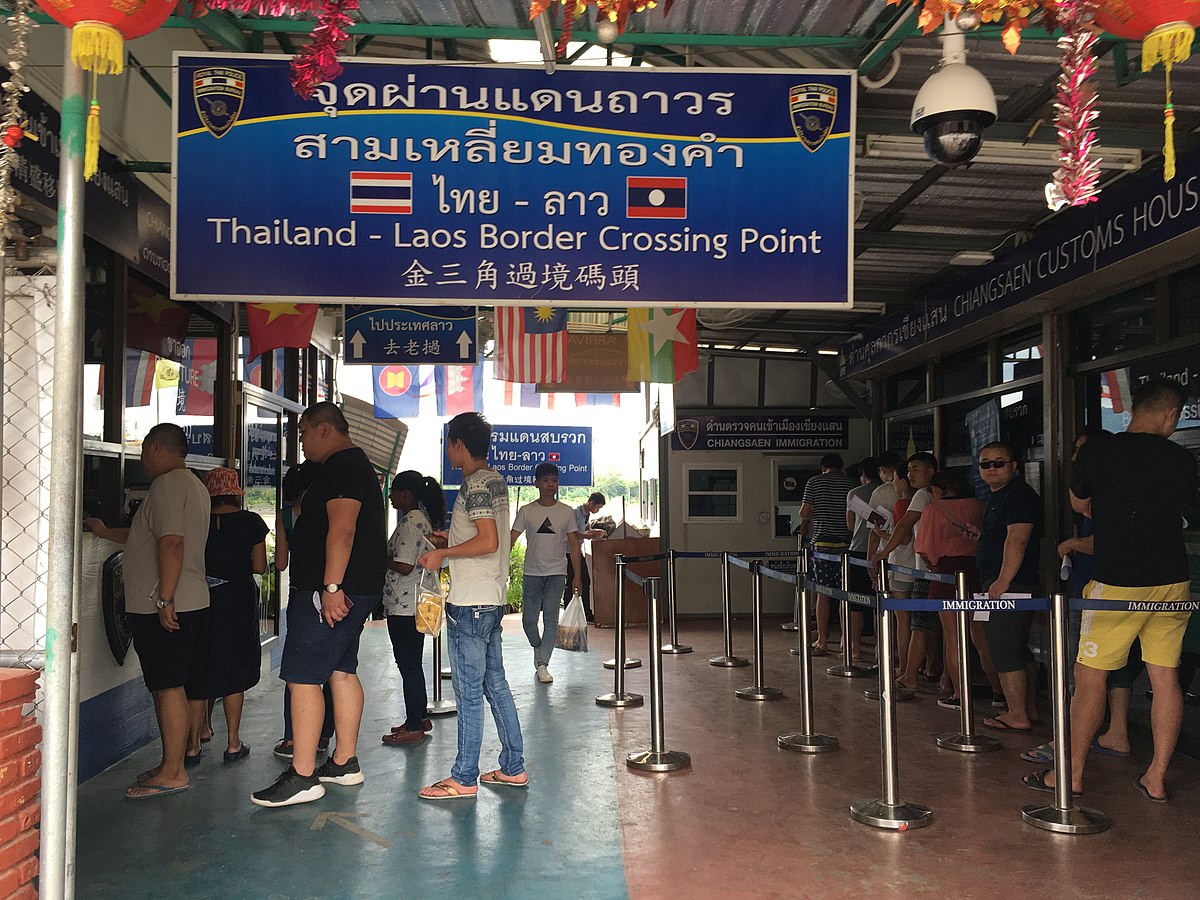
    At the Thailand-Laos crossing checkpoint at Sop Ruak, people queue to travel between Thailand and the Golden Triangle Special Economic Zone in Laos. Image credit: Slleong / CCO via Wikimedia Commons

    This is the second installment in a two-part series. Read Part I here.

    Thailand does not recognize the status of refugees because it has not acceded to the 1951 Refugee Convention or its 1967 Protocol. Refugees who overstay their visas or enter Thailand without proper documents are regarded as illegal immigrants. They have no legal right to work or adequate access to health care; nor can their children attend local schools. They are dependent on charitable groups, religious organizations, other refugees in their community, or they simply subsist on meagre savings. Because of budget cuts and a global tightening of national immigration policies, the UNHCR has reportedly axed financial aid for refugees.

    Consequently, many Chinese asylum seekers and refugees enter Bangkok’s labor black market to make a living. Once arrested, they are typically held in immigration detention centers, many of which are “severely overcrowded, provide inadequate food, have poor ventilation and lack medical service and other basic necessities,” according to Human Rights Watch.

    In January 2015, Uyghur refugees also complained to a visiting Istanbul-based journalist about health problems in the detention facilities in Thailand. Prior to this incident, three Uyghurs died despite efforts of charitable groups to provide relief. In September 2018, a Chinese observer claimed that dozens of refugees and asylum seekers of different nationalities were crammed into an area of approximately 12 square meters of floor space.

    Because of the cramped and unhygienic conditions at the immigration centers, seven Uyghurs made a failed attempt at a jail break in February 2019. A Thai NGO, which has worked to assist these Uyghurs since their detention, is compiling evidence about the alleged reports of physical abuse by Thai police officers.

    The long wait time for resettlement is another major source of frustration among refugees. Zhang Shufeng (张淑凤), who obtained refugee status in 2017, said the UNHCR prioritizes applications of refugees from armed conflicts such as Syrians and Myanmar’s Rohingya Muslims over Chinese applicants. In 2016, another asylum seeker Cai Yuliang (蔡欲亮) was finally accepted for resettlement in the United States after spending a total of 17 years in Thailand. Cai fled China in 1999, seven years after he completed his 20 years’ imprisonment for the now-defunct criminal offense of counterrevolution.

    No Safe Haven

    Jiang Yefei holds a placard with a criminal charge at a Thai immigration detention center prior to repatriation in 2015. Image credit: Apple Daily (Taiwan)
    Since the coup of 2014, the Thai military regime has been tilting away from the United States toward China. Refugees or asylum seekers are believed to be facing imminent risk of repatriation at the behest of China — Thailand’s largest trade partner and major country of origin for tourists.

    Repatriation

    Four months after over 100 Uyghurs were repatriated to China, Thailand deported Dong Guangping (董广平) and Jiang Yefei (姜野飞) in November 2015, allegedly for breaking immigration rules. A political cartoonist, Jiang left China in 2008 after he was detained and allegedly tortured over his work critical of the government’s handling of the Sichuan earthquake. Dong fled to Thailand in 2015, having served a three-year jail term for subversion from 2001-2004 and “disappeared” for eight months in secret detention in 2014.

    Following their repatriation, Jiang and Dong were sentenced in Chongqing to 78-month and 42-month imprisonment sentences, respectively, for subversion and illegal border crossing in July 2018. Thailand’s decision to repatriate the duo drew condemnation from the UN, United States, and others because both men had been awaiting resettlement in Canada after they obtained their refugee status. Dong completed his prison sentence on August 2, 2019, whereas Jiang still has one year to serve before release in August 2022.

    Cross-Border Law Enforcement

    The disappearance of Chinese-born Swedish citizen Gui Minghai in Pattaya in October 2015 raised fear of cross-border operations of Chinese security forces. A similar case that did not garner much attention concerns former editor of the Southern Metropolitan Daily Li Xin (李新). In November 2015, Li fled to New Delhi after he was coerced by Chinese state security to work as an informant. He disappeared while riding a Laos-bound train in north Thailand in January 2016 in a bid to renew his Thai visa. A month later, Li reappeared in China claiming that he had returned to China “voluntarily” to assist with a police investigation. When asked about the case by The New York Times, the Thai Foreign Ministry responded that there was no “record as yet as to whether he has left the country.” Li’s wife and supporters speculated that Li had been abducted by Chinese security forces and clandestinely transported across the border.

    Turning a Blind Eye

    Xing Jian (邢鉴) arrived in New Zealand as a refugee in January 2020, more than three years after the UNHCR recognized his refugee status in the summer of 2016. Xing criticized the Thai government for providing insufficient care and protection for UN-recognized refugees. While in Thailand, Chinese public security officers apprehended him alongside Bangkok police because he overstayed his visa on November 25.

    Before fleeing China, Xing volunteered for prominent dissident Huang Qi (黄琦) and was accused of “rumour-mongering” for exposing corruption in his home county in Jiangsu. His father Xing Wangli (邢望力), who remains in China, was sentenced to two years and three months’ imprisonment in October 2018 for “picking quarrels and provoking troubles.” Xing Wangli was re-arrested in June 2021 for defamation after visiting prominent rights lawyer Jiang Tianyong.

    Wu Yuhua and Yang Chong (see part 1) were originally scheduled to depart for Canada from Bangkok on June 25, 2019. However, they were barred from leaving Thailand. Yang may be required to complete his one-year suspended sentence there for overstaying, according to a Chinese activist familiar with Thai laws. However, another Radio Free Asia report cited the Chinese embassy as saying that the Thai authorities “do not rule out the possibility of repatriating the duo to China.”

    Fleeing Again

    Risky Voyage

    In view of a potentially indefinite waiting period for resettlement, the threat of repatriation, and abduction by Chinese security forces overseas, some asylum seekers and refugees are determined to flee once more. Prior to the scheduled interview with the UNHCR in 2017, Falun Gong practitioner Dong Junming (董俊明) undertook a risky voyage to New Zealand, some 6,000 miles away from Pattaya, on February 29, 2016. Dong was joined by six like-minded asylum seekers and two children.

    In early March, a few days into their voyage, the yacht capsized off the Thai coast. In an interview with overseas media, Dong said that “[i]t’s highly risky out there on the ocean, but we are so fearful here in Thailand that I thought I should take the risk.” All travellers who boarded the yacht, including China Democracy Party member Li Xiaolong (黎小龙), were returned to Thailand after the failed escape. Some were placed in immigration detention centers while at least one of them stood trial for illegal entry into Thailand in January 2017.

    To Taiwan

    In a bid to evade the extending reach of China in Thailand, some dissidents have chosen to flee once more to Taiwan. Huang Yan (黄燕)  fled to Thailand in 2016 after years of harassment, repeated incarceration, and alleged torture for speaking out in support of Gao Zhisheng. In May 2018, she flew to Jakarta, then to Taiwan, where she was granted temporary leave to remain until the United States granted her political asylum in January 2019.

    Following in Huang’s footsteps, China Democracy Party members Yan Bojun (颜伯钧) and Liu Xinglian (刘兴联) left Bangkok four months after Huang’s arrival in Taiwan. They were granted entry in February 2019 on the basis of “professional exchanges” after 125 days at Taipei Taoyuan airport. At the time of writing, both men have been granted asylum protection in Canada.

    On September 29, 2016, Taiwan’s Mainland Affairs Council Deputy Minister Chiu Chui-cheng expresses concerns over the situation in Hong Kong but says Taiwan will not intervene. Image credit: Voice of America via Wikimedia Commons

    It would be a mistake to assume that Taiwan welcomes individuals fleeing violence and persecution in China. While the island has promised assistance to Hong Kong anti-extradition bill protesters, Taiwan’s Mainland Affairs Council (MAC) maintained that Taiwan policy toward mainland asylum seekers remained unchanged. Should Taiwan openly admit mainland asylum seekers and refugees, it will likely trigger a flood of applications and further antagonize China, putting hundreds of thousands of China-based Taiwanese residents, workers, and investors at risk of arbitrary detention. Additionally, Taiwan fears what it calls “infiltration” from mainland agents. There have been recent arrivals of mainland Chinese who managed to cross the Taiwan Straits despite it being one of the world’s most heavily policed waterways.

    Taiwan is not a member of the UN and does not have legislation to protect refugees. The island only vows to deal with applications from mainland Chinese on a case-by-case basis, according to the MAC.

    Non-Refoulement

    It must be noted that around the globe, not all Chinese asylum applicants are found to have a legitimate fear for persecution. In Australia, for instance, the number of Chinese nationals applying for refugee asylum rose by 311 percent in just one year from 2017. Despite this surge, the Australian Department of Home Affairs only recognized 10 percent of such claims as being genuine. Most claims found to be bogus have been used by applicants to overstay their visas. The United States has also cracked down on “asylum mills,” which have helped thousands of Chinese immigrants to fraudulently win asylum status. Over 13,500 immigrants, mostly Chinese, who were granted asylum status are reportedly facing possible deportation.

    A poster from the Australian government’s 2013 “No Way” campaign aimed at dissuading attempts by non-citizens to enter Australia. Image credit: Australian Customs and Border Protection Service / CC BY-SA 3.0
    However, many of those in Bangkok have been determined by the UNHCR to have a well-founded fear for persecution, a fear not imaginary but very much real, as being detained, arrested, and sentenced should they be returned to China. The fact that Thailand is not a signatory state of the 1951 Refugee Convention or its 1967 Protocol does not absolve the country from its duty to protect refugees inside its borders. The UNHCR has also called on all states, including non-signatory states, to observe non-refoulement, an international principle that prevents all countries from expelling or returning an individual to a country where he or she is at genuine risk of persecution.

    Thai officials have reiterated their commitment to protecting the rights of refugees and asylum seekers. They have also vowed to adopt anti-torture legislation to strengthen implementation of the principle of non-refoulement. However, insufficient protection for asylum seekers and refugees has left them stranded in Thailand, vulnerable to detention, arrest, and repatriation. Some of them have even been compelled to flee Thailand as well to evade arrests, deportation, and Chinese security forces overseas.

  • The Ongoing Crackdown on Yi Guan Dao

    The Ongoing Crackdown on Yi Guan Dao

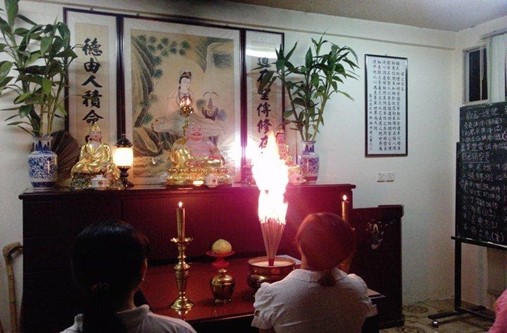
    Members of a Yi Guan Dao organization offer incense in an apartment believed to be in mainland China at an unknown date. Image credit: Jin De Fo Tang’s Facebook account

    Yi Guan Dao (YGD) has not been rendered extinct in mainland China, despite a lack of recent reporting which has led some experts to express doubt on the sect’s persecution or even existence in the mainland (read “The Resurgence of Yi Guan Dao” for a detailed analysis). Combining elements of Daoism, Buddhism, and folklore, YGD has been banned for over seven decades. During the early years of repression beginning in 1950, scores of YGD members were tortured, imprisoned, and executed.

    Dui Hua recently uncovered three court judgments online that corroborate its observation that YGD practitioners continue to be at risk of imprisonment. The sect continues to gain traction among the middle-aged rural population in Shantou, Guangdong, where prosecutors accuse YGD of conducting “reactionary” activities.

    YGD’s beliefs, with elements of feudalism, include apocalyptic teachings and salvationist doctrines that say that only converts will go to heaven. China’s pre-1997 Criminal Law classified YGD as a “reactionary secret society” or fandong huidaomen (反动会道门). The term is considered pejorative, denoting people or ideas that embrace views considered to be superstitious and outdated. However, the term has largely fallen into disuse after the amended Criminal Law, issued in 1997, removed “reactionary secret society” and replaced it with “organizing or using a cult to undermine implementation of the law (Article 300).”

    Chenghai District

    On May 30, 2018, the government of Chenghai District in Shantou, Guangdong, issued a public notice concerning the ban on YGD activities. Labelling it a “superstitious secret society,” the ban states that YGD carries out “infiltration and sabotage” in the name of “prostrating to Buddha” and “doing good deeds” when in fact they are “seriously and adversely affecting the socialist construction of spiritual civilization…and normal life of the people.”
    Seven months after the ban was made public, a group of seven YGD leaders in Chenghai District were given prison sentences of eight to 18 months for “organizing or using a cult to undermine implementation of the law” on December 20, 2018.

    Table 1: 7 YGD leaders sentenced on December 20, 2018

    Source: Chenghai District People’s Court

    Du Liqun (杜丽群), considered the principal offender in the case, had been secretly proselytizing across several villages in the district since learning the faith from two YGD masters from Taiwan in 1995. She founded several temples and provided worshippers with access to YGD books, videotapes, and CDs. Worship was held on every first and 15th day of the lunar calendar, coinciding with the lectures on YGD teachings. Worshippers learned about YGD standards of decency and morality in the lectures, but prosecutors alleged that the teachings “wantonly spread reactionary thought” and “fetter the freedom of thinking.”

    The judgment cited a witness as saying that there were four to five hundred worshippers at one of the temples on one occasion. Most members joined YGD to pray for family safety. While some were drawn by YGD’s promotion of traditional Chinese values such as filial piety, they also believed that YGD represented good deeds and could bring good karma. Among the new converts were an unspecified number of minors. Du and other leaders were also accused of soliciting donations and membership fees from worshippers.

    The court found that the seven YGD leaders had inflicted great social harm for influencing a large number of members. However, the circumstances of the case were mitigated by their willingness to confess and recant their beliefs. All defendants in this case have completed their prison sentences at the time of writing.

    Shantou Chaoyang District

    While the 2018 ban appears to have ended YGD activities in Shantou, Dui Hua found two more “cult” cases in Shantou Chaoyang District involving YGD leaders. On November 27, 2019, another group of 15 defendants were sentenced for Article 300, with punishments ranging from suspended sentences to three years in prison. Lin Qinmao (林钦茂) is the only defendant who remains imprisoned. He is expected to complete his three-year prison sentence in 2022.

    A case posted on Guangdong Anti-Cult Website stated that most of the defendants were either illiterate or did not receive education past the primary school level. In this case, 13 defendants were women.

    Table 2: 15 YGD leaders sentenced on November 27, 2019

    Source: Guangdong Anti-Cult Website
    Another court judgment shows that YGD has made inroads with members of the Chinese Communist Party (CCP), despite party membership rules that applicants must be “unyielding Marxist atheists.” Convicted separately in May 2020, CCP member Li Hesheng (李和胜) received a prison sentence of eight months suspended for one year. Li recruited 70 members for his self-funded temple before being criminally detained in December 2019.
    Li Hesheng and the 15 defendants belonged to the same jing de fo tang (进德佛堂), a branch of YGD, in Shantou Chaoyang District. The court found that they were subordinate to another YGD group in Hong Kong, where members of spiritual groups outlawed in China can still practice freely. Since 2009, the group had recruited over 200 members in Shantou Chaoyang District. Some of them travelled to Hong Kong to take part in worship. The Hong Kong-based YGD group is also found to have shipped promotional materials to the mainland.

    YGD typically gathers financial support through the performance of “rituals of salvation of the ancestors.” Its activities are also sustained by donations from ordinary members. In the case of the 15 defendants, the court confiscated a total of RMB600,000.

    The prison sentences meted out to the YGD leaders are noticeably shorter than many adherents of Falun Gong and Almighty God who are also convicted of violating Article 300. Unofficial news sources reported that a leader of Almighty God in Xinjiang received a hefty sentence of 15 years in prison in July 2020. The difference in treatment likely reflects YGD’s status as a lesser political threat to the regime. While its popularity and influence have diminished considerably compared to its heyday prior to the Communist takeover in 1949, the activities YGD conducted in Shantou show that the sect has survived seven decades of state repression.

    The cases discussed in this post do not only show continuity in YGD’s connections with Taiwan and Hong Kong, but also the official narrative and tactics used by authorities to suppress the sect. In addition to conducting localized activities in Guangdong, YGD is also known to be active in Fujian, where Taiwanese preachers and followers remain active. YGD members from Fujian have also made asylum claims in Canada and Australia since 2000, citing their fear of religious persecution in mainland China.

  • Tablighi Jamaat and Hui Muslims

    Tablighi Jamaat and Hui Muslims

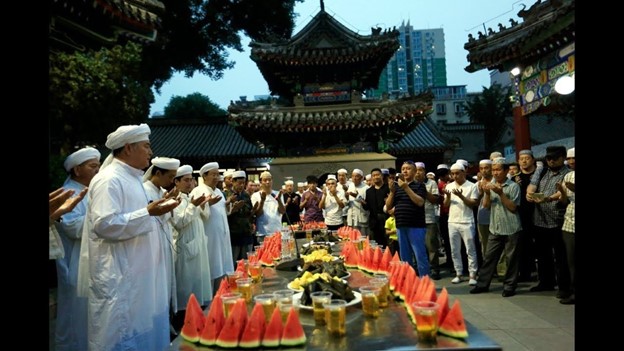
    Footage posted in 2015 shows Chinese Muslims, who appear to be members of Tablighi Jamaat (in white robes), holding a prayer in a Chinese-style mosque. The skullcapped worshippers to the right are believed to be Hui Muslims. Image credit: Umal Al-Dawa Youtube Account
    Literally translated as “society for spreading faith,” Tablighi Jamaat (TJ) is a transnational movement closely tied to the Deobandi interpretation of the Sunni Islamic teachings. It is often seen as an ultraorthodox sect, and some media outlets have erroneously reported that TJ calls on Muslims to travel the world to convert non-believers. Founded in India in 1926, TJ encourages all members to form small groups to proselytize both in- and outside of mosques.

    TJ’s proselytizing method differs from the mainstream practice in that it is revivalist and insular. Rather than focus on non-Muslims, TJ adherents encourage other Muslims to adopt more orthodox lifestyles akin to those of Muhammad and the first Muslim adherents, and to focus proselytizing on current believers and Muslims of lapsed faith. Branding itself as a pietistic movement that eschews politics, TJ is active in over 150 countries, according to a study published in 2010 by Pew Research Center. TJ has an estimated 25 to 80 million participants around the globe, with the majority living in South Asia.

    Although TJ openly rejects violence as a means for evangelism, it is banned by Russia and a number of Middle East nations due to its suspected connections to militancy and terrorism. TJ, however, continues to operate legally in much of Europe. While a French intelligence official remarked that TJ provided “fertile ground for breeding terrorism,” other European anti-terrorism officials said there is insufficient proof to substantiate the claim. The United Kingdom has become a center of TJ activities with the arrival of South Asian immigrants since the 1960s. In the United States, officials have been unable to prove that TJ is a terrorist group although the then-assistant director of the FBI said in 2003 that “al-Qaida used them for recruiting.” Since the attacks of September 11, 2001, the United States has placed the 50,000 TJ participants in the country under close surveillance.

    The Chinese government sees TJ as a matter of serious concern and employs similar rhetoric to discredit the sect. That said, because of its diffuse nature and scarcity of public information, little is known about how TJ operates and the extent of its influence in China. Researching this subject is also difficult because varying transliterations are in use, including taibilike (台比力克), zhema’erti (哲麻尔体), zhemati (哲麻提), and chuzhemati (出哲麻提). In government sources, TJ is also called Da’wah Preaching Society (dawa xuanjiaotuan 达瓦宣教团). The name is occasionally shortened as Da’wah (达瓦), dawaer (达瓦尔), or dawa (达洼), all of which stem from an Arabic word used in the Quran to describe Allah’s call to proselytize. Some scholars have also said that in China and elsewhere, Da’wah refers to a range of educational and social welfare activities catering to Muslims in need.

    The participation of Hui Muslims in TJ has attracted some scholarly interest. Among the first English literature on this topic is “Hui Muslims: The Milieu of Radicalization and Extremism,” a chapter of Ethnic Identity and National Conflict in China, but it only mentions in passing that TJ increases the risk of radicalization among Hui. There are also a few Chinese-language studies about TJ, but none of them go beyond providing basic facts about its history, practices, and overseas activities.

    Alexander Stewart

    Anthropology scholar Alexander Stewart conducted an in-depth study on this little-known subject. His 2018 article titled “Tabligh Jama’at in China: Sacred self, worldly nation, transnational imaginary” focuses on Hui participation in TJ in Xining, Qinghai. Stewart pointed out the sensitivity of the subject matter, citing anecdotal remarks from a graduate student who was told by mainland professors to avoid touching on it. Stewart indicated that many TJ participants in Xining “wear the loose, white, South Asian-style clothing common to the movement…” Unlike TJ participants outside of China, they do not gather in exclusively dedicated mosques or institutes. They have distinctive ritualized behaviour and proselytizing methods: they lead study sessions and travel occasionally in groups of four to ten people to preach all over China. “Instead of violently opposing the Han-dominated atheist state like some extremists among Uyghur splittists in Xinjiang,” TJ stresses the unity of all Muslims, transcending the many Islamic sectarian divides. Another reason why TJ appeals to Hui is because the sect provides an escape for those dissatisfied with state-appointed imams who prioritize patriotism over religious orthodoxy.

    Stewart noted that the legal status of TJ in China is ambiguous. In his article, Stewart cites one criminal case which strongly suggests that TJ participants are at risk of imprisonment in Xinjiang. The case was concluded in Gulja County in September 2013 and involved a Hui farmer sentenced to two years’ imprisonment for “gathering a crowd to disturb social order.” The charge stemmed from his participation in TJ and illegally proselytizing in Xinjiang, Gansu, Ningxia, and Qinghai. In the judgment, the court designated Da’wah as an “overseas religious infiltration organization… unanimously boycotted by China’s traditional Islamic groups.”

    Dui Hua’s Research

    The Hui farmer case cited by Stewart was not an isolated instance. Politically driven accusations against TJ are dominant in official narratives. In 1999, Kashgar Yearbook recounted finding “reactionary propaganda” from hostile forces that included TJ. In that year, police broke up 11 secret TJ gatherings and confiscated about 2,000 copies of “reactionary” books, 80,000 copies of illegal religious publications, and thousands of reactionary and religious cassette tapes. Kashgar and other Xinjiang localities have also branded TJ as a source of “sabotage and infiltration” and religious extremism despite a lack of evidence to substantiate the claims. In Xinjiang, TJ is also categorized as one of the sanfei (三非, i.e. three illegal) cases, which include people who take part in illegal religious activities, produce illegal religious publications, and propagate illegal religion online.

    Government gazettes sometimes give piecemeal figures of police raids that hint at the extent of influence of TJ. In 2004, Kashgar police reportedly investigated 220 participants in the whole prefecture. In 2010, police outlawed five gatherings involving 76 people. The sources, however, did not state whether the TJ participants were Uyghurs, Hui, or members of other Muslim minorities.

    Dui Hua’s research into court judgments uncovered several criminal cases in connection to TJ, all of which involved Hui Muslims. None of them were accused of terrorism or convicted of terrorism-related crimes. Allegations against them all centered on “illegally proselyting” or “illegally teaching illegal Islamic classes.” For instance, Ma Decang (马德仓) was sentenced to six years’ imprisonment on December 12, 2014, in Turpan City, for the same offense of “gathering a crowd to disturb social order” because he was not authorized by the state to teach the Quran in mosques and his home. As a leader of a local TJ group, he received non-local TJ visitors in his home, where he held prayers and arranged proselytizing missions to Xinjiang, Gansu, Shaanxi, Ningxia, and Sichuan.

    Available sources also suggest that some TJ participants travelled abroad to preach. As recently as April 2020, news media reported that six Chinese nationals were among the 960 TJ members who were blacklisted and their tourist visas cancelled by India’s Union Home Ministry as the deepening coronavirus sparked border closures and strict lockdowns.

    In China, even making arrangements for TJ participants to travel overseas can be seen as a criminal act. On May 19, 2015, Jin Dehuai (金德怀) received an even lengthier seven years’ prison sentence in Xinjiang, again for “gathering a crowd to disturb social order.” The judgment stated that Jin arranged Bangladesh visas for other TJ participants. In 2013, Jin himself paid a 40-day visit to Bangladesh, where he met with other TJ participants from China. Additionally, Jin was accused of organizing multiple “jamaat’” gatherings and Islamic classes in his home in Changji Hui Autonomous Prefecture.

    Another reason for the severity of Jin’s sentence is that he reoffended. In 2009, Jin was sentenced to one year and six months for the same offense as he was found guilty of teaching the Quran to over two dozen Hui and Uyghur children aged three to 16. The religious classes Jin provided were said to have inflicted harm on the children’s health because they were confined in several small apartments that “restricted their free movement,” according to the judgment.

    From “reactionary” to “infiltration, extremism and terrorism,” the different accusations put forward by the Chinese government against TJ appear to suggest that local officials in Xinjiang do not share the same understanding on how to pursue the sect. There were also cases where TJ participants were instead charged with Article 300 of the Criminal Law “organizing/using a cult to undermine implementation of the law.” The application of this offense is unusual because TJ is not an officially recognized cult organization such as Falun Gong or Almighty God.

    Riyad as-Salihin Hadiths, once available for sale in online bookstores, was said to be an illegal religious publication in the case of Ma Sheng in 2013. The image was originally from www.kongfz.com but is no longer on the site.

    In one case concluded in October 2010, the Gulja County People’s Court sentenced seven Hui TJ participants to three-four years’ imprisonment for “cult.” One of them is Ma Sheng (马胜), who was similarly accused of conducting illegal religious classes. Available sources stated that he taught several banned books, including Islamic Six Virtues and Riyad as-Salihin Hadiths. Publications of the same titles are downloadable free of charge from various online file sharing services.

    Beyond Xinjiang

    The crackdown on Muslims that began with the Uyghurs in Xinjiang has spread to other regions. Dui Hua has also found criminal cases involving TJ participants in other provinces. Ningxia, home to a large concentration of Hui Muslims, is another center of Hui TJ participants. In 2014, public security in Litong District launched a district-wide crackdown on “cults”, breaking up five different Da’Wah gatherings and “dismissing” 48 participants. In 2015, Ningxia raided 48 instances of “Da’wah Work” involving 355 individuals throughout the province. In 2016, in Tongxin County alone, also in Ningxia, authorities reportedly stopped 125 Da’Wah participants from “illegally proselytizing.”

    An online judgment unearthed by Dui Hua indicated that a local court in Ningxia found Ma Zongcheng (马宗成) guilty of “gathering a crowd to disrupt a public place and traffic order” for taking part in TJ activities from 2009-2018 and gathering TJ members in his home from other parts of Ningxia, Gansu, and Henan. Ma was sentenced to two years’ imprisonment and was released on December 23, 2019.

    A document issued by the Hohhot Islamic Association in August 2019 asks all mosques to deny entry of Da’wah imams in order to comply with the state policy to Sinicize religion. Initially posted on QQ, a web portal developed by Chinese tech giant Tencent, the image has been deleted.

    How TJ is officially designated in China remains ambiguous—does it really share a propensity towards extremism and terrorism, or is it another a peaceful group banned in China because of its effort to preach and conduct classes outside the state system? Instead of violent or other terrorism-related crimes, TJ members of Hui descent were mostly convicted of public order offenses, or sometimes “cult,” for illegally proselytizing or conducting Islamic classes.

    Media attention to Hui Muslims began relatively recently around 2018 when authorities across China started demolishing mosques perceived to be “un-Chinese,” shuttered Arabic language schools, and launched “anti-halal” crackdowns which affected tens of thousands of Hui entrepreneurs and restaurant owners. However, the cases demonstrated in this post show that a portion of Hui Muslims, particularly participants of TJ, faced repression even before Chinese president Xi Jinping announced his plan to Sinicize religion. First mentioned at the Central United Front Work Conference in May 2015, Sinicization brought about major bureaucratic restructuring that put state organs in charge of religious affairs directly under the CCP’s United Front Work Department, with the primary objective to safeguard CCP’s power. At a Central Religious Work Conference in April 2016, Xi directed his Sinicization remark in part at Hui Muslims for their troubling extension of “Islamization” of Chinese society.

    Today, the clampdown on Islam has become more widespread, and some Hui Muslims are known to have been swept into re-education camps alongside Uyghurs. More research is needed to evaluate how Sinicization has accelerated the clampdown on Hui participants of TJ, whose beliefs, practices, and overseas connections are at odds with increasingly xenophobic body politic under Xi.

    In addition to Uyghurs and Hui, the Sinicization of Islam has taken aim at additional minority groups. In September 2020, reports of a crackdown on the Utsul Muslims, a population of around 10,000 living in Hainan, emerged. New restrictions ban traditional Islamic dress, including the hijab and a traditional long skirt worn by female practitioners, from schools in Utsul neighborhoods. The ban is allegedly part of a wider prohibition against any traditional ethnic garments in schools, even though it only affects the Utsuls. In addition to the ban on traditional dress, other measures to be implemented include increased surveillance of residents in Muslim neighborhoods, restrictions on the sizes of mosques, and the removal of Arabic script and architectural features from mosques and other buildings.
  • Leftist Dissent Under Xi: The Old Leftists, Part II


    In “Leftist Dissent Under Xi: The Old Leftists,” Part I, Dui Hua discussed the phenomenon of neo-Maoism among a number of social groups, including veterans and laid-off workers. In this post, we look at attempts to form political parties intended to resurrect the ideology, culture, and legacy of the Mao era, and the government’s reactions to these efforts.


    Political Parties

    Despite faltering public trust in local officials, the central government still earns the approval of many patriotic workers and veterans, especially since the launch of Xi’s anti-corruption campaign, which appears to have won the hearts and minds of the majority of Chinese. However, there exists a small segment of aggrieved leftists who believe their plight cannot be addressed without an ideological overhaul within the CCP. They believe that the CCP must revert to pre-reform era socialism, restore the people’s communes, re-collectivize, and provide employment, education, healthcare, and housing for all throughout China. They also think that the alternative communist parties they created are the true vanguard of socialism, a path from which the CCP has been straying for over 40 years since Deng Xiaoping’s economic reforms began.
    Dui Hua has previously reported cases of leftist subversion from 1980-2012, where individuals received harsh prison sentences for founding political groups with the aim of overthrowing the CCP, which some on the far left believe has morphed into totalitarian capitalism. A year before Xi came to power, Dong Zhanyi (董占义), founder of the New Era Communist Party of China, was sentenced to life imprisonment for subversion and contract fraud. The party was established around 2008 with the mission to fight rampant government corruption.
    Under Xi, new political associations created by the Old Leftists continue to emerge. Instead of promoting regime change like Dong Zhanyi, some of these newly formed groups call for mutual coexistence with the CCP. One such case involves Wang Shiji (王士吉), who calls himself Mao Jidong (毛继东, literally “Mao’s Successor”). Wang had attempted to set up the “China Communist Party Revolution Commission” in 1999, but was arrested on September 8, 1999. Wang completed his three-year sentence for inciting subversion in August 2002. In August 2016, at the age of 72, apparently undeterred, he founded a new party, the “Defend Mao Zedong People’s Party.” This Hebei-based party, which he claimed had about 40 members from across China, aimed to promote love for Mao and the concept of popular sovereignty. Casting it as a “fraternal” party that sounds less radical than the programs of his leftist counterparts, Wang said that his party would co-exist and enjoy equal status with the CCP, and that privatization must be stopped in order to solve China’s current problems of corruption and a widening gap between rich and poor. However, after being summoned and warned by officials in Shijiazhuang, Hebei, Wang dissolved the party, one day before he was scheduled to convene the first “national congress,” which he had claimed would be attended by representatives from a number of major cities. He is not known to have received any criminal punishment thereafter.
    Wang Zheng founded the Supreme Constitution Party
    at the age of 48 in 2013. She commended former Chongqing Party Secretary Bo
    Xilai for being a genuine socialist, because, she believes, he improved the
    lives of ordinary people in Chongqing. Image Credit:
    VOA
    It would be mistaken to assume that Maoism enjoys only grassroots popularity. Leftist ideologies are no less appealing among certain educated professionals looking for solutions to present-day China’s social ills. Wang Zheng (王铮), a former associate professor at Beijing Institute of Economics and Management, set up the “Supreme Constitution Party” in November 2013, two months after Bo Xilai was sentenced to life in prison for bribe-taking, embezzlement, and abuse of power. Bo, who won national renown with his “sing red, strike black” campaign while serving as Chongqing Party Secretary from 2007-2012, was hailed as a hero by many leftists. Wang is a vocal supporter of Bo, calling the former rising star in the Politburo a genuine socialist who spent money in Chongqing on public housing to improve lives of ordinary people. In a New York Times interview in 2013, Wang claimed that her party aimed to promote “common prosperity,” a core socialist value that the CCP has largely ignored, mostly through its failure to address widening income disparity. Although Wang never met Bo, she said Bo’s stated egalitarian views and his self-defense in court had inspired her. Wang believes that Bo was a victim of a power struggle within the CCP and her party is an answer to what she sees as serious political problems. When asked whether her party was legal, Wang retorted that “even the CCP didn’t register when it was set up… it was a revolutionary party!” Wang and other members elected Bo as the “Chairman for Life” before the party was banned by Beijing’s Bureau of Civil Affairs in December 2013.
    In 2013, the Shandong High People’s Court upheld the life imprisonment sentence of Bo Xilai, the former Party Secretary of Chongqing, who tried to revive Mao-era culture by encouraging locals to sing revolutionary songs. Image Credit: CCTV

    Since Xi put Bo and other big “tigers” behind bars on corruption charges, the threat posed by Wang’s political party to the CCP was negligible at best. Nevertheless, Wang remained a target of police surveillance because of her high-profile support for Bo. In 2016, Wang organized a protest against the demolition of Xinghai Square in Dalian, an iconic landmark built by Bo when he served as the mayor from 1993-2000; the demolition is part of a drive by the new leaders in the north-eastern port city to wipe out the lingering “poisonous” legacy left by Bo. In the same year, Wang published articles calling county- and township-level elections a “black-box operation” and Xi the “most unruly leader.” Wang’s insistent demands for Bo’s political rehabilitation led to her detention in Beijing in March 2017, this time for “picking quarrels and provoking troubles.” Hefei, provincial capital of Anhui, was later instructed by the Supreme People’s Procuratorate to investigate this “important and sensitive” case in December 2017. In July 2018, she was sentenced to five years’ imprisonment. Wang is currently scheduled for release in March 2022.


    The “Genuine Communist Party”

    A small group of leftists continue to seek regime change by forming political parties which they believe represent genuine vehicles for Mao Zedong Thought. Dui Hua discovered several names of prisoners belonging to the so-called “Genuine Communist Party,” a virtual party founded in 2010 by a Jiangsu worker naned Chen Jianmin (陈剑敏). Chen, who was born in 1962 and is also known by his internet nickname Zhou Qun (周群), founded and led a party entitled “The Central Committee of the Chinese Proletarian Revolution.” Unlike Wang Shiji and Wang Zheng, Chen, through his party, openly calls for the overthrow of the ruling CCP and condemns Chinese leaders from Deng Xiaoping to Xi Jinping as “fake communists” and “capitalist bureaucrats.” Although the party claims to convene weekly online meetings, the minutes posted on its party website indicate that the meetings have been sparsely attended by a mere handful of netizens.
    Chen has now been placed “under supervision,” (beikongzhi 被控制), according to information posted in May 2019. The wording suggests that his personal liberty is restricted with an unknown coercive measure being placed on him. Information from the party’s online forum also reveals that since 2013 seven members of this party from Fujian, Hubei, Hunan, Guangdong, Gansu, and Jiangsu have been beaten, received administrative detentions, or have even been committed to psychiatric hospitals.
    Dui Hua’s research also found that some “young leftists,” believers in Marxism or Maoism born after Mao’s death in 1976, have joined the Genuine Communist Party. One of the known members was Ye Dongdong (叶东东), a sophomore in Chongqing Vocational College of Media in 2013. In February of that year, Ye was detained for ten days after putting up public notices in Chongqing and his home province, Gansu, that claimed China is a capitalist, not a socialist, country and promoted the Genuine Communist Party. Four years later, in November 2017, Ye was re-detained and later indicted in Longnan, Gansu, for inciting subversion. Ye stood trial in the Longnan Intermediate People’s Court in 2018, but the trial outcome is unknown.
    In a separate case, another Genuine Communist Party member, Zhou Liangliang (周亮亮), completed his three years’ sentence for subversion in Beijing in 2016. Dui Hua unearthed this case from a civil judgment handed down by the Chaoyang District People’s Court in December 2016. In this civil case, Zhou, born in 1983, was the plaintiff, seeking compensation because he had been dismissed by a power consulting company in 2013 on the grounds that Zhou was a member of the “illegal” Genuine Communist Party. Zhou was also accused of using the company’s Internet connection to plan and publicize activities aimed to “overthrow the government and party and subvert state power.” Unsurprisingly, the court found that Zhou had been lawfully dismissed. The company was not required to pay compensation to Zhou.
    Read the other installments in this series to find out more about contemporary China’s young leftists and their activism.
  • Leftist Dissent Under Xi: The Old Leftists, Part I

                                   Souvenir plates with images of Xi Jinping and Mao Zedong. The “Great Helmsman” is among the series of honorifics given to Mao. Image Credit: RFA

    In the West, Mao Zedong gained notoriety as a totalitarian dictator responsible for the deaths of millions of people. His promotion of an extreme cult of personality and two political movements in particular, the Great Leap Forward, resulting in the Great Famine, and the Cultural Revolution, which Mao masterminded to crush his political foes, were among the most destructive aspects of his leadership. Although by some estimates Mao Zedong caused more deaths in peacetime than either Adolf Hitler or Joseph Stalin, the portrait of the man who “brought calamity to an entire nation still hangs in Tiananmen Square and is still found on the banknotes we use every day,” wrote Mao Yushi in a critical essay in 2011. (Mao Yushi, who is not related to Mao Zedong, is a prominent economist who won the Cato Institute’s 2012 Milton Friedman Prize for Advancing Liberty.)

    China has allowed some room for the public to question the officially sanctioned reputation of Mao since the “Great Helmsman” died in 1976. Nonetheless, scholars, journalists, and other public figures can stand accused of “historical nihilism” if they reject Mao’s legacy of liberating China from Japanese occupation and Western imperialism, and critics may risk ruining their careers for holding “hostile” views on Chairman Mao. Because of his critical essay, Mao Yushi has even received death threats and has been widely vilified by Mao Zedong’s supporters. Criticism of Mao Zedong in the public space continues to be considered politically incorrect today, because Mao Zedong Thought, or Maoism, is enshrined in China’s constitution and represents the ideological orthodoxy of the Chinese Communist Party (CCP). Mao’s ideology provides justification for the CCP to prevent the spread of destabilizing western values, such as multiparty democracy, and maintain its “perennial ruling party” status.

    After Xi Jinping rose to power in 2012, his policies and rhetoric have often evoked memories of the Mao era. Just ahead of Mao’s 120th birthday on December 26, 2013, Xi Jinping said, during a visit to Wuhan in July 2013, “We must turn Chairman Mao’s old residence into a base for patriotism and revolutionary education.” Xi’s promotion of the singing of “red (revolutionary) songs” in official settings as diverse as government offices, schools, television stations, and even prisons strikes a chord with adherents of Mao Zedong Thought. Some observers believe that Xi manipulates Maoism to cultivate a sense of pride and consolidate support from the powerful group known as the princelings (i.e., sons and daughters of prominent CCP officials). He does so, not just to bolster ideological support for himself, but also to foster an aura of respectability on behalf of their “revolutionary” parents, who contributed to or even sacrificed for Mao’s socialist cause, according to veteran China analyst Willy Wo-Lap Lam, author of Chinese Politics in the Era of Xi Jinping: Renaissance, Reform, or Retrogression?. In 2015, one Maoist observer even lauded the Xi era as “a golden period” for the leftists, as Xi “has ushered in fundamental change to the status quo, shattering the sky.”

    But despite this leftist revival, many adherents of Mao who are nostalgic for his egalitarian ideals continue to find themselves disillusioned with Xi’s “new era of socialism with Chinese characteristics,” largely due to pervasive corruption and social inequality. They make up a large pool of leftist dissenters who refuse to acknowledge the achievements made by the CCP over the 40 years of economic reform. Leftist dissent, however, is far from being monolithic. The dissenters are from diverse backgrounds, have assorted motives, and use different means to channel discontent. There is also a generational divide within this group.

    This post defines “old leftists” as the generations who either lived through the Mao era as adults or adolescents, or have only vague but fond childhood memories of Mao before his death in 1976. Many of them are veterans and employees laid off by state-owned enterprises; both groups believe that pervasive corruption is the root cause of their problems. As many of them grew up during the Mao era with limited means and educational opportunities, they do not necessarily understand what Mao’s ideology or legacy entail. They may uphold the simple belief that Maoism is a panacea for their livelihood problems, due in part to state propaganda campaigns to deify Mao since 1949. Many old leftists take part in tens of thousands of mass incidents across China every year in the form of protests and collective petitions, whenever public policies put their material benefits at risk. A small fraction of these “old leftists” even proclaim themselves the real descendants of Communism, in the belief that China’s problems must be solved by a reversion to pre-reform era socialism, which would amount to a complete ideological overhaul of the current core philosophy of the Chinese government. They resort to forming political associations in order to challenge the CCP as the legitimate leader of the one-party state.


    State-Owned Enterprise Workers


    Leftist ideologies appeal to many grassroots workers, especially employees of state-owned enterprises. As of 2013, state-owned enterprises employed around 37 million people. Once the pillar of Mao’s planned economy, they are nostalgic for Mao’s promise of an “iron rice bowl” (i.e., guaranteed lifetime employment). The generation of the urban “sent-down youth” born in the 1940s and 1950s was ordered by Mao to “receive education from living in rural poverty” and many were consequently deprived of the opportunity to receive higher education when Mao suspended university entrance exams in 1966. Members of the generation of Mao’s sent-down youth have been less competitive in the job market than younger generations. They see economic reform and marketization as anathema because the state-owned enterprises provided a livelihood for most of them. From 1993-2003, the restructuring of state-owned enterprises resulted in around 28 million redundancies. Despite Xi’s 2018 remark that “state-owned enterprises would grow stronger, better, and larger,” labor protests against the privatization of state-owned enterprises show few signs of abating in the Xi era.

    Since 2014, China Labor Bulletin has documented hundreds of protests joined each year by state-owned enterprise workers across China. In these protests, workers sometimes employ Maoist rhetoric to advance their claims in defence of their rights. One such protest over labor retrenchment rocked Nanyang, Henan, on September 9, 2014. Hundreds of workers laid off by a state-owned pharmaceutical factory took to the streets to commemorate the 38th anniversary of Mao’s death. They chanted slogans against privatization, corruption, and capitalism, and “Only Mao Zedong Thought Can Save China!” A middle-aged female protester interviewed by the prominent Maoist website Utopia described her life during Mao’s era as “heaven” because workers enjoyed free or low-cost medical services, education, housing, and retirement benefits. She likened the plight of workers in present-day China to “having fallen through the eighteen levels of hell.”

    Laid-off workers join a spontaneous parade in Nanyang to commemorate Mao Zedong on the 38th anniversary of his death, carrying his portraits and banners, and demanding unpaid pensions from a privatized pharmaceutical factory.                    Image Credit: Utopia

    Today, many of Mao’s supporters continue to converge on Hunan, Mao’s birth province, to pay tribute to the Great Helmsman they have long revered. On April 23, 2018, around three hundred retired workers, many of whom were former state-owned enterprise workers, protested against the policies of the Shaoyang City government in Hunan. They demanded punishment for police officers who fired tear gas at them when they petitioned against cutbacks in post-retirement medical benefits. The protesters, whom unofficial media reports called “Mao’s fans,” gathered to sing red songs to express their discontent.


    Veterans


    Official statistics released in 2018 indicated that China had 57 million veterans, and the number has been increasing by several hundred thousand each year. Those who answered the party’s call to fight in the 1979 Sino-Vietnam War or other earlier wars especially feel that they are not afforded the dignity they deserve from the state. Since being demobilized, they have been assigned low-end jobs, subsequently laid off, or granted only limited medical care and other benefits. Many demobilized soldiers believed their material benefits were squeezed by corrupt officials and consequently joined the ranks of leftist protesters to defend their rights. Disaffected veterans typically wear camouflage uniforms to convey pride in their past military service. To show allegiance to the CCP, they also wave national flags, sing red songs, and carry photos of Mao. Xi’s attempts to pacify veterans, however, appear to have achieved little. The Ministry of Veterans Affairs, created in March 2018 with the goal of streamlining bureaucracy concerning veterans’ benefits, has become another site frequented by protesting veterans who feel that local officials have ignored their complaints.

    Expressions of discontent by veterans often become flashpoints across China. On September 20, 2018, a group of veterans converged on the Ministry of Veterans’ Affairs. In attendance was a 91-year old veteran who complained about local governments’ failure to comply with the CCP’s veterans’ benefits policy. Hundreds of veterans sang “Unity is Strength,” a patriotic song about the People’s Liberation Army popularized by Mao. They were soon drowned out by plainclothes police loudspeakers ordering the veterans to stop singing. A veteran petitioner reported that none of them were allowed to meet with a ministry representative. Some were sent back to the Jiujingzhuang reception center. While most were subsequently sent back to their original residences, some were sent from the reception center to the network of infamous “black jails.”

    In an undated photo, Hubei veteran petitioners hold a banner that reads, “Firmly Support Xi Jinping, Follow the Party Forever.” Image Credit: RFA

    Perhaps the most notable incident over the years was the veterans’ protest in Zhenjiang, Jiangsu, in June 2018. A group of veteran petitioners were assaulted by government-paid thugs. The incident crystalized the broader anger of veterans who came from across the nation to Zhenjiang to express solidarity with their comrades. Video footage from witnesses showed that around 100 veterans gathered outside a hospital with banners that read, “We are CCP members, not criminals.” Another online video even shows a protester shouting over a loudspeaker, “Perish together with the reactionary government.” Checkpoints were set up to prevent other veterans from entering the city. Police dispersed the protesters on June 23, injuring dozens of them, and sent many back to their home cities.

    At the time of writing, at least nine veteran protesters in the Zhenjiang protests are known to have been sentenced on April 19, 2019 to two to four years’ imprisonment on charges of “gathering a crowd to disturb social order” or aggravated assault. On the same day, the Weicheng District People’s in Shandong sentenced another group of nine veterans to three to six years’ imprisonment for similar offenses.

    Read about the old leftists attempts to actively promote neo-Maoism in Part II.