Tag: freedom of association

  • Subversion in Xi’an: The Trials of Guo Ran & Kou Ji

    Subversion in Xi’an: The Trials of Guo Ran & Kou Ji

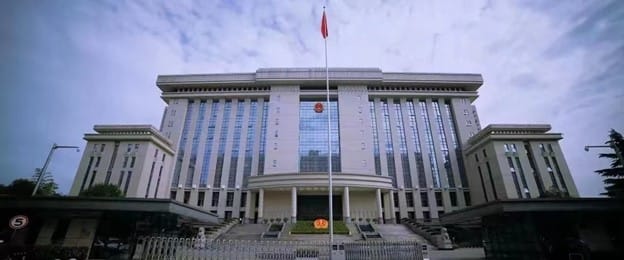
    The Xi’an Intermediate People’s Court building. Image credit: Xi’an court website 

    Dui Hua’s research into Chinese government sources uncovered new information concerning Guo Ran (果然) and Kou Ji (寇稽). The two men received lengthy prison sentences in a closed-door trial for subversion held in Xi’an in 2013. Subversion is a crime of endangering state security and carries a maximum sentence of life imprisonment. 

    Dui Hua first discovered their names in an annual work report an annual work report released by the Xi’an Intermediate People’s Court in June 2013. The report stated that Guo and Kou were tried for subversion, but the trial outcome was not disclosed. Their fate was only subsequently revealed by sentence reduction decisions posted on China Judgements Online around 2016.  

    The first reduction decision Dui Hua found stated that Kou, born in 1969, was serving his 10-year prison sentence in Shaanxi’s Weinan Prison. Because of good behavior and meritorious service, Kou received his first sentence reduction of nine months in February 2016, about four years into his sentence. Two years later, in May 2018, Kou received his second sentence reduction of seven months.  

    That same year, Guo, born in 1981, received his first sentence reduction of five months in September. The sentence reduction decision stated that Guo was serving his 14-year prison sentence for subversion in the same prison as Kou. The clemency he received took place seven years into his prison sentence. Kou completed his prison sentence on July 13, 2020, and his three-year supplemental sentence of deprivation of political rights (DPR) is thought to have expired on July 12, 2023. Guo’s sentence is expected to end on July 1, 2025, after which he will begin his five years of DPR. All three sentence reduction decisions have since been removed from China Judgements Online. 

    A search for “inciting subversion of state power” that yielded no results in July 2021. Dui Hua conducted another search in May 2024. As in 2021, the search yielded no results. Image credit: China Judgements Online

    The court documents did not provide other case specifics beyond their background, crime, sentences, sentence reductions, and new release dates. The acts leading to their imprisonment were unknown. Around 2019, information from unofficial news sources concerning this subversion case began to surface. However, it was only briefly reported that Guo frequently held gatherings on his own business premises to discuss pathways to achieve freedom and democracy. The duo was reportedly detained in 2012 and formally arrested on February 20, 2013. 

    A Chinese government publication Dui Hua uncovered in 2022 sheds light on this mysterious case of subversion. Guo operated a private gallery, and Kuo was an architect. The two were accused of establishing a political group known as the “Xingya Party” (兴亚党, lit “Thriving Asia Party”). Guo published posts online and recruited people online to join the group. Members were to become citizens of the “Chinese Federal Republic” (中华联邦共和国). Guo allegedly called on online recruits to carry out violent activities.  

    As part of their operation, which they named “Dawn of Liberty,” Kou was allegedly tasked with collecting intelligence about troop deployment and military facilities on Chongming Island, China’s third largest island located on the estuary of Yangtze River in Shanghai. Guo intended to launch a military occupation there and create the “Chinese Federal Republic,” according to the official narrative. Kuo was also accused of scheming and drafting the “state creed.” Guo was arrested for subversion, and Kuo was initially arrested for kidnapping.

    Military patrol on Chongming Island. Image credit: Sohu 
    While this account is likely the only official source which provides information about the acts of Guo and Kou, Dui Hua is unable to assess how truthful the description of criminal activities is. Assuming this account is accurate, Guo and Kou are not the first people to have been sentenced to lengthy terms for subversion for founding opposition parties and advocating for a violent overthrow of the Chinese government.  
    According to Records of People’s Courts Historical Judicial Statistics: 1949-2016, Chinese courts accepted 162 subversion cases involving 347 individuals in the 18-year period from 1998 to 2016. Many of these subversion cases are by nature sensitive, and information pertaining to these cases is far from transparent. 
    Among the earliest cases of subversion involved leaders of the so-called “Southwest Yangtze Column of the Chinese Anti-Corruption Army” (中国人民农工反腐败大军西南长江纵队) in Chongqing. Established by farmers in 1998, the group called itself a democratic alternative to the Chinese Communist Party (CCP). It opposed excessive agricultural taxes and distributed fliers calling for the rehabilitation of June Fourth prisoners on the tenth anniversary of the 1989 pro-democracy movement. Sentenced to 12 years’ imprisonment for subversion in the early 2000s, Song Bukun (宋步坤) is believed to be the last member of the group to be released from prison in September 2013. Dui Hua received two responses from inquiries dating back to 2008 in which government sources said Song received an 11-month sentence reduction in February 2009. 

    In March 2006, dissident writer Ren Ziyuan (任自元) was sentenced to 10 years in prison for subversion because he established the “Mainland Democracy Frontline” to promote the right to end tyranny by violent means. He reportedly published anti-government views on the Internet, including a tract entitled “The Road to Democracy” and other essays. Some human rights organizations claim that some of his essays asserted citizens’ rights to violently overthrow tyranny. Ren was released from Shandong No.1 Prison on May 9, 2015, without receiving a single sentence reduction. 

    Dui Hua uncovered details of another political party that was accused of “violent intent” in 2019. The “People’s Party,” later renamed the “New Era Communist Party of China,” was founded by Dong Zhanyi (董占义). The group aimed to fight corruption and recruit aggrieved workers and petitioners to overthrow the CCP. Dong and another founding member Chen Guohua (陈国华) established a corporate entity called Tongkang to operate a supermarket project. The plan, according to official documents, was to use the supermarket project to employ online recruits and raise money to fund their political activities, including assassination plots and procuring weapons. Dong was convicted of subversion and fraud and was sentenced to life in 2011 by a Beijing intermediate court. The sentence later was commuted to a fixed 19 years’ imprisonment in 2015. Chen was convicted of subversion and sentenced to 14 years. Other key party members were also given long sentences. 

    Xu Zhiyong (left) and Ding Jiaxi. Image credit: VOA 

    Subversion is not exclusively used to criminalize leaders of opposition parties nor is it confined to suppressing calls for the violent overthrow of the Chinese government. As recently as April 2023, prominent rights activist and legal scholar Xu Zhiyong (许志永) and rights lawyer Ding Jiaxi (丁家喜) were both convicted of subversion. Unlike Guo and Kou’s case, Xu and Ding did not establish a dissident party. They are advocates of non-violent resistance and the responsible use of civil and social rights. In late 2019, they organized an informal gathering with around 20 activists and lawyers in Xiamen to discuss current political affairs and activism. Xu and Ding were sentenced to 14 and 12 years in prison, respectively, and their appeals were rejected in November 2023. Despite their rejection of violence, Xu and Ding’s sentences are among the harshest for a subversion conviction, exceeding in length even cases where the accused allegedly called for the use of force. 

    The fates of Kuo and Guo may no longer be shrouded in secrecy, but the acts leading to their imprisonment were revealed only a decade after they were incarcerated. Such gaps in disclosure further concerns that vague laws with ambiguous wording and low levels of legal transparency are eroding confidence in China’s judicial system.  
  • Subversion in Xi’an: The Trials of Guo Ran & Kou Ji

    Subversion in Xi’an: The Trials of Guo Ran & Kou Ji

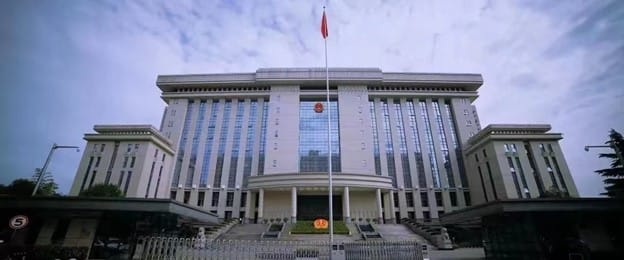
    The Xi’an Intermediate People’s Court building. Image credit: Xi’an court website 

    Dui Hua’s research into Chinese government sources uncovered new information concerning Guo Ran (果然) and Kou Ji (寇稽). The two men received lengthy prison sentences in a closed-door trial for subversion held in Xi’an in 2013. Subversion is a crime of endangering state security and carries a maximum sentence of life imprisonment. 

    Dui Hua first discovered their names in an annual work report an annual work report released by the Xi’an Intermediate People’s Court in June 2013. The report stated that Guo and Kou were tried for subversion, but the trial outcome was not disclosed. Their fate was only subsequently revealed by sentence reduction decisions posted on China Judgements Online around 2016.  

    The first reduction decision Dui Hua found stated that Kou, born in 1969, was serving his 10-year prison sentence in Shaanxi’s Weinan Prison. Because of good behavior and meritorious service, Kou received his first sentence reduction of nine months in February 2016, about four years into his sentence. Two years later, in May 2018, Kou received his second sentence reduction of seven months.  

    That same year, Guo, born in 1981, received his first sentence reduction of five months in September. The sentence reduction decision stated that Guo was serving his 14-year prison sentence for subversion in the same prison as Kou. The clemency he received took place seven years into his prison sentence. Kou completed his prison sentence on July 13, 2020, and his three-year supplemental sentence of deprivation of political rights (DPR) is thought to have expired on July 12, 2023. Guo’s sentence is expected to end on July 1, 2025, after which he will begin his five years of DPR. All three sentence reduction decisions have since been removed from China Judgements Online. 

    A search for “inciting subversion of state power” that yielded no results in July 2021. Dui Hua conducted another search in May 2024. As in 2021, the search yielded no results. Image credit: China Judgements Online

    The court documents did not provide other case specifics beyond their background, crime, sentences, sentence reductions, and new release dates. The acts leading to their imprisonment were unknown. Around 2019, information from unofficial news sources concerning this subversion case began to surface. However, it was only briefly reported that Guo frequently held gatherings on his own business premises to discuss pathways to achieve freedom and democracy. The duo was reportedly detained in 2012 and formally arrested on February 20, 2013. 

    A Chinese government publication Dui Hua uncovered in 2022 sheds light on this mysterious case of subversion. Guo operated a private gallery, and Kuo was an architect. The two were accused of establishing a political group known as the “Xingya Party” (兴亚党, lit “Thriving Asia Party”). Guo published posts online and recruited people online to join the group. Members were to become citizens of the “Chinese Federal Republic” (中华联邦共和国). Guo allegedly called on online recruits to carry out violent activities.  

    As part of their operation, which they named “Dawn of Liberty,” Kou was allegedly tasked with collecting intelligence about troop deployment and military facilities on Chongming Island, China’s third largest island located on the estuary of Yangtze River in Shanghai. Guo intended to launch a military occupation there and create the “Chinese Federal Republic,” according to the official narrative. Kuo was also accused of scheming and drafting the “state creed.” Guo was arrested for subversion, and Kuo was initially arrested for kidnapping.

    Military patrol on Chongming Island. Image credit: Sohu 
    While this account is likely the only official source which provides information about the acts of Guo and Kou, Dui Hua is unable to assess how truthful the description of criminal activities is. Assuming this account is accurate, Guo and Kou are not the first people to have been sentenced to lengthy terms for subversion for founding opposition parties and advocating for a violent overthrow of the Chinese government.  
    According to Records of People’s Courts Historical Judicial Statistics: 1949-2016, Chinese courts accepted 162 subversion cases involving 347 individuals in the 18-year period from 1998 to 2016. Many of these subversion cases are by nature sensitive, and information pertaining to these cases is far from transparent. 
    Among the earliest cases of subversion involved leaders of the so-called “Southwest Yangtze Column of the Chinese Anti-Corruption Army” (中国人民农工反腐败大军西南长江纵队) in Chongqing. Established by farmers in 1998, the group called itself a democratic alternative to the Chinese Communist Party (CCP). It opposed excessive agricultural taxes and distributed fliers calling for the rehabilitation of June Fourth prisoners on the tenth anniversary of the 1989 pro-democracy movement. Sentenced to 12 years’ imprisonment for subversion in the early 2000s, Song Bukun (宋步坤) is believed to be the last member of the group to be released from prison in September 2013. Dui Hua received two responses from inquiries dating back to 2008 in which government sources said Song received an 11-month sentence reduction in February 2009. 

    In March 2006, dissident writer Ren Ziyuan (任自元) was sentenced to 10 years in prison for subversion because he established the “Mainland Democracy Frontline” to promote the right to end tyranny by violent means. He reportedly published anti-government views on the Internet, including a tract entitled “The Road to Democracy” and other essays. Some human rights organizations claim that some of his essays asserted citizens’ rights to violently overthrow tyranny. Ren was released from Shandong No.1 Prison on May 9, 2015, without receiving a single sentence reduction. 

    Dui Hua uncovered details of another political party that was accused of “violent intent” in 2019. The “People’s Party,” later renamed the “New Era Communist Party of China,” was founded by Dong Zhanyi (董占义). The group aimed to fight corruption and recruit aggrieved workers and petitioners to overthrow the CCP. Dong and another founding member Chen Guohua (陈国华) established a corporate entity called Tongkang to operate a supermarket project. The plan, according to official documents, was to use the supermarket project to employ online recruits and raise money to fund their political activities, including assassination plots and procuring weapons. Dong was convicted of subversion and fraud and was sentenced to life in 2011 by a Beijing intermediate court. The sentence later was commuted to a fixed 19 years’ imprisonment in 2015. Chen was convicted of subversion and sentenced to 14 years. Other key party members were also given long sentences. 

    Xu Zhiyong (left) and Ding Jiaxi. Image credit: VOA 

    Subversion is not exclusively used to criminalize leaders of opposition parties nor is it confined to suppressing calls for the violent overthrow of the Chinese government. As recently as April 2023, prominent rights activist and legal scholar Xu Zhiyong (许志永) and rights lawyer Ding Jiaxi (丁家喜) were both convicted of subversion. Unlike Guo and Kou’s case, Xu and Ding did not establish a dissident party. They are advocates of non-violent resistance and the responsible use of civil and social rights. In late 2019, they organized an informal gathering with around 20 activists and lawyers in Xiamen to discuss current political affairs and activism. Xu and Ding were sentenced to 14 and 12 years in prison, respectively, and their appeals were rejected in November 2023. Despite their rejection of violence, Xu and Ding’s sentences are among the harshest for a subversion conviction, exceeding in length even cases where the accused allegedly called for the use of force. 

    The fates of Kuo and Guo may no longer be shrouded in secrecy, but the acts leading to their imprisonment were revealed only a decade after they were incarcerated. Such gaps in disclosure further concerns that vague laws with ambiguous wording and low levels of legal transparency are eroding confidence in China’s judicial system.  

  • New Rules on Religion in Xinjiang: Comparing State Council and Provincial Congress Regulations

    New Rules on Religion in Xinjiang: Comparing State Council and Provincial Congress Regulations

    The entrance to Ihlas Supermarket in the Kashgar city center in August 2018. Various banners and posters bearing political slogans in Mandarin and Uyghur, with slogans promoting speaking Mandarin and ethnic unity. Image credit: Kubilayaxun / CC BY-SA 4.0

    Near the end of 2023, the Xinjiang Uyghur Autonomous Region (XUAR) issued new regulations on administrating religious affairs in the region. The restive province remains a source of international controversy — Western nations have decried widespread surveillance and religious repression while China has refuted these as politically motivated criticisms and pointed to its support from Muslim-majority nations to validate its policies. The Office of the UN High Commissioner for Human Rights (OHCHR) 2022 report concluded that “serious human rights violations” that may constitute crimes against humanity have been committed in the region, and the new regulations passed more than a year after that report and China’s rejection of its findings.

    The fourteenth XUAR People’s Congress passed the Religious Affairs Regulation on December 22, 2023, at its seventh session. The new regulations will take effect on February 1, 2024, a week after its human rights record was examined in the United Nations Universal Periodic Review in Geneva. Xinjiang was notably a recurring issue during this review, which took place on January 23, 2024.

    The regional regulations are based in large part on the 2018 National Religious Affairs Regulation issued by the State Council. The Xinjiang regulations introduce several provisions “in consideration of [the] actual circumstances in the autonomous region.” (XJ Article 1)

    Using translations done by the China Law Translation, Dui Hua has put together a side-by-side comparison (link) of the XUAR Religious Affairs Regulations (2024), hereafter referred to as XJ regulations, and the State Council Religious Affairs Regulations (2018), hereafter SC regulations.

    In the XJ regulations, some provisions from the SC regulations are re-arranged and combined. They also omit details of some provisions included in the SC version by simply referring to them as “in accordance with the national laws, regulations, and rules.”

    Such regulations and rules include the Measures for Administration of Religious Venues introduced by the State Religious Affairs Bureau, which went into effect on September 1, 2023. Some of the notable differences between the XJ and SC versions are highlighted below.

    Battling Against Endangering State Security, Extremism, & Ethnic Hatred 

    The stated goal of the XJ regulations is to protect citizens’ freedom of religious worship and to maintain religious and social harmony. Both the XJ regulations and the SC regulations highlight the responsibility of religious groups and believers to fight criminal activities carried out in the name of religion.

    Both regulations reference the need to battle extremism (SC Article 3. XJ Article 4) and activities that might endanger state security (SC Article 4, 63, 64. XJ Article 5), especially splittism (SC Article 4, 63, 73(1). XJ Article 5, 49(2)). While both versions strongly emphasize the importance of promoting and maintaining “ethnic harmony” the XJ regulations also reference “inciting ethnic hatred” in its text (XJ Article 5, 49(2)), which is not mentioned in the SC text.

    XJ expands on the emphasis against religious extremism and includes specific behavior in Article 47:

    • …must not use appearances, apparel, signs, symbols, and so forth to play up religious fanaticism;
    • [must] not coerce or force others to wear religious extremist clothing or wear religious extremist symbols or signs.
    Publishing & Personal Consumption of Religious Materials 
    While SC Article 45 permits religious groups, religious schools, and churches and temples to print materials for internal use (“in accordance with relevant laws on publishing”), XJ Article 48 requires such publications to be reviewed and approved by the regional religious affairs bureau. A printing permit issued by the regional news and press department is required and distribution can only be within the approved scope.
    De-extremization propaganda paintings. Image credit People.com.cn
    SC Article 45 stipulates religious materials cannot contain content:
    1. that undermines harmonious co-existence between religious and non-religious citizens;
    2. that undermines the harmony between different religions or within a religion;
    3. that discriminates against or insults religious or non-religious citizens;
    4. that advocates religious extremism;
    5. that contravenes the principle of religions’ independence and self-governance.
    XJ Article 49 expands on this by prohibiting five more types of illegal content:
    (1) that undermines national unity, social stability, economic development, and scientific and technological progress;
    (2) that incites ethnic hatred, ethnic discrimination, and undermines ethnic unity;
    (3) that promotes ethnic separatism, religious extremism, and violent terrorism;
    (7) that endangers social morality or the traditional culture of China; and
    (8) Other content prohibited by laws, regulations, and state provisions.
    XJ Article 50 further restricts individual consumption of contents that are deemed illegal (as defined by Article 49) on the internet or other digital formats, including mobile phones and portable data storage. The article adds that “Organizations and individuals must not illegally listen to, watch, or transmit overseas religious radio and television programs.”
    However, the XJ version omits SC Article 46 which regulates importing religious materials from overseas for personal use.
    A photo of the Urumqi bazaar taken in 2005. Image credit: 29cm via Wikimedia Commons / CC BY-SA 2.0
    Religious School Appointments & Sinicization 
    The XJ regulations largely follow the SC regulations in “Chapter II: Religious Groups” (on rules for personnel appointments) and “Chapter III: Religious Schools” (on religious training), but it adds the requirement that religious schools and religious training should contribute to social harmony and Chinese culture by incorporating “Chinese characteristics.”
    XJ Article 11(3) stipulates that research on religious culture and texts should:
    “… thoroughly uncover content in religious teachings and rules that are conducive to social harmony, modern progress, and health and civilization; and make interpretations of religious teachings and rules in line with contemporary China’s requirements for development and improvement, and in line with the outstanding traditional Chinese culture.”
    XJ Article 14 also asks religious schools to:
    “…follow the path of school operations with Chinese characteristics, running the school in accordance with law, advancing educational and teaching reforms, and increasing the quality of school operations.”

    Sinicization reappears in “Chapter IV: Religious Activity Sites” which regulates building, renovation, and expansion of religious sites and venues. XJ Article 26 adds that sites that are newly built or renovated, expanded, or rebuilt shall “reflect Chinese characteristics and style in areas such as their architecture, sculptures, paintings, and decorations.”

    Conduct of Religious Professionals 

    While the SC regulations includes brief, generalized provisions regulating the conduct of religious professionals, including the requirement to follow relevant laws and rules and to protect their rites, the XJ regulations call on personnel to also follow orthodoxy and anti-extremism measures.

    XJ Article 38 further defines specific acts that are not permitted, including:

    1. Making “edicts” [DH: Idhn—permission, promise], appointing religious presiding officiants, and restoring or indirectly restoring feudal privileges;
    2. Accepting canonization, appointments, or honorary titles from overseas organizations or individuals;
    3. Accepting instruction on engaging in religious and educational activities from overseas organizations or individuals;
    4. Setting up private meeting places and establishing illegal religious organizations;
    5. Conducting unauthorized “living Buddha reincarnation” activities.

    Of these, (1) is a common practice among Chinese Hui Muslims, and (5) is specific to Tibetan Buddhism.

    A roadside sign in Turpan, Xinjiang Uygur Autonomous Region, written in both Uyghur and Chinese with the phrase “I liken the party to my mother.” Image credit: Kubilayaxun / CC BY-SA 4.0 

    An Expansion of Past Regulations 

    It is important to note that the XJ regulations are an expansion of the SC regulations. On the surface, it appears that the XJ regulations include fewer mentions of the phrase “extremism.” However, the regional version refers in places to being “in accordance with the relevant national laws and regulations,” which is a clear reference to the SC regulations. The regional regulations also made combating splittism and extremism a top priority, including allocating these responsibilities to religious schools and religious professionals. Additionally, the XUAR previously passed de-extremification regulations in 2017.

    The XJ regulations build on the SC ones to further dictate how individuals and institutions can engage with state-sanctioned religions. Beyond the restrictions and obligations outlined above, both regulations also place restrictions on adhering to specific pillars of Islam. For example, going abroad for the Hajj is permitted only when organized by a national Islamic group (in this case the Islamic Association of China), and both regulations include rules against accepting overseas funds (SC Article 57; XJ Article 45) with a few exceptions, which may impinge on the third pillar of Islam known as Zakat, or almsgiving).

    Similarly, other regions like Qinghai and the Tibet Autonomous Region have their own religious affairs regulations. Qinghai’s went into effect on October 1, 2021 and Tibet’s a month later on November 1, 2021. The Tibetan regulations also include some provisions specific to Tibetan Buddhist tradition and beliefs, such as reincarnation. The Chinese government’s insistence on controlling all aspects of religious practice, from what materials adherents can possess to transnational processes, reflect how national security and social stability concerns drive policies that demand adherence to the state above all.

    Dui Hua has compiled a side-by-side comparison of the XJ and SC regulations and provided comments where appropriate: Comparison of XJ and SC Regulations

  • From “Vineyard” to Prison: The House of Joseph

    From “Vineyard” to Prison: The House of Joseph

    A photo of Kunshan, Suzhou, where the House of Joseph has been known to operate. Image credit: Song Sangroov / CC BY 3.0 DEED

    Dui Hua continues to uncover information on Chinese religious groups following the release of its report “The Persecution of Unorthodox Religious Groups in China” in March 2022. Three new groups have been identified including the House of Joseph, or yuesejia (约瑟家) in Mandarin Chinese, Xinling Famen (心灵法门), and Corporate Christ (团体基督).

    The House of Joseph is an indigenous Christian group whose members are at risk of arrest and imprisonment. Founded in 1992 by Wei Zhuxiang (魏柱祥) as an offshoot of the Spirit Church, or linglingjiao (灵灵教), the House of Joseph is sometimes called “the third generation” of the True Jesus Church (真耶稣教会) from which the Spirit Church was splintered in 1986. According to Chinese government sources, Wei predicted an apocalypse in 2000 and said that conversion to the House of Joseph was the only way to salvation. He allegedly “distorted” the Bible by proclaiming himself Joseph, son of Jesus. He claimed that the holy spirit had descended on him and his wife, and the couple became the new god after they united as one. He also stated that he was reincarnated as a shepherd in the earthly world in search of “another flock of sheep.” His goal is to launch an evangelizing mission which he calls “the 6,000-Year Project of the God.”

    Unorthodox religious groups often stand accused of illegally amassing a fortune from superstitious believers through “indoctrination” and “mind control.” The House of Joseph is no exception. The church allegedly asks adherents for donations to repent their sins, and it arranges marriages for male adherents who pay a fee from 5,000-20,000 yuan. Following Wei’s unfulfilled apocalyptic prophecy in 2000, Wei started calling on believers to join settlements or communities that he termed “vineyards” and described as swathes of paradise on earth. Believers were admitted after they paid a fee of 2,000 yuan. Chinese government sources reveal that he used the money to create economic entities in garment processing, engineering construction, planting and breeding, catering services, and trading. Violators of his church rules would be ordered to fast, suspended from employment, and even dismissed from his “vineyards.”

    Wei once claimed that his church had as many as 100,000 members. However, Chinese government sources suggest that the group only has a limited reach in China, with over 1,000 devoted members mostly in Huai’an and Kunshan (in Jiangsu Province), and Shanghai. It is unclear when the Chinese government started labelling the House of Joseph an “evil cult,” but a court judgment Dui Hua uncovered states that Wei was among the 12 leading members detained amid a crackdown in 2005. In 2006, the Kunshan City People’s Court convicted Wei of fraud and sentenced him to 10 years and six months in prison. Wei was released from prison in April 2014. His wife was also sentenced in the same case, but information about the criminal punishment she received is not available.

    Footage of a baptism conducted by the True Jesus Church, which the House of Joseph is thought to have splintered from. Image credit: True Jesus Church live stream
    Re-Indicted in 2020 
    Wei continued to develop his church after he was released from prison. In May 2020, Wei was re-arrested in Suqian, Jiangsu, alongside another leading member Wang Shoucai (王守财) for “organizing a cult to undermine implementation of the law.” Six months later, Wei and Wang were among the 17 House of Joseph members who were indicted for violating Article 300. The procuratorate accused them of “disseminating propaganda materials all over the country to promote the cultic ideology of the House of Joseph, collecting donations from believers, and illegally amassing a fortune” since 2017.
    Dui Hua has not been unable to find a court judgment concerning this case. However, given China’s high conviction rates and that Wei reoffended, it is highly likely that Wei received a lengthy prison sentence and is serving a second prison stint in Jiangsu.
    Suqian, Jiangsu, where the House of Joseph leader Wei was arrested after serving his prison sentence. Image credit: Invercargill City Council
    Other Convictions 
     
        I.    Zhang X 
     
    Besides Wei, Dui Hua found that two other House of Joseph members were convicted prior to his re-indictment in 2020. In the first case, Wei’s nephew surnamed Zhang received a three-year suspended sentence for violating Article 300 in December 2015. Zhang, a farmer, was initially placed under residential surveillance in March 2012. That same month, he was released on bail pending further investigation. He was indicted three years later, in April 2015. The following month, he was released on bail again until the Huaiyin District People’s Court resumed the trial on September 17, 2015.
    Zhang converted to the House of Joseph in 2001 and was appointed by Wei as the head of a Kunshan-based “vineyard” in 2011 while Wei was serving his 10 years and six months’ prison sentence. The court judgment states that Zhang “actively obeyed and earnestly carried out Wei’s orders through letters and verbal messages from prison.” Wei made another prediction of cataclysm which would take place on November 16, 2011 following a nuclear war. Adherents were told that they must seek refuge from three arks (like those used by Noah in religious texts), one of which was in Tibet. Individuals would be denied refuge unless they had been baptized by the House of Joseph by September 12, 2011. Zhang disseminated Wei’s prophecy and continued to help Wei to exert indirect control of church members.
    In preparation for the impending cataclysm, Zhang sold his Jiangsu vineyards and arranged for over a thousand church members to relocate to Xinjiang and Tibet where he intended to re-establish his organizational branch. In Xinjiang, Zhang organized about 60 missionaries to conduct overseas evangelization in Iran and Thailand. Zhang ordered one of the teams to travel to Iran for a religious exchange and requested that church members print 4,000 leaflets with Farsi translations of the church doctrines. In Tibet, Zhang formed four other teams of missionaries to preach domestically. All their activities were funded directly by the House of Joseph.
    In November 2011, one of the missionaries Zhang dispatched to China’s northeast was detained. Foreseeing an imminent risk of police investigation, Zhang deleted all correspondences with the missionary and dismissed all church members who had relocated to Xinjiang and Tibet. Before Zhang was able to transfer out the church funds, police seized over 54 million yuan, 2,100 grams of gold, and an apartment owned by the church in Jiangsu.
    Zhang’s punishment was lenient  because he turned himself in and disbanded his organizational branch in 2011. During the court trial, he claimed to have recanted his religious beliefs by questioning Wei’s unfulfilled prophecy concerning the nuclear war. He also pledged to not join any cult activities. Zhang’s three-year suspended sentence ended in December 2018.
    An image of Huai’an, one of the locations where the House of Joseph has been based. Image credit: Huai’an Economic and Technological Development Zone

        II.    Chen X 

    The House of Joseph continued to operate despite suffering a major blow after Zhang shuttered his Tibet and Xinjiang organizational branches. A court judgment Dui Hua acquired indicated another Jiangsu farmer surnamed Chen was sentenced to three years in prison on October 15, 2015, also for violating Article 300. Chen organized home gatherings with 15 other members despite “knowing full well that the church had been banned by relevant authorities” since February 10, 2010.

    Unlike Zhang, Chen does not appear to have been in close contact with Wei. Chen said all the 16 church members who took part in the home gatherings were God’s descendants and possessed powers to cure sicknesses and cast out demons. The judgment made no mention of Wei’s apocalyptic prediction in 2011. Chen was accused of printing 2,000 leaflets to spread claims that he possessed healing powers and had successfully cured more than 500 patients. Chen is believed to have been released from prison on December 10, 2017, assuming that he did not receive either sentence reduction or sentence extension.

    Dui Hua has been unable to find additional information about the House of Joseph beyond what is stated in the 2020 indictment and the two aforementioned court judgments. China’s Anti-Cult Association, which disseminates propaganda about the harmful nature of evil cults, is not known to have published a single article about the church. The House of Joseph has officially been designated as harmful on the grounds that it is both fraudulent and superstitious. However, as with many of the non-violent unorthodox religious groups in China, it is unclear if this opposition to the group is meant to protect the Chinese people from harmful superstition, or if it is another way to protect the Chinese government from a grassroots group with organizational capacity.

  • Promoter to Pariah: Xinling Famen’s “Unorthodox Buddhism”

    Promoter to Pariah: Xinling Famen’s “Unorthodox Buddhism”

    Junhong Lu giving the “Grand Dharma Talk” in Singapore’s National Stadium in 2017. Image credit: Ginny Gray / CC BY-SA 4.0

    In March 2022, Dui Hua released a study titled “The Persecution of Unorthodox Religious Groups in China” identifying 41 religious groups whose members are at risk of arrest and imprisonment. Dui Hua has since uncovered another unorthodox religious group called Xinling Famen (心灵法门) that is facing similar repression. Other recently uncovered unorthodox groups include Corporate Christ (团体基督), which is thought to have splintered from the Church of Almighty God (全能神), and the House of Joseph (约瑟家), which originated from the Spirit Church (灵灵教).

    Xinling Famen, also known as the Guanyin Citta Dharma Door, is among the newly emerged Buddhist groups which have gained traction in China and overseas. Its founder Lu Junhong (卢军宏, aka Richard Lu) was born in 1959 in Shanghai, studied in Sydney, and eventually obtained Australian citizenship. After graduating from university in the 1990s, Lu promoted Buddhism and traditional Chinese culture while serving as a director of Australia Oriental Media Group, a Chinese-language radio station operated in Sydney. In 2010, Lu founded Xinling Famen. The group has gained popularity among Chinese immigrants in the United States, Canada, Europe, and Southeast Asia.

    According to public statements made by Chinese government agencies, Xinling Famen has attracted three million followers. The group, however, claims to have as many as seven million members worldwide, and hundreds of thousands tune in daily to listen to Lu’s ideas online. Lu’s teachings were reportedly introduced to China in 2009, one year before the group was founded.

    Unorthodox Buddhism

    While Xinling Famen describes itself as a Buddhist group, its worship style is similar to that of some Pentecostal churches and charismatic healing cults, according to Chinese Religions Going Global. Adherents are said to burst into tears with their arms outstretched as Lu performs spiritual healing. Lu instructed his followers to read different combinations of sutras from Buddhist canons known as “little houses” to get rid of bad karma. He also provided a list of specific rules that followers must abide by in order to maximize good karma.

    Nevertheless, China’s anti-cult propaganda accuses Lu of appropriating Buddhist terms to mobilize a cultic movement centered on his personality. Lu called himself a reincarnation of Guanyin Bodhisattva and said that he had divine power to read one’s totems (referring to Chinese zodiac signs) in heaven and see a person’s past, present, and future. Lu is also said to have amassed a fortune by selling “little houses” and charging exorbitant apprenticeship fees. China imposed an entry ban on Lu before he passed away from illness in November 2021.

    A Xinling Famen center in Ashfield, Australia. Image credit: Guan Yin Citta Dharma Door Facebook page

    Xinling Famen also stirred up controversy overseas. Buddhist communities from Singapore, Malaysia, and Hong Kong have claimed that Lu’s healing power is a complete fabrication and that his so-called divine power deviates from mainstream Buddhist ideology. Despite the controversy, China remains the only place in the world where Xinling Famen members are arrested and imprisoned.

    Promoting the “Chinese Dream” 

    Lu’s Australia Oriental Media Group (AOMG) had an intricate relationship with Chinese state media in its infancy. Prior to the radio station’s official launch in December 2007, state media including China News Service lauded it as a new force of the ever-expanding Chinese language media in Australia and the first such radio station operated in Sydney established by a mainland Chinese immigrant. Less than two years later, in the summer of 2009, China National Radio (CNR) announced that it had signed a content collaboration agreement with AOMG, under which AOMG would broadcast some CNR regular programs and conduct local interviews for CNR special programs.

    Agreement signing ceremony between CNR and AOMG on July 4, 2009, in Sydney. Zhao Hui, then vice president of CNR (standing) and Lu (seated left of Zhao) attended. Image credit: CNR

    In October 2013, Lu and Xinling Famen appeared in an interview profile conducted by a former People’s Daily correspondent for Aust333, another Chinese-language media outlet based in Sydney. The profile mentioned that Lu received a “British Community Honours Award” in 2012, repeating Lu’s false claim that it was awarded by the UK House of Lords. In fact, the award is given by a UK-registered charity that holds the ceremony at the House of Lords. The profile also praised Lu for promoting Chinese culture through his radio station and his Buddhist organization.

    The interview ended by asking Lu how Xinling Famen would contribute to Xi Jinping’s idea of the “Chinese Dream.” Lu responded with talking points typically seen in Chinese propaganda, saying that the realization of the dream was “of greater and far-reaching significance to those of us overseas Chinese living overseas and leaders of overseas Chinese circles” and that “only when the country is strong, we overseas Chinese will be prouder and not be bullied.” He further stated that realizing the dream “requires the selfless dedication of Chinese people all over the world” and closed by discussing Xinling Famen’s recent event in Taiwan as an example of how the organization could promote cross-Strait understanding and would contribute to the realization of the “Chinese Dream.”

    Lu (second from left) with a group of Chinese delegates during a visit to Sydney: Zhan Yannong (third from left), then president of People’s Daily; Ambassador Li Huaxin (fifth from left), then Chinese Consul General in Sydney, and Xue Meng (far right), then head of People.cn Australia. Date unknown. Image credit: Aust333

    Within two years of the interview, the relationship had soured. State Media started to label Xinling Famen as a cult, Lu’s books were banned, and his dubious awards came into question.

    Conviction under Article 300 

    The first known case of imprisonment involving Xinling Famen was concluded in Inner Mongolia in 2015. The Ewenki Minority Autonomous Banner People’s Court convicted a woman surnamed Meng of “organizing a cult to undermine implementation of the law,” and gave her to a suspended sentence of three years. This is the only case with information in Dui Hua’s Political Prisoner Database in which a Xinling Famen member was convicted of Article 300.

    The court judgment stated that Meng converted to Xinling Famen in July 2014. In December, police searched her home and found 133 “cultic” books and 37 copies of CD-ROMS she stored in a refrigerator and a cupboard. That same month, police confiscated 100 copies of publicity materials that Meng was preparing to mail out from a supermarket.

    The punishment in this case is considered lenient because Meng admitted her guilt. The court mitigated her prison sentence also because the books and publicity materials had not yet been publicly circulated.

    Illegal Business Activity Convictions 

    Dui Hua has obtained three more court judgments involving Xinling Famen members. They were convicted not of Article 300, but of conducting illegal business activity which is typically used against the printing of the Bible and other religious publications. The three cases were all concluded in December 2016.

    In the first case, five Xinling Famen members received criminal punishment ranging from suspended sentences to five years in prison in Neixiang County, Henan, for printing 101,480 copies books worth ¥276,494. Although the publishing company owned by one of the defendants only made a profit of ¥28,480, the court ordered that each of the defendants pay a fine of ¥30,000.

    Table 1. Criminal punishment for Xinling Famen members

    The longest prison sentence of five years was given to Zhang Jianping, an apprentice of Lu Junhong. He admitted to printing books without a license. He stated in his defense that his original intent was to promote Buddhism and guide people towards a good path. He pleaded for leniency because his books were not reactionary, nor did he intend to profit from them financially. Guo Hui (郭辉), considered another principal offender in the case, received a four-year prison sentence. All the defendants have completed their prison sentences as of this writing.

    The second case, also concluded in Neixiang County, involved three defendants: Wang Xiaoyan (王小燕), Xia Songzhi (夏松芝), and Li Kehua (栗克华). Only Wang was known to be an adherent of Xinling Famen; she completed a five-year prison sentence on January 5, 2021. She received a remittance of over ¥300,000 from Xinling Famen members across China and entrusted Xia and Li to print 154,230 copies of books.

    Xia and Lu were the print shop owners and each of them received a suspended sentence of three years. Available sources did not state whether Xia and Lu were members of Xinling Famen.

    A screenshot of Xinling Famen materials offered through the organization’s website. Image credit: Xinling Famen eBooks

    The third case in Taiyuan, Shanxi only involved one male defendant. Liu Shuangjian (刘双建), also a printshop owner, was accused of printing 13,260 copies of Xinling Famen sutras and 3,780 copies of Buddhist books which were not related to Xinling Famen. The Taiyuan Intermediate People’s Court ruled that only the Xinling Famen sutras, but not the Buddhist books, were illegal. Liu received a ¥5,000 down payment for the order to print the Xinling Famen sutras. The standard of conviction does not necessarily require an intent to establish a profitable business, but in this case the court did not accept the other Buddhist books he printed as evidence because he did not gain any profit from them. Assuming Liu served his full term without a sentence reduction, Liu was released from prison on July 15, 2018.

    Arrests & Prosecutions 

    Dui Hua’s research into legal documents also found three cases involving Xinling Famen illegal religious books. The fate of these individuals remains uncertain because Dui Hua is unable to confirm whether they were convicted and given fixed-term prison sentences.

    In December 2016, Zhao Kun (赵坤) and Guo Hongmei (郭红梅) were prosecuted for illegal business activity in Tongshan District, Jiangsu. Zhao was accused of printing 30,000 volumes of Xinling Famen books worth approximately ¥60,000, while Guo allegedly printed 20,000 copies also worth around ¥60,000.

    Evidence suggests that Xinling Famen has made inroads with Chinese ethnic minorities. A Hui mother surnamed Ma and her son surnamed Han were indicted in Ji’nan, Shandong, also for illegal business activity on May 17, 2018. The prosecutors alleged that they sold 175,467 copies of Xinling Famen books worth ¥534,889.85 in the 14 months since May 2016. When the duo was detained on July 4, 2017, police also discovered 103,838 copies of Buddhism in Plain Terms, a book authored by Lu Hongjun, in their residence, storeroom, factory, and vehicles. Given the large number of publications which had been in public circulation, they are unlikely to have been given lenient punishment.

    An outreach event in Malaysia. Image credit: Guan Yin Citta Dharma Buddhism Twitter account

    In the third case, Fan, a Han Chinese who resided in Urumqi, was criminally detained for “gathering a crowd to disturb social order” on June 25, 2020, but the charge was changed to Article 300 on July 9. The indictment stated that Fan organized an illegal religious activity for Krishna, a major deity in Hinduism. Police found in his residence 127 copies of Yuandun Famen propaganda and six “cultic” Xinling Famen publications. (Yuandun Famen 圆顿法门 is another unorthodox Buddhist group which has been banned by the Chinese government since December 1999). Available sources did not explain a connection between Xinling Famen and the Hindu deity.

    The cases discussed in this post indicate that Xinling Famen members accused of printing and selling religious books written by Lu Hongjung face criminal charges, including violating Article 300 and illegal business activity. These cases likely only represent a small portion of criminal cases, and Dui Hua believes that many more Xinling Famen members may have been prosecuted and sentenced in China, the only place in the world which criminalizes this unorthodox Buddhist group.

  • Punishing Namāz Prayer in Prison, Part II: “Illegal Religious Activity”

    Punishing Namāz Prayer in Prison, Part II: “Illegal Religious Activity”

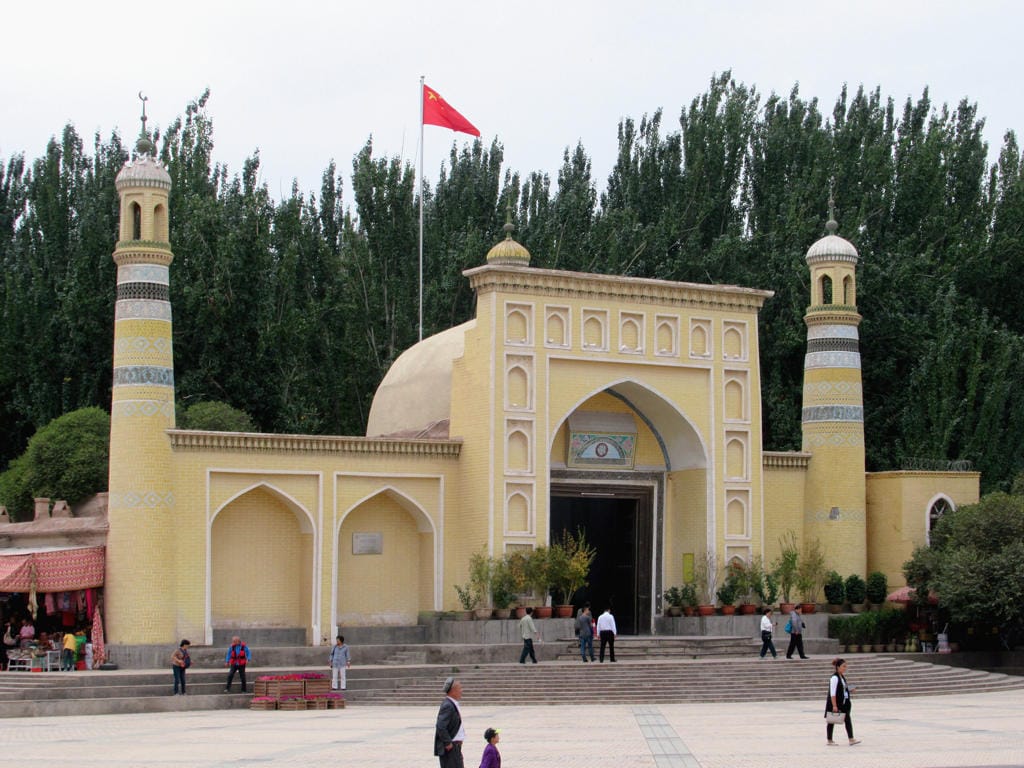
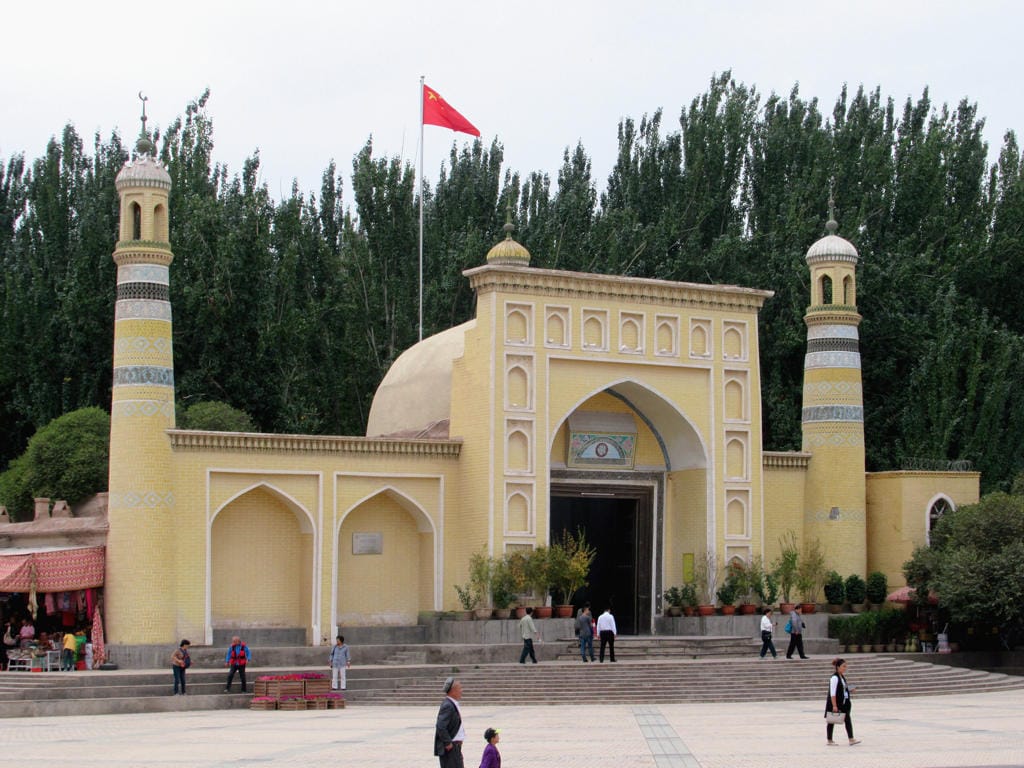
    A photo of the Id Kah Mosque, the largest in China, in Kashgar, Xinjiang, taken in 2017. The photographer noted that worshippers had their ID cards recorded. Image credit: David Stanley / CC By 2.0 

    Part I of this article discussed existing laws and regulations limiting religious expression in China, and it explored the case of Ismayil Sidiq, a Uyghur farmer serving a 10-year prison sentence for “promoting extremism” whose sentence was doubled after he “used a disguised and simplified method to perform namāz in the prison dormitory.” Namāz, commonly known as salah, refers to the pillar of the Islamic faith that obliges believers to pray five times a day. 

    Dui Hua’s research into court judgments, however, found a similar case where a Uyghur prisoner was sentenced in December 2019 to 18 months for Article 315 for conducting “illegal religious activity” on four occasions in Xinjiang’s Shihezi Prison. Prior to this, the Uyghur prisoner was serving his 20 years prison sentence for terrorism and promoting extremism. Despite being accused of conducting “illegal religious activity” on one more occasion, he was given an 18-month prison sentence for Article 315—half the length of Ismayil’s sentence. The judgment did not state whether namāz was involved. 

    Ismayil’s case is by no means an isolated incident, although what happened to him might have portended the worst possible outcome for performing namāz in prison. Dui Hua found cases where other Uyghur prisoners, while already serving lengthy prison sentences, were criminally prosecuted for Article 315 because of namāz. In the first case, a Uyghur serving his 10-year sentence for participating in a terrorist organization in Xinjiang’s Bayingolin Prison was found to have performed namāz on four occasions during the week of March 14, 2017. On each occasion, he awoke other cellmates, including those serving their sentences for endangering state security, to join his morning prayer. On May 21, he was put under 15 days of solitary confinement, during which he insisted on performing namāz five times a day and called on other cellmates to join his prayer. 

    A picture of Bayingolin Prison. Image credit: Shahit.biz 

    It would be a mistake to assume that prosecution against namāz only targets Uyghurs convicted of endangering state security, terrorism, or religious extremism offenses. In the second case, a Uyghur serving his seven-year sentence for “gathering a crowd to disturb social order,” a public order offense, in Korla Prison was indicted for Article 315 on June 13, 2017. The indictment stated that he refused to repent and that he insisted on performing namāz every day. Originally due for release on July 17, 2021, this Uyghur prisoner is likely to remain incarcerated until at least 2024. 

    In these two cases, the trial outcome is unclear. However, given what happened to Ismayil, they are highly likely to have been convicted and sentenced to additional prison terms under Article 315. 

    Besides Uyghurs, Muslim prisoners from other ethnic minority groups outside of Xinjiang also receive punishment for performing namāz. However, Dui Hua found that none of them were sentenced or criminally prosecuted like the abovementioned Uyghurs. These cases involved one Hui and two ethnic Dongxiang Muslims who were convicted of theft or drug-related crimes in Linxia, Gansu. The Hui and Dongxiang Muslims were only given warnings by prison authorities in July 2018. The duo allegedly showed remorse by stopping their prayers completely after they were warned. 

    Nevertheless, not all prisoners are as obedient. Ma Mene (马么呢), an ethnic Dongxiang Muslim, displayed a “bad attitude” and confronted prison guards after he was found praying in prison. Ma was placed under yanguan jixun (严管集训) for 15 days, a form of strict control for collective discipline training. During this period, he was unable to accrue clemency points to obtain early release. 

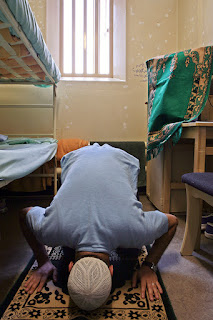
    A Muslim prisoner in the United States prays on his rug inside his cell at prison. Image credit: Andy Aitchison, PrisonImage / Creative Commons 

    China is not alone in denying Muslims their right to pray or worship meaningfully in prison. From reading the Quran to growing beards and restricting daily group prayers, Muslim prisoners in other countries have their religious rights deprived to varying degrees. In the United States, Muslims are overrepresented in state prisons, making up 9 percent of the prison population despite being 1 percent of the general population according to a 2019 report by Muslim Advocates. The report found that prisons in multiple states fail to accommodate Muslim dietary requirements, force male prisoners to shave their beards, and restrict group prayer.  

    As recently as April 2022, Muslim prisoners in the United States faced obstacles in accessing halal food, adequate dietary accommodations during Ramadan, and religious materials such as prayer mats and Qurans even as equivalent requirements are met for other faiths. Some progress has been made after civil society organizations filed lawsuits challenging religious restrictions in prison. For instance, federal prisons in the United States changed the national guideline in 2019 to accommodate Muslim congregational prayer services, which was previously restricted to three people, unless there is a security concern.  

    The use of “security concerns” to justify restrictions on religious expressions is an oft-used tool of governments. China, too, often cites security concerns to justify its religious crackdowns in- and outside of its carceral system. In a country which adheres so closely to the notion of “stability above all else,” it is unlikely that religious restrictions on namāz in prison will abate. Similarly, the right to free assembly through group prayer, a practice valued by Muslims and only recently permissible in US prisons, is likely to continue amongst China’s repression of religious expression and assembly. 

  • Punishing Namāz Prayer in Prison, Part II: “Illegal Religious Activity”

    Punishing Namāz Prayer in Prison, Part II: “Illegal Religious Activity”

    A photo of the Id Kah Mosque, the largest in China, in Kashgar, Xinjiang, taken in 2017. The photographer noted that worshippers had their ID cards recorded. Image credit: David Stanley / CC By 2.0

    Part I of this article discussed existing laws and regulations limiting religious expression in China, and it explored the case of Ismayil Sidiq, a Uyghur farmer serving a 10-year prison sentence for “promoting extremism” whose sentence was doubled after he “used a disguised and simplified method to perform namāz in the prison dormitory.” Namāz, commonly known as salah, refers to the pillar of the Islamic faith that obliges believers to pray five times a day.

    Dui Hua’s research into court judgments, however, found a similar case where a Uyghur prisoner was sentenced in December 2019 to 18 months for Article 315 for conducting “illegal religious activity” on four occasions in Xinjiang’s Shihezi Prison. Prior to this, the Uyghur prisoner was serving his 20 years prison sentence for terrorism and promoting extremism. Despite being accused of conducting “illegal religious activity” on one more occasion, he was given an 18-month prison sentence for Article 315—half the length of Ismayil’s sentence. The judgment did not state whether namāz was involved.

    Ismayil’s case is by no means an isolated incident, although what happened to him might have portended the worst possible outcome for performing namāz in prison. Dui Hua found cases where other Uyghur prisoners, while already serving lengthy prison sentences, were criminally prosecuted for Article 315 because of namāz. In the first case, a Uyghur serving his 10-year sentence for participating in a terrorist organization in Xinjiang’s Bayingolin Prison was found to have performed namāz on four occasions during the week of March 14, 2017. On each occasion, he awoke other cellmates, including those serving their sentences for endangering state security, to join his morning prayer. On May 21, he was put under 15 days of solitary confinement, during which he insisted on performing namāz five times a day and called on other cellmates to join his prayer.

    A picture of Bayingolin Prison. Image credit: Shahit.biz 

    It would be a mistake to assume that prosecution against namāz only targets Uyghurs convicted of endangering state security, terrorism, or religious extremism offenses. In the second case, a Uyghur serving his seven-year sentence for “gathering a crowd to disturb social order,” a public order offense, in Korla Prison was indicted for Article 315 on June 13, 2017. The indictment stated that he refused to repent and that he insisted on performing namāz every day. Originally due for release on July 17, 2021, this Uyghur prisoner is likely to remain incarcerated until at least 2024.

    In these two cases, the trial outcome is unclear. However, given what happened to Ismayil, they are highly likely to have been convicted and sentenced to additional prison terms under Article 315.

    Besides Uyghurs, Muslim prisoners from other ethnic minority groups outside of Xinjiang also receive punishment for performing namāz. However, Dui Hua found that none of them were sentenced or criminally prosecuted like the abovementioned Uyghurs. These cases involved one Hui and two ethnic Dongxiang Muslims who were convicted of theft or drug-related crimes in Linxia, Gansu. The Hui and Dongxiang Muslims were only given warnings by prison authorities in July 2018. The duo allegedly showed remorse by stopping their prayers completely after they were warned.

    Nevertheless, not all prisoners are as obedient. Ma Mene (马么呢), an ethnic Dongxiang Muslim, displayed a “bad attitude” and confronted prison guards after he was found praying in prison. Ma was placed under yanguan jixun (严管集训) for 15 days, a form of strict control for collective discipline training. During this period, he was unable to accrue clemency points to obtain early release.

    A Muslim prisoner in the United States prays on his rug inside his cell at prison. Image credit: Andy Aitchison, PrisonImage / Creative Commons

    China is not alone in denying Muslims their right to pray or worship meaningfully in prison. From reading the Quran to growing beards and restricting daily group prayers, Muslim prisoners in other countries have their religious rights deprived to varying degrees. In the United States, Muslims are overrepresented in state prisons, making up 9 percent of the prison population despite being 1 percent of the general population according to a 2019 report by Muslim Advocates. The report found that prisons in multiple states fail to accommodate Muslim dietary requirements, force male prisoners to shave their beards, and restrict group prayer.

    As recently as April 2022, Muslim prisoners in the United States faced obstacles in accessing halal food, adequate dietary accommodations during Ramadan, and religious materials such as prayer mats and Qurans even as equivalent requirements are met for other faiths. Some progress has been made after civil society organizations filed lawsuits challenging religious restrictions in prison. For instance, federal prisons in the United States changed the national guideline in 2019 to accommodate Muslim congregational prayer services, which was previously restricted to three people, unless there is a security concern.

    The use of “security concerns” to justify restrictions on religious expressions is an oft-used tool of governments. China, too, often cites security concerns to justify its religious crackdowns in- and outside of its carceral system. In a country which adheres so closely to the notion of “stability above all else,” it is unlikely that religious restrictions on namāz in prison will abate. Similarly, the right to free assembly through group prayer, a practice valued by Muslims and only recently permissible in US prisons, is likely to continue amongst China’s repression of religious expression and assembly.

  • Punishing Namāz Prayer in Prison, Part I: “Sabotaging Prison Supervision”

    Punishing Namāz Prayer in Prison, Part I: “Sabotaging Prison Supervision”

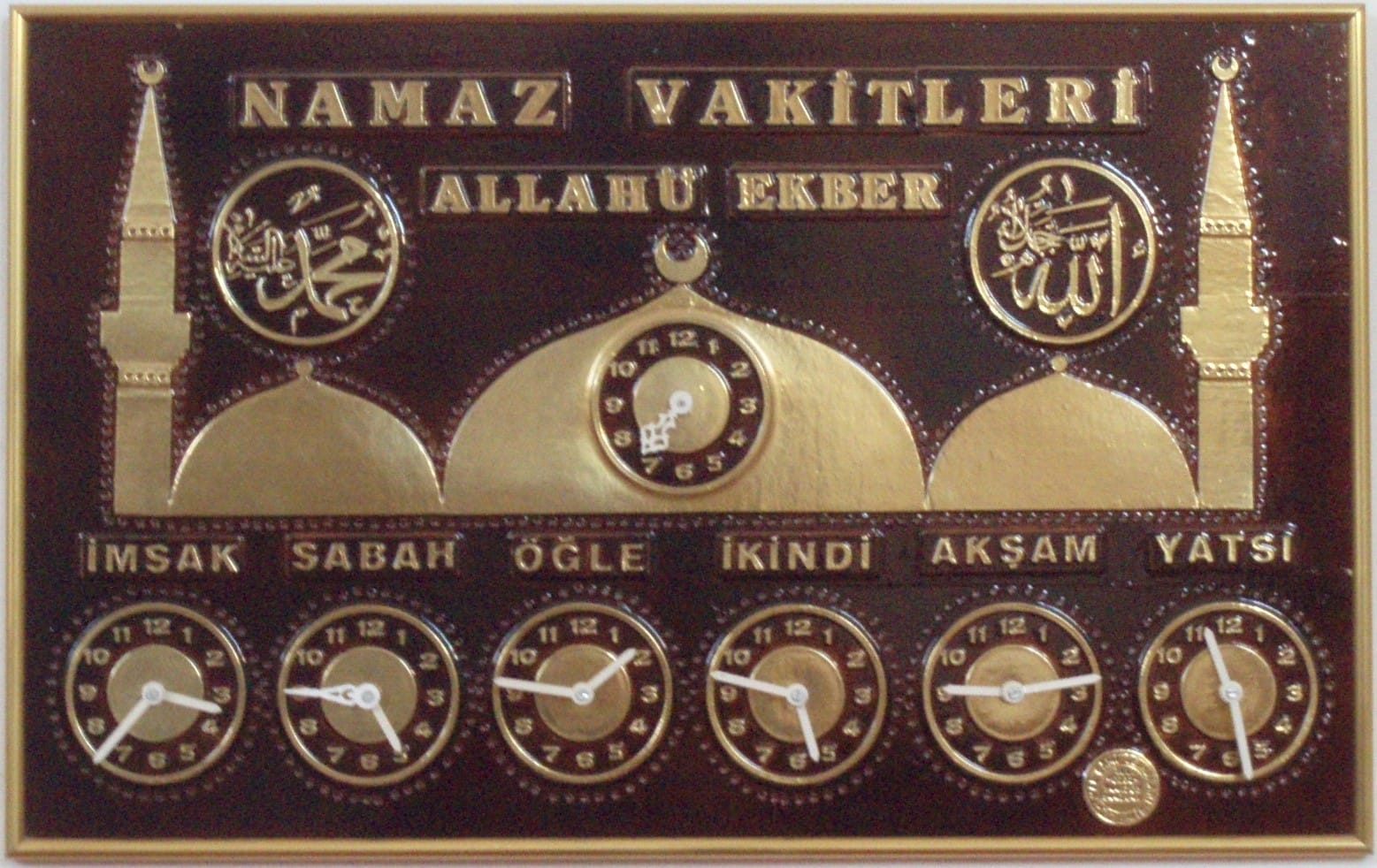
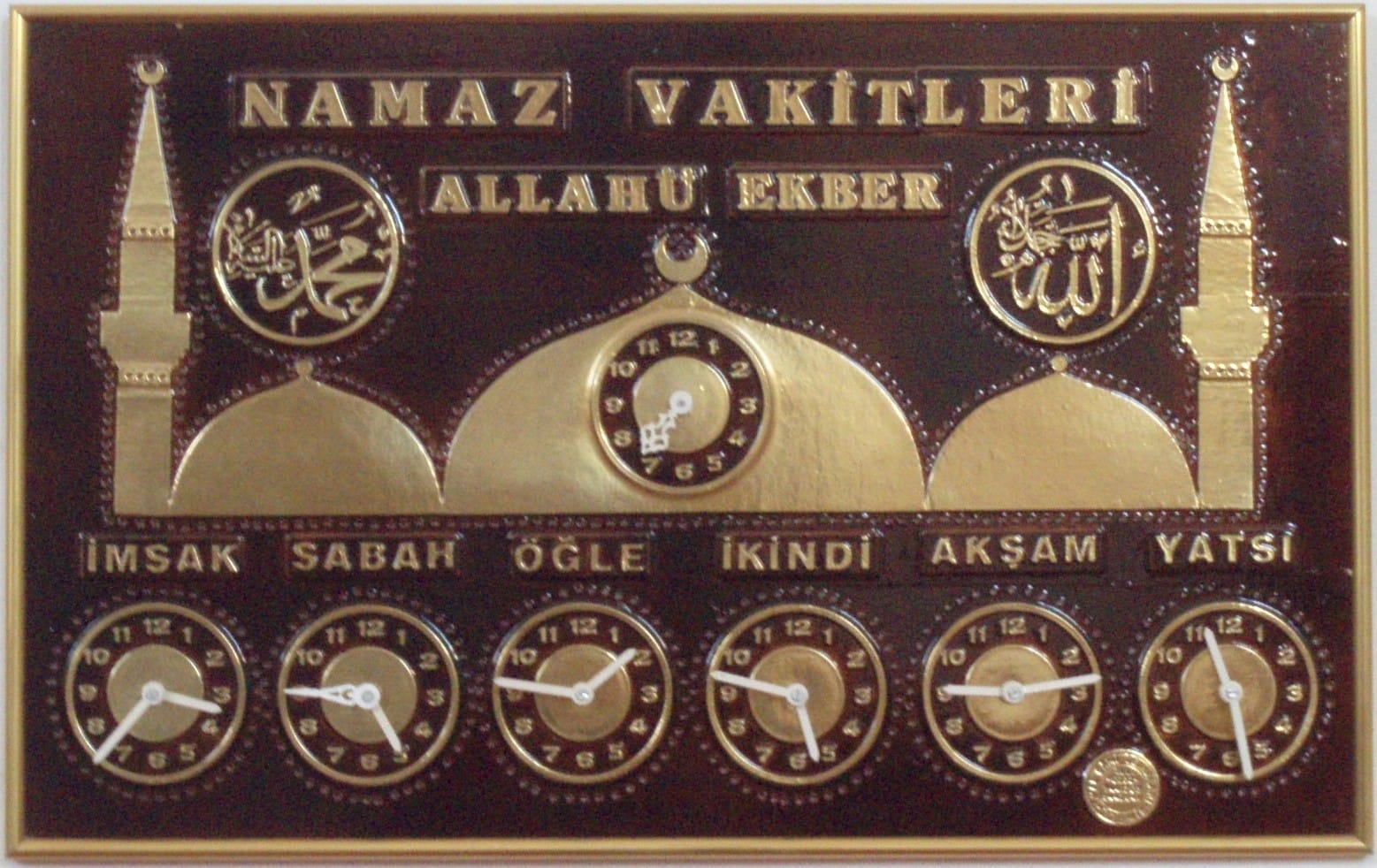
    A clock hanging in a Turkish mosque showing Muslim prayer times. Image credit: LooiNL 

    Muslims around the world are obliged to perform five daily prayers at dawn, midday, afternoon, sunset, and night. The ritual, commonly known as salah, is often called namazi (CN: 乃玛孜) in China, a Persian transliteration of namāz. Within China’s carceral system, all forms of religious worship, including namāz, are forbidden. Prisoners who covertly perform namāz are at risk of receiving harsh punishment, with the most serious penalty being a sentence extension. 

    This risk is well demonstrated in the case of Ismayil Sidiq. In May 2021, the BBC reported that the now-57-year-old Uyghur farmer was serving a 10-year prison sentence for “promoting extremism” in Kuitun Prison in the Xinjiang Production and Construction Corps when he had his sentence doubled after he “used a disguised and simplified method to perform namāz in the prison dormitory.” On May 29, 2018, the Kuitun Reclamation Area People’s Court convicted him of “sabotaging prison supervision” and “provoking ethnic hatred,” and handed down an additional prison term of 13 years. Ismayil has 16 more years to serve before completing his sentence on May 28, 2038. He will be 74 years old. 

    The four-page judgment gave a detailed account of what happened in Kuitun Prison. First searchable on China Judgements Online, the judgment is among the tens of thousands of sensitive cases taken offline in mid-2021. The judgment has since been archived and translated into English by the Xinjiang Victims Database. 

    A translation of the judgment against Ismayil. Image credit: Xinjiang Victims Database Twitter account 

    According to the judgment, Ismayil performed namāz on three occasions in the prison dormitory in early 2018. The first two took place on January 25 and February 17 after he realized that the time displayed on the television was the time for his final daily namāz. On March 3, on the pretext of needing to urinate, he secretly performed wudu, the washing ritual that Muslims perform before praying. After being discovered and stopped by his Uyghur cellmates, he became outraged and shouted at them asking, “Are you Uyghurs? Do Uyghurs enjoy reporting other Uyghurs like this?” 

    The court found clear and sufficient evidence of Ismayil sabotaging prison supervision because he “repeatedly engaged in covert religious activities in prison.” This crime alone afforded him a prison sentence of three years – the maximum penalty stipulated in Article 315 of the Criminal Law. Furthermore, he was found guilty of “provoking ethnic hatred” because the remarks he made to other Uyghur cellmates “sowed discord among the ethnic groups and created ethnic antagonism.” This crime also landed him the maximum prison sentence of 10 years as stipulated by Article 249. 

    An excerpt taken from academic journal Crime and Corrections reveals that namāz is among the religious activities explicitly banned in prisons and re-education-through-labor facilities through Xinjiang. Image credit: Crime and Corrections, (2001) Issue 4 

    While prisoners are allowed to retain their religious faith, prison authorities across China proscribe all forms of religious activities but allow prisoners to read religious books or silently chant scriptures. Article 2 of a provisional regulation issued by the Xinjiang Department of Justice explicitly prohibits all forms of religious activity such as participating in Ramadan, namāz, other forms of worship, or sermons in prisons and reeducation-through-labor facilities. However, many Muslim detainees and prisoners defied this prison rule and “shared a propensity to organize gangs when they perform namāz in groups,” according to an article published in Crime and Corrections in 2001. Congregational prayer, referred to as Salat al-Jama’ah, is highly valued among Muslims and is thought to be more spiritually enriching than solo prayer.  

    In Xinjiang, namāz is a matter of concern for managing prisoners serving their sentences for endangering state security. A 2008 policy document examining the challenges faced by Xinjiang prison authorities states that these prisoners not only distort the history of Xinjiang, spread rumors, and incite ethnic hatred, but they also “use acts such as hunger strikes, suicide, namāz and feigned illness to disobey management and refuse reform.” 

    Existing laws and regulations, however, have not clearly explained the criminal liabilities for performing namāz in prison. The crime of “sabotaging prison supervision,” defined in Article 315 of the Criminal Law, makes no mention of namāz or any other forms religious activity. It only stipulates that the following acts fall under the crime’s purview: (1) beating supervising personnel; (2) organizing other people under detention to sabotage supervision order; (3) assembling a crowd to make trouble, thereby disturbing normal supervision order; (4) beating, carrying out corporal punishment on or instigating other people to beat, carry out corporal punishment on other people under detention. 

    It is not immediately clear whether performing namāz fulfills the criteria of stipulation 2 as stated above. Assuming it does, Ismayil’s case might suggest that the three instances of namāz he performed on January 25, February 17, and March 3 of 2018 were already sufficient to reach the threshold for the maximum prison sentence of three years.  

    Read Part II.

  • Punishing Namāz Prayer in Prison, Part I: “Sabotaging Prison Supervision”

    Punishing Namāz Prayer in Prison, Part I: “Sabotaging Prison Supervision”

    A clock hanging in a Turkish mosque showing Muslim prayer times. Image credit: LooiNL 

    Muslims around the world are obliged to perform five daily prayers at dawn, midday, afternoon, sunset, and night. The ritual, commonly known as salah, is often called namazi (CN: 乃玛孜) in China, a Persian transliteration of namāz. Within China’s carceral system, all forms of religious worship, including namāz, are forbidden. Prisoners who covertly perform namāz are at risk of receiving harsh punishment, with the most serious penalty being a sentence extension.

    This risk is well demonstrated in the case of Ismayil Sidiq. In May 2021, the BBC reported that the now-57-year-old Uyghur farmer was serving a 10-year prison sentence for “promoting extremism” in Kuitun Prison in the Xinjiang Production and Construction Corps when he had his sentence doubled after he “used a disguised and simplified method to perform namāz in the prison dormitory.” On May 29, 2018, the Kuitun Reclamation Area People’s Court convicted him of “sabotaging prison supervision” and “provoking ethnic hatred,” and handed down an additional prison term of 13 years. Ismayil has 16 more years to serve before completing his sentence on May 28, 2038. He will be 74 years old.

    The four-page judgment gave a detailed account of what happened in Kuitun Prison. First searchable on China Judgements Online, the judgment is among the tens of thousands of sensitive cases taken offline in mid-2021. The judgment has since been archived and translated into English by the Xinjiang Victims Database.

    A translation of the judgment against Ismayil. Image credit: Xinjiang Victims Database Twitter account

    According to the judgment, Ismayil performed namāz on three occasions in the prison dormitory in early 2018. The first two took place on January 25 and February 17 after he realized that the time displayed on the television was the time for his final daily namāz. On March 3, on the pretext of needing to urinate, he secretly performed wudu, the washing ritual that Muslims perform before praying. After being discovered and stopped by his Uyghur cellmates, he became outraged and shouted at them asking, “Are you Uyghurs? Do Uyghurs enjoy reporting other Uyghurs like this?”

    The court found clear and sufficient evidence of Ismayil sabotaging prison supervision because he “repeatedly engaged in covert religious activities in prison.” This crime alone afforded him a prison sentence of three years – the maximum penalty stipulated in Article 315 of the Criminal Law. Furthermore, he was found guilty of “provoking ethnic hatred” because the remarks he made to other Uyghur cellmates “sowed discord among the ethnic groups and created ethnic antagonism.” This crime also landed him the maximum prison sentence of 10 years as stipulated by Article 249.

    An excerpt taken from academic journal Crime and Corrections reveals that namāz is among the religious activities explicitly banned in prisons and re-education-through-labor facilities through Xinjiang. Image credit: Crime and Corrections, (2001) Issue 4

    While prisoners are allowed to retain their religious faith, prison authorities across China proscribe all forms of religious activities but allow prisoners to read religious books or silently chant scriptures. Article 2 of a provisional regulation issued by the Xinjiang Department of Justice explicitly prohibits all forms of religious activity such as participating in Ramadan, namāz, other forms of worship, or sermons in prisons and reeducation-through-labor facilities. However, many Muslim detainees and prisoners defied this prison rule and “shared a propensity to organize gangs when they perform namāz in groups,” according to an article published in Crime and Corrections in 2001. Congregational prayer, referred to as Salat al-Jama’ah, is highly valued among Muslims and is thought to be more spiritually enriching than solo prayer.

    In Xinjiang, namāz is a matter of concern for managing prisoners serving their sentences for endangering state security. A 2008 policy document examining the challenges faced by Xinjiang prison authorities states that these prisoners not only distort the history of Xinjiang, spread rumors, and incite ethnic hatred, but they also “use acts such as hunger strikes, suicide, namāz and feigned illness to disobey management and refuse reform.”

    Existing laws and regulations, however, have not clearly explained the criminal liabilities for performing namāz in prison. The crime of “sabotaging prison supervision,” defined in Article 315 of the Criminal Law, makes no mention of namāz or any other forms religious activity. It only stipulates that the following acts fall under the crime’s purview: (1) beating supervising personnel; (2) organizing other people under detention to sabotage supervision order; (3) assembling a crowd to make trouble, thereby disturbing normal supervision order; (4) beating, carrying out corporal punishment on or instigating other people to beat, carry out corporal punishment on other people under detention.

    It is not immediately clear whether performing namāz fulfills the criteria of stipulation 2 as stated above. Assuming it does, Ismayil’s case might suggest that the three instances of namāz he performed on January 25, February 17, and March 3 of 2018 were already sufficient to reach the threshold for the maximum prison sentence of three years.

    Read Part II.

  • “All People Act Together” Supporters Imprisoned, Part II: Public Disruption, Limited Reach

    “All People Act Together” Supporters Imprisoned, Part II: Public Disruption, Limited Reach

    A logo used by the APAT. Image credit: 時事能見度 YouTube page 
    The “All People Act Together” (APAT), or quanmin gongzhen (全民共振) social media campaign was launched in early 2018 by Chinese dissidents overseas. The campaign encourages rights defenders to engage in collective action and protests on days of importance to China and the Chinese Communist Party.  
    Part I of this article focused on how the charge of “picking quarrels and provoking trouble” is used against APAT supporters. In such cases, supporters were imprisoned for their behavior on social media, including deleted private conversations. Part II looks at cases where supporters were charged with disrupting public services and preparing for a terrorist activity. 
    Disrupting Public Services 
    Dui Hua’s research into court judgments revealed that Li Yunzhu (李韫竹) was found guilty of injuring stability maintenance officers and sentenced to eight months in prison in Yinchuan, Ningxia, in August 2019. On February 24, 2019, the officers were sent by guobao, China’s domestic security police, to Li’s home to give her “thought reform” after she circulated footage with an APAT thumbnail tag of “Down with the CCP.” The video allegedly incited the Chinese people to defend their rights and take to the streets every day at 3 PM during the “Two Sessions,” China’s biggest annual gathering of its rubber stamp parliament and political advisory body which discuss plans for national priorities. 
    It is unclear what prompted Li to circulate the video or why she was drawn to APAT. The judgment only stated that Li was planning to lodge an appeal in Beijing in December 2018 over a consumer lawsuit but was persuaded by police to stay in her home province Ningxia. The police arranged for her appellate trial to begin the following March. Li refused the arrangement. She expressed concerns about being unable to travel to Beijing during the Two Sessions, despite knowing full well that transport disruptions are commonplace in order to allow for senior government and party leaders to travel to Beijing during the Two Sessions.  
    Li was angry upon discovering that the appellate trial date was decided without her consent. She allegedly insulted the stability maintenance officers and asked them to leave her home. She ended up throwing a kitchen knife which left one of them injured. Li completed her eight-month prison sentence for disrupting public services on October 25, 2019. 
    Preparing for a Terrorist Activity  
    Ethnic Korean Jin Bo (金波) was released from a Heilongjiang prison on April 26, 2022 for plotting what prosecutors called a “violent APAT activity” on May 1, 2018. He was found guilty of preparing for a terrorist activity, one of the terrorism/extremism offenses added to the Criminal Law in 2015. The charge stemmed from him possessing explosive devices and Molotov cocktails which prosecutors believed Jin would use on the Labor Day holiday in connection with APAT. 
    Jin admitted to making the explosives primarily to seek revenge for his 444-day wrongful imprisonment. In August 2014, Jin was taken into custody on suspicion of extortion. He was later acquitted and given state compensation. Jin’s father and father-in-law passed away while he was incarcerated. Jin felt guilty for not being able to arrange for their funerals and blamed his business partners for framing him. He also expressed disillusionment with petition bureau officials who repeatedly ignored his complaints. Jin scaled China’s Great Firewall to learn about APAT and took part in online discussions after his unsuccessful attempts to seek redress.  
    Jin’s case indicates that some people who lose trust in China’s justice system find APAT appealing. A substantial portion of the prosecutor’s arguments focused on the “reactionary,” “anti-party,” and “anti-China” comments Jin made online. In April 2018, he wrote “What is APAT for? For revolution! What is Revolution? As the name suggests, it aims to overthrow the old and establish the new.” Days before he was criminally detained on April 27, 2018, he claimed to have lost confidence in China and expressed desires to begin retaliation. He ordered materials to make explosives via WeChat, claiming that he might set himself ablaze and throw bombs at his business partners. Although Jin confessed to posting radical comments online, he stated in his defense that he did not personally know any “overseas pro-democracy activists” nor did he join any overseas terrorist organizations. 
    In this case, prosecutors characterized the whole APAT campaign as a “violent political activity” organized by overseas forces because of Jin’s way of expressing grievances. However, there is insufficient evidence that other APAT supporters in China or overseas call for violent political resistance. 
    Members of San Francisco’s Chinese community participating in the “May 1st National Resonance” event in front of the Chinese Consulate. Image credit: CK via RFA 

    APAT fell flat. Fewer netizens in China have answered the APAT appeal than during 2011 “Jasmine Revolution.” Overseas APAT supporters in the United States, Canada, and Australia reportedly organized small rallies outside of the Chinese consulates in 2018-2019, but these had  limited reach in China due in part to pervasive internet censorship and surveillance. Additionally, APAT was hotly disputed even within Chinese dissident circles, with some saying that it was an entrapment attempt devised by the Ministry of State Security to round up political dissenters in one fell swoop. Regardless of the controversy, Dui Hua believes that the four people discussed in this post represent a small portion of criminal cases and more people could have been sentenced for espousing support for APAT. More research is needed to uncover the fate and the acts of other APAT supporters, as well as their motivations for sympathizing with the campaign.  
  • “All People Act Together” Supporters Imprisoned, Part II: Public Disruption, Limited Reach

    “All People Act Together” Supporters Imprisoned, Part II: Public Disruption, Limited Reach

    A logo used by the APAT. Image credit: 時事能見度 YouTube page
    The “All People Act Together” (APAT), or quanmin gongzhen (全民共振) social media campaign was launched in early 2018 by Chinese dissidents overseas. The campaign encourages rights defenders to engage in collective action and protests on days of importance to China and the Chinese Communist Party.
    Part I of this article focused on how the charge of “picking quarrels and provoking trouble” is used against APAT supporters. In such cases, supporters were imprisoned for their behavior on social media, including deleted private conversations. Part II looks at cases where supporters were charged with disrupting public services and preparing for a terrorist activity.
    Disrupting Public Services 
    Dui Hua’s research into court judgments revealed that Li Yunzhu (李韫竹) was found guilty of injuring stability maintenance officers and sentenced to eight months in prison in Yinchuan, Ningxia, in August 2019. On February 24, 2019, the officers were sent by guobao, China’s domestic security police, to Li’s home to give her “thought reform” after she circulated footage with an APAT thumbnail tag of “Down with the CCP.” The video allegedly incited the Chinese people to defend their rights and take to the streets every day at 3 PM during the “Two Sessions,” China’s biggest annual gathering of its rubber stamp parliament and political advisory body which discuss plans for national priorities.
    It is unclear what prompted Li to circulate the video or why she was drawn to APAT. The judgment only stated that Li was planning to lodge an appeal in Beijing in December 2018 over a consumer lawsuit but was persuaded by police to stay in her home province Ningxia. The police arranged for her appellate trial to begin the following March. Li refused the arrangement. She expressed concerns about being unable to travel to Beijing during the Two Sessions, despite knowing full well that transport disruptions are commonplace in order to allow for senior government and party leaders to travel to Beijing during the Two Sessions.
    Li was angry upon discovering that the appellate trial date was decided without her consent. She allegedly insulted the stability maintenance officers and asked them to leave her home. She ended up throwing a kitchen knife which left one of them injured. Li completed her eight-month prison sentence for disrupting public services on October 25, 2019.
    Preparing for a Terrorist Activity  
    Ethnic Korean Jin Bo (金波) was released from a Heilongjiang prison on April 26, 2022 for plotting what prosecutors called a “violent APAT activity” on May 1, 2018. He was found guilty of preparing for a terrorist activity, one of the terrorism/extremism offenses added to the Criminal Law in 2015. The charge stemmed from him possessing explosive devices and Molotov cocktails which prosecutors believed Jin would use on the Labor Day holiday in connection with APAT.
    Jin admitted to making the explosives primarily to seek revenge for his 444-day wrongful imprisonment. In August 2014, Jin was taken into custody on suspicion of extortion. He was later acquitted and given state compensation. Jin’s father and father-in-law passed away while he was incarcerated. Jin felt guilty for not being able to arrange for their funerals and blamed his business partners for framing him. He also expressed disillusionment with petition bureau officials who repeatedly ignored his complaints. Jin scaled China’s Great Firewall to learn about APAT and took part in online discussions after his unsuccessful attempts to seek redress.
    Jin’s case indicates that some people who lose trust in China’s justice system find APAT appealing. A substantial portion of the prosecutor’s arguments focused on the “reactionary,” “anti-party,” and “anti-China” comments Jin made online. In April 2018, he wrote “What is APAT for? For revolution! What is Revolution? As the name suggests, it aims to overthrow the old and establish the new.” Days before he was criminally detained on April 27, 2018, he claimed to have lost confidence in China and expressed desires to begin retaliation. He ordered materials to make explosives via WeChat, claiming that he might set himself ablaze and throw bombs at his business partners. Although Jin confessed to posting radical comments online, he stated in his defense that he did not personally know any “overseas pro-democracy activists” nor did he join any overseas terrorist organizations.
    In this case, prosecutors characterized the whole APAT campaign as a “violent political activity” organized by overseas forces because of Jin’s way of expressing grievances. However, there is insufficient evidence that other APAT supporters in China or overseas call for violent political resistance.
    Members of San Francisco’s Chinese community participating in the “May 1st National Resonance” event in front of the Chinese Consulate. Image credit: CK via RFA 
    APAT fell flat. Fewer netizens in China have answered the APAT appeal than during 2011 “Jasmine Revolution.” Overseas APAT supporters in the United States, Canada, and Australia reportedly organized small rallies outside of the Chinese consulates in 2018-2019, but these had  limited reach in China due in part to pervasive internet censorship and surveillance. Additionally, APAT was hotly disputed even within Chinese dissident circles, with some saying that it was an entrapment attempt devised by the Ministry of State Security to round up political dissenters in one fell swoop. Regardless of the controversy, Dui Hua believes that the four people discussed in this post represent a small portion of criminal cases and more people could have been sentenced for espousing support for APAT. More research is needed to uncover the fate and the acts of other APAT supporters, as well as their motivations for sympathizing with the campaign.