Tag: Criminal Procedure Law

  • Curious Timing: Disapprovals & Presence of Counsel in SPC Death Penalty Reviews (Part II)

    Curious Timing: Disapprovals & Presence of Counsel in SPC Death Penalty Reviews (Part II)

    This Human Rights Journal entry is the second in a two-part series that explores the Supreme
    People’s Court’s recent disclosures of death penalty decisions, which were
    made following China’s human rights review in Geneva in January 2024.
    Part I
    explored the demographics of those sentenced to death as well as trends in
    types of crime and decision review times. This entry, Part II, looks at why
    some decisions were disapproved, the presence of counsel during rulings, and
    inconsistencies in the information provided by the
    disclosures.  

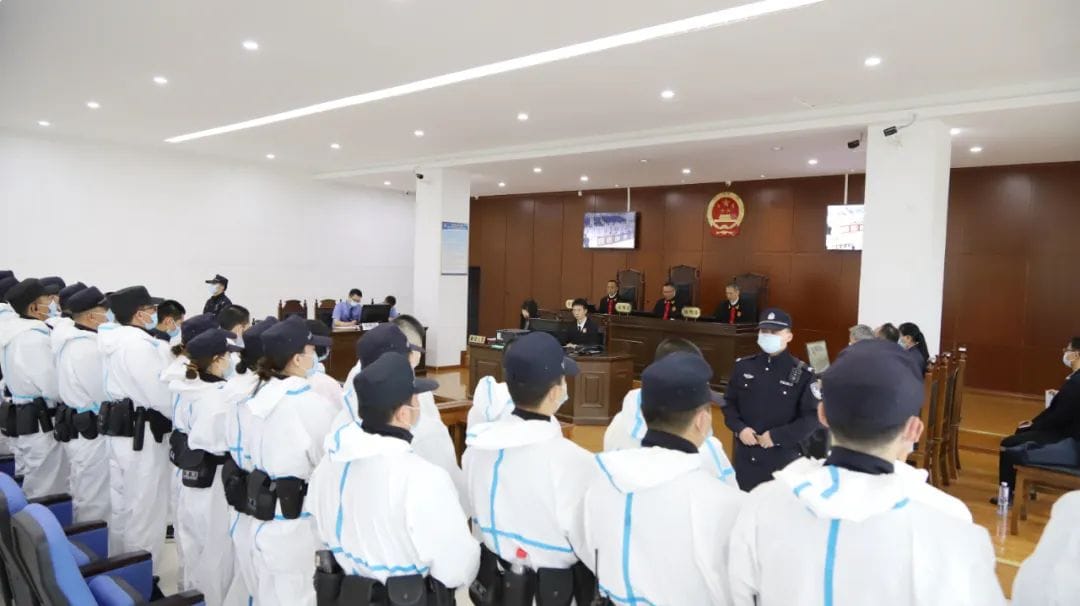
    The Sichuan High People’s Court upheld the judgments for a case of
    organized crime group and drug trafficking with 12 defendants in June
    2022. Three principal defendants were sentenced to death. Image
    credit: Sichuan High People’s Court, CCTV13

    Disapprovals & Reasons for

    This batch of death penalty reviews included 16 disapprovals (individuals).
    Prior to this, Dui Hua had only learned of four disapprovals from 2018 to
    2021 from CJO. Few disapprovals were recorded when the judgment
    website was still posting review decisions.
    In this batch, the SPC disapproved the death sentences for seven individuals
    convicted of murder and for nine people convicted of drug crimes. The SPC
    only issued four revised sentences along with the disapproval decisions in
    the new batch. The rest were sent back to provincial high courts to be
    retried. Of the SPC-revised sentences, three were resentenced to death with
    two-year reprieve and one was given a life sentence.
    In the reviews for the seven murder cases, one recurring reason for
    disapproval was that the defendant made amends to the victims’ families
    and/or received forgiveness by the families. “Receiving forgiveness”
    typically means that the defendant made monetary compensation to the
    victim’s family. Of the seven cases, five defendants made compensation
    and/or received forgiveness, but the exact amounts were not disclosed.
    There were two other disapproval reviews. One was the aforementioned case in
    which the SPC acknowledged as mitigating factors: the murder occurred during
    a civil dispute and the defendant had voluntarily surrendered. The other
    case involved two defendants, during which the SPC considered the younger
    male defendant to be an accessory offender to the female defendant in the
    killing. The SPC approved the execution of the female defendant and decided
    that the male defendant should not be executed immediately. Both of their
    death sentences were disapproved and sent back to the high court for
    retrial.
    For the nine drug crime convictions, the common reason for disapproval was
    that the SPC determined that the defendants were accessories to the crime.
    This was cited as one of the main reasons for disapproval in the reviews of
    seven defendants.
    A court room in Jiangsu Province. Image credit: Wikimedia Commons 
    In reviews for the other two defendants of drug cases, the SPC agreed with
    the lower courts that the defendants were the main offenders and had
    committed serious crimes (involving large quantities of drugs). However, the
    SPC still considered the defendants’ voluntary surrender and expressions of
    remorse as mitigating factors. Both cases were sent back to the Guangdong
    High Court for retrial.
    The SPC doesn’t seem to factor in the defendant’s age when considering
    whether or not to approve the death sentence. This batch of reviews suggests
    that the SPC has a higher threshold for accepting voluntary surrender as a
    reason for leniency. In reviewing the death penalty, the SPC often disputed
    whether the surrender itself was truly voluntary or if it occurred too long
    after the crime.
    Presence of Defense Counsel During Review 
    China passed the Legal Aid Law in August 2021, which expanded the scope for
    providing legal aid during the death penalty review process. The law went
    into effect on January 1, 2022. Prior to this, the convicted had to
    retain their own counsel during the final review.

    Although the sample size is small, Dui Hua sees the impact of the new law
    reflected in the decisions. For the 93 convicted, 54 individuals had legal
    counsel during the review process while 39 did not.

    Of those with legal counsel, the decisions revealed that 40 individuals
    had requested legal aid and that they received counsel in accordance with
    the law. Twelve individuals or their families retained their own counsel.
    Legal counsel was present at two reviews, but the decisions did not
    disclose details. This can be seen as a positive development insofar as
    the defendant’s due process rights are concerned. The possibility of
    having legal counsel present during the review process was made known to
    those under review and many accepted legal assistance.

    The documents do not disclose the reasons why individuals did not have
    legal representation during the review. This omission raises questions as
    to whether the individuals were aware of the opportunity or if they
    refused legal assistance.

    Table 6. Presence of counsel & review time
     
    If there was an impact on review time due to the presence of counsel, the
    result is not obvious. Their presence did not seem to significantly prolong
    the review process when compared to cases without counsel.
    Table 7. Presence of counsel & outcome


    The presence (or absence) of a counsel did not appear to have an impact on the
    outcome of the SPC review. The SPC seems to have based its decisions on
    evidence (findings presented by the procuratorate and the lower courts), the
    seriousness of the crime, its social impact, and the role played by the
    offenders. Also taken into account are the mitigating factors discussed above,
    mainly expressions of remorse and obtaining forgiveness from the victim’s
    family.
    Inconsistencies & Omissions
    Considering the importance of a review decision on the application of the
    death penalty by China’s highest court, there are important omissions in
    several documents.
    • The details of legal counsel were not disclosed in the decisions.
    • The ethnicity of 25 individuals, more than a quarter of the batch, were
      also omitted in the decisions.
    The new batch of documents also seems to break with past releases. Only one
    decision included the full name of the convicted, Lao Rongzhi (劳荣枝). Lao
    was accused of having been involved in several kidnappings and murders from
    1997 to 1999 and had been on the run for 20 years before she was apprehended
    in November 2019 in Xiamen, Fujian. Her case was sensationalized on social
    media. The SPC took slightly more than a year to complete the review. She
    was executed on December 18, 2023, in Nanchang, eight days after the SPC’s
    approval.
    Lao Rongzhi, at the Zhejiang High People’s Court for the appeal trial.
    The judgment was upheld by the court in November 2022. Image credit:
    Supreme People’s Procuratorate 

    All other documents did not disclose the full names of the convicted. A
    possible reason for obscuring the names might be to protect the victims’
    privacy, especially in cases where the victims were underage. However, even
    the SPC itself does not always follow this reasoning. In May 2023, to
    highlight the country’s determination to protect the rights of juveniles, the
    SPC announced in a news release that it had approved the executions of three
    individuals accused of serious assaults against underage girls. The SPC’s news
    release disclosed the full names and some details of the crimes. And even
    though the three cases were categorized as case study examples for crimes
    against juveniles, the full review decisions for the approvals were not
    released.

    In 2021, the SPC established the Office of Juvenile Trial Work with
    the purpose of protecting the rights of the child, such as by
    implementing trial procedures for juvenile defendants and
    strengthening punishments for crimes against juveniles. Image
    credit:
    chinacourt.org

    Curious Timing

    The timing of the release of this new batch of decisions is interesting. The
    first post date was almost immediately after the submission of China’s UPR
    in January 2024. Dui Hua,
    in its submission as an NGO with special consultative status, highlighted issues such as judicial transparency in death penalty review
    decisions. Other states parties and NGOs also highlighted the death penalty
    in China. In its response to UPR recommendations, China rejected 17
    recommendations from other countries concerning its use of the death
    penalty. Of these, 14 recommendations – almost all of them from European
    nations – called on China to enact a moratorium on the use of the death
    penalty or abolish it outright. Three recommendations urged China to
    restrict the number of crimes punishable by death and to stop applying it to
    non-violent crimes.
    Chen Xu (front, center), permanent representative of China to
    the UN office at Geneva, attends China’s UPR on January 26, 2024.
    Image credit: UNWebTVUNWebTV
    Issues surrounding the death penalty in China have long been a focus of UPRs.
    China is believed to be the world’s leading executioner, and the opacity with
    which it conducts executions was a recurring issue in the most recent review.
    The UN High Commissioner for Human Rights has repeatedly called for a
    moratorium on the executions, particularly executions in non-violent drug
    cases. The brief resumption of posting death penalty review decisions might be
    a reaction to these criticisms. The selected reviews give the impression that
    China’s judicial system is more deliberative and judicious, not simply a
    rubber stamp for decisions reached by lower courts as is often assumed. If
    these disclosures were an attempt to anticipate and mitigate such concerns,
    the omission of decisions on Uyghurs and Tibetans undermines confidence in the
    disclosures.
    A possible reason for the timing of the release is to showcase review time
    lengths and the Court’s efforts to arrive at fair, cautious decisions. These
    features refute criticisms that the SPC, and China’s justice system in
    general, simply validate rulings in cases that have already been decided.
    Additionally, even though the presence of legal counsel seemingly does not
    influence review times or outcomes, the provision of legal counsel during the
    review can nonetheless be seen as an indication that “due process” is
    respected throughout China’s judicial system.
    The launch of CJO in 2013 raised hopes about judicial transparency and
    legal reform in China. In its submission to China’s 2018 UPR, Dui Hua
    applauded this step and other measures that strengthened judicial
    transparency. Conversely, Dui Hua’s 2024 UPR submission detailed how the
    steady retreat from transparency has undermined the achievements that so many
    practitioners had applauded a decade ago.
    In the spirit of promoting judicial transparency, the Chinese government
    should be encouraged to continue releasing judgments, even for sensitive cases
    that can draw criticism and controversy, including cases involving the death
    penalty. A court’s willingness to explain itself can also build trust in a
    legal system that still remains partially in the shadows.
  • Curious Timing: SPC Death Penalty Reviews Posted after Universal Periodic Review (Part I)

    Curious Timing: SPC Death Penalty Reviews Posted after Universal Periodic Review (Part I)

    This Human Rights Journal entry is the first in a two-part series that explores the Supreme People’s Court’s recent disclosures of death penalty decisions made shortly after its human rights review in Geneva in January 2024. This post, Part I, looks at the demographics of those sentenced to death as well as trends in types of crime and decision review times. Part II explores reasons for disapprovals, the presence of counsel, and inconsistencies in the disclosures.  

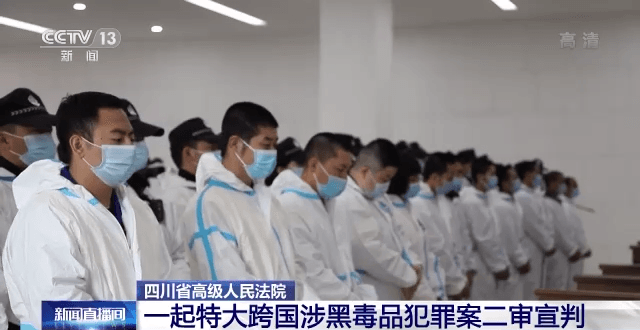
    The Sichuan High People’s Court upheld the judgments for a case of organized crime group and drug trafficking with 12 defendants in June 2022. Three principal defendants were sentenced to death. Image credit: Sichuan High People’s Court, CCTV13

    Three years after a large number of judgments and judicial decisions involving the use of the death penalty were removed from China Judgements Online (CJO) in 2021, the Supreme People’s Court (SPC) added a new batch of death penalty review decisions in February 2024. The posting of these death penalty reviews occurred one month after China’s human rights record was reviewed by the United Nations Human Rights Council’s Universal Periodic Review (UPR) in January 2024.

    CJO & Review Decisions

    The posting of judgments and judicial decisions on CJO began in 2013. The effort to boost transparency was applauded by legal scholars and professionals inside and outside of the country. CJO judgments and decisions were not confined to ordinary civil and criminal cases, but also cases considered to be sensitive. Hundreds of endangering state security (ESS) cases and thousands of cult-related cases were made available on CJO.

    Significant media attention from Western countries and NGOs like Dui Hua may have contributed to the Chinese government’s decision to purge documents related to ESS and cult cases in July 2021. Around the same time, CJO also removed SPC review decisions on the application of the death penalty.
    Death penalty review decisions re-surfaced on CJO in 2022. In July 2022, Dui Hua found that decisions taken offline a year ago had been reuploaded to CJO. However, CJO did not post new information until the submission of China’s report at the country’s fourth UPR in January 2024. The new information came from a batch of 86 newly uploaded review decisions issued from 2022 to 2023 concerning 93 individuals. Dui Hua also found that decisions originally posted in July 2022 had been reposted, with CJO showing December 1, 2022 as the new posting date.
    At the time of publication, CJO has not published any new death penalty reviews after March 2024. Also noteworthy is that seven months into 2024 no review decisions issued within the year 2024 have been published. This article reviews the batch of death penalty documents posted in February 2024. While the documents present some insights into an increasingly opaque system, there are omissions and inconsistencies that raise questions about the timing of the documents’ release.
    Source: CJO
    China’s trial system follows a two-hearing system in the trial process. The SPC’s decisions on the first- and second-hearing cases are final and must be enforced once promulgated. Cases that may result in a death penalty are first tried by an intermediate people’s court, and appellate trials are conducted by the relevant high people’s court. If the sentence is upheld, the judgment is submitted to the SPC for review. In death penalty cases, appeal is not an automatic process. In the batch of judgments examined in this post, all but one of the 93 convicted filed for appeal. All appeals were rejected by the high courts before they were submitted to the SPC for final review.
     
    Demographics of Those Sentenced to Death 
    Individuals in death penalty cases are mostly male and of Han ethnicity (see below). Notably absent from the newly posted death penalty reviews are cases involving Uyghurs, who are often accused of terrorism and ESS crimes, both of which carry the maximum penalty of death.
    Another group for whom no information was given is foreign nationals, despite such executions being reported during the period. For example, in 2023, the Chinese government executed a South Korean citizen who was convicted of drug trafficking.
    Table 1. Sex of those sentenced
    Table 2. Ethnicity of those sentenced
    The majority of individuals sentenced to death are aged between 30 to 59.
    Table 3. Age of those sentenced
    While the Criminal Law stipulates lighter punishments for elderly offenders, two individuals over 70 years old were given death sentences. The SPC approved the sentence for a man from Changchun who committed robbery. That man was 69 years old at the time of the crime, and the SPC took 268 days to complete the review.
    The SPC disapproved the death sentence for another man who murdered his neighbor on the grounds that the crime started as a civil dispute between two neighbors. Additionally, the offender surrendered to police. The case was sent back for retrial at the Jilin High People’s Court. The offender, an ethnic Mongolian, was 68 years old at the time of the crime. The SPC took 798 days to complete the review.
    In all, the SPC approved 77 death sentences and disapproved 16 of them.
    Crime
    The death penalty in China is typically invoked when the offender commits a violent crime resulting in the death of the victim. In the new batch of decisions, murder accounted for more than half of those sentenced while robbery made up a fifth of the documents. Drug-related crimes—trafficking, selling, transporting, and manufacturing—accounted for another fifth of those sentenced.
    When an individual was convicted of multiple crimes, the court typically applied the sentence of death to the crime considered to be the most severe. Life or fixed-term sentences were applied to the other crimes.

    Table 4. Crime type

    Dui Hua keeps track of the number of executions in China. The crimes committed in death penalty cases are similar to what we see in CJO. Of the 153 executions recorded by Dui Hua in 2023, 94 were of individuals convicted of murder, 13 of robbery, and 29 of drug crimes. In 2022, Dui Hua recorded 120 executions: 61 for murder, 11 for robbery, and 42 for drug crimes.
    Review Time 
    Review time refers to the number of days between the final high court trial and the SPC review decision. In instances where no appeal is filed, the first-instance trial is considered the final trial.
    In May 2020, Dui Hua examined a sample of 261 review decisions issued between 2015 and 2019 and made observations on the length of time between trial and the review decision. The SPC took an average of 190 days to issue a decision after the final trial by the court of second instance, with a median of 169 days. The longest review time was 573 days while the shortest was 20 days.
    In the newly published death penalty reviews, the SPC took an average of 461 days to issue the decisions, with a median of 390 days. The lengthiest review concerns a drug manufacturing case with five offenders. All of them were first-time offenders who manufactured hundreds of kilos of methamphetamine. The first-instance trial was concluded in Changde, Hunan, on January 25, 2019. The high court upheld the sentences on December 27, 2019. All five had been convicted of manufacturing drugs and had been sentenced to death by the lower courts. The SPC completed its review 1,079 days (almost three years) on November 28, 2022. In its decision, the SPC approved the death sentences for three of them and disapproved the sentences for two. One of the disapproved sentences was revised to death with two-year reprieve and the other was revised to a life sentence.
    The shortest SPC review took 93 days. The case involved drug trafficking, in which the convict was a recidivist who has been sentenced twice to short prison sentences for selling drugs. In his latest trial, Mr. Xiao was convicted of organizing and funding the trafficking of a large quantity of drugs obtained in Yunnan. He was sentenced to death by an intermediate court at the first-instance trial on February 15, 2022. The sentence was upheld by the high court on July 28, 2022. On October 29 of the same year, the SPC completed the review and approved the death sentence.
    Table 5. Review time
    Given the small (and selective) sample size, it is difficult to conclude with certainty that longer review times would necessarily result in disapproval. That said, the probability of disapproval rises when the Court takes longer to review. On the surface, the SPC appears to be more judicious. More reviews took a year or longer to complete compared to those completed within nine months.  

    Read Part II

  • Gray Matters: China’s Aging Prisoners

    Gray Matters: China’s Aging Prisoners

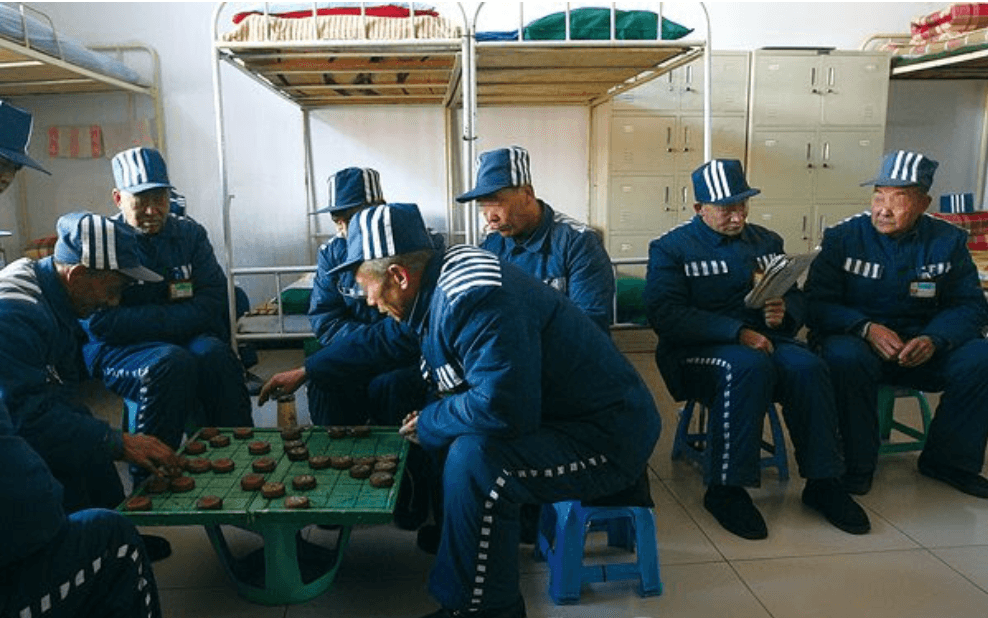
    Men play chess inside the “elderly” prisoner cell block of Henan No. 3 Prison. Image credit: Pan Xiaoling / Southern Weekly

    Decades of falling birth rates and rising life expectancy have made China one of the fastest aging countries. In 2023, its population aged 60 and above reached 297 million, or 21.1 percent of the population. While the aging population puts pressure on the already strained pension system and economic growth, elderly prisoners represent another pressing issue that requires more attention.  

    Unlike juvenile justice, there is a dearth of information about elderly prisoners. They don’t seem to be an area of concern prevalent or pervasive enough to warrant careful consideration. Even the Ministry of Justice acknowledged the lack of relevant statistical data and academic research, and that judicial organs and law enforcement have yet to develop sensitivity with regard to the conviction, sentencing, rehabilitation, and management of elderly offenders. 

    A Rising Estimate 

    The World Prison Brief indicated that that there were 1.69 million prisoners in China in 2017, the latest year for which statistics are available. According to Chinese sources, the number increased to two million in 2022 although it has not been officially verified. While publicly available sources have not disaggregated the prison population by age, a 2021 article by the China Prison Association estimated that elderly prisoners accounted for about 5.2 percent of the prison population, and of them 65 percent were male and 35 percent were female. If we extrapolate the estimate from the prison population, an estimated 88,000-104,000 elderly people are in jail today. 

    Chinese legal experts generally agree that the number of elderly prisoners has been surging. First, a substantial portion have aged naturally after serving long prison sentences. Following the 2011 eighth amendment to the Criminal Law, more people who were already serving lengthy terms have had to spend more time in jail. The amendment also increased the mandatory minimum time served for life sentences before their sentences can be commuted to fixed terms. In 2015, China introduced the sentence of life without the possibility of parole for people convicted of corruption and bribery. 

    Elderly crime has also soared over the years. Statistics provided by the Supreme People Court indicated that the number of defendants aged 60 or above increased fourfold from 5,759 in 1998 to 23,817 in 2016 (See Table 1). However, not all of those tried and convicted ended up in jail. The 2011 Criminal Law amendment allows courts to grant offenders aged 75 or older lighter punishments, such as suspended sentences, because they are seen to pose a smaller risk to society. 

    Table 1. Elderly Defendants from 1998-2016
    Source: Dui Hua, Records of People’s Courts Historical Judicial Statistics: 1949-2016 

    Types of Elderly Crime 

    In 2012, China Court Website published its findings on this under-researched topic and summarized the types of elderly crime: 

    1. Most crimes were committed solitarily and could be classified into two distinct categories:  
      • (i) crimes reflecting lower-level needs for survival or safety;  
      • (ii) crimes committed for obtaining economic benefits, venting negative emotions, or satisfying physiological needs; 
    2. The crimes of bribery, abetting, deception, and harboring tended to be perpetrated by elderly people with good education, social status, and work experience attained from their careers; 
    3. Violent crimes such as homicide, aggravated assault, and robbery were rare. Perpetrators typically had poor education and targeted vulnerable groups such as women and children as victims; 
    4. Elderly males committed crimes such as molestation, rape, fraud, theft and harboring while women tended to commit crimes of disrupting social order; 
    5. An increasing number of elderly people were involved in Article 300 “organizing/using a cult to undermine implementation of the law.” 

    Although the 2012 article did not provide relevant figures, Dui Hua’s research into court statistics released by the Supreme People’s Court showed a clear upward trend in “cult,” or unorthodox religion, cases involving elderly prisoners from 1998-2016. In 2016, the last year for which statistics are available, 523 defendants aged 60 or above were tried for Article 300, or 2.2 percent of all elderly defendants. In 1998, when Article 300 was in force for the first year, only three elderly people were tried. The number rose to 103 in 2003 when the crackdown on Falun Gong was in full swing.  

    Table 2. Elderly Defendants Tried for Article 300, 1998-2016
    Source: Dui Hua, Records of People’s Courts Historical Judicial Statistics: 1949-2016 

    Endangering State Security 
    Elderly offenders are not prominently represented in cases of endangering state security (ESS), China’s most serious political crimes. Statistics released by the Supreme People’s Court indicated that only 63 defendants aged over 60 or above were tried for ESS from 1998-2016. No elderly people were tried in ESS cases in 2013, 2014, and 2016. 
    Table 3. Elderly defendants in ESS cases, 1998-2016 
    Source: Dui Hua, Records of People’s Courts Historical Judicial Statistics: 1949-2016 

    Dui Hua previously reported the case of Chen Zhaolu (陈兆祿), one of the China’s oldest ESS prisoners. Born on December 9, 1917, in Guangzhou, Chen became a Hong Kong resident in 1968 when he started working for Xinhua News Agency – then China’s de facto consulate in Hong Kong. Eighteen years after his retirement, on November 25, 2003, Chen was detained in Guangzhou on suspicion of espionage. On January 19, 2004, the Guangzhou Intermediate People’s Court sentenced Chen to 13 years’ imprisonment. At age 86, he was incarcerated in the elderly prisoner cell block of Guangzhou Prison, Guangdong’s “model prison.” Chen was given a nine-month sentence reduction in 2006 and a 16-month sentence reduction in 2008. He was granted medical parole for a period of three years on September 2, 2009. His sentence expired in October 2014. 
    More recently, US citizen and Hong Kong resident Leung Shing-wan (梁成运, aka John Leung) was convicted of espionage and sentenced to life imprisonment in 2023 in Suzhou at the age of 78. Such heavy terms are rare for elderly offenders and for foreign nationals in China. Leung was the chairman of the Association for the Promotion of the Peaceful Reunification of China in Texas. The association is believed to be connected to the Chinese Communist Party’s United Front Work Department tasked with promoting Beijing’s claim over Taiwan. His case was showcased on the 10th National Security Education Day on April 15, 2024. 
    The Intermediate People’s Court of Suzhou, Jiangsu. (Inset) Leung Shing-wan, who was 78 years old when the court convicted him. Image credit: Cantonese Group Cartography / Radio Free Asia

    Leniency & Clemency 
    While individuals aged 60 or above are generally considered elderly, leniency is now granted at a higher age threshold. The Public Security Administration Punishments Law grants public security the discretion to not impose administrative detention on elderly people over 70 years old, even in cases of serious violations of public security management.  
    Additionally, the Criminal Law stipulates lighter punishments for individuals over age 75. Following the 2011 amendment, they cannot be subjected to the death penalty unless the offender has committed an act of particular cruelty. As an indication of the impact this has had, the number of Chinese capital cases involving people over 70 is fewer than 10 cases per year in the early 2010s, compared to the estimated 4,000 people executed in China in 2011. 
    The amendment also expanded the scope of leniency by encouraging the use of lighter punishment and suspended sentences to those who commit an intentional crime at the age of 75 or greater. Some critics have similarly argued that this age is too high to have any real impact. 
    Provincial authorities have also taken it upon themselves to expound on how elderly offenders are treated with more leniency. In 2014, the Sichuan High People’s Court issued a guiding opinion on the sentencing of elderly prisoners. Offenders of intentional crimes aged 65-74 can have their sentences mitigated by 30 percent. The mitigation length increases to 40 percent for those aged 75 or above. Elderly offenders who commit crimes of negligence can also have their penalty mitigated by 50 percent. The extent of leniency is also determined by the motive, time, method, severity of the crime, truthfulness of their confessions, and willingness to repent. 
    In 1991, businessman John Kamm, now executive director of Dui Hua, visited a prison in Guangdong Province. He went to the prison to ask about two members of the Shouters, an “unorthodox religious group.” Upon arrival, Kamm was told that both men had been granted medical parole shortly before he arrived at the prison. The warden claimed that the prison authorities had the discretion to grant medical parole to prisoners over the age of 70. Dui Hua was unable to verify this claim.  
    In January 2011, provincial authorities in Anhui grant parole or sentence reductions to 151 elderly or disabled prisoners. Image credit: Legal Daily 

    Since Xi Jinping became President in 2012, he has issued two special pardons benefitting specific groups of elderly prisoners (Xi was the first leader to use his power to grant special pardons since Mao Zedong. No special pardons were issued between 1975 and 2015).  
    1. Of the 31,527 people pardoned in 2015, fifty were veterans of the War of Resistance Against Japan (World War II) and the War of Liberation (the Chinese Civil War), 1,428 were veterans of foreign wars who were not convicted of serious crimes, and 122 were over 75 years old “with serious physical difficulties” and “unable to take care of themselves.”  
    2. In 2019, Xi announced the second special pardon to mark the 70th founding anniversary of the People’s Republic of China. This resulted in 15,858 people receiving clemency. It remains to be seen whether Xi will announce a third pardon in 2025 to celebrate the 80th anniversary of the end of World War II. 
    Besides the special pardons, releases of elderly prisoners have been rare. An exception was in 2009, when Chinese news media reported that approximately 2,000 elderly, sick, and disabled prisoners were given parole or allowed to temporarily serve sentences outside prison in part to alleviate prison overcrowding. At the time, 5,000 elderly, sick, and disabled prisoners were reportedly held in Sichuan prisons. Another mass release, albeit on a lesser scale, took place in Ningxia also in 2009. Nearly 100 elderly prisoners were granted parole. This clemency took place following a study which revealed that 117 or almost half of the elderly, sick, and handicapped prisoners in Yingchuan Prison and Ningxia Women’s Prison had not received any clemency from 2007-2009. 
    On December 15, 2008, a 54-year-old female prisoner returns home after receiving parole and being released from Chengdu Women’s Prison. Her sentence was set to expire in March 2010. Image credit: Sina News 

    In carceral facilities, restraint devices are prohibited on elderly prisoners under normal circumstances. Alongside the weak, ill, and handicapped, elderly prisoners are also exempt from prison labor. While Chinese government sources confirmed that around 10 percent of the prison population in 1990 were exempt from physical labor, recent figures have not been made publicly available. Instead, elderly prisoners are assessed by their willingness to express remorse and their performance in education rehabilitation.  
    Health Issues 
    Prisons are designed to prevent criminals from escaping, not to cater to the elderly. They often have poor lighting, steep stairs, and dim corridors unsuited for elderly prisoners. While these prisoners are typically held in special prison wards along with the ill, weak, and disabled, high bunk beds and pit-style urinals are commonplace and can be physically challenging for elderly prisoners.  
    An article published in an academic journal in 2021 examined the health problems of elderly prisoners. The author cited a survey conducted in an elderly ward in Hebei. Of them, over half suffered from cardiovascular diseases, followed by 7.3 percent from tuberculosis, 6.7 percent from diabetes, 2.8 percent from hepatitis, 2.3 percent from asthma, and 2.2 percent from spondylitis. Citing research published in 2018, the study revealed that 57 percent of the elderly in an unnamed Shanghai prison were on daily or regular medication. 
    The cost of incarcerating elderly prisoners has surged because of their medical needs. Hospitalization expenses for elderly prisoners in an unnamed prison in a western province rose 77 percent in three years to 15,900 yuan in 2016. Hospitalization alone exceeded 76 percent of the budget allocated for medical care. In a women’s prison also in the western province, the government’s financial allocation for inmates’ medical costs in 2015 could only meet one-sixth of its actual medical expenses. In most provinces, actual medical expenses for inmates similarly exceeded the standard financial allocation by more than 50 percent. Elderly prisoners are said to be the leading cause of the surge in medical costs, according to the author. 
    Discriminatory Treatment 
    Many elderly political prisoners are known to be ailing, but they have been denied sufficient care in prison. Prominent journalist Gao Yu (高瑜) began serving her five-year prison sentence for illegally trafficking in state secrets for a foreign entity at age 71. The crime stemmed from her leaking “Document No.9,” an internal notice by the Chinese government warning members against promoting “universal values” such as human rights. While incarcerated, she suffered from chronic heart pain, high blood pressure, a form of inner ear disorder called Ménière’s disease, and an undiagnosed chronic skin allergy. She was denied medications she took when living at home and access to specialists to assess and treat her. Gao had to wait two full years before she was admitted to a Beijing hospital to receive treatment. 
     
    Journalist Gao Yu in the Beijing’s Anzhen Hospital after her garden and office were demolished, April 5, 2016. Image credit: Su Yutong / Radio Free Asia

    Despite their failing health, clemency is not guaranteed for prisoners convicted of politically motivated crimes. Wang Bingzhang (王炳章), born in 1947, continues to serve his life sentence in Guangdong’s Shaoguan Prison 22 years into his sentence. Wang is a veteran dissident who founded the China Democracy & Justice Party. In 2003, he was sentenced to life imprisonment for espionage and organizing a terrorist organization. Information given to Dui Hua by a Chinese government interlocutor confirmed that Wang suffered from thrombophlebitis, varicose veins, “sudden” bradycardia, tinea, and allergic rhinitis. He had suffered a mild stroke. Wang was in prolonged solitary confinement and subjected to daily “political study” meant to get him to write confessions and admit his crimes. Updates provided by his family in March 2023 revealed that Wang had contracted Covid-19 earlier that year, and that he was in constant dental pain and needed dental implants after eight of his teeth had fallen out. However, such dental care is not available in Shaoguan Prison. 
    China has a track record in depriving political prisoners of medical care. Nobel Peace Prize Laureate Liu Xiaobo died from liver cancer in 2017 at age 61. Medical parole was granted only when his cancer had advanced. Wang Bingzhang, aged 77 this year, has yet to have his life sentence commuted despite repeated applications for medical parole and clemency over the past two decades. Such discriminatory treatment strengthens the fear that the Chinese government will simply let ailing elderly political prisoners die behind bars. 
    Wang Bingzhang, aged 77 this year, has yet to have his life sentence commuted despite repeated applications for medical parole. Image credit: Raoul Wallenberg Centre 

    Prisons are responsible for the well-being of all prisoners regardless of their crimes. They should ensure that everyone has immediate access to the specialist care they need. If such care is unavailable in prison, prisoners should be transferred to a hospital before their conditions worsen. Rule 27 of the UN Standard Minimum Rules for the Treatment of Prisoners states that “All prisons shall ensure prompt access to medical attention in urgent cases. Prisoners who require specialized treatment or surgery shall be transferred to specialized institutions or civil hospitals. Where a prison service has its own hospital facilities, they shall be adequately staffed and equipped to provide prisoners transferred to them with appropriate treatment and care.” 

  • Gray Matters: China’s Aging Prisoners

    Gray Matters: China’s Aging Prisoners

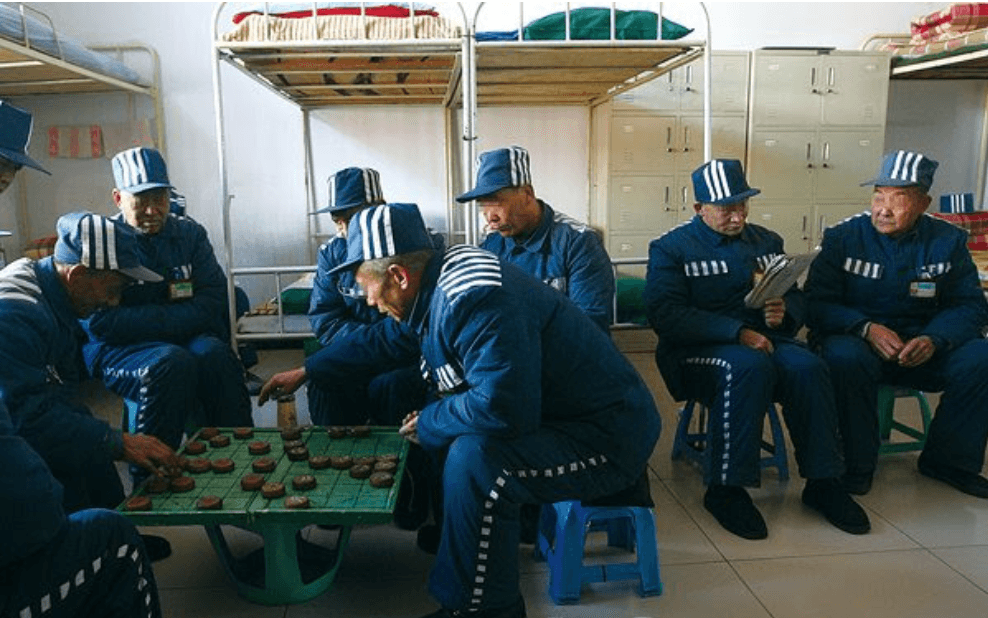
    Men play chess inside the “elderly” prisoner cell block of Henan No. 3 Prison. Image credit: Pan Xiaoling / Southern Weekly

    Decades of falling birth rates and rising life expectancy have made China one of the fastest aging countries. In 2023, its population aged 60 and above reached 297 million, or 21.1 percent of the population. While the aging population puts pressure on the already strained pension system and economic growth, elderly prisoners represent another pressing issue that requires more attention.

    Unlike juvenile justice, there is a dearth of information about elderly prisoners. They don’t seem to be an area of concern prevalent or pervasive enough to warrant careful consideration. Even the Ministry of Justice acknowledged the lack of relevant statistical data and academic research, and that judicial organs and law enforcement have yet to develop sensitivity with regard to the conviction, sentencing, rehabilitation, and management of elderly offenders.

    A Rising Estimate 

    The World Prison Brief indicated that that there were 1.69 million prisoners in China in 2017, the latest year for which statistics are available. According to Chinese sources, the number increased to two million in 2022 although it has not been officially verified. While publicly available sources have not disaggregated the prison population by age, a 2021 article by the China Prison Association estimated that elderly prisoners accounted for about 5.2 percent of the prison population, and of them 65 percent were male and 35 percent were female. If we extrapolate the estimate from the prison population, an estimated 88,000-104,000 elderly people are in jail today.

    Chinese legal experts generally agree that the number of elderly prisoners has been surging. First, a substantial portion have aged naturally after serving long prison sentences. Following the 2011 eighth amendment to the Criminal Law, more people who were already serving lengthy terms have had to spend more time in jail. The amendment also increased the mandatory minimum time served for life sentences before their sentences can be commuted to fixed terms. In 2015, China introduced the sentence of life without the possibility of parole for people convicted of corruption and bribery.

    Elderly crime has also soared over the years. Statistics provided by the Supreme People Court indicated that the number of defendants aged 60 or above increased fourfold from 5,759 in 1998 to 23,817 in 2016 (See Table 1). However, not all of those tried and convicted ended up in jail. The 2011 Criminal Law amendment allows courts to grant offenders aged 75 or older lighter punishments, such as suspended sentences, because they are seen to pose a smaller risk to society.

    Table 1. Elderly Defendants from 1998-2016
    Source: Dui Hua, Records of People’s Courts Historical Judicial Statistics: 1949-2016

    Types of Elderly Crime 

    In 2012, China Court Website published its findings on this under-researched topic and summarized the types of elderly crime:

    1. Most crimes were committed solitarily and could be classified into two distinct categories:
      • (i) crimes reflecting lower-level needs for survival or safety;
      • (ii) crimes committed for obtaining economic benefits, venting negative emotions, or satisfying physiological needs;
    2. The crimes of bribery, abetting, deception, and harboring tended to be perpetrated by elderly people with good education, social status, and work experience attained from their careers;
    3. Violent crimes such as homicide, aggravated assault, and robbery were rare. Perpetrators typically had poor education and targeted vulnerable groups such as women and children as victims;
    4. Elderly males committed crimes such as molestation, rape, fraud, theft and harboring while women tended to commit crimes of disrupting social order;
    5. An increasing number of elderly people were involved in Article 300 “organizing/using a cult to undermine implementation of the law.”

    Although the 2012 article did not provide relevant figures, Dui Hua’s research into court statistics released by the Supreme People’s Court showed a clear upward trend in “cult,” or unorthodox religion, cases involving elderly prisoners from 1998-2016. In 2016, the last year for which statistics are available, 523 defendants aged 60 or above were tried for Article 300, or 2.2 percent of all elderly defendants. In 1998, when Article 300 was in force for the first year, only three elderly people were tried. The number rose to 103 in 2003 when the crackdown on Falun Gong was in full swing.

    Table 2. Elderly Defendants Tried for Article 300, 1998-2016
    Source: Dui Hua, Records of People’s Courts Historical Judicial Statistics: 1949-2016
    Endangering State Security 
    Elderly offenders are not prominently represented in cases of endangering state security (ESS), China’s most serious political crimes. Statistics released by the Supreme People’s Court indicated that only 63 defendants aged over 60 or above were tried for ESS from 1998-2016. No elderly people were tried in ESS cases in 2013, 2014, and 2016.
    Table 3. Elderly defendants in ESS cases, 1998-2016
    Source: Dui Hua, Records of People’s Courts Historical Judicial Statistics: 1949-2016
    Dui Hua previously reported the case of Chen Zhaolu (陈兆祿), one of the China’s oldest ESS prisoners. Born on December 9, 1917, in Guangzhou, Chen became a Hong Kong resident in 1968 when he started working for Xinhua News Agency – then China’s de facto consulate in Hong Kong. Eighteen years after his retirement, on November 25, 2003, Chen was detained in Guangzhou on suspicion of espionage. On January 19, 2004, the Guangzhou Intermediate People’s Court sentenced Chen to 13 years’ imprisonment. At age 86, he was incarcerated in the elderly prisoner cell block of Guangzhou Prison, Guangdong’s “model prison.” Chen was given a nine-month sentence reduction in 2006 and a 16-month sentence reduction in 2008. He was granted medical parole for a period of three years on September 2, 2009. His sentence expired in October 2014.
    More recently, US citizen and Hong Kong resident Leung Shing-wan (梁成运, aka John Leung) was convicted of espionage and sentenced to life imprisonment in 2023 in Suzhou at the age of 78. Such heavy terms are rare for elderly offenders and for foreign nationals in China. Leung was the chairman of the Association for the Promotion of the Peaceful Reunification of China in Texas. The association is believed to be connected to the Chinese Communist Party’s United Front Work Department tasked with promoting Beijing’s claim over Taiwan. His case was showcased on the 10th National Security Education Day on April 15, 2024.
    The Intermediate People’s Court of Suzhou, Jiangsu. (Inset) Leung Shing-wan, who was 78 years old when the court convicted him. Image credit: Cantonese Group Cartography / Radio Free Asia
    Leniency & Clemency 
    While individuals aged 60 or above are generally considered elderly, leniency is now granted at a higher age threshold. The Public Security Administration Punishments Law grants public security the discretion to not impose administrative detention on elderly people over 70 years old, even in cases of serious violations of public security management.
    Additionally, the Criminal Law stipulates lighter punishments for individuals over age 75. Following the 2011 amendment, they cannot be subjected to the death penalty unless the offender has committed an act of particular cruelty. As an indication of the impact this has had, the number of Chinese capital cases involving people over 70 is fewer than 10 cases per year in the early 2010s, compared to the estimated 4,000 people executed in China in 2011.
    The amendment also expanded the scope of leniency by encouraging the use of lighter punishment and suspended sentences to those who commit an intentional crime at the age of 75 or greater. Some critics have similarly argued that this age is too high to have any real impact.
    Provincial authorities have also taken it upon themselves to expound on how elderly offenders are treated with more leniency. In 2014, the Sichuan High People’s Court issued a guiding opinion on the sentencing of elderly prisoners. Offenders of intentional crimes aged 65-74 can have their sentences mitigated by 30 percent. The mitigation length increases to 40 percent for those aged 75 or above. Elderly offenders who commit crimes of negligence can also have their penalty mitigated by 50 percent. The extent of leniency is also determined by the motive, time, method, severity of the crime, truthfulness of their confessions, and willingness to repent.
    In 1991, businessman John Kamm, now executive director of Dui Hua, visited a prison in Guangdong Province. He went to the prison to ask about two members of the Shouters, an “unorthodox religious group.” Upon arrival, Kamm was told that both men had been granted medical parole shortly before he arrived at the prison. The warden claimed that the prison authorities had the discretion to grant medical parole to prisoners over the age of 70. Dui Hua was unable to verify this claim.
    In January 2011, provincial authorities in Anhui grant parole or sentence reductions to 151 elderly or disabled prisoners. Image credit: Legal Daily
    Since Xi Jinping became President in 2012, he has issued two special pardons benefitting specific groups of elderly prisoners (Xi was the first leader to use his power to grant special pardons since Mao Zedong. No special pardons were issued between 1975 and 2015).
    1. Of the 31,527 people pardoned in 2015, fifty were veterans of the War of Resistance Against Japan (World War II) and the War of Liberation (the Chinese Civil War), 1,428 were veterans of foreign wars who were not convicted of serious crimes, and 122 were over 75 years old “with serious physical difficulties” and “unable to take care of themselves.”
    2. In 2019, Xi announced the second special pardon to mark the 70th founding anniversary of the People’s Republic of China. This resulted in 15,858 people receiving clemency. It remains to be seen whether Xi will announce a third pardon in 2025 to celebrate the 80th anniversary of the end of World War II.
    Besides the special pardons, releases of elderly prisoners have been rare. An exception was in 2009, when Chinese news media reported that approximately 2,000 elderly, sick, and disabled prisoners were given parole or allowed to temporarily serve sentences outside prison in part to alleviate prison overcrowding. At the time, 5,000 elderly, sick, and disabled prisoners were reportedly held in Sichuan prisons. Another mass release, albeit on a lesser scale, took place in Ningxia also in 2009. Nearly 100 elderly prisoners were granted parole. This clemency took place following a study which revealed that 117 or almost half of the elderly, sick, and handicapped prisoners in Yingchuan Prison and Ningxia Women’s Prison had not received any clemency from 2007-2009.
    On December 15, 2008, a 54-year-old female prisoner returns home after receiving parole and being released from Chengdu Women’s Prison. Her sentence was set to expire in March 2010. Image credit: Sina News
    In carceral facilities, restraint devices are prohibited on elderly prisoners under normal circumstances. Alongside the weak, ill, and handicapped, elderly prisoners are also exempt from prison labor. While Chinese government sources confirmed that around 10 percent of the prison population in 1990 were exempt from physical labor, recent figures have not been made publicly available. Instead, elderly prisoners are assessed by their willingness to express remorse and their performance in education rehabilitation.
    Health Issues 
    Prisons are designed to prevent criminals from escaping, not to cater to the elderly. They often have poor lighting, steep stairs, and dim corridors unsuited for elderly prisoners. While these prisoners are typically held in special prison wards along with the ill, weak, and disabled, high bunk beds and pit-style urinals are commonplace and can be physically challenging for elderly prisoners.
    An article published in an academic journal in 2021 examined the health problems of elderly prisoners. The author cited a survey conducted in an elderly ward in Hebei. Of them, over half suffered from cardiovascular diseases, followed by 7.3 percent from tuberculosis, 6.7 percent from diabetes, 2.8 percent from hepatitis, 2.3 percent from asthma, and 2.2 percent from spondylitis. Citing research published in 2018, the study revealed that 57 percent of the elderly in an unnamed Shanghai prison were on daily or regular medication.
    The cost of incarcerating elderly prisoners has surged because of their medical needs. Hospitalization expenses for elderly prisoners in an unnamed prison in a western province rose 77 percent in three years to 15,900 yuan in 2016. Hospitalization alone exceeded 76 percent of the budget allocated for medical care. In a women’s prison also in the western province, the government’s financial allocation for inmates’ medical costs in 2015 could only meet one-sixth of its actual medical expenses. In most provinces, actual medical expenses for inmates similarly exceeded the standard financial allocation by more than 50 percent. Elderly prisoners are said to be the leading cause of the surge in medical costs, according to the author.
    Discriminatory Treatment 
    Many elderly political prisoners are known to be ailing, but they have been denied sufficient care in prison. Prominent journalist Gao Yu (高瑜) began serving her five-year prison sentence for illegally trafficking in state secrets for a foreign entity at age 71. The crime stemmed from her leaking “Document No.9,” an internal notice by the Chinese government warning members against promoting “universal values” such as human rights. While incarcerated, she suffered from chronic heart pain, high blood pressure, a form of inner ear disorder called Ménière’s disease, and an undiagnosed chronic skin allergy. She was denied medications she took when living at home and access to specialists to assess and treat her. Gao had to wait two full years before she was admitted to a Beijing hospital to receive treatment.
    Journalist Gao Yu in the Beijing’s Anzhen Hospital after her garden and office were demolished, April 5, 2016. Image credit: Su Yutong / Radio Free Asia
    Despite their failing health, clemency is not guaranteed for prisoners convicted of politically motivated crimes. Wang Bingzhang (王炳章), born in 1947, continues to serve his life sentence in Guangdong’s Shaoguan Prison 22 years into his sentence. Wang is a veteran dissident who founded the China Democracy & Justice Party. In 2003, he was sentenced to life imprisonment for espionage and organizing a terrorist organization. Information given to Dui Hua by a Chinese government interlocutor confirmed that Wang suffered from thrombophlebitis, varicose veins, “sudden” bradycardia, tinea, and allergic rhinitis. He had suffered a mild stroke. Wang was in prolonged solitary confinement and subjected to daily “political study” meant to get him to write confessions and admit his crimes. Updates provided by his family in March 2023 revealed that Wang had contracted Covid-19 earlier that year, and that he was in constant dental pain and needed dental implants after eight of his teeth had fallen out. However, such dental care is not available in Shaoguan Prison.
    China has a track record in depriving political prisoners of medical care. Nobel Peace Prize Laureate Liu Xiaobo died from liver cancer in 2017 at age 61. Medical parole was granted only when his cancer had advanced. Wang Bingzhang, aged 77 this year, has yet to have his life sentence commuted despite repeated applications for medical parole and clemency over the past two decades. Such discriminatory treatment strengthens the fear that the Chinese government will simply let ailing elderly political prisoners die behind bars.
    Wang Bingzhang, aged 77 this year, has yet to have his life sentence commuted despite repeated applications for medical parole. Image credit: Raoul Wallenberg Centre

    Prisons are responsible for the well-being of all prisoners regardless of their crimes. They should ensure that everyone has immediate access to the specialist care they need. If such care is unavailable in prison, prisoners should be transferred to a hospital before their conditions worsen. Rule 27 of the UN Standard Minimum Rules for the Treatment of Prisoners states that “All prisons shall ensure prompt access to medical attention in urgent cases. Prisoners who require specialized treatment or surgery shall be transferred to specialized institutions or civil hospitals. Where a prison service has its own hospital facilities, they shall be adequately staffed and equipped to provide prisoners transferred to them with appropriate treatment and care.”

  • New Rules on Religion in Xinjiang: Comparing State Council and Provincial Congress Regulations

    New Rules on Religion in Xinjiang: Comparing State Council and Provincial Congress Regulations

    The entrance to Ihlas Supermarket in the Kashgar city center in August 2018. Various banners and posters bearing political slogans in Mandarin and Uyghur, with slogans promoting speaking Mandarin and ethnic unity. Image credit: Kubilayaxun / CC BY-SA 4.0

    Near the end of 2023, the Xinjiang Uyghur Autonomous Region (XUAR) issued new regulations on administrating religious affairs in the region. The restive province remains a source of international controversy — Western nations have decried widespread surveillance and religious repression while China has refuted these as politically motivated criticisms and pointed to its support from Muslim-majority nations to validate its policies. The Office of the UN High Commissioner for Human Rights (OHCHR) 2022 report concluded that “serious human rights violations” that may constitute crimes against humanity have been committed in the region, and the new regulations passed more than a year after that report and China’s rejection of its findings.

    The fourteenth XUAR People’s Congress passed the Religious Affairs Regulation on December 22, 2023, at its seventh session. The new regulations will take effect on February 1, 2024, a week after its human rights record was examined in the United Nations Universal Periodic Review in Geneva. Xinjiang was notably a recurring issue during this review, which took place on January 23, 2024.

    The regional regulations are based in large part on the 2018 National Religious Affairs Regulation issued by the State Council. The Xinjiang regulations introduce several provisions “in consideration of [the] actual circumstances in the autonomous region.” (XJ Article 1)

    Using translations done by the China Law Translation, Dui Hua has put together a side-by-side comparison (link) of the XUAR Religious Affairs Regulations (2024), hereafter referred to as XJ regulations, and the State Council Religious Affairs Regulations (2018), hereafter SC regulations.

    In the XJ regulations, some provisions from the SC regulations are re-arranged and combined. They also omit details of some provisions included in the SC version by simply referring to them as “in accordance with the national laws, regulations, and rules.”

    Such regulations and rules include the Measures for Administration of Religious Venues introduced by the State Religious Affairs Bureau, which went into effect on September 1, 2023. Some of the notable differences between the XJ and SC versions are highlighted below.

    Battling Against Endangering State Security, Extremism, & Ethnic Hatred 

    The stated goal of the XJ regulations is to protect citizens’ freedom of religious worship and to maintain religious and social harmony. Both the XJ regulations and the SC regulations highlight the responsibility of religious groups and believers to fight criminal activities carried out in the name of religion.

    Both regulations reference the need to battle extremism (SC Article 3. XJ Article 4) and activities that might endanger state security (SC Article 4, 63, 64. XJ Article 5), especially splittism (SC Article 4, 63, 73(1). XJ Article 5, 49(2)). While both versions strongly emphasize the importance of promoting and maintaining “ethnic harmony” the XJ regulations also reference “inciting ethnic hatred” in its text (XJ Article 5, 49(2)), which is not mentioned in the SC text.

    XJ expands on the emphasis against religious extremism and includes specific behavior in Article 47:

    • …must not use appearances, apparel, signs, symbols, and so forth to play up religious fanaticism;
    • [must] not coerce or force others to wear religious extremist clothing or wear religious extremist symbols or signs.
    Publishing & Personal Consumption of Religious Materials 
    While SC Article 45 permits religious groups, religious schools, and churches and temples to print materials for internal use (“in accordance with relevant laws on publishing”), XJ Article 48 requires such publications to be reviewed and approved by the regional religious affairs bureau. A printing permit issued by the regional news and press department is required and distribution can only be within the approved scope.
    De-extremization propaganda paintings. Image credit People.com.cn
    SC Article 45 stipulates religious materials cannot contain content:
    1. that undermines harmonious co-existence between religious and non-religious citizens;
    2. that undermines the harmony between different religions or within a religion;
    3. that discriminates against or insults religious or non-religious citizens;
    4. that advocates religious extremism;
    5. that contravenes the principle of religions’ independence and self-governance.
    XJ Article 49 expands on this by prohibiting five more types of illegal content:
    (1) that undermines national unity, social stability, economic development, and scientific and technological progress;
    (2) that incites ethnic hatred, ethnic discrimination, and undermines ethnic unity;
    (3) that promotes ethnic separatism, religious extremism, and violent terrorism;
    (7) that endangers social morality or the traditional culture of China; and
    (8) Other content prohibited by laws, regulations, and state provisions.
    XJ Article 50 further restricts individual consumption of contents that are deemed illegal (as defined by Article 49) on the internet or other digital formats, including mobile phones and portable data storage. The article adds that “Organizations and individuals must not illegally listen to, watch, or transmit overseas religious radio and television programs.”
    However, the XJ version omits SC Article 46 which regulates importing religious materials from overseas for personal use.
    A photo of the Urumqi bazaar taken in 2005. Image credit: 29cm via Wikimedia Commons / CC BY-SA 2.0
    Religious School Appointments & Sinicization 
    The XJ regulations largely follow the SC regulations in “Chapter II: Religious Groups” (on rules for personnel appointments) and “Chapter III: Religious Schools” (on religious training), but it adds the requirement that religious schools and religious training should contribute to social harmony and Chinese culture by incorporating “Chinese characteristics.”
    XJ Article 11(3) stipulates that research on religious culture and texts should:
    “… thoroughly uncover content in religious teachings and rules that are conducive to social harmony, modern progress, and health and civilization; and make interpretations of religious teachings and rules in line with contemporary China’s requirements for development and improvement, and in line with the outstanding traditional Chinese culture.”
    XJ Article 14 also asks religious schools to:
    “…follow the path of school operations with Chinese characteristics, running the school in accordance with law, advancing educational and teaching reforms, and increasing the quality of school operations.”

    Sinicization reappears in “Chapter IV: Religious Activity Sites” which regulates building, renovation, and expansion of religious sites and venues. XJ Article 26 adds that sites that are newly built or renovated, expanded, or rebuilt shall “reflect Chinese characteristics and style in areas such as their architecture, sculptures, paintings, and decorations.”

    Conduct of Religious Professionals 

    While the SC regulations includes brief, generalized provisions regulating the conduct of religious professionals, including the requirement to follow relevant laws and rules and to protect their rites, the XJ regulations call on personnel to also follow orthodoxy and anti-extremism measures.

    XJ Article 38 further defines specific acts that are not permitted, including:

    1. Making “edicts” [DH: Idhn—permission, promise], appointing religious presiding officiants, and restoring or indirectly restoring feudal privileges;
    2. Accepting canonization, appointments, or honorary titles from overseas organizations or individuals;
    3. Accepting instruction on engaging in religious and educational activities from overseas organizations or individuals;
    4. Setting up private meeting places and establishing illegal religious organizations;
    5. Conducting unauthorized “living Buddha reincarnation” activities.

    Of these, (1) is a common practice among Chinese Hui Muslims, and (5) is specific to Tibetan Buddhism.

    A roadside sign in Turpan, Xinjiang Uygur Autonomous Region, written in both Uyghur and Chinese with the phrase “I liken the party to my mother.” Image credit: Kubilayaxun / CC BY-SA 4.0 

    An Expansion of Past Regulations 

    It is important to note that the XJ regulations are an expansion of the SC regulations. On the surface, it appears that the XJ regulations include fewer mentions of the phrase “extremism.” However, the regional version refers in places to being “in accordance with the relevant national laws and regulations,” which is a clear reference to the SC regulations. The regional regulations also made combating splittism and extremism a top priority, including allocating these responsibilities to religious schools and religious professionals. Additionally, the XUAR previously passed de-extremification regulations in 2017.

    The XJ regulations build on the SC ones to further dictate how individuals and institutions can engage with state-sanctioned religions. Beyond the restrictions and obligations outlined above, both regulations also place restrictions on adhering to specific pillars of Islam. For example, going abroad for the Hajj is permitted only when organized by a national Islamic group (in this case the Islamic Association of China), and both regulations include rules against accepting overseas funds (SC Article 57; XJ Article 45) with a few exceptions, which may impinge on the third pillar of Islam known as Zakat, or almsgiving).

    Similarly, other regions like Qinghai and the Tibet Autonomous Region have their own religious affairs regulations. Qinghai’s went into effect on October 1, 2021 and Tibet’s a month later on November 1, 2021. The Tibetan regulations also include some provisions specific to Tibetan Buddhist tradition and beliefs, such as reincarnation. The Chinese government’s insistence on controlling all aspects of religious practice, from what materials adherents can possess to transnational processes, reflect how national security and social stability concerns drive policies that demand adherence to the state above all.

    Dui Hua has compiled a side-by-side comparison of the XJ and SC regulations and provided comments where appropriate: Comparison of XJ and SC Regulations

  • Wrongful Conviction for Counterrevolutionary Incitement Resurfaces

    After the Cultural Revolution, workers at Shanghai No. 1 Textile Factory gathered to denounce the crimes of the “Gang of Four.” Image credit: zgdsw.org.cn

    When China emerged from the Cultural Revolution and set off on its path of “reform and opening,” the country’s judicial system was enlisted to address many of the politically motivated judgments that had been handed down during the Mao era. Courts throughout the country overturned verdicts against former “counterrevolutionaries,” clearing away their status as “enemies of the people.”

    This effort took place as China worked to rebuild its shattered legal institutions and put a new legal framework in place that would help to reduce some of the arbitrariness and injustice that had characterized the preceding era. Notably, a new Criminal Law and Criminal Procedure Law took effect on January 1, 1980. Counterrevolutionary crime continued to be punished, but punishment would henceforth be handed down in accordance with laws and would follow prescribed legal procedures.

    Of course, not everyone could benefit from the political rehabilitation of past political crimes. Those associated with the “Gang of Four,” pinned with blame for the violence and destruction of the Cultural Revolution and deemed to oppose the Communist Party of China and its leaders, were among the first “counterrevolutionaries” sentenced in accordance with the new laws. It didn’t matter much that most of them had been sitting in jail for years without access to any legal counsel or even anticipation of any formal legal proceeding. And though the courts that handed down judgments were now technically bound to do so “in accordance with the law,” the law was still primarily an instrument of the state’s political power that offered defendants little as far as protection of their rights was concerned.

    Lingering Stigma: Counterrevolutionary Incitement

    Concern for wrongful convictions and miscarriages of justice might lead one to take another look at some of these cases from the early 1980s. One example of residual injustice from this period recently came to light via Liu Xiaoyuan, a Beijing-based criminal defense lawyer who has been actively involved in rights-protection cases. Liu recently blogged about being contacted by an 80-year-old man from Henan who has spent most of the past four decades trying to get his elder brother’s 1980 conviction for “counterrevolutionary incitement” overturned.

    Ren Ruixiang (任瑞祥) was 17 years old when the People’s Republic of China was founded in 1949. Though he came from a “rich peasant” background, his middle-school education made him a valuable asset for building a “New China.” He served as a local government cadre in the city of Luoyang and joined the Communist Youth League.

    But Ren’s “bad class background” would eventually catch up with him. In 1959, in the fevered final months of the Anti-Rightist Movement, he was accused of having concealed his membership in a Nationalist Party youth organization and stripped of his position. Most likely he was also sent for re-education. He would eventually be transferred to Mianchi County, where he spent the tumultuous years of the Cultural Revolution labelled as a “bad element.”

    At the end of the Cultural Revolution, local authorities accused Ren of having been a follower of the “Gang of Four” and sent him for compulsory “re-education” in what was euphemistically known as a “study session” (xuexi ban). During his time there, in December 1977, Ren allegedly jotted down a short piece of counterrevolutionary verse in a notebook and then shouted it aloud. The verse read:

    “China’s troubles aren’t through—
    Bandit Hua* has risen again!
    My fellow Chinese brothers—
    You must eliminate Bandit Hua!”

    Ren was arrested and sent to the county detention center in January 1978, where he was alleged to have continued shouting counterrevolutionary slogans calling for the ouster of central party leaders, including Hua Guofeng, Ye Jianying, and Deng Xiaoping. China’s procuratorate system had not yet been restored after the Cultural Revolution, so the county public security authorities sent the case to the local court for prosecution the following month. But no trial was held and Ren spent the next two years in a detention center.

    At the time, China had few trained legal professionals. Therefore, it’s surprising to learn that Ren Ruixiang was able to be represented by a defense lawyer named Bo Xiping. When Bo went to meet with his client at the detention center, he found his behavior odd and reported this to the court. As a result, the court arranged for Ren Ruixiang to be evaluated by the Kaifeng Psychiatric Hospital. The hospital’s assessment report stated that Ren Ruixiang’s mental state was fine and that he had been feigning illness to avoid criminal responsibility.

    Imprisonment & Release

    China’s new Criminal Law and Criminal Procedure Law took effect just days after the completion of Ren’s psychiatric evaluation. The Mianchi County People’s Court proceeded to find Ren Ruixiang guilty of “counterrevolutionary incitement” and sentenced him to seven years in prison. According to Ren’s brother, however, the court held no trial hearing and did not notify the defense lawyer of Ren’s conviction. By the time anyone knew what had happened, the deadline for appeal had already passed.

    Ren was sent to a “reform through labor” camp at a glue factory in the city of Jiaozuo. Doubts about his mental state persisted, and family members again called upon Bo Xiping to file a petition for post-conviction relief. Bo also met with Ren Ruixiang and was shocked to hear the detainee insist that he “spoke with Chairman Mao every night.”

    Bo reviewed Ren’s medical file at the Kaifeng Psychiatric Hospital and found in the entrusted letter that the court had sent the hospital several statements detailing Ren’s past and his alleged “counterrevolutionary speech”. Bo considered the court’s behavior to be prejudicial and noted that the hospital had not employed modern diagnostic tests, such as an EEG, in assessing whether Ren was mentally ill and instead conducted only blood and urine tests.

    By this time Bo had become a senior legal figure in the province, and doubts about the case had begun to reach other senior provincial and central officials. In 1983, the Jiaozuo People’s Procuratorate arranged for Ren Ruixiang to undergo another psychiatric evaluation at the provincial psychiatric hospital in Xinxiang. This time, doctors performed an EEG and found abnormalities in his frontal cortex. They also reported that Ren Ruixiang frequently suffered from auditory hallucinations in which voices told him to say or do certain things. They diagnosed Ren as suffering from paranoid schizophrenia, and he was soon released on medical parole.

    Erasing Stigma

    Of course, Ren Ruixiang’s release is not the end of the story. His brother told Liu Xiaoyuan that the family’s limited resources meant that Ren was never able to receive the medical treatment needed for his illness. He has spent most of the past four decades unsuccessfully trying to clear his brother’s name. Now at the age of 85, Ren’s mental illness is unaddressed and the stigma of his conviction for “counterrevolution” remains.

    In the early days of “reform and opening”, courts across the nation overturned a number of counterrevolution cases handed down at a time when China’s criminal justice system did not operate under the boundaries of law. Ren’s case was decided after the Gang of Four was purged from leadership and his “reactionary” verse was cited as evidence of him being a remnant of the cadre population. The highly political nature of the case barred him from exoneration, or pingfan, that allowed many of the former “counterrevolutionaries” to escape stigma.

    There was no hope of a legal remedy until February 2012 when the Sanmenxia Intermediate People’s Court offered to pay Ren monthly subsidies so long as his family acknowledged his involvement with the Gang. Ren’s brother nevertheless rejected the offer and insists that Ren should never have been criminally responsible as he became mentally ill during his incarceration in the “study session” back in 1977. The family continued to file petitions until 2011, but the Mianchi County People’s Court formally rejected the family’s petition and upheld its original findings and the psychiatric assessment that Ren was “mentally sound” at the time of committing the crimes and had “feigned illness.”

    Setting aside the question of Ren Ruixiang’s mental illness, as Liu Xiaoyuan points out there are several substantive and procedural issues that arise because of the way that Ren’s case straddles a moment in history when Chinese criminal justice began to be implemented “in accordance with the law.” On the substantive side, it is unclear whether Ren’s statements against central government leaders amounted to “incitement to overthrow the dictatorship of the proletariat and the socialist system,” the standard under the Criminal Law at the time. And given the restrictive space (a “re-education” class) and the limited audience that heard Ren’s comments, the decision to classify his speech as a “serious offense” appears arbitrary. These objections about the arbitrary and harsh criminalization of political speech in China persist to the current day, however, as “counterrevolutionary incitement” is replaced with “inciting subversion” and “inciting splittism,” both crimes of “endangering state security.”

    Ren’s trial also seems to have violated several procedural protections that should have come into force with the new legal provisions. Under the Criminal Law, Ren’s case should have been handled by an intermediate court and not by the Mianchi County People’s Court. (In the county court’s 2011 appeal decision, it states that the Luoyang Prefecture Intermediate Court had granted it jurisdiction to try the case on its behalf, but no mention of this was made in the original court document.) The case should have been tried in open court, with Ren Ruixiang’s lawyer there to represent him. And by 1980 the prosecution should have been handled by the county procuratorate, but the record only shows that the case had been sent for prosecution by the county public security bureau.

    Double Standard

    There was nothing magical about the “legalization” of criminal justice in 1980 that would make Ren Ruixiang’s case any less deserving of re-evaluation than the cases that came before. But by the same token, a decision to re-evaluate a case like Ren’s could open the door for re-evaluation of other counterrevolution convictions that came afterwards, say in 1983 or 1989.

    Under Xi Jinping, China’s judicial system has made a point of its efforts to prevent and remedy wrongful convictions, and there have been some notable instances in which longstanding convictions have been overturned. But the victims of past political persecutions are clearly not meant to be included among the cases subject for review. Though willing, on occasion, to acknowledge the contribution of police abuse and procedural violations to miscarriages of justice in “ordinary” criminal cases involving rape and homicide, it is easier to pretend that these same things don’t happen in cases involving purported threats to the security of the regime. Perhaps it’s worth asking those who want to strengthen the credibility and legitimacy of China’s judiciary whether a system that maintains this sort of double standard and blindness to past injustice can ever be considered “fair.”


    * “Bandit Hua” likely was referring to the then Chairman Hua Guofeng.

  • Behind the Rarity of China's Acquittals

    Image credit: 163.com

    Acquittals are rare in China. The most recent China Law Yearbook, an official compendium, states that for every 10,000 people tried in criminal courts in 2013, just seven were acquitted. Although the number of people found not guilty rose incrementally in 2013, it plummeted from 6,617 to 727 per year between 2000 and 2012. Meanwhile the number of people whose cases were adjudicated trended upward, causing acquittals to account for just 0.07 percent of completed trials in 2013, falling from 1.02 percent in 2000. In comparison to China, Japan and Russia acquit less than 1 percent of defendants, while the Department of Justice reports that since 2001, the United States has convicted more than 90 percent of defendants each year.

    Adjudications and acquittals for defendants in criminal trials, 2000-2013
    YearAdjudicationsAcquittals% Acquitted
    2000648725*66171.02
    2001740000*65970.89
    200270670749350.70
    200374709648350.65
    200476795122920.30
    200584471721620.26
    200689075517130.19
    200793315614170.15
    2008100867713730.14
    200999787212060.12
    201010074199990.10
    201110516388910.08
    201211741337270.06
    201311586098250.07
    * Dui Hua estimates
    Sources: Dui Hua, China Law Yearbook

    China Law Yearbook does not typically disaggregate acquittal data by crime, but in select years it has provided the number of people found not guilty in trials for endangering state security (ESS) and dereliction of military duty. (Dui Hua research indicates that ESS accounts for the vast majority of cases when these two crime categories are combined.) In 2002, only one of the 366 people tried in these types of cases was acquitted, while in 2004, there were five in 336. None of the 730 individuals tried for ESS with records in Dui Hua’s Political Prisoner Database was found not guilty.

    Indirectly addressing the paucity of acquittals as part of judicial reform efforts, the Central Politico-Legal Committee (PLC) announced its decision on January 20, 2015, to remove indictment and conviction rates from the list of performance indicators applied to judicial officials. While this should reduce pressure to convict, the number of not-guilty verdicts will continue to be influenced by efforts to avoid the payment of state compensation, marginalize defense attorneys, restrict judicial independence, and maintain stability, among others.

    Procuratorates

    Chinese prosecutors tend to explain low acquittal rates as an indicator of good work. In 2012, a Beijing prosecutor told Legal Daily that a high level of “judicial precision” allowed good prosecutors to “filter out” cases likely to result in acquittal so that the majority of people standing trial were “guilty.” A Guangdong High People’s Court judge reiterated this sentiment by telling the paper that, “The reduction in acquittals, to a very large extent, is a manifestation of increasing awareness about evidence and law in our investigative and prosecutorial units.”

    For prosecutors, acquittals signify failure to demonstrate guilt, and at least prior to the implementation of the PLC decision, they have a direct negative impact on performance evaluations. In 2005, the Supreme People’s Procuratorate (SPP) issued evaluation measures stating that acquittal rates should not exceed 0.2 percent. Local procuratorates followed suit by putting forth “zero acquittals” as the ultimate goal in their annual work reports. Among various performance indicators, the acquittal rate was the most important, legal scholar Yuan Yicheng told Legal Daily in 2012.

    Rather than risk acquittal, it is an unspoken rule that prosecutors decide to withdraw indictments. The procuratorate may formally drop the charges against a criminal suspect or remand a case for supplementary investigation, both with the approval of the court. If additional investigation is conducted, a suspect may be unable to fully regain their personal freedom during that time. By deciding not to pursue charges, prosecutors not only reduce acquittals but also dodge legal repercussions, since people without not-guilty verdicts face barriers to filing complaints against or winning compensation from government bureaus that wrongfully deprive them of their personal freedom.

    Called a “black-box operation” by Xiaoxiang Morning Post, indictment withdrawals are not covered by the Criminal Procedure Law. Instead they are outlined in judicial interpretations and opinions issued by the SPP and Supreme People’s Court (SPC). After conducting a study on the use of the practice between 2003 and 2005, the SPP reported finding numerous problems, according to legal scholar Gao Tong. These problems included prosecutors opting to withdraw indictments in instances where they feared the defendant would be found not guilty and laxity in carrying out legal oversight. The SPP’s 2005 evaluation measures state that decisions not to pursue charges should occur in less than 0.8 percent of cases, four times the target for acquittals.

    Indictment withdrawals are not uncommon in political cases. In Gansu, Chen Pingfu (陈平福) was placed under residential surveillance in June 2012 for writing dozens of blog posts about the social injustices he experienced as a laid-off teacher, petitioner, and street performer. Chen was formally arrested for inciting subversion in August, but following an outpouring of public support for his release, his indictment was withdrawn on December 14, 2012. Chen’s defense lawyer claimed that he never saw the prosecutors’ application for withdrawal and was not informed of the basis for withdrawing the indictment. In a separate case, the Beijing People’s Procuratorate decided not to pursue charges against Wang Gongquan (王功权) on January 21, 2015. The prominent businessman was a cofounder, along with Xu Zhiyong (许志永), of the New Citizens’ Movement, which advocates for education for migrant children and transparency in the assets of government officials. The withdrawal followed a televised confession Wang made in December 2013 and his release on bail in January 2014.

    Courts

    Prosecutors issue indictments, but it is the courts that hand down convictions. Because convictions are the primary basis upon which their promotions are decided, “prosecutors need to run daily to the courts to beg [judges] not to hand down acquittals,” according to a mid-ranking prosecutor cited in an article published in Contemporary Law Review by legal scholar Zhu Tonghui. Painting a picture of insufficient checks and balances within the judiciary, Zhu notes that judges tend to approve most indictment withdrawals in part because they are aware of the adverse impact acquittals have on prosecutors. Courts and procuratorates tend to work together to rule out the possibility of not-guilty verdicts, according to an article published in the Journal of Hubei Correspondence University in 2014.

    Like prosecutors, judges see convictions as a means to career advancement, but they also see them as tools for maintaining stability. Judges worry that finding defendants not guilty causes an uptick in petitioning because victims’ family members may feel that the judiciary failed to deliver justice and punish the real culprits, the SPC Research Office wrote in 2014. Acquittals in appellate trials are equally undesirable because higher-level courts do not want the public to view lower-court verdicts as “wrongful,” said Yuan Yicheng. Gao Tong says that acquittals often spark fierce public sentiments, where judges are denounced as “corrupt” or “abusing power.”

    Some legal experts believe that courts reconcile unfounded guilty verdicts by issuing light or suspended sentences or exempting defendants from criminal punishment. China Law Yearbook shows that the percentage of convicted persons who were exempt from criminal punishment remained relatively stable around 1.67 percent from 2003 through 2013, however, the number of people receiving suspended sentences increased annually, going from 18.47 percent in 2003 to 30.78 percent in 2013. Critics argue that a portion of these exemptions and suspensions represent people who should have been acquitted.

    Defense lawyers

    Within the Chinese criminal justice system, defendants have little support. In 2012, former All China Lawyers Association president Yu Ning publicly stated that defense lawyers participated in fewer than 30 percent of all criminal cases nationwide with participation as low as 12 percent in some provinces. Defense lawyers face political and professional retaliation for performing their duties, and are often barred from routine activities such as meeting with their clients and obtaining case documents from police, prosecutors, and judges. The challenges facing defense lawyers are widely documented.

    Stability maintenance

    The decision of guilt or innocence is beyond the courts when the PLC intervenes in cases deemed to have far-reaching consequences for social or political stability. In these “stability maintenance” interventions, the PLC encourages coordination between courts, procuratorates, and police. China Youth Daily reported on this type of intervention in January 2014. In this instance, the local PLC in Gushi County, Henan Province, issued a “red-head document” requesting that the county court convict Wu Yunqiang (吴运强) on the grounds that an acquittal would lead to “negative social consequences” and “render local land-administration regulations useless.” The county accused Wu of illegal land use in early 2009 after he sold his kindergarten in Zhongshan, Guangdong Province. Wu was convicted and given a suspended sentence in November 2011, but two years later the Xinyang Intermediate People’s Court overturned the verdict and ordered a retrial due to insufficient evidence. The procuratorate then formally withdrew the indictment in December 2013. However, due in large part to PLC intervention, Wu was re-indicted. In October 2014 he was sentenced to three years in prison for illegal transfer of land-use rights despite the fact that the procuratorate reportedly failed to present new evidence to substantiate his guilt.

    Policies to manipulate verdicts based upon their social and political outcome undermine judicial independence and justice itself. During a speech at the National Prosecutors’ College in August 2014, SPP Procurator-General Cao Jianming acknowledged the prevention of wrongful convictions as the biggest challenge for prosecutors and urged judicial officials to hold on to the presumption of innocence. Coordinated or not, as wrongful convictions continue to be exposed by Chinese news media, it is increasingly difficult to view China’s acquittal rate as simply good work.